




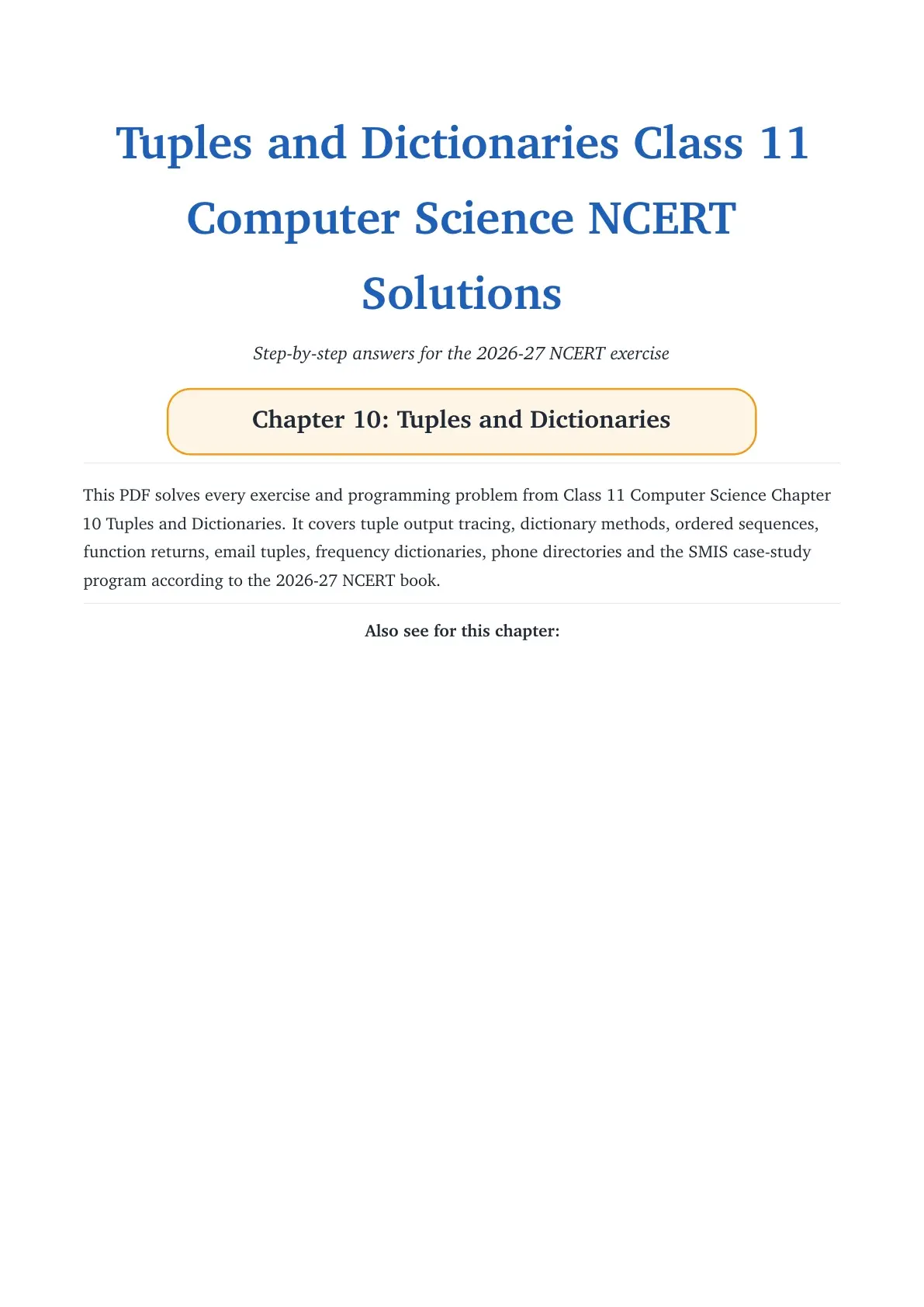
The NCERT Solutions for Class 11 Computer Science Chapter 10 Tuples and Dictionaries cover all textbook exercise and programming questions for the 2026-27 NCERT chapter. The PDF gives step-by-step answers for tuple output, dictionary methods, function return values, email tuples, frequency dictionaries, phone directories and the SMIS case study.
- Use these solutions after reading the NCERT examples on tuples and dictionaries.
- The PDF includes every exercise question with a detailed solution and expert solution.
- Python 3 behaviour is used for tuple methods, dictionary views and program outputs.
Student Feedback: In a Collegedunia student survey of 10,420 Class 11 Computer Science students conducted before the 2026 school exams, 72% said dictionary questions became easier after writing the key, value and mutation effect separately.
Class 11 Computer Science Tuples and Dictionaries NCERT Solutions PDF
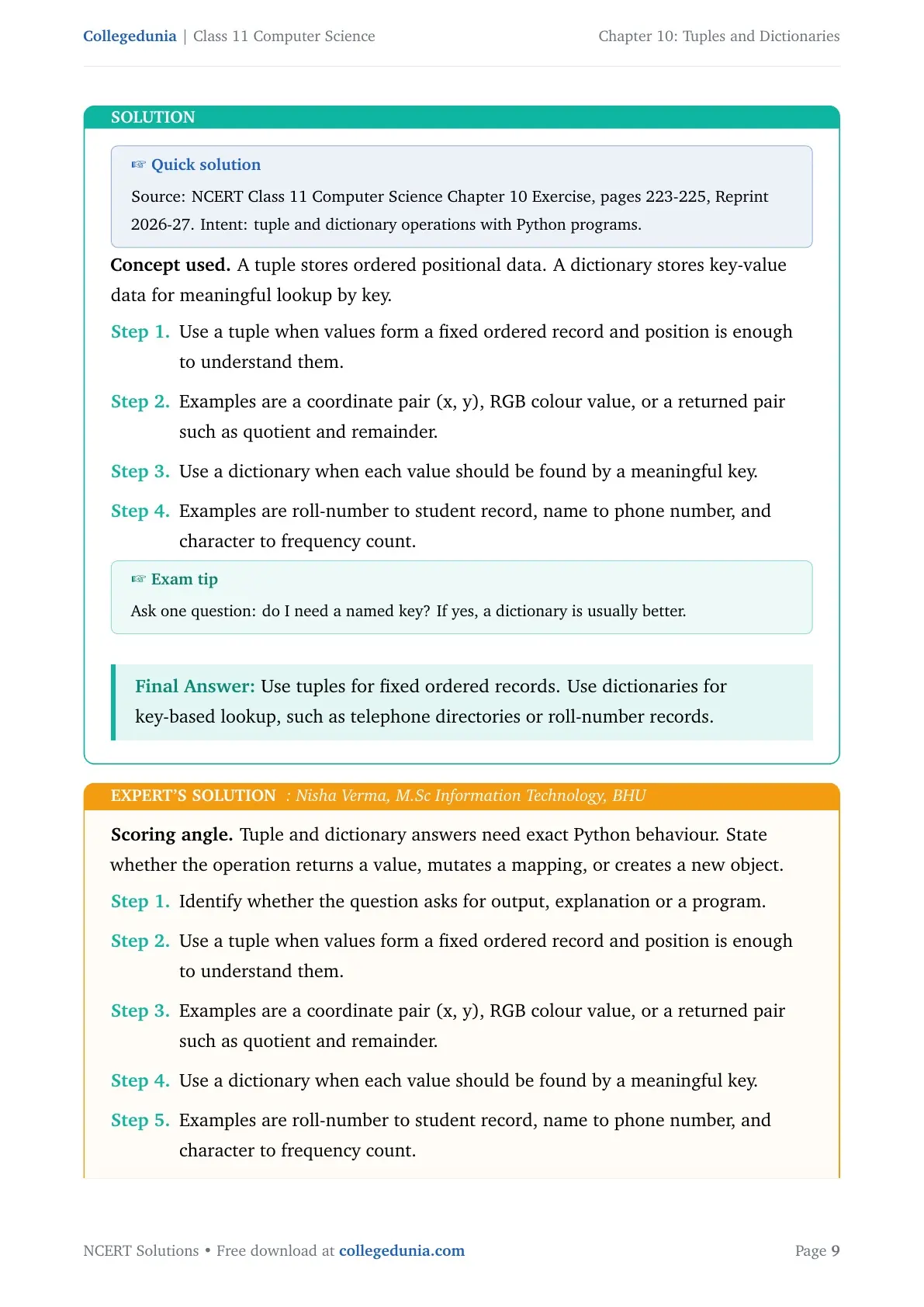
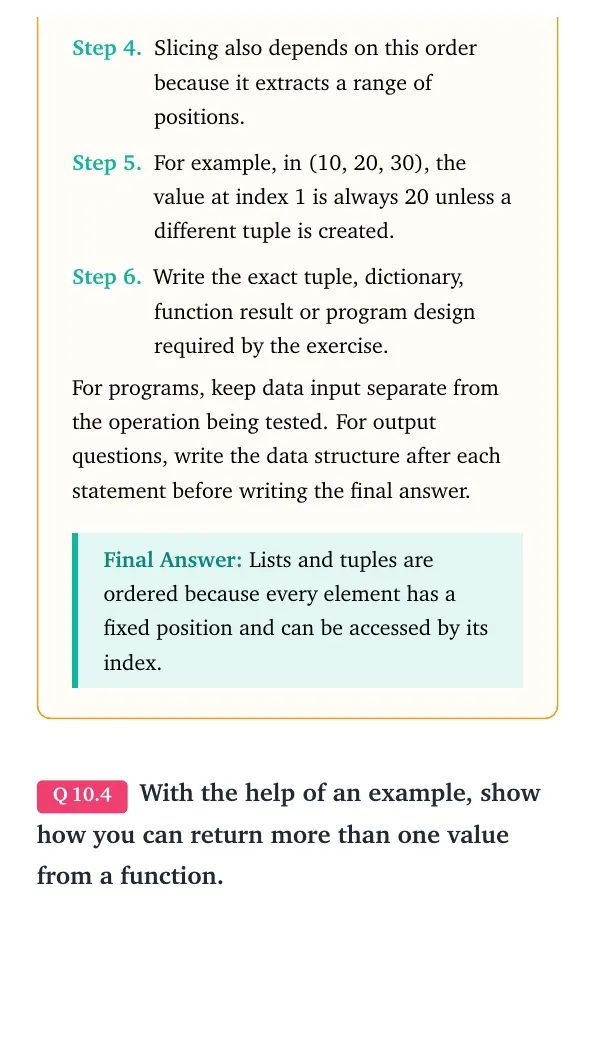
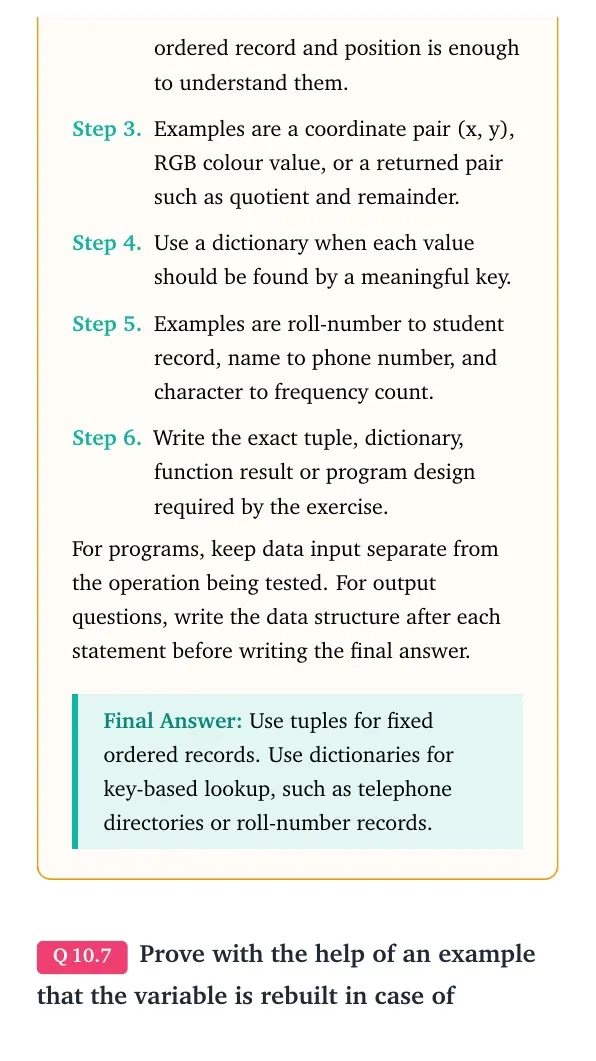
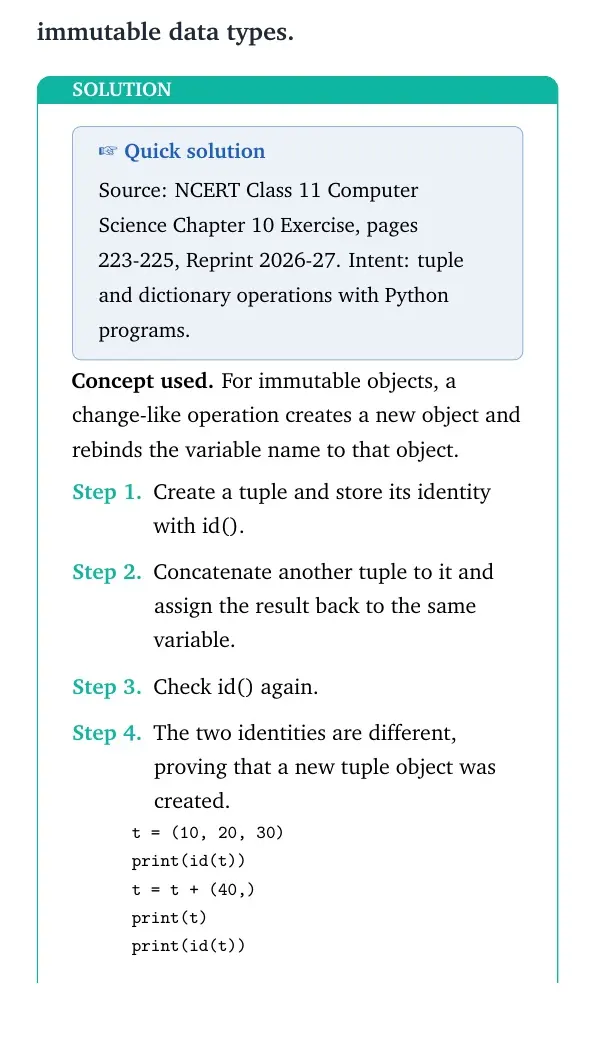
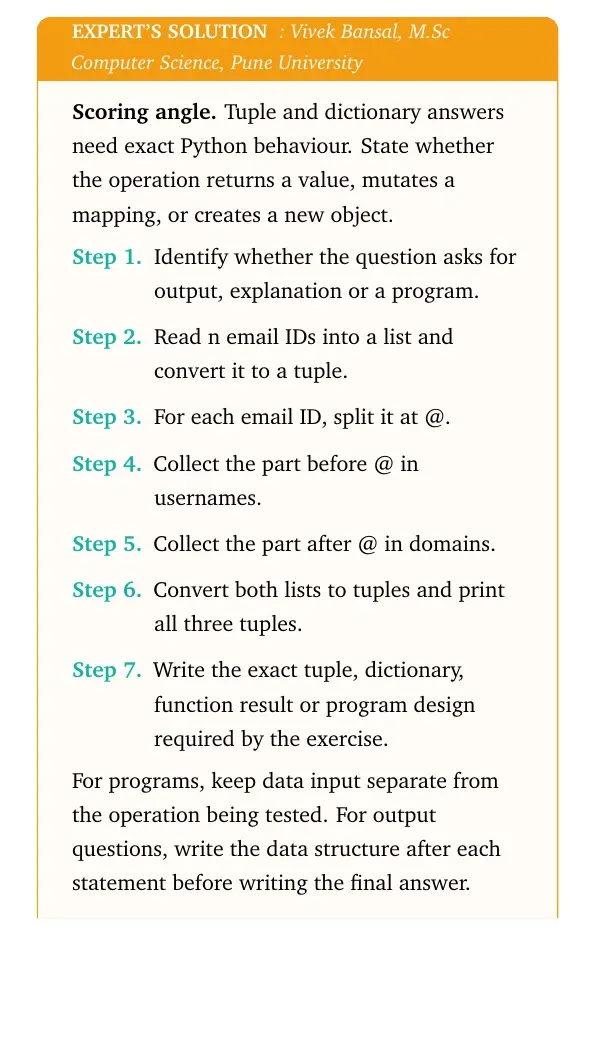
Tuples and Dictionaries explains how Python stores fixed ordered records and key-value mappings. Students should revise one-element tuple syntax, tuple immutability, dictionary membership and dictionary methods before solving the exercise.
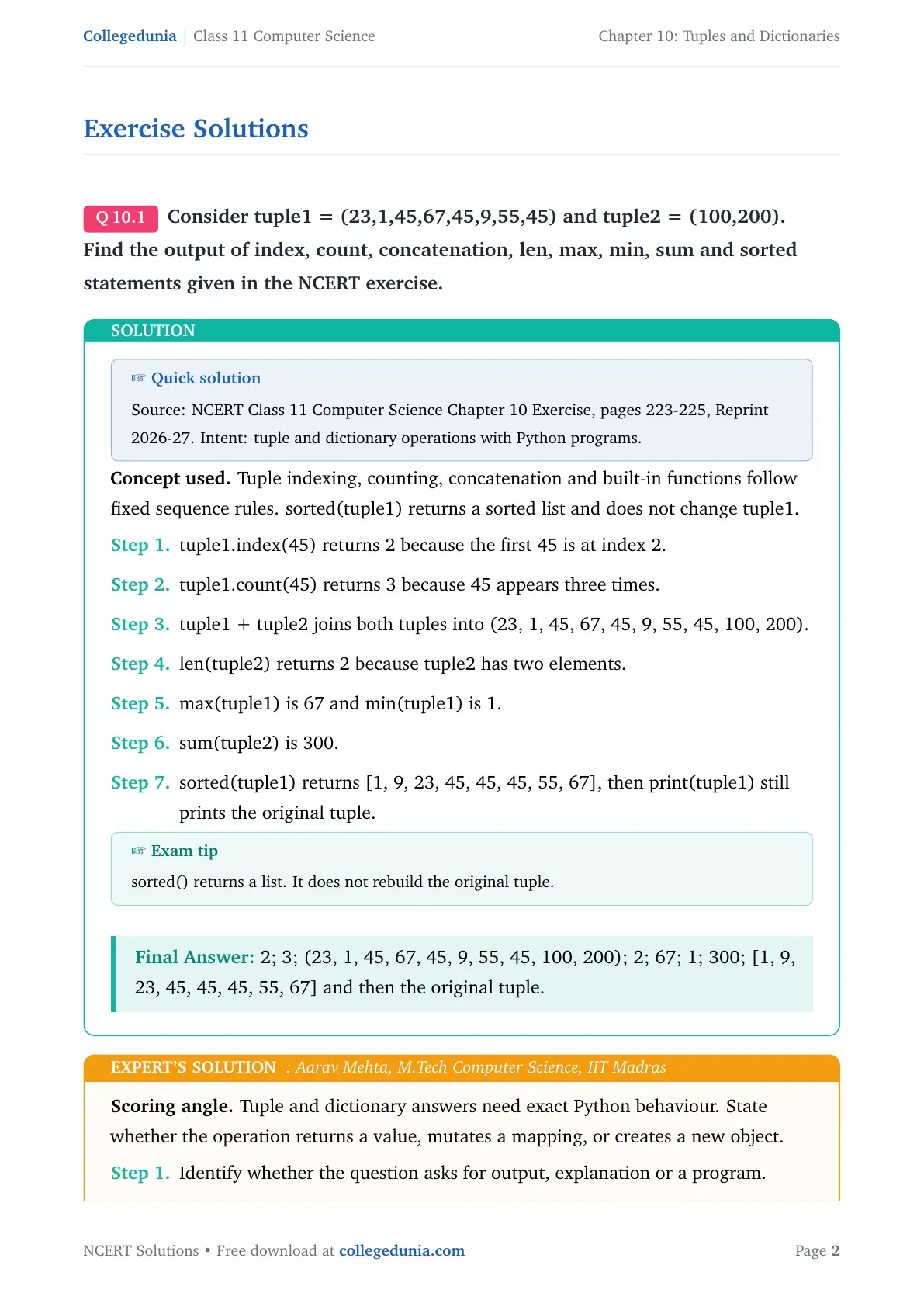
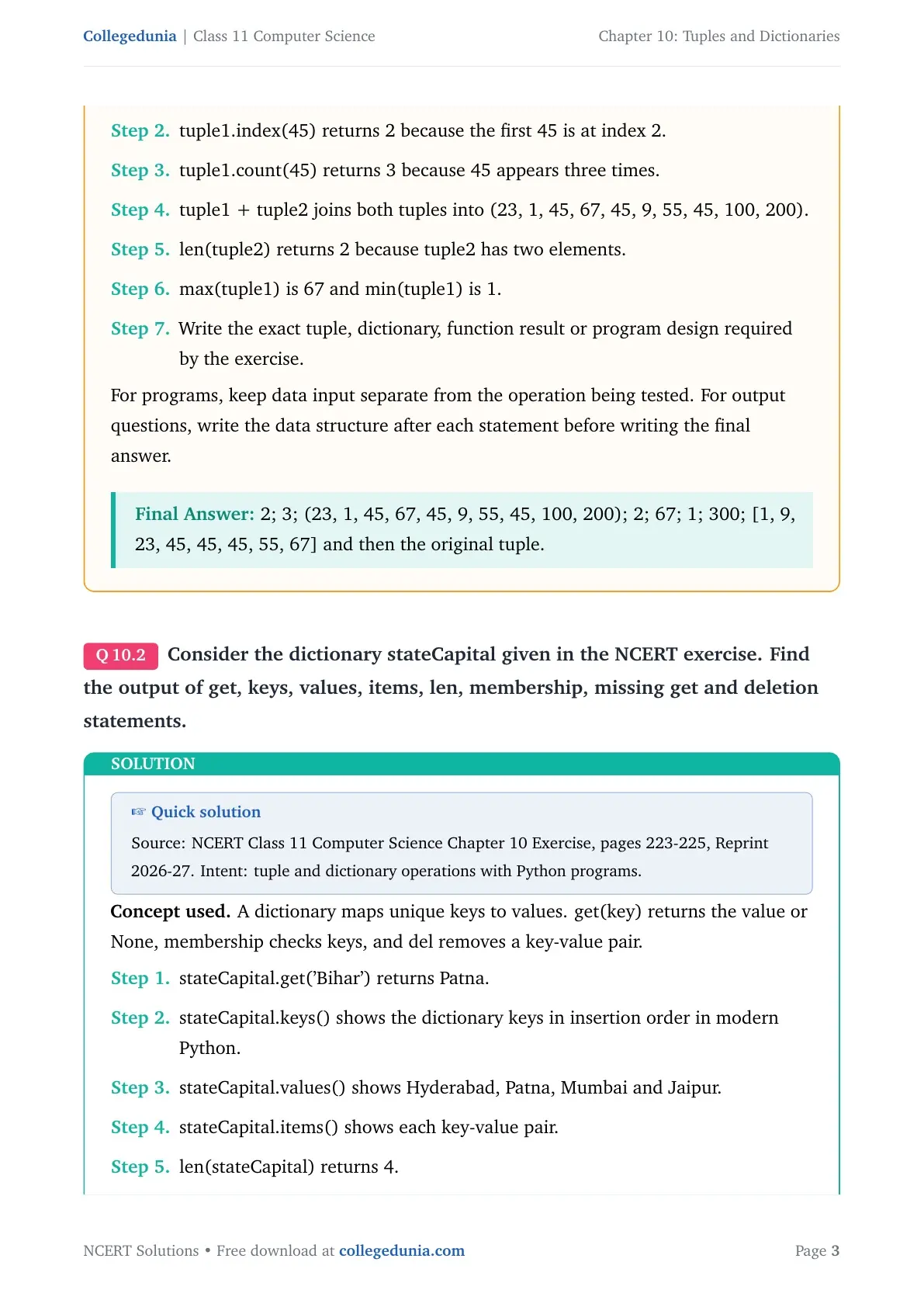
Important: most output mistakes in this chapter come from forgetting that dictionary membership checks keys and that sorted(tuple) returns a list.
| Part | What to revise | Why it matters |
|---|---|---|
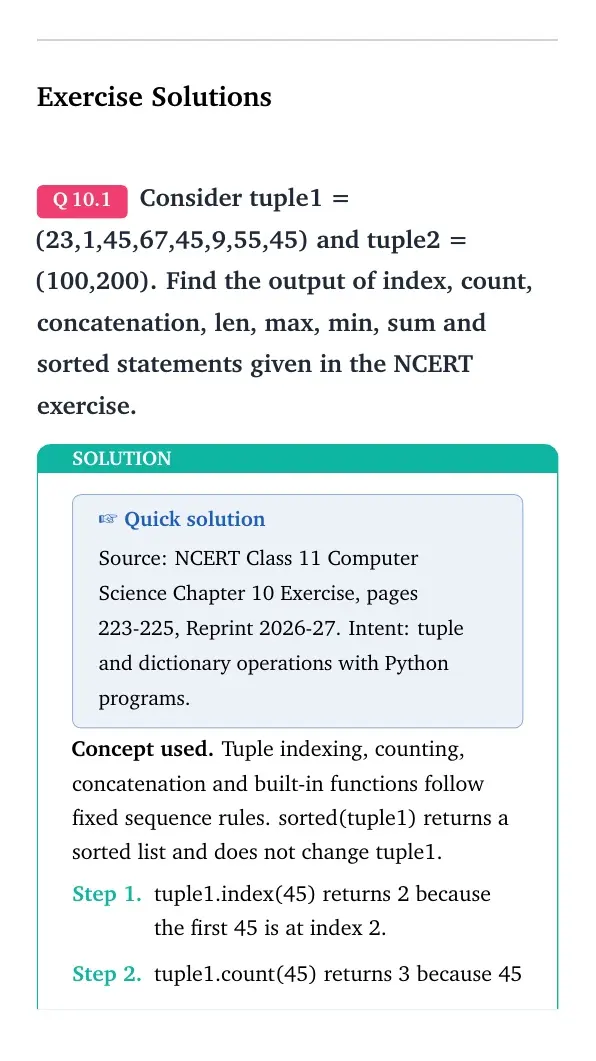
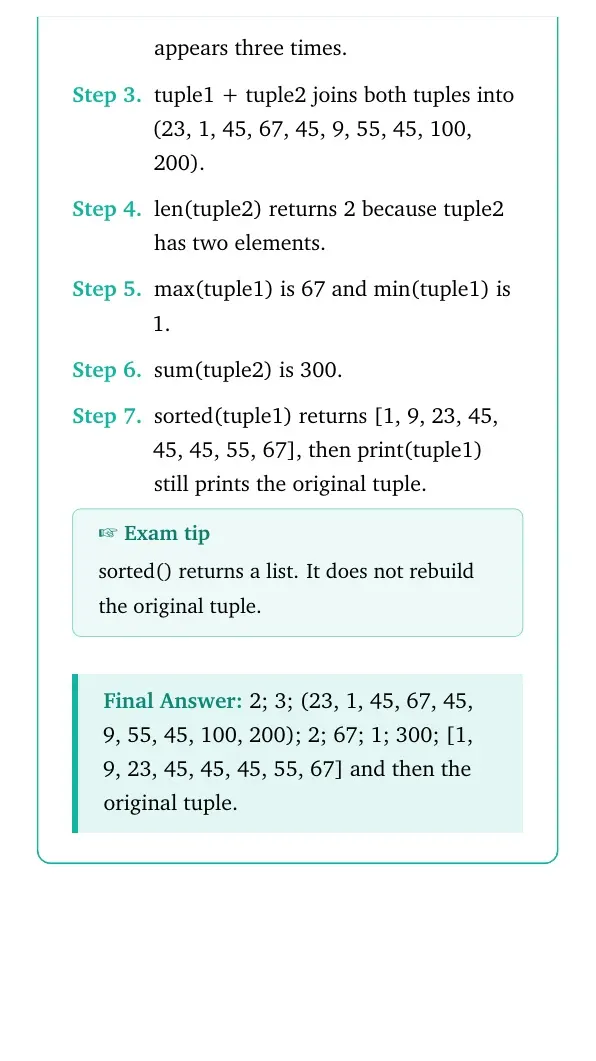
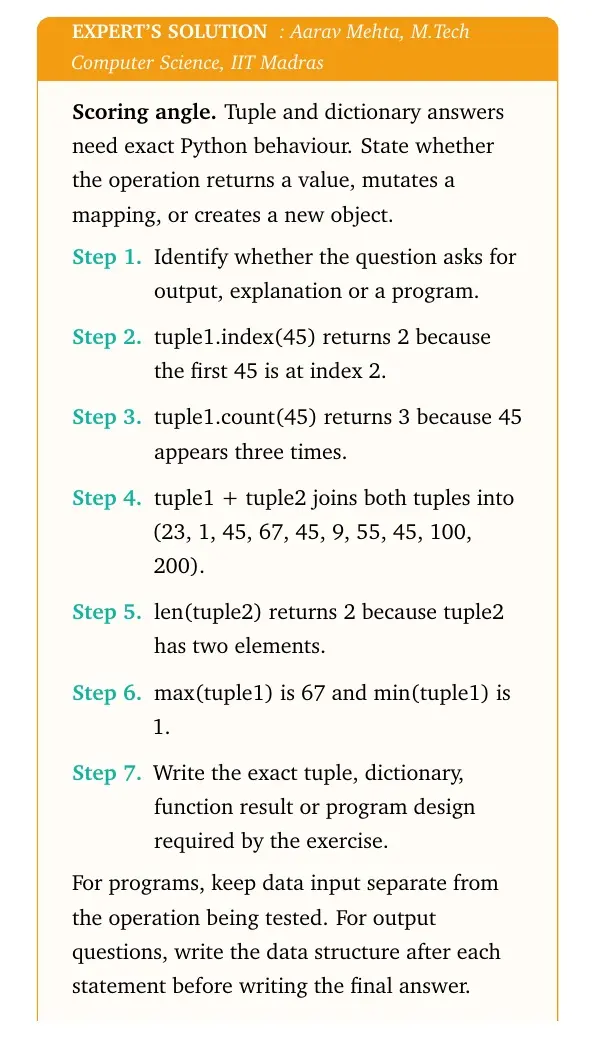
| Tuple output | index, count, max, min, sum and sorted | Predicts exact output |
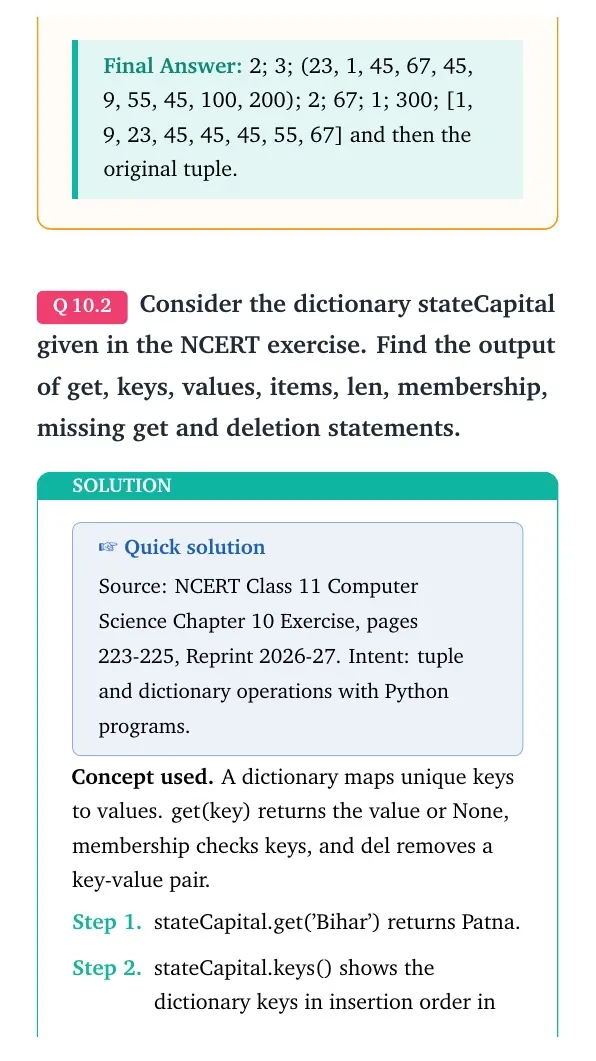
| Dictionary methods | get, keys, values, items and del | Solves direct method questions |
| Data-structure choice | tuple versus dictionary | Matches records with the right structure |
| Programs | Email split, frequency table, phone directory and SMIS | Handles all programming problems |
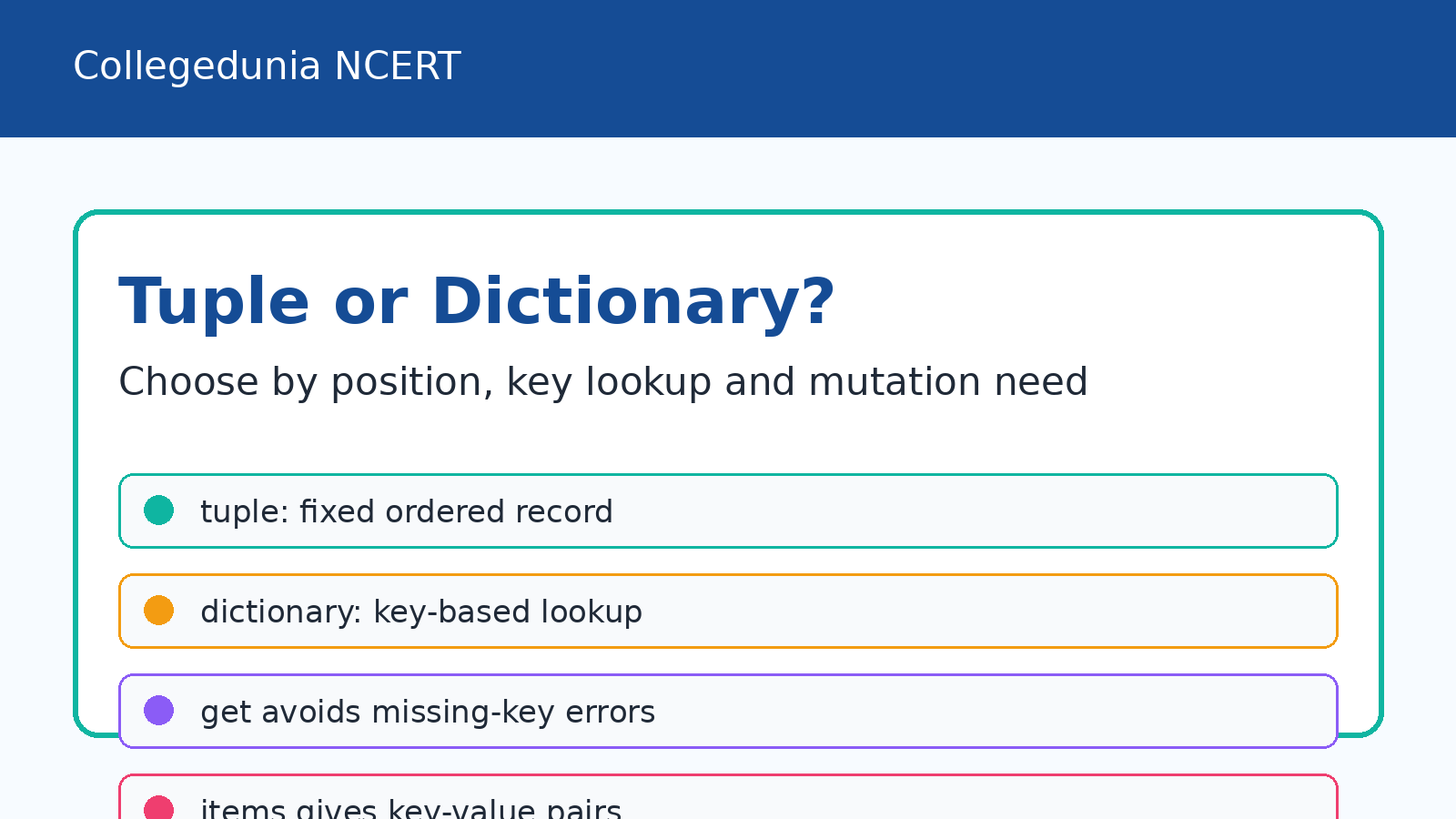
Tuple and Dictionary Method Questions in Chapter 10
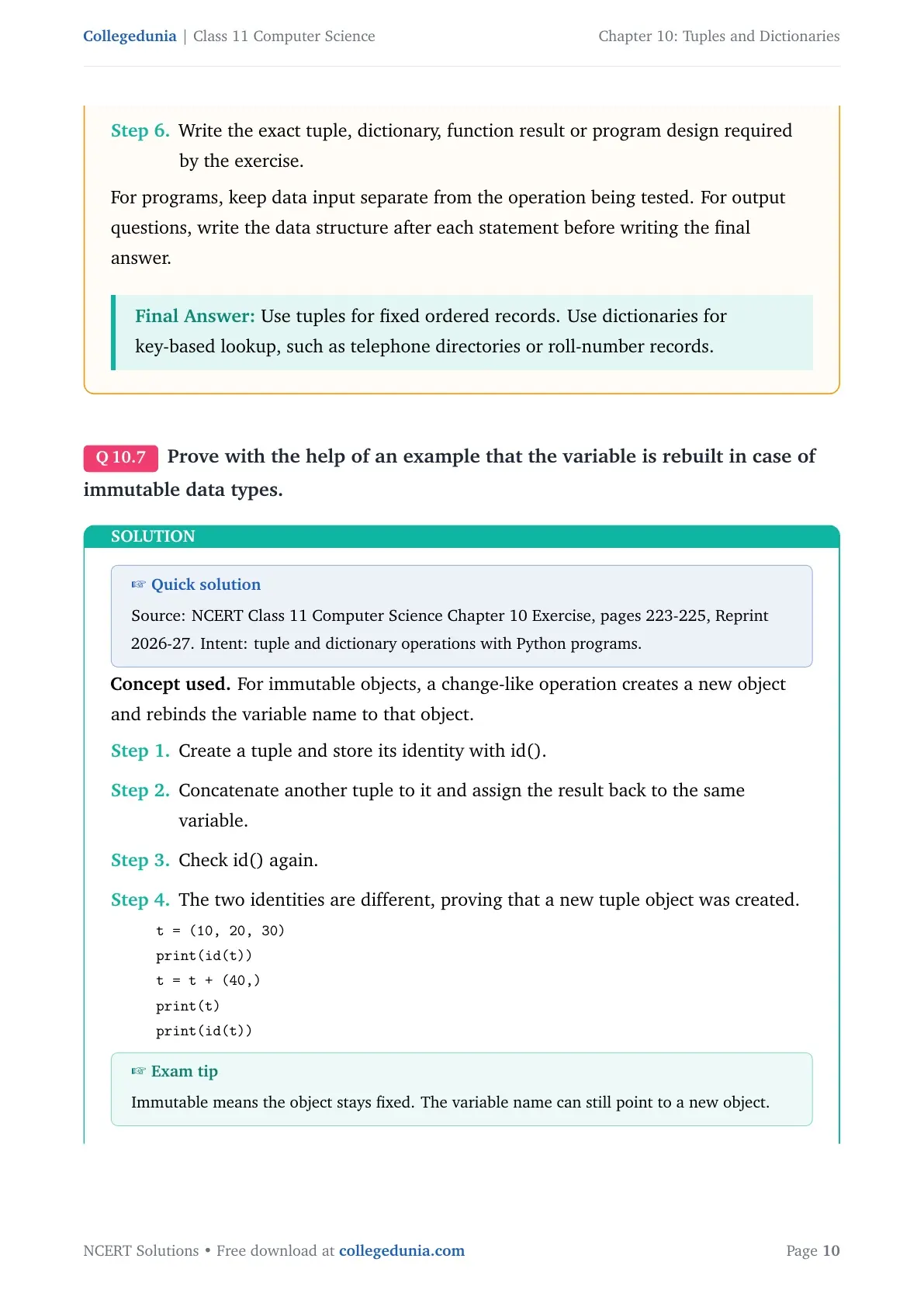
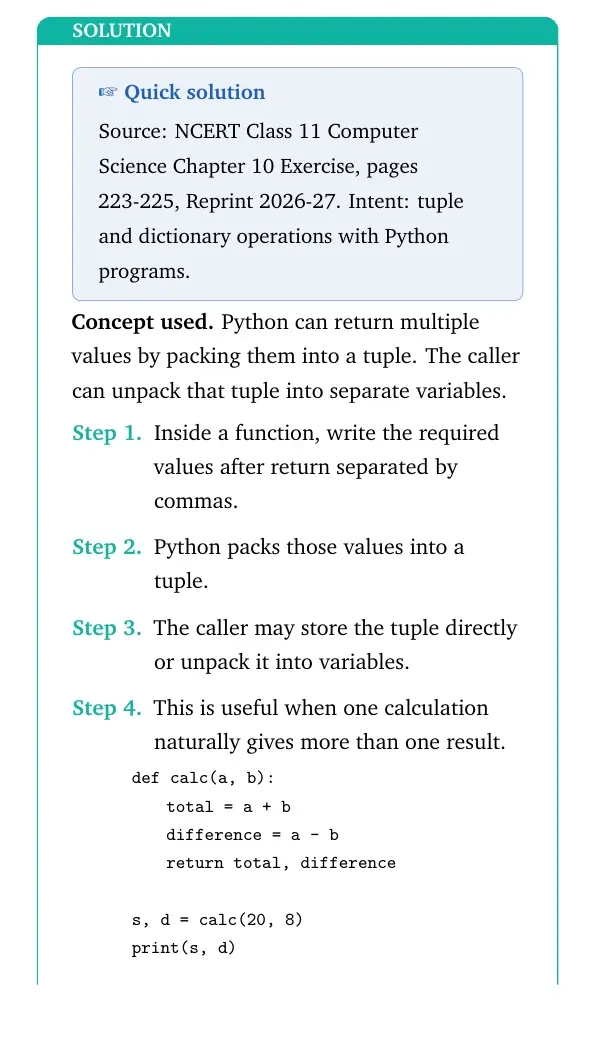
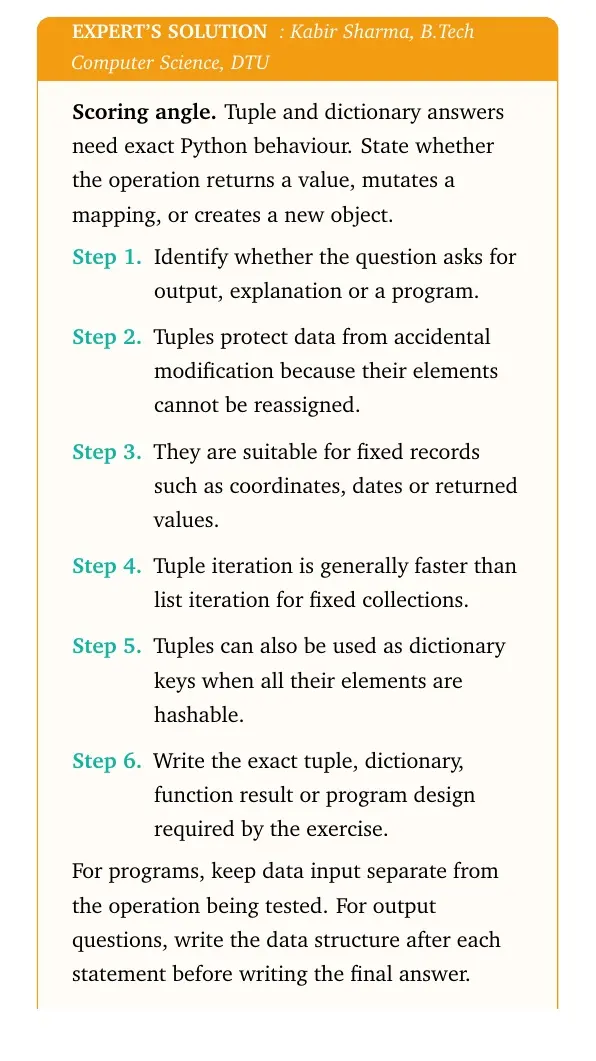
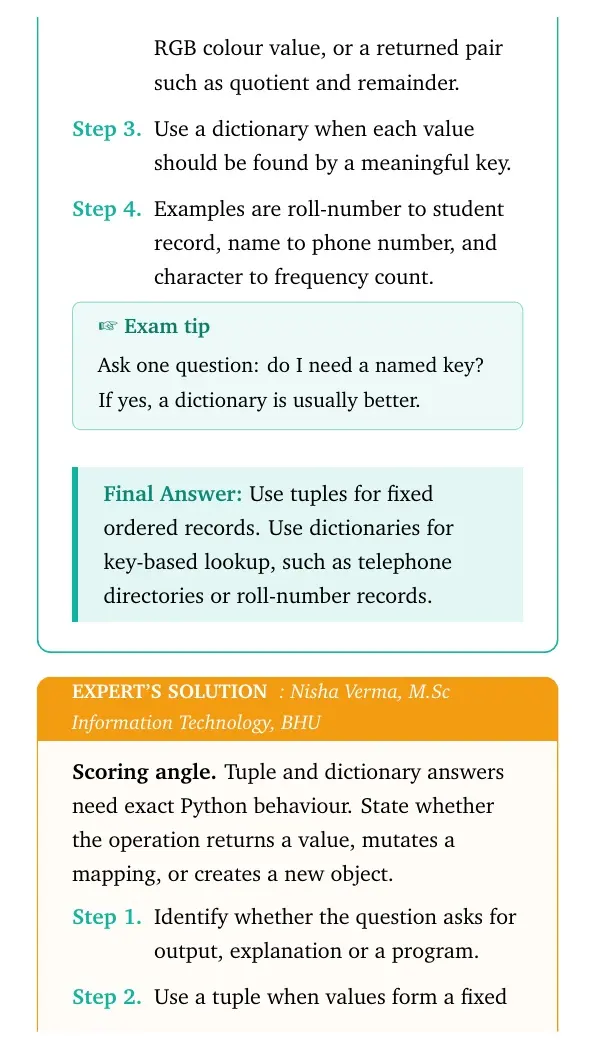
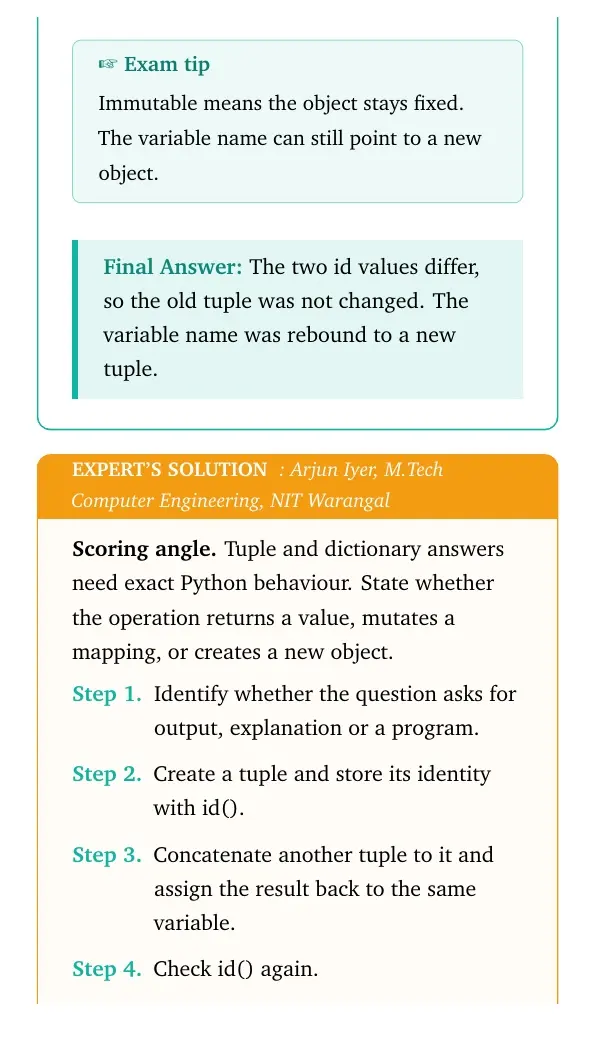
Tuple and dictionary questions are best solved by writing the object, operation and return value in separate columns. This method works for output questions as well as short-answer questions.
- For tuples: remember immutability and position-based access.
- For dictionaries: remember unique keys and key-based lookup.
- For programs: choose dictionary when the question asks for named lookup or frequency counting.
Tuples and Dictionaries Video Explanation for Class 11 Computer Science
Source: Magnet Brains on YouTube
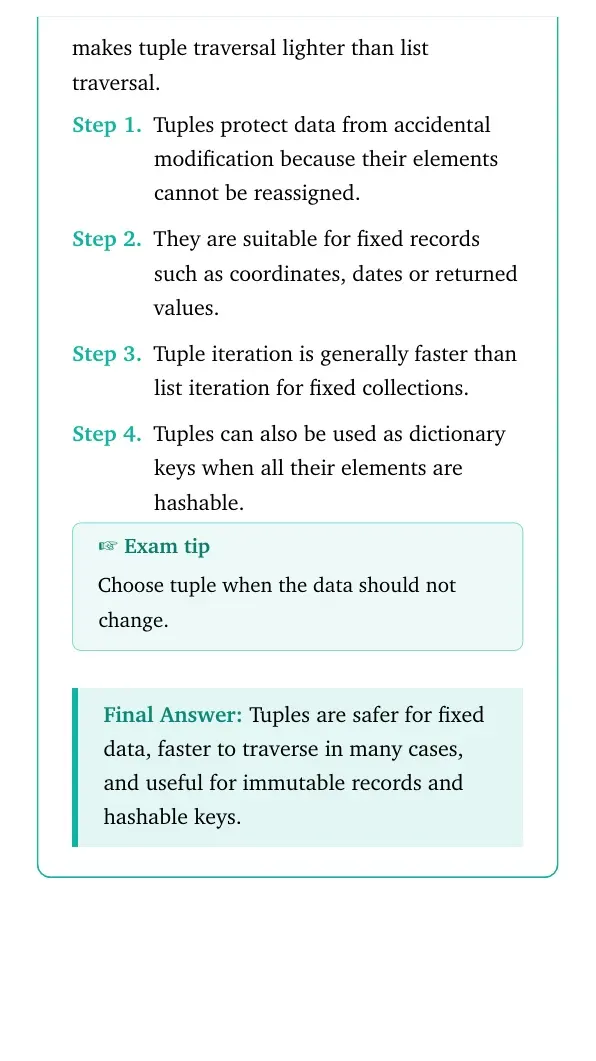
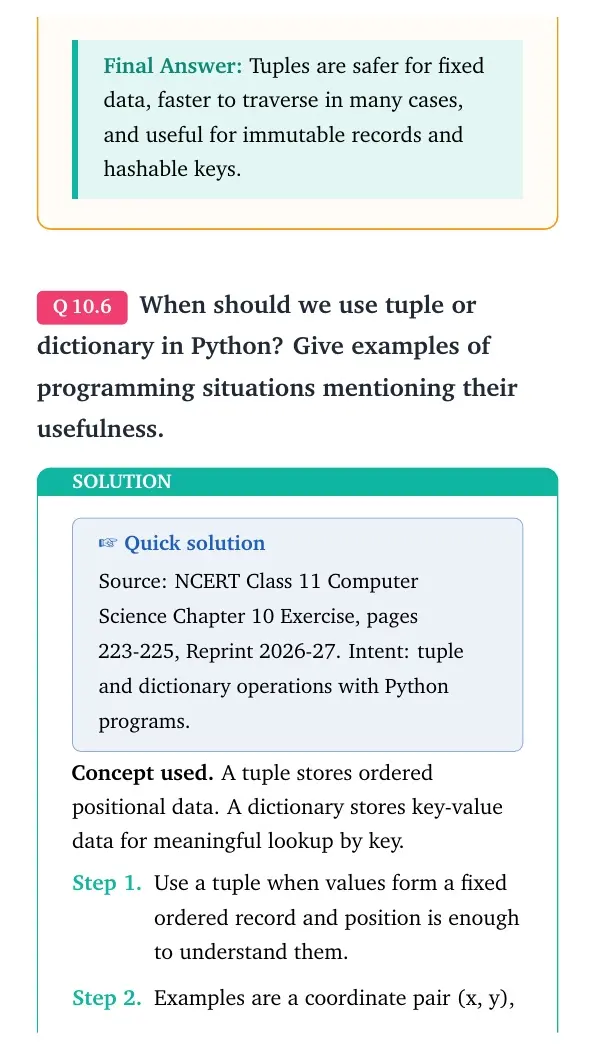
What the Tuples and Dictionaries Solutions Cover
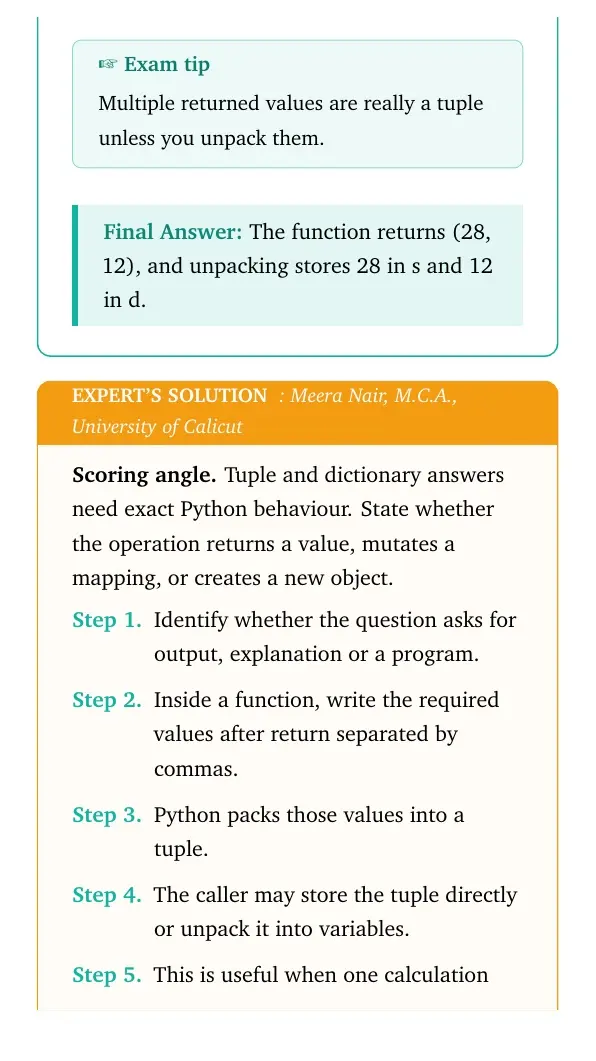
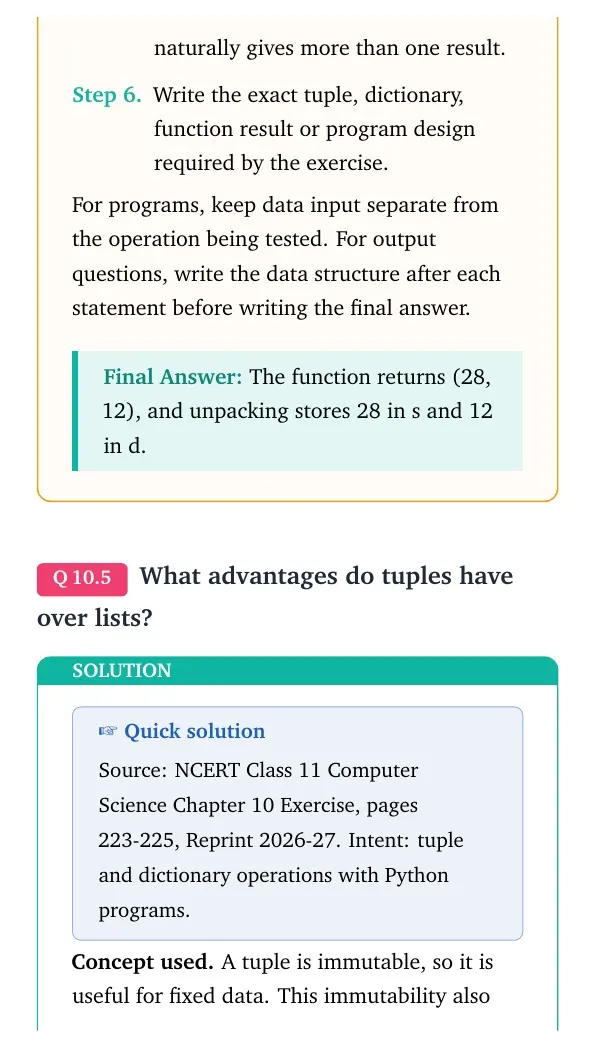
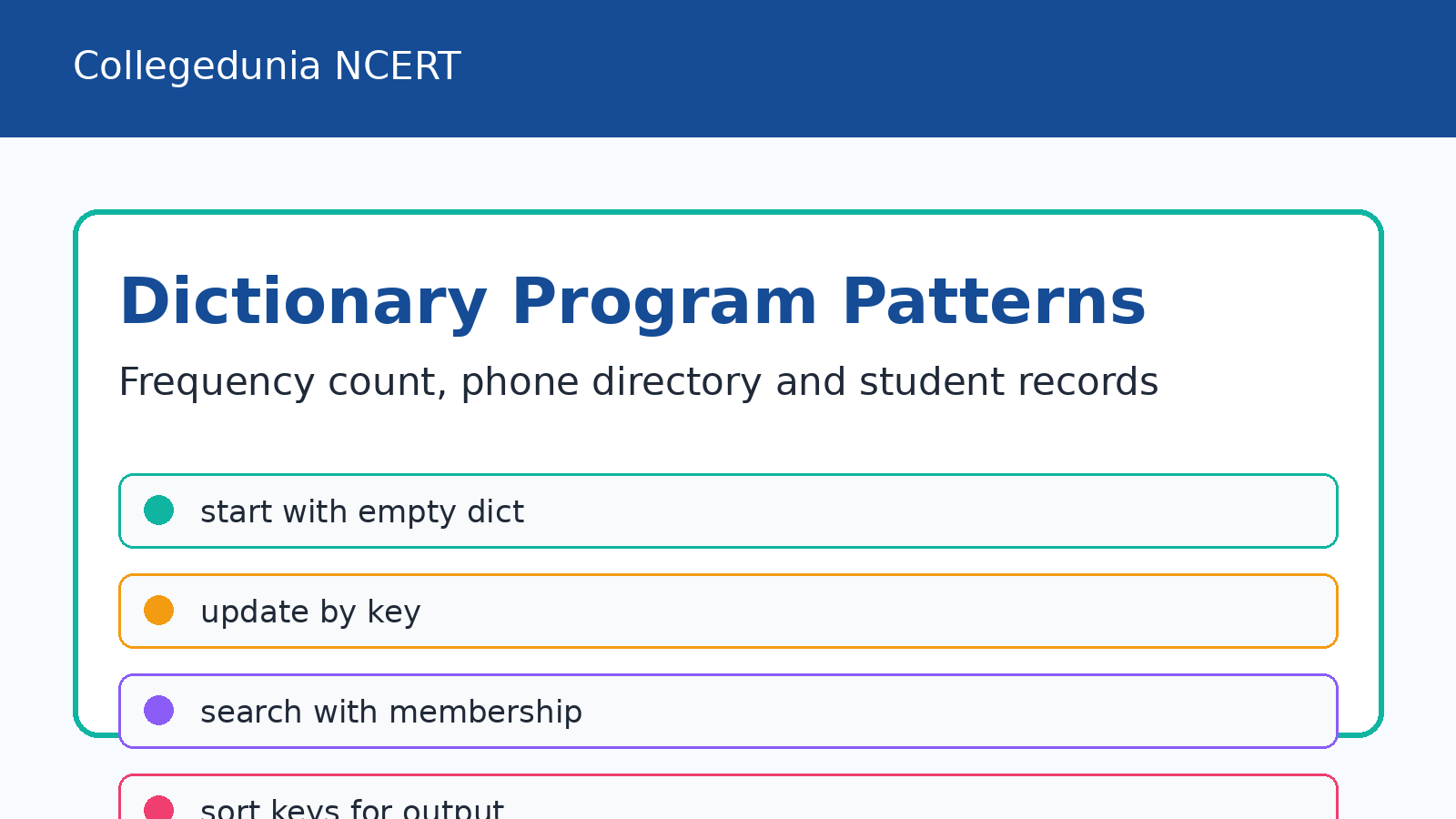
The solved PDF covers both direct output questions and programming problems. It uses short steps so students can compare each answer with the NCERT exercise.
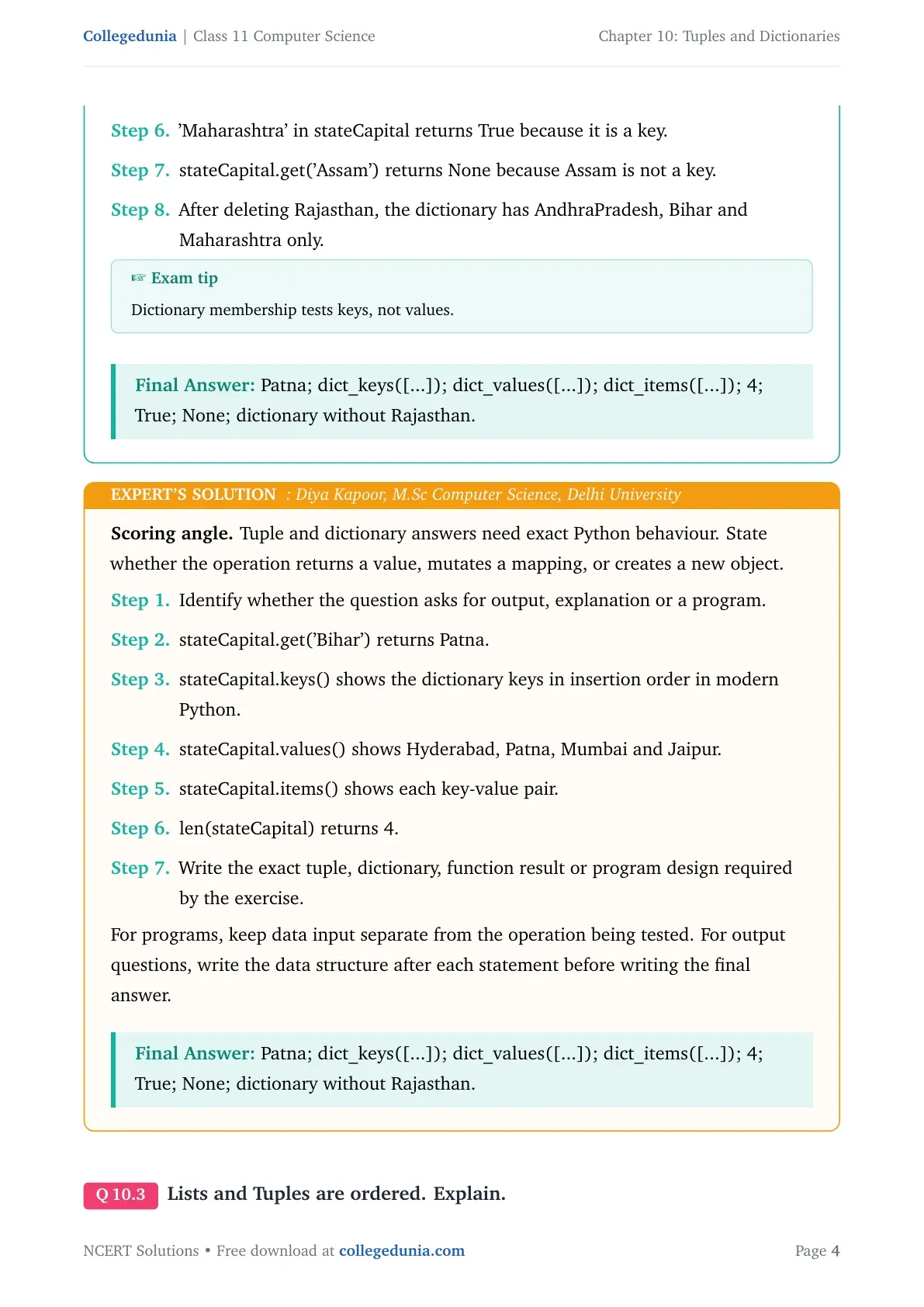
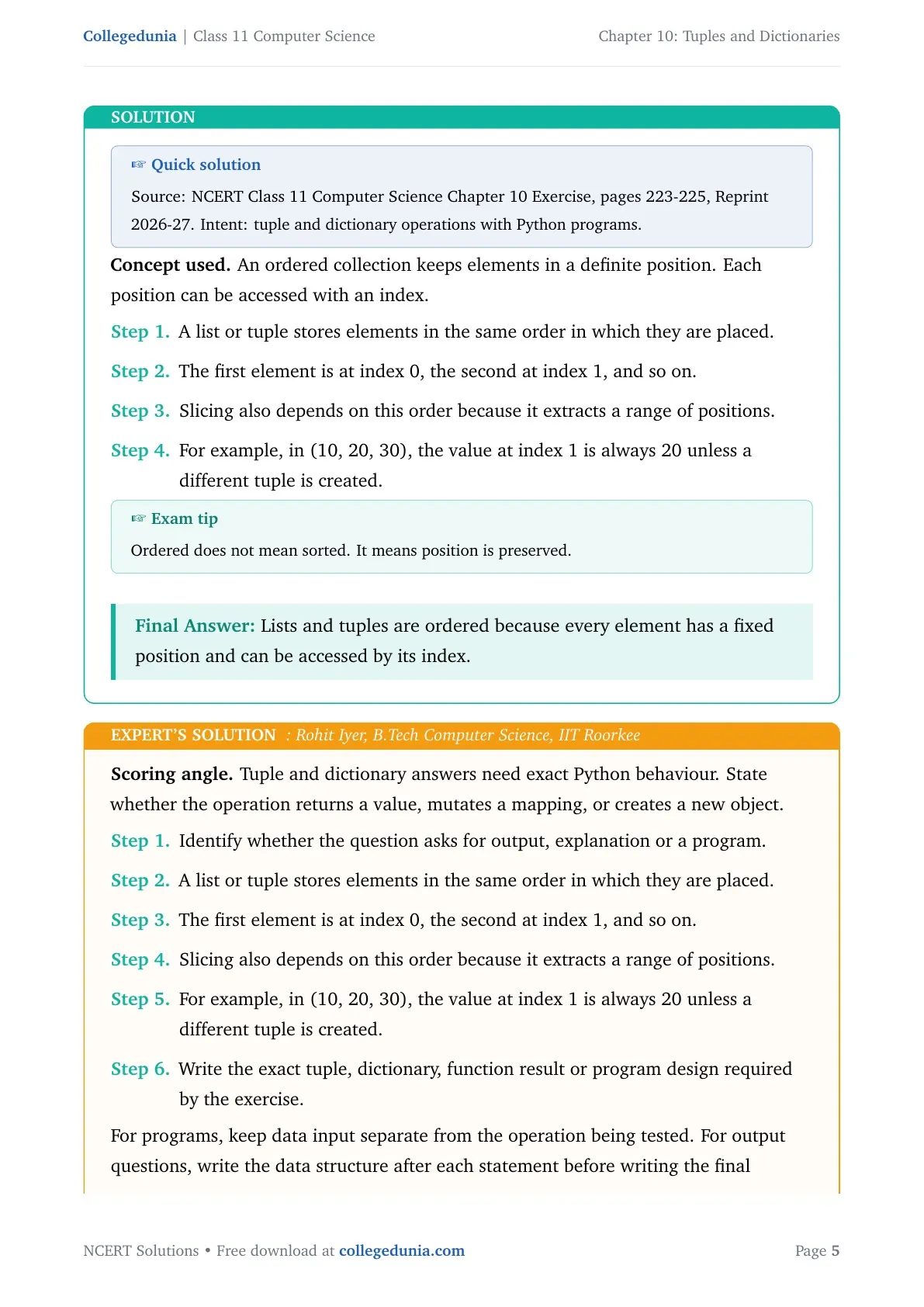
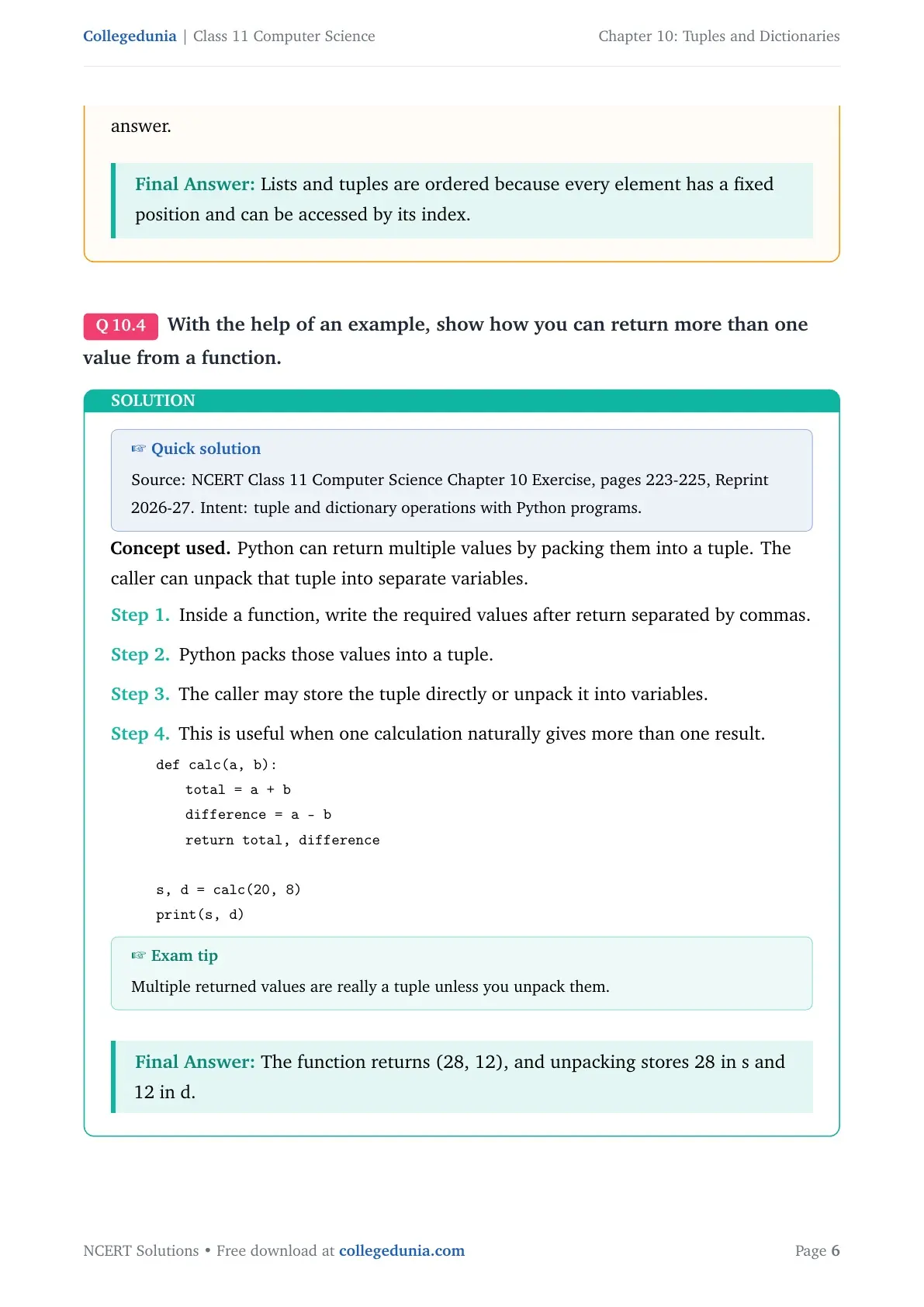
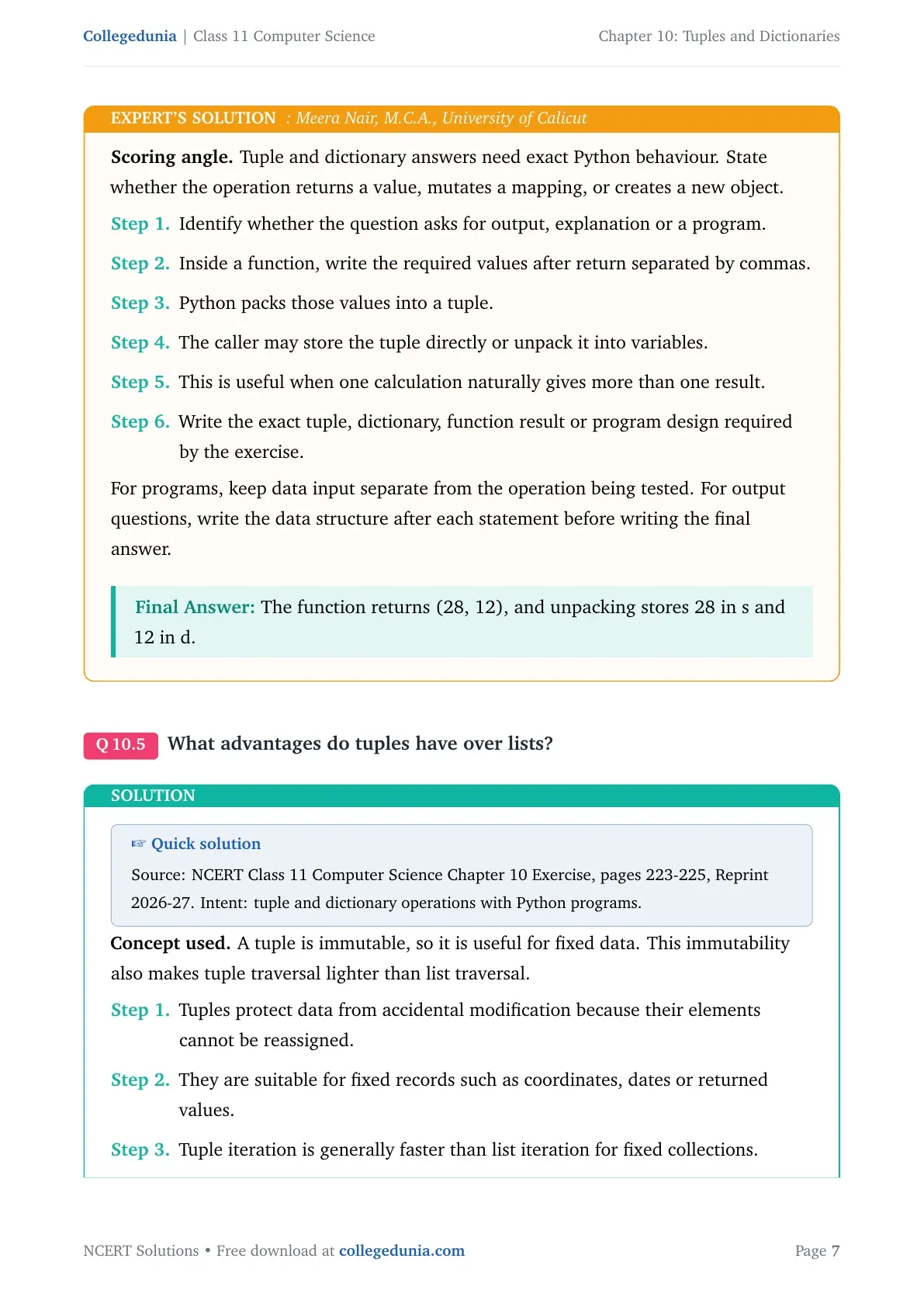
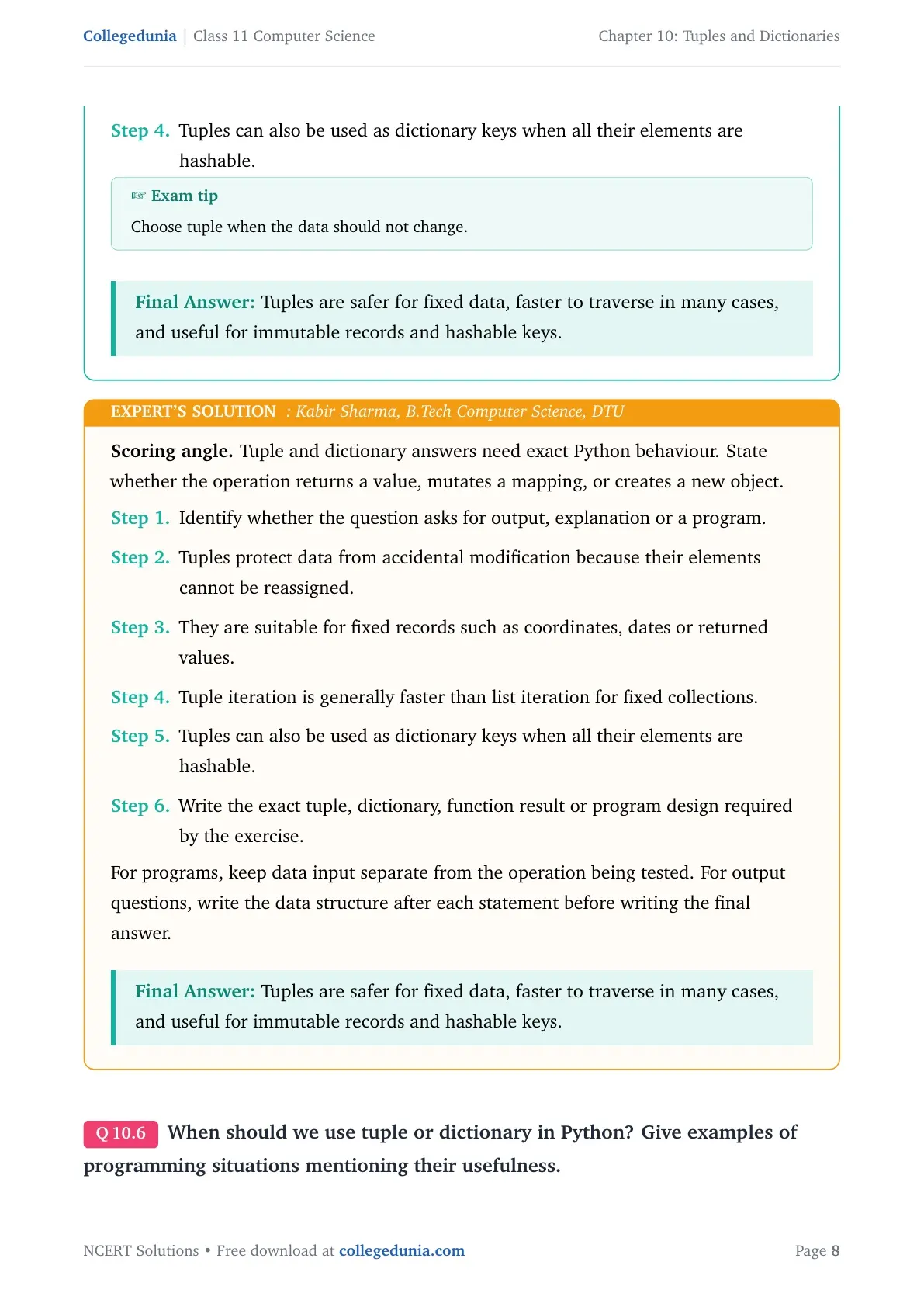
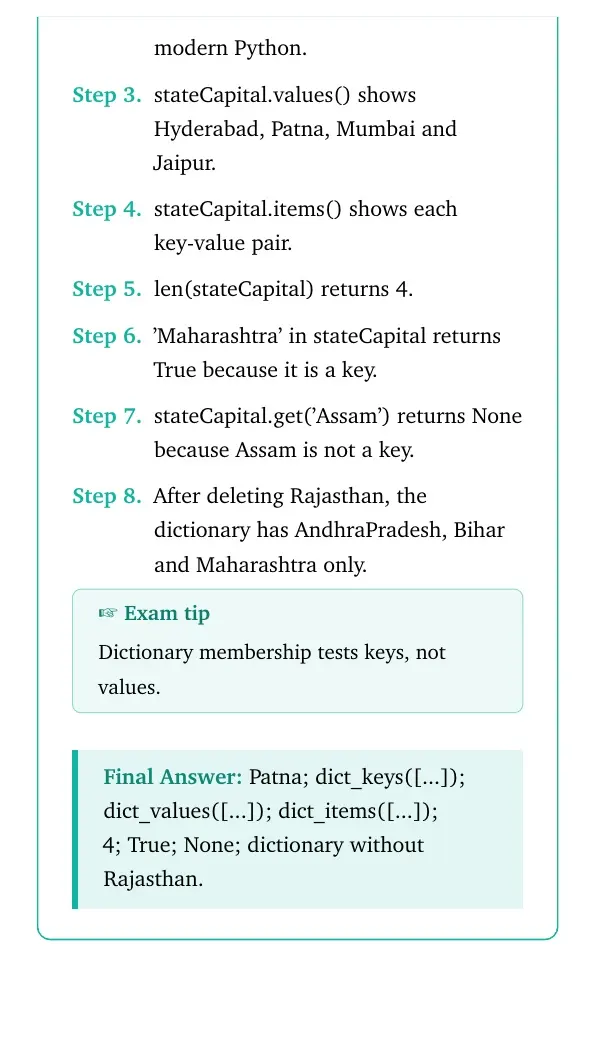
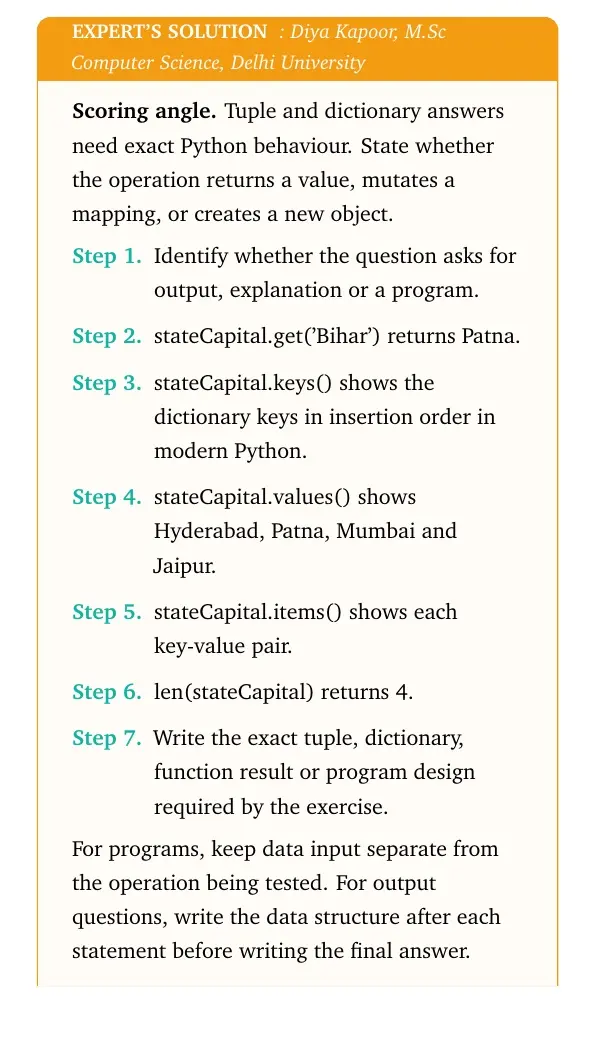
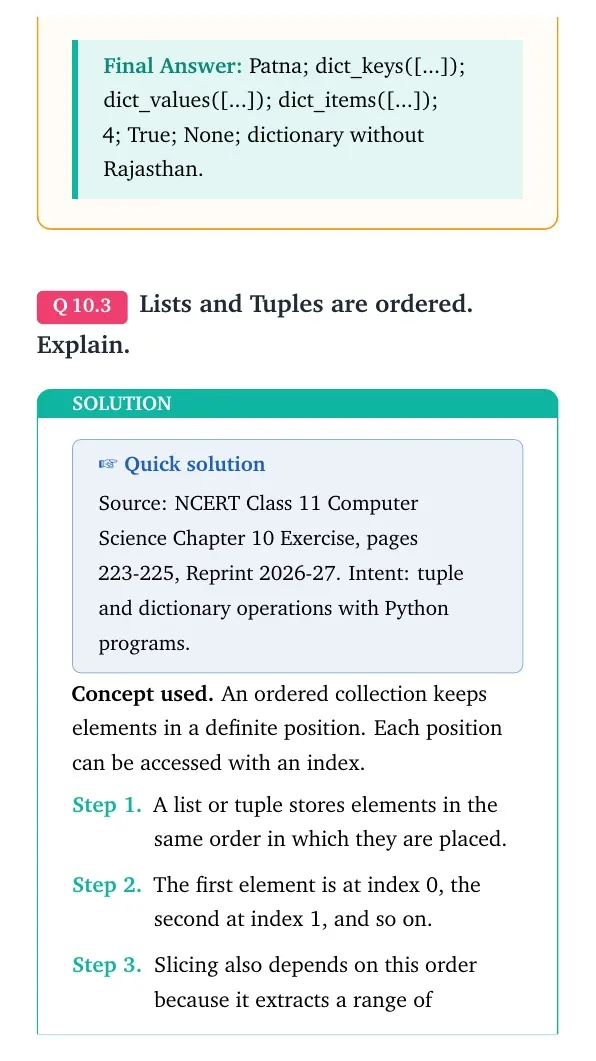
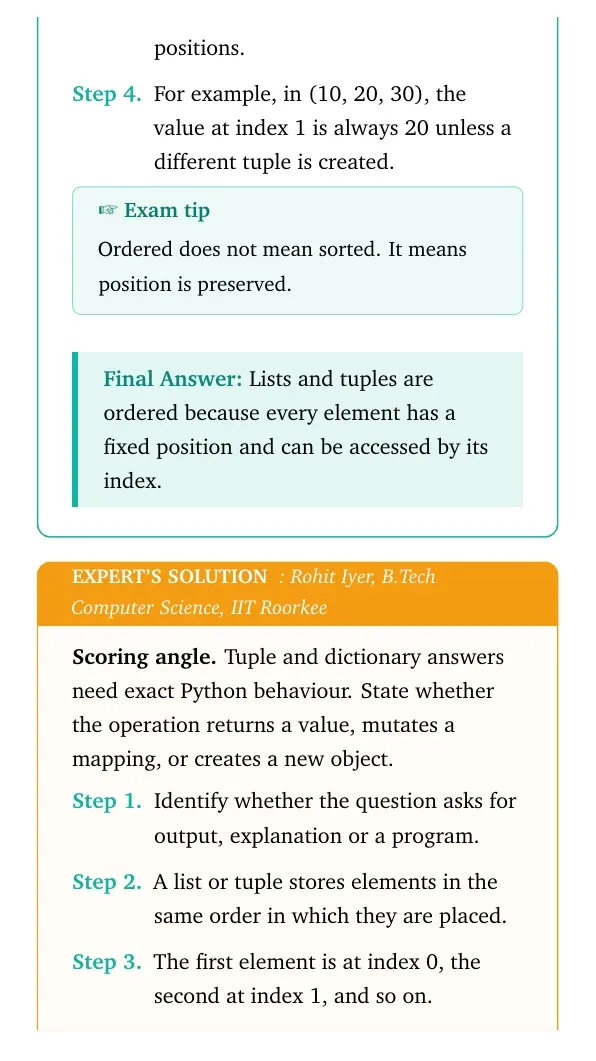
- Exercise Q1 to Q8: tuple outputs, dictionary outputs, ordering, multiple returns, tuple advantages and TypeError correction.
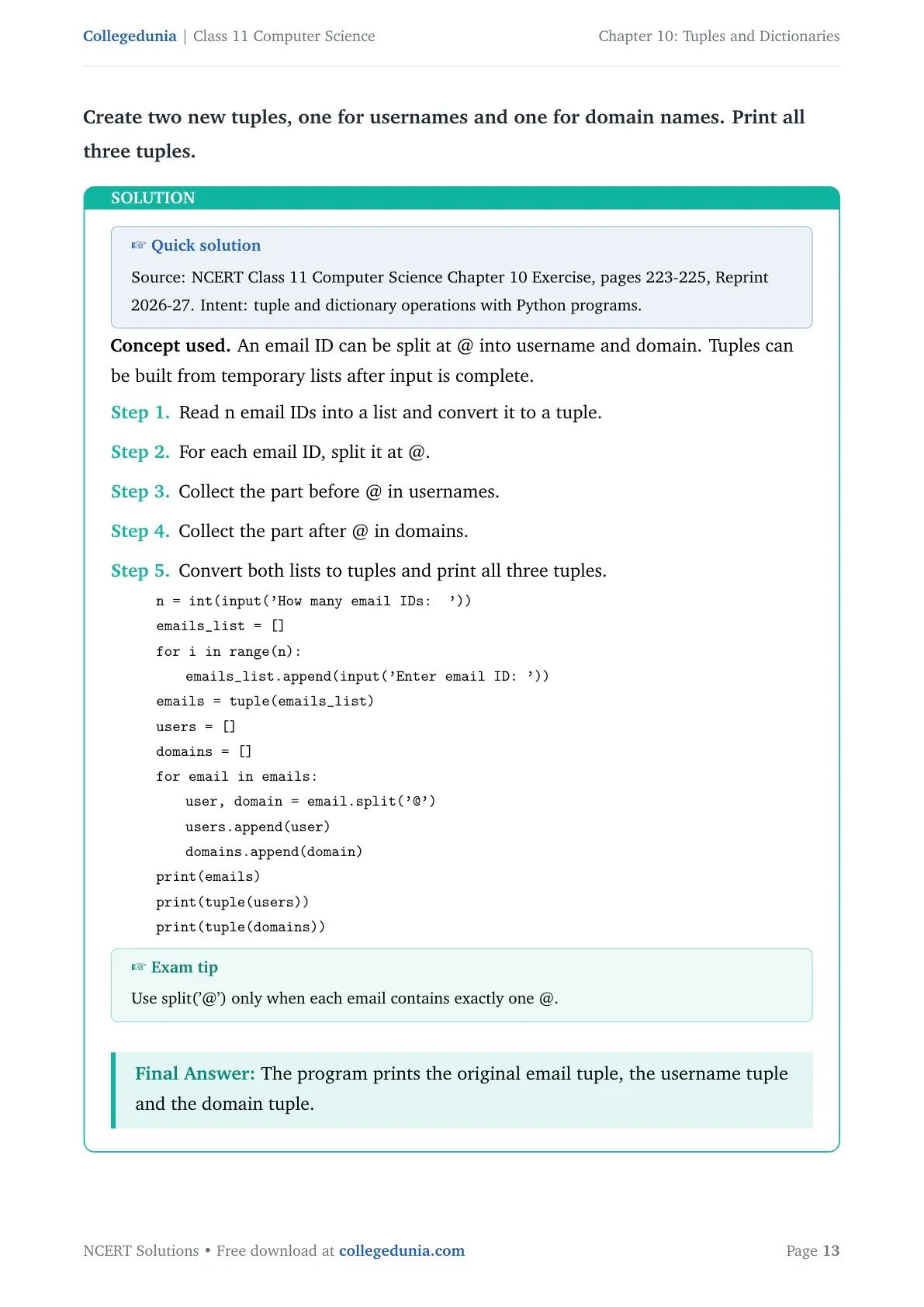
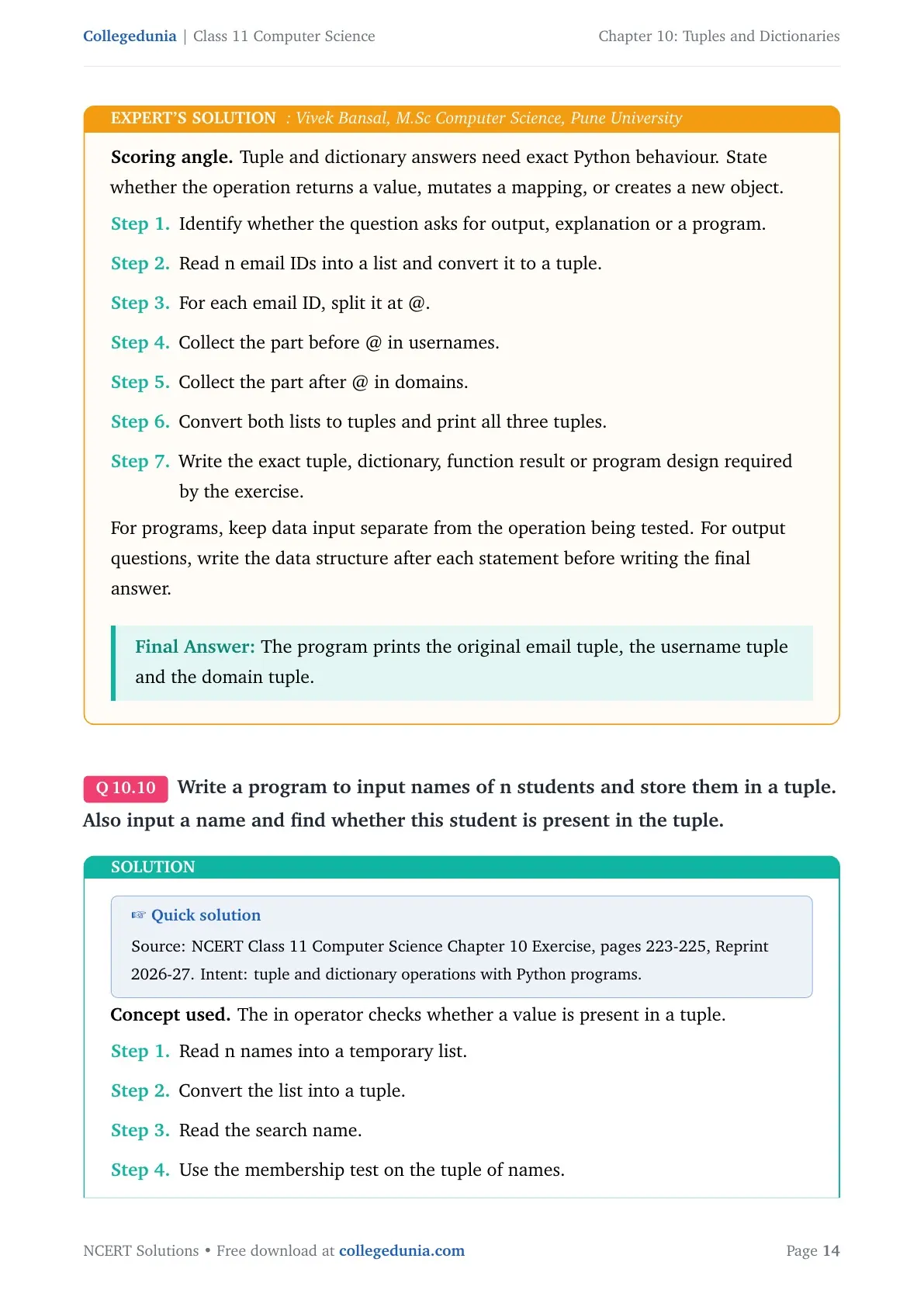
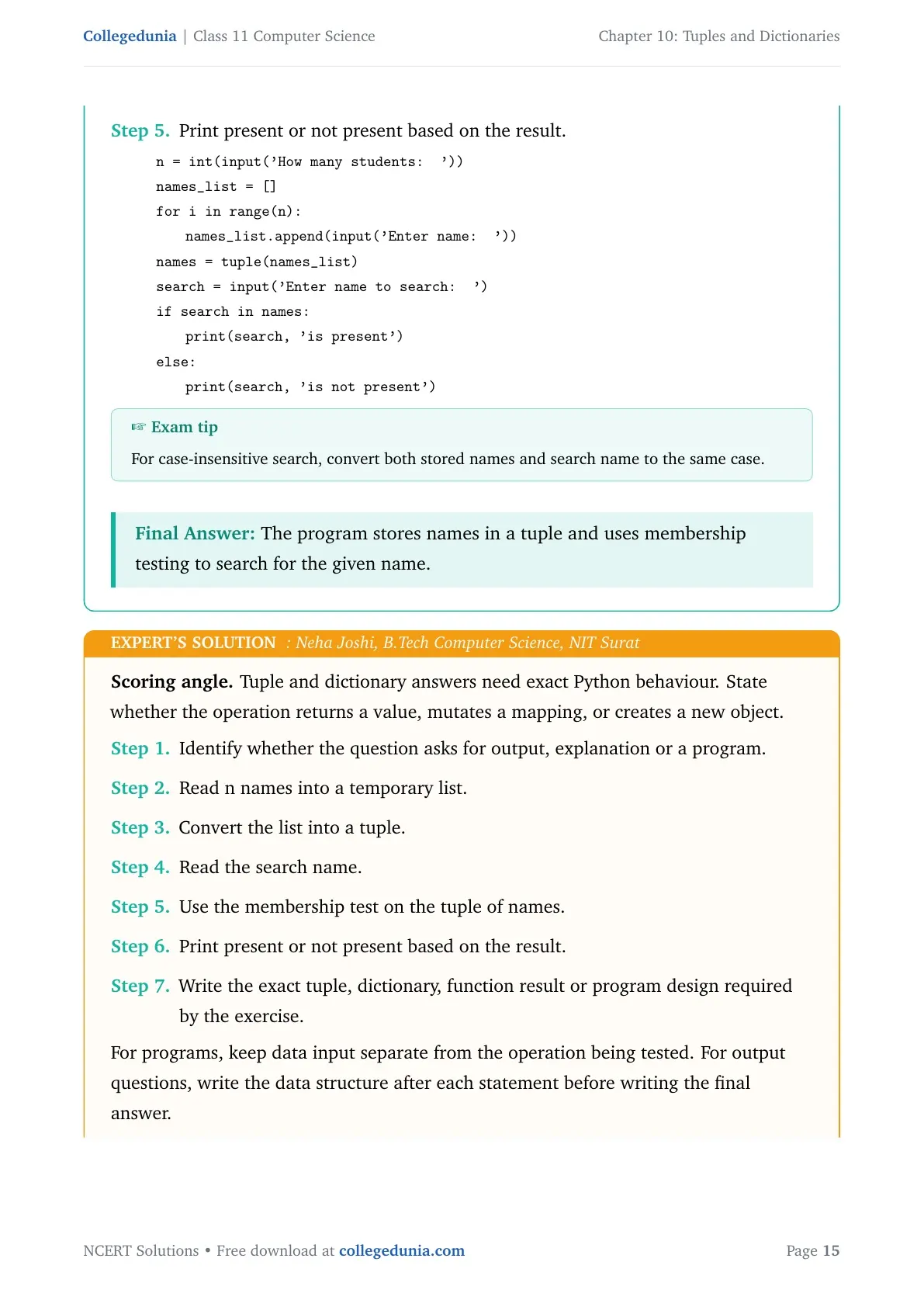
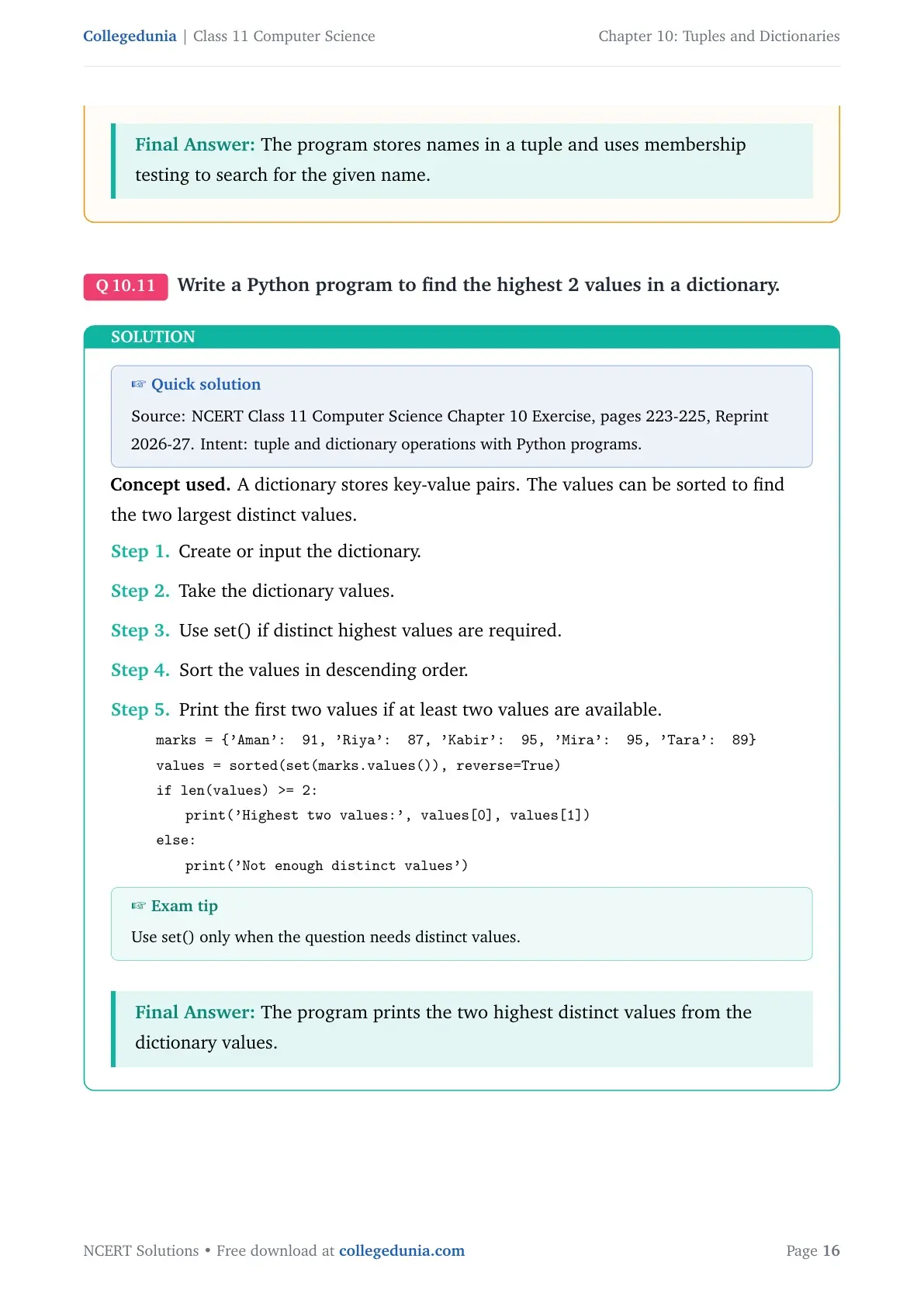
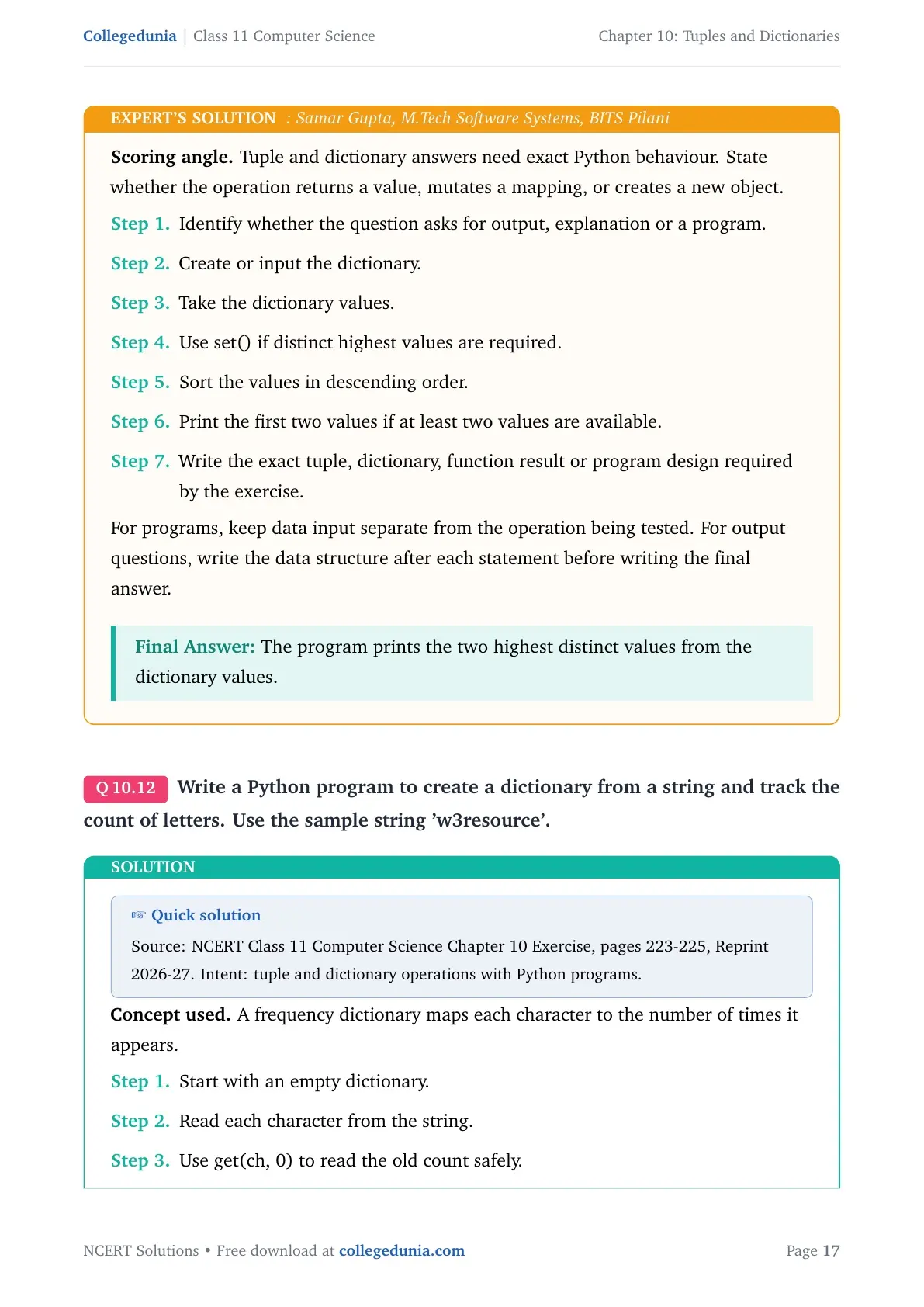
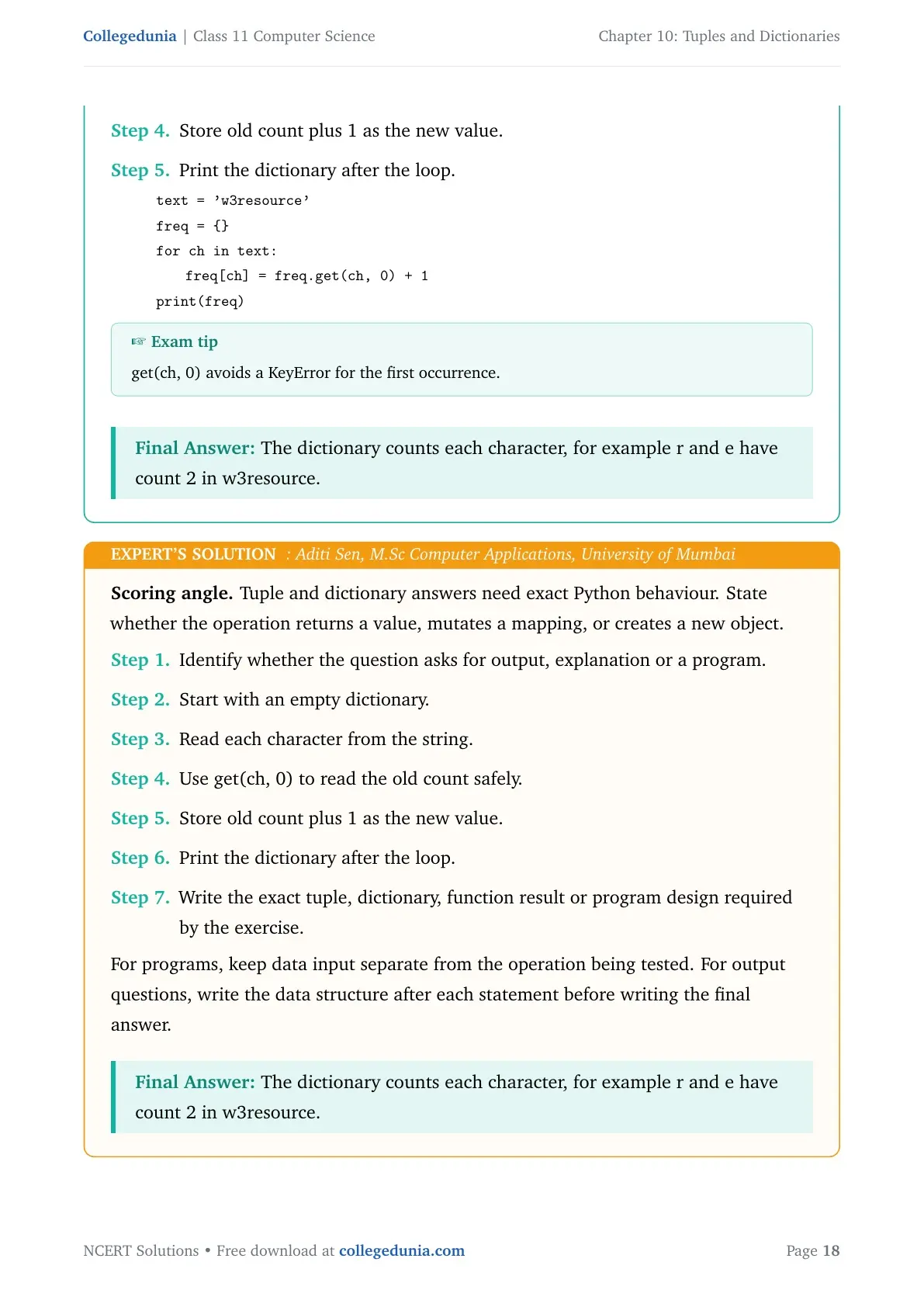
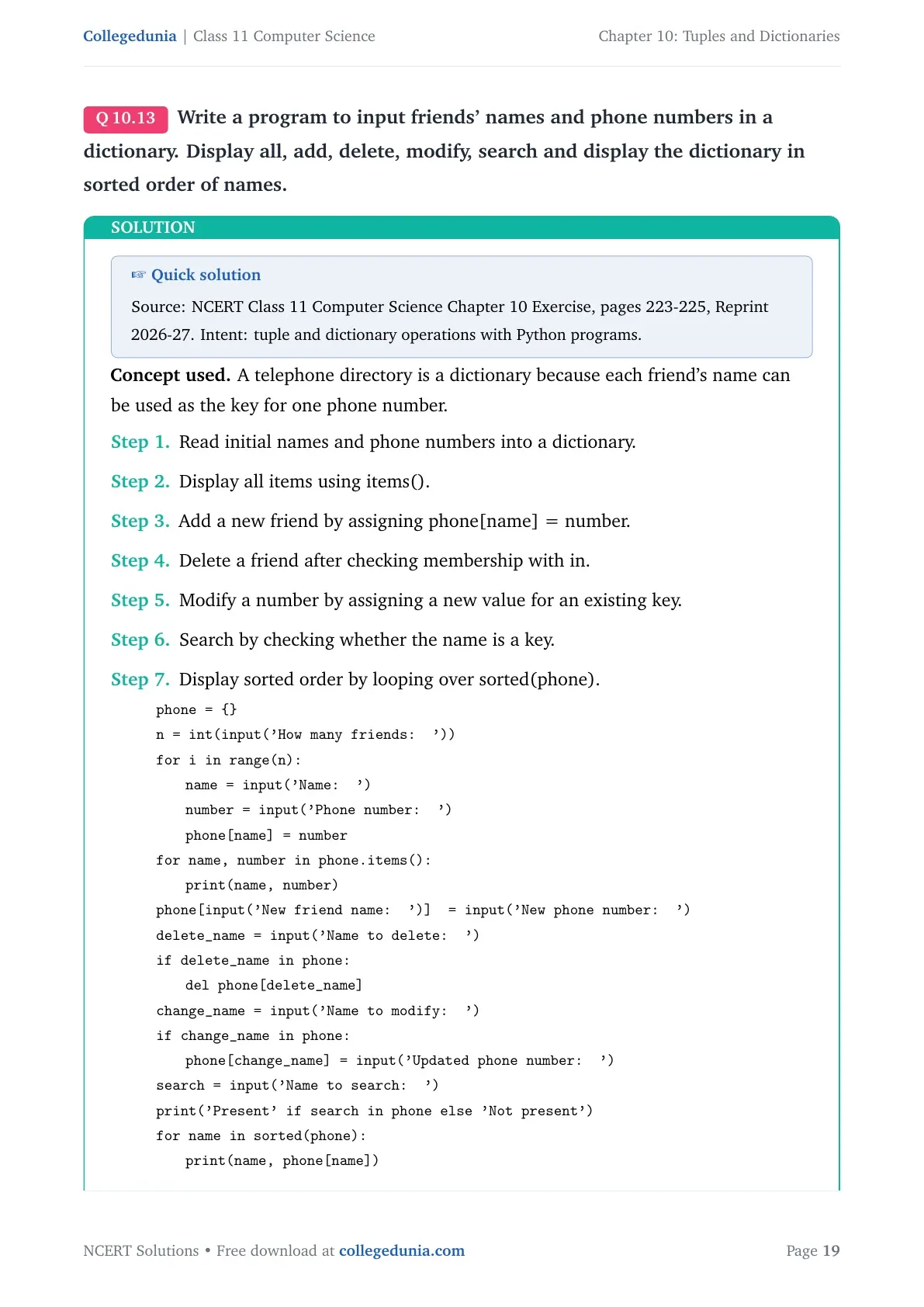
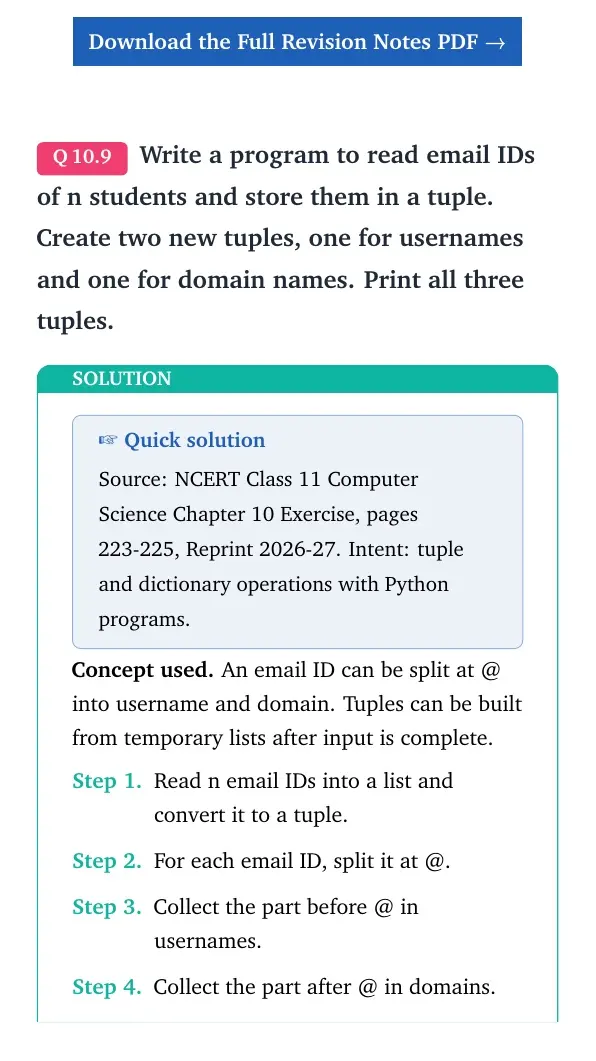
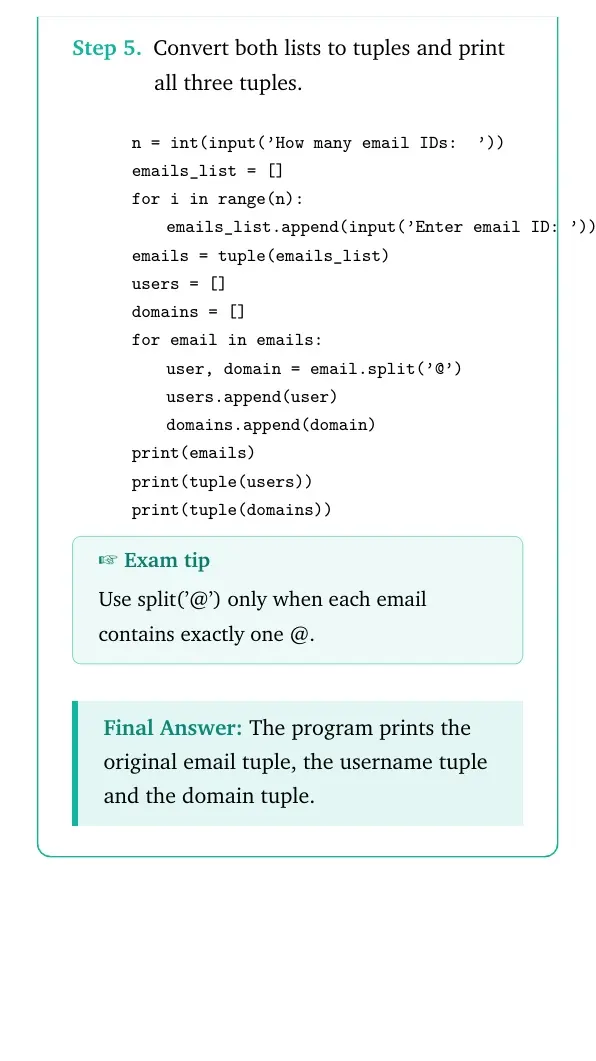
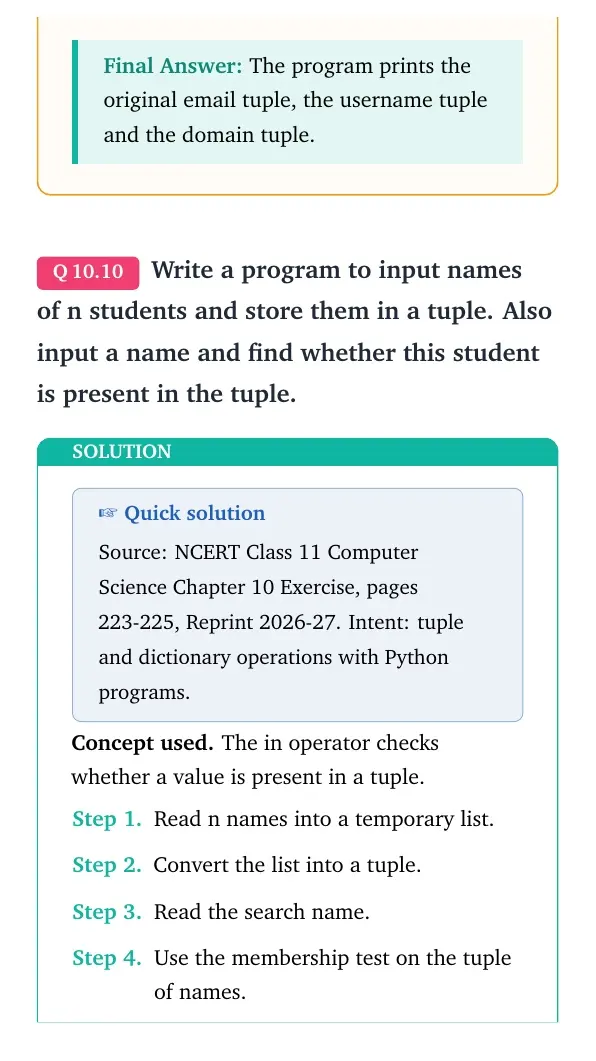
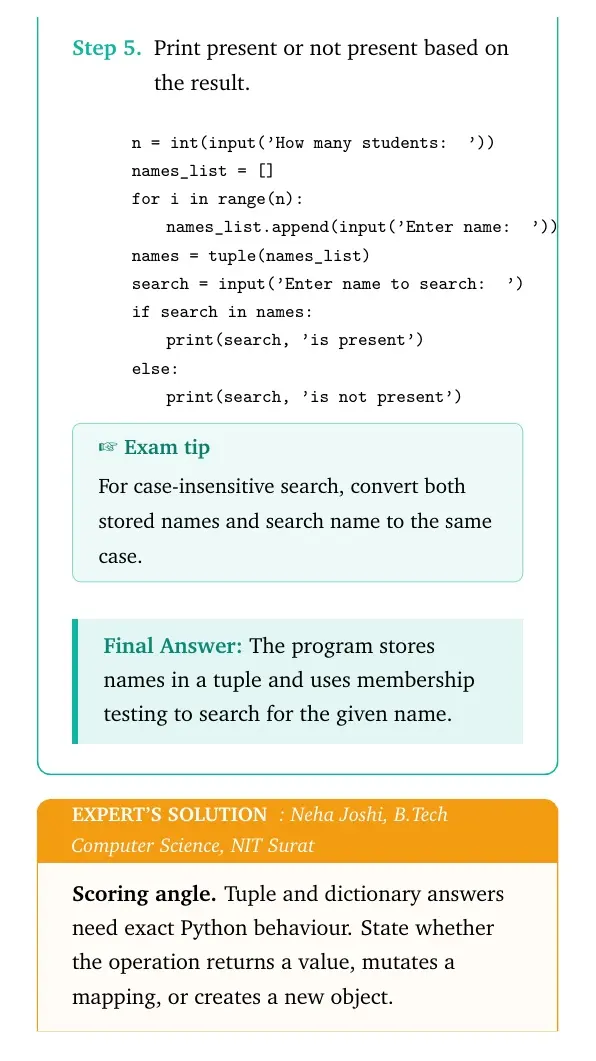
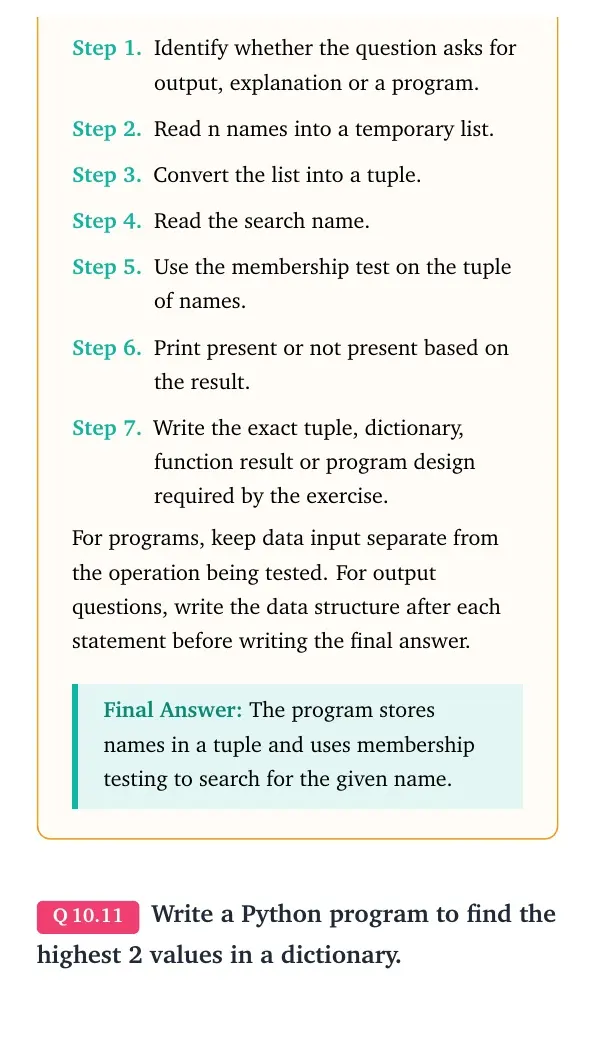
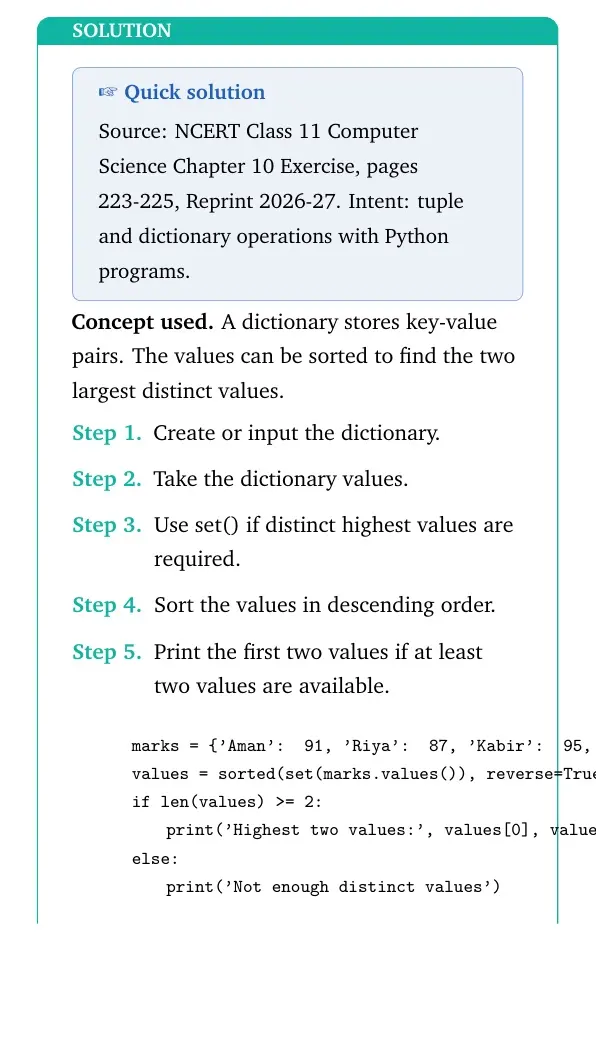
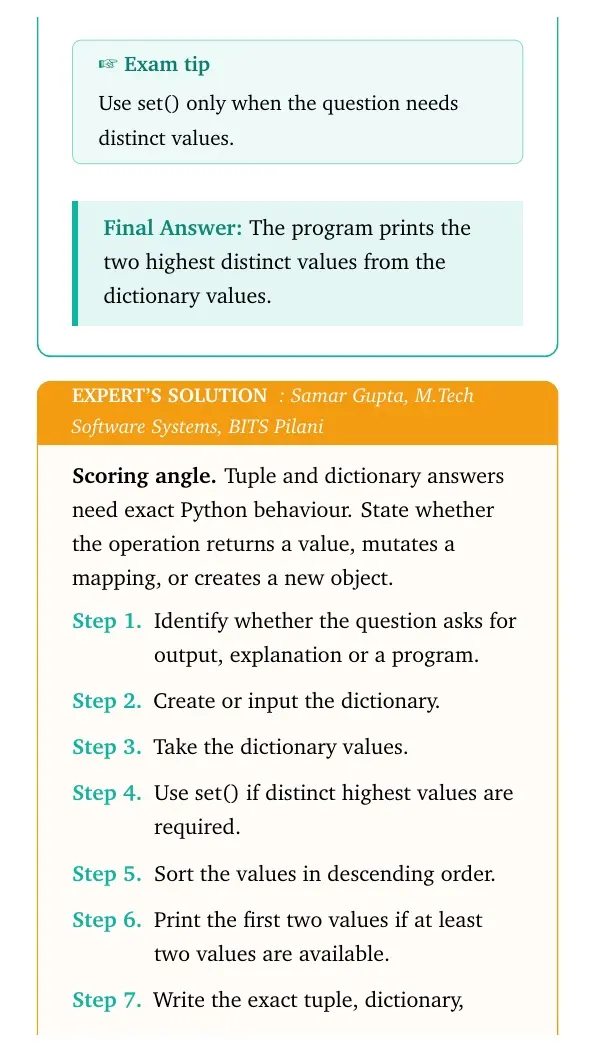
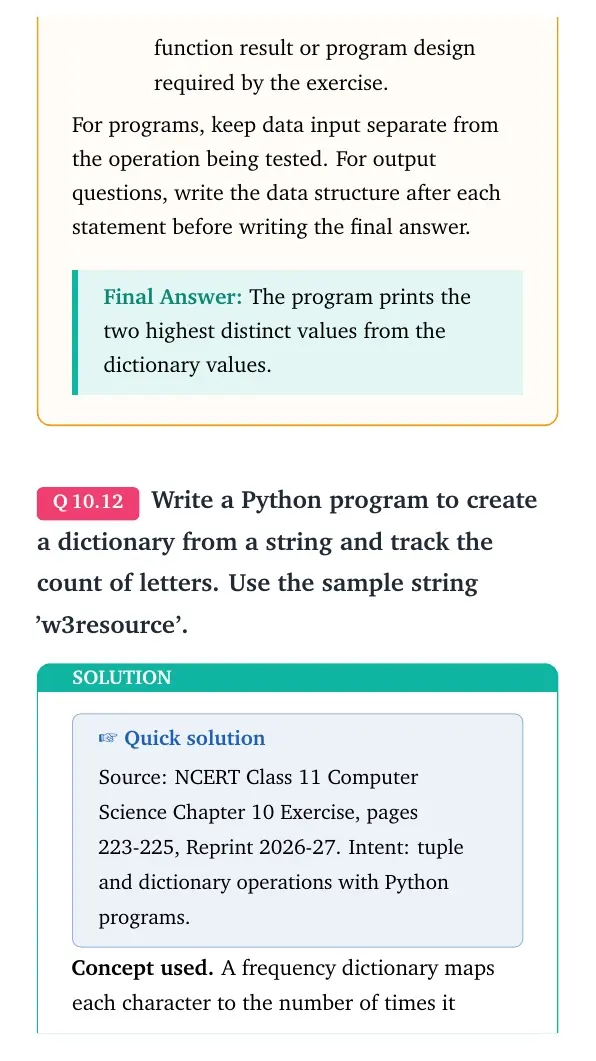
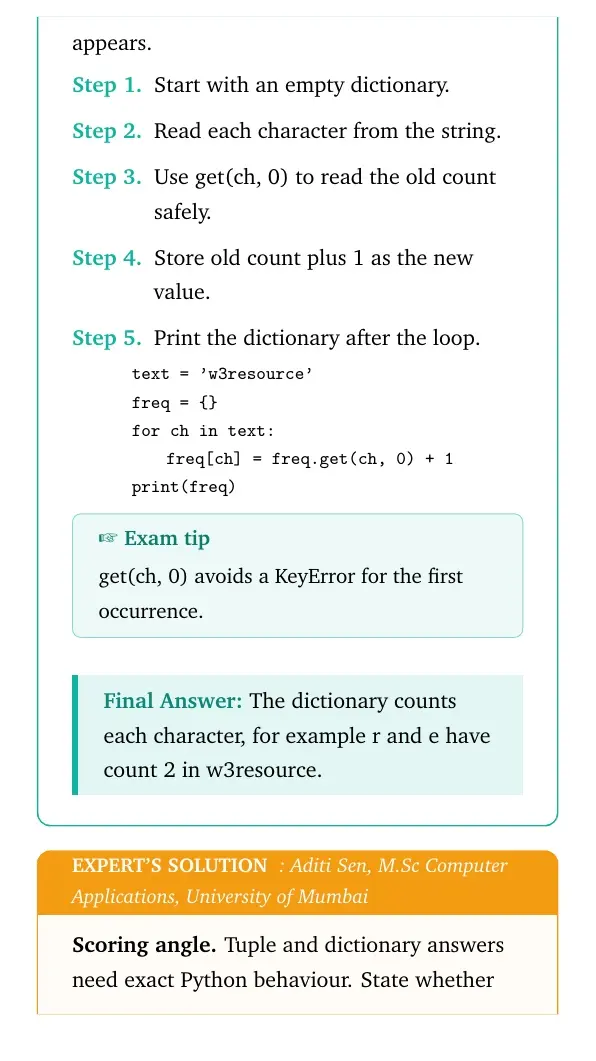
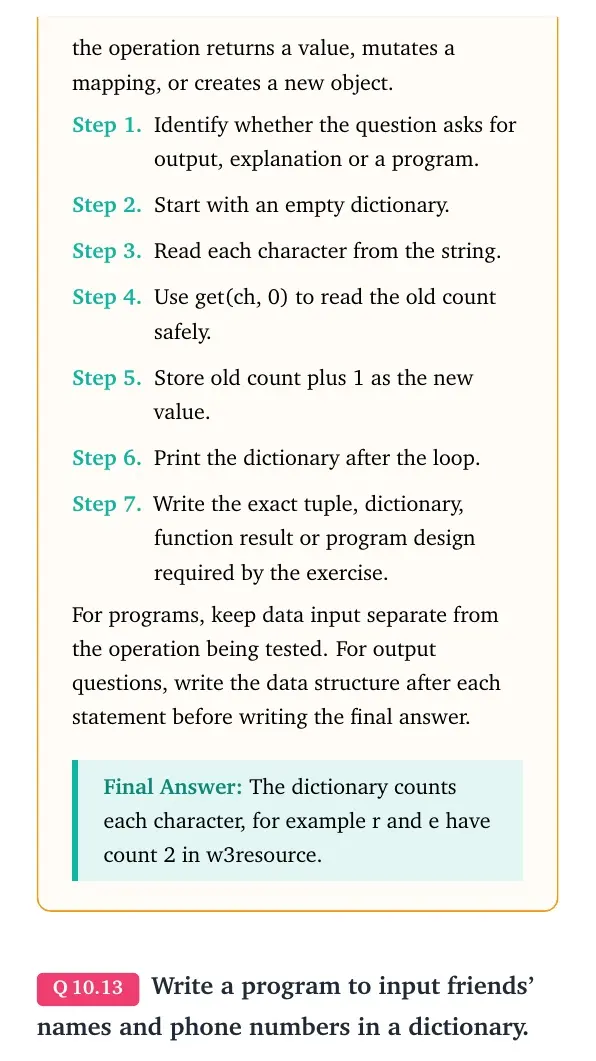
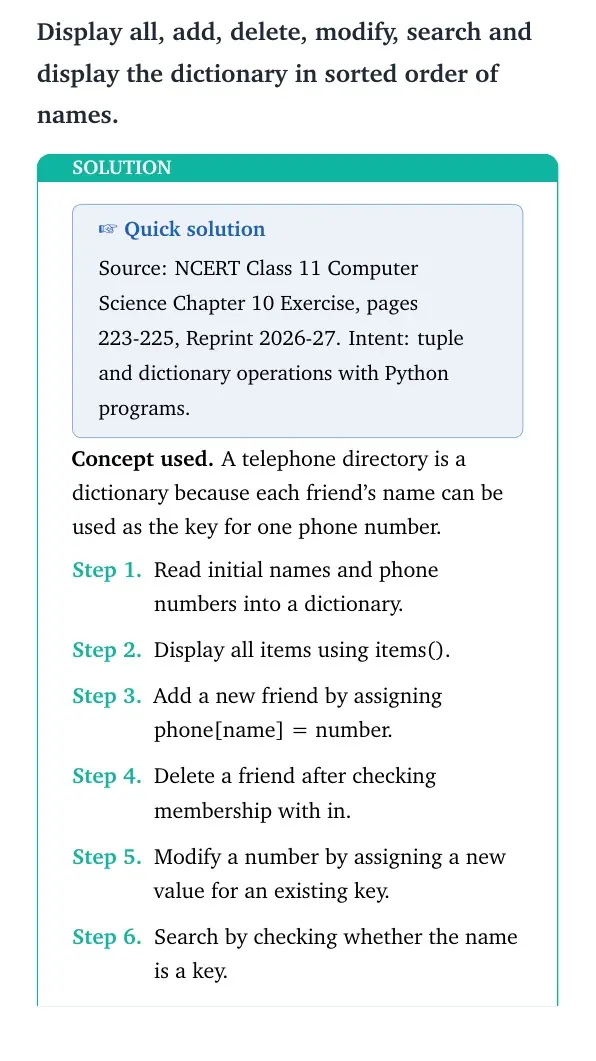
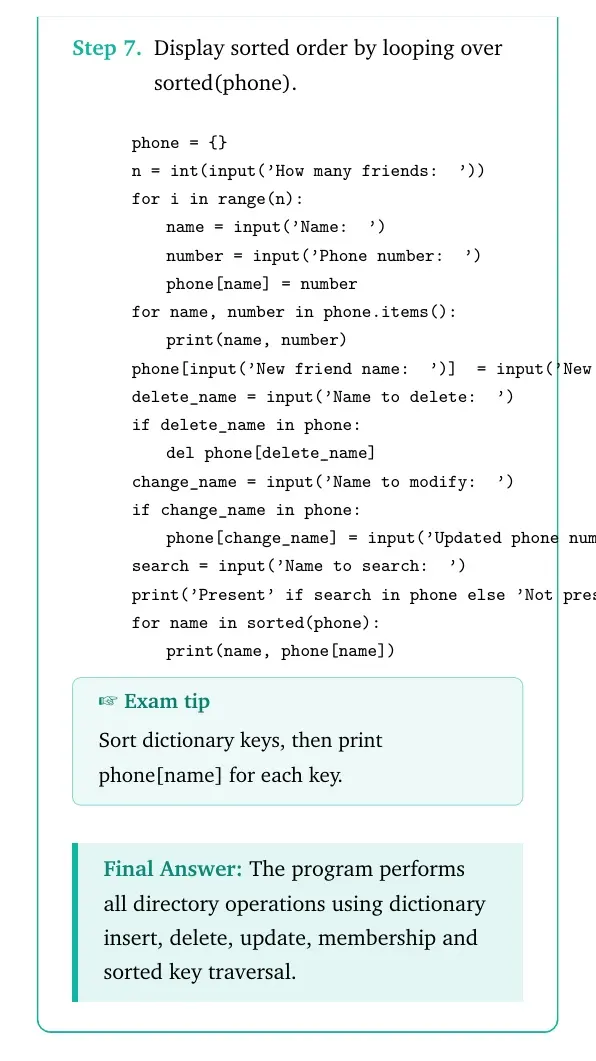
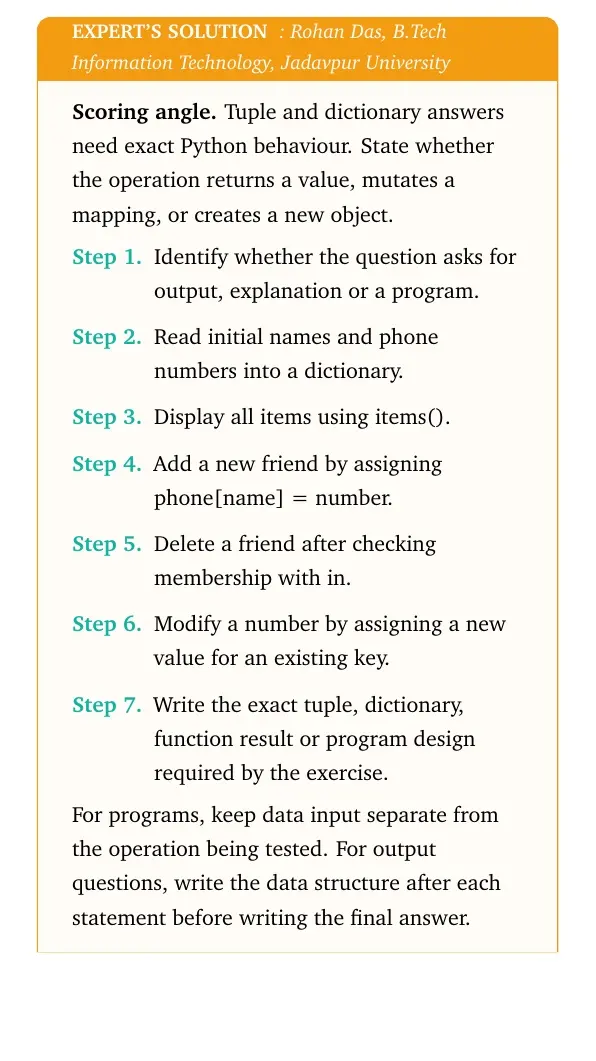
- Programming Q1 to Q5: email tuple processing, tuple search, highest dictionary values, character frequency and phone directory.
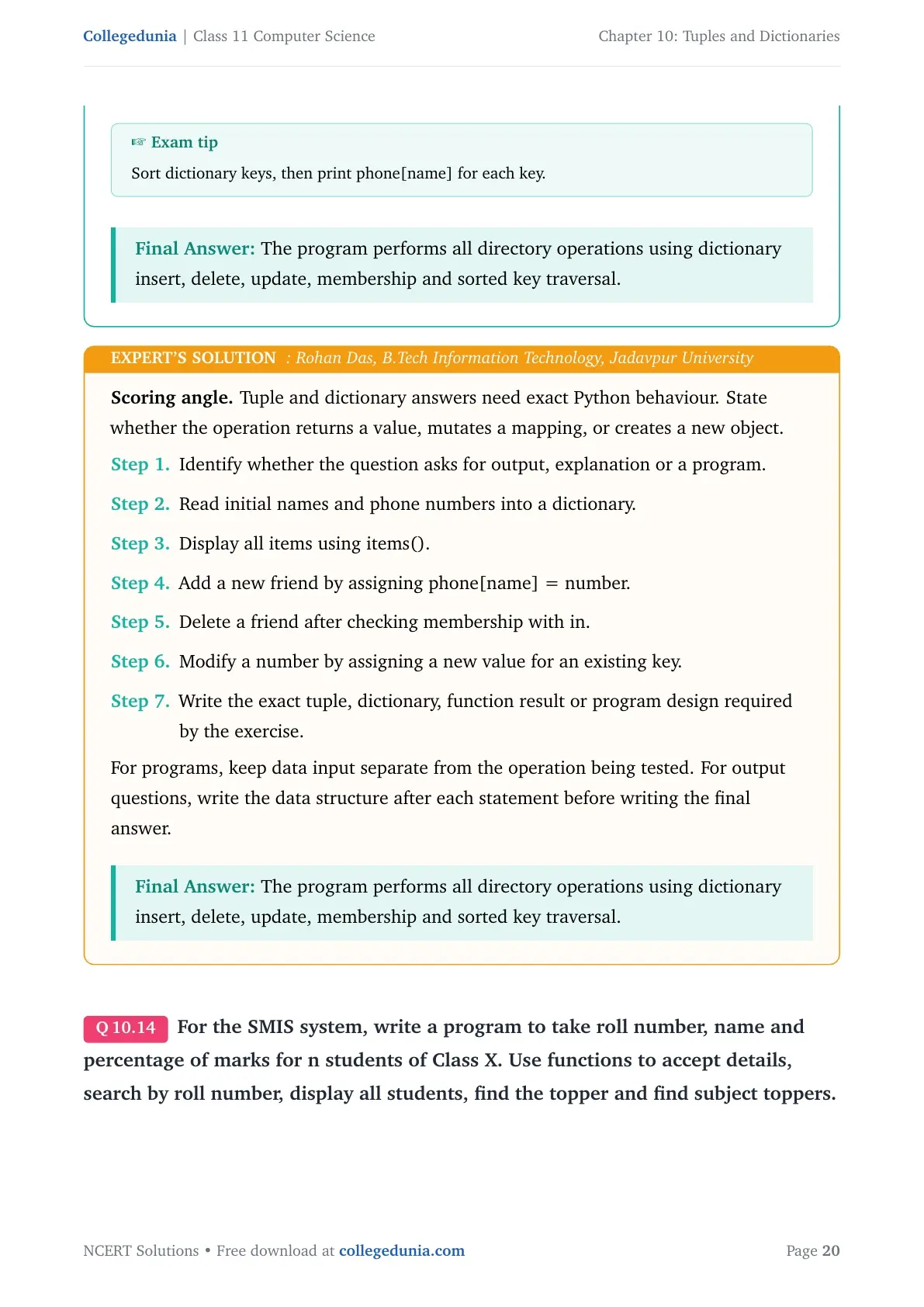
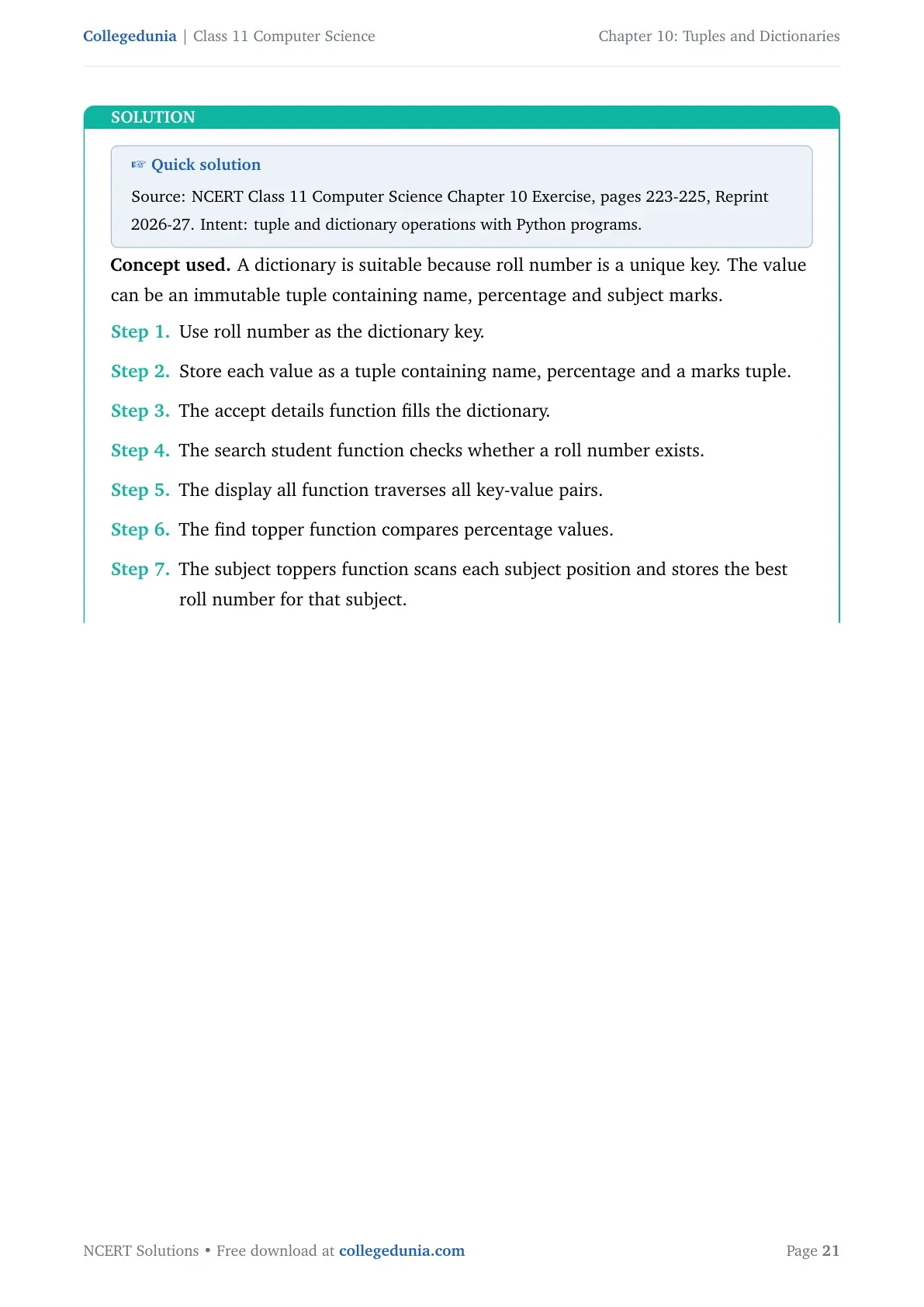
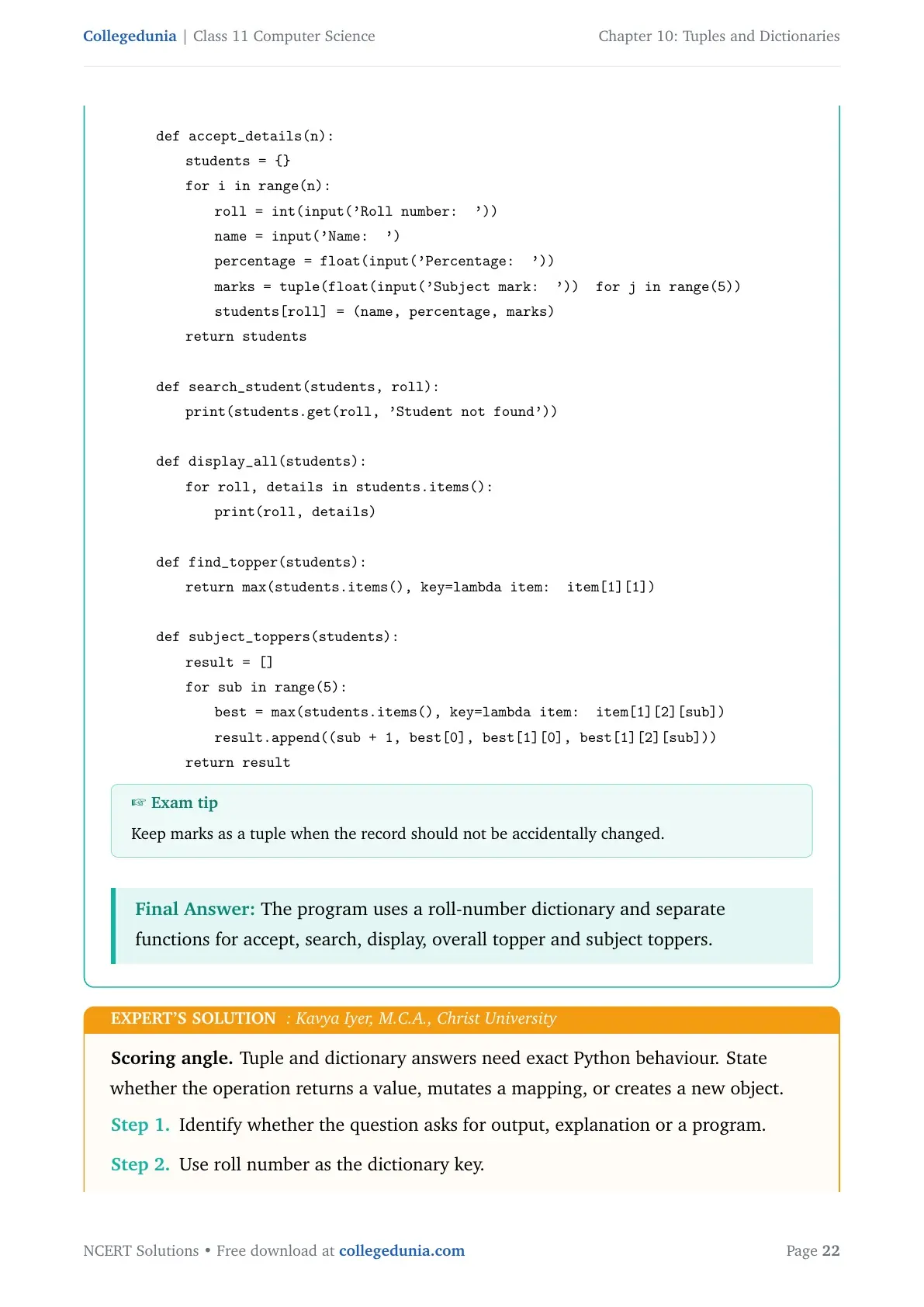
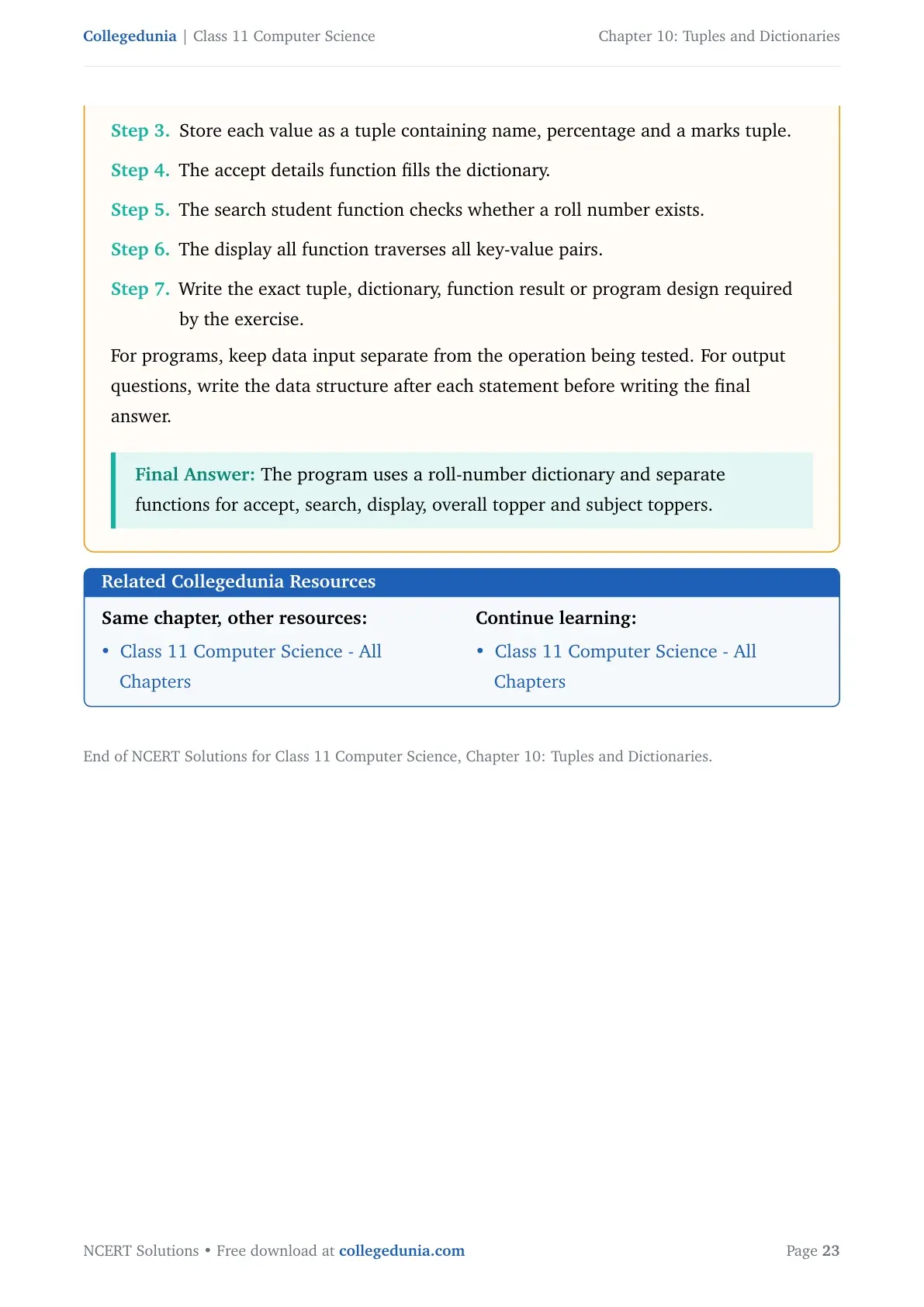
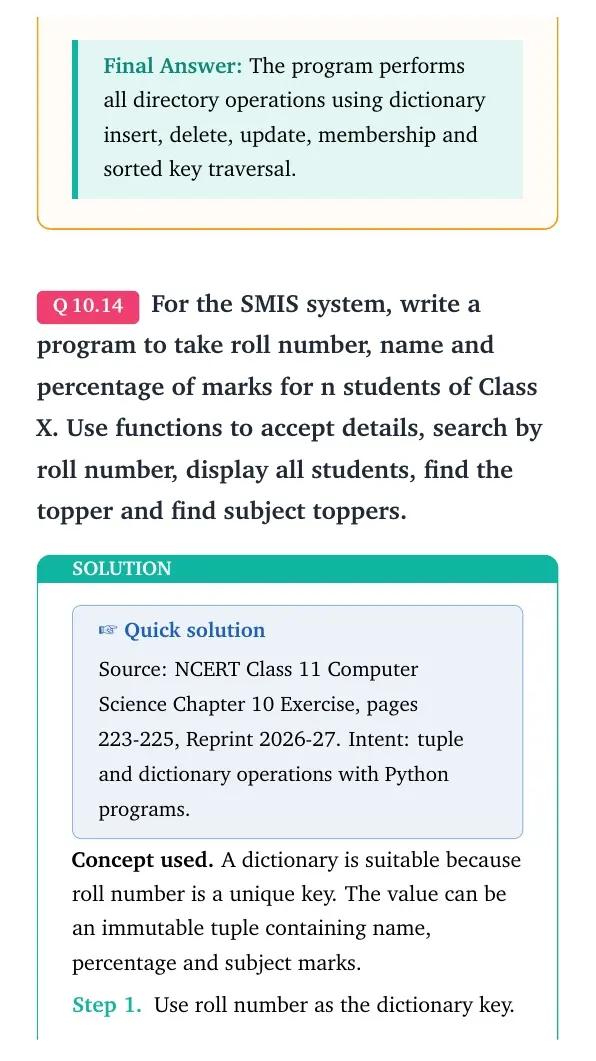
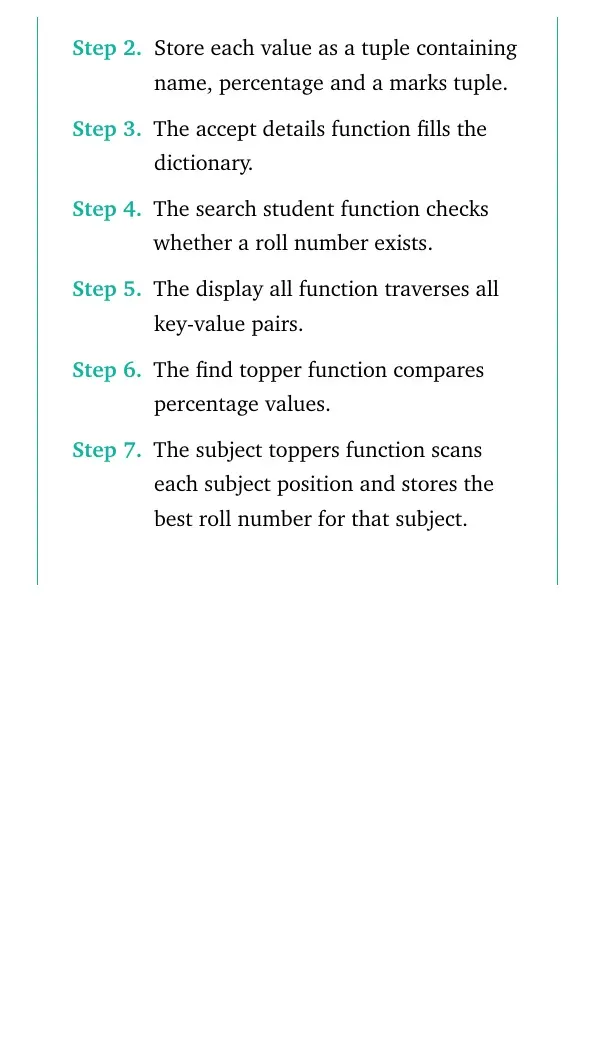
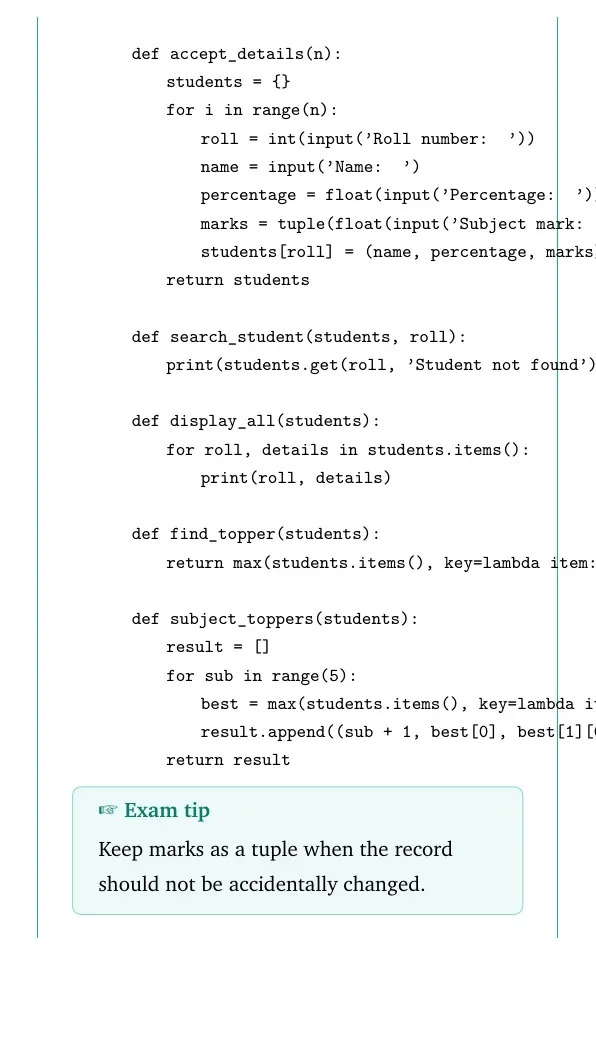
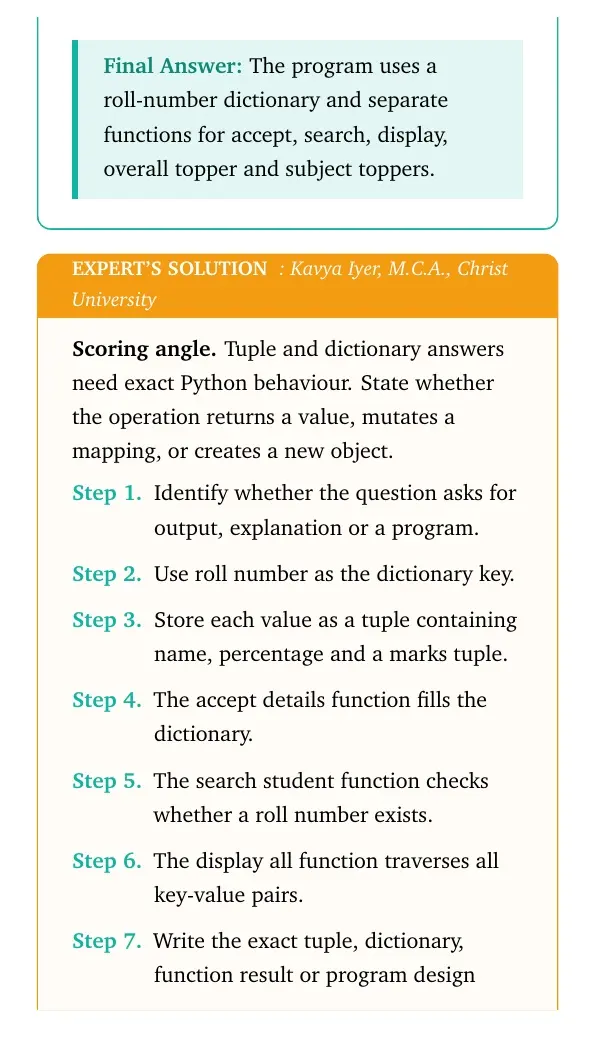
- Case study: roll-number based SMIS dictionary with accept, search, display and topper functions.
Class 11 Computer Science Tuples and Dictionaries Related Resources
| Resource | Best use | Link |
|---|---|---|
| Revision Notes | Revise tuple and dictionary rules quickly | Tuples and Dictionaries Notes |
| NCERT Book PDF | Read the official chapter examples | Tuples and Dictionaries Book PDF |
| Handwritten Notes | Use quick handwritten revision notes before practical work | Tuples and Dictionaries Handwritten Notes |
Class 11 Computer Science NCERT Solutions Chapter-wise Links
| Chapter | Title | NCERT Solutions |
|---|---|---|
| Chapter 6 | Flow of Control | Open NCERT Solutions |
| Chapter 7 | Functions | Open NCERT Solutions |
| Chapter 8 | Strings | Open NCERT Solutions |
| Chapter 9 | Lists | Open NCERT Solutions |
| Chapter 10 | Tuples and Dictionaries | Current chapter |
All NCERT Solutions for Class 11 Computer Science Chapter 10 Tuples and Dictionaries with Step-by-Step Solutions
Use the solved question cards below for a quick check, then download the full PDF for expert solutions and programming coverage. The companion file is also available at questions-ncert-solutions-class-11-computer-science-chapter-10-tuples-and-dictionaries.html.
Class 11 Computer Science Tuples and Dictionaries NCERT Solutions FAQs
Ques. What is the main topic of Class 11 Computer Science Chapter 10?
Ans. Chapter 10 explains Python tuples and dictionaries, including tuple methods, immutability, dictionary methods, key lookup and programs.
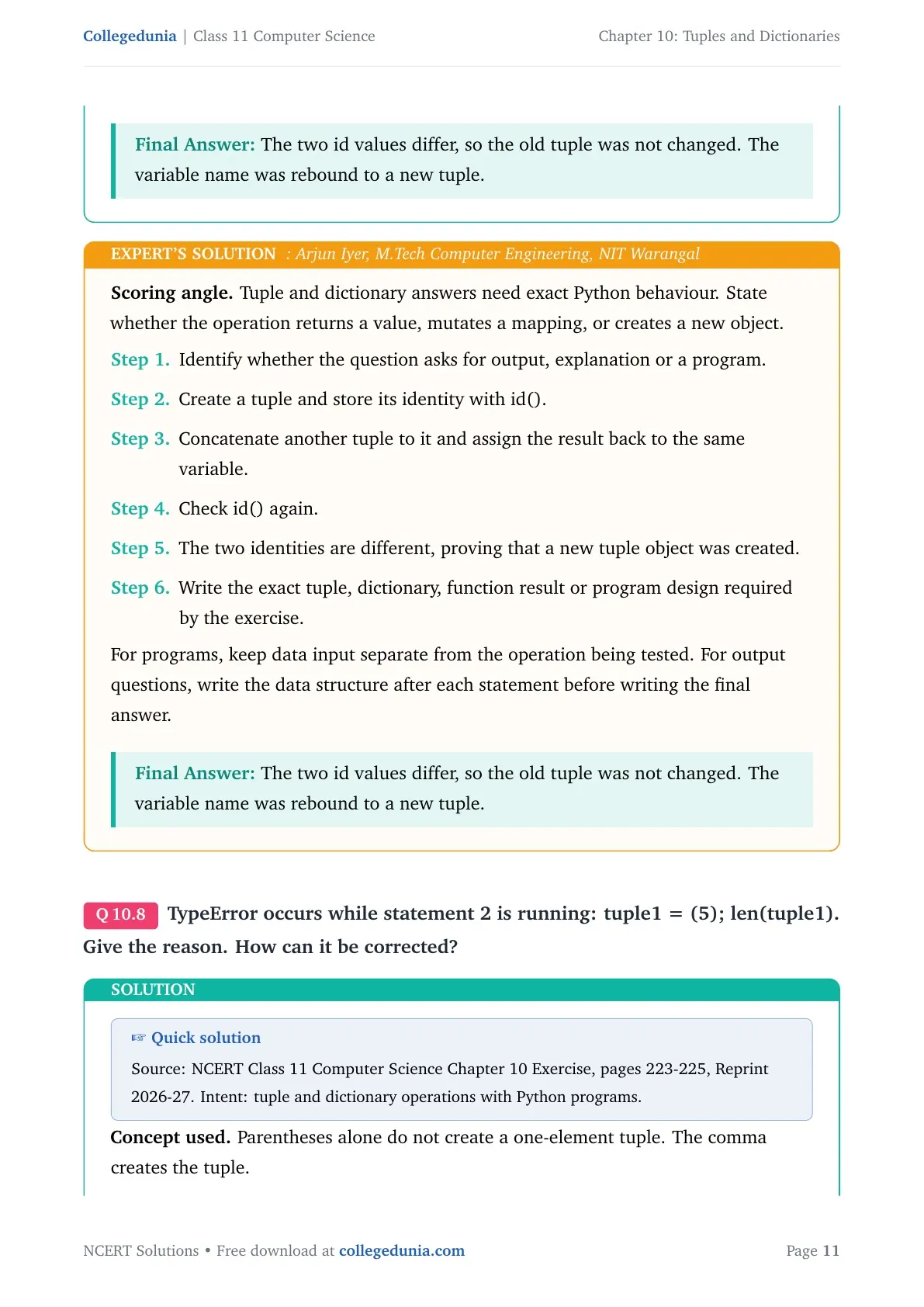
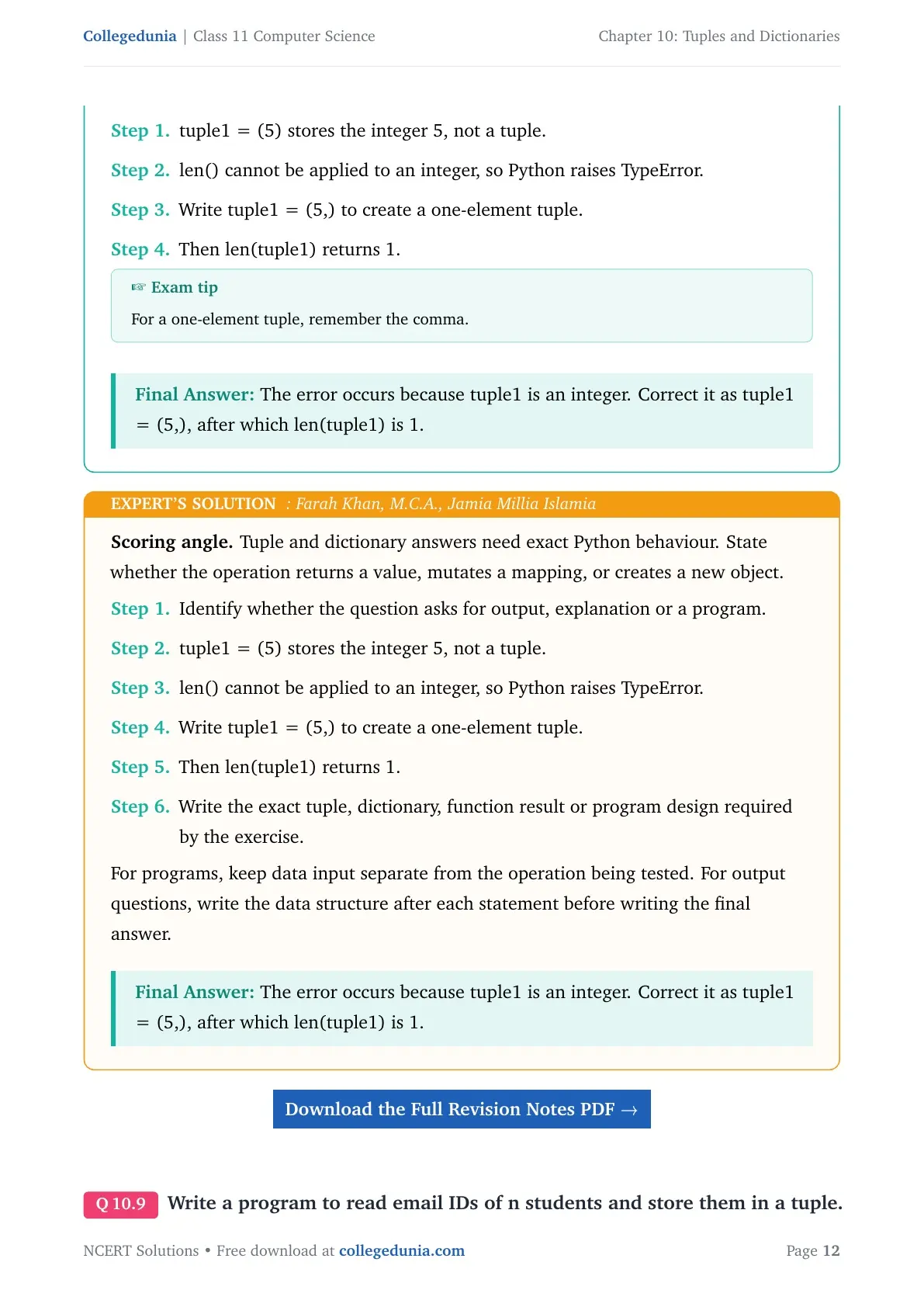
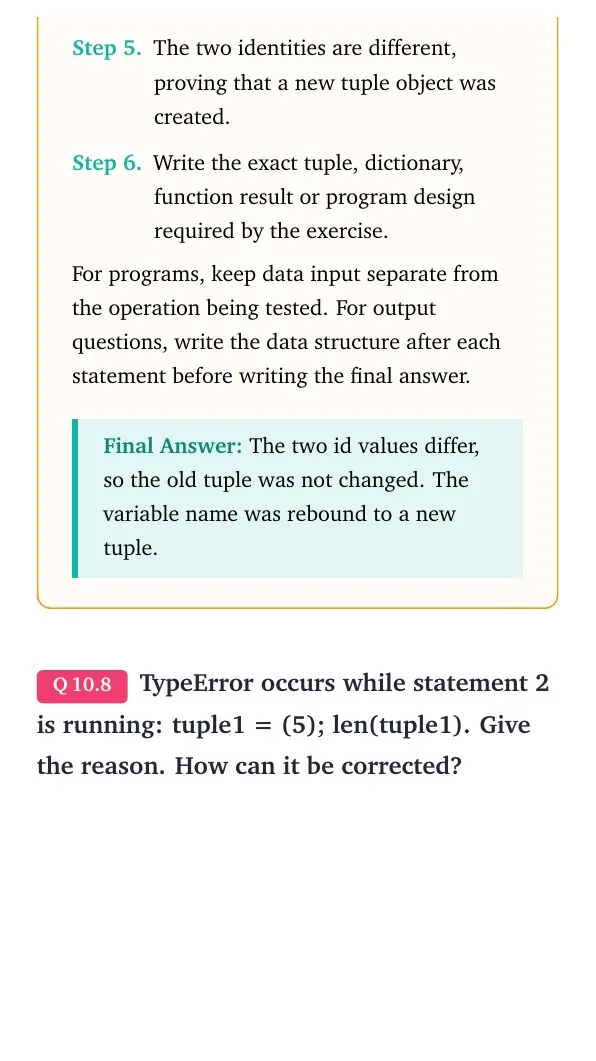
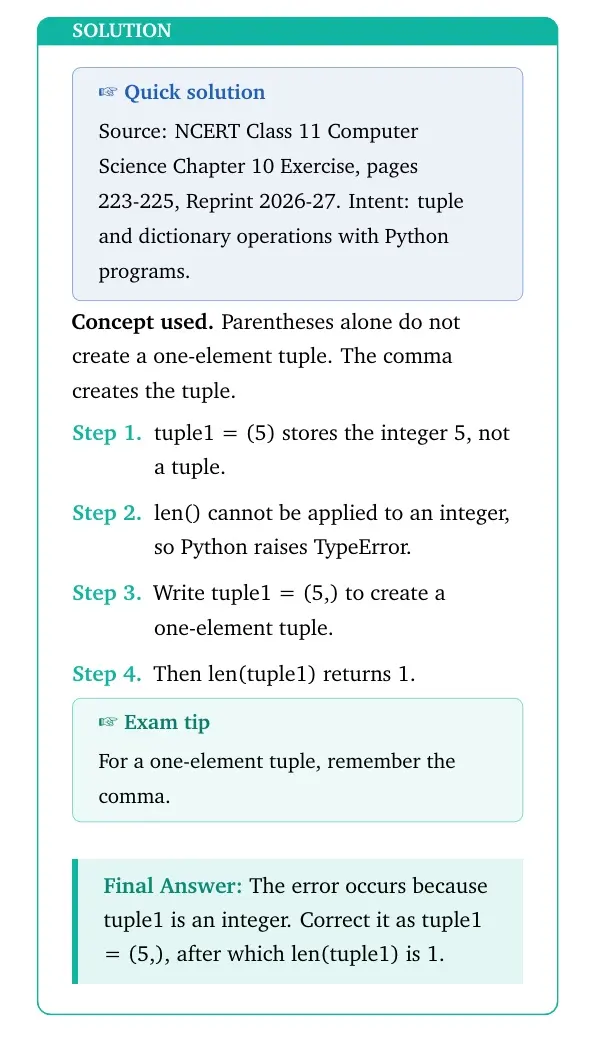
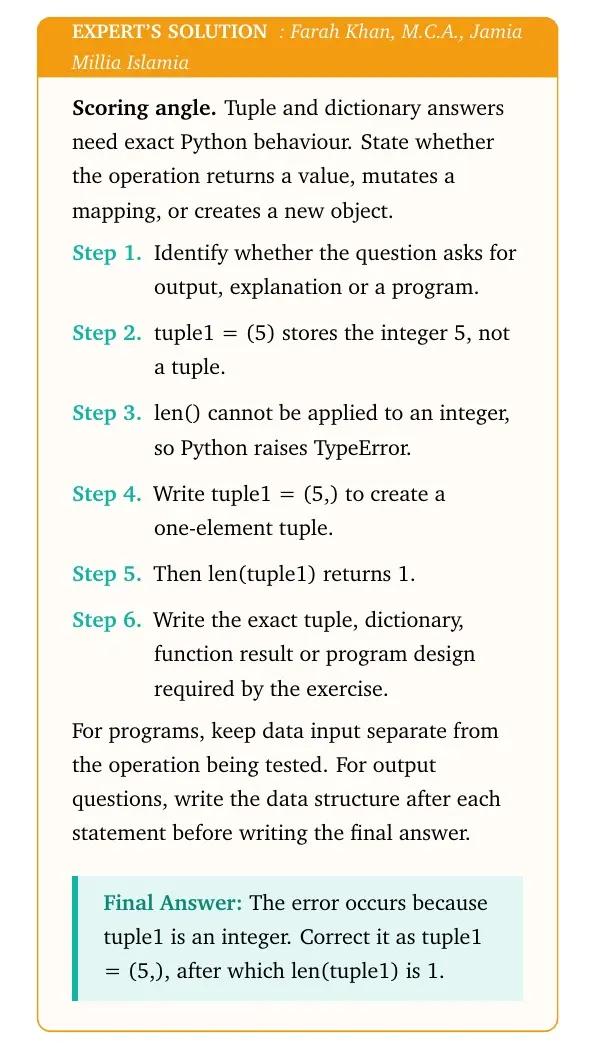
Ques. Why does tuple1 = (5) cause a TypeError with len?
Ans. It stores integer 5, not a tuple. Use tuple1 = (5,) to create a one-element tuple.
Ques. Does dictionary membership check keys or values?
Ans. Dictionary membership checks keys. For example, key in d tests whether key is present as a dictionary key.



Comments