





Robert Frost's Flamingo Poetry: A Roadside Stand is one of his longest political poems, first published in A Witness Tree (1942), with the 2026-27 NCERT print keeping the entire fifty-line poem and the four "Think it out" questions intact. This page hosts the ncert class 12 english book pdf chapter 10 Flamingo Poetry: A Roadside Stand, a unit-by-unit reading map, and the latest 2026-27 rationalisation note for English Core.
- CBSE Weightage: 8 marks, typically one extract-based question plus one long answer on social criticism, indifference of city folk, or the failure of paternal help
- CUET (UG) Relevance: 1 to 2 questions on tone, theme of rural-urban divide, and Frost's signature oxymoron in Section IA English
- Poem Length: Approximately 50 lines arranged as a single continuous verse paragraph in loose iambic pentameter with mostly couplet rhyme
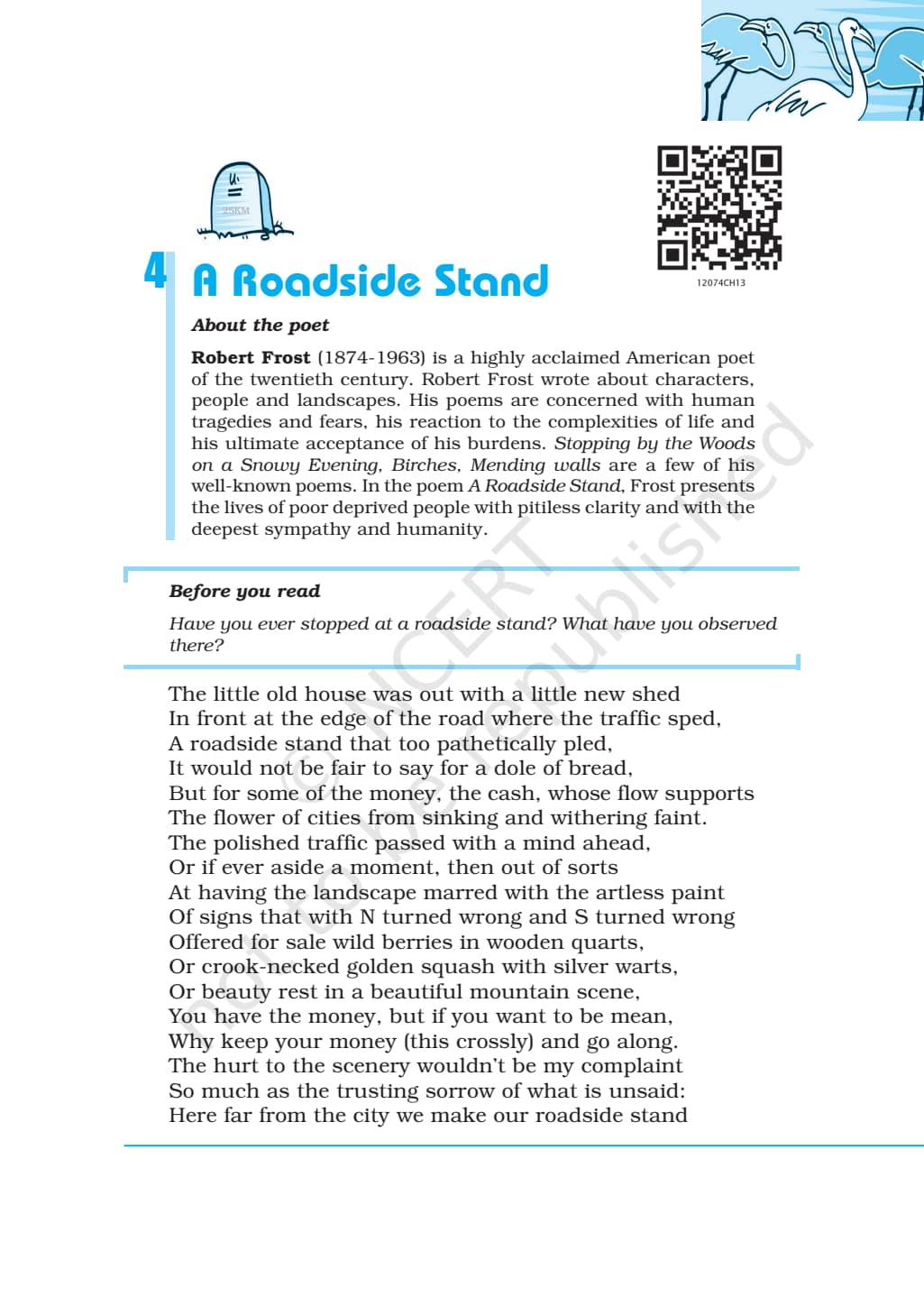
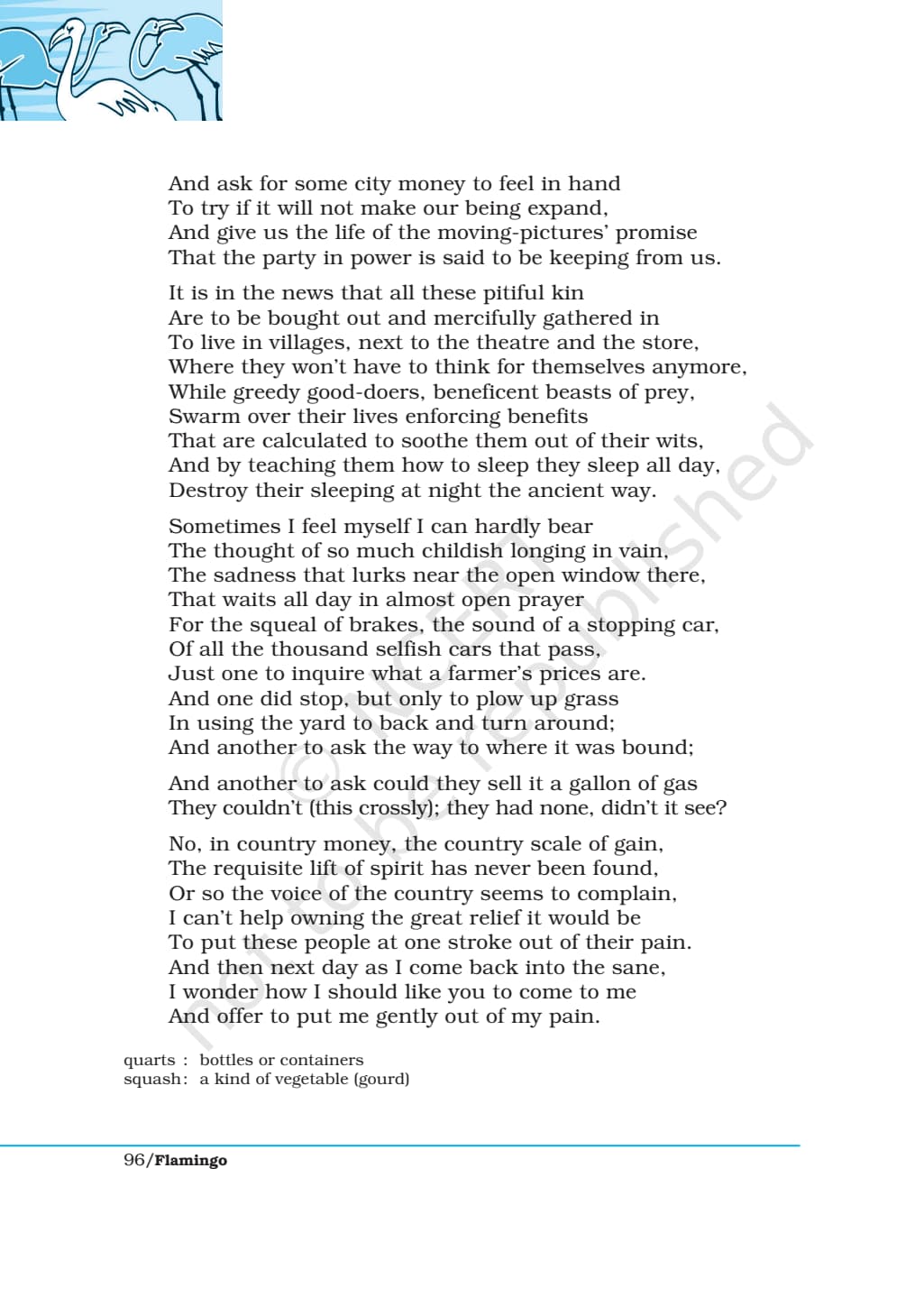
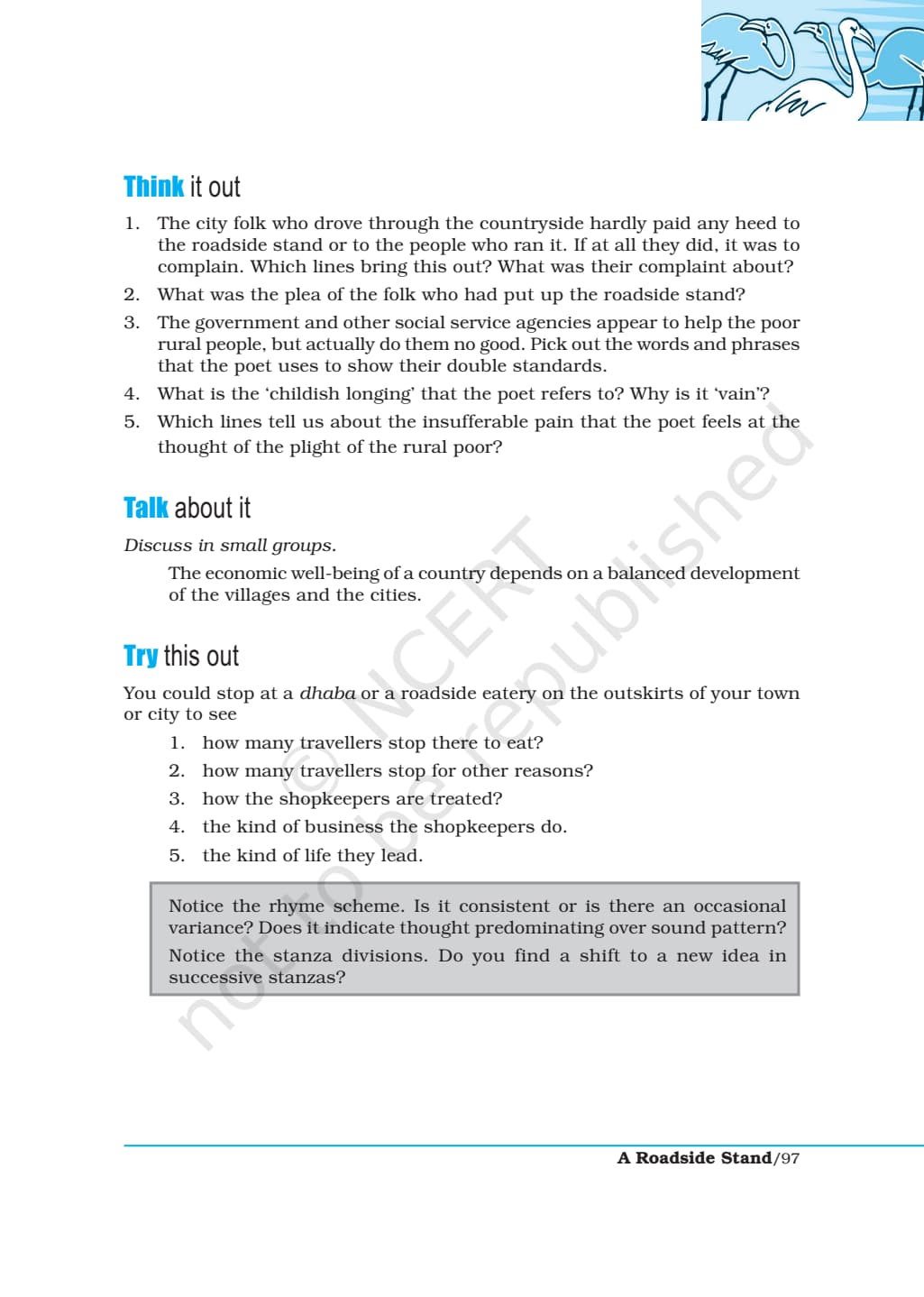
The three-page chapter is the longest in Flamingo Poetry, so the reading effort goes into Frost's tonal shifts (from observation, to anger at false benevolence, to grief over the country folk's childish longing); the page below maps every block in print order. Students often save the ncert class 12 english book pdf chapter 10 Flamingo Poetry: A Roadside Stand for offline revision before the boards.
This ncert class 12 english book pdf chapter 10 Flamingo Poetry: A Roadside Stand is the official NCERT print, served by Collegedunia in both Normal and HD format, aligned with the 2026-27 rationalised syllabus for Class 12 English Core.
Also Check:
A Roadside Stand NCERT Print - What's Inside Chapter 10
The poem closes the Poetry section of Flamingo as the fourth poem in the sequence. The print runs across three pages with the poem flowing as one continuous verse paragraph and the four end-of-chapter prompts on the final page. The "Think it out" section is labelled exactly as in the print; you can use it to map your answers to the textbook order.
| Section in Print | Pages | What it covers |
|---|---|---|
| The poem (full text, c.50 lines) | Pages 1-2 | The opening scene of the stand, the city's indifference, the three-layer plea, the false-help passage with "greedy good-doers, beneficent beasts of prey", and the closing reversal |
| Think it out (4 questions) | Page 3 | City complaint (Q1), folk's plea (Q2), how government appears to help but does not (Q3), childish longing in vain (Q4) |
| Note on Robert Frost | Page 3 | Brief biographical note: born 1874, died 1963, four-time Pulitzer Prize winner, poem from A Witness Tree (1942) |
Flamingo Poetry a Roadside Stand Video Chapter Walkthrough
Source: Magnet Brains on YouTube
Class 12 English Flamingo Chapter 10 PDF - Why Download the NCERT Print
Most teachers will tell you to read poetry chapters from the official NCERT print, not from a third-party summary, because exam extracts are quoted in the exact line-break sequence of the textbook. Downloading the ncert class 12 english book pdf chapter 10 Flamingo Poetry: A Roadside Stand preserves that line-break sequence and the original punctuation.
- Verbatim extract-based questions: The CBSE paper quotes lines exactly as they appear in the print. Reading from the PDF locks in the correct line-breaks for "greedy good-doers, beneficent beasts of prey, / Swarm over their lives enforcing benefits..."
- Couplet recognition: The rhyme drifts between perfect and near-couplets; the visual layout of the print helps you see where it does and does not lock in.
- Spelling of "good-doers": The print uses the hyphenated "good-doers". A digital summary often runs them together as "gooddoers" or splits them as "good doers"; both are marked wrong in CBSE.
- 2026-27 rationalisation: The current print is the rationalised 2026-27 edition; the poem is retained in full with no deletions.
About Robert Frost
Robert Frost was born in San Francisco in 1874 and died in Boston in 1963. He spent most of his adult life on a small farm in New England, and the rural northeast is the imaginative landscape of nearly every poem he wrote. His major collections include A Boy's Will (1913), North of Boston (1914), Mountain Interval (1916), New Hampshire (1923, awarded the Pulitzer Prize), A Further Range (1936), and A Witness Tree (1942, from which the present poem is taken). He won the Pulitzer Prize four times - the most for any American poet.
Related Links:
More A Roadside Stand English Class 12 Resources
A Roadside Stand Class 12 NCERT Book PDF FAQs
Ques. How many pages is A Roadside Stand Chapter 10 in the Flamingo print?
Ans. The chapter runs over 3 pages in the NCERT Flamingo print - the poem itself across the first two pages and the "Think it out" prompts plus a short note on Frost on page 3.
Ques. Is A Roadside Stand in the 2026-27 CBSE Class 12 English syllabus?
Ans. Yes. A Roadside Stand is Chapter 10 in the Flamingo textbook of the 2026-27 CBSE Class 12 English Core syllabus. The full poem and all four "Think it out" questions are retained in the rationalised current print.
Ques. Who is the author of A Roadside Stand?
Ans. The poem is by Robert Frost (1874-1963), an American poet who spent most of his adult life on a small farm in New England. The poem was first published in his 1942 collection A Witness Tree.
Ques. What is the form of A Roadside Stand?
Ans. The poem is in loose iambic pentameter with mostly couplet rhyme, written as one continuous verse paragraph. Unlike the other Flamingo poems, it is not divided into named stanzas - the layout is one long visual breath.
Ques. Can I download the official NCERT PDF of A Roadside Stand?
Ans. Yes. The free official NCERT print of A Roadside Stand (Class 12 Flamingo Chapter 10) is available on this page. Both Normal and HD versions are free and match the 2026-27 NCERT rationalised print exactly.
Ques. What is the central theme of A Roadside Stand?
Ans. The central theme is the gap between rural poverty and urban prosperity, and the failure of paternal help to bridge it. The poem watches a small wooden stand begging silently for "city money" while "polished traffic" speeds past, and attacks the "greedy good-doers, beneficent beasts of prey" who plan to relocate the country folk into model villages.



Comments