




Linear Programming is the chapter where most students lose marks by drawing the feasible region wrong.
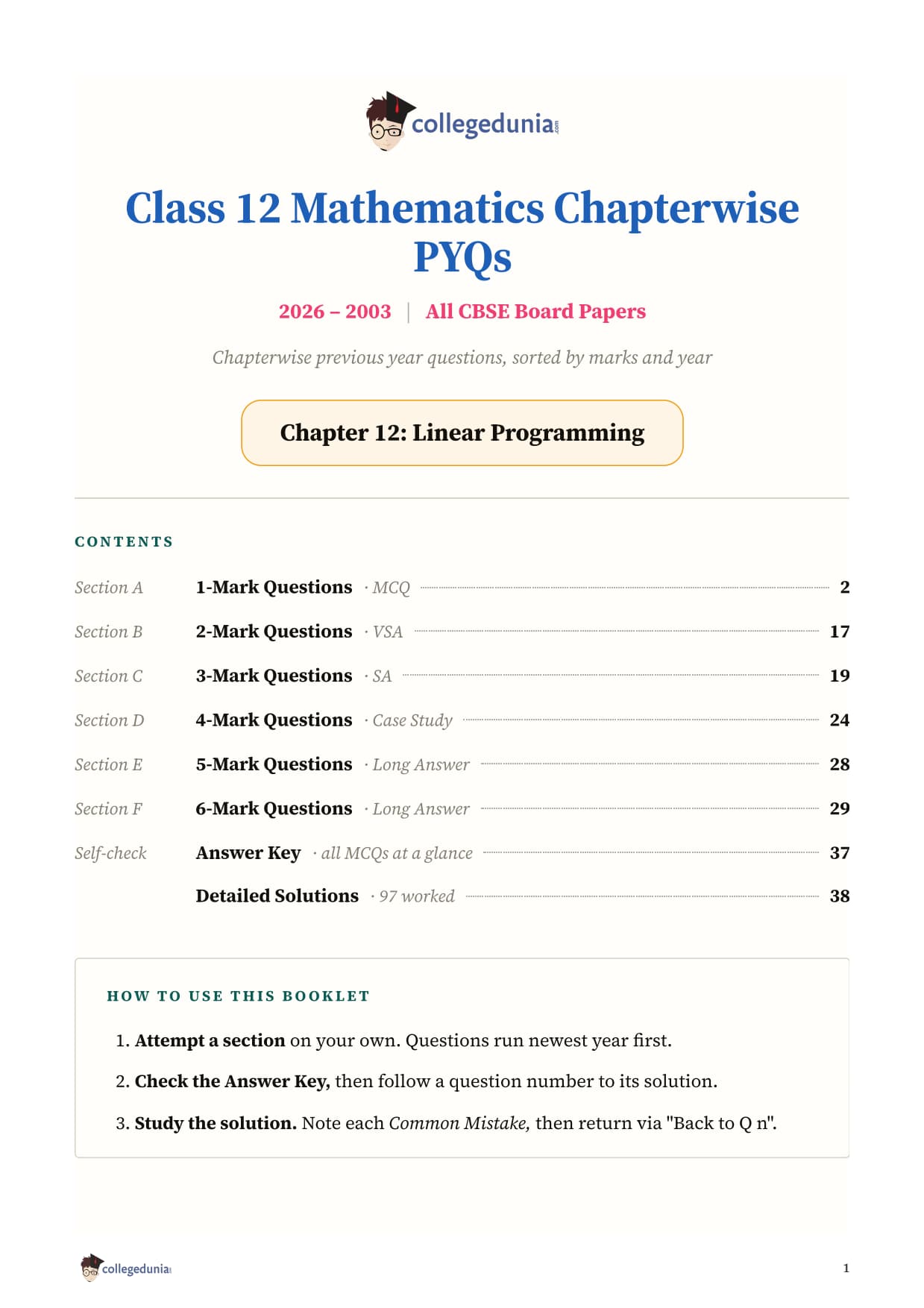
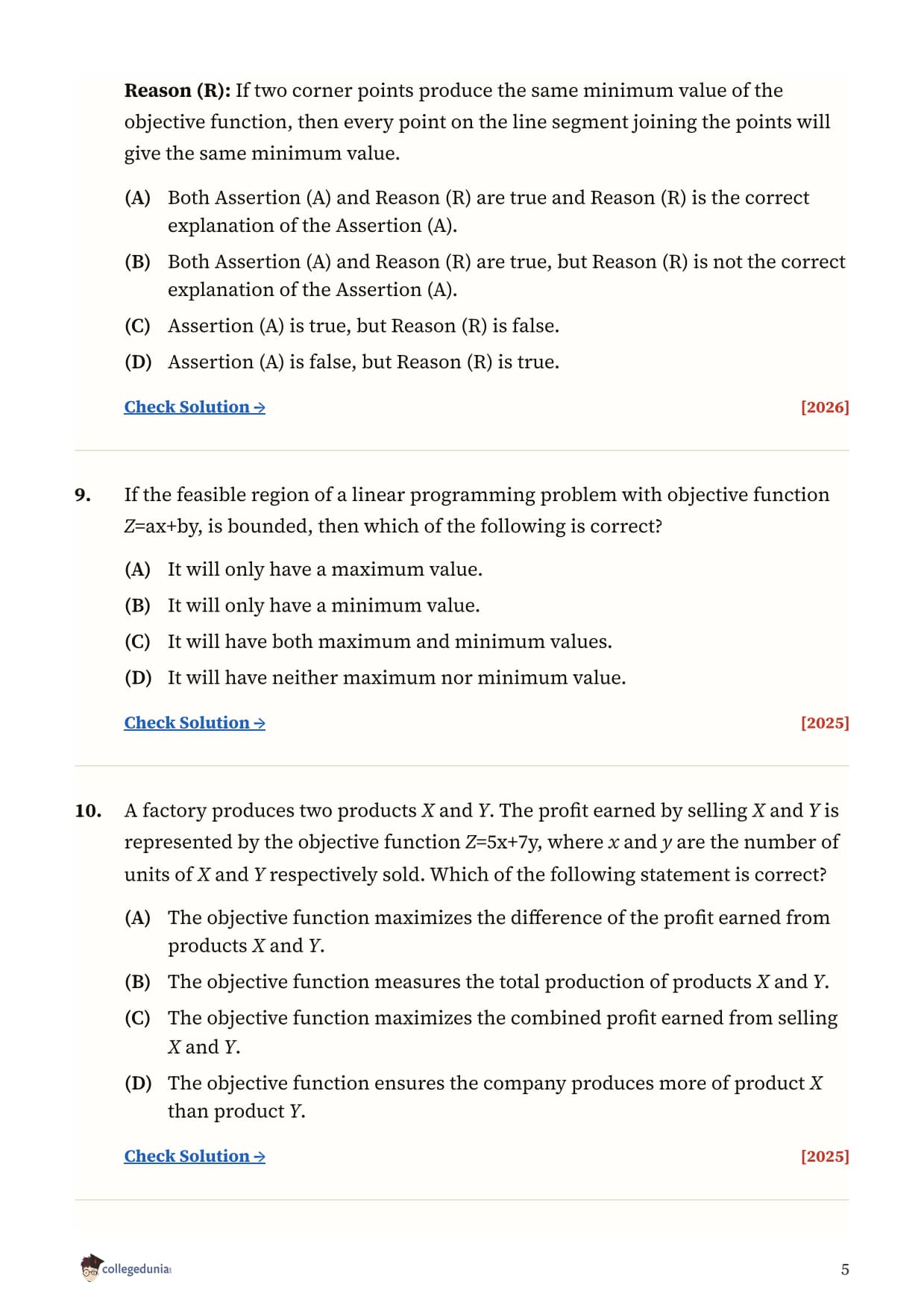
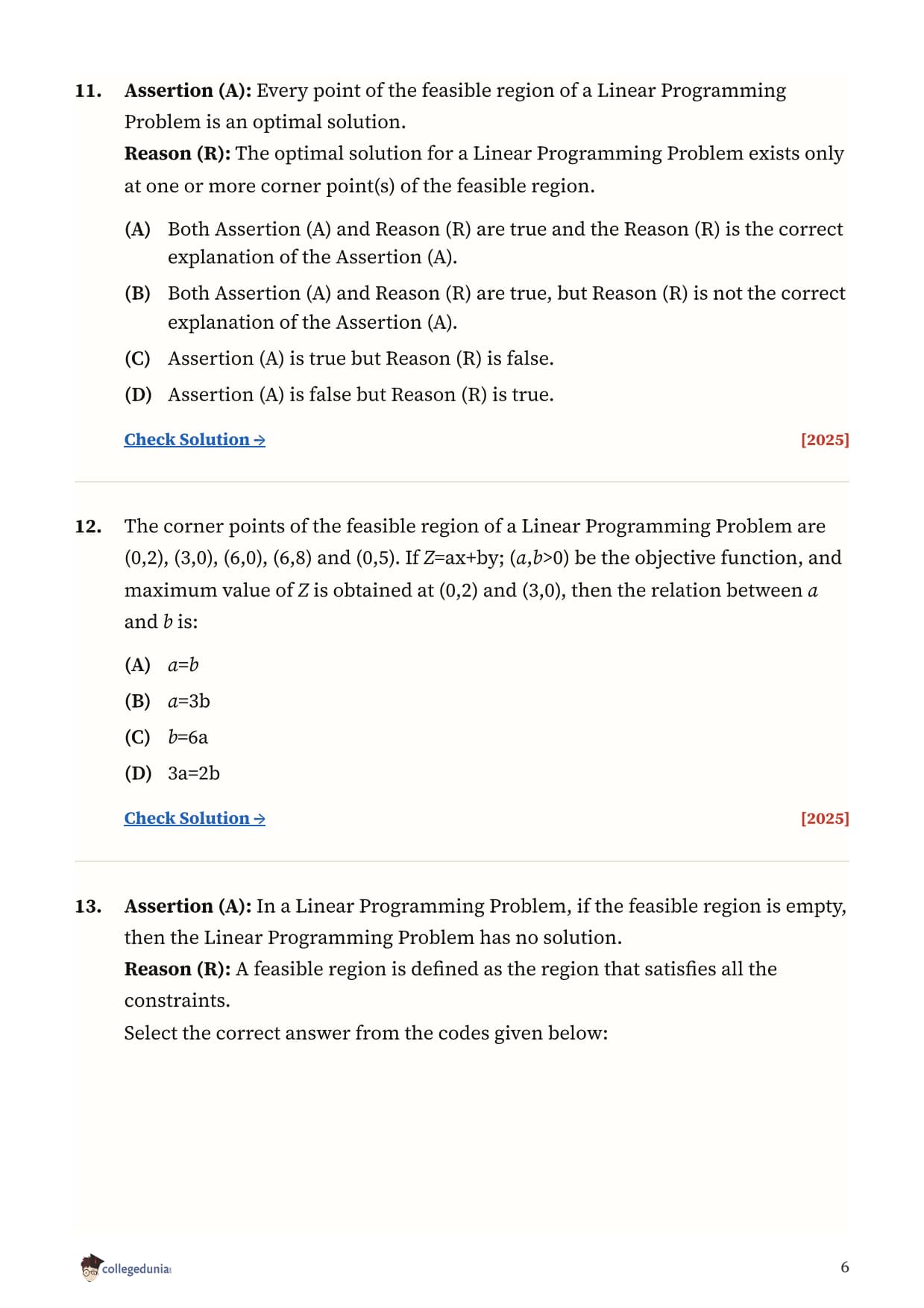
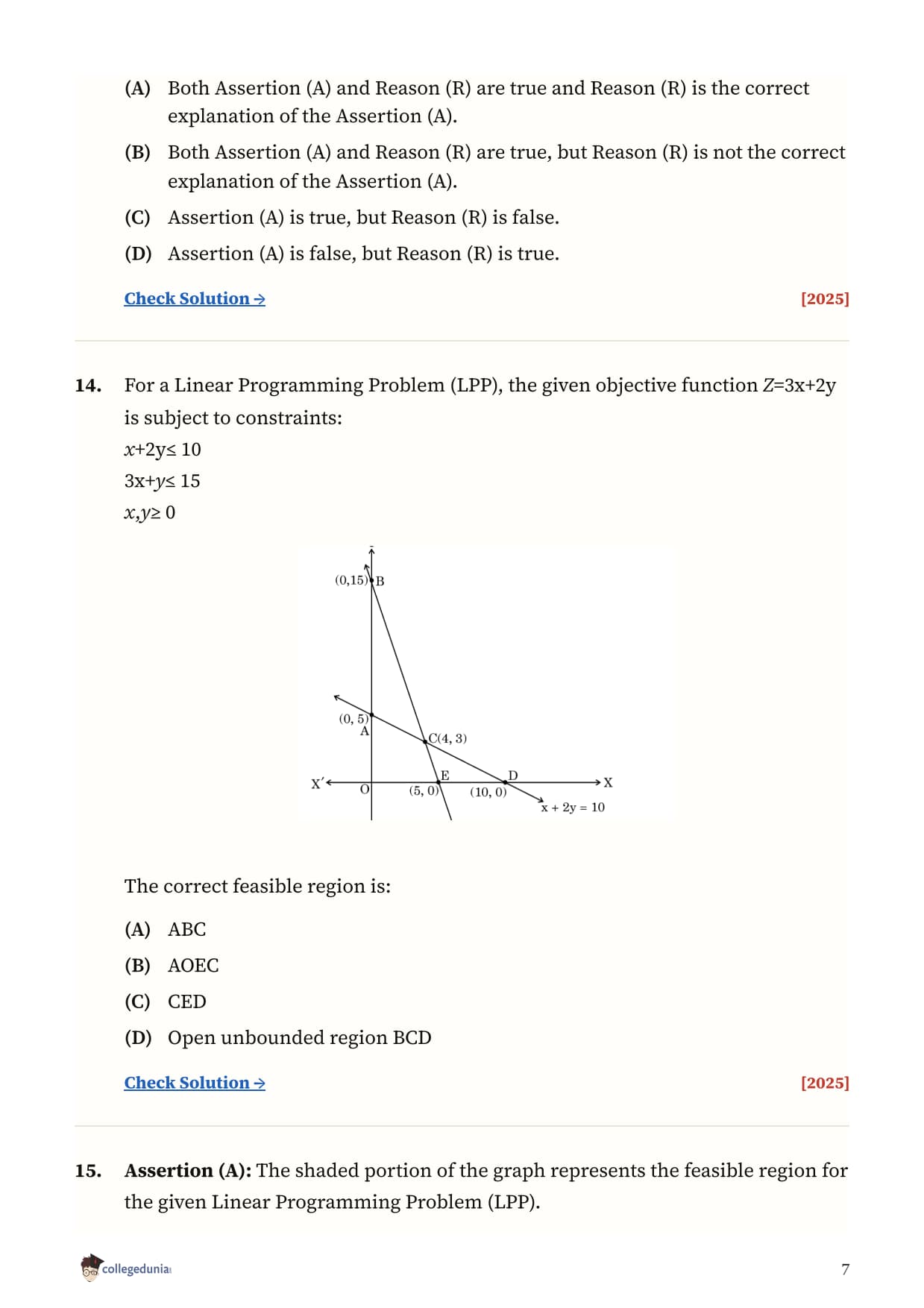
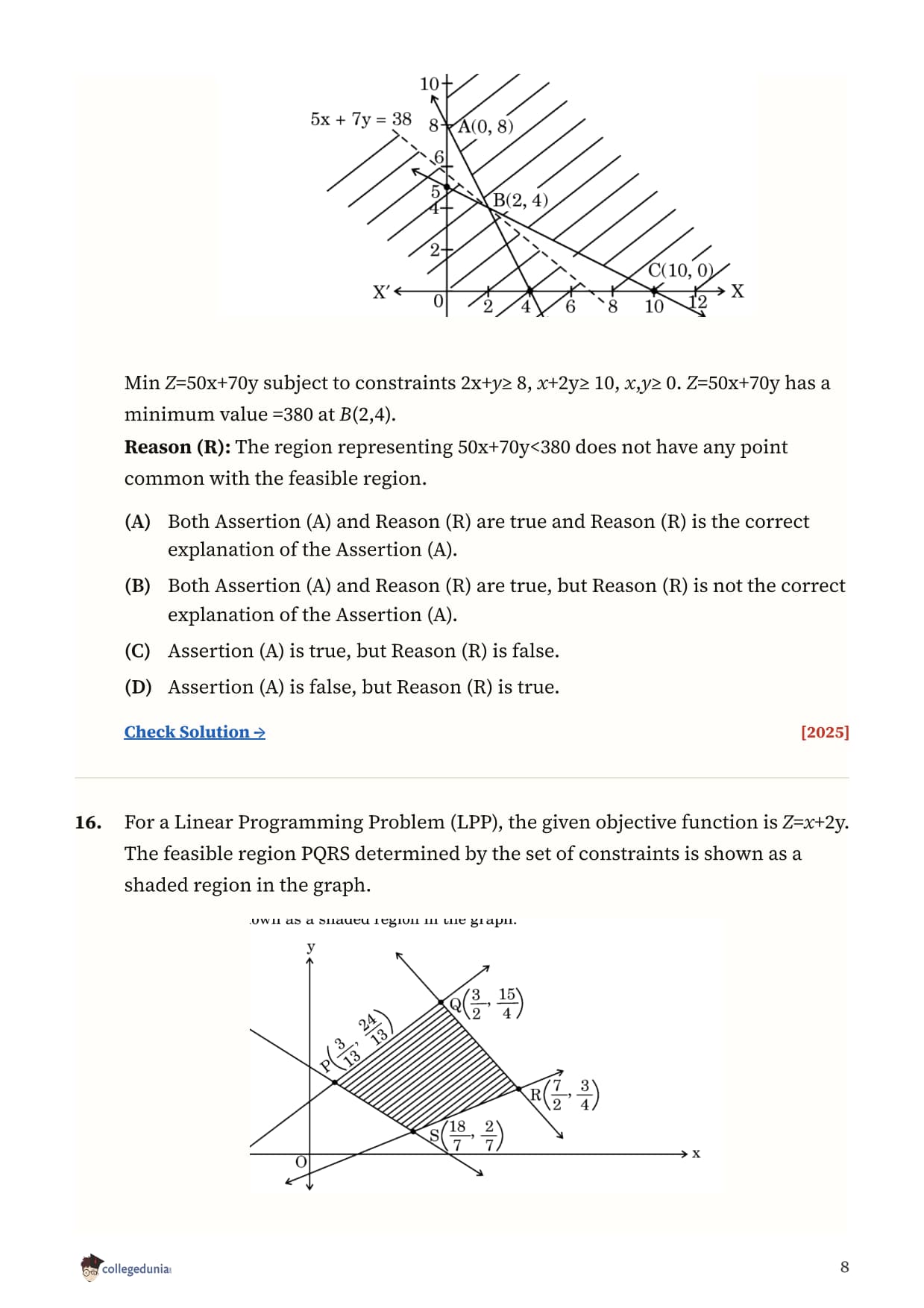
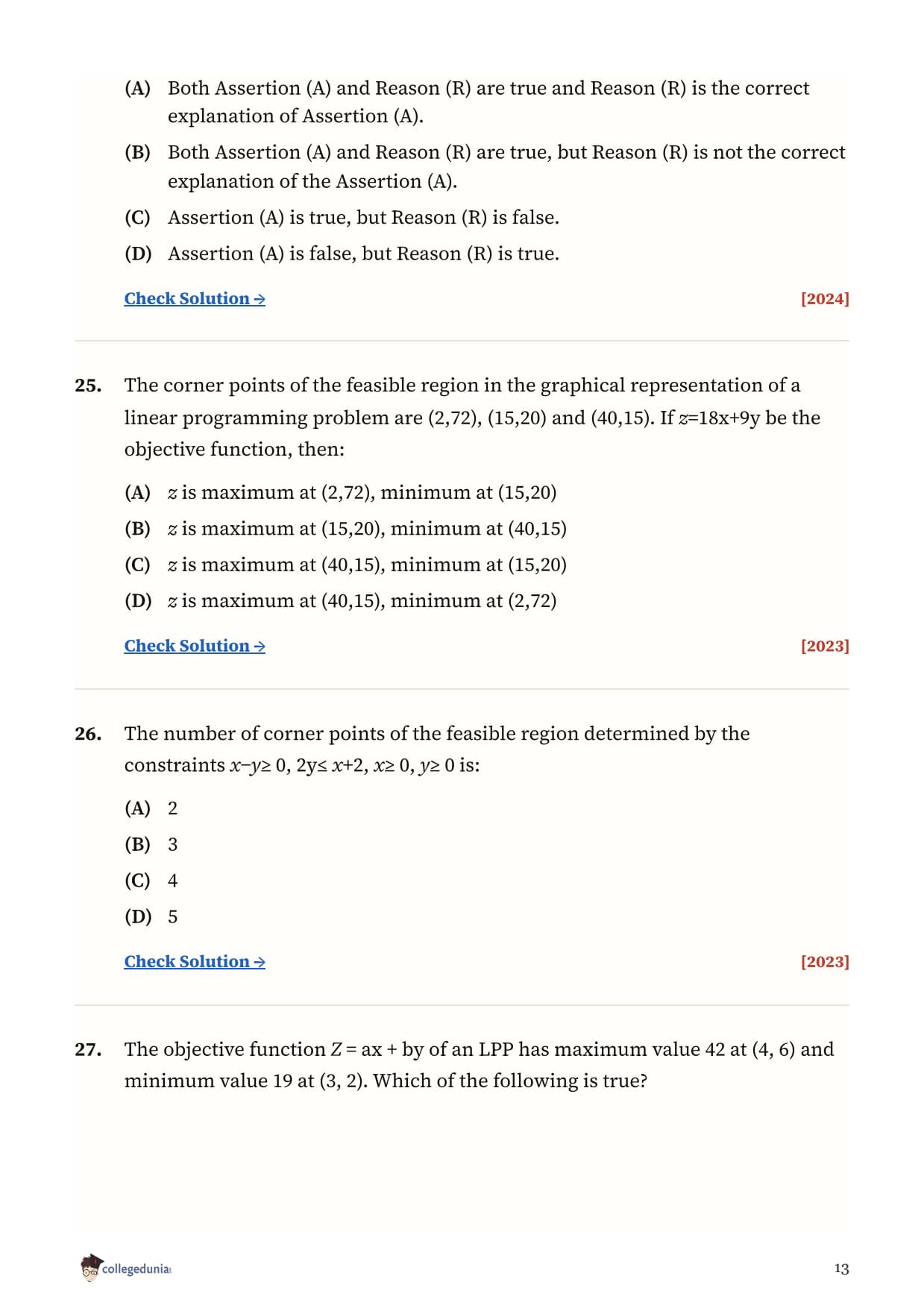
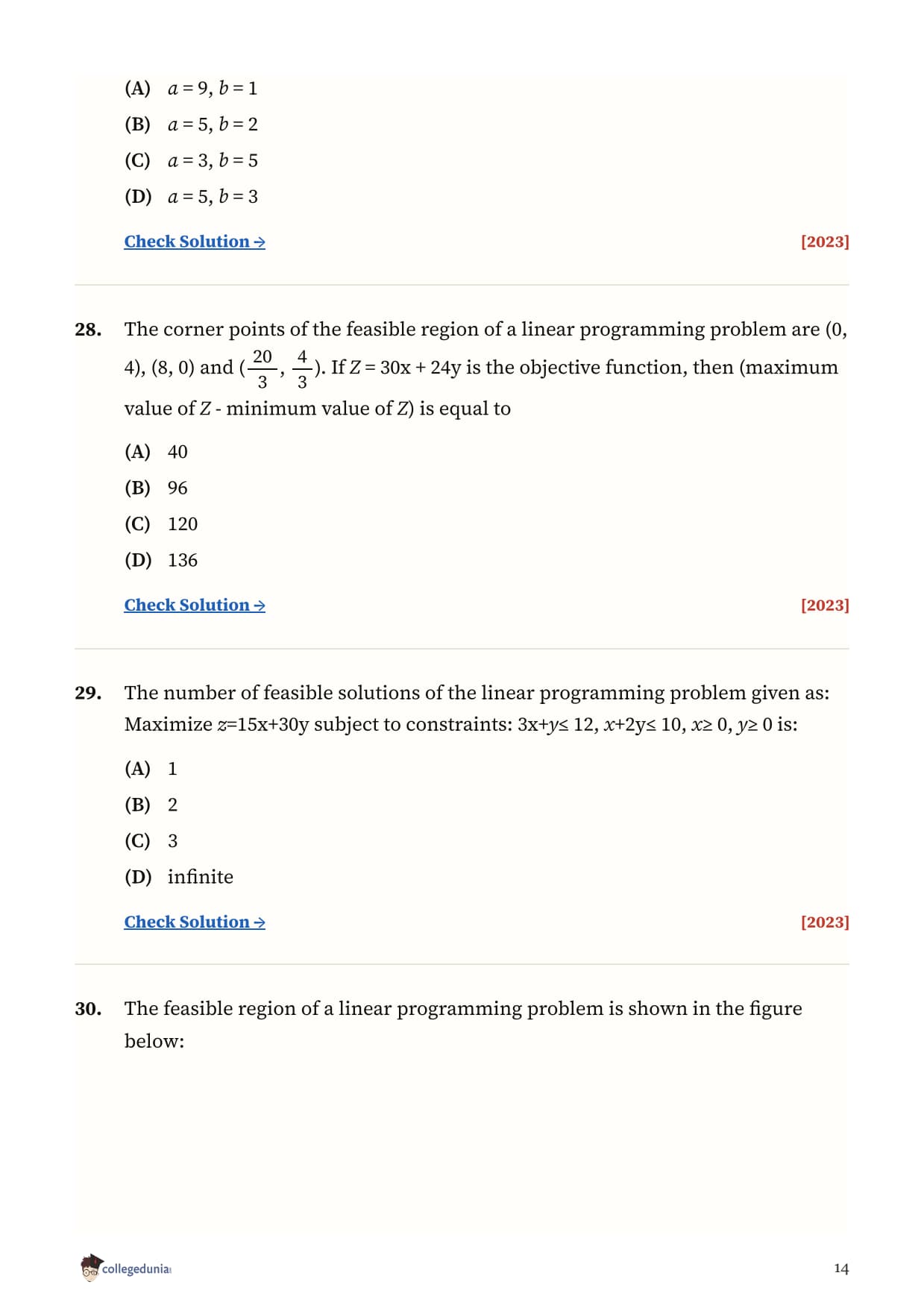
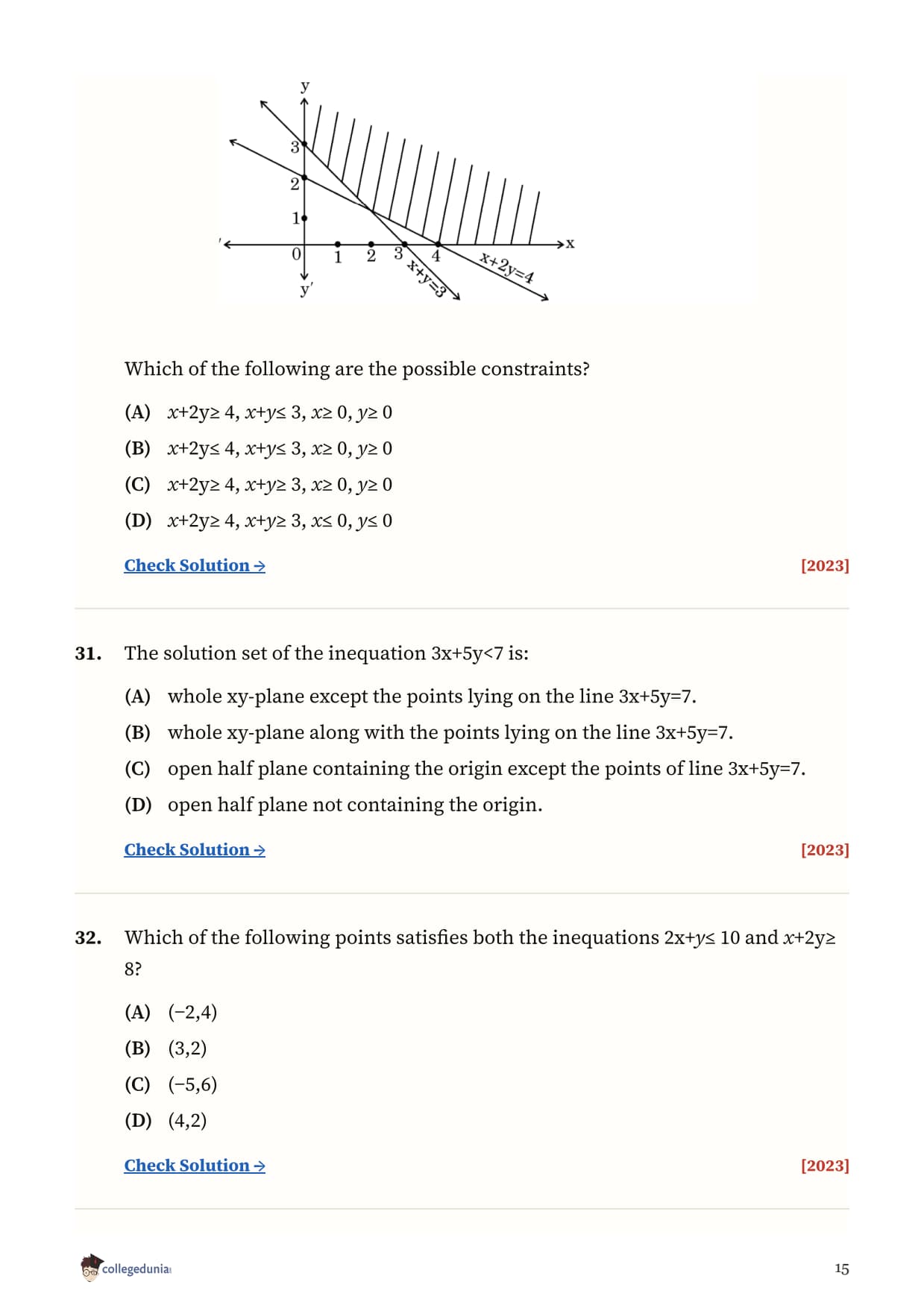
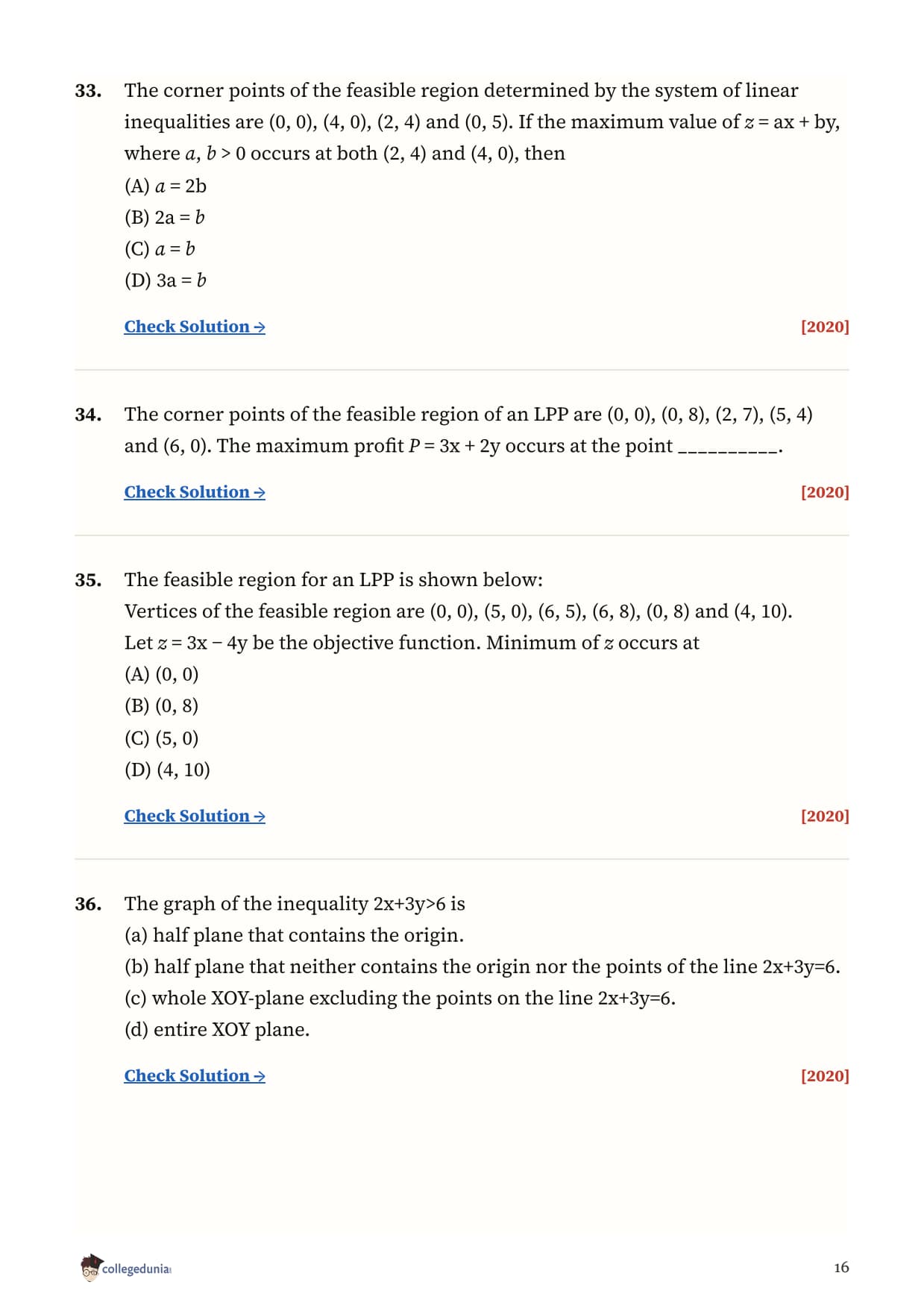
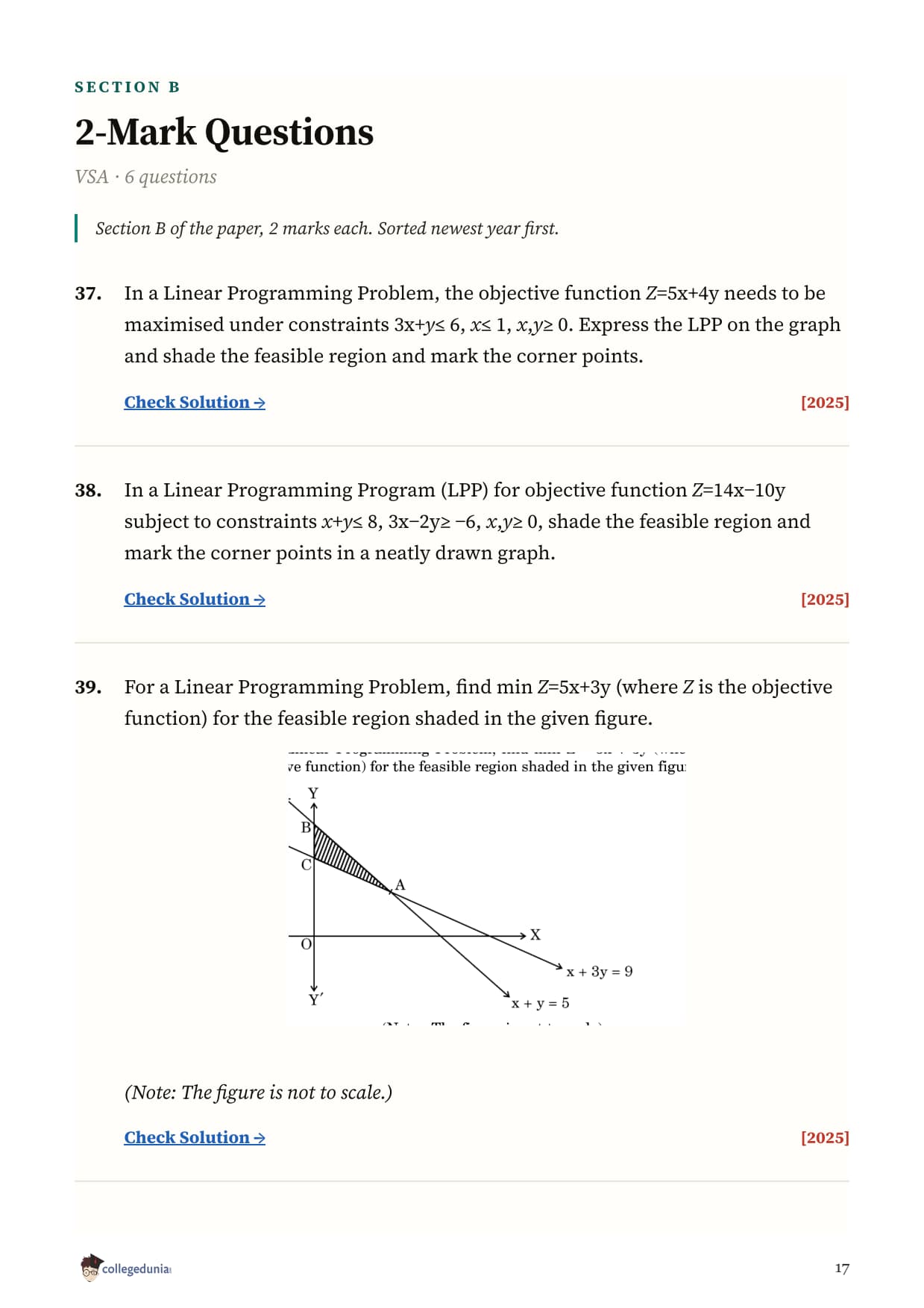
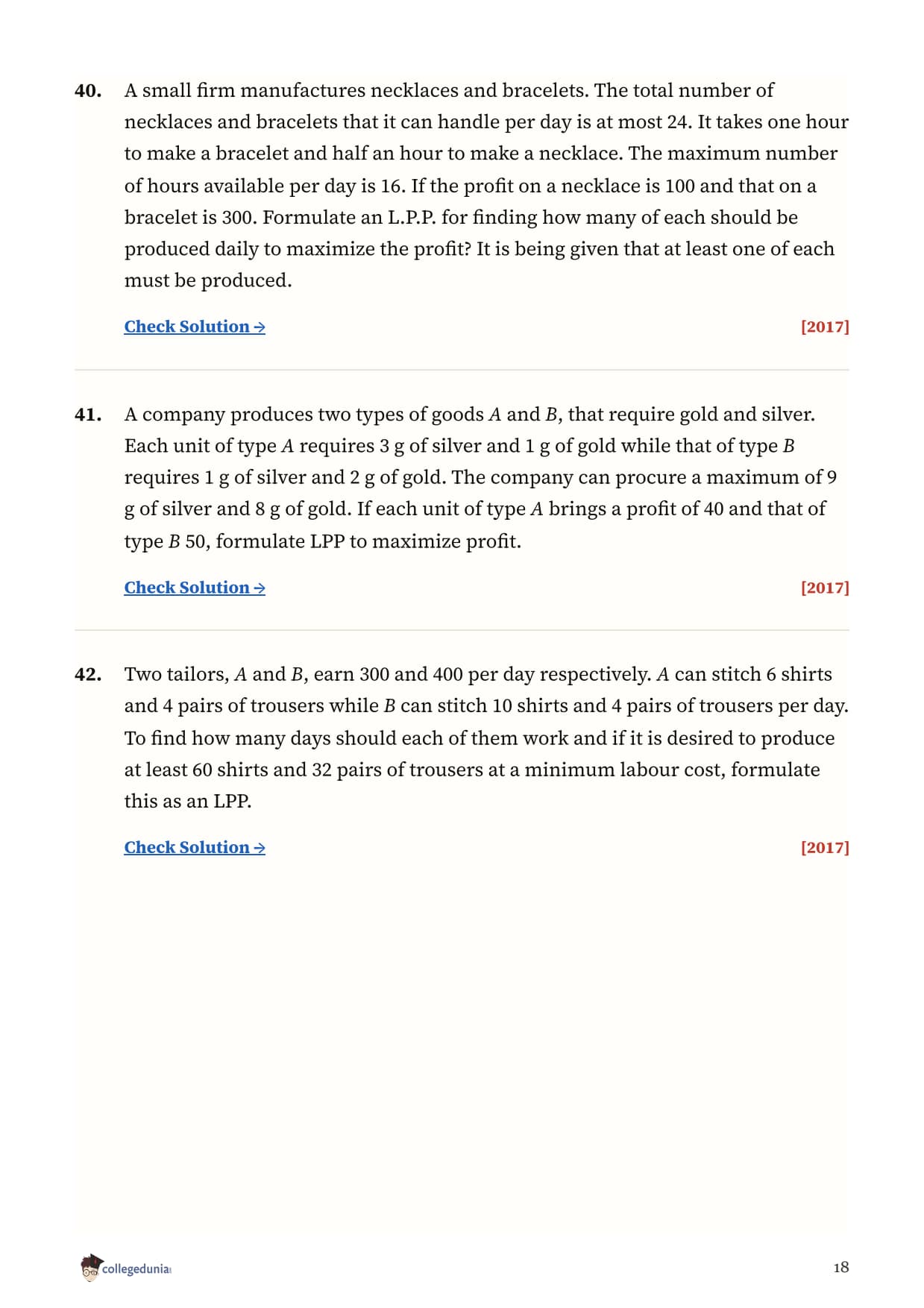
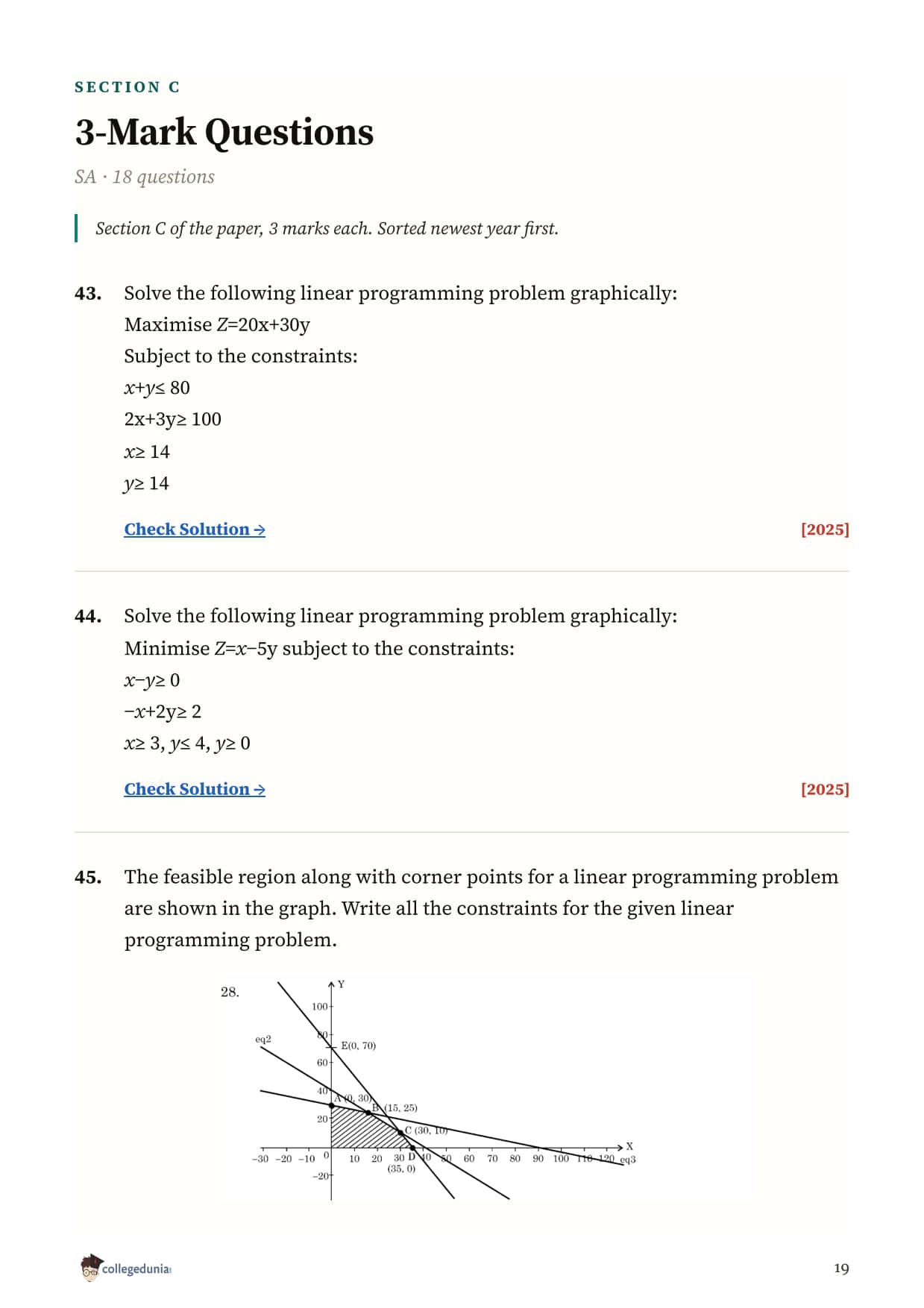
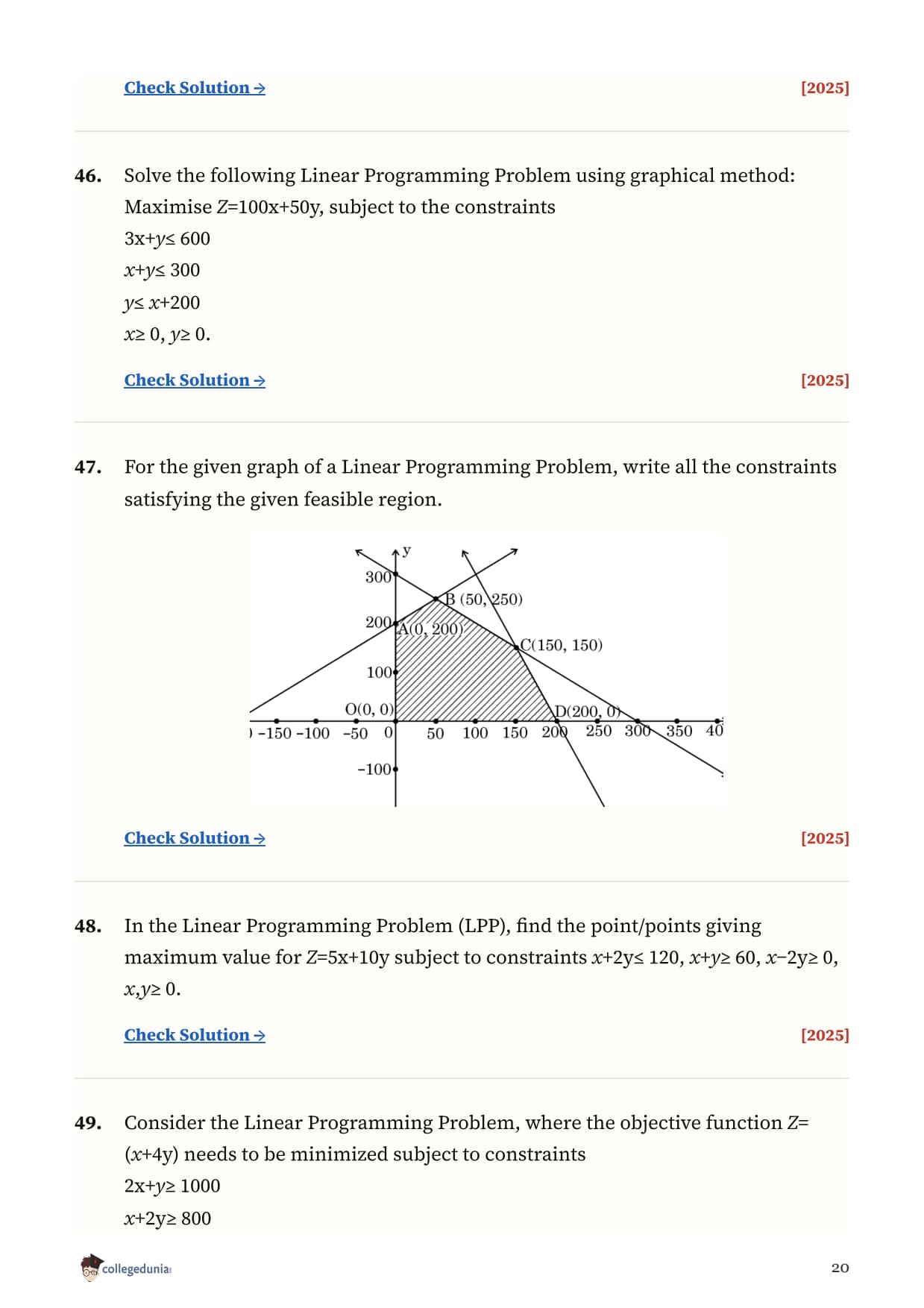
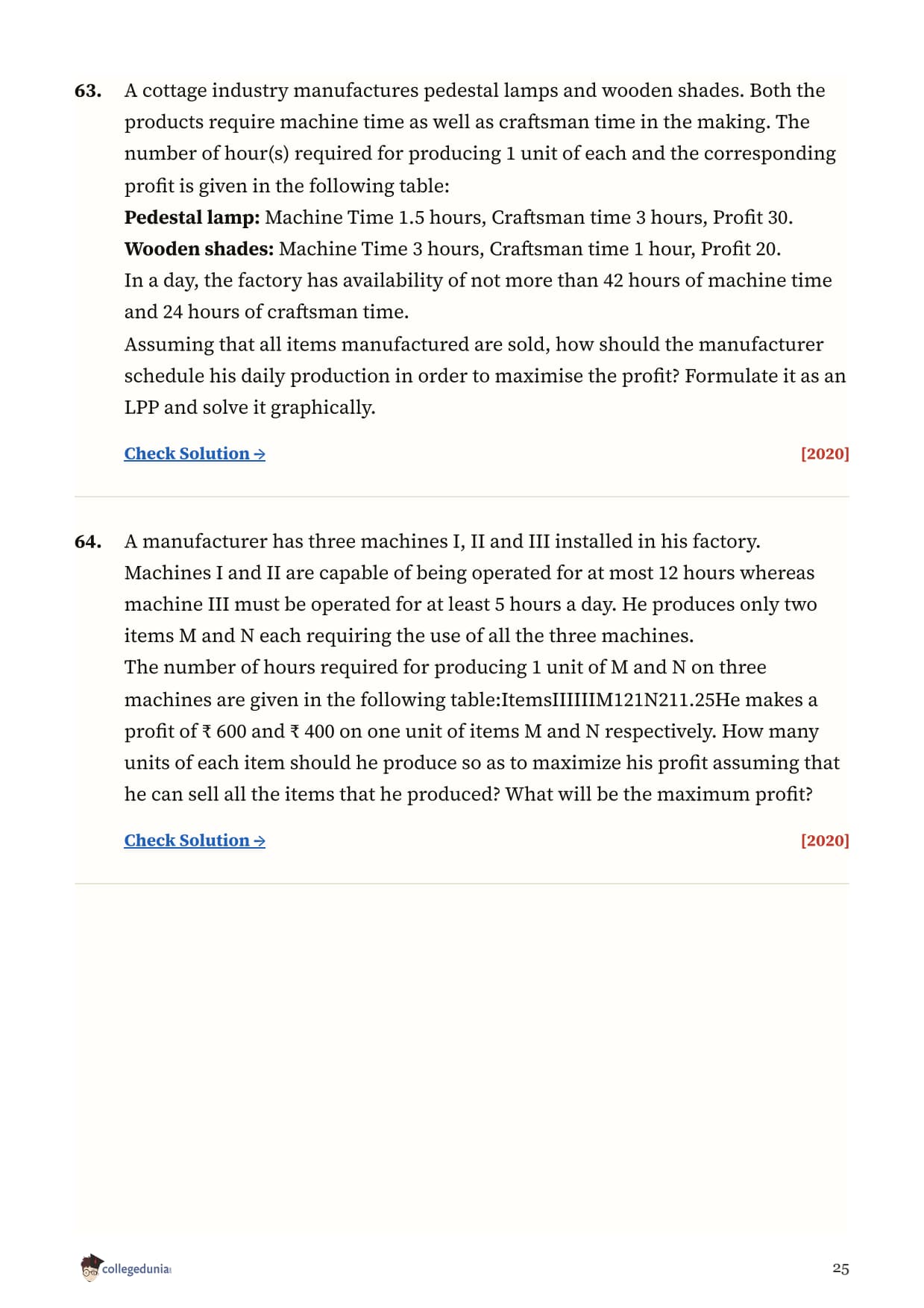
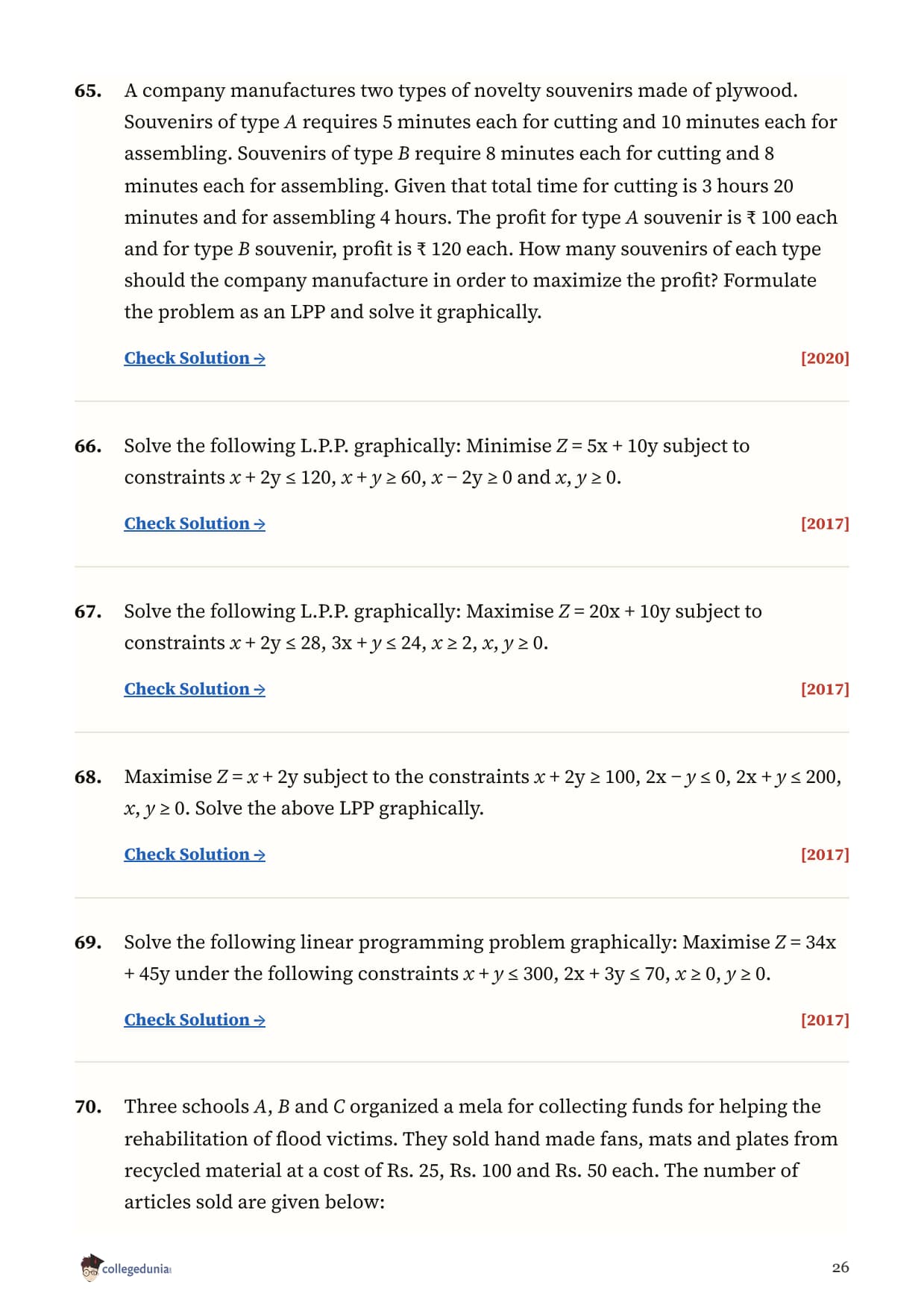
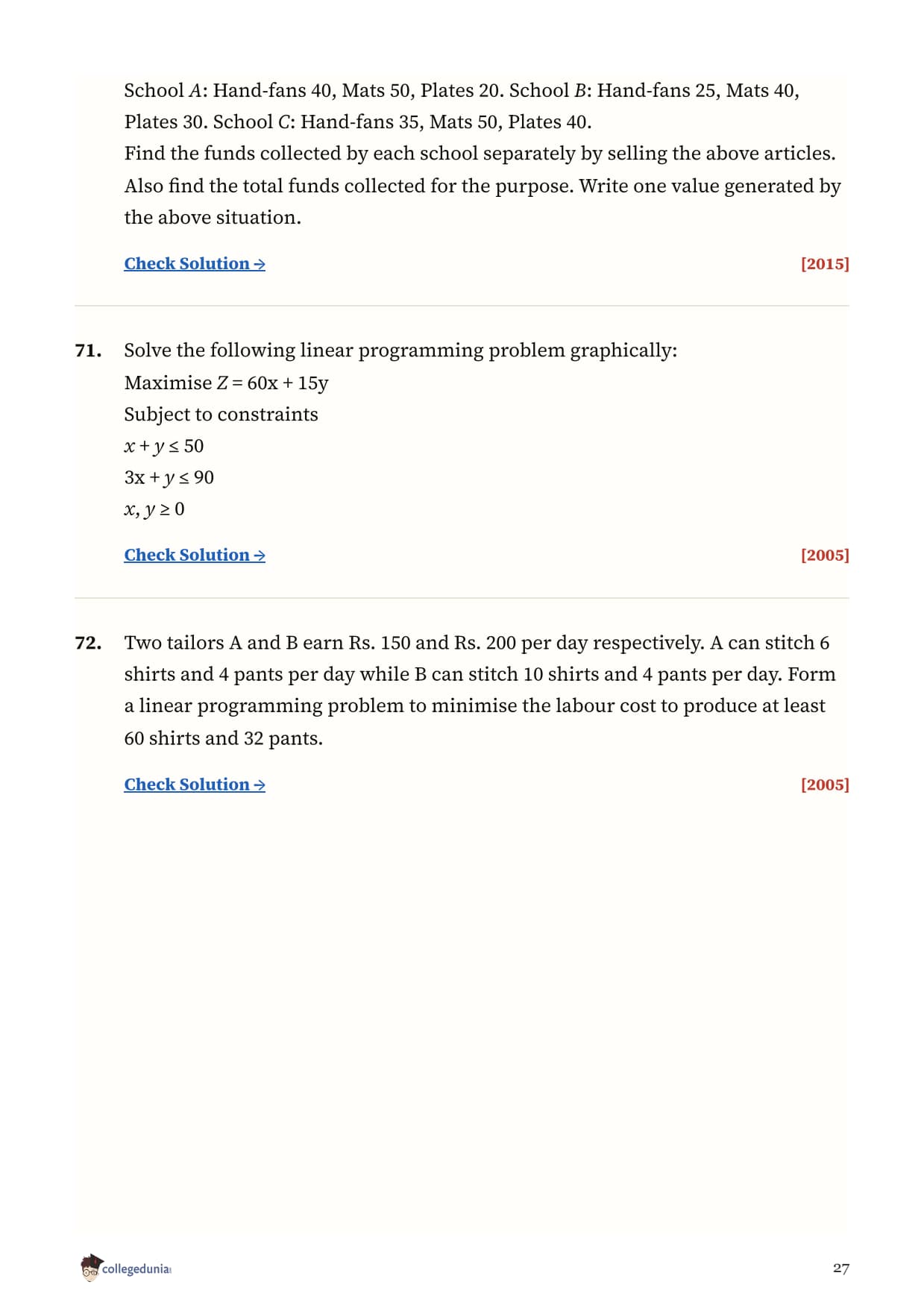

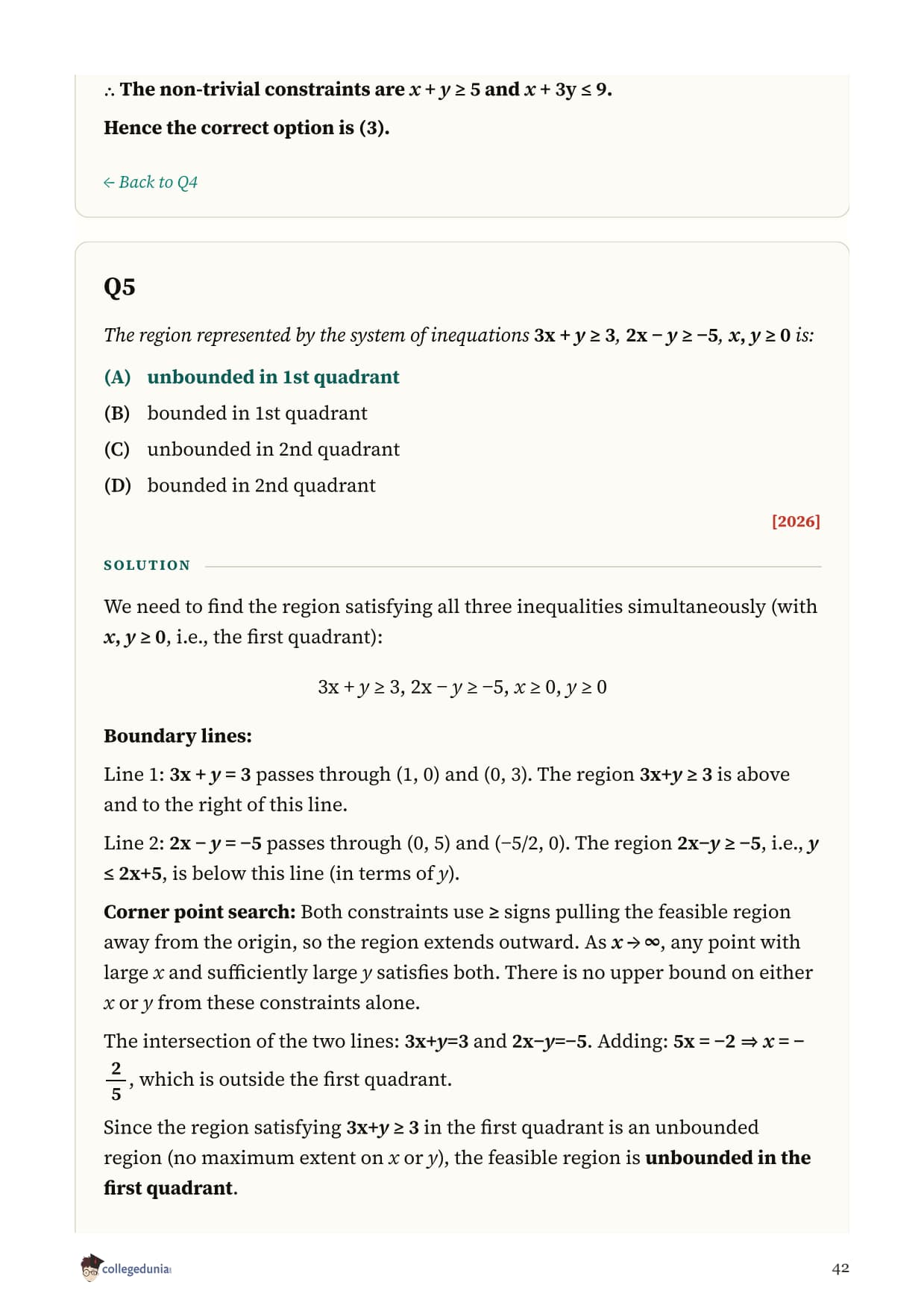
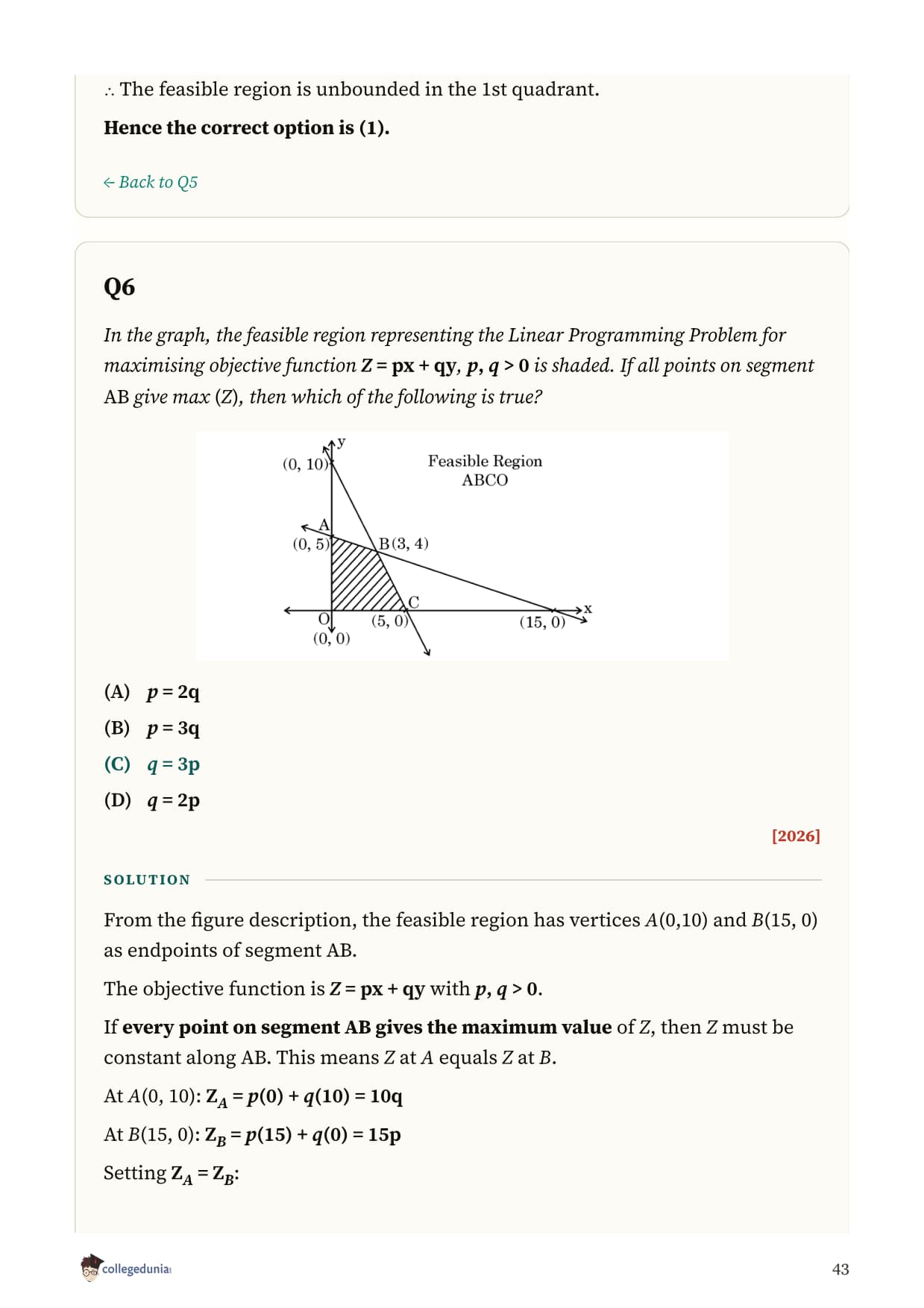
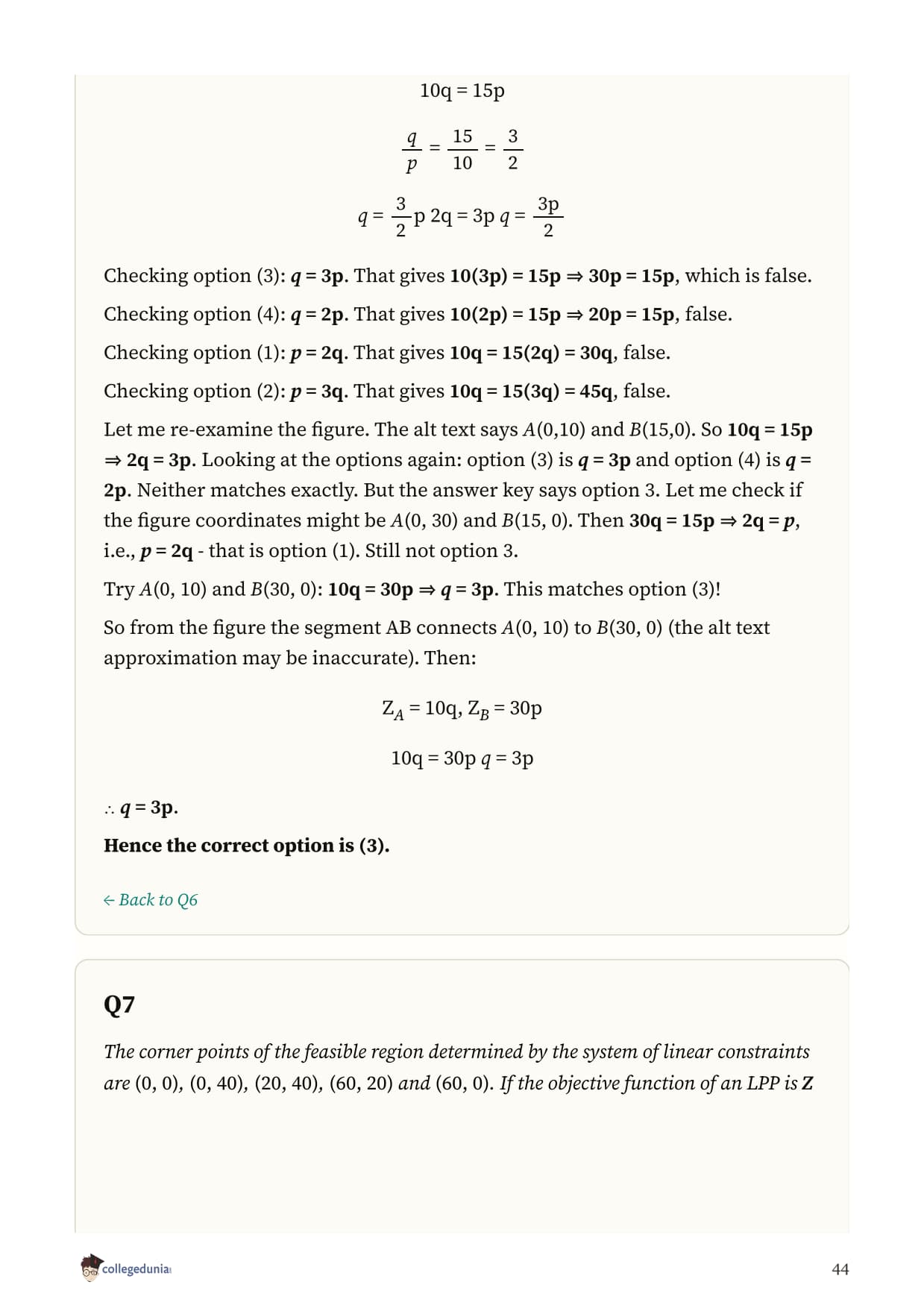
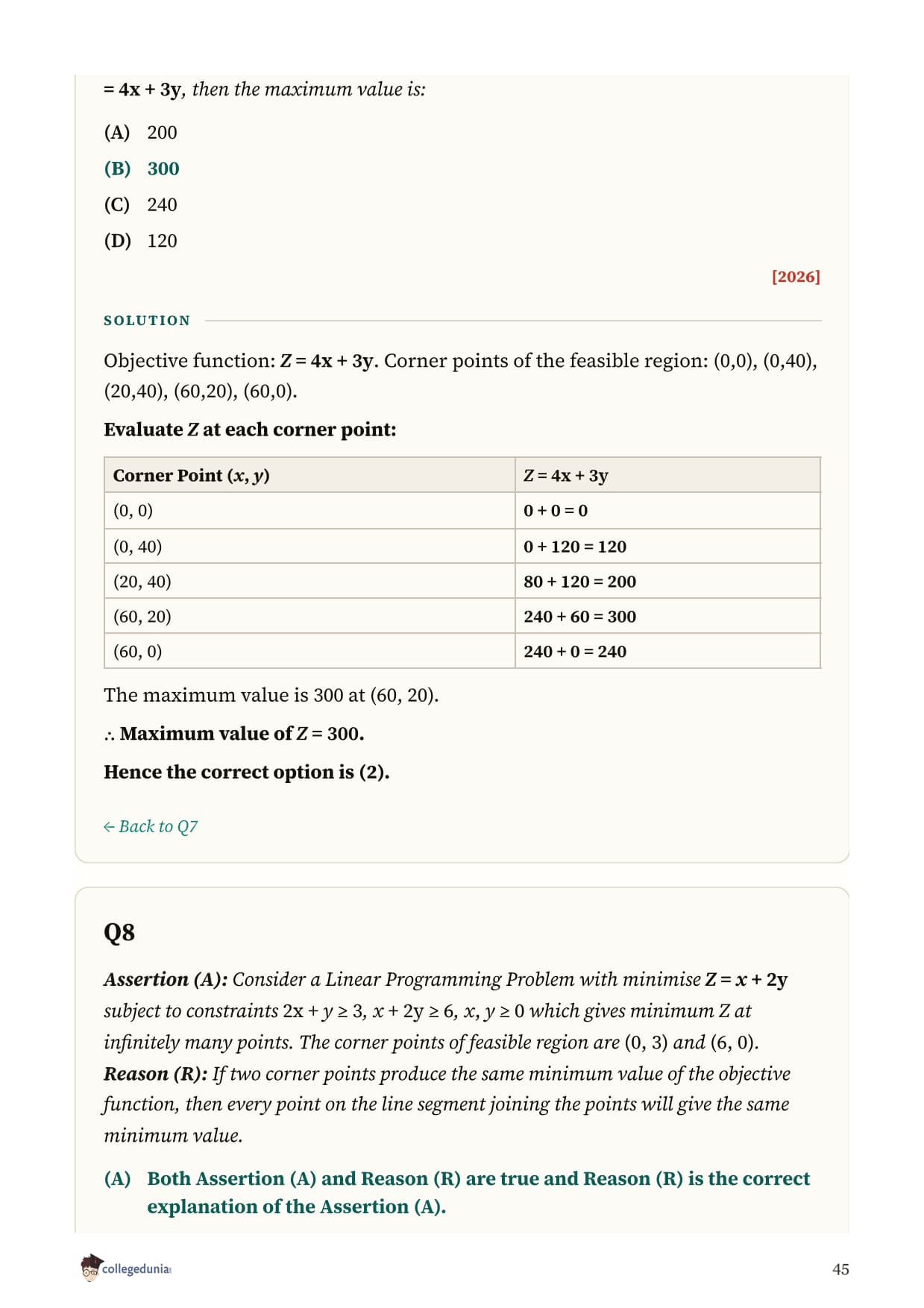
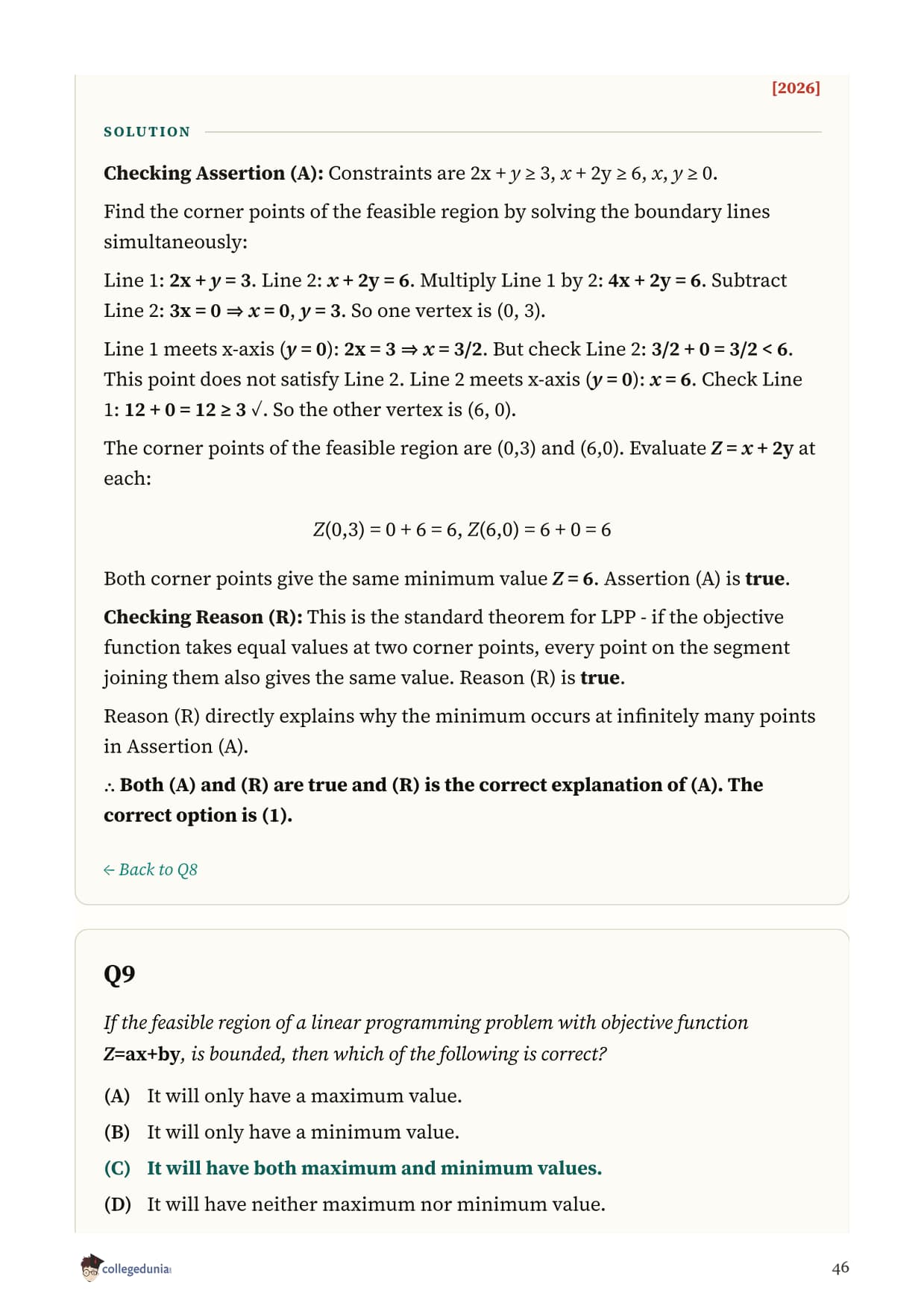
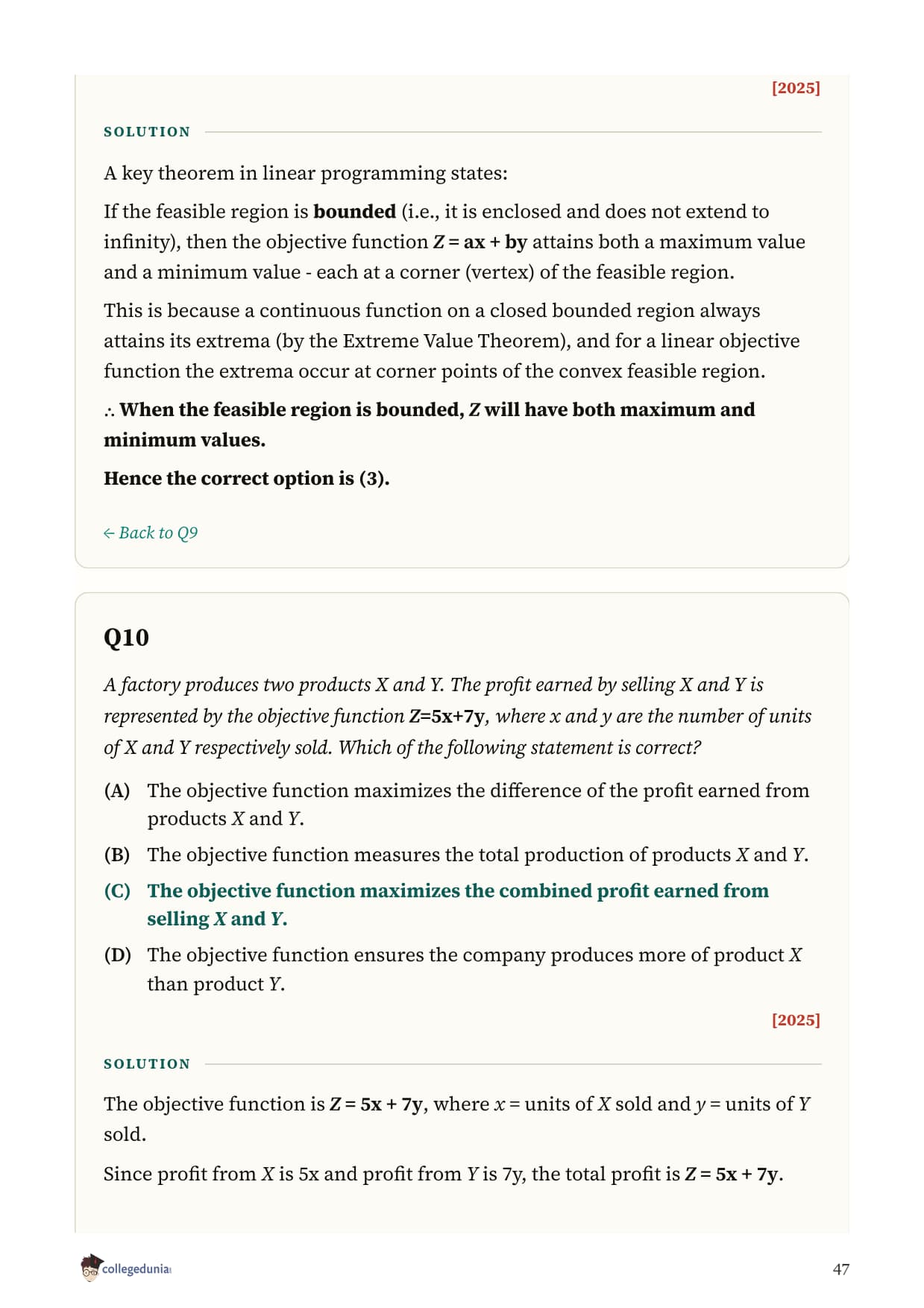
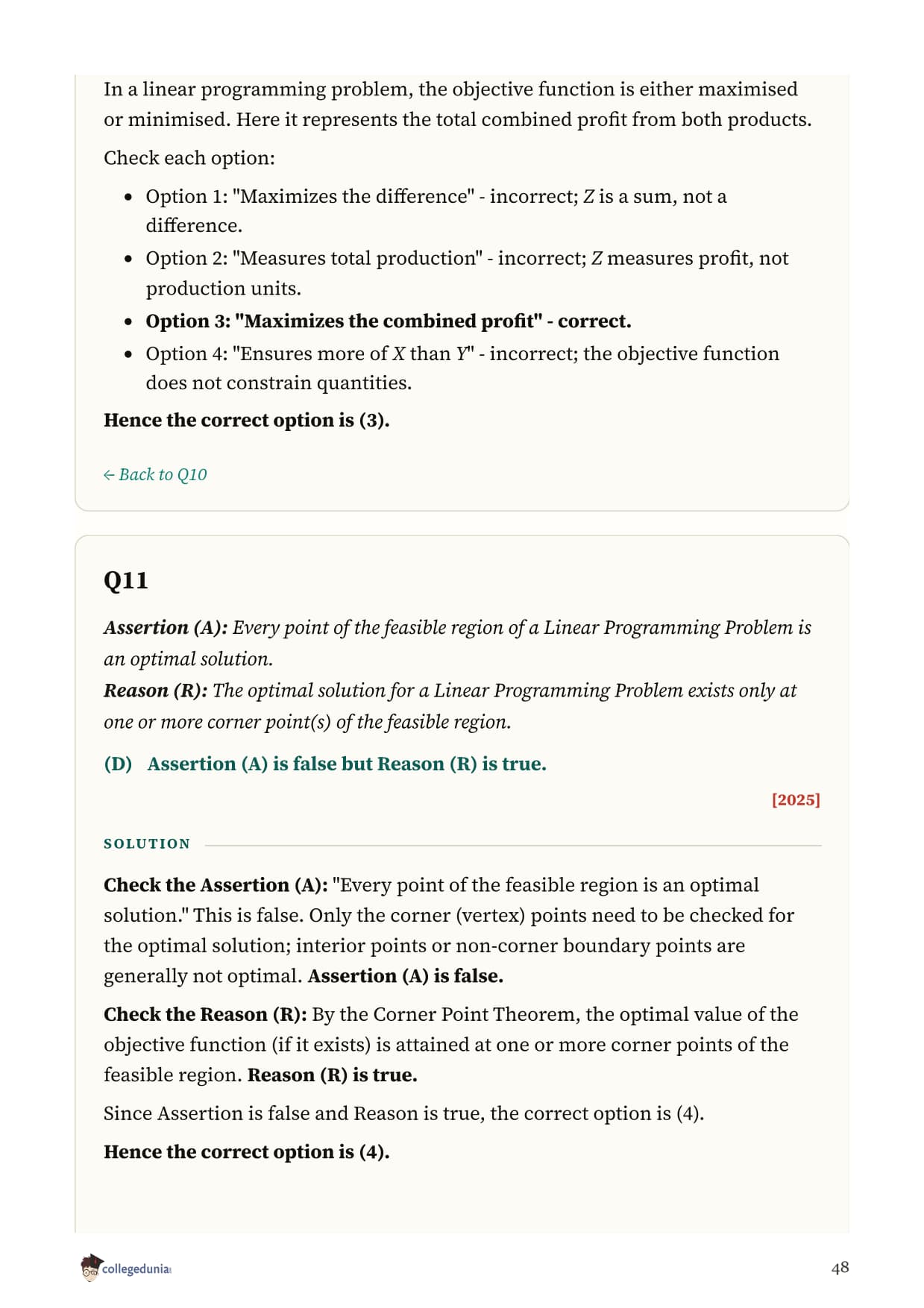
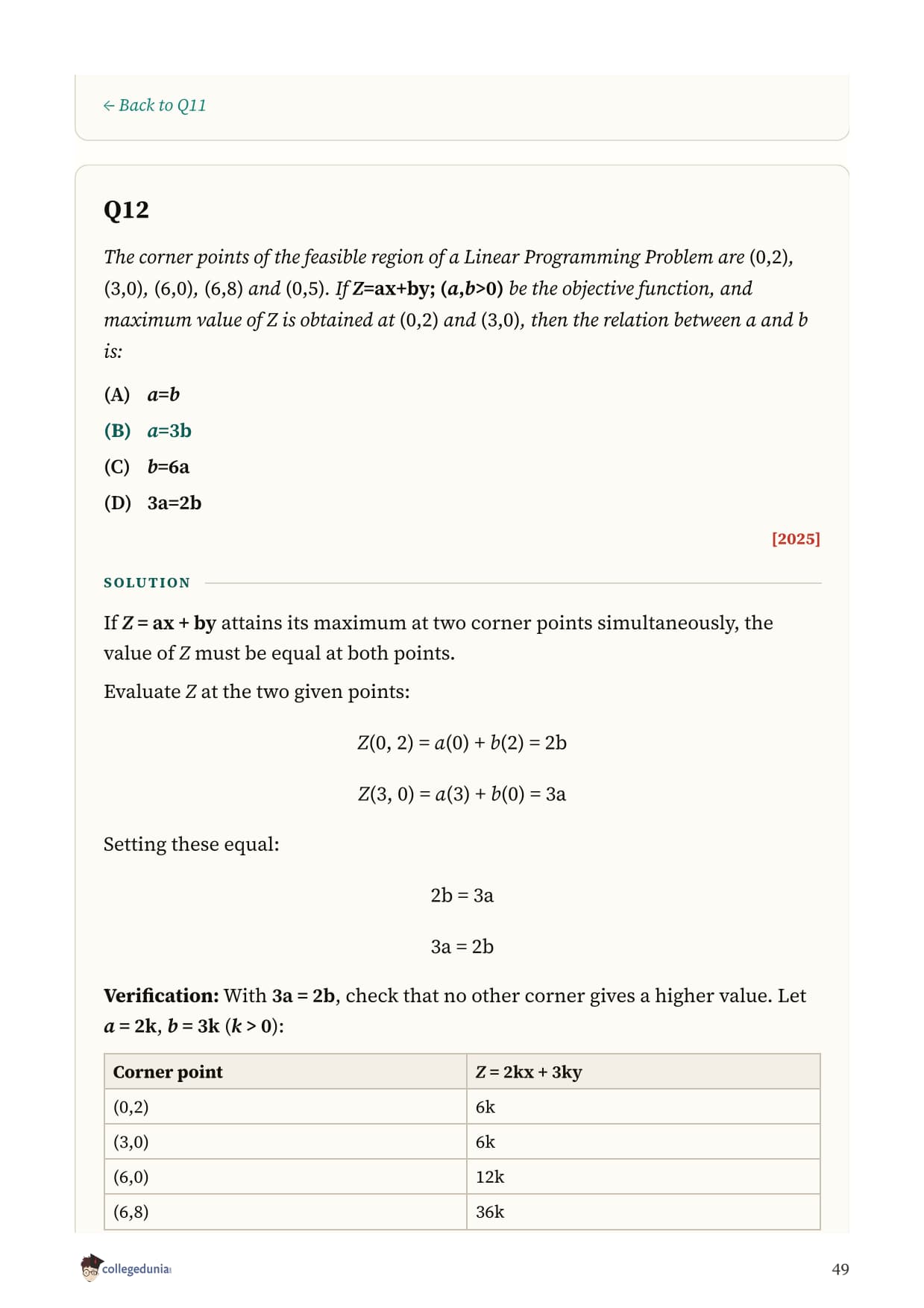
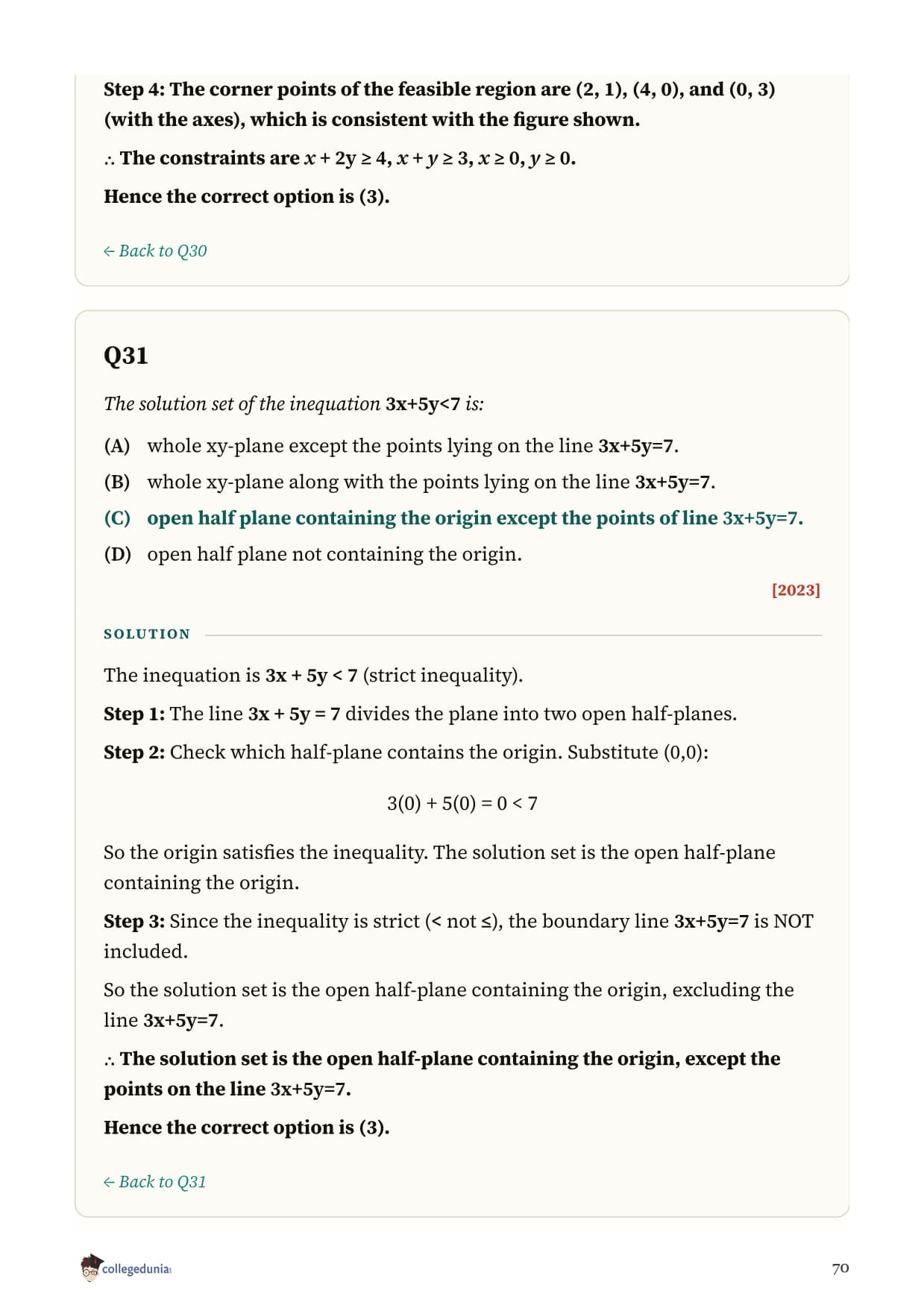
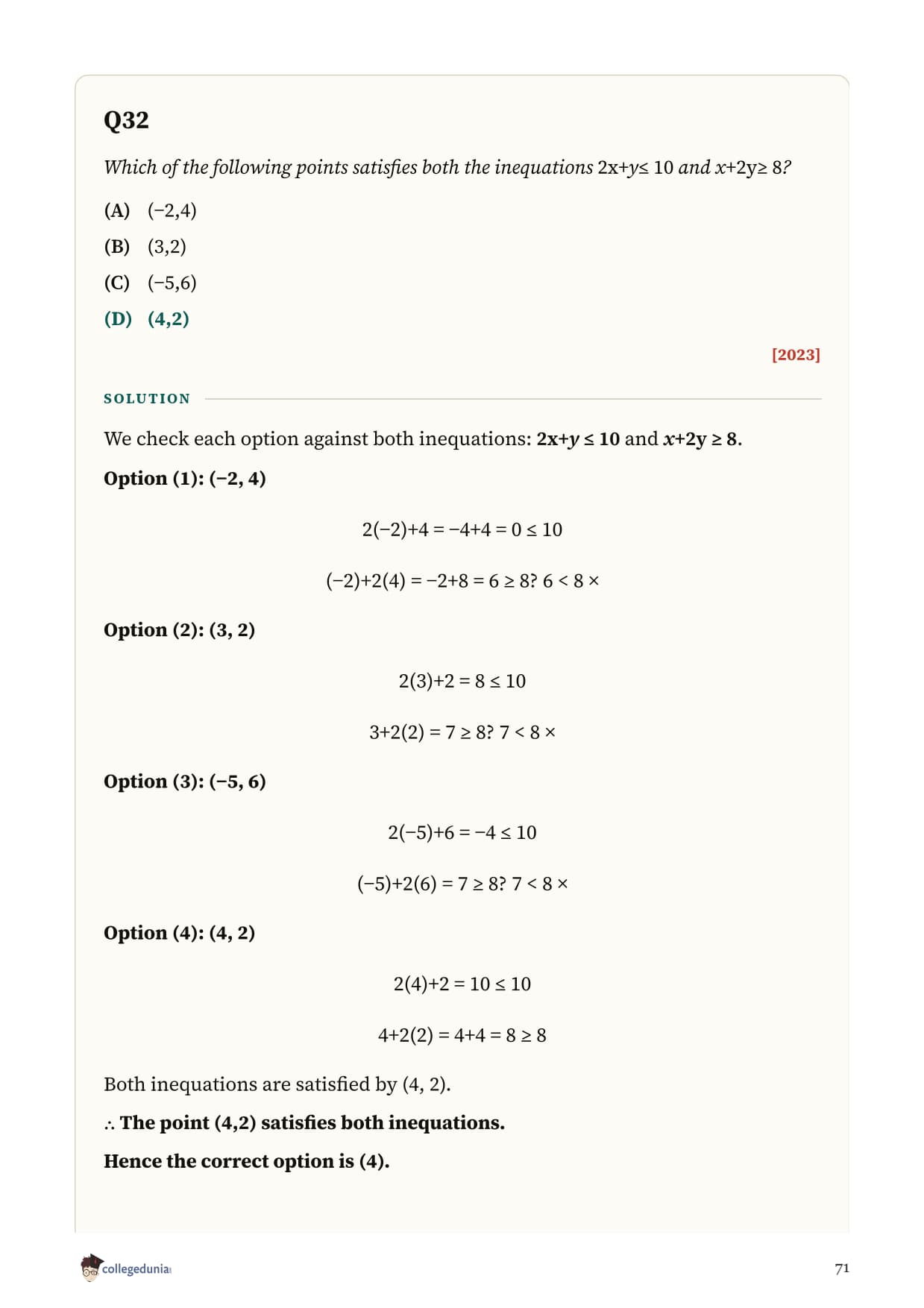
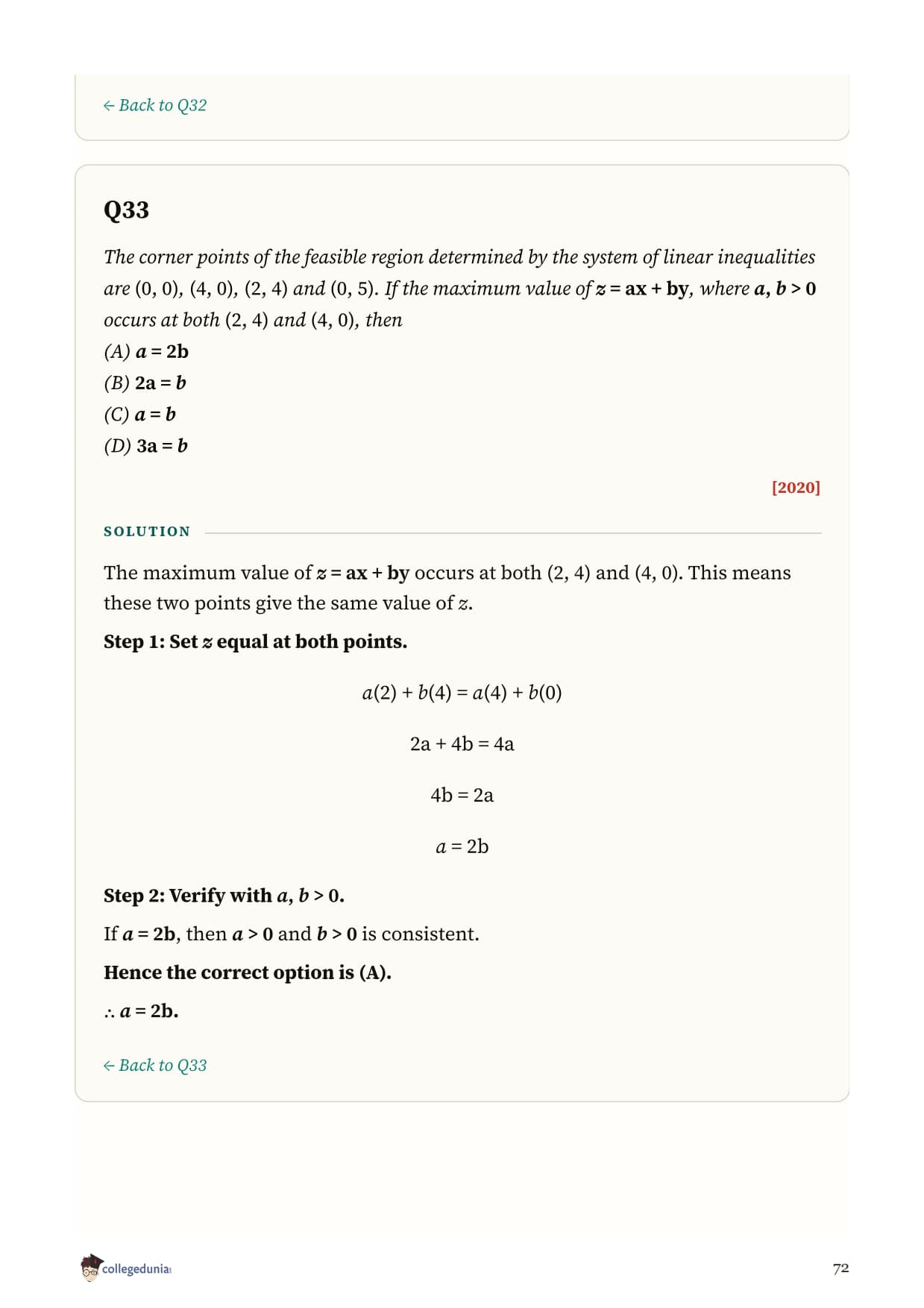
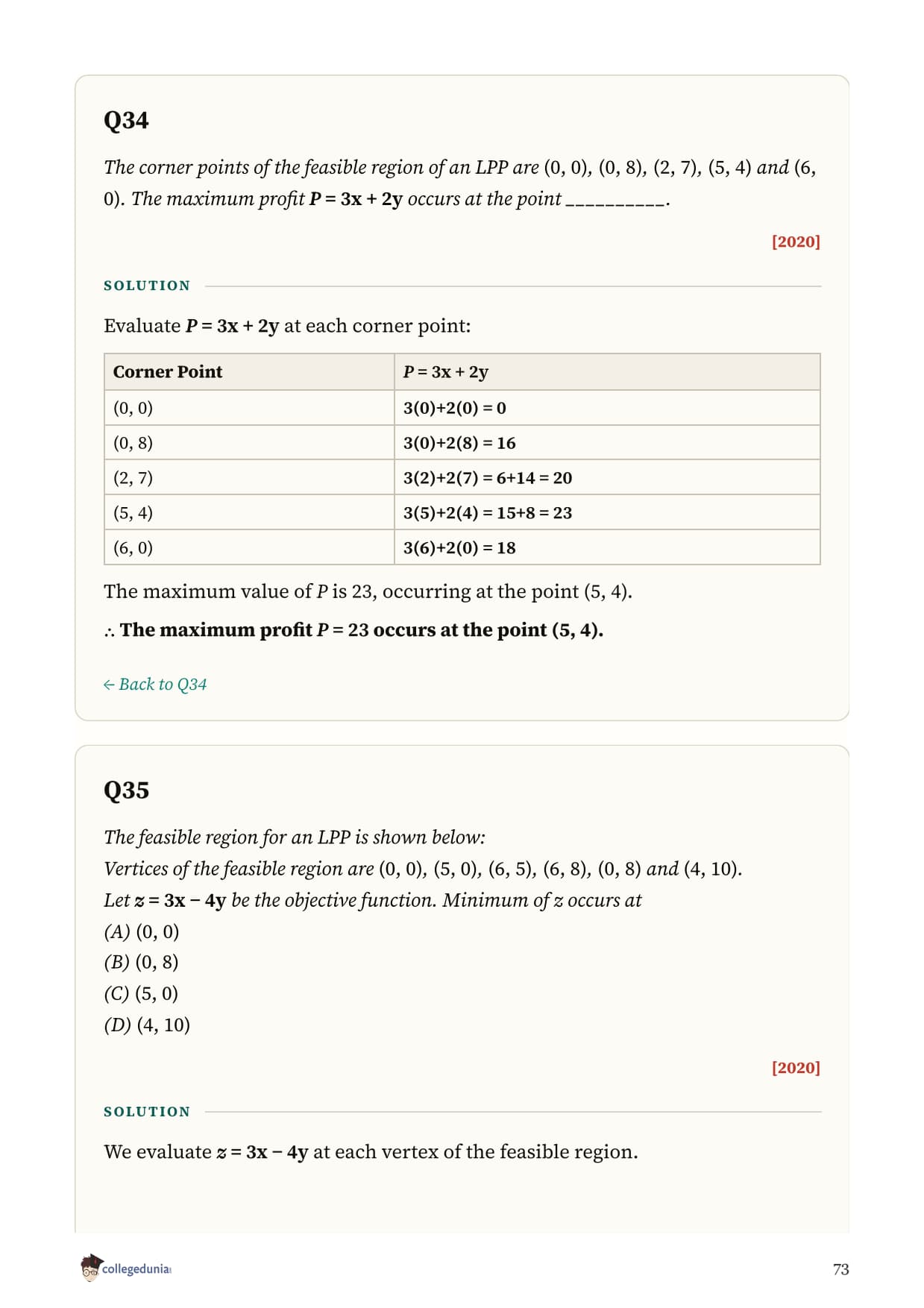
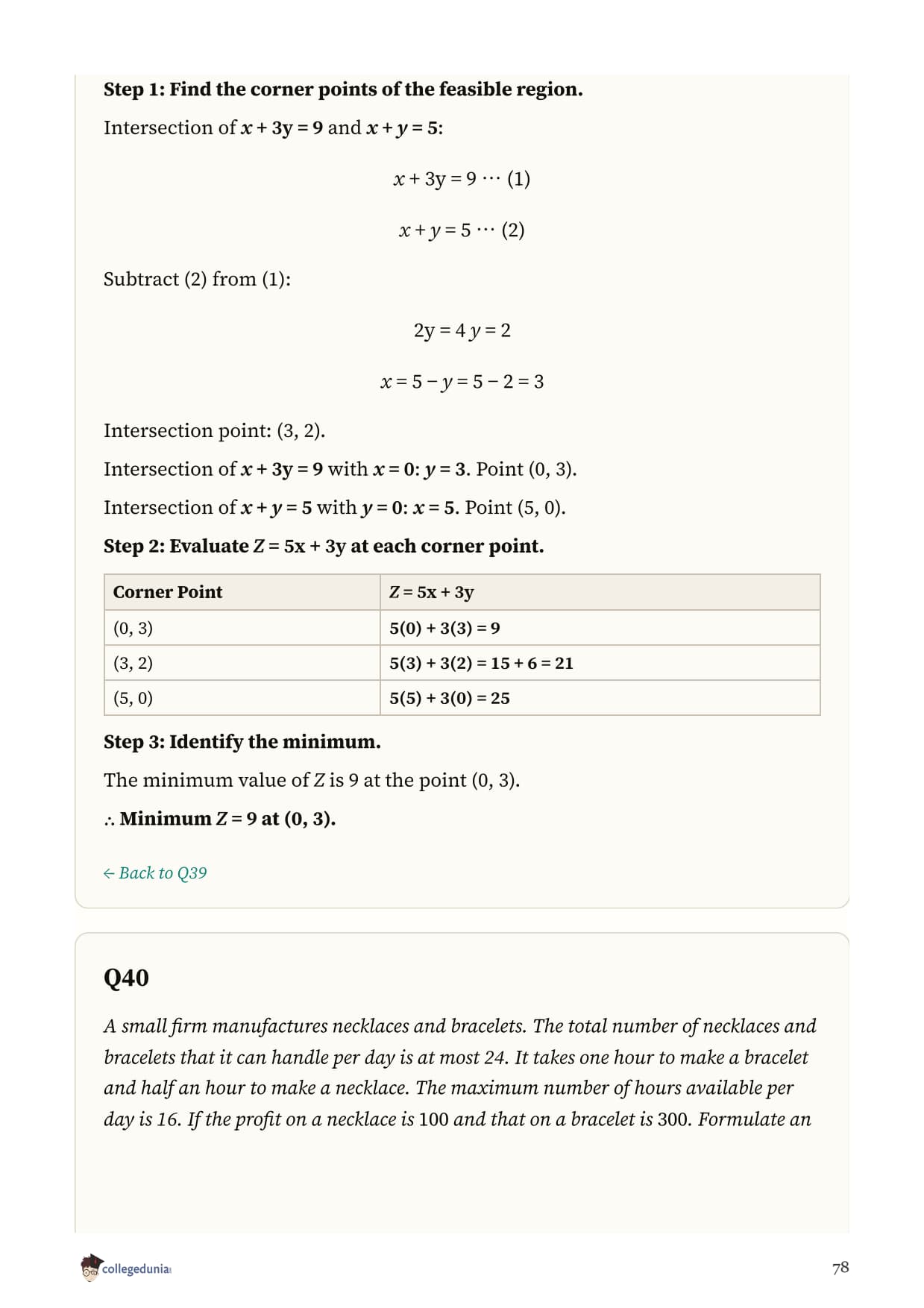
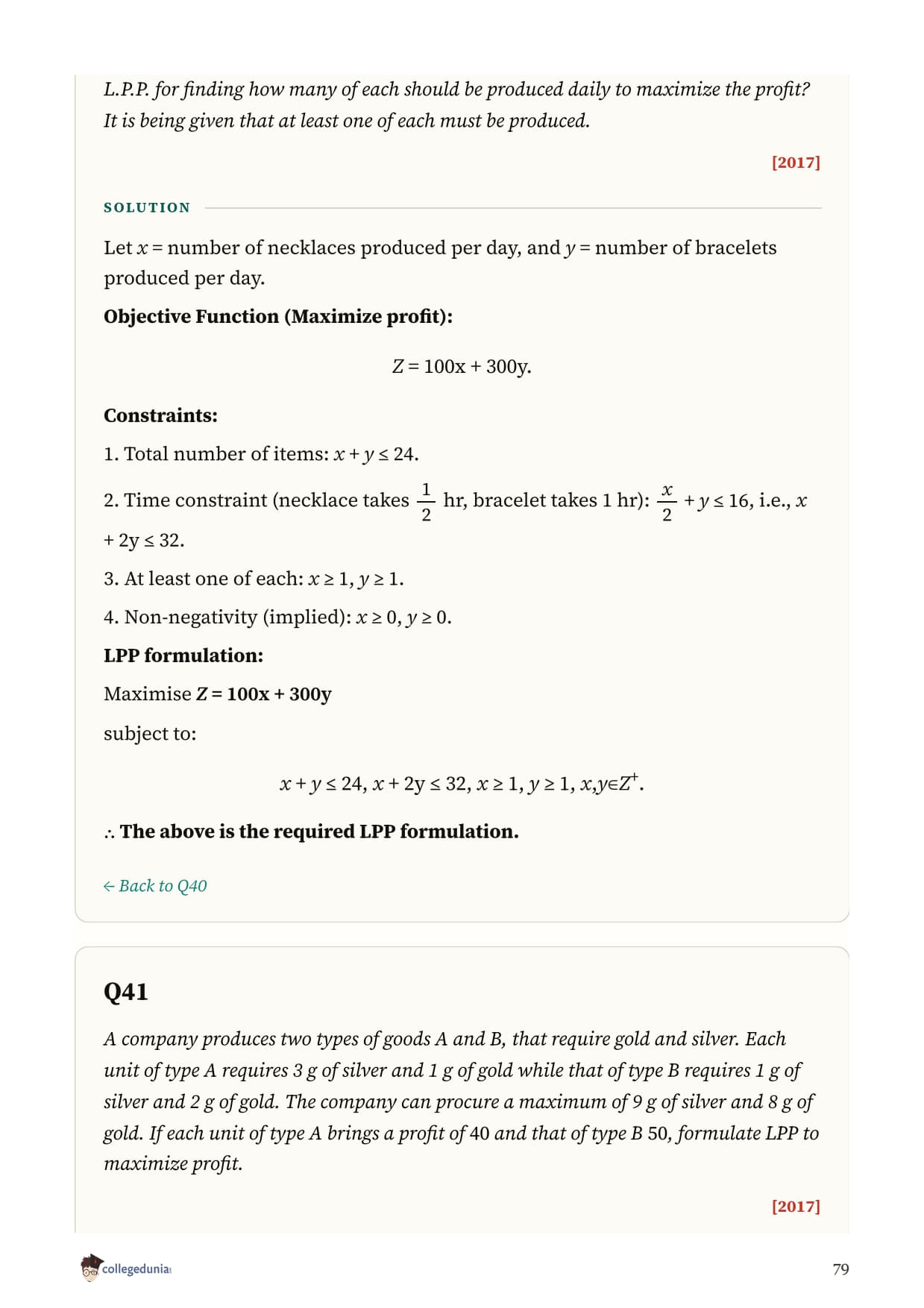
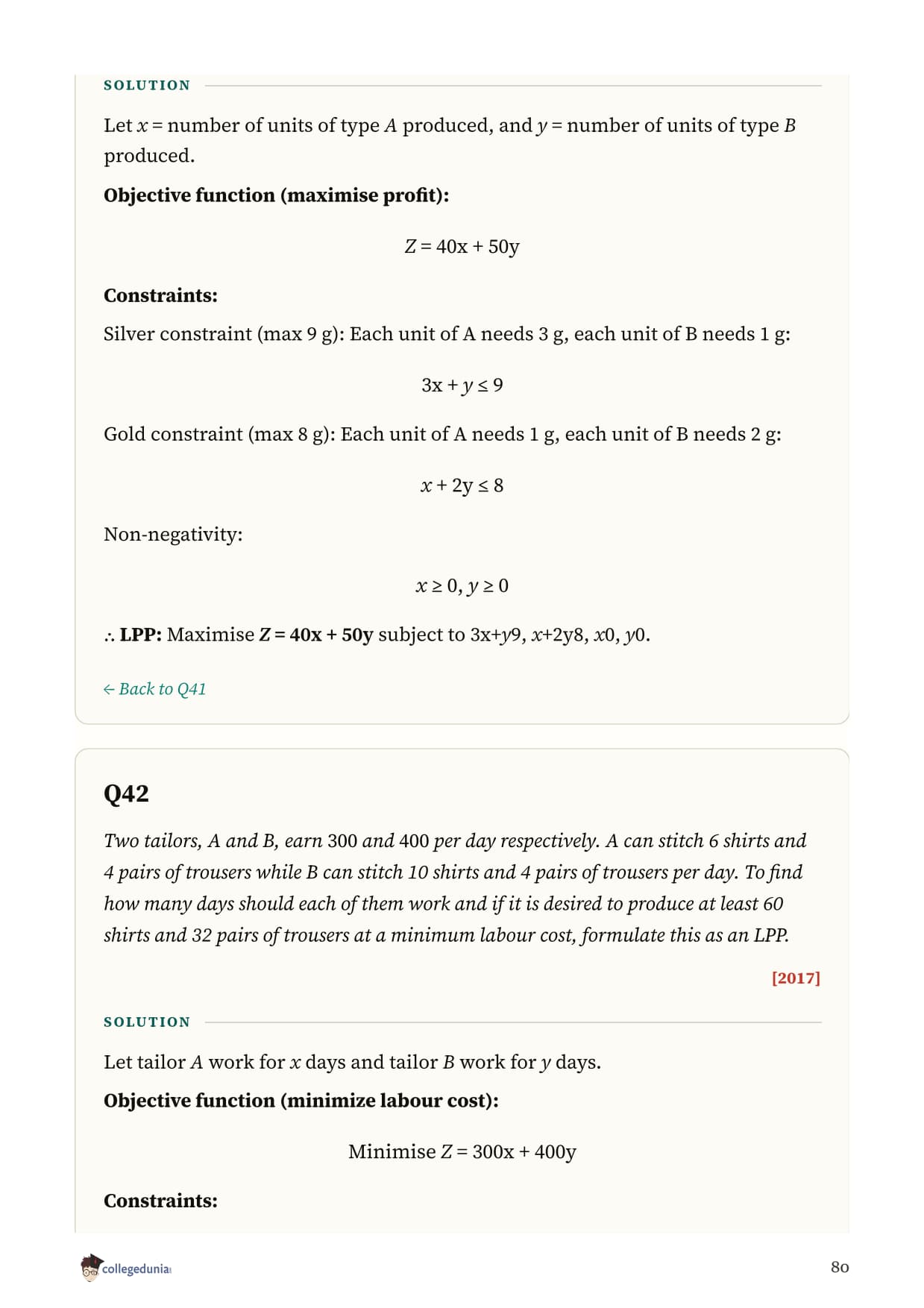
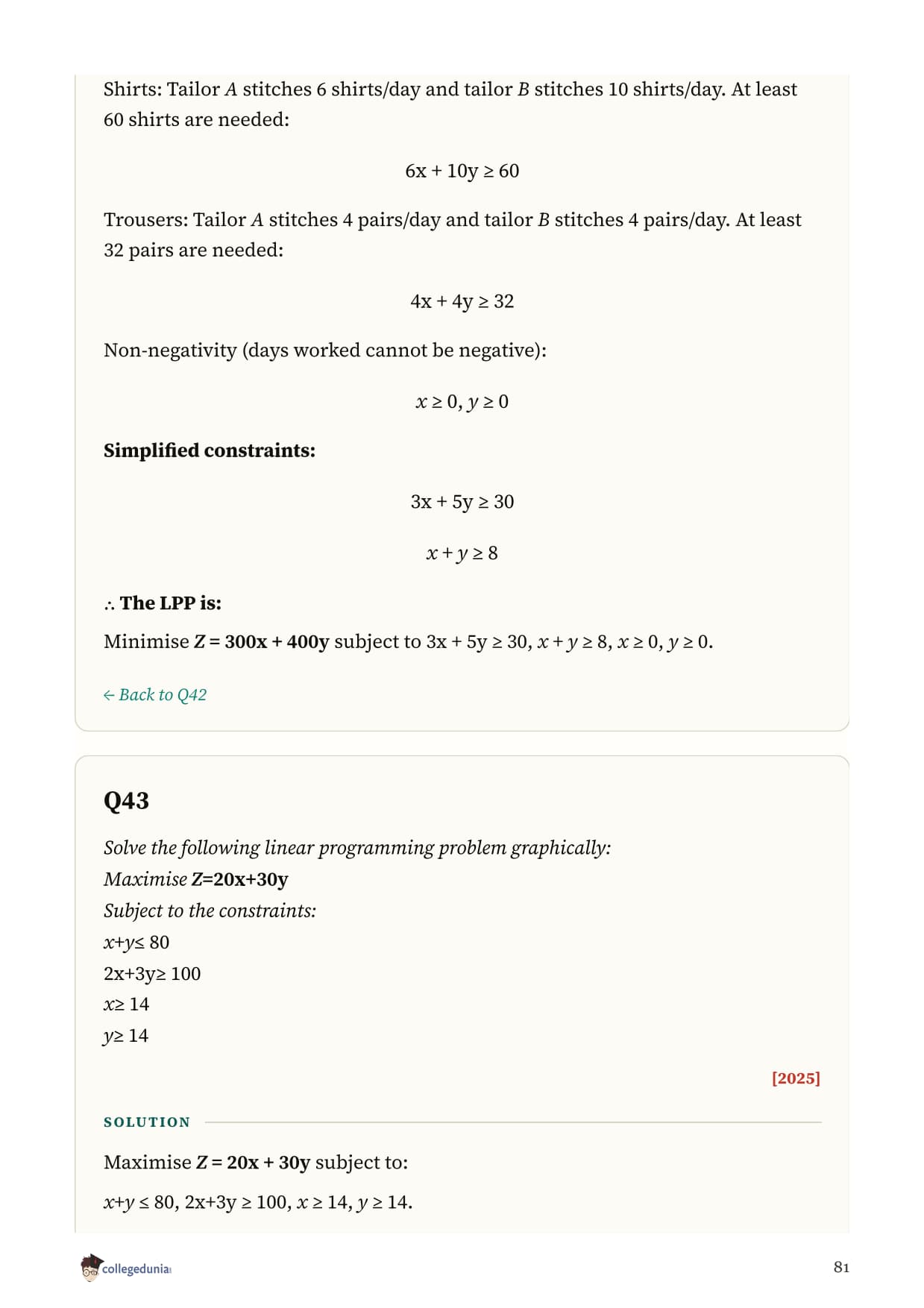
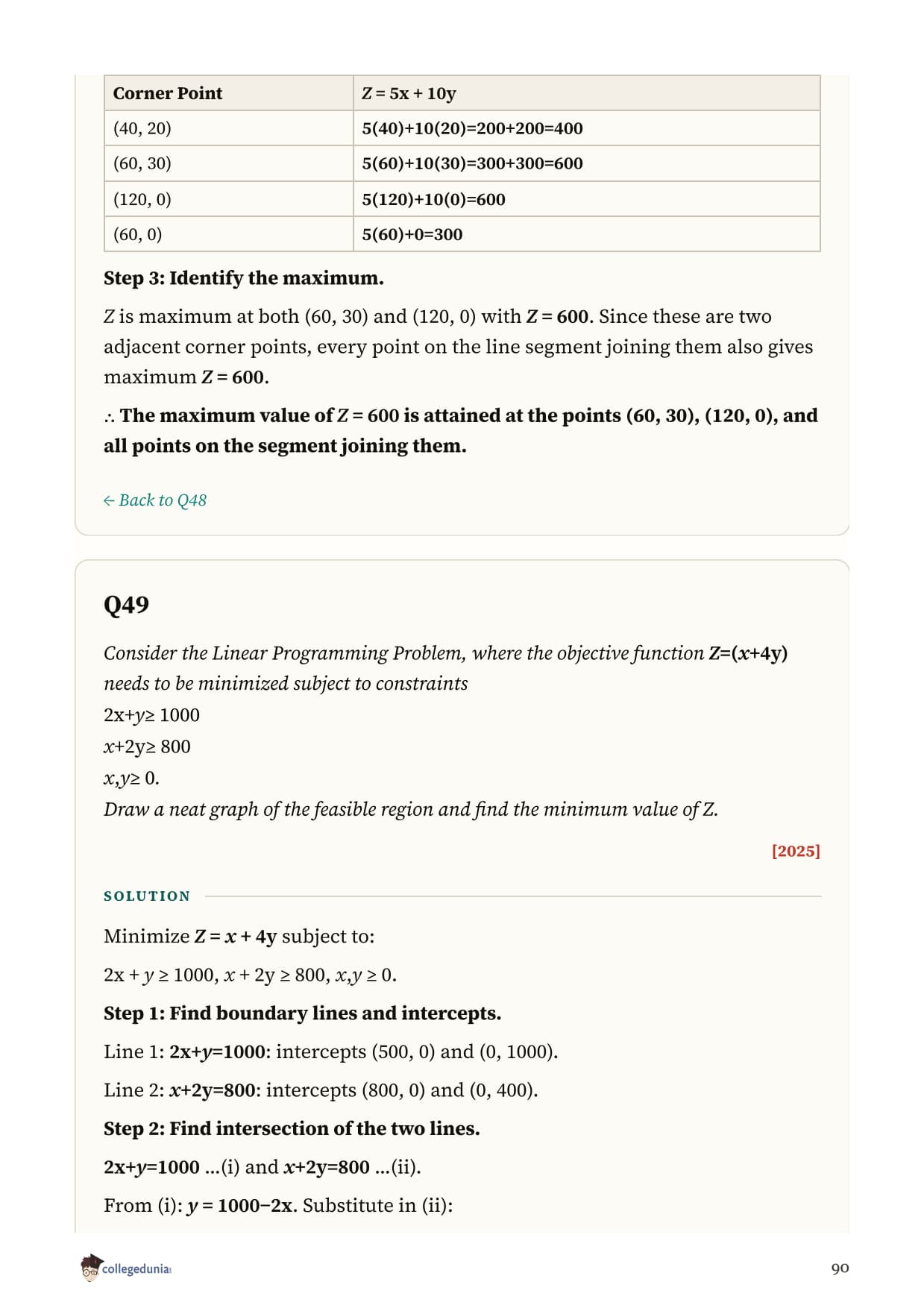
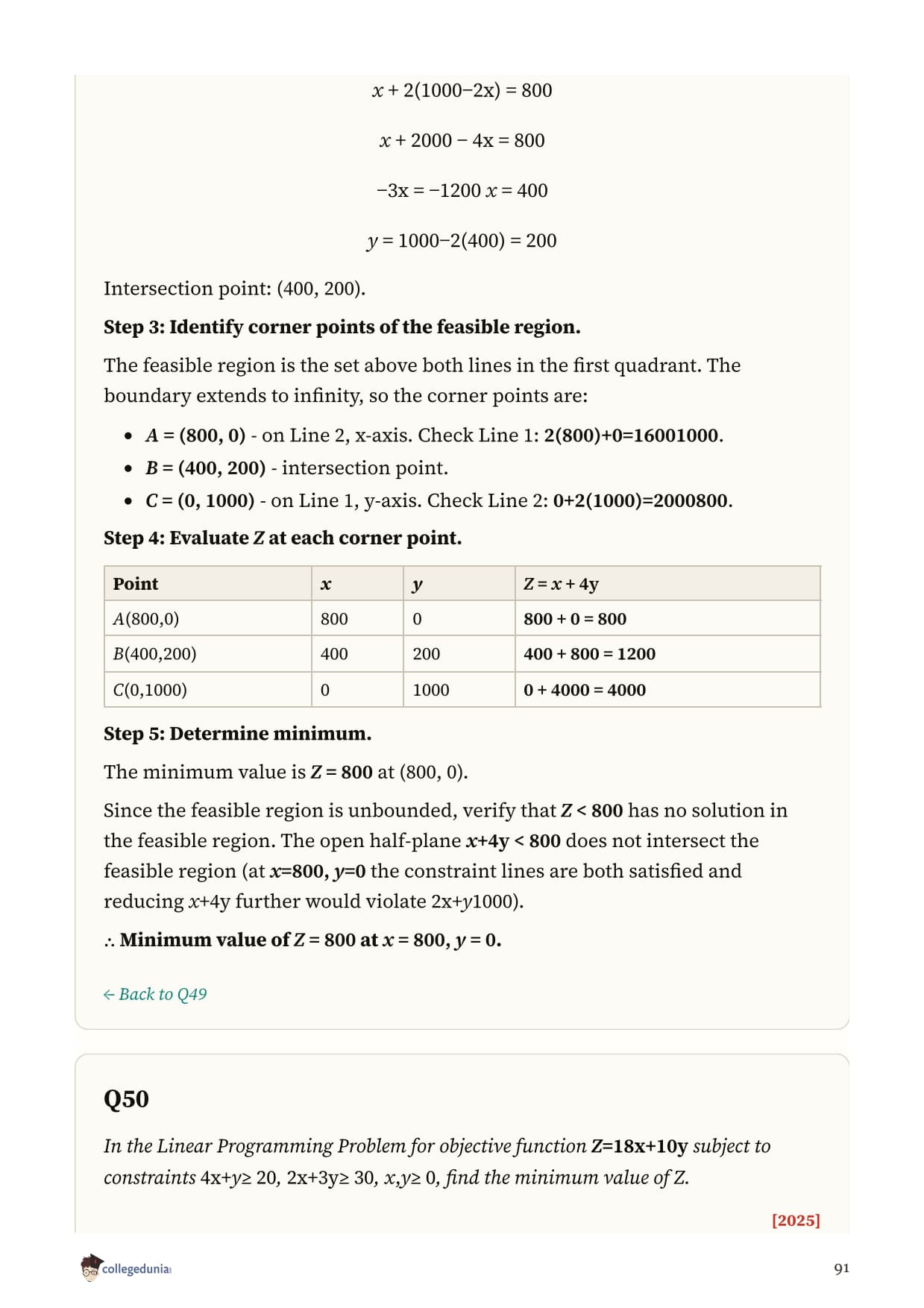
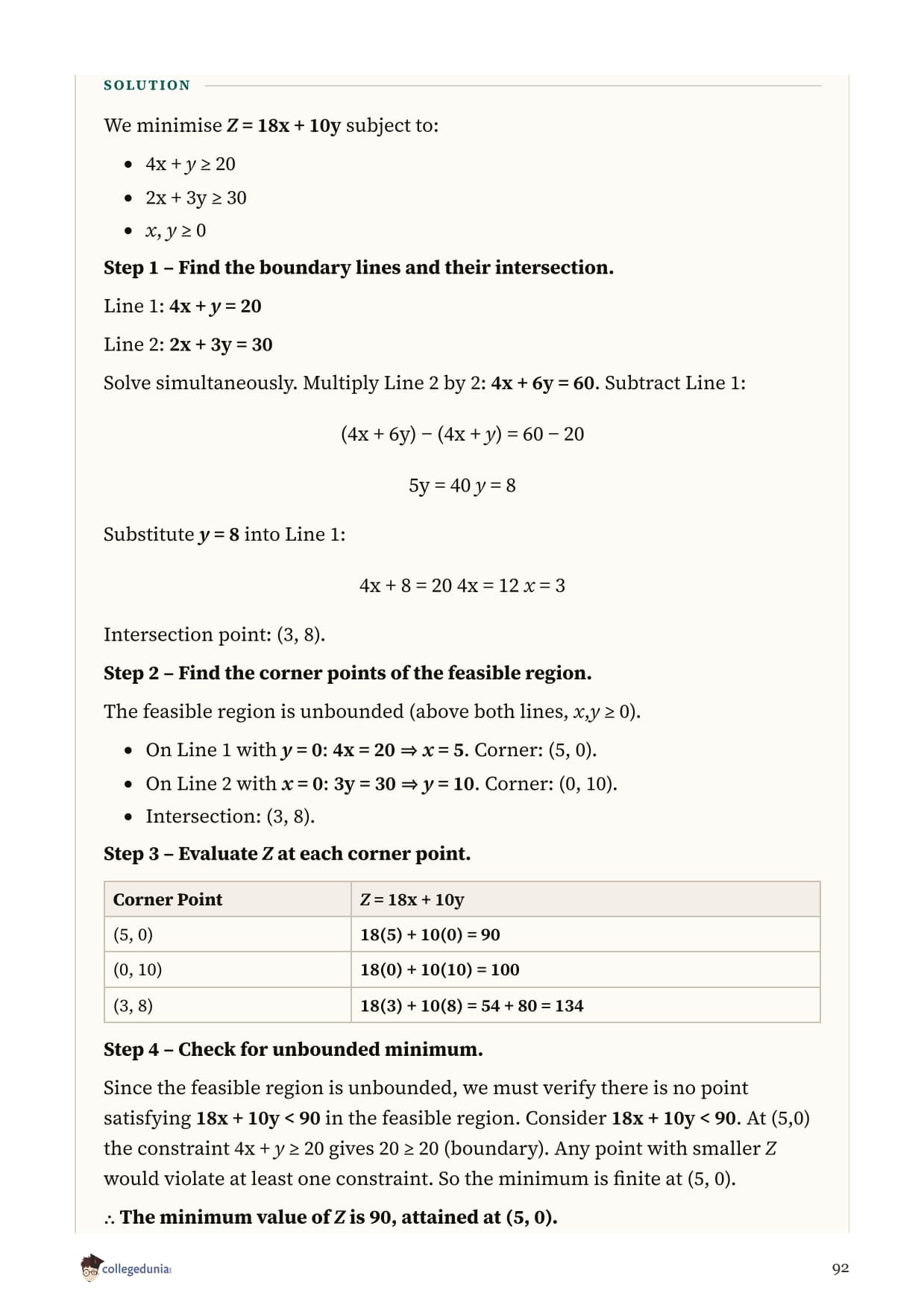
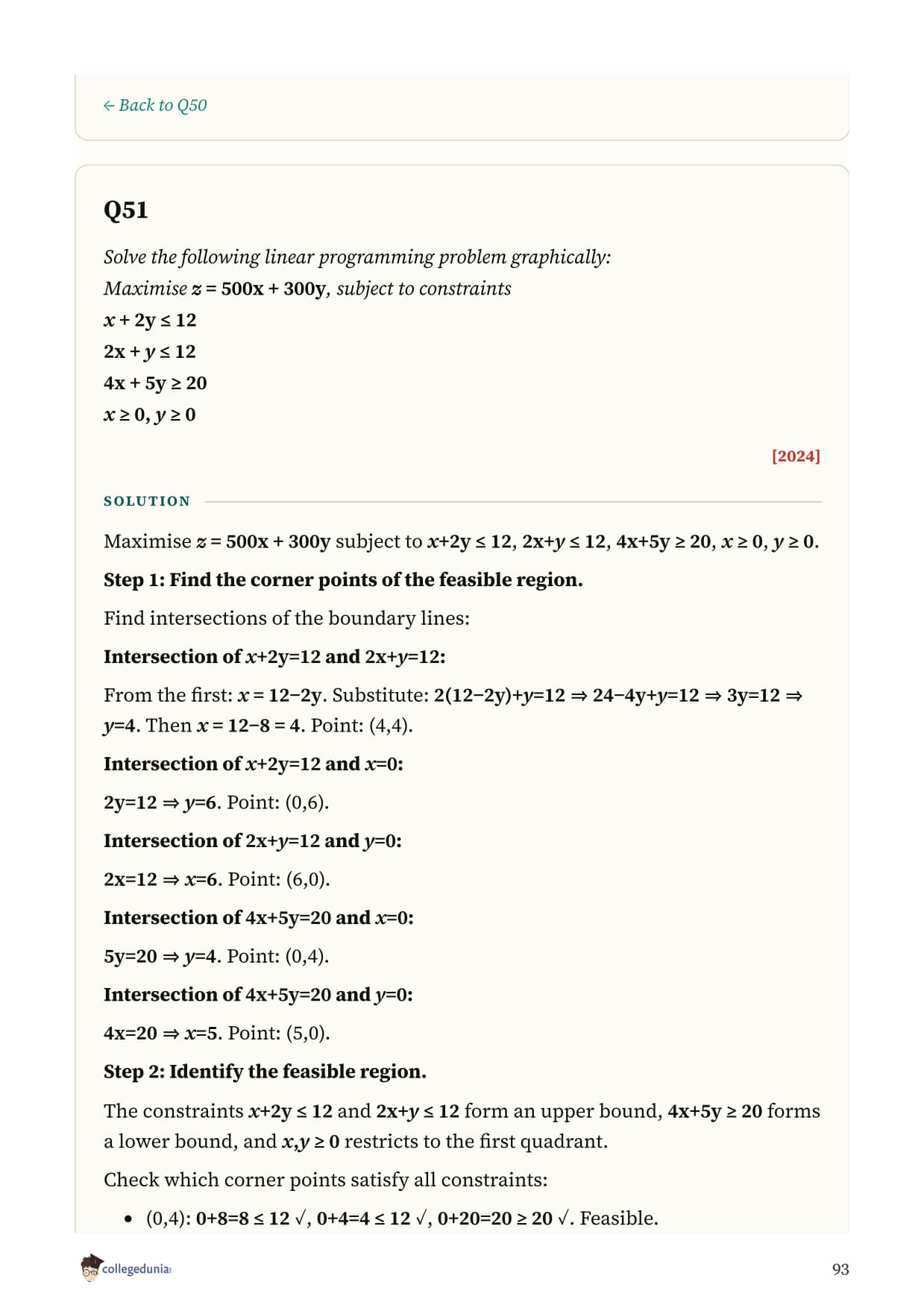
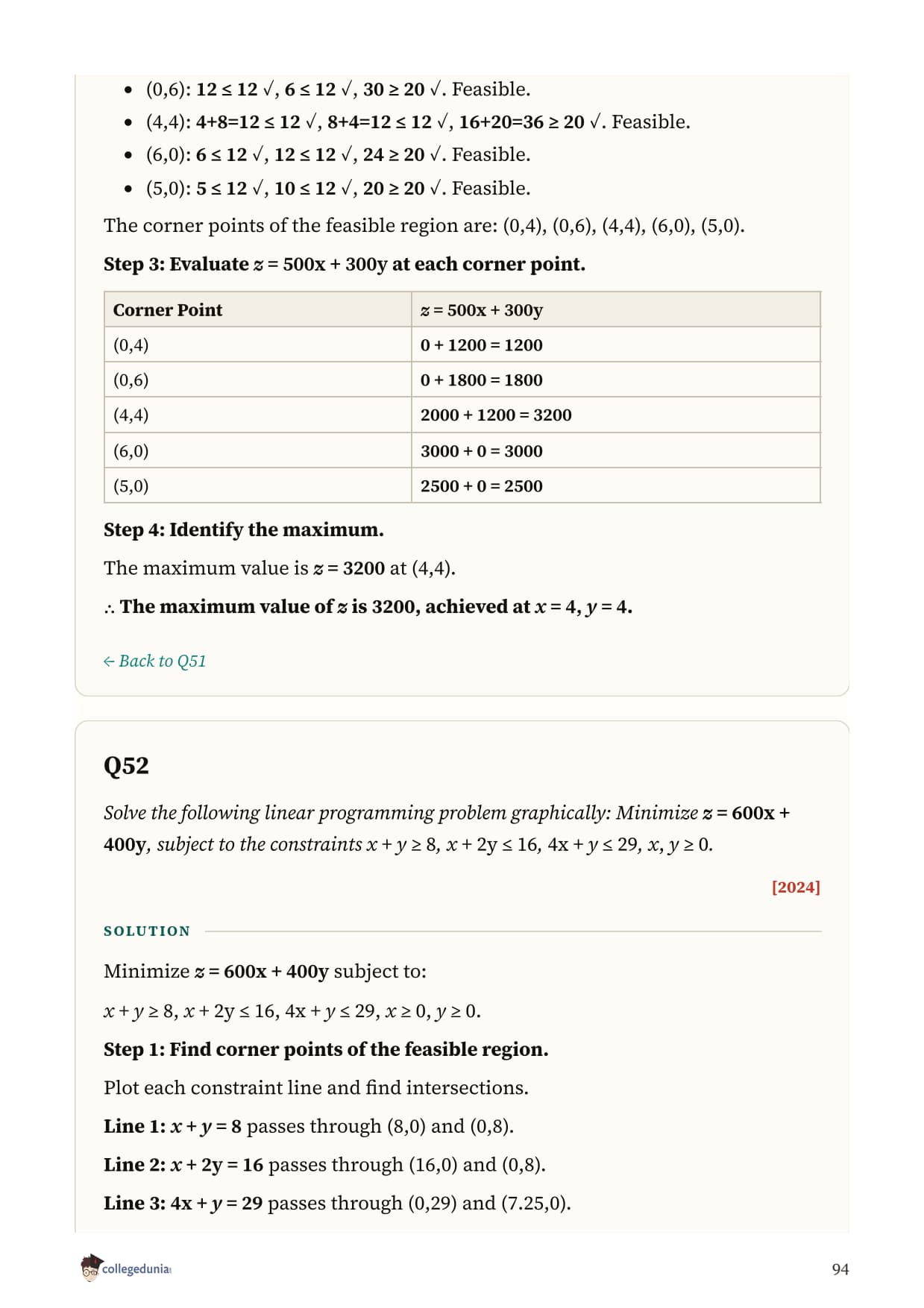
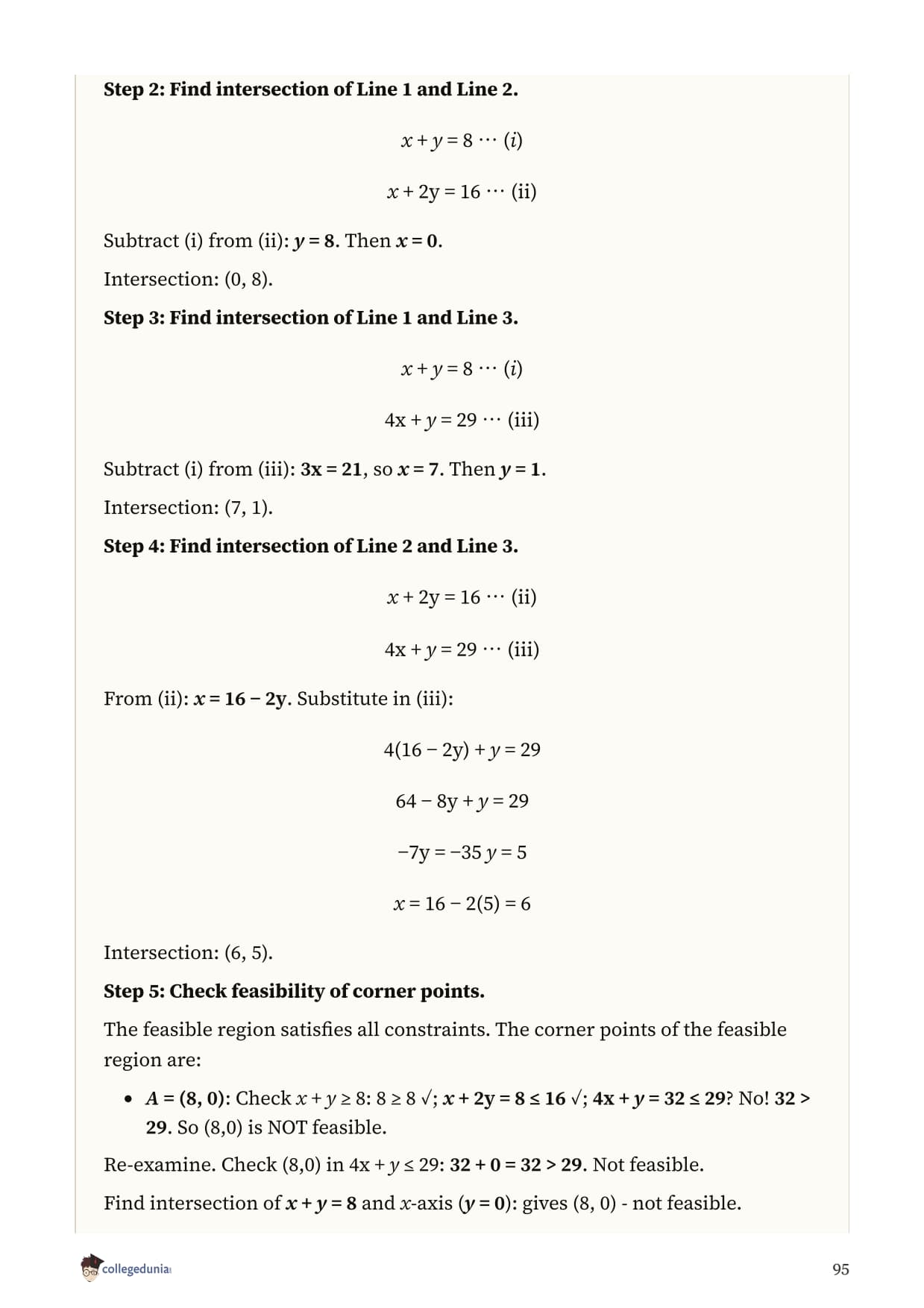
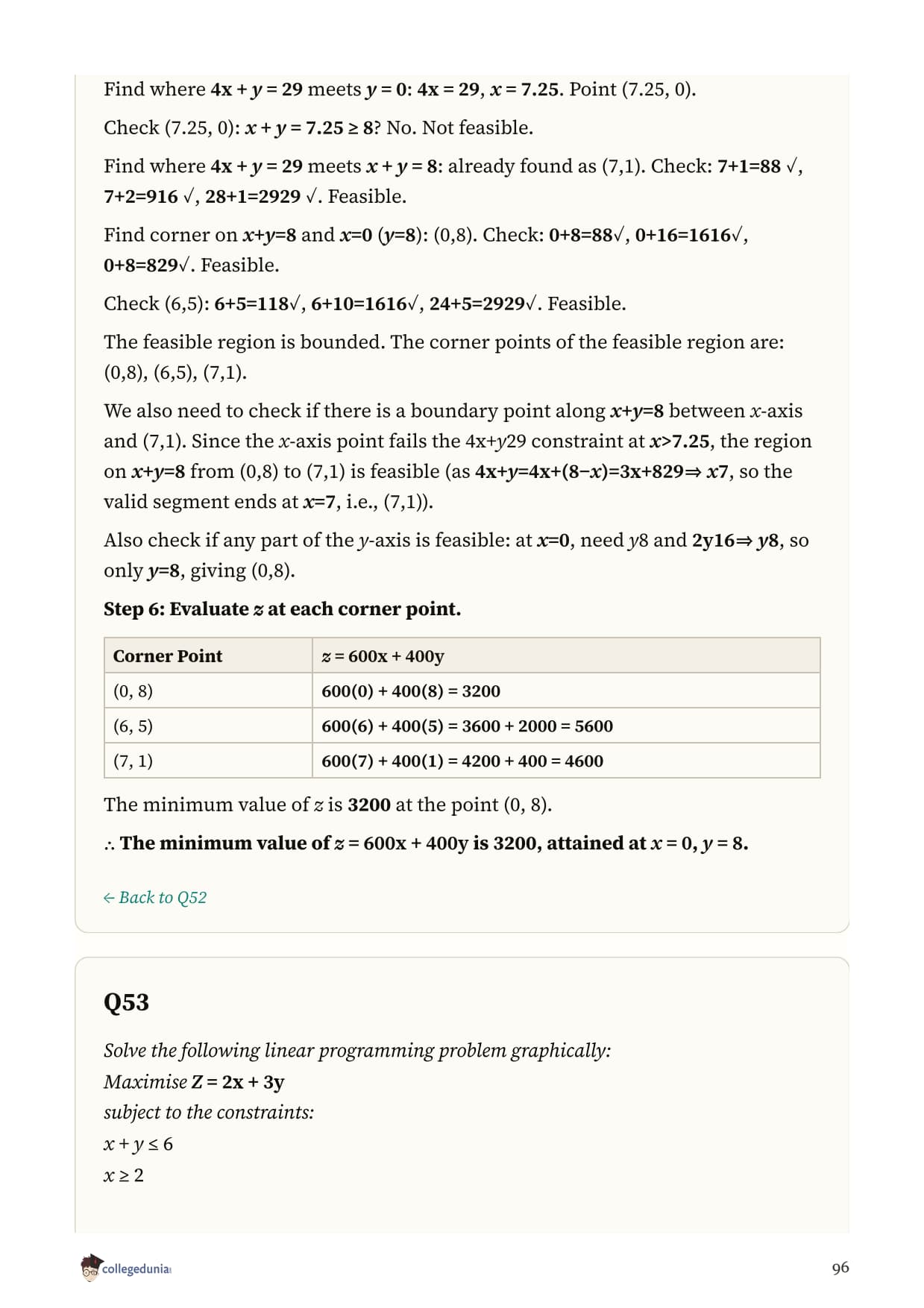
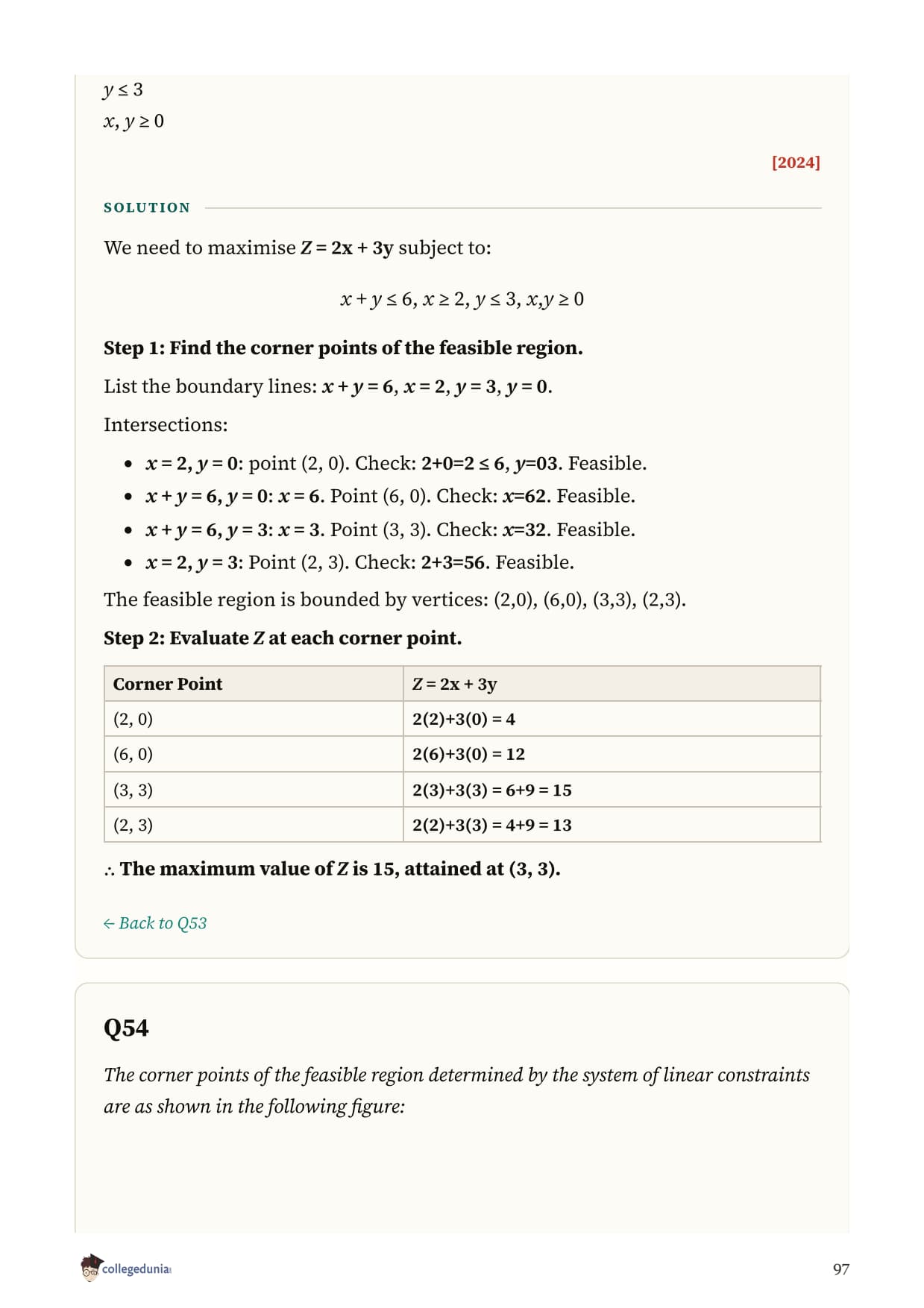
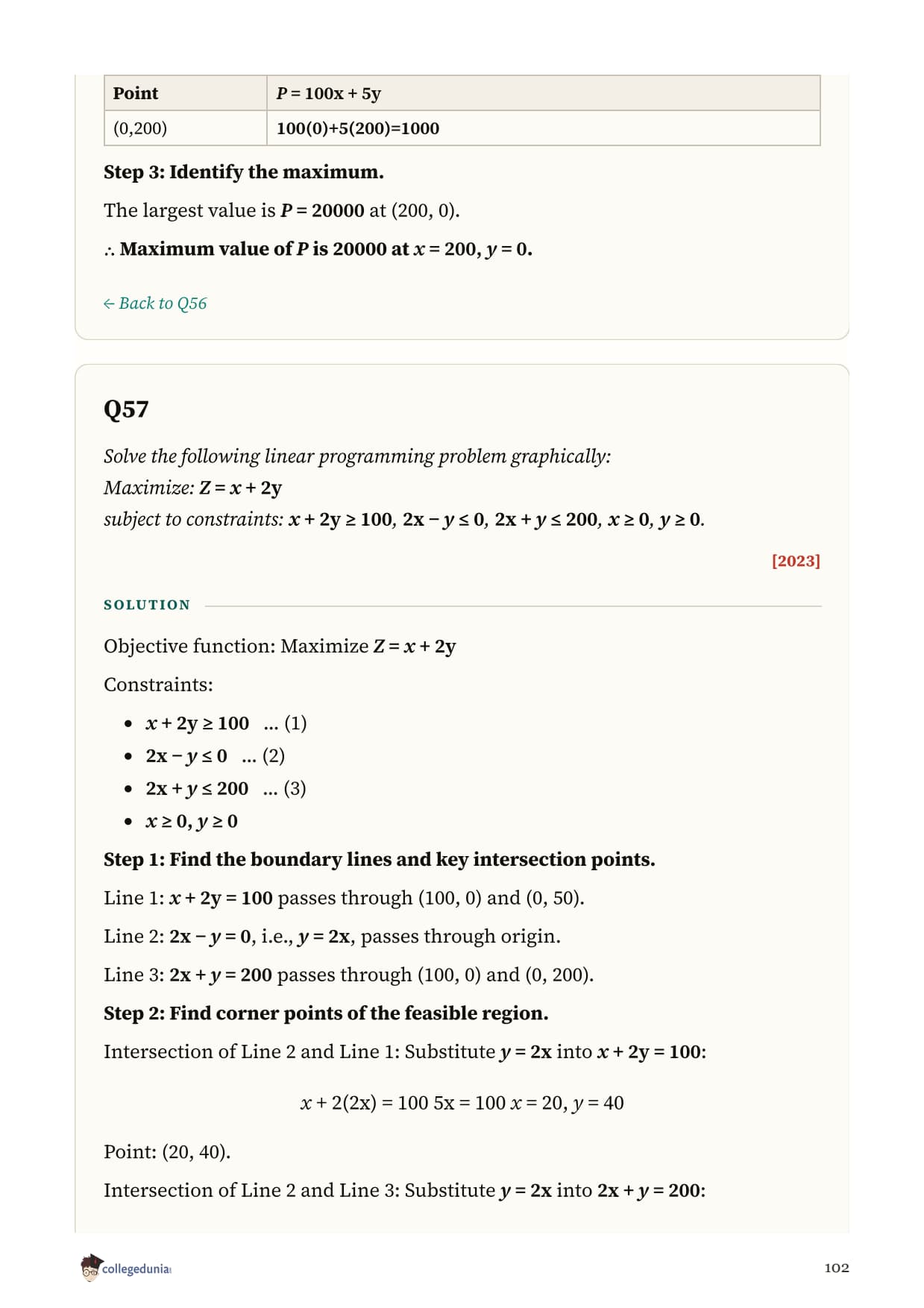
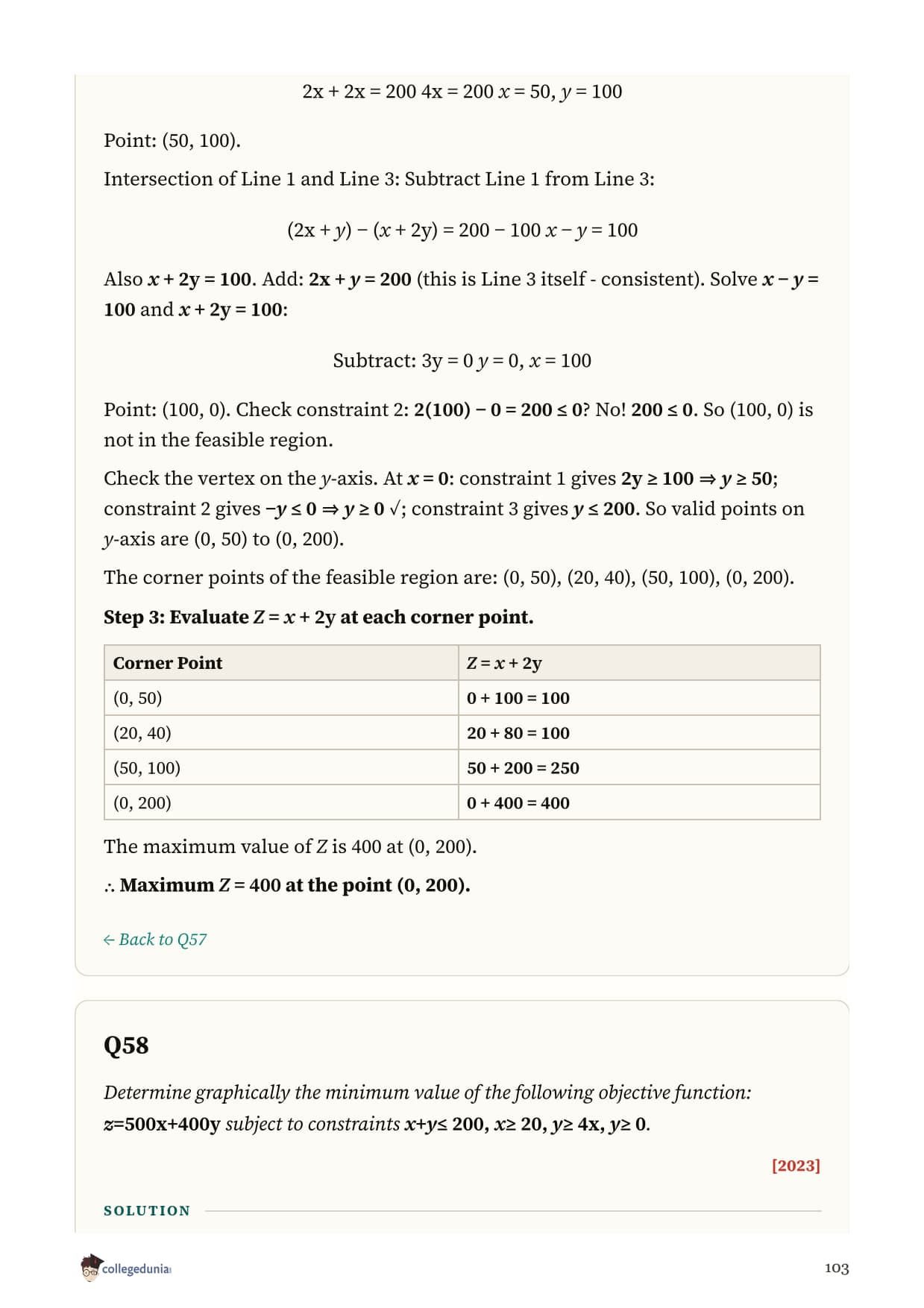
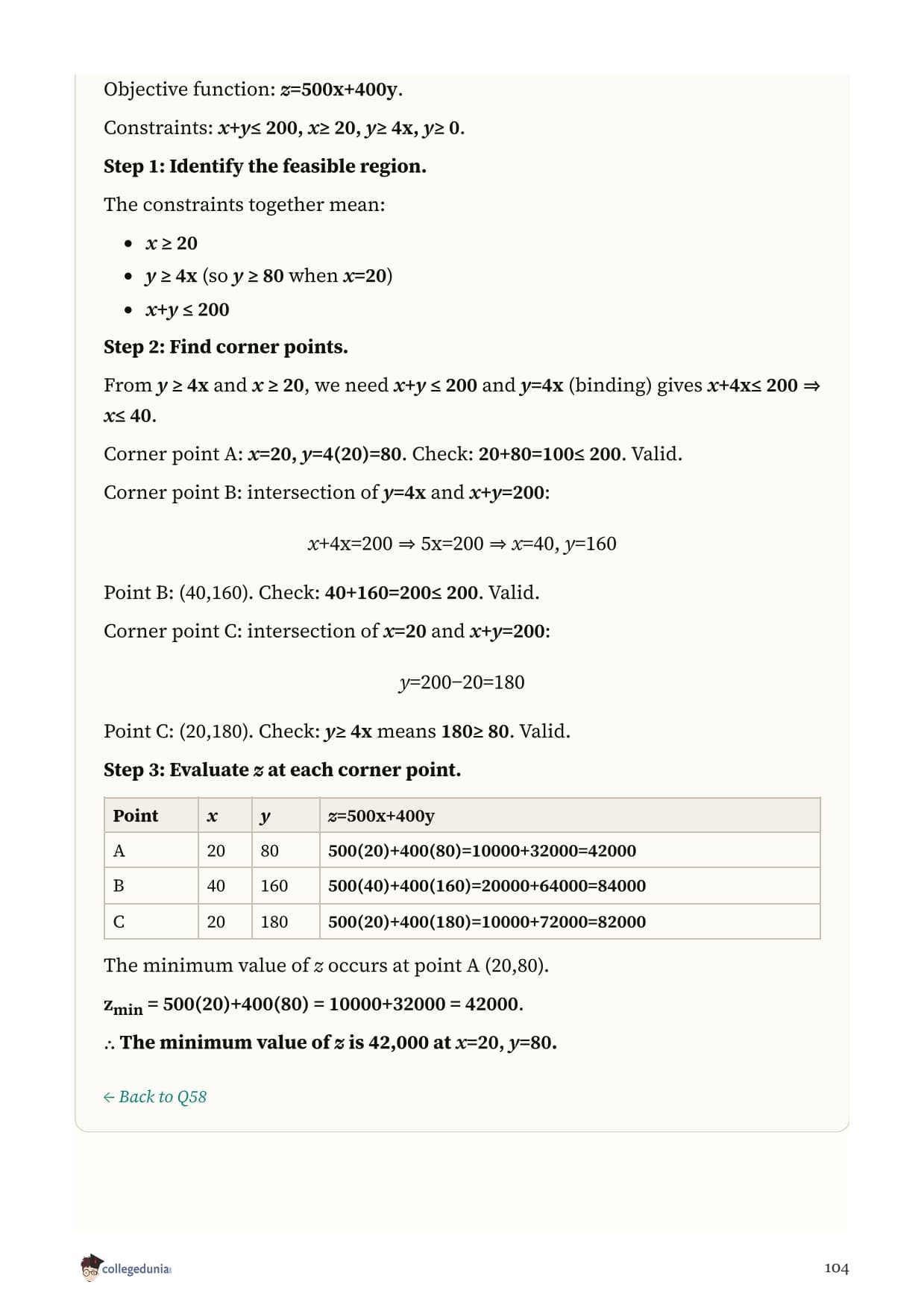
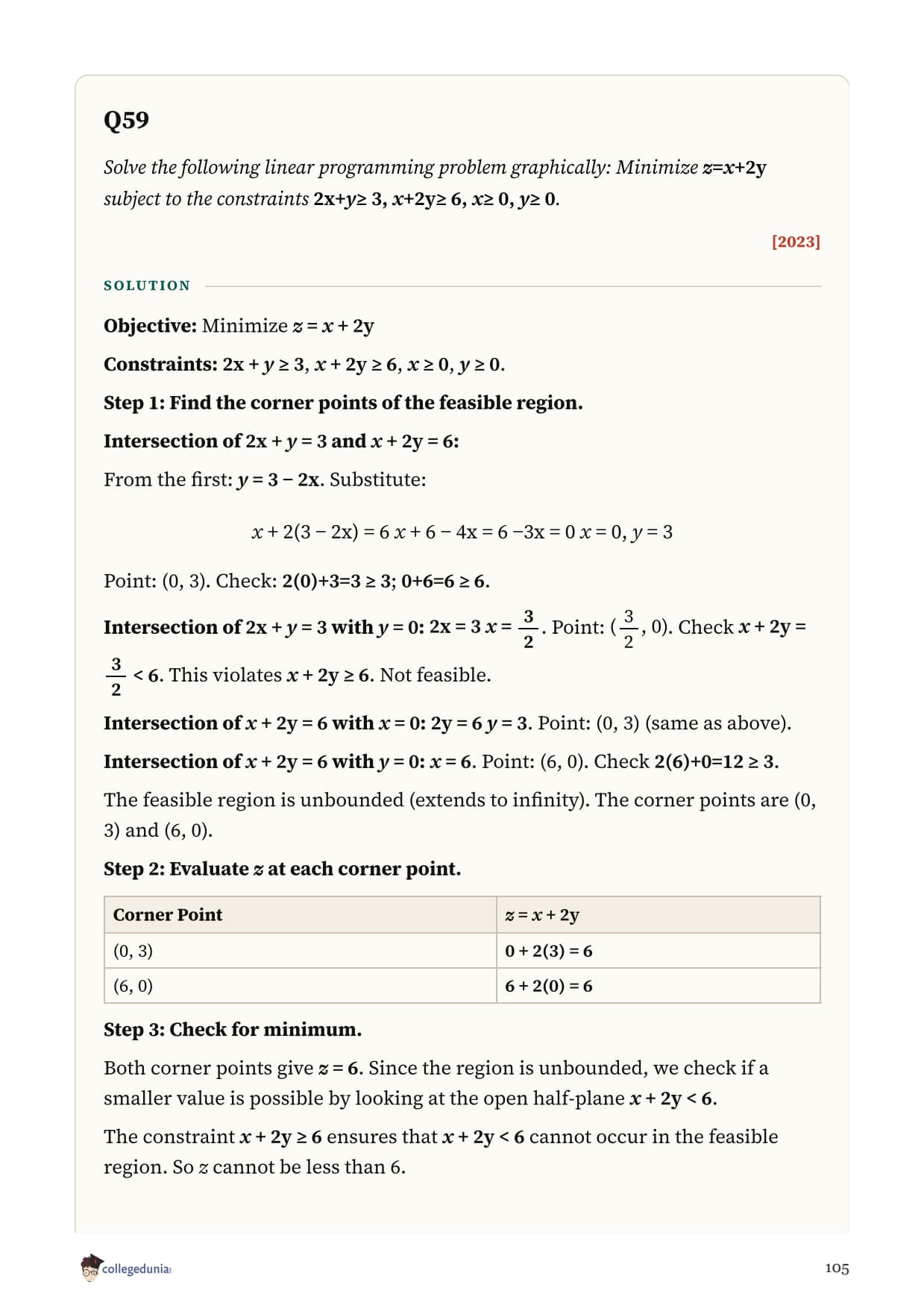
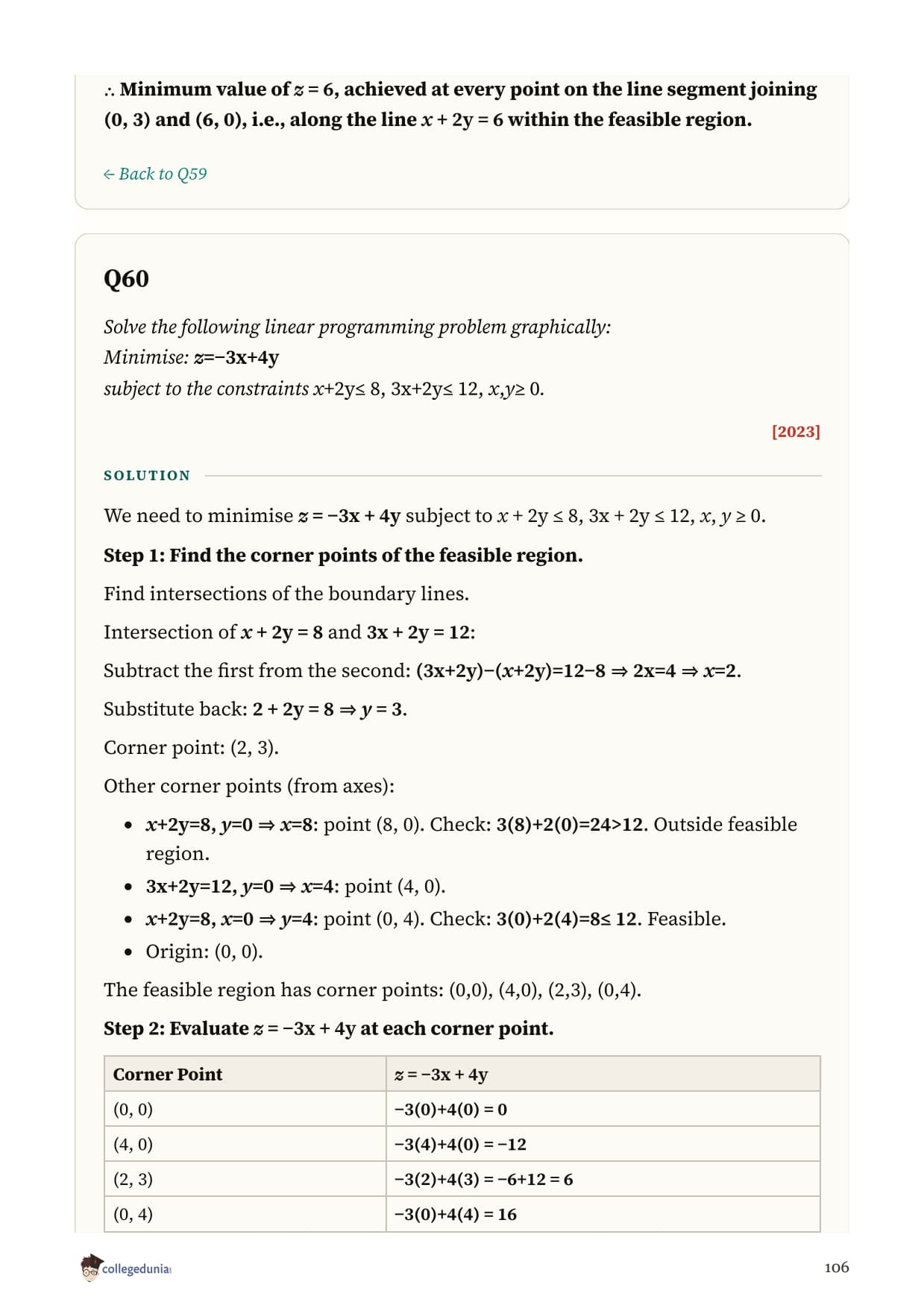
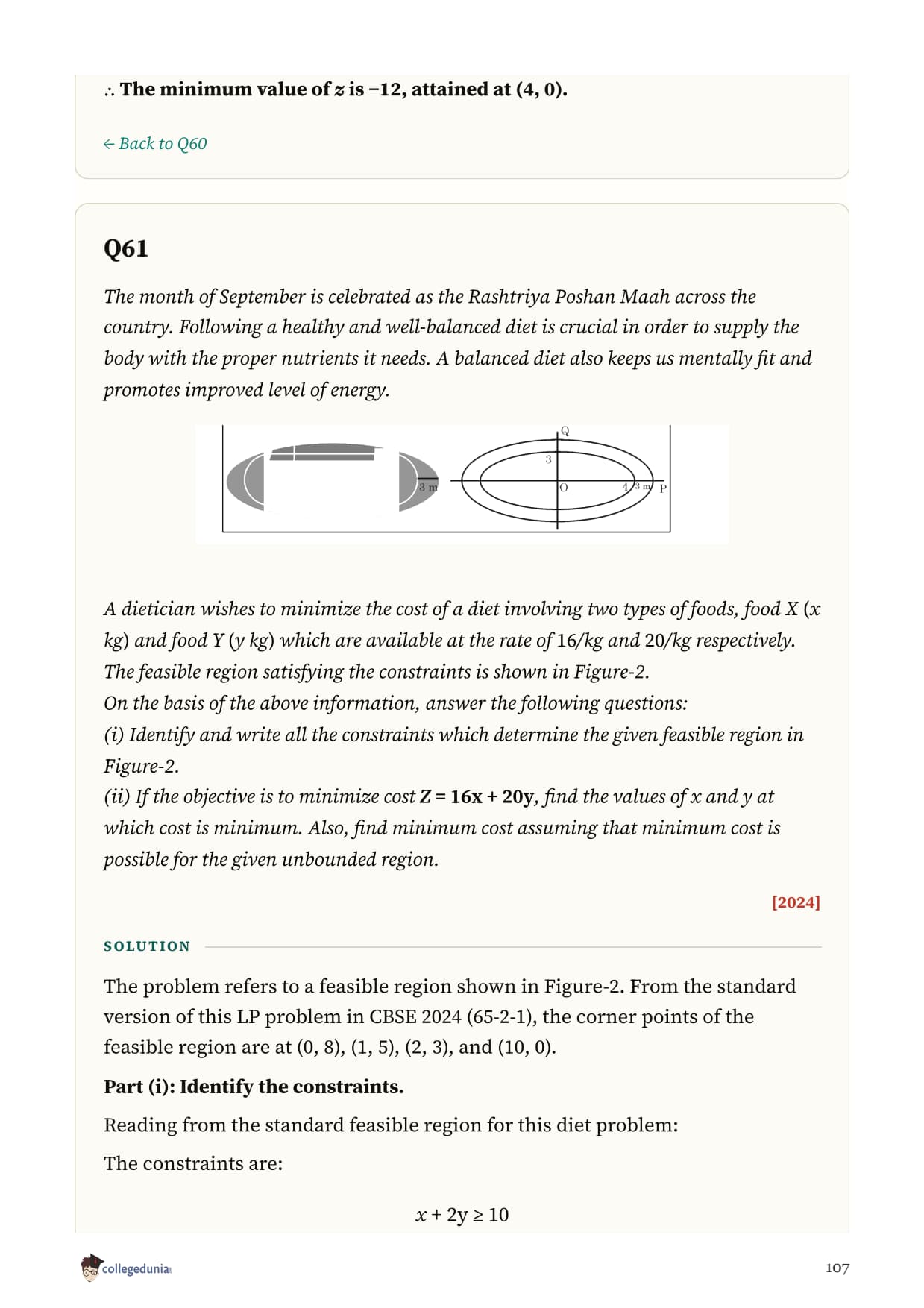
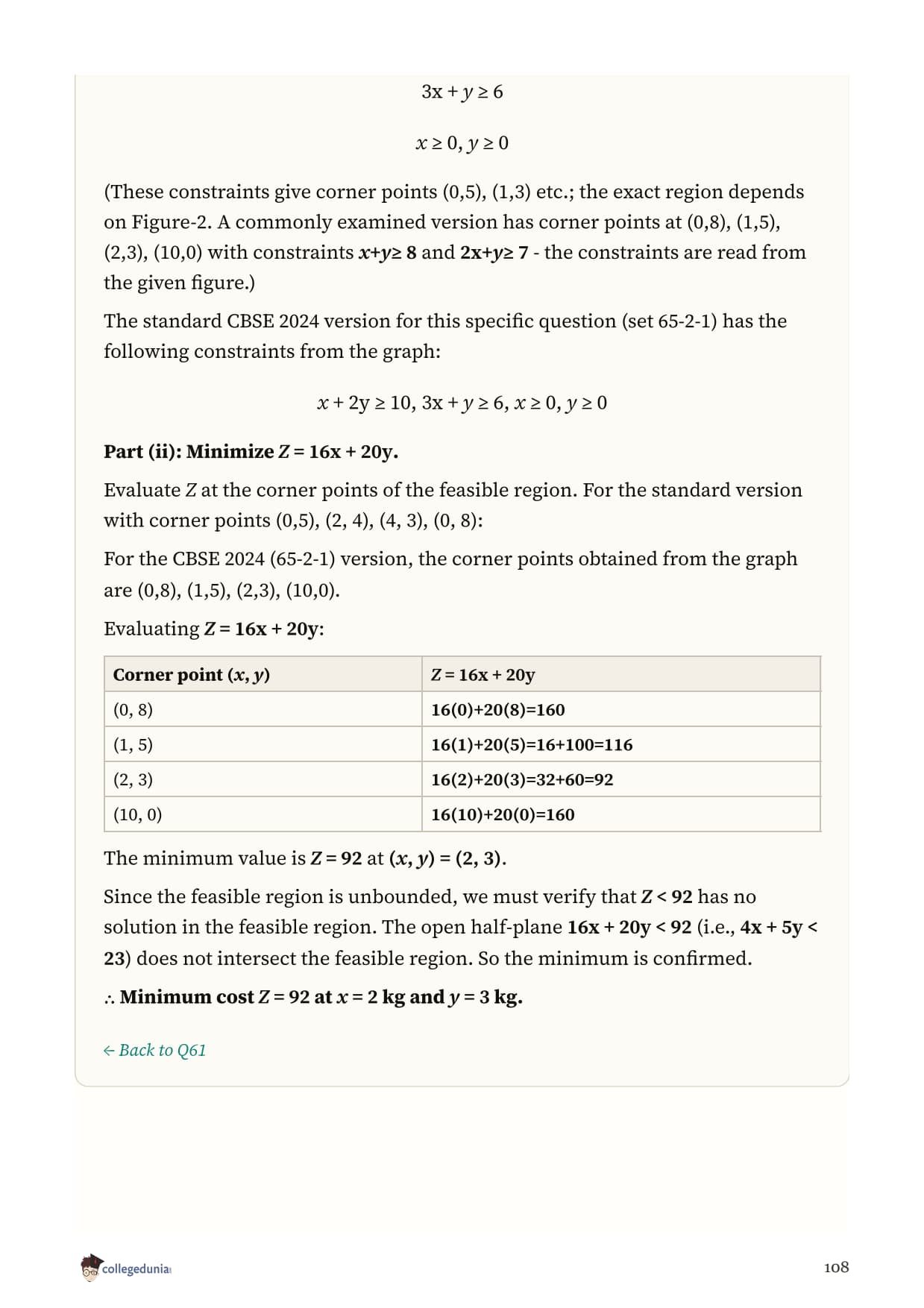
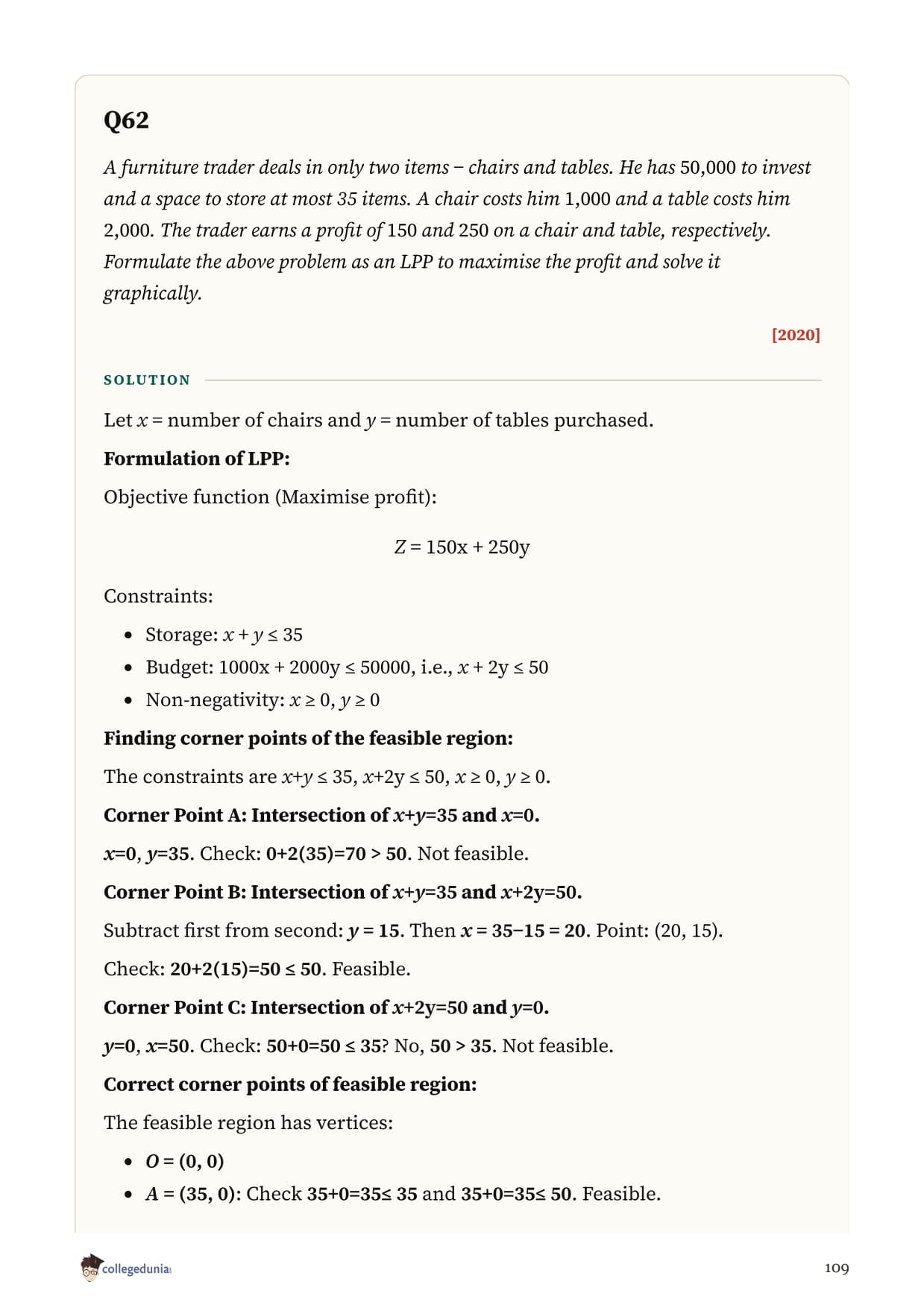
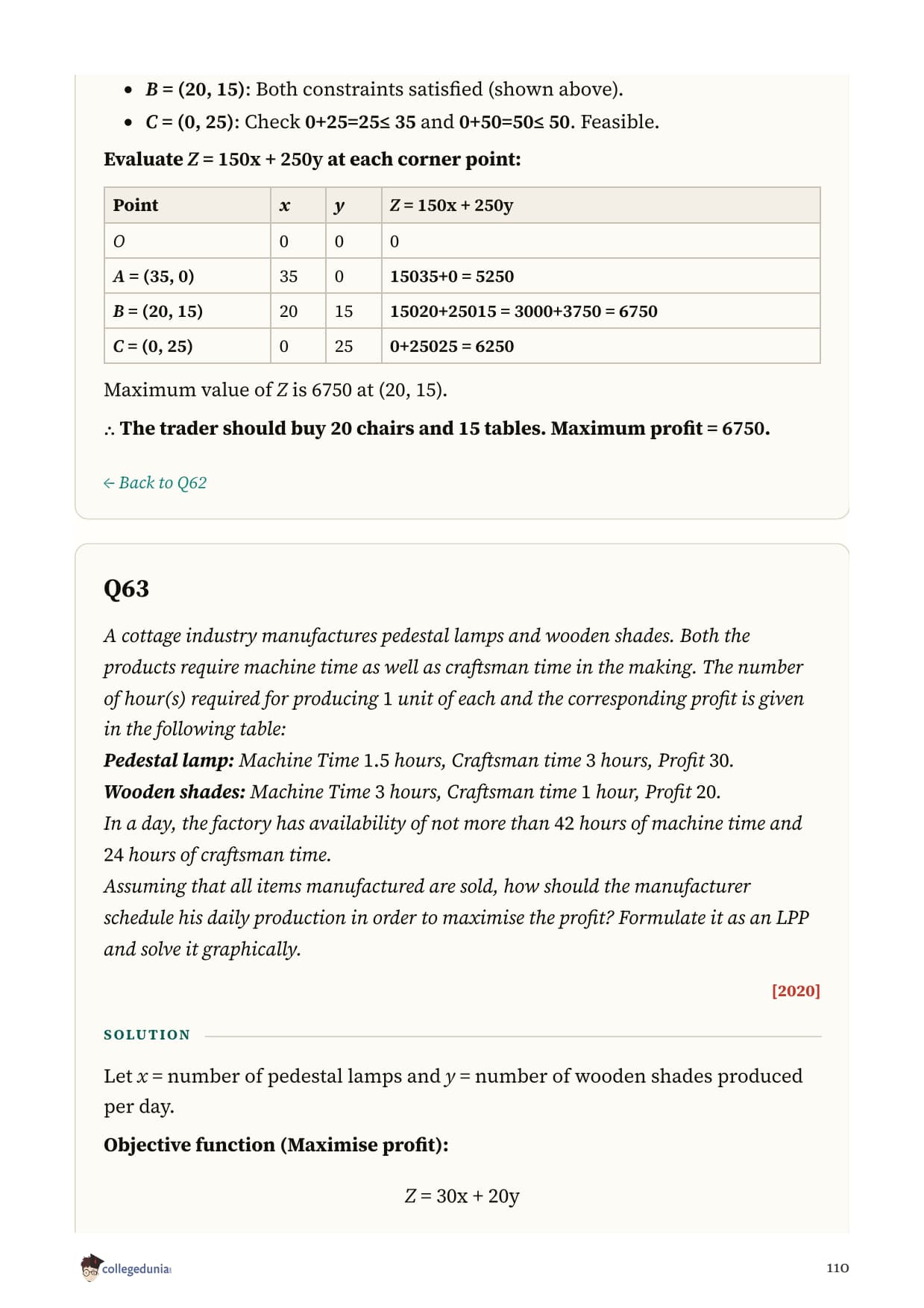
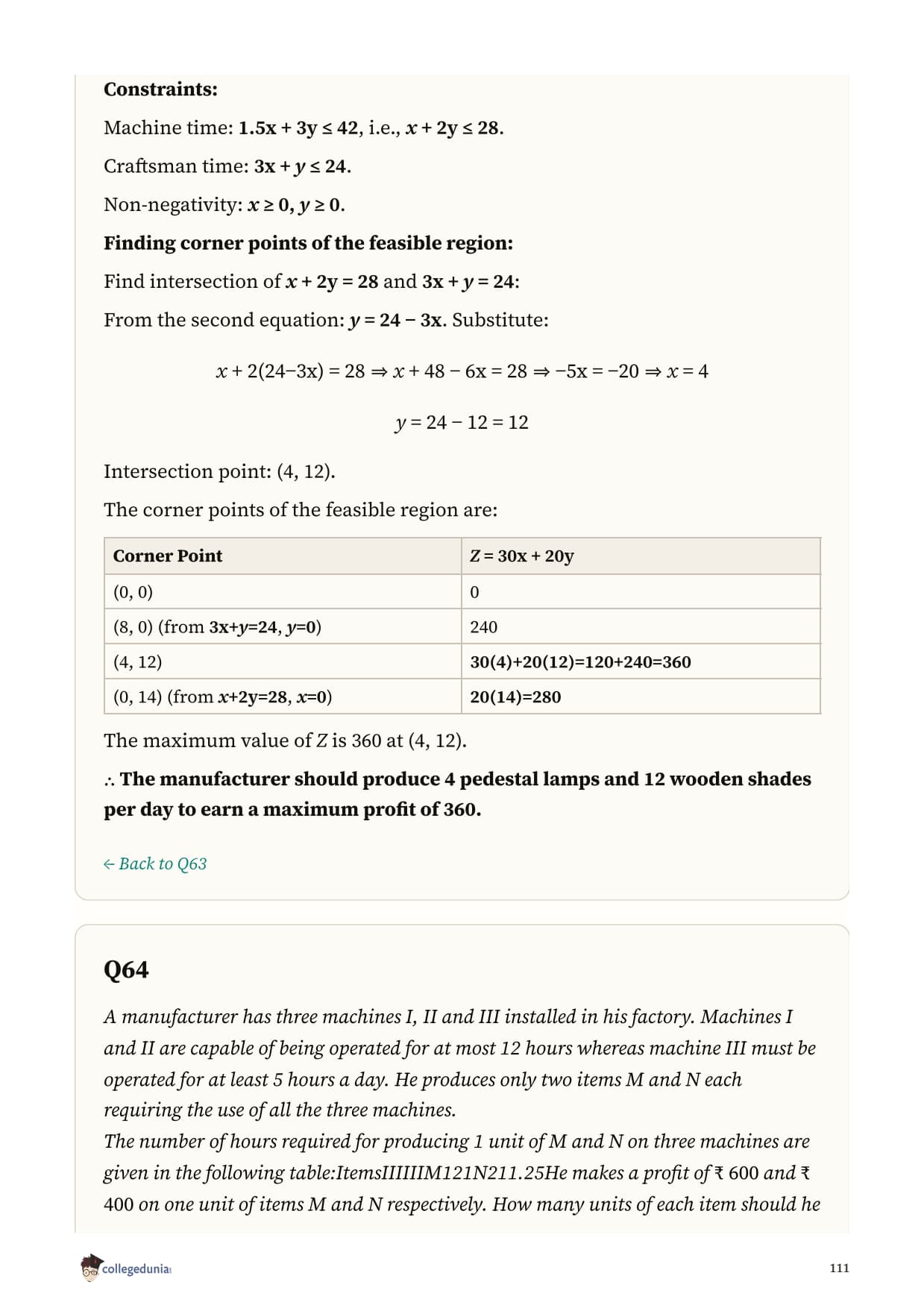
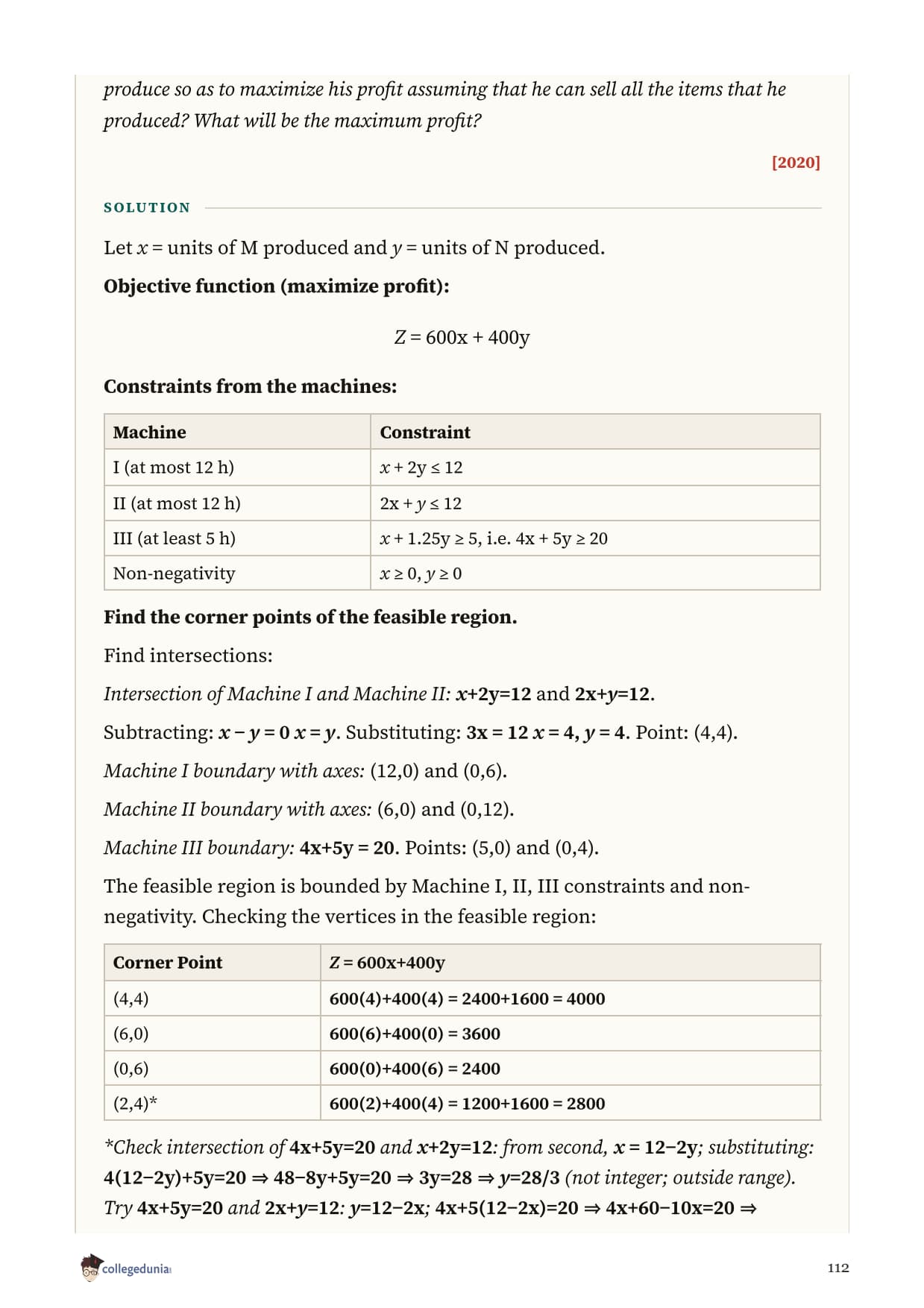
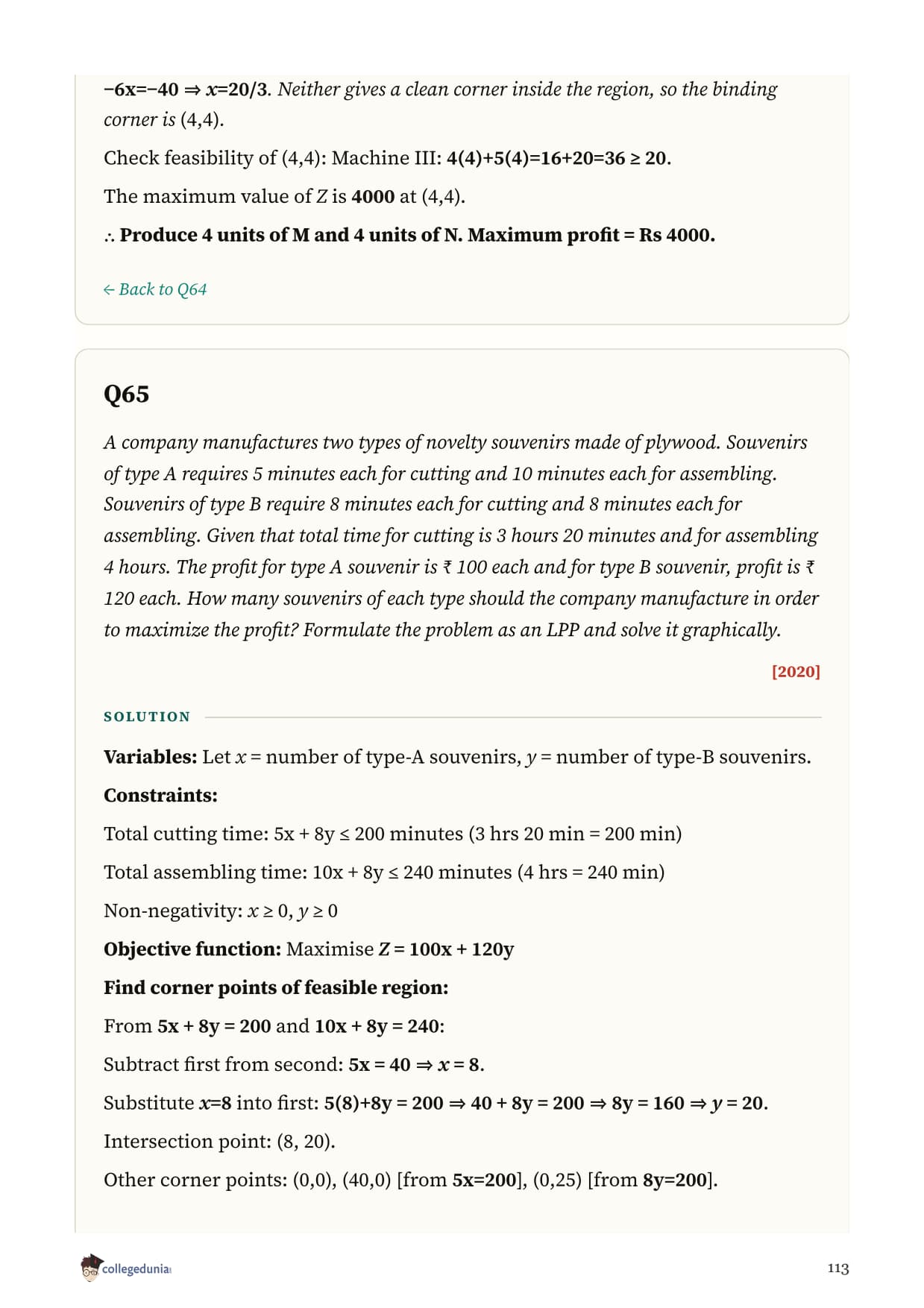
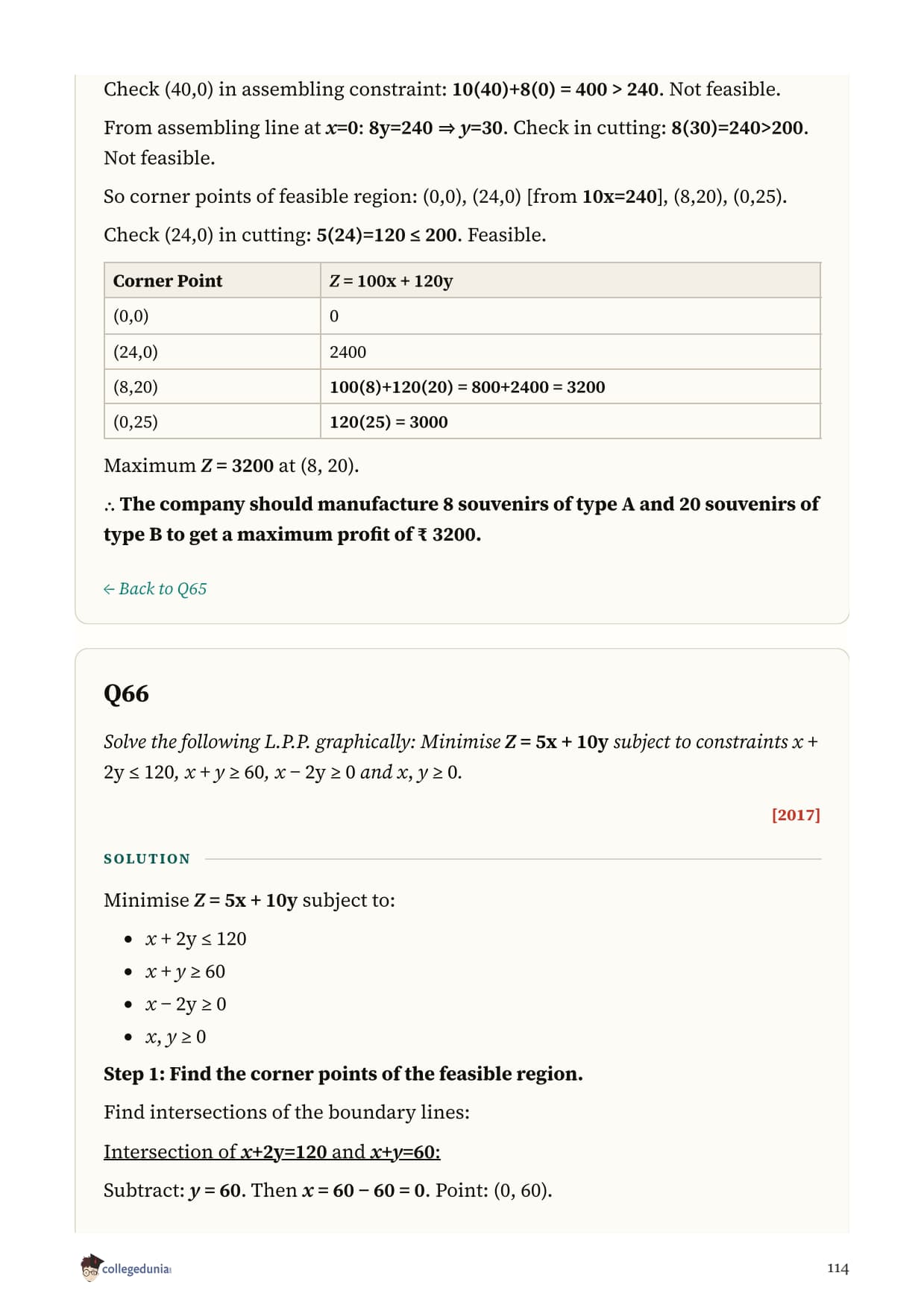
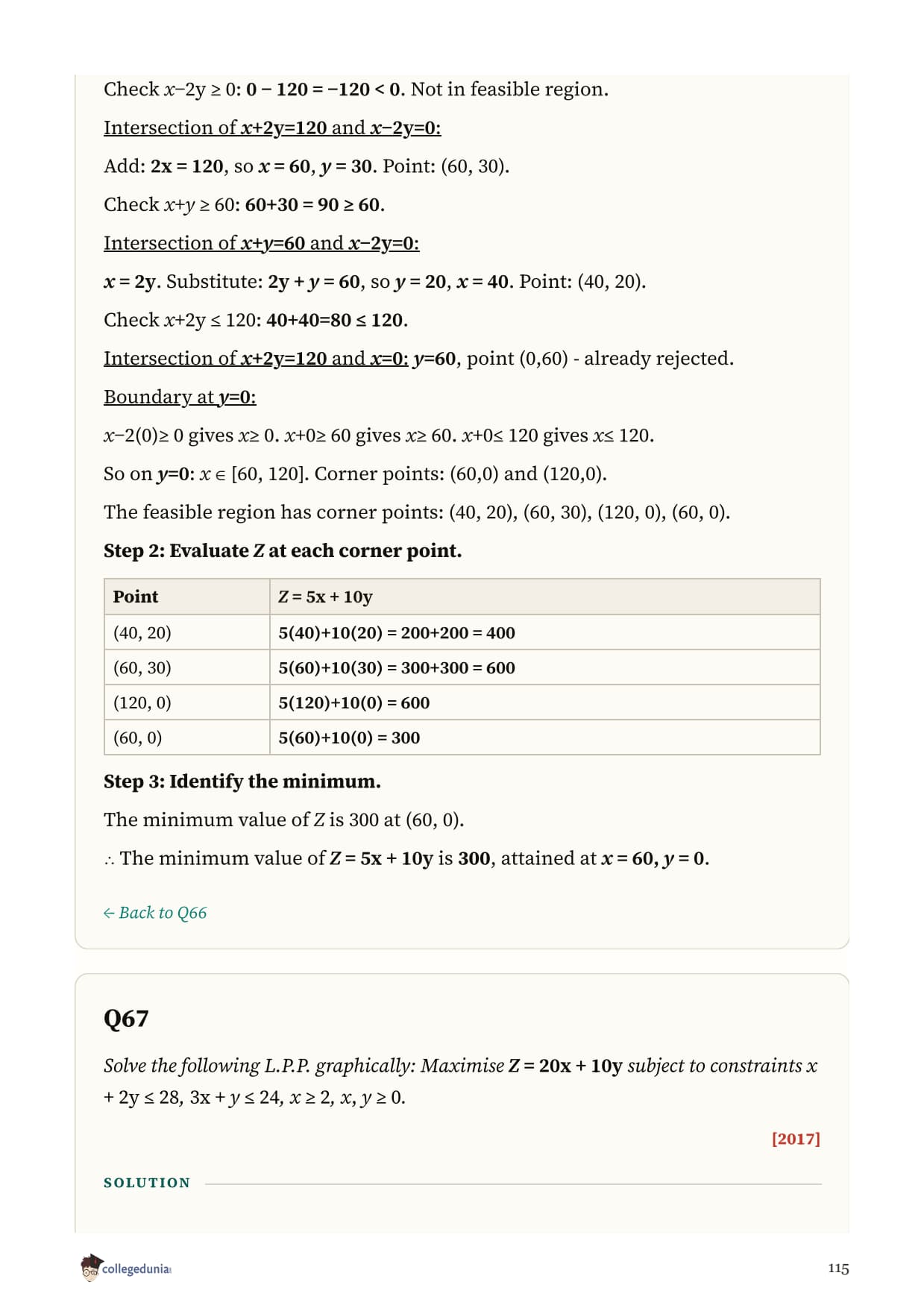
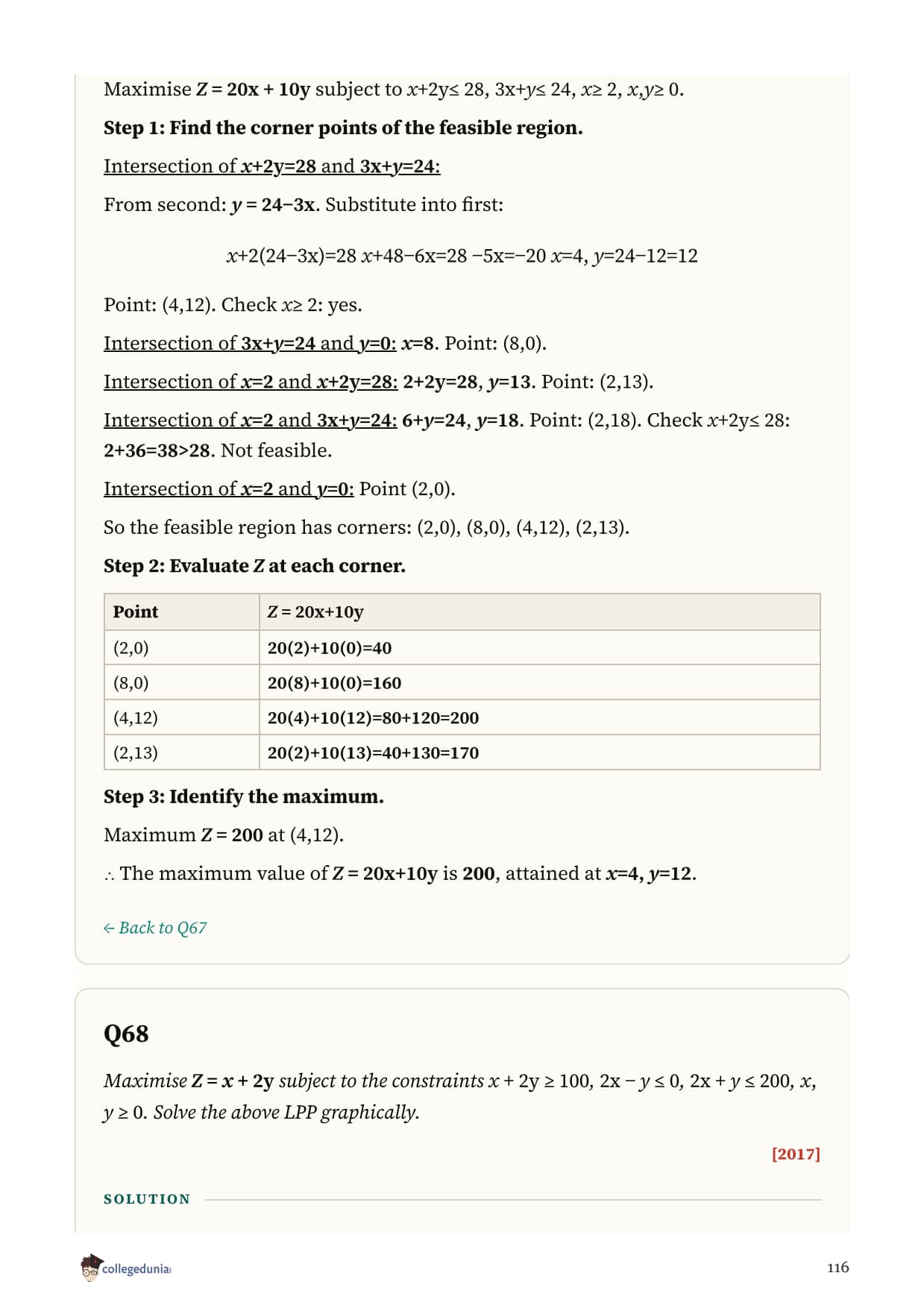
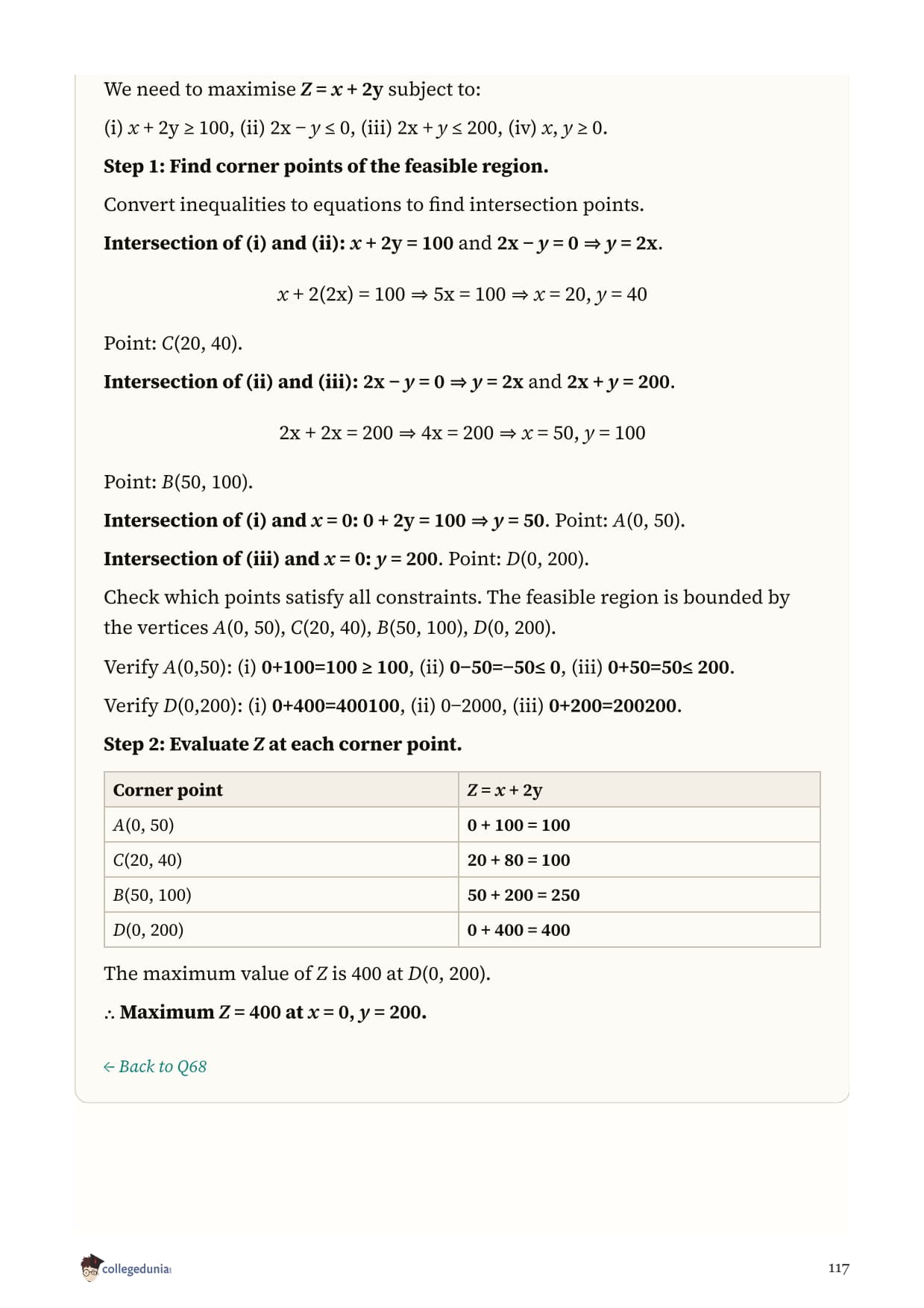
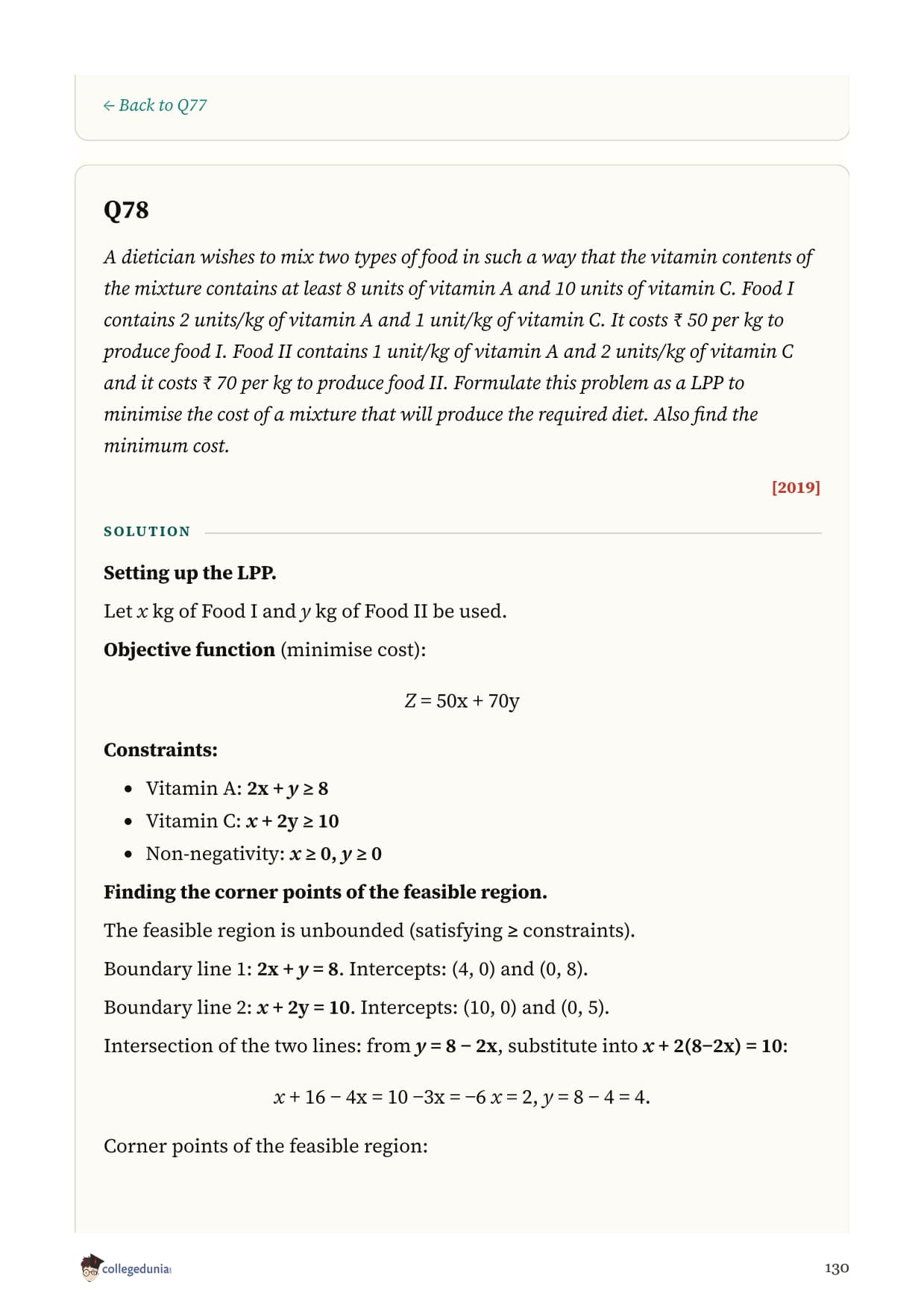
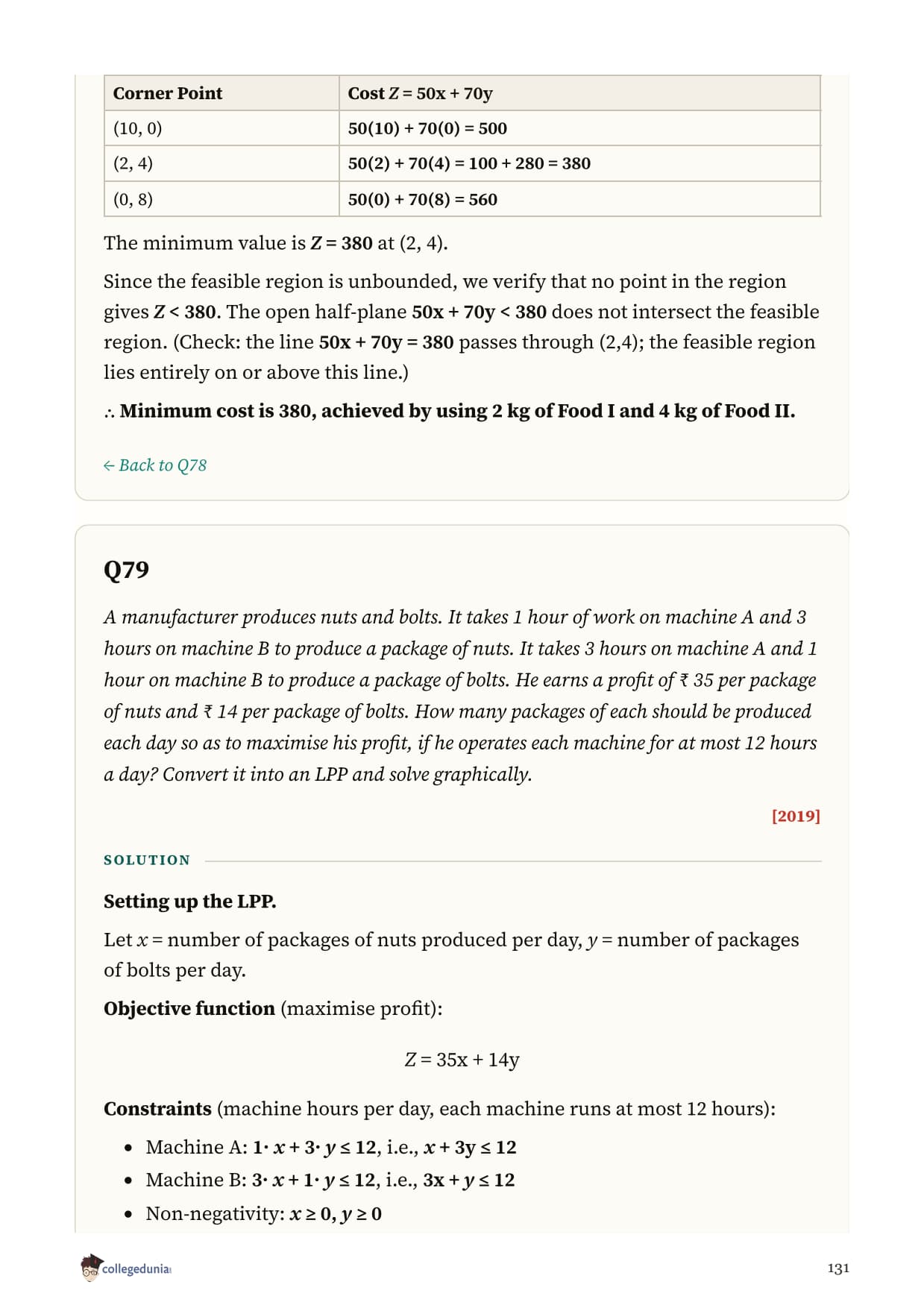
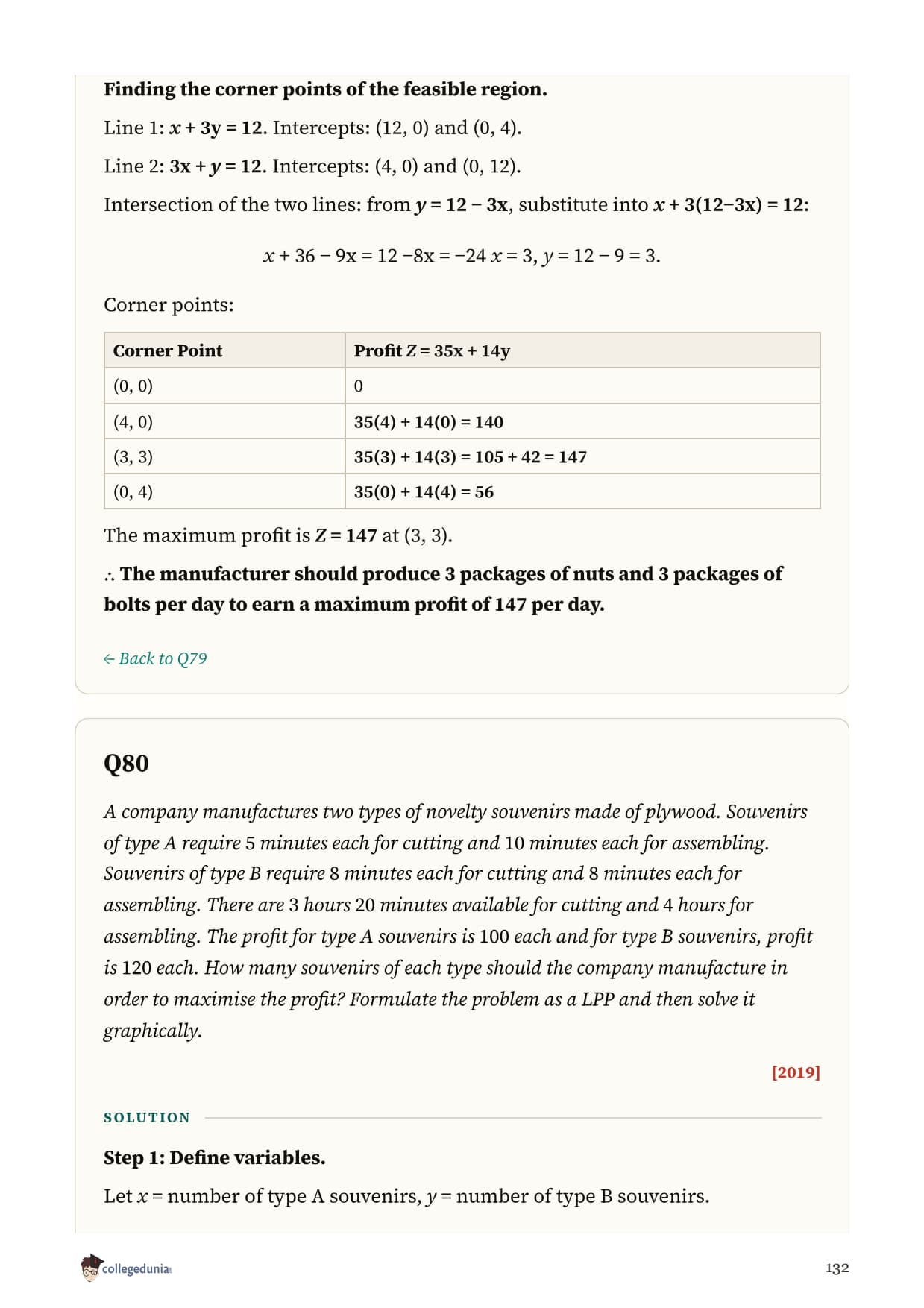
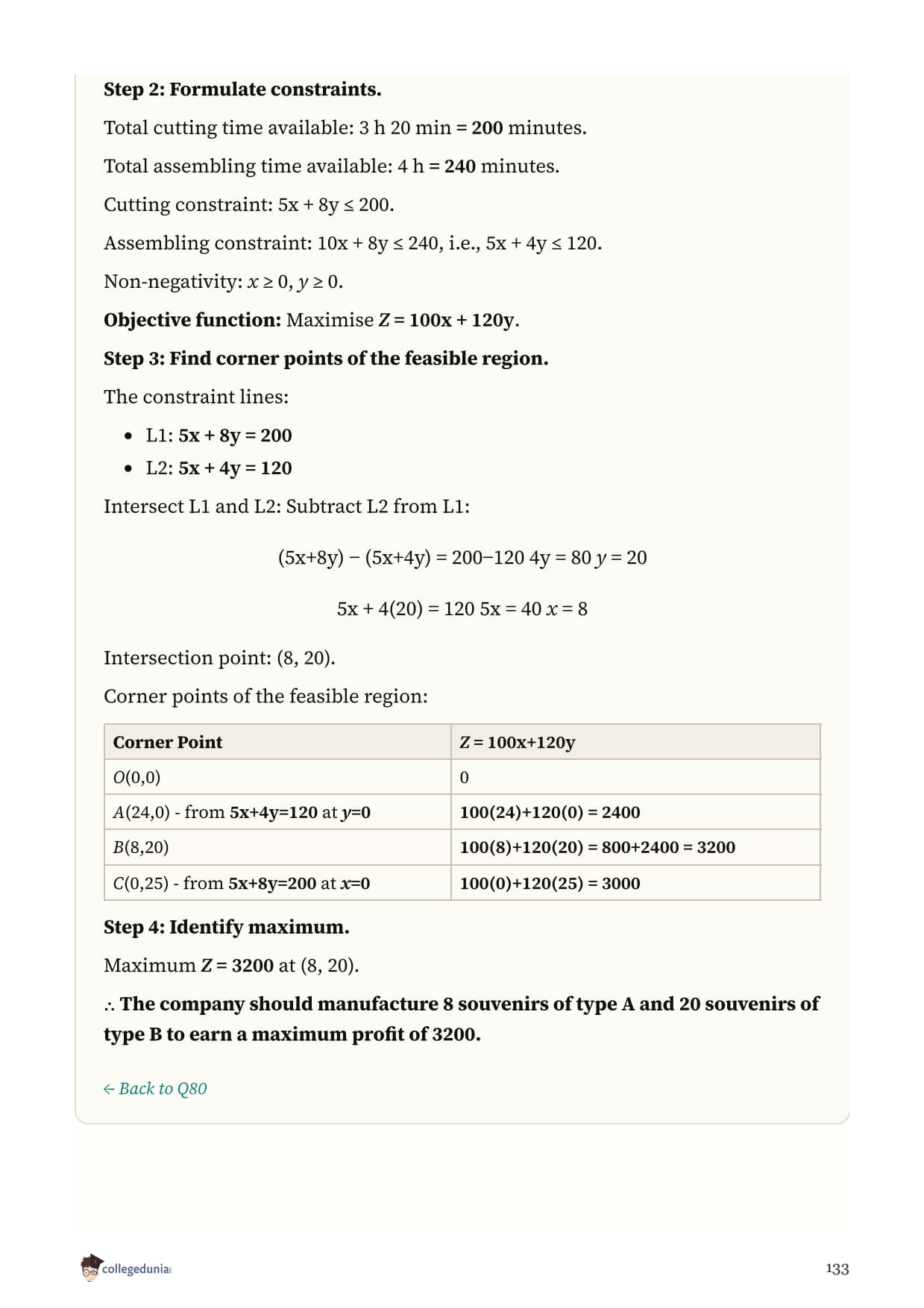
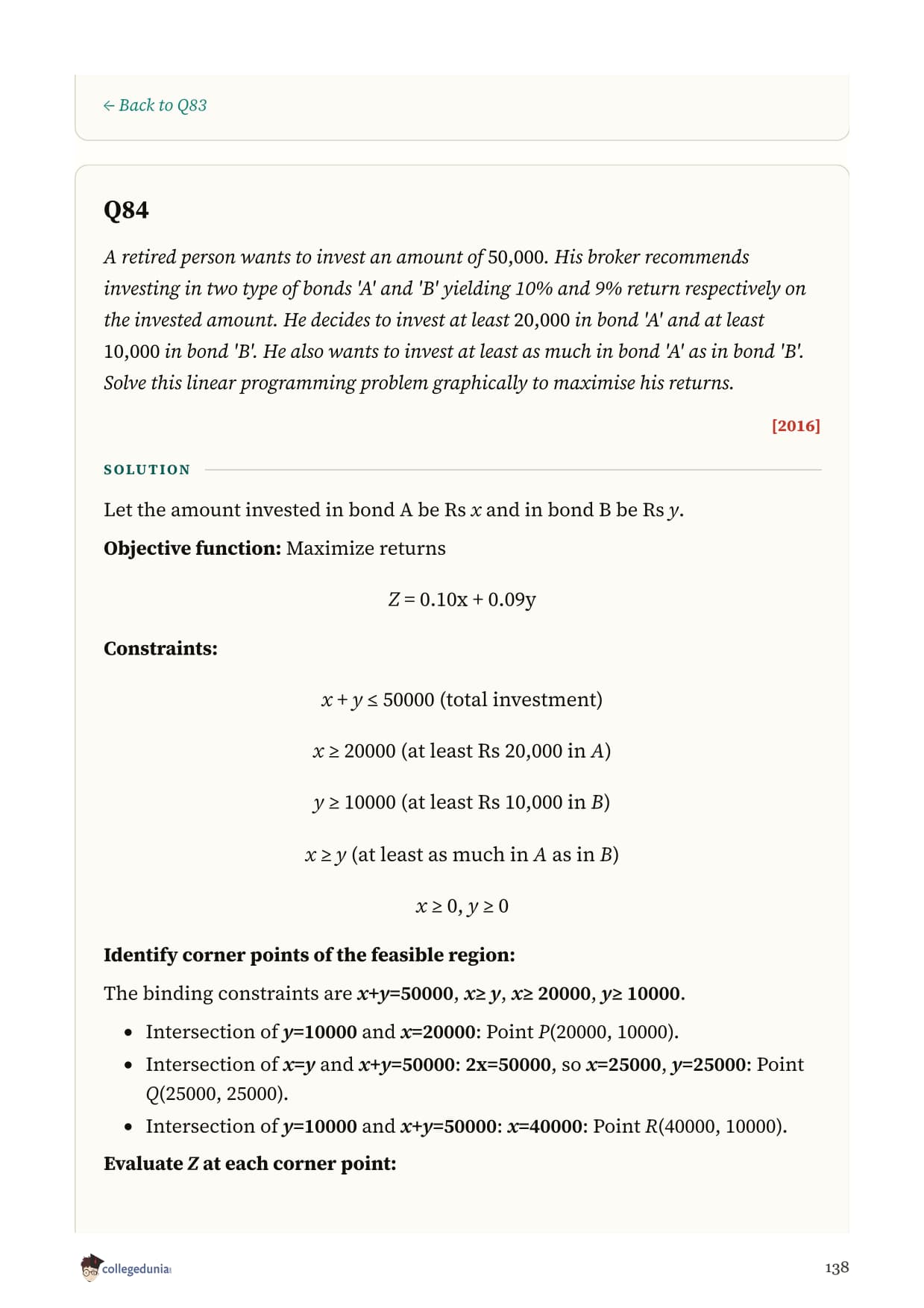
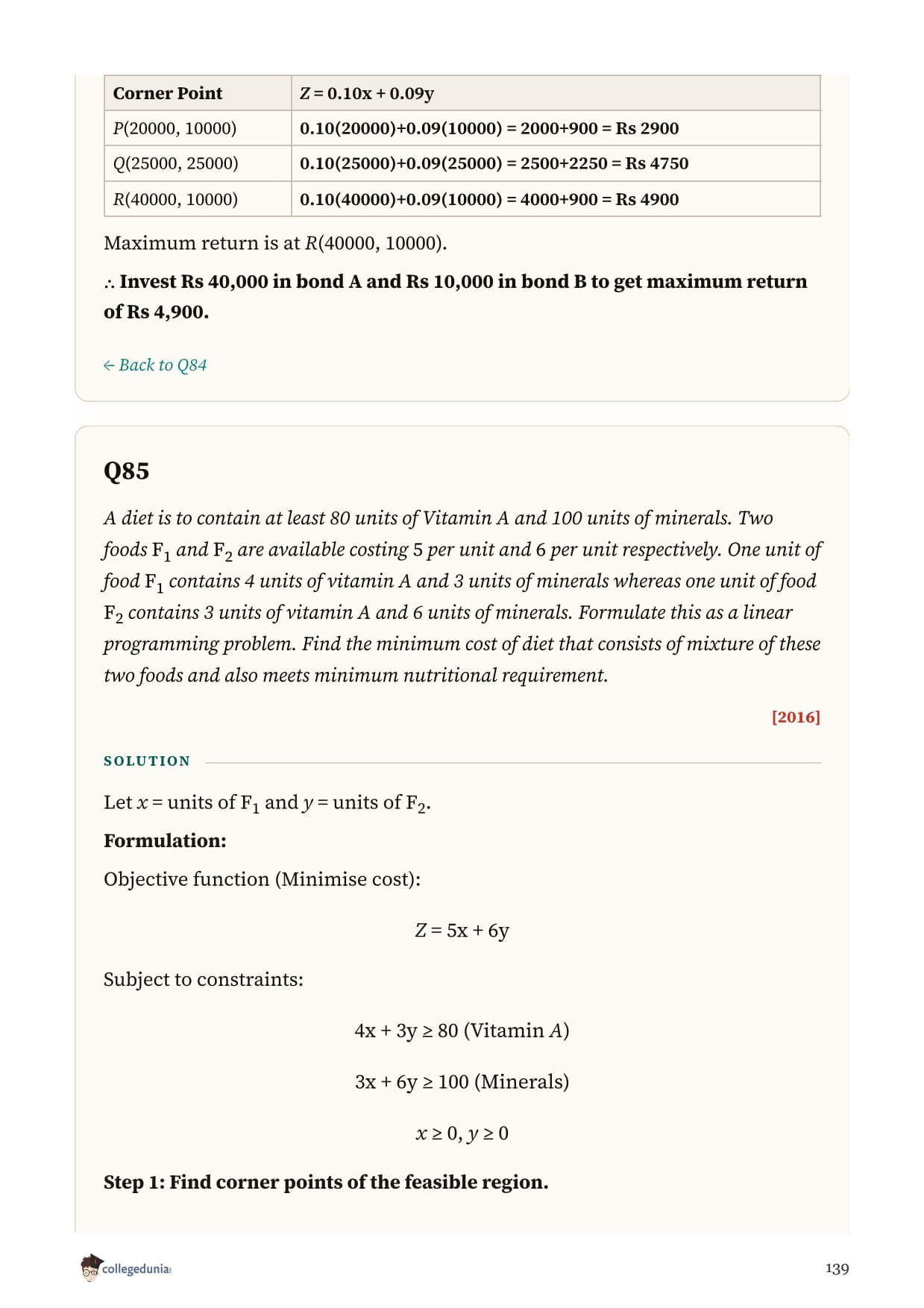
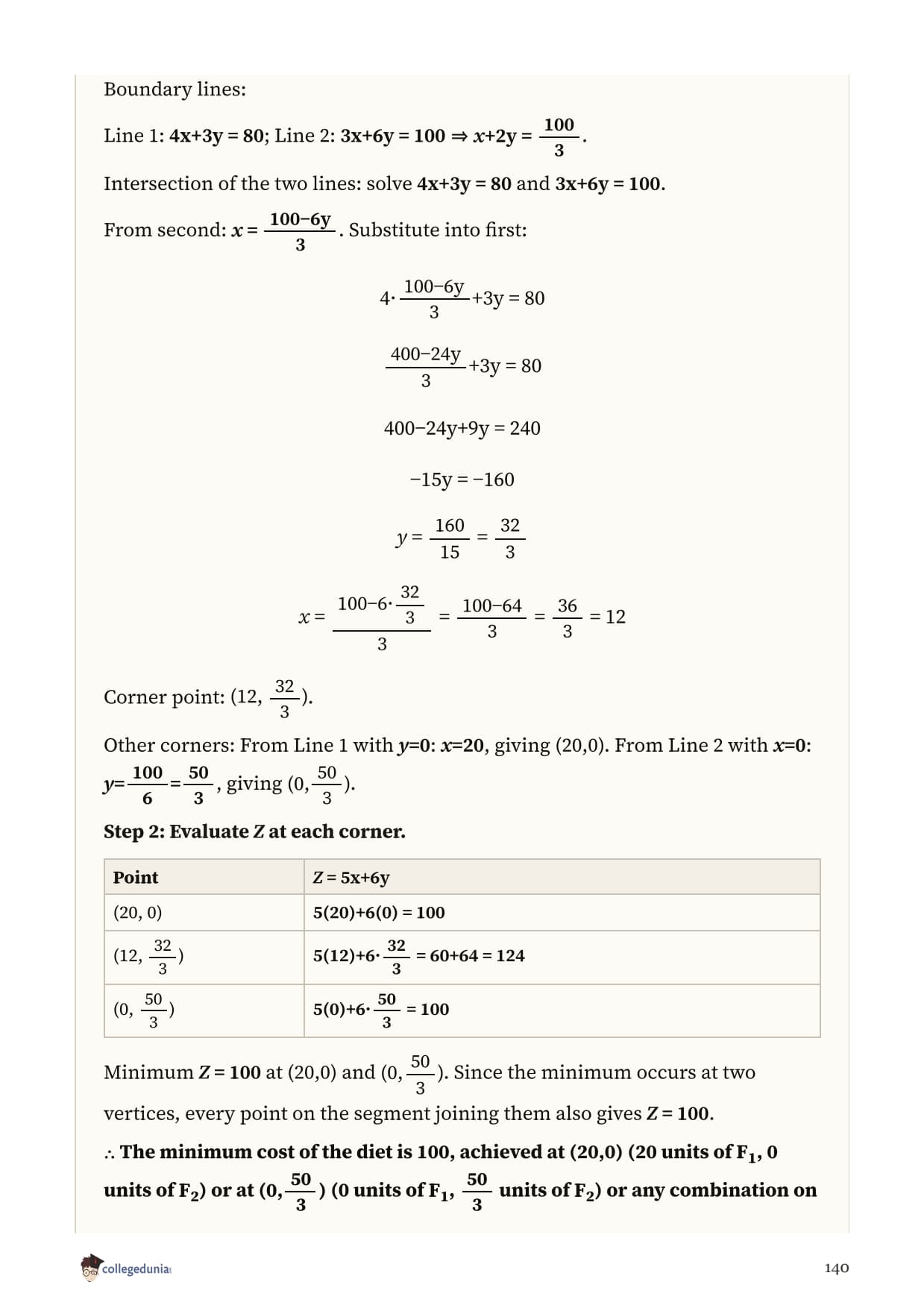
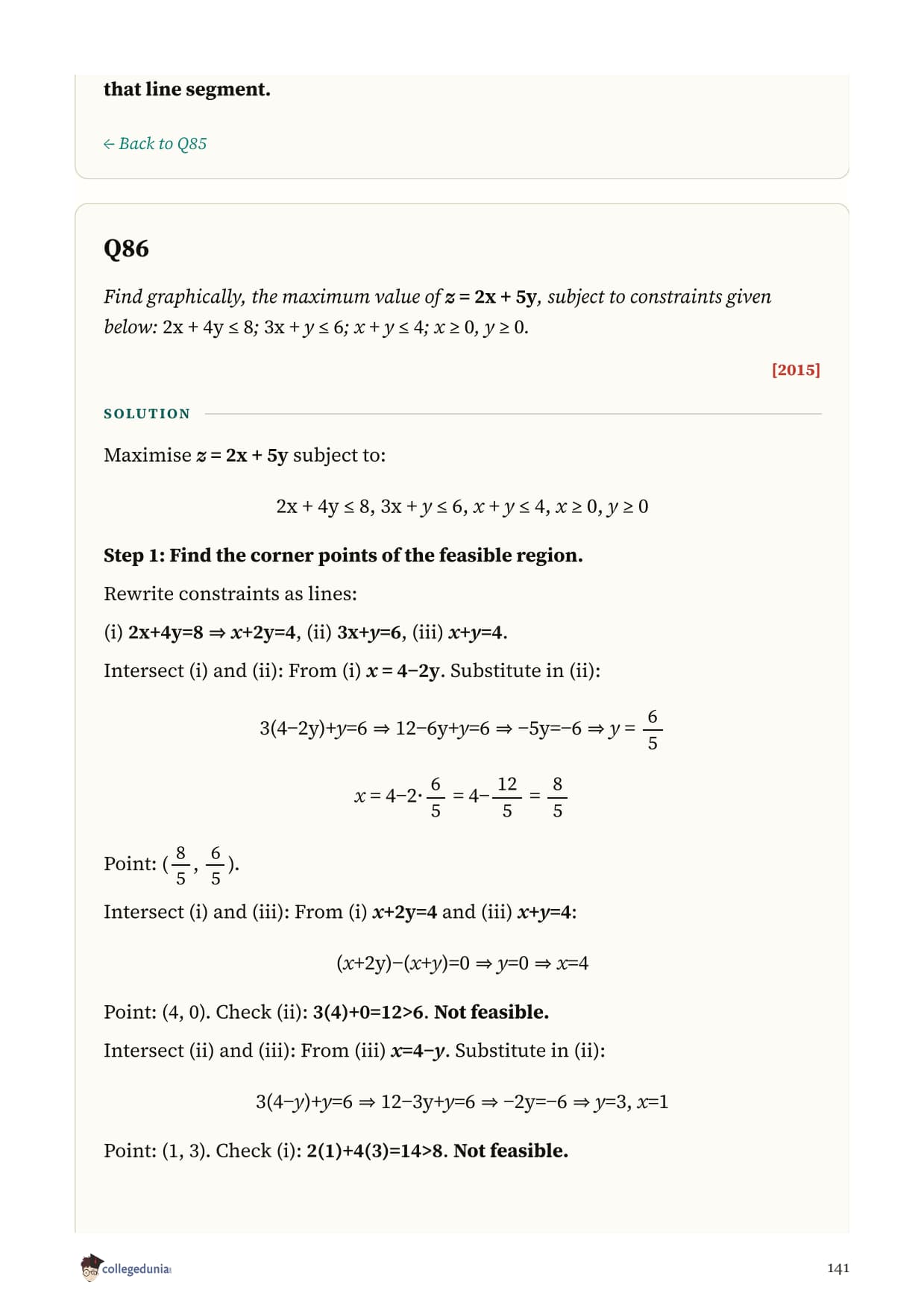
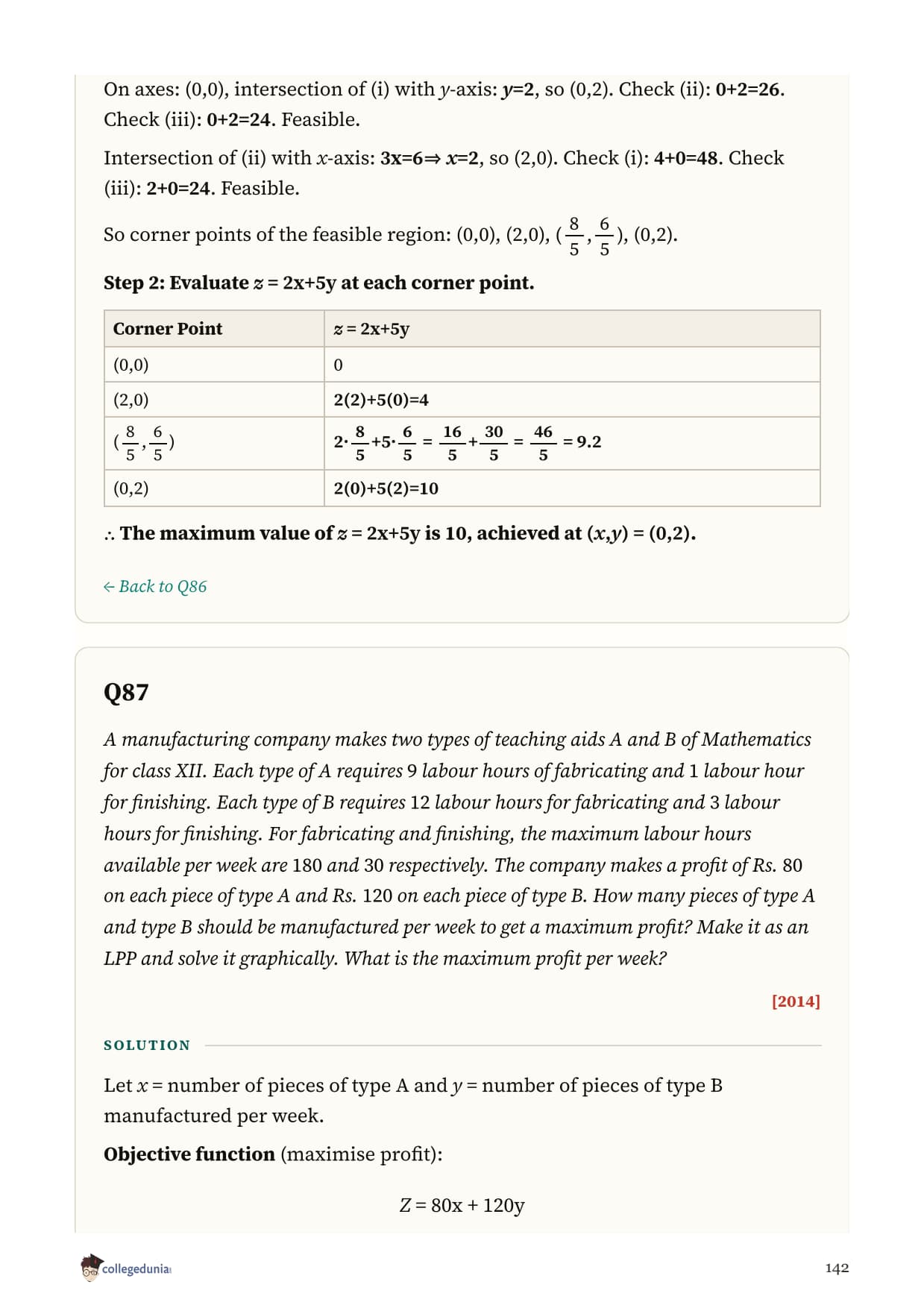
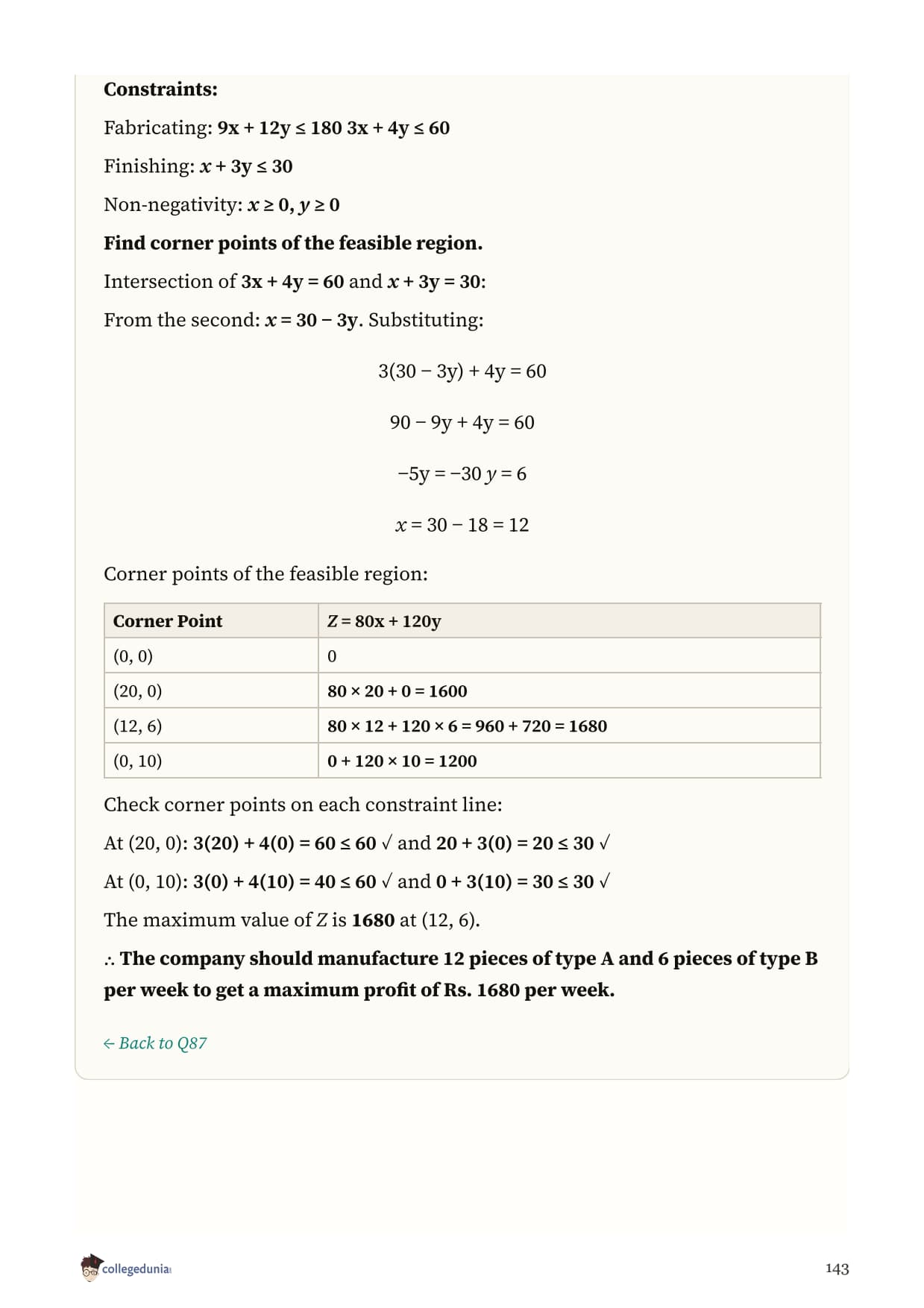
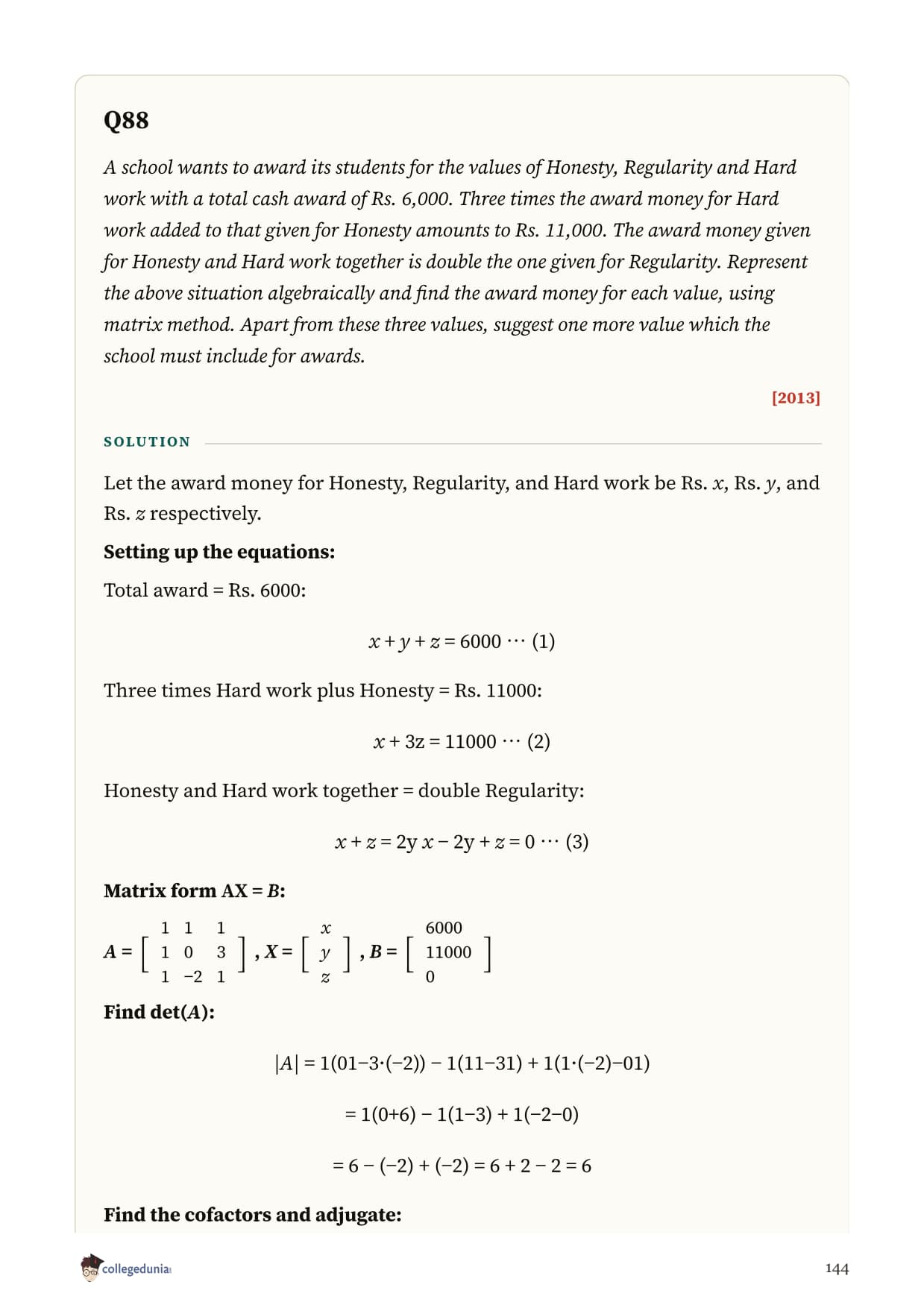
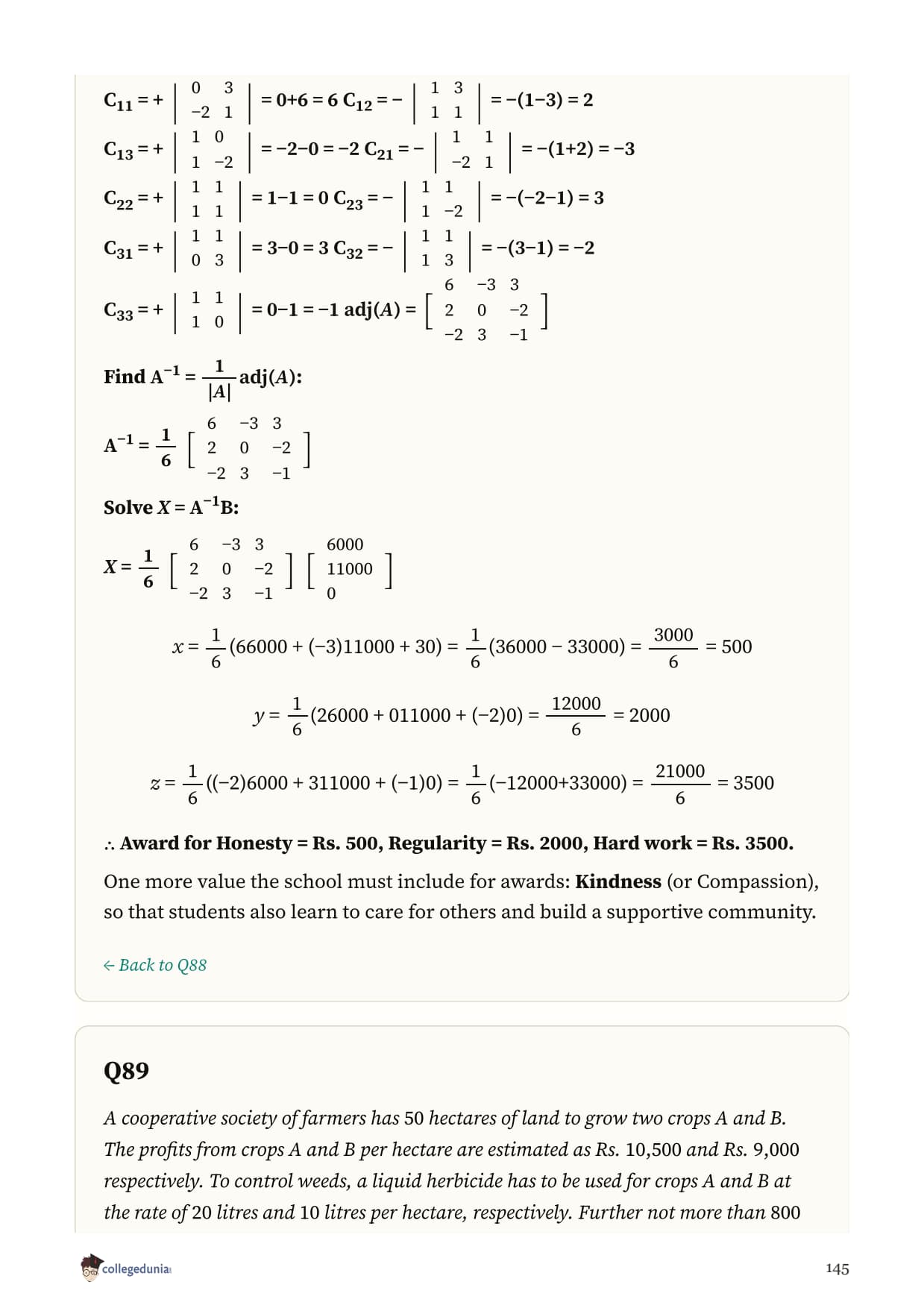
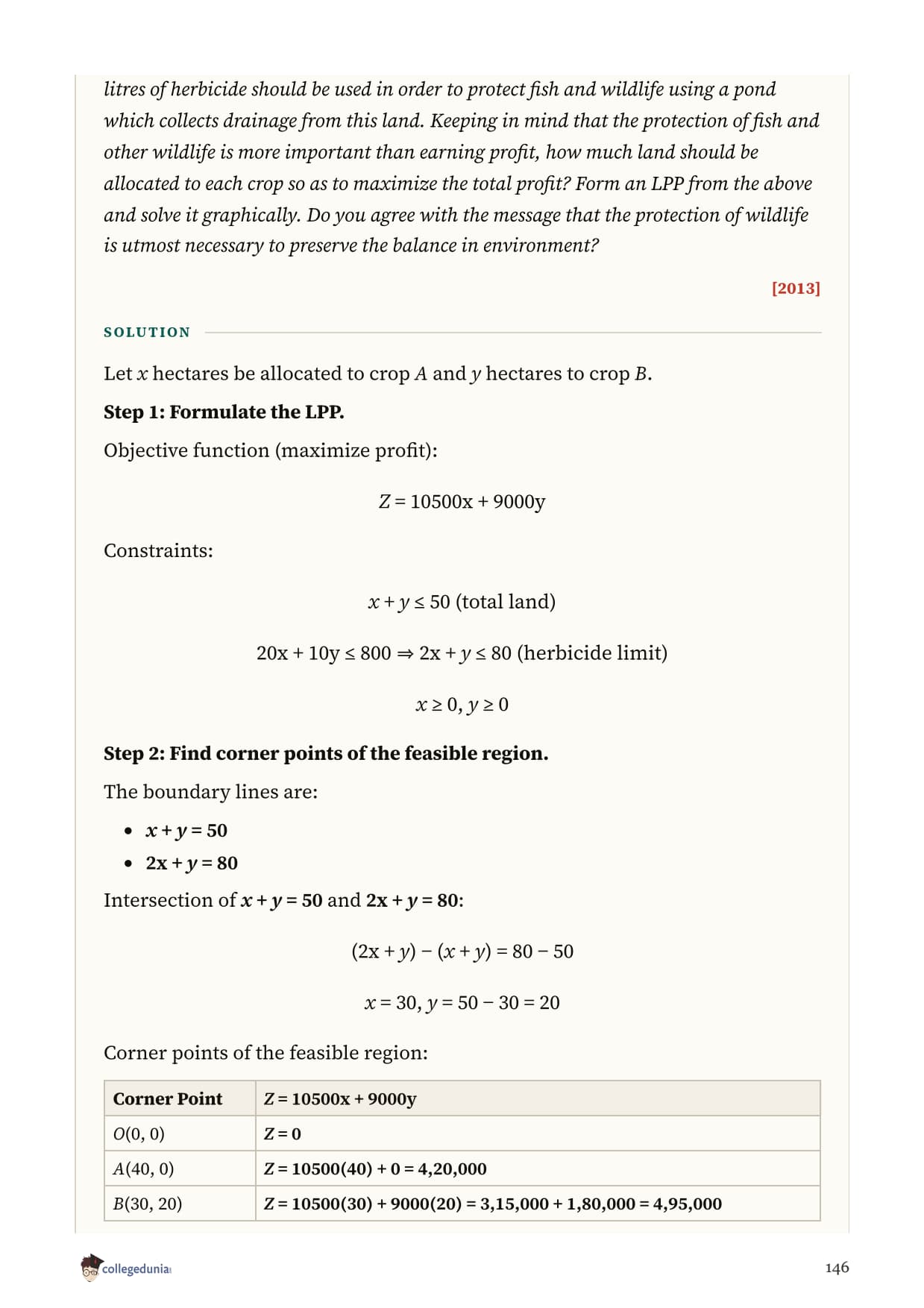
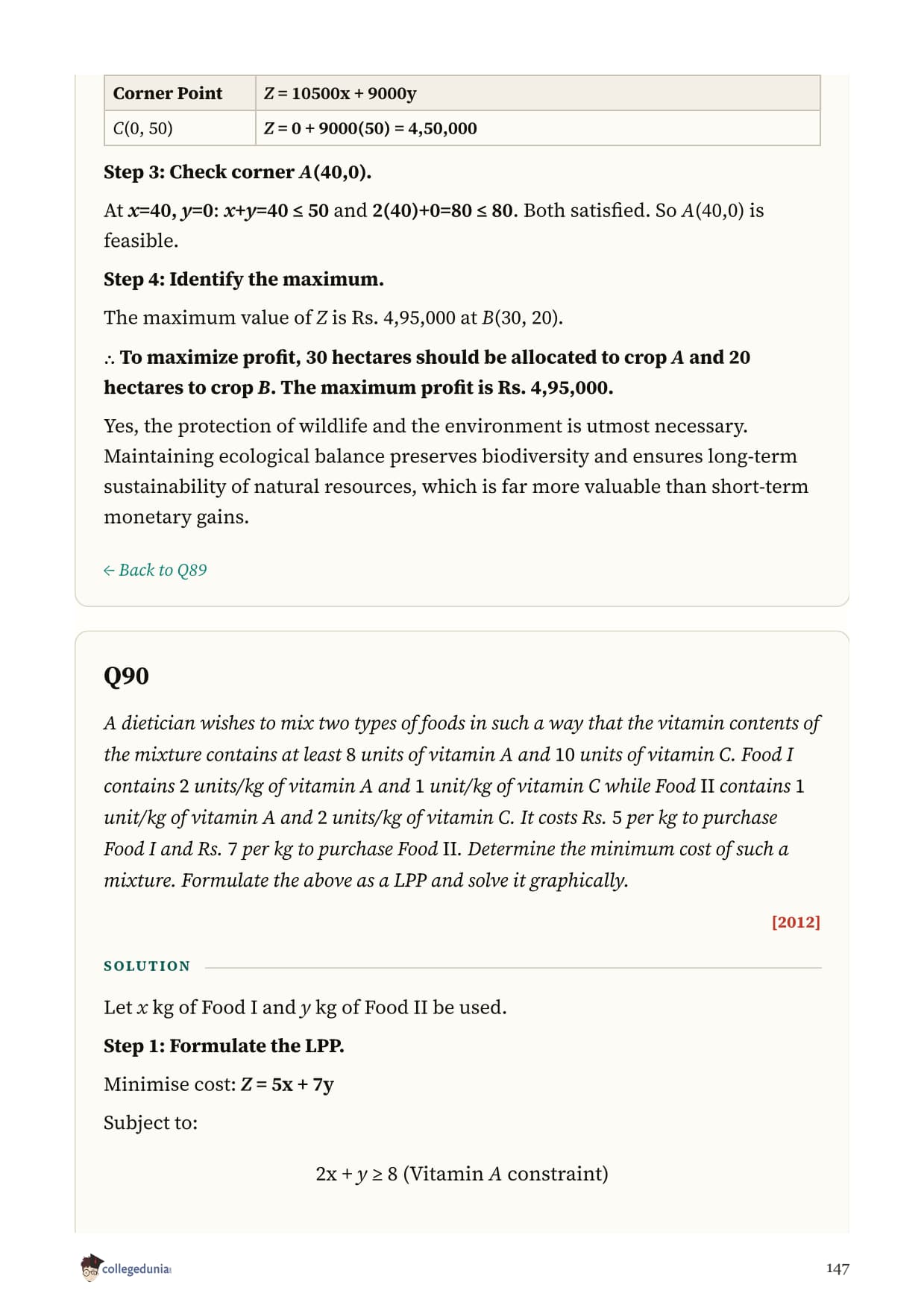
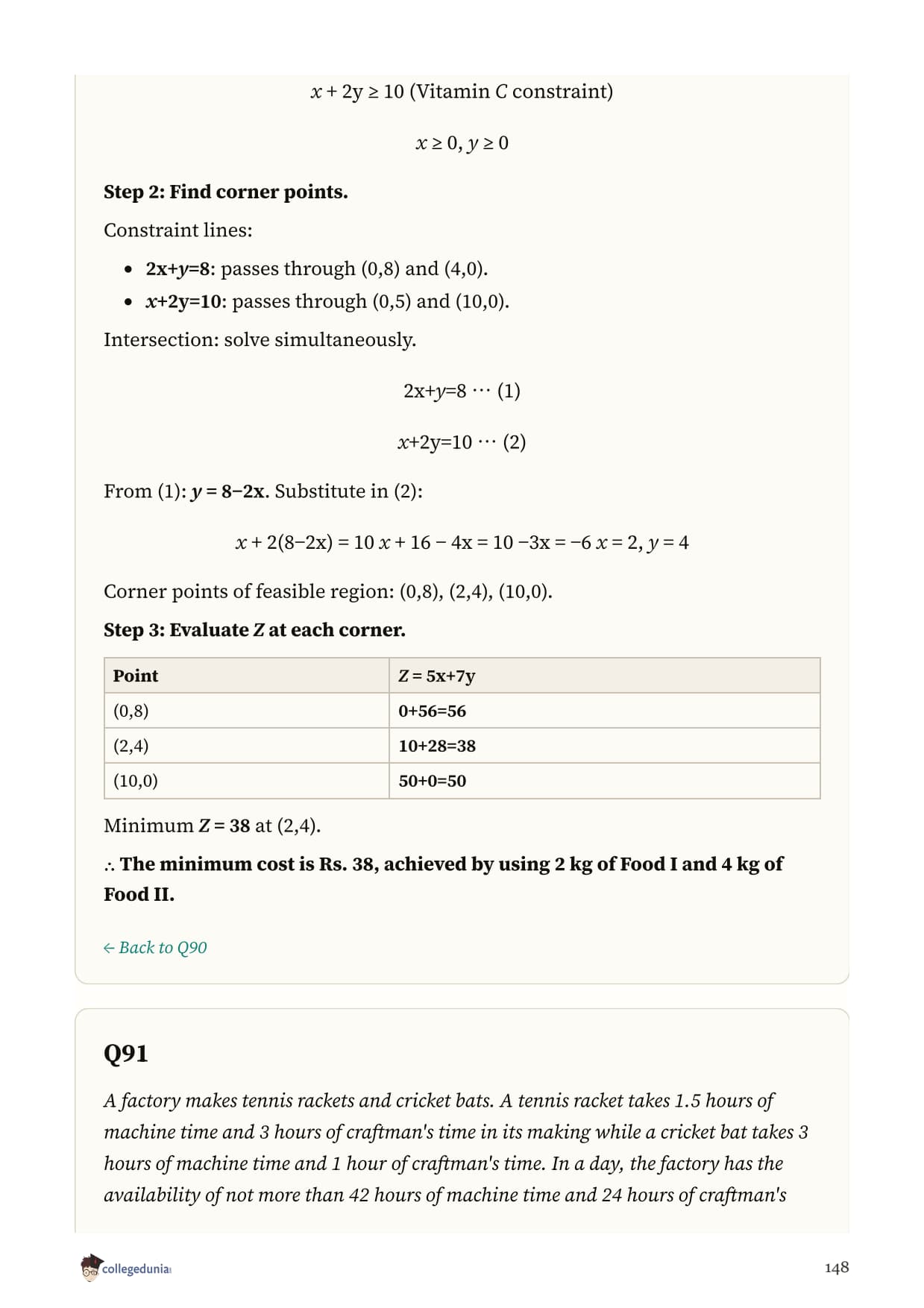
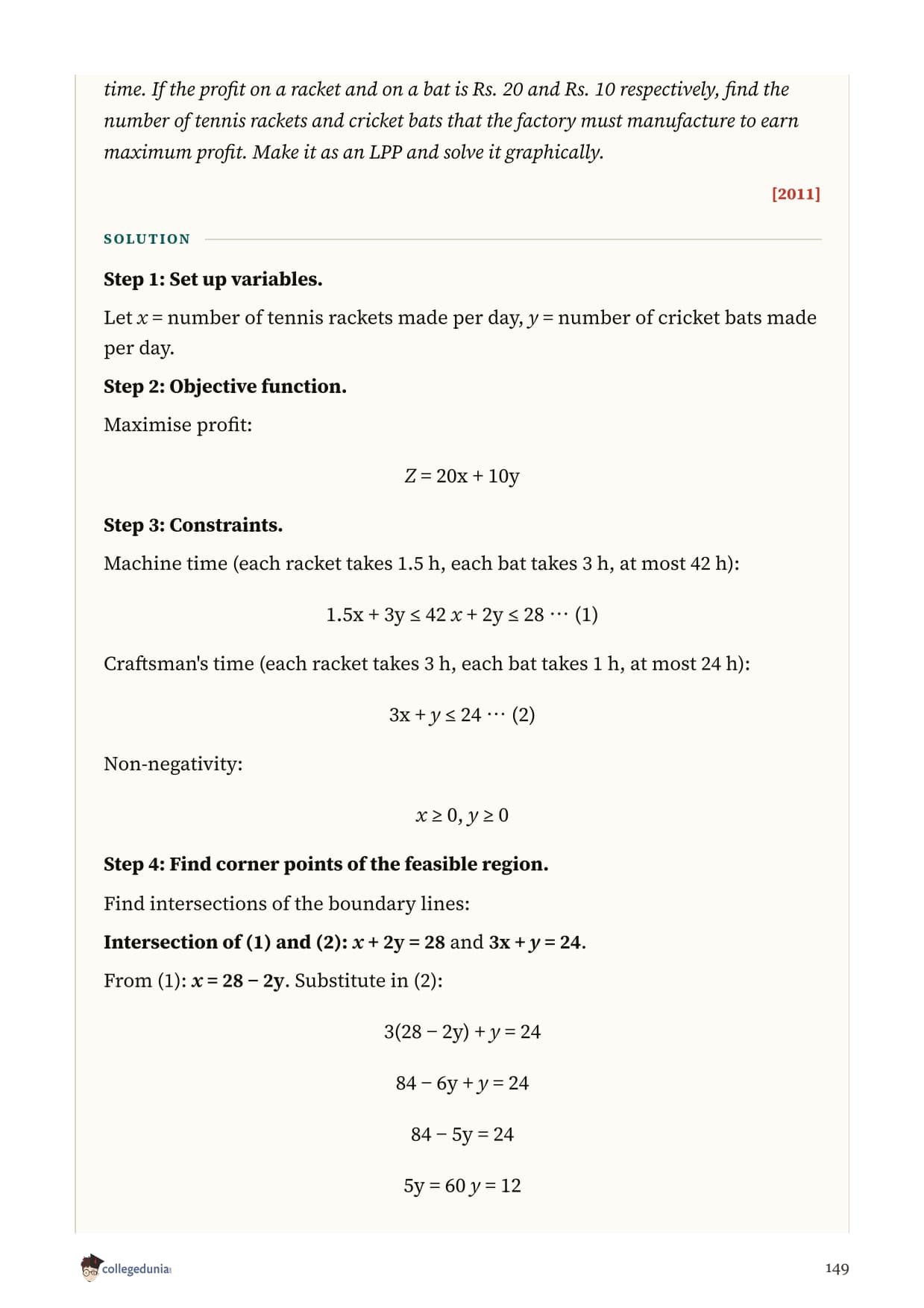
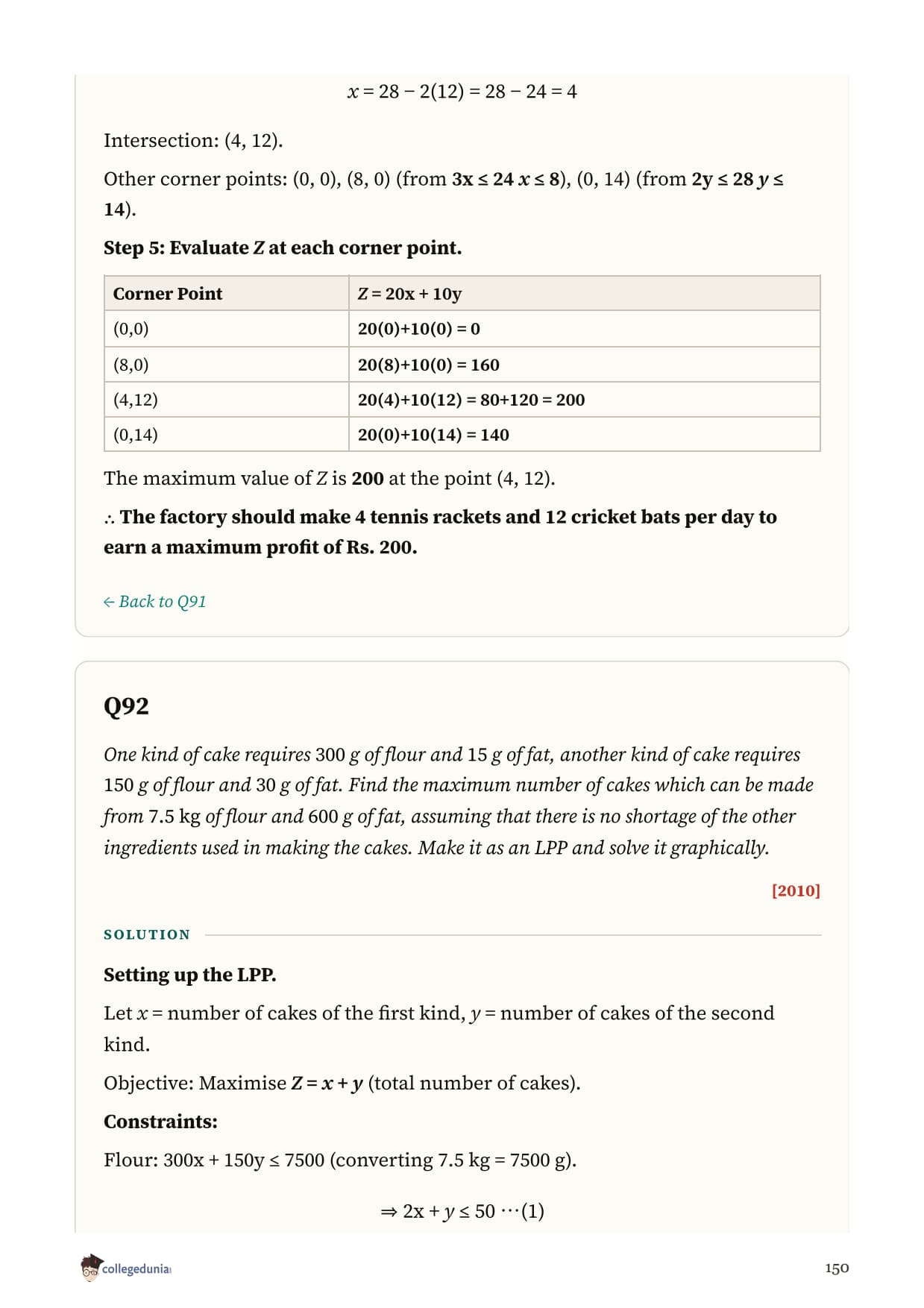
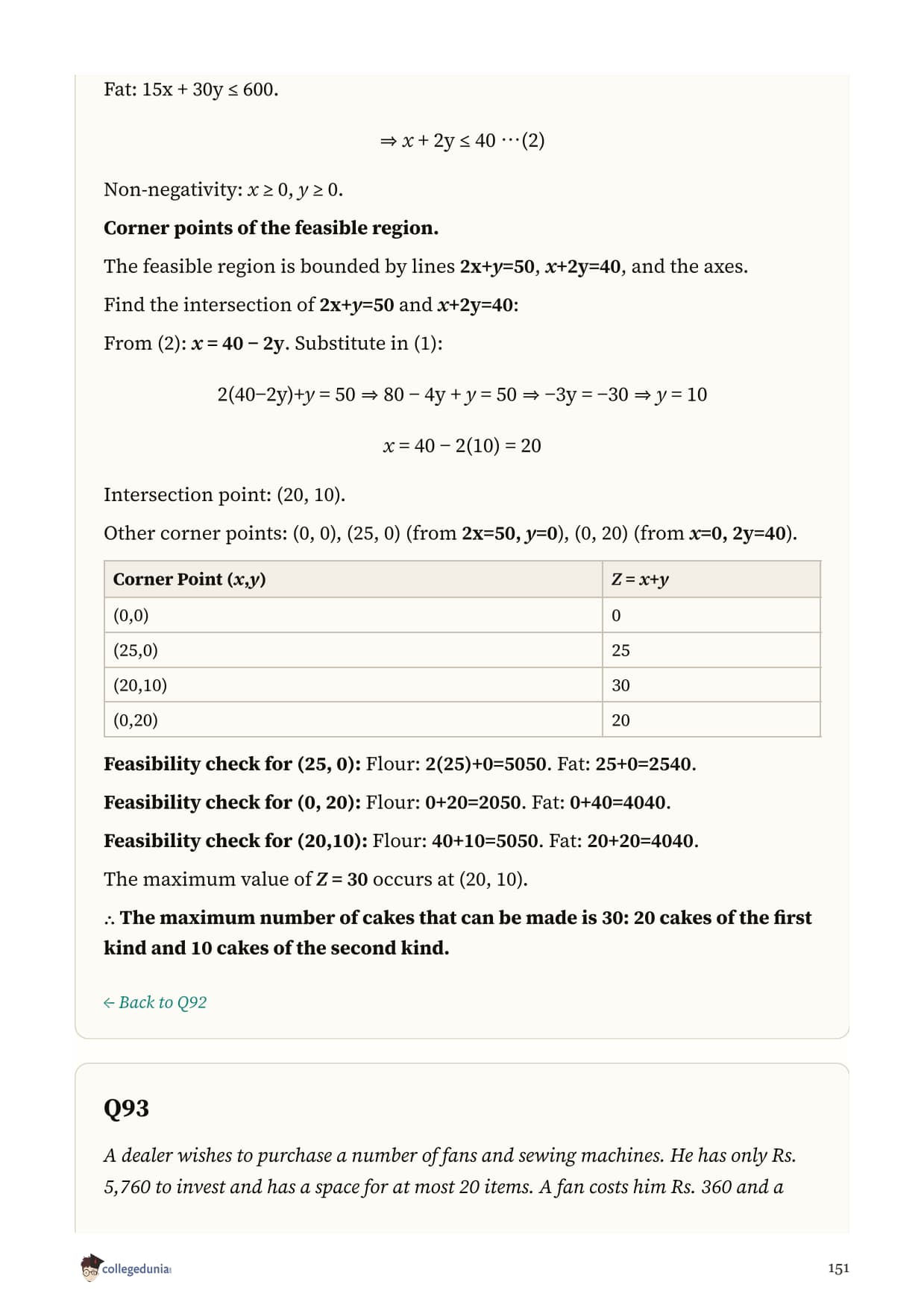
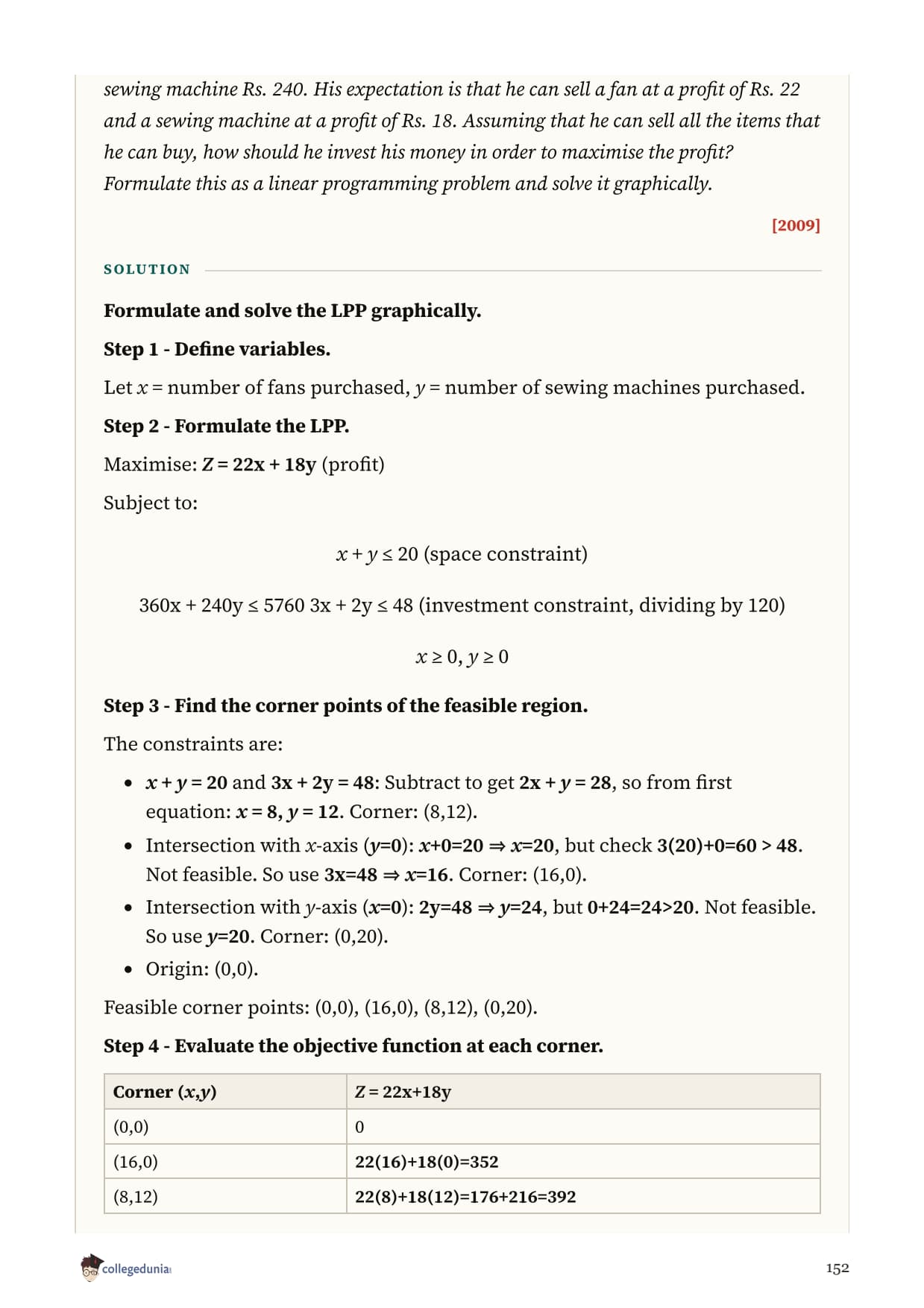
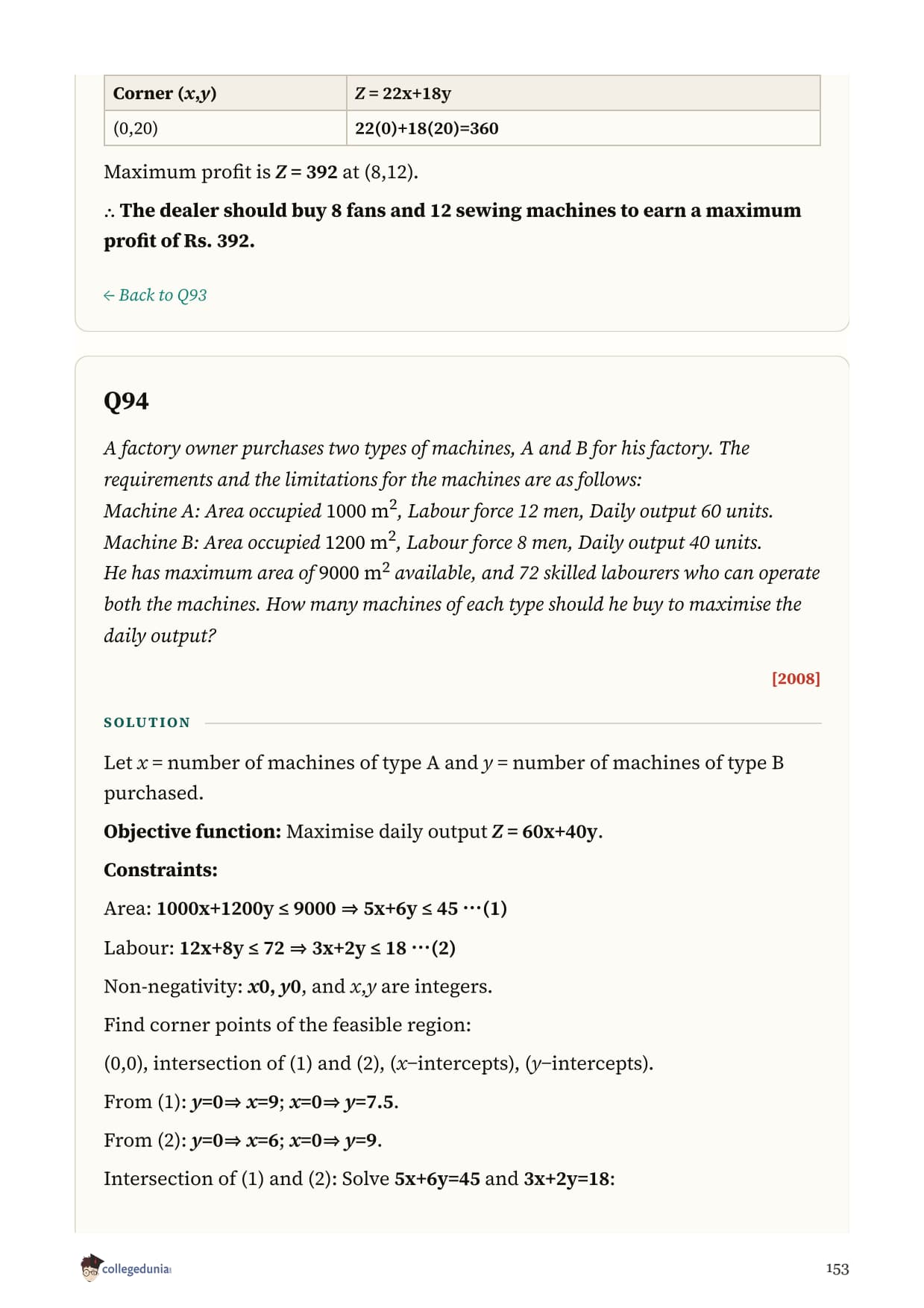
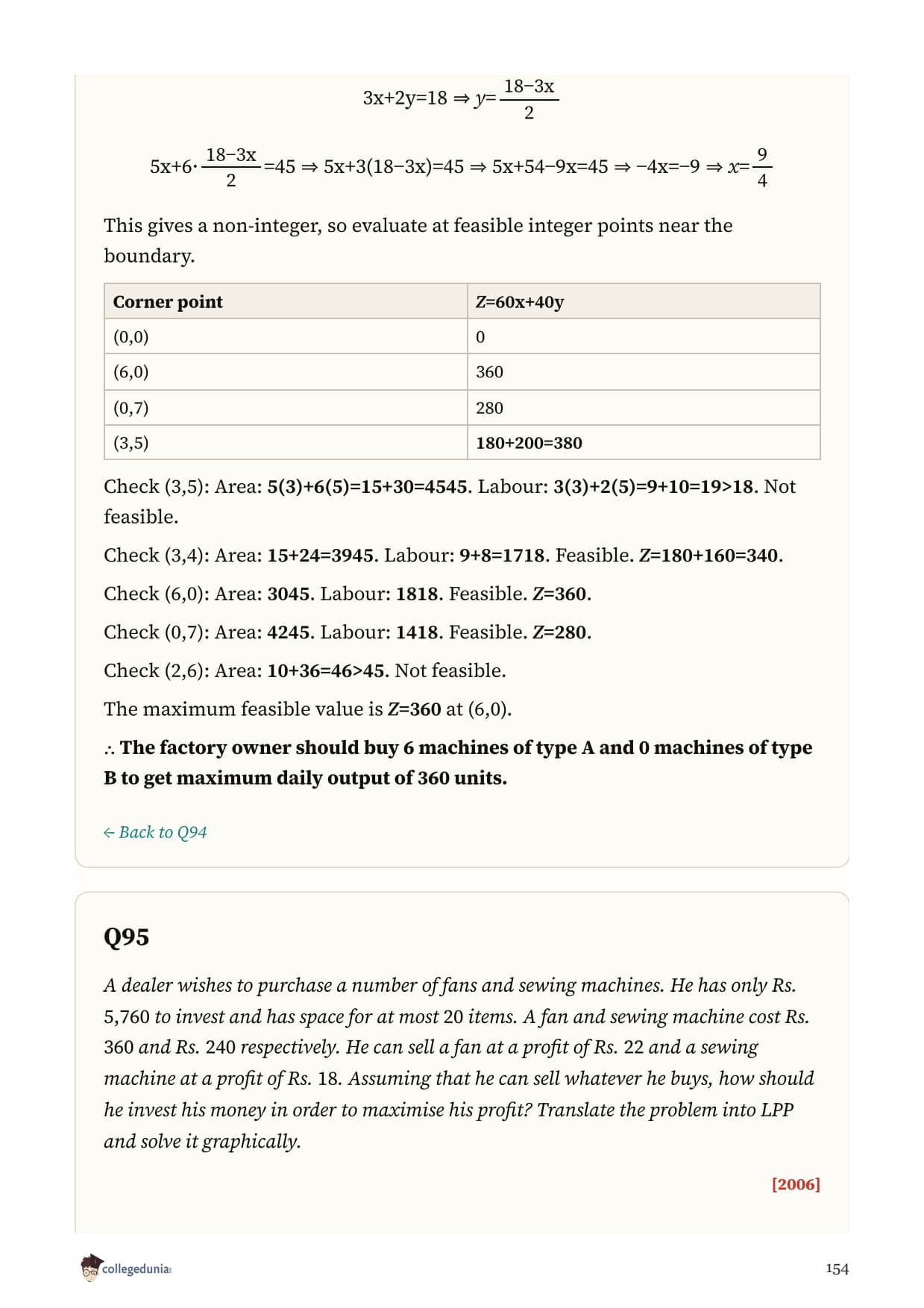
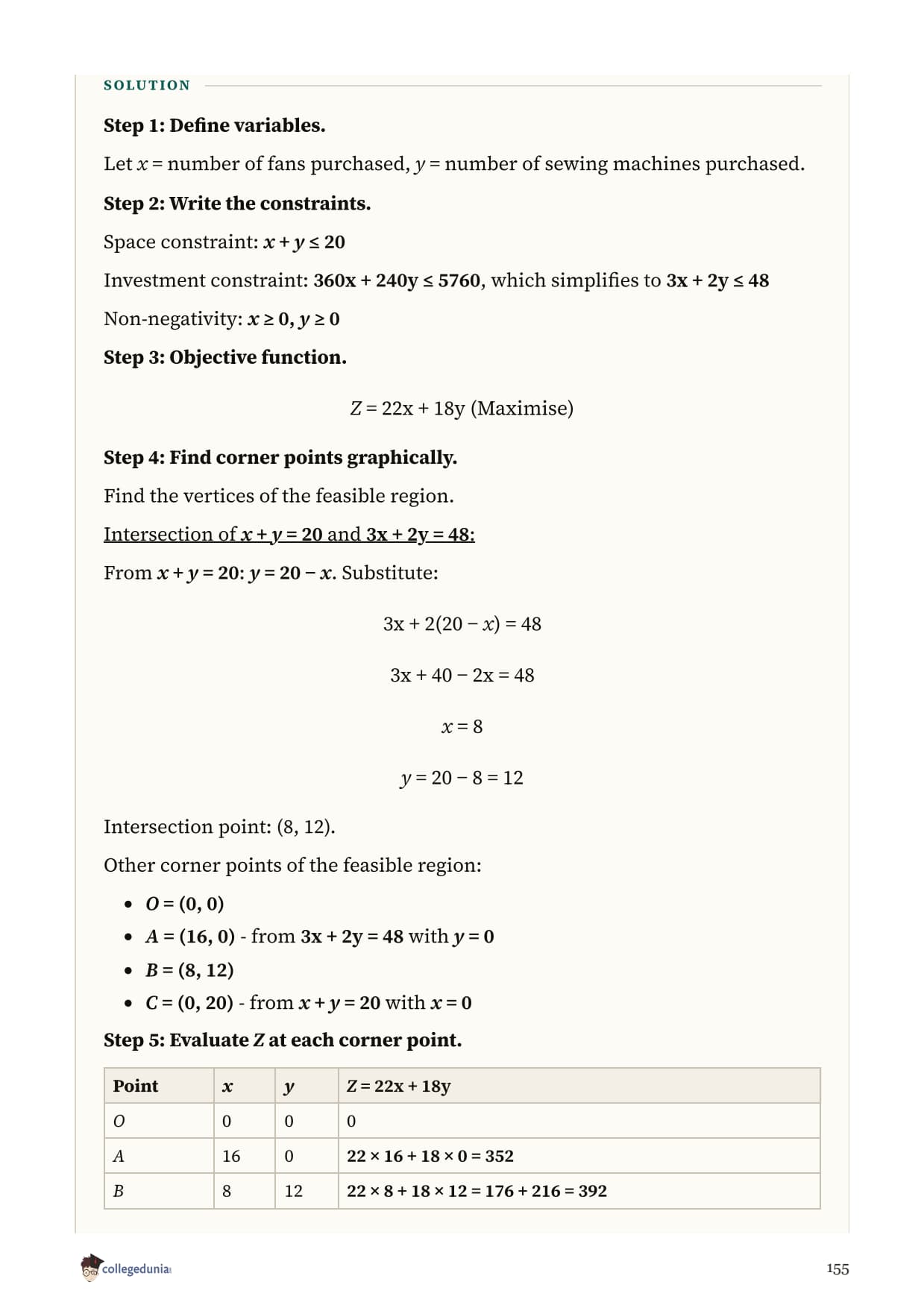
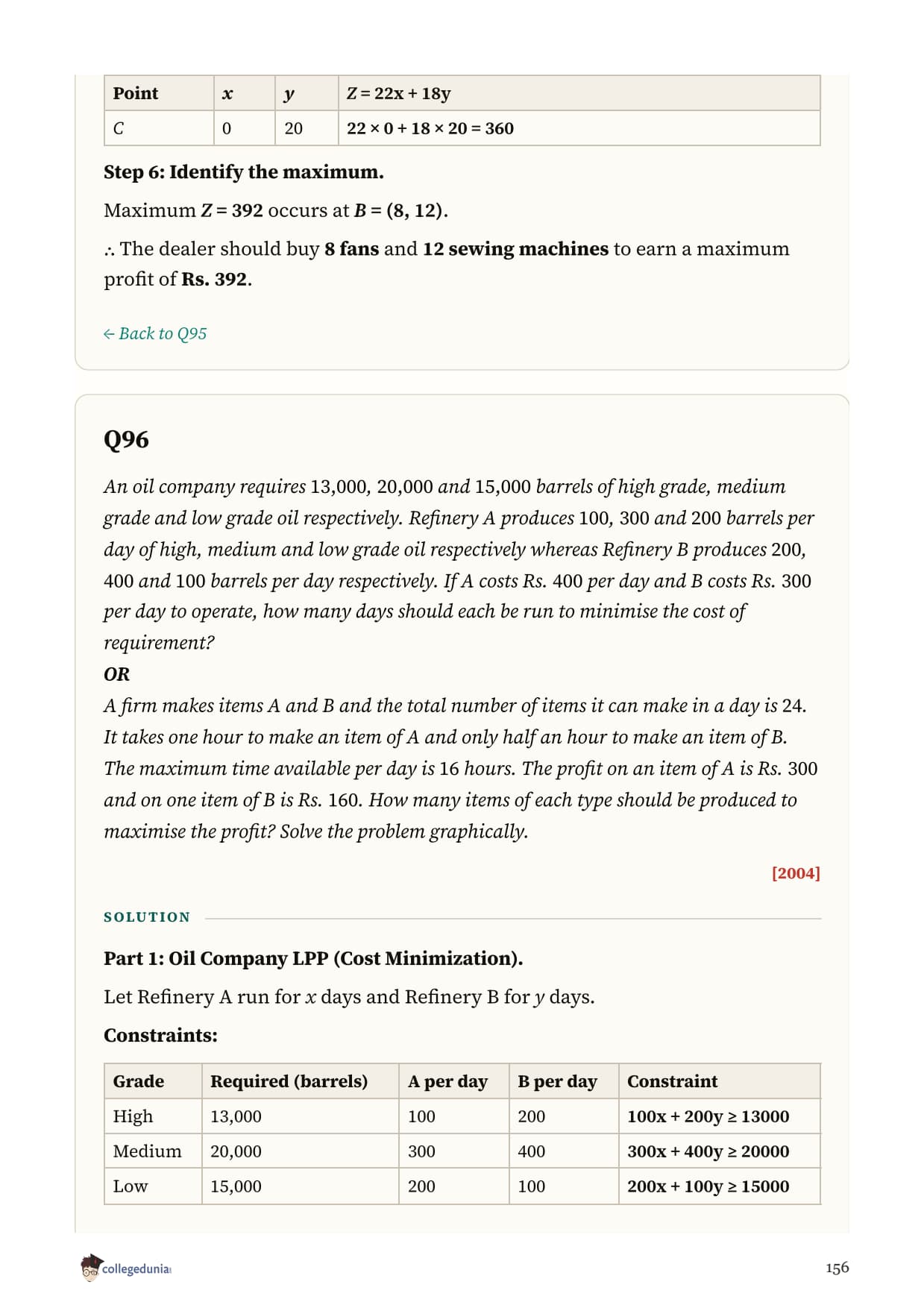
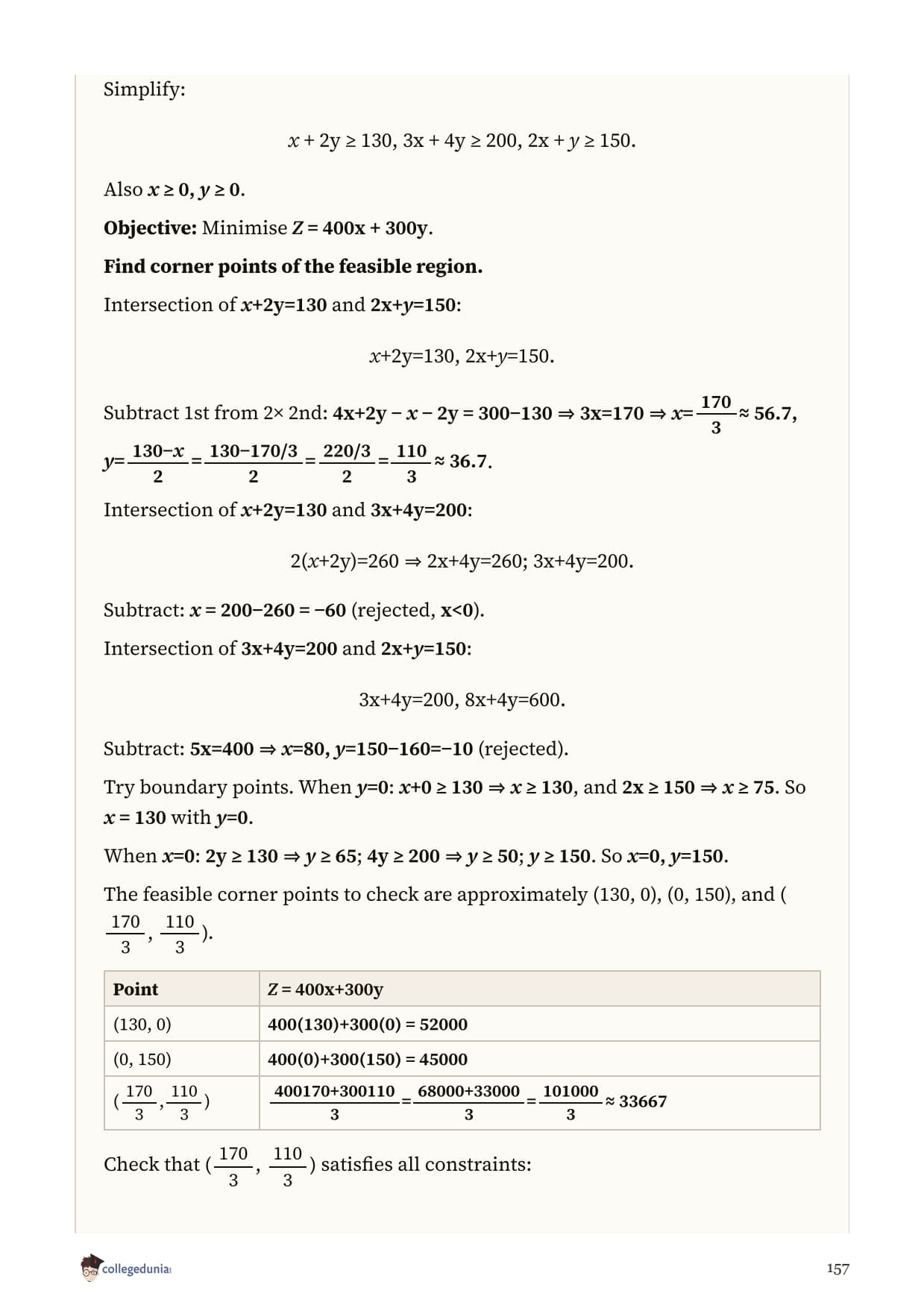
- 1-mark questions: 36 questions, mostly MCQs on the feasible region, corner points and properties of the objective function.
- 2 and 3-mark questions: 6 and 18 questions on formulating an LPP and reading values at corner points.
- 4 to 6-mark questions: 12, 2 and 20 questions, the full graphical maximisation and minimisation long answers.
This Class 12 Maths Linear Programming PYQ set fixes that with 94 board-paper questions across 2003 to 2026, sorted by marks and then by year so you practise the graph step until it is second nature.
Every question in this Class 12 Maths Linear Programming PYQ compilation is sourced from CBSE board papers (Delhi, Outside Delhi, Foreign and Compartment) and cross-checked against the official mark scheme, with near-duplicate questions removed.
What the Linear Programming Previous Year Questions Cover
The 94-question set covers every idea the NCERT chapter introduces. The graphical method of solving an LPP drives almost all the 6-mark long answers, split between maximisation and minimisation. Formulating an LPP from a word problem on manufacturing, cost or investment fills the middle bands. The feasible region, its corner points and properties of the objective function make up the 1-mark MCQ band.
Marks-wise Distribution of the Linear Programming PYQs
The table below shows how the 94 questions split across the CBSE marks bands. Use it to decide how much revision time each band deserves.
| Marks | Questions | Total Marks | CBSE Section | Type |
|---|---|---|---|---|
| 1 mark | 36 | 36 | Section A | MCQ / Assertion-Reason |
| 2 mark | 6 | 12 | Section B | VSA (Very Short Answer) |
| 3 mark | 18 | 54 | Section C | SA (Short Answer) |
| 4 mark | 12 | 48 | Section D | Case Study |
| 5 mark | 2 | 10 | Section E | Long Answer |
| 6 mark | 20 | 120 | Section E | Long Answer |
Year-wise Spread of Class 12 Maths Linear Programming PYQs
The compilation draws from 20 CBSE board years. About 60% of the questions come from 2023 onwards, the highest recent share among these chapters, driven by the Section A MCQ block and full graphical questions.
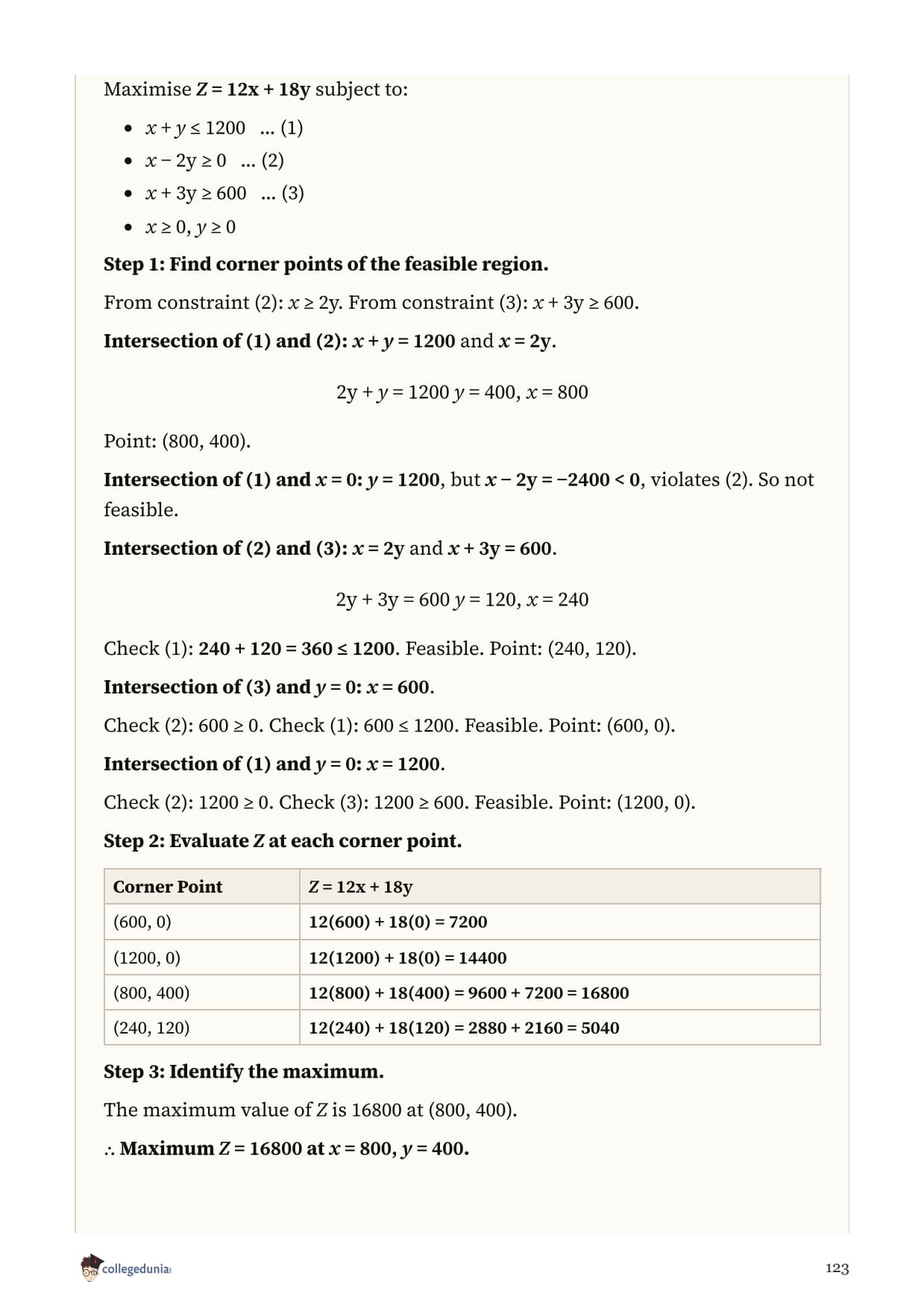
- 2026: An MCQ on maximum value of Z minus minimum value of Z for a given feasible region, an MCQ on the degree of the objective function, and a 5-mark graphical question maximising Z = 12x + 18y.
- 2025: The single largest contribution year, with several full graphical maximisation and minimisation long answers plus a fresh batch of feasible-region MCQs.
- 2019 to 2024: Steady 6-mark questions on cost minimisation and profit maximisation set as word problems.
- 2003 to 2018: Heritage long answers on manufacturing and investment LPPs solved graphically, all still relevant today.
Topic Frequency in the Linear Programming Board Paper Questions
The 94 questions cluster into the six buckets below, ranked by how often CBSE has set them between 2003 and 2026.
| Rank | Topic Cluster | Frequency | Typical Marks Band |
|---|---|---|---|
| 1 | Graphical maximisation (manufacturing and profit problems solved on a graph) | ~26 per cent | 6 mark |
| 2 | Graphical minimisation (cost and diet problems, minimum at a corner point) | ~20 per cent | 6 mark |
| 3 | LPP formulation (writing constraints and the objective from a word problem) | ~18 per cent | 3 and 4 mark |
| 4 | Feasible region and corner points (shading the region, reading values at corners) | ~16 per cent | 1 and 3 mark |
| 5 | Objective function properties (degree, where the optimum occurs) | ~12 per cent | 1 mark |
| 6 | Bounded versus unbounded regions (when no maximum or minimum exists) | ~8 per cent | 1 and 4 mark |
Marks-Band Attempt Strategy for the Linear Programming PYQs
The 94 PYQs are arranged marks-ascending inside the PDF so you can attempt them in the same order the CBSE paper presents them.
- 1-mark MCQs: Spend under a minute each. Many test the degree of the objective function or which corner point gives the optimum.
- 2 and 3-mark questions: Formulate the LPP or read values at given corners. Aim for 4 minutes.
- 4-mark questions: Set up constraints from a word problem. Always list the corner points in a table before comparing Z values.
- 5 and 6-mark long answers: A full graphical solution. Draw the lines, shade the feasible region, and evaluate Z at every corner. Allocate 12 to 15 minutes.
Recent CBSE Trend: 2024 to 2026 Pattern Shift in Linear Programming
Three things have changed in the recent CBSE cycles that the Linear Programming previous year questions now reflect:
- Section A now carries 1-mark MCQs on the theory of LPP, like the 2026 question on the degree of the objective function. The compilation includes 36 such questions.
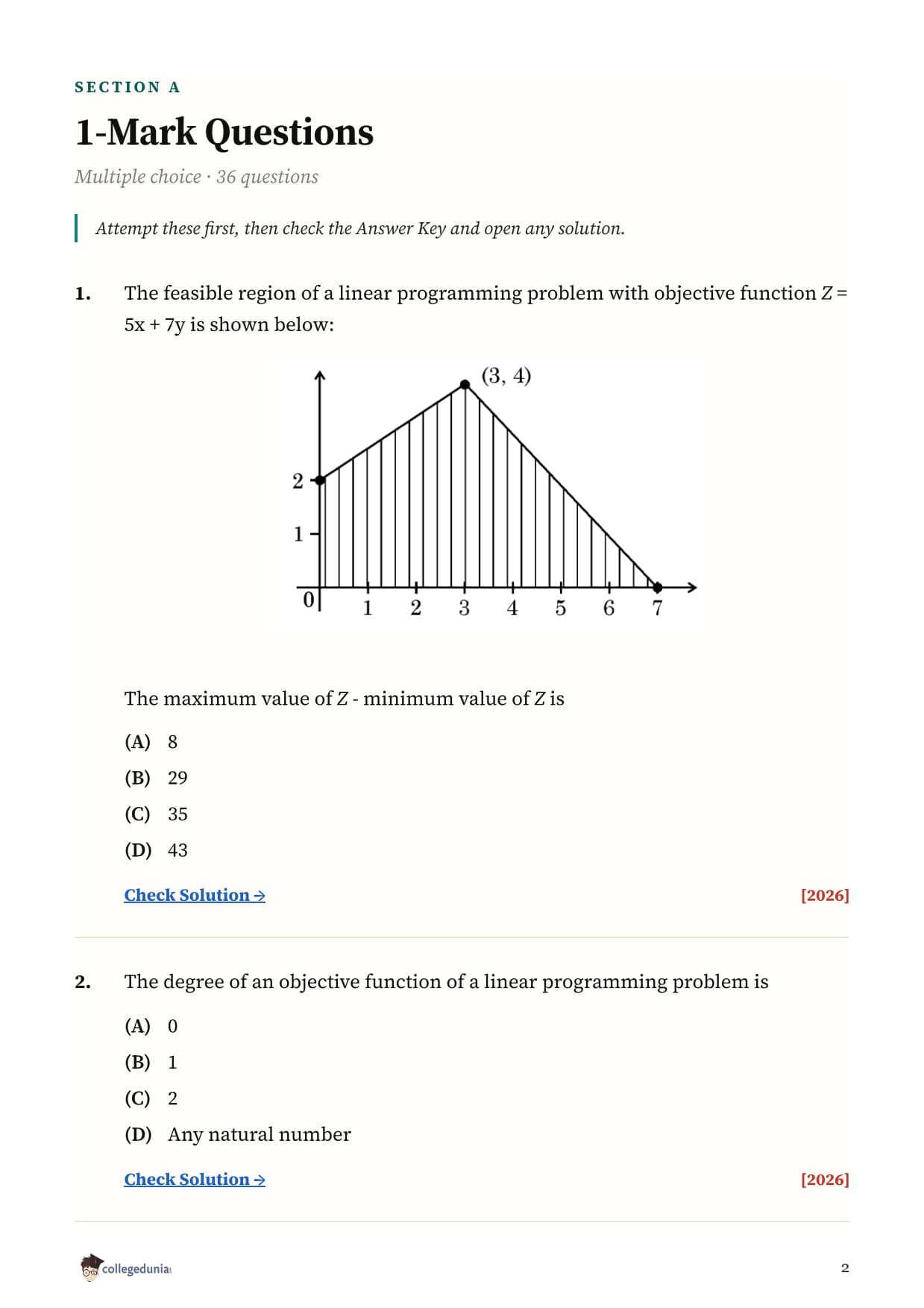
- Graph-reading MCQs are common, like the 2026 question that gives a feasible region and asks for the difference between the maximum and minimum of Z.
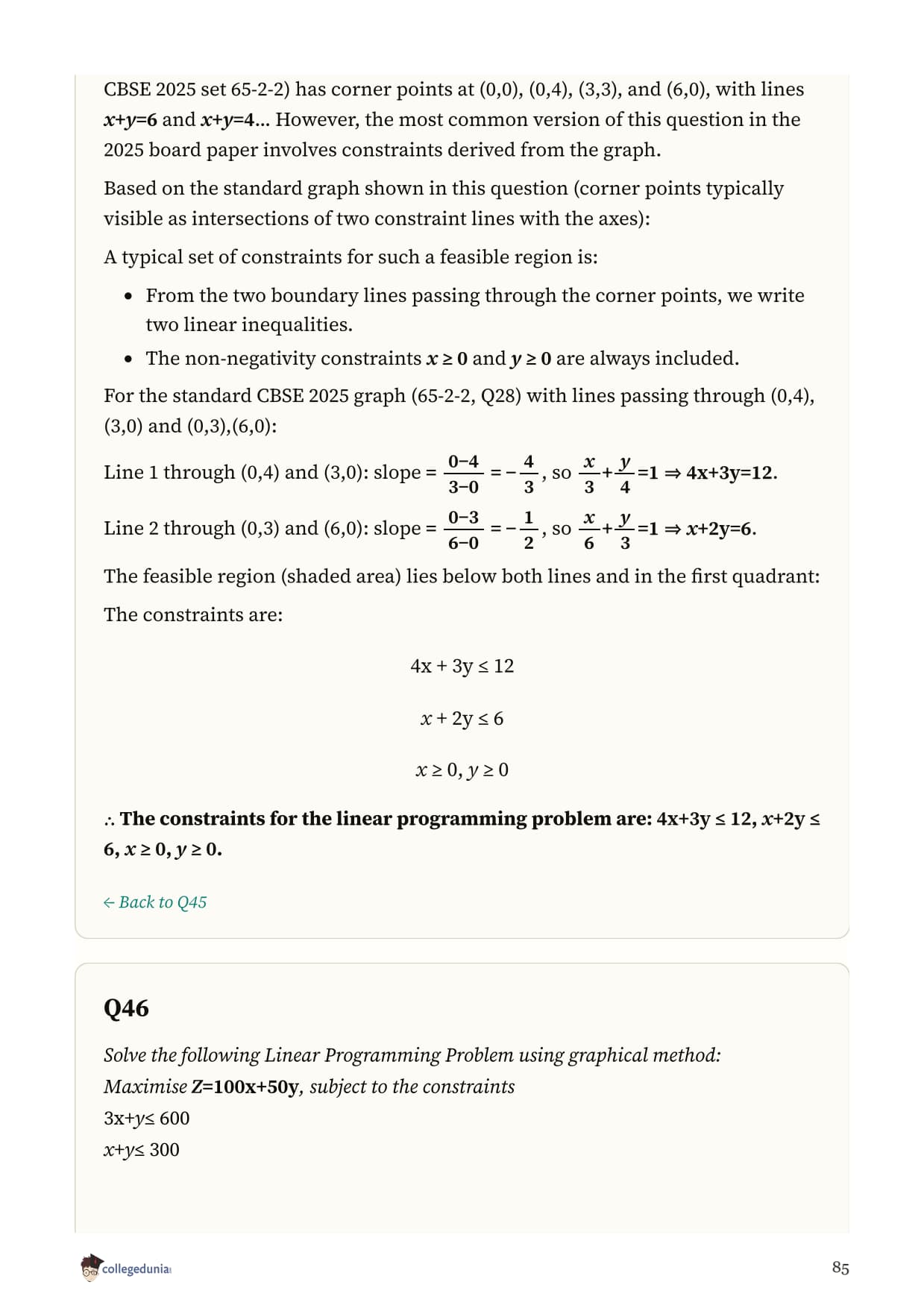
- 6-mark graphical questions almost always carry an OR alternative, often pairing a maximisation with a minimisation, so the PDF keeps both branches.
Sample Previous Year Questions from Linear Programming
Here are a few real previous year questions from the Linear Programming board papers, taken straight from the compilation. The full set is in the downloadable PDF.
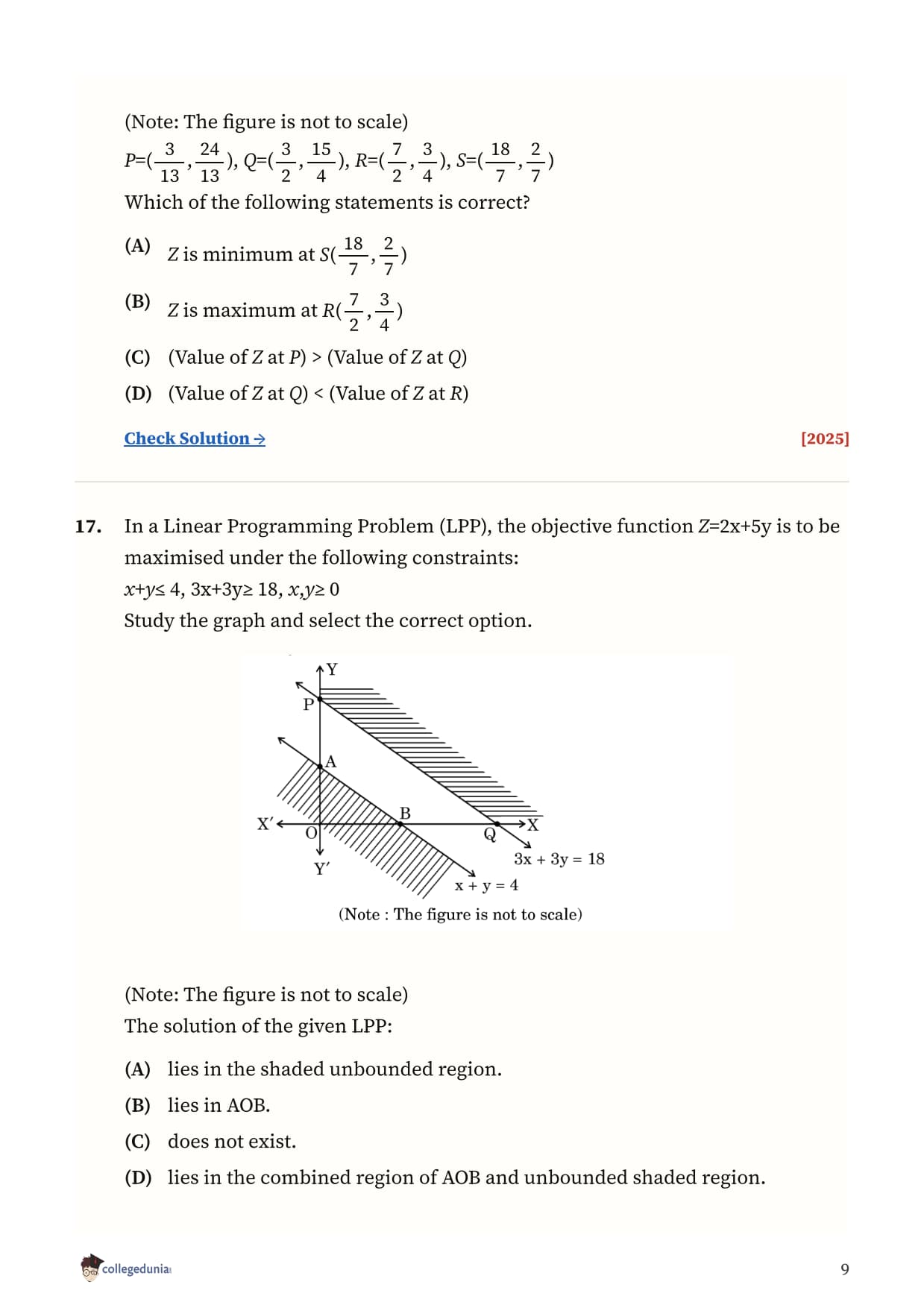
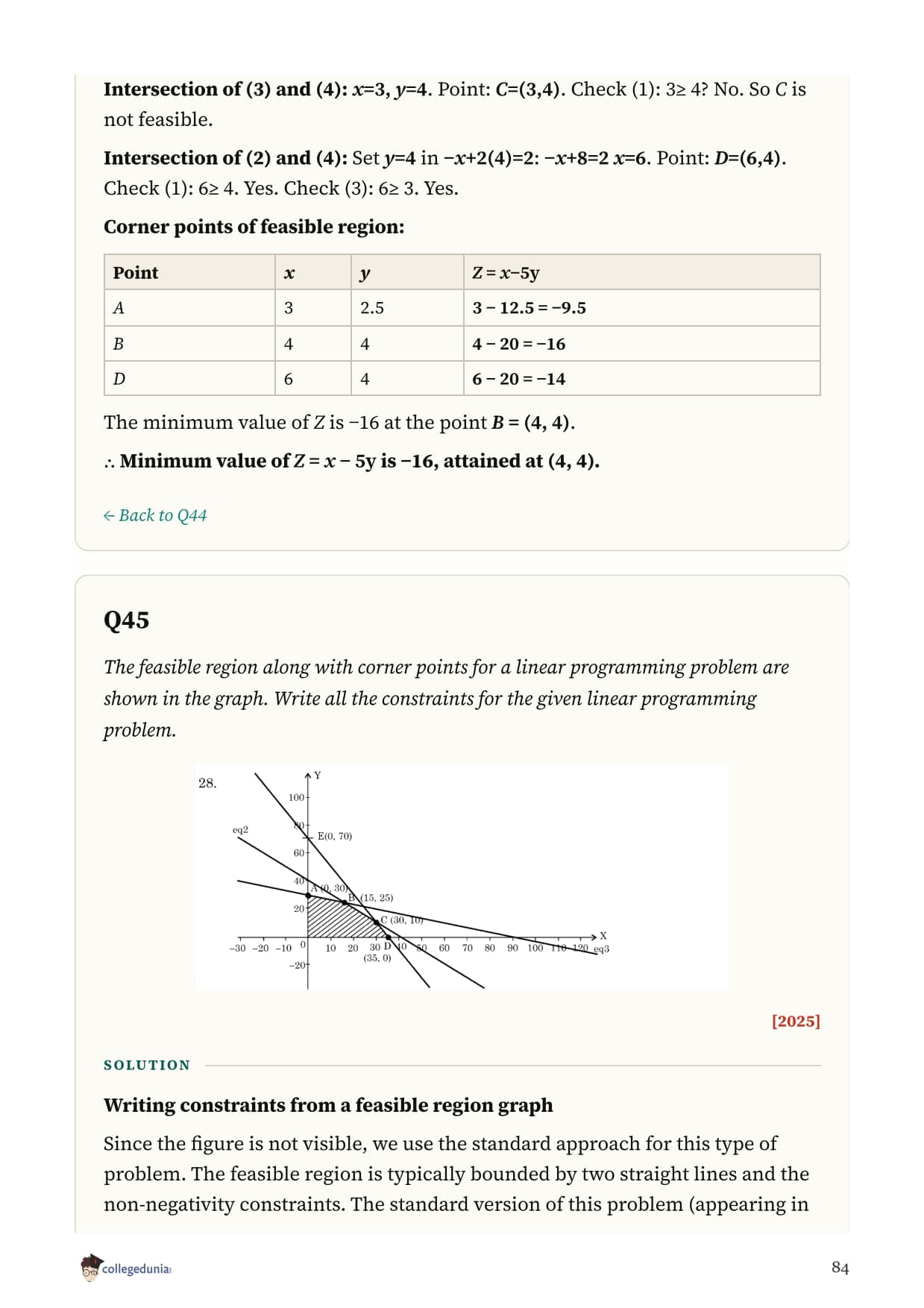
The feasible region of a linear programming problem with objective function Z = 5x + 7y is shown below: The maximum value of Z - minimum value of Z is
- 8
- 29
- 35
- 43
[2026 • 1 mark]
The degree of an objective function of a linear programming problem is
- 0
- 1
- 2
- Any natural number
[2026 • 1 mark]
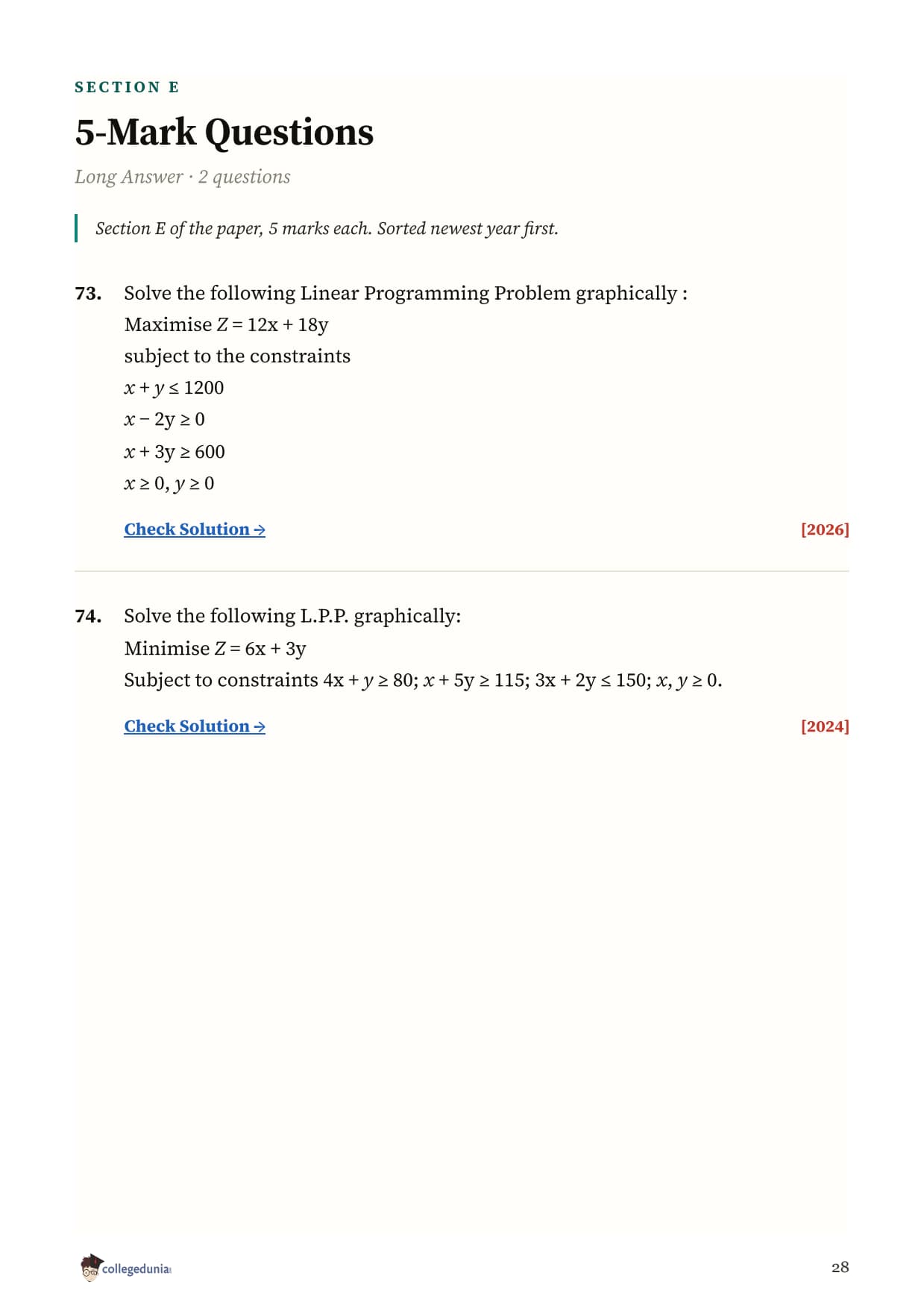
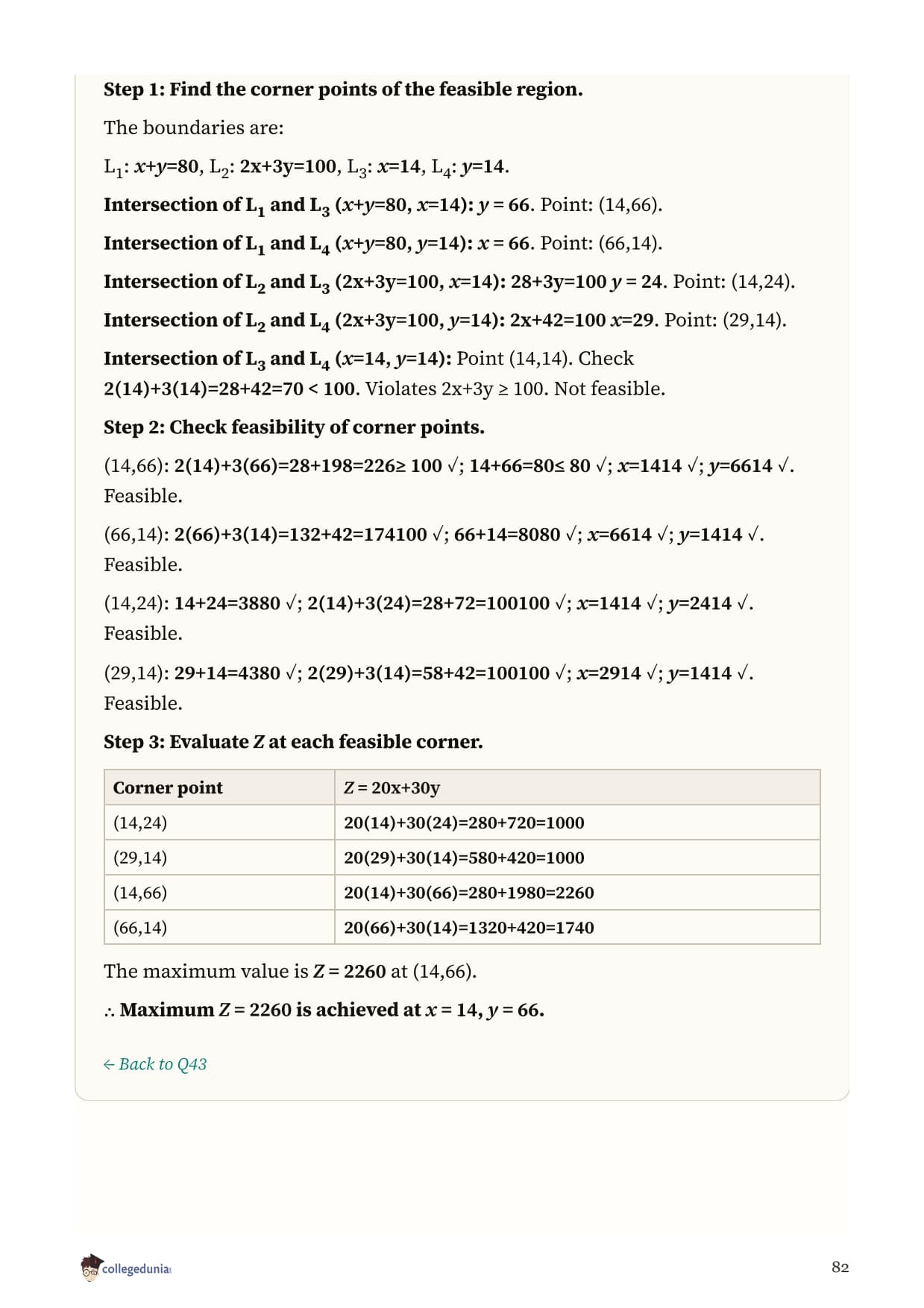
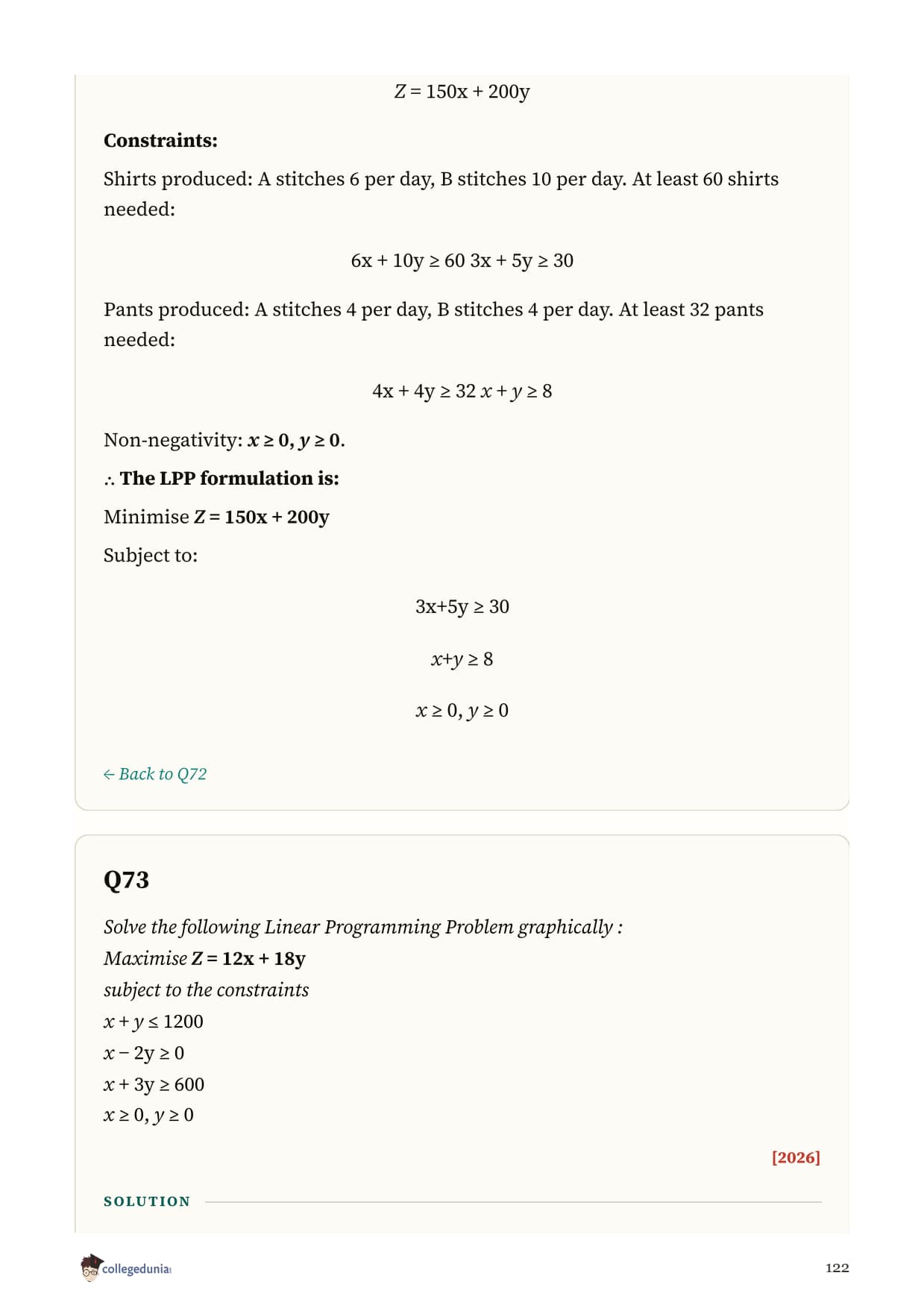
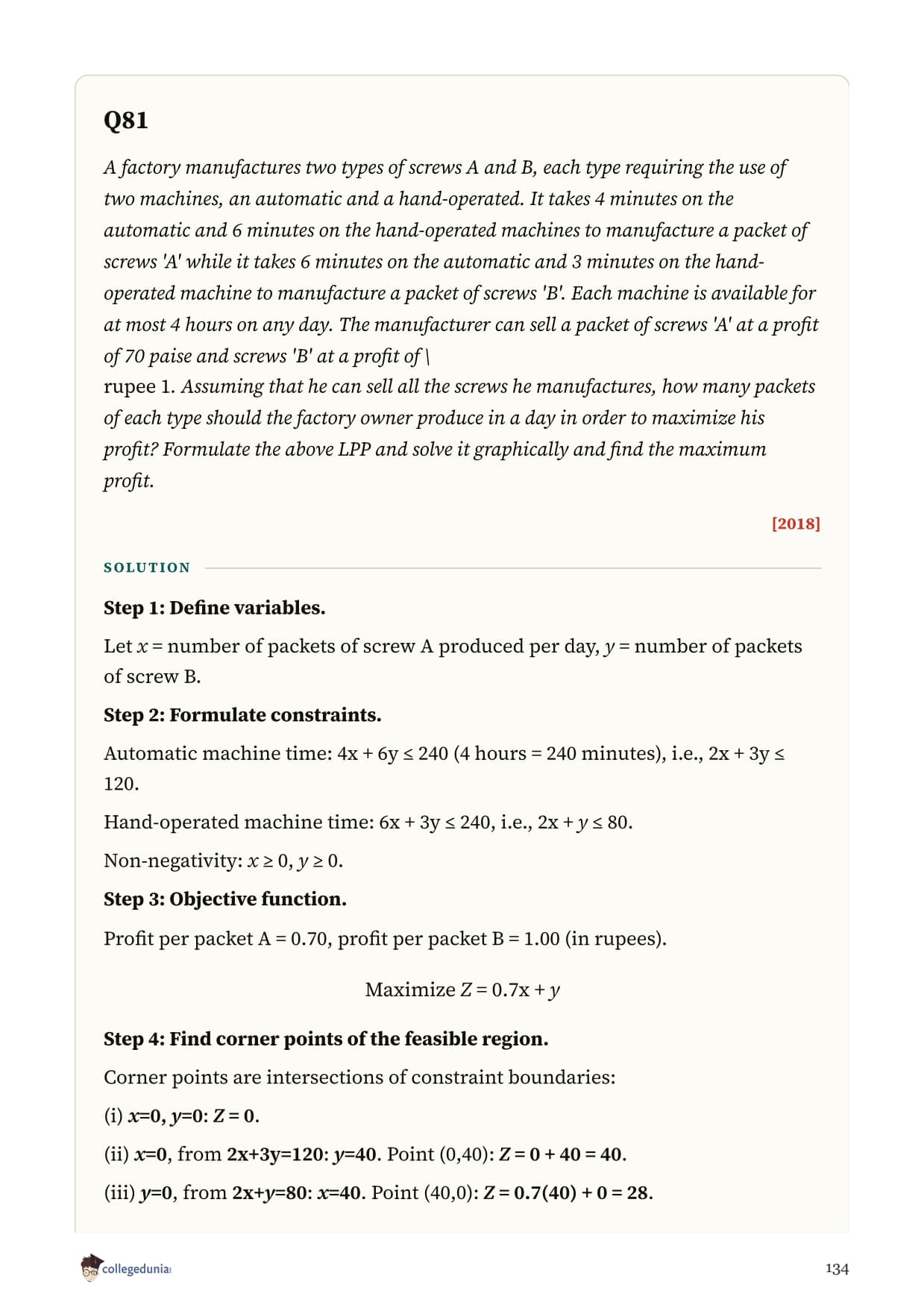
Solve the following Linear Programming Problem graphically : Maximise Z = 12x + 18y subject to the constraints x + y ≤ 1200 x - 2y ≥ 0 x + 3y ≥ 600 x ≥ 0, y ≥ 0
[2026 • 5 mark]
Common Mistakes in the Linear Programming Board Questions
- Shading the wrong side of a constraint line, so the feasible region is incorrect from the start.
- Missing a corner point of the feasible region, which can hide the true optimum.
- Forgetting the non-negativity constraints x ≥ 0 and y ≥ 0 when shading.
- Not checking whether the region is bounded or unbounded before claiming a maximum or minimum.
- Reading the objective value off the graph instead of substituting each corner point into Z.
Student Feedback on Linear Programming PYQ Practice
- 64 per cent said drawing the correct feasible region was the hardest step in the 6-mark questions.
- 58 per cent reported gaining 5 to 6 marks after solving all 20 six-mark graphical PYQs from this PDF before the boards.
- 46 per cent said a graphical maximisation question very similar to a past paper appeared in their actual 2026 exam.
- Average time to finish all 94 PYQs: about 11 hours across 5 study sessions.
How These PYQs Pair with the Other Linear Programming Resources
Solving previous year questions alone gives you only half the prep. Pair the PYQ PDF with the matching concept, formula and solution resources for Linear Programming.
| Resource | What It Gives You | Open |
|---|---|---|
| NCERT Solutions | Step-by-step worked answers to every NCERT back-exercise question of Linear Programming | NCERT Solutions for Linear Programming |
| Notes | Concept revision notes covering every topic in the Linear Programming chapter | Linear Programming Class 12 Notes |
| Formula Sheet | All key formulas and results of Linear Programming on one page for last-day revision | Linear Programming Formula Sheet |
| Handwritten Notes | Scanned handwritten notes of Linear Programming for quick one-shot revision | Linear Programming Handwritten Notes |
| Exemplar Solutions | NCERT Exemplar problems of Linear Programming solved in full for extra practice | NCERT Exemplar Solutions for Linear Programming |
| NCERT Book | Official NCERT Linear Programming chapter PDF for free download | Linear Programming NCERT Book PDF |
| Exemplar Book | NCERT Exemplar Linear Programming problem book PDF for free download | Linear Programming Exemplar Book PDF |
How to Use the Linear Programming PYQ PDF Most Effectively
The 94 questions are sequenced for a three-pass revision plan:
- Pass 1 (Day 1): Attempt the 36 one-mark MCQs on feasible region, corner points and objective-function theory. Mark every wrong answer and re-read the relevant NCERT paragraph.
- Pass 2 (Day 2 to 3): Solve the 6 two-mark, 18 three-mark and 12 four-mark formulation and corner-point questions. Build the corner-point table each time.
- Pass 3 (Day 4 to 8): Work through the 2 five-mark and 20 six-mark graphical long answers, drawing every line and shading the feasible region in full.
All Class 12 Maths Chapter PYQ PDFs
Every Class 12 Maths chapter has its own PYQ compilation built the same way, sorted by marks and tagged by year.
| Chapter | Topic | Previous Year Questions |
|---|---|---|
| Chapter 1 | Relations and Functions | PYQ PDF |
| Chapter 2 | Inverse Trigonometric Functions | PYQ PDF |
| Chapter 3 | Matrices | PYQ PDF |
| Chapter 4 | Determinants | PYQ PDF |
| Chapter 5 | Continuity and Differentiability | PYQ PDF |
| Chapter 6 | Application of Derivatives | PYQ PDF |
| Chapter 7 | Integrals | PYQ PDF |
| Chapter 8 | Application of Integrals | PYQ PDF |
| Chapter 9 | Differential Equations | PYQ PDF |
| Chapter 10 | Vector Algebra | PYQ PDF |
| Chapter 11 | Three Dimensional Geometry | PYQ PDF |
| Chapter 12 | Linear Programming | PYQ PDF |
| Chapter 13 | Probability | PYQ PDF |
Also Check: NCERT Solutions for Class 12 Maths
Class 12 Maths Linear Programming PYQ FAQs
Ques. How many previous year questions are in the Class 12 Maths Linear Programming PYQ PDF?
Ans. The PDF has 94 previous year questions from CBSE board papers between 2003 and 2026, sorted by marks (1 to 6) and then by year, latest first. Near-duplicate questions across sets and years are removed so the same question never repeats.
Ques. Are the Linear Programming PYQs based on the 2026-27 CBSE syllabus?
Ans. Yes. Every question follows the 2026-27 CBSE Class 12 Mathematics syllabus. Older questions are kept because the graphical method and LPP formulation are unchanged in the current syllabus.
Ques. Which topics of Linear Programming appear most often in CBSE board papers?
Ans. From the 94-question set: graphical maximisation (about 26 per cent), graphical minimisation (about 20 per cent), LPP formulation (about 18 per cent), and feasible region and corner points (about 16 per cent).
Ques. How is this PYQ PDF different from a CBSE sample paper?
Ans. A sample paper gives you one paper. This PDF stitches together 20 years of questions across every set and region (Delhi, Outside Delhi, Foreign and Compartment) for Linear Programming alone, so you can see which LPP types CBSE repeats and how each is usually framed.
Ques. Does the Linear Programming PYQ PDF include MCQs?
Ans. Yes. 36 of the 94 questions are 1-mark questions, mostly MCQs on the feasible region, corner points and properties of the objective function, like the 2026 question on its degree.
Ques. Where can I download the Linear Programming Class 12 PYQ PDF for free?
Ans. The full Linear Programming PYQ PDF is free to download from the PDF button at the top of this page. No sign-up is needed.
Ques. How should I use these PYQs to revise Linear Programming in the last 10 days?
Ans. Use the three-pass plan: Day 1 attempt the 36 MCQs on feasible region and objective-function theory, Day 2 to 3 solve the 2 to 4-mark formulation questions, Day 4 to 8 attempt all 20 six-mark graphical long answers, shading the region each time.
Ques. Does the PDF give answers or only the questions?
Ans. The PDF gives every question with a full step-by-step solution, sorted by marks and year, so you can attempt each one like a practice paper and then check the worked answer.
Ques. Is the graphical method the most important skill for the CBSE Linear Programming questions?
Ans. Yes. The graphical method drives almost half the set and all the 6-mark long answers. Practising every graphical maximisation and minimisation question in the PDF is the single best use of your time for this chapter.
Ques. What is a linear programming problem?
Ans. A linear programming problem, or LPP, is the task of maximising or minimising a linear objective function subject to a set of linear constraints. The constraints are usually inequalities, and the solution gives the best value of the objective within the allowed region.
Ques. How is the feasible region defined?
Ans. The feasible region is the set of all points that satisfy every constraint of the LPP at the same time, including the non-negativity conditions. It is the common shaded area on the graph. The optimum value of the objective function always occurs at a corner point of this region.
Ques. What is the objective function in an LPP?
Ans. The objective function is the linear expression, usually written as Z = ax + by, that you want to maximise or minimise. Its degree is one because the variables appear only to the first power. You evaluate it at each corner point of the feasible region to find the optimum.



Comments