





Class 12 Economics Chapter 2 National Income Accounting is the first chapter of the Macroeconomics book. It explains the circular flow of income, the three methods of measuring GDP, and the chain of aggregates from GDP at Market Price to Personal Disposable Income. This page has the official NCERT textbook PDF to read online or download free.
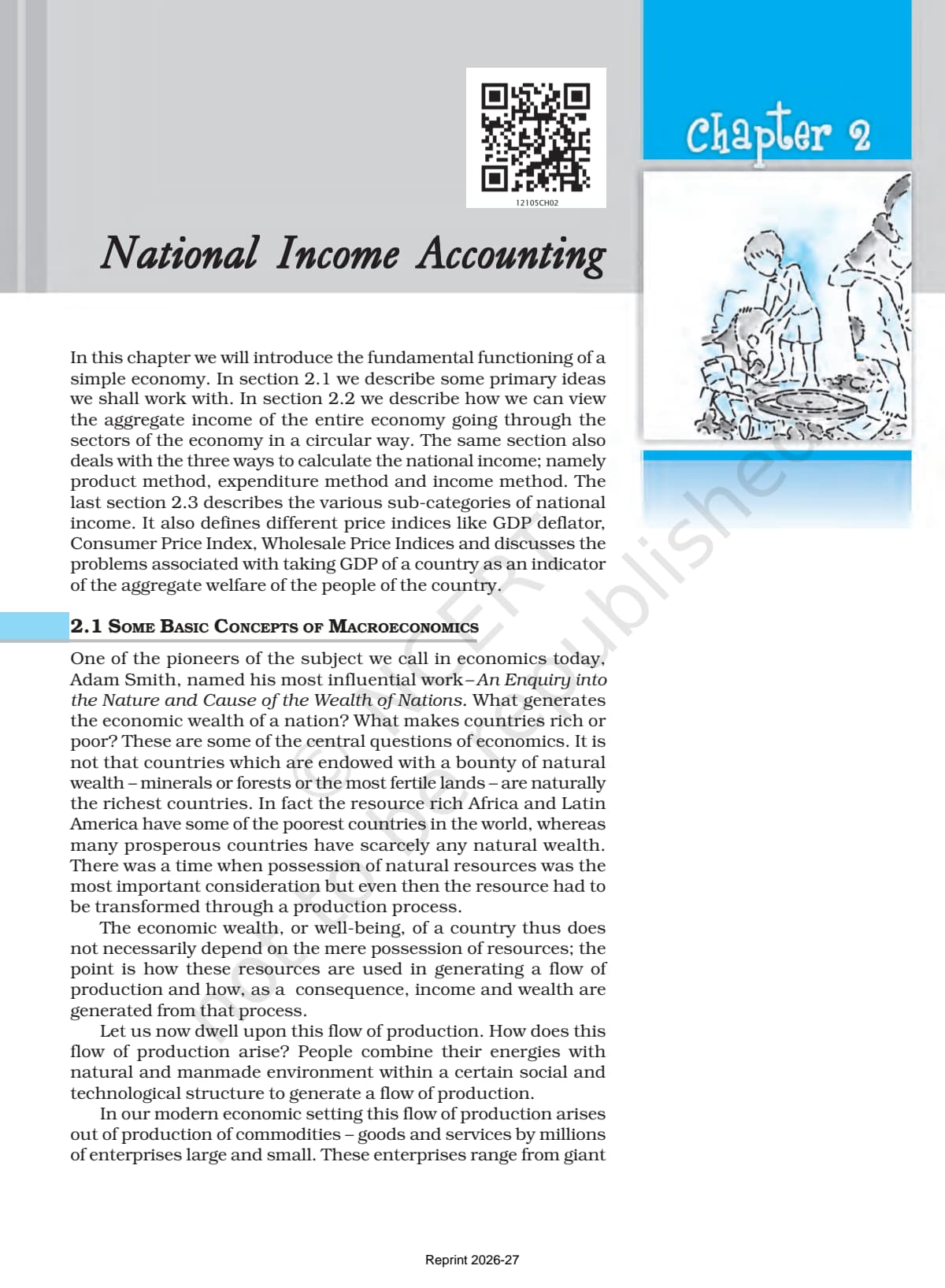
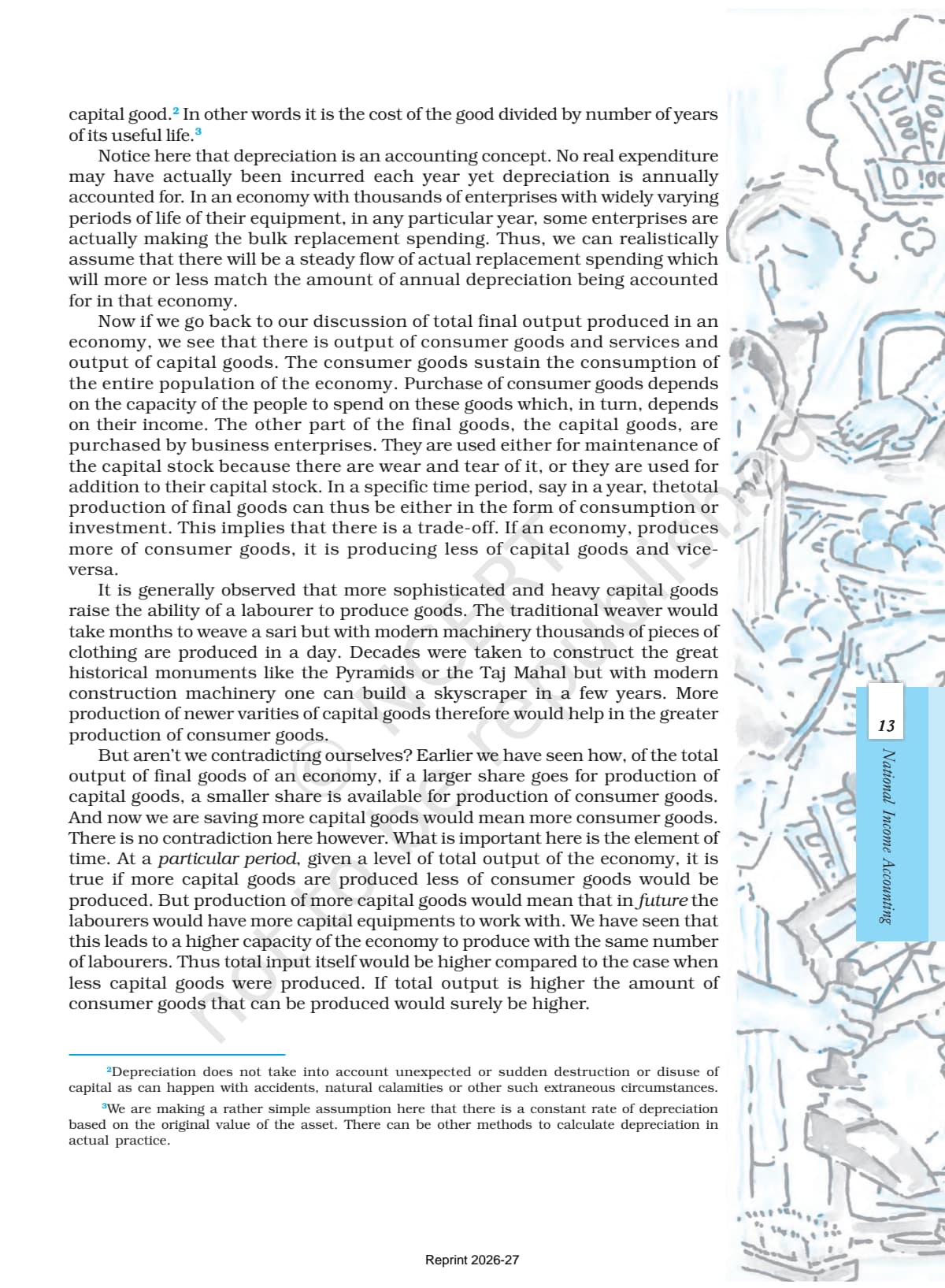
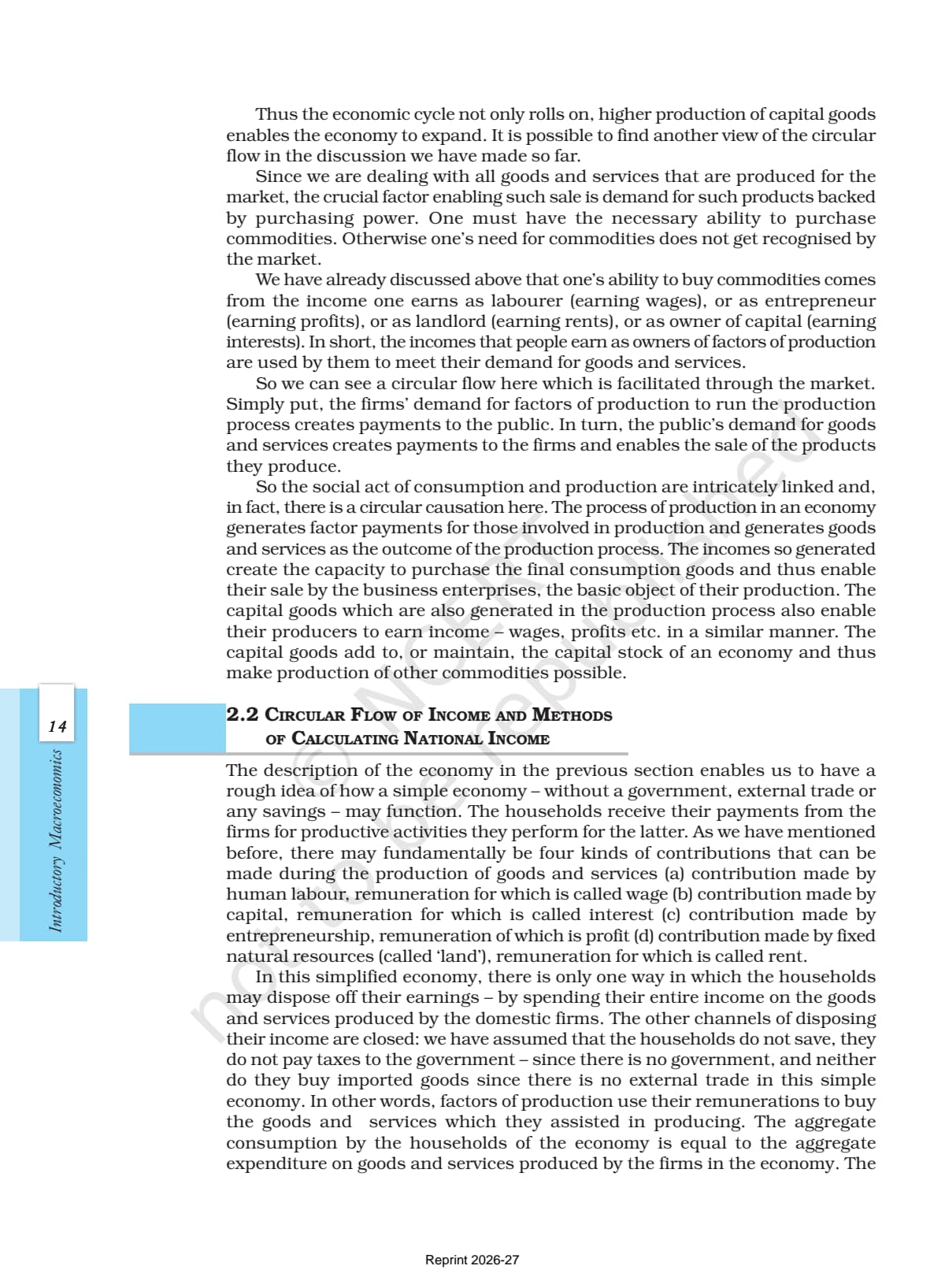
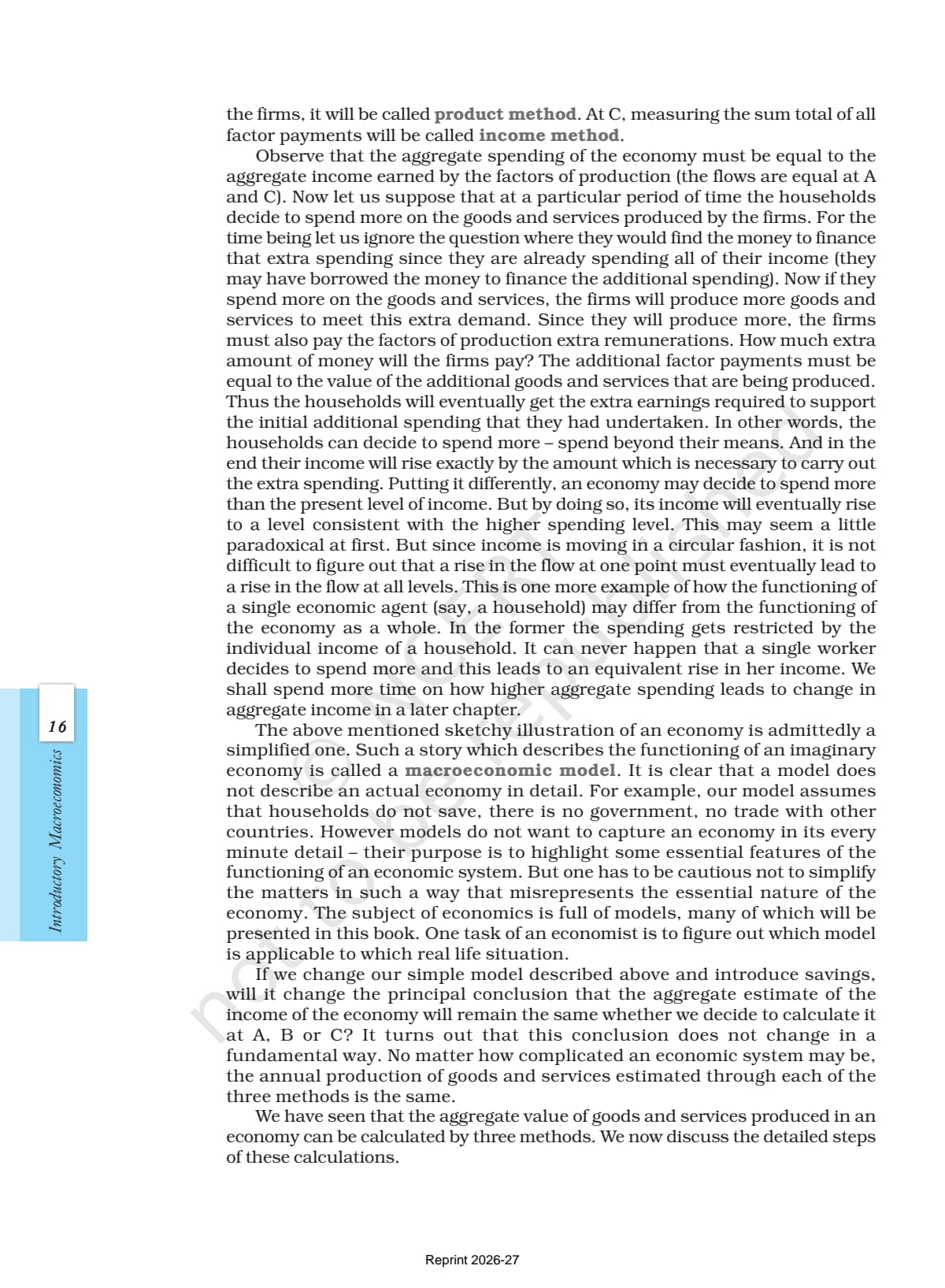
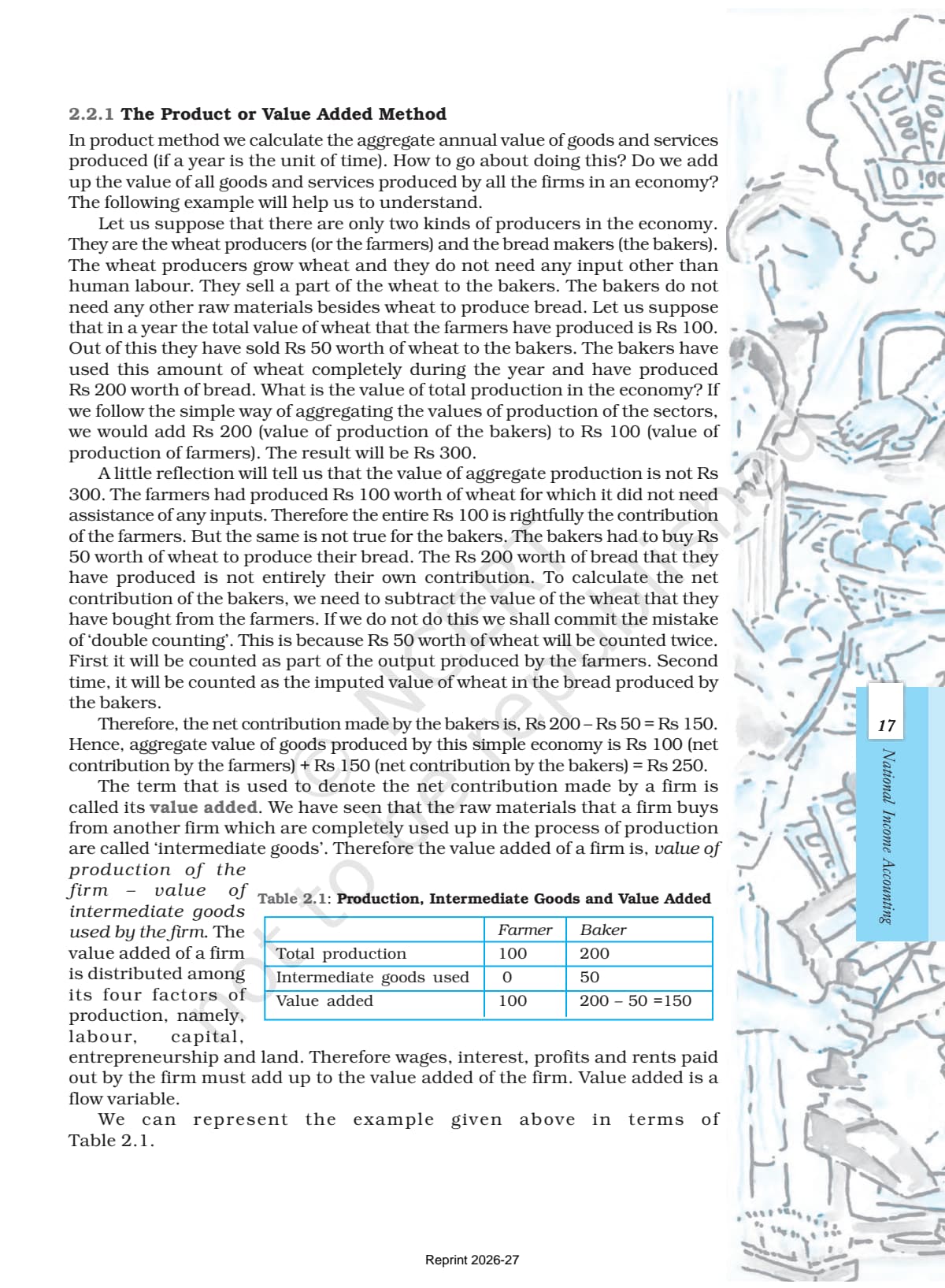
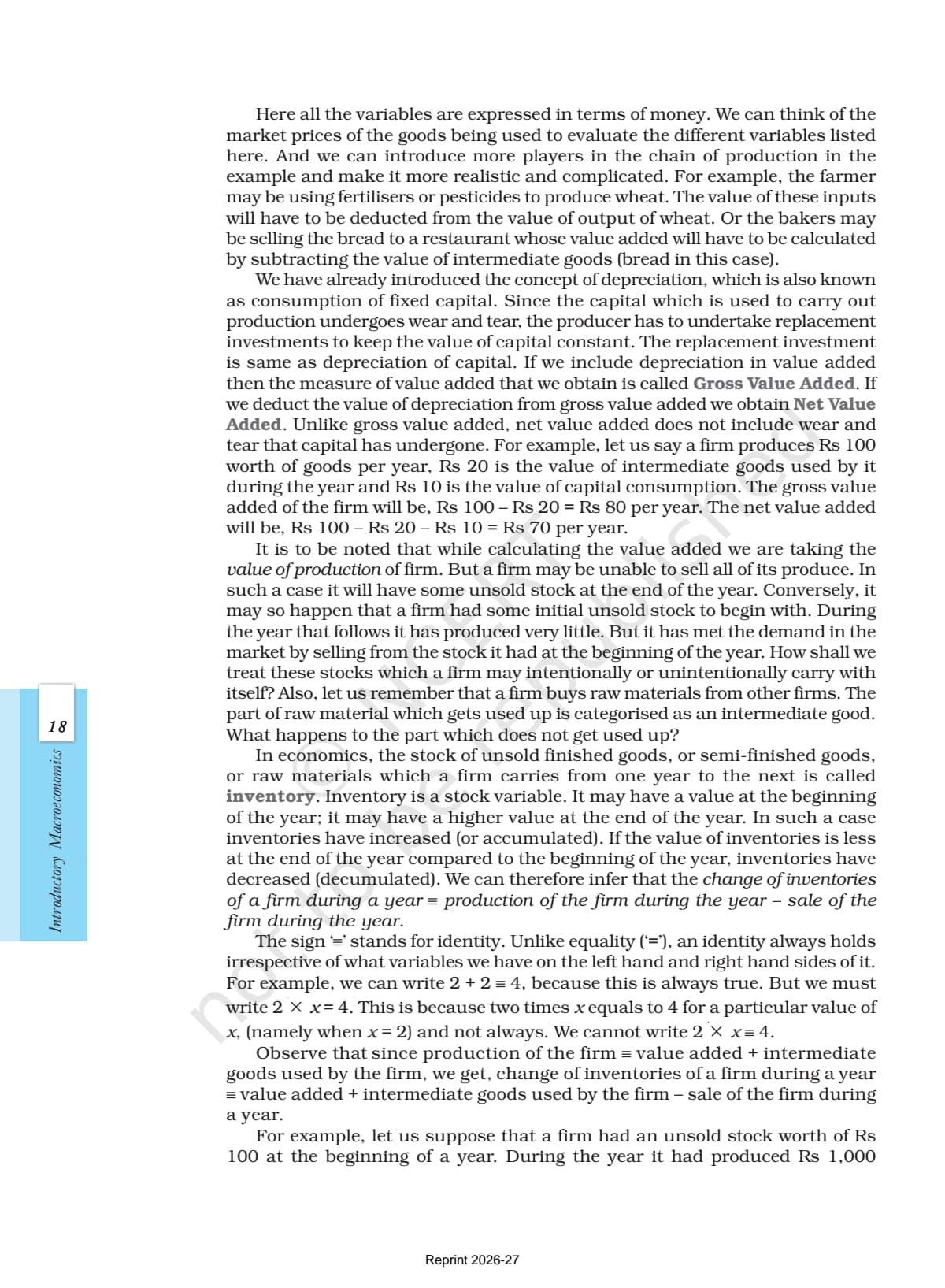
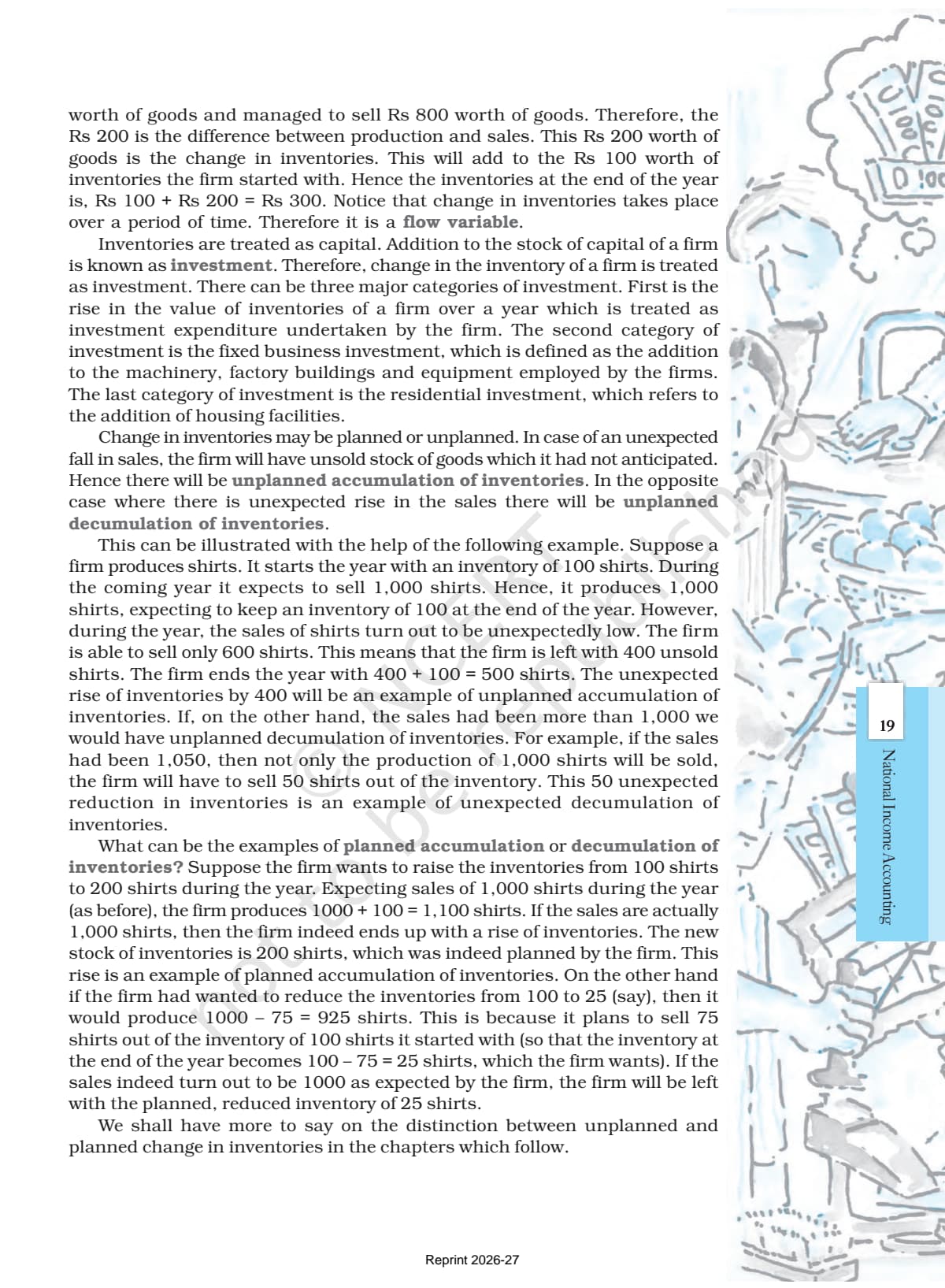
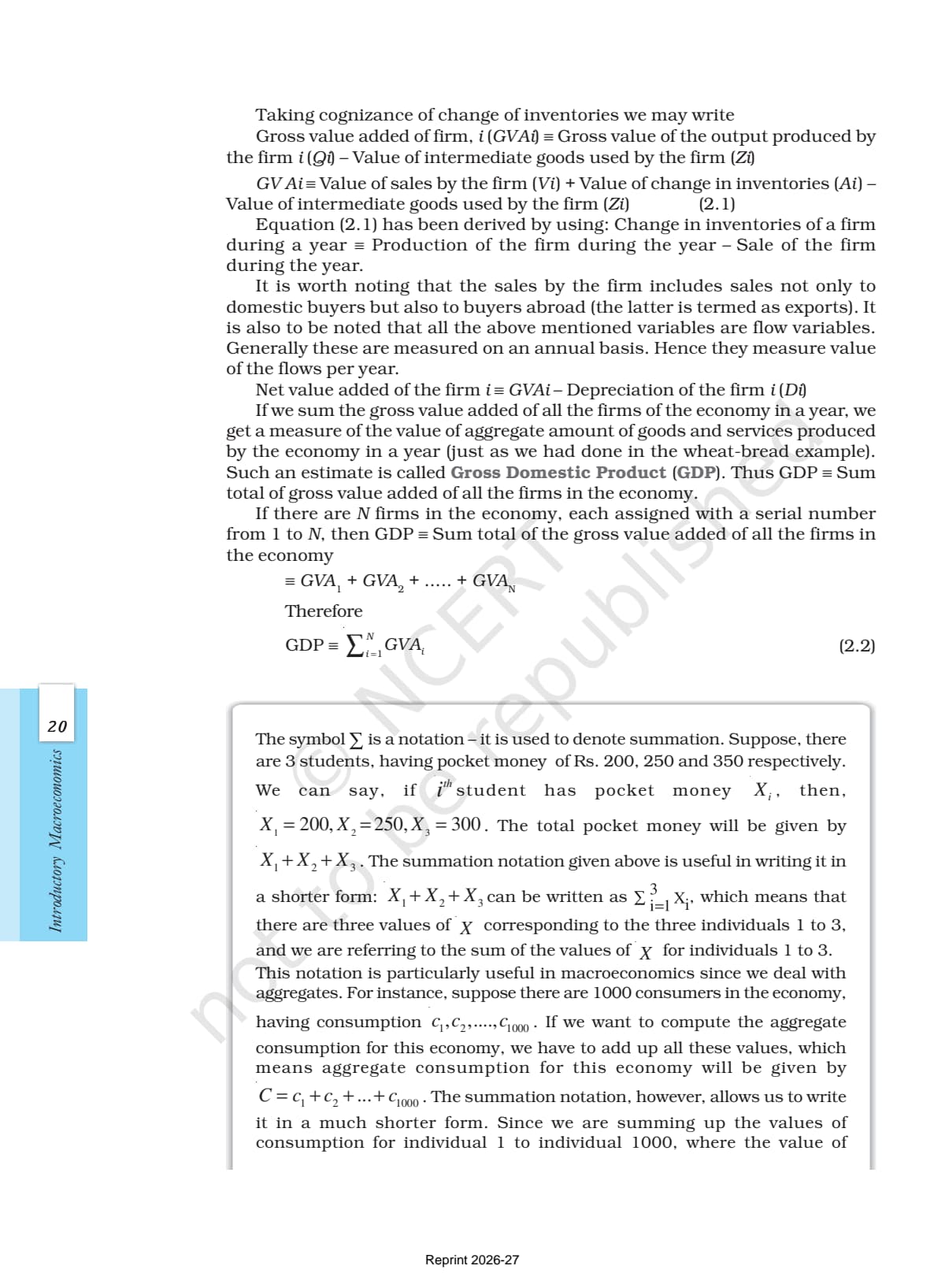
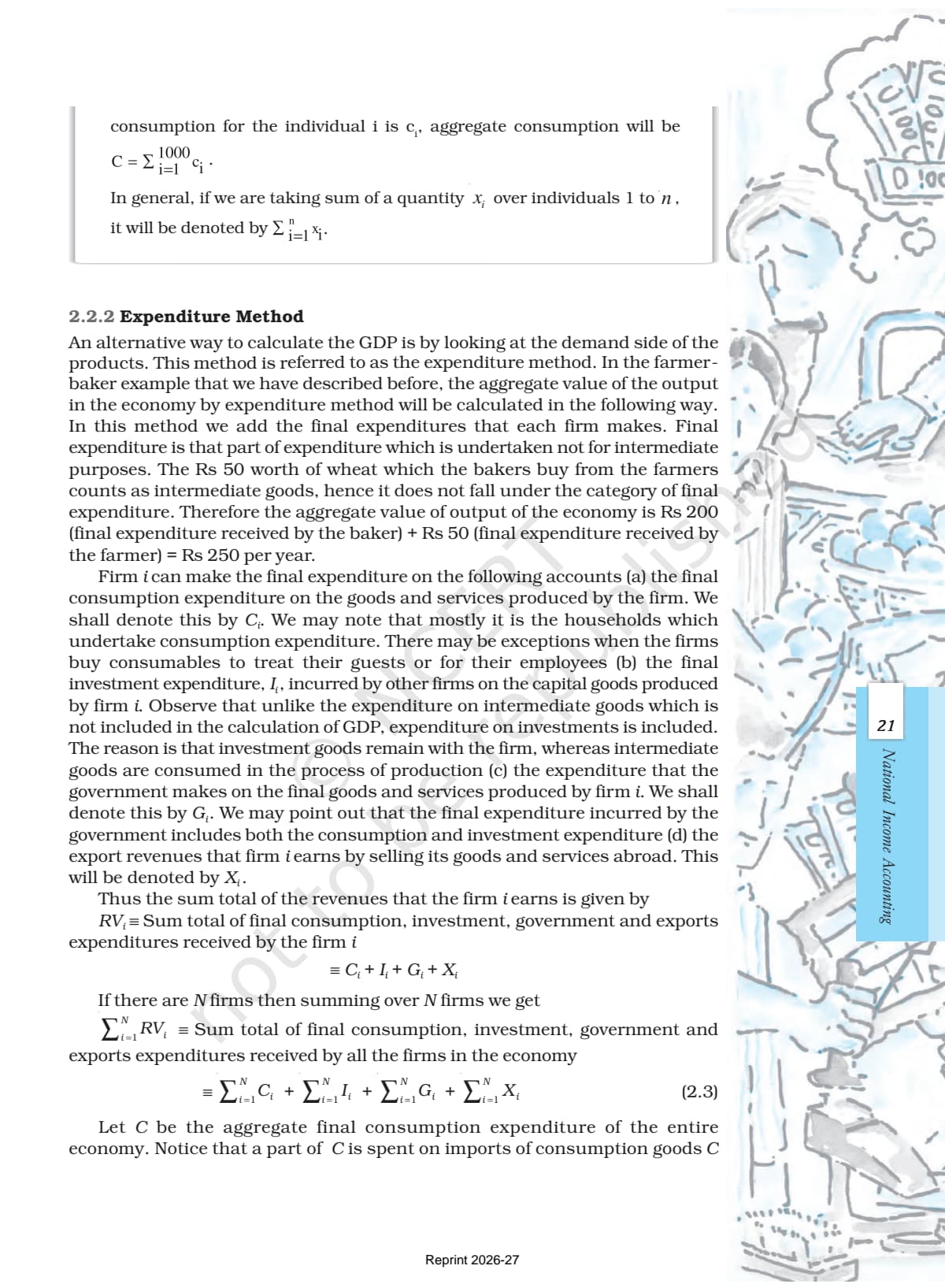
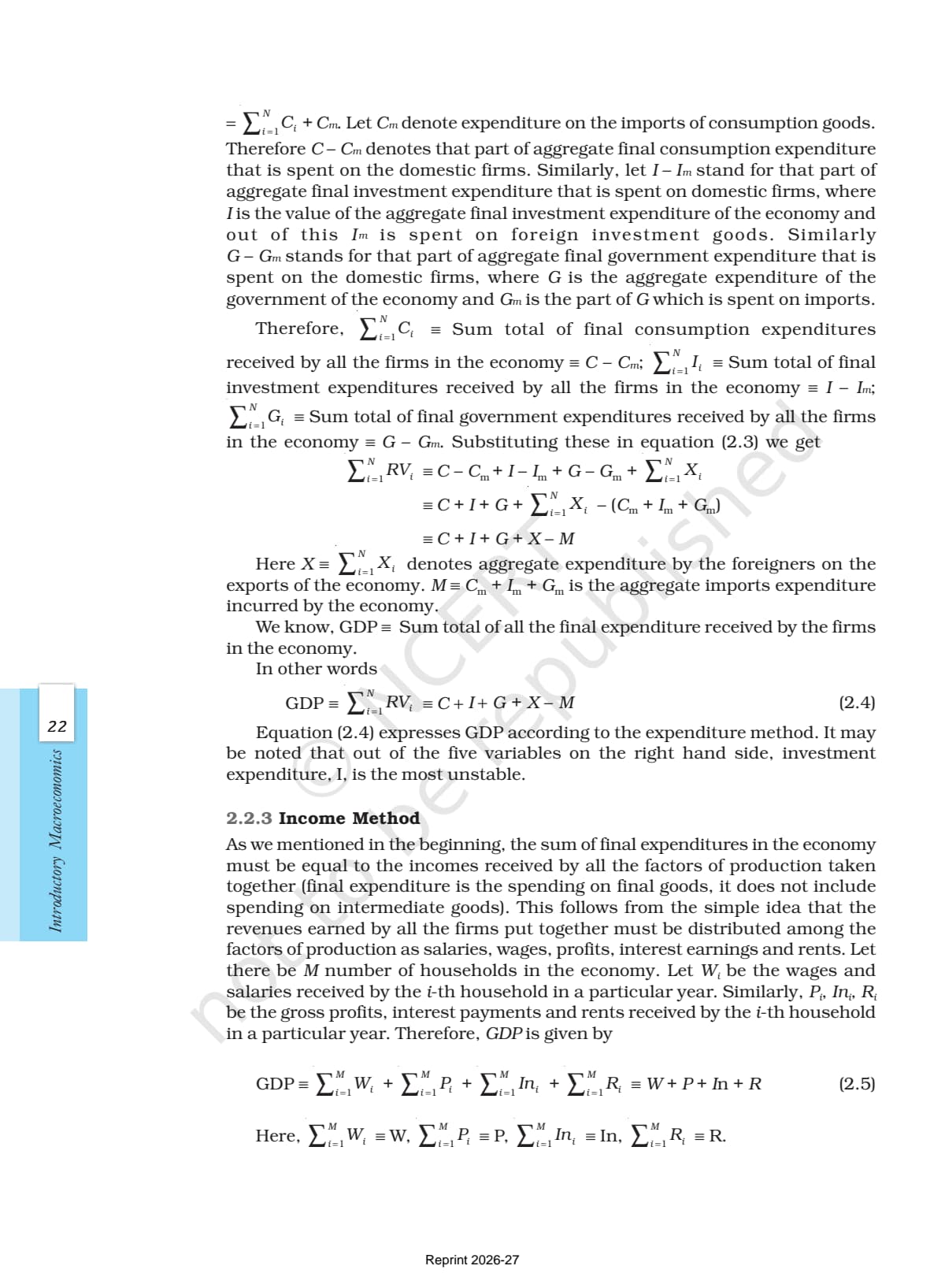
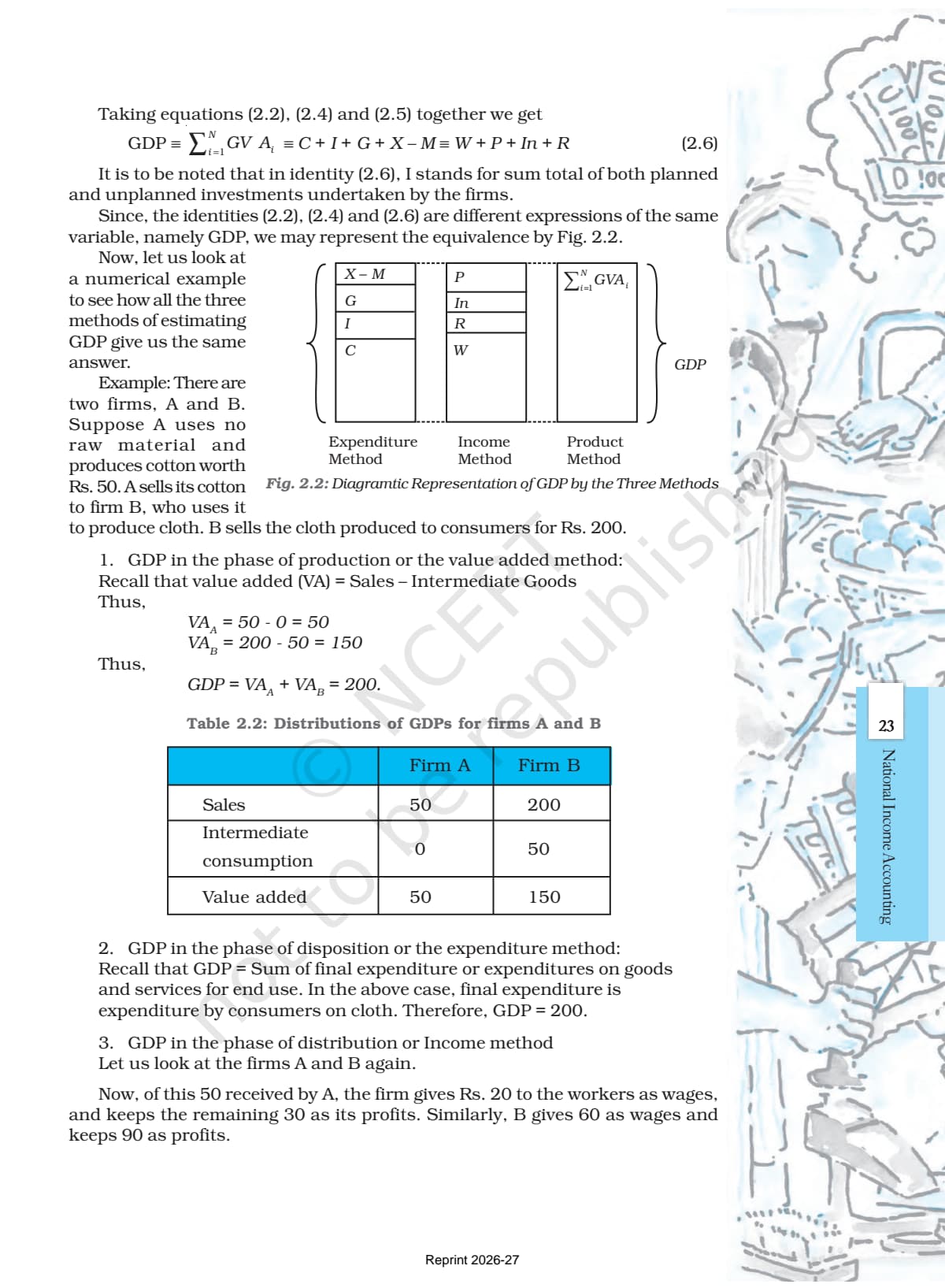
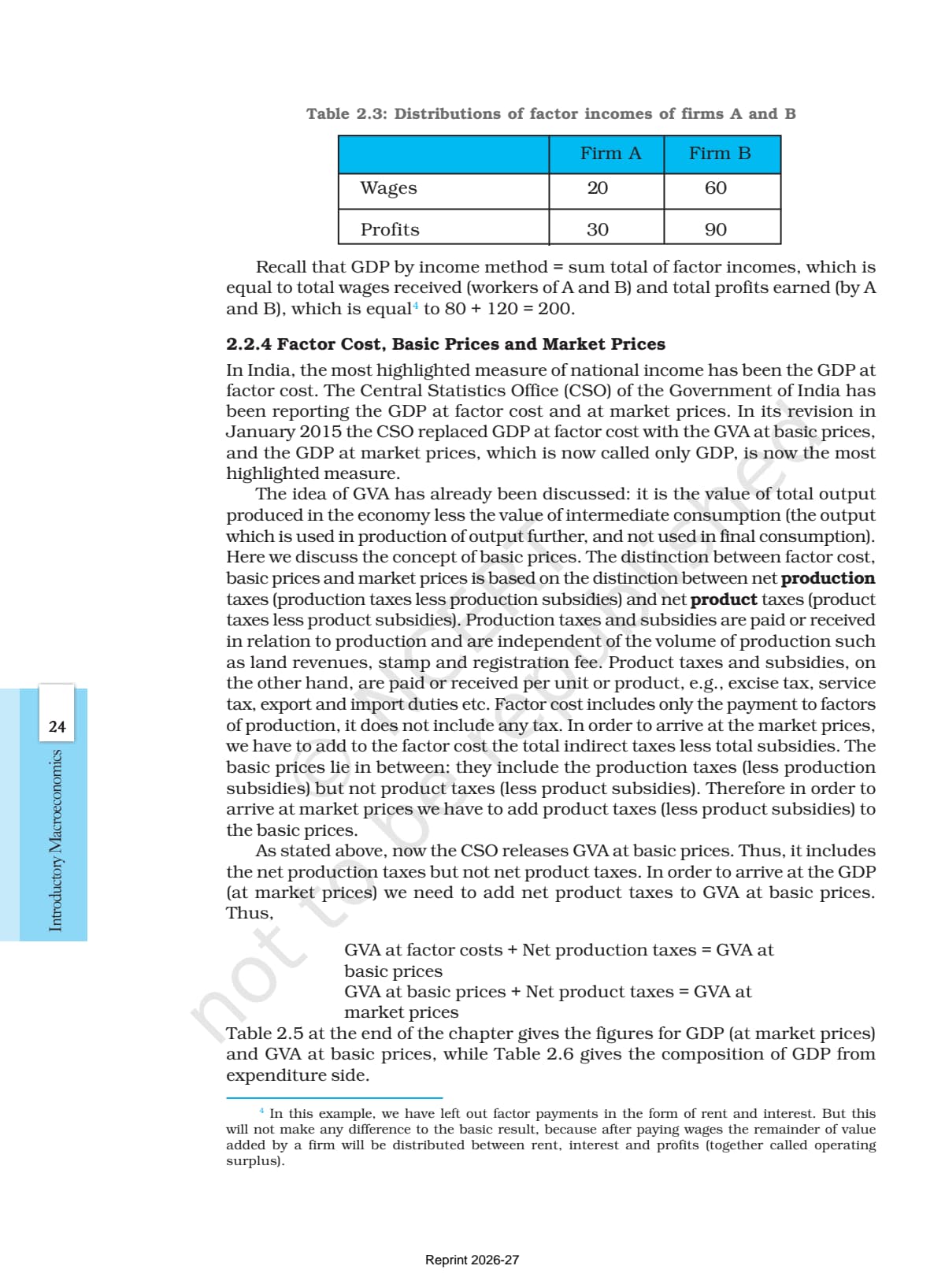
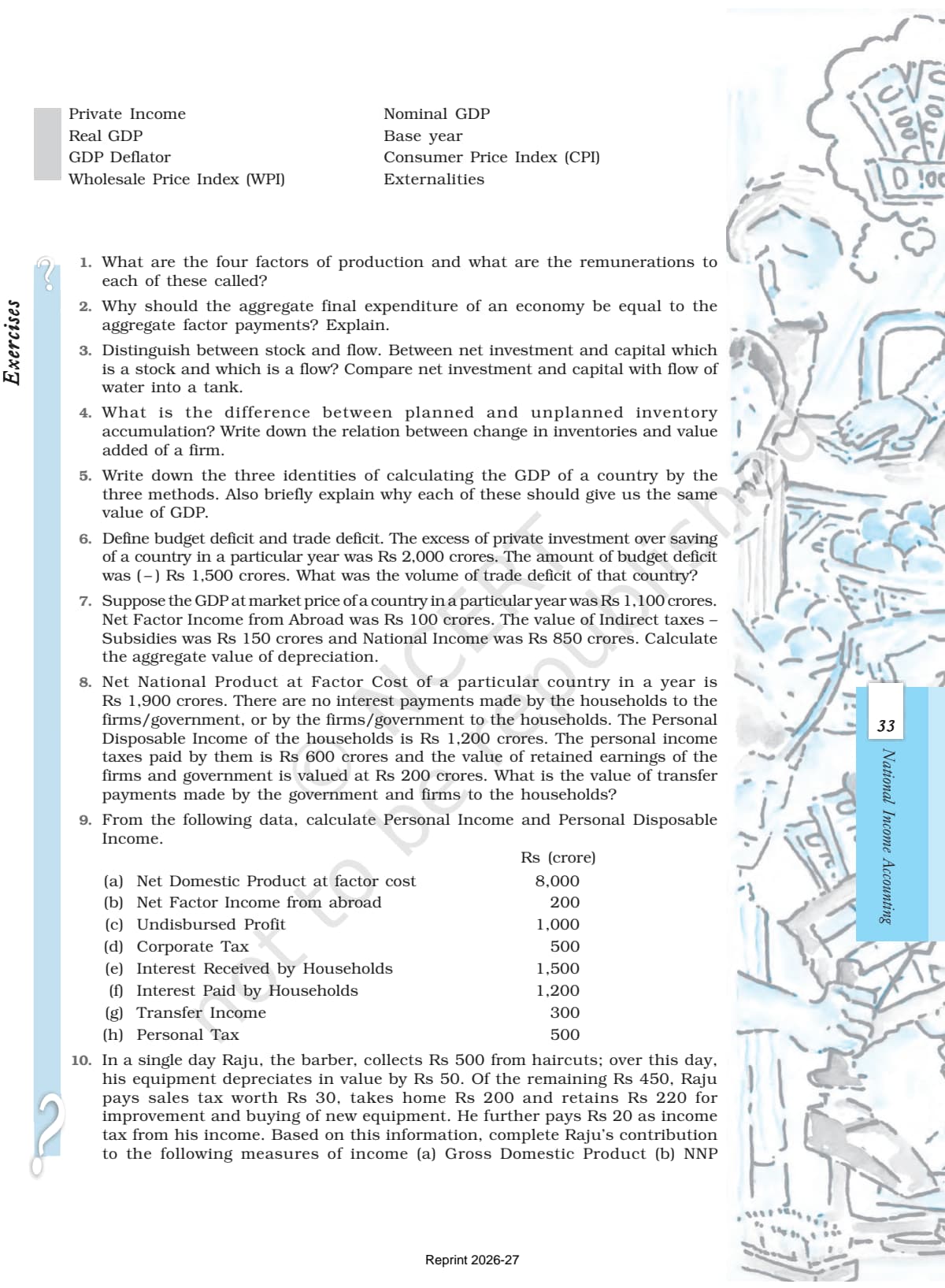
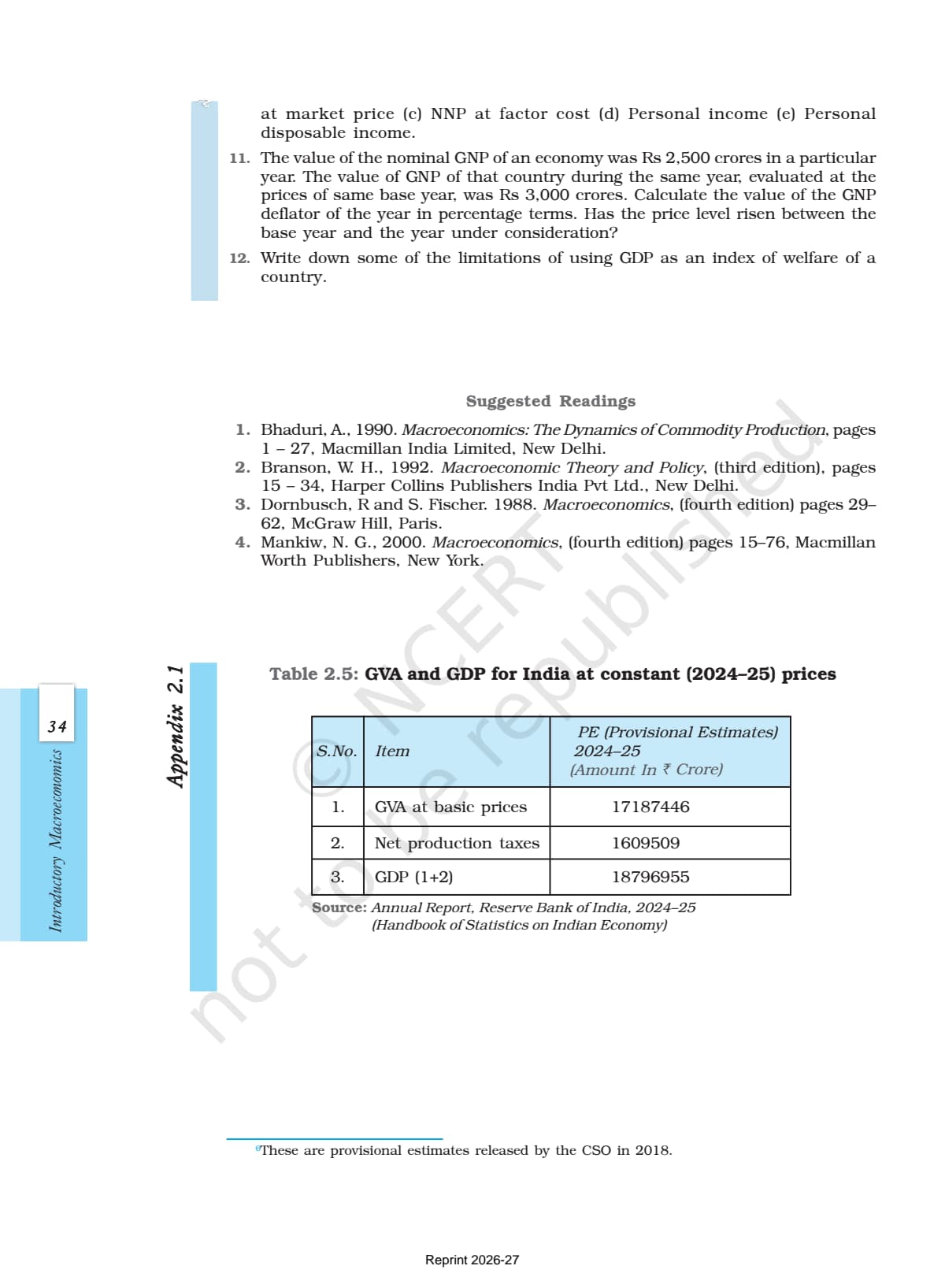
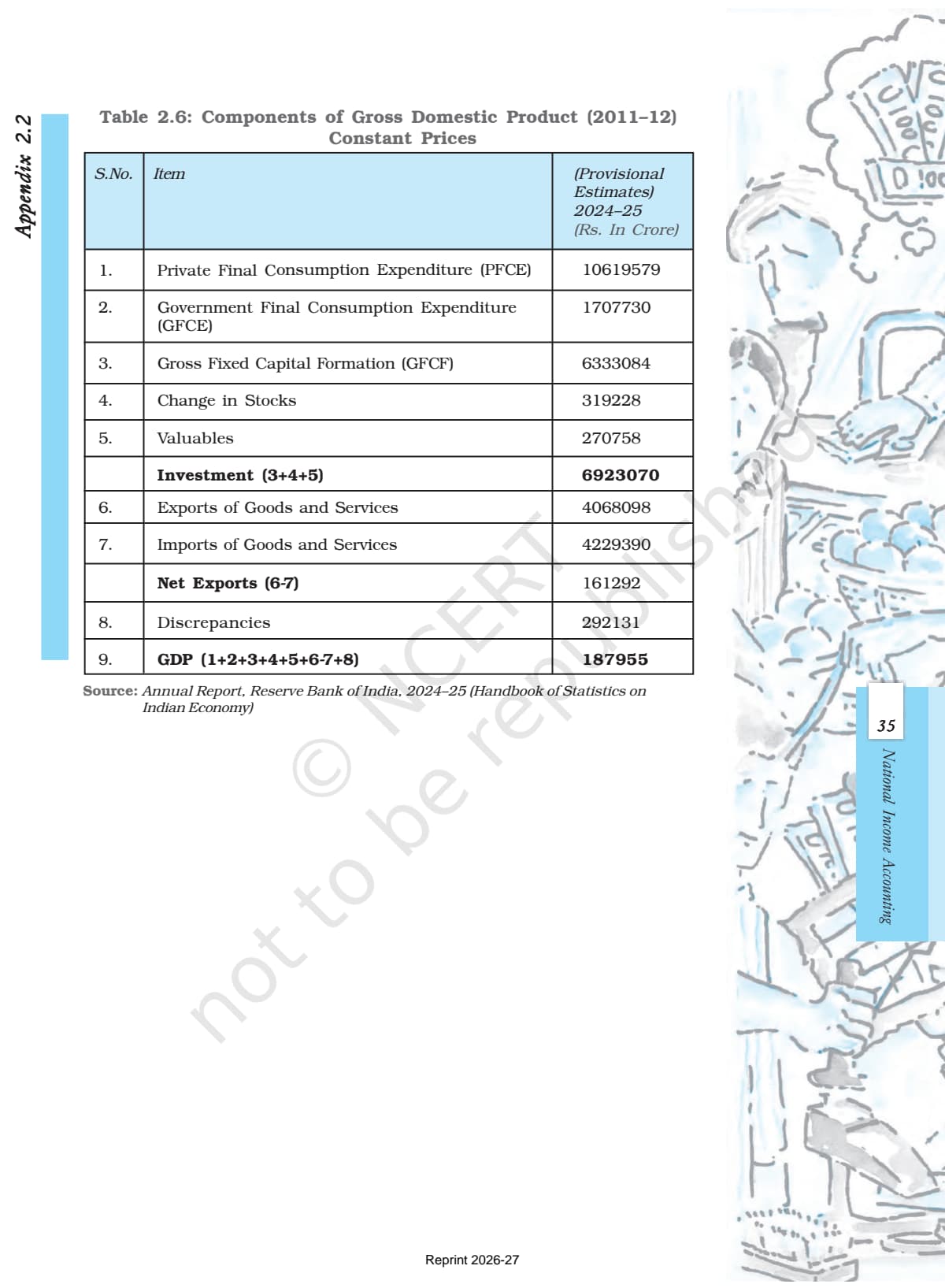
Here is what this chapter is worth in the exam:
- Official NCERT PDF: the Macroeconomics Chapter 2 textbook file, aligned to the 2026-27 syllabus.
- CBSE Boards: about 5 to 6 marks, mostly one GDP numerical plus short theory.
- CUET: 2 to 3 questions each year on the aggregates and the three methods.
What the National Income Accounting NCERT PDF Covers
This is the source CBSE uses for every board question on national income. The PDF moves in a straight line from definitions to measurement to interpretation. Read it once before you open any notes or reference book.
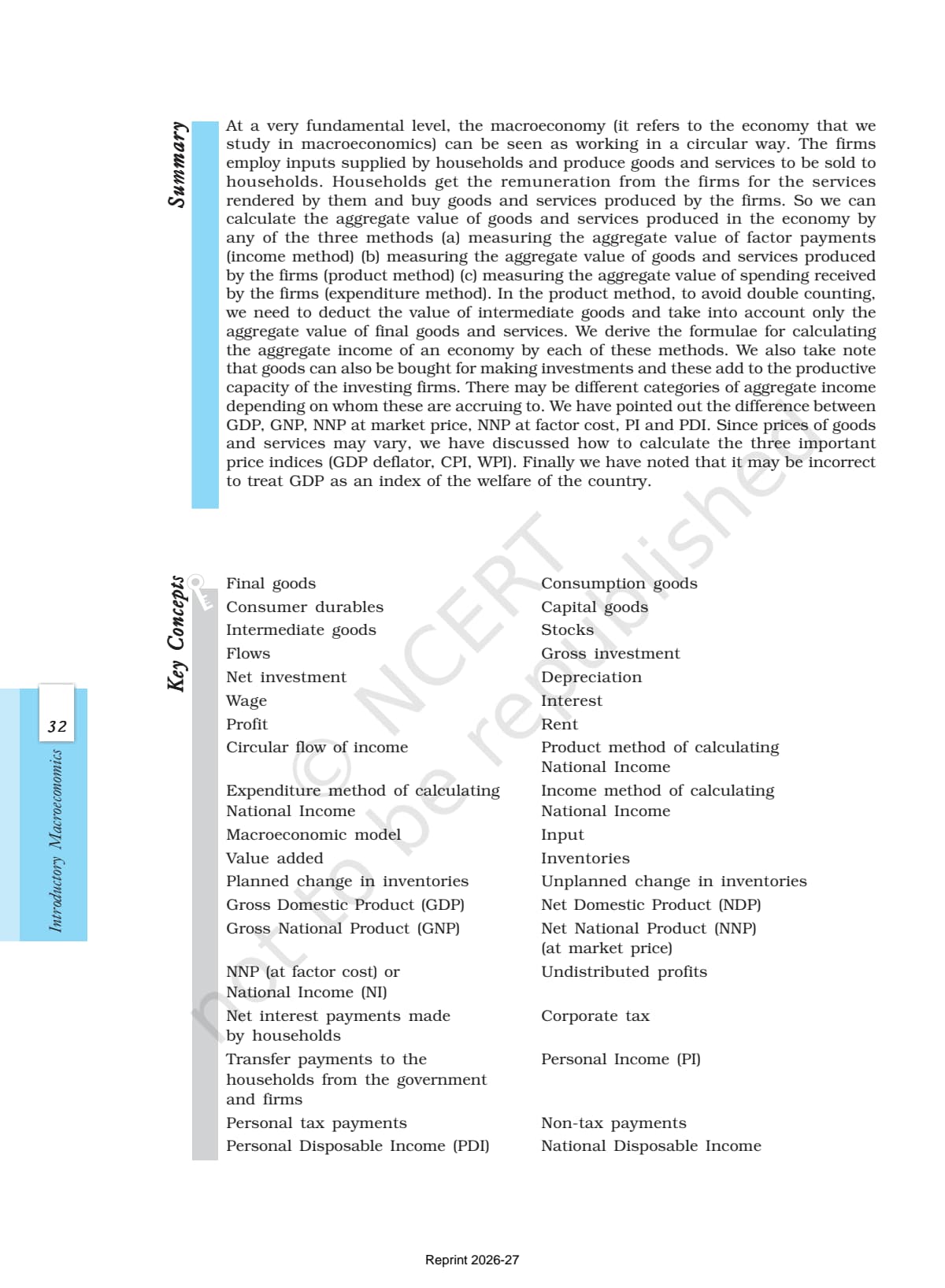
- Basic concepts: factors of production, factor incomes, final vs intermediate goods.
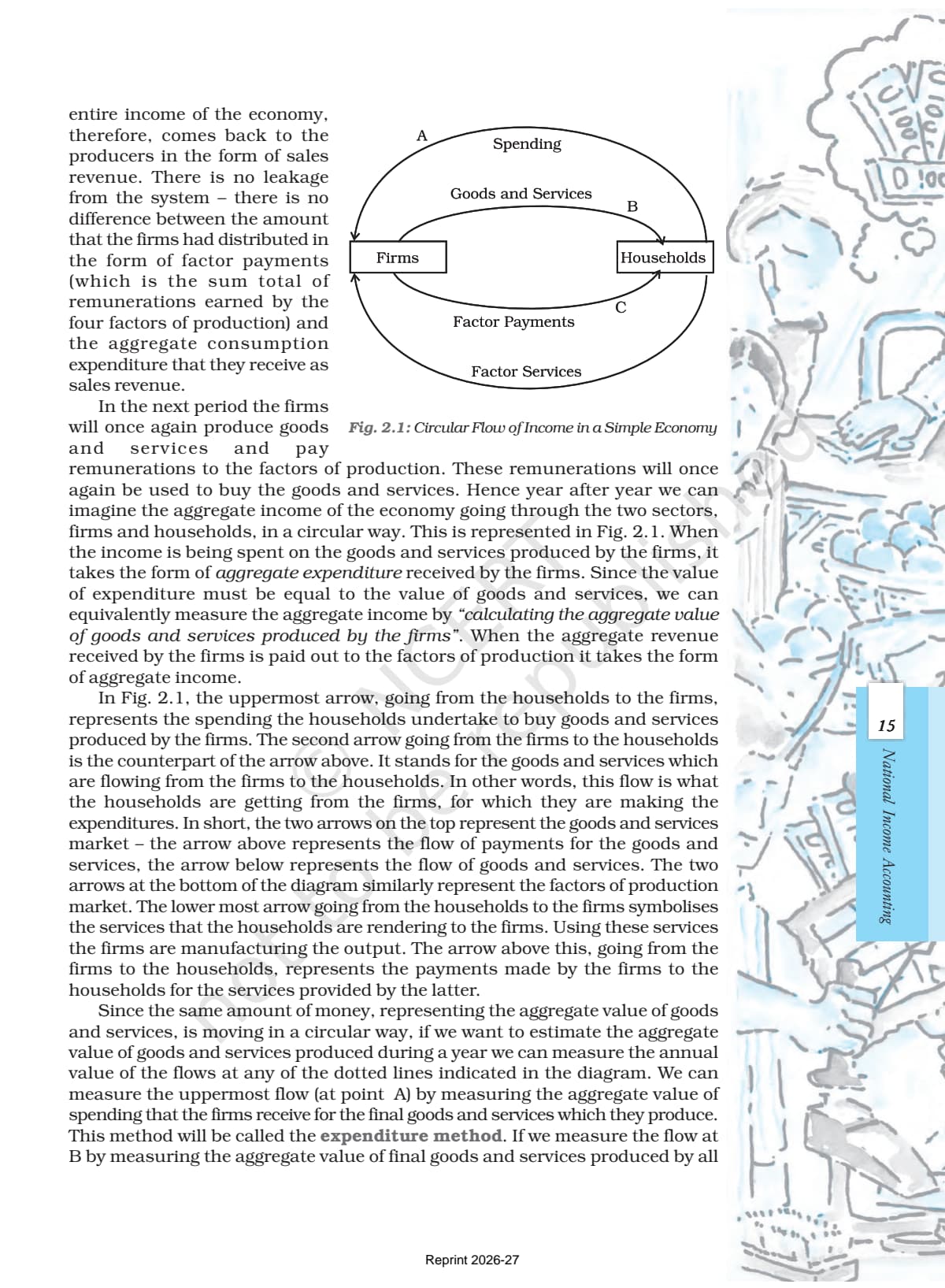
- Circular flow: the loop of payments between households and firms.
- Three methods: product (value added), expenditure, and income.
- Aggregates chain: GDP MP to NDP, NNP, National Income, PI and PDI.
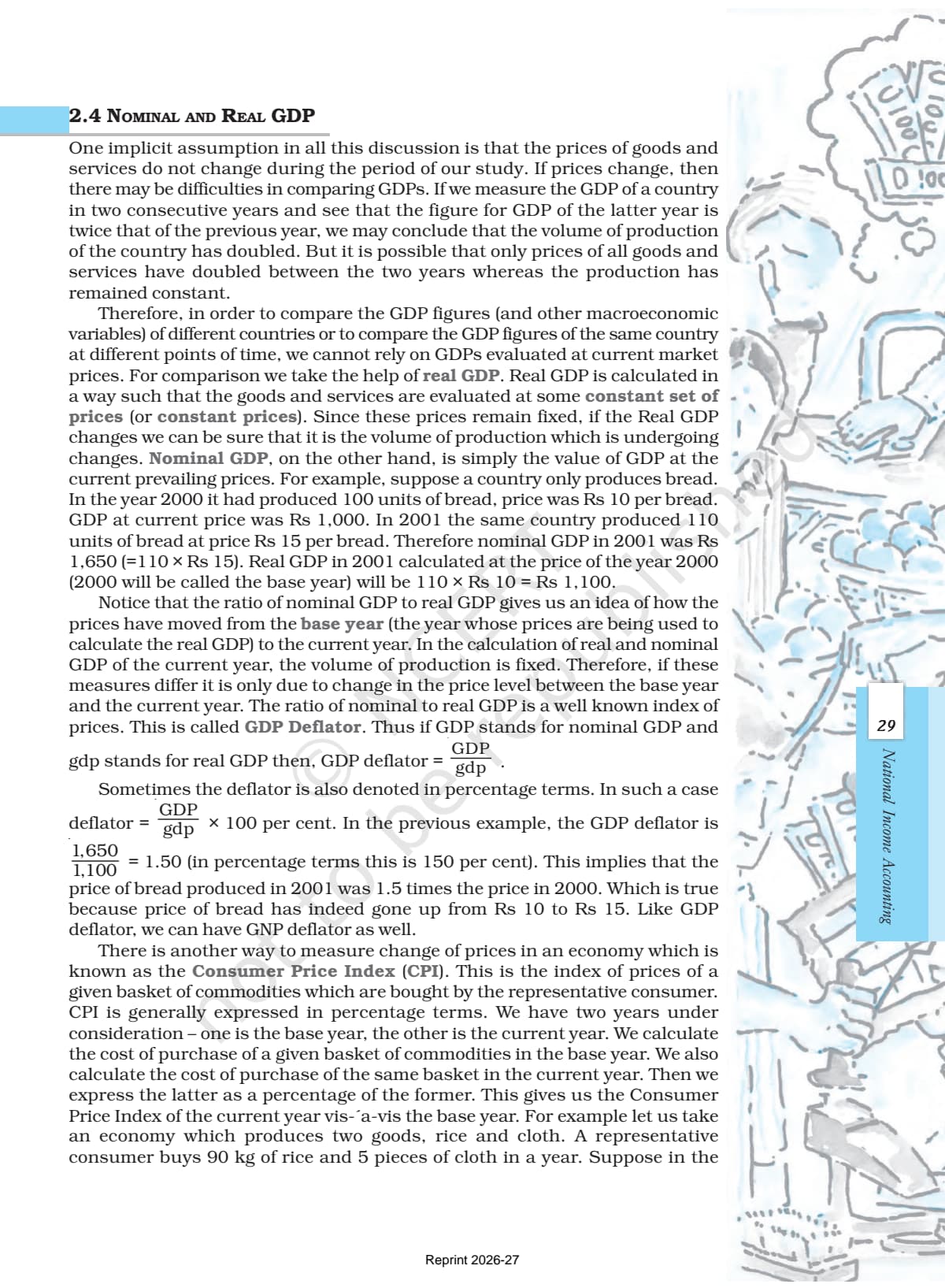
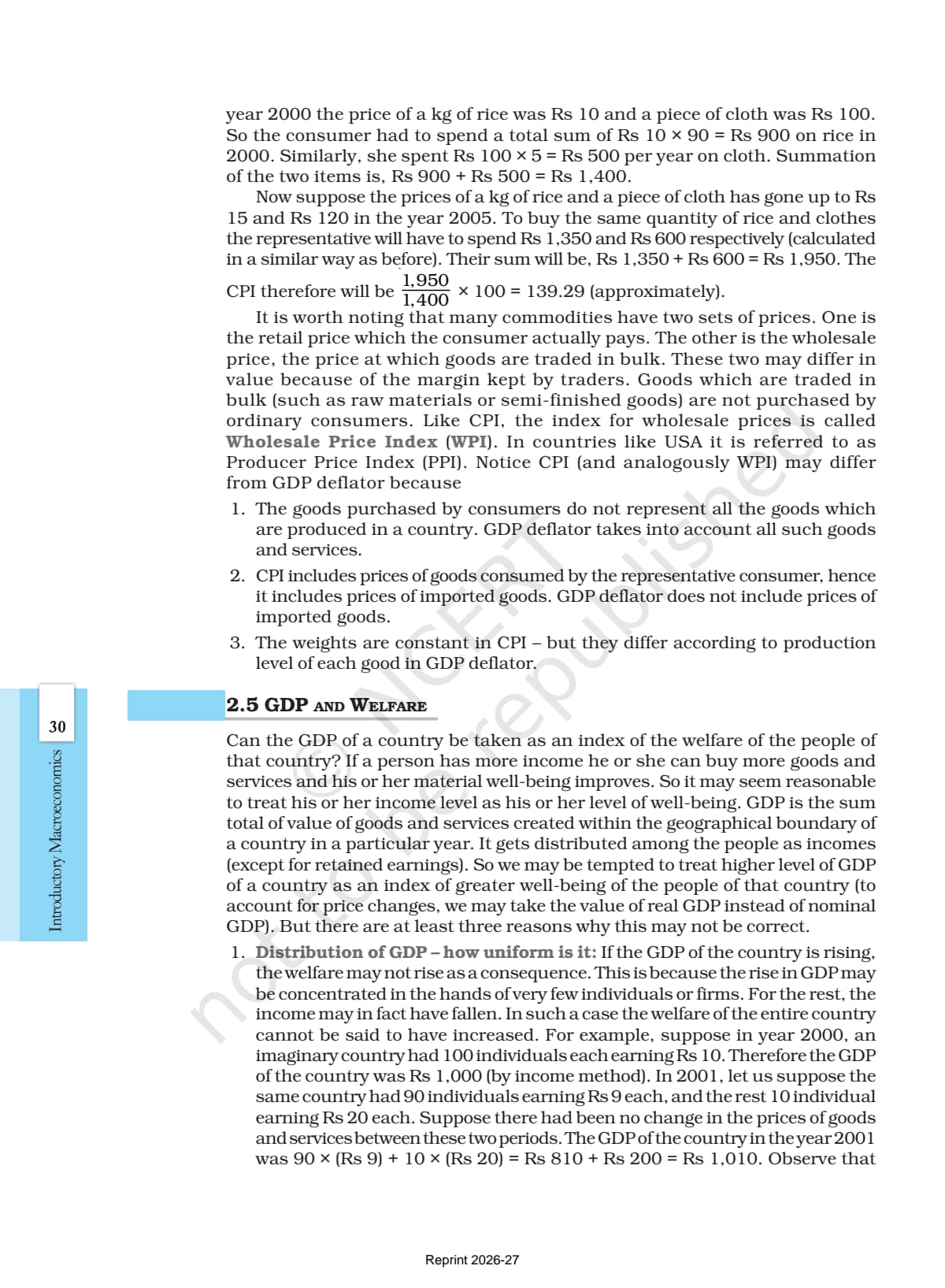
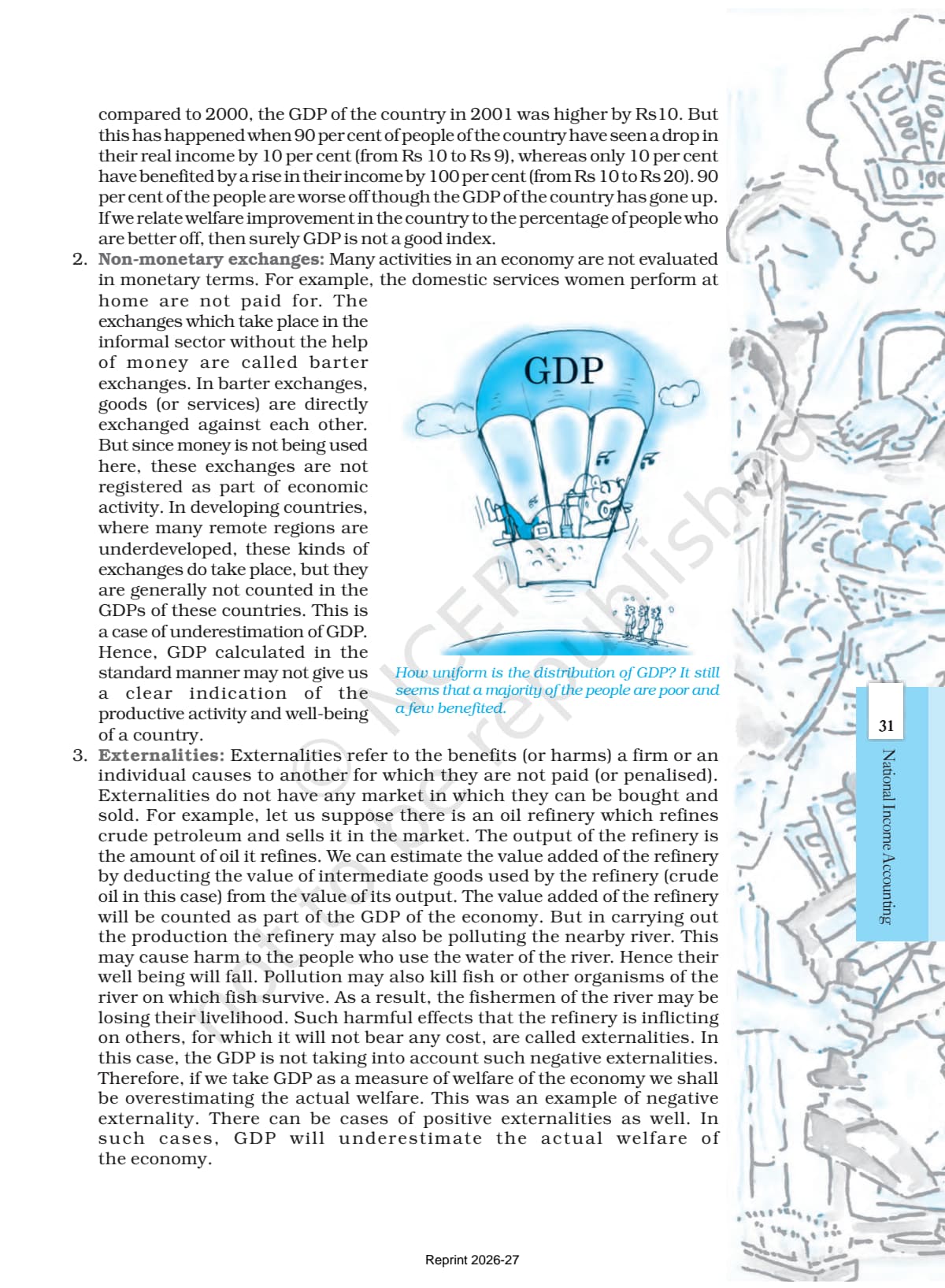
- Real vs nominal GDP and the limits of GDP as a welfare measure.
Topics in the National Income Accounting Chapter (Section Map)
The chapter is split into numbered sections. The table maps each one to the main exam idea you should pull from it.
| Section | NCERT sub-topic | Main exam concept |
|---|---|---|
| 2.1 | Basic concepts of macroeconomics | Factors of production, final vs intermediate goods |
| 2.2 | Circular flow and methods of calculation | Product, expenditure, income methods |
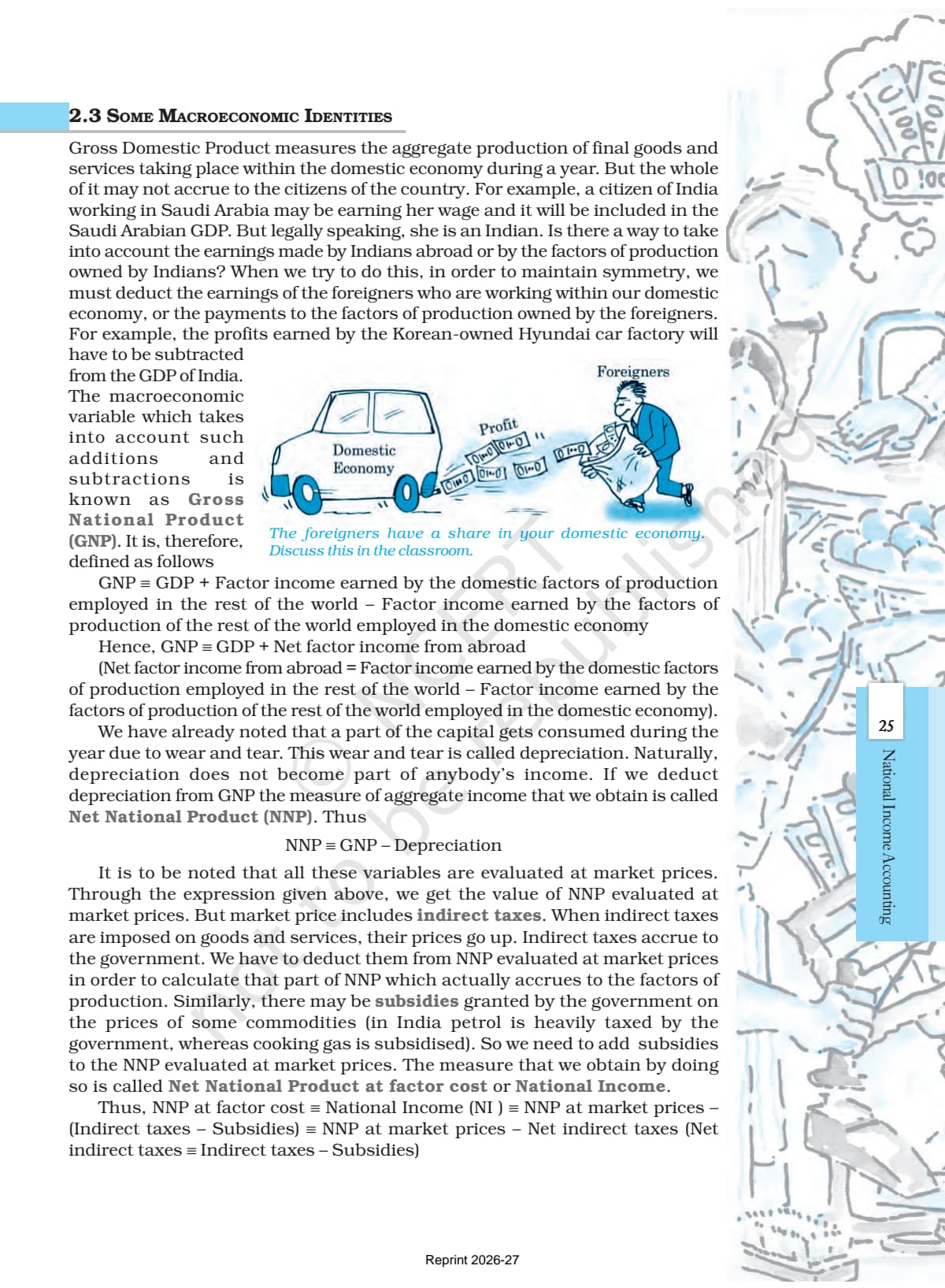
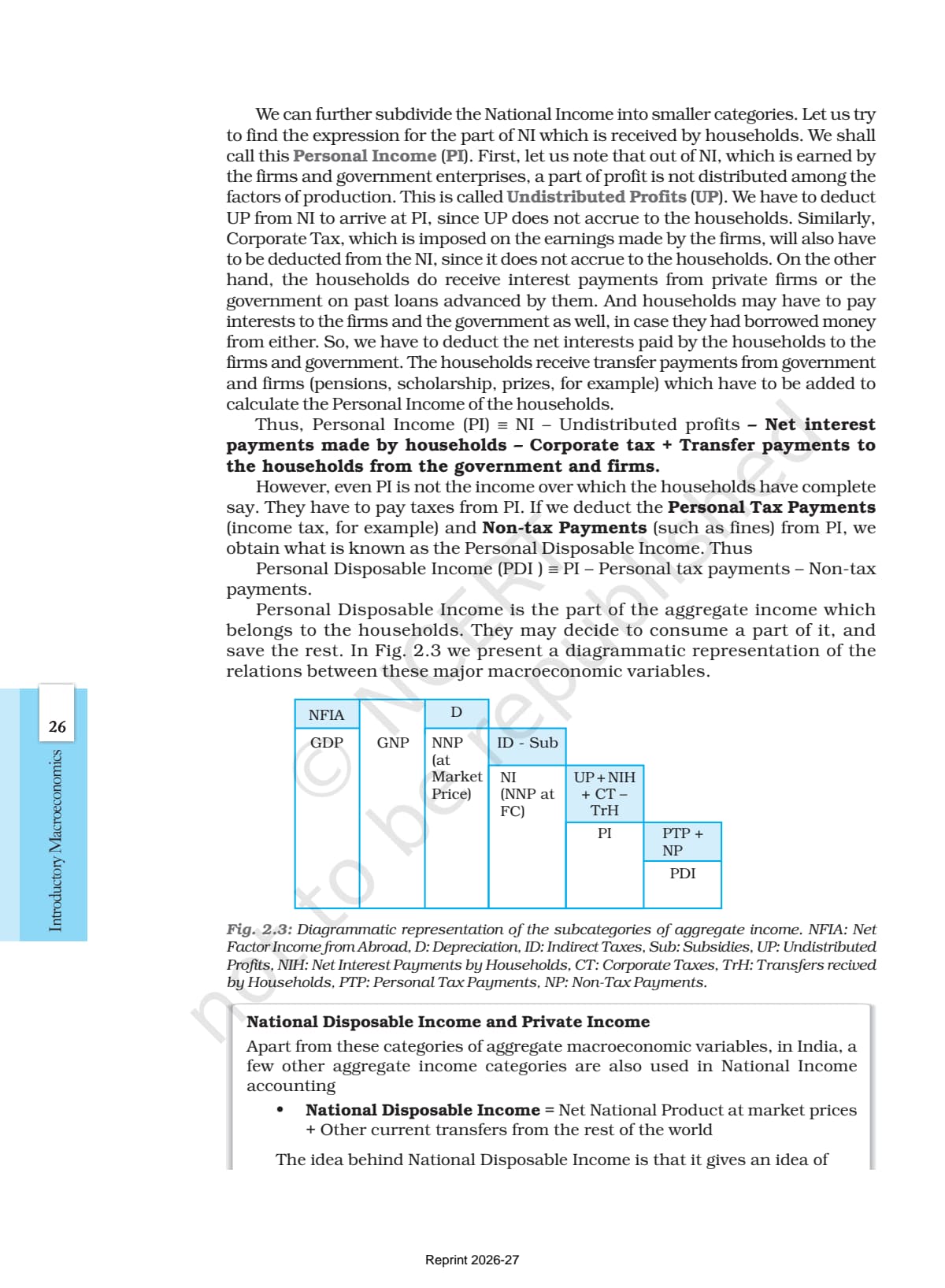
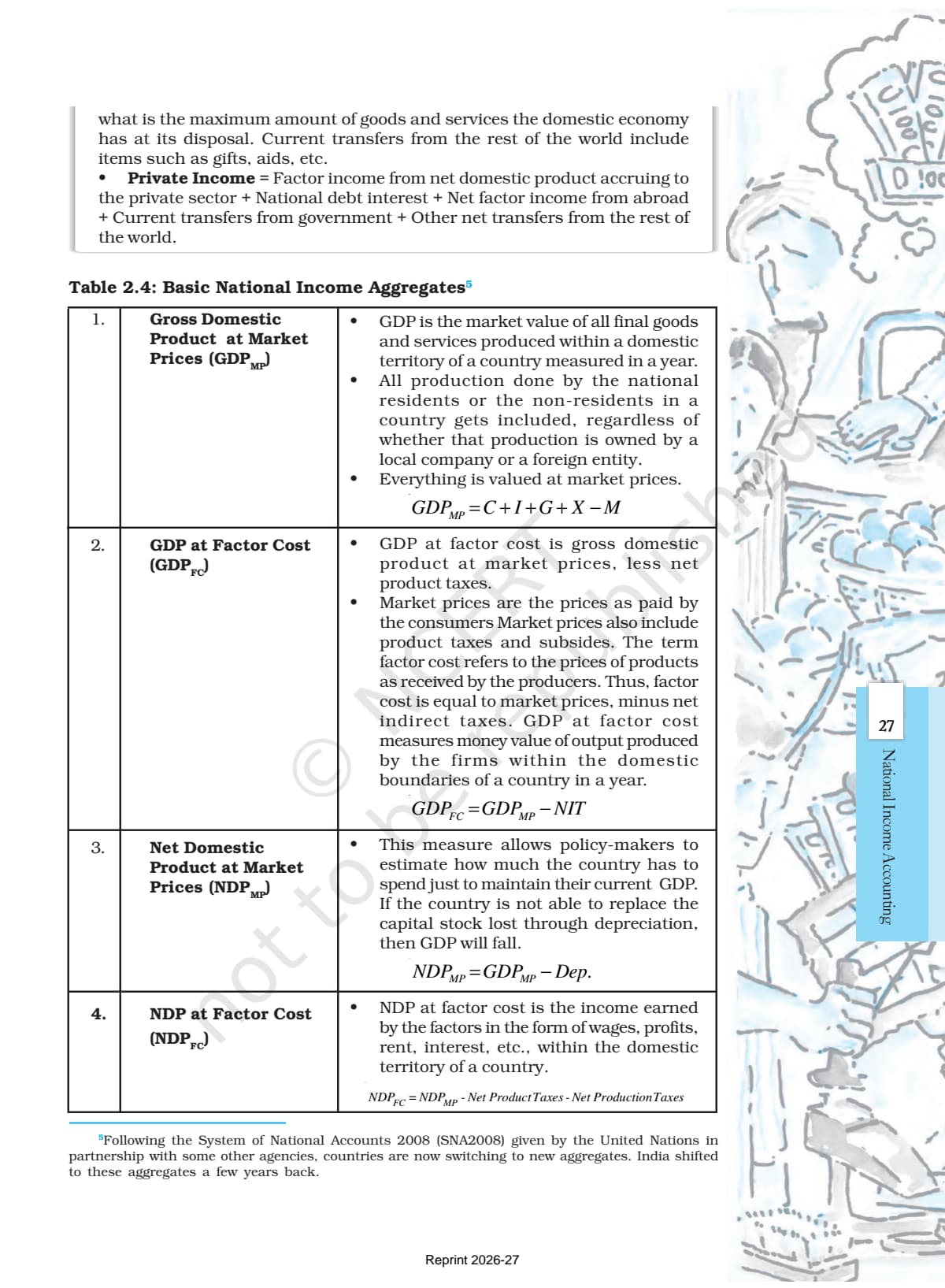
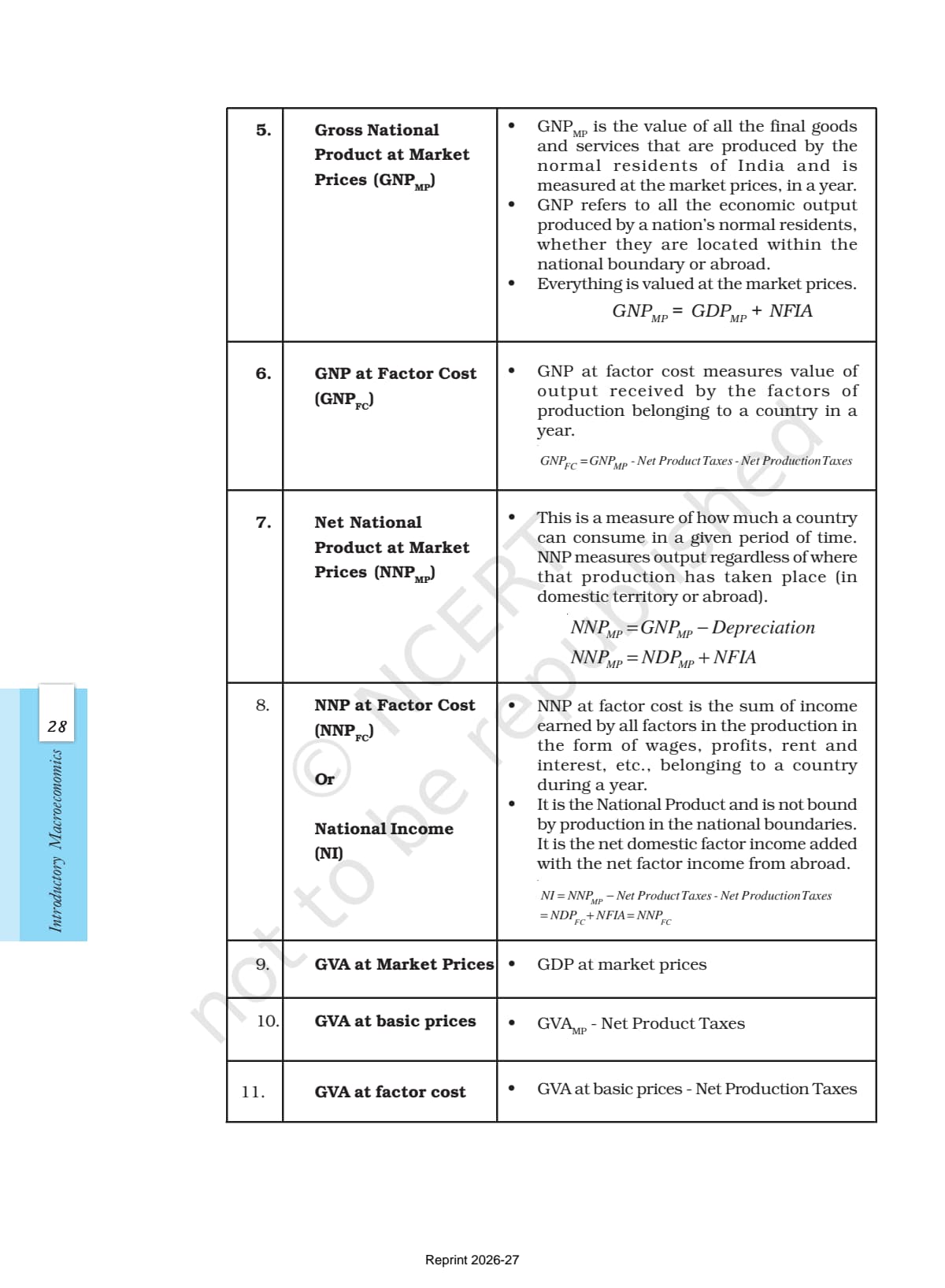
| 2.3 | Macroeconomic identities | The GDP MP to PDI aggregate chain |
| 2.4 | Nominal and real GDP | GDP deflator, CPI and WPI |
| 2.5 | GDP and welfare | Why GDP is an imperfect welfare measure |
Section 2.3 carries the most marks. The chain from GDP at Market Price down to Personal Disposable Income is the most tested topic in the whole book, so give it the most time.
Key Concepts in the National Income Accounting NCERT Chapter
These are the ideas the board paper rewards in textbook language. Try to write them in the exact NCERT phrasing.
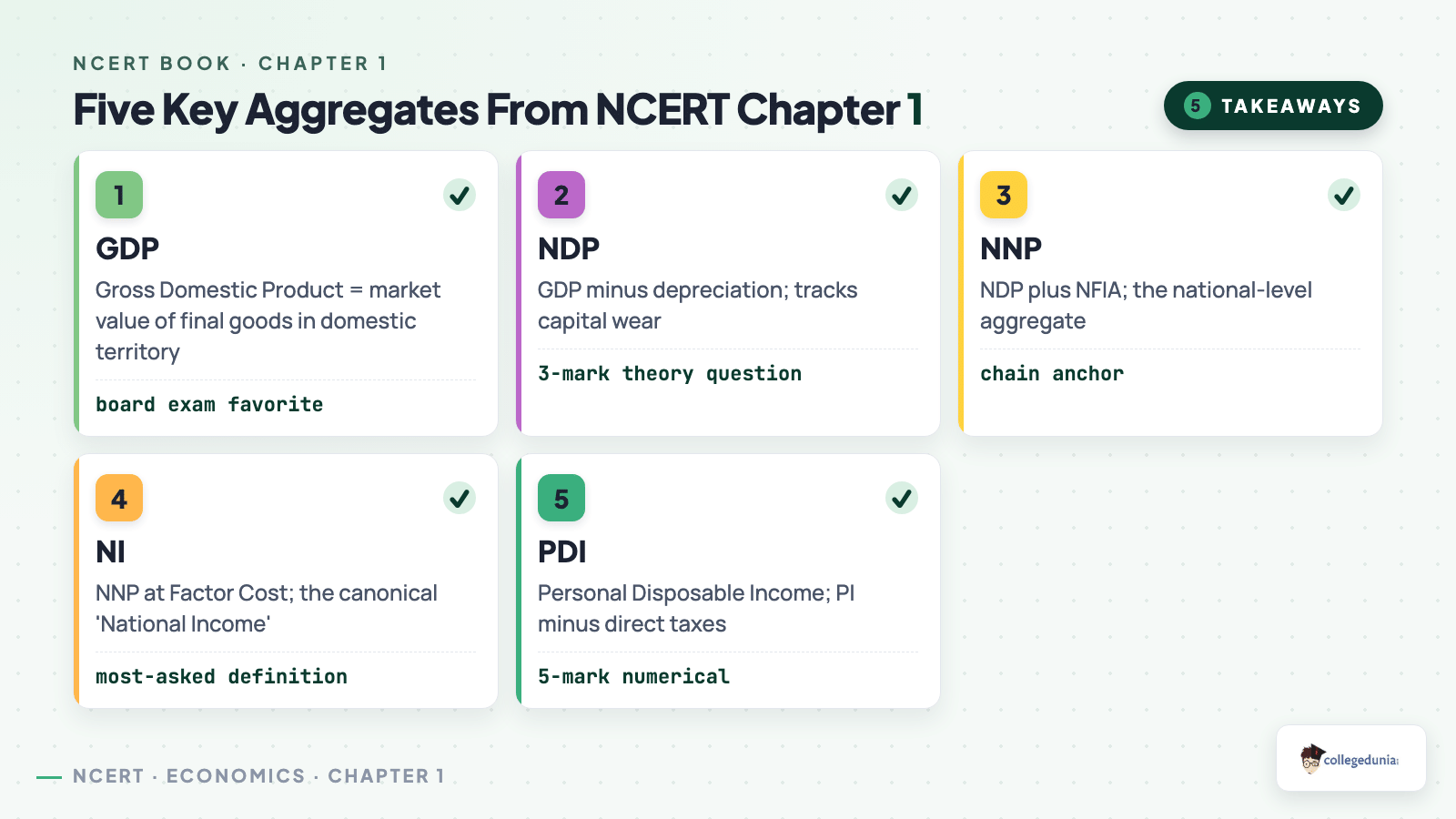
- Four factors of production: land earns rent, labour earns wages, capital earns interest, and enterprise earns profit. Profit is the residual left after the other three are paid.
- Circular flow: households supply factors and get factor incomes; firms supply goods and get sales revenue. The flow runs both ways at once.
- Three methods agree: product, income and expenditure give the same GDP when there is no statistical discrepancy.
- Aggregate chain: GDP MP minus depreciation gives NDP MP; remove net indirect taxes for NDP FC; add net factor income from abroad for NNP FC, which is National Income.
- Savings-investment identity: (I minus S) + (G minus T) + (X minus M) = 0, the line that closes the chapter.
National Income Accounting Class 12 Video Lesson
Watch this walkthrough if a section of the PDF feels dense on the first read.
Source: Magnet Brains on YouTube
Once a topic is clear, go back to the PDF and read that section again. The plan below shows the best way to use the textbook.
How to Use This National Income Accounting NCERT PDF
The PDF is the source, but it works best in a simple order. Students who score full marks in this chapter follow these steps.
- First read: go through Sections 2.1 to 2.5 in order. Mark any new term in the margin.
- Second read: open the Chapter 2 Notes beside the PDF and copy the aggregate chain into your own notebook.
- Practice: attempt every in-text and end-of-chapter sum, then check it against the NCERT Solutions.
- Last revision: the day before the exam, scan the Handwritten Notes to recall the formulas fast.
National Income Accounting Weightage in CBSE Class 12
The chapter has stayed near 5 to 6 marks for years. The table shows how its questions have appeared.
| Year | Question types | Most common topic | Marks |
|---|---|---|---|
| 2025 | 1 MCQ + 1 short + 1 numerical | NNP at FC conversion | 5 |
| 2024 | 1 short + 1 long numerical | Expenditure method GDP | 6 |
| 2023 | 2 MCQs + 1 short | Real vs nominal GDP | 5 |
| 2022 | 1 short + 1 MCQ | Circular flow definition | 4 |
Student Feedback
We asked 11,400 Class 12 students about this chapter. 82% said the NCERT textbook PDF was their main source for Chapter 2, and those who paired it with the matched Solutions averaged 4.9 out of 5 on questions from this chapter.
Other Resources for Class 12 Economics Chapter 2
Pair the official PDF with the notes, solutions and handwritten notes for full chapter coverage.
| Resource | What it covers | Open |
|---|---|---|
| NCERT Book PDF | Official NCERT Macroeconomics Chapter 2 textbook. | Chapter 2 NCERT Book PDF |
| NCERT Solutions | Step-by-step answers to every exercise question. | Chapter 2 NCERT Solutions |
| Notes | Concept-first revision of the full chapter. | Chapter 2 Notes |
| Handwritten Notes | Scanned notebook pages for last-mile revision. | Chapter 2 Handwritten Notes |
All Chapters NCERT Book PDF for Class 12 Macroeconomics
| Chapter | NCERT Book PDF |
|---|---|
| Chapter 1 | Introduction to Macroeconomics |
| Chapter 2 | National Income Accounting |
| Chapter 3 | Money and Banking |
| Chapter 4 | Income Determination |
| Chapter 5 | Government Budget and the Economy |
| Chapter 6 | Open Economy Macroeconomics |
Class 12 Economics Chapter 2 National Income Accounting NCERT Book PDF FAQs
Ques. Where can students download the official NCERT Class 12 Economics Chapter 2 PDF?
Ans. Students can download it free from the card at the top of this page. It is the National Income Accounting chapter from the NCERT Introductory Macroeconomics textbook, aligned to the 2026-27 CBSE syllabus.
Ques. What are the three methods of calculating GDP in this chapter?
Ans. They are the product (value added) method, the expenditure method (C + I + G + (X - M)), and the income method (compensation of employees + operating surplus + mixed income). All three give the same number when there is no statistical discrepancy.
Ques. What is the chain of national income aggregates in this NCERT chapter?
Ans. GDP at MP minus depreciation gives NDP at MP. Remove net indirect taxes for NDP at FC. Add net factor income from abroad for NNP at FC, which is National Income. From there, adjust for taxes and transfers to reach Personal Income and Personal Disposable Income.
Ques. Why should students read the NCERT PDF instead of a reference book?
Ans. CBSE draws every theory question from the exact NCERT phrasing. Reference books rewrite the chapter and often drop the savings-investment identity and the GDP and welfare section, both of which are tested in the board paper.
Ques. How much weightage does Chapter 2 carry in the CBSE board paper?
Ans. About 5 to 6 marks across recent years. The common question is a five-mark numerical on GDP at Market Price by the expenditure method or National Income by the income method, plus short theory.



Comments