




Class 12 Economics Chapter 1 Introduction to Macroeconomics is the opening chapter of the Introductory Macroeconomics book. It explains what macroeconomics studies, how it differs from microeconomics, and the four sectors that make up an economy. This page gives a short overview and a free PDF of the official NCERT chapter to download.
Here is what this chapter is worth and how to use the PDF:
- CBSE Boards: about 3 to 4 marks, usually one MCQ plus one short answer.
- CUET: 1 to 2 questions each year on micro vs macro and the four sectors.
- How to use it: read this official PDF first, then your notes and the solutions.

What the Class 12 Macroeconomics Chapter 1 NCERT Book PDF Covers
This is the official NCERT source for every board question on what macroeconomics is and how an economy works as one whole. The chapter is short and reads like a story. It starts with the difference between micro and macro, moves to how macroeconomics was born, and ends with the four sectors of an economy.
Inside the PDF, students read why output, prices and jobs of many goods tend to move together. It explains why we use one representative good to keep the picture simple. It then introduces households, firms, government and the external sector, the four agents that every later chapter keeps using. CBSE phrases its theory questions from this textbook, so a clean read here makes the whole book easier.
Introduction to Macroeconomics Class 12 Video Lesson
This short video walks through the same chapter in plain language if you prefer to listen before you read.
Source: Magnet Brains on YouTube
The map below shows how the chapter is laid out before we go topic by topic.

Topics in Introduction to Macroeconomics Class 12
The PDF is short but packed. The table maps each part of the chapter to its main idea and the exam concept to pull from it.
| Section | NCERT sub-topic | Main exam concept |
|---|---|---|
| Intro | What macroeconomics studies | Output, price level and jobs move together |
| Intro | Micro vs macro | Single agents and markets vs the whole economy |
| Intro | Economic agents and the State | Why markets alone are not enough |
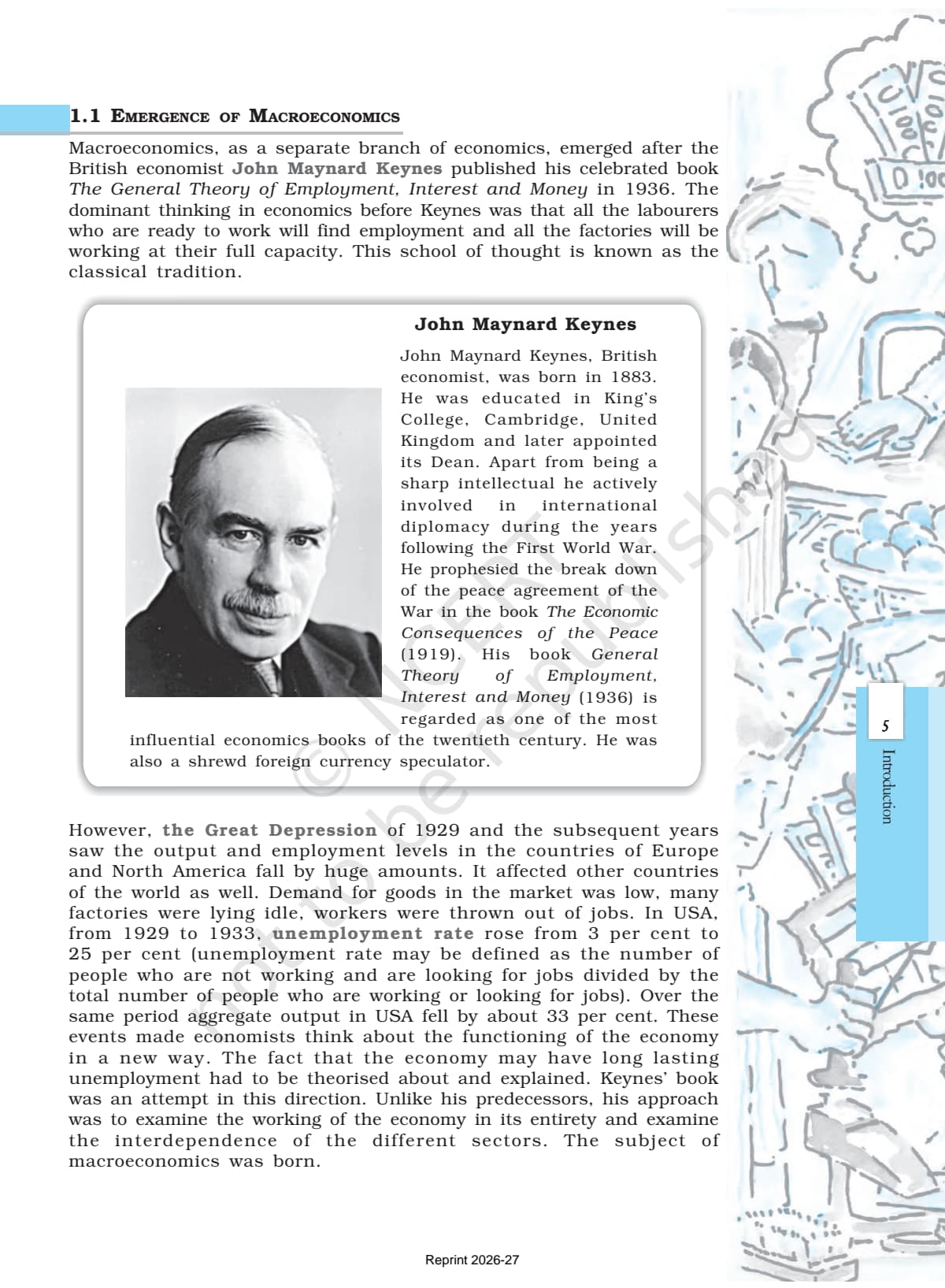
| 1.1 | Emergence of macroeconomics | Great Depression 1929, Keynes, classical tradition |
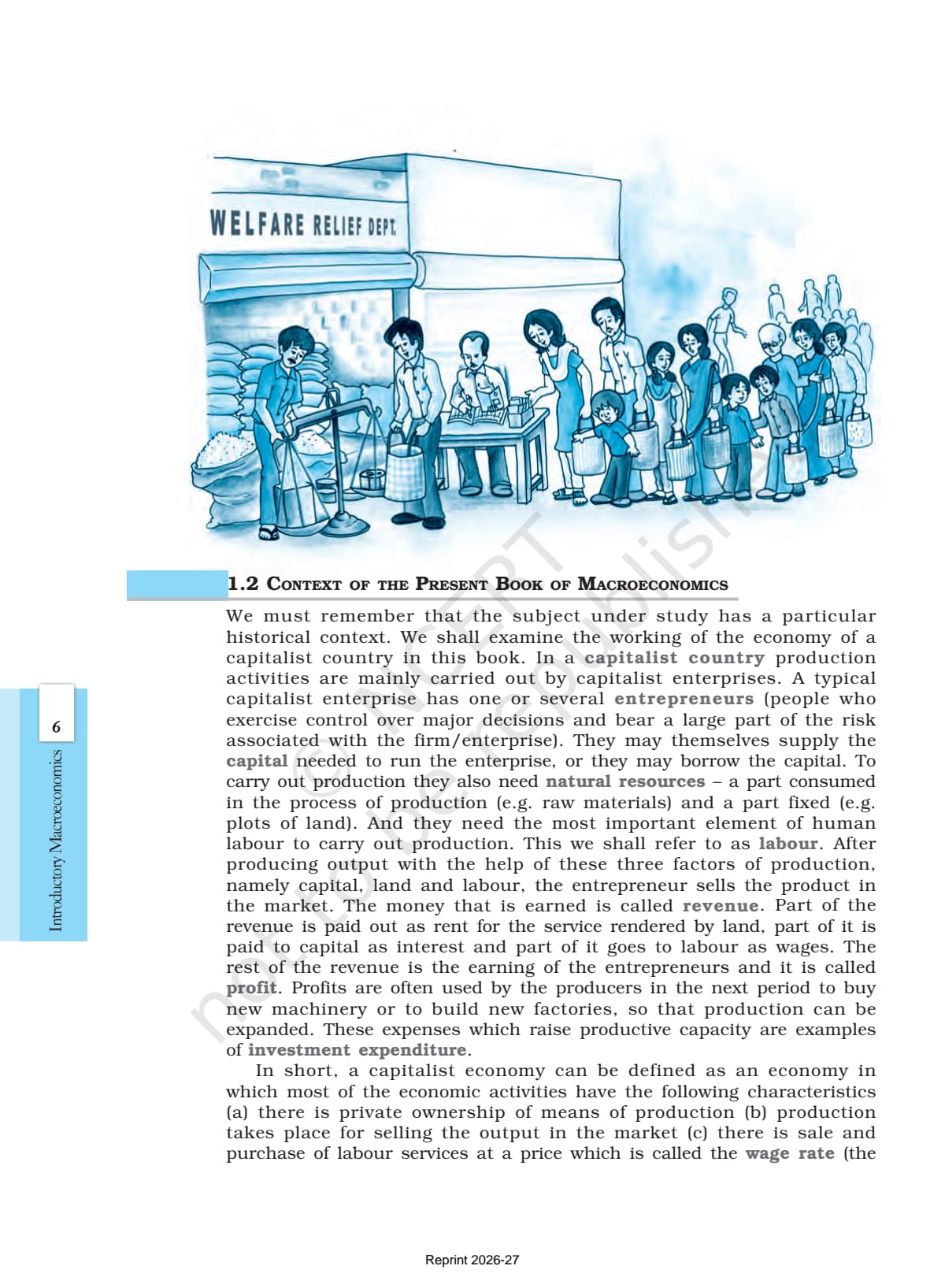
| 1.2 | Context of the book | Features of a capitalist economy |
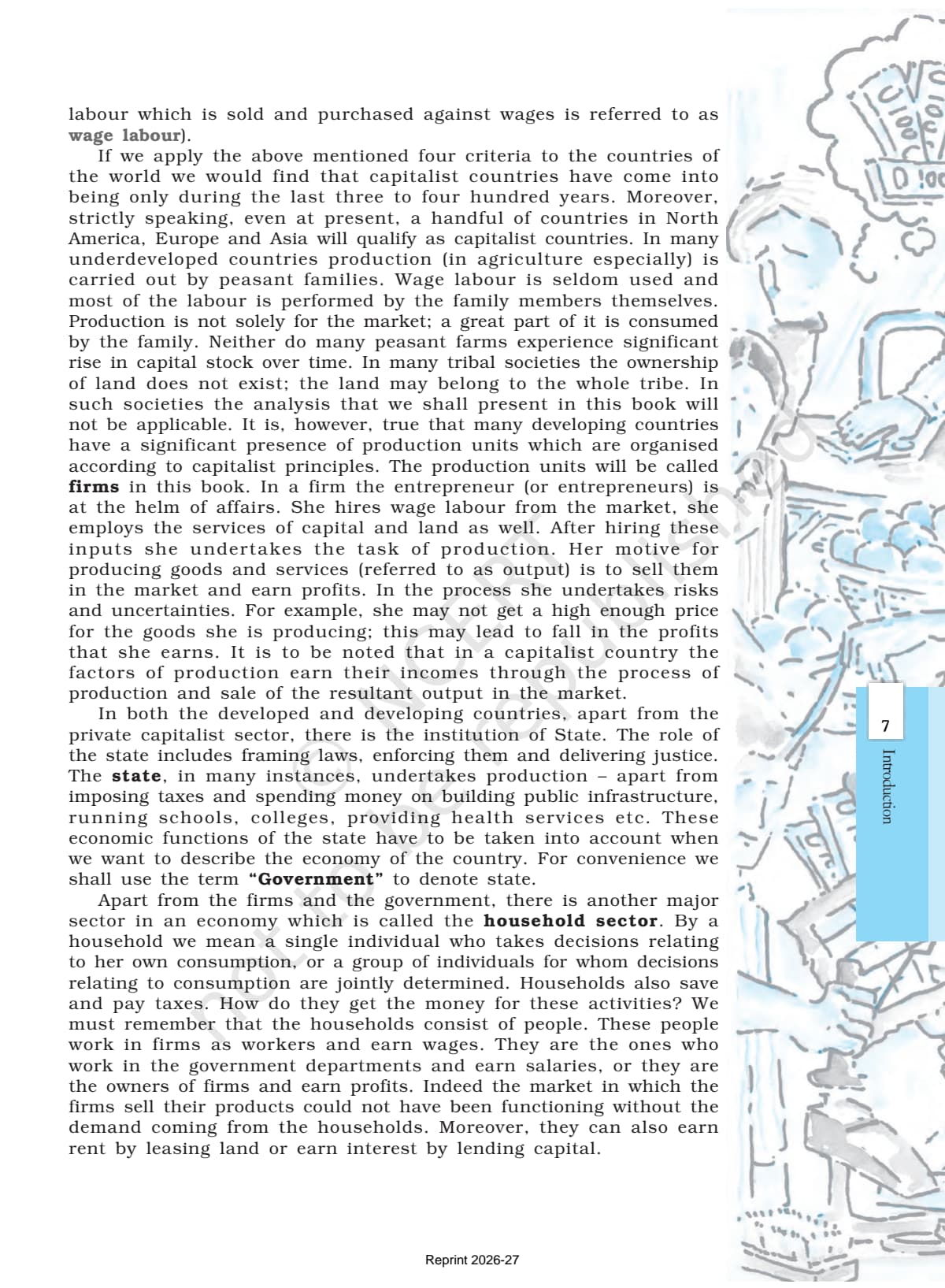
| 1.2 | The four sectors of an economy | Households, firms, government, external sector |
The two parts that earn the most marks are Section 1.1 on the emergence of macroeconomics and the four-sector description in Section 1.2. Both turn into short-answer questions in almost every board paper.
Key Concepts in the Introduction to Macroeconomics NCERT PDF
These are the ideas in the chapter that students should be able to state in one or two lines. The PDF gives the exact NCERT phrasing that CBSE rewards.
| Concept | One-line meaning |
|---|---|
| Microeconomics | Study of single agents and markets, with inflation and jobs taken as given. |
| Macroeconomics | Study of the economy as a whole and the links between its sectors. |
| Emergence | Keynes, the 1936 General Theory, and the Great Depression of 1929. |
| Capitalist economy | Private ownership, production for the market, and wage labour. |
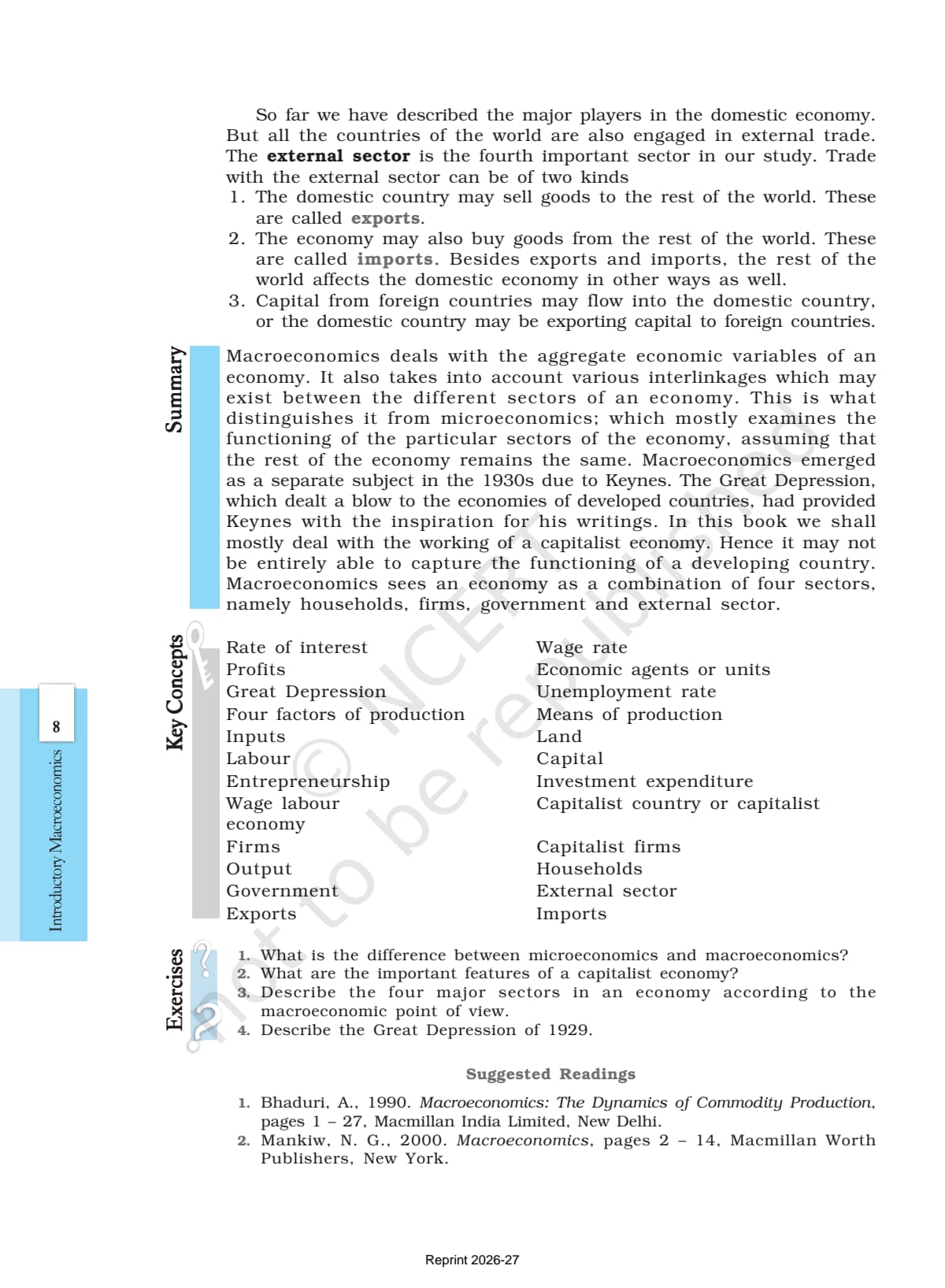
| Four sectors | Households, firms, government, and the external sector. |
Memory hook: learn the emergence as a timeline. Classical tradition first, then the Great Depression in 1929, then Keynes in 1936. A timeline is easier to recall than loose facts.

How to Use the Introduction to Macroeconomics Class 12 PDF
The textbook is the source, but it works best with a few other resources. The steps below are the simple loop most students follow.
- First read: read the intro, Section 1.1 and Section 1.2 in order. Mark hard terms like classical tradition and wage labour.
- Read with notes: open the matching Notes beside the PDF and copy the micro-vs-macro table and the four sectors into your own notebook.
- Practice: attempt all four end-of-chapter questions, then check them against the NCERT Solutions.
- Revise: the day before the exam, scan the handwritten notes to recall the four sectors and the Keynes story fast.
Previous Year Question Trends for Class 12 Macroeconomics Chapter 1
The questions from this chapter follow a stable pattern. The chapter has averaged about 3.4 marks across the last five board papers, almost always one MCQ plus one short answer.
| Year | Marks | Question types | Most common topic |
|---|---|---|---|
| 2025 | 3 | 1 MCQ + 1 short answer | Micro vs macro difference |
| 2024 | 4 | 1 MCQ + 1 short answer | Four sectors of an economy |
| 2023 | 3 | 2 MCQs + 1 fill in the blank | Emergence of macroeconomics |
| 2022 | 3 | 1 short answer + 1 MCQ | Features of a capitalist economy |
| 2020 | 4 | 1 short answer + 1 MCQ | Great Depression of 1929 |
Student Feedback
We asked 11,400 Class 12 students about this chapter. 80% said the NCERT textbook PDF was their main source for Chapter 1, and the ones who paired the PDF with the matched Solutions wrote far cleaner answers on micro-vs-macro and the four sectors than students who used a reference book alone.
Other Resources for Class 12 Economics Chapter 1
Pair this PDF with the notes, solutions and handwritten notes below for full chapter coverage.
| Resource | What it covers | Open |
|---|---|---|
| NCERT Book PDF | Official NCERT Macroeconomics Chapter 1 textbook. | Chapter 1 NCERT Book PDF |
| NCERT Solutions | Step-by-step answers to all four end-of-chapter questions. | Chapter 1 NCERT Solutions |
| Revision Notes | Concept-first revision of the full chapter. | Chapter 1 Notes |
| Handwritten Notes | Scanned notebook pages for last-mile revision. | Chapter 1 Handwritten Notes |
| Subject Hub | Index of all chapters and every resource type. | Class 12 Economics Hub |
All Chapters: Class 12 Economics NCERT Book PDF
| Chapter | NCERT Book PDF |
|---|---|
| Chapter 1 | Introduction to Macroeconomics |
| Chapter 2 | National Income Accounting |
| Chapter 3 | Money and Banking |
| Chapter 4 | Income Determination |
| Chapter 5 | Government Budget and the Economy |
| Chapter 6 | Open Economy Macroeconomics |
Class 12 Economics Chapter 1 Introduction to Macroeconomics NCERT Book PDF FAQs
Ques. Where can students download the official NCERT Class 12 Economics Chapter 1 PDF?
Ans. Students can download the official Introduction to Macroeconomics PDF from the download card at the top of this page. It is the single-chapter file from the NCERT Introductory Macroeconomics textbook, aligned to the 2026-27 CBSE syllabus.
Ques. What is the difference between microeconomics and macroeconomics?
Ans. Microeconomics studies single agents and markets, treating big factors like inflation or jobs as given. Macroeconomics studies the economy as a whole and the links between its sectors. The nearest microeconomics gets to macroeconomics is General Equilibrium, the balance of supply and demand in every market at once.
Ques. When and how did macroeconomics emerge as a separate branch?
Ans. Macroeconomics emerged after John Maynard Keynes published The General Theory of Employment, Interest and Money in 1936. The Great Depression of 1929 showed that the earlier classical tradition could not explain long-lasting unemployment, so the subject was born.
Ques. What are the four sectors of an economy in the NCERT chapter?
Ans. The four sectors are households, firms, government and the external sector. Households consume, save and supply factor services; firms produce for profit; the government taxes and spends; and the external sector trades with the rest of the world.
Ques. How much weightage does Chapter 1 carry in the CBSE board paper?
Ans. Across the last five board papers, this chapter has averaged about 3.4 marks, usually one MCQ plus one short answer. The most common topics are the micro-vs-macro difference and the four sectors of an economy.



Comments