



Nomadic Empires is the chapter where Class 11 History turns away from cities and settled kingdoms to ask how wandering herders built the largest land empire the world has ever seen. The ncert book class 11 history chapter 3 nomadic empires file on this page is the official NCERT chapter for 2026-27. Download it for the full account of Genghis Khan, the Mongol conquests, and the exercise questions at the end.
- Chapter: Chapter 3, Nomadic Empires, from the Themes in World History textbook
- Focus: the Mongols under Genghis Khan and his successors, from the steppe to a transcontinental empire
- File: the complete official chapter, with the timeline, the map of the Mongol empire and all six exercise questions
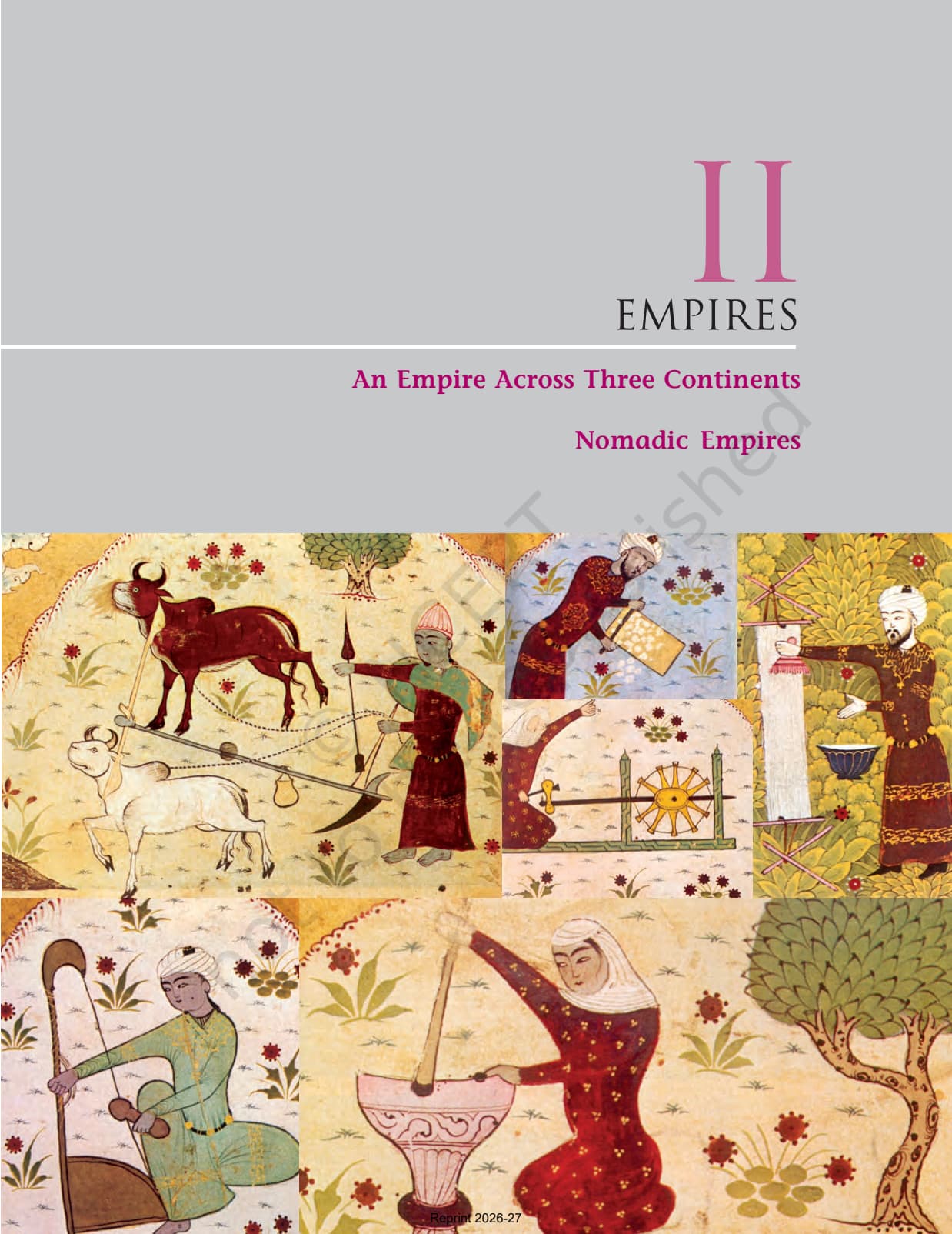
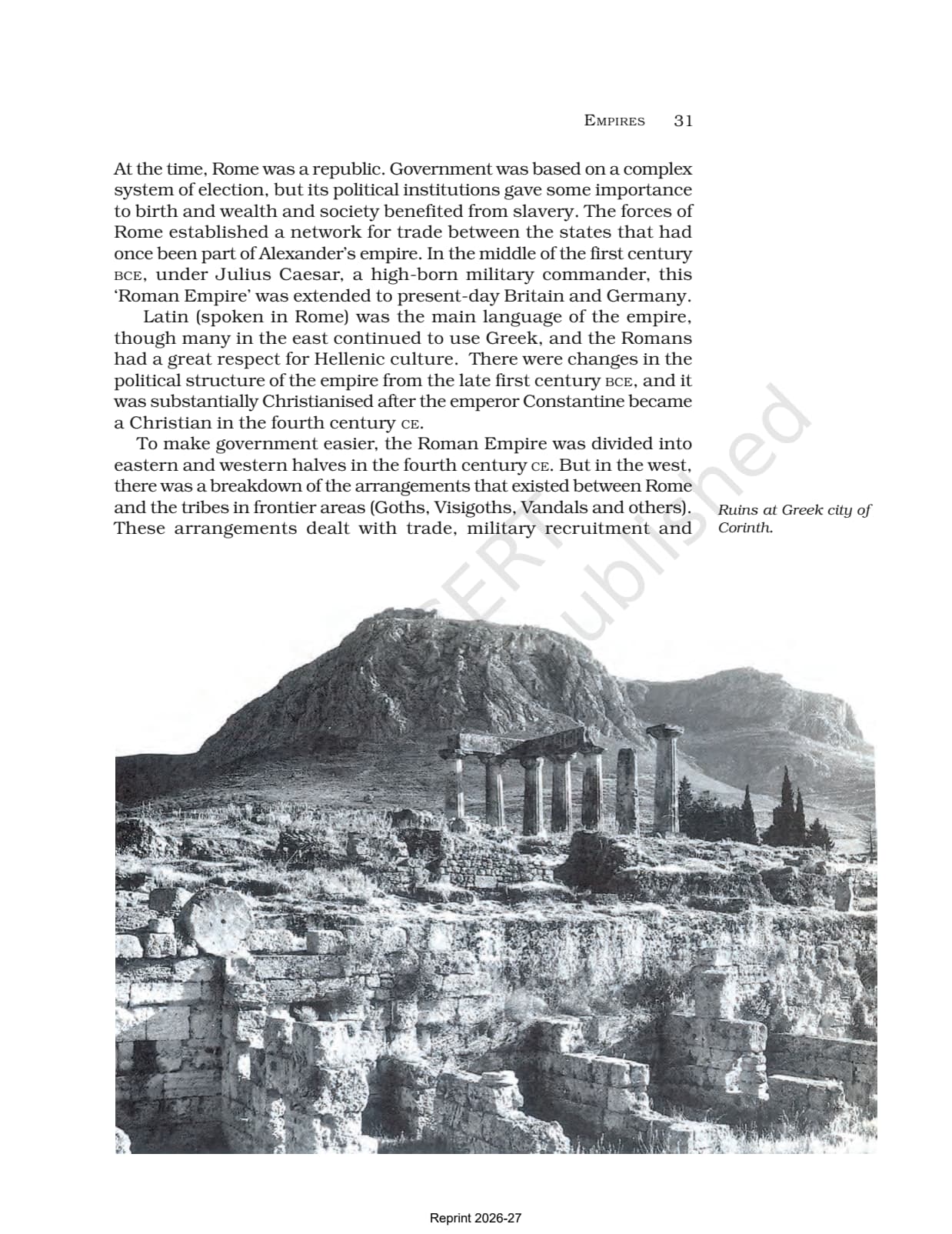
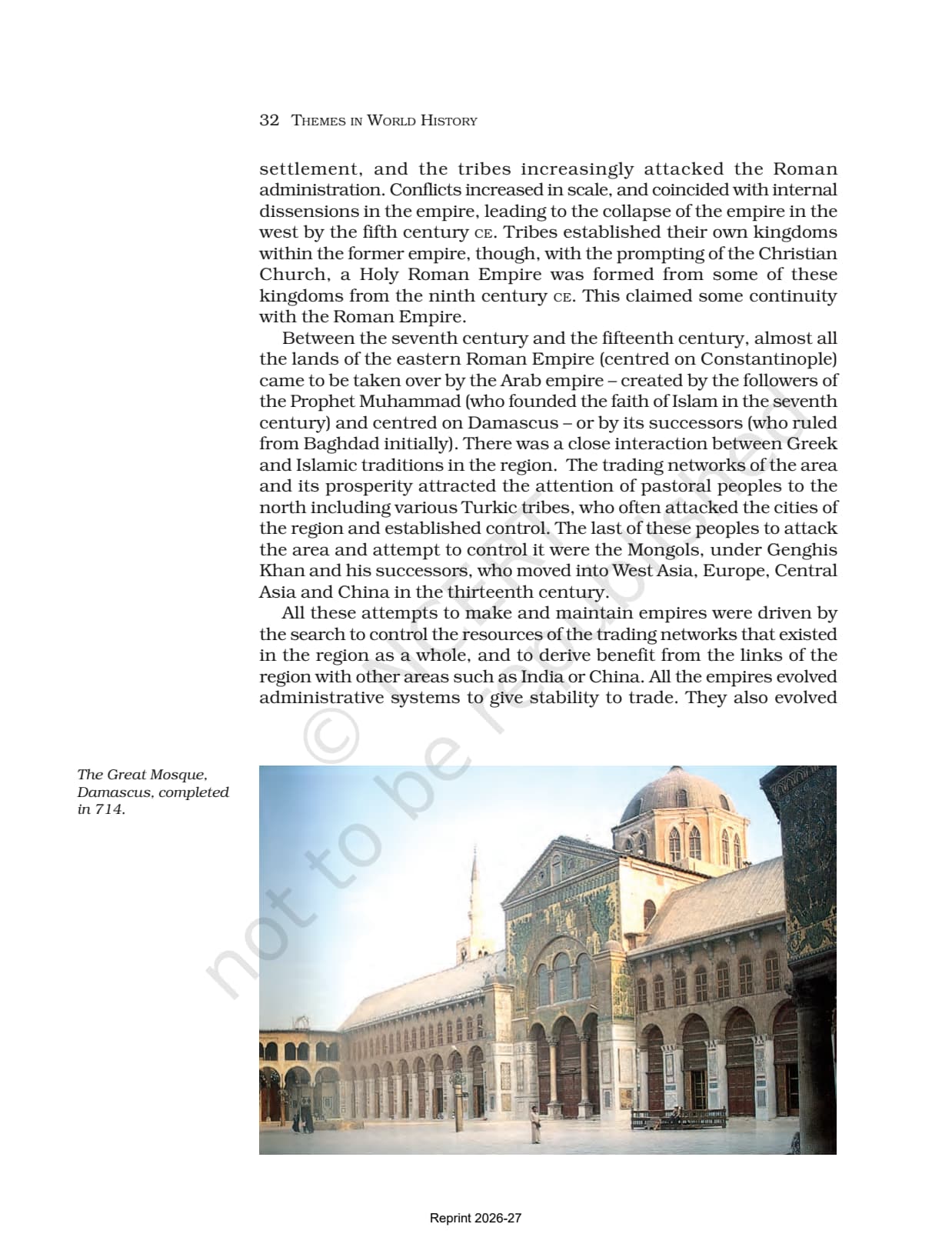
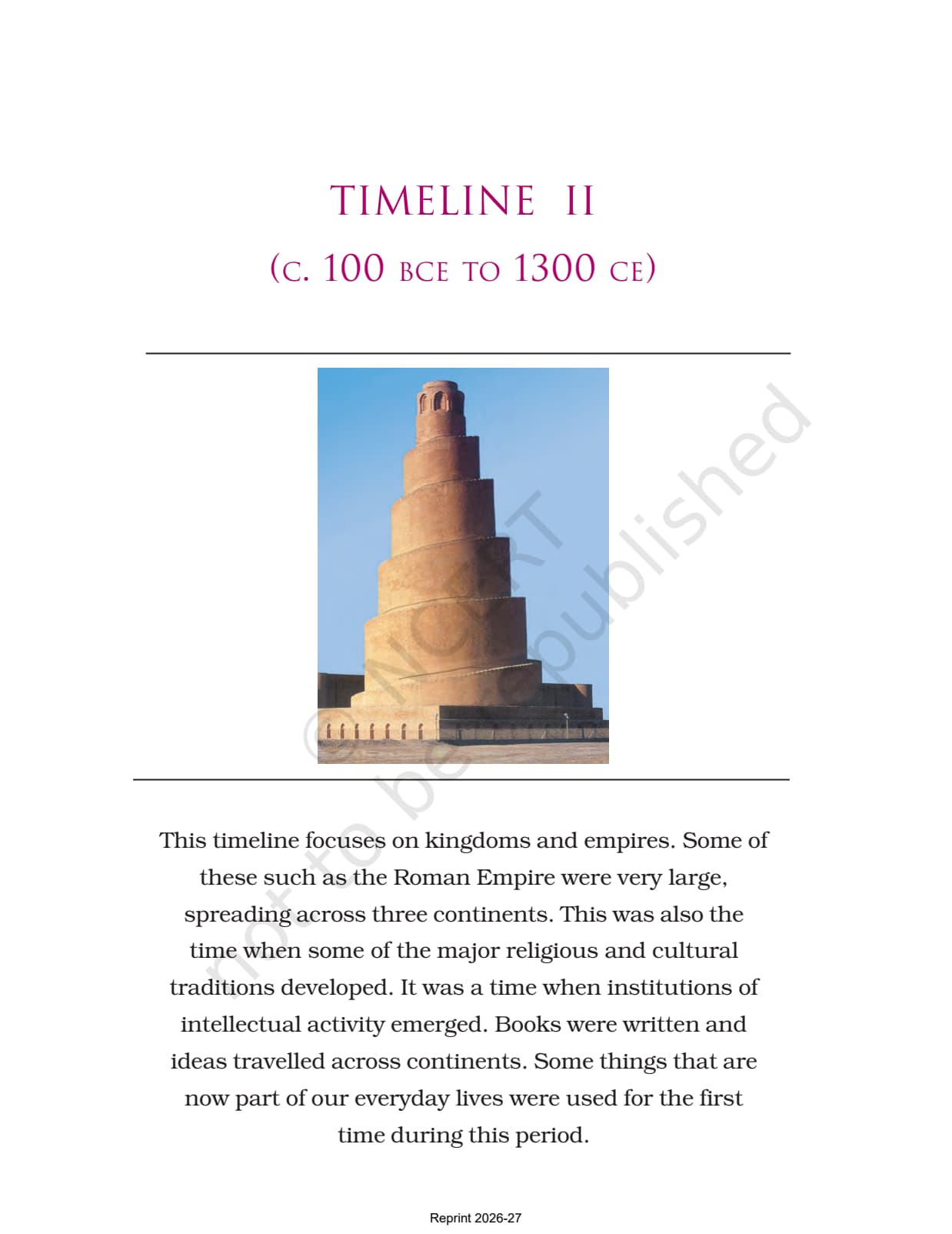
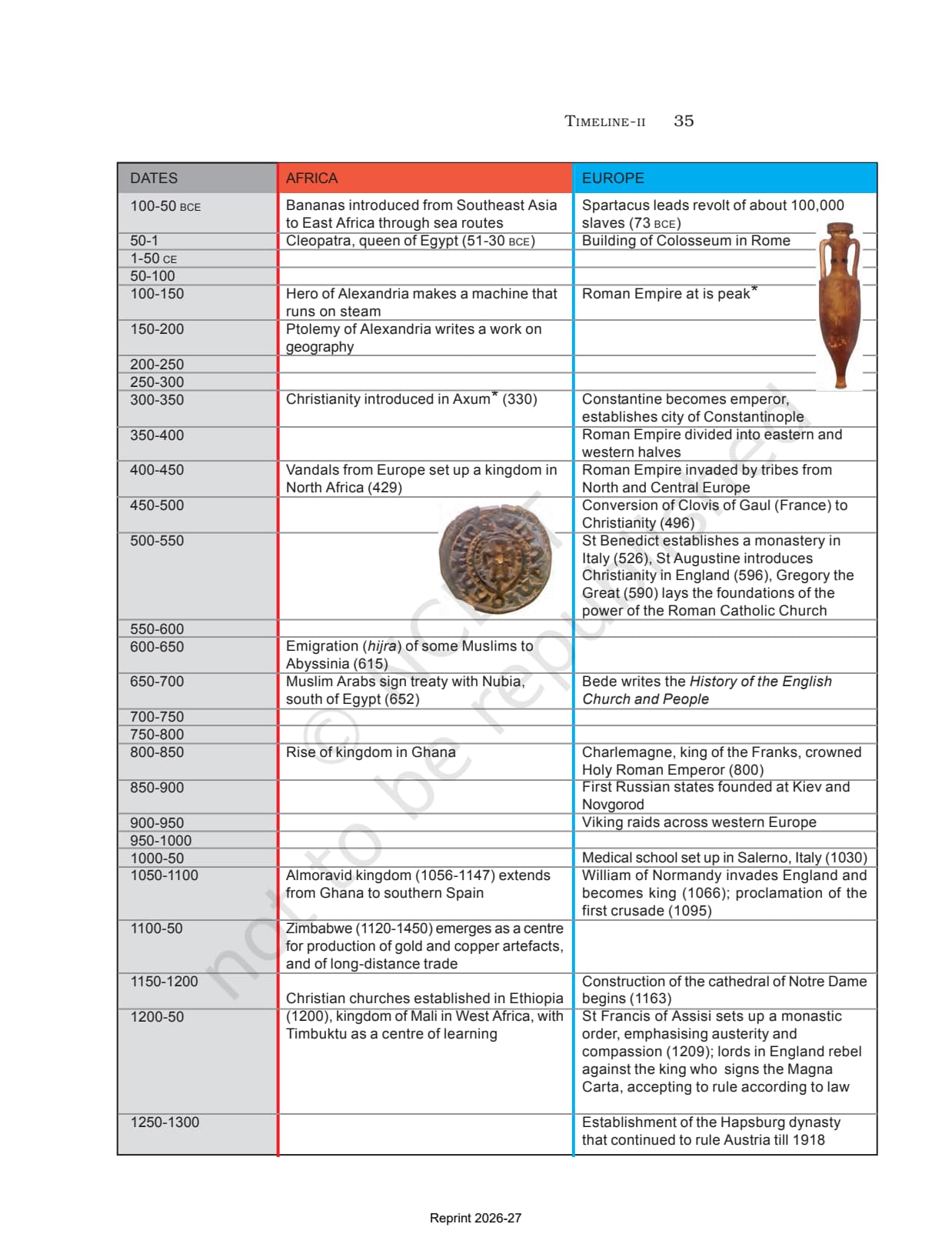
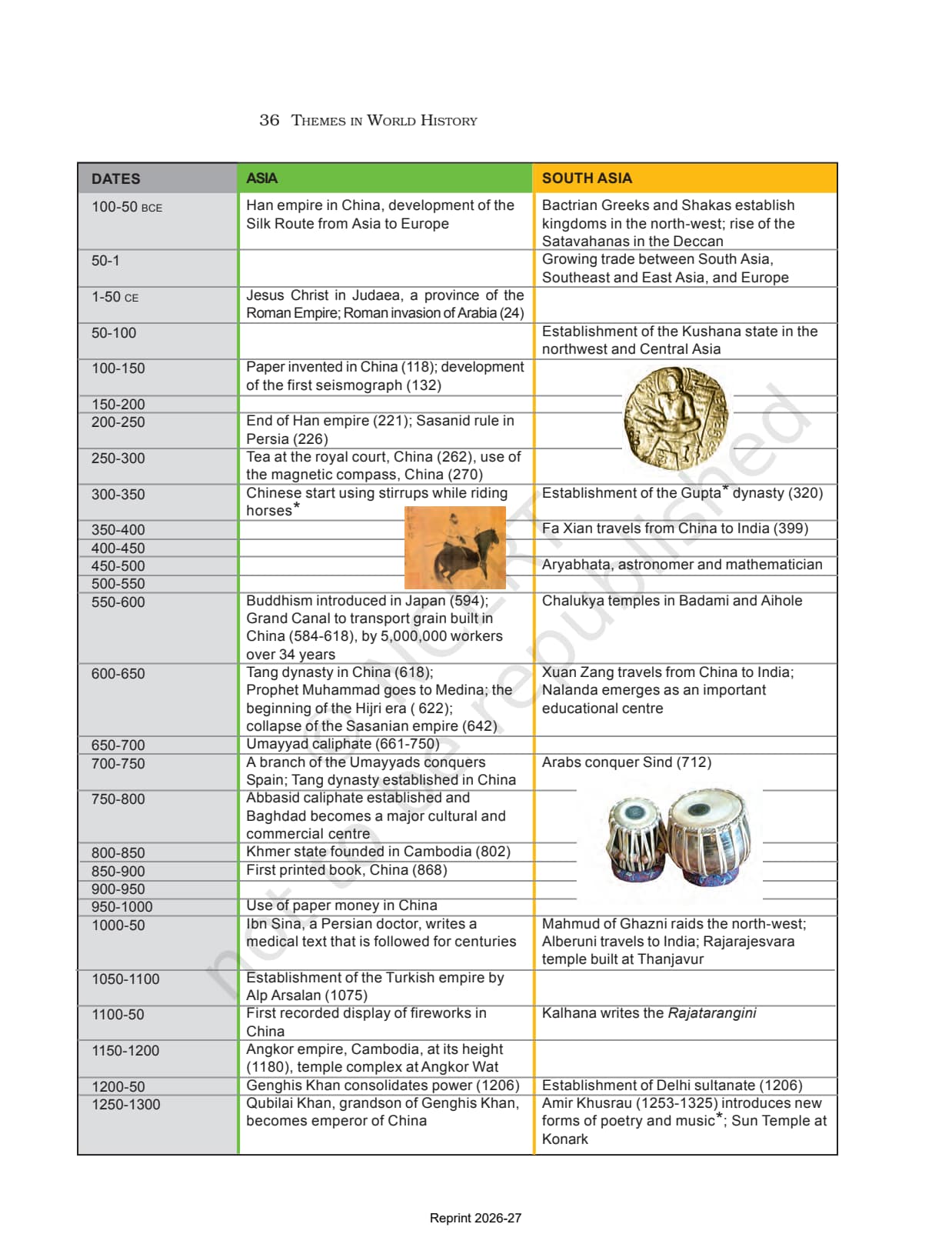
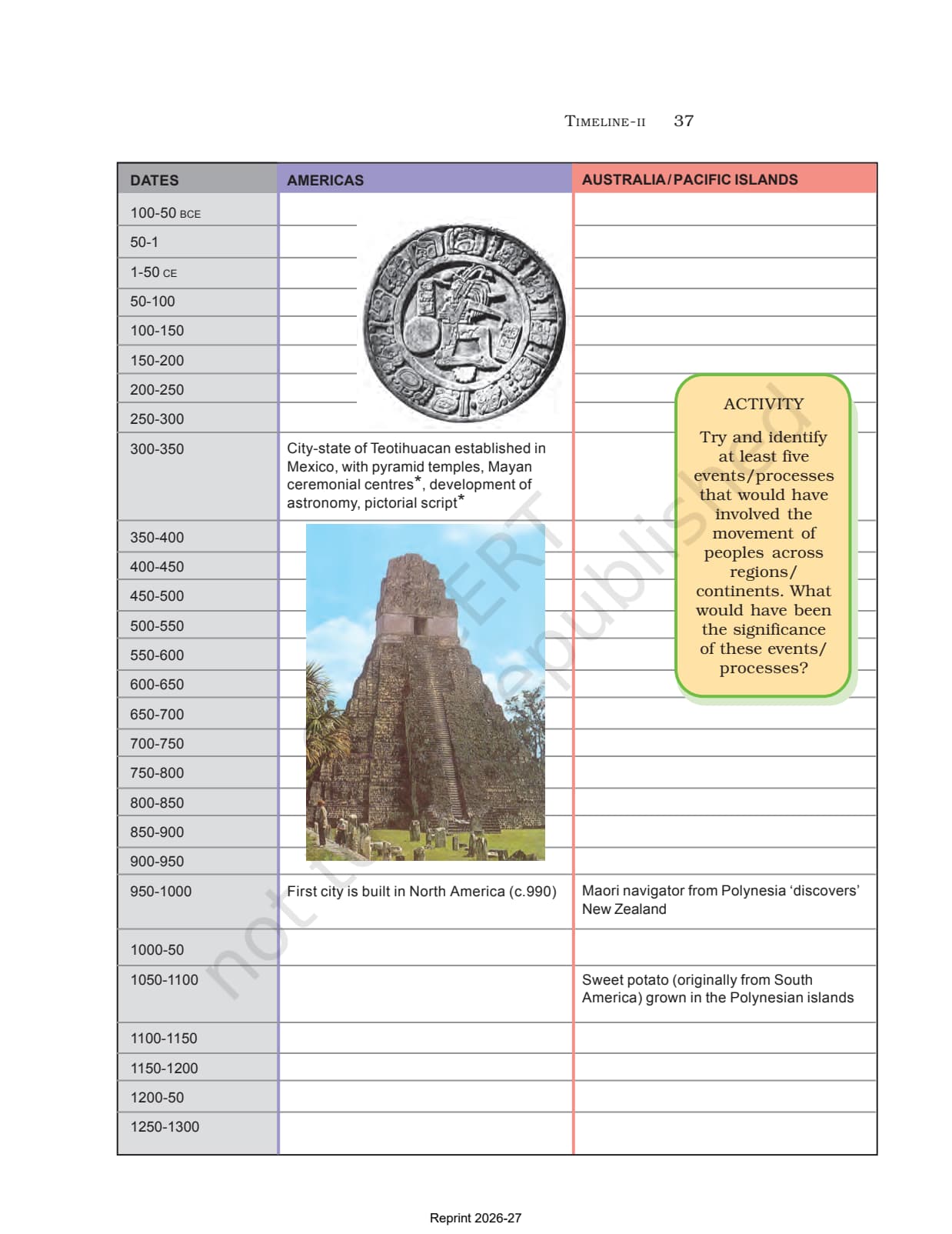
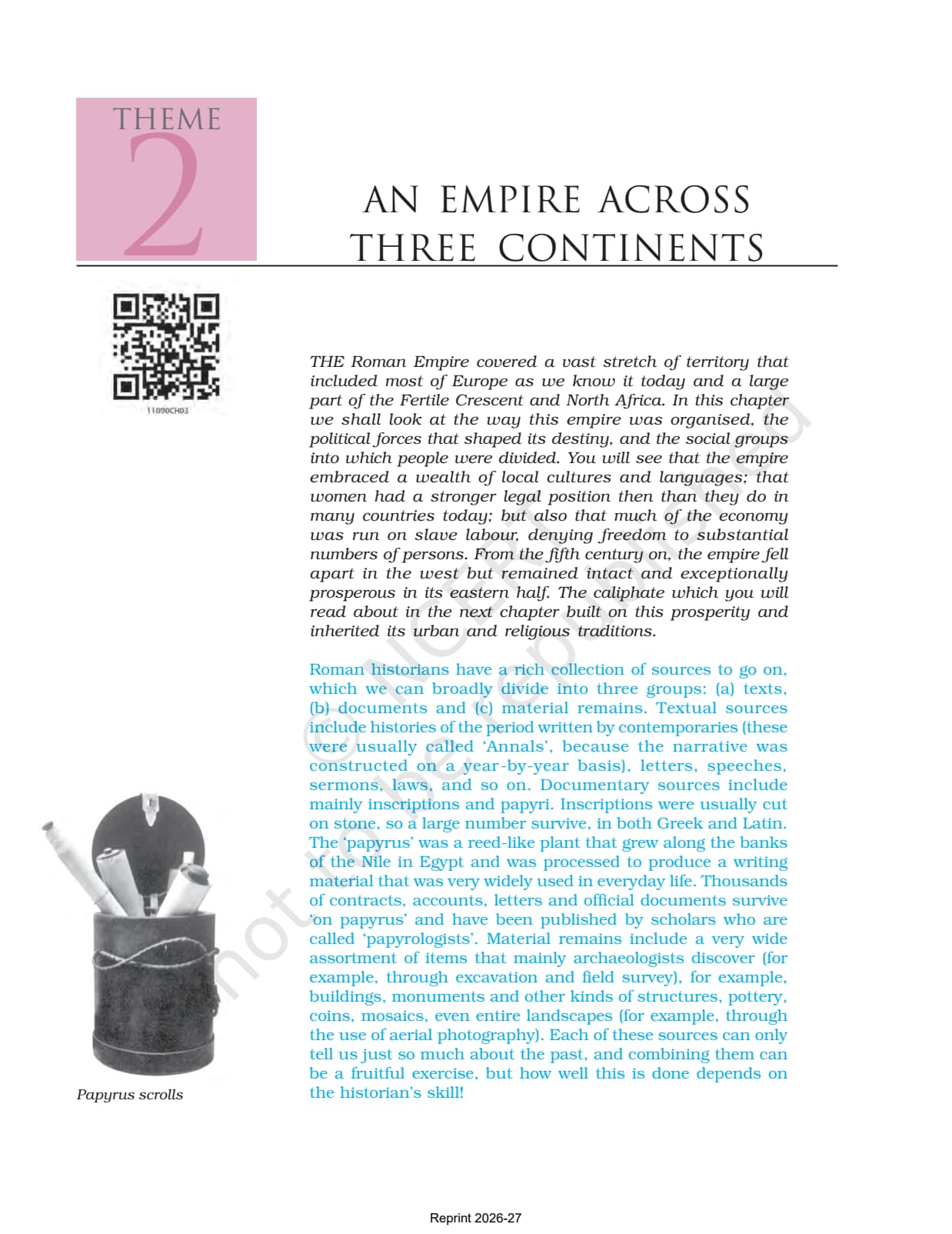
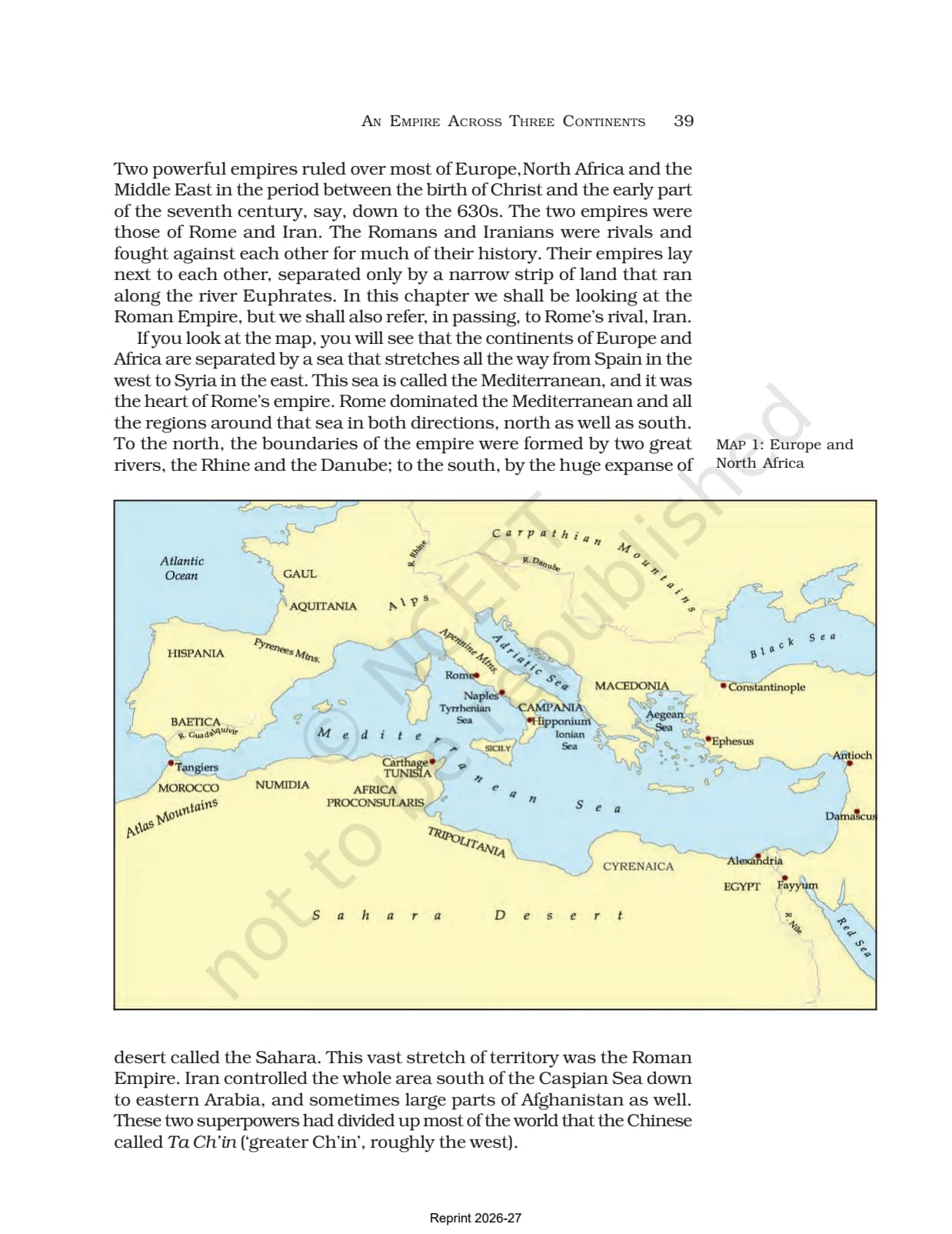
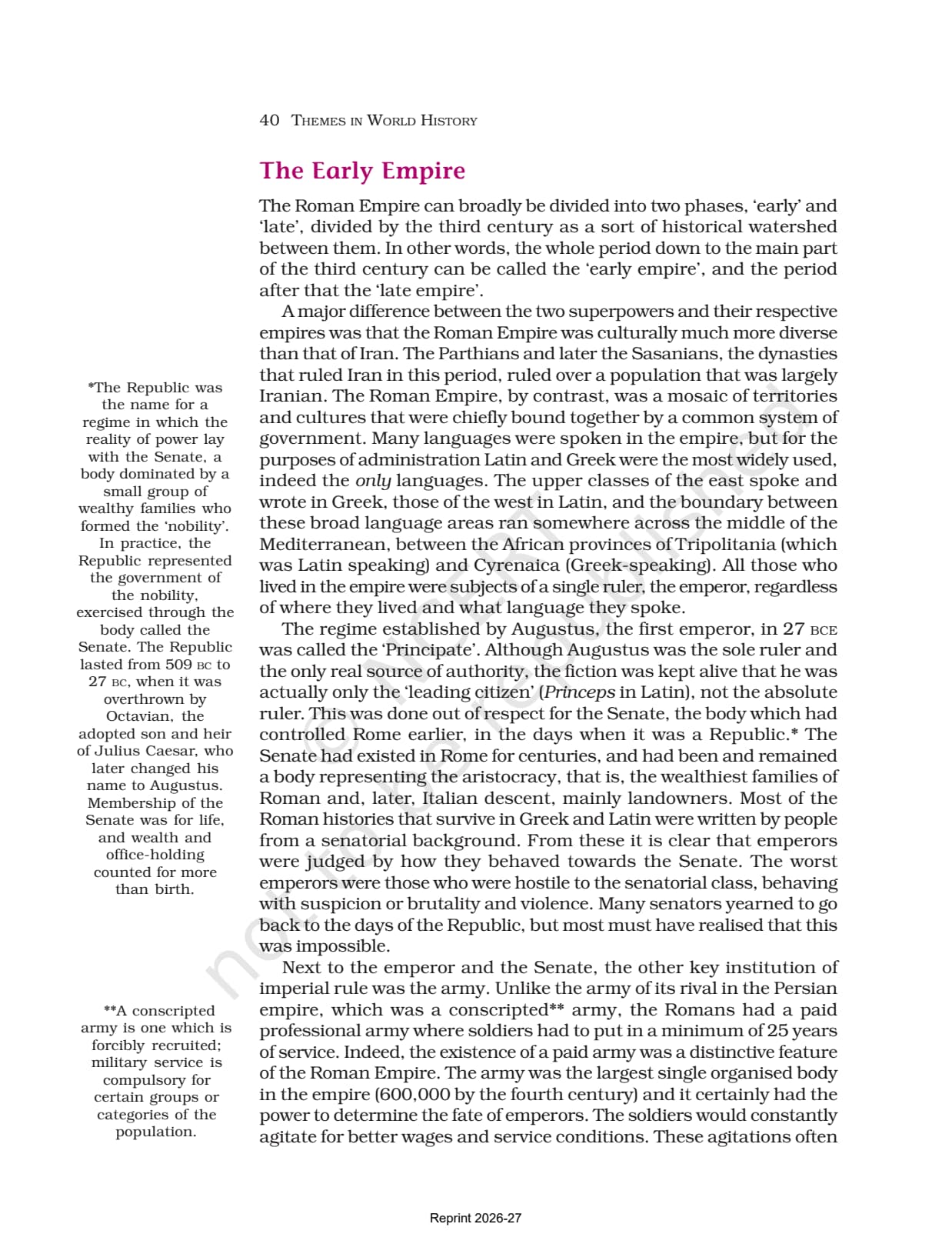
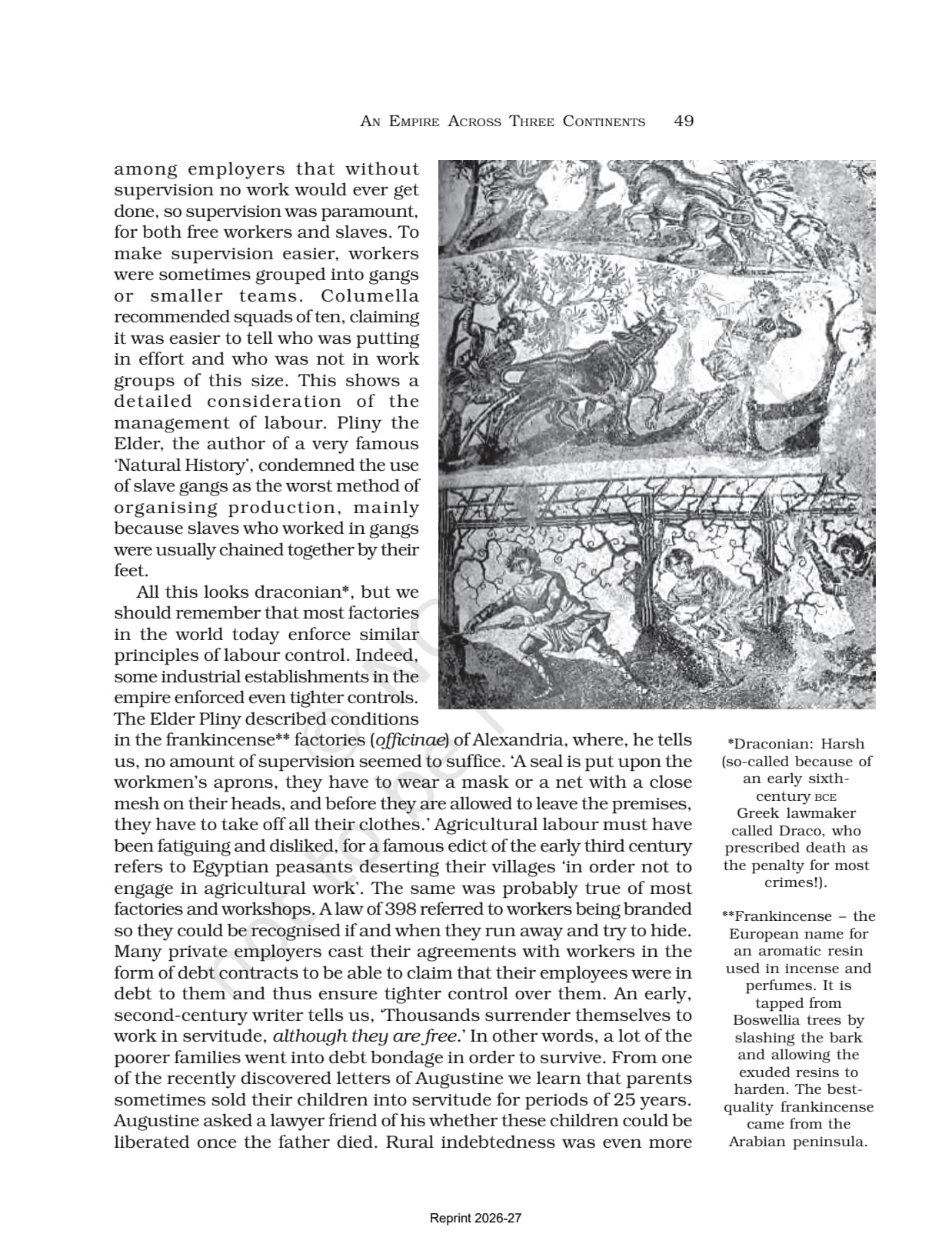
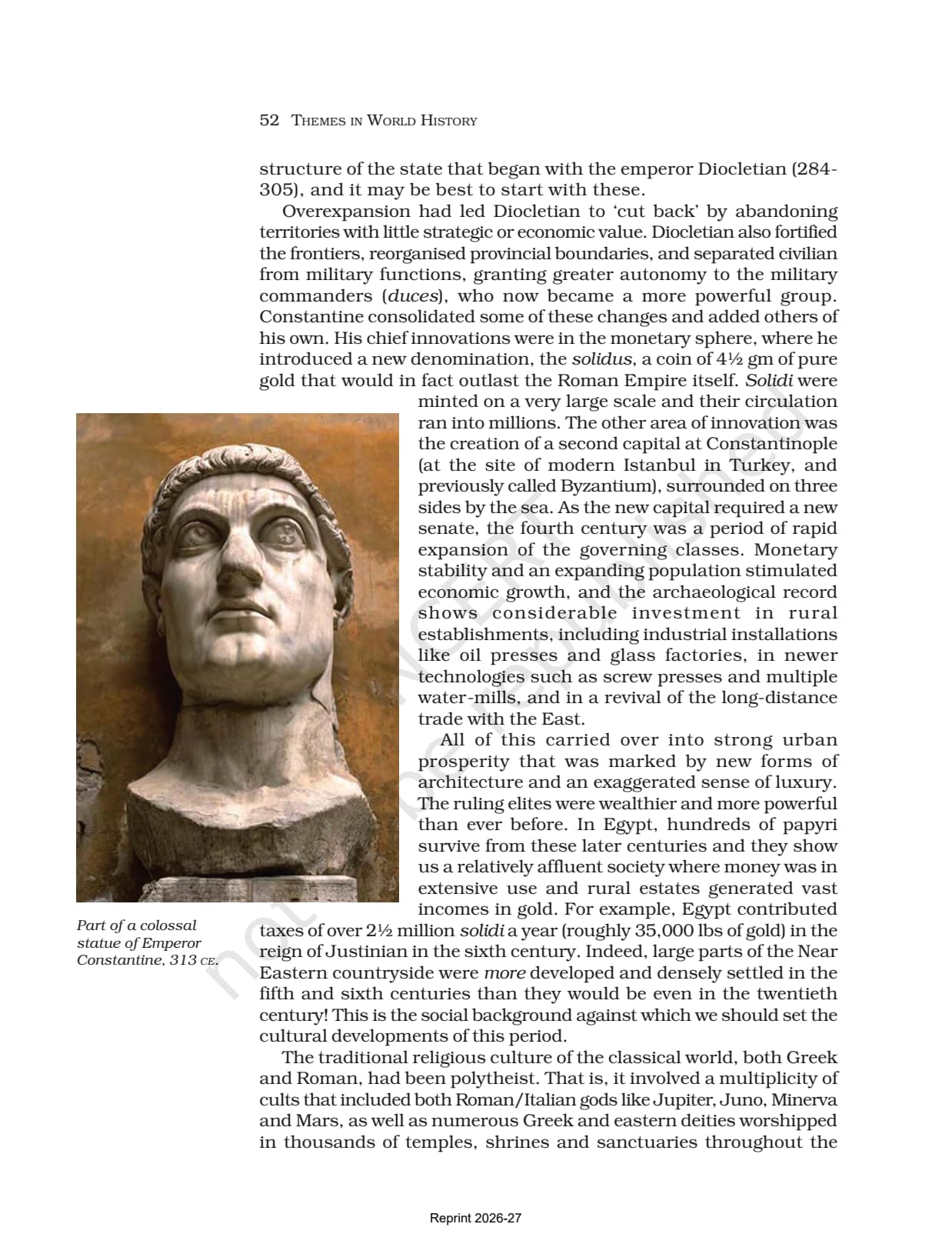
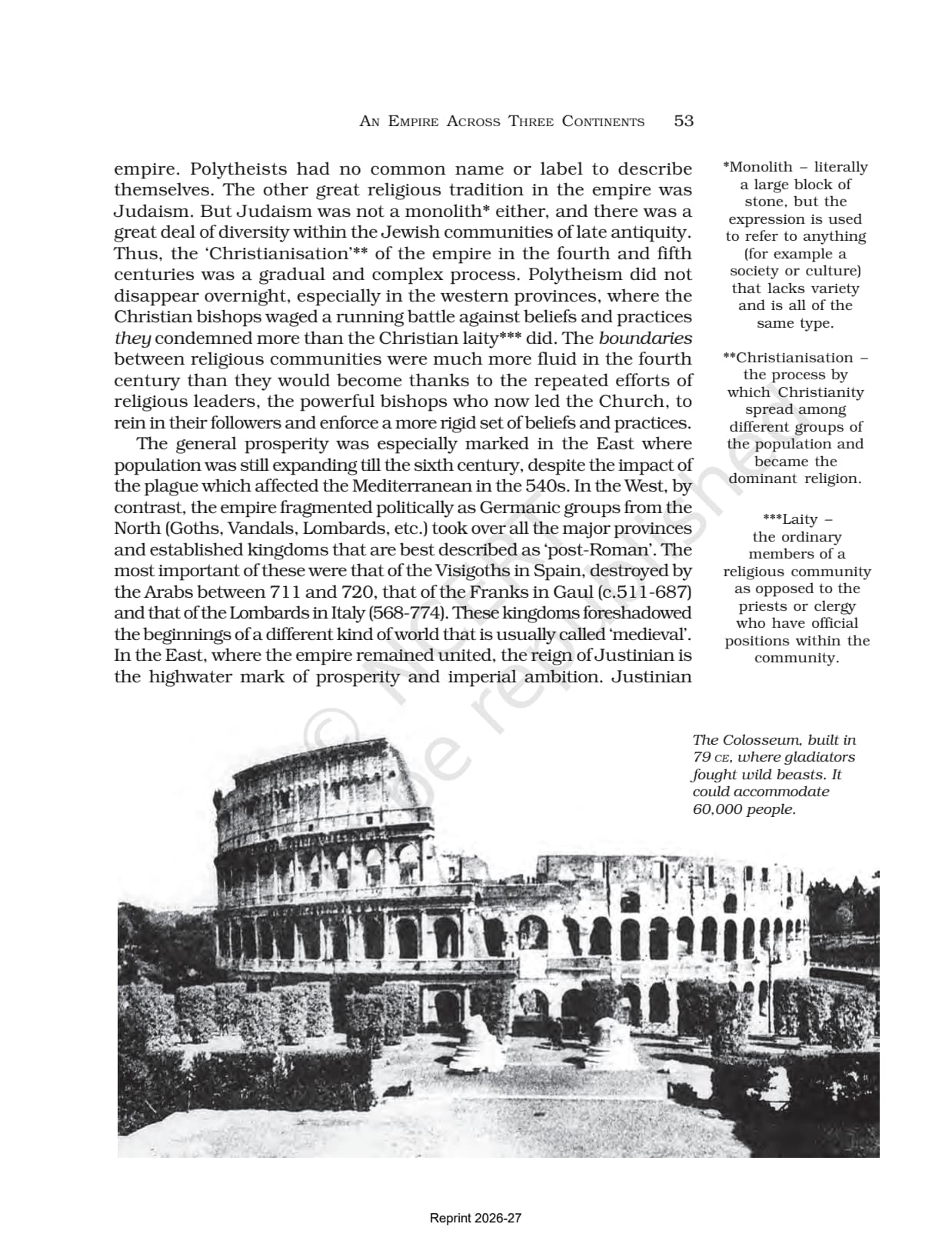
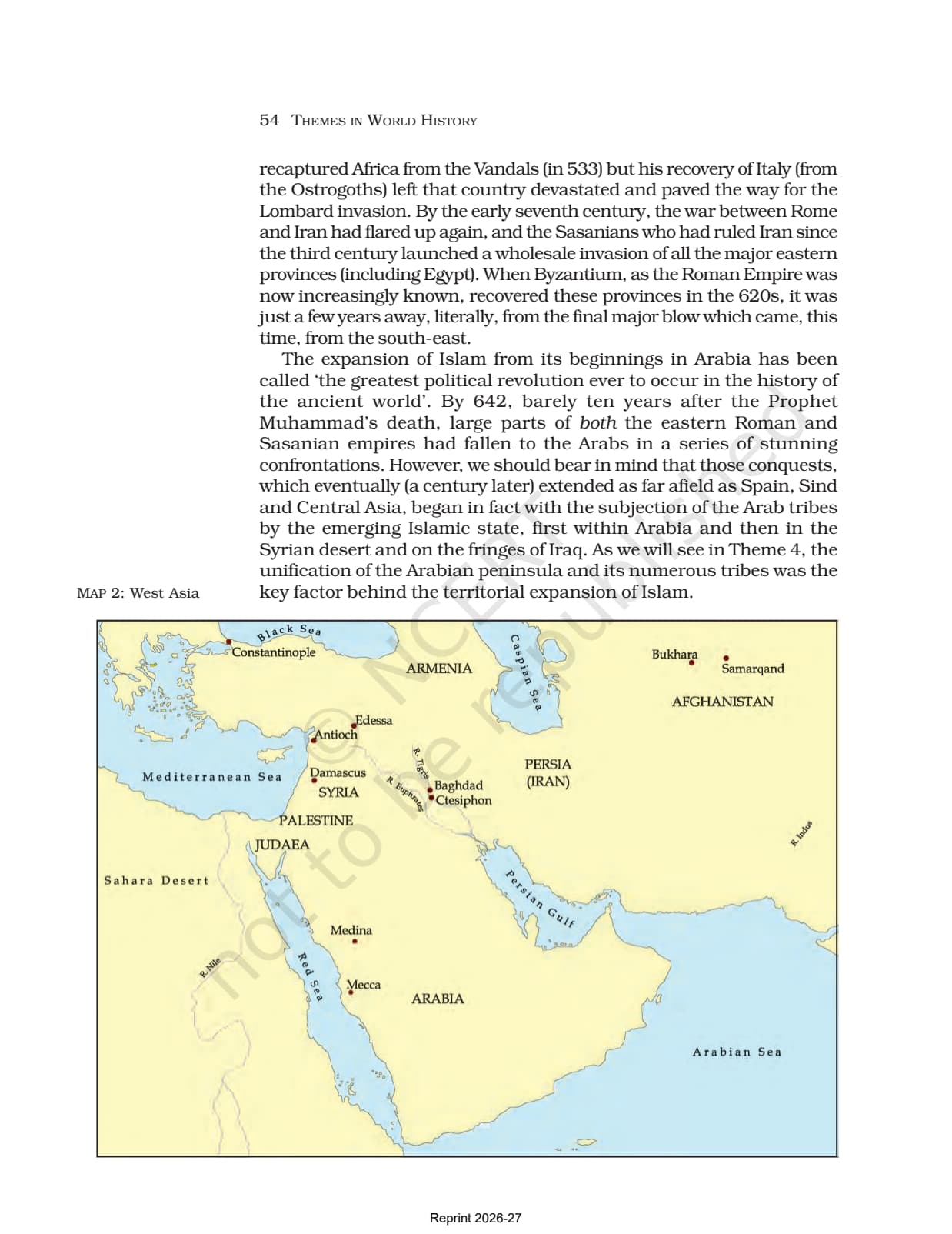
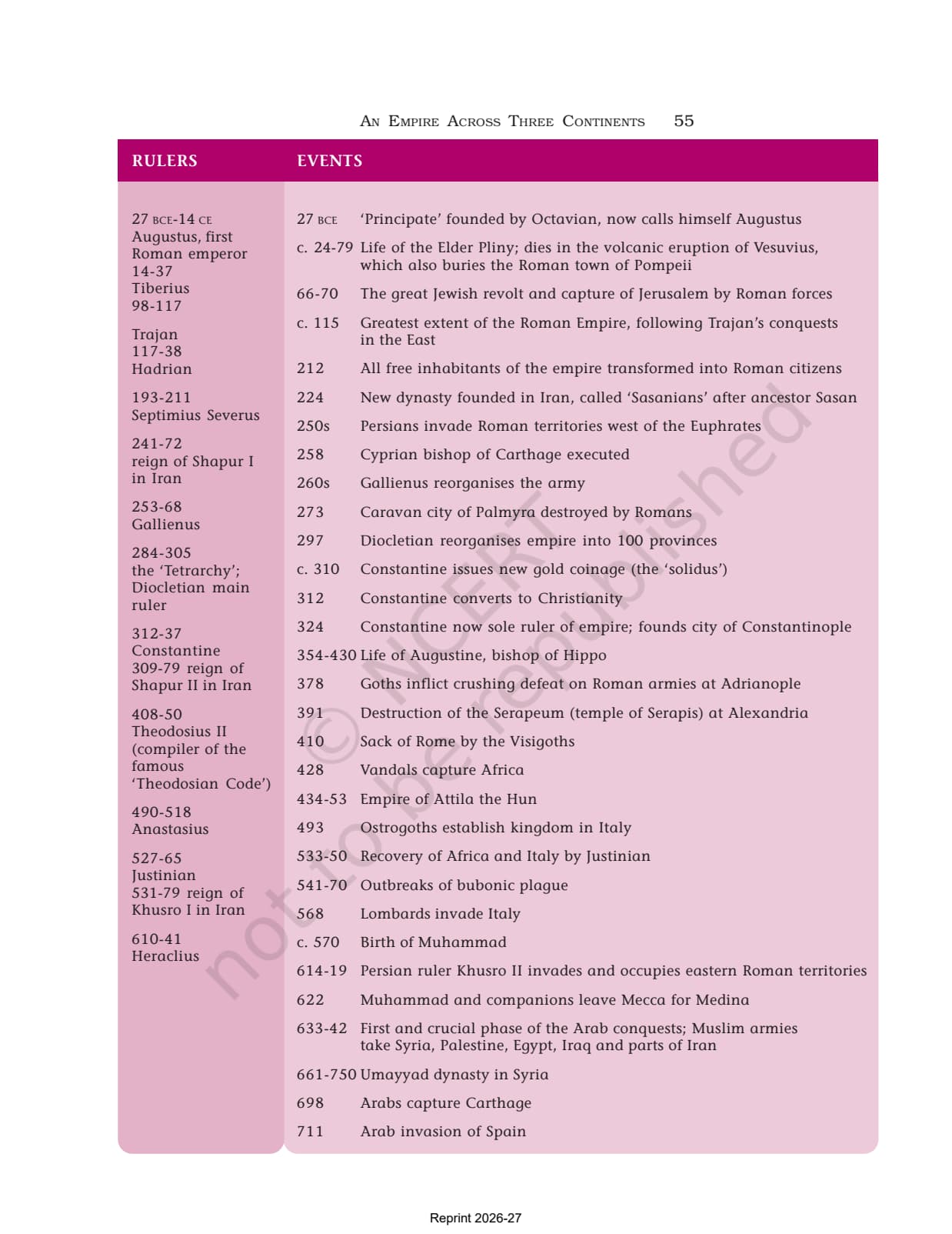
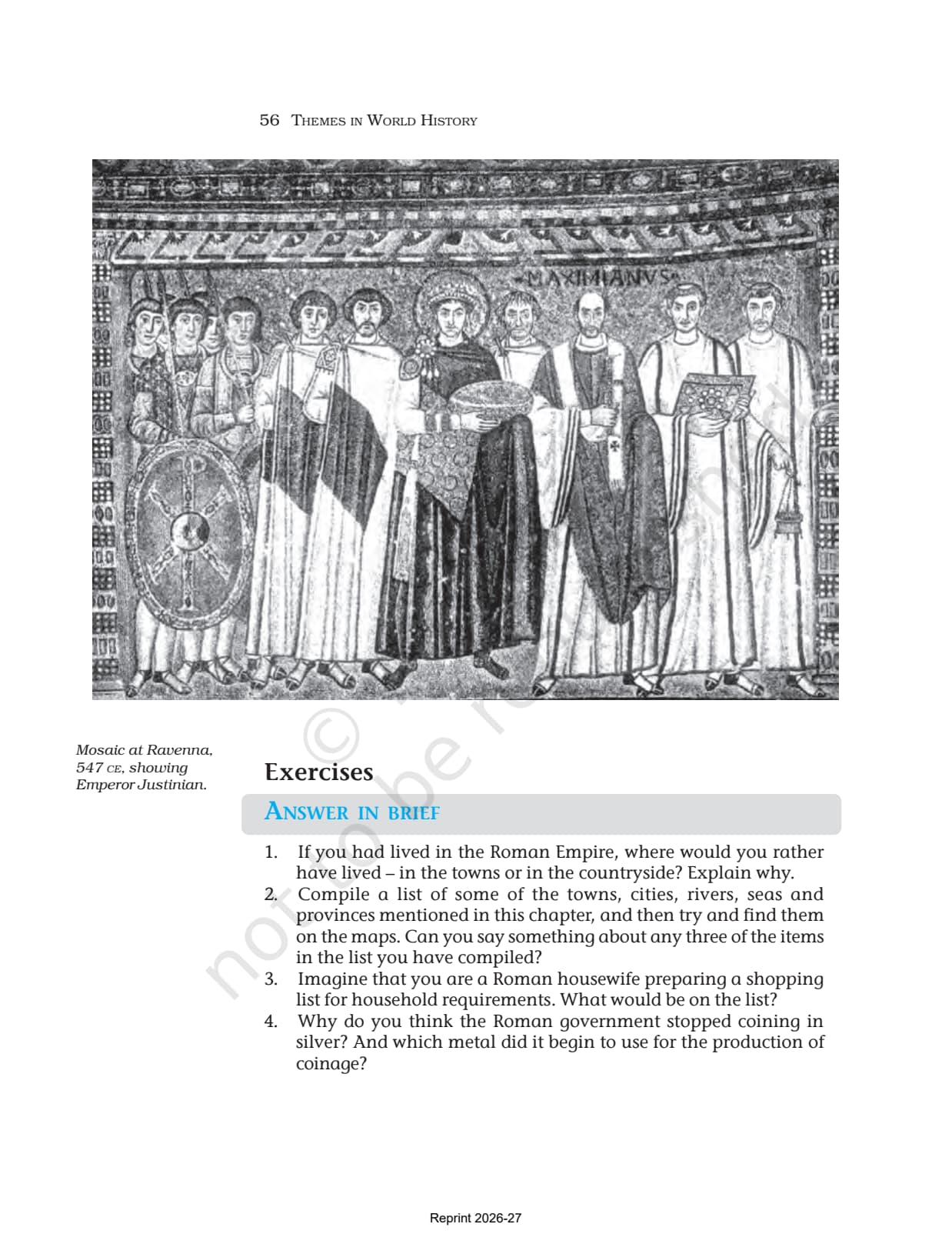
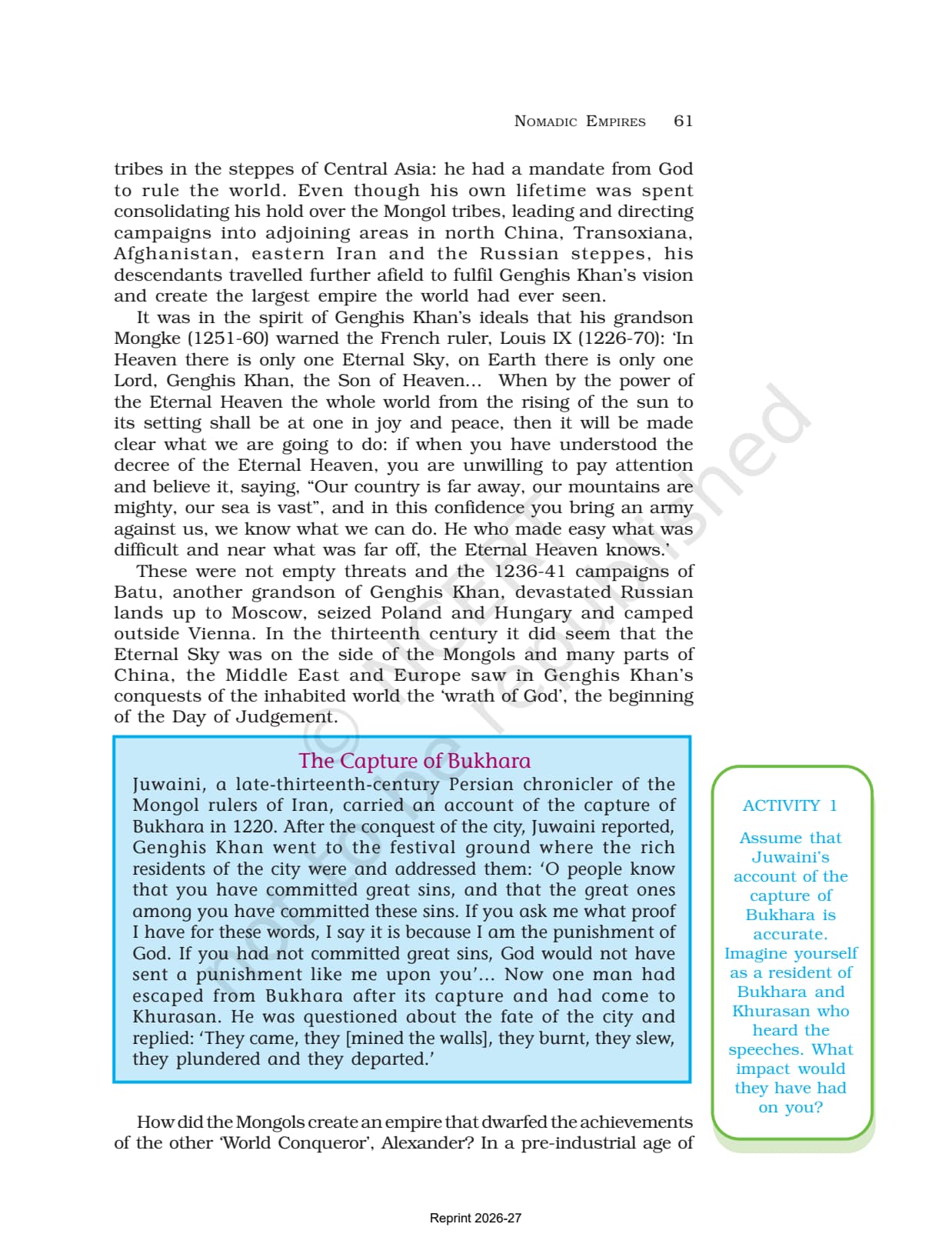
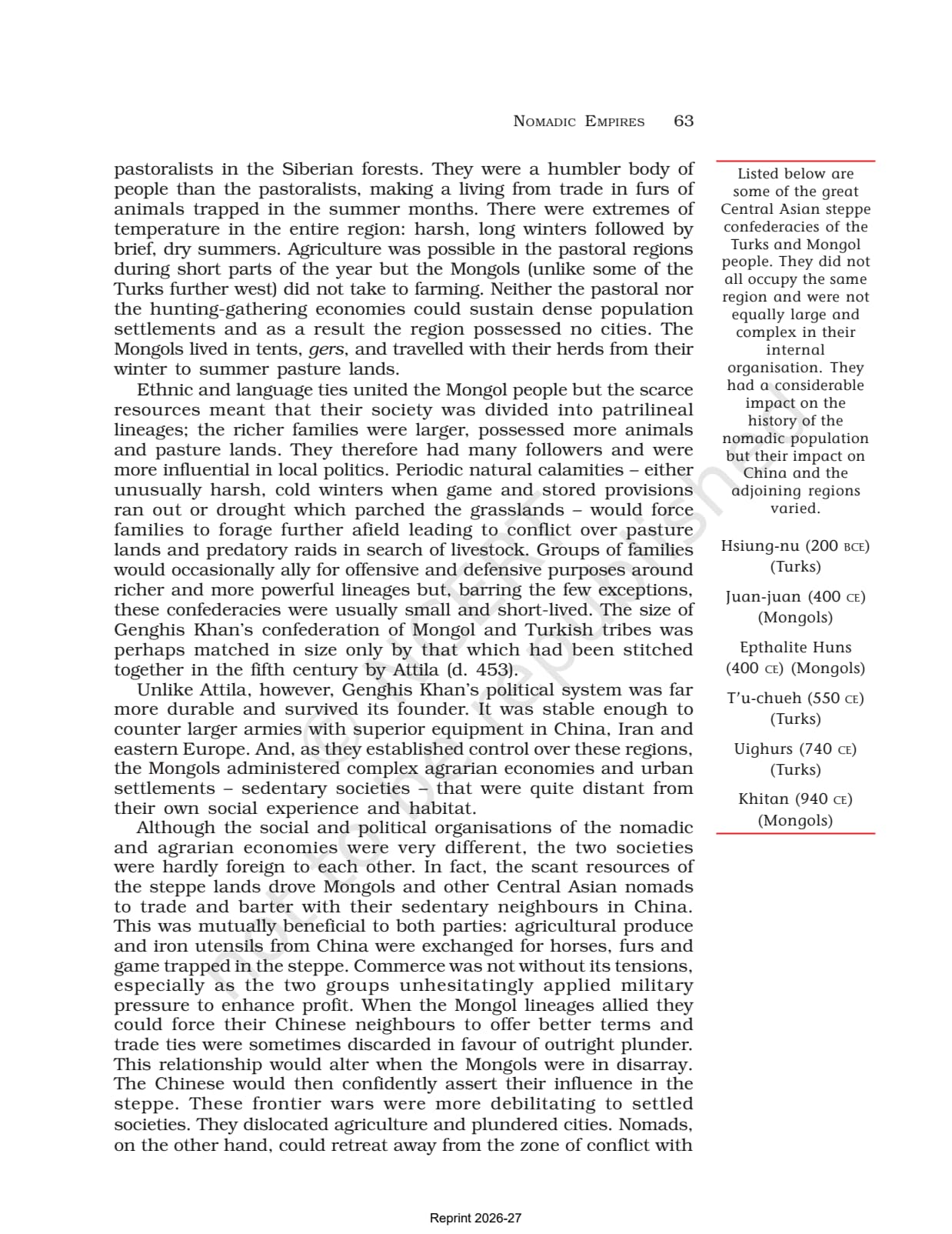
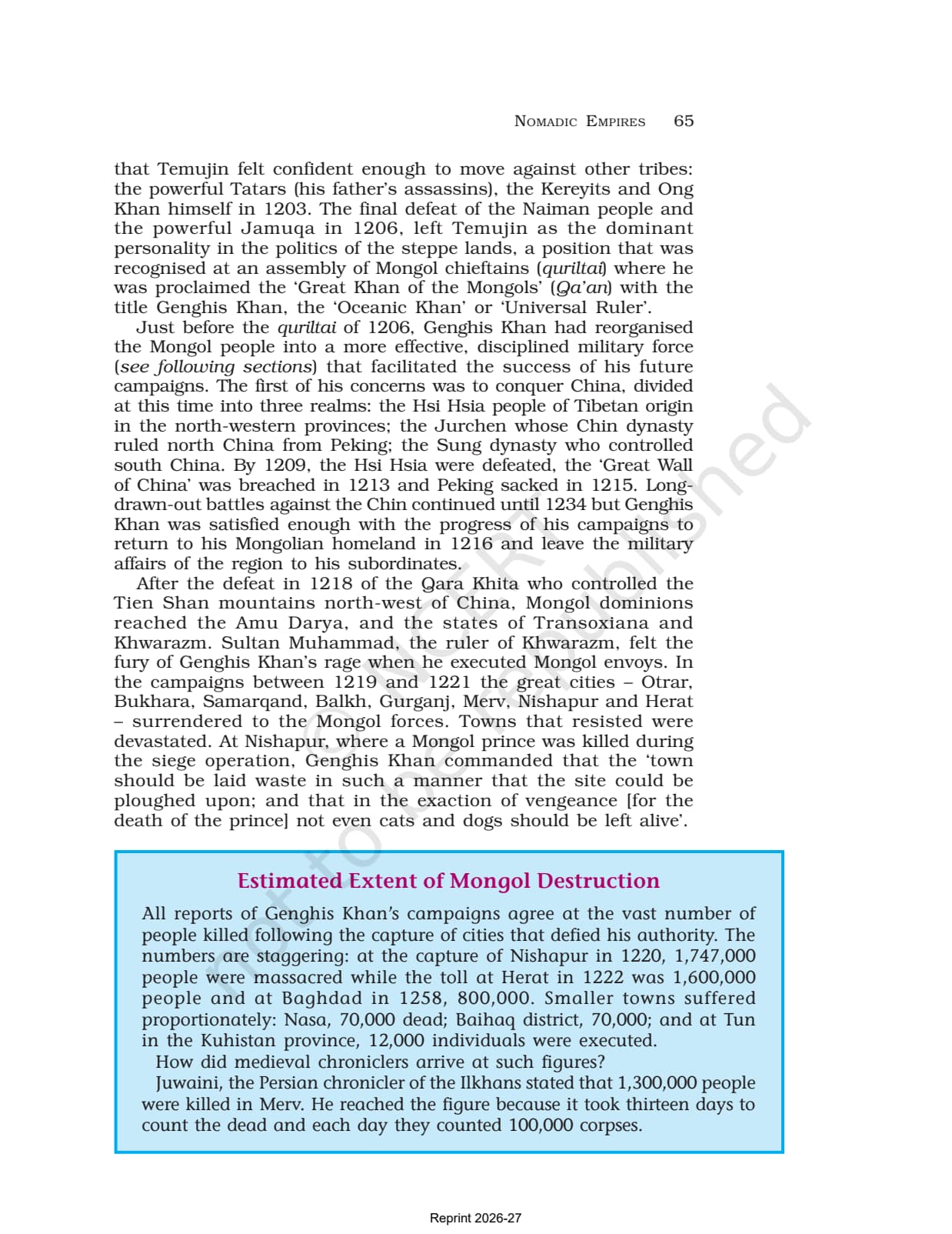
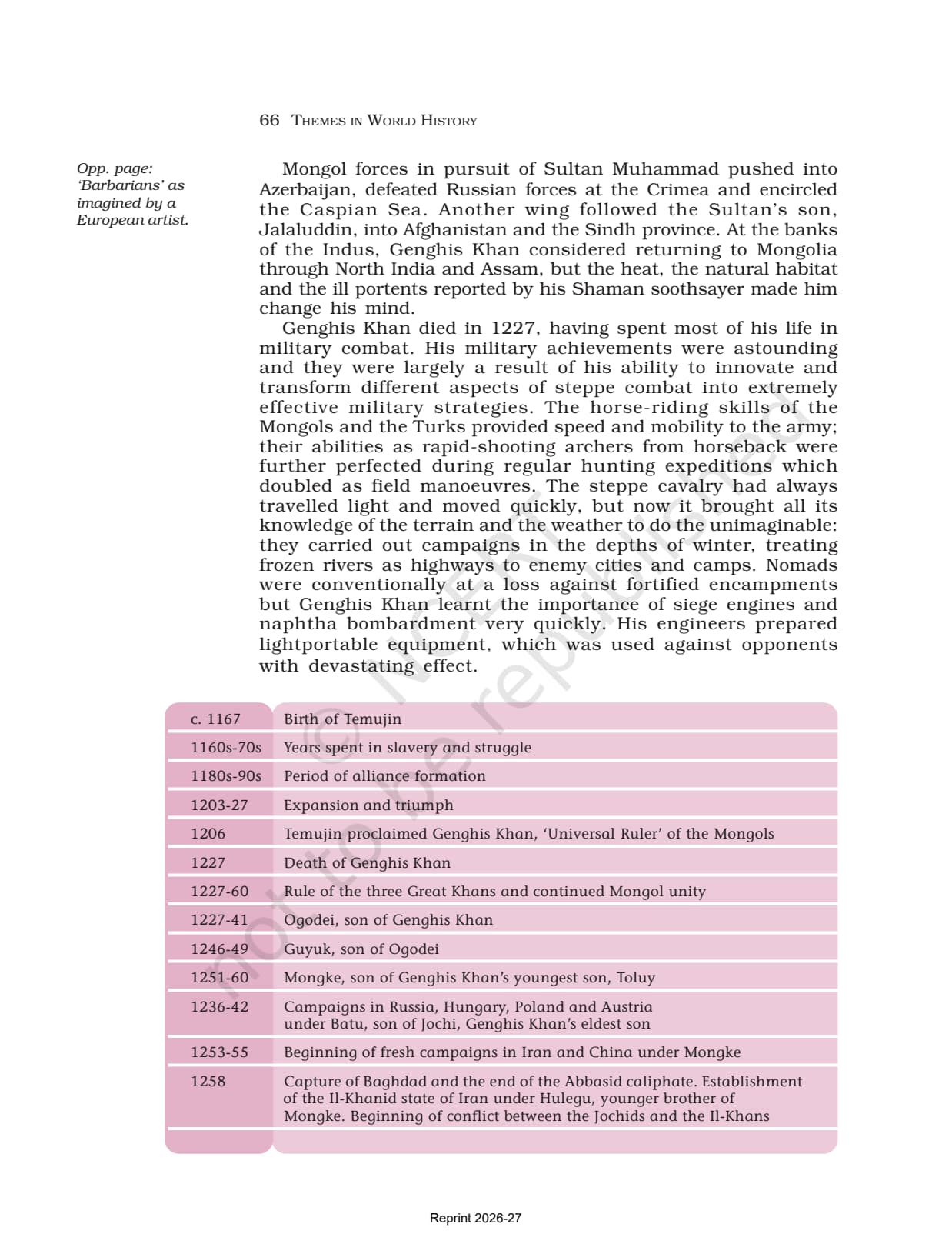
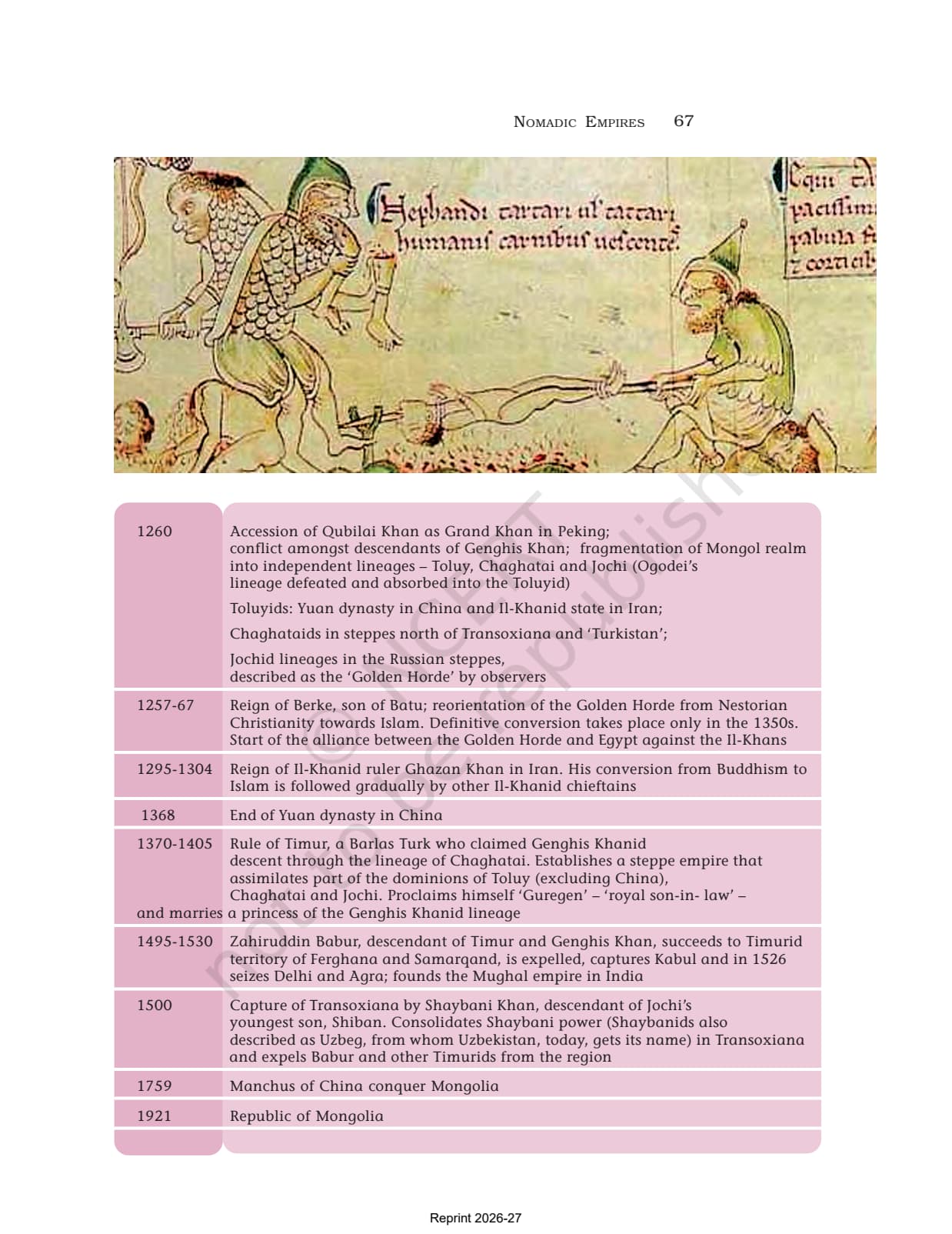
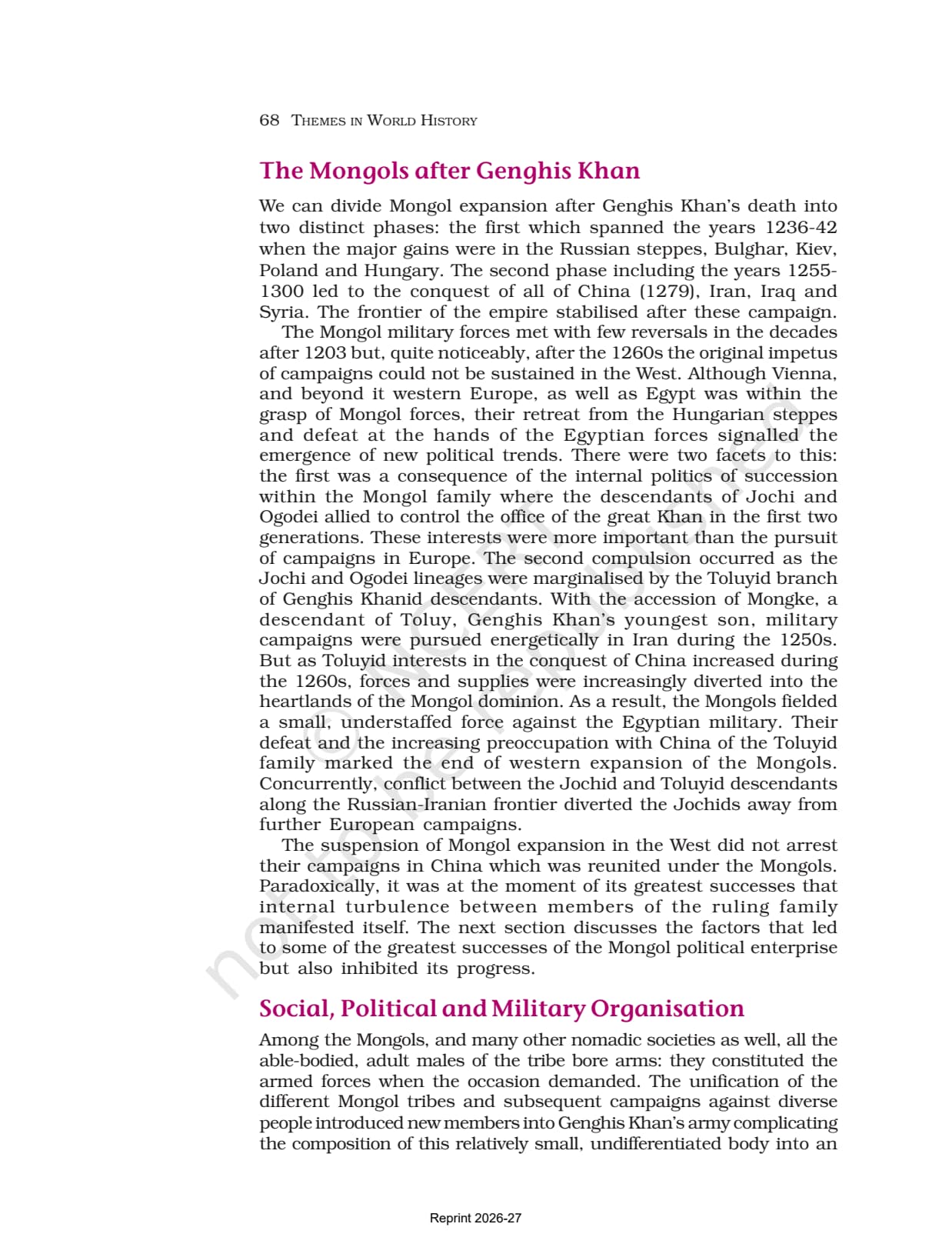
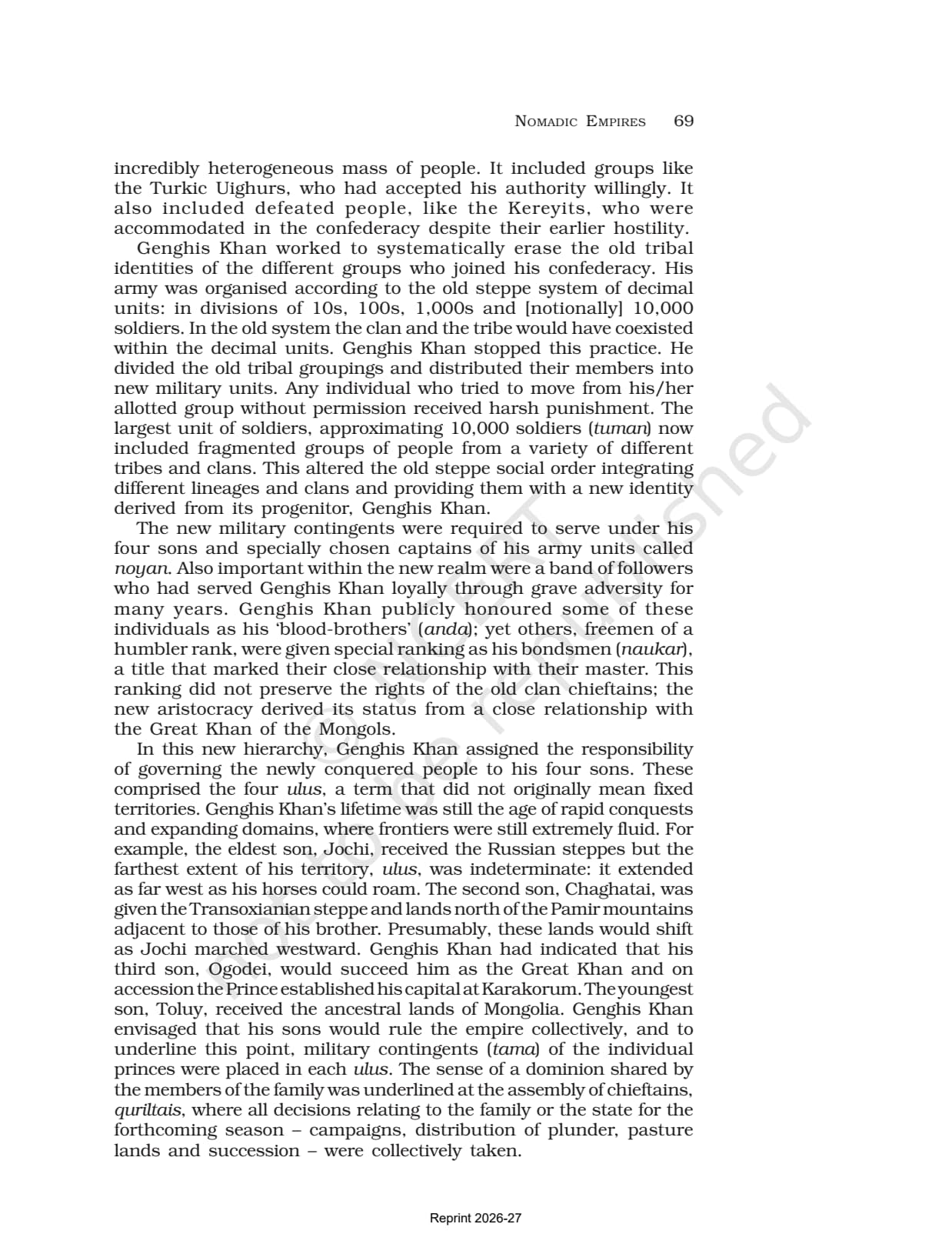
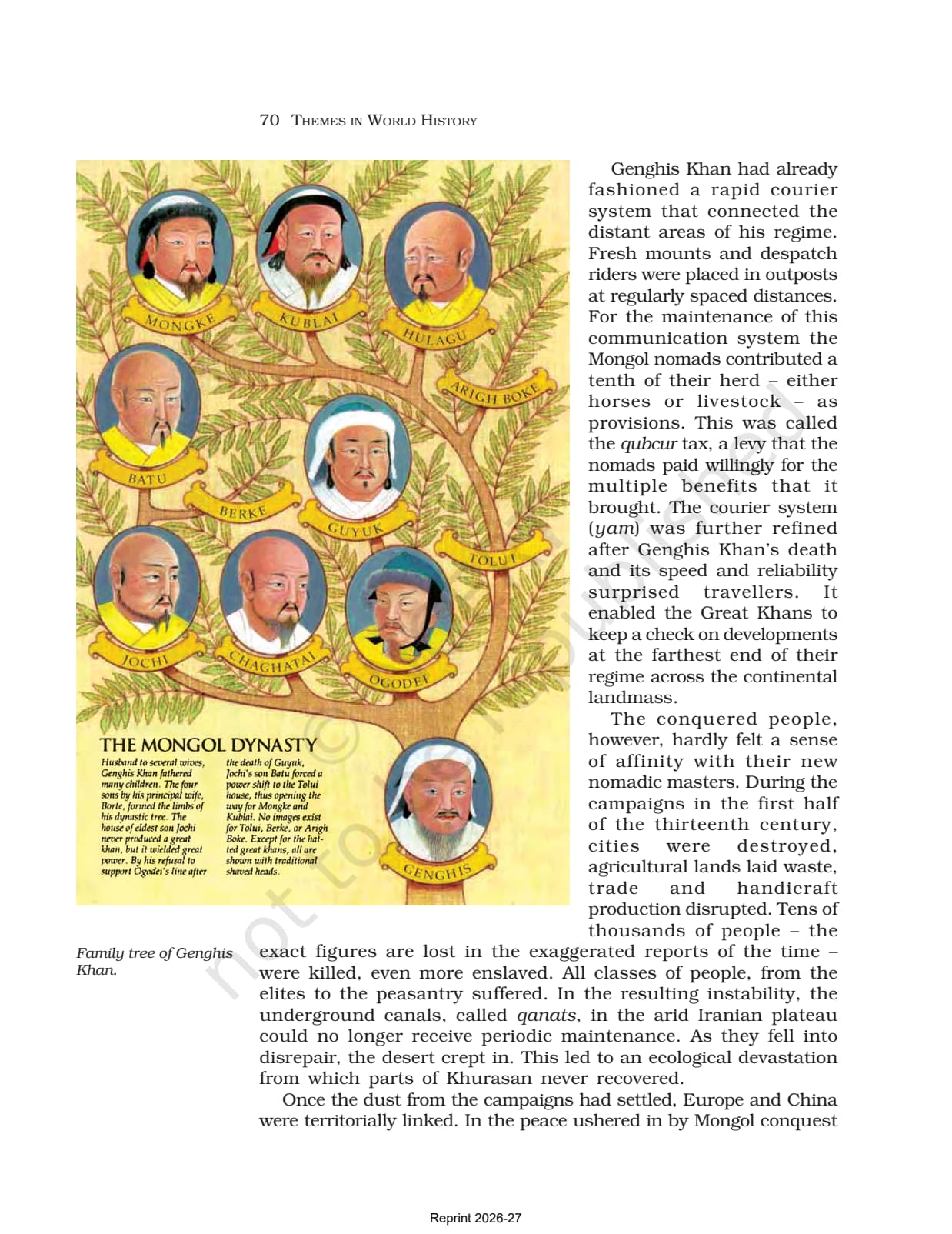
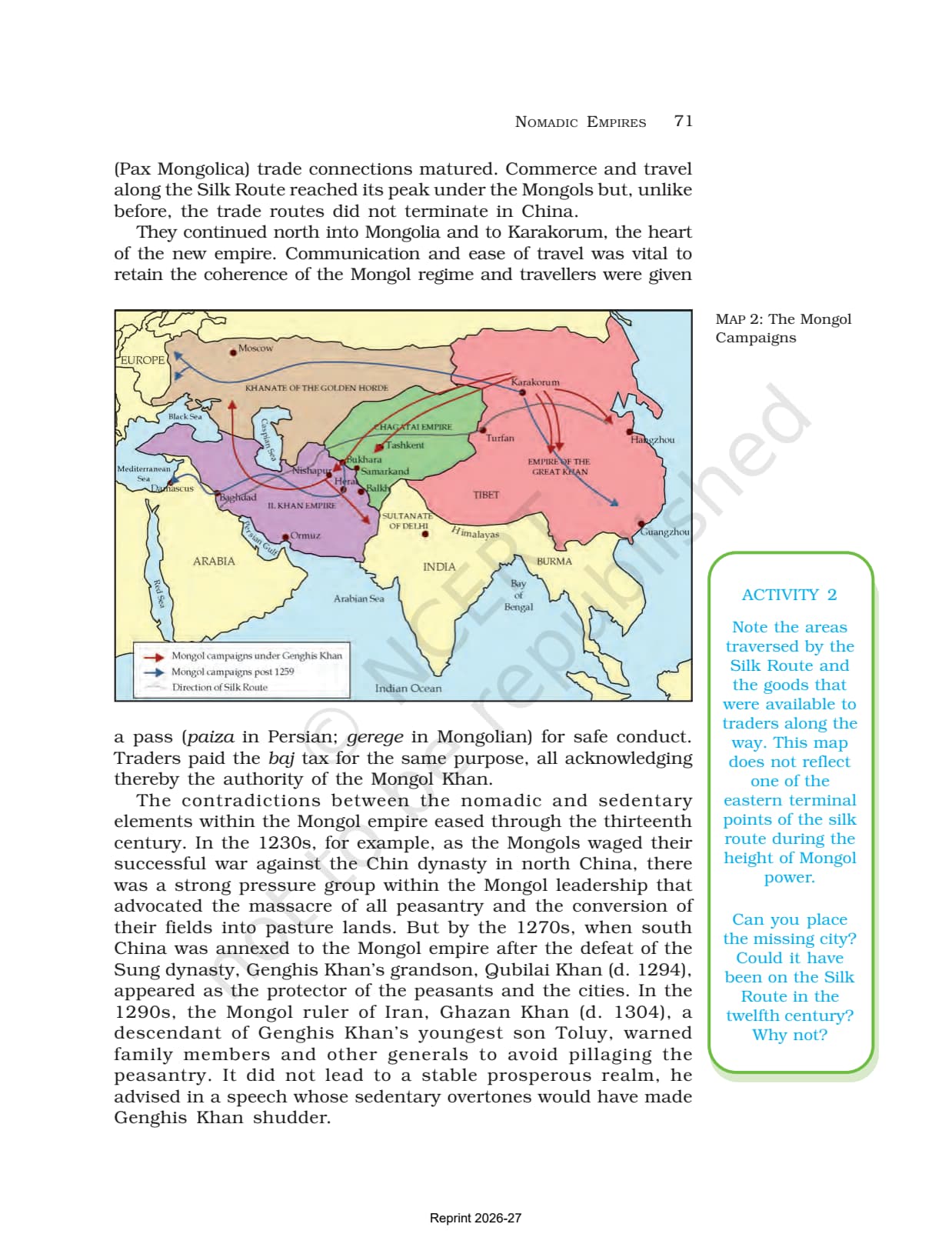
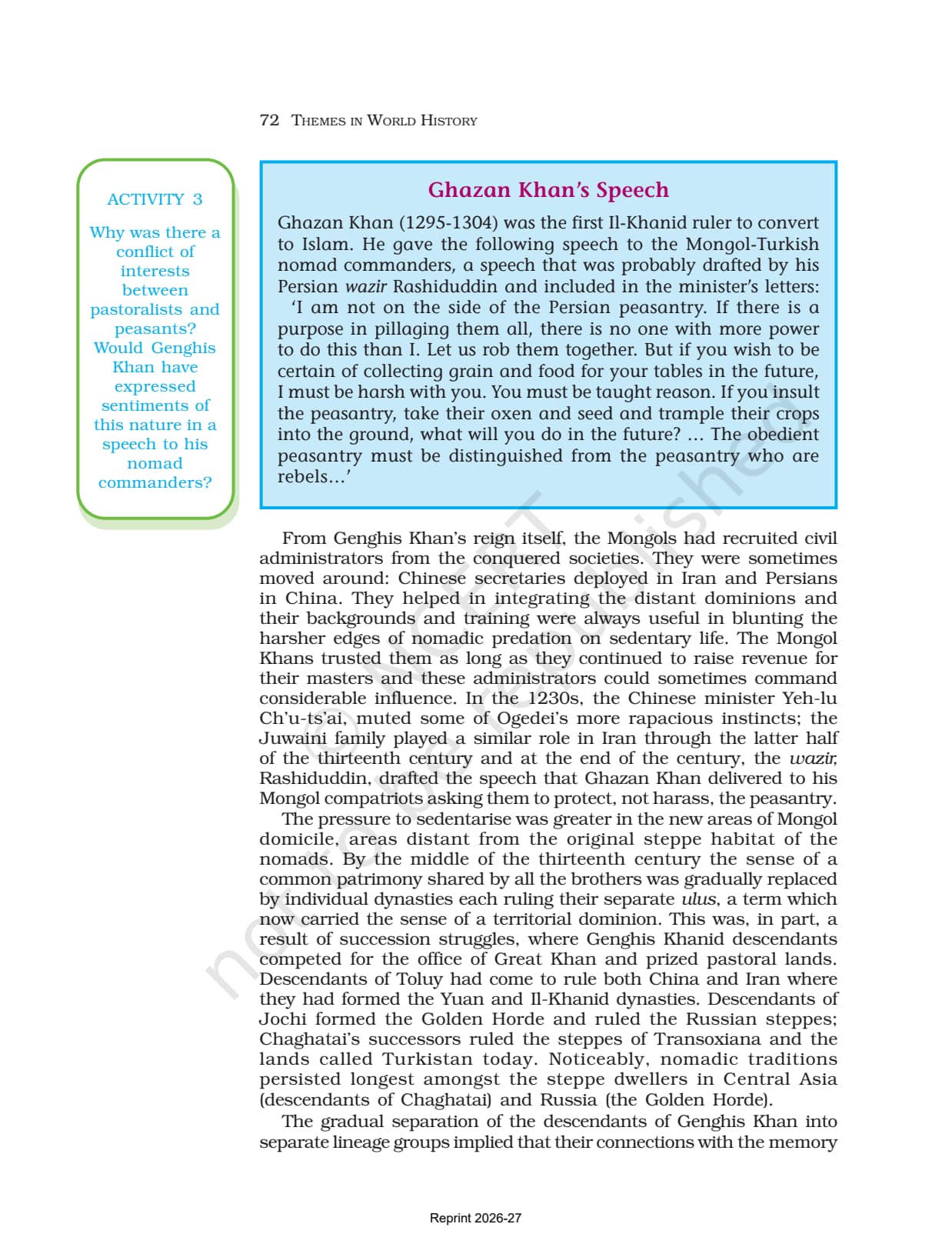
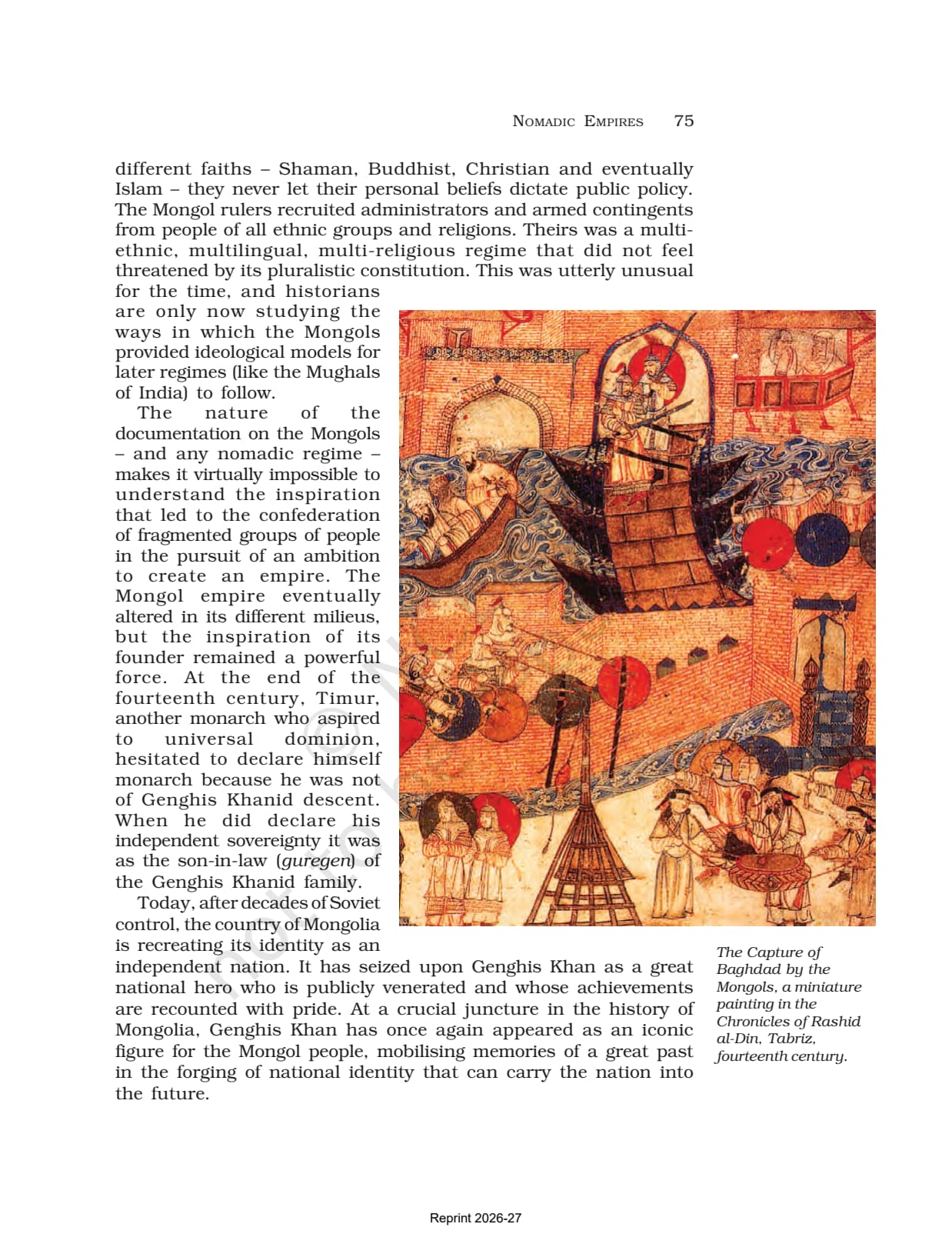
This is the official NCERT chapter file for the 2026-27 session, hosted by Collegedunia with no pages removed.
How the Nomadic Empires Chapter Is Laid Out
The chapter opens by asking whether the phrase nomadic empire is even a contradiction, since nomads are wanderers with a simple economy while an empire needs a settled administration over a large territory. NCERT answers that question through the Mongols, a Central Asian people who built a transcontinental empire under Genghis Khan in the thirteenth and fourteenth centuries.
| Section | What it covers |
|---|---|
| Historians and Their Sources | why nomadic history is hard to write, and the value of The Secret History of the Mongols |
| Introduction | Genghis Khan's rise and the fear he caused across the Euro-Asian continent in the thirteenth century |
| Social and Political Background | who the Mongols were, their pastoral life on the steppe, and their patrilineal clan structure |
| The Career of Genghis Khan | Temujin's early hardship, his rise to Great Khan in 1206, and his campaigns in China and Central Asia, with a dated timeline box |
| The Mongols after Genghis Khan | the two phases of expansion after 1227 and the split of the empire among his descendants |
| Military organisation, the Yasa and administration | the decimal army system, the Yam courier network, taxes, the Yasa, and Ghazan Khan's speech to his commanders |
| Conclusion: Situating Genghis Khan and the Mongols in World History | how the Mongols are remembered by settled societies and by Mongolia today |
| Exercises | 4 Answer in Brief questions and 2 Answer in a Short Essay questions |
Nomadic Empires Class 11 Chapter Revision
Source: Next Toppers - 11th Humanities on YouTube
What the Nomadic Empires Chapter PDF Contains
NCERT publishes Nomadic Empires together with the previous chapter, An Empire Across Three Continents, in one shared 48-page “Empires” theme file. Opening the download shows Chapter 2 first; Nomadic Empires begins partway through the file (from printed page 58) and runs complete to its Summary and exercises, exactly as NCERT prints it.
- The full account of Genghis Khan's life, from his birth as Temujin near the Onon river to his death in 1227
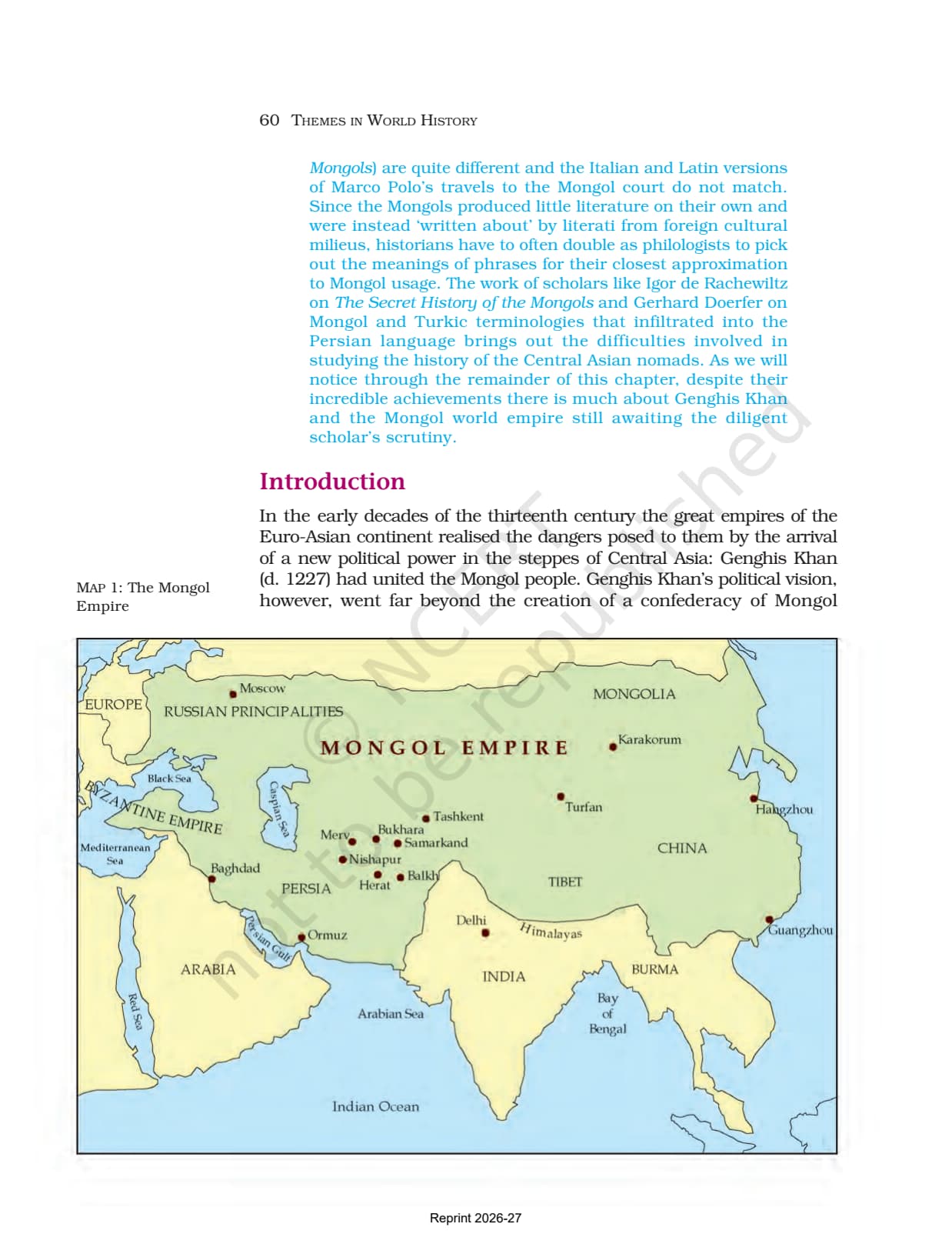
- Map 1, showing the extent of the Mongol empire, and the Silk Route map used in Activity 2
- A dated timeline box running from Temujin's birth around 1162 to the establishment of the Republic of Mongolia in 1921
- The source box on Ghazan Khan's speech to his Mongol-Turkish commanders, warning them against pillaging the peasantry
- The Summary and all 6 exercise questions, four short-answer and two essay-length, that close the chapter
Who Were the Mongols? The Steppe Society Behind an Empire
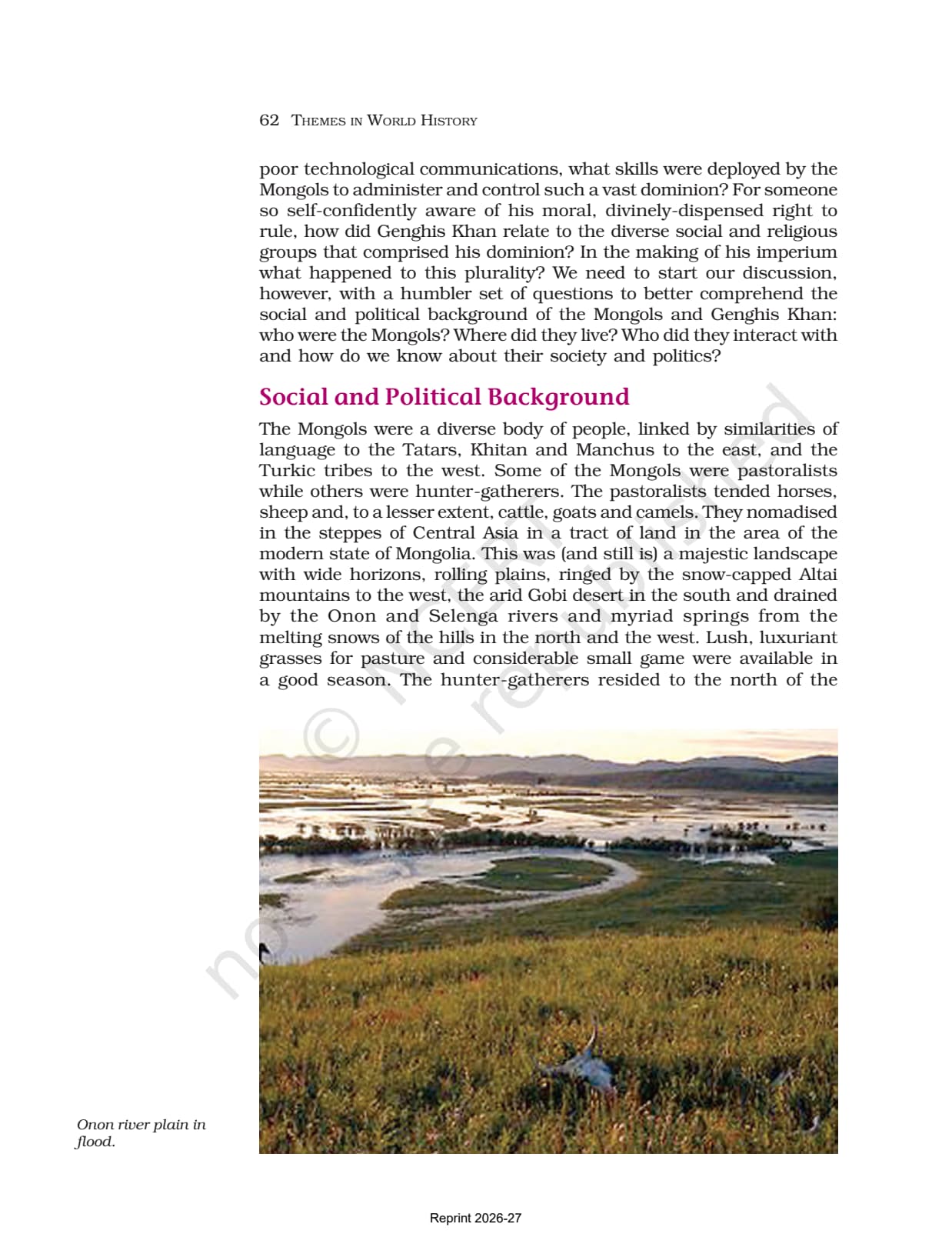
Before the chapter gets to conquest, it explains who the Mongols actually were. They lived in the steppes of Central Asia, in the area of modern Mongolia, a land of wide plains ringed by the Altai mountains and the Gobi desert. Some Mongols were pastoralists who herded horses, sheep, cattle, goats and camels between winter and summer pastures. Others were hunter-gatherers living further north, trading in furs.
- No cities: neither pastoralism nor hunting and gathering could support dense settlements, so the region had no urban centres
- Life in gers: Mongol families lived in tents and moved with their herds through the seasons
- Patrilineal clans: society was divided into family lineages, and richer families with more animals and pasture held more influence
- Conflict over resources: harsh winters or drought forced families to forage further afield, which often led to raids over pasture and livestock
These small, short-lived tribal confederacies rarely held together for long. What made Genghis Khan's confederation different, the chapter notes, was that it survived him, unlike the empire built by Attila in the fifth century.
Sources on the Mongols: The Secret History and the Persian Chronicles
The opening section of the chapter is about method: how do historians know anything about a people who left behind so little writing of their own? Most early accounts of the Mongols came from city-based writers who were hostile to steppe life, which is why the chapter urges caution before treating them as neutral.
| Source | Why it matters |
|---|---|
| The Secret History of the Mongols | a rare Mongol-language text, studied closely by the scholar Igor de Rachewiltz to work out its original meaning |
| Persian chronicles | Juwaini's account of the fall of Bukhara, and later Il-Khanid chronicles that exaggerated Mongol casualty figures for dramatic effect |
| Chinese and other literati accounts | Buddhist, Confucian, Christian, Turkish and Muslim writers who served or observed the Mongol court, some hostile, some sympathetic |
| Marco Polo's travels | an account of the Mongol court, though the chapter notes the Italian and Latin versions do not fully agree |
| Russian and Soviet scholarship | research from the eighteenth century onward, later reframed through Marxist historiography in the twentieth century |
The chapter's point is that nomadic societies rarely get to tell their own story. Because the Mongols were mostly written about by outsiders, historians have to read each source carefully for its bias before trusting its account of events.
Genghis Khan and the Making of a Steppe Empire
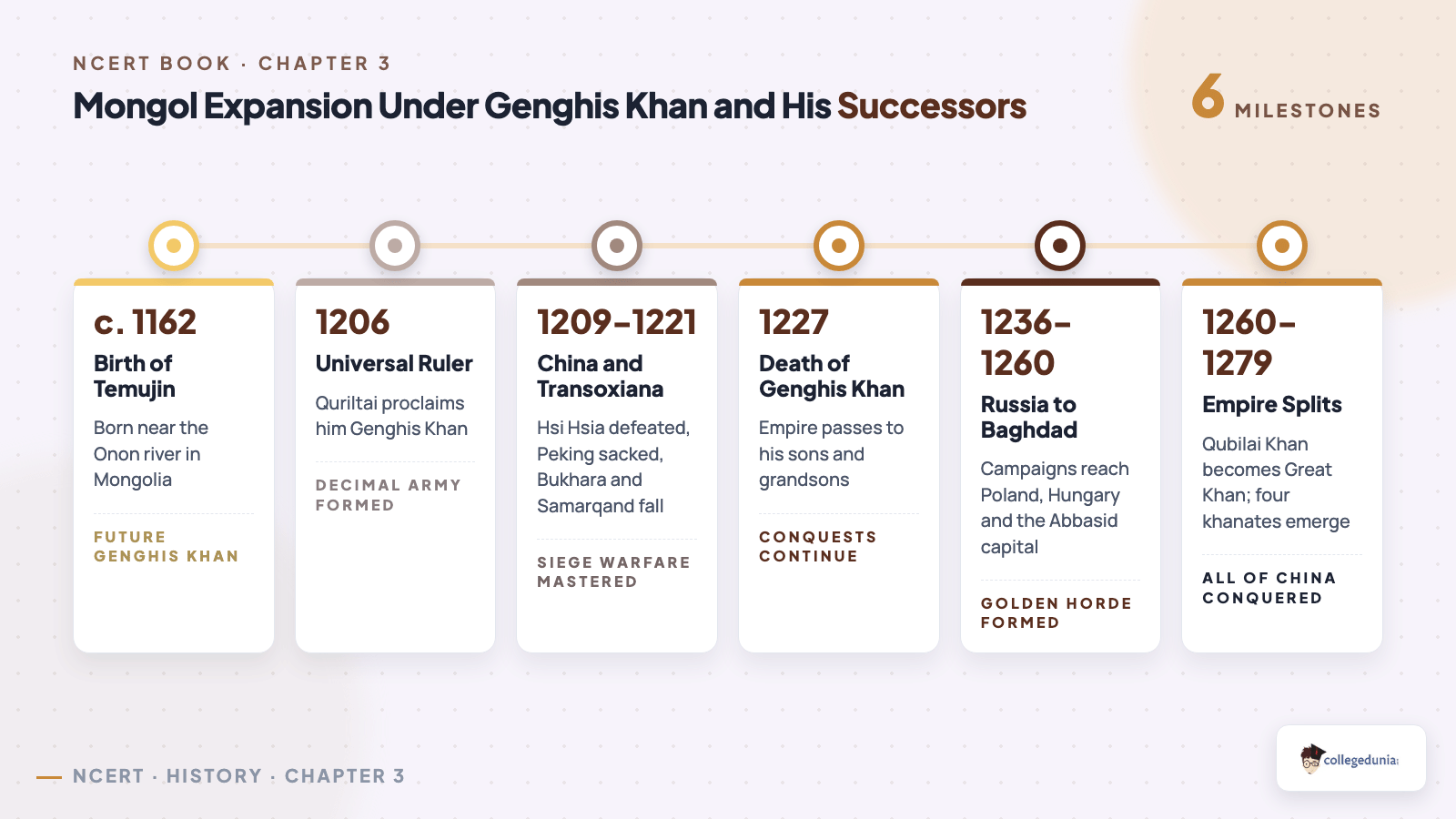
Genghis Khan was born around 1162 near the Onon river and named Temujin. His father was murdered when he was young, and Temujin's mother, Oelun-eke, raised him through years of hardship, including a period of enslavement and the kidnapping of his wife, Borte. Through alliances with Ong Khan and later victories over rival tribes, Temujin defeated the Tatars, the Kereyits and finally the Naiman people by 1206.
- 1206: an assembly of Mongol chiefs, the quriltai, proclaimed Temujin as Genghis Khan, the Universal Ruler of the Mongols
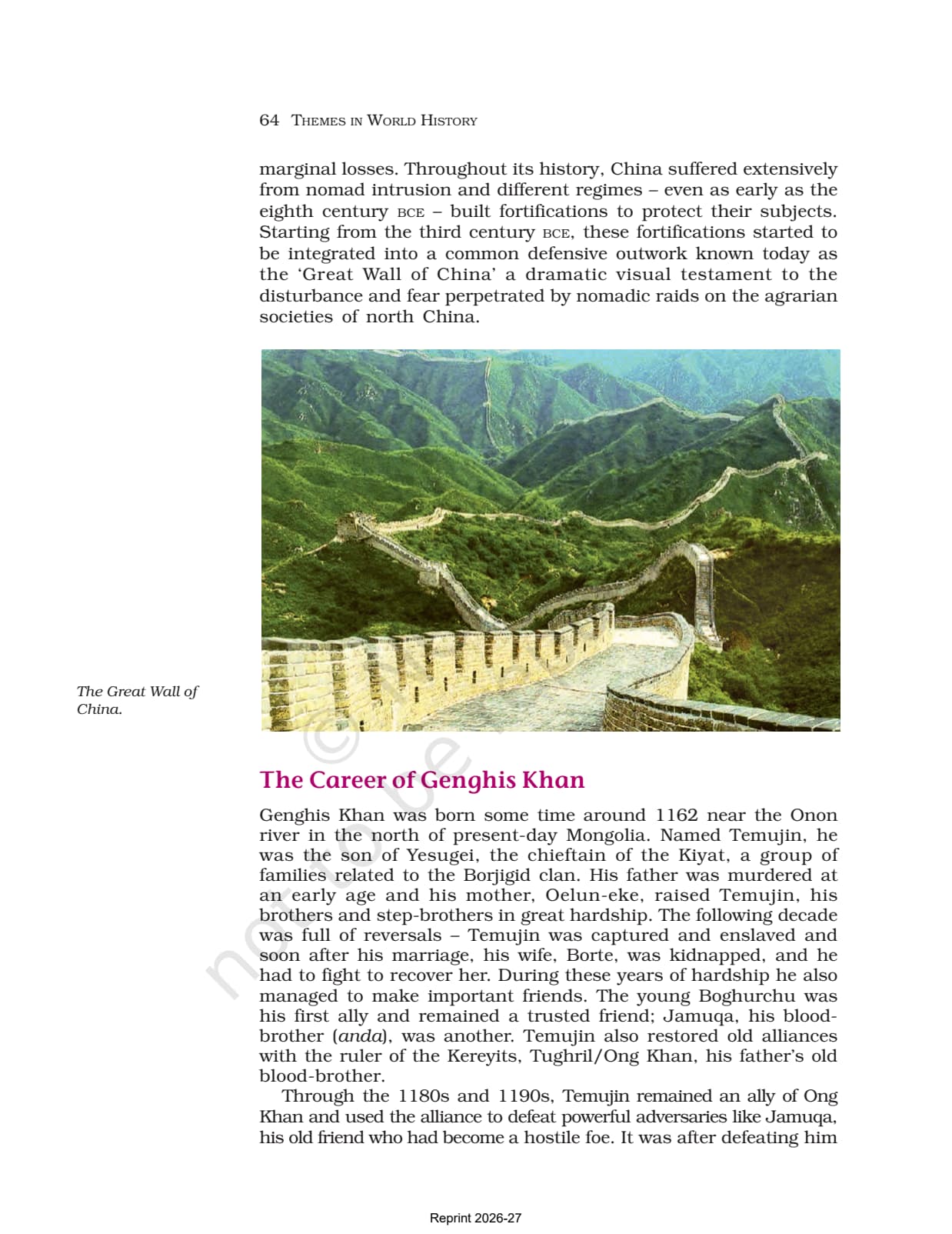
- 1209 to 1215: the Hsi Hsia were defeated, the Great Wall was breached, and Peking was sacked
- 1219 to 1221: the great cities of Transoxiana, including Bukhara, Samarqand and Merv, surrendered to Mongol forces
- 1227: Genghis Khan died, having spent most of his life leading military campaigns
The chapter also carries the warning that his grandson Mongke sent to the French king Louis IX, claiming a mandate from the Eternal Sky to rule the whole world. After Genghis Khan's death, his empire split into four khanates among his descendants: the Yuan dynasty in China, the Il-Khanid state in Iran, the Chaghatai lands north of Transoxiana, and the Golden Horde in the Russian steppes.
Mongol Military Organisation: The Decimal System and the Conquests
Before the 1206 quriltai, Genghis Khan had already reshaped how the Mongols fought. He broke up the old tribal groupings and reorganised his army into a decimal system, with units of 10, 100, 1,000 and, at the largest scale, 10,000 soldiers called a tuman. Soldiers from different clans were mixed into the same unit, and anyone who left an assigned group without permission faced harsh punishment.
- Skill on horseback: Mongol horsemen combined speed with rapid archery, skills sharpened during regular hunting expeditions
- Winter campaigns: Mongol forces treated frozen rivers as roads, letting them strike cities that expected safety in the cold months
- Siege technology: Genghis Khan quickly adopted siege engines and naphtha bombardment to break fortified towns
- New loyalties: trusted companions were honoured as blood-brothers, or anda, while others served as bondsmen, or naukar, replacing the old clan hierarchy
The scale of destruction was real. The chapter describes ruined cities, wasted farmland and disrupted trade during the campaigns of the early thirteenth century, and it notes that the underground irrigation canals of Iran, the qanats, fell into disrepair once the fighting stopped their maintenance, causing lasting ecological damage in parts of Khurasan.
Administering the Mongol Empire: the Yam, Taxes and the Silk Route
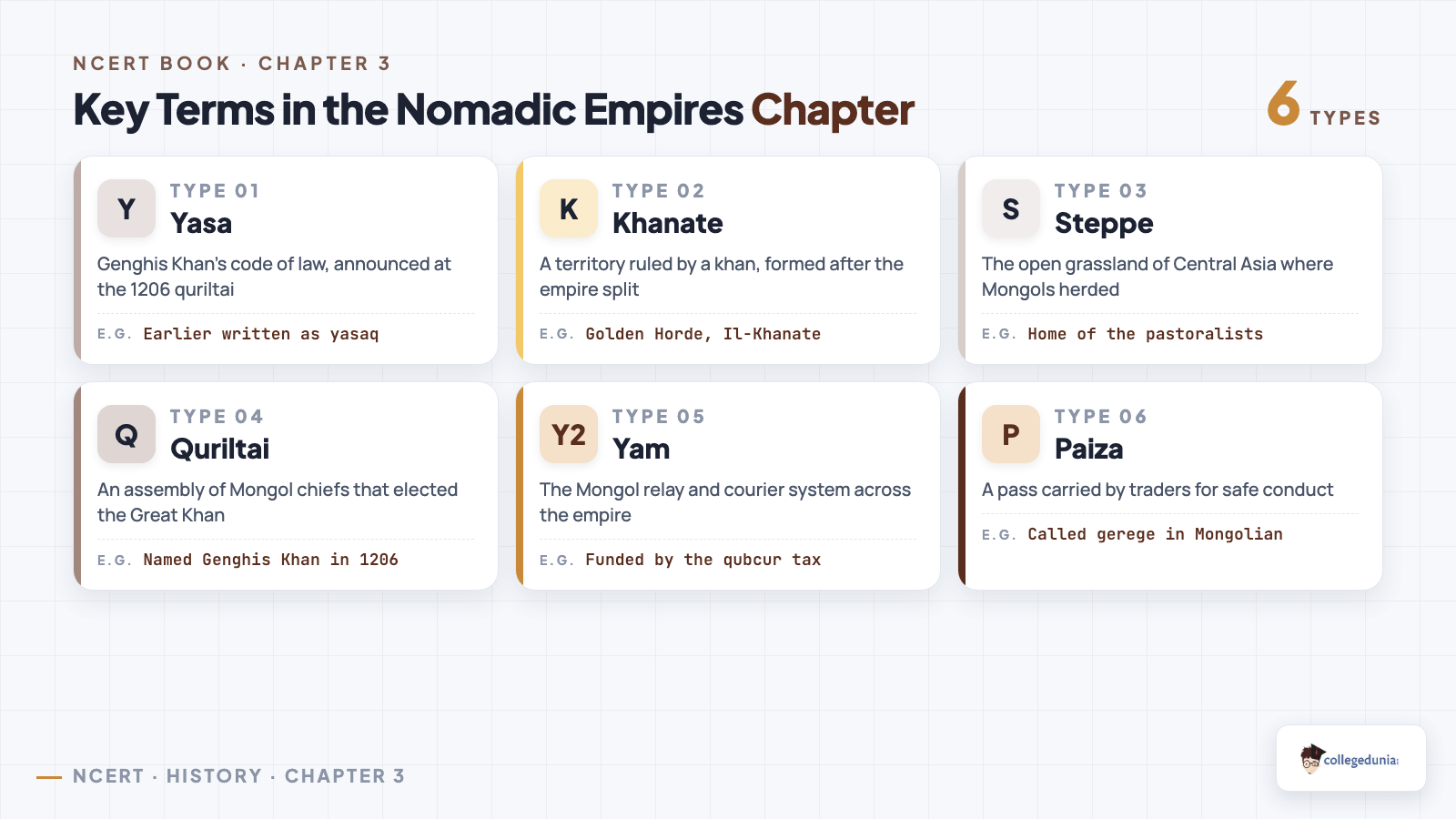
Conquest was only half the story. The chapter explains how the Mongols held together an empire that stretched from China to Russia with the technology of the thirteenth century. A rapid courier system called the Yam connected distant parts of the empire, with relay stations providing fresh horses for messengers. Nomads paid a share of their herd, the qubcur tax, to keep this system running.
| Term | What it means in the chapter |
|---|---|
| Yam | the Mongol relay and courier network that linked the far ends of the empire |
| Qubcur tax | a tenth of a nomad family's herd, paid to support the courier system |
| Paiza or gerege | a pass carried by traders and travellers for safe conduct across Mongol territory |
| Baj tax | a toll paid by traders in exchange for the paiza and safe passage |
| Pax Mongolica | the period of relative peace after conquest, when trade along the Silk Route reached its height |
The chapter also shows how the Mongols slowly moved from pure plunder toward protecting the farmers and cities they had conquered. It quotes Ghazan Khan's speech to his commanders in the 1290s, warning them that harming the peasantry would leave nothing to collect in the future. Civil administrators recruited from conquered societies, including Chinese officials sent to Iran and Persian officials sent to China, helped run this settled side of Mongol rule.
The Yasa and the Mongols in the Memory of Settled Societies
The final major theme is the Yasa, the code of law that Genghis Khan is said to have announced at the 1206 quriltai. Its earliest form, yasaq, meant law, decree or order. The chapter is careful to note that historians still debate exactly what the Yasa contained, and that later Mongol rulers invoked it as a way of connecting their own authority back to Genghis Khan.
- 1221 at Bukhara: Genghis Khan publicly admonished wealthy Muslim residents, an episode later remembered and even painted
- Later invocation: a sixteenth-century ruler, Abdullah Khan, performed Muslim prayers at the same site, and his chronicler described it as being done according to the yasa of Genghis Khan
- Contested memory: Persian chronicles under Il-Khanid patronage both exaggerated Genghis Khan's violence and praised his legacy at the same time
The chapter closes by asking students to weigh two images of Genghis Khan side by side: the destroyer feared by thirteenth-century city dwellers, and the unifier honoured in Mongolia today. It also stresses that Mongol rule tolerated many faiths, Shaman, Buddhist, Christian and Muslim, without letting any one of them dictate policy, a point the exercise questions return to when they ask how nomadic and sedentary societies viewed each other.
What Collegedunia Adds to This Chapter PDF
Collegedunia gives students the file plus a way into it. The chapter PDF itself is the official NCERT file, untouched.
- Official file: the exact NCERT chapter PDF, no pages removed
- Read in the browser: page through the chapter before downloading
- Chapter list: jump to any other chapter from one table
Also Check: the other Class 11 History resources for this chapter.
| Resource | Link |
|---|---|
| Handwritten notes | Nomadic Empires Class 11 Handwritten Notes |
| Chapter notes | Nomadic Empires Class 11 Notes (coming soon) |
| Chapter solutions | Nomadic Empires Class 11 NCERT Solutions (coming soon) |
| Chapter 1 Book PDF | Writing and City Life NCERT Book PDF (coming soon) |
| Chapter 2 Book PDF | An Empire Across Three Continents NCERT Book PDF (coming soon) |
| Chapter 4 Book PDF | The Three Orders NCERT Book PDF (coming soon) |
| Chapter 5 Book PDF | Changing Cultural Traditions NCERT Book PDF (coming soon) |
Class 11 History NCERT Book PDF: All Chapters
Every chapter of the book is on its own page. The 2026-27 Class 11 History textbook, Themes in World History, has 7 chapters in the current syllabus, and Nomadic Empires sits between the Roman world and the feudal order of western Europe.
| Chapter | Download |
|---|---|
| Chapter 1 | Writing and City Life NCERT Book PDF (coming soon) |
| Chapter 2 | An Empire Across Three Continents NCERT Book PDF (coming soon) |
| Chapter 3 | Nomadic Empires NCERT Book PDF |
| Chapter 4 | The Three Orders NCERT Book PDF (coming soon) |
| Chapter 5 | Changing Cultural Traditions NCERT Book PDF (coming soon) |
| Chapter 6 | Displacing Indigenous Peoples NCERT Book PDF (coming soon) |
| Chapter 7 | Paths to Modernisation NCERT Book PDF (coming soon) |
Nomadic Empires Class 11 NCERT Book PDF FAQs
Common Student Questions on the Nomadic Empires Chapter File
Ques. Where can I download the Class 11 History Chapter 3 NCERT Book PDF?
Ans. The official Nomadic Empires chapter file is on this page, free to download.
Ques. What is the Nomadic Empires chapter about?
Ans. It covers the rise of the Mongols under Genghis Khan and his successors, their pastoral life on the Central Asian steppe, their military conquests, and how they administered the huge empire they built across Asia and Europe.
Ques. What is the Yasa in this chapter?
Ans. The Yasa, earlier written as yasaq, was the code of law that Genghis Khan is said to have announced at the 1206 quriltai. Historians still debate its exact content, but later Mongol rulers invoked it to connect their own authority back to Genghis Khan.
Ques. What sources does the chapter use for Mongol history?
Ans. The Secret History of the Mongols, a rare Mongol-language text, along with Persian chronicles such as Juwaini's account of Bukhara and later Il-Khanid histories, plus Chinese and other literati accounts from people who served or observed the Mongol court.
Ques. How was the Mongol army organised?
Ans. Genghis Khan organised his forces on a decimal system, with units of 10, 100, 1,000 and 10,000 soldiers called a tuman. Soldiers from different clans were deliberately mixed into the same units to break old tribal loyalties.
Ques. What was the Yam in the Mongol empire?
Ans. The Yam was the Mongol courier and relay system that connected distant parts of the empire with fresh horses at regular outposts. Nomad families supported it by paying the qubcur tax, a share of their herd.
Ques. Who succeeded Genghis Khan?
Ans. After his death in 1227, the empire eventually split among his descendants into four khanates: the Yuan dynasty in China, the Il-Khanid state in Iran, the Chaghatai lands, and the Golden Horde in the Russian steppes.
Ques. Is this the official NCERT file?
Ans. Yes. It is the NCERT chapter PDF for 2026-27 hosted as published, with no pages removed or added.



Comments