




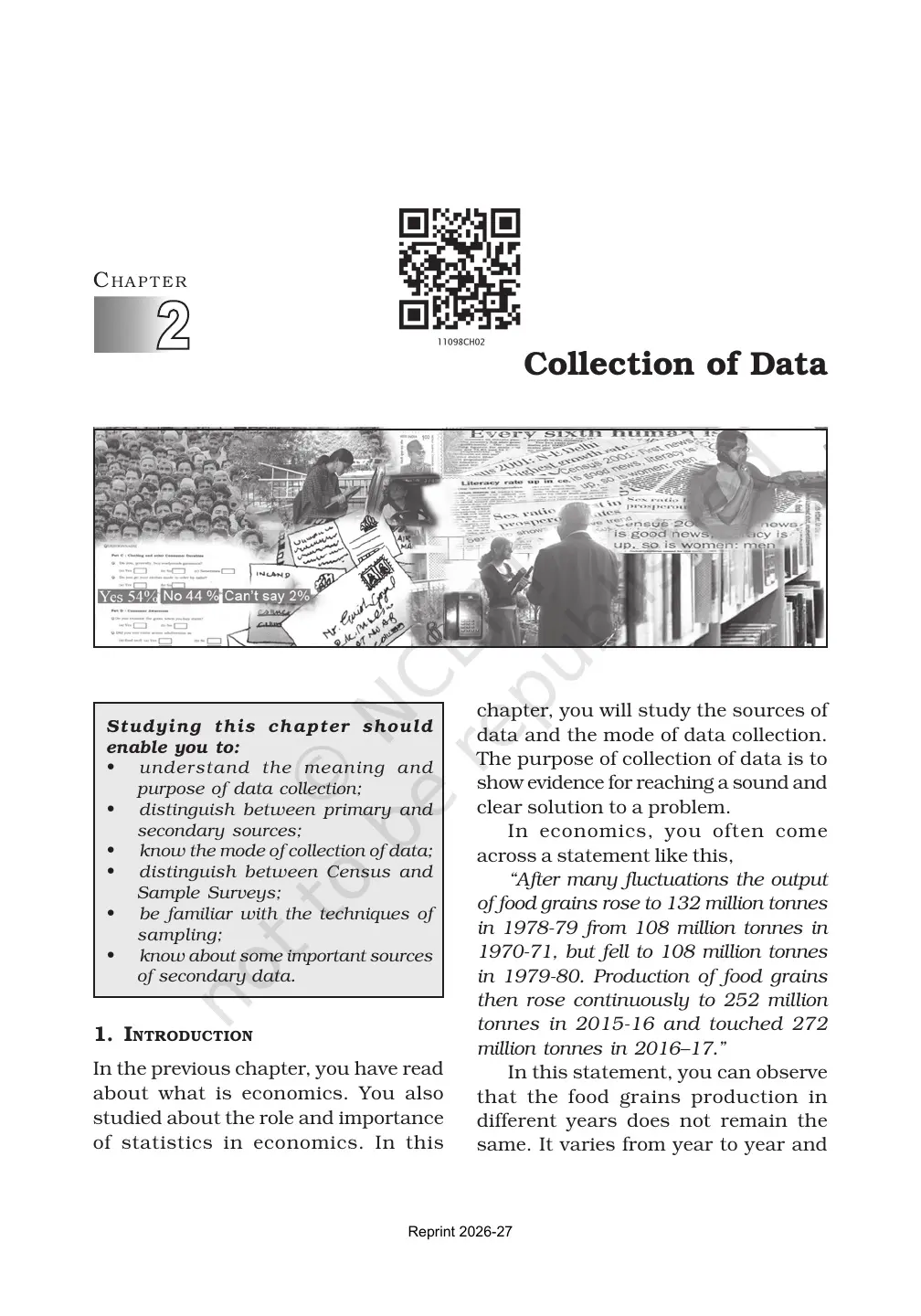
The NCERT Class 11 Economics Chapter 2 Collection of Data Book PDF gives students the official Statistics for Economics chapter for the 2026-27 syllabus. Use it to read NCERT's explanation of primary data, secondary data, census survey, sample survey and data collection methods.
- Book section: official NCERT chapter text, examples, tables and exercise questions.
- Best use: read the PDF before making notes on sources and sampling.
- Revision cue: compare primary and secondary data with one clear example each.
Student Feedback: In a Collegedunia check of 10,860 Class 11 Economics students, 68% said this chapter became easier after they made a two-column table for primary and secondary data.
Collection of Data Class 11 NCERT Book PDF: What It Covers
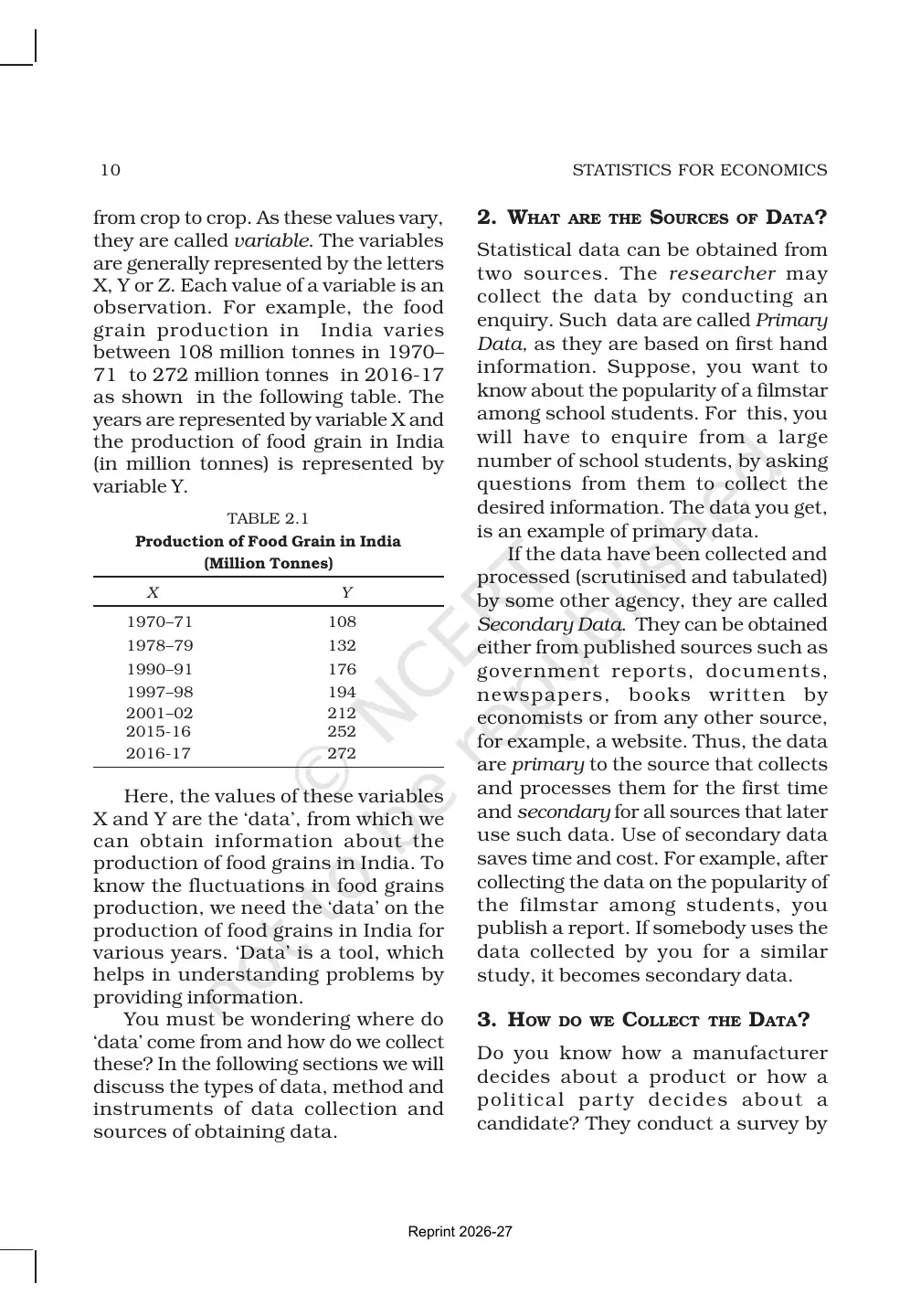
The chapter explains why data must be collected carefully before any economic conclusion is made. NCERT starts with variables and observations, then moves to sources, survey methods and sampling.
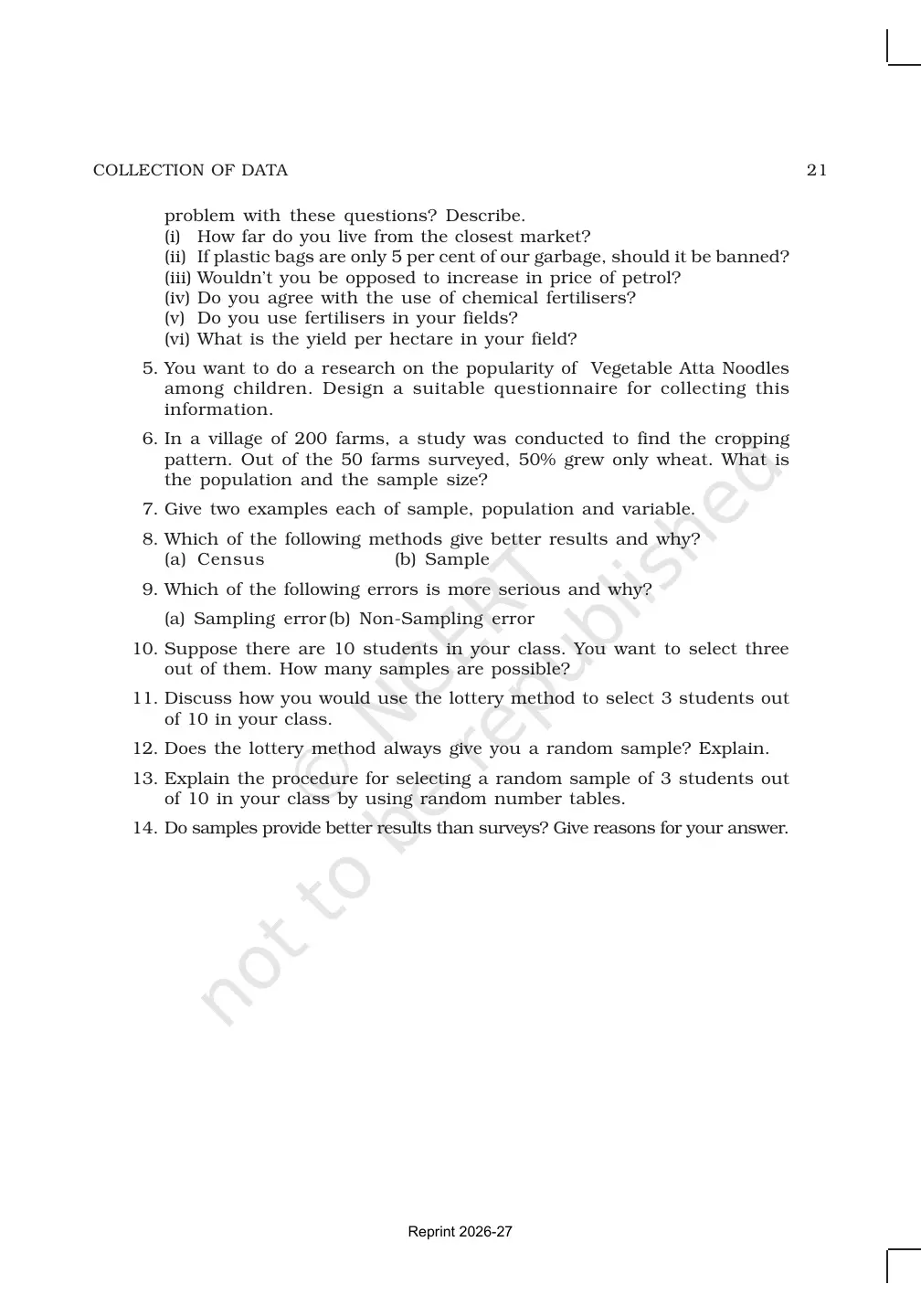
The PDF is the source text for Chapter 2. It gives the learning outcomes, chapter explanation, examples, tables and exercise questions in the same order as the official book.
| NCERT area | What students should notice | Answer cue |
|---|---|---|
| Purpose of data | Data gives evidence for economic decisions. | Write problem, evidence and conclusion together. |
| Sources of data | Primary data is fresh; secondary data is already collected. | Use one example for each source. |
| Survey choice | Census covers all units; sample survey covers selected units. | Compare cost, time and accuracy. |
Collection of Data Quick Revision for Class 11
Source: Magnet Brains on YouTube
Primary and Secondary Data in Collection of Data
Primary data is collected first-hand for a specific study. It is useful when the exact information is not already available, but it needs more time, money and planning.
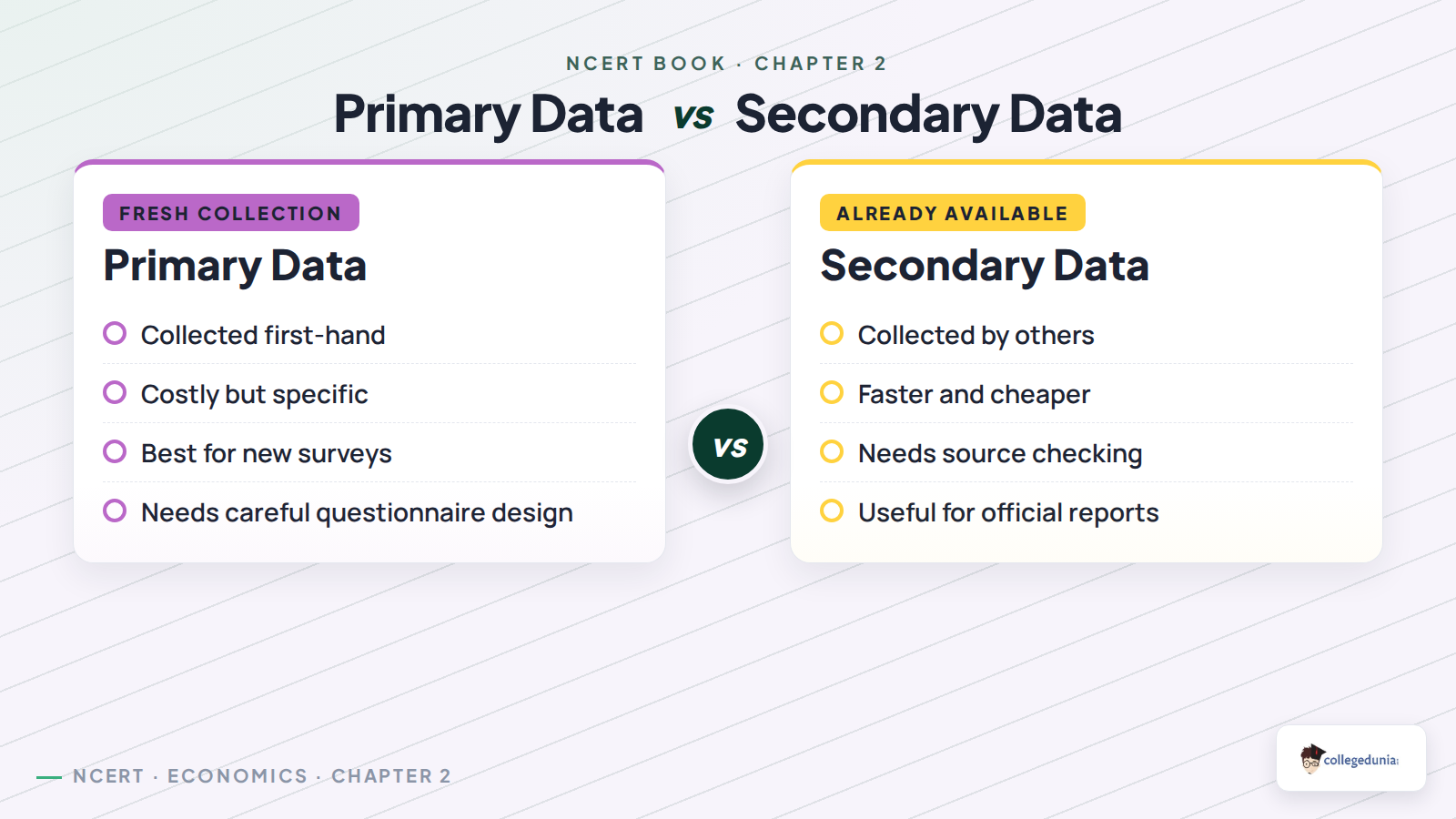
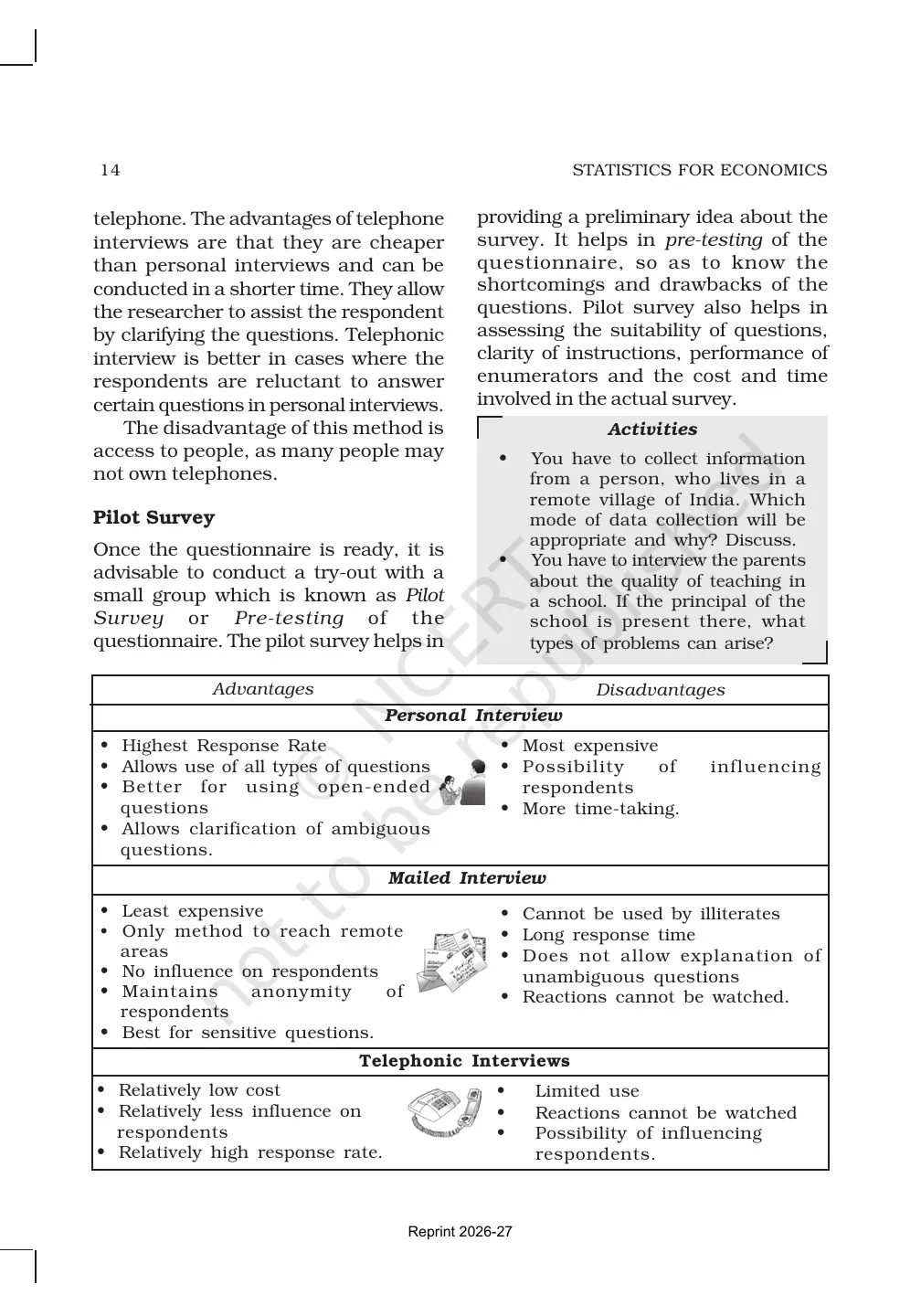
- Primary data: collected through interview, questionnaire, schedule or observation.
- Secondary data: taken from reports, government publications, journals or websites.
- Exam tip: always check whether the source is original or already published.
Most short answers from this chapter ask students to define the source and then give one practical example.
Data Collection Process Used in the NCERT Chapter
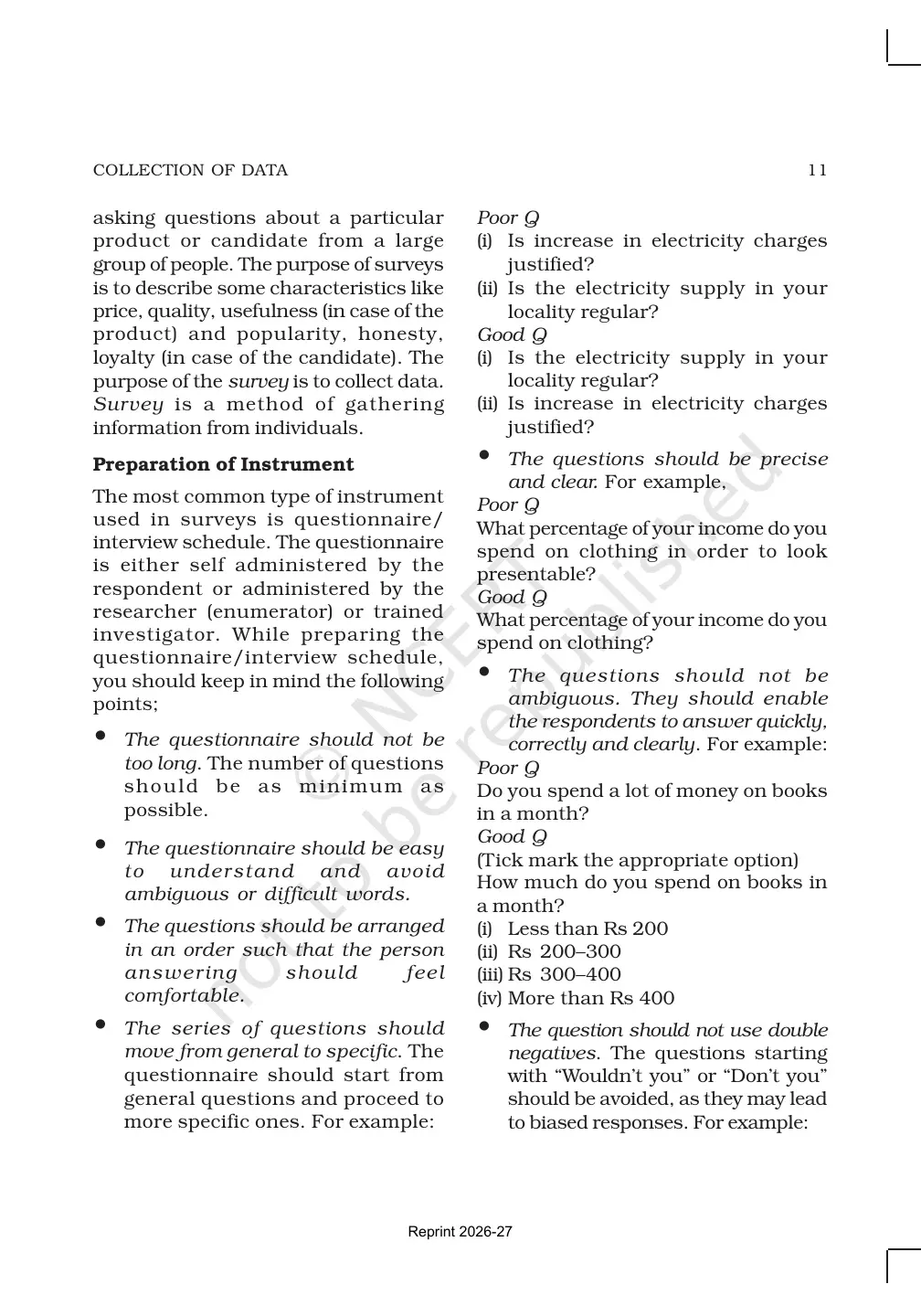
NCERT treats data collection as a planned process. A student should not start with a questionnaire before the problem, source and method are clear.
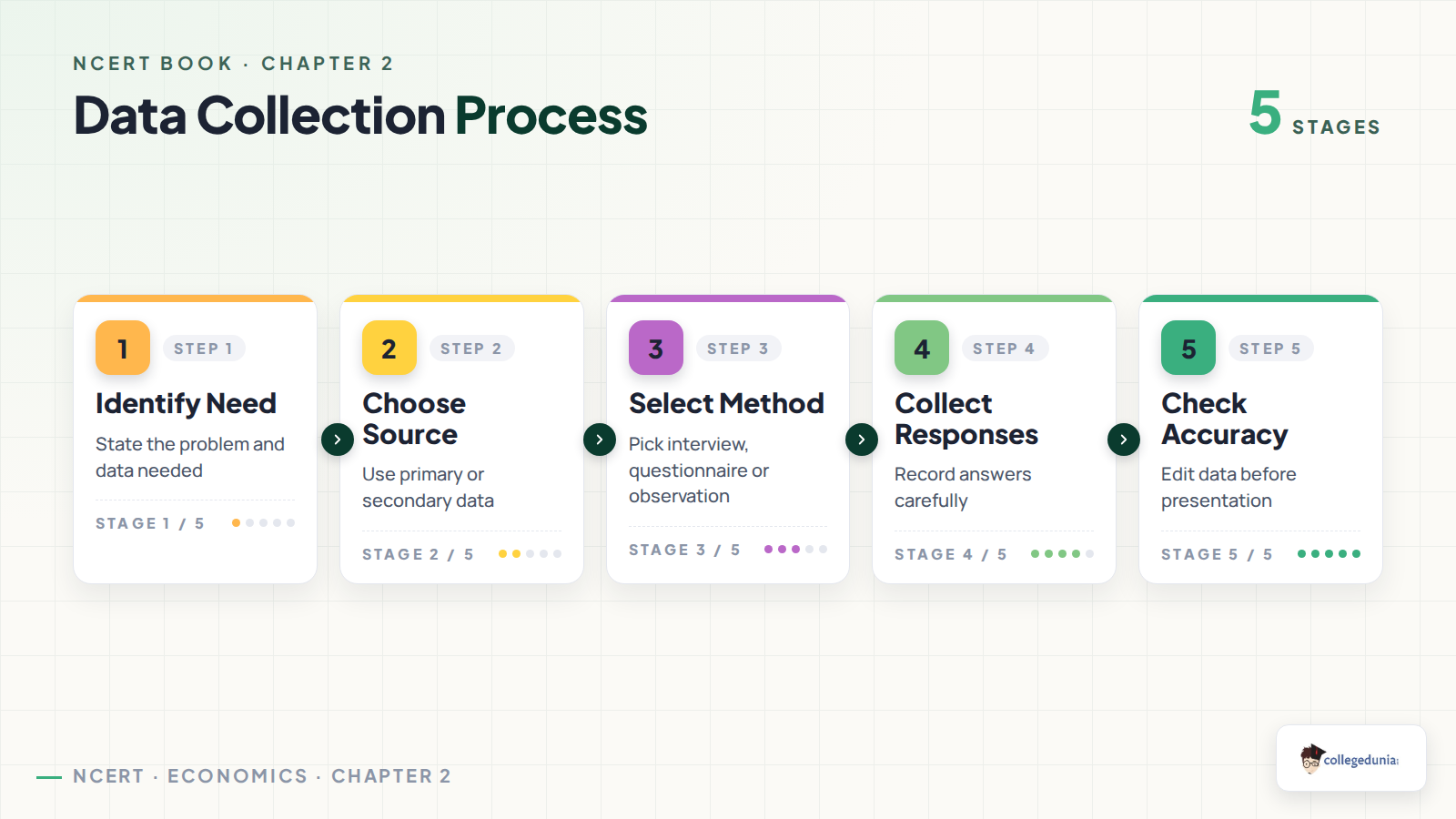
- Define the problem so the survey does not collect random facts.
- Choose the source based on whether fresh data is needed.
- Select the method after checking cost, time and coverage.
- Edit the data before it is organised and presented.
Census and Sample Survey in Collection of Data
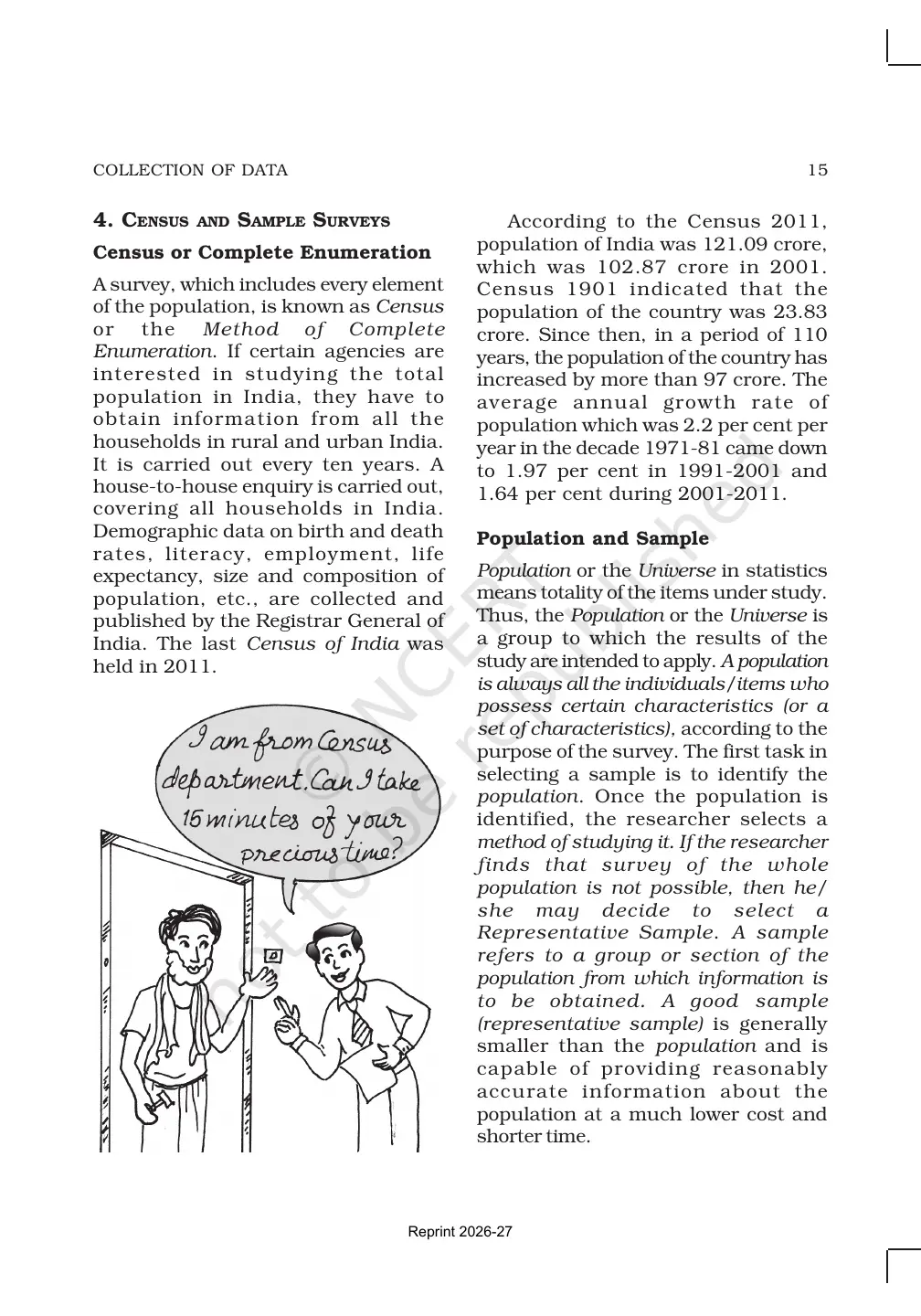
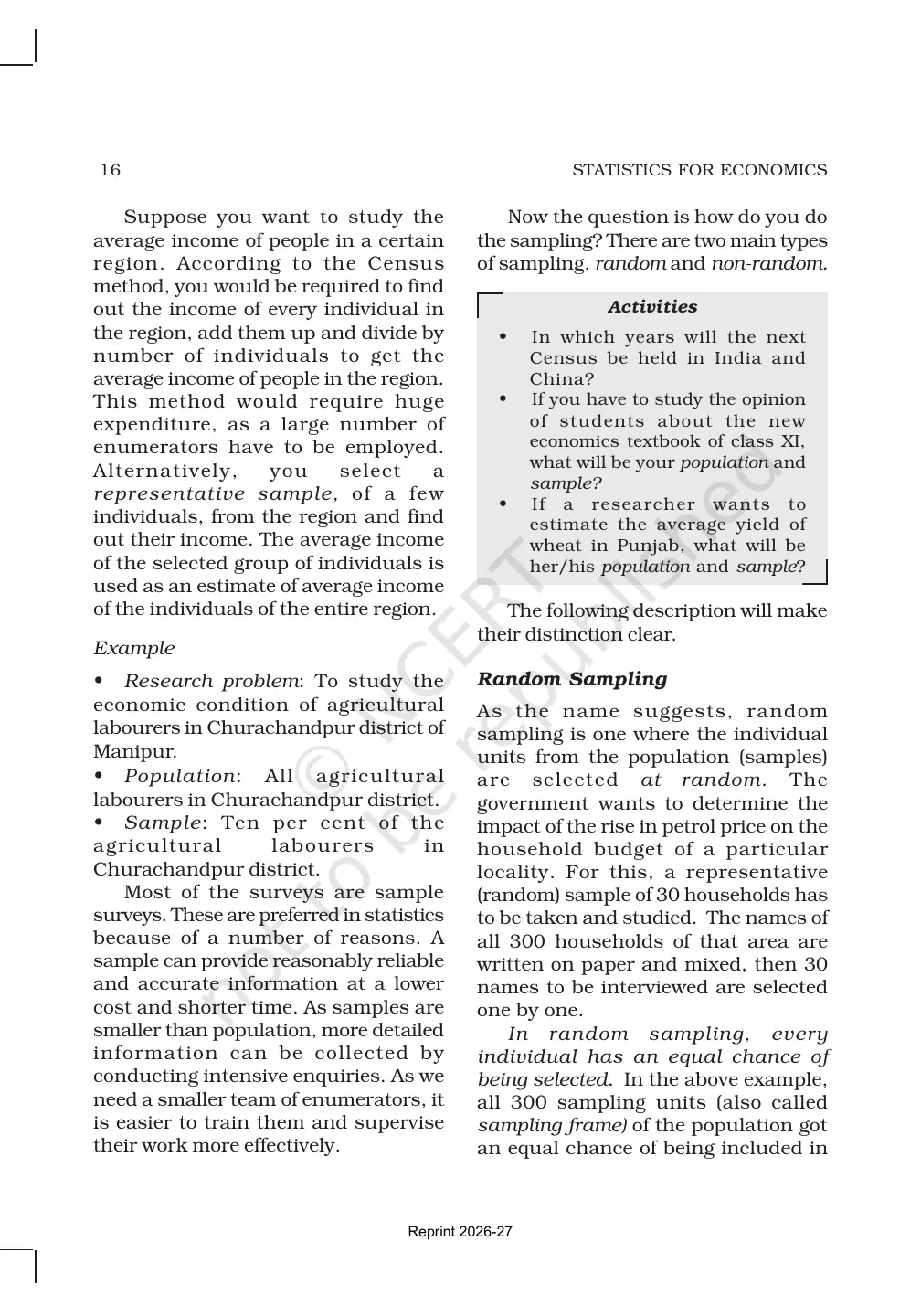
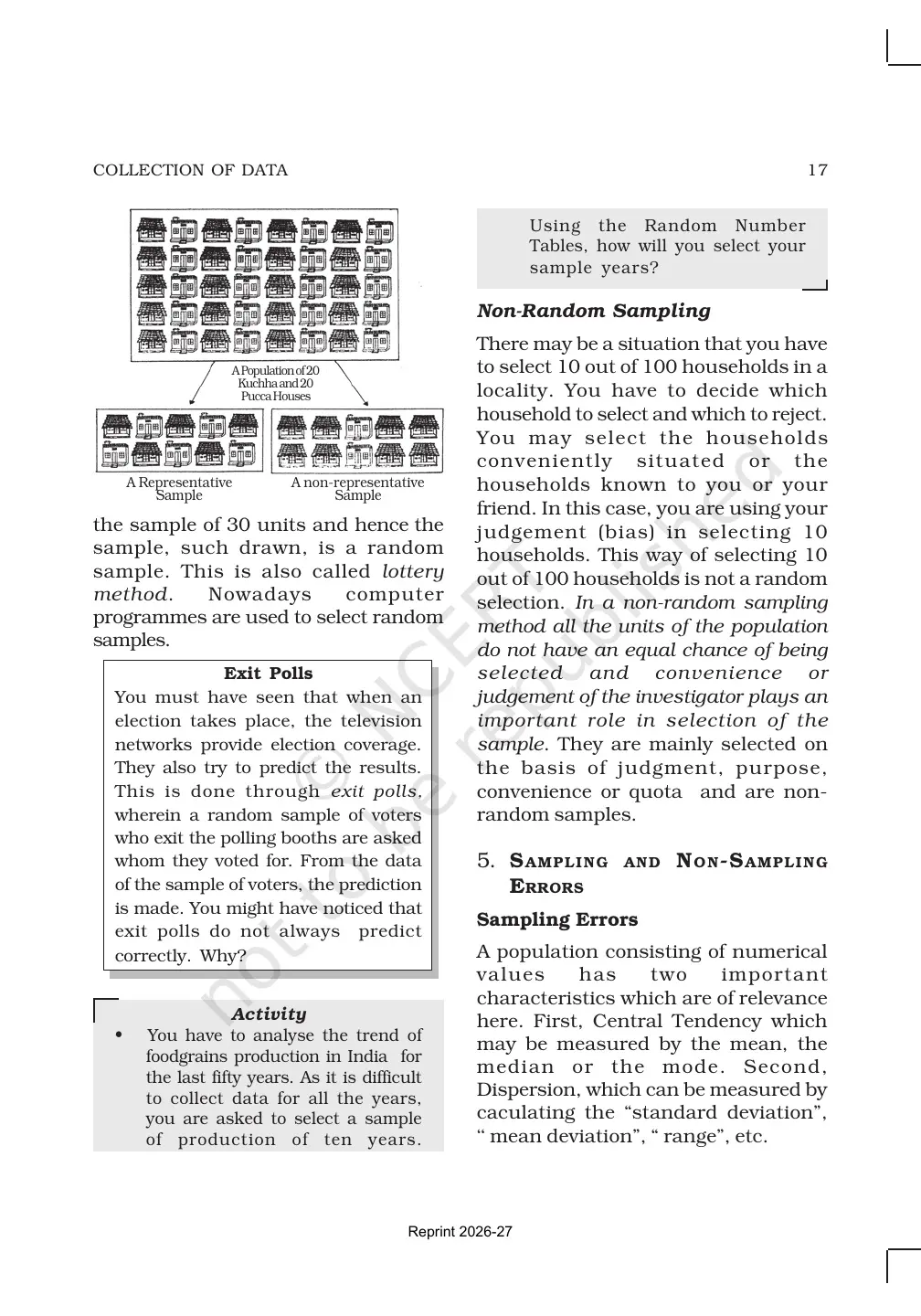
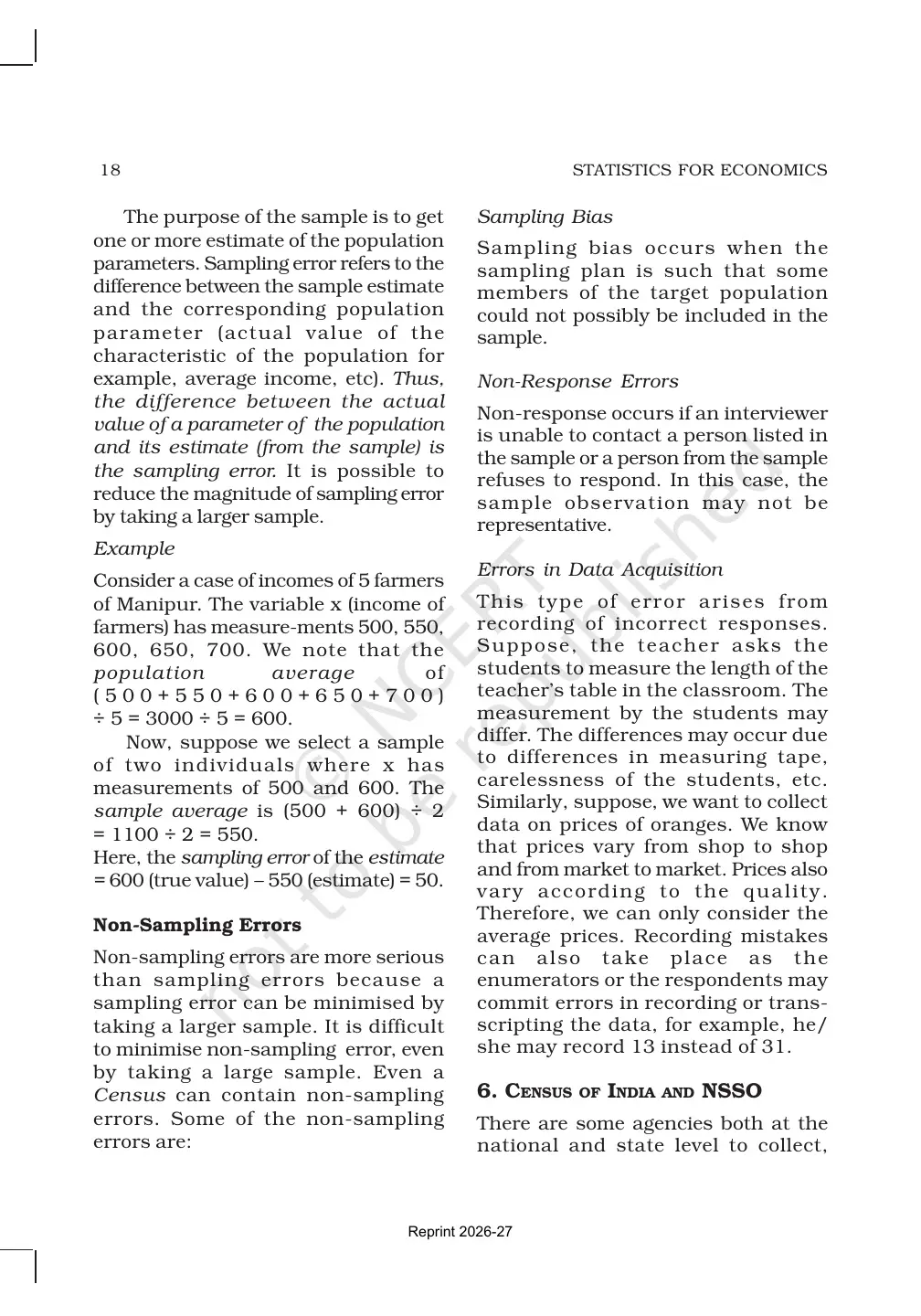
A census survey studies every unit of the population. A sample survey studies only selected units and uses them to understand the full population.
| Basis | Census survey | Sample survey |
|---|---|---|
| Coverage | Every unit is covered. | Only selected units are covered. |
| Cost | Usually high. | Usually lower. |
| Time | Takes more time. | Faster when the sample is well chosen. |
| Best use | Small population or official count. | Large population or quick study. |
The main scoring point is not that one method is always better. The better method depends on the purpose of the study.
How to Use the Collection of Data NCERT Book PDF
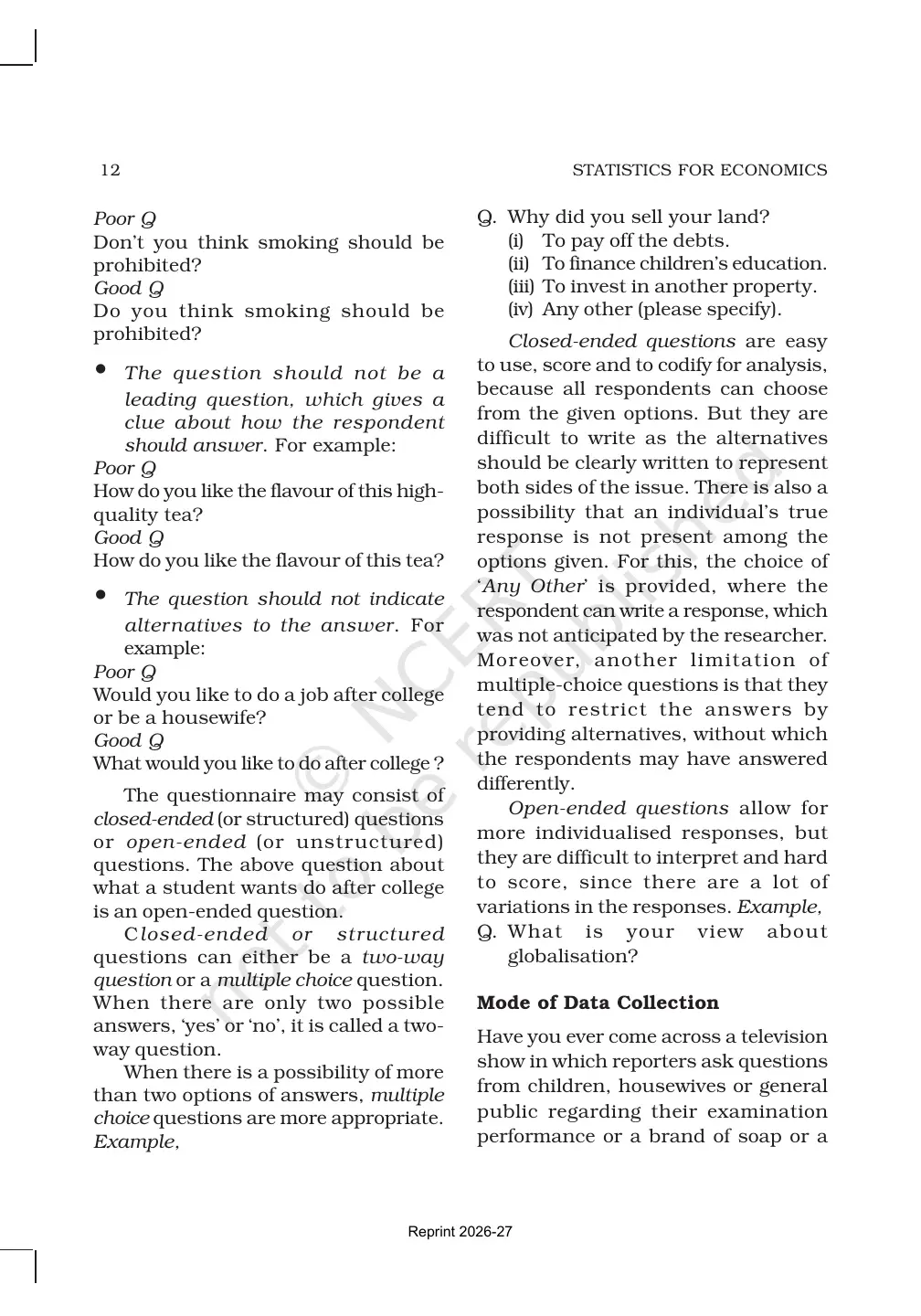
Read the PDF in three passes. First, underline definitions of primary data, secondary data, census and sample survey. Second, mark the examples NCERT gives. Third, solve the exercise questions in your own words.
- For definitions: keep the source, purpose and example in one answer.
- For comparisons: use a table with basis, meaning, cost and time.
- For long answers: explain the method and add one limitation.
- For revision: pair this PDF with notes after one full reading.
Related Class 11 Economics Resources for Collection of Data
Also Check: use the official book PDF with notes and practice resources for the same chapter.
| Resource | Best use | Link |
|---|---|---|
| NCERT Notes | Revise sources, methods and sampling quickly. | Collection of Data Notes are scheduled. |
| NCERT Solutions | Practise textbook questions after reading the PDF. | Collection of Data NCERT Solutions are scheduled. |
| Handwritten Notes | Use for quick visual revision before class tests. | Collection of Data Handwritten Notes are scheduled. |
Class 11 Economics Chapter Resources
The table below keeps this NCERT Book PDF connected with live Class 11 Economics revision pages. Chapters 1 to 8 come from Statistics for Economics, and Chapters 9 to 16 come from Indian Economic Development.
| Chapter | Title | Live revision link |
|---|---|---|
| Chapter 1 | Introduction | Introduction Book PDF |
| Chapter 2 | Collection of Data | Current NCERT Book PDF |
| Chapter 3 | Organisation of Data | Organisation of Data Notes |
| Chapter 4 | Presentation of Data | Presentation of Data Notes |
| Chapter 5 | Measures of Central Tendency | Measures of Central Tendency Notes |
| Chapter 7 | Index Numbers | Index Numbers Notes |
Collection of Data Class 11 Economics NCERT Book PDF FAQs
Ques. What does the Class 11 Economics Chapter 2 Collection of Data NCERT Book PDF include?
Ans. It includes the official NCERT chapter text, examples, tables, learning outcomes and exercise questions from Statistics for Economics.
Ques. Which book does Collection of Data belong to?
Ans. Collection of Data belongs to the Class 11 Statistics for Economics NCERT textbook.
Ques. Is this NCERT Book PDF useful for the 2026-27 syllabus?
Ans. Yes. The PDF is from the official NCERT reprint for 2026-27 and should be used as the source chapter before notes or solutions.
Ques. What should students revise first from Collection of Data?
Ans. Students should revise primary data, secondary data, census survey, sample survey and methods of collecting data.



Comments