



मनुष्यता (Manushyata) by मैथिलीशरण गुप्त is chapter 3 of स्पर्श भाग 2, the Class 10 Hindi Course B textbook. The ncert book class 10 hindi sparsh chapter 3 मैथिलीशरण गुप्त - मनुष्यता file on this page is the official NCERT chapter for 2026-27. Download it to read all eight stanzas, the शब्दार्थ list and the full प्रश्न-अभ्यास straight from the source.
- Chapter: Chapter 3, मनुष्यता by मैथिलीशरण गुप्त, the third poem of the पद्य खंड
- Book: स्पर्श भाग 2 is the Class 10 Hindi Course B textbook for 2026-27, with 14 chapters
- File: 7 pages, the complete official chapter
You can page through the कवि परिचय, all eight stanzas of the poem and every exercise in the reader above before downloading the file.
This is the official NCERT chapter file for the 2026-27 session, hosted by Collegedunia with no pages removed.
How the मनुष्यता Chapter Is Laid Out
Every poem in स्पर्श भाग 2 is built from the same parts, and मनुष्यता is the third of them. The table below lists them in file order.
| Part of the chapter | What it does |
|---|---|
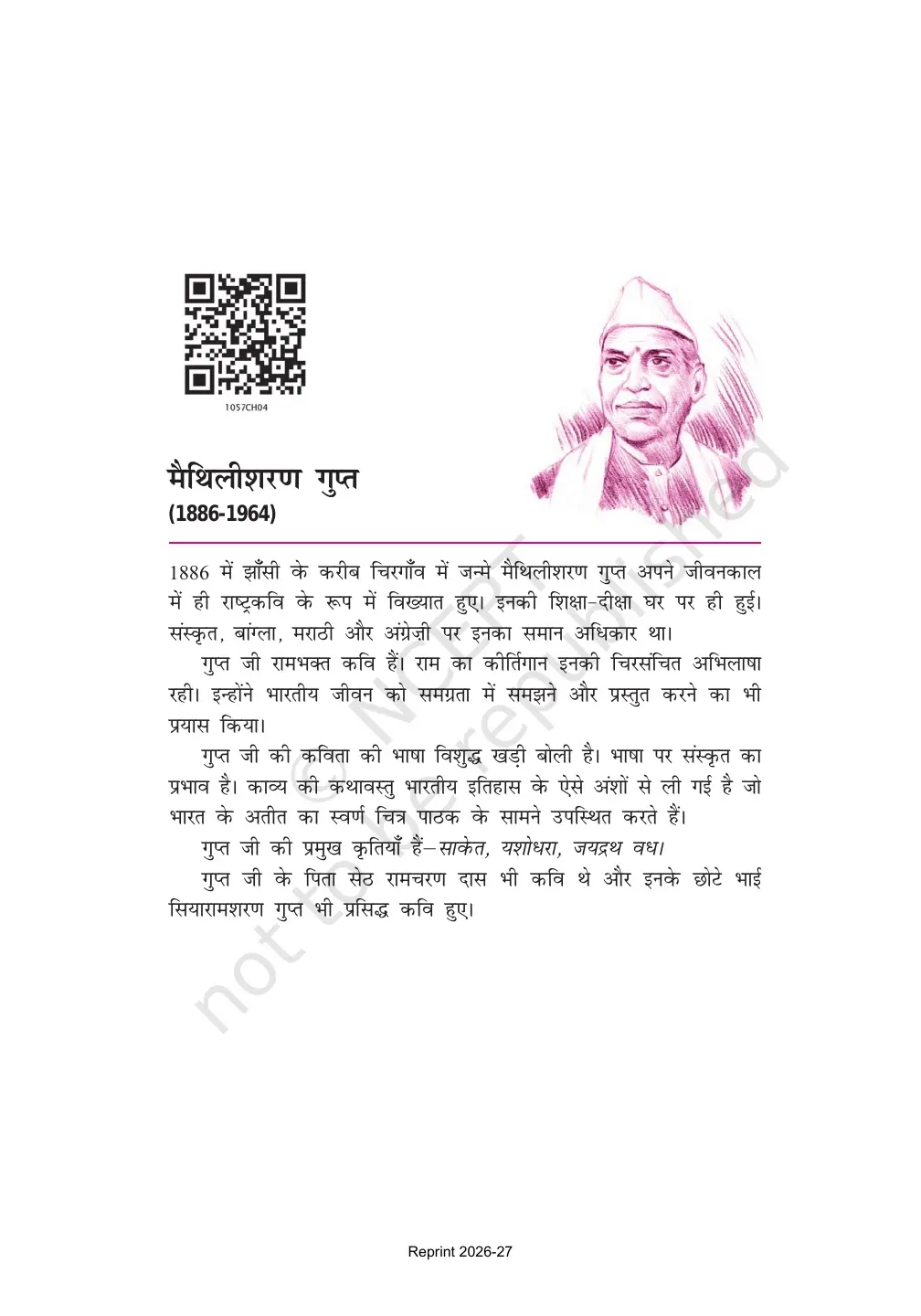
| कवि परिचय | life sketch of मैथिलीशरण गुप्त, 1886 to 1964, born at चिरगाँव near झाँसी |
| पाठ प्रवेश | the lead-in separating पशु behaviour from मनुष्य behaviour |
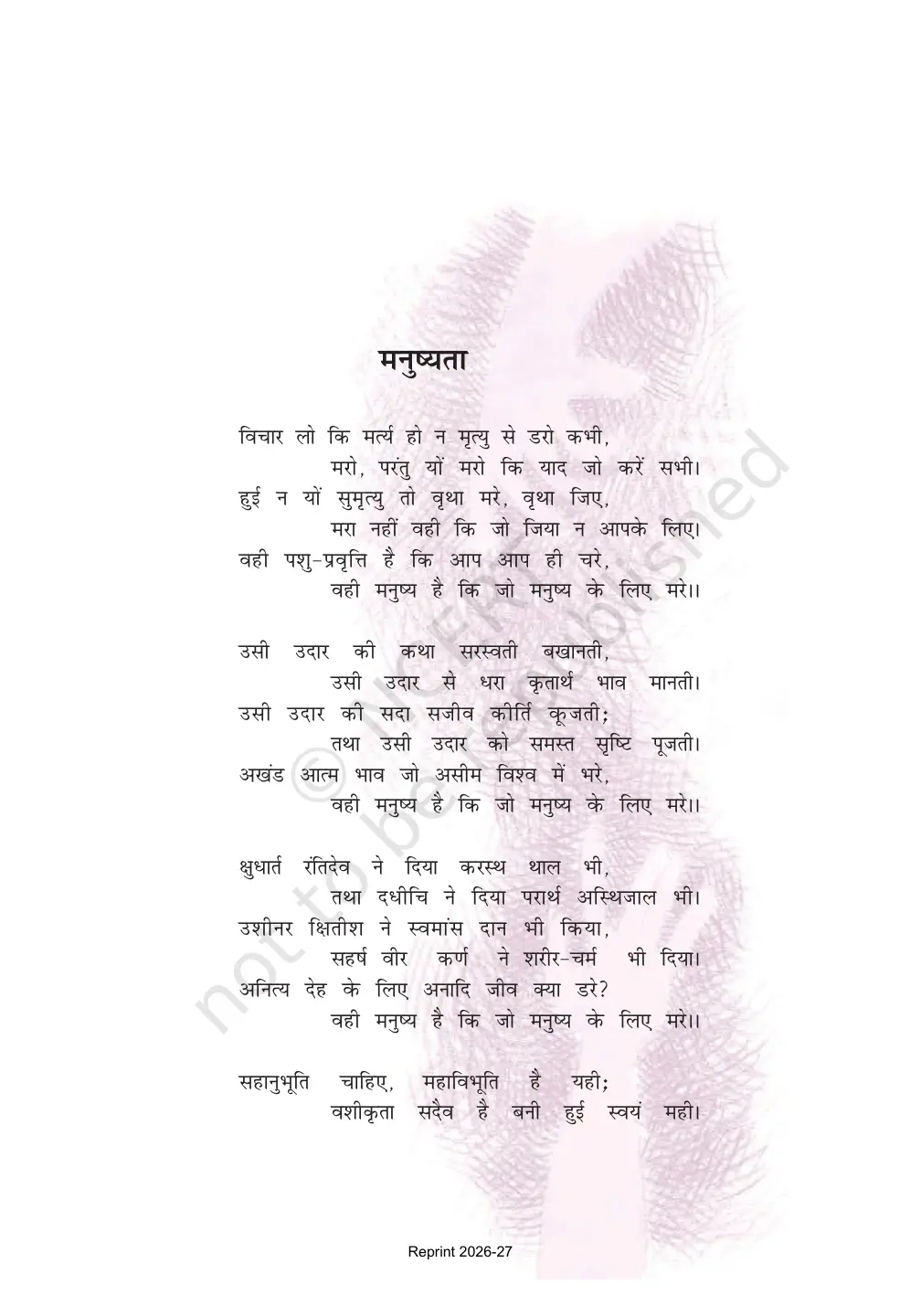
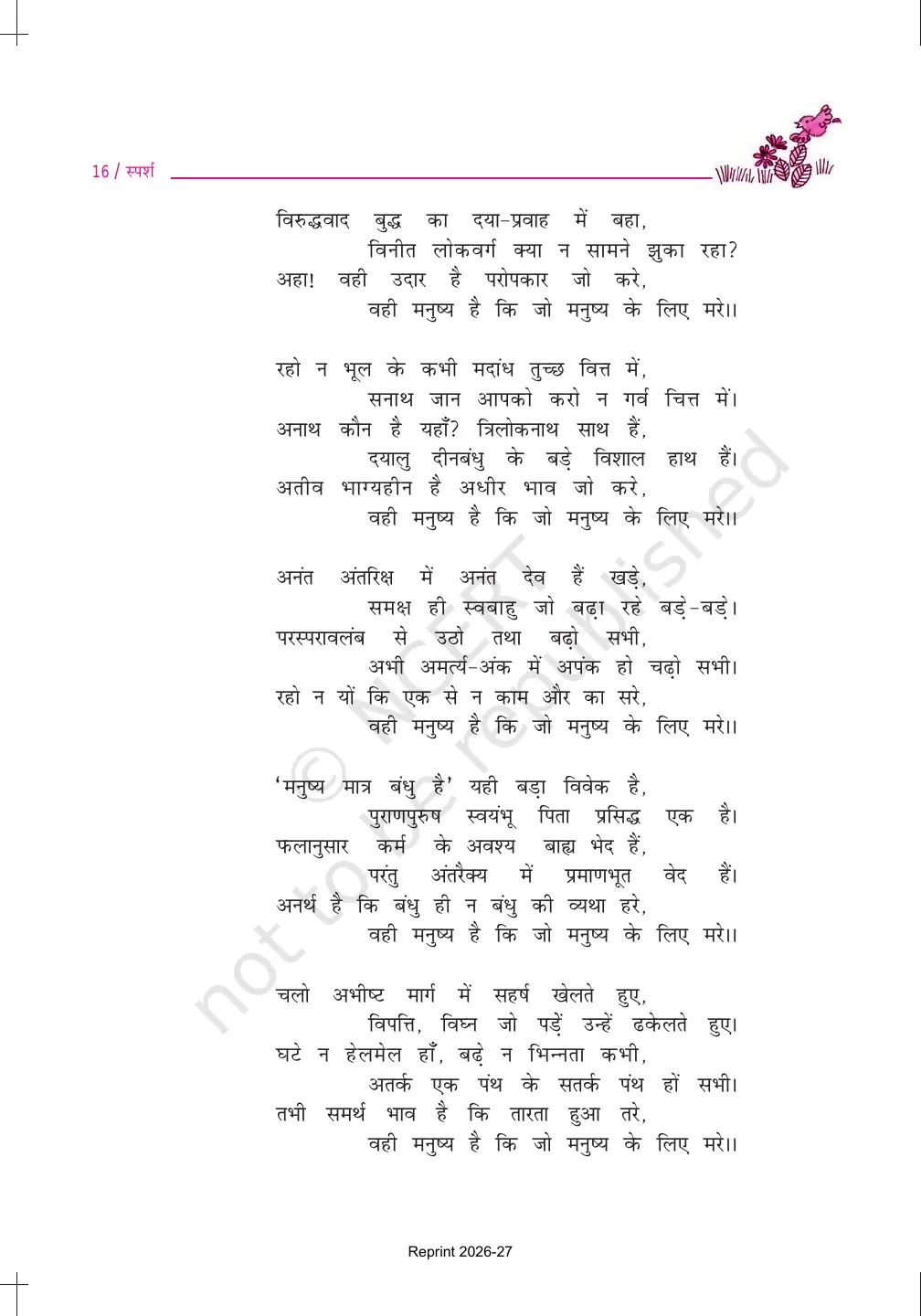
| मनुष्यता | the poem itself, eight stanzas of six lines each |
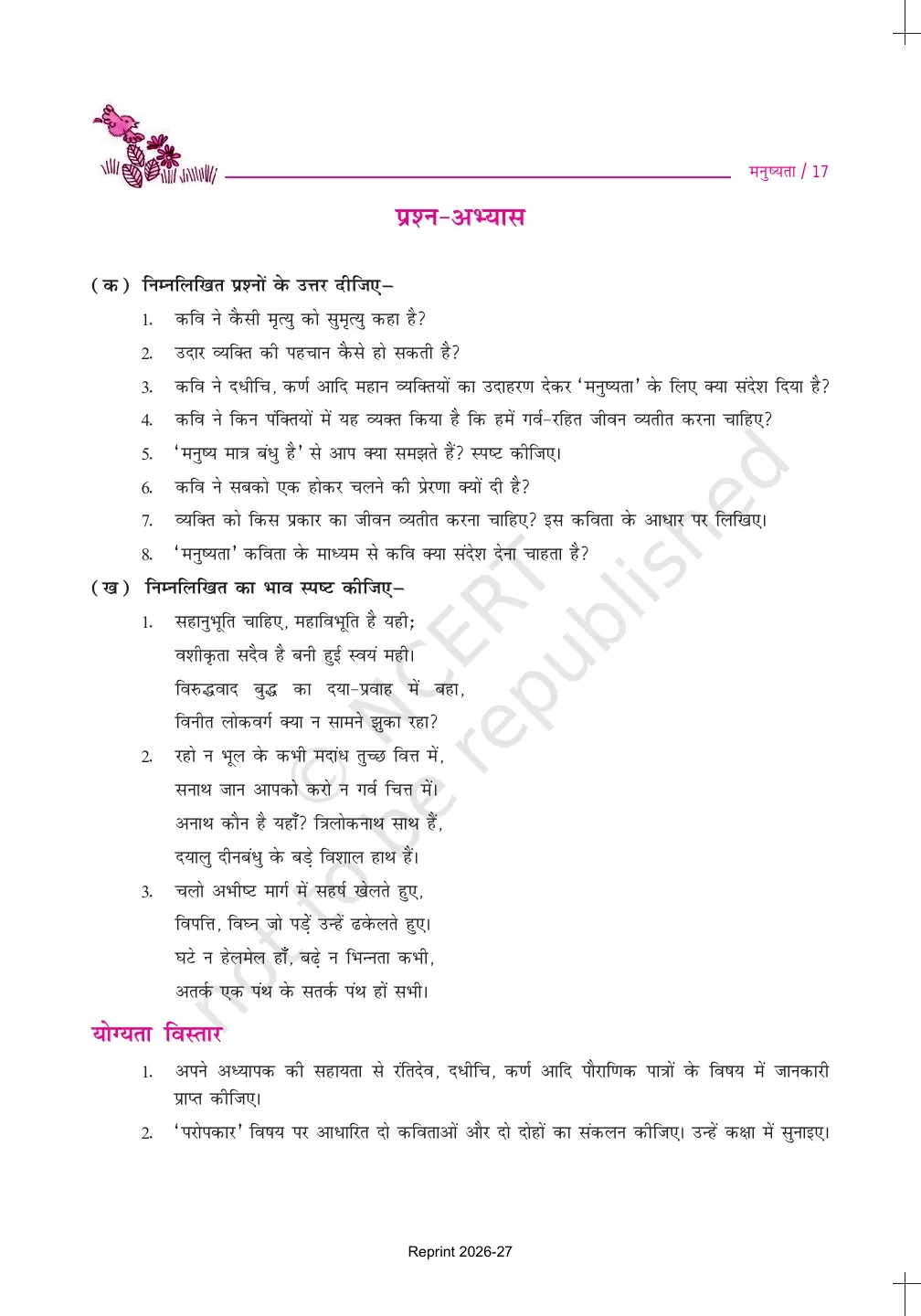
| प्रश्न-अभ्यास (क) | eight short answer questions on the poem |
| प्रश्न-अभ्यास (ख) | three passages set for भाव स्पष्ट कीजिए |
| योग्यता विस्तार | two tasks, on the पौराणिक characters and on परोपकार |
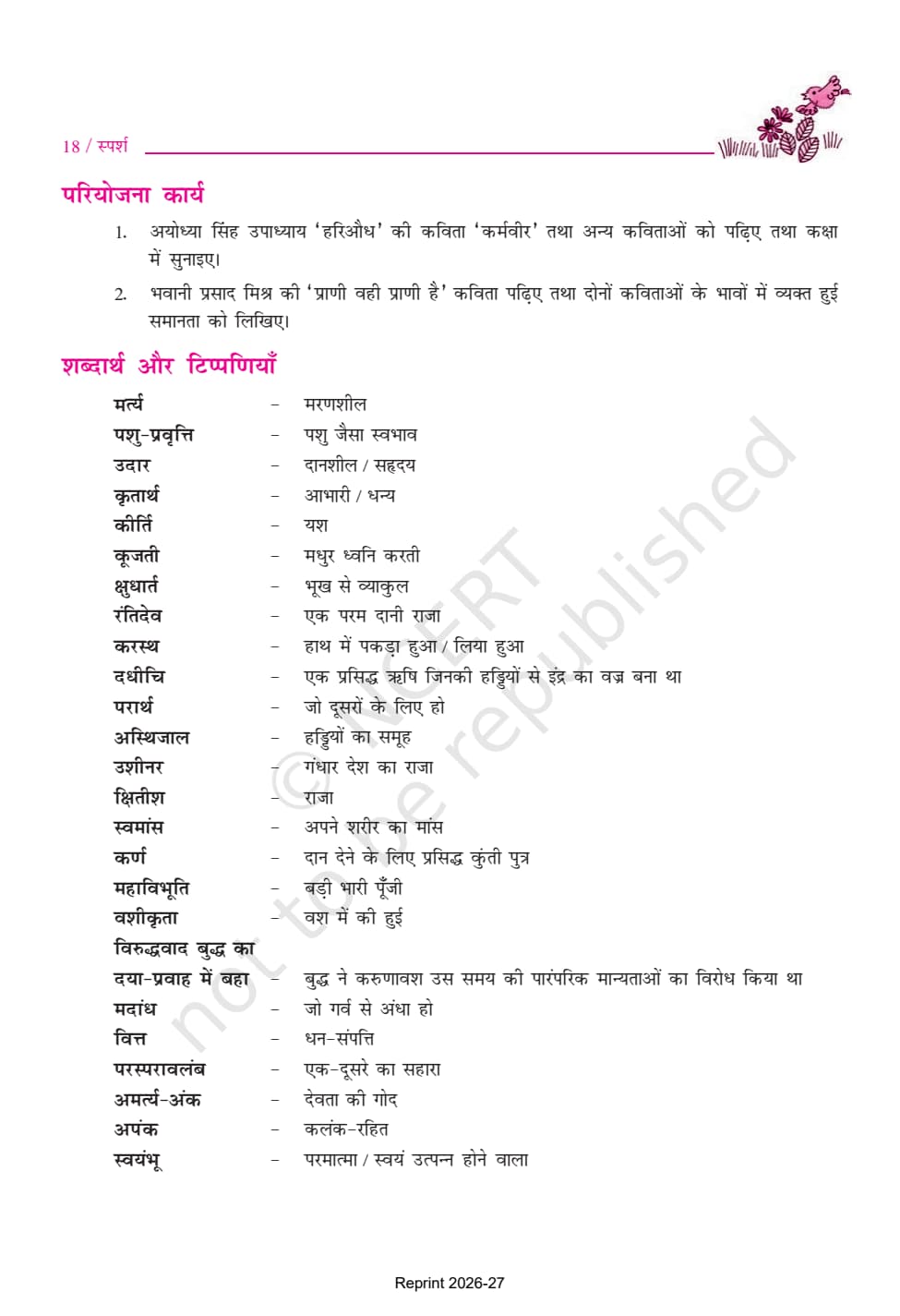
| परियोजना कार्य | two comparison readings outside the textbook |
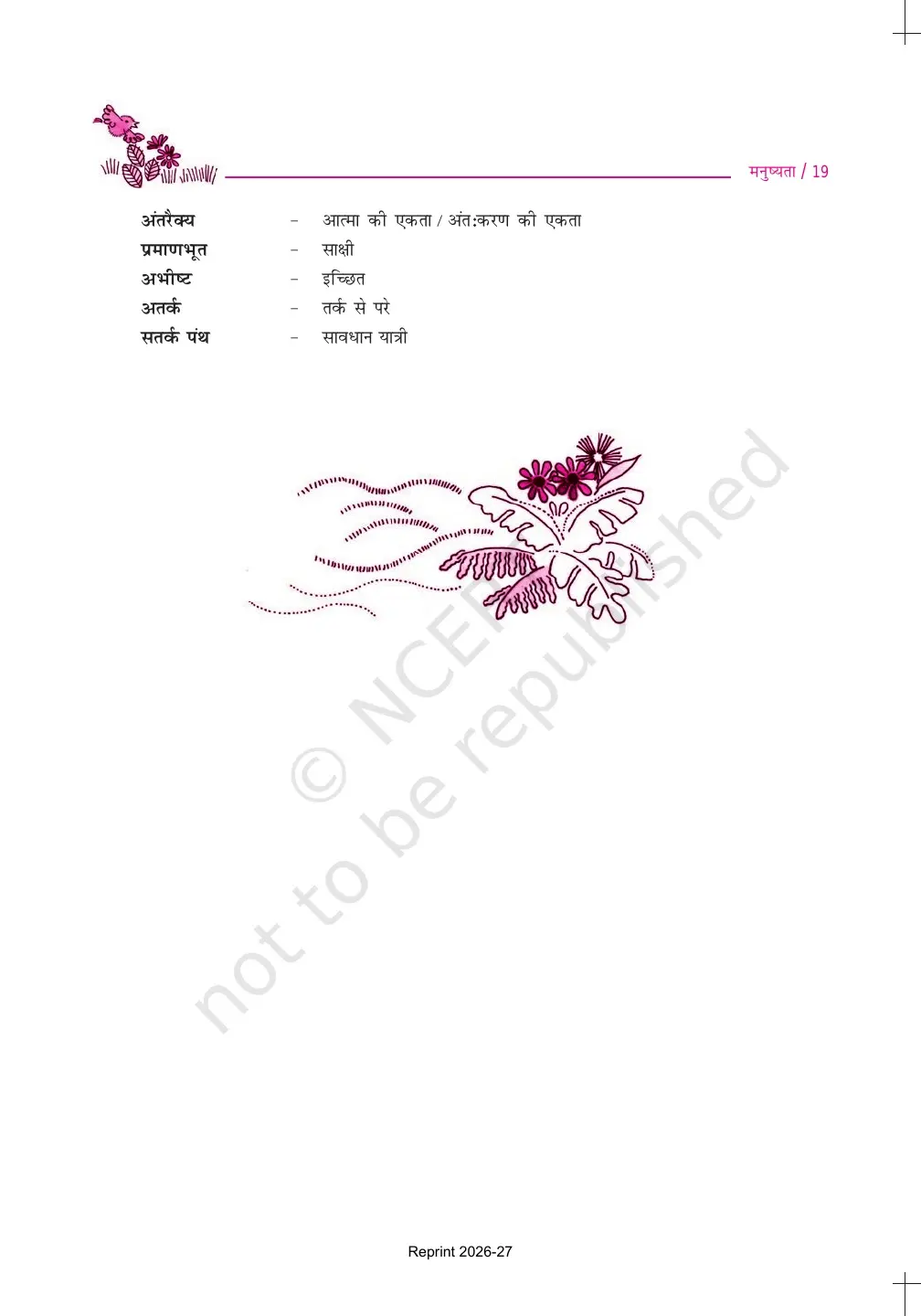
| शब्दार्थ और टिप्पणियाँ | about thirty word meanings across the last two pages |
What the मनुष्यता Chapter PDF Contains
The PDF holds the whole chapter exactly as NCERT printed it, with nothing trimmed.
- All eight stanzas, opening with विचार लो कि मर्त्य हो न मृत्यु से डरो कभी and closing with तभी समर्थ भाव है कि तारता हुआ तरे
- The कवि परिचय, naming साकेत, यशोधरा and जयद्रथ वध as his major works and recording that he was called राष्ट्रकवि in his own lifetime
- पाठ प्रवेश, which frames the question the poem answers: what are the गुण that keep a person alive in other people's memory
- The full प्रश्न-अभ्यास in both parts, plus योग्यता विस्तार and परियोजना कार्य
- शब्दार्थ और टिप्पणियाँ, running from मर्त्य to सतर्क पंथ, with notes on दधीचि and on the बुद्ध line
मनुष्यता Class 10 Important Questions Explained
Source: Magnet Brains on YouTube
What मनुष्यता Says About परहित and सुमृत्यु
गुप्त opens with death and works backwards to how a life should be spent. The poem does not argue that dying is noble. It argues that a life spent only on yourself leaves nothing behind, so the death that follows is wasted twice over.
- सुमृत्यु is the first idea. मरो, परंतु यों मरो कि याद जो करें सभी sets the standard: die in a way that everyone remembers.
- The dividing line between animal and human is grazing. वही पशु-प्रवृत्ति है कि आप आप ही चरे makes feeding only yourself an animal instinct.
- The उदार person is the one सरस्वती tells stories about, the one धरा feels कृतार्थ toward, and the one whose कीर्ति stays सजीव.
- मनुष्य मात्र बंधु है is the widest claim: one स्वयंभू father, differences that are only बाह्य and follow from कर्म, and the वेद as प्रमाण of अंतरैक्य.
- Pride is ruled out. Do not go मदांध over तुच्छ वित्त, and do not count yourself सनाथ while others are not, because अनाथ कौन है यहाँ?
- परस्परावलंब is the practical instruction: rise on each other's support, and climb अपंक into the lap of the immortals.
The last stanza turns all of it into one image. Walk the अभीष्ट मार्ग सहर्ष, push विपत्ति and विघ्न aside, and cross by carrying others across: तारता हुआ तरे.
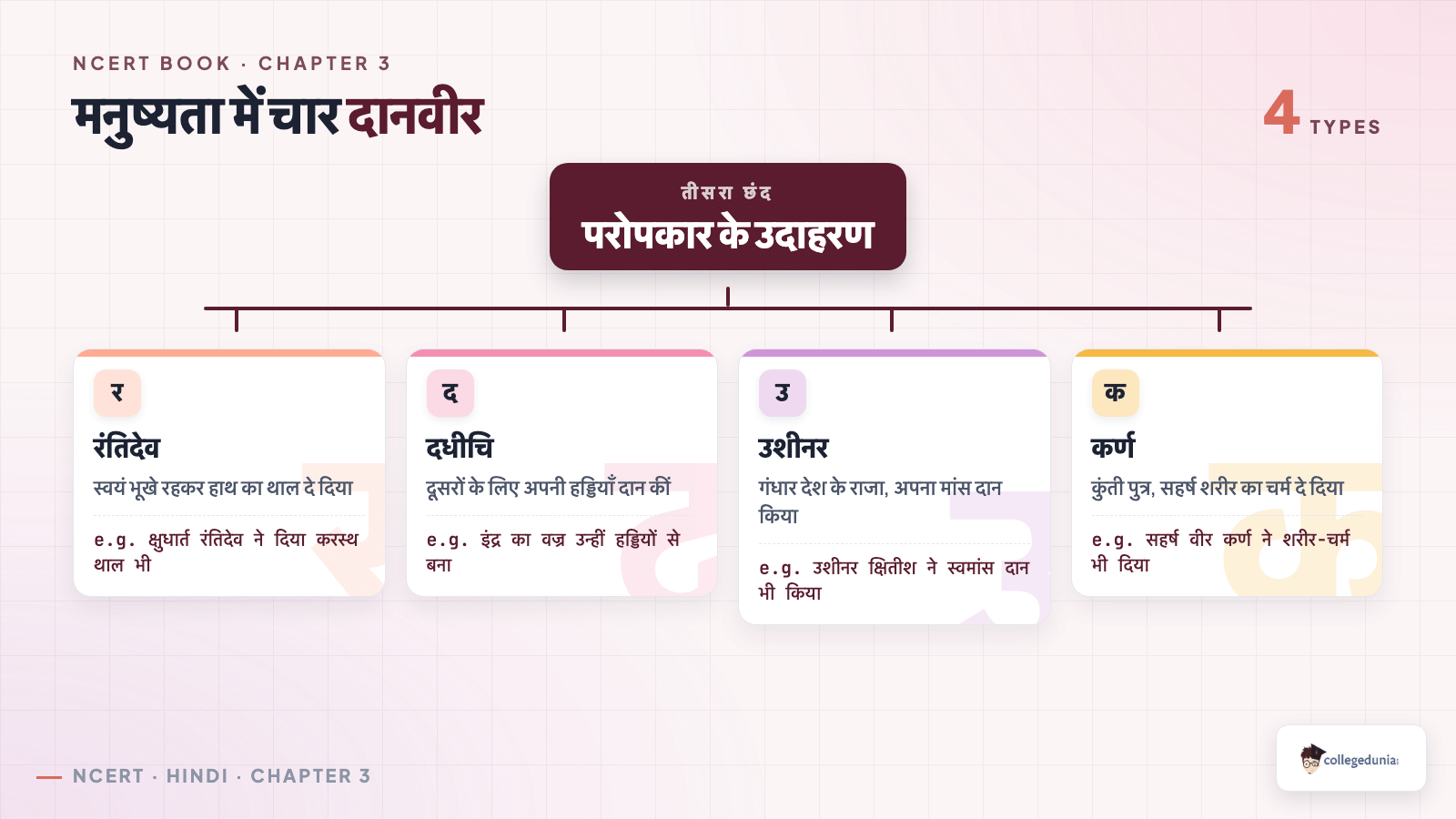
रंतिदेव, दधीचि, उशीनर and कर्ण in मनुष्यता
The third stanza is the one students are asked about most, because it stacks four donors into four lines. Each name is glossed on the शब्दार्थ page, so the PDF gives you the reference and the line together.
| Exemplar | What he gave | How the poem puts it |
|---|---|---|
| रंतिदेव | the plate of food in his own hands, while himself क्षुधार्त | क्षुधार्त रंतिदेव ने दिया करस्थ थाल भी |
| दधीचि | his अस्थिजाल, given परार्थ; the note says इंद्र's वज्र came from those bones | तथा दधीचि ने दिया परार्थ अस्थिजाल भी |
| उशीनर | his own स्वमांस; the शब्दार्थ page names him king of गंधार देश | उशीनर क्षितीश ने स्वमांस दान भी किया |
| कर्ण | his शरीर-चर्म, given सहर्ष | सहर्ष वीर कर्ण ने शरीर-चर्म भी दिया |
The stanza closes with अनित्य देह के लिए अनादि जीव क्या डरे? The body passes, the जीव does not, so guarding the body at the cost of others is a poor trade. बुद्ध follows one stanza later on the same logic, opposing the fixed beliefs of his time out of दया rather than anger.
What the मनुष्यता प्रश्न-अभ्यास Asks
Unlike the two chapters before it, मनुष्यता carries no भाषा अध्ययन section. Several questions expect a line quoted from the poem rather than a summary.
| Section | What it asks you to do |
|---|---|
| प्रश्न-अभ्यास (क) | eight short answer questions: which death is सुमृत्यु, how an उदार व्यक्ति is recognised, the संदेश behind the दधीचि and कर्ण examples, the lines asking for a गर्व-रहित life, the sense of मनुष्य मात्र बंधु है, why everyone must walk together, and the poem's overall संदेश |
| प्रश्न-अभ्यास (ख) | three passages for भाव स्पष्ट कीजिए: the सहानुभूति and बुद्ध stanza, the मदांध and त्रिलोकनाथ stanza, and the चलो अभीष्ट मार्ग stanza |
| योग्यता विस्तार | finding out about रंतिदेव, दधीचि and कर्ण with your teacher's help, then collecting two poems and two दोहे on परोपकार |
| परियोजना कार्य | reading कर्मवीर by अयोध्या सिंह उपाध्याय 'हरिऔध', and comparing भवानी प्रसाद मिश्र's प्राणी वही प्राणी है with this poem |
Why गुप्त Writes मनुष्यता in Sanskritised खड़ी बोली
The कवि परिचय states it plainly: गुप्त's language is विशुद्ध खड़ी बोली with a visible संस्कृत influence. That sentence explains why the poem looks harder than it is.
- This is the first poem in स्पर्श भाग 2 written in the standard Hindi students already write in. कबीर's सधुक्कड़ी and मीरा's राजस्थानी and ब्रज mix both need translation; गुप्त needs only vocabulary.
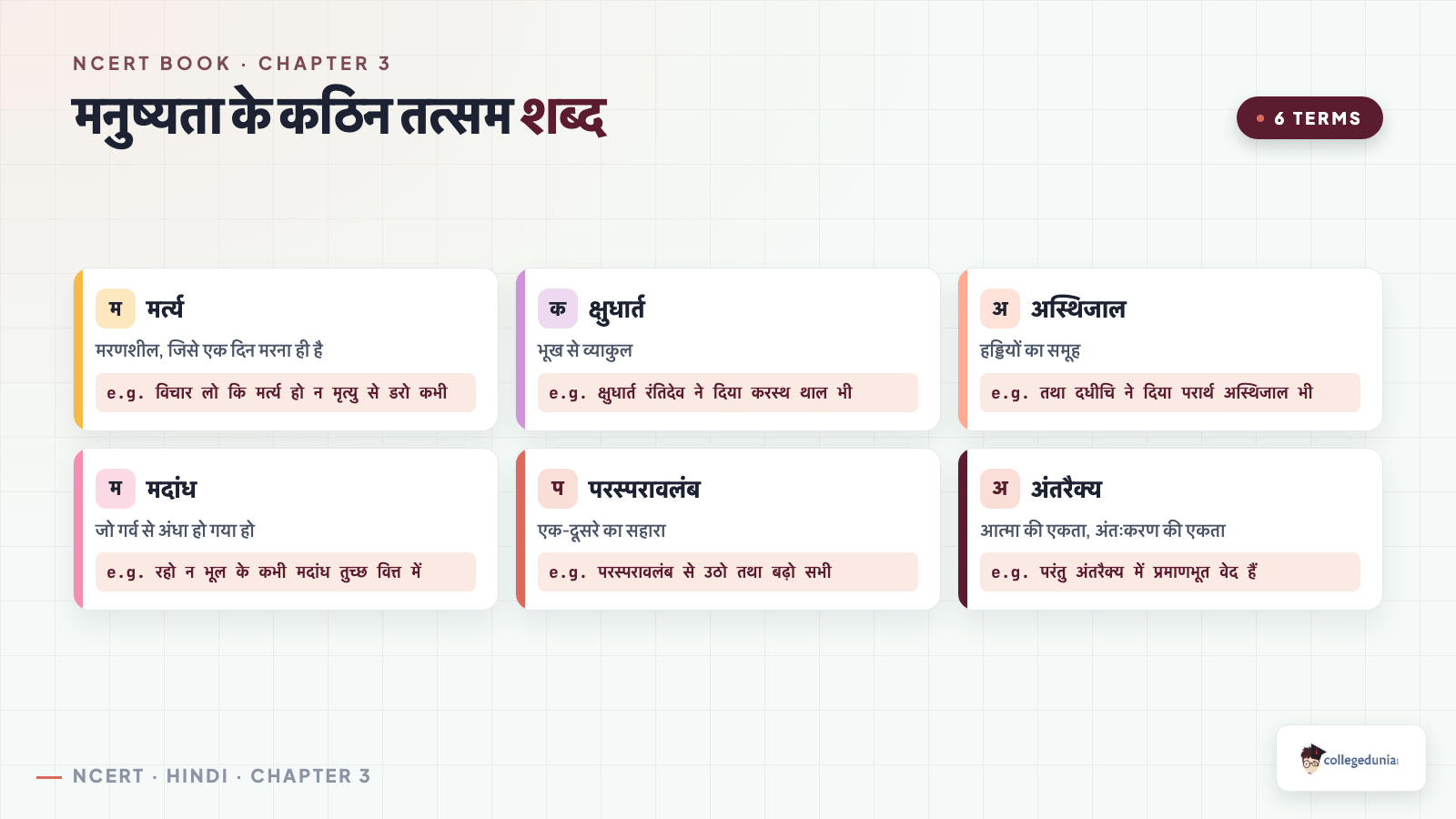
- The weight sits in तत्सम words, not in grammar: अखंड आत्म भाव, परस्परावलंब, अंतरैक्य, अमर्त्य-अंक and प्रमाणभूत carry the argument.
- Each stanza is three rhyming couplets closing on the same refrain, which is why the poem is easy to memorise once the words are clear.
- गुप्त had command over संस्कृत, बांग्ला, मराठी and अंग्रेज़ी, and drew his subject matter from Indian history, which is where the register comes from.
A Reading Plan for मनुष्यता and What Collegedunia Adds
Seven pages look short, but the poem moves from one idea to the next inside a single stanza. Work through the file in passes.
- Read all eight stanzas aloud once, ignoring the hard words. The refrain already tells you the argument.
- Take the शब्दार्थ pages next, since क्षुधार्त, करस्थ, वशीकृता and अपंक are not everyday Hindi
- Mark the four donors in stanza three, because question 3 and the योग्यता विस्तार task both come from those lines
- Underline the stanzas on pride and on walking together, where questions 4 and 6 sit
- Attempt प्रश्न-अभ्यास (ख) last, quoting the passage before you explain it
Alongside the file, Collegedunia adds the official chapter PDF with no pages removed, an in-browser reader for all seven pages, and notes and solutions for the same chapter where available.
मनुष्यता Class 10 Hindi NCERT Book PDF FAQs
Common Student Questions on the मनुष्यता Chapter File
Ques. Where can I download the Class 10 Hindi मनुष्यता NCERT Book PDF?
Ans. The official 7-page chapter file from स्पर्श भाग 2 is on this page, free to download.
Ques. How many stanzas does the poem मनुष्यता have in the Class 10 textbook?
Ans. Eight, each of six lines. Every stanza ends on the same refrain, वही मनुष्य है कि जो मनुष्य के लिए मरे.
Ques. What does मैथिलीशरण गुप्त call सुमृत्यु?
Ans. A death people remember. The poem says मरो, परंतु यों मरो कि याद जो करें सभी, and adds that whoever never lived for others has not really died either.
Ques. Who are रंतिदेव, दधीचि, उशीनर and कर्ण in मनुष्यता?
Ans. Four examples of giving. रंतिदेव gave away his food while starving, दधीचि gave his bones, उशीनर of गंधार gave his own flesh, and कर्ण gave the skin off his body.
Ques. What language is मनुष्यता written in?
Ans. विशुद्ध खड़ी बोली with a strong संस्कृत influence. The grammar is modern Hindi, but the vocabulary is heavily तत्सम.
Ques. Does chapter 3 have a भाषा अध्ययन section?
Ans. No. This chapter has प्रश्न-अभ्यास in two parts, योग्यता विस्तार and परियोजना कार्य, but no भाषा अध्ययन.
Ques. How many pages is the मनुष्यता chapter?
Ans. 7 pages in the 2026-27 स्पर्श भाग 2 edition, and this PDF is the complete chapter.
Ques. Is this the official NCERT file?
Ans. Yes. It is the NCERT chapter PDF hosted as published, with no pages removed or added.



Comments