




तोप (Top) by वीरेन डंगवाल is chapter 5 of स्पर्श भाग 2, the Class 10 Hindi Course B textbook. The ncert book class 10 hindi sparsh chapter 5 वीरेन डंगवाल - तोप file on this page is the official NCERT chapter for 2026-27. Download it to read the poem, the कवि परिचय, the पाठ प्रवेश, the शब्दार्थ list and the full प्रश्न-अभ्यास straight from the source.
- Chapter: Chapter 5, तोप by वीरेन डंगवाल, the fifth poem of the पद्य खंड
- Book: स्पर्श भाग 2 is the Class 10 Hindi Course B textbook for 2026-27, with 14 chapters
- File: 5 pages, the complete official chapter, printed on pages 28 to 30 of the book
You can page through the poem, the कवि परिचय and every exercise in the viewer above before downloading the file.
This is the official NCERT chapter file for the 2026-27 session, hosted by Collegedunia with no pages removed.
How the तोप Chapter Is Laid Out
Every poem in स्पर्श भाग 2 carries the same working parts, and तोप is the fifth of them. The poem is barely twenty lines, but the pages around it do real work. The table below lists the parts in order.
| Part of the chapter | What it does |
|---|---|
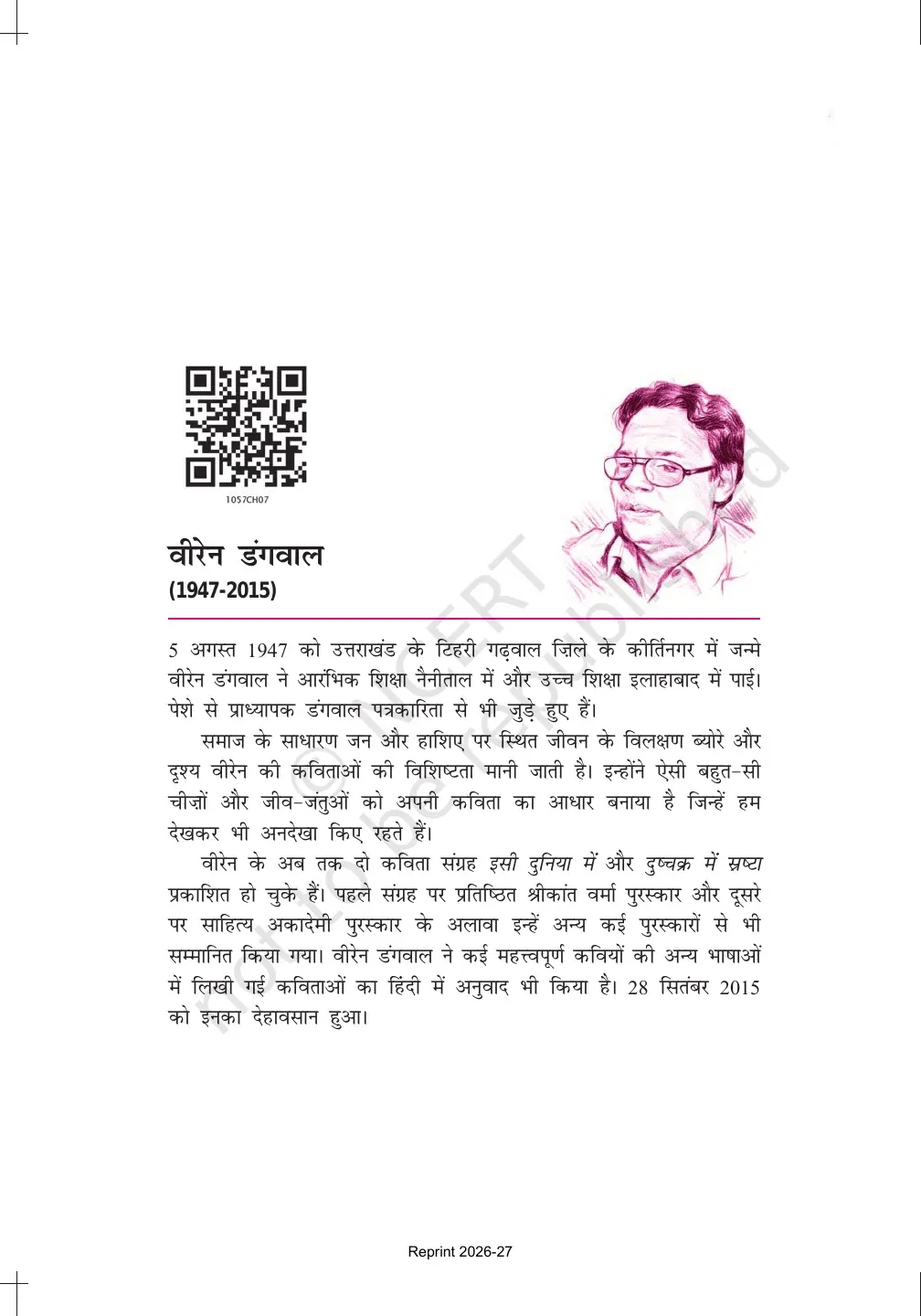
| कवि परिचय | the life sketch of वीरेन डंगवाल, born 5 August 1947 at कीर्तिनगर in टिहरी गढ़वाल, with his two collections and his awards |
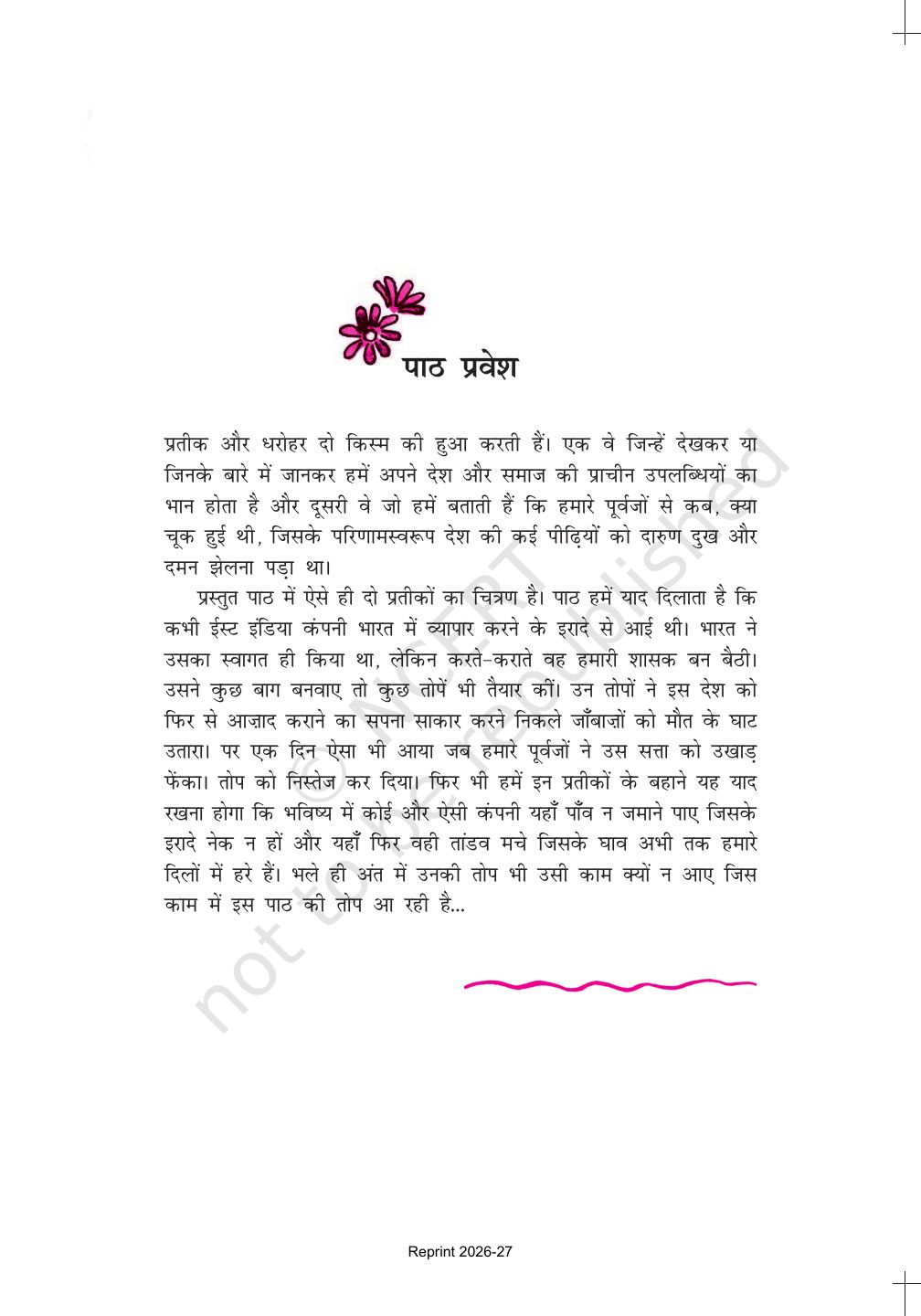
| पाठ प्रवेश | the lead-in that explains the two kinds of प्रतीक और धरोहर before the poem starts |
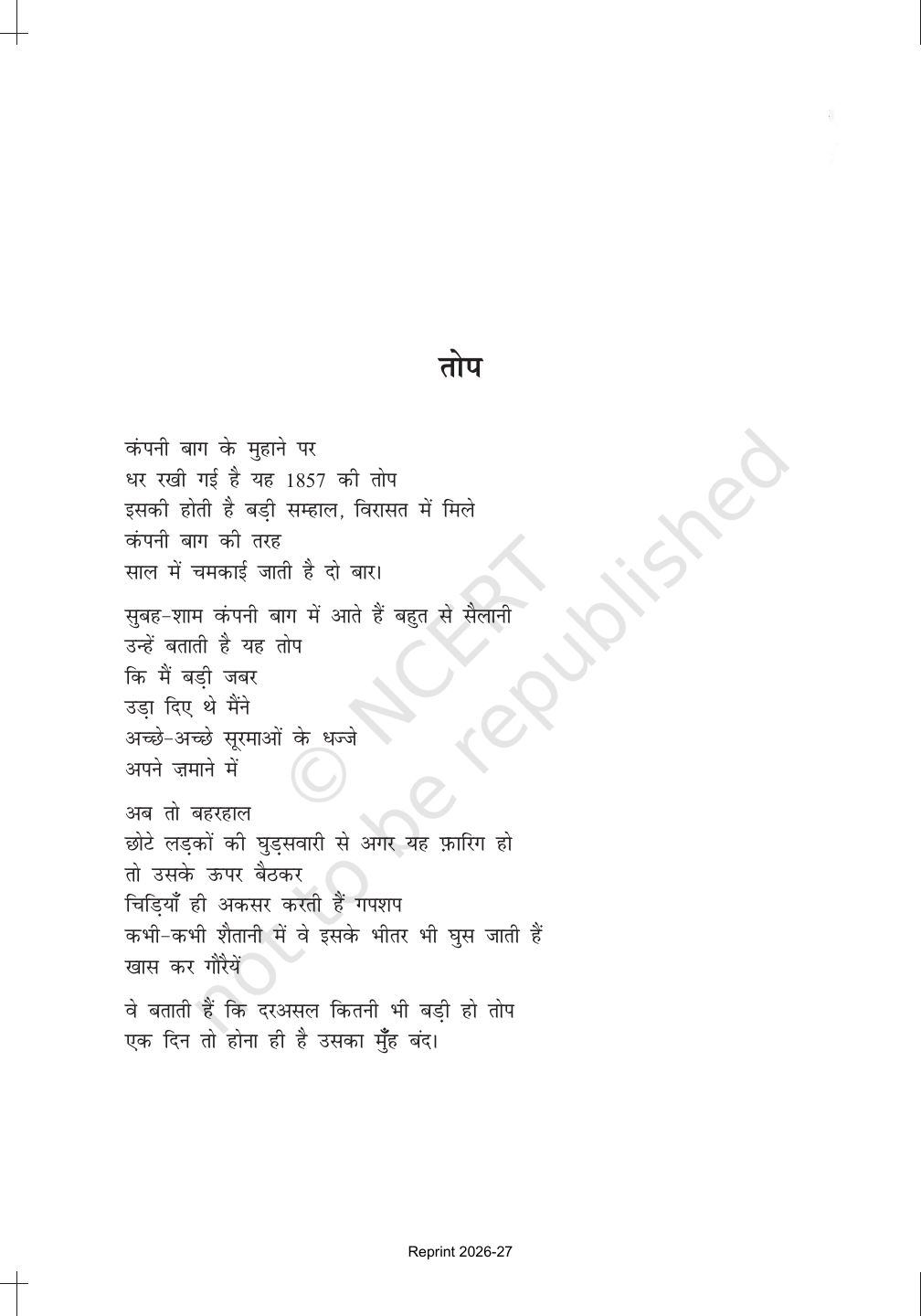
| तोप | the poem itself, opening at कंपनी बाग के मुहाने पर |
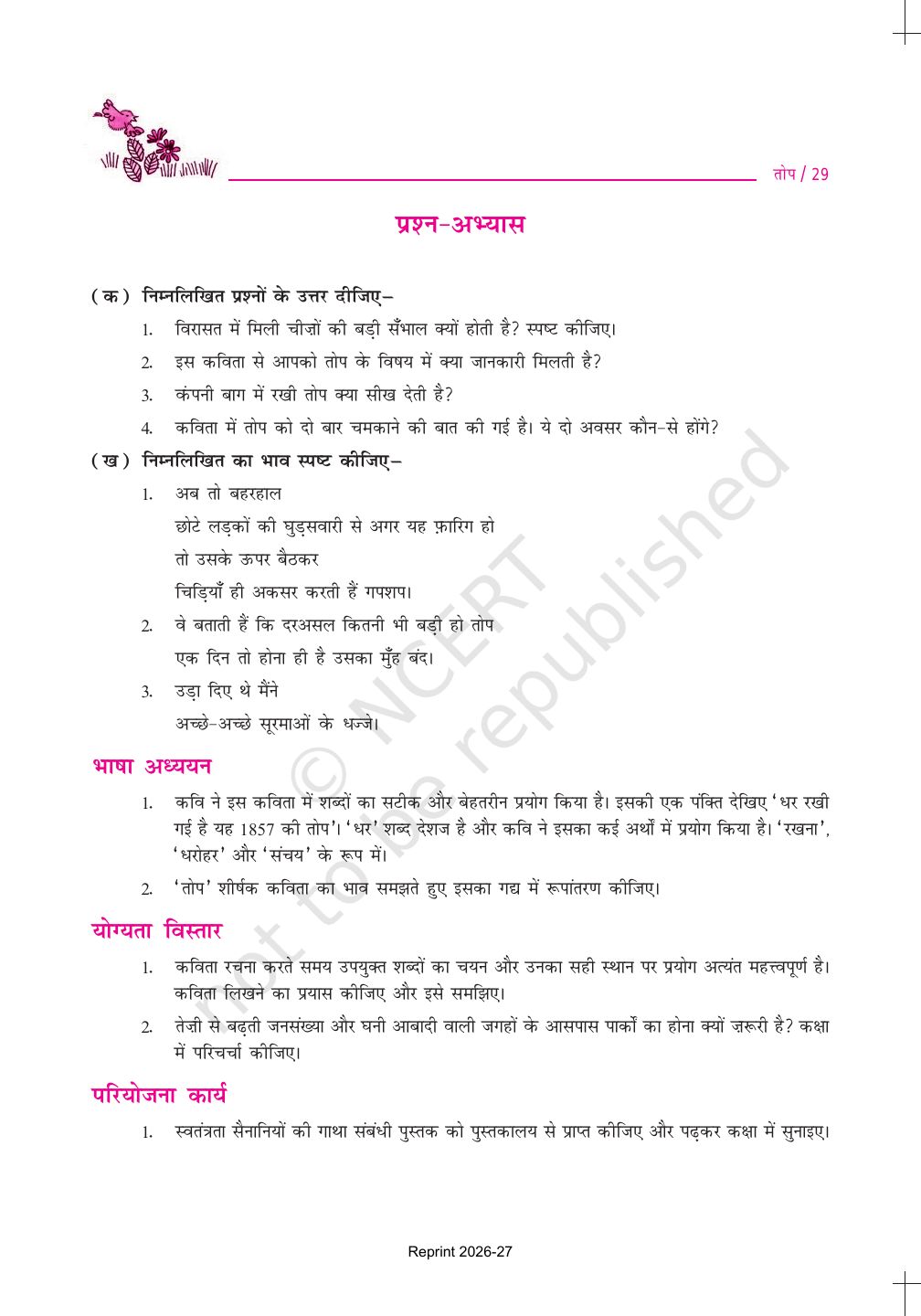
| प्रश्न-अभ्यास | four short answer questions in part क and three भाव स्पष्ट passages in part ख |
| भाषा अध्ययन | two tasks, one on the देशज word धर and one asking for a गद्य रूपांतरण |
| योग्यता विस्तार | a writing attempt and a class discussion on why parks matter in crowded cities |
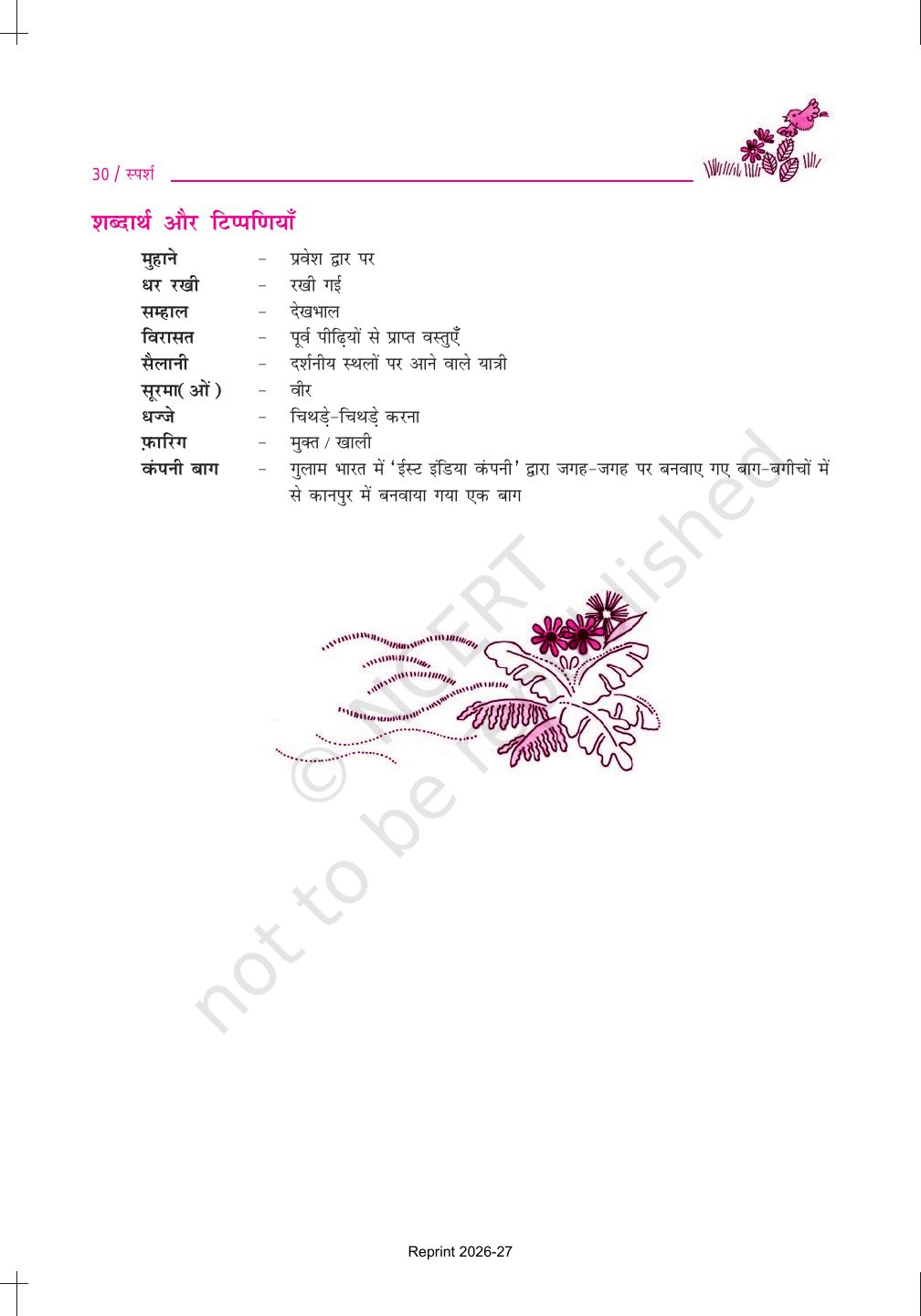
| शब्दार्थ और टिप्पणियाँ | nine word meanings on the closing page, including the note that कंपनी बाग names a garden in कानपुर |
What the तोप Chapter PDF Contains
The PDF holds the whole chapter as NCERT printed it. The poem, the poet sketch and every exercise are in place, with nothing trimmed.
- The full poem, opening with कंपनी बाग के मुहाने पर and closing with एक दिन तो होना ही है उसका मुँह बंद
- The कवि परिचय, naming his collections इसी दुनिया में and दुष्चक्र में स्रष्टा, the श्रीकांत वर्मा पुरस्कार for the first and the साहित्य अकादेमी पुरस्कार for the second
- पाठ प्रवेश, which sets up the ईस्ट इंडिया कंपनी background the poem never states directly
- The complete प्रश्न-अभ्यास, भाषा अध्ययन, योग्यता विस्तार and परियोजना कार्य sections
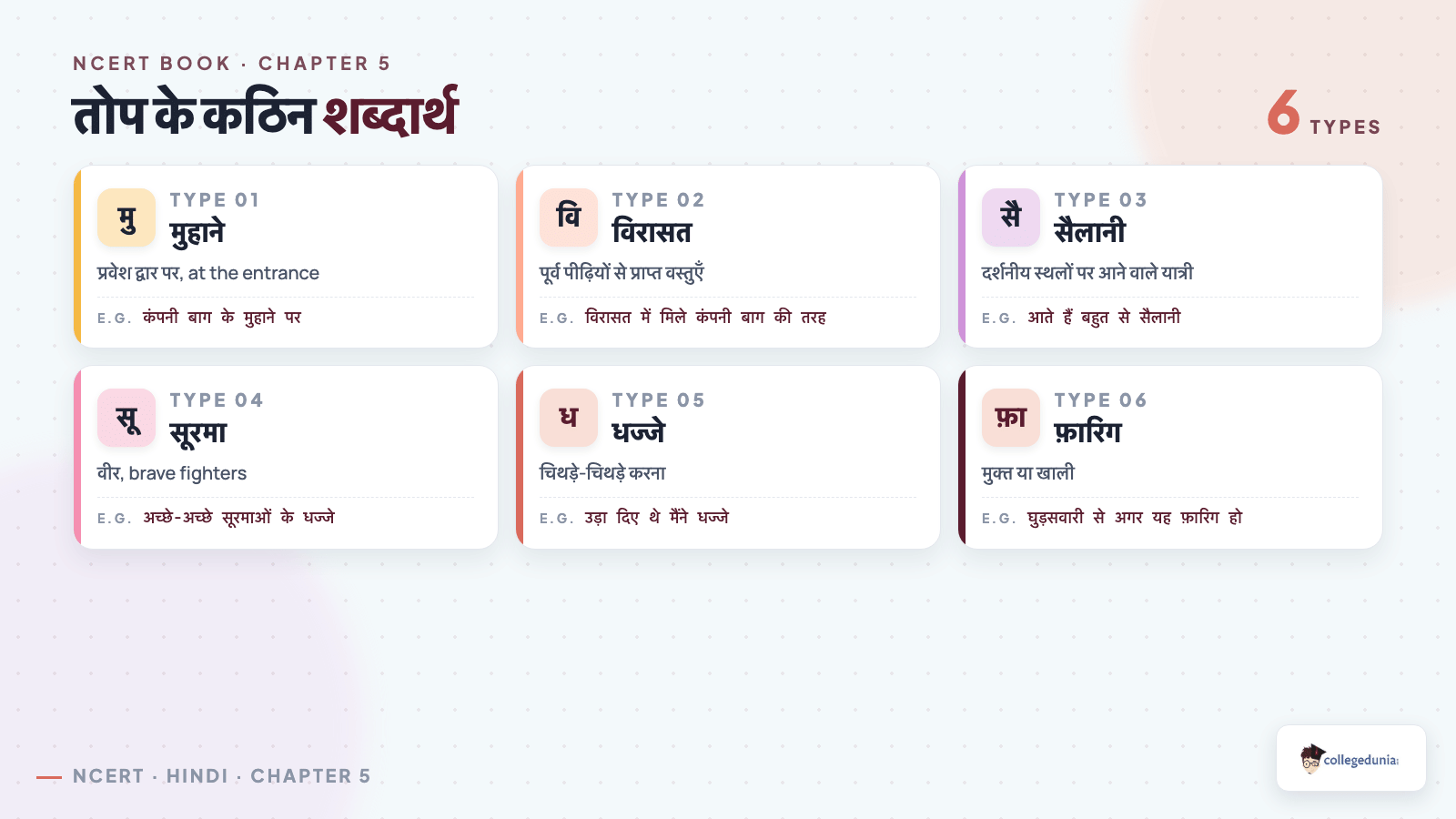
- शब्दार्थ और टिप्पणियाँ, covering मुहाने, धर रखी, सम्हाल, विरासत, सैलानी, सूरमा, धज्जे, फ़ारिग and कंपनी बाग
Inside the Poem: कंपनी बाग and the 1857 तोप
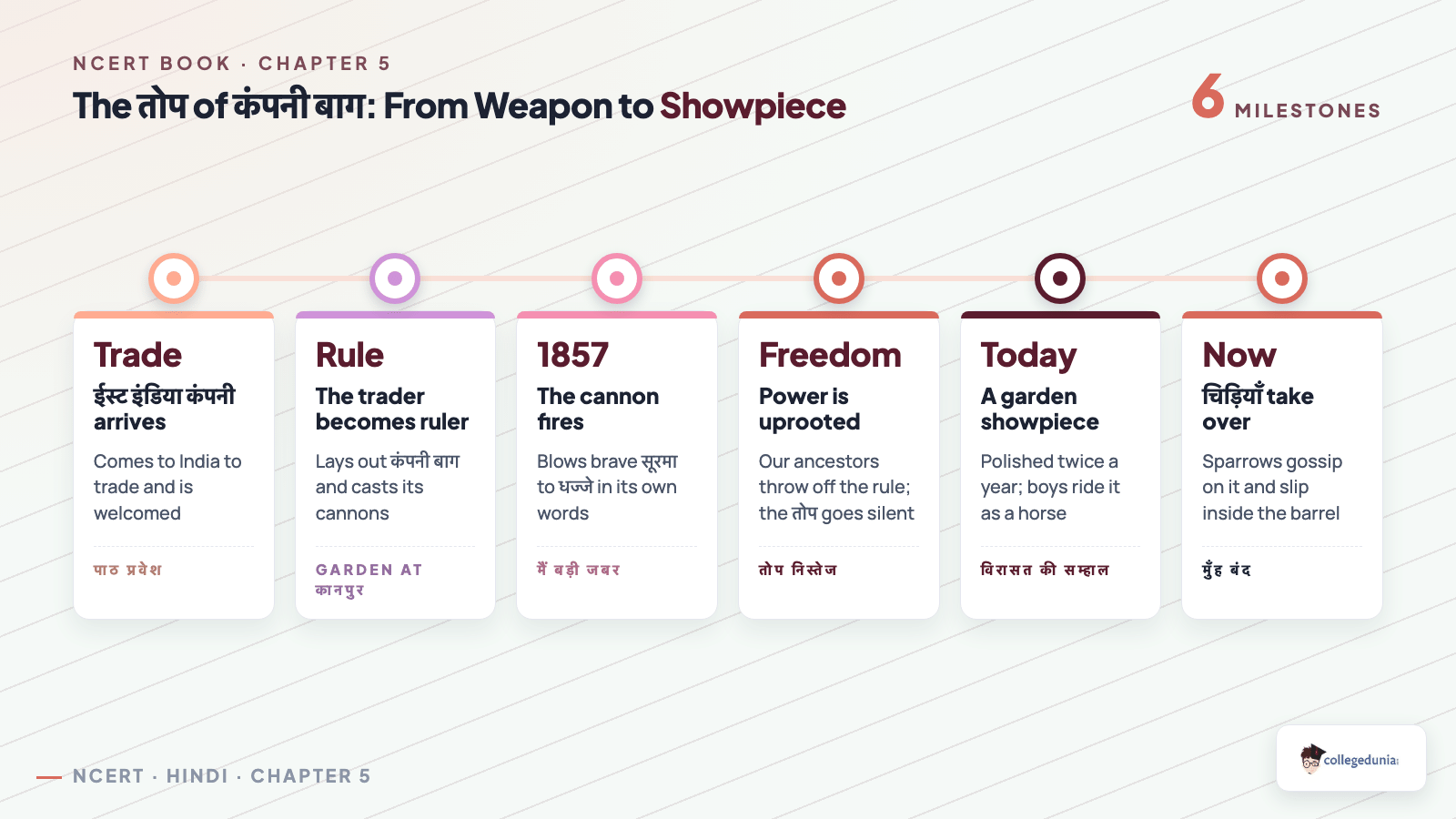
The poem stands still in one place. A cannon from 1857 sits at the entrance of कंपनी बाग, a garden the ईस्ट इंडिया कंपनी laid out, which the शब्दार्थ page fixes at कानपुर. Garden and gun both came down to us as विरासत, and both are looked after with the same care.
- The setting: a public garden with सैलानी drifting through it morning and evening
- The boast: the cannon tells everyone मैं बड़ी जबर, and that it blew brave सूरमा to धज्जे in its day
- The present: small boys use it as a horse, and when they are done the चिड़ियाँ sit on top of it and gossip
- The last insult: the गौरैया goes inside the barrel out of mischief
- The verdict: the birds are the ones who say it, that however big a cannon may be, one day its mouth has to be shut
Notice who speaks. The cannon speaks first and loudest; the sparrows answer last, and theirs is the closing line. डंगवाल gives the smallest creature the final word on the largest weapon, without raising his voice anywhere.
What तोप Says About Power and Time
The poem works because two facts sit side by side without comment. The cannon once killed freedom fighters. The cannon is now a garden ornament that children climb on. Nothing in between is explained, and that gap is where the meaning lives.
- Power decays. No force stays a force. The cannon that scattered सूरमा now holds birds, and its own boast is in the past tense, अपने जमाने में.
- Memory is deliberate. The cannon is preserved and polished, not scrapped. पाठ प्रवेश says some धरोहर remind us of our achievements while others remind us where our ancestors slipped, and this one is the second kind.
- Small things outlast big ones. The गौरैया needs no permission to enter the barrel of a gun that once commanded an empire.
- The warning stays. पाठ प्रवेश ends by saying no company with bad intent should ever get a foothold here again, because those wounds are still fresh.
तोप Poem Explained in Simple Hindi
Source: Step Up Academy on YouTube
What the तोप प्रश्न-अभ्यास Asks
The exercises reward reading the poem closely rather than learning a summary. Part ख is where most marks are lost, because it asks for the भाव of three passages rather than their meaning, and the two are not the same thing.
| Section | What it asks you to do |
|---|---|
| प्रश्न-अभ्यास (क) | four short answer questions: why inherited things are cared for so well, what the poem tells you about the cannon, what lesson the cannon in कंपनी बाग gives, and which two occasions the twice-yearly polishing would fall on |
| प्रश्न-अभ्यास (ख) | three passages set for भाव स्पष्ट कीजिए, taken from the boys riding it, the closing sparrow lines, and the cannon's own boast about the सूरमा |
| भाषा अध्ययन | the word धर in धर रखी गई है यह 1857 की तोप is देशज and carries three senses at once, रखना, धरोहर and संचय; the second task asks for the whole poem rewritten as गद्य |
| योग्यता विस्तार | attempting a poem of your own, and a class discussion on why parks matter near dense settlements |
| परियोजना कार्य | borrowing a book on स्वतंत्रता सेनानी and reading it aloud in class |
Question 4 in part क is the one students skip. The two polishing occasions are the national days, 15 August and 26 January, which is exactly the irony the poem is built on.
A Reading Plan for तोप
The poem takes two minutes to read and much longer to answer on. Work through the file in passes rather than trying to absorb it in one go.
- Read the poem aloud once. The line breaks are doing the work of punctuation, so the pauses carry the tone.
- Take the शब्दार्थ page next. मुहाने, फ़ारिग and धज्जे are the three that trip most students, and फ़ारिग simply means free or unoccupied
- Read पाठ प्रवेश after the poem, not before. It supplies the ईस्ट इंडिया कंपनी history and makes the last two lines land harder
- Mark who is speaking in each section. The cannon has one voice, the birds have another, and the poet never speaks in his own person
- Only then attempt part ख, since भाव स्पष्ट answers need the tone, not a translation
What Collegedunia Adds to the तोप Chapter PDF
Collegedunia gives students the file plus a way into it. The chapter PDF itself is the official NCERT file, untouched.
- Official file: the exact NCERT chapter PDF, with no pages removed
- Read in the browser: page through all five pages before you download
- Clean download: one tap gets you the complete chapter for offline revision
- Study material: notes and solutions for the same chapter where available
तोप Class 10 Hindi NCERT Book PDF FAQs
Common Student Questions on the तोप Chapter File
Ques. Where can I download the Class 10 Hindi तोप NCERT Book PDF?
Ans. The official 5-page chapter file from स्पर्श भाग 2 is on this page, free to download.
Ques. Who wrote the poem तोप in Class 10 Hindi?
Ans. वीरेन डंगवाल, born on 5 August 1947 at कीर्तिनगर in टिहरी गढ़वाल. He taught as a प्राध्यापक, worked in journalism, and died on 28 September 2015.
Ques. Where is the कंपनी बाग of the poem?
Ans. The शब्दार्थ page identifies it as one of the gardens laid out across India by the ईस्ट इंडिया कंपनी, specifically the one built at कानपुर.
Ques. What lesson does the cannon in कंपनी बाग give?
Ans. That no power lasts. However large a cannon may be, one day its mouth is shut. The gun that once destroyed brave fighters now carries sparrows on its barrel.
Ques. What does the word धर mean in the poem?
Ans. भाषा अध्ययन points out that धर is a देशज word used in three senses at once here: रखना, धरोहर and संचय. That is the precision the exercise wants you to notice.
Ques. How many pages is the तोप chapter?
Ans. 5 pages in the 2026-27 स्पर्श भाग 2 edition, printed on book pages 28 to 30, and this PDF is the complete chapter.
Ques. Is this the official NCERT file?
Ans. Yes. It is the NCERT chapter PDF hosted as published, with no pages removed or added.



Comments