




NCERT Class 11 Home Science Chapter 3 Food, Nutrition, Health and Fitness Notes help students revise food groups, nutrients, balanced diet planning, physical fitness, adolescent eating behaviour, anaemia and eating disorders for the 2026-27 syllabus.
Class 11 Home Science Chapter 3 Notes PDF
Use the flipbook below for nutrients, diet planning, fitness links, adolescent eating behaviour and quick revision tables.
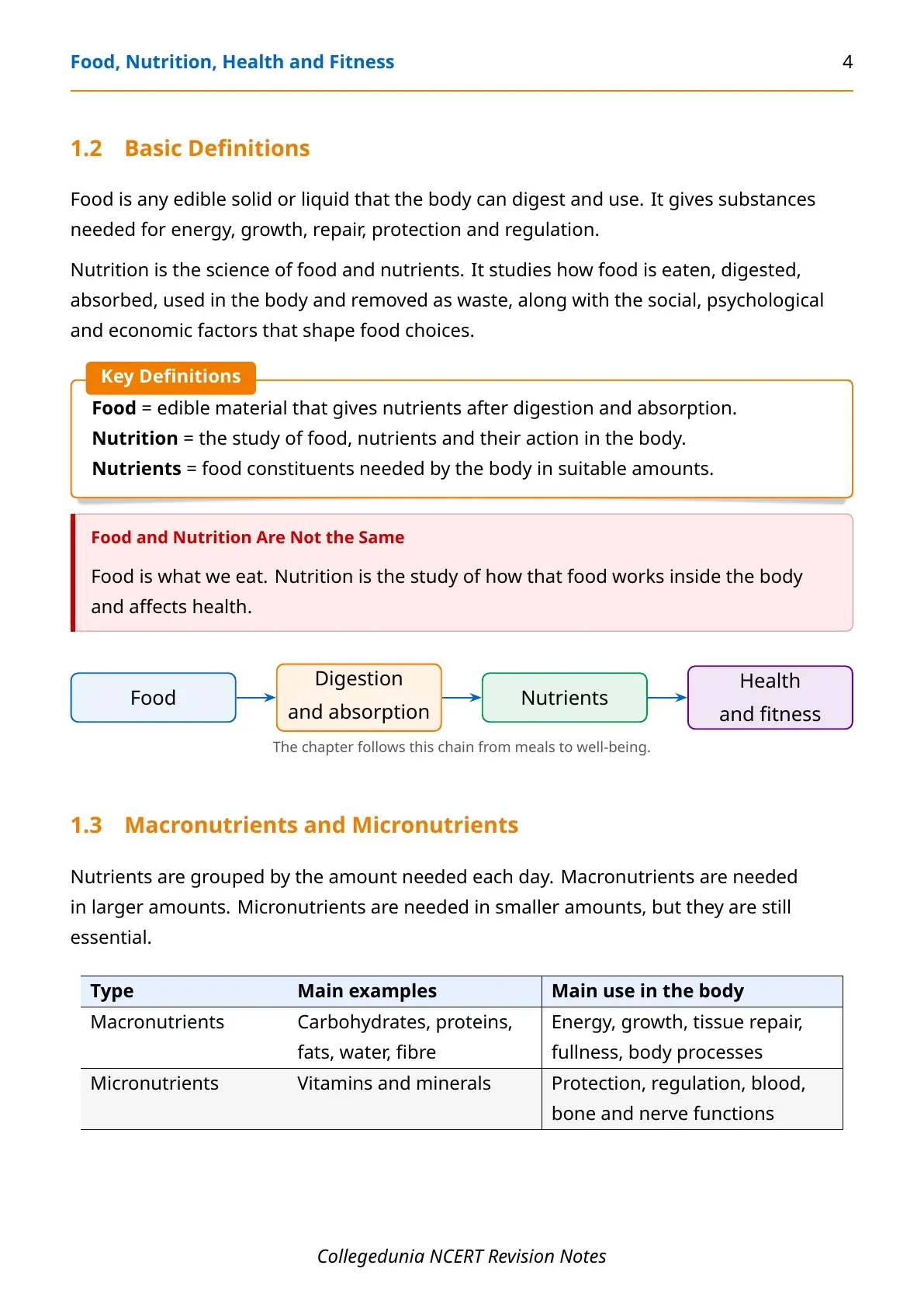
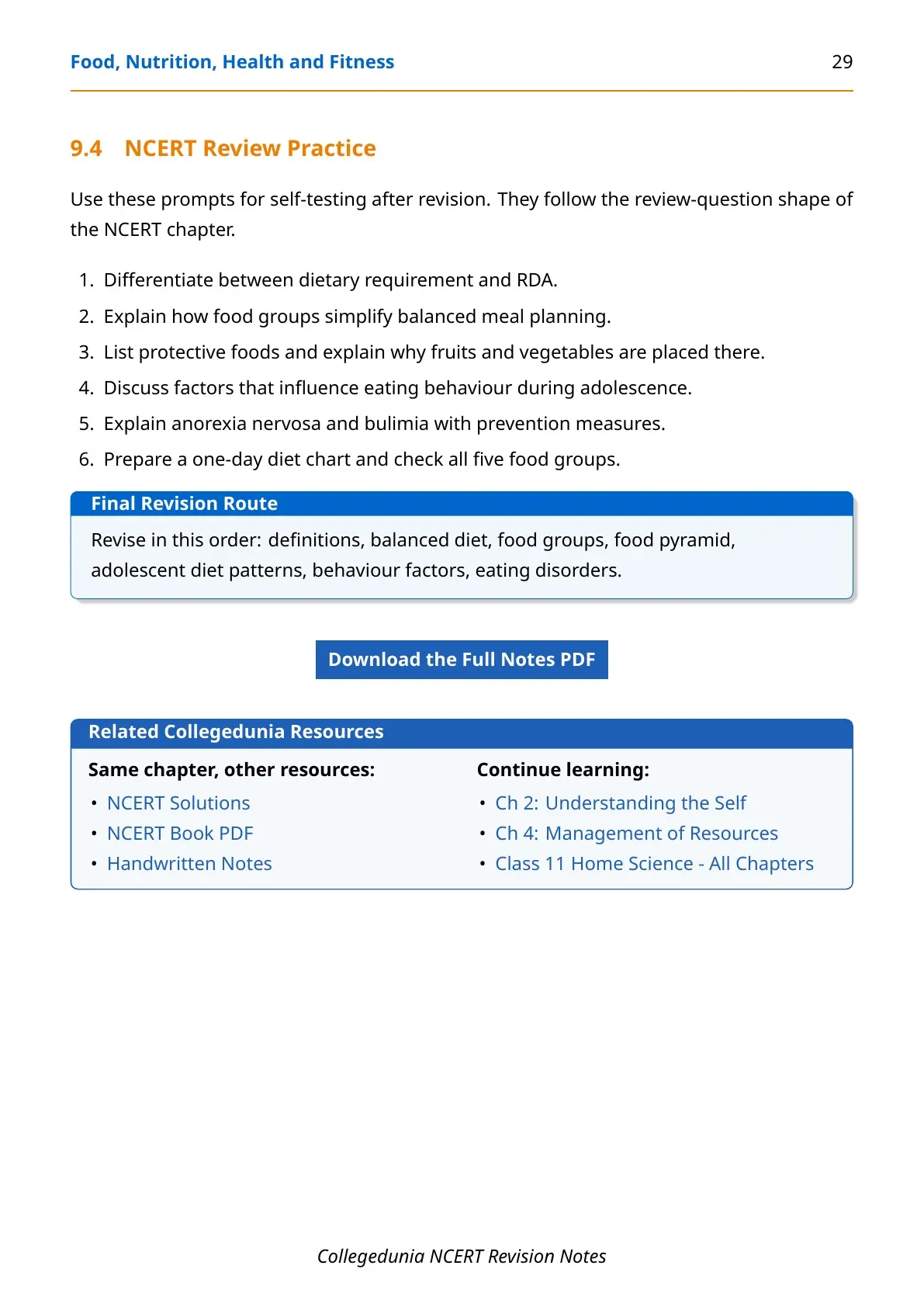
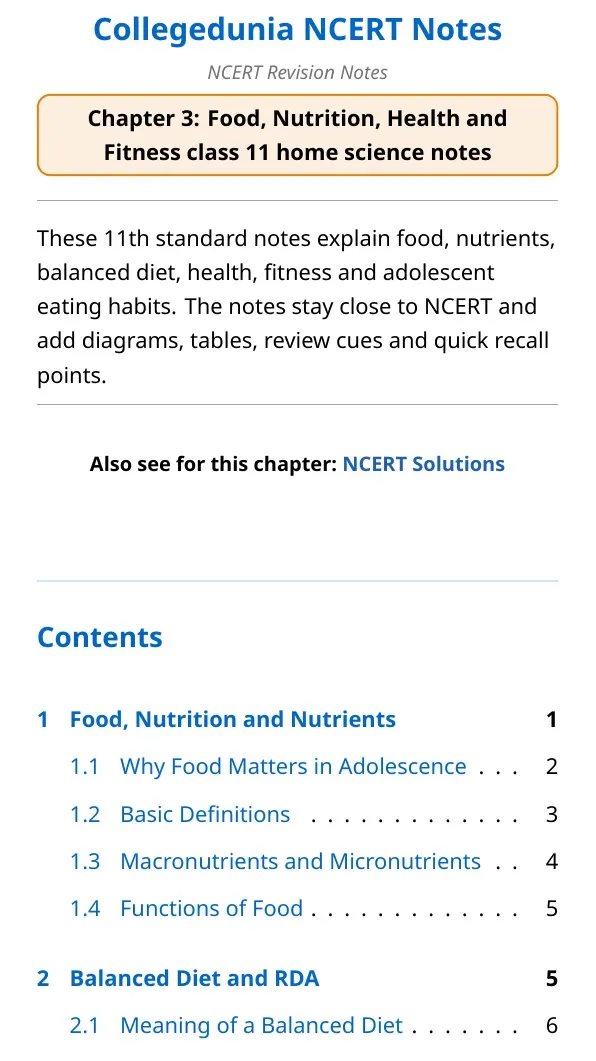
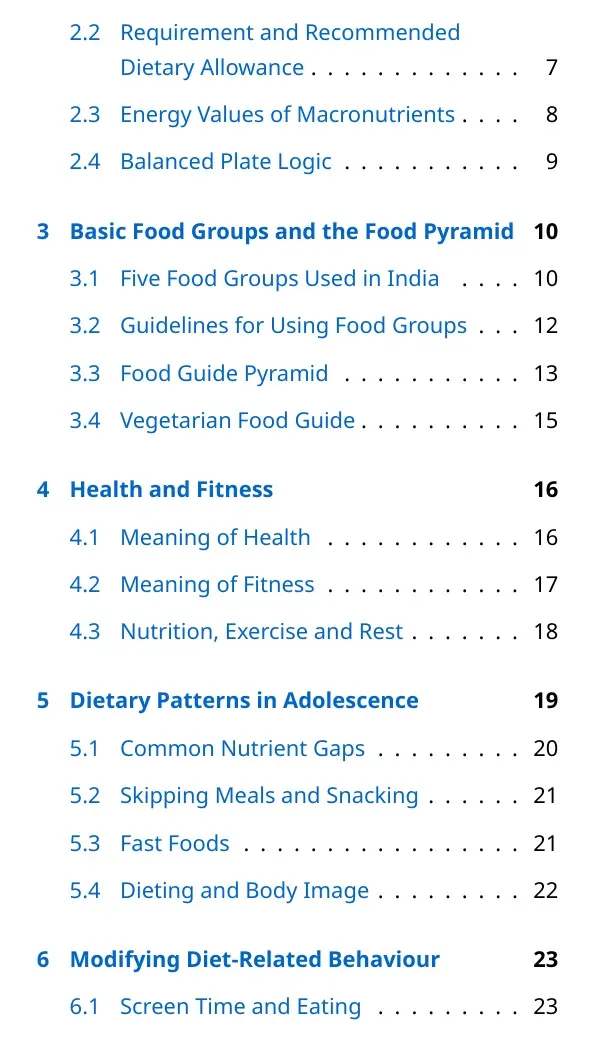
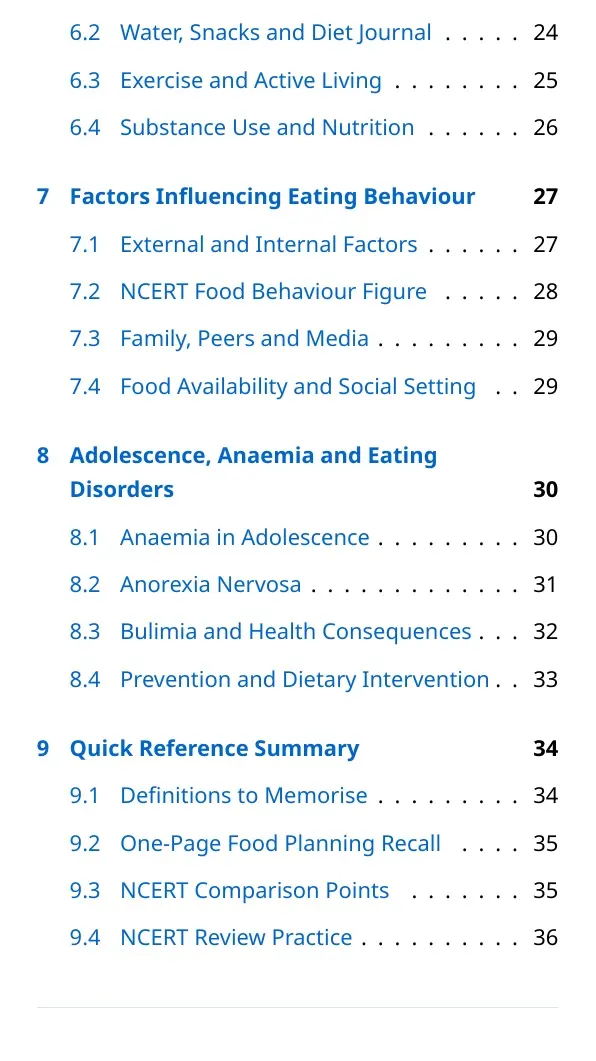
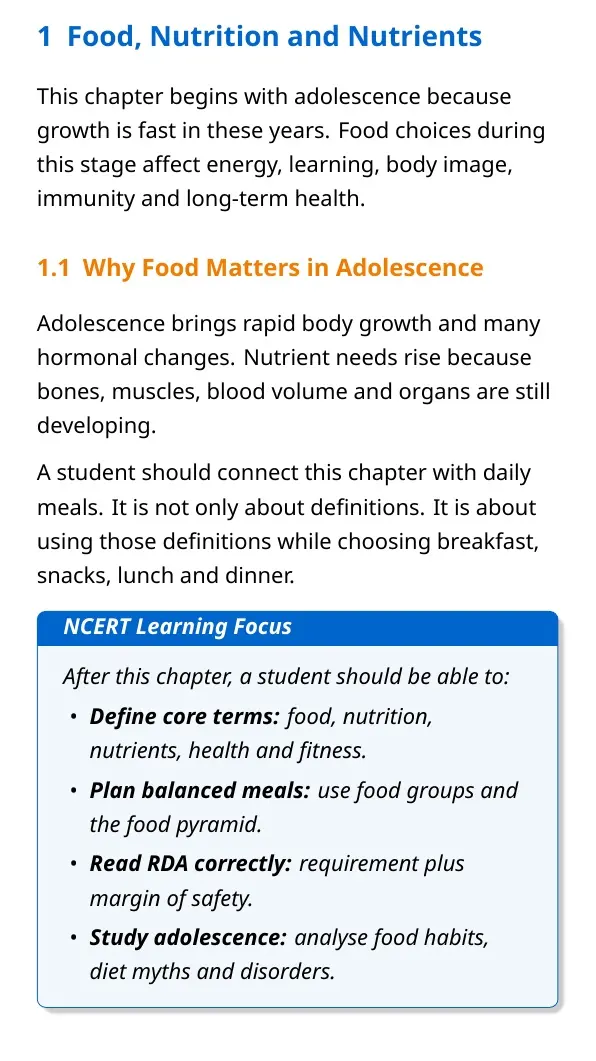
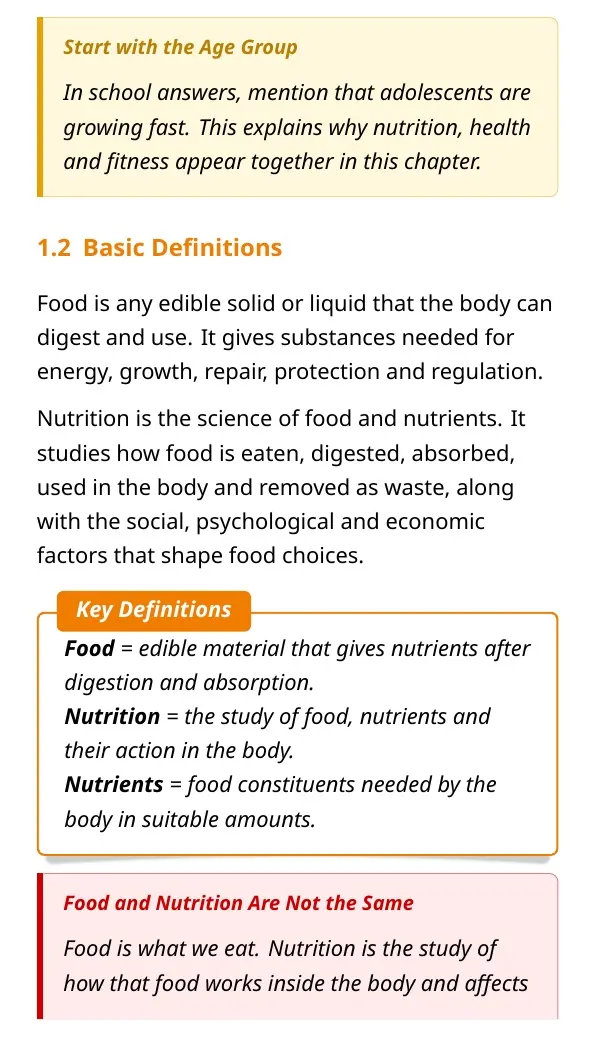
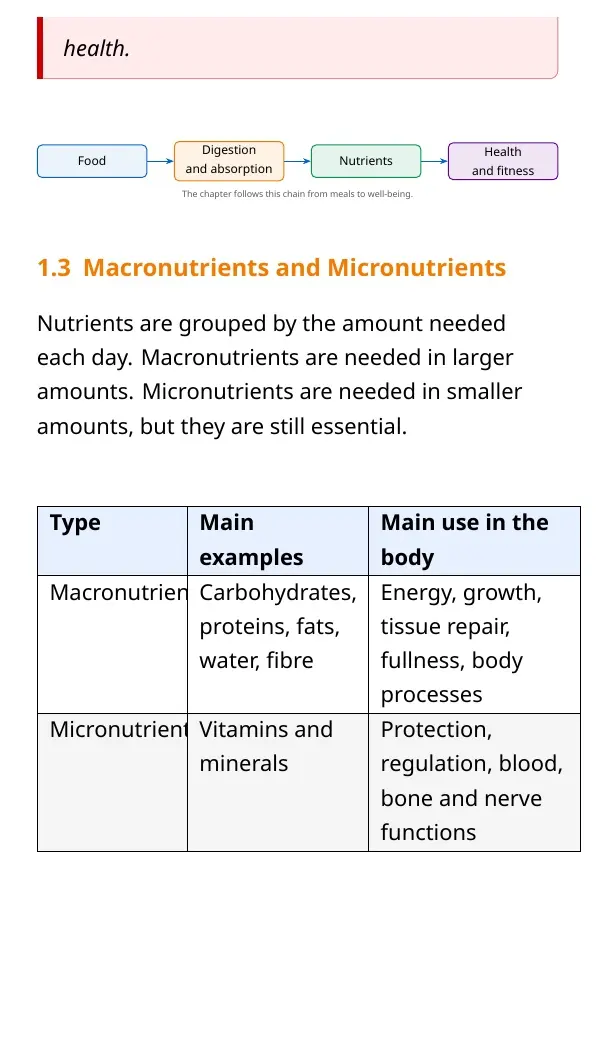
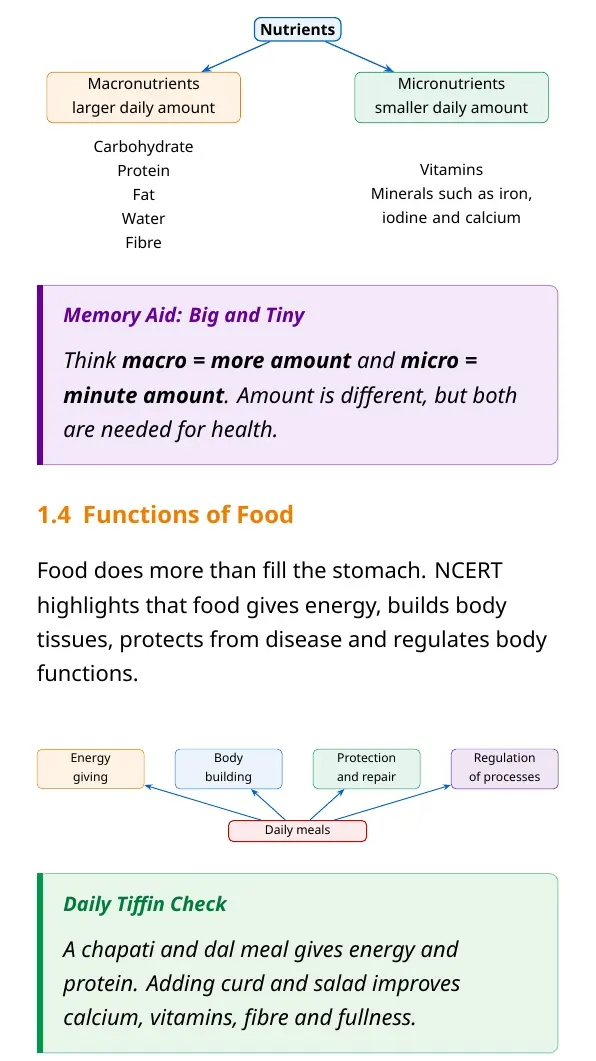
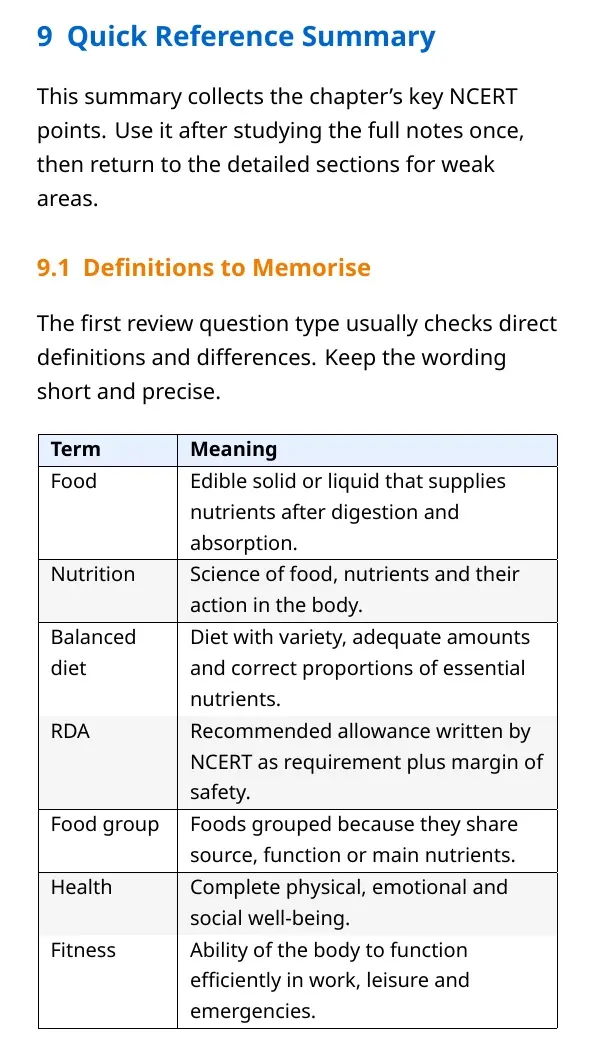
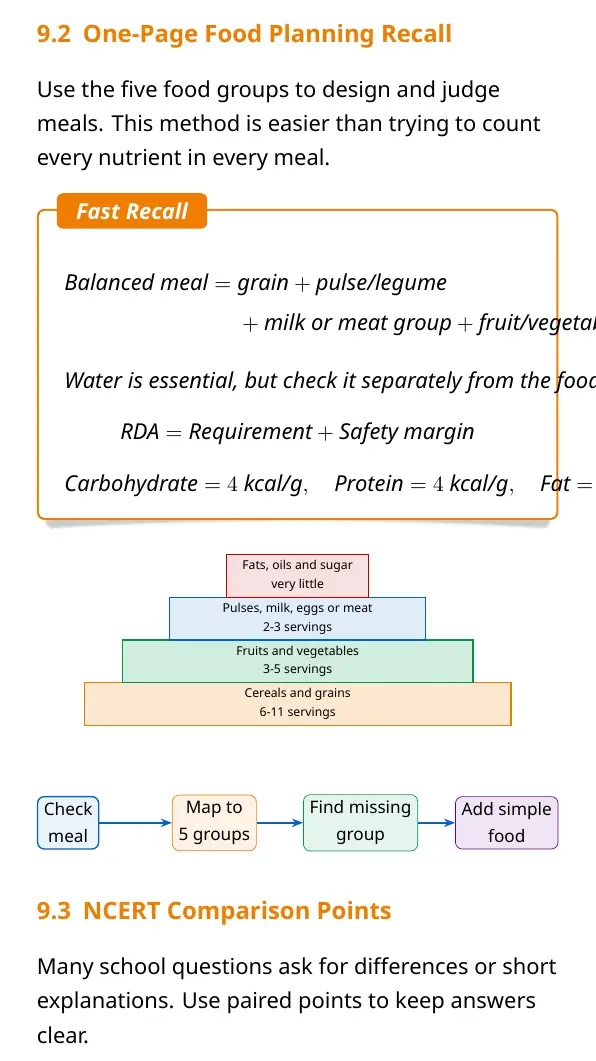
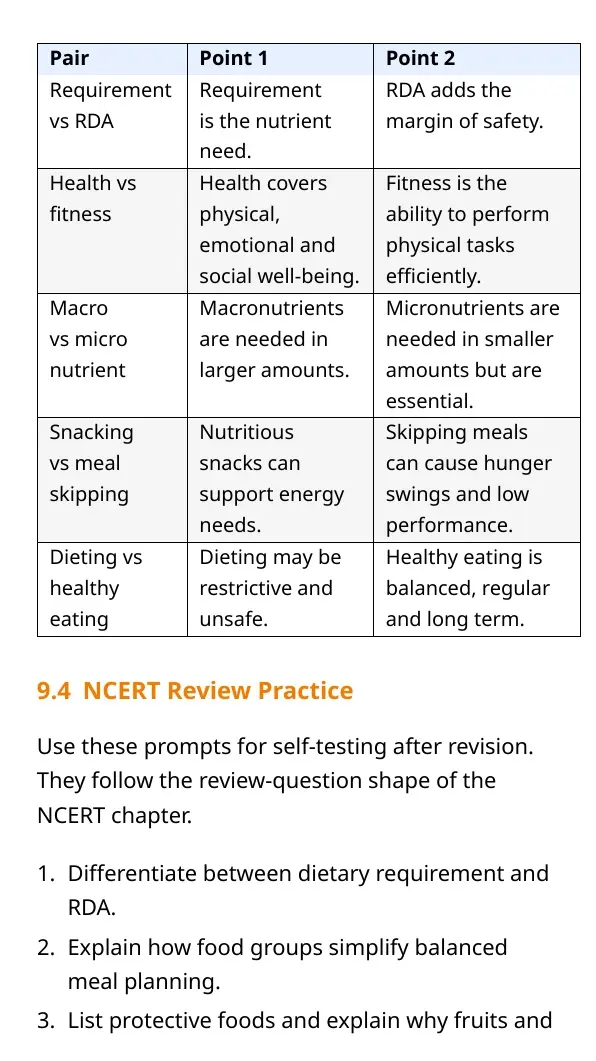
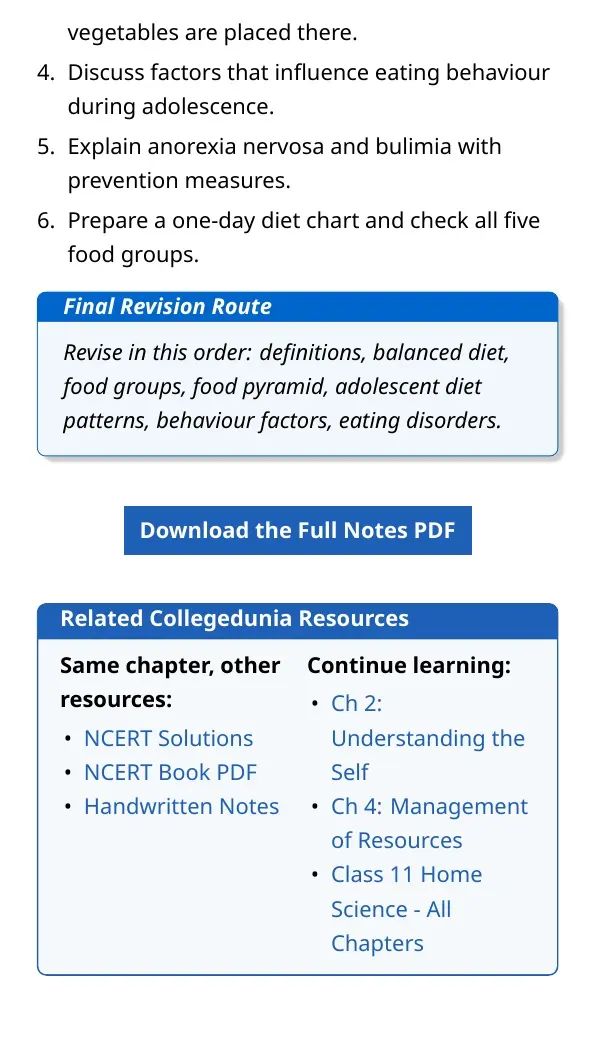

- Covers food, nutrition, nutrients, balanced diet, health and fitness in NCERT language.
- Aligned with the Class 11 Home Science 2026-27 syllabus and useful for short answers.
- Includes diet planning cues, food pyramid recall points, screen-time links and eating-disorder revision points.
Student Feedback: In a Collegedunia check-in with 11,360 Class 11 Home Science students preparing for 2026-27 school exams, 67% said they could list nutrients but confused balanced diet with eating less food.
Source: 2026-27 Class 11 Home Science student poll from CBSE school students using Collegedunia revision resources.
These Class 11 Home Science Chapter 3 notes are mapped to the NCERT chapter, updated for 2026-27 revision, and organised for quick school exam preparation.
What Chapter 3 in Class 11 Home Science Covers
Chapter 3, Food, Nutrition, Health and Fitness, explains how food supports growth, energy, protection, daily activity and long-term health. The chapter links science with everyday choices such as breakfast, snacks, water intake, screen time, exercise and rest.
Students should not treat the chapter as a list of food items. NCERT expects the link between nutrients, balanced meals and fitness. A good answer names the nutrient, states its function, gives a food source and connects it with health.
- Food: anything eaten or drunk that nourishes the body.
- Nutrition: how the body uses food for growth, repair and energy.
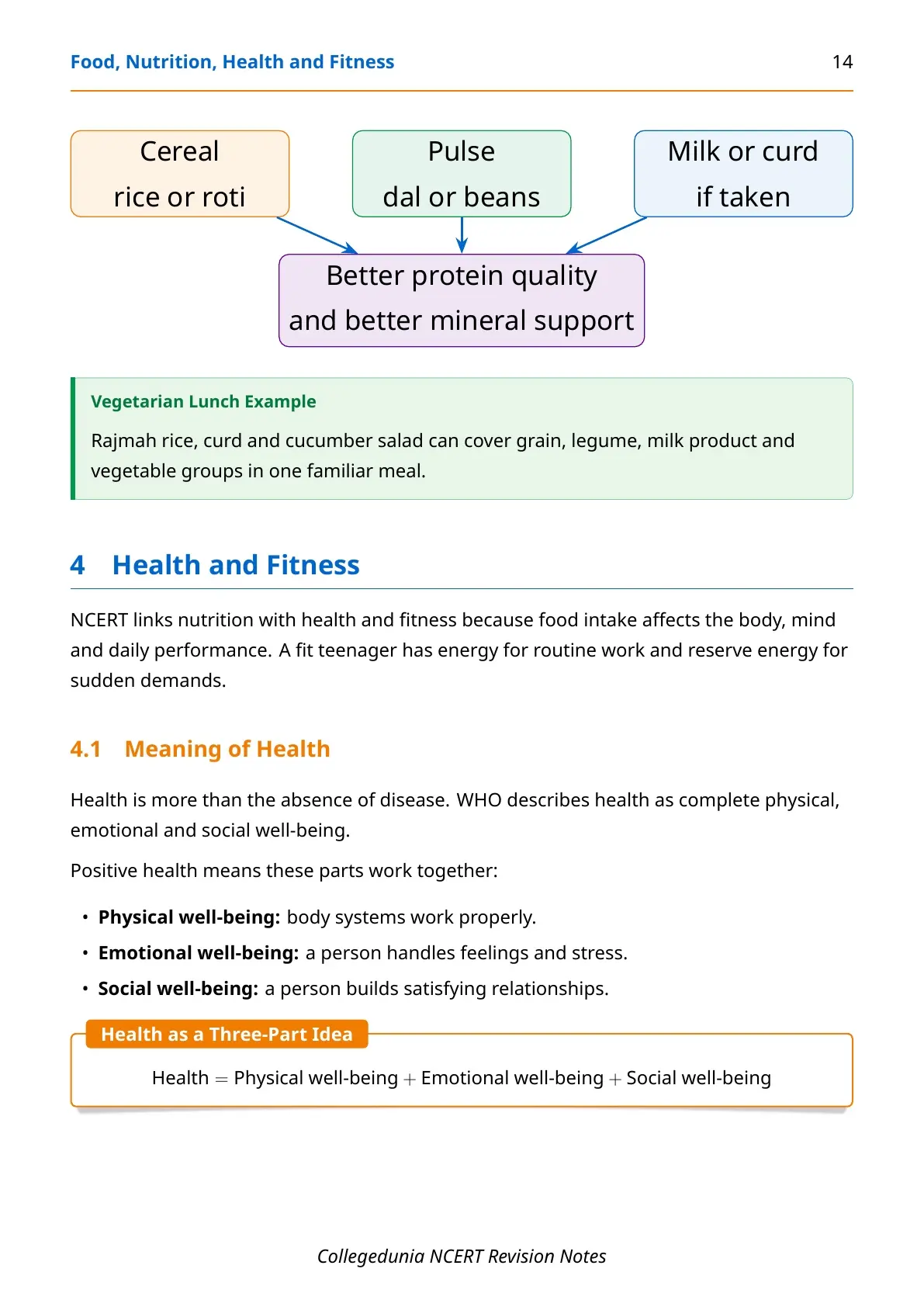
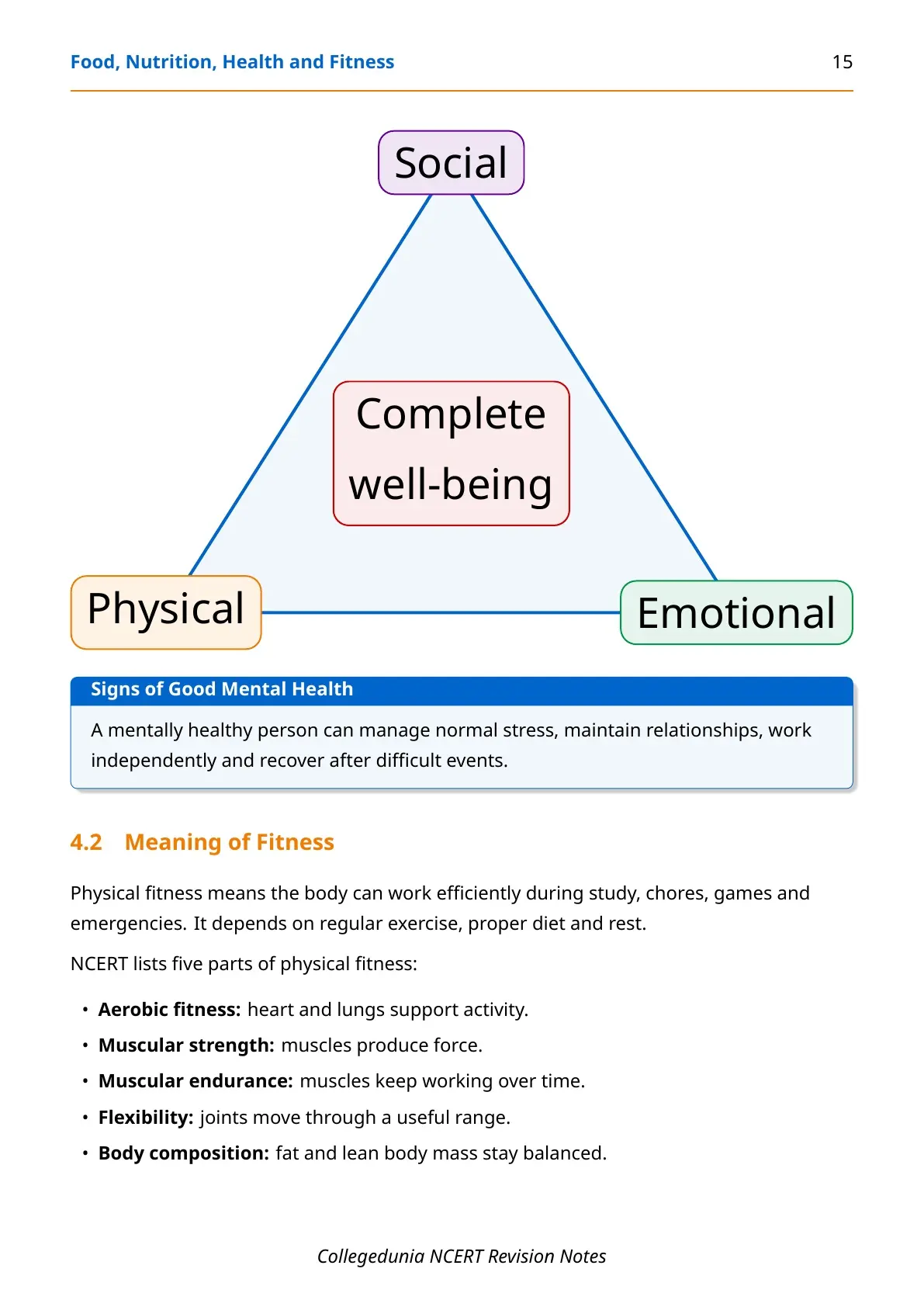
- Health: physical, mental and social well-being.
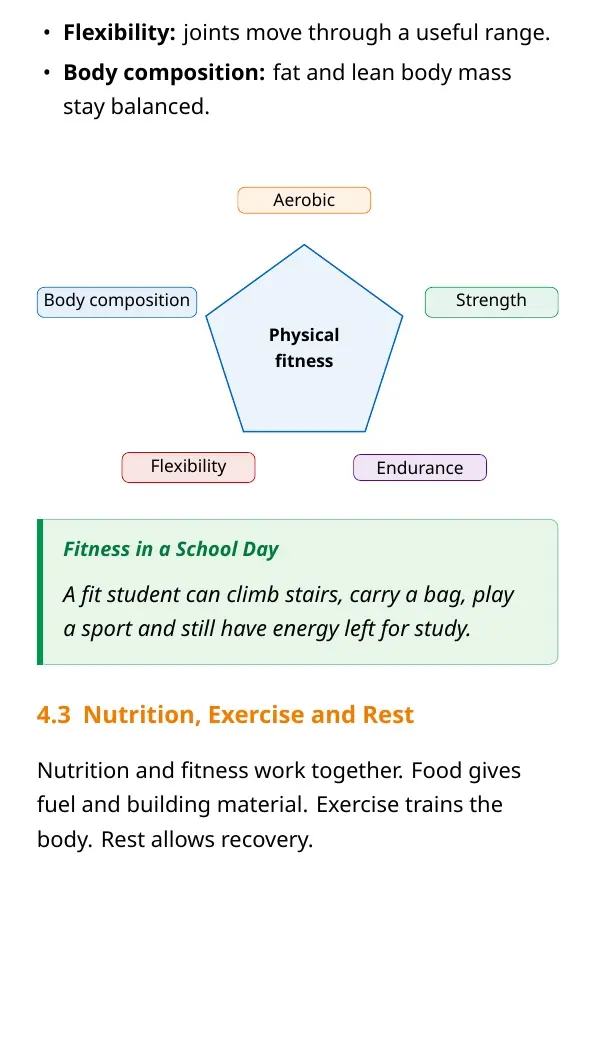
- Fitness: the ability to work, play and stay active without early fatigue.
Food Nutrition Health and Fitness Video Explanation
Source: Achieve it on YouTube
Nutrients in Food Including Fibre
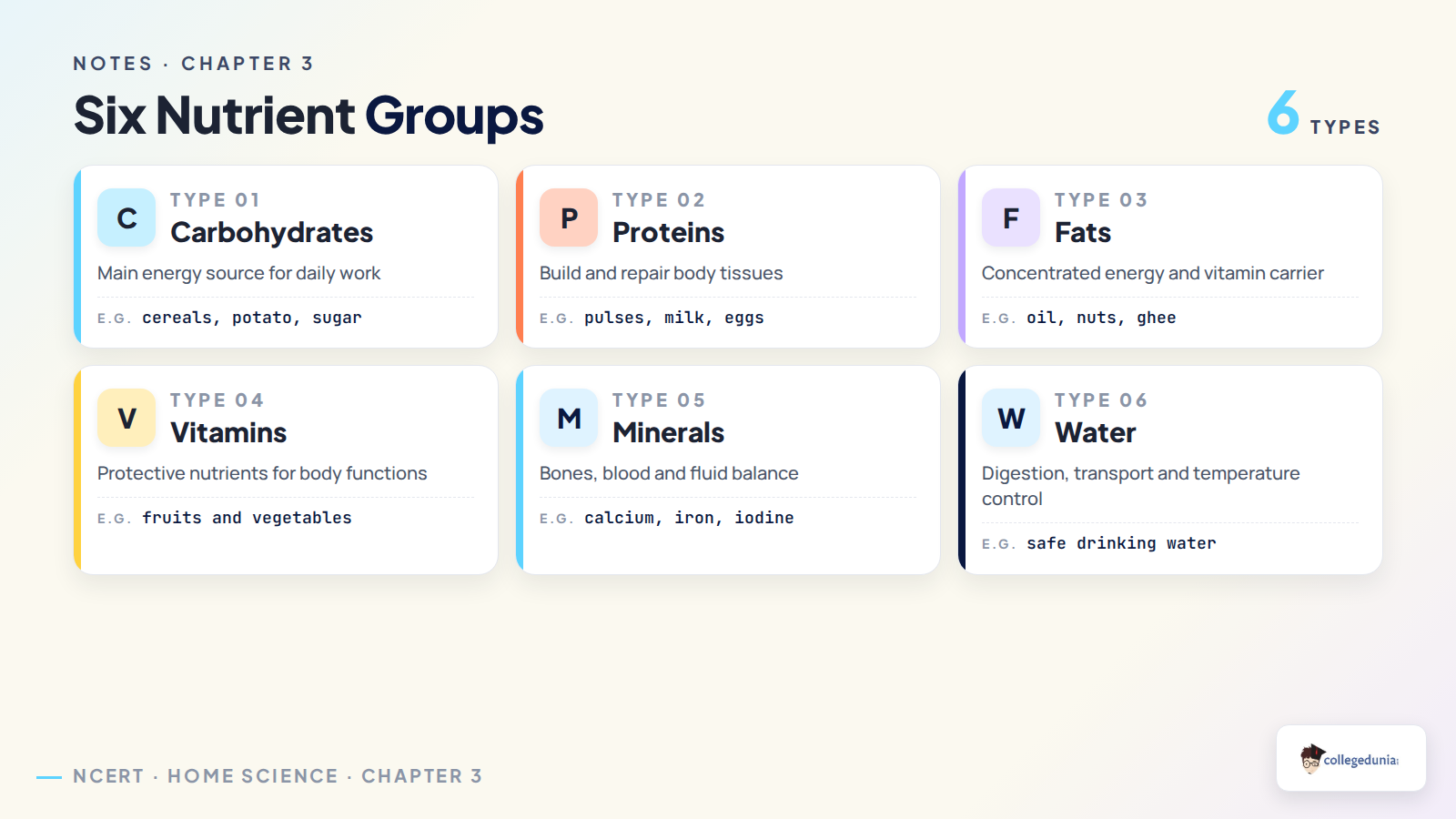
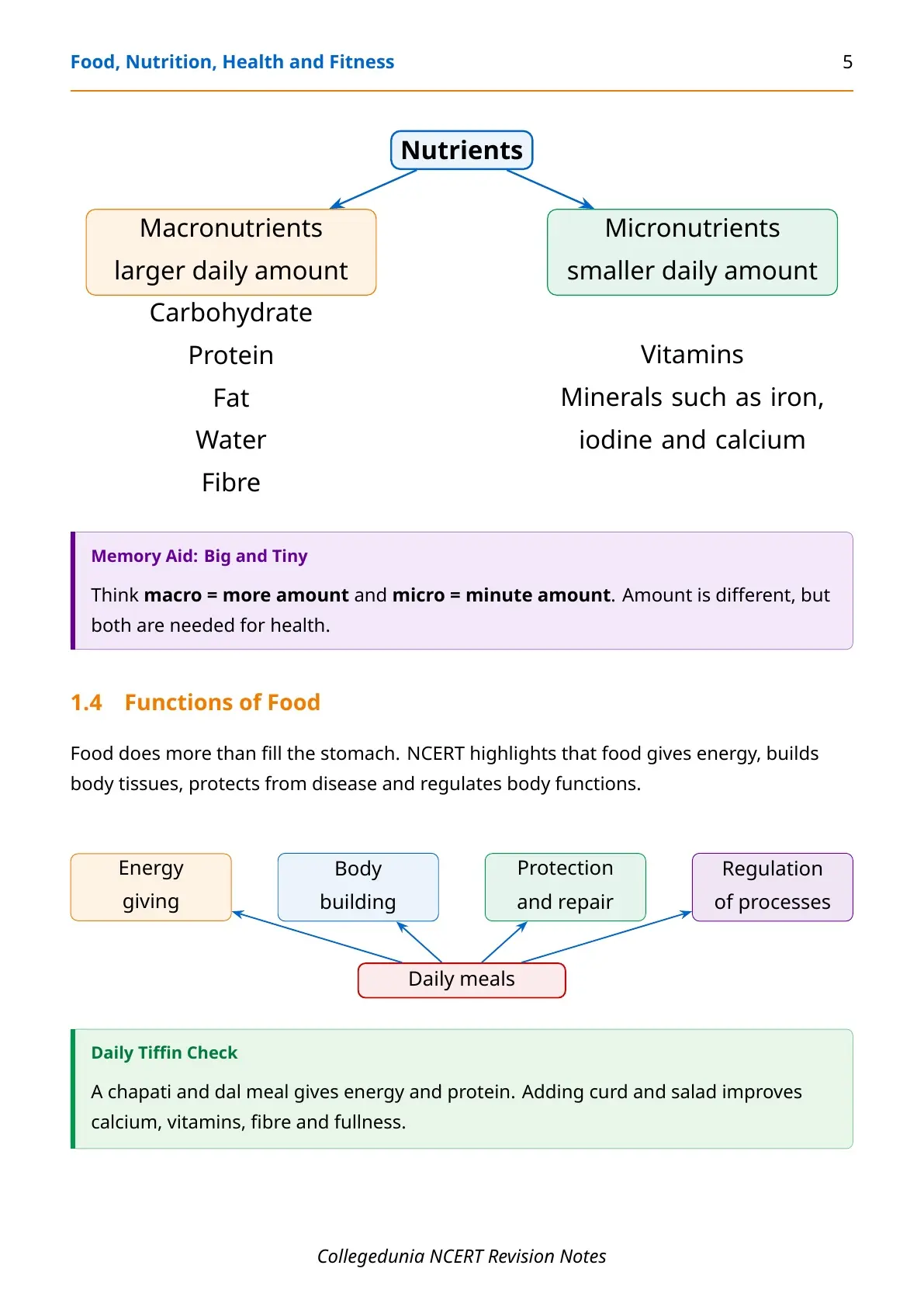
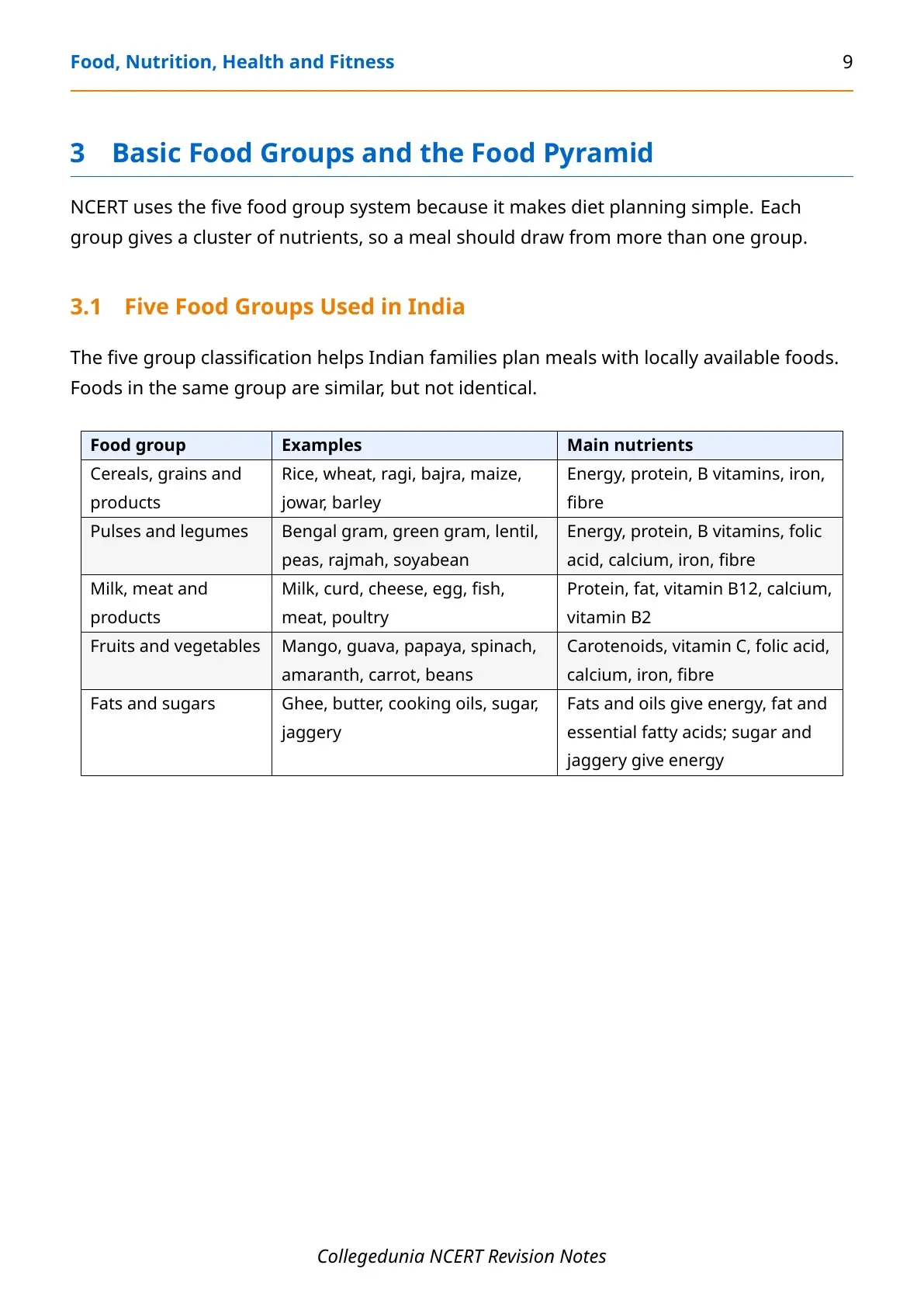
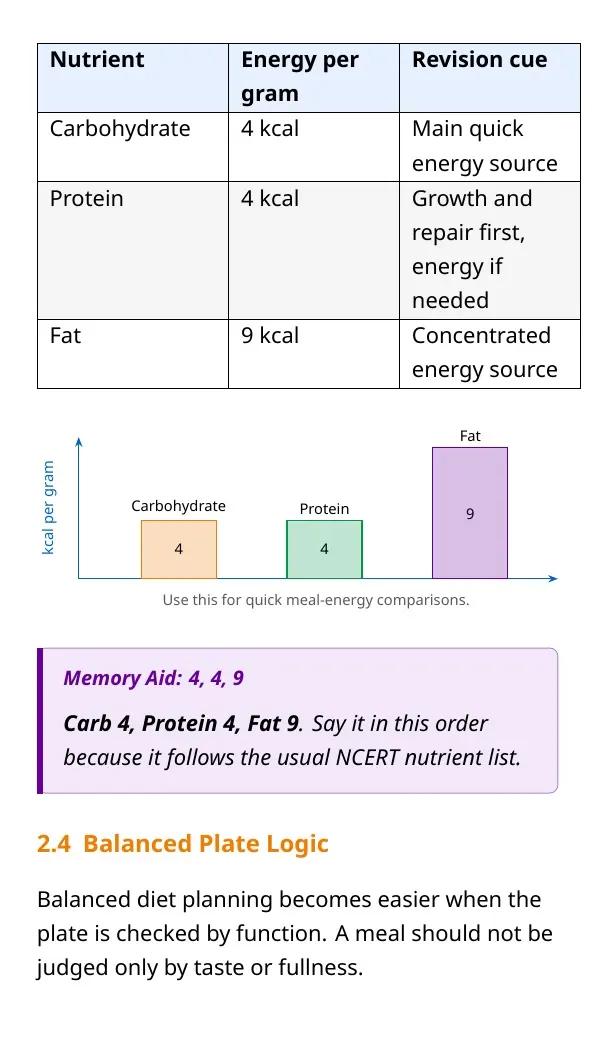
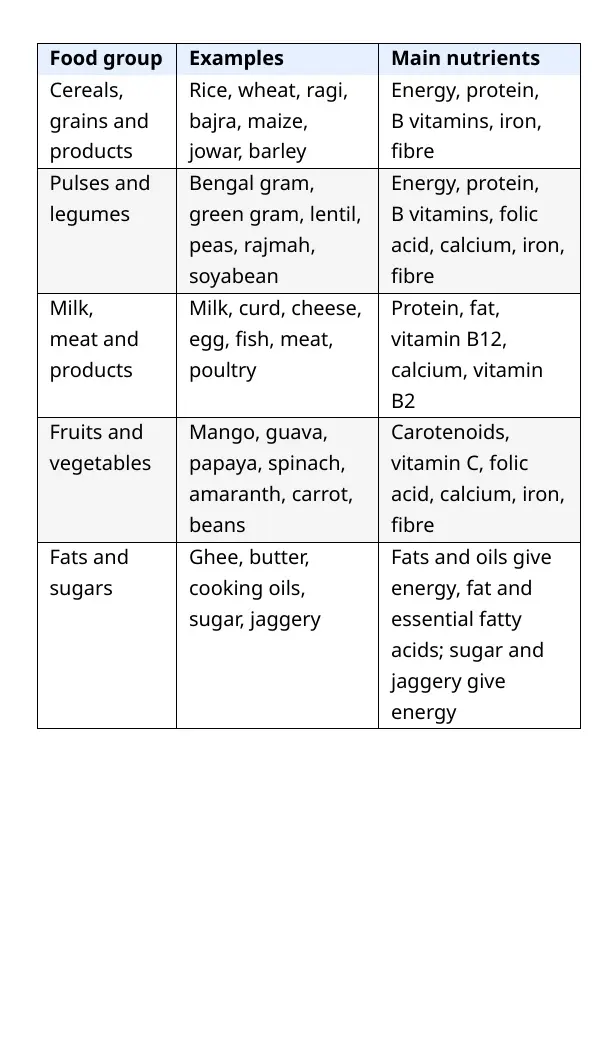
The chapter groups nutrients into carbohydrates, proteins, fats, vitamins, minerals, water and fibre or roughage. Carbohydrates and fats mainly provide energy. Proteins build and repair tissues. Vitamins and minerals protect the body and regulate functions. Water helps digestion, transport and temperature control, while fibre supports bowel movement and fullness.
| Nutrient | Main function | Common sources |
|---|---|---|
| Carbohydrates | Energy for work and body functions. | Cereals, potato, sugar, fruits. |
| Proteins | Growth, tissue repair and body building. | Pulses, milk, curd, eggs, fish. |
| Fats | Concentrated energy and warmth. | Oil, nuts, seeds, ghee. |
| Vitamins | Protection and regulation. | Fruits, vegetables, milk, sunlight for vitamin D. |
| Minerals | Bones, blood, teeth and fluid balance. | Green leaves, milk, iodised salt. |
| Water | Digestion, transport and waste removal. | Safe drinking water and water-rich foods. |
| Fibre or roughage | Bowel movement, fullness and digestive support. | Whole grains, pulses, fruits and vegetables. |
Quick recall: energy nutrients are carbohydrates and fats, body-building nutrients are proteins, and protective nutrients are vitamins and minerals.
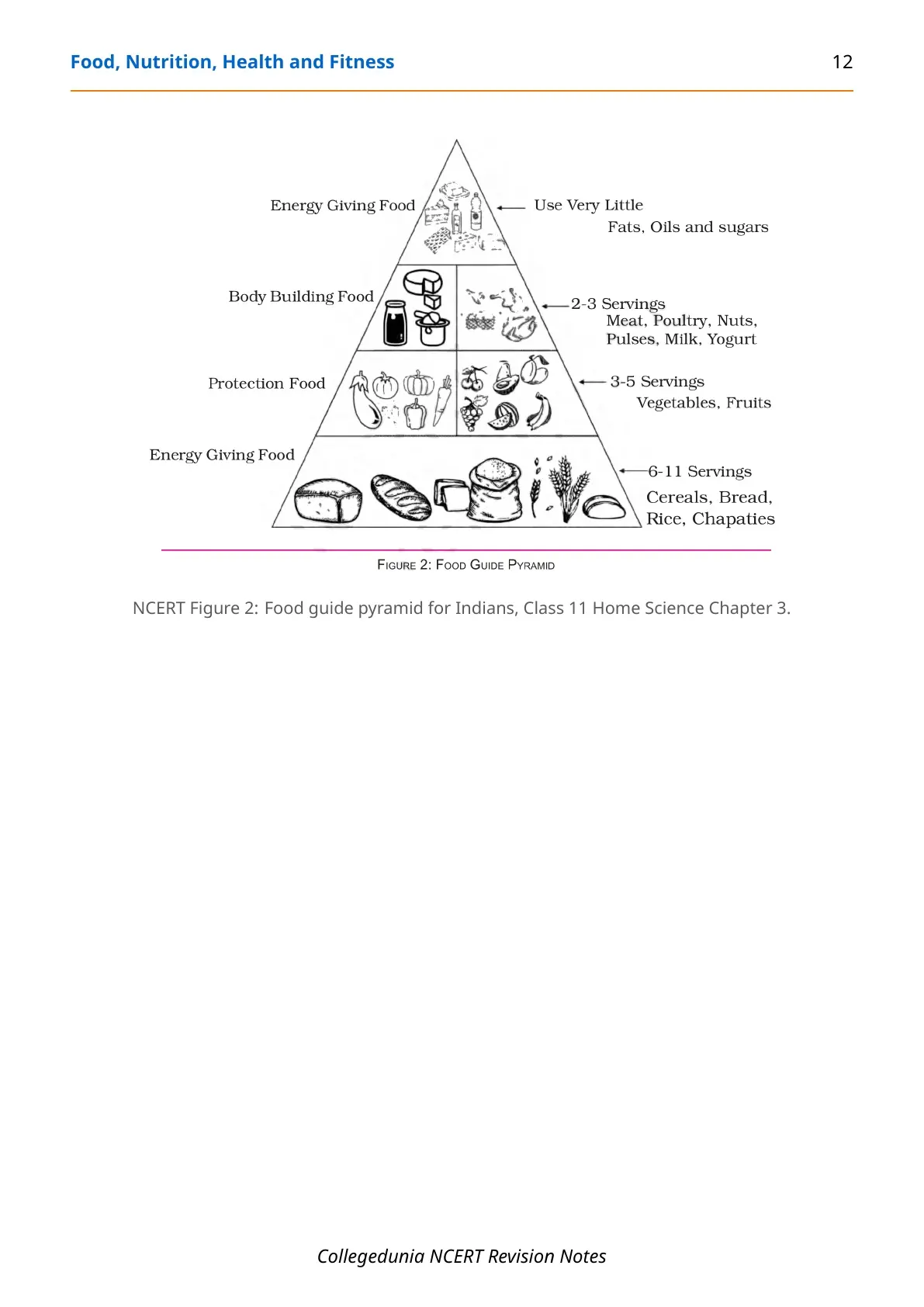
Balanced Diet and Food Guide Pyramid
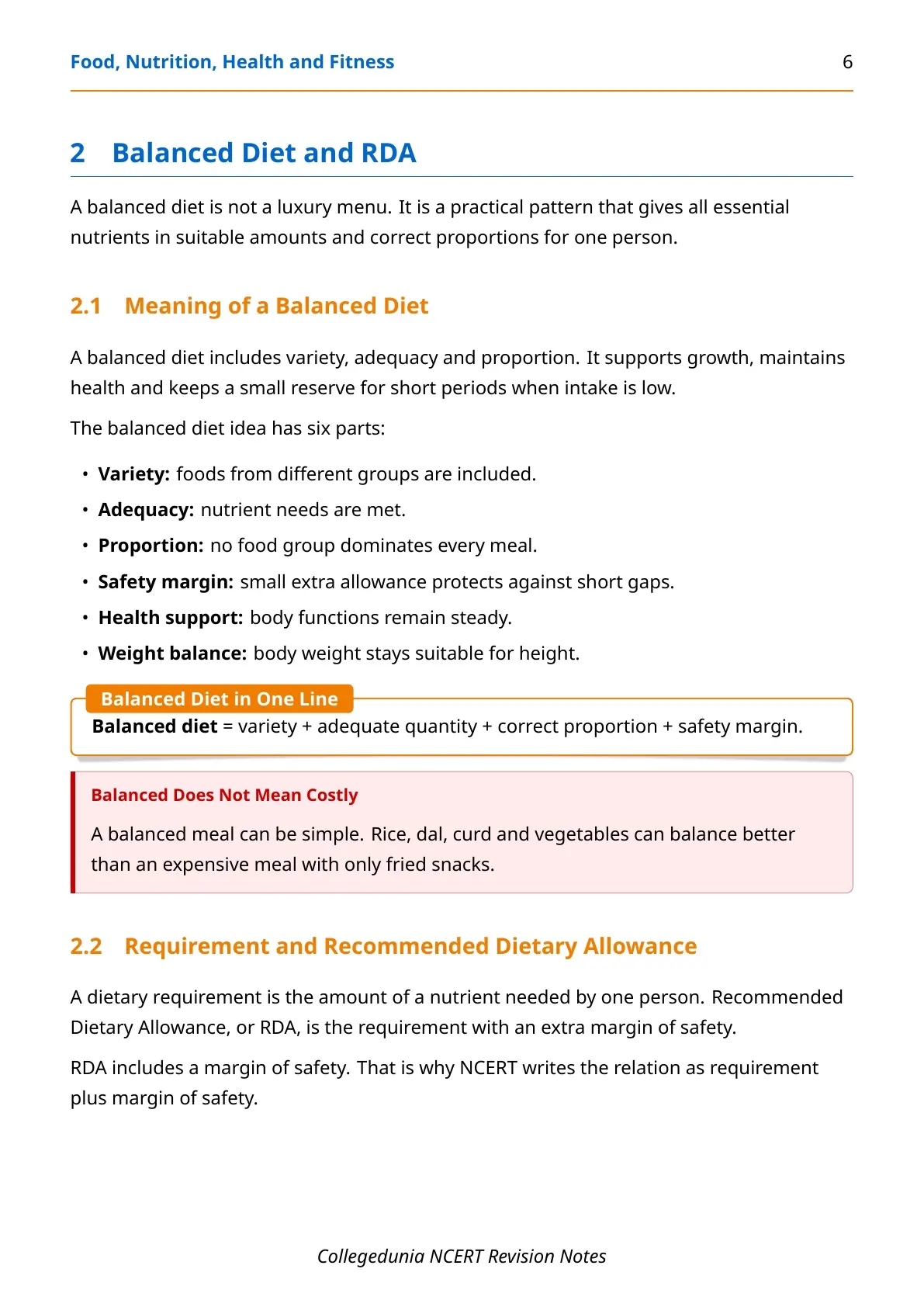
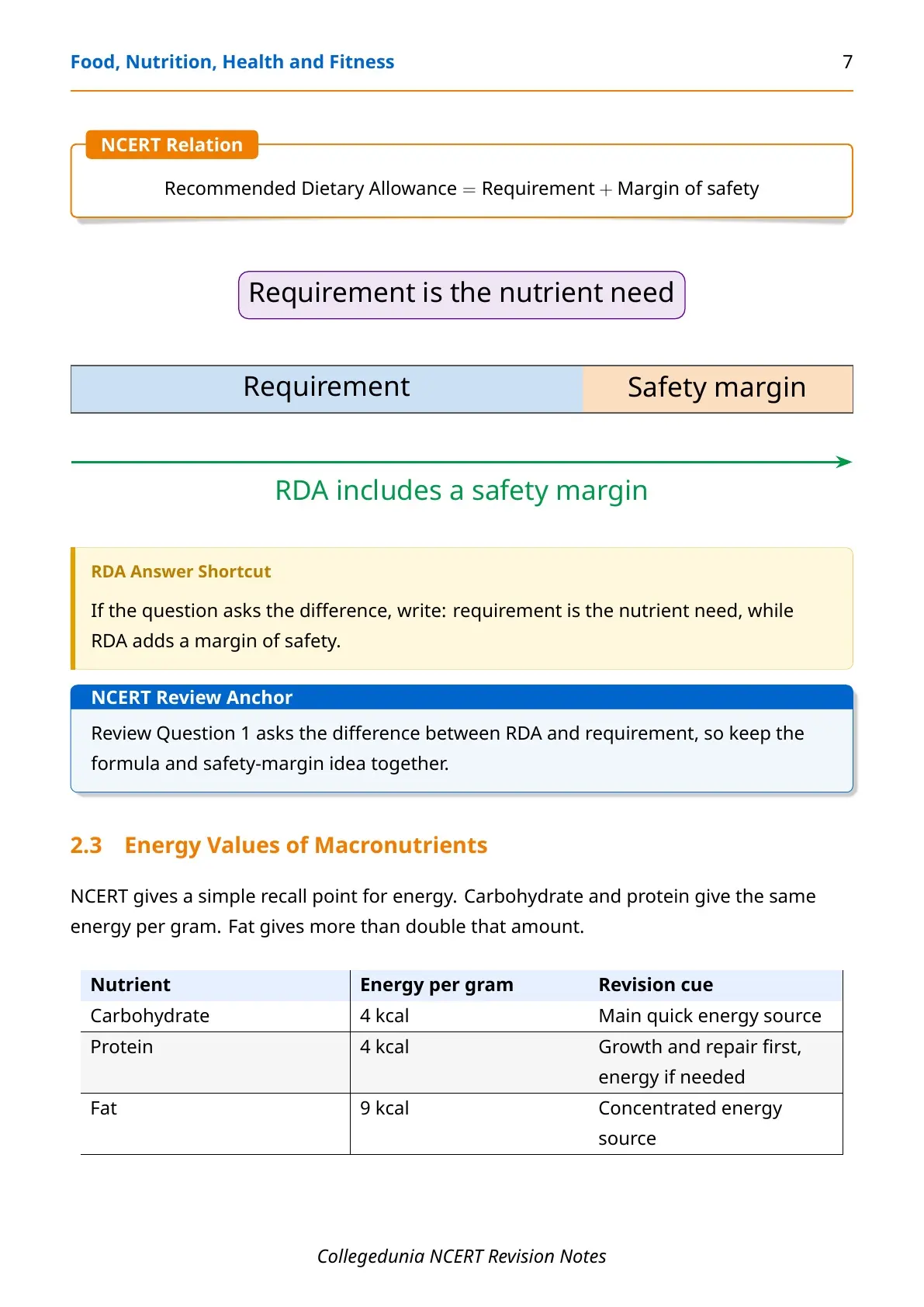
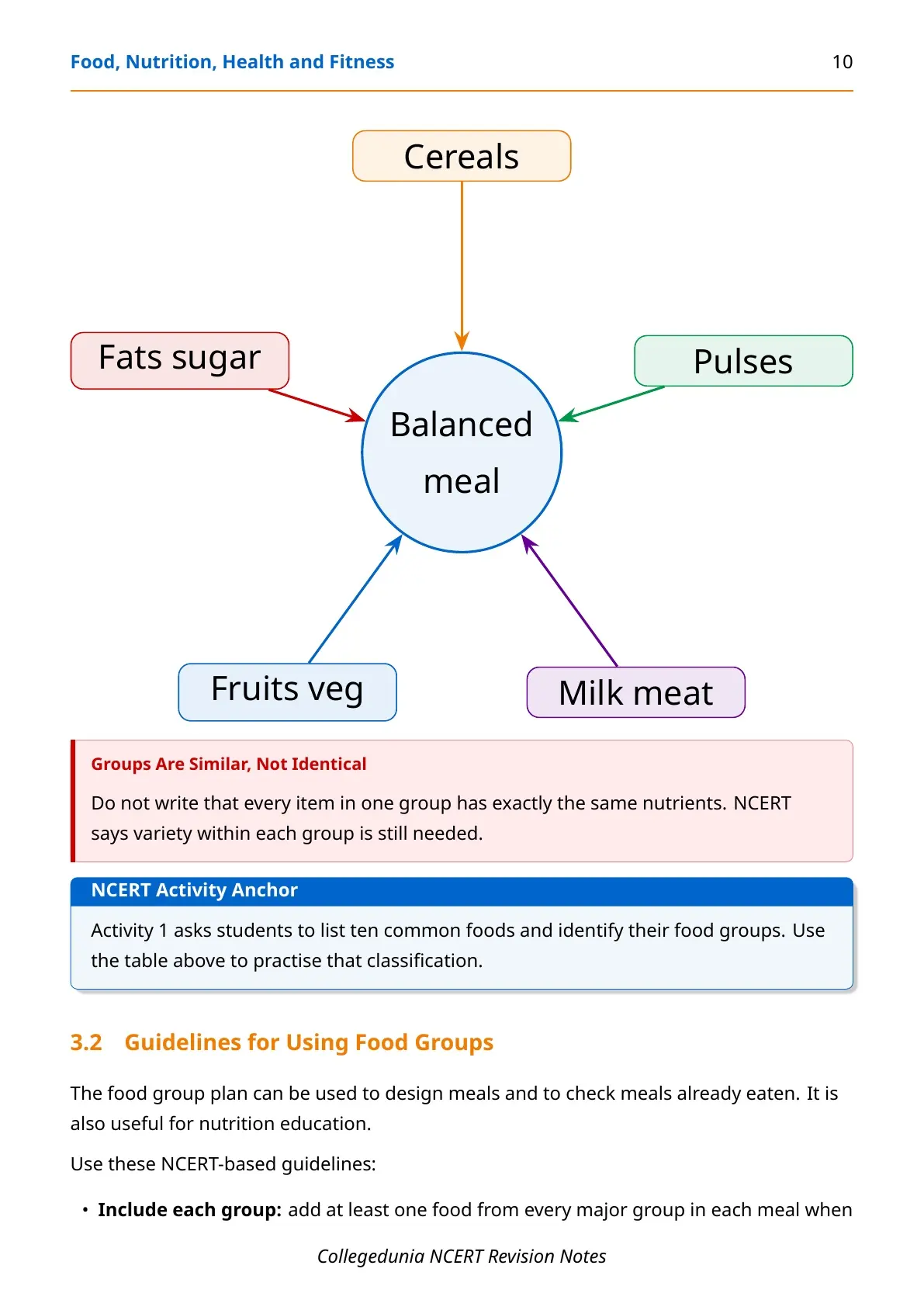
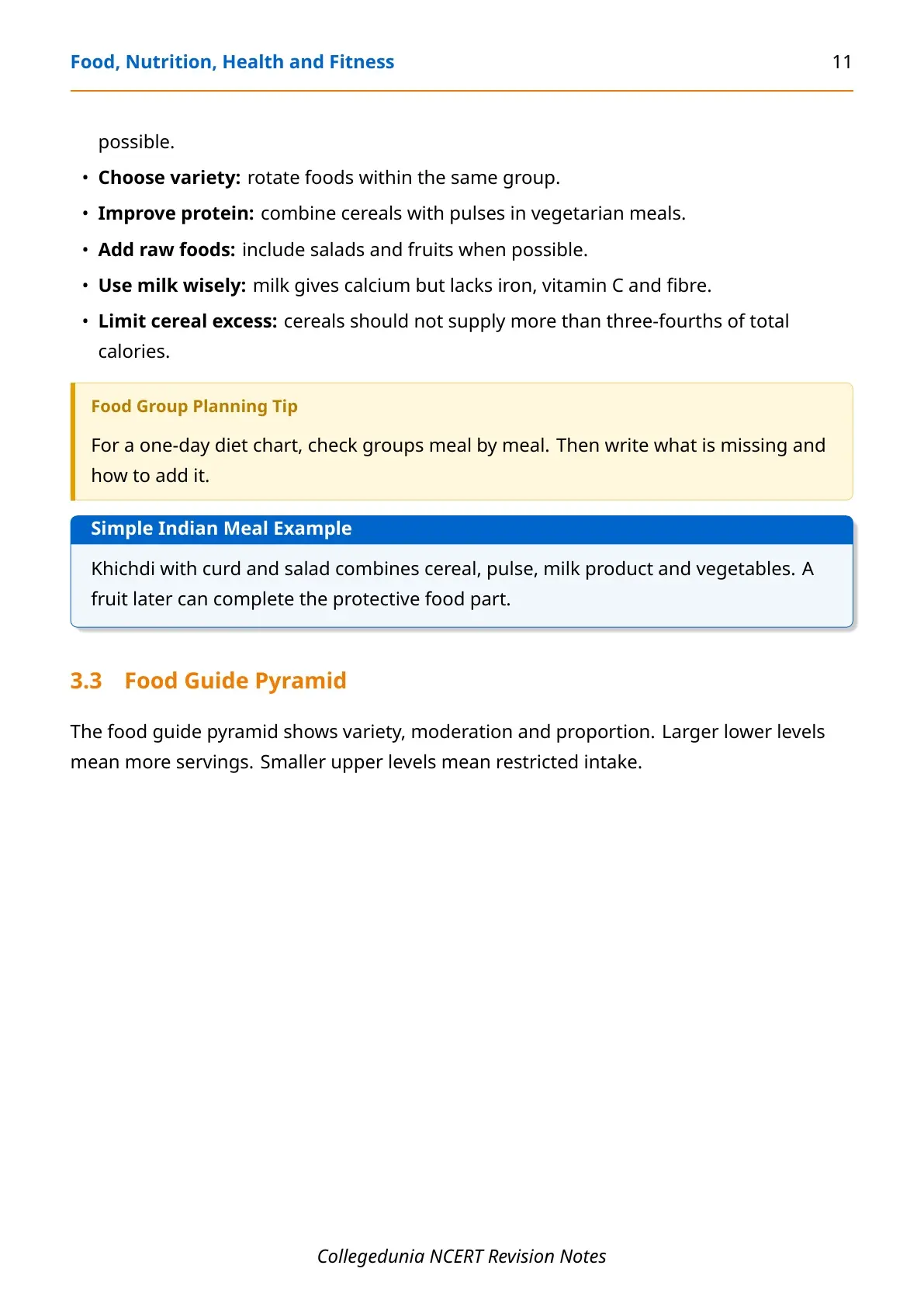
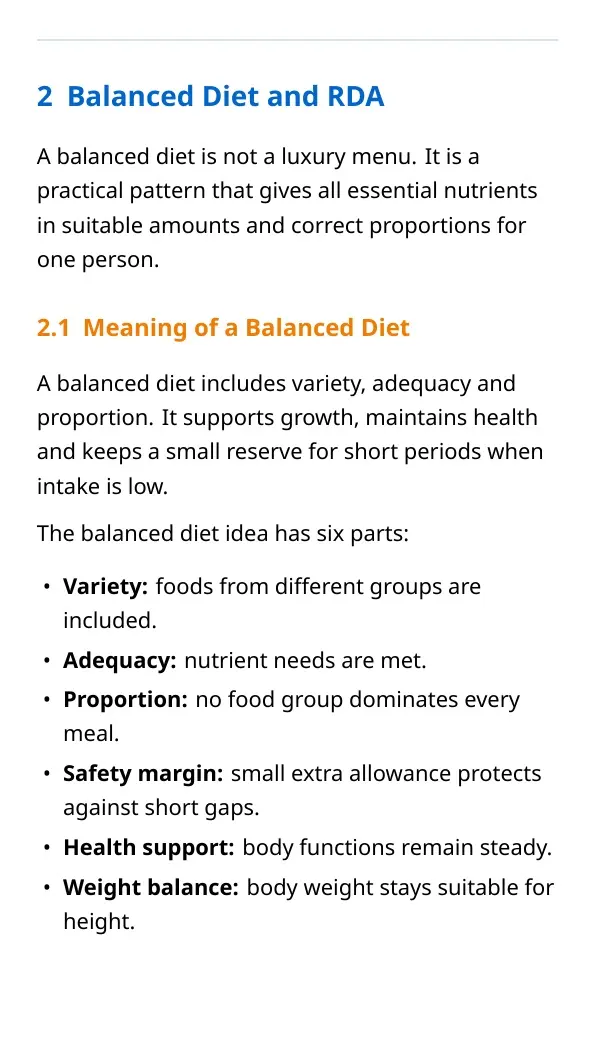
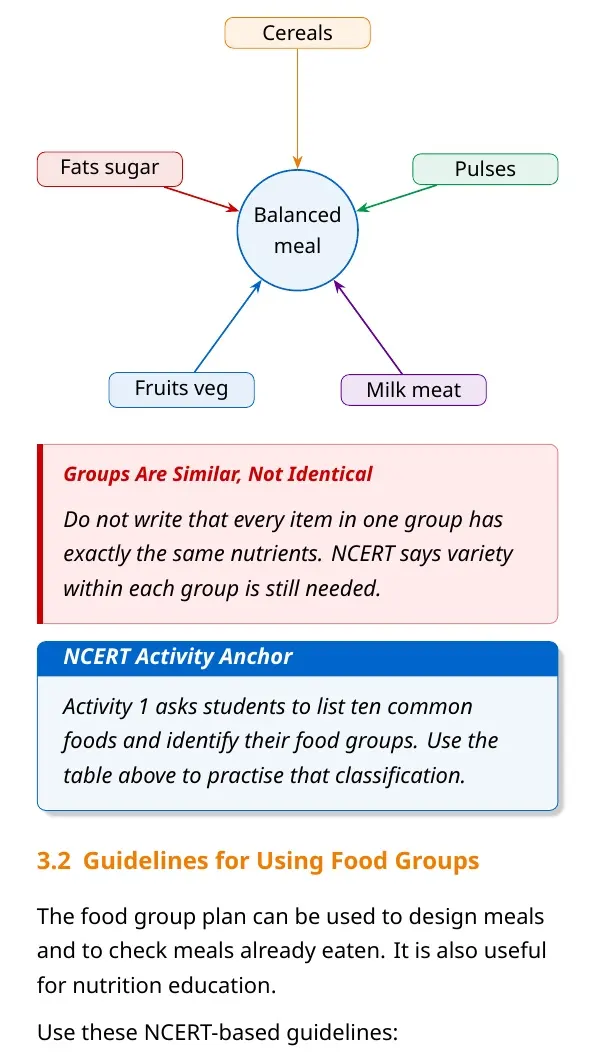
A balanced diet supplies all nutrients in the right amount for age, sex, body size, activity level and health condition. It does not mean eating only expensive food or removing one whole food group. It means variety, moderation and correct proportion.
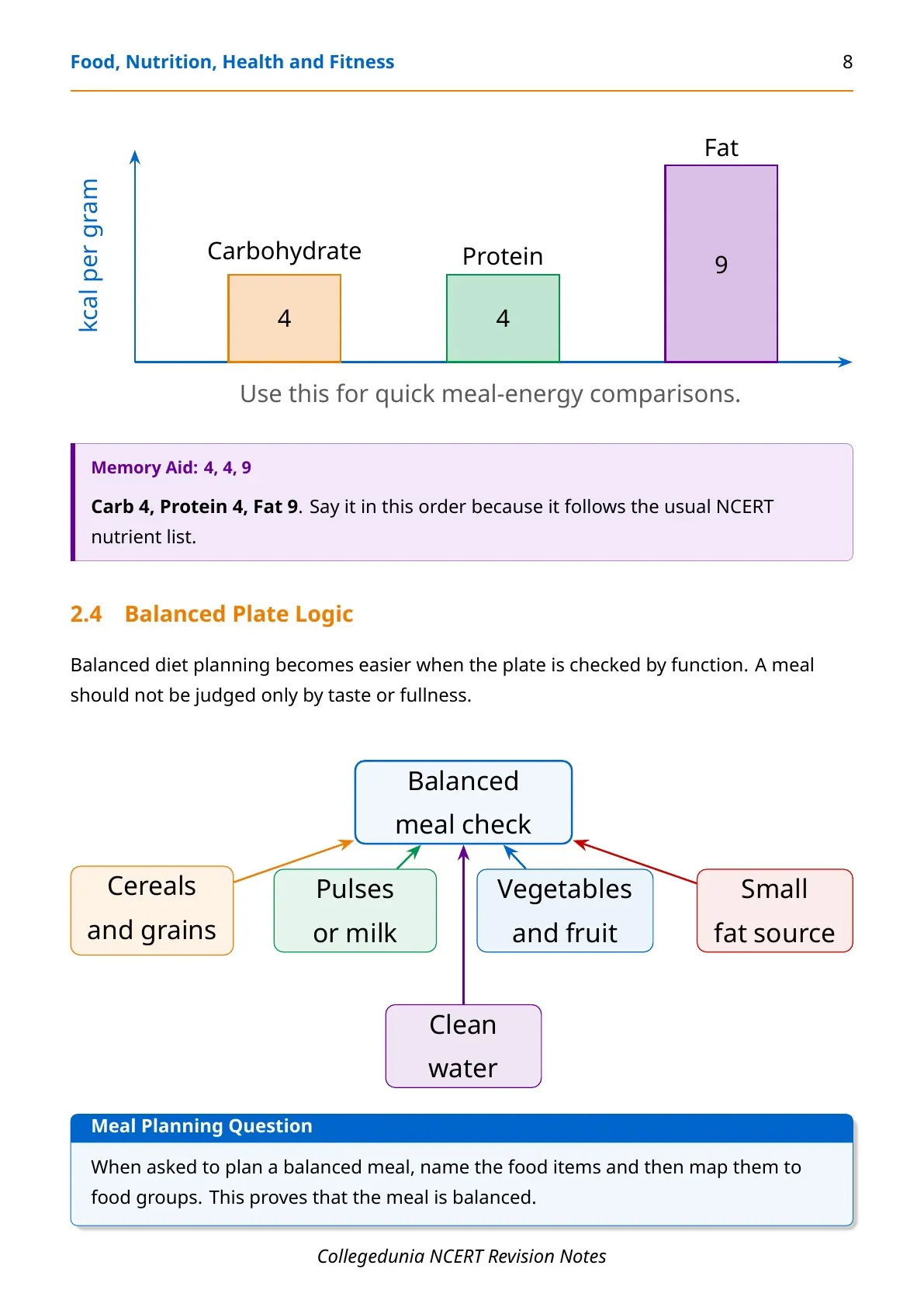
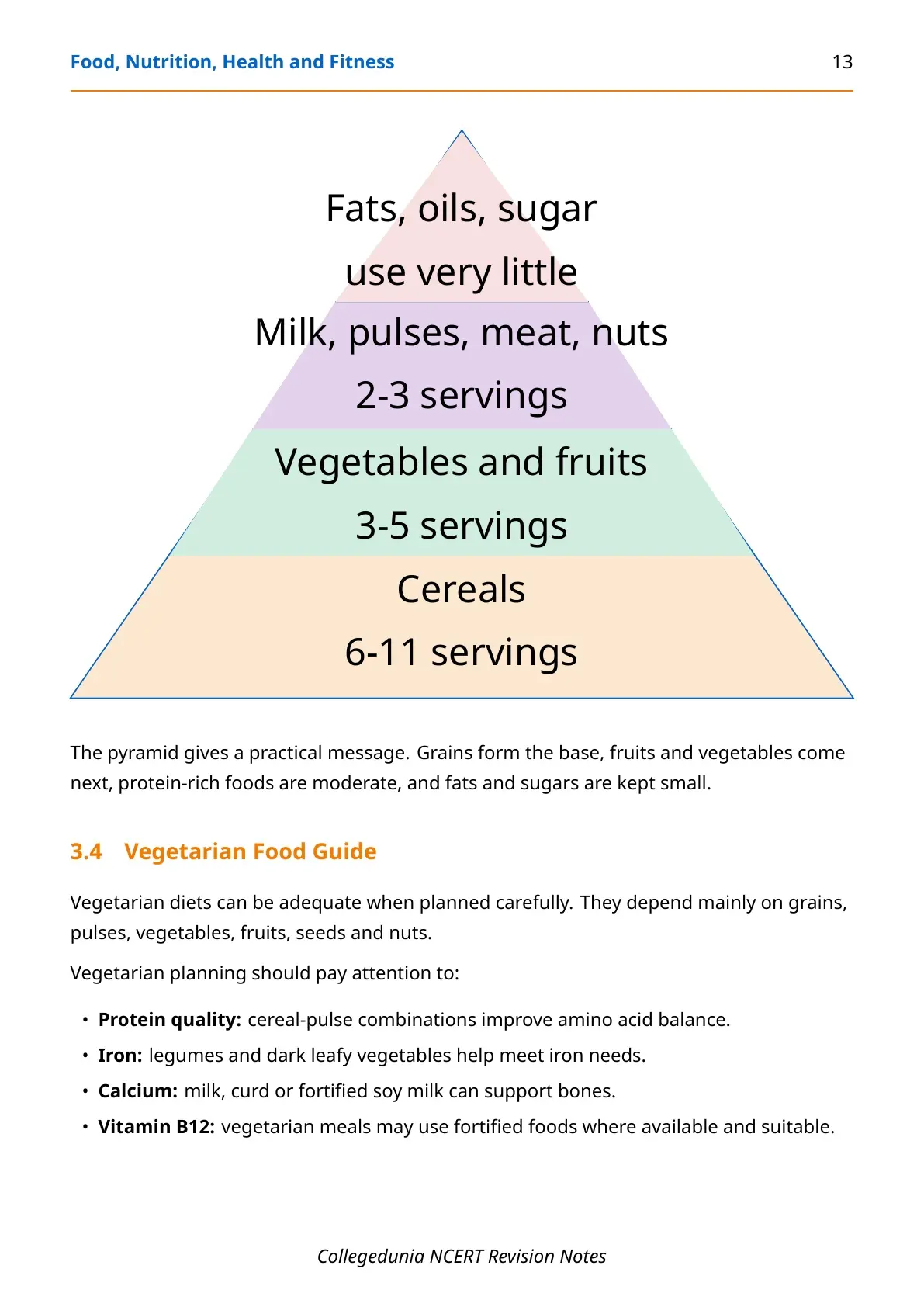
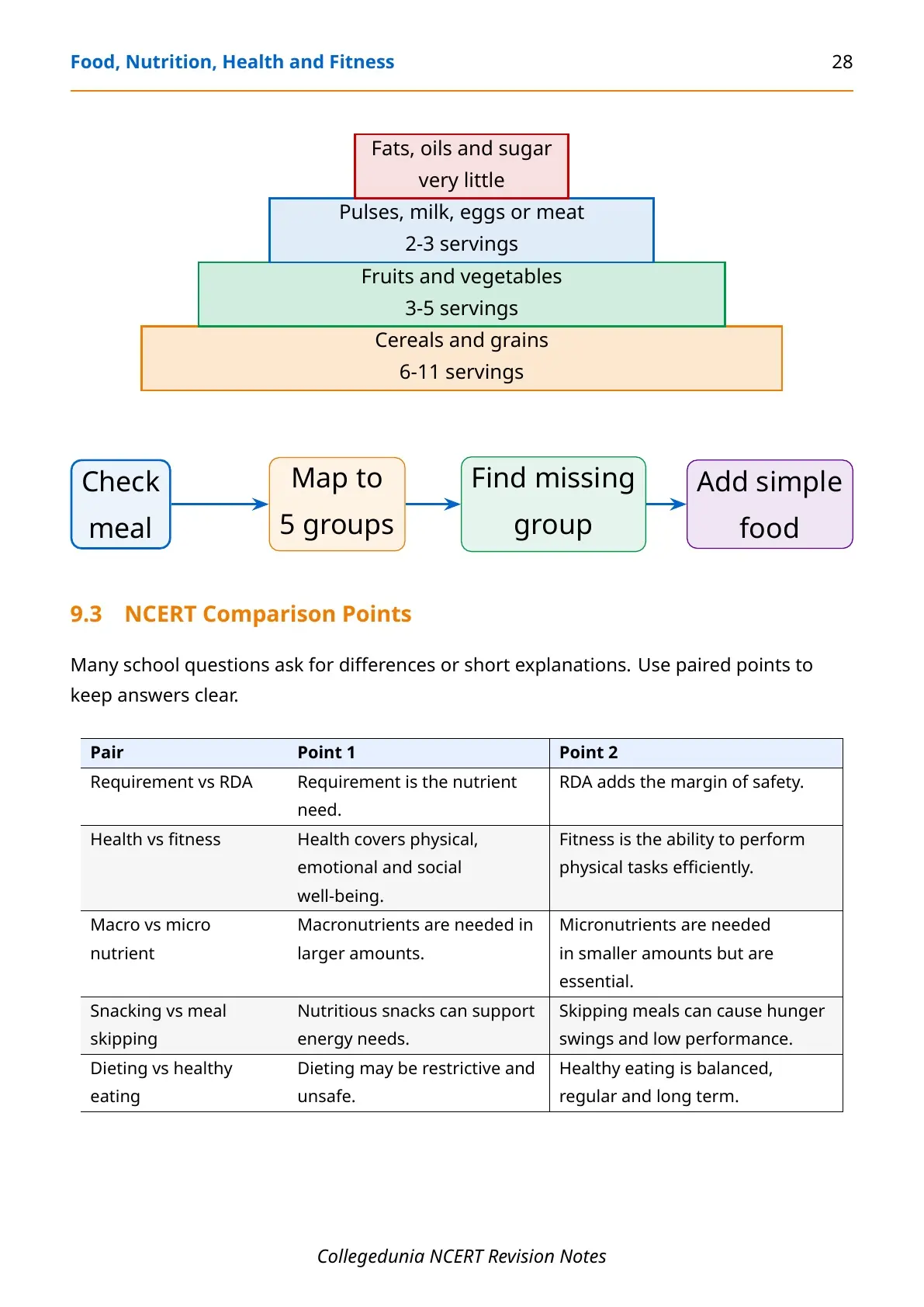
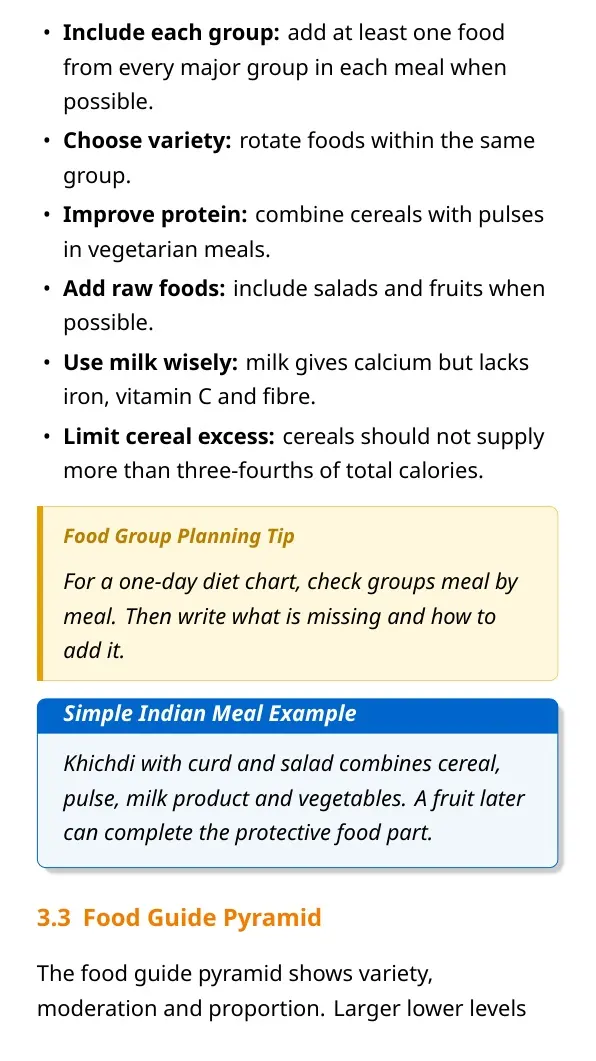
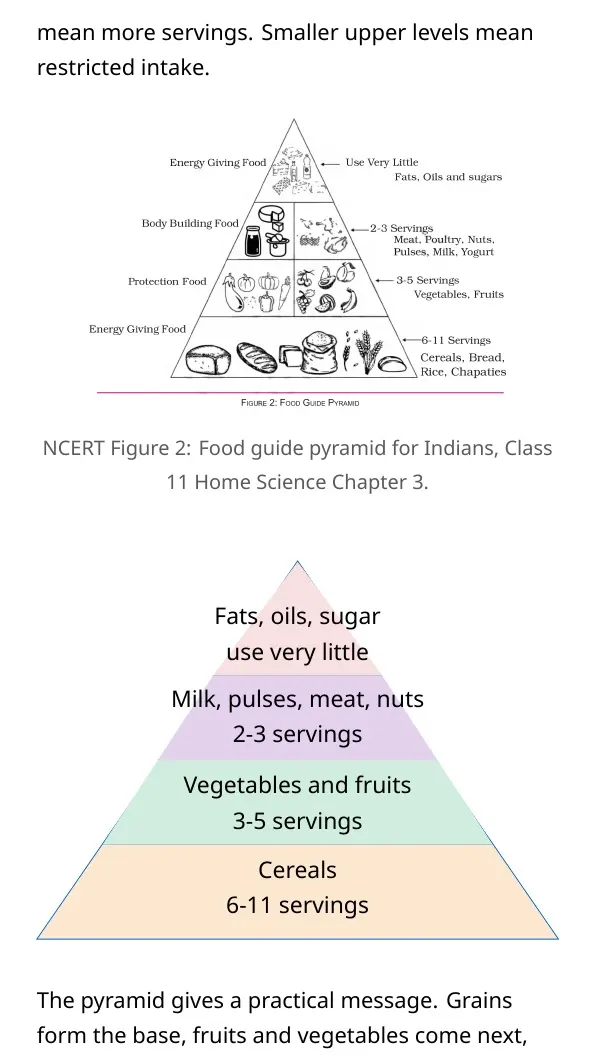
The food guide pyramid helps students remember proportion. Cereals and grains form the broad base. Fruits and vegetables add protective nutrients. Milk, pulses, eggs or meat give protein and calcium. Fats, sugar and fried foods stay near the top because they are needed in smaller amounts.
- Variety: include different food groups in the same day.
- Moderation: avoid excess sugar, salt, fat and fried snacks.
- Suitability: match meals with age, climate, activity and health needs.
Planning a Healthy Meal for Adolescents
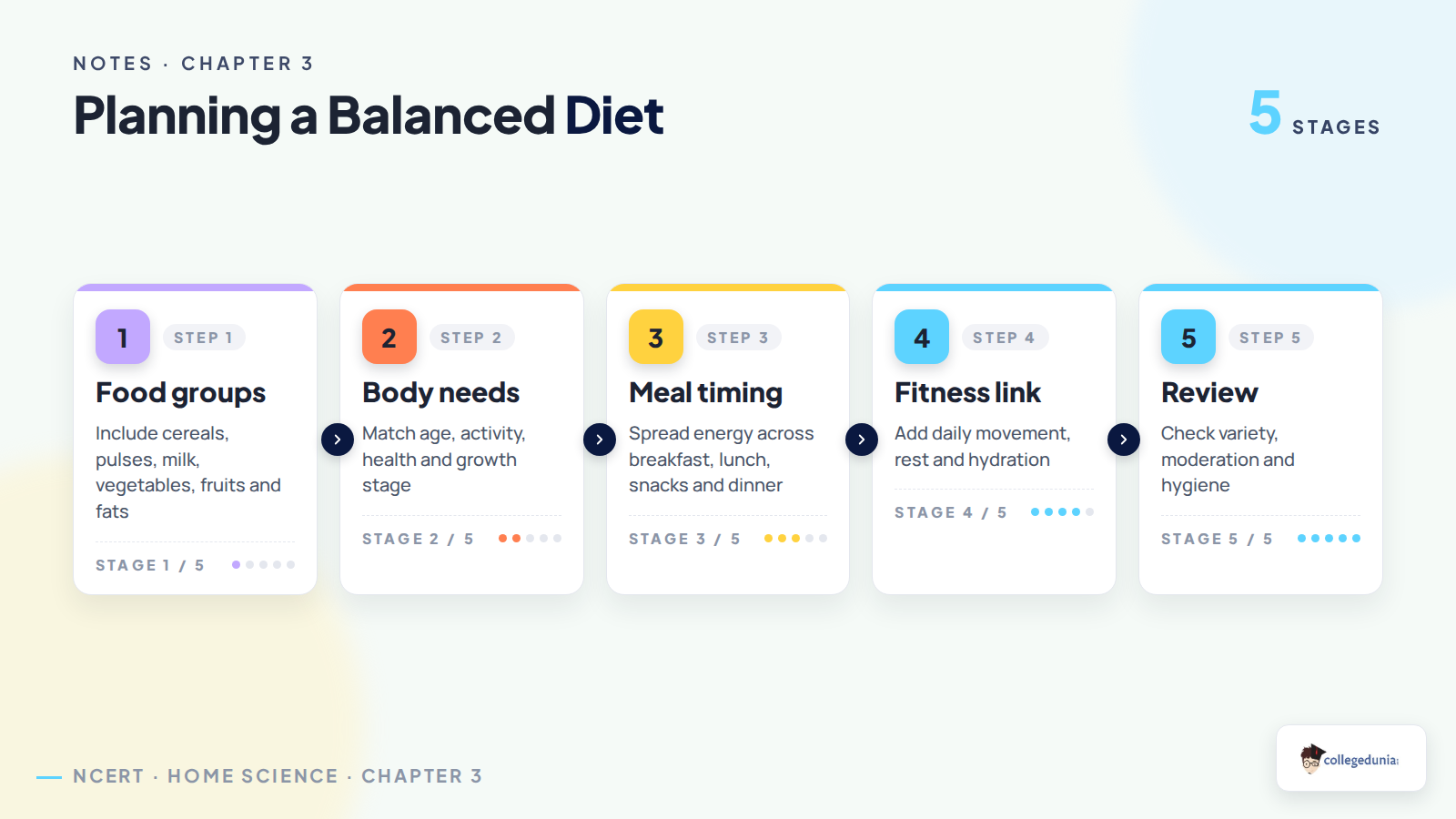
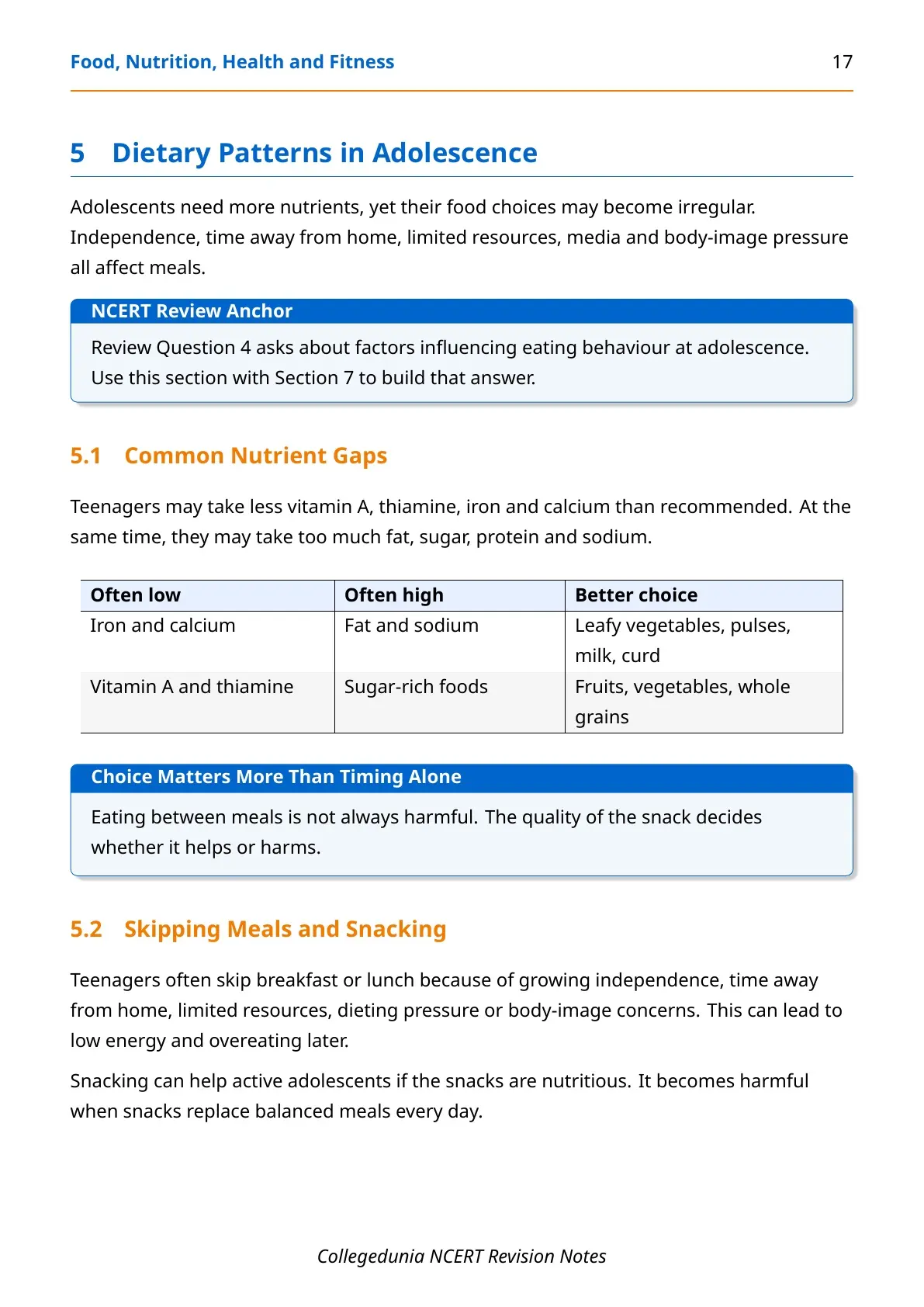
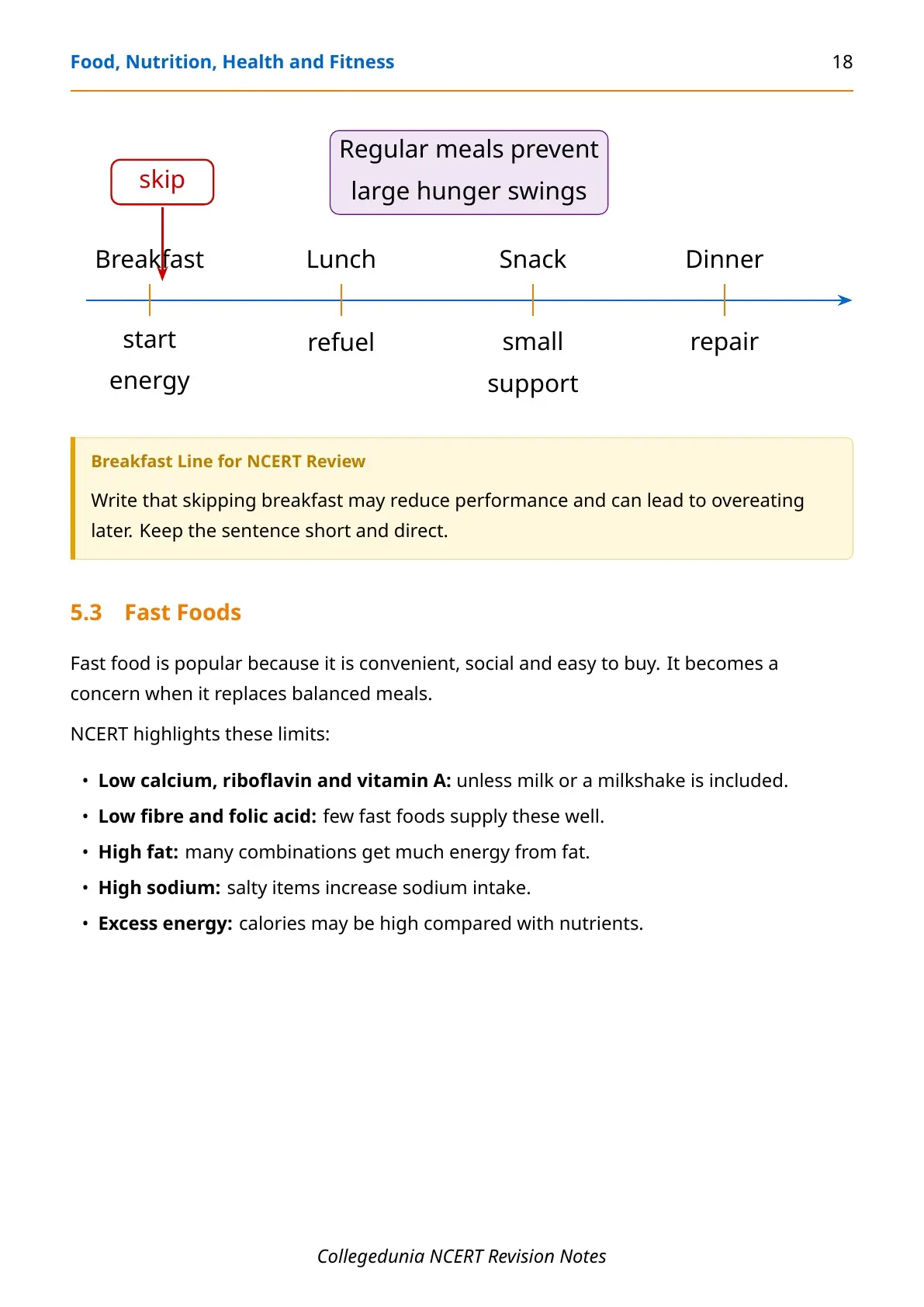
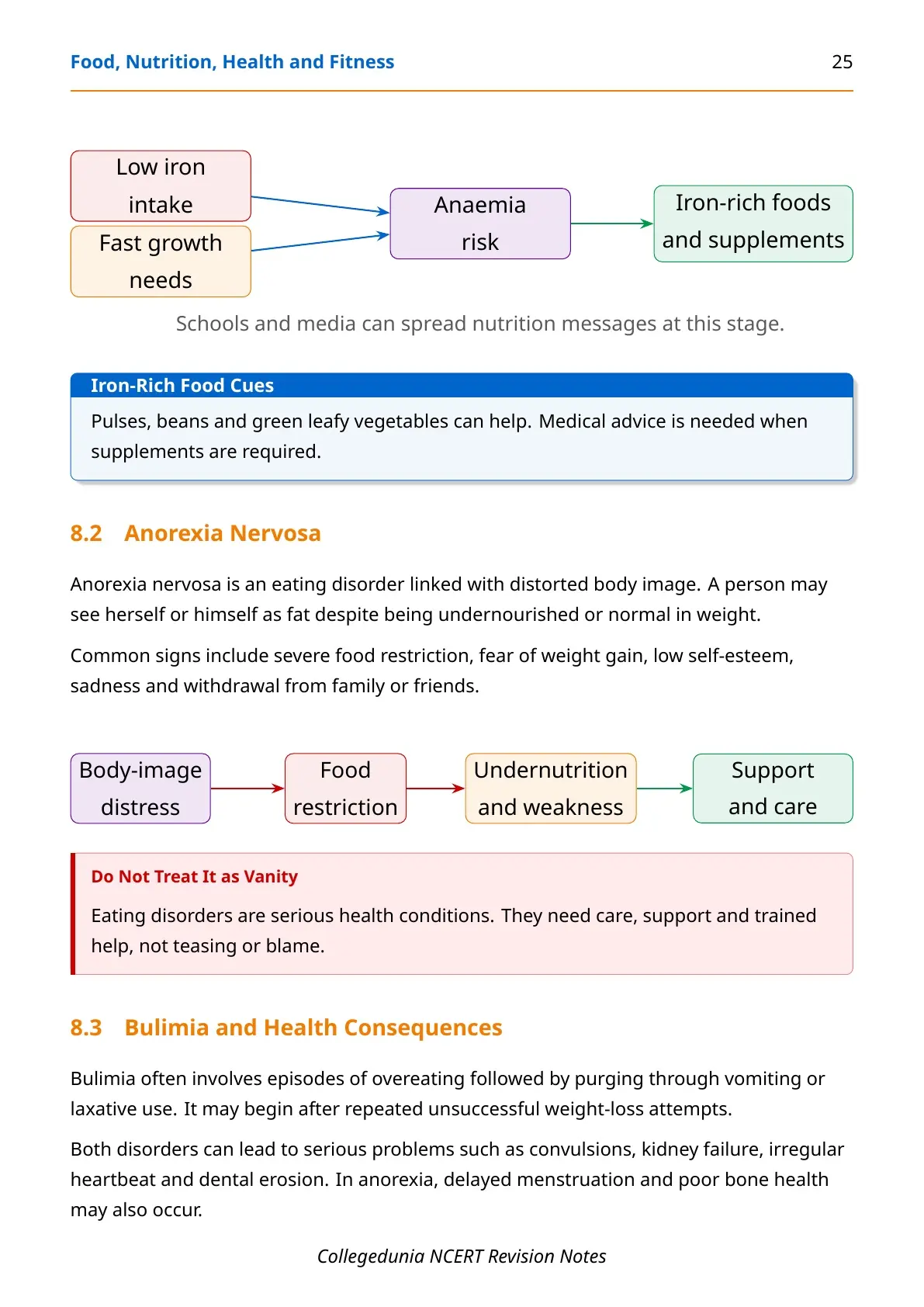
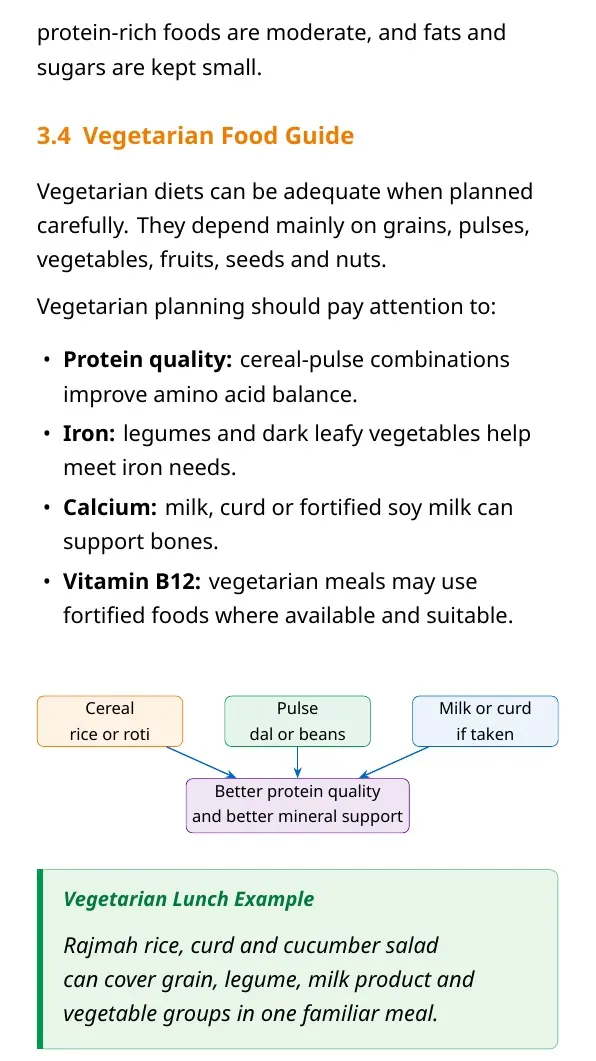
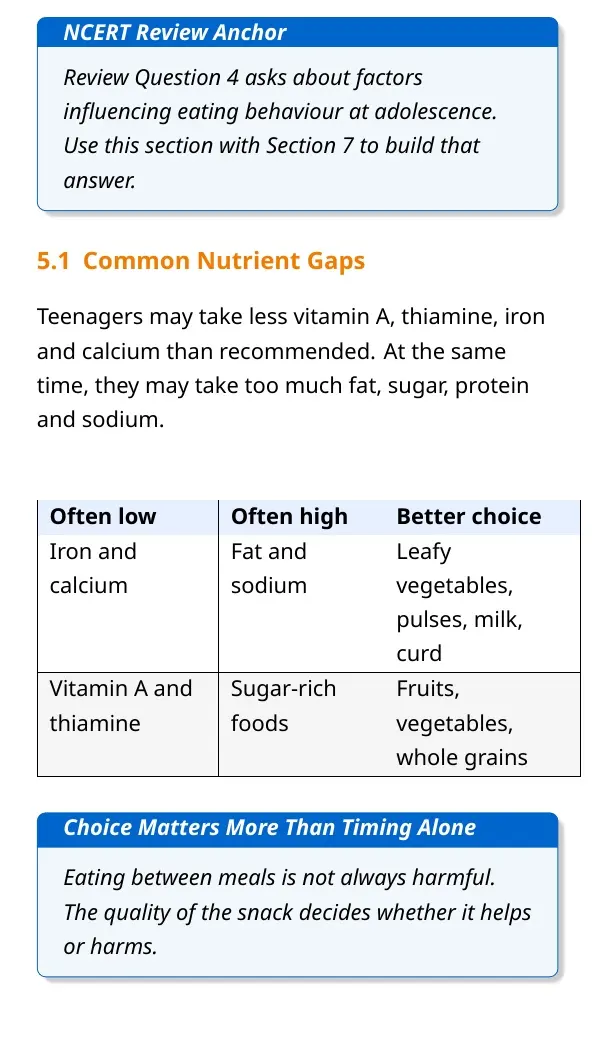
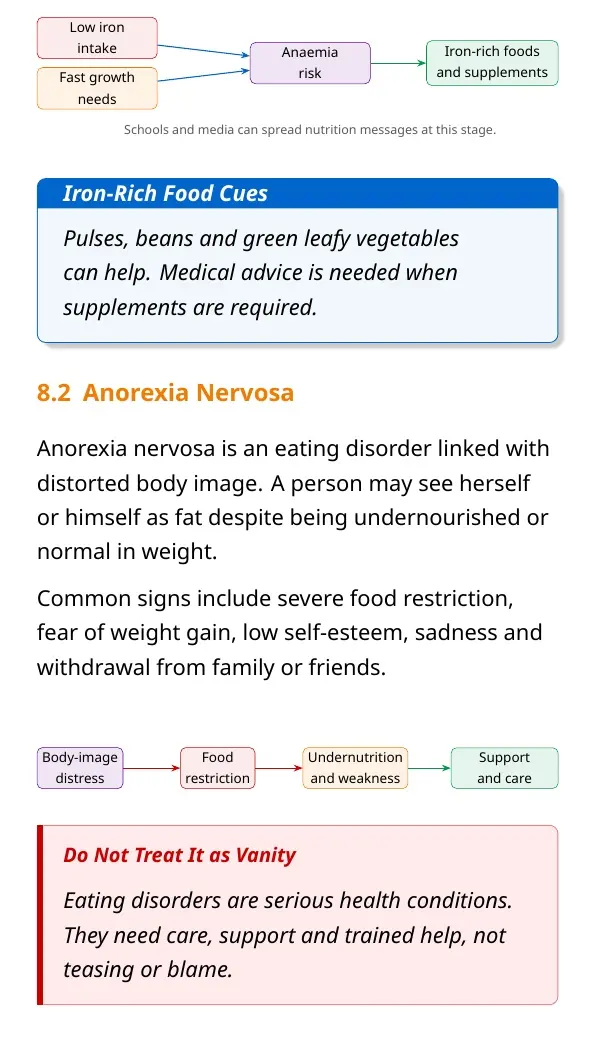
Adolescence is a period of fast growth, so diet planning must include enough energy, protein, iron, calcium and water. Students who skip breakfast or depend on packaged snacks may feel tired, lose concentration or miss important nutrients.
| Meal planning point | Why it matters | Example |
|---|---|---|
| Breakfast | Restores energy after night fasting. | Poha with peanuts, milk and fruit. |
| Protein source | Supports growth and repair. | Dal, curd, paneer, egg or sprouts. |
| Iron and calcium | Needed for blood, bones and muscle work. | Green leaves, jaggery, milk, ragi. |
| Water | Prevents dehydration and supports digestion. | Carry safe water to school. |
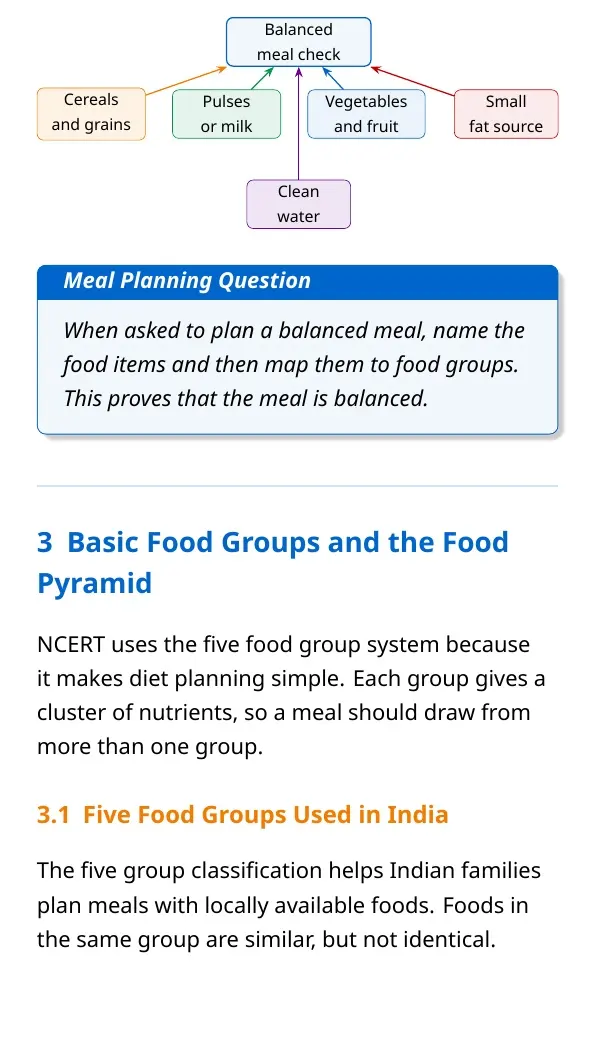
Exam tip: when asked to plan a balanced meal, include food group variety, nutrient function and one activity or rest point. This makes the answer complete and NCERT-based.
Health, Fitness and Lifestyle Links
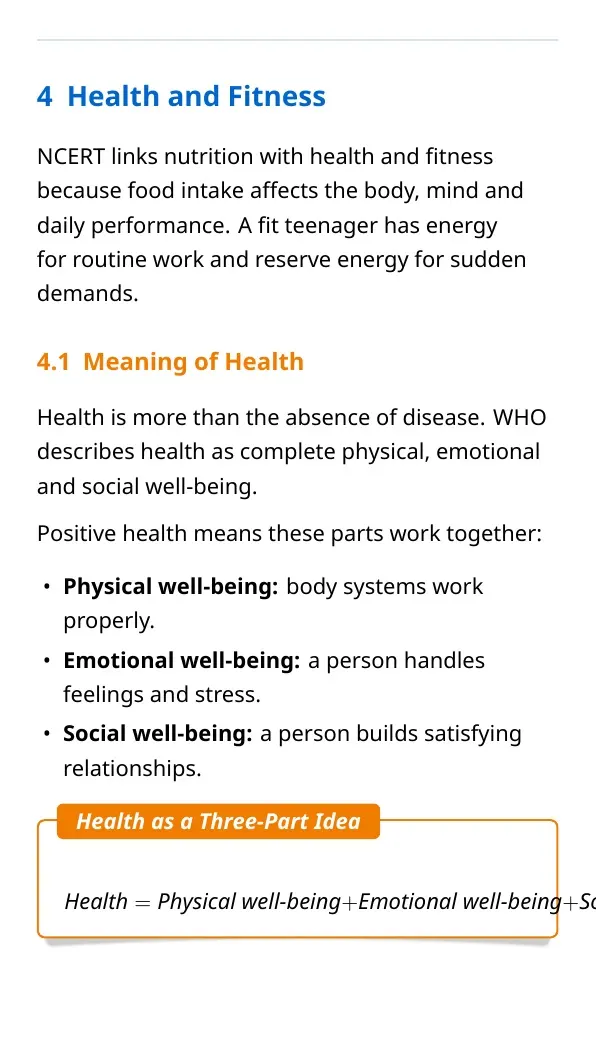
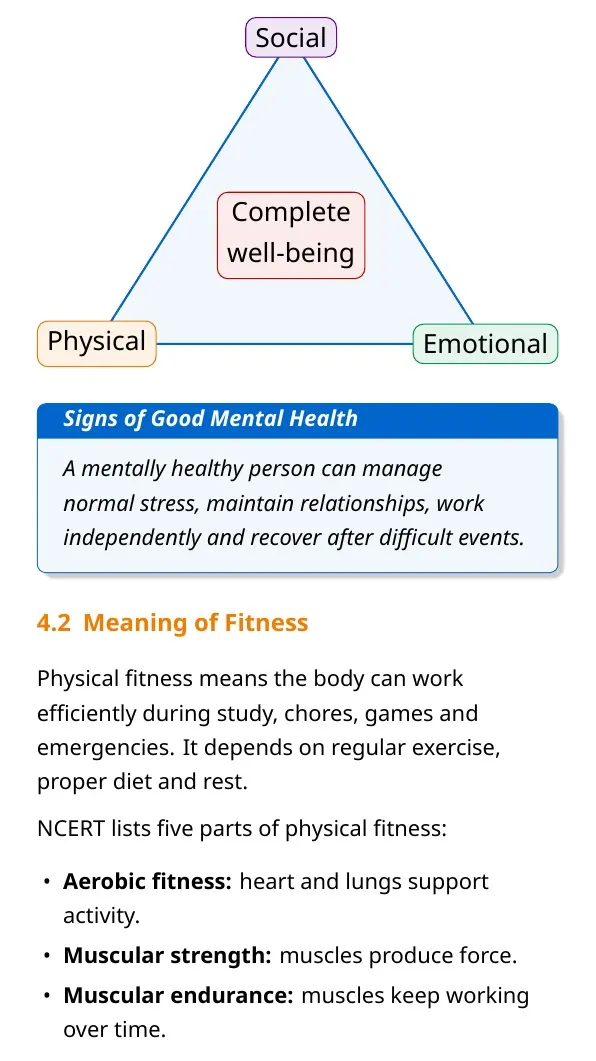
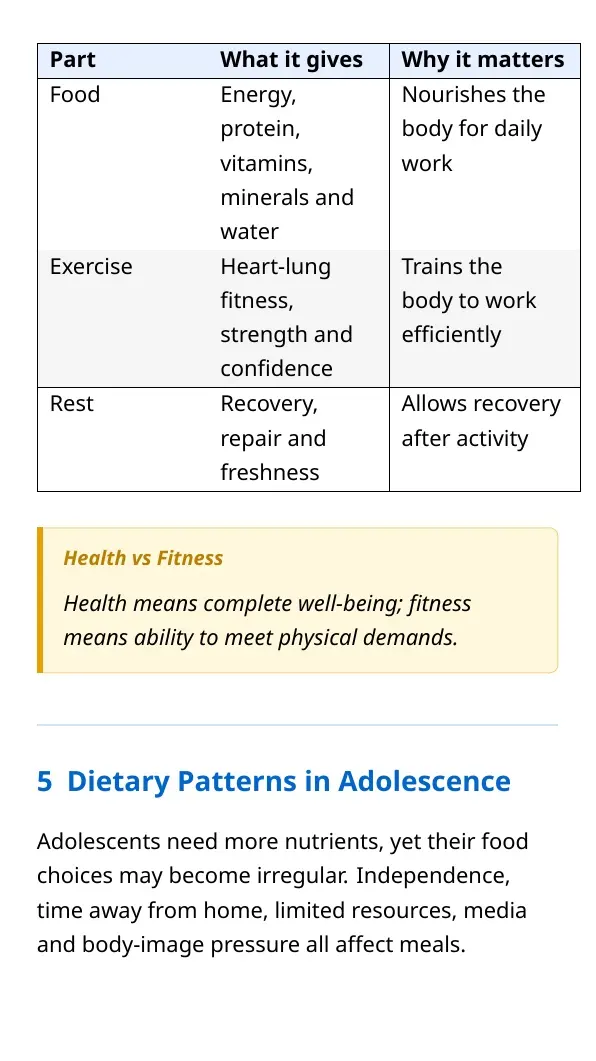
Health is not only the absence of disease. The chapter connects food with physical fitness, rest, mental balance and daily routine. A student who eats well but never moves may still have poor stamina. A student who exercises but eats irregularly may also feel weak.
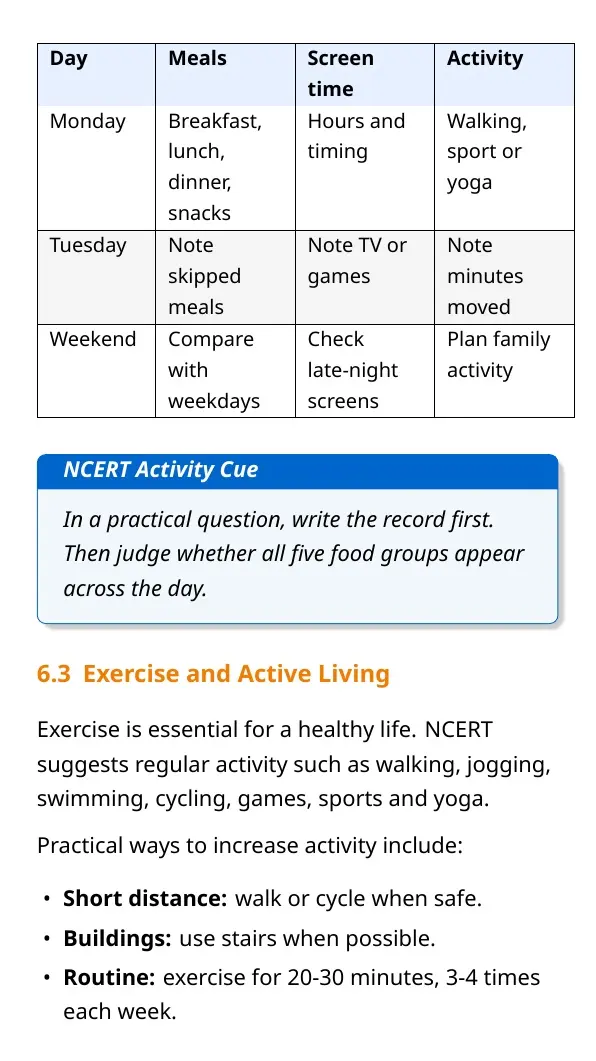
Fitness improves when nutrition and activity support each other. Carbohydrates give energy for movement, proteins repair tissues, water prevents dehydration, and minerals help muscle and nerve function. Food, exercise, rest and mental balance work together in this chapter.
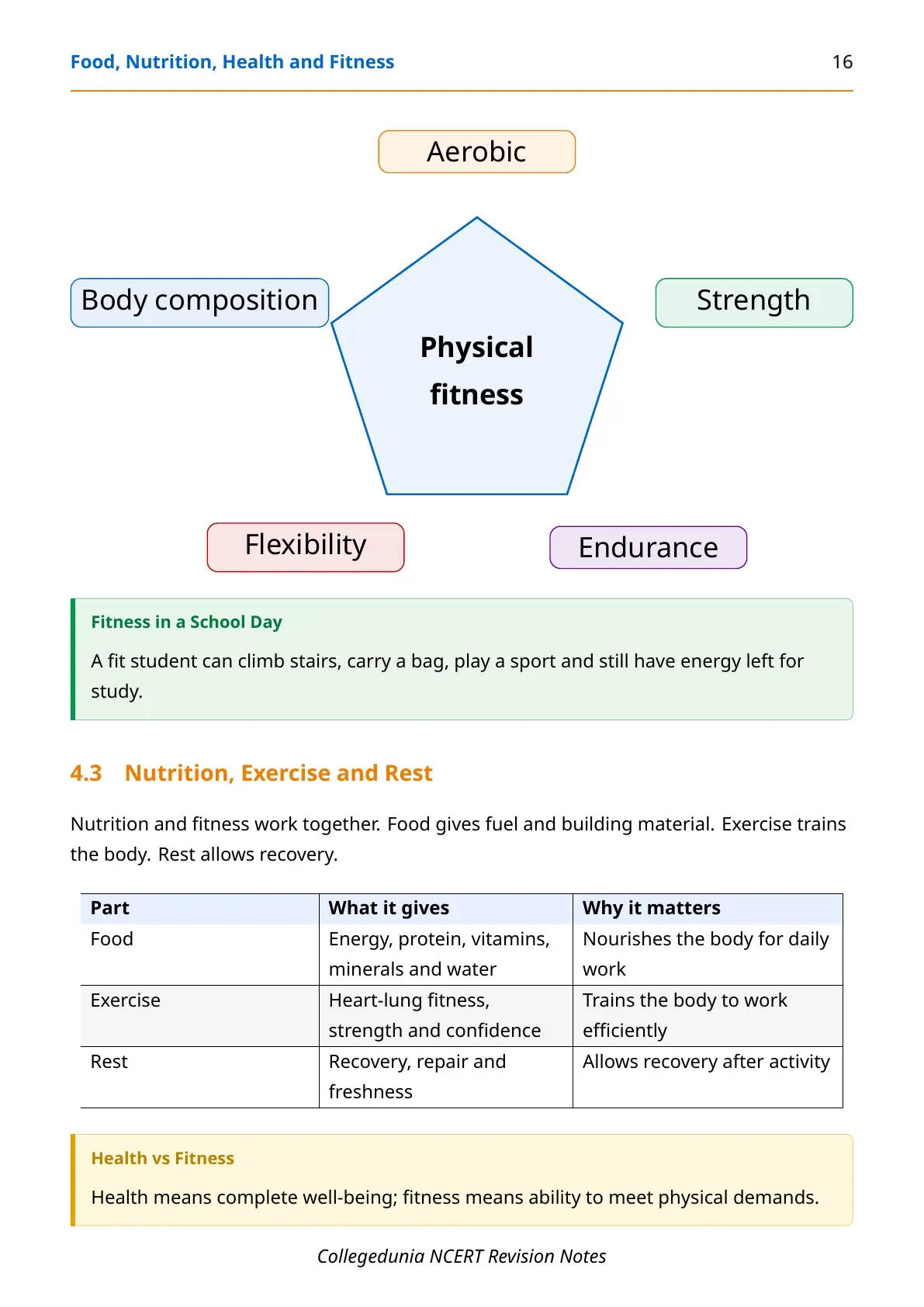
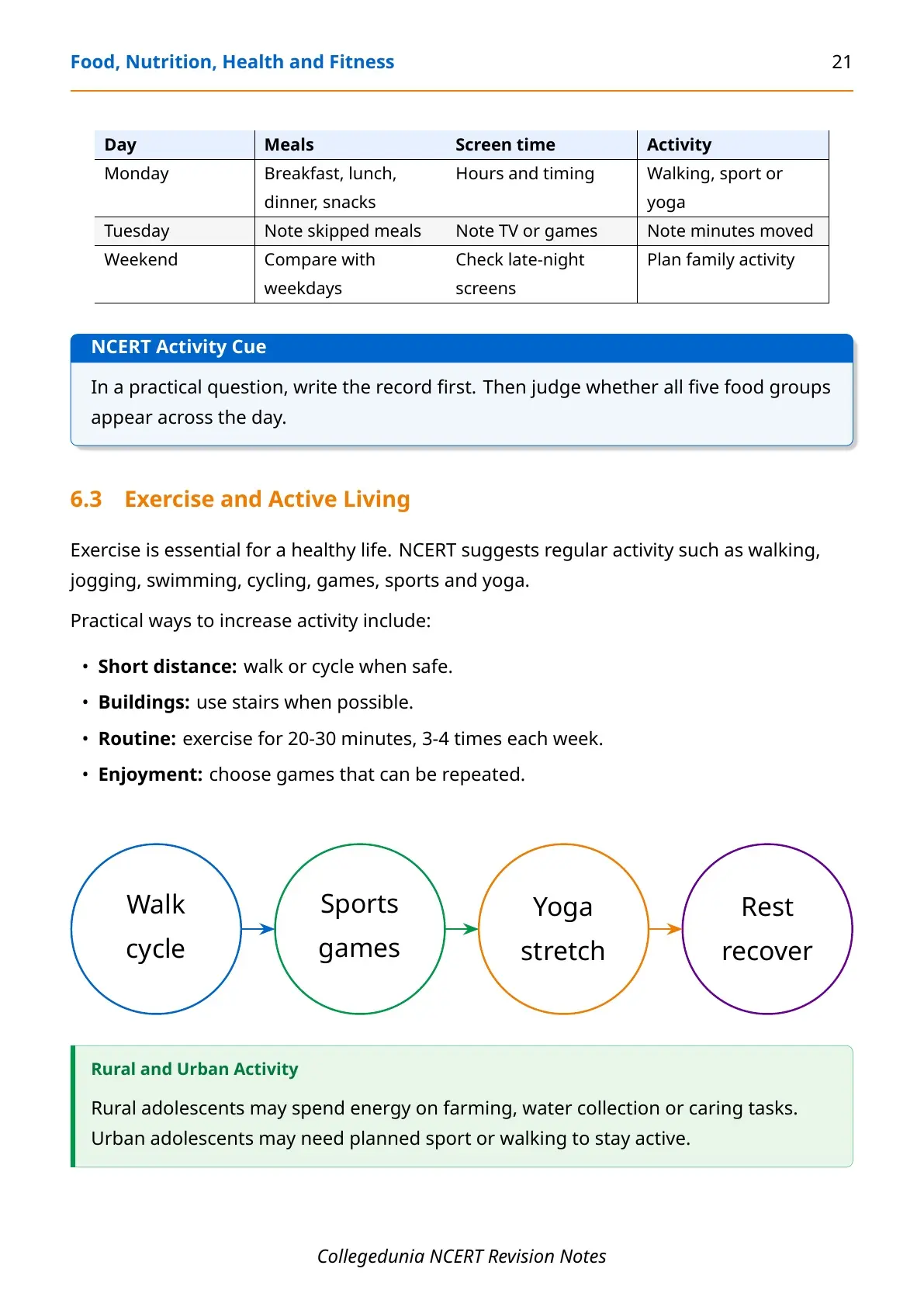
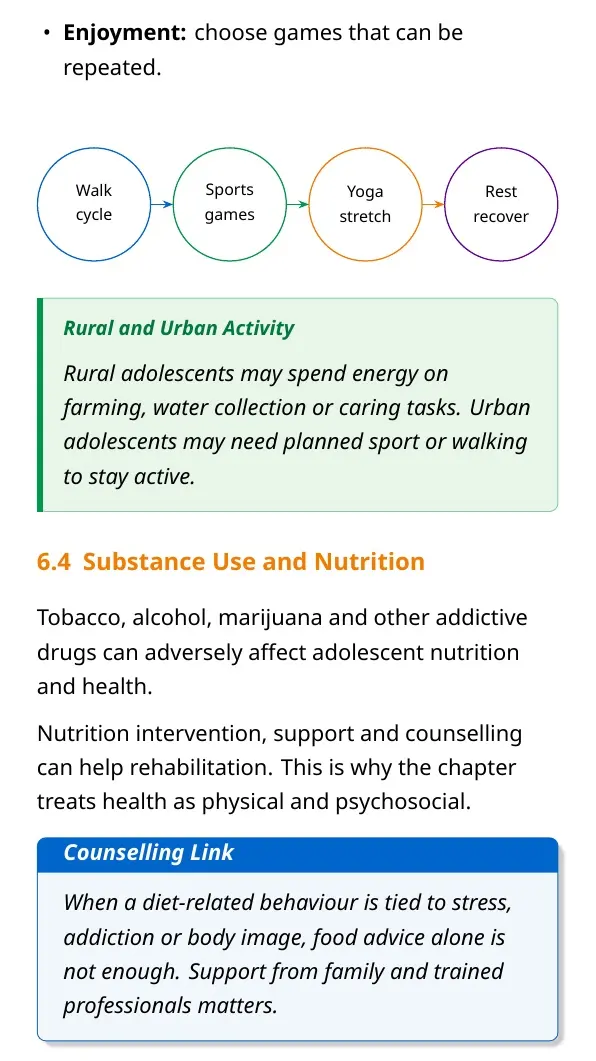
- Cardiorespiratory endurance: walking, running, cycling and games improve stamina.
- Muscular strength: daily activity and protein support body repair.
- Flexibility: stretching and posture reduce stiffness.
- Body composition: balanced eating and activity help maintain healthy weight.
Adolescent Eating Behaviour and Common Mistakes
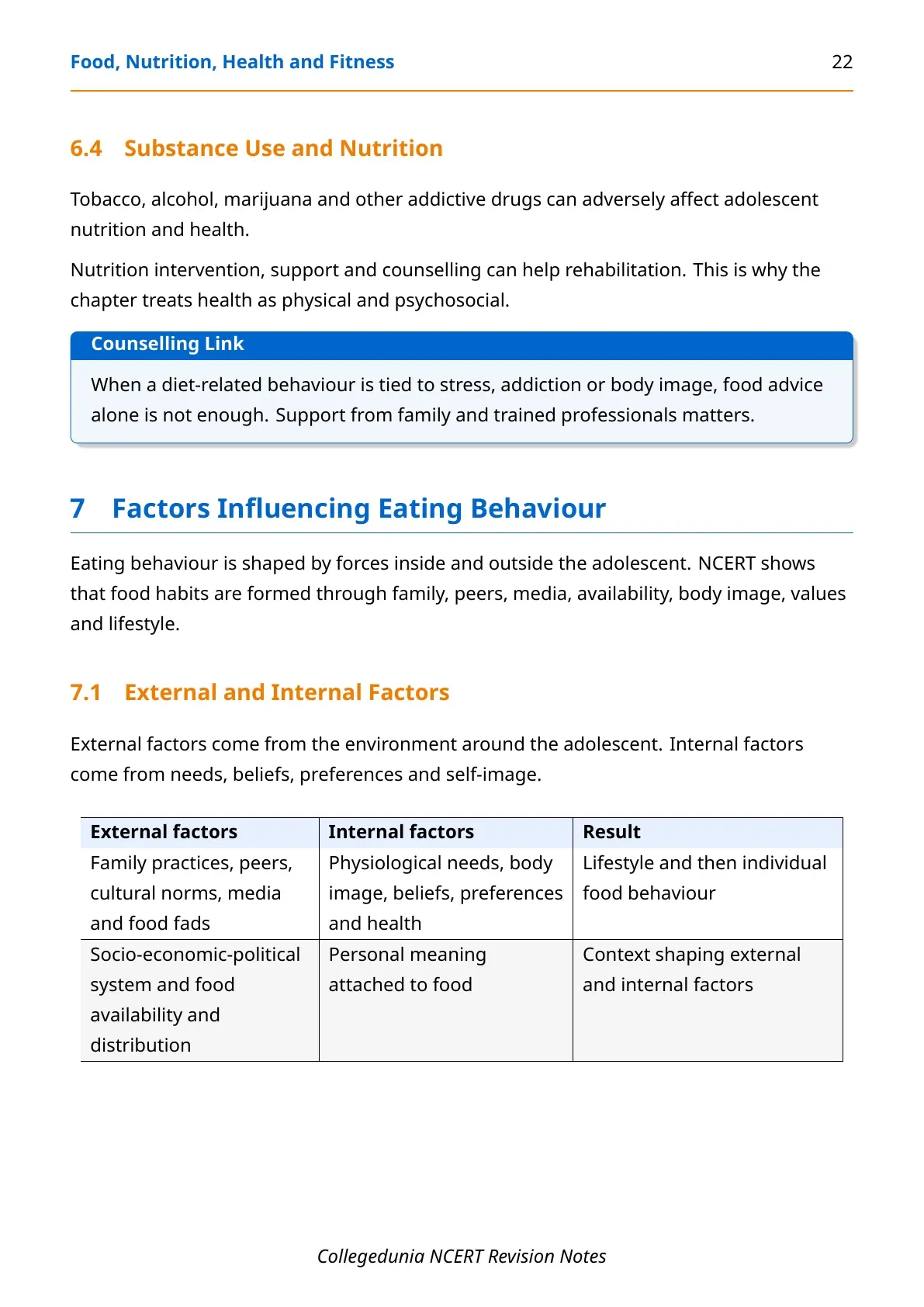
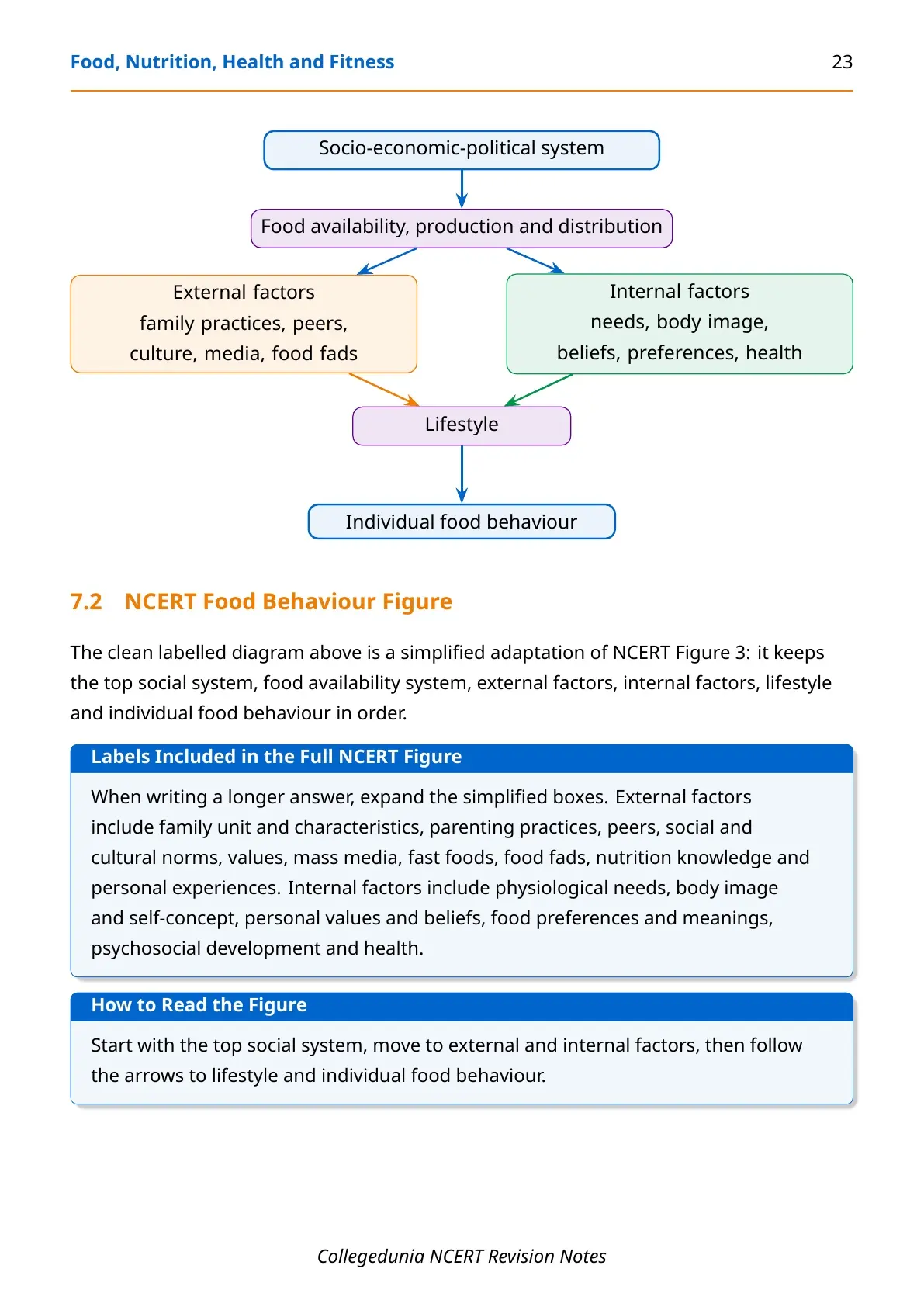
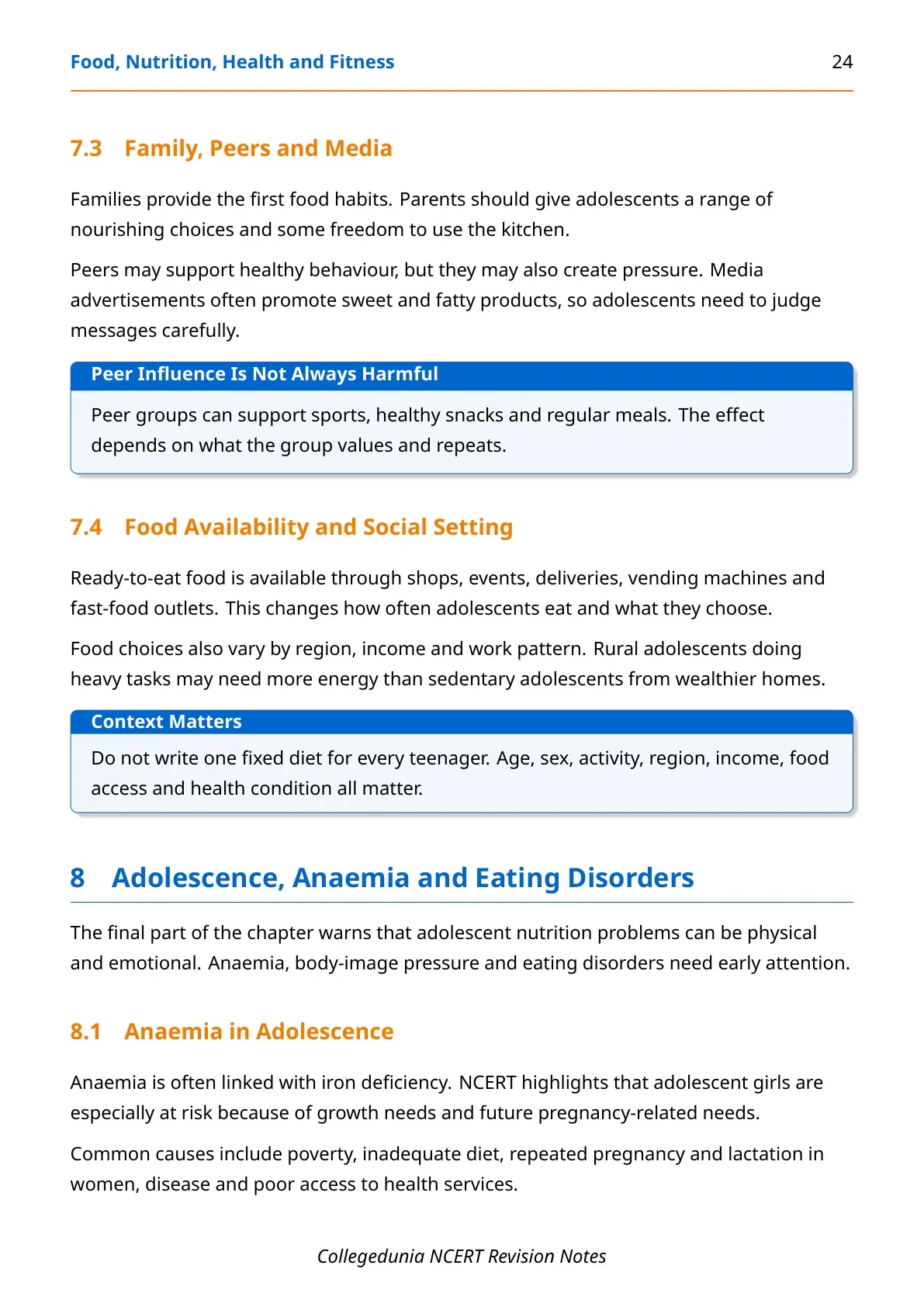
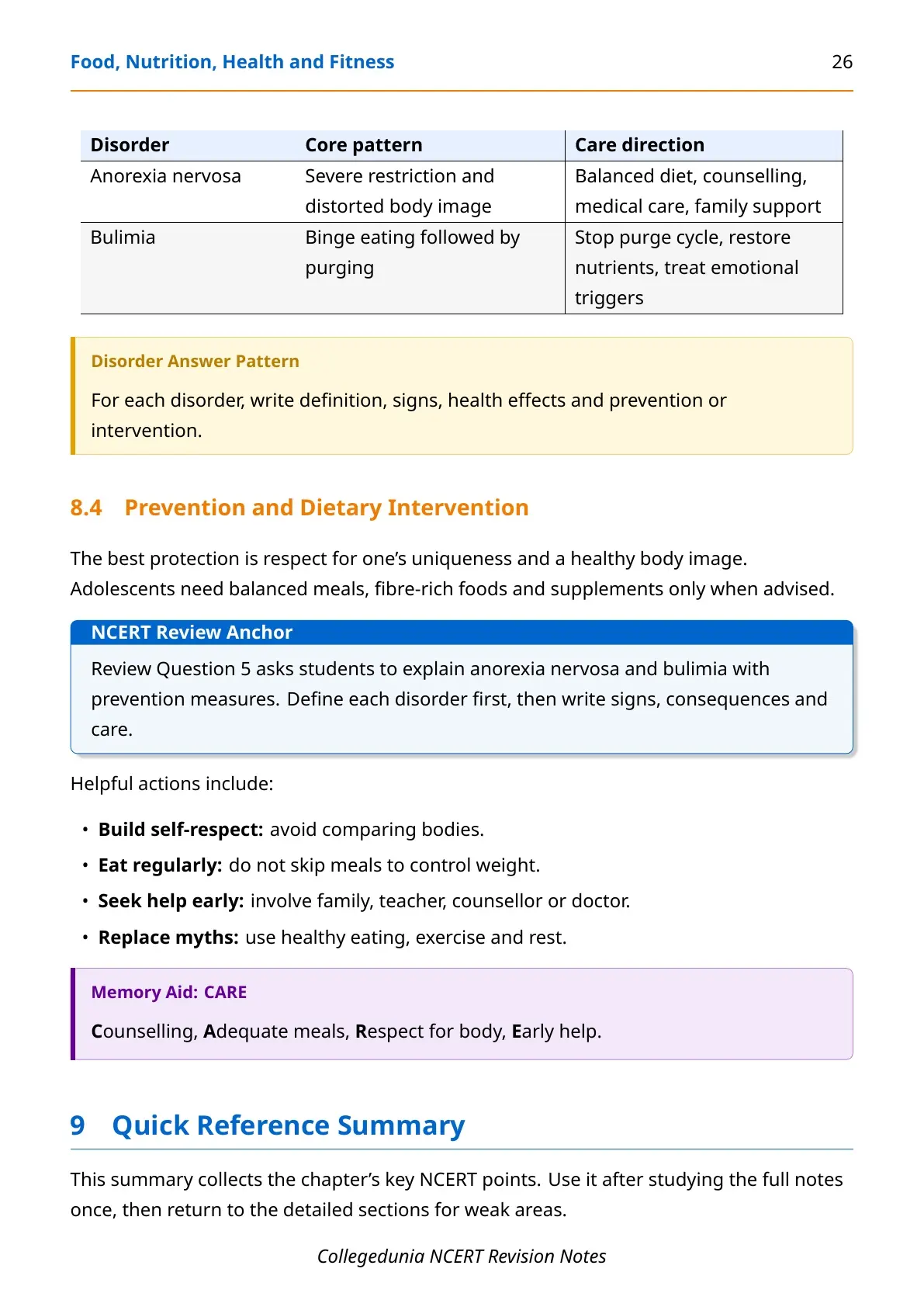
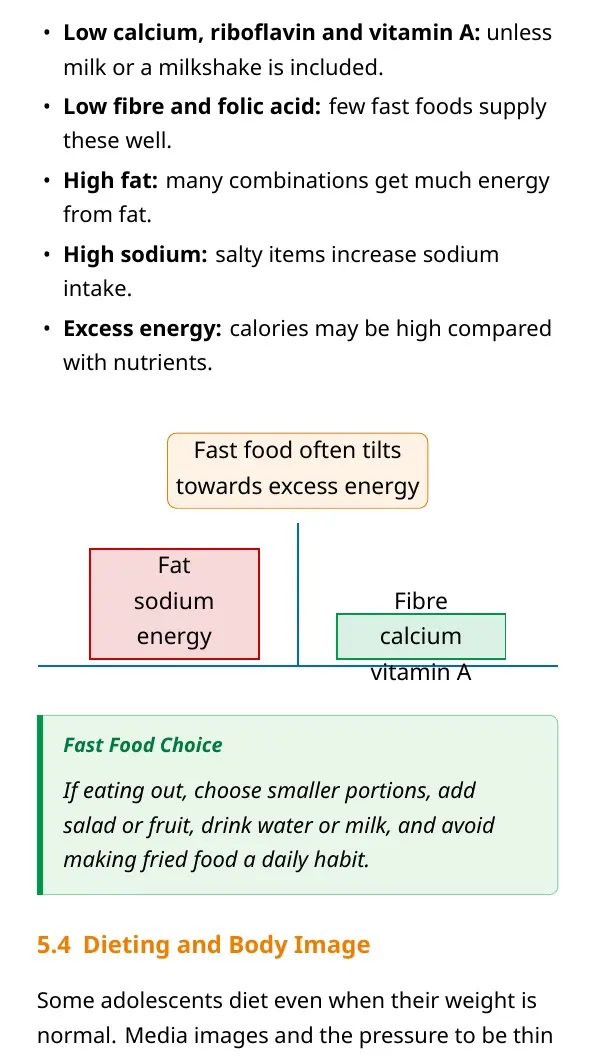
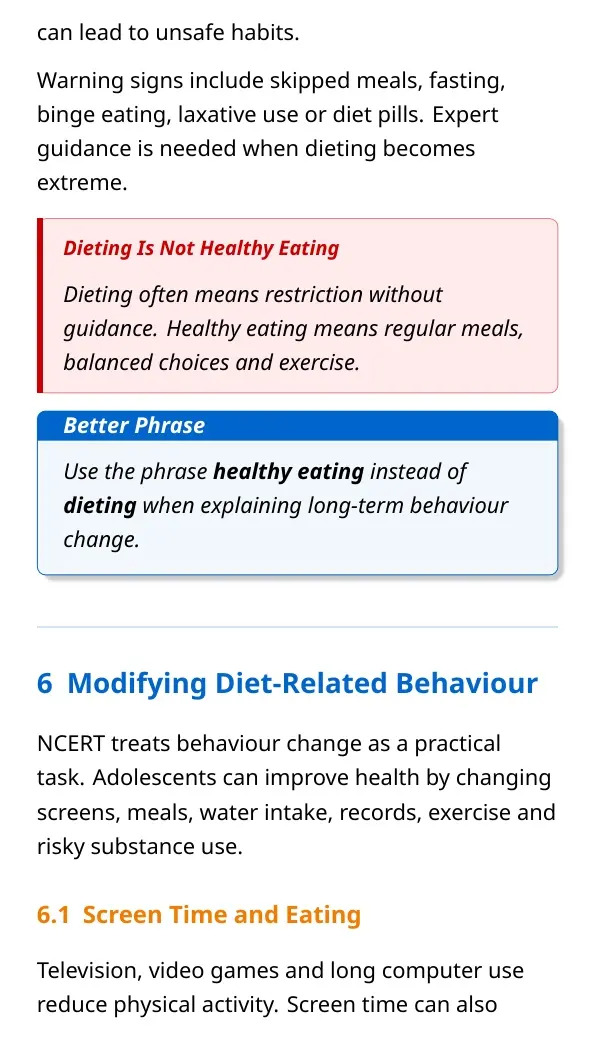
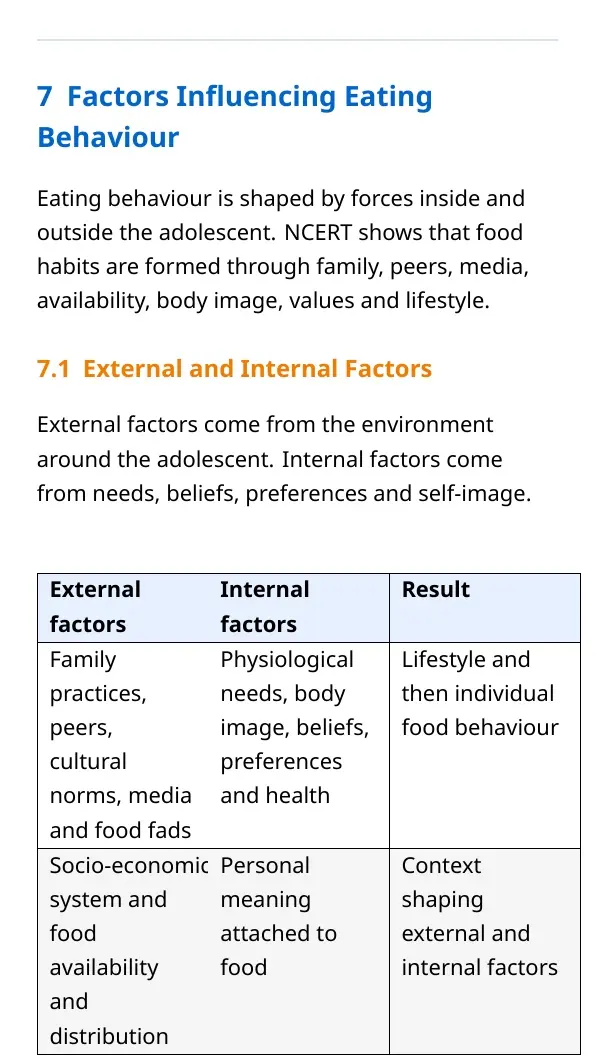
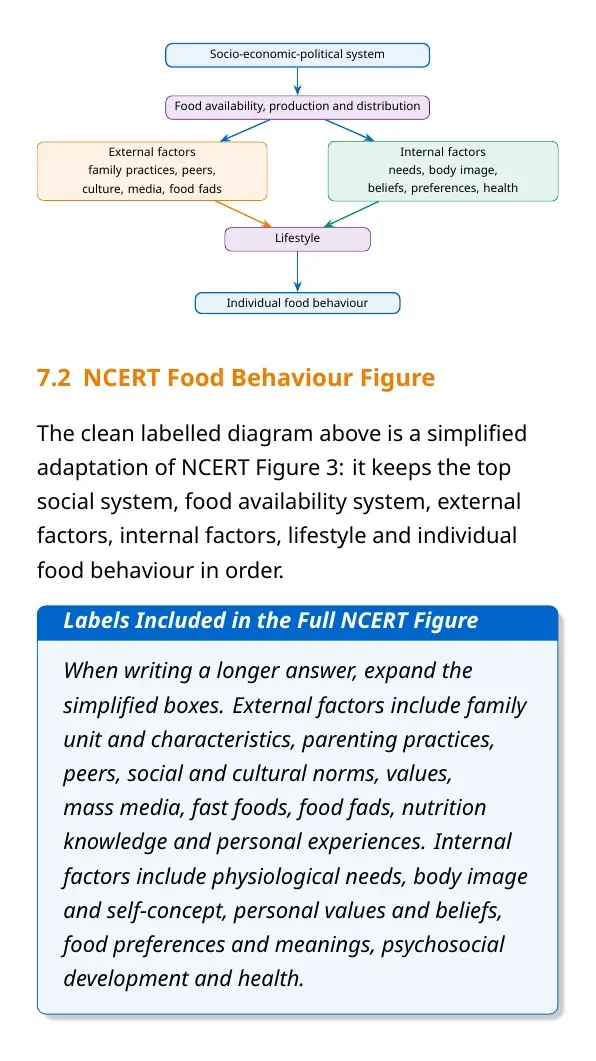
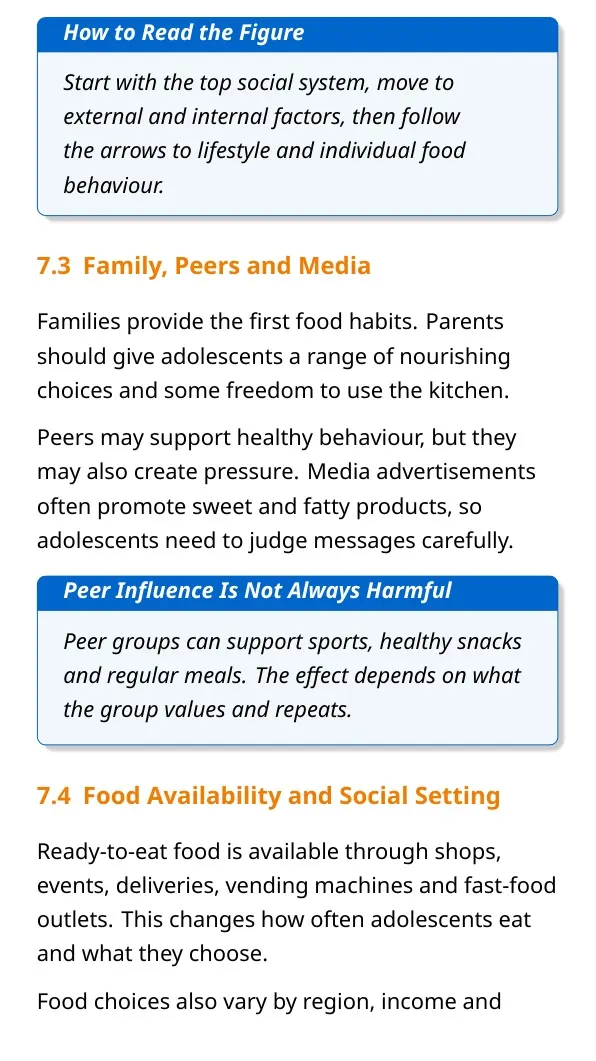
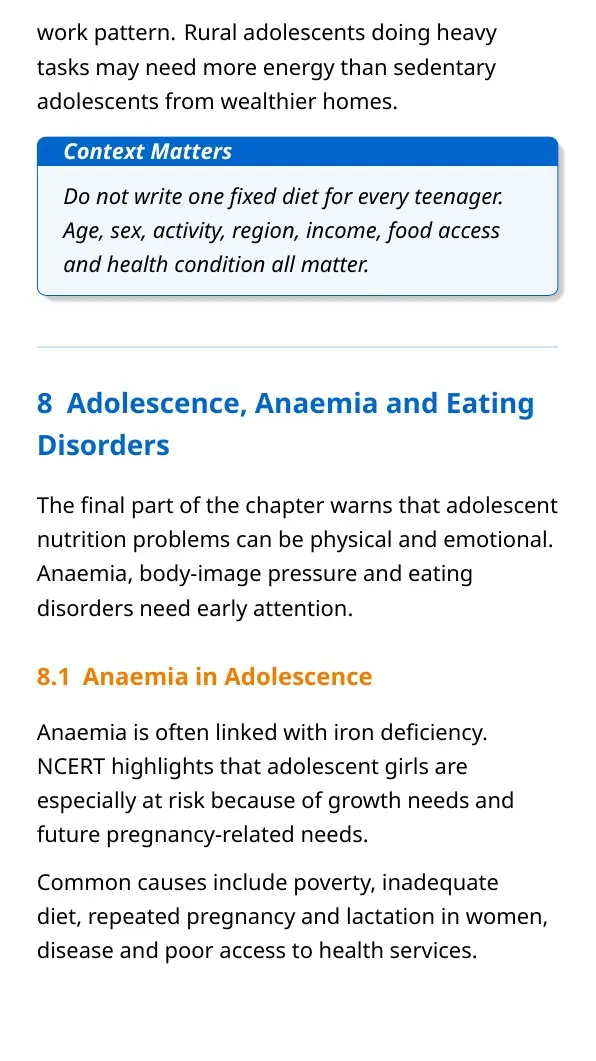
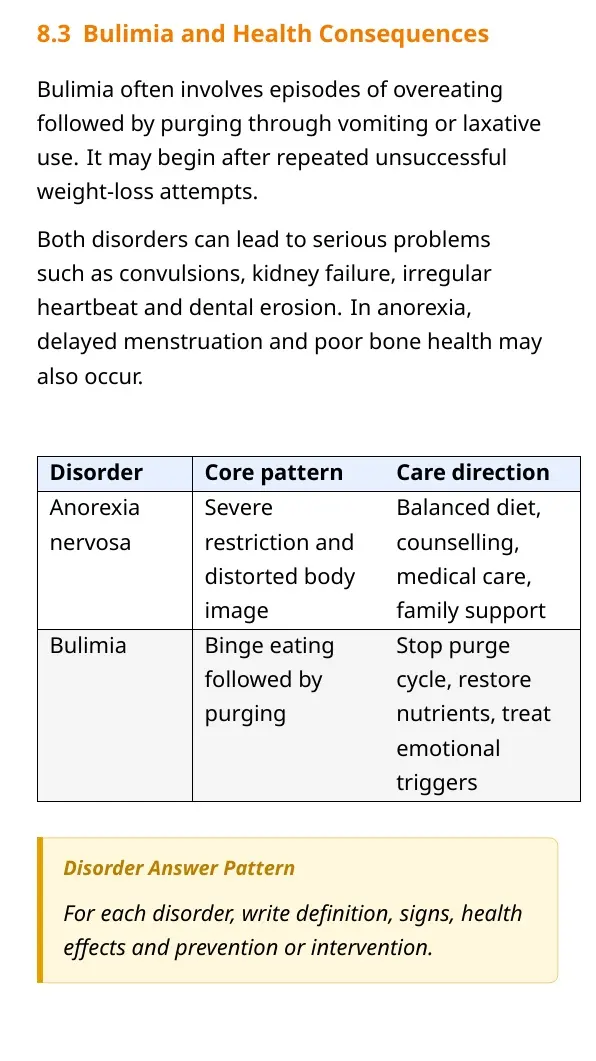
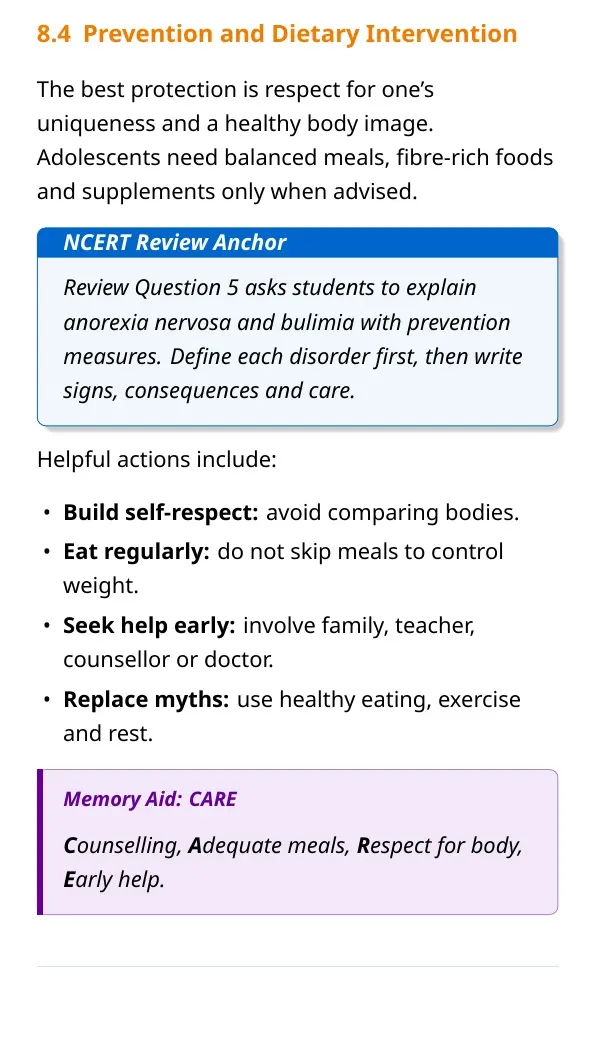
NCERT explains that adolescent food habits are shaped by independence, time away from home, limited resources, media influence, body image and the social setting. Students should connect meal choices with screen time, physical activity, water intake, fast food, dieting, anaemia and eating disorders.
| Mistake | Why it is risky | Better habit |
|---|---|---|
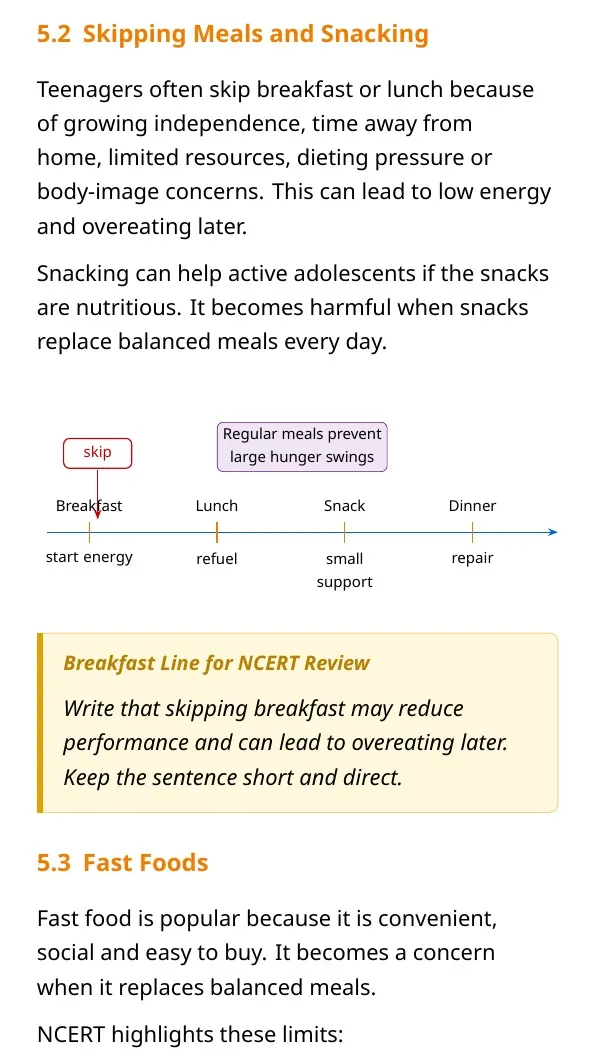
| Skipping breakfast | Low energy and poor attention in school. | Eat a simple cereal, protein and fruit meal. |
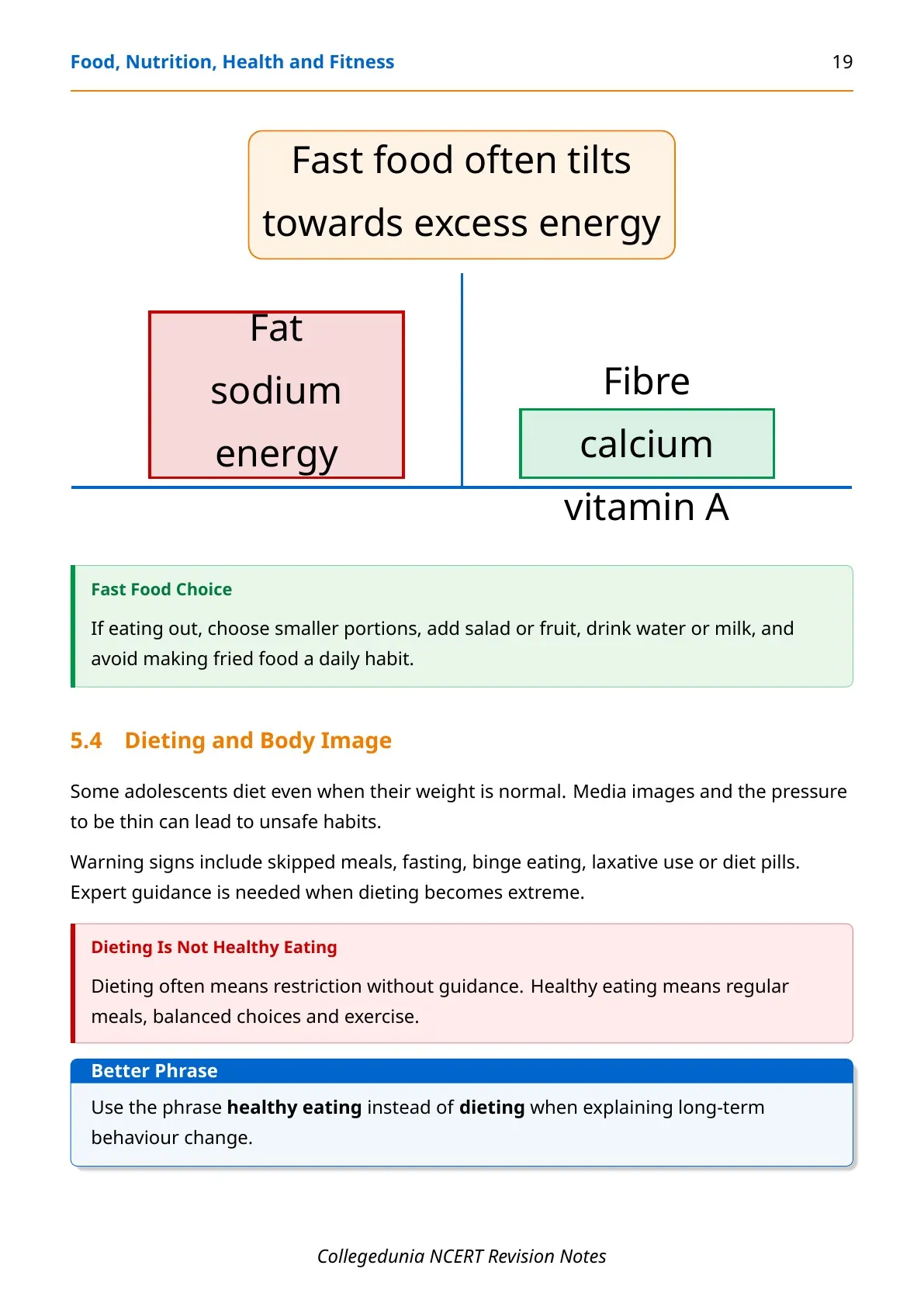
| Only fried snacks | High fat, low protective nutrients. | Add fruits, sprouts, nuts or curd. |
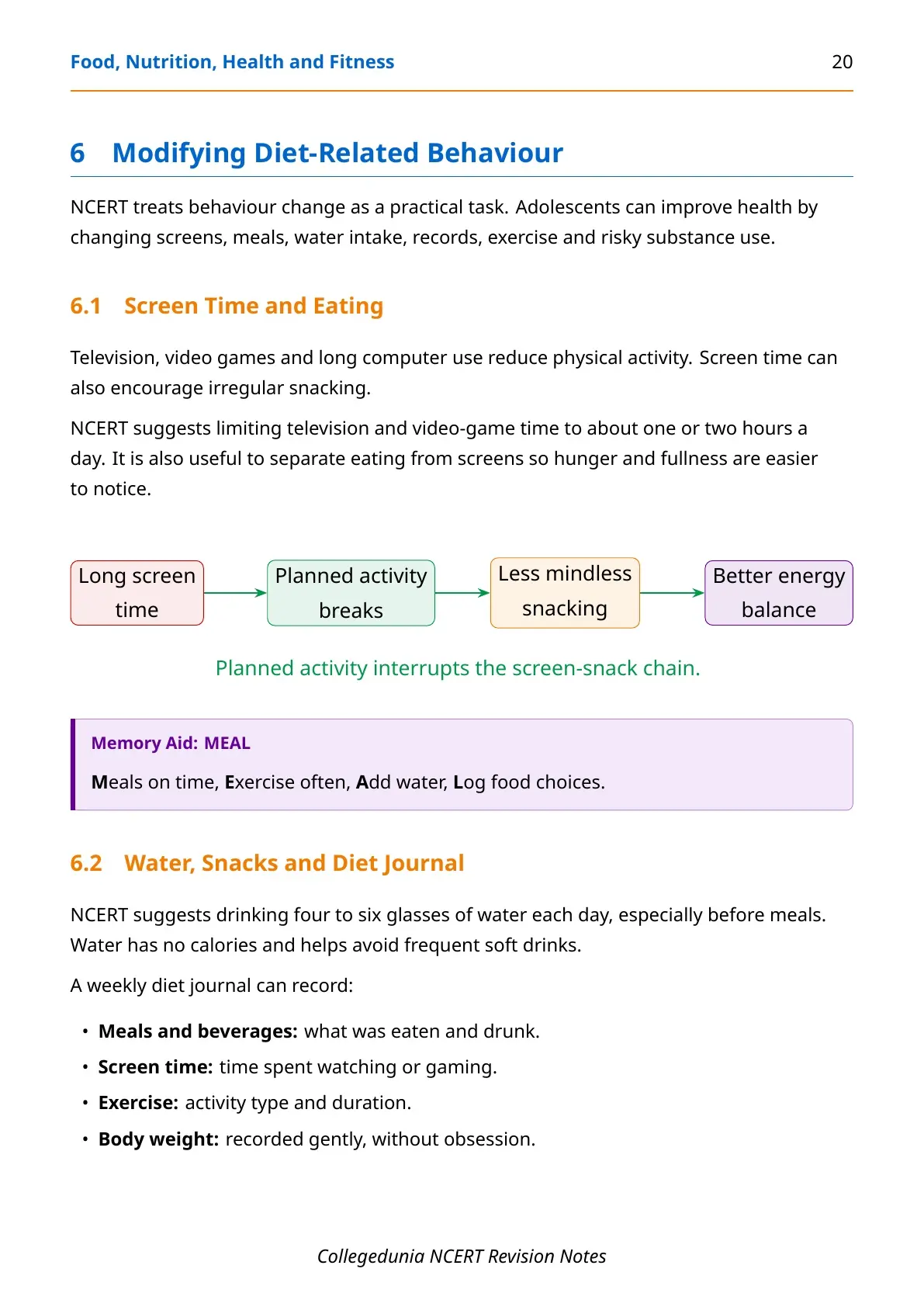
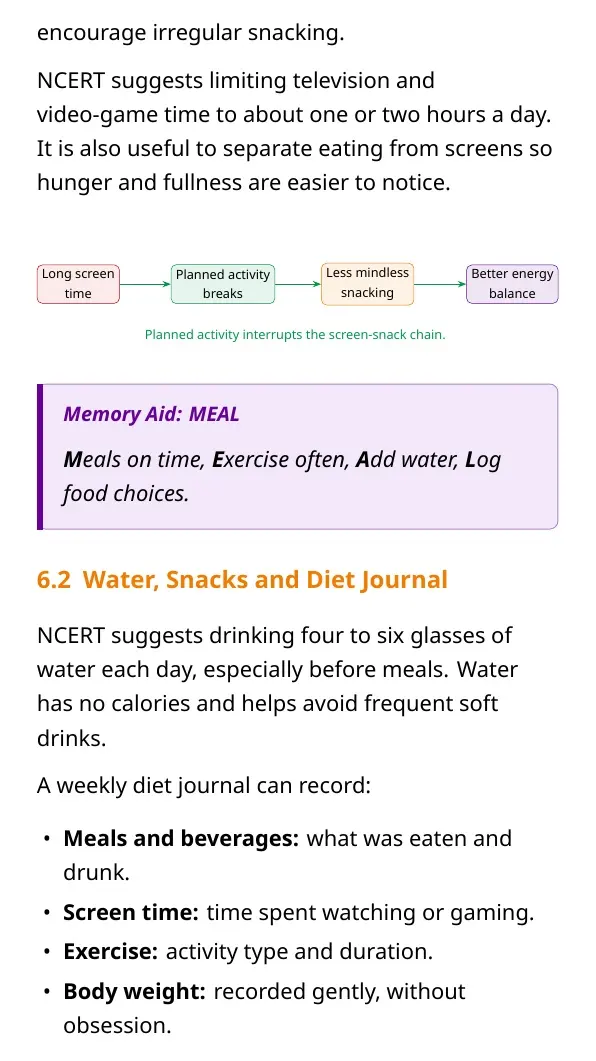
| Long screen time with snacks | Low activity and frequent mindless eating. | Limit screen time and plan activity breaks. |
| Less water | Dehydration affects digestion and fitness. | Drink safe water through the day. |
Class 11 Home Science Chapter 3 Revision Table
| Question angle | What to write | Common mistake |
|---|---|---|
| Meaning of nutrition | Body uses food for energy, growth, repair and protection. | Writing only "eating food". |
| Balanced diet | All nutrients in suitable amounts for the person. | Saying it means dieting or eating less. |
| Nutrients | Function plus food source for each group. | Listing sources without functions. |
| Fitness | Ability to stay active, strong and flexible. | Writing only body weight. |
| Eating behaviour | Family, peers, media, body image and food availability shape choices. | Writing one fixed diet for every adolescent. |
More Resources for Class 11 Home Science Chapter 3
| Resource | Use it for | Link |
|---|---|---|
| NCERT Solutions | Textbook questions and answer practice. | Open solutions |
| NCERT Book PDF | Official chapter reading from the textbook. | Open book PDF |
| Handwritten Notes | Short visual revision after reading these notes. | Open handwritten notes |
NCERT Notes for All Class 11 Home Science Chapters
| Chapter | Topic | Notes link |
|---|---|---|
| Chapter 1 | Introduction: Evolution of the Discipline and its Relevance to Quality of Life | Read notes |
| Chapter 2 | Understanding the Self | Read notes |
| Chapter 3 | Food, Nutrition, Health and Fitness | Read notes |
| Chapter 4 | Management of Resources | Read notes |
| Chapter 5 | Fabrics Around Us | Read notes |
| Chapter 6 | Media and Communication Technology | Read notes |
Class 11 Home Science Chapter 3 Notes FAQs
Ques. What is the main idea of Class 11 Home Science Chapter 3?
Ans. The chapter explains how food, nutrients, balanced diet, adolescent eating behaviour and fitness together support growth, energy, health and daily activity.
Ques. What is a balanced diet?
Ans. A balanced diet gives all required nutrients in suitable amounts according to age, activity, health condition and body needs.
Ques. Which nutrients are called protective nutrients?
Ans. Vitamins and minerals are called protective nutrients because they help regulate body functions and protect against deficiency problems.
Ques. How are health and fitness linked with nutrition?
Ans. Nutrition supplies energy, protein, water, vitamins and minerals, while fitness uses these nutrients through movement, strength, stamina and recovery.
Ques. How should students revise Food, Nutrition, Health and Fitness?
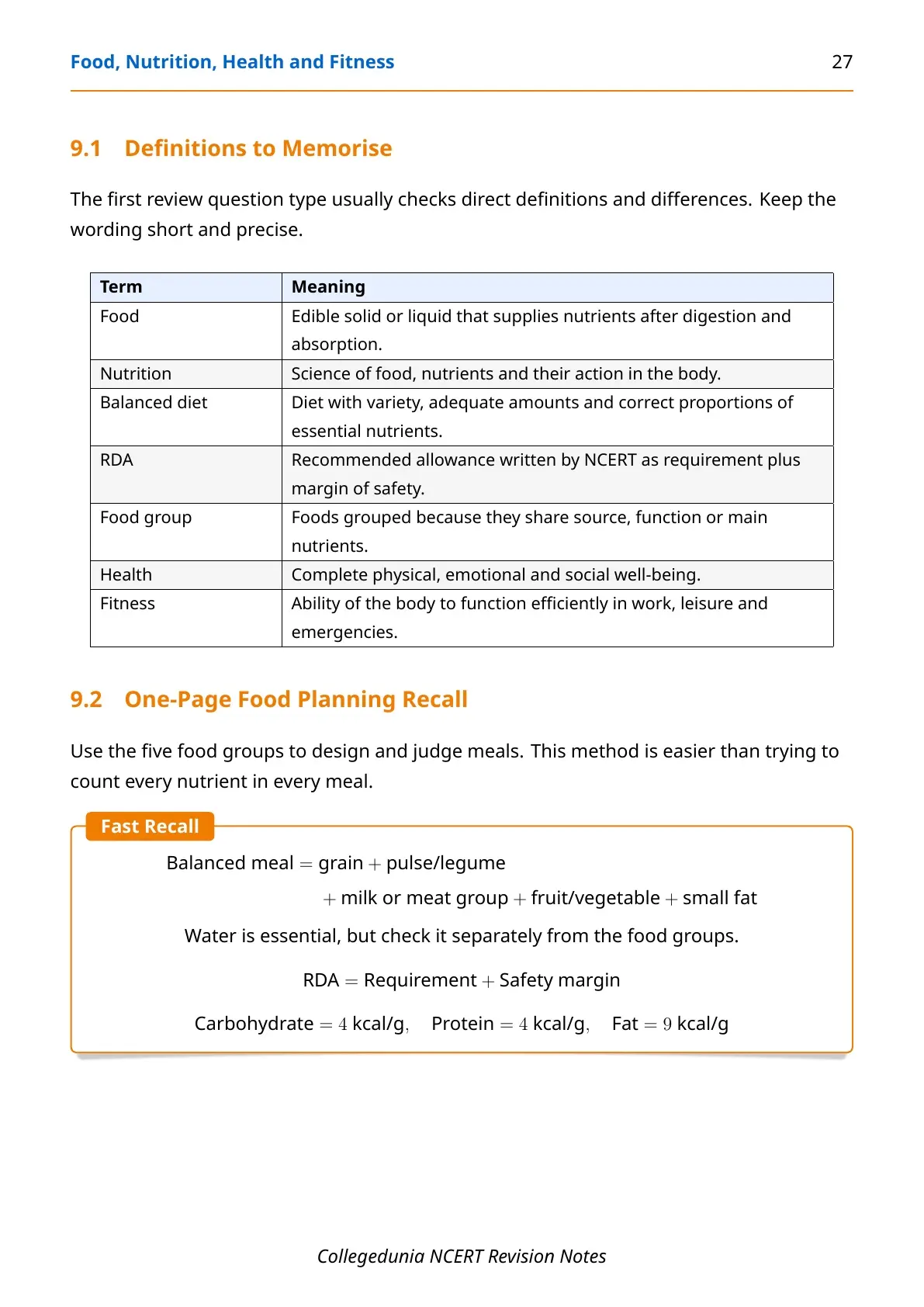
Ans. Revise nutrient functions with sources, compare balanced diet and dieting, learn food pyramid proportions and add eating-behaviour factors to health answers.



Comments