




The Mother's Day Class 11 notes explain J.B. Priestley's comic play for the 2026-27 NCERT Snapshots syllabus. Use this page to revise Mrs Pearson, Mrs Fitzgerald, the body exchange, family selfishness and the social message before opening the full PDF.
- Download the Chapter 3 English Snapshots notes PDF for offline revision.
- Revise the plot flow, character contrast, humour, satire and NCERT answer points.
- Student focus: the ending is about respect, shared work and a firmer mother.
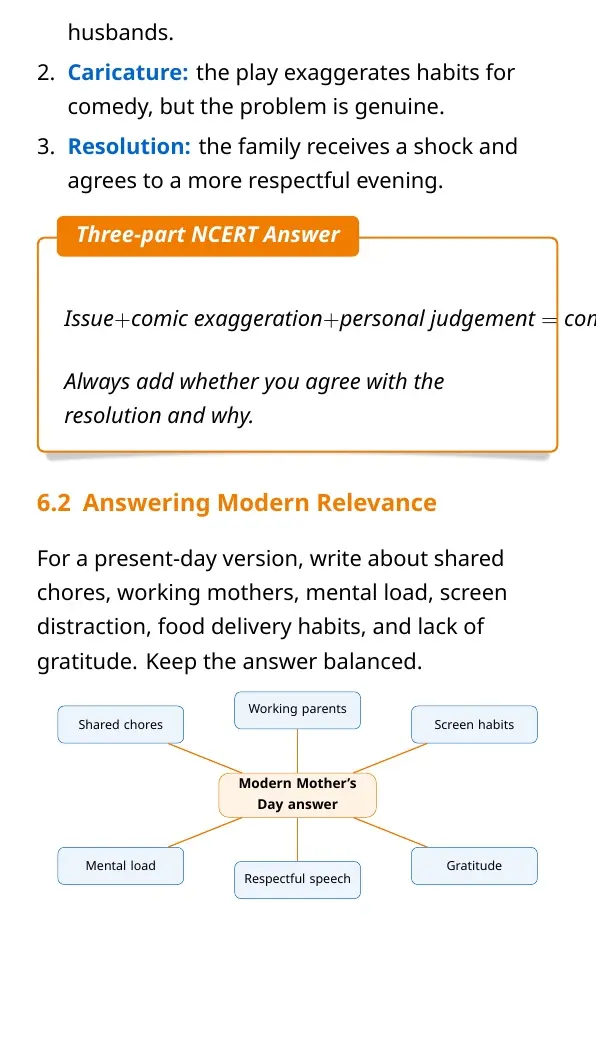
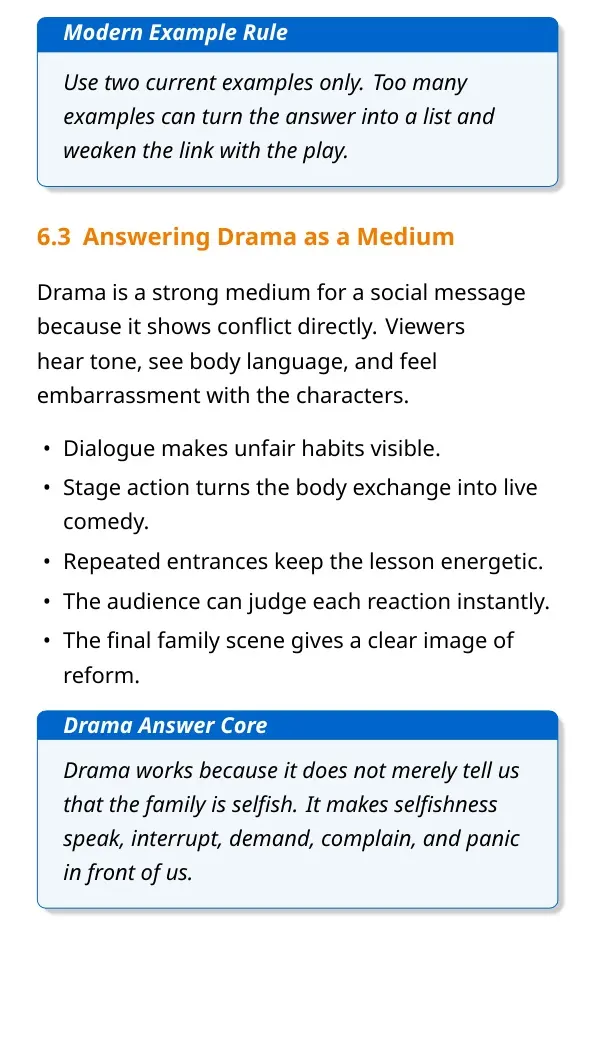
These Class 11 English Snapshots notes are checked against the 2026-27 NCERT chapter and built for fast board revision.
Student Feedback on Mother's Day Chapter
In a Collegedunia poll of 12,940 Class 11 English students before the 2026 exams, many students understood the body exchange but missed why the final rummy scene matters.
- 72% wanted a clearer split between humour and social message.
- 6 out of 10 students first described Mrs Fitzgerald as rude, not as the reformer.
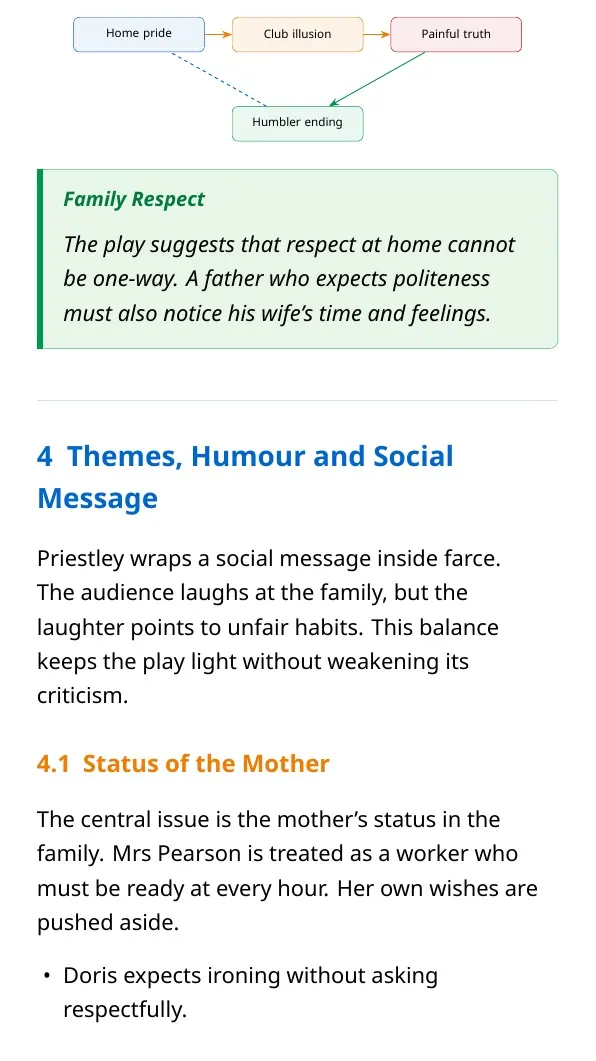
- 41% needed help with George's club scene. The notes connect it with pride and respect.
Source: 2026-27 Class 11 English Core student poll. Sample of 12,940 students from CBSE schools across 15 states.
Mother's Day Class 11 Story Flow
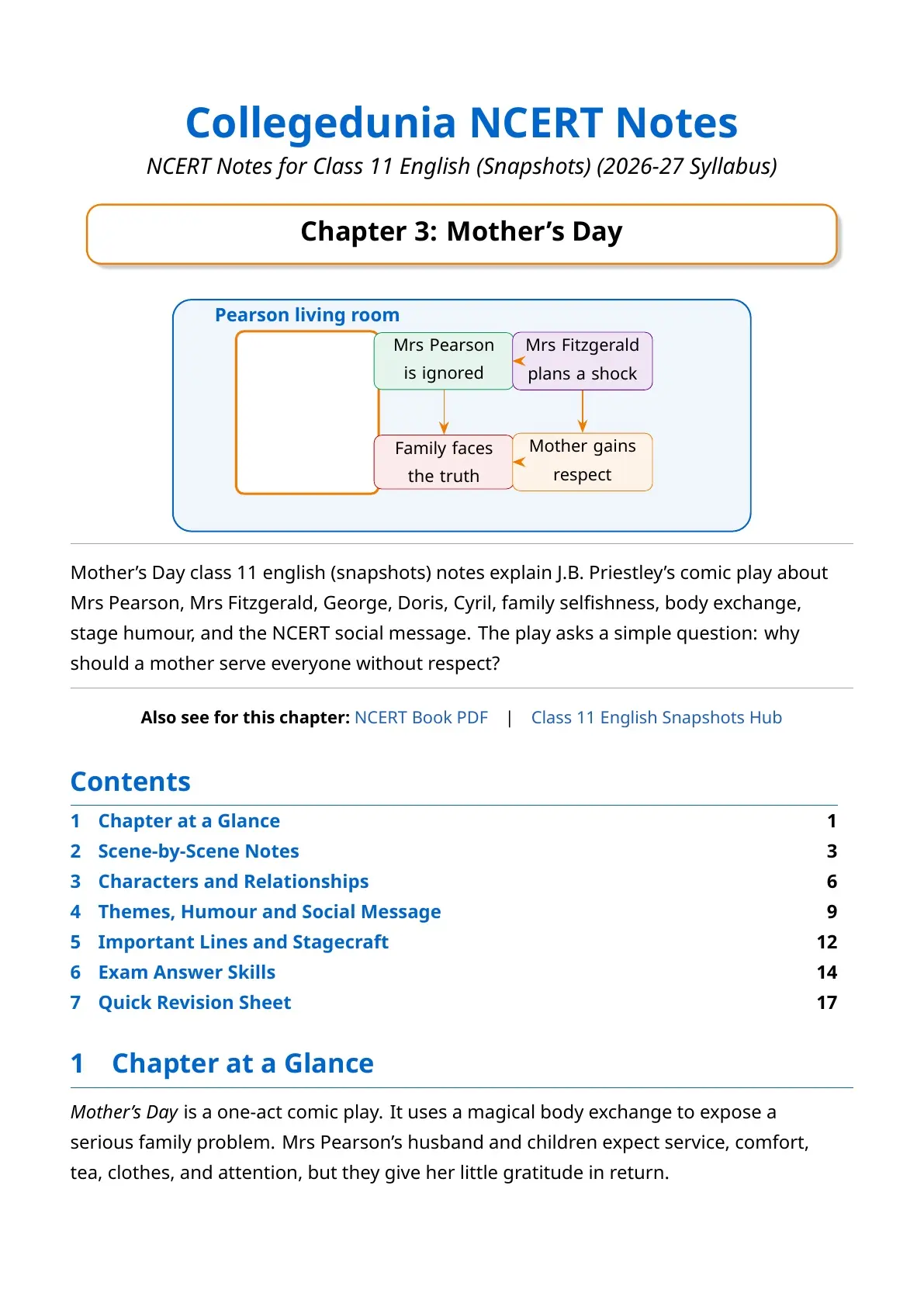
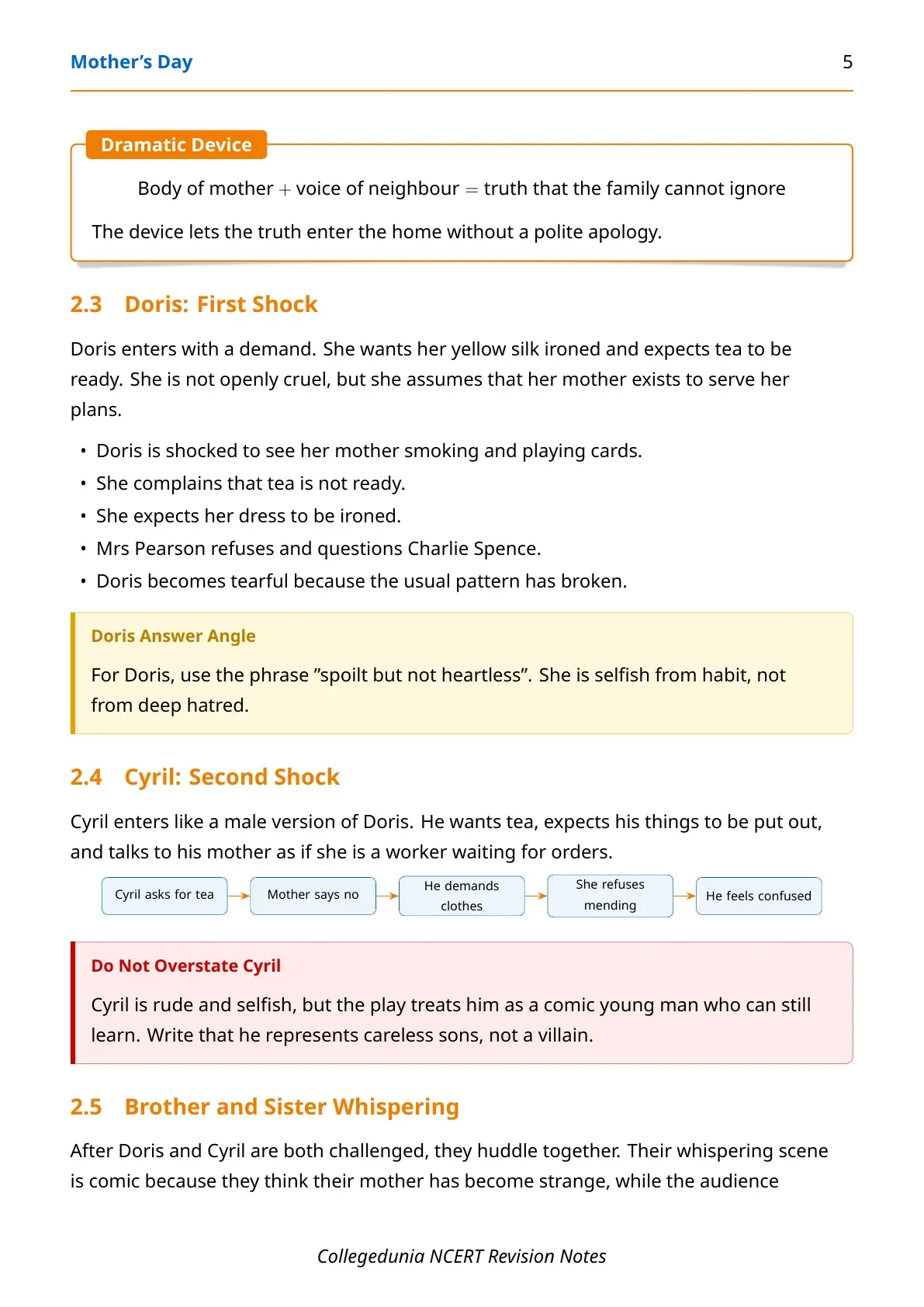
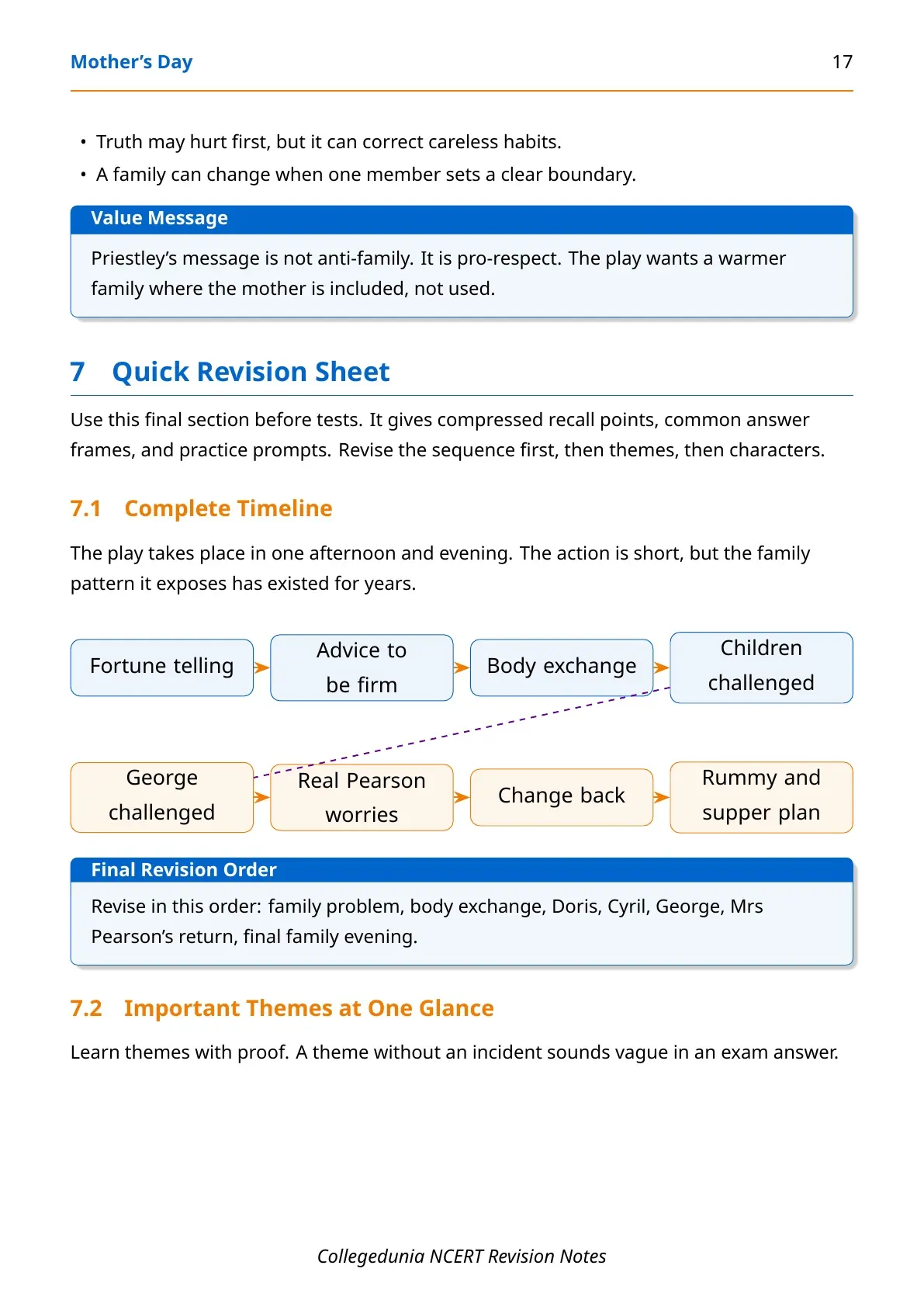
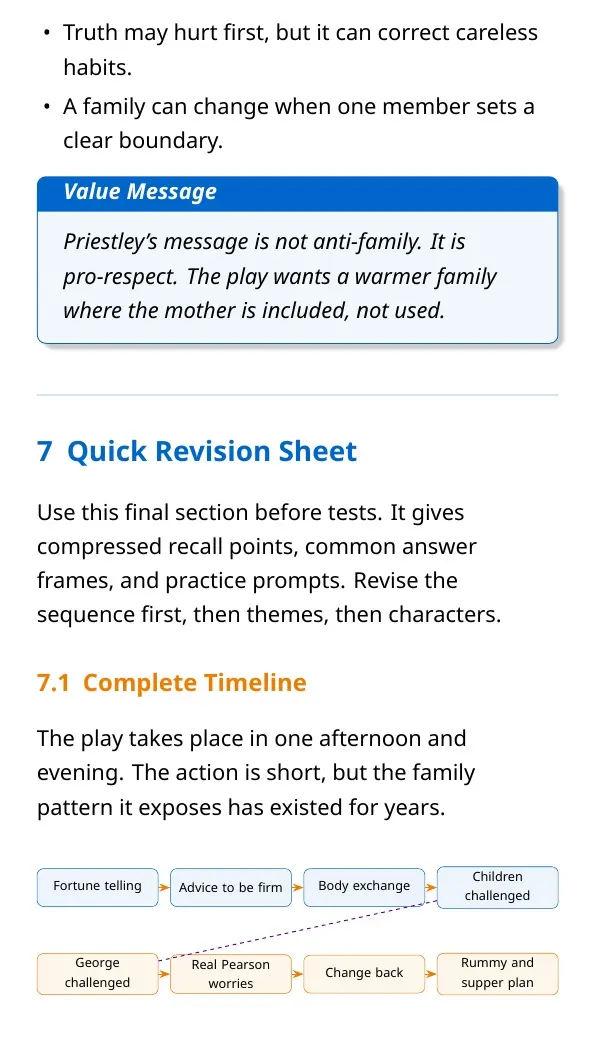
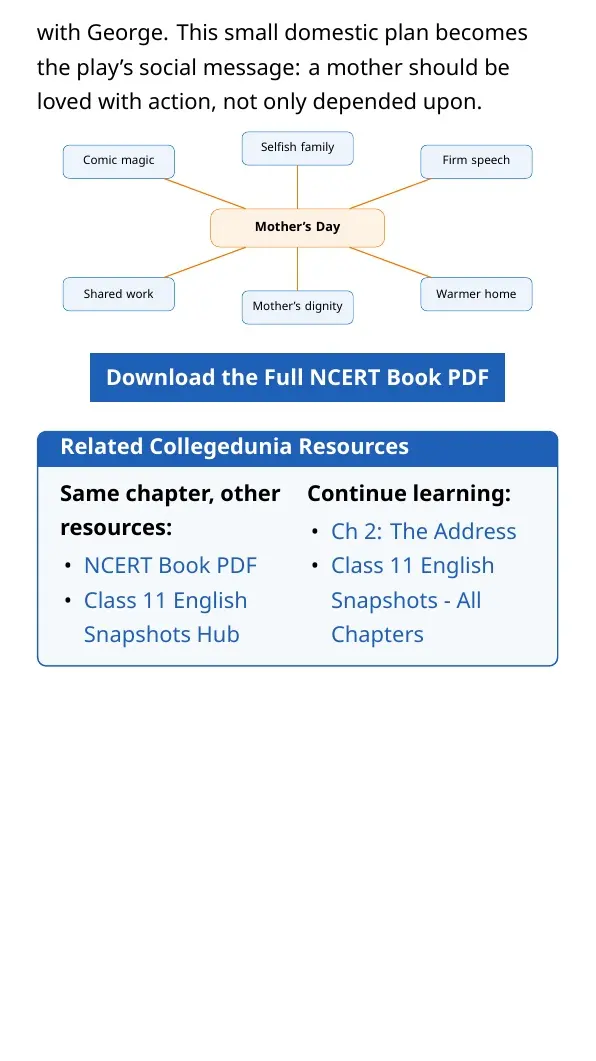
Mother's Day is built around one afternoon in the Pearson living room. Mrs Pearson is loving but tired of being used. Mrs Fitzgerald gives her a bold voice through the body exchange, and each family member faces a sharper version of the truth.

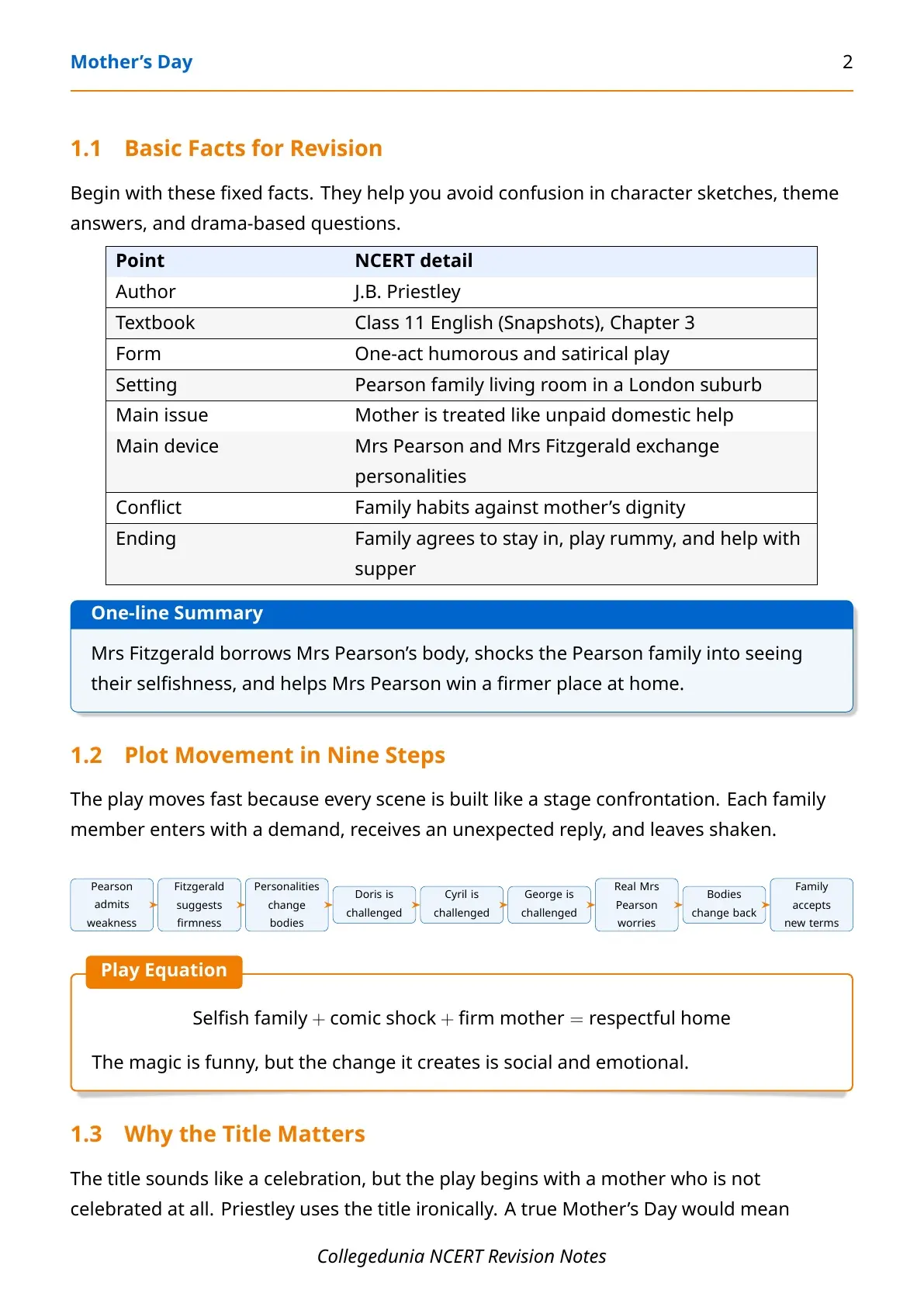
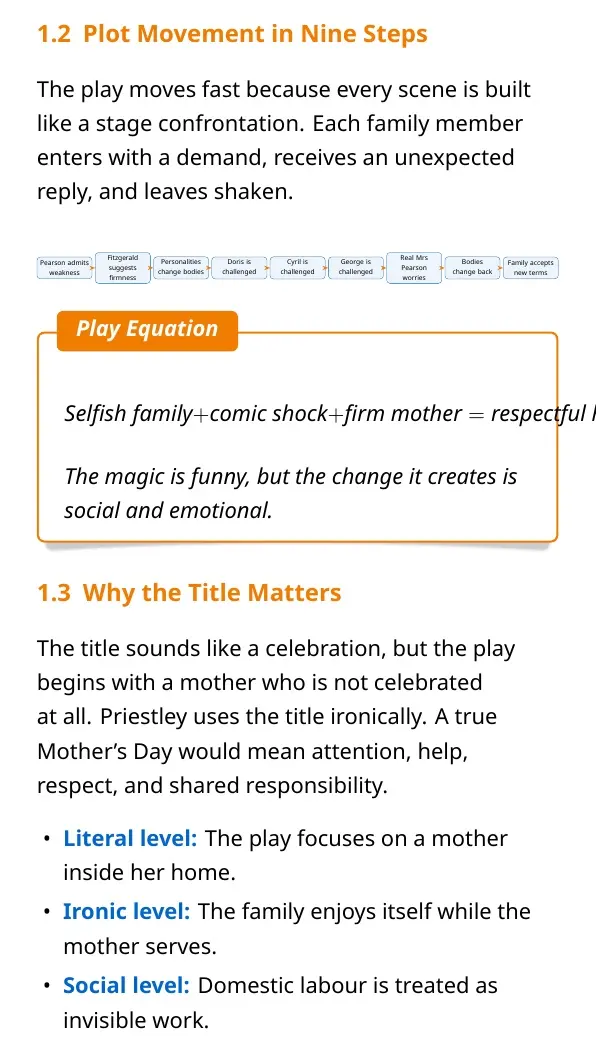
- Mrs Pearson admits that George, Doris and Cyril take her work for granted.
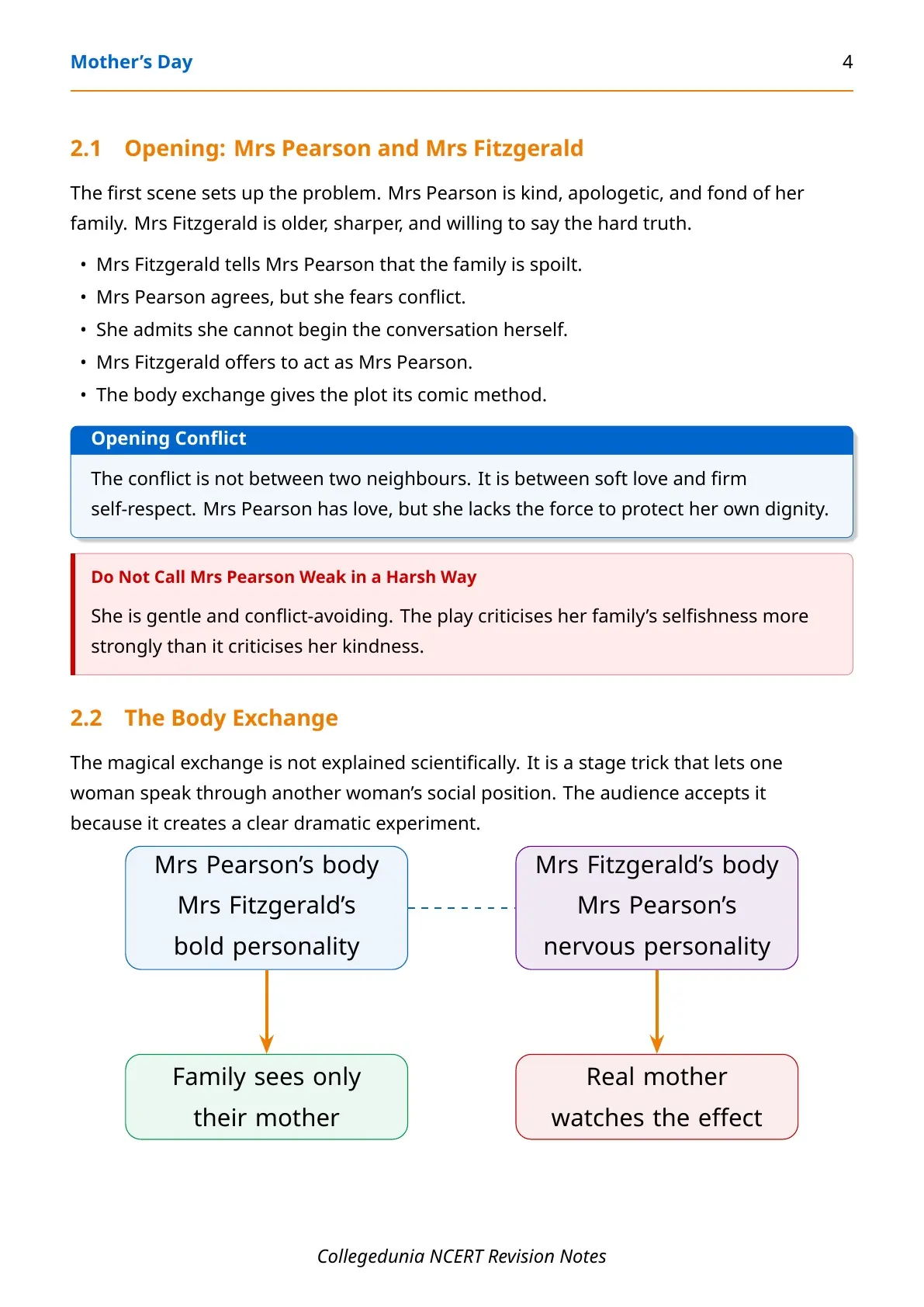
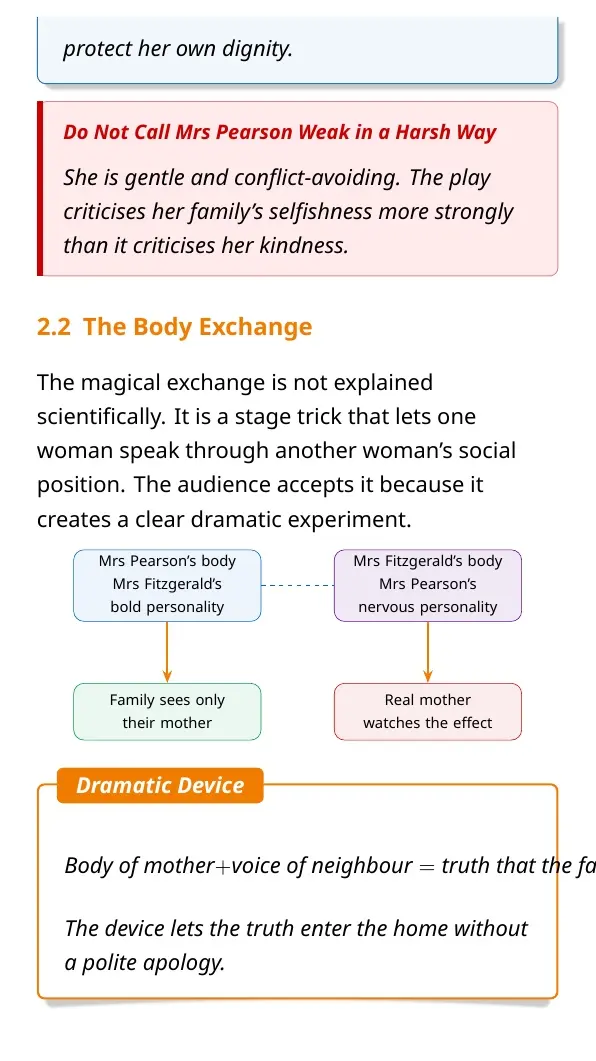
- Mrs Fitzgerald switches personalities with her and confronts the family.
- Doris, Cyril and George are shocked because their usual demands fail.
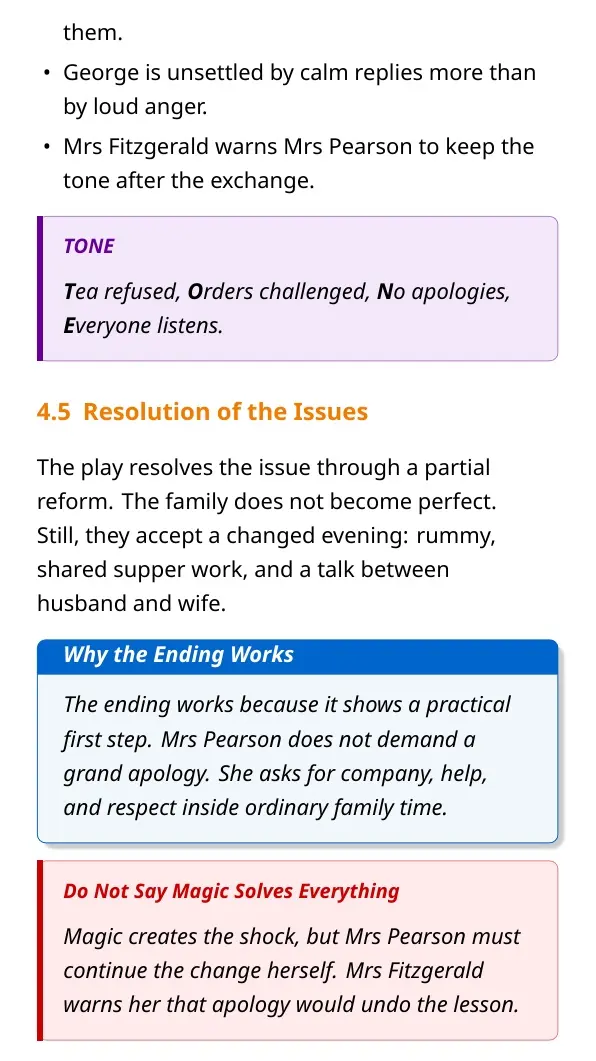
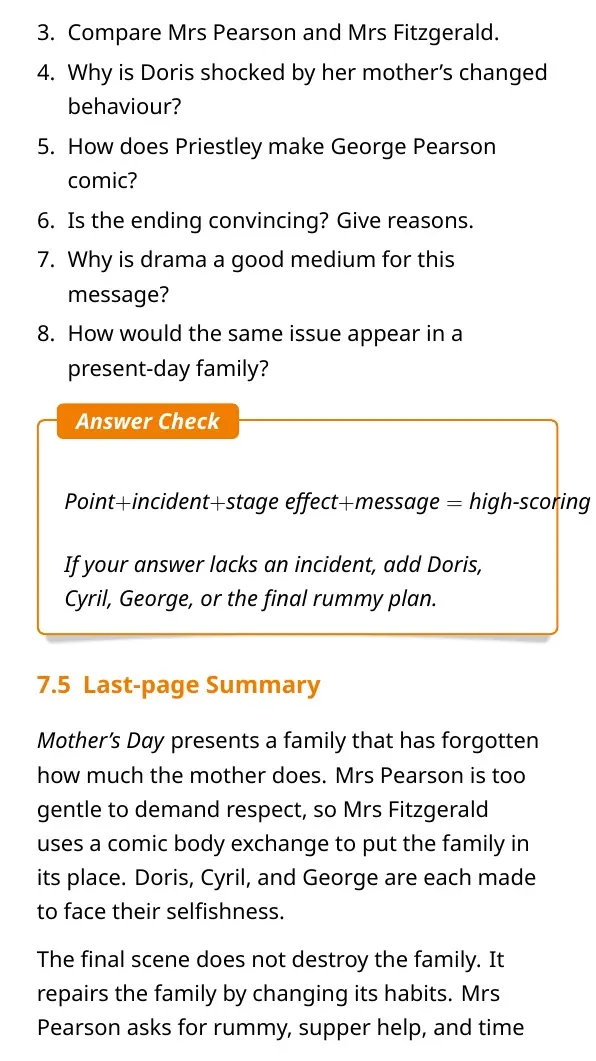
- The play ends with rummy, supper help and a calmer family evening.
Mother's Day Explained for Class 11 English
Source: Magnet Brains on YouTube
Mother's Day Summary for Class 11 English Snapshots
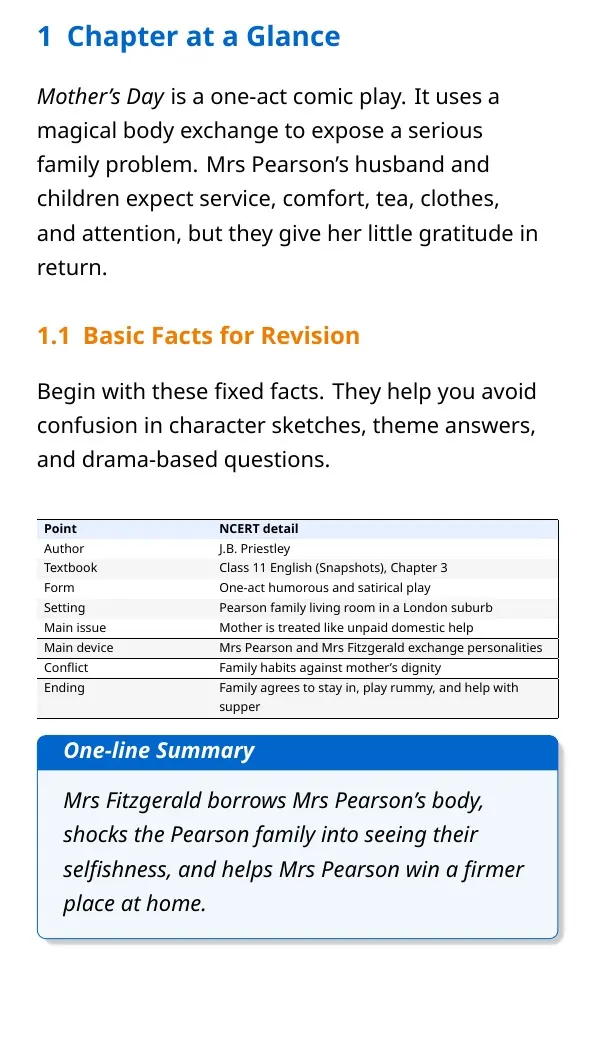
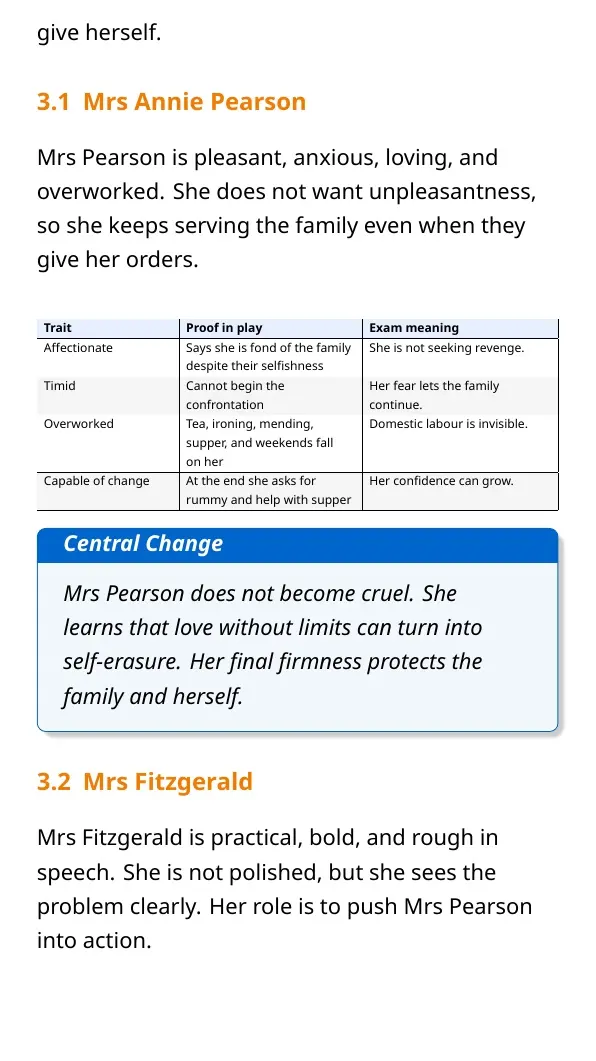
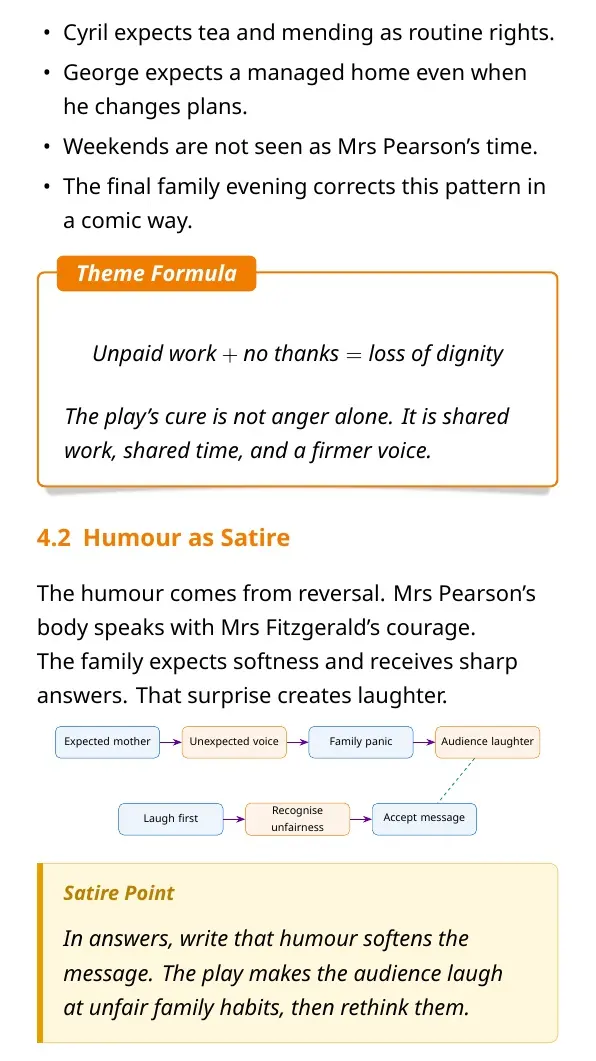
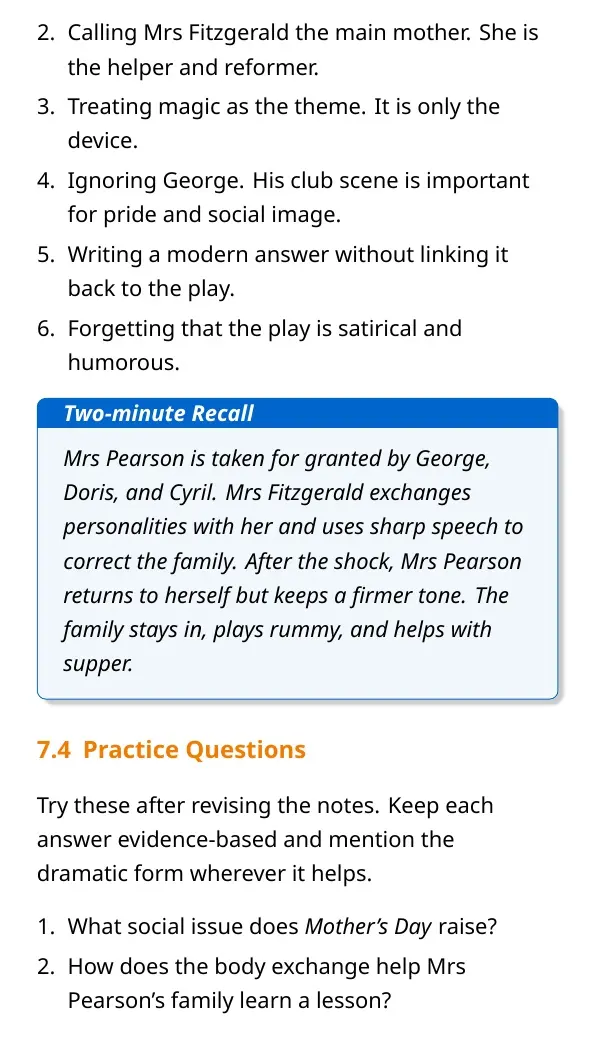
Mrs Pearson is a kind mother who cannot speak firmly to her selfish family. Mrs Fitzgerald sees the problem and offers a comic plan. After the personalities change bodies, the family thinks Mrs Pearson has suddenly become bold, sharp and independent.
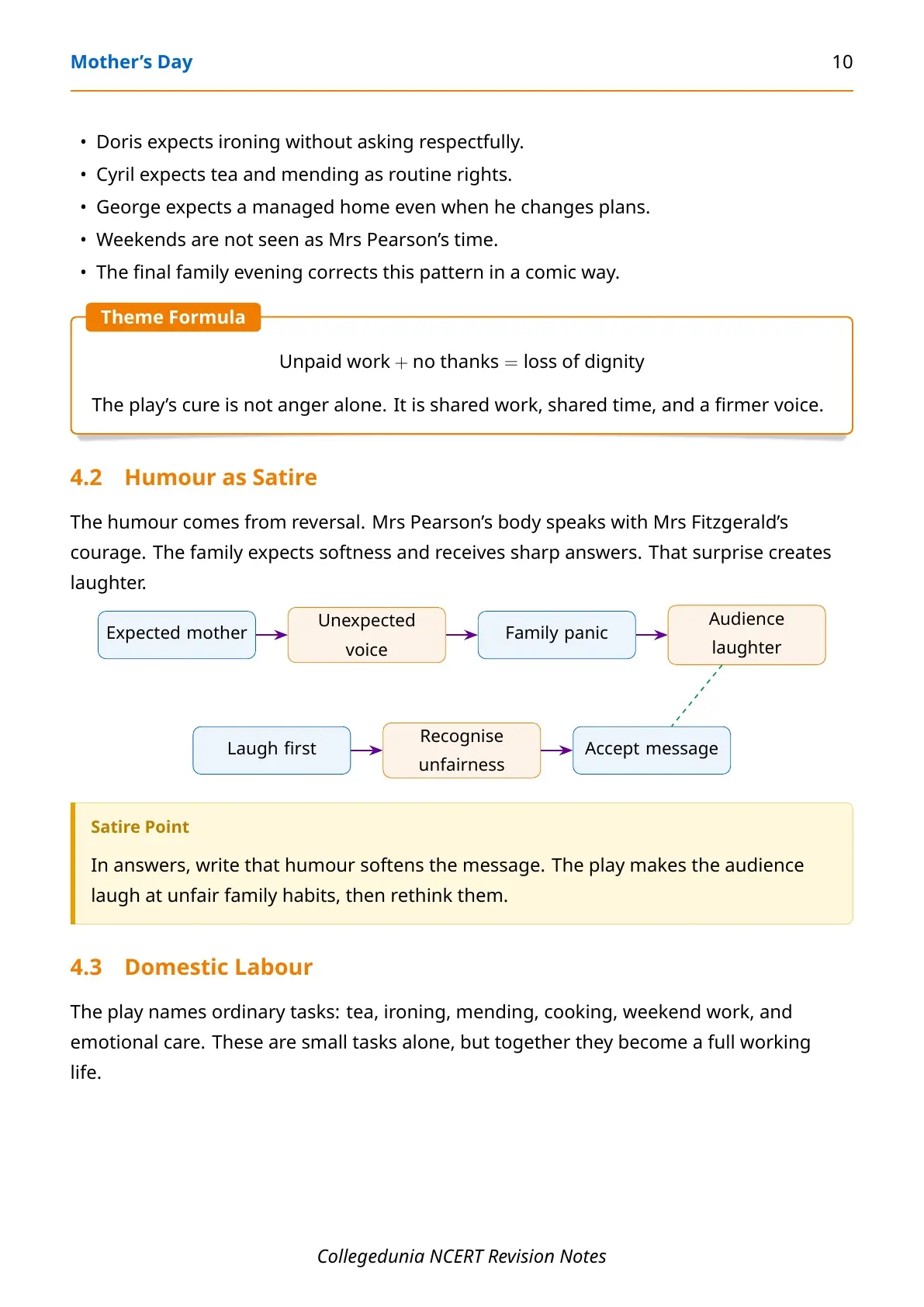
The turning point is not the magic itself. The turning point is the family's shock when tea, ironing, mending and emotional comfort are no longer automatic. The play uses comedy to show that a mother also needs rest, company and thanks.
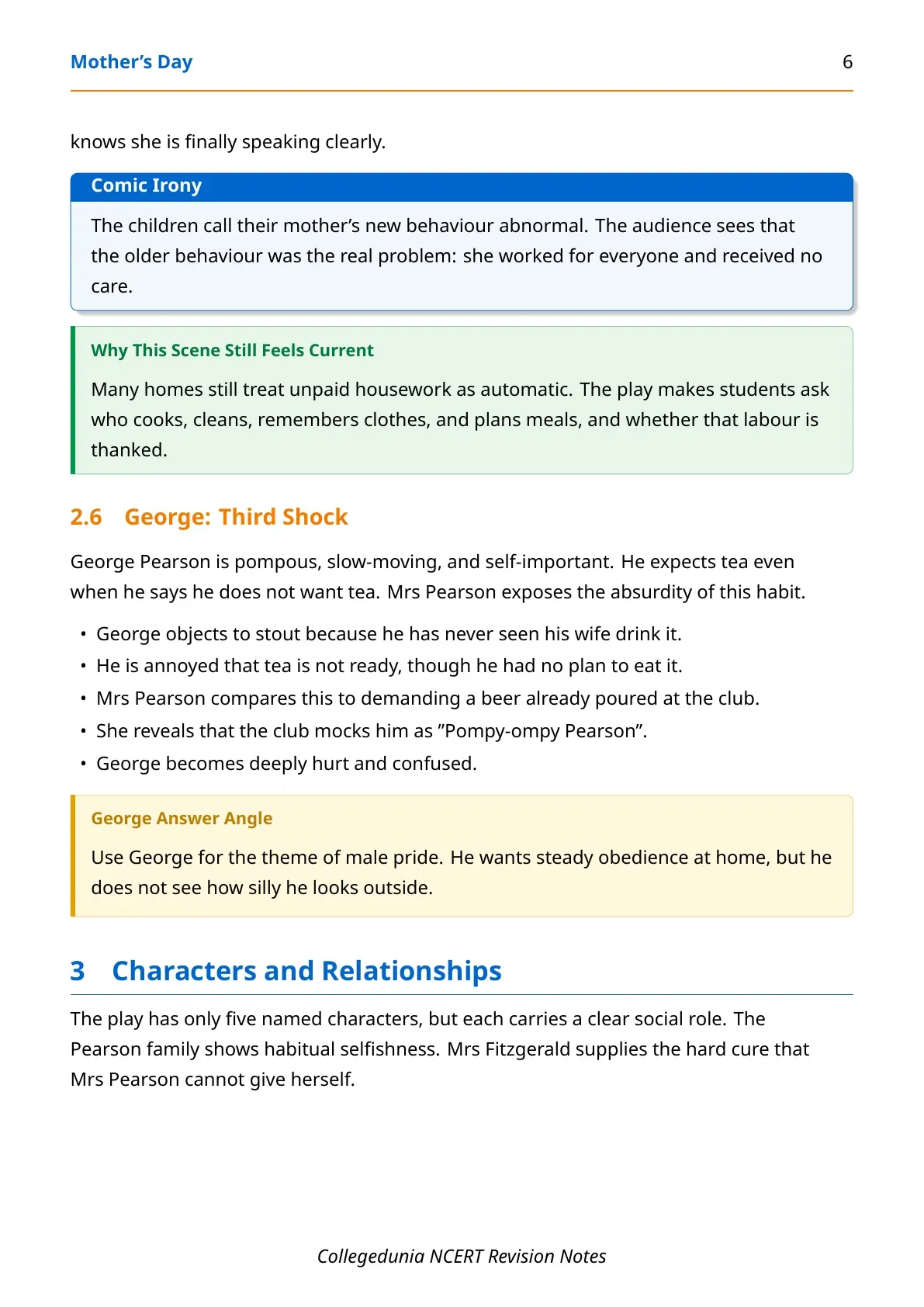
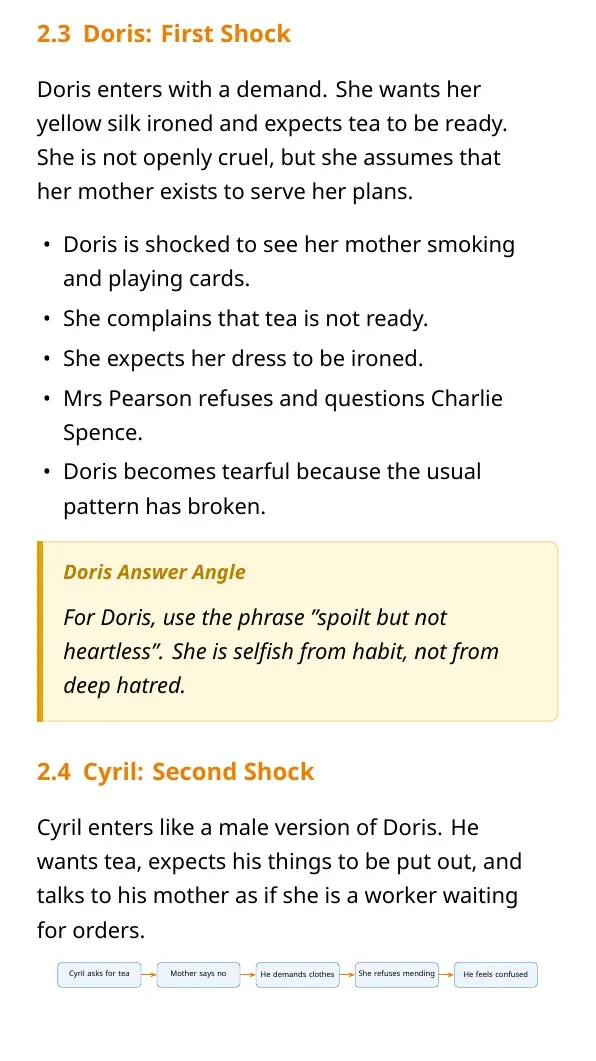
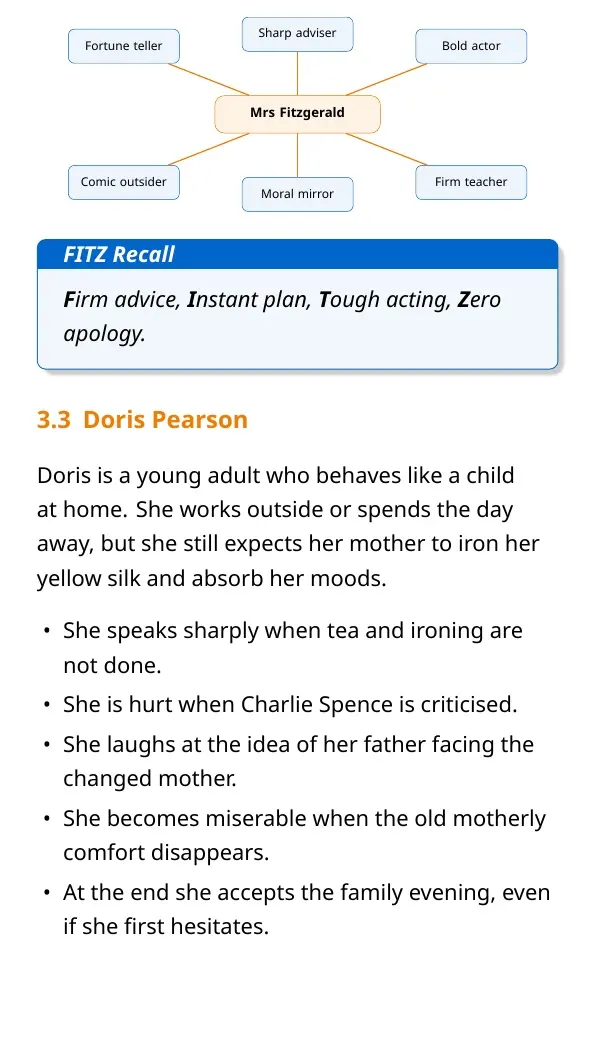
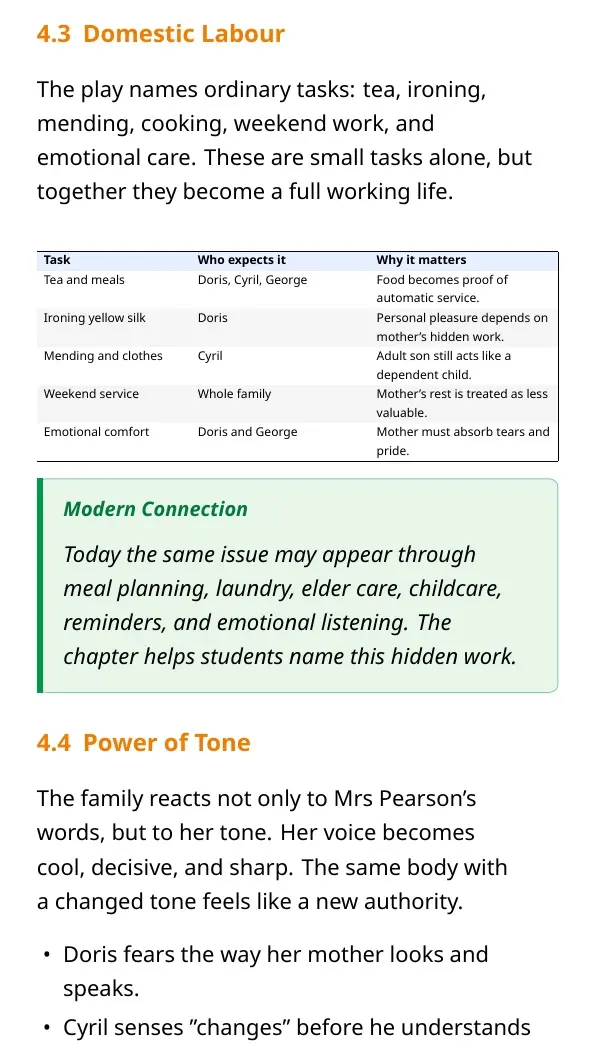
- Doris expects her yellow silk to be ironed for an outing.
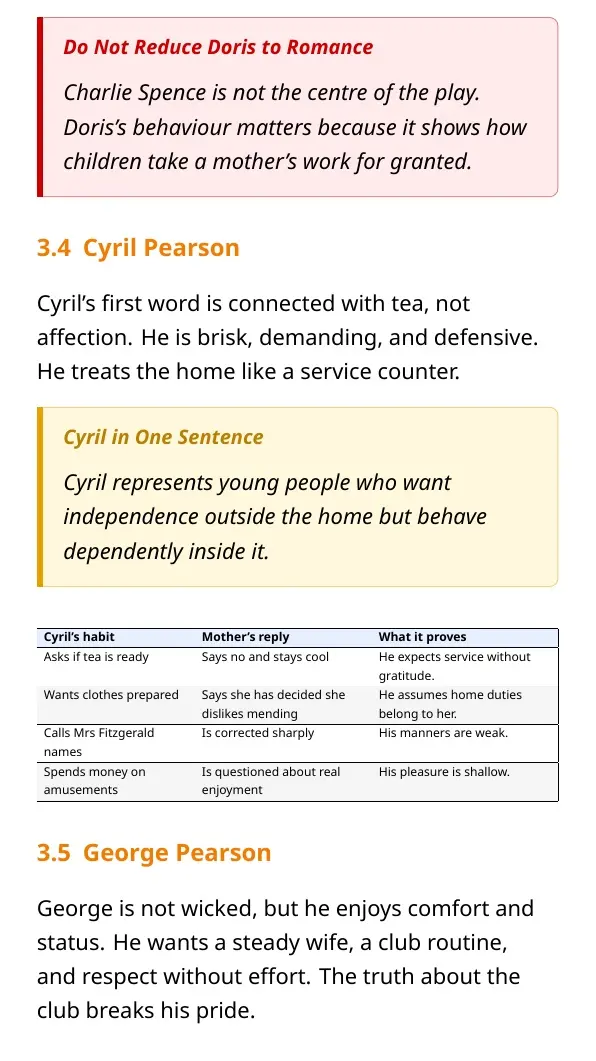
- Cyril expects tea and clothes without asking politely.
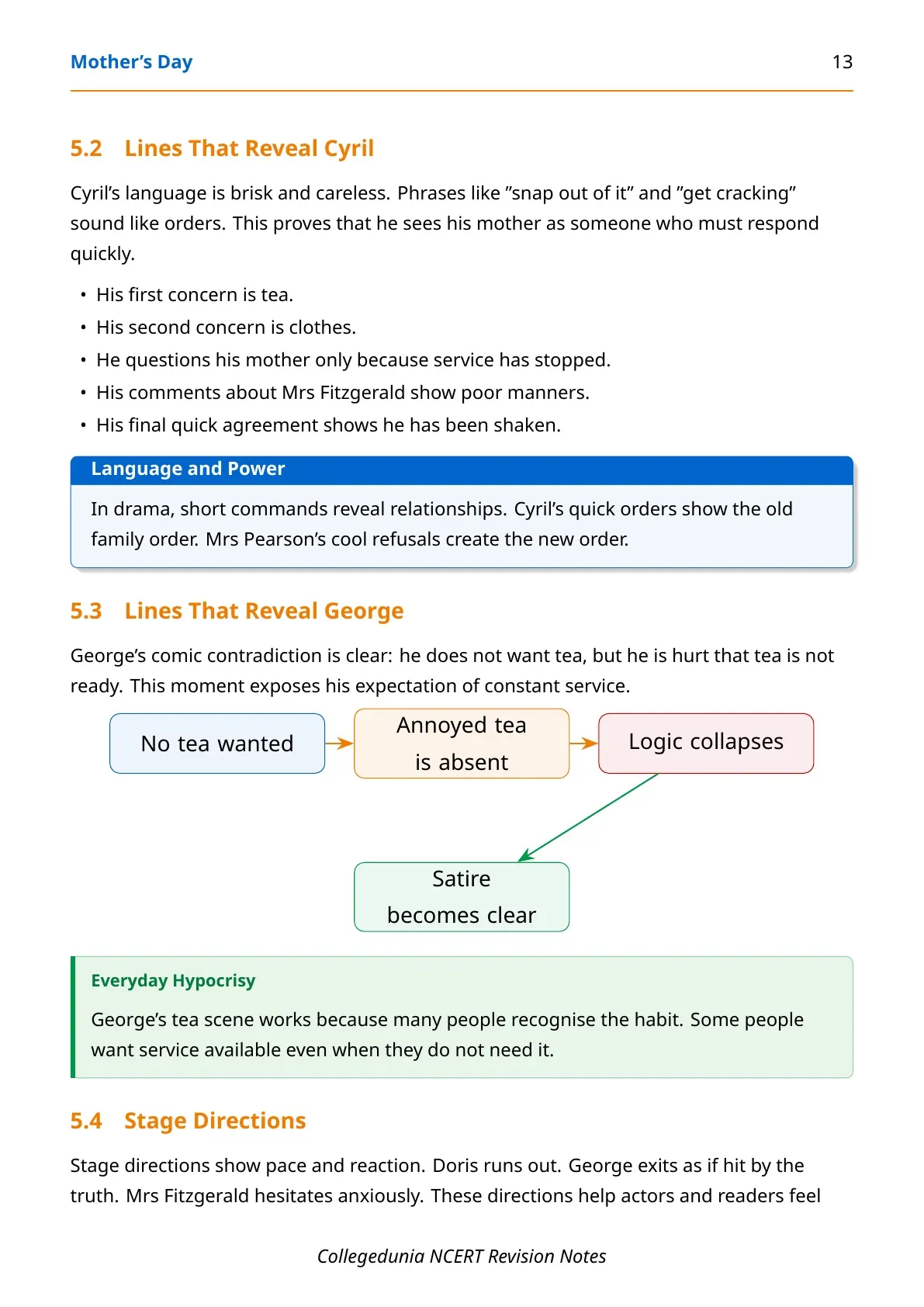
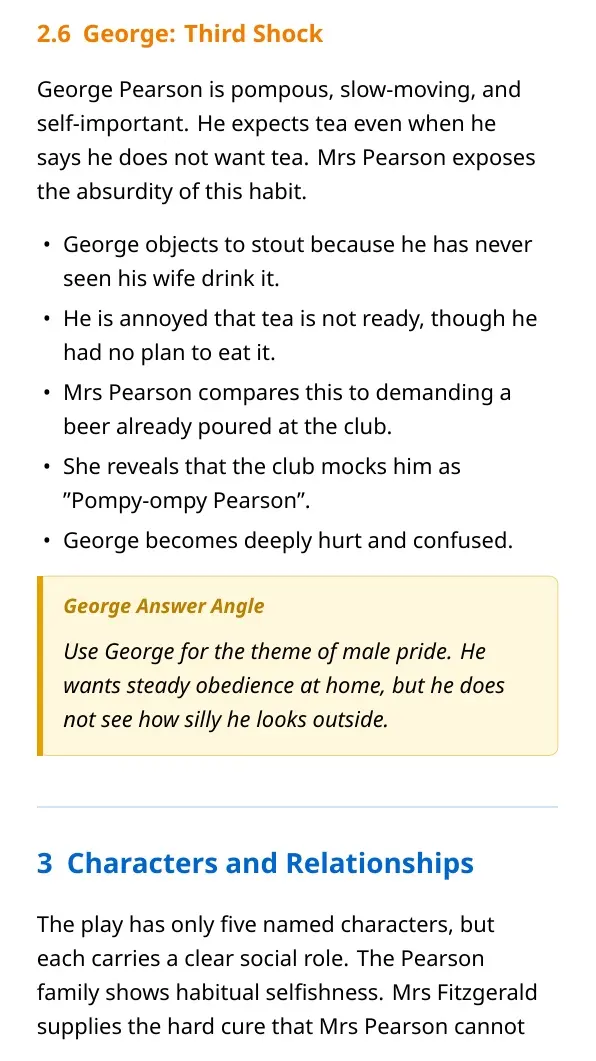
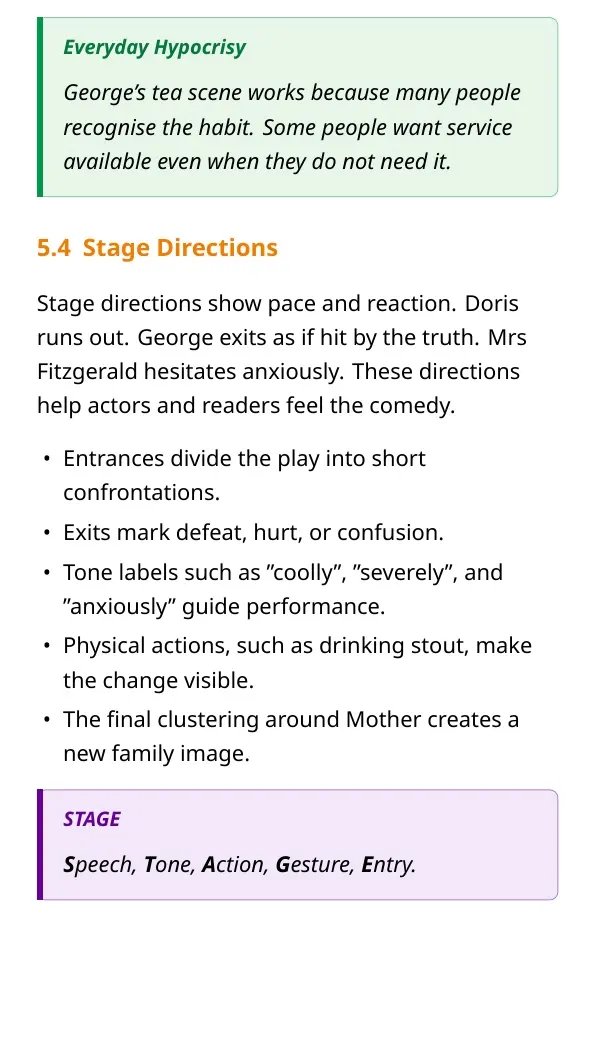
- George expects service even when he does not want tea.
- Mrs Pearson learns to keep a firm tone after the exchange ends.
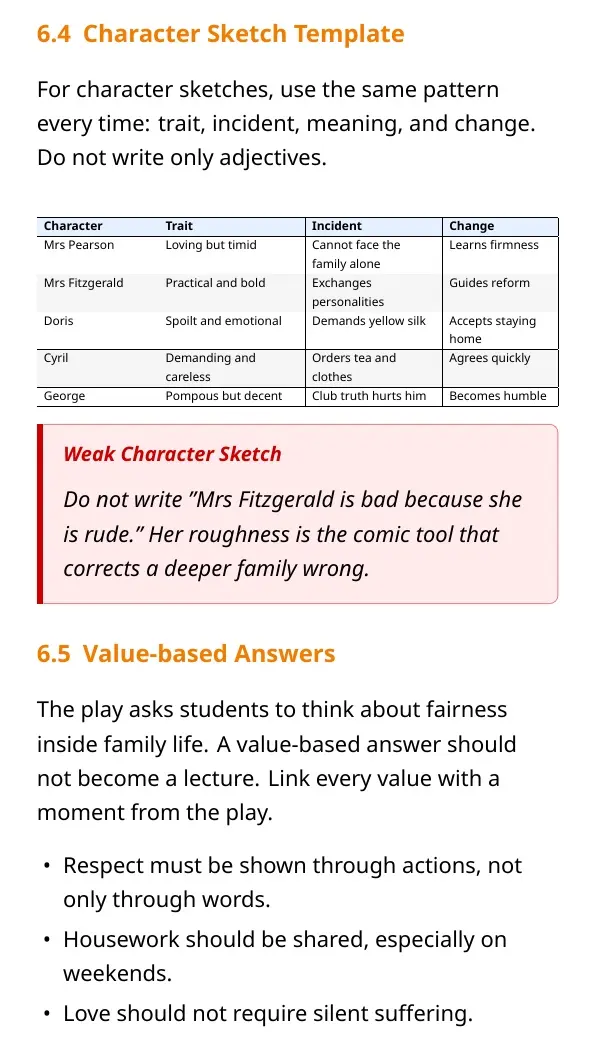
Mrs Pearson and Mrs Fitzgerald Character Contrast
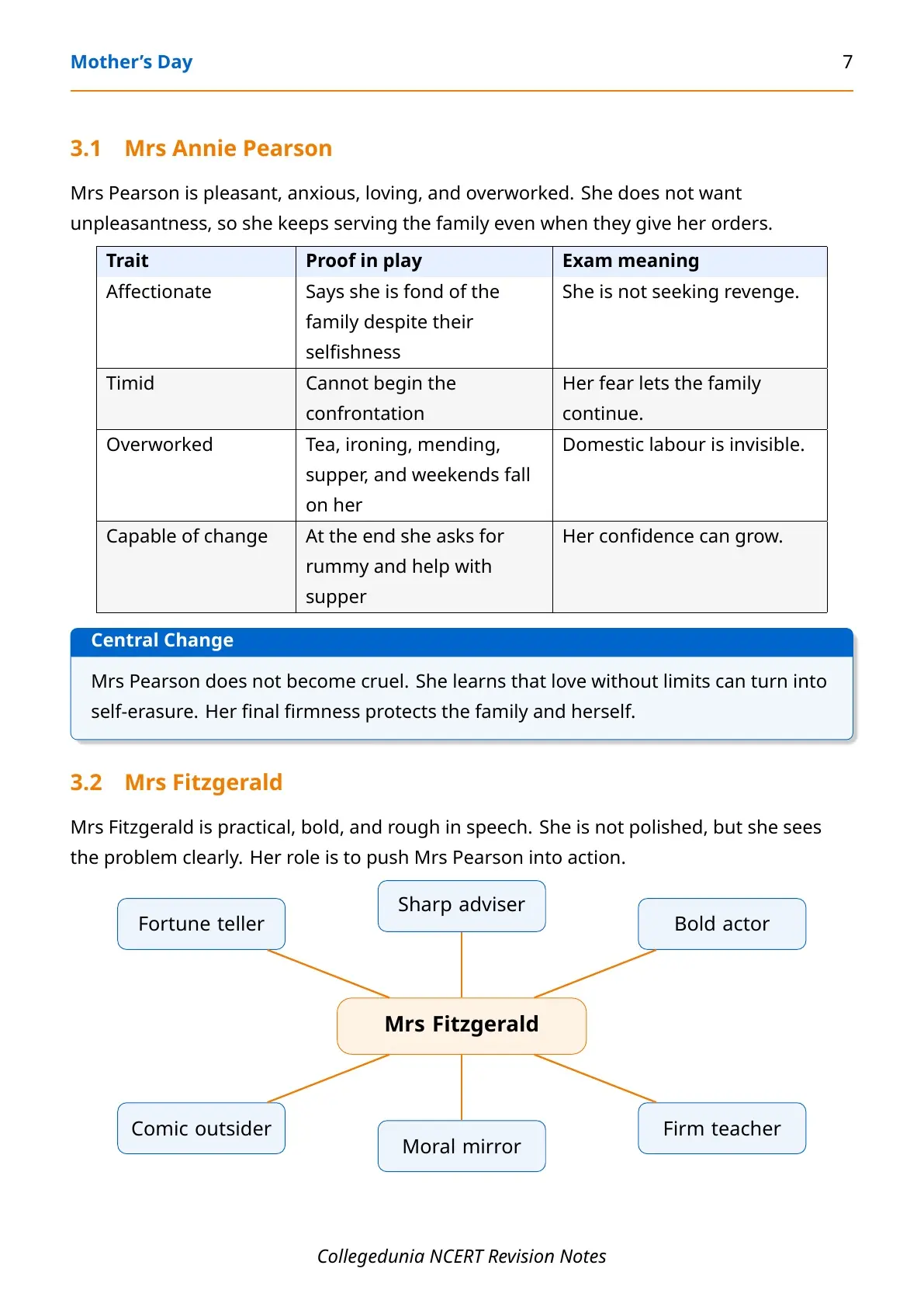
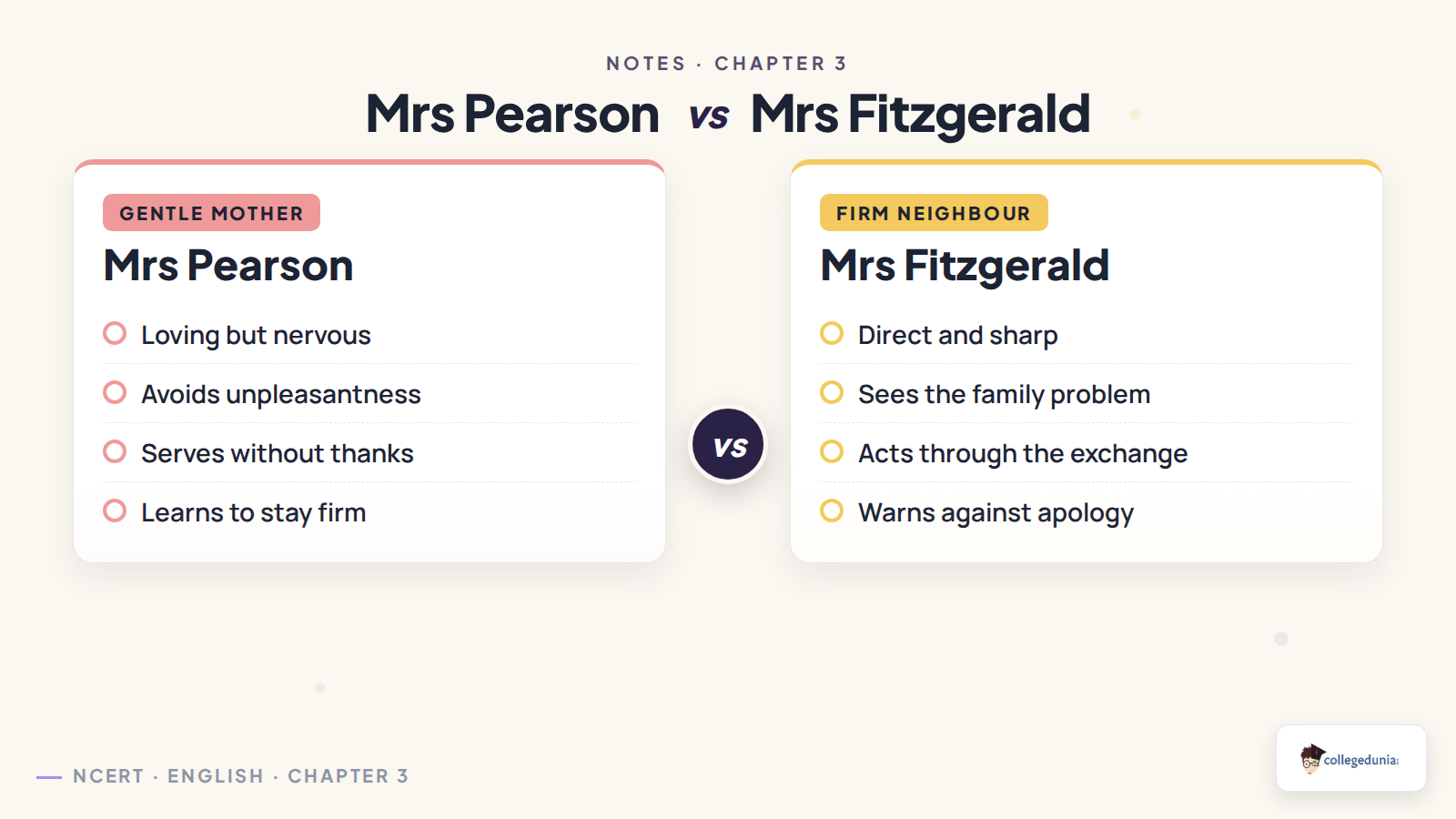
Mrs Pearson and Mrs Fitzgerald are opposites, but they work together. One has affection without force. The other has force without family attachment. Their exchange lets the play test what would happen if love spoke with courage.
| Character | What to remember | Exam use |
|---|---|---|
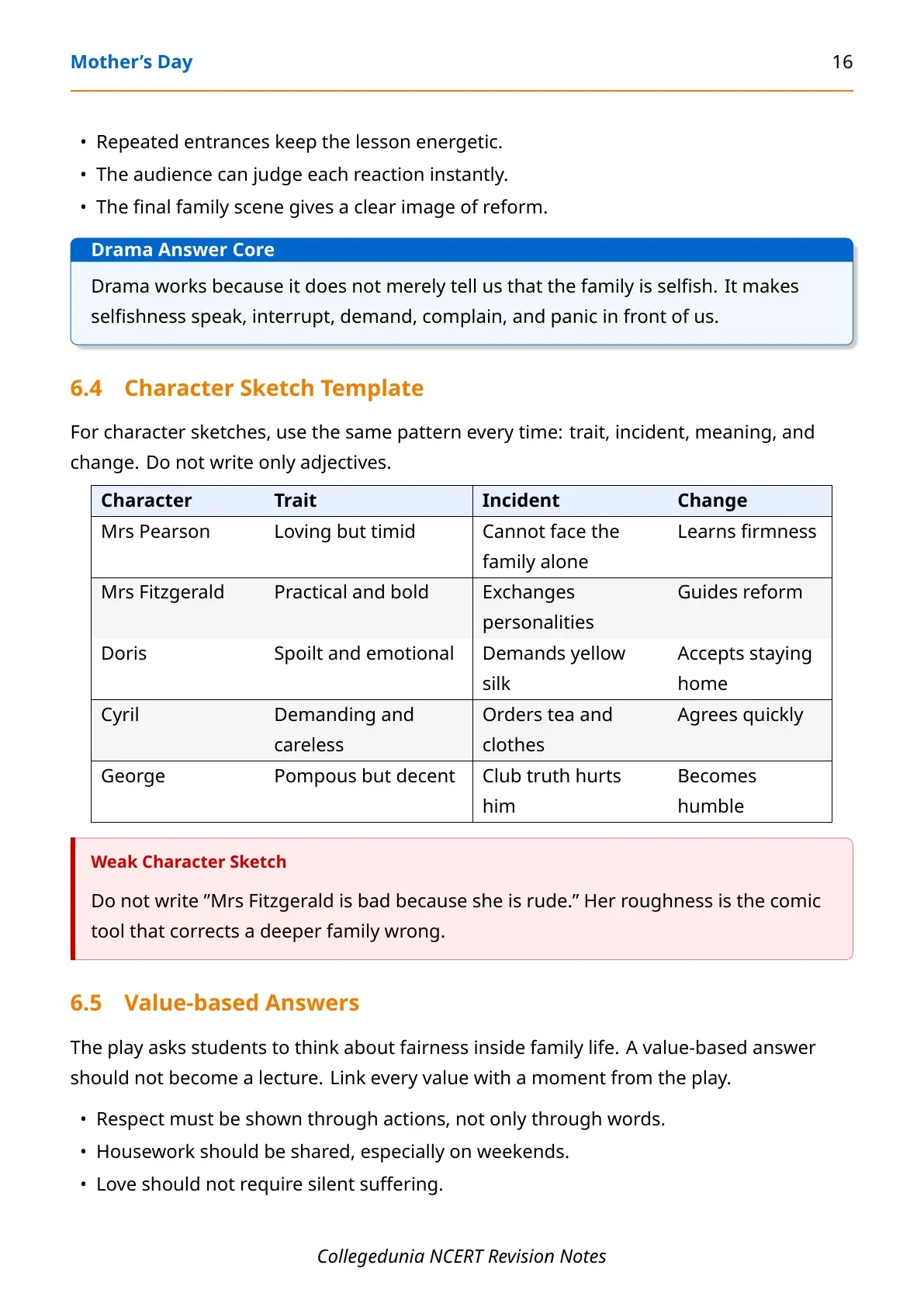
| Mrs Pearson | Loving, nervous and overworked | Use for mother's dignity and hidden labour. |
| Mrs Fitzgerald | Bold, practical and sharp | Use for comic reform and firm advice. |
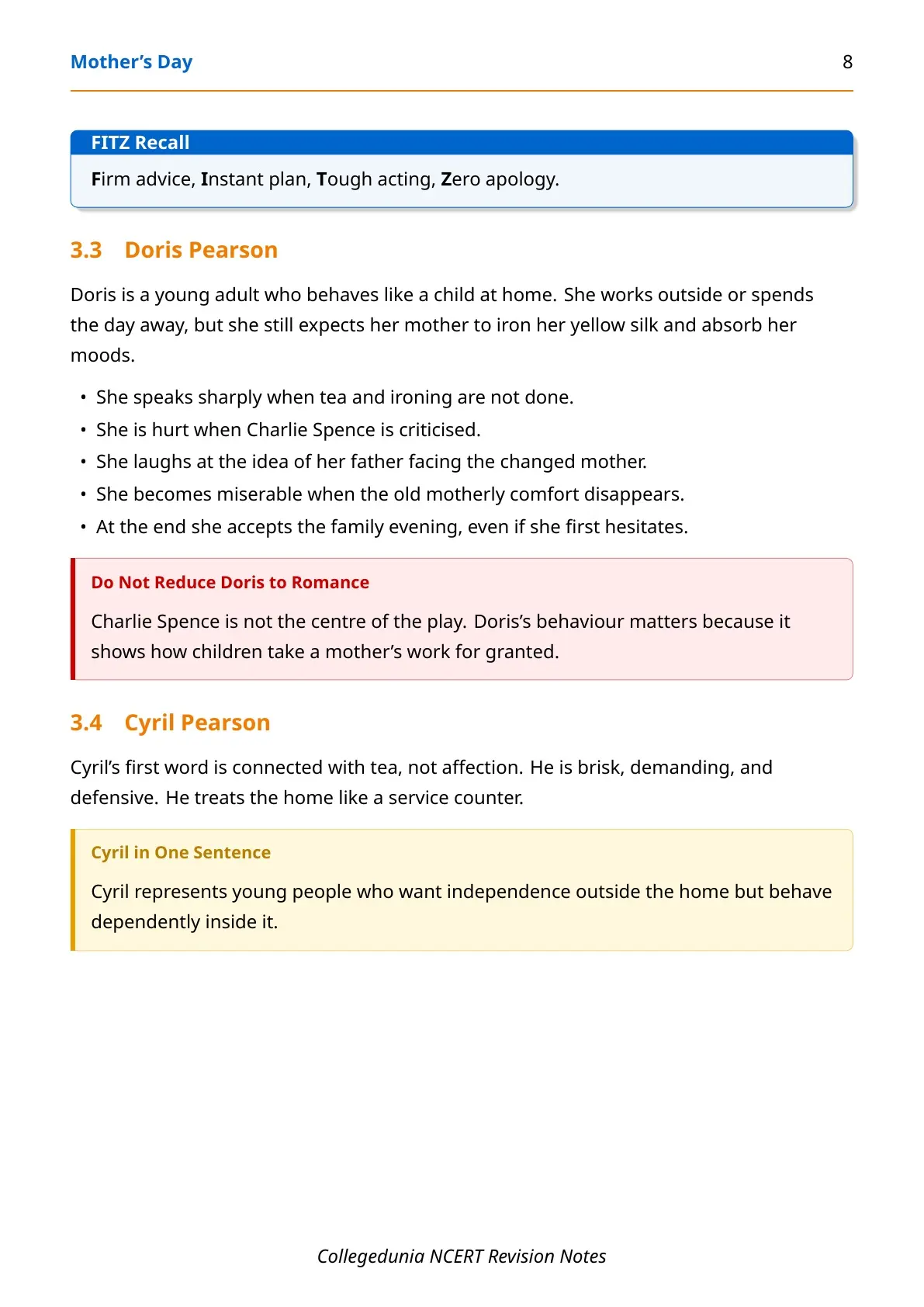
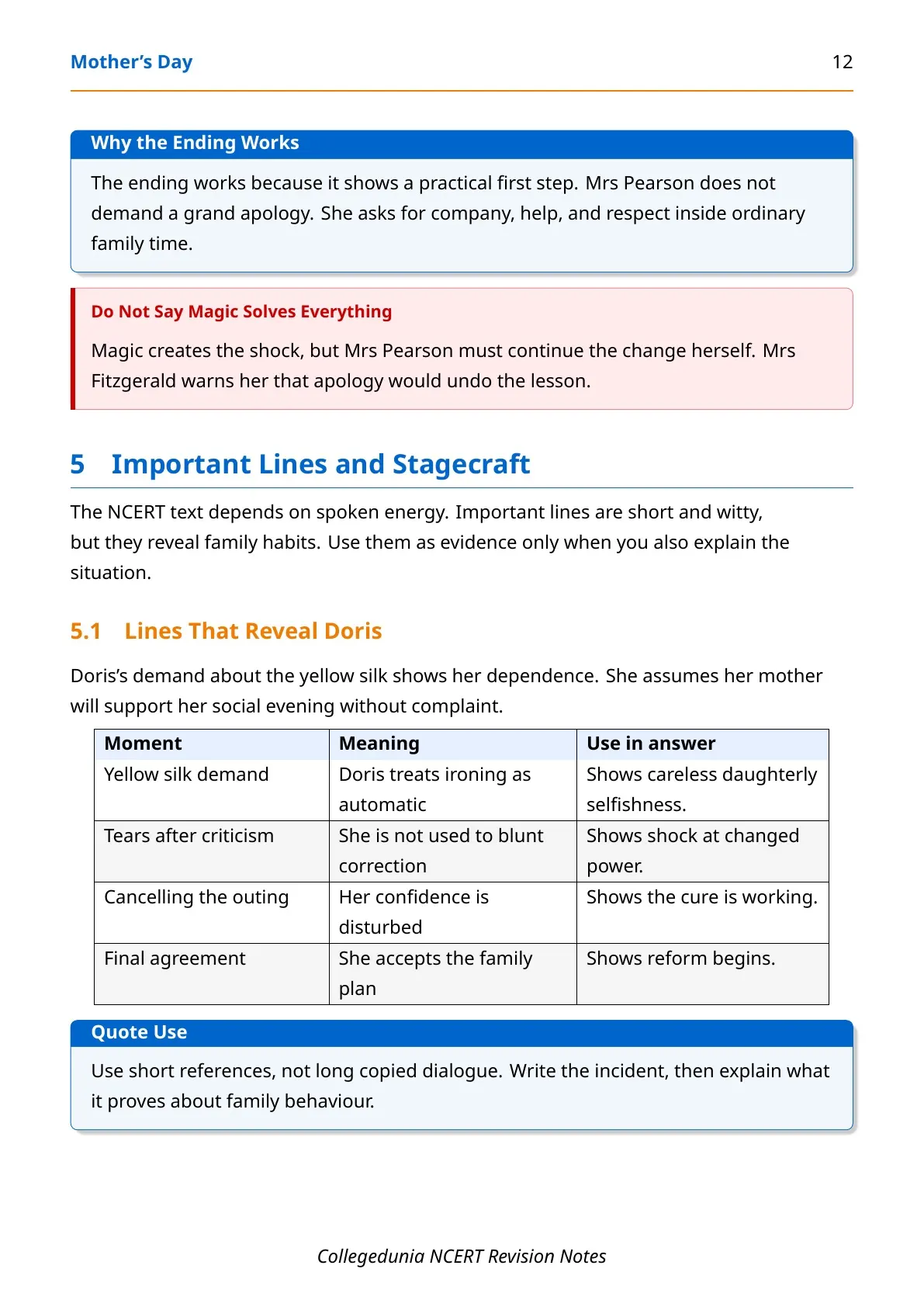
| Doris | Spoilt daughter who expects service | Use for the yellow silk scene. |
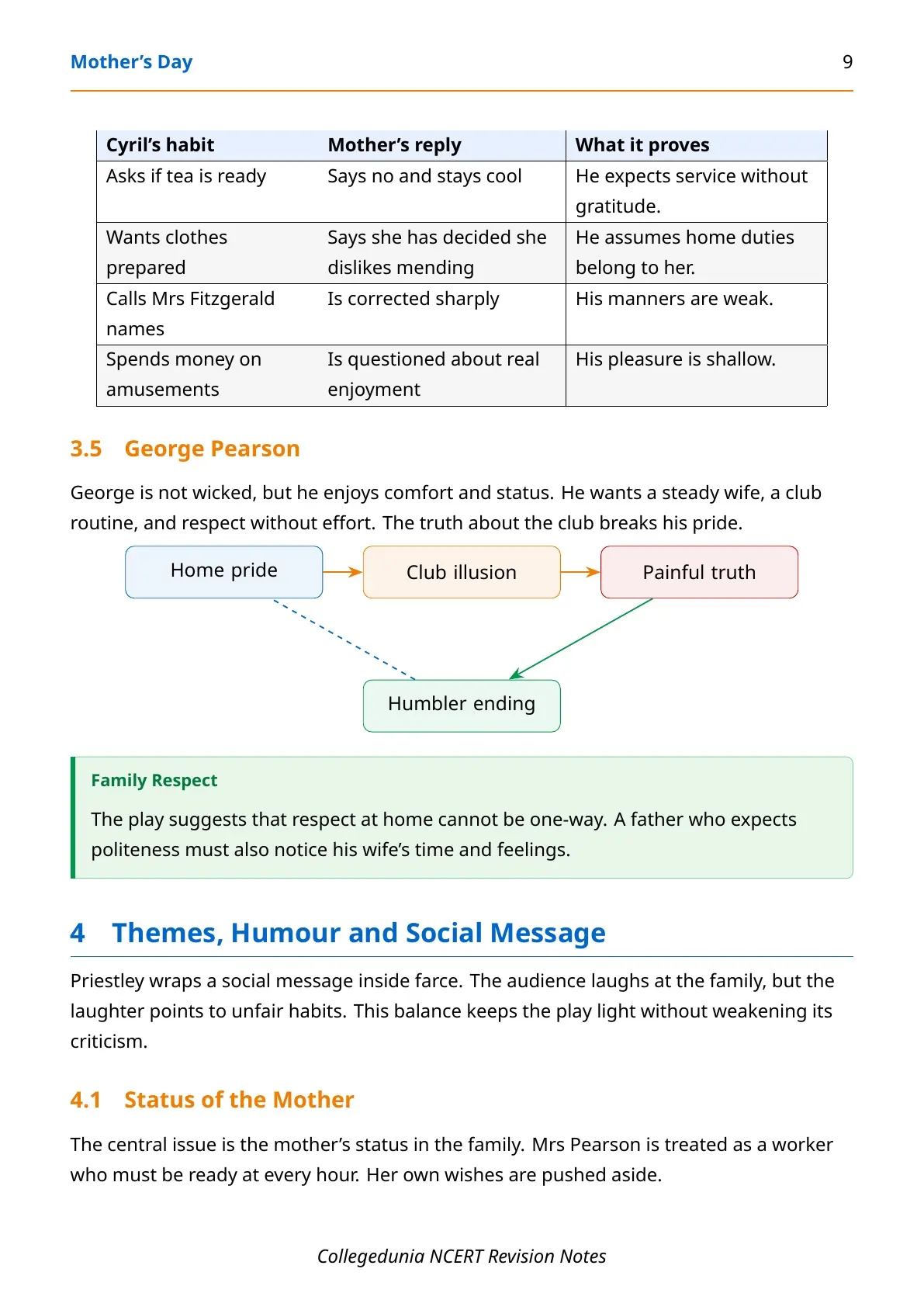
| Cyril | Demanding son who wants tea and clothes | Use for careless dependence at home. |
| George | Pompous husband hurt by the club truth | Use for pride and comic satire. |
Important Themes in Mother's Day
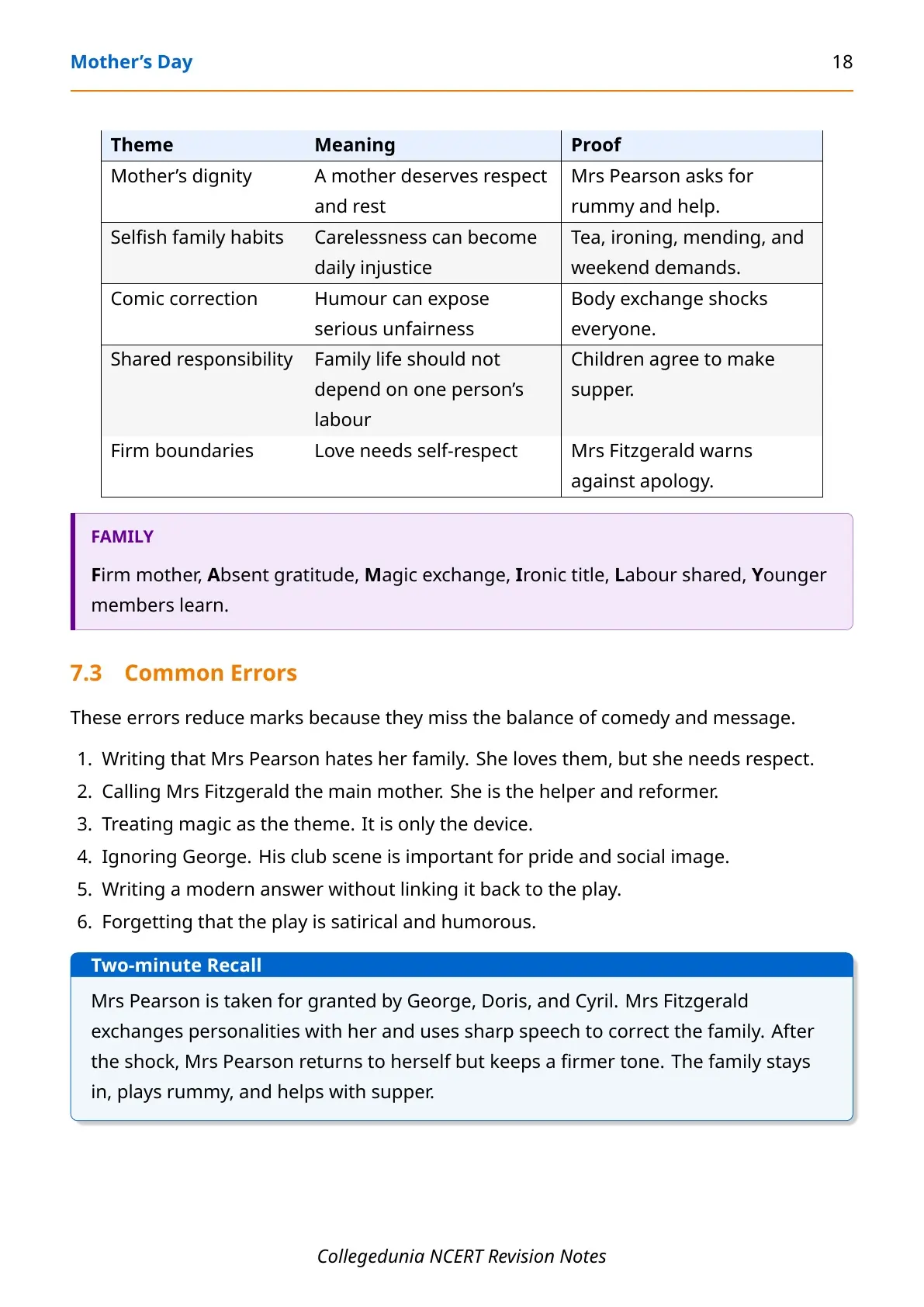
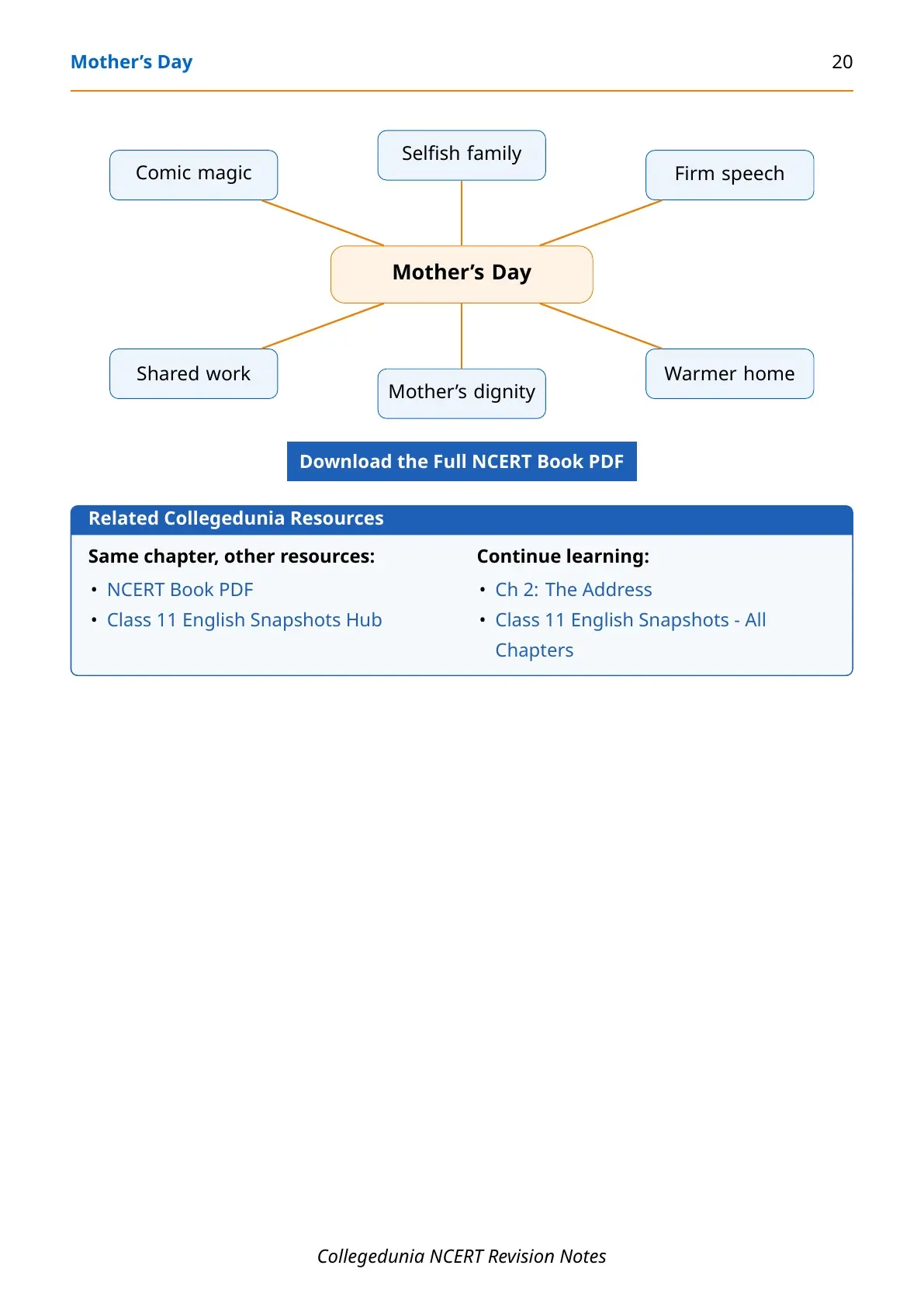
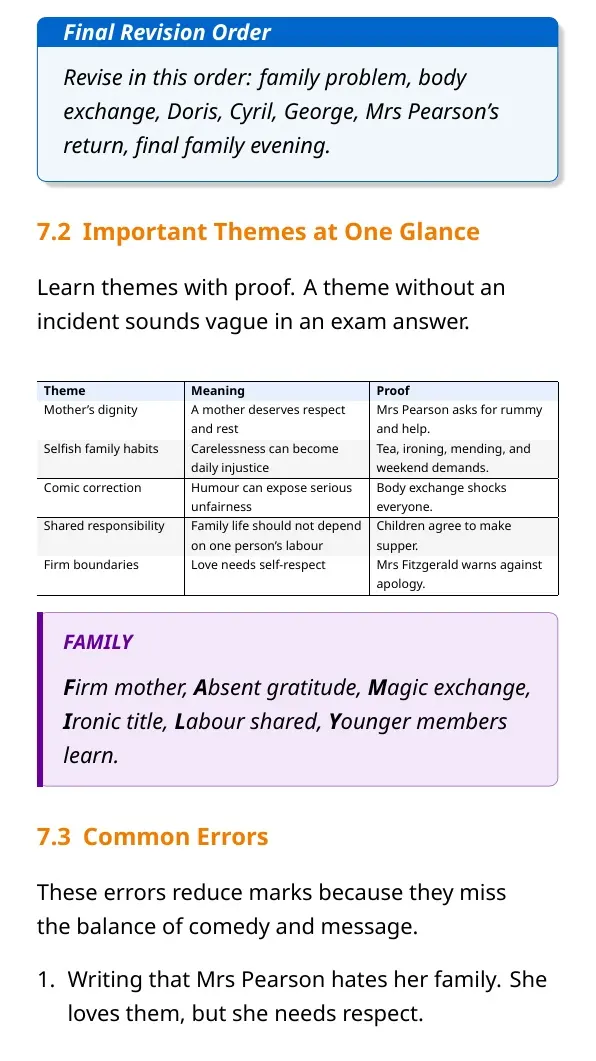
The play is funny, but its themes are serious. It questions the way family members treat the mother as someone who must always serve them. NCERT students should connect each theme with one stage moment.
| Theme | Core idea | Proof from the play |
|---|---|---|
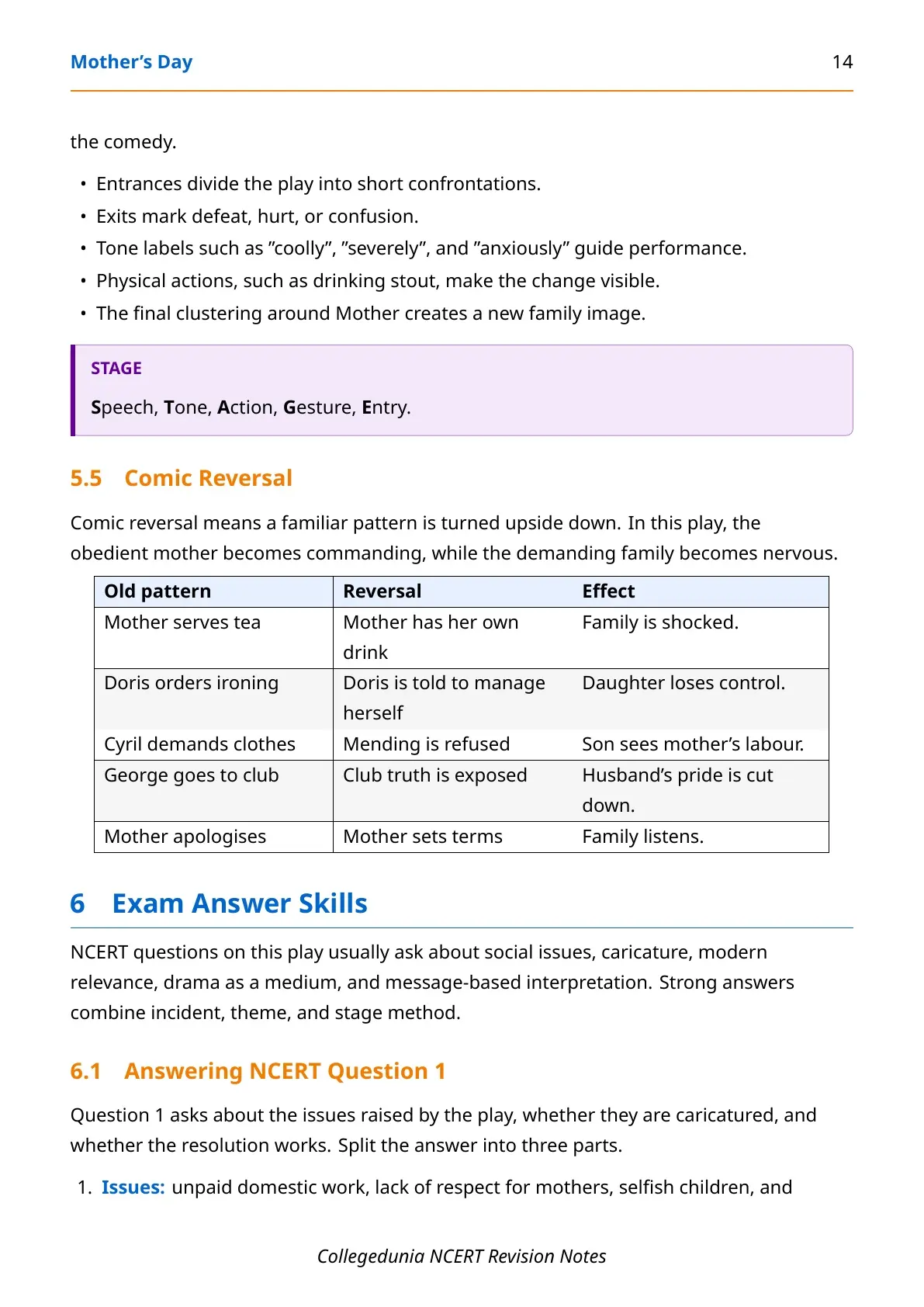
| Mother's dignity | A mother deserves respect and rest. | Mrs Pearson asks for rummy and help with supper. |
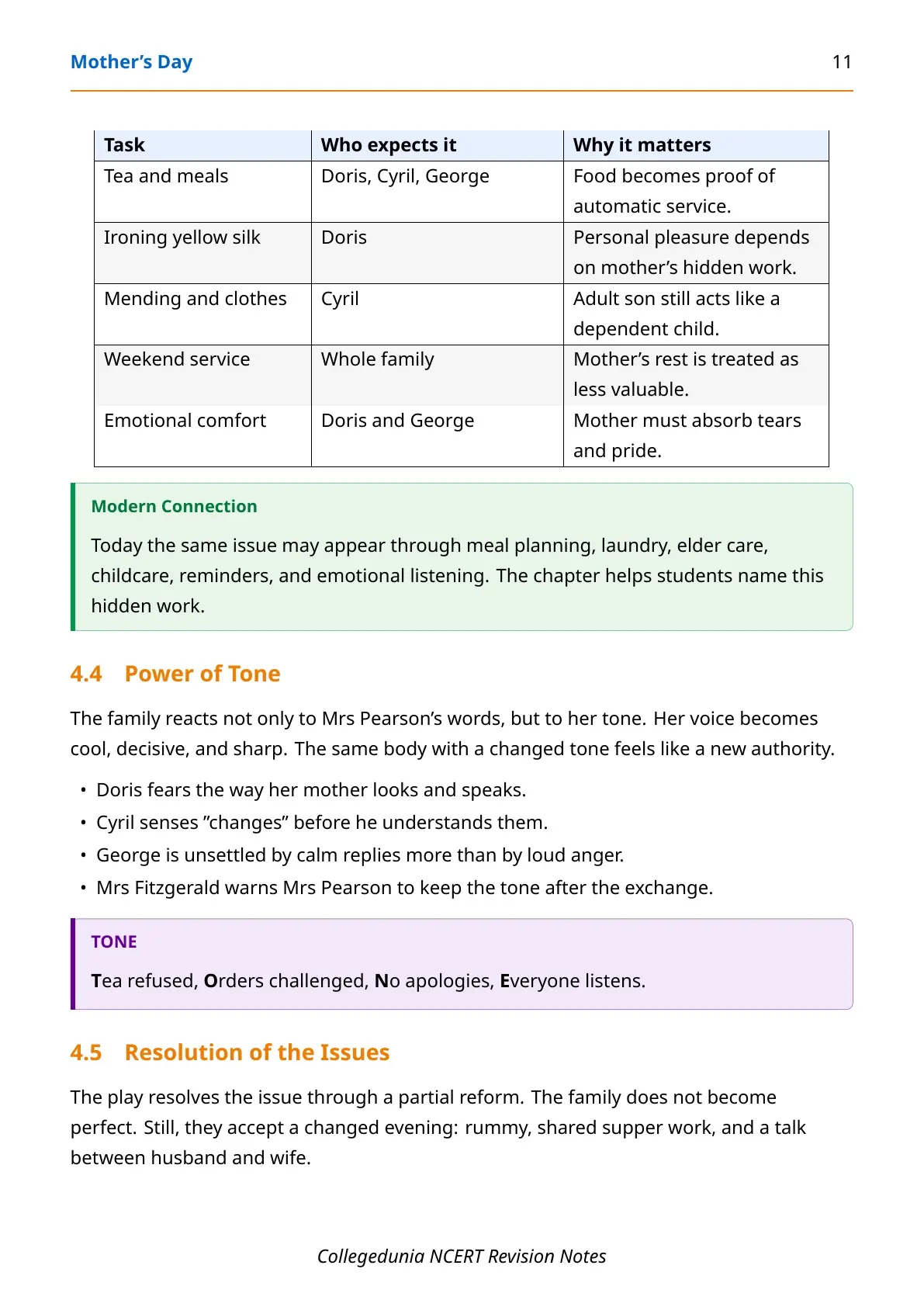
| Domestic labour | Home work is treated as invisible. | Tea, ironing and mending are expected without thanks. |
| Humour as satire | Laughter exposes unfair habits. | The changed Mrs Pearson shocks everyone. |
| Shared responsibility | Family care should not fall on one person. | The children agree to prepare supper. |
How to Write Better Answers on Mother's Day
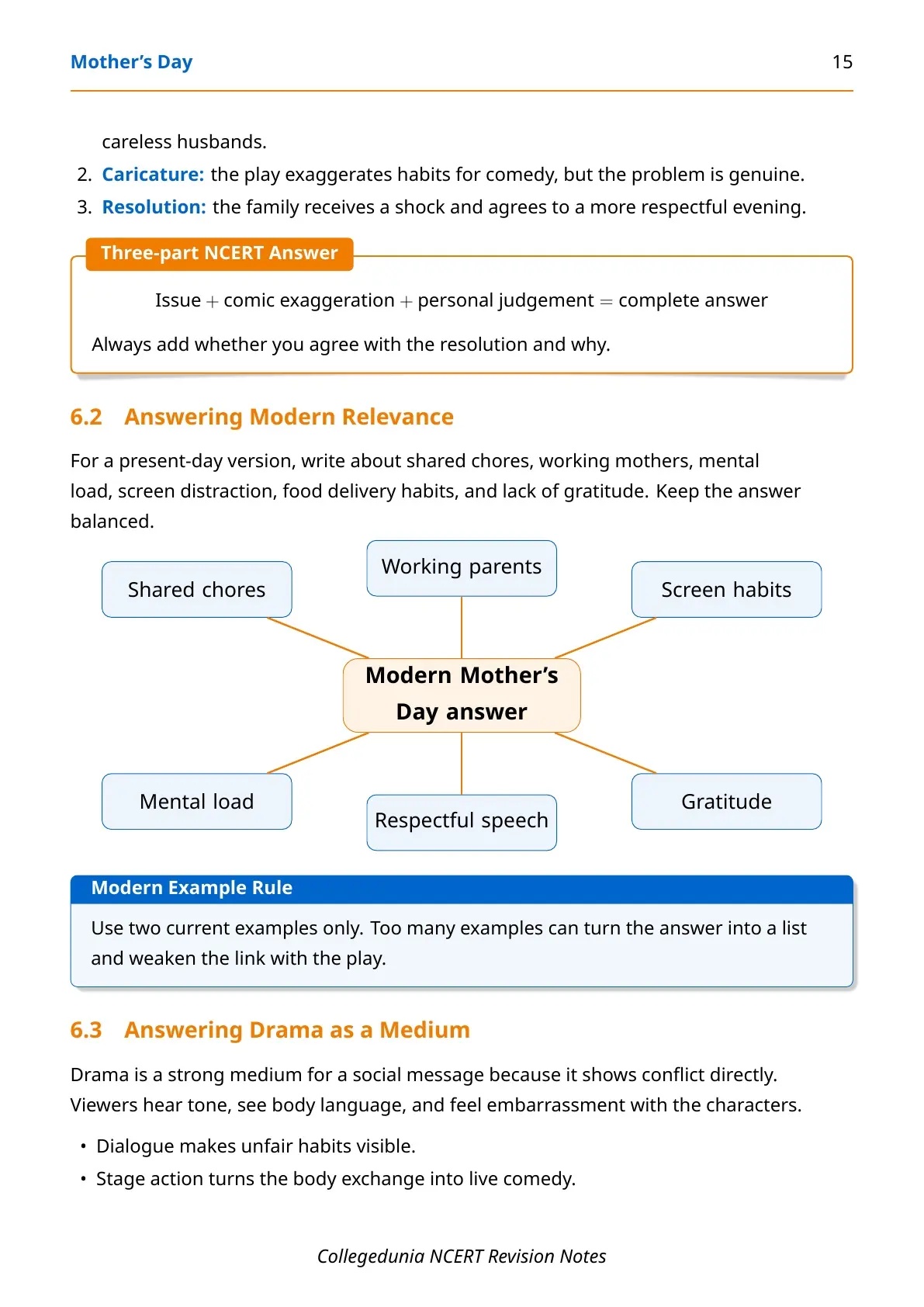
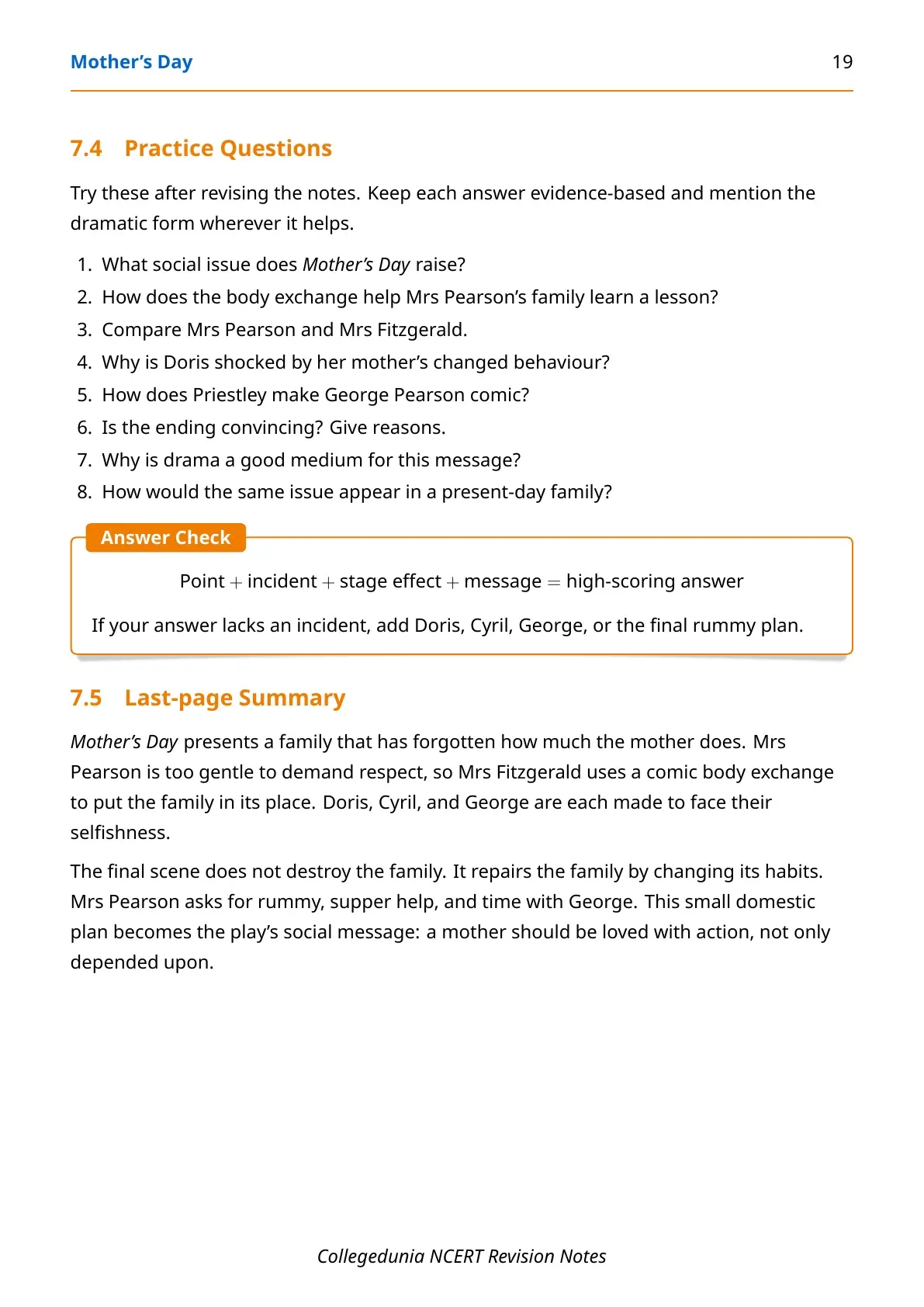
Most answers become stronger when students stop retelling every line and explain the stage effect. Write the incident first, then explain what it proves about respect inside the family.
- For summary answers: include the body exchange and the final family plan.
- For character answers: write one trait and one clear incident.
- For theme answers: connect comedy with domestic labour and respect.
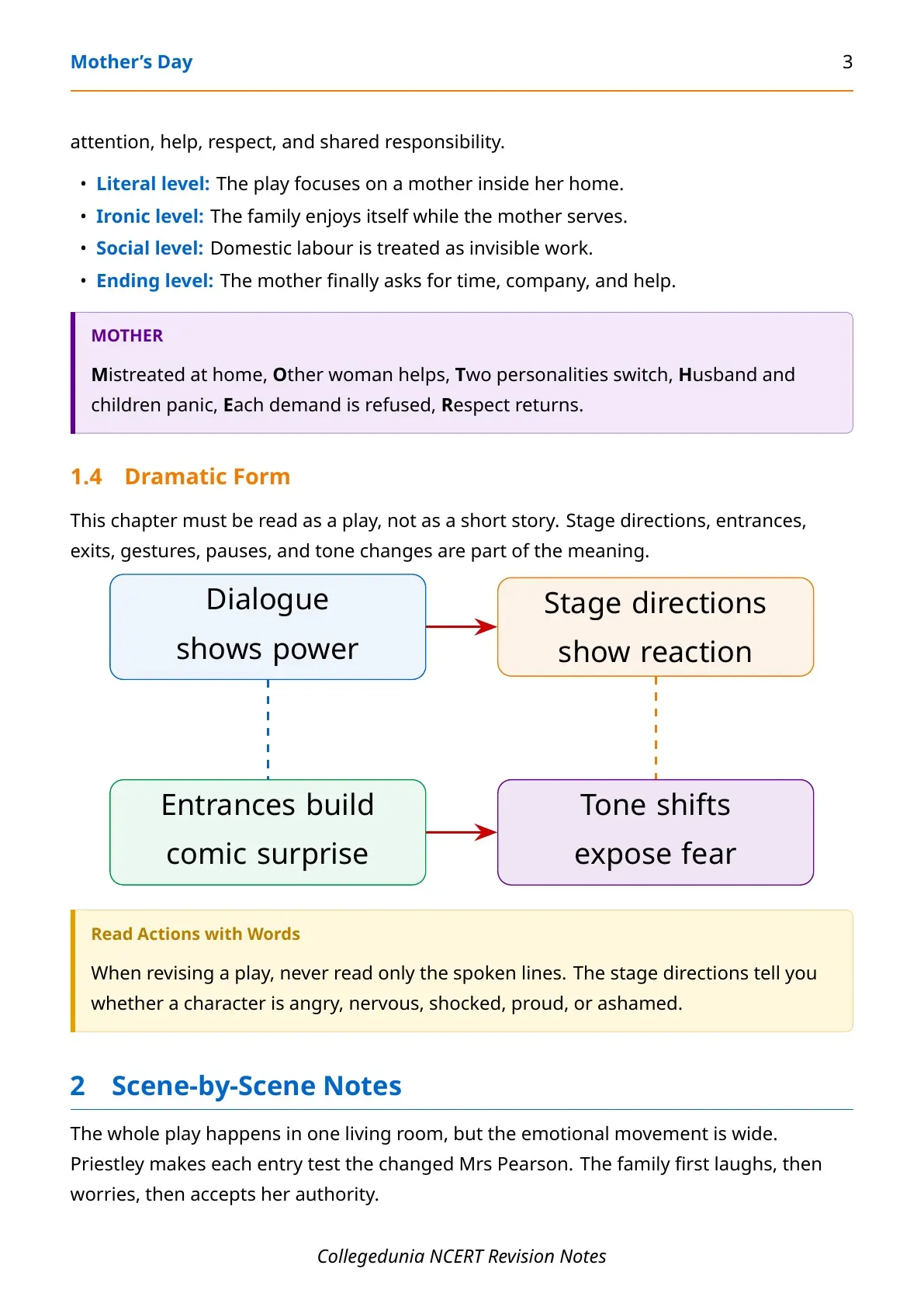
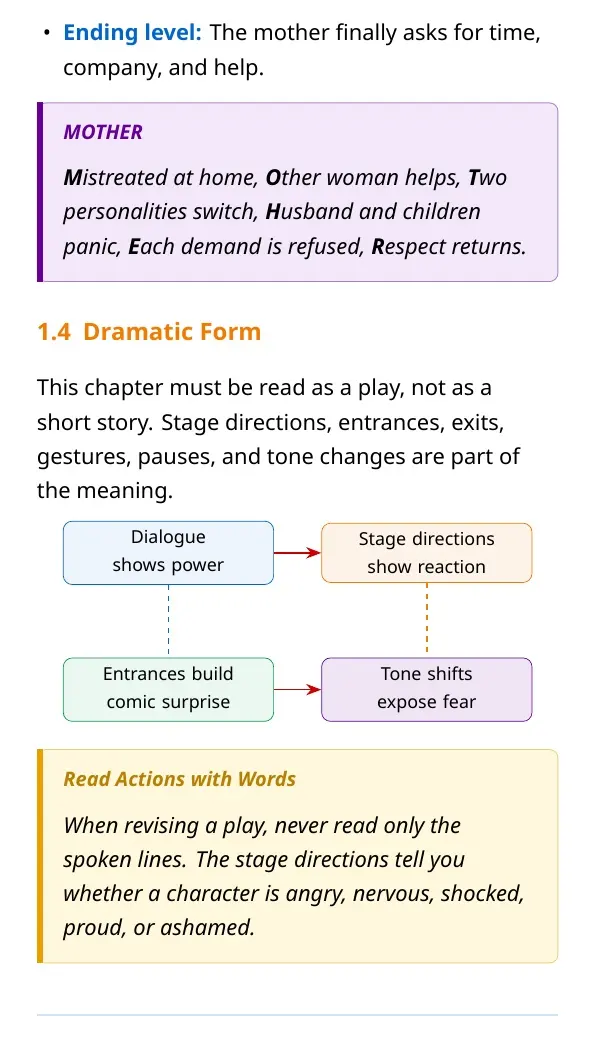
- For drama answers: mention entrances, tone, gestures and stage directions.
Related Resources for Mother's Day
| Resource | Use it for | Link |
|---|---|---|
| NCERT Solutions | Full answers to textbook questions | Open NCERT Solutions |
| NCERT Book PDF | Official Snapshots source chapter | Open NCERT Book PDF |
| Handwritten Notes | Topper-style last-minute revision | Open Handwritten Notes |
All Class 11 English Snapshots Notes Chapters
| Chapter | Title | Notes Link |
|---|---|---|
| Chapter 1 | The Summer of the Beautiful White Horse | Open Notes |
| Chapter 2 | The Address | Open Notes |
| Chapter 3 | Mother's Day | You are here |
| Chapter 4 | Birth | Open Notes |
| Chapter 5 | The Tale of Melon City | Open Notes |
Mother's Day Class 11 Notes FAQs
Ques. What is the main idea of Mother's Day?
Ans. The main idea is that a mother should not be treated as unpaid help. The play asks the family to share work and show respect.
Ques. Why does Mrs Fitzgerald exchange personalities with Mrs Pearson?
Ans. Mrs Fitzgerald exchanges personalities because Mrs Pearson cannot confront her family herself. The exchange gives the family a sudden lesson.
Ques. How is George Pearson comic in Mother's Day?
Ans. George is comic because he is proud at home but is mocked at his club. The truth about "Pompy-ompy Pearson" breaks his pride.
Ques. How should students revise Mother's Day for exams?
Ans. Students should revise the body exchange, Doris, Cyril, George, the social message, and how humour works as satire.



Comments