




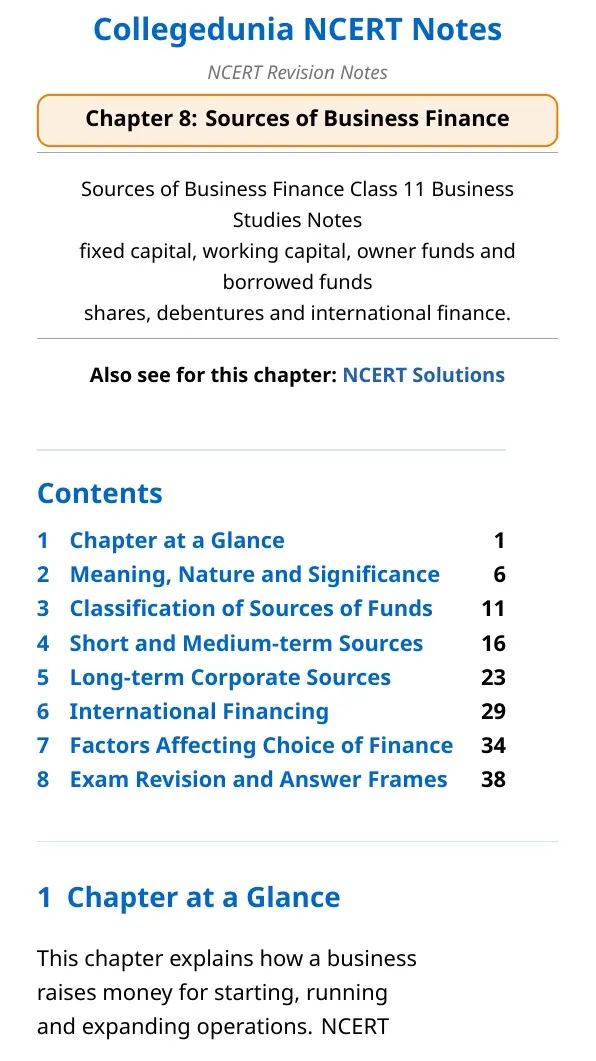
The Sources of Business Finance Class 11 notes explain where a business can raise money from, according to the 2026-27 NCERT syllabus. Use this page to revise fixed capital, working capital, shares, debentures, deposits, trade credit, factoring and international finance before opening the PDF.
- Download the 25-page Class 11 Business Studies Chapter 8 notes PDF for offline revision.
- Revise the three main classifications: period, ownership and source of generation.
- Student focus: match each source with its cost, risk, control and time period.
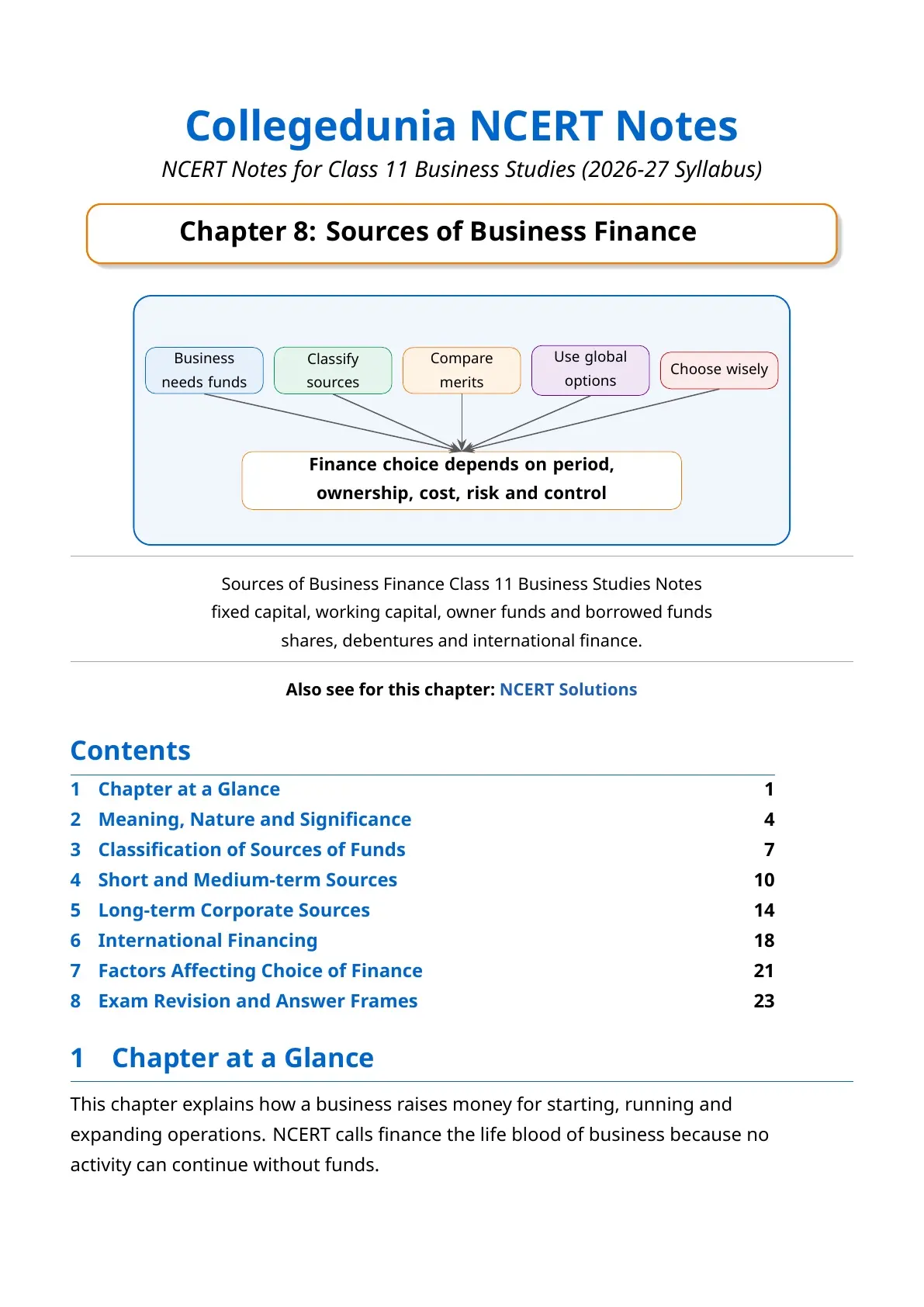
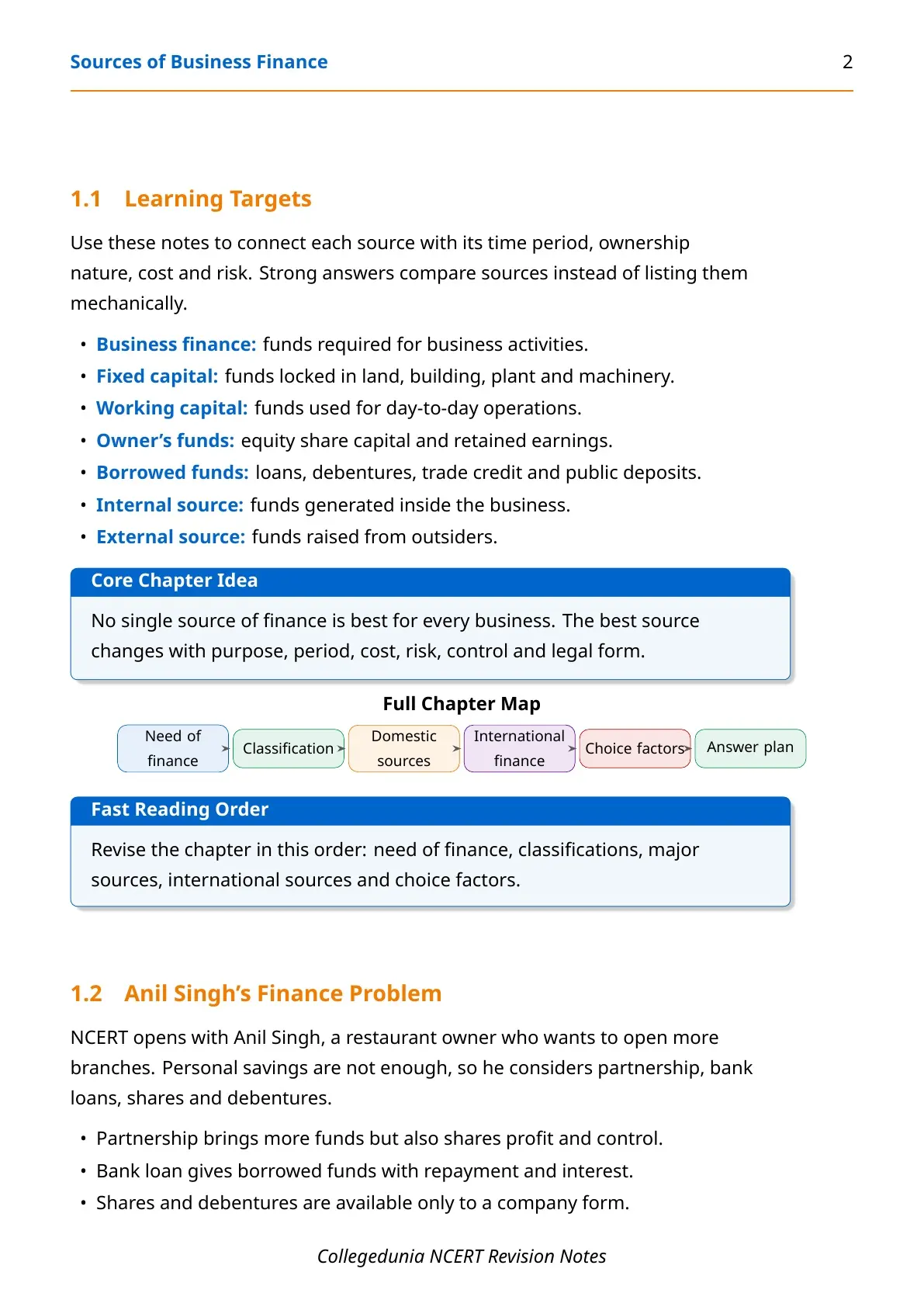
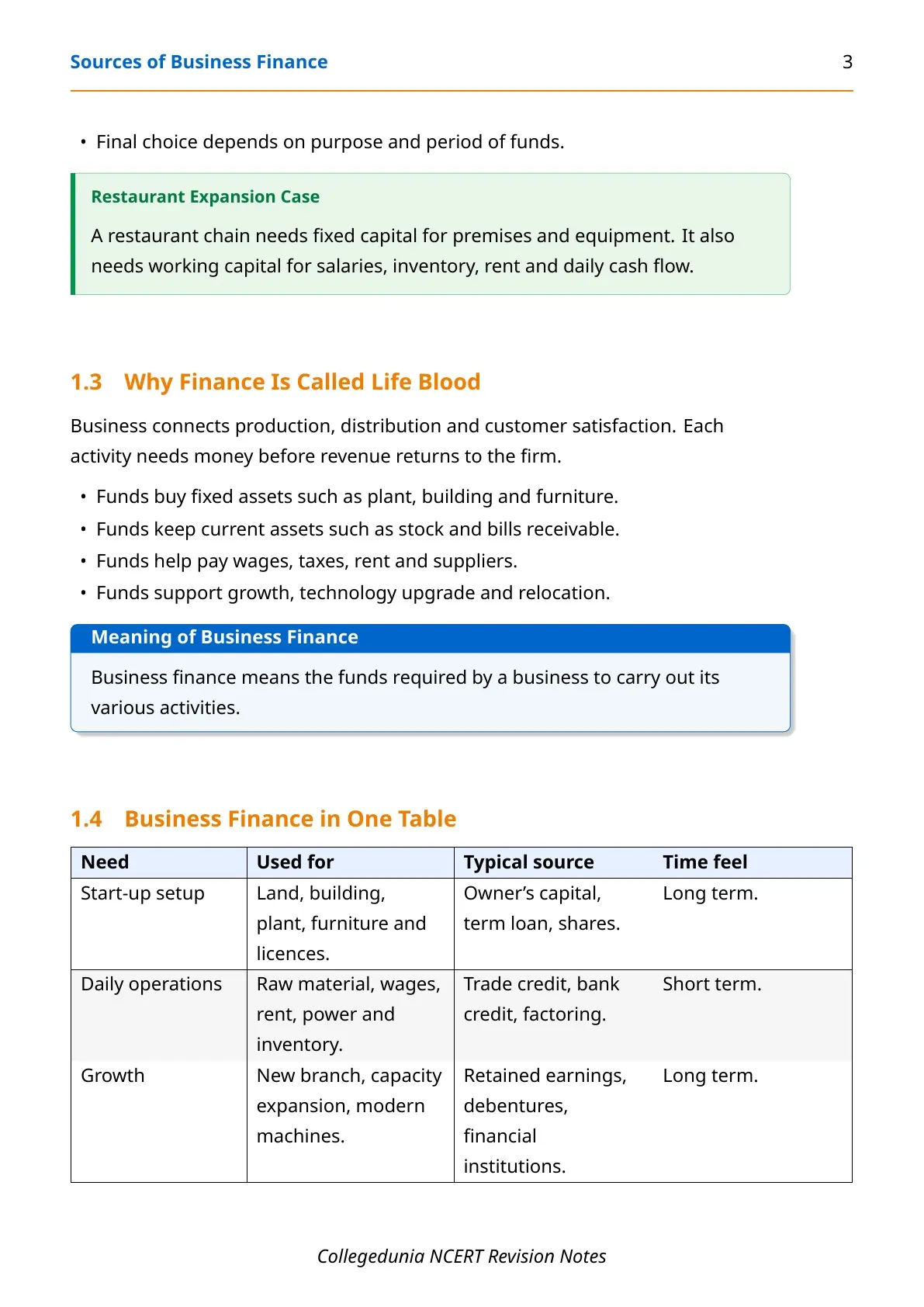
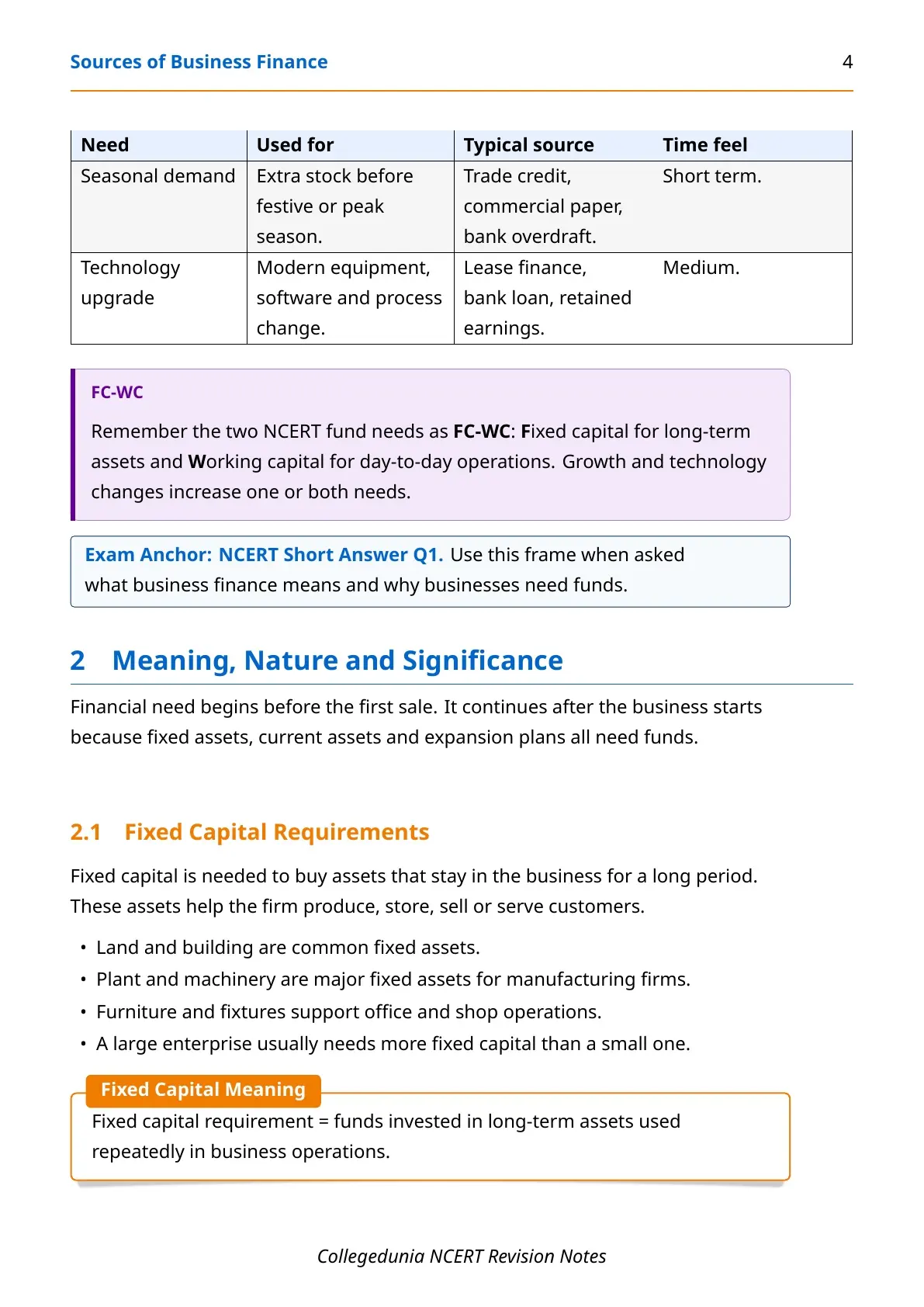
These Class 11 Business Studies notes are checked against the 2026-27 NCERT chapter and written for quick Commerce revision.
Student Feedback on Sources of Business Finance
In a Collegedunia poll of 12,460 Class 11 Commerce students before the 2026 exams, many students said Chapter 8 became easier once sources were grouped by time period, ownership and repayment burden.
- 81% wanted one chart for owner funds and borrowed funds.
- 69% confused public deposits with debentures in short answers.
- 62% needed a checklist for choosing the best finance source. The PDF includes that frame.
Source: 2026-27 Class 11 Commerce student poll. Sample of 12,460 students from CBSE schools across 14 states.
Sources of Business Finance Class 11 Quick Map
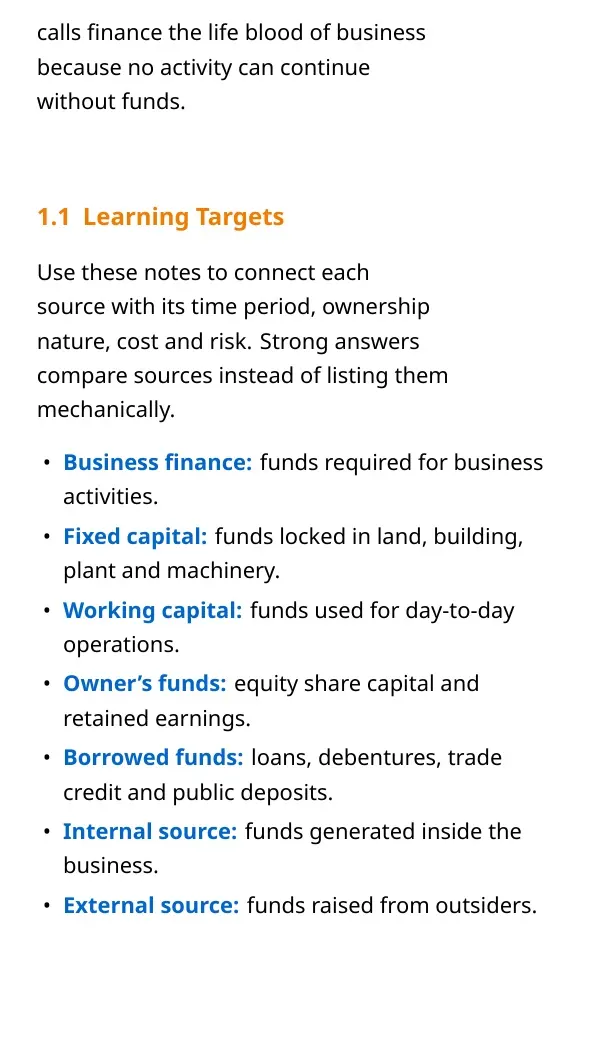
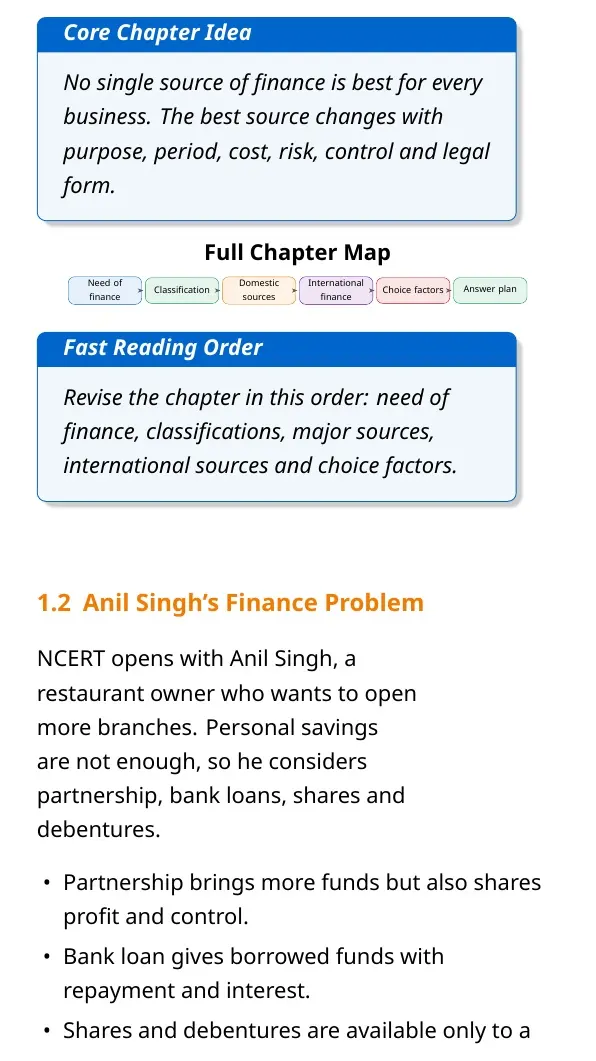
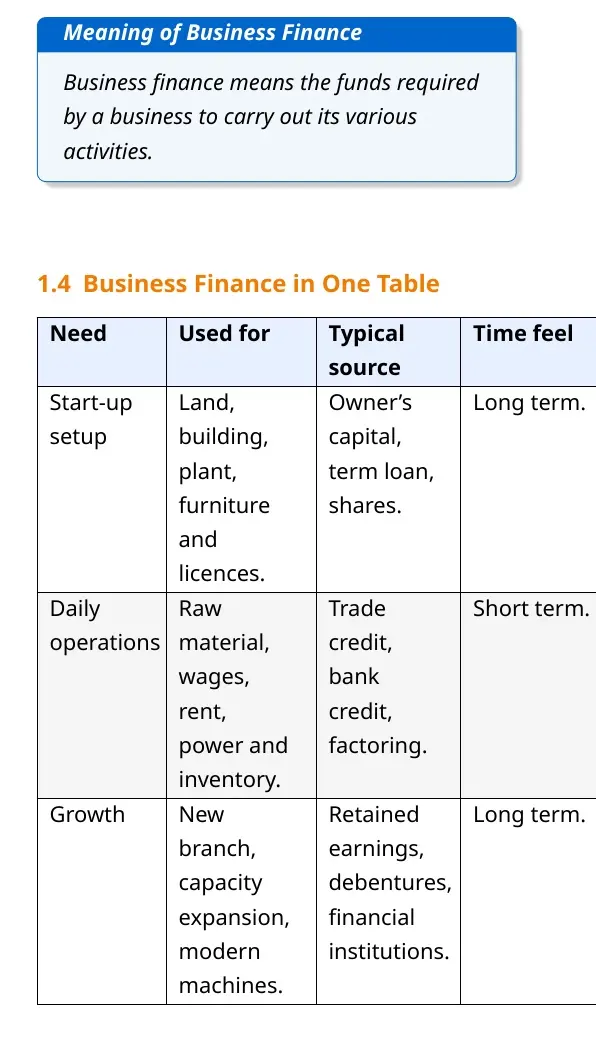
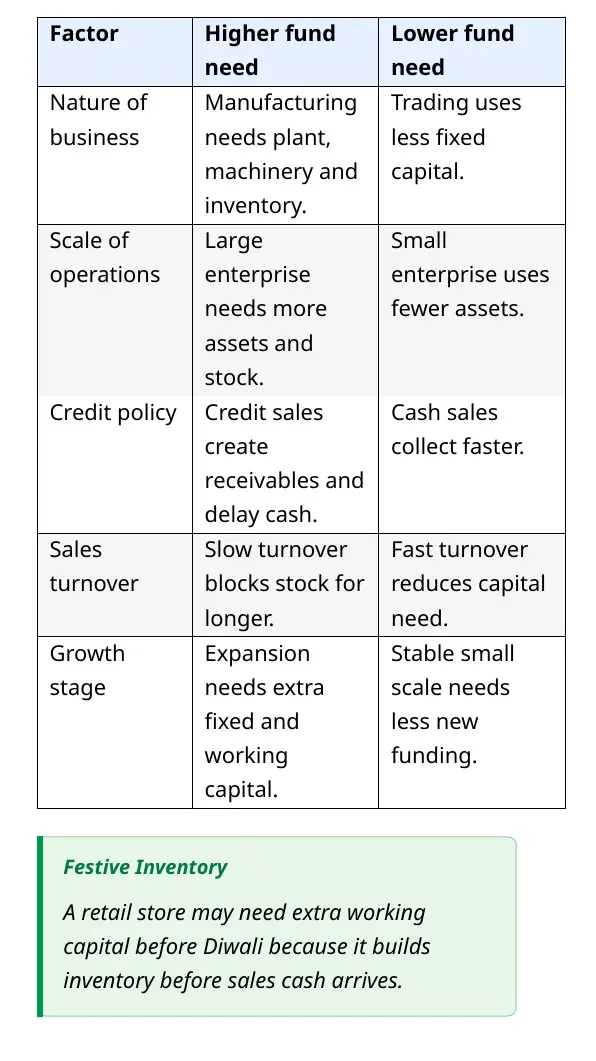
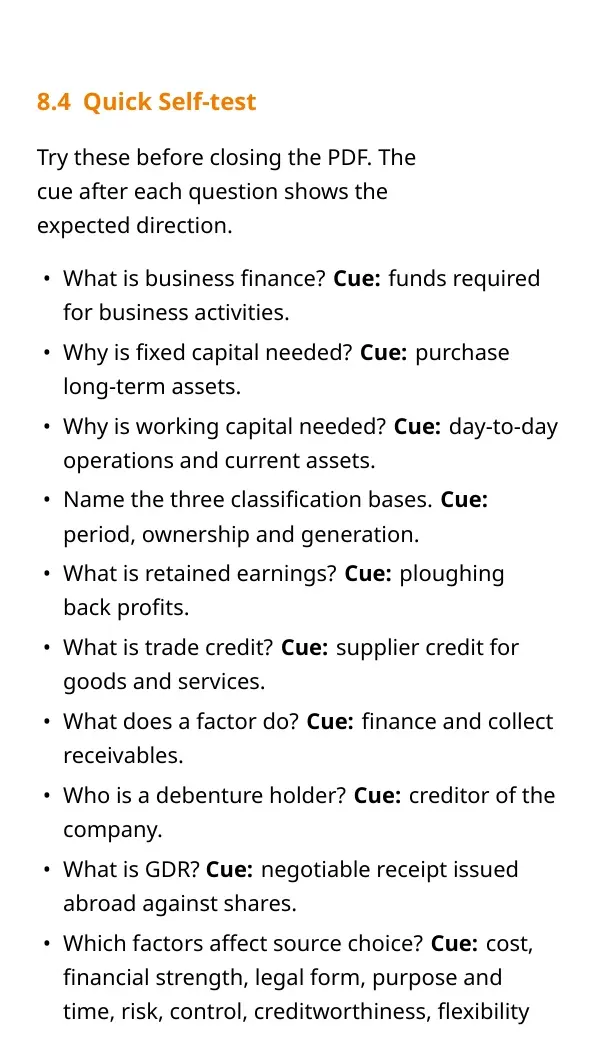
Business finance means the funds needed to start, run and expand a business. NCERT separates the need into fixed capital and working capital, then compares sources by ownership, period, risk and control.
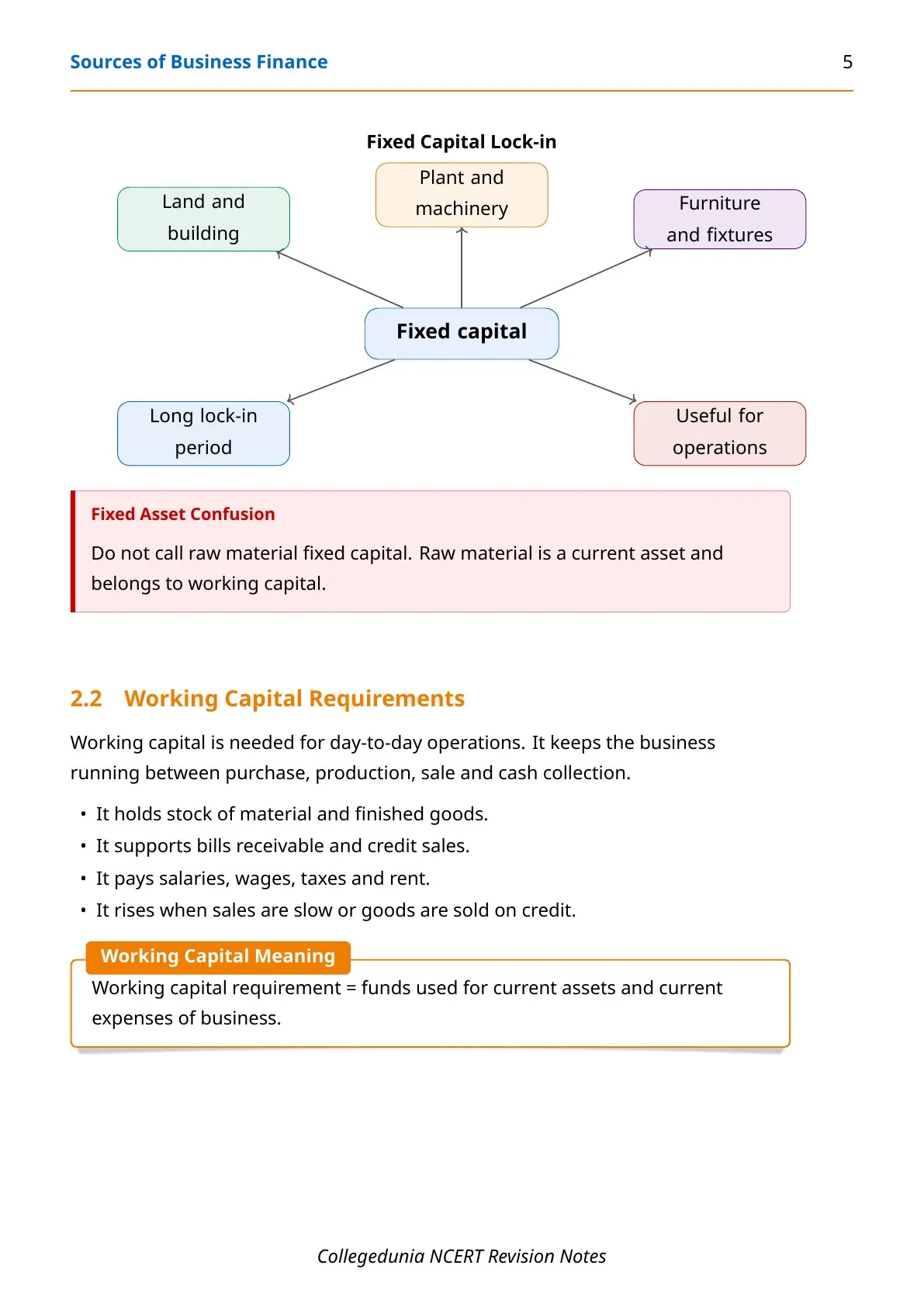
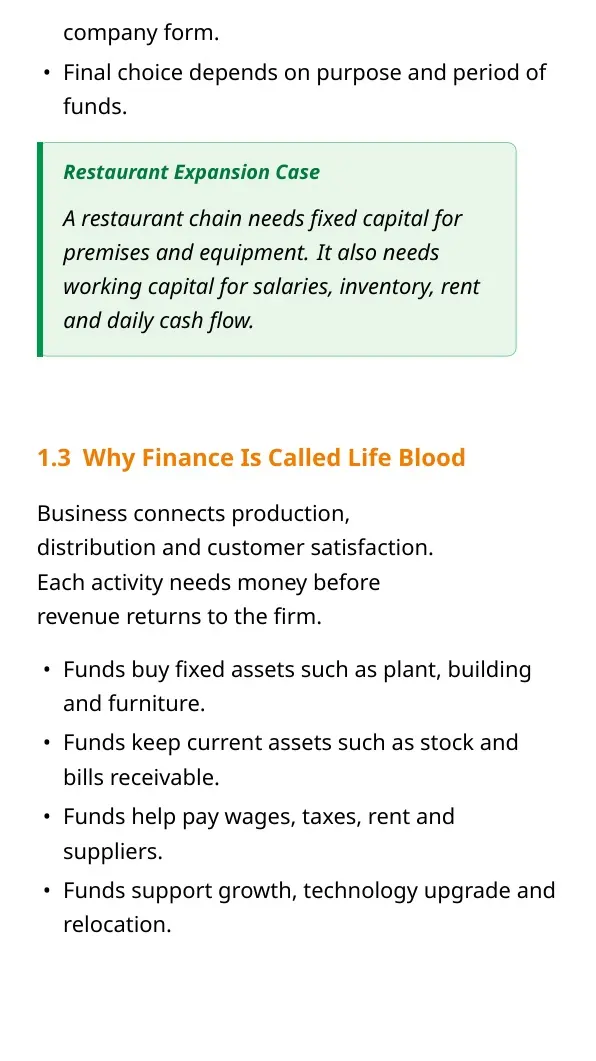
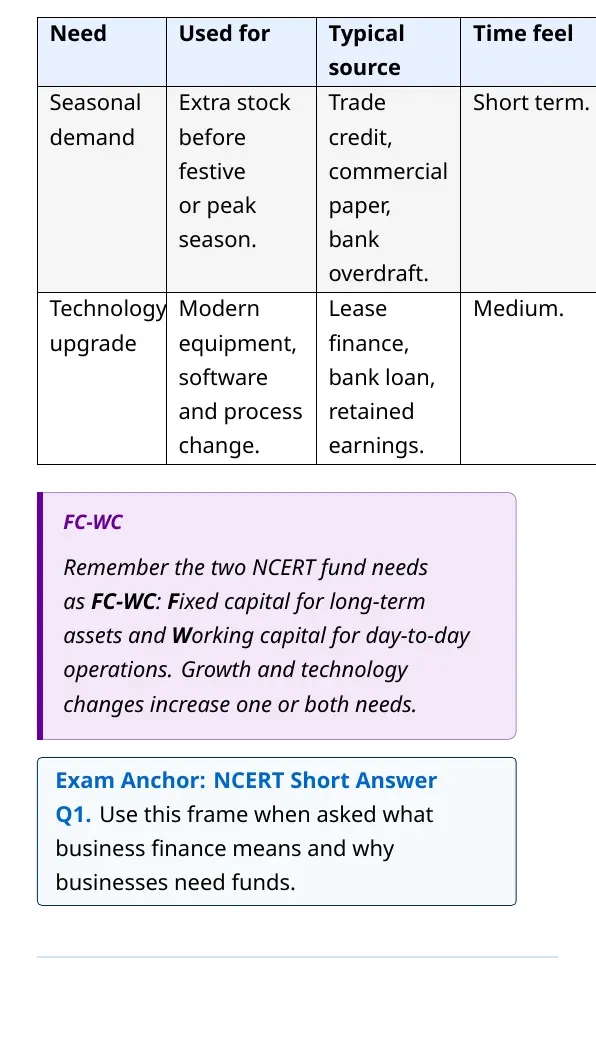
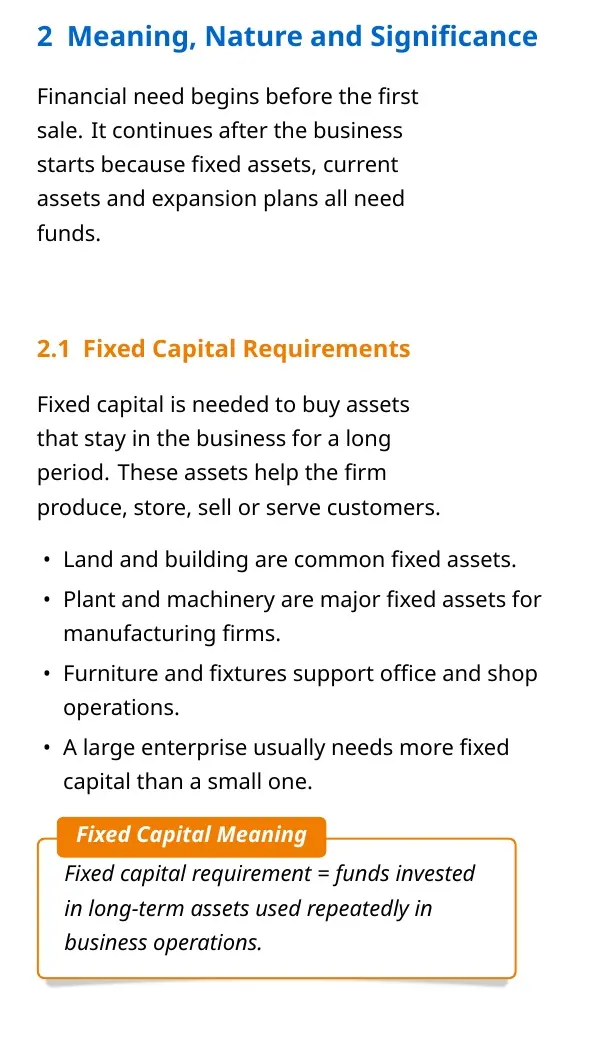
- Fixed capital pays for land, building, plant, machinery and long-term assets.
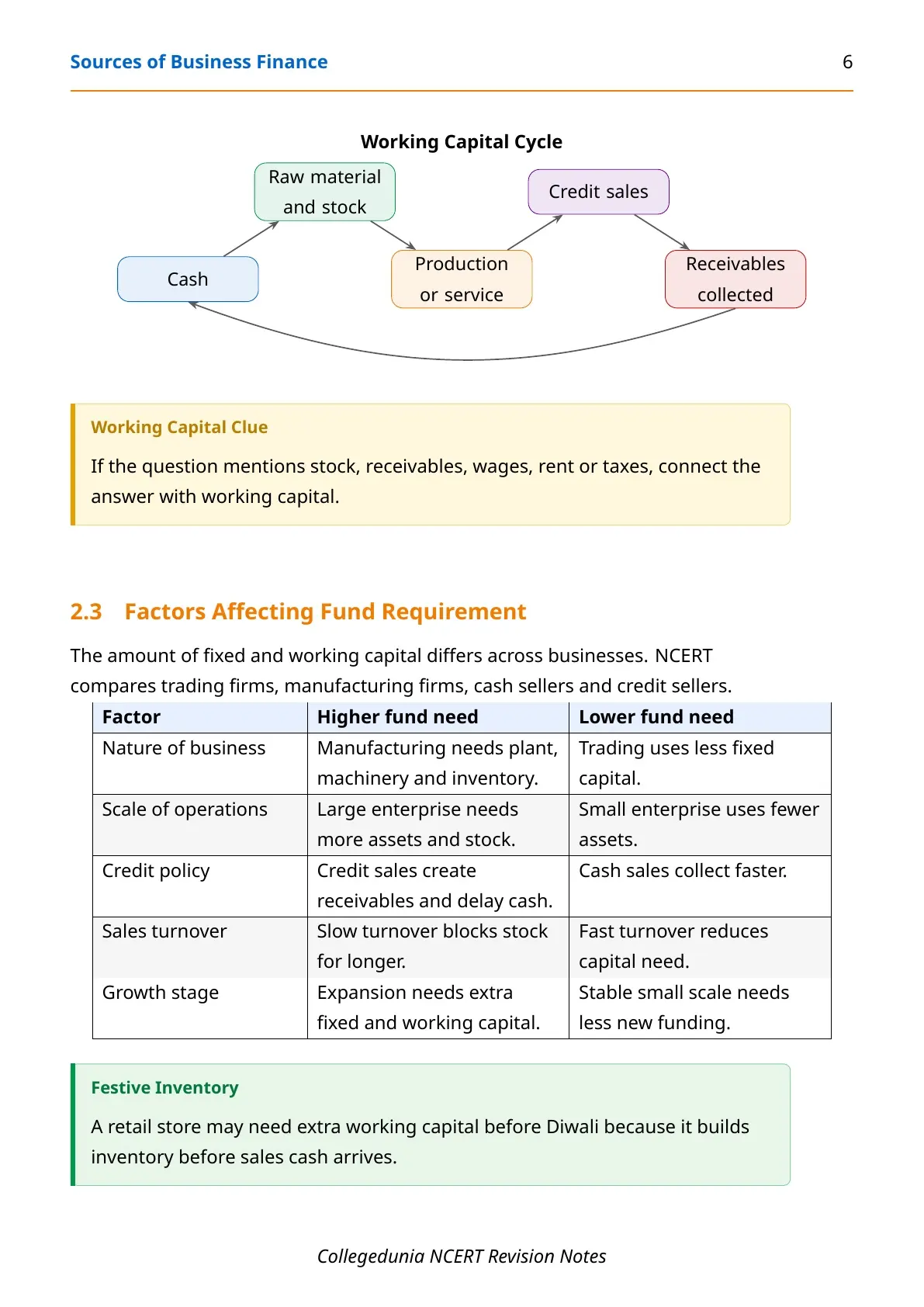
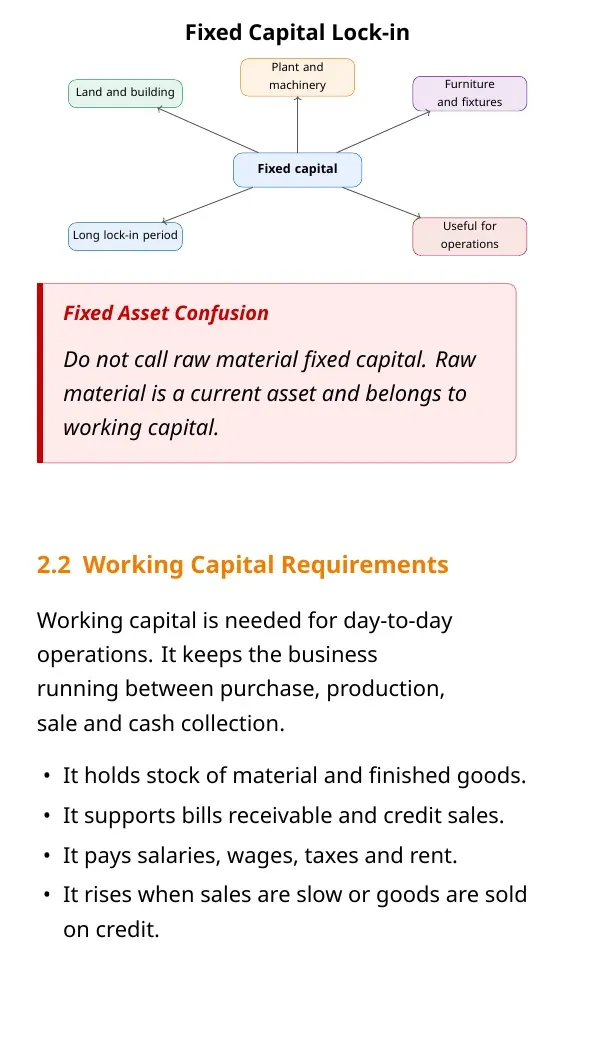
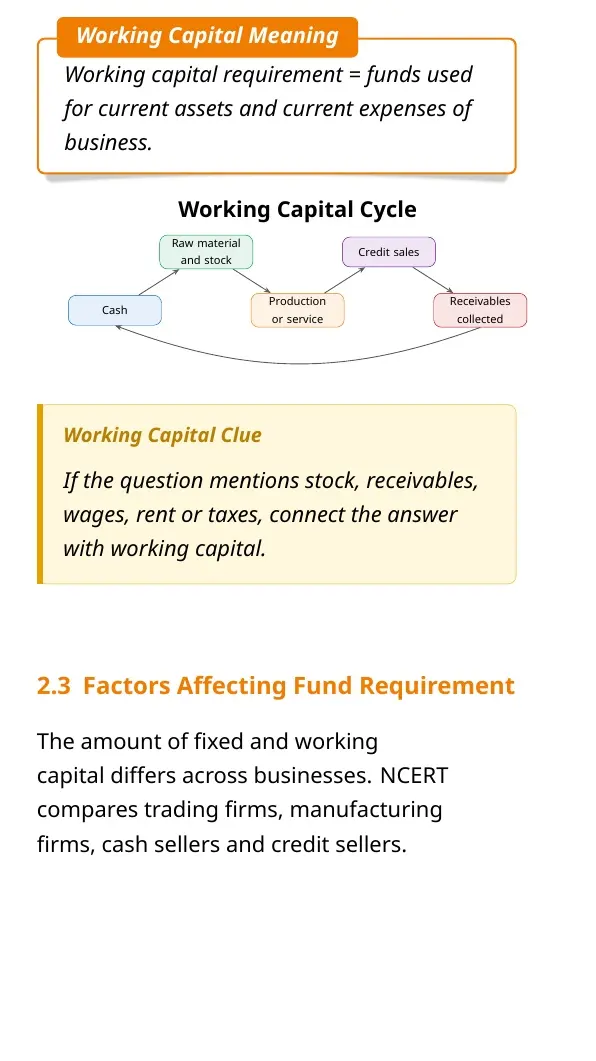
- Working capital pays for raw material, wages, bills and daily operations.
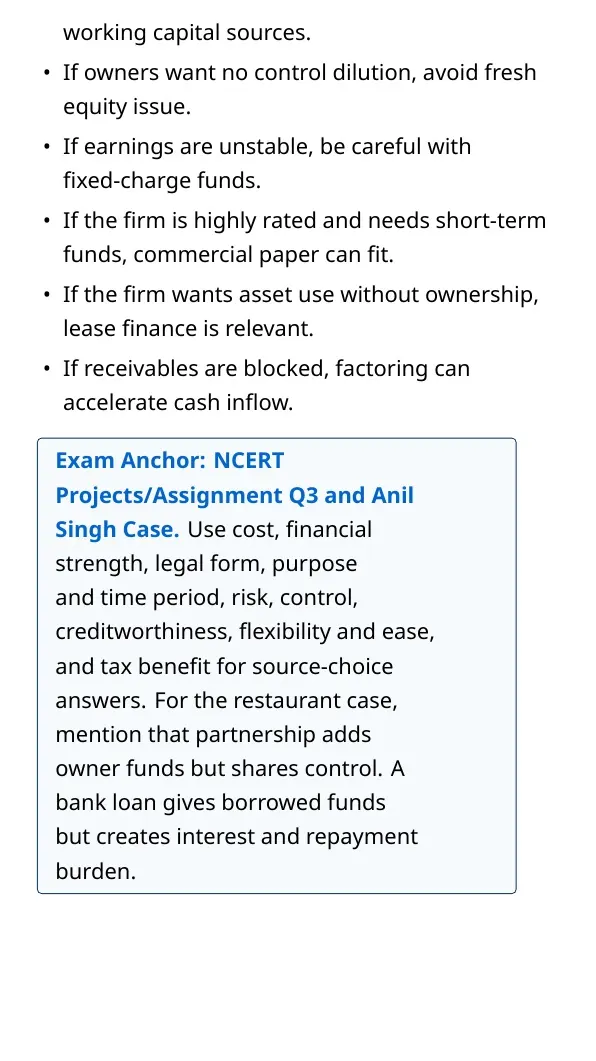
- Source selection depends on cost, risk, control, flexibility and time period.
Sources of Business Finance Class 11 Video Recap
Source: Magnet Brains on YouTube
Fixed Capital and Working Capital in Sources of Business Finance
Fixed capital is needed before production starts, while working capital keeps daily work moving. A factory needs more fixed capital than a trading concern. A long production cycle usually needs more working capital.
| Need | Used for | Best source type |
|---|---|---|
| Fixed capital | Land, building and machinery | Shares, debentures or institutional loans |
| Working capital | Inventory, wages, bills and credit sales | Trade credit, bank overdraft or commercial paper |
Classification of Sources of Funds Every Class 11 Student Should Know
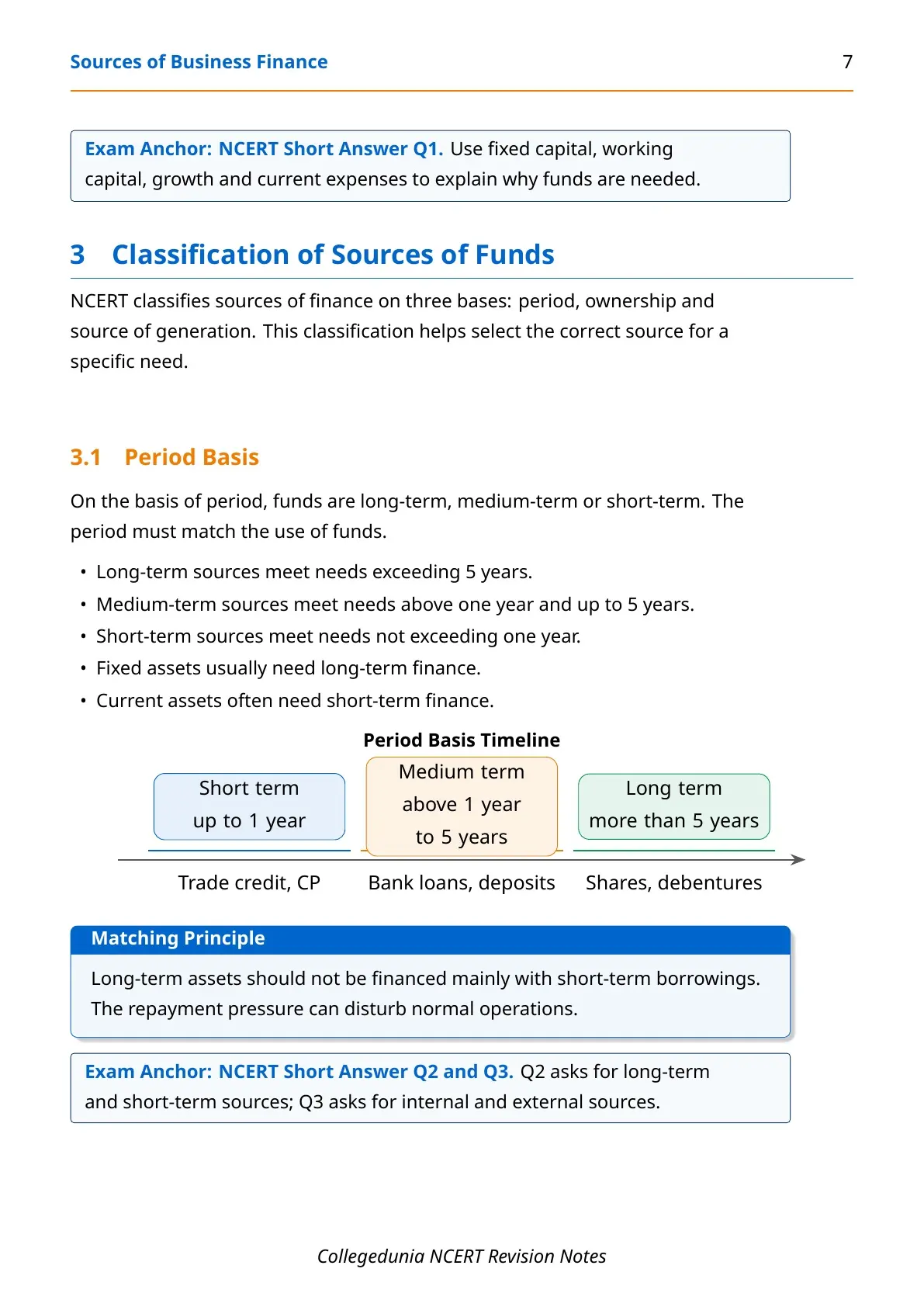
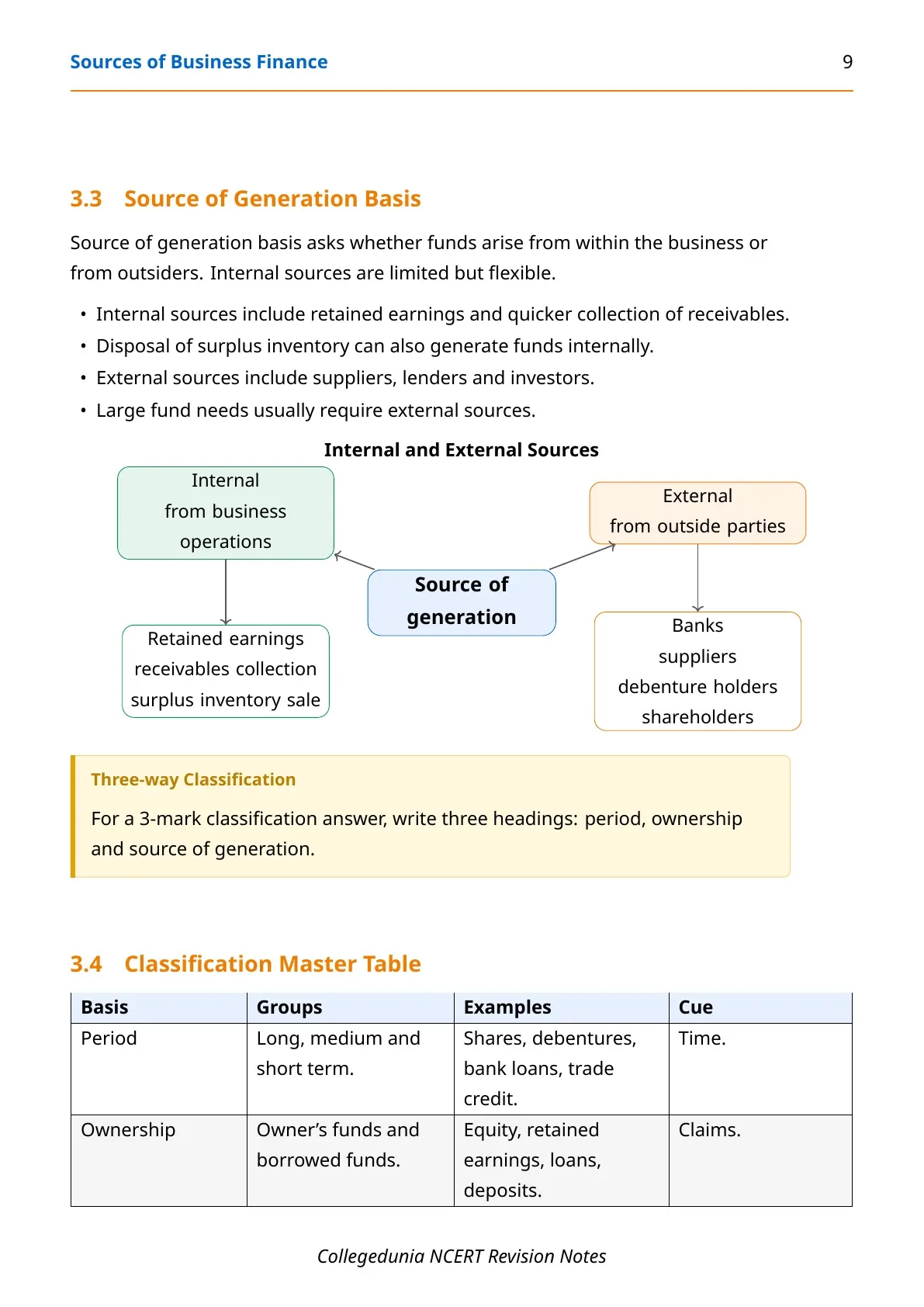
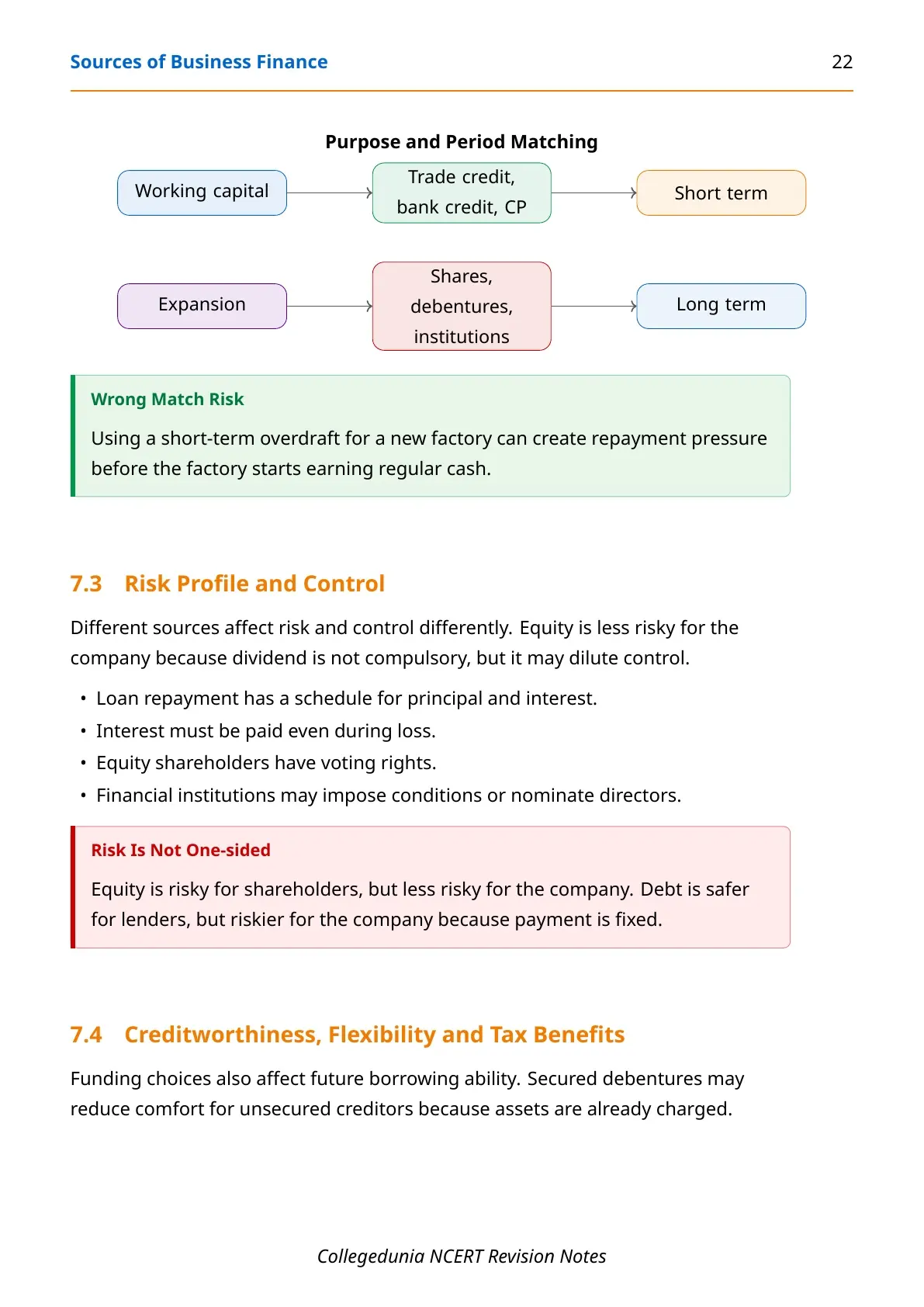
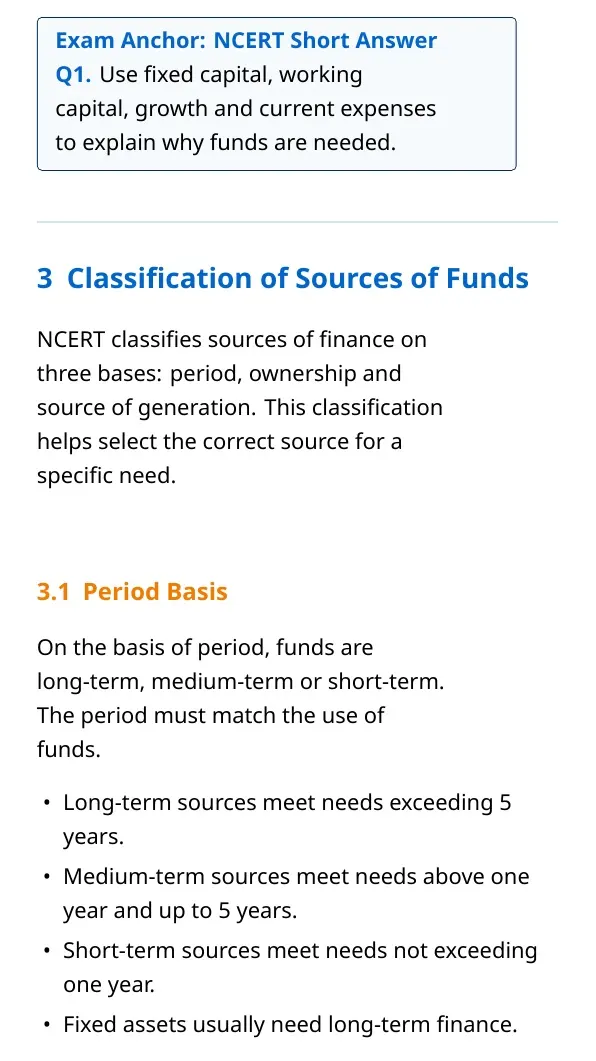
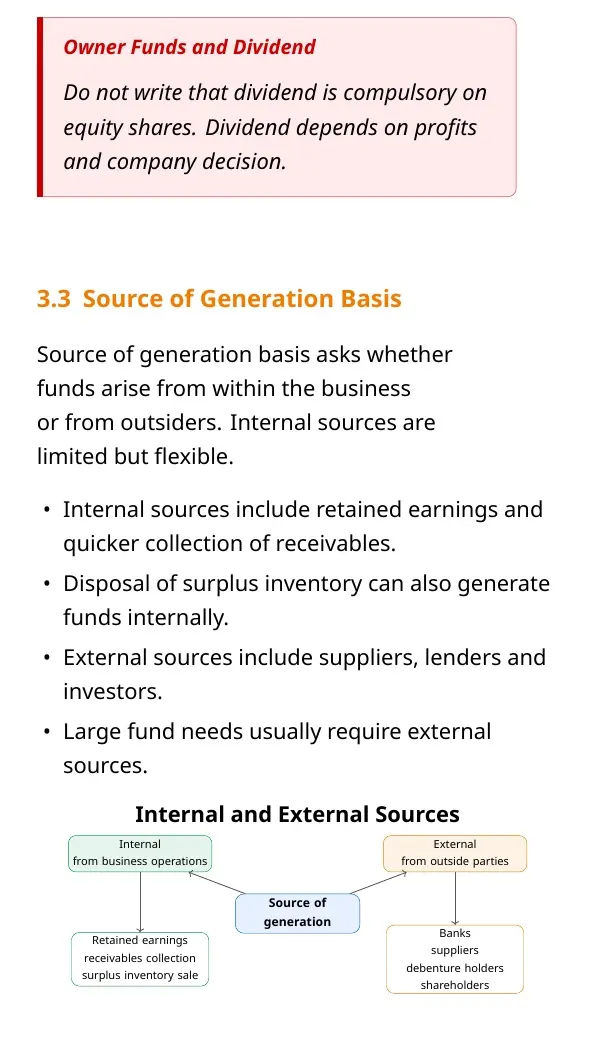
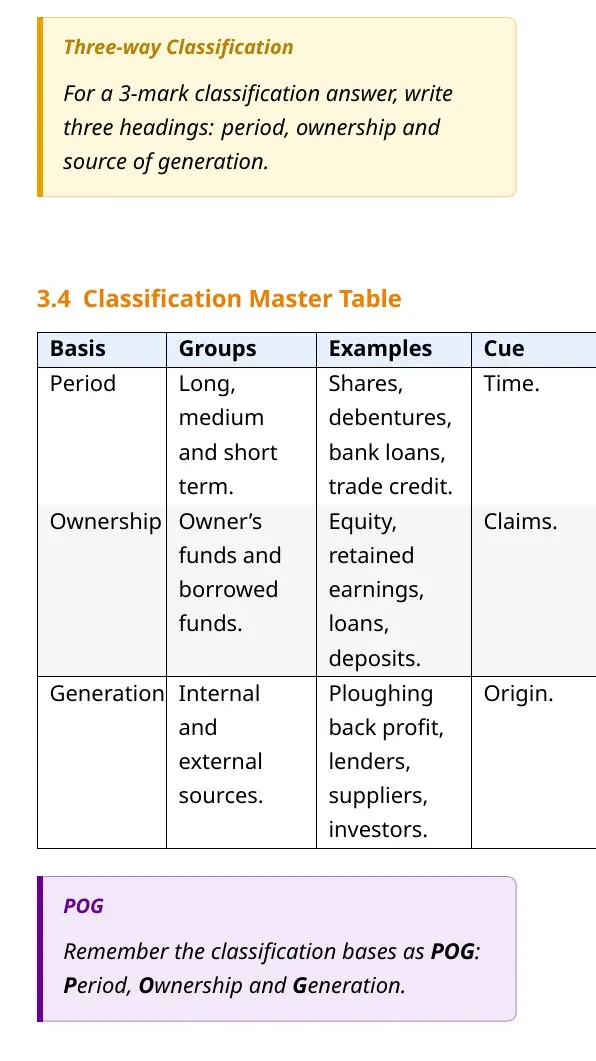
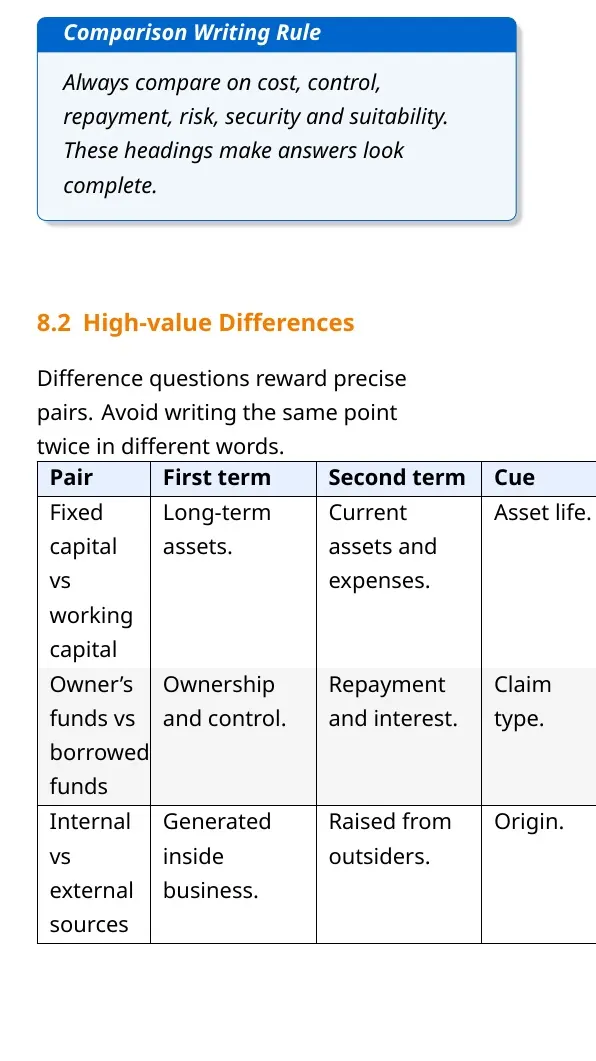
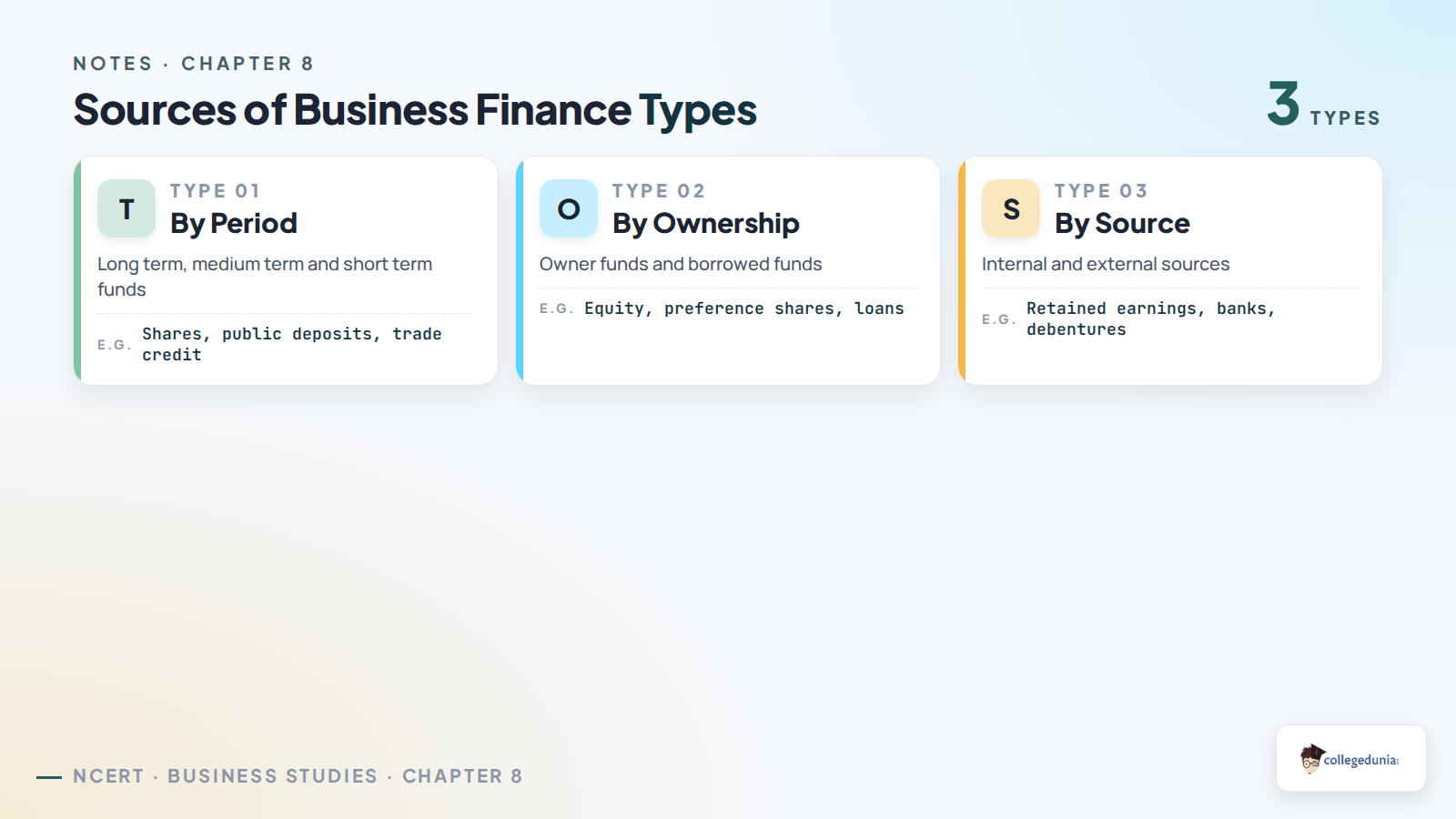
NCERT classifies sources of funds on three bases. By period, funds may be long-term, medium-term or short-term. By ownership, they may be owner funds or borrowed funds. By generation, they may be internal or external.
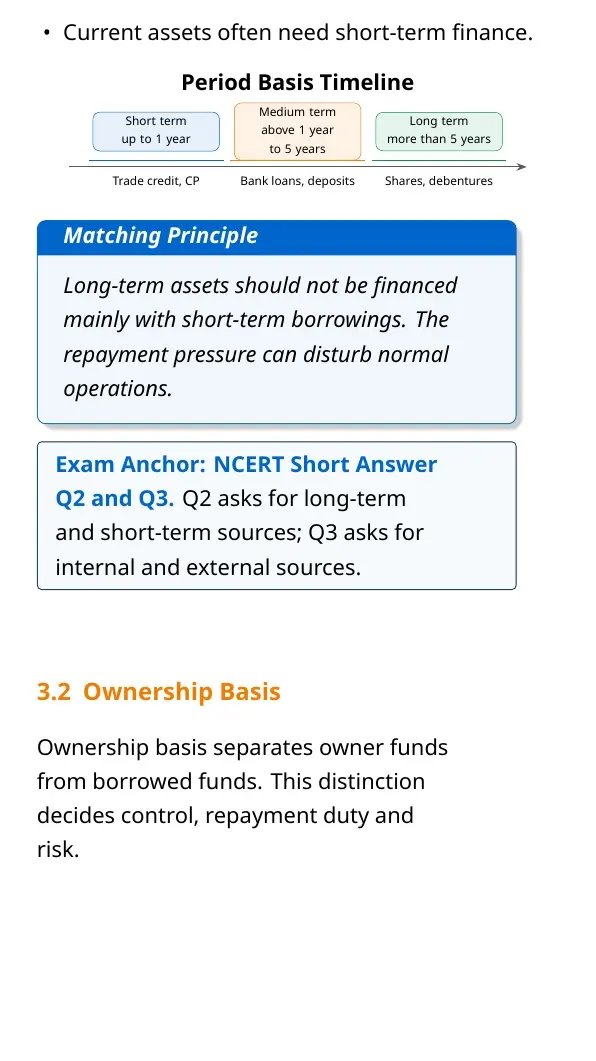
- Long-term: equity shares, preference shares, debentures and financial institutions.
- Medium-term: public deposits, lease financing and bank loans.
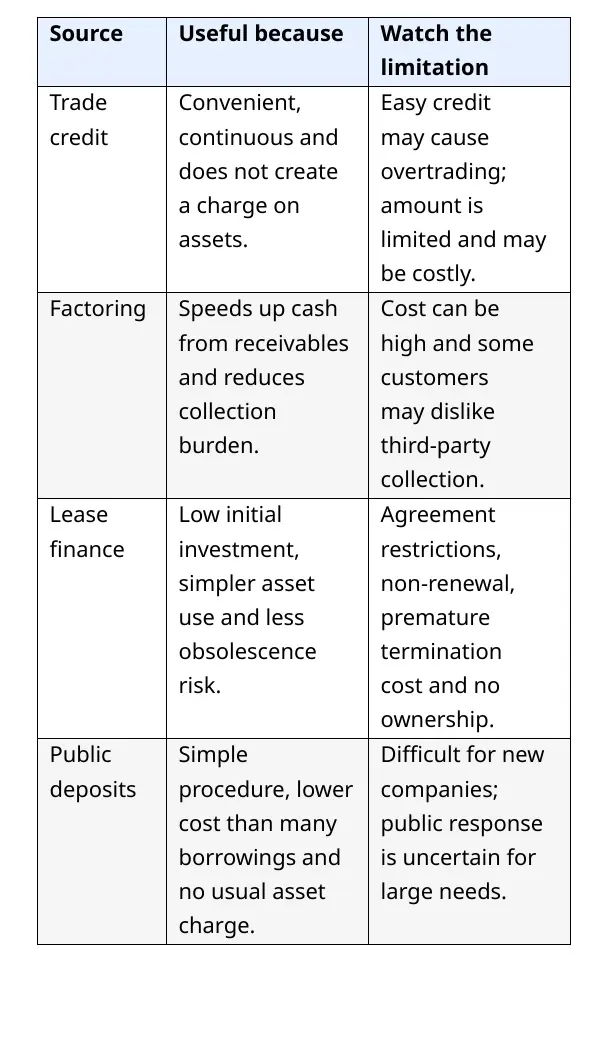
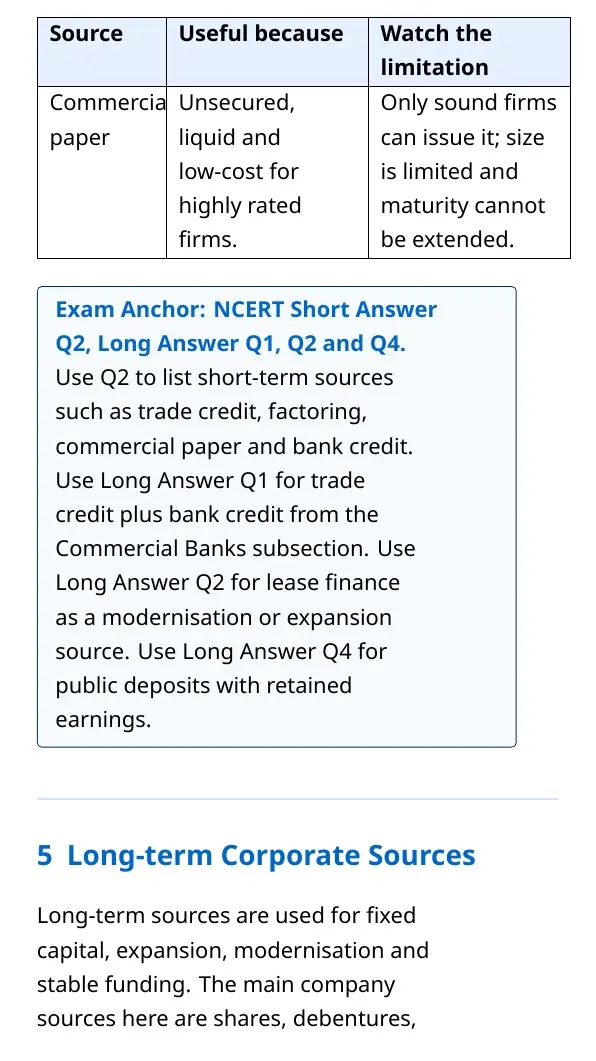
- Short-term: trade credit, factoring, commercial paper and bank credit.
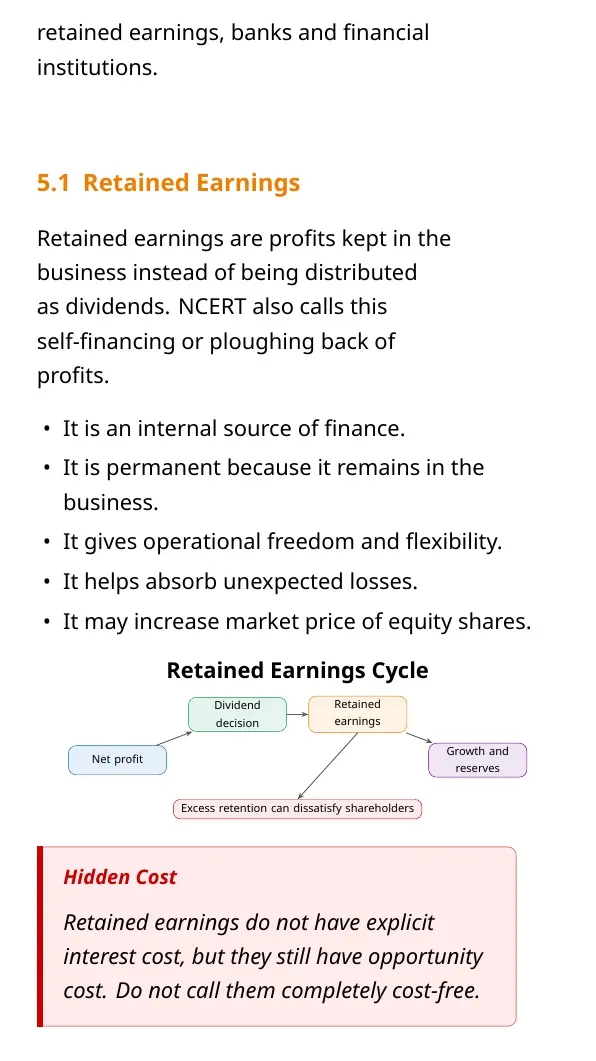
- Internal: retained earnings and better use of existing funds.
Retained Earnings and Trade Credit in Business Finance
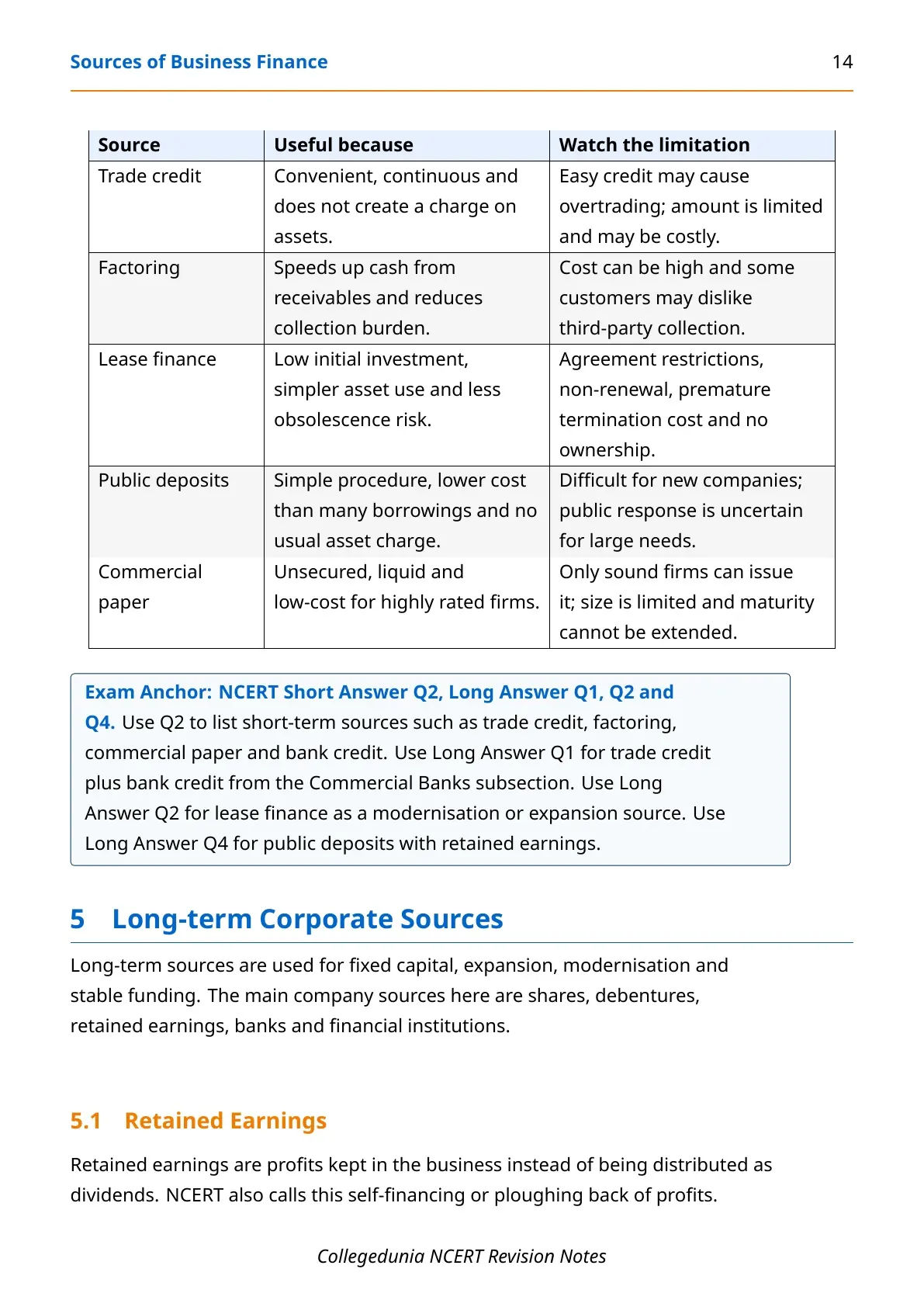
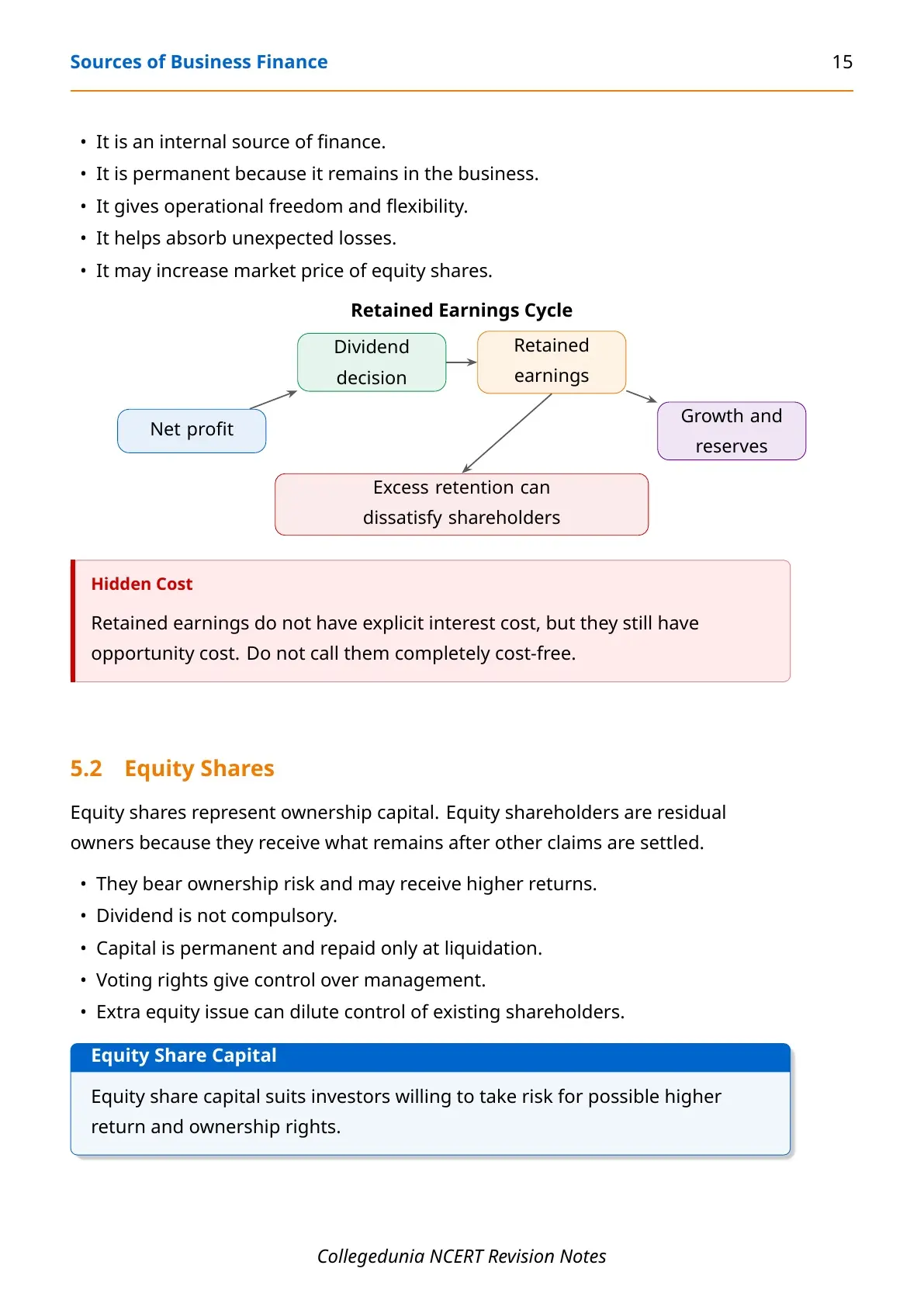
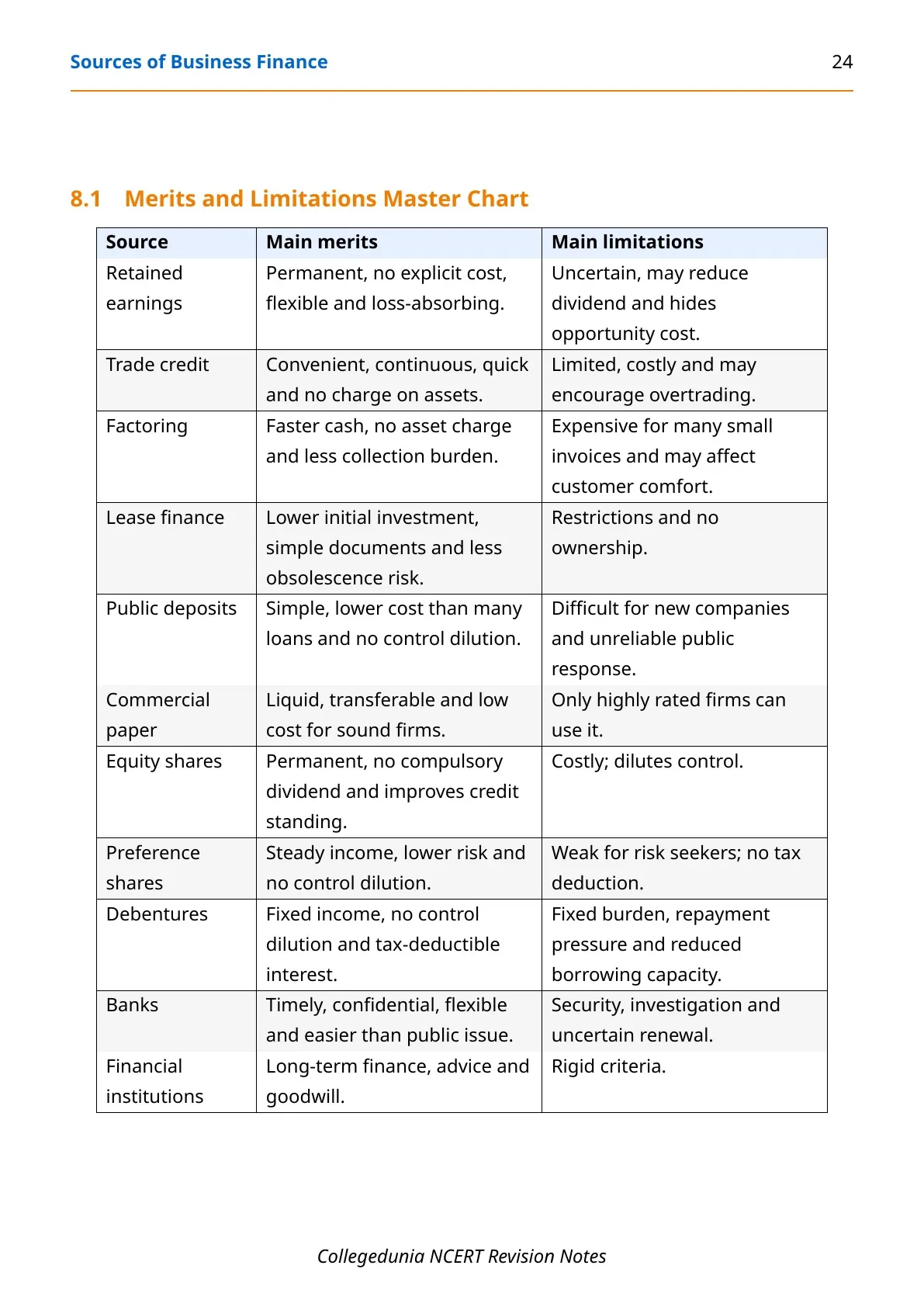
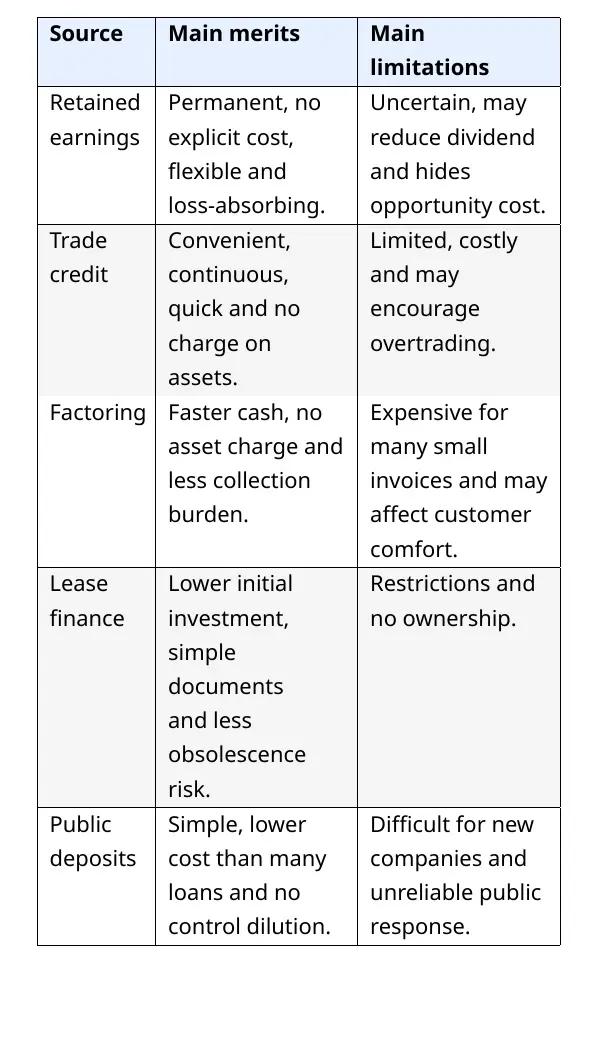
Retained earnings are profits kept inside the business instead of being distributed to owners. They cost no floatation charge and do not dilute control. But they depend on profit level and may not be enough for a large project.
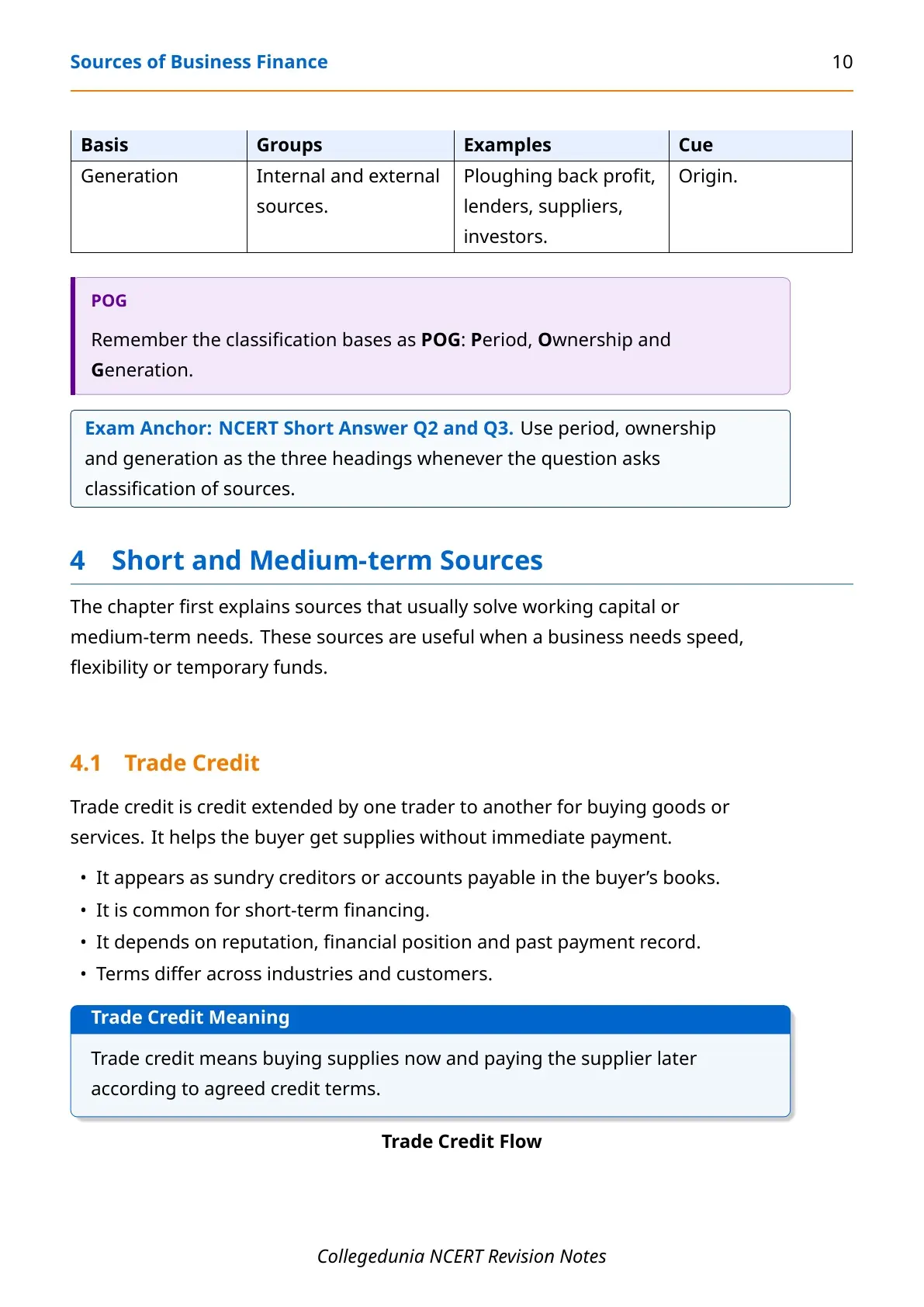
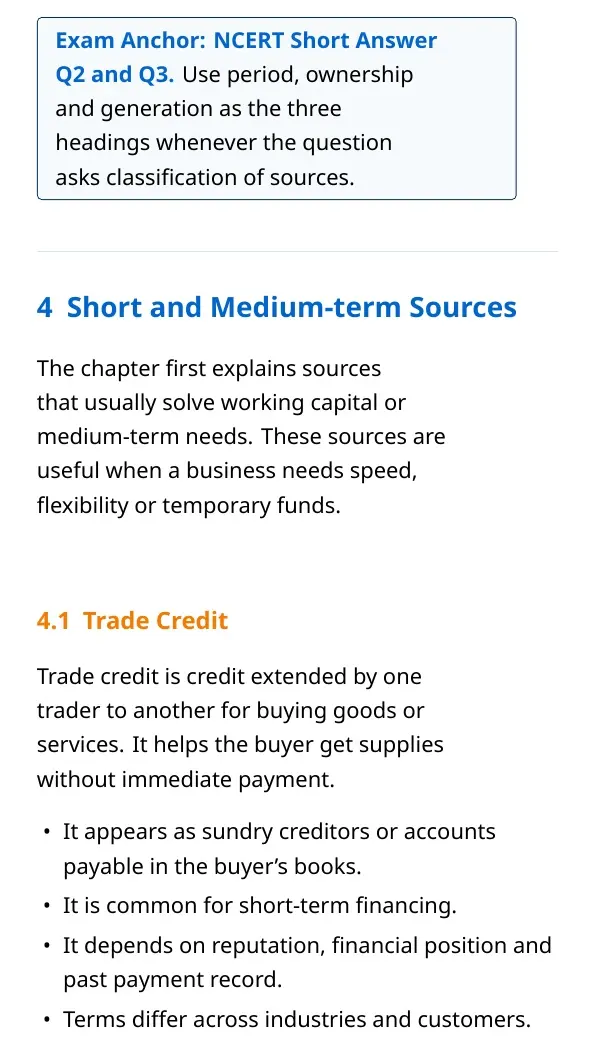
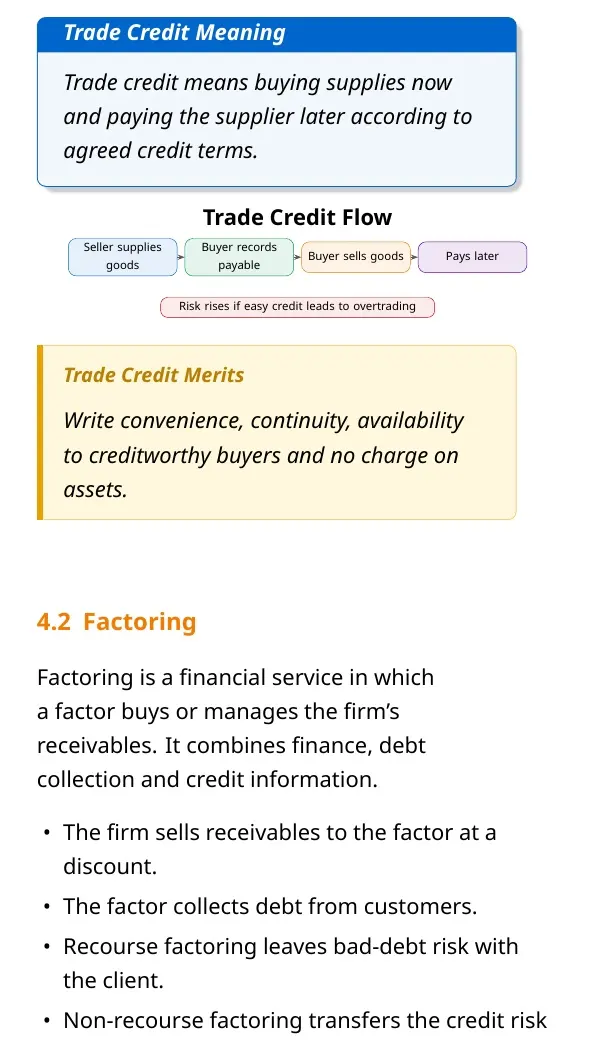
Trade credit is credit given by suppliers for buying goods now and paying later. It is simple and flexible, but overuse can hurt goodwill. Use trade credit for short-term working capital, not permanent fixed assets.
Equity Shares and Preference Shares in Sources of Business Finance
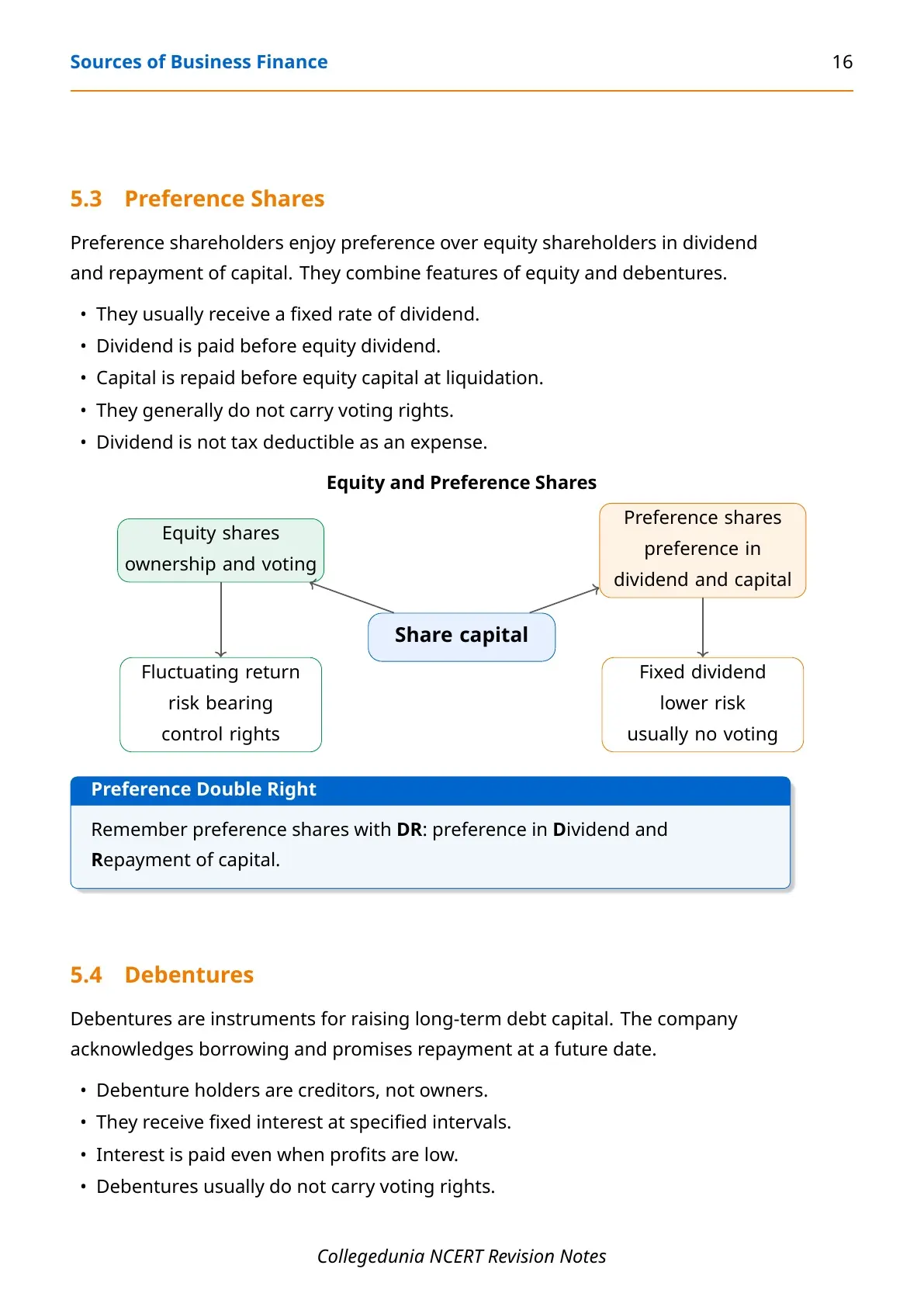
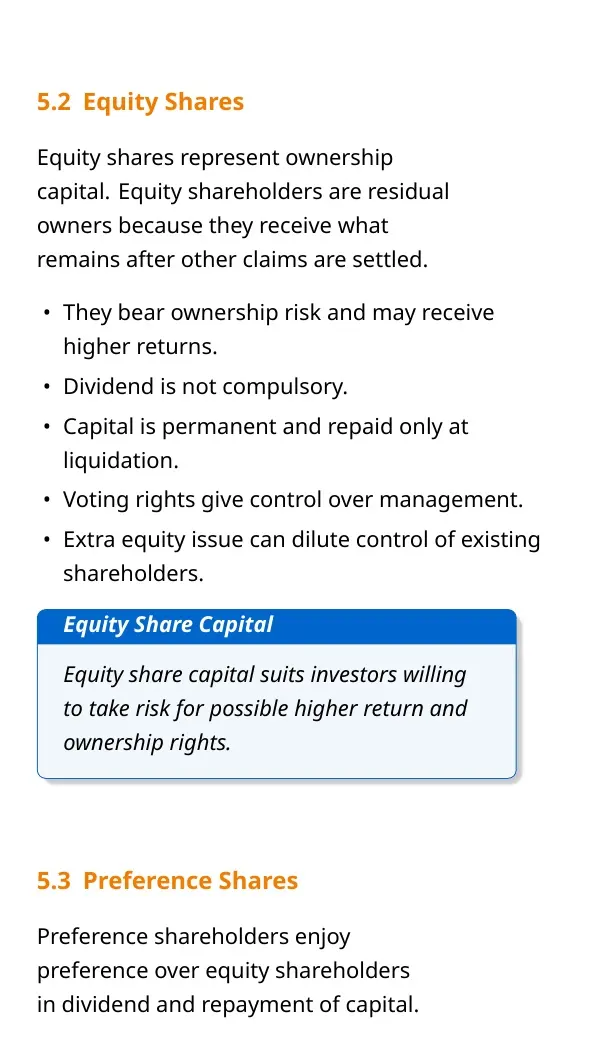
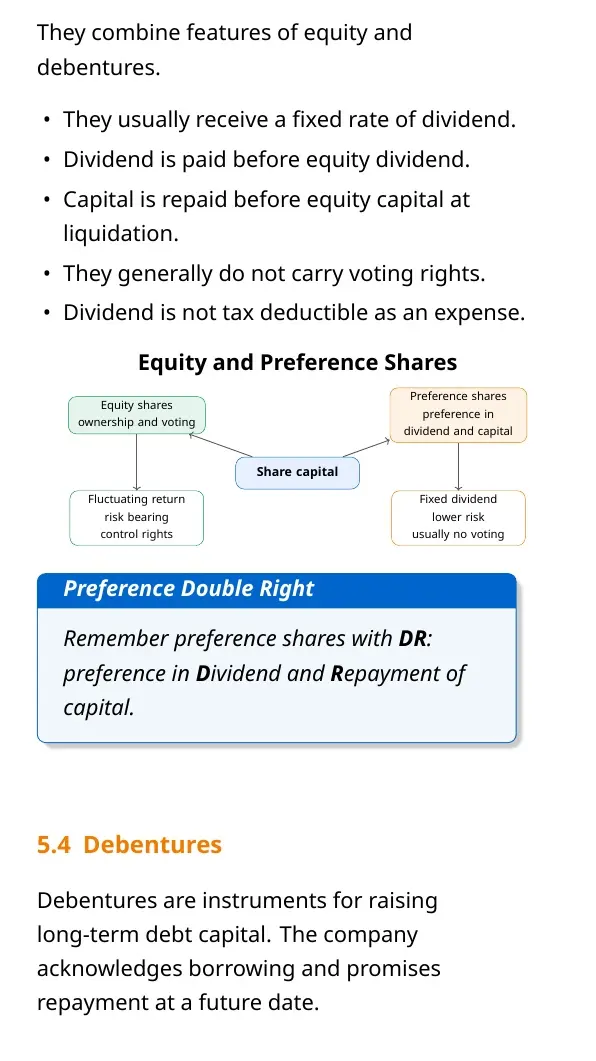
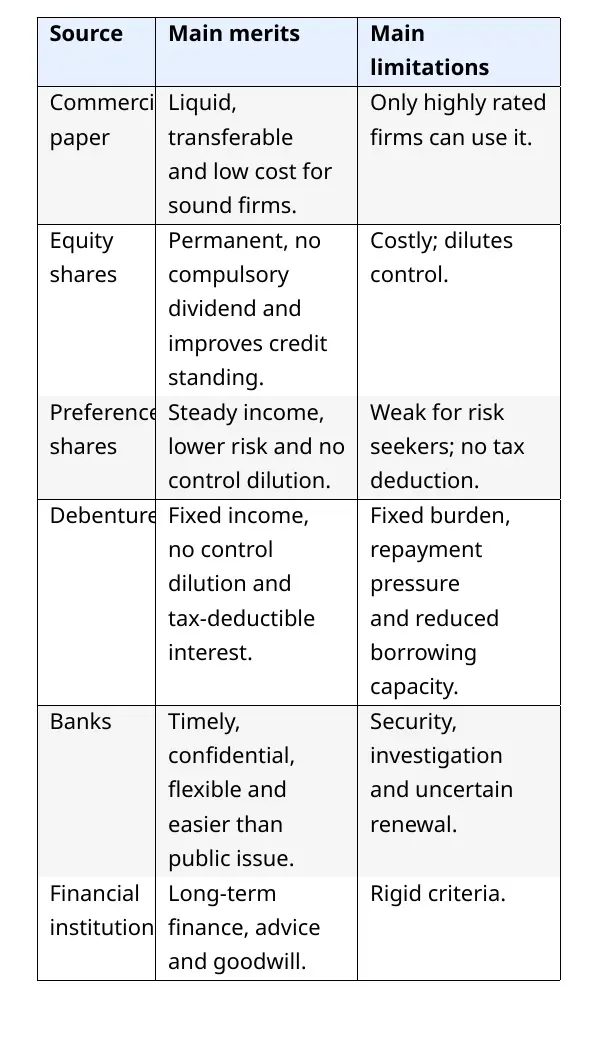
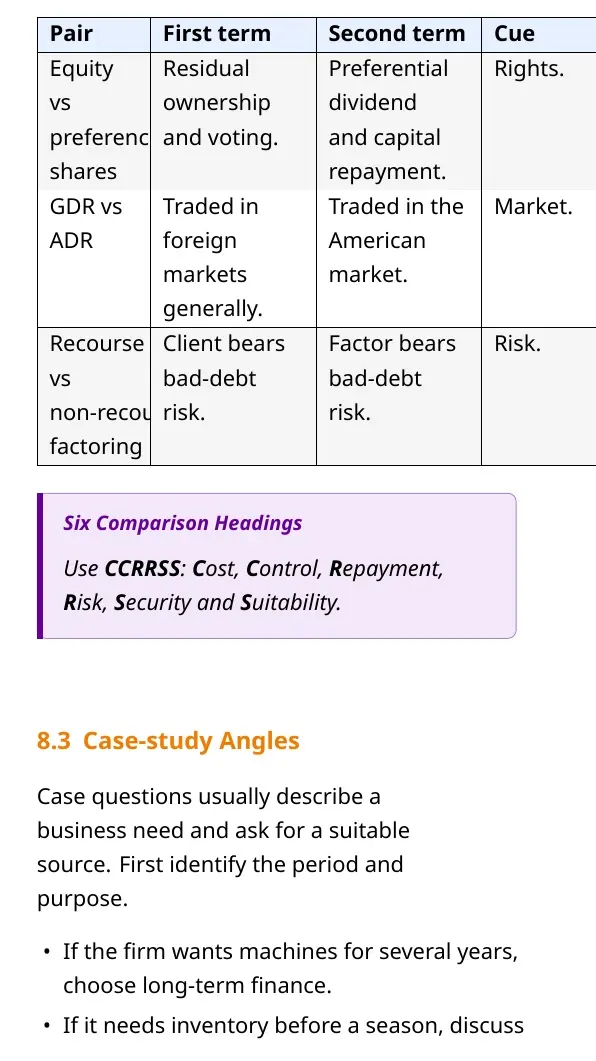
Equity shares represent ownership. Equity shareholders carry the highest risk, but they get voting rights and residual profit. Preference shareholders get a fixed dividend before equity shareholders and may receive capital earlier at winding up.
| Source | Control impact | Exam cue |
|---|---|---|
| Equity shares | Dilutes ownership because new shareholders get voting rights | Permanent capital, risk capital |
| Preference shares | Usually limited voting rights | Fixed dividend before equity dividend |
| Retained earnings | No control dilution | Internal financing from profit |
Debentures, Public Deposits and Bank Loans in Business Finance
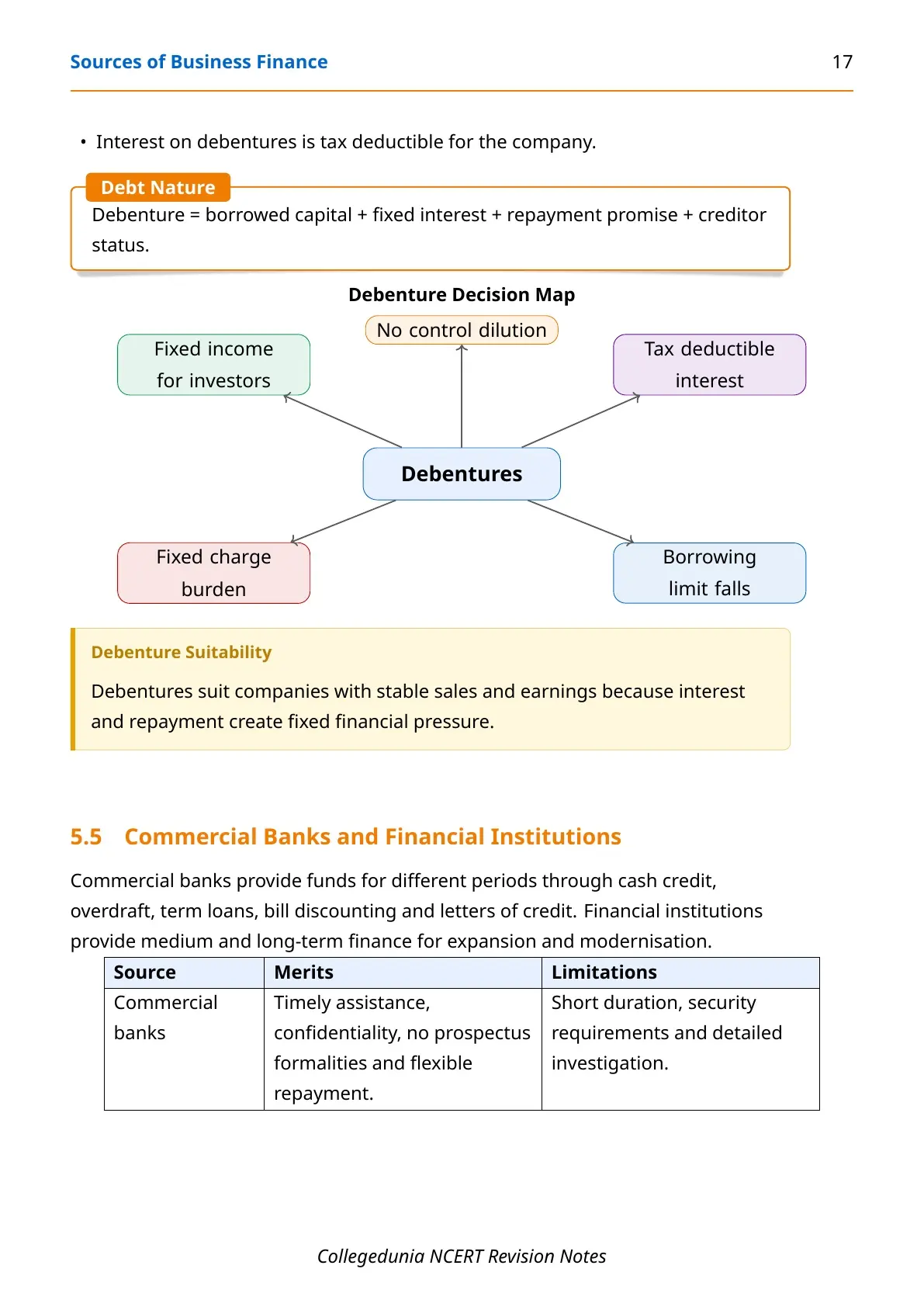
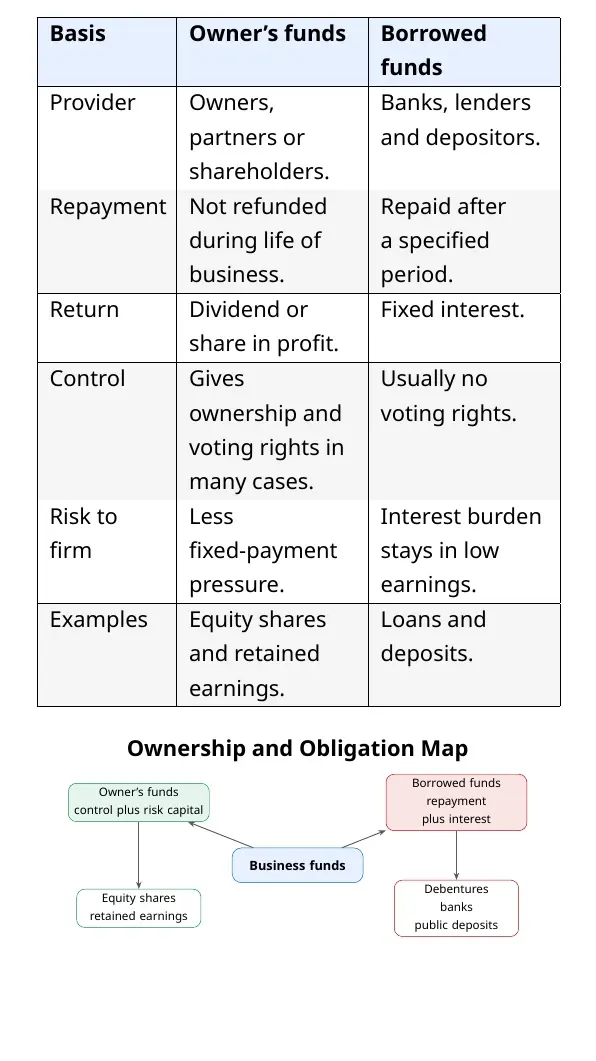
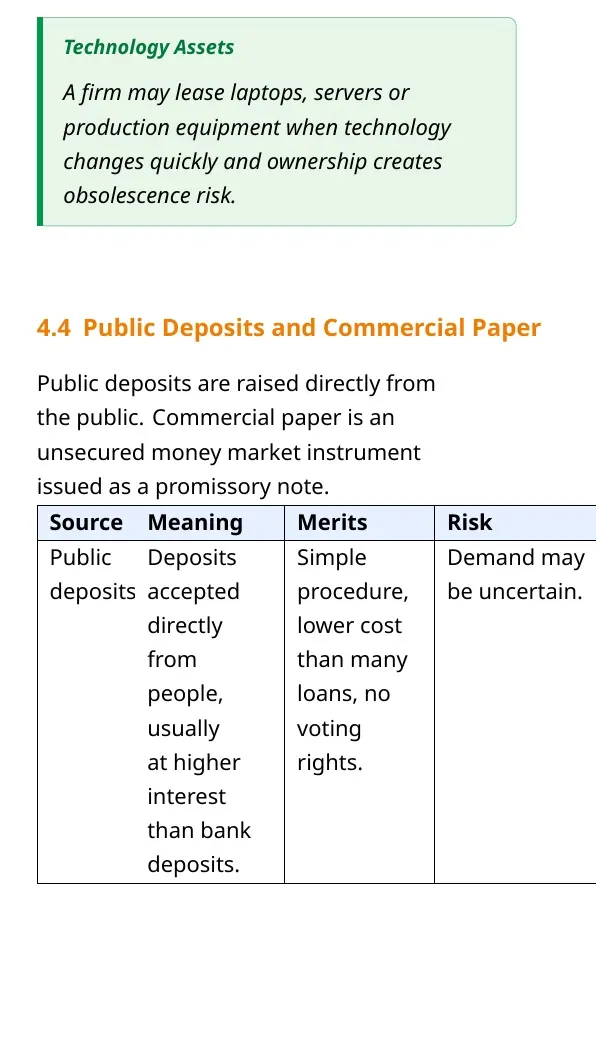
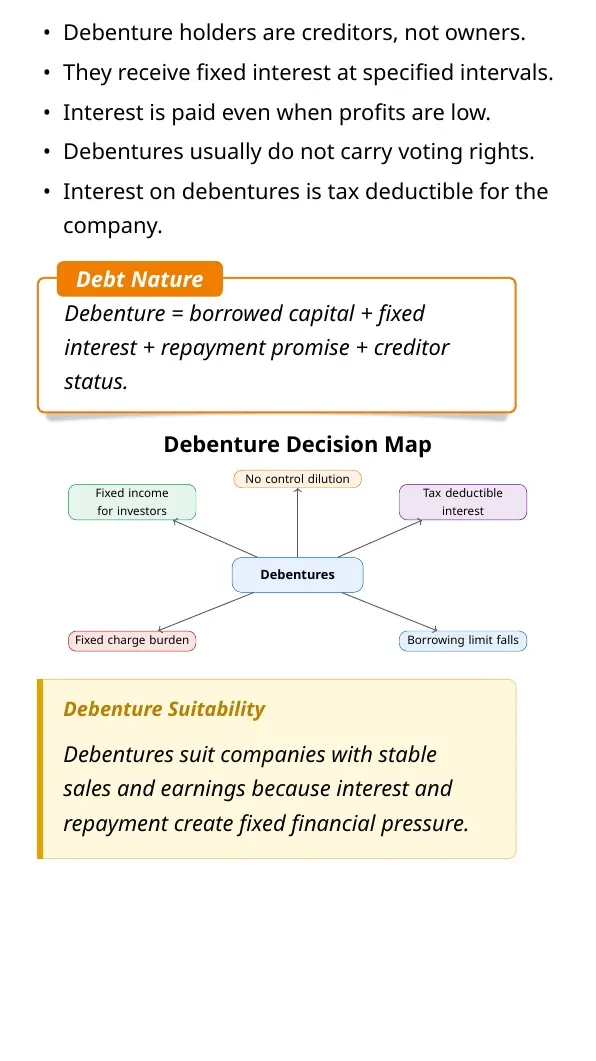
Borrowed funds create a repayment duty. Debentures carry fixed interest. Public deposits are funds raised from the public for a fixed period. Bank loans and overdrafts meet medium-term and short-term needs.
- Debentures: interest is paid even when profit is low.
- Public deposits: less formal than share issue but governed by deposit rules.
- Bank credit: useful for seasonal working capital needs.
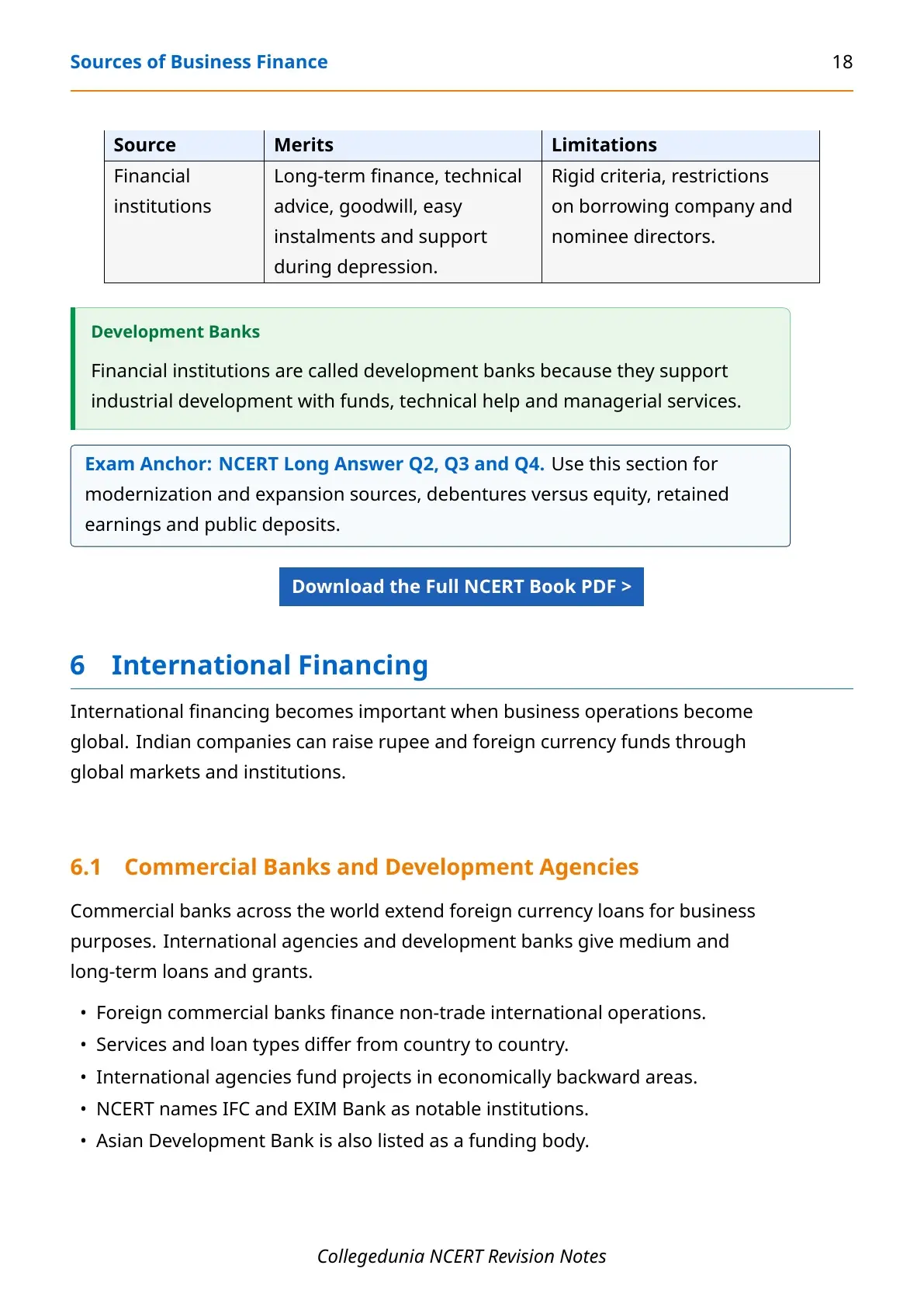
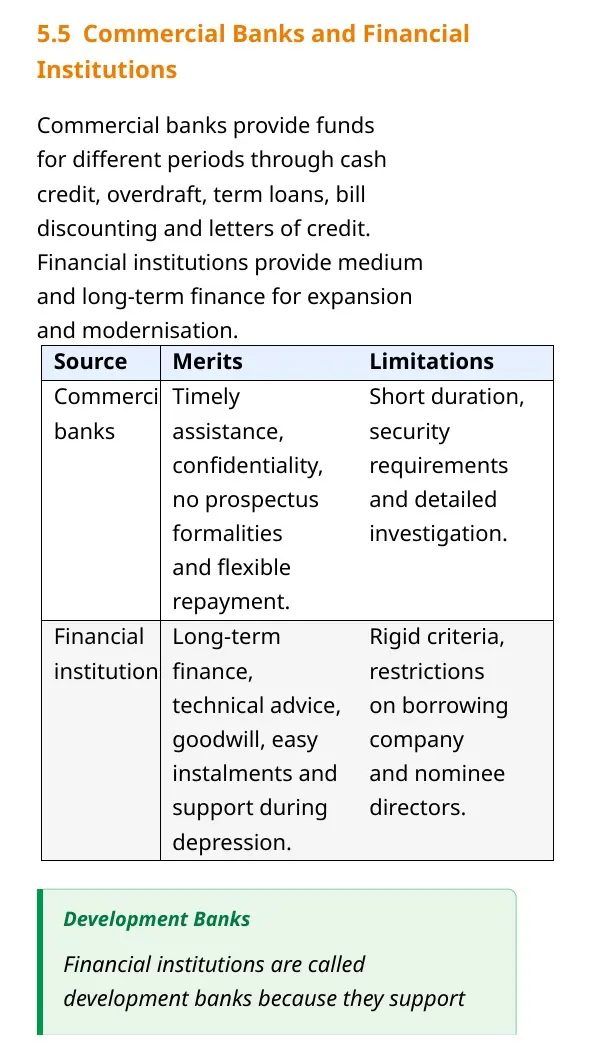
- Financial institutions: support long-term projects and expansion plans.
Factoring, Commercial Paper and Lease Finance in Class 11 Business Studies
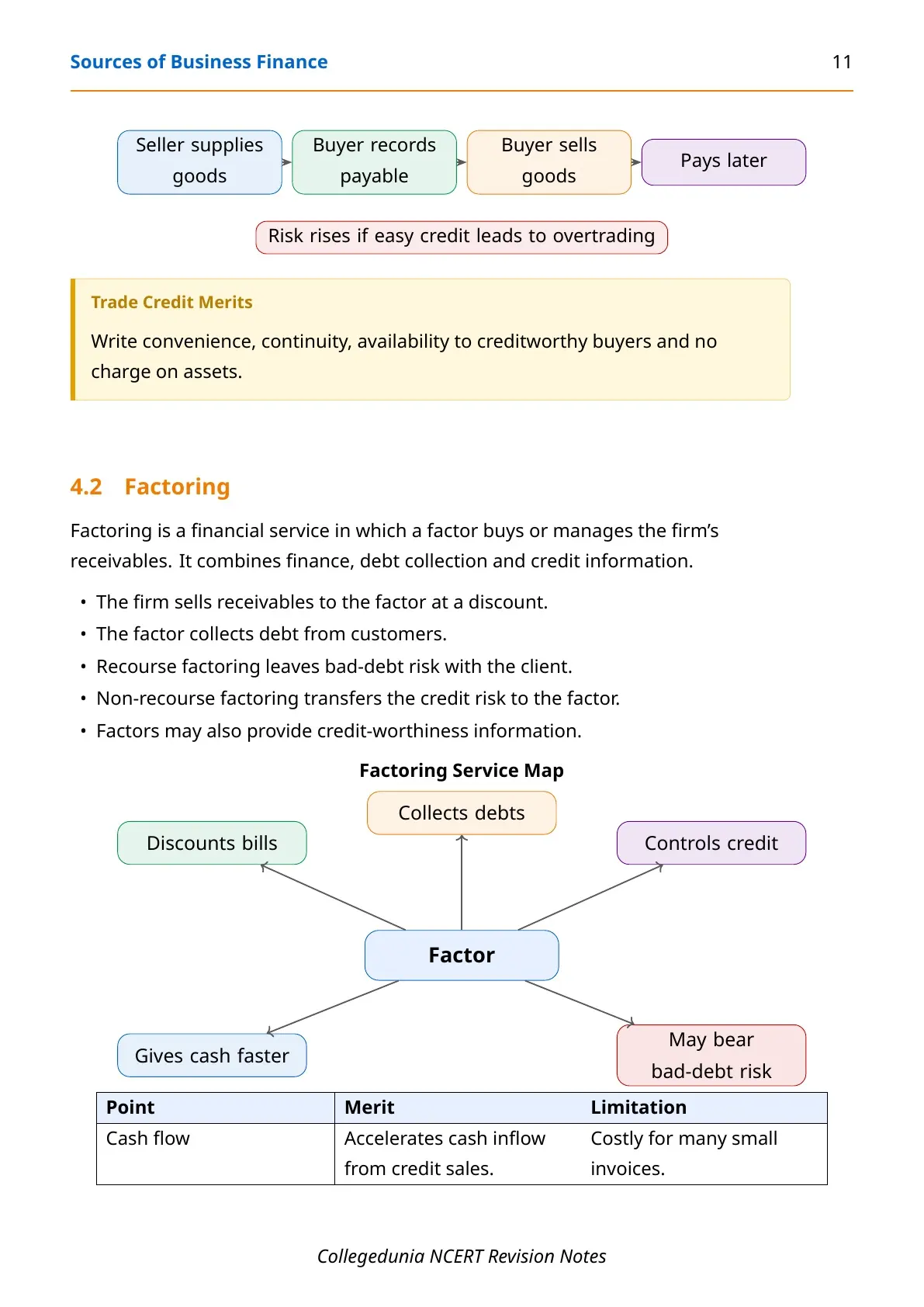
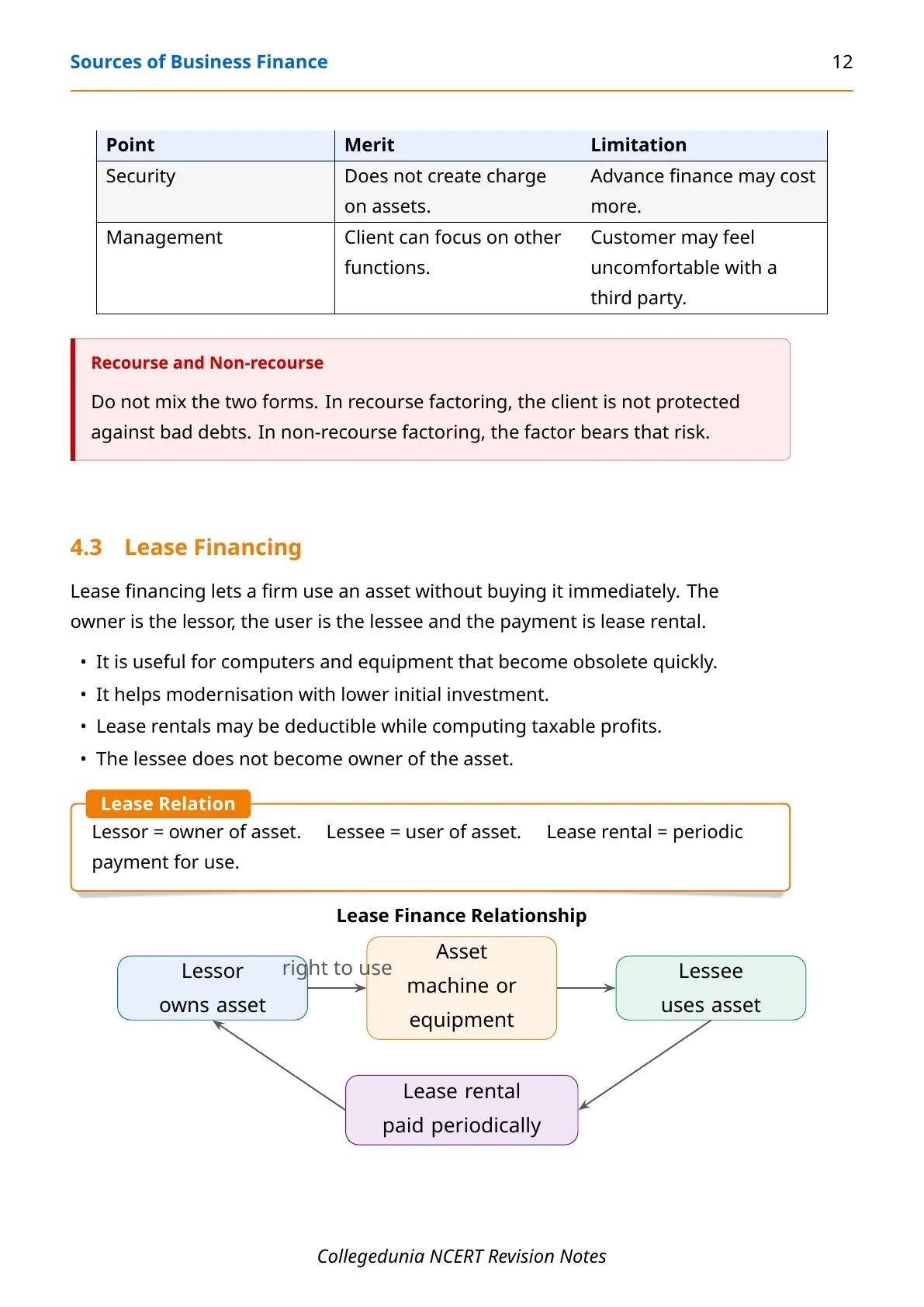
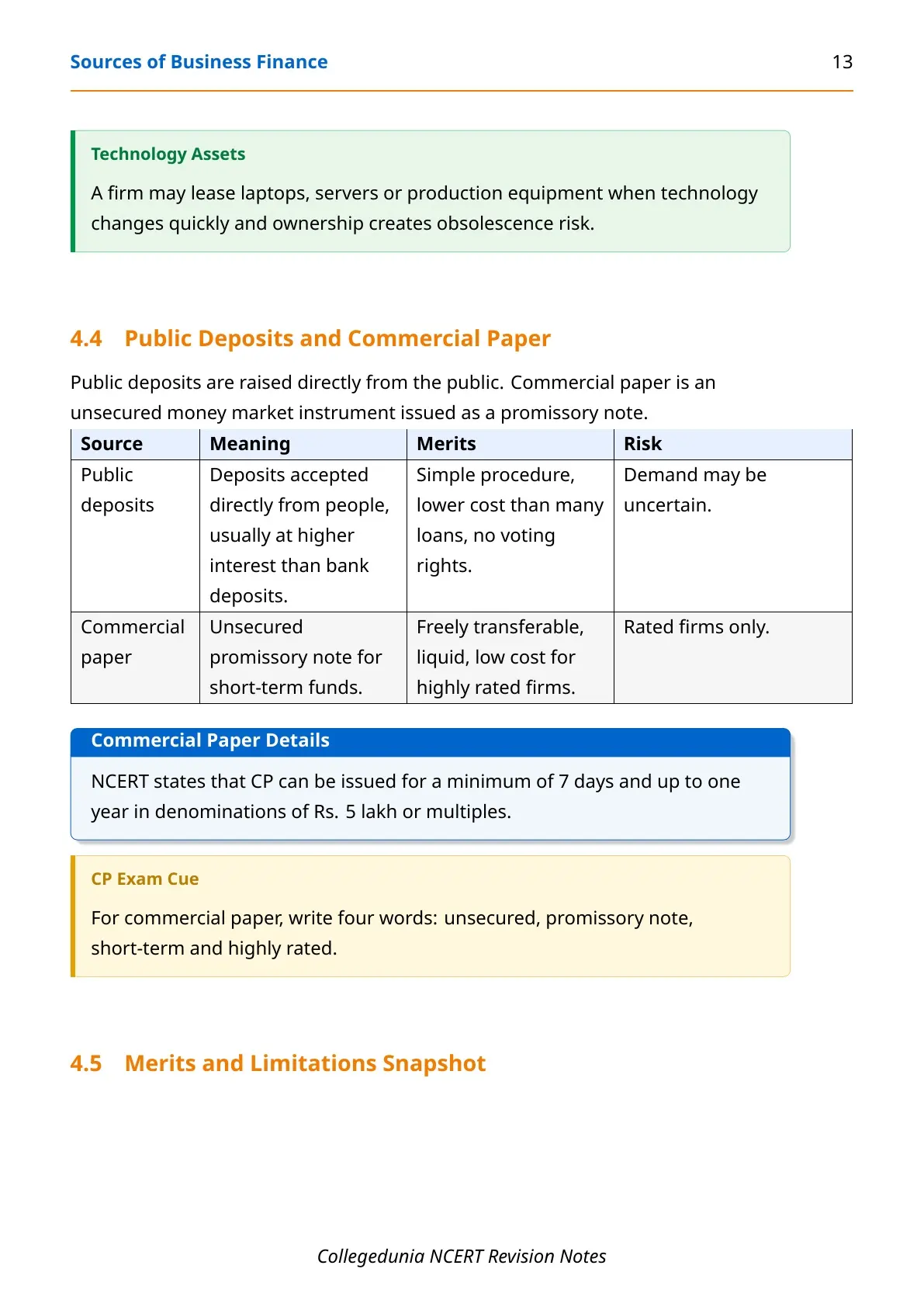
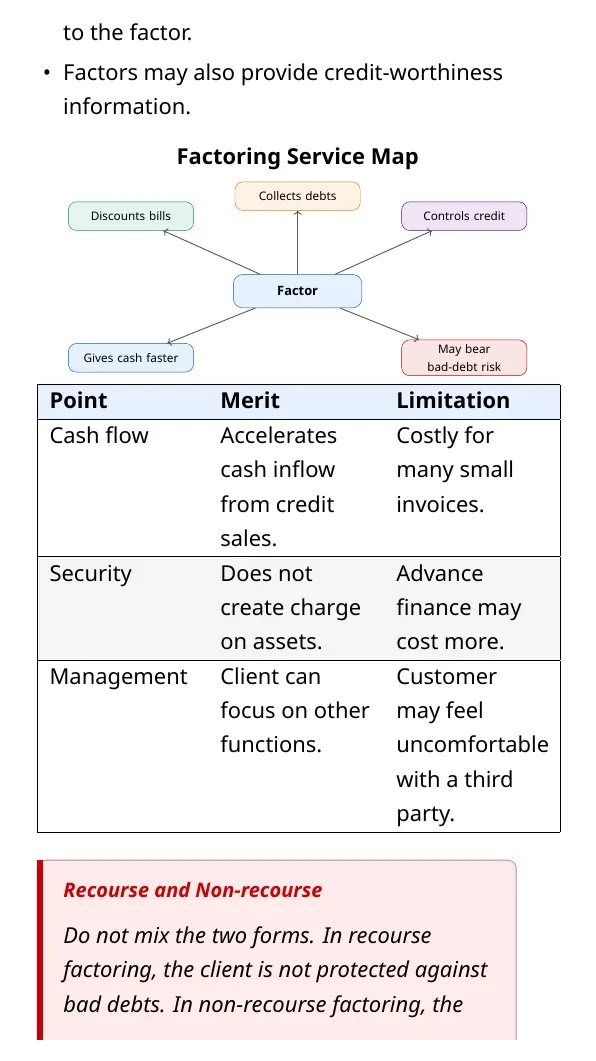
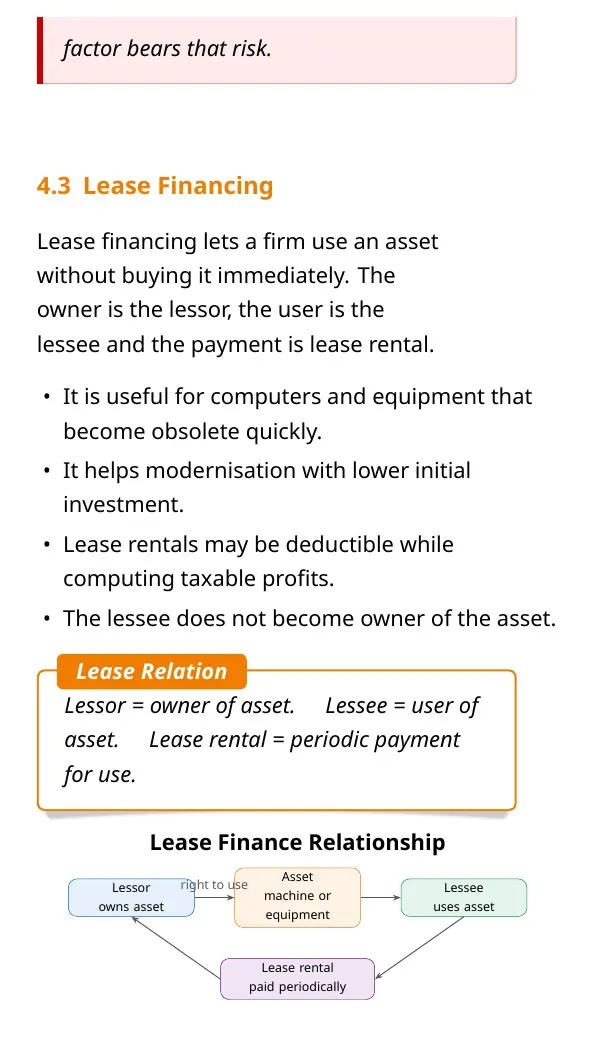
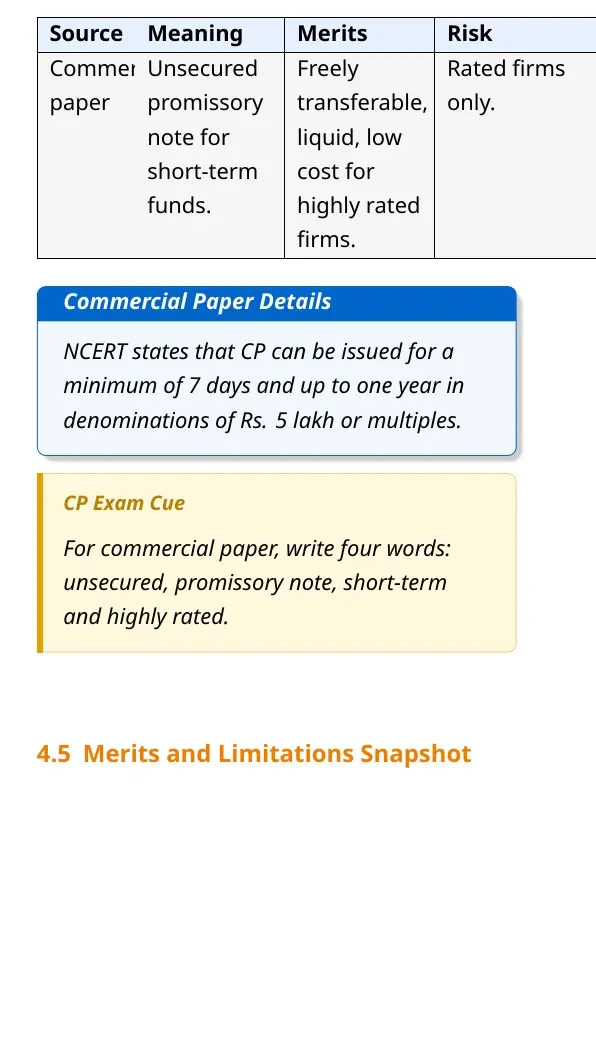
Factoring means selling receivables to a factor, who collects payment from debtors. Commercial paper is an unsecured short-term instrument. Lease finance lets a business use an asset without buying it at once.
Quick recall: factoring handles receivables, commercial paper handles short-term funds and lease finance handles asset use.
Choosing a Source of Business Finance for Class 11 Answers
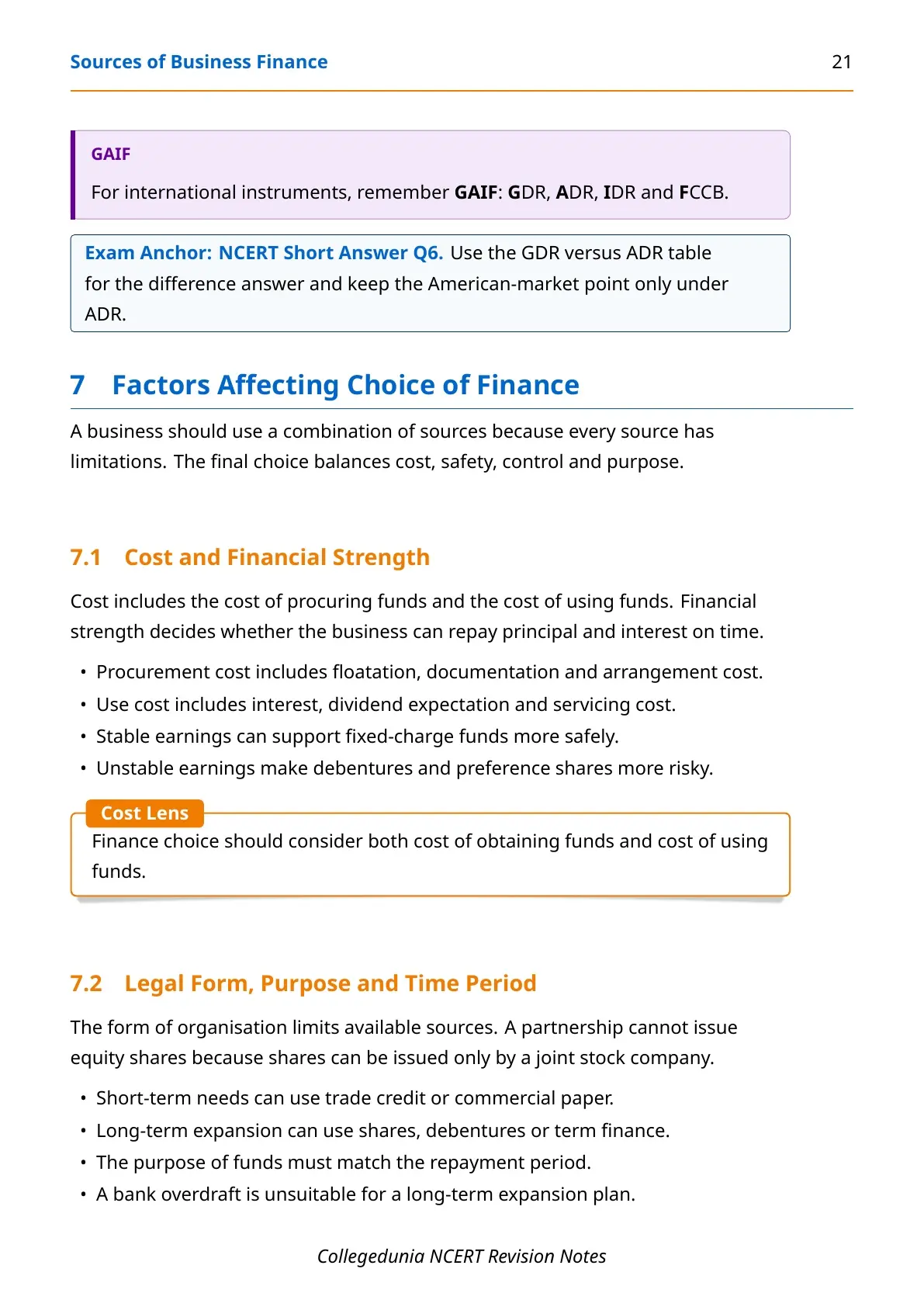
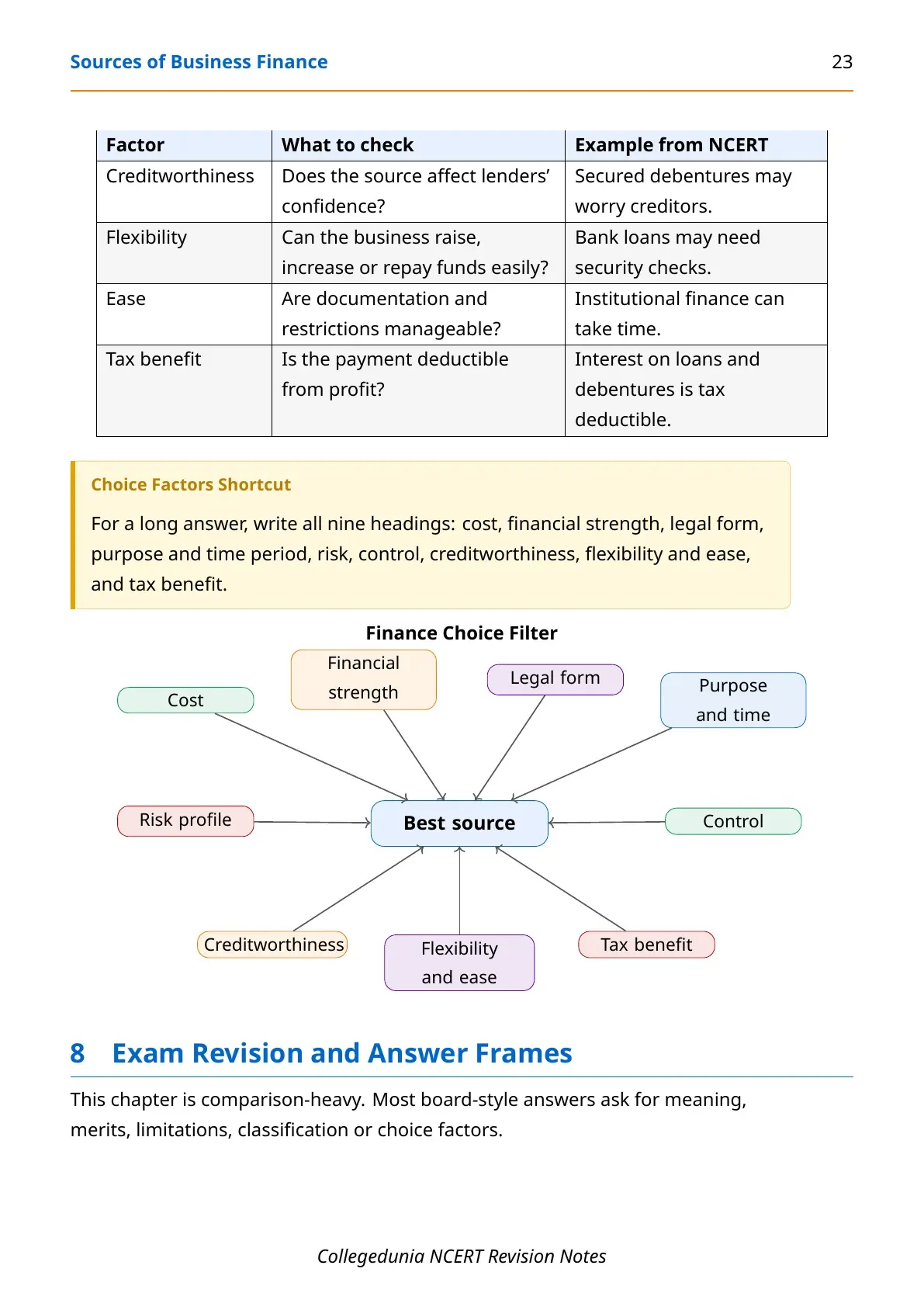
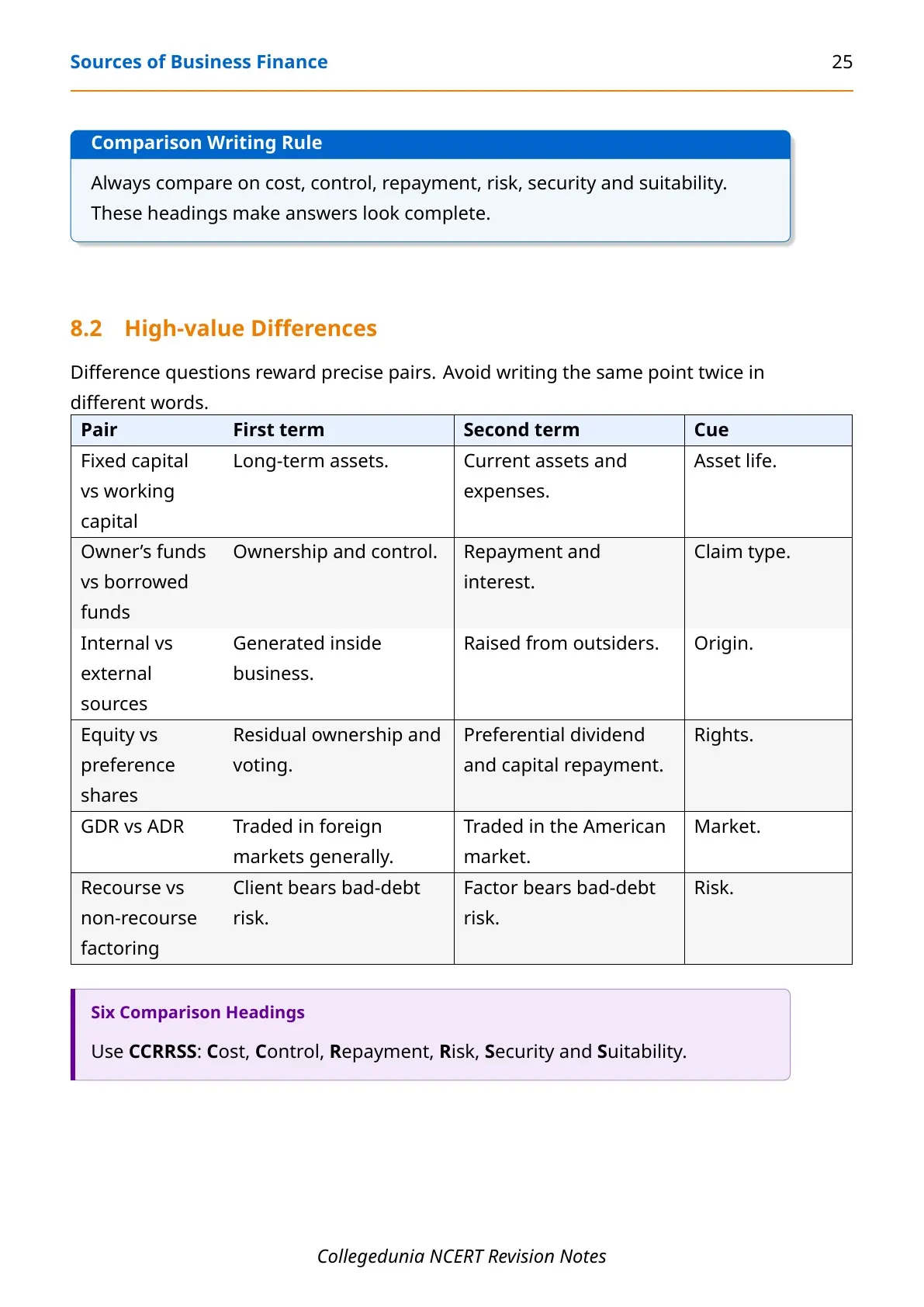
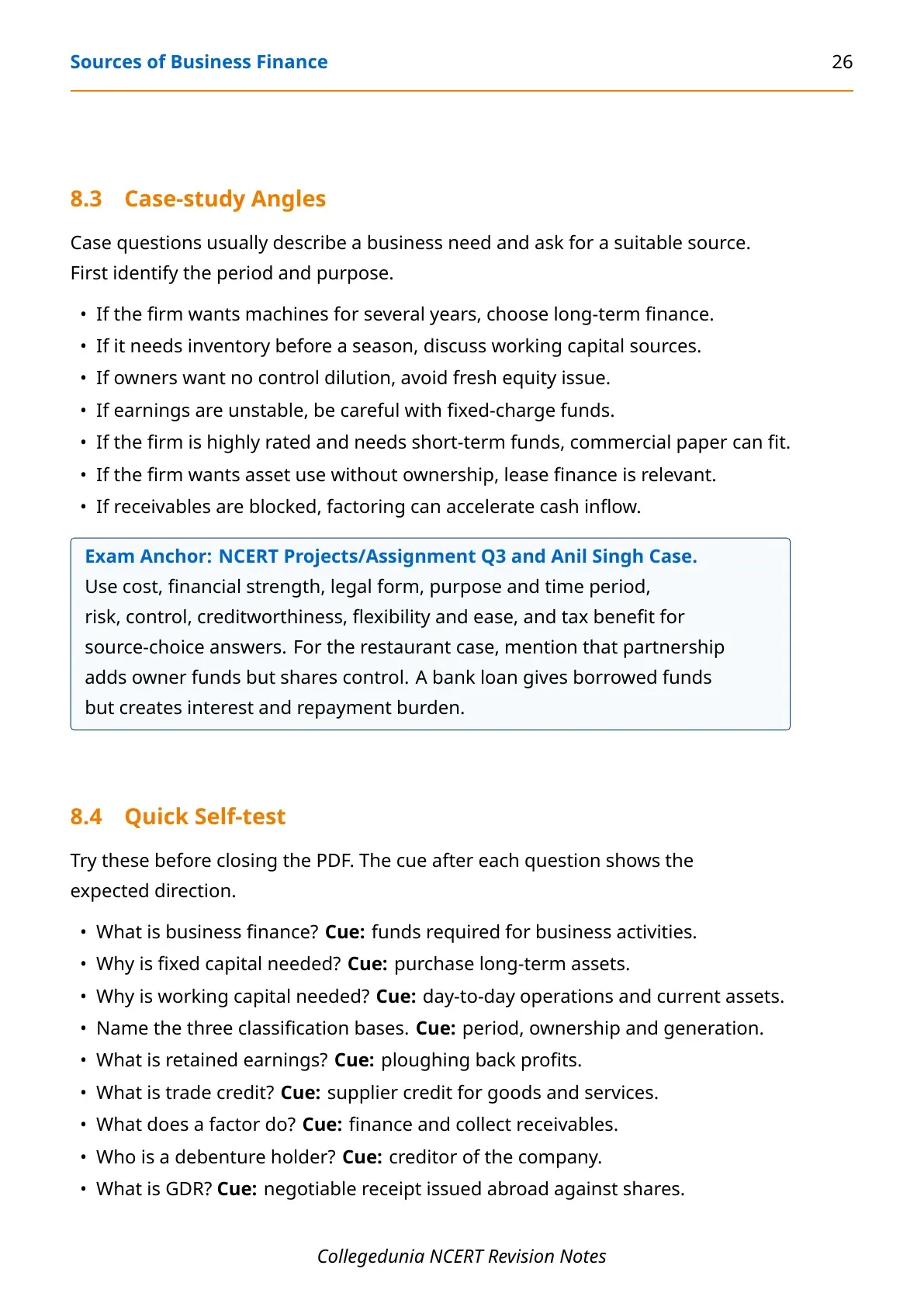
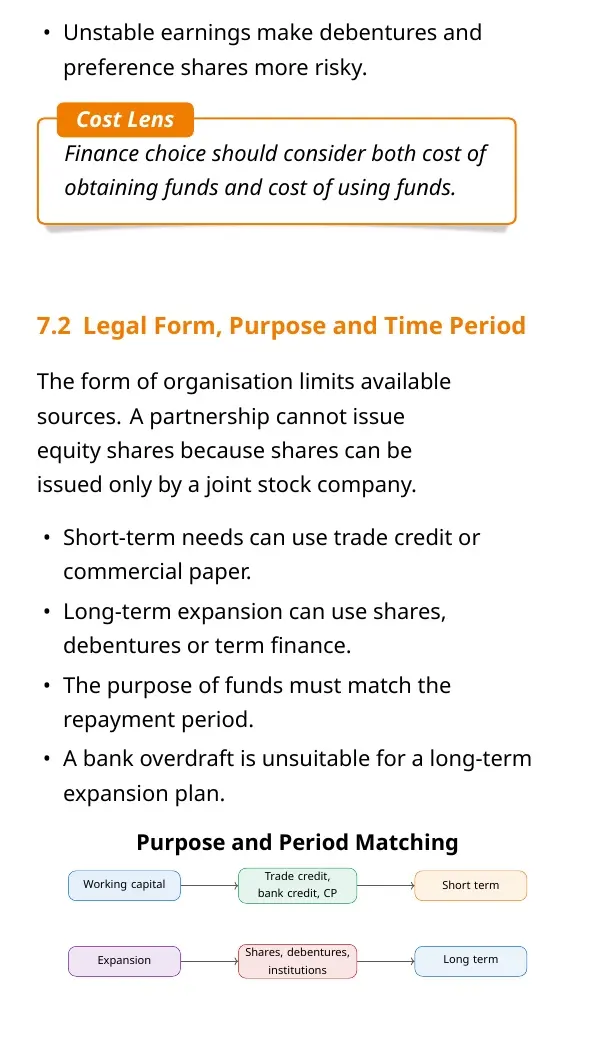
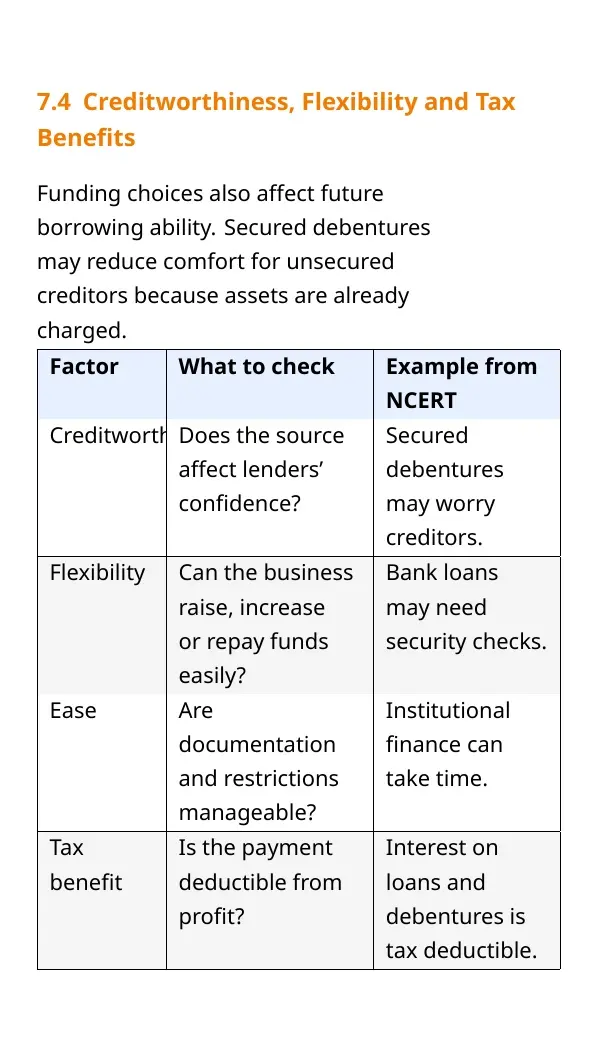
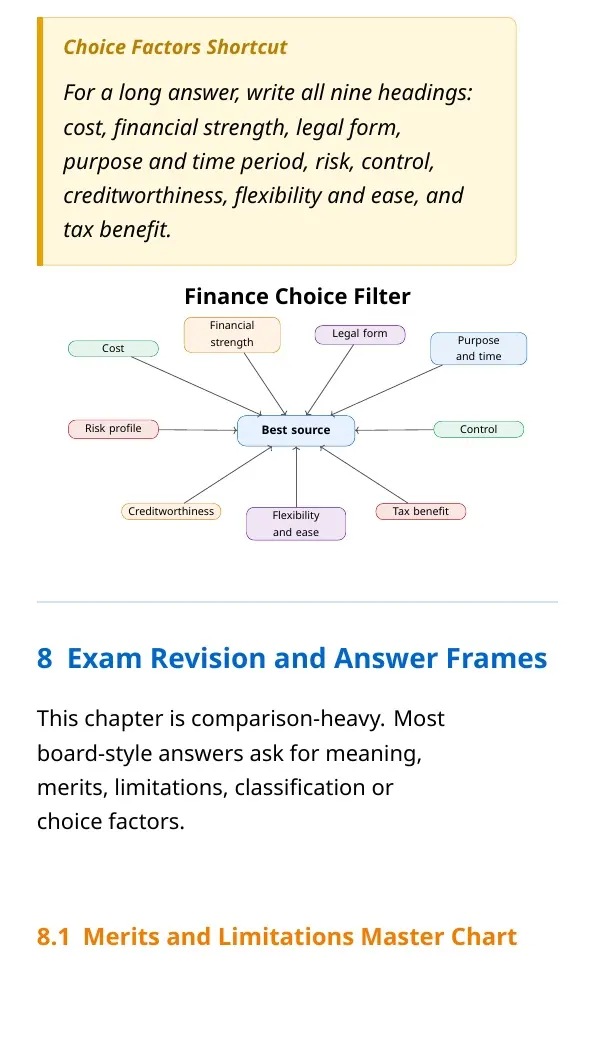
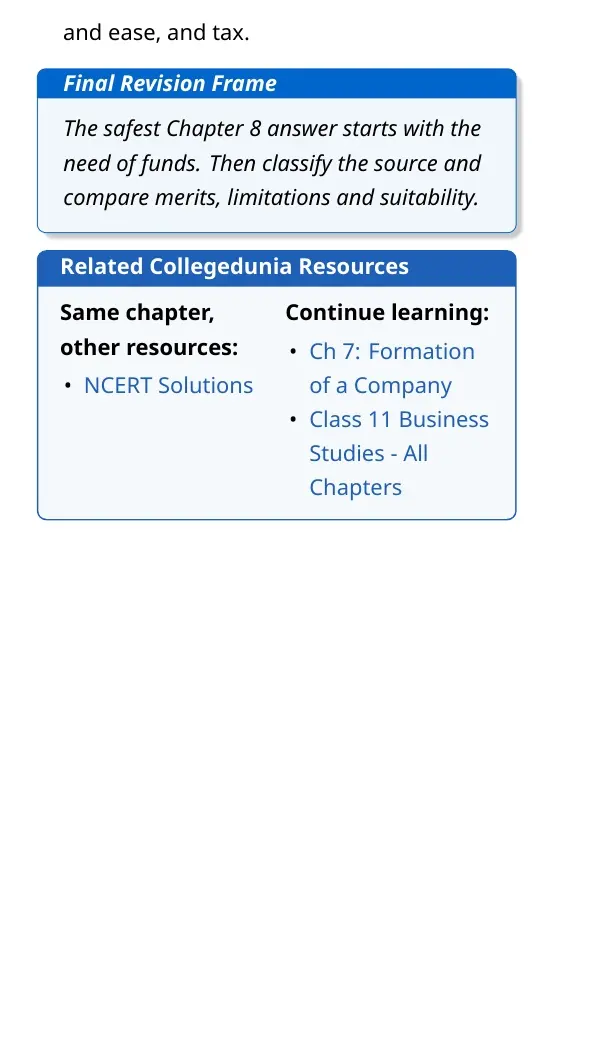
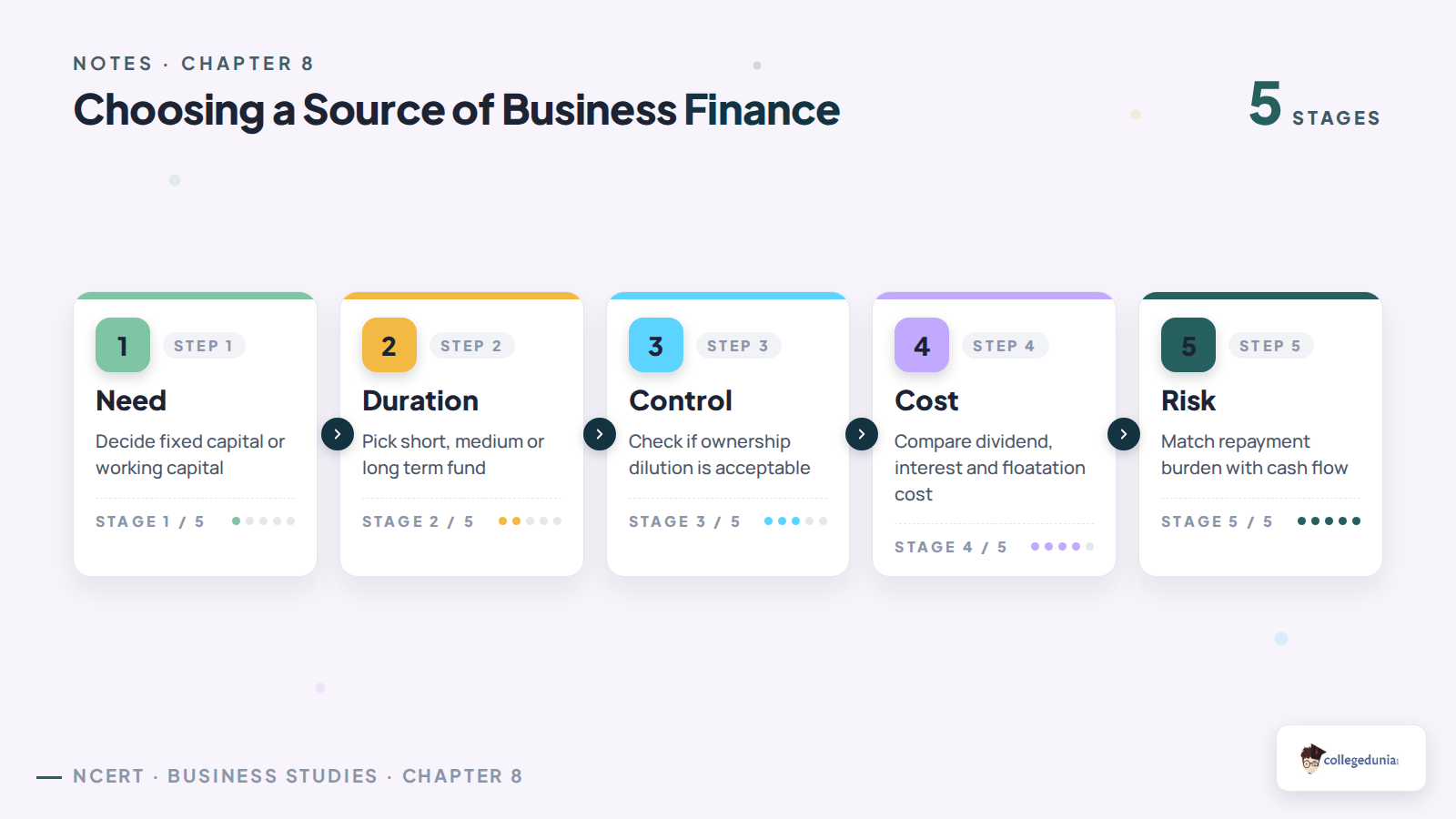
NCERT asks students to compare sources, not memorise names alone. First identify the need. Then check cost, risk, control, flexibility and repayment capacity. A costly source may still fit the time period.
| Factor | Question to ask | Why it matters |
|---|---|---|
| Cost | Will interest, dividend or issue cost be high? | High cost reduces profit |
| Control | Will owners lose voting power? | Equity can dilute control |
| Risk | Can the firm repay on time? | Debt creates a fixed burden |
| Flexibility | Can the firm raise and repay as needed? | Useful for seasonal finance |
Common Mistakes Students Make in Sources of Business Finance
- Calling retained earnings an external source. It is an internal source.
- Writing that debenture holders are owners. They are lenders to the company.
- Using equity shares for every finance need, even when the need is short-term.
- Confusing factoring with leasing. Factoring deals with receivables, while leasing deals with assets.
How to Revise Sources of Business Finance in 30 Minutes
Start with the classification table, then revise one example under each source. Spend the last ten minutes on the choice-of-source factors. This order helps you write both direct-definition answers and comparison answers.
- 10 minutes: fixed capital, working capital and source classification.
- 10 minutes: retained earnings, shares, debentures, deposits and loans.
- 10 minutes: factoring, lease finance, commercial paper and source selection.
Related Resources for Sources of Business Finance
| Resource | Use it for | Link |
|---|---|---|
| NCERT Solutions | Practice textbook answers for Chapter 8 | Open NCERT Solutions |
| Handwritten Notes | Revise source names and comparison points quickly | Open Handwritten Notes |
All Class 11 Business Studies Notes Chapters
| Chapter | Title | Notes Link |
|---|---|---|
| Chapter 1 | Business, Trade and Commerce | Open Notes |
| Chapter 2 | Forms of Business Organisation | Open Notes |
| Chapter 3 | Private, Public and Global Enterprises | Open Notes |
| Chapter 4 | Business Services | Open Notes |
| Chapter 5 | Emerging Modes of Business | Open Notes |
| Chapter 6 | Social Responsibilities of Business and Business Ethics | Open Notes |
| Chapter 7 | Formation of a Company | Open Notes |
| Chapter 8 | Sources of Business Finance | You are here |
Sources of Business Finance Class 11 Notes FAQs
Ques. What does Sources of Business Finance Class 11 Chapter 8 cover?
Ans. It covers fixed capital, working capital, retained earnings, trade credit, factoring, lease finance, shares, debentures, public deposits, bank loans and international finance.
Ques. What are the main sources of business finance?
Ans. The main sources are retained earnings, equity shares, preference shares, debentures, public deposits, trade credit, factoring, commercial banks, financial institutions and international sources.
Ques. What is the difference between owner funds and borrowed funds?
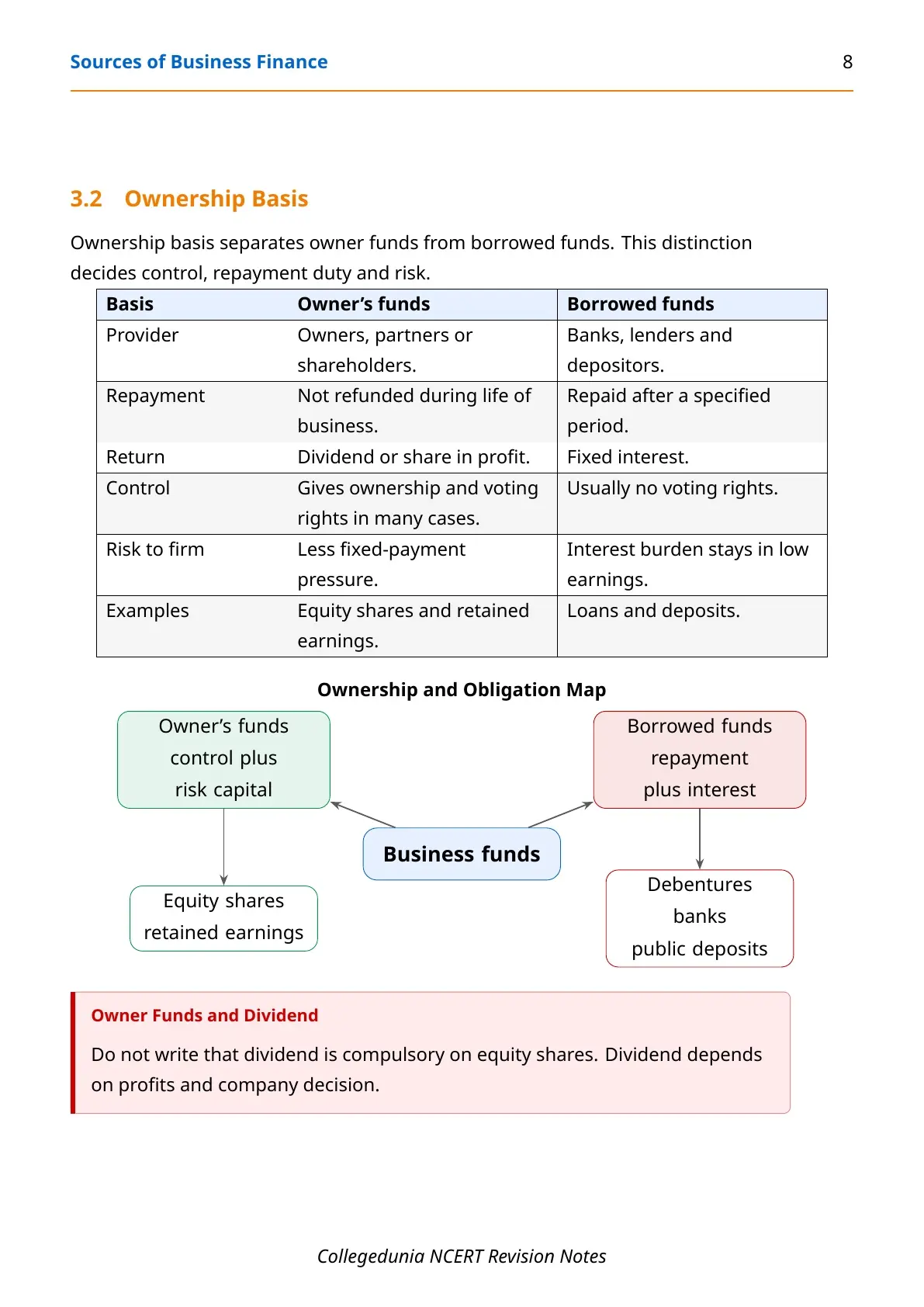
Ans. Owner funds bring ownership capital and may dilute control. Borrowed funds create a repayment duty and usually carry fixed interest.
Ques. Why are retained earnings called an internal source of finance?
Ans. Retained earnings come from profit kept inside the business. The firm does not raise this money from outsiders.
Ques. What is trade credit in Class 11 Business Studies?
Ans. Trade credit is credit allowed by a supplier when goods are bought now and payment is made later.



Comments