




NCERT Handwritten Notes for Class 7 Arts (Kriti) Chapter 6 Music, Emotions and Creativity help students revise rasa, devotional music, painting-based composition, musical narrative, active listening and expressive acting for the 2026-27 NCERT syllabus.
- Download a 23-page handwritten revision PDF for Class 7 Arts Chapter 6.
- Revise rasa, Shabad, devotional songs, musical storytelling and active listening.
- Use the notes before classroom activities, group discussion and assessment work.
Chapter6Music,EmotionsandCreativityHandwrittenNotes.pdf?page=1&dpi=150)
Chapter6Music,EmotionsandCreativityHandwrittenNotes.pdf?page=2&dpi=150)
Chapter6Music,EmotionsandCreativityHandwrittenNotes.pdf?page=3&dpi=150)
Chapter6Music,EmotionsandCreativityHandwrittenNotes.pdf?page=4&dpi=150)
Chapter6Music,EmotionsandCreativityHandwrittenNotes.pdf?page=5&dpi=150)
Chapter6Music,EmotionsandCreativityHandwrittenNotes.pdf?page=6&dpi=150)
Chapter6Music,EmotionsandCreativityHandwrittenNotes.pdf?page=7&dpi=150)
Chapter6Music,EmotionsandCreativityHandwrittenNotes.pdf?page=8&dpi=150)
Chapter6Music,EmotionsandCreativityHandwrittenNotes.pdf?page=9&dpi=150)
Chapter6Music,EmotionsandCreativityHandwrittenNotes.pdf?page=10&dpi=150)
Chapter6Music,EmotionsandCreativityHandwrittenNotes.pdf?page=11&dpi=150)
Chapter6Music,EmotionsandCreativityHandwrittenNotes.pdf?page=12&dpi=150)
Chapter6Music,EmotionsandCreativityHandwrittenNotes.pdf?page=13&dpi=150)
Chapter6Music,EmotionsandCreativityHandwrittenNotes.pdf?page=14&dpi=150)
Chapter6Music,EmotionsandCreativityHandwrittenNotes.pdf?page=15&dpi=150)
Chapter6Music,EmotionsandCreativityHandwrittenNotes.pdf?page=16&dpi=150)
Chapter6Music,EmotionsandCreativityHandwrittenNotes.pdf?page=17&dpi=150)
Chapter6Music,EmotionsandCreativityHandwrittenNotes.pdf?page=18&dpi=150)
Chapter6Music,EmotionsandCreativityHandwrittenNotes.pdf?page=19&dpi=150)
Chapter6Music,EmotionsandCreativityHandwrittenNotes.pdf?page=20&dpi=150)
Chapter6Music,EmotionsandCreativityHandwrittenNotes.pdf?page=21&dpi=150)
Chapter6Music,EmotionsandCreativityHandwrittenNotes.pdf?page=22&dpi=150)
Chapter6Music,EmotionsandCreativityHandwrittenNotes.pdf?page=23&dpi=150)
Clear handwritten revision notes on Music, Emotions and Creativity.
Music, Emotions and Creativity Snapshot
Chapter 6 explains how music carries emotions, or rasas, from the artist to students and listeners. The chapter then turns this idea into classroom activities.
The main revision goal is to connect music with feeling, devotion, storytelling, listening and expression.
| Area | What to Remember |
|---|---|
| Rasa | Emotion is experienced by both artist and students. |
| Devotional music | Words, tune and rhythm express devotion in different traditions. |
| Activities | Students create music from paintings, history, listening and acting. |
Rasa and Devotional Music
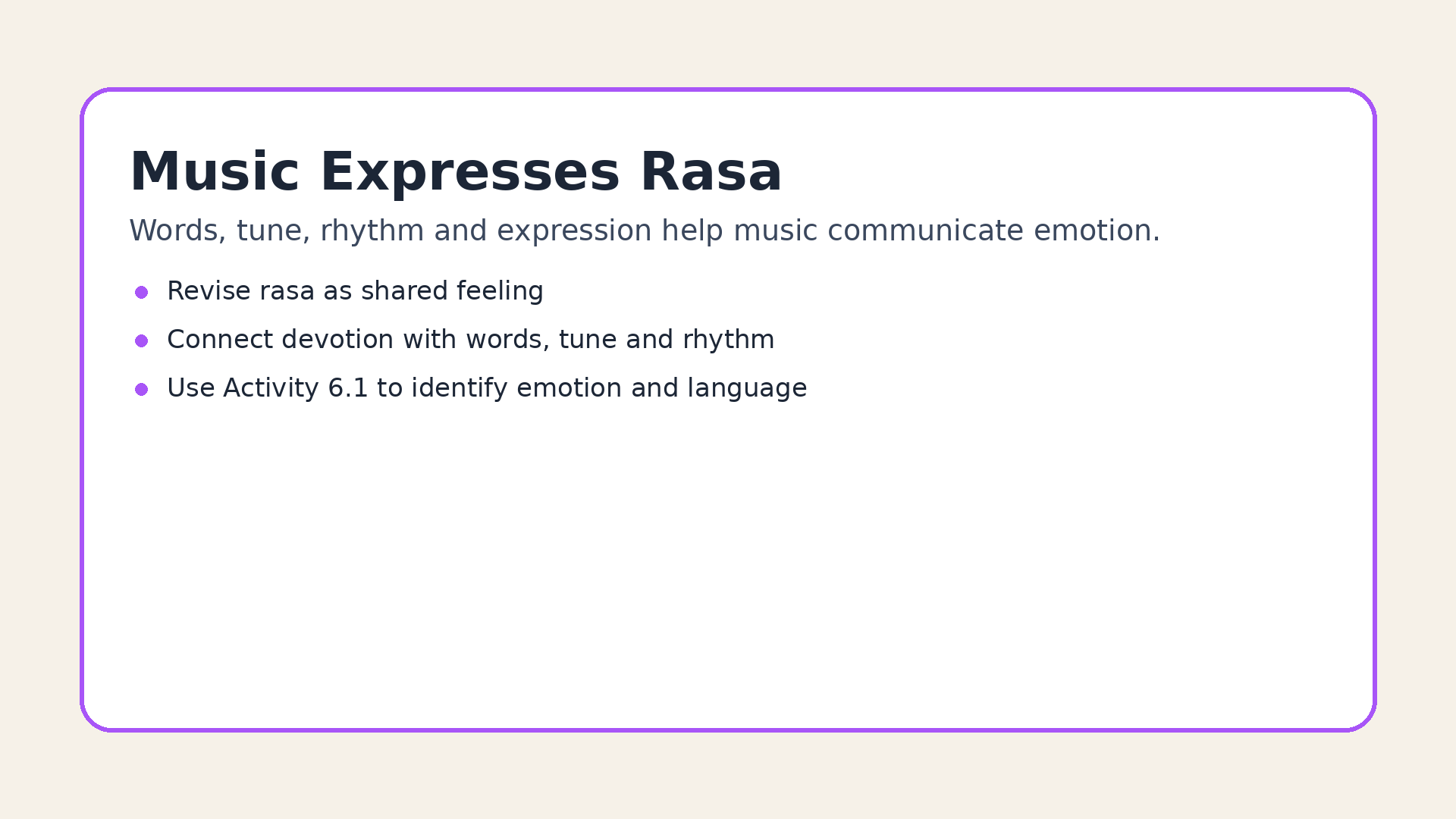
Rasa means the emotional flavour of an art experience. In music, rasa is shaped by voice, tune, rhythm, words and expression.
The chapter gives examples of devotional music, including Shabad and an Urdu devotional song. Both show that prayer songs can carry gratitude, care and compassion.
- Shabad: a musical prayer sung in a Gurudwara.
- Urdu song: a prayer for knowledge, service and kindness.
- Activity 6.1: identify the song's emotion, language and important words.
Creativity Through Painting and Music
Activity 6.2 asks students to observe a painting and create rhythmic lines about it. These lines are then sung in a tune and rhythm.
This activity shows how visual art, words and music can work together. Students may use the textbook Phad painting or a painting from their own region.
Musical Narrative and History
Activity 6.3 connects music with a history topic. Students choose a story, write a paragraph, draw a picture and sing lines based on the scene.
The chapter mentions Indian musical storytelling forms such as Powada, Kaavad Katha and Alha-Udal. These examples show how music can preserve story and memory.
Active Listening and Act It Out
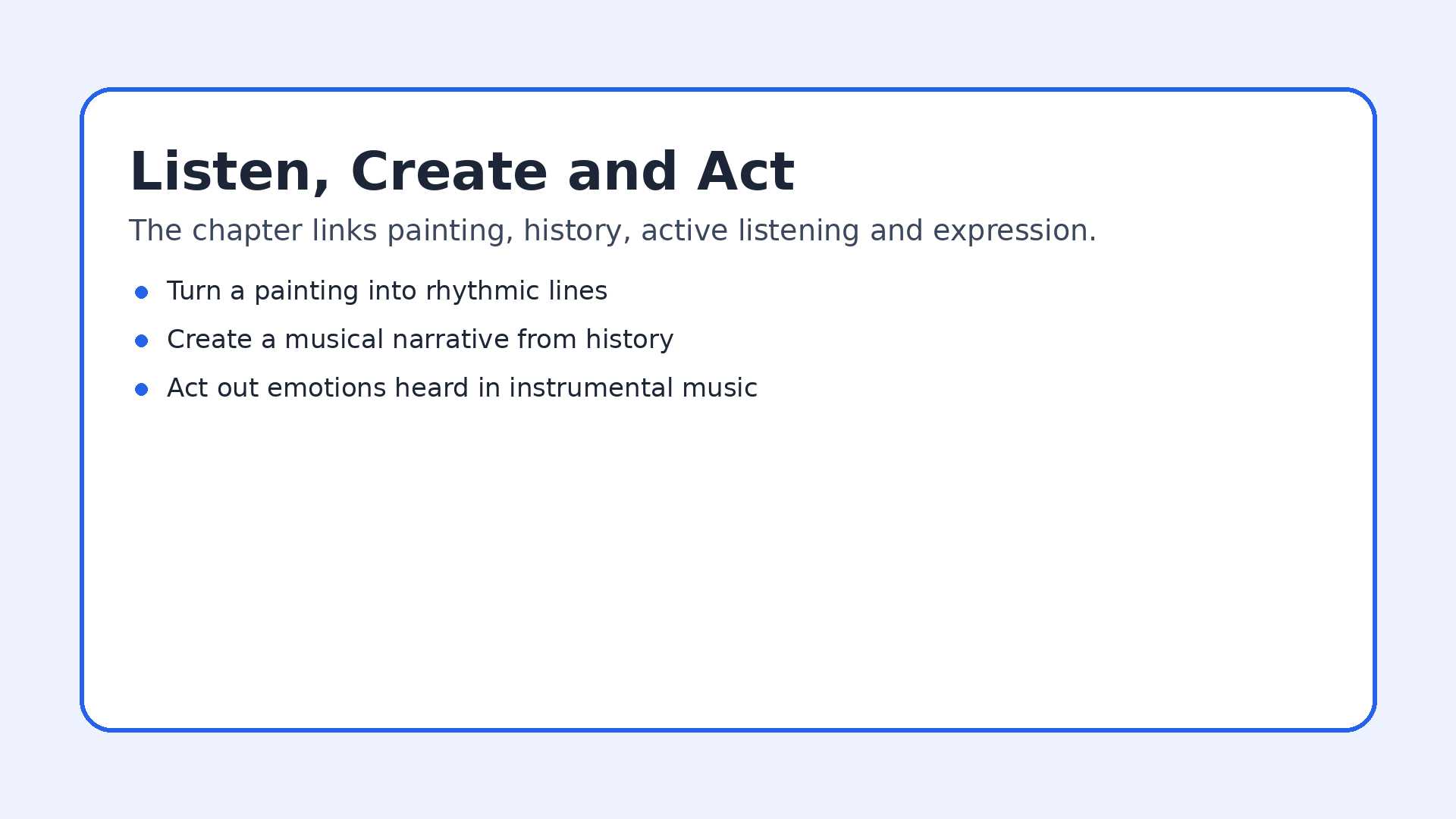
Active listening means listening carefully and trying to understand the music. Students compare lyrics, tune, story, mood and emotion.
Activity 6.5 then asks students to act out emotions from instrumental music or background music. Theatre and dance elements can help communicate the mood.
| Skill | Classroom Use |
|---|---|
| Active listening | Notice mood, rhythm, style and story. |
| Acting | Show emotion through face, body and movement. |
| Assessment | Explain music roles and creatively express emotions. |
Music, Emotions and Creativity Revision Video
Source: Edzy on YouTube
Related NCERT Class 7 Arts (Kriti) Resources
| Resource | Link |
|---|---|
| NCERT Book PDF | Class 7 Arts Chapter 6 NCERT Book PDF |
| Previous Chapter | Class 7 Arts Chapter 5 Handwritten Notes |
| Next Chapter | Class 7 Arts Chapter 7 Handwritten Notes |
All Chapters for Class 7 Arts (Kriti) Handwritten Notes
| Chapter | Handwritten Notes |
|---|---|
| Chapter 2 Say More without Speech Mime | Download Notes |
| Chapter 3 Let's Design Stage Technicals 2 | Download Notes |
| Chapter 4 Story of India's Storytelling Tradition | Download Notes |
| Chapter 5 Making Music | Download Notes |
| Chapter 6 Music, Emotions and Creativity | Download Notes |
FAQs on NCERT Class 7 Arts Chapter 6 Handwritten Notes
Ques. What is Music, Emotions and Creativity in Class 7 Arts about?
Ans. It explains rasa, devotional music, painting-based composition, musical narrative, active listening and acting out emotions.
Ques. What does rasa mean in this chapter?
Ans. Rasa means the emotion experienced through art. In music, it connects the artist with students and listeners.
Ques. Which activities are covered in Chapter 6?
Ans. The chapter covers devotional song study, painting through music, musical narrative, active listening and acting out emotions.
Ques. Why are these handwritten notes useful?
Ans. The notes turn the chapter into short handwritten pages with diagrams, tables and quick recall points for revision.



Comments