




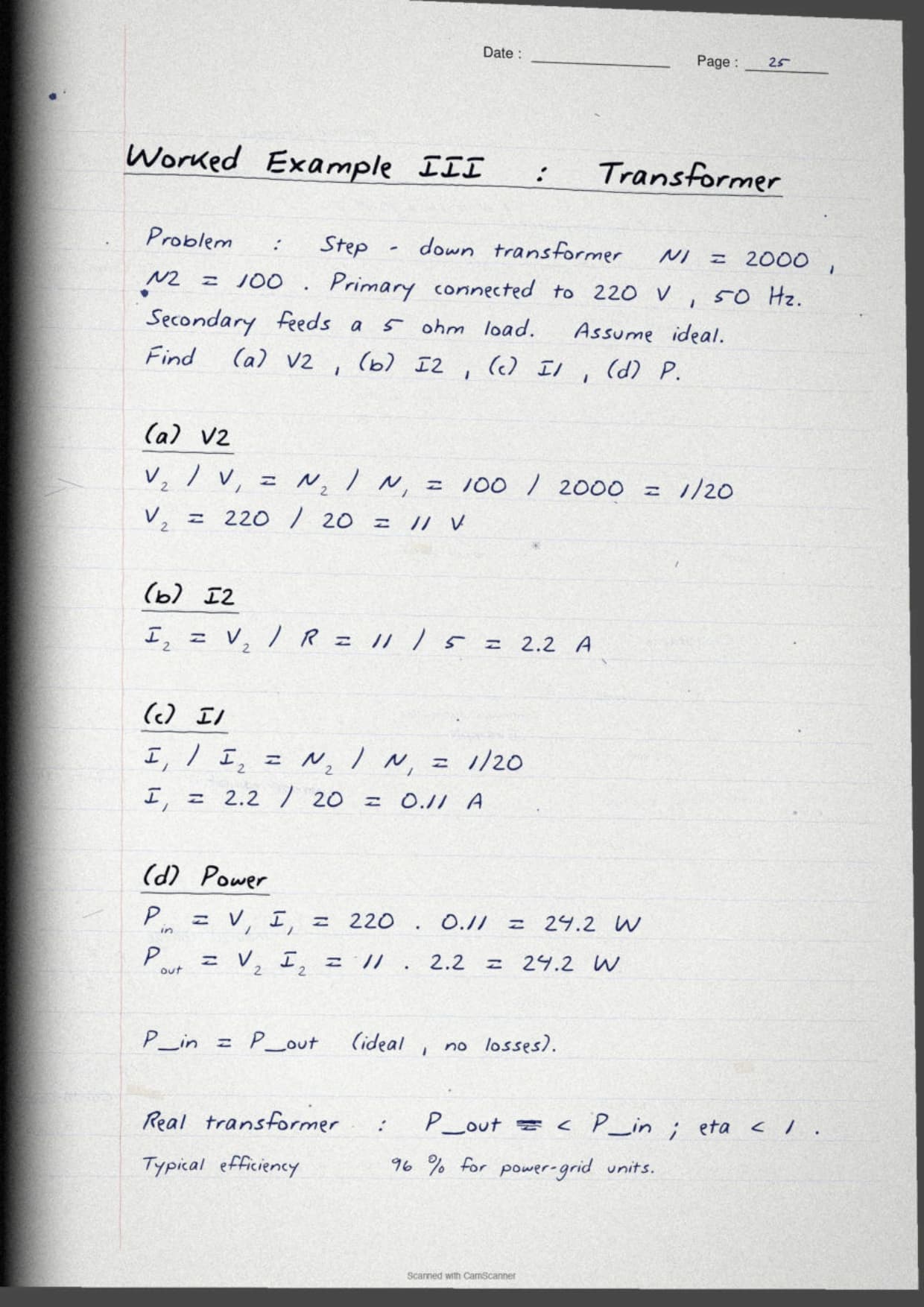
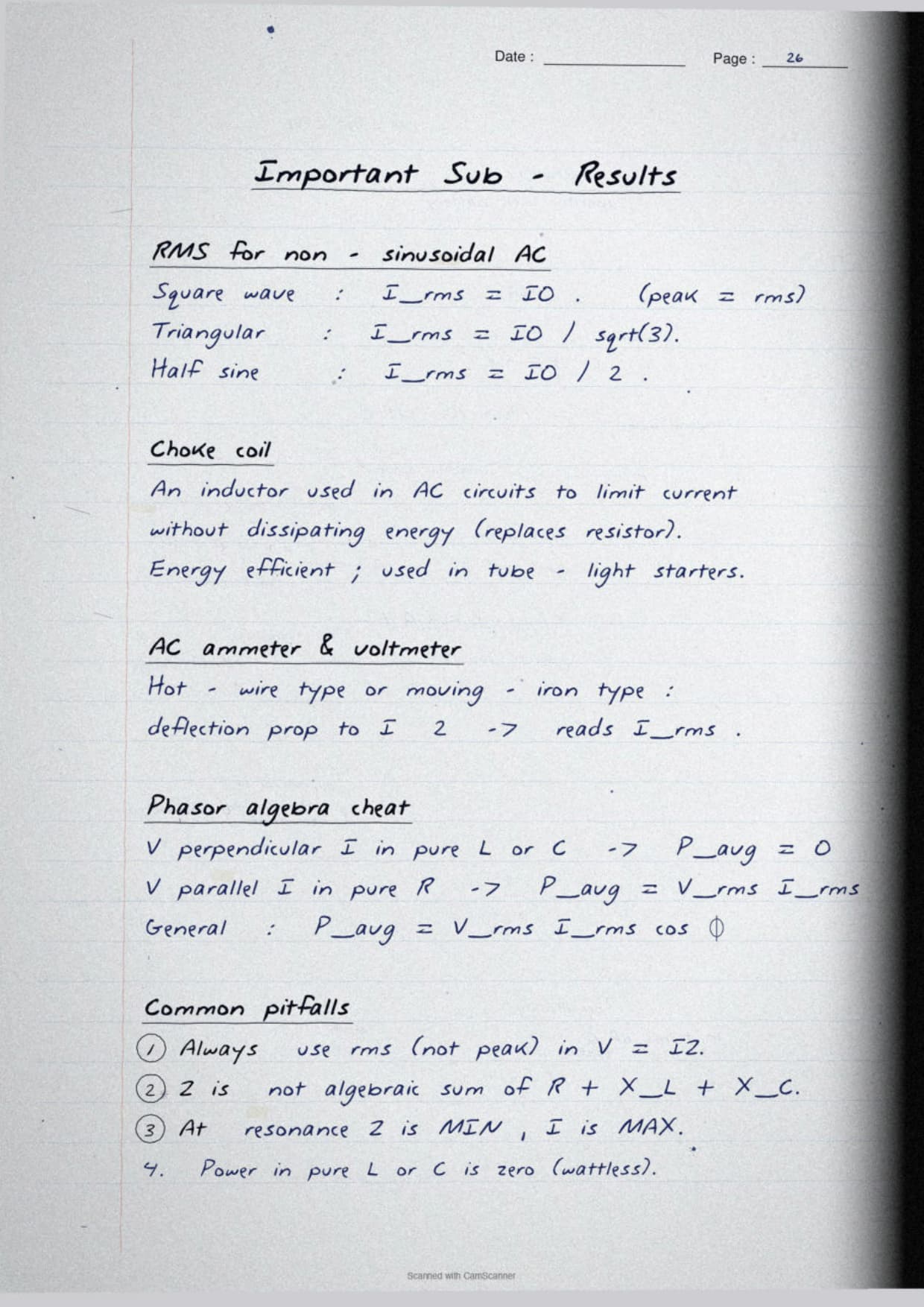
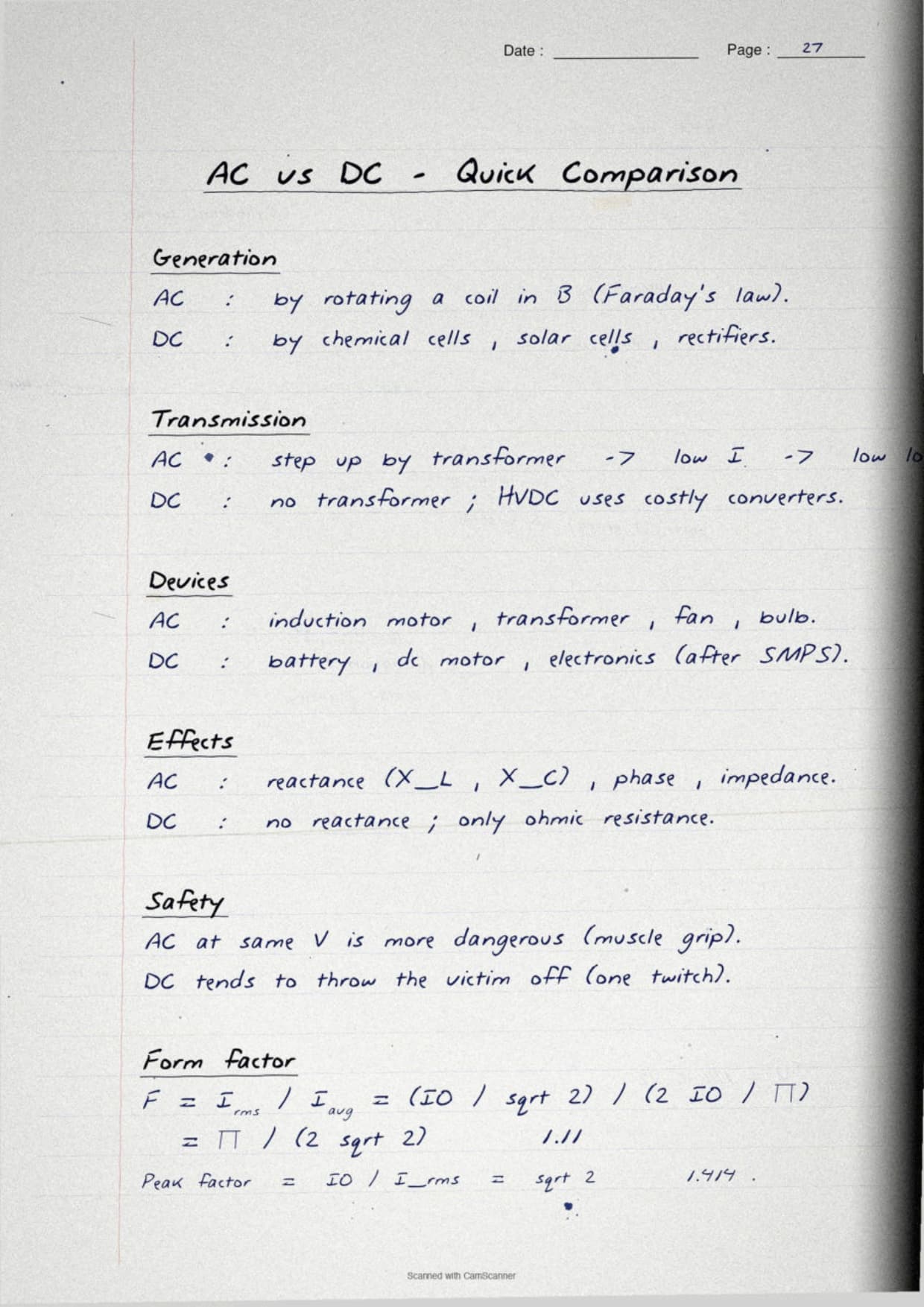
Class 12 Physics Chapter 7 covers Alternating Current, including AC voltage applied to a resistor, LCR series circuits, power factor, and the transformer. The chapter carries 6 marks in CBSE and 3 to 4 percent in JEE Main. This page hosts the handwritten notes PDF for Class 12 Physics Chapter 7 Alternating Current.
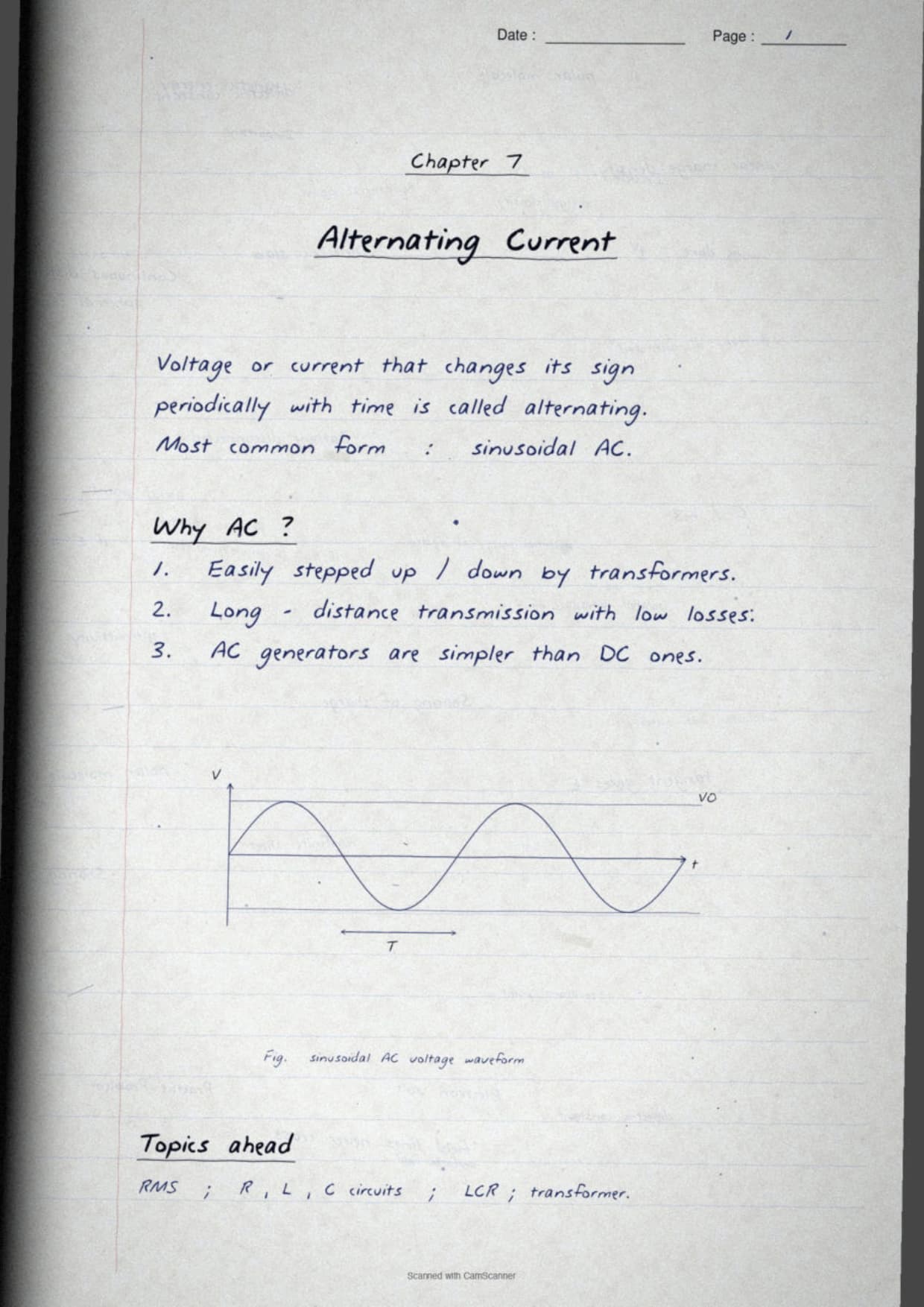
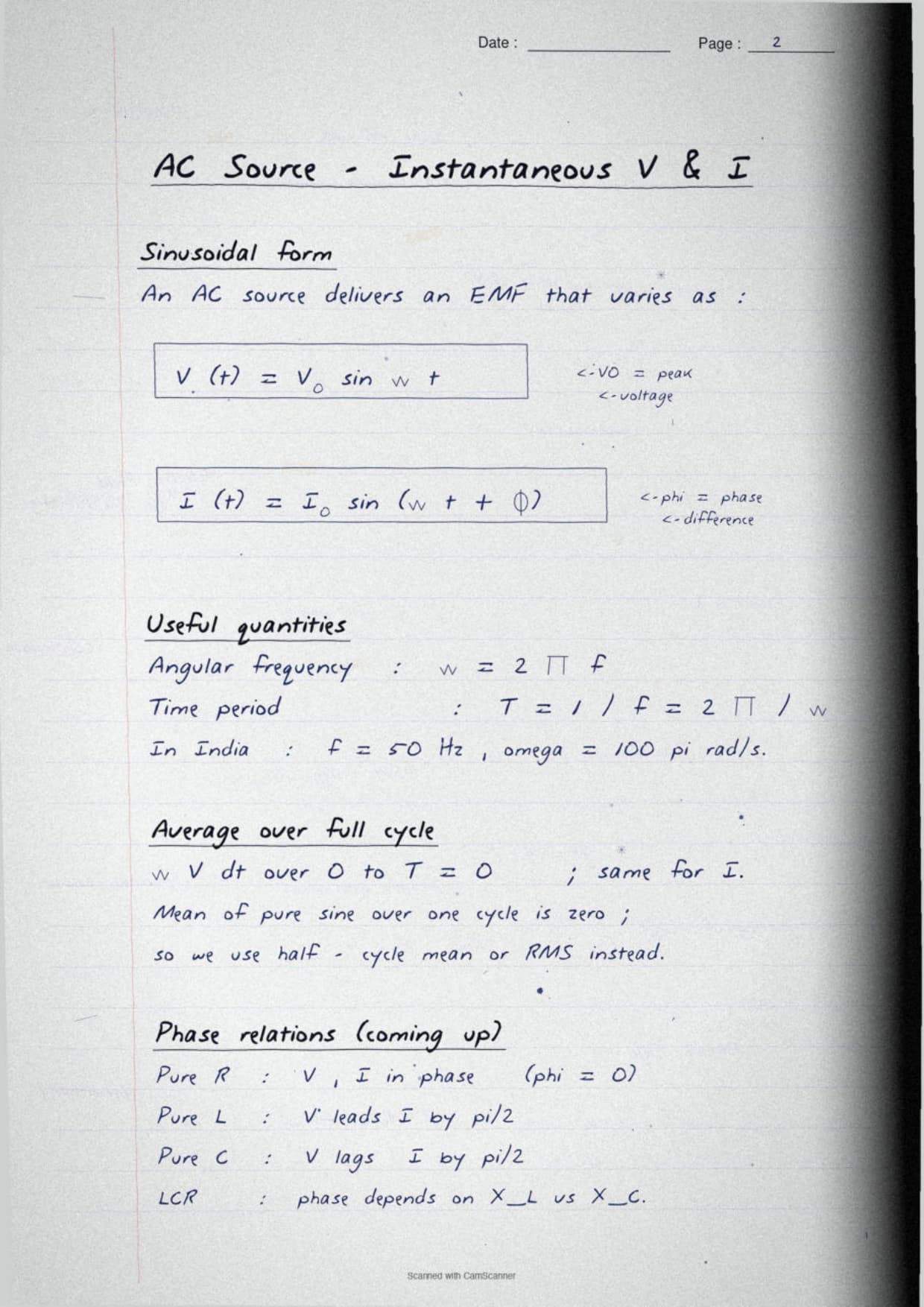
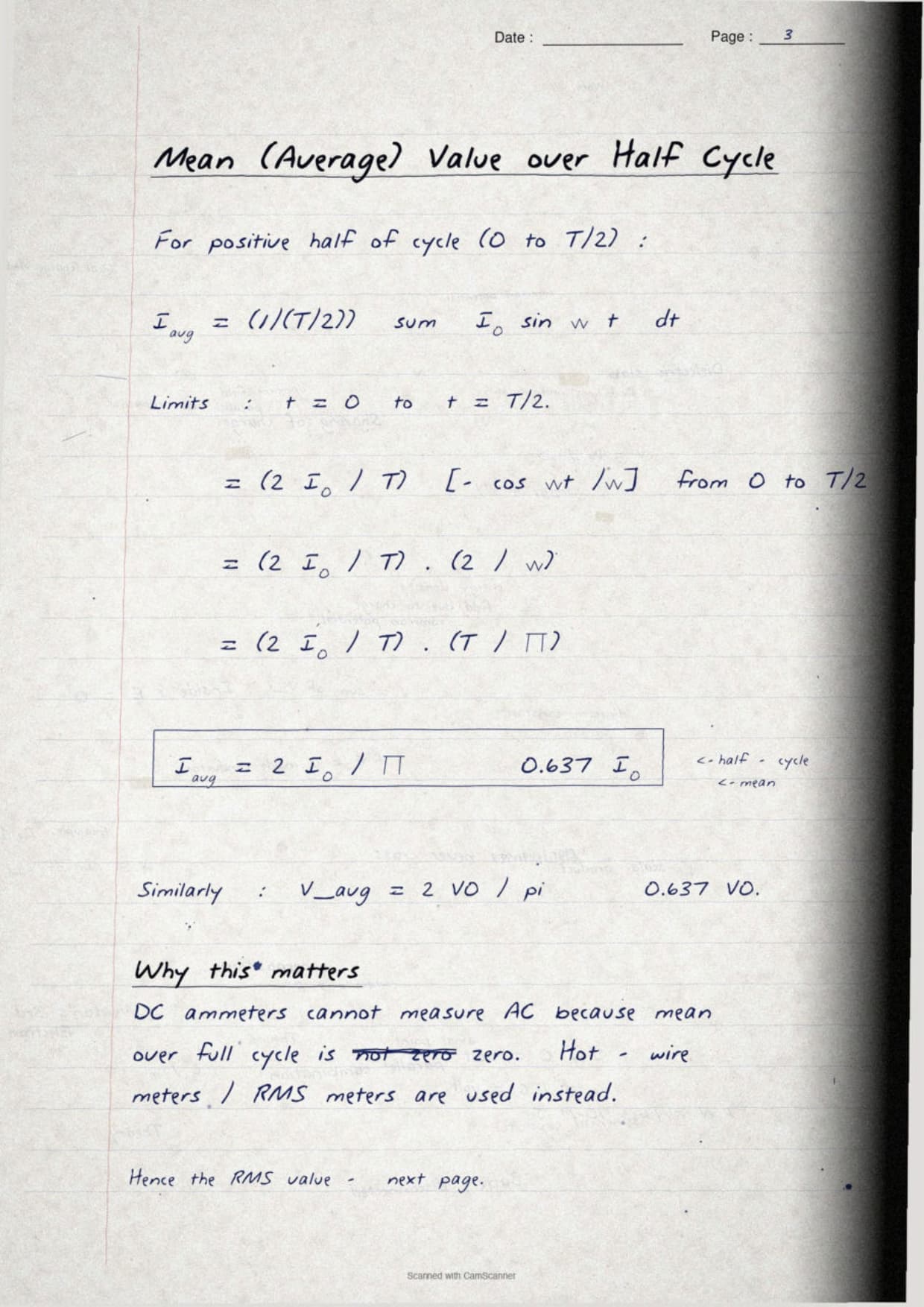
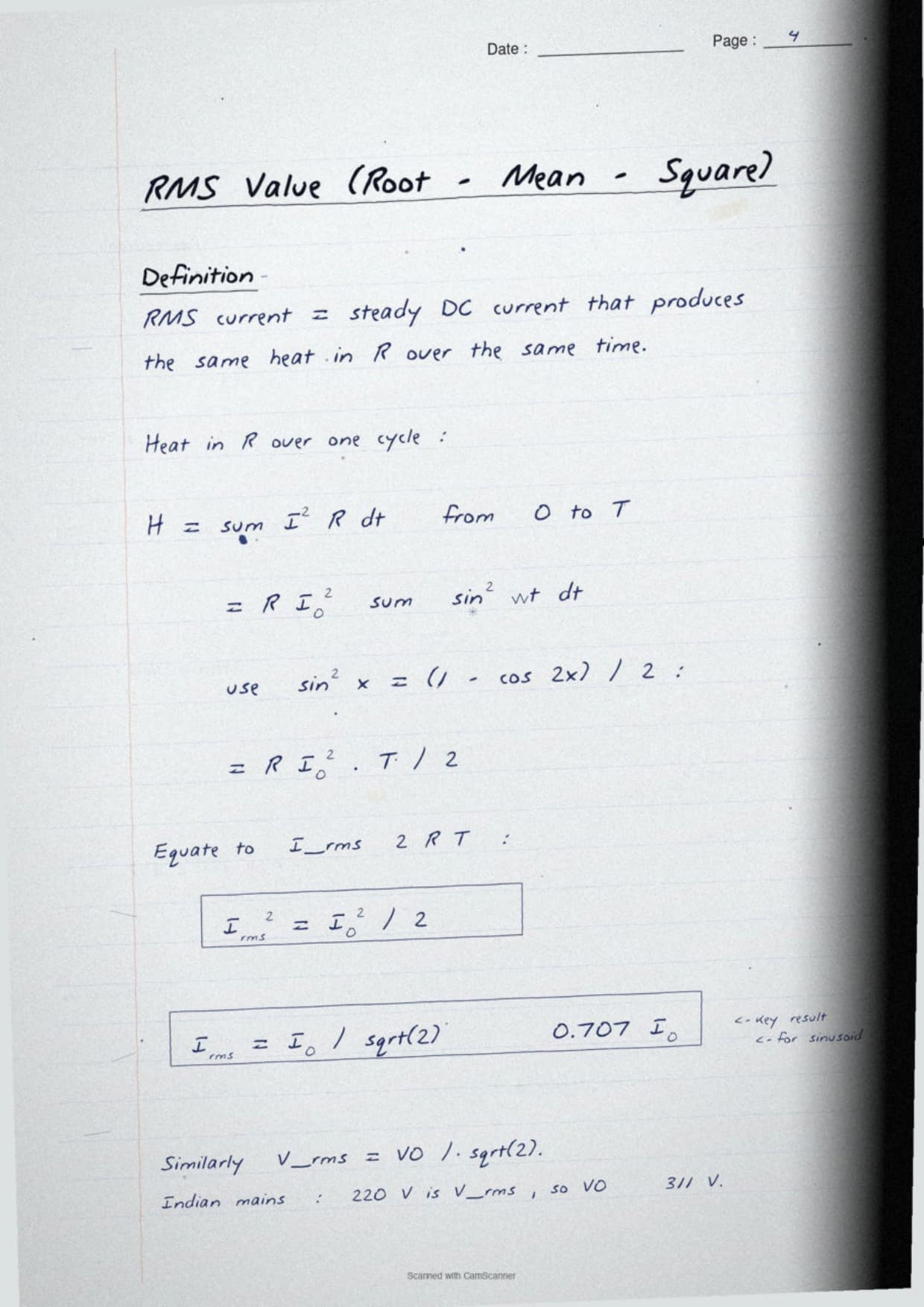
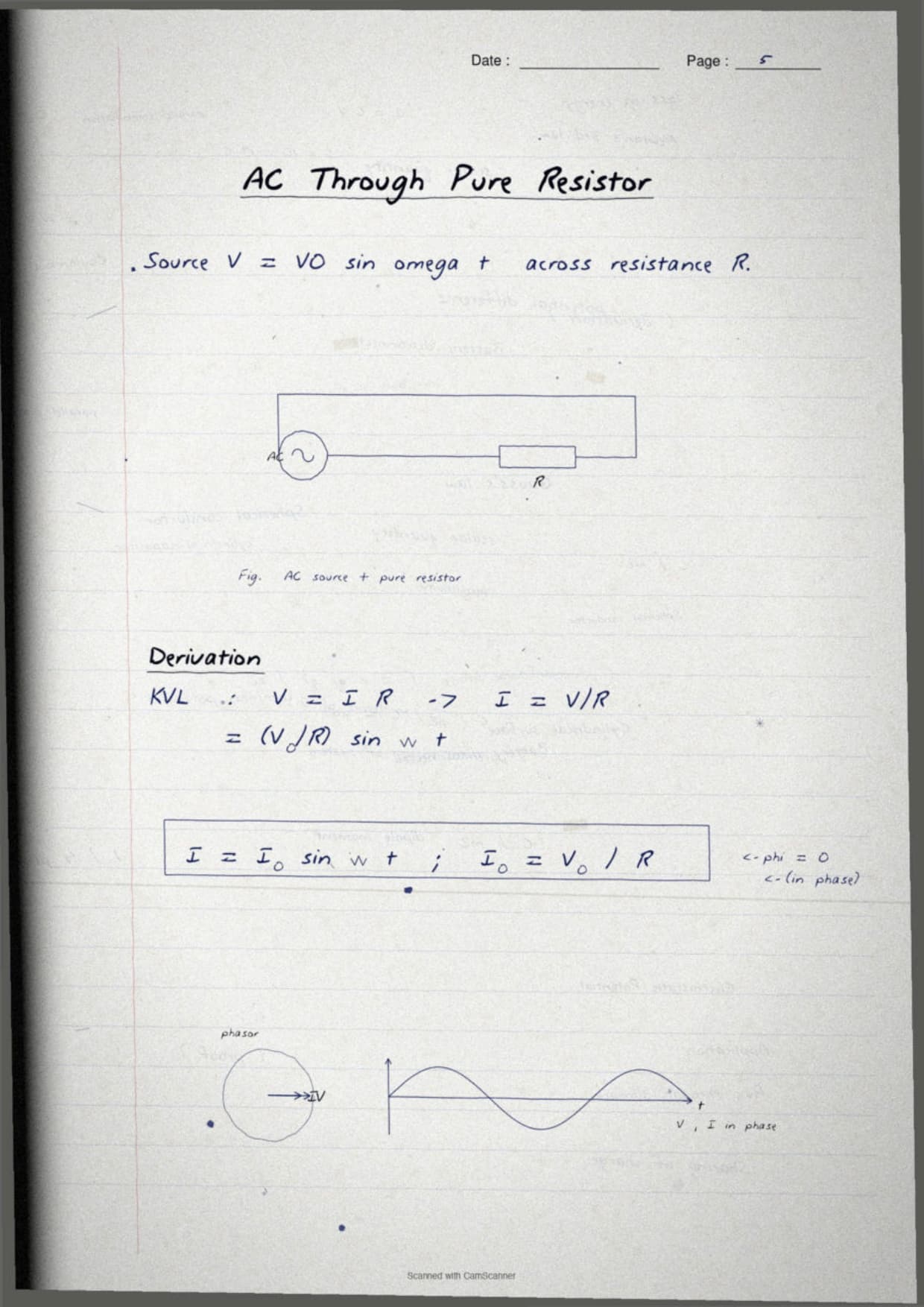
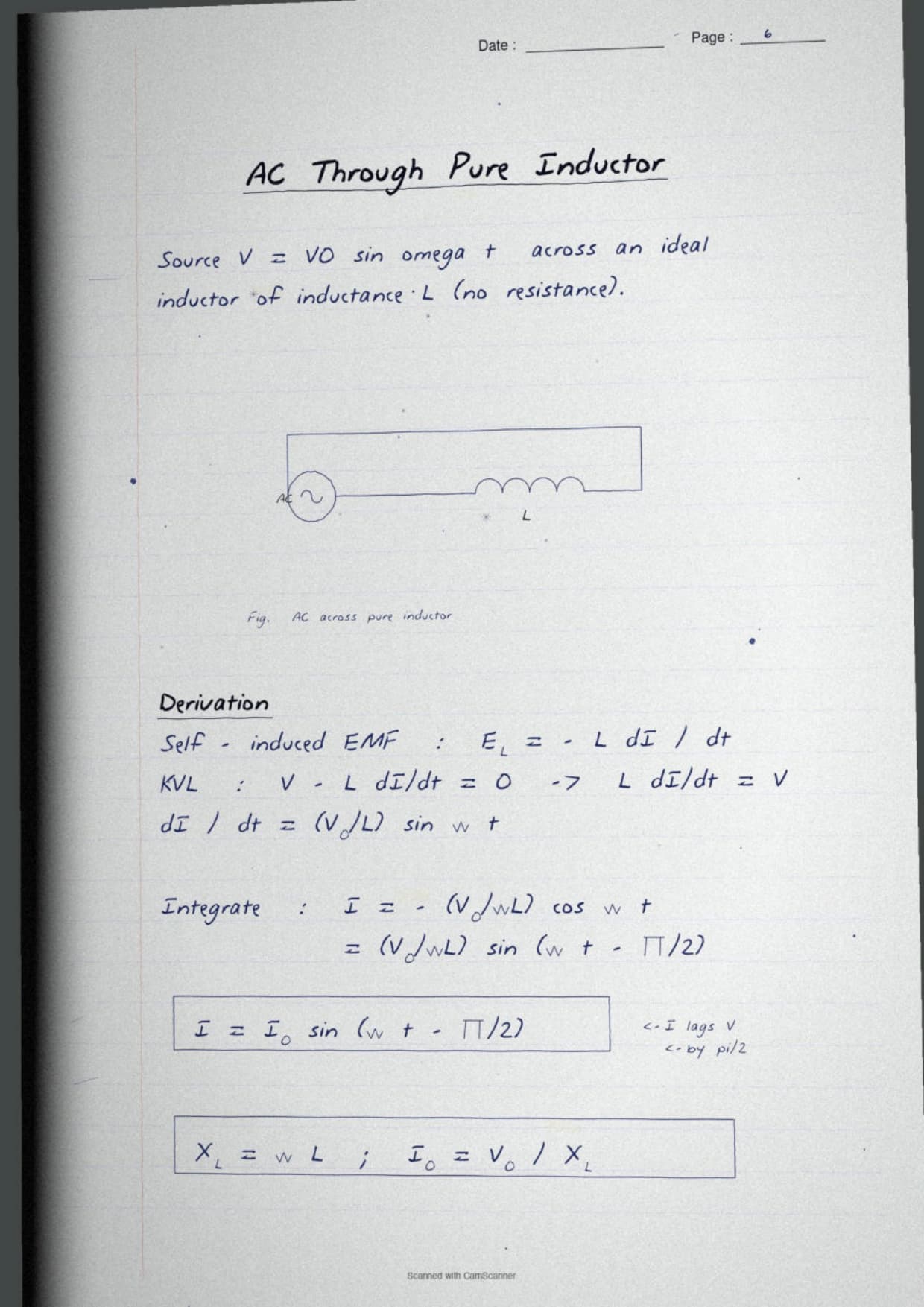
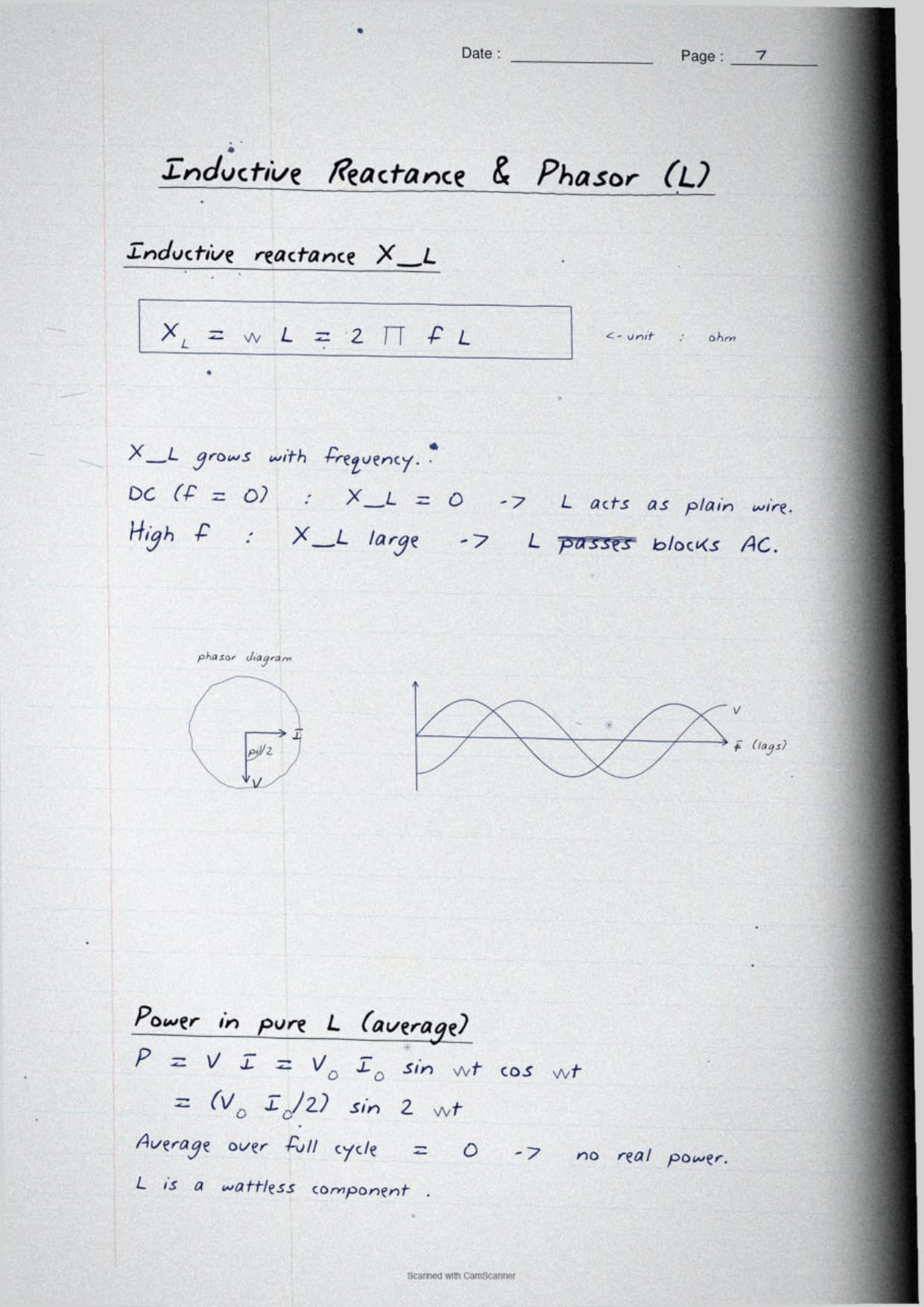
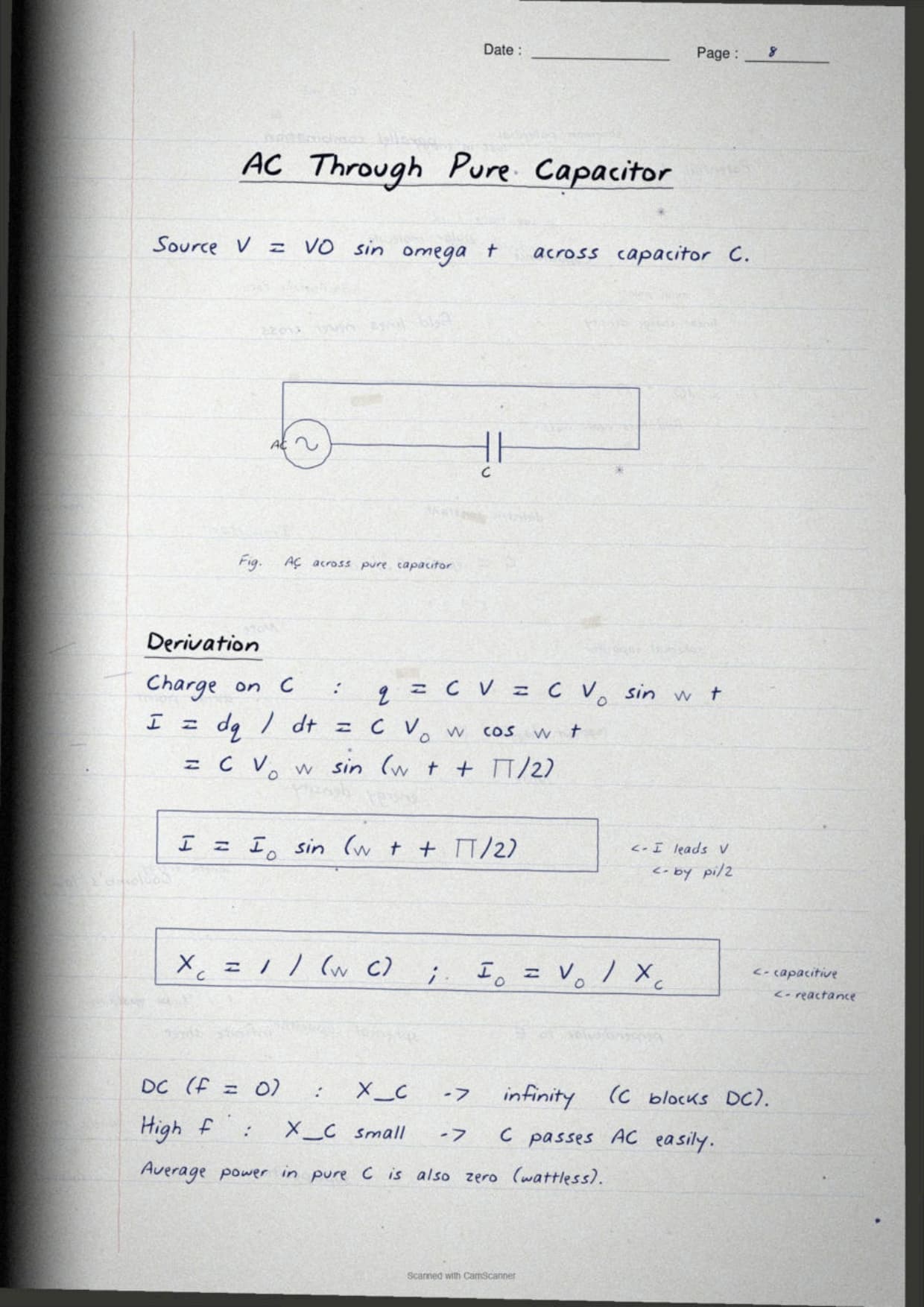
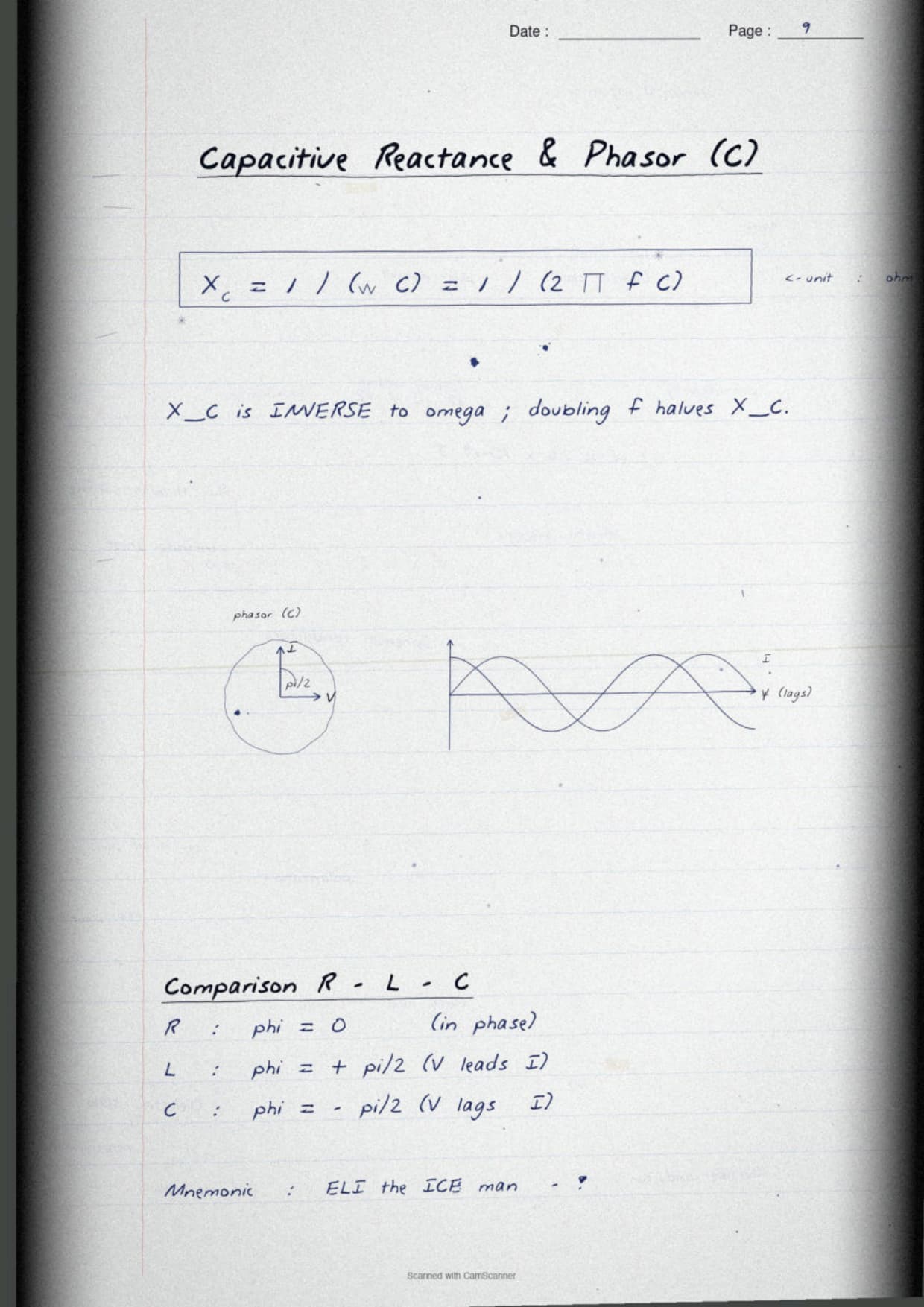
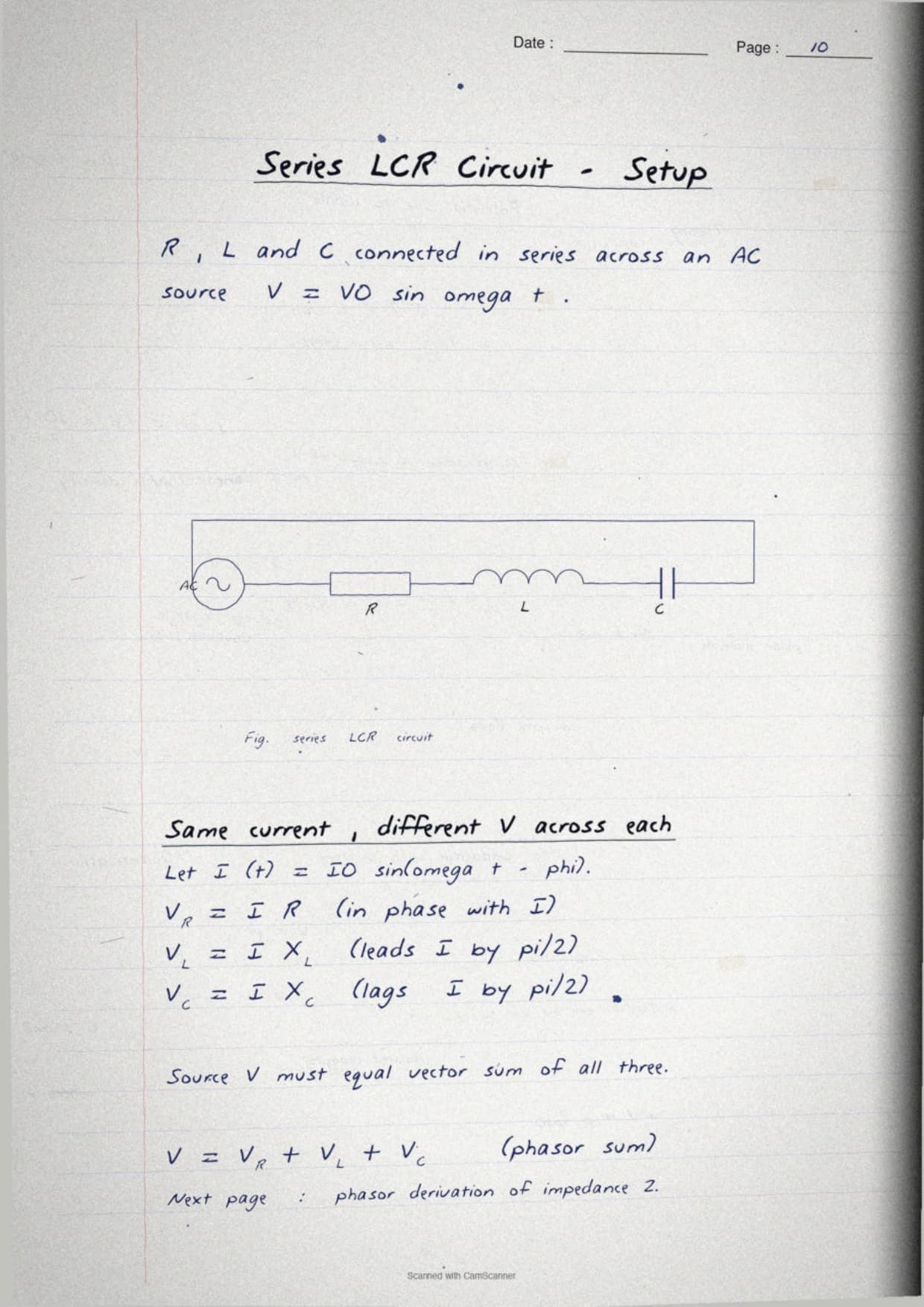
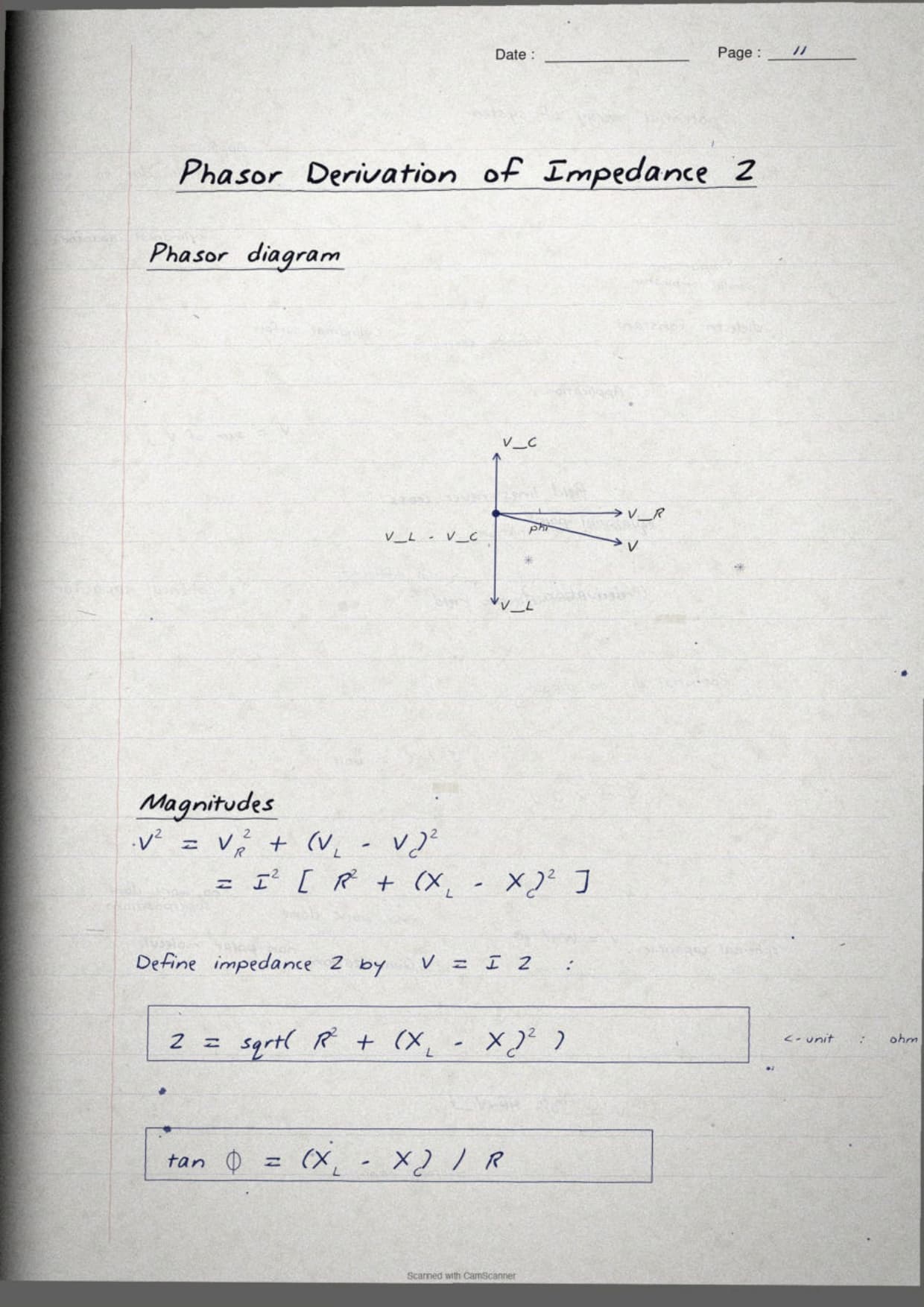
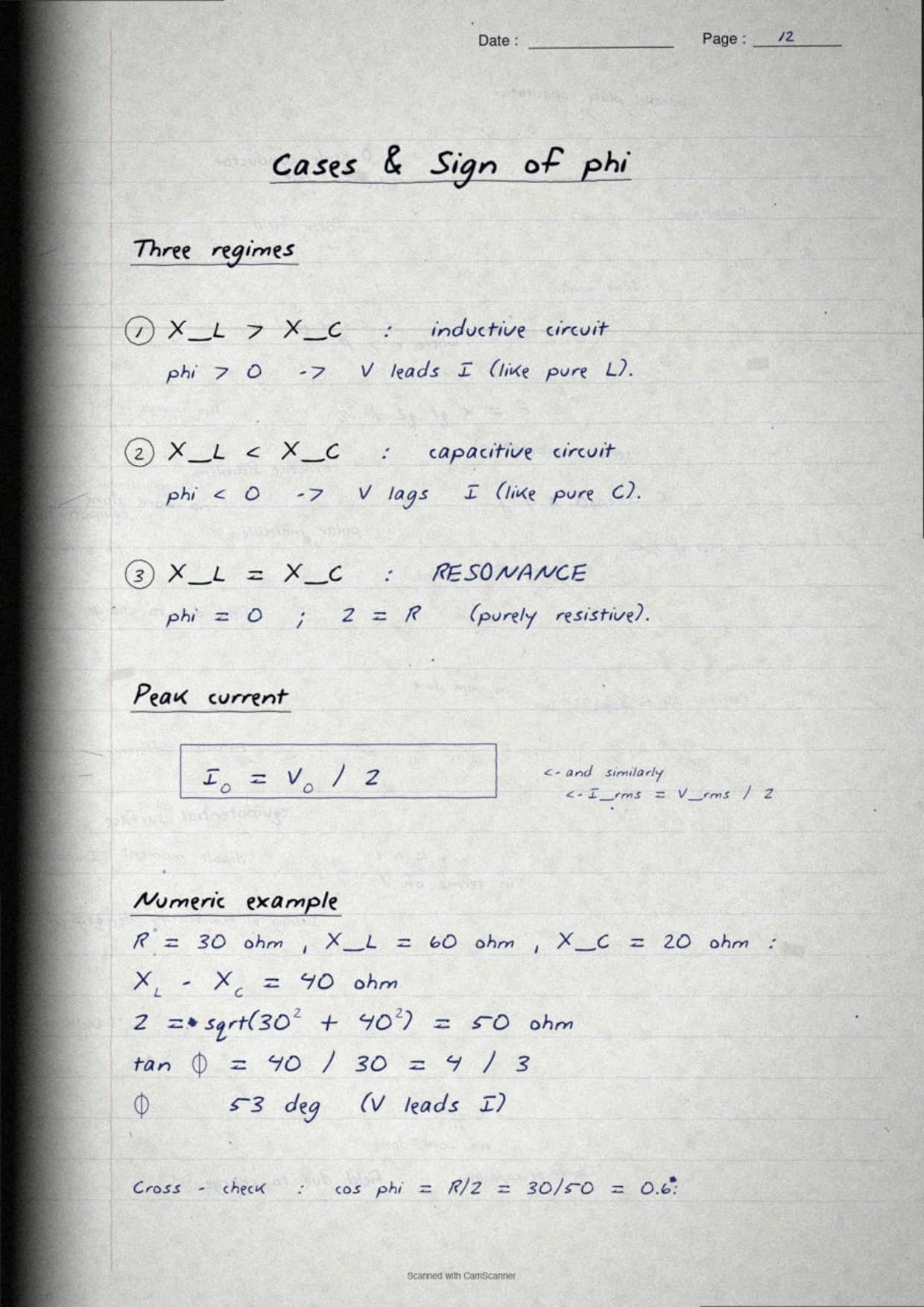
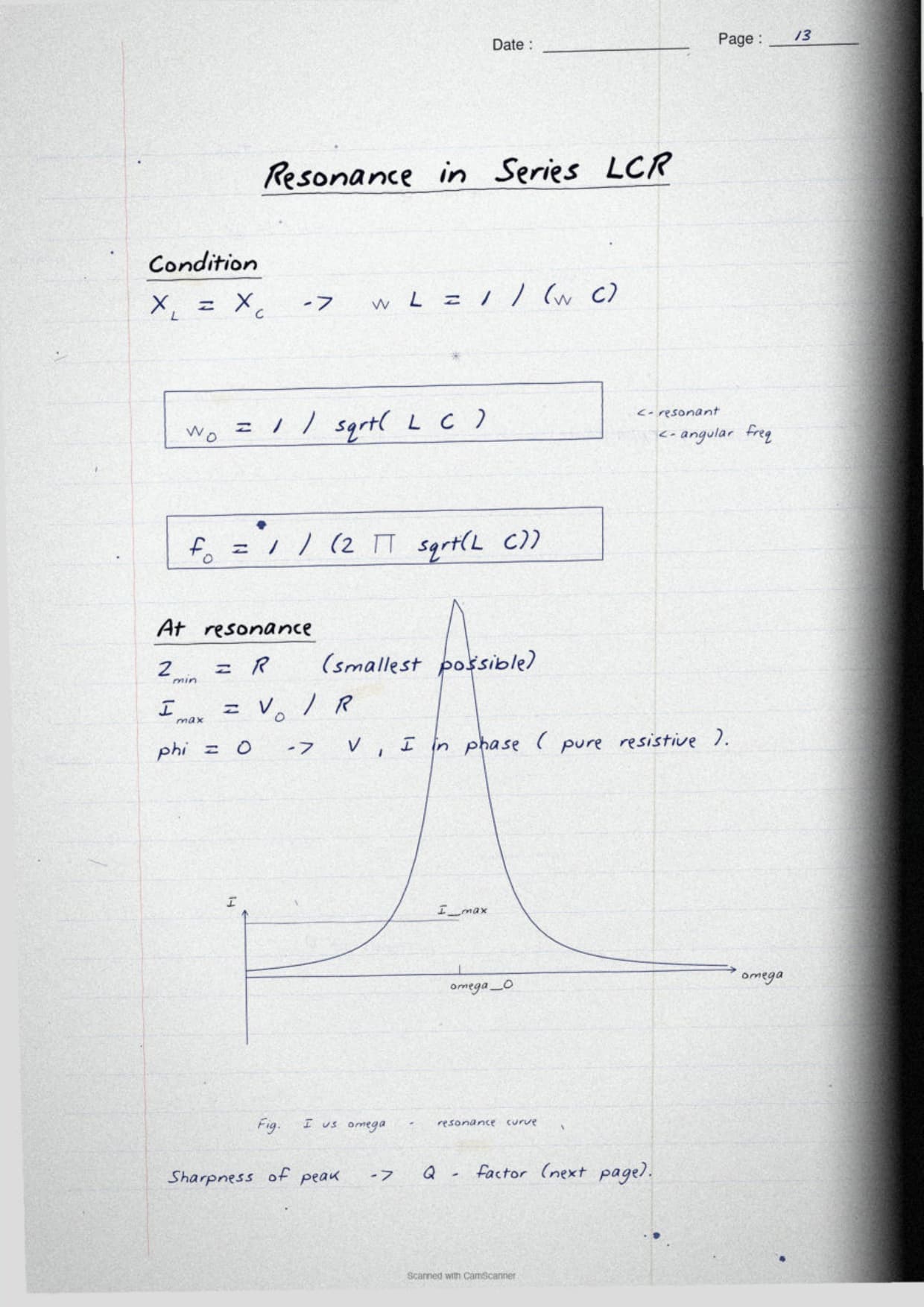
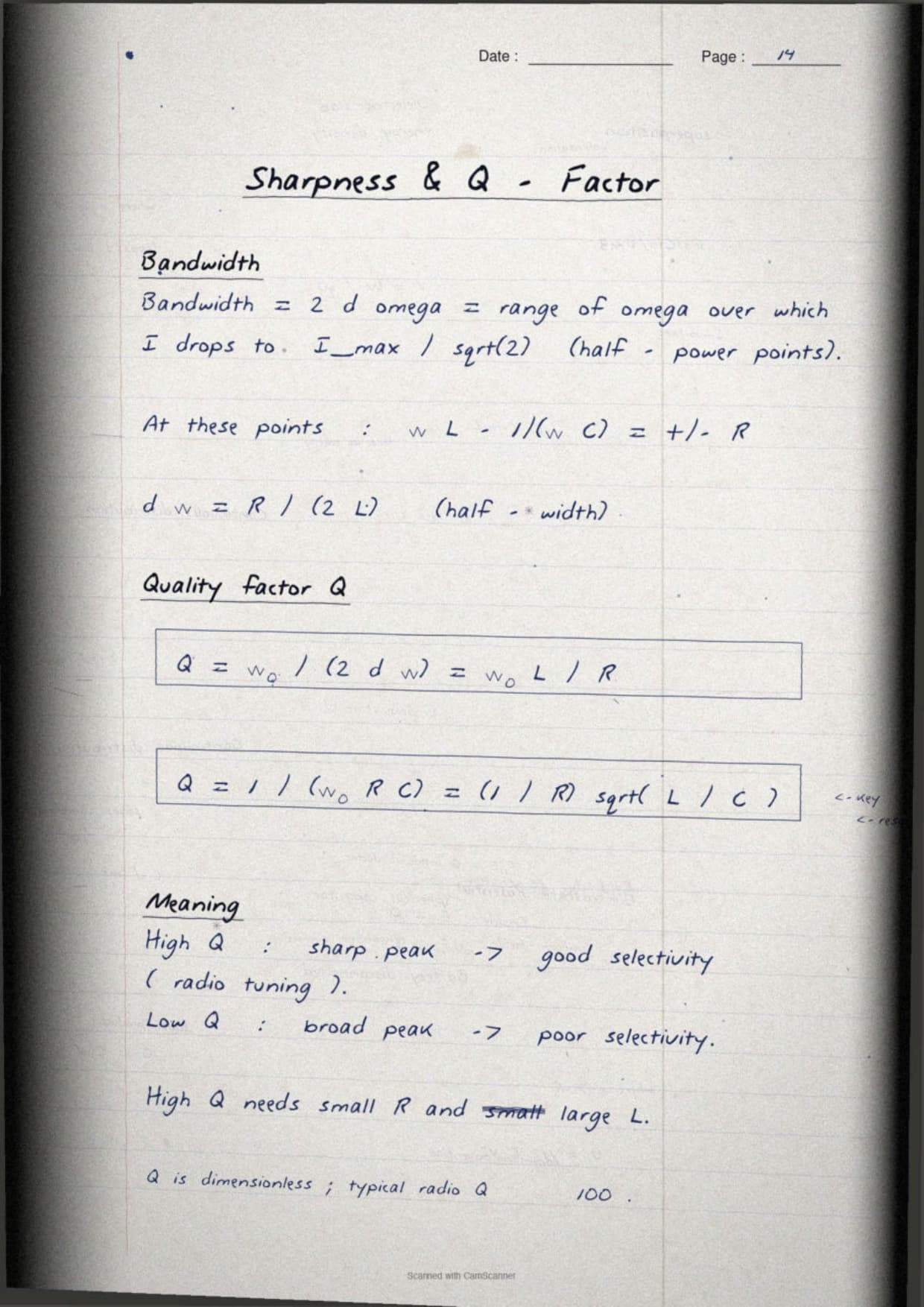
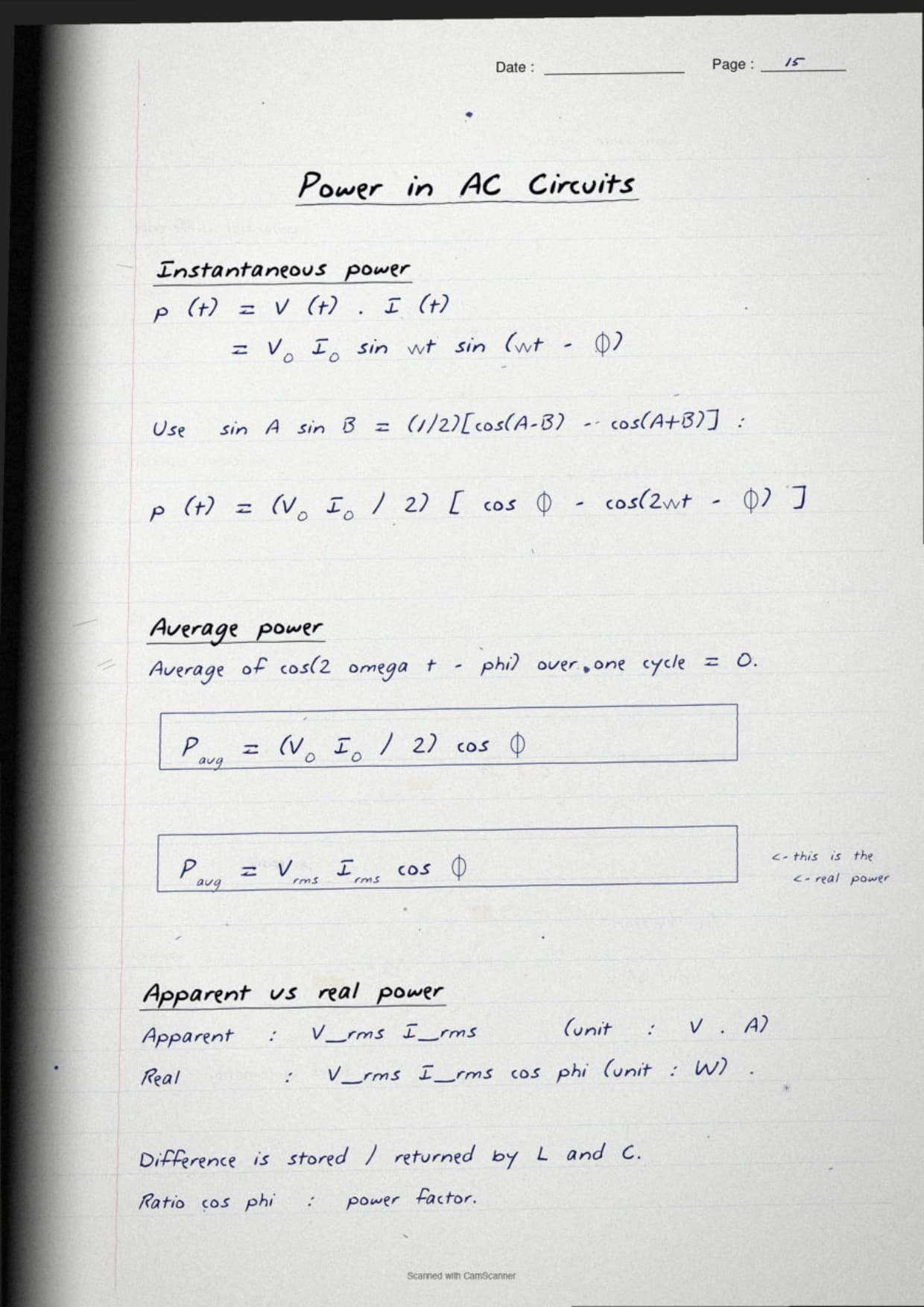
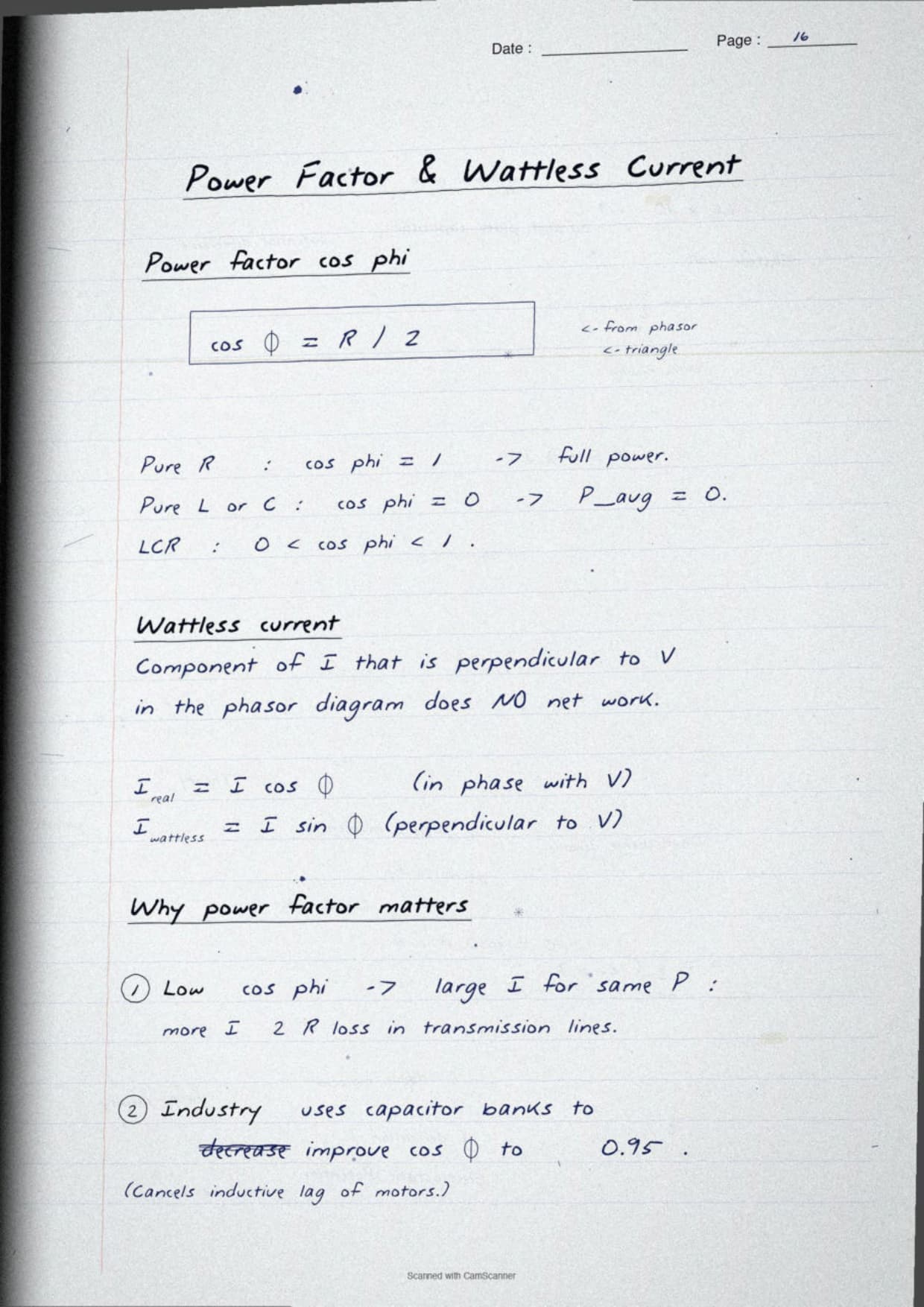
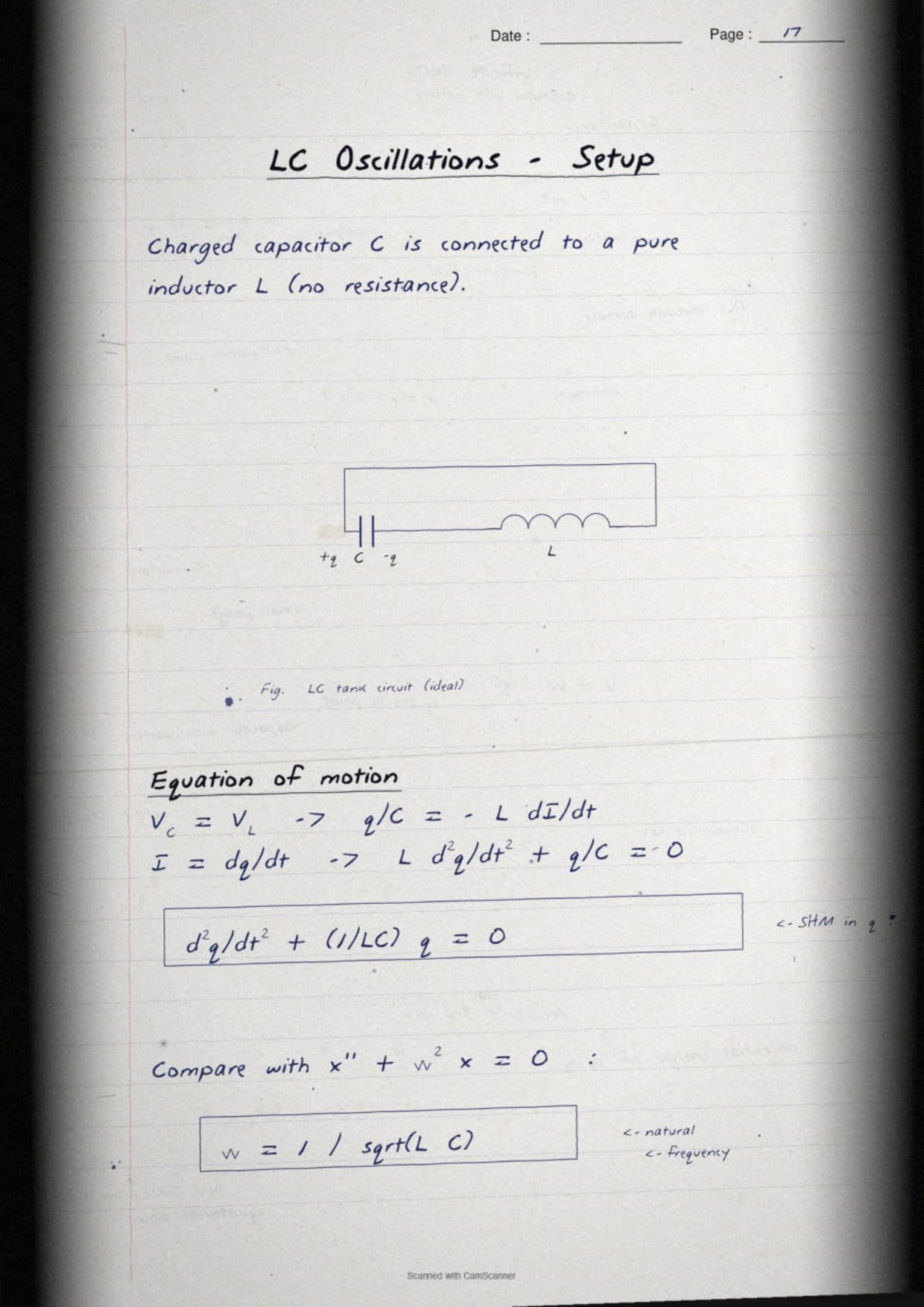
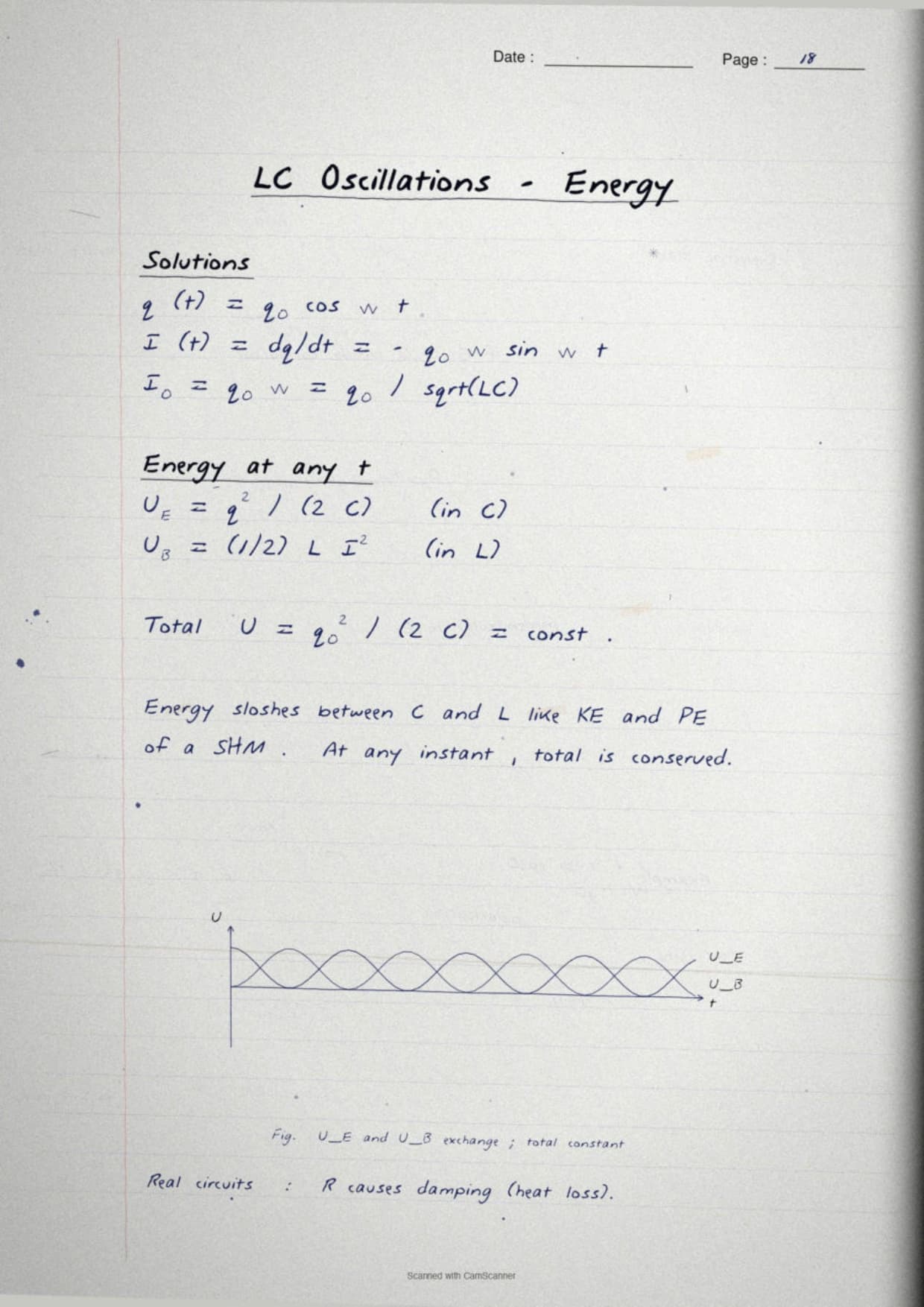
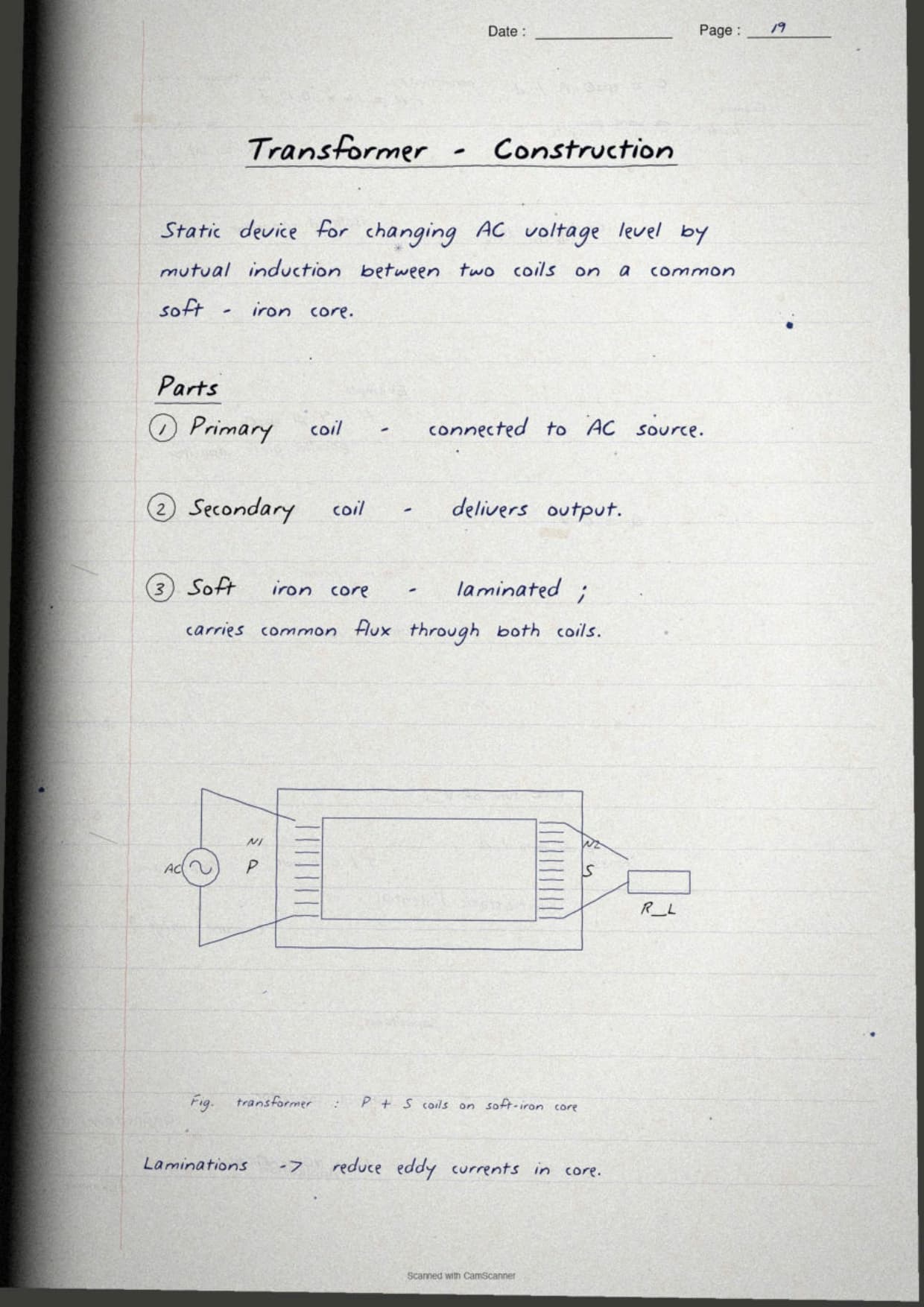
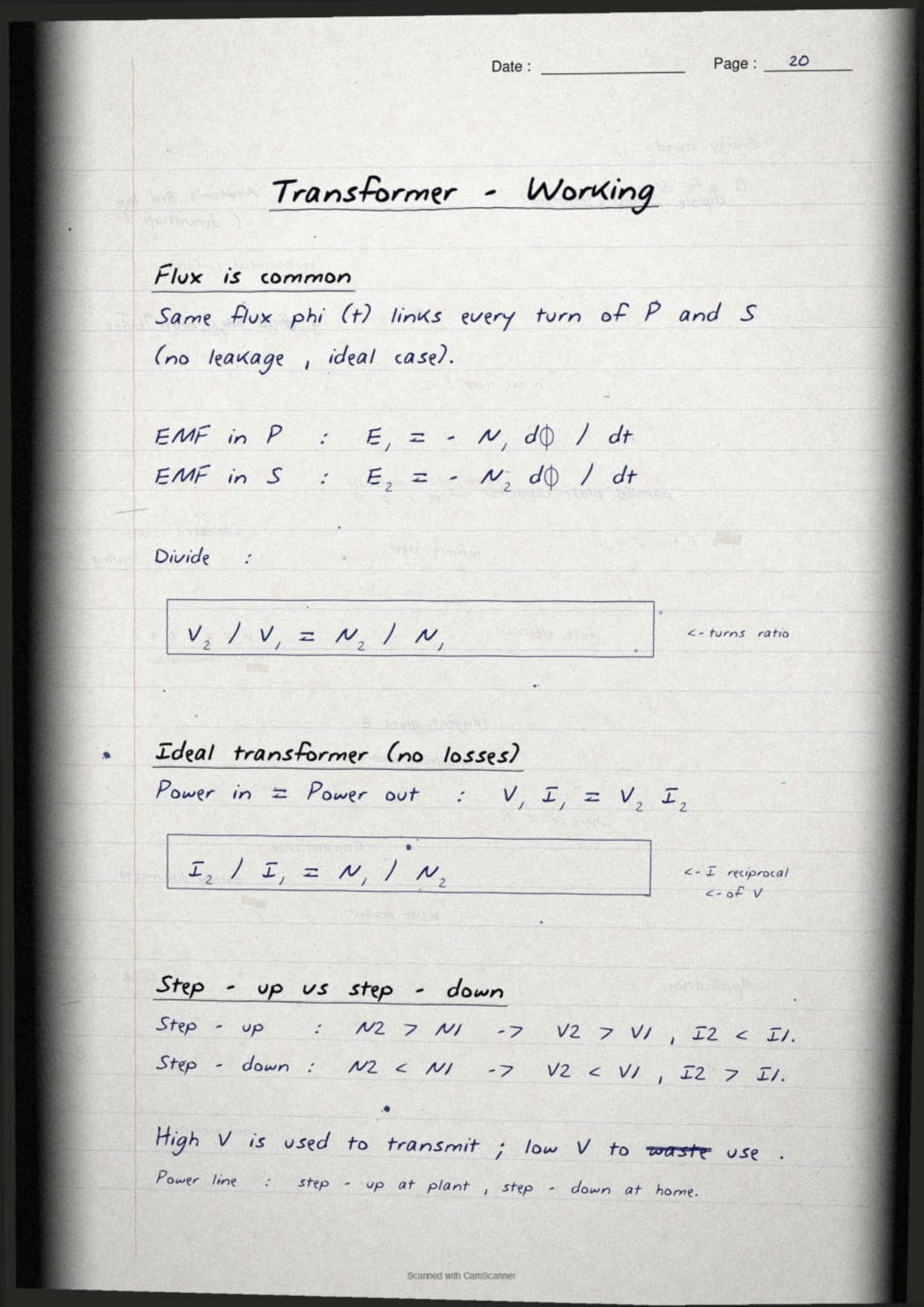
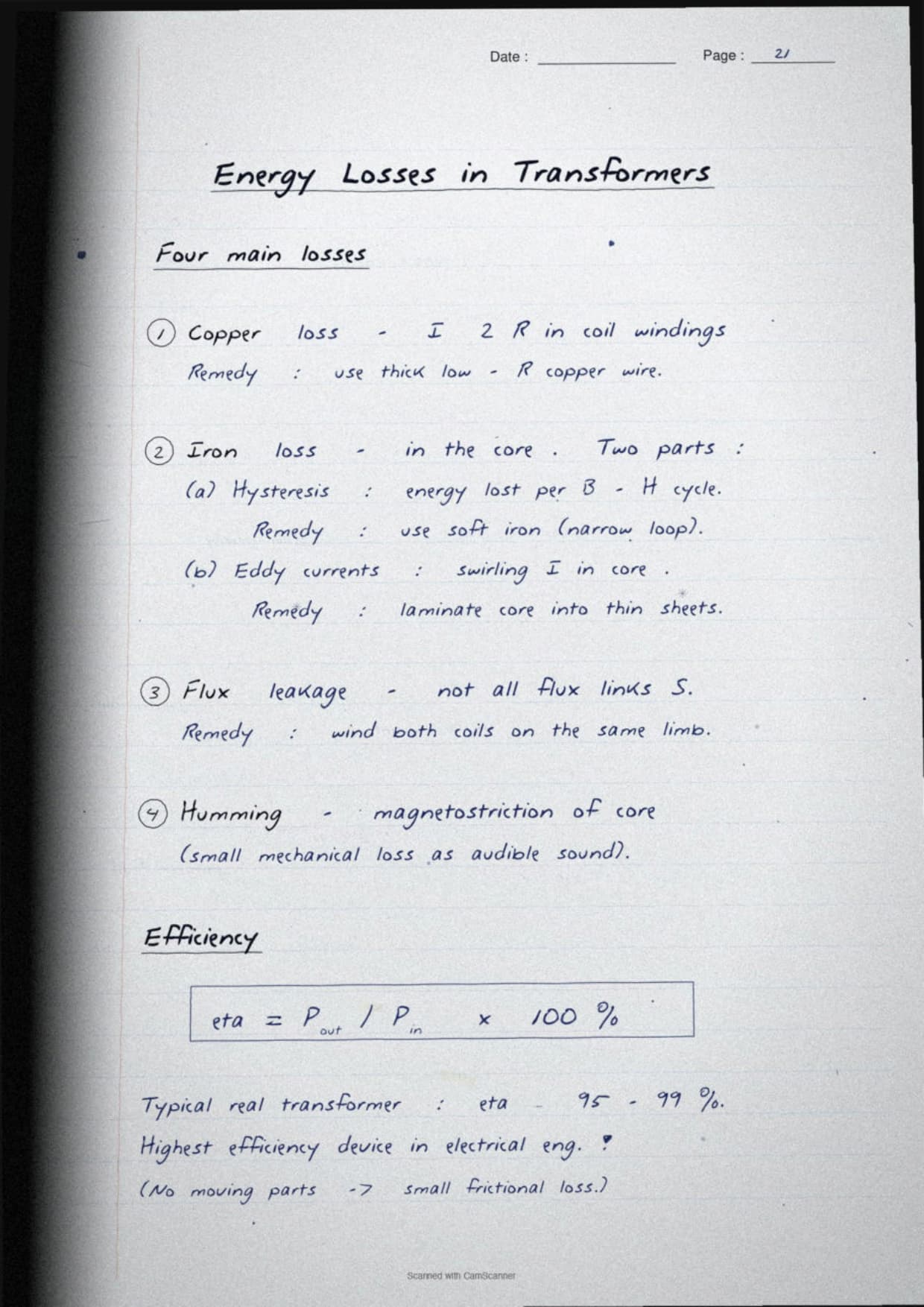
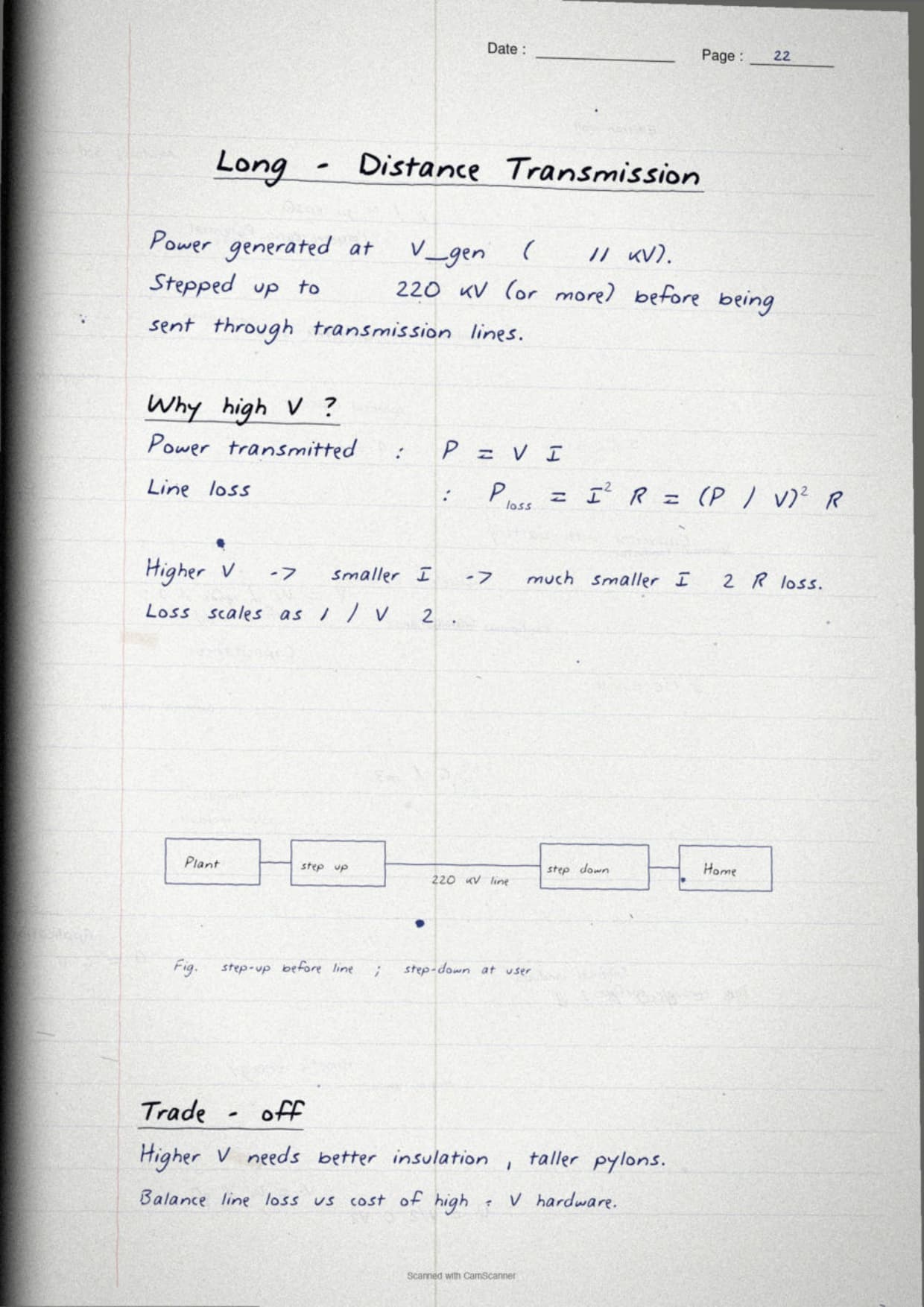
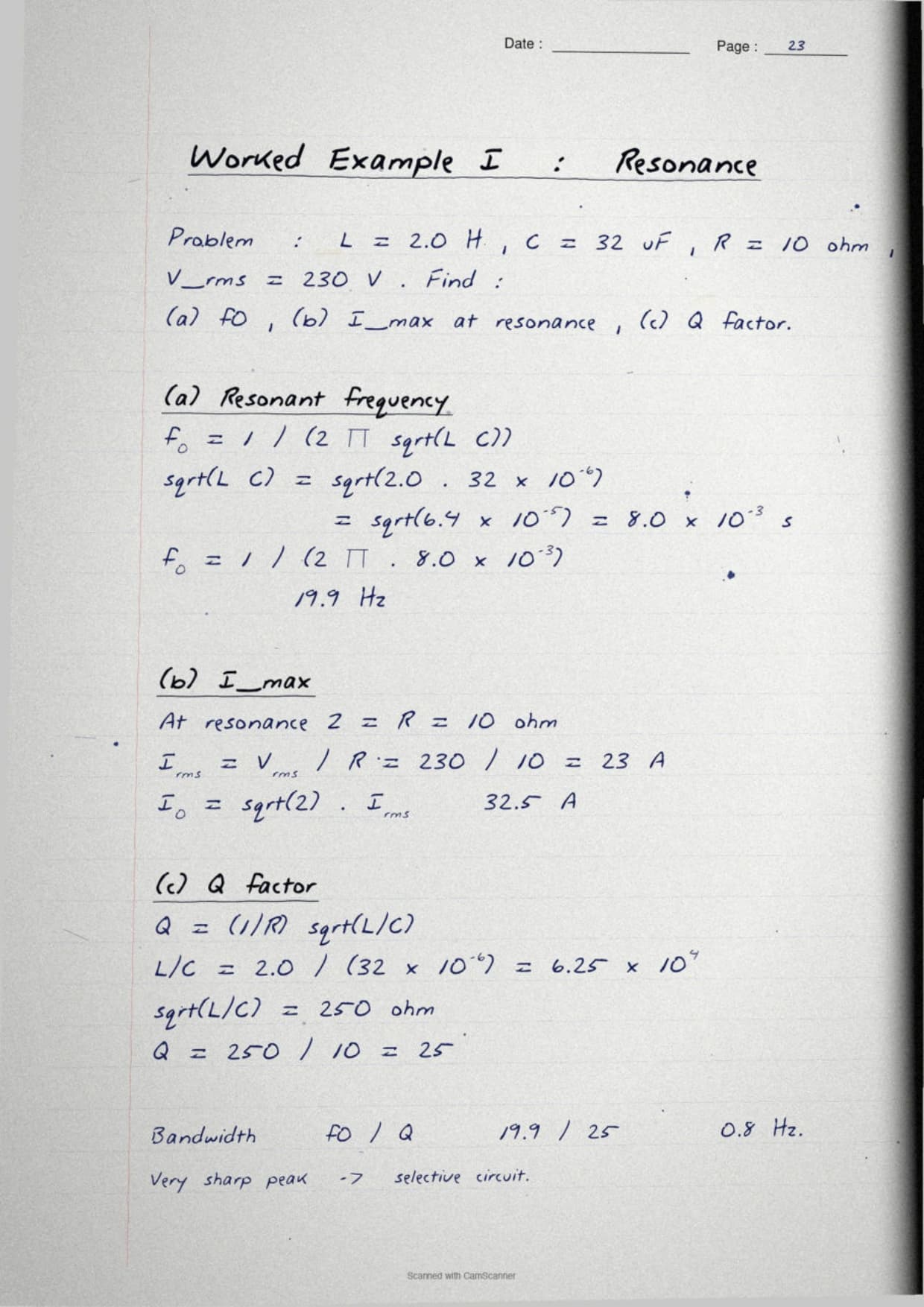
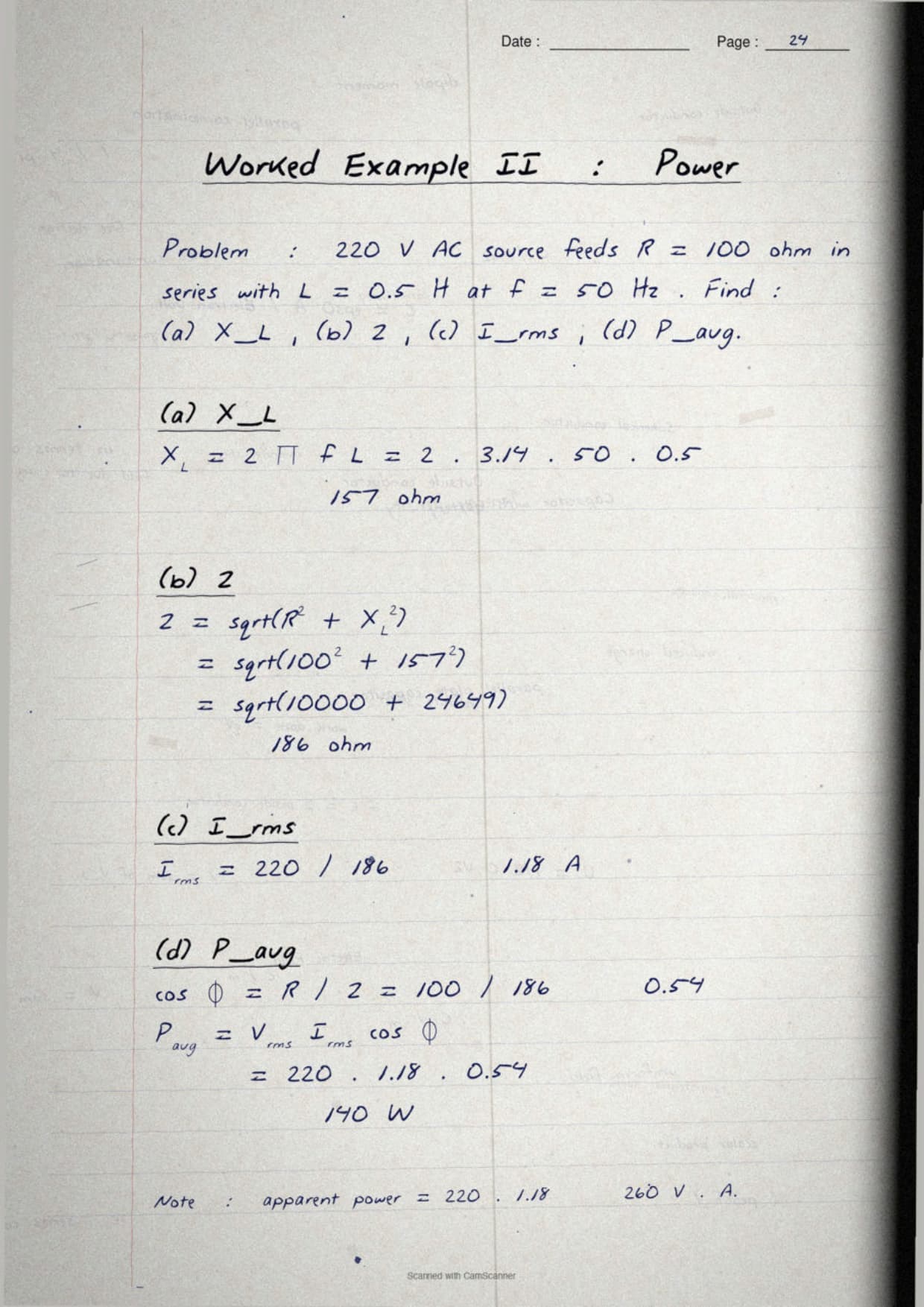
- CBSE Boards: 6 marks - usually one derivation block plus one short-answer concept question.
- JEE Main: 3 to 4 percent, with steady annual coverage on LCR resonance and derivations.
- NEET: 2 to 3 questions every year on chapter concepts.
Topics Covered in Class 12 Physics Chapter 7 Alternating Current Handwritten Notes
The chapter splits into 6 sub-topic blocks. Each block maps to a CBSE marking pattern.
- AC voltage applied to a resistor: 1-mark on V and I in phase.
- Phasor representation: 2-mark conceptual.
- AC through inductor and capacitor: 3-mark on reactance.
- LCR series circuit and resonance: 5-mark on Z and resonance.
- Power in AC circuit and power factor: 3-mark on P = V_rms I_rms cos phi.
- Transformer and AC generator: 3-mark on V_s/V_p = N_s/N_p, EMF derivation.
Class 12 Physics Chapter 7 All Formulas: Quick-Reference Table
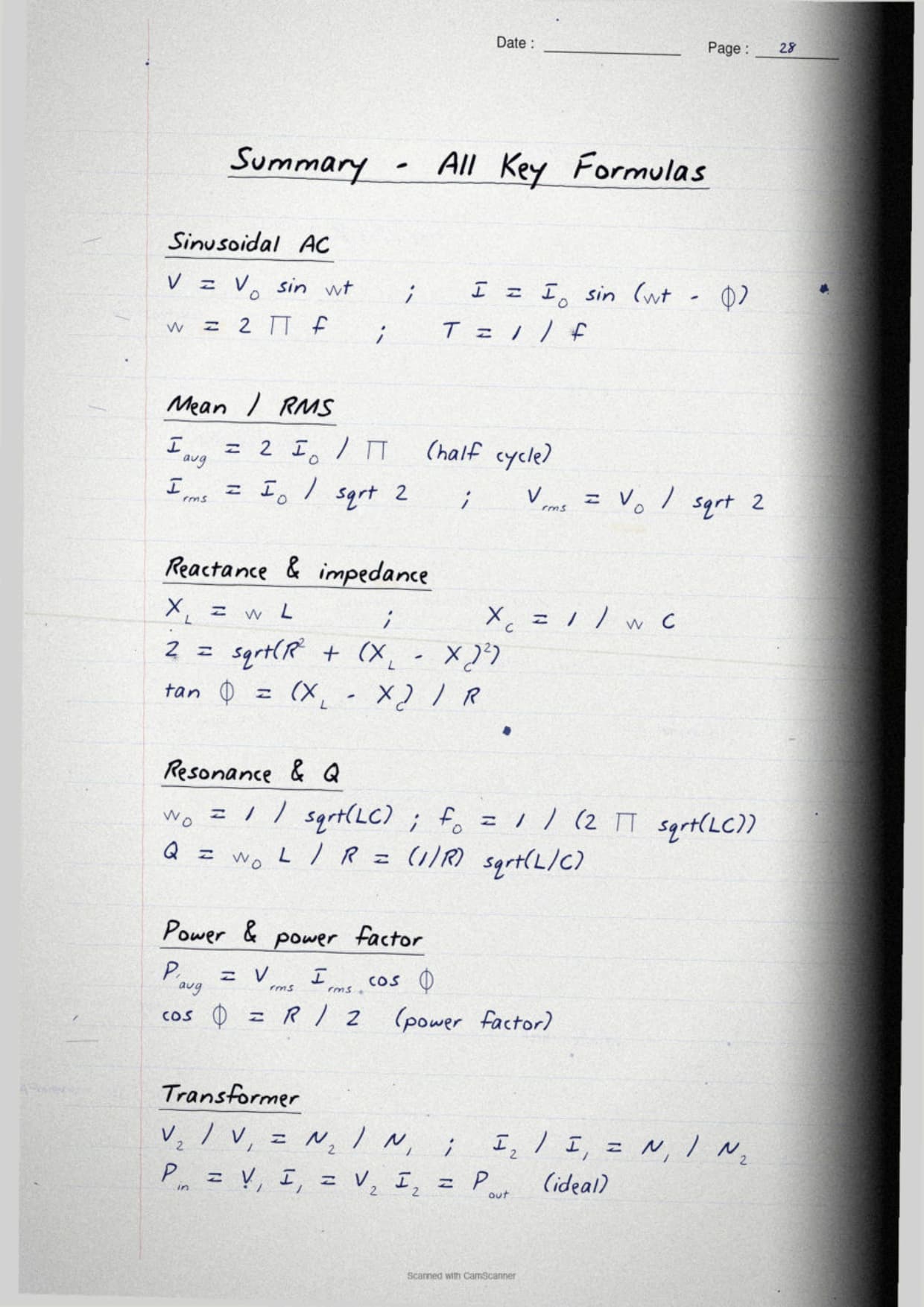
The table below lists every formula the chapter generates for CBSE, JEE Main, and NEET. Keep it handy for last-minute revision.
| Concept | Formula | SI Unit |
|---|---|---|
| Instantaneous voltage | V = V_0 sin(omega t) | volt |
| RMS value | I_rms = I_0 / sqrt(2) | ampere |
| Inductive reactance | X_L = omega L = 2 pi f L | ohm |
| Capacitive reactance | X_C = 1 / (omega C) | ohm |
| Impedance (LCR) | Z = sqrt(R^2 + (X_L - X_C)^2) | ohm |
| Resonance frequency | f_r = 1 / (2 pi sqrt(L C)) | Hz |
| Power factor | cos phi = R / Z | n/a |
| Average power | P_avg = V_rms I_rms cos phi | watt |
| Quality factor | Q = omega_r L / R | n/a |
| Transformer turns ratio | V_s / V_p = N_s / N_p | n/a |
Important Derivations in Class 12 Physics Chapter 7 Alternating Current
These 5 derivations carry the bulk of marks in CBSE Class 12 Physics Chapter 7. Each one appears in the handwritten notes PDF with full geometry sketches and step-by-step working.
| Derivation | Marks (CBSE) |
|---|---|
| AC generator EMF derivation | 3 |
| Reactance of inductor (X_L = omega L) | 2 |
| Reactance of capacitor (X_C = 1/omega C) | 2 |
| LCR series circuit impedance | 5 |
| Resonance condition and Q-factor | 3 |
Common Mistakes in Alternating Current Class 12 Physics Chapter 7
Mistake 1: Skipping the unit balance step. CBSE markers award marks for showing dimensional consistency on derivations.
Mistake 2: Confusing scalar and vector quantities in formulas. Add scalars algebraically, vectors as components.
Mistake 3: Forgetting boundary conditions in the AC through inductor and capacitor derivation. State assumptions explicitly before doing the algebra.
Mistake 4: Using approximate values when the question demands exact symbolic answers. Boards mark down for premature numerical substitution.
Each one costs 1 to 2 marks.
Alternating Current Class 12 Physics Chapter 7 - Video Lecture
Source: NCERT Wallah on YouTube
Alternating Current Weightage Compared Across Class 12 Physics Chapters
The table below shows CBSE board average marks per chapter over the last five papers.
| Chapter | Topic | Avg CBSE Marks |
|---|---|---|
| Ch 1 | Electric Charges and Fields | 6 marks |
| Ch 2 | Electrostatic Potential and Capacitance | 7 marks |
| Ch 3 | Current Electricity | 7 marks |
| Ch 4 | Moving Charges and Magnetism | 6 marks |
| Ch 5 | Magnetism and Matter | 3 marks |
| Ch 6 | Electromagnetic Induction | 5 marks |
| Ch 7 | Alternating Current | 6 marks |
| Ch 8 | Electromagnetic Waves | 2 marks |
| Ch 9 | Ray Optics and Optical Instruments | 7 marks |
| Ch 10 | Wave Optics | 5 marks |
| Ch 11 | Dual Nature of Radiation and Matter | 4 marks |
| Ch 12 | Atoms | 3 marks |
| Ch 13 | Nuclei | 3 marks |
| Ch 14 | Semiconductor Electronics | 6 marks |
Alternating Current Previous Year Questions Weightage (2021 to 2026)
The table maps every CBSE Board, JEE Main, and NEET appearance of Class 12 Physics Chapter 7 topics over six sessions.
| Year | CBSE Board | JEE Main | NEET |
|---|---|---|---|
| 2026 | AC generator derivation (5 marks) | LCR resonance frequency (4 marks) | LCR circuit, resonance and power factor (2 questions) |
| 2025 | LCR series circuit and power factor (5 marks) | RMS value and peak value relation | Reactance comparison MCQ |
| 2024 | Transformer step-up problem (3 marks) | Q-factor of LCR circuit | RMS value derivation |
| 2023 | Power factor and wattless current (3 marks) | Resonance angular frequency | Phasor diagram MCQ |
| 2022 | AC through inductor derivation (3 marks) | Transformer efficiency | LC oscillation period |
| 2021 | - | Power dissipation in LCR | AC generator EMF |
Student Feedback
In a Collegedunia poll of 13,980 Class 12 Physics students before the 2026 boards, 69% of students rated LCR resonance and the Q-factor derivation as the trickiest sub-topic, ahead of the inductive vs capacitive reactance distinction.
- 69% of students marked LCR resonance and the Q-factor derivation as the most-confusing sub-topic.
- 57% reported confusion in the inductive vs capacitive reactance block on at least one class test.
- 4 out of 5 students said the AC generator EMF derivation was the most-practised derivation the night before boards.
- Average student took 5.0 hours for first-read and 2.4 hours for focused revision.
Source: 2025-26 Class 12 Physics student poll. Sample of 13,980 students from CBSE schools across 16 states.
Other Resources for Class 12 Physics Chapter 7 Alternating Current
| Resource | Link |
|---|---|
| NCERT Solutions | Class 12 Alternating Current NCERT Solutions |
| Formula Sheet | Class 12 Physics Chapter 7 Formula Sheet |
| NCERT Book PDF | Class 12 Alternating Current NCERT Book PDF |
| Exemplar Book PDF | Class 12 Alternating Current NCERT Exemplar Book PDF |
| Exemplar Solutions | Class 12 Alternating Current NCERT Exemplar Solutions |
| Handwritten Notes | Alternating Current Handwritten Notes |
NCERT Handwritten Notes for Class 12 Physics: All Chapters
| Chapter | Resource |
|---|---|
| Chapter 1 | Electric Charges and Fields Handwritten Notes |
| Chapter 2 | Electrostatic Potential and Capacitance Handwritten Notes |
| Chapter 3 | Current Electricity Handwritten Notes |
| Chapter 4 | Moving Charges and Magnetism Handwritten Notes |
| Chapter 5 | Magnetism and Matter Handwritten Notes |
| Chapter 6 | Electromagnetic Induction Handwritten Notes |
| Chapter 7 | Alternating Current |
| Chapter 8 | Electromagnetic Waves Handwritten Notes |
| Chapter 9 | Ray Optics and Optical Instruments Handwritten Notes |
| Chapter 10 | Wave Optics Handwritten Notes |
| Chapter 11 | Dual Nature of Radiation and Matter Handwritten Notes |
| Chapter 12 | Atoms Handwritten Notes |
| Chapter 13 | Nuclei Handwritten Notes |
| Chapter 14 | Semiconductor Electronics Handwritten Notes |
Class 12 Physics Chapter 7 Alternating Current Handwritten Notes FAQs
Ques. What are the main topics in Class 12 Physics Chapter 7 Alternating Current?
Ans. Chapter 7 covers AC voltage applied to a resistor, phasor representation, AC through inductor and capacitor, LCR series circuit and resonance, power in AC circuit and power factor, and transformer and AC generator.
Ques. What are the most-asked derivations in Class 12 Physics Chapter 7?
Ans. Five derivations carry the chapter mark weight: AC generator EMF derivation, reactance of inductor (X_L = omega L), reactance of capacitor (X_C = 1/omega C), LCR series circuit impedance, and resonance condition with Q-factor.
Ques. What is the weightage of Alternating Current in Class 12 Physics CBSE?
Ans. Chapter 7 carries 6 marks in CBSE Class 12 Physics, 3 to 4 percent in JEE Main, and 2 to 3 questions per year in NEET.
Ques. Where can I get the Class 12 Physics Chapter 7 handwritten notes PDF?
Ans. The handwritten notes PDF is available on this page via the flipbook and download button above. It covers all 10 formulas, 5 derivations, and worked numericals for the 2026-27 NCERT syllabus.
Ques. What is the hardest sub-topic in Class 12 Physics Chapter 7?
Ans. In the 2025-26 student poll, 69% of students rated LCR resonance and the Q-factor derivation as the trickiest sub-topic. Detailed coverage with 3 solved examples is in the PDF.



Comments