



Class 12 Physics Chapter 3 Current Electricity covers electric current and current density through potentiometer. The chapter carries 7 marks in CBSE and 5 to 6 percent in JEE Main. This page hosts the class 12 physics NCERT notes chapter 3 current electricity PDF.
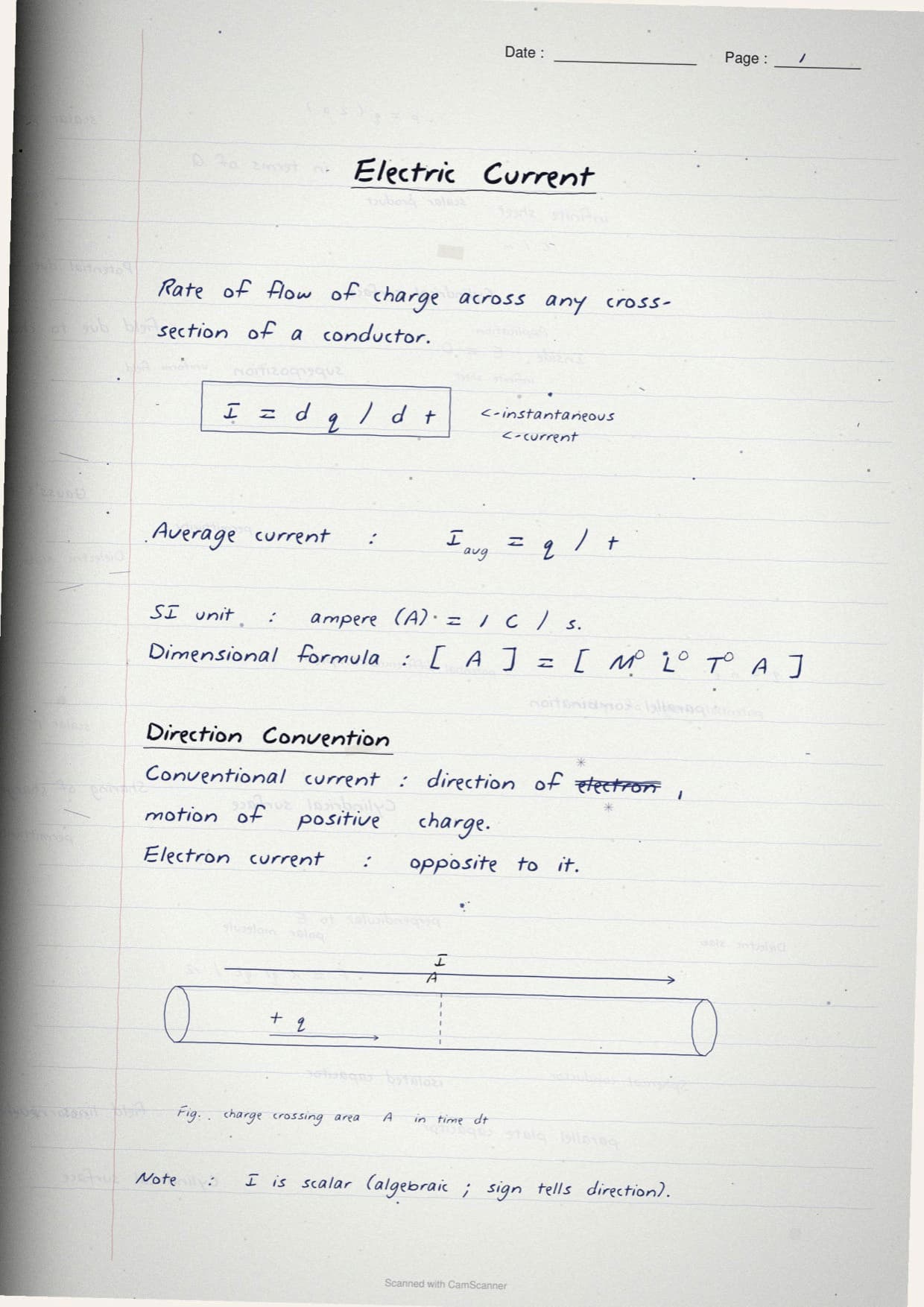
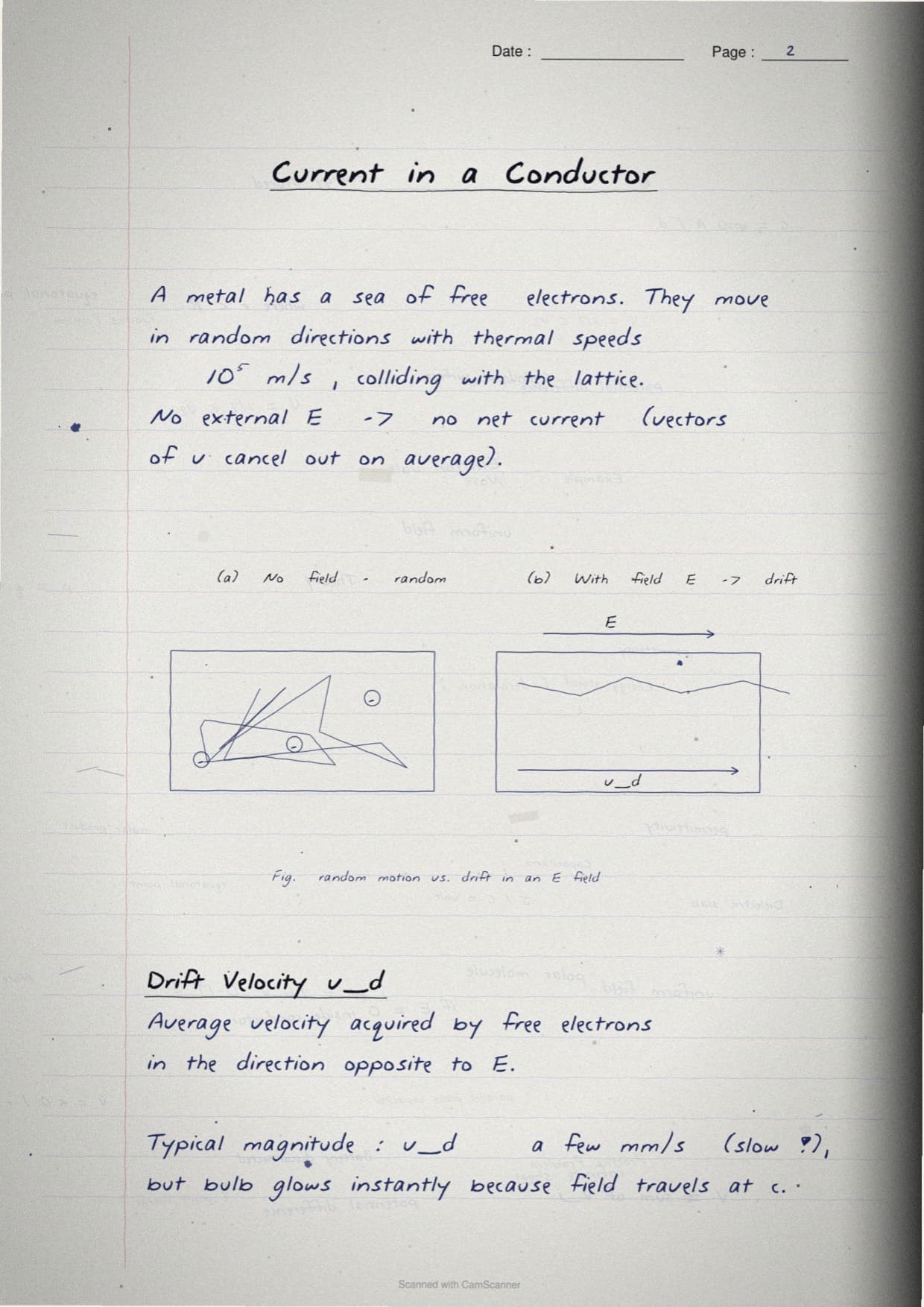
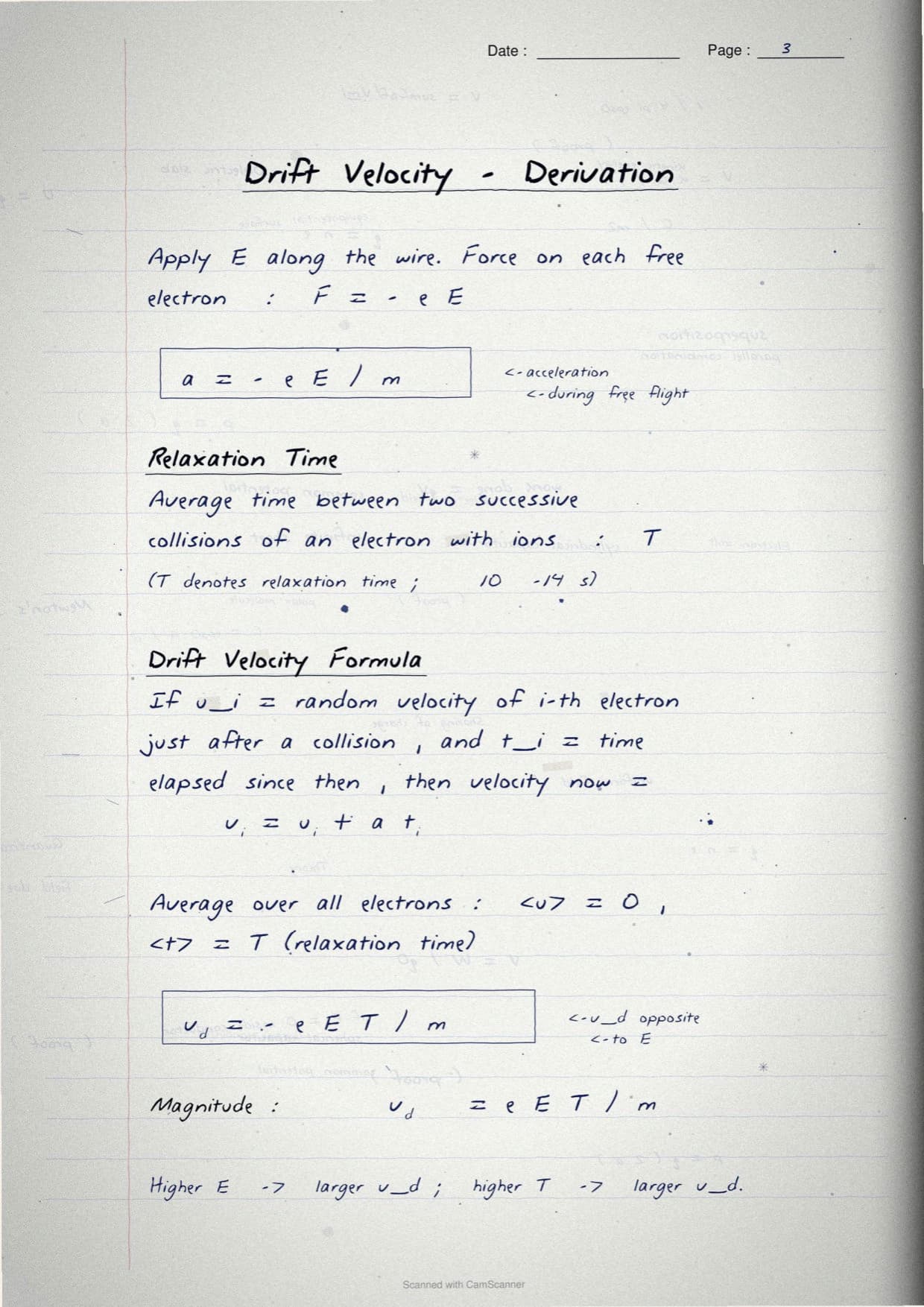
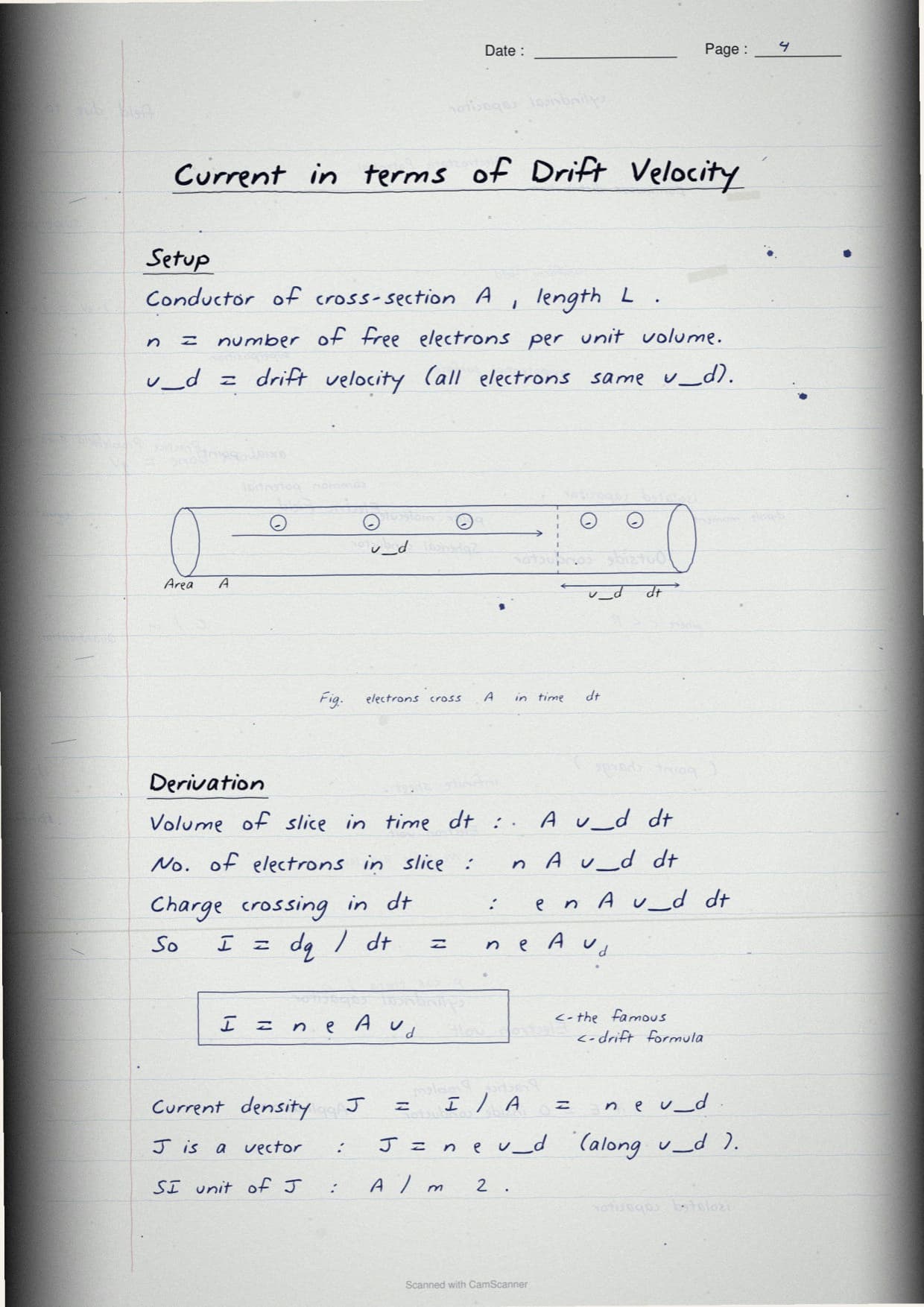
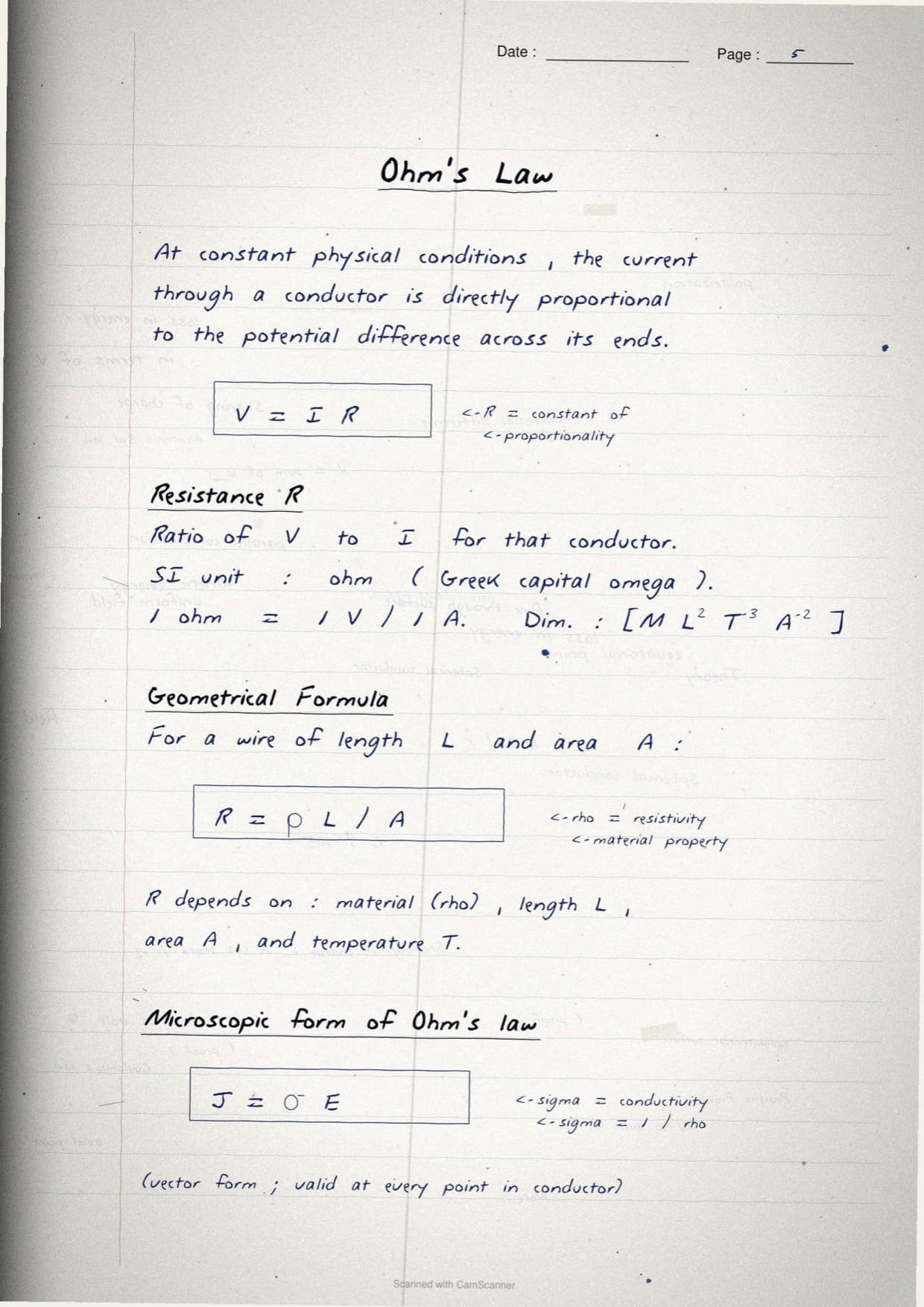

Before you open the notes, here is where this chapter sits across the three big exams, so you know how much time each one deserves.
- CBSE Boards: 7 marks, usually one derivation block plus one short-answer concept question.
- JEE Main: 5 to 6 percent, with steady annual coverage on derivations and numericals.
- NEET: 2 to 3 questions every year on chapter concepts.
What the Current Electricity Handwritten Notes Cover
The chapter splits into six revision blocks, and the notebook gives each one a page with its CBSE marking pattern noted in the margin:
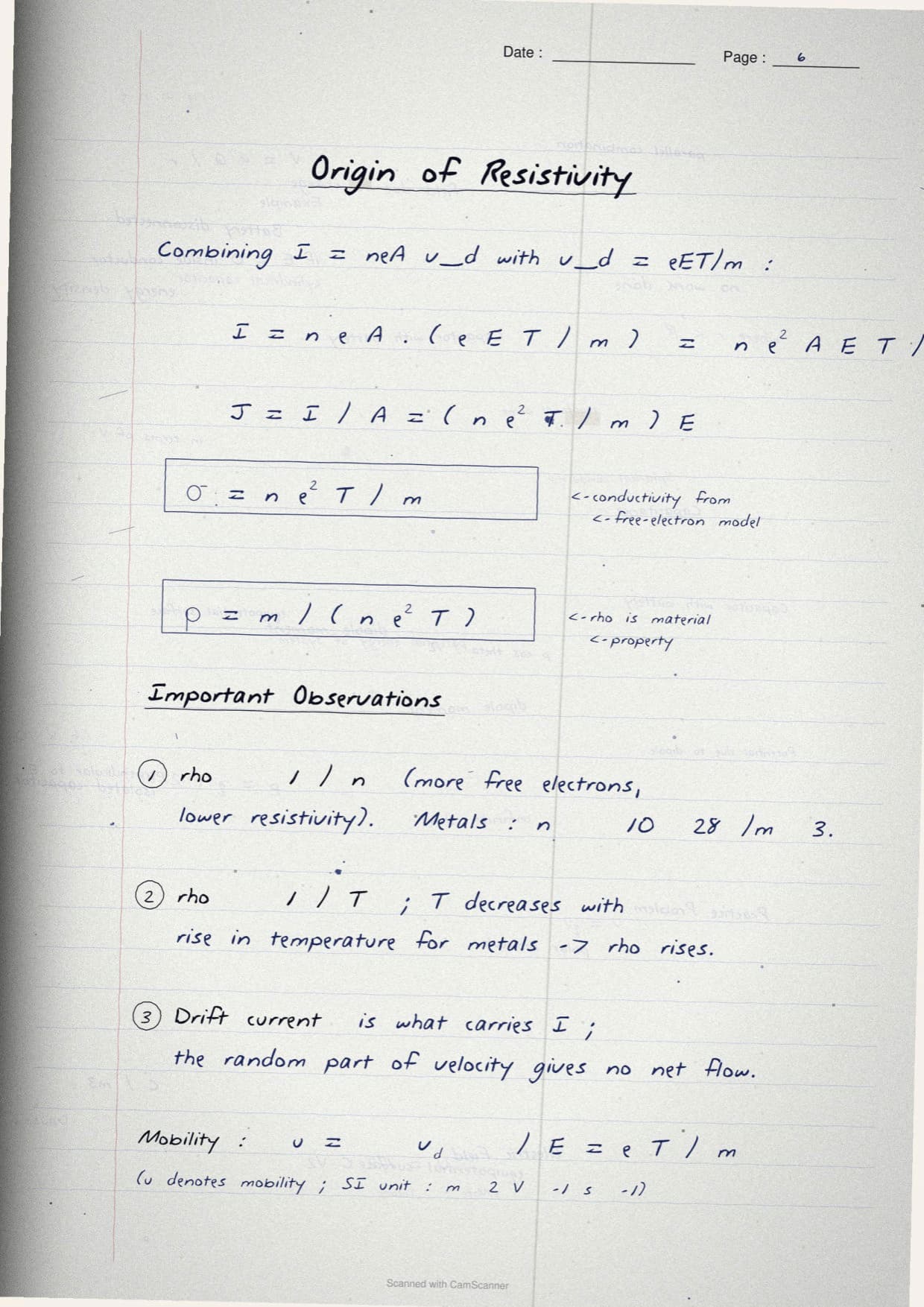
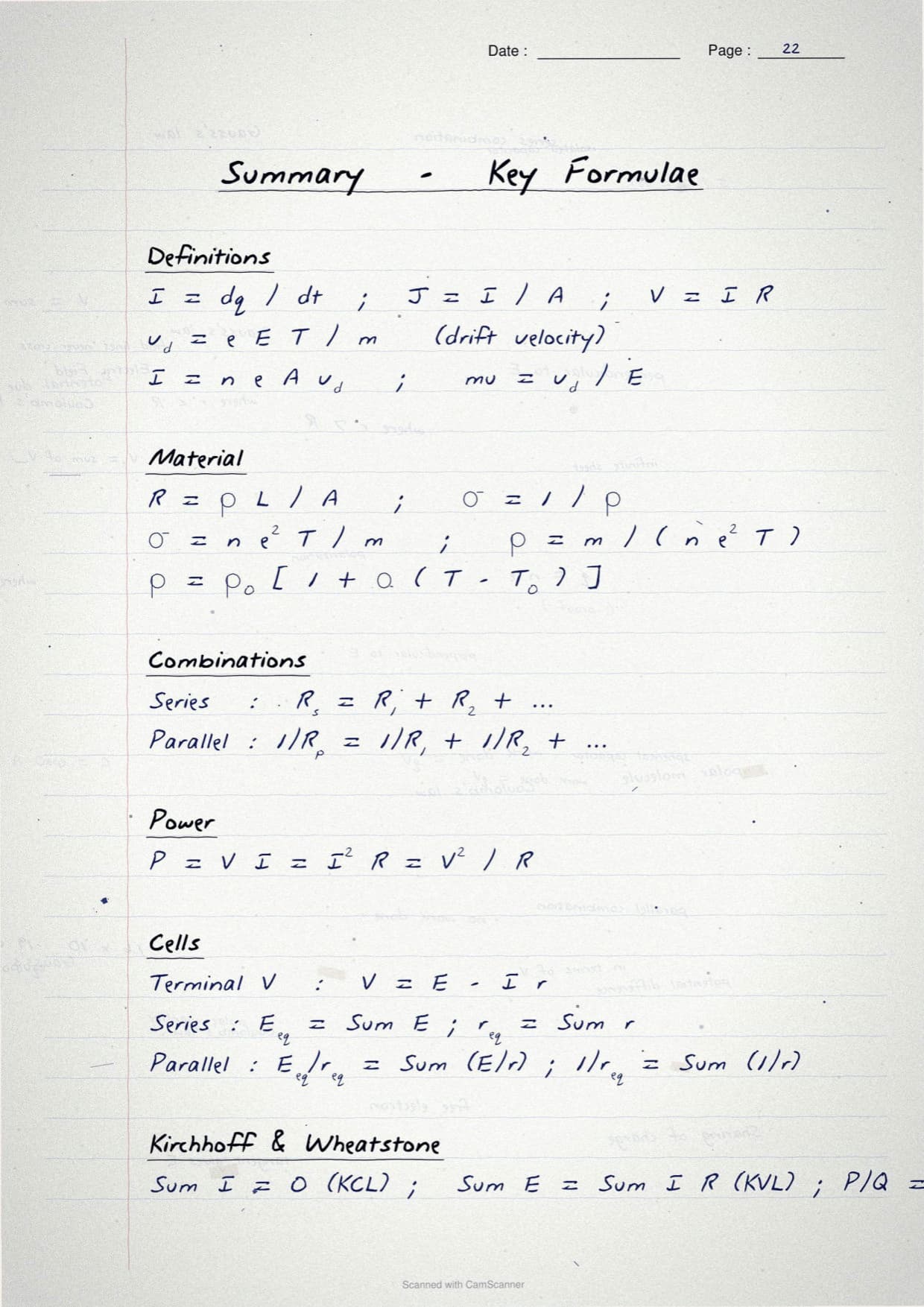
- Current and drift velocity (2 marks): I = nAevd, mobility and current density.
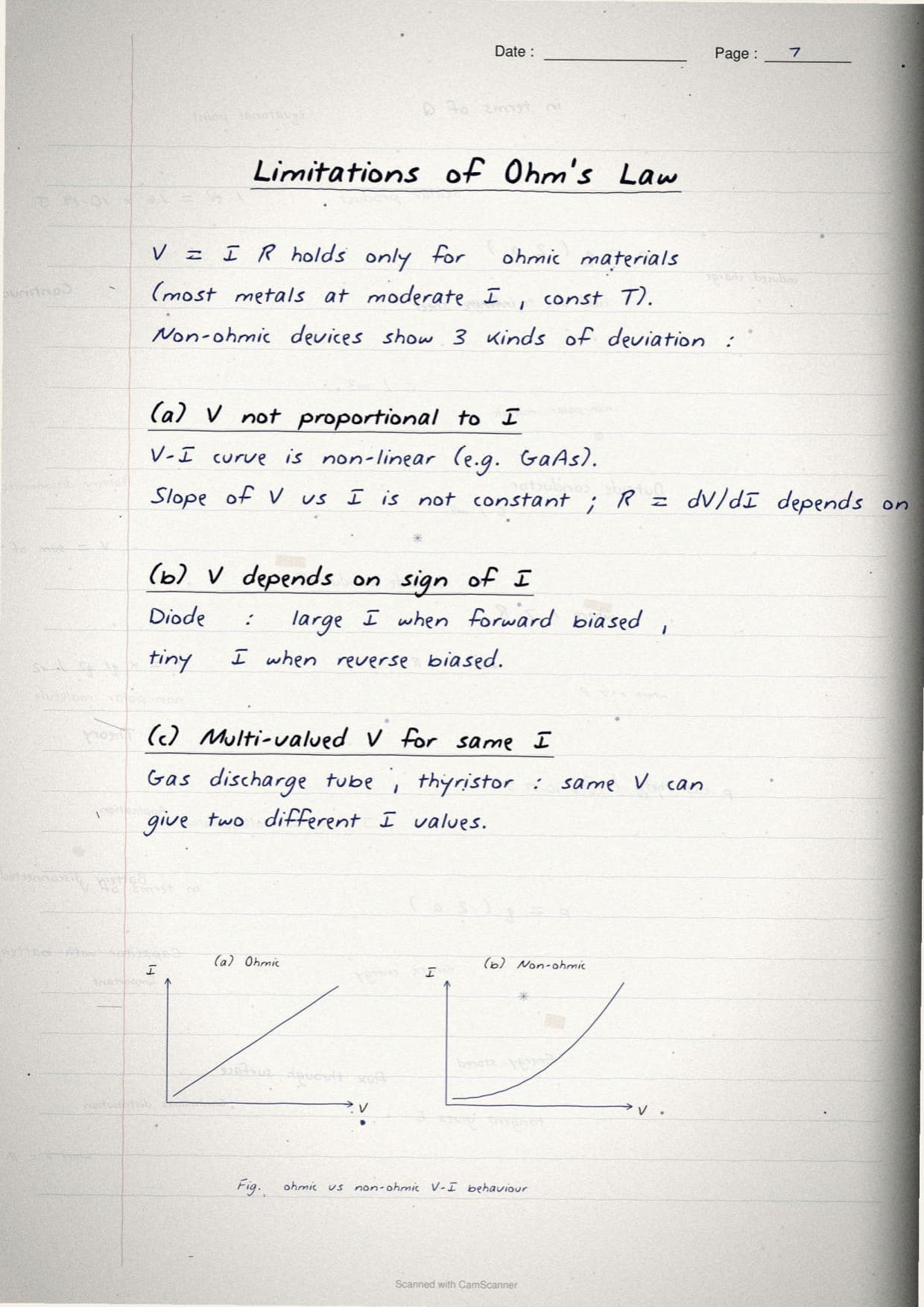
- Ohm's law and resistance (2 marks): V = IR, R = ρl/A, and non-ohmic graphs.
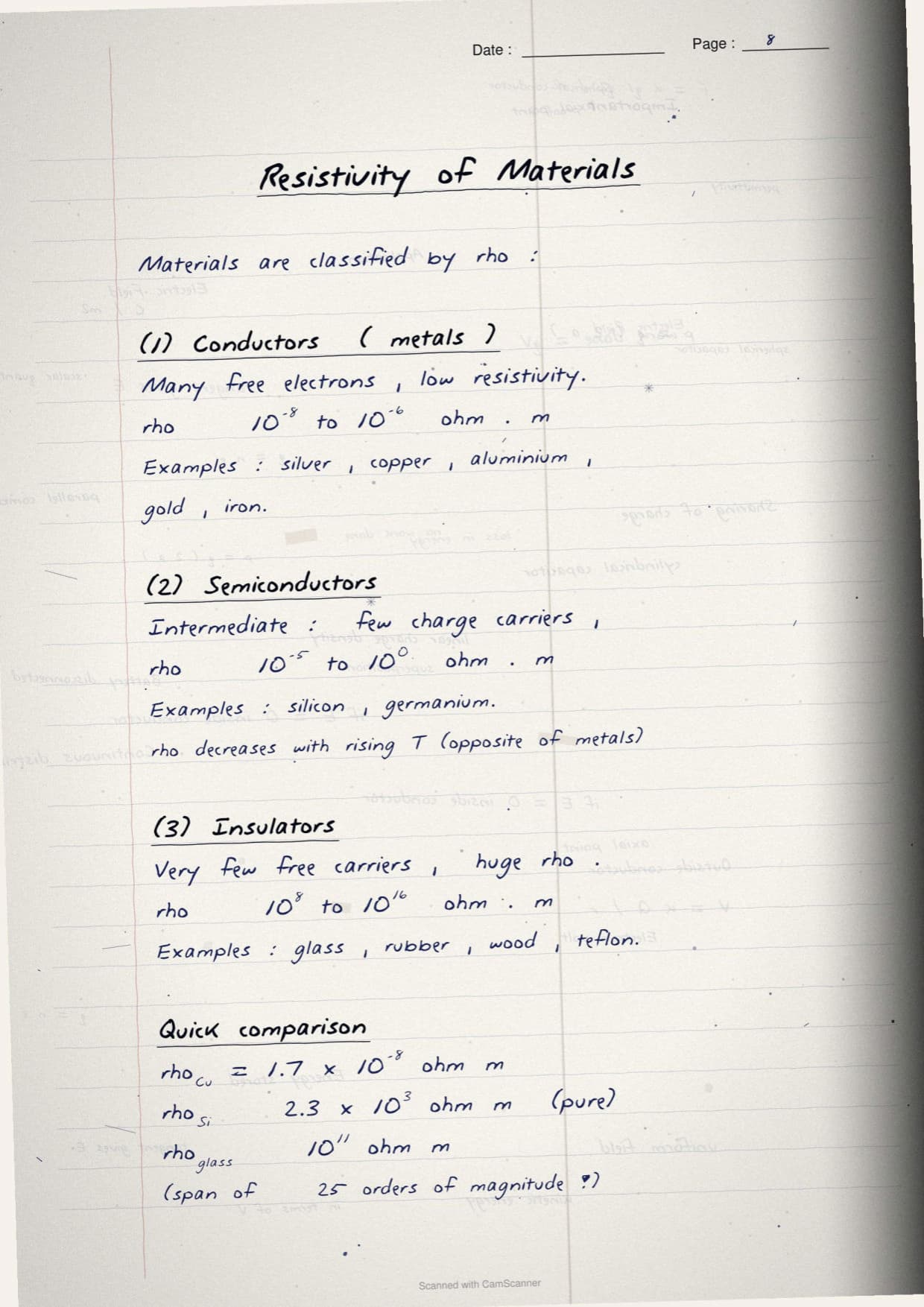
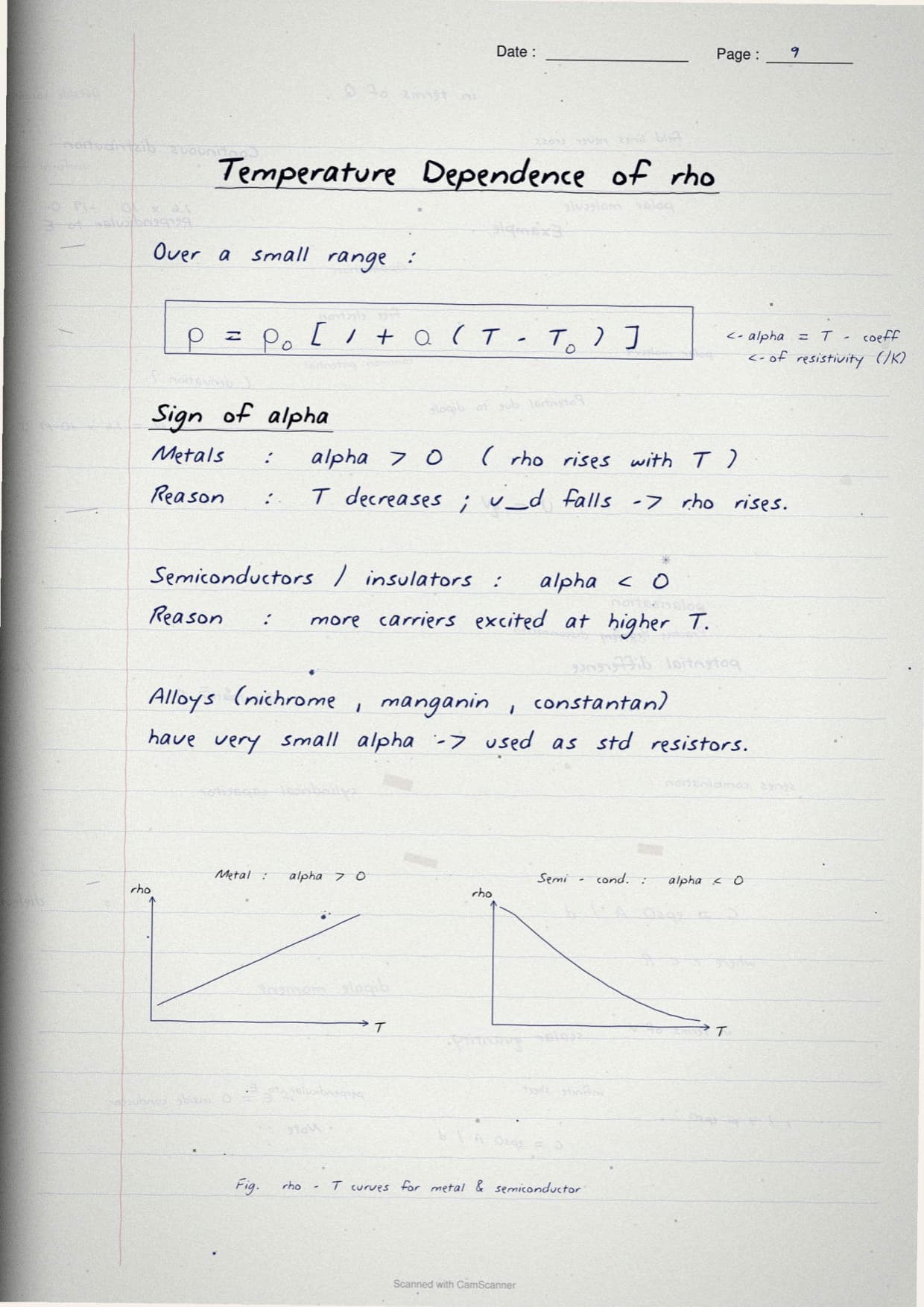
- Resistivity and temperature (2 marks): ρ = ρ₀(1 + αΔT) for metals and semiconductors.
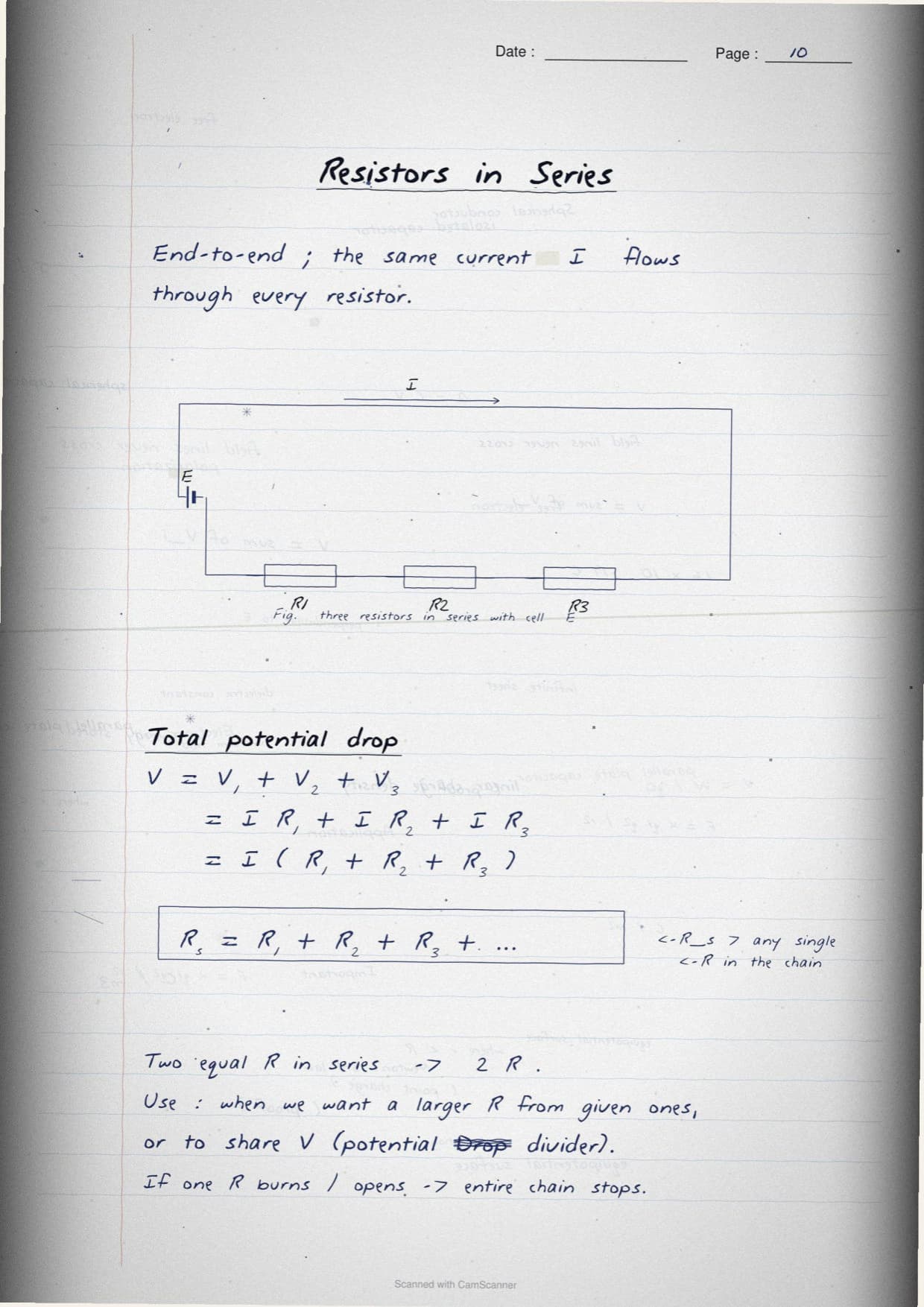
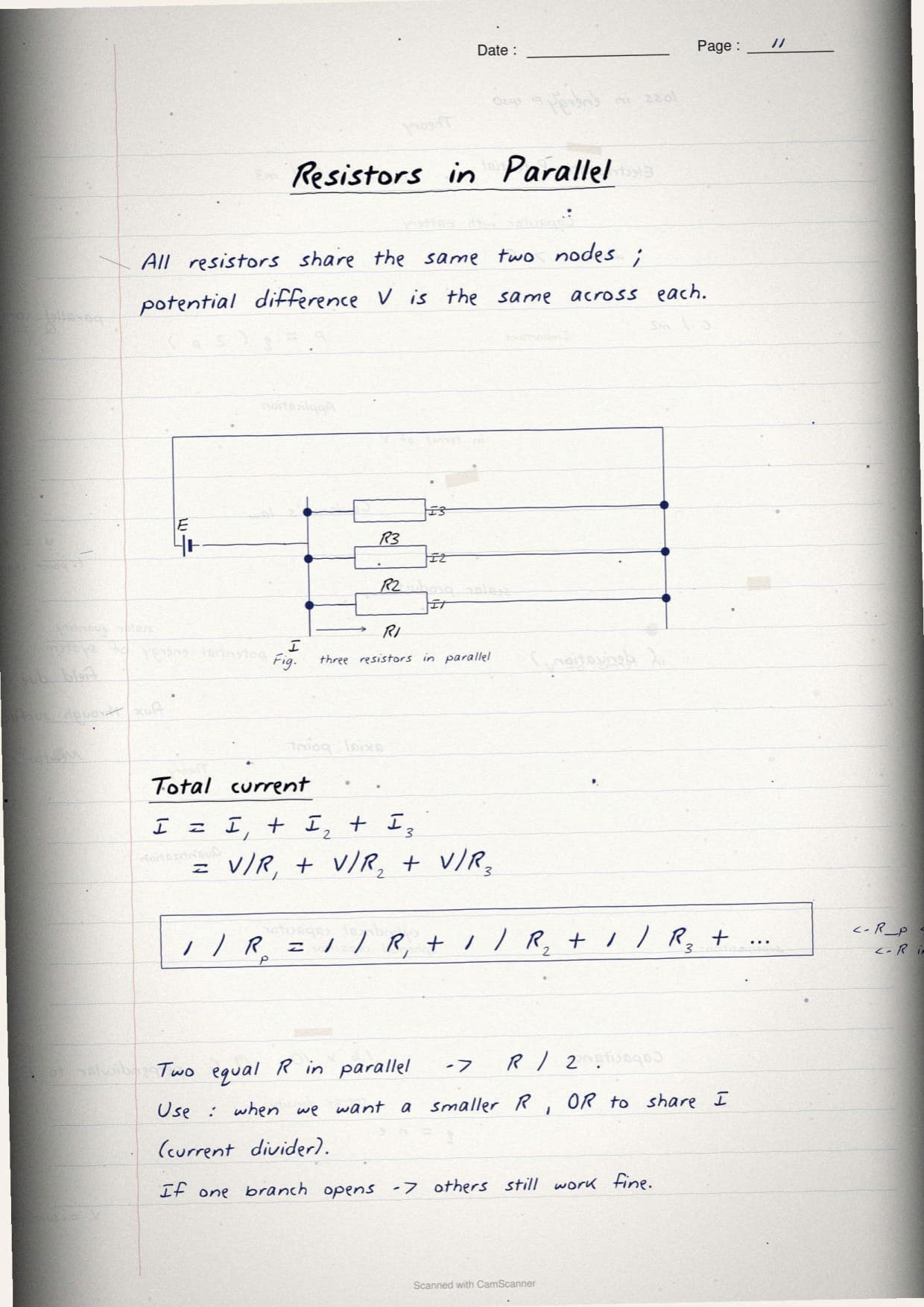
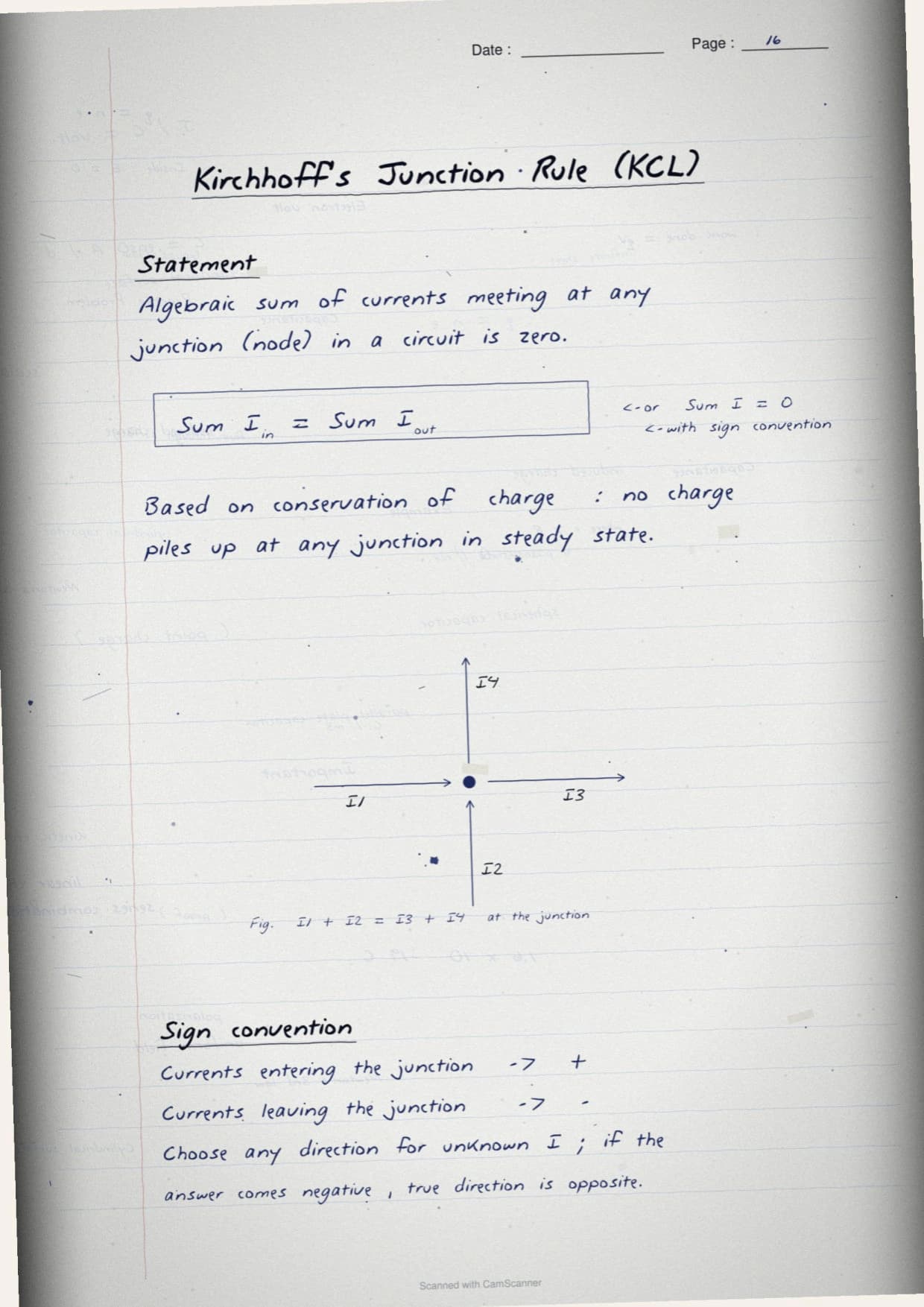
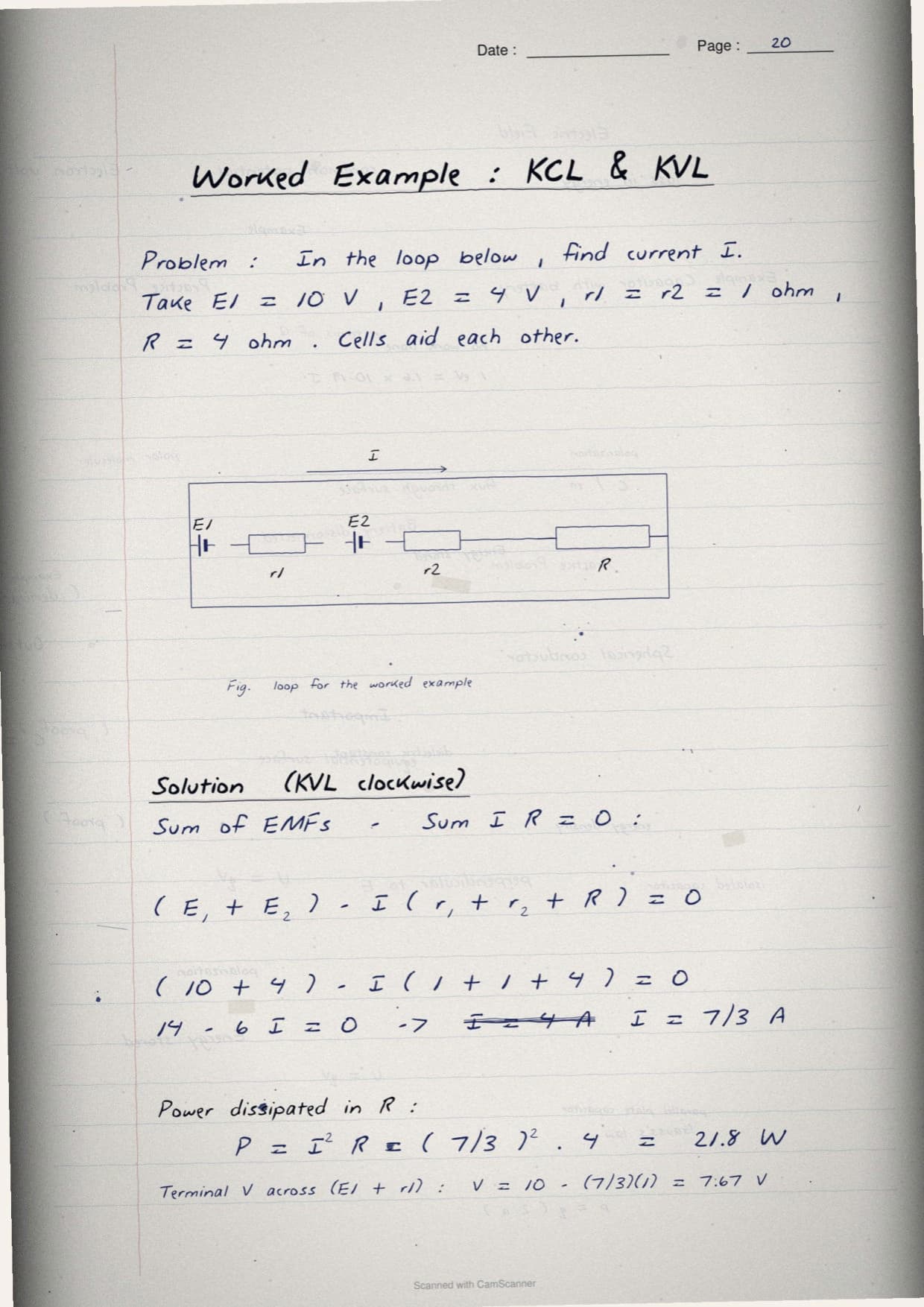
- Series and parallel networks (3 marks): combining resistors and Kirchhoff's two laws.
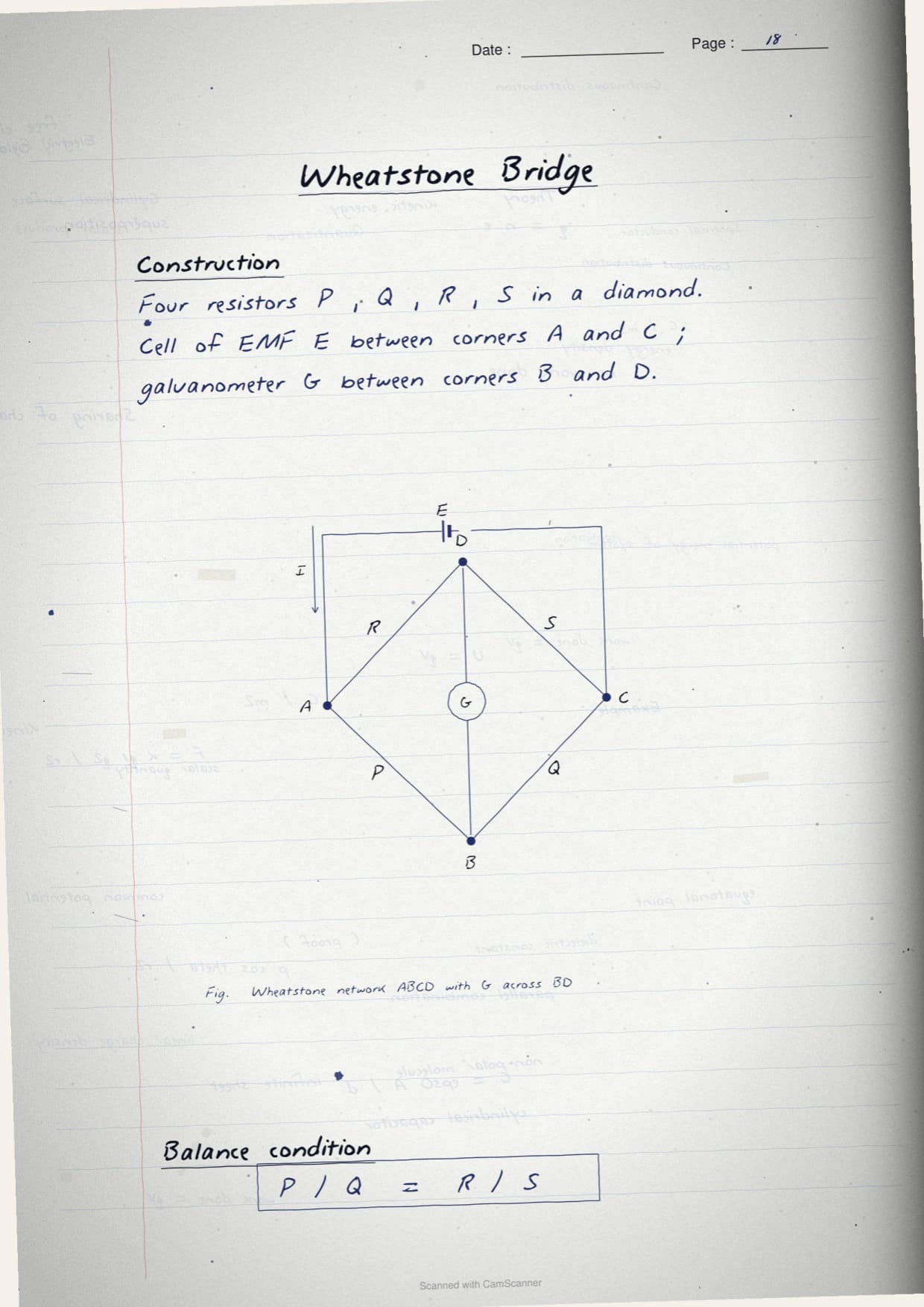
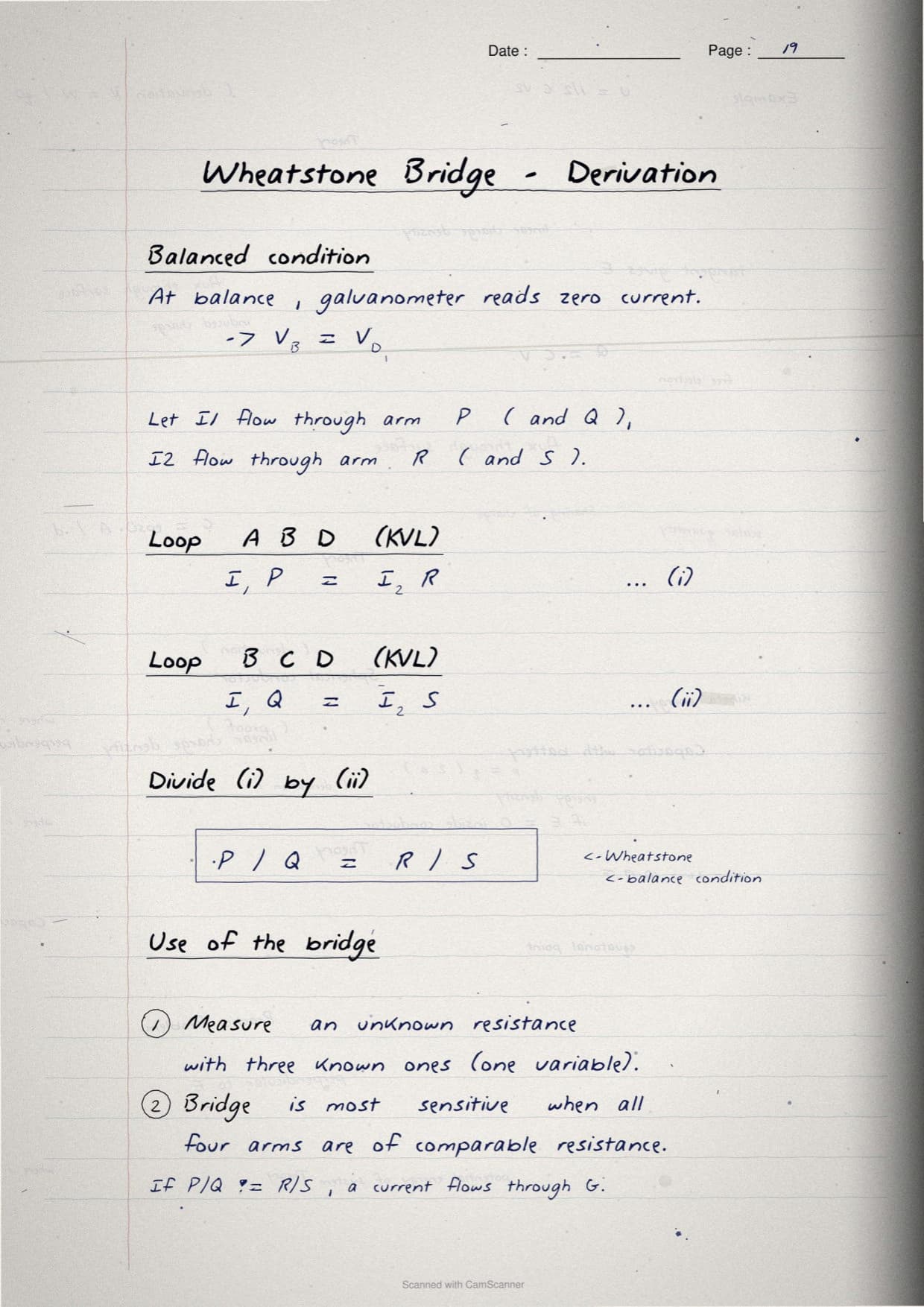
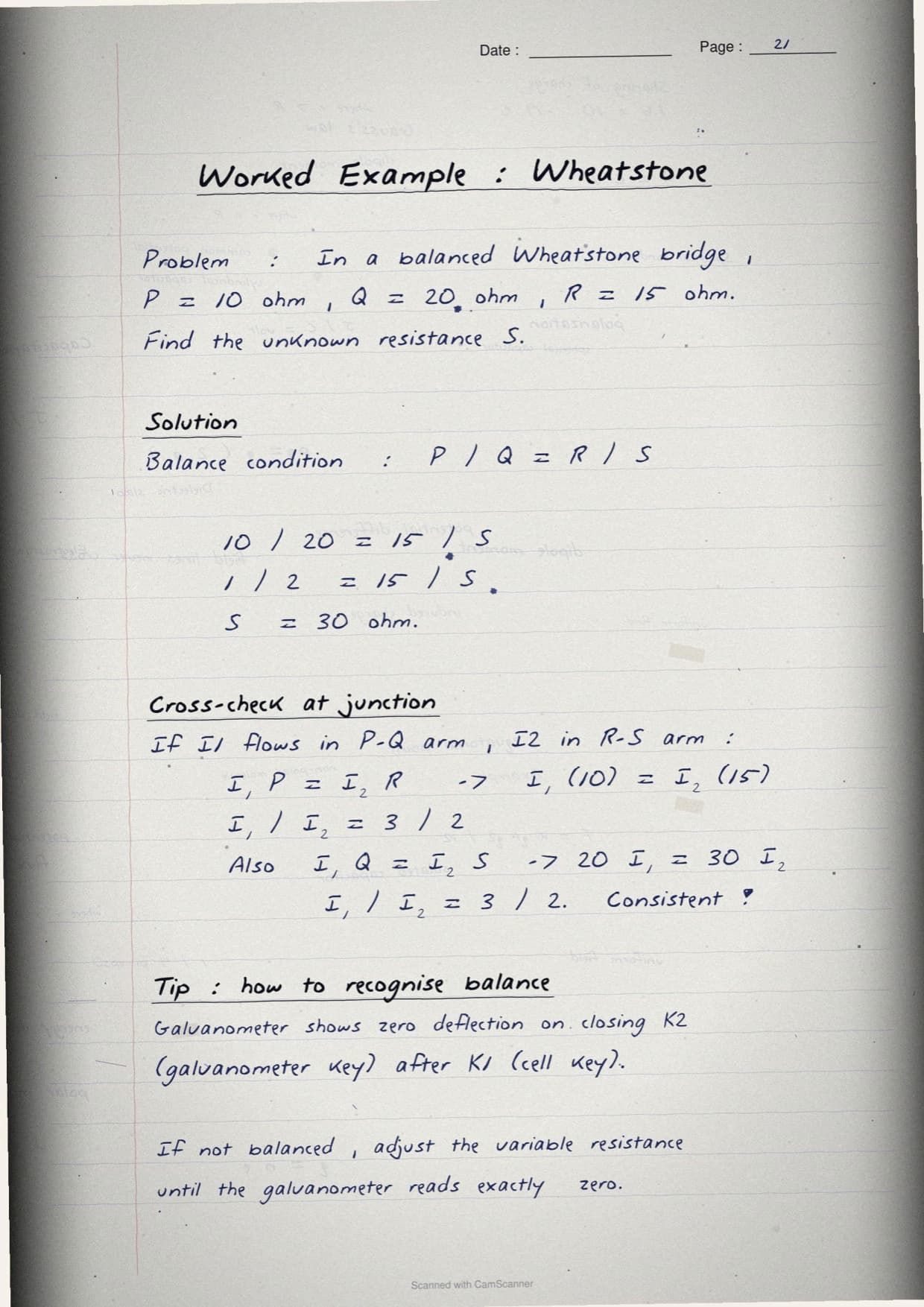
- Wheatstone bridge and potentiometer (5 marks): the balance condition P/Q = R/S and EMF comparison.
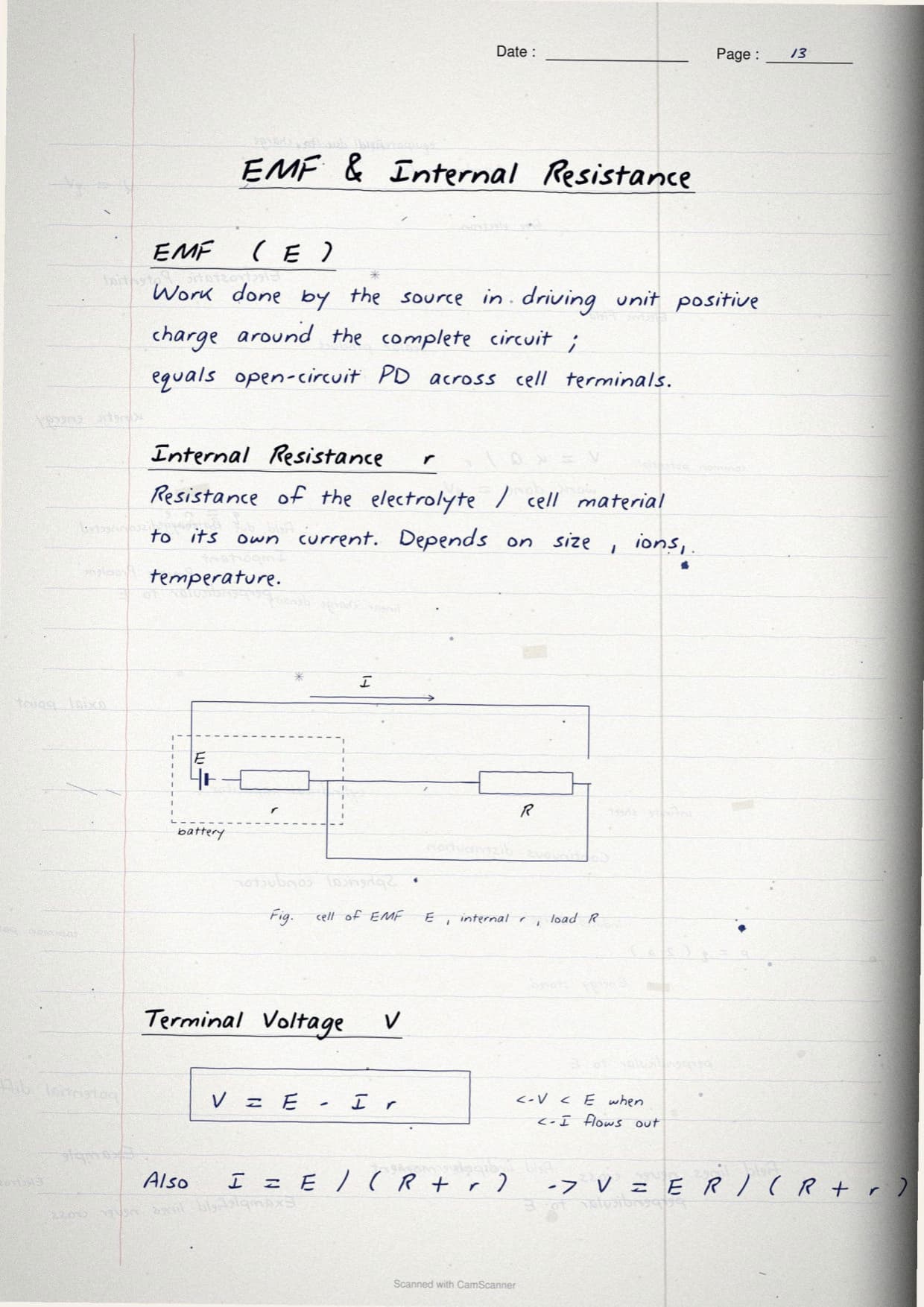
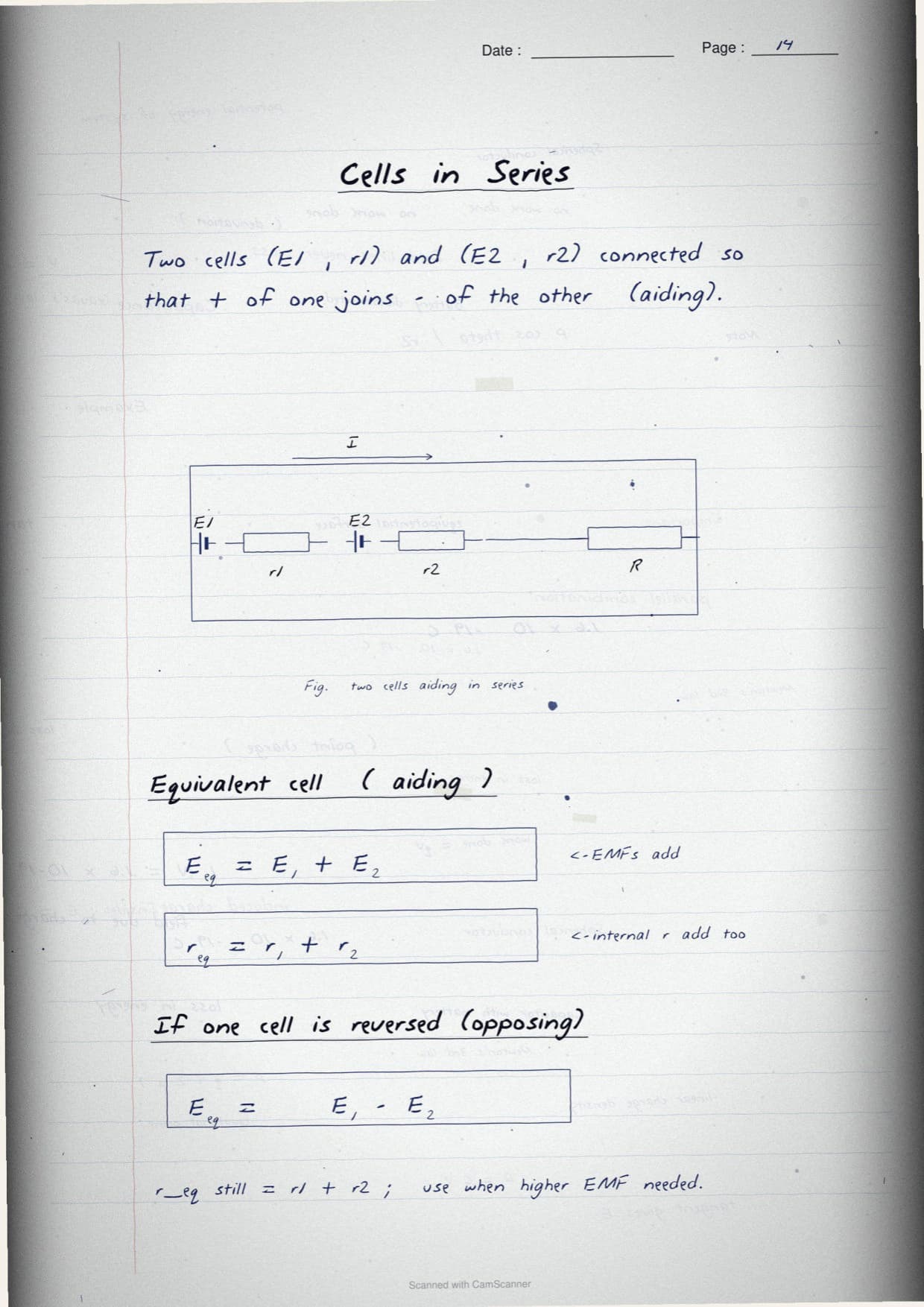
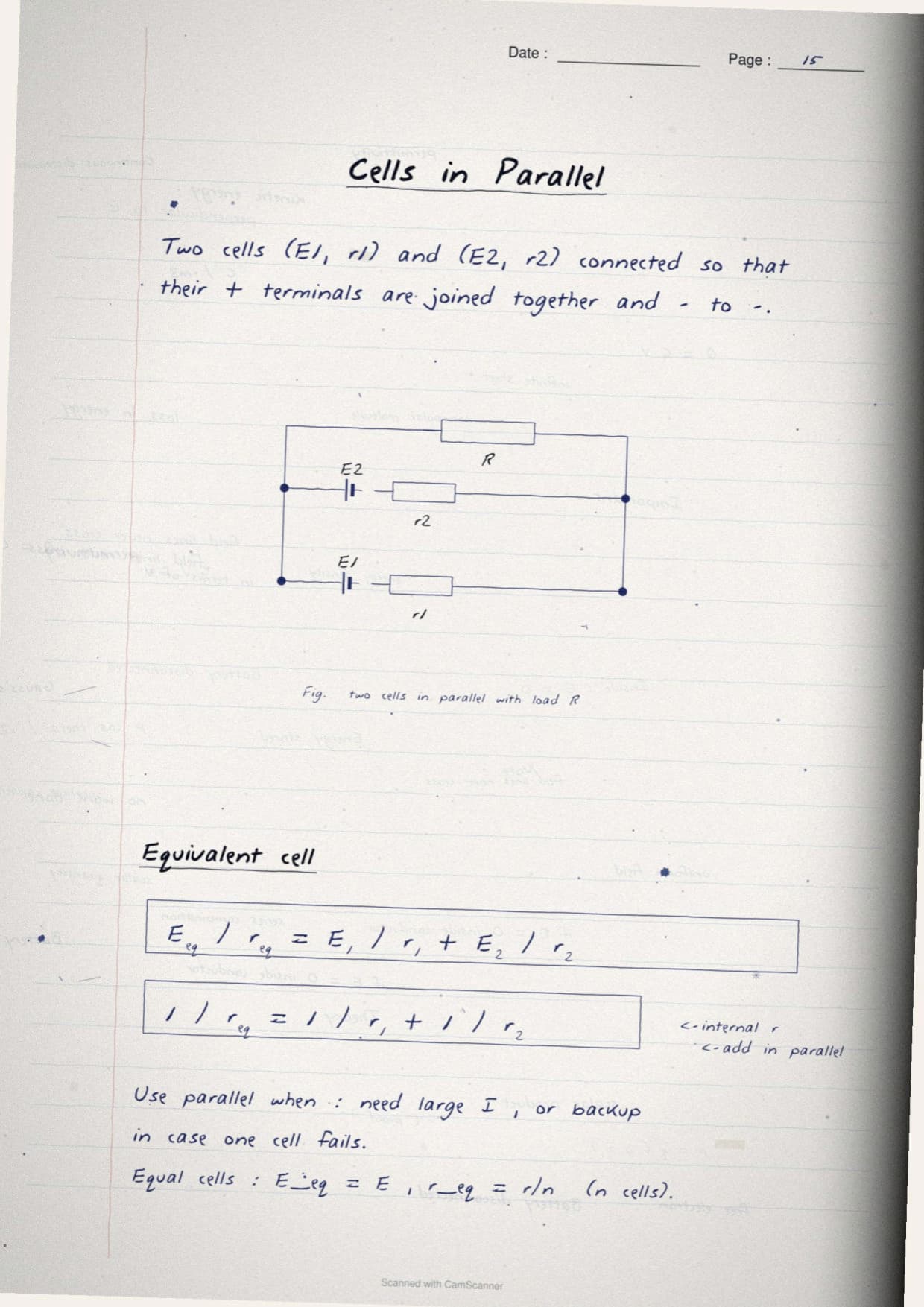
- EMF and internal resistance (3 marks): ε = V + Ir, plus cells in series and parallel.
Current Electricity Class 12 Video Lecture
Source: NCERT Wallah on YouTube
Common Circuit Mistakes That Cost Marks
- Flipping a sign in Kirchhoff's loops. Fix one current direction and stick to it. One wrong sign breaks the whole KVL equation.
- Swapping the series and parallel rules. Resistances add in series; reciprocals add in parallel. Mixing them up wrecks the equivalent resistance.
- Dropping the internal resistance. Terminal voltage is V = ε − Ir, not ε. Students forget the Ir term and lose easy marks.
- Reading the meter bridge from the wrong end. Take the null point from the correct side, or the ratio P/Q = R/S comes out inverted.
Each slip usually costs 1 to 2 marks.
Current Electricity Formula Quick-Reference
Every numerical in the chapter traces back to one of these formulas. The same set is printed on the PDF cover sheet for a last-minute glance.
| Concept | Formula | SI Unit |
|---|---|---|
| Electric current | I = nAevd | ampere |
| Drift velocity | vd = eEτ / m | m/s |
| Mobility | μ = vd / E | m²/(V·s) |
| Ohm's law | V = IR | volt |
| Resistance | R = ρl / A | Ω |
| Resistivity (temperature) | ρ = ρ₀(1 + αΔT) | Ω·m |
| Series resistance | R = R₁ + R₂ + R₃ | Ω |
| Parallel resistance | 1/R = 1/R₁ + 1/R₂ | Ω |
| Kirchhoff's laws | ΣI = 0 ; ΣIR = Σε | A ; V |
| Wheatstone balance | P/Q = R/S | dimensionless |
| EMF and internal resistance | ε = V + Ir | volt |
Full derivations: Class 12 Physics Chapter 3 Formula Sheet
Current Electricity Exam Weightage at a Glance
Chapter 3 has stayed steady at 7 marks in CBSE. Here is where its topics keep showing up across the three exams.
- CBSE: 7 marks, with the Wheatstone bridge and potentiometer derivations as the repeat 5-mark questions.
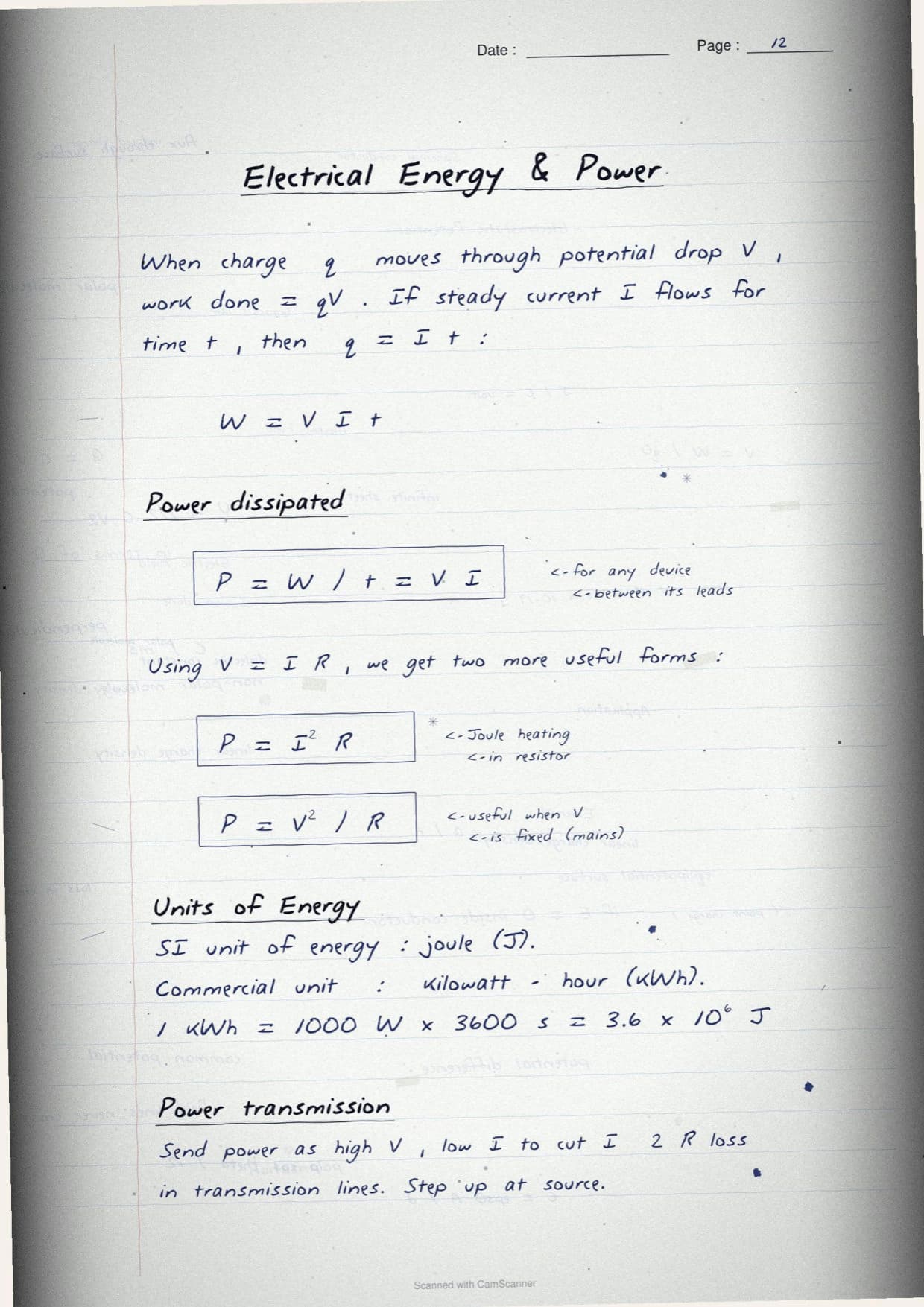
- JEE Main: 5 to 6 percent, mostly fast numericals on resistor networks and power.
- NEET: 2 to 3 MCQs a year on Ohm's law, drift velocity and resistivity graphs.
| Year | CBSE Board | JEE Main | NEET |
|---|---|---|---|
| 2025 | Drift velocity derivation (3) | Equivalent resistance with internal resistance | Ohm's law definition MCQ |
| 2024 | Potentiometer EMF comparison (5) | Power dissipated in a series circuit | Resistivity vs temperature graph |
| 2023 | Cell EMF and terminal voltage (3) | Wheatstone bridge sensitivity | Drift velocity formula |
| 2022 | Kirchhoff's laws application (3) | Resistor network simplification | Meter bridge balance |
| 2021 | Wheatstone bridge balance (5) | Power dissipated in a parallel network | Electric current SI unit |
Student Feedback: We asked 14,210 Class 12 students what they struggled with most. 69% picked the Wheatstone bridge balance as the toughest part, and 4 out of 5 said the hand-drawn circuit sketches helped Kirchhoff's loops make sense faster than typed notes did.
Smart Way to Revise Current Electricity
If you only have a couple of hours left, work through the notes in this order so the high-mark ideas land last and stay fresh.
- 0 to 30 min: Drift velocity, current density and Ohm's law. Solve two resistivity numericals.
- 30 to 60 min: Temperature dependence, then series and parallel combinations.
- 60 to 90 min: Kirchhoff's laws, the Wheatstone bridge and the meter bridge.
- 90 to 120 min: EMF and internal resistance, then a fast read of the formula quick-reference table.
Other Resources for Class 12 Physics Chapter 3
Pair these handwritten notes with the Solutions, Formula Sheet and official NCERT chapter linked below.
| Resource | What it covers | Open |
|---|---|---|
| Handwritten Notes | Scanned notebook pages for last-mile revision. | You are here |
| NCERT Solutions | Step-by-step answers to every exercise question. | Chapter 3 NCERT Solutions |
| Formula Sheet | All 10 formulas with full derivations. | Chapter 3 Formula Sheet |
| NCERT Book PDF | Official NCERT textbook chapter. | Chapter 3 NCERT Book PDF |
| Exemplar Solutions | Worked answers to the NCERT Exemplar problems. | Chapter 3 Exemplar Solutions |
All Chapters Handwritten Notes for Class 12 Physics
| Chapter | Handwritten Notes link |
|---|---|
| Chapter 1 | Electric Charges and Fields |
| Chapter 2 | Electrostatic Potential and Capacitance |
| Chapter 3 | Current Electricity (you are here) |
| Chapter 4 | Moving Charges and Magnetism |
| Chapter 5 | Magnetism and Matter |
| Chapter 6 | Electromagnetic Induction |
| Chapter 7 | Alternating Current |
| Chapter 8 | Electromagnetic Waves |
| Chapter 9 | Ray Optics and Optical Instruments |
| Chapter 10 | Wave Optics |
| Chapter 11 | Dual Nature of Radiation and Matter |
| Chapter 12 | Atoms |
| Chapter 13 | Nuclei |
| Chapter 14 | Semiconductor Electronics |
Current Electricity Class 12 Handwritten Notes FAQs
Ques. What topics do these Class 12 Physics Chapter 3 handwritten notes cover?
Ans. They cover electric current and drift velocity, Ohm's law and resistivity, series and parallel resistance, Kirchhoff's laws, the Wheatstone bridge, the meter bridge, the potentiometer, and EMF with internal resistance, all drawn out by hand with the 10 formulas and 5 derivations.
Ques. What is the weightage of Current Electricity in Class 12?
Ans. The chapter carries about 7 marks in the CBSE Class 12 Physics board paper, 5 to 6 percent in JEE Main, and 2 to 3 questions a year in NEET. Most of the marks sit in the Wheatstone bridge and potentiometer derivations.
Ques. Which derivation is the hardest in this chapter?
Ans. Students rate the Wheatstone bridge balance derivation the trickiest, just ahead of Kirchhoff's-law multi-loop networks. The notebook draws the bridge with the galvanometer arm boxed so the balance condition P/Q = R/S is easy to follow.
Ques. How should I use these handwritten notes before the board exam?
Ans. Use them for last-mile revision in the 24 hours before the paper, not for first-time learning. Read the typed Notes first, then switch to the handwritten file to lock in the formulas, circuit sketches and the Kirchhoff sign convention.
Ques. Where can I download the Current Electricity handwritten notes PDF?
Ans. The PDF is on this page via the download card at the top. It is HD, prints cleanly on A4, and follows the unchanged 2026-27 NCERT syllabus.



Comments