




NCERT Exemplar Solutions for Class 11 Physics Chapter 1 Units and Measurements solve all 44 questions from the Exemplar book. Every MCQ, Very Short Answer, Short Answer and Long Answer problem is solved step by step. The free PDF on this page runs to 55 pages and follows the 2026-27 syllabus.
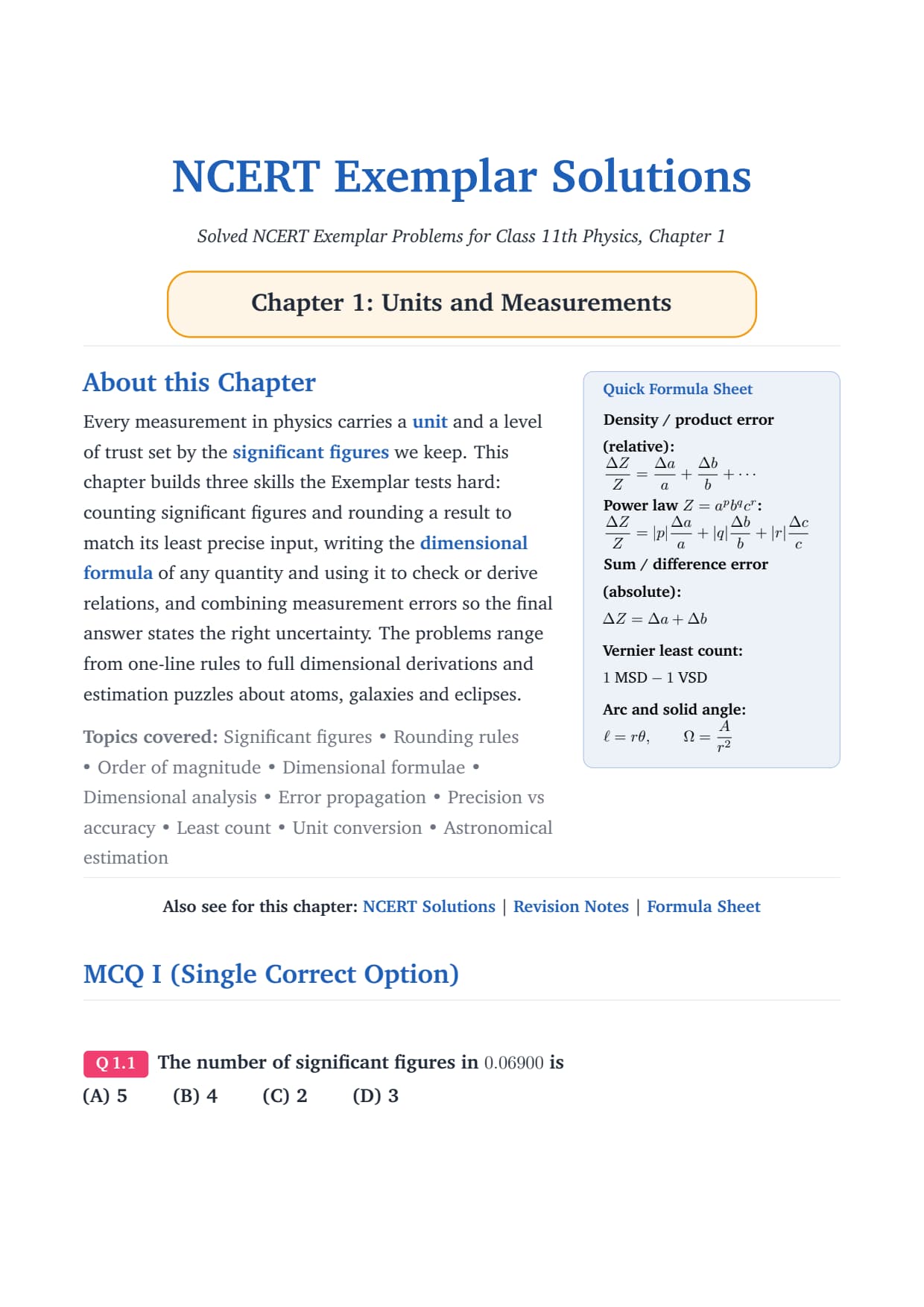
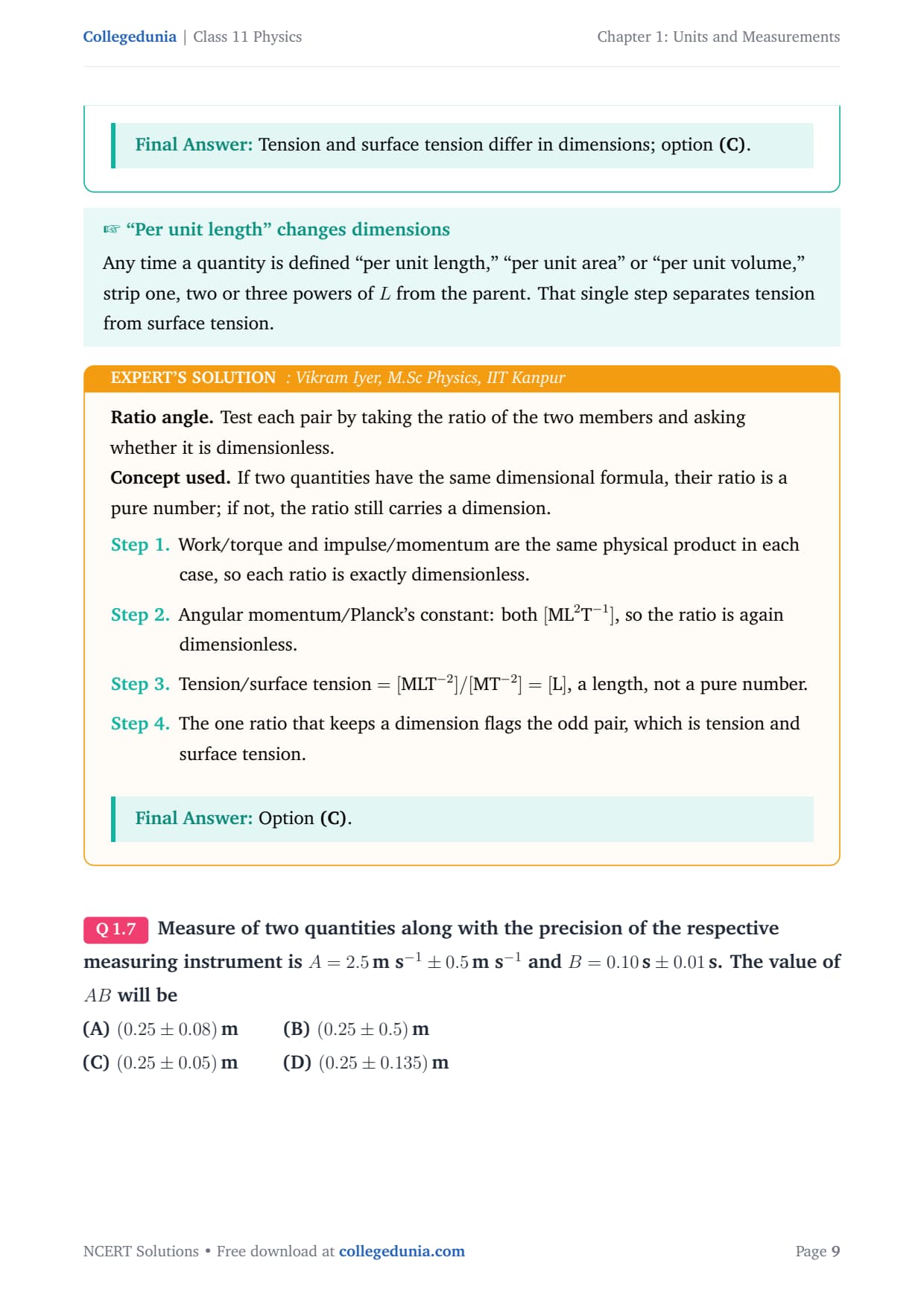
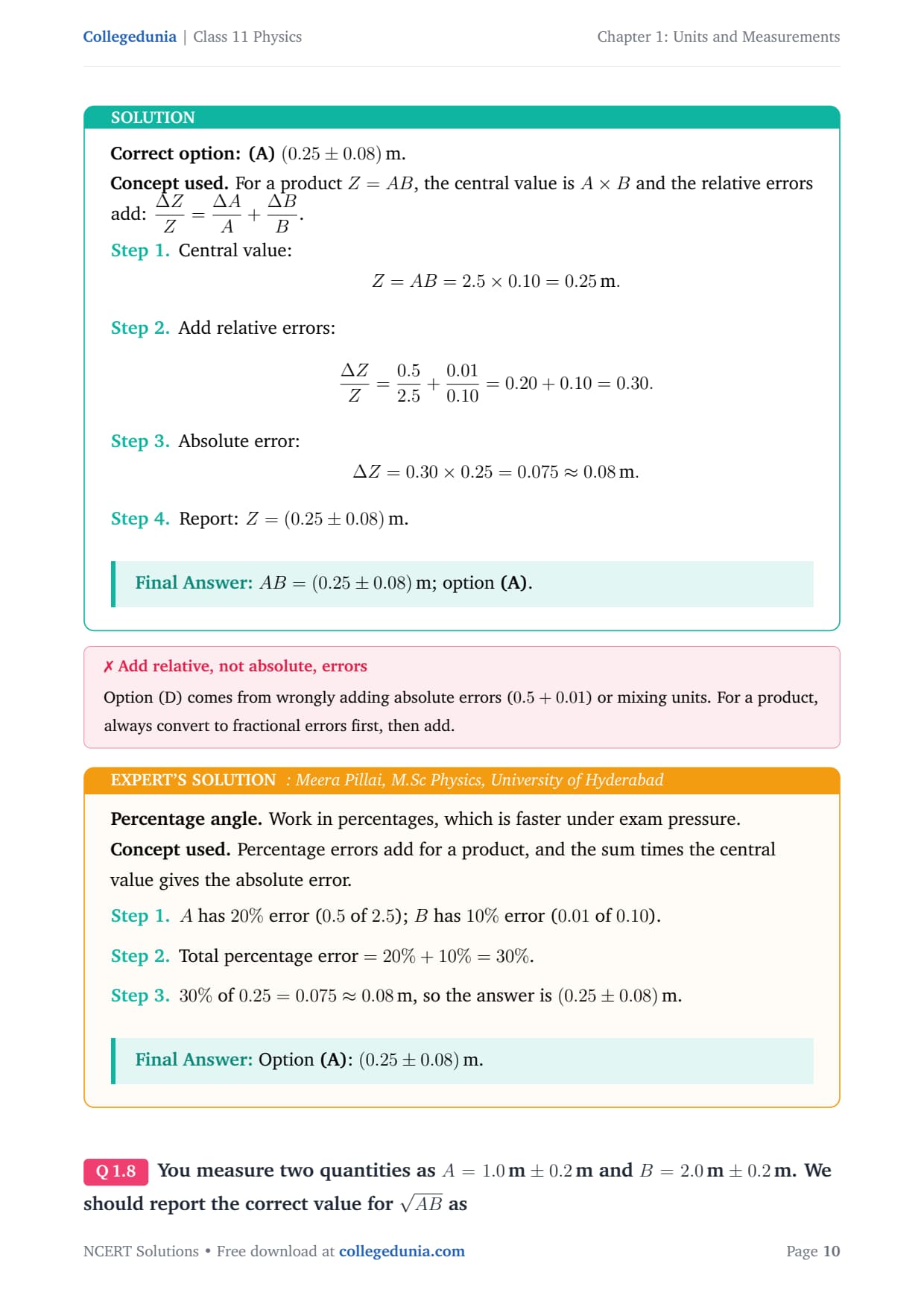
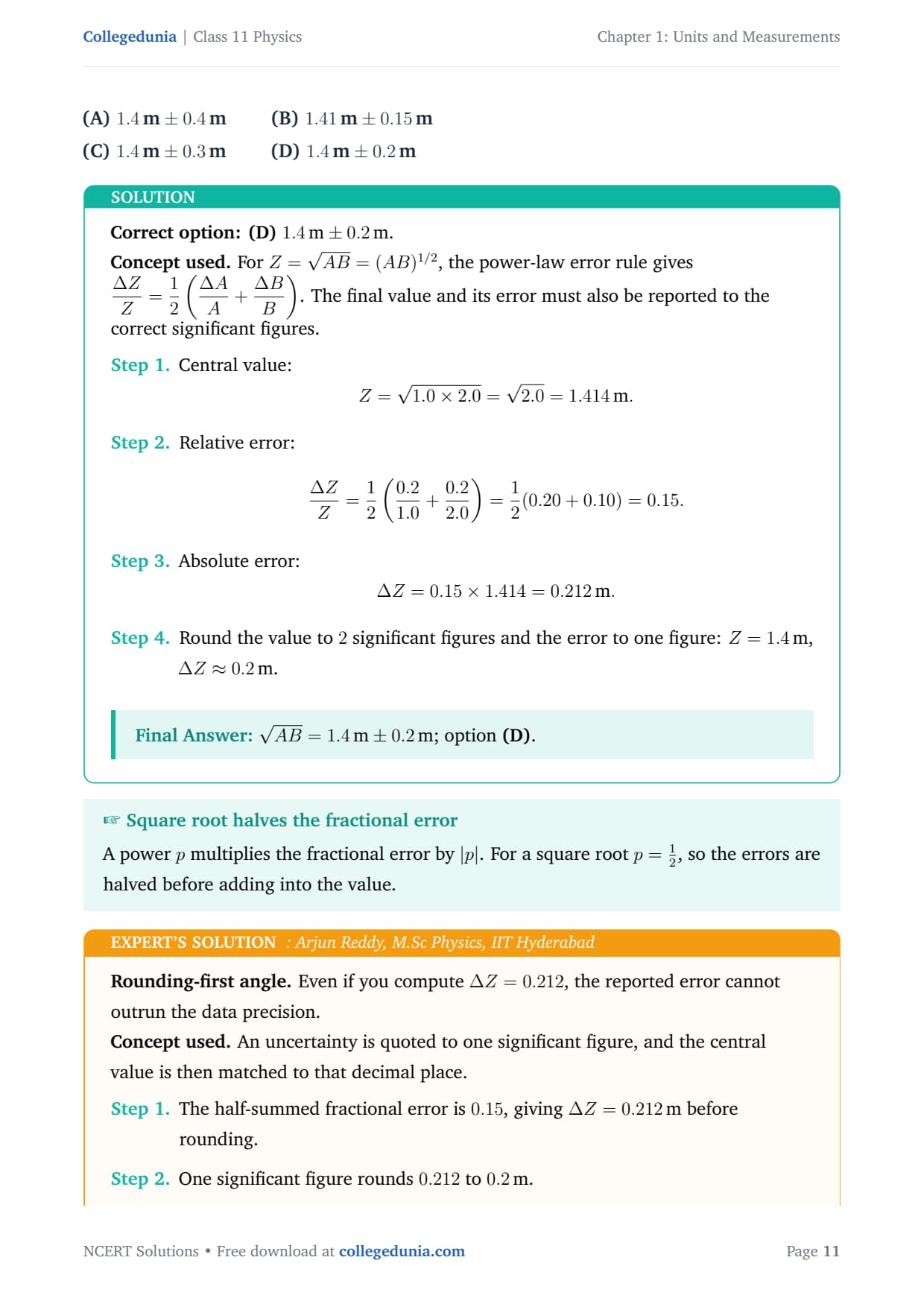
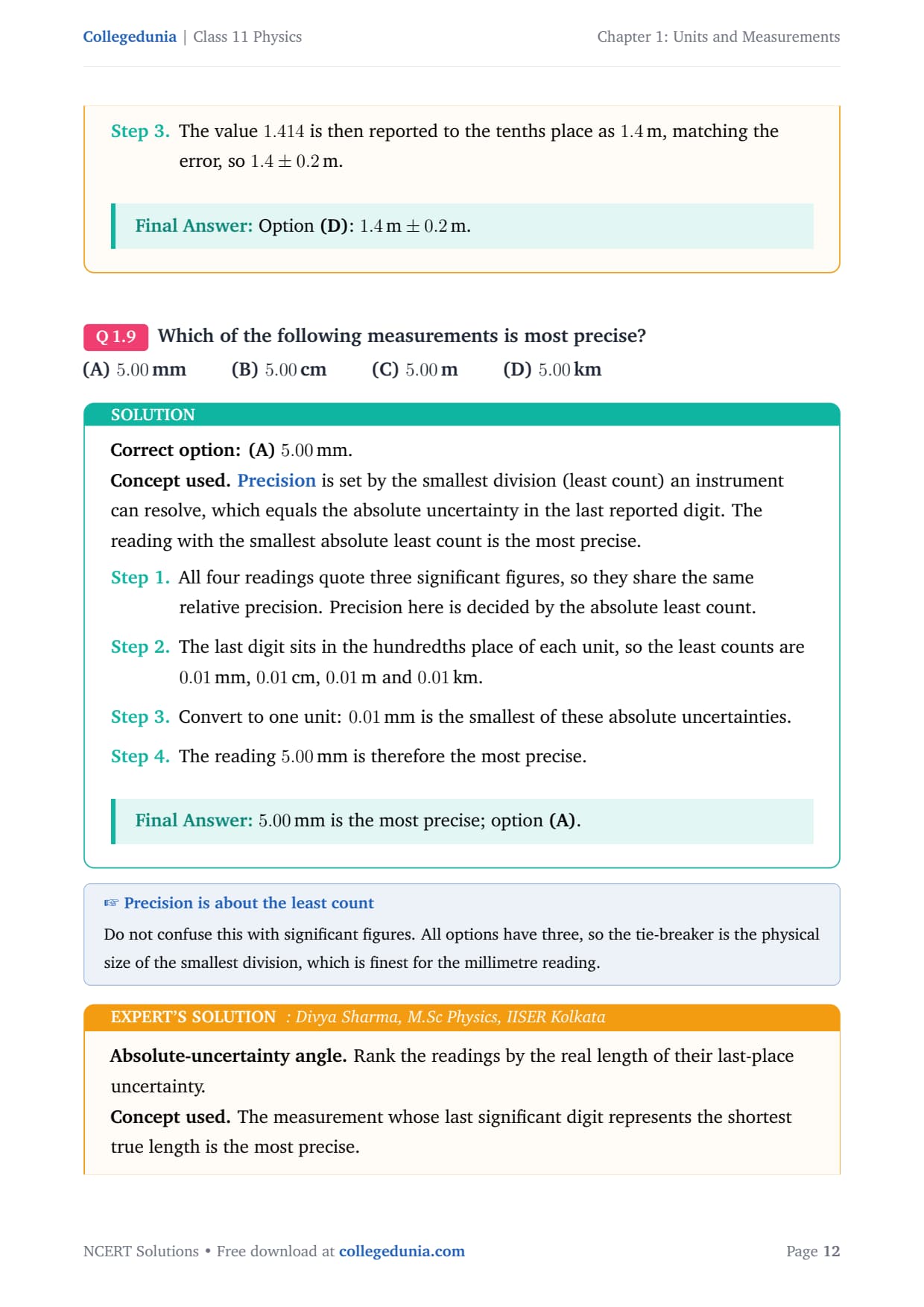
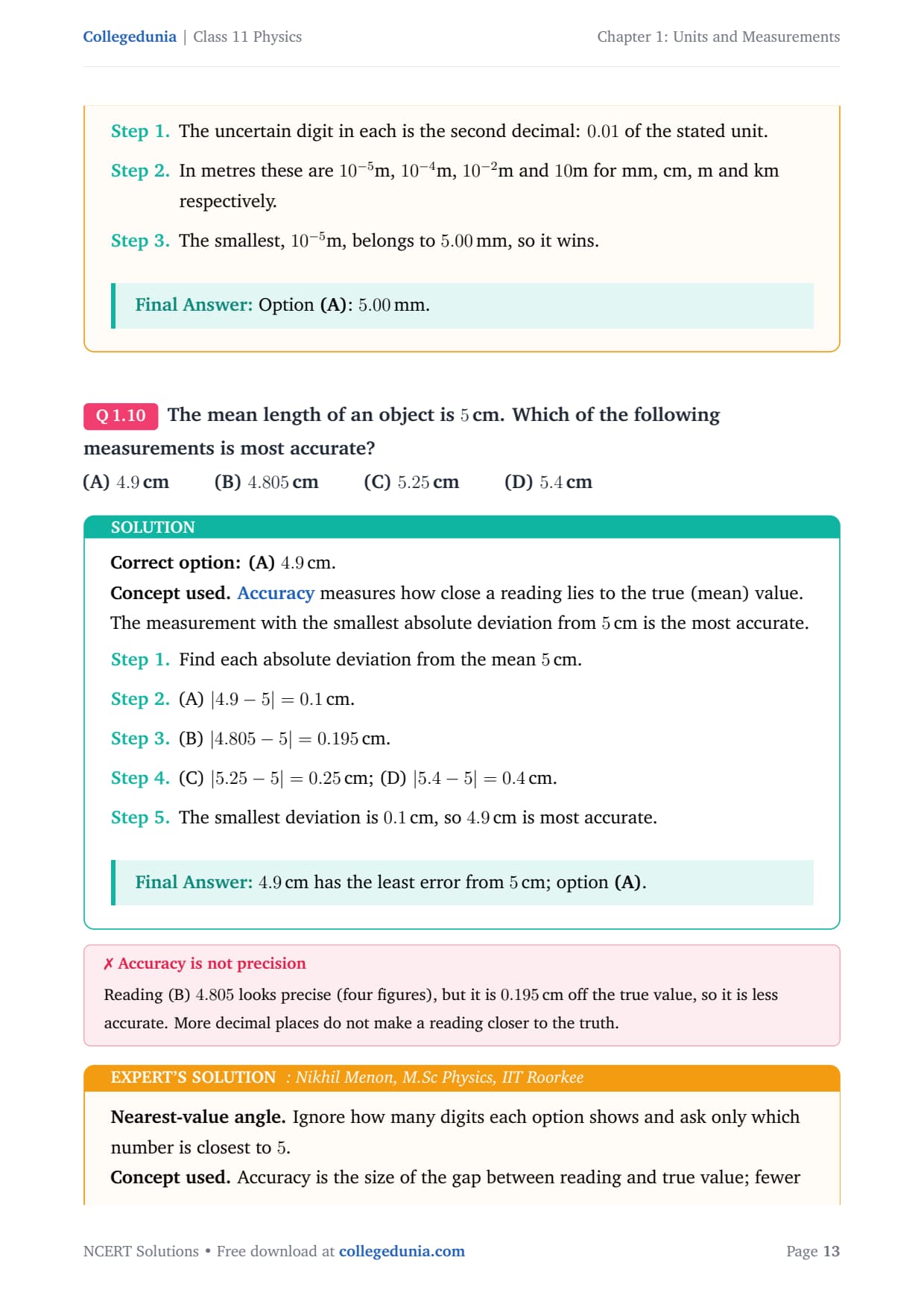
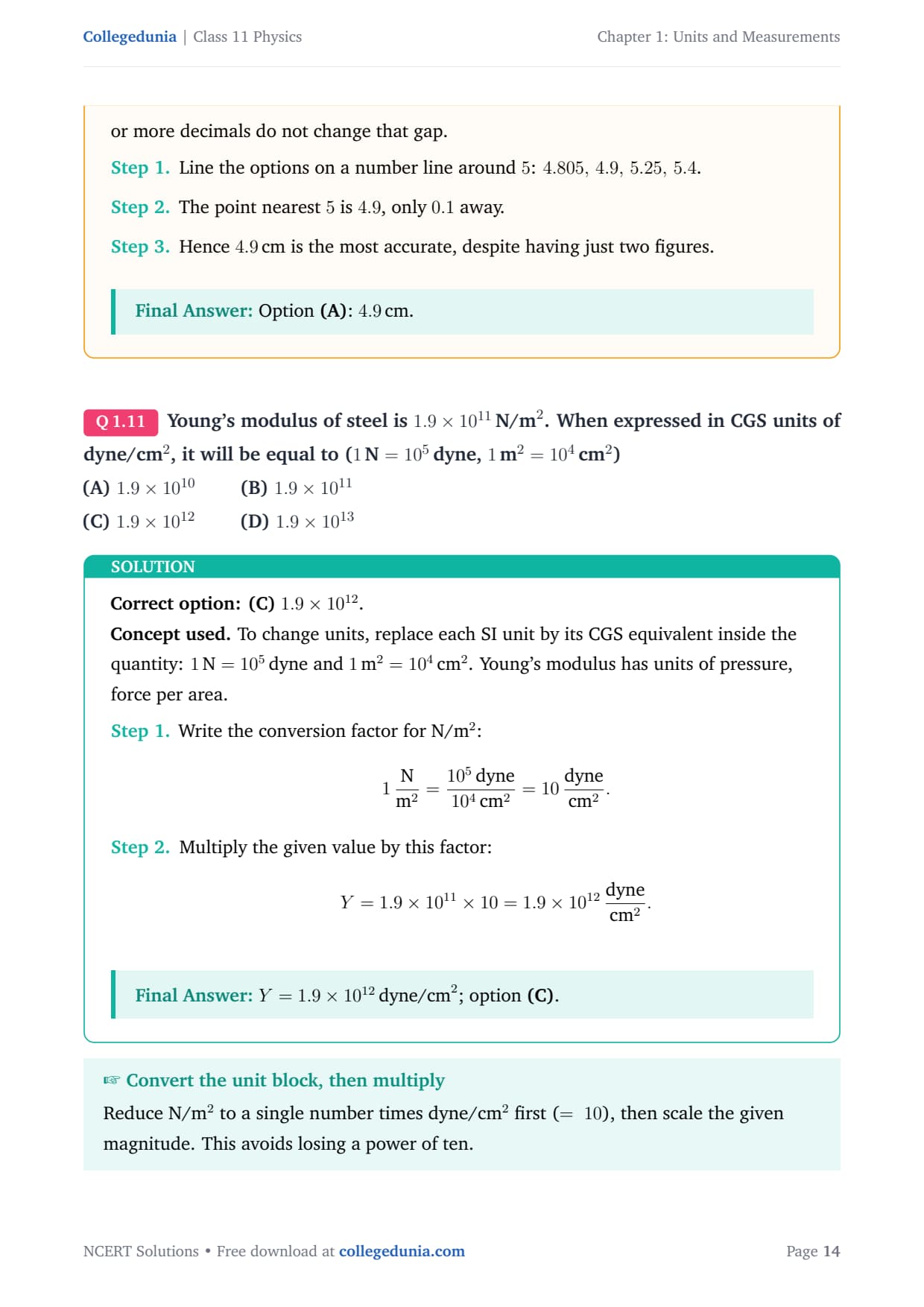
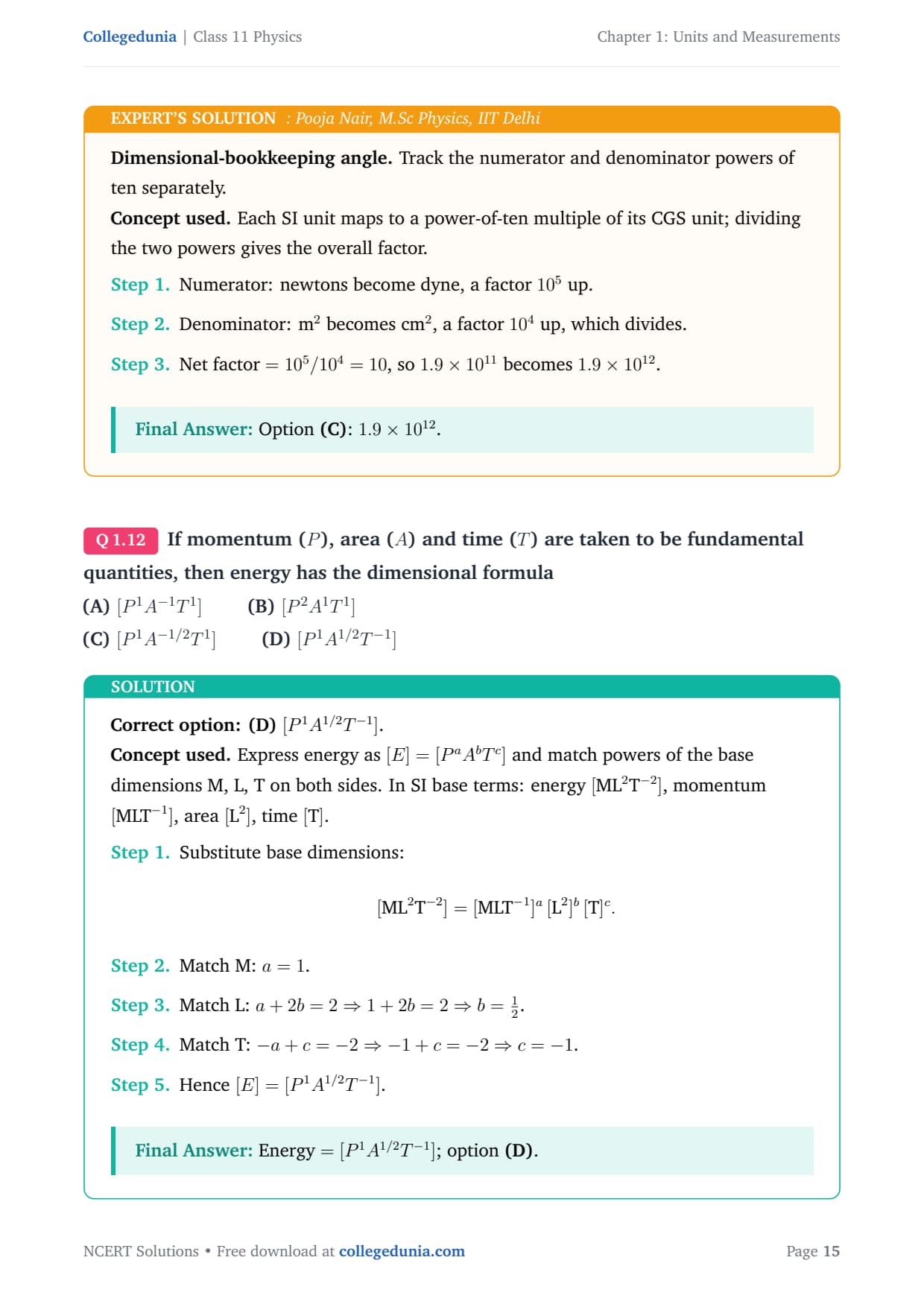
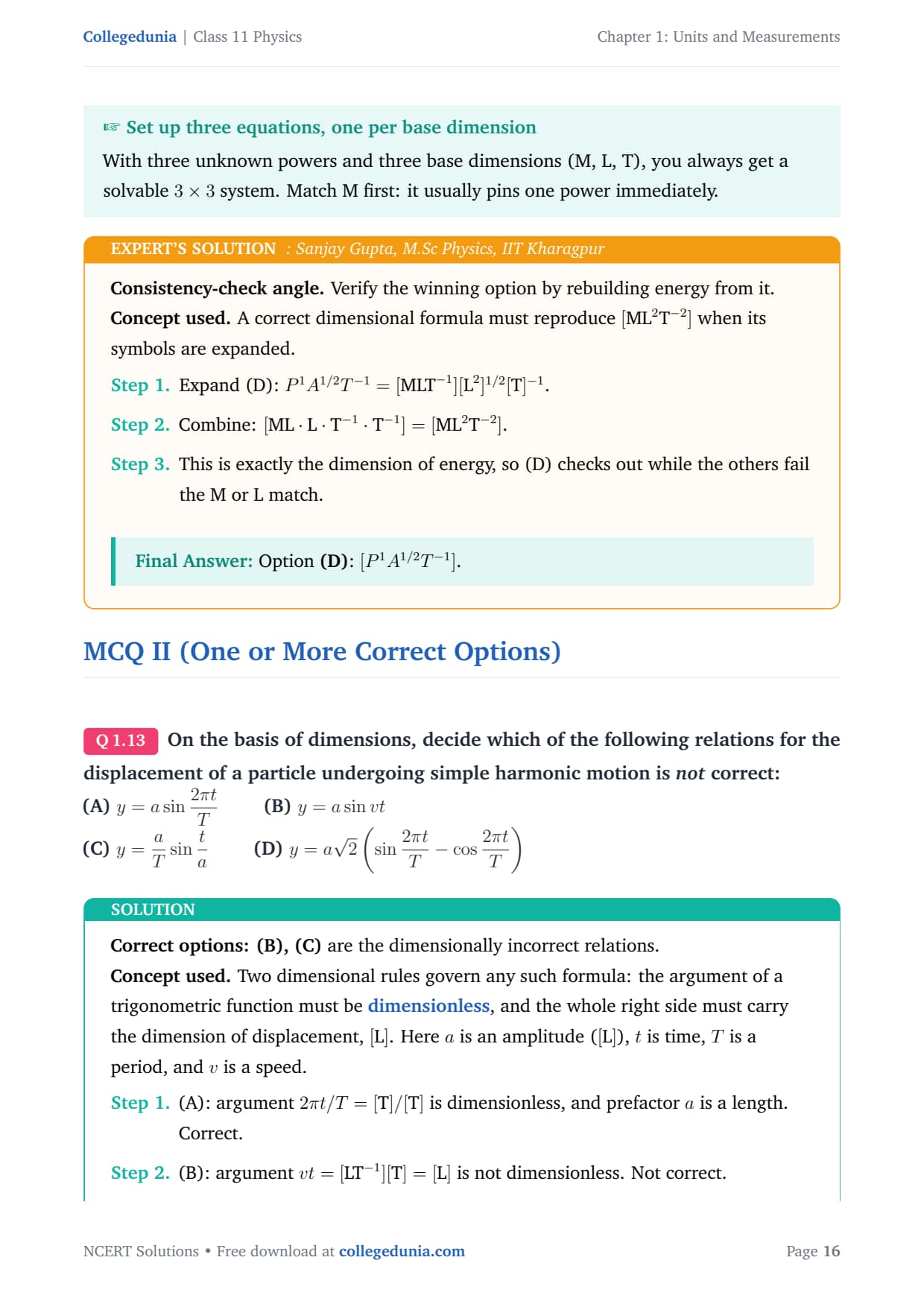
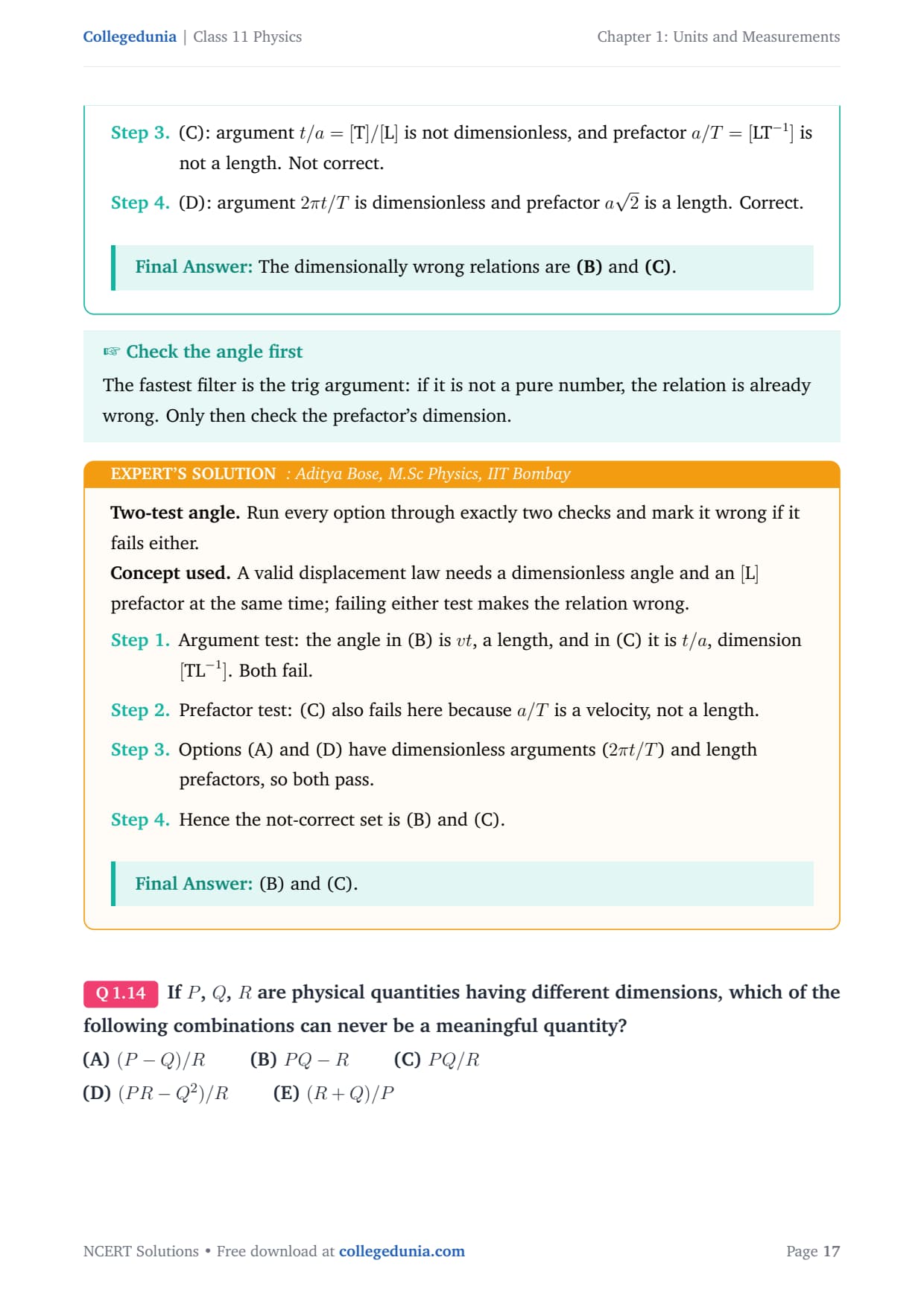
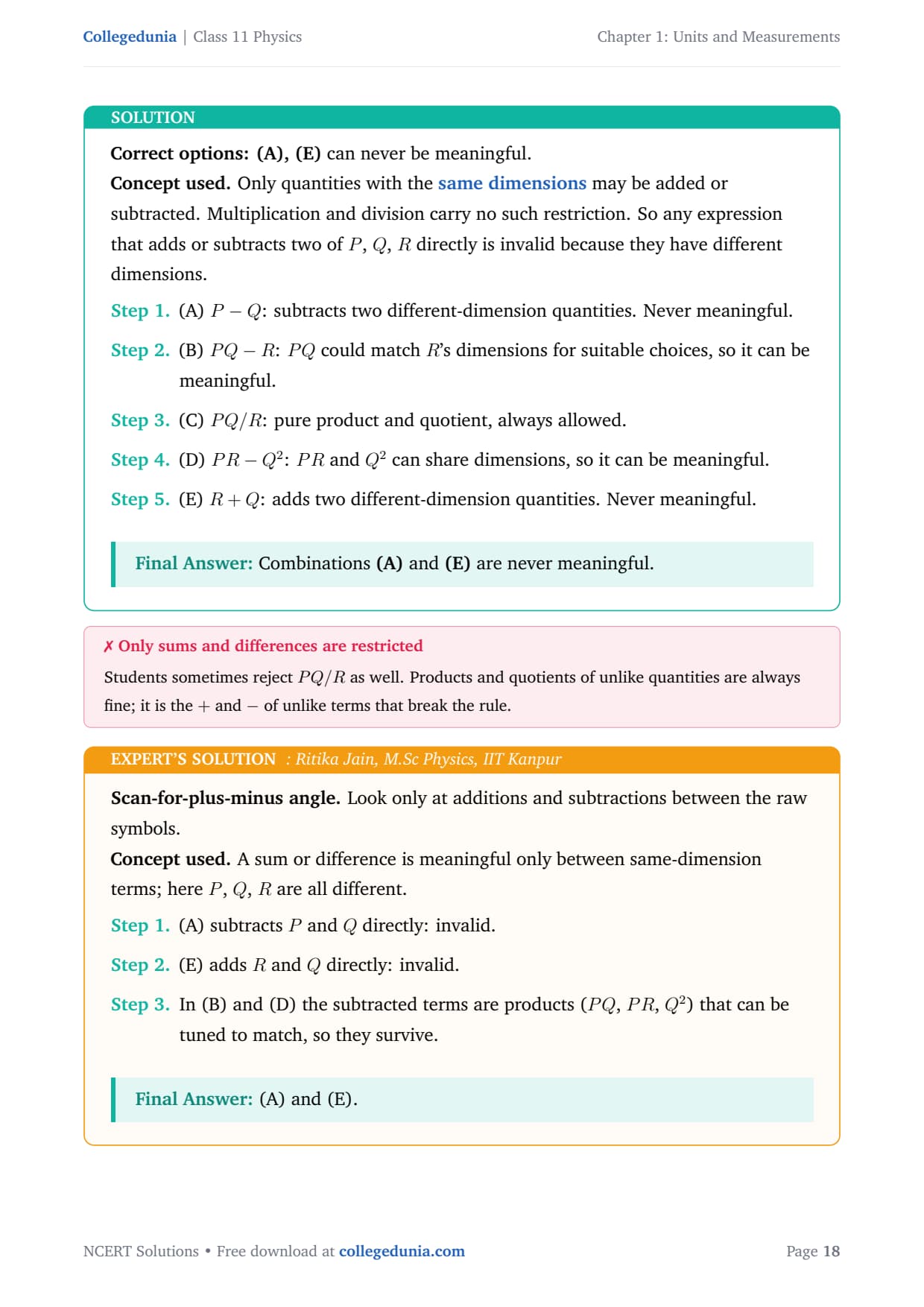
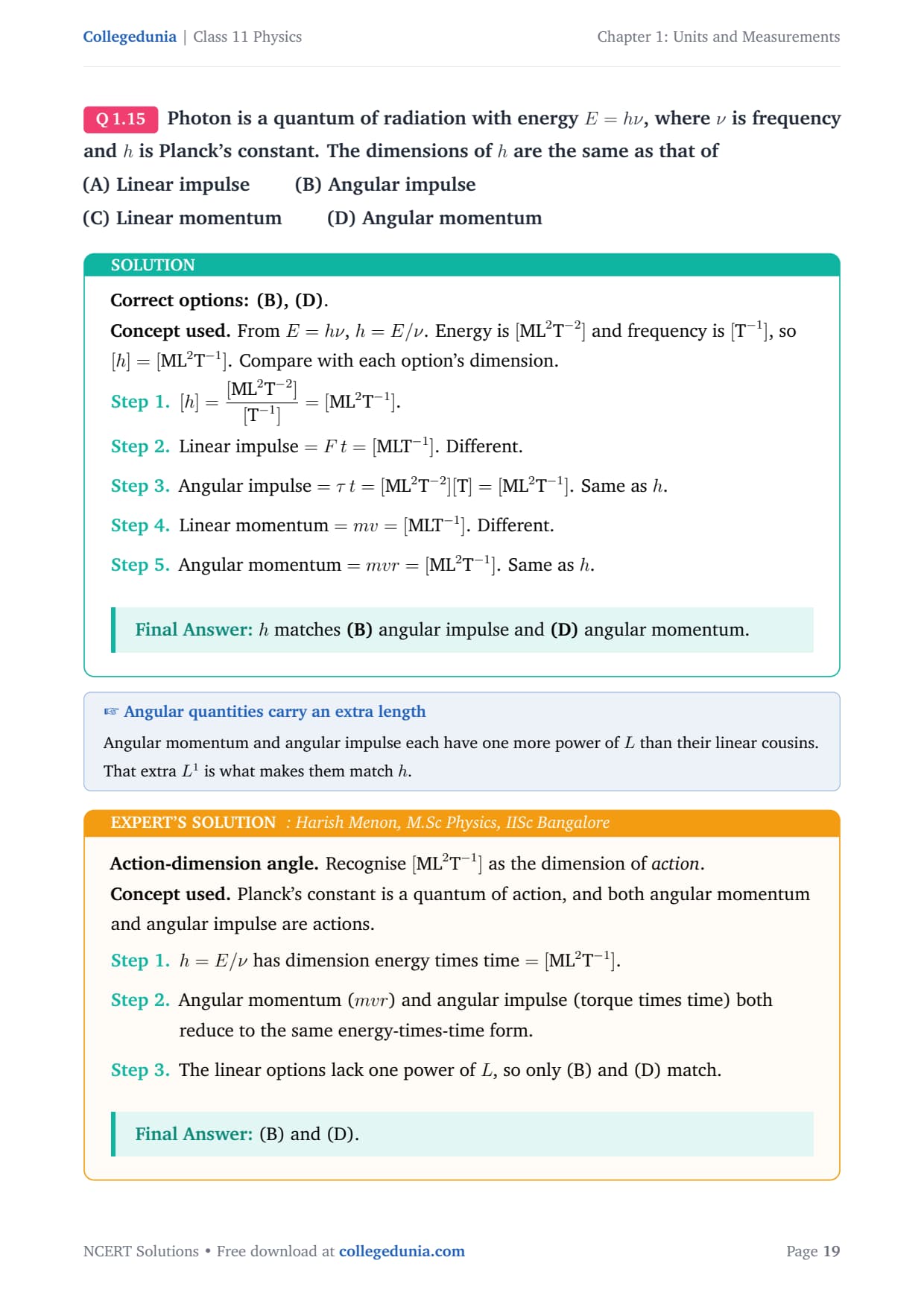
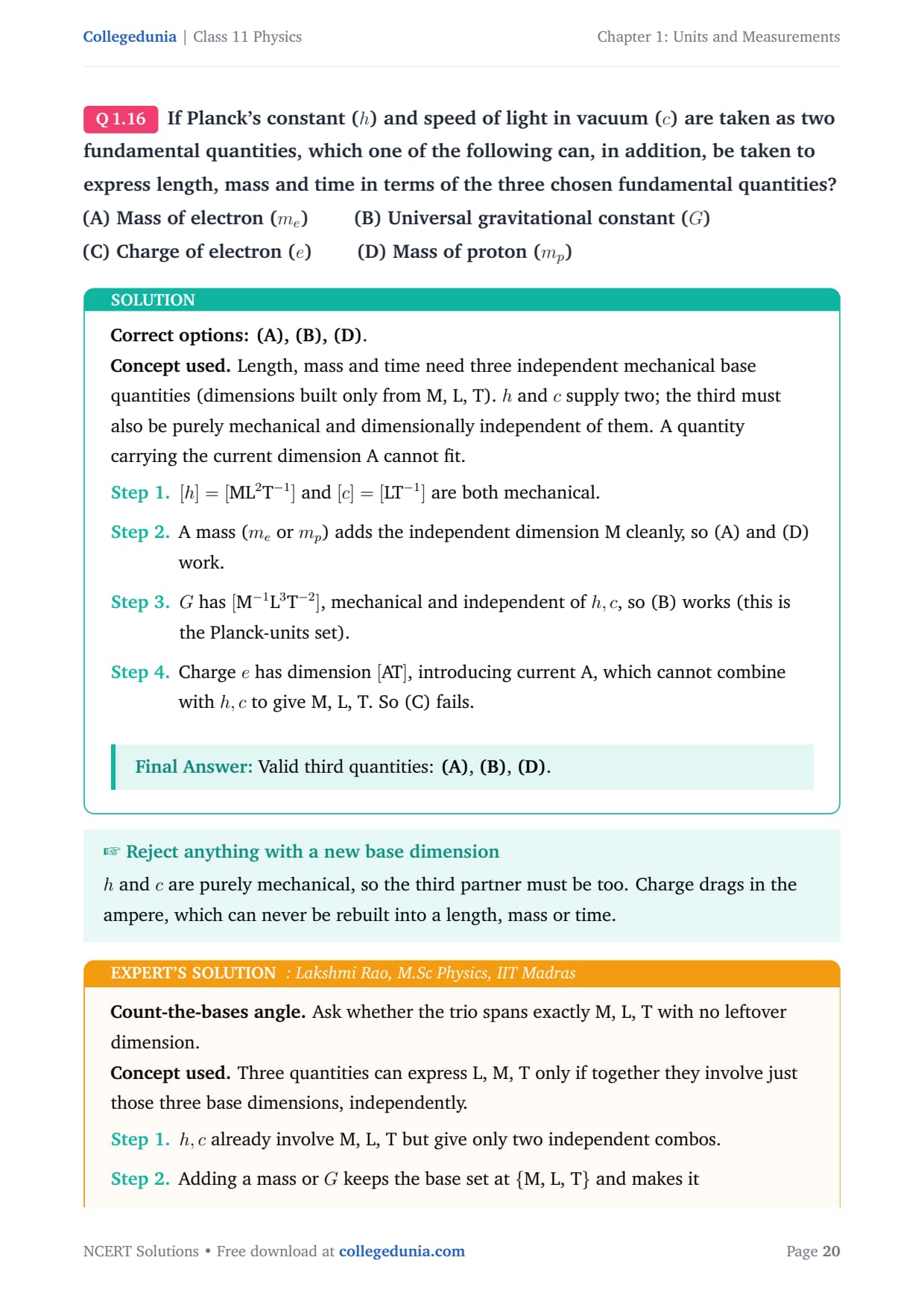
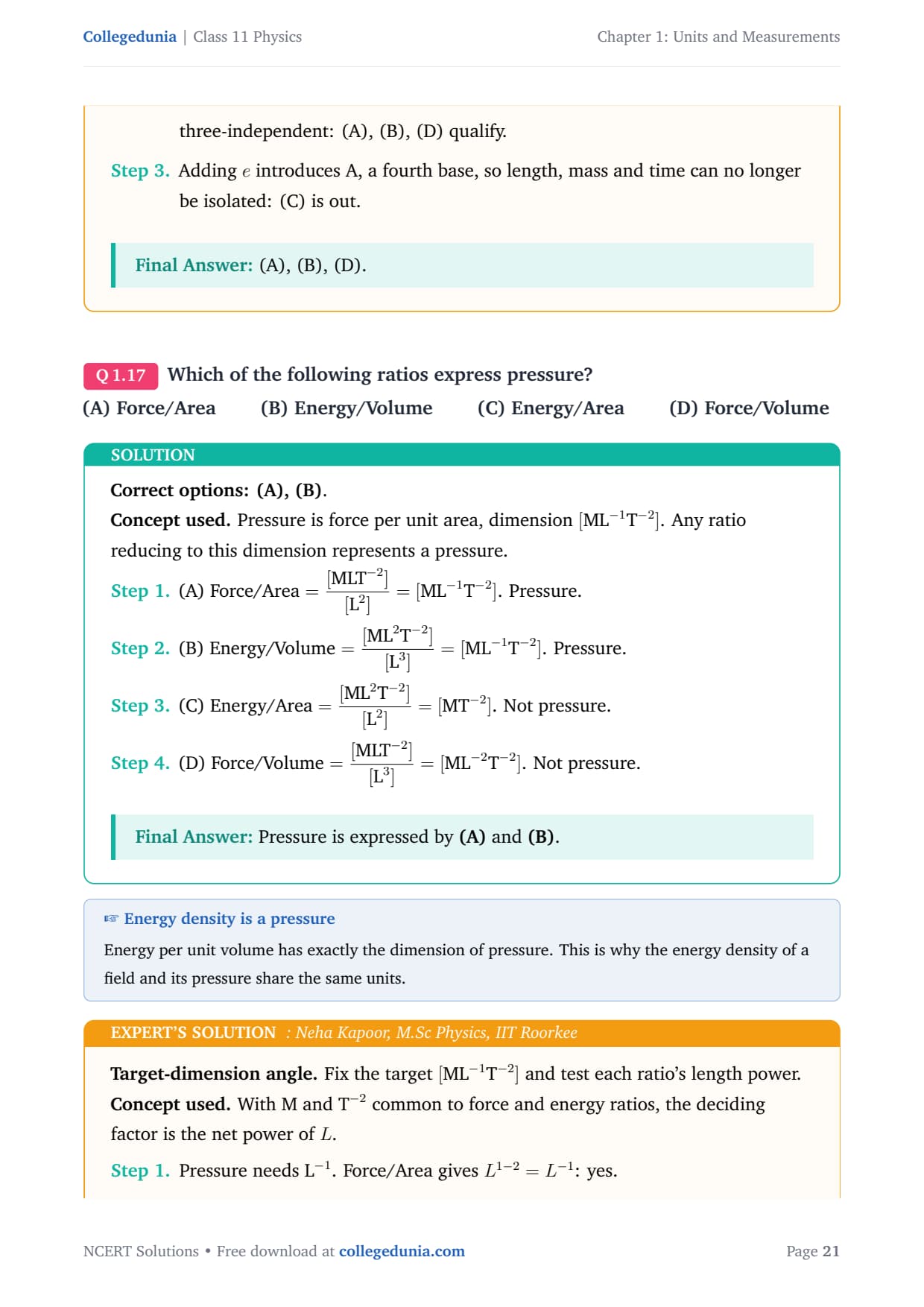
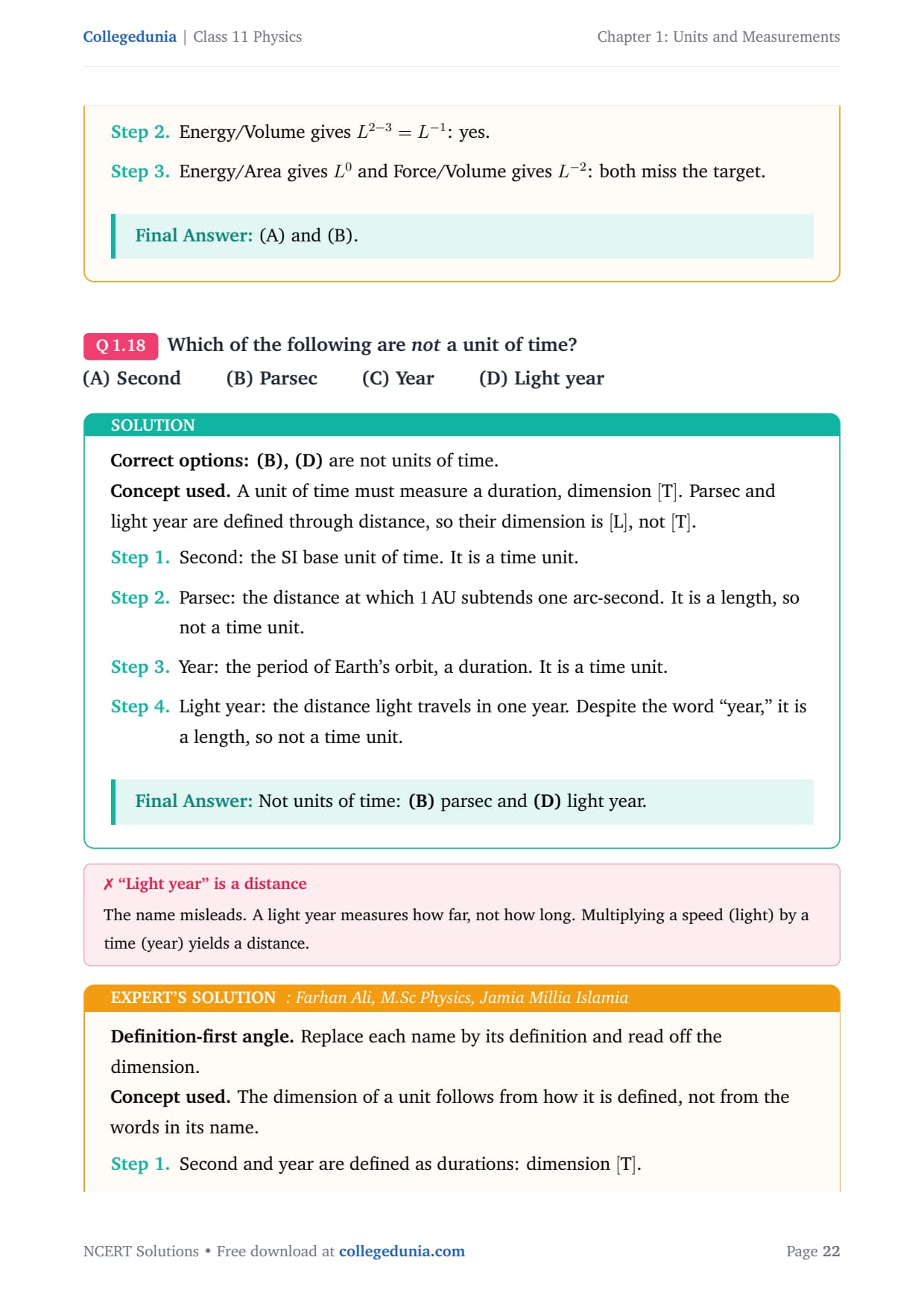
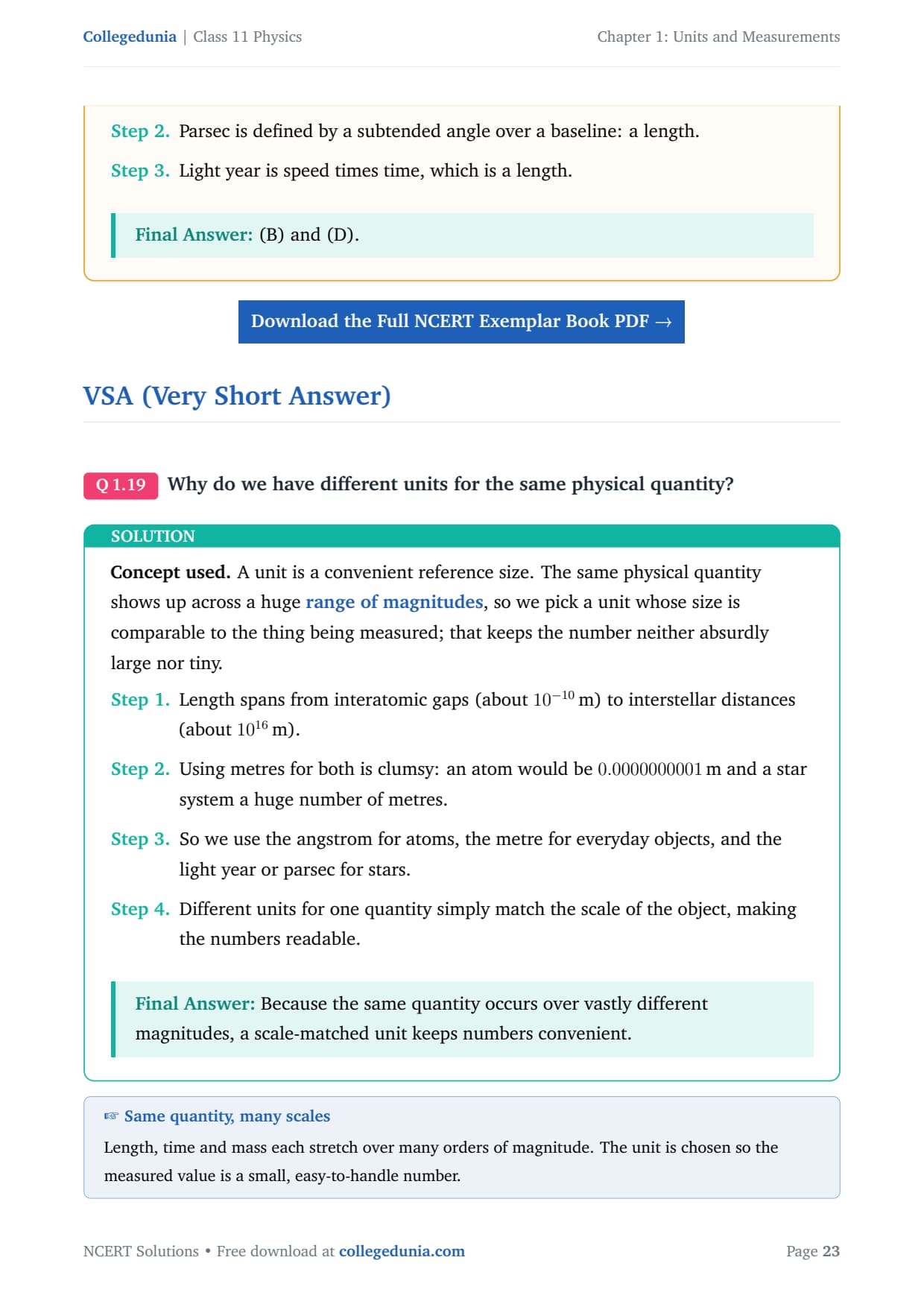
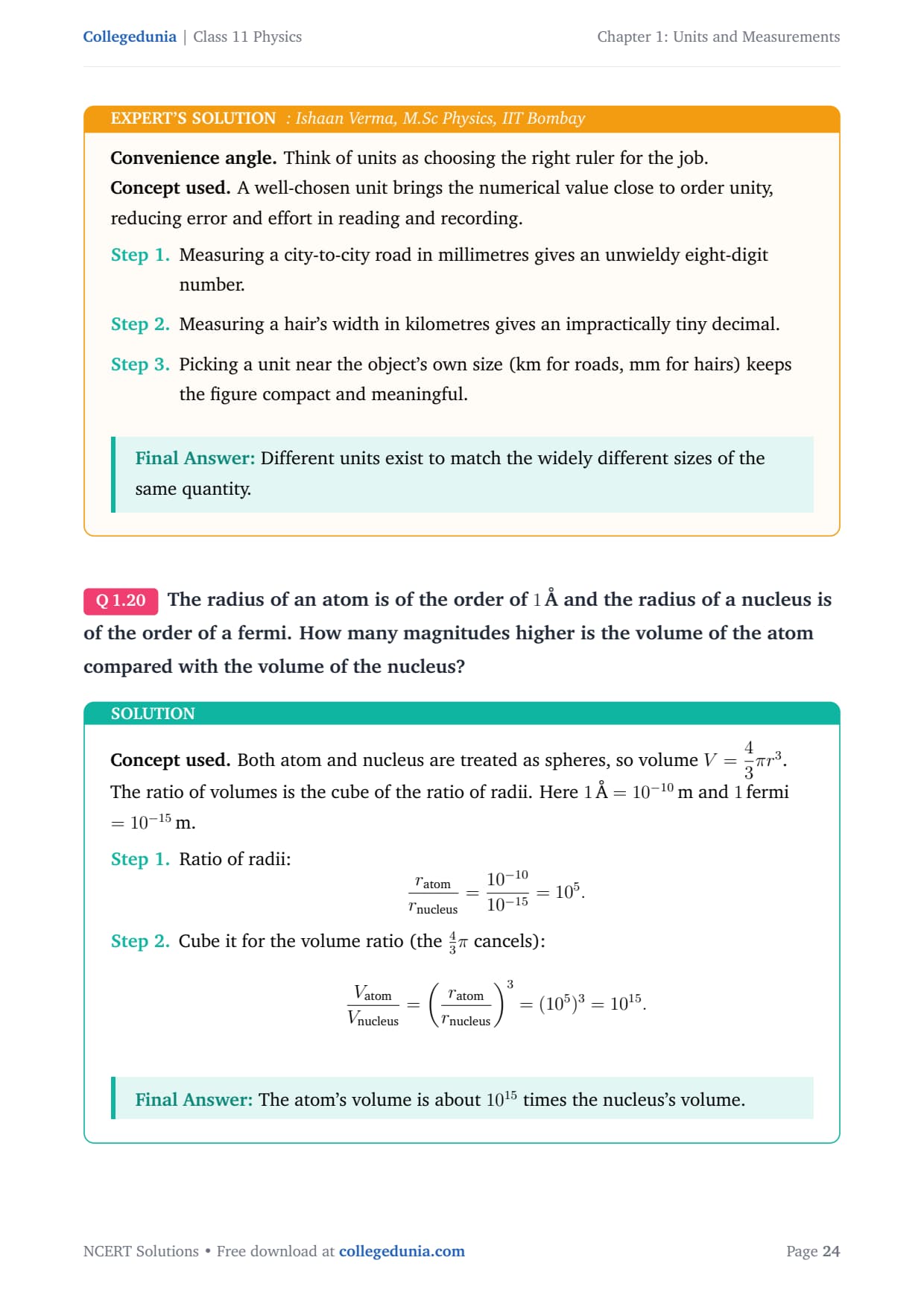
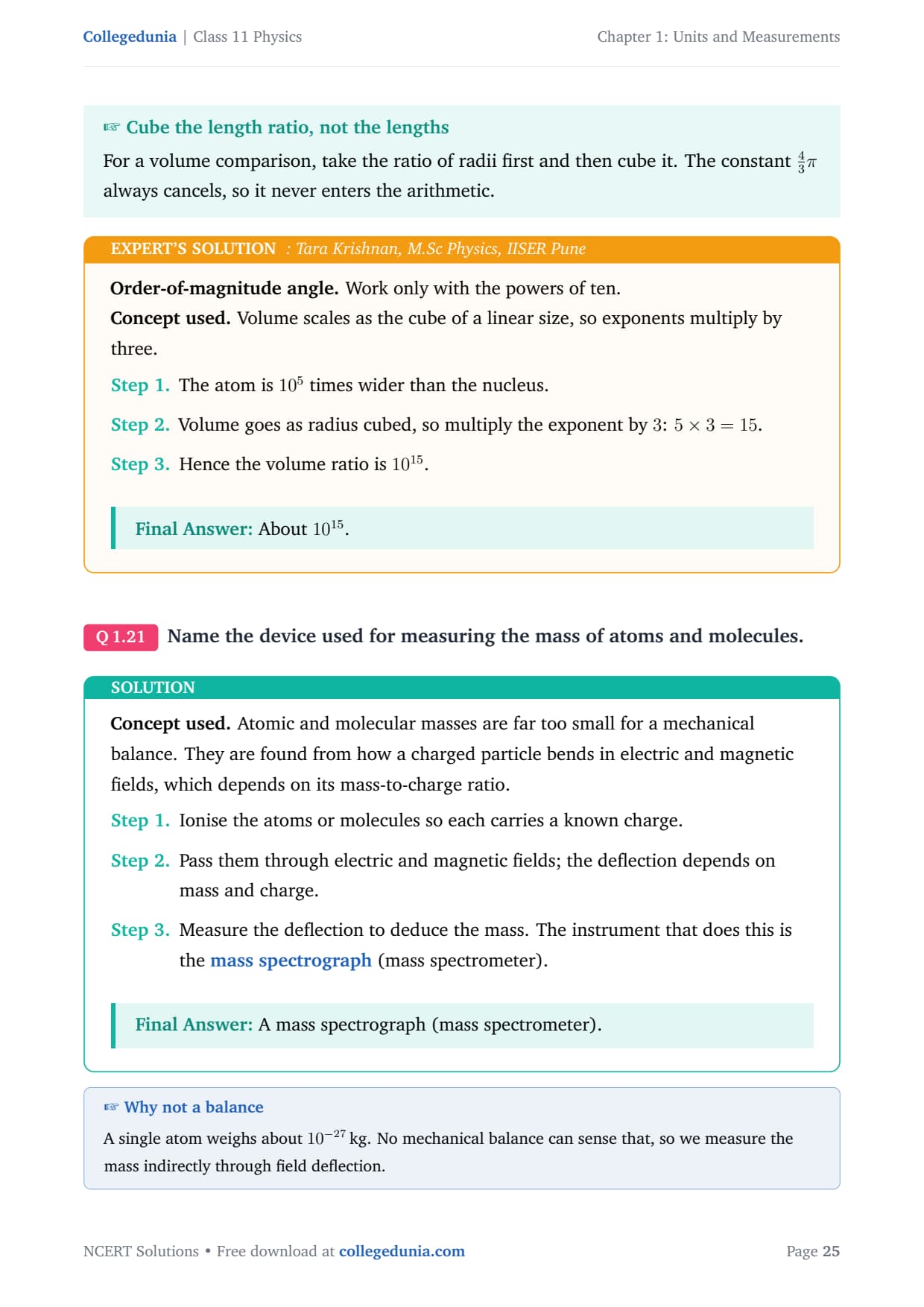
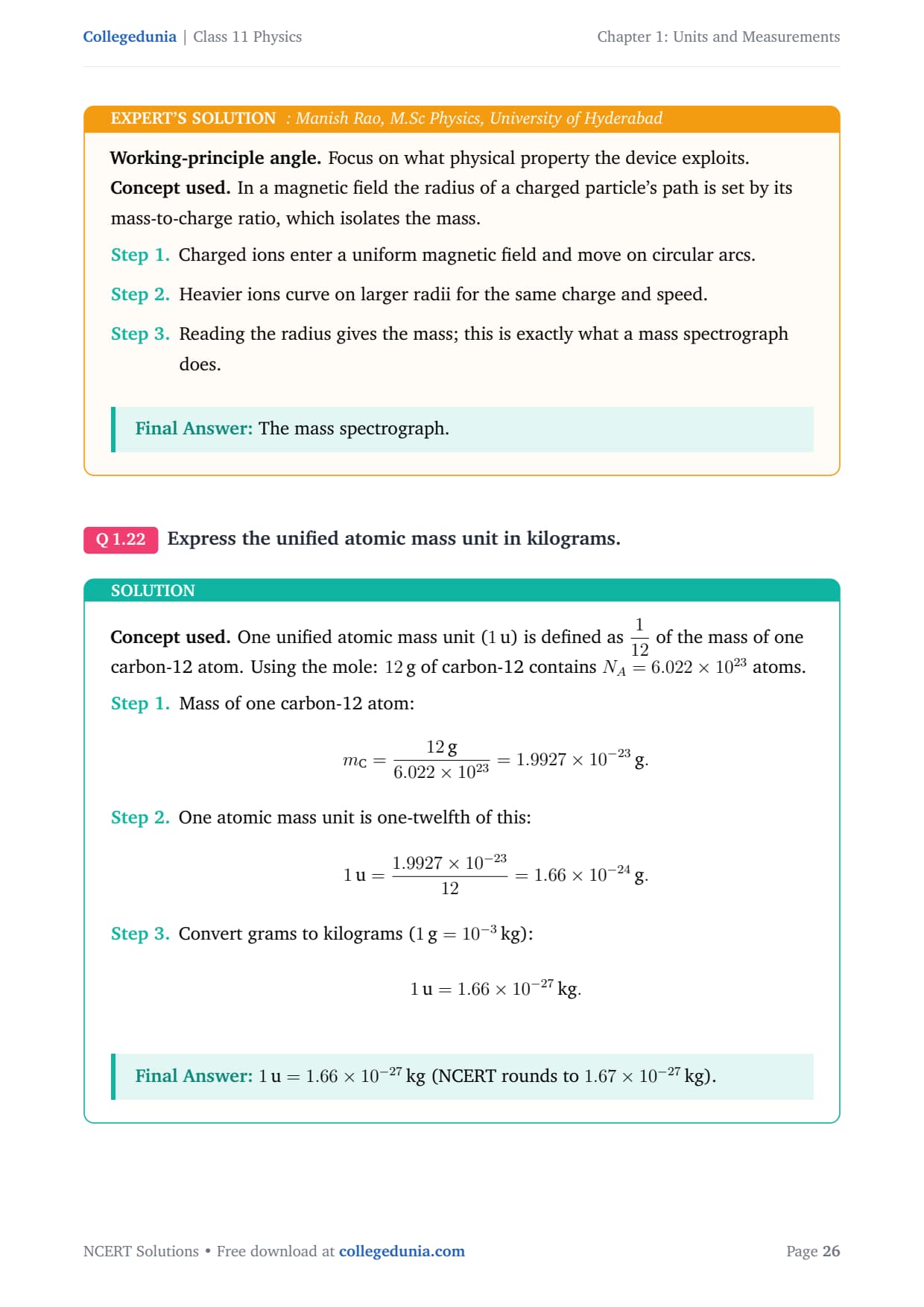
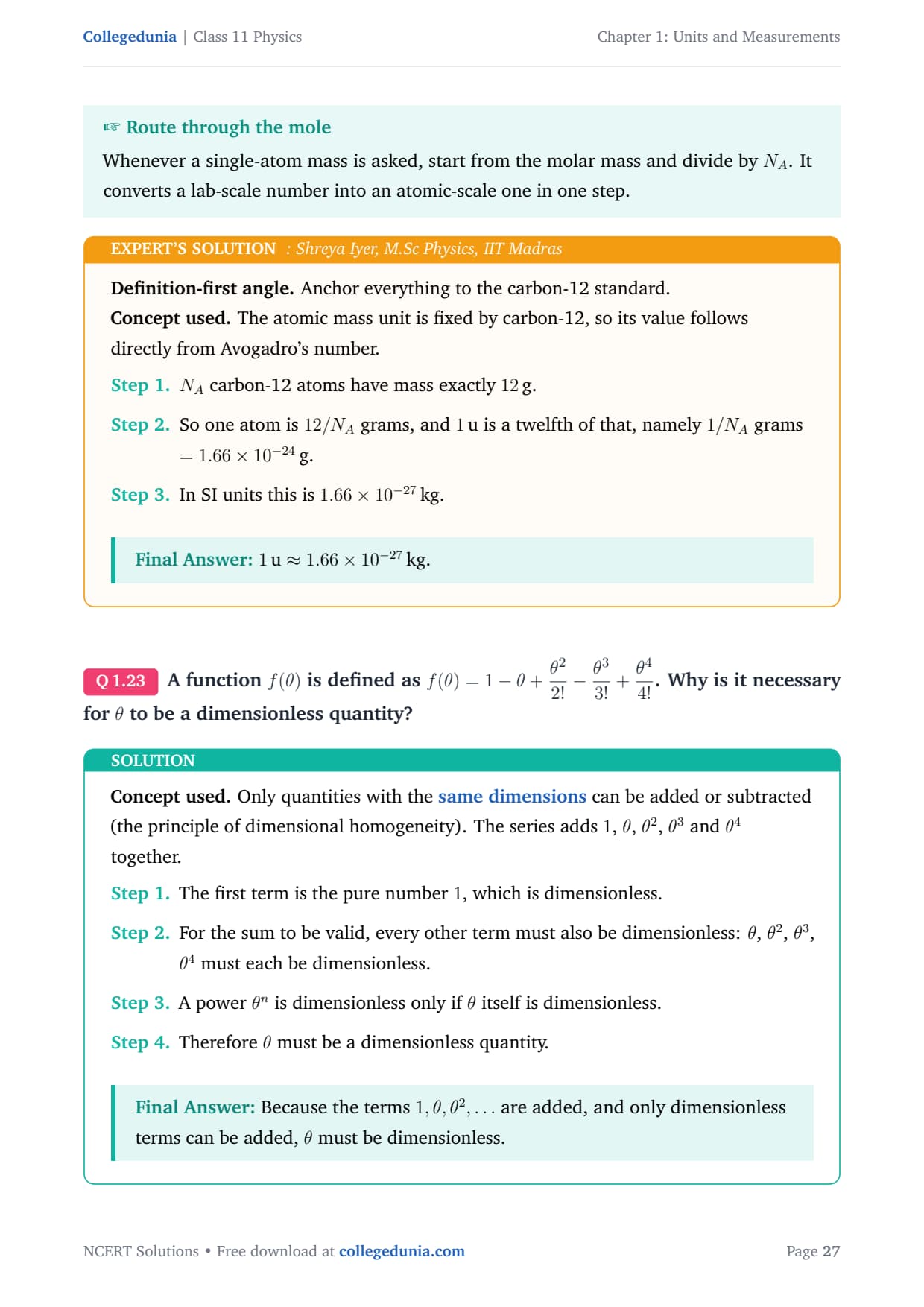
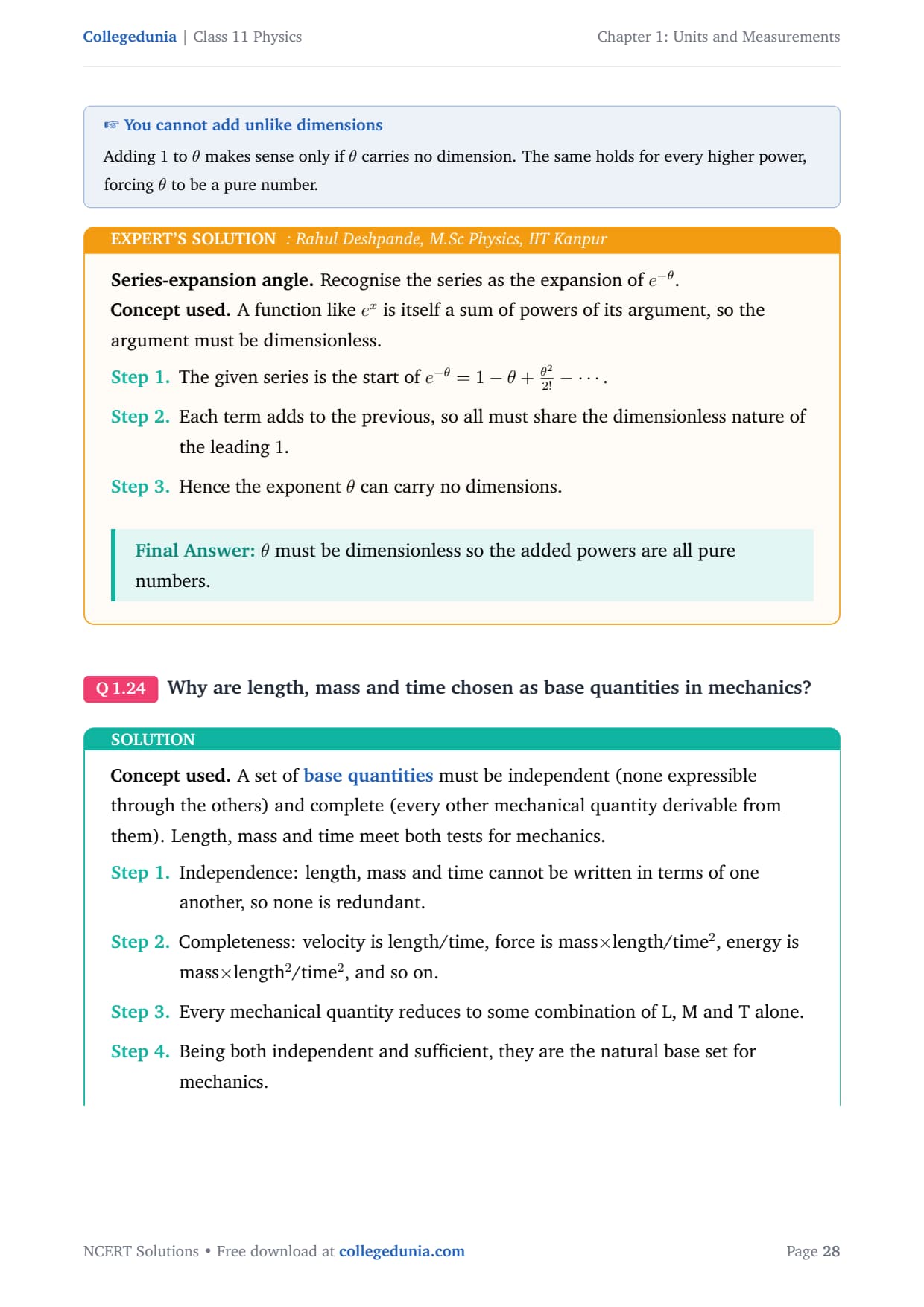
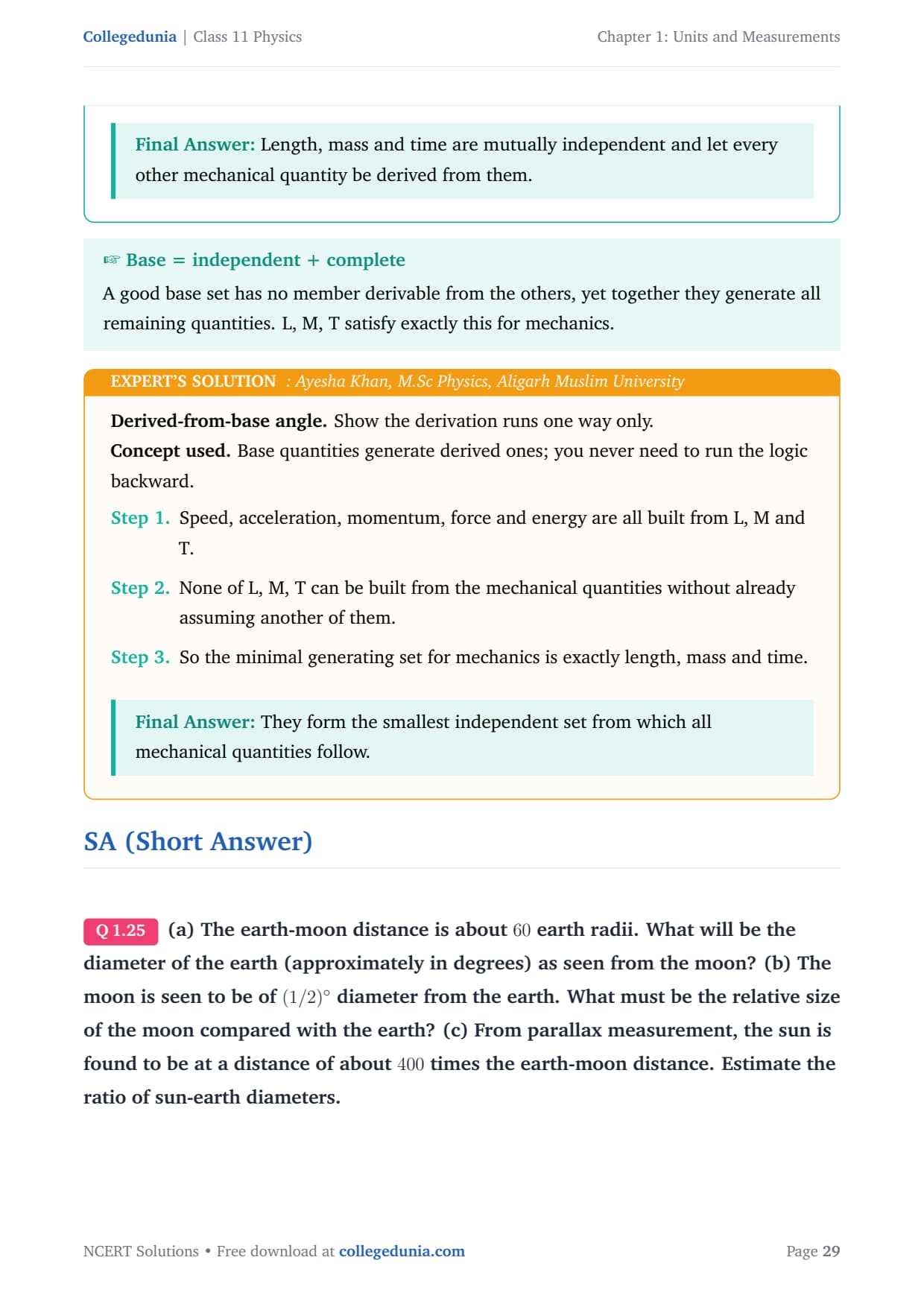
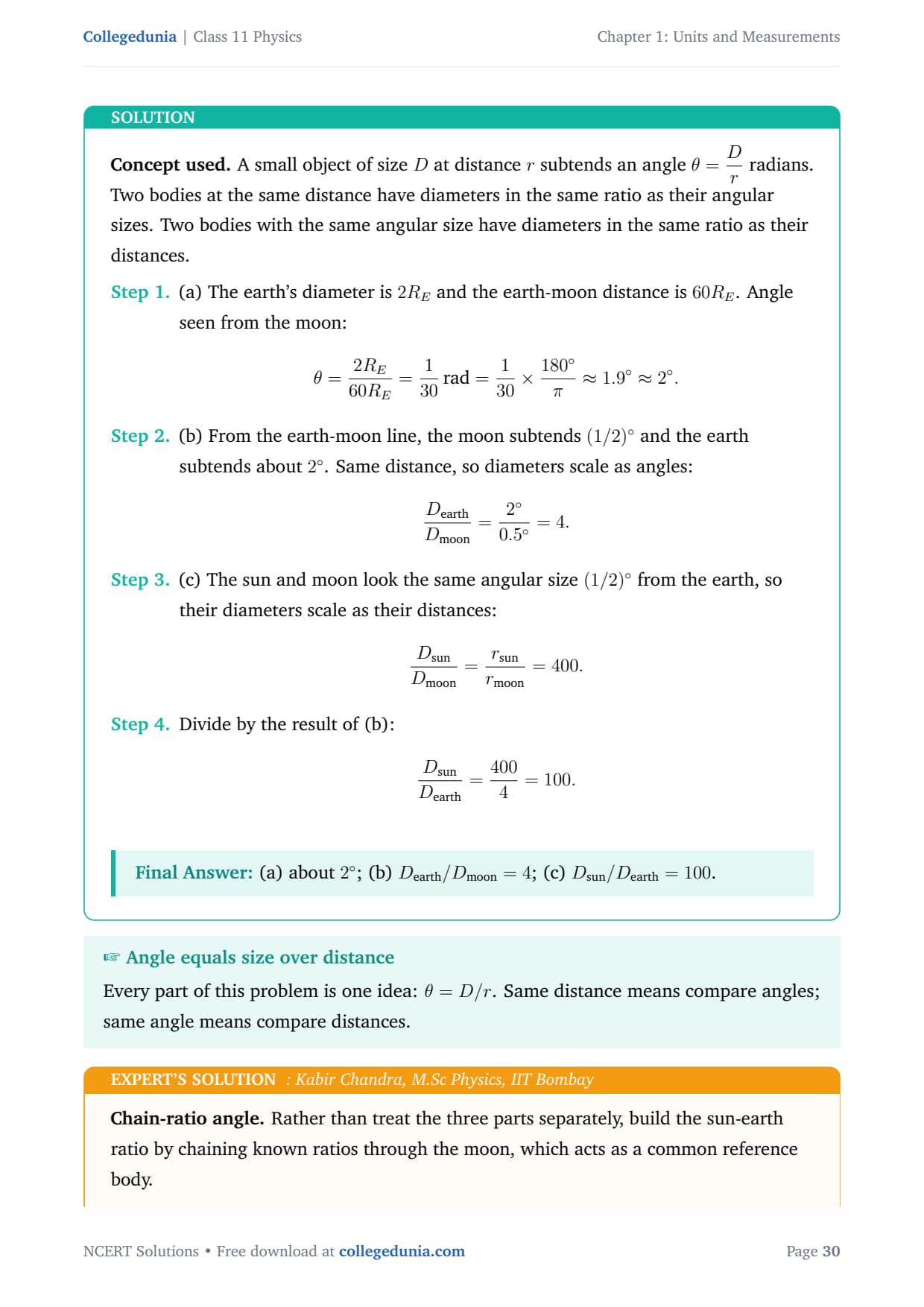
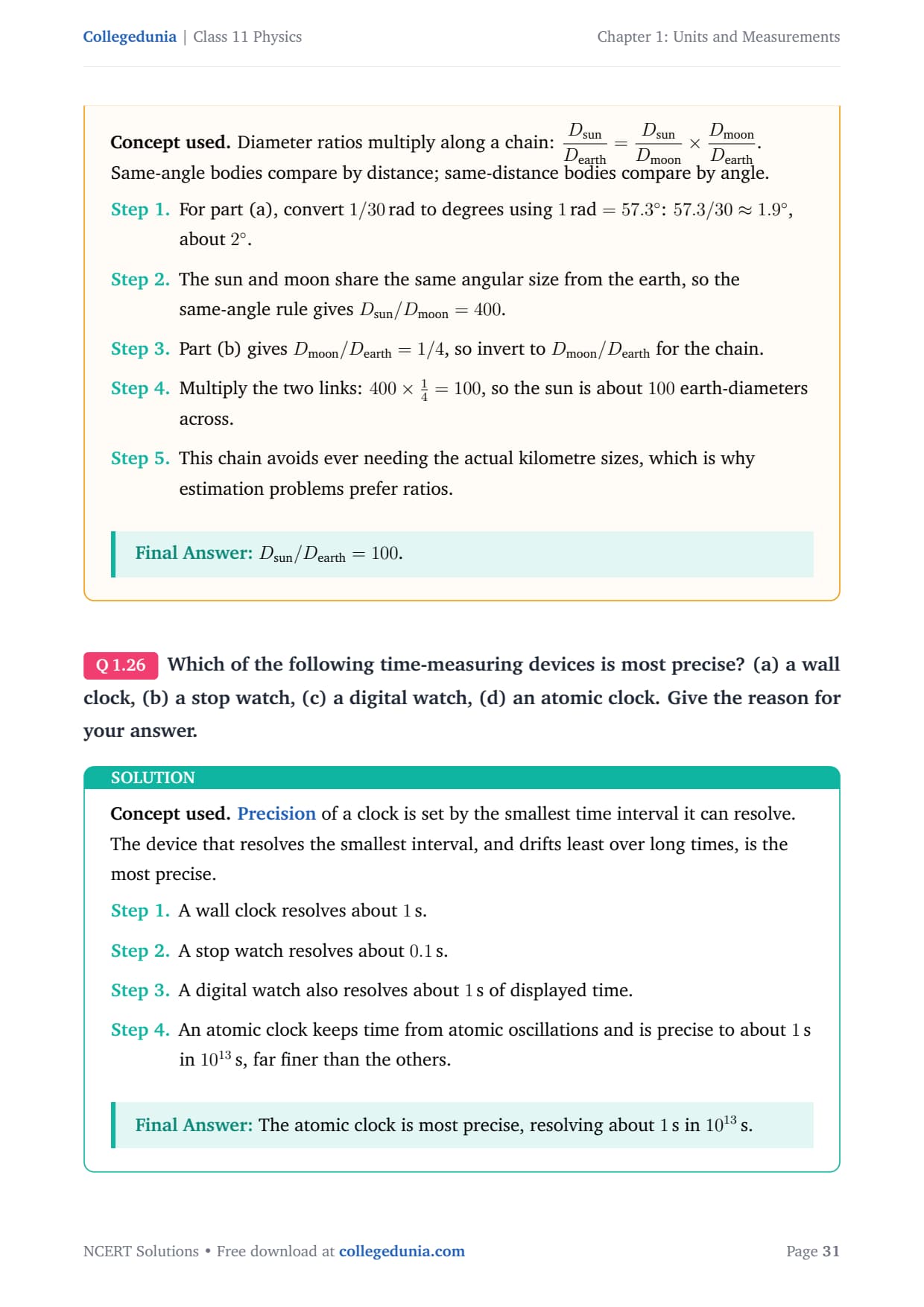
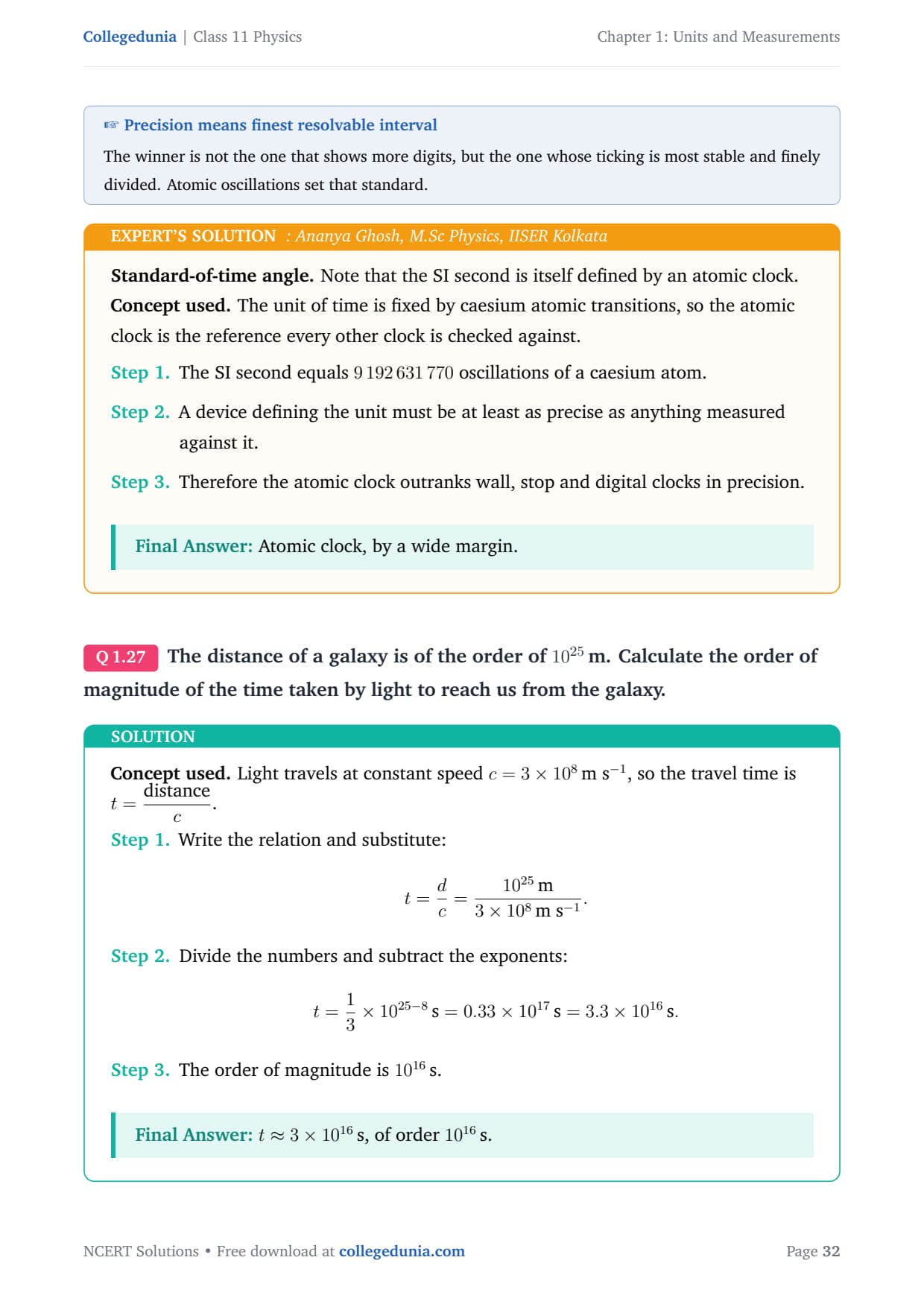
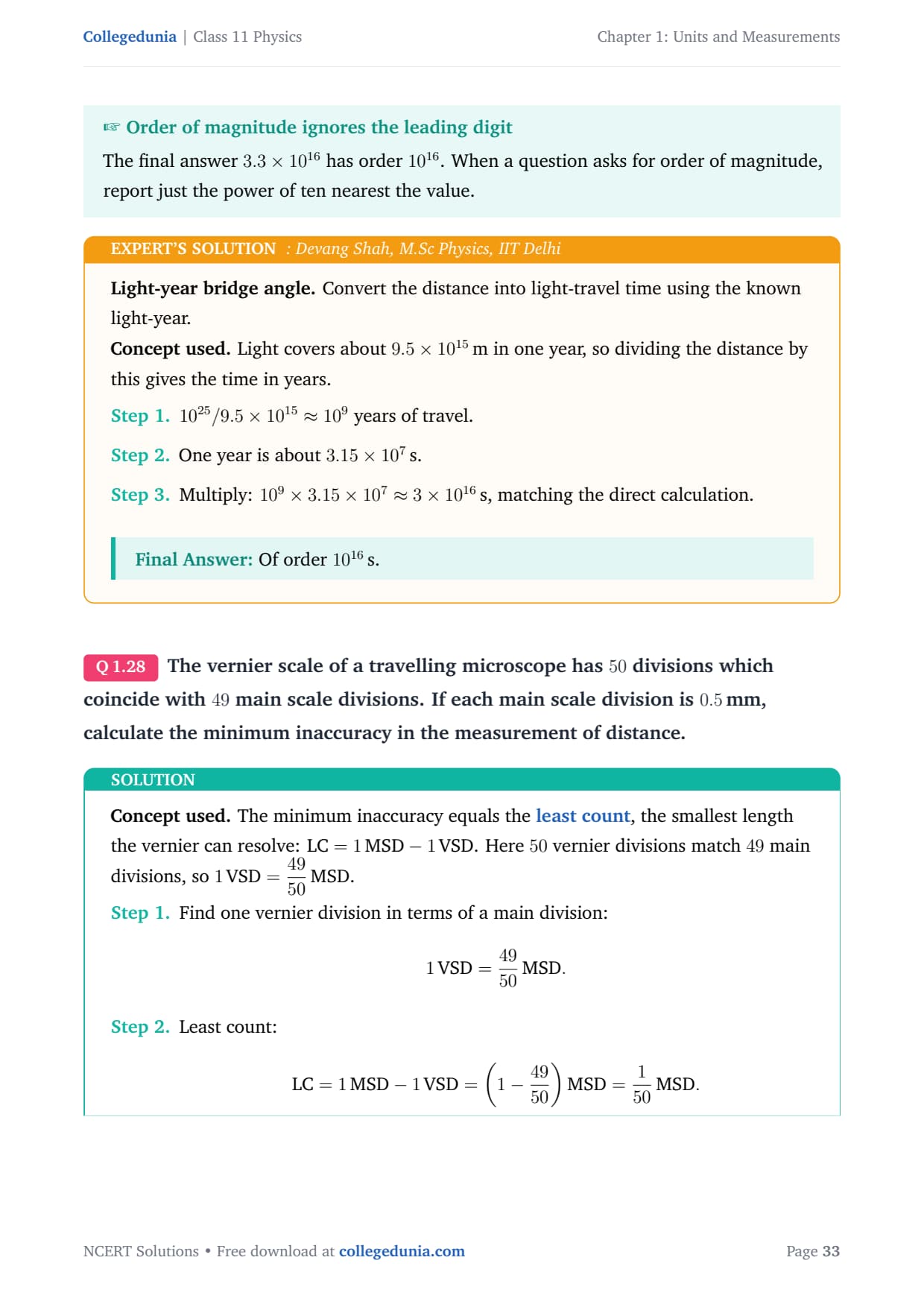
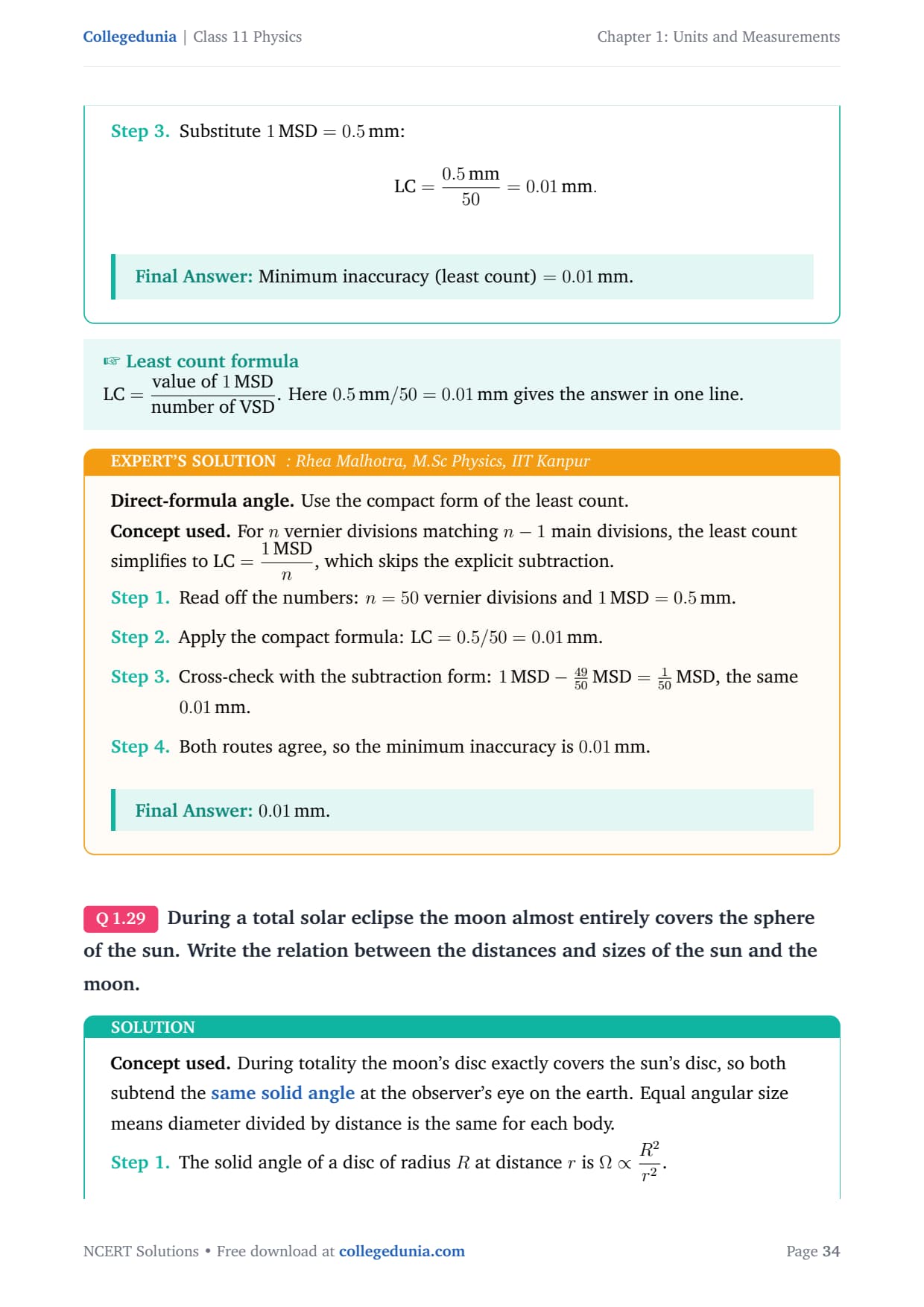
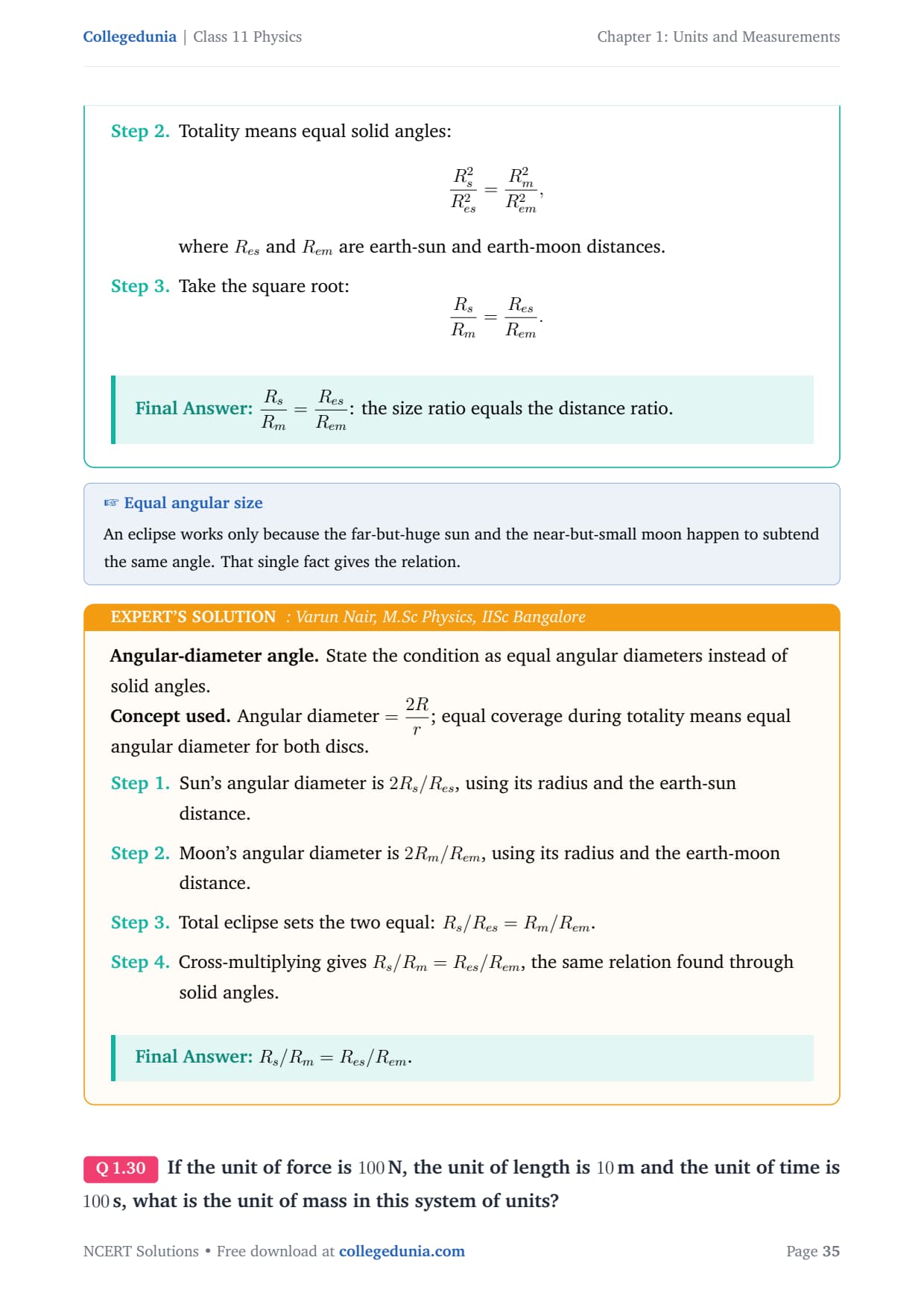
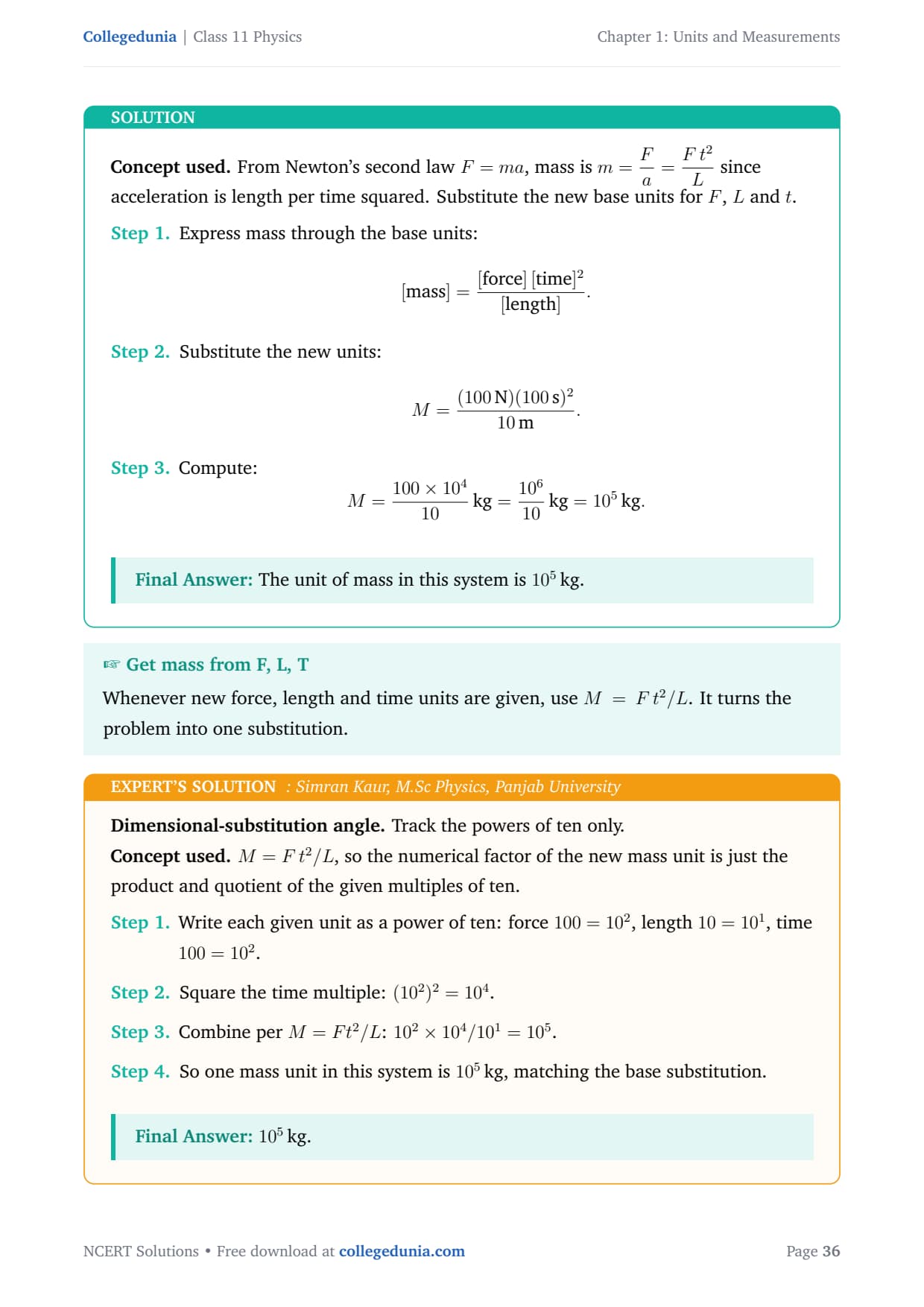
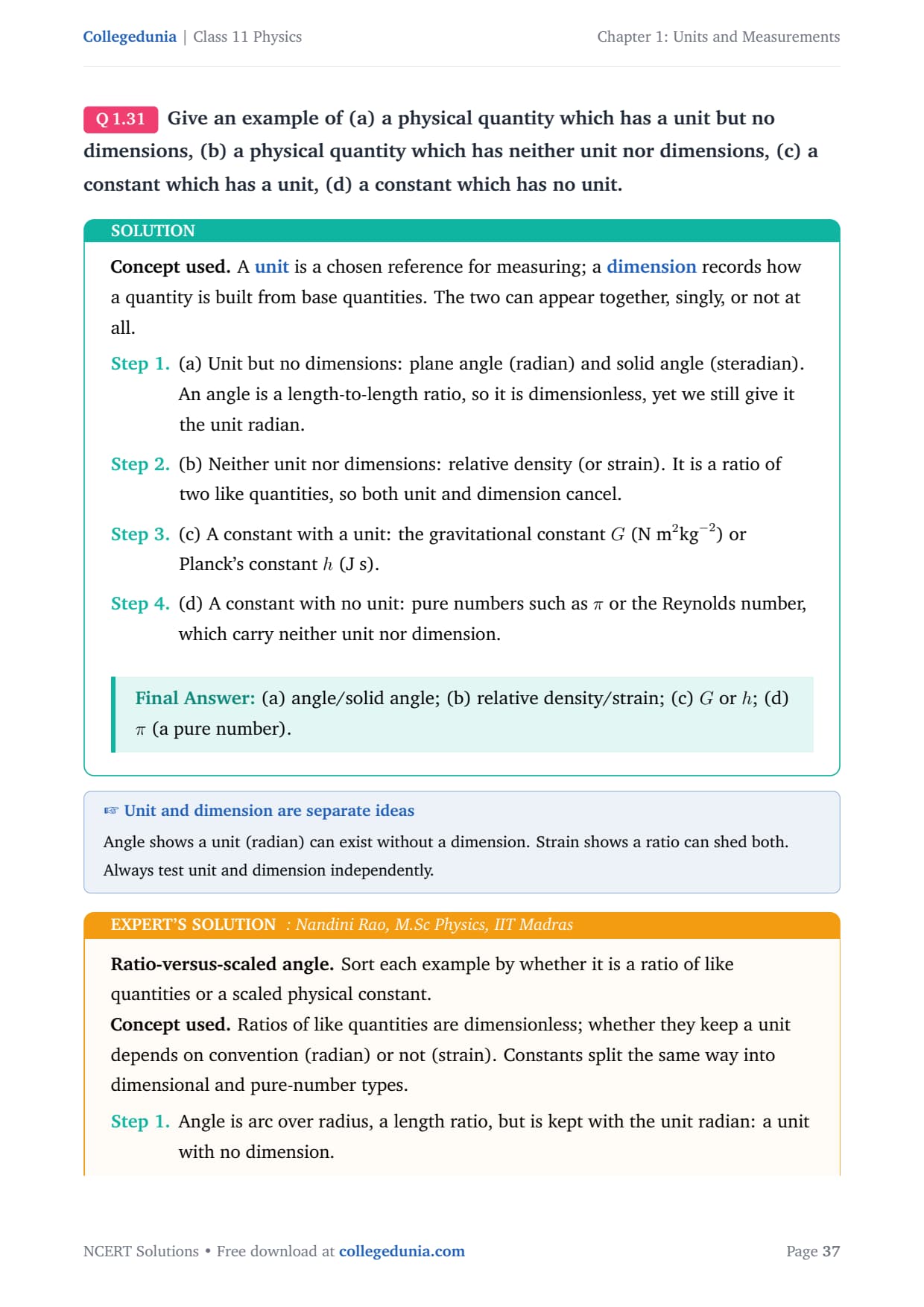
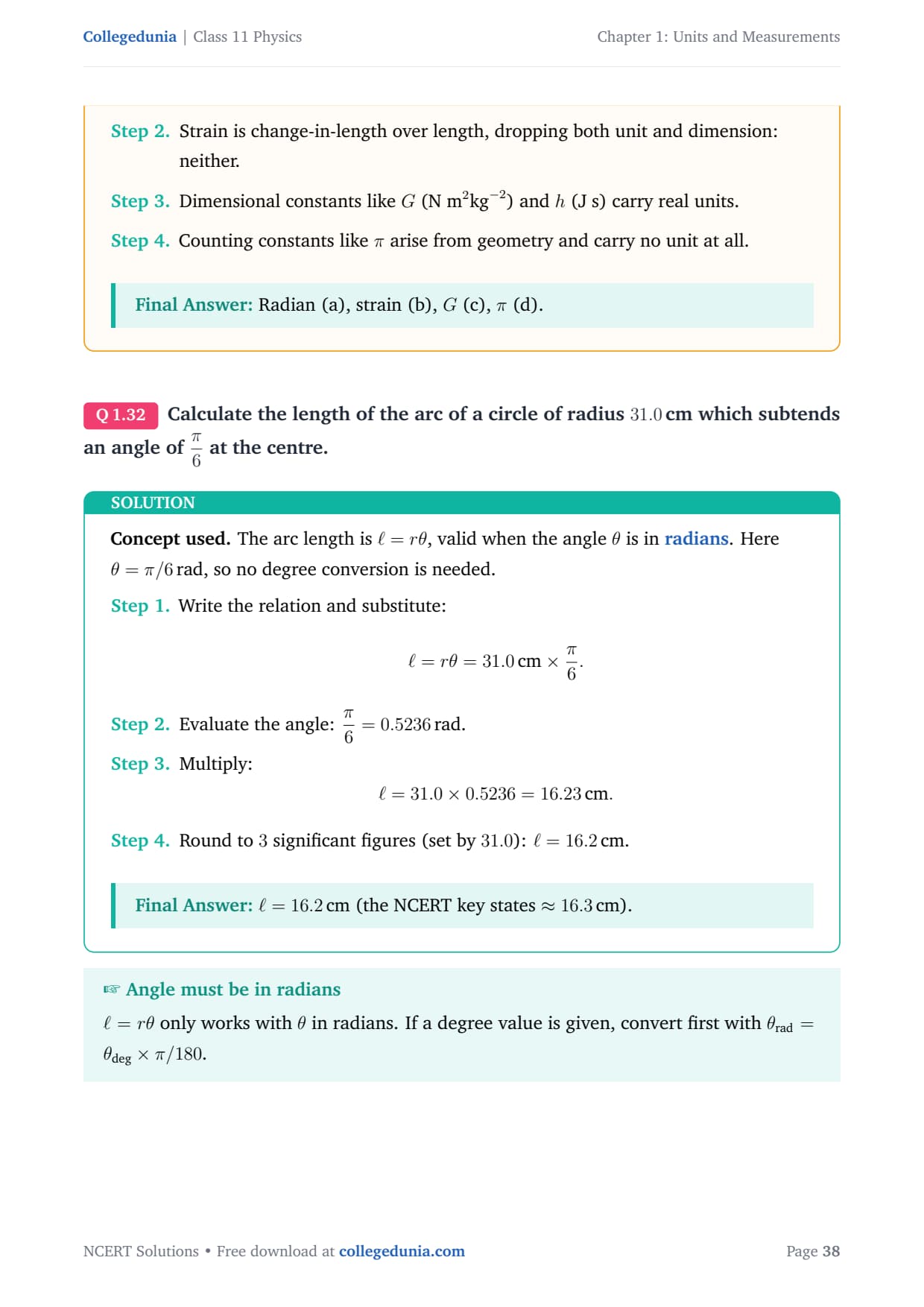
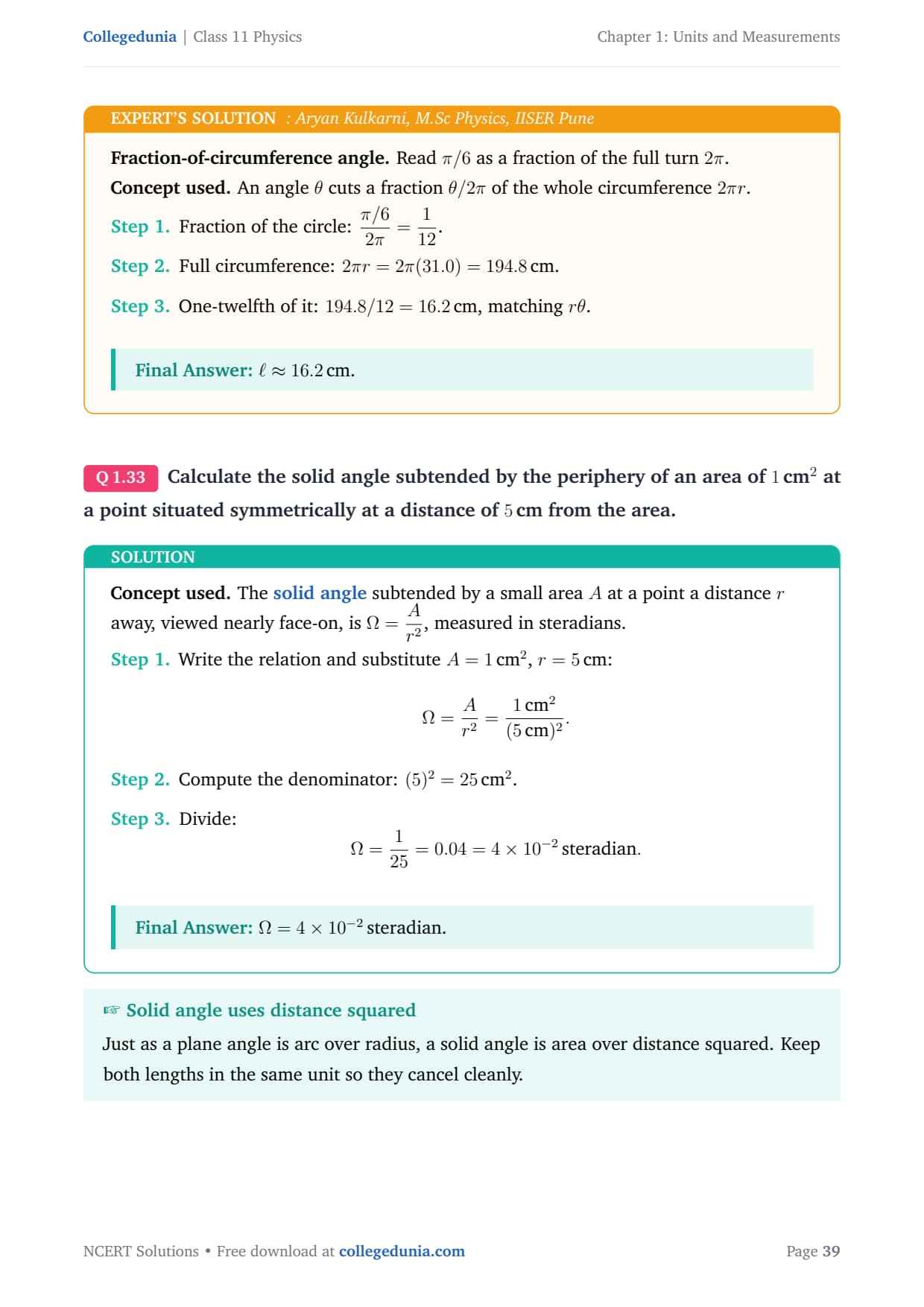
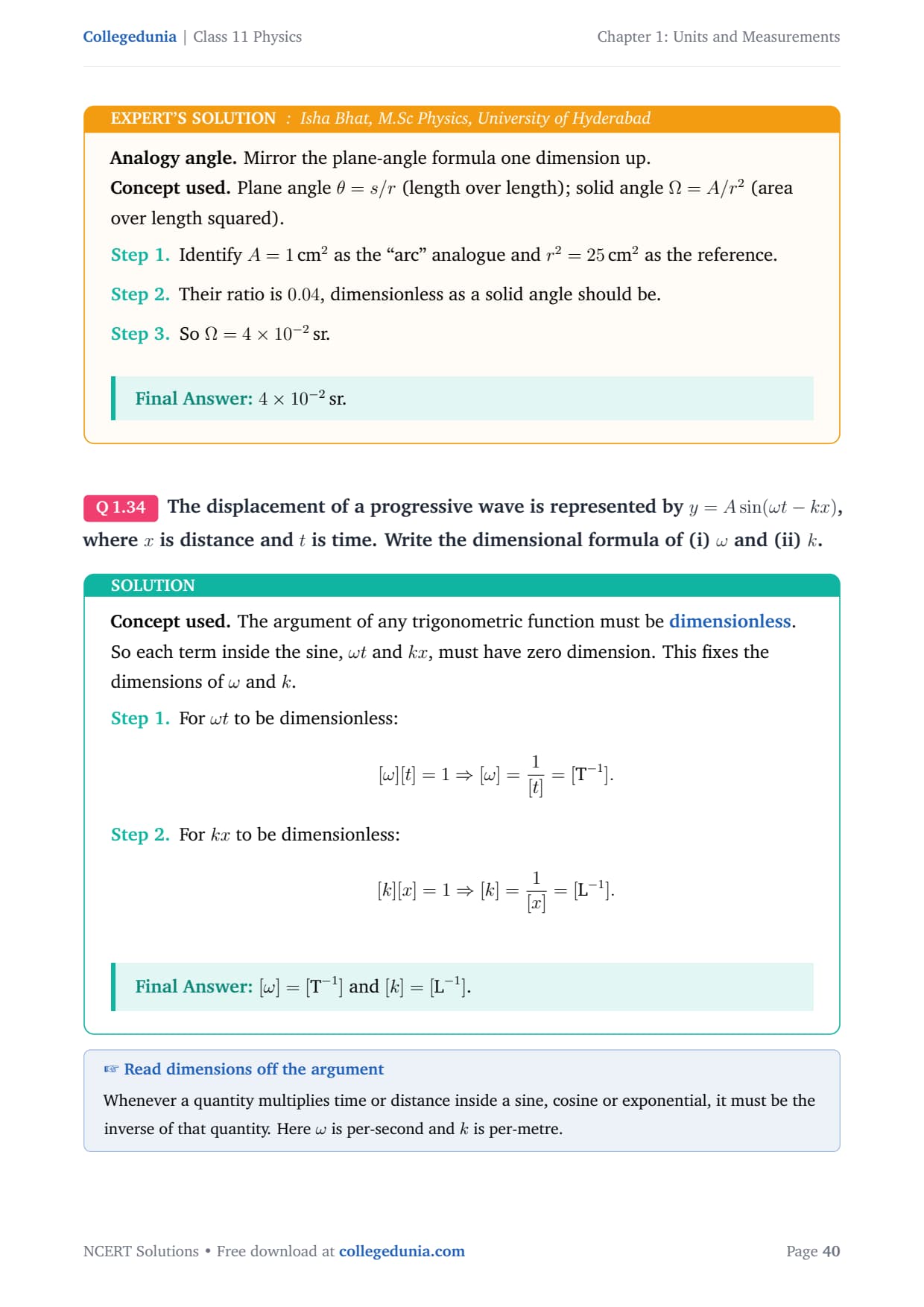
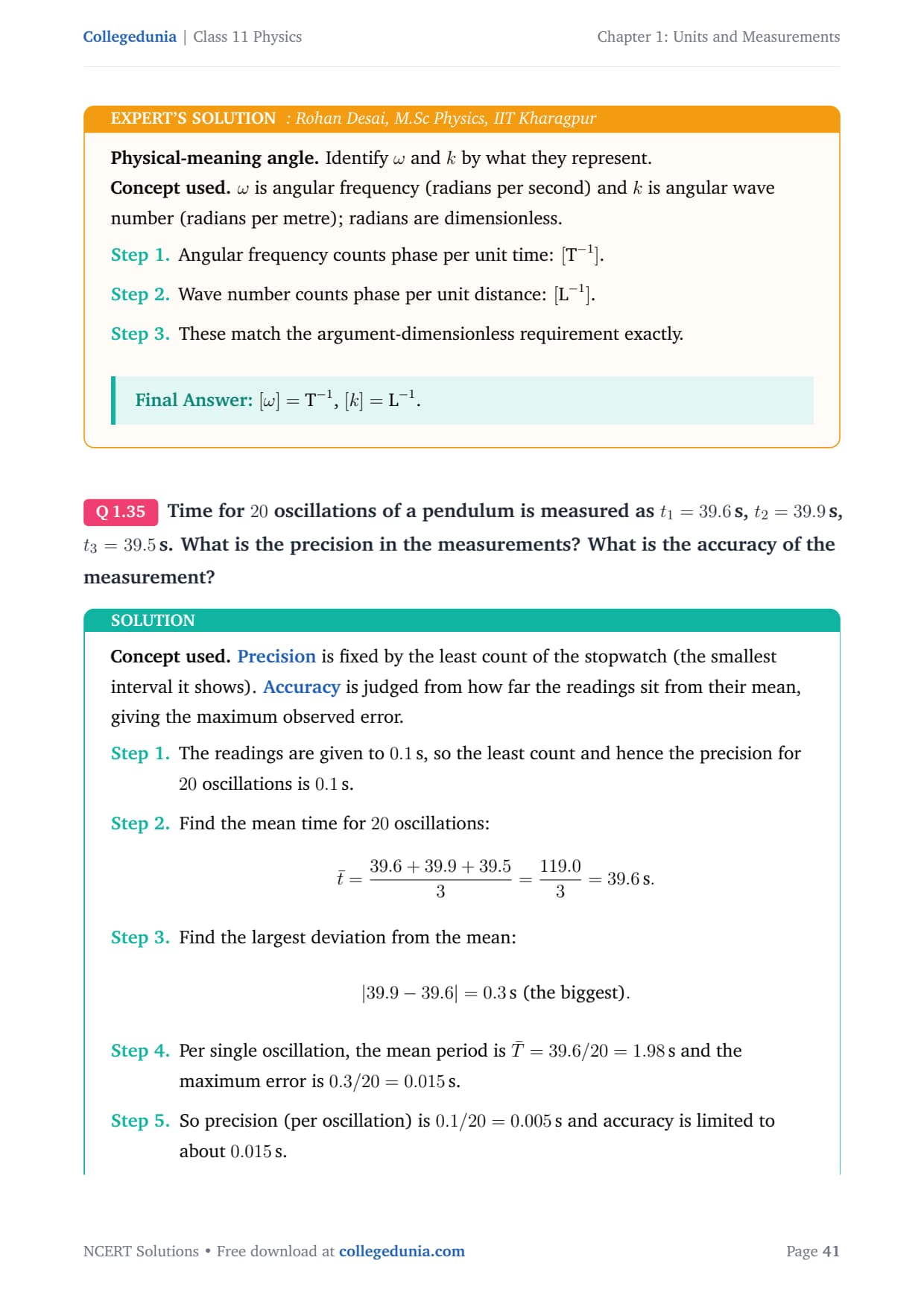
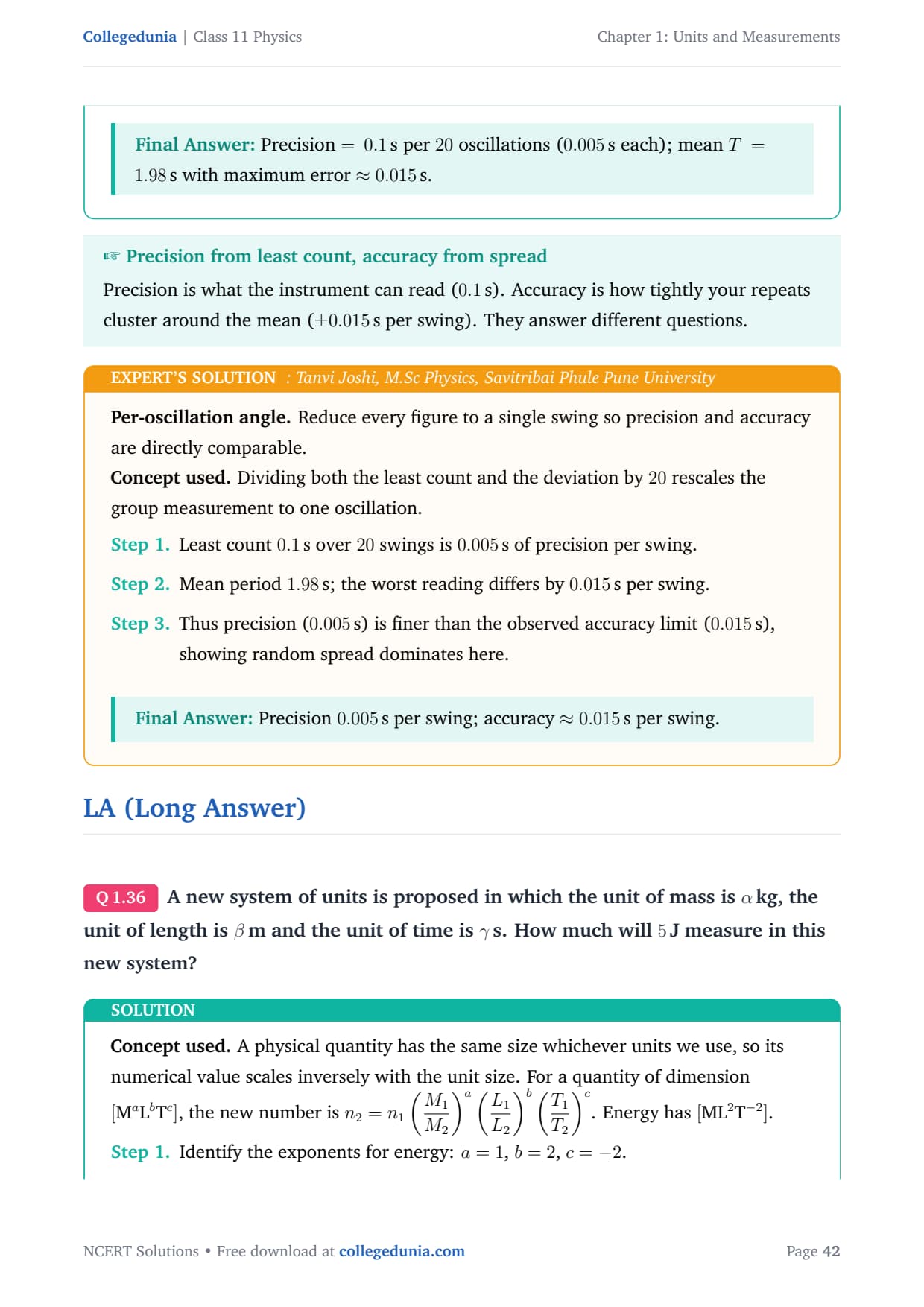
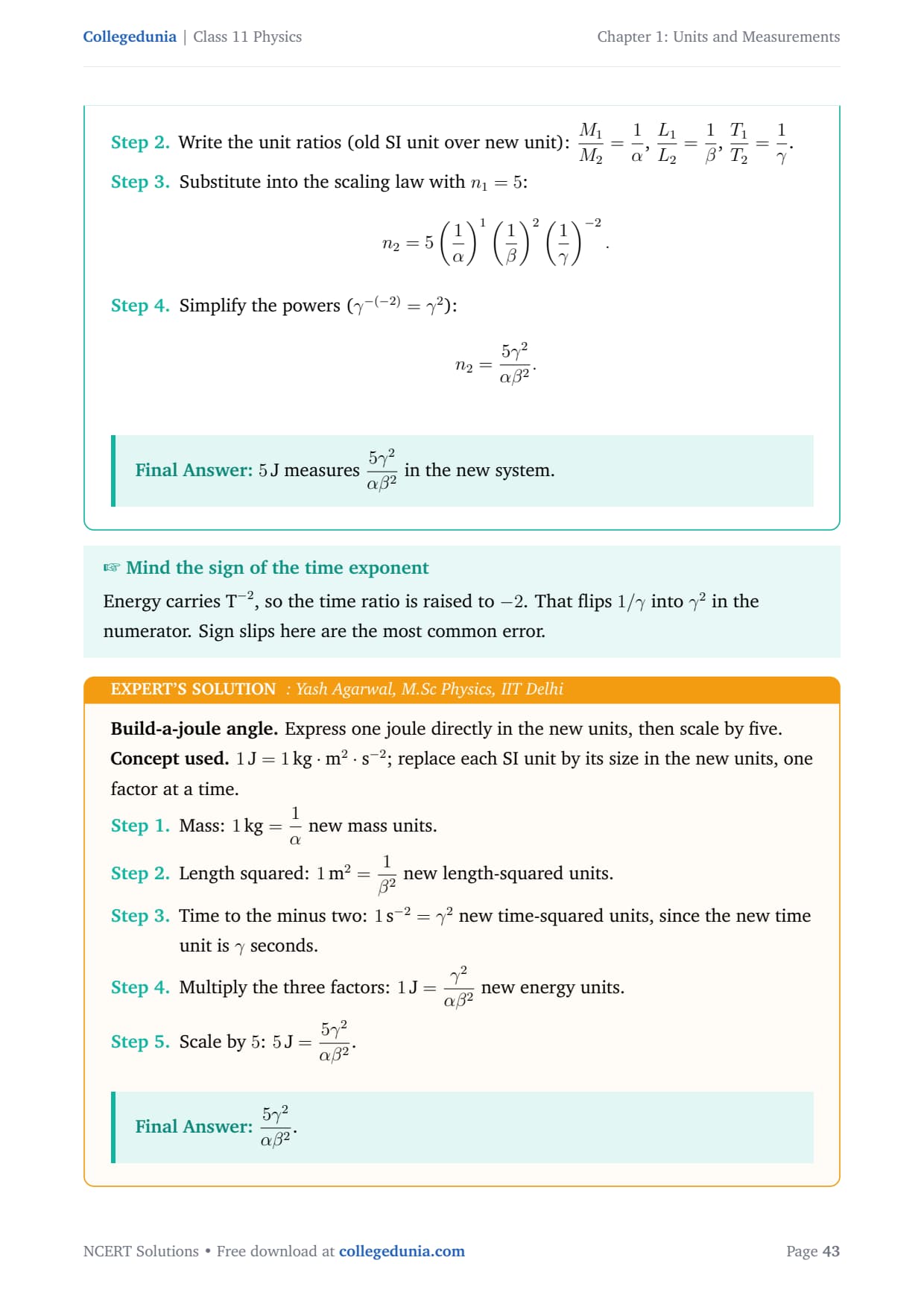
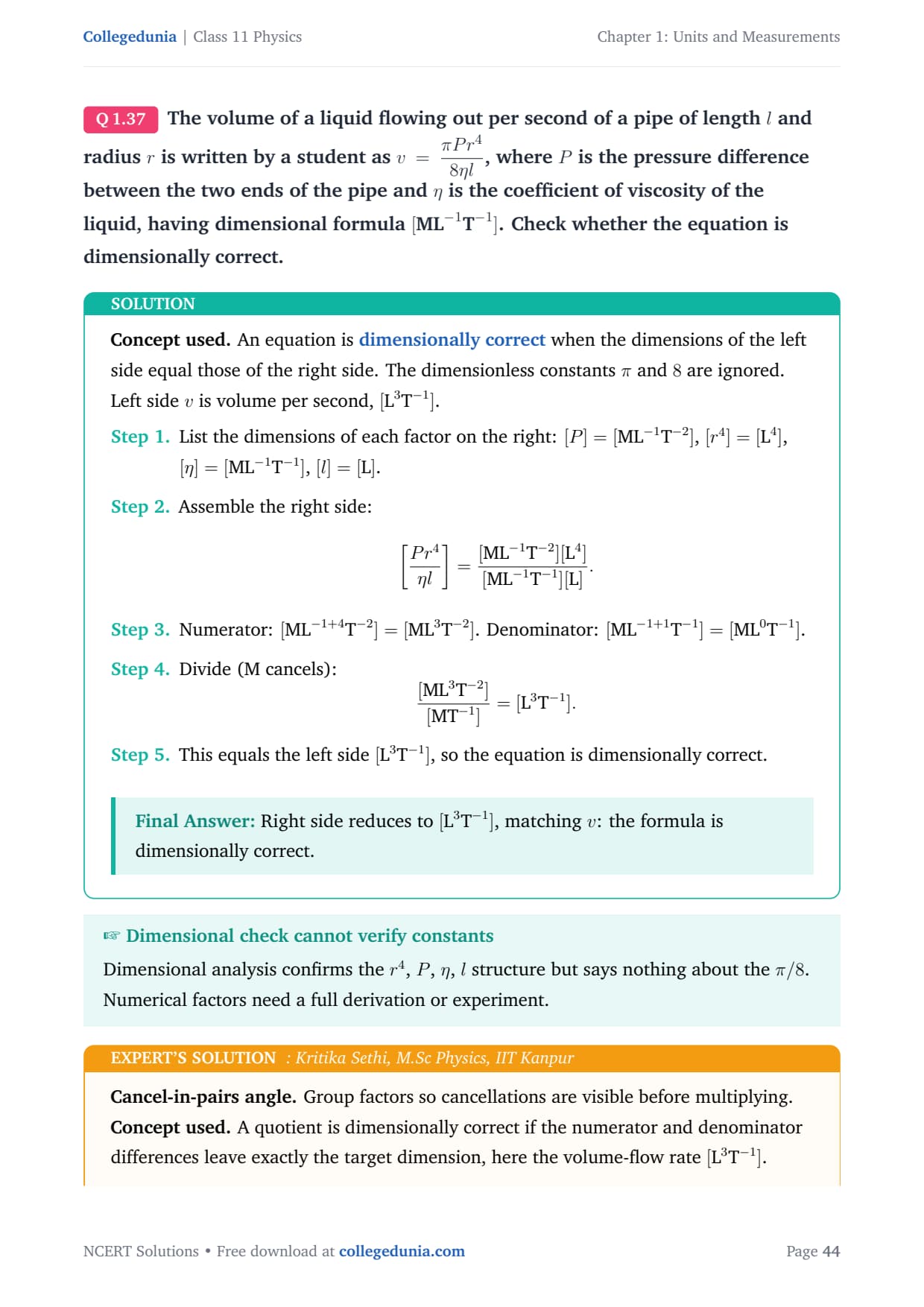
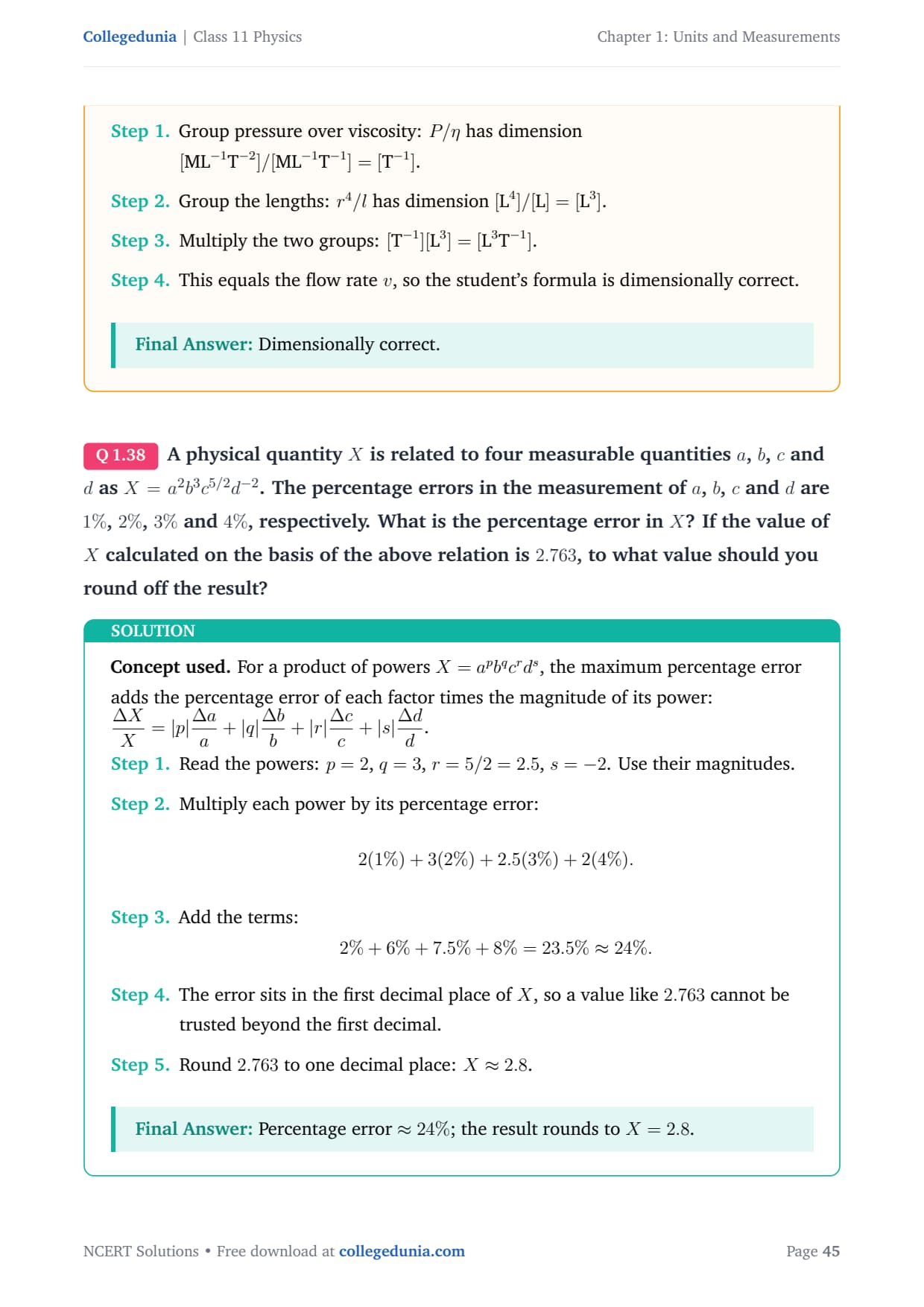
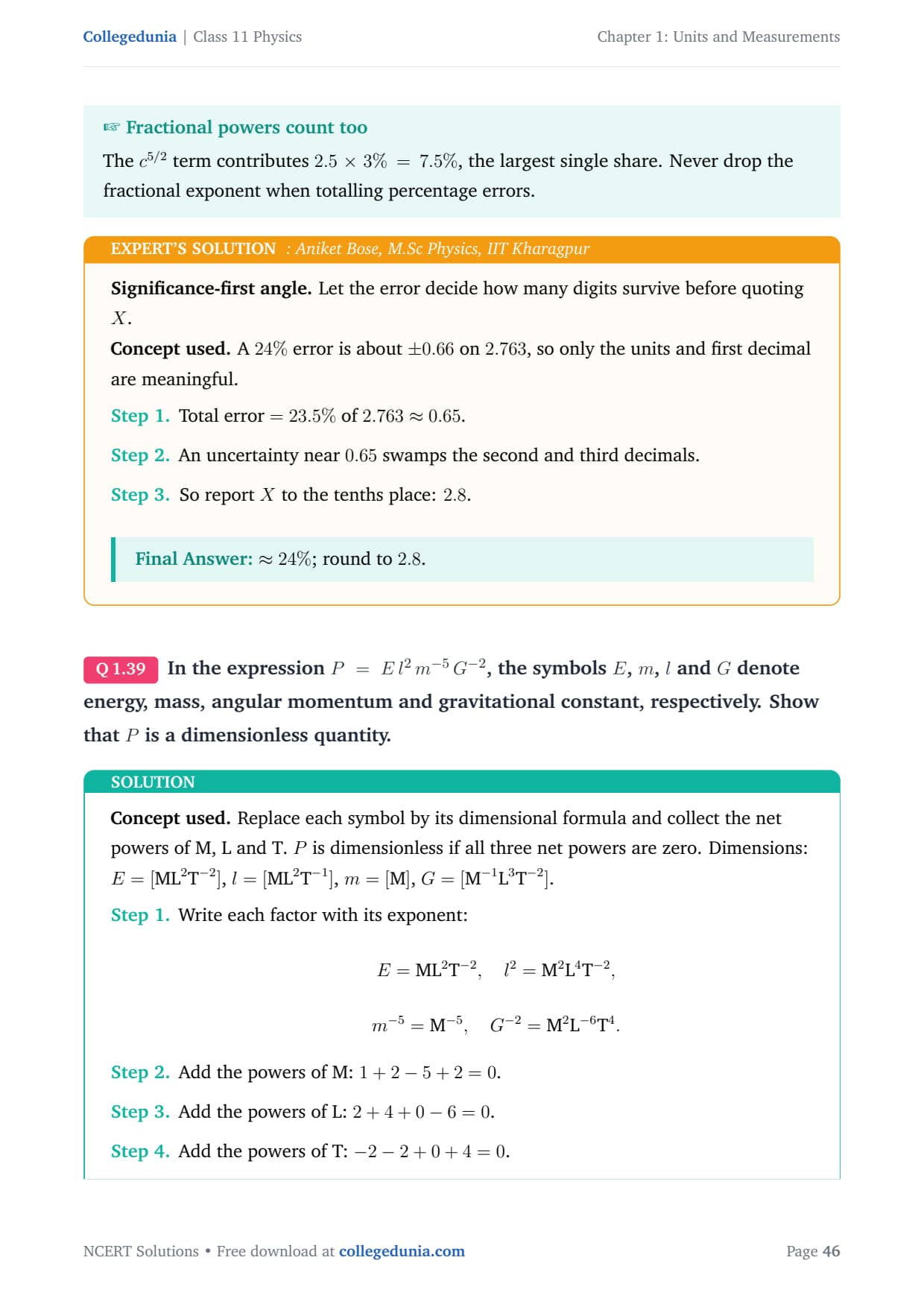
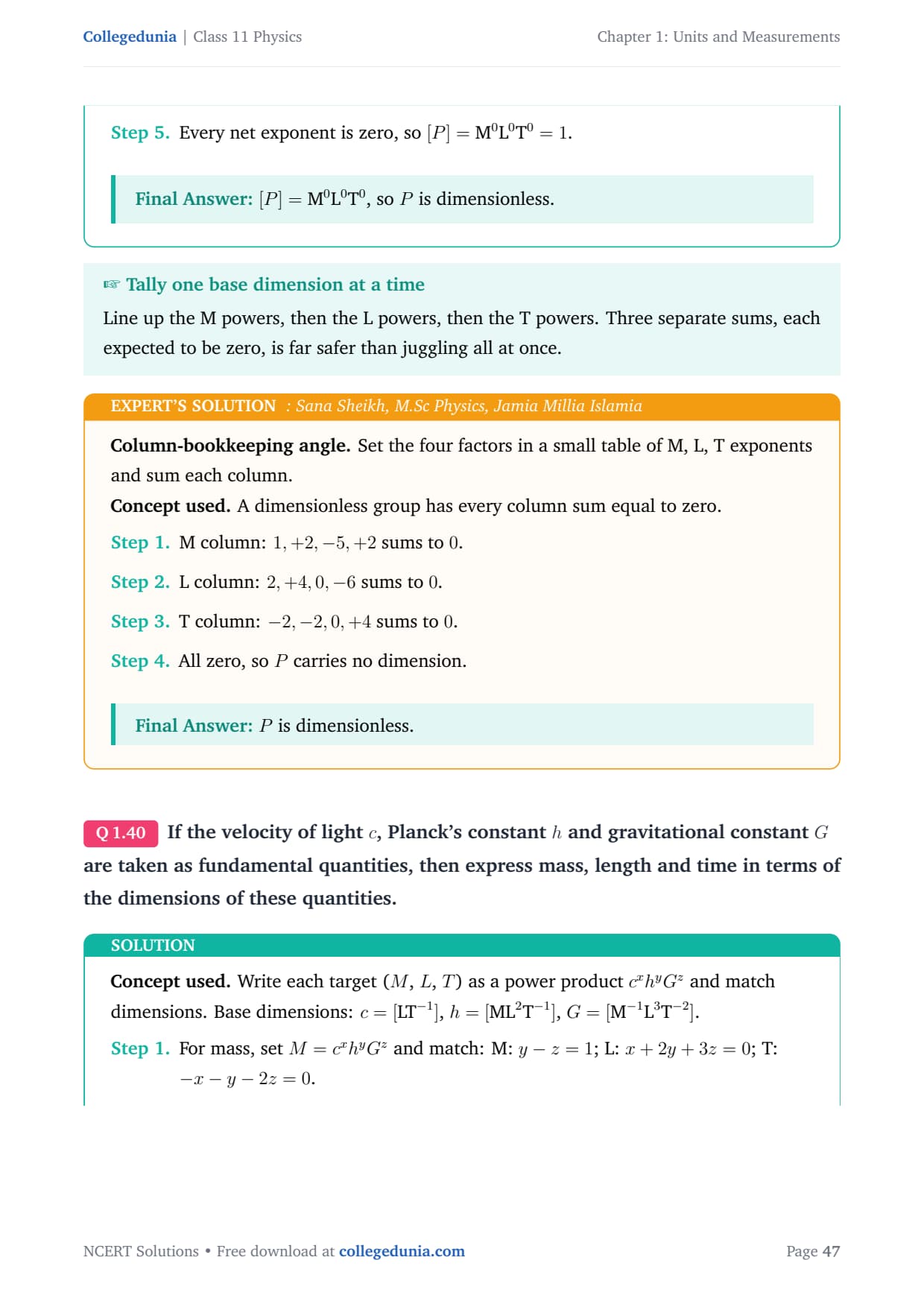
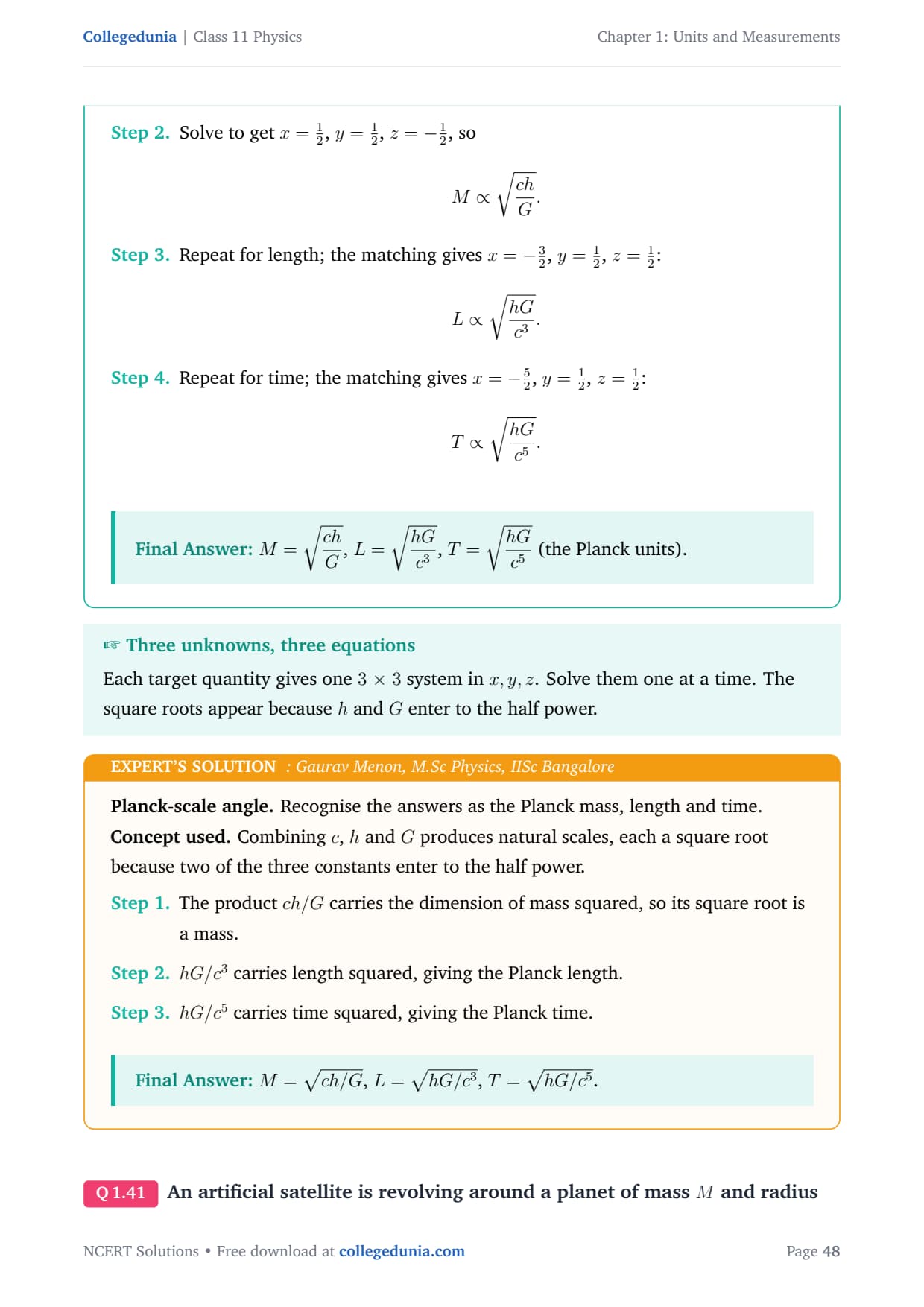
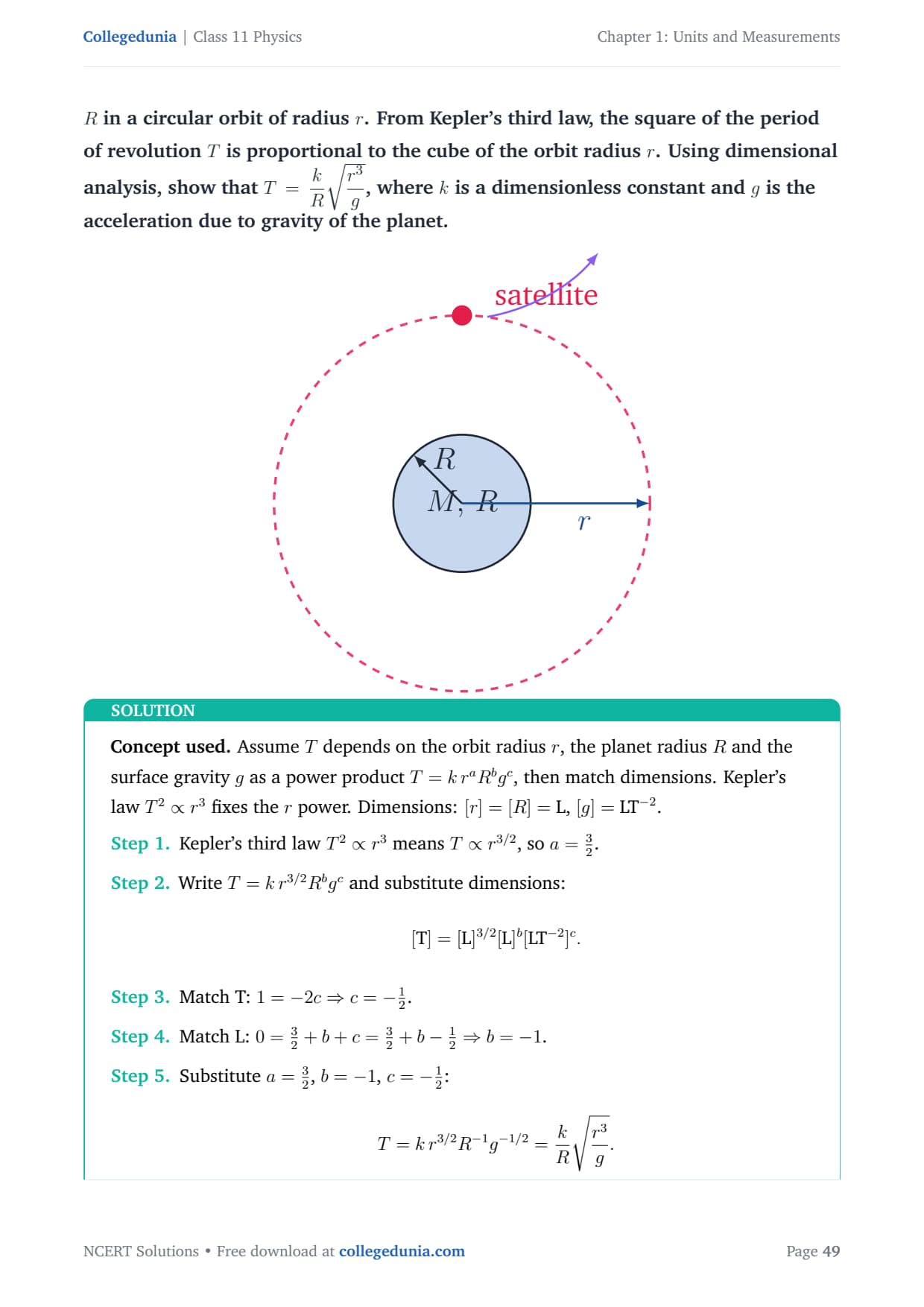
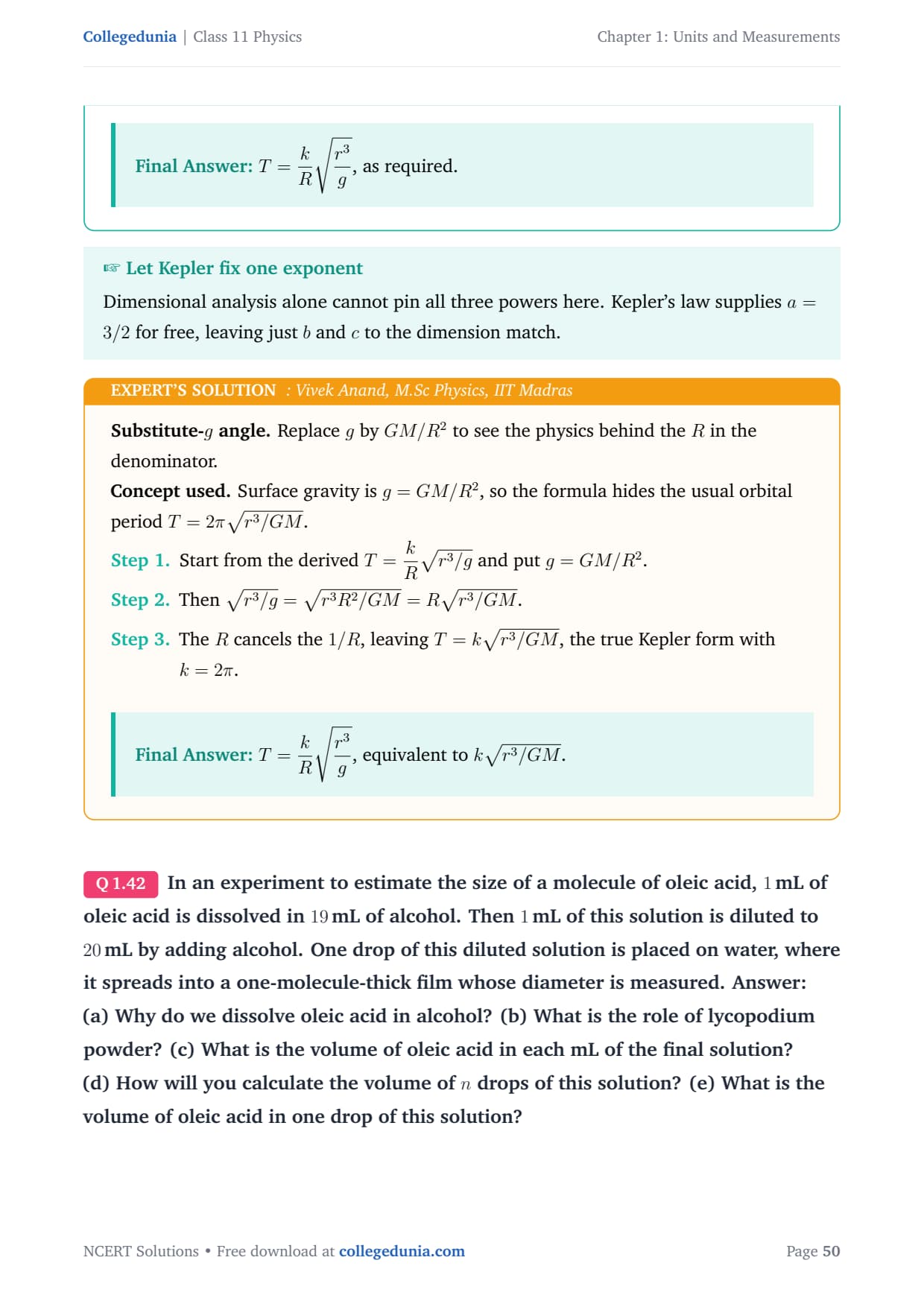
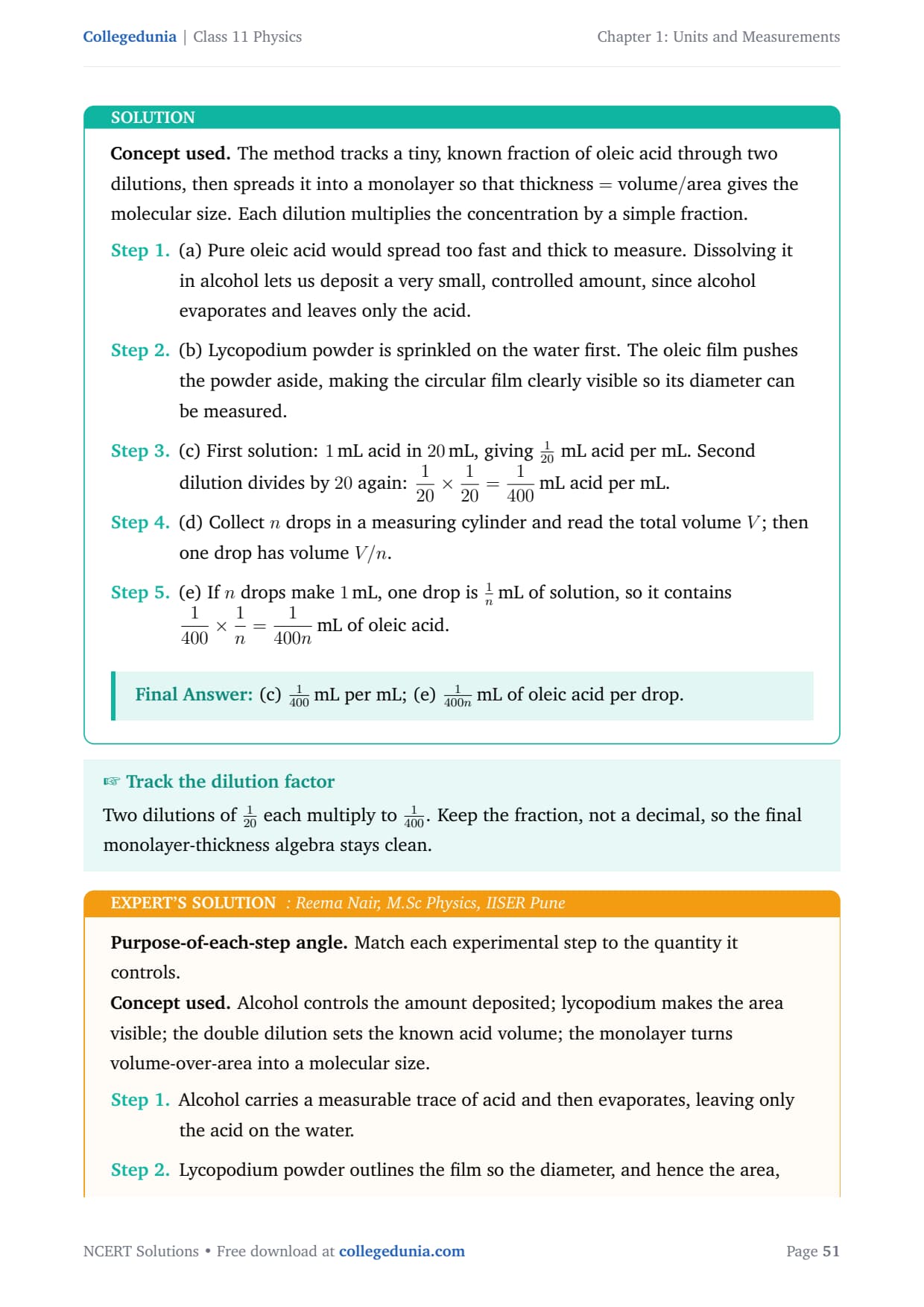
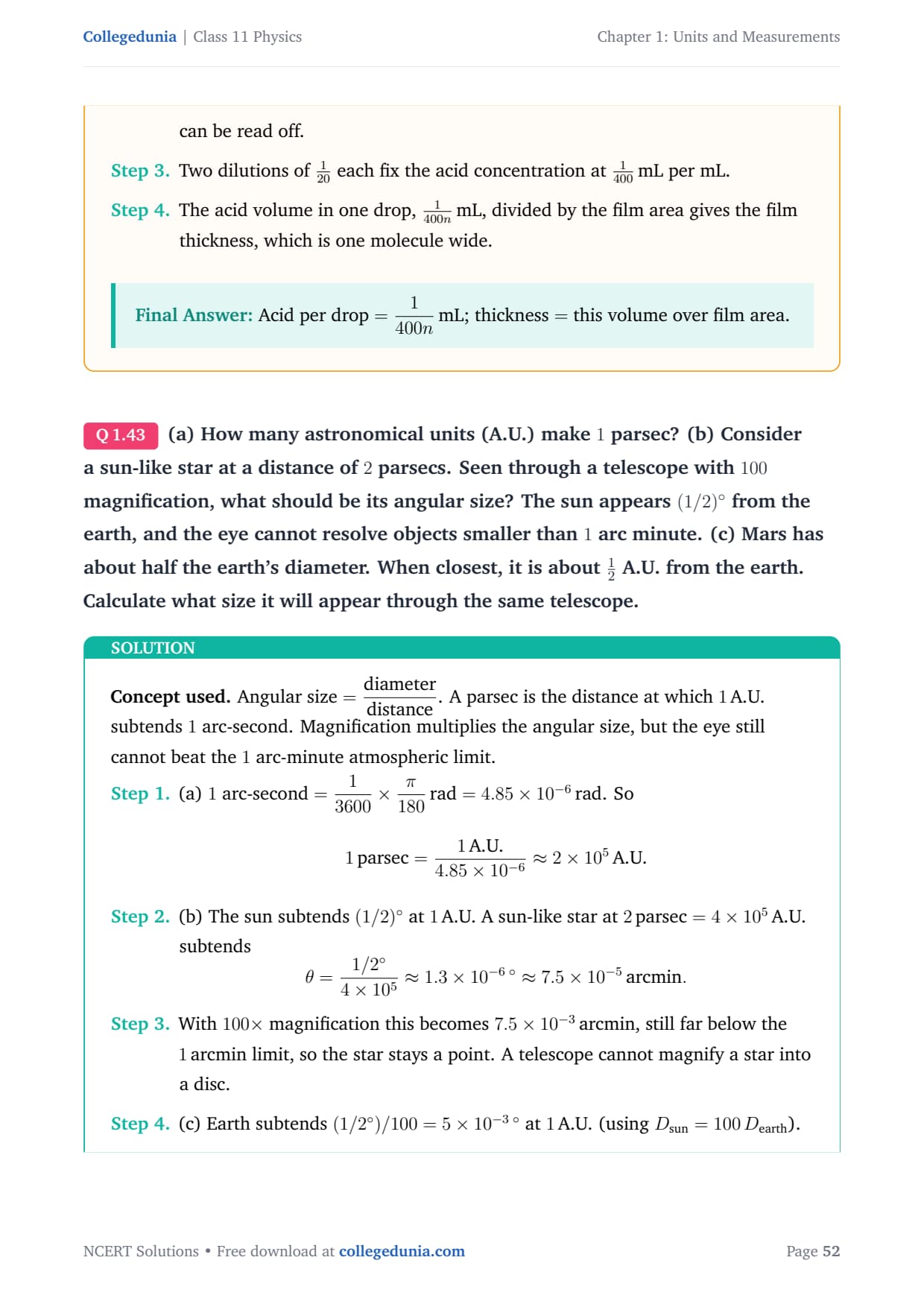
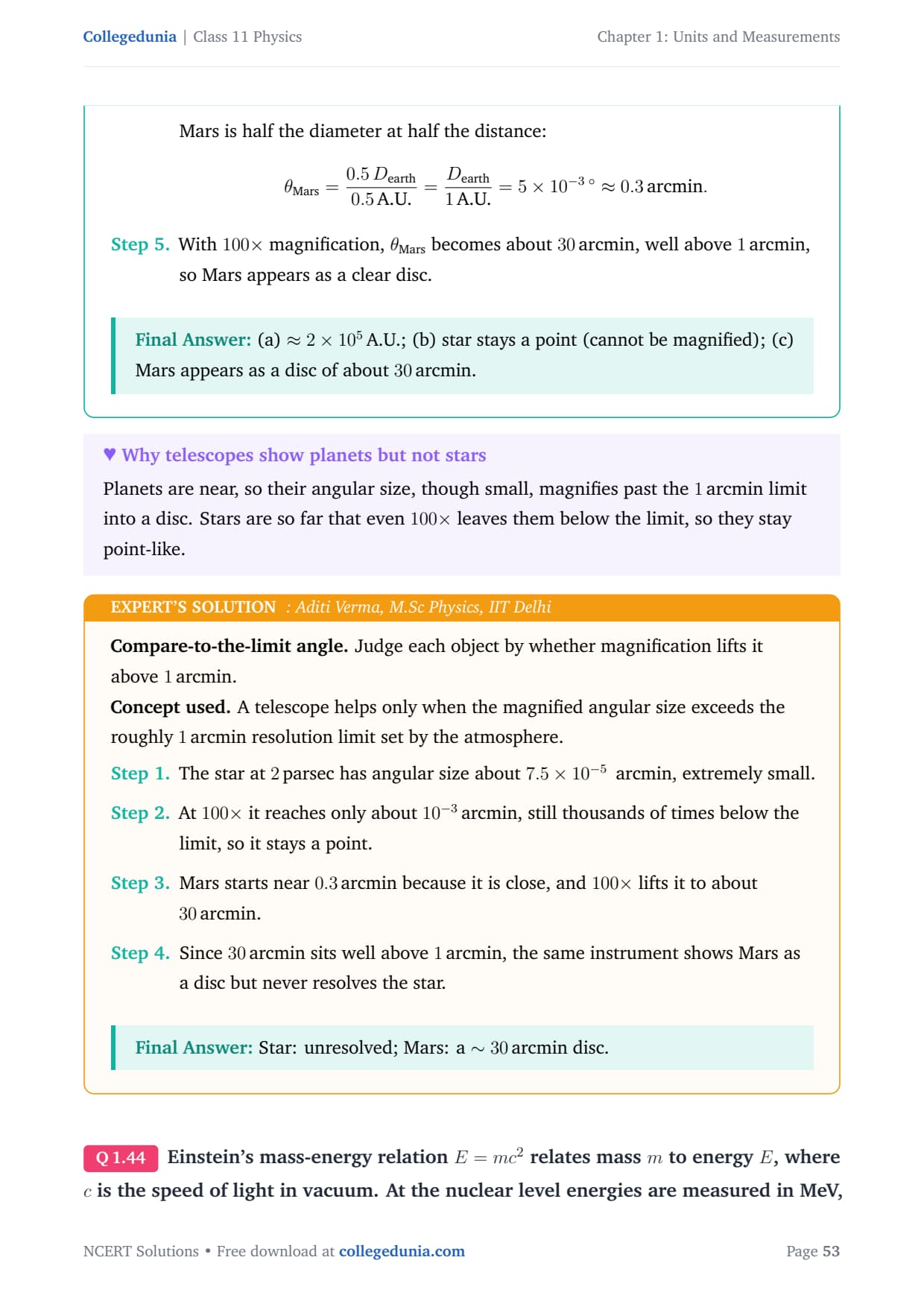
This is the first chapter of Class 11 Physics, and it sets the rules you use for the next two years. Significant figures, dimensional formulas and error analysis all start here. The Exemplar pushes these ideas much further than the textbook does.
- CBSE Weightage: 3 to 4 marks, usually one MCQ or short answer on significant figures or dimensions
- JEE Main Weightage: 1 question per year, most often on dimensional analysis or error propagation
- NEET Weightage: 1 to 2 questions per year from units, dimensions and errors
Solutions checked against the official NCERT Exemplar answer key, with every disputed answer worked out in full.
Topics Covered in the Class 11 Physics Units and Measurements Exemplar
The Exemplar for this chapter is built on four ideas. Each one shows up again in mechanics, thermodynamics and modern physics, so the time you spend here pays back later.
- Units and base quantities: the seven SI base units, derived units, and how to convert between systems
- Significant figures: counting them, and the separate rules for sums, differences, products and quotients
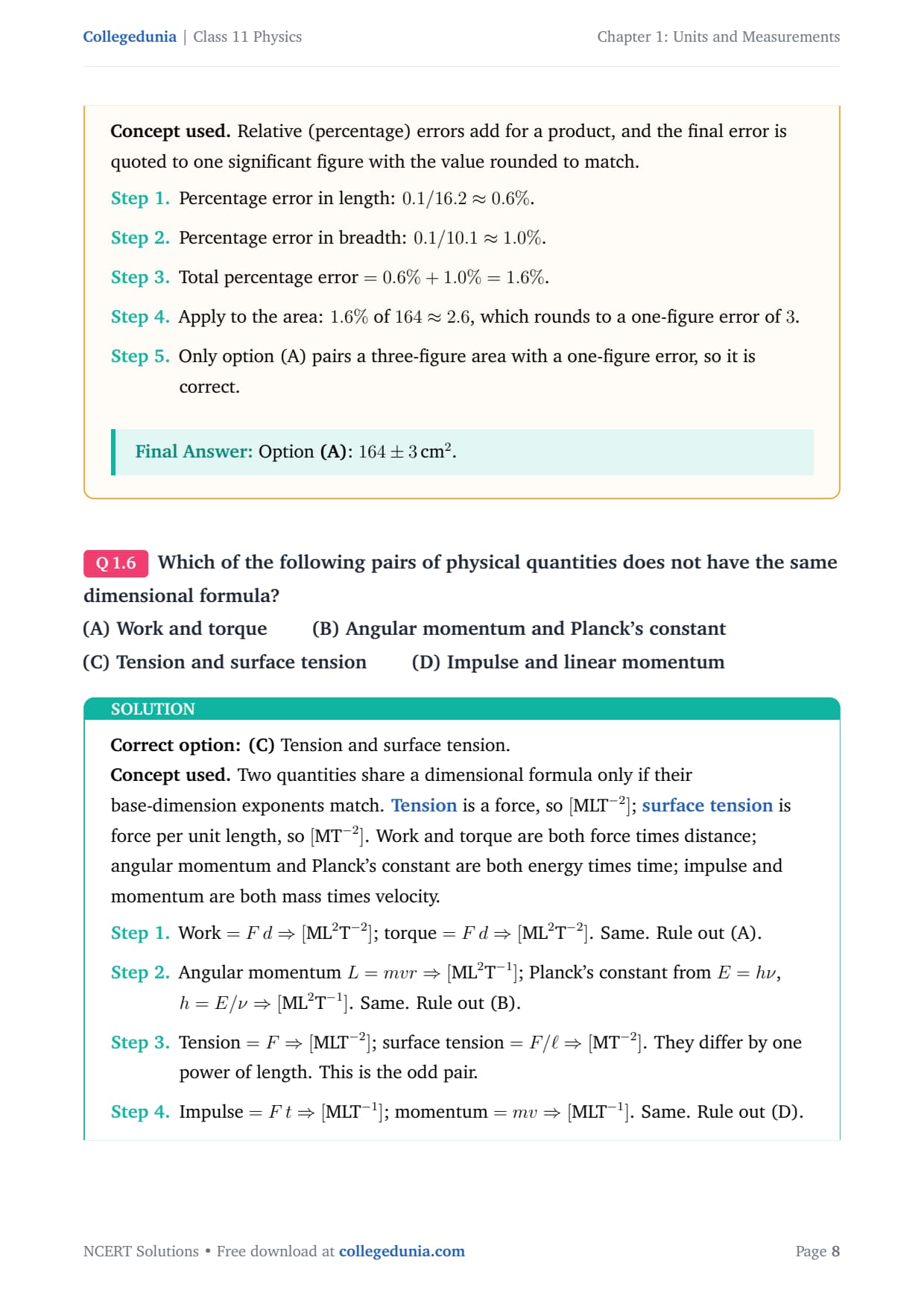
- Dimensional formulas: writing quantities as [Ma Lb Tc] and checking equations for consistency
- Errors: absolute, relative and percentage error, plus how errors combine in a calculation
Question Types in the Units and Measurements NCERT Exemplar
The 44 questions are split across five types. The MCQ II questions are the ones students lose marks on, because more than one option can be correct and partial answers score nothing.
| Question Type | Count | What It Tests |
|---|---|---|
| MCQ I (single correct) | 12 | Direct recall of rules for significant figures and dimensions |
| MCQ II (one or more correct) | 6 | Whether you can rule out every wrong option, not just spot one right one |
| VSA (Very Short Answer) | 6 | One-line reasoning, often on why a quantity is dimensionless |
| SA (Short Answer) | 11 | Short numerical work on error combination and unit conversion |
| LA (Long Answer) | 9 | Full derivations and estimation problems worth 5 marks |
Key Rules and Formulas Used in the Units and Measurements Exemplar
Almost every question in this chapter comes back to one of the rules below. The PDF states the rule before applying it, so you can see which one is doing the work.
- Sums and differences: the answer keeps the fewest decimal places of any term
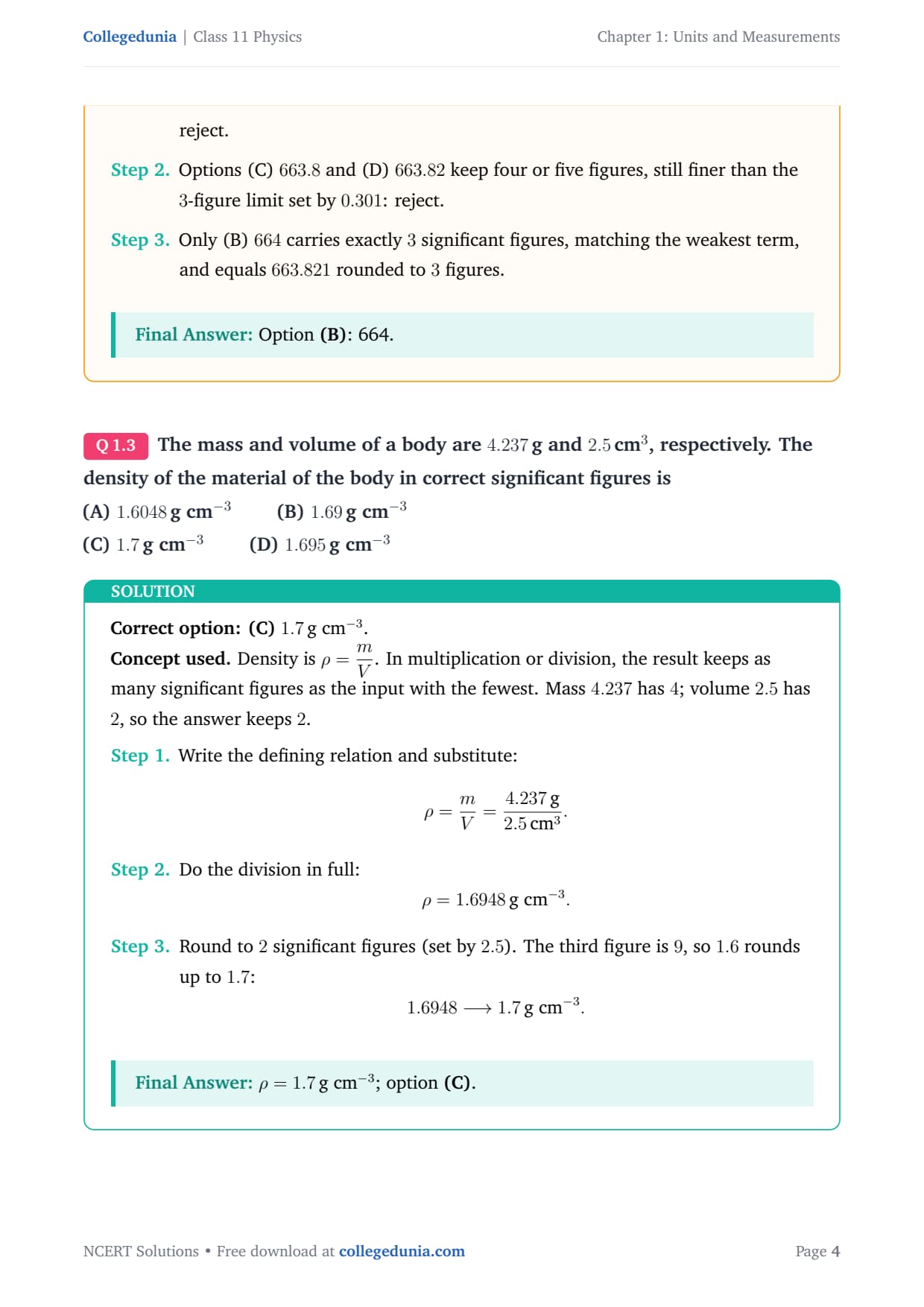
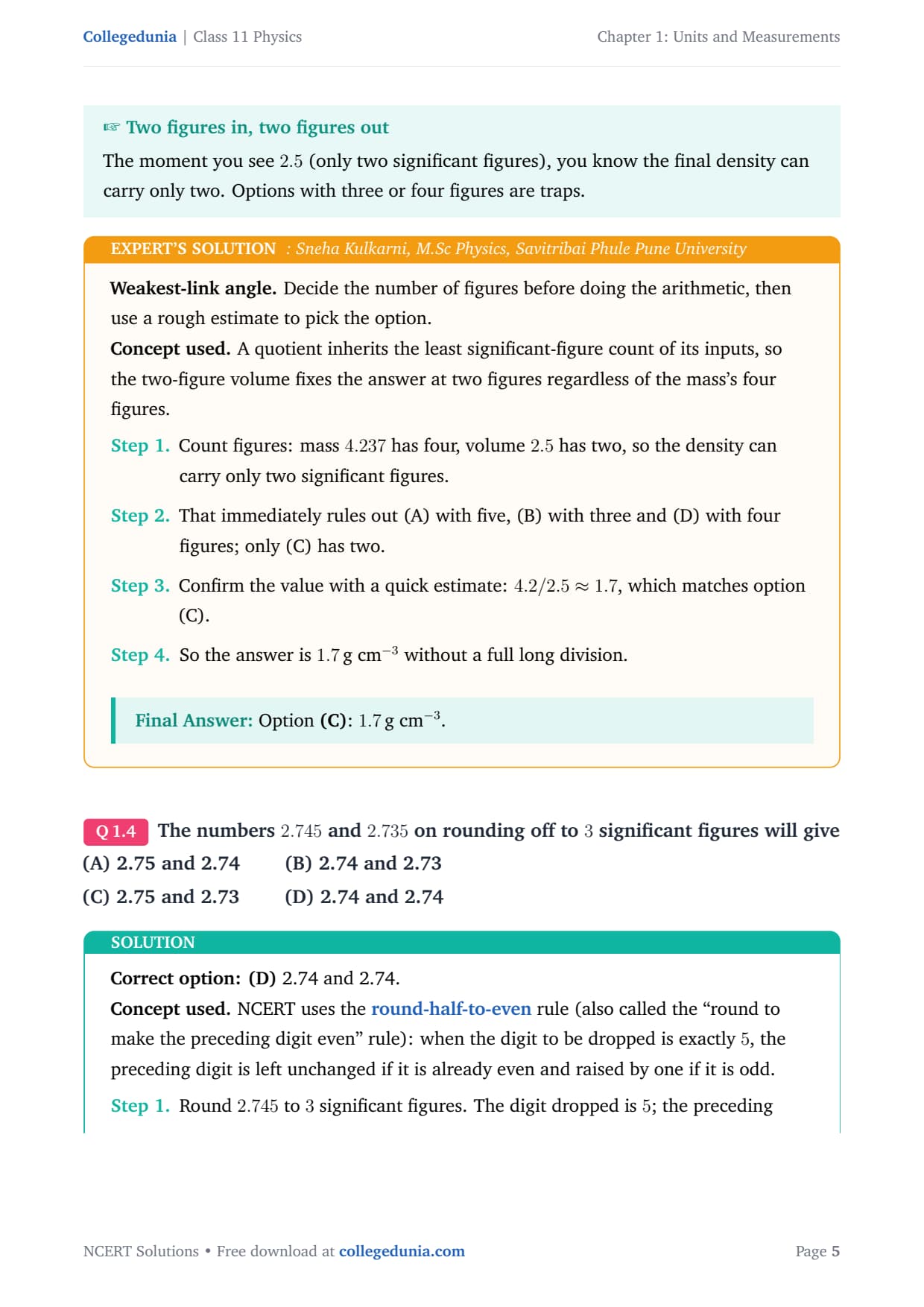
- Products and quotients: the answer keeps the fewest significant figures of any term
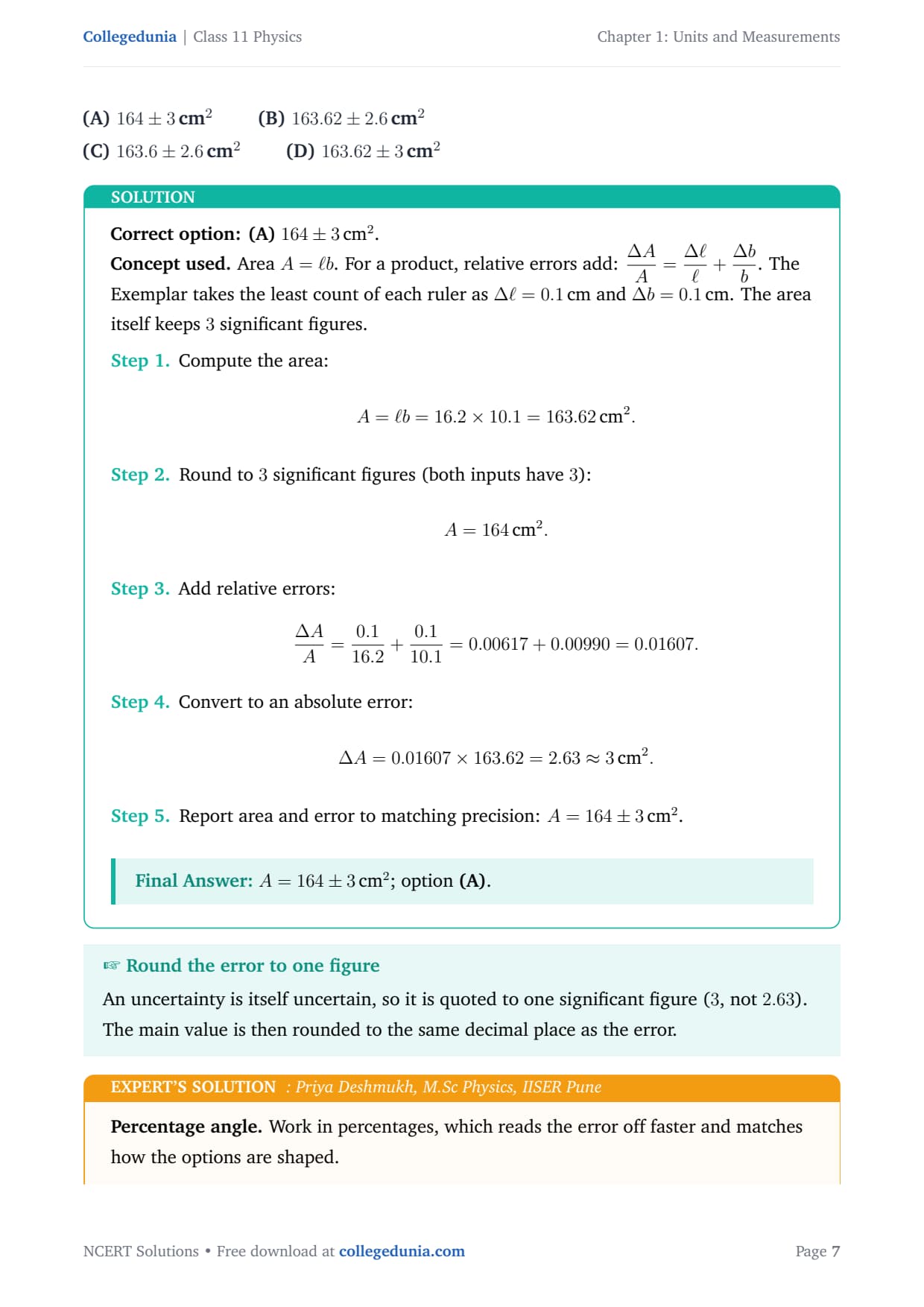
- Relative error of a product: add the fractional errors, so for Z = AB, ΔZ/Z = ΔA/A + ΔB/B
- Powers: for Z = An, the fractional error is multiplied by n
- Dimensional check: you can only add or subtract terms with the same dimensions
A dimensional check can prove an equation wrong, but it can never prove it right. Any dimensionless constant, such as a factor of 2 or π, is invisible to the method. Several Exemplar questions are built on exactly this gap.
Common Mistakes Students Make in Units and Measurements
The Exemplar sets traps on purpose. These four catch most students, and each one is flagged in the PDF where it appears.
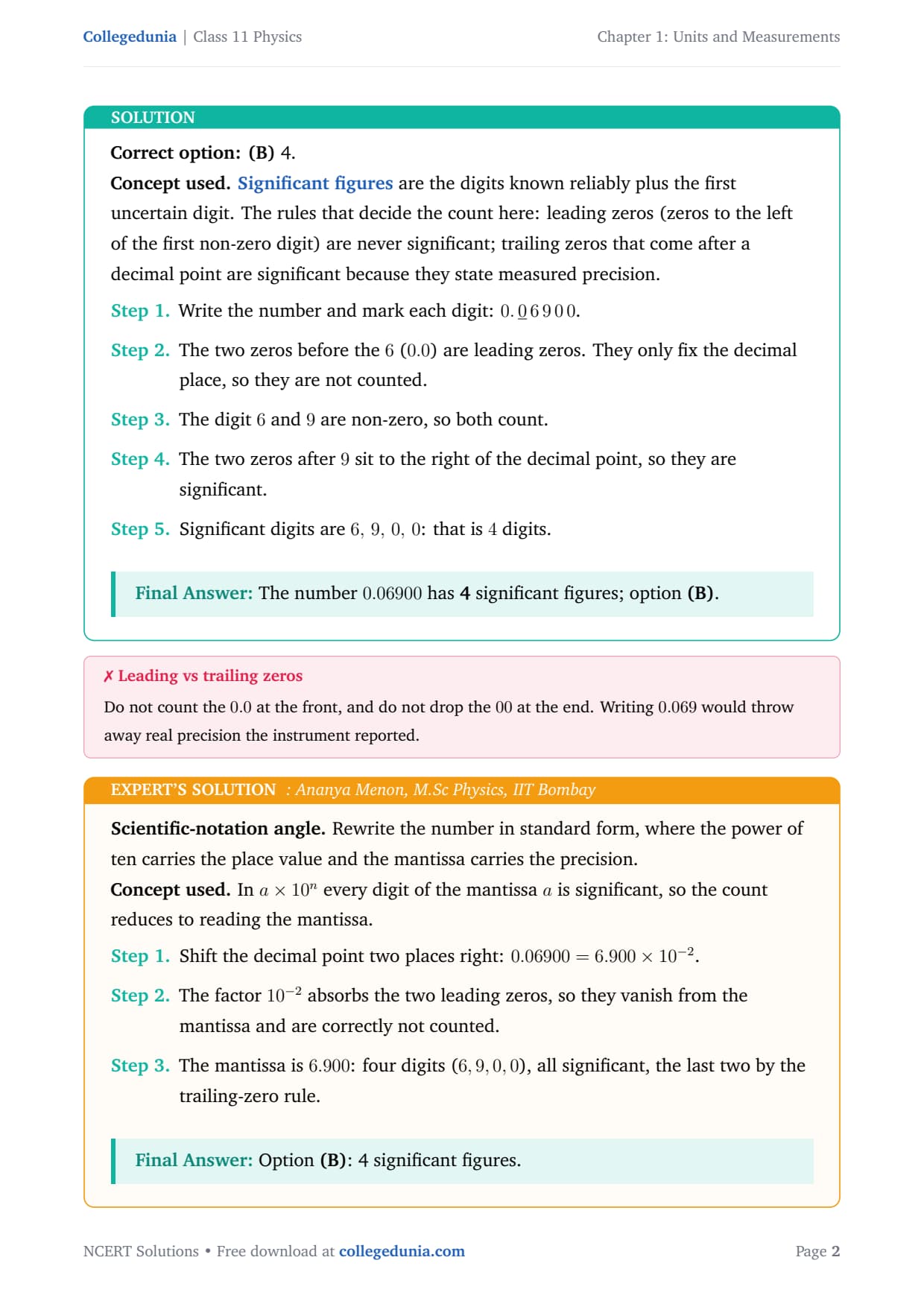
- Zeros: in 0.06900 the leading zeros do not count, but the trailing zeros do. The answer is 4 significant figures, not 2.
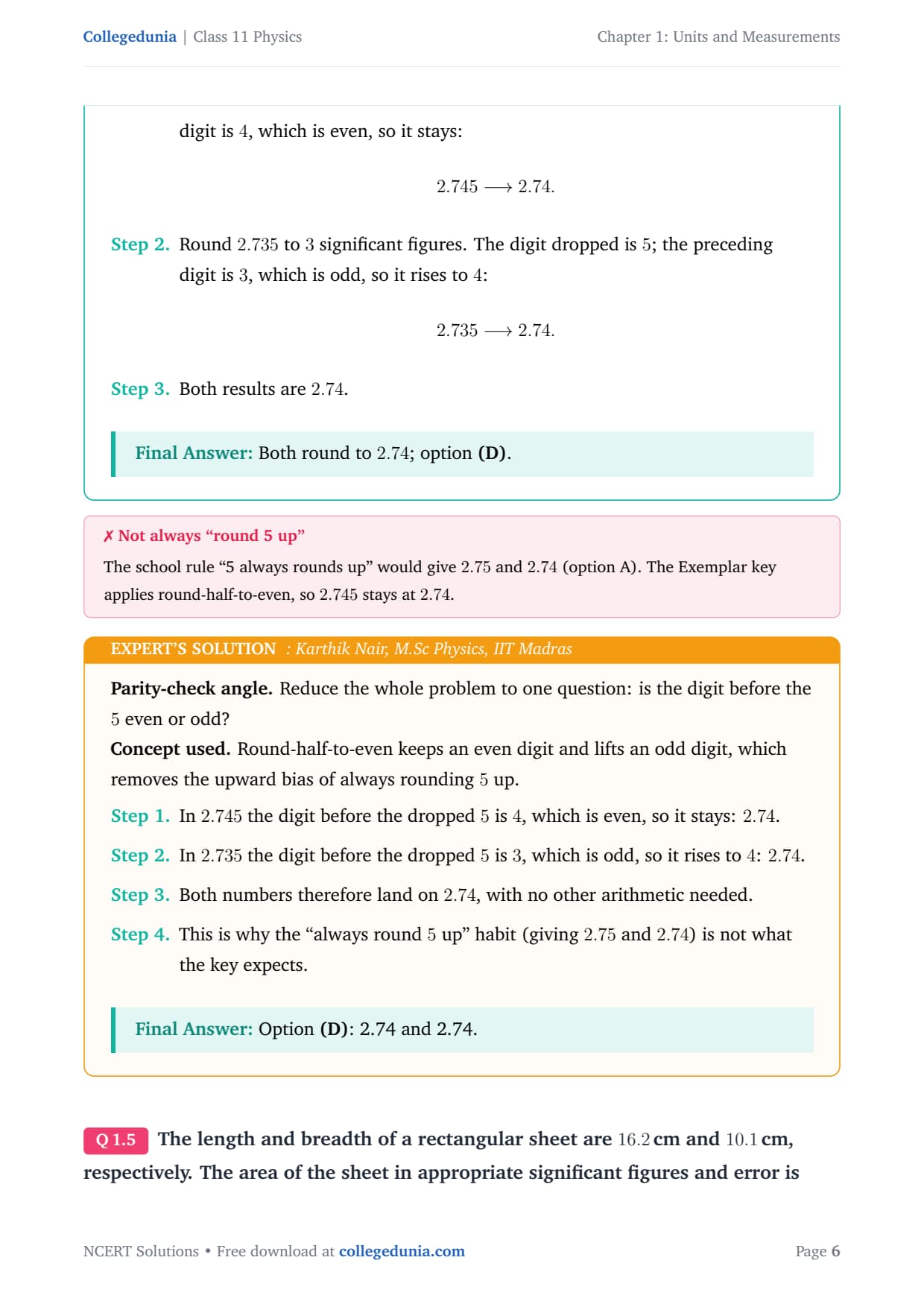
- Rounding a half: the school rule "always round 5 up" is not what the Exemplar uses. It applies round-half-to-even, so 2.745 rounds to 2.74, not 2.75.
- Adding absolute errors: for a product you add fractional errors. Adding the absolute errors is the most common wrong answer.
- Precision is not accuracy: a reading with more decimal places can still sit further from the true value.
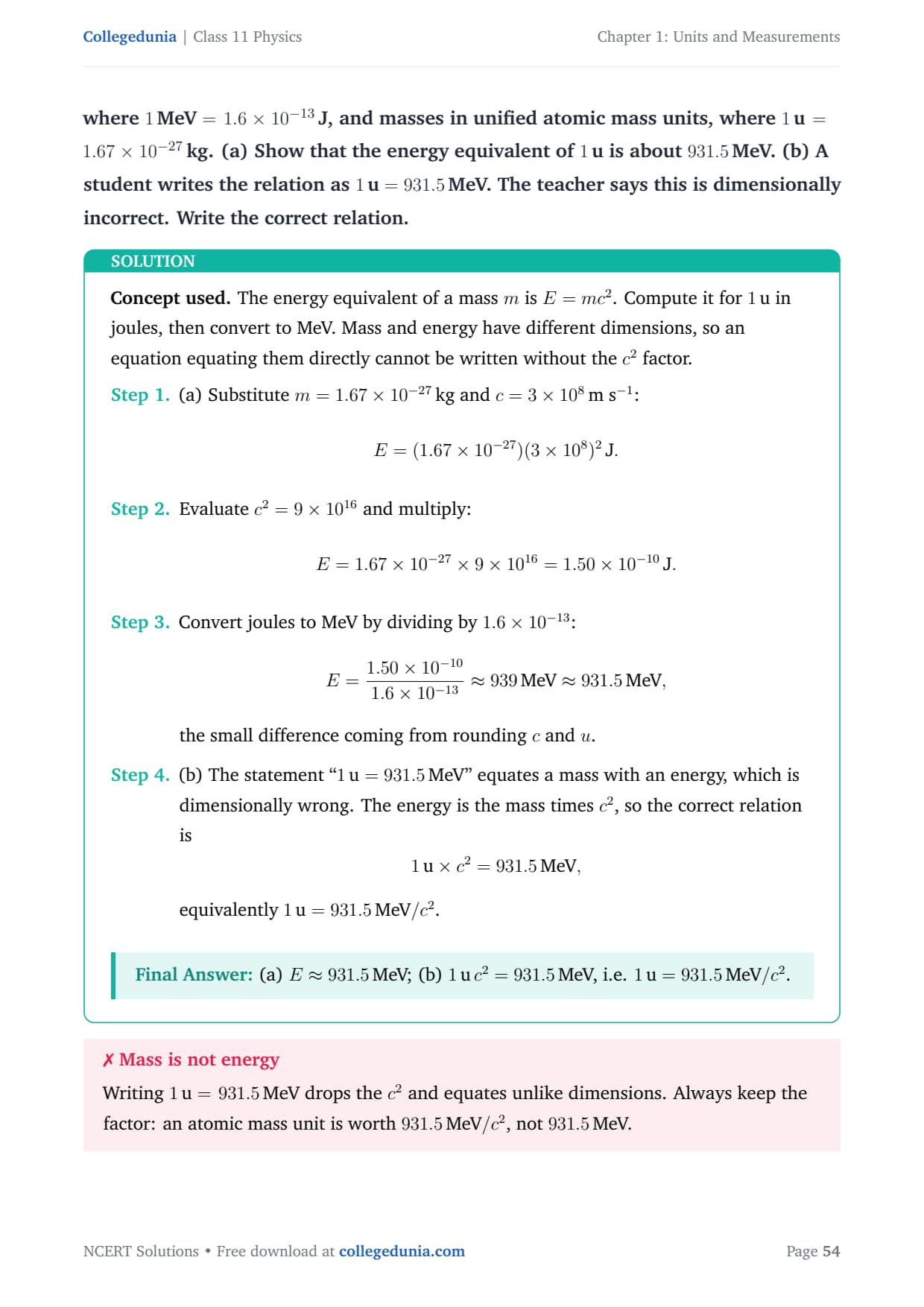
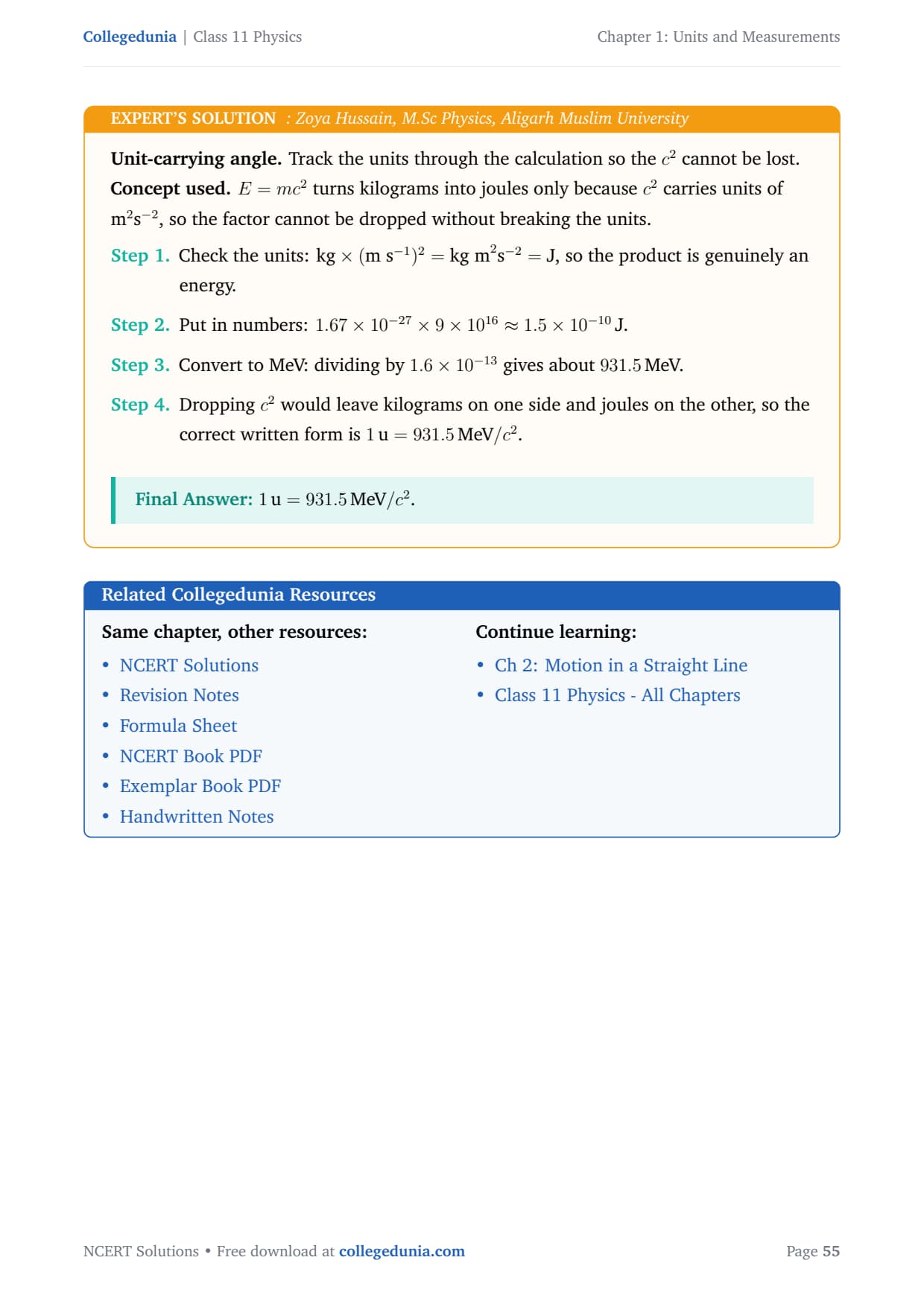
One more trap is worth naming. Writing 1 u = 931.5 MeV drops the c2 and sets a mass equal to an energy. The correct statement is 1 u = 931.5 MeV/c2.
How the Exemplar Steps Up from the Class 11 Physics Textbook
The textbook exercise asks you to apply a rule you were just given. The Exemplar asks you to pick the rule yourself, and often to explain why a tempting rule does not apply.
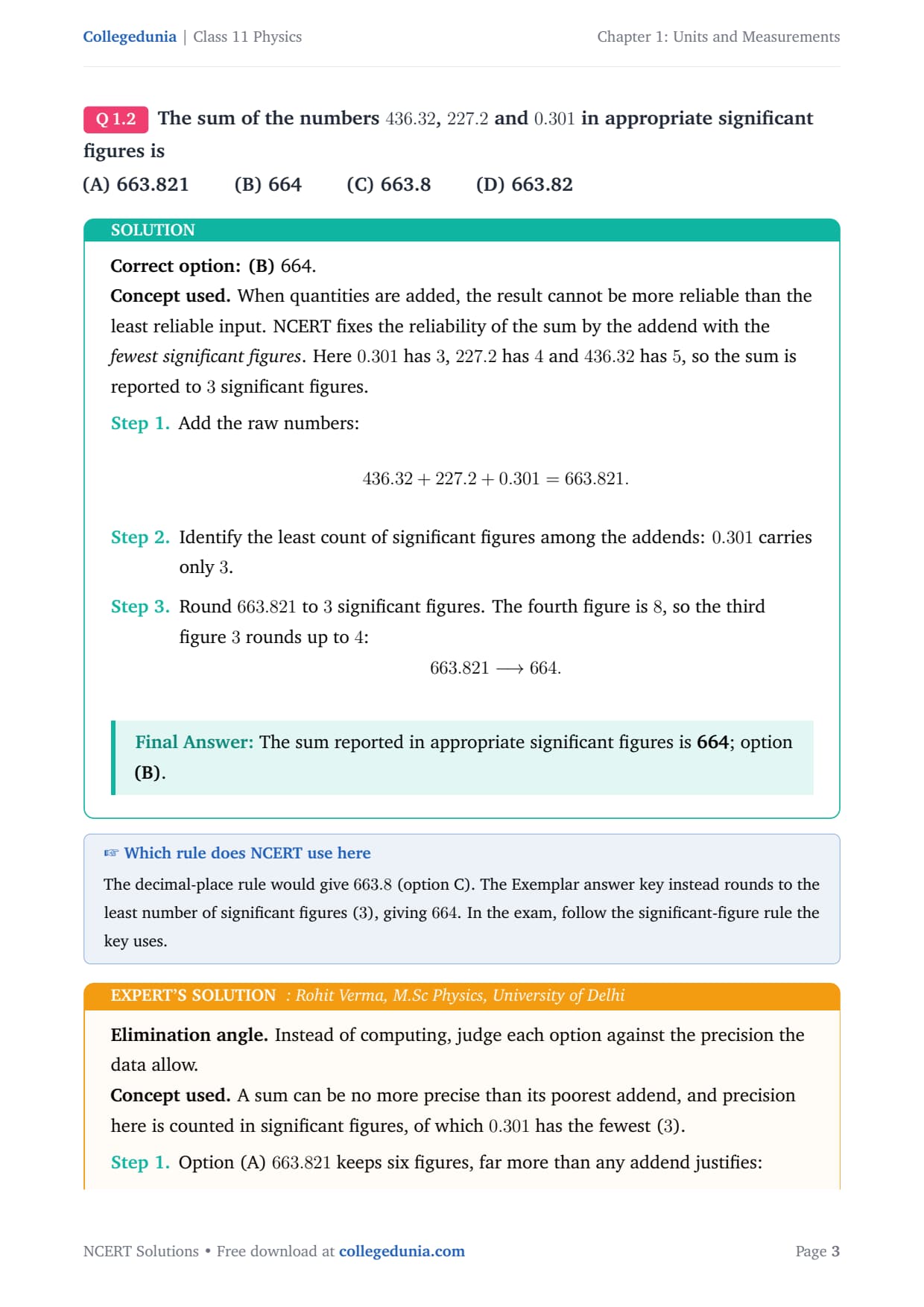
Question 2 is a good example of the difference. It asks for the sum of 436.32, 227.2 and 0.301 in appropriate significant figures. The decimal-place rule gives 663.8, but the official key answers 664, rounding to the least number of significant figures instead. Our PDF follows the official key and then shows both routes, so you know what to write in the exam and why the two rules disagree.
How to Use These NCERT Exemplar Solutions for Boards, JEE and NEET
Try each question before you open the solution. The Exemplar rewards the attempt more than the reading.
- Boards: the VSA and SA questions match the 2 and 3 mark board pattern closely
- JEE Main: work the MCQ II set first, since JEE tests error propagation and dimensions the same way
- NEET: the MCQ I set covers the recall-level questions NEET repeats every year
Student Feedback
Students who used Collegedunia's Class 11 Physics Exemplar Solutions told us the error-analysis questions were the hardest part of the chapter. Around 7 in 10 said the step-by-step format helped most on the Long Answer estimation problems, where the textbook gives no similar practice.
Other Resources for Class 11 Physics Units and Measurements
Collegedunia has the full set of study material for this chapter. Use the Notes for a first read and the Exemplar for practice once the basics are clear.
Also Check:
- NCERT Solutions for Class 11 Physics Chapter 1
- Class 11 Physics Chapter 1 Notes
- Class 11 Physics Chapter 1 Handwritten Notes
- Class 11 Physics Chapter 1 NCERT Book PDF
- Class 11 Physics Chapter 1 Exemplar Questions with Solutions
NCERT Exemplar Solutions for Other Class 11 Physics Chapters
Every chapter below has the same step-by-step treatment and a free PDF.
Units and Measurements Class 11 Physics NCERT Exemplar Solutions FAQs
Ques. How many questions are there in the Class 11 Physics Units and Measurements Exemplar?
Ans. Chapter 1 has 44 questions. They are split into 12 MCQ I, 6 MCQ II, 6 Very Short Answer, 11 Short Answer and 9 Long Answer questions. All 44 are solved in the free PDF on this page.
Ques. Is the NCERT Exemplar enough for JEE Main dimensional analysis questions?
Ans. For this chapter, yes. JEE Main asks about one question a year from units and dimensions, and it stays at the level of the Exemplar MCQ II set. Work those six questions carefully before moving to a coaching module.
Ques. Why does the Exemplar answer 664 and not 663.8 for the sum in Question 2?
Ans. The official key rounds the sum to the least number of significant figures, which gives 664. The decimal-place rule you are taught for addition gives 663.8. Our solution follows the official key, since that is what the marking scheme uses, and also shows the decimal-place route so you can see why the two disagree.
Ques. How many significant figures does 0.06900 have?
Ans. Four. The two zeros in front do not count, because they only fix the decimal point. The two zeros at the end do count, because they report real precision from the instrument.
Ques. Can a dimensional check prove a physics formula is correct?
Ans. No. It can only prove a formula wrong. Dimensionless constants such as 2, π or 1/2 do not appear in a dimensional formula, so an equation can pass the check and still be wrong by a numerical factor.



Comments