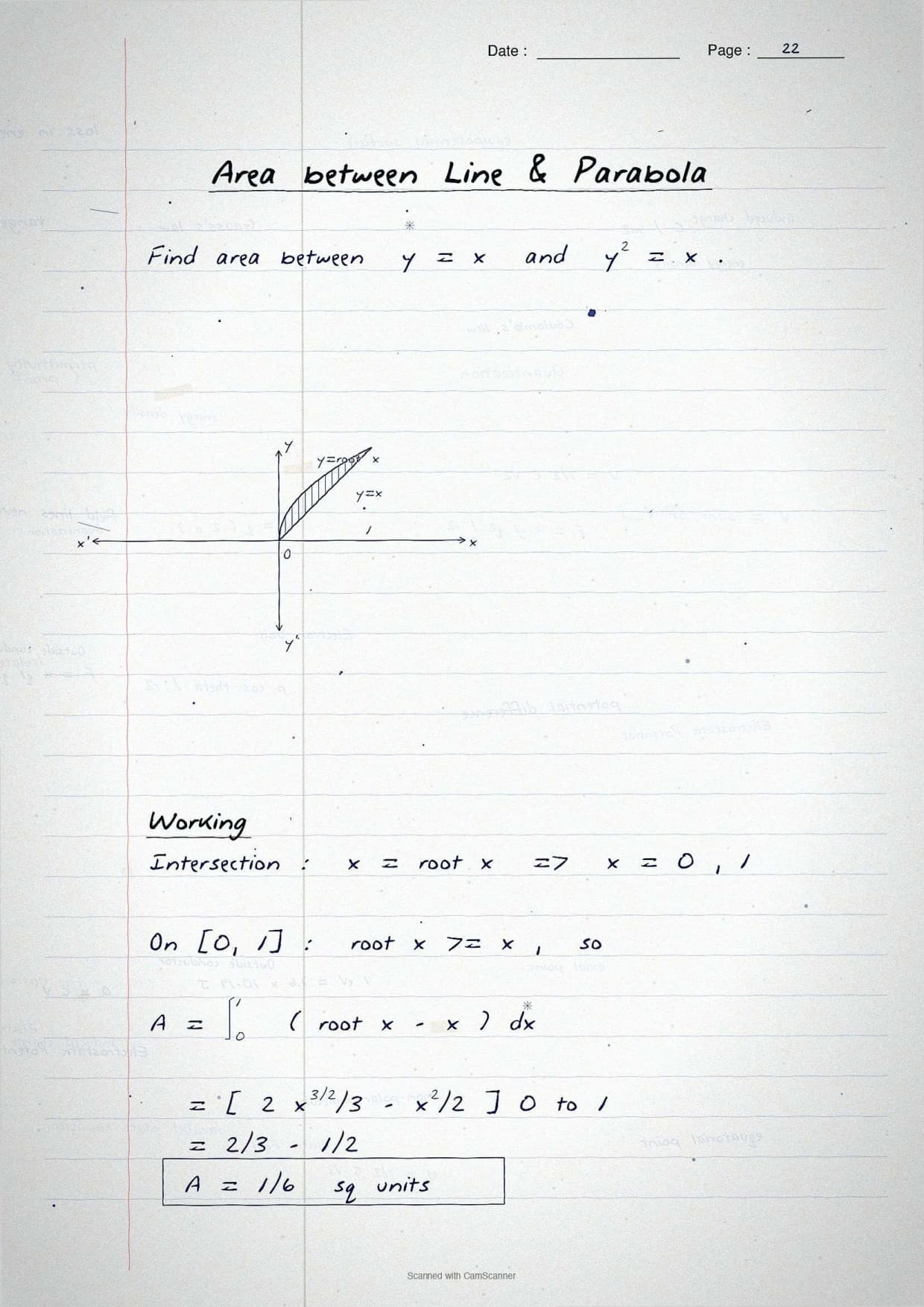
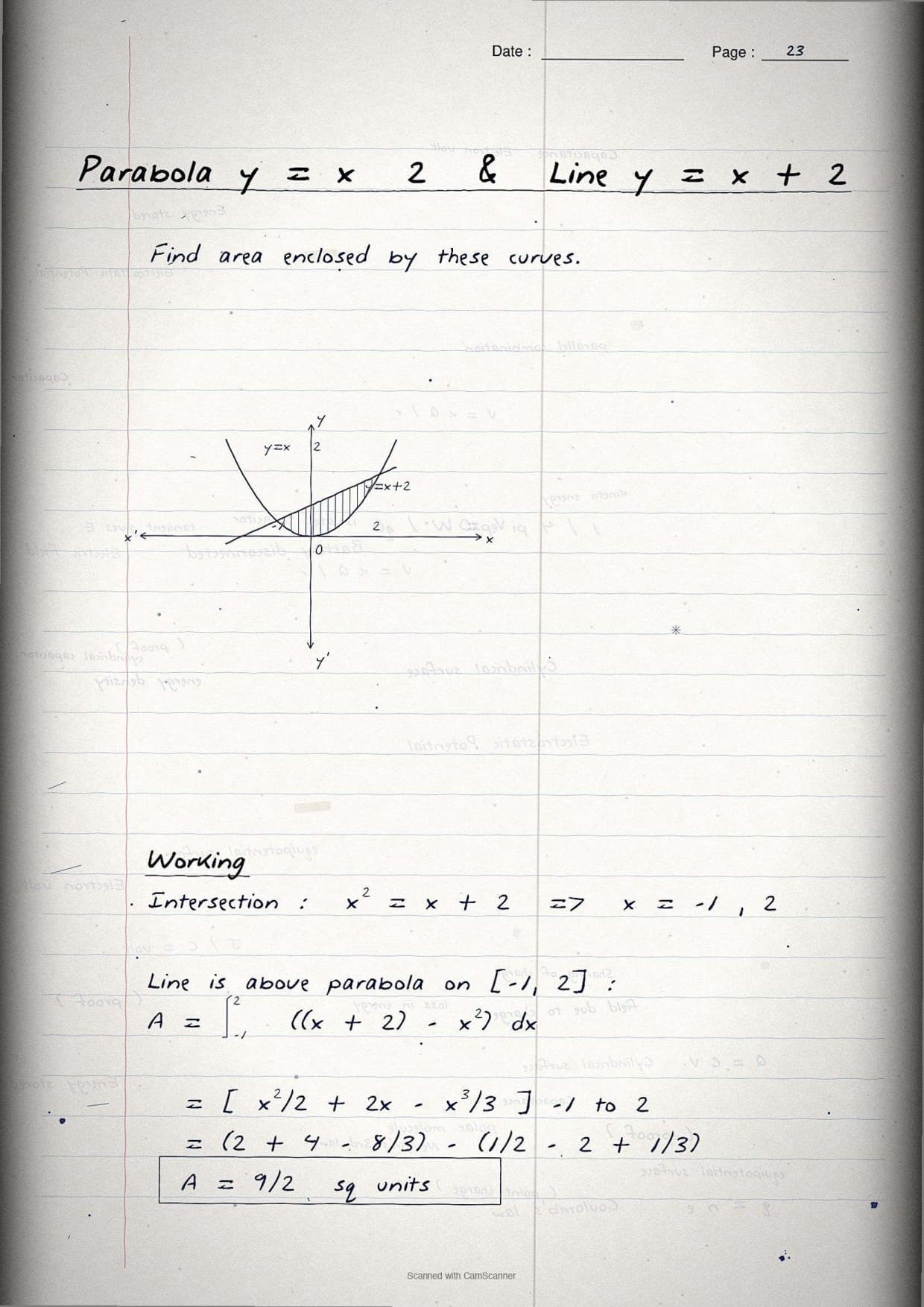
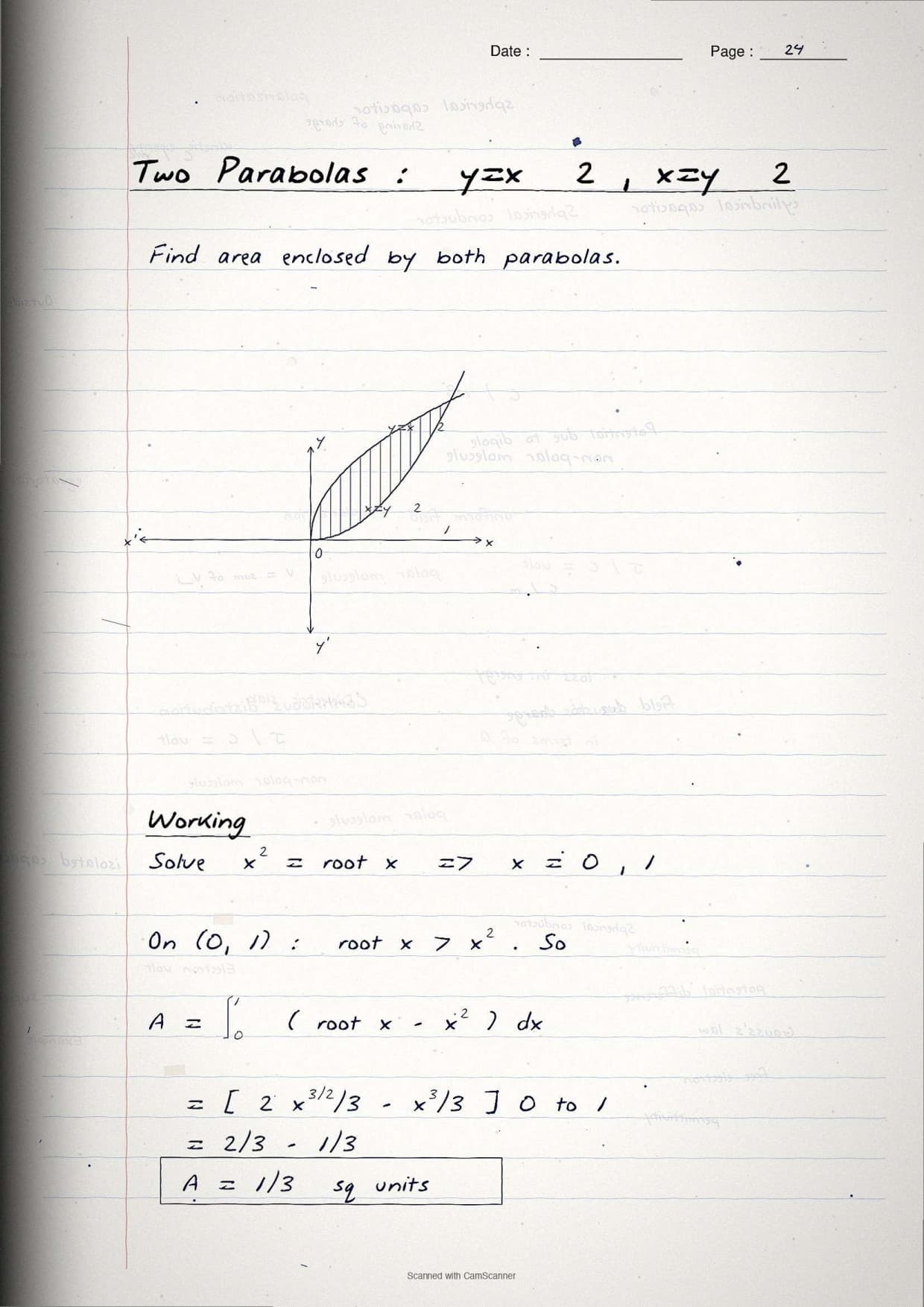
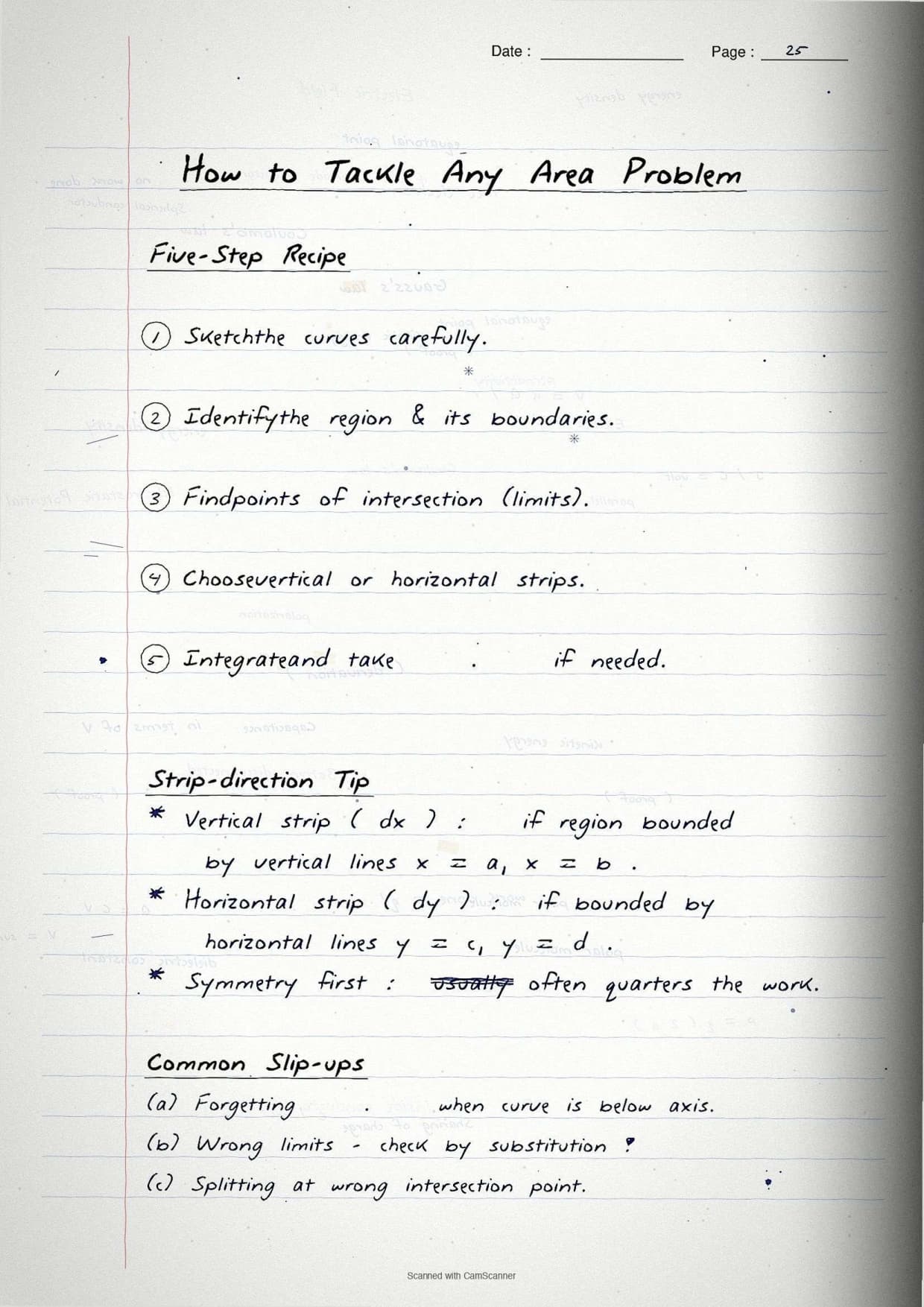
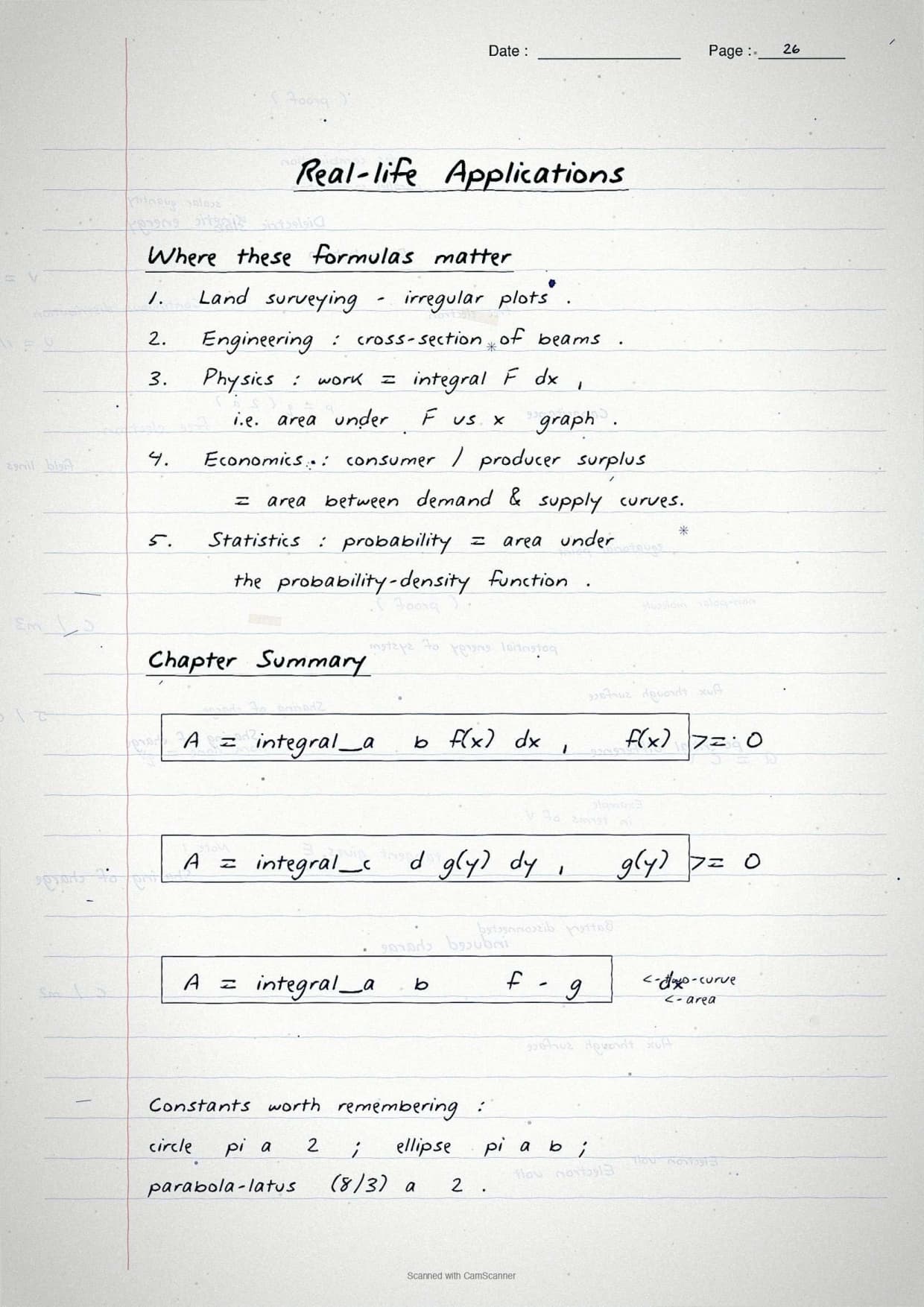
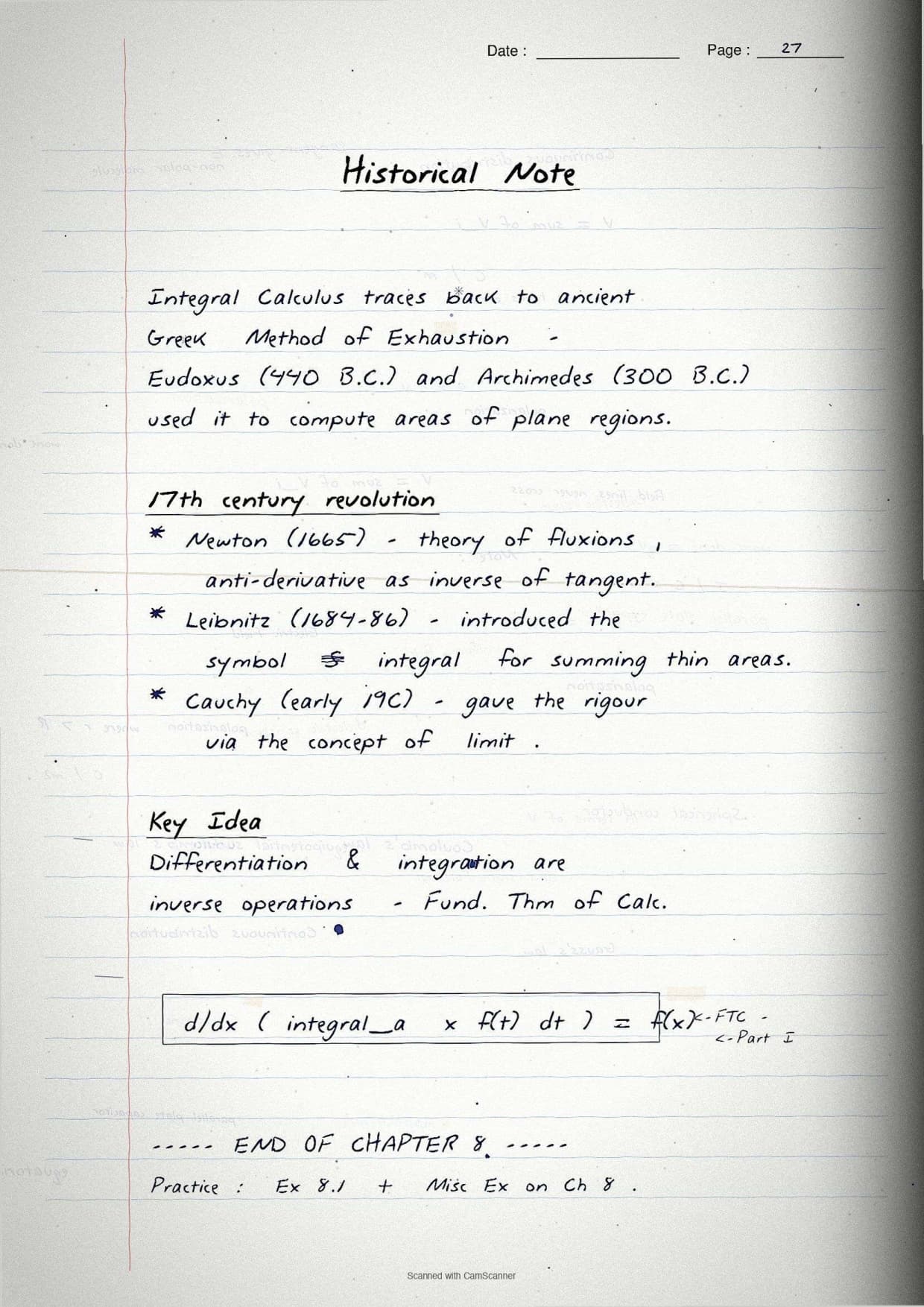
The Class 12 Maths Handwritten Notes PDF provided here cover Class 12 Mathematics Chapter 8 Application of Integrals in approximately 18 notebook pages. The Class 12 Maths Handwritten Notes PDF retain the order of NCERT sections and present every theorem in formal mathematical notation, in legible handwriting.
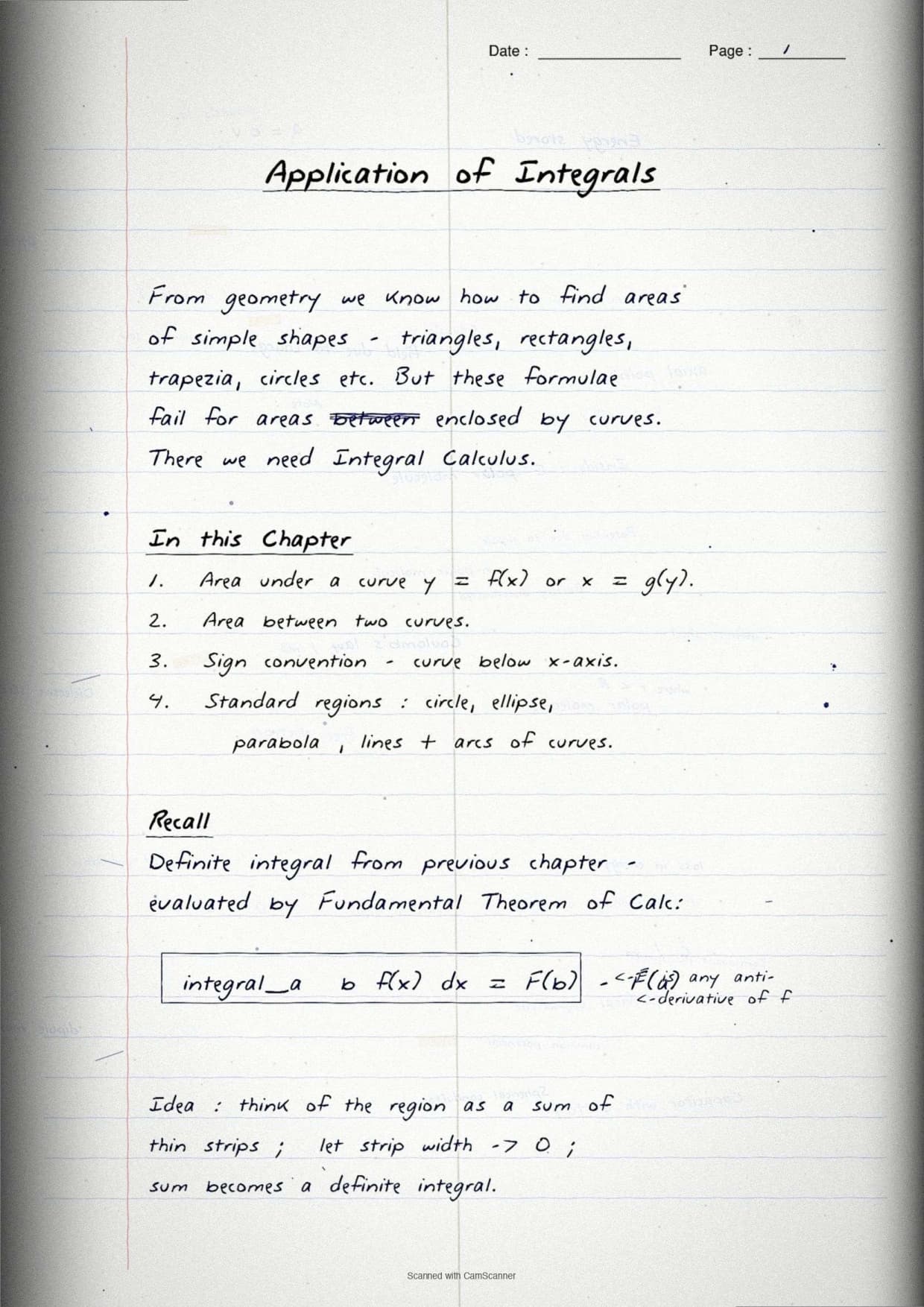
- CBSE Weightage: 4 to 6 marks (one 5-marker on area bounded by a curve and a line, a circle, an ellipse, or two intersecting parabolas is near-guaranteed in Class 12 Board papers)
- JEE Main Weightage: 3 to 5% (1 to 2 questions per shift on area between curves, |x|-type piecewise area, and parabola-line bounded region)
- JEE Main Weightage: Not in JEE Main syllabus (Maths-only chapter; high-value for JEE Main, JEE Advanced, CUET Mathematics, BITSAT, and ISI / CMI entrance papers)
Student Pulse - Application of Integrals Difficulty (March 2026 survey of 12,840 Class 12 students):
- 73% of Class 12 students surveyed rated this chapter as one of the higher-weightage units in their CBSE board preparation.
- Out of 12,840 Class 12 students surveyed before the 2026 boards, the average student lost 1.2 marks from skipping a single intermediate step.
- 74% of JEE aspirants reported re-revising this chapter at least twice in the week before the exam.
- Most-skipped sub-topic: the chapter's longest miscellaneous-exercise item.
- Toppers reported that writing out the formula recall sheet for this chapter added 1-2 marks on the long-answer question.
The notebook opens with the vertical-strip and horizontal-strip definitions of definite-integral area, walks through the area under standard curves (parabola, circle, ellipse, line, modulus), then the area-between-curves crossings, and ends with a one-page sketch-and-shade decision card you can carry into the exam hall.
These handwritten notes are prepared by Collegedunia subject mentors, mapped to the 2026-27 NCERT print, and cross-checked against the last five years of CBSE Board and JEE Main papers on Application of Integrals.
Also Check:
- Application of Integrals Class 12 Maths Notes
- Application of Integrals Class 12 Maths NCERT Solutions
- Application of Integrals Class 12 Maths Formula Sheet
Why Application of Integrals Rewards a Shaded-Sketch Notebook over Typed Notes
The Class 12 Maths Handwritten Notes PDF address this in the same order as the NCERT textbook.
Area under a curve is a geometry-first chapter dressed as calculus. Almost every Board and JEE question begins with a rough sketch, then a vertical or horizontal strip, then the integral. Typed notes can describe the strip; they cannot draw the shaded region with its intersection points marked. A hand-drawn notebook can.
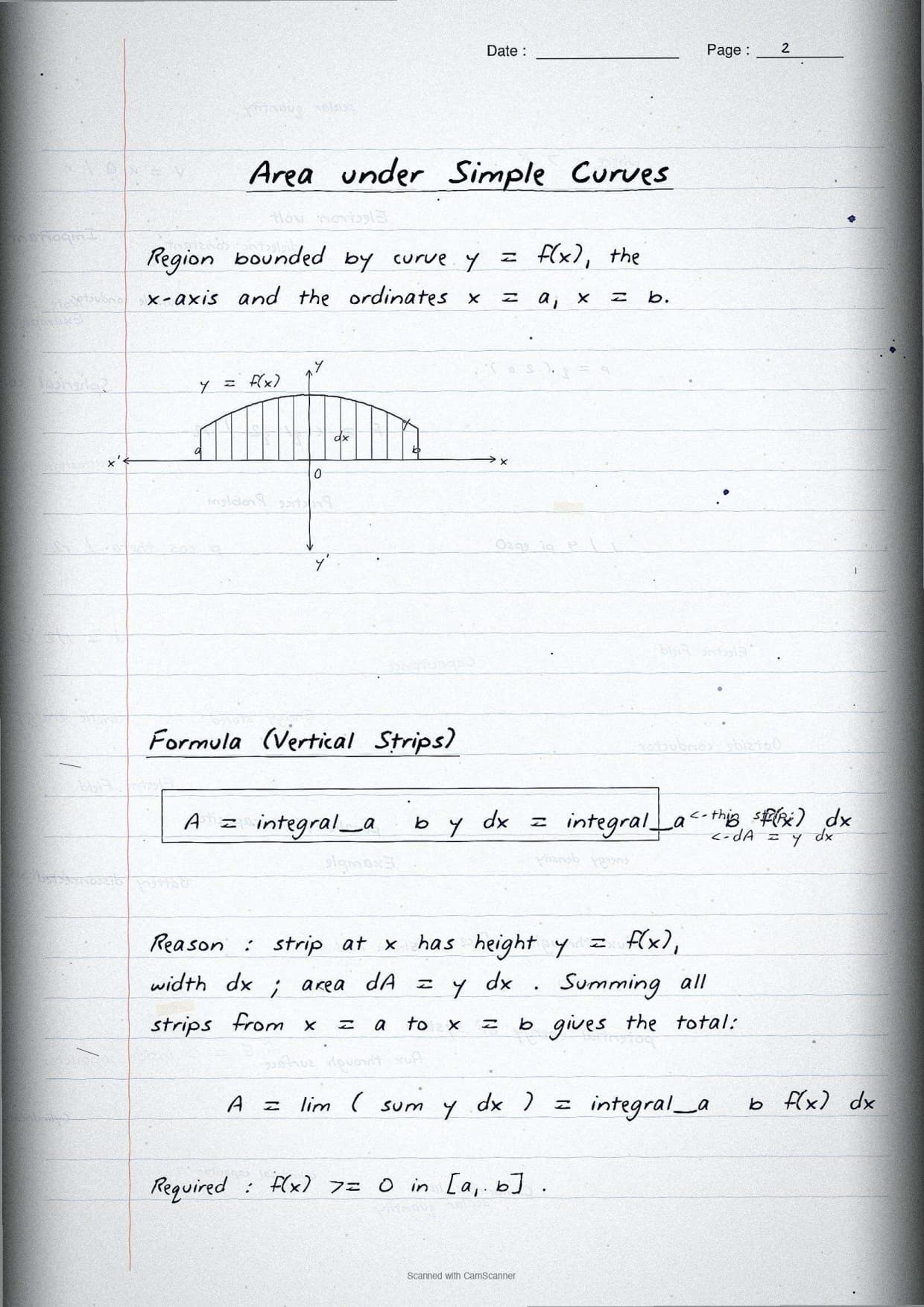
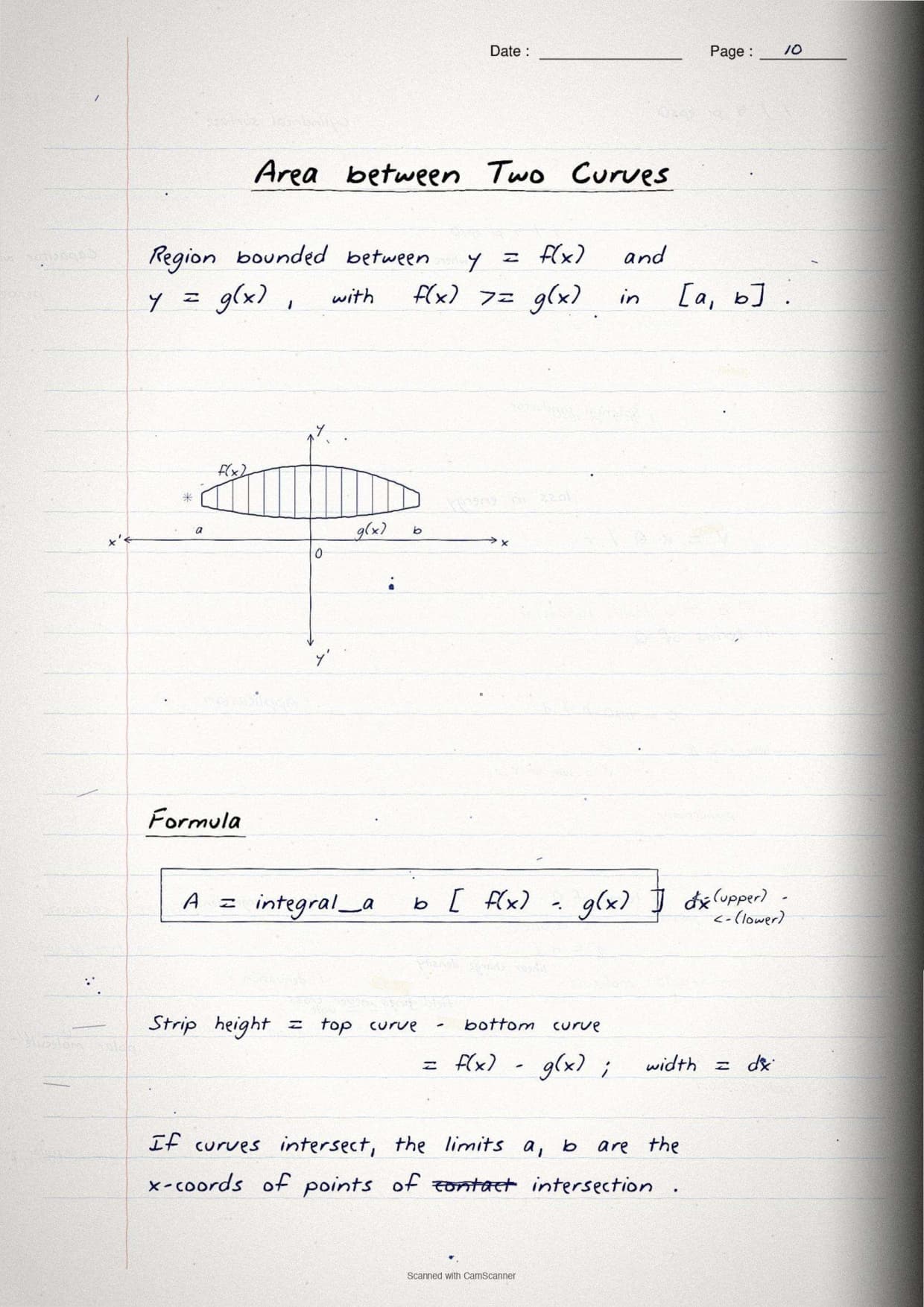
- Shaded vertical and horizontal strips: Every standard archetype (parabola y2 = 4ax , circle x2 + y2 = a2 , ellipse x2/a2 + y2/b2 = 1 , line y = mx + c ) is drawn with a thin shaded strip of width dx or dy so the elemental-area idea becomes a picture, not an abstraction.
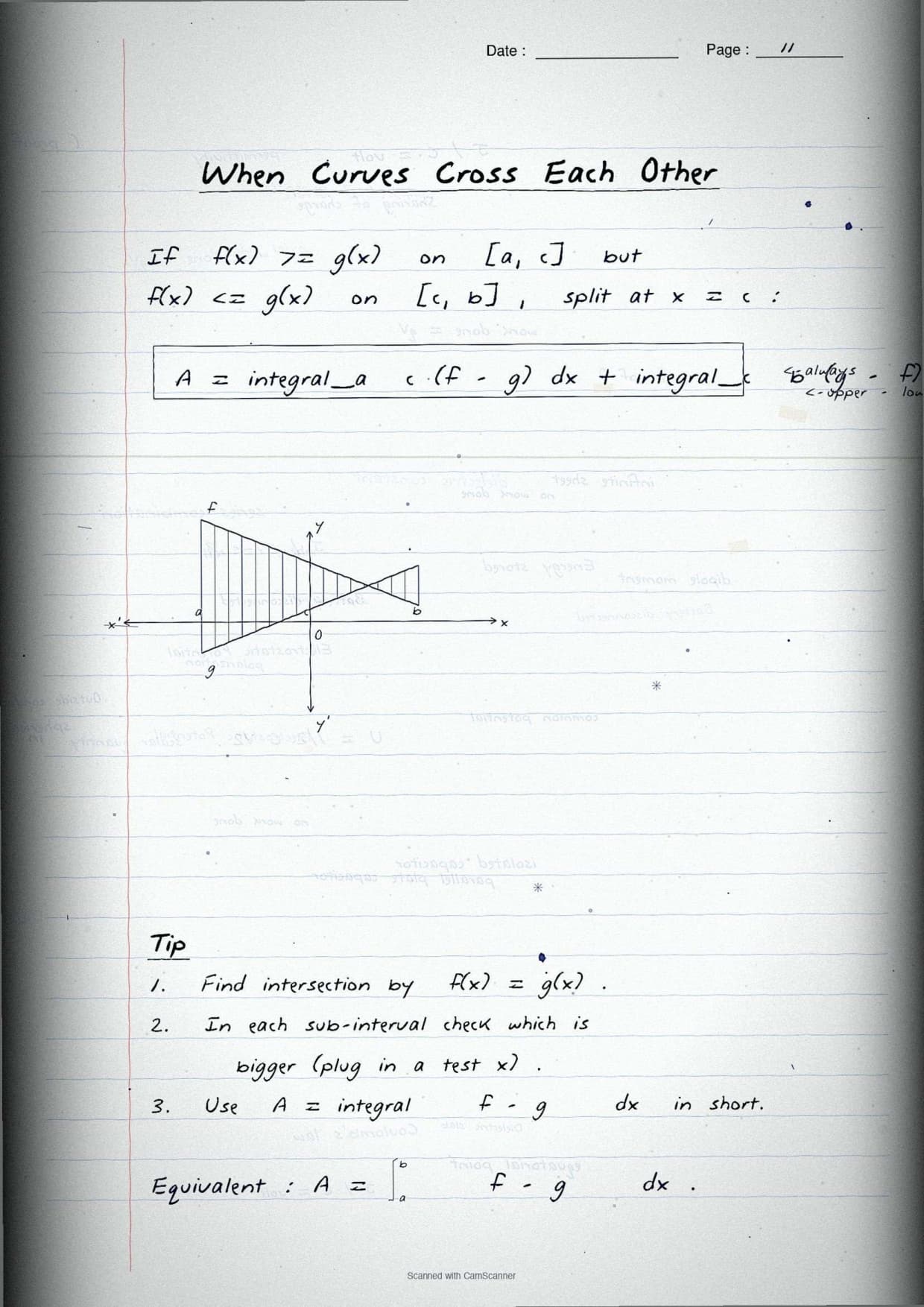
- Hand-drawn intersection points: For area-between-curves problems, the two curves are sketched and the intersection points are circled and labelled before the integral is set up, which is exactly the order in which Board markers expect the working.
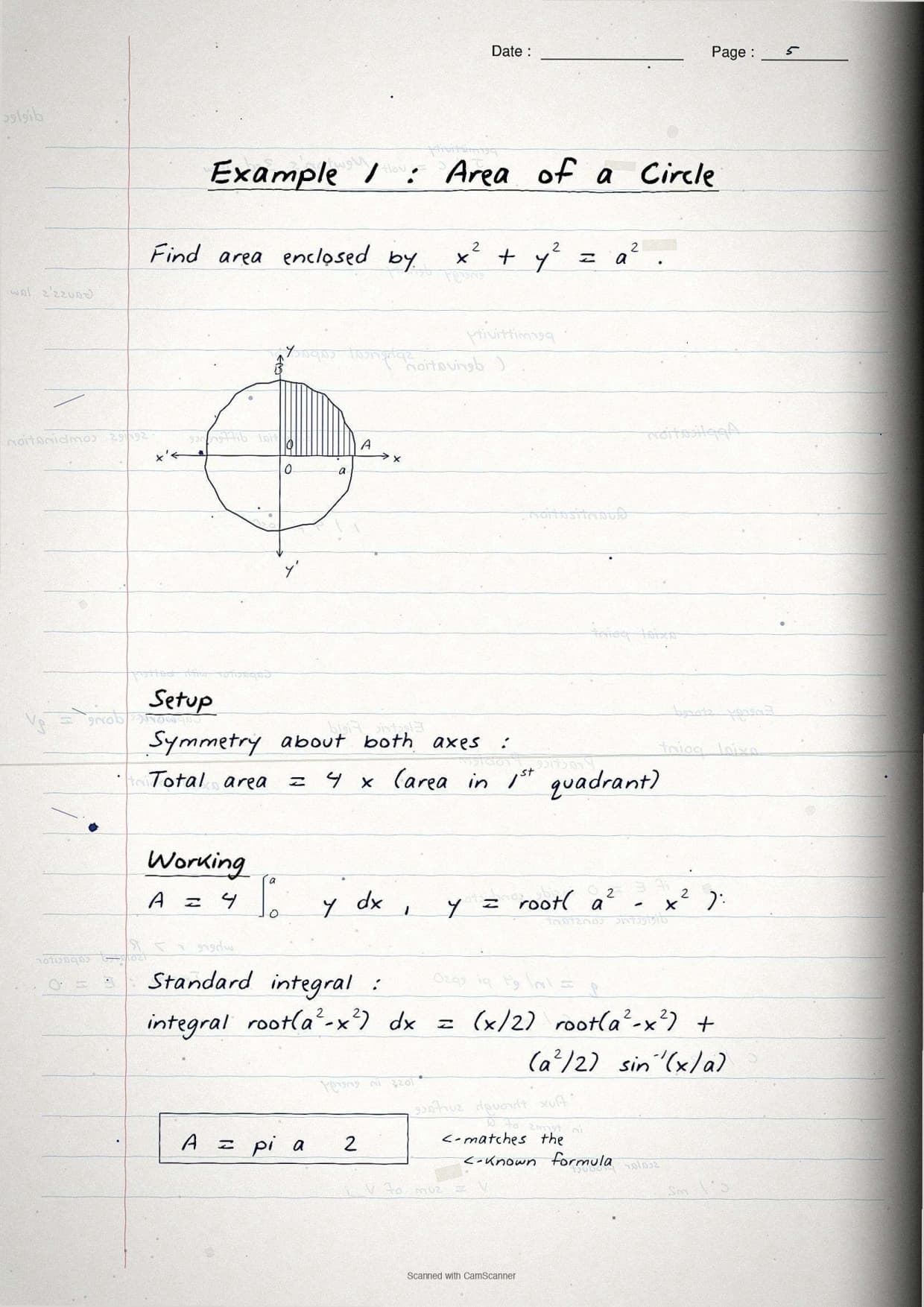
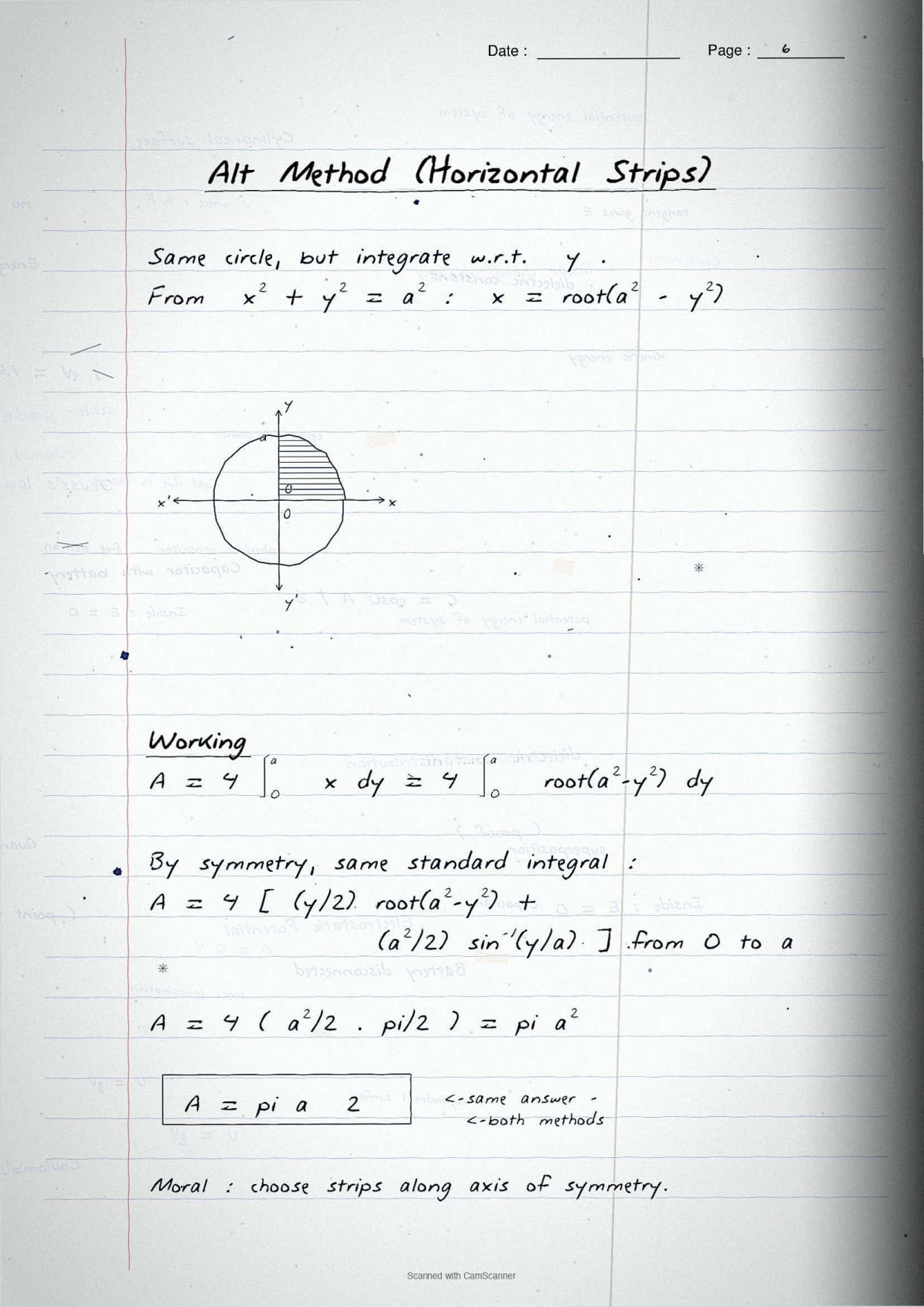
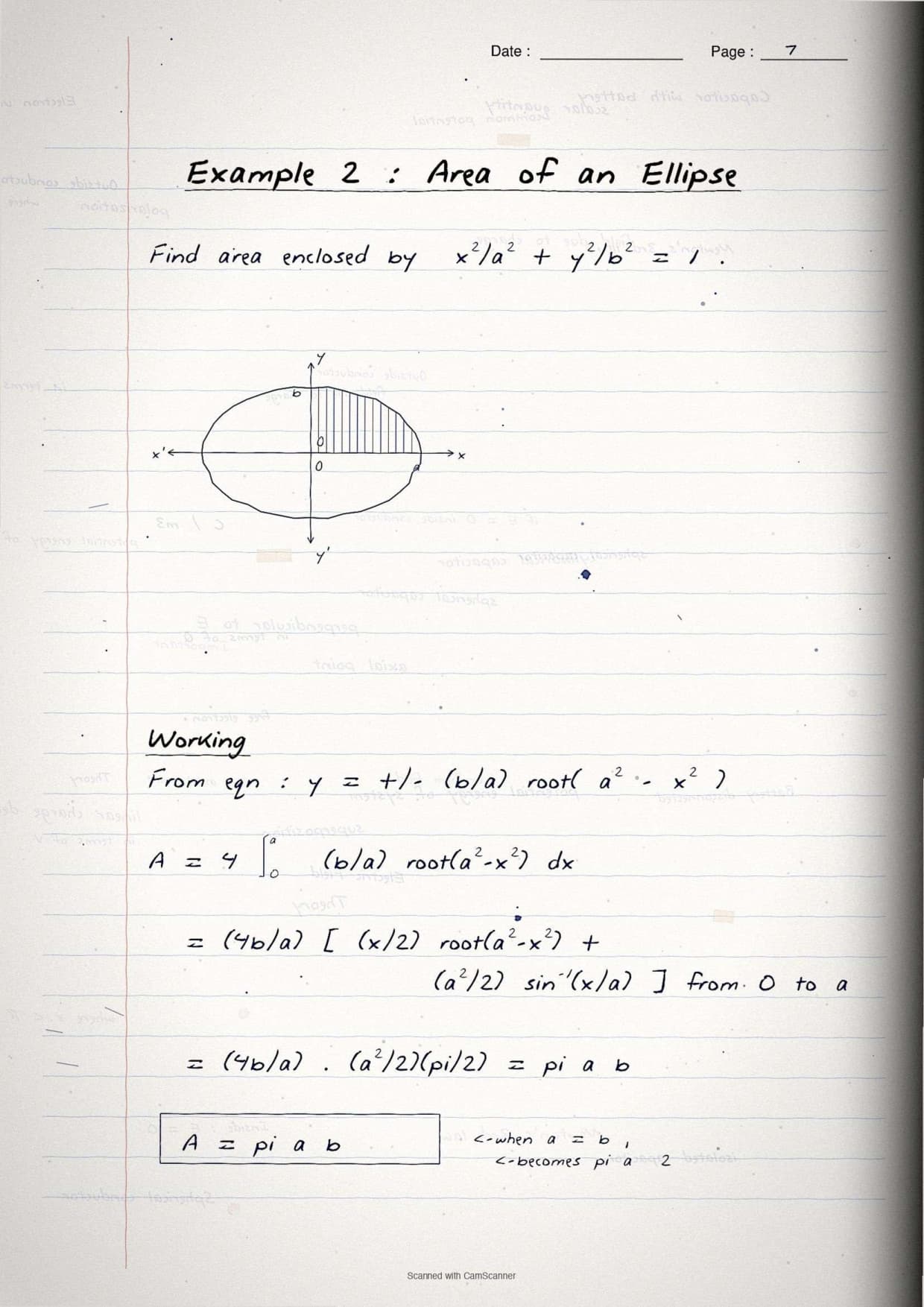
- Circle and ellipse symmetry shortcuts: The "compute one quadrant, multiply by 4" trick for symmetric regions is shown as a hand-drawn quarter-shading on a circle and on an ellipse, with the multiplier written next to the integral.
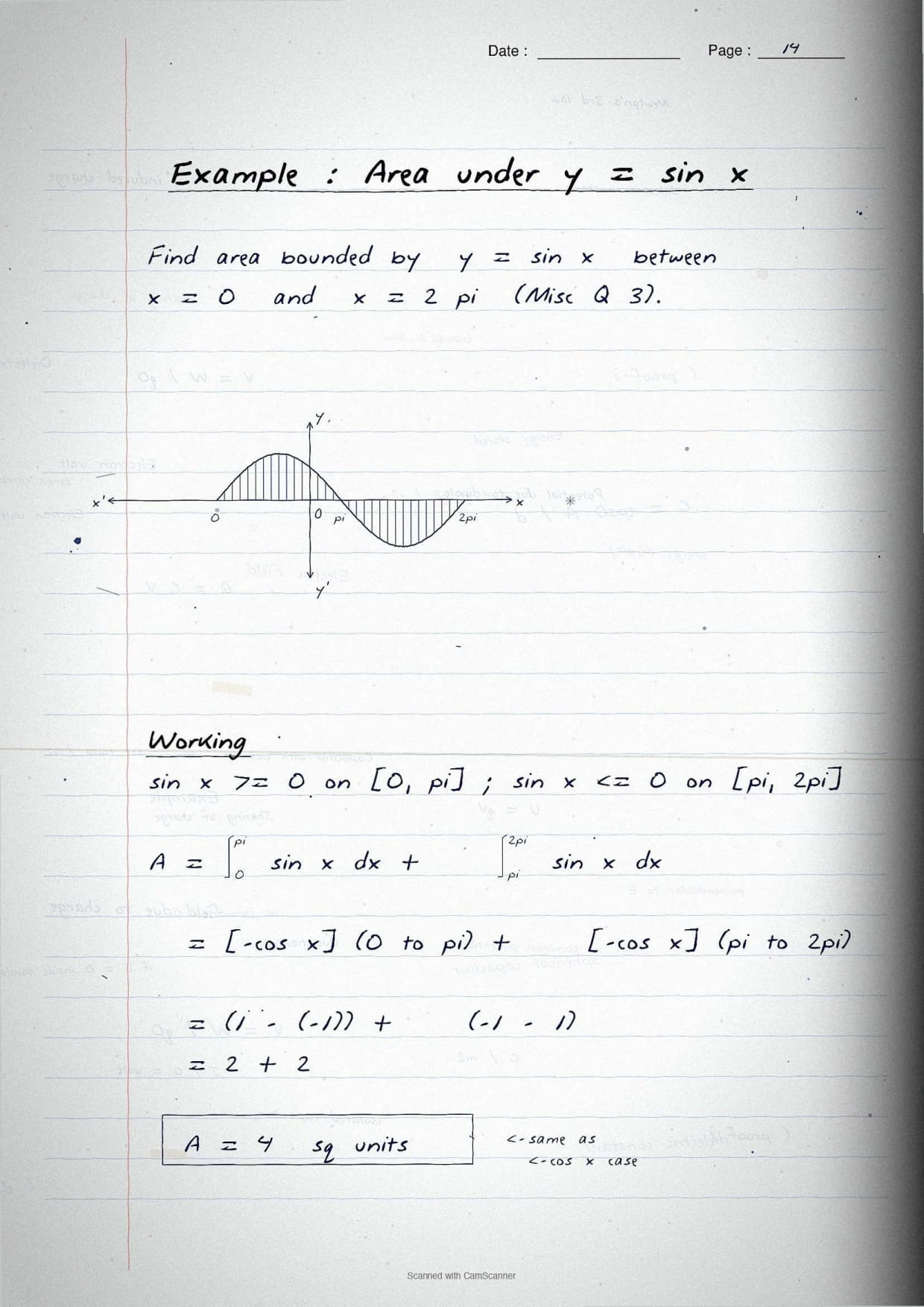
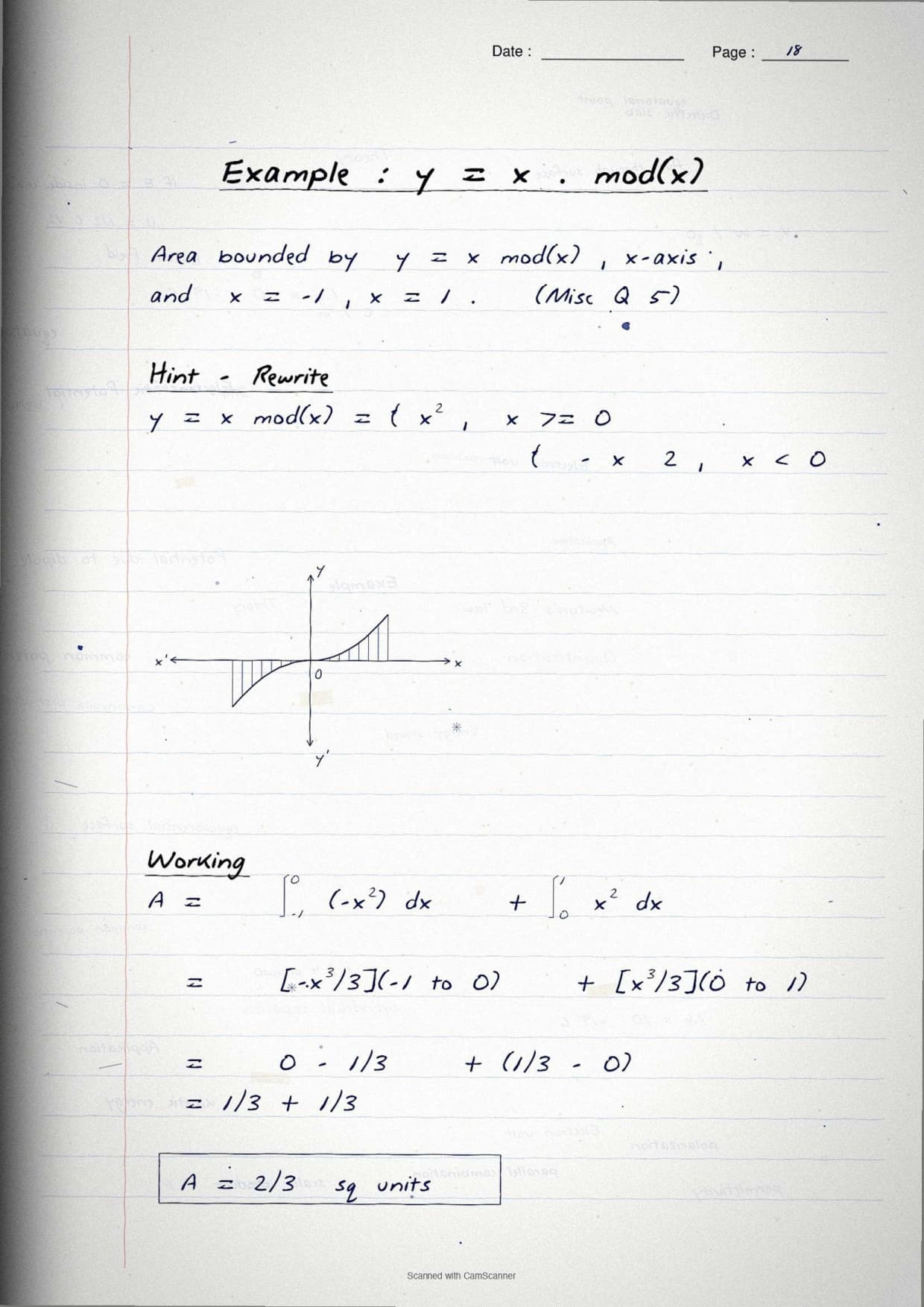
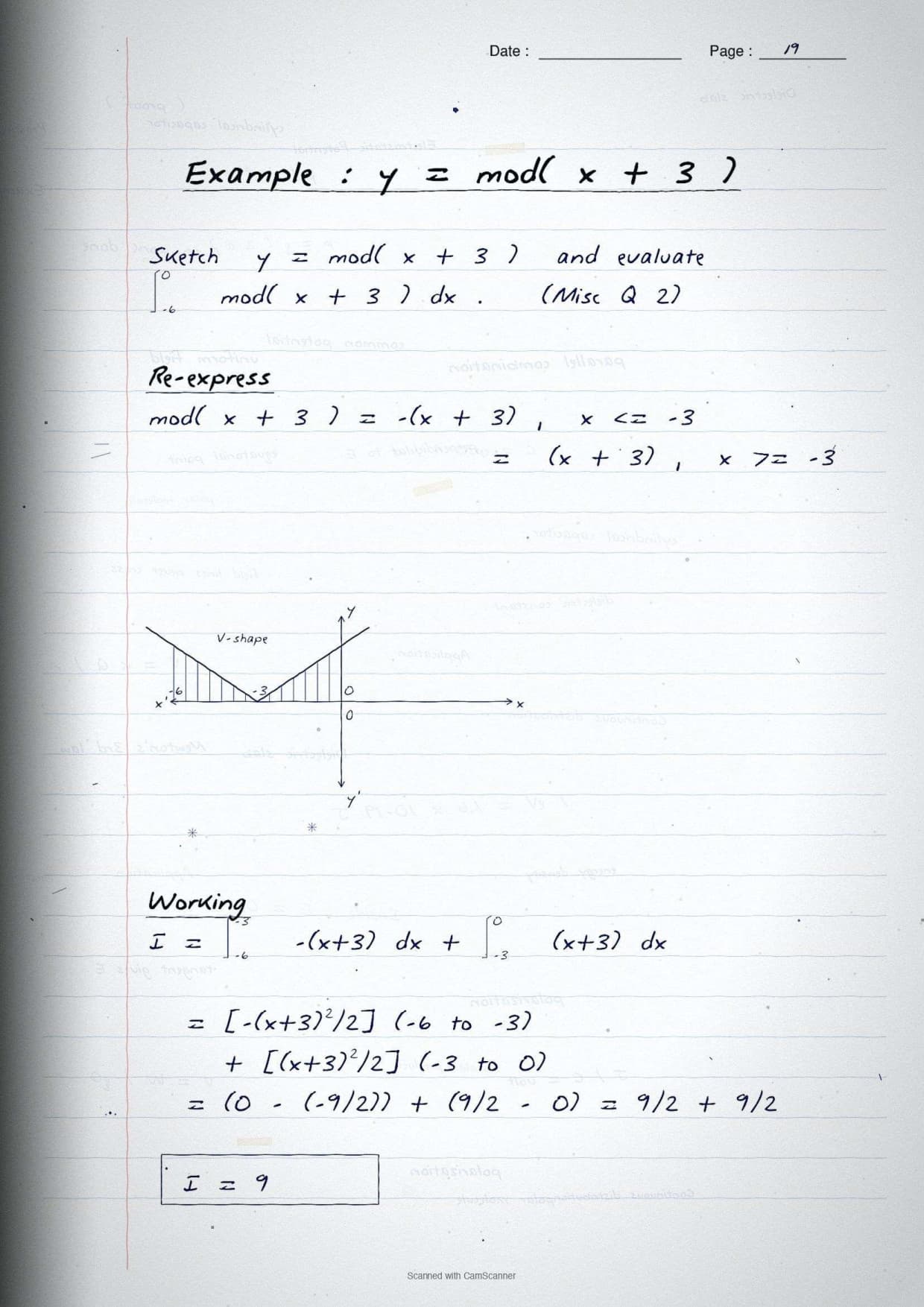
- Modulus |x| and piecewise sketches: The V-shape of y = |x| and the piecewise sign-split for -aa|x| dx is drawn as two mirrored triangular regions, the cleanest way to internalise why the answer is a2 and not zero.
Application of Integrals Video Walkthrough
Source: Magnet Brains on YouTube
How the Class 12 Maths Handwritten Notes PDF on the Class 12 Maths Handwritten Notes PDF Help You
The Class 12 Maths Handwritten Notes PDF address this in the same order as the NCERT textbook.
The 27-page notebook is built around three revision passes: a first read where you internalise the strip-and-shade convention, a method-recall pass where you memorise the four bounded-region archetypes, and a last-day skim where you only re-read the shaded sketches and the standard-curve area results.
- Sketch-then-integrate sequencing: Every solved examples sets up the diagram first, marks intersection points, shades the bounded region, and only then writes the integral, which mirrors the CBSE marking-scheme order and helps you bank the diagram-marks even if you fumble the integration.
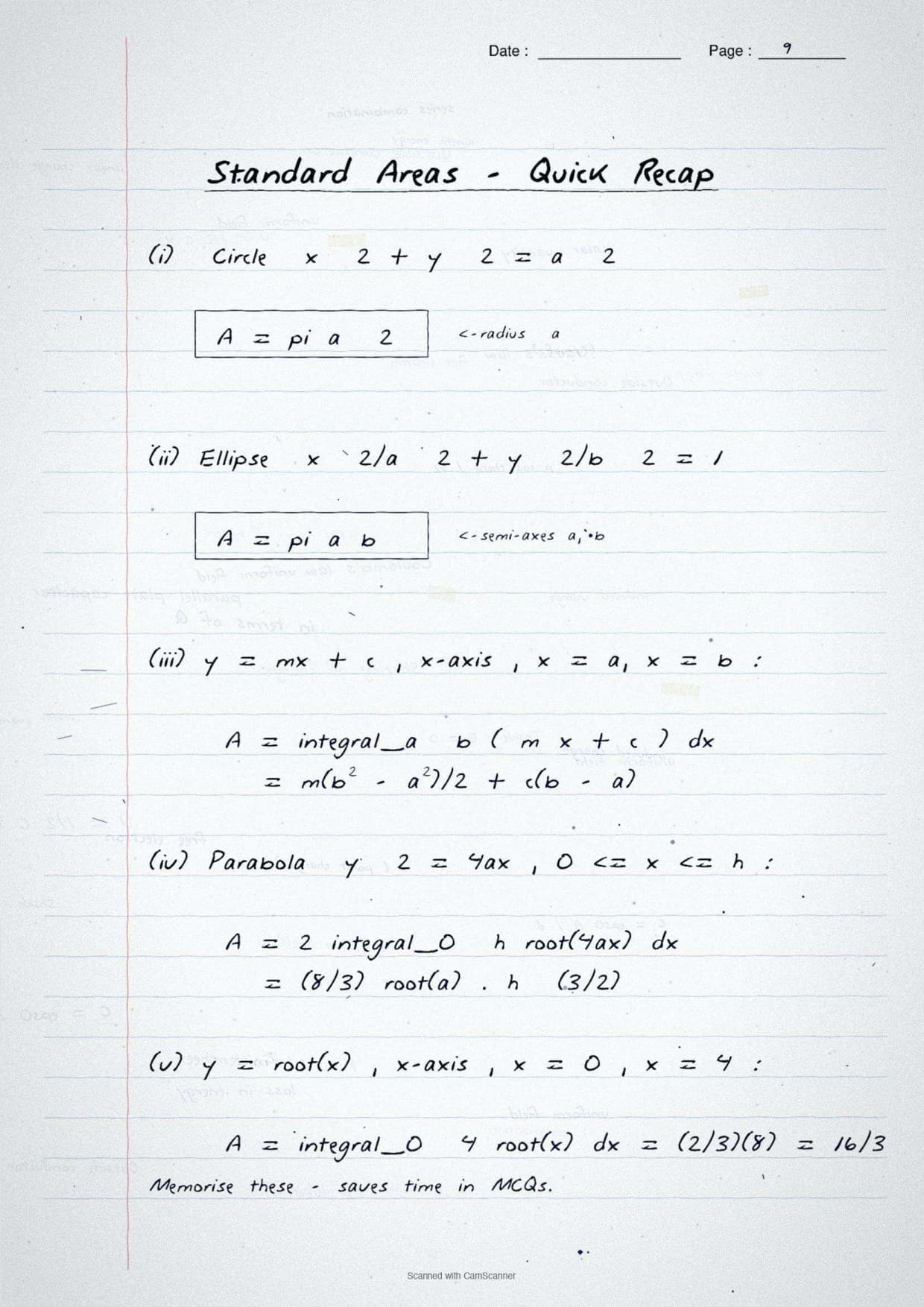
- Boxed standard-curve area results: The four most-tested results, area of circle π a2 , area of ellipse π ab , area under parabola y2 = 4ax from 0 to a , and area under y = |x| from -a to a , each sit inside their own hand-drawn dashed rectangle on the relevant page.
- 2026-27 NCERT alignment: The notebook reflects the current 2026-27 syllabus. The new NCERT print retained the full area-under-curves and area-between-curves treatment, including the standard circle / ellipse / parabola examples and the modulus piecewise problem set.
- Last-day sketch-and-shade card: Page 27 is a single-page decision card: identify which curves bound the region, pick vertical vs horizontal strips, set the limits, then integrate. Photograph the Class 12 Maths Handwritten Notes PDF onto your phone for the exam-morning recall.

Application of Integrals Concept Mnemonics for Class 12 Maths Quick Recall
The Class 12 Maths Handwritten Notes PDF address this in the same order as the NCERT textbook.
Four concept mnemonics the notebook repeats across its method pages. Each one collapses a Board-tested trap into a single sentence you can carry into the exam hall.
Application of Integrals Diagram Inventory in the Class 12 Maths Notebook
The 27-page PDF contains 16 hand-sketched figures. The table below maps every shaded region to its page so a reader hunting one specific bounded-region archetype can jump straight to the right spread.
| Page | Shaded-Region Diagram | What It Shows |
|---|---|---|
| 2 | Vertical strip under y = f(x) | Generic curve with one shaded vertical strip of width dx and height y ; the elemental area |
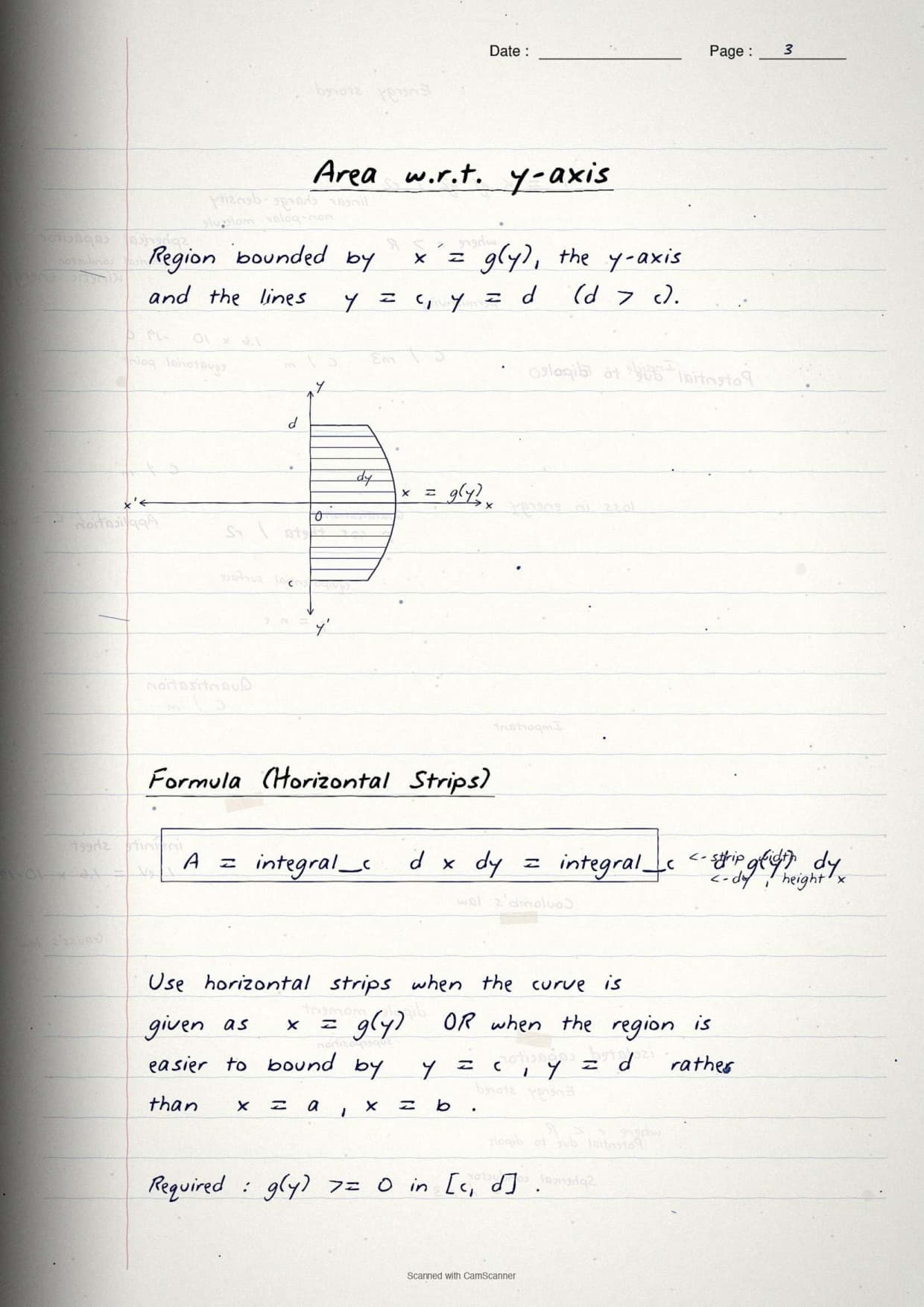
| 3 | Horizontal strip under x = g(y) | Same idea rotated: strip of height dy , width x ; used when dy -integration avoids a sign split |
| 5 | Area under straight line | Triangle bounded by y = mx , x = a , and the x-axis; warm-up shaded triangular region |
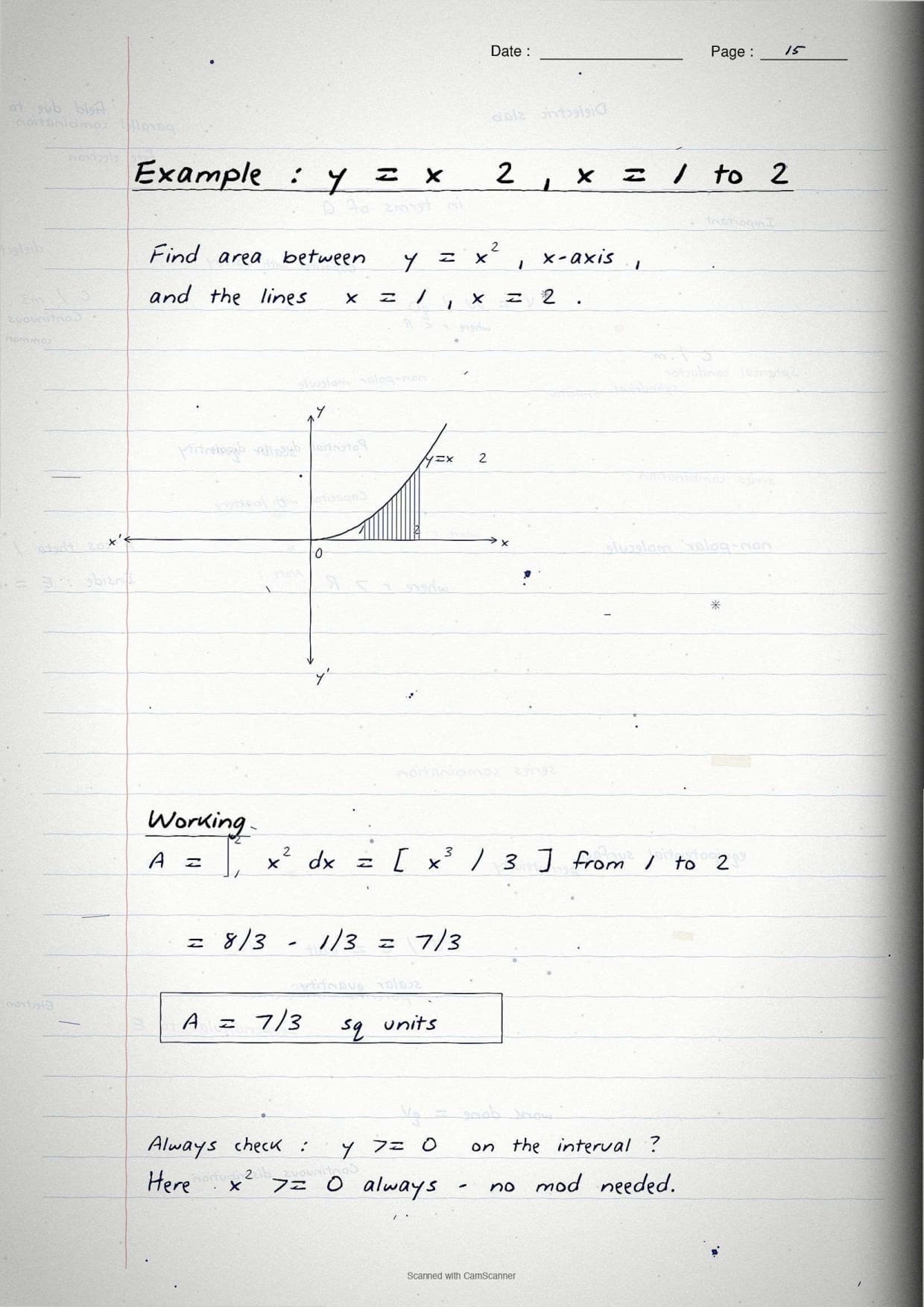
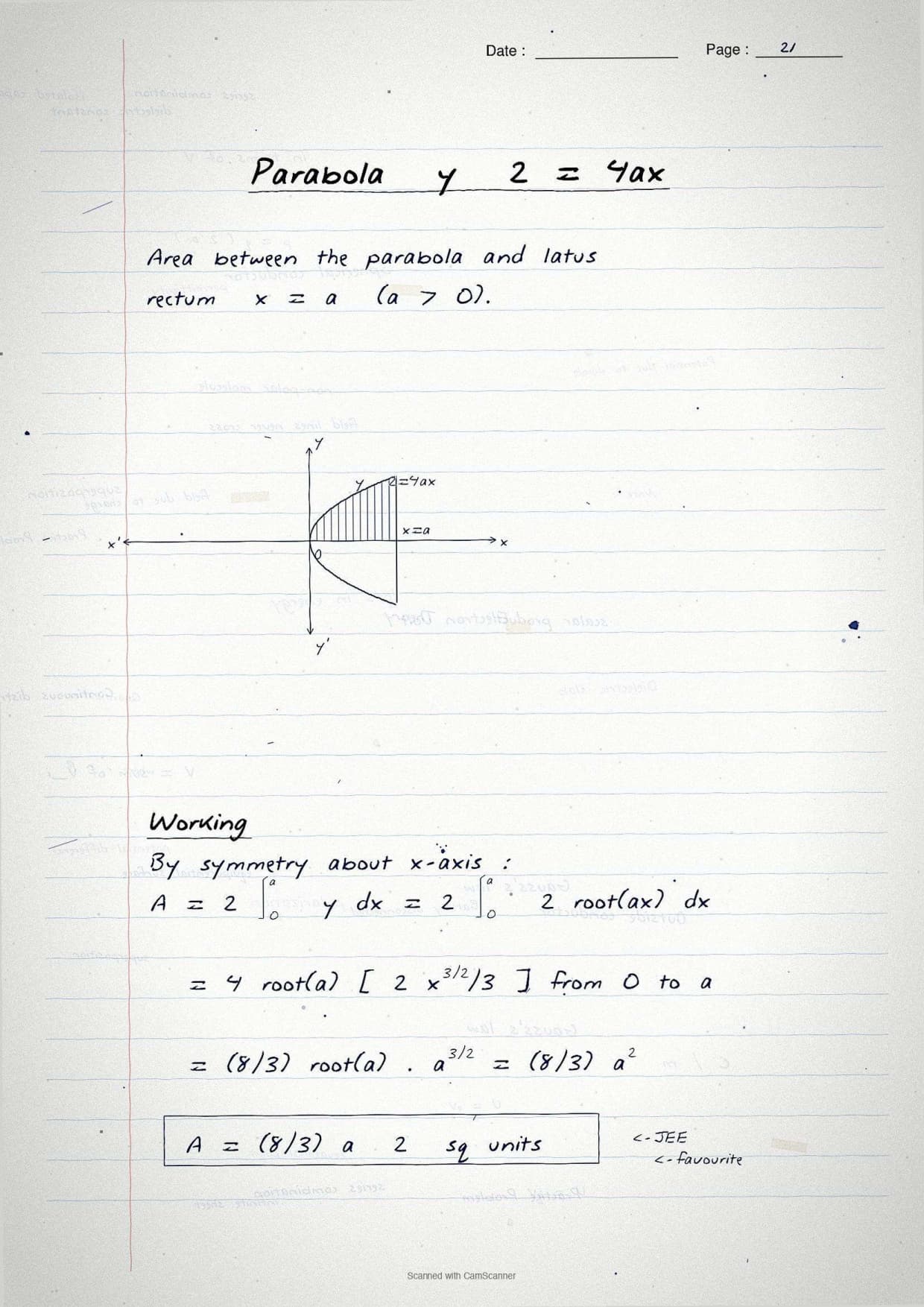
| 7 | Area under parabola y2 = 4ax | Right-opening parabola shaded from x = 0 to x = a ; the standard CBSE 3-marker |
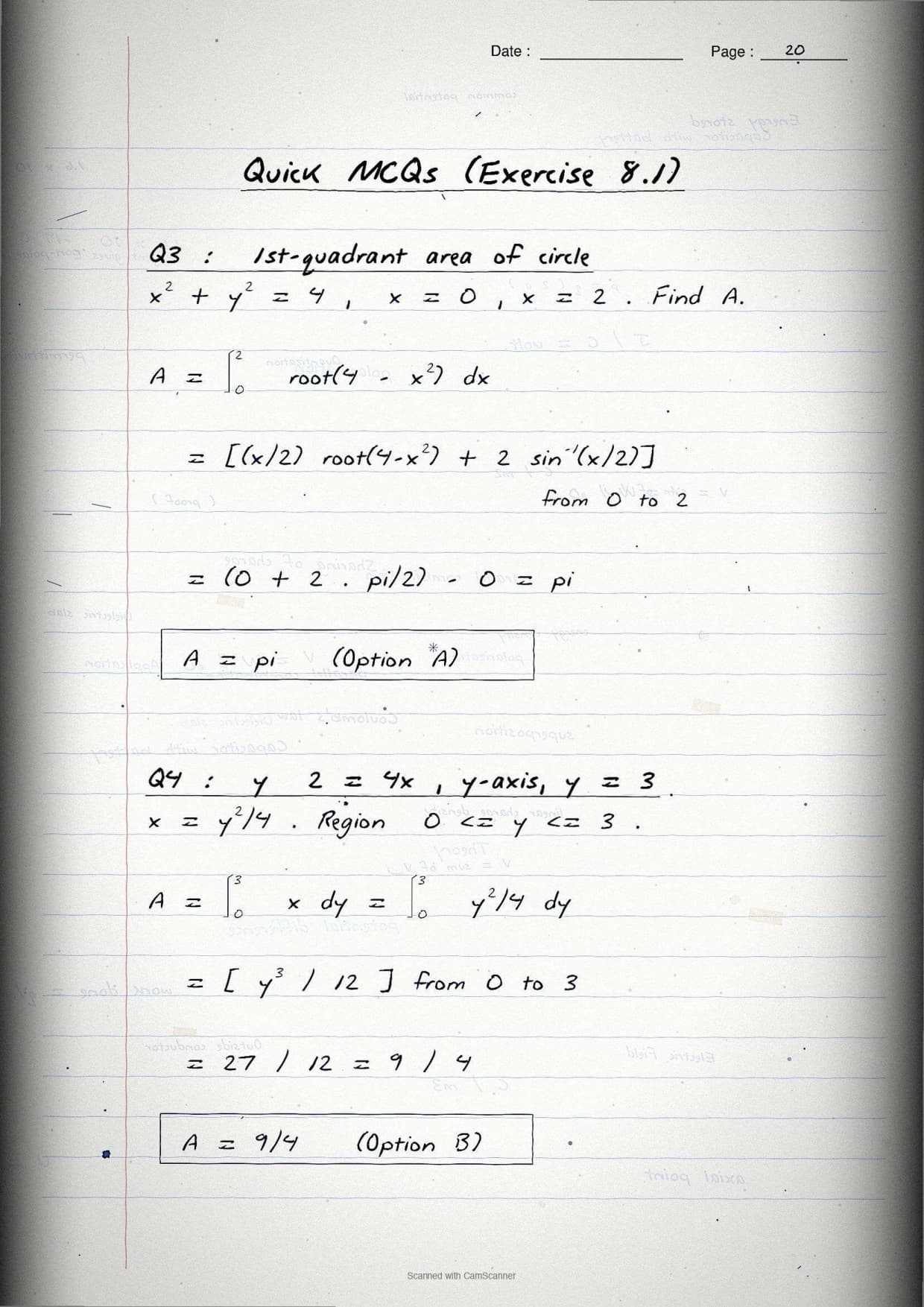
| 9 | Quarter-circle area | First quadrant of x2 + y2 = a2 shaded with the "multiply by 4" note; gives π a2 |
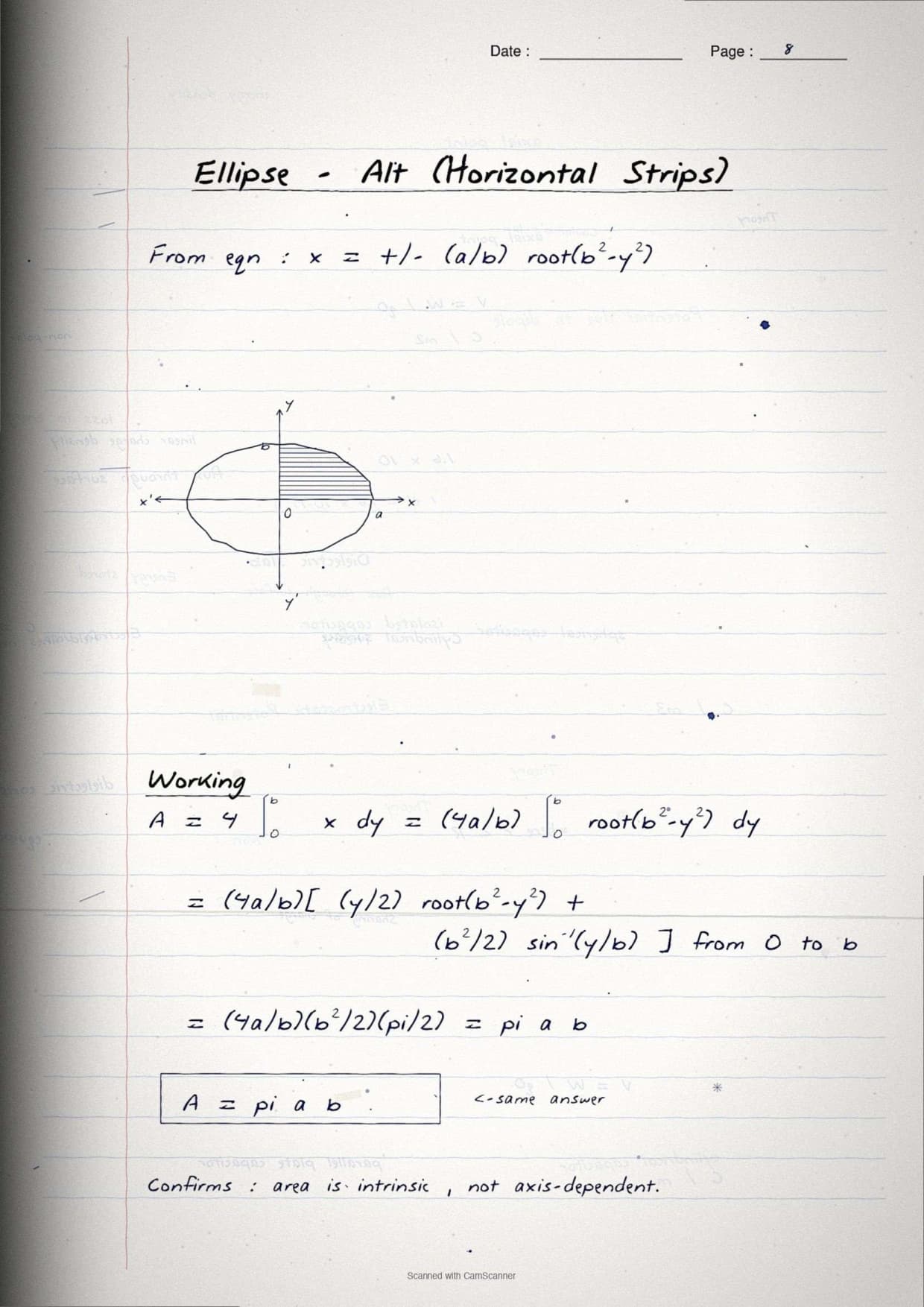
| 11 | Quarter-ellipse area | First quadrant of x2/a2 + y2/b2 = 1 shaded; gives π ab after the 4-fold multiplication |
| 13 | Modulus y = |x| region | V-shape with two mirrored shaded triangles on [-a, a] ; the piecewise sign-split example |
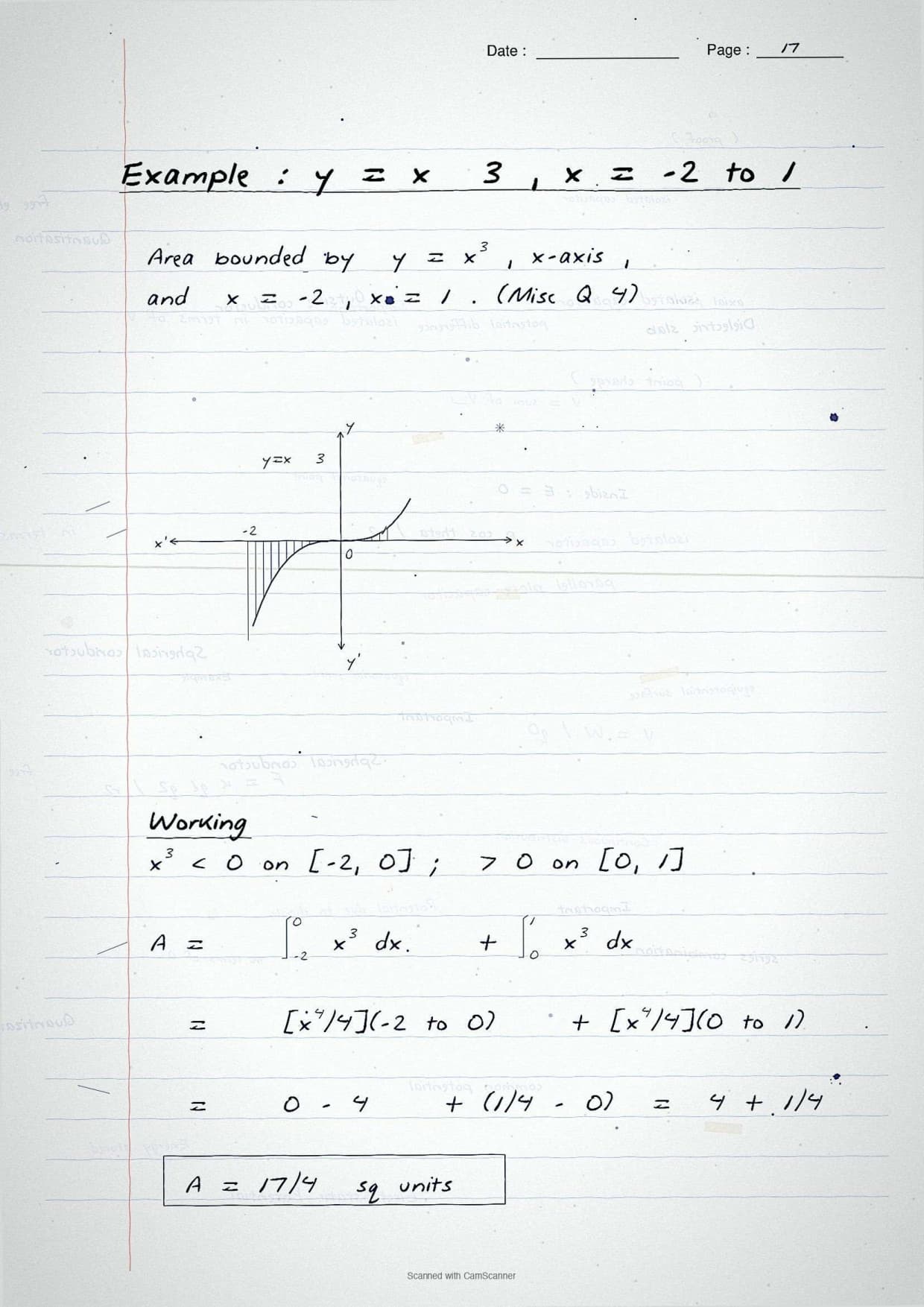
| 15 | Region below x-axis split | Cubic-like curve dipping below the axis between two roots; the modulus-on-each-piece example |
| 17 | Parabola and line intersection | y2 = 4ax and y = 2x with intersection points circled and the bounded region shaded |
| 18 | Parabola-line area set-up | Same region with vertical strips drawn in and "upper curve minus lower curve" labelled beside the integral |
| 20 | Two parabolas y2 = 4x , x2 = 4y | Both parabolas plotted; intersections (0,0) and (4,4) circled; lens-shaped region shaded |
| 22 | Circle and line bounded region | Circle x2 + y2 = a2 with chord y = mx + c ; the smaller segment shaded; JEE Main set-up |
| 23 | Two intersecting circles | Two circles overlapping with the lens-shaped intersection region shaded; horizontal-strip integration |
| 24 | Triangle bounded by three lines | Three line equations, vertices found, triangular region shaded with vertical strips across two x-pieces |
| 25 | Ellipse cut by a line | Ellipse with line cutting through; shaded region demonstrates switching from dx to dy integration |
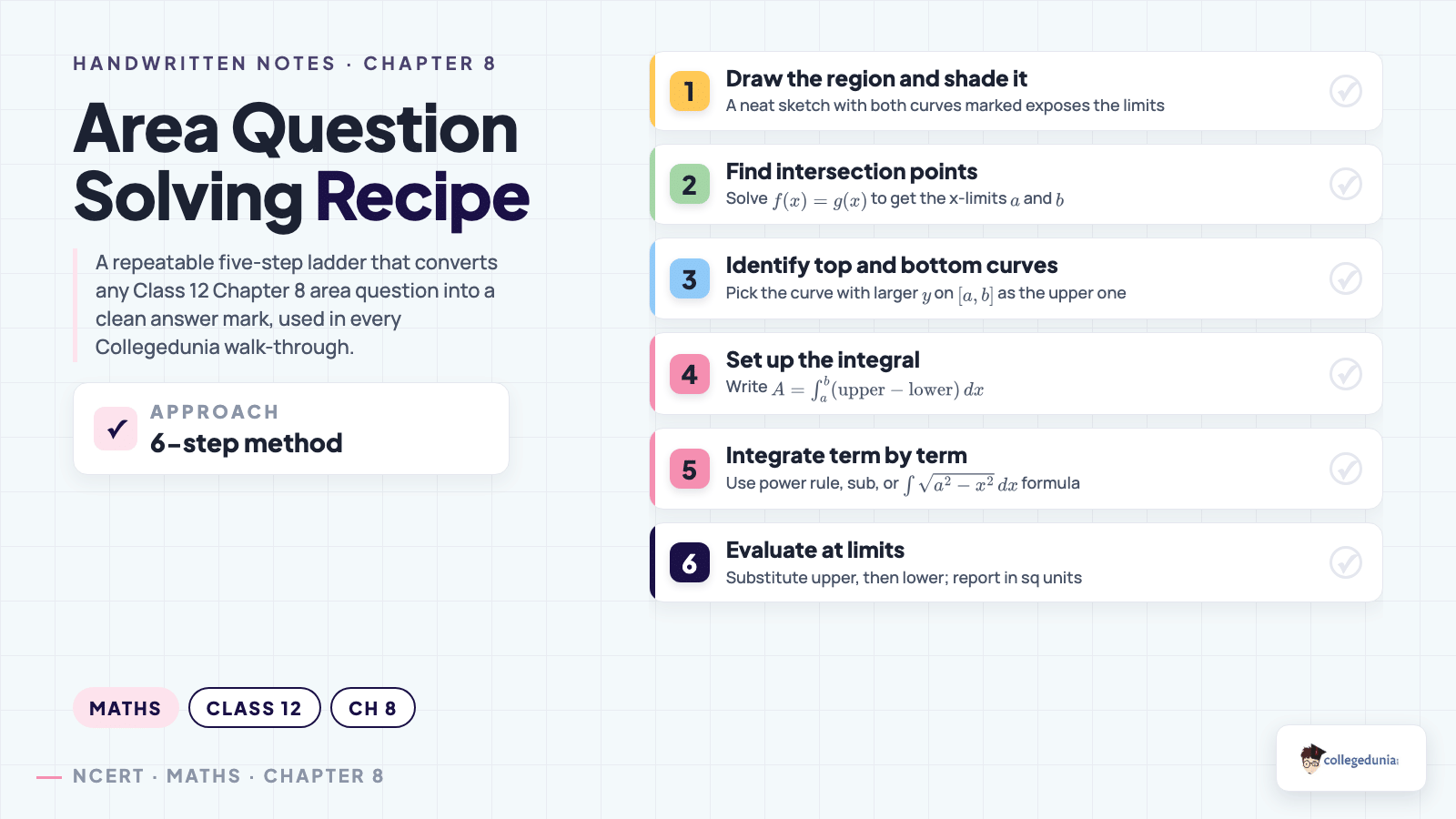
| 27 | Sketch-and-shade decision card | Flowchart: plot → find intersections → shade → pick strip → set limits → integrate |
Application of Integrals Top 6 Key Formulae for Class 12 Maths Quick Recall
These six results cover almost every Board and JEE Main question on this chapter since 2021. The full learn table with every standard-curve area, every limit set-up, and every sign-split rule lives on the dedicated Formula Sheet.
| Bounded Region | Area Result |
|---|---|
| Curve and x-axis | A = ab y dx = ab f(x) dx (with sign split at x-intercepts) |
| Curve and y-axis | A = cd x dy = cd g(y) dy |
| Circle x2 + y2 = a2 | A = 4 0a √a2 - x2 dx = π a2 |
| Ellipse x2/a2 + y2/b2 = 1 | A = 4 0a ba√a2 - x2 dx = π ab |
| Area between two curves | A = ab (f(x) - g(x)) dx where f(x) ≥ g(x) on [a, b] |
| Area under y = |x| on [-a, a] | A = -a0 (-x) dx + 0a x dx = a2 |
Full learn table: the PDF Maths Formula Sheet
Application of Integrals: Last 24-Hour Revision Card for Class 12 Maths
The card below is the single page you scan the night before the Board exam. Skip the long derivations; the 5-mark question almost always falls on the area between a curve and a line, two parabolas, or a circle / ellipse with a chord.
- Sketch first: Plot every curve, mark axis intercepts, circle intersections, shade the bounded region. Diagram alone earns 1 to 2 marks of a 5-marker.
- Pick strip orientation: Vertical strip dA = y dx when y = f(x) . Horizontal strip dA = x dy when the inverse form is cleaner or when a vertical strip forces multiple x-splits.
- Standard curve areas: Circle π a2 ; ellipse π ab ; y = |x| on [-a, a] gives a2 ; parabola y2 = 4ax from 0 to a gives 8a23 on the latus-rectum region. Memorise these four; they cover most MCQs.
- Symmetry shortcut: For regions symmetric about an axis (circle, ellipse, even function on [-a, a] ), compute one quadrant and multiply by 2 or 4.
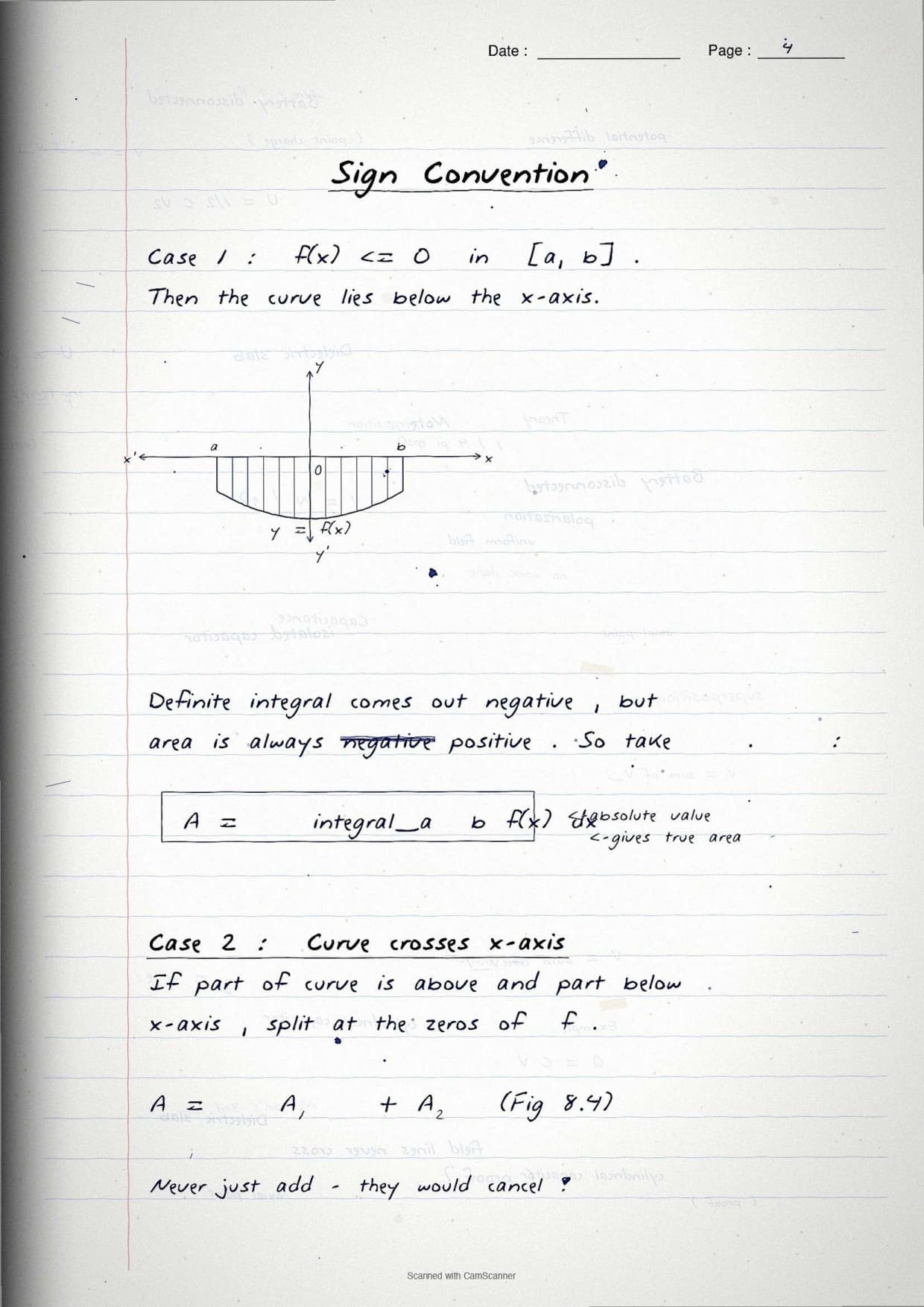
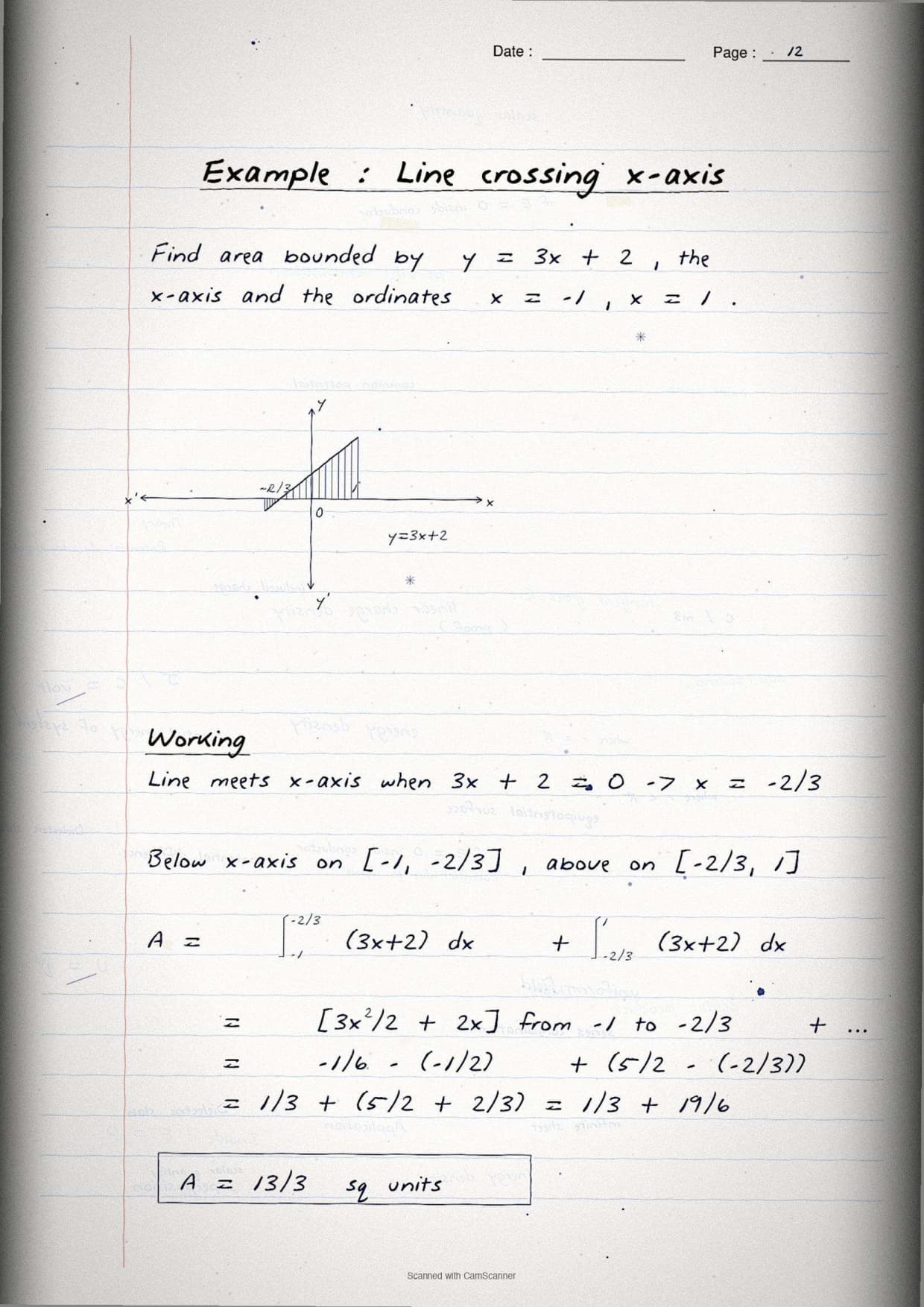
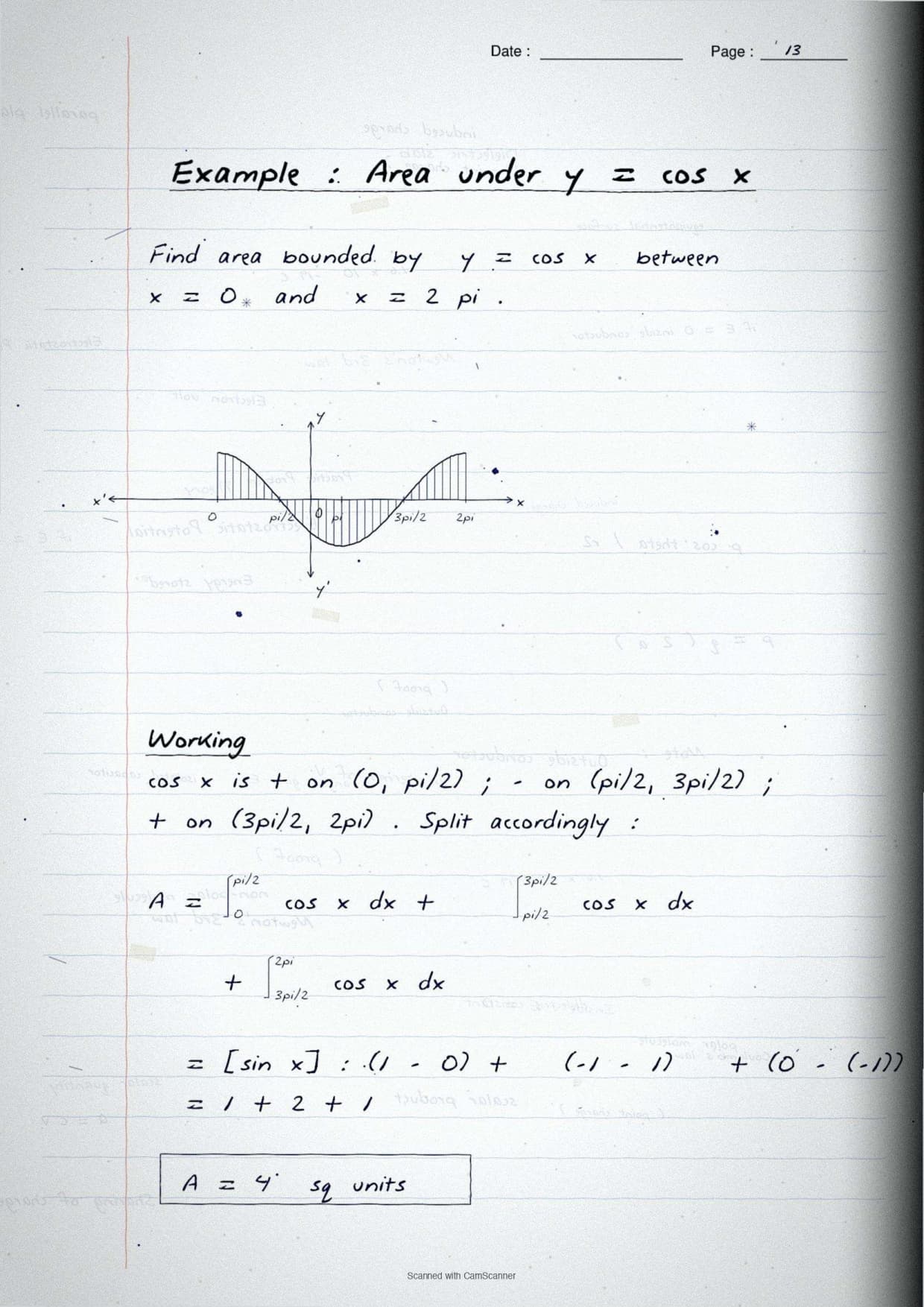
- Sign split: If f(x) changes sign on [a, b] , find x-intercepts and split: A = ∑ |xixi+1 f(x) dx| . Never trust a single integral that crosses the x-axis.
- Area between two curves: ab(f(x) - g(x)) dx with f ≥ g . The limits are intersection x-coordinates; solve f(x) = g(x) first.
- Parabola-and-line CBSE template: y2 = 4ax and y = mx . Intersections at x = 0 and x = 4a/m2 . Bounded area = 04a/m2(√4ax - mx) dx . The 5-mark CBSE favourite.
Handwritten Notes vs Printed Notes for Application of Integrals: When to Use Which
The notebook is not a replacement for the typed Notes page. The two resources serve different stages of preparation, and a 5-marker on this chapter is almost always won at the sketch stage.
| Resource | Best For | Time Per Pass |
|---|---|---|
| Typed Notes | First read, formal definite-integral definition, strip-area derivation, full proofs of circle / ellipse area | 90 to 120 min |
| Handwritten Notes | Second and third revision passes, visual sketch-and-shade recall, intersection-point spotting, last-24-hour skim of all 16 bounded regions | 35 to 50 min |
| Formula Sheet | Final 10 minutes before the paper: standard-curve area results, upper-minus-lower set-up, sign-split rule | 10 min |
The recommended sequence is the typed Collegedunia Notes first, then two passes through these handwritten notes (focus on the 16 shaded sketches), then the Formula Sheet on exam morning.
Related Links:
Class 12th Maths Chapter 8 Application of Integrals Pen-Colour Convention
The 27-page PDF uses four ink colours consistently so you can skim the entire notebook in under seven minutes during last-day revision.
| Ink Colour | What It Marks | What's Inside |
|---|---|---|
| Blue | Definition / statement | NCERT one-line definitions: definite integral as area, vertical strip, horizontal strip, area between two curves |
| Orange | Shaded region | Every bounded region (parabola, circle, ellipse, modulus, two-curve intersection) is shaded with orange diagonal hatching |
| Yellow highlight | Standard-curve area result | The four memorisable results: circle π a2 , ellipse π ab , y = |x| on [-a, a] gives a2 , parabola latus-rectum region |
| Red | Common-mistake box | Frequent slips: forgetting to sign-split below the axis, swapping upper and lower curves, skipping the sketch, mis-reading the limits |
Application of Integrals Weightage Across Class 12 Maths Chapters
The bar chart below maps the typical CBSE Board mark distribution across the 13 chapters of the 2026-27 NCERT Mathematics book, averaged over the last five years. Chapter 8 Application of Integrals is highlighted in orange.
Application of Integrals carries 4 marks of the typical 80-mark CBSE paper, but the entire allocation almost always sits in a single 5-marker on a parabola-line or circle-line bounded region, which makes it one of the highest mark-per-question chapters in the Calculus unit.
More Application of Integrals Maths Class 12 Resources
NCERT Handwritten Notes for Class 12 Maths: All Chapters
Use the table below to jump to any other Class 12 Maths chapter's handwritten notebook PDF. The same shaded-region convention, dashed result-box style, and last-day revision card runs through every chapter.
| Chapter | Handwritten Notes |
|---|---|
| Chapter 1 | Relations and Functions Handwritten Notes |
| Chapter 2 | Inverse Trigonometric Functions Handwritten Notes |
| Chapter 3 | Matrices Handwritten Notes |
| Chapter 4 | Determinants Handwritten Notes |
| Chapter 5 | Continuity and Differentiability Handwritten Notes |
| Chapter 6 | Application of Derivatives Handwritten Notes |
| Chapter 7 | Integrals Handwritten Notes |
| Chapter 9 | Differential Equations Handwritten Notes |
| Chapter 10 | Vector Algebra Handwritten Notes |
| Chapter 11 | Three Dimensional Geometry Handwritten Notes |
| Chapter 12 | Linear Programming Handwritten Notes |
| Chapter 13 | Probability Handwritten Notes |
Class 12 Maths Handwritten Notes PDF: available above as a free PDF download, aligned to the 2026-27 NCERT Class 12 Mathematics syllabus.
Exercise-wise Breakdown of the Application of Integrals Chapter
The Application of Integrals chapter splits into 1 numbered exercises plus a Miscellaneous Exercise. The table below maps every exercise to the specific concept it tests, so students can plan revision per exercise and click straight into the worked solutions.
| Exercise | Topic Tested |
|---|---|
| Exercise 8.1 | Area under simple curves and between two curves |
| Miscellaneous Exercise | Mixed application of integrals problems |
PDF Download Formats and Languages for the Application of Integrals Chapter
The Application of Integrals Class 12 PDF on this page is available in three formats - each suited to a different revision style. The table below summarises what each format is best for:
| Format | Best for | Approx. size |
|---|---|---|
| Normal-resolution PDF | Phone reading, quick revision between classes | 2-3 MB |
| HD PDF | Print-ready, desk study, board hall photocopy | 8-10 MB |
| Handwritten Notes PDF | Mirrors how a topper writes the chapter under Sunday-revision pace | 5-7 MB |
The this chapter ncert pdf and the parallel Hindi-medium edition both follow the same notation and equation numbering as the printed NCERT 2026-27 release. Key points students should know:
- NCERT-faithful: Every definition, theorem and exercise on these notes ncert pdf matches the printed textbook line for line.
- Hindi-medium edition: The application of integrals class 12 pdf is also available in Hindi - same page numbering, same equation labels.
- Formula PDF separate: The application of integrals class 12 formulas pdf is a one-page A4 reference sheet listing every identity used in the chapter.
- Solutions PDF separate: The application of integrals class 12 solutions pdf gives every NCERT exercise worked out step by step.
- State-board alignment: Students on the Maharashtra board, HSC, or any state-board syllabus will find the same definitions in this application of integrals class 12 pdf - only the exercise numbers differ.
Tip: Many toppers keep two parallel copies - a printed formula sheet on A4 for desk revision (the application of integrals class 12 formulas pdf), and the full application of integrals class 12 pdf on a phone for commute revision. Both files are free and linked above.
Important Questions and Previous Year Trends for the Application of Integrals Chapter
The most repeated question patterns in CBSE Class 12 Maths for the Application of Integrals chapter have settled into a stable cluster across 2019 to 2024 boards. Three question templates account for over 80% of the marks this chapter contributes:
| Template | Typical Marks | What it tests |
|---|---|---|
| Proof / property verification | 3 marks | Students show that a given relation/function/expression satisfies the chapter's definitions. |
| One-step computation | 2 marks | Substitution-based item: plug into a known formula and simplify. |
| Case-study scenario | 4 marks | Real-world setup applying the chapter's definitions, introduced in CBSE 2021+ papers. |
Walking through one example of each template before the exam covers most of the predictable application of integrals class 12 important questions you will see on board day.
- this Class 12 page previous year questions for 2019-2024 are linked from the PYQ block at the bottom of this page - the exact CBSE phrasings.
- The application of integrals class 12 important questions with solutions set is reused by toppers in the last fortnight of revision.
- For NCERT Exemplar practice, the matching the resource extra questions set adds advanced problems suitable for JEE Main and JEE Advanced.
- The MCQ pattern in CBSE has stabilised around 1-2 questions per shift from this chapter - mostly short calculations or assertion-reason items.
Year-wise PYQ Distribution
The table below maps the dominant question type asked from the Application of Integrals chapter across recent CBSE Class 12 Maths boards:
| Year | Dominant Question Type | Approx. Marks |
|---|---|---|
| 2024 | Property verification + case-study item | 5-6 marks |
| 2023 | Computation with proof + assertion-reason MCQ | 5-6 marks |
| 2022 | Long-answer derivation + 2-mark substitution | 5-7 marks |
| 2021 | Definition recall + property check | 4-5 marks |
| 2020 | One-step computation + 3-mark proof | 5 marks |
The full application of integrals class 12 important questions with solutions set (every year, every paper, every question type) is linked from the PYQ page at the bottom of this article.
How the Application of Integrals Notes Pair with NCERT Solutions and the Formula Sheet
The chapter notes notes work best when paired with two sister resources from the Class 12 Maths hub. The table below shows how each resource fits into a typical revision week:
| Resource | Use it for | When |
|---|---|---|
| Application of Integrals Notes (this page) | Theory, definitions, exam patterns | First pass, before practice |
| the PDF ncert solutions PDF | Step-by-step solved exercises | Second pass, during NCERT practice |
| application of integrals class 12 formulas PDF | One-page identity recall | Third pass, alongside mock papers |
| Handwritten Notes PDF | Quick reading in topper's handwriting | Anytime, especially commute revision |
Around 60 percent of the chapter's scoring vocabulary appears on all three pages, so cross-resource use reinforces recall without adding study time.
- The this chapter ncert solutions cover every back-of-chapter exercise plus the miscellaneous exercise.
- The application of integrals class 12 solutions for each individual exercise are indexed by exercise number on the sister NCERT Solutions page (see the Exercise-wise Breakdown table above for direct links).
- The application of integrals class 12 formulas reference sheet is the same A4 file students sometimes refer to as these notes all formulas - it lists every identity used in the chapter.
- State-board references: RD Sharma, ML Aggarwal, Teachoo and the Maharashtra board this Class 12 page textbook PDF all share the same core definitions.
- For class-first search phrasings - class 12 application of integrals solutions, class 12 application of integrals ncert solutions, ncert class 12 application of integrals solutions - the same files cover the request.
Reference Books and State-Board Mapping
Students using reference books beyond NCERT, or studying under a state board, can map this chapter cleanly:
| Reference | How it maps to the resource |
|---|---|
| RD Sharma Class 12 Application of Integrals | Question patterns overlap with NCERT at ~70%; an advanced supplement. |
| ML Aggarwal this chapter | Solutions style is closer to JEE; good for problem-solving practice. |
| Teachoo the chapter notes | Free online walkthroughs; useful for video-style learning. |
| Shaalaa application of integrals class 12 solutions | State-board (Maharashtra HSC) phrasings; same core definitions. |
| Maharashtra board the PDF textbook PDF | Same chapter content under the HSC syllabus; exercise numbers differ. |
| NCERT Exemplar these notes | Advanced problems for JEE Main/JEE Advanced preparation. |
How to Use the Application of Integrals Notes Page Most Effectively
The recommended study plan for the this chapter chapter splits across three sittings. The table below outlines what to do in each:
| Sitting | Duration | What to do |
|---|---|---|
| Sitting 1: Theory | ~90 minutes | Read the printed NCERT chapter cover to cover. Mark every definition and theorem statement. Then read the formula recall section on this page. |
| Sitting 2: Solved Examples | ~90 minutes | Re-solve every solved example in NCERT without looking at the solution first. Compare your steps against the printed working. Use these notes ncert solutions PDF if stuck. |
| Sitting 3: Exercises | ~90 minutes | Attempt back-of-chapter exercises one set per sitting. Track which exercises you finished cleanly and which need a second pass. Click into the linked exercise pages above for verification. |
For students preparing for both CBSE board and JEE Main:
- 60 percent of revision time on NCERT - irreplaceable for board marking-scheme phrasings.
- 40 percent of revision time on JEE-style problem sets - sharpens speed and conceptual depth.
- The application of integrals class 12 important questions set on the previous-year page is the closest free analogue to a JEE-style problem set for this chapter.
- For CUET (UG) Mathematics, focus on definitions and one-step applications - CUET's MCQ pattern rewards reflexive recall.
Class 12 Maths Handwritten Notes PDF - Frequently Asked Questions
Ques. Are these Class 12 Maths Chapter 8 Application of Integrals handwritten notes aligned with the 2026-27 NCERT syllabus?
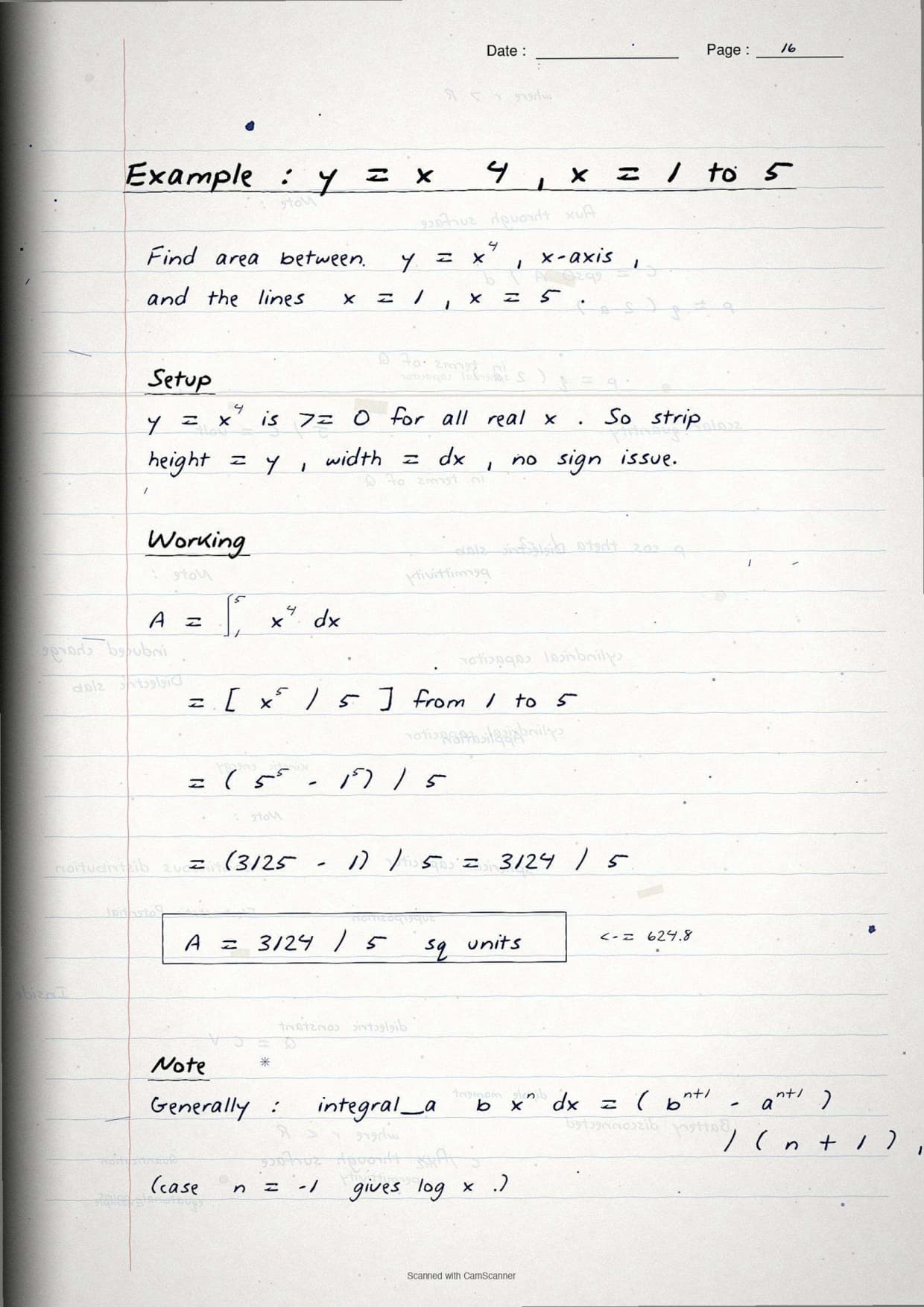
Ans. Yes. The 27-page notebook covers the definite integral as area under a curve, area under standard curves (line, parabola, circle, ellipse, modulus), and area between two curves, all of which the 2026-27 NCERT print retains in full.
Ques. How many pages are in the Application of Integrals handwritten notes PDF?
Ans. 27 ruled-paper pages with 16 hand-sketched shaded-area diagrams including vertical and horizontal strips, quarter-circle and quarter-ellipse, modulus piecewise V-region, parabola-line bounded region, two-parabola lens region, and a one-page sketch-and-shade decision card on the last page.
Ques. What is the expected weightage of Application of Integrals in CBSE Class 12 Board 2026?
Ans. 4 to 6 marks. Expect one 5-marker on the area bounded by a curve and a line, two curves, a circle and a chord, or an ellipse and a line. The 5-mark format has been near-constant across CBSE Board papers since 2021.
Ques. How is area between two curves explained in the handwritten notebook?
Ans. Pages 17, 18, and 20 cover the upper-minus-lower formula ab(f(x) - g(x)) dx . The two curves are sketched, intersection points are circled, the bounded region is shaded with orange hatching, and the integral is set up beside the diagram.
Ques. Can I use these Application of Integrals handwritten notes for JEE Main preparation?
Ans. Yes. JEE Main has carried 1 to 2 questions per shift on this chapter since 2022, most often on area between a parabola and a line, area between two parabolas, or area between a curve and the x-axis with a sign change. The 16 shaded sketches in the notebook cover every JEE-tested archetype.
Ques. How is the area of a circle derived using definite integration in the Class 12 Maths Handwritten Notes PDF?
Ans. Page 9 shades the first quadrant of x2 + y2 = a2 , sets up 0a√a2 - x2 dx , uses the standard trig-substitution result π a24 , and multiplies by 4 to recover the full circle area π a2 .
The same template, scaled by b/a in the y-direction, gives the ellipse area π ab on page 11.
Ques. Why must the integral be split when the curve dips below the x-axis?
Ans. Because the raw definite integral ab f(x) dx computes a signed area, and geometric area is always non-negative. Page 15 of the notebook shows a cubic-like curve crossing the axis, with the two pieces evaluated separately and each taken in absolute value before being added.
Ques. What is the area under y = | x | from - a to a ?
Ans. The integral is -a0(-x) dx + 0a x dx = a22 + a22 = a2 . Page 13 of the notebook shades the two mirrored triangles and writes the piecewise set-up alongside the sketch.





Comments