





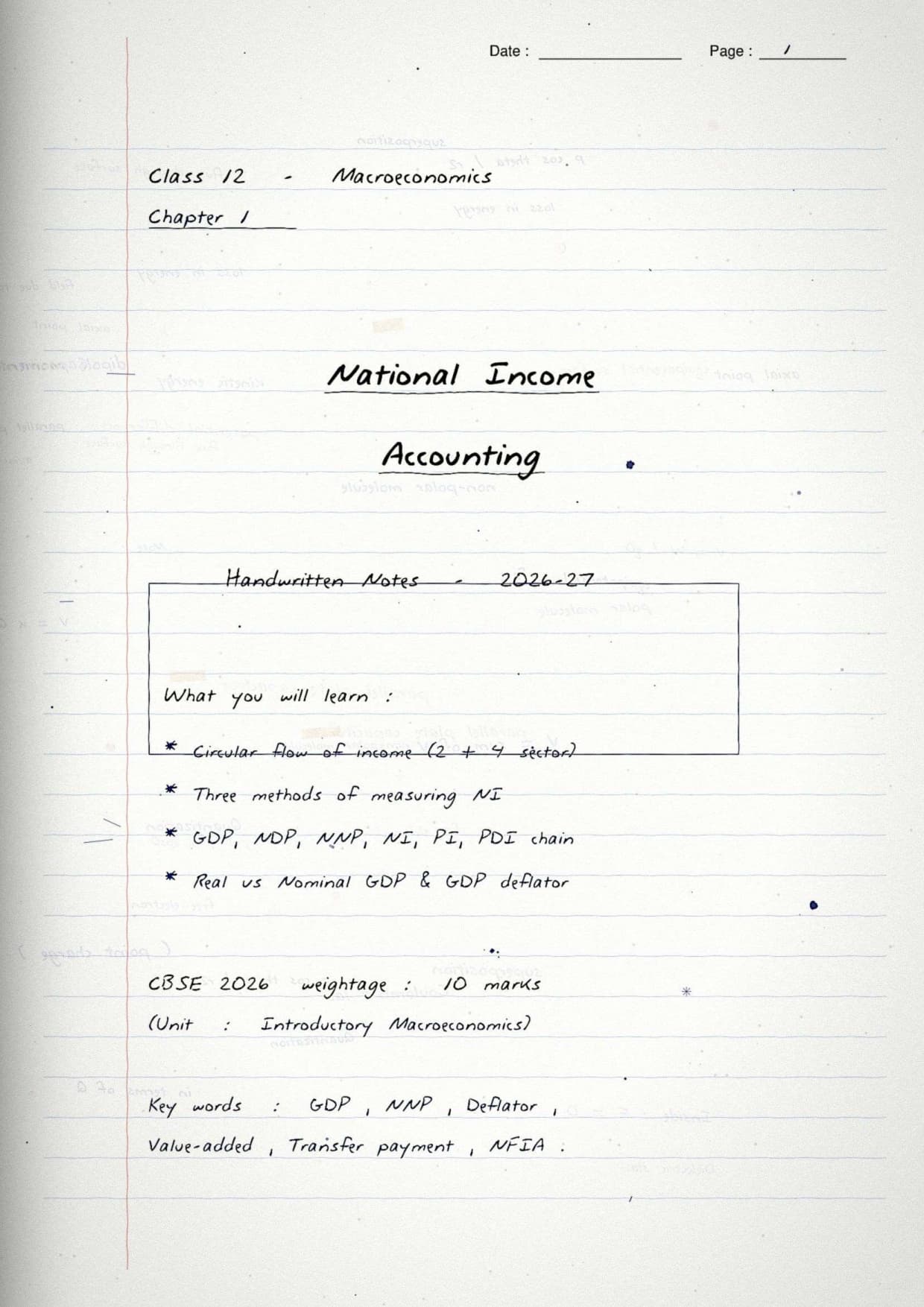
Class 12 Economics Chapter 2 National Income Accounting is the second chapter of the Macroeconomics book. It covers the circular flow of income and the three ways to measure a country's output, with the full chain from GDP down to Personal Disposable Income. This page has scanned handwritten revision notes and a free PDF to download.
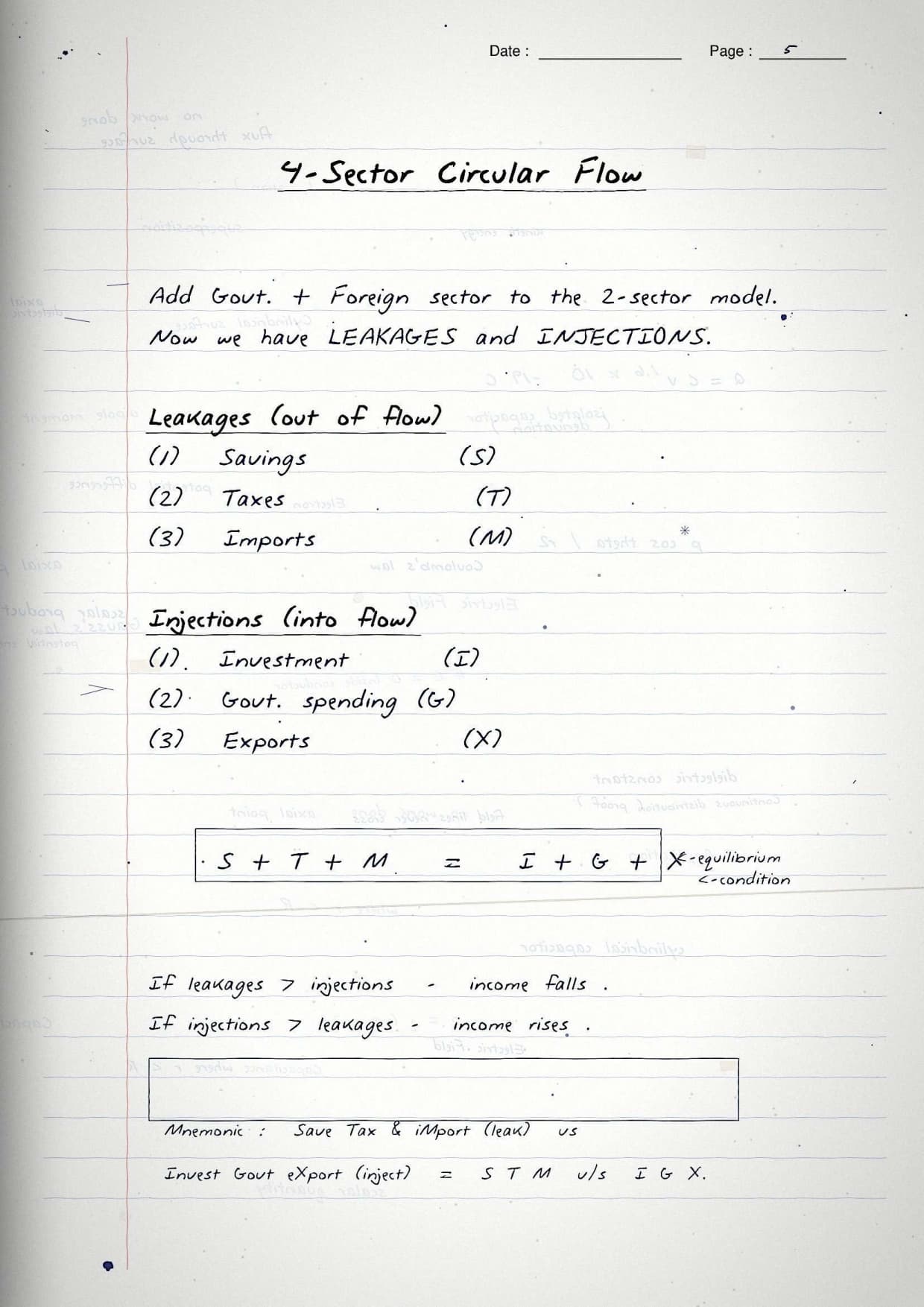
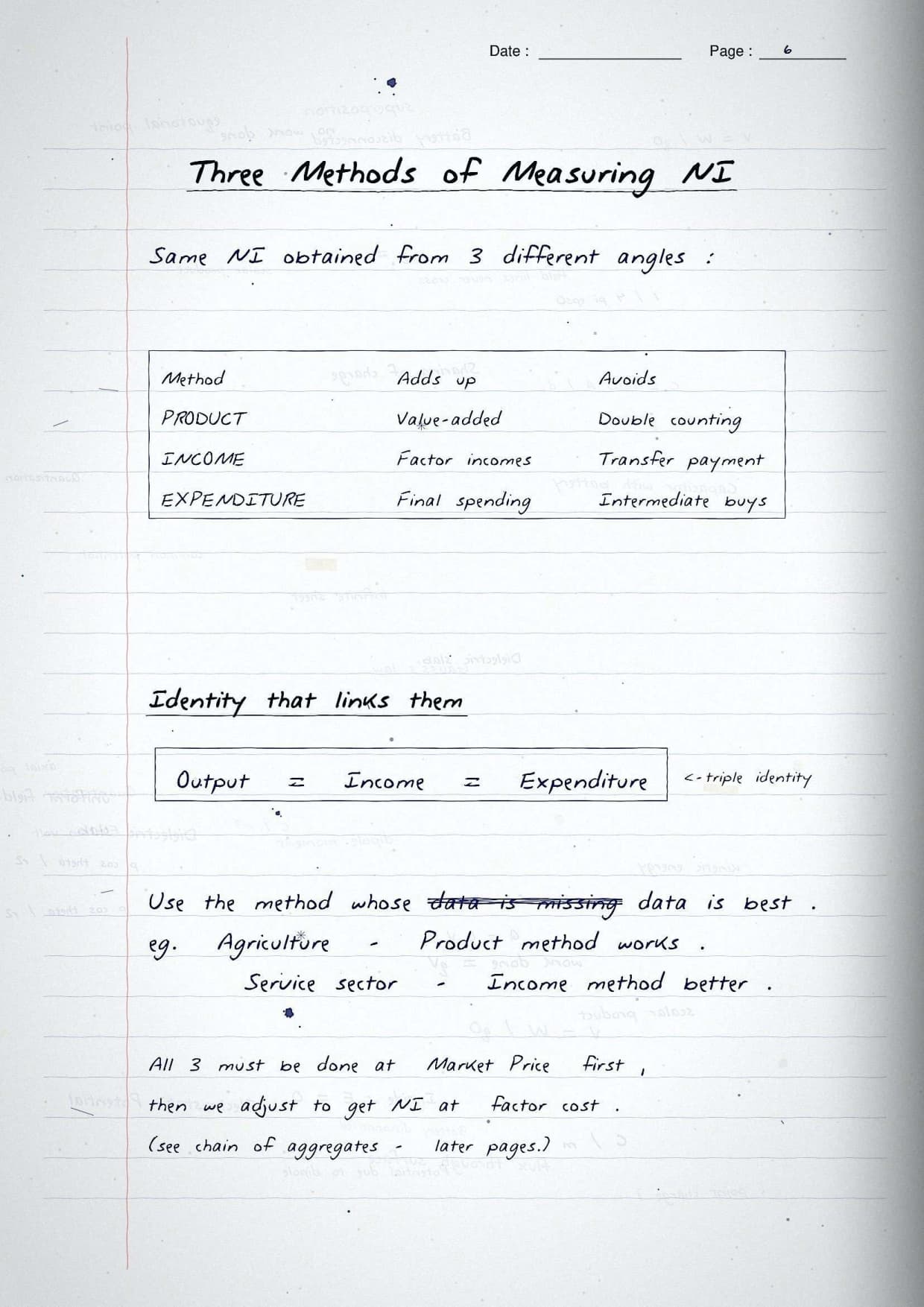
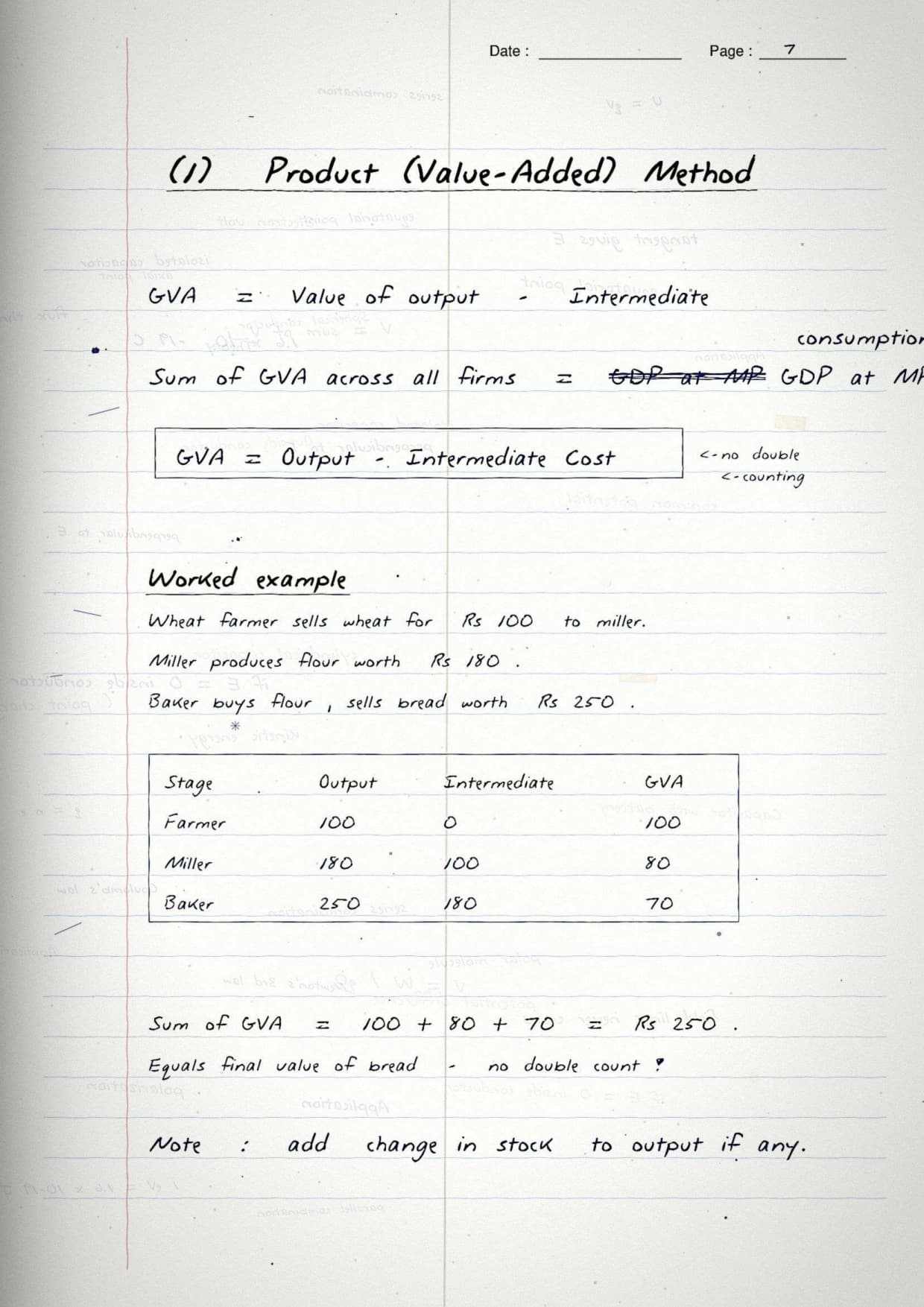
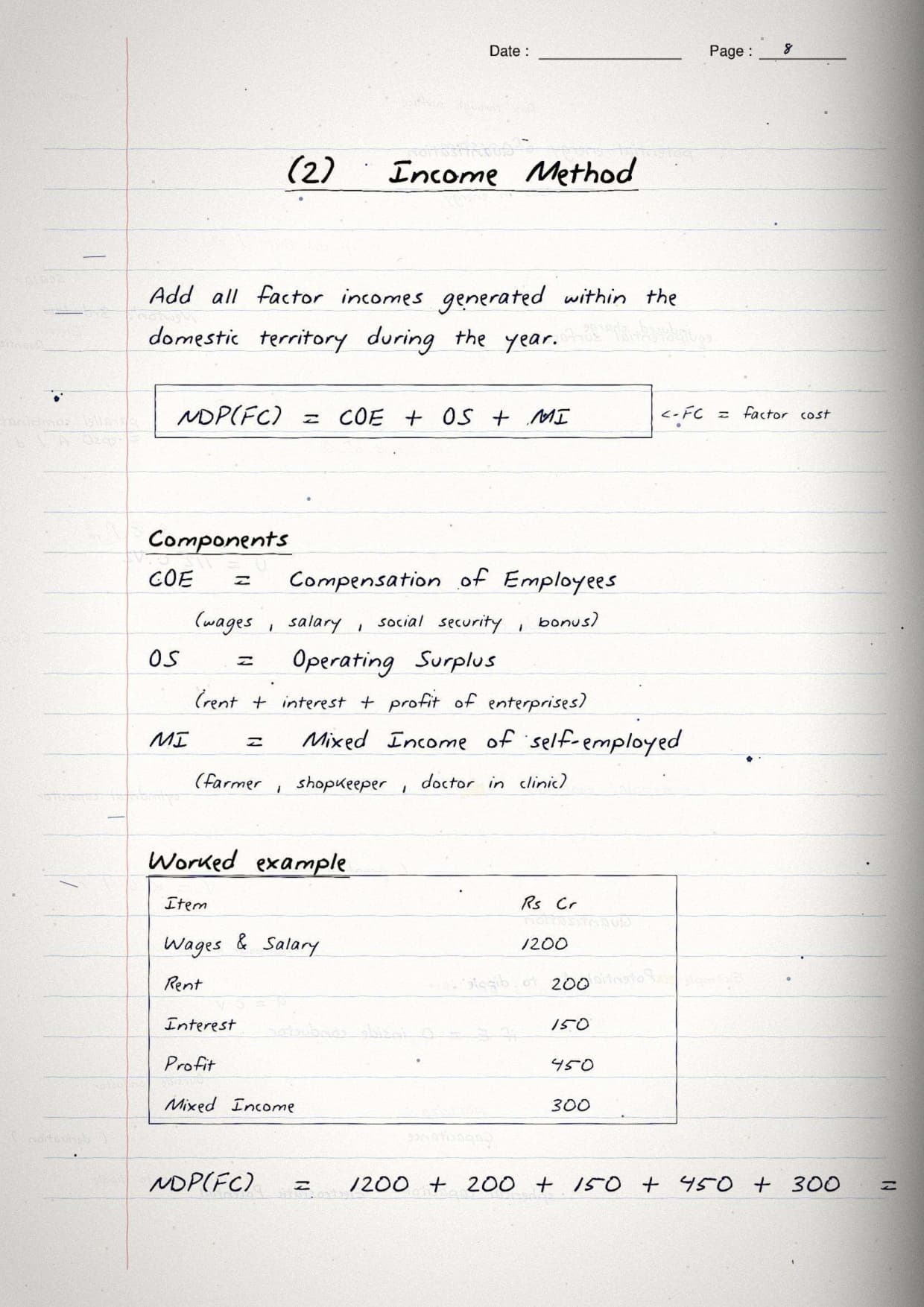
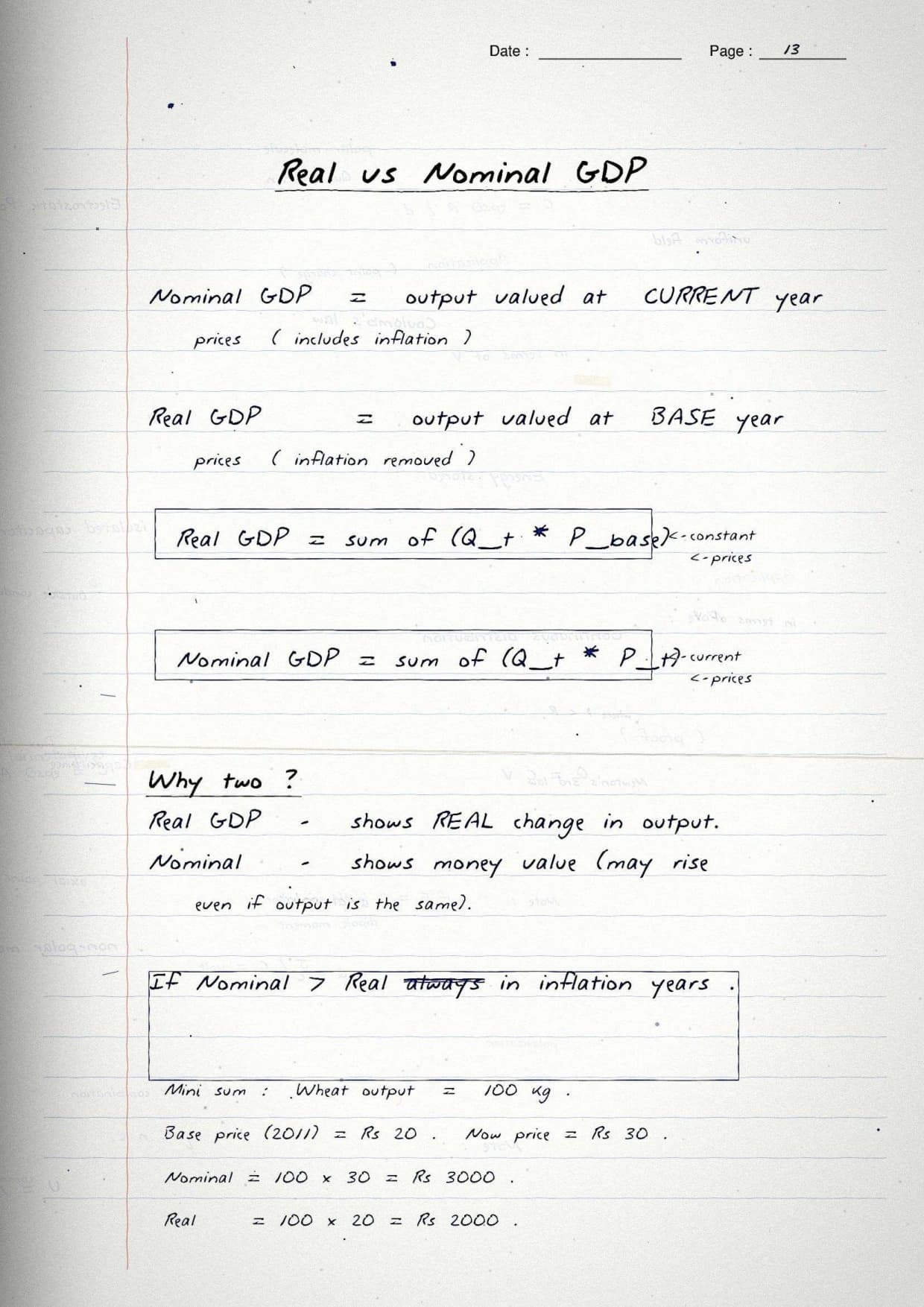
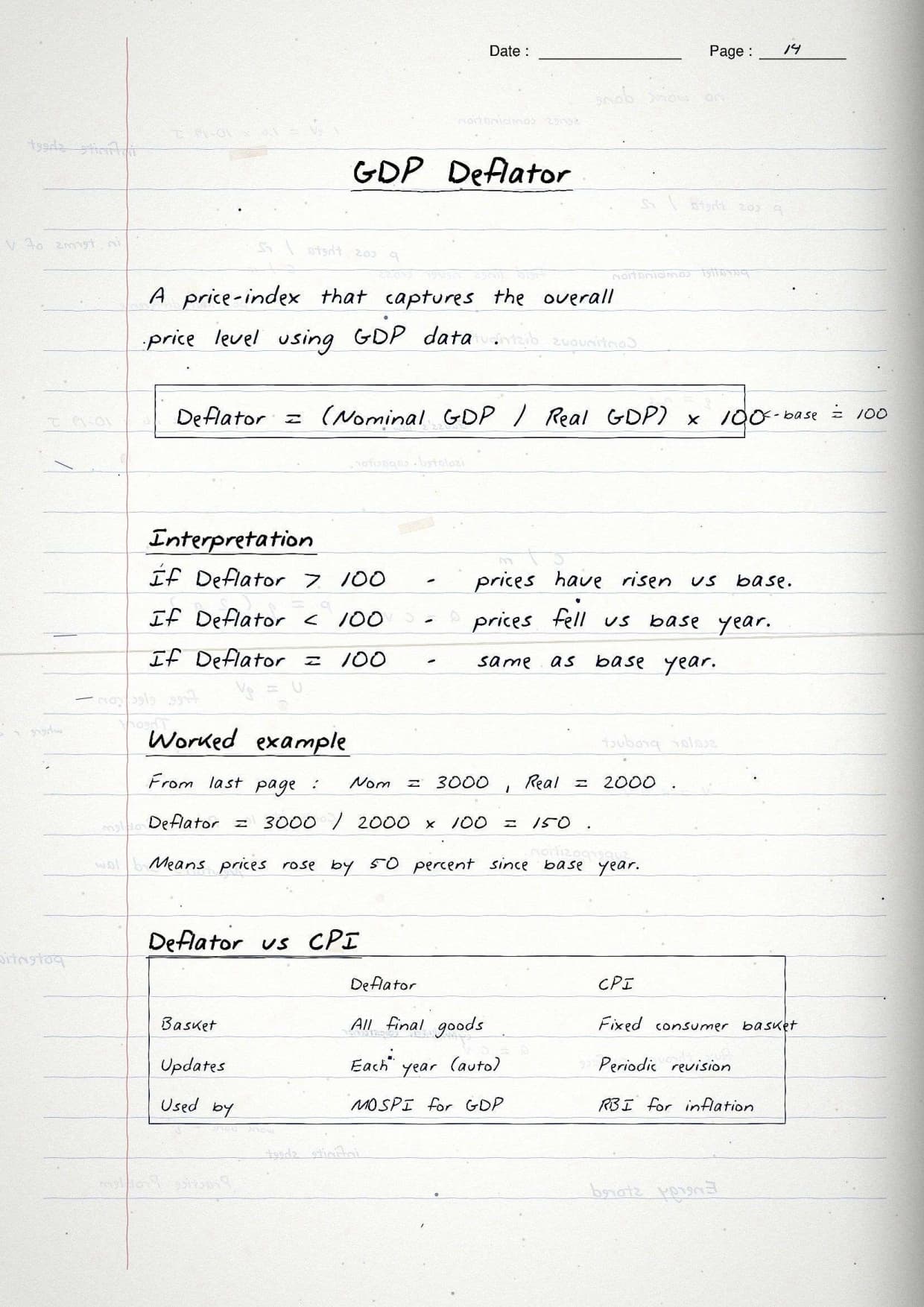
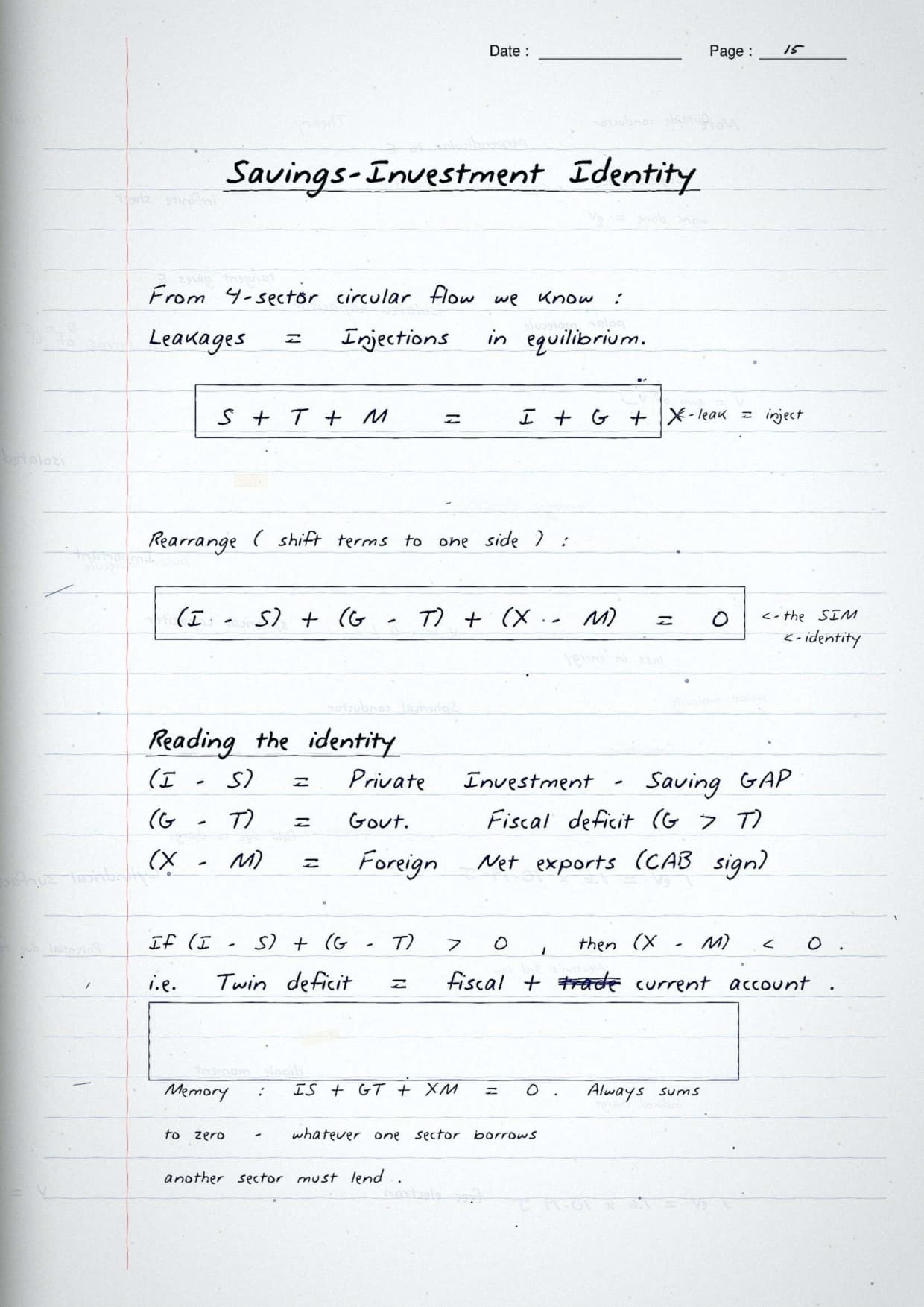
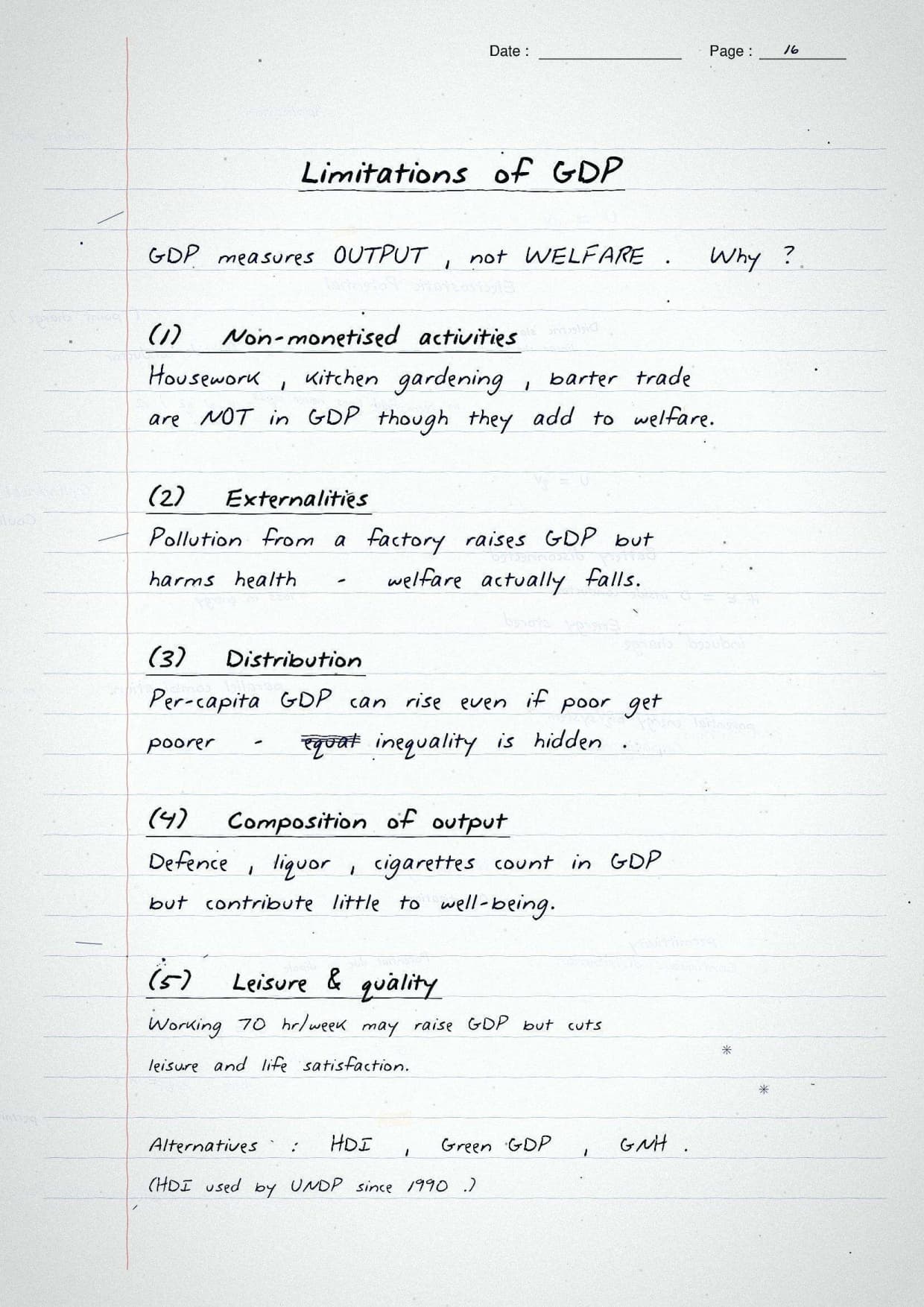
Here is what this chapter is worth in the exam:
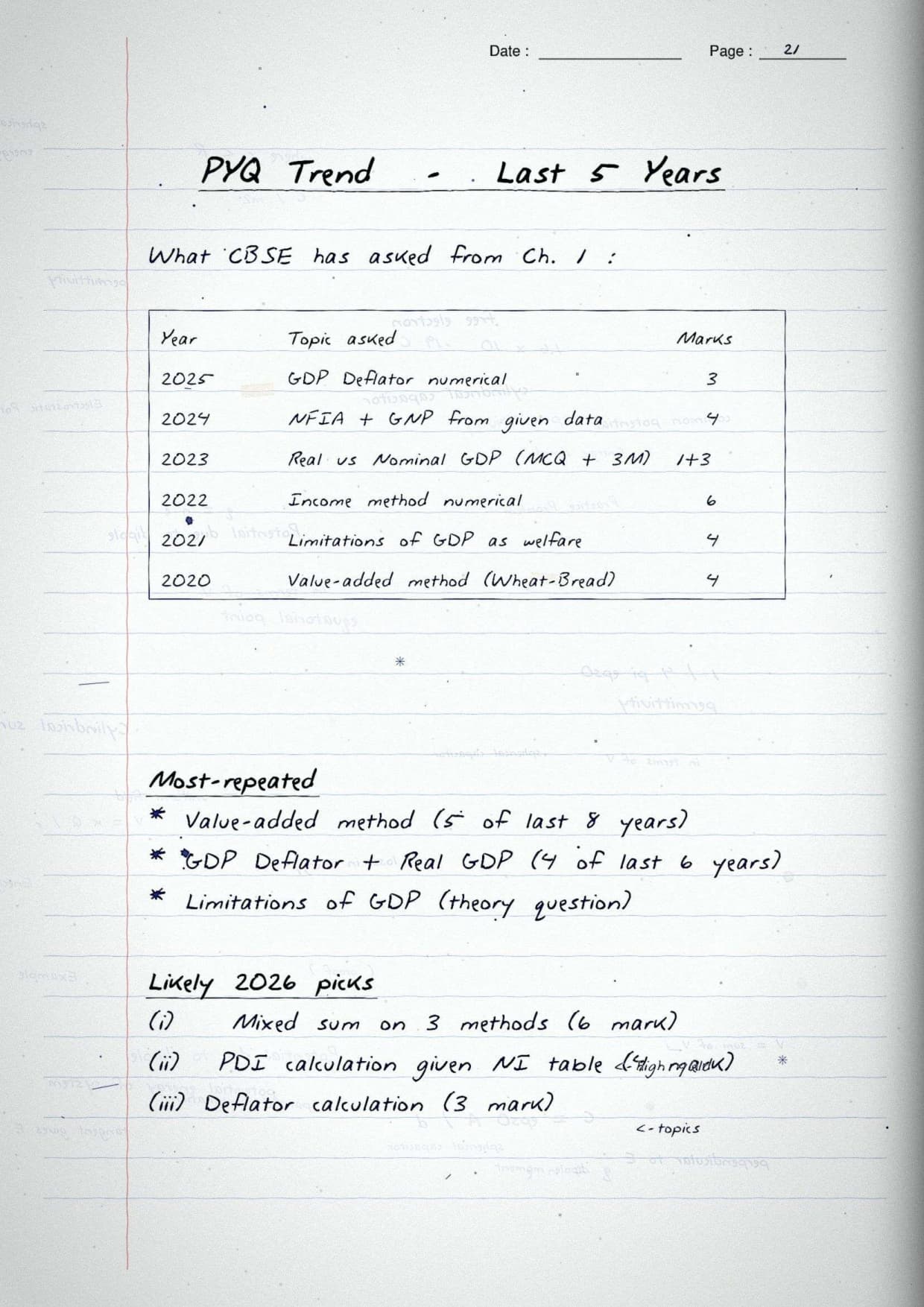
- CBSE Boards: about 9 to 11 marks, usually one 6-mark numerical plus short theory.
- CUET: 2 to 3 questions every year on the aggregates and formulas.
- Revision time: about 22 minutes with these handwritten notes.
What These National Income Accounting Class 12 Handwritten Notes Cover
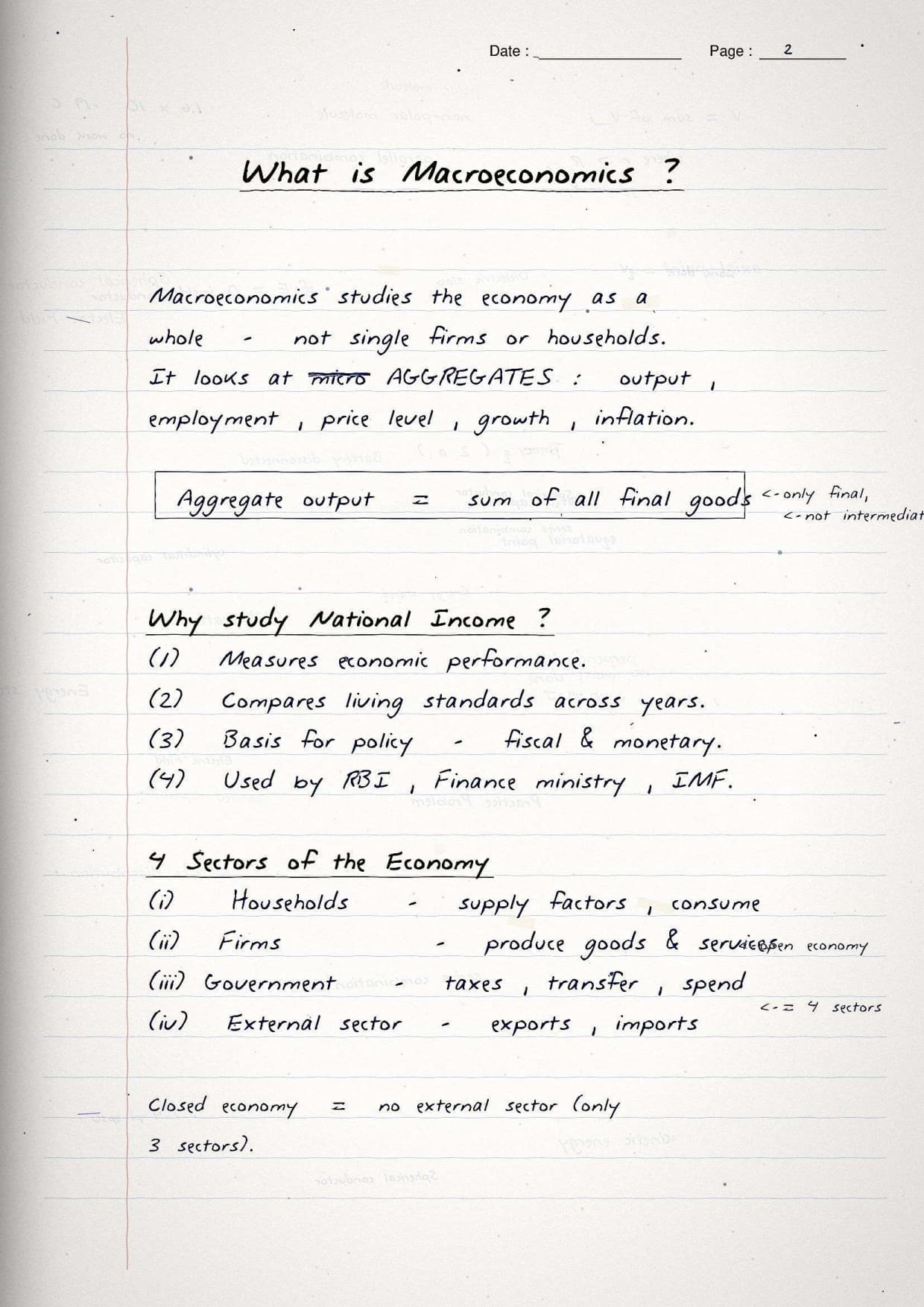
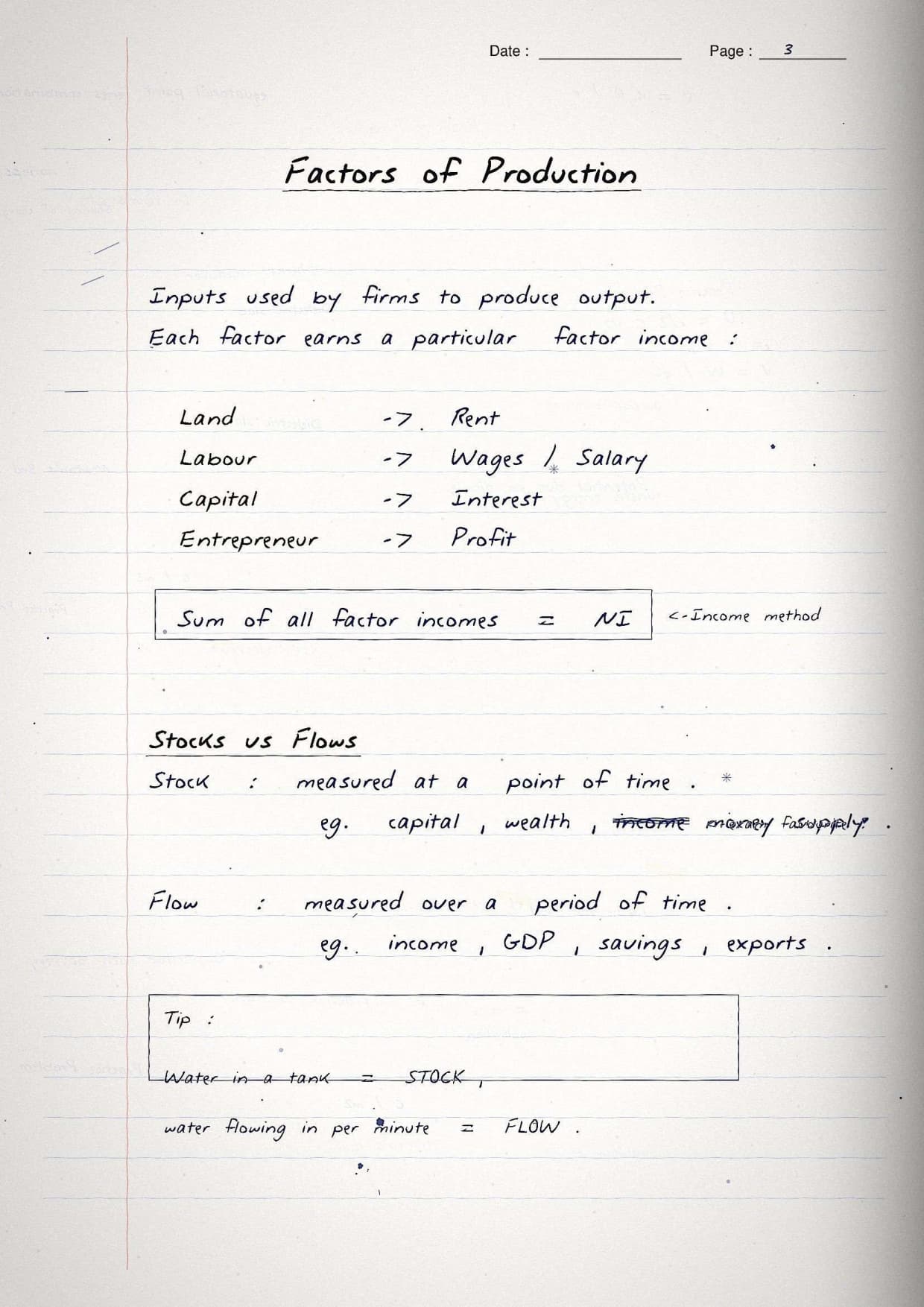
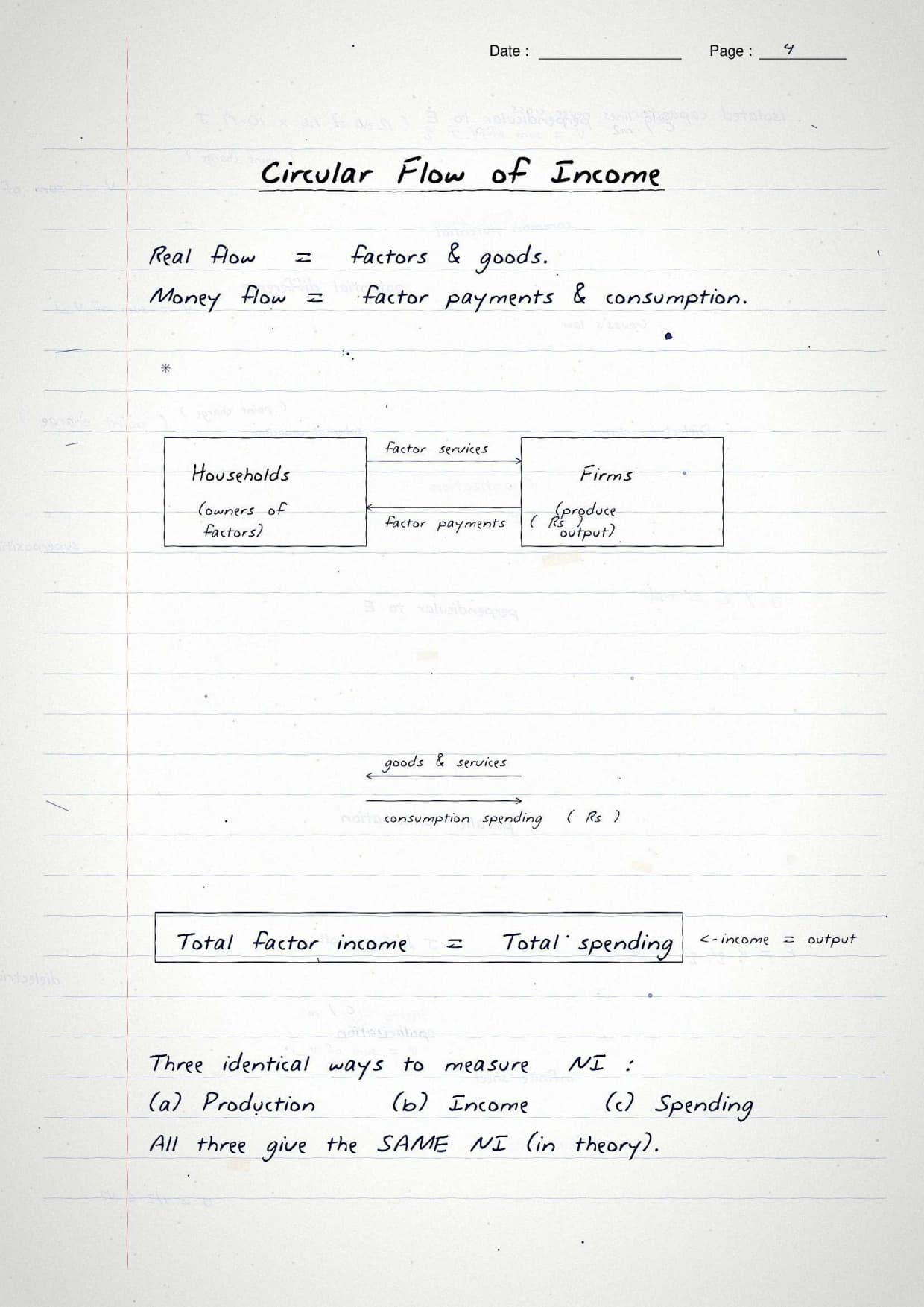
The PDF is a short scanned-notebook file in ballpoint pen on ruled paper. It is built for last-mile revision, not first-time learning. The table below shows what each page holds.
| Page | What it covers | Revision time |
|---|---|---|
| Page 1 | Four factors of production, circular flow, stocks vs flows, final vs intermediate goods. | 5 min |
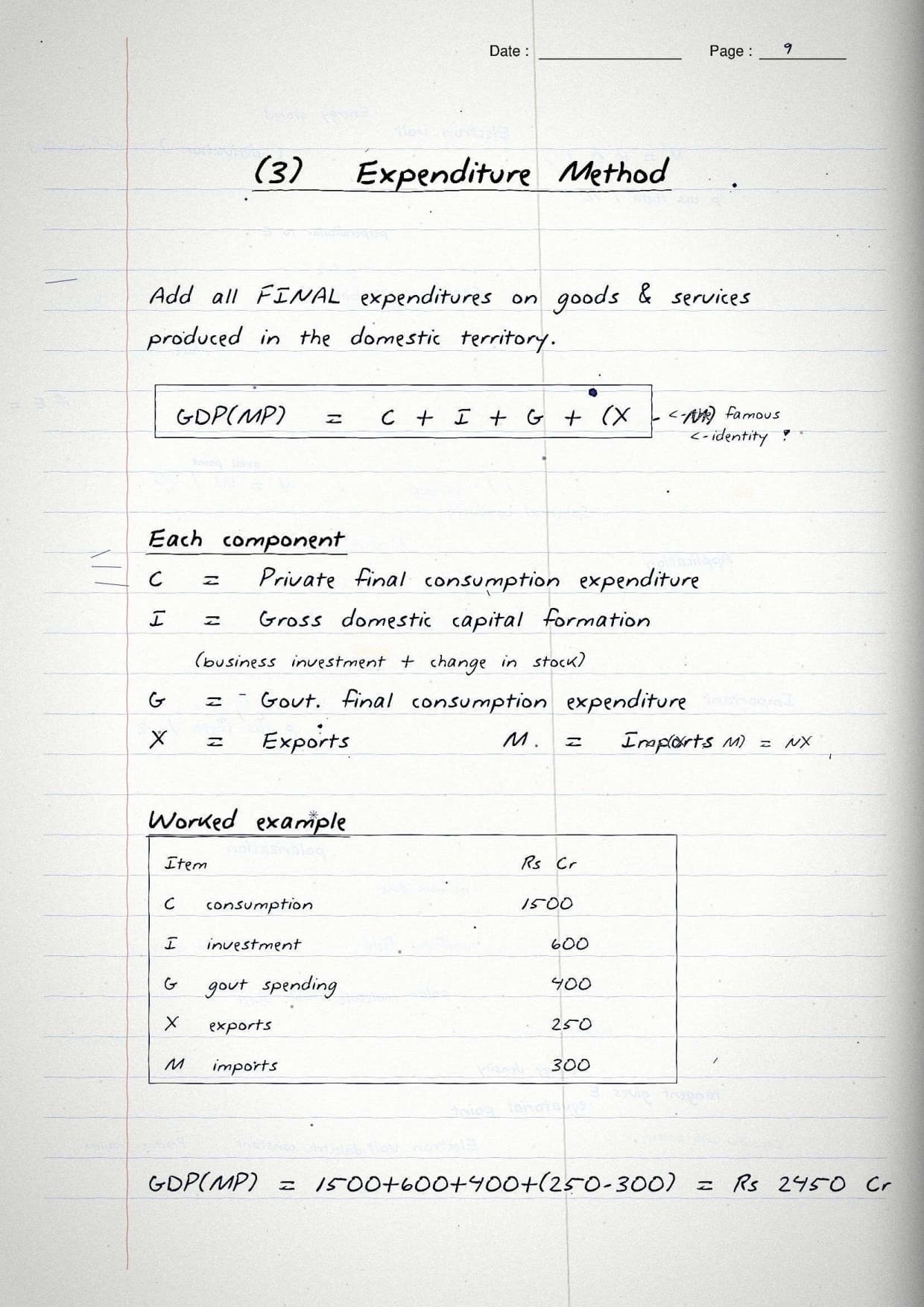
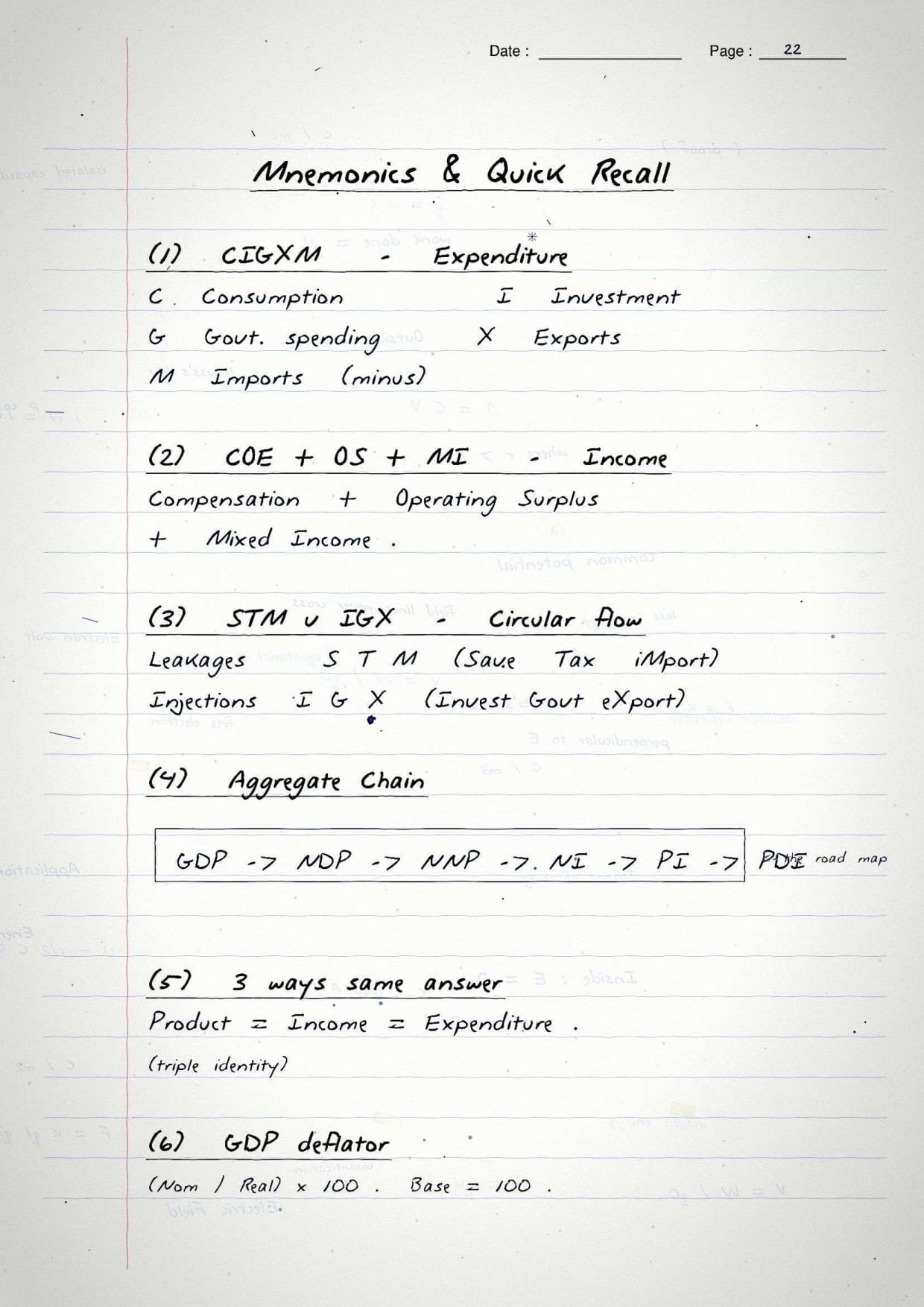
| Page 2 | Three methods of measuring national income, each in a hand-drawn formula box. | 7 min |
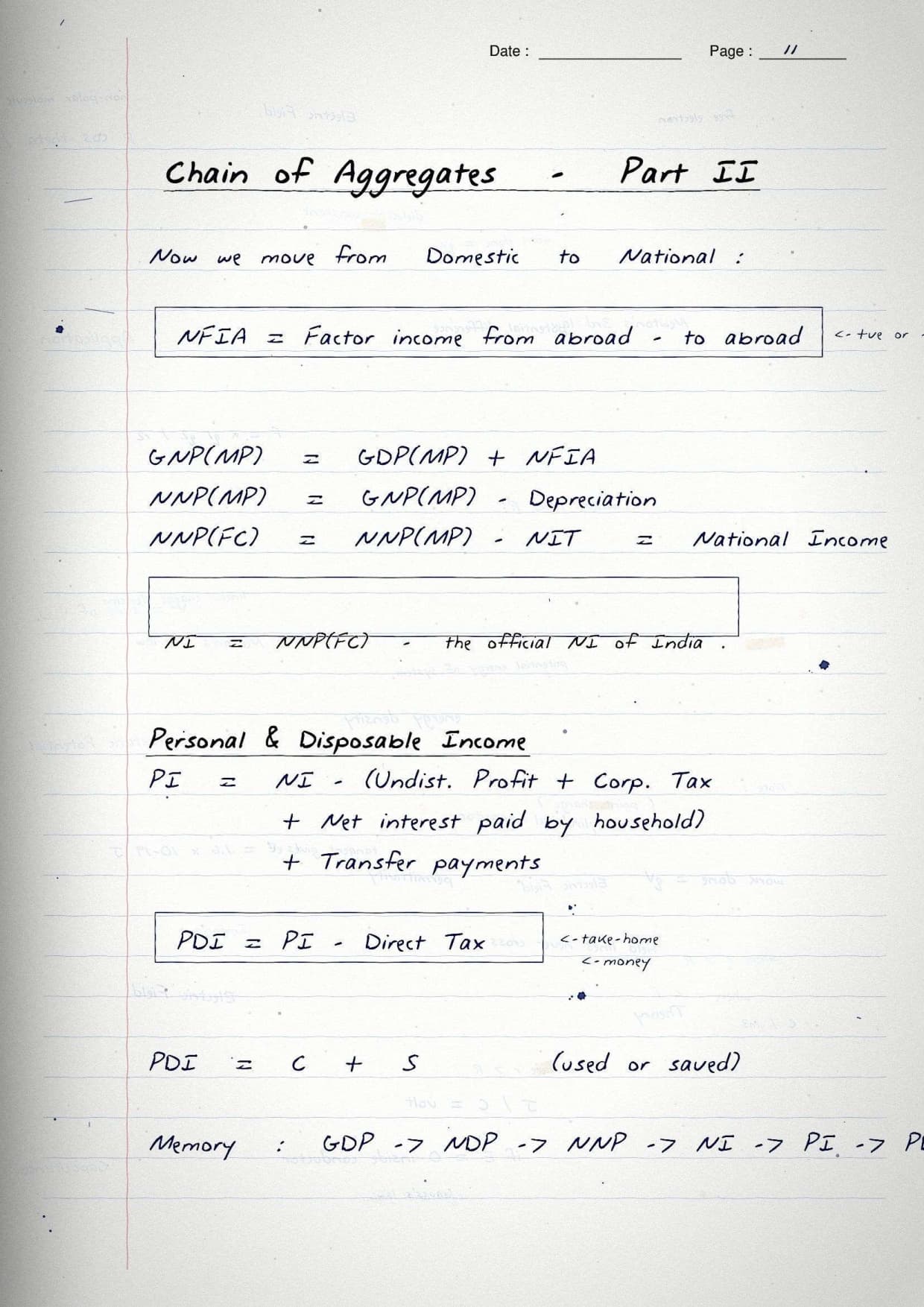
| Page 3 | Full chain of aggregates from GDP at Market Price down to PDI, with labelled arrows. | 6 min |
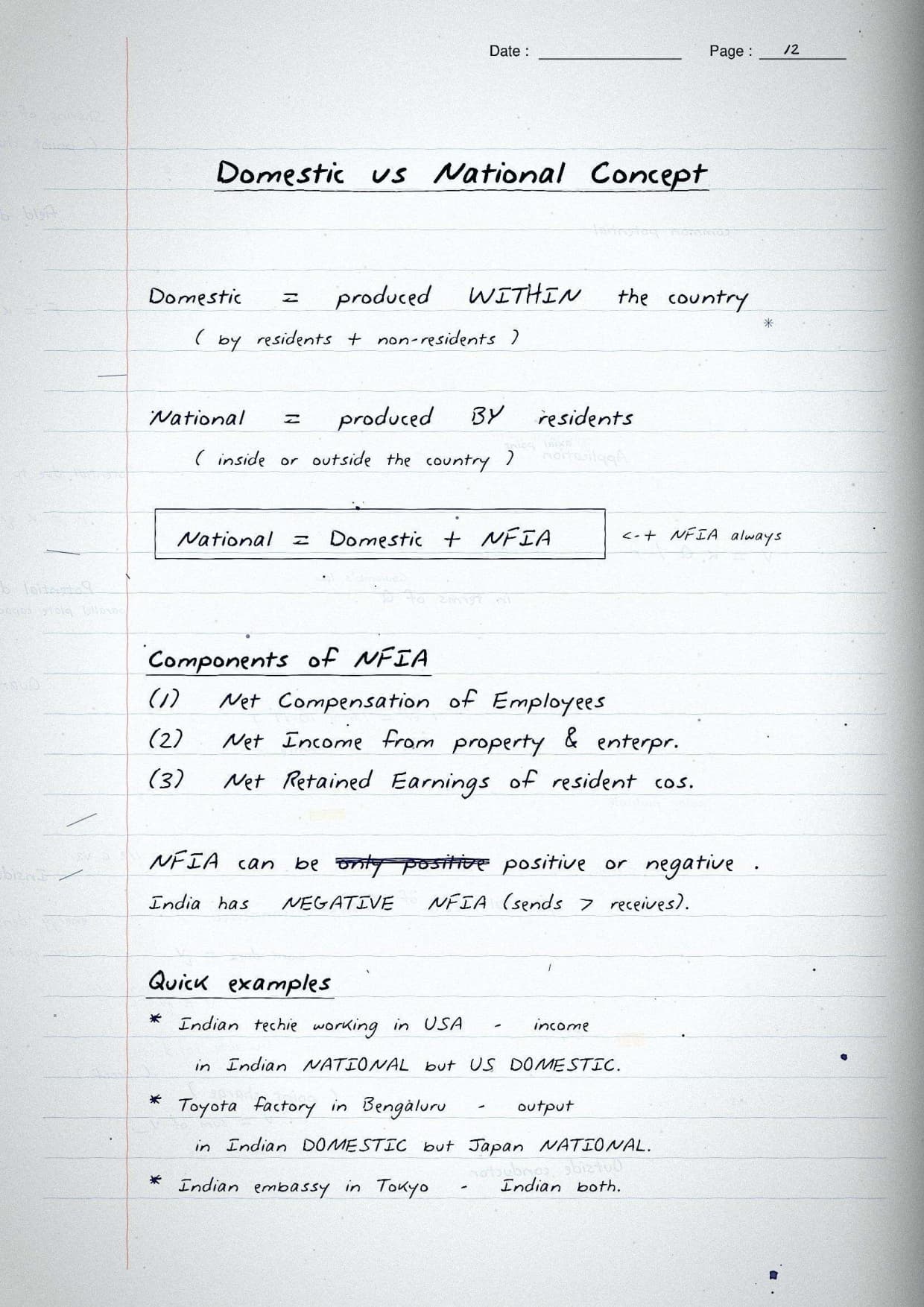
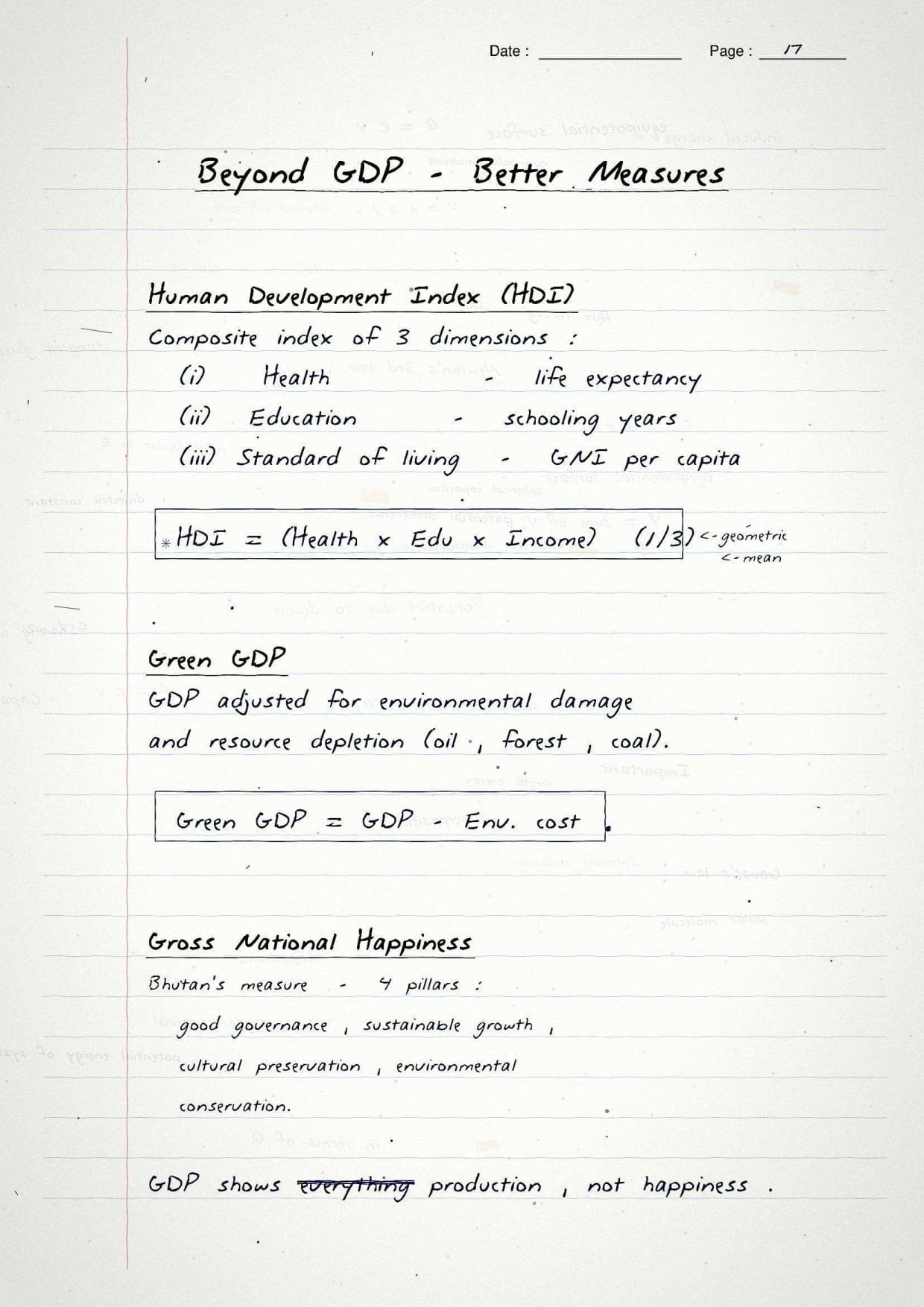
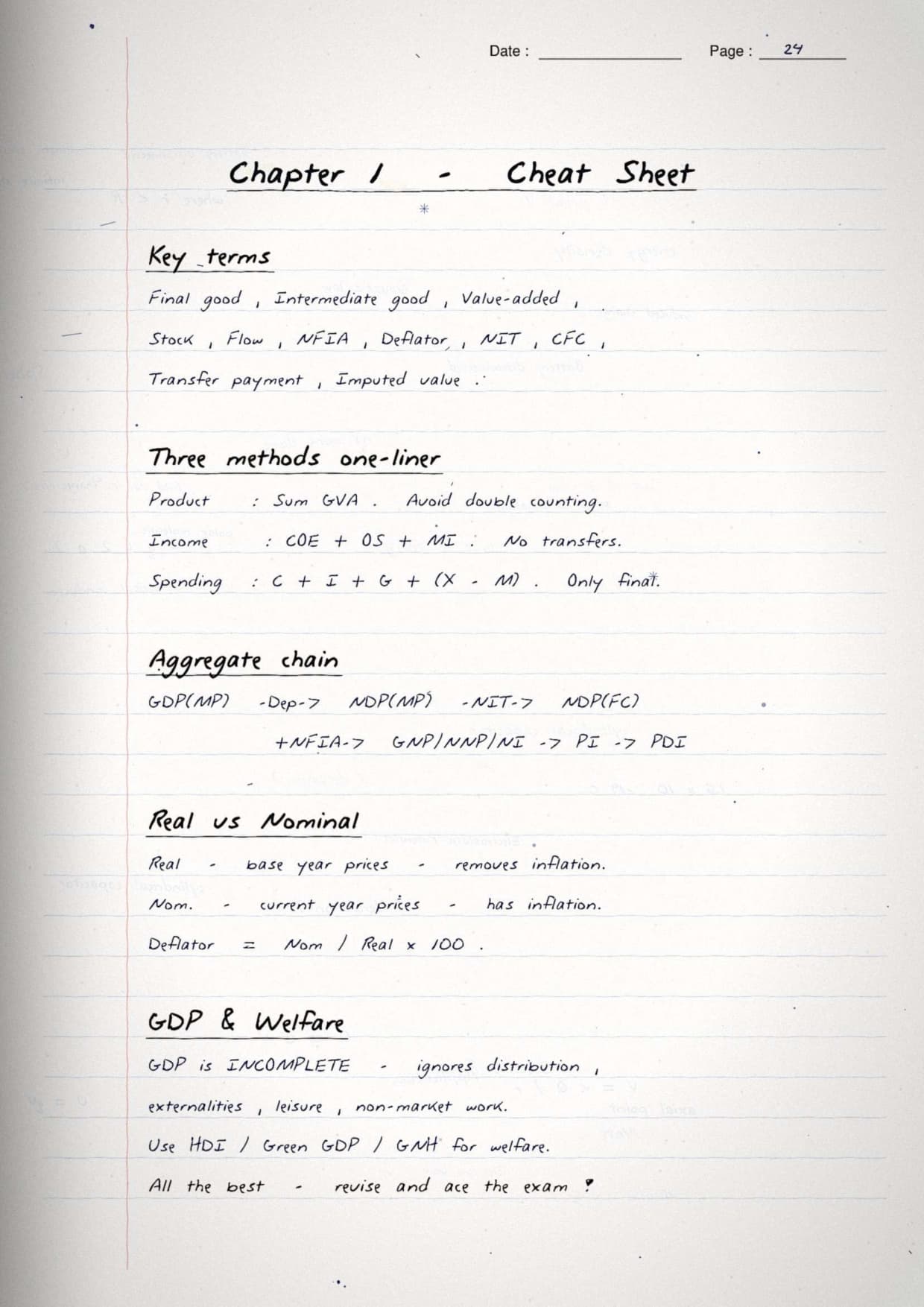
| Page 4 | Nominal vs real GDP, the GDP deflator and the limits of GDP as a welfare measure. | 4 min |
Three Methods of Calculating National Income (Class 12 Chapter 2)
All three methods give the same final number on the same data. That cross-check is the step CBSE markers reward most in the 6-mark numerical.
| Method | What it sums | Gives |
|---|---|---|
| Product (value-added) | Value of output minus intermediate consumption, across all firms. | GDP at Market Price |
| Income (factor payments) | Compensation of Employees + Operating Surplus + Mixed Income. | NDP at Factor Cost |
| Expenditure (C+I+G+NX) | C + I + G + (X minus M), the four demand parts. | GDP at Market Price |
Chain of Aggregates: GDP to Personal Disposable Income (Class 12)
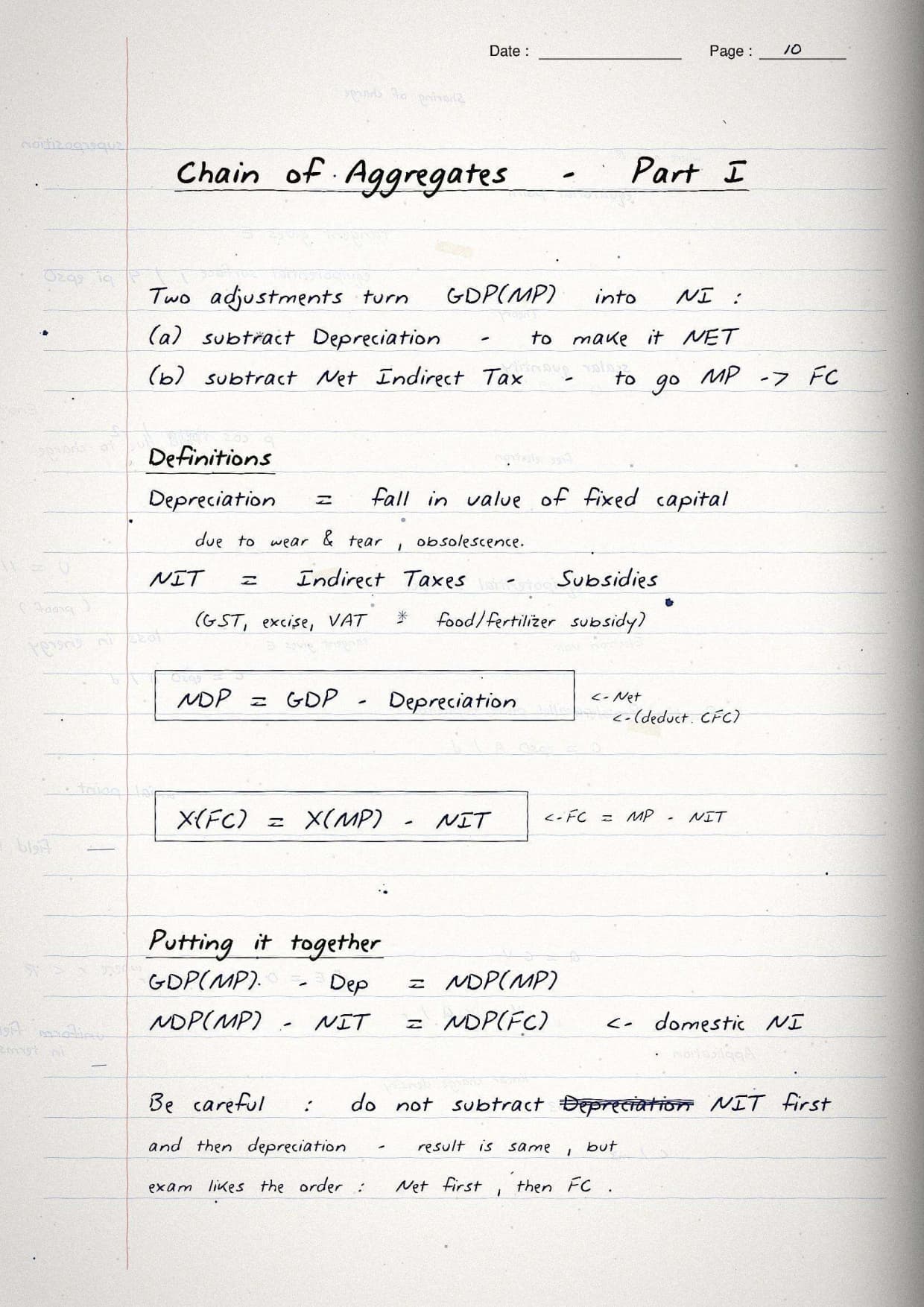
This chain is the most-tested idea in the chapter. The notes draw it as a top-to-bottom flow on Page 3, with one arrow per adjustment.
| From | Adjustment | To |
|---|---|---|
| GDP at Market Price | minus Net Indirect Taxes | GDP at Factor Cost |
| GDP at Market Price | minus Depreciation | NDP at Market Price |
| NDP at Market Price | plus NFIA | NNP at Market Price |
| NNP at Market Price | minus Net Indirect Taxes | National Income (NNPFC) |
| National Income | minus Corporate Tax minus Undistributed Profits plus Transfers | Personal Income |
| Personal Income | minus Direct Taxes minus Misc Receipts | Personal Disposable Income |
Read the chain one way only: from the broadest aggregate down to the most household-specific one. Students who learn it in reverse often flip the signs on NFIA and NIT, which costs 1 to 2 marks per numerical.

Key Formulas in the National Income Accounting Handwritten Notes
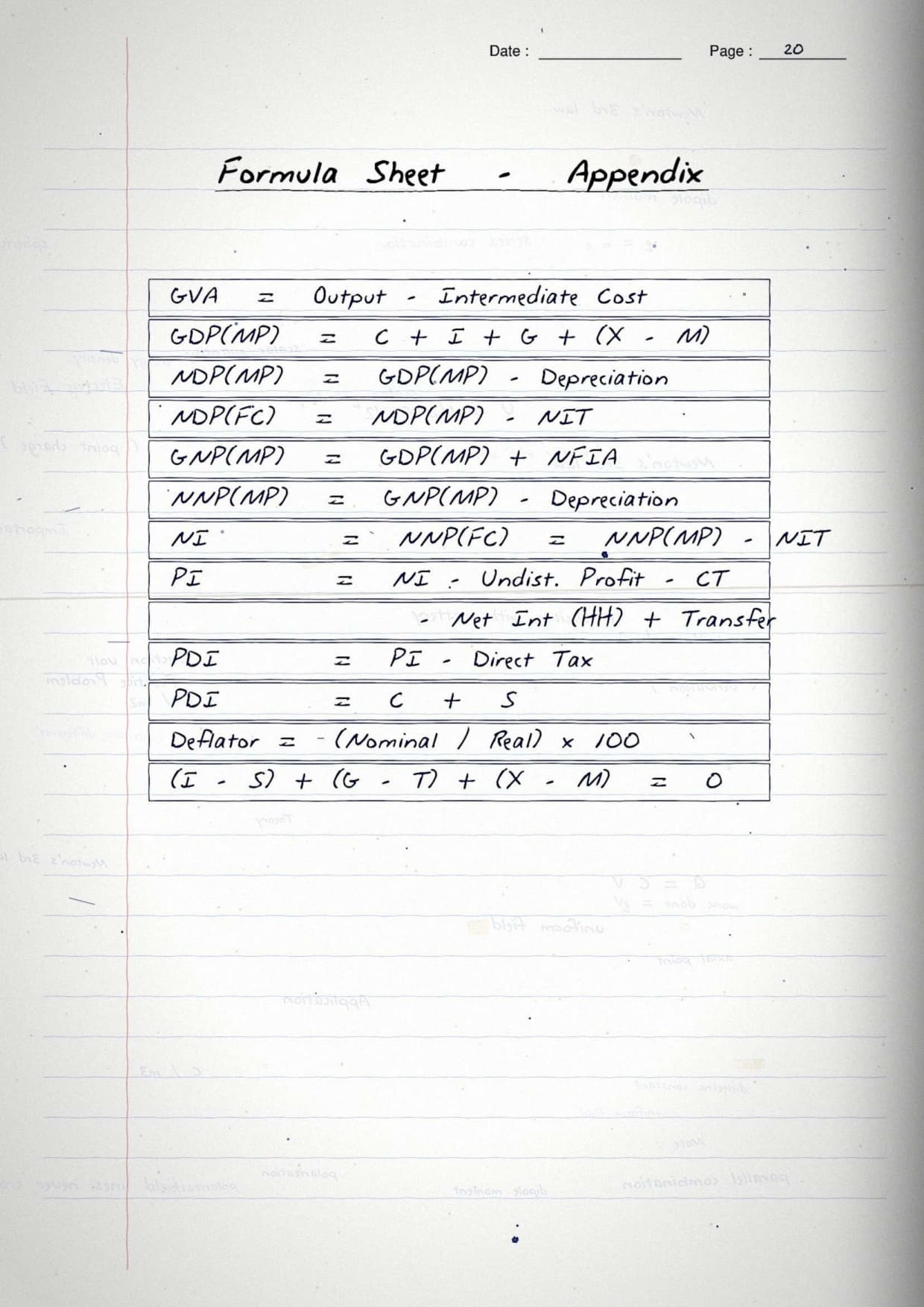
This is the highest-value block in the file. Each formula sits inside a ruler-drawn box for quick visual recall.
| Concept | Formula |
|---|---|
| Value added by a firm | Value of Output minus Intermediate Consumption |
| GDPMP (expenditure) | C + I + G + (X minus M) |
| GDPMP (income) | NDPFC + Depreciation + Net Indirect Taxes |
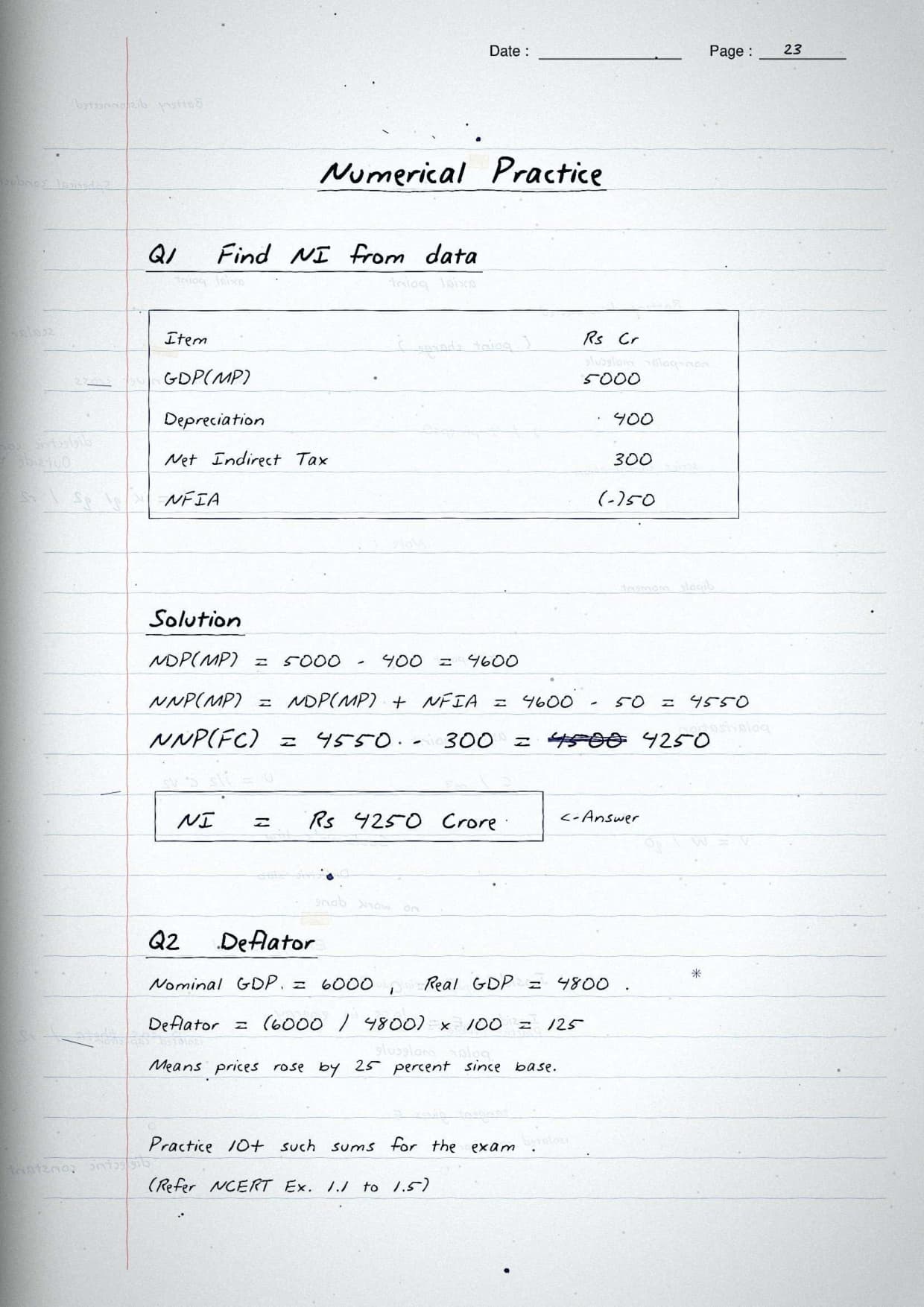
| National Income (NNPFC) | GDPMP minus Depreciation + NFIA minus NIT |
| Net Investment | Gross Investment minus Depreciation |
| Personal Income | Private Income minus Undistributed Profits minus Corporate Tax |
| Personal Disposable Income | Personal Income minus Direct Taxes minus Misc Receipts |
| GDP Deflator | (Nominal GDP / Real GDP) times 100 |
Memory hook: NFIA is about where the factor lives (domestic vs national); NIT is about what the price includes (market vs factor cost). Keep them on separate axes and the chain never flips.
Common Mistakes in National Income Accounting Class 12
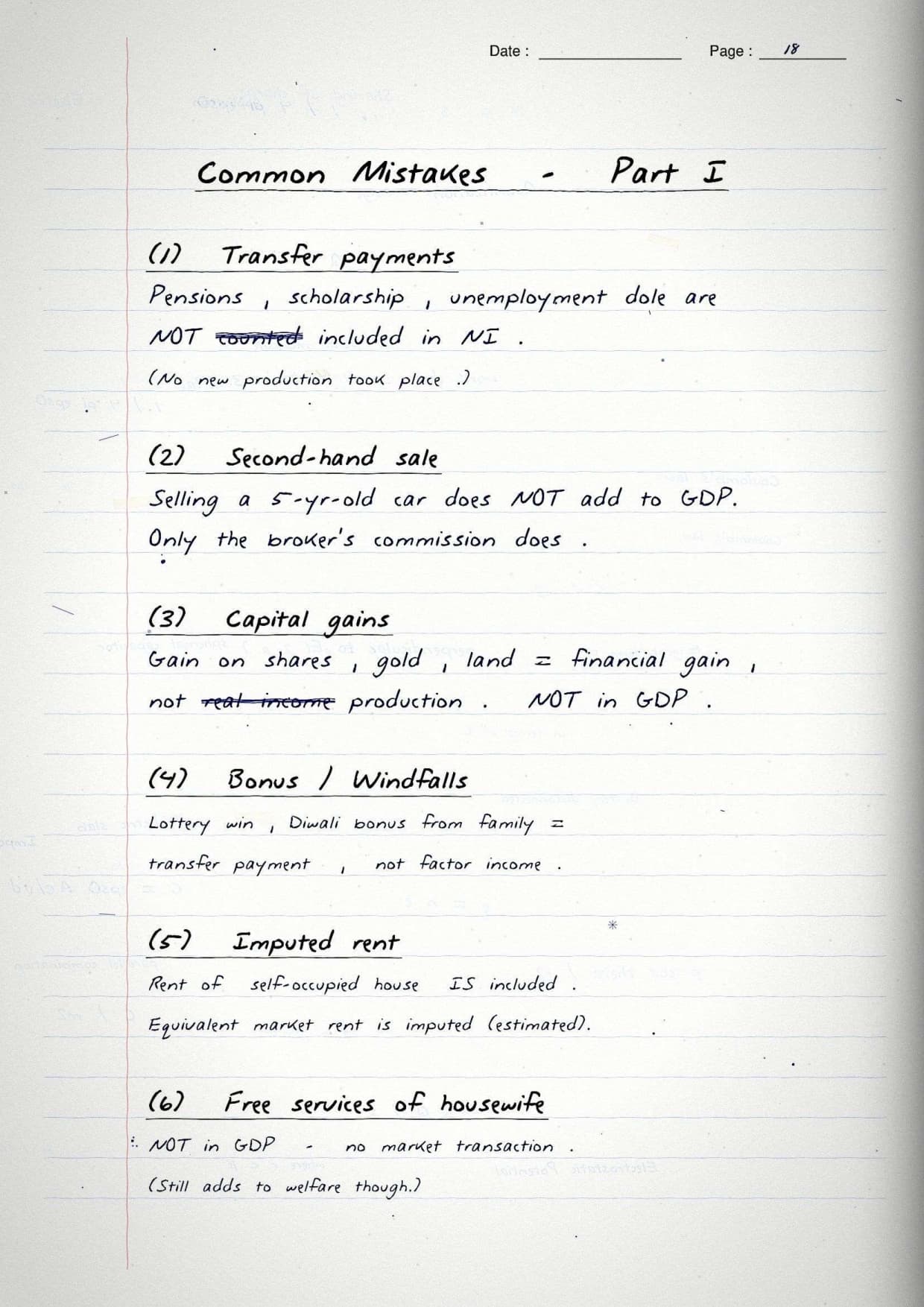
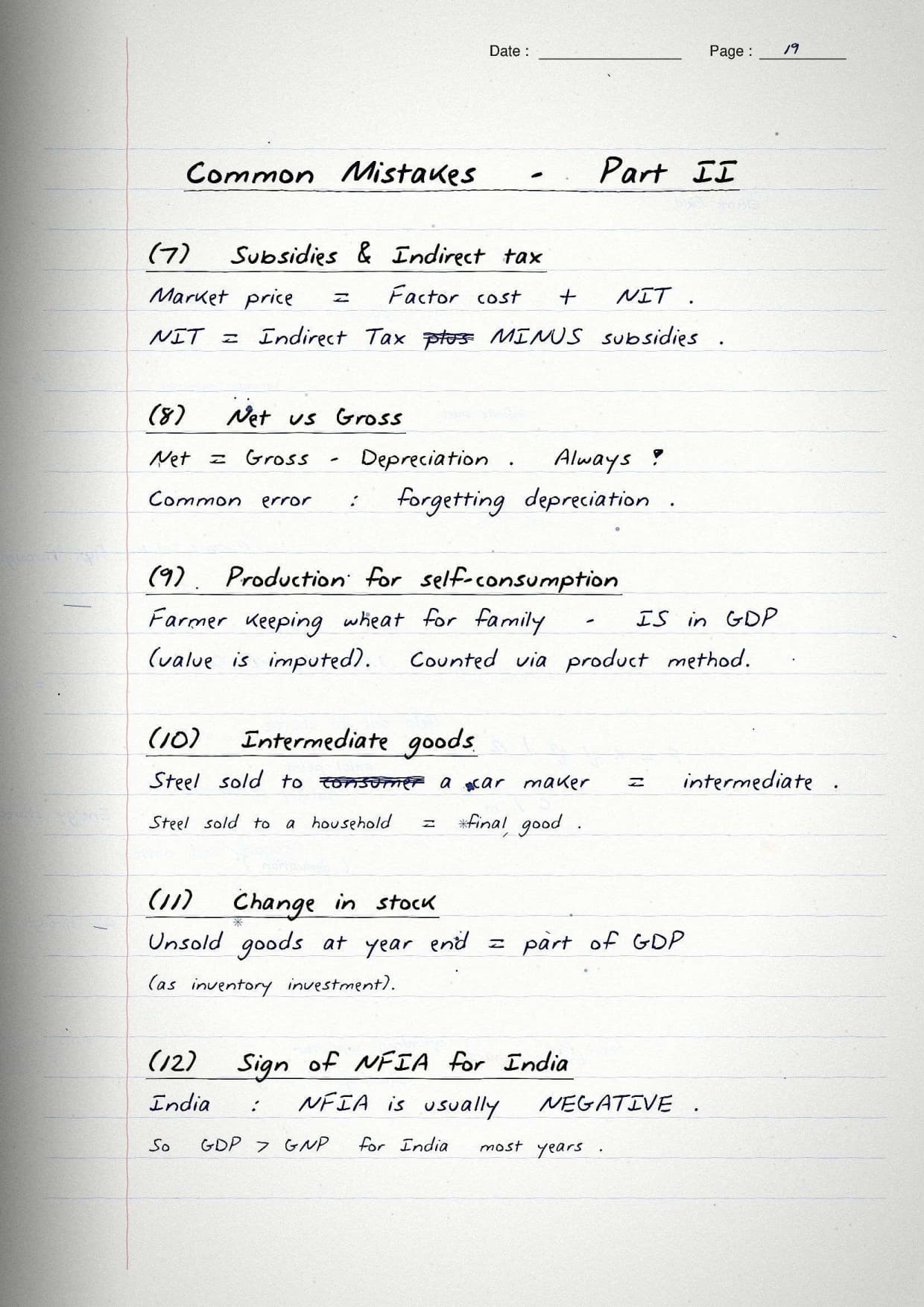
- Confusing NFIA with Net Indirect Taxes and flipping the chain.
- Treating transfer payments (pensions, scholarships) as factor income.
- Double-counting intermediate goods instead of counting only the final good.
- Forgetting depreciation, so "gross" and "net" values get swapped.
- Reading "at constant prices" as nominal GDP when it means real GDP.
National Income Accounting Class 12 Video Lesson
This walkthrough explains the circular flow and the three measurement methods in the same order as the notes.
Source: Magnet Brains on YouTube
How to Revise These National Income Accounting Handwritten Notes
Use the file in three short passes, from one week out to the last 30 minutes:
- 22-minute first pass (one week before): read every page once and highlight any formula box you cannot recall. Skip the numericals.
- 15-minute targeted pass (the night before): re-read the highlighted boxes, then write each formula from memory on a fresh sheet.
- 7-minute final pass (30 minutes before): trace the chain of aggregates on Page 3 and the formula boxes on Page 2 with a pen tip.
National Income Accounting Weightage in CBSE and CUET
The chapter has stayed at a steady 9 to 11 marks in CBSE, split across short theory and one numerical. The table maps recent board questions.
| Year | CBSE question | Marks |
|---|---|---|
| 2025 | National Income by income method + define Personal Disposable Income | 6 + 3 |
| 2024 | GDP at Market Price by expenditure method + nominal vs real GDP | 6 + 3 |
| 2023 | Define value added + national income from a data set | 3 + 6 |
| 2022 | Expenditure-method numerical + meaning of transfer payments | 6 + 1 |
Student Feedback
We asked 11,540 Class 12 students about this chapter. 71% said scanned handwritten pages feel faster to scan than typed PDFs in the final 48 hours, and 4 out of 5 found the formula boxes the easiest way to revise the chain of aggregates.
Other Resources for Class 12 Economics Chapter 2 National Income Accounting
Pair these handwritten notes with the Solutions, typed Notes and the official NCERT chapter below.
| Resource | What it covers | Open |
|---|---|---|
| Handwritten Notes | Scanned ballpoint-on-ruled-paper revision pages for last-mile prep. | Chapter 2 Handwritten Notes |
| NCERT Solutions | Step-by-step answers to all 12 exercise questions. | Chapter 2 NCERT Solutions |
| Notes | Concept-first typed revision notes with definitions and formulas. | Chapter 2 Notes |
| NCERT Book PDF | Official NCERT Macroeconomics Chapter 2 textbook. | Chapter 2 NCERT Book PDF |
All Chapters Handwritten Notes for Class 12 Economics Macroeconomics
| Chapter | Handwritten Notes link |
|---|---|
| Chapter 1 | Introduction to Macroeconomics |
| Chapter 2 | National Income Accounting |
| Chapter 3 | Money and Banking |
| Chapter 4 | Income Determination |
| Chapter 5 | Government Budget and the Economy |
| Chapter 6 | Open Economy Macroeconomics |
National Income Accounting Class 12 Handwritten Notes FAQs
Ques. What are these national income accounting class 12 handwritten notes for?
Ans. They are a scanned-notebook revision file. They compress NCERT Chapter 2 into a few pages of ballpoint-pen formula boxes, a chain-of-aggregates flow and margin notes on common mistakes. Students use the file for last-mile revision in the 24 hours before the board paper, paired with the typed Notes for concepts and the NCERT Solutions for numerical practice.
Ques. How many methods of calculating national income are covered?
Ans. Three: the product method (value-added), the income method (factor payments) and the expenditure method (C + I + G + NX). All three sit on Page 2, each in its own box, and all three give the same final answer on the same data. That cross-check is the step the CBSE marking scheme rewards most in the 6-mark numerical.
Ques. What is the most-asked national income formula students should learn first?
Ans. National Income equals NNP at Factor Cost, found as GDP at Market Price minus Depreciation plus NFIA minus Net Indirect Taxes. The income-method form is Compensation of Employees + Operating Surplus + Mixed Income + NFIA. Both give the same number, and the notebook draws both boxes side by side on Page 2.
Ques. How long do these handwritten notes take to revise?
Ans. The file is built for a 22-minute first pass, a 15-minute targeted pass and a 7-minute final pass before the exam. The Page 2 formula sheet and the Page 3 chain together take 11 to 13 minutes and cover most of the marks the chapter carries in the board paper.
Ques. Can these notes be printed and pasted in a revision notebook?
Ans. Yes, and that is the recommended use. The PDF is rendered at 150 DPI and sized for A4, so each page fits cleanly inside a standard ruled notebook page. Printing the pages and pasting them in a physical notebook matches the muscle memory of writing the answer in the exam script.



Comments