




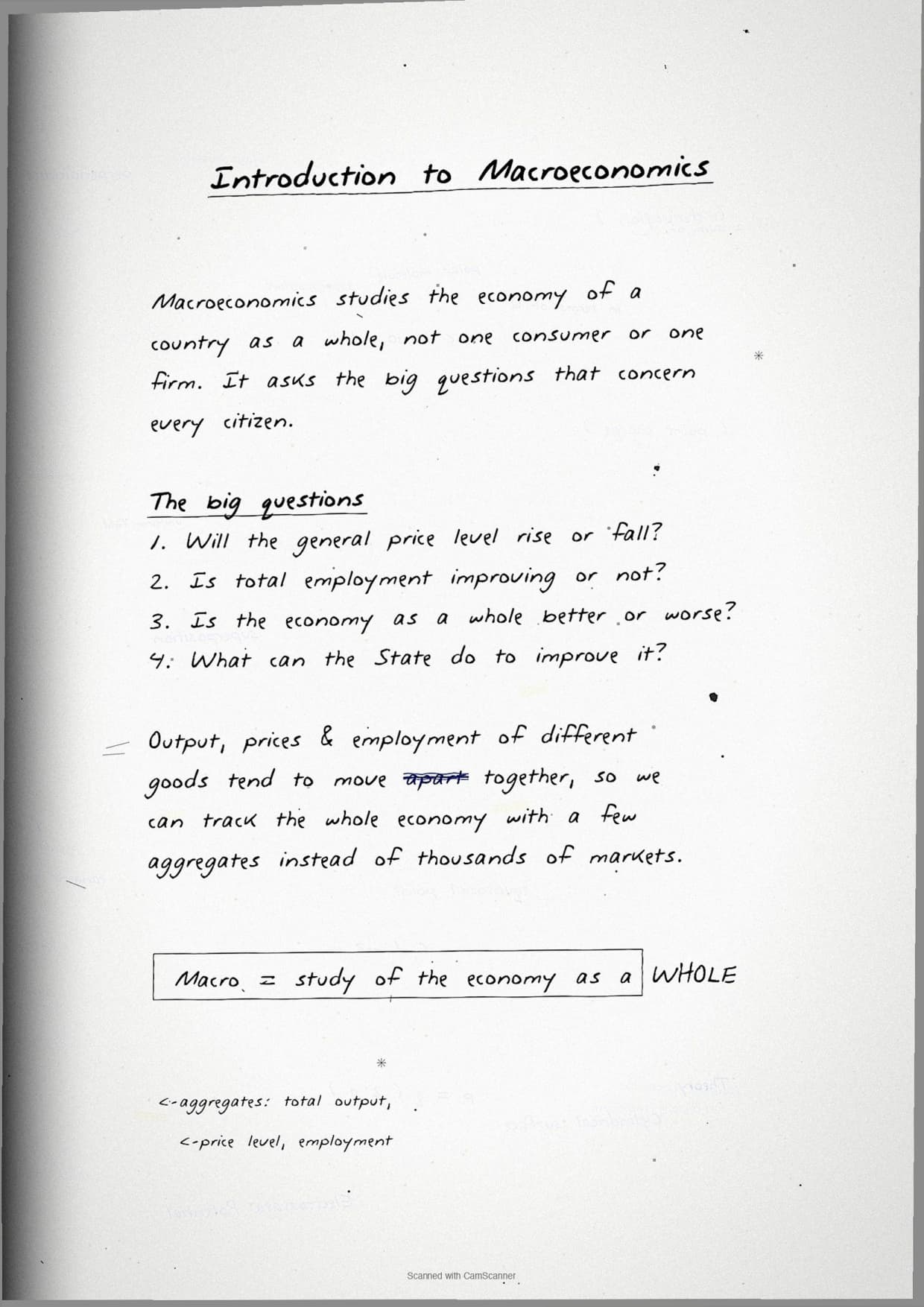
Class 12 Economics Chapter 1 Introduction to Macroeconomics is the first chapter of the Macroeconomics book. It explains what macroeconomics studies, how it differs from microeconomics, why the subject began after the Great Depression, and the four sectors of an economy. This page has scanned handwritten revision notes and a free PDF to download.
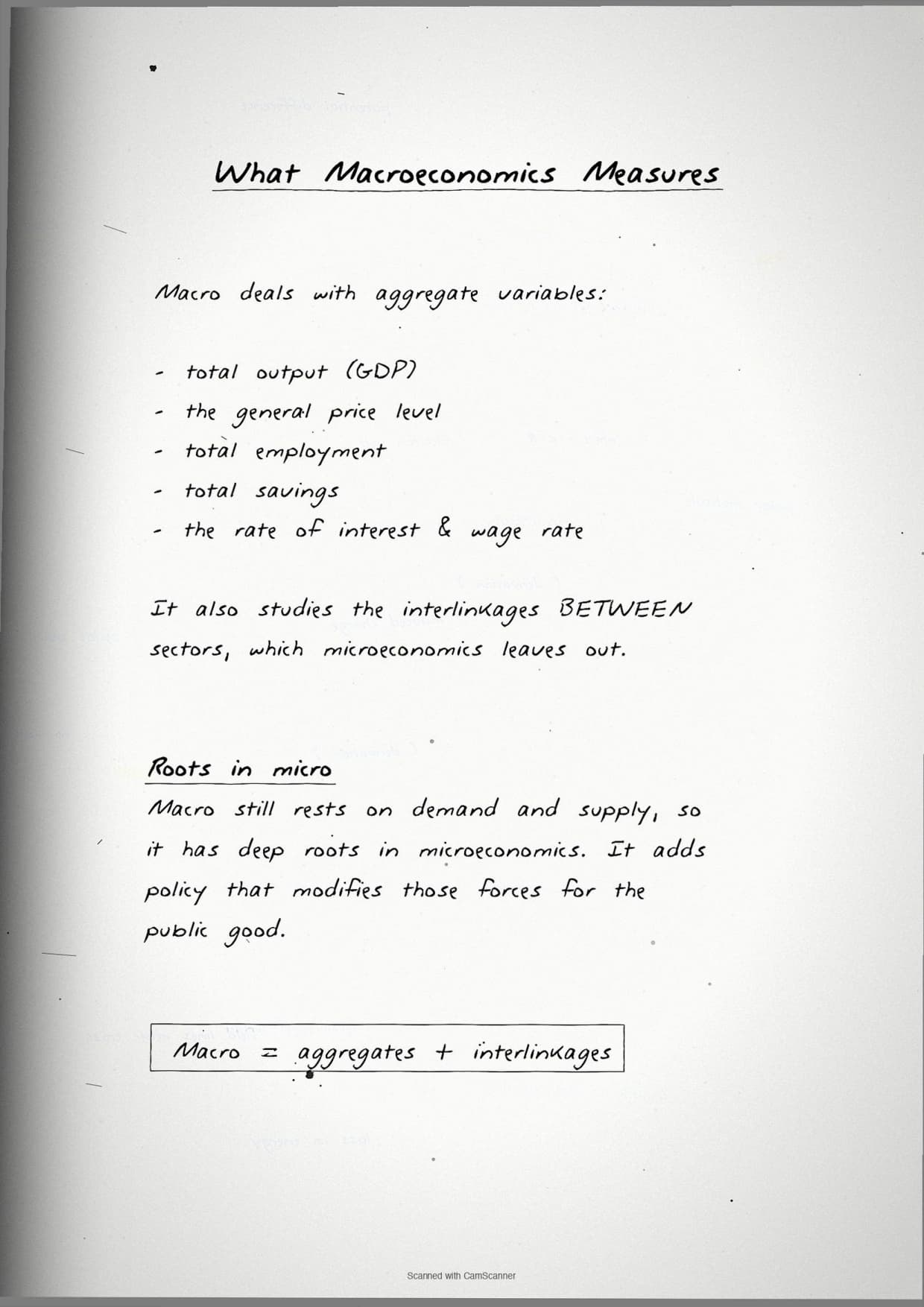
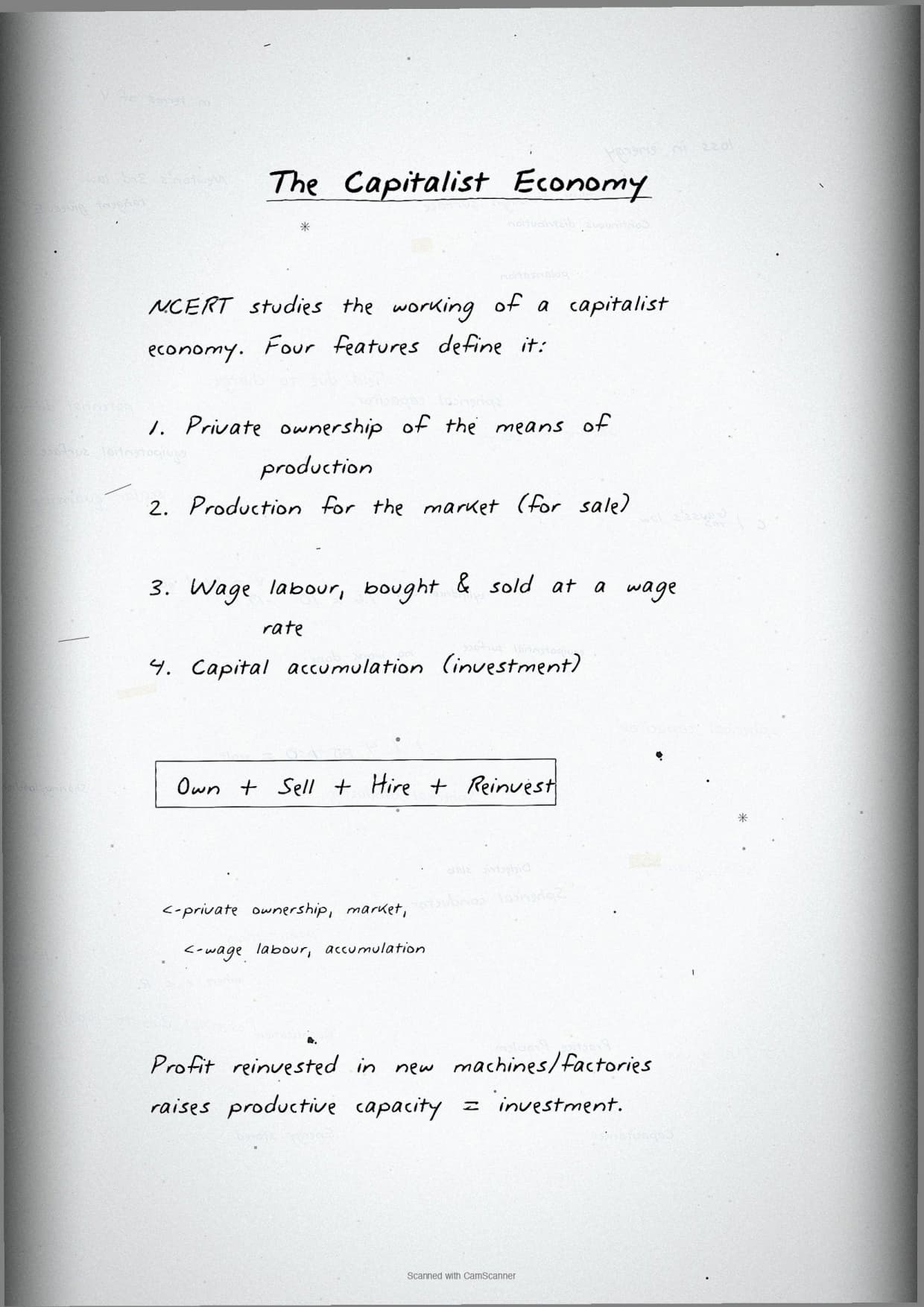
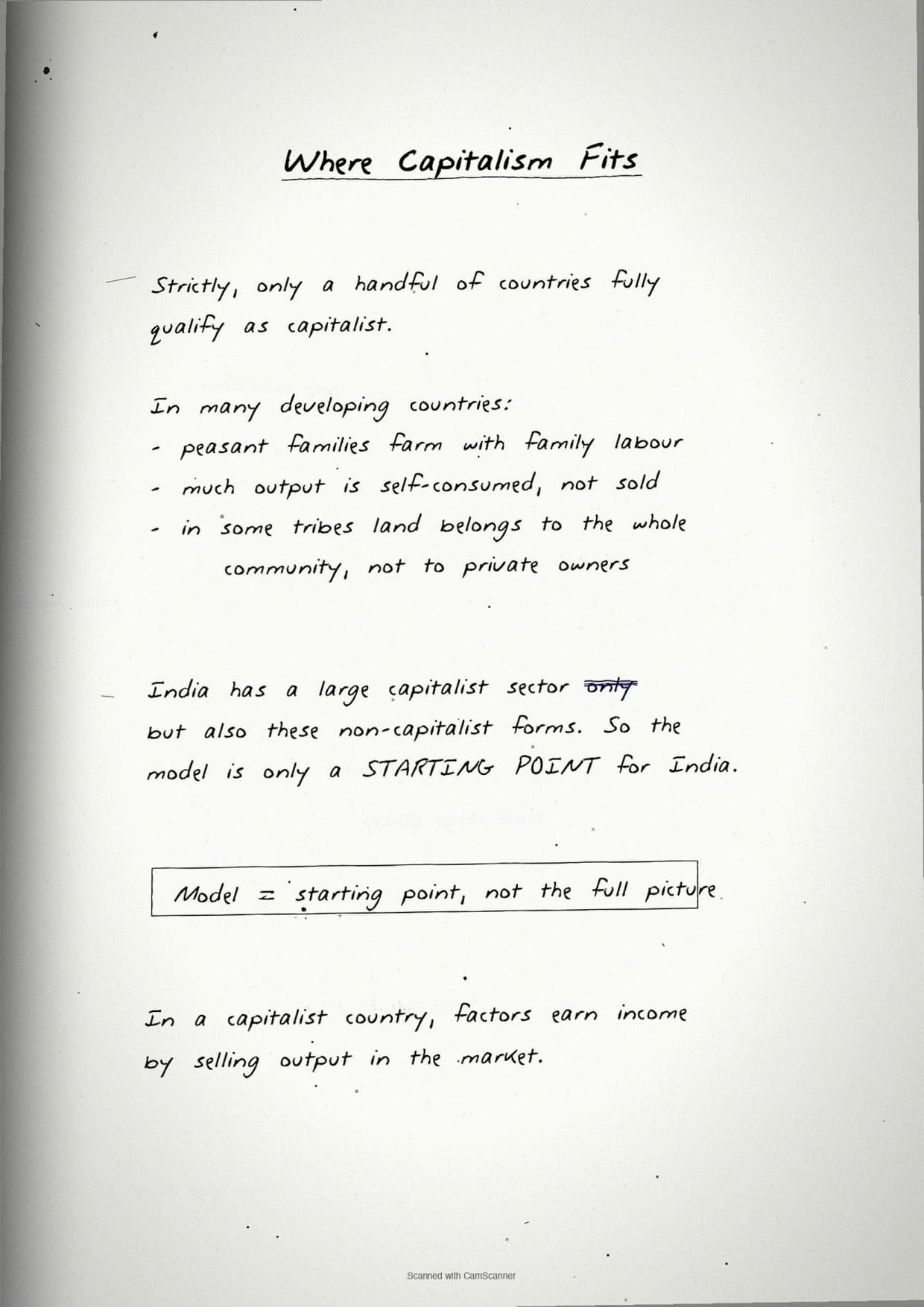
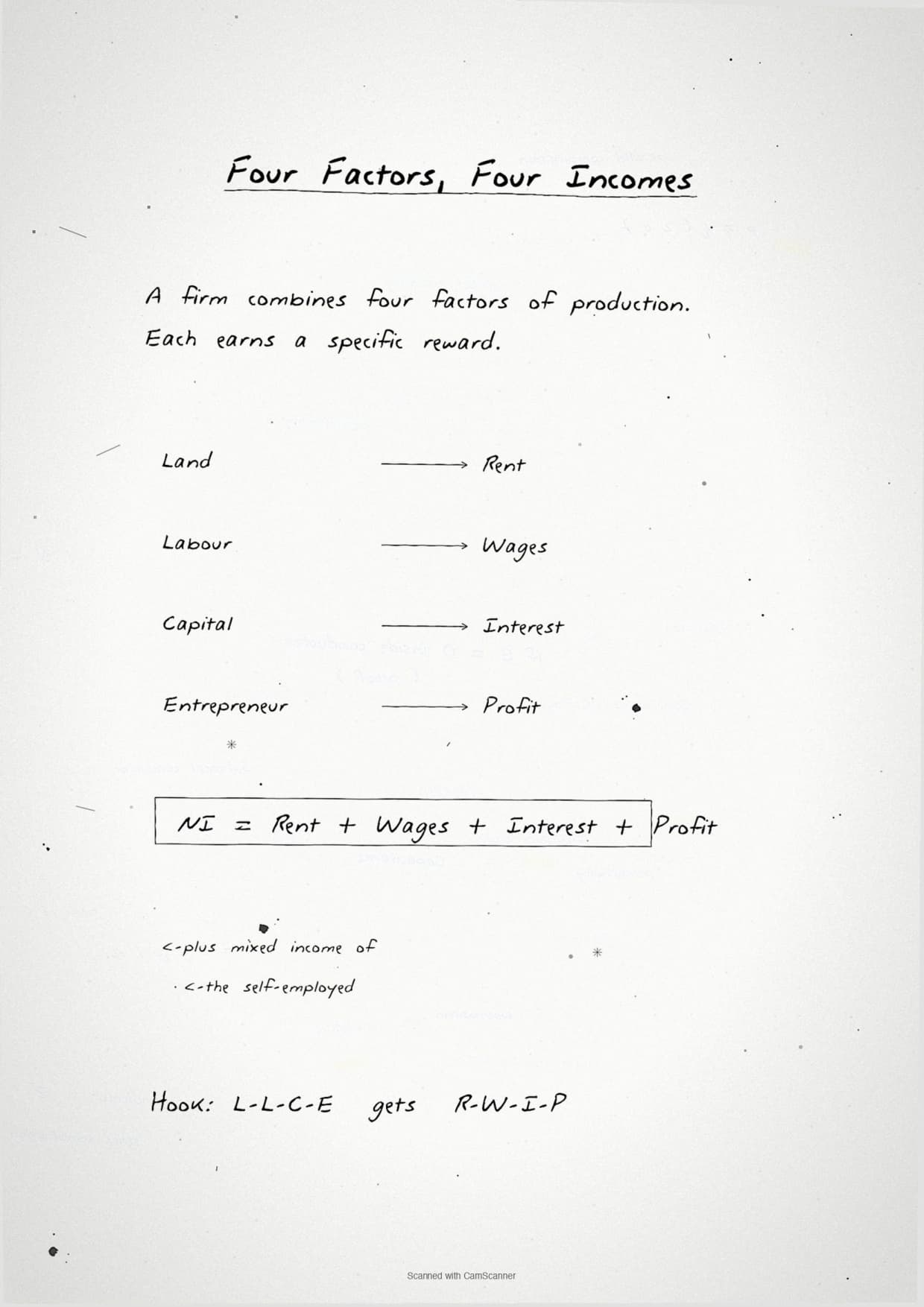
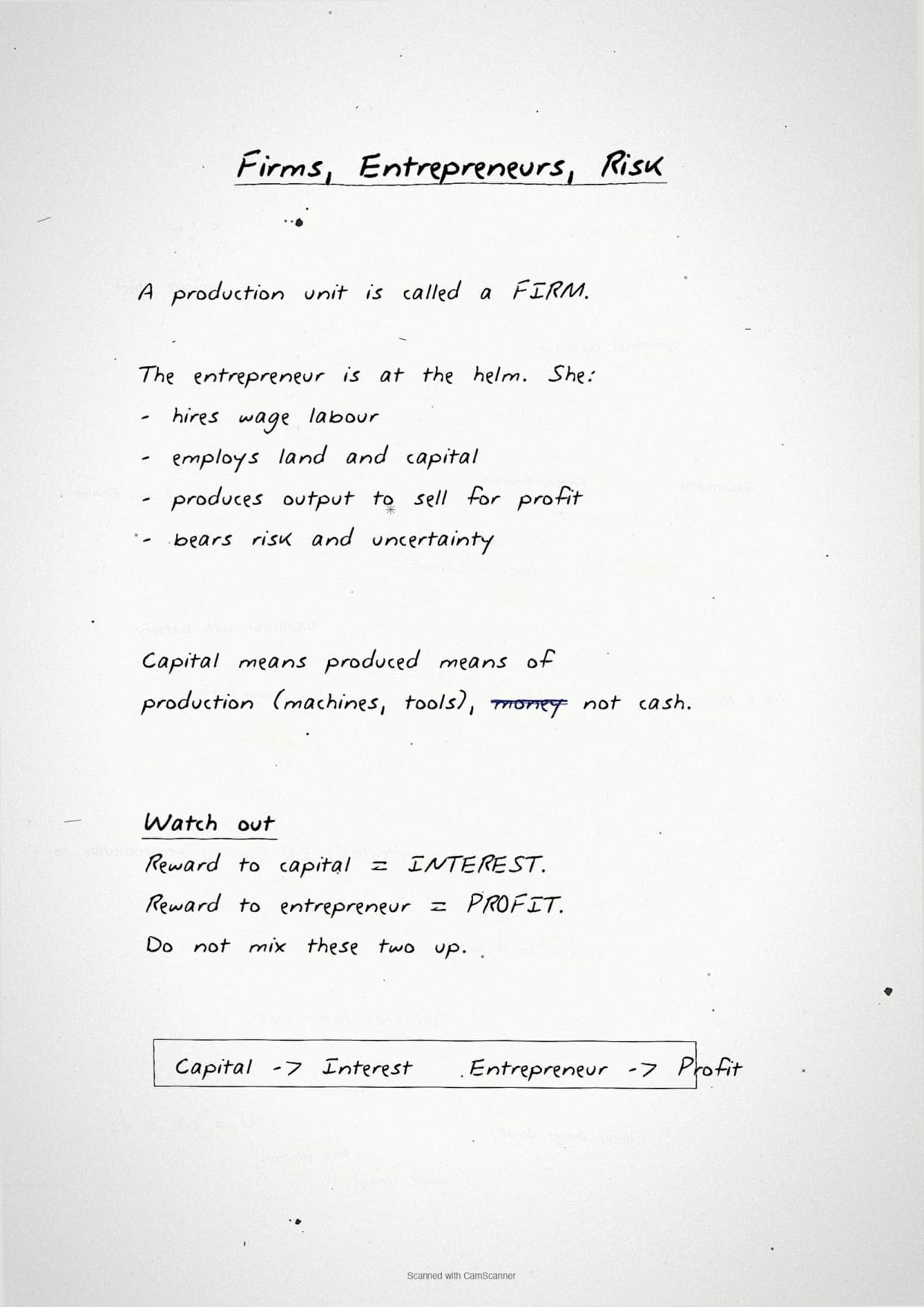
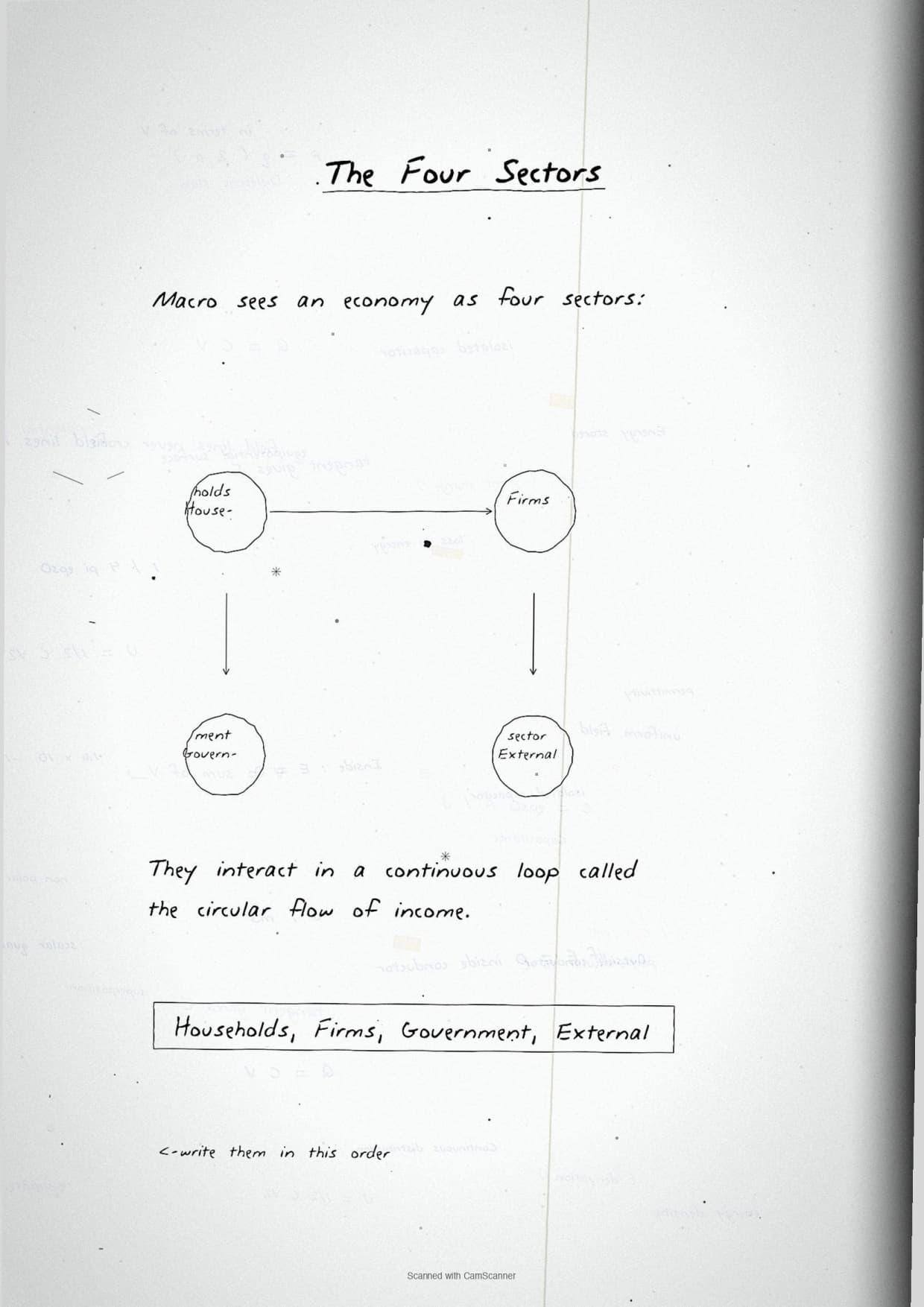
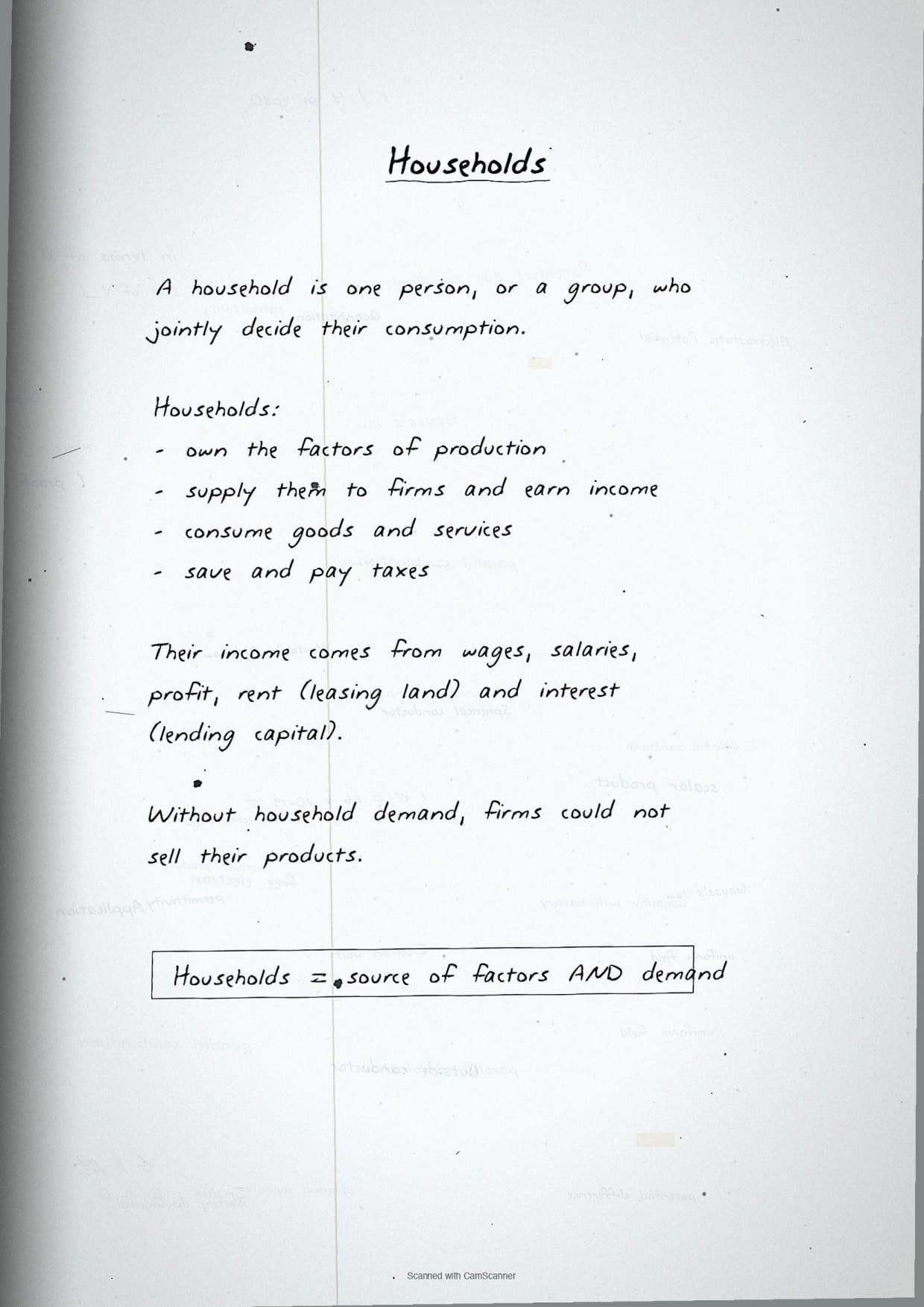
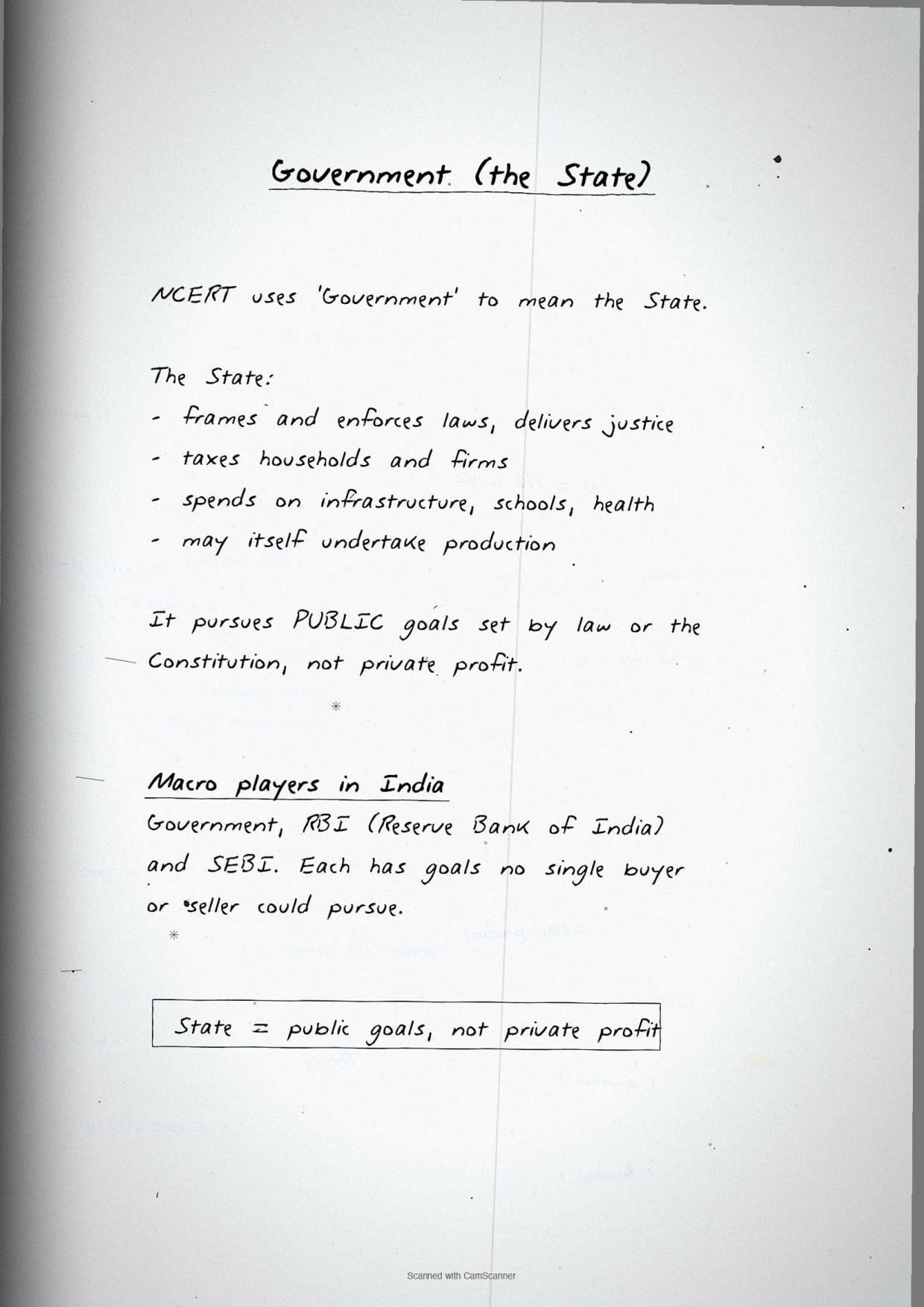
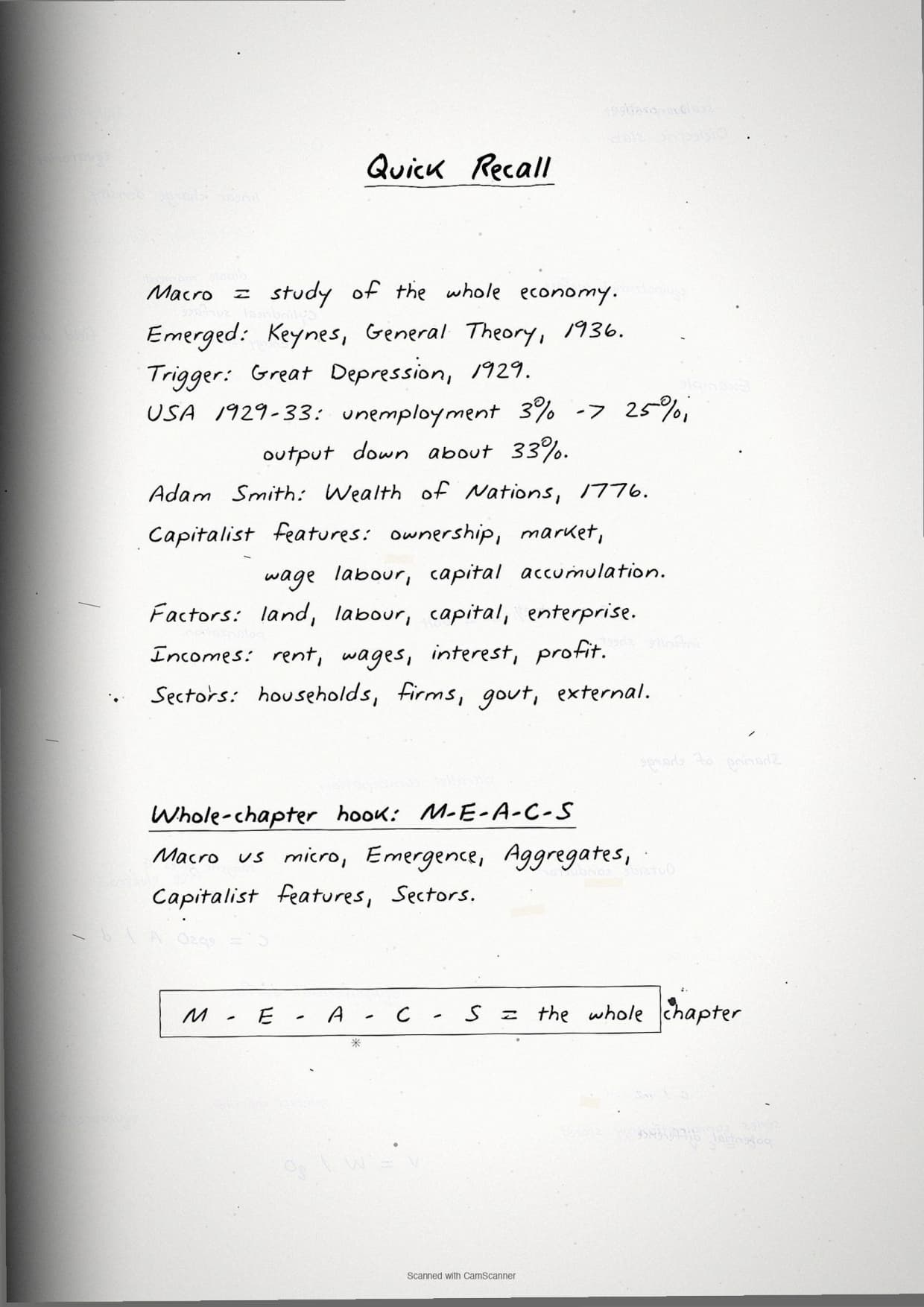
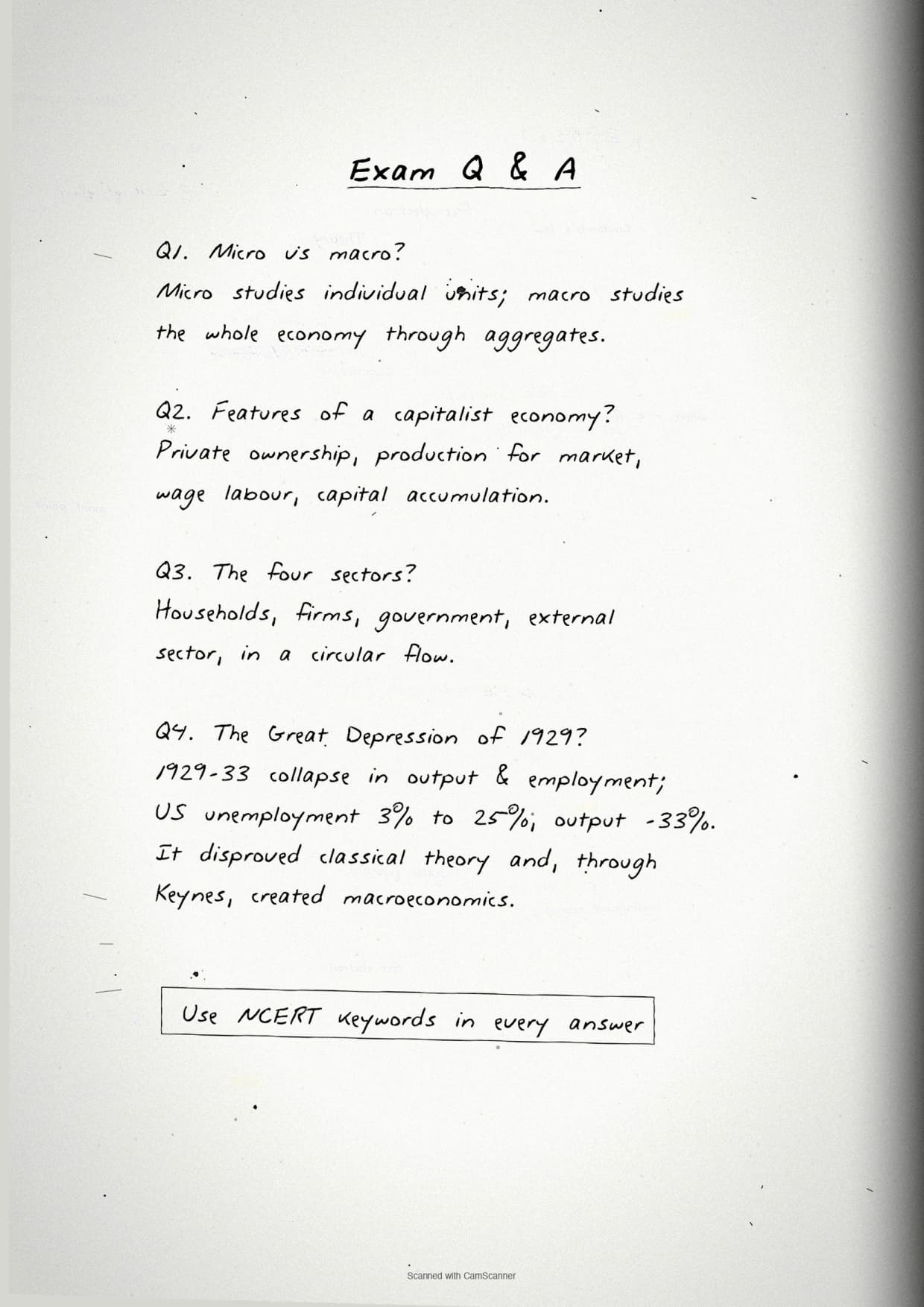
Here is what this chapter is worth in the exam:
- CBSE Boards: about 3 to 4 marks, short theory on micro vs macro, the four sectors, or the Great Depression.
- CUET: 1 to 2 questions each year on the basic concepts and definitions.
- Revision time: about 18 minutes with these handwritten pages.

What These Class 12 Macroeconomics Chapter 1 Handwritten Notes Cover
These notes are scanned from a student notebook in ballpoint pen on ruled paper. They are built for last-mile revision, not first-time learning. The file is 3 to 4 pages and covers every idea CBSE tests from this chapter.
| Page | What the scanned page covers | Time |
|---|---|---|
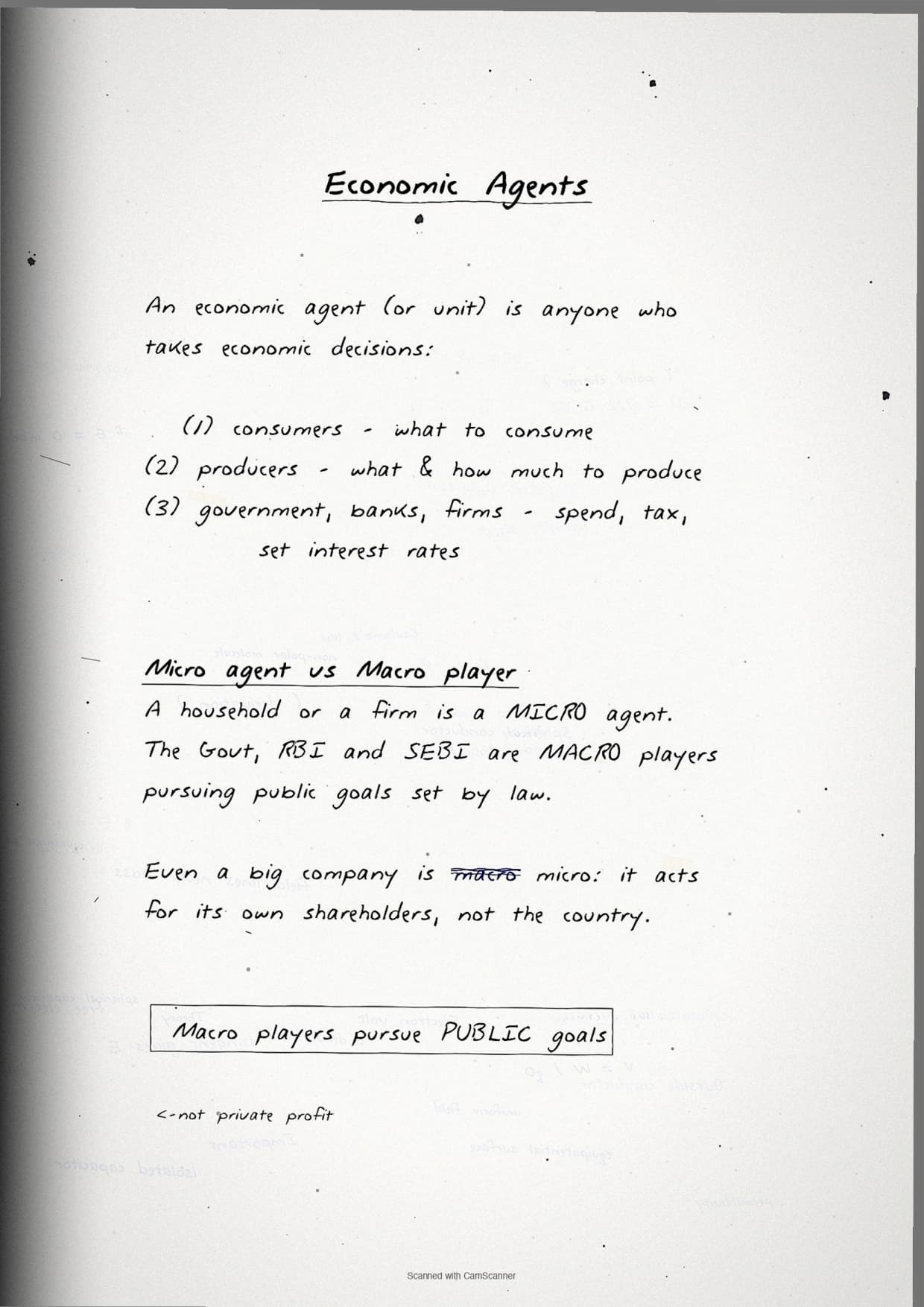
| Page 1 | What macroeconomics is, aggregate variables and economic agents. | 5 min |
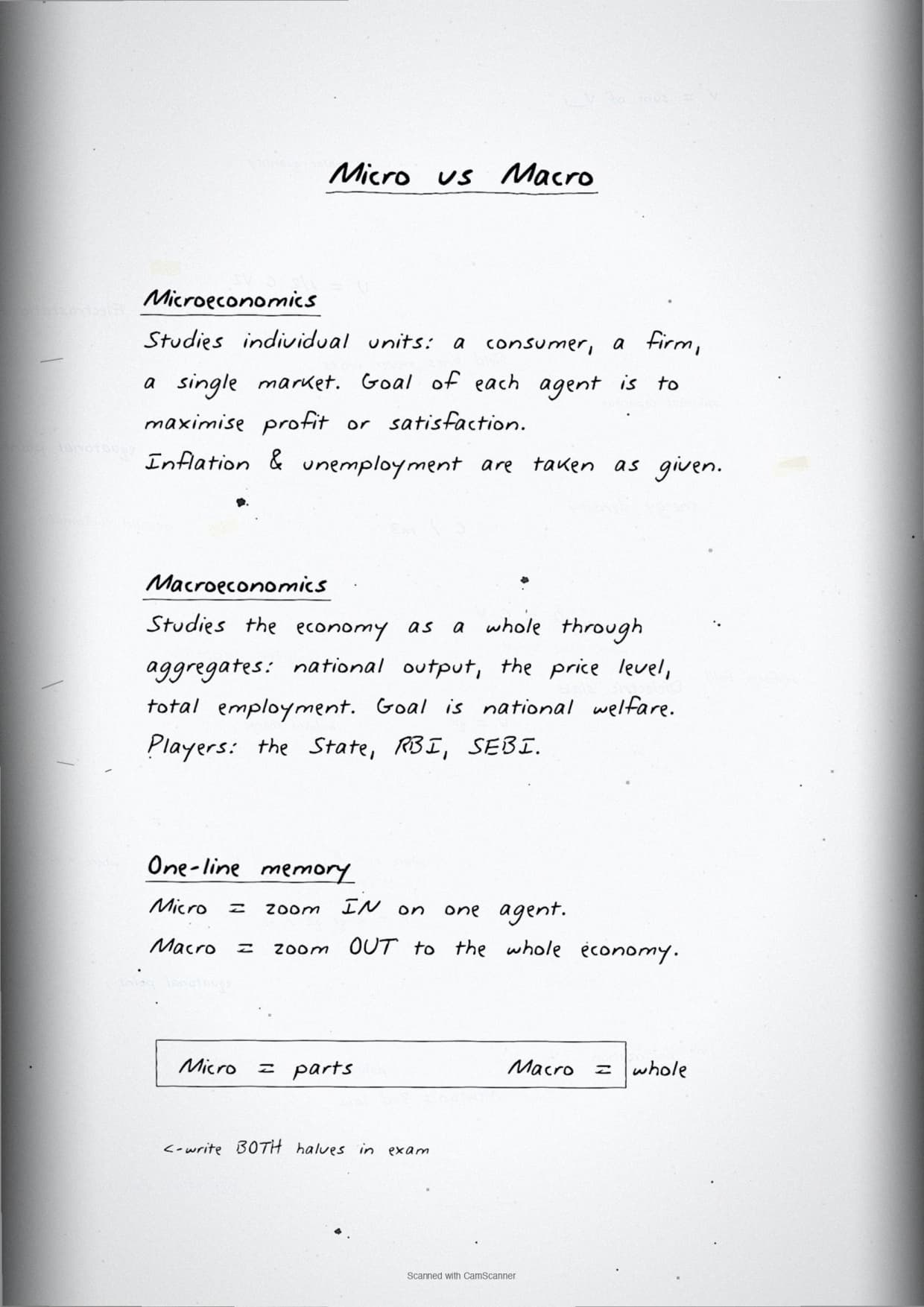
| Page 2 | Microeconomics vs macroeconomics, drawn as a two-column box. | 5 min |
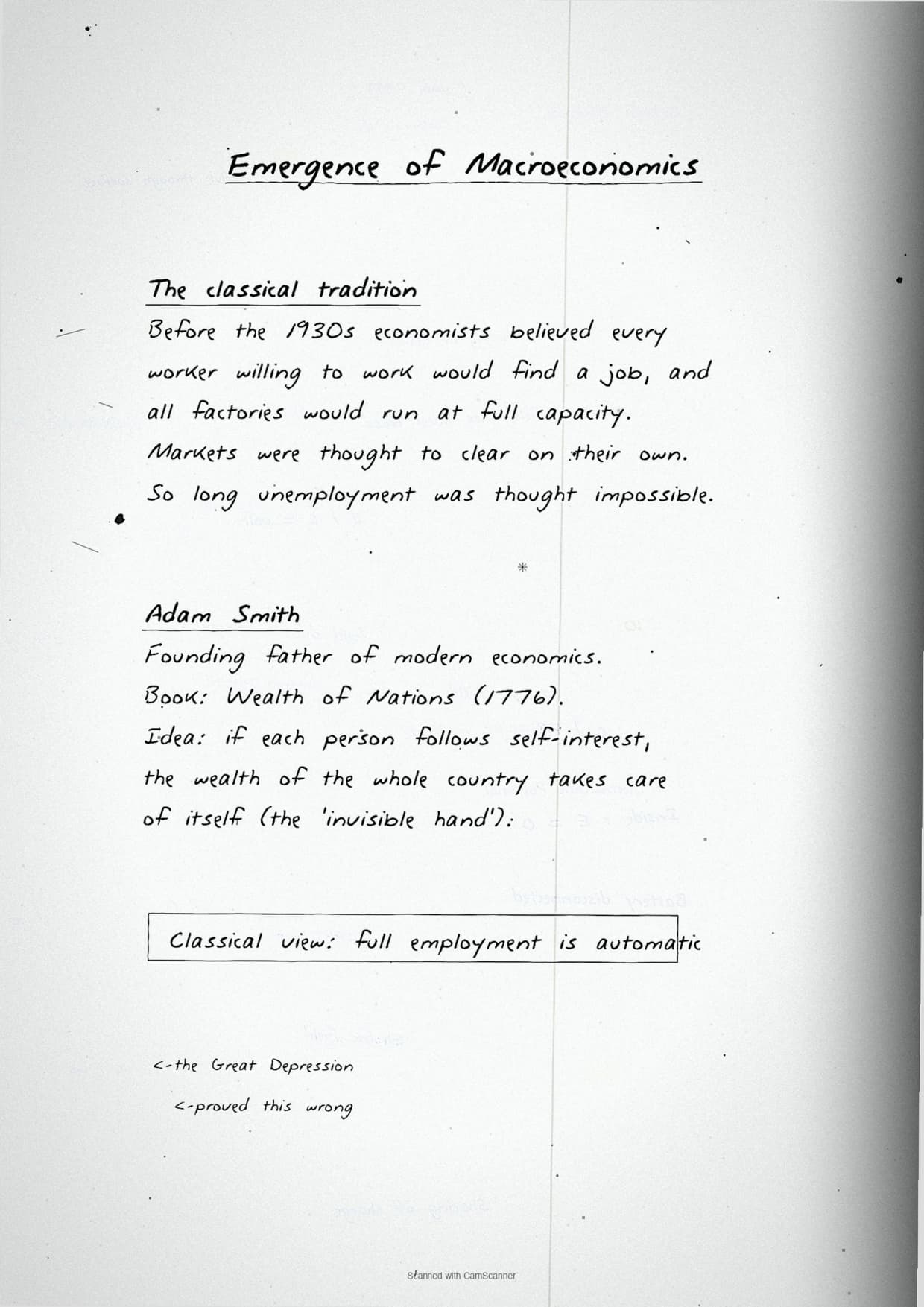
| Page 3 | Emergence of macroeconomics: Keynes, the Great Depression of 1929. | 4 min |
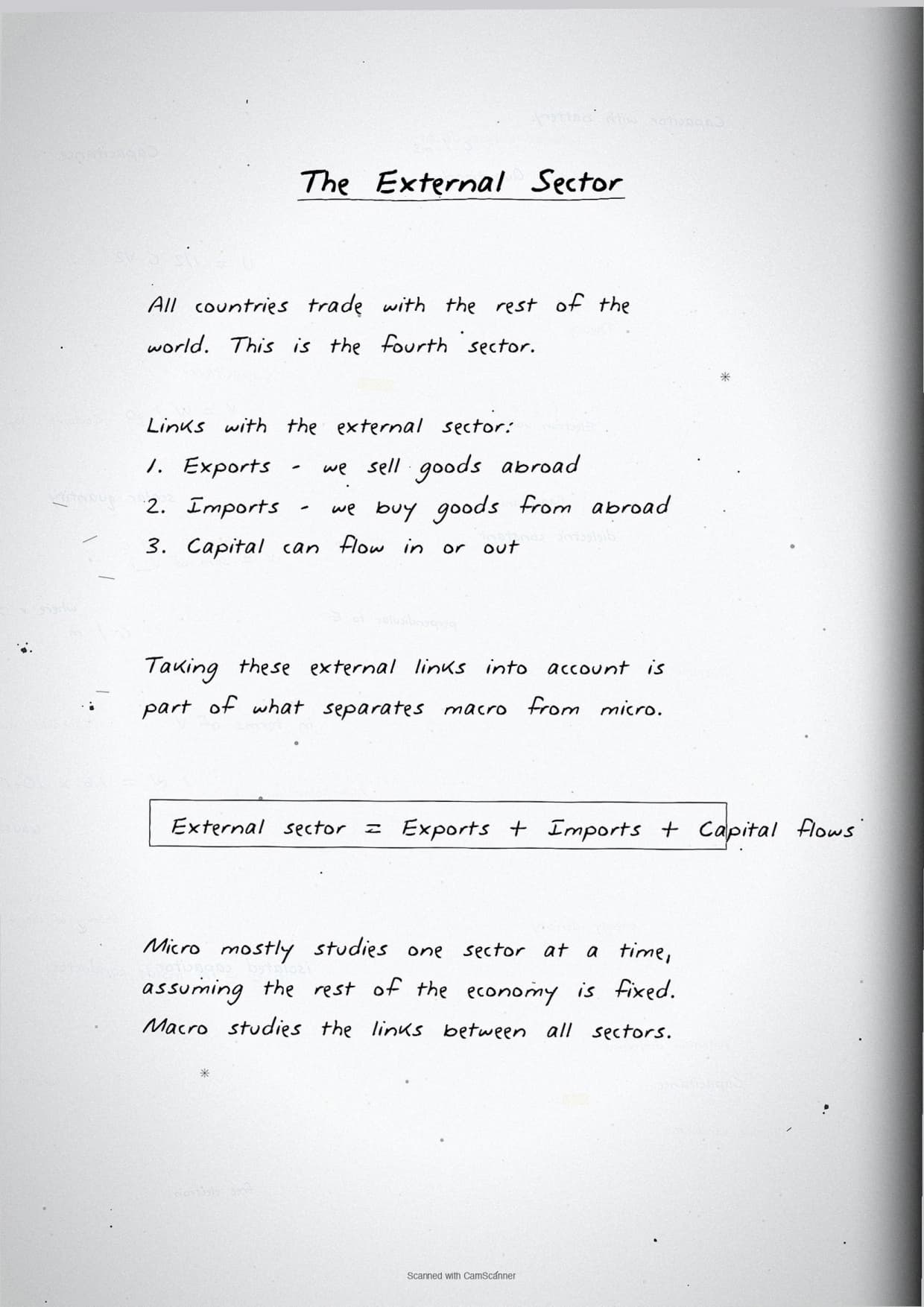
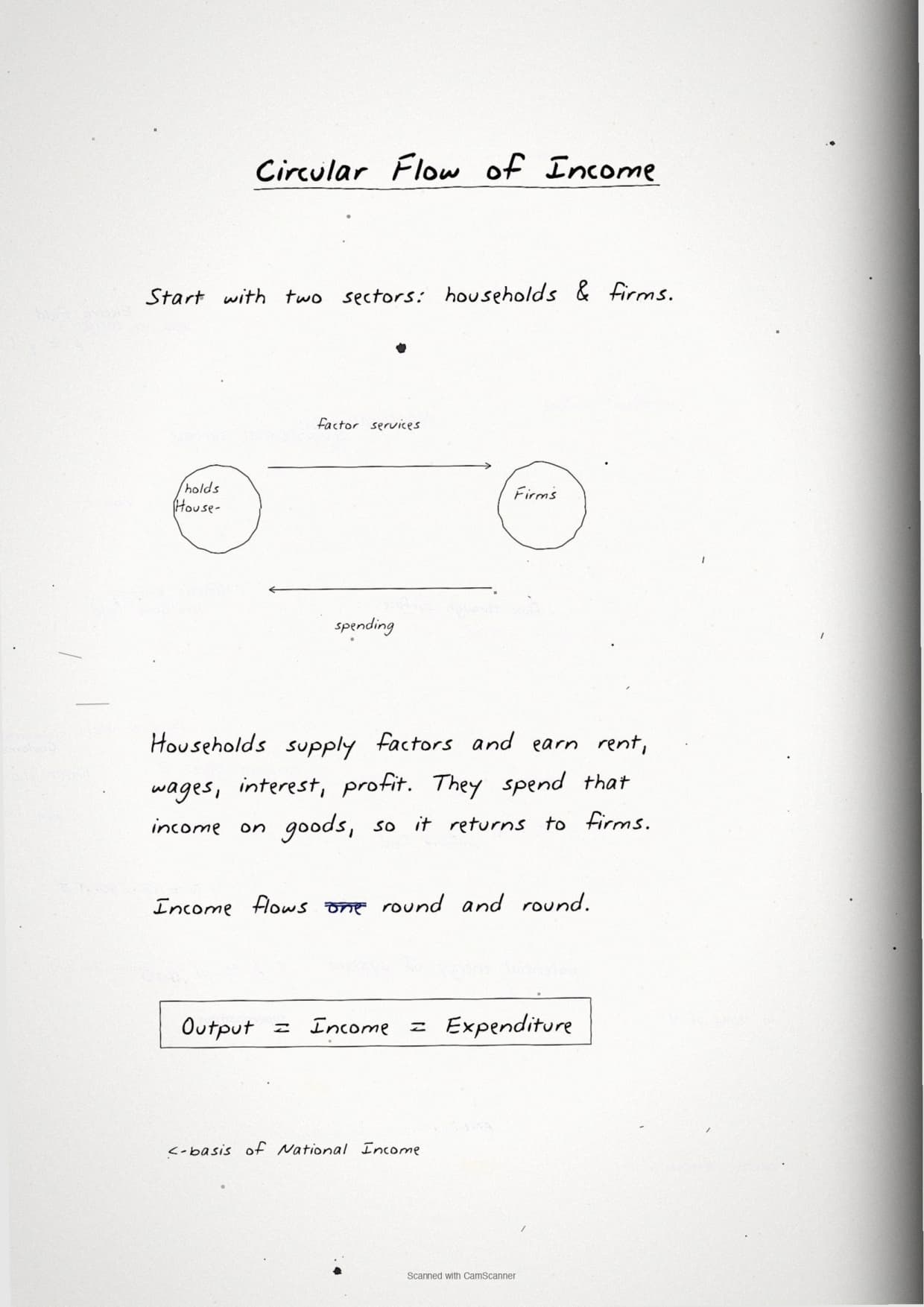
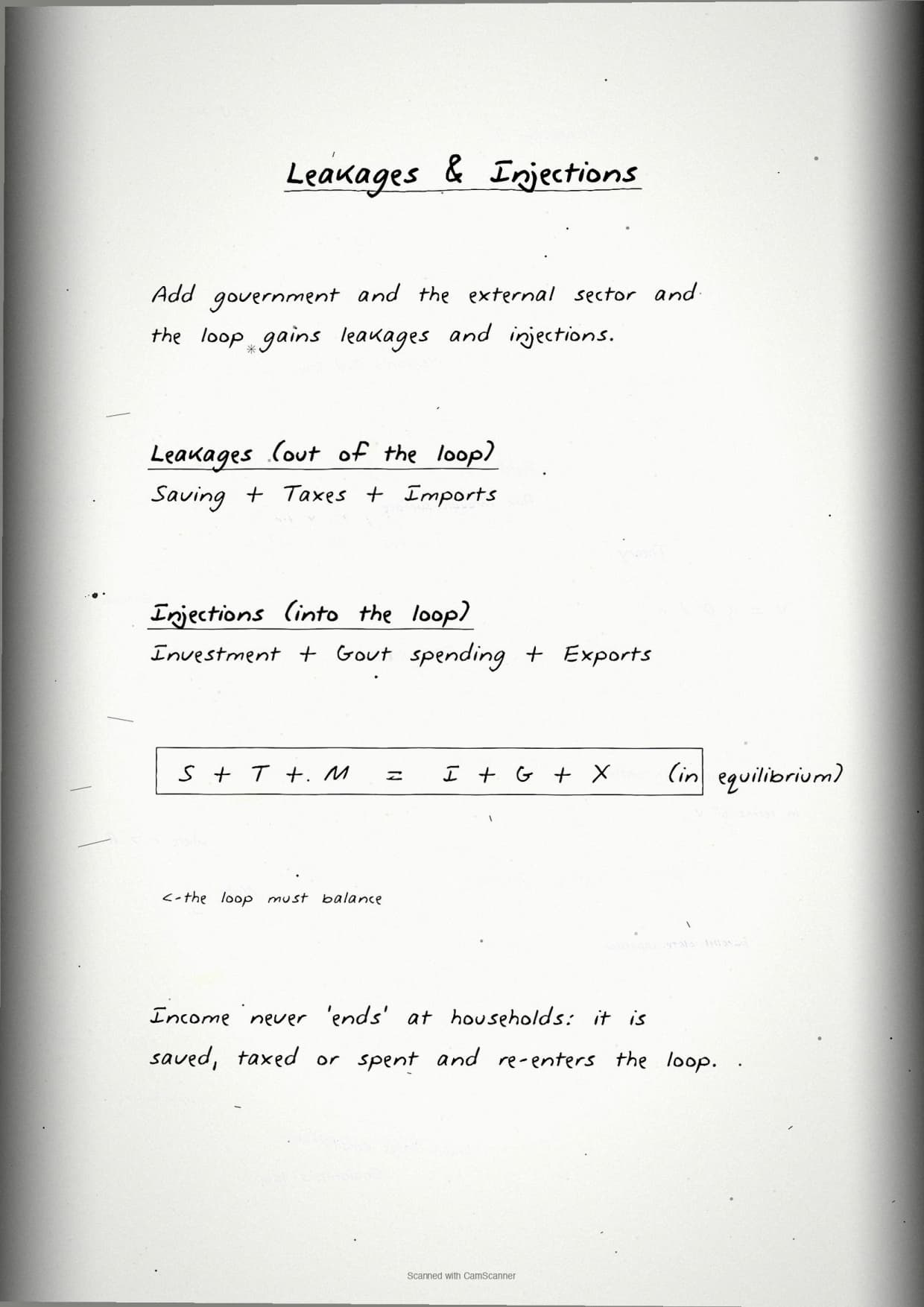
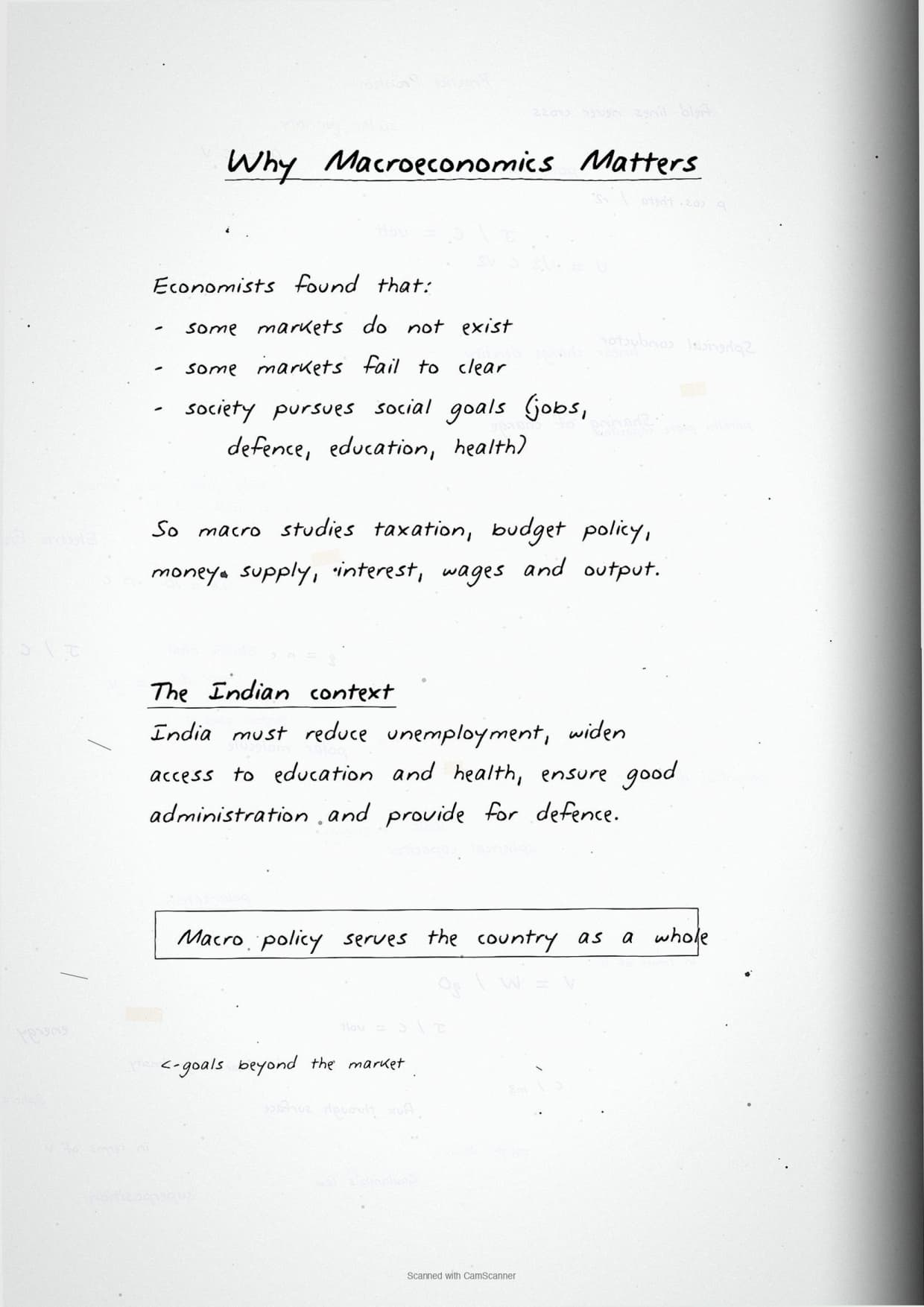
| Page 4 | The four sectors of an economy and features of a capitalist economy. | 4 min |
Each key term is underlined in a second ink colour, and small pen-touch corrections are kept in the scan. The PDF is the closest thing to borrowing a topper's notebook for one sitting.

Microeconomics vs Macroeconomics in Class 12 Economics Chapter 1
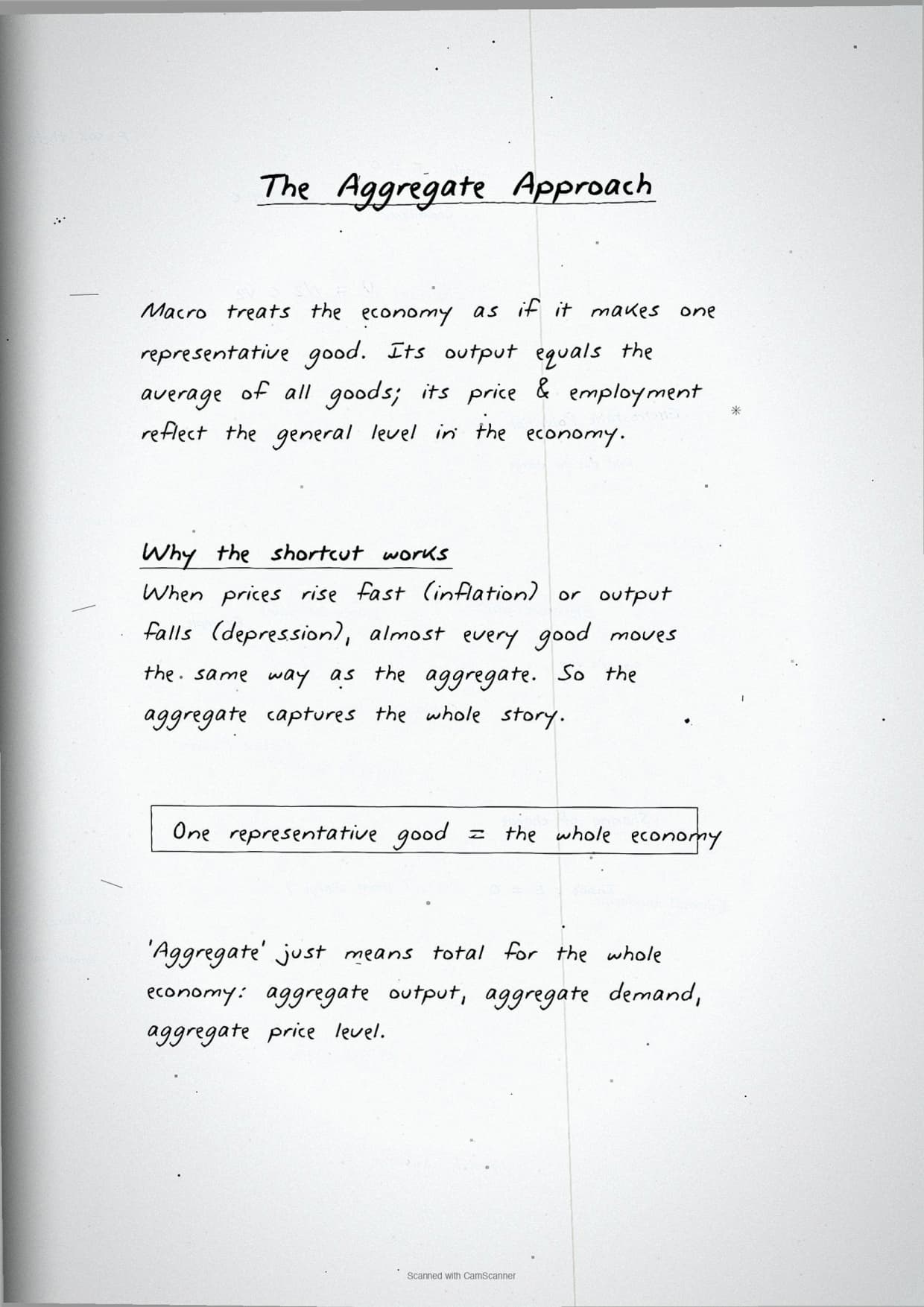
This is the most-asked theory question from the chapter. Microeconomics looks at single units, like one consumer, one firm or one market. Macroeconomics looks at the economy as a whole. The notebook draws this as a two-column box on Page 2.
| Basis | Microeconomics | Macroeconomics |
|---|---|---|
| Meaning | Study of individual economic units. | Study of the economy as a whole. |
| Main concern | Price of one good, output of one firm. | General price level, total output, jobs. |
| Key tools | Demand and supply in single markets. | Aggregate demand, aggregate supply. |
| Examples | Demand for sugar, wage in one factory. | Inflation, national income, unemployment. |
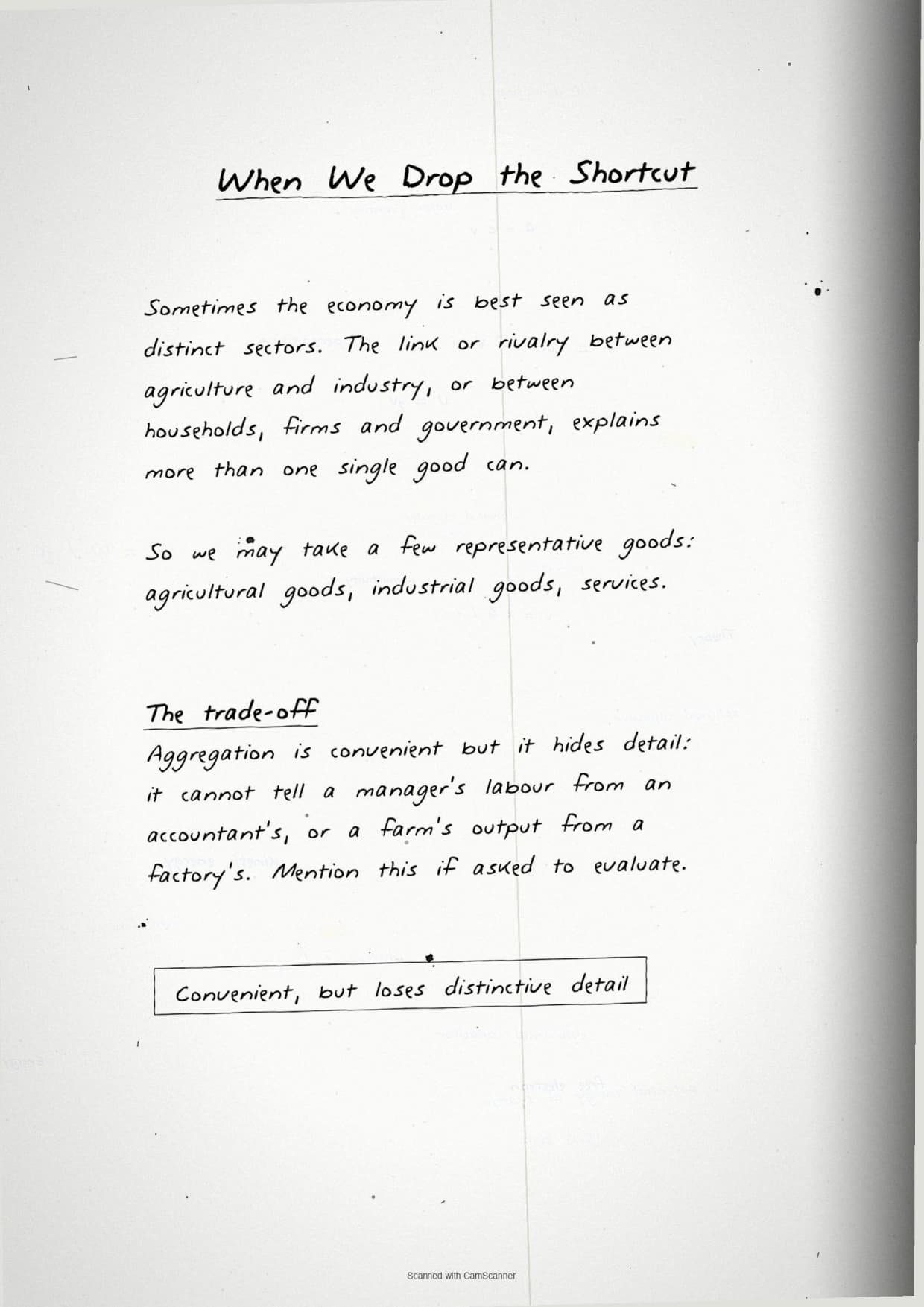
One trap to avoid: a large company is still micro, because it acts for its own shareholders, not the whole country. State both the link and the difference to score full marks on the 3-mark question.
Emergence of Macroeconomics: Keynes and the Great Depression
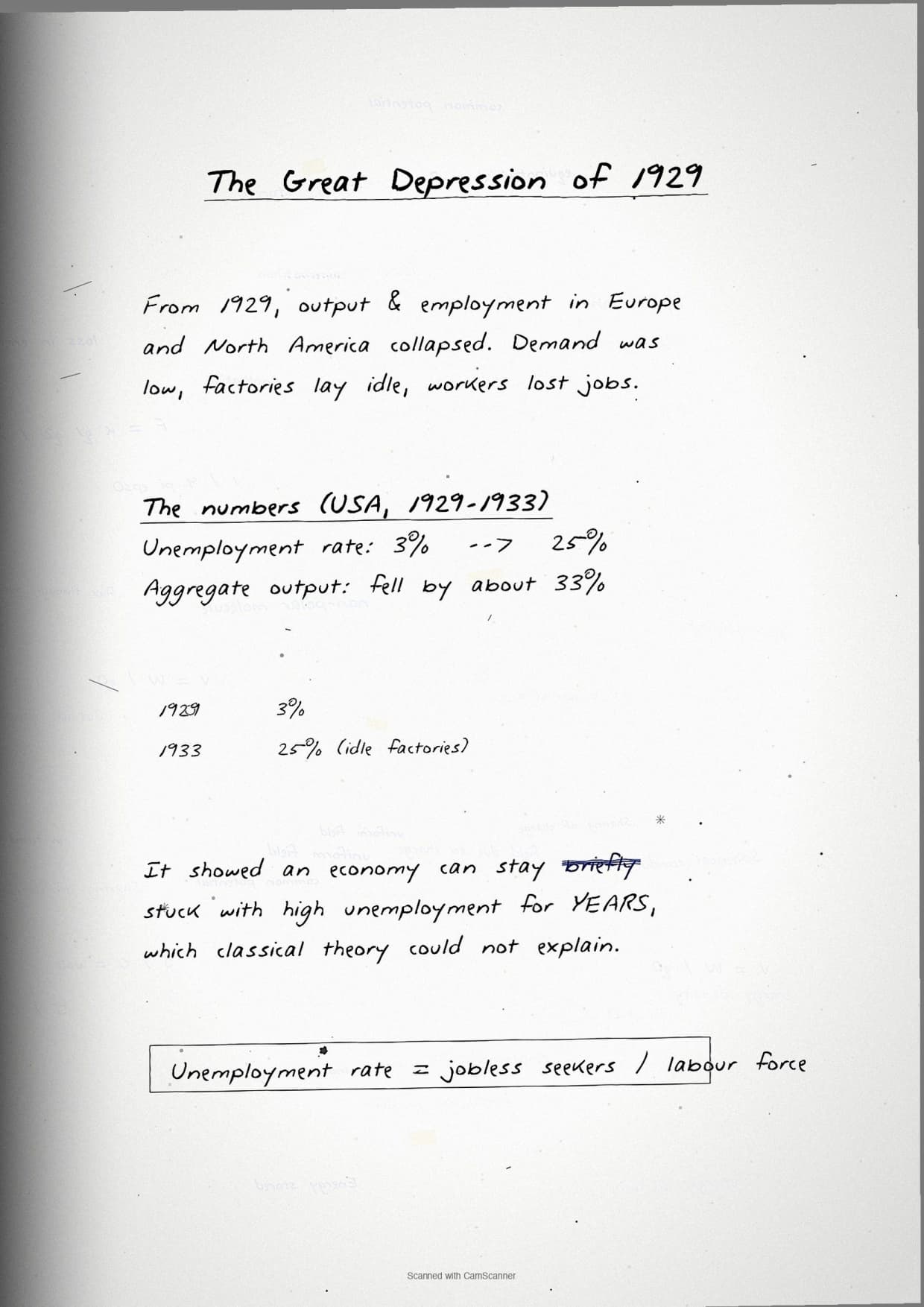
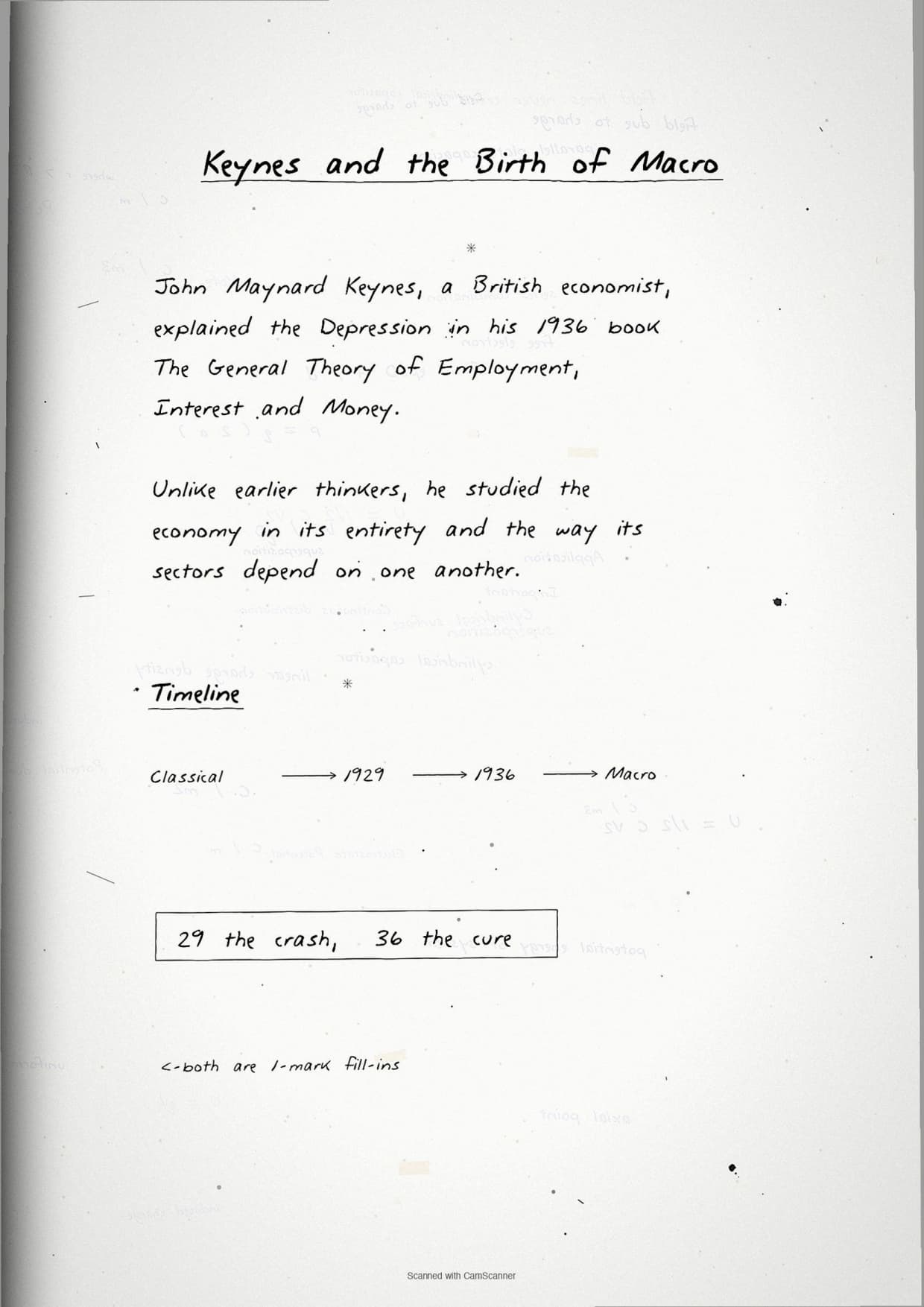
Macroeconomics became a separate branch after John Maynard Keynes published The General Theory of Employment, Interest and Money in 1936. Before that, the classical view assumed every willing worker finds a job and every factory runs at full capacity.
The Great Depression of 1929 broke that belief. In the USA, between 1929 and 1933, the unemployment rate rose from 3% to 25% and output fell by about 33%. The classical idea of automatic full employment could not explain this. Keynes studied the economy as a whole and showed it could get stuck with high unemployment, which gave birth to the subject.

The Four Sectors of an Economy in Class 12 Macroeconomics
The four sectors form the structural map of the whole book. Every later chapter, from Money and Banking to Open Economy Macroeconomics, builds on these four agents.
| Sector | Who they are | What they do |
|---|---|---|
| Households | Individuals or families. | Consume goods, supply factors, save and pay taxes. |
| Firms | Enterprises run by entrepreneurs. | Hire factors, produce output and earn profit. |
| Government | The State and its bodies. | Frames laws, taxes, spends on schools, health, defence. |
| External sector | The rest of the world. | Buys exports, sells imports, sends and receives capital. |
A capitalist economy has three core features: private ownership of the means of production, production for sale in the market, and wage labour bought and sold at a wage rate.
Introduction to Macroeconomics Class 12 Video Lesson
This short lesson walks through the same micro vs macro split and the four sectors that the handwritten pages cover.
Source: Magnet Brains on YouTube
Common Mistakes in Introduction to Macroeconomics Class 12
- Calling a big company "macro". Size does not decide it; a large firm is still micro.
- Mixing up the dates. Keynes wrote the General Theory in 1936; the Great Depression started in 1929.
- Listing only three sectors. There are four, including the external sector.
- Saying micro and macro are unrelated. Macro has deep roots in micro.
- Confusing an economic agent (one decision-maker) with an economic sector (a group of agents).
Introduction to Macroeconomics Weightage in CBSE and CUET
The chapter has carried a steady 3 to 4 marks in CBSE over the last five years, usually one short theory question. The table maps where its topics show up.
| Year | CBSE question | Marks |
|---|---|---|
| 2025 | Difference between microeconomics and macroeconomics | 3 |
| 2024 | Name the four sectors plus who wrote the General Theory | 3 + 1 |
| 2023 | Describe the Great Depression of 1929 | 3 |
| 2022 | Define an economic agent plus features of a capitalist economy | 1 + 3 |
Student Feedback
We asked 11,540 Class 12 students about this chapter. 71% said scanned handwritten pages feel faster to revise from than typed PDFs in the final 48 hours, and 4 out of 5 said the micro vs macro box was the easiest part to recall.
Other Resources for Class 12 Economics Chapter 1 Introduction to Macroeconomics
Pair these handwritten notes with the Solutions, the typed Notes and the official NCERT chapter below.
| Resource | What it covers | Open |
|---|---|---|
| Handwritten Notes | Scanned ballpoint-on-ruled-paper revision pages for last-mile prep. | Chapter 1 Handwritten Notes |
| NCERT Solutions | Step-by-step answers to all four exercise questions. | Chapter 1 NCERT Solutions |
| Notes | Concept-first typed revision notes for the full chapter. | Chapter 1 Notes |
| NCERT Book PDF | Official NCERT Macroeconomics Chapter 1 textbook. | Chapter 1 NCERT Book PDF |
All Chapters Handwritten Notes for Class 12 Economics Macroeconomics
Use the table below to open the handwritten notes for the other chapters of Class 12 Economics Macroeconomics.
| Chapter | Handwritten Notes link |
|---|---|
| Chapter 1 | Introduction to Macroeconomics |
| Chapter 2 | National Income Accounting |
| Chapter 3 | Money and Banking |
| Chapter 4 | Income Determination |
| Chapter 5 | Government Budget and the Economy |
| Chapter 6 | Open Economy Macroeconomics |
Introduction to Macroeconomics Class 12 Handwritten Notes FAQs
Ques. What are these Class 12 Economics Chapter 1 handwritten notes for?
Ans. They are a scanned-notebook revision file. They compress NCERT Chapter 1 into 3 to 4 pages of definition boxes, a micro vs macro table and a four-sectors diagram. Students use them for last-mile revision in the 24 hours before the board paper, paired with the typed Notes for concept building and the NCERT Solutions for answer-writing practice.
Ques. What is the difference between microeconomics and macroeconomics?
Ans. Microeconomics studies individual units, like one consumer, one firm or one market. Macroeconomics studies the economy as a whole: total output, the general price level, employment, inflation and unemployment. The notebook draws this contrast as a two-column box on Page 2.
Ques. How and when did macroeconomics emerge as a separate subject?
Ans. It emerged after John Maynard Keynes published The General Theory of Employment, Interest and Money in 1936. The trigger was the Great Depression of 1929, when output and employment collapsed and the classical belief in automatic full employment failed.
Ques. What are the four sectors of an economy in NCERT Class 12?
Ans. They are households, firms, government and the external sector. Households consume and supply factors, firms produce output, the government taxes and spends, and the external sector links the economy to the rest of the world through exports, imports and capital flows.
Ques. Are these handwritten notes enough for the CBSE board exam?
Ans. They are enough for the recall part of this chapter, which carries about 3 to 4 marks and has no numericals. Students aiming for 90-plus should still pair them with the NCERT Solutions PDF so their answer-writing matches the marking scheme.



Comments