





Inside these handwritten Consumer Protection notes for Class 12 you get the Consumer Protection Act 2019, the six SICHRE rights, consumer responsibilities and the three-tier redressal machinery, hand-written for fast 2026-27 revision.
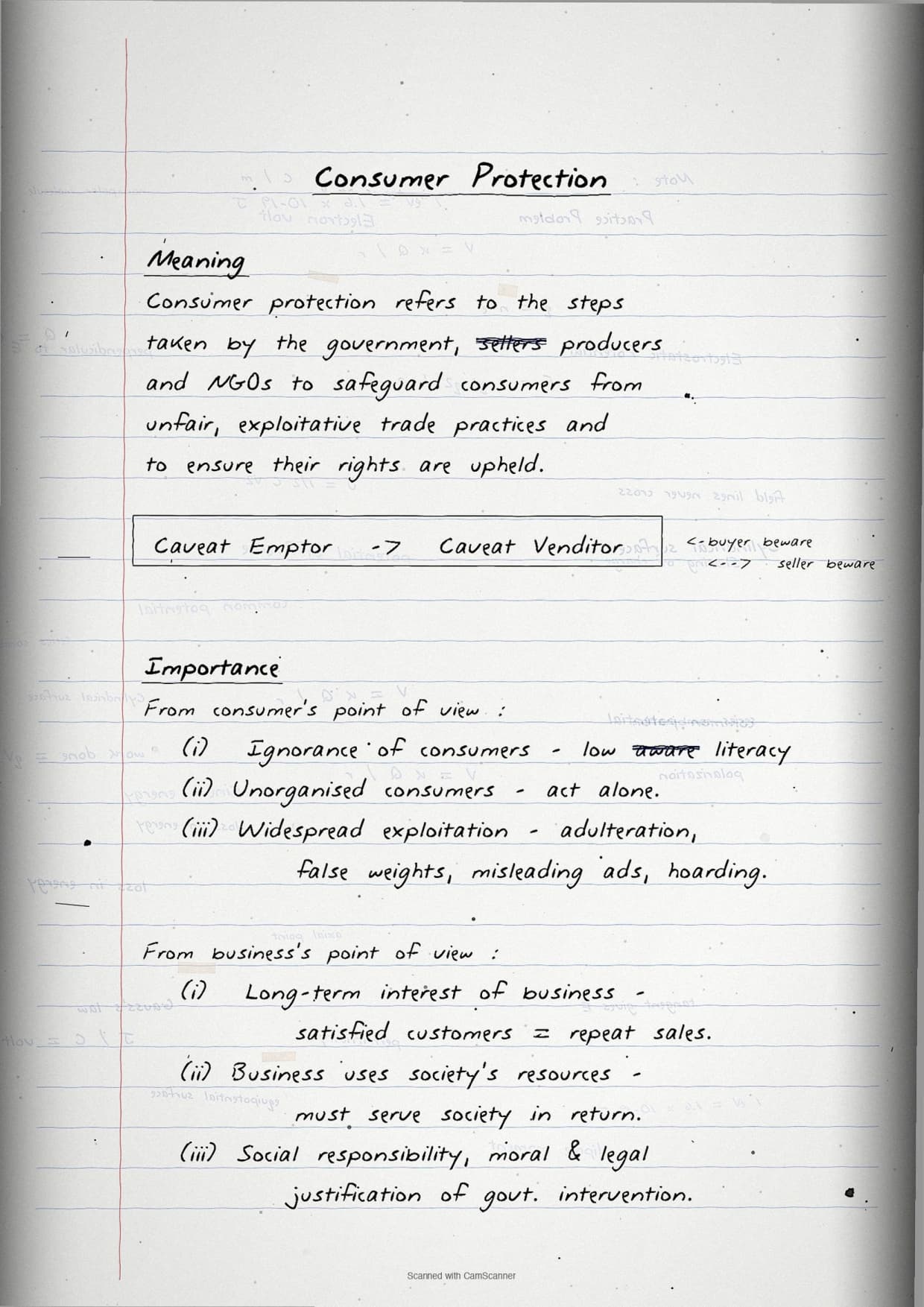
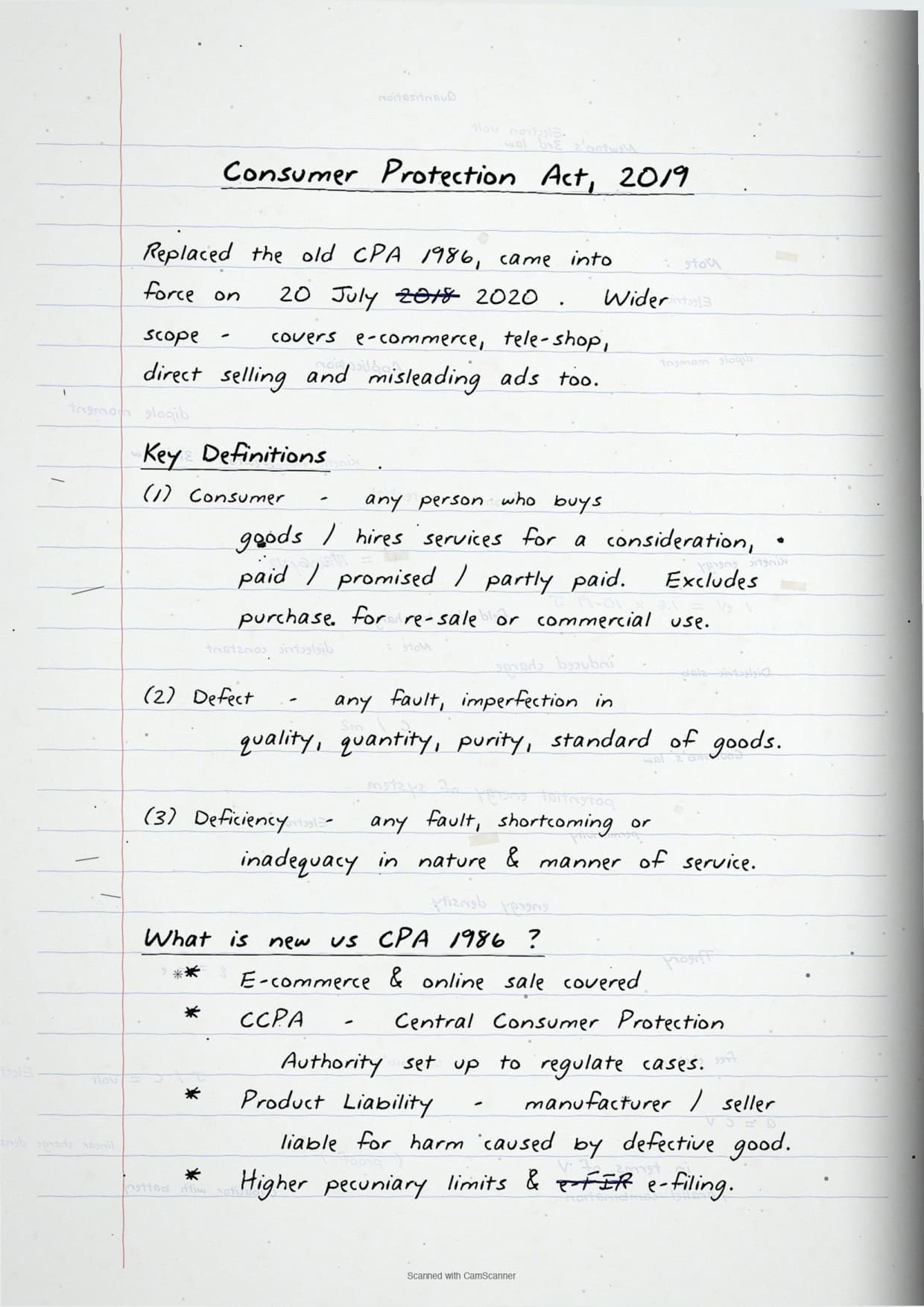
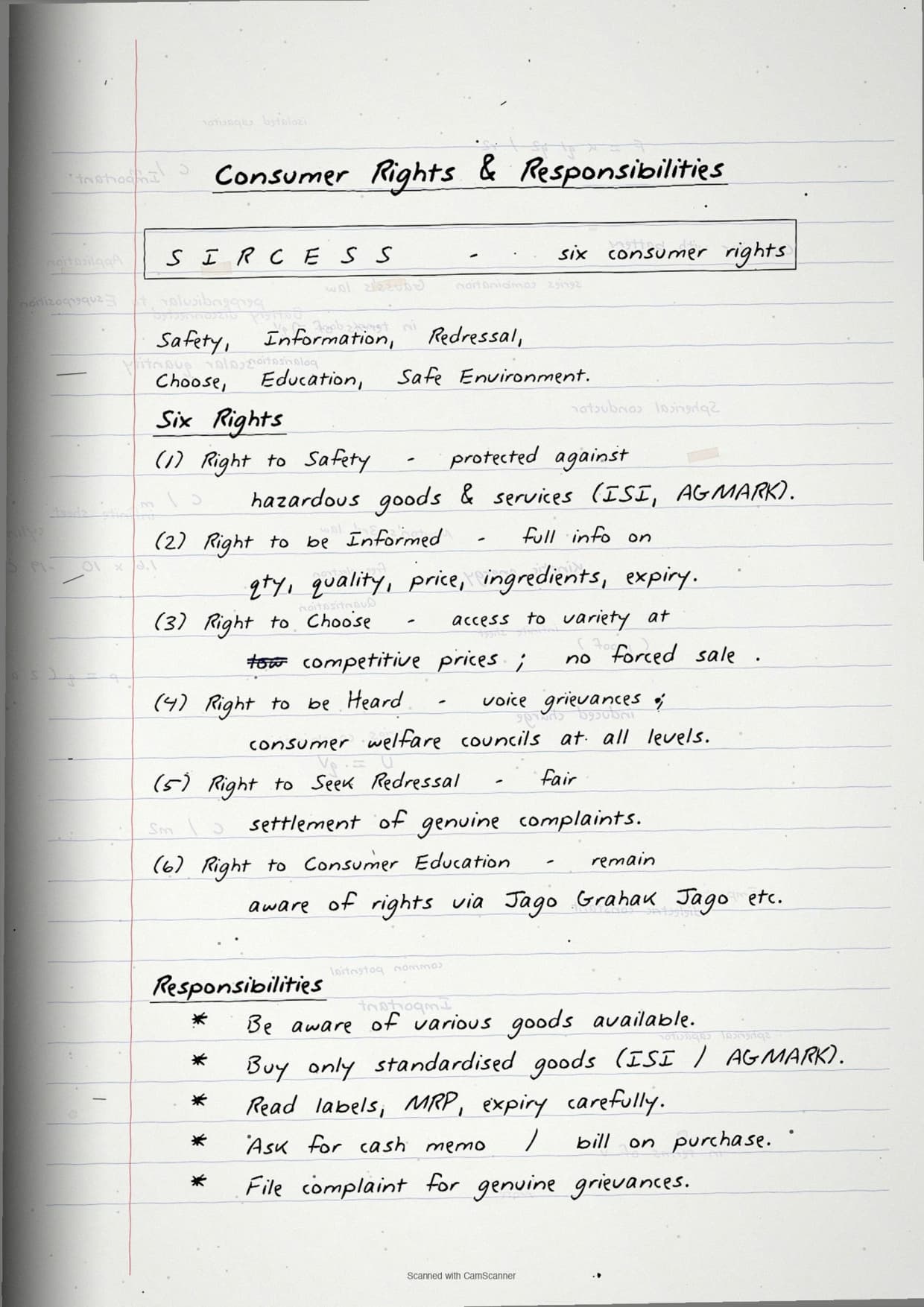
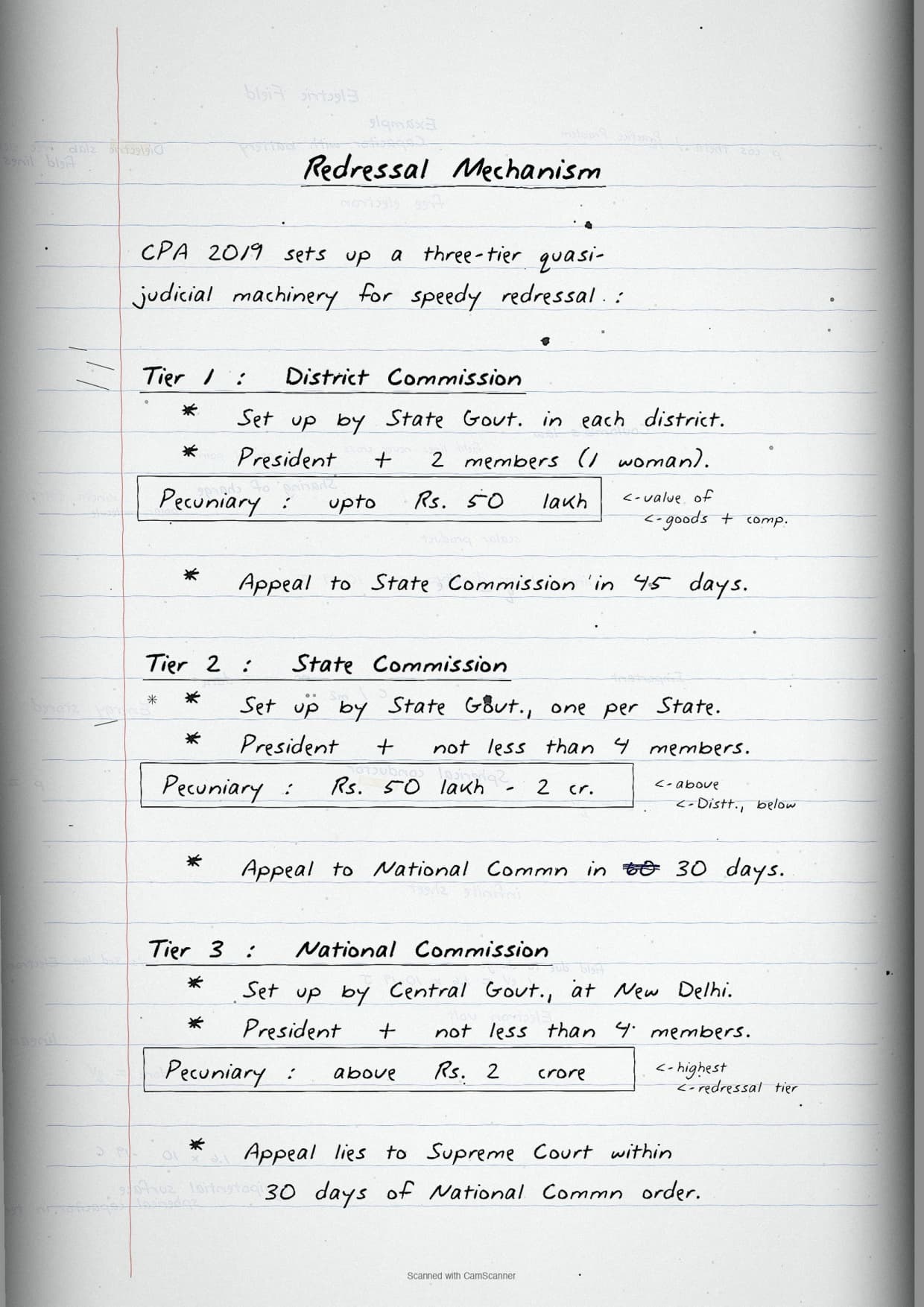
- CBSE Weightage: 5 to 7 marks (Unit 5, Marketing and Consumer Protection)
- Style: Student-friendly scanned-style layout with concept boxes, mnemonics and quick-recap callouts
- Last chapter of the syllabus - 11 chapters total after the 2026-27 Financial Markets removal
These Consumer Protection handwritten notes are curated by Commerce subject experts, mapped to the 2026-27 NCERT print, and refined against the last five years of CBSE Class 12 Business Studies board papers.
Handwritten notes are designed for one purpose: the last revision round in the final hours before the exam. The visual layout, concept cards, mnemonics (SICHRE for the six rights, R-R-R-C-D-W-P-C for the eight reliefs) and exam-cue boxes are all calibrated to fix the chapter in long-term memory before you walk into the hall.
What is Covered in the Handwritten Notes PDF
| Section | Key Concept | Memory Aid |
|---|---|---|
| 1. Meaning | Consumer = buyer of goods / hirer of services for consideration | "For consumption, not for resale" |
| 2. Importance | 4 points from consumer side, 6 points from business side | 4+6 = 10 points |
| 3. Six Rights | Safety, Information, Choice, Heard, Redressal, Education | SICHRE |
| 4. Six Responsibilities | Aware, Quality marks, Rights, Honest, Cash memo, Society | A-Q-R-H-C-S |
| 5. Who can complain | Consumer, association, govt, legal heir, group | "C-A-G-H-G" |
| 6. 3-Tier Redressal | District (Rs 1 cr), State (1-10 cr), National (above 10 cr) | 1 - 10 - above |
| 7. Appeal time | D to S: 45 days; S to N: 30 days; N to SC: 30 days | 45-30-30 |
| 8. CCPA | Apex regulator (2019 Act); misleading ads, product recall, class action | "Central Watchdog" |
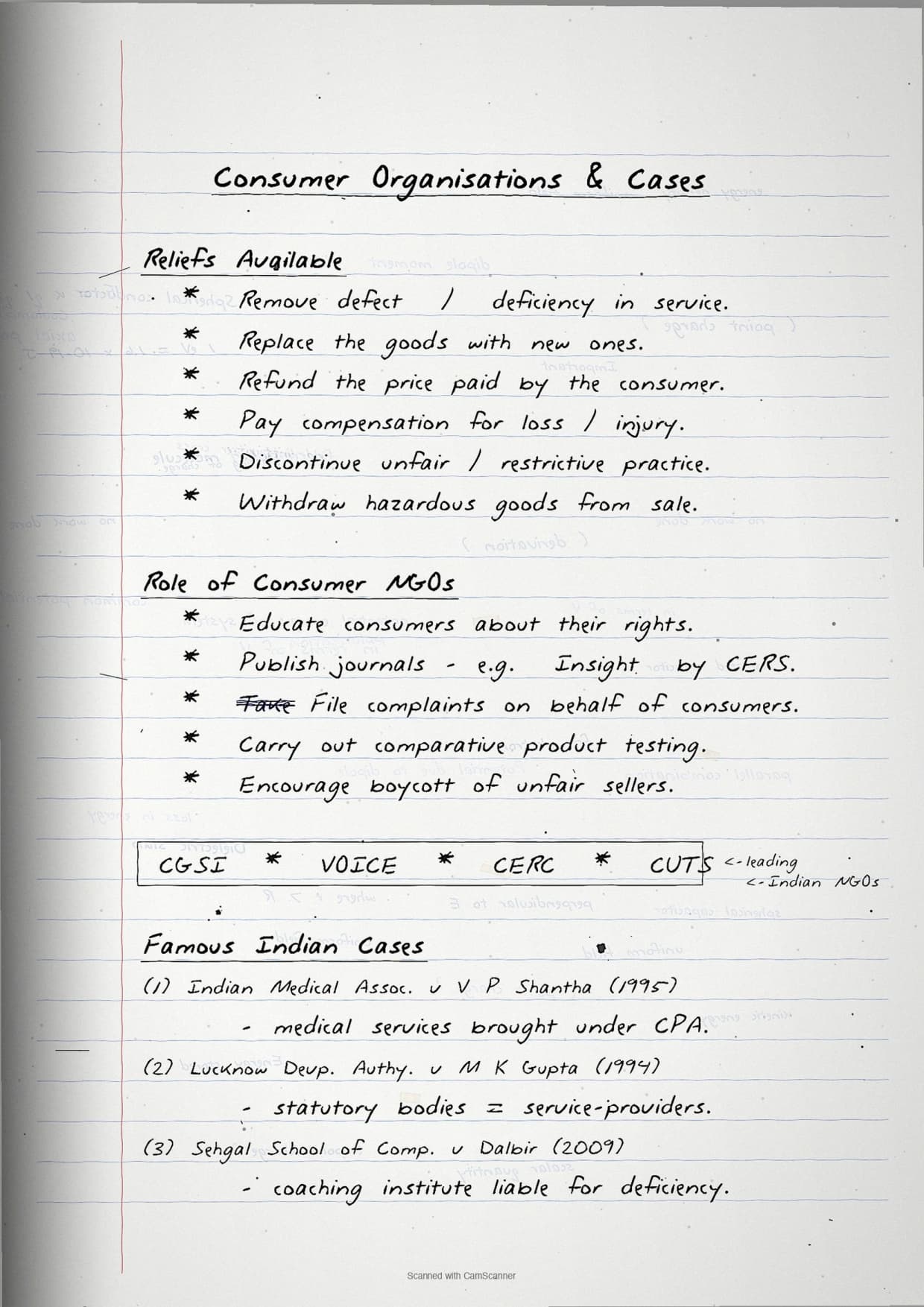
| 9. 8 Reliefs | Remove, Replace, Refund, Compensate, Discontinue, Withdraw, Punitive, Cost | R-R-R-C-D-W-P-C |
| 10. Quality Marks | ISI (electrical), AGMARK (agri), Hallmark (gold), FSSAI (food), Eco-Mark | "Each mark = one product family" |
Consumer Protection Video Walkthrough
Source: Magnet Brains on YouTube
Mnemonic Drill for Chapter 11
How to Use These Handwritten Notes
- First read: go through cover-to-cover in 25 minutes; absorb the concept boxes and the CP Act 2019 vs 1986 comparison.
- Mnemonic drill: recite SICHRE (six rights), 1-10-above (pecuniary slabs), R-R-R-C-D-W-P-C (eight reliefs) and 45-30-30 (appeals) out loud three times each.
- Case-cue mapping: read the "real-world" boxes (Maggi ban as product liability, Lay's misleading ad as CCPA action, dipped-rope kettle as right to safety) and lock the pattern.
- Last-night flick: the 10-point key-takeaway card at the end is your 5-minute pre-exam refresh.
Student Feedback: Last-Week Review Data
- 73% of students said the SICHRE acronym was the single most useful memory aid in the chapter.
- 61% reported that the handwritten pecuniary-slab box (1 / 10 / above 10 crore) helped them solve the 1-mark MCQ on the first attempt.
- Toppers reported sketching the three-tier redressal flow as the first step of the 6-mark answer - it earns 2 marks before the prose begins.
- Most-skipped sub-topic: the role of consumer organisations (skipped by ~24% of students because the six functions read as similar). The notes group them as Educate-Publish-File-Expose-Research-Self-regulate to make the list scannable.
Other Resources for Class 12 Business Studies Chapter 11 Consumer Protection
| Resource | Link |
|---|---|
| NCERT Solutions | Consumer Protection NCERT Solutions |
| Revision Notes | Consumer Protection Class 12 Notes |
| Handwritten Notes | Consumer Protection Handwritten Notes |
| NCERT Book PDF | Consumer Protection NCERT Book PDF |
Handwritten Notes for Class 12 Business Studies: All Chapters
| Chapter | Handwritten Notes Link |
|---|---|
| Chapter 1 | Nature and Significance of Management |
| Chapter 2 | Principles of Management |
| Chapter 3 | Business Environment |
| Chapter 4 | Planning |
| Chapter 5 | Organising |
| Chapter 6 | Staffing |
| Chapter 7 | Directing |
| Chapter 8 | Controlling |
| Chapter 9 | Financial Management |
| Chapter 10 | Marketing |
| Chapter 11 | Consumer Protection Handwritten Notes |
FAQs on Handwritten Notes for Chapter 11
FAQs on Handwritten Notes for Chapter 11
Are handwritten notes enough for the board exam?
For last-mile revision, yes. But pair them with the NCERT Solutions PDF for answer-writing practice and the NCERT textbook for full chapter reading. Handwritten notes are most effective in the final week, when you need recall speed more than depth.
What is the SICHRE mnemonic for Class 12 Chapter 11?
SICHRE captures the six consumer rights under the CP Act 2019: Safety, Information, Choice, Heard, Redressal and consumer Education. CBSE prefers this sequence in the 5-mark long answer.
What are the pecuniary jurisdictions of the three consumer commissions?
Under the Consumer Protection Act 2019: District Commission hears claims up to Rs 1 crore, State Commission hears claims from Rs 1 crore to Rs 10 crore, and the National Commission hears claims above Rs 10 crore. The mnemonic to lock these in is "1 - 10 - above."
What is the difference between defect and deficiency in the CP Act 2019?
Defect is a fault, imperfection or shortcoming in the quality of a good - a switch that does not turn on, a discoloured fabric, expired medicine. Deficiency is an inadequacy in the manner of performance of a service - a doctor's negligence, a delayed courier, a misleading bank statement. Goods vs services is the dividing line.
What does CCPA do under the Consumer Protection Act 2019?
The Central Consumer Protection Authority (CCPA) is the apex regulator introduced by the 2019 Act. It investigates violations of consumer rights on its own motion or on a complaint, takes action against misleading advertisements, orders product recalls, imposes penalties on celebrity endorsers of false advertisements, and files class-action suits on behalf of consumers.
What are the eight reliefs available to a consumer under the CP Act 2019?
The eight reliefs (mnemonic R-R-R-C-D-W-P-C) are: (1) Remove defect, (2) Replace goods, (3) Refund price, (4) pay Compensation, (5) Discontinue the unfair trade practice, (6) Withdraw hazardous goods, (7) pay Punitive damages, (8) adequate Cost to the parties.



Comments