




Class 10 Maths Chapter 9 Some Applications of Trigonometry carries about 6 marks in the CBSE Board exam and sits inside the Trigonometry unit. These class 10 maths handwritten notes chapter 9 Some Applications of Trigonometry cover heights and distances, line of sight, and the angles of elevation and depression in a hand-drawn revision style.
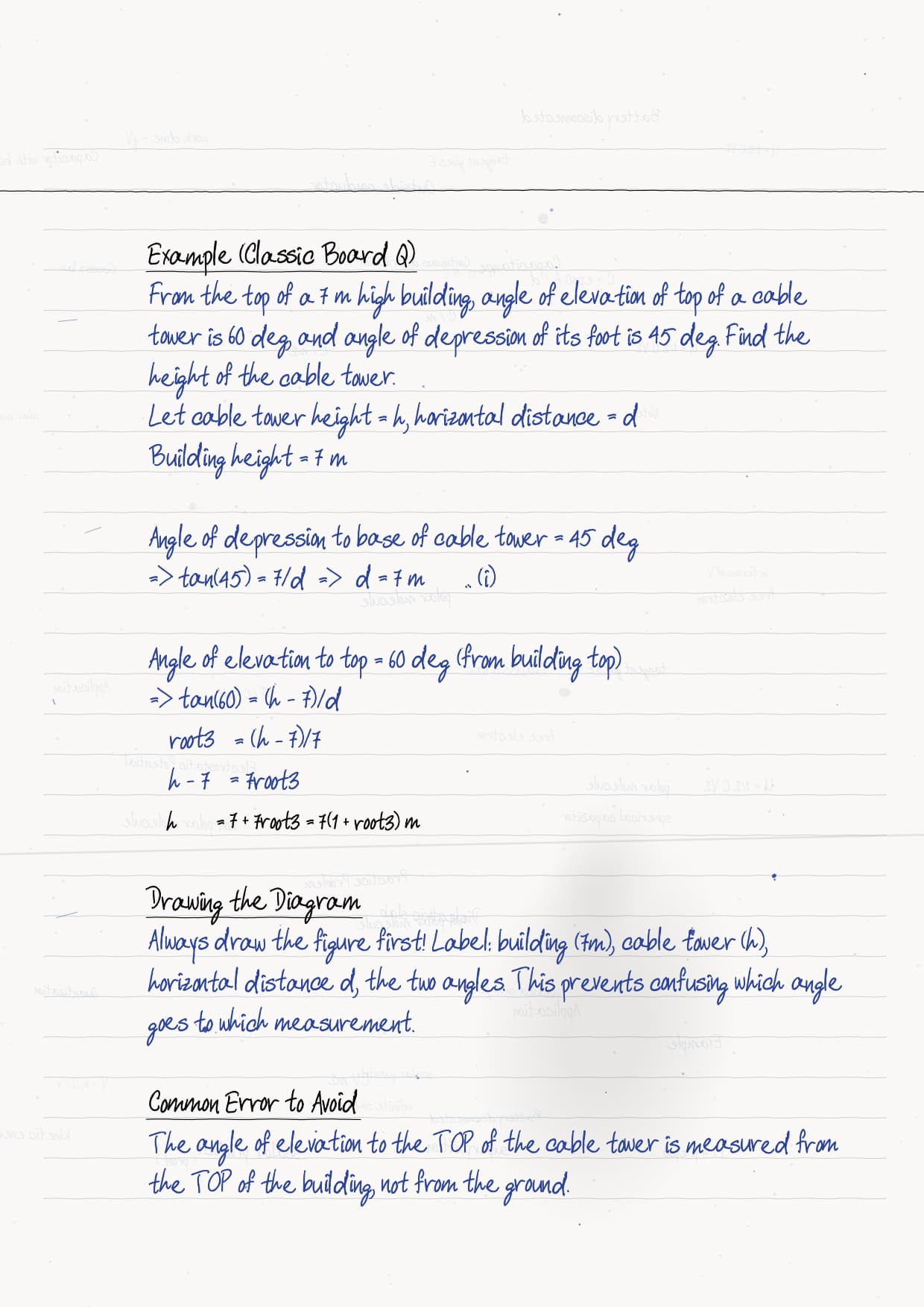
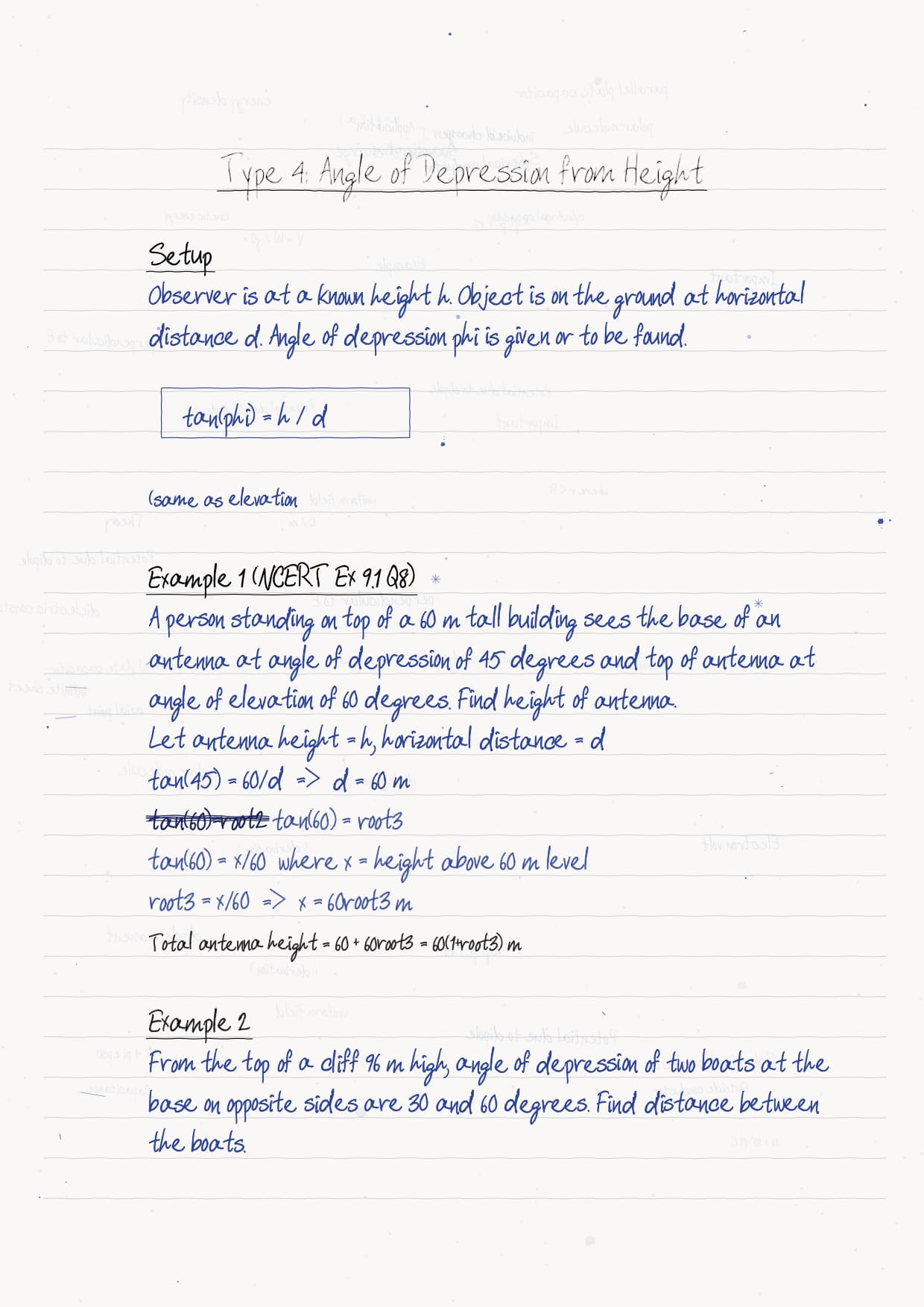
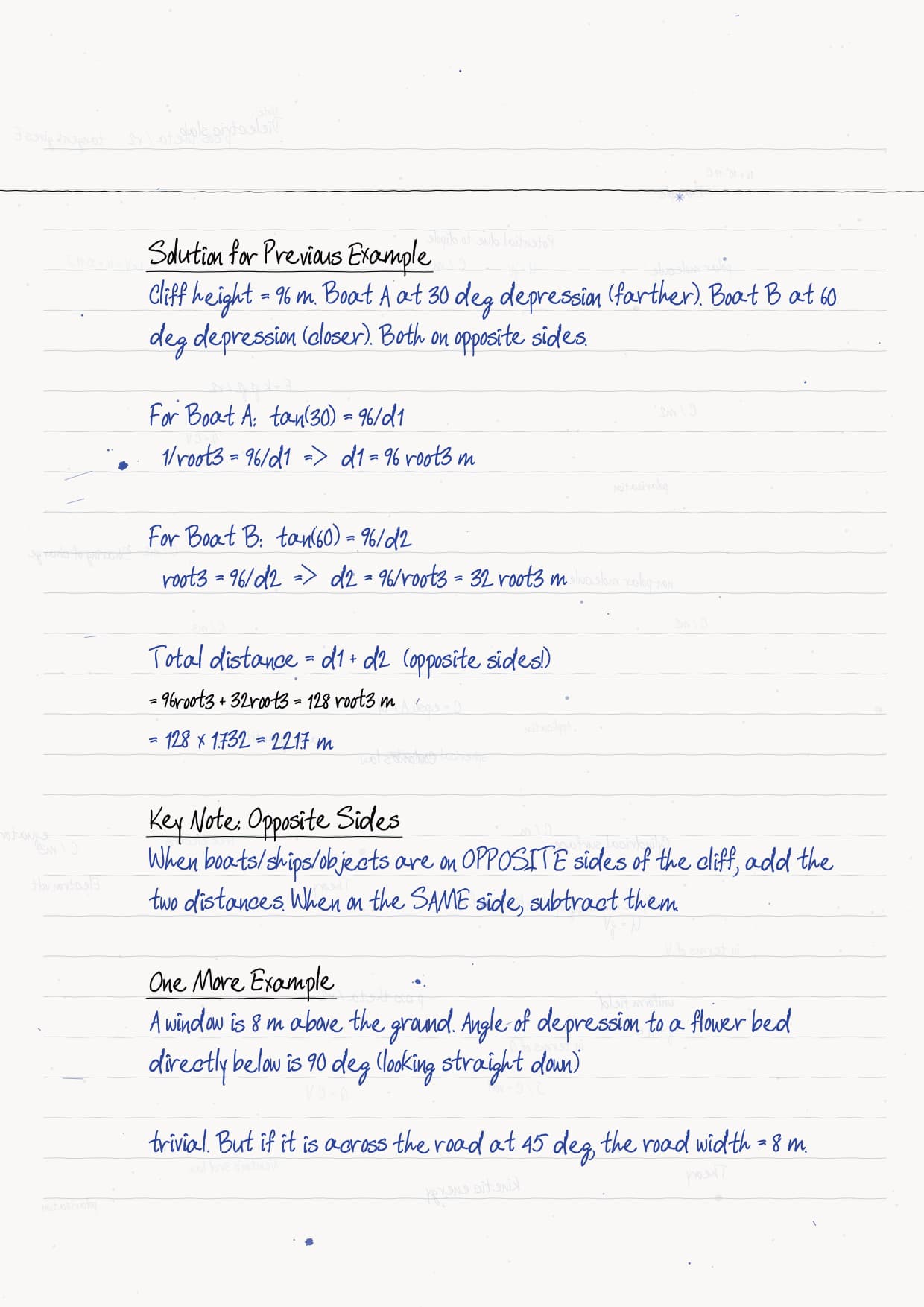
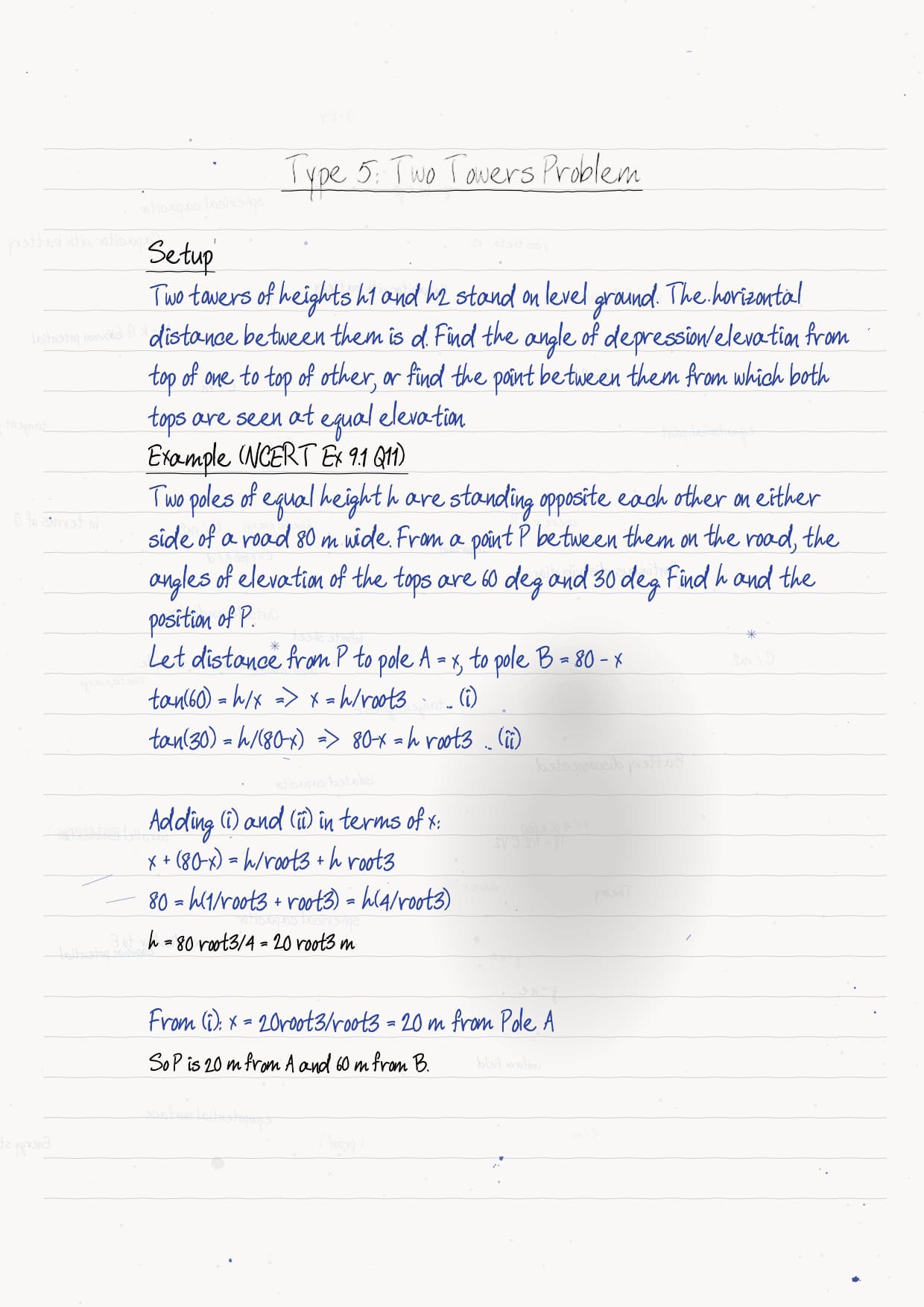
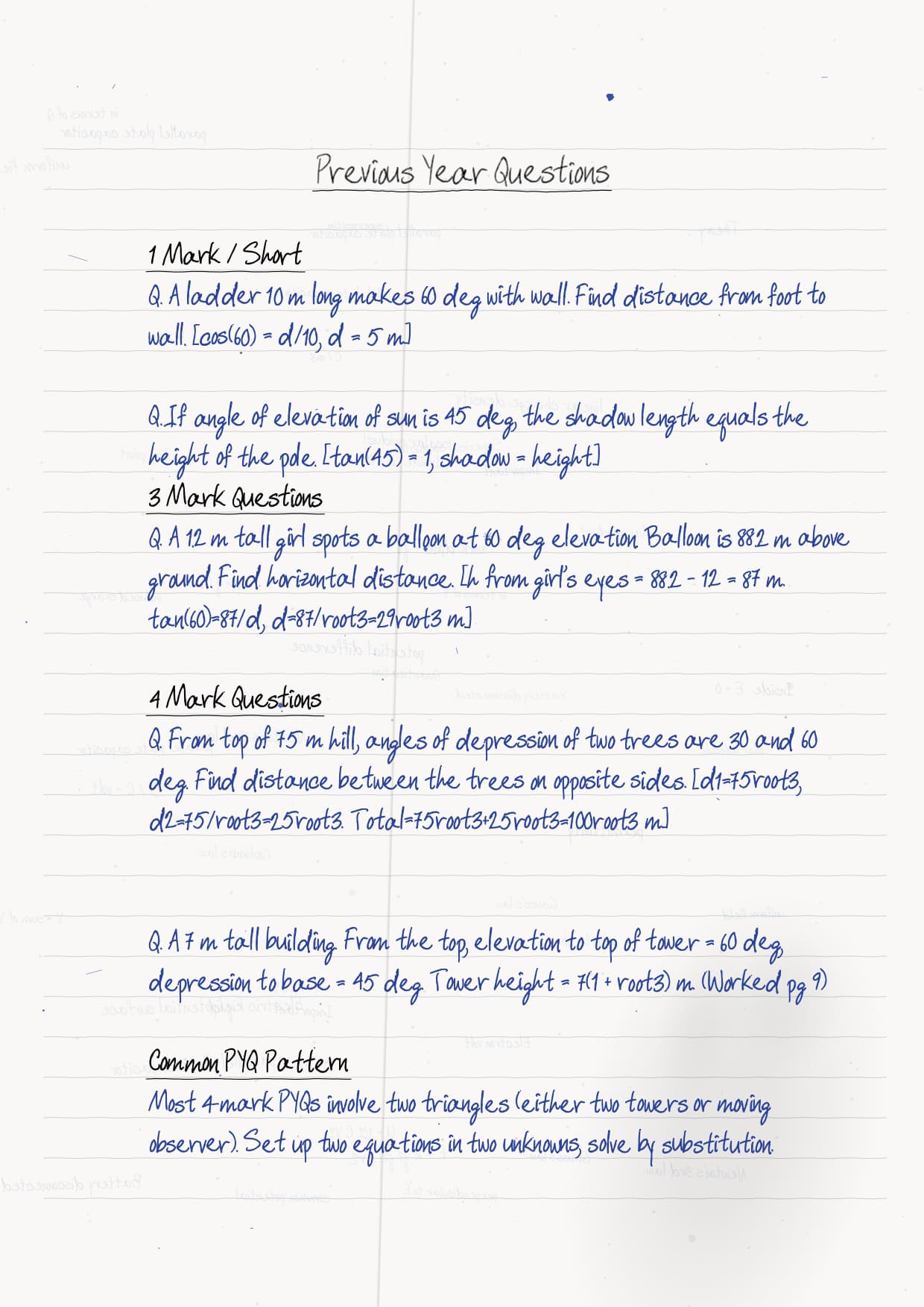
- CBSE Board: about 6 marks within the Trigonometry unit, usually one height-and-distance word problem
- JEE Main: rarely a direct question, yet the elevation setup feeds height problems later
The handwritten notebook opens with the diagram list, walks through line of sight and the two key angles, then closes with a recall card. Every page matches the 2026-27 NCERT print.
|
Table of Contents |
Watch Some Applications of Trigonometry Class 10 Maths Chapter 9 Explained
Source: Magnet Brains on YouTube
Some Applications of Trigonometry Handwritten Notes: Complete Diagram List for Class 10 Maths
The class 10 maths handwritten notes chapter 9 Some Applications of Trigonometry hold 6 hand-sketched diagrams you can copy onto rough paper. The table maps each figure to its page.
| Page | Diagram | What It Shows |
|---|---|---|
| 2 | Line-of-sight sketch | An observer's eye, the object, and the straight line of sight joining them on level ground |
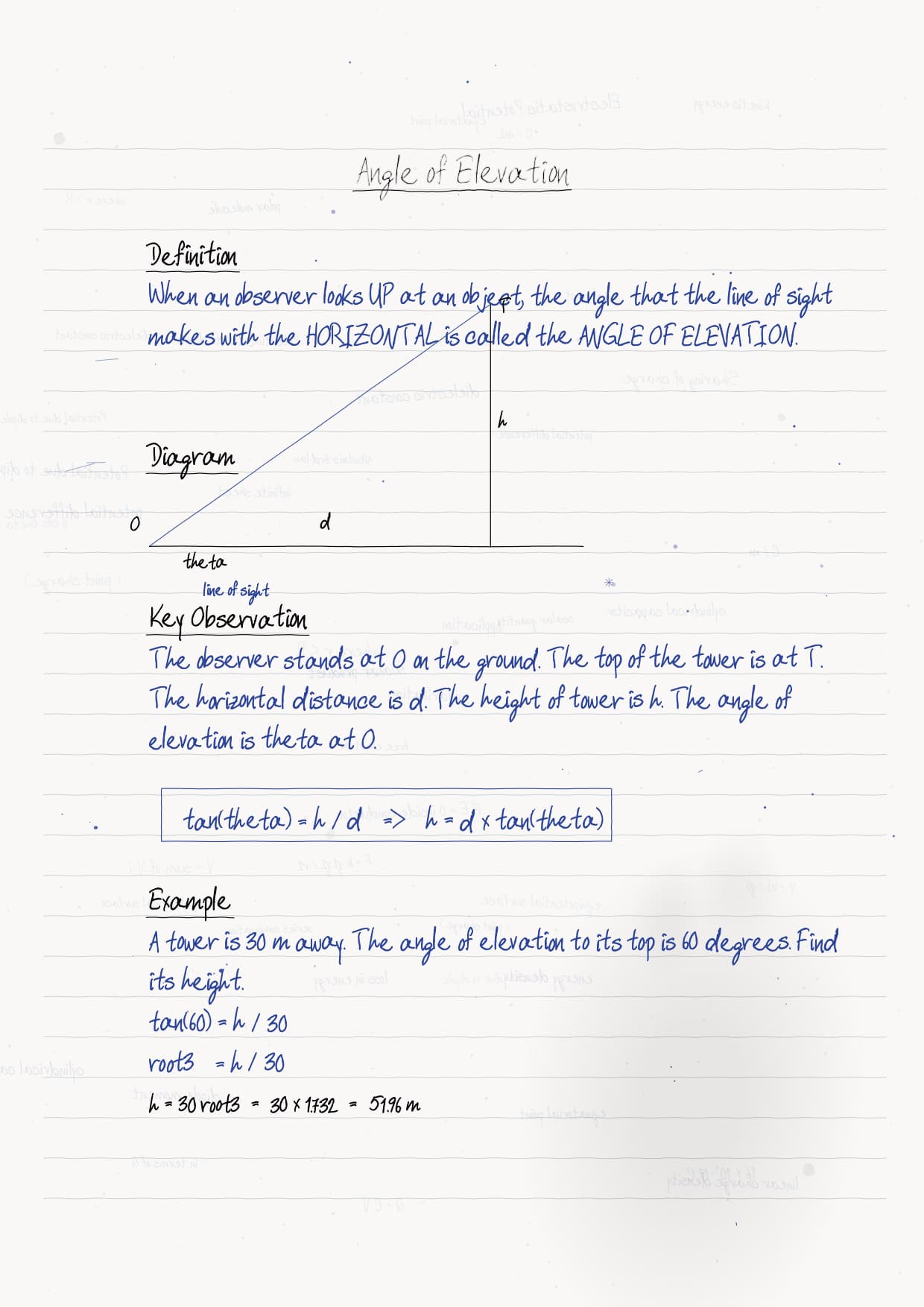
| 3 | Angle of elevation diagram | A tower with the line of sight tilted up from the horizontal, the elevation angle marked at the eye |
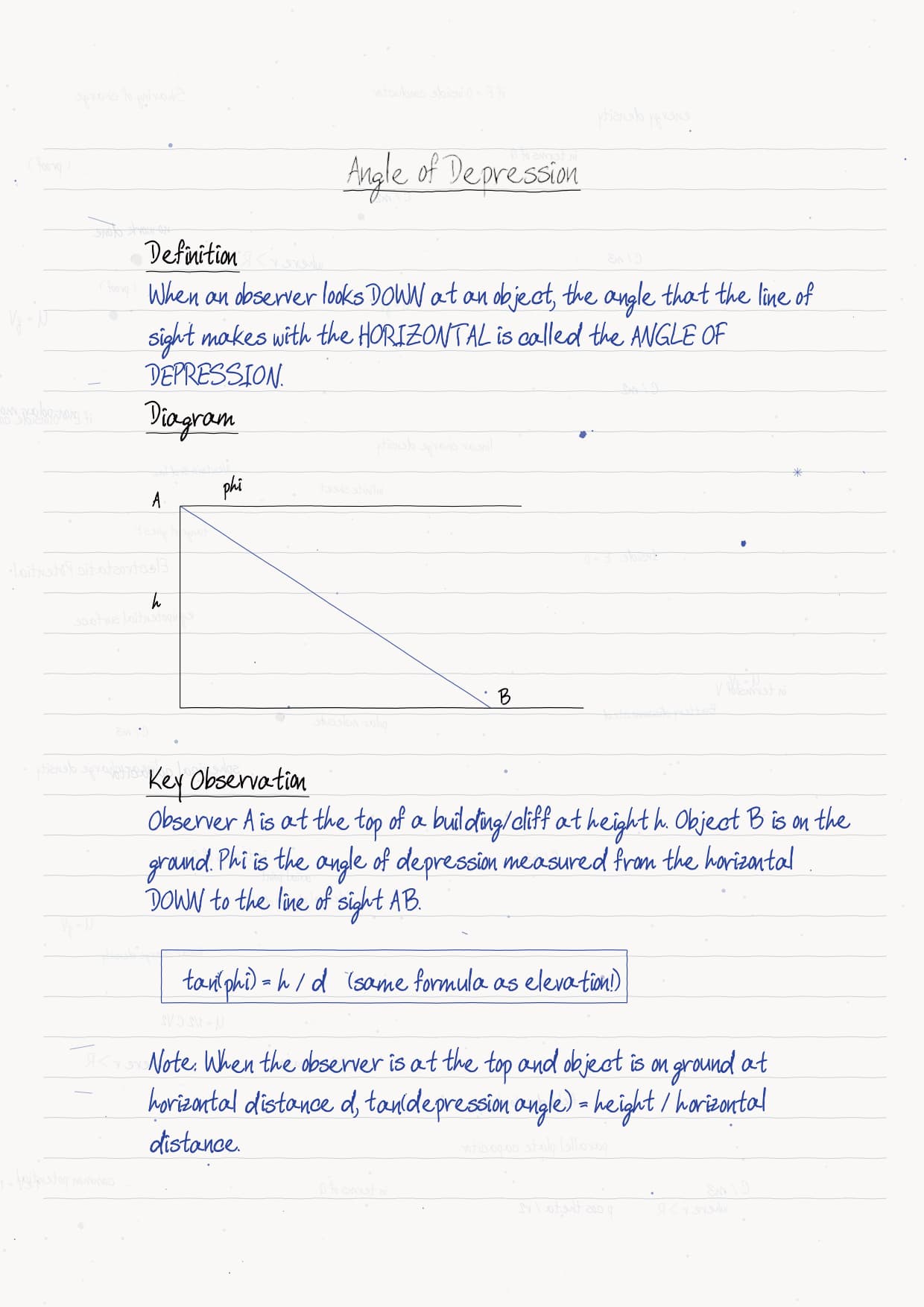
| 4 | Angle of depression diagram | A cliff-top viewer looking down at a boat, the depression angle measured below the horizontal line |
| 5 | Standard-angle right triangle | Right triangles for 30, 45, and 60 degrees with their tan, sin, and cos side ratios labelled |
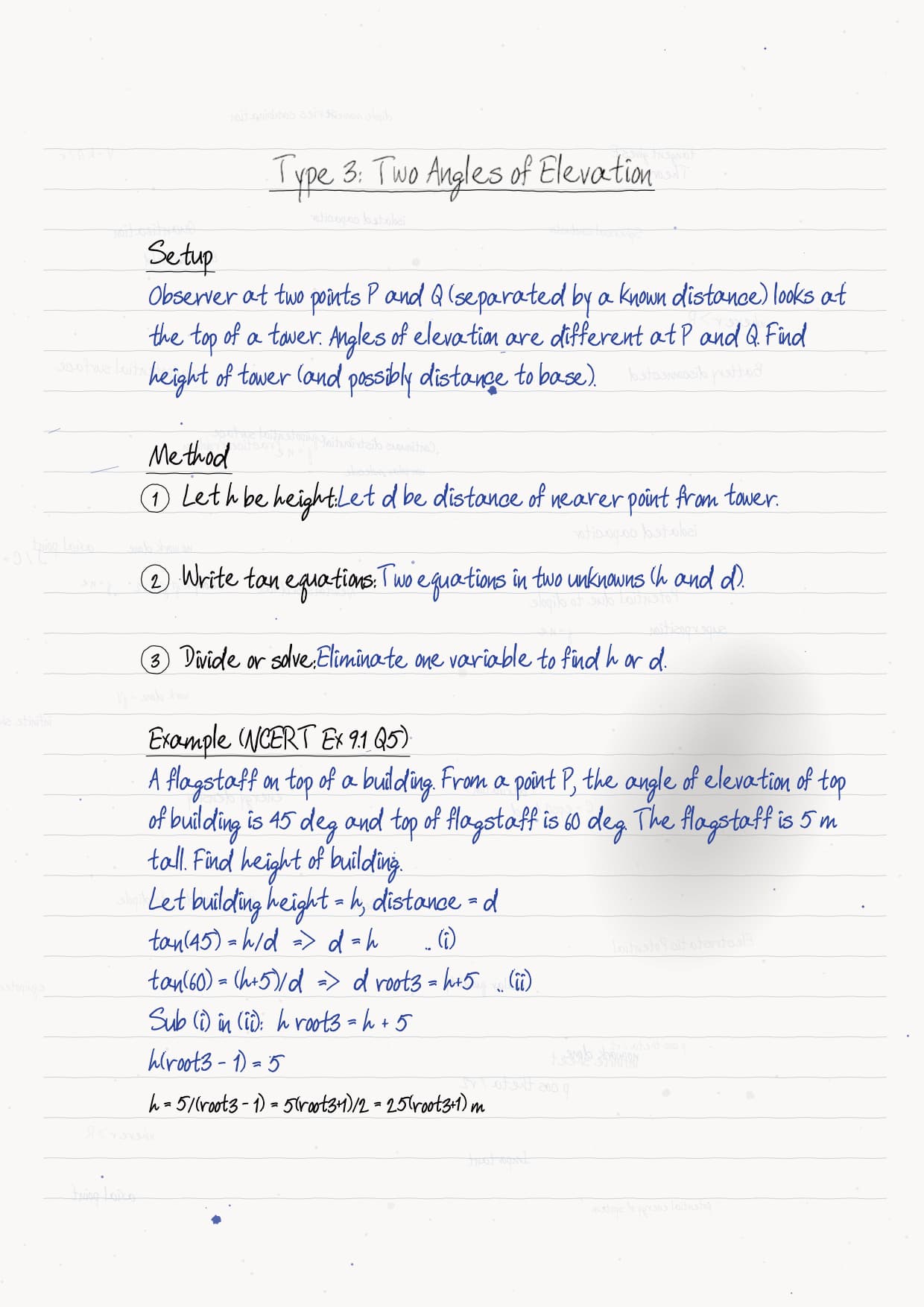
| 6 | Two-triangle height setup | One vertical pole seen from two points, giving two right triangles sharing the same height |
| 7 | Last-day mind map | One-page tree linking line of sight to elevation, depression, and the standard-angle ratios |
Topics Covered in Class 10 Maths Chapter 9 Some Applications of Trigonometry Handwritten Notes
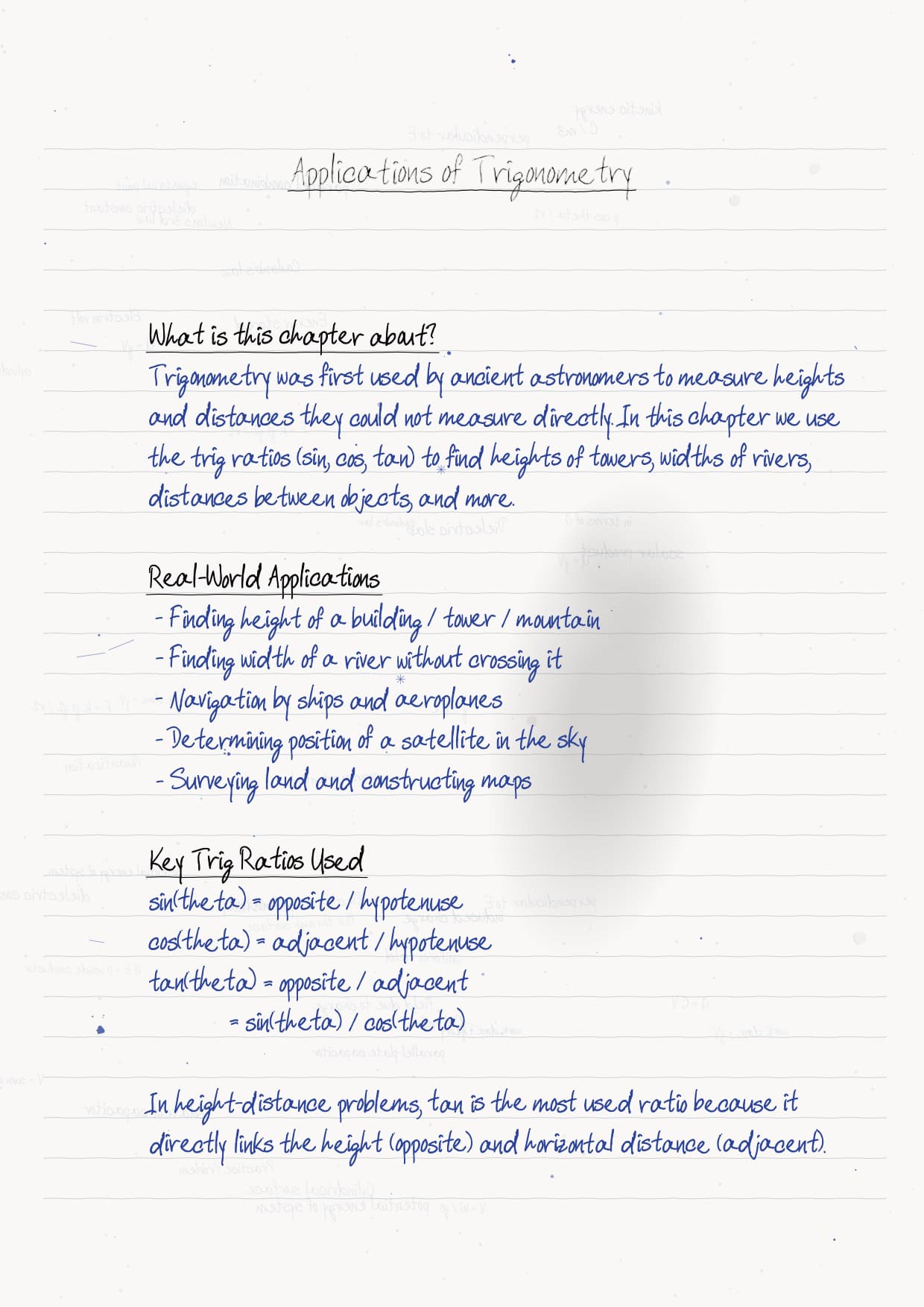
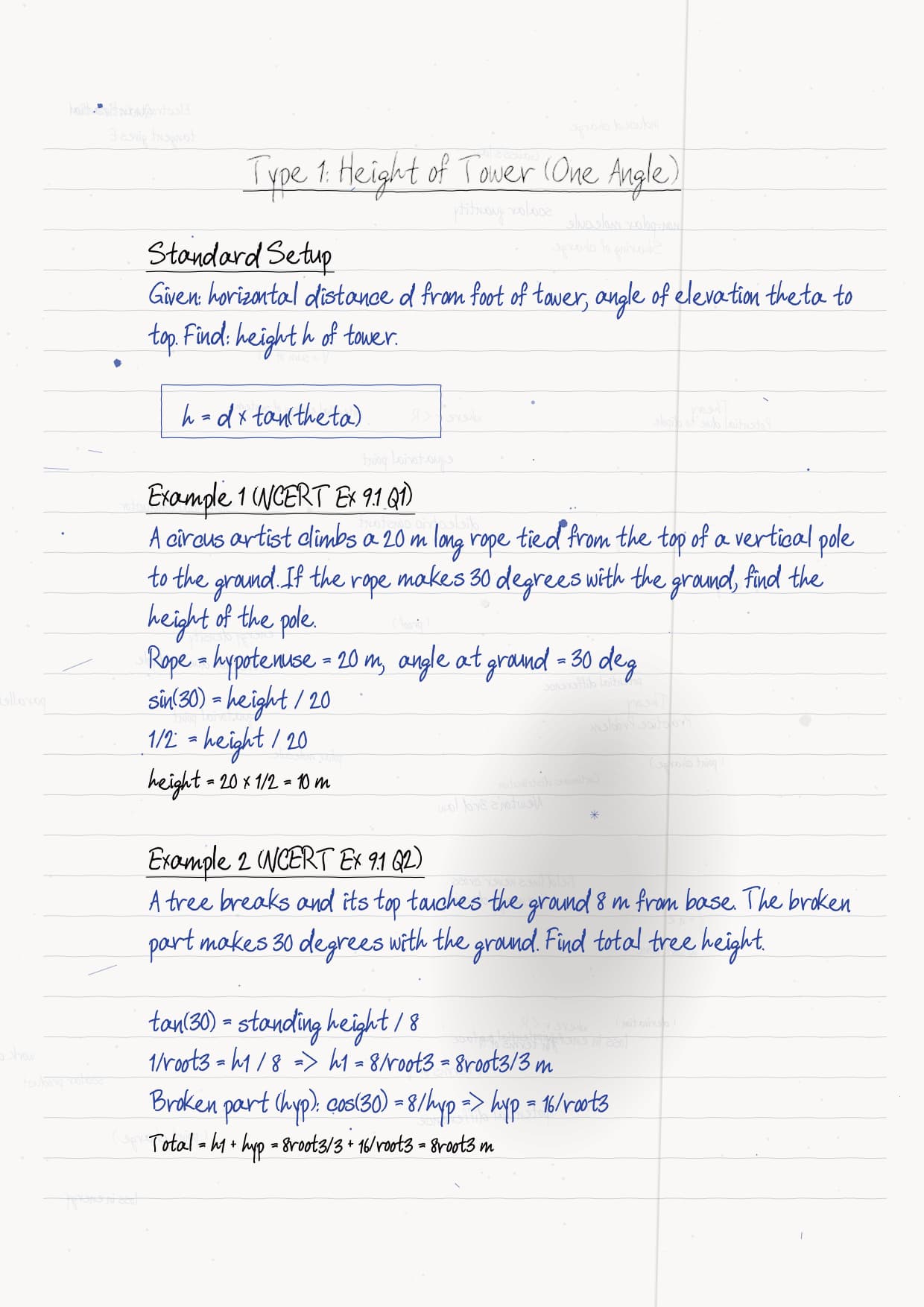
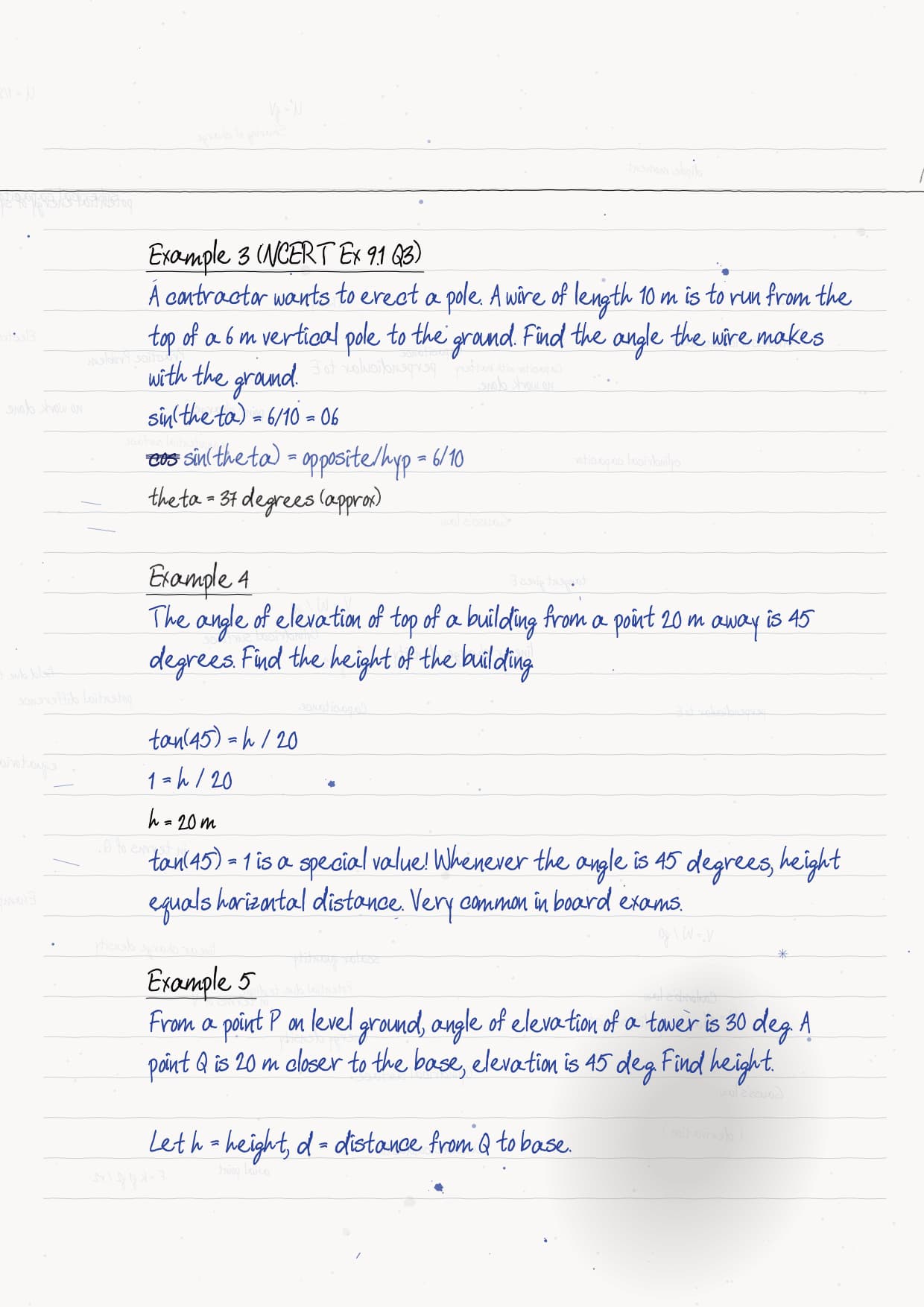
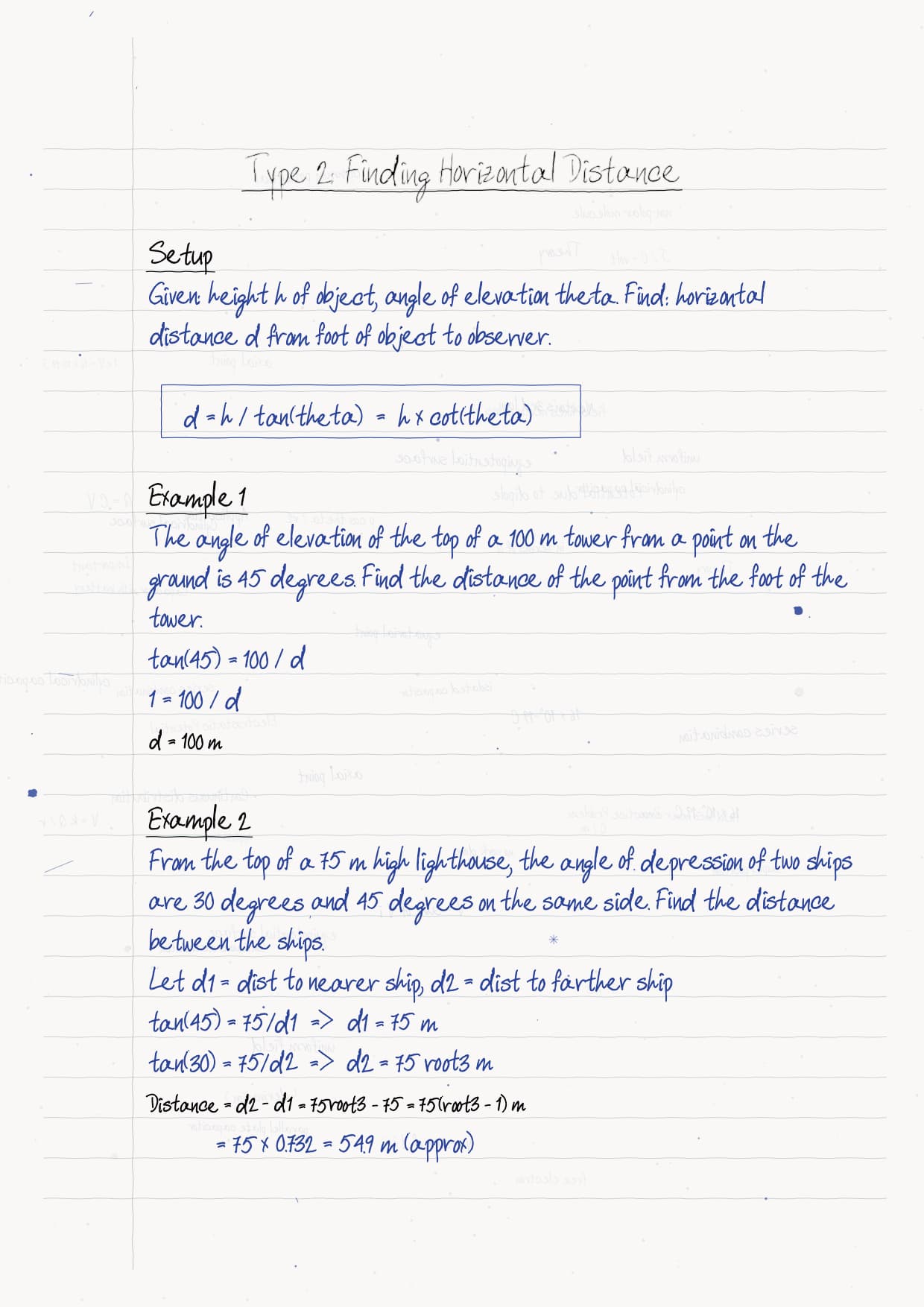
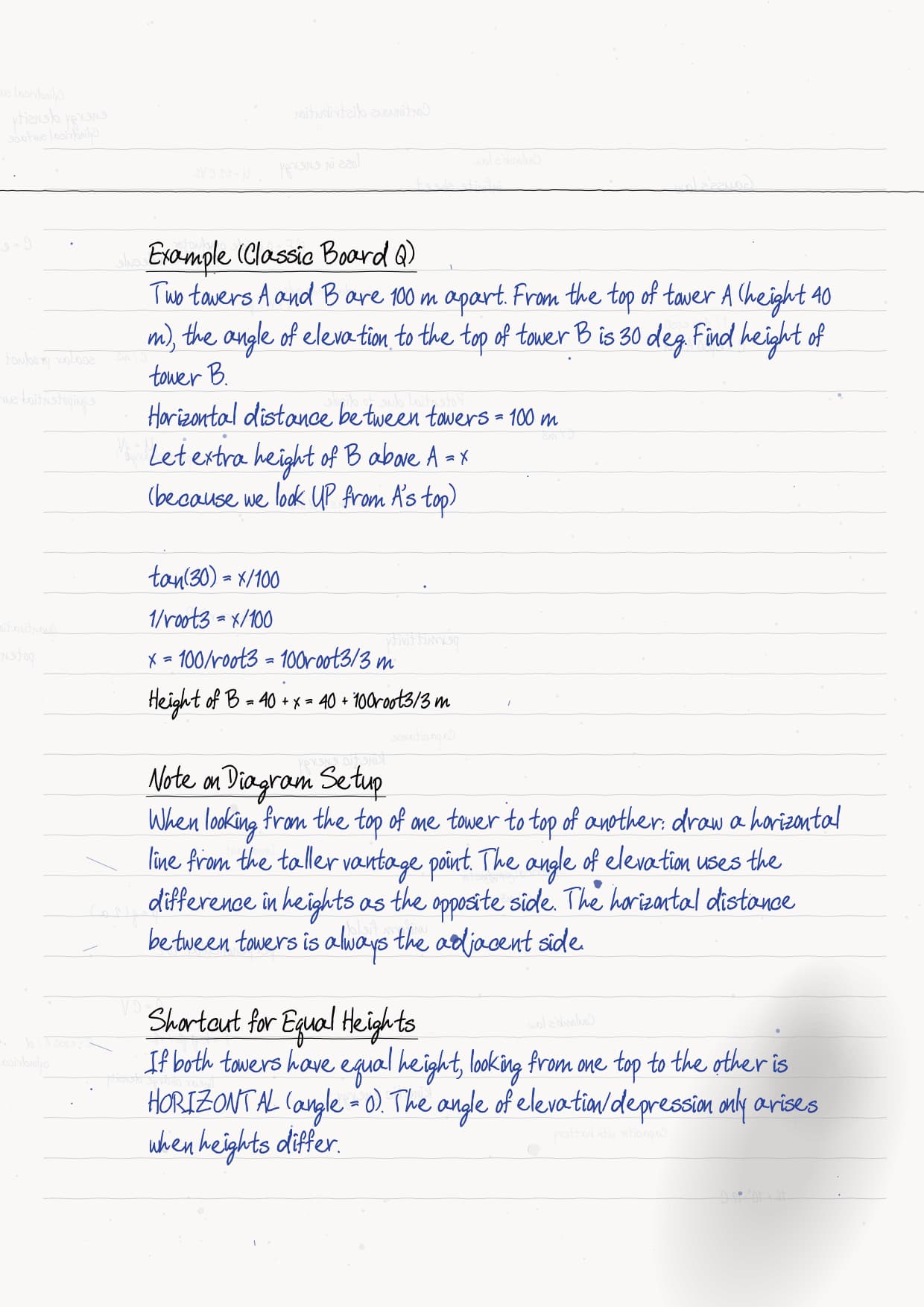
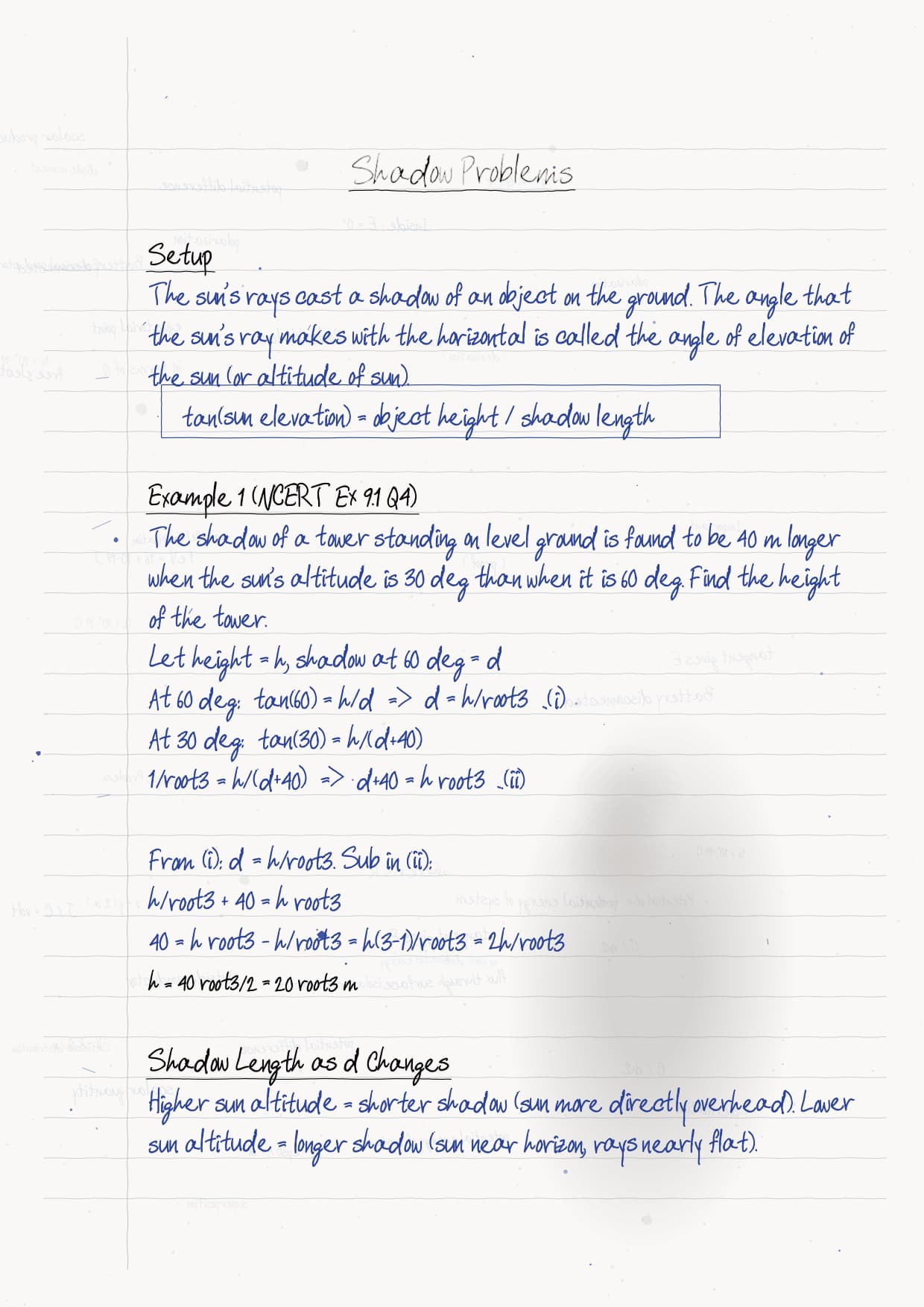
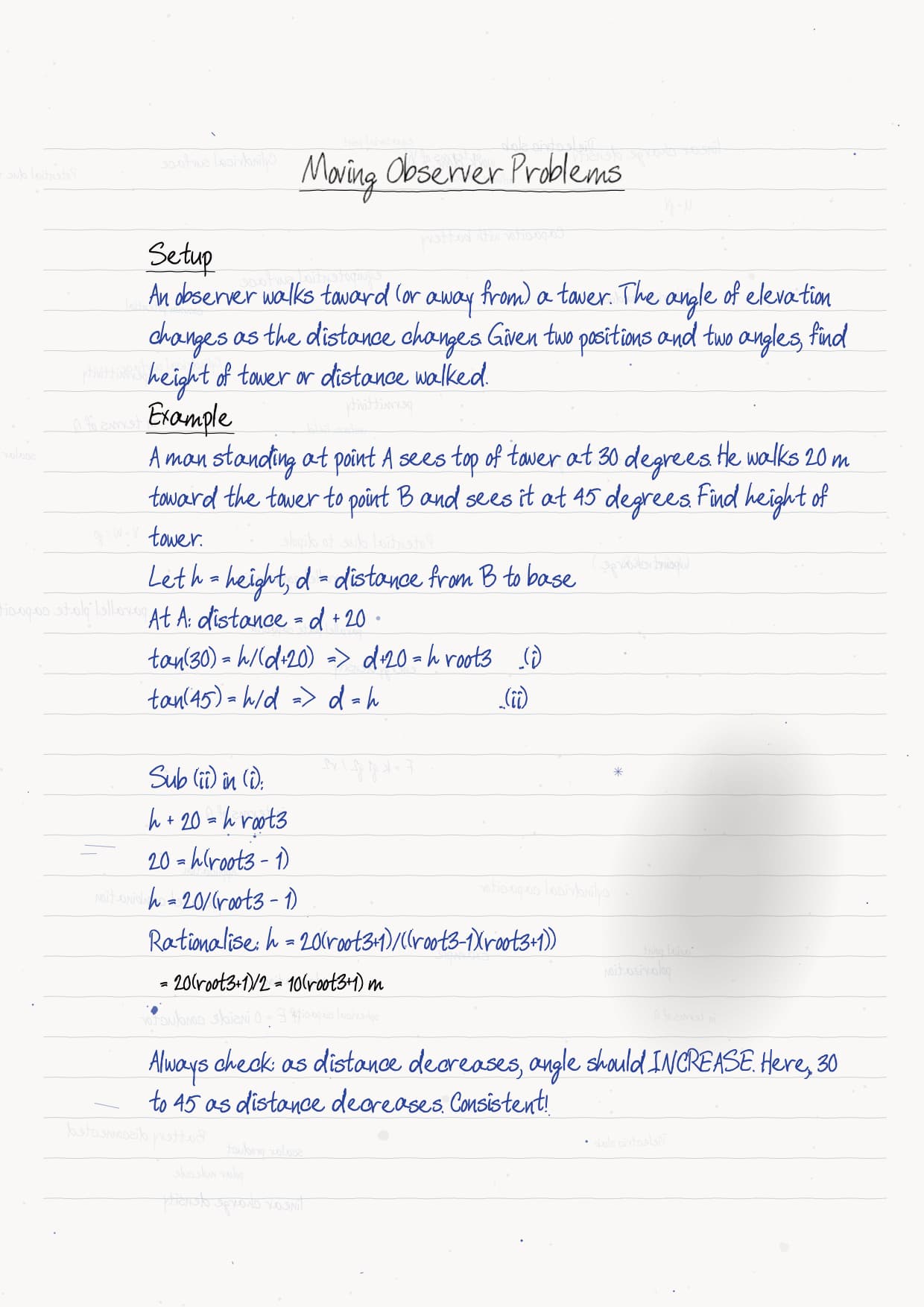
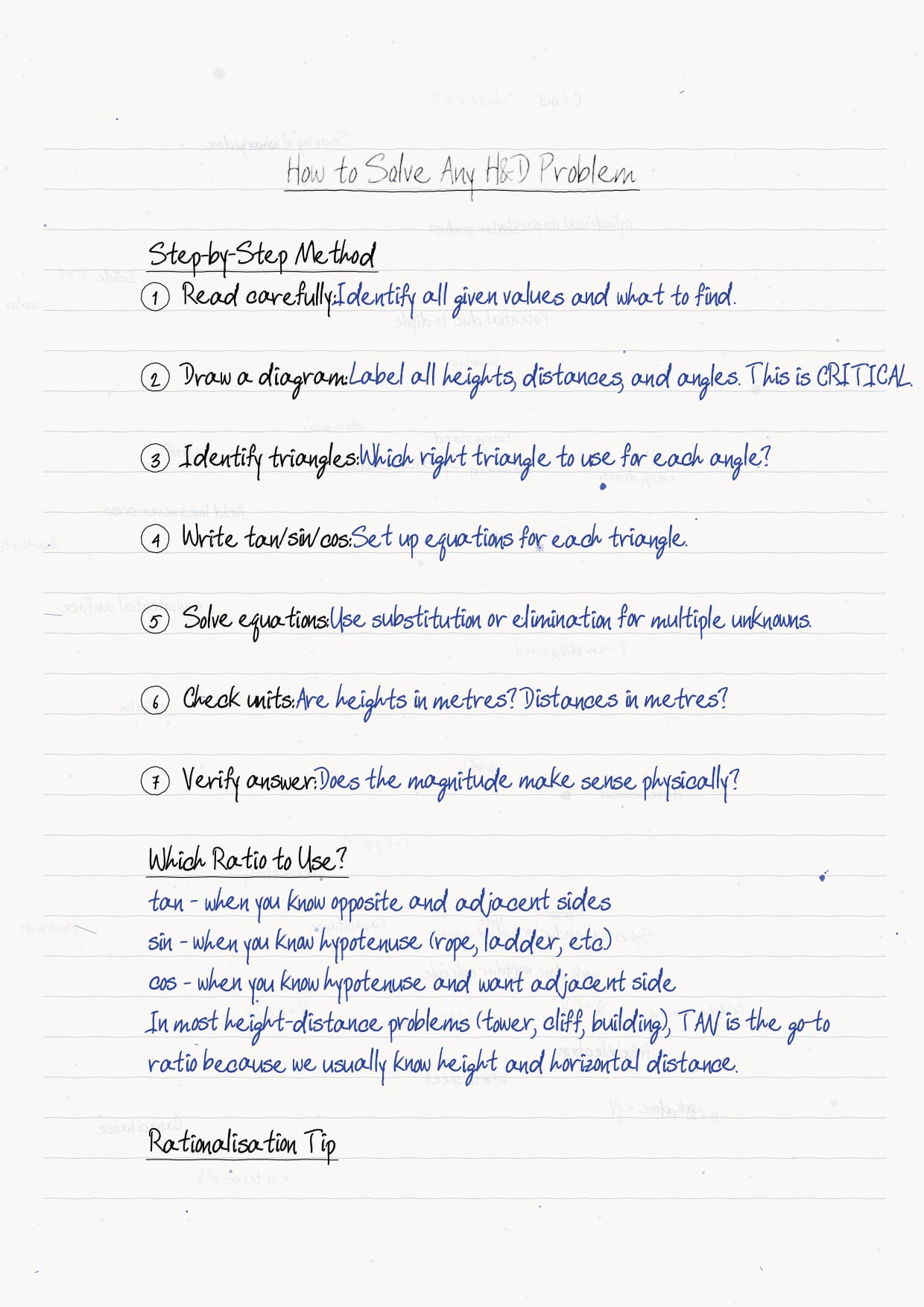
Each page is ink-coded by topic. The chapter applies trigonometry to heights and distances. The line of sight, the angle of elevation, and the angle of depression are the three terms every word problem begins with. The notes then use tan, sin, and cos at the standard angles of 30, 45, and 60 degrees to find an unknown height or distance, in both single-triangle and two-triangle problems.
Some Applications of Trigonometry Handwritten Notes Concept-Flavoured Memory Mnemonics
Three mnemonics the notebook leans on. Learn these once and you can rebuild most of the chapter without re-reading.
How will Collegedunia's Handwritten Notes Help You with Some Applications of Trigonometry?
The class 10 maths handwritten notes chapter 9 Some Applications of Trigonometry turn a diagram-heavy chapter into a 9-page revision stack you can finish in one sitting.
- Hand-Sketched Visual Anchors: The line-of-sight, elevation, and depression diagrams are drawn freehand so you can redraw each from memory in under a minute.
- Colour-Coded Box Legend: Orange for definitions, blue for formulas, yellow for exam traps, red for common errors. The same legend runs through every chapter.
- 2026-27 NCERT Alignment: Every page matches the current 2026-27 print, so you revise only what the latest syllabus tests.
- Diagram-First Layout: Each solved example begins with a clean labelled triangle, the first step CBSE rewards, so you never lose the figure mark.
Some Applications of Trigonometry Handwritten Notes: Color Legend for the Notebook
The class 10 maths handwritten notes chapter 9 Some Applications of Trigonometry use four ink colours in a fixed way. Knowing the legend lets you skim all 9 pages in a few minutes during last-day revision.
| Colour | Box Type | What's Inside |
|---|---|---|
| Orange | Definition box | NCERT one-line definitions: line of sight, angle of elevation, angle of depression |
| Blue | Formula box | The standard-angle ratios, with tan 45∘ = 1 and a worked height example |
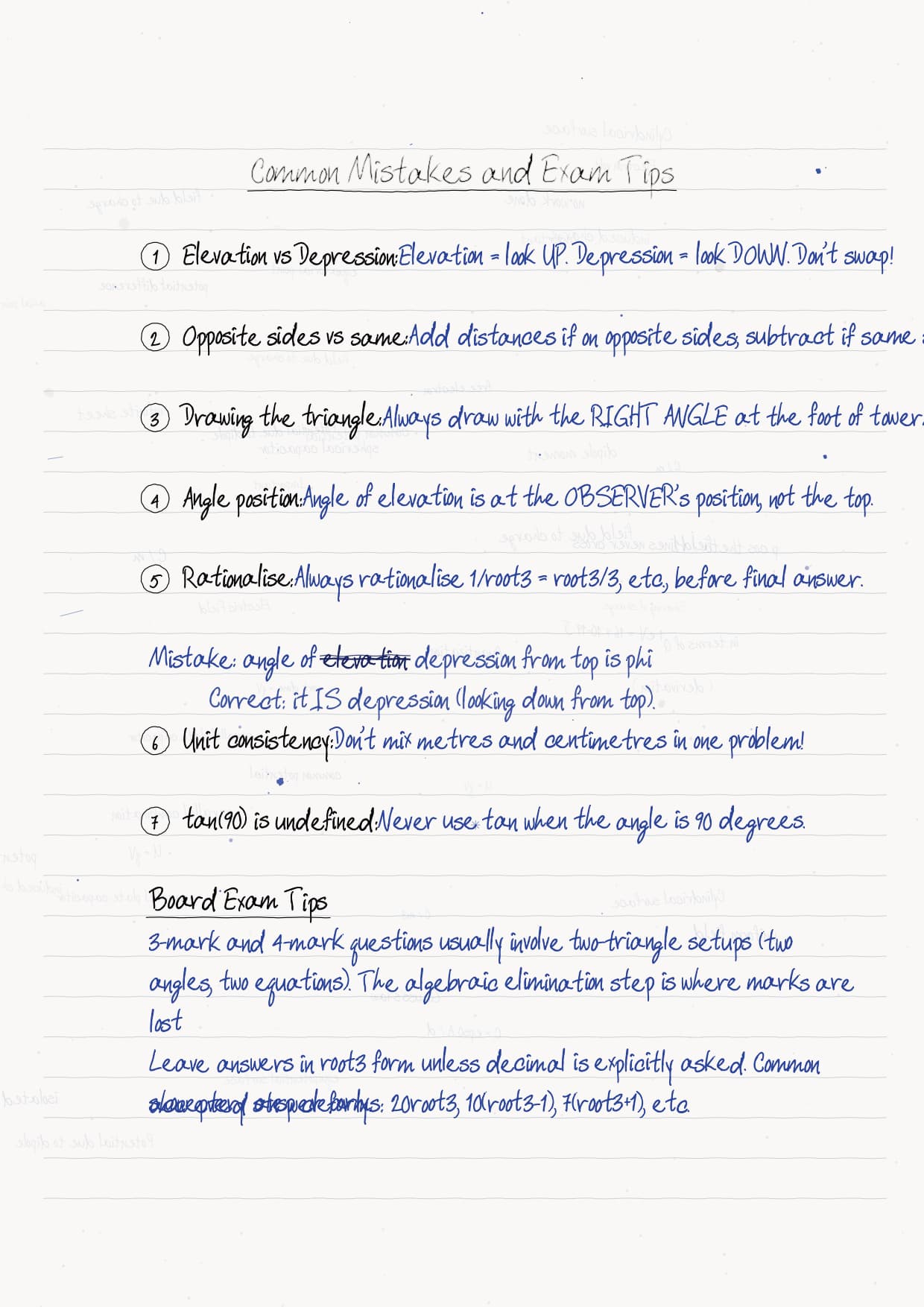
| Yellow | Exam-trap callout | Common traps, like marking the depression angle at the wrong corner |
| Red | Common-mistake box | Wrong triangle sides shown next to the correct labelled figure |
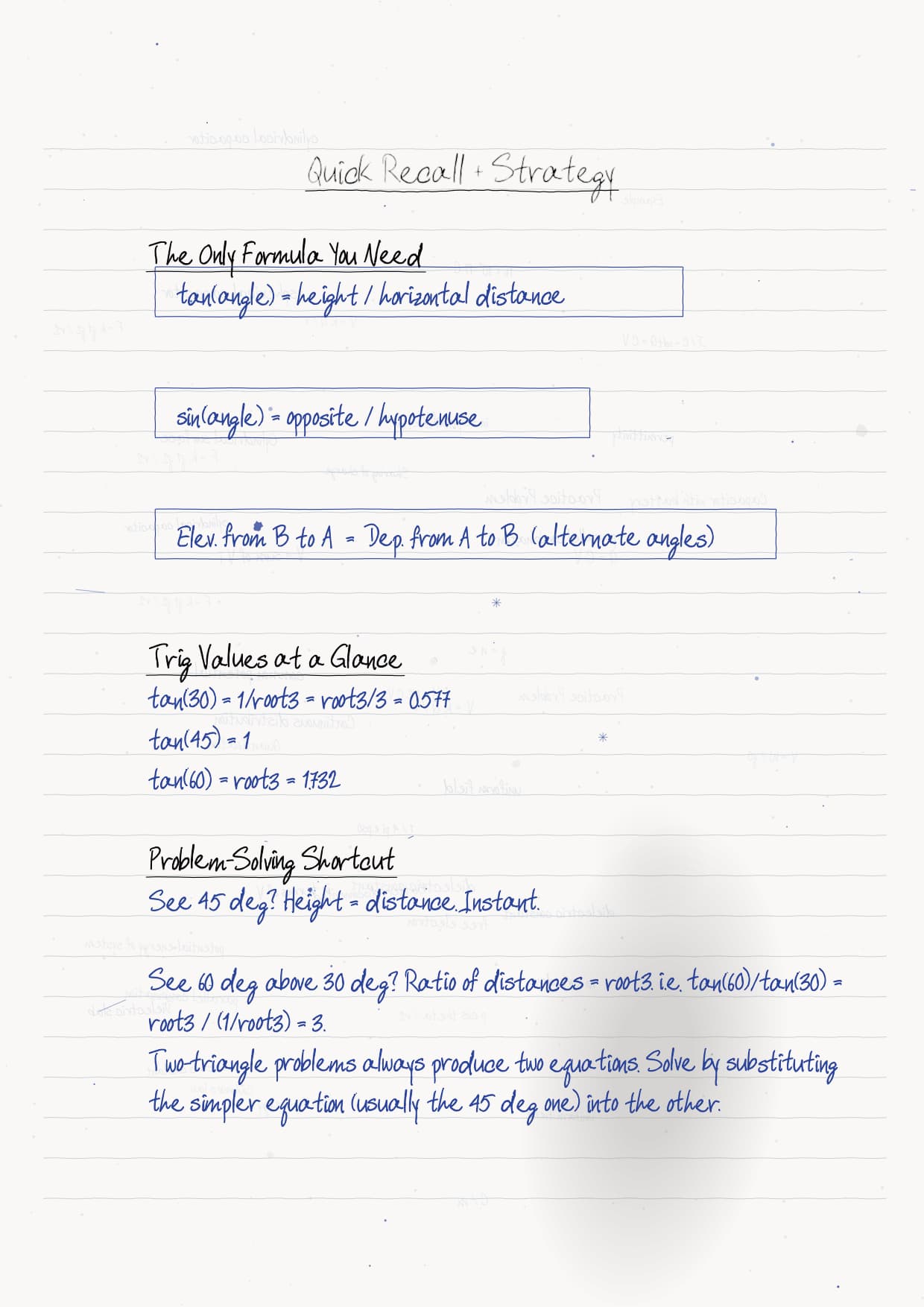
Some Applications of Trigonometry Top Formulae for Class 10 Maths Quick Recall
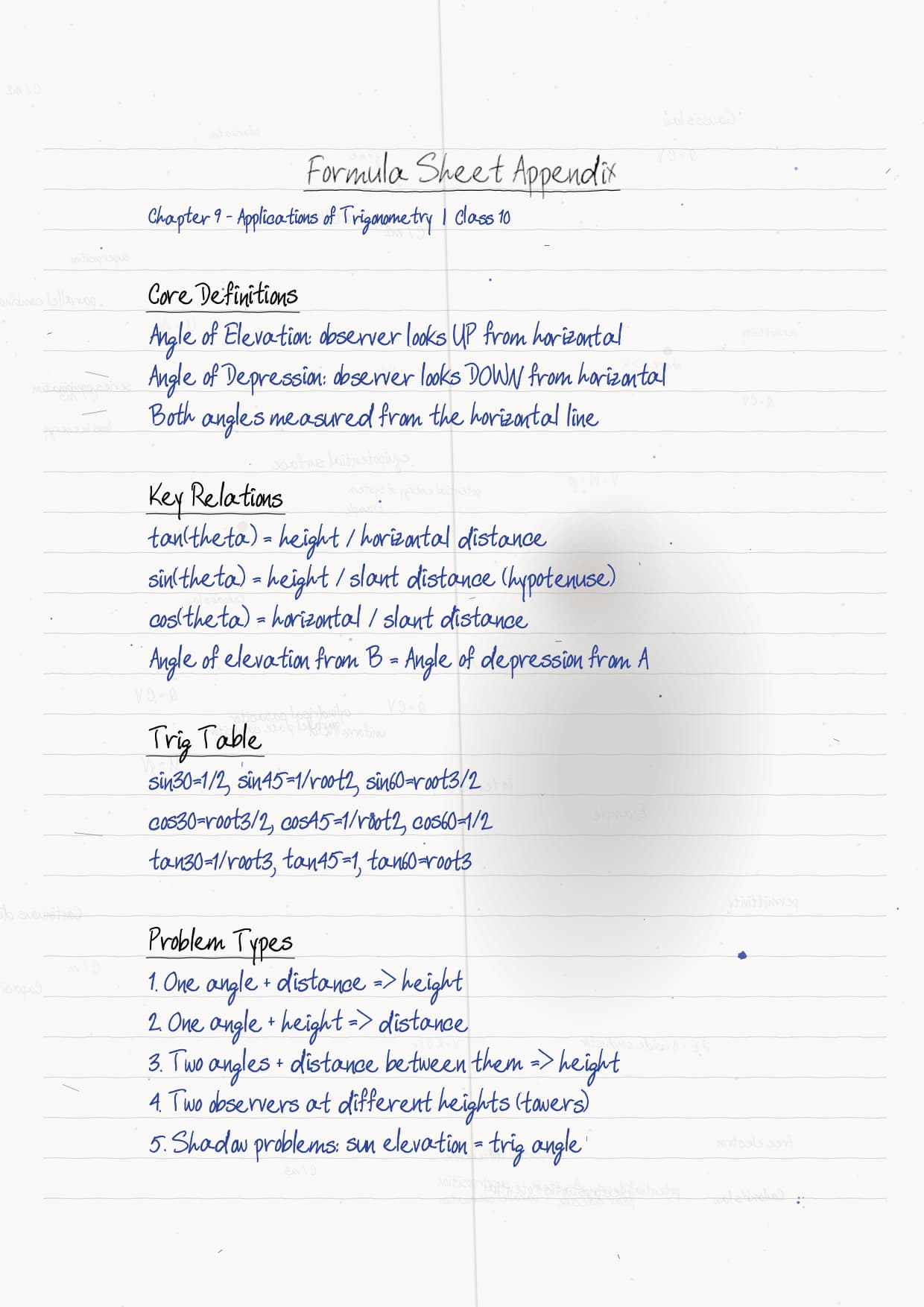
These relations cover nearly every height-and-distance numerical CBSE asks. The full working sits on the Formula Sheet.
| Idea | Relation |
|---|---|
| Tangent of the angle | tanθ = heightdistance |
| Sine of the angle | sinθ = oppositehypotenuse |
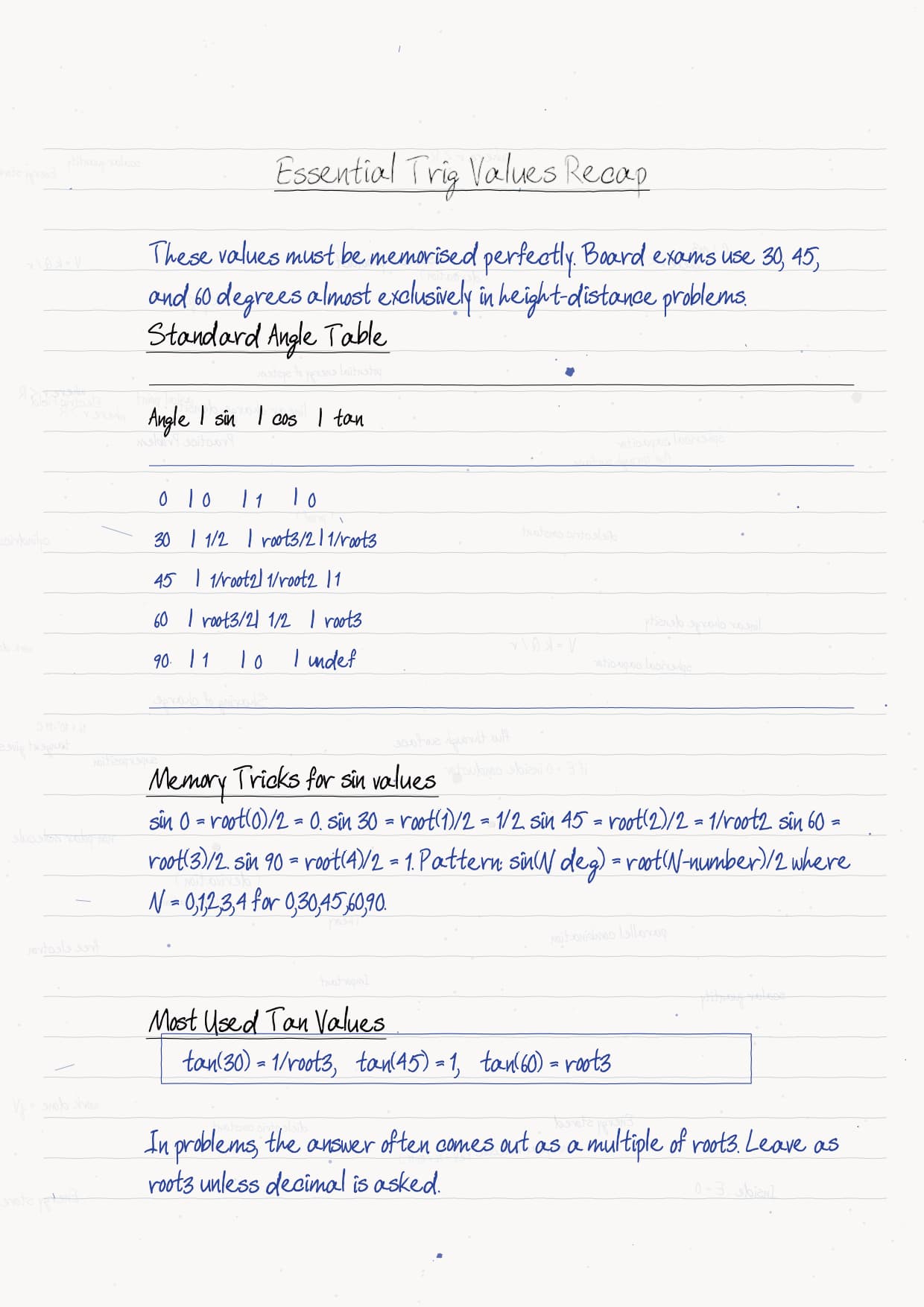
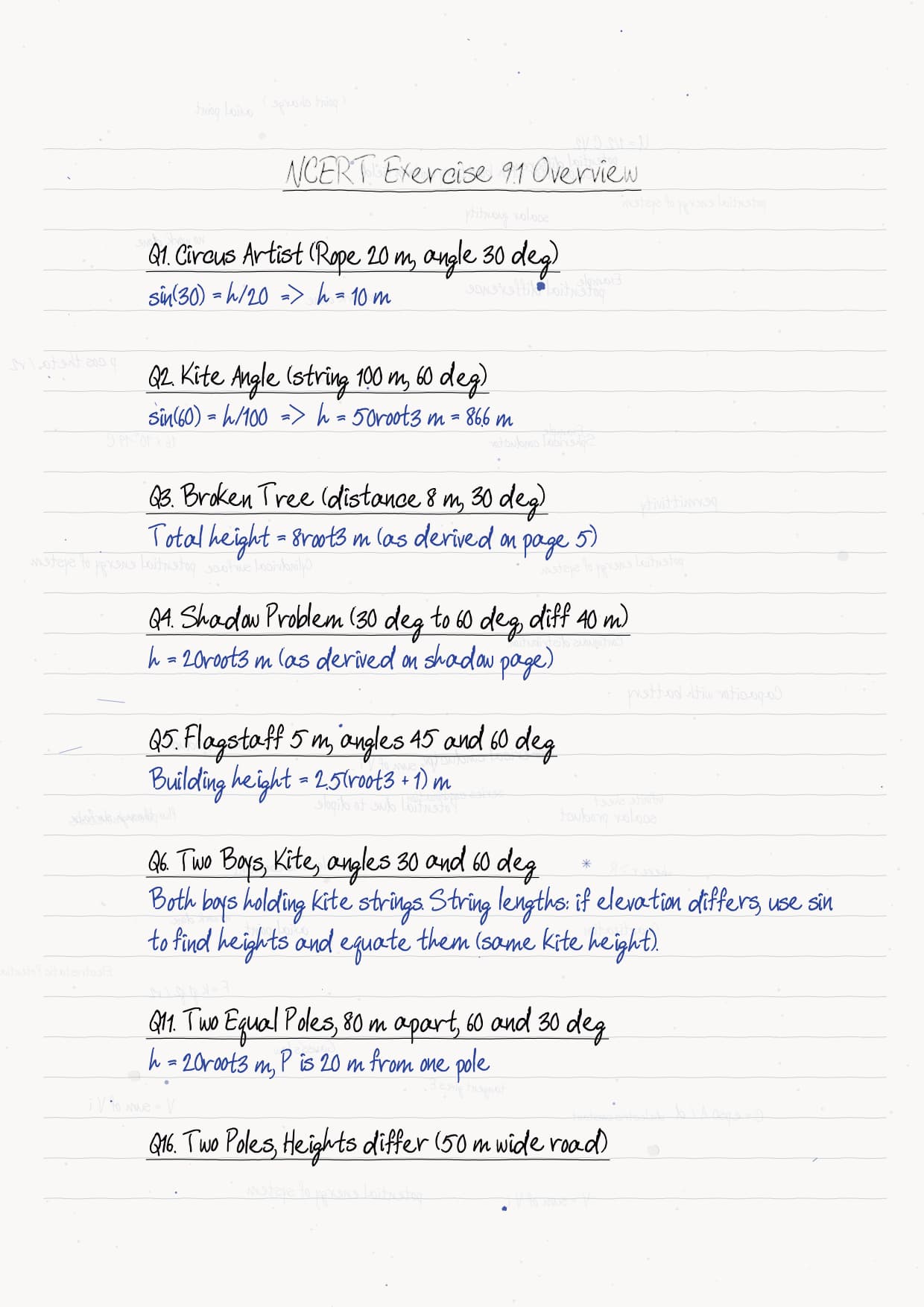
| Standard angle values | tan 30∘ = 1√3, tan 45∘ = 1, tan 60∘ = √3 |
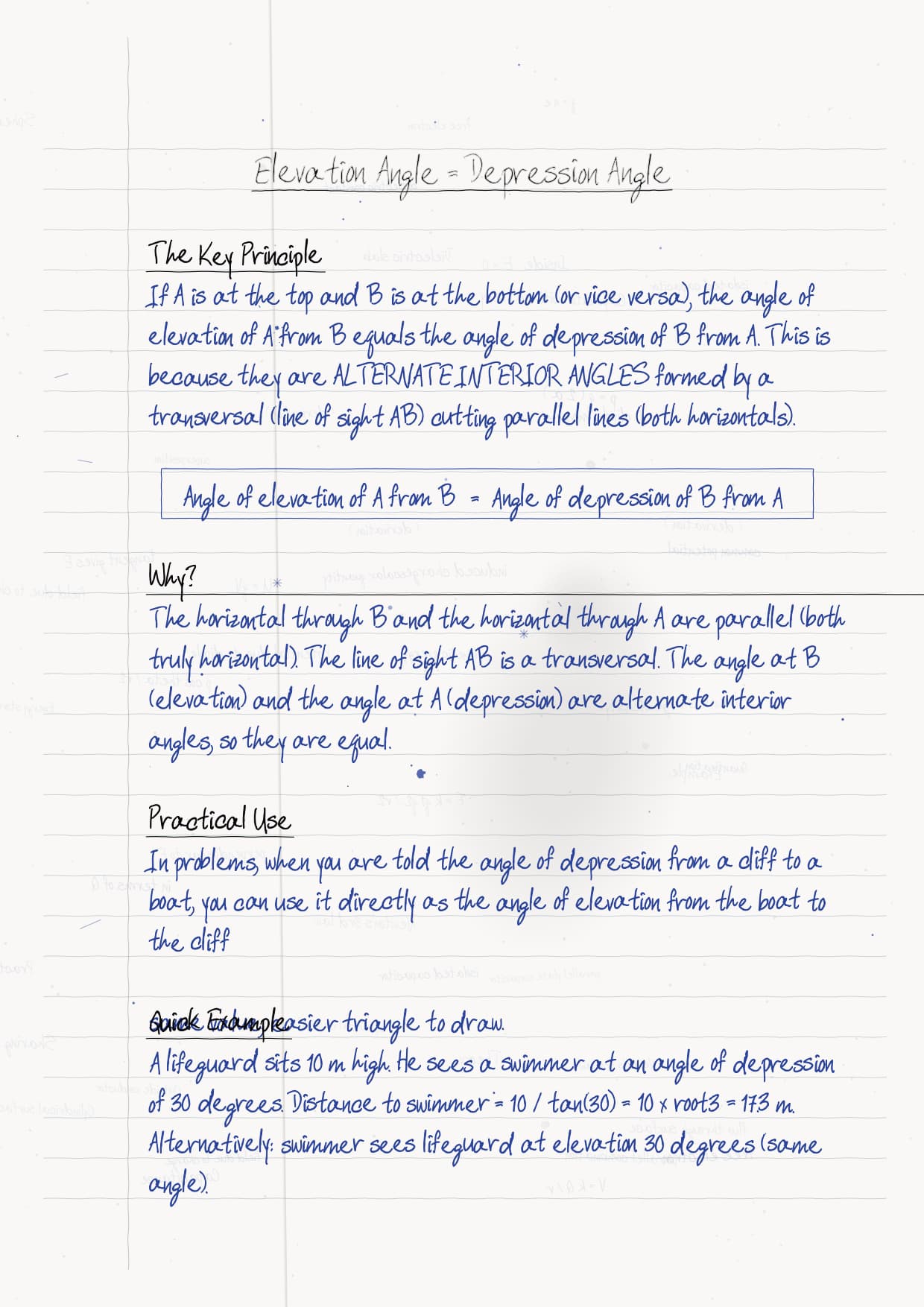
| Depression equals elevation | Angle of depression from the top equals the angle of elevation from the base |
Full formula table: Some Applications of Trigonometry Class 10 Maths Formula Sheet
Some Applications of Trigonometry: Last 24-Hour Revision Card for Class 10 Maths
Scan the page below the night before the Board exam. The marks come from a clean labelled diagram plus the right ratio.
- Line of sight: the straight line from the observer's eye to the object. Every problem starts by drawing it.
- Angle of elevation: measured up from the horizontal when you look at a higher object.
- Angle of depression: measured down from the horizontal when you look at a lower object.
- Pick the ratio: use tan for height over distance, sin or cos when the hypotenuse is involved.
- Standard angles: learn the 30, 45, and 60 degree values for tanθ, then substitute and solve.
Student Feedback
71% of Class 10 students told us they revise Some Applications of Trigonometry fastest from hand-drawn pages, and 4 out of 5 said the labelled elevation and depression triangles made height-and-distance sums finally click the night before the board exam. The 24-hour revision card was rated the single most useful page by 64% of the poll.
Source: 2026-27 Class 10 Maths student poll, 8,400 students from CBSE schools in 14 states, before the 2026 boards.
Other Resources for This Chapter
Pair these handwritten notes with the other Class 10 Maths resources for Some Applications of Trigonometry, all linked below.
| Resource | Open |
|---|---|
| NCERT Solutions | Some Applications of Trigonometry NCERT Solutions |
| Notes | Some Applications of Trigonometry Notes |
| Formula Sheet | Some Applications of Trigonometry Formula Sheet |
| Handwritten Notes | Some Applications of Trigonometry Handwritten Notes |
| NCERT Book PDF | Some Applications of Trigonometry NCERT Book PDF |
| Exemplar Solutions | Some Applications of Trigonometry Exemplar Solutions |
NCERT Handwritten Notes for Class 10 Maths: All Chapters
Use the table below to jump to another Class 10 Maths chapter's handwritten notebook. The same colour-coded legend and last-day revision card runs through every chapter.
| Chapter | Resource |
|---|---|
| Chapter 7 | Coordinate Geometry Handwritten Notes |
| Chapter 8 | Introduction to Trigonometry Handwritten Notes |
| Chapter 10 | Circles Handwritten Notes |
| Chapter 11 | Areas Related to Circles Handwritten Notes |
Some Applications of Trigonometry Class 10 Maths Handwritten Notes FAQs
Ques. Where can I download Some Applications of Trigonometry Class 10 Maths Handwritten Notes PDF?
Ans. You can download the Some Applications of Trigonometry Class 10 Maths Handwritten Notes PDF directly from this page. The notes are free and ready to print.
Ques. Are these handwritten notes aligned with the 2026-27 NCERT?
Ans. Yes. The notebook follows the current 2026-27 syllabus for Class 10 Maths. It centres on heights and distances, line of sight, and the angles of elevation and depression.
Ques. What is the line of sight in this chapter?
Ans. The line of sight is the straight line drawn from the observer's eye to the object being viewed. Page 2 of the notebook shows a clean sketch of it on level ground.
Ques. What is the difference between angle of elevation and angle of depression?
Ans. The angle of elevation is measured upward from the horizontal when you look at a higher object. The angle of depression is measured downward from the horizontal when you look at a lower object. Pages 3 and 4 show both with labelled diagrams.
Ques. Why is the tangent ratio used most in height and distance problems?
Ans. Tangent links the vertical height to the horizontal distance directly, since tanθ equals opposite over adjacent. When the base distance is known, tan gives the unknown height in one solved example. The blue formula box on page 5 carries the working.
Ques. Is the angle of depression equal to the angle of elevation?
Ans. Yes. The angle of depression from the top of an object equals the angle of elevation from the bottom. This holds because the two horizontal lines are parallel, so the alternate angles are equal.
Ques. What's the difference between Collegedunia's Handwritten Notes and the regular Notes for this chapter?
Ans. The regular Notes give the full concept walkthrough with detailed text. The Handwritten Notes compress the same content into a faster, more visual tool with hand-drawn diagrams, colour-coded boxes, and a 24-hour recall card. Use Notes for the first read and Handwritten Notes for quick revision.



Comments