




Inside the Class 10 Science Magnetic Effects of Electric Current previous year questions PDF, you will find practice grouped by marks. The collection covers selected papers from 2005 to 2026. Use it for written practice in 2026-27, after checking which topics your current syllabus assesses. The topic guide below separates current board preparation from older questions.
- 161 questions across five groups, from 1 mark to 5 marks.
- Questions only: the PDF does not include an answer key or worked solutions.
- Practise magnetic field diagrams, direction rules, solenoids and domestic electric circuits.
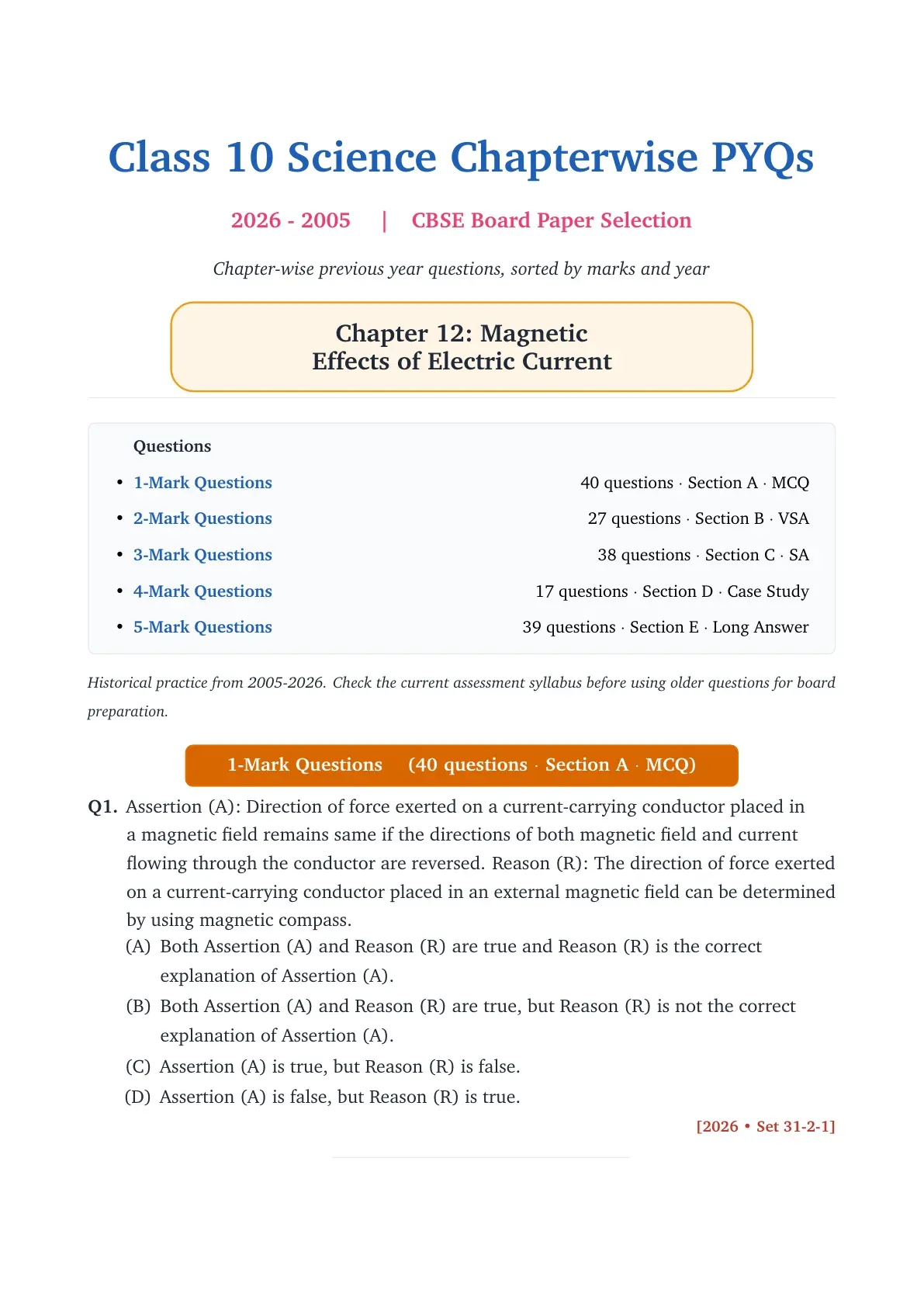
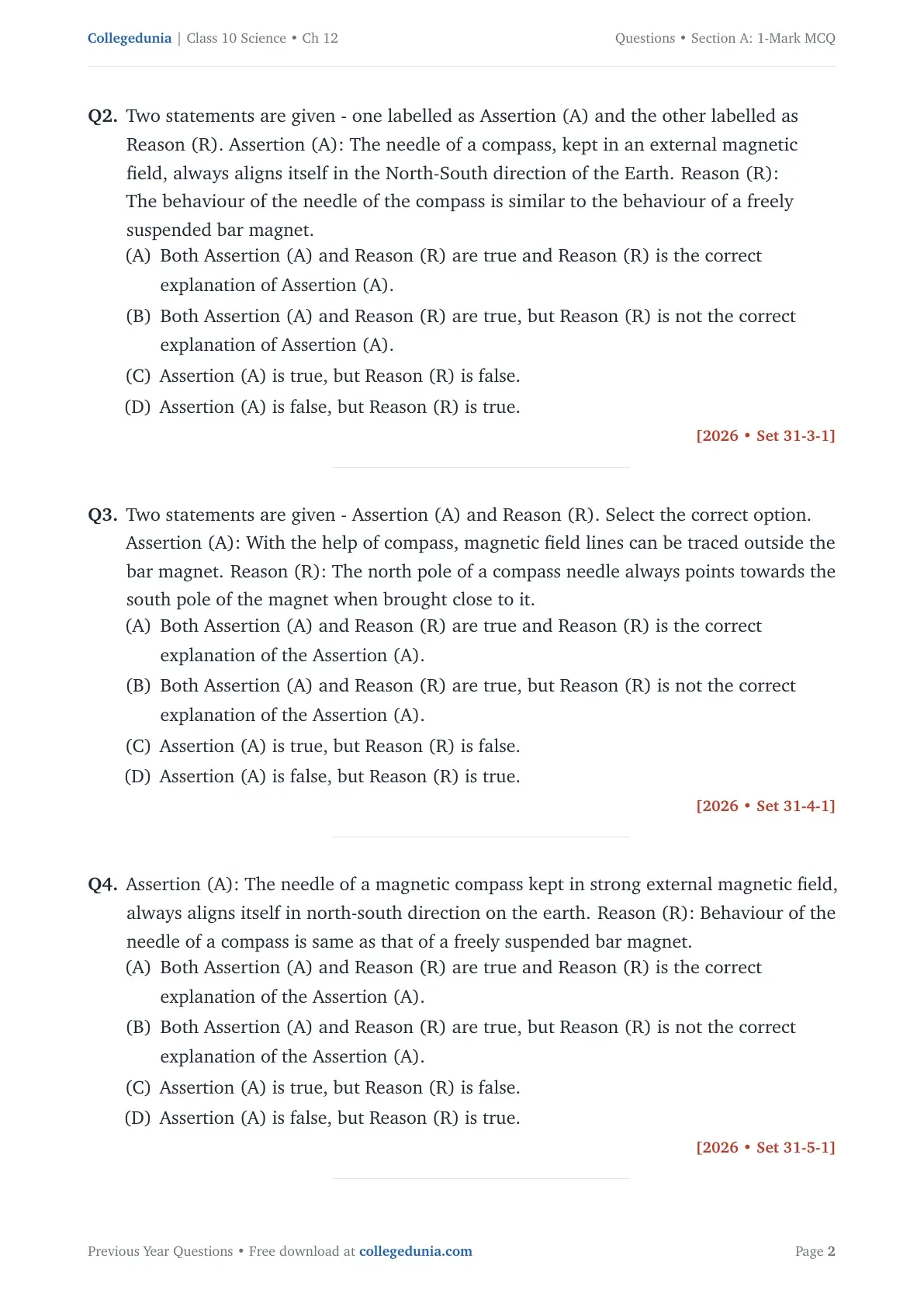
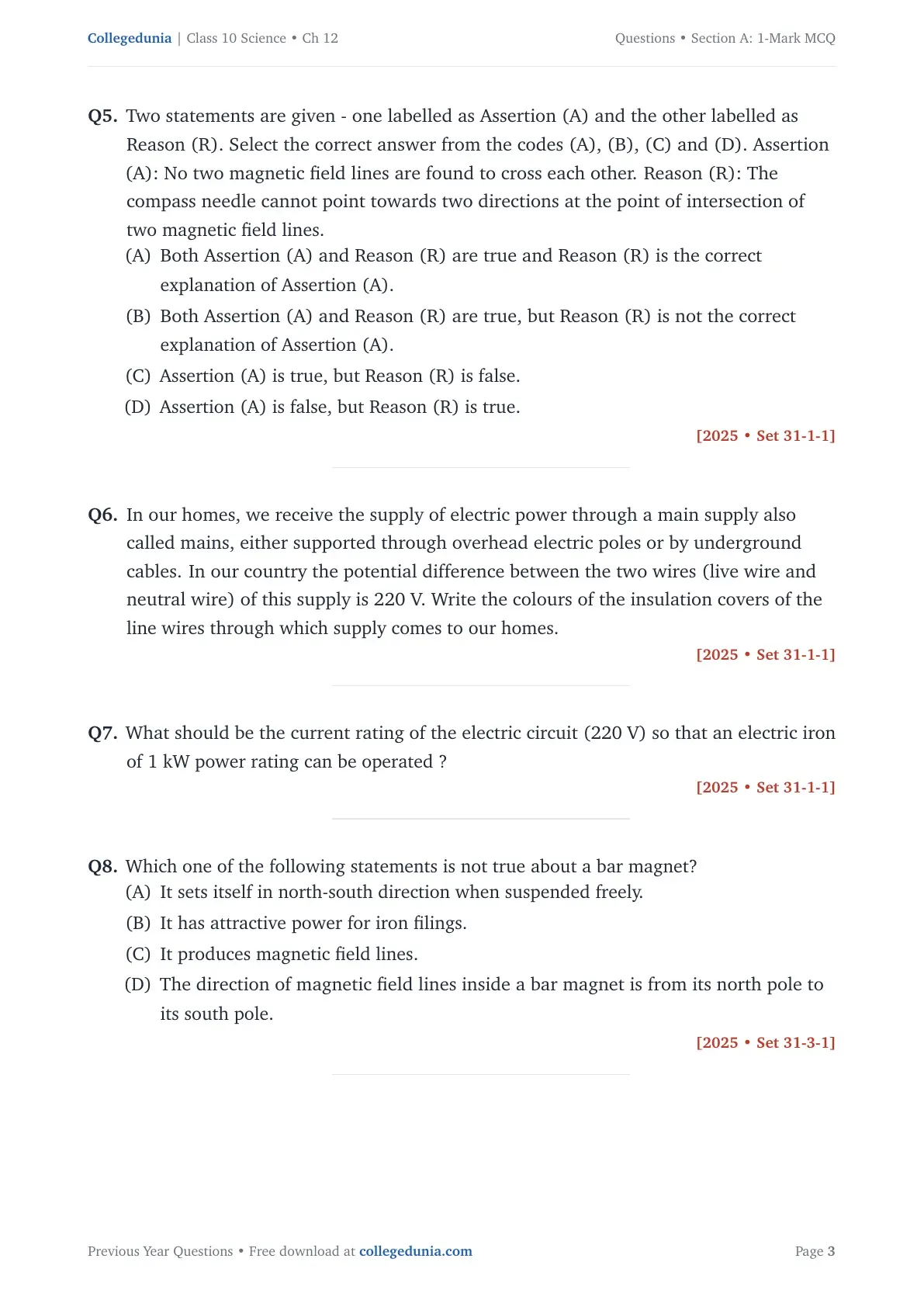
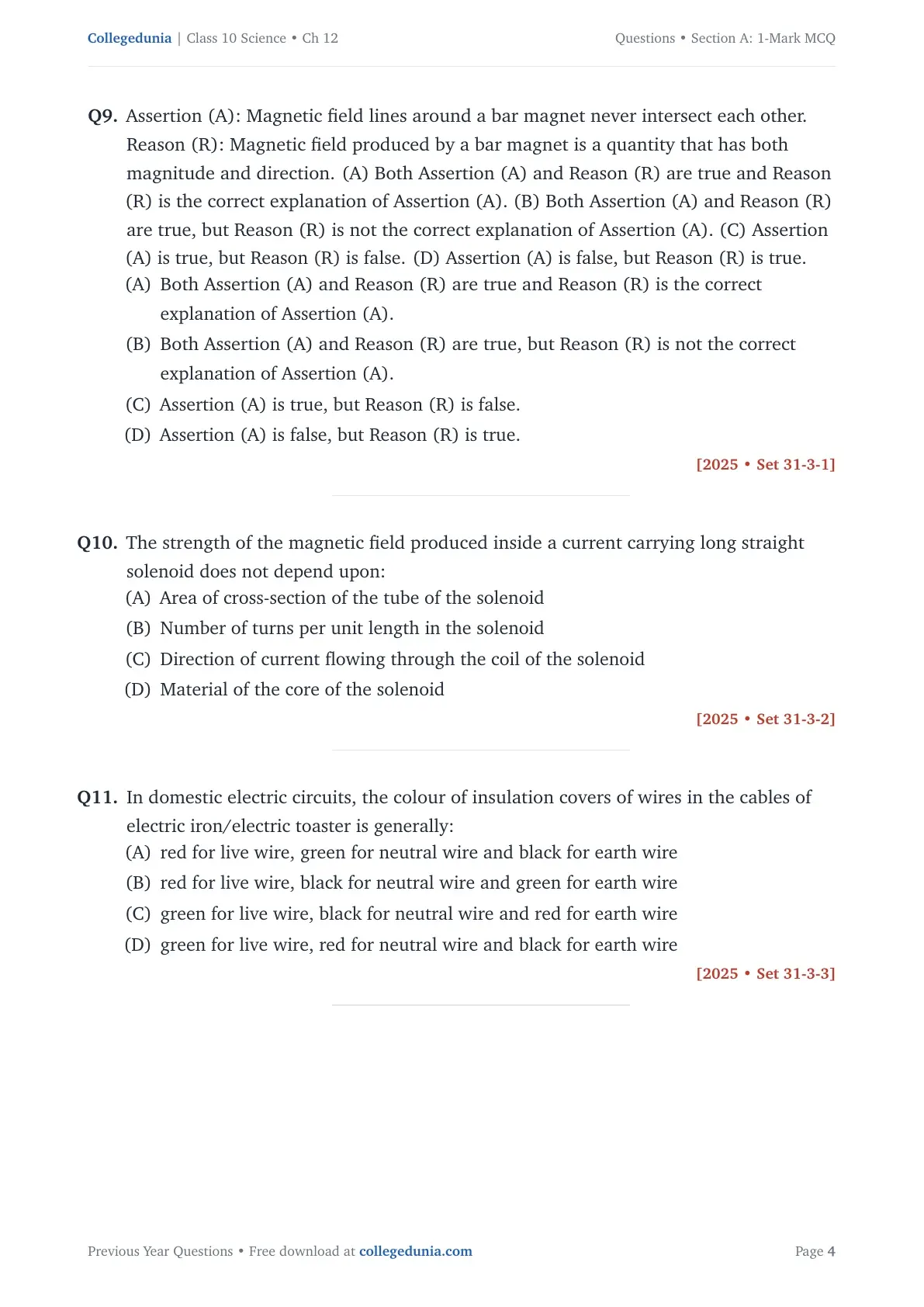
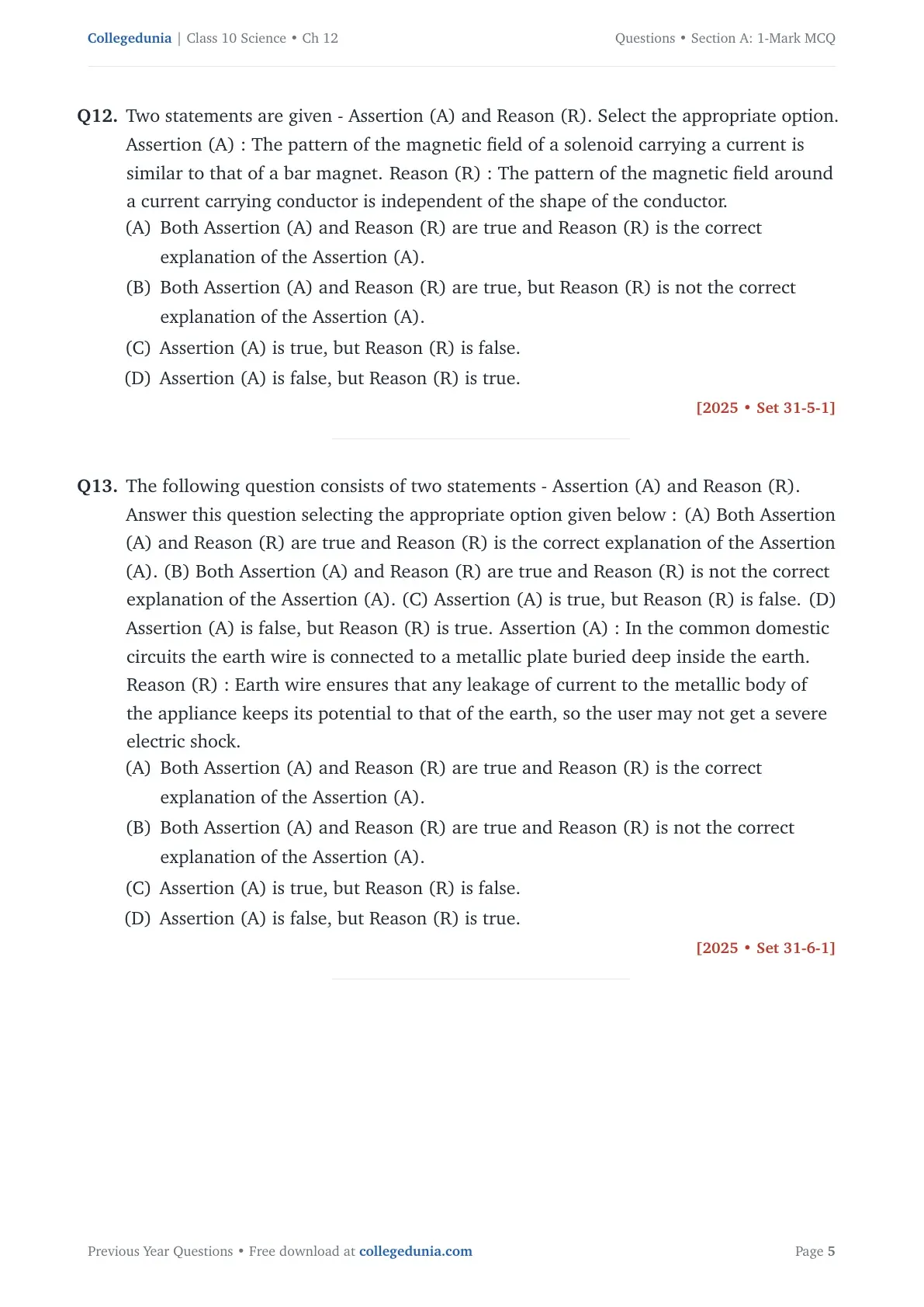
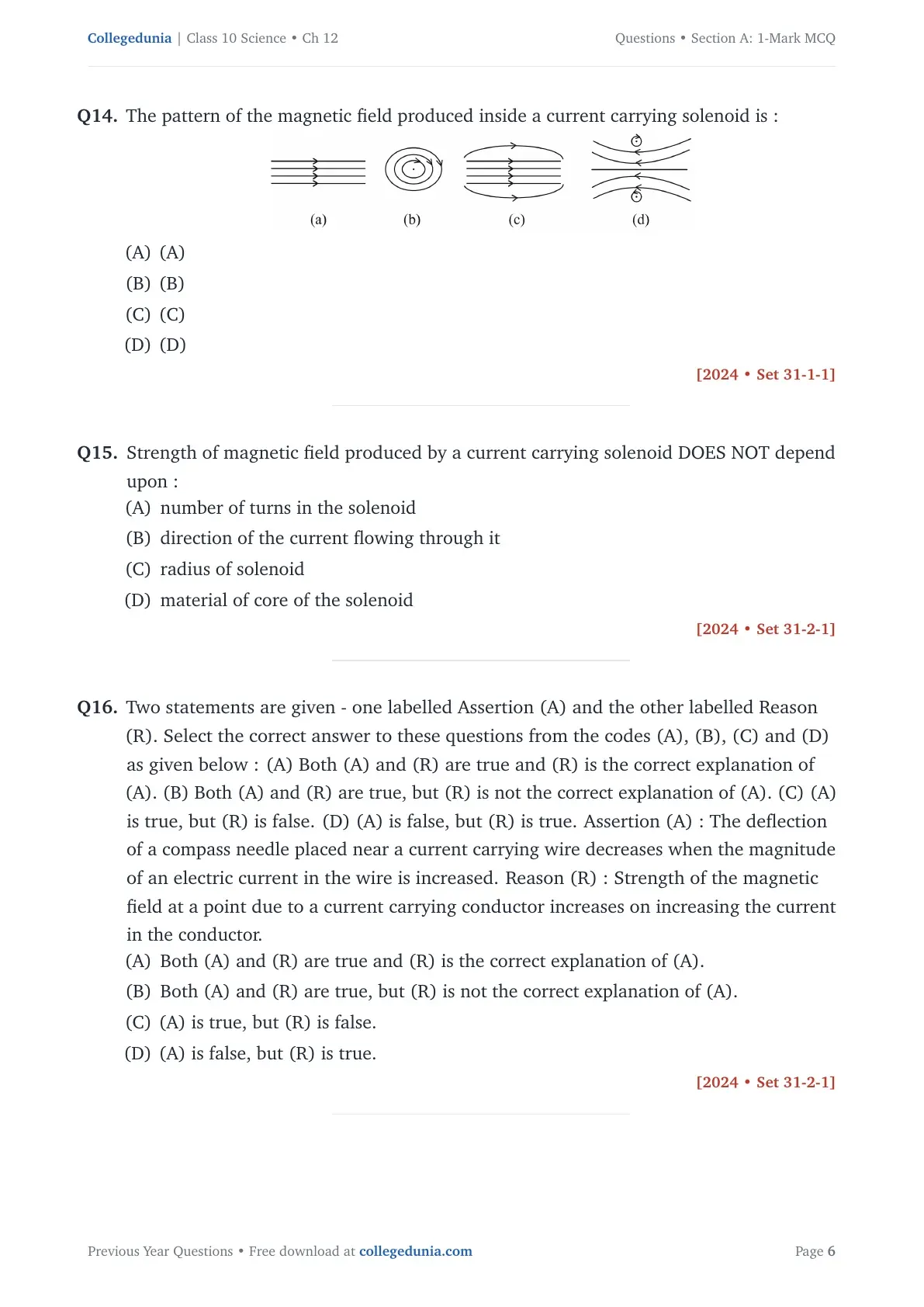
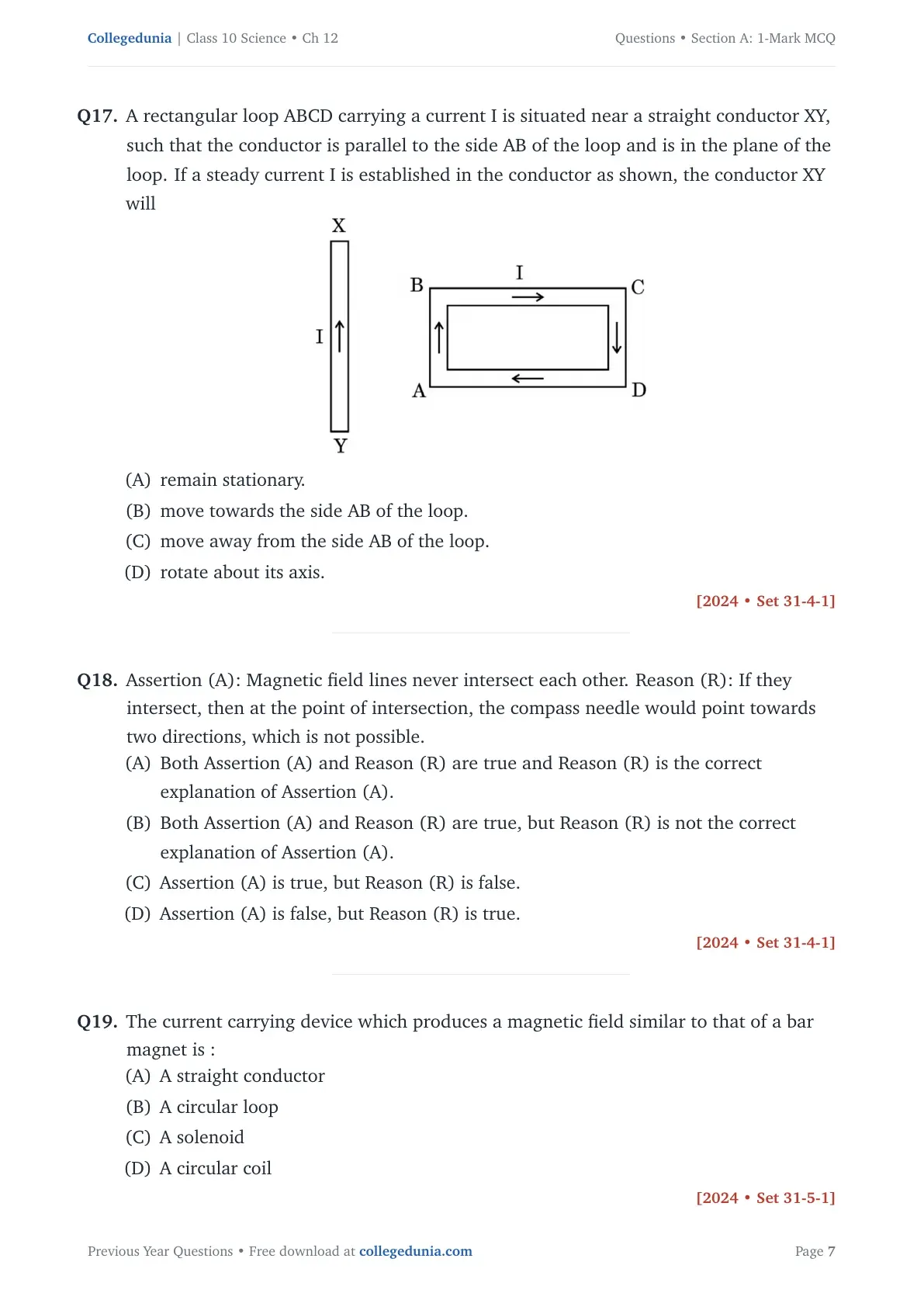
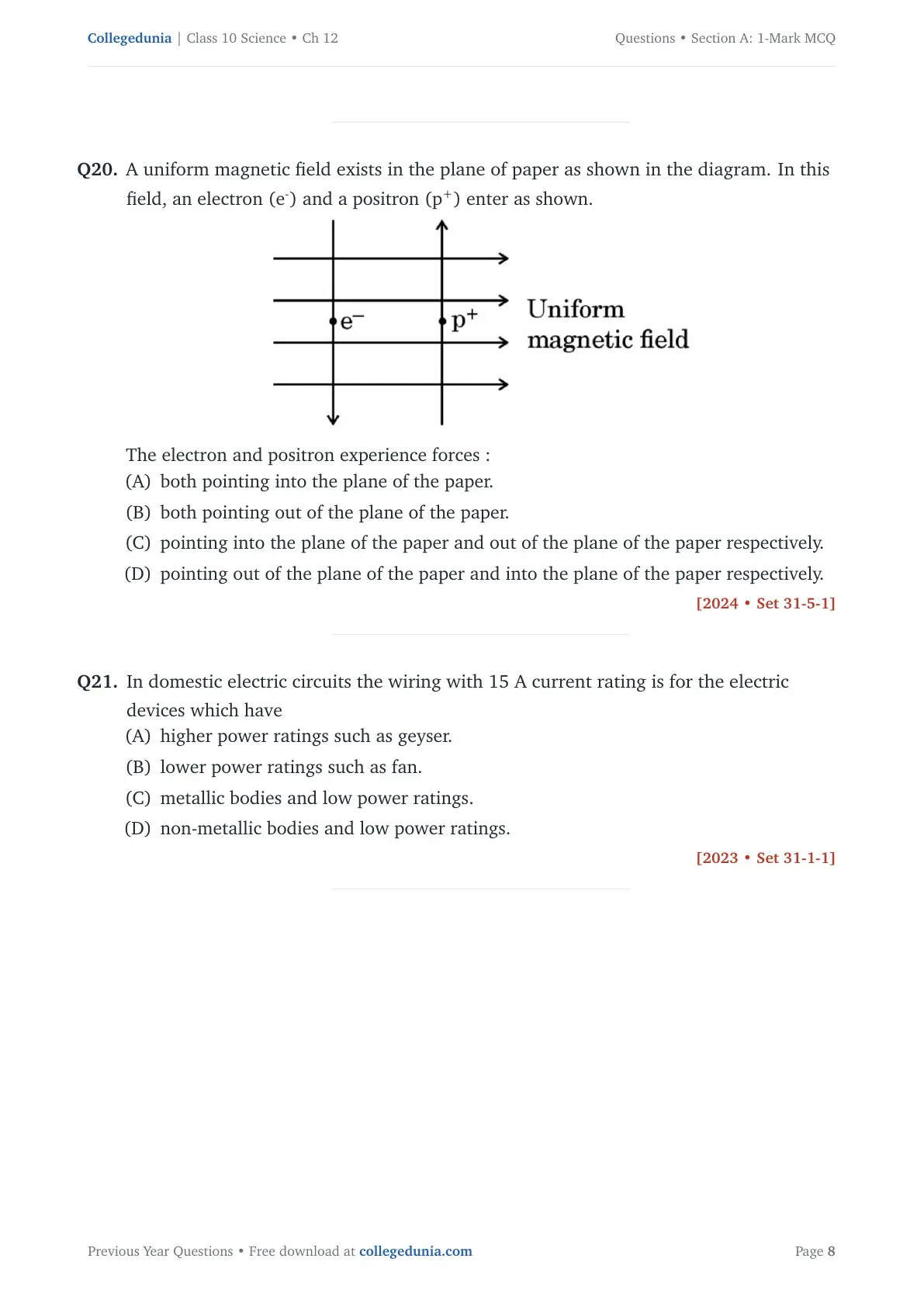
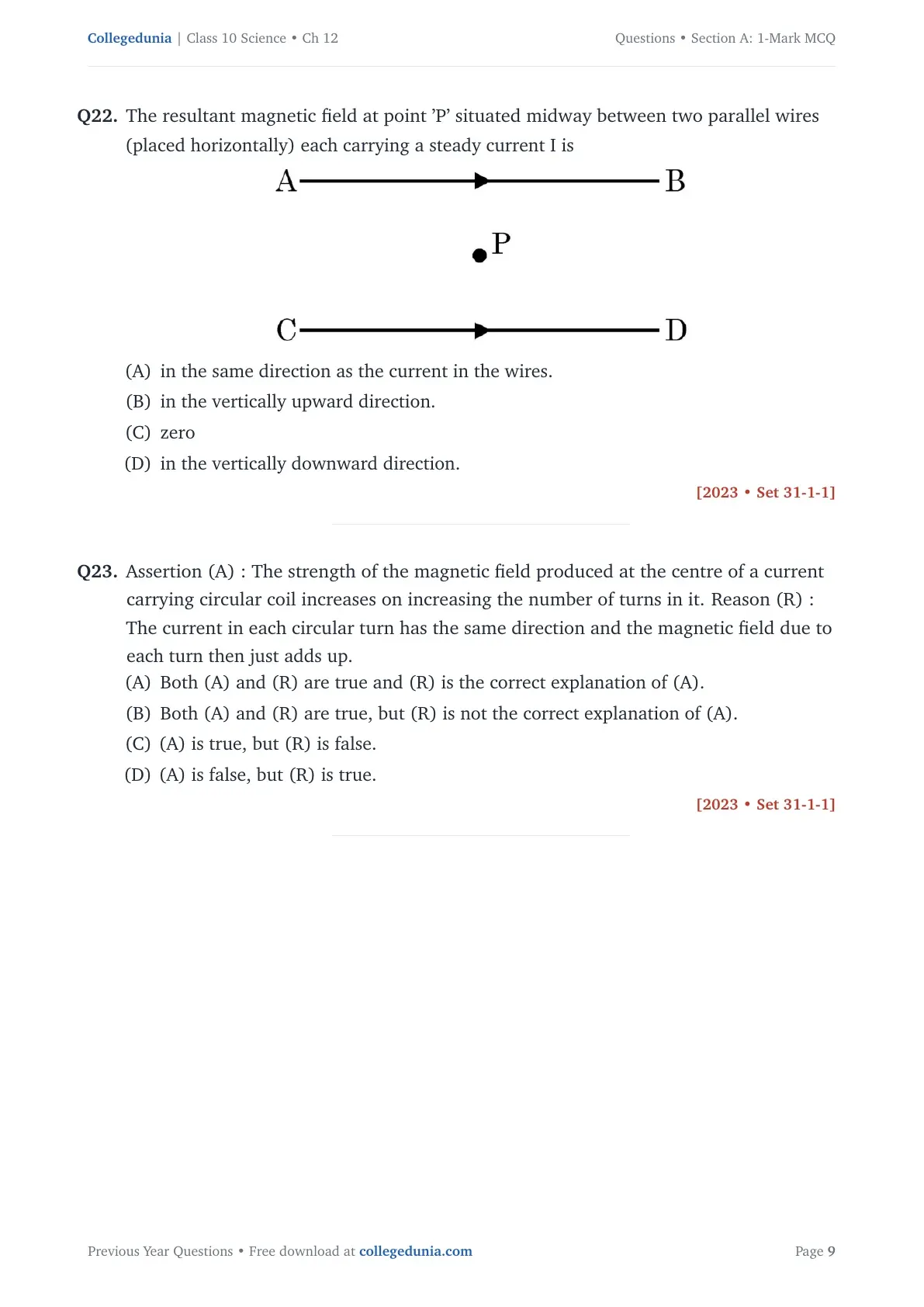
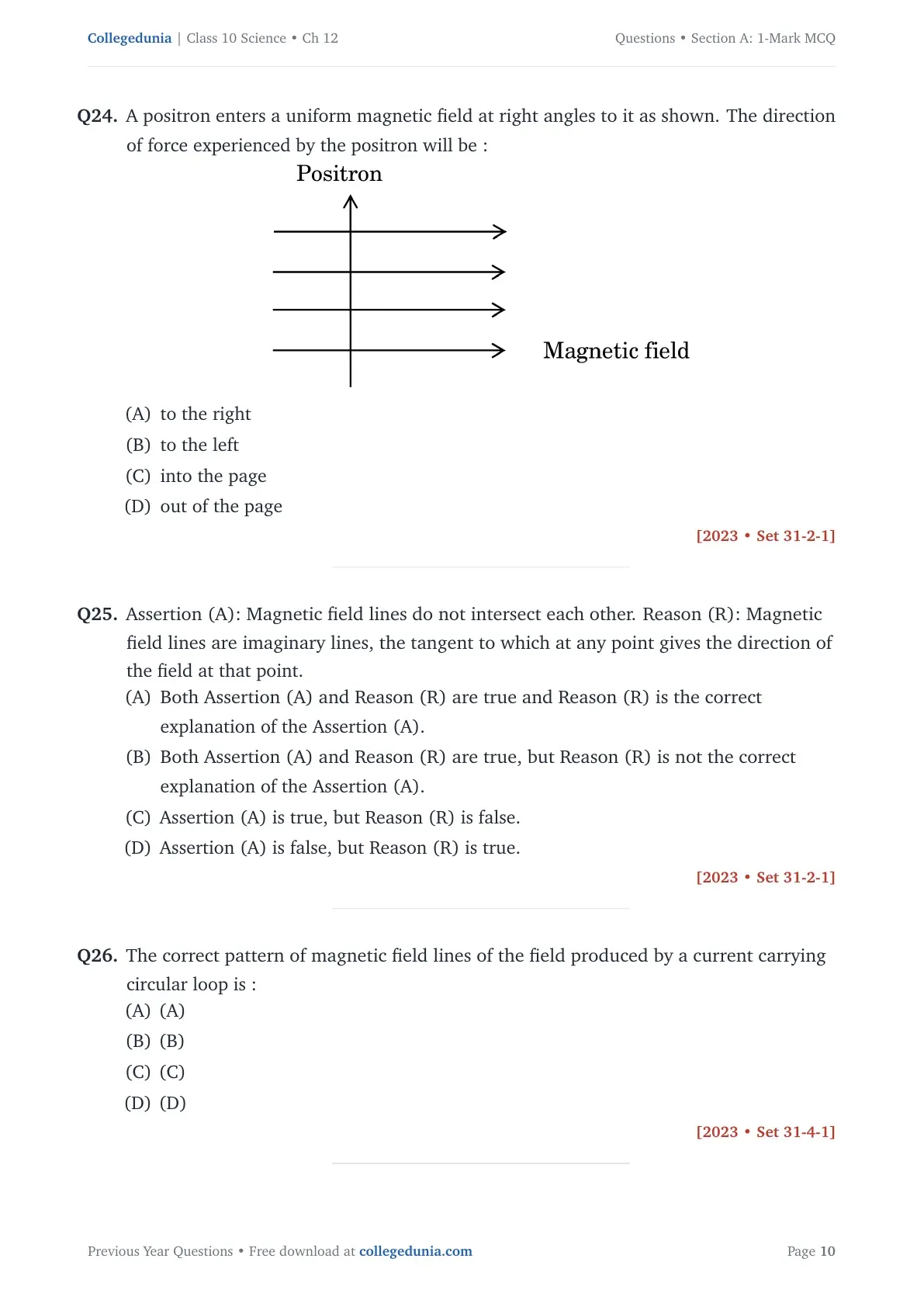
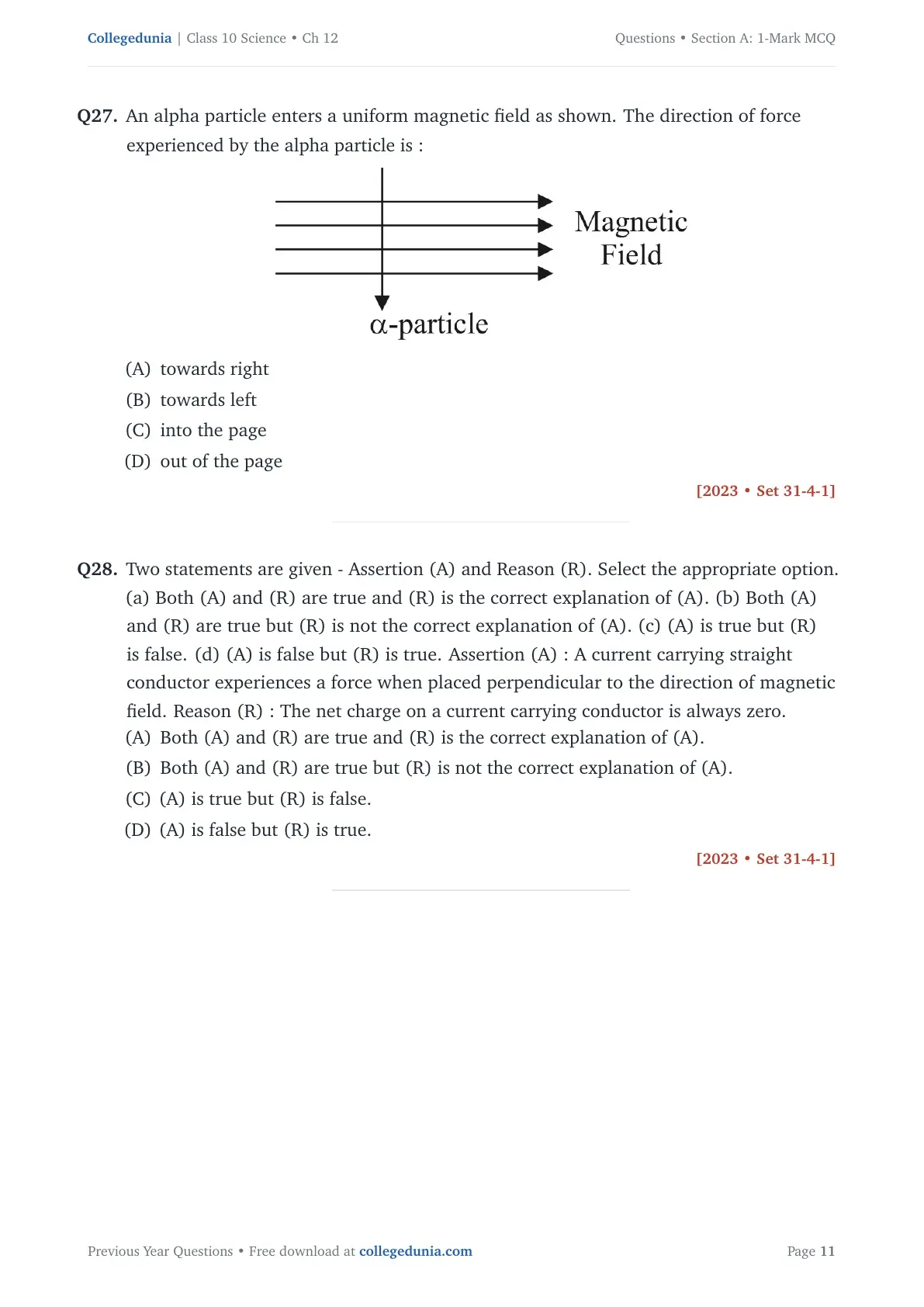
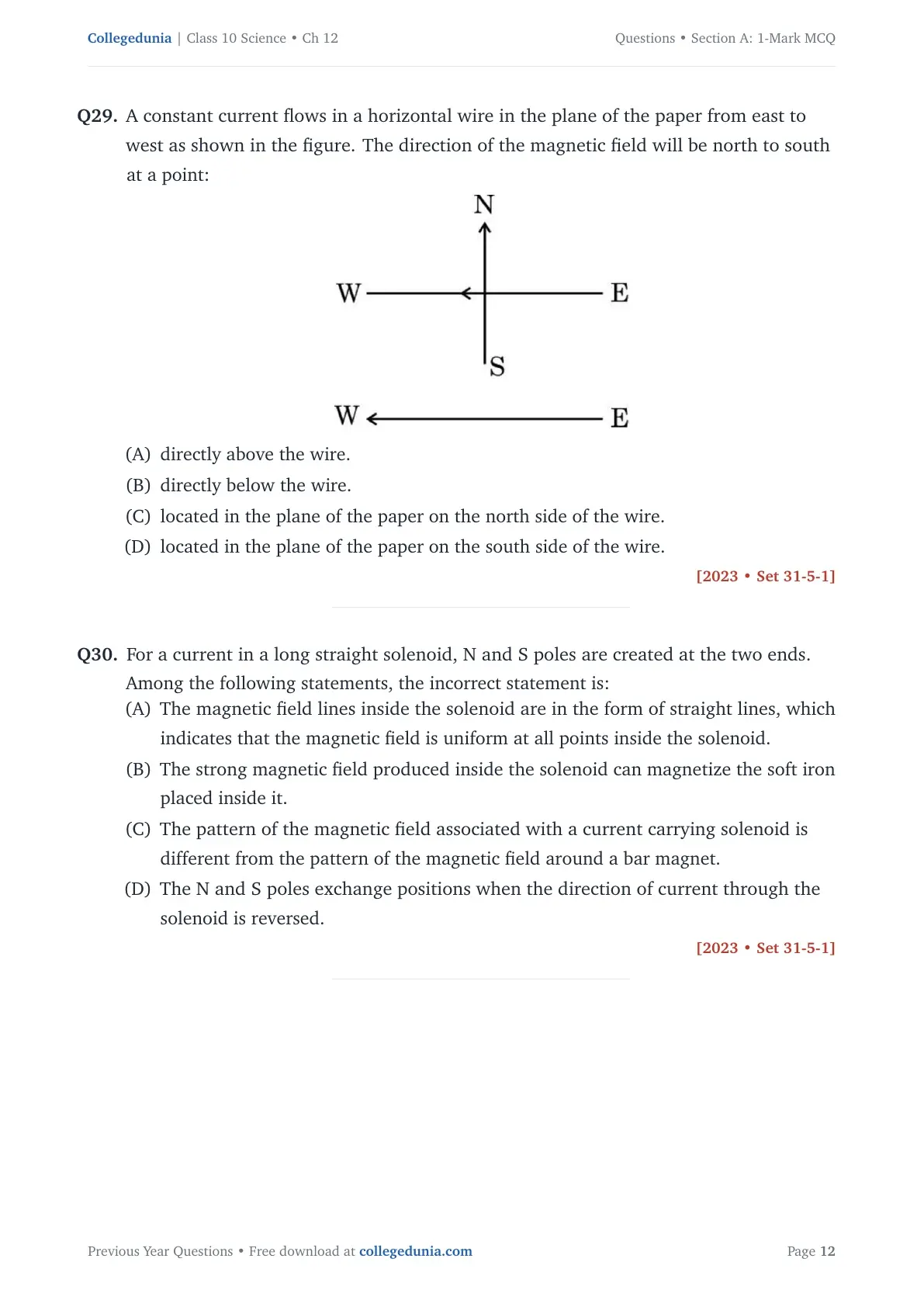
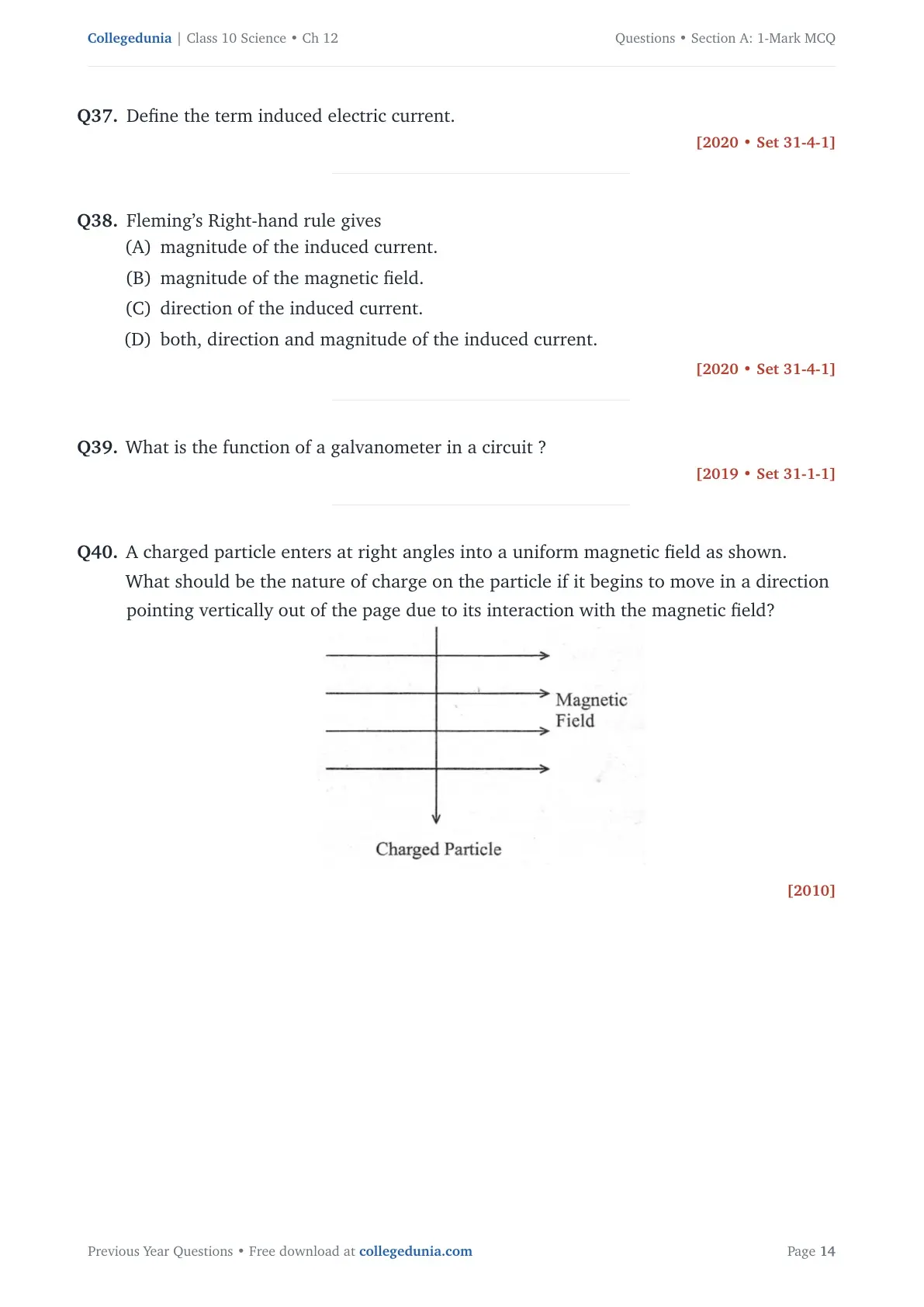
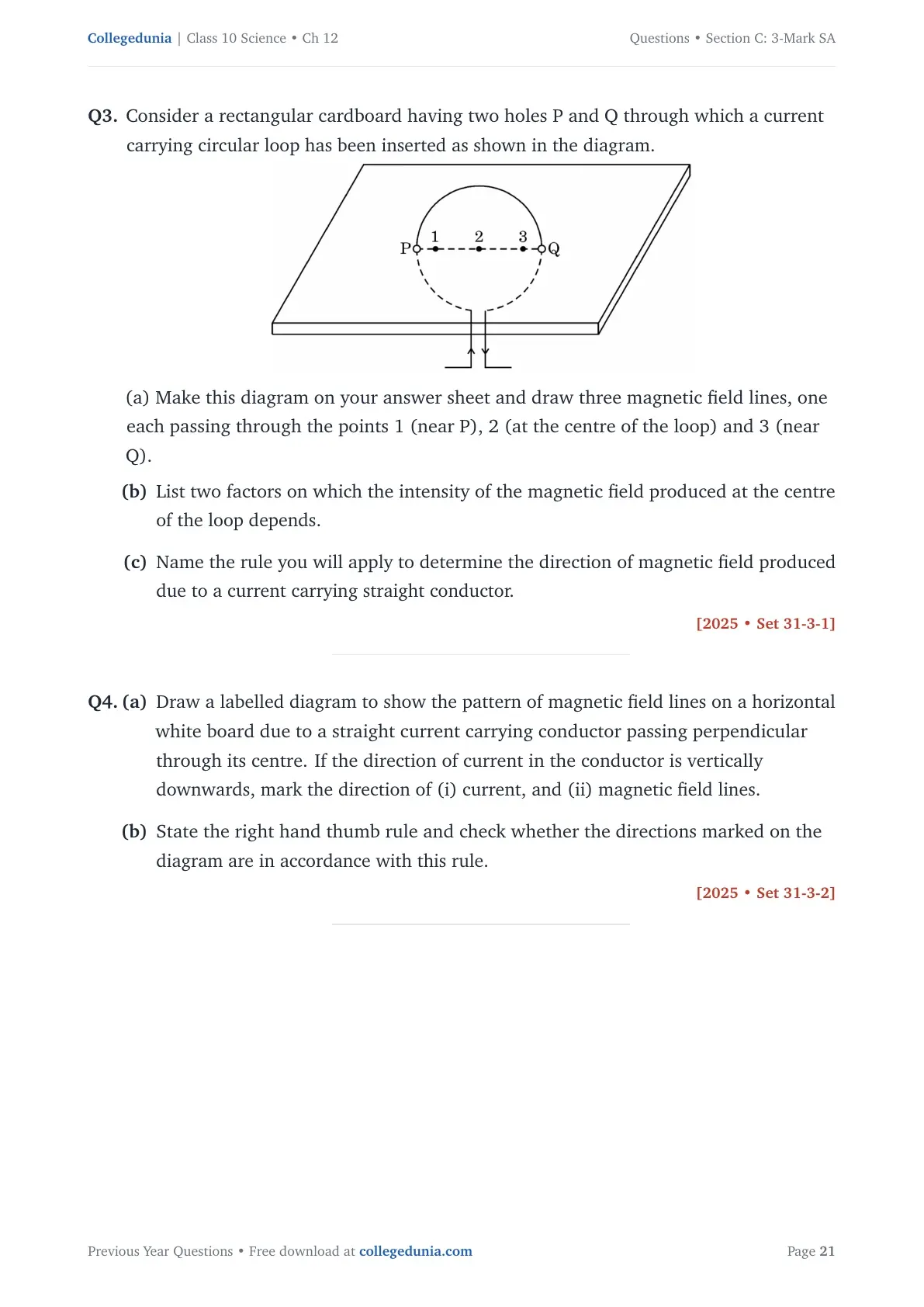
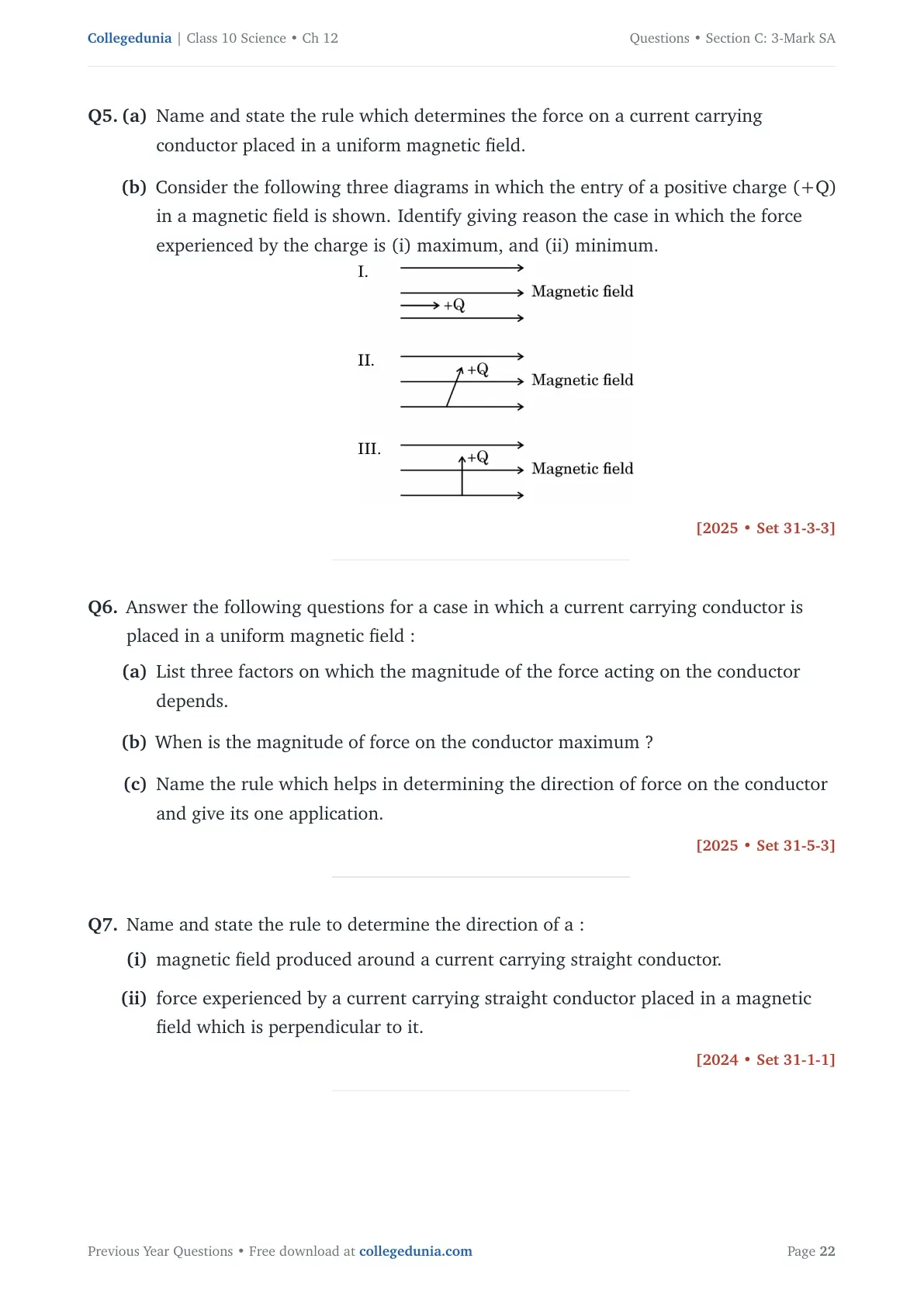
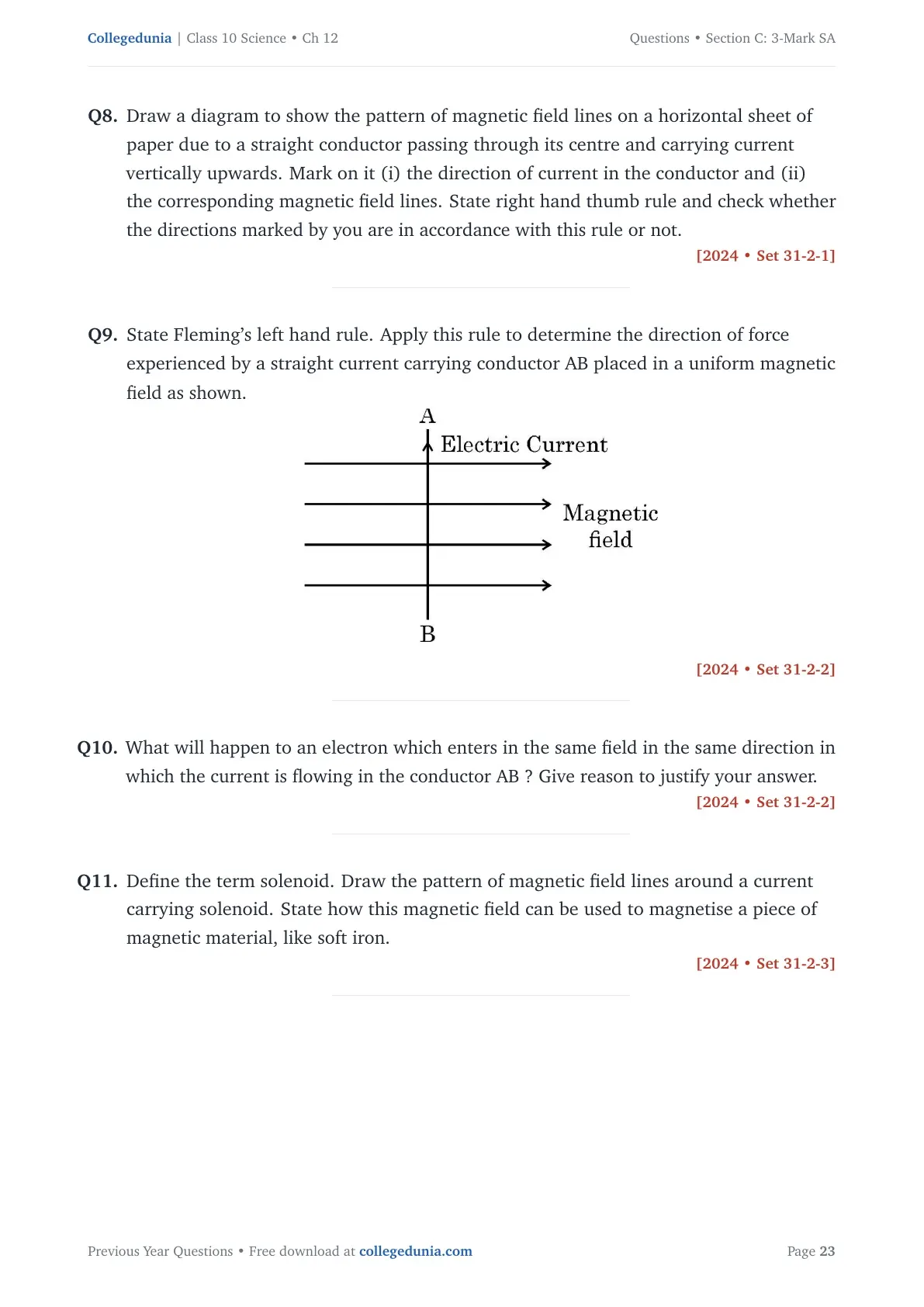
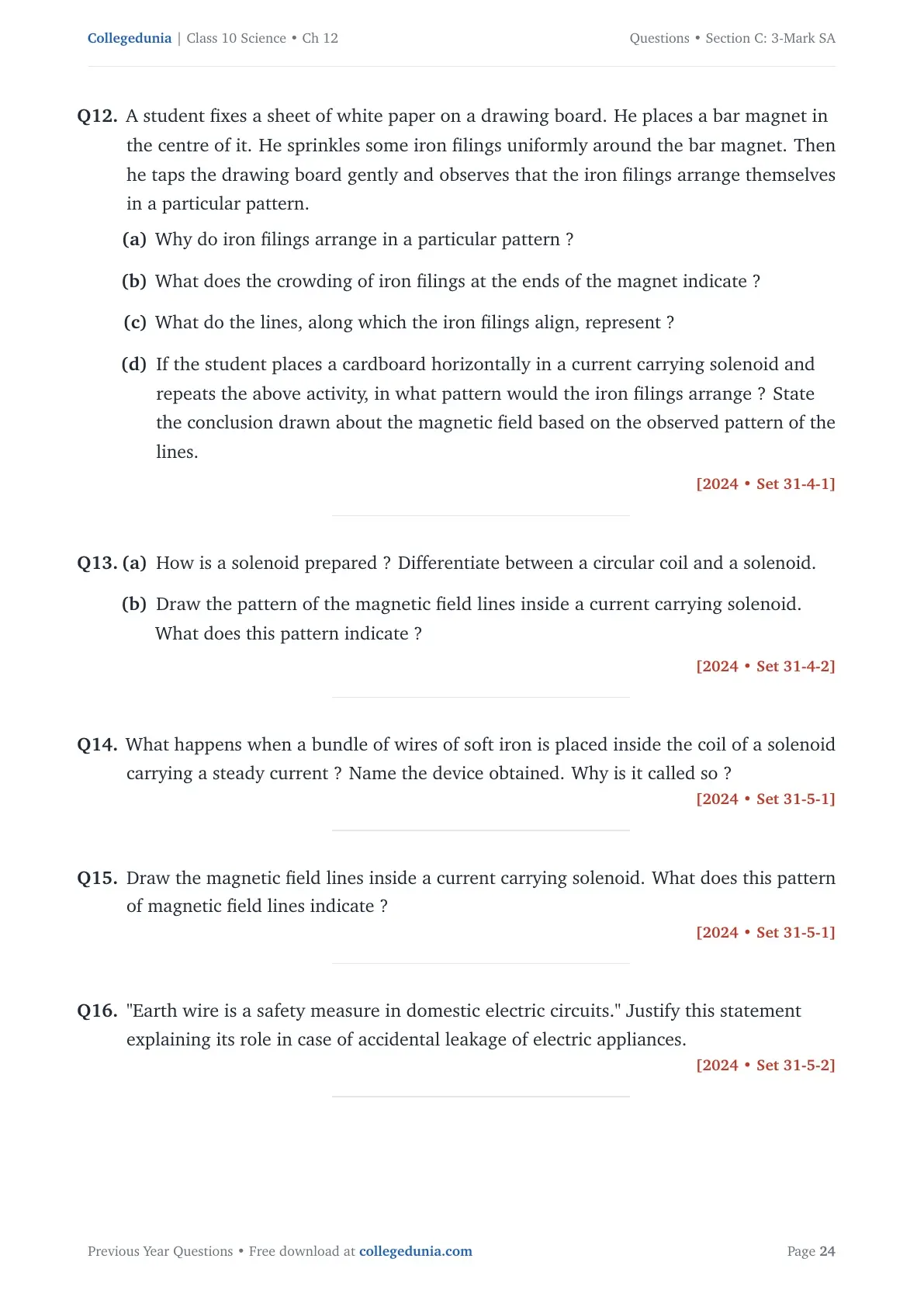
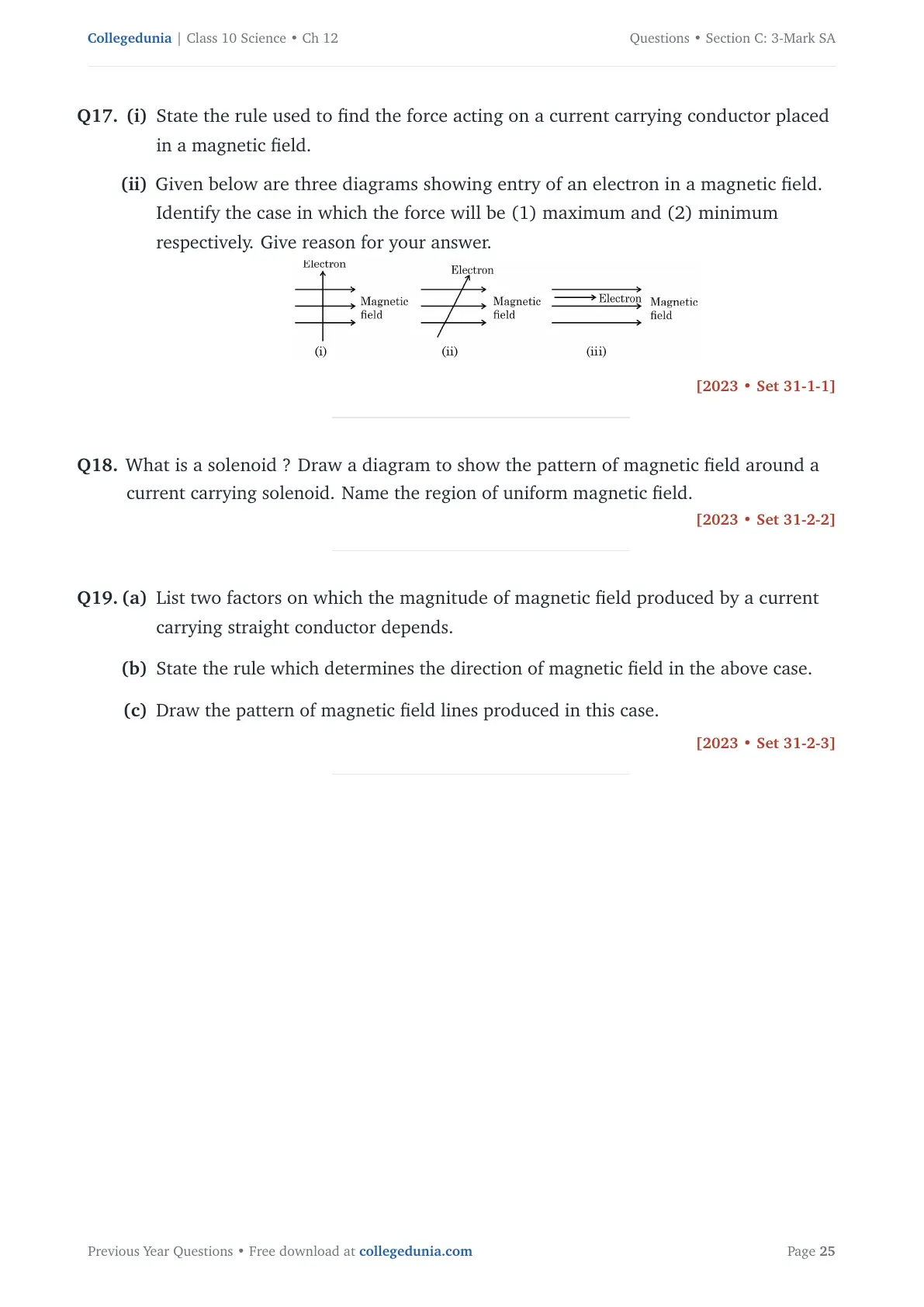
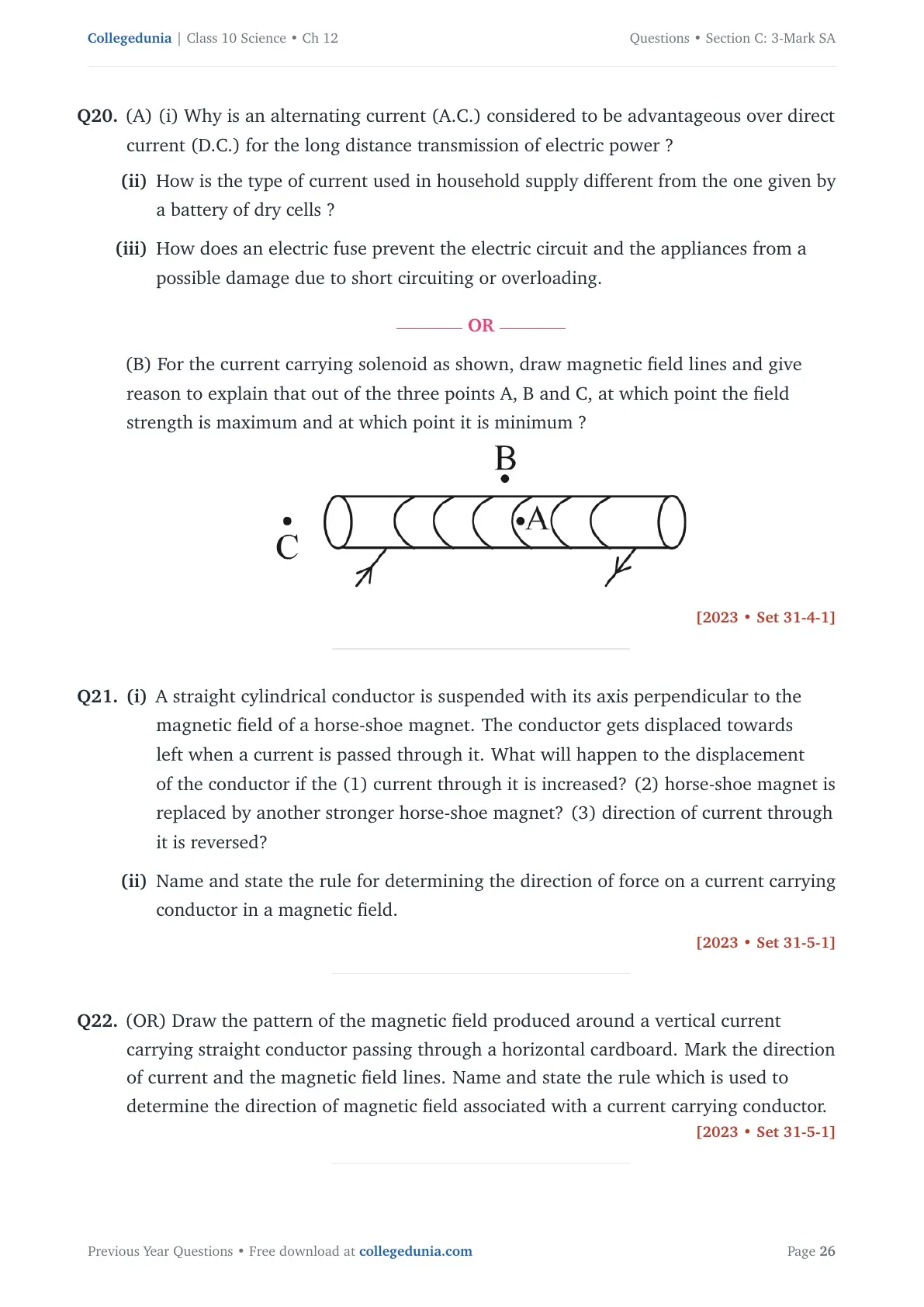
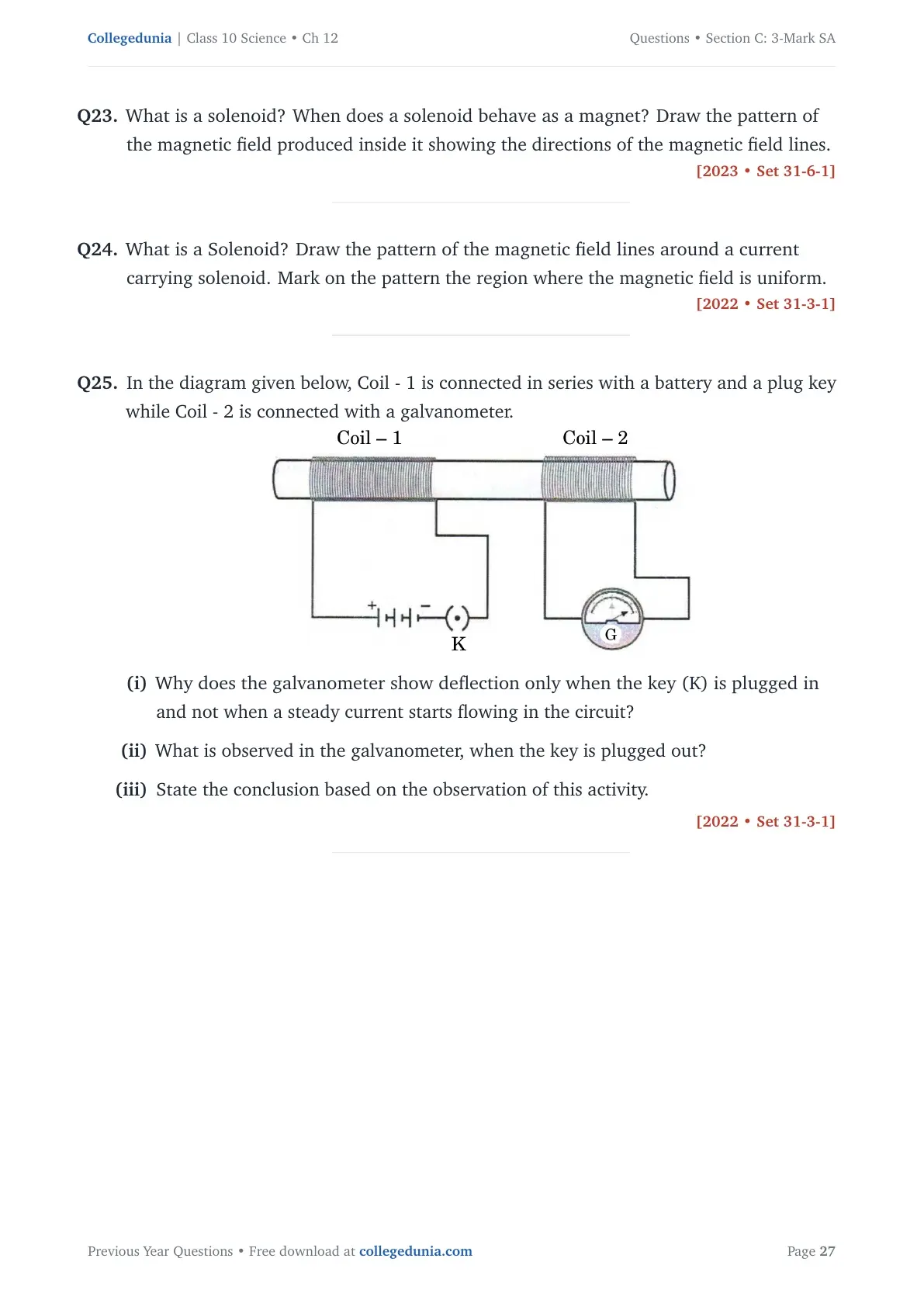
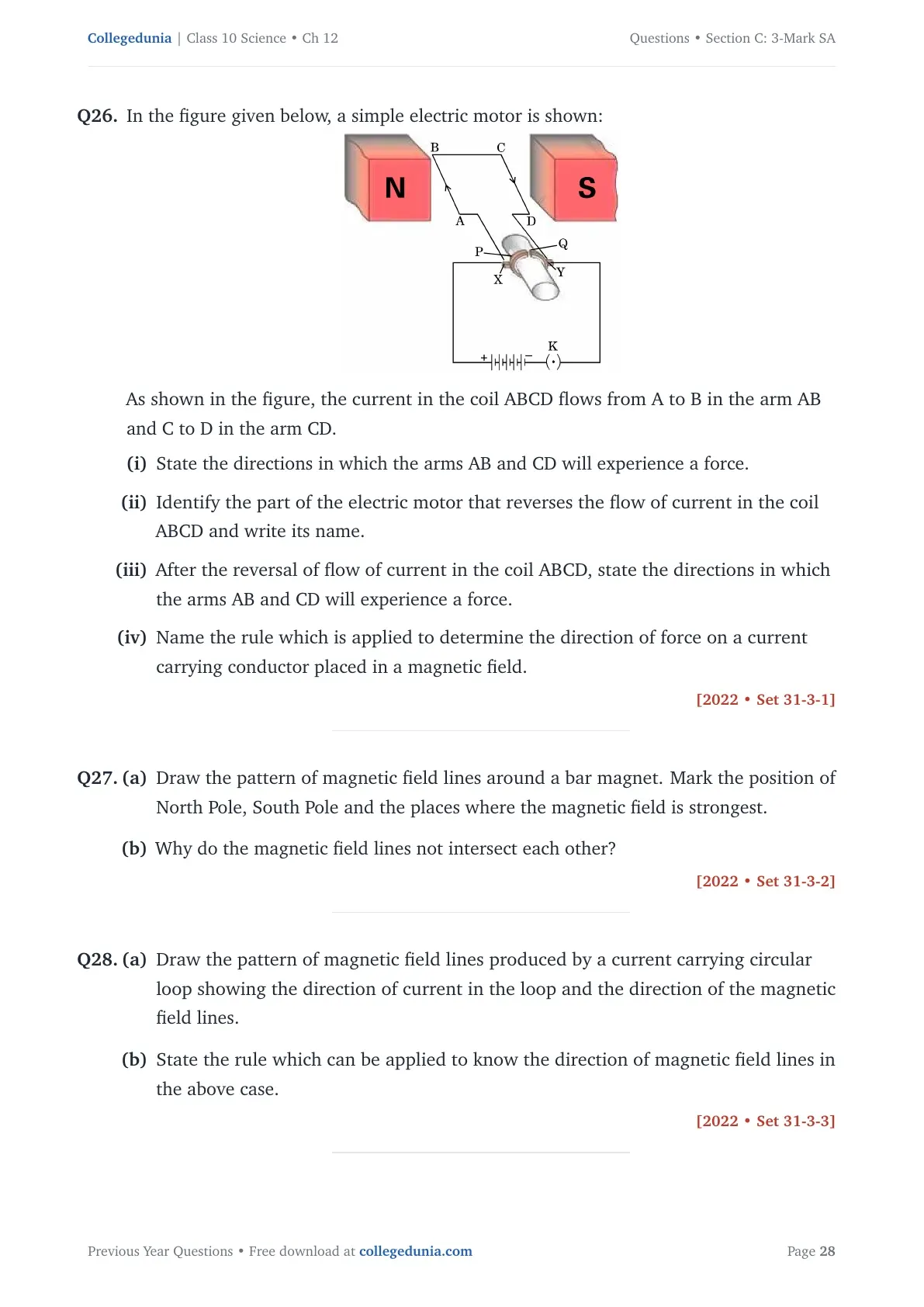
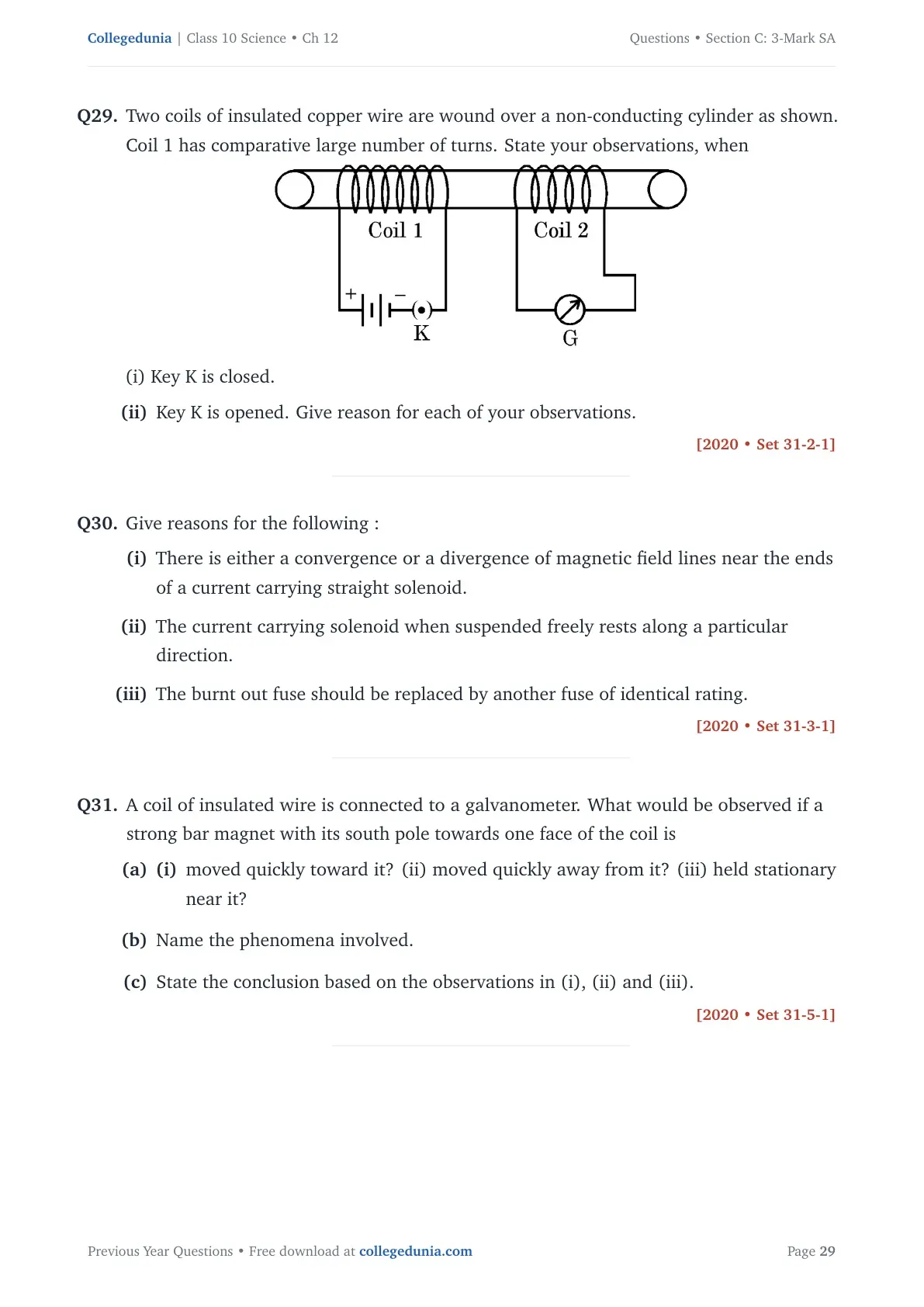
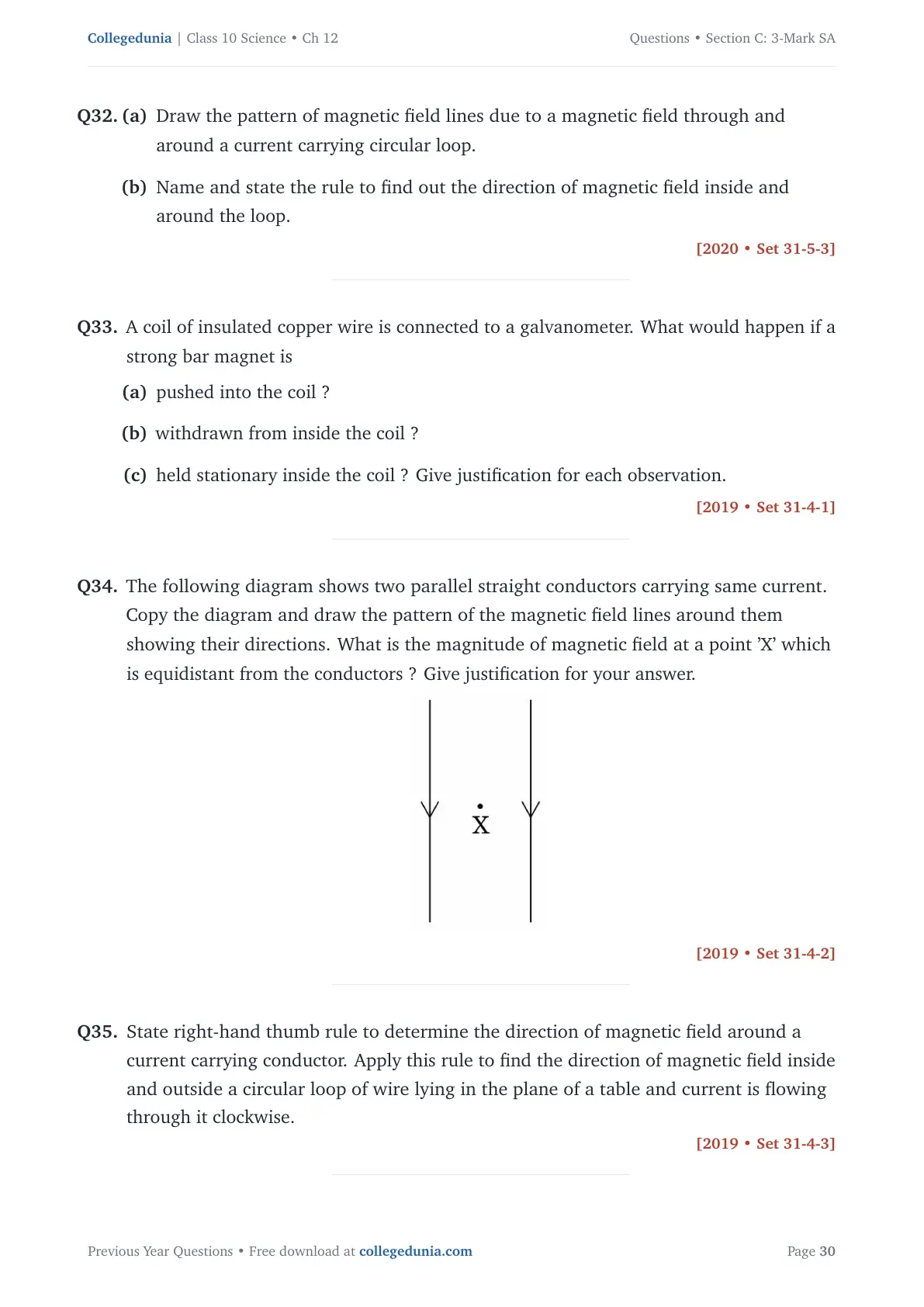
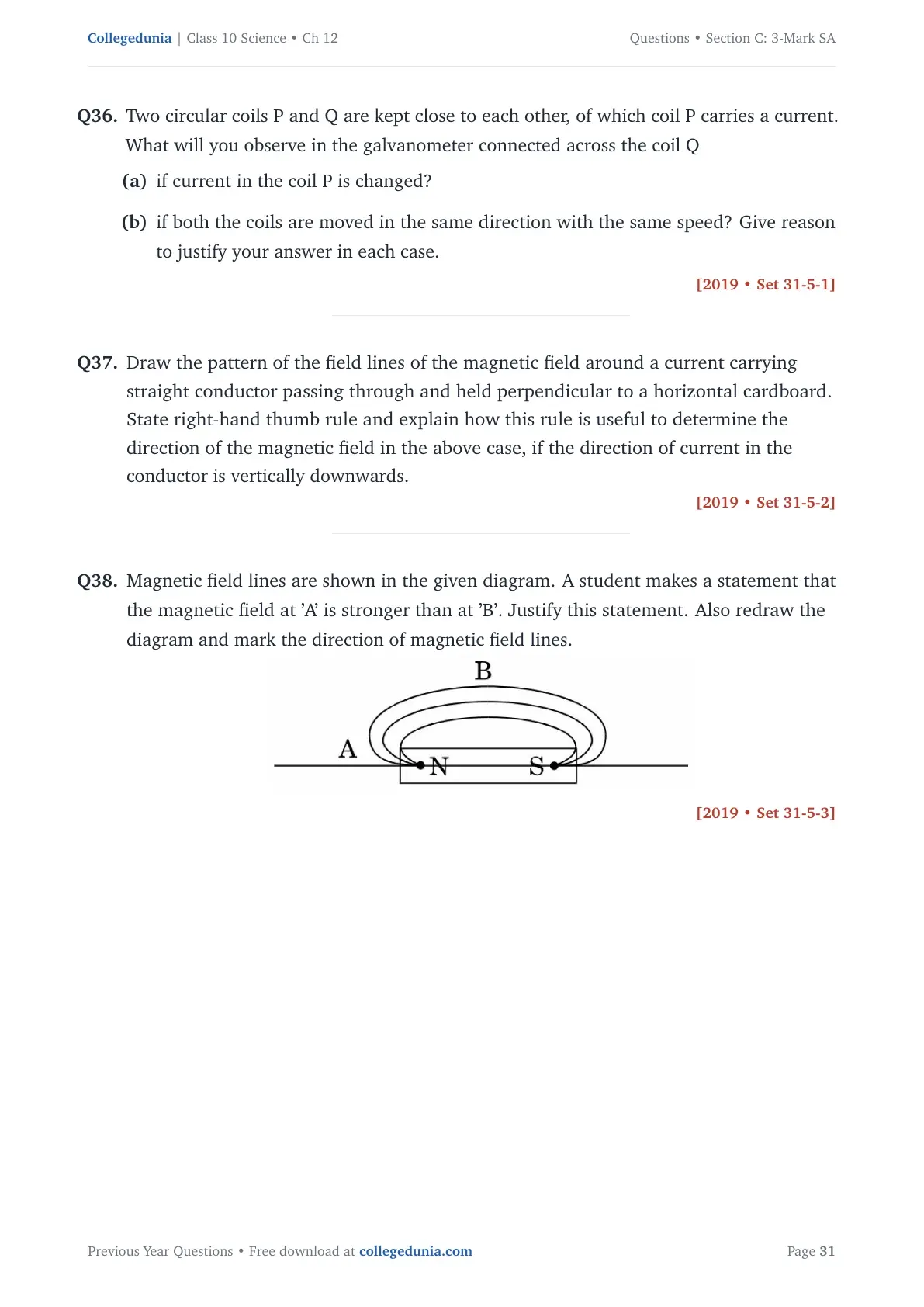
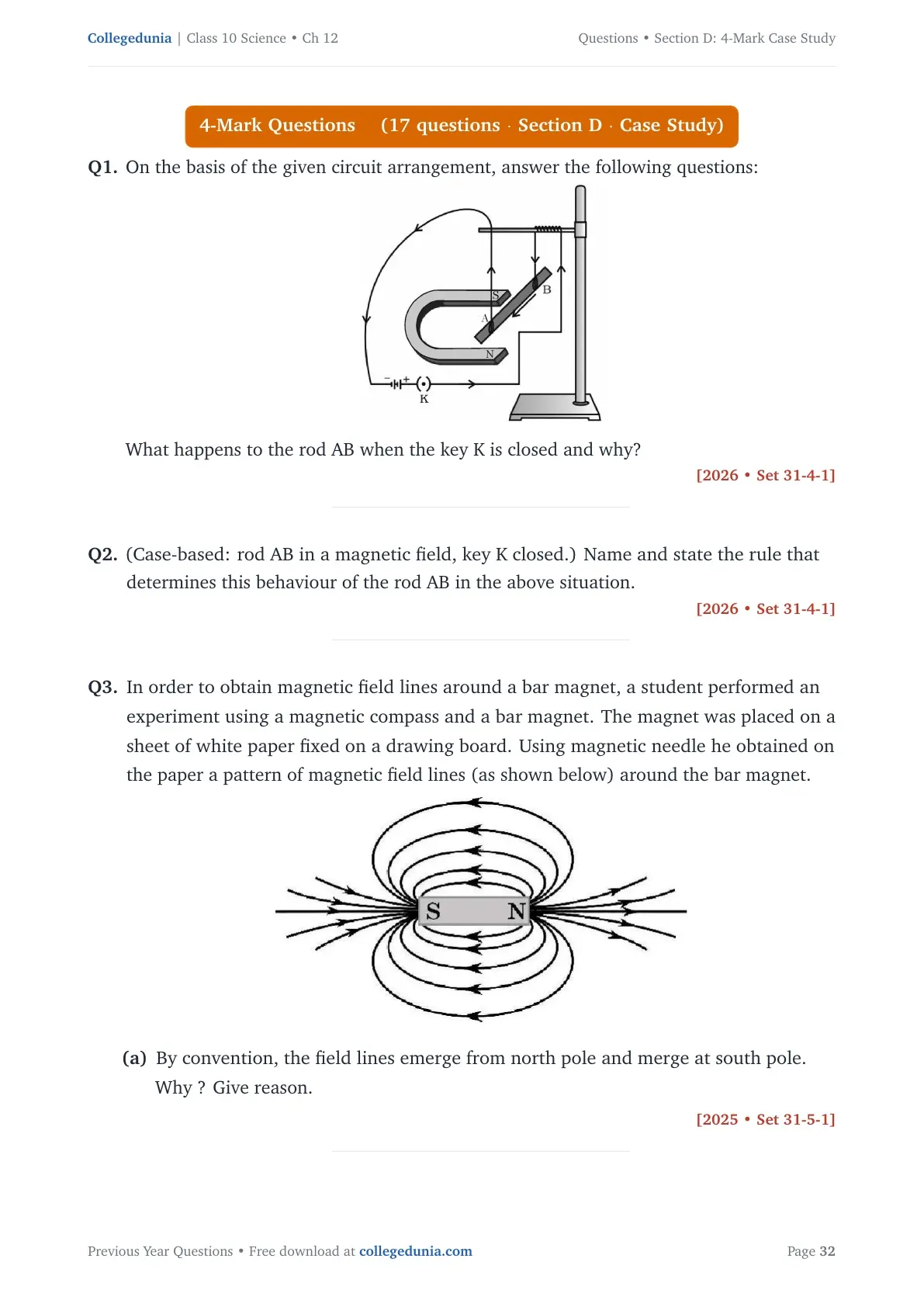
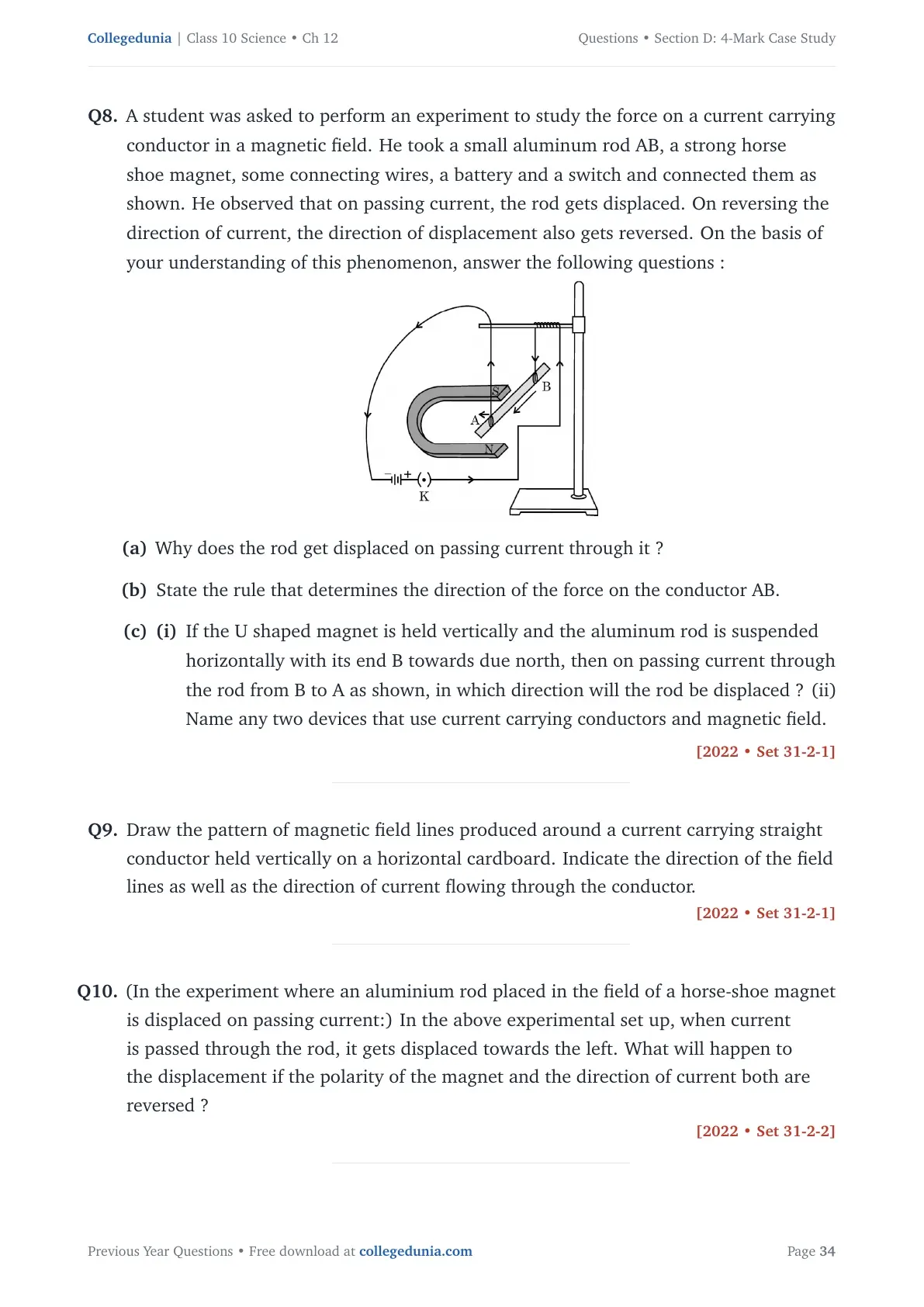
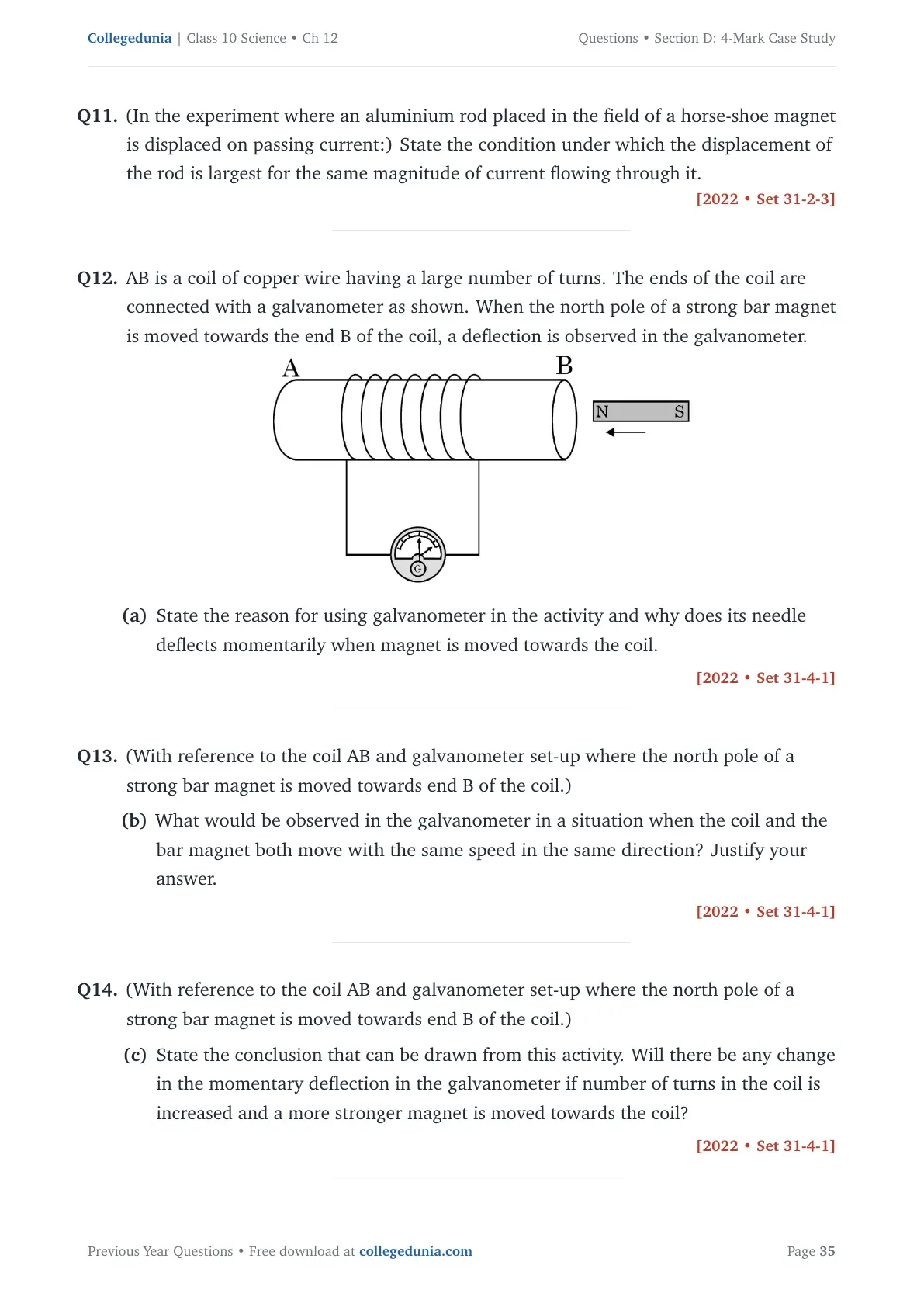
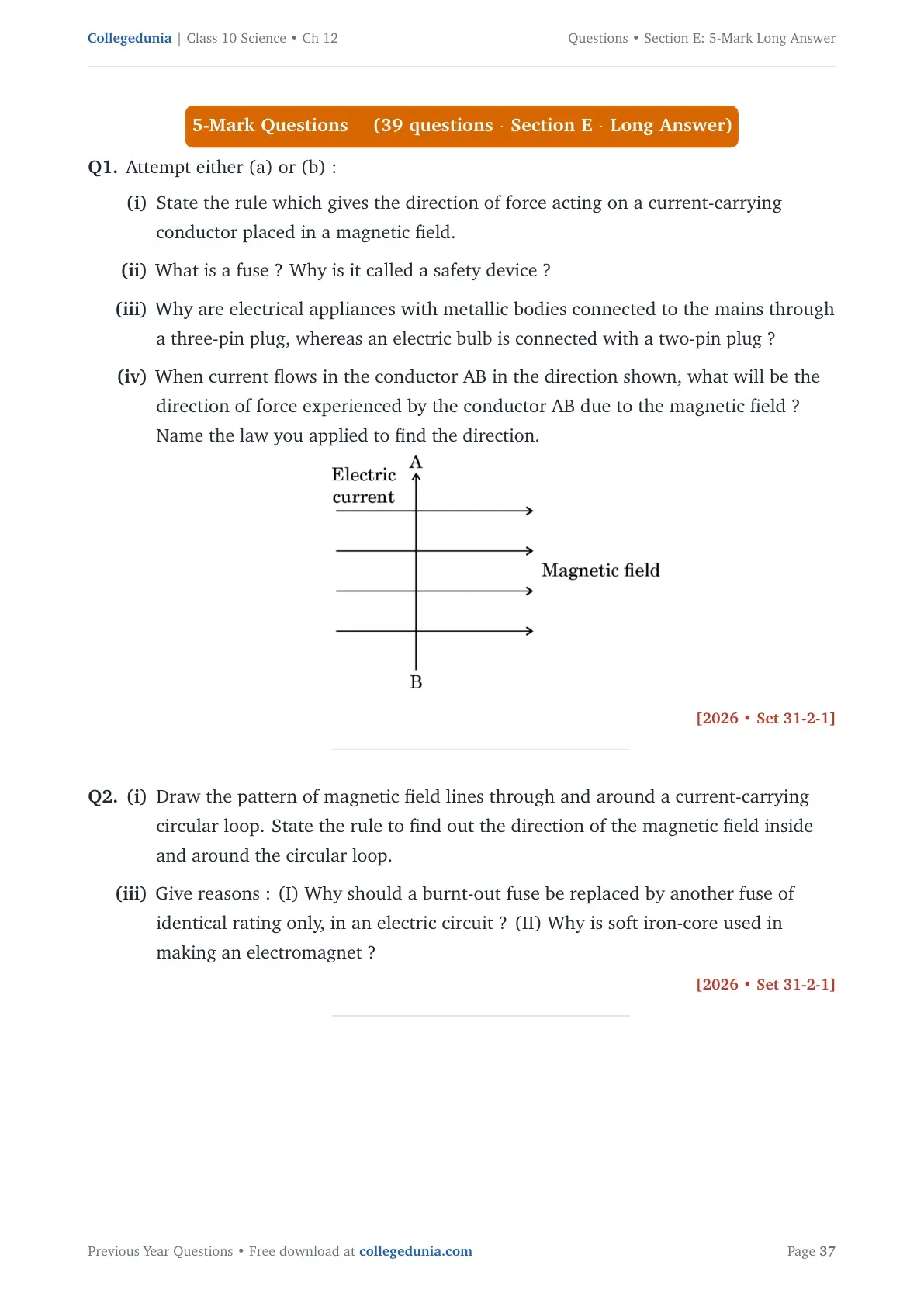
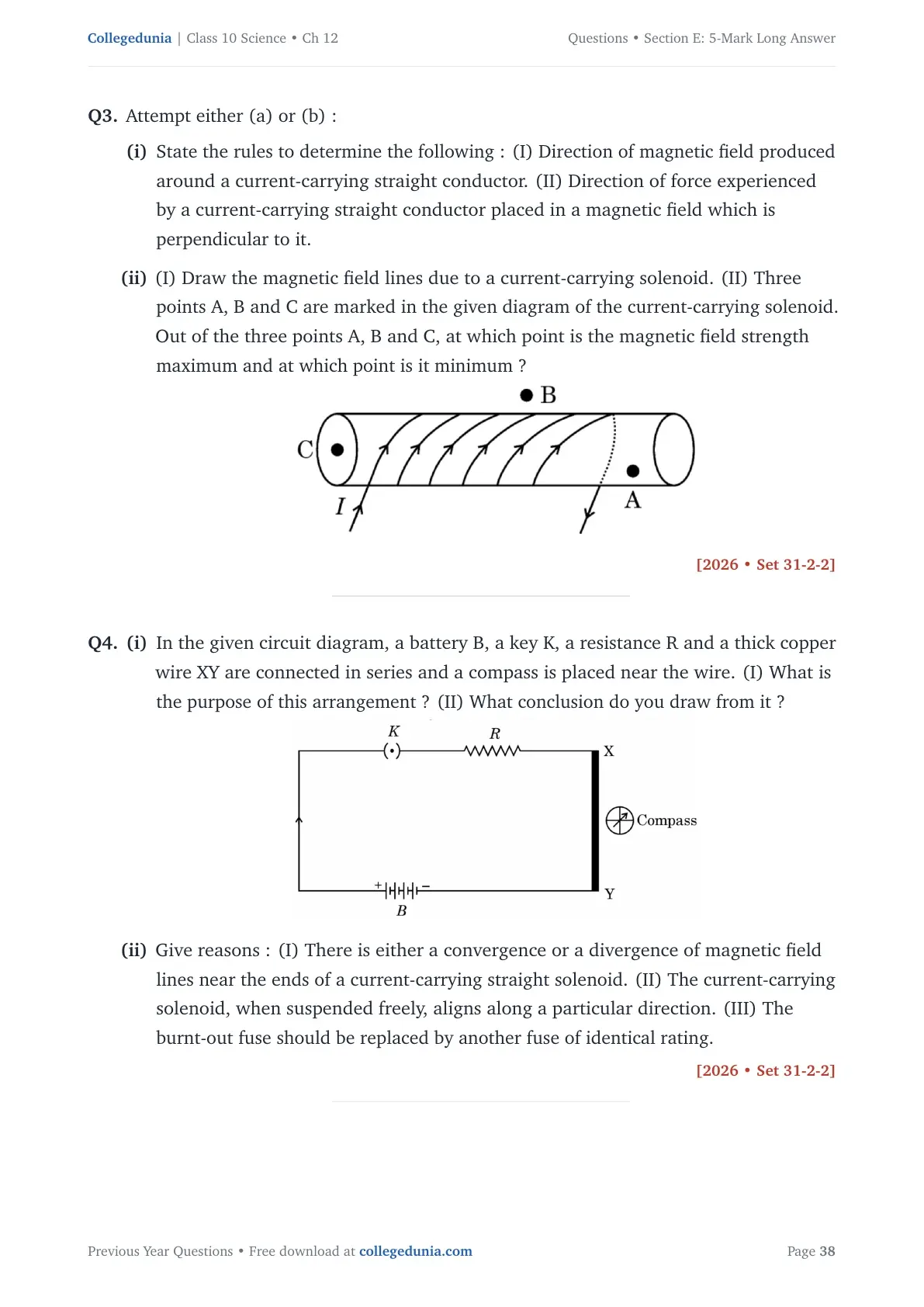
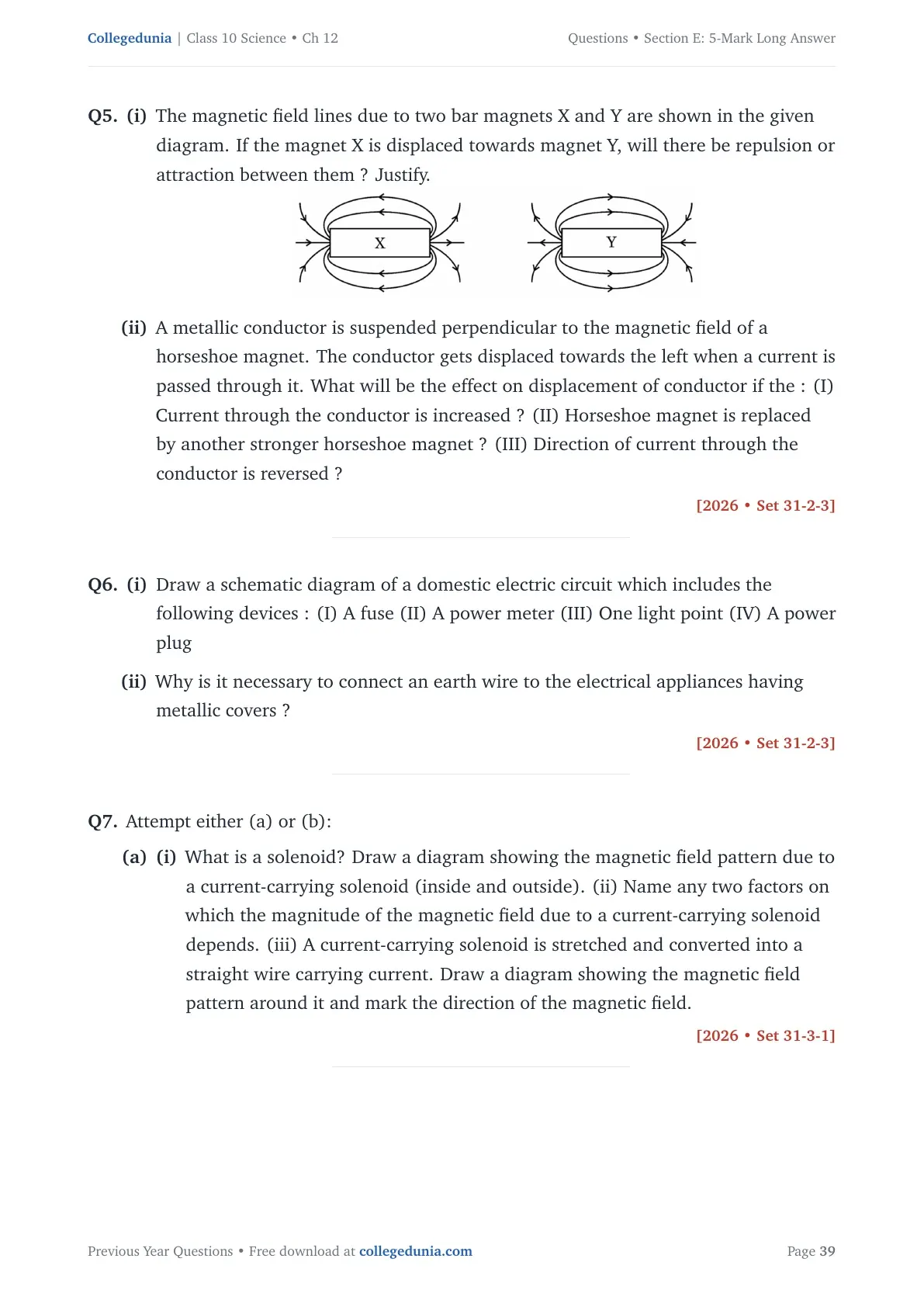
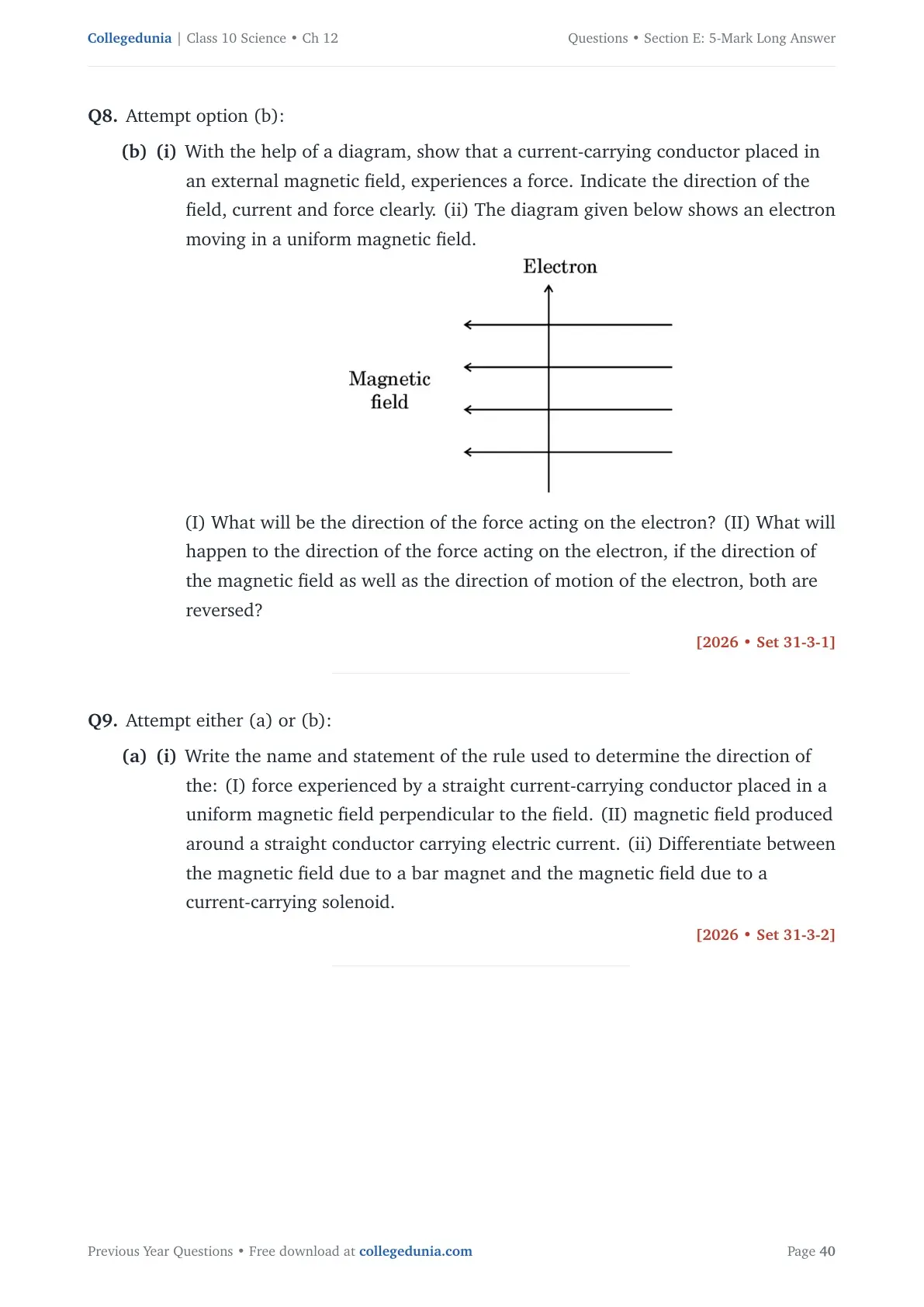
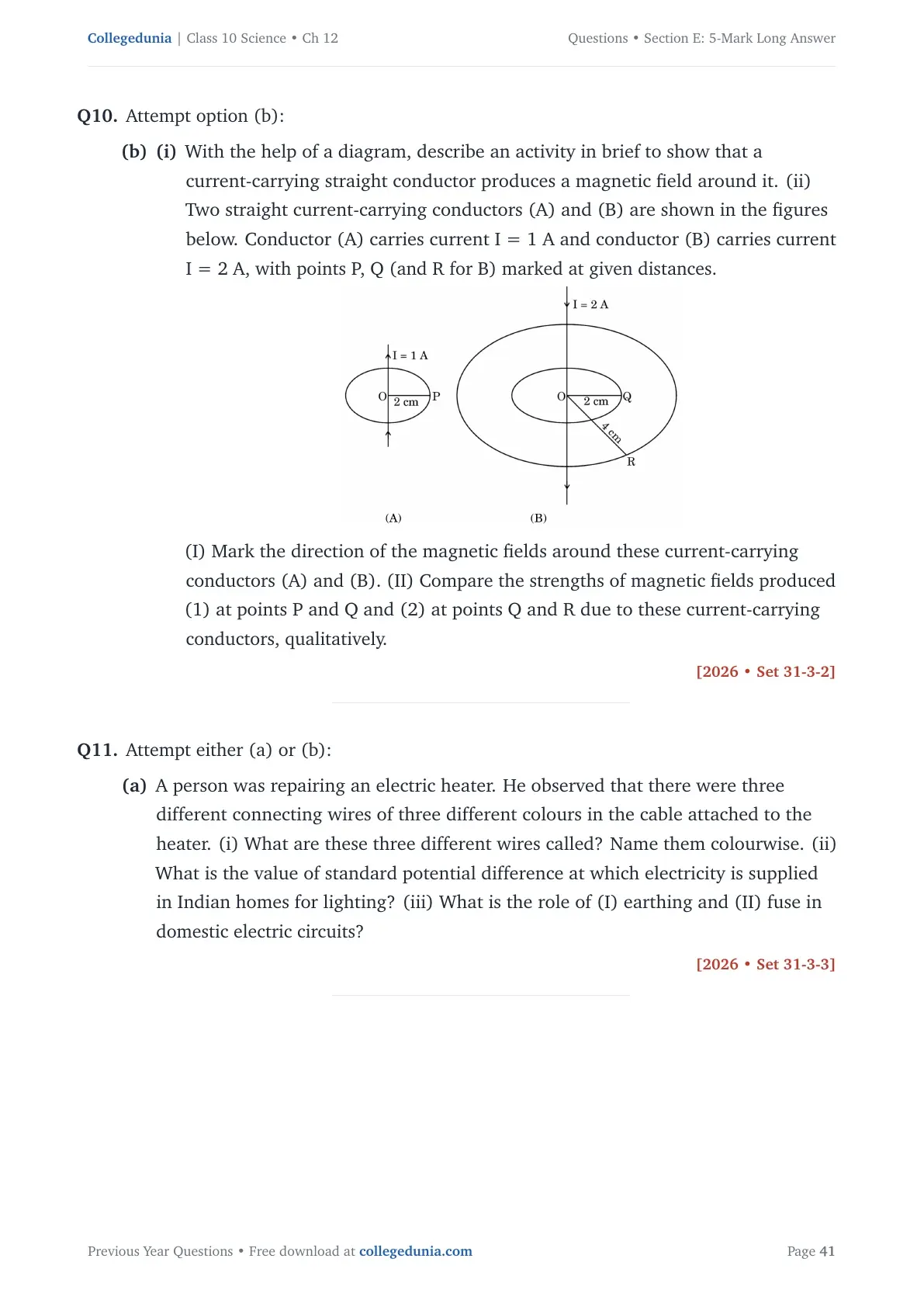
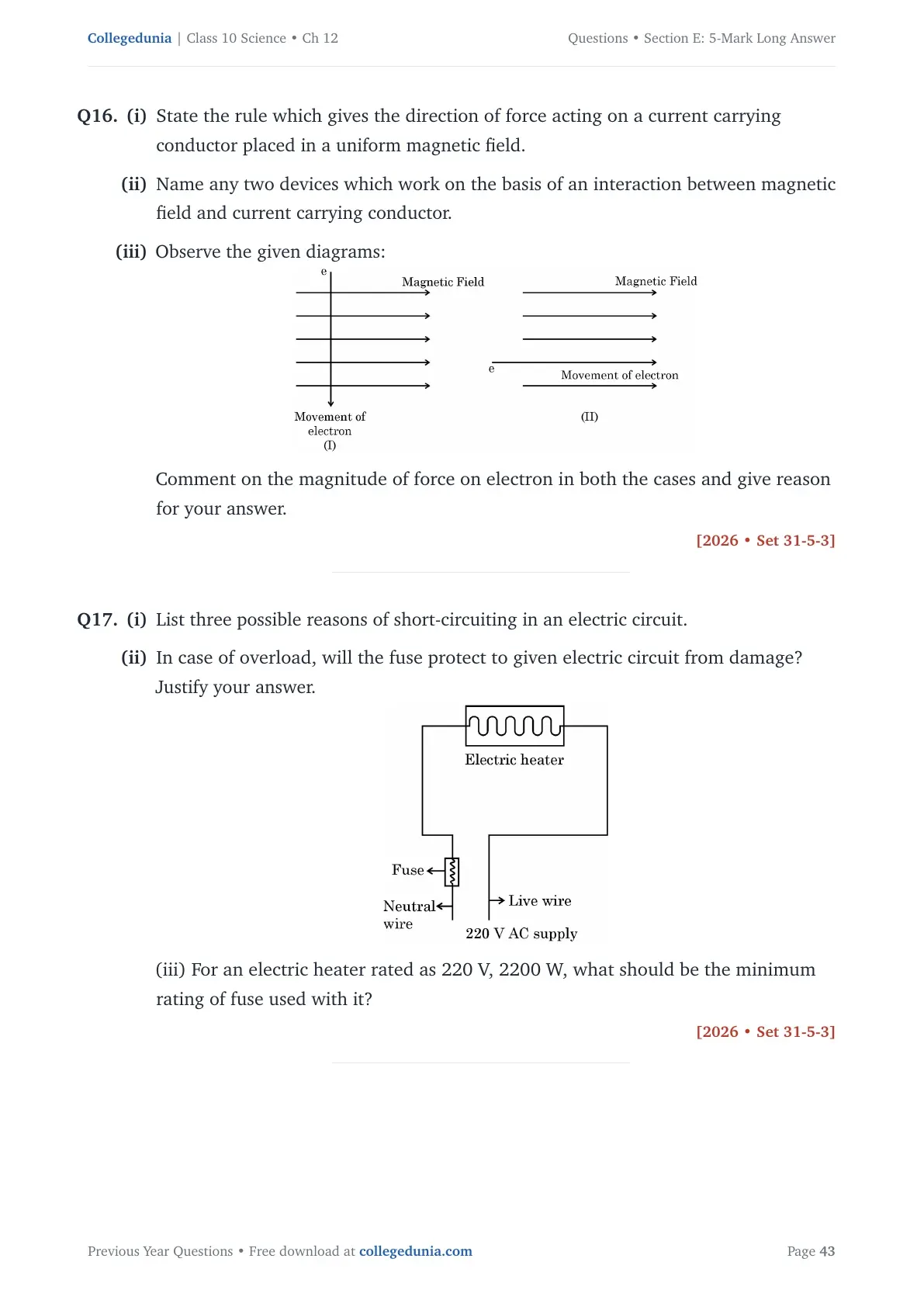
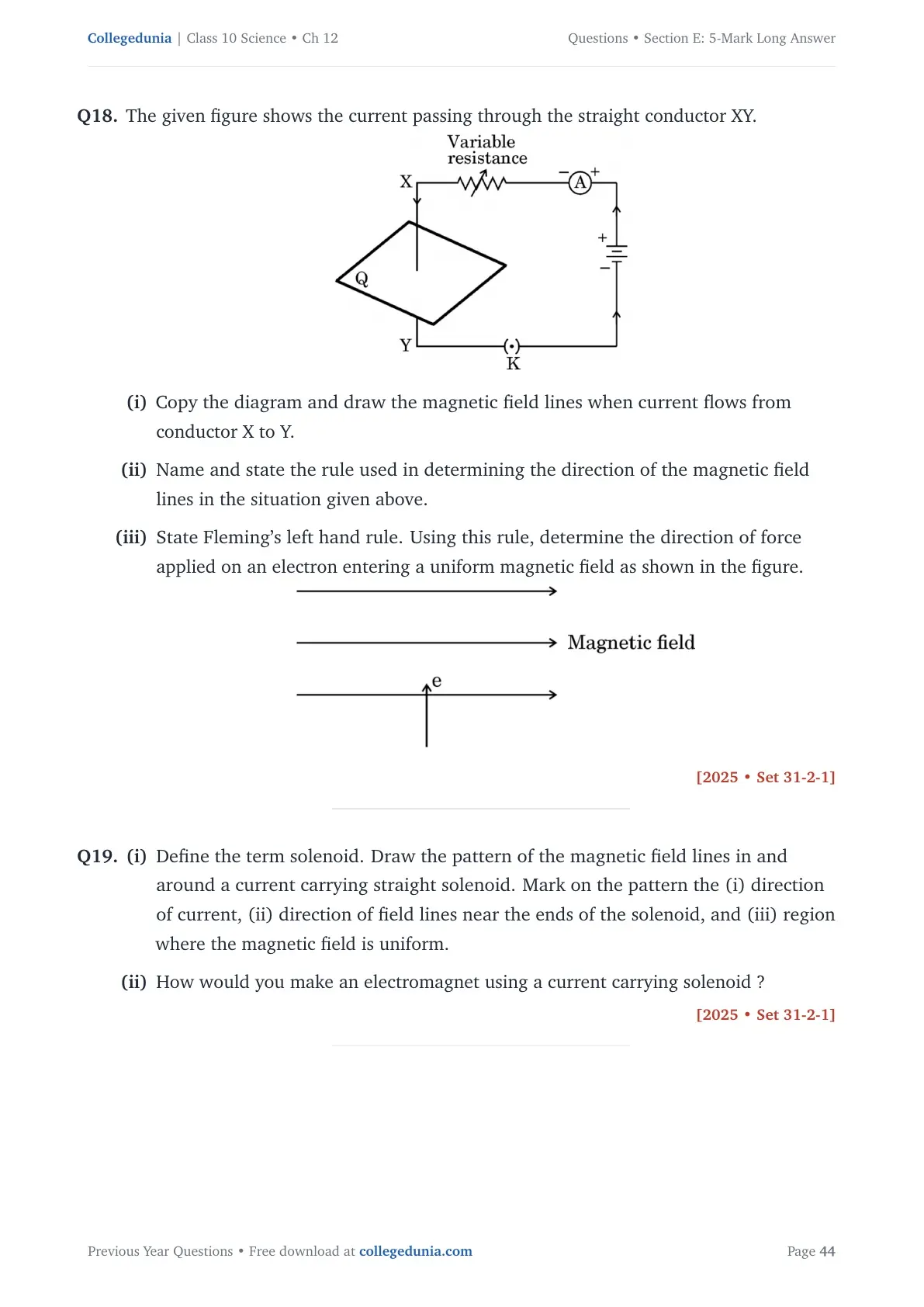
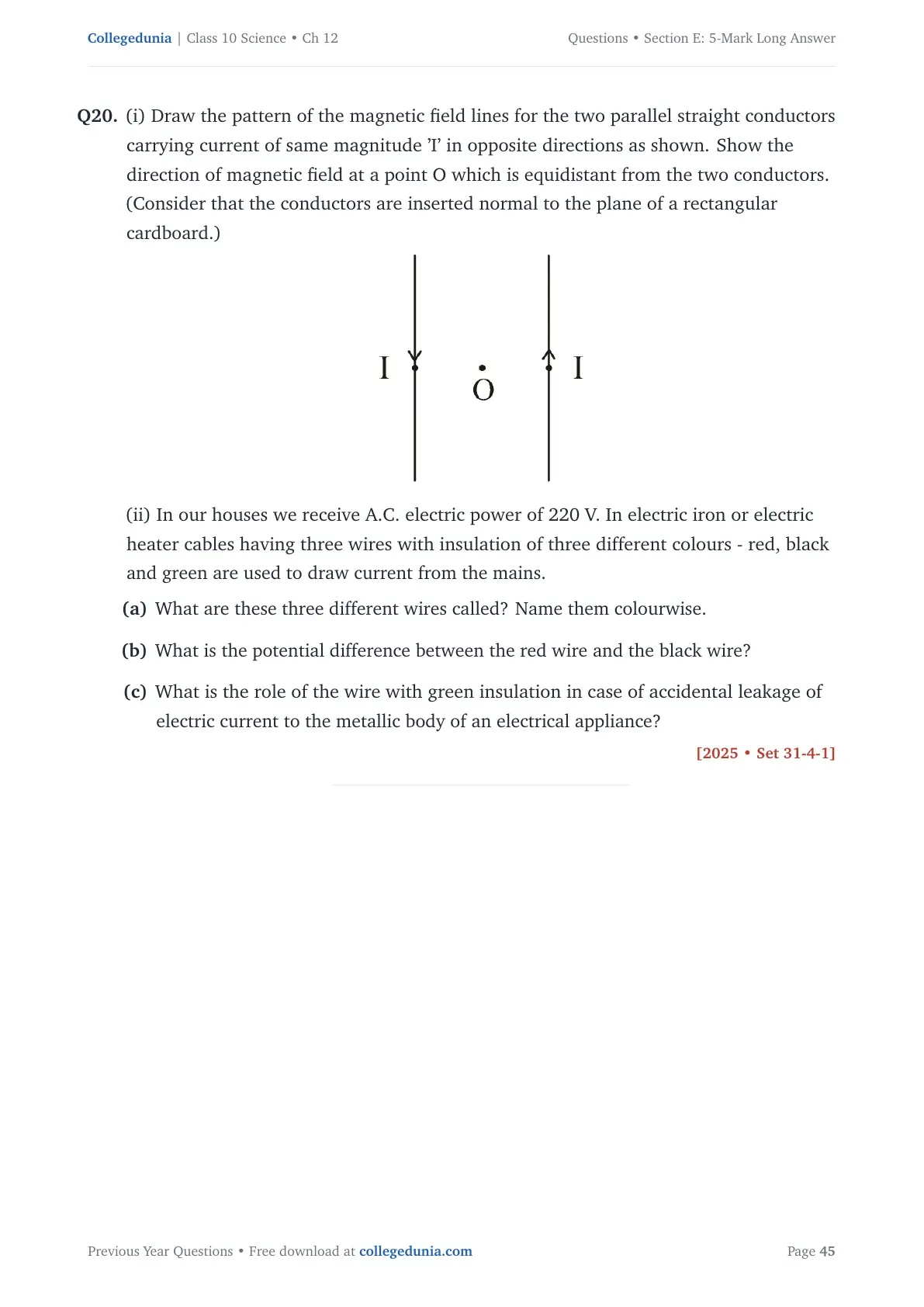
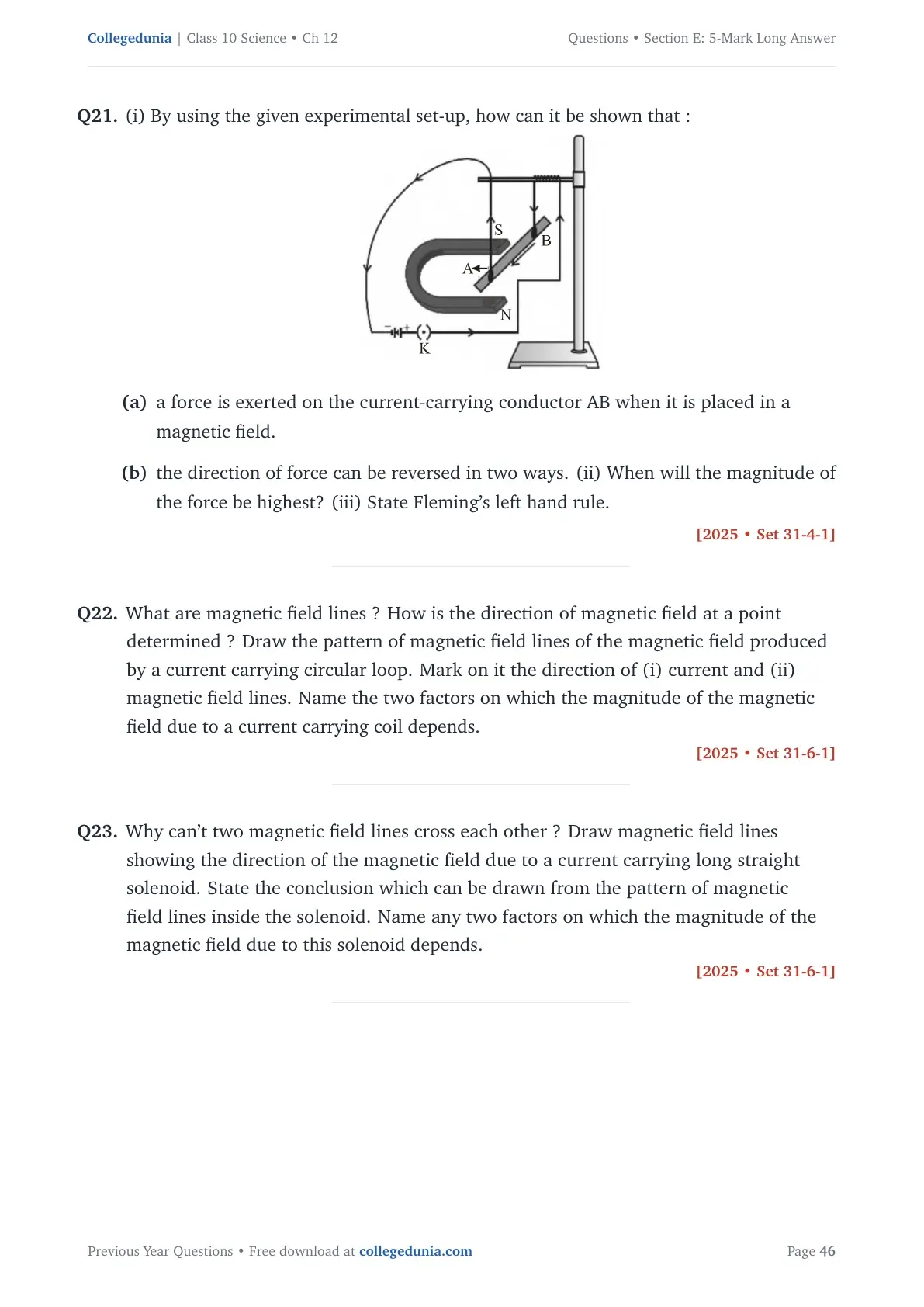
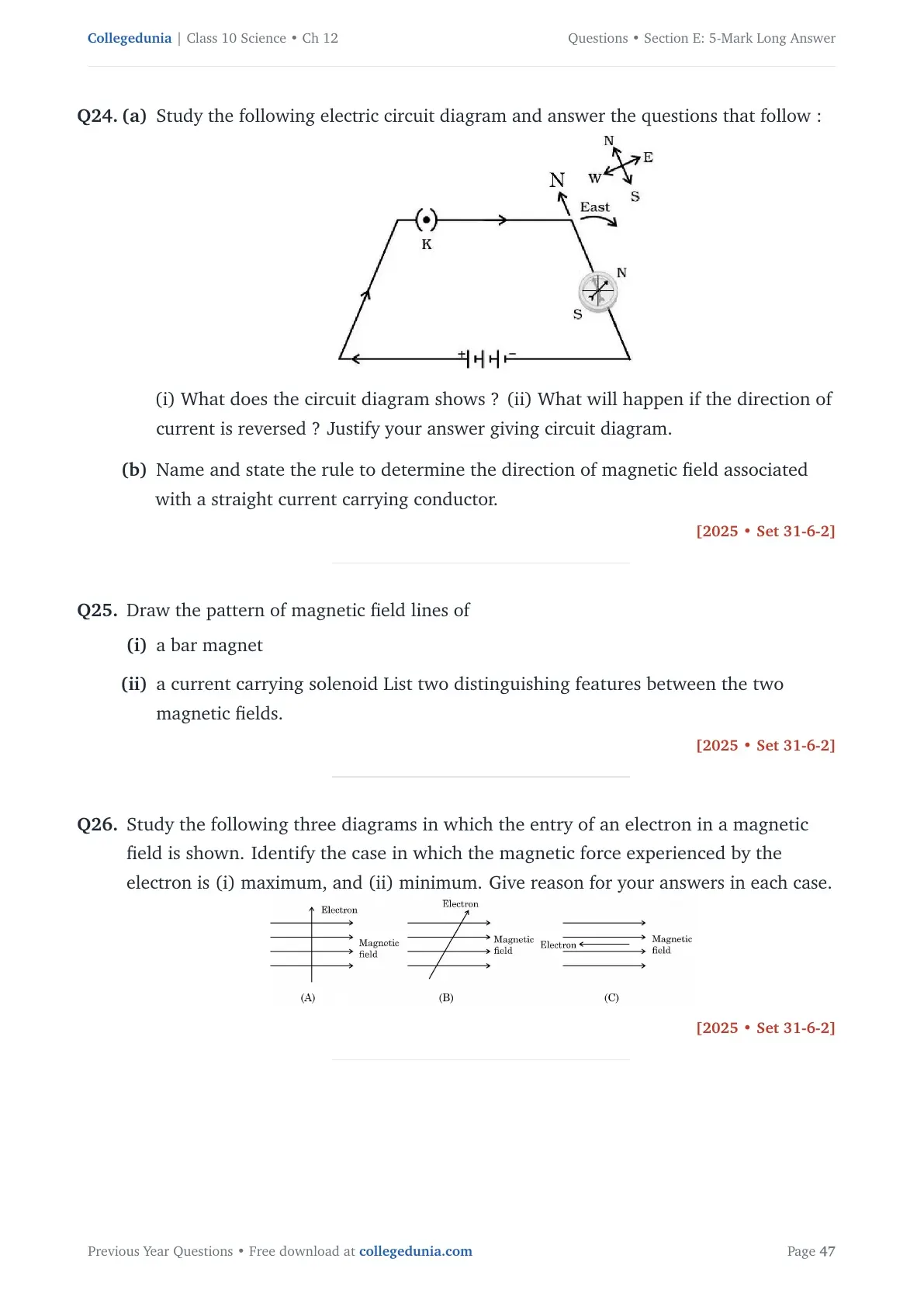
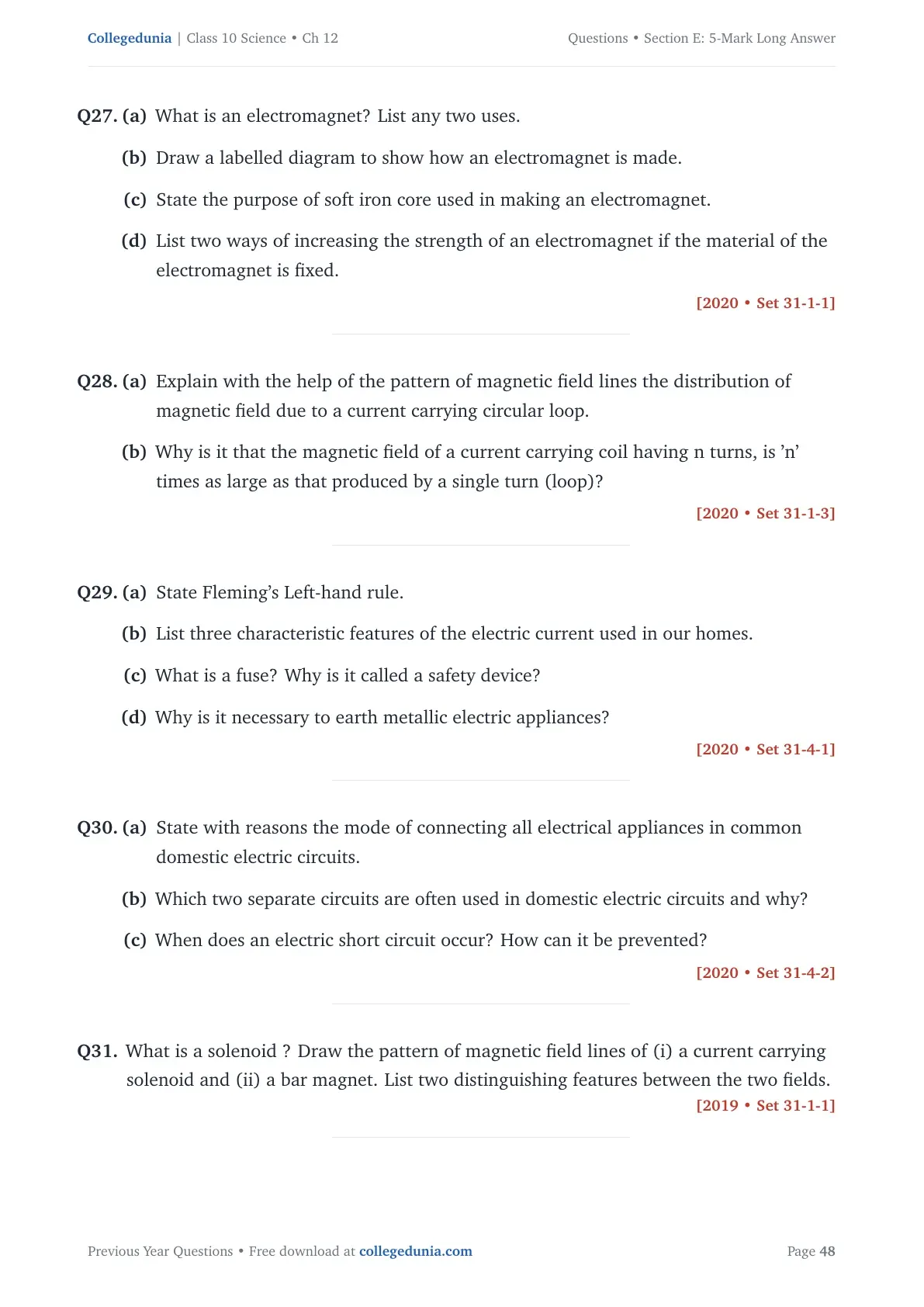
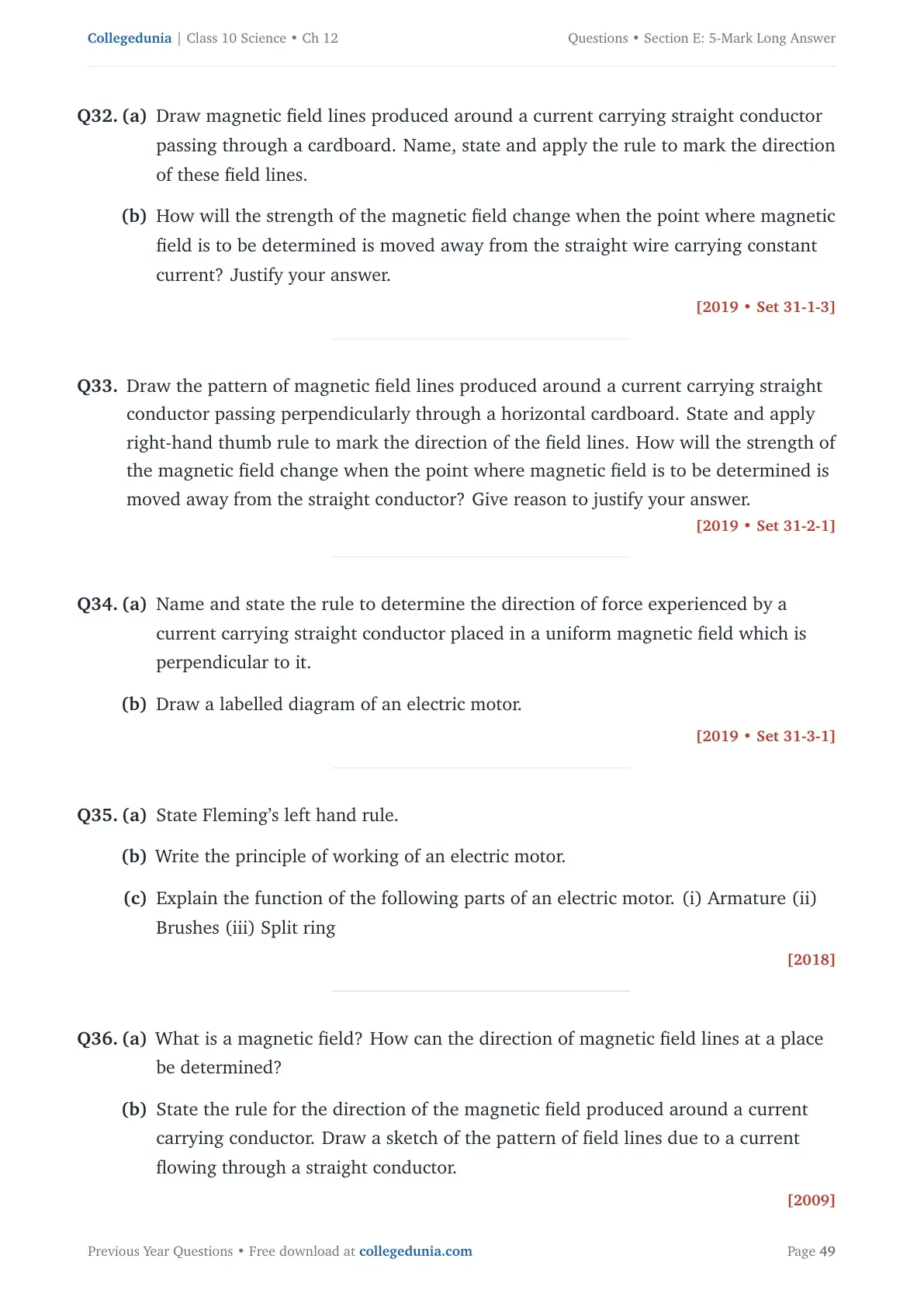
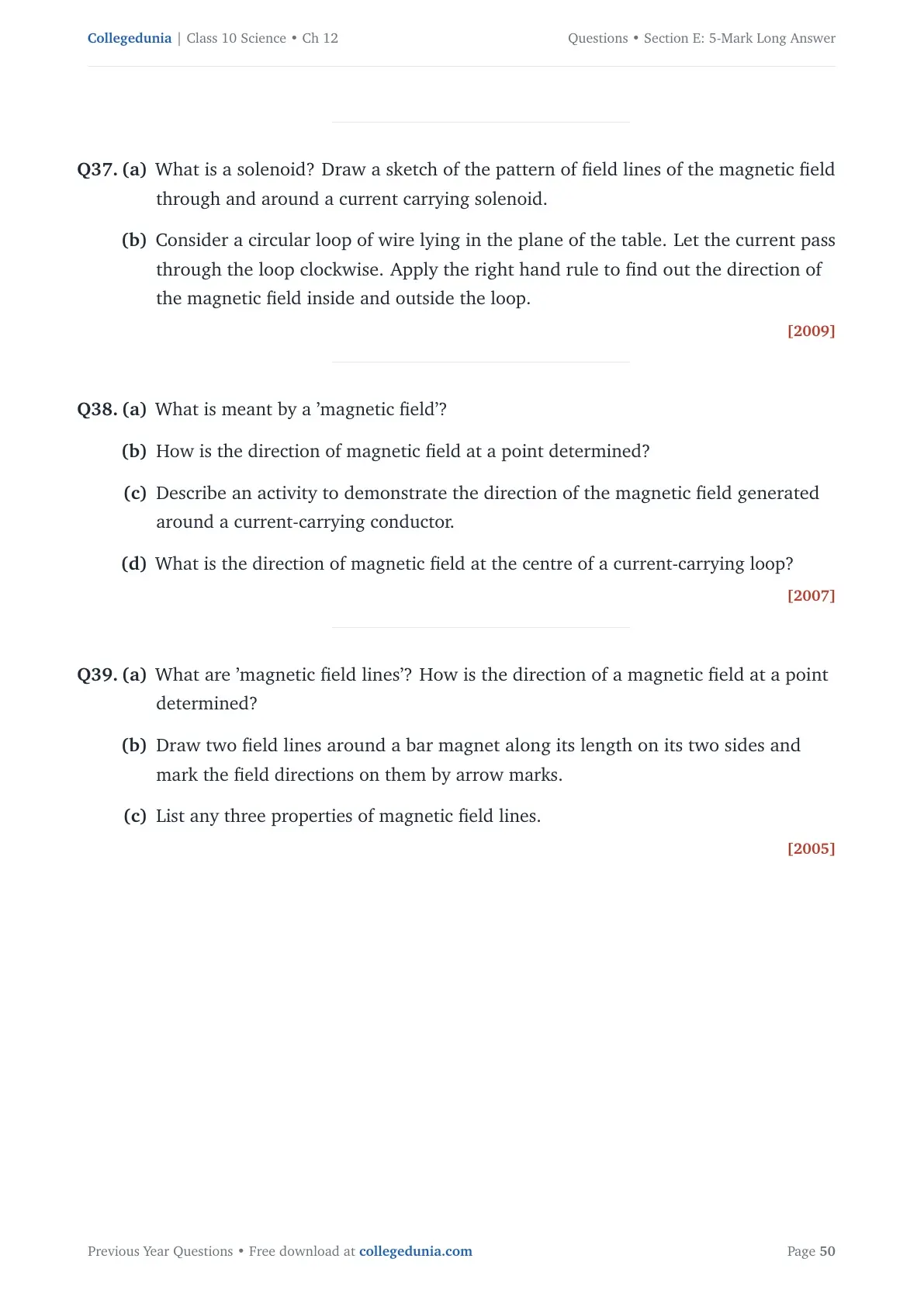
This Collegedunia collection preserves historical practice; older questions do not define the current examination syllabus.
Student self-check: After each practice set, note whether you chose the correct direction rule and labelled every arrow. Use these notes to select the next questions you practise.
Magnetic Effects of Electric Current Questions by Marks
Choose a group according to the answer length you want to practise. These counts describe this collection only. They do not predict marks in your next board paper. The question labels help you identify the original year and paper set.
| Marks per question | Questions | Practice focus |
|---|---|---|
| 1 mark | 40 | Definitions, choices and short reasons |
| 2 marks | 27 | Brief explanations and comparisons |
| 3 marks | 38 | Linked reasons, diagrams and applications |
| 4 marks | 17 | Questions with several parts |
| 5 marks | 39 | Long answers with labelled diagrams |
| Total | 161 | Selected historical questions |
The marks groups are a practice index, not a chapter weightage chart. Start with a short group, then write longer answers without looking at your notes.
Magnetic Effects of Current: Question Practice
Source: Physics Wallah Foundation on YouTube
Magnetic Effects of Electric Current: Current Syllabus and Older Papers
The official CBSE Science syllabus for 2026-27 assigns 13 marks to the whole Effects of Current unit. This includes Electricity and Magnetic Effects of Electric Current. CBSE does not assign those 13 marks to this chapter alone.
- Revise magnetic fields, field lines and fields around wires, coils and solenoids.
- Practise force on a current-carrying conductor and Fleming's left-hand rule.
- Include direct current, alternating current, AC frequency, AC advantages and domestic circuits.
Older-paper check: CBSE lists motors, electromagnetic induction and electric generators for formative assessment only. These topics remain in some historical questions. Keep them separate from your year-end examination practice.
Magnetic Field and Force Rules: Choose the Right Method
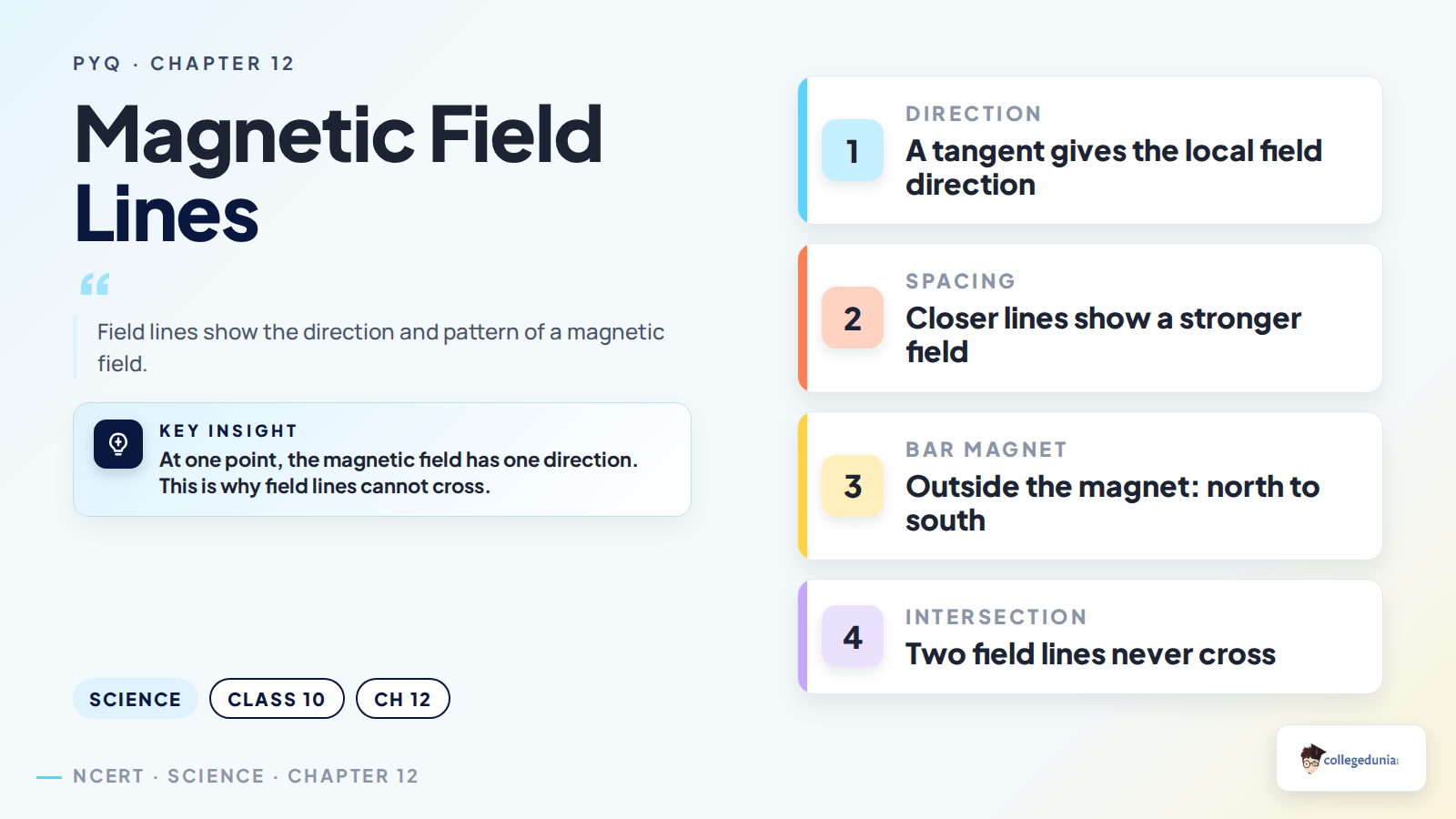
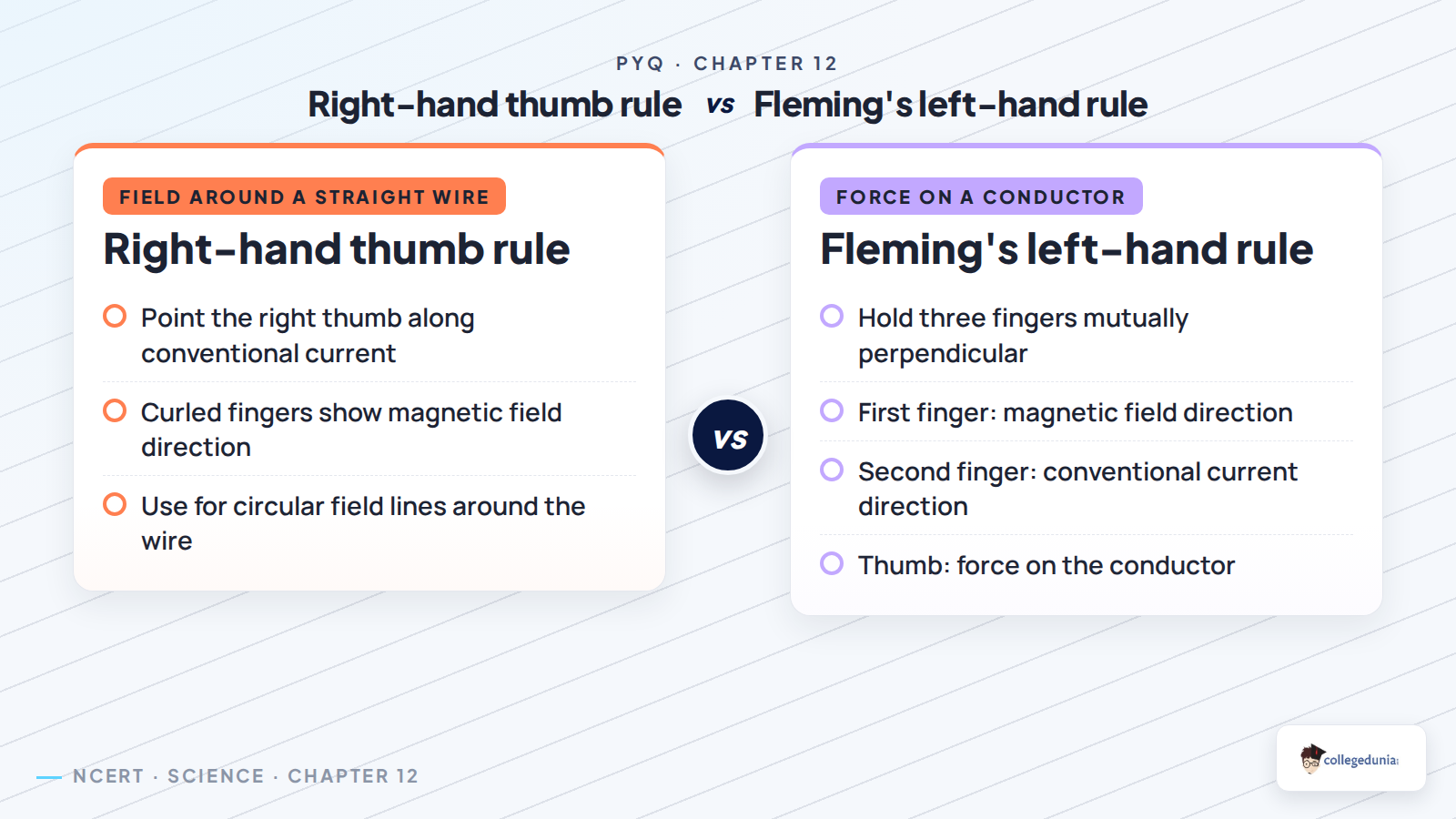
A question may ask for the magnetic field direction or the force direction. First identify which quantity is missing. The two hand rules answer different questions. Refer to the official NCERT chapter when checking your reasoning.
| Question asks for | Rule or check |
|---|---|
| Field around a straight wire | Right-hand thumb rule: thumb shows current; curled fingers show magnetic field. |
| Force on a current-carrying wire | Fleming's left-hand rule: forefinger shows field, middle finger current, thumb force. |
| Field around a bar magnet | Outside the magnet, arrows run from north to south. Field lines form closed curves. |
| A uniform magnetic field | Show parallel, equally spaced lines with matching arrow directions. |
Label the current and field before finding the force. Keep the three fingers perpendicular when applying Fleming's left-hand rule.
How to Practise Magnetic Effects of Electric Current Questions
Use a separate notebook for answers so you can try the same questions again. Collegedunia's chapter resources below can help you revise a topic when you get stuck. An NCERT exercise solution is a study aid; it is not an answer key for this historical question bank.
- Select questions that match your current assessment syllabus.
- Read every subpart and circle the command words: state, explain, draw or compare.
- For diagrams, draw arrows and label poles, wires and current directions.
- Check explanations against NCERT and discuss uncertain answers with your teacher.
- Record the year, set and question number beside each answer you want to retry.
For domestic-circuit questions, distinguish the role of a fuse from the role of the earth wire. For solenoid diagrams, check both the internal field pattern and the poles. Write each requested reason separately, so no part of a long question is missed.
More Magnetic Effects of Electric Current Class 10 Resources
Use the textbook for concepts, notes for revision and solutions to check NCERT exercise methods.
| Resource | Chapter link |
|---|---|
| NCERT Solutions | NCERT Solutions for Magnetic Effects of Electric Current |
| Notes | Notes for Magnetic Effects of Electric Current |
| Formula Sheet | Formula Sheet for Magnetic Effects of Electric Current |
| Handwritten Notes | Handwritten Notes for Magnetic Effects of Electric Current |
| Exemplar Solutions | Exemplar Solutions for Magnetic Effects of Electric Current |
| NCERT Book PDF | NCERT Book PDF for Magnetic Effects of Electric Current |
| Exemplar Book PDF | Exemplar Book PDF for Magnetic Effects of Electric Current |
Class 10 Science Previous Year Questions: All Chapters
Choose from the available chapter question banks below. Each link opens previous year questions for that topic.
| Chapter | Previous year questions |
|---|---|
| Chapter 1 | Chemical Reactions and Equations Previous Year Questions |
| Chapter 2 | Acids, Bases and Salts Previous Year Questions |
| Chapter 3 | Metals and Non-metals Previous Year Questions |
| Chapter 4 | Carbon and its Compounds Previous Year Questions |
| Chapter 5 | Life Processes Previous Year Questions |
| Chapter 6 | Control and Coordination Previous Year Questions |
| Chapter 7 | How do Organisms Reproduce? Previous Year Questions |
| Chapter 8 | Heredity Previous Year Questions |
| Chapter 9 | Light - Reflection and Refraction Previous Year Questions |
| Chapter 12 | Magnetic Effects of Electric Current Previous Year Questions |
Magnetic Effects of Electric Current Class 10 Science PYQ FAQs
Ques. How many questions are in this Magnetic Effects of Electric Current PDF?
Ans. It contains 161 questions, grouped into 1-mark, 2-mark, 3-mark, 4-mark and 5-mark sections. The collection uses selected papers from 2005 to 2026; it does not cover every year or every set.
Ques. Does the previous year questions PDF include solutions?
Ans. No. It is a questions-only practice PDF. Write answers separately and check the relevant concepts in NCERT. Ask your teacher to review answers you cannot confirm.
Ques. Are motors and electromagnetic induction assessed in the 2026-27 board examination?
Ans. CBSE lists motors, electromagnetic induction and electric generators for formative assessment only in its 2026-27 Science syllabus. Older questions on these topics should be kept separate from year-end examination practice.
Ques. Does Magnetic Effects of Electric Current carry 13 marks?
Ans. The 13 marks belong to the full Effects of Current unit, which also includes Electricity. They are not a fixed allocation for Magnetic Effects of Electric Current alone.
Ques. What is a magnetic field?
Ans. A magnetic field is the region where magnetic force can be detected. A compass helps show its direction at a point.
Ques. What is a solenoid?
Ans. A solenoid is a coil with many closely wound circular turns of insulated wire. A current through it produces a magnetic field.
Ques. Why do magnetic field lines never intersect?
Ans. An intersection would give two directions for the magnetic field at one point. A compass needle cannot point in two directions at once.



Comments