



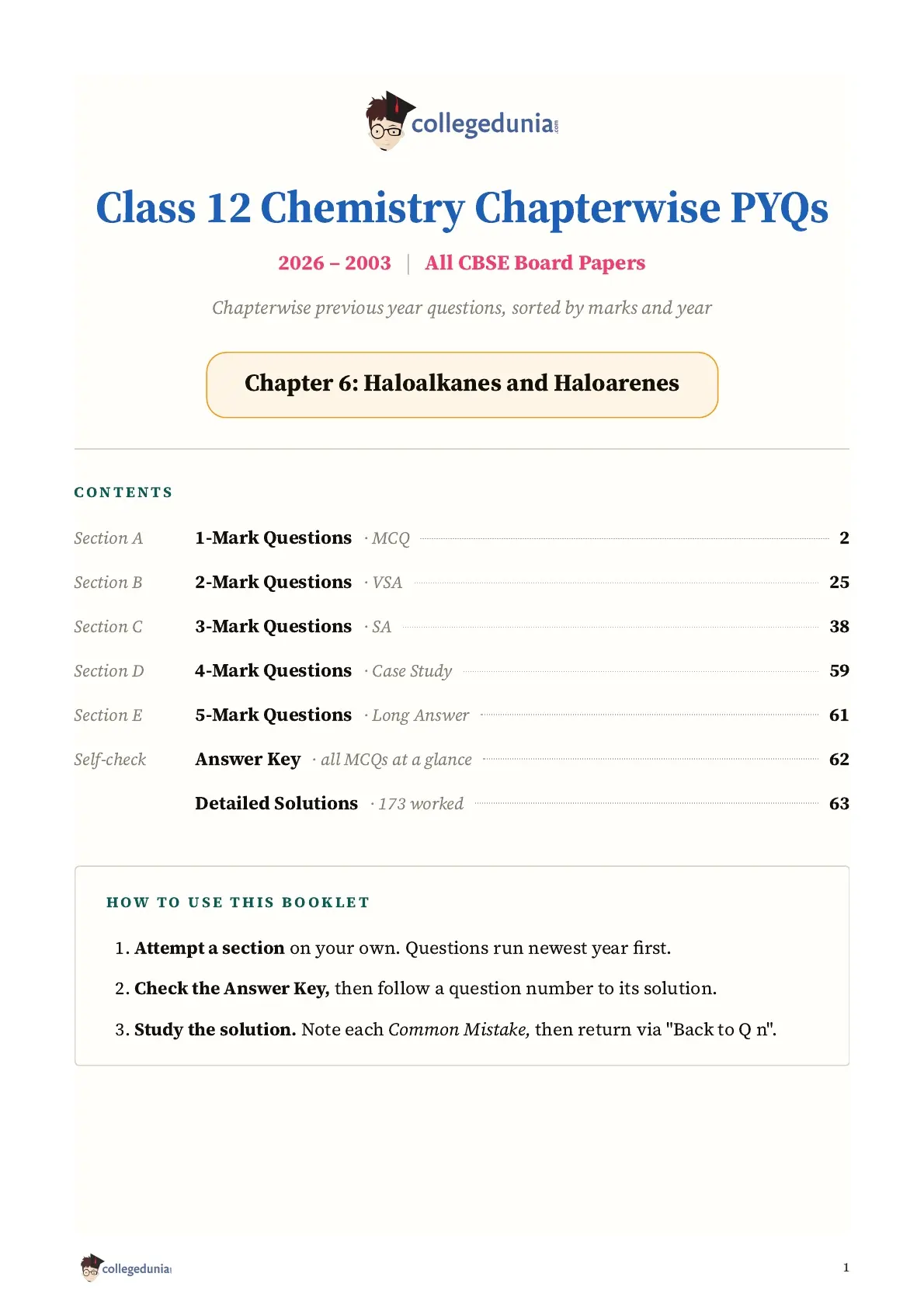
This page covers every question type CBSE sets in Haloalkanes and Haloarenes, named reactions, chirality, IUPAC naming and reactivity order, all from real papers.
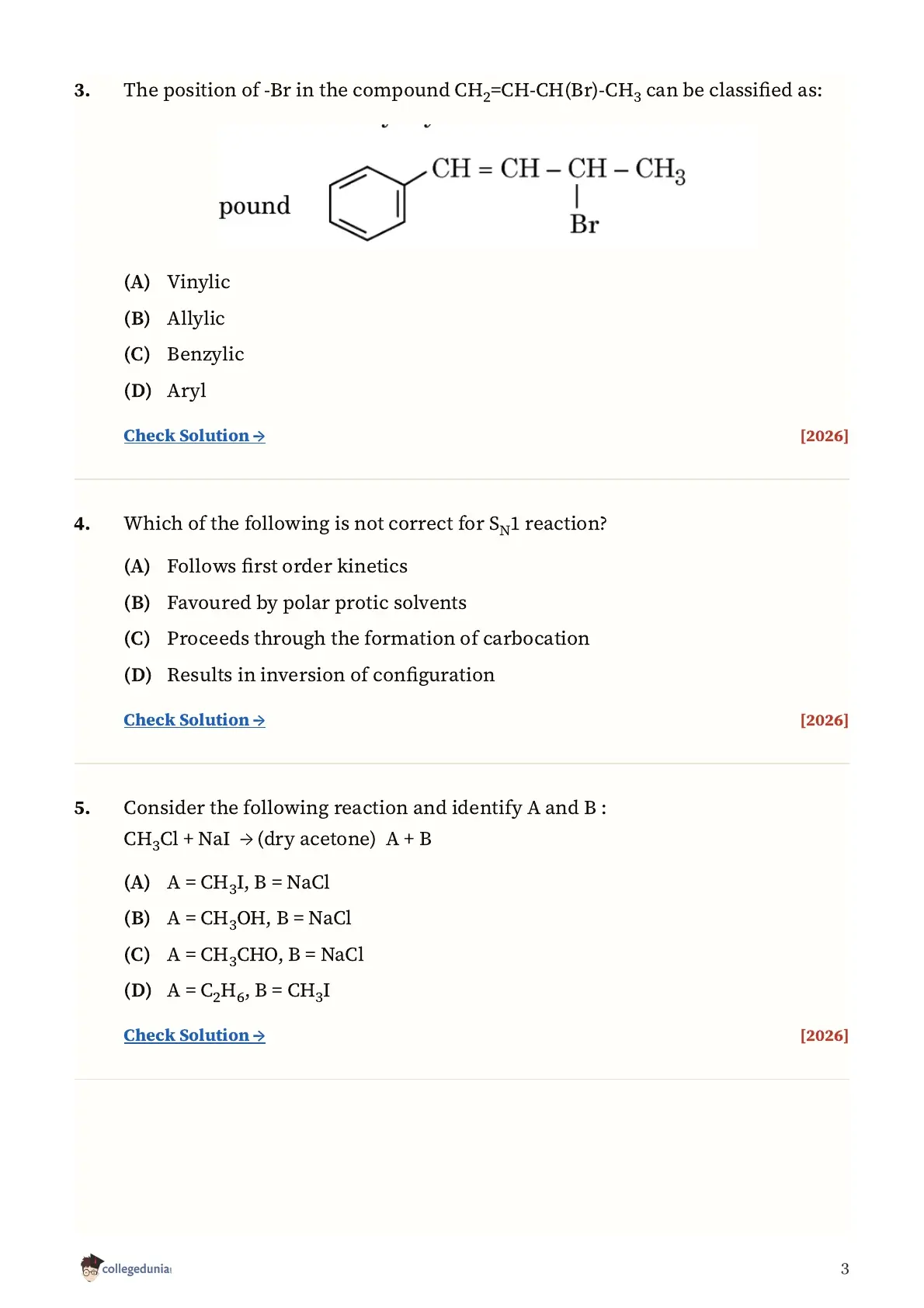
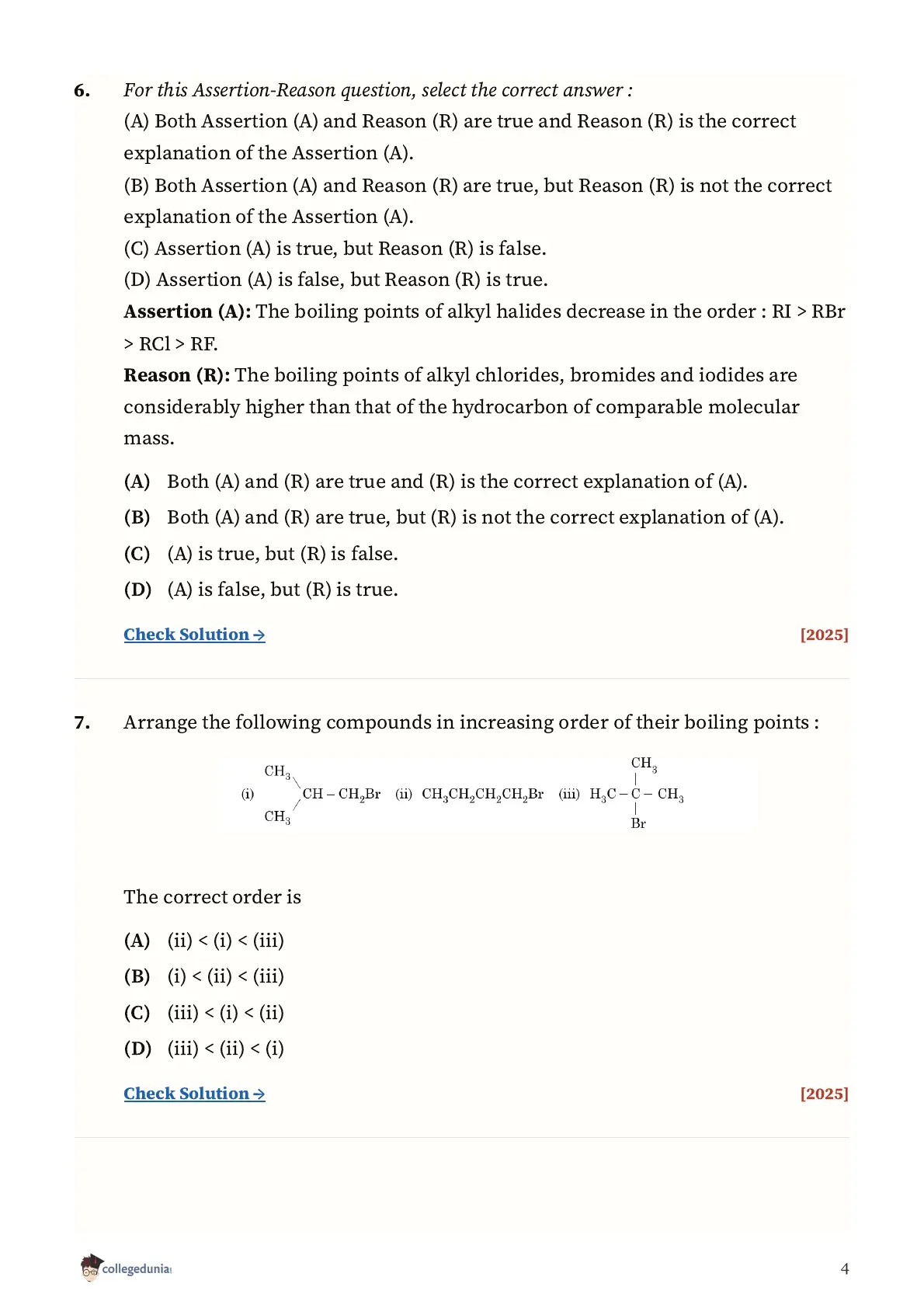
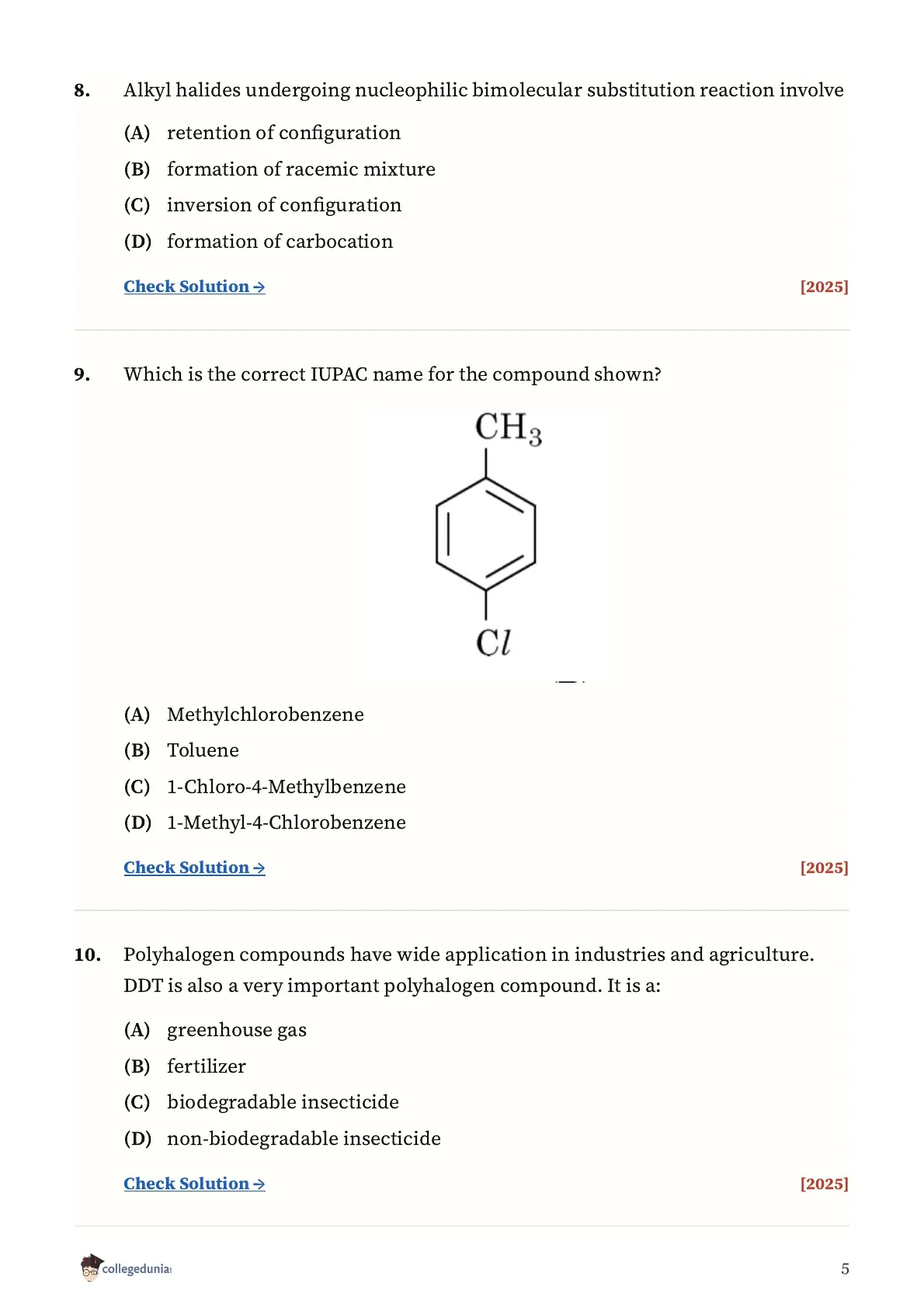
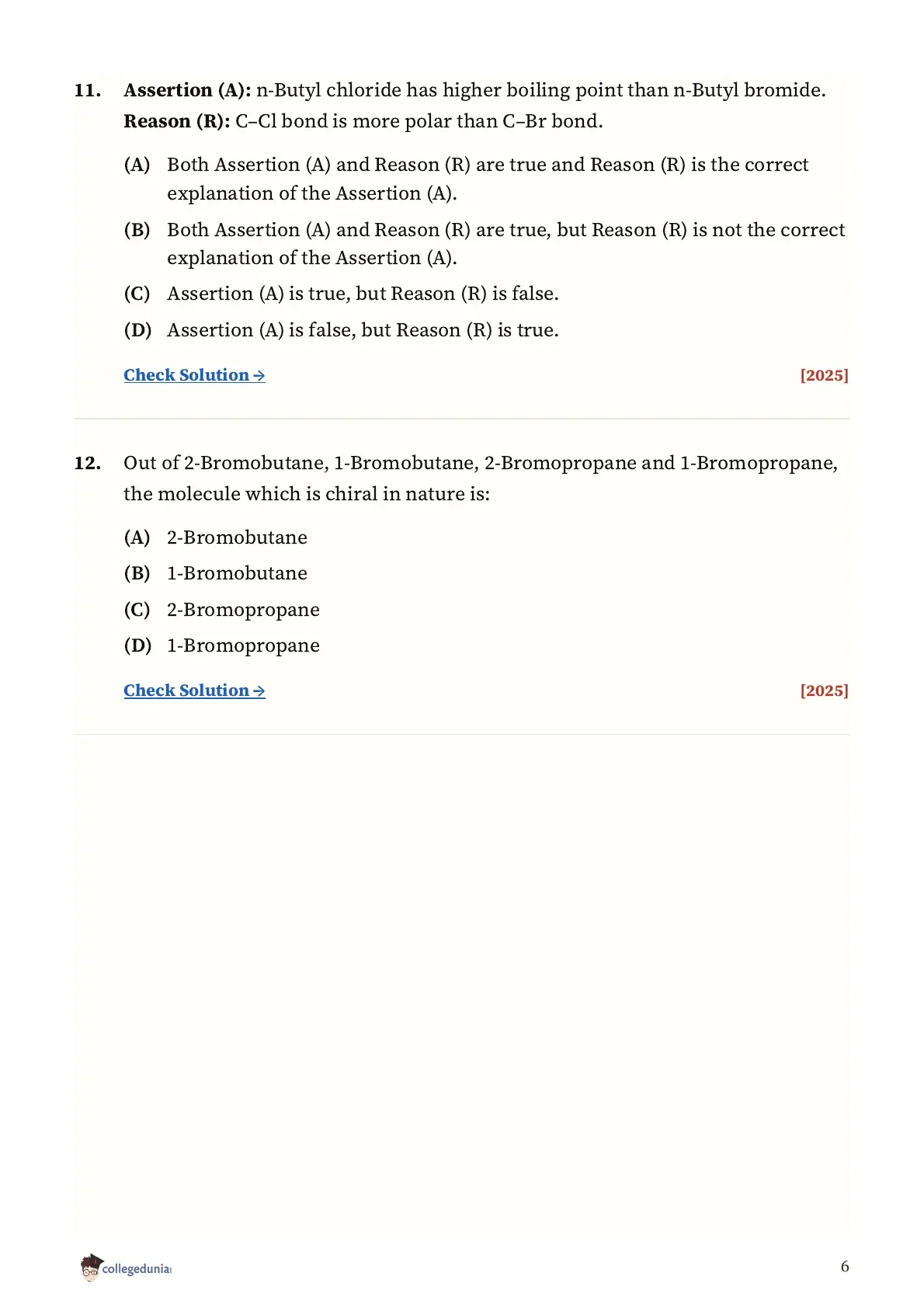
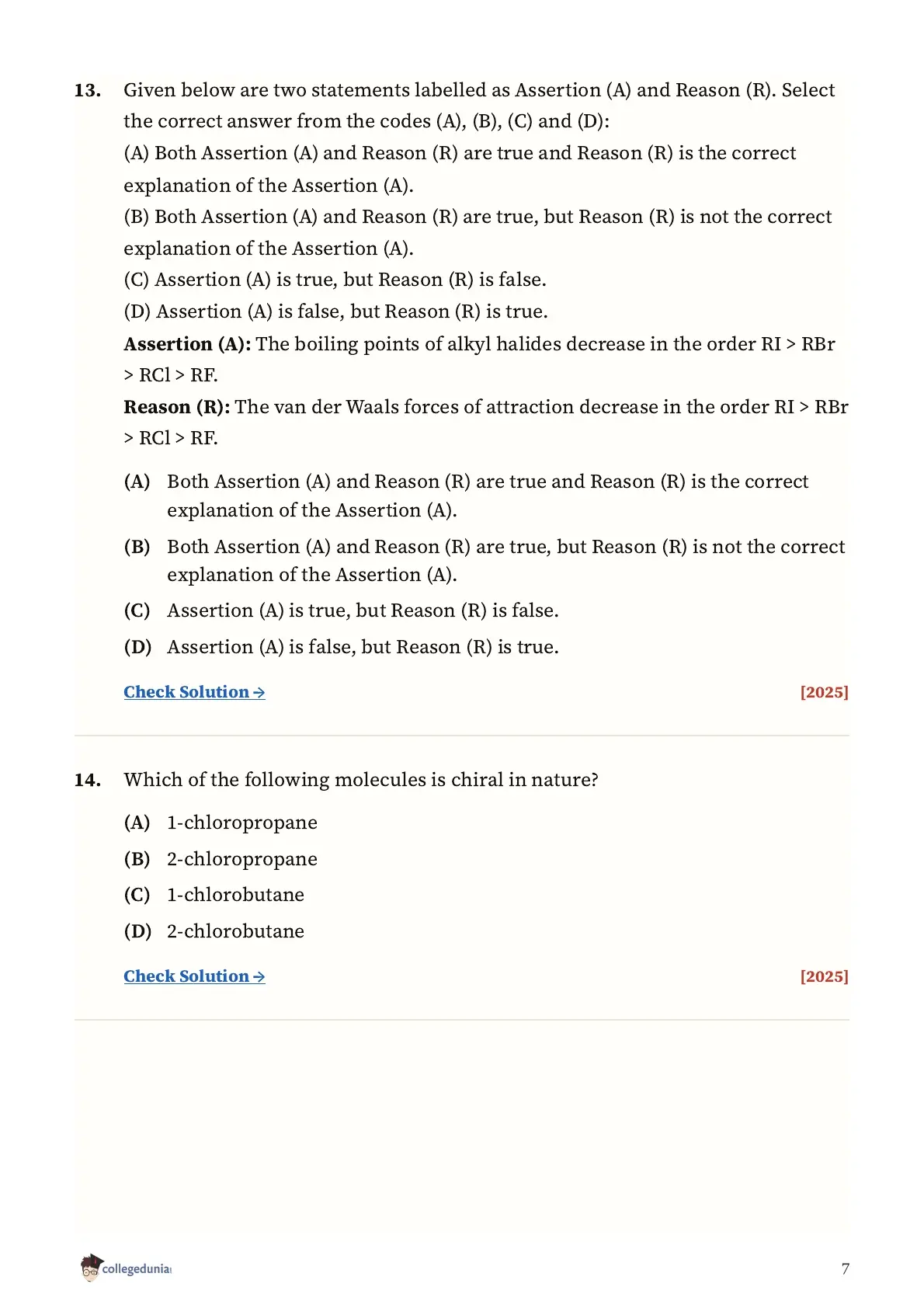
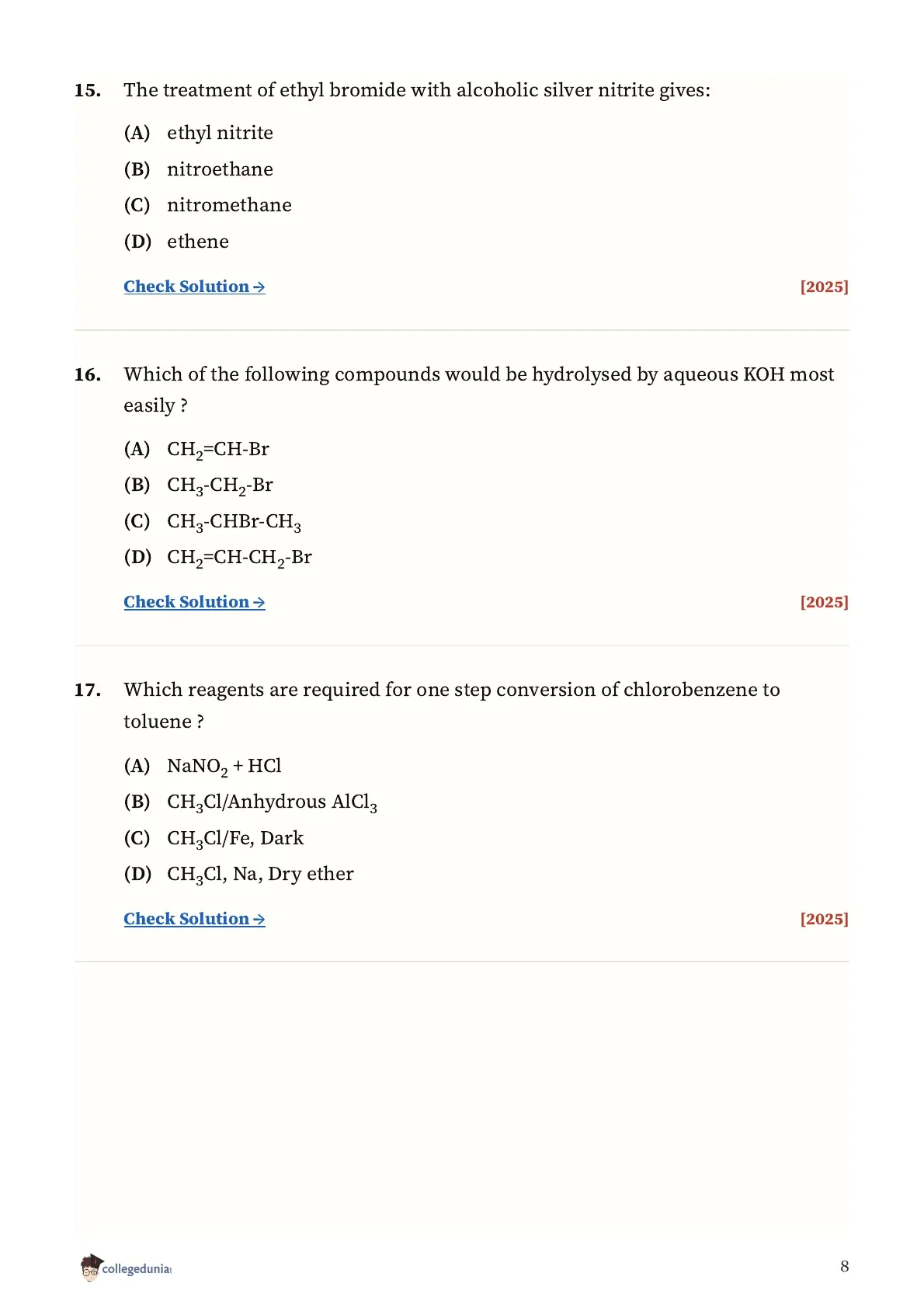
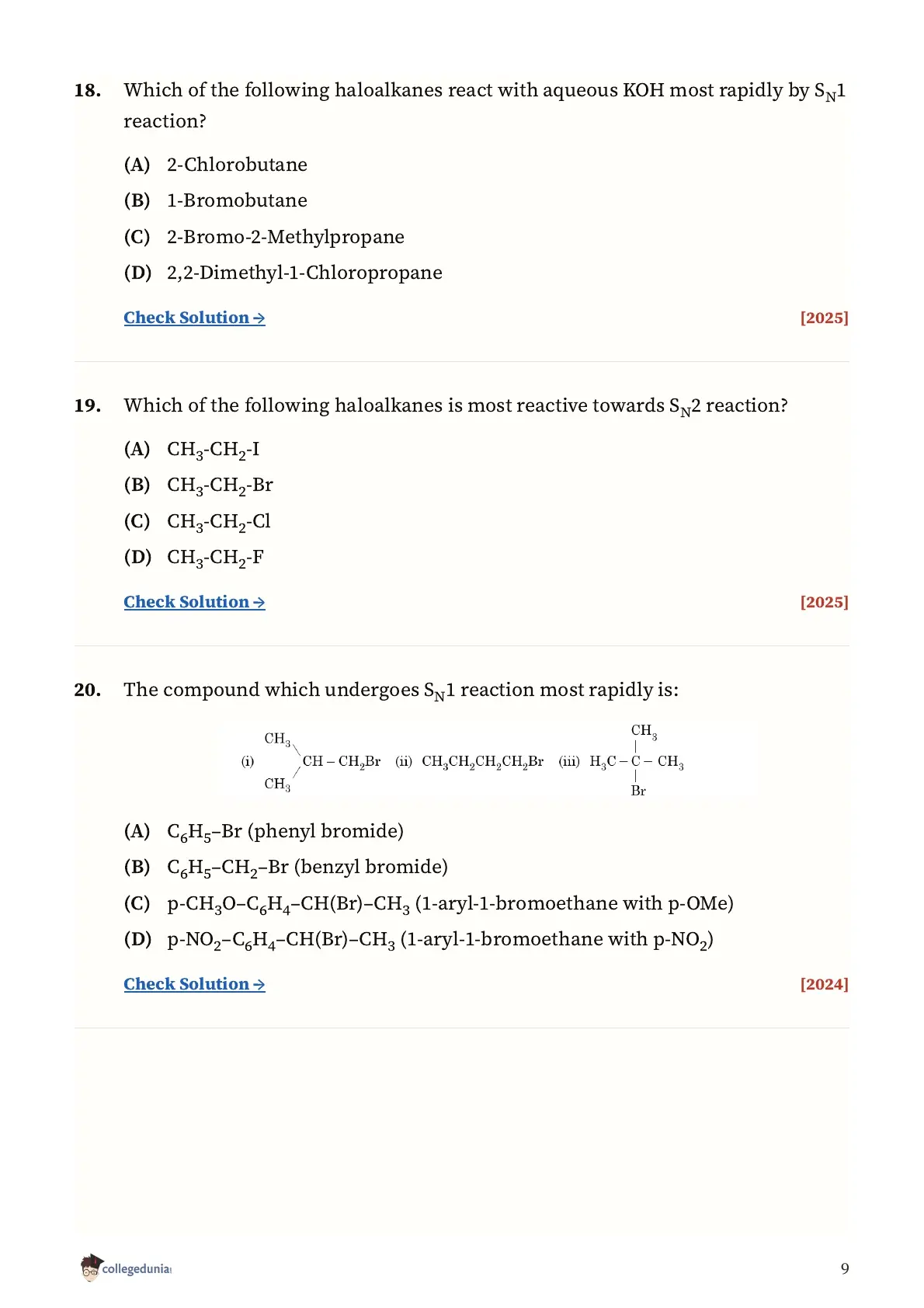
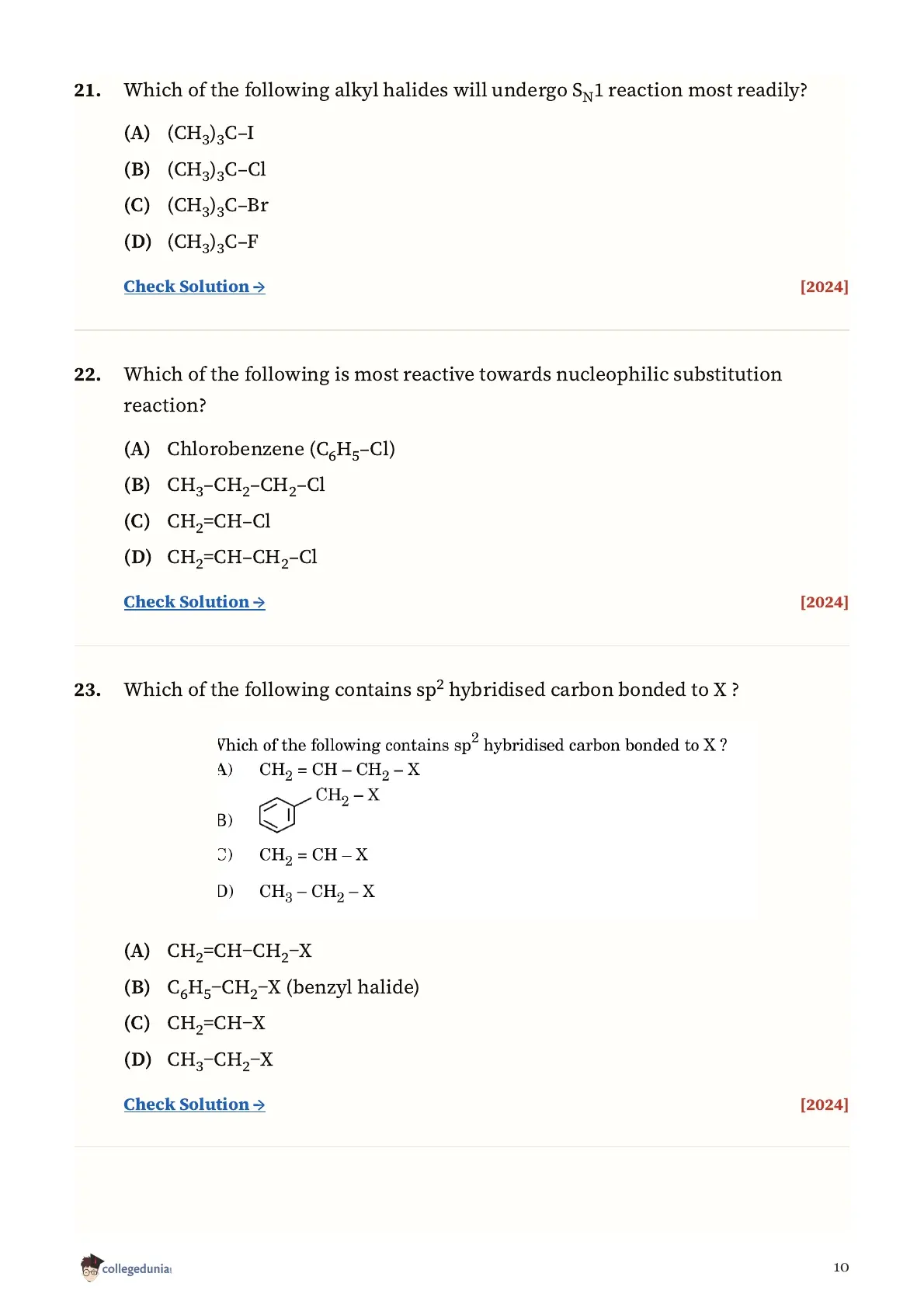
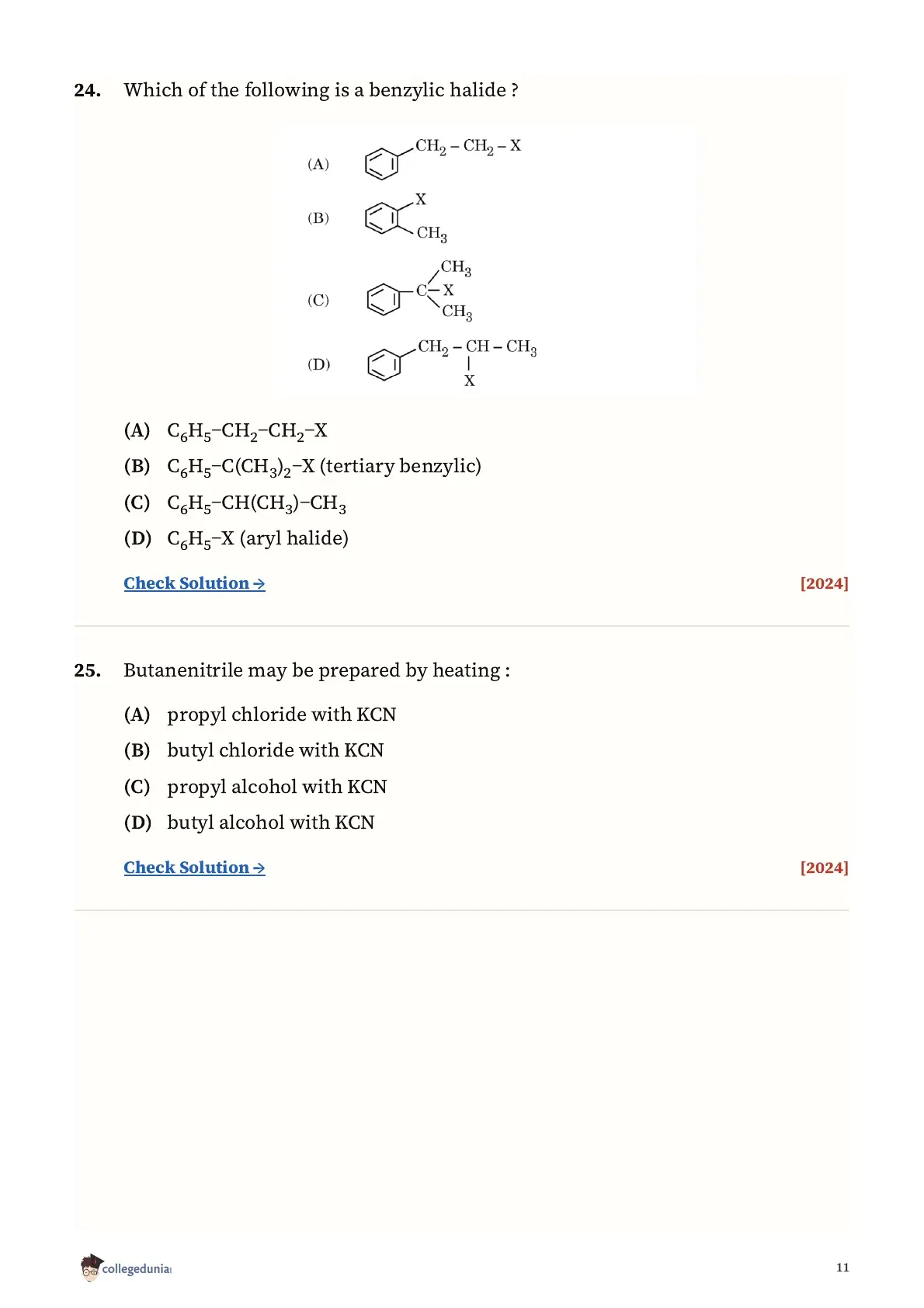
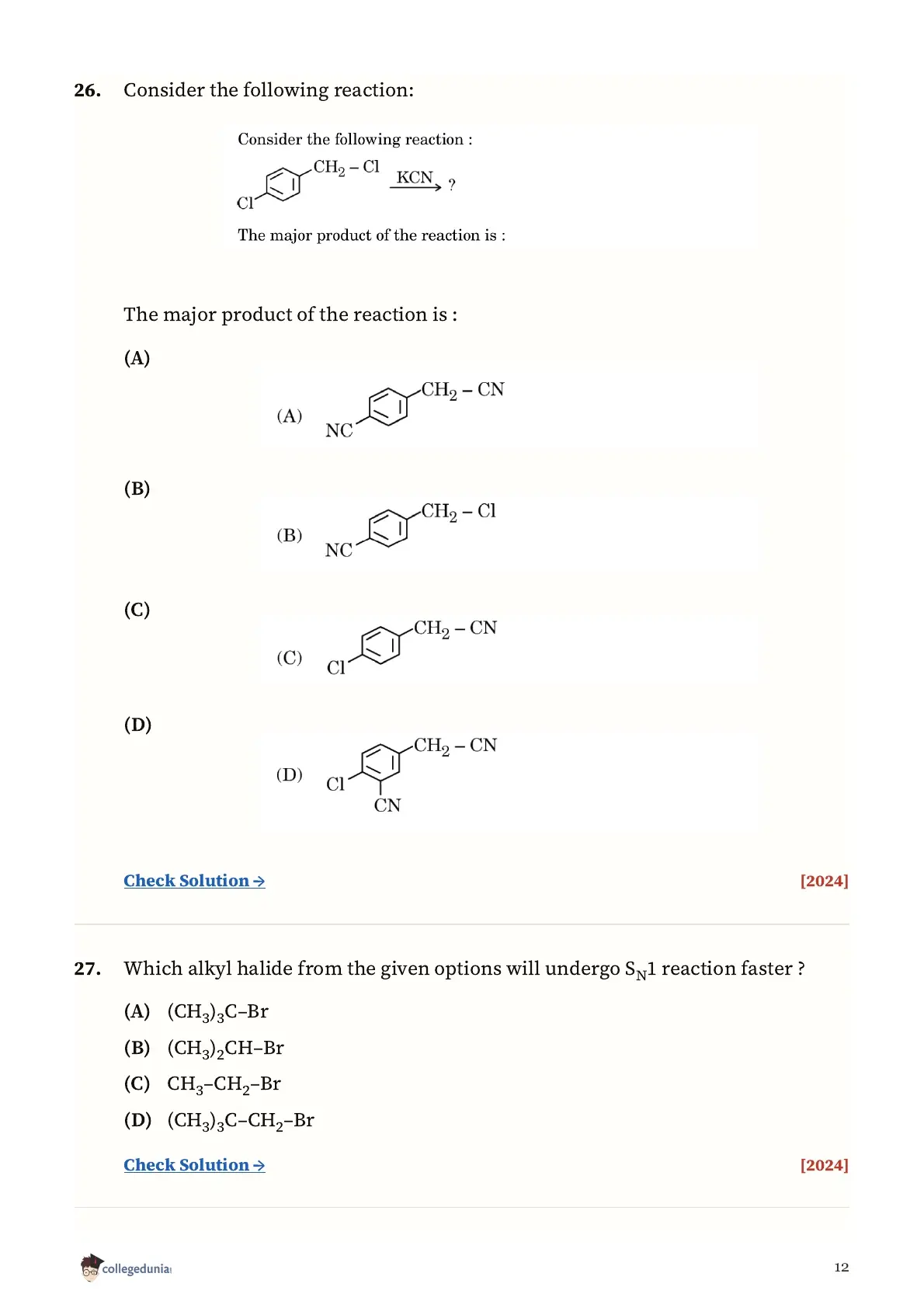
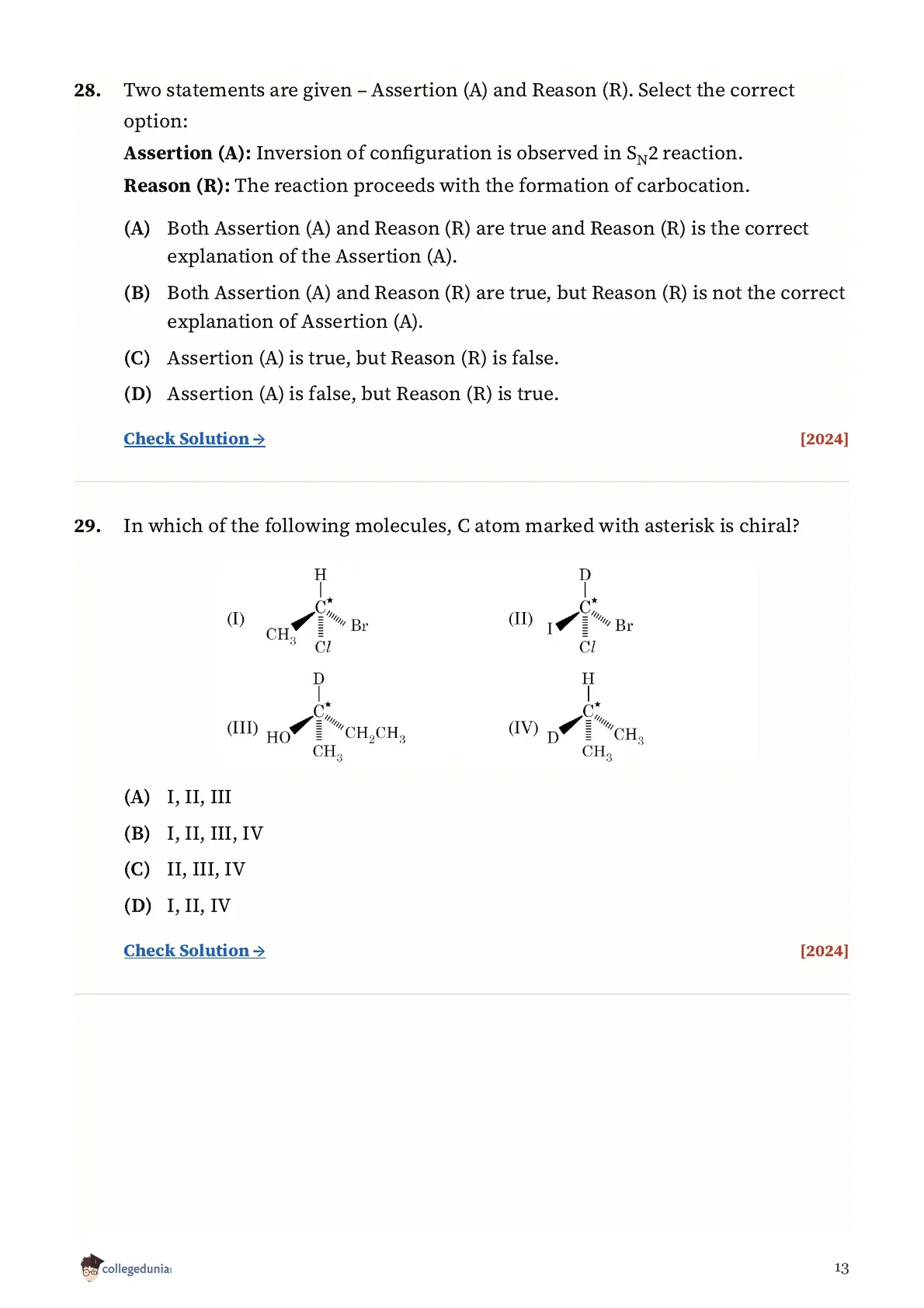
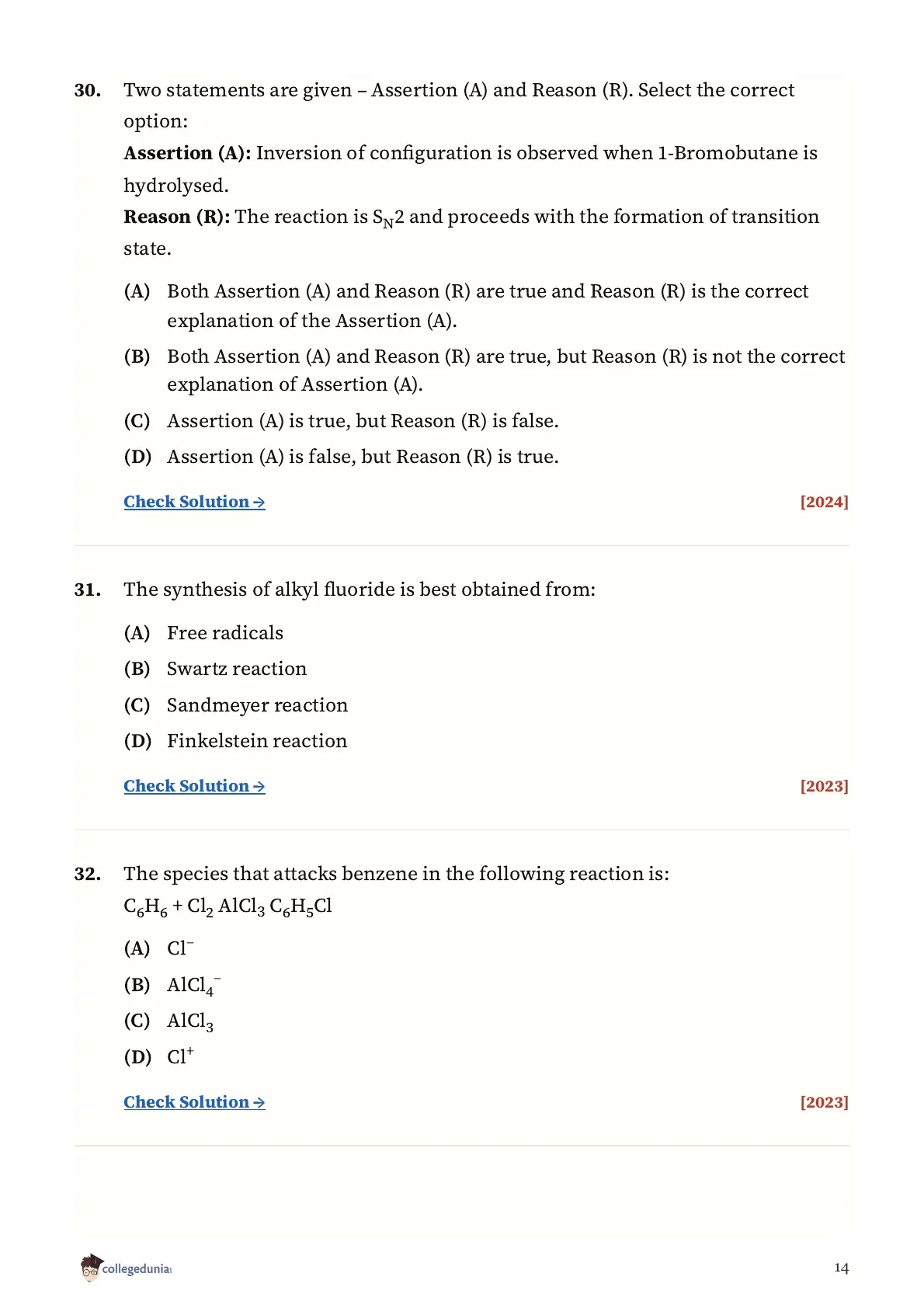
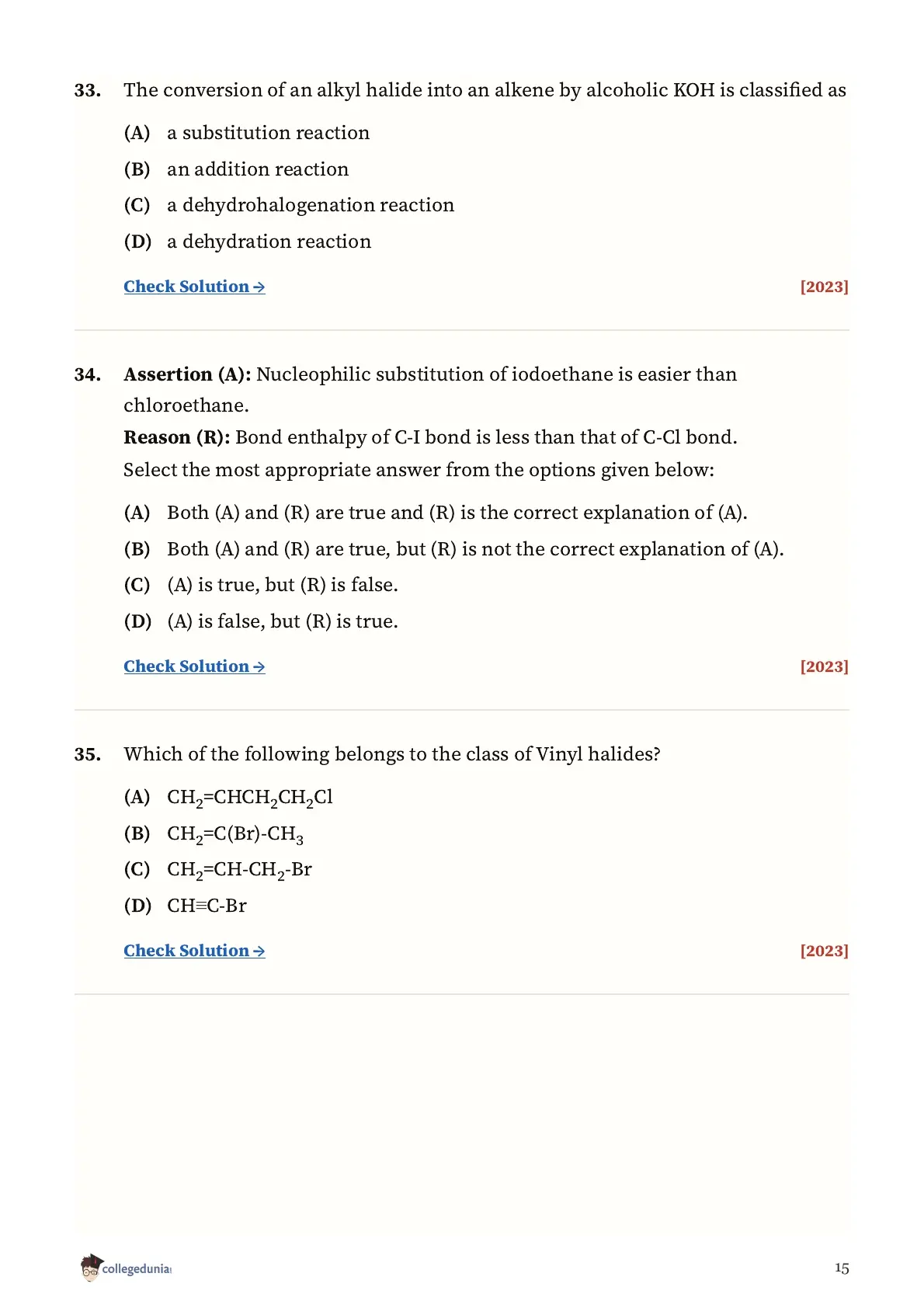
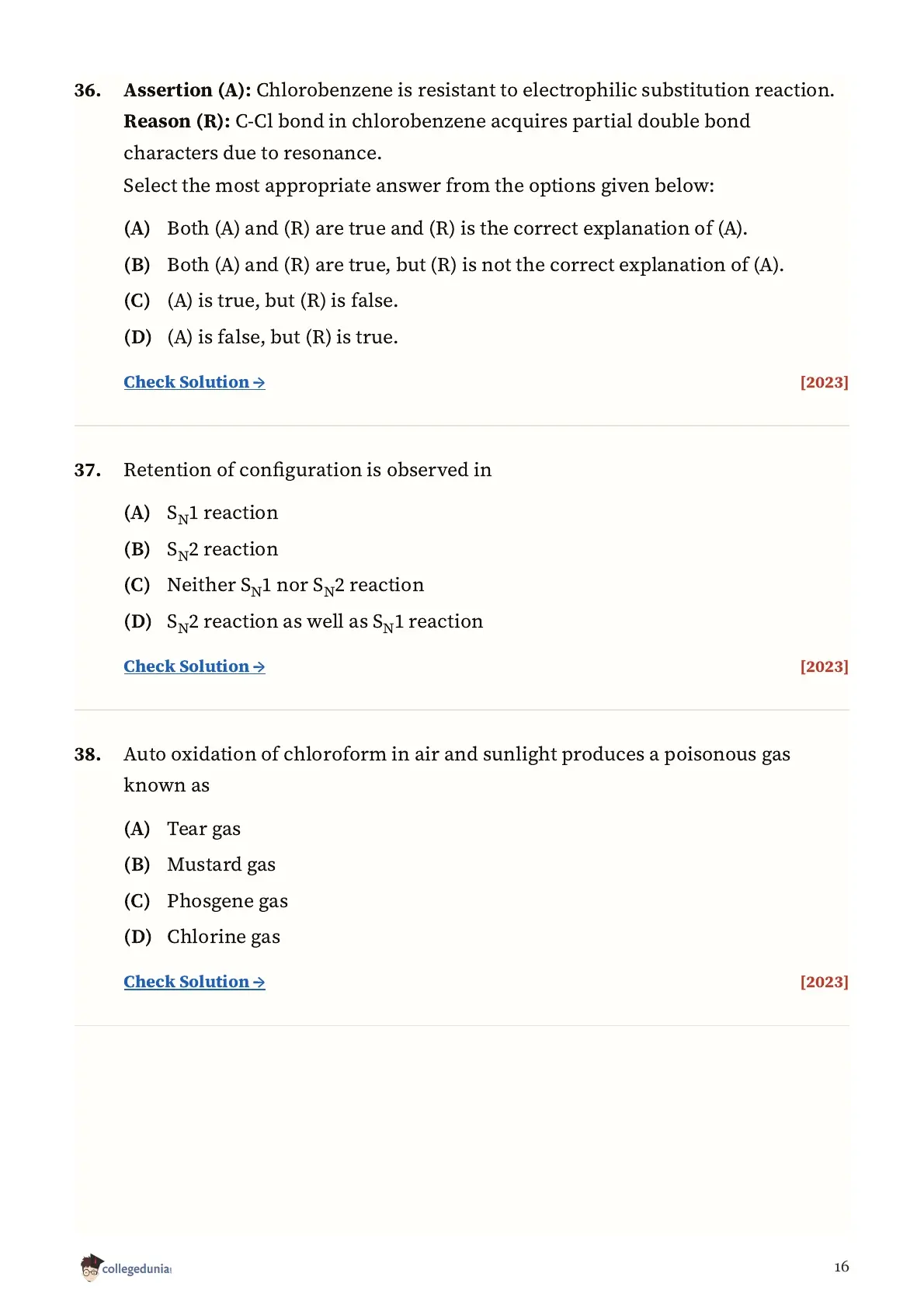
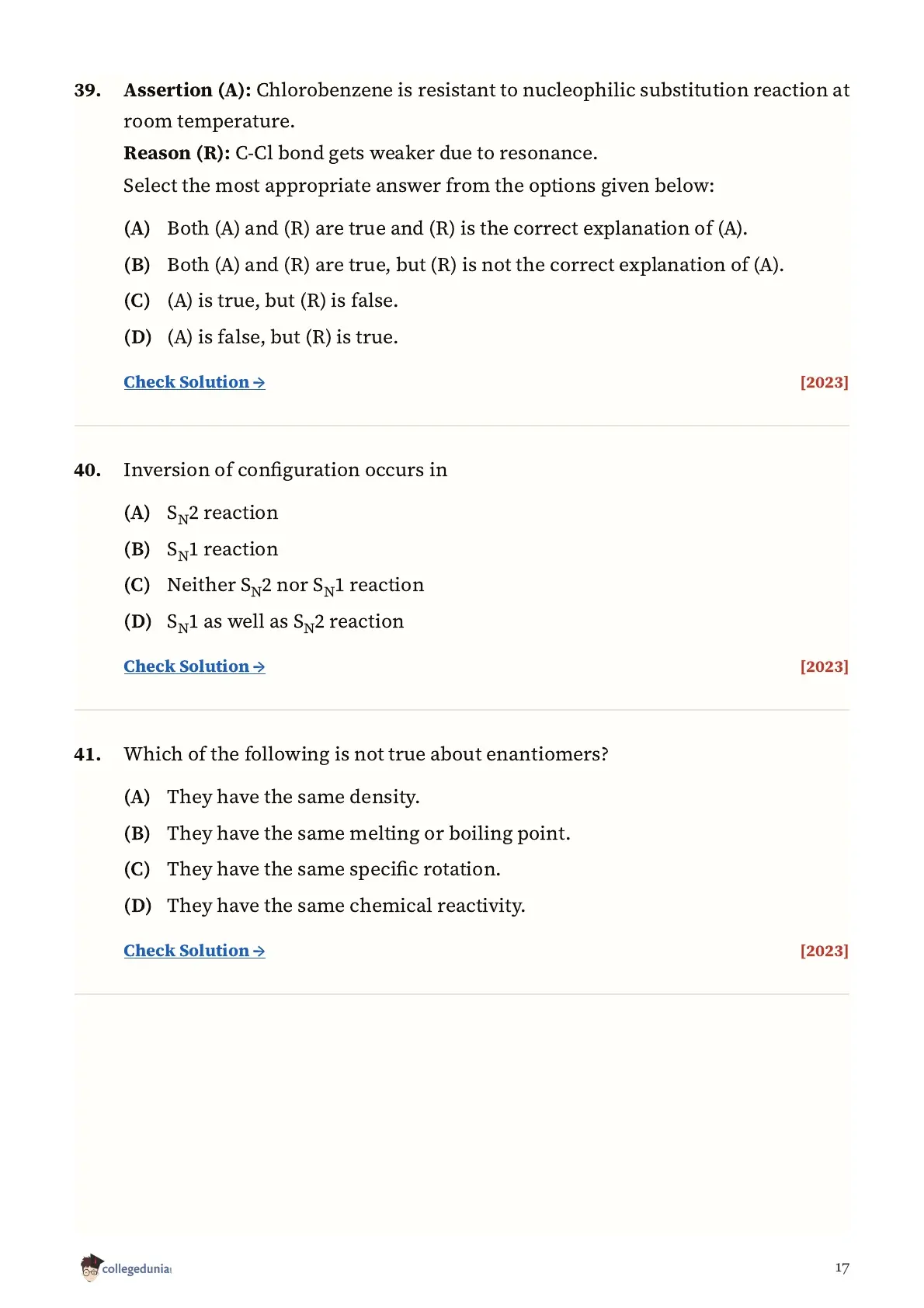
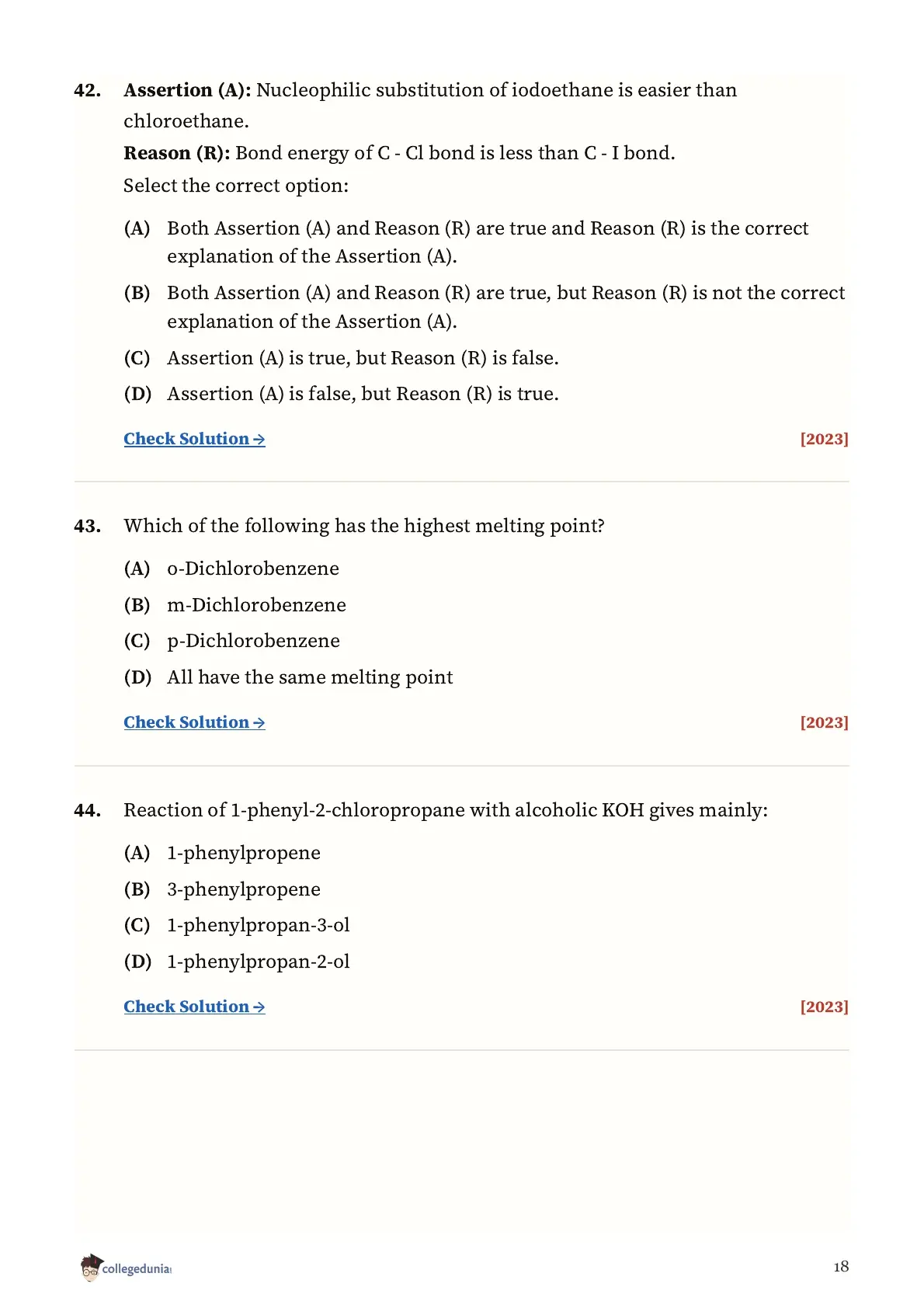
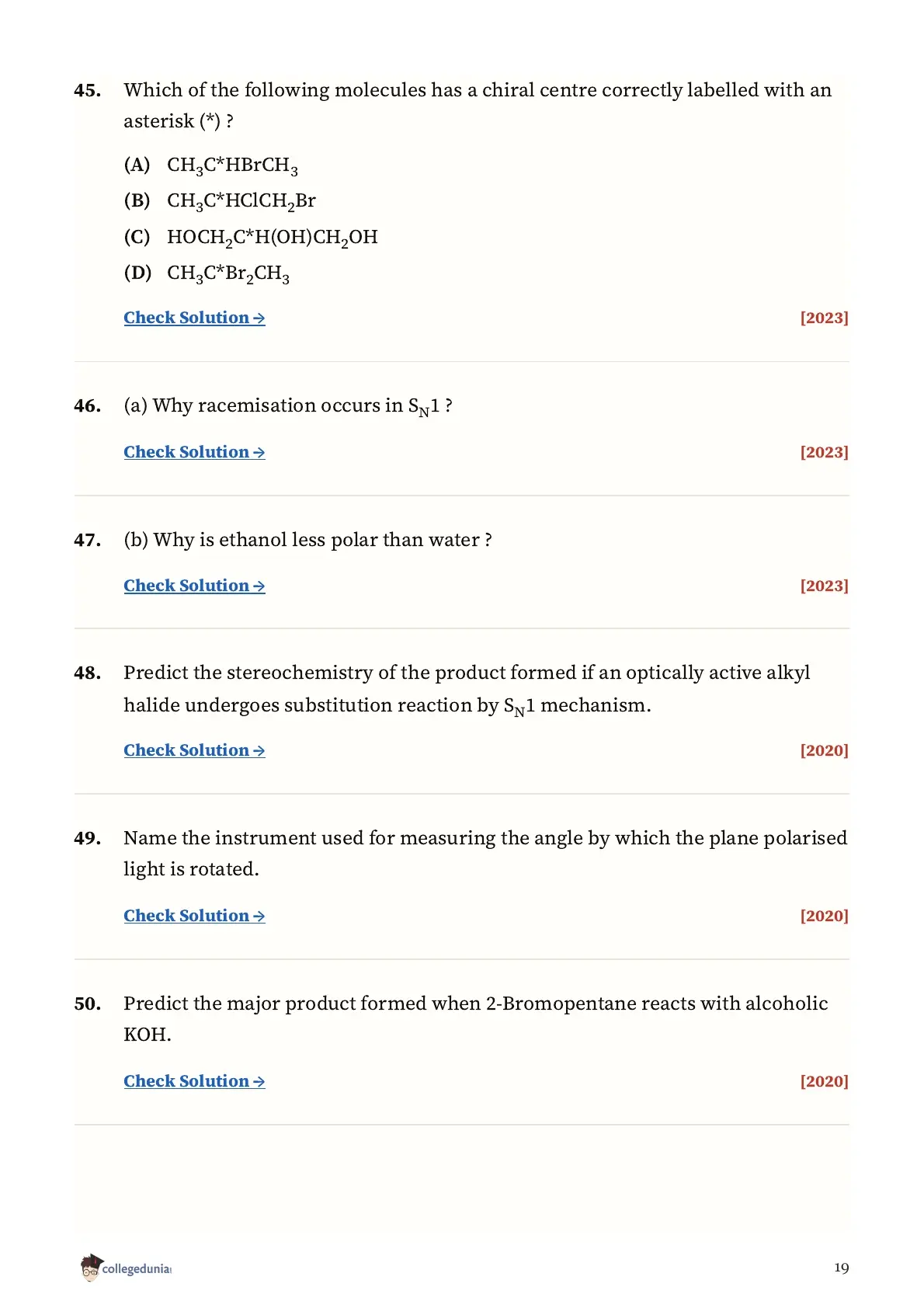
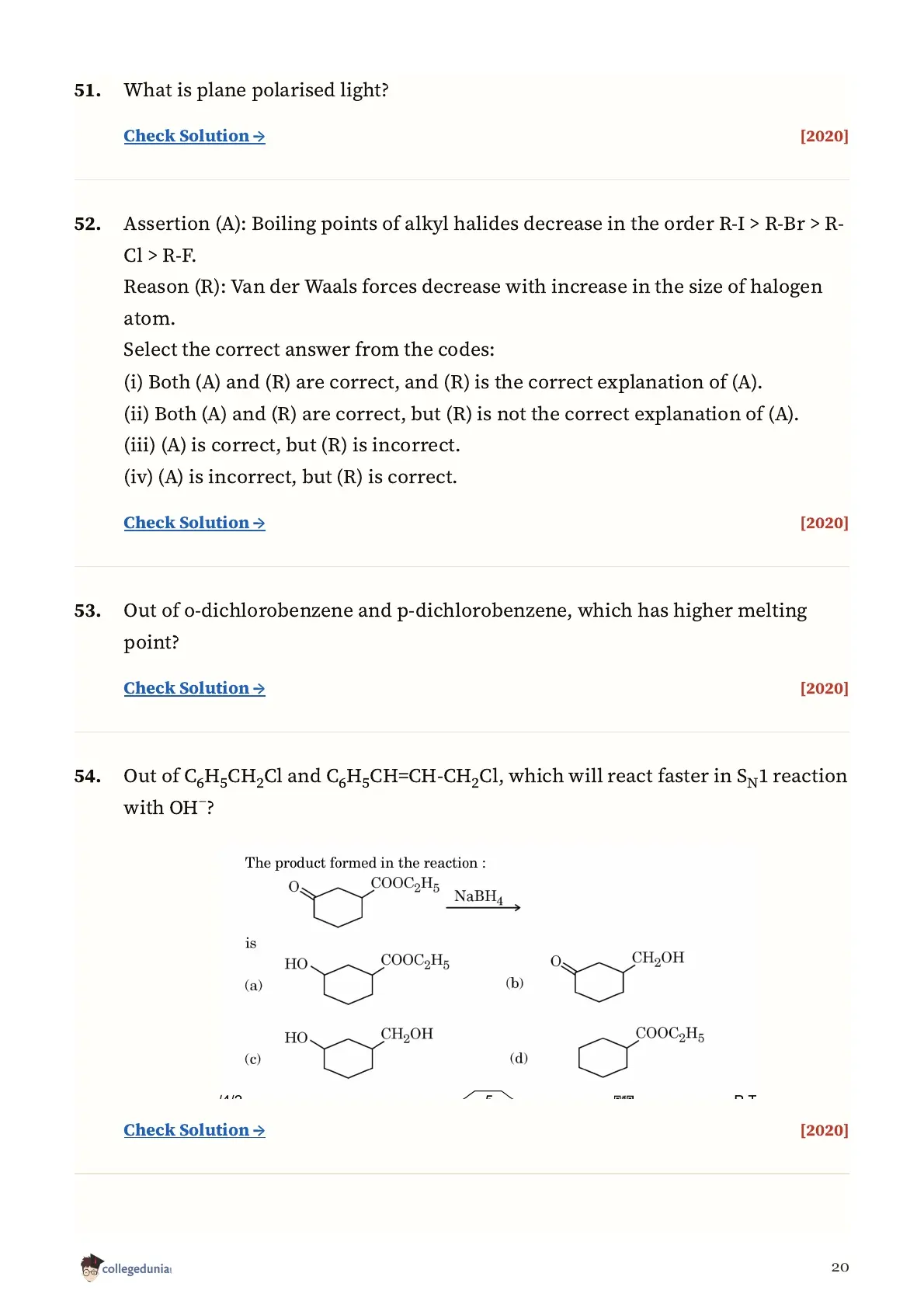
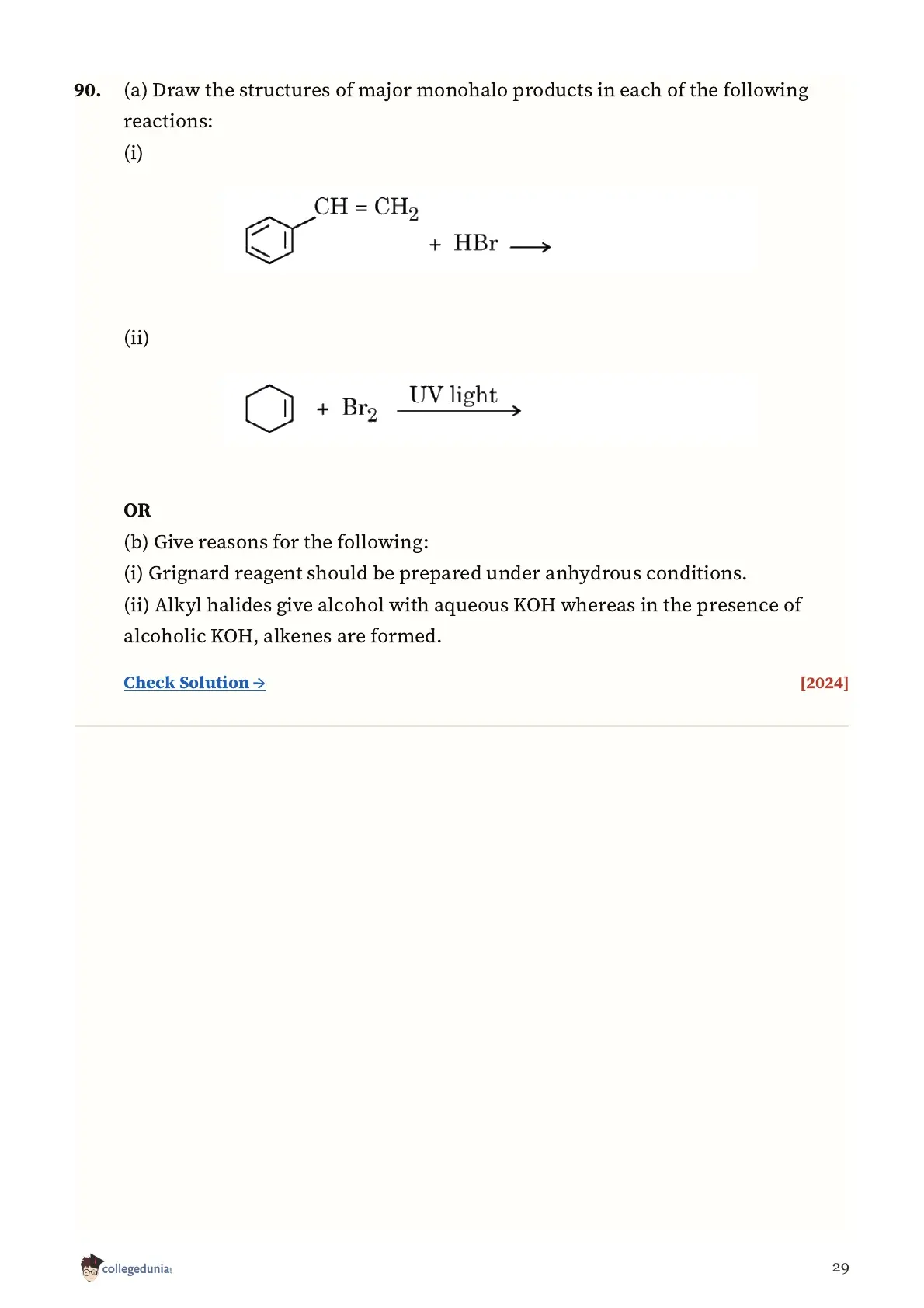
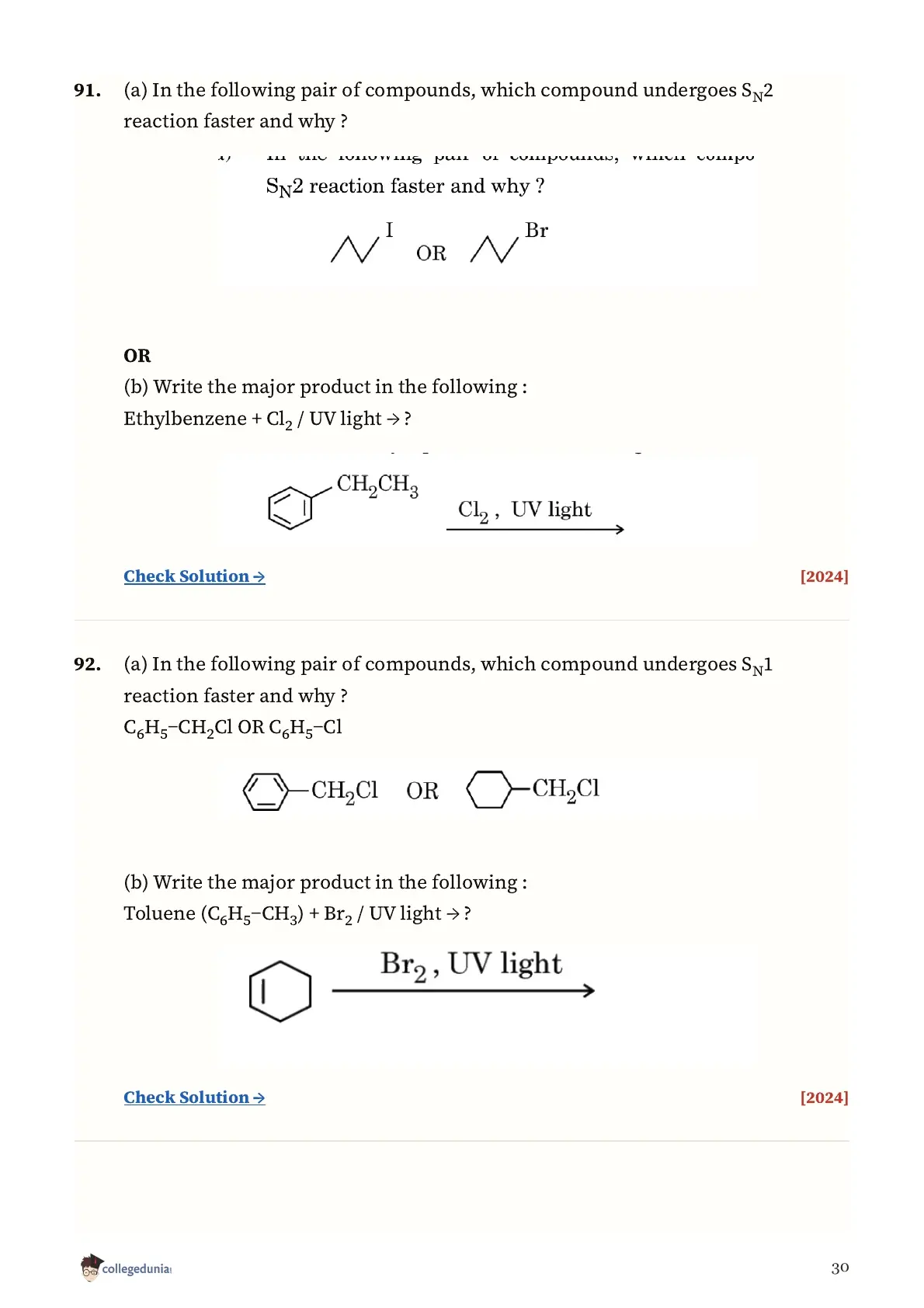
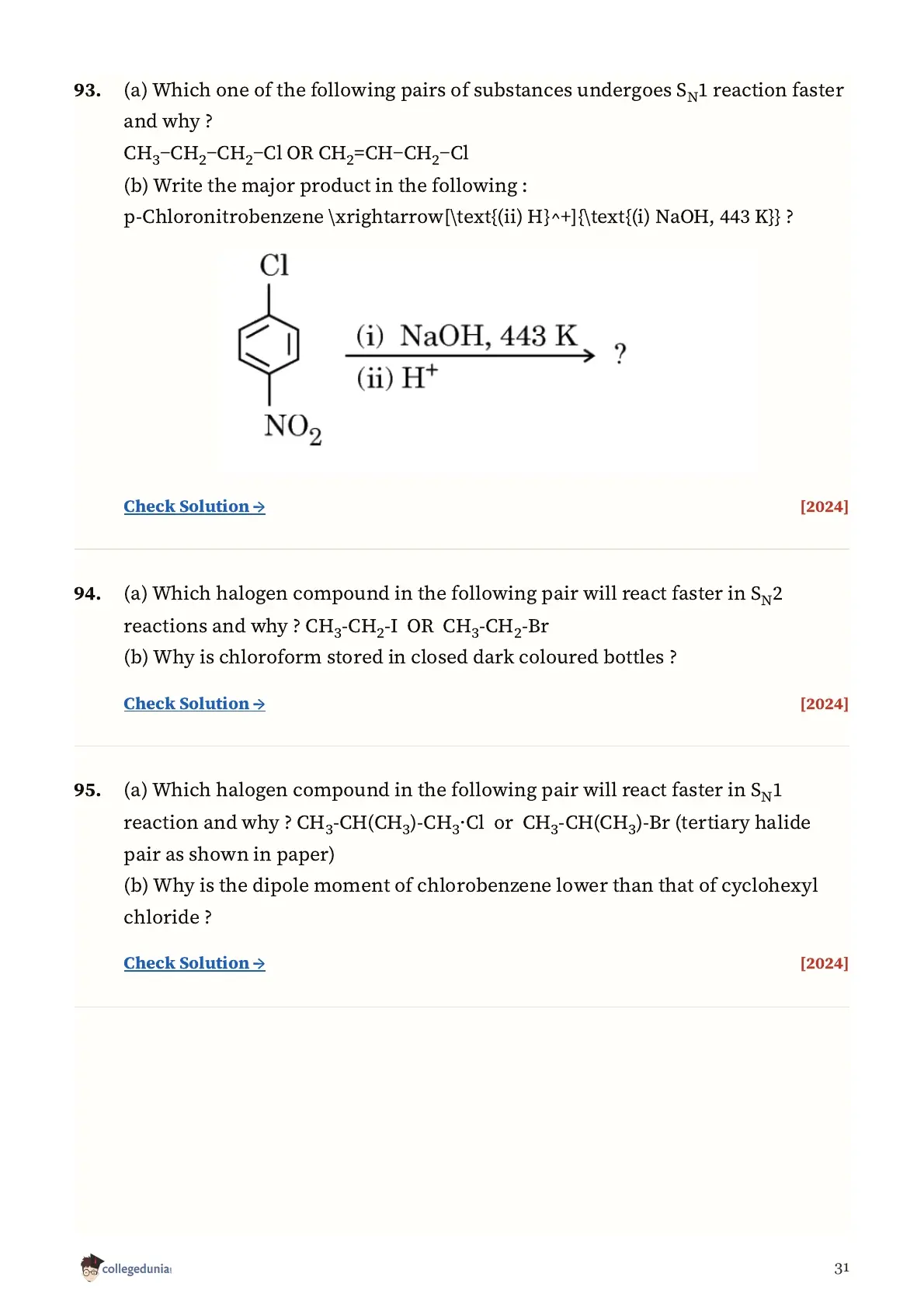
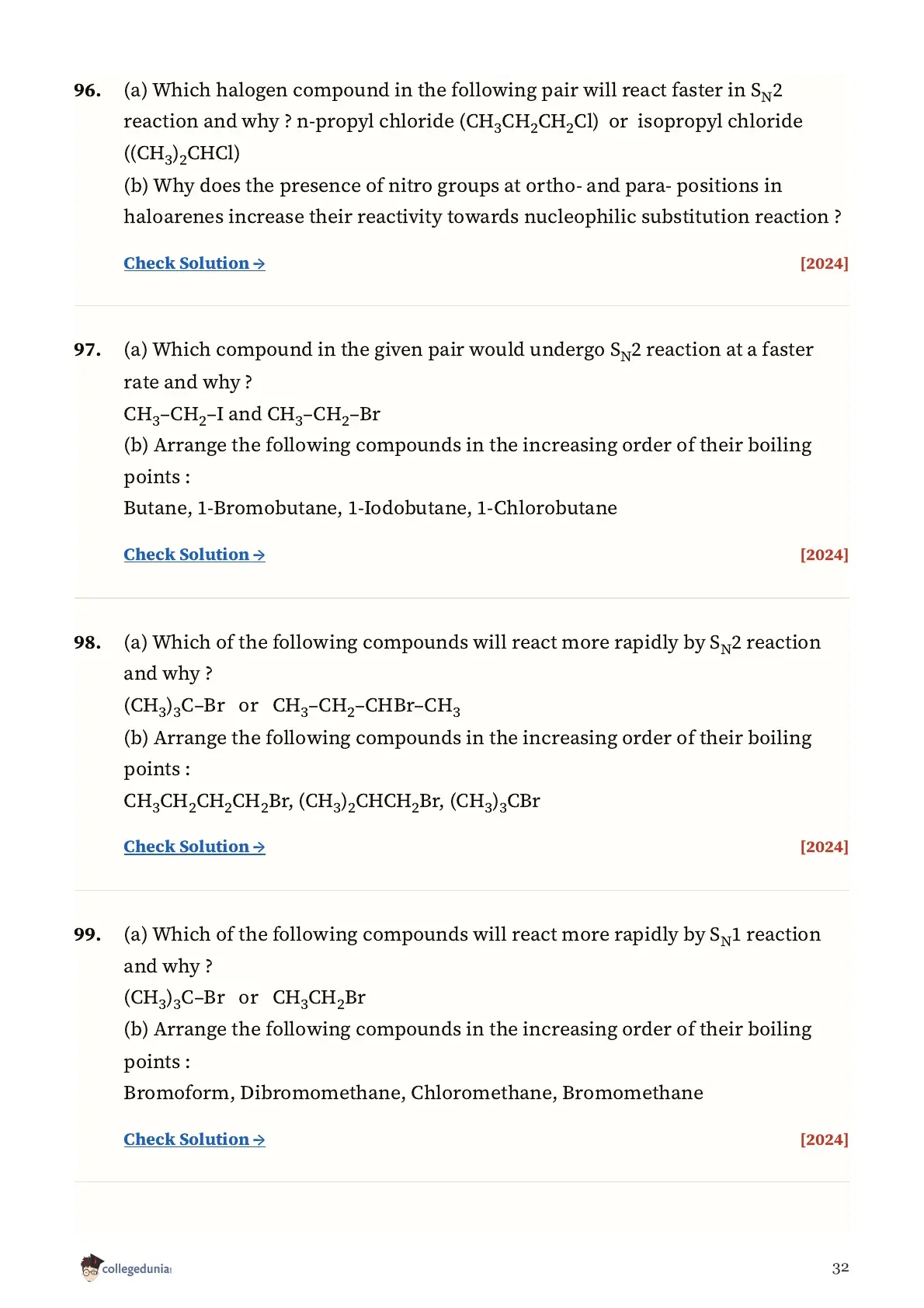
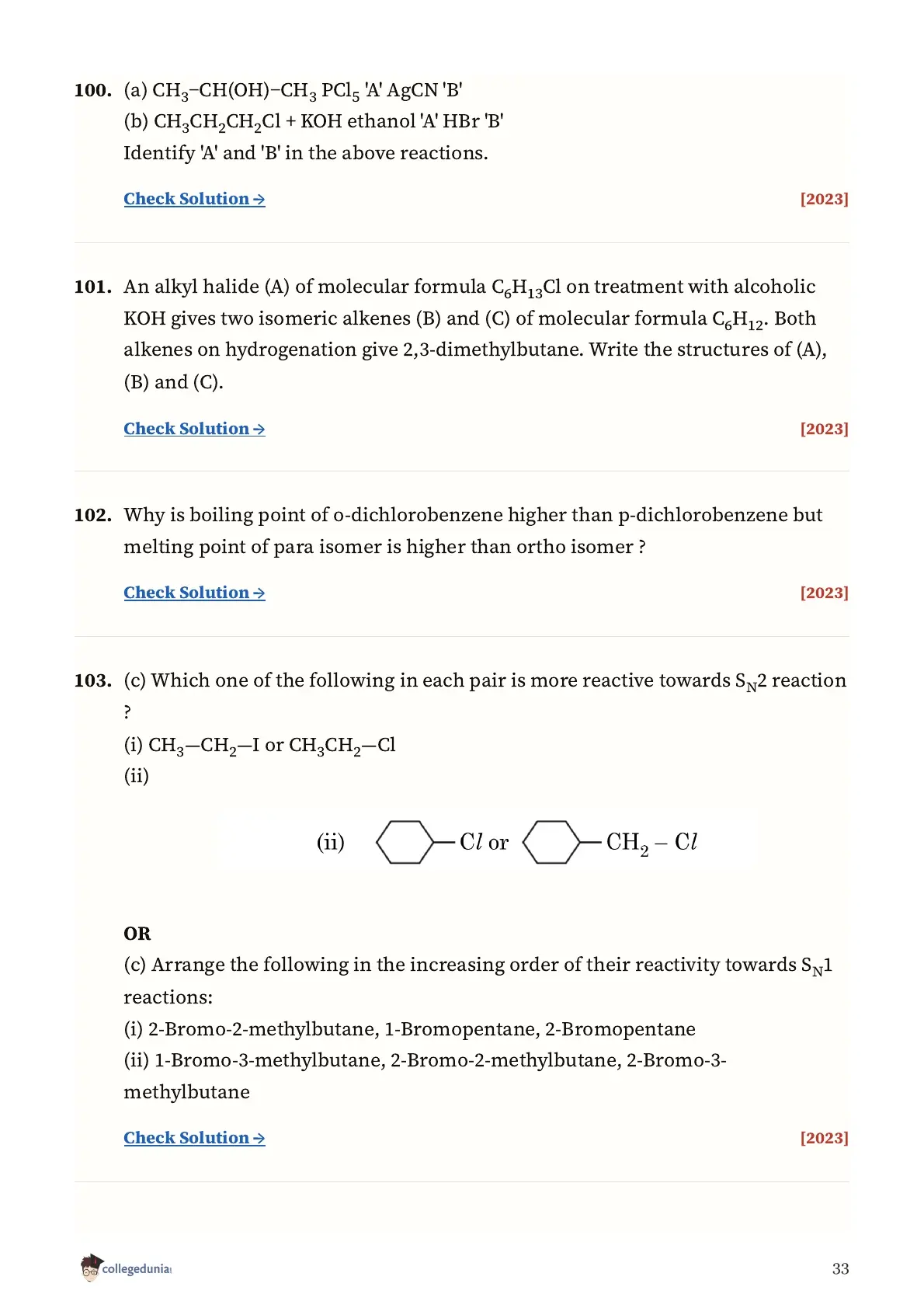
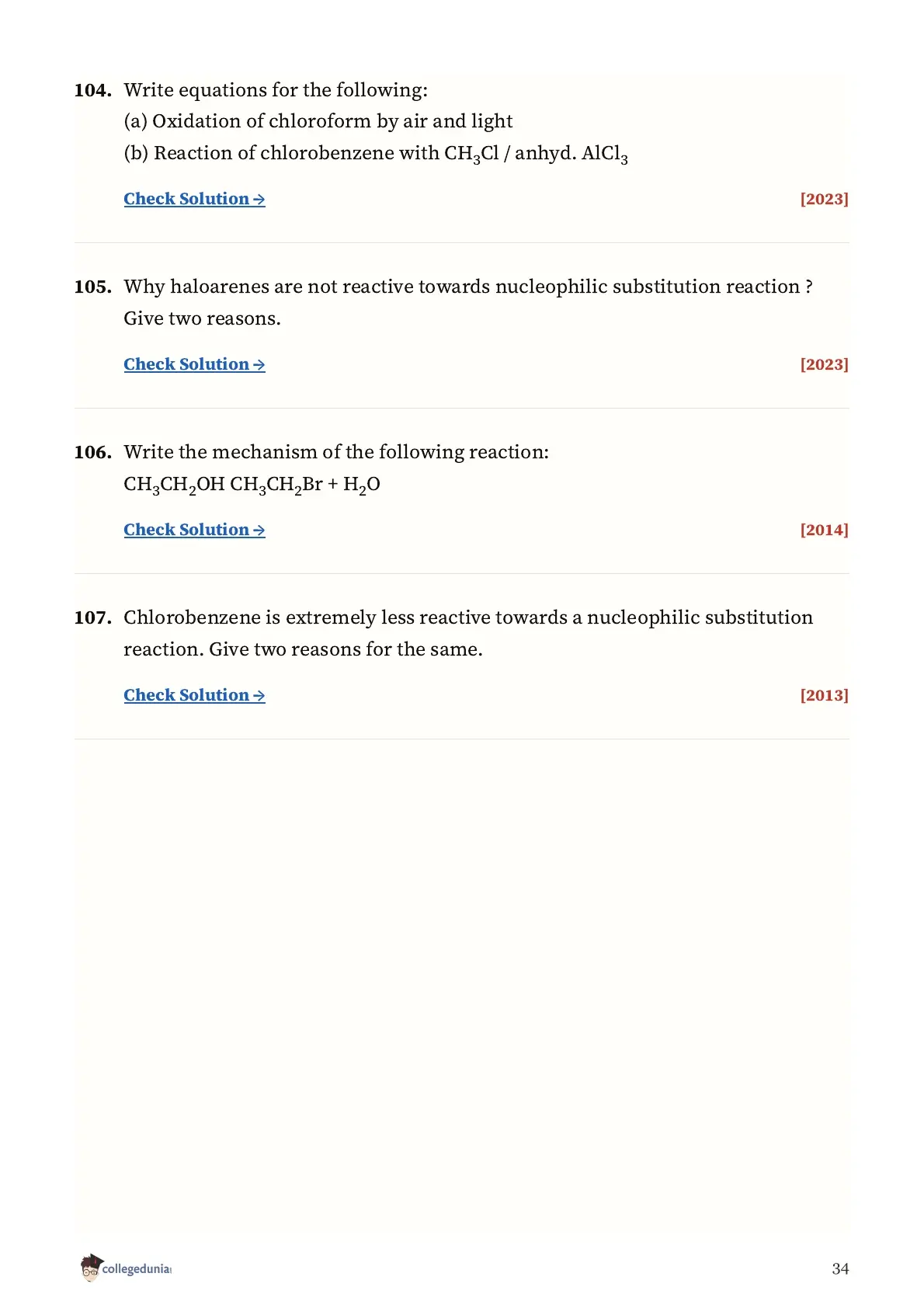
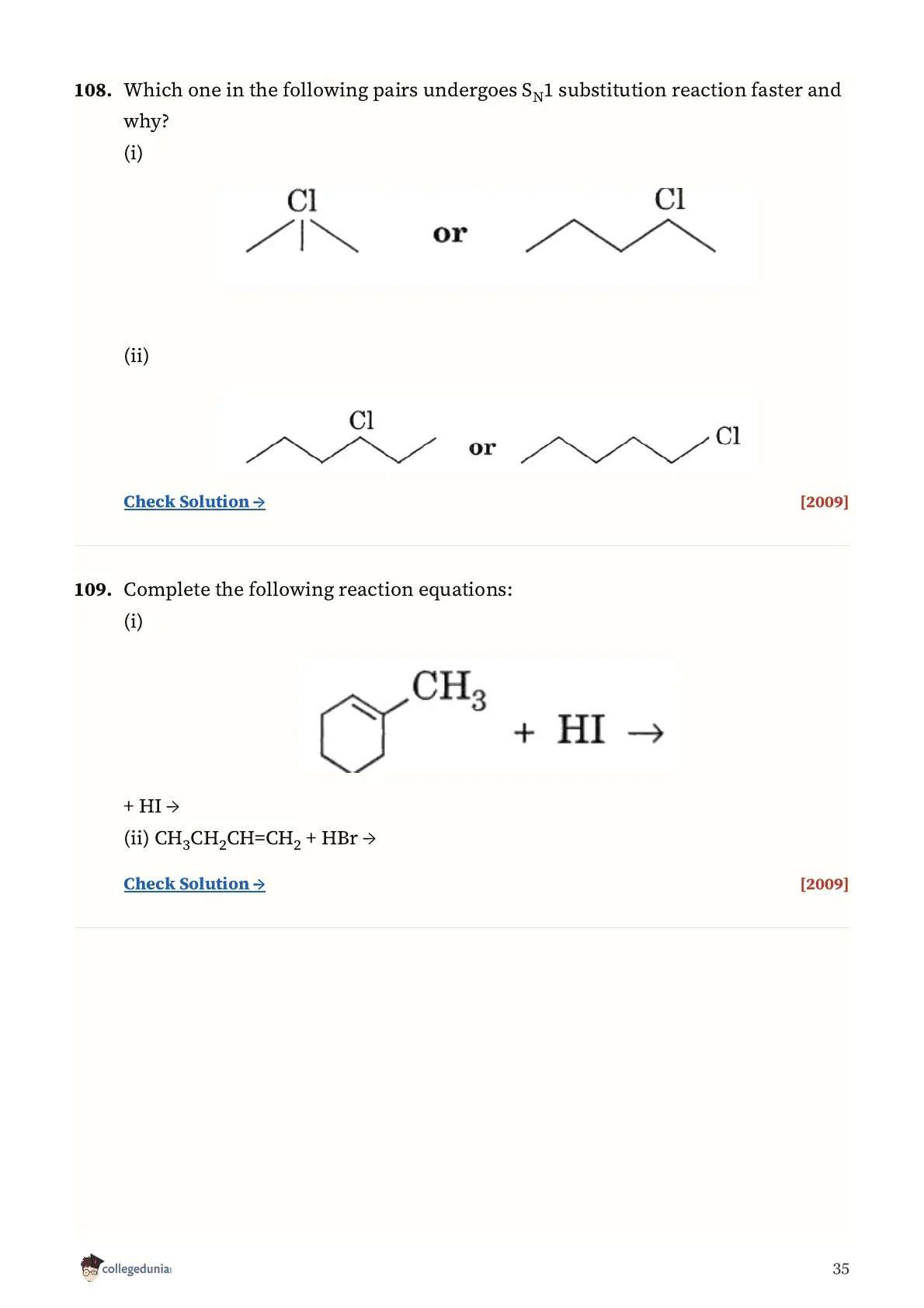
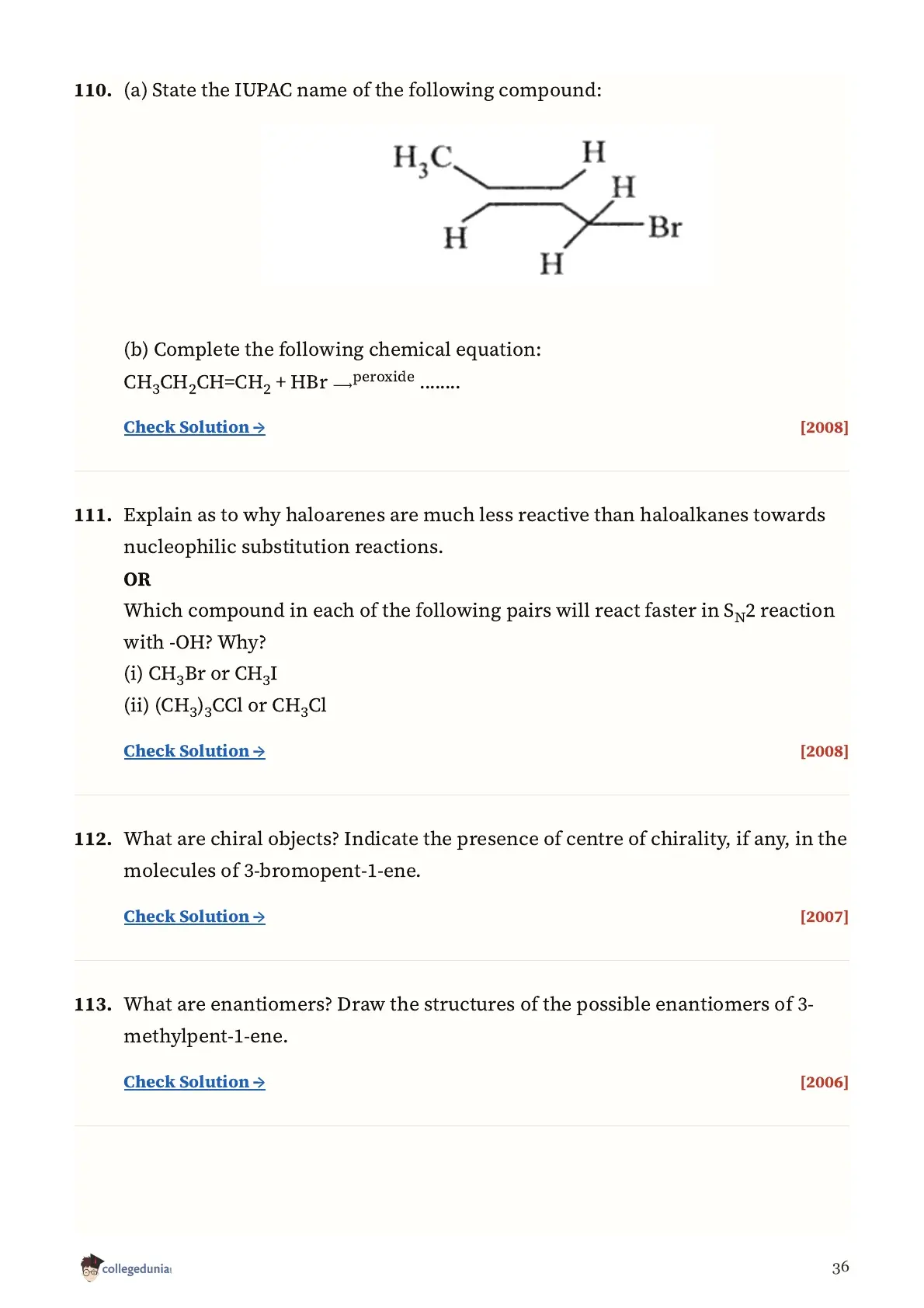
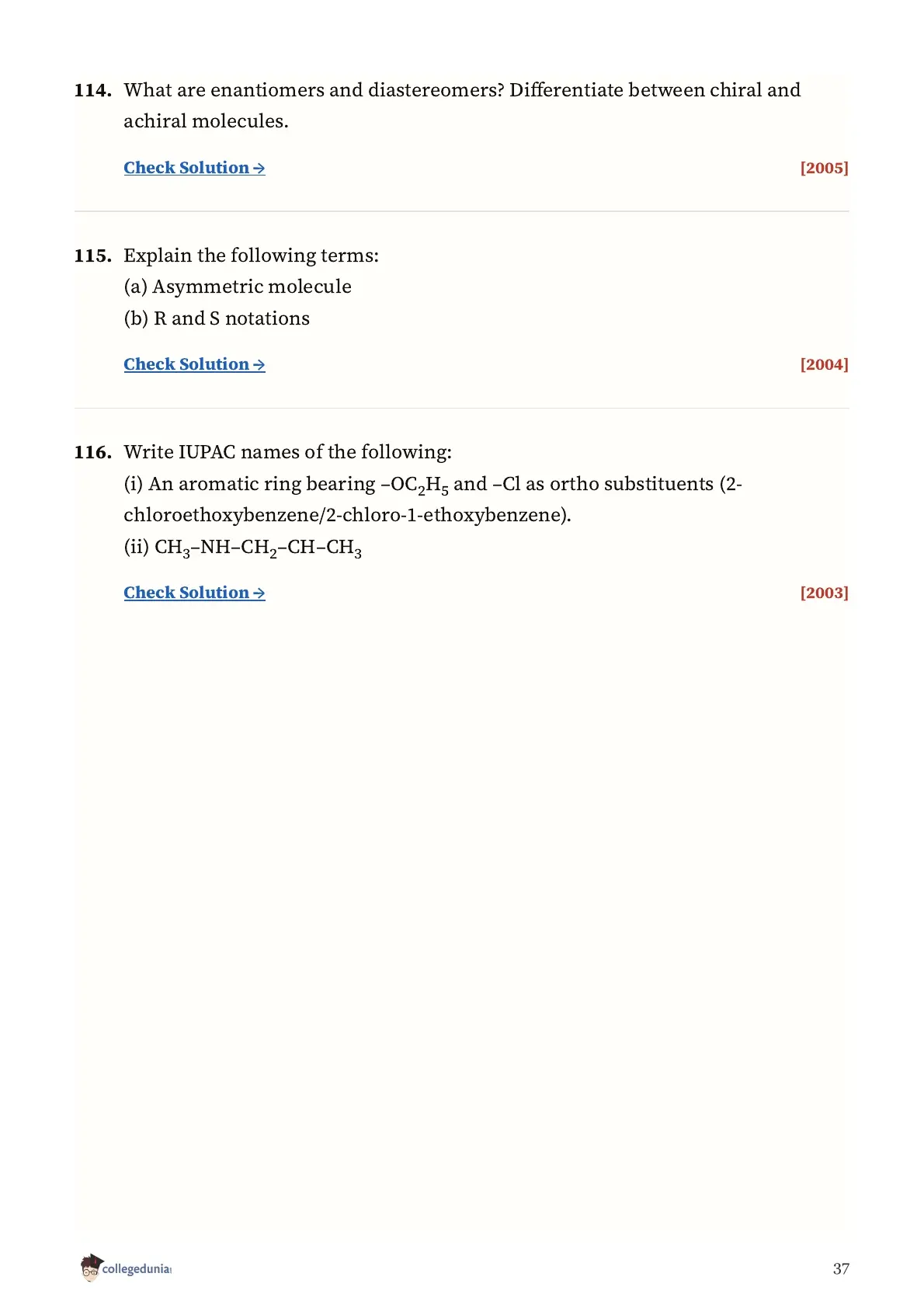
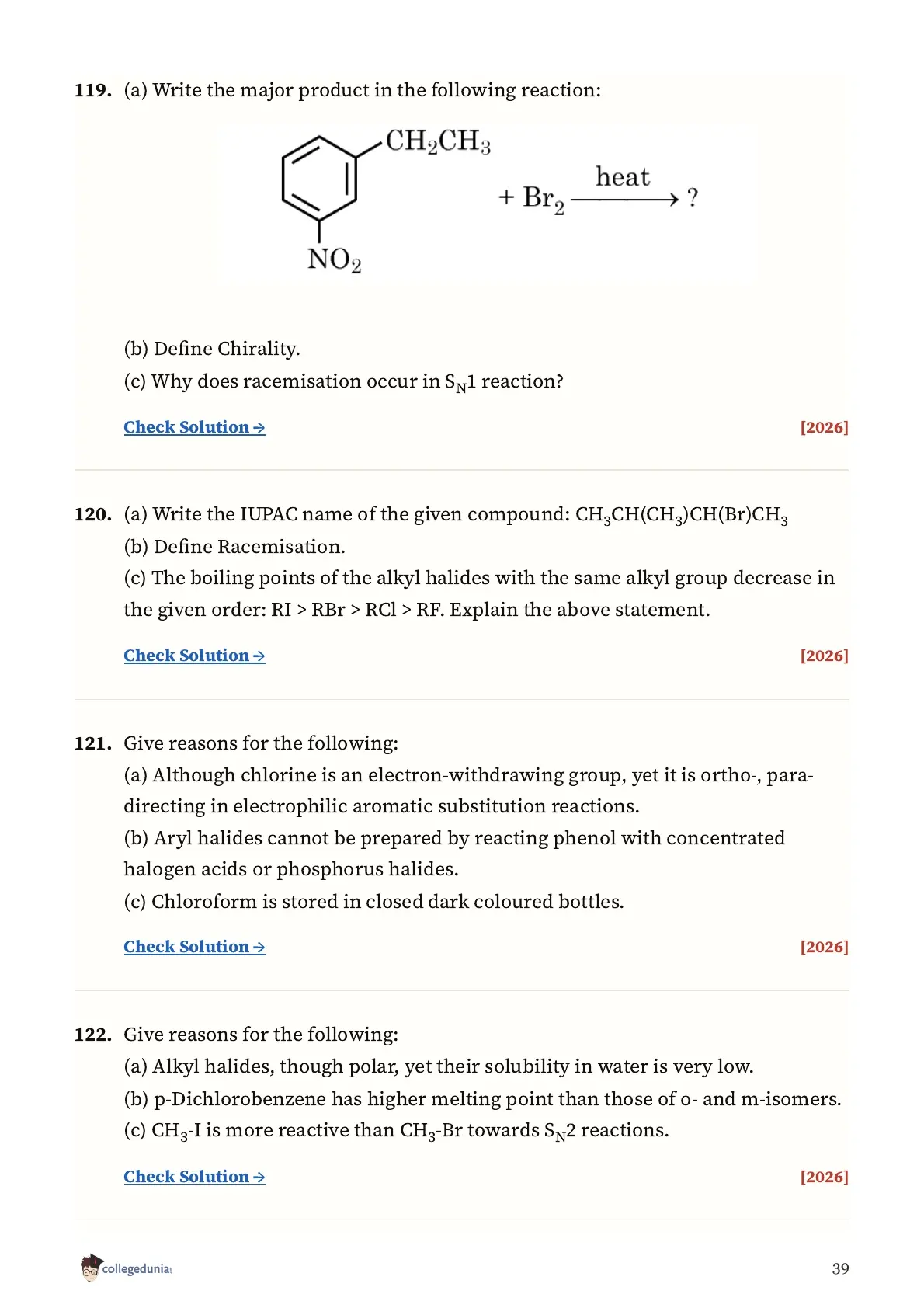
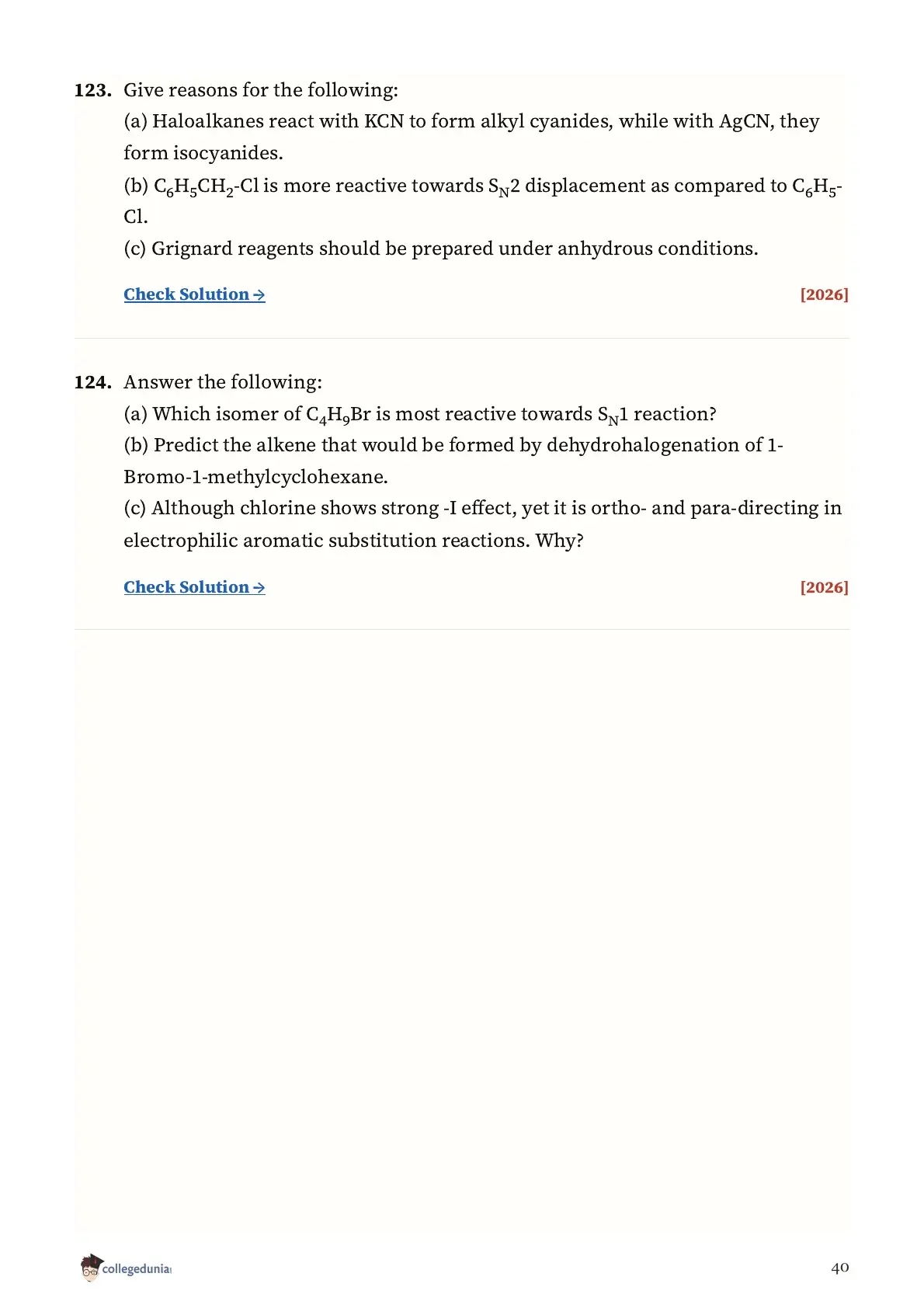
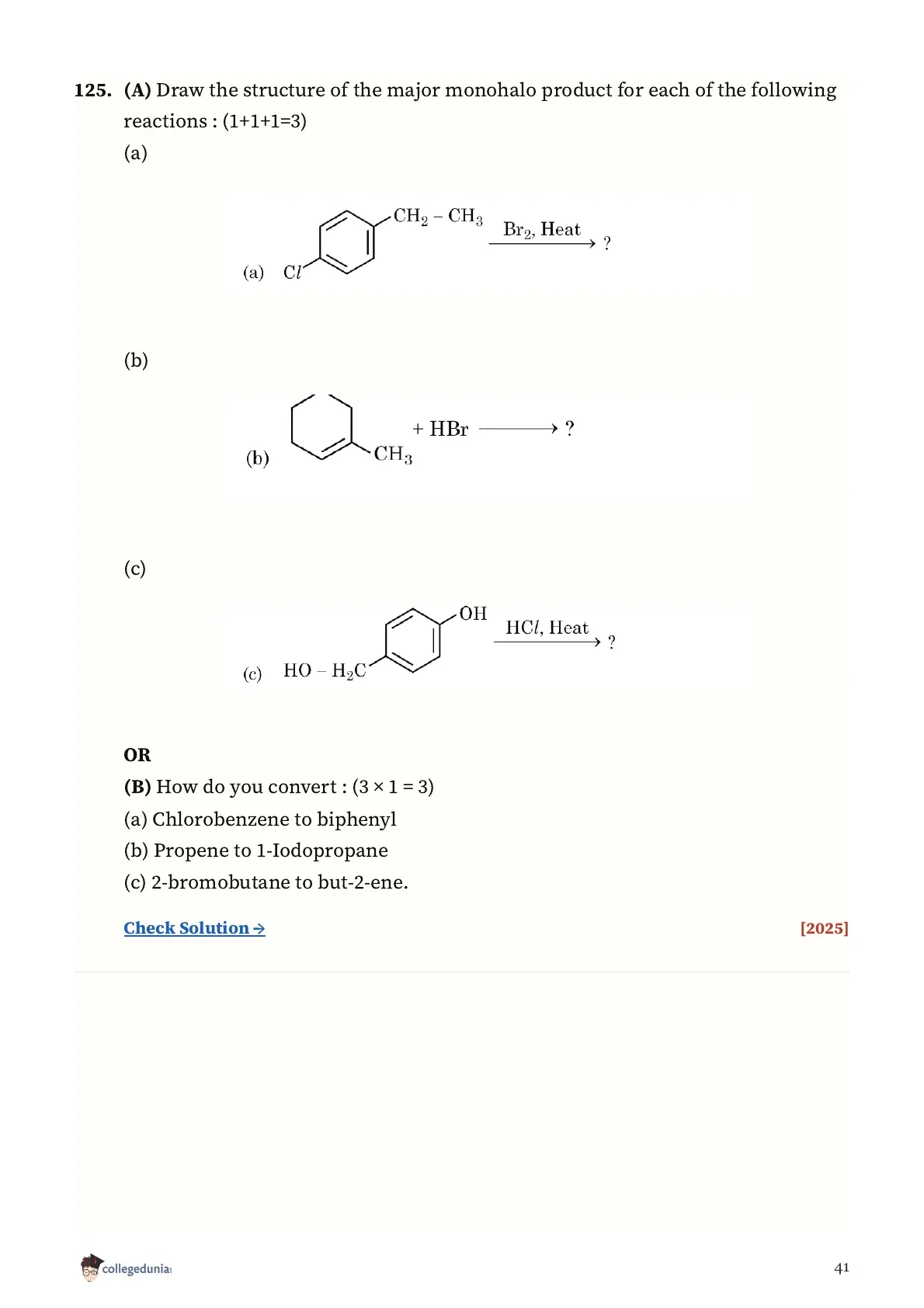
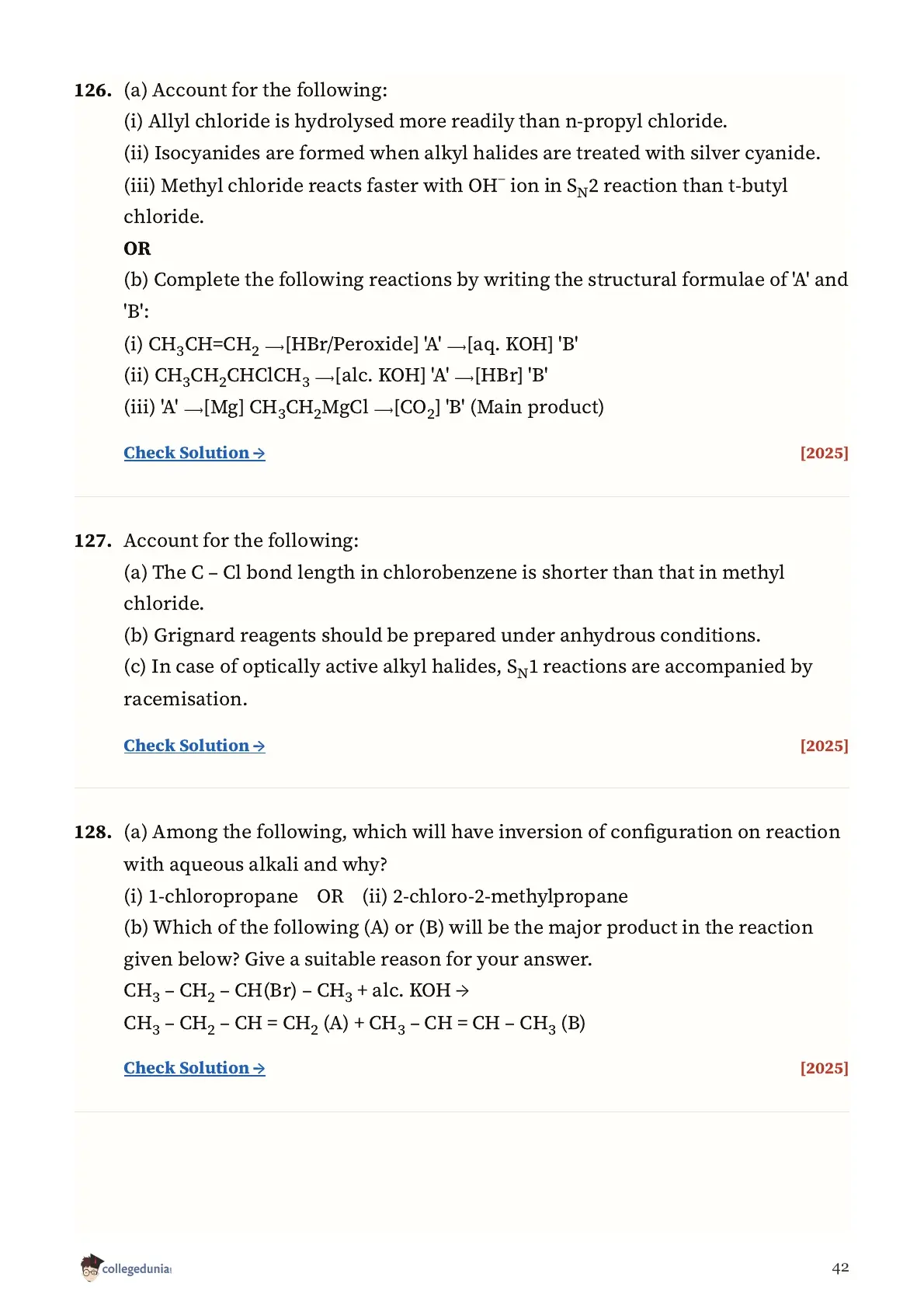
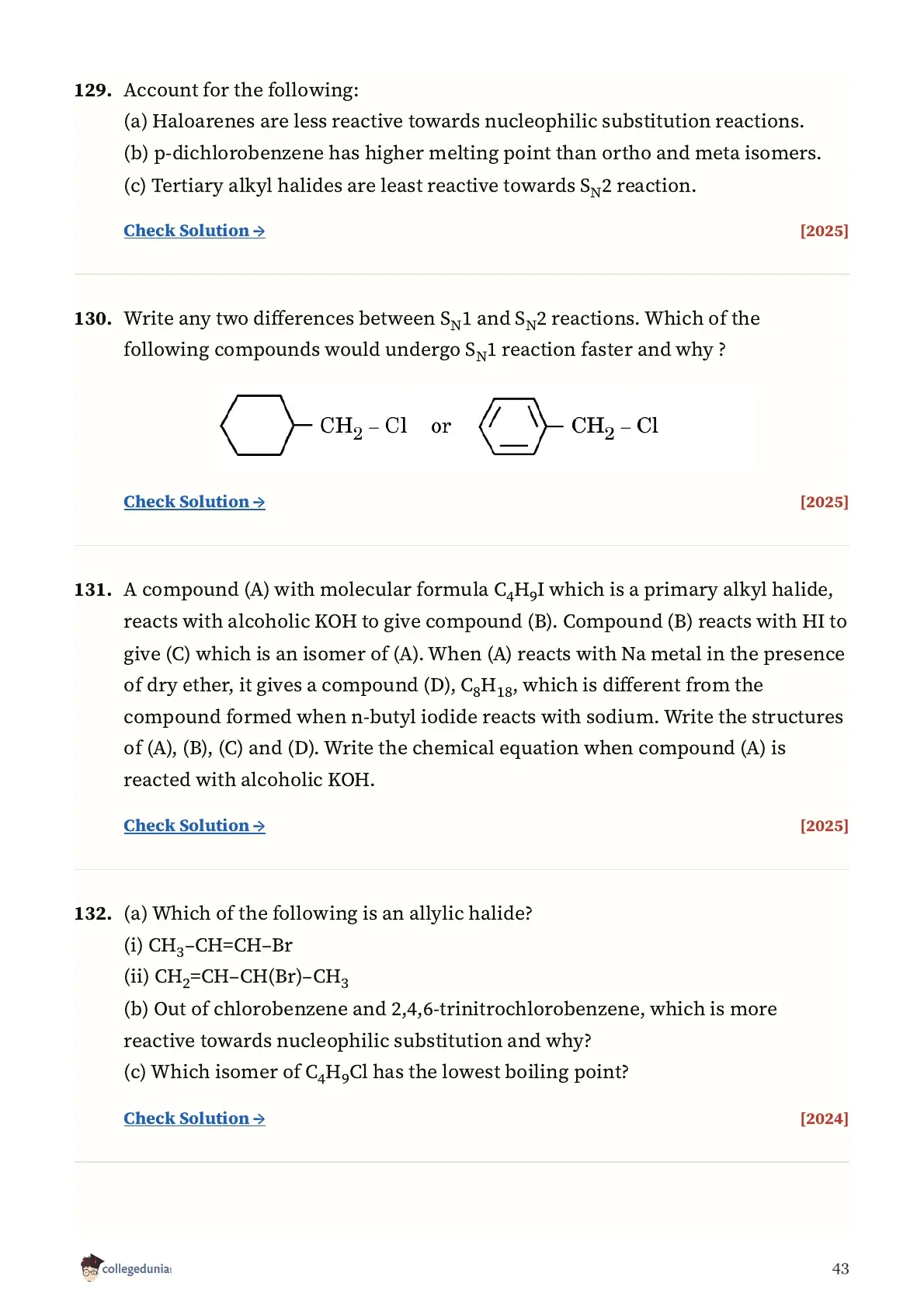
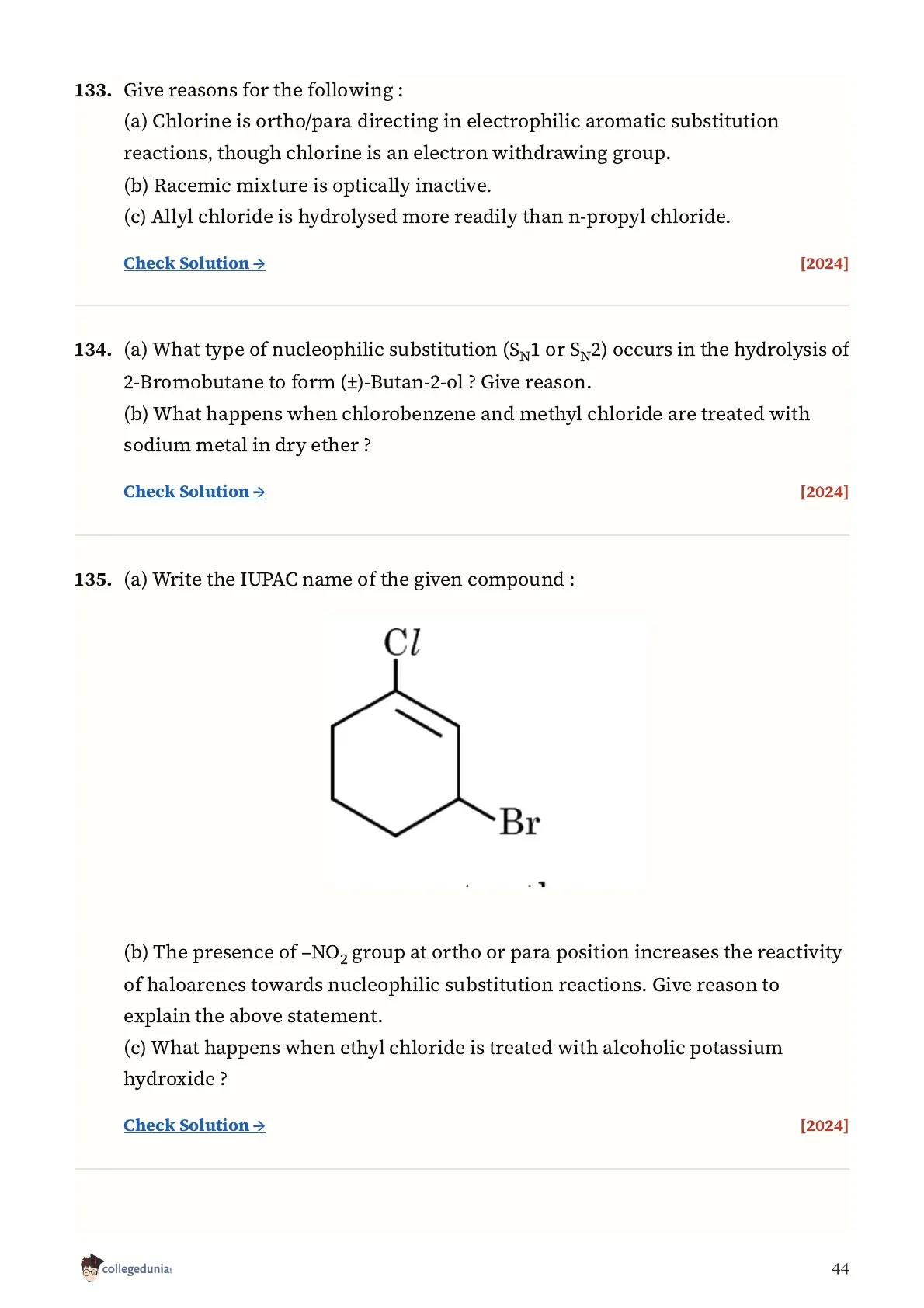
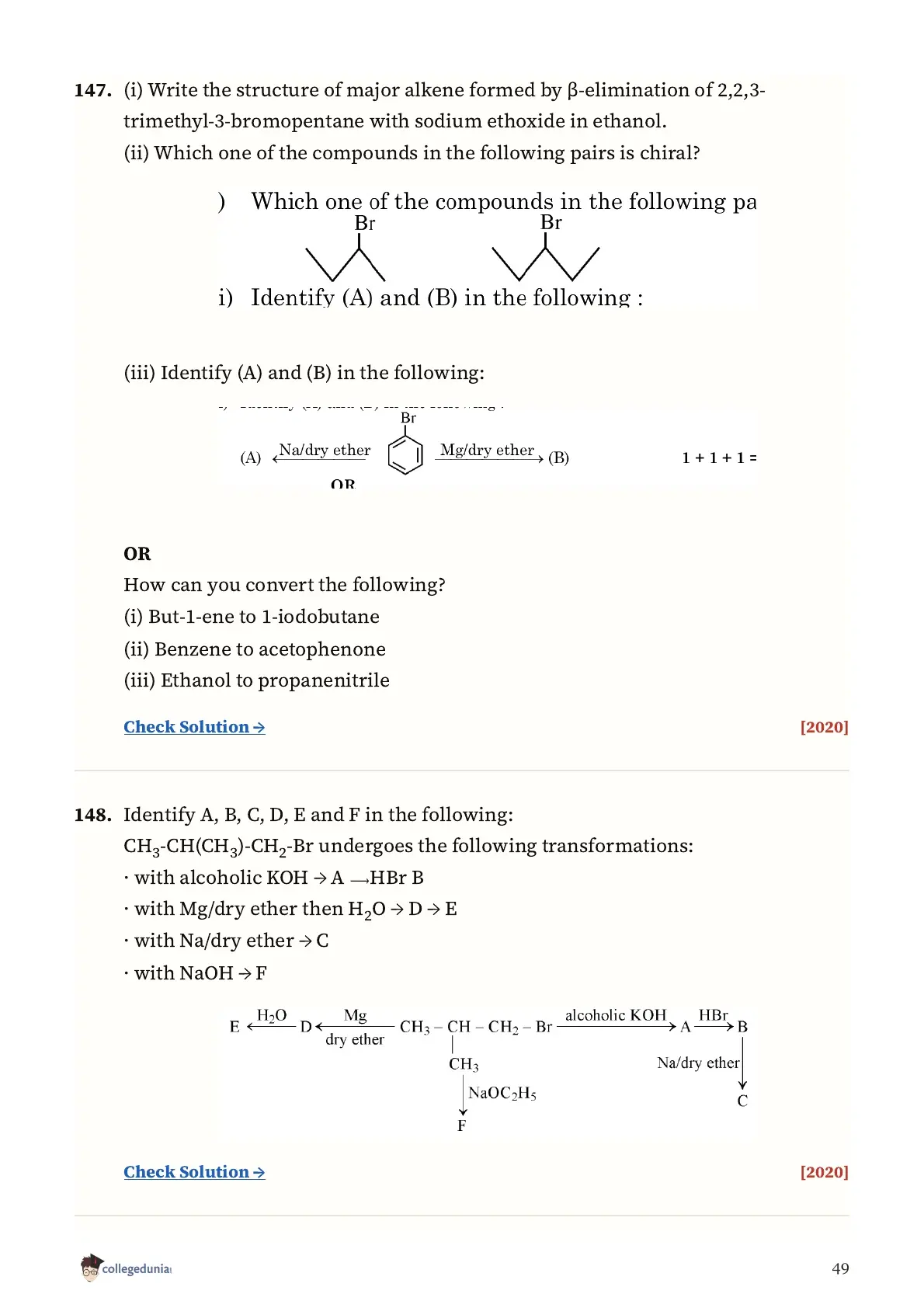
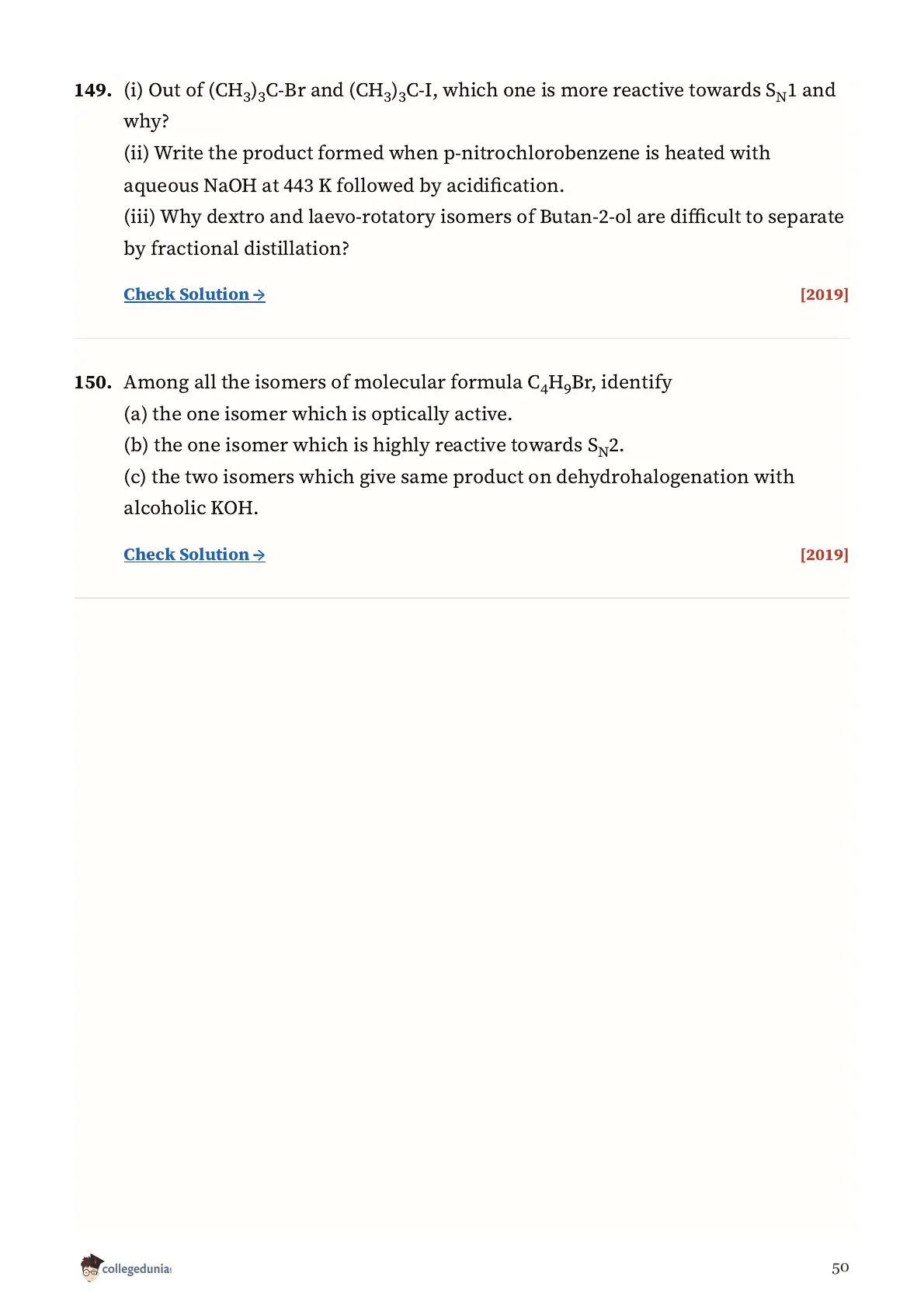
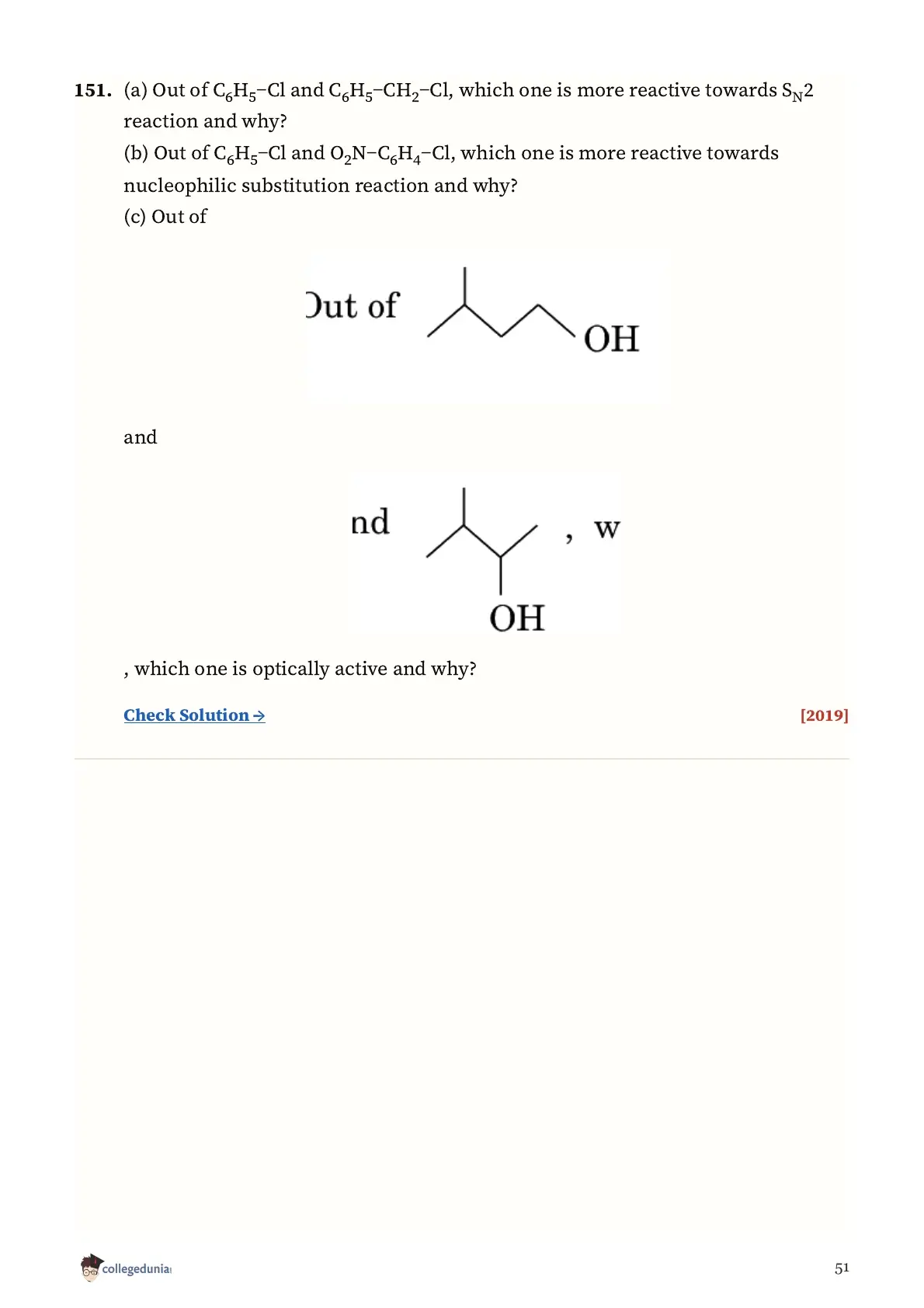
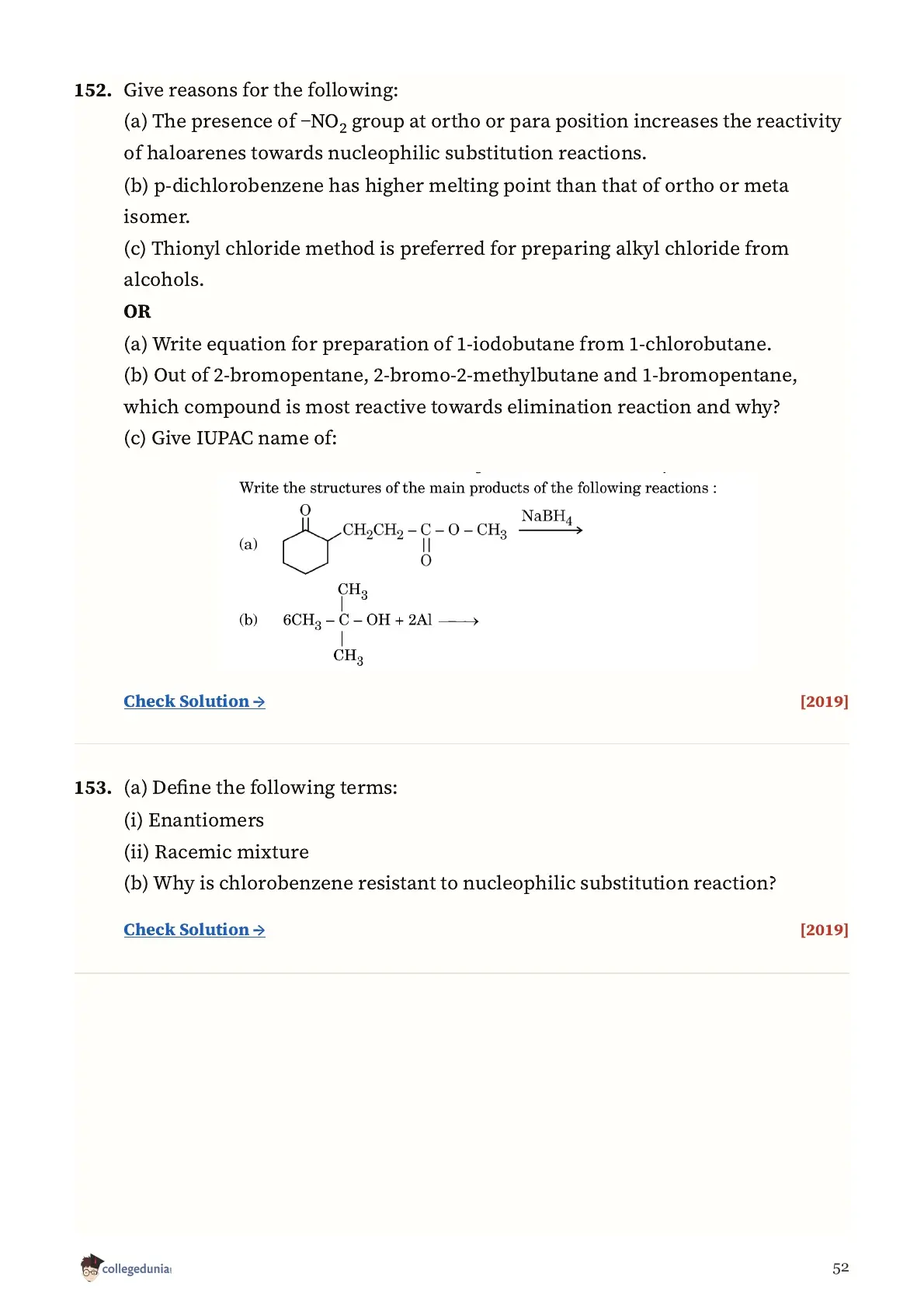
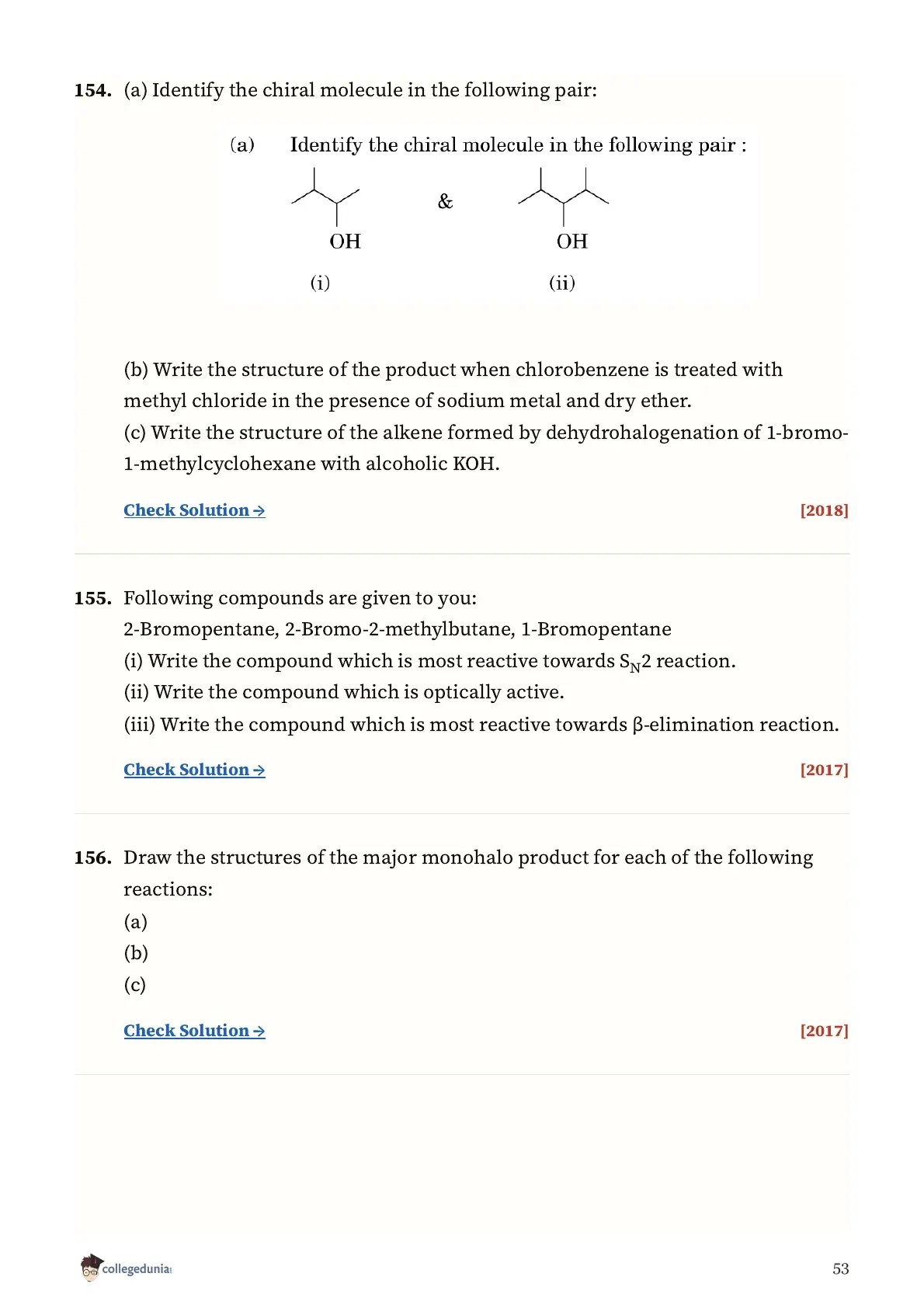
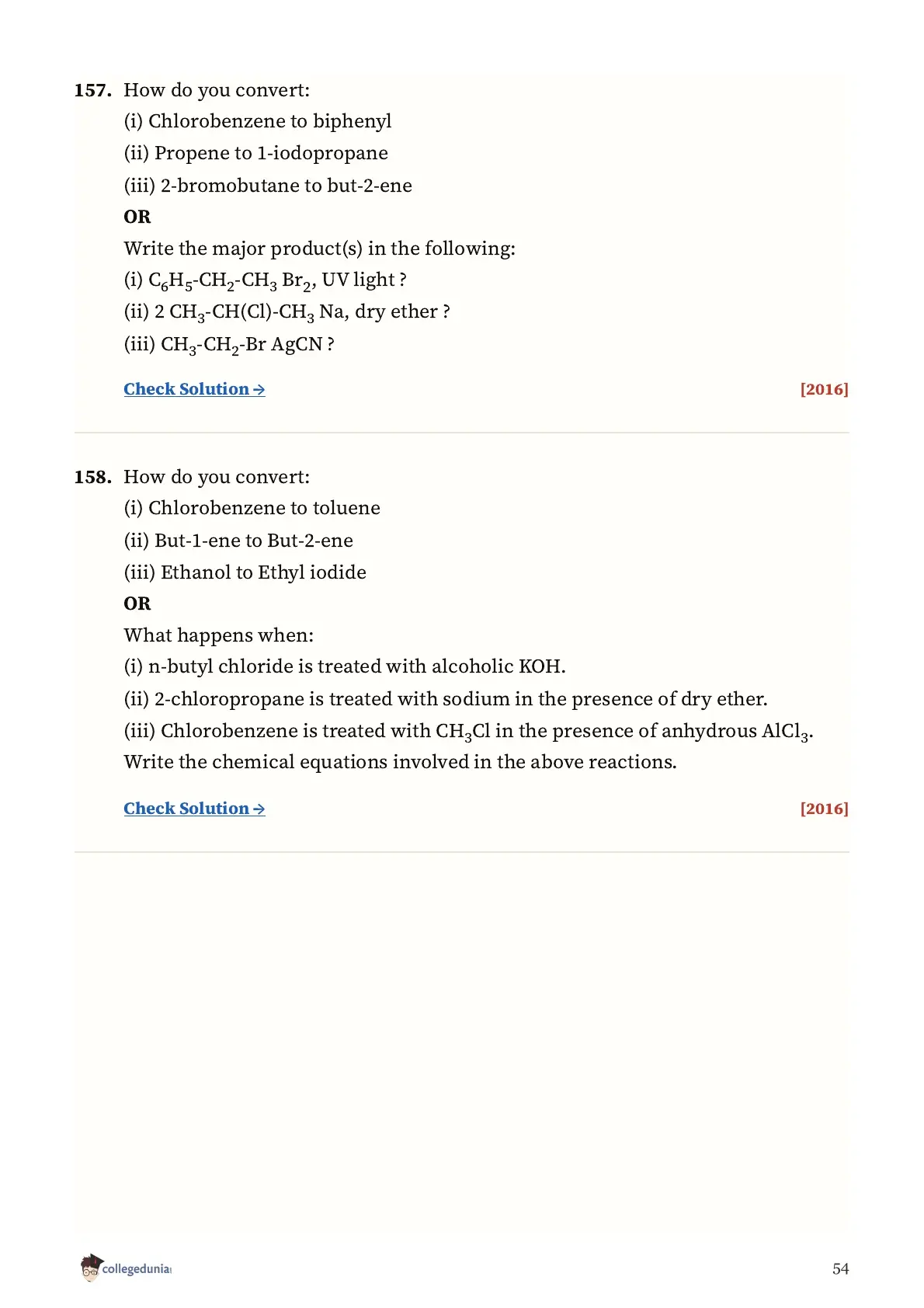
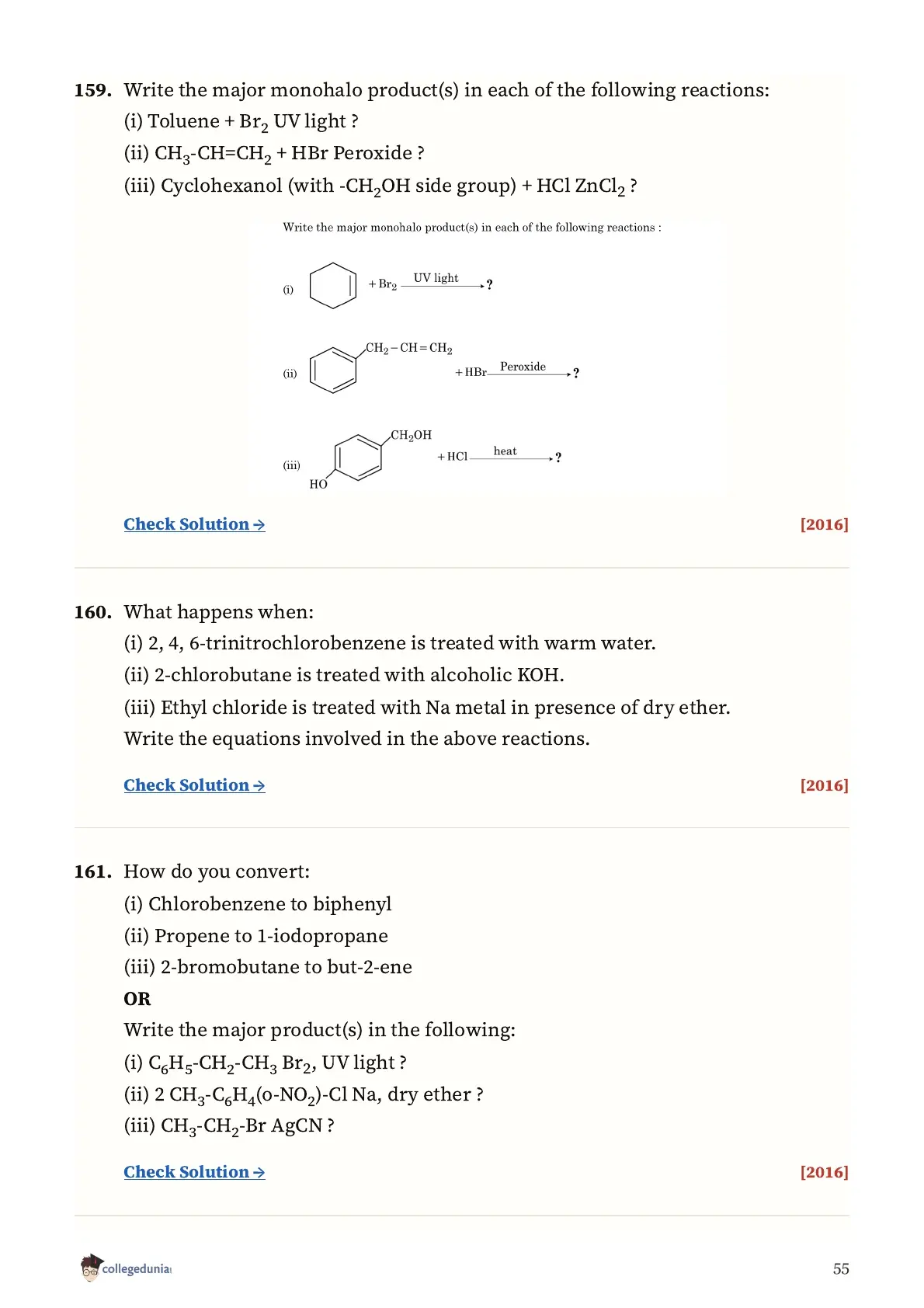
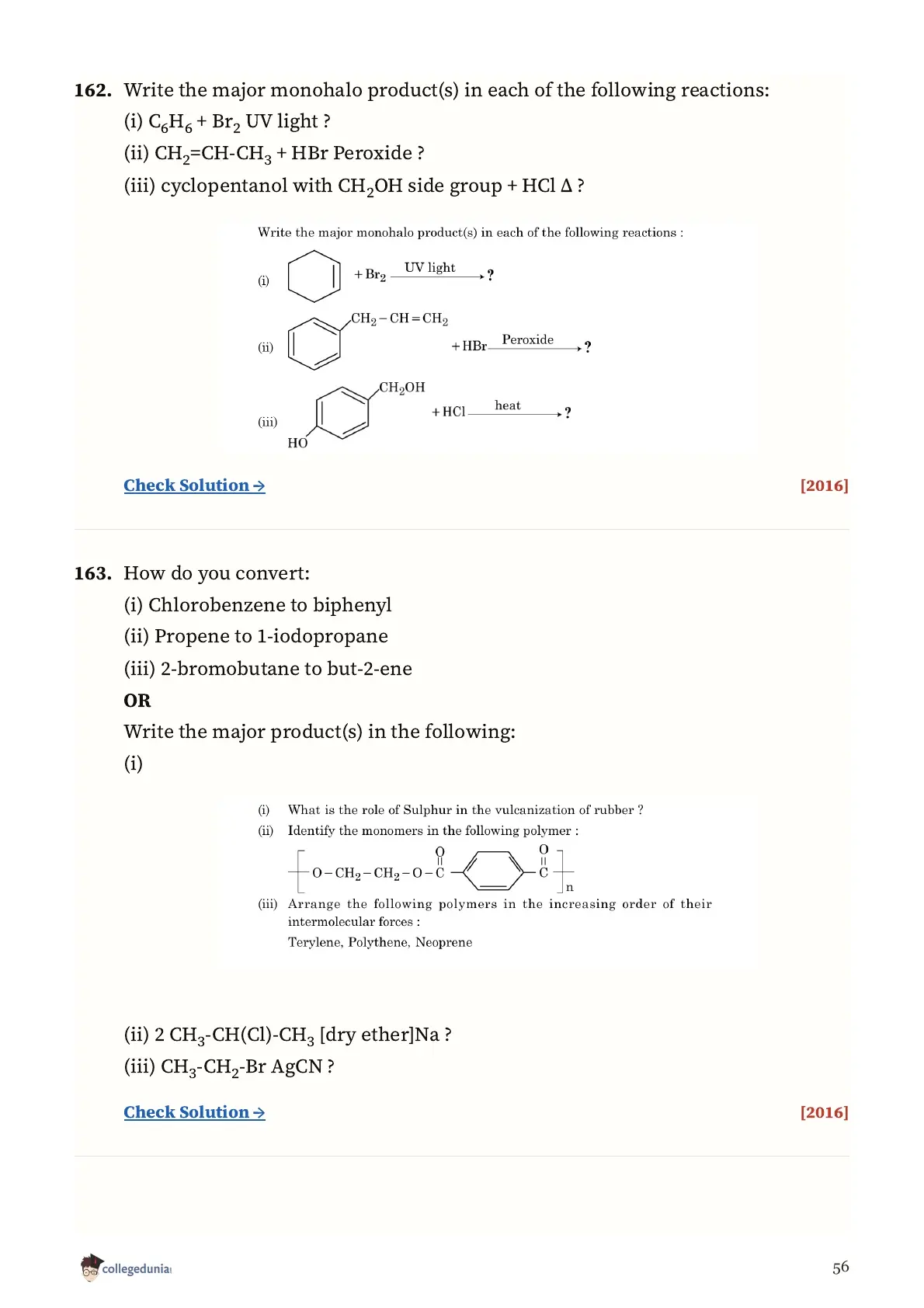
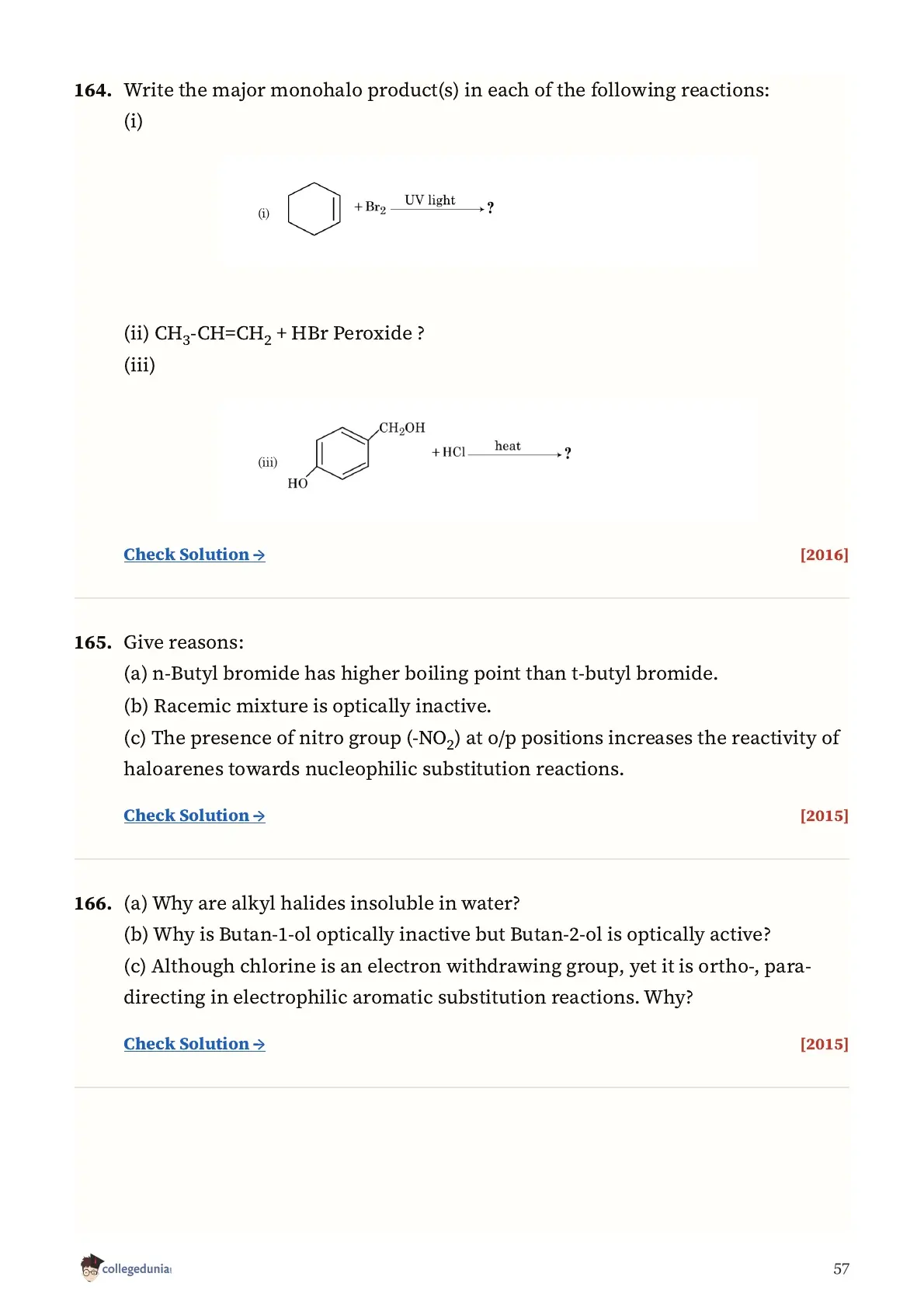
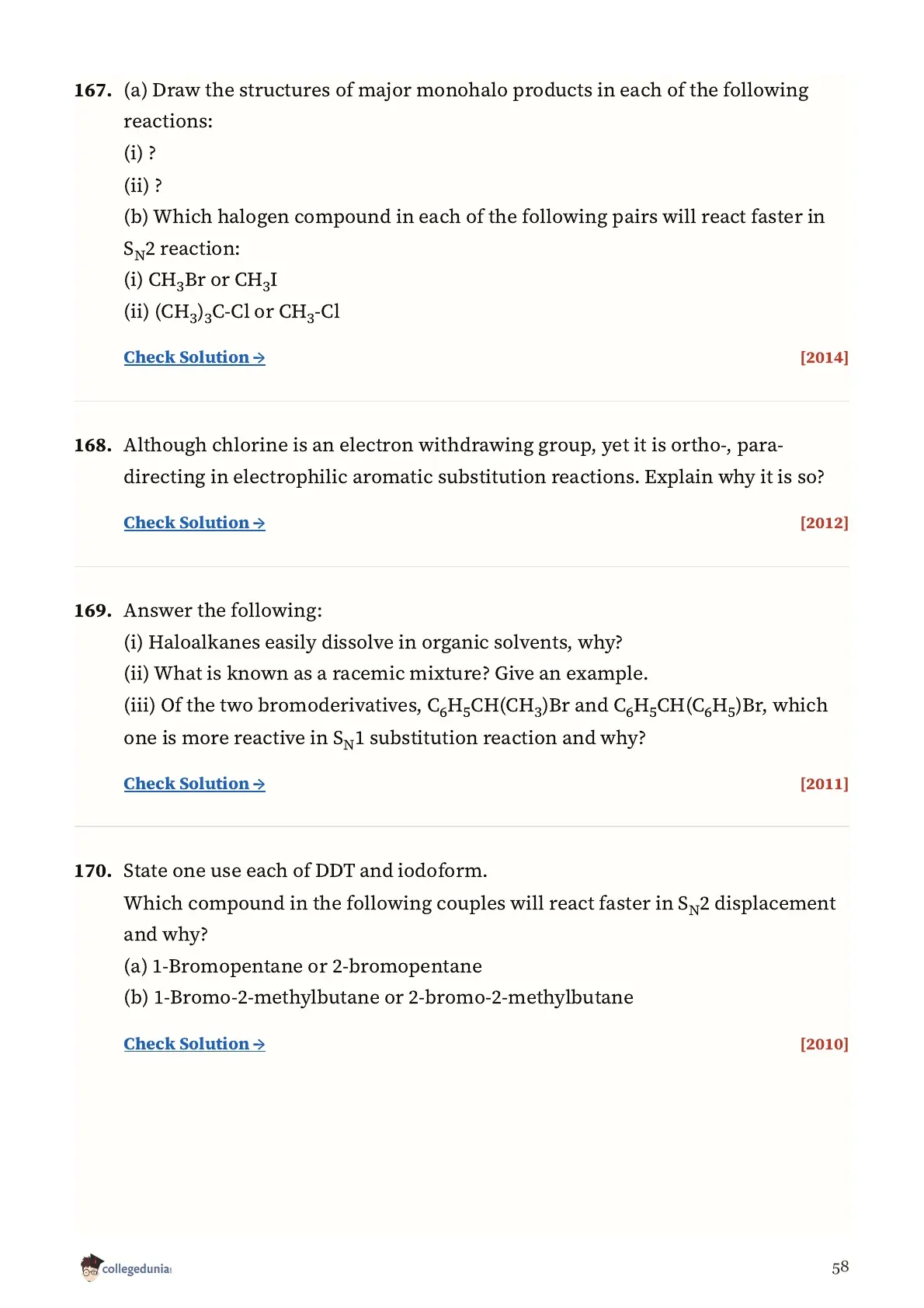
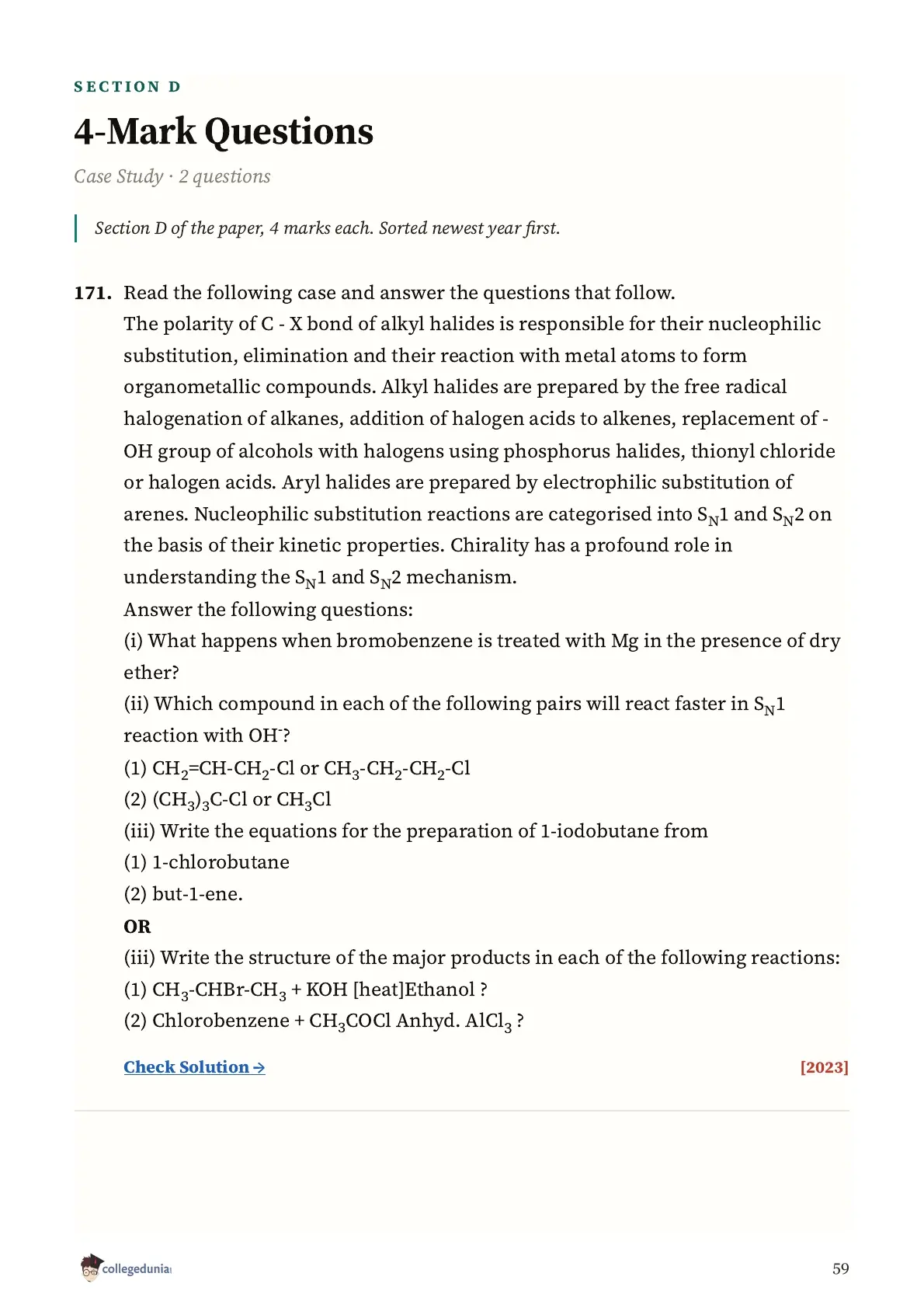
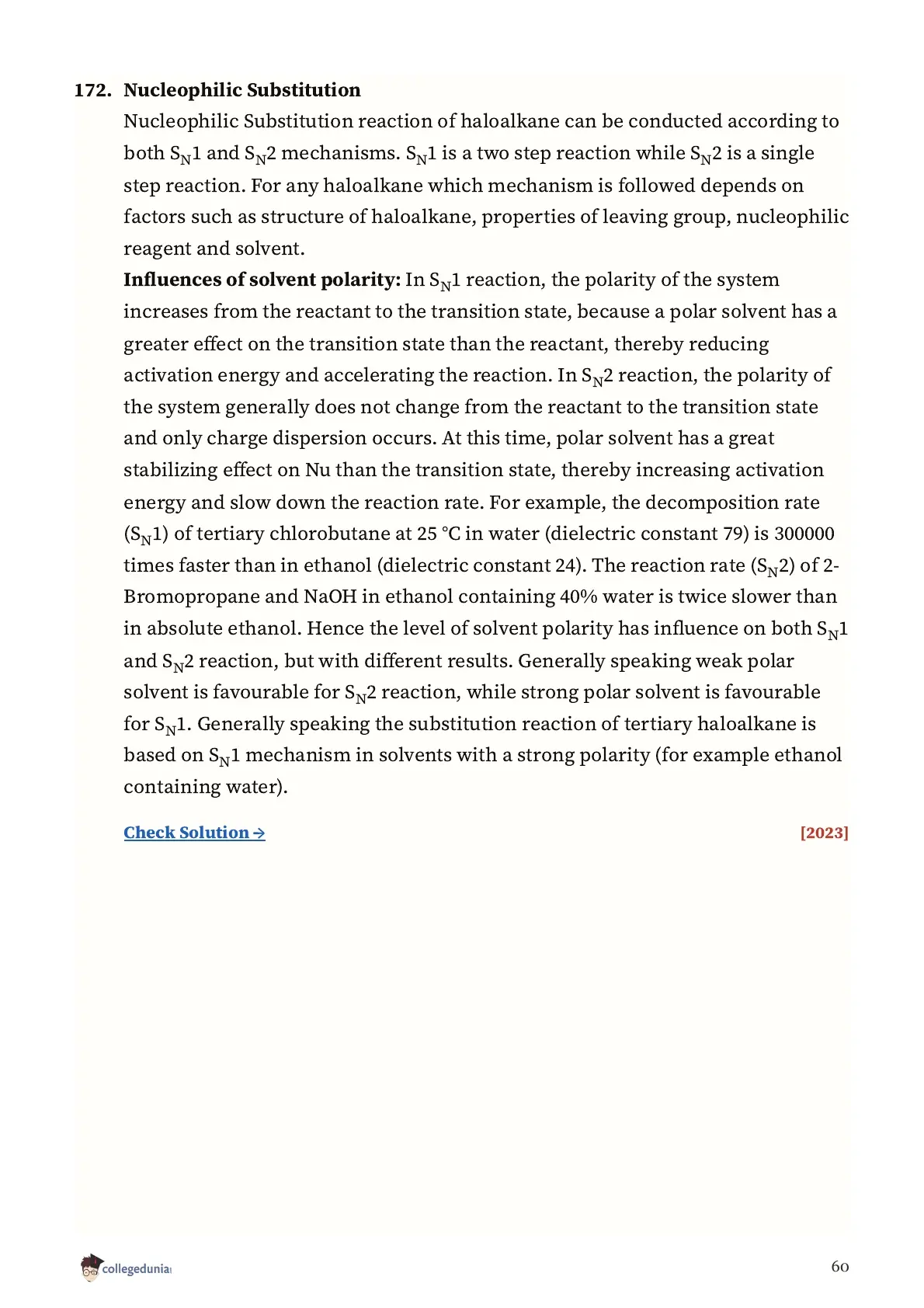
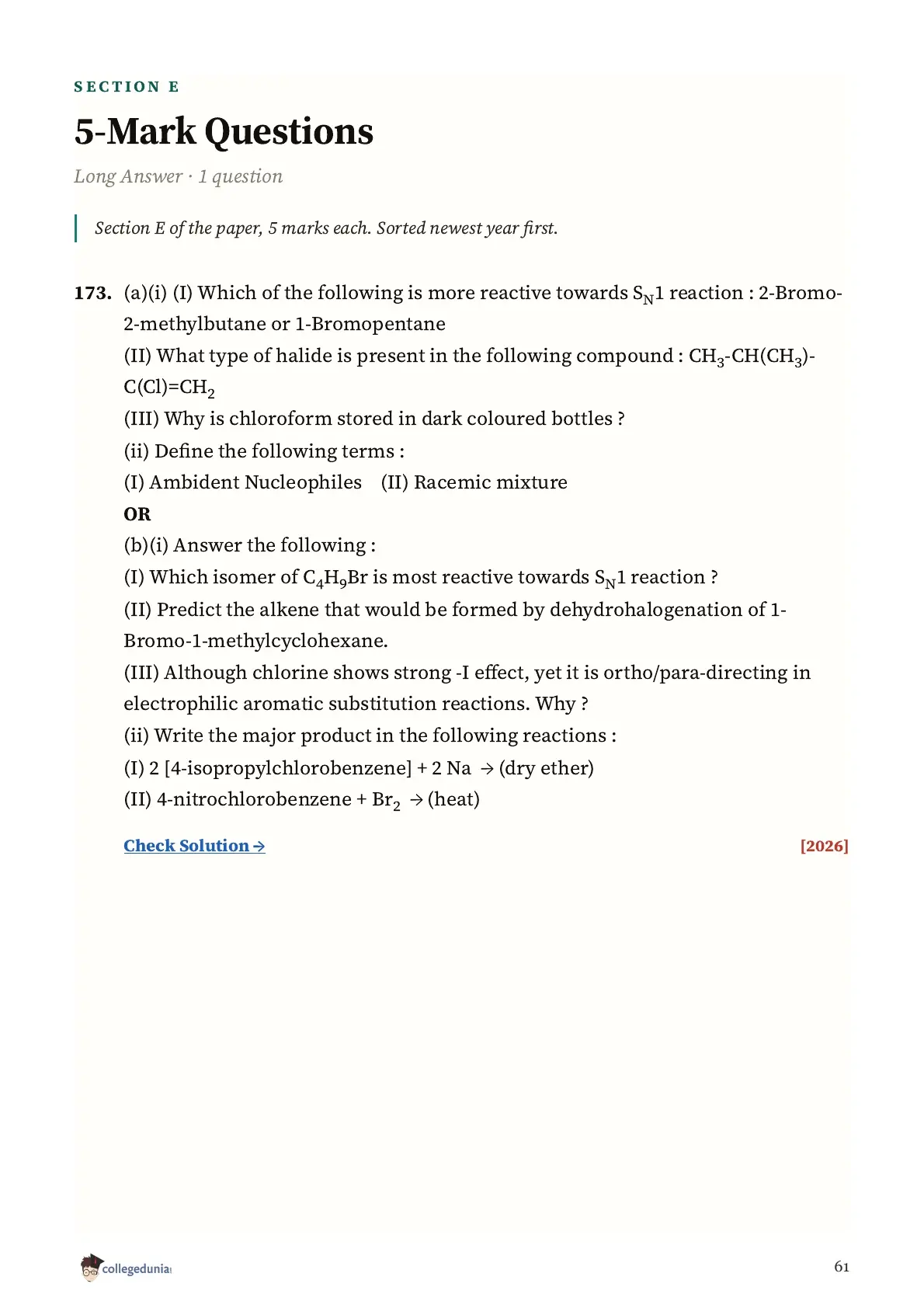
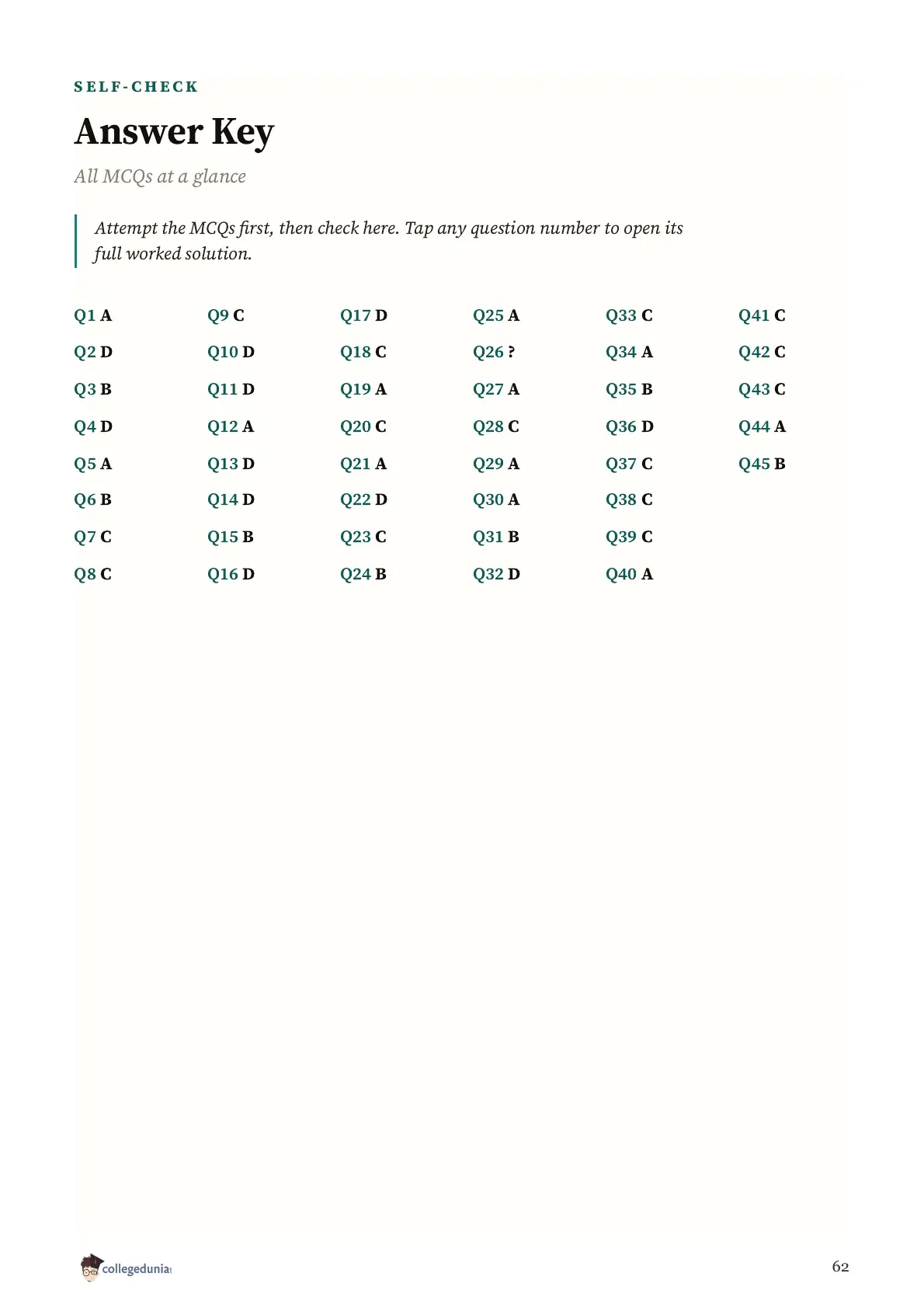
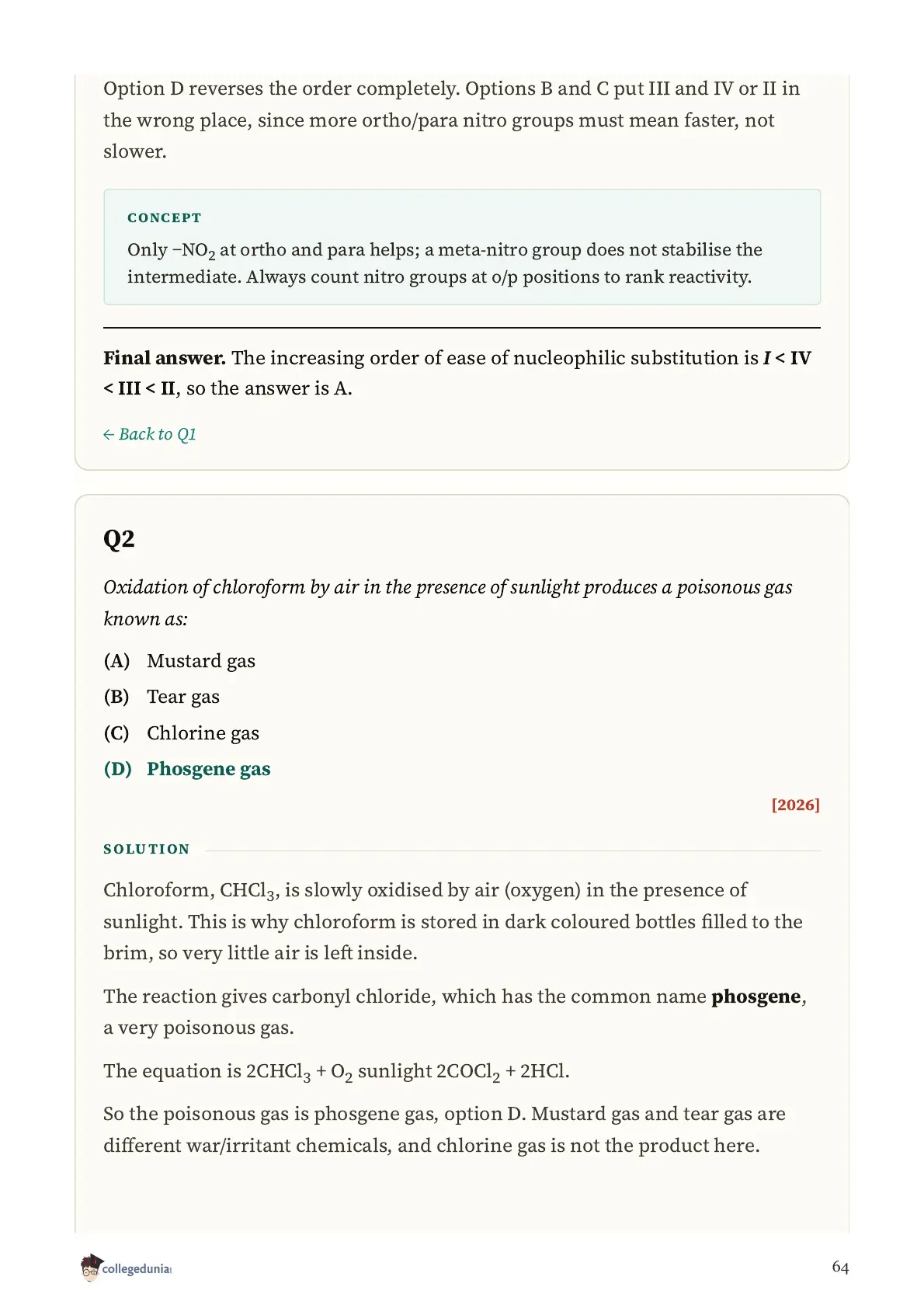
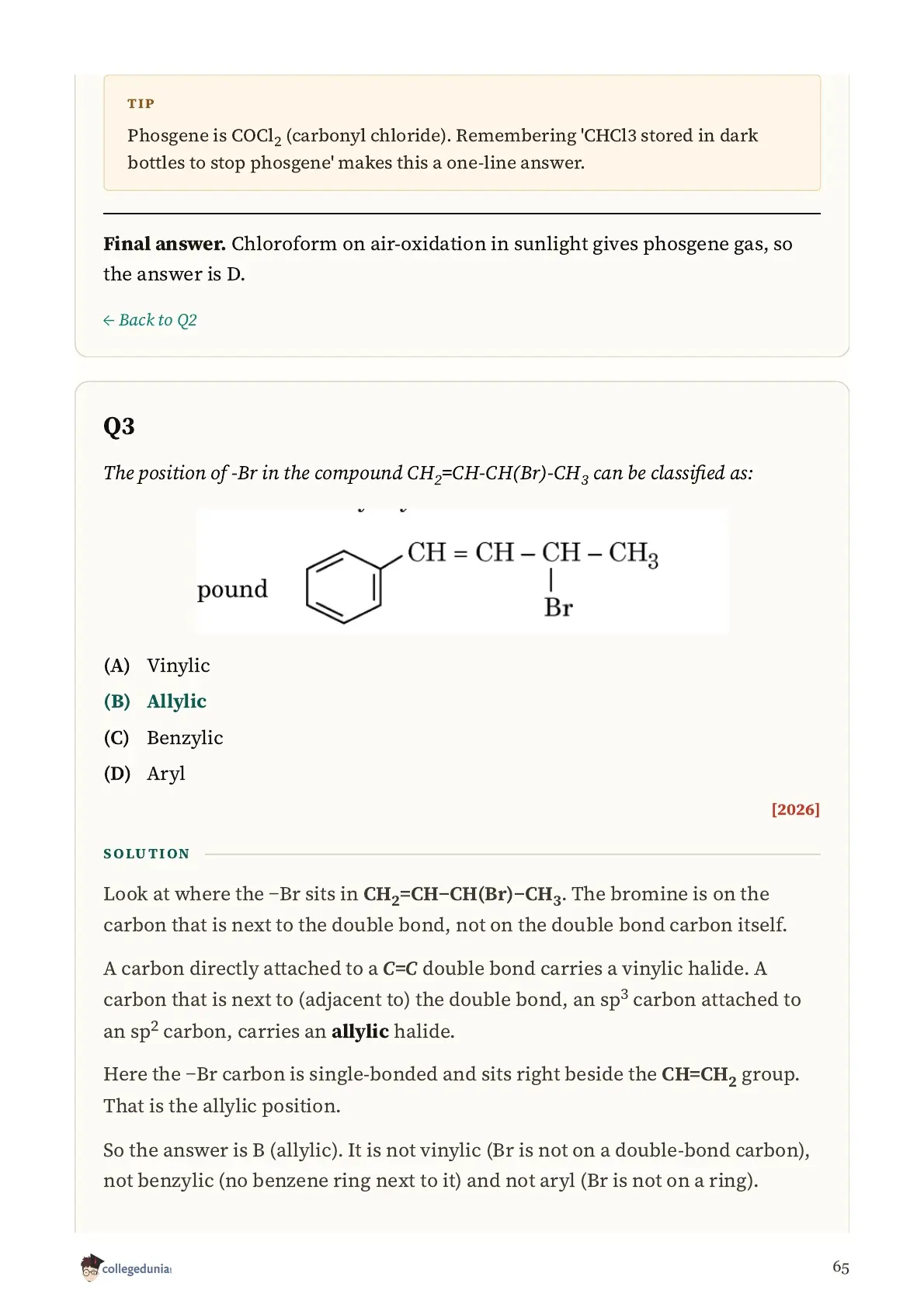
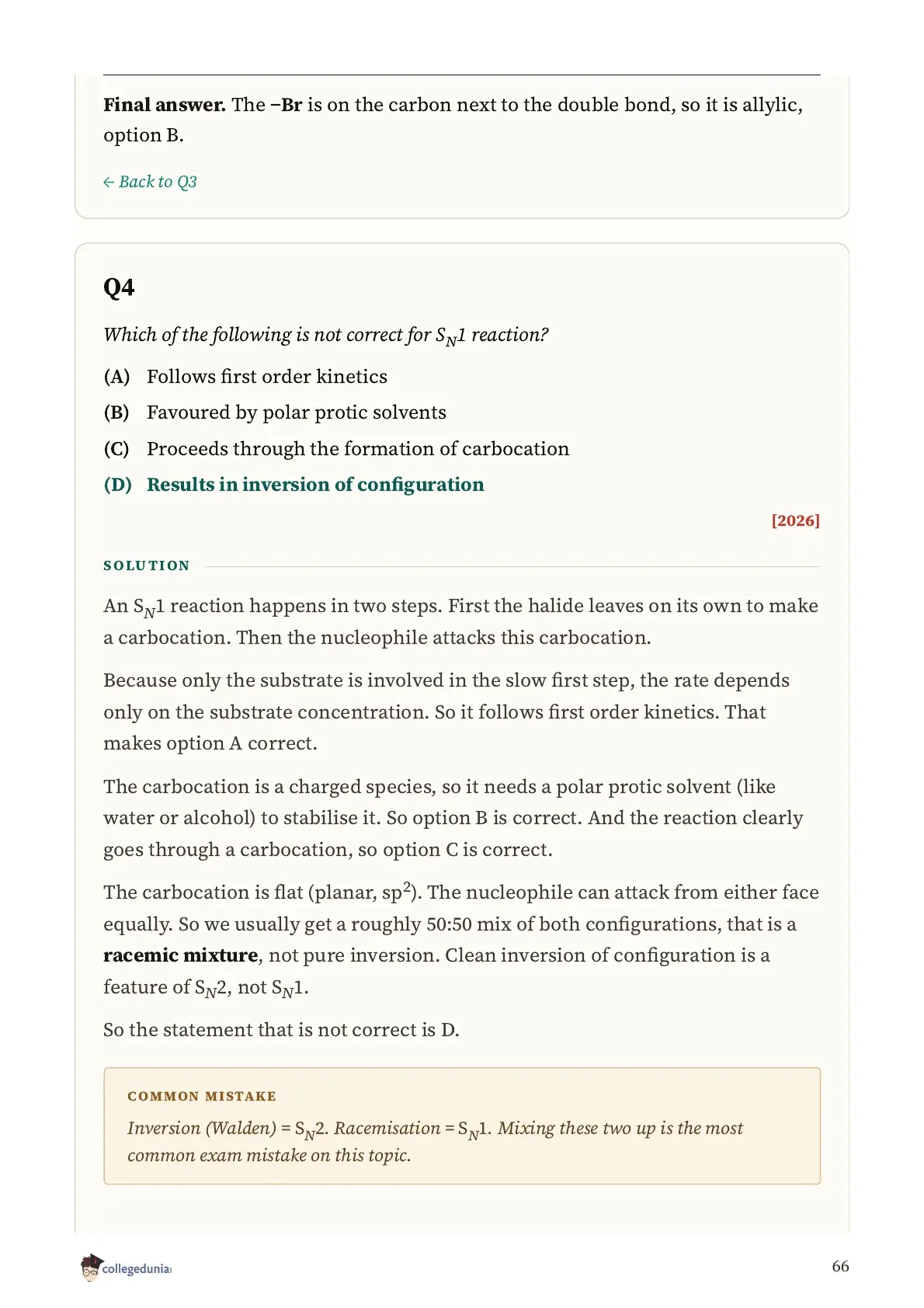
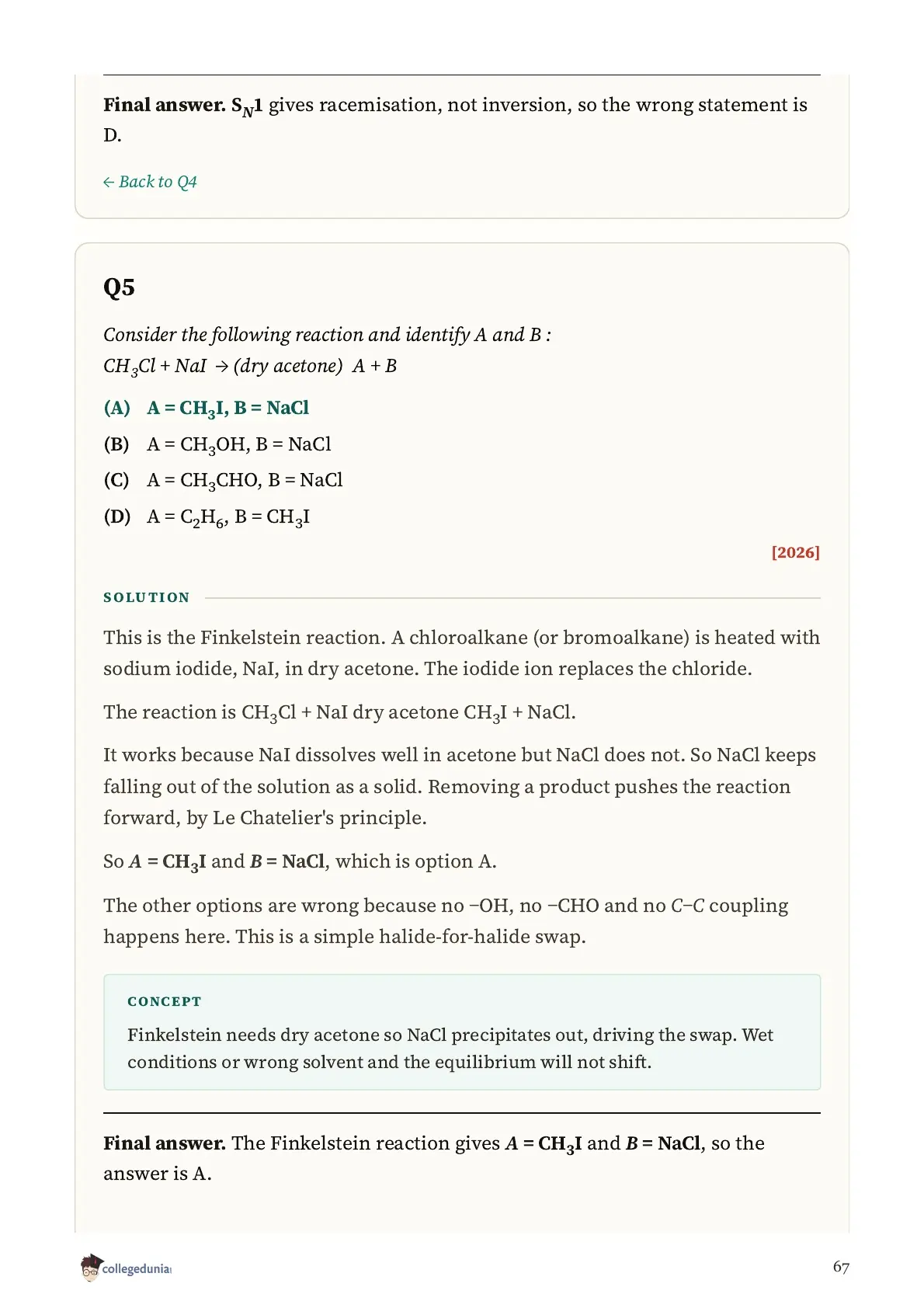
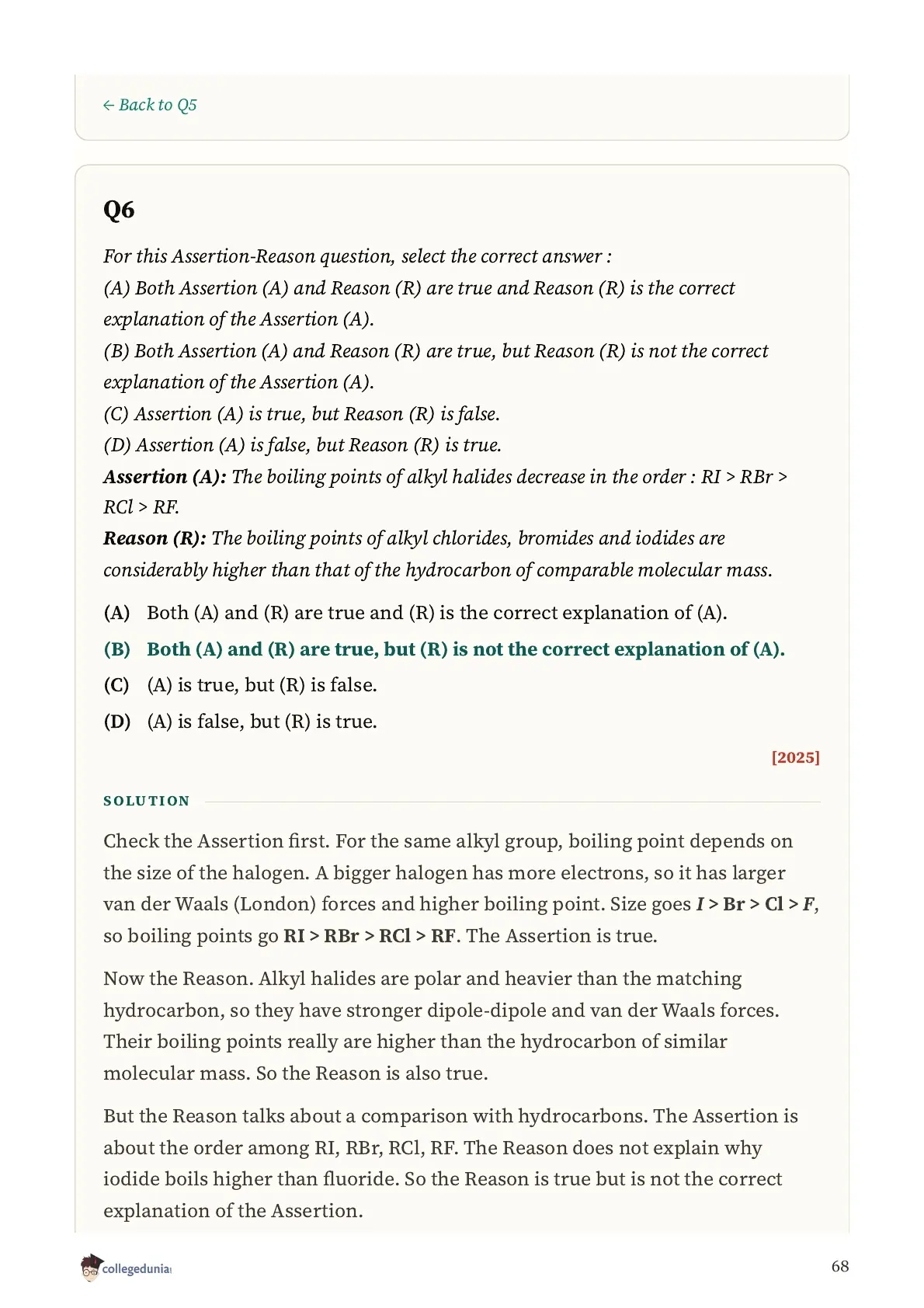
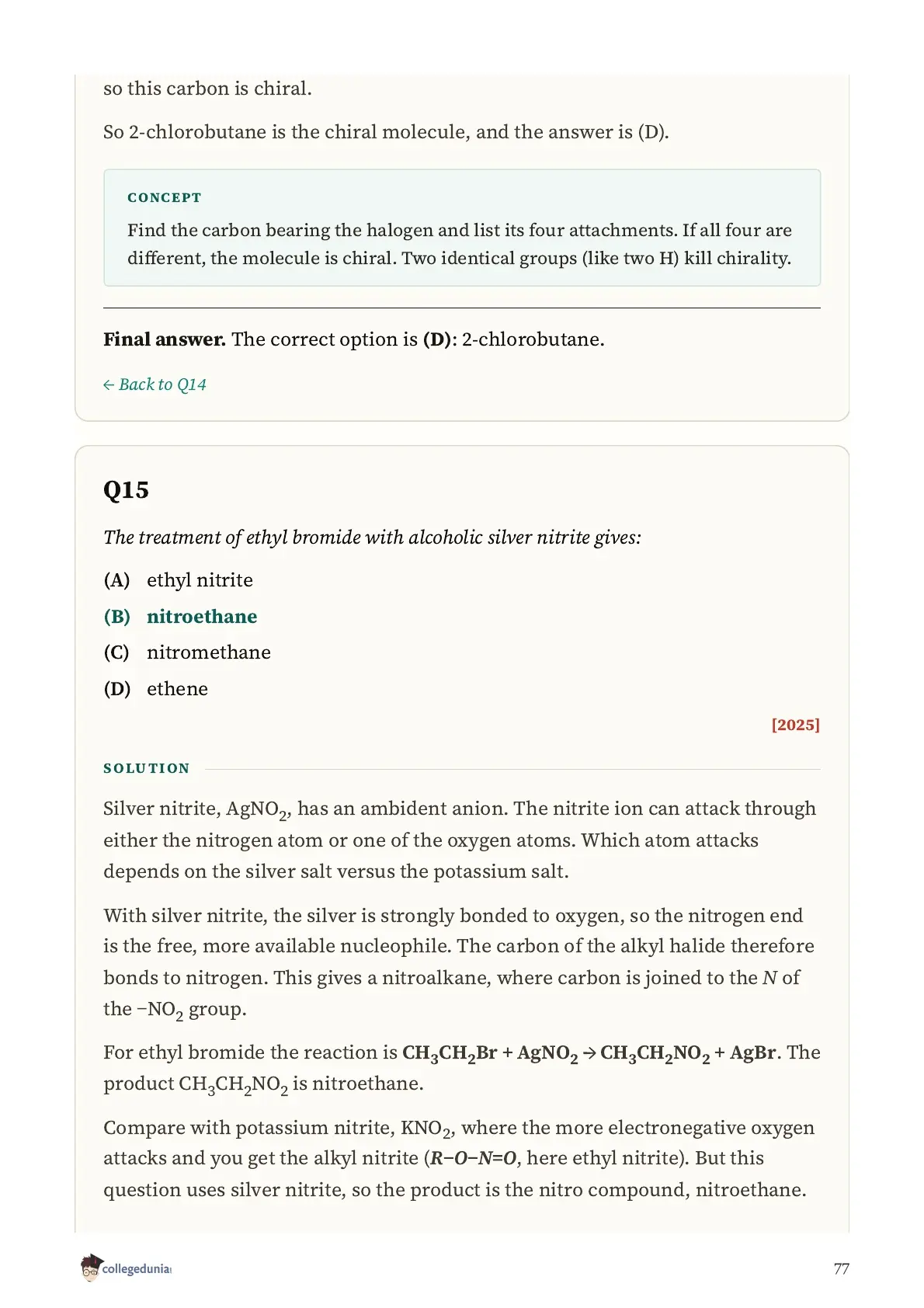
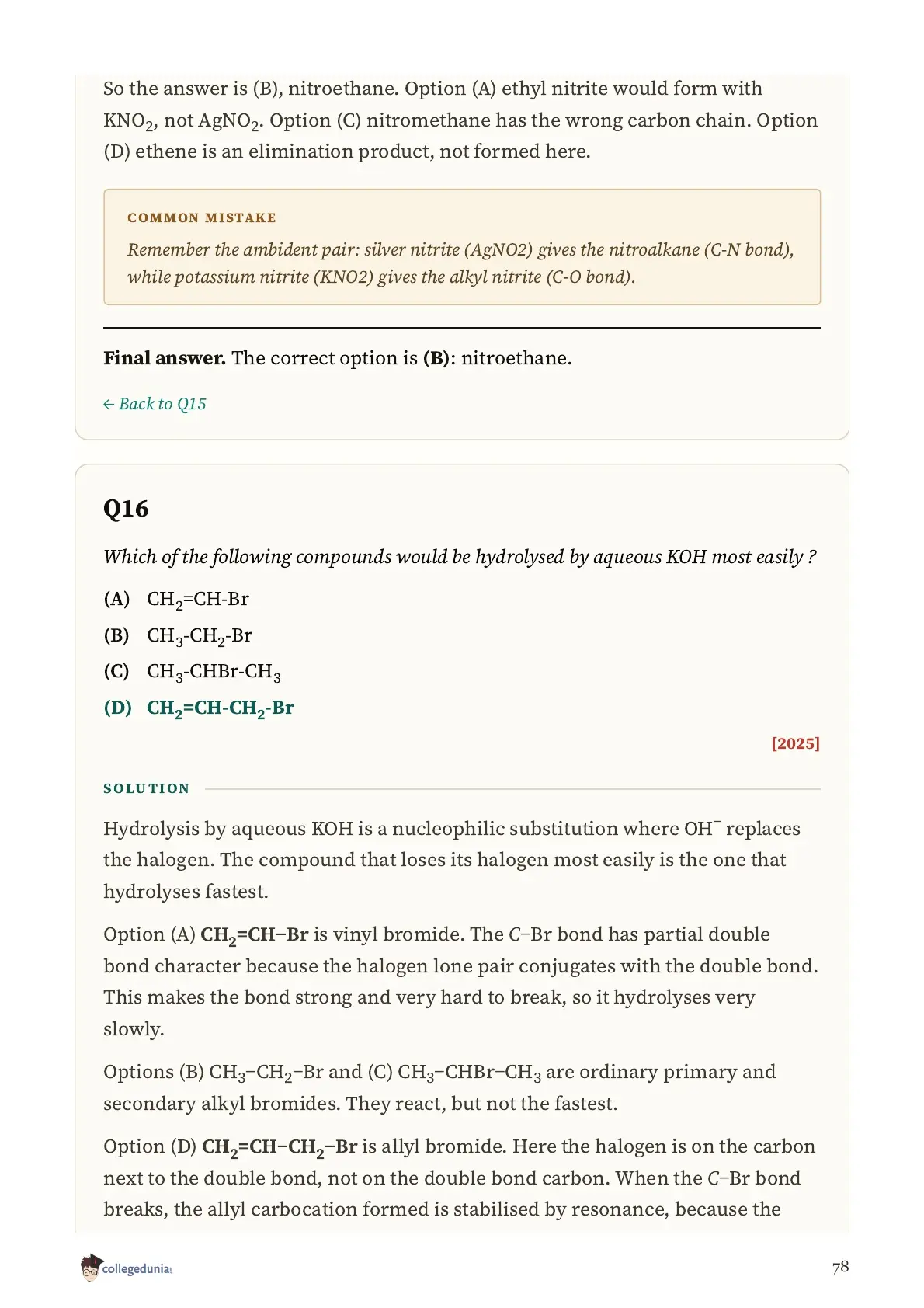
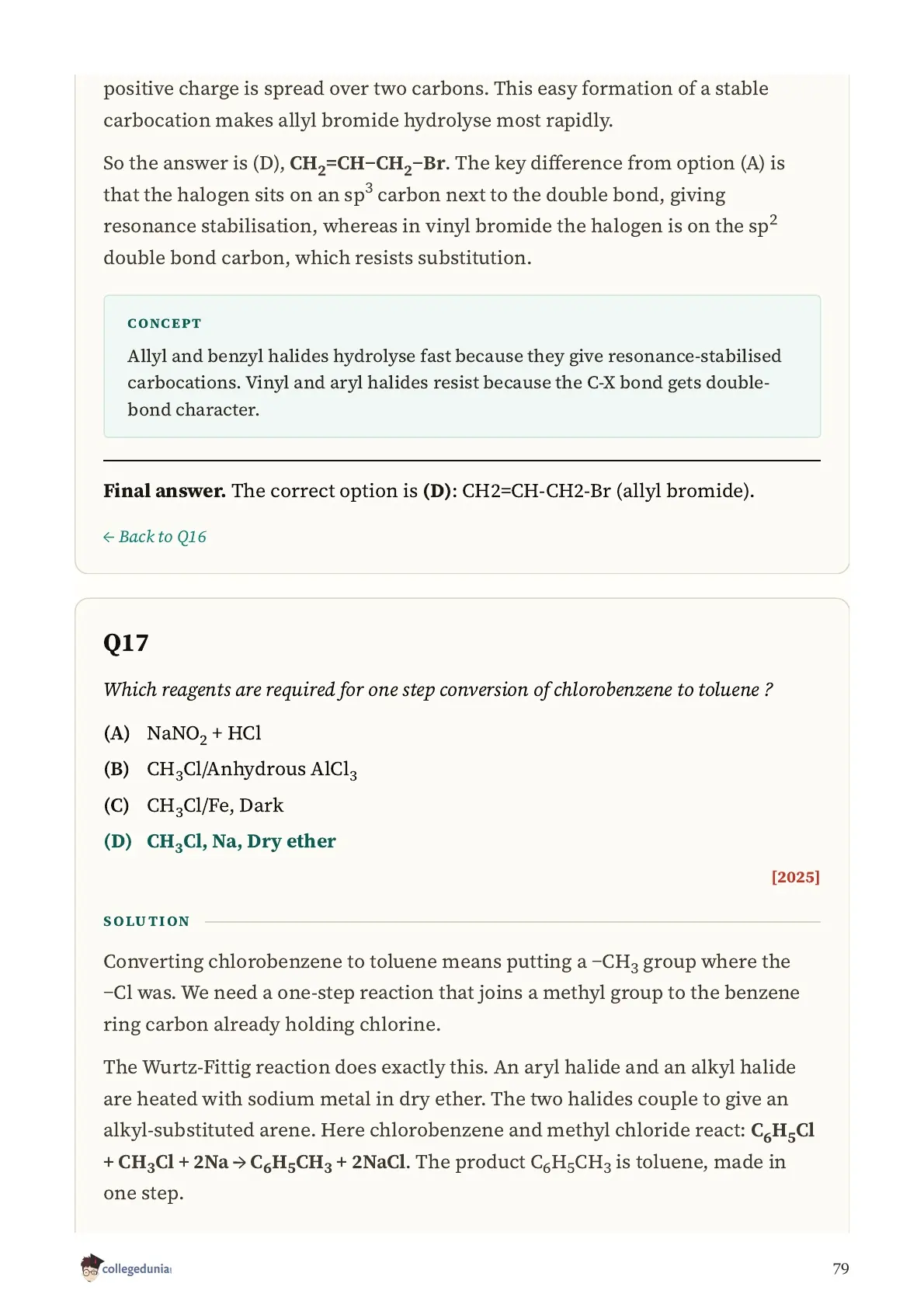
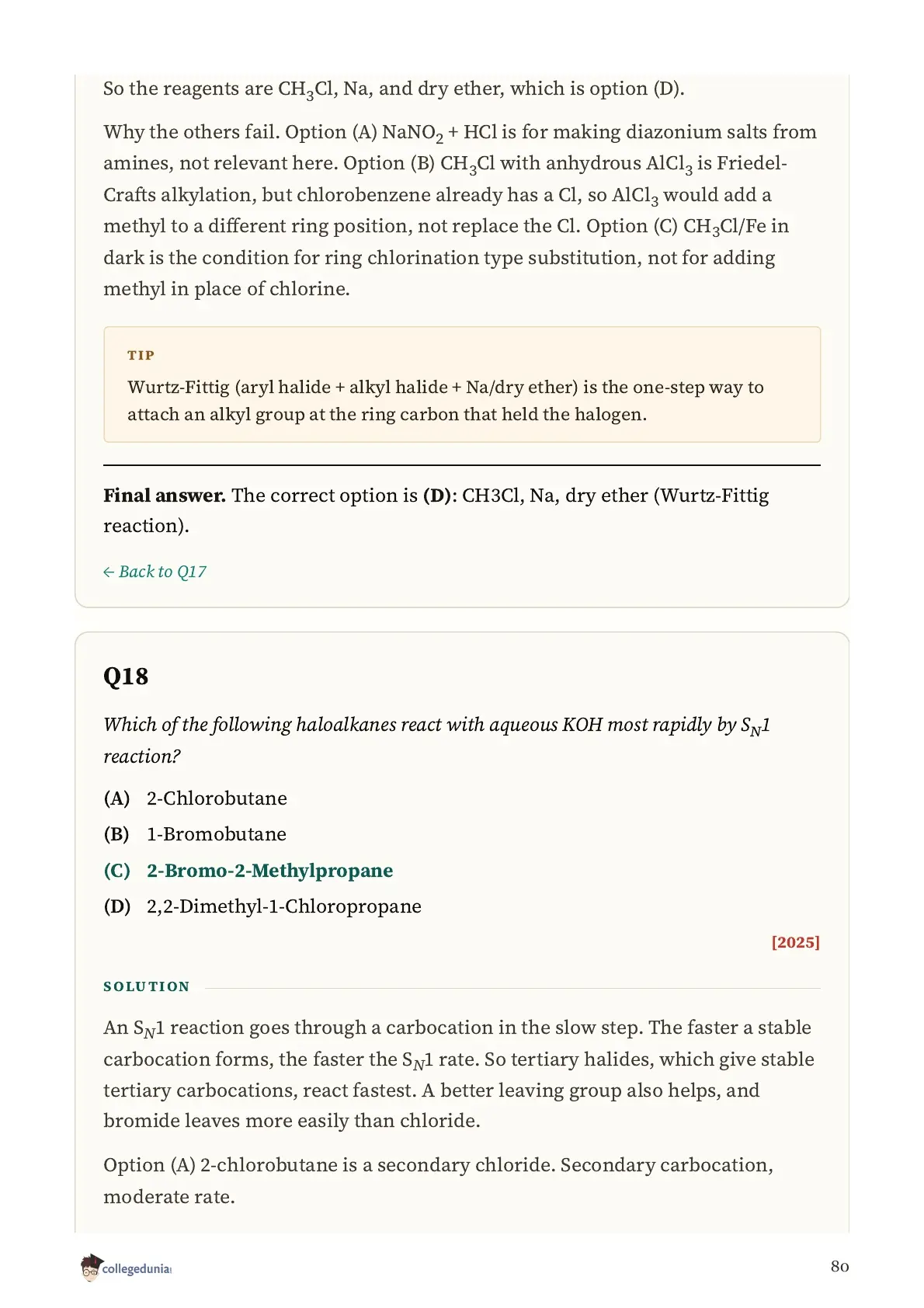
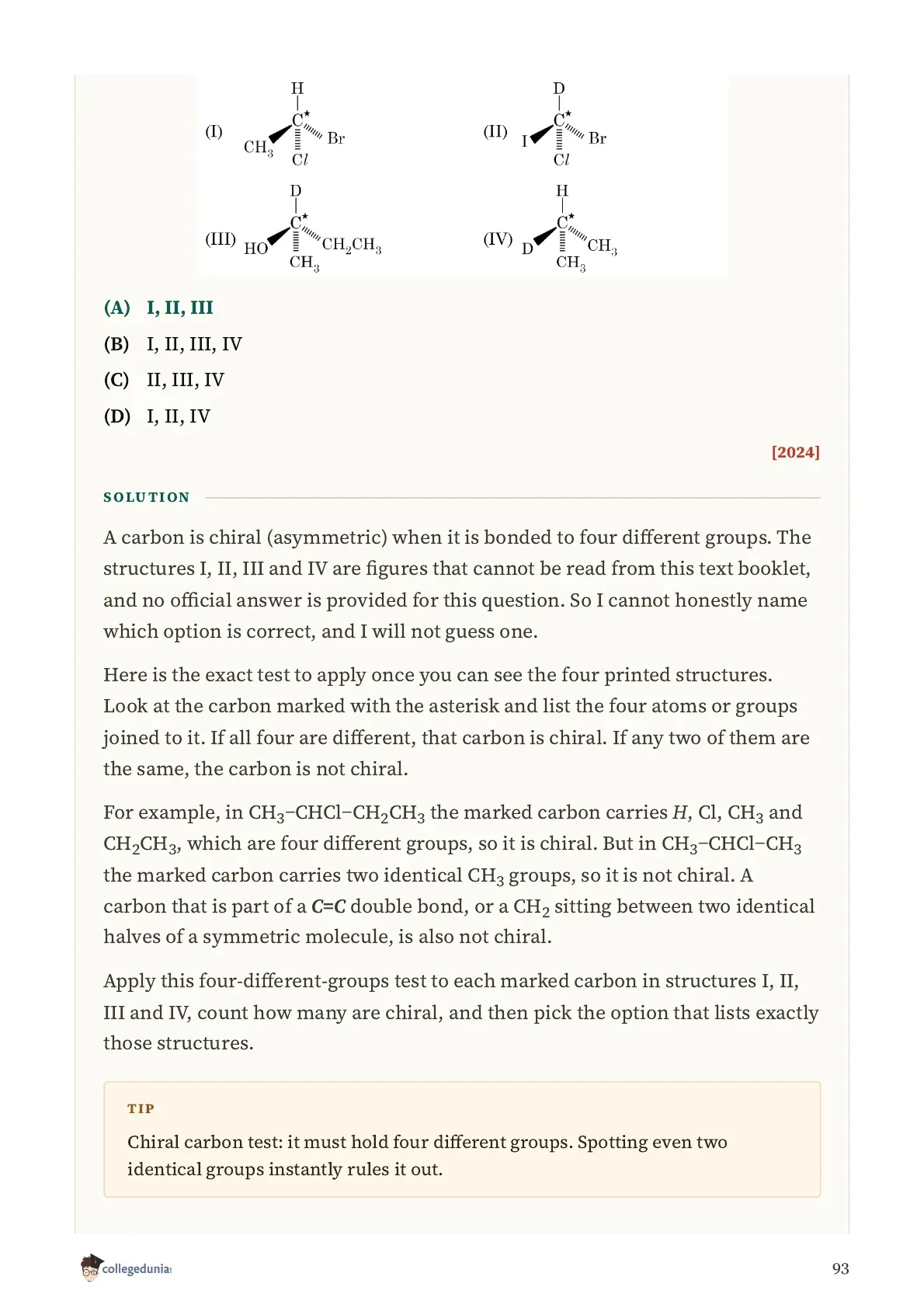
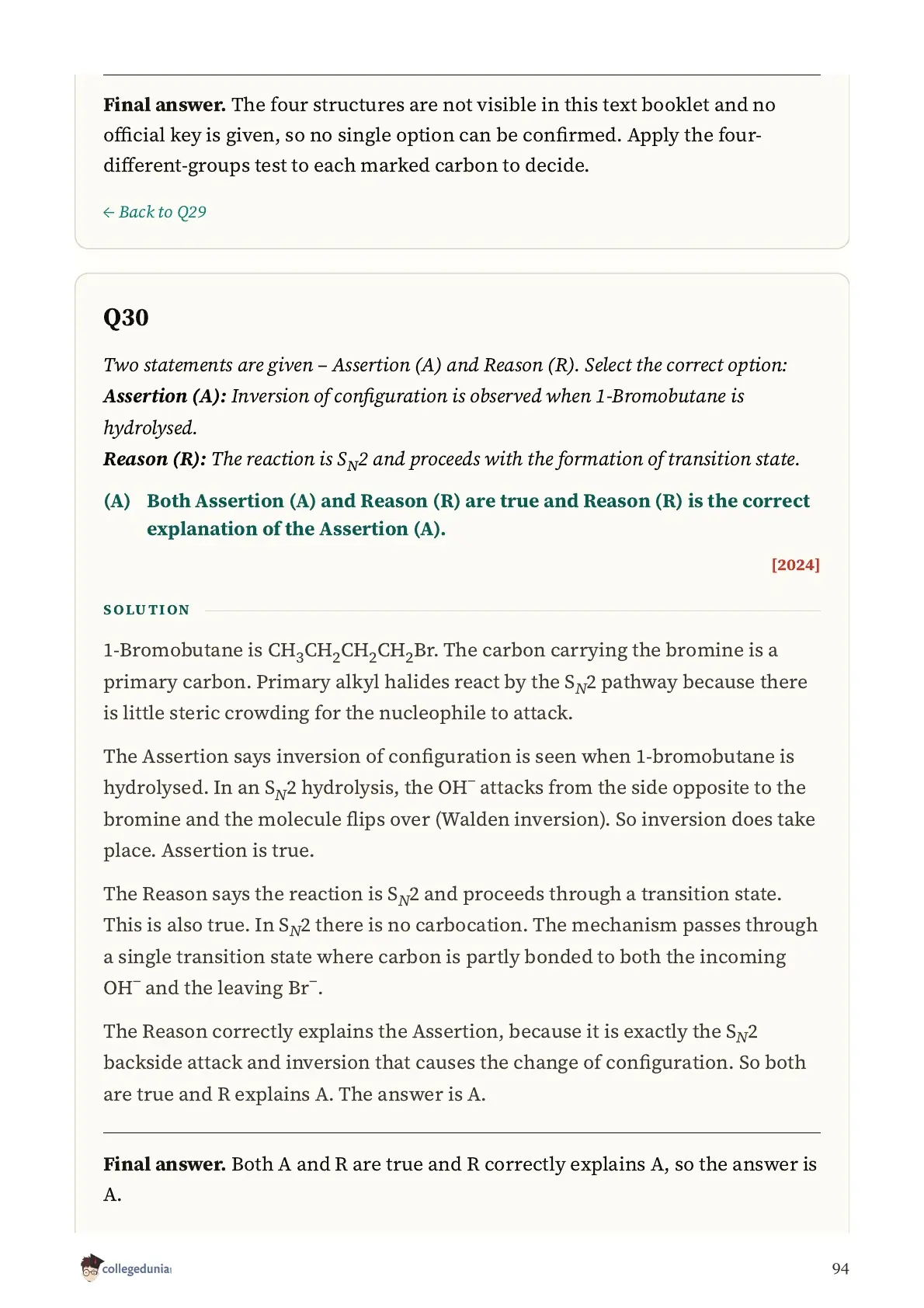
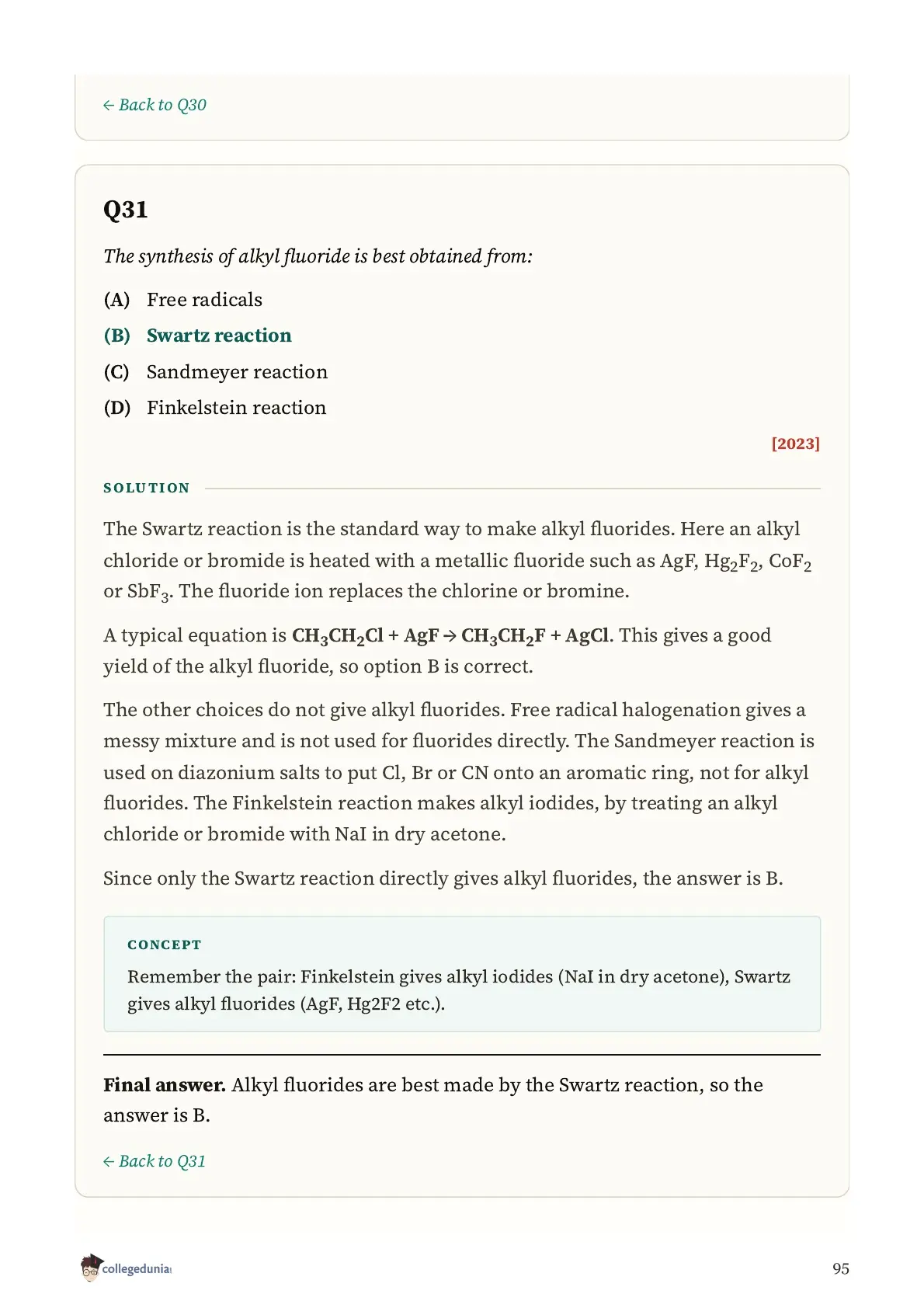
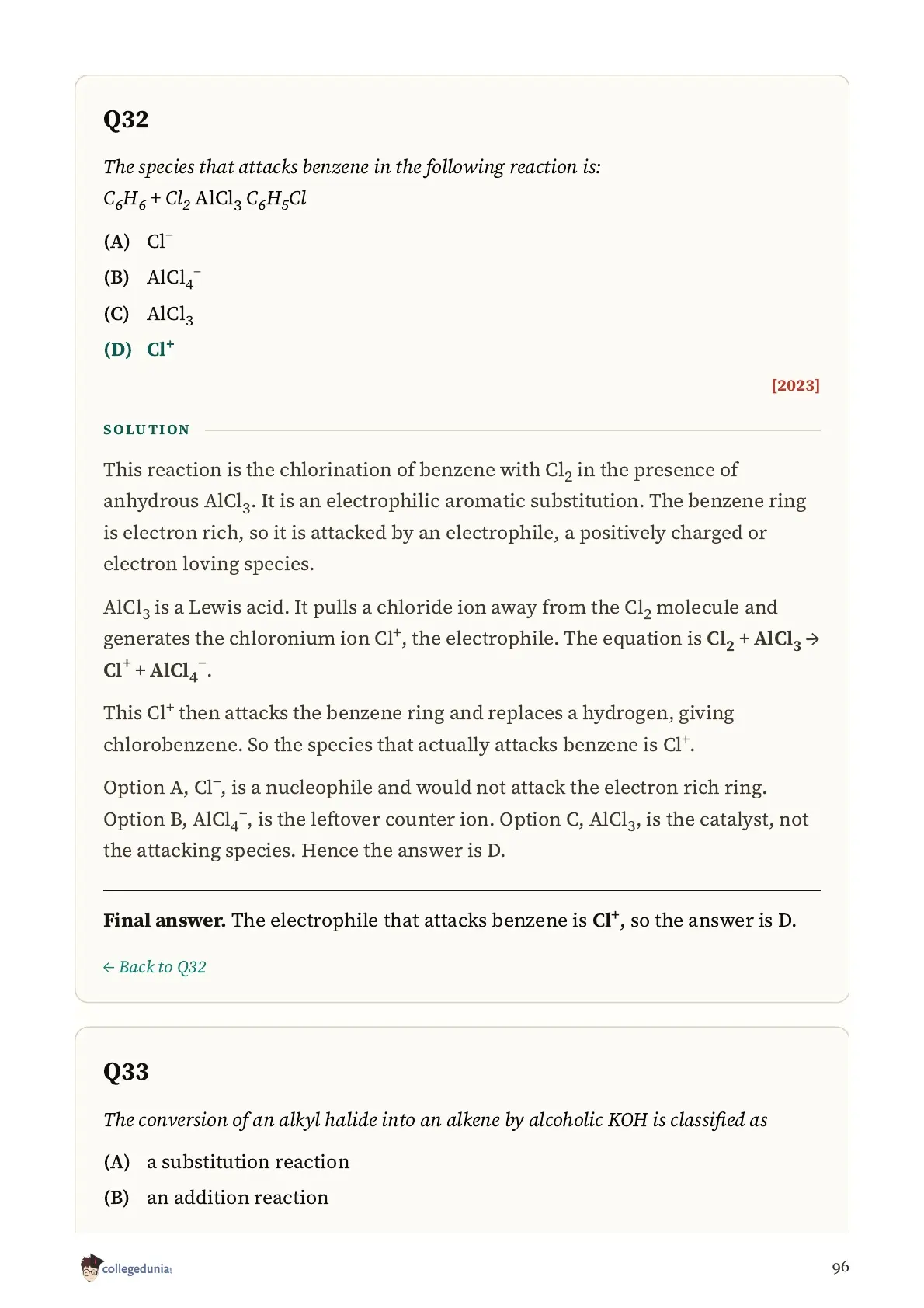
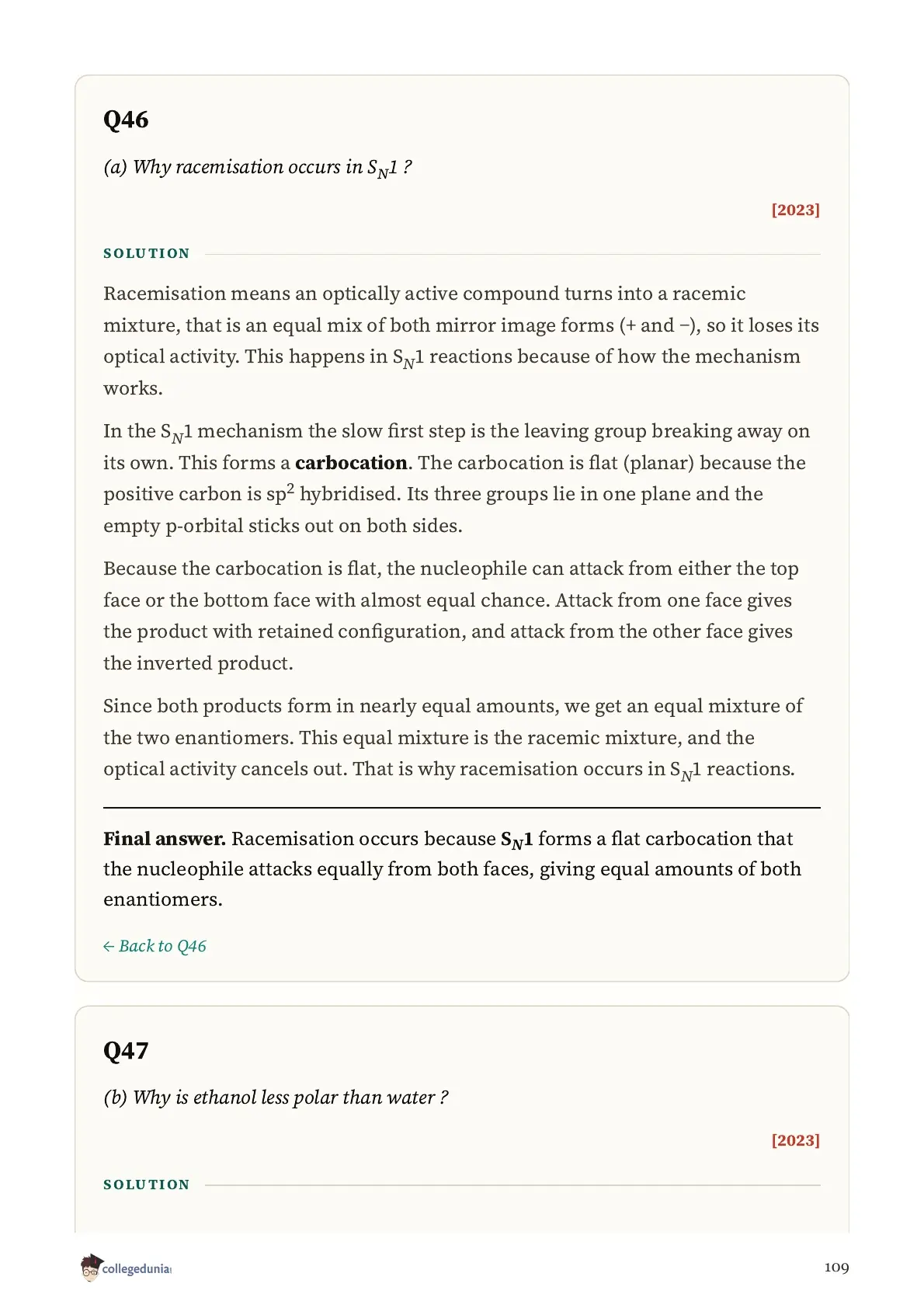
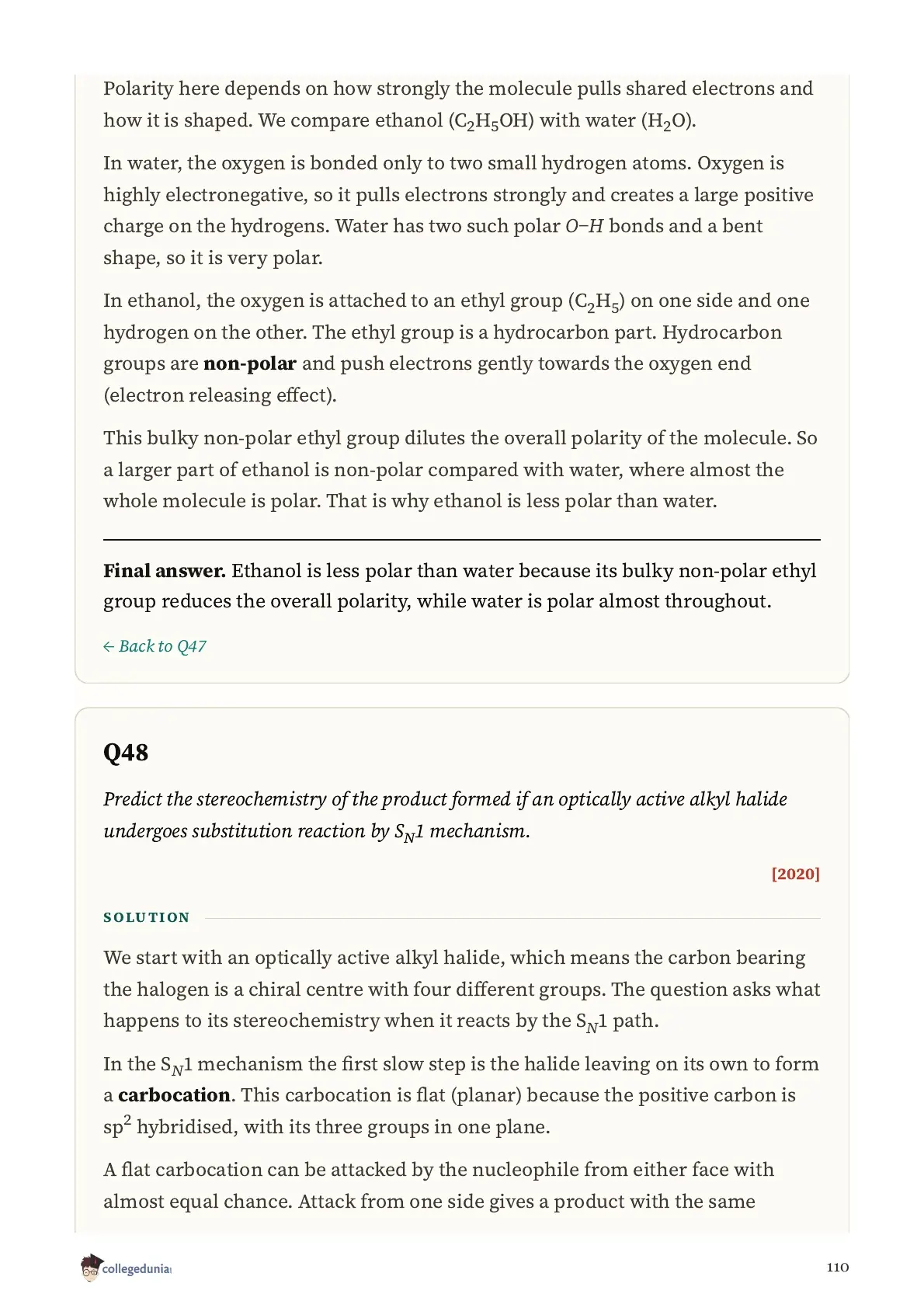
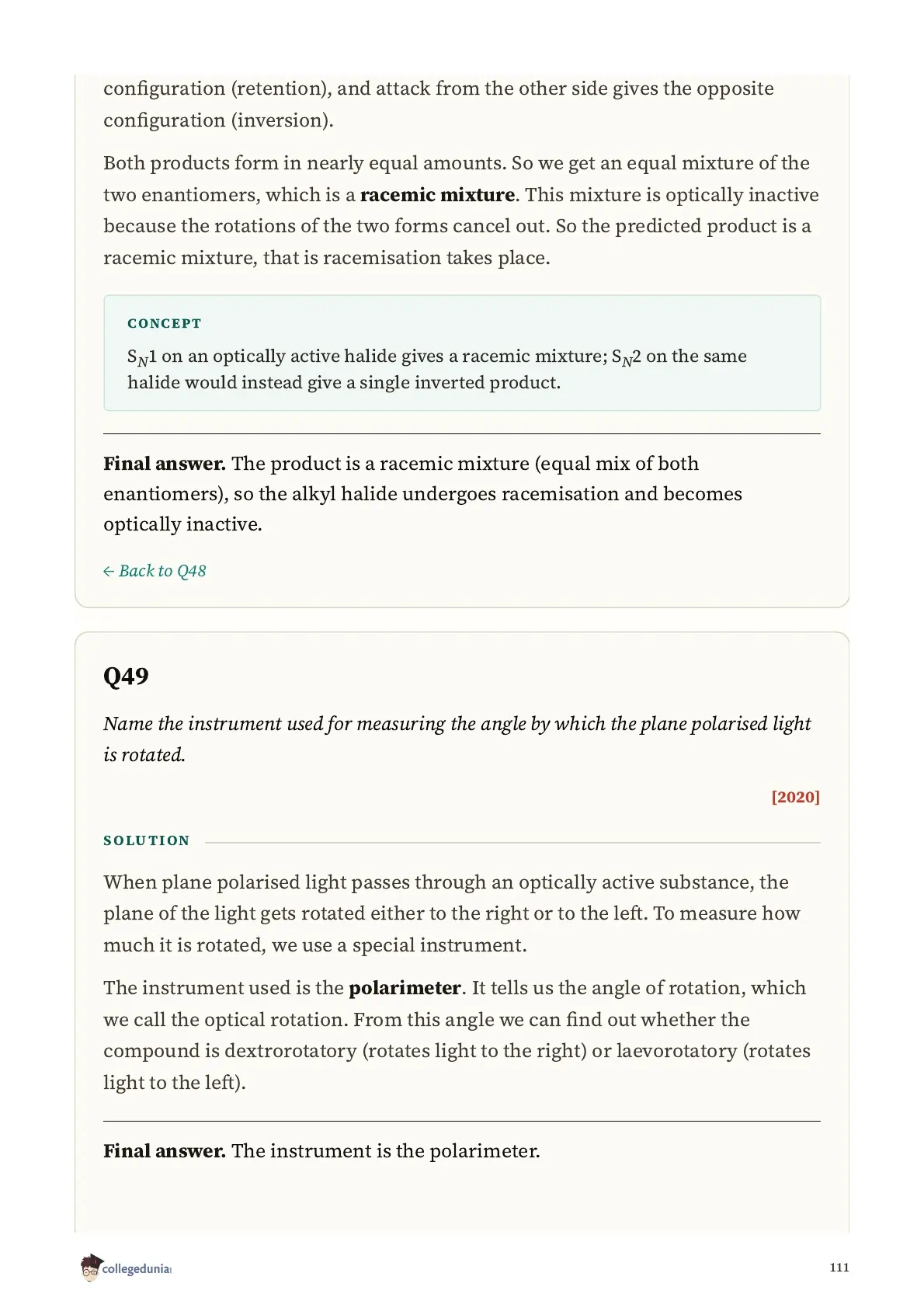
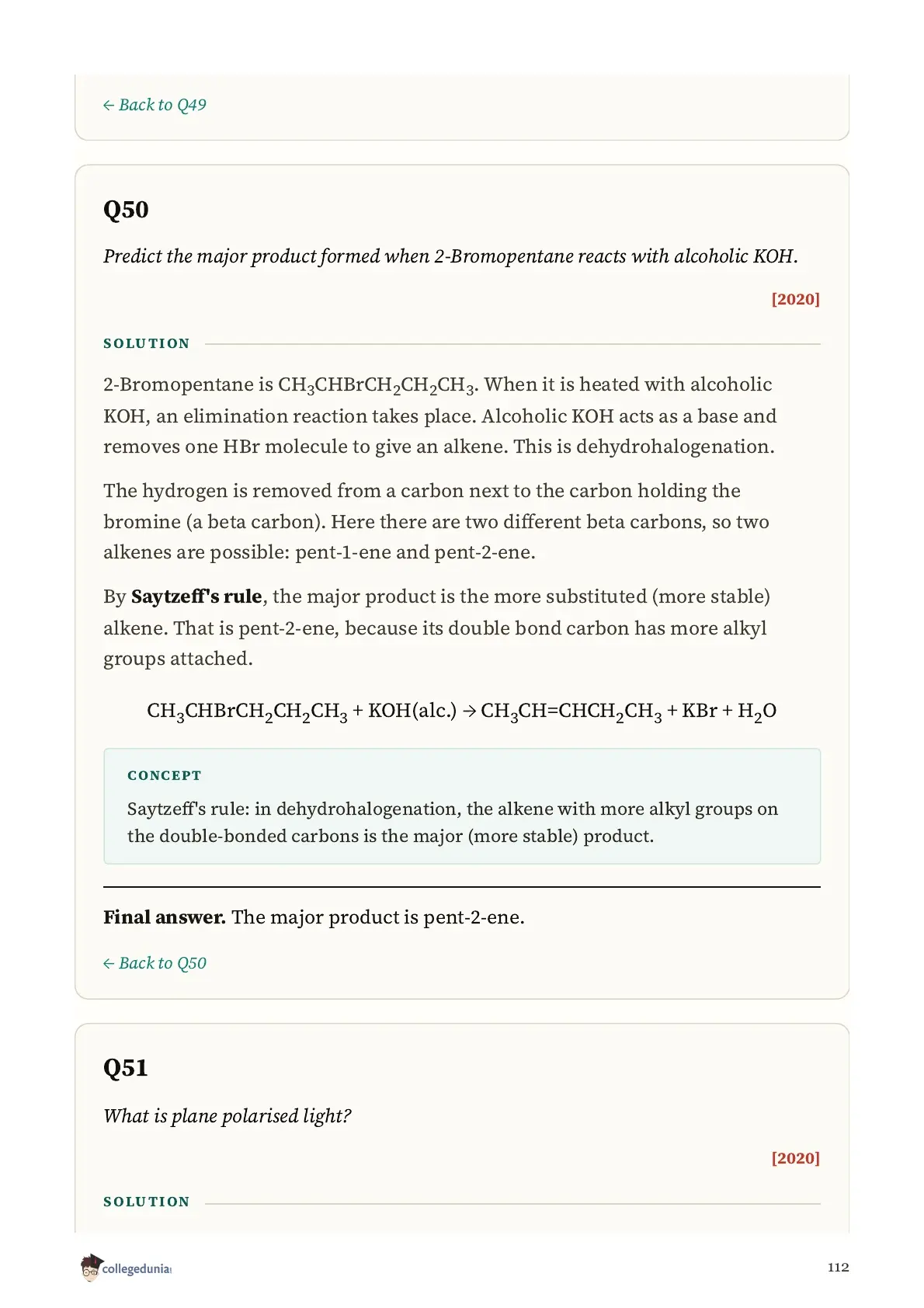
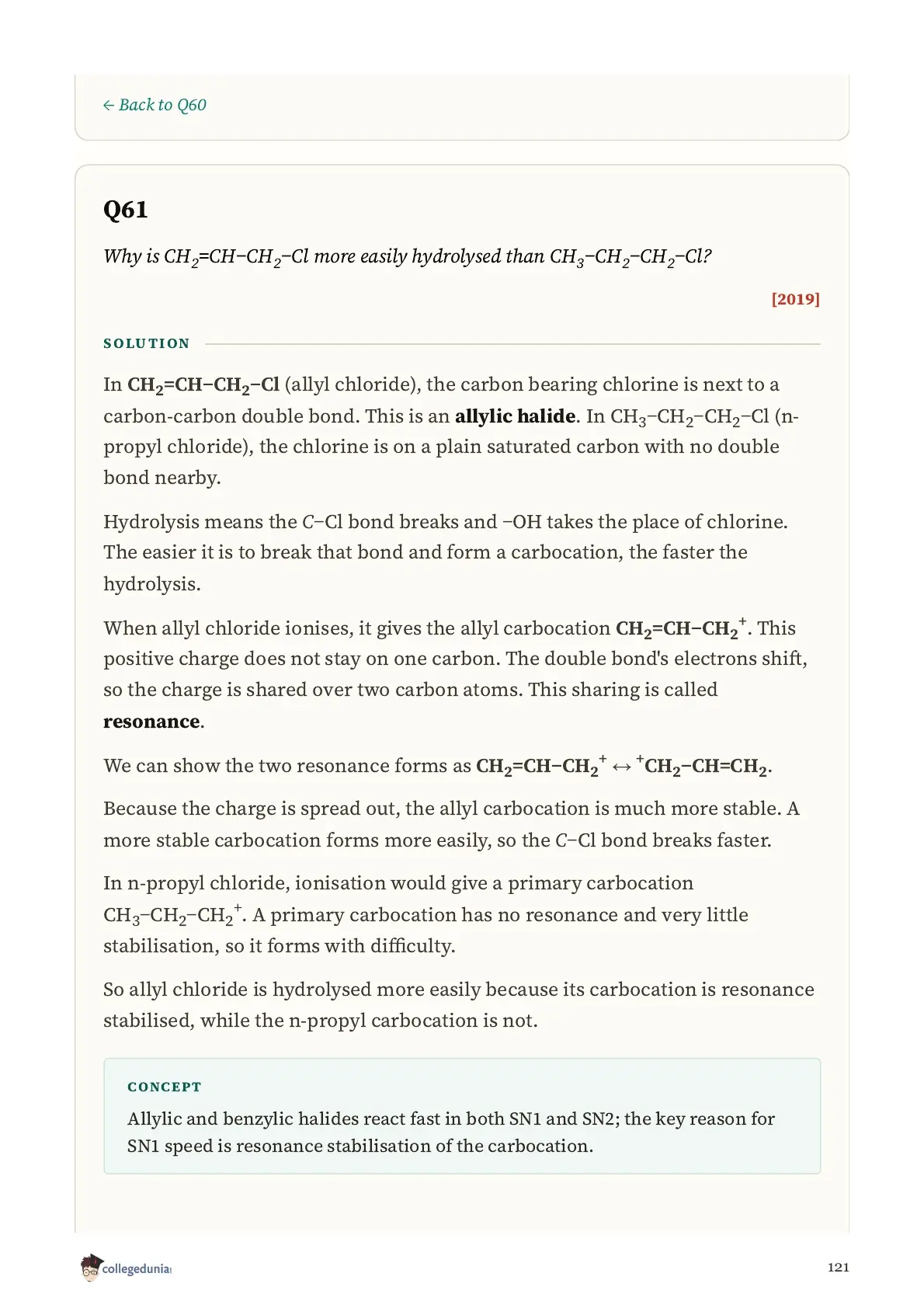
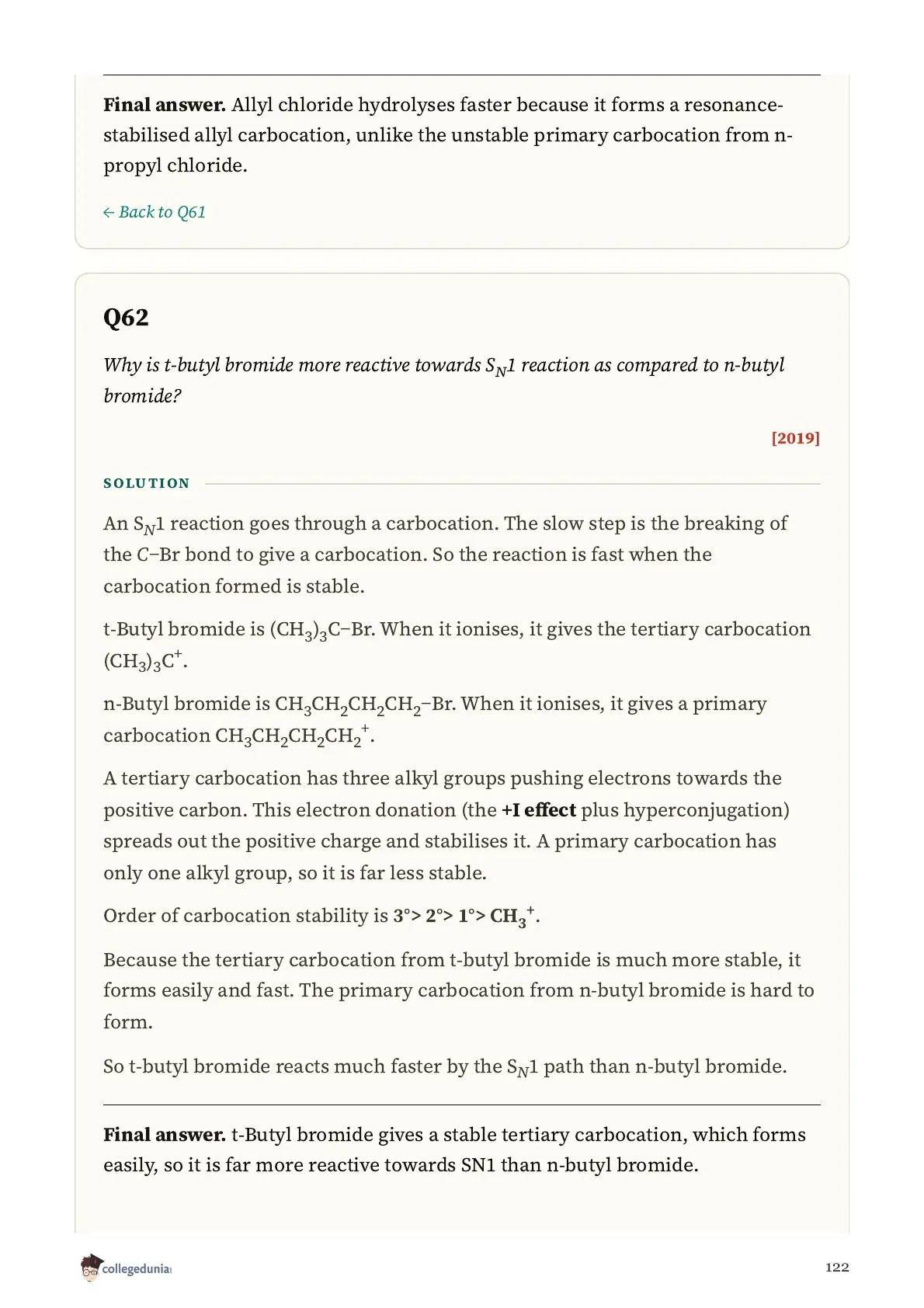
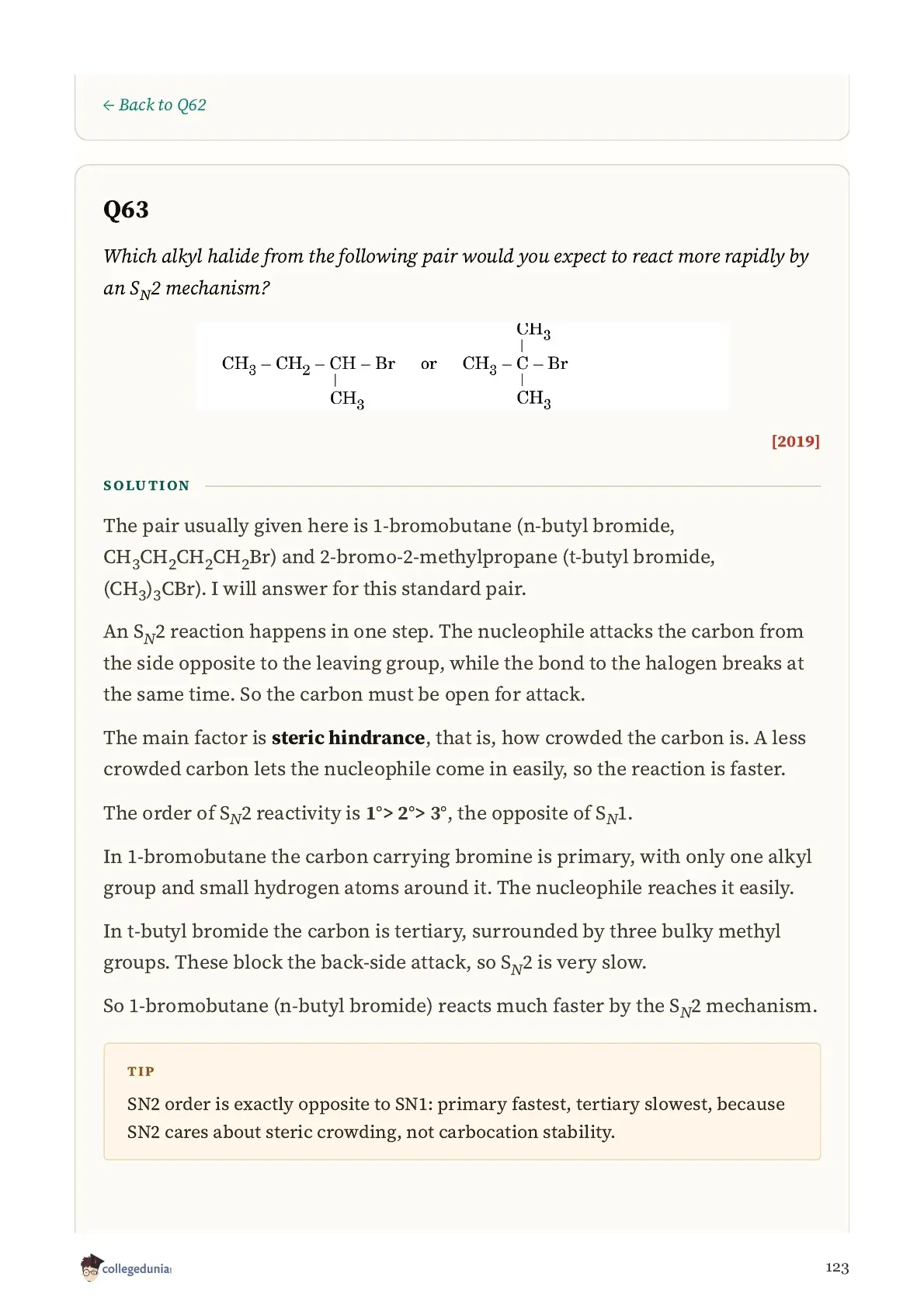
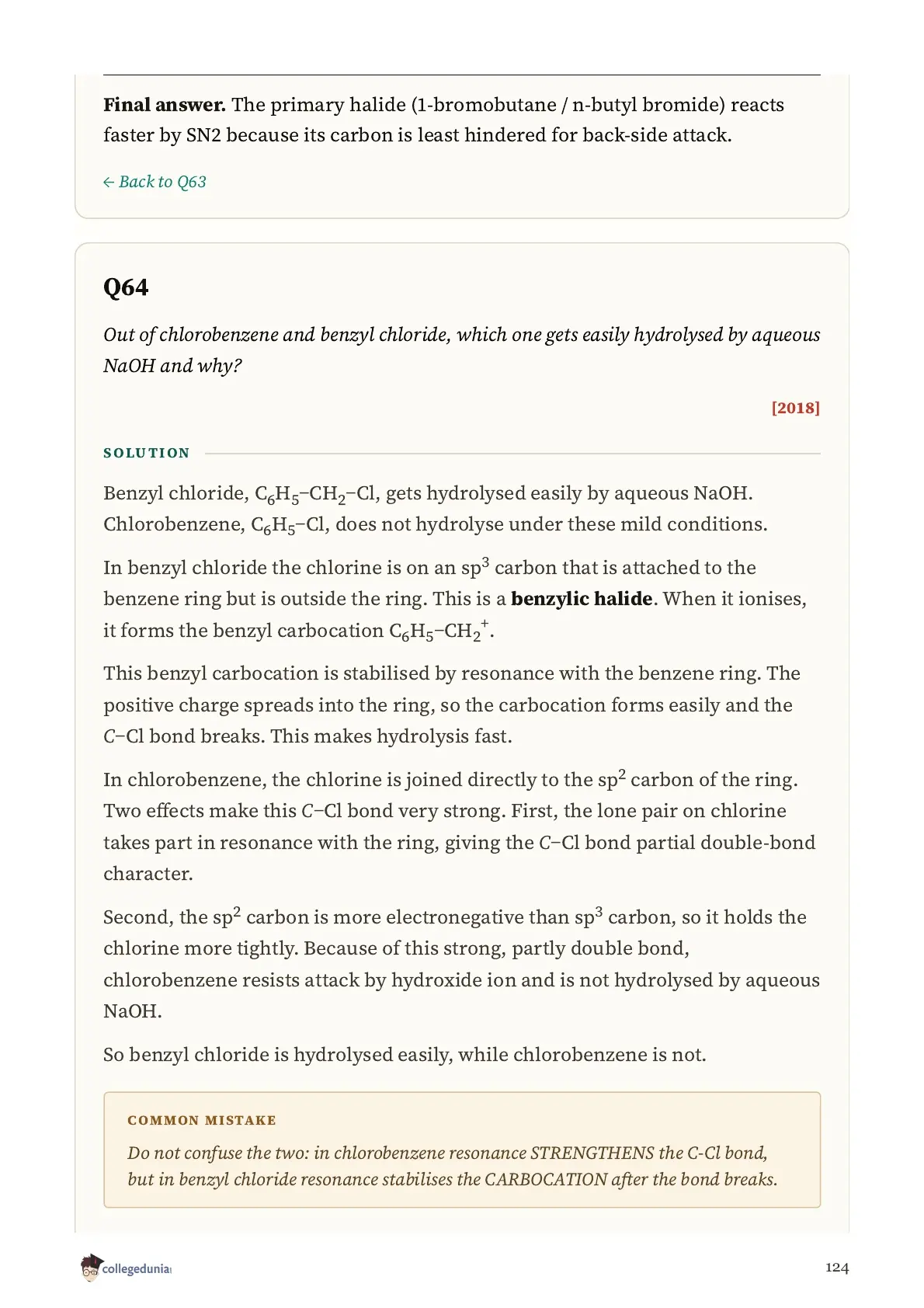
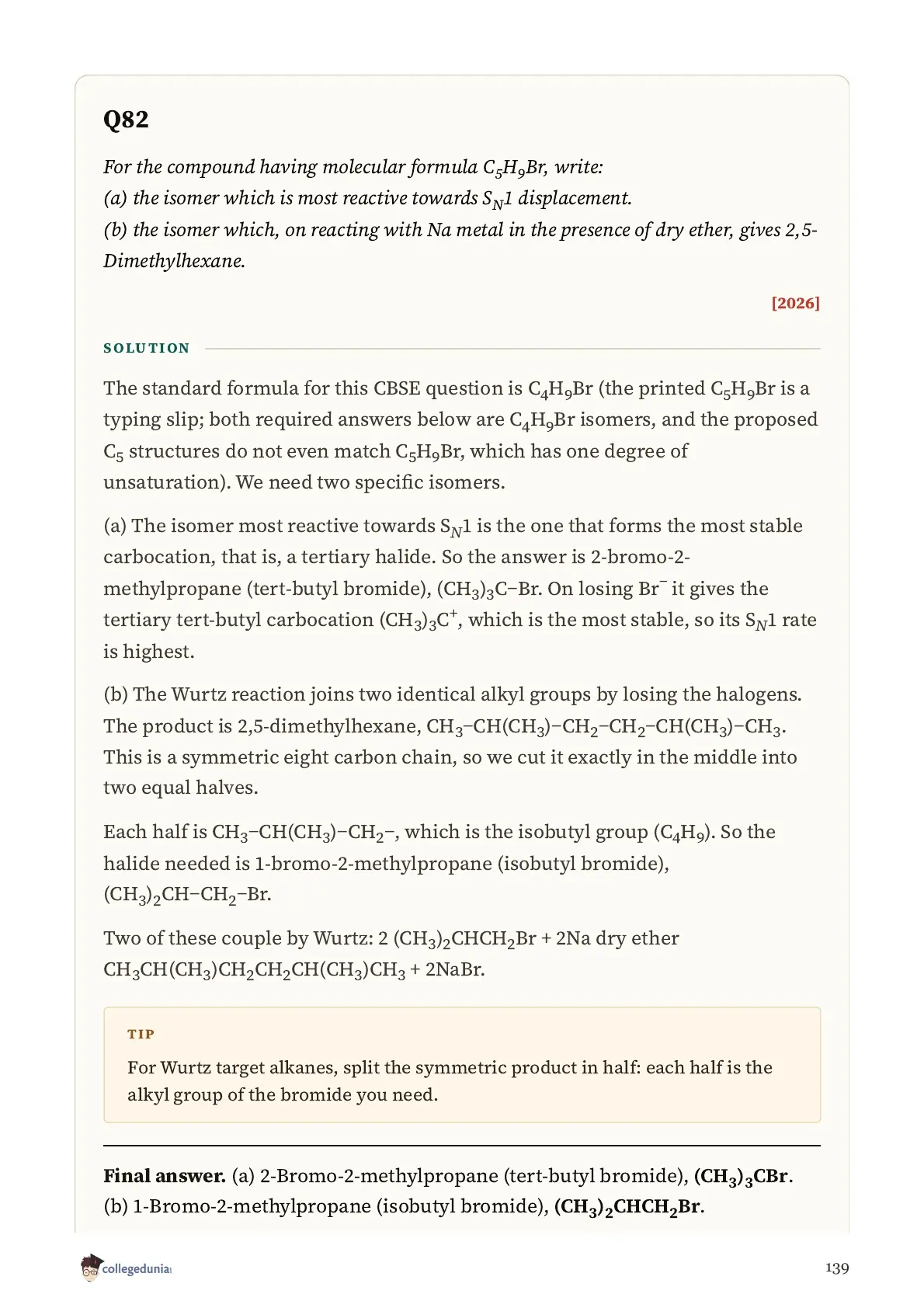
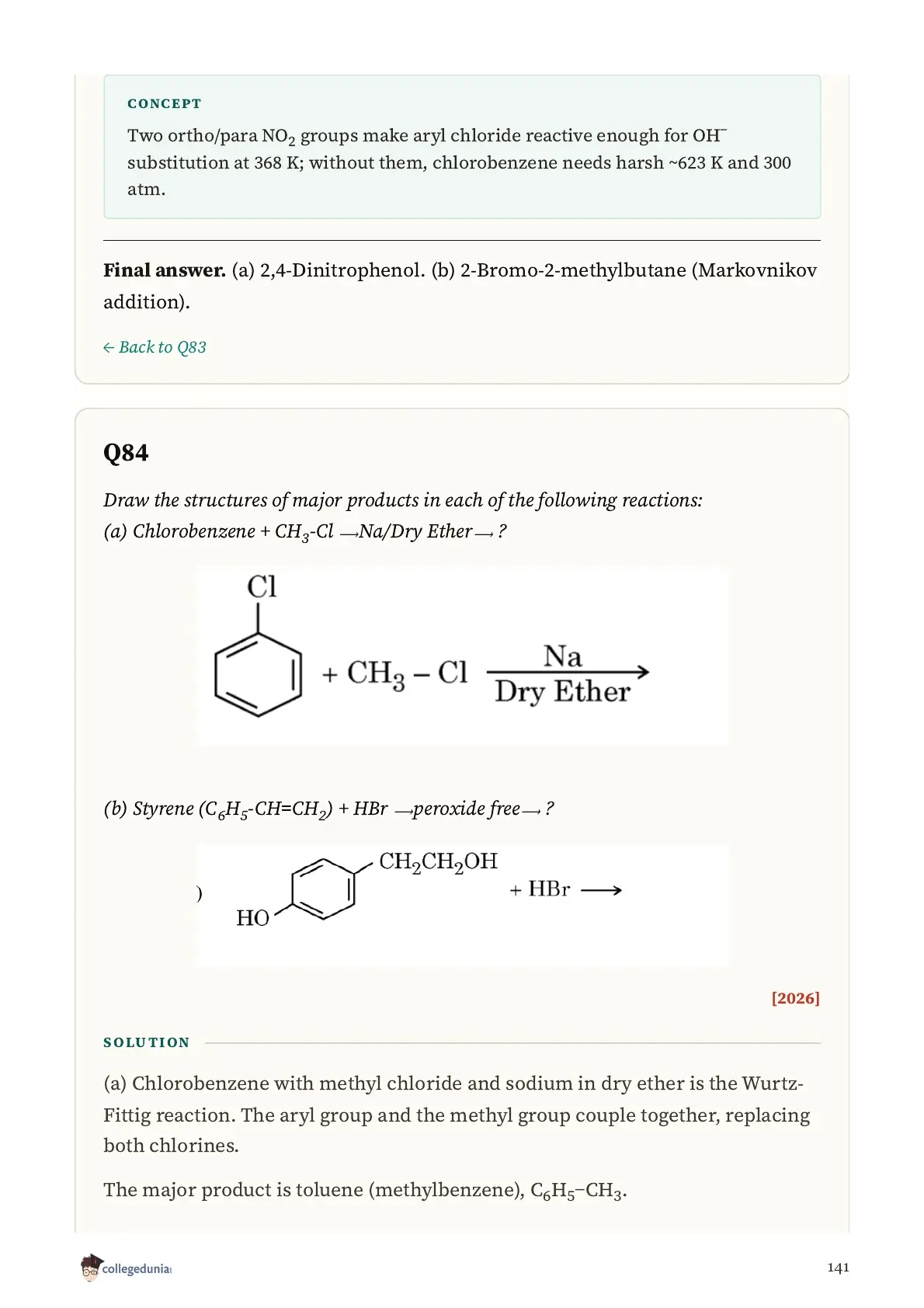
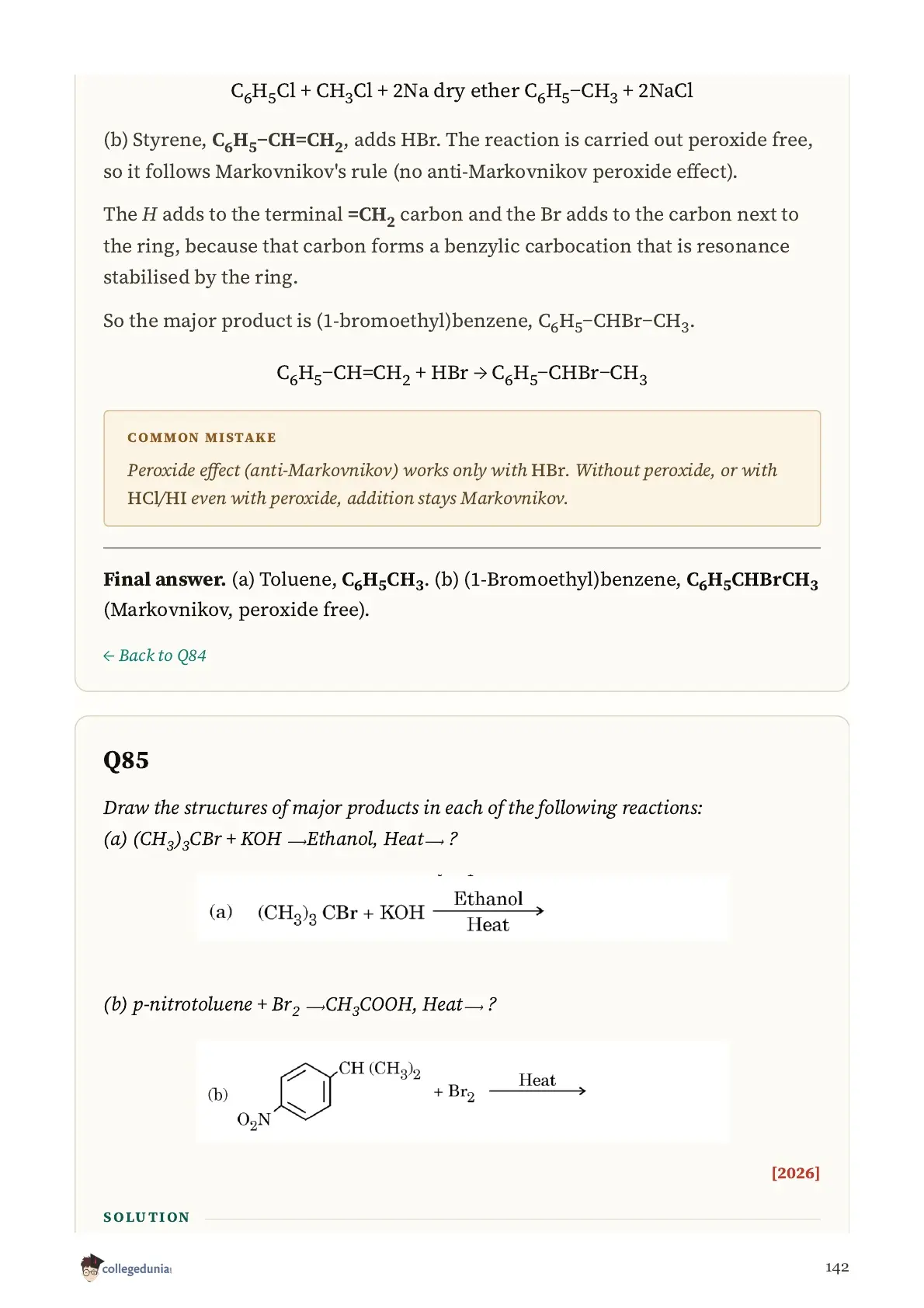
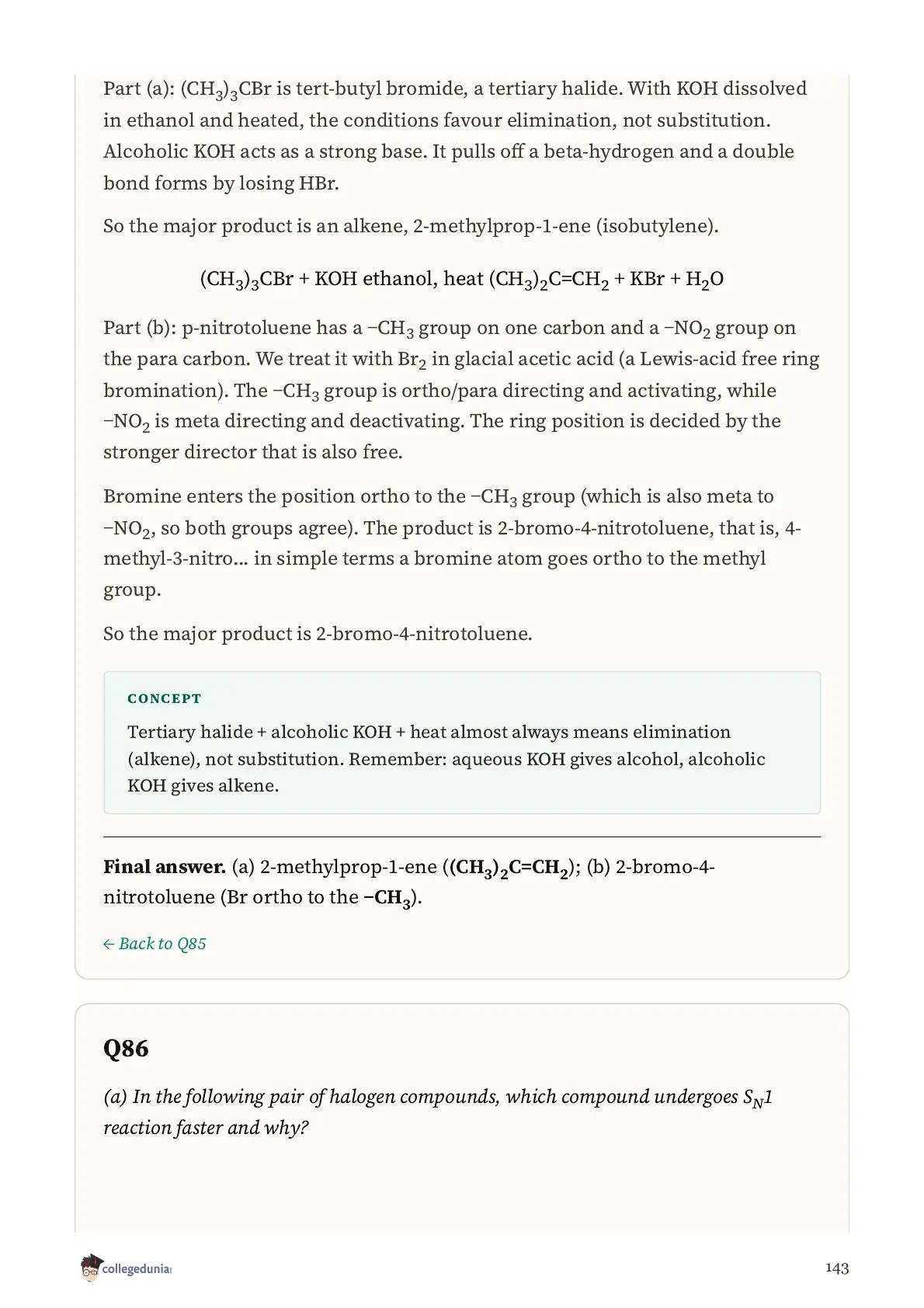
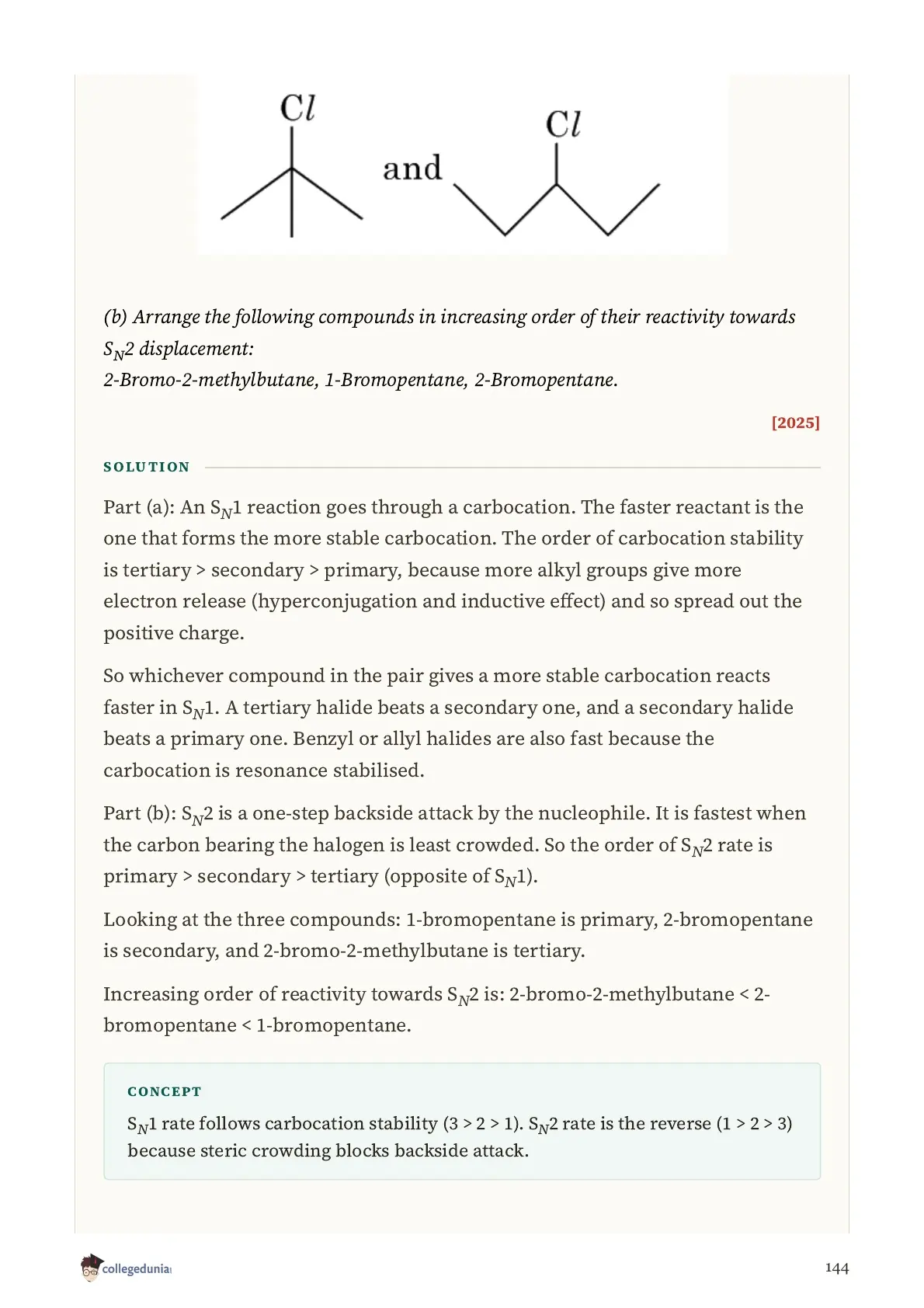
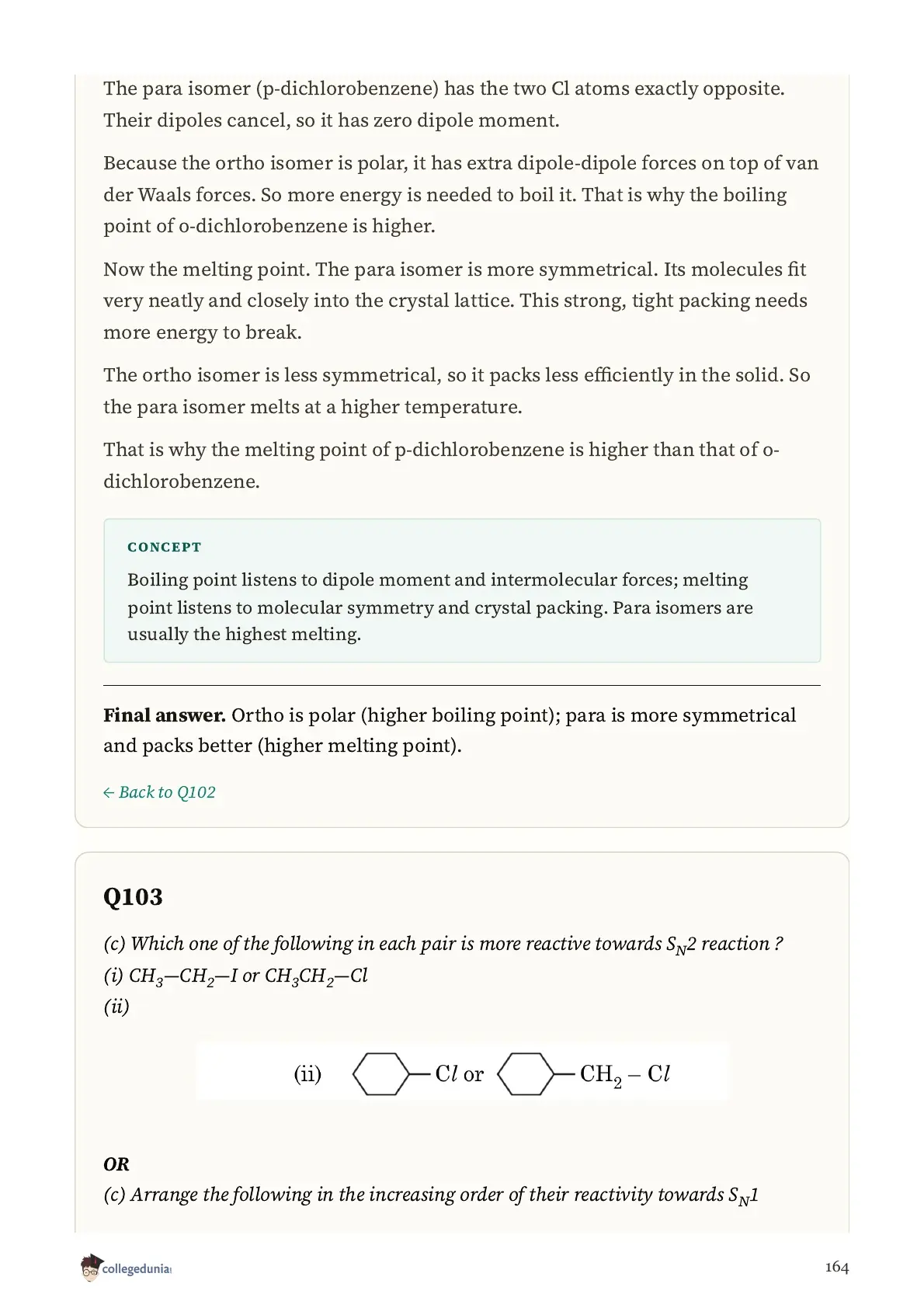
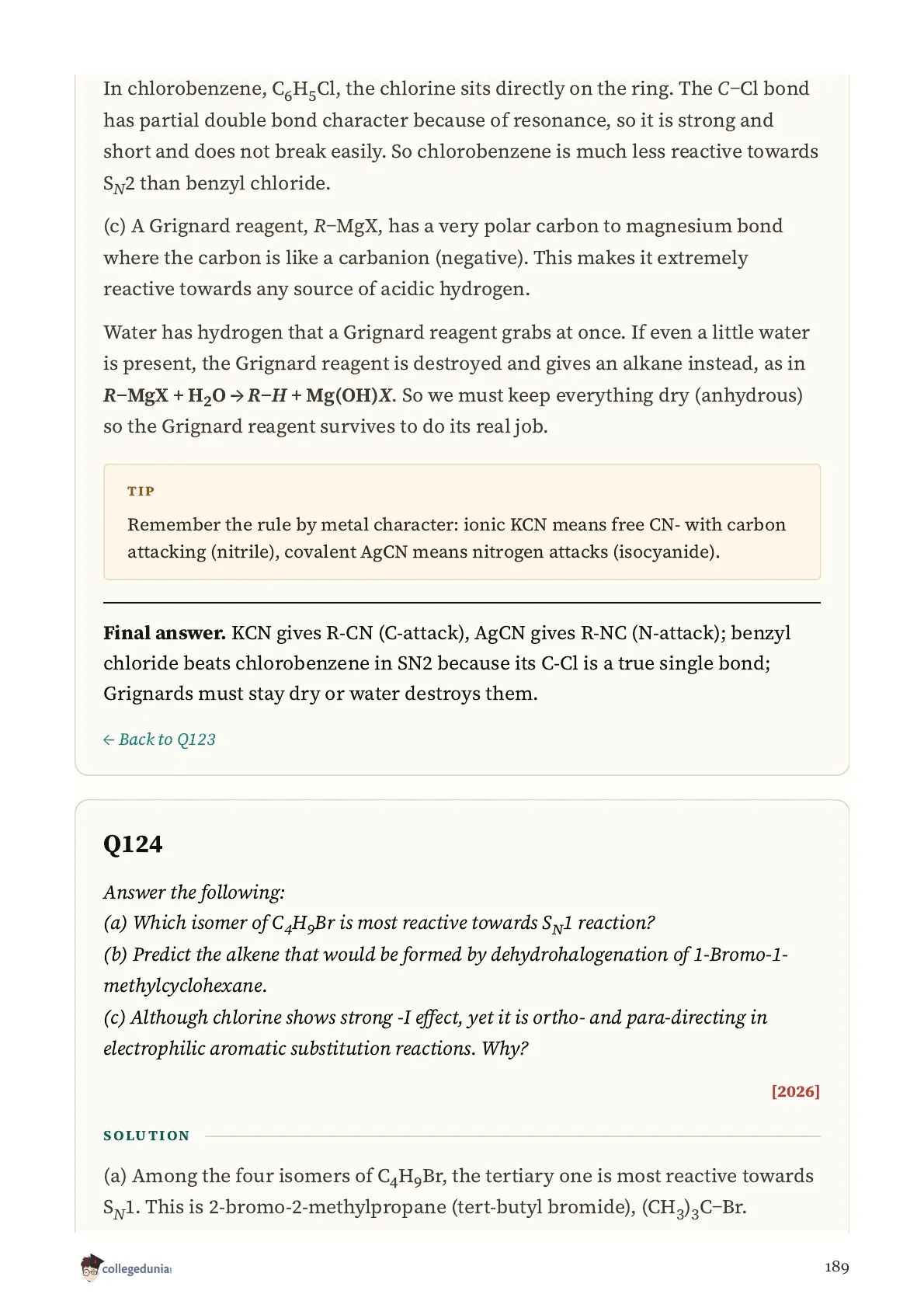
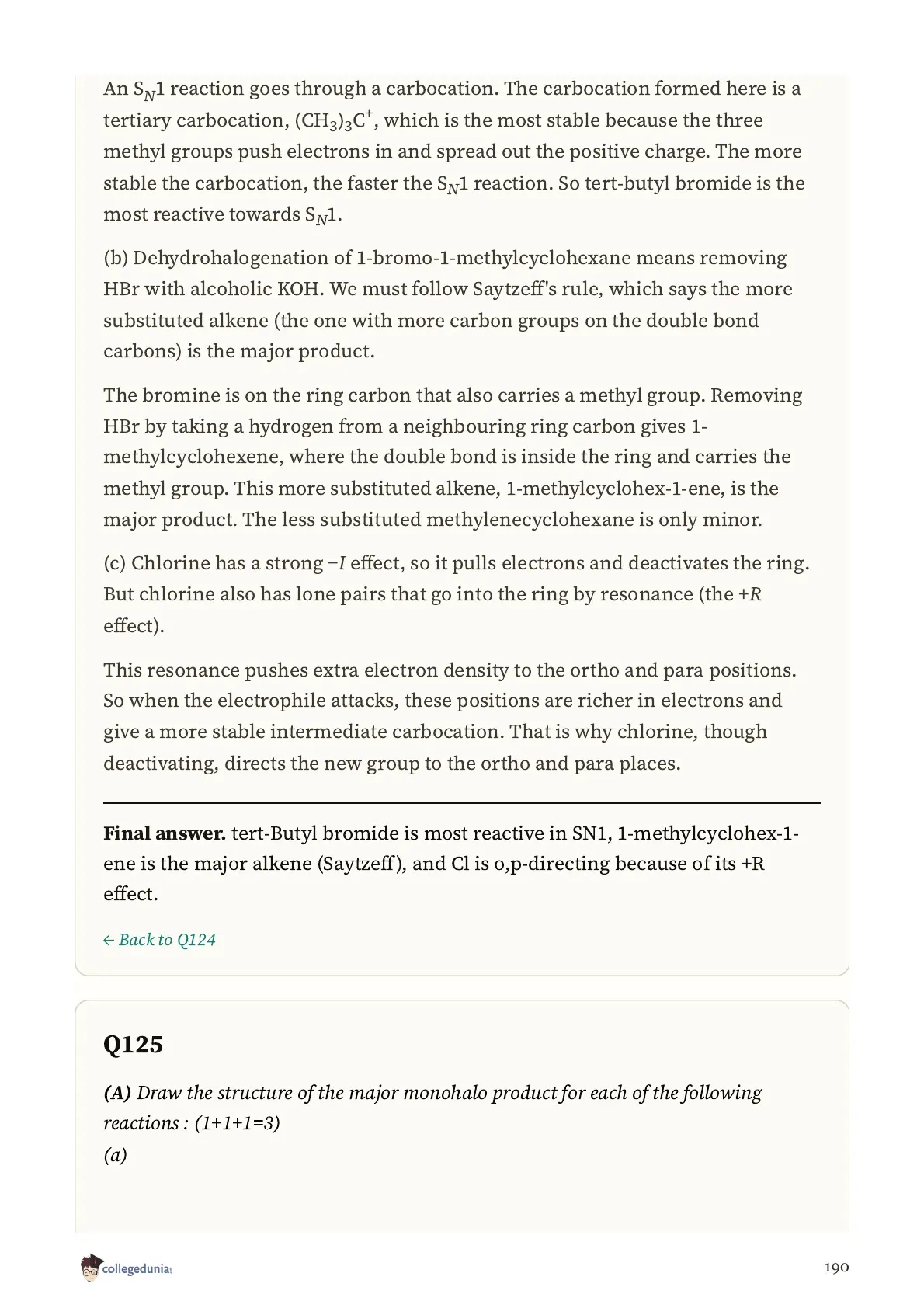
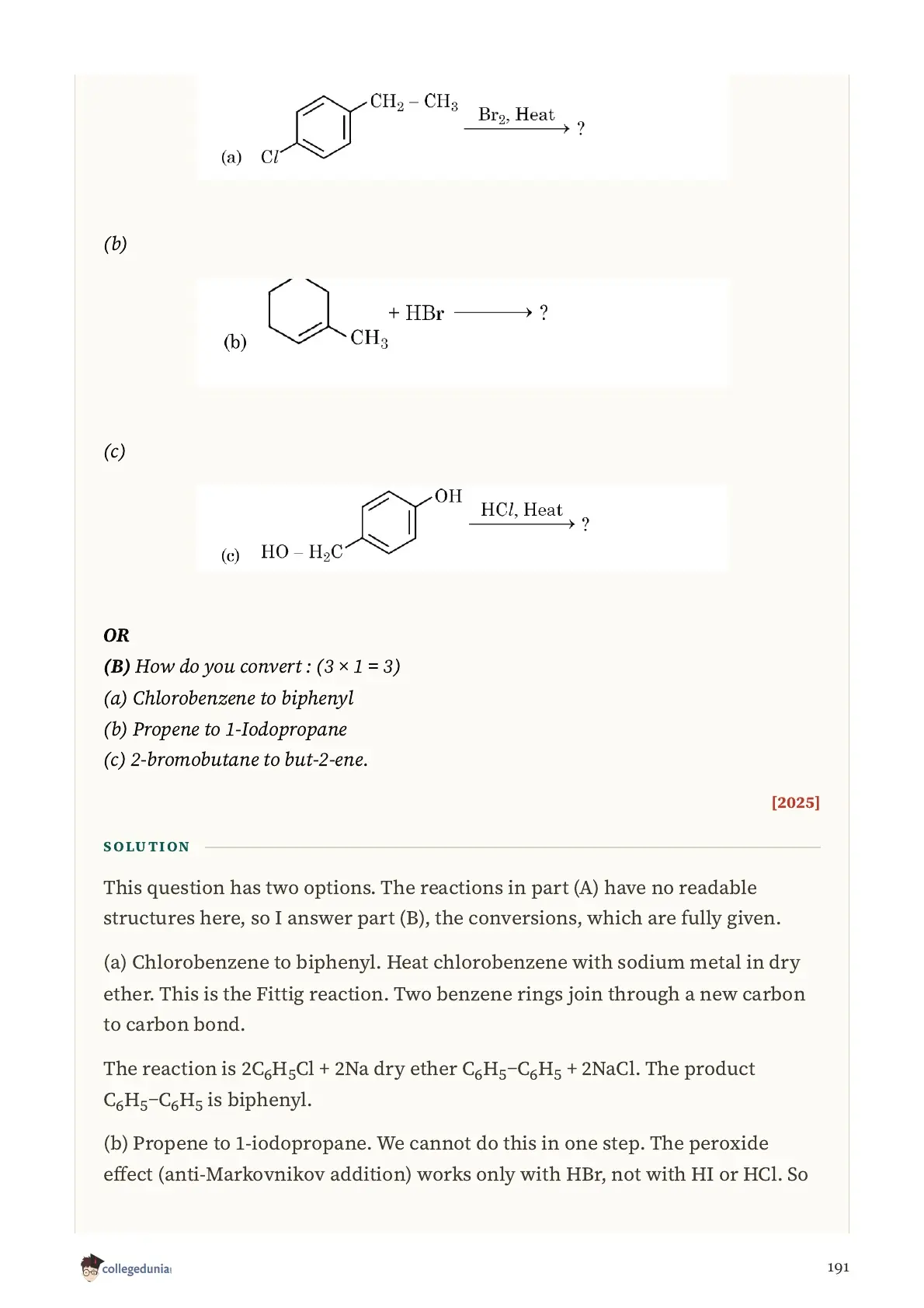
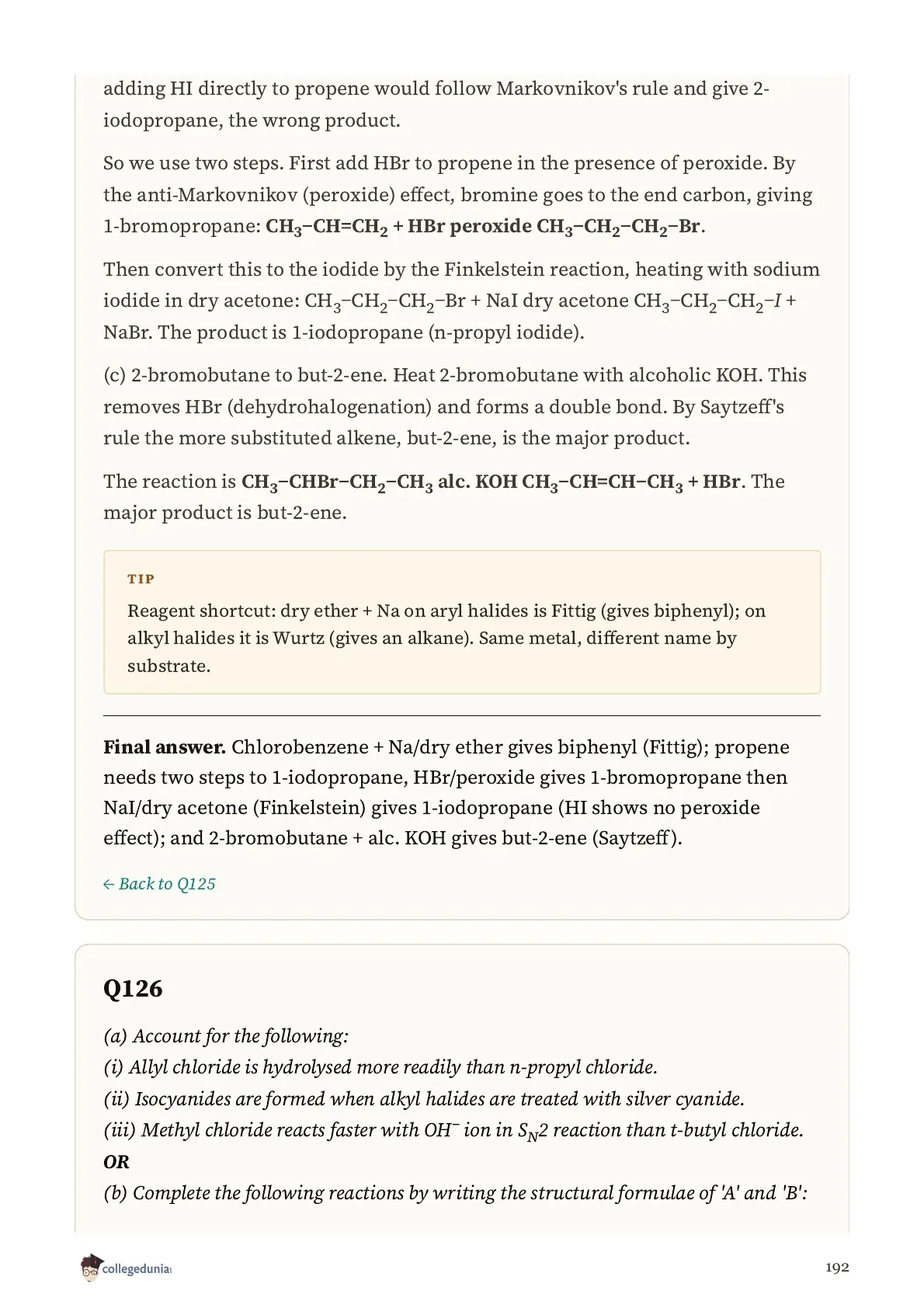
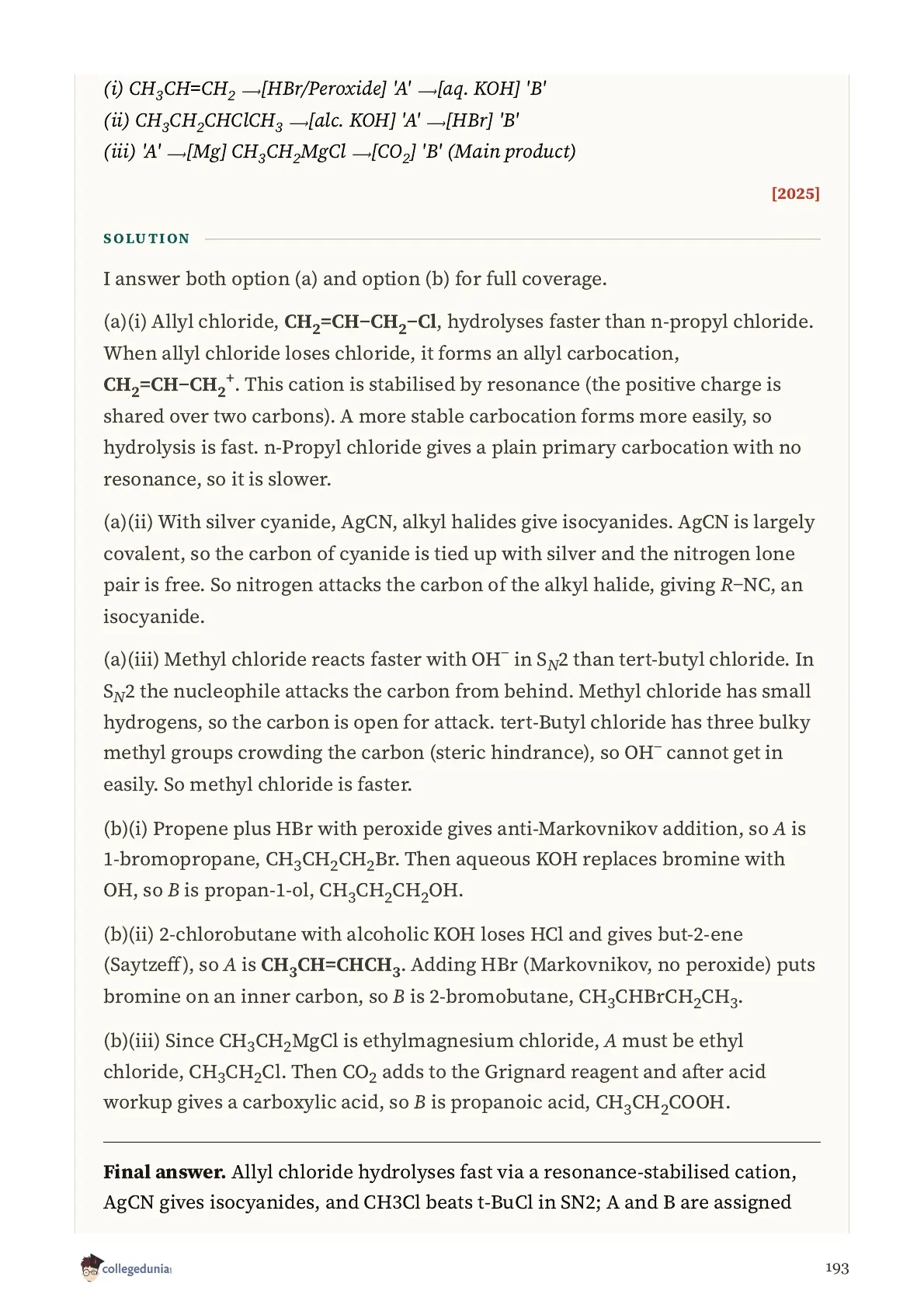
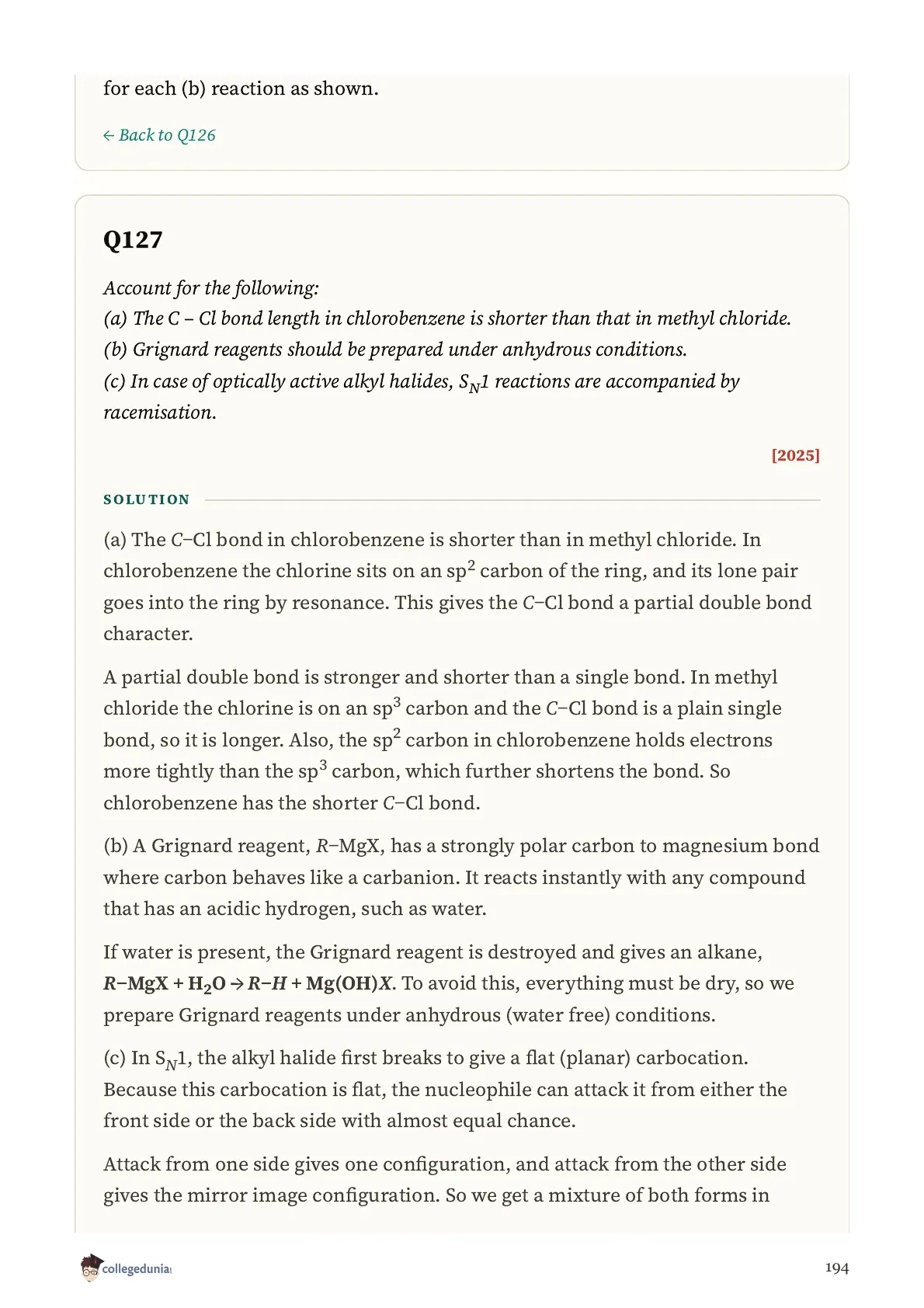
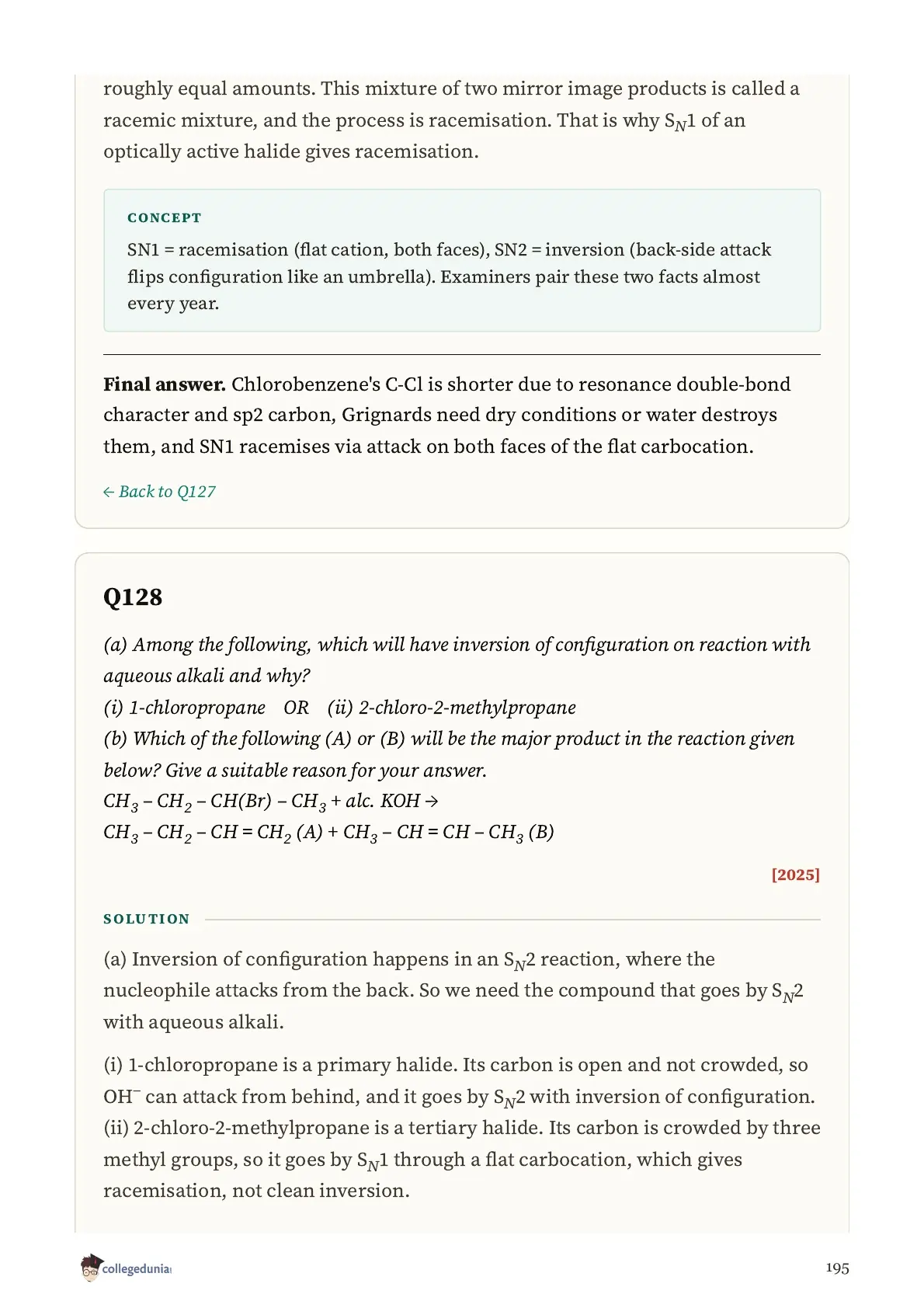
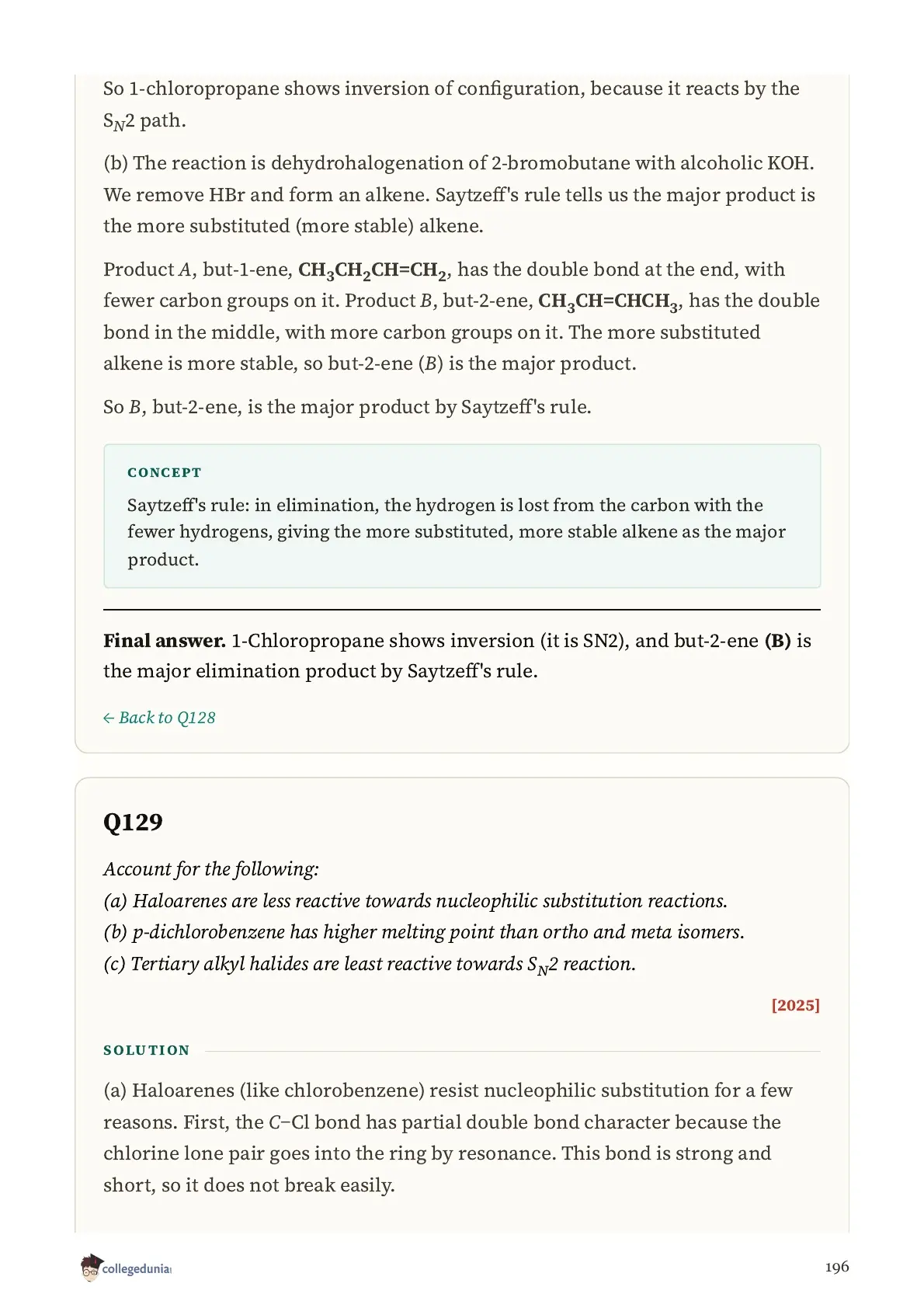
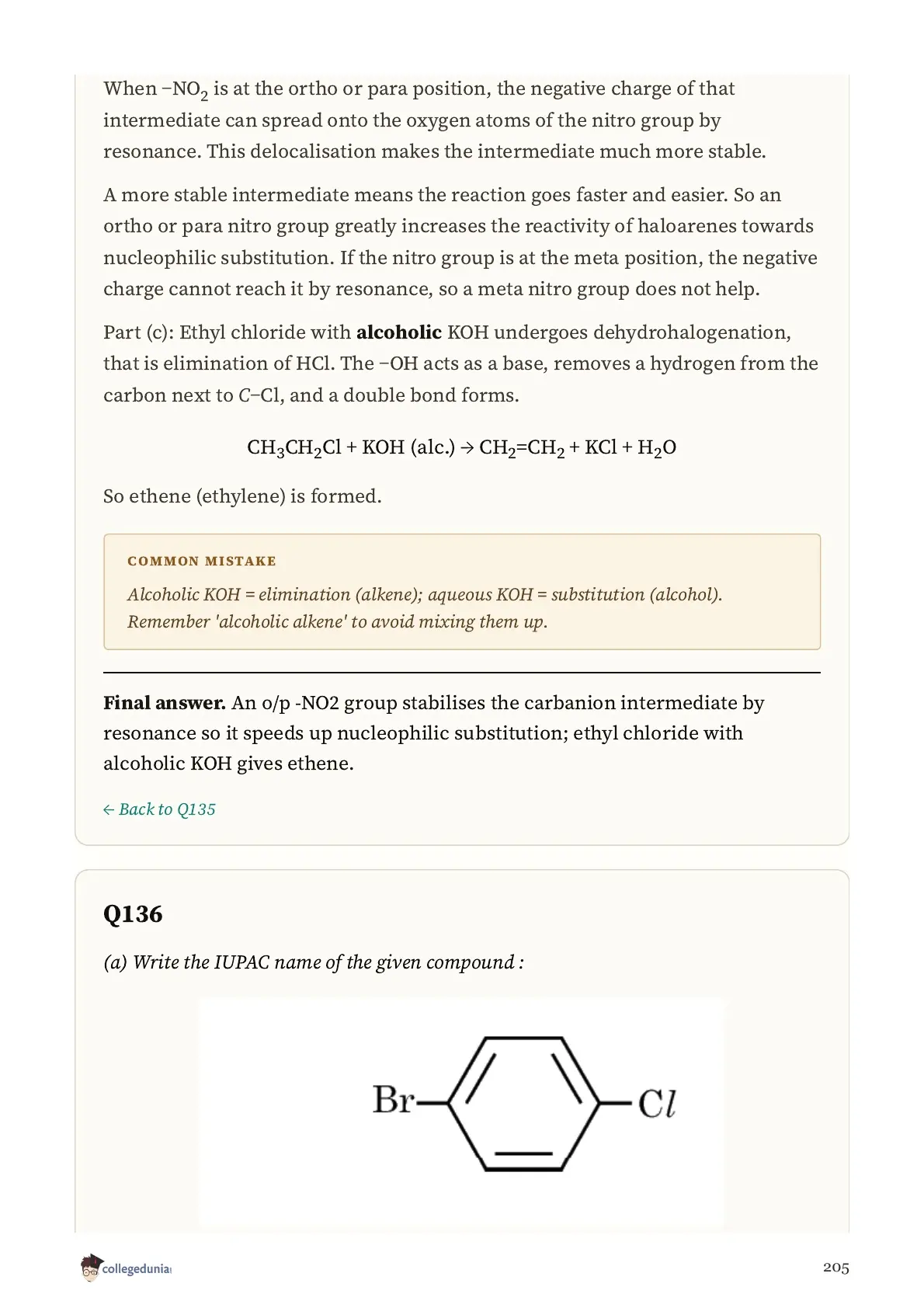
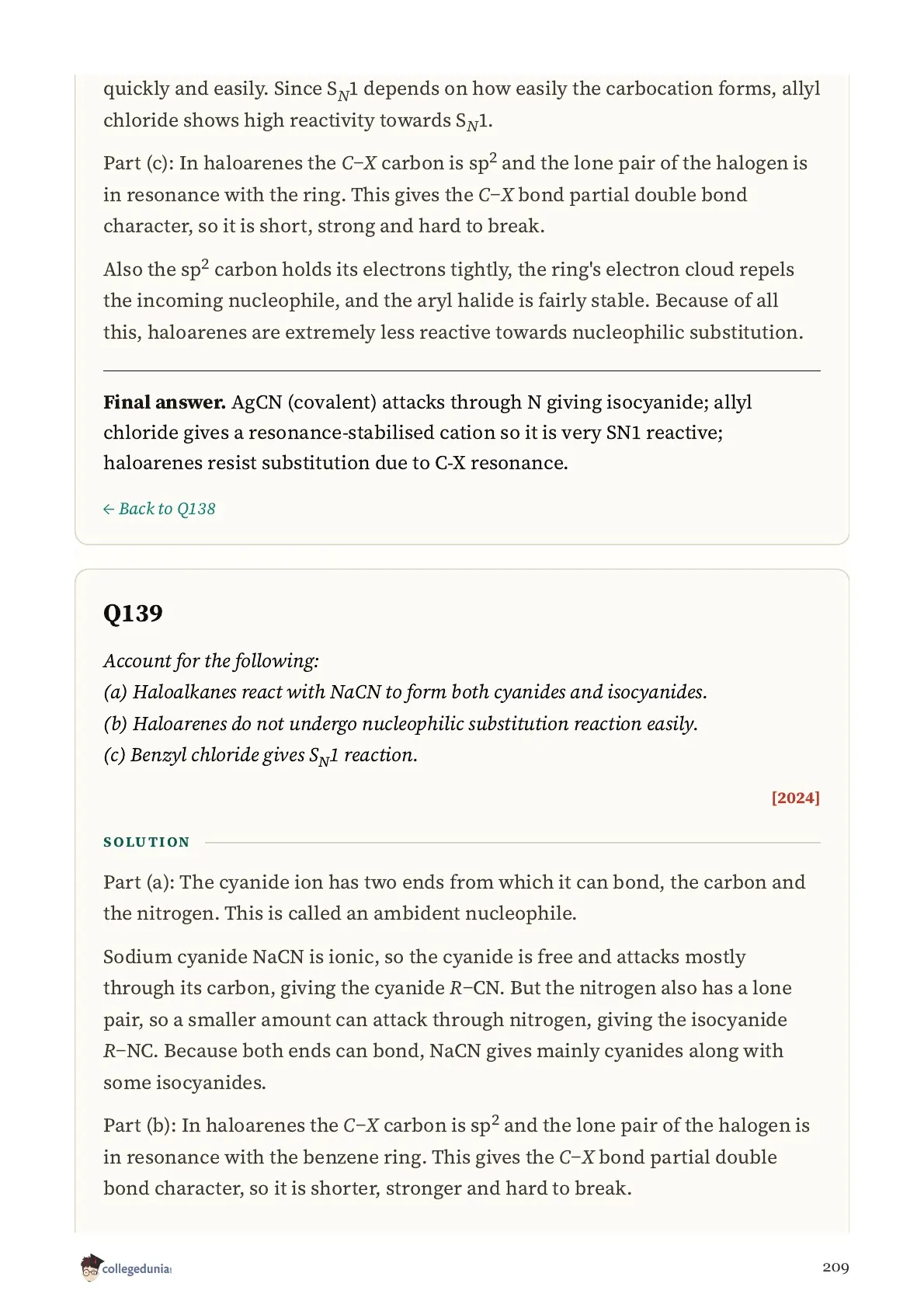
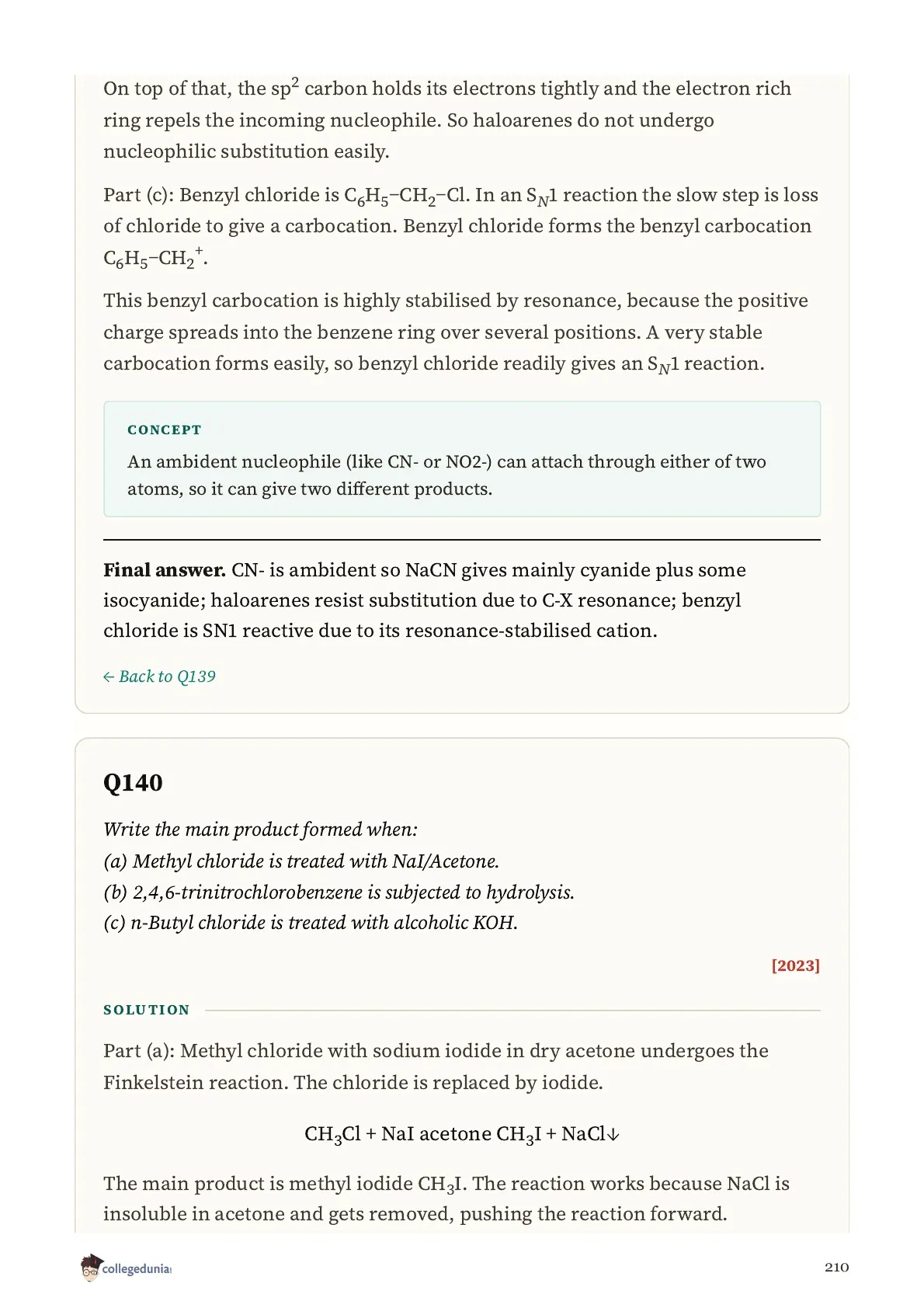
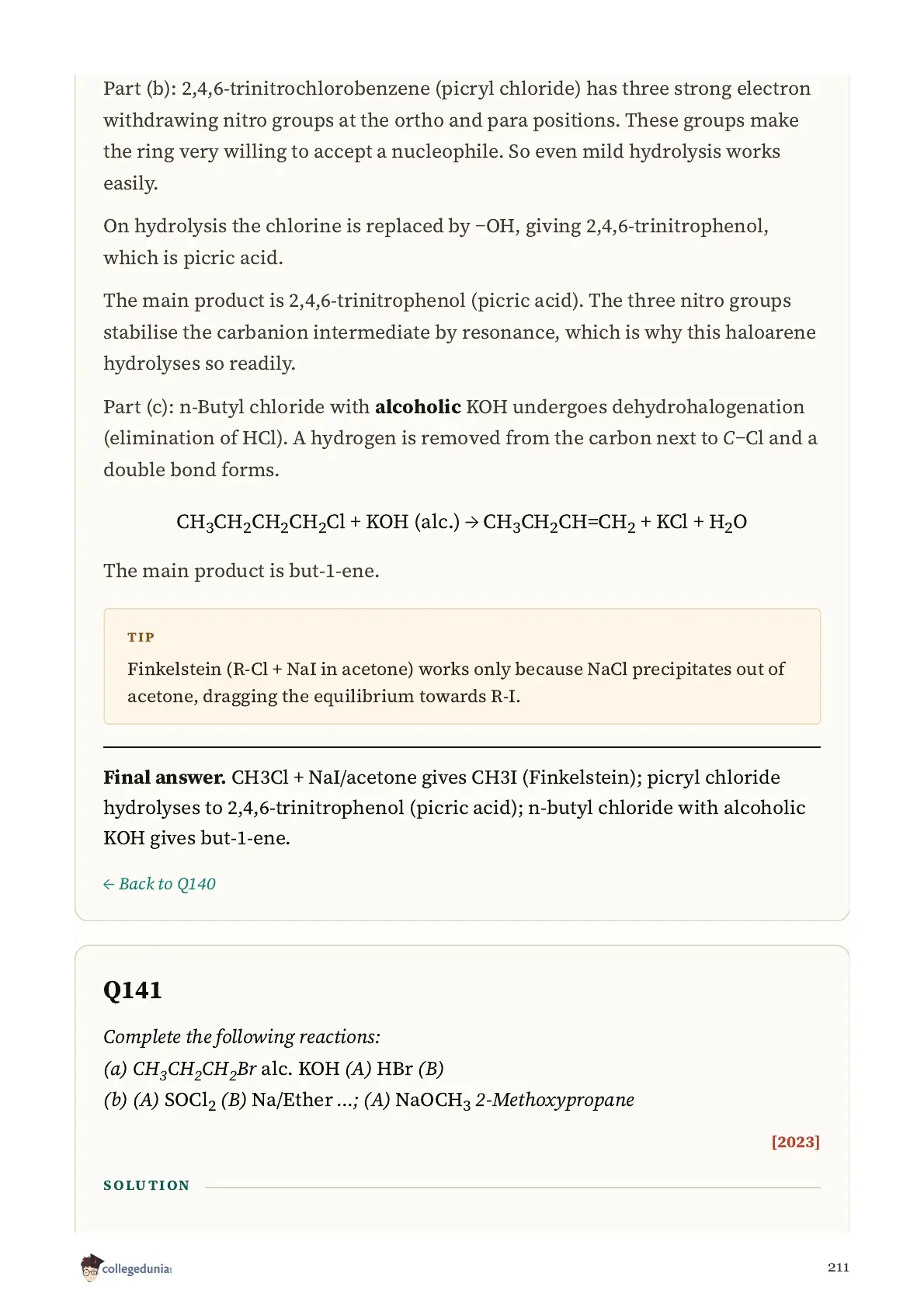
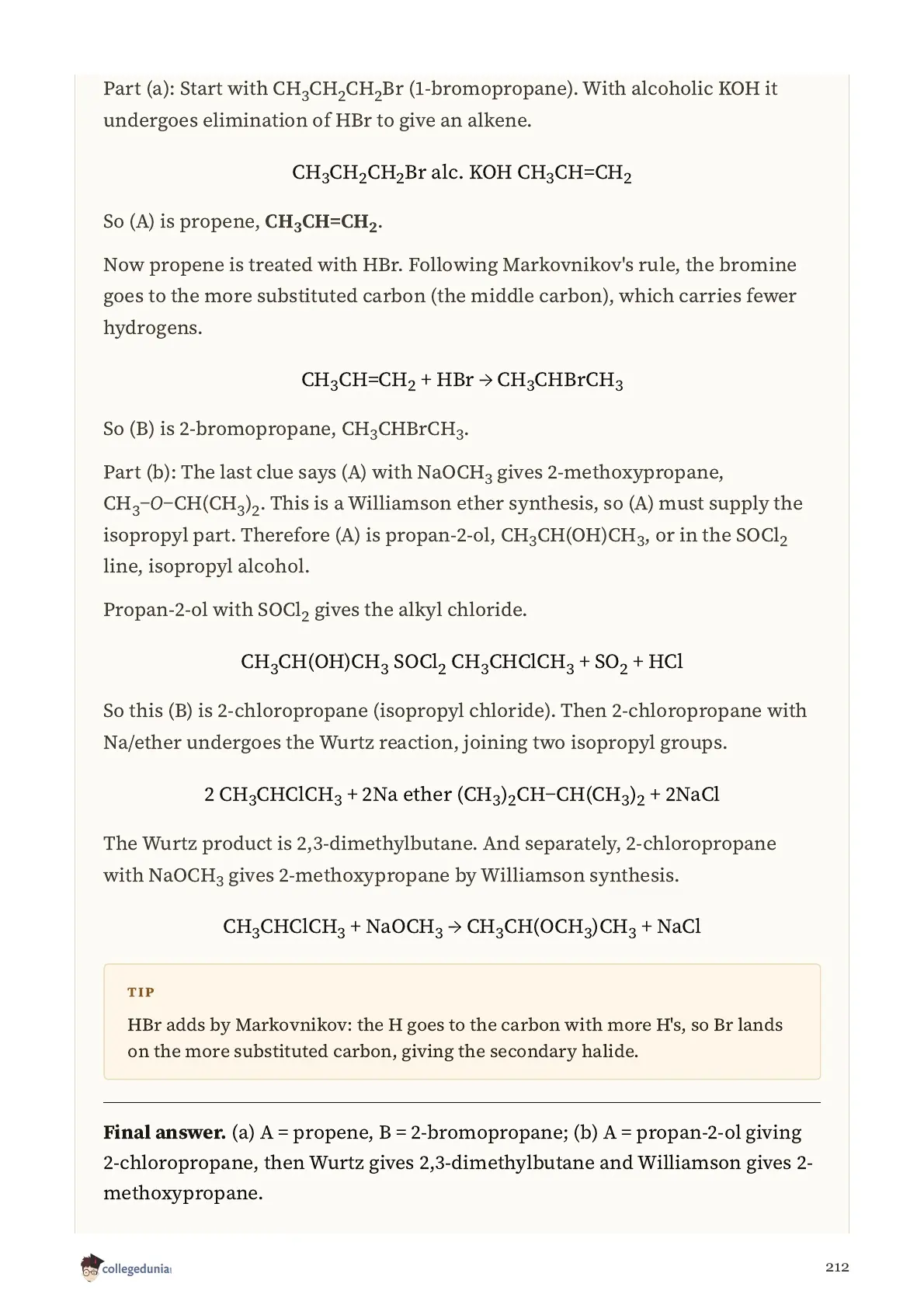
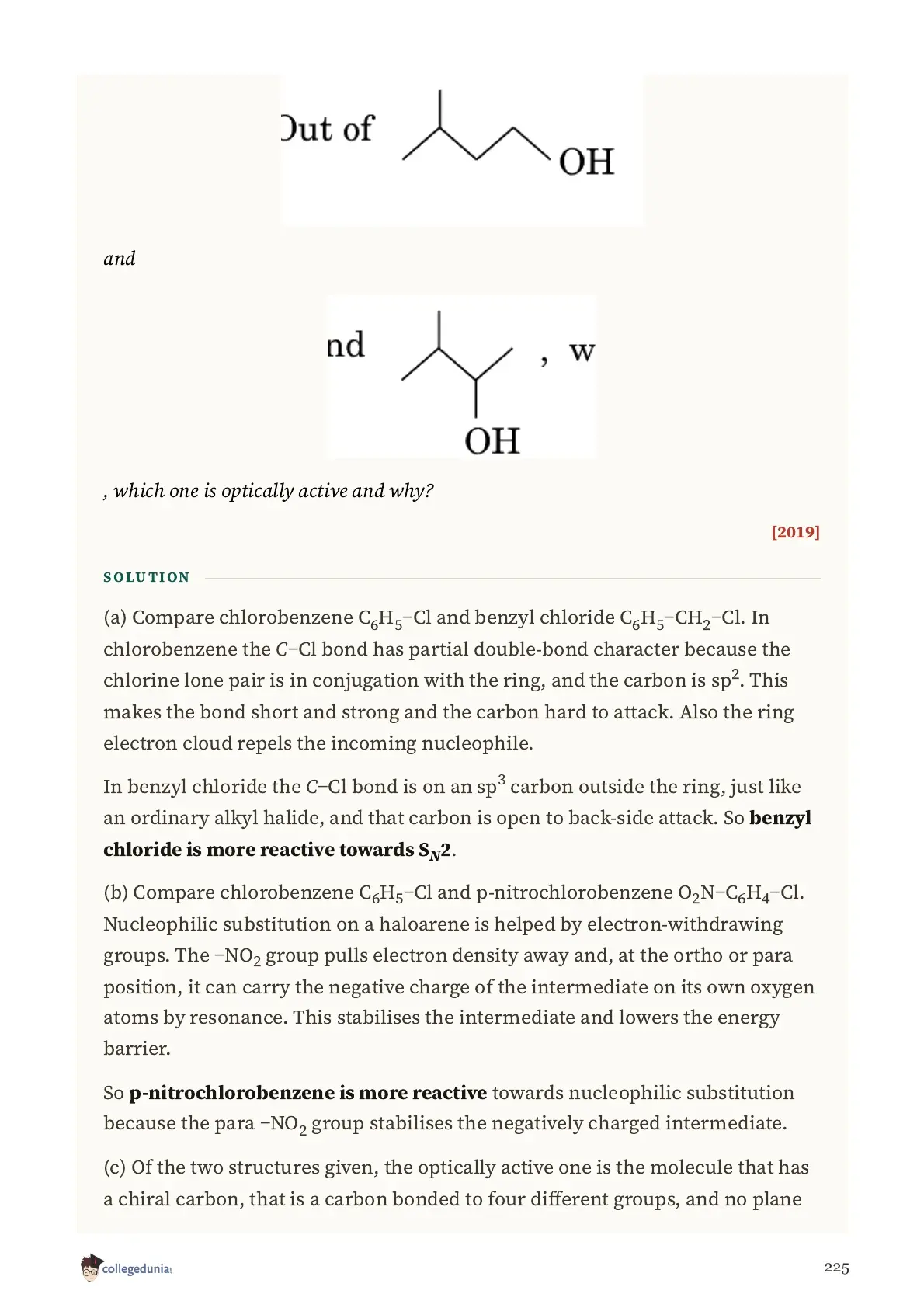
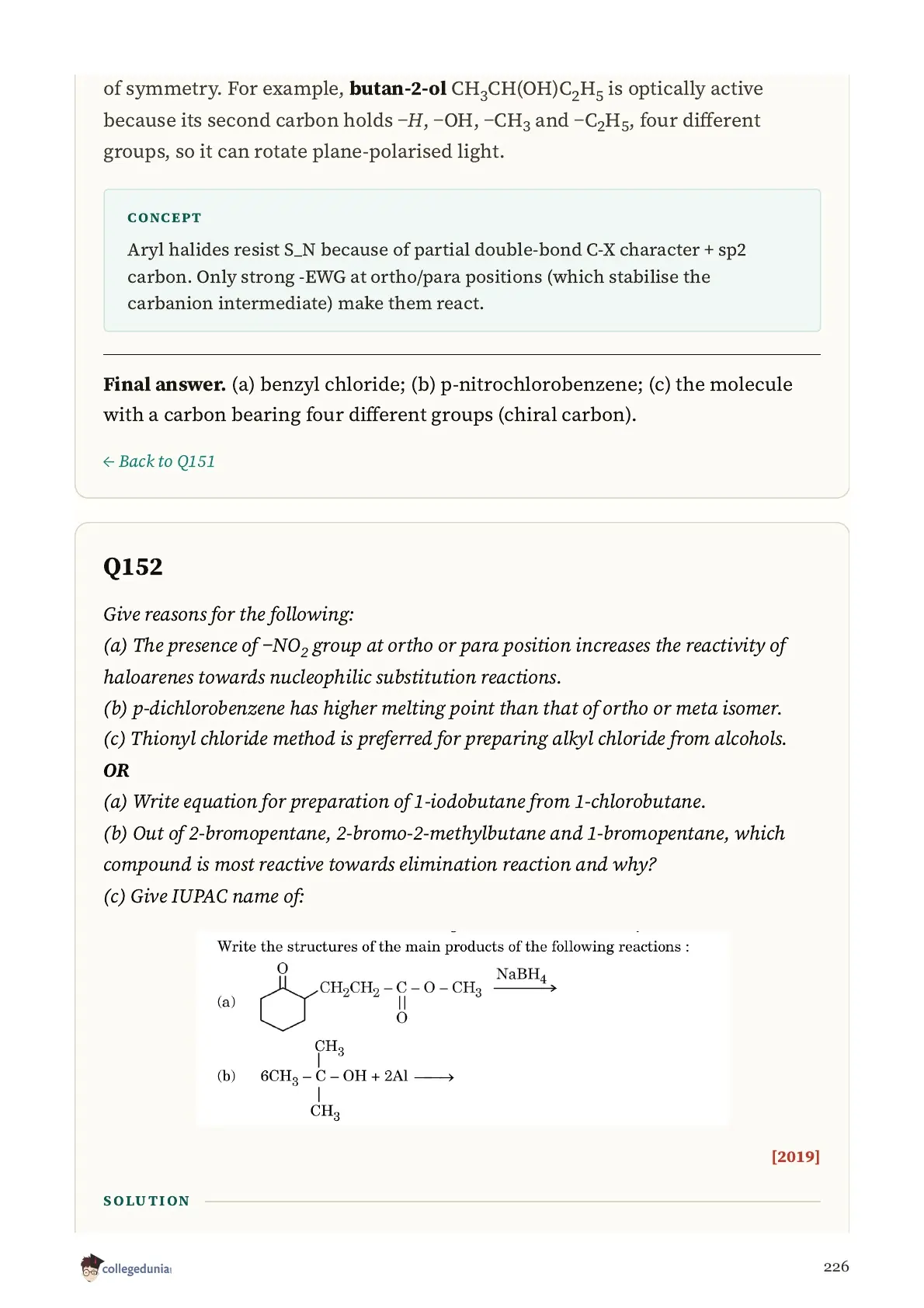
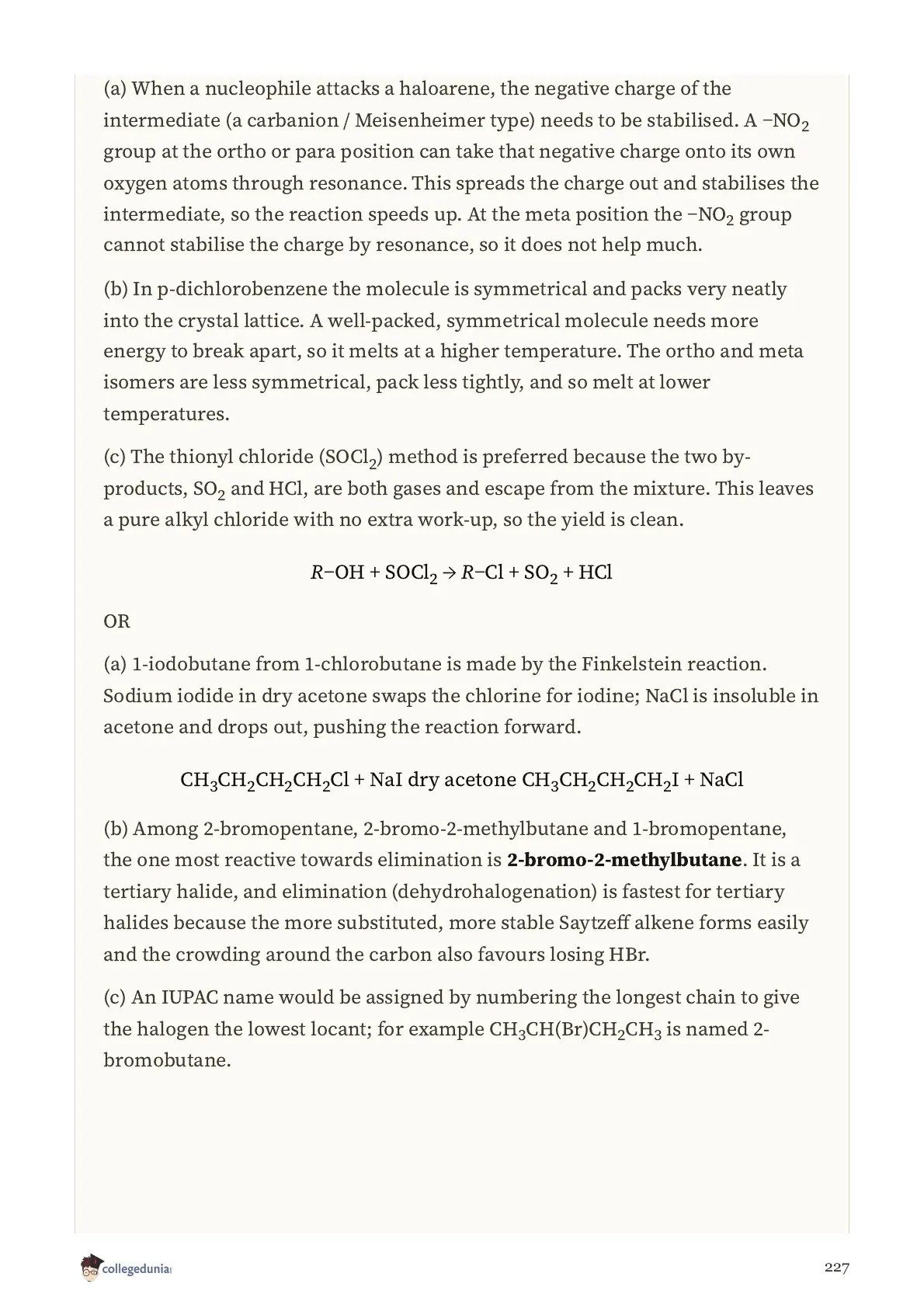
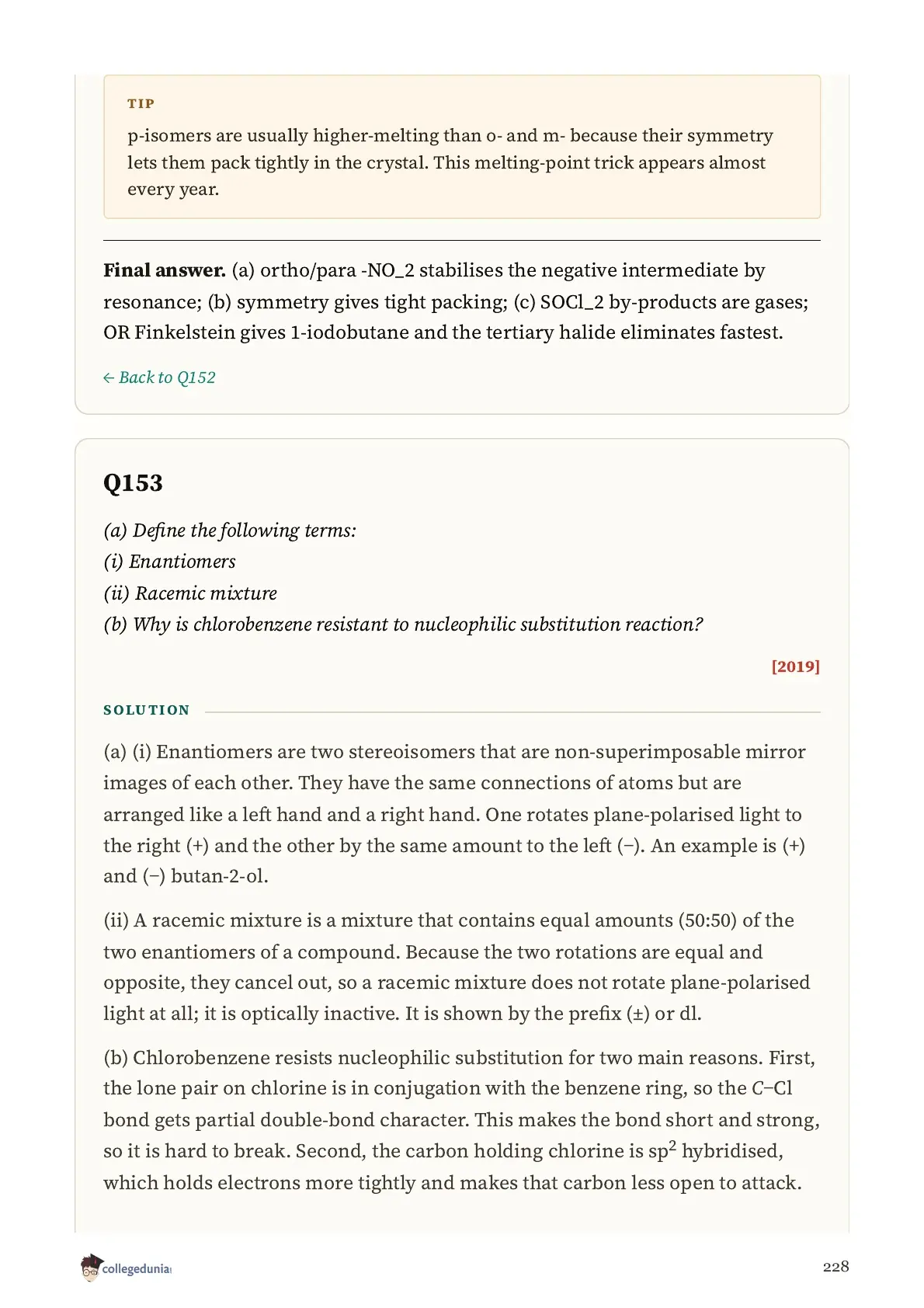
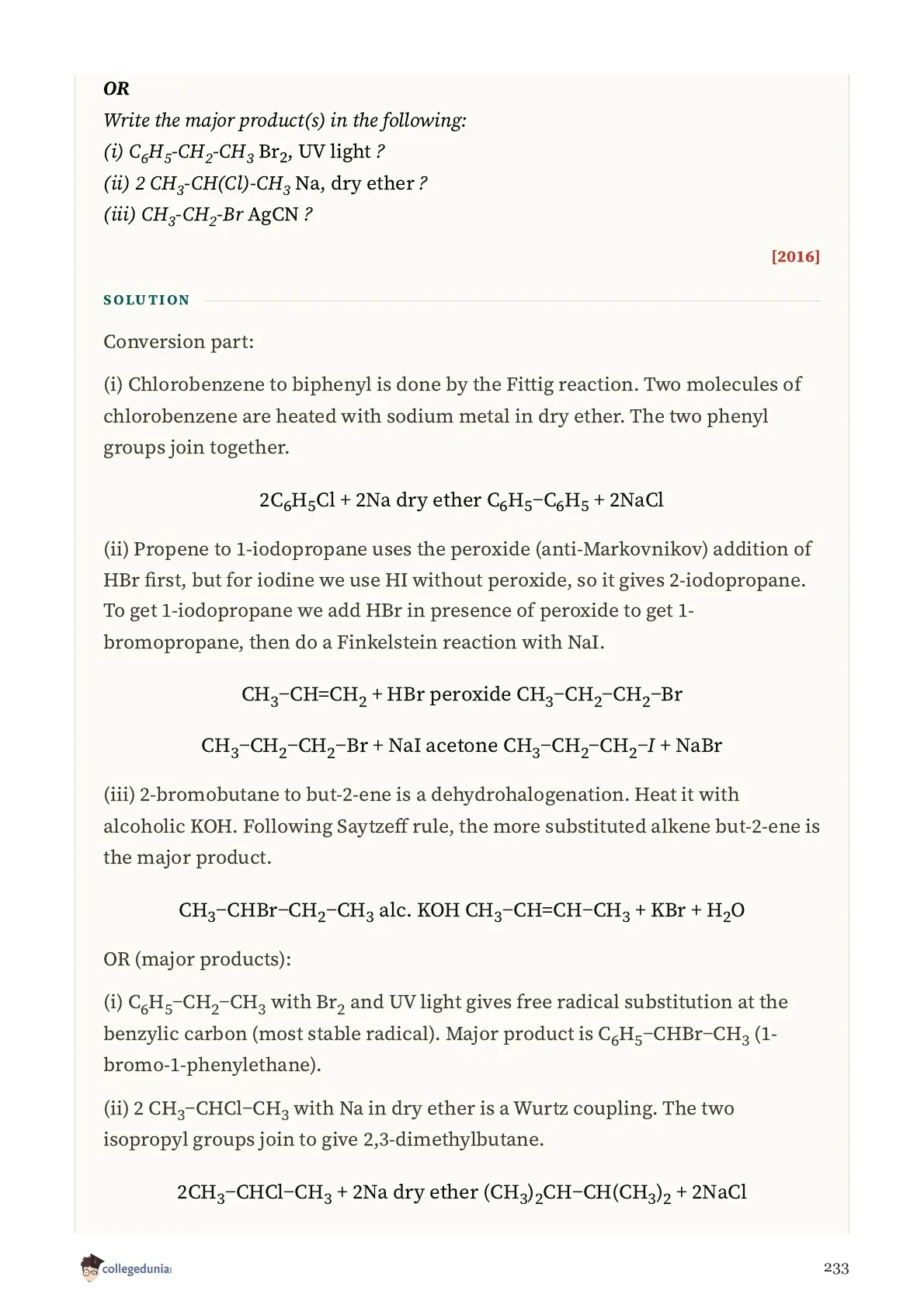
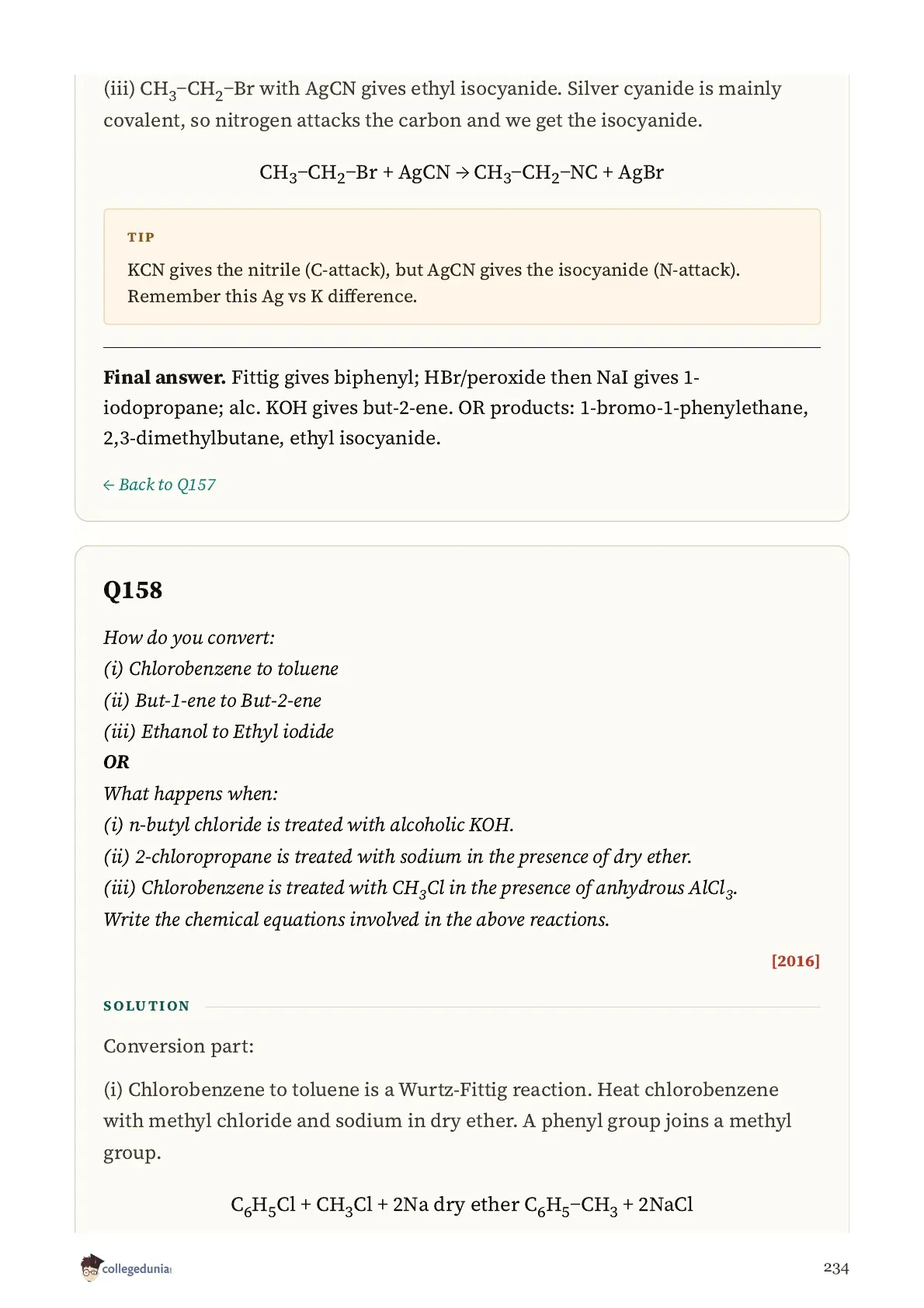
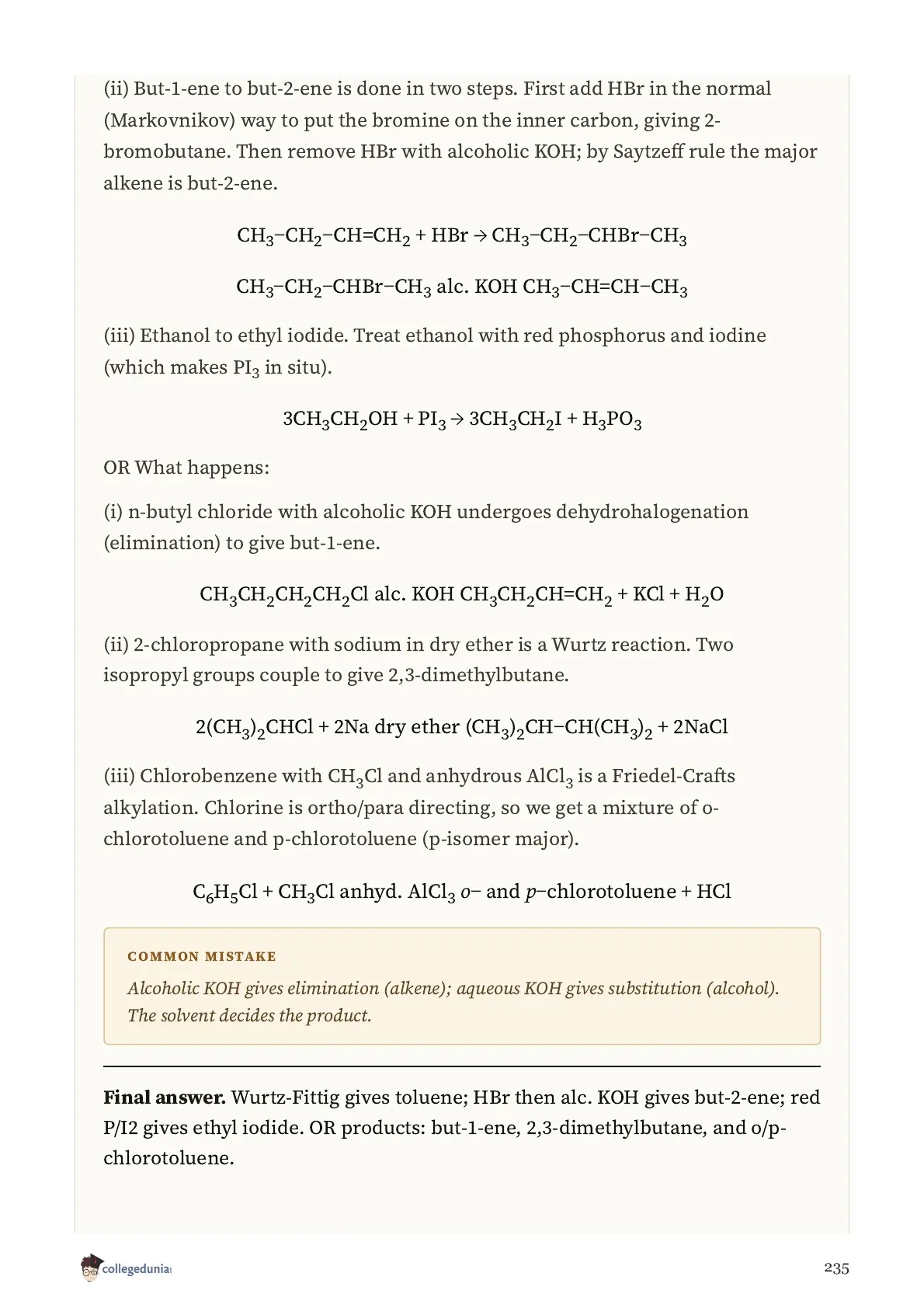
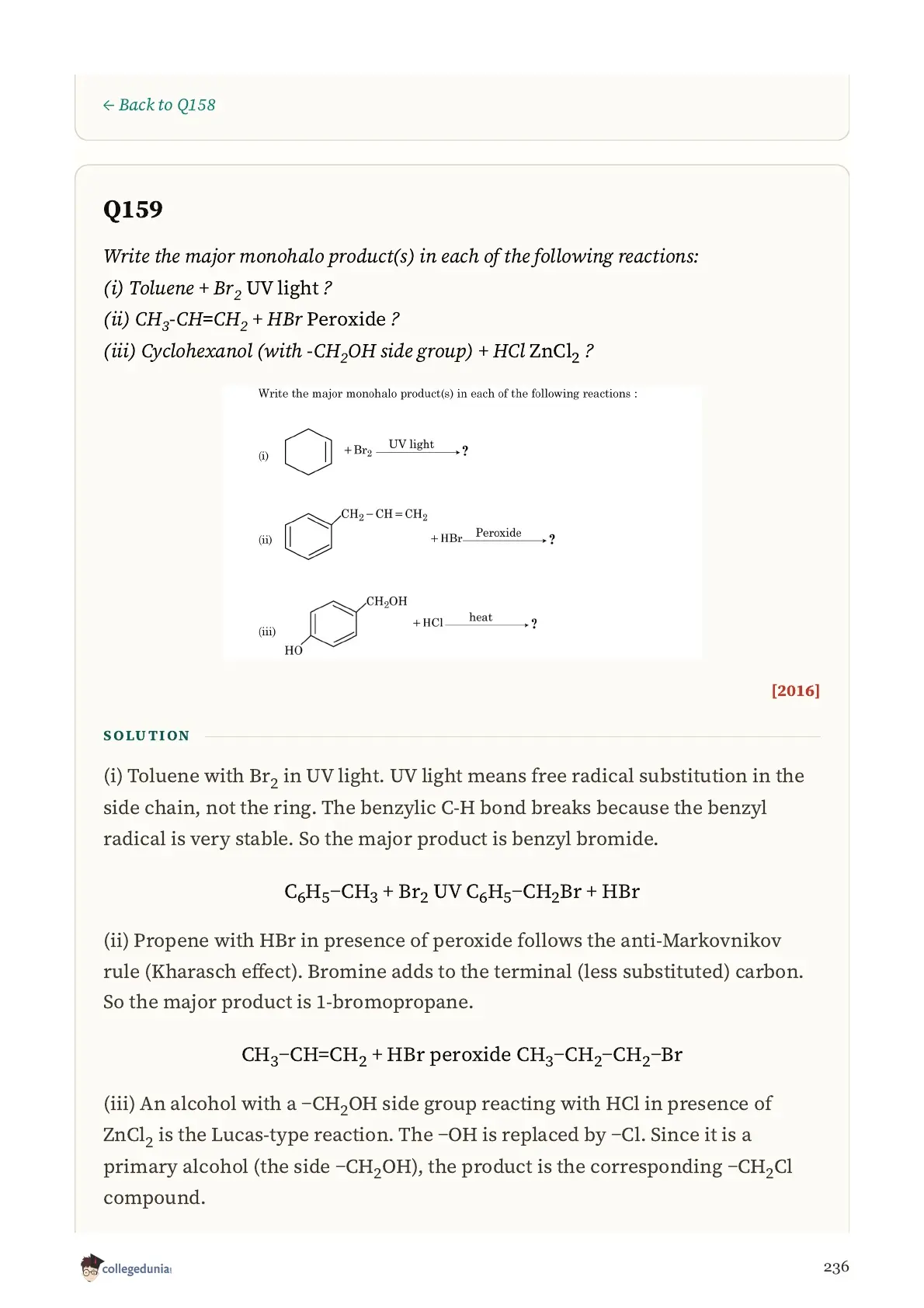
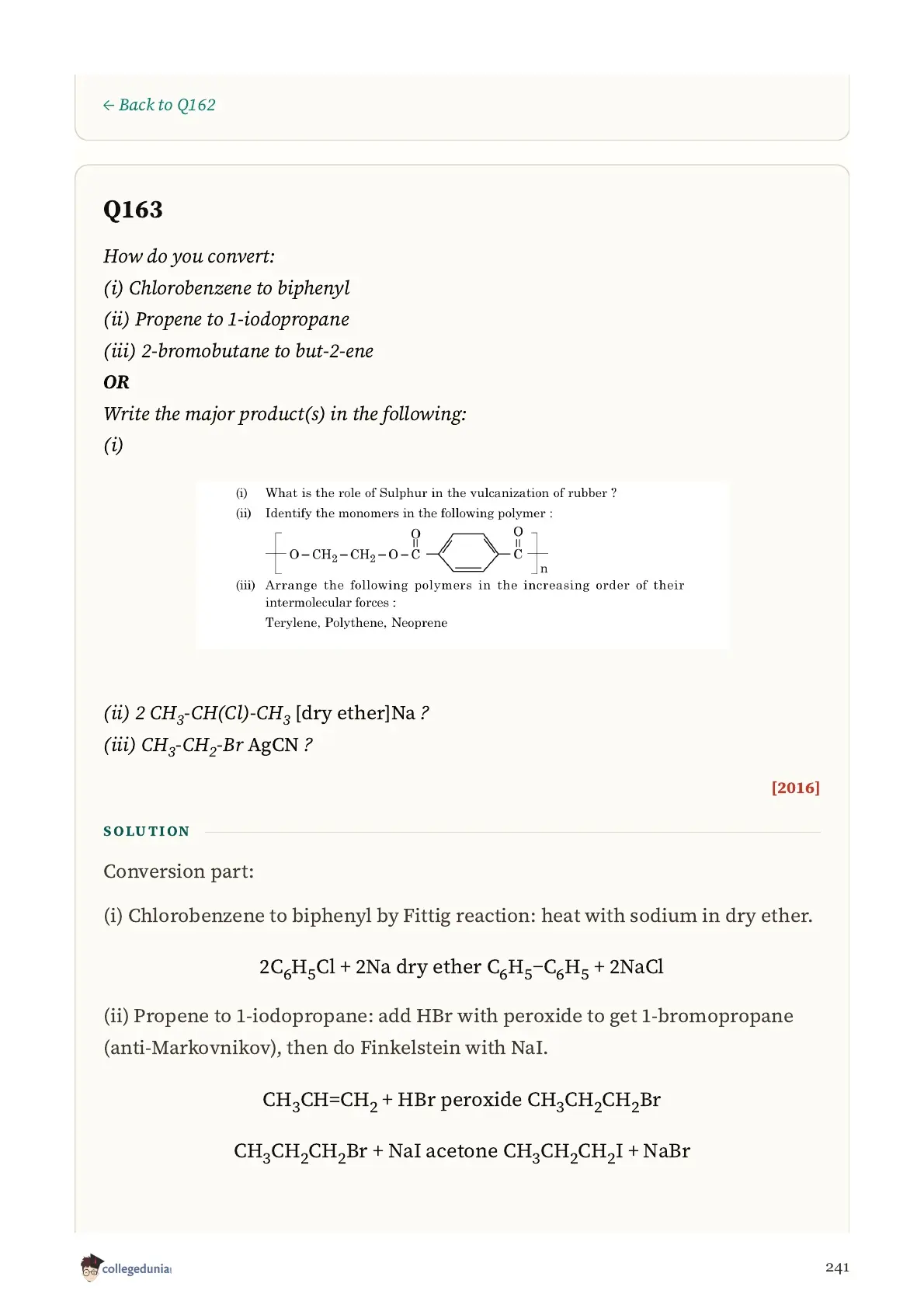
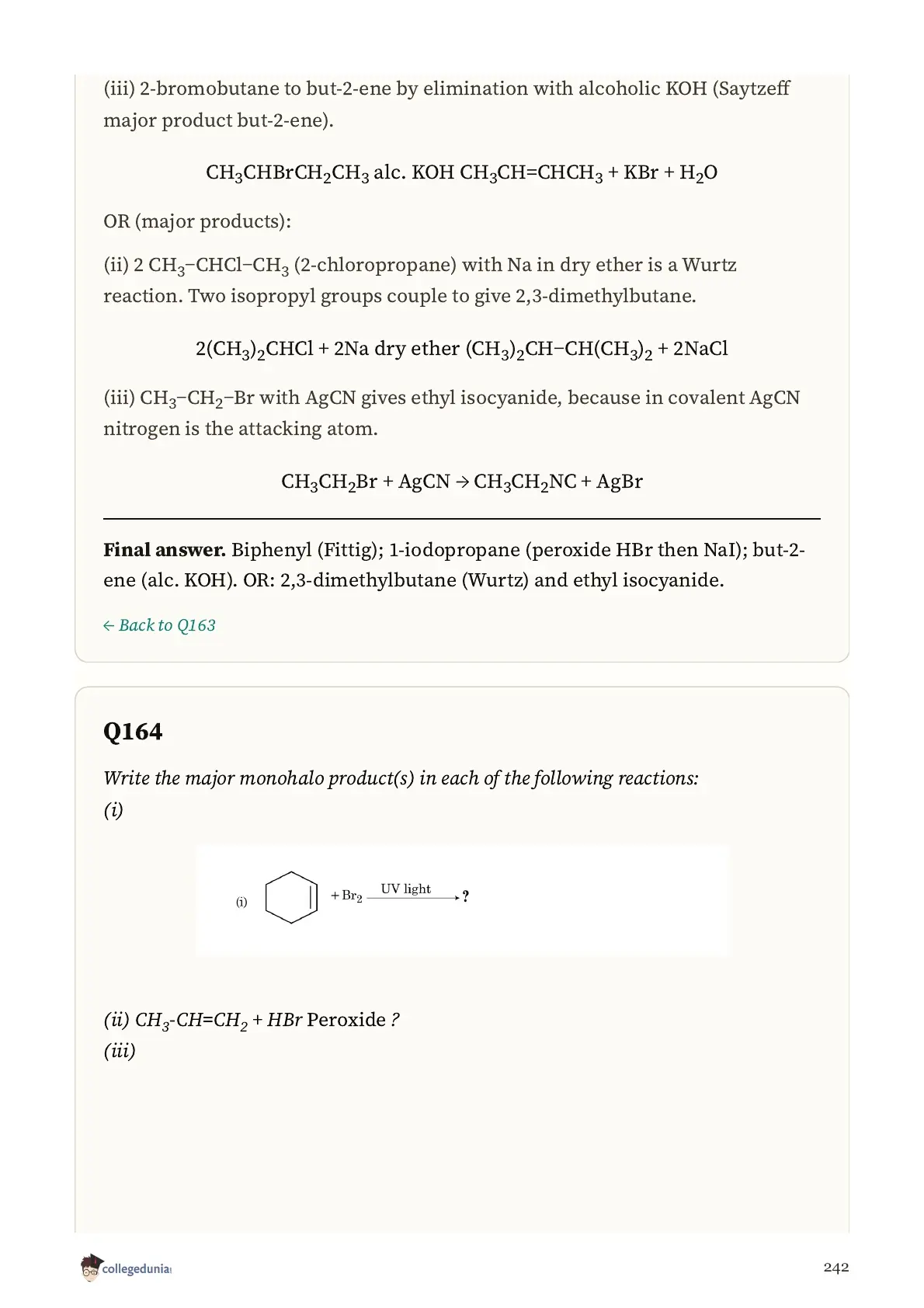
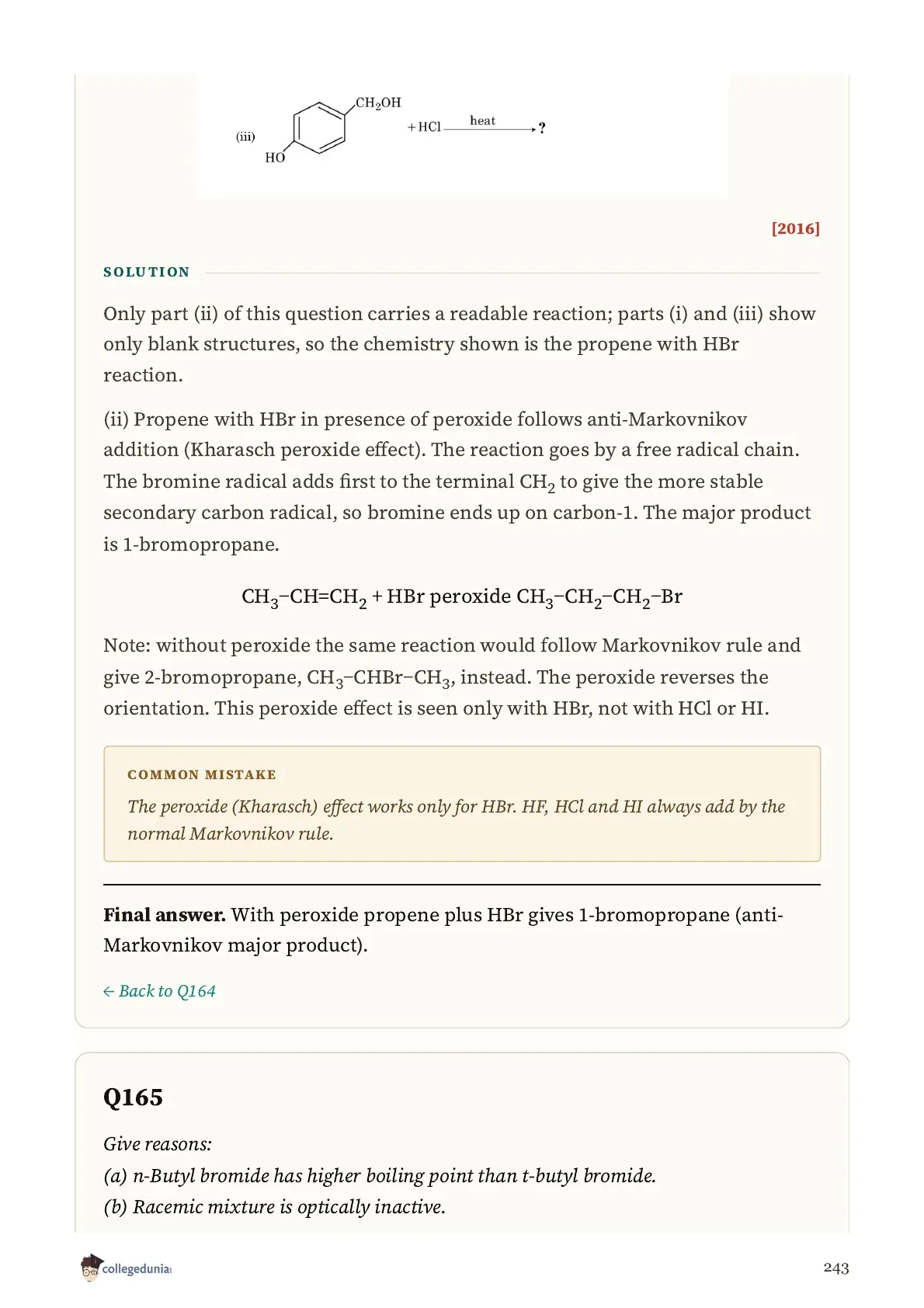
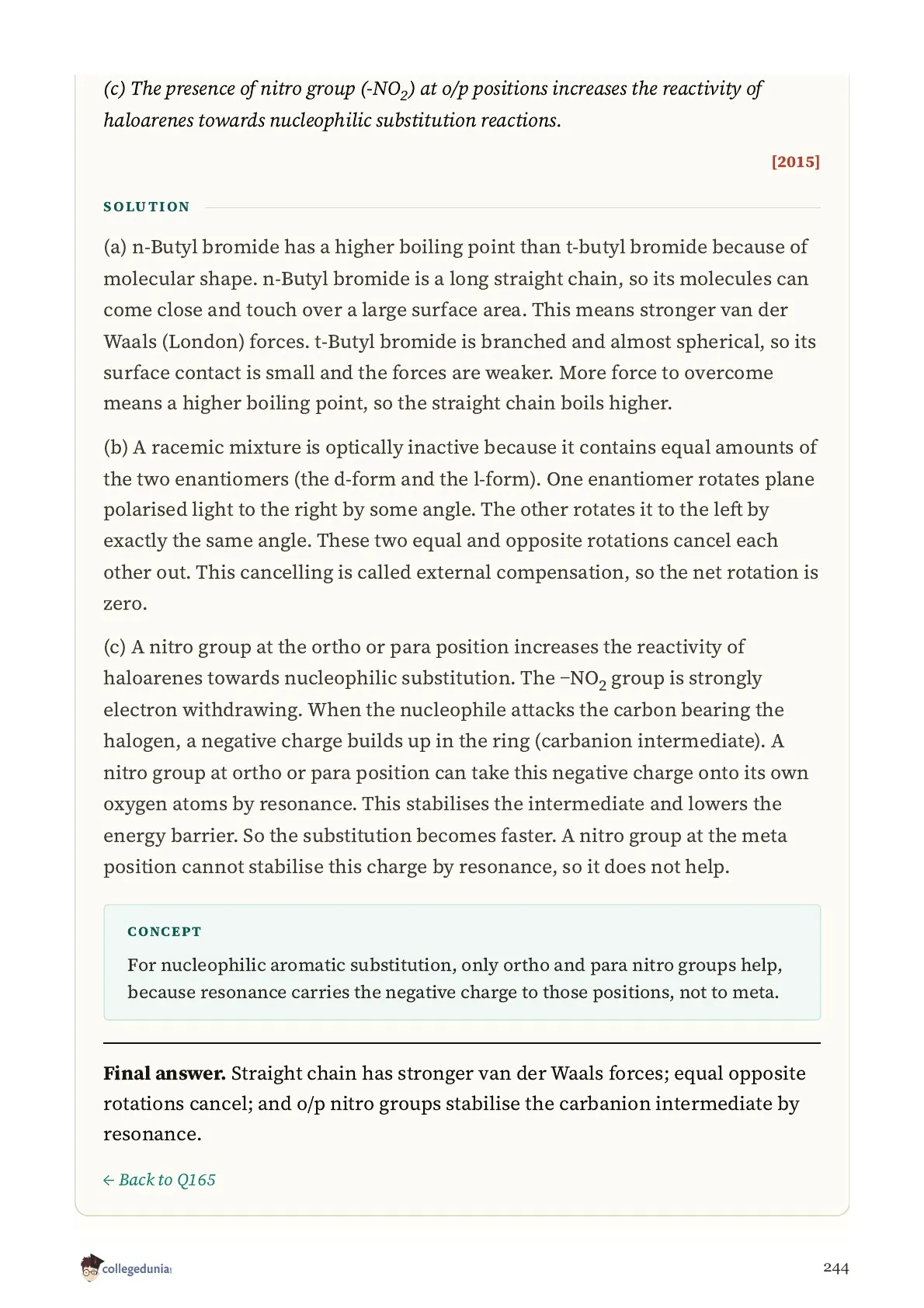
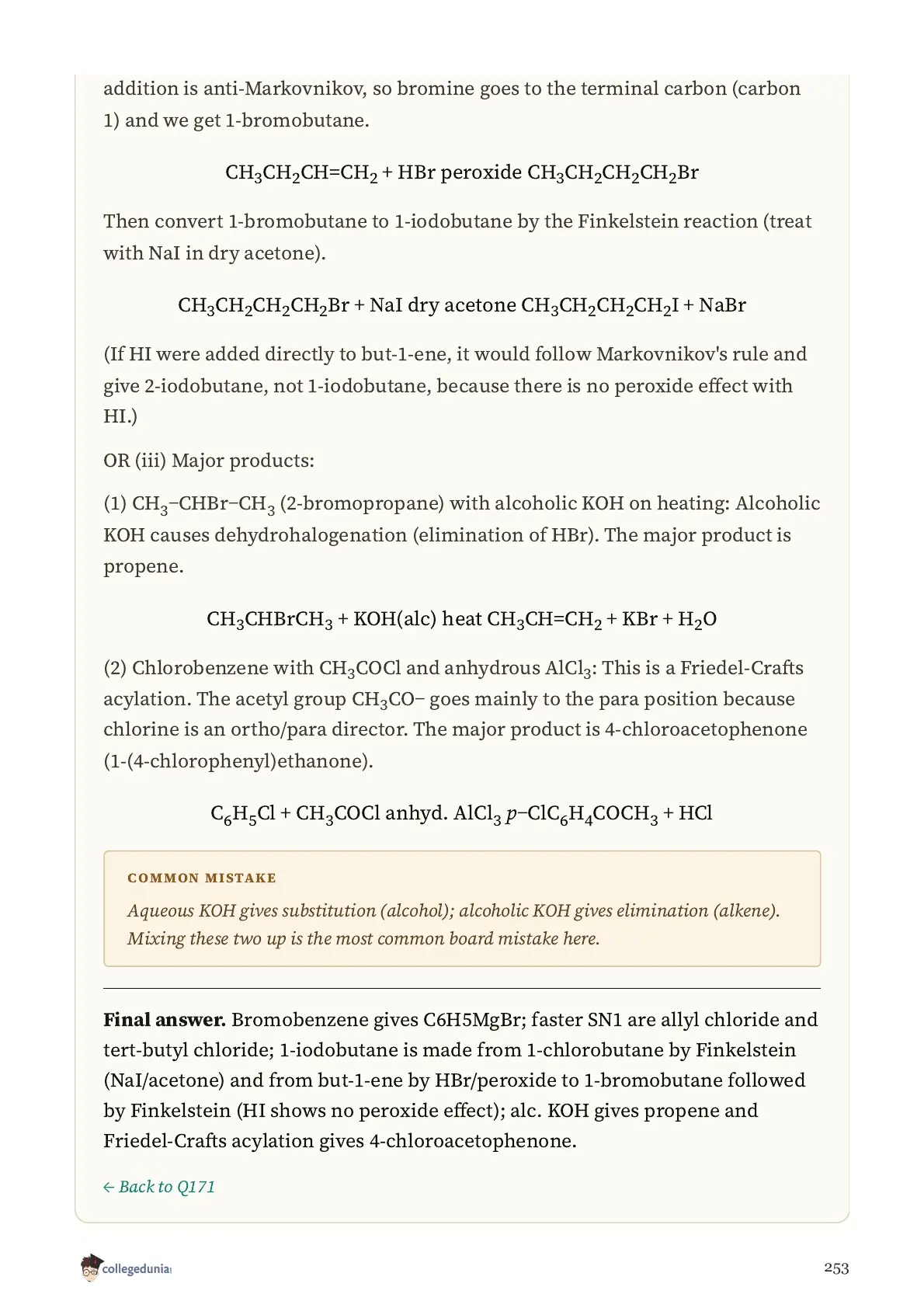
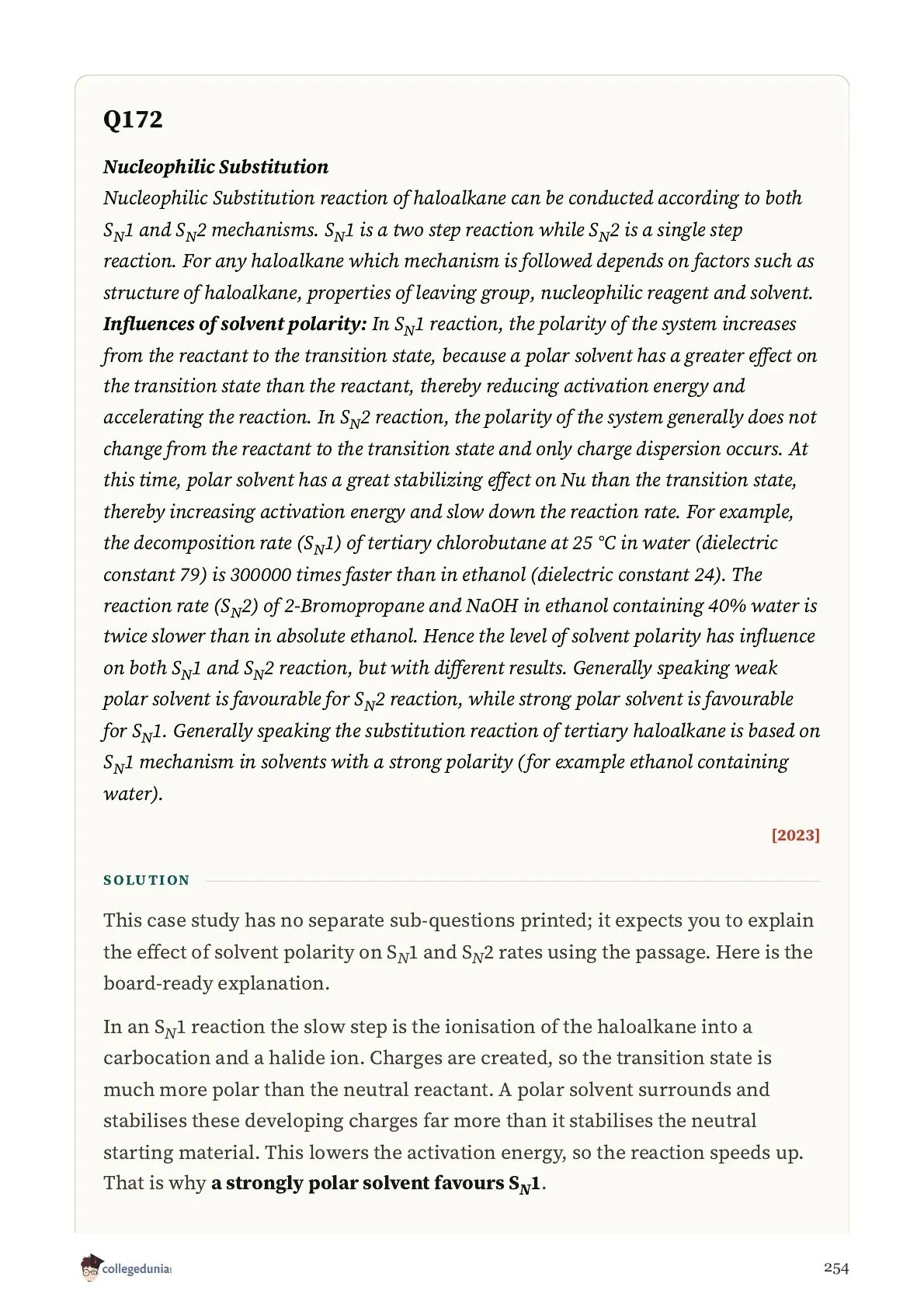
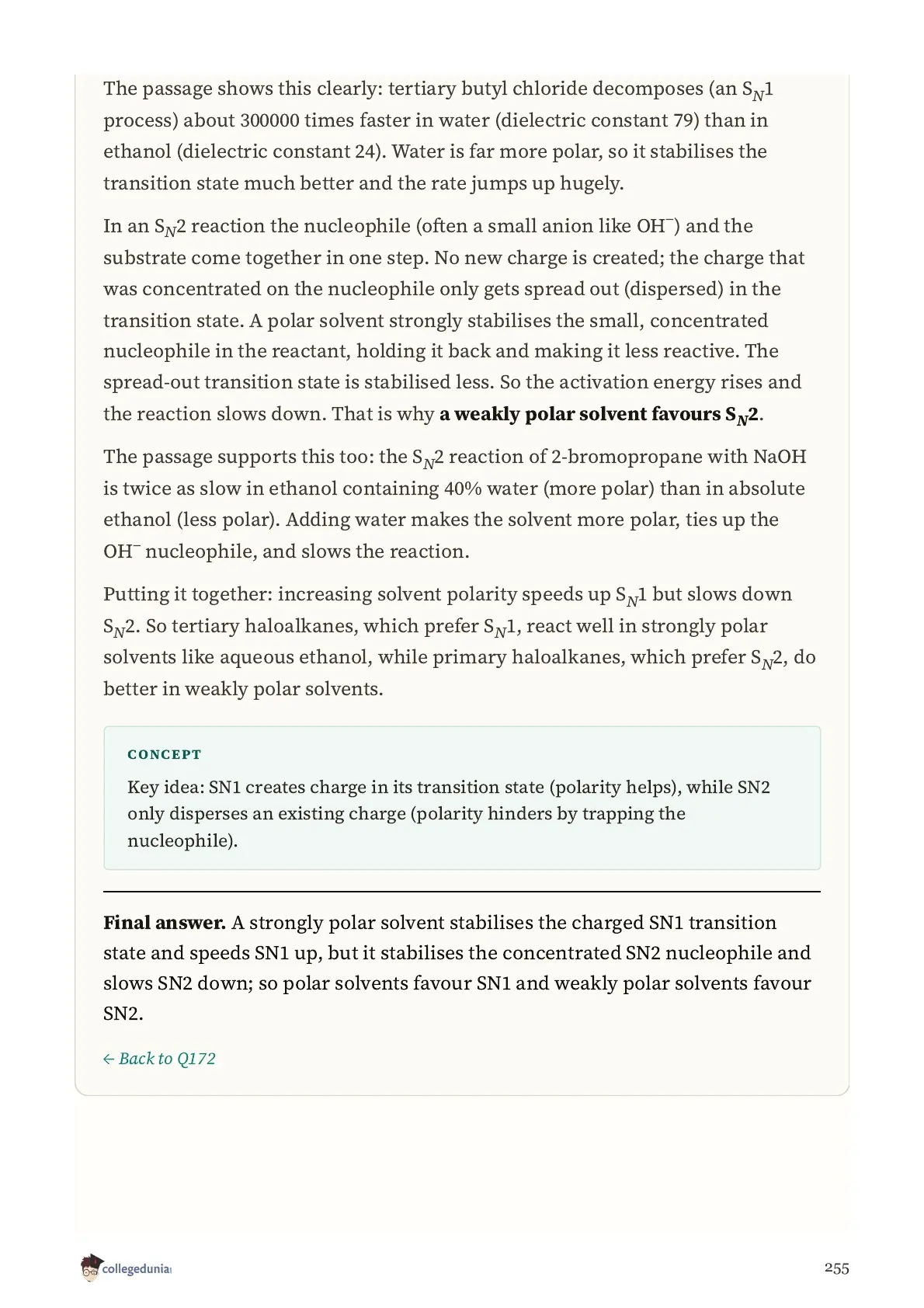
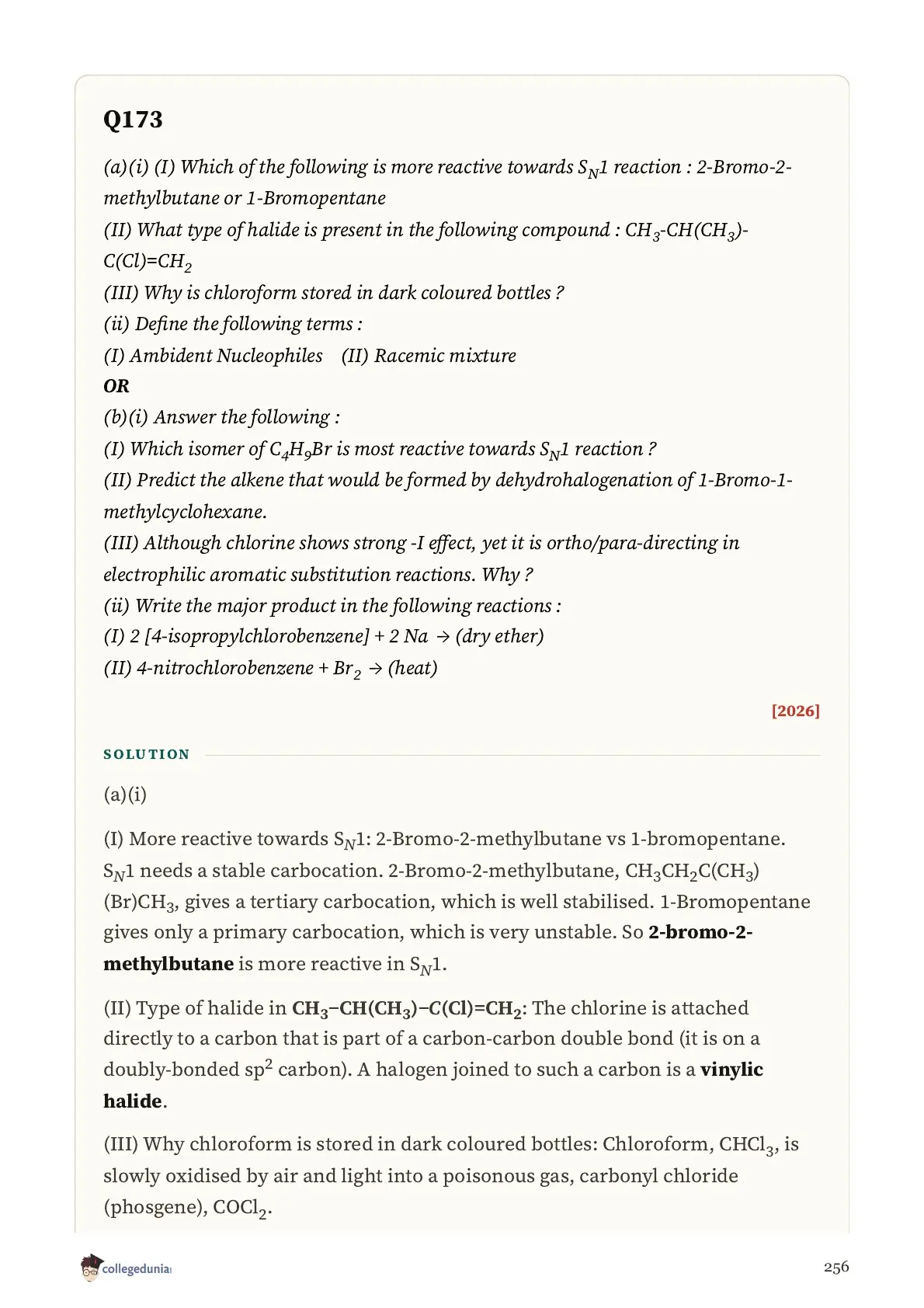
- 1-mark questions: 78 questions, mostly MCQ and assertion-reason on IUPAC names, chirality and reactivity order.
- 2 and 3-mark questions: 37 and 51 questions, built around conversions, named reactions and reasoning on physical properties.
- 3-mark questions: the largest single block, where most conversion and mechanism answers live.
The Haloalkanes and Haloarenes PYQ set gathers 169 board-paper questions across 2003 to 2026, sorted by marks and then by year. Most of the weightage falls in the 1 and 3-mark bands, framed by the SN1 versus SN2 mechanism map.
Every question in this Class 12 Chemistry Haloalkanes and Haloarenes PYQ compilation is sourced from CBSE board papers (Delhi, Outside Delhi, Foreign and Compartment) and cross-checked against the official mark scheme, with near-duplicate questions removed.
What the Haloalkanes and Haloarenes Previous Year Questions Cover
The 169-question set maps every concept the NCERT chapter introduces. Optical isomerism and chirality drive a steady share of the 1 and 2-mark items. Conversions and named reactions such as Wurtz, Sandmeyer and Finkelstein carry the bulk of the 3-mark band. SN1 and SN2 mechanisms and reactivity order appear across the 1 and 3-mark band, while reasoning on boiling point, the higher melting point of para-dichlorobenzene and the low reactivity of haloarenes fills many MCQs.
Marks-wise Distribution of the Haloalkanes and Haloarenes PYQs
The table below shows how the 169 questions split across the CBSE marks bands. Use it to decide how much revision time each band deserves.
| Marks | Questions | Total Marks | CBSE Section | Type |
|---|---|---|---|---|
| 1 mark | 78 | 78 | Section A | MCQ / Assertion-Reason |
| 2 mark | 37 | 74 | Section B | VSA (Very Short Answer) |
| 3 mark | 51 | 153 | Section C | SA (Short Answer) |
| 4 mark | 2 | 8 | Section D | Case Study |
| 5 mark | 1 | 5 | Section E | Long Answer |
Year-wise Spread of Class 12 Chemistry Haloalkanes and Haloarenes PYQs
The compilation draws from 22 CBSE board years. About 60 per cent of the questions come from 2023 onwards, because the Section A objective block raised the 1-mark count.
- 2026: A structure-drawing and aqueous-KOH reaction question, a Br2 product plus racemic mixture and para-dichlorobenzene reasoning set, and a reactivity-order MCQ for nitro-substituted chlorobenzenes.
- 2024 to 2025: The largest contribution years, with MCQ banks on IUPAC naming, chirality and reactivity order.
- 2020 to 2023: Reduced-syllabus papers, but conversions and SN1 versus SN2 reasoning still appear.
- 2003 to 2019: Older long answers on named reactions, optical isomerism and the low reactivity of haloarenes, all still relevant today.
Topic Frequency in the Haloalkanes and Haloarenes Board Paper Questions
The 169 questions cluster into the six topic buckets below, ranked by how often CBSE has set them between 2003 and 2026.
| Rank | Topic Cluster | Frequency | Typical Marks Band |
|---|---|---|---|
| 1 | Conversions and named reactions (Wurtz, Sandmeyer, Finkelstein, Swarts) | ~24 per cent | 2 and 3 mark |
| 2 | Optical isomerism and chirality (chiral centres, enantiomers, R/S notation) | ~20 per cent | 1, 2, 3 mark |
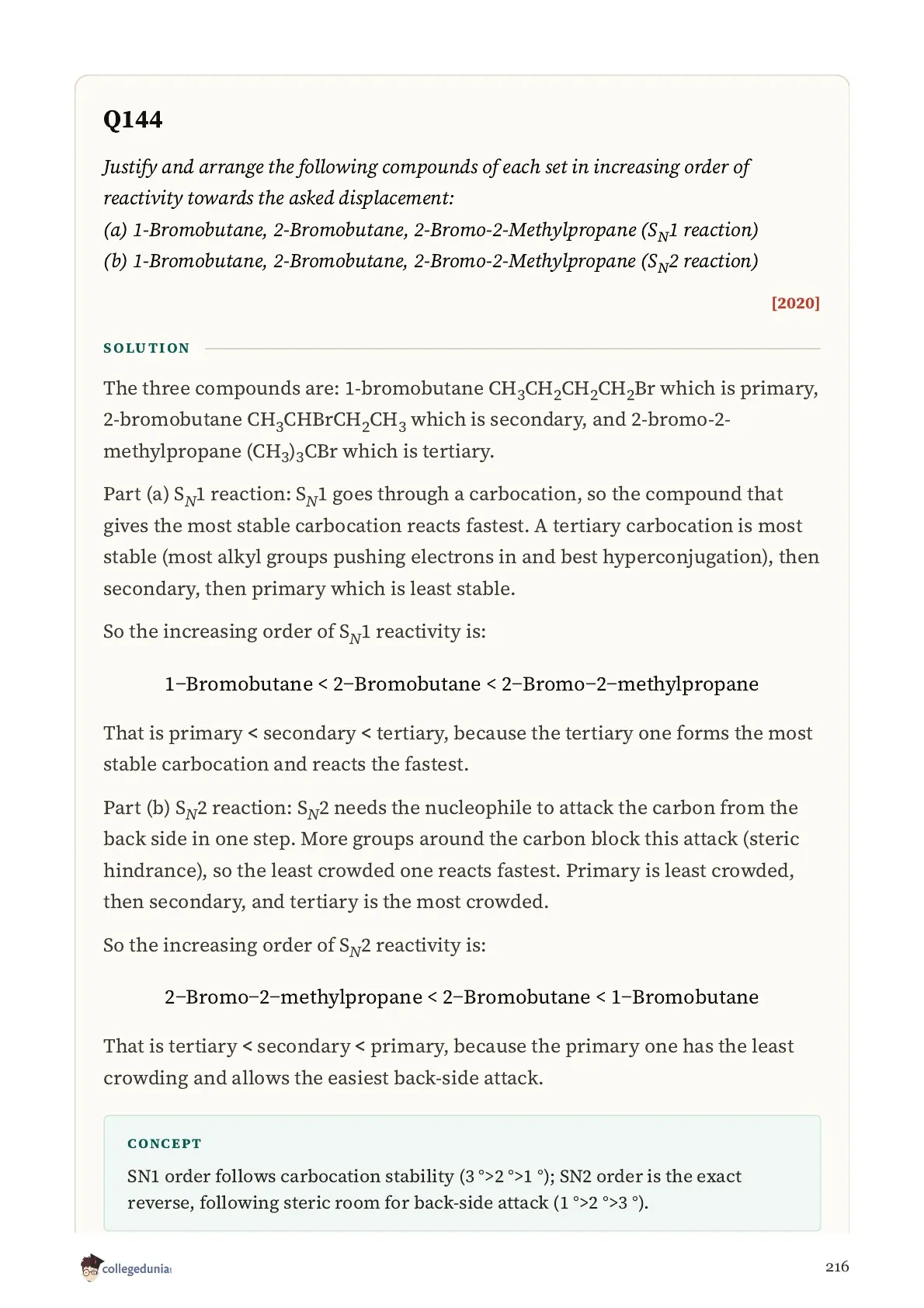
| 3 | Nucleophilic substitution (SN1 and SN2 mechanism, order of reactivity) | ~18 per cent | 1, 3 mark |
| 4 | IUPAC nomenclature and structure (naming, drawing haloalkanes and haloarenes) | ~15 per cent | 1 and 2 mark |
| 5 | Physical properties and reasoning (boiling point, para-isomer melting point) | ~13 per cent | 1 and 2 mark |
| 6 | Reactivity of haloarenes (low SN reactivity, effect of nitro groups) | ~10 per cent | 1 and 3 mark |
Marks-Band Attempt Strategy for the Haloalkanes and Haloarenes PYQs
The 169 PYQs are arranged marks-ascending inside the PDF so you can attempt them in the same order the CBSE paper presents them.
- 1-mark MCQs: Spend no more than 45 seconds each. Many test the reactivity order or the number of chiral centres.
- 2-mark questions: A short conversion or a structure plus one reaction. Aim for 3 minutes.
- 3-mark questions: Usually a multi-step conversion or a reasoning set. Always write the reagent above the arrow in every conversion.
- 5-mark long answers: Rare in recent papers for this chapter, but when set they combine conversions with a mechanism. Allocate 12 minutes.
Recent CBSE Trend: 2024 to 2026 Pattern Shift in Haloalkanes and Haloarenes
Three things have changed in the recent CBSE cycles that the Haloalkanes and Haloarenes previous year questions now reflect:
- Section A now carries a fixed block of 1-mark MCQ and assertion-reason items. The compilation includes 78 such questions, most from 2023 onwards.
- Reactivity-order MCQs are common, as in the 2026 question on the increasing ease of nucleophilic substitution for nitro-substituted chlorobenzenes.
- 3-mark questions now bundle a conversion, a definition and a reasoning part together, as in the 2026 set on racemic mixture and para-dichlorobenzene.
Sample Previous Year Questions from Haloalkanes and Haloarenes
Here are a few real previous year questions from the Haloalkanes and Haloarenes board papers, taken straight from the compilation. The full set is in the downloadable PDF.
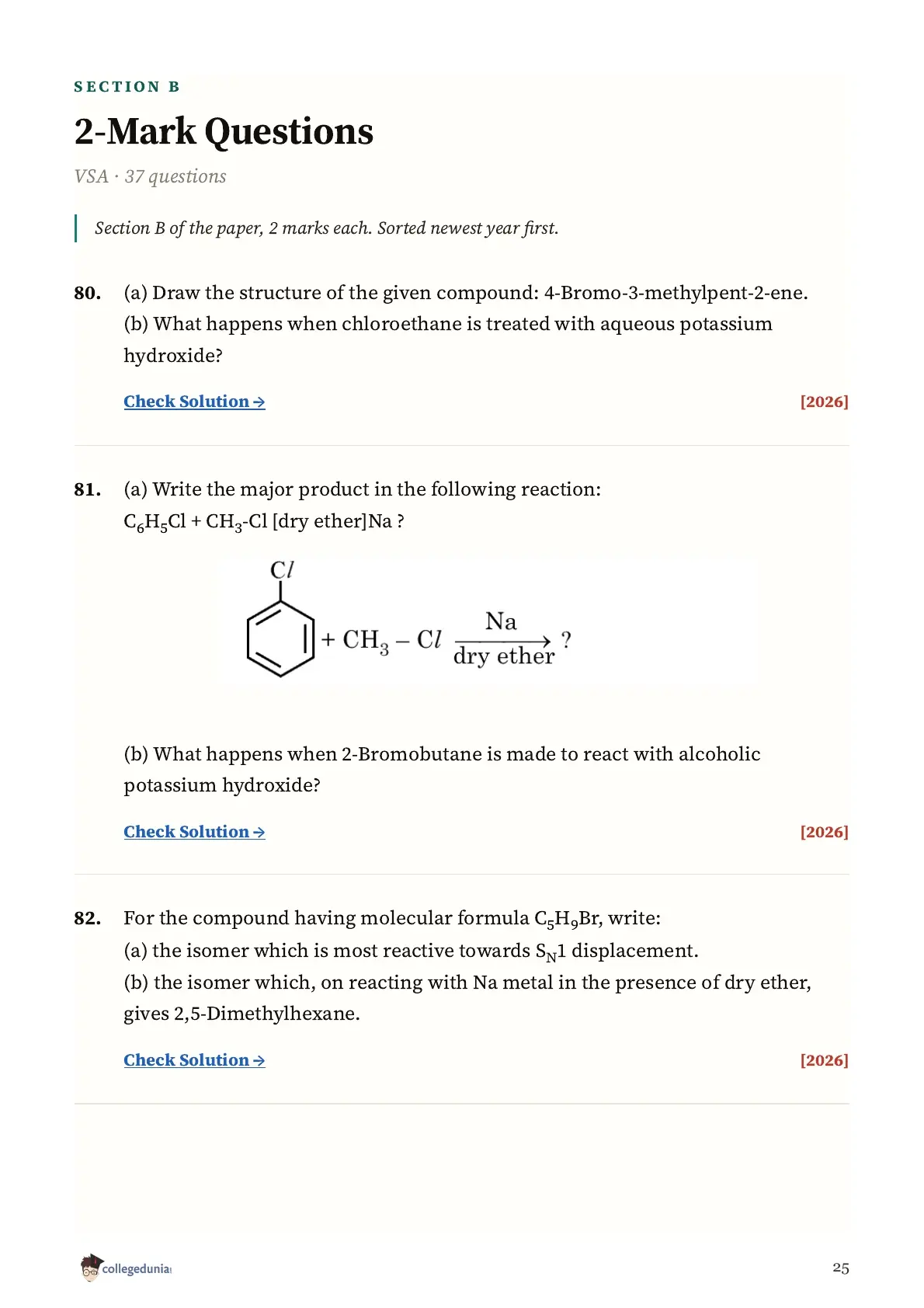
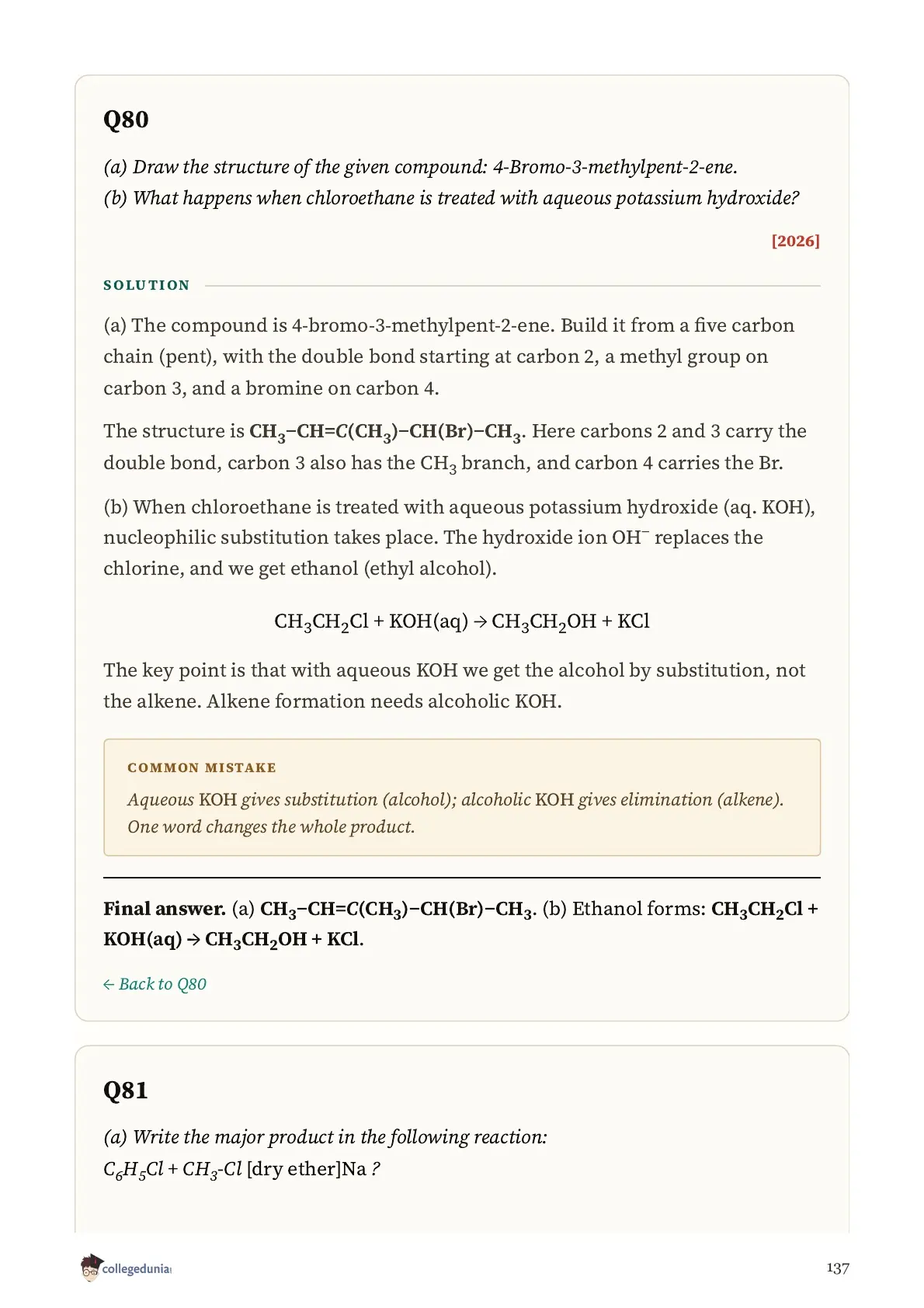
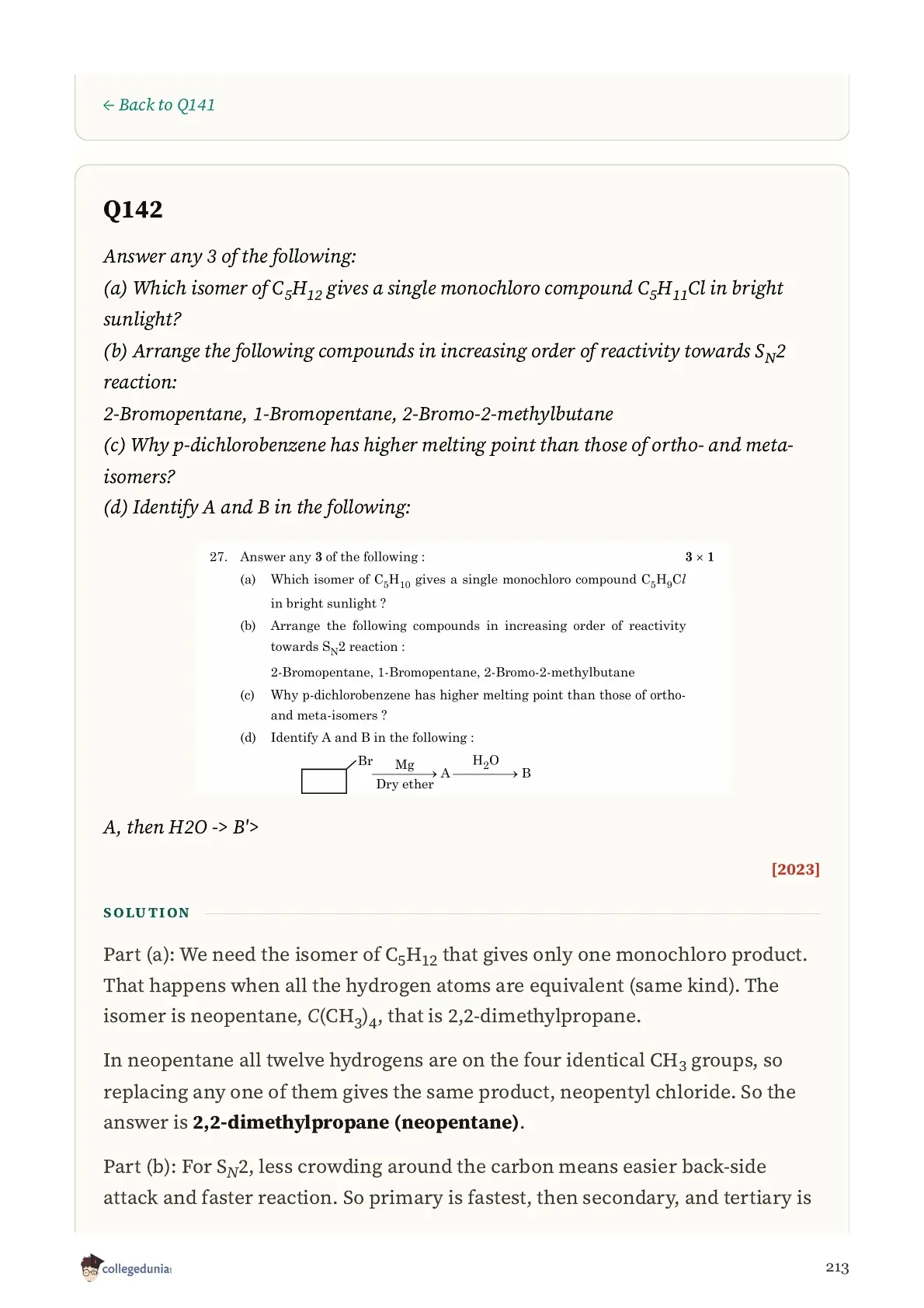
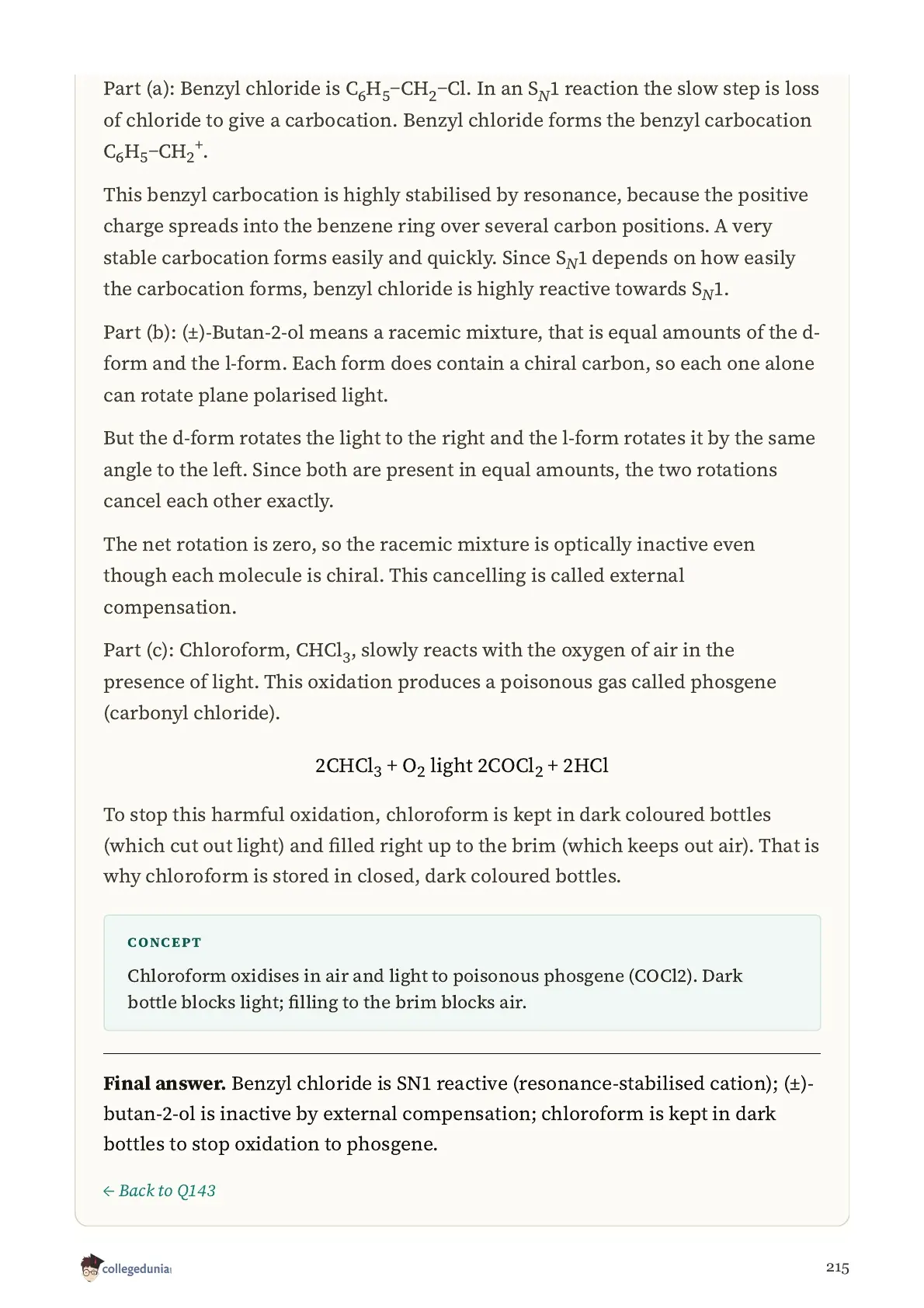
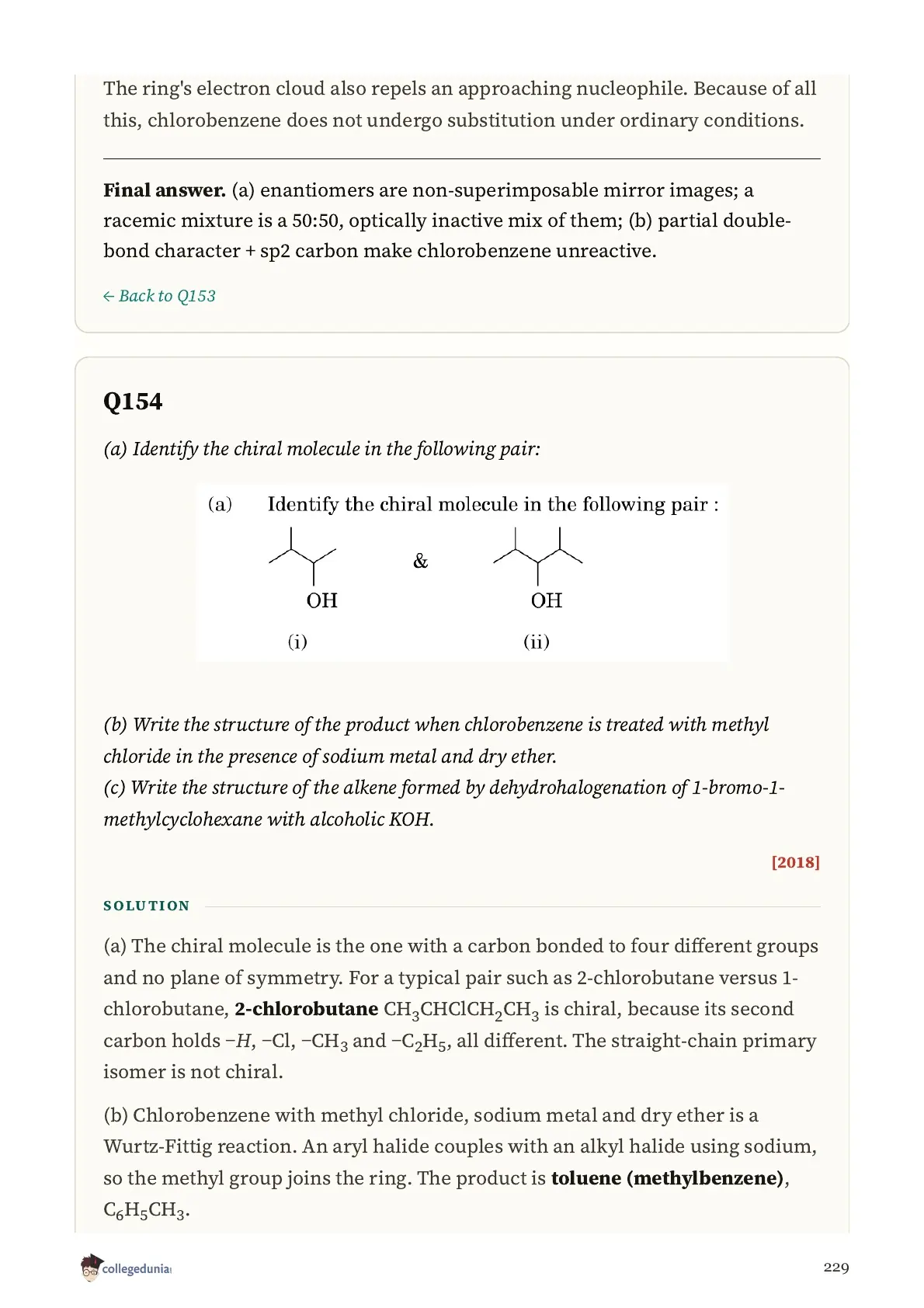
(a) Draw the structure of the given compound: 4-Bromo-3-methylpent-2-ene. (b) What happens when chloroethane is treated with aqueous potassium hydroxide?
[2026 • 2 mark]
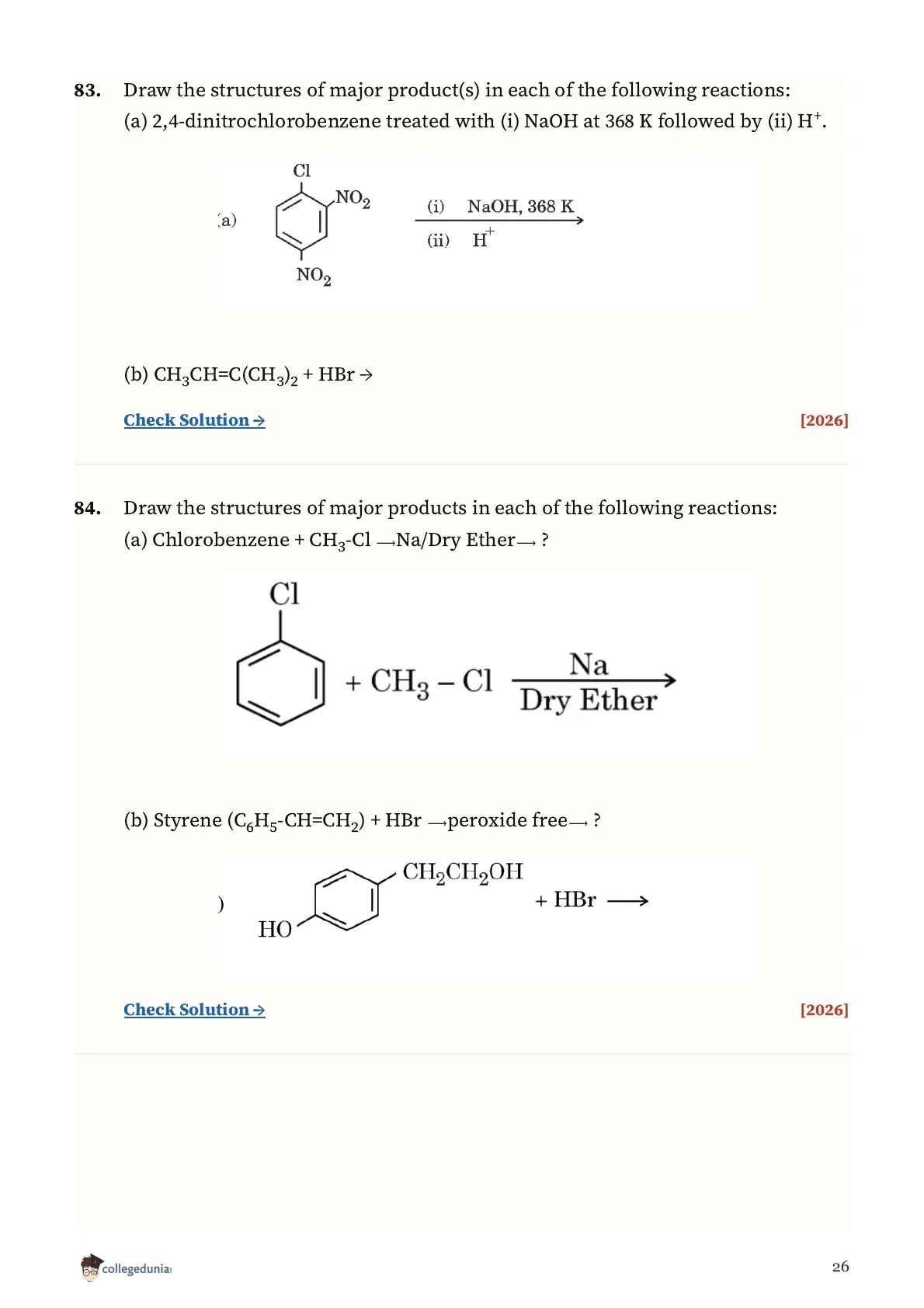
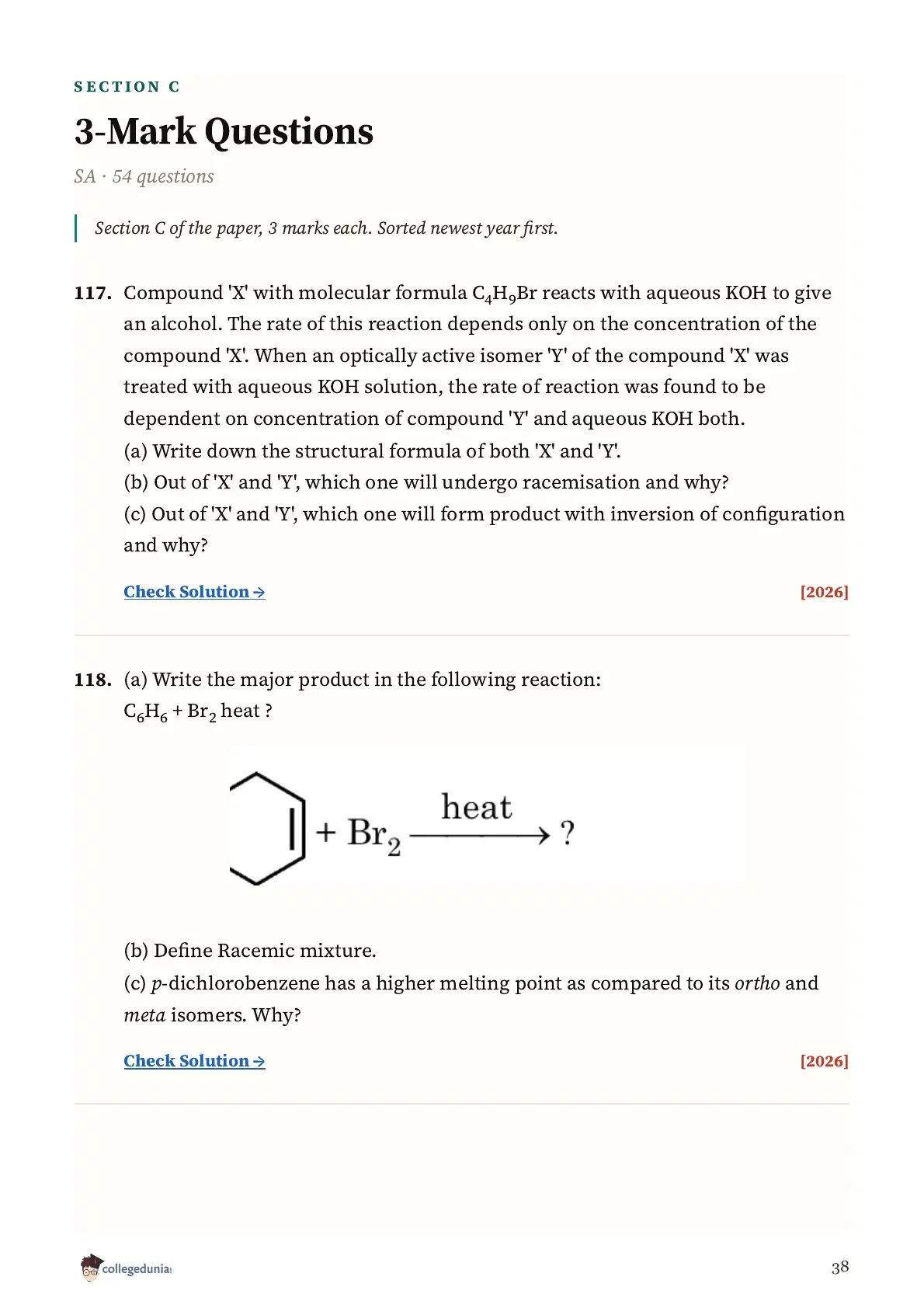
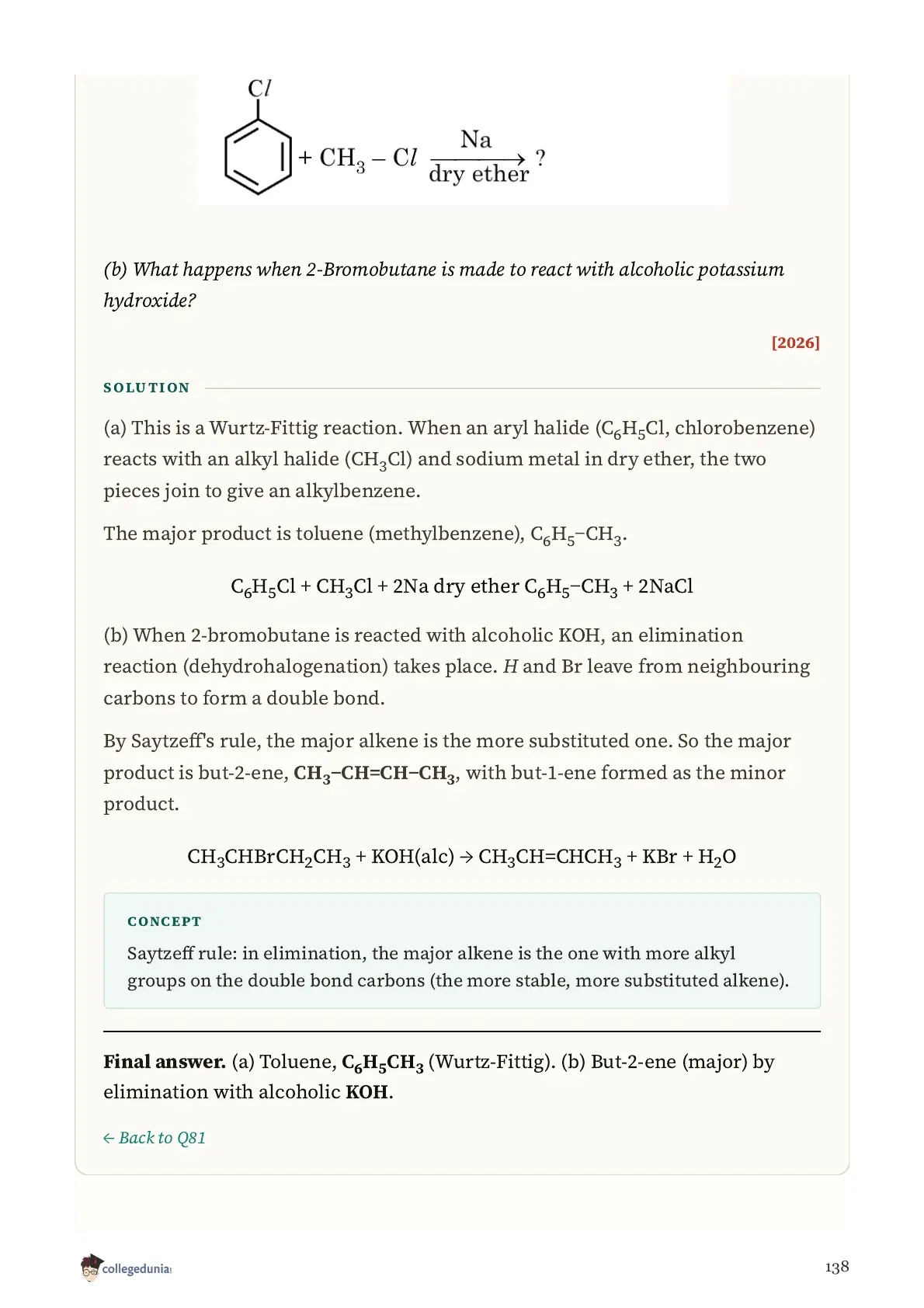
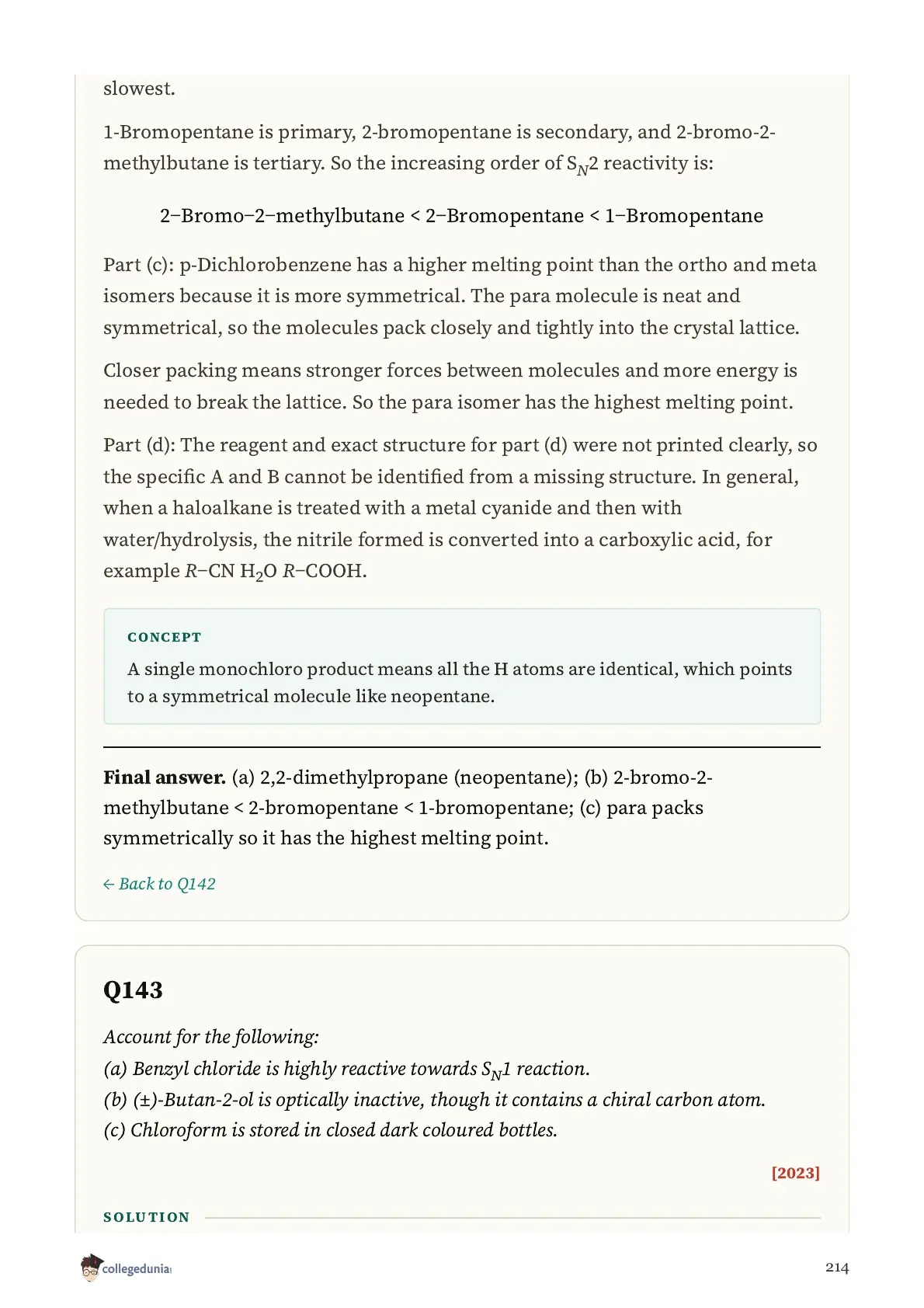
(a) Write the major product in the following reaction: C 6 H 6 + Br 2 heat ? (b) Define Racemic mixture. (c) p -dichlorobenzene has a higher melting point as compared to its ortho and meta isomers. Why?
[2026 • 3 mark]
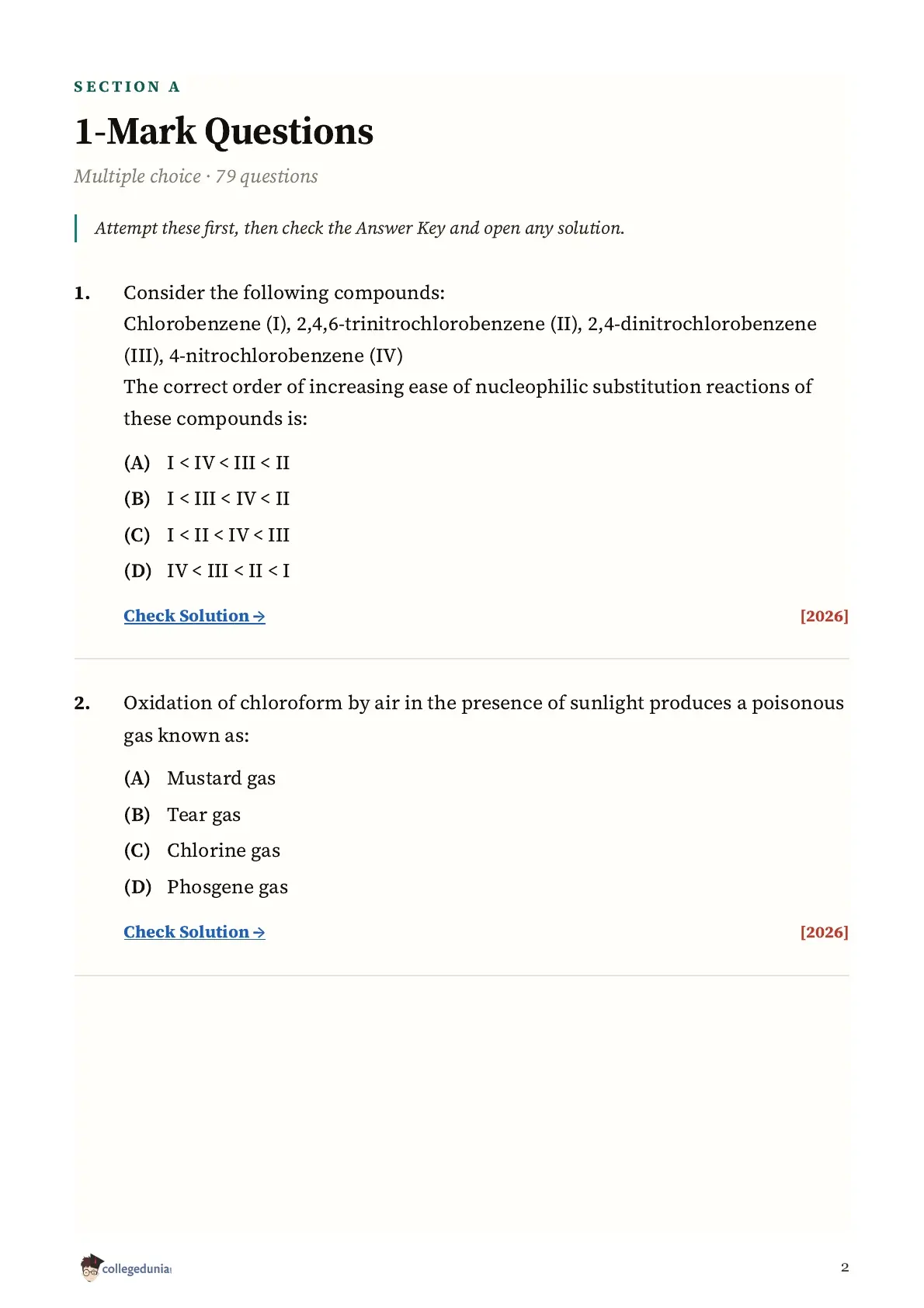
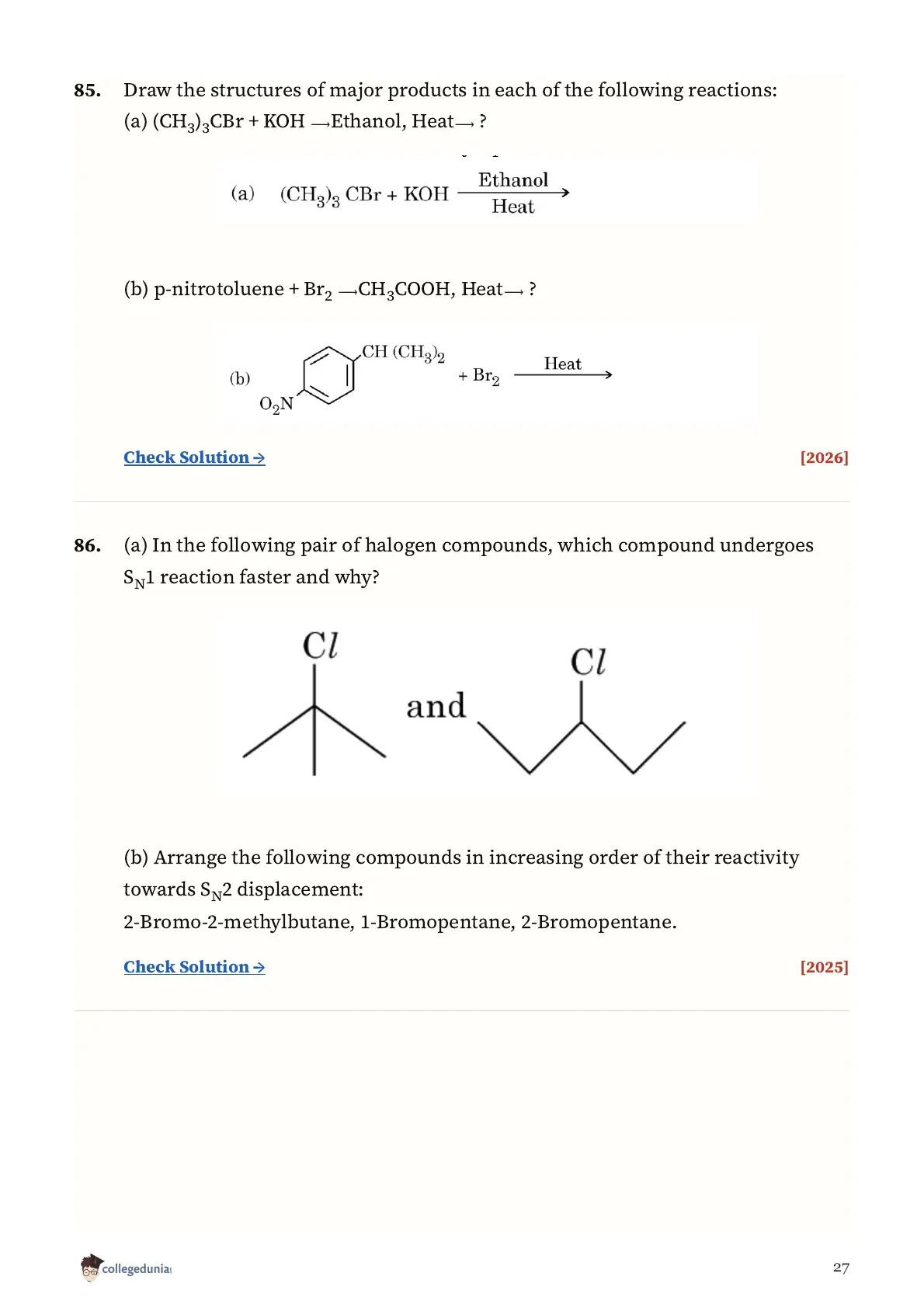
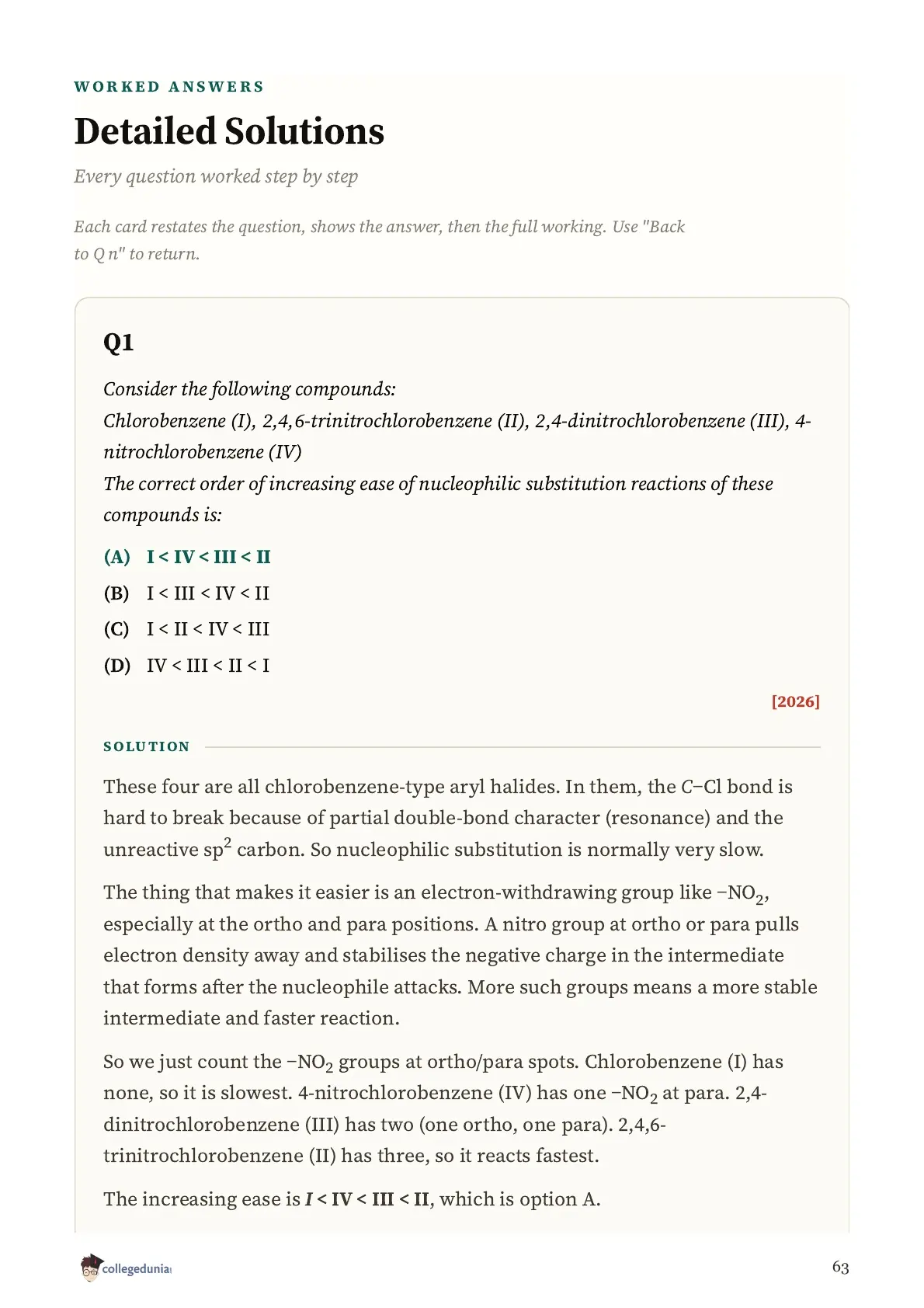
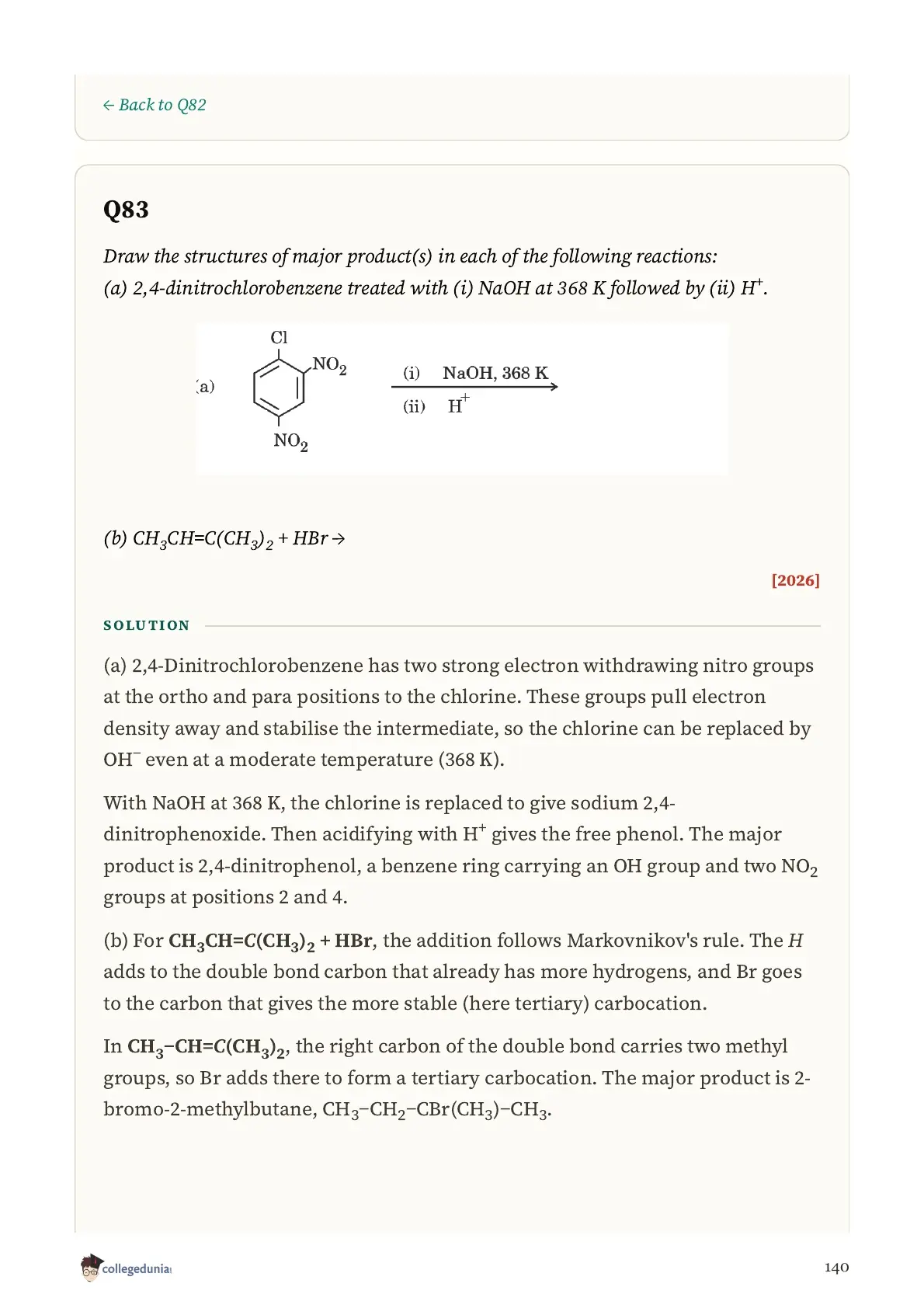
Consider the following compounds: Chlorobenzene (I), 2,4,6-trinitrochlorobenzene (II), 2,4-dinitrochlorobenzene (III), 4-nitrochlorobenzene (IV) The correct order of increasing ease of nucleophilic substitution reactions of these compounds is:
- I < IV < III < II
- I < III < IV < II
- I < II < IV < III
- IV < III < II < I
[2026 • 1 mark]
Common Mistakes in the Haloalkanes and Haloarenes Board Questions
- Forgetting to write the reagent and conditions above the arrow in a conversion, which loses marks even when the product is right.
- Getting the SN1 versus SN2 order wrong, or mixing up which mechanism inverts configuration.
- Missing a chiral centre or assigning the wrong R/S label.
- Claiming haloarenes undergo easy nucleophilic substitution, when their C-X bond has partial double-bond character.
- Confusing the reasons for the high melting point of the para-isomer with its boiling point.
Student Feedback on Haloalkanes and Haloarenes PYQ Practice
- 67 per cent said the multi-step conversions were the hardest part of the 3-mark band.
- 56 per cent reported gaining 3 to 5 marks after solving all 51 three-mark PYQs from this PDF before the boards.
- 45 per cent said a reactivity-order or chirality MCQ appeared in their actual 2026 paper.
- Average time to finish all 169 PYQs: about 13 hours across 6 study sessions.
How These PYQs Pair with the Other Haloalkanes and Haloarenes Resources
Solving previous year questions alone gives you only half the prep. Pair the PYQ PDF with the matching concept, formula and solution resources for Haloalkanes and Haloarenes.
| Resource | What It Gives You | Open |
|---|---|---|
| NCERT Solutions | Step-by-step worked answers to every NCERT back-exercise question of Haloalkanes and Haloarenes | NCERT Solutions for Haloalkanes and Haloarenes |
| Notes | Concept revision notes covering every topic in the Haloalkanes and Haloarenes chapter | Haloalkanes and Haloarenes Class 12 Notes |
| Formula Sheet | All key formulas and results of Haloalkanes and Haloarenes on one page for last-day revision | Haloalkanes and Haloarenes Formula Sheet |
| Handwritten Notes | Scanned handwritten notes of Haloalkanes and Haloarenes for quick one-shot revision | Haloalkanes and Haloarenes Handwritten Notes |
| Exemplar Solutions | NCERT Exemplar problems of Haloalkanes and Haloarenes solved in full for extra practice | NCERT Exemplar Solutions for Haloalkanes and Haloarenes |
| NCERT Book | Official NCERT Haloalkanes and Haloarenes chapter PDF for free download | Haloalkanes and Haloarenes NCERT Book PDF |
| Exemplar Book | NCERT Exemplar Haloalkanes and Haloarenes problem book PDF for free download | Haloalkanes and Haloarenes Exemplar Book PDF |
How to Use the Haloalkanes and Haloarenes PYQ PDF Most Effectively
The 169 questions are sequenced for a three-pass revision plan:
- Pass 1 (Day 1 to 2): Attempt all 78 one-mark MCQs. Mark every wrong answer and re-read the relevant NCERT paragraph.
- Pass 2 (Day 3 to 5): Solve the 37 two-mark and 51 three-mark questions. Time yourself: 3 minutes per 2-mark, 5 minutes per 3-mark.
- Pass 3 (Day 6 to 10): Re-work every conversion and named reaction, writing the reagent over each arrow, then revise the SN1 and SN2 mechanisms.
All Class 12 Chemistry Chapter PYQ PDFs
Every Class 12 Chemistry chapter has its own PYQ compilation built the same way, sorted by marks and tagged by year.
| Chapter | Topic | Previous Year Questions |
|---|---|---|
| Chapter 1 | Solutions | PYQ PDF |
| Chapter 2 | Electrochemistry | PYQ PDF |
| Chapter 3 | Chemical Kinetics | PYQ PDF |
| Chapter 4 | The d- and f-Block Elements | PYQ PDF |
| Chapter 5 | Coordination Compounds | PYQ PDF |
| Chapter 6 | Haloalkanes and Haloarenes | PYQ PDF |
| Chapter 7 | Alcohols, Phenols and Ethers | PYQ PDF |
| Chapter 8 | Aldehydes, Ketones and Carboxylic Acids | PYQ PDF |
| Chapter 9 | Amines | PYQ PDF |
| Chapter 10 | Biomolecules | PYQ PDF |
Also Check: NCERT Solutions for Class 12 Chemistry
Class 12 Chemistry Haloalkanes and Haloarenes PYQ FAQs
Ques. How many previous year questions are in the Class 12 Chemistry Haloalkanes and Haloarenes PYQ PDF?
Ans. The PDF has 169 previous year questions from CBSE board papers between 2003 and 2026, sorted by marks (1 to 5) and then by year, latest first. Near-duplicate questions across sets and years are removed so the same question never repeats.
Ques. Are the Haloalkanes and Haloarenes PYQs based on the 2026-27 CBSE syllabus?
Ans. Yes. Every question is based on the 2026-27 CBSE Class 12 Chemistry syllabus. Older long-form questions are kept because the core ideas (named reactions, chirality, SN1 and SN2) are unchanged in the current syllabus.
Ques. Which topics of Haloalkanes and Haloarenes appear most often in CBSE board papers?
Ans. From the 169-question set: conversions and named reactions (about 24 per cent), optical isomerism and chirality (about 20 per cent), nucleophilic substitution (about 18 per cent), IUPAC nomenclature and structure (about 15 per cent), and reasoning on physical properties and the low reactivity of haloarenes.
Ques. How is this PYQ PDF different from a CBSE sample paper?
Ans. A sample paper gives you one paper. This PDF stitches together 22 years of questions across every set and region (Delhi, Outside Delhi, Foreign and Compartment) for Haloalkanes and Haloarenes alone, so you can see which topics CBSE repeats and how each idea is usually phrased.
Ques. Does the Haloalkanes and Haloarenes PYQ PDF include MCQs?
Ans. Yes. 78 of the 169 questions are 1-mark questions, mostly MCQ and assertion-reason from 2023 onwards, when CBSE introduced the Section A objective block.
Ques. Where can I download the Haloalkanes and Haloarenes Class 12 PYQ PDF for free?
Ans. The full Haloalkanes and Haloarenes PYQ PDF is free to download from the PDF button at the top of this page. No sign-up is needed.
Ques. How should I use these PYQs to revise Haloalkanes and Haloarenes in the last 10 days?
Ans. Use the three-pass plan: Day 1 to 2 attempt all 78 MCQs, Day 3 to 5 solve the 2 and 3-mark questions, Day 6 to 10 re-work every conversion under a timer. Always write the reagent and conditions above each arrow.
Ques. Does the PDF give answers or only the questions?
Ans. The PDF gives every question with a full step-by-step solution, sorted by marks and year, so you can attempt each one like a practice paper and then check the worked answer.
Ques. Are named reactions important for the CBSE Haloalkanes and Haloarenes questions?
Ans. Very. Conversions and named reactions drive about a quarter of all the questions in the compilation, mostly in the 2 and 3-mark band. Practising every conversion in the PDF with the correct reagents is the single best use of your time for this chapter.
Ques. What is a chiral molecule?
Ans. A chiral molecule is one that cannot be superimposed on its mirror image, like a left and right hand. It has at least one chiral carbon, a carbon bonded to four different groups. Such a molecule and its mirror image are called enantiomers and they rotate plane-polarised light in opposite directions.
Ques. How is the SN2 reaction defined?
Ans. The SN2 reaction is a nucleophilic substitution that happens in a single step, with the nucleophile attacking from the side opposite the leaving group. The rate depends on both the substrate and the nucleophile. It causes inversion of configuration and is fastest for primary haloalkanes.
Ques. What is a racemic mixture?
Ans. A racemic mixture is an equal mixture of the two enantiomers of a chiral compound. Because the two forms rotate plane-polarised light by equal and opposite amounts, the mixture is optically inactive. An SN1 reaction on a chiral substrate often gives a racemic mixture.



Comments