




If you want to stop losing marks on the Hardy-Weinberg derivation and the evidences of evolution, this is where you practise.
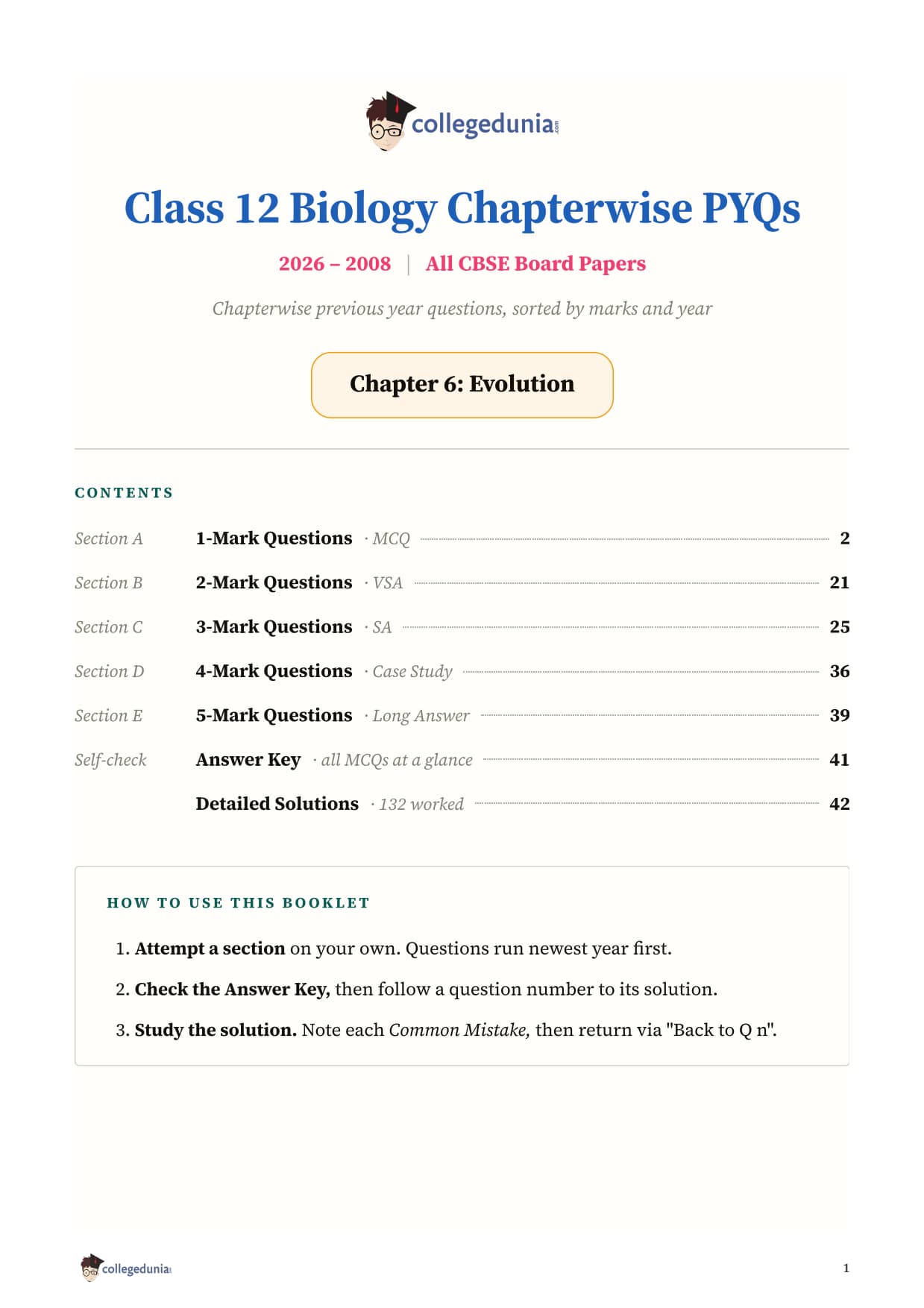
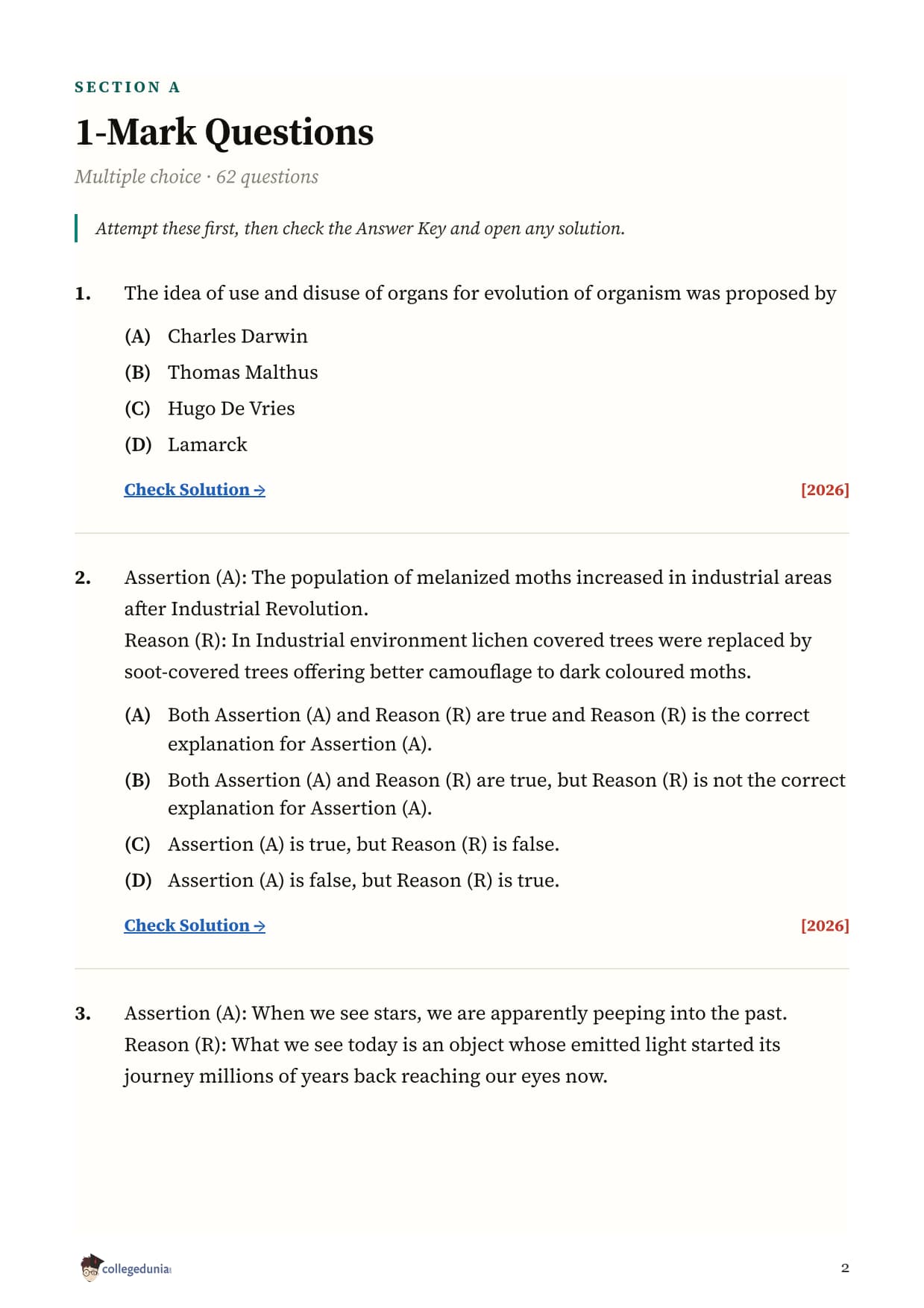
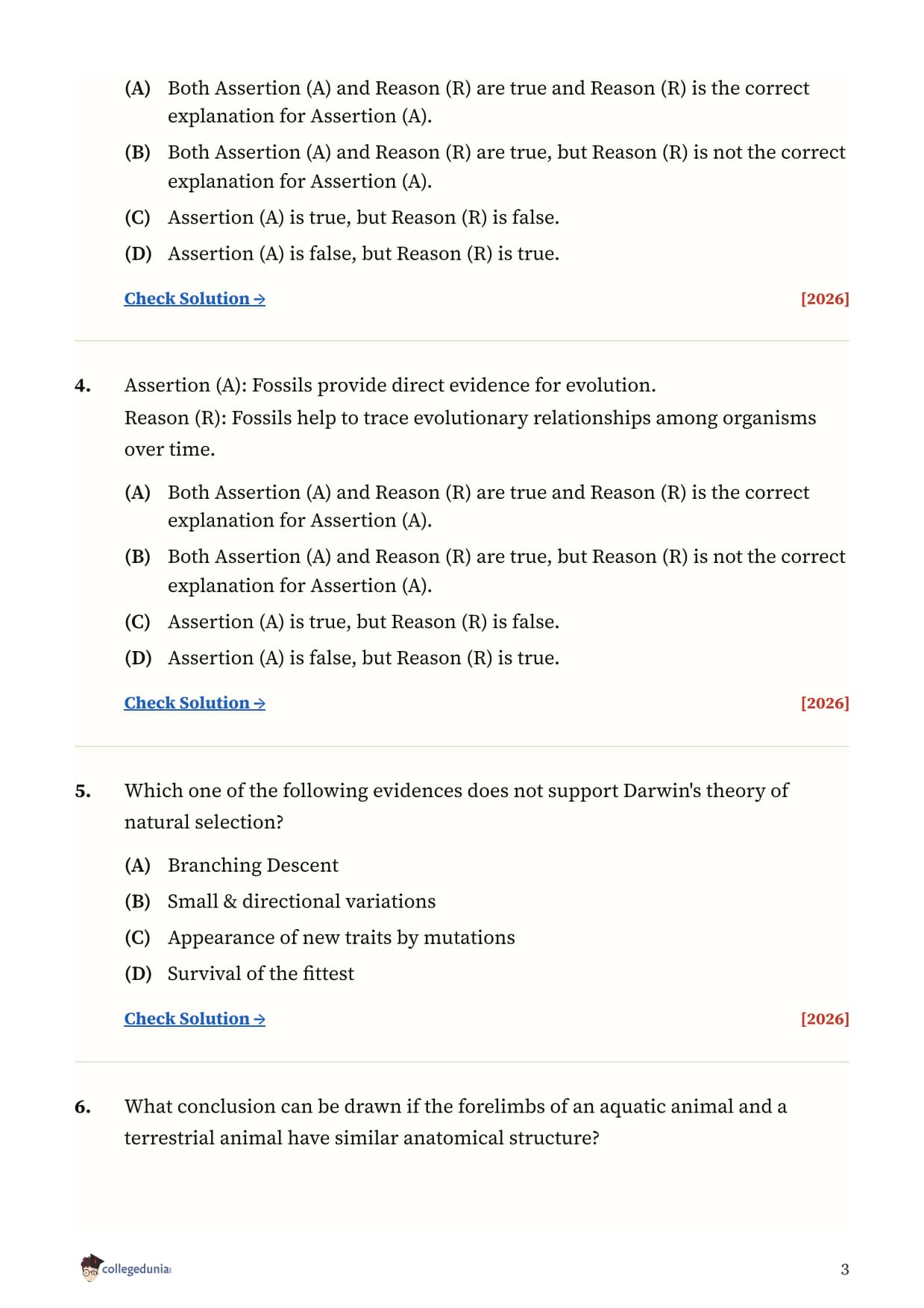
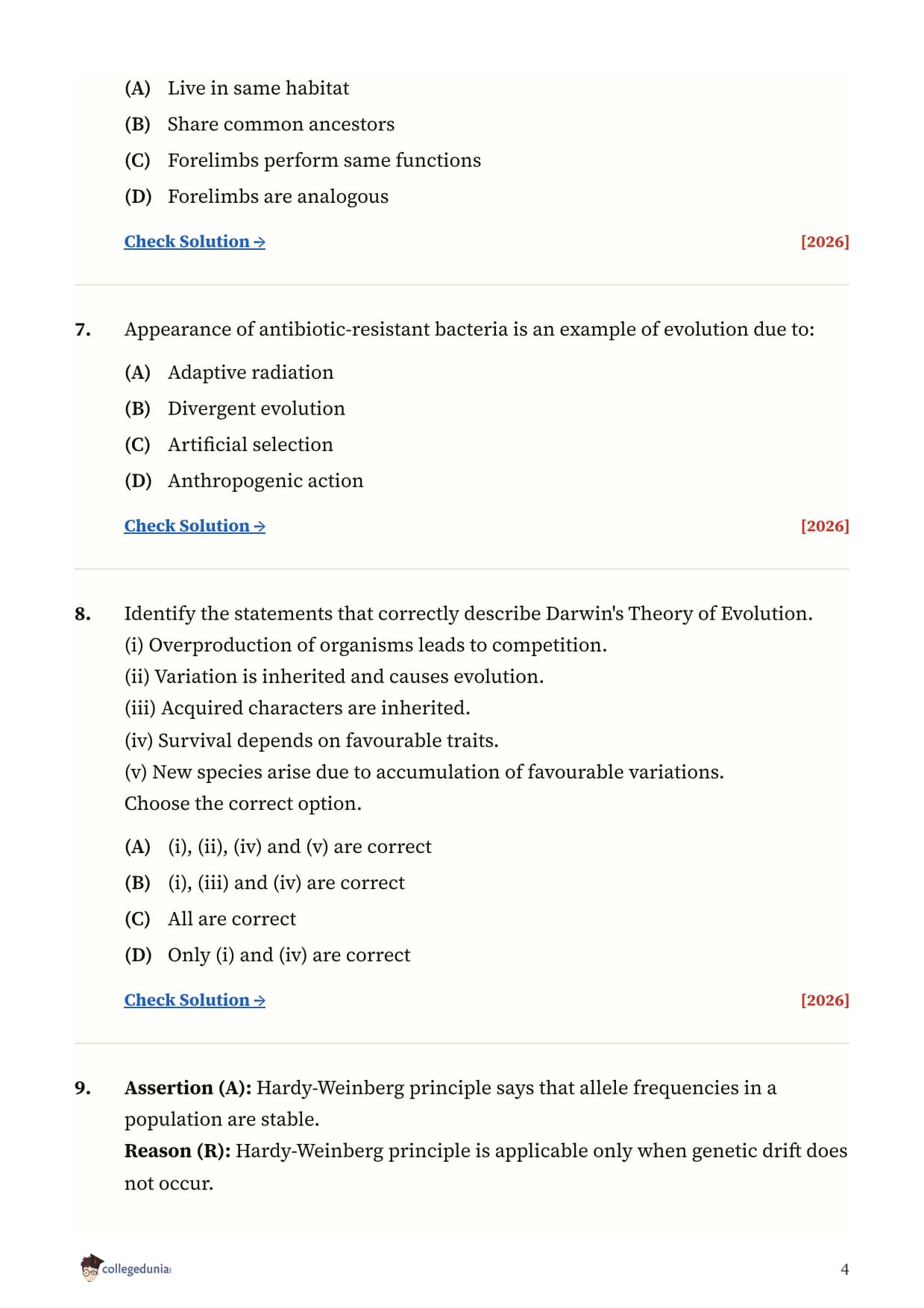
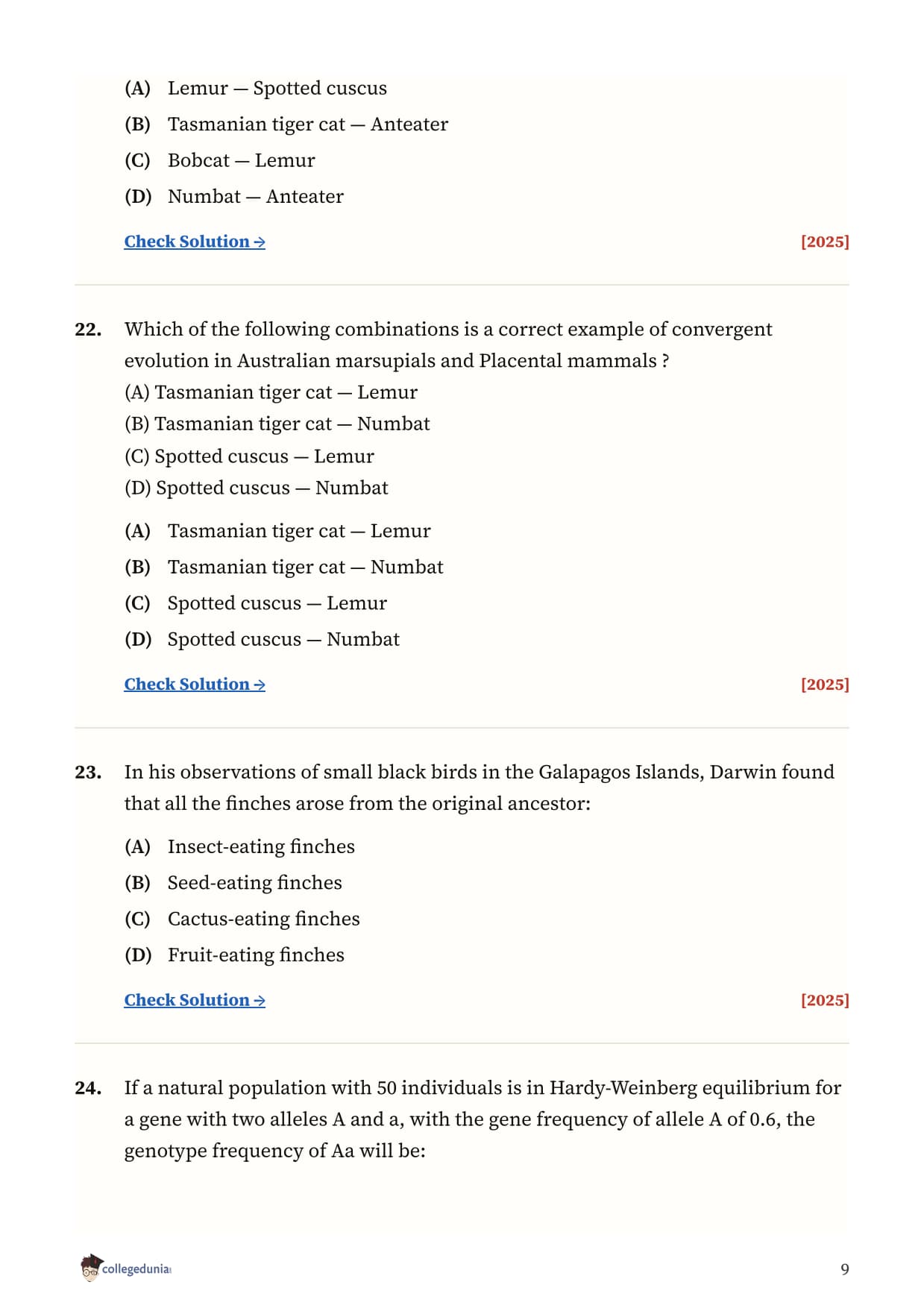
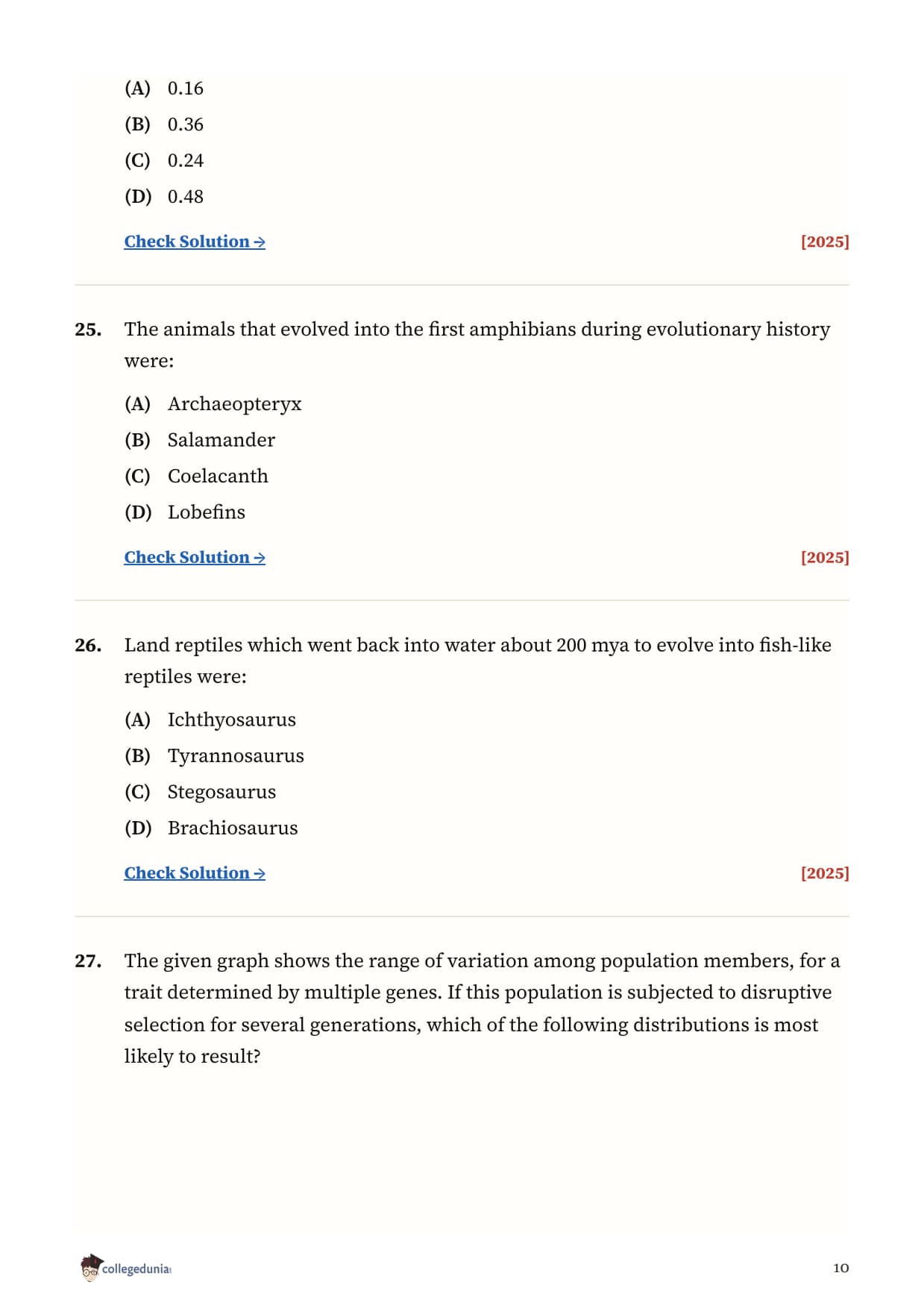
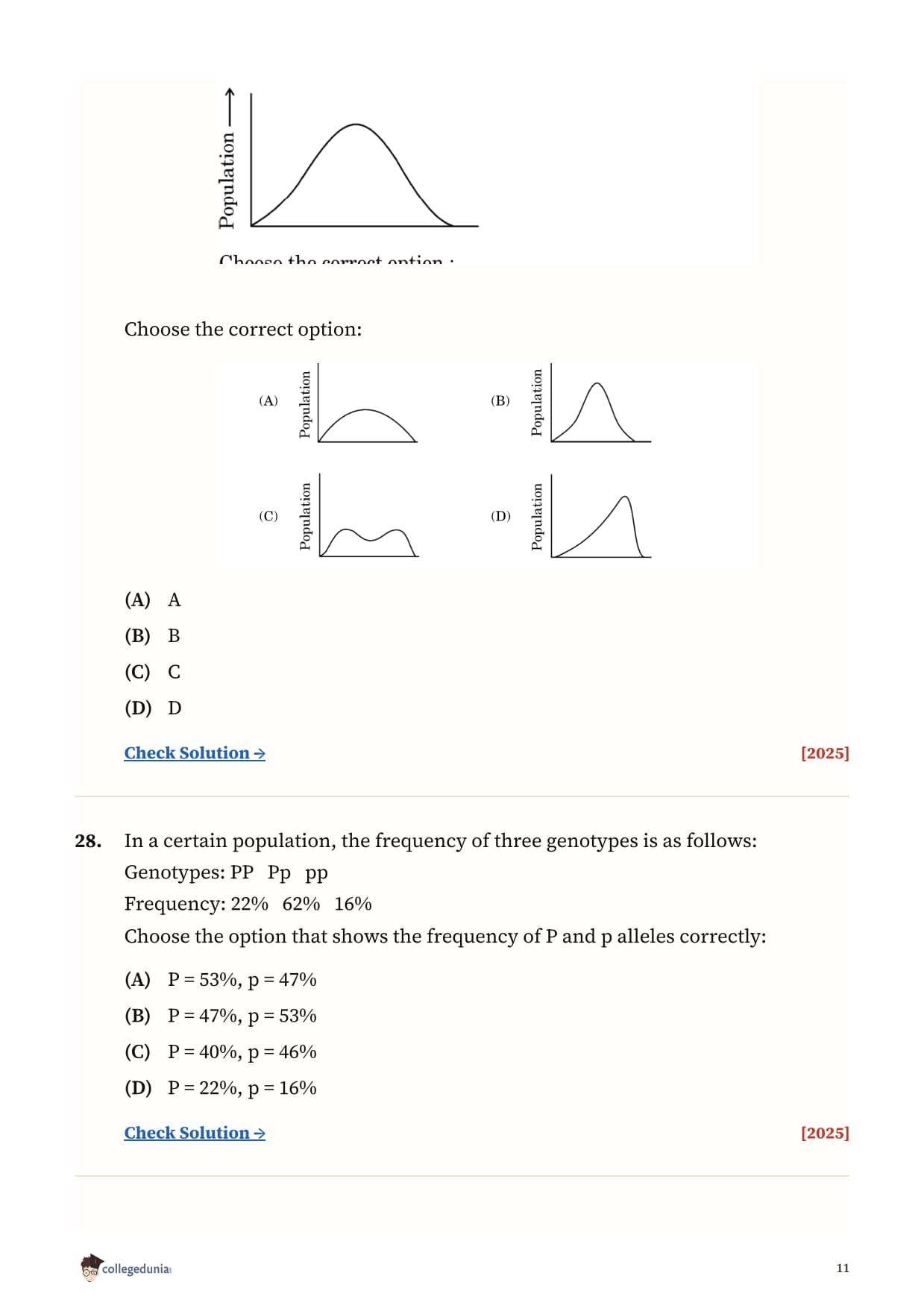
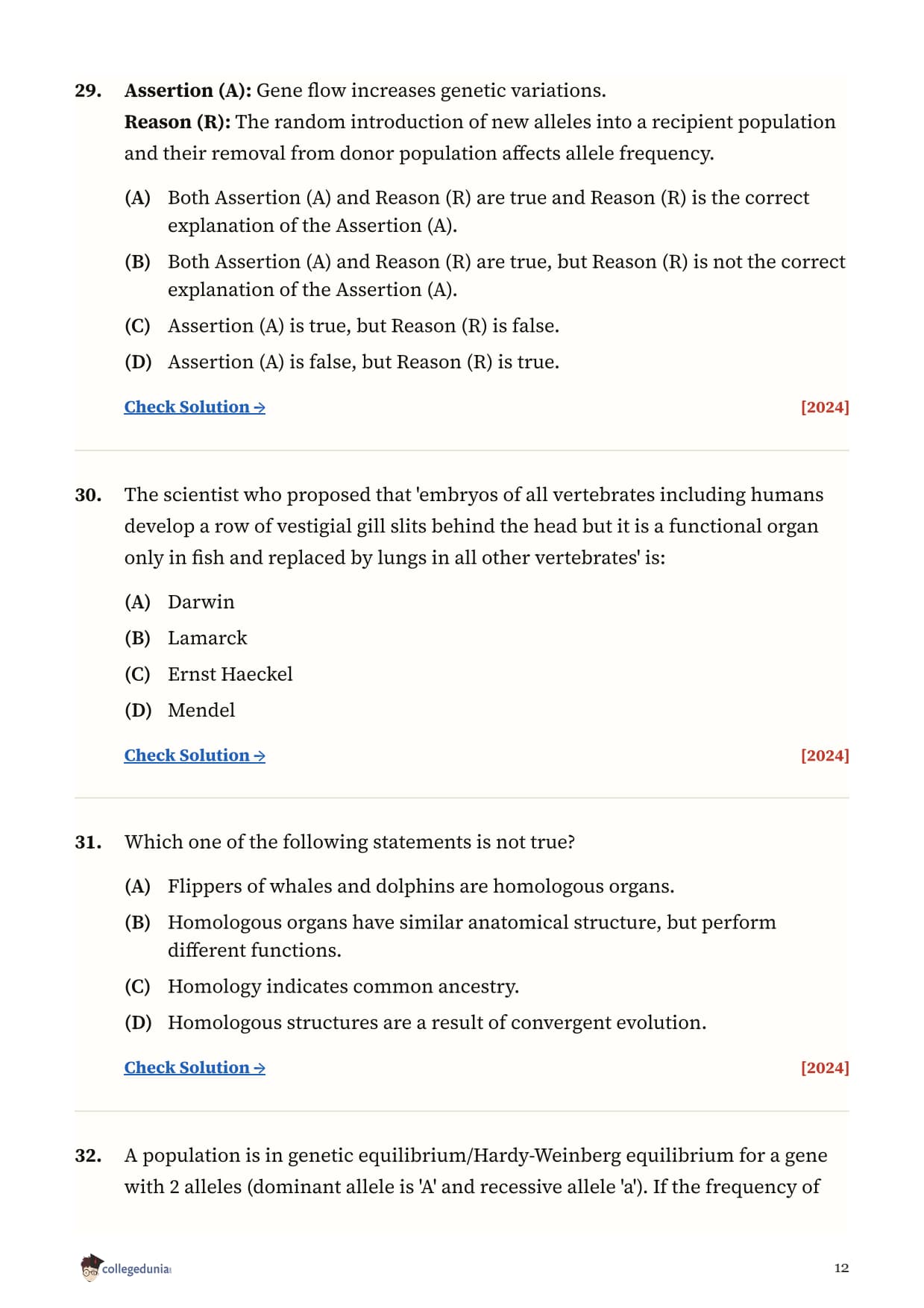
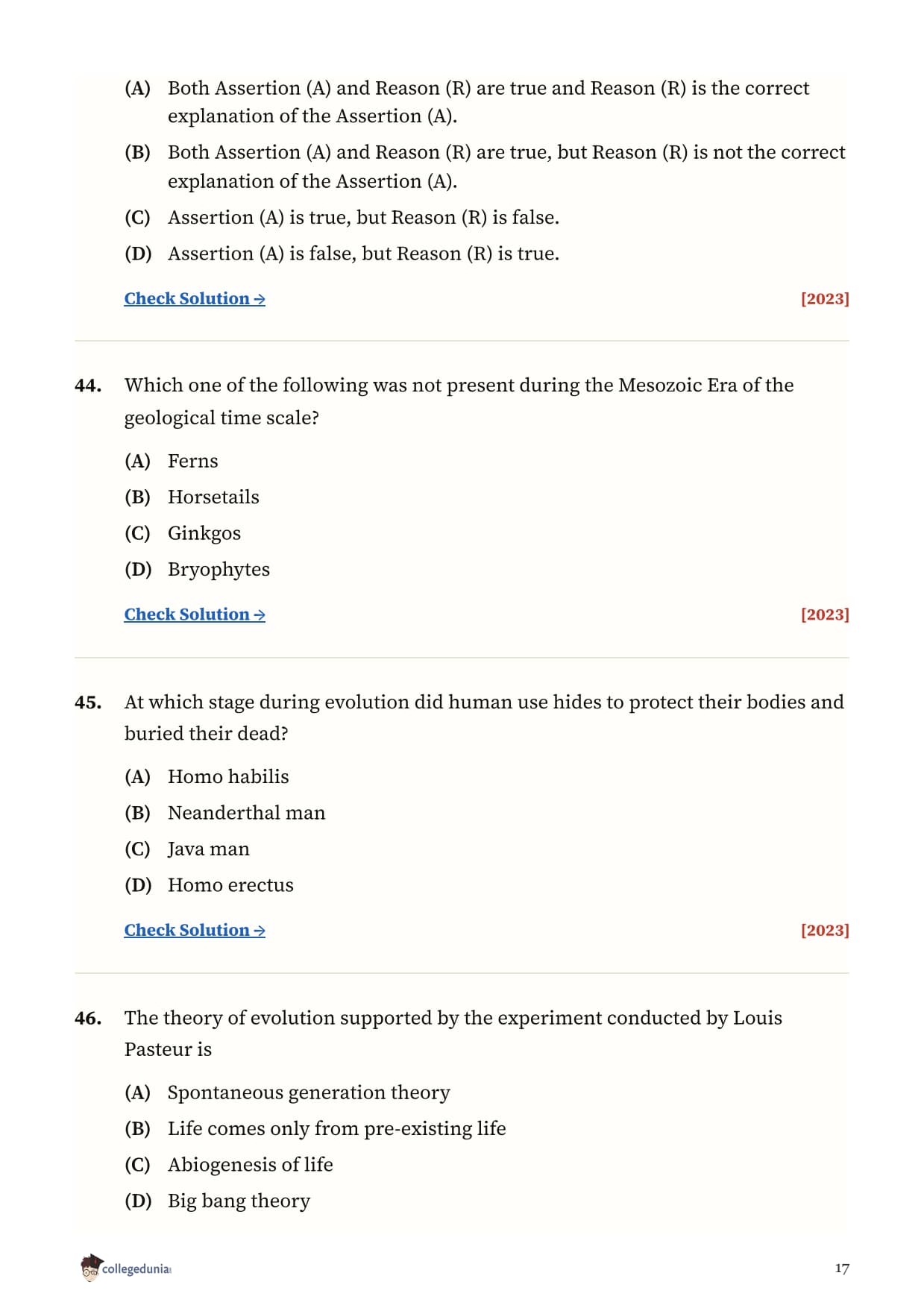
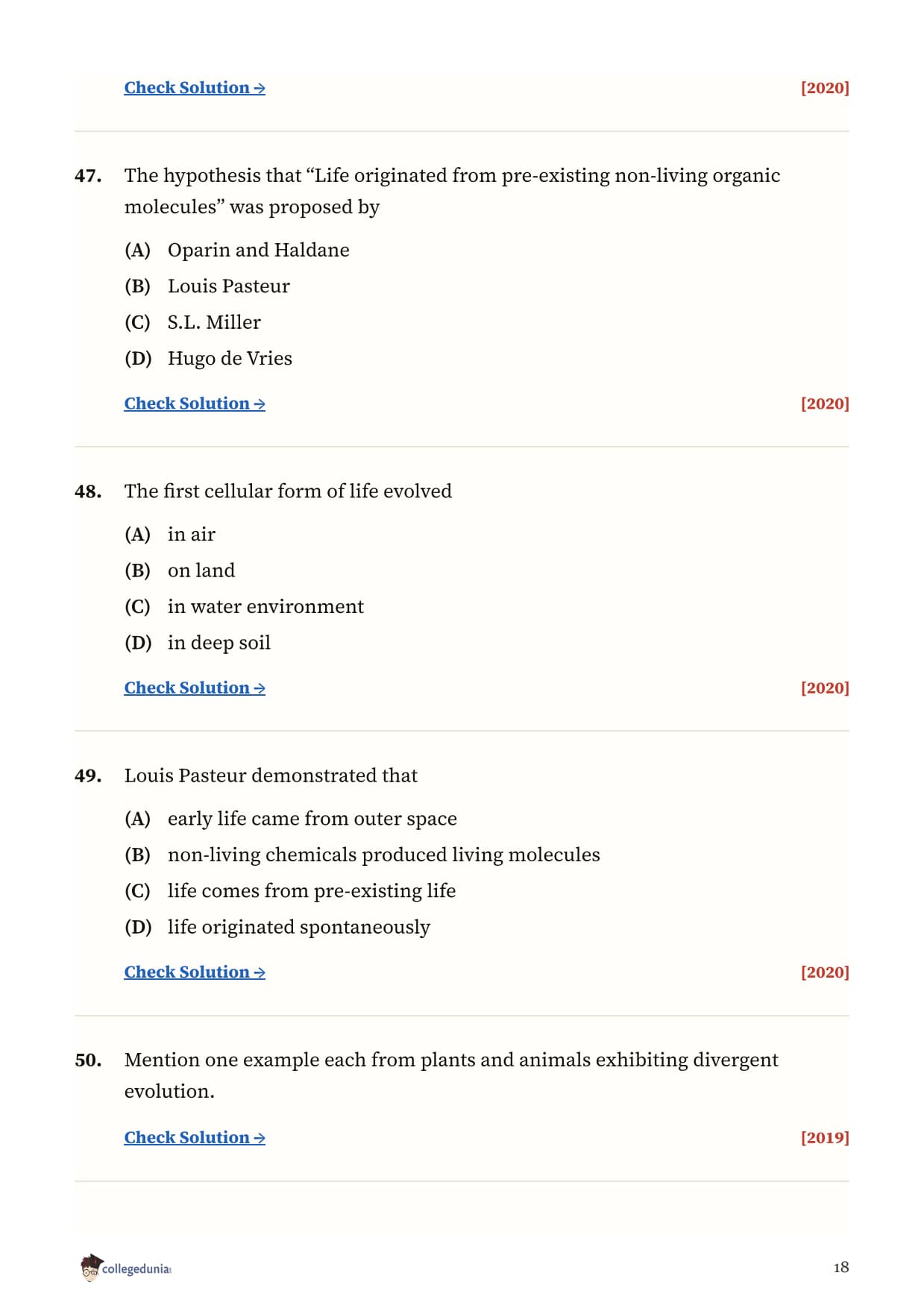
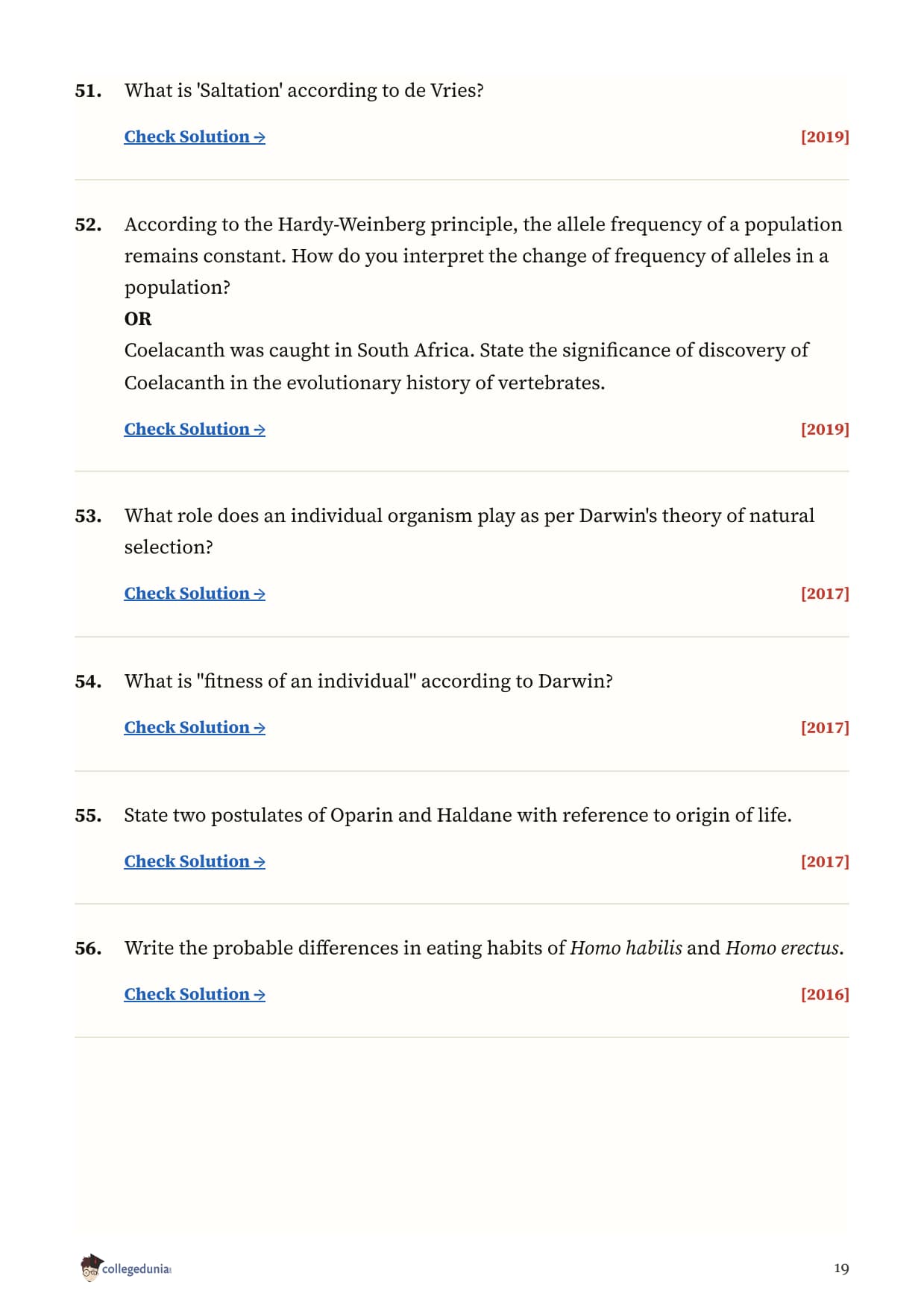
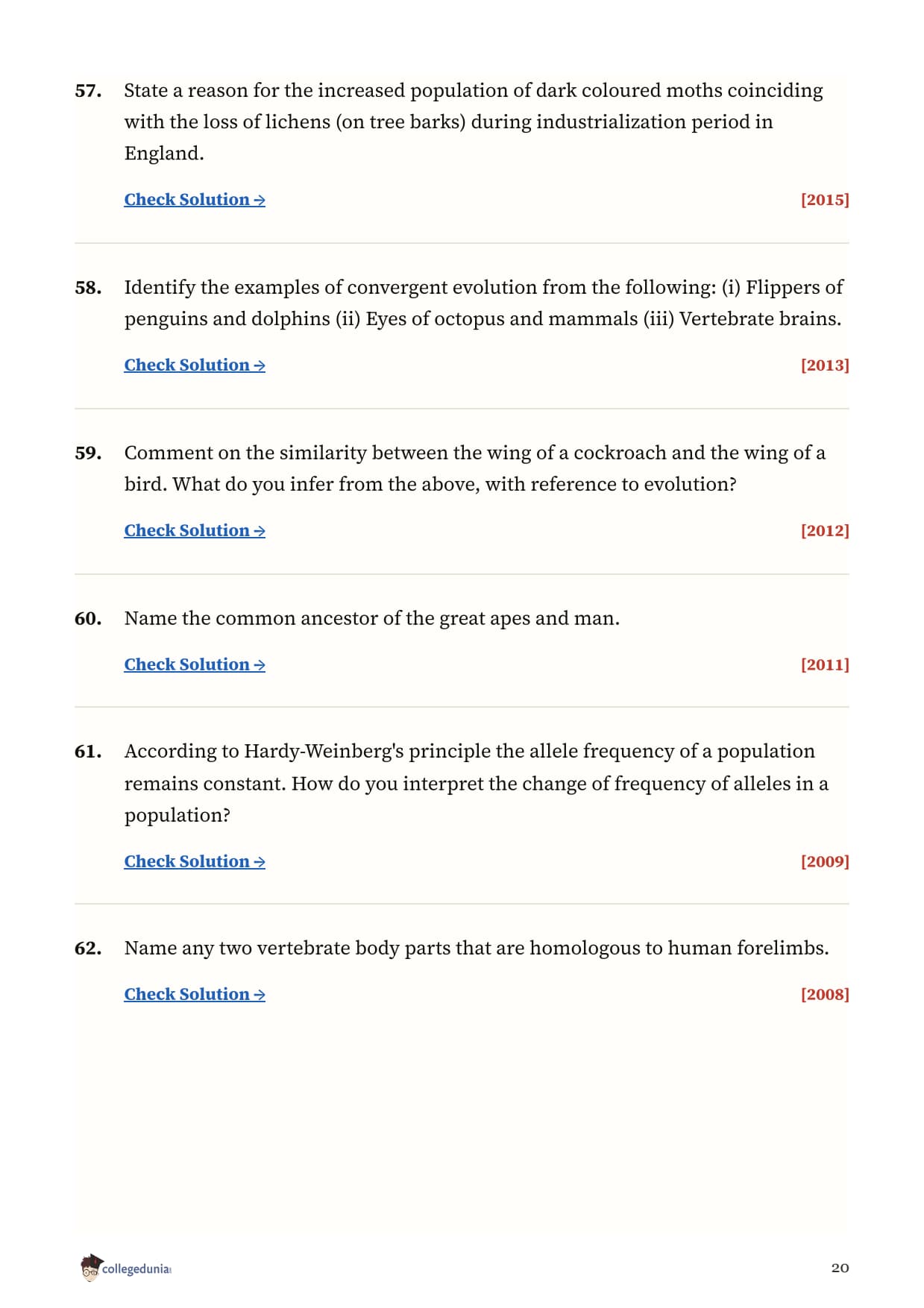
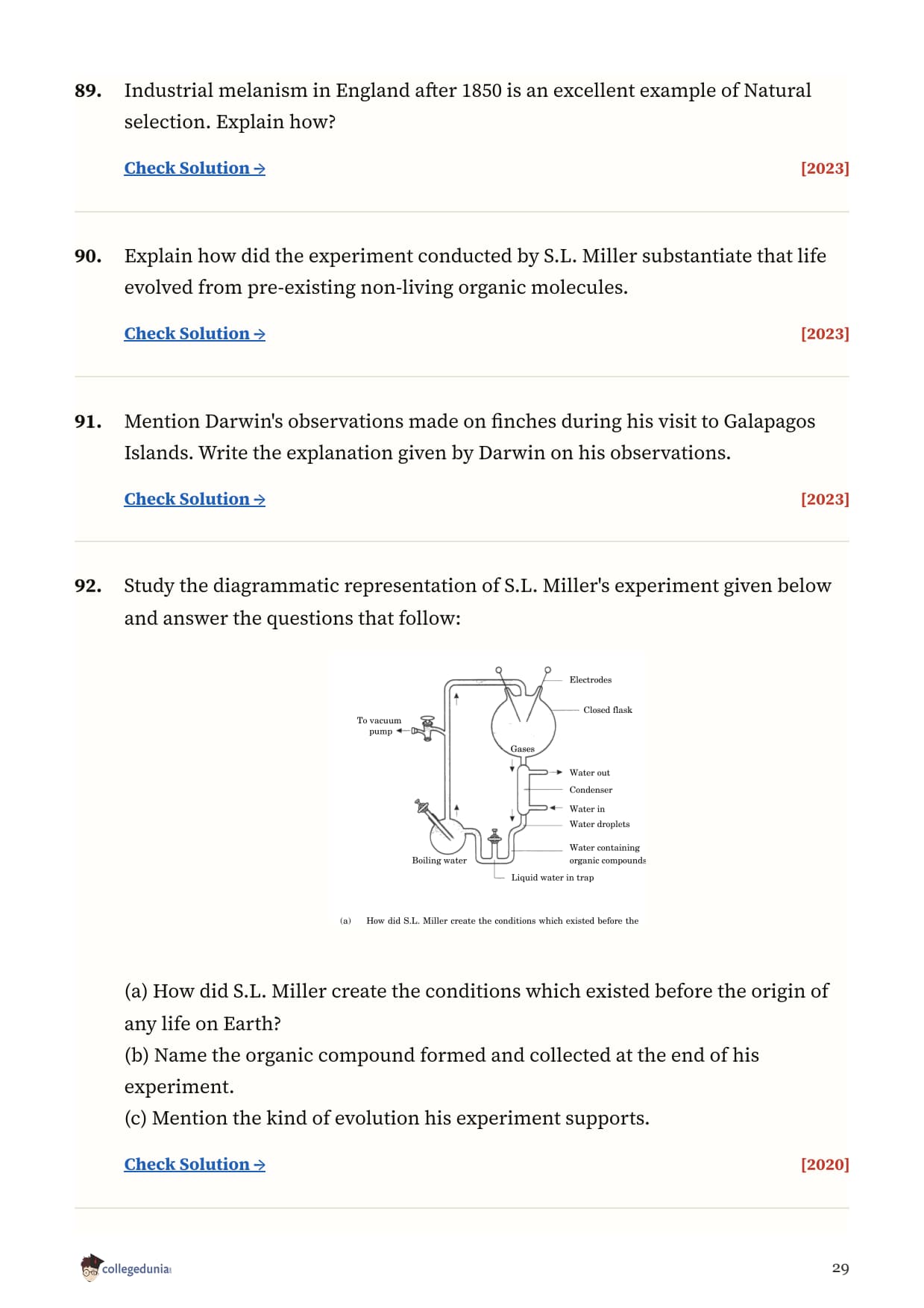
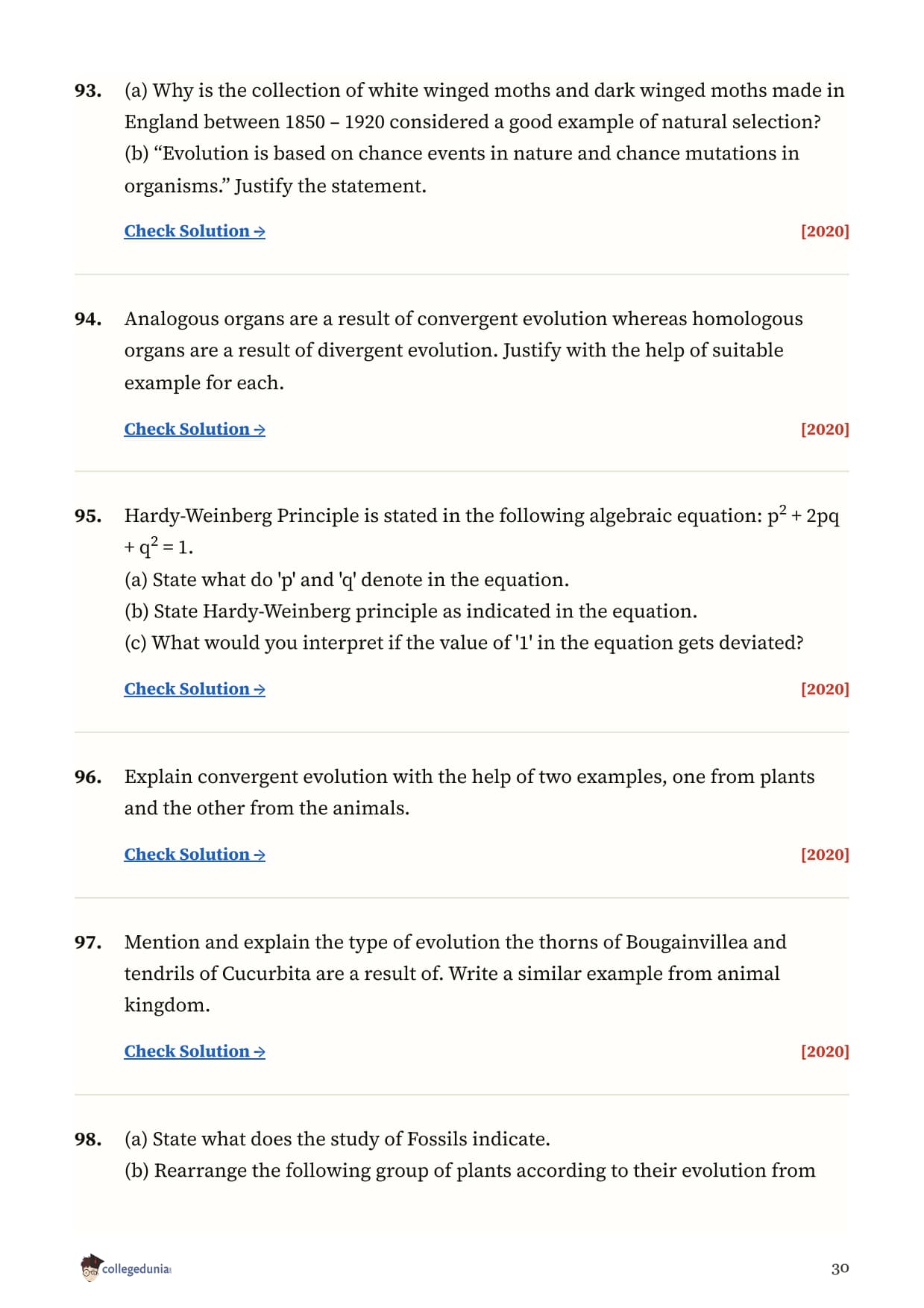
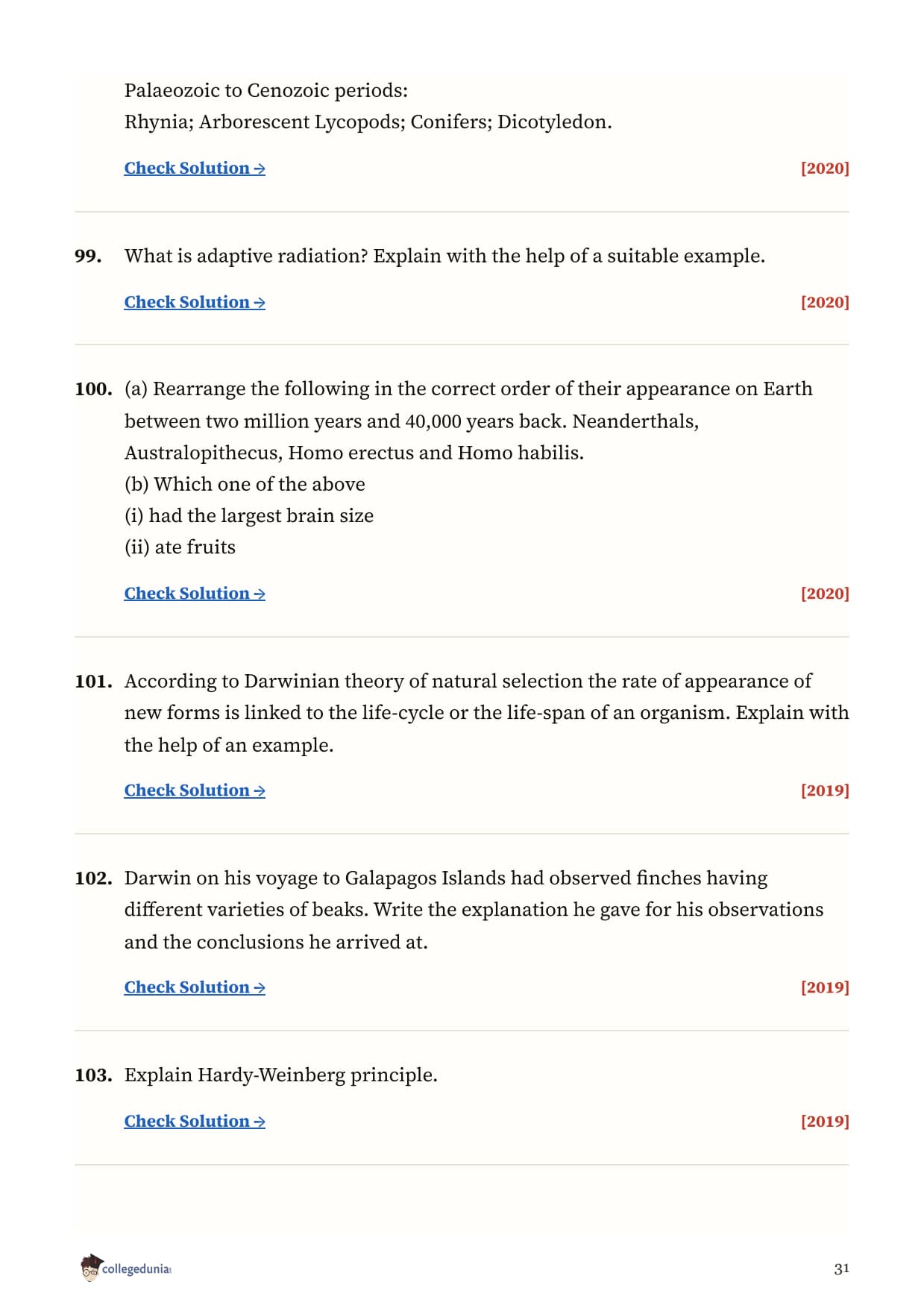
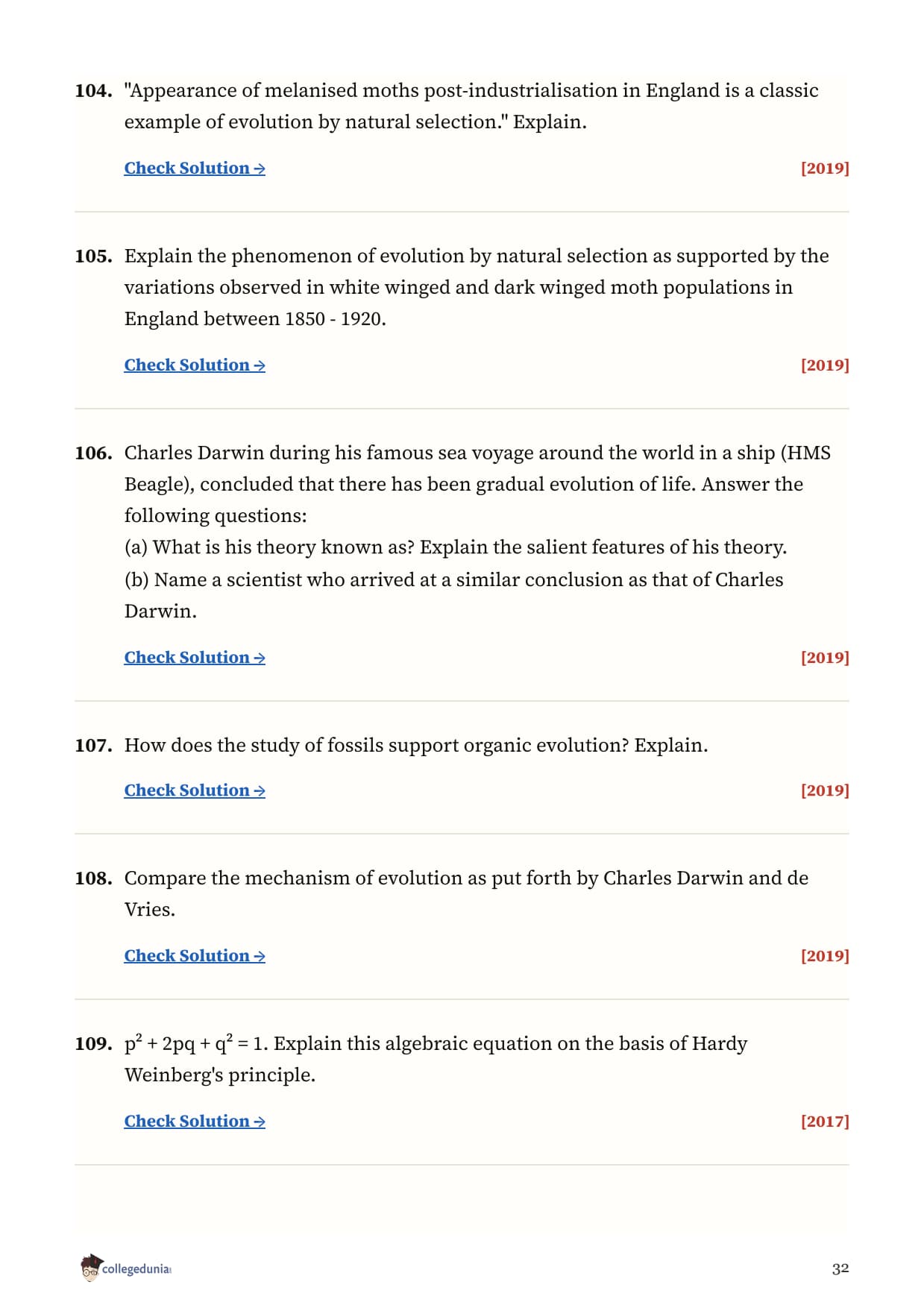
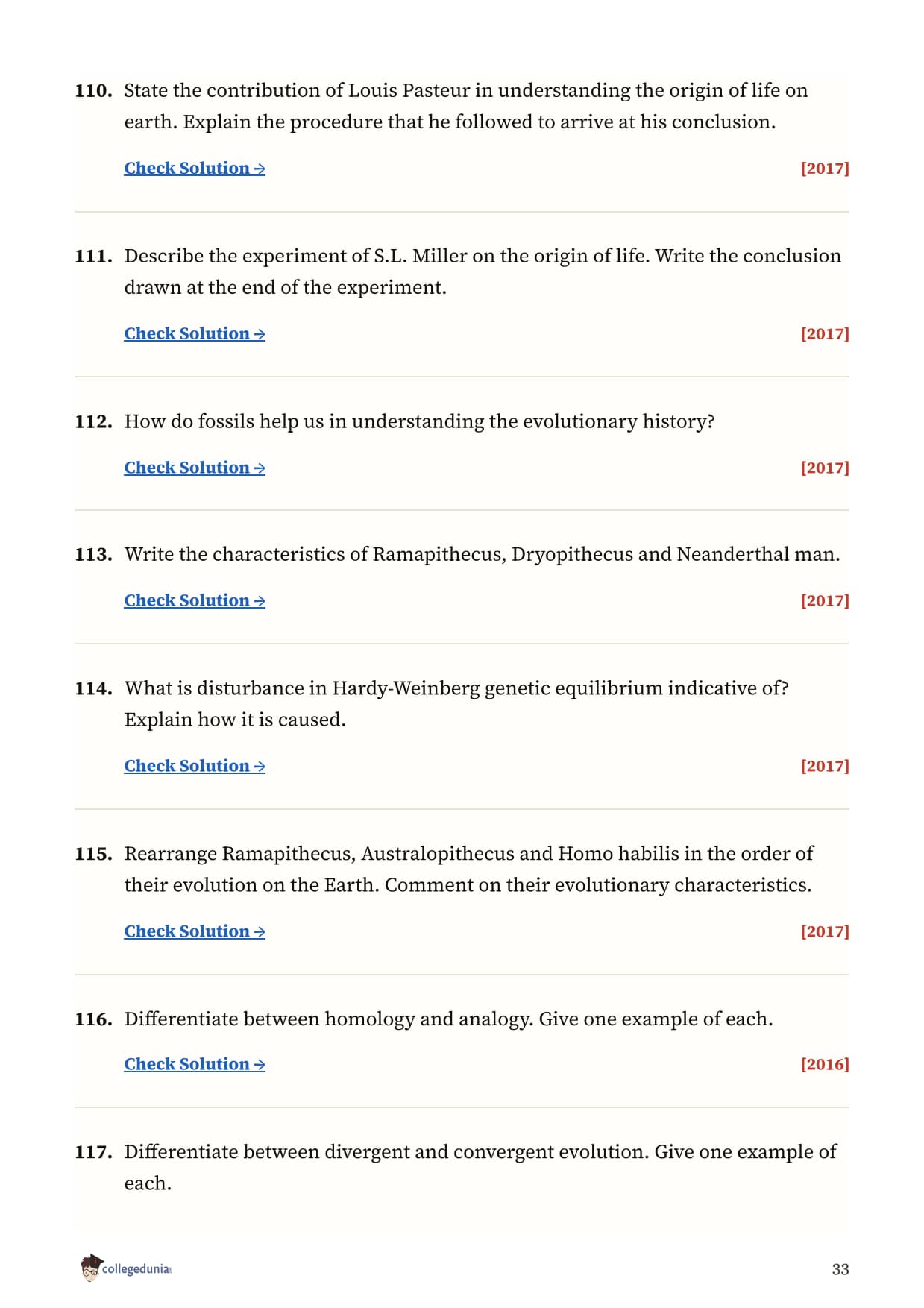
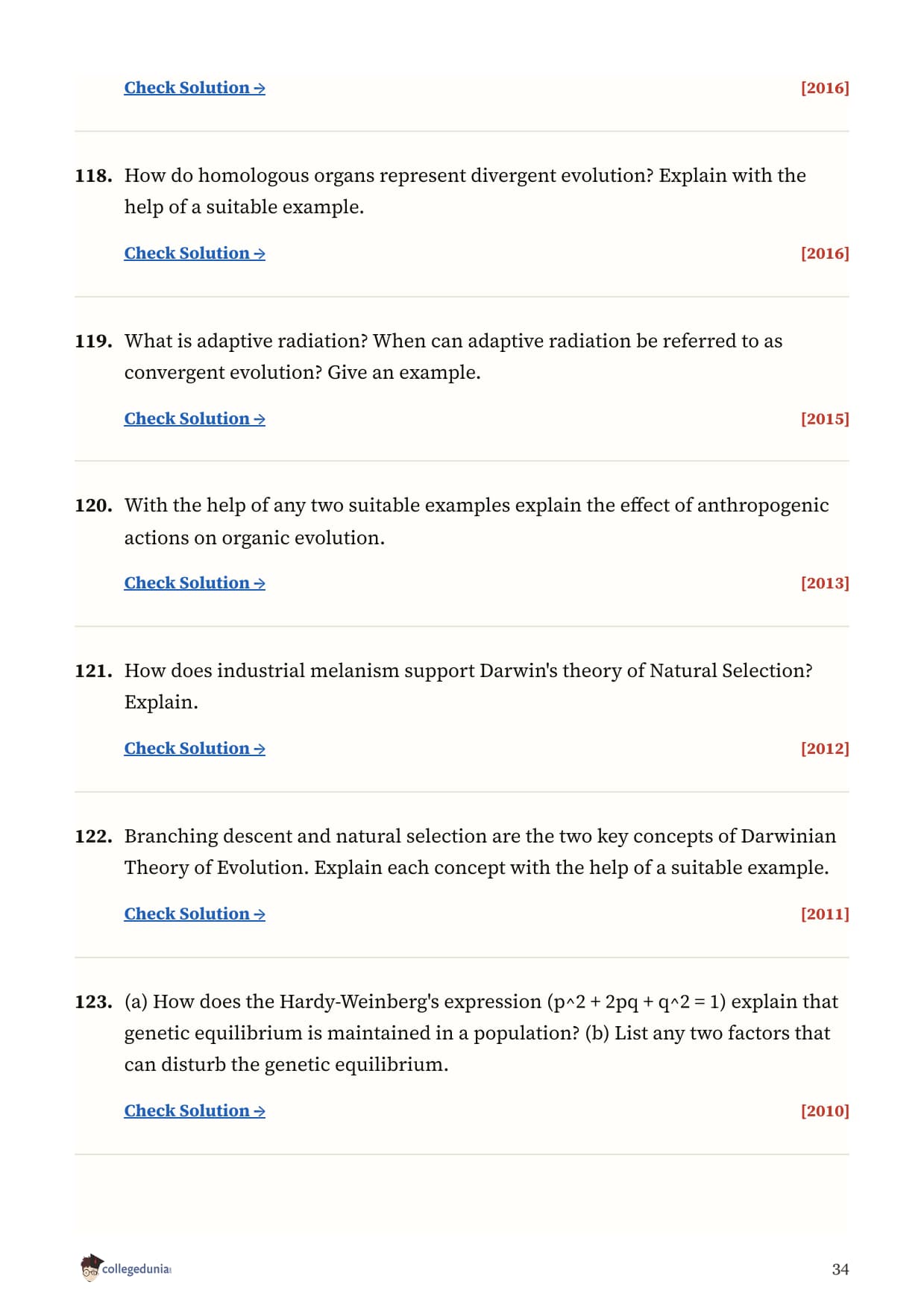
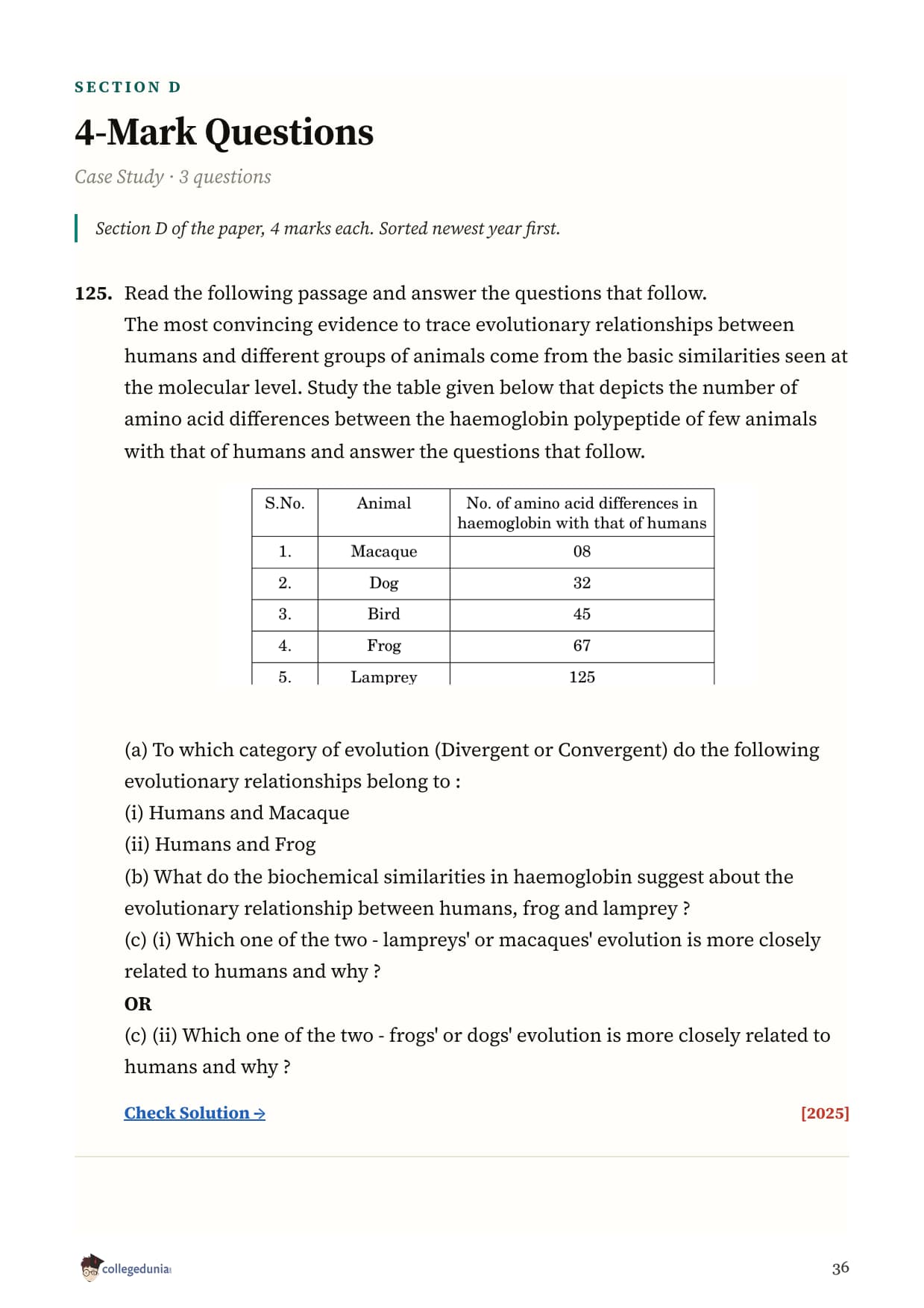
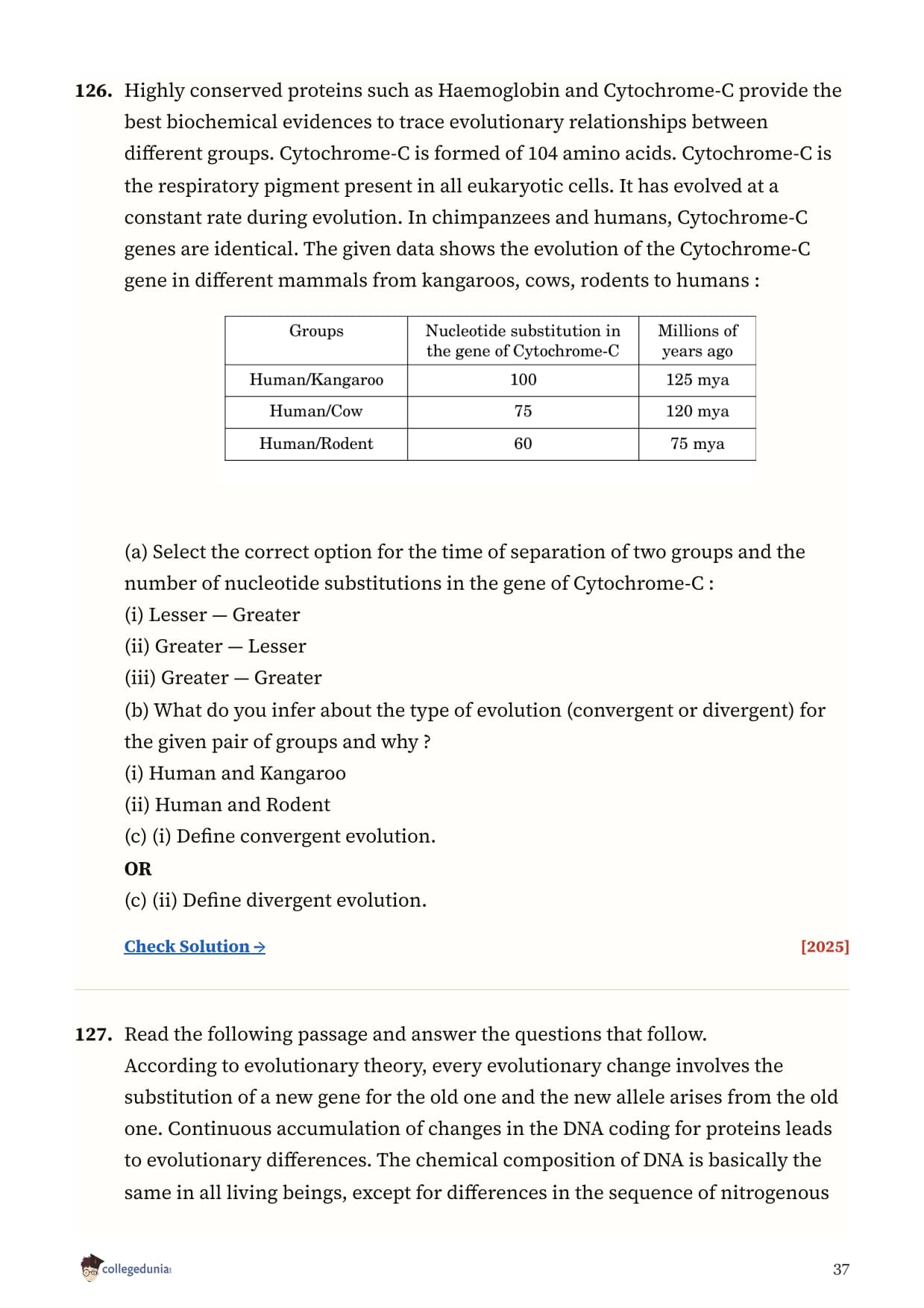
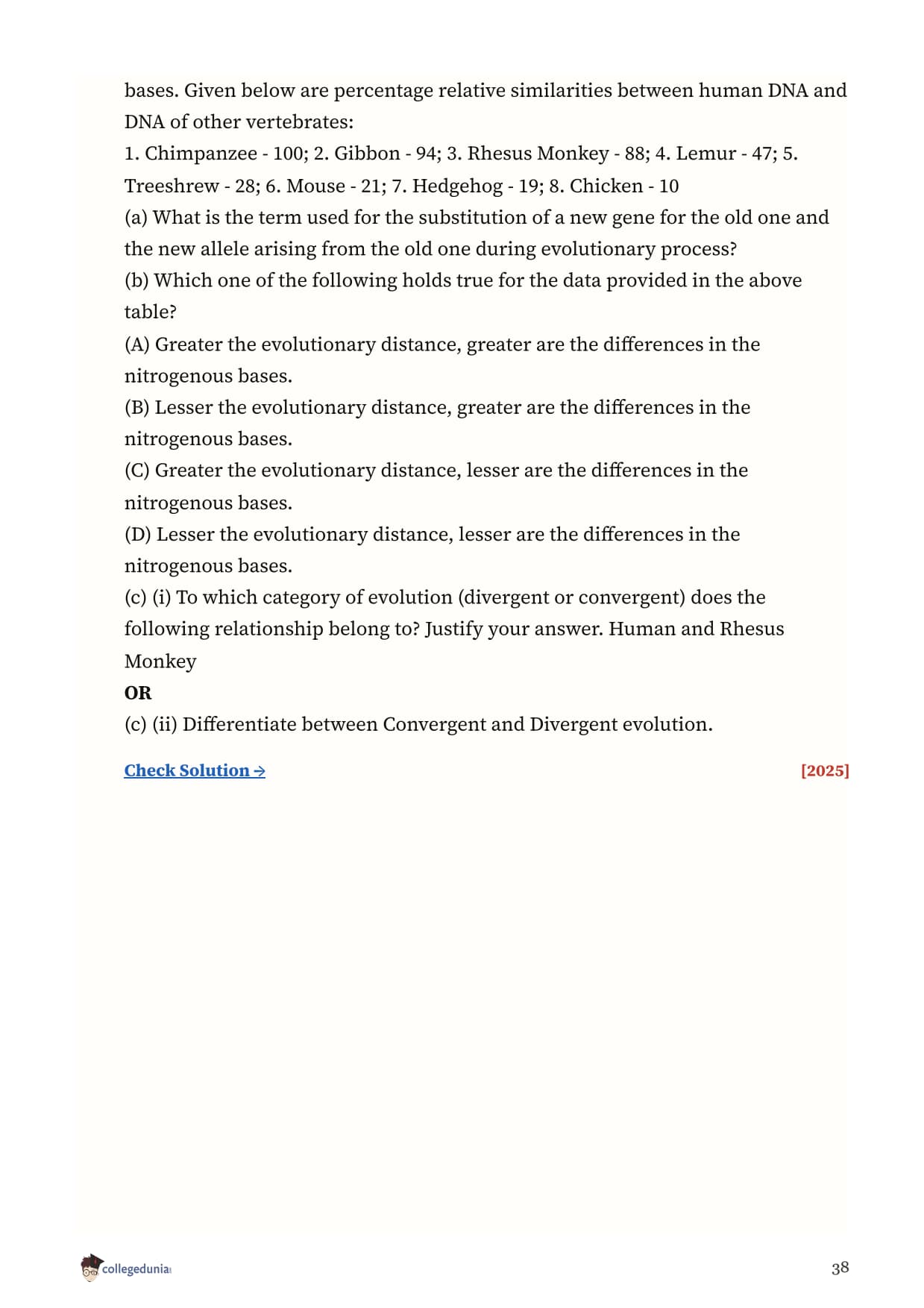
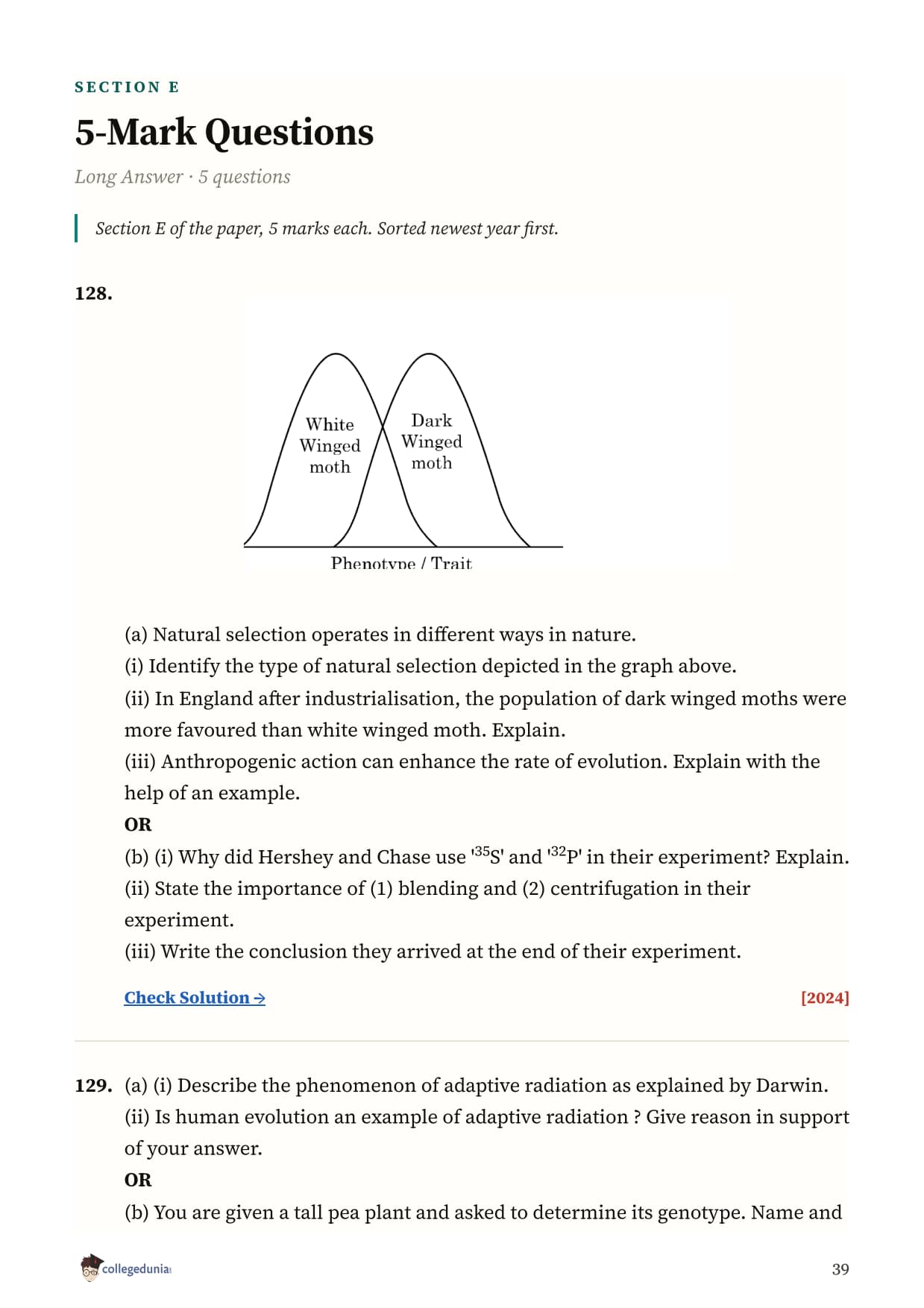
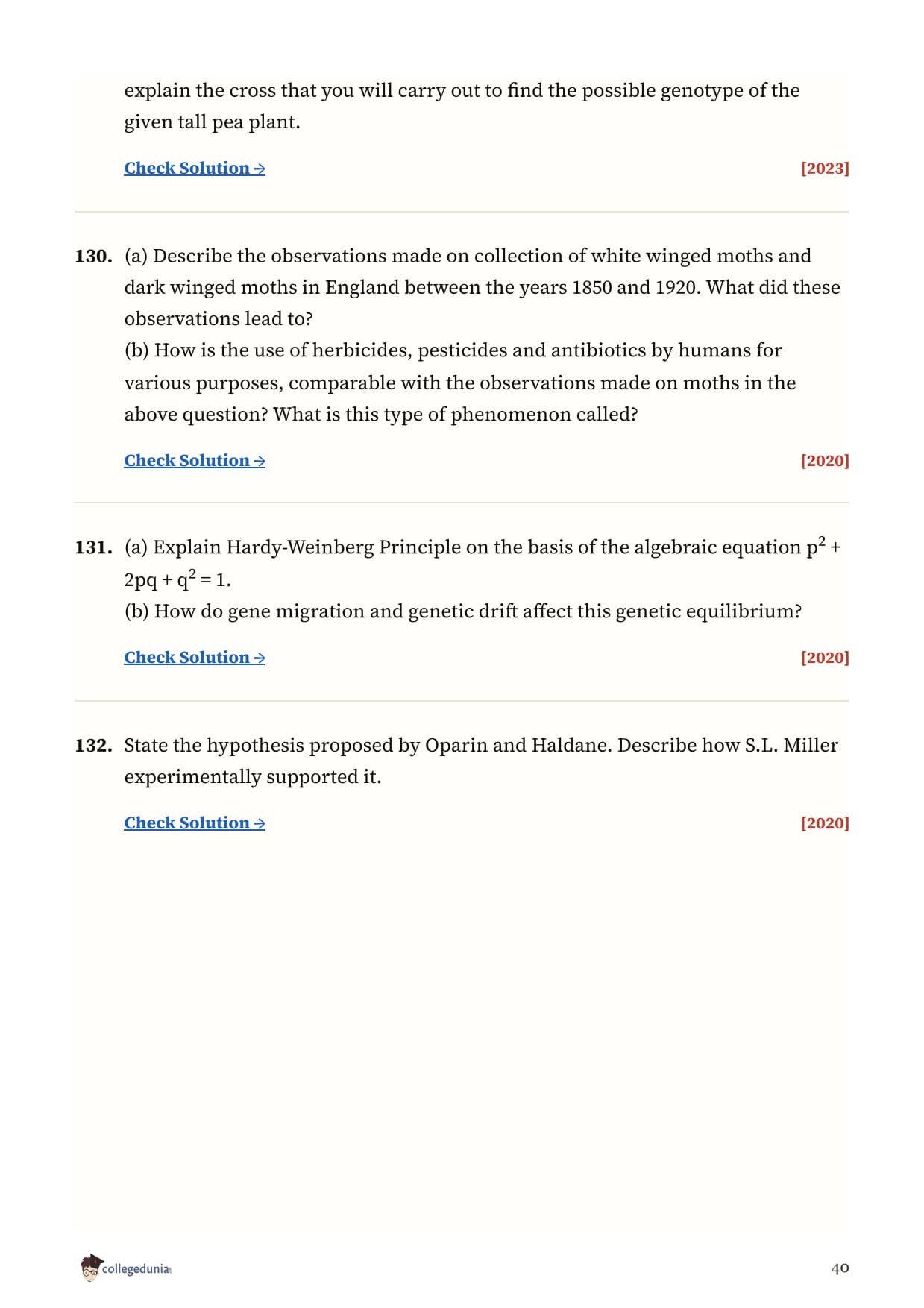
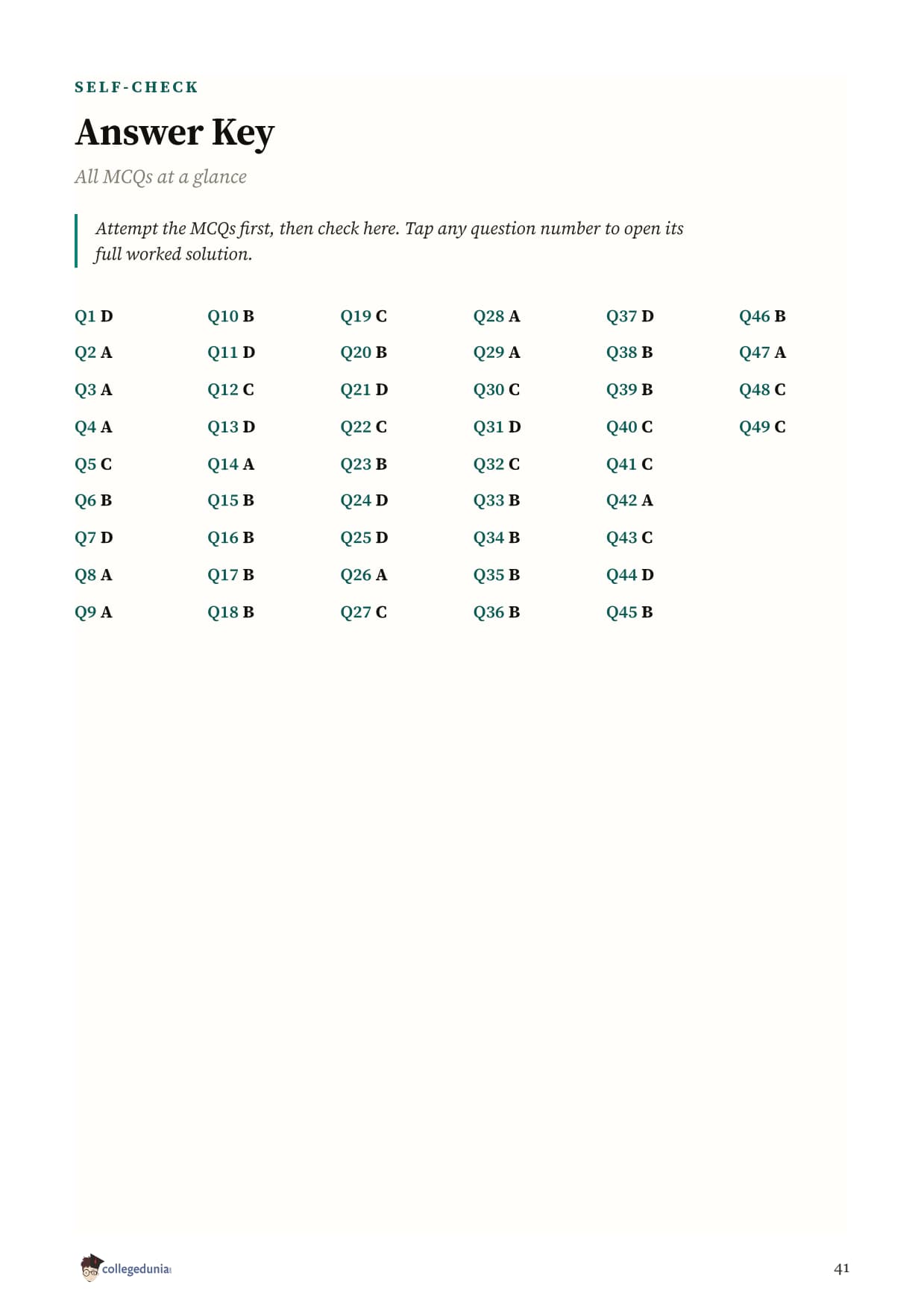
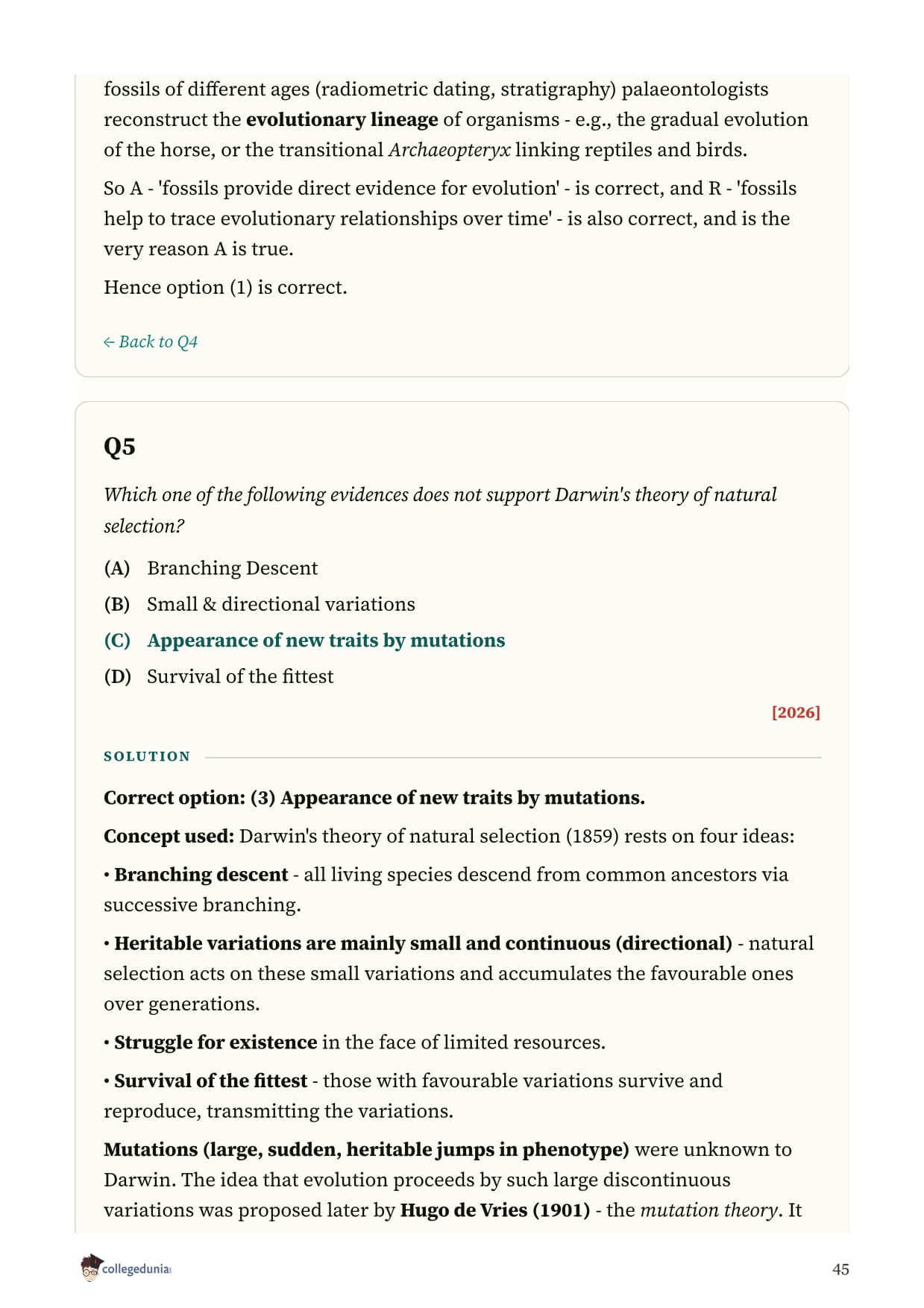
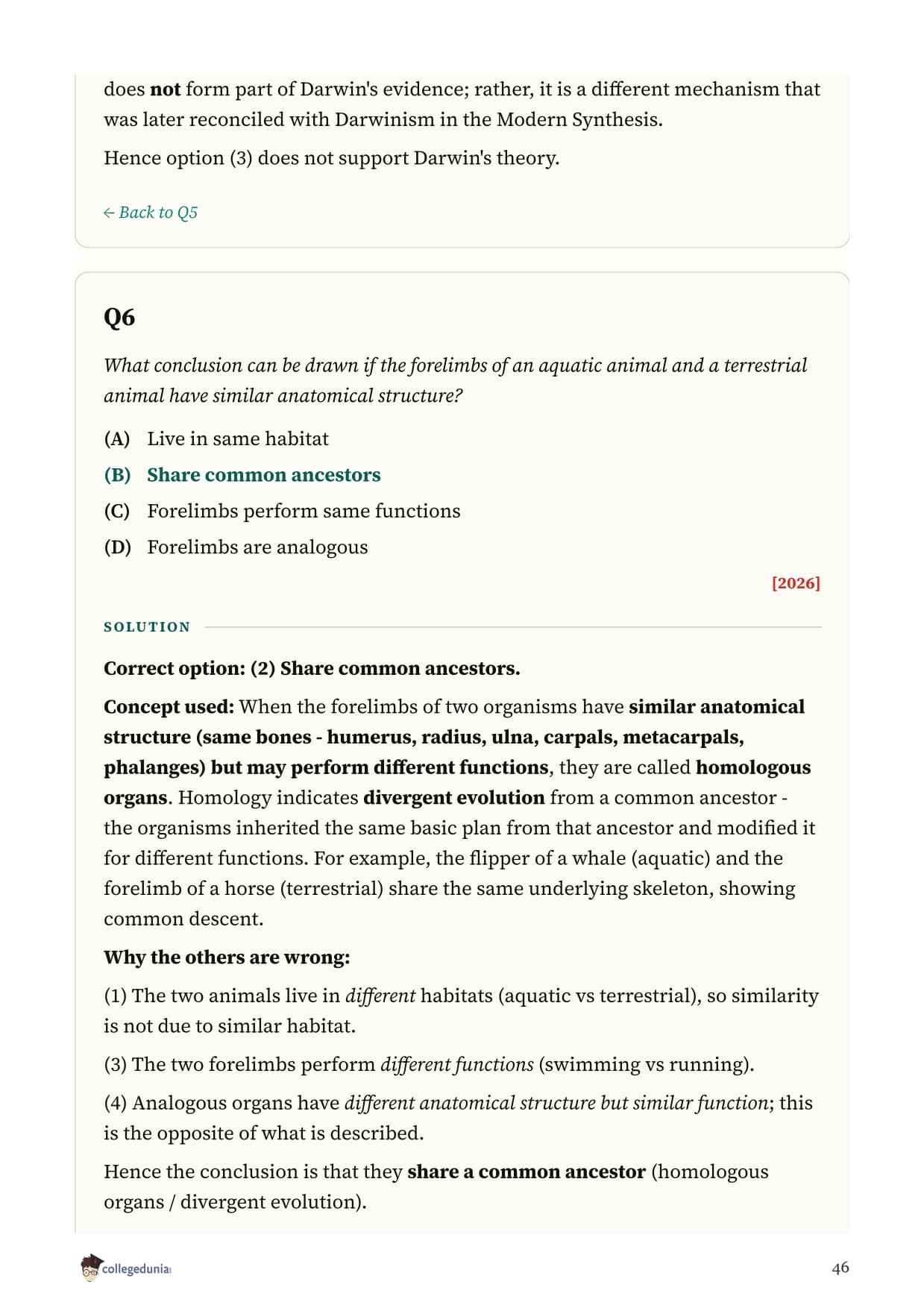
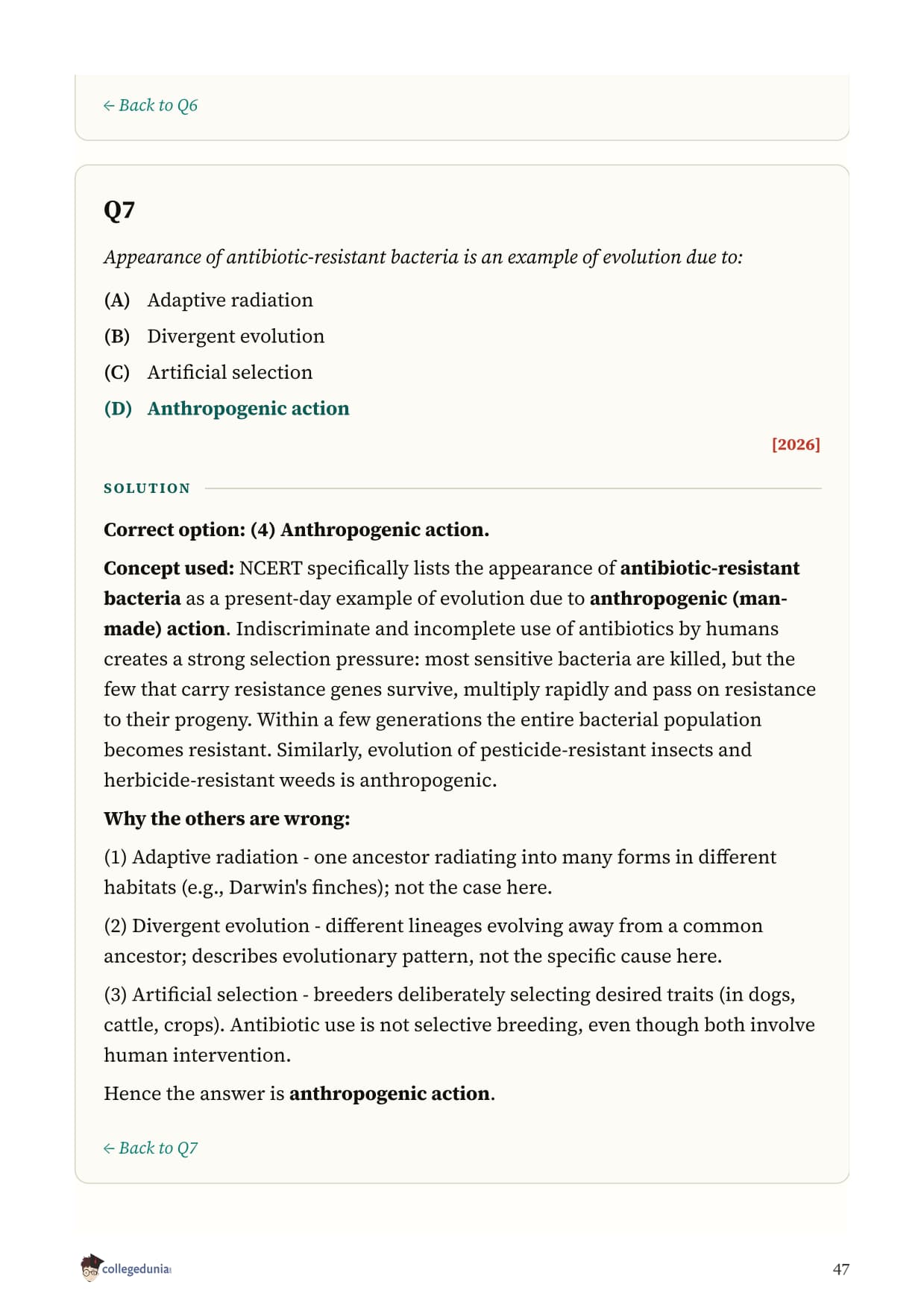
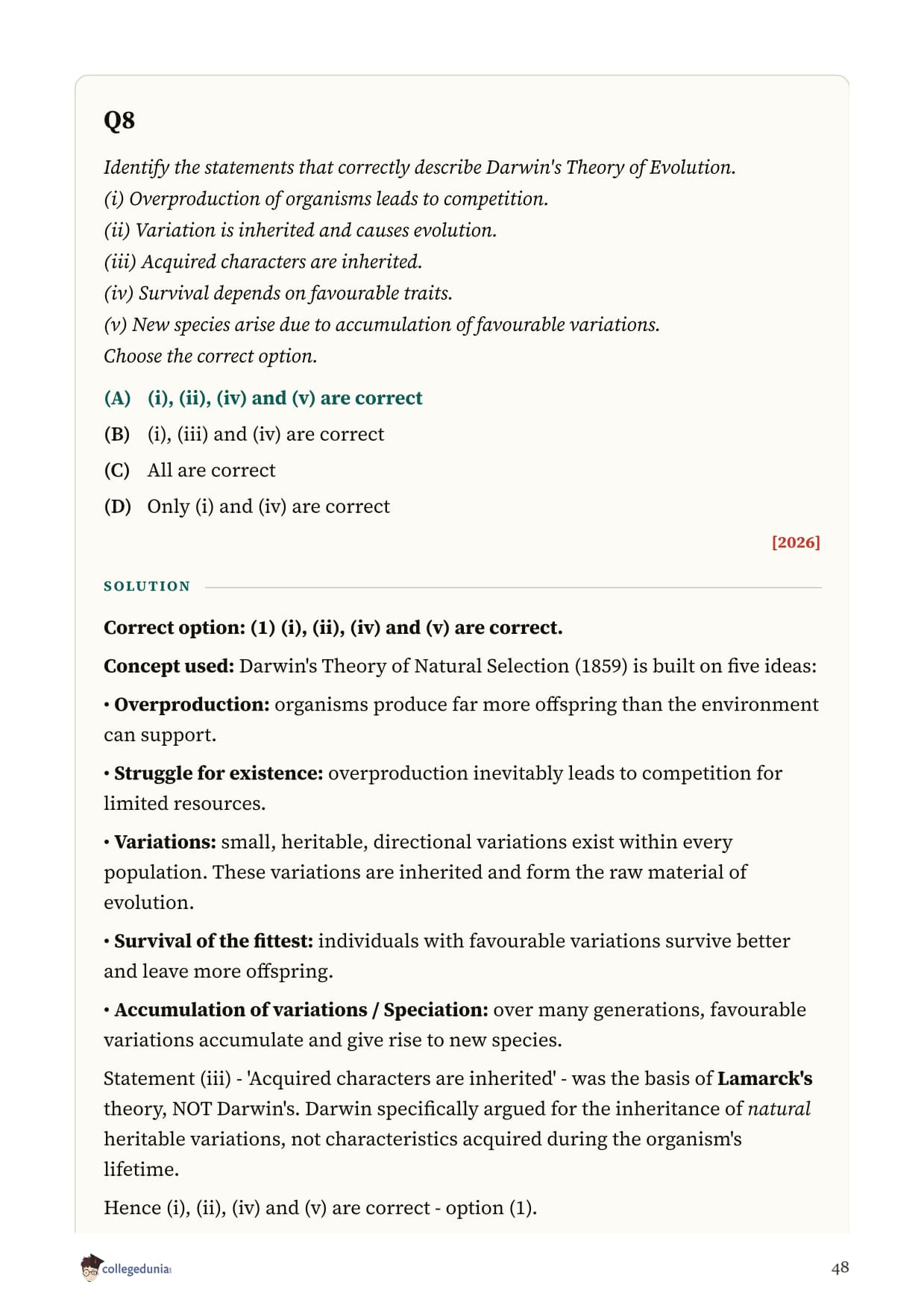
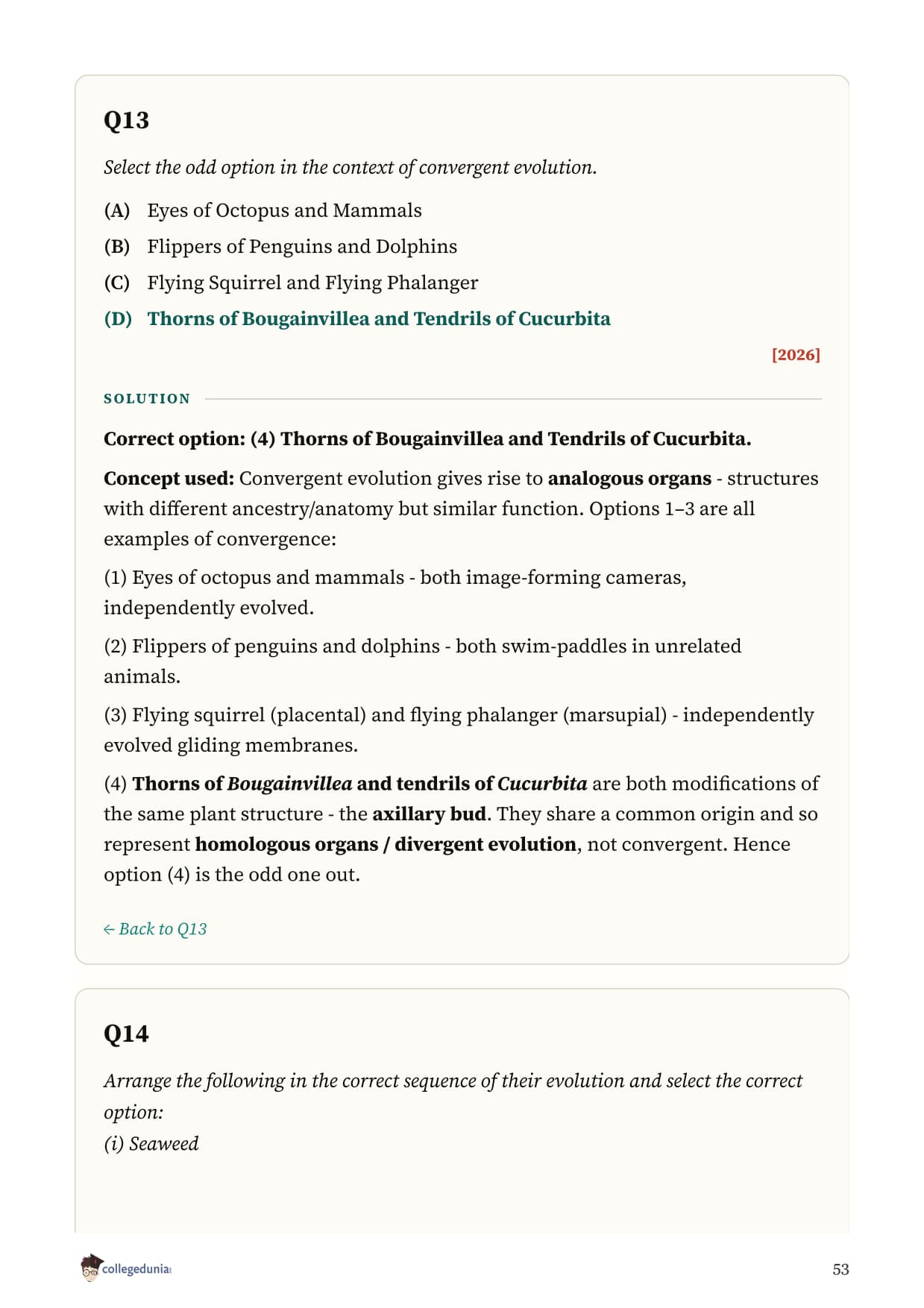
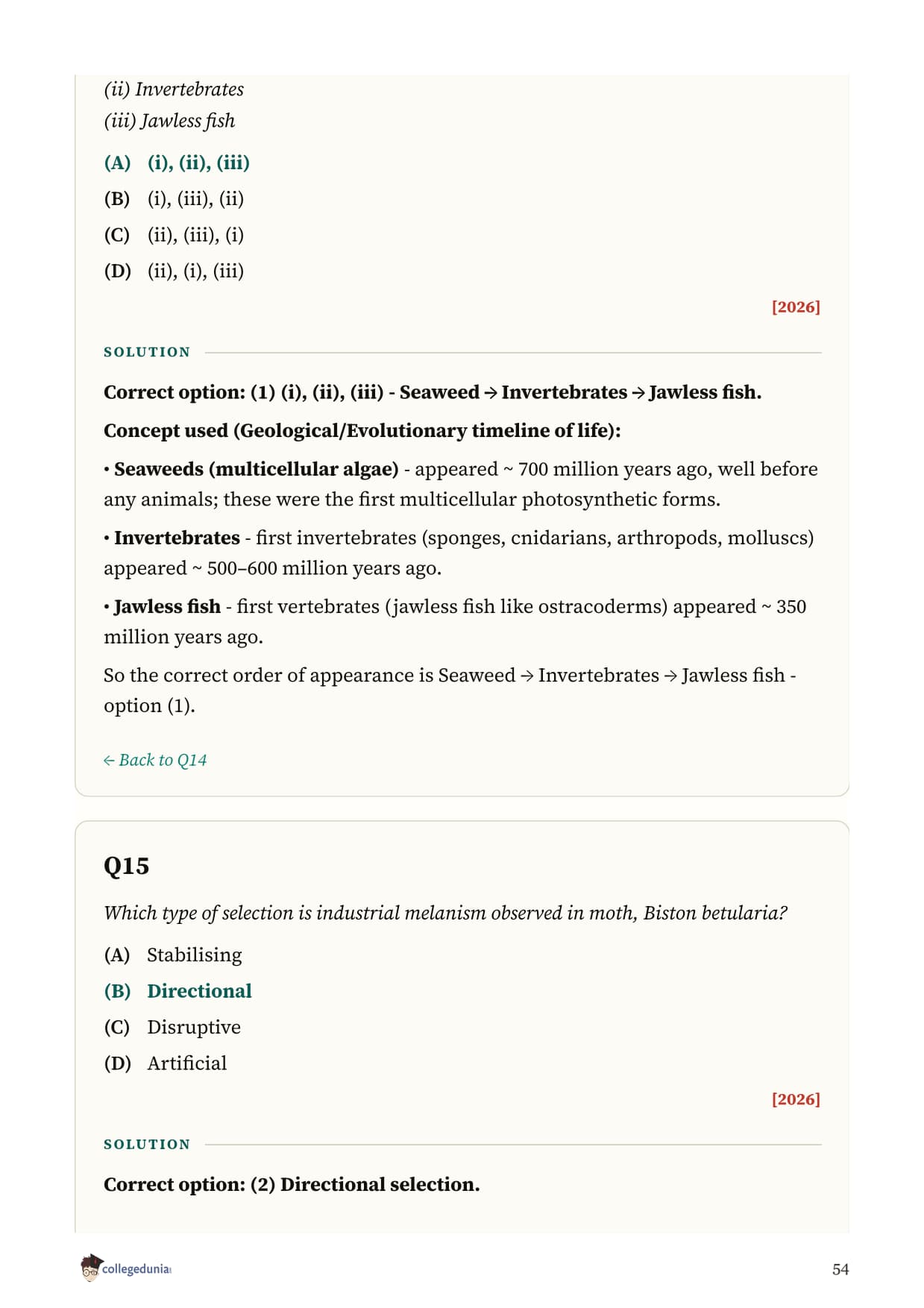
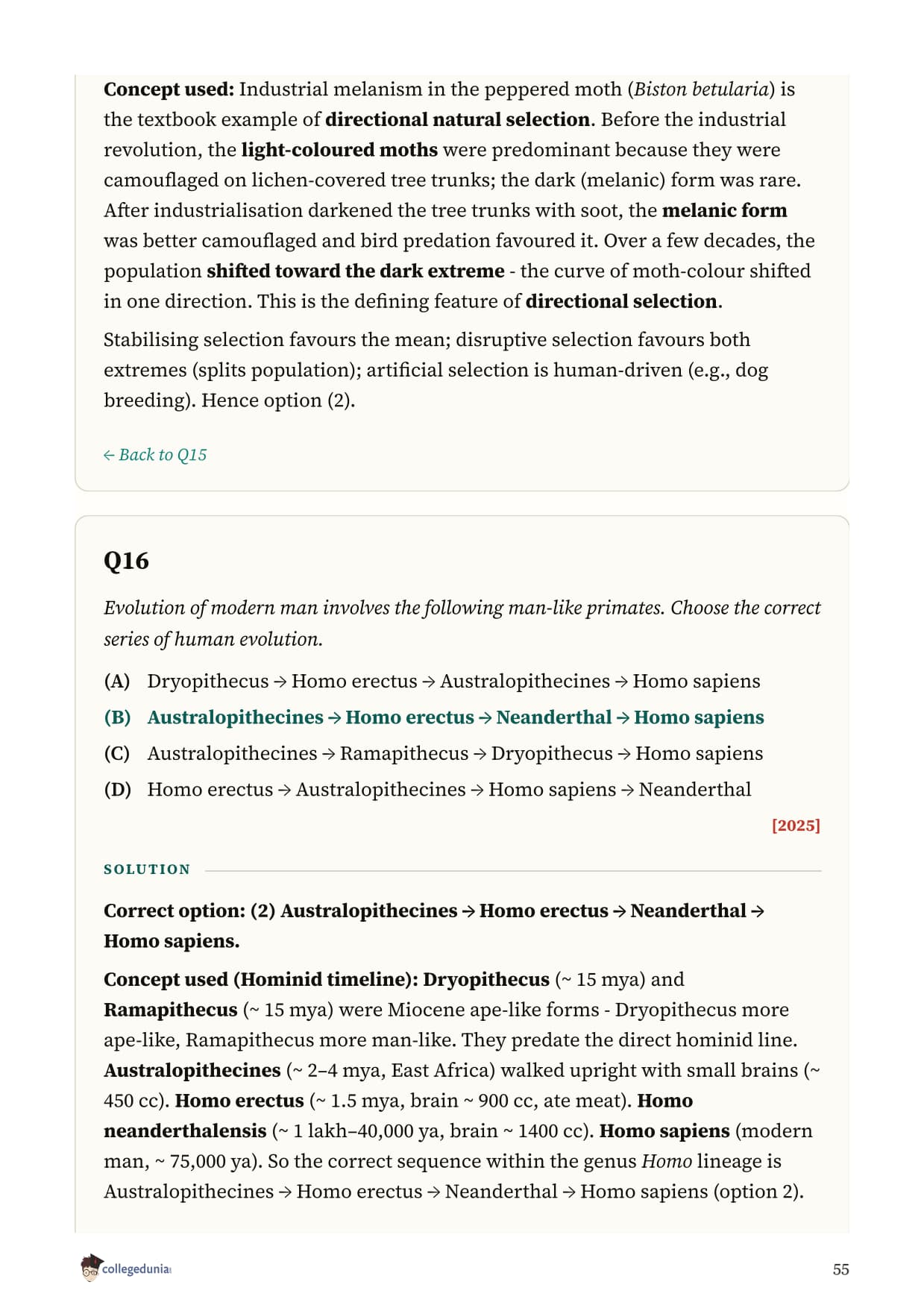
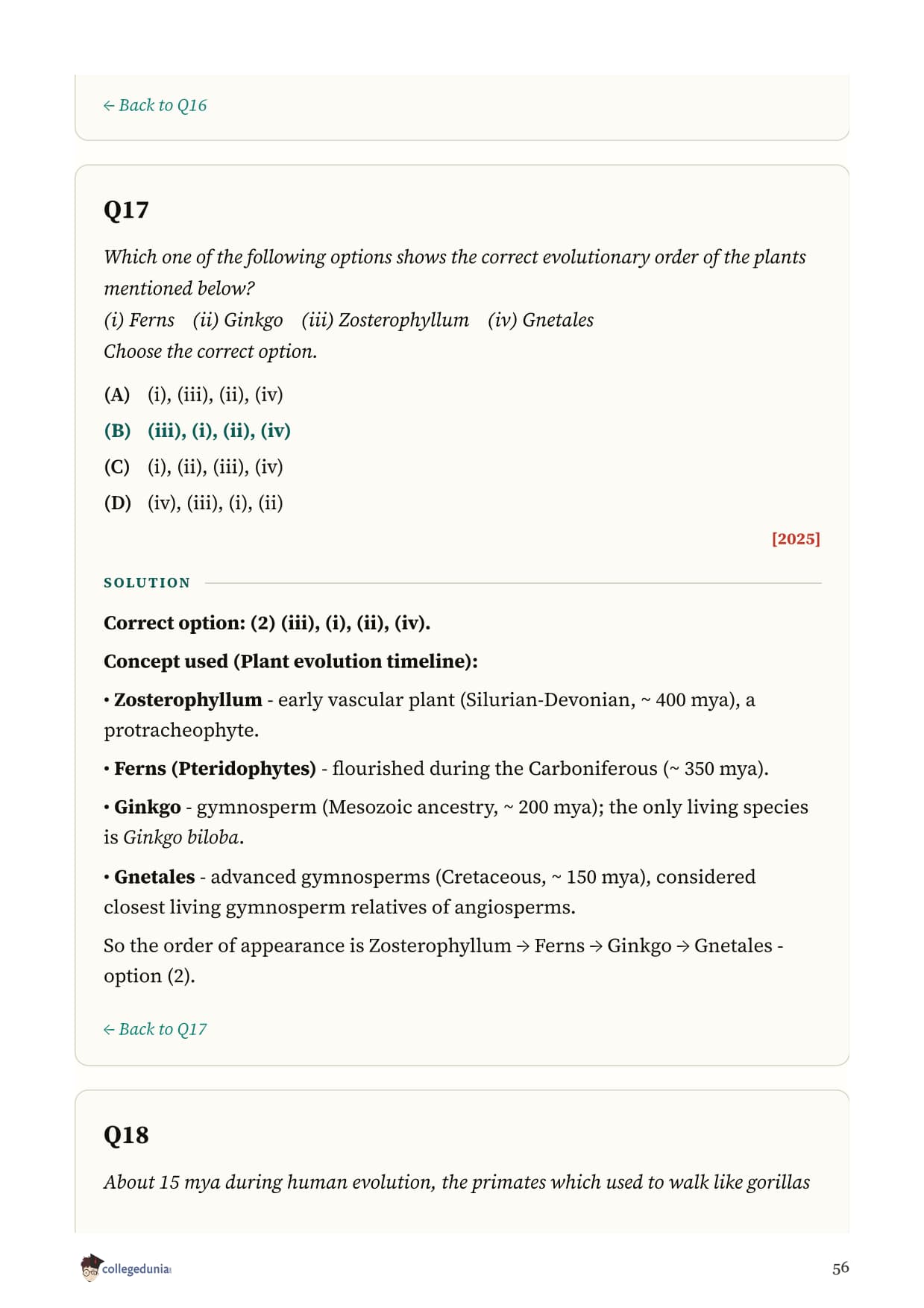
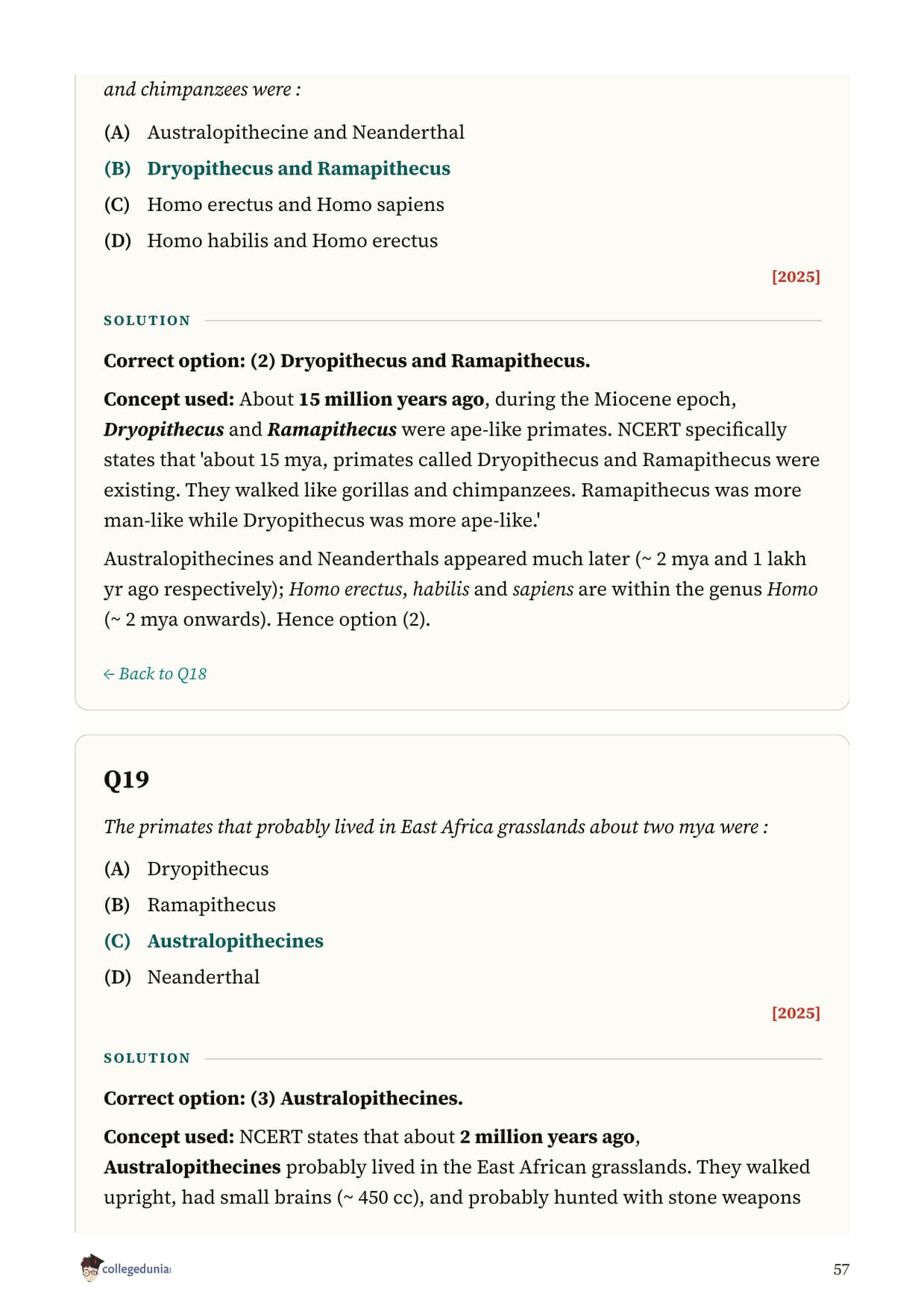
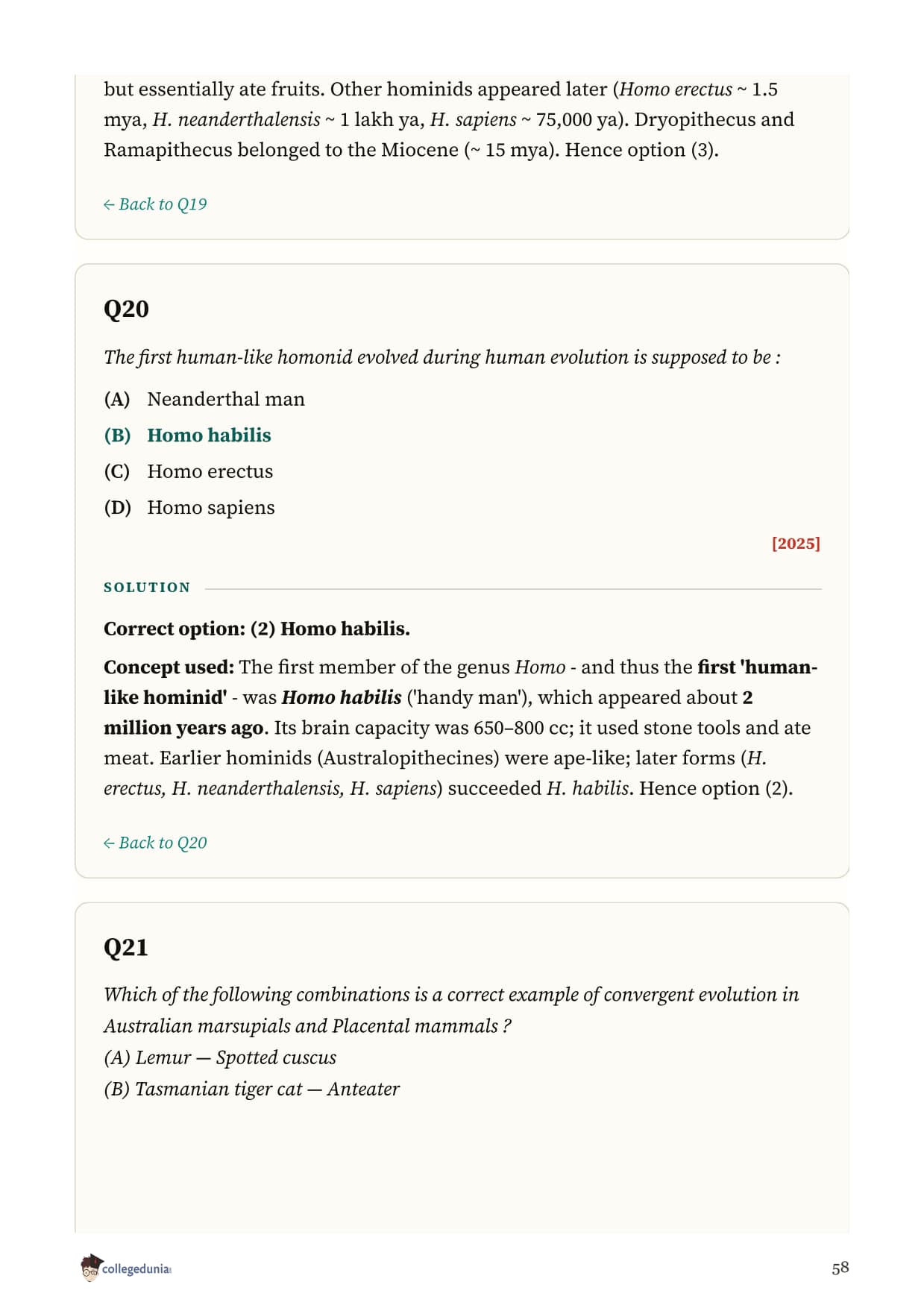
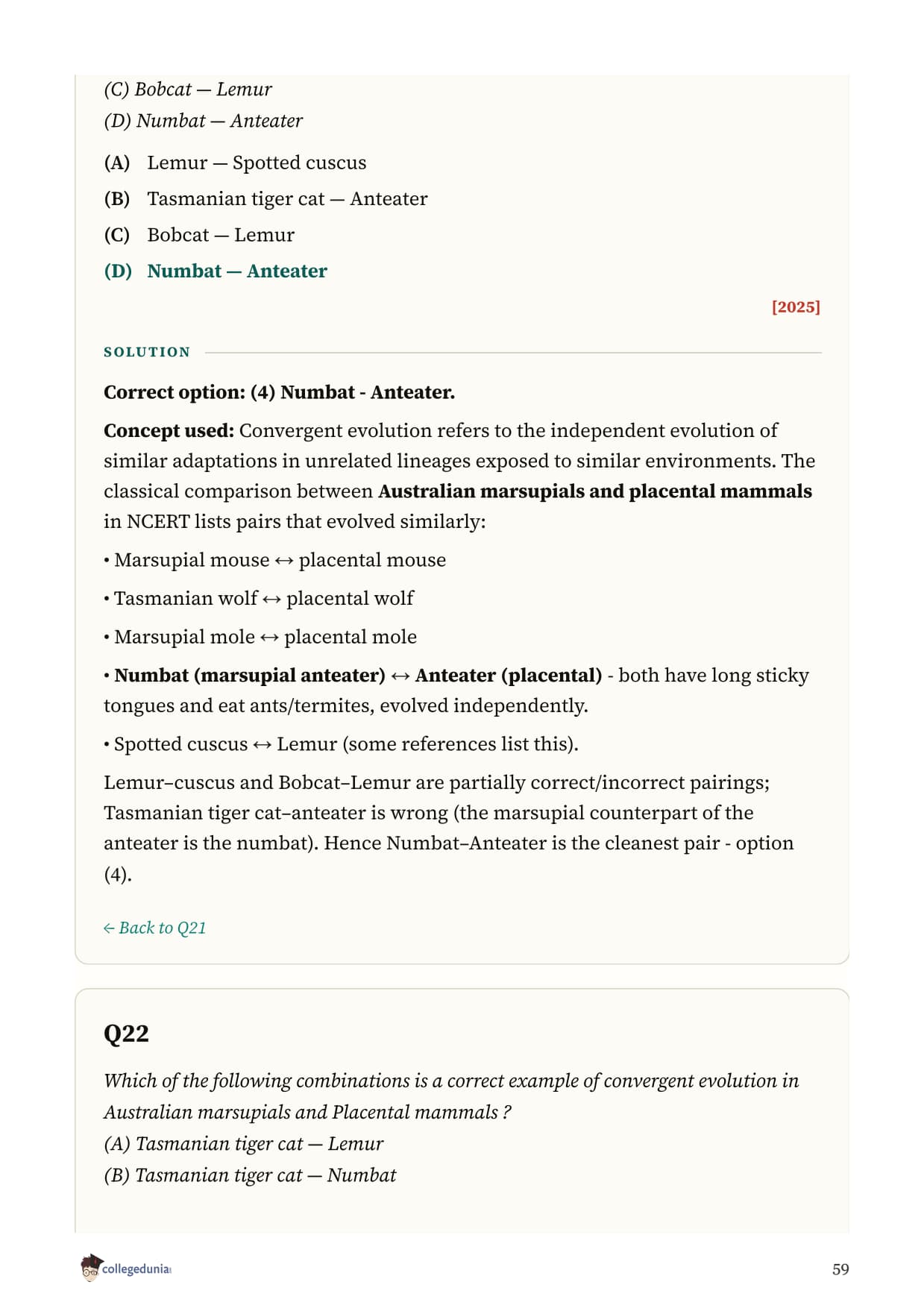
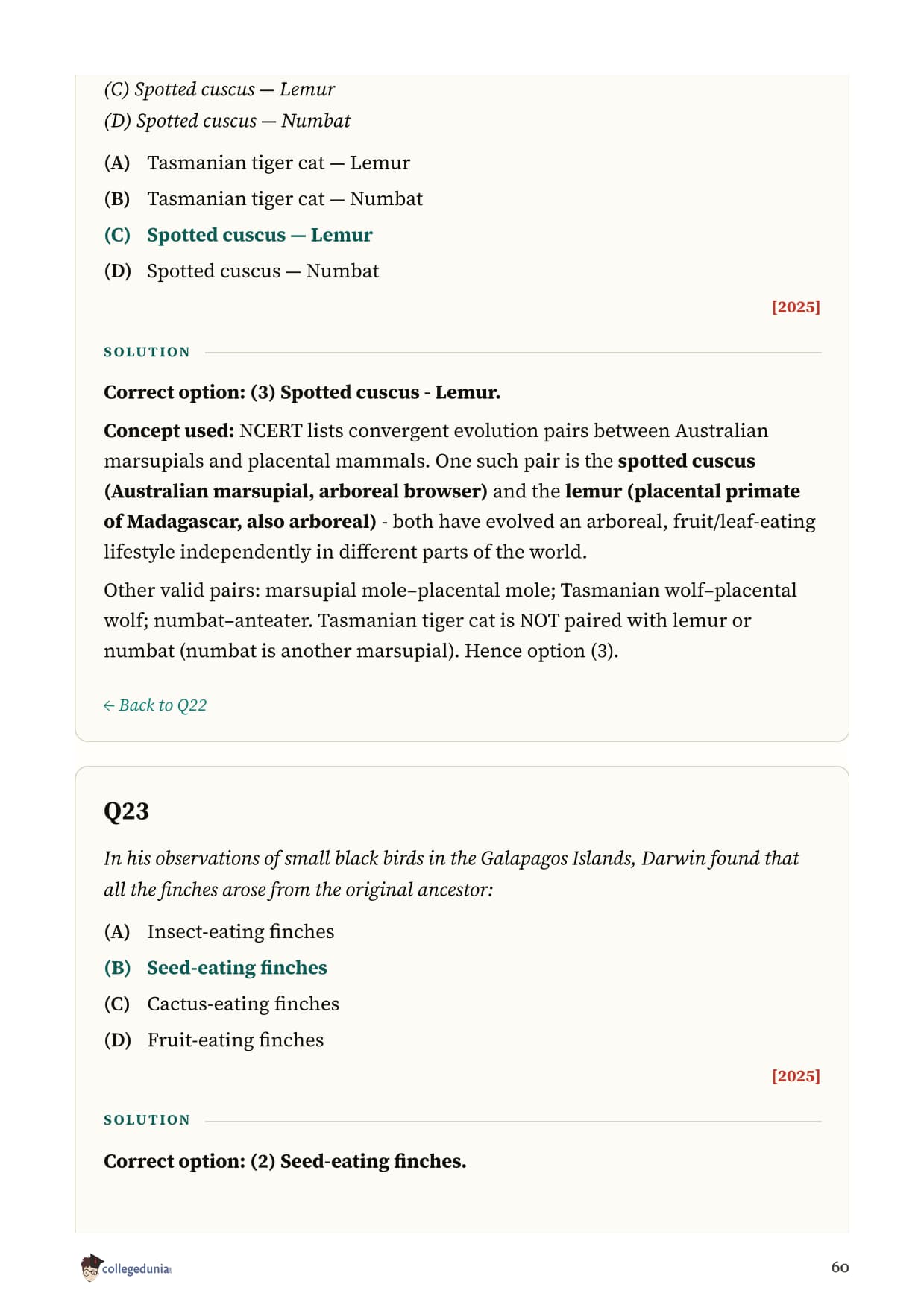
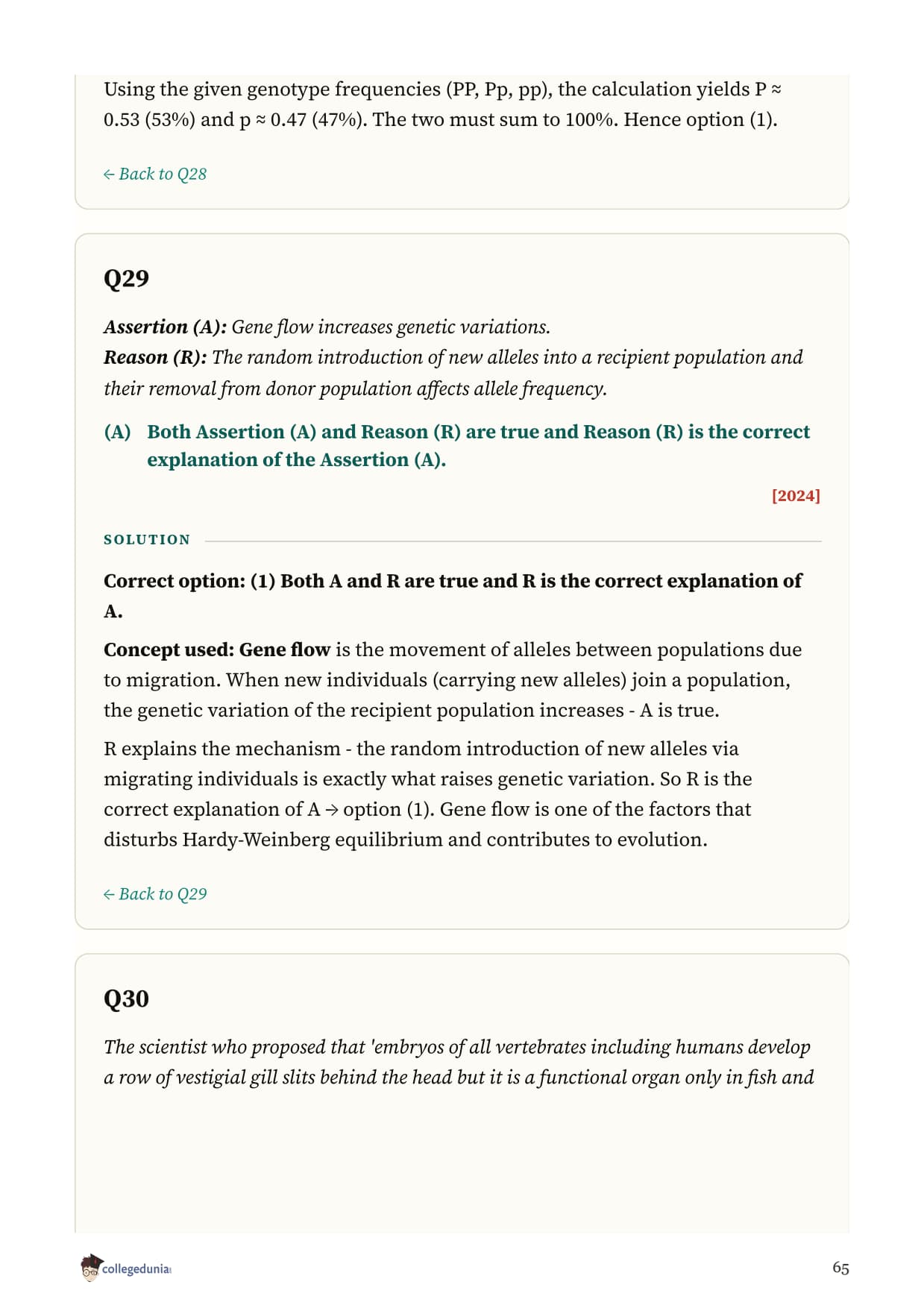
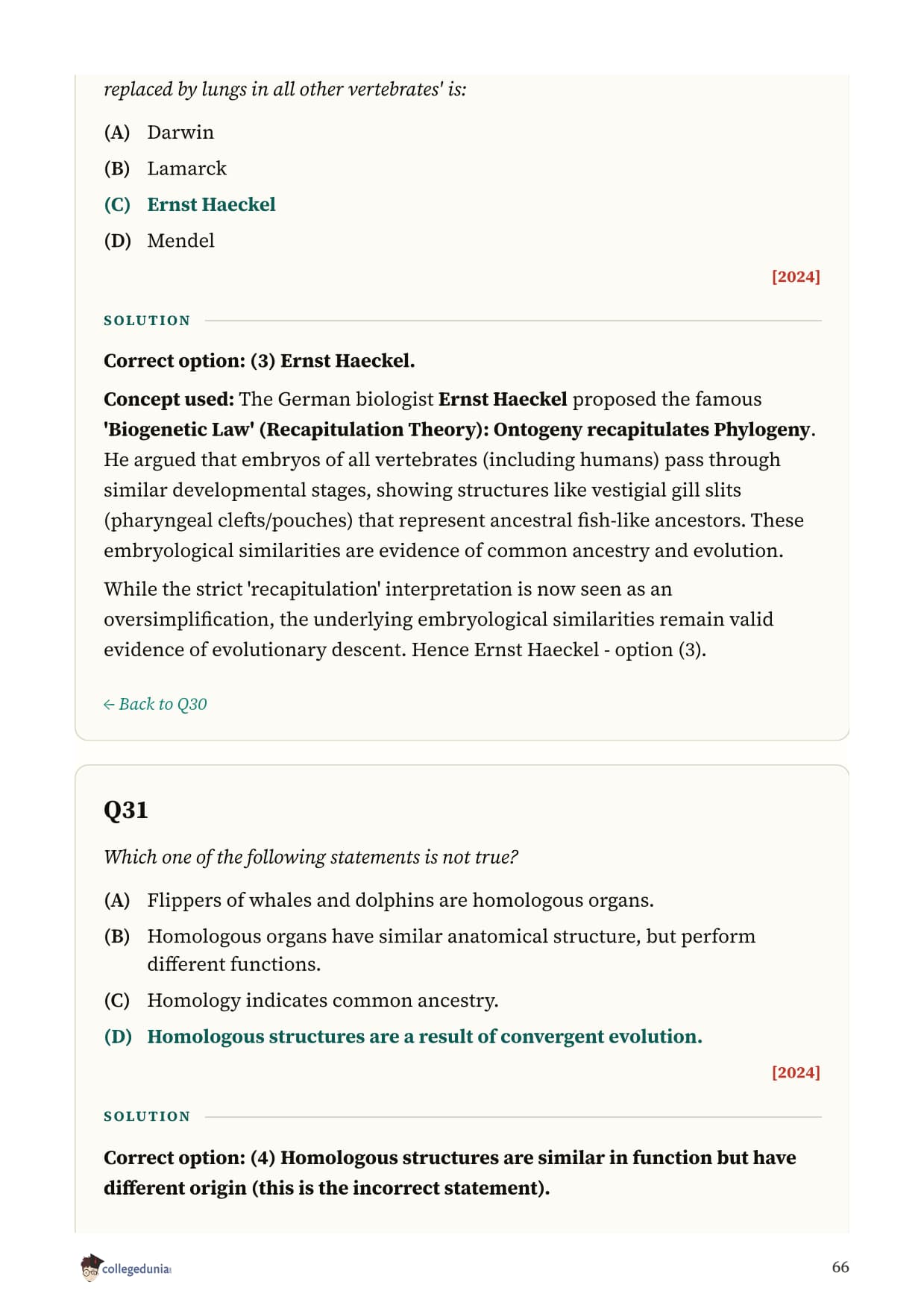
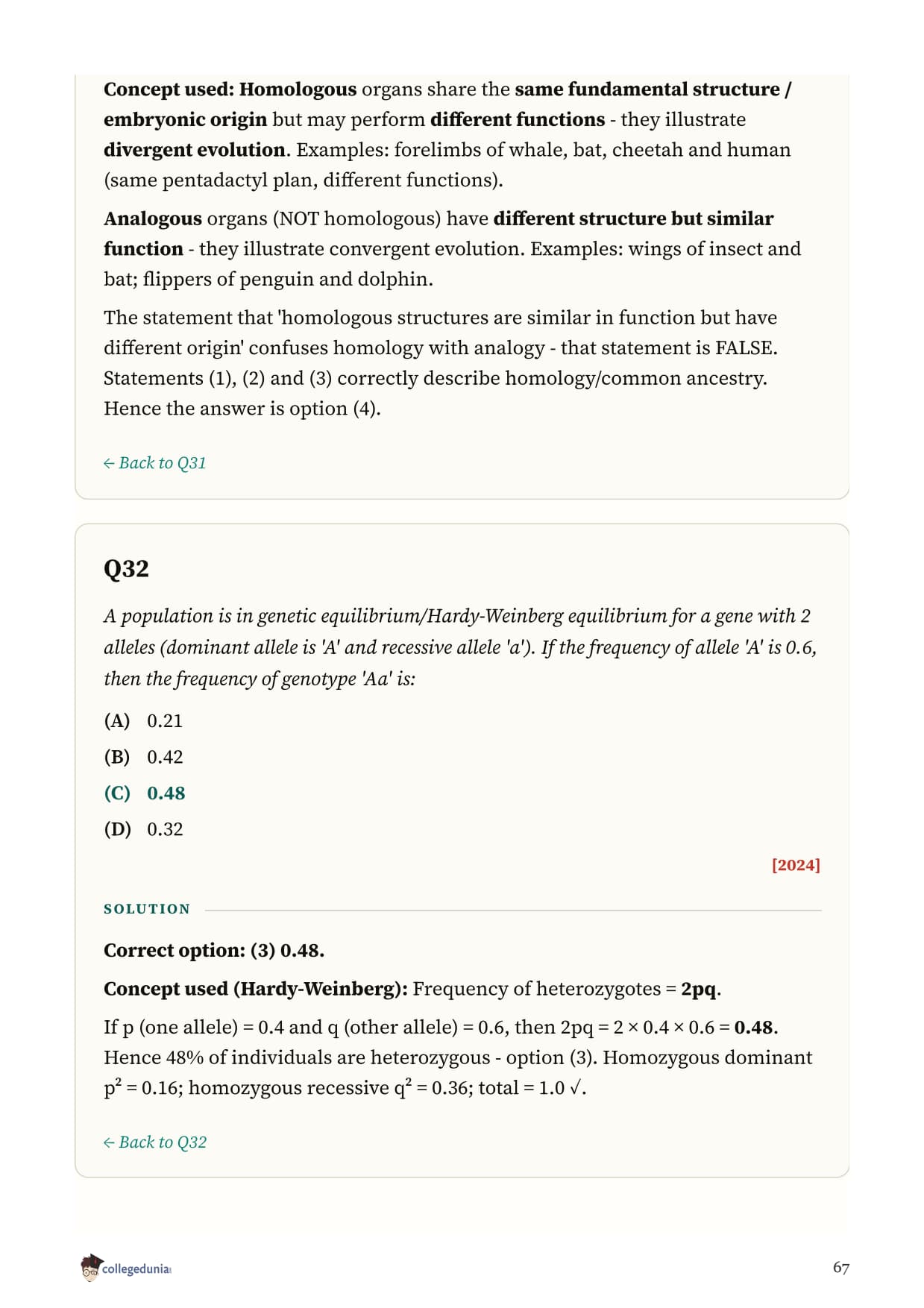
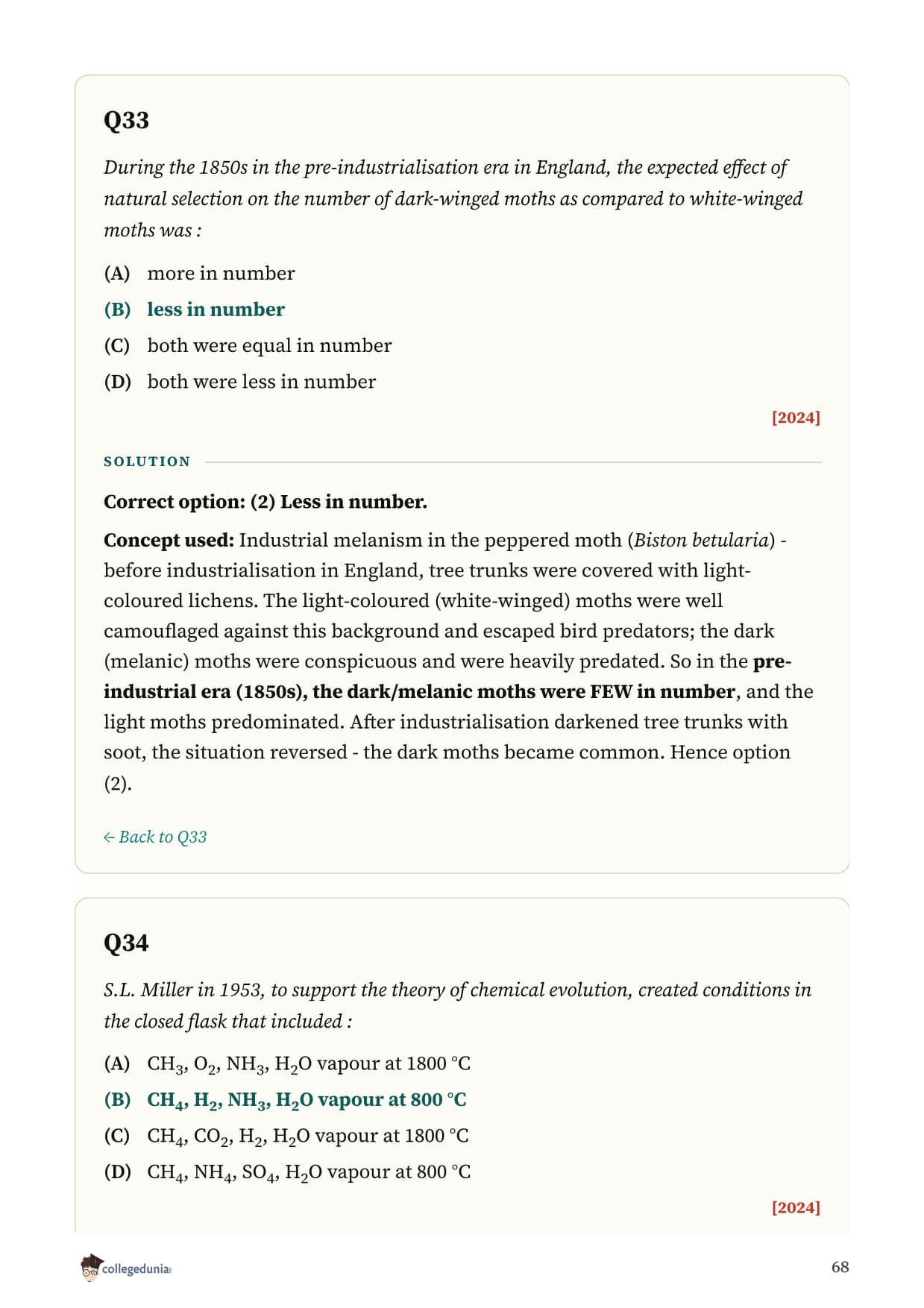
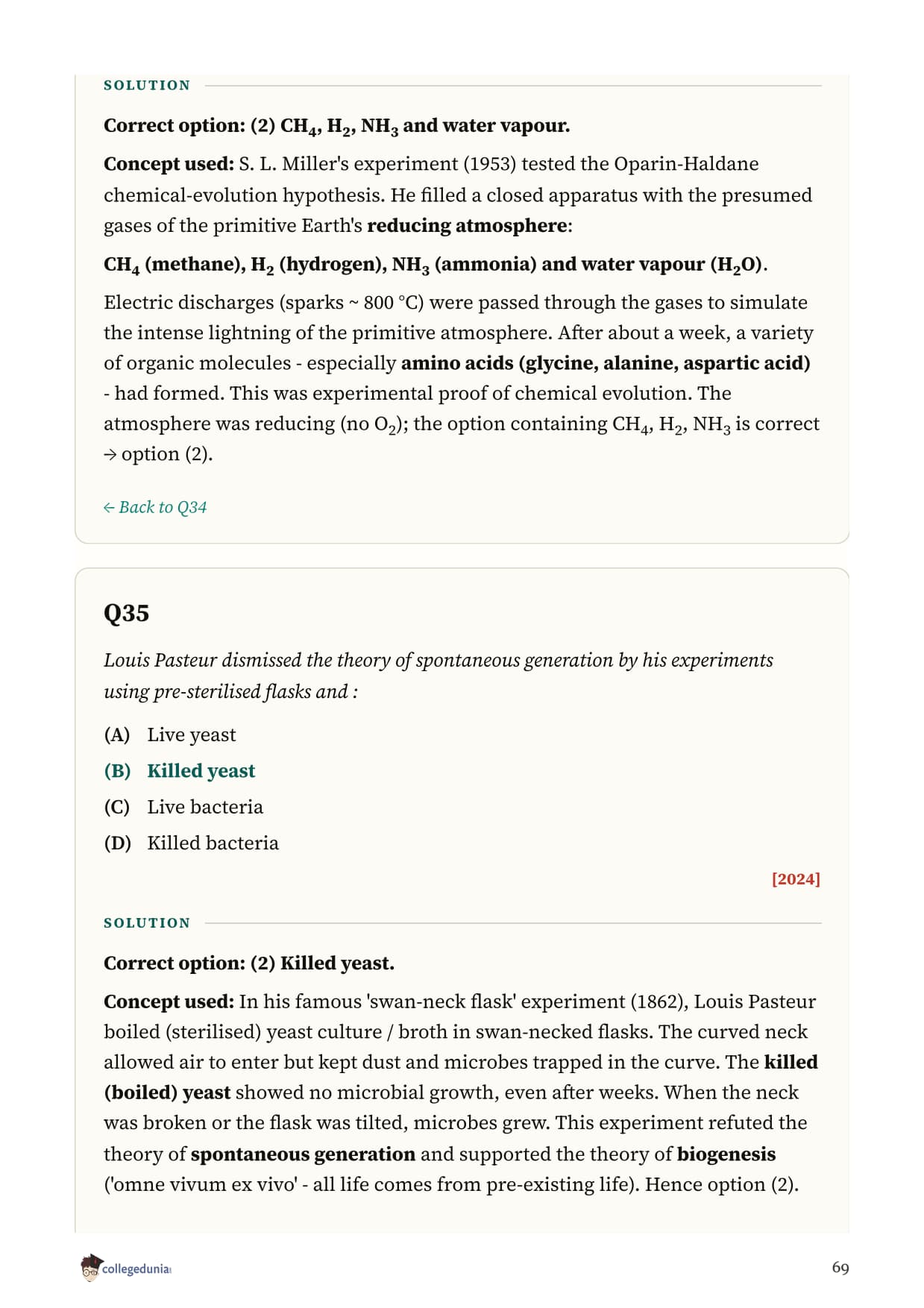
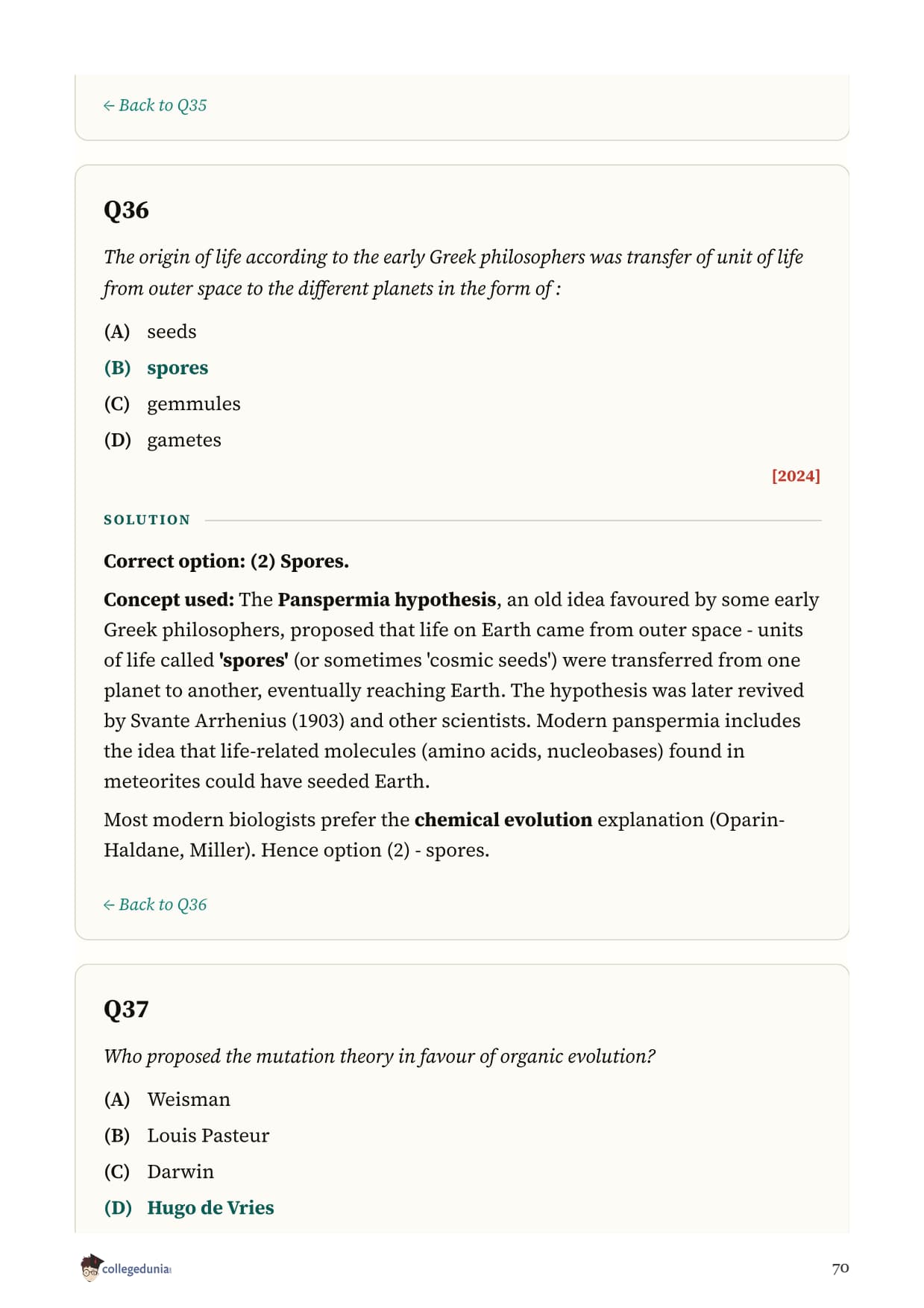
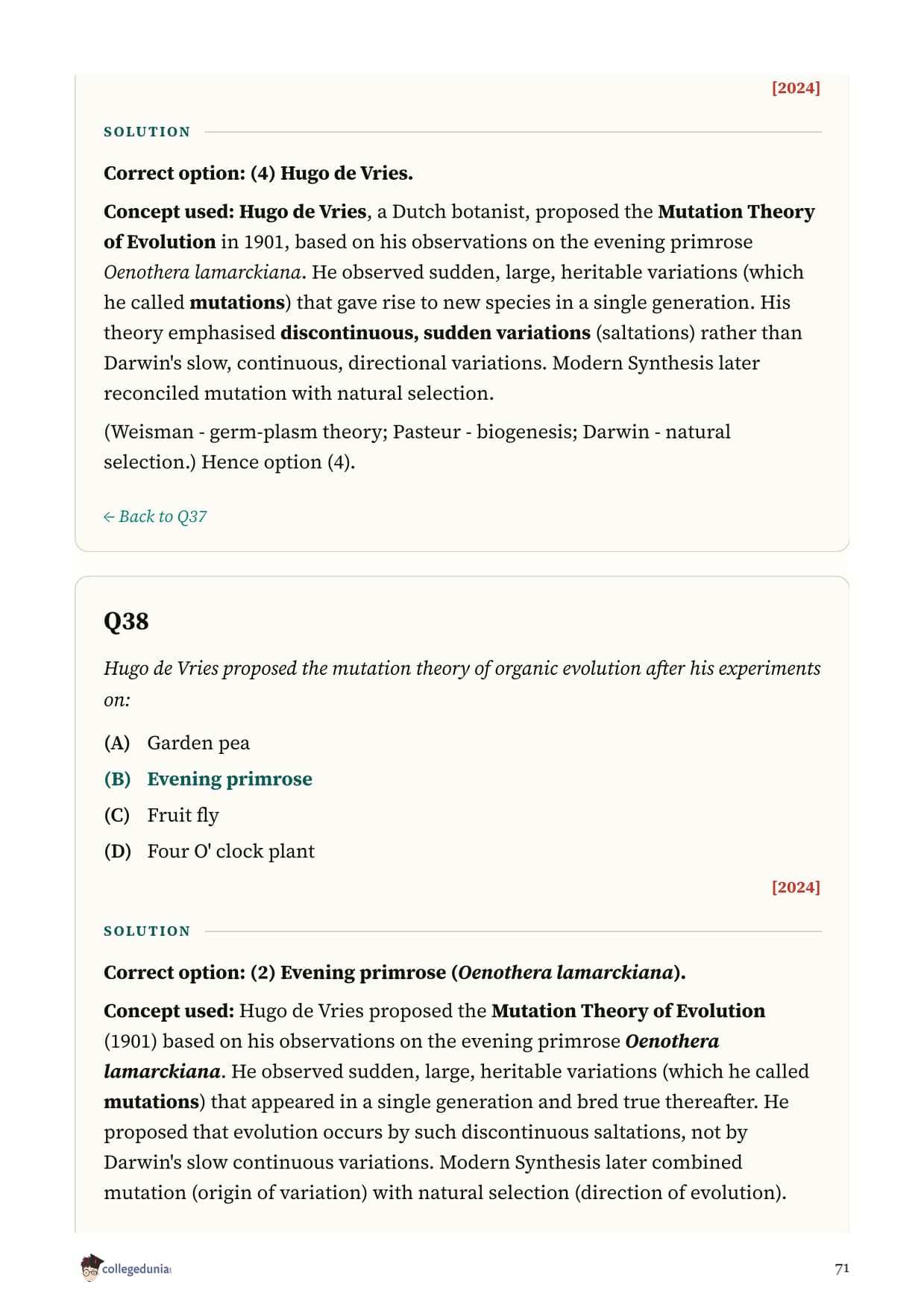
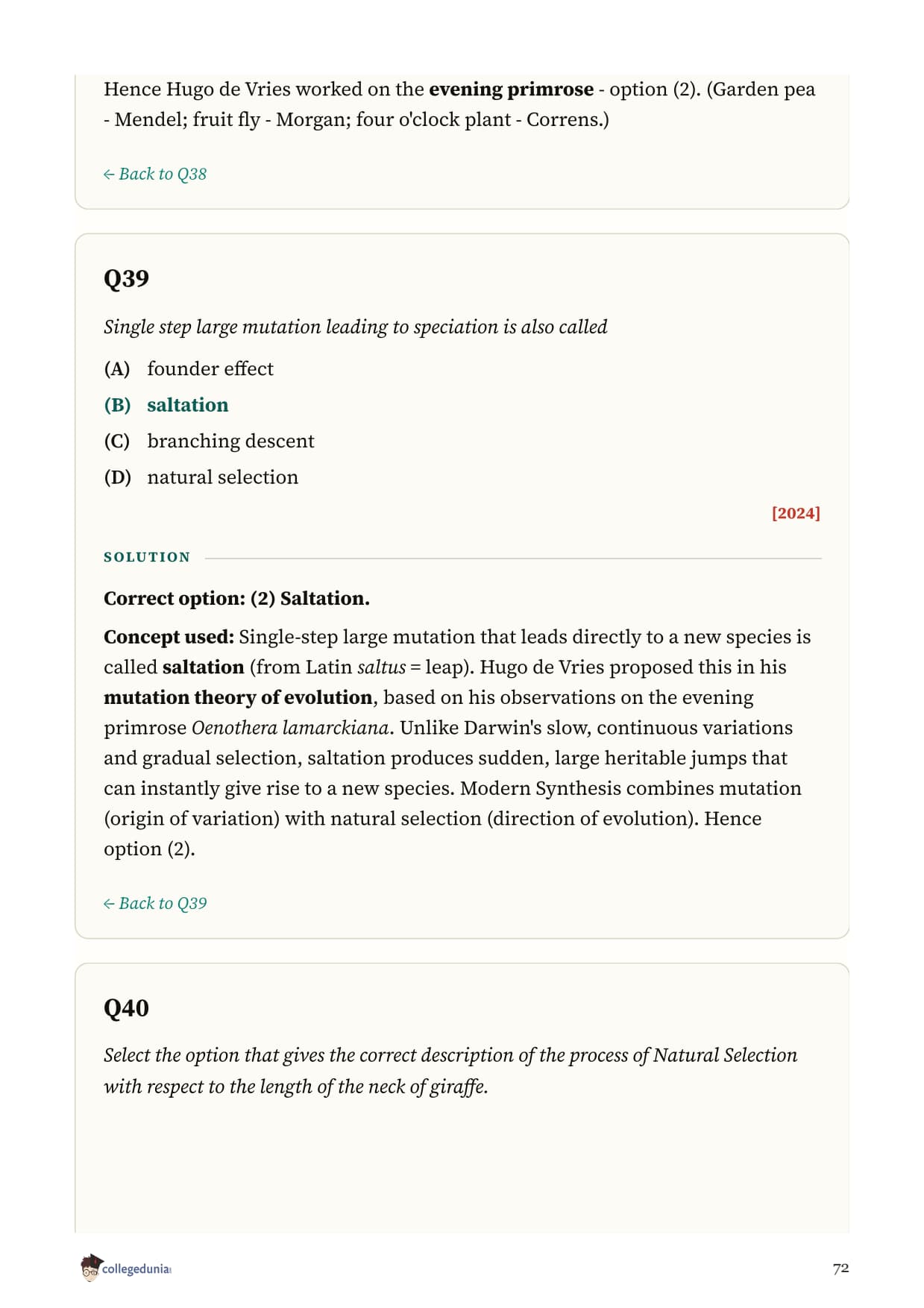
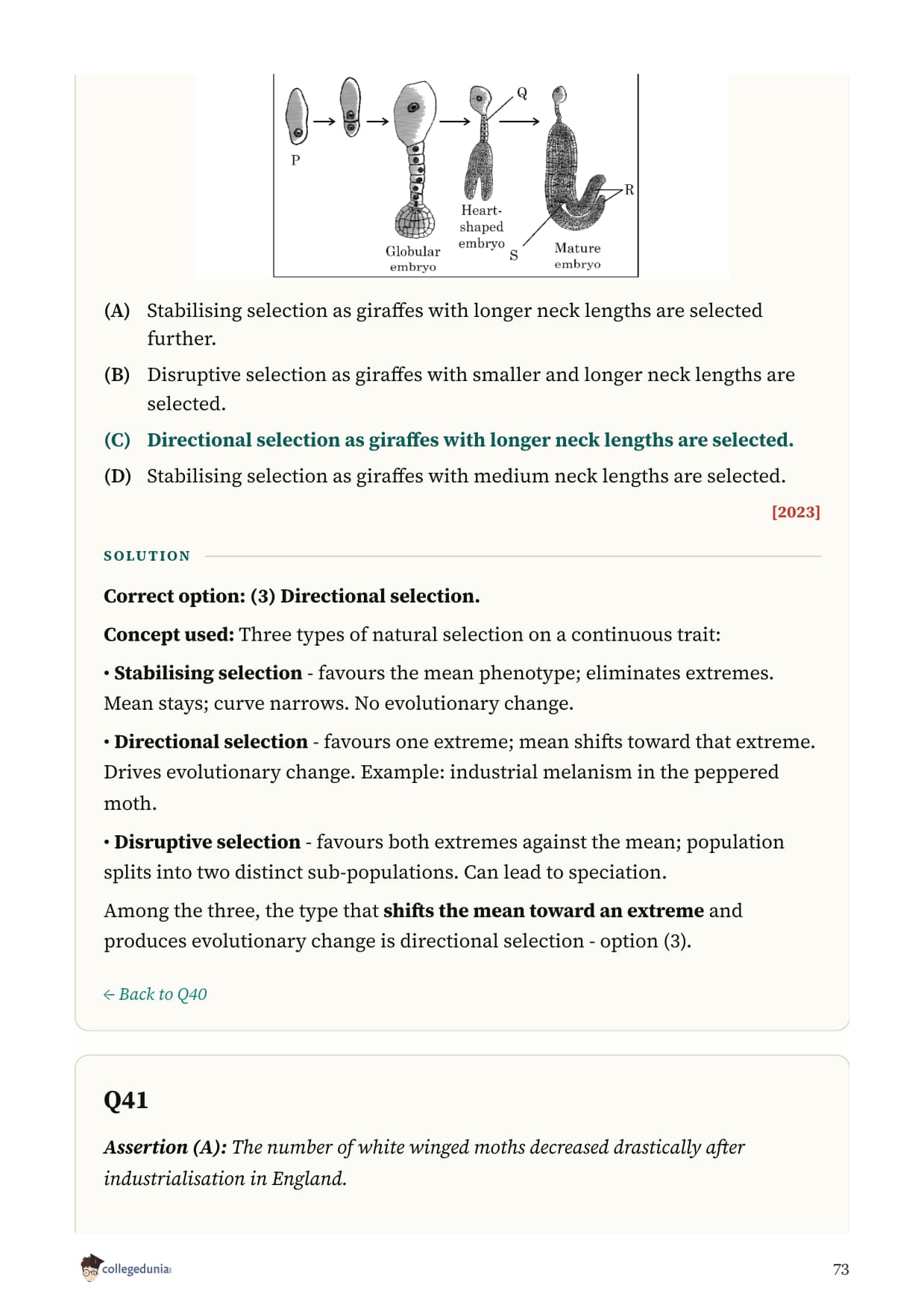
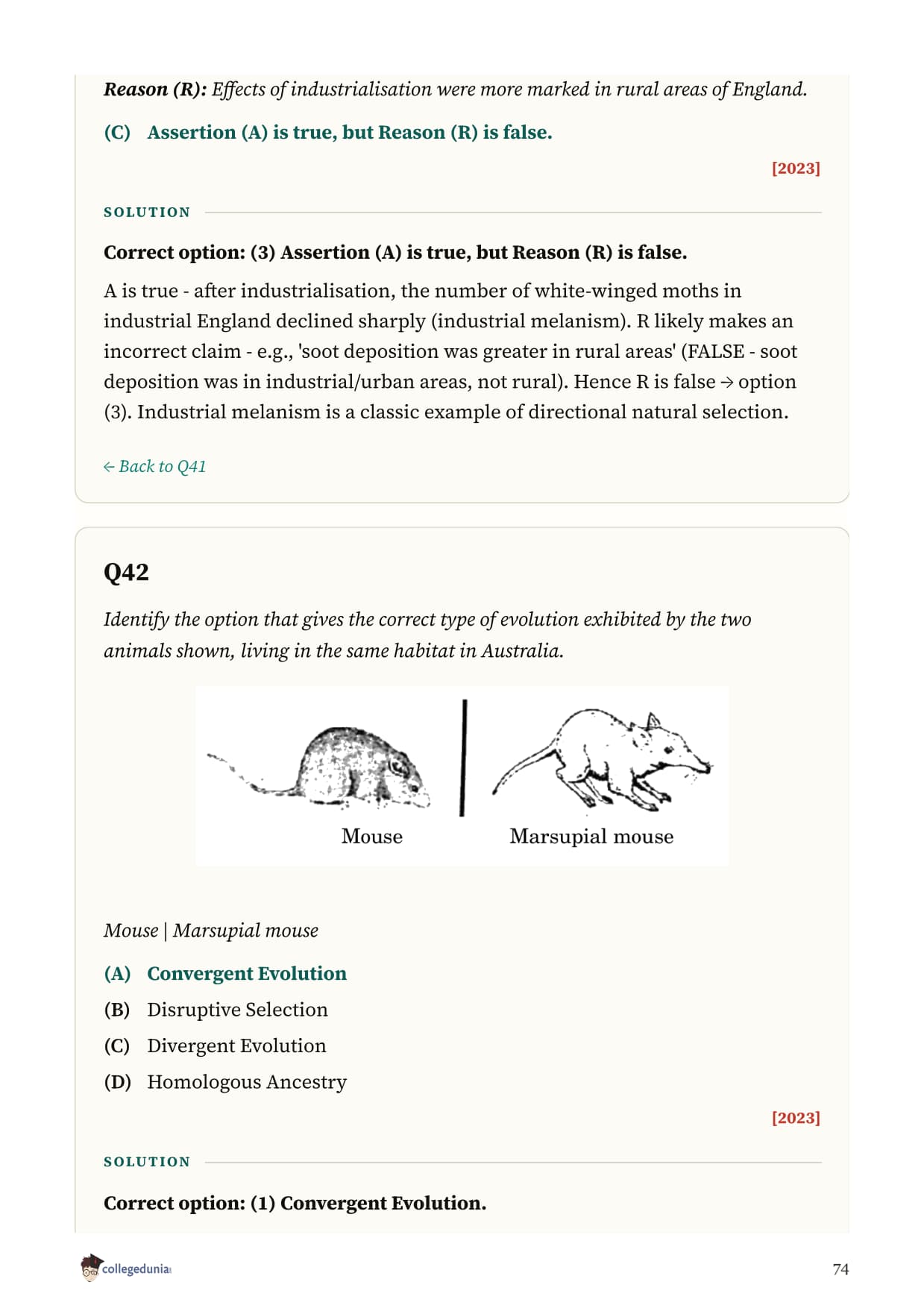
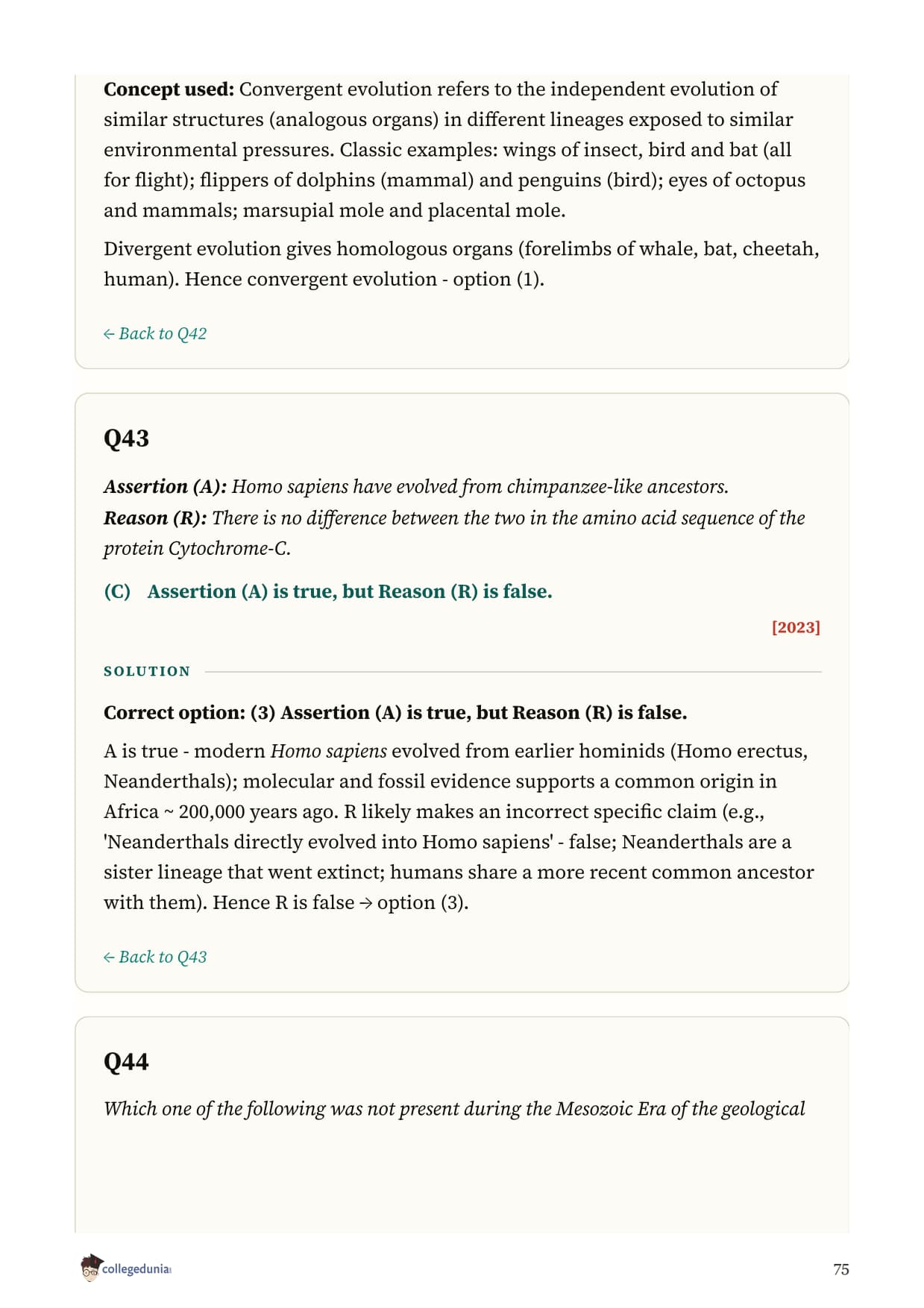
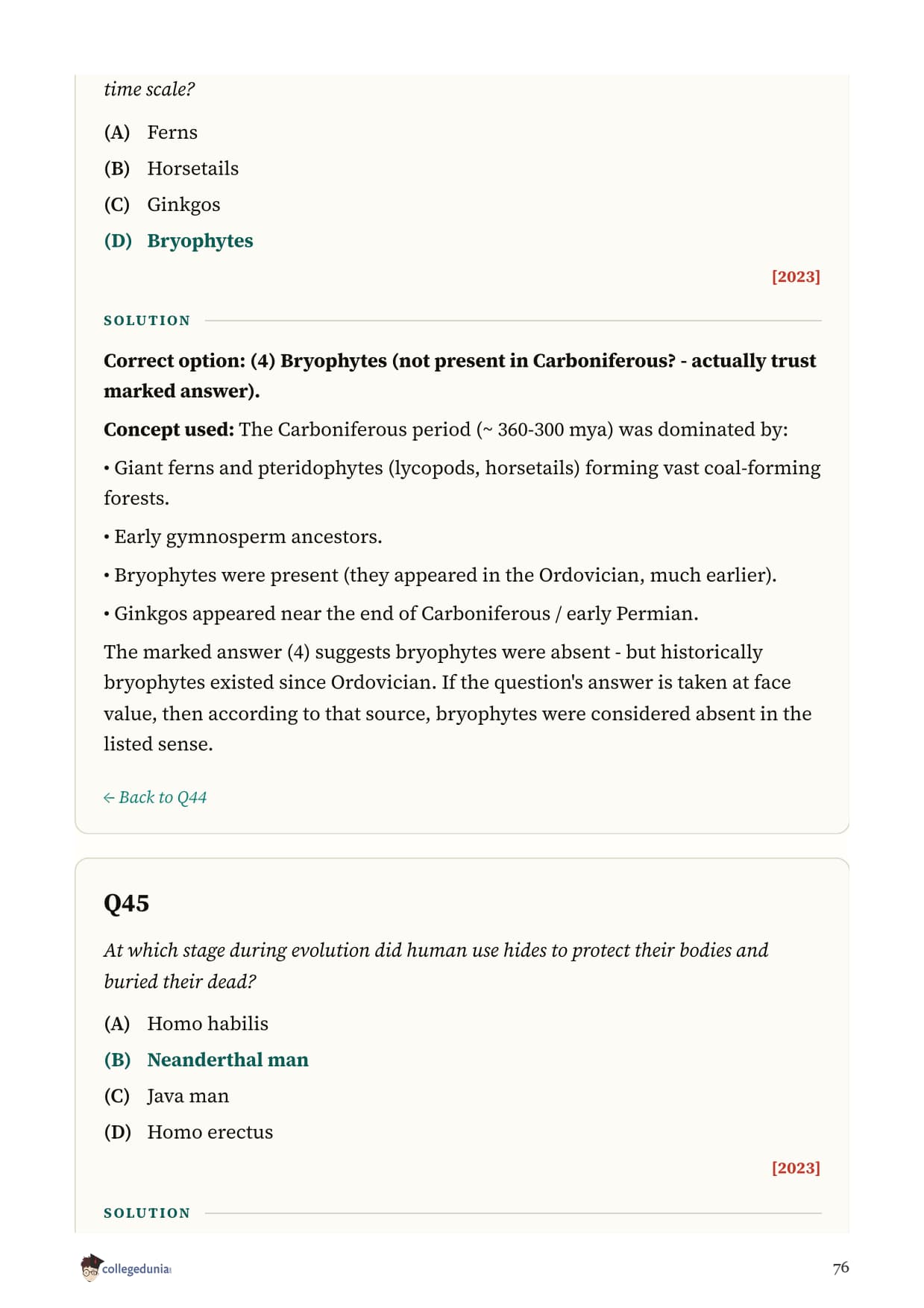
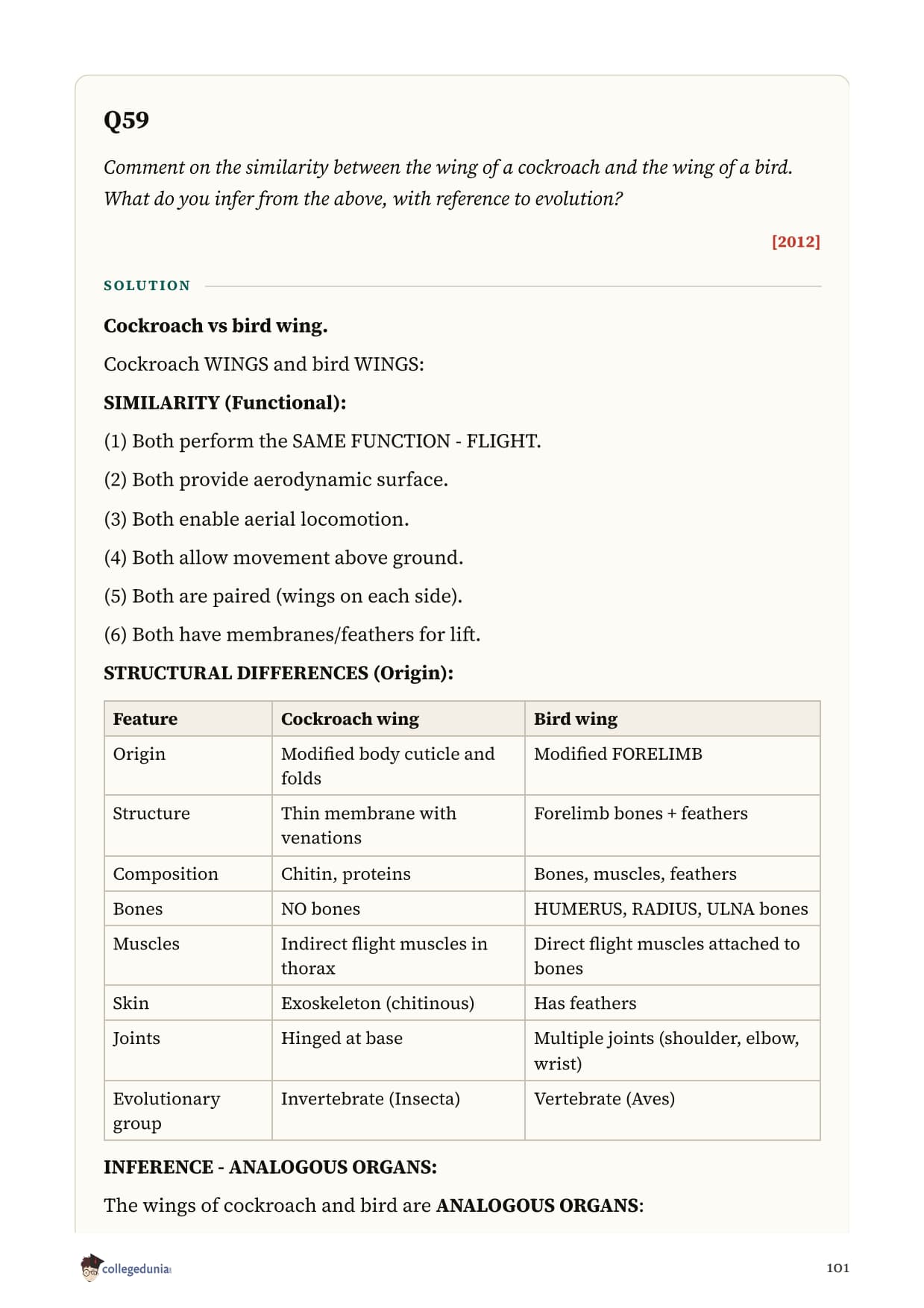
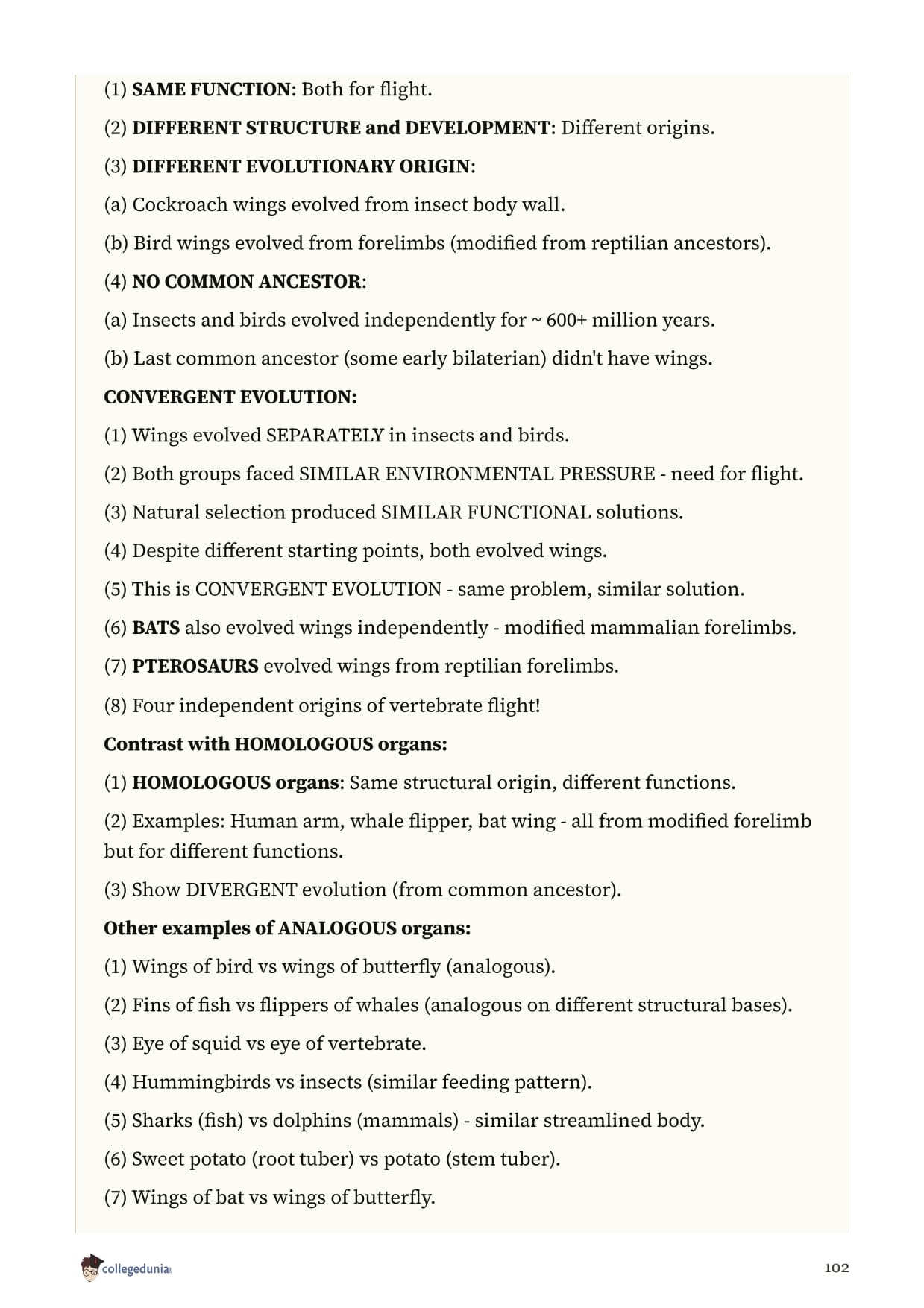
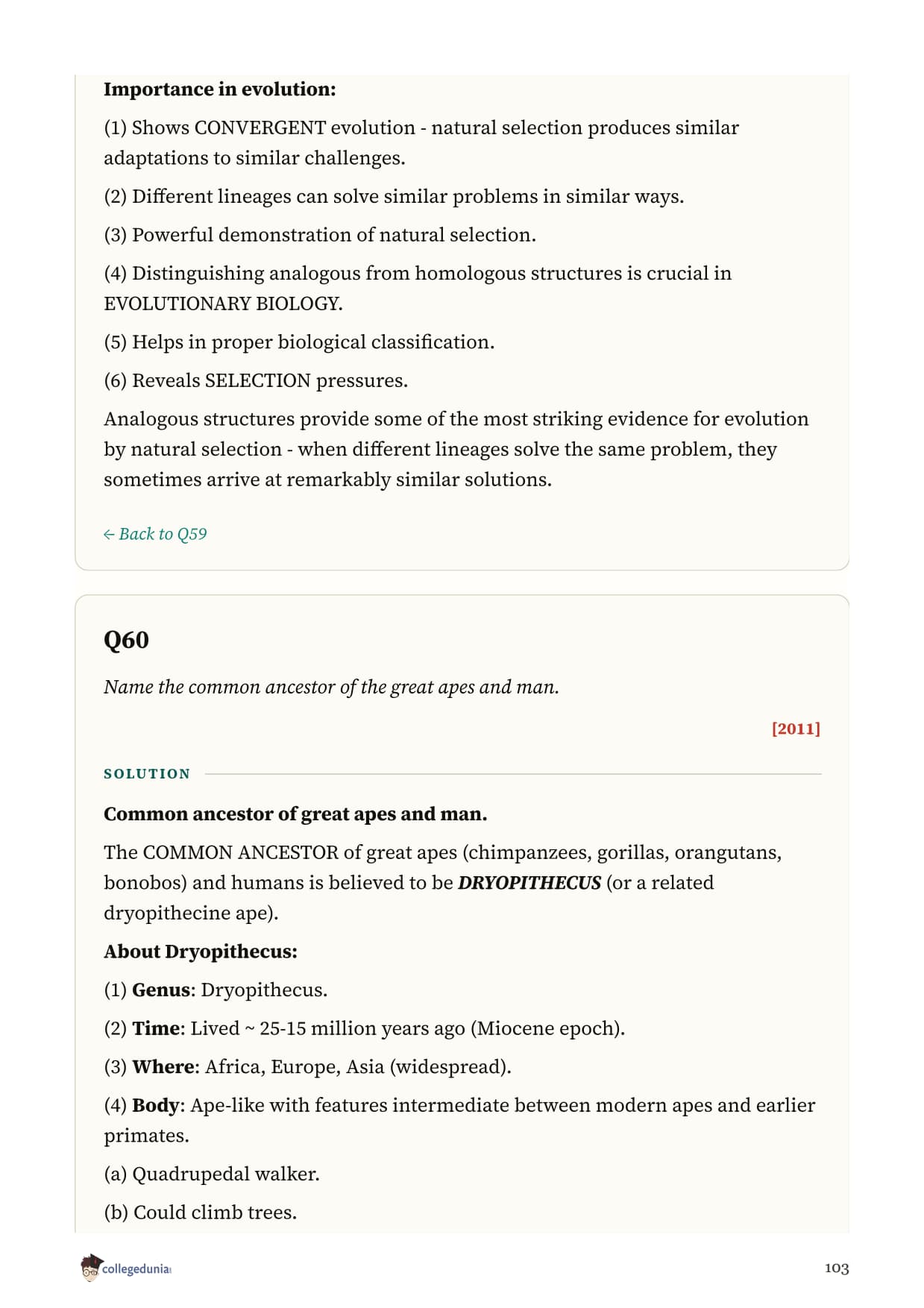
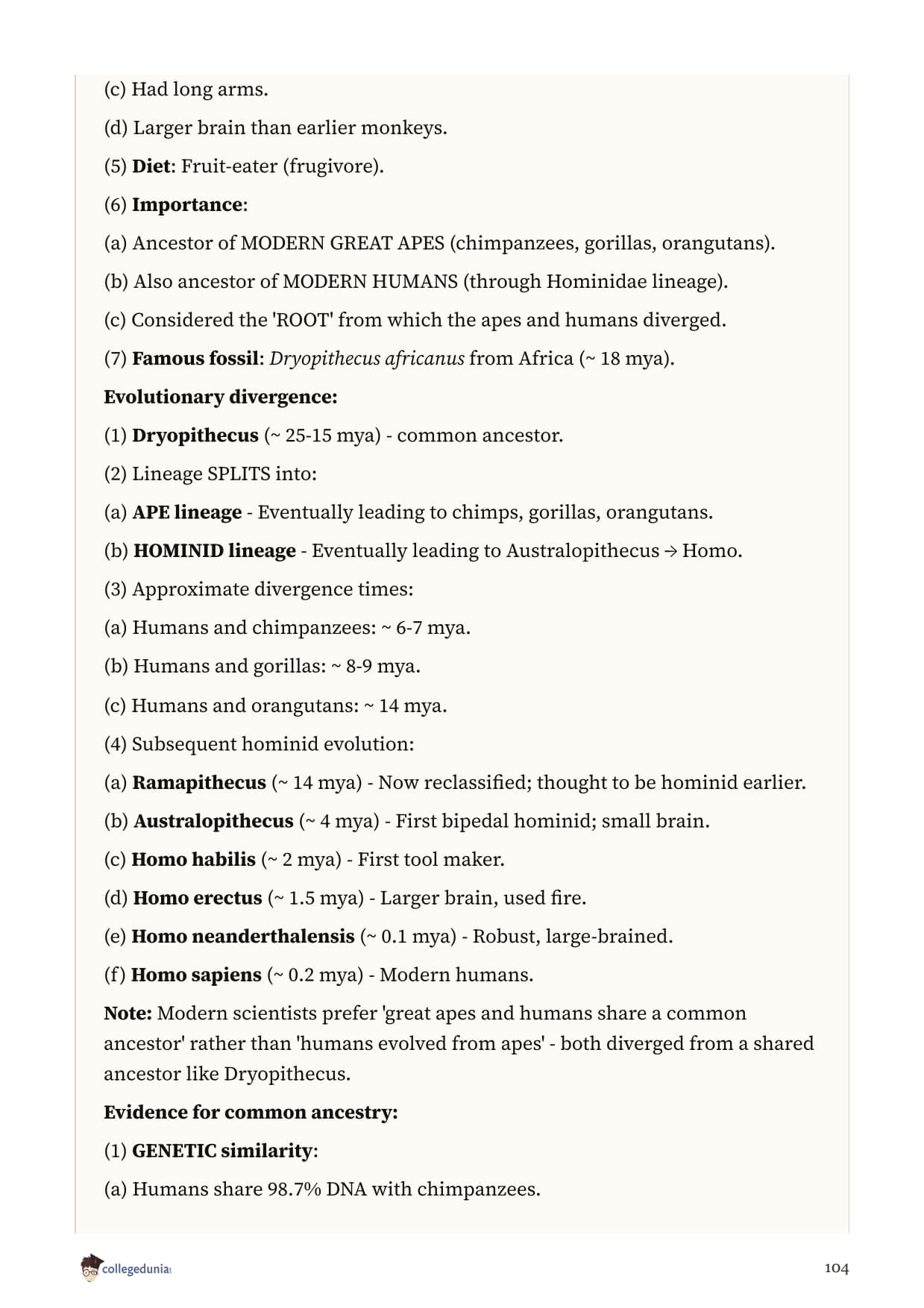
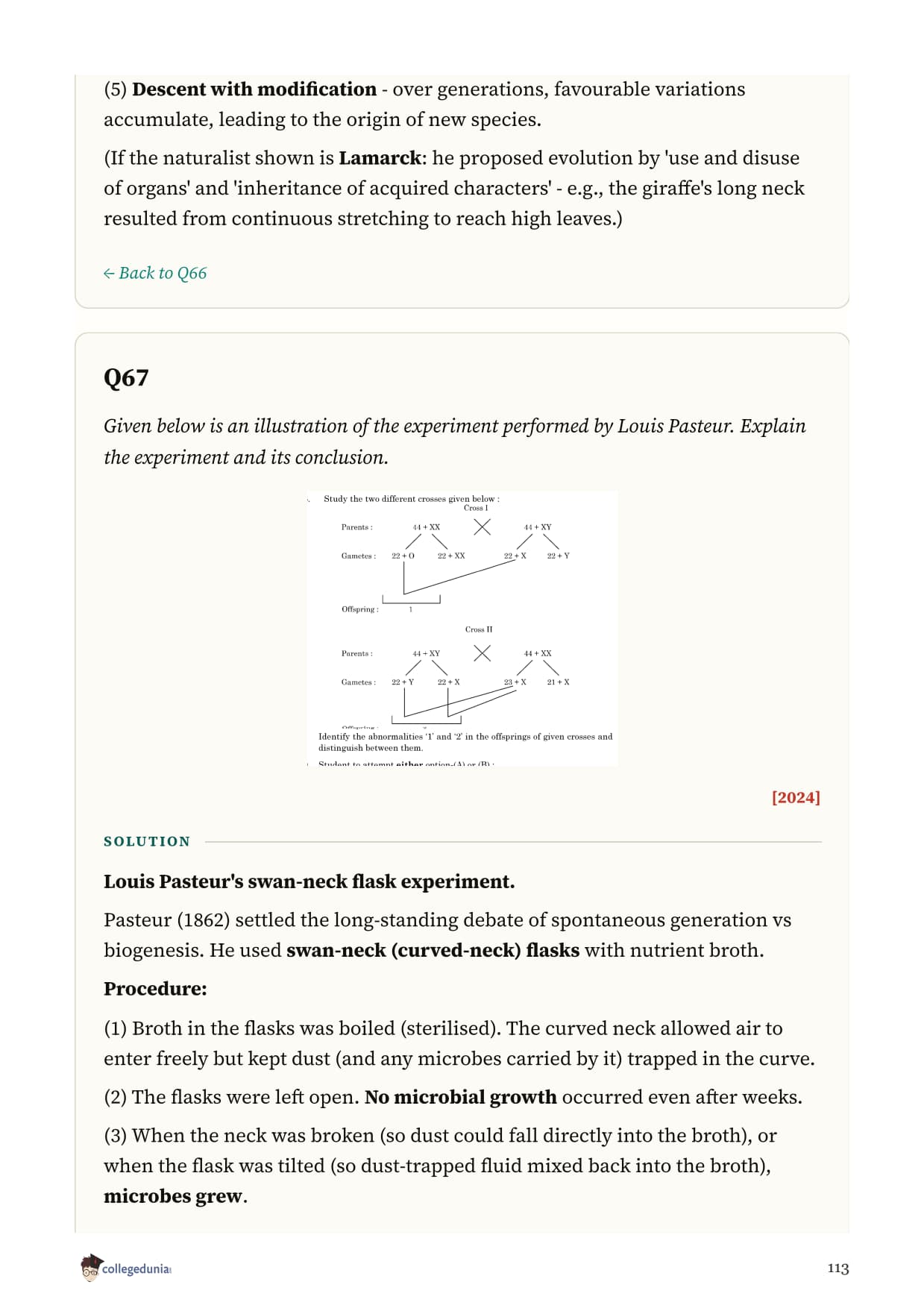
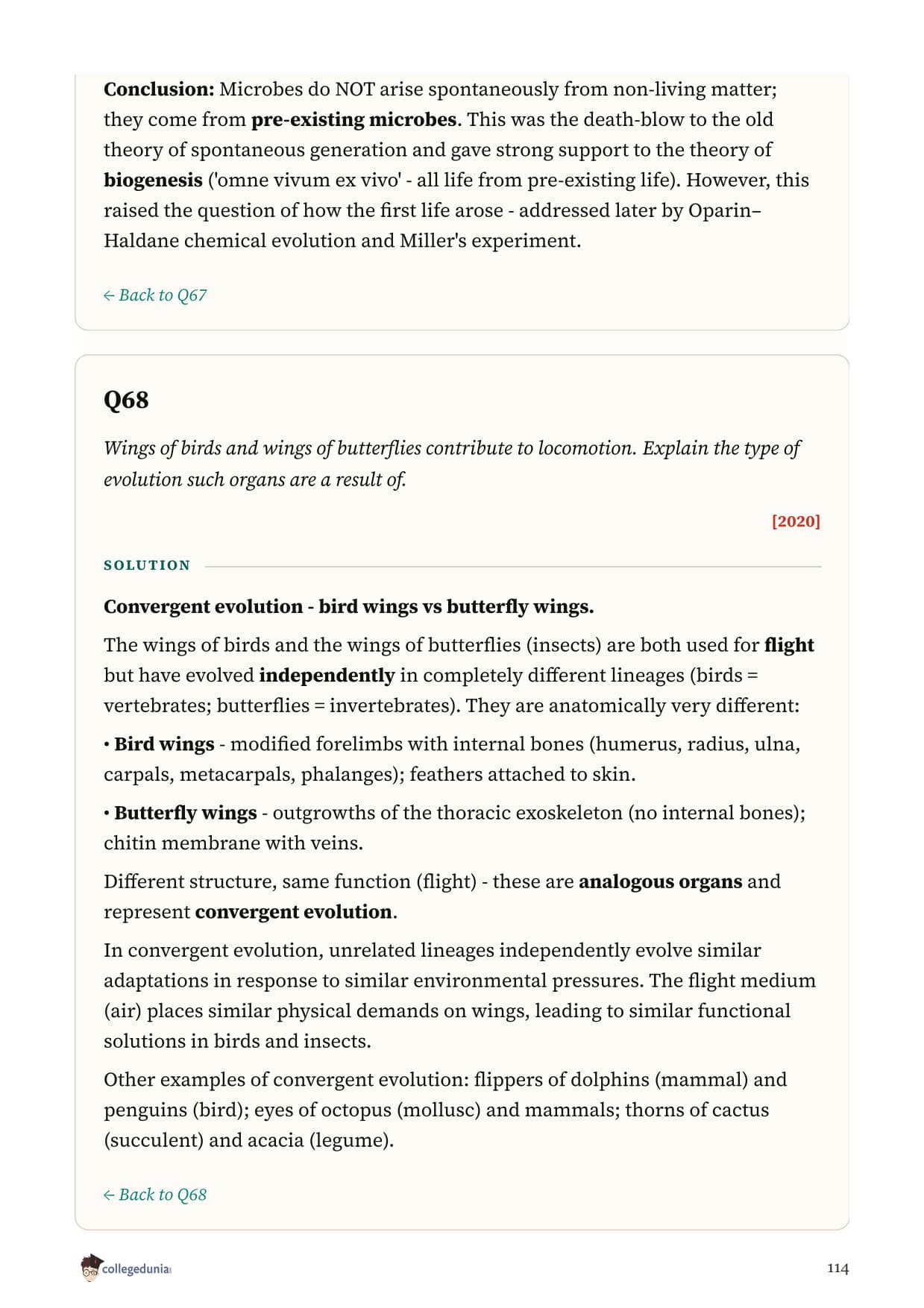
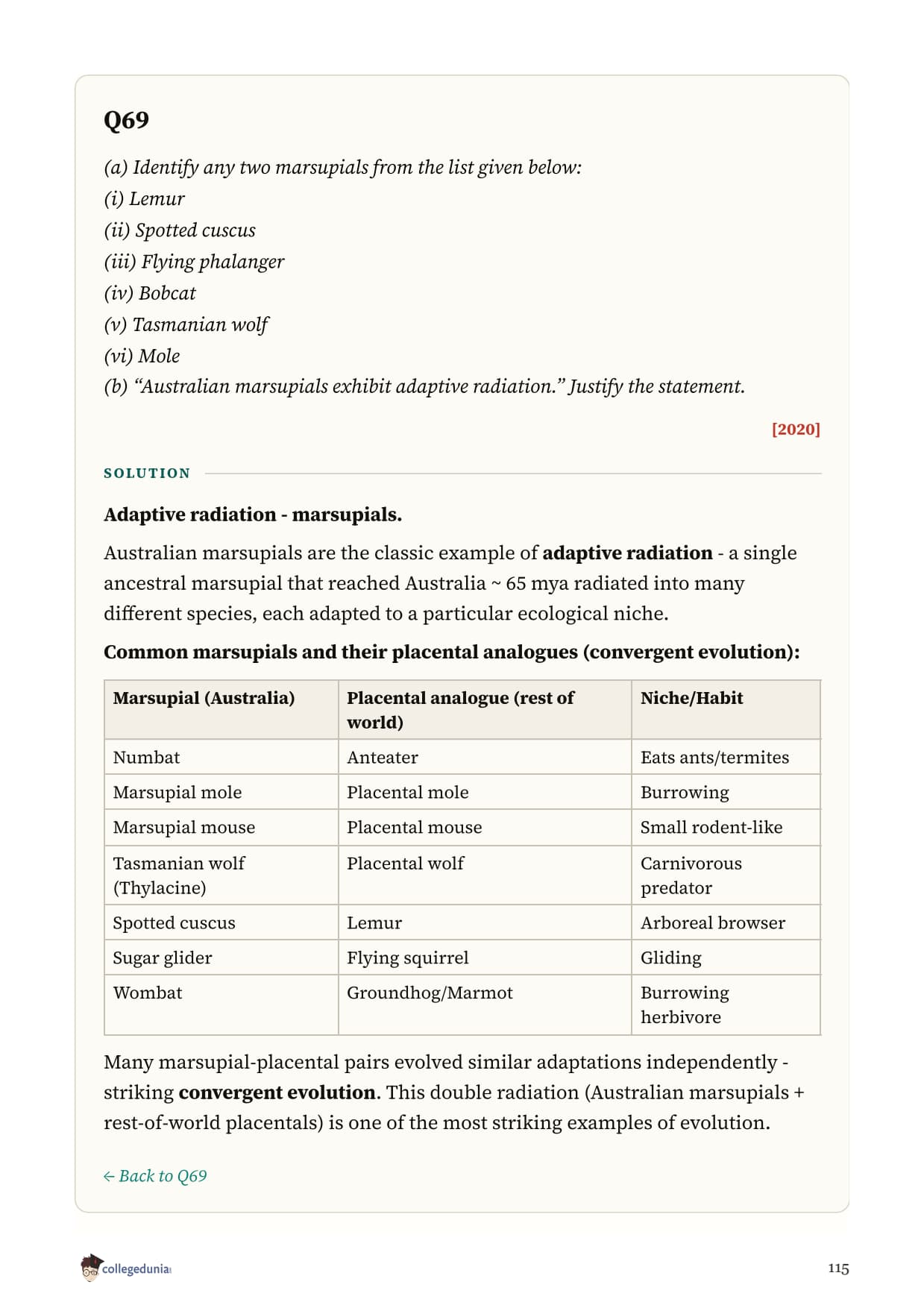
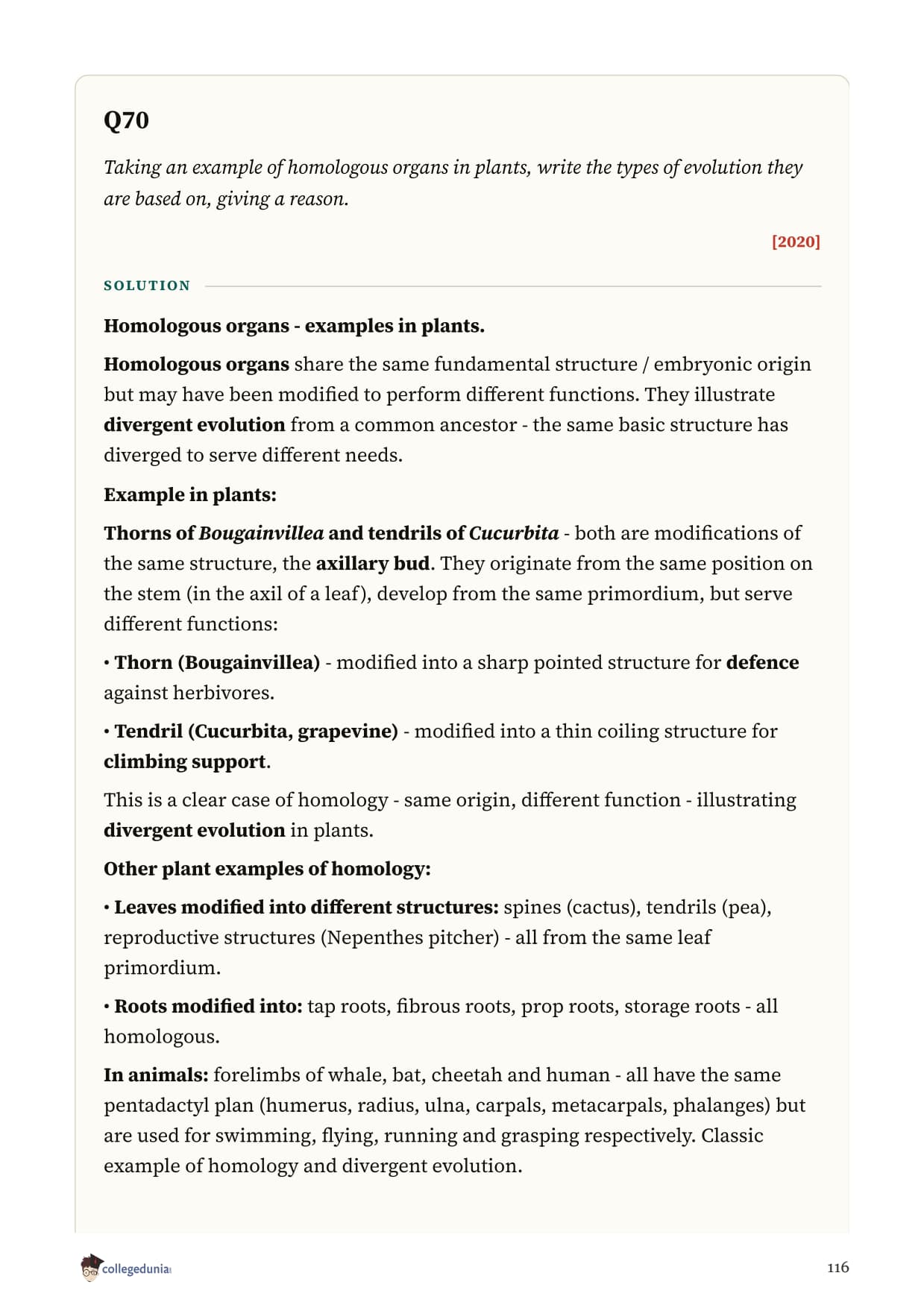
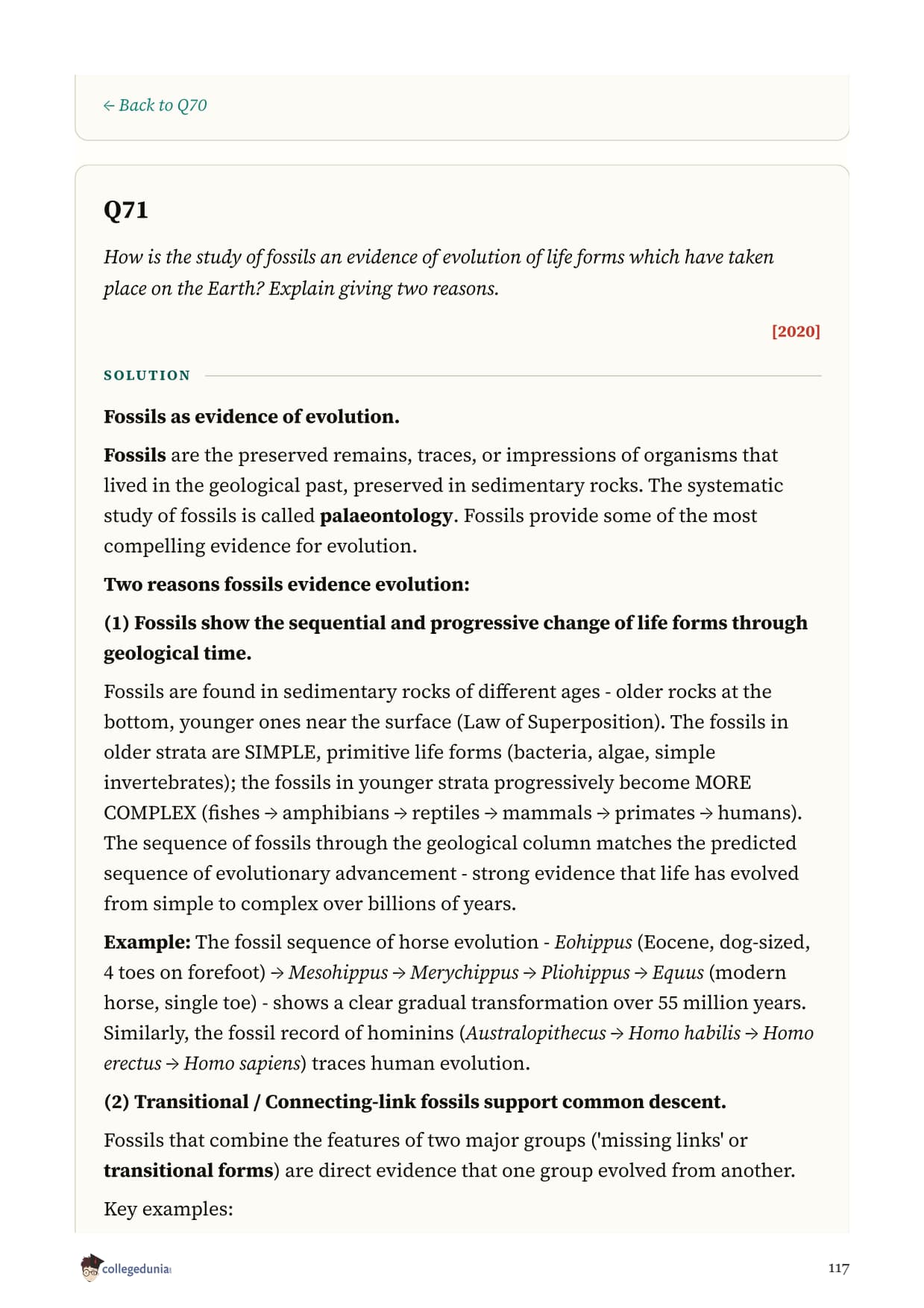
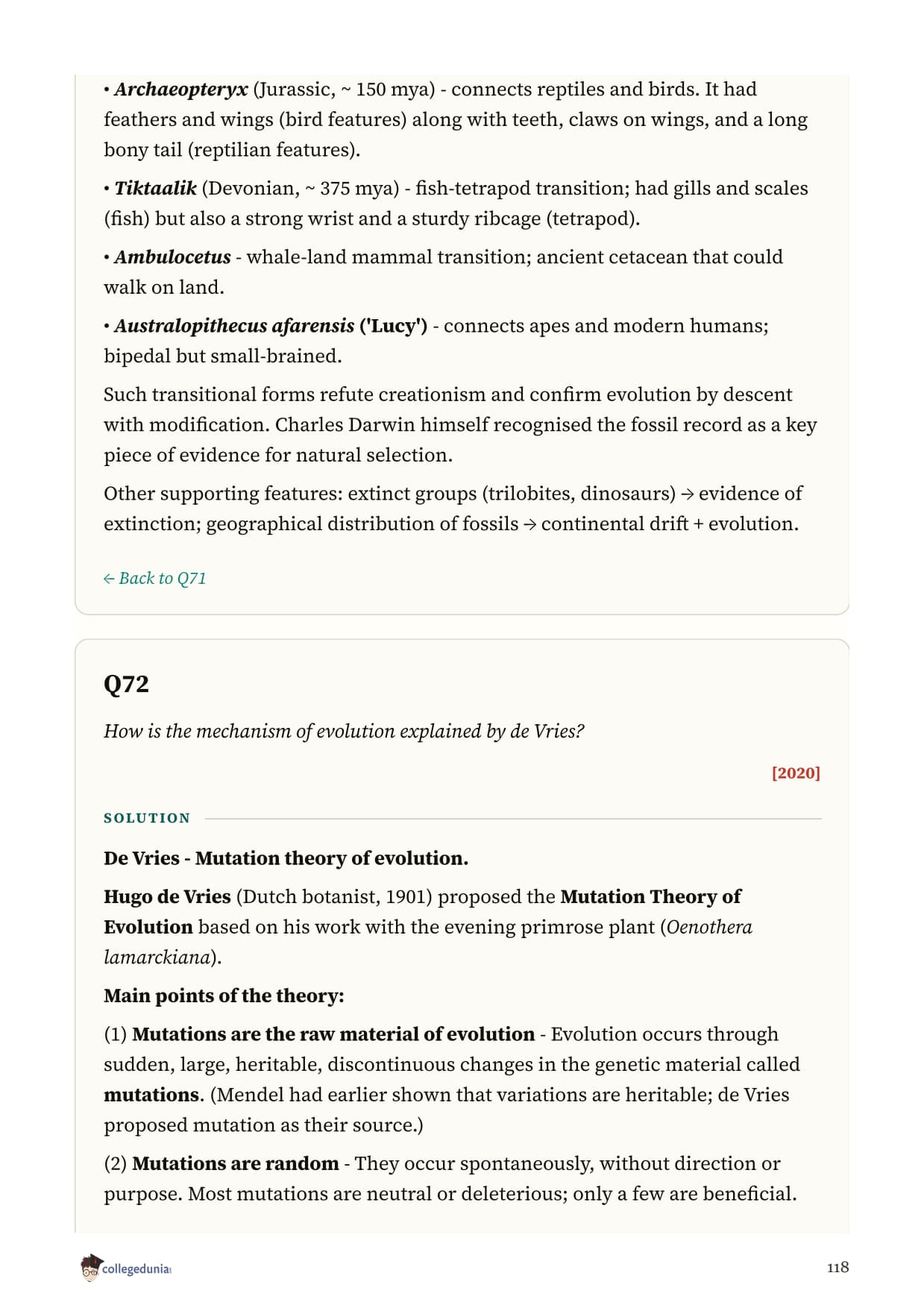
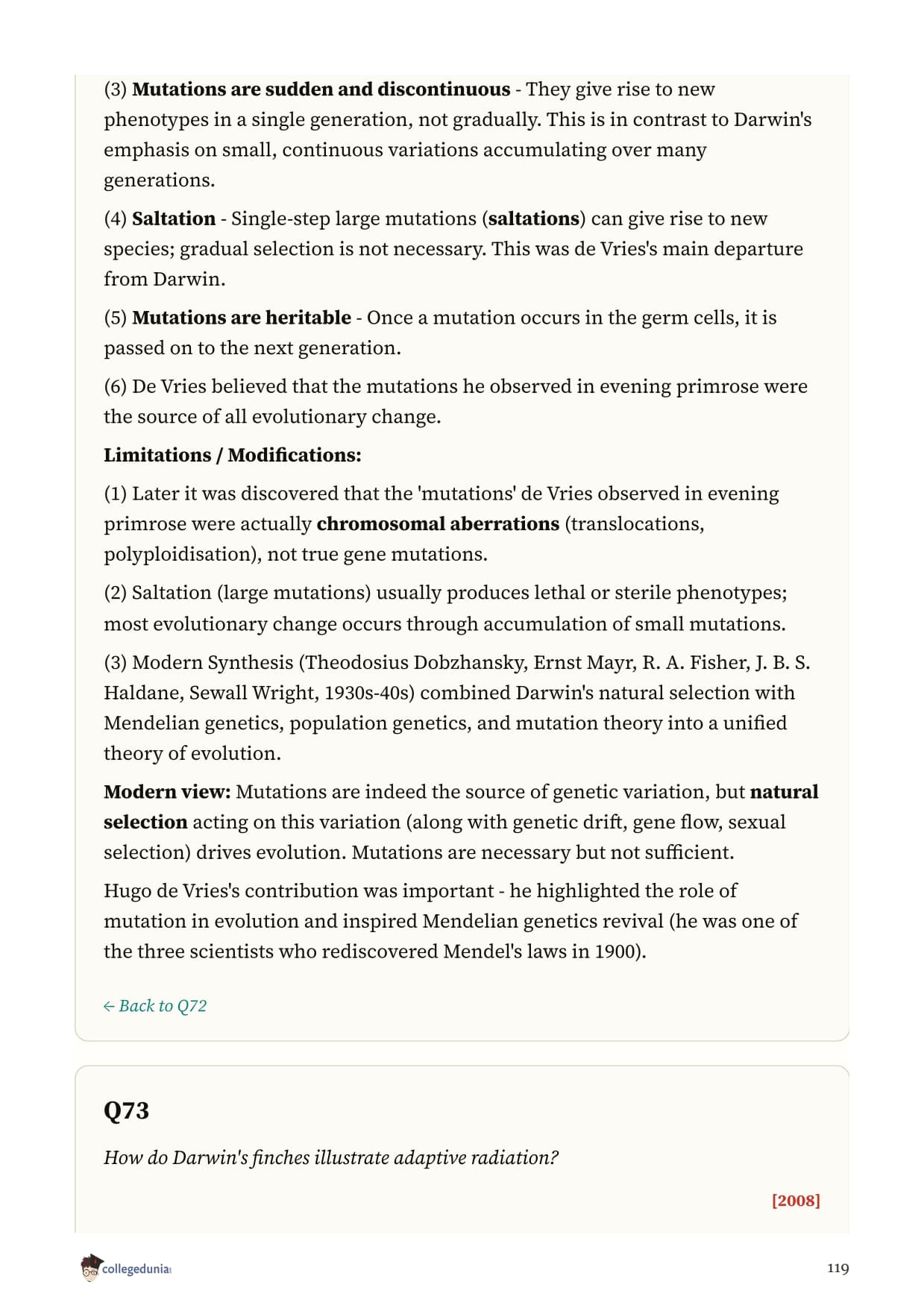
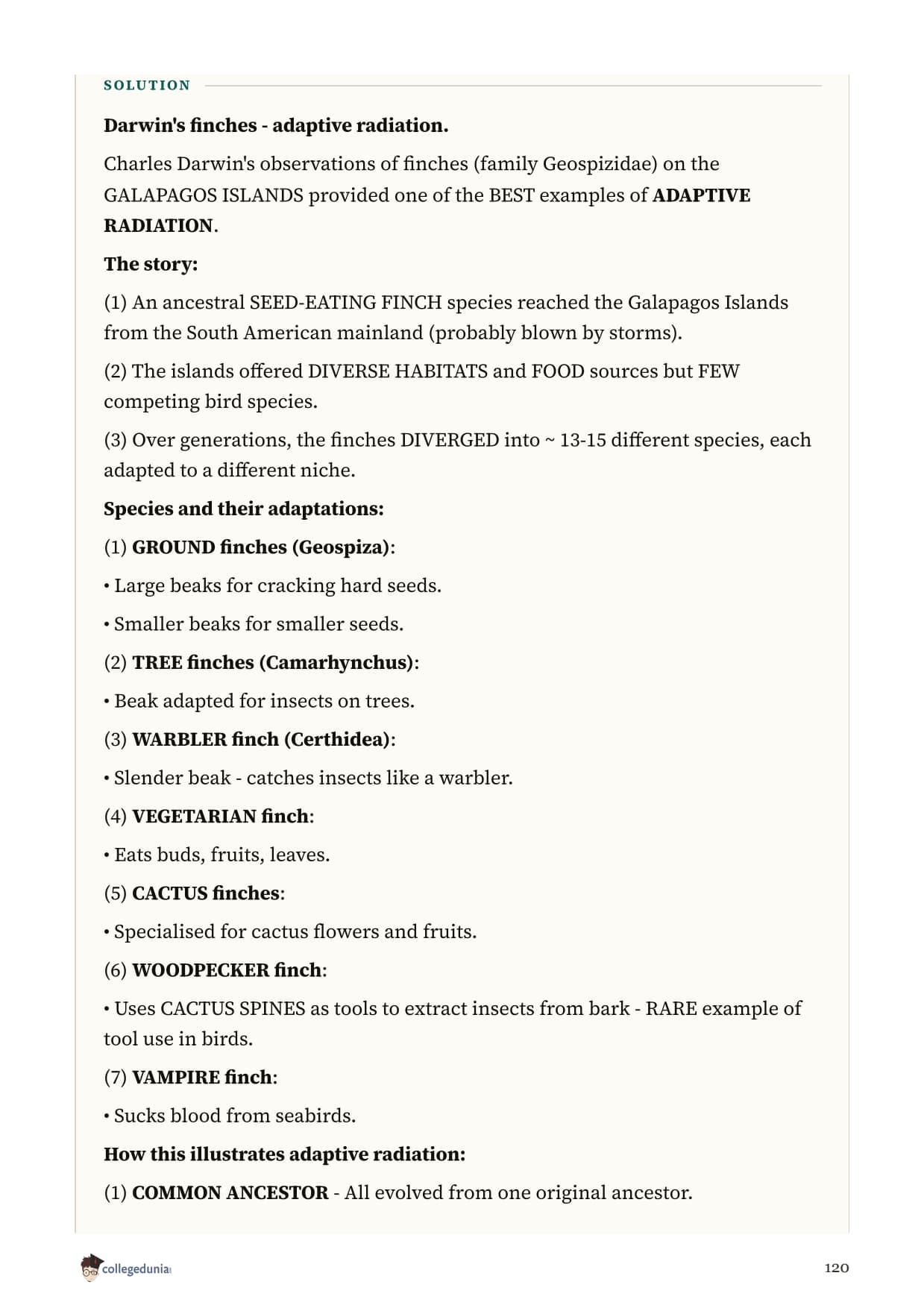
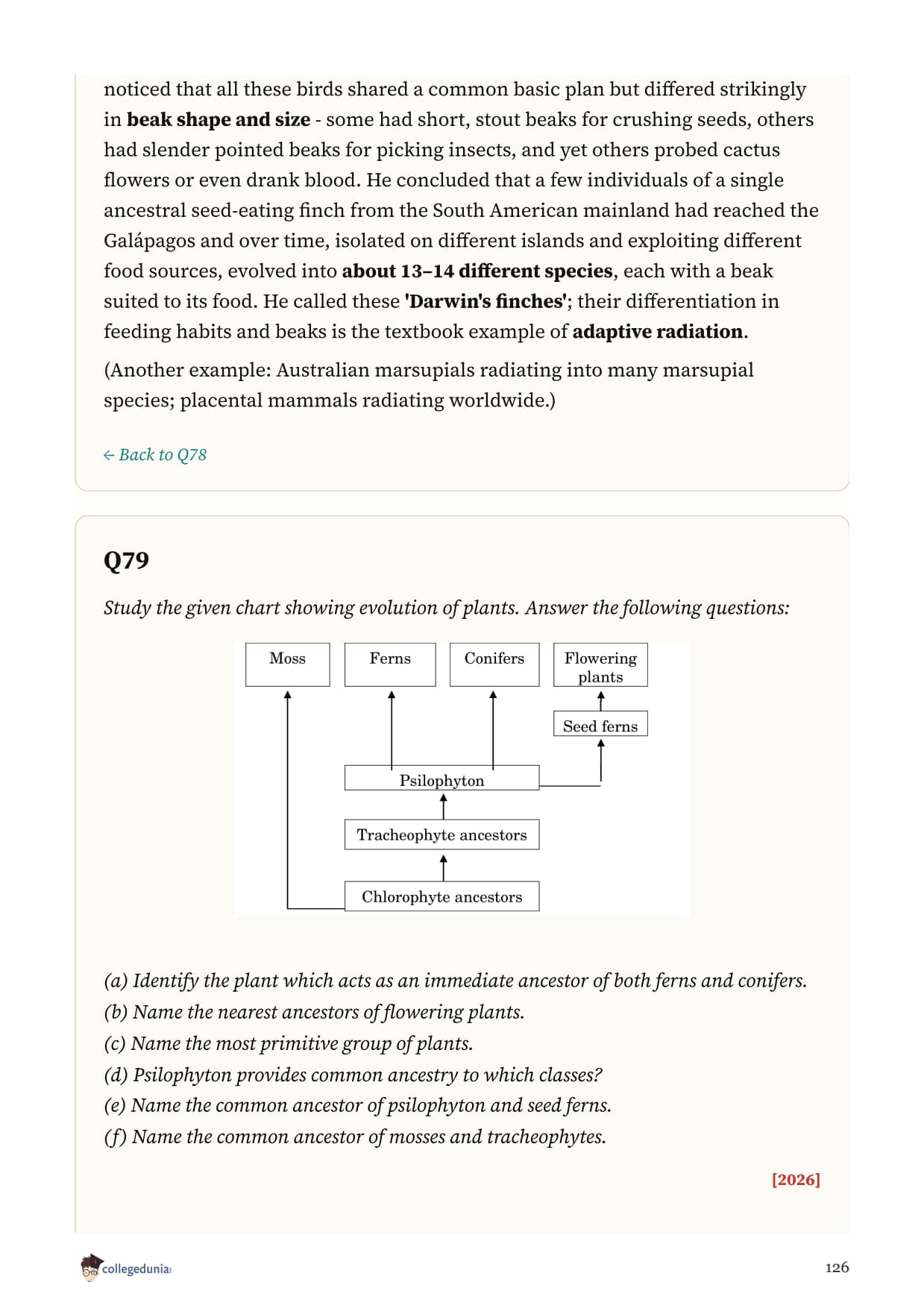
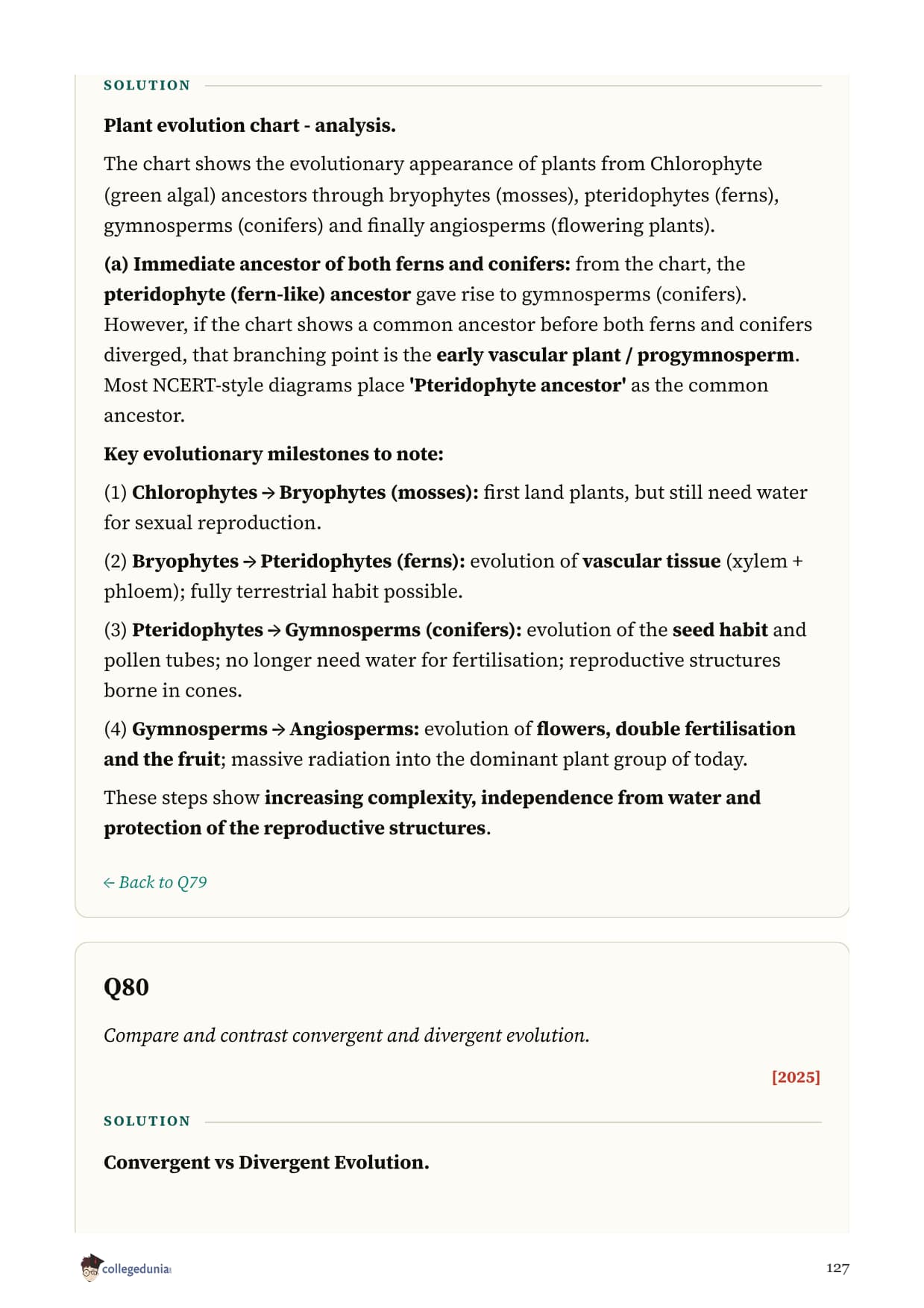
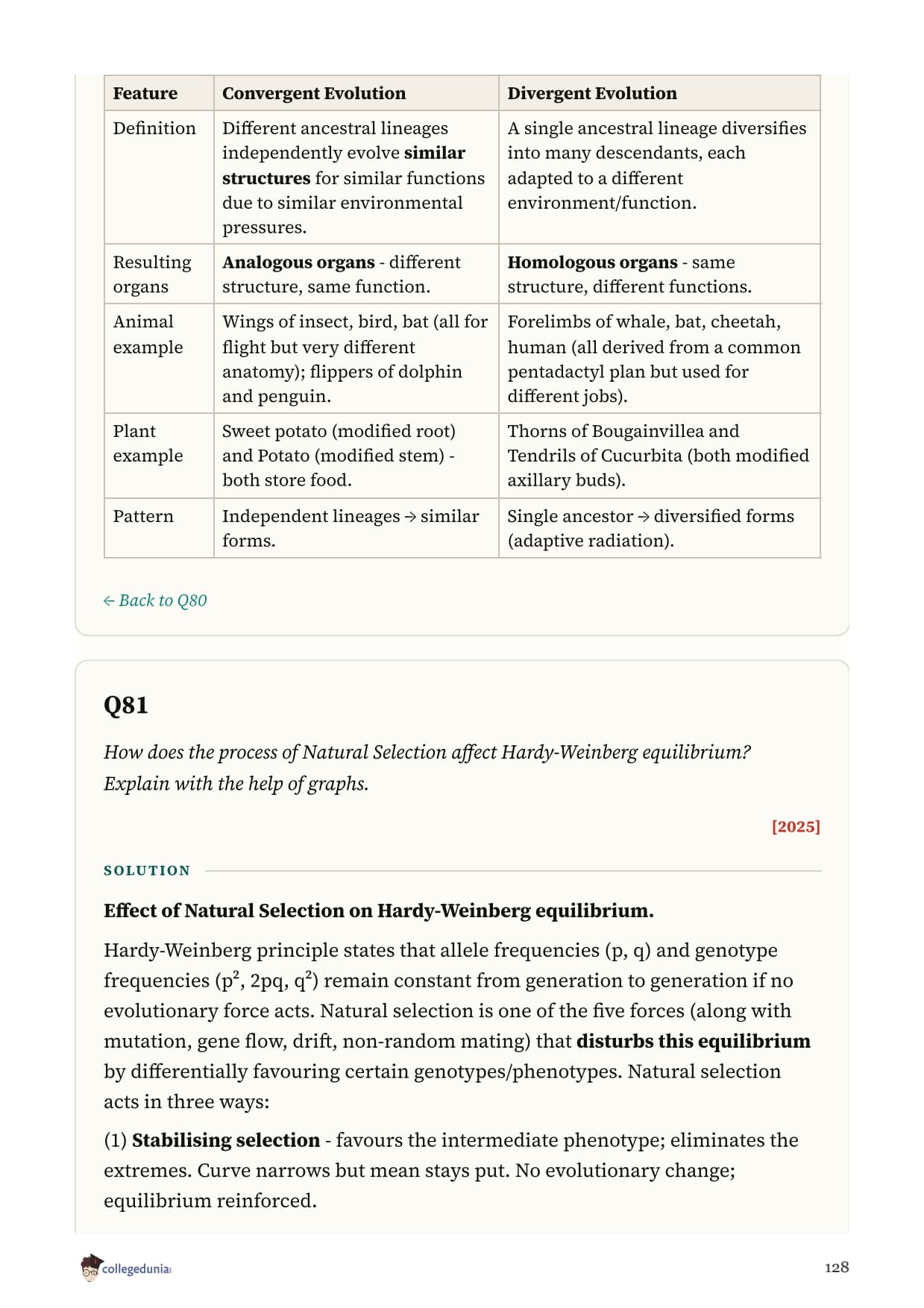
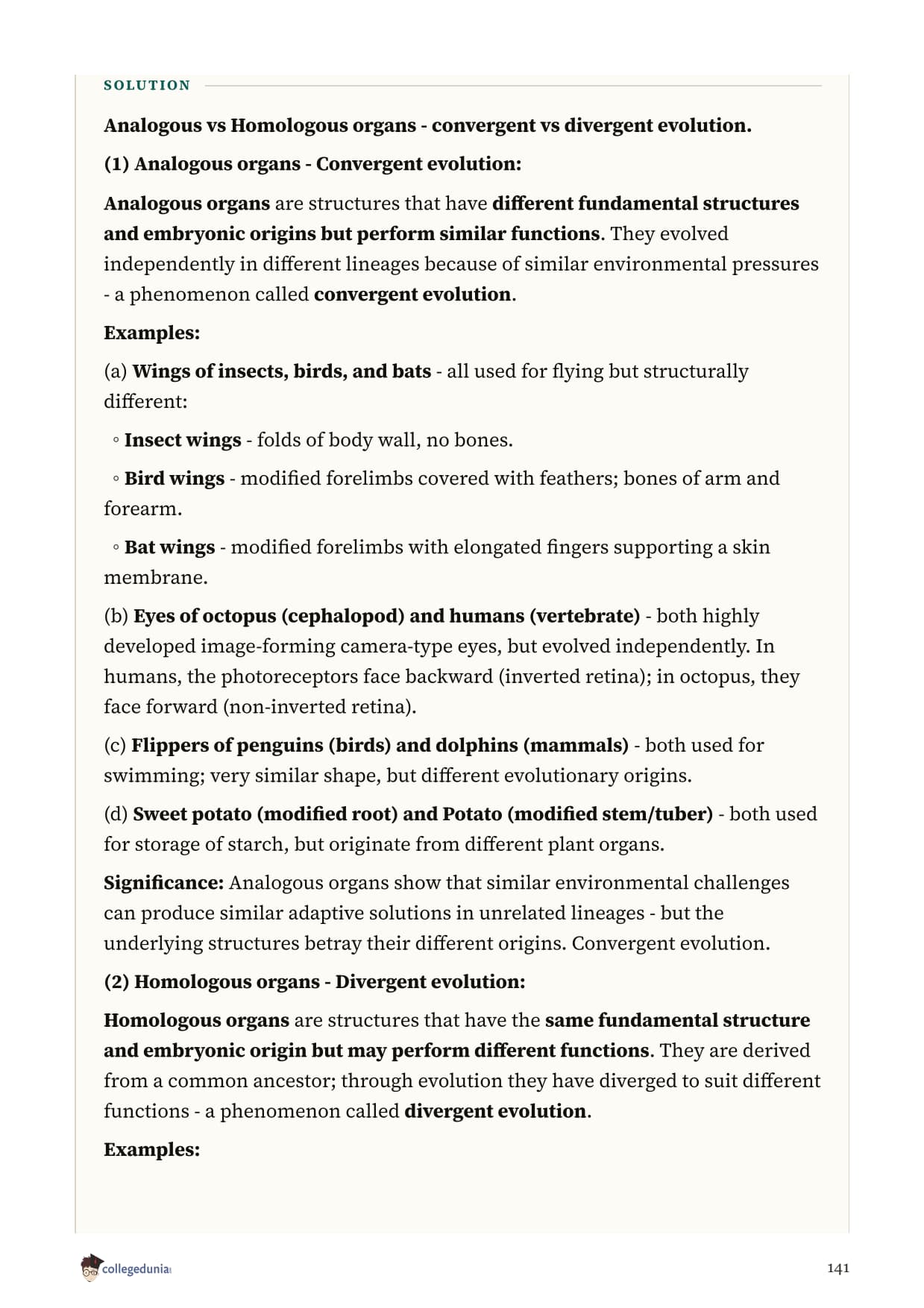
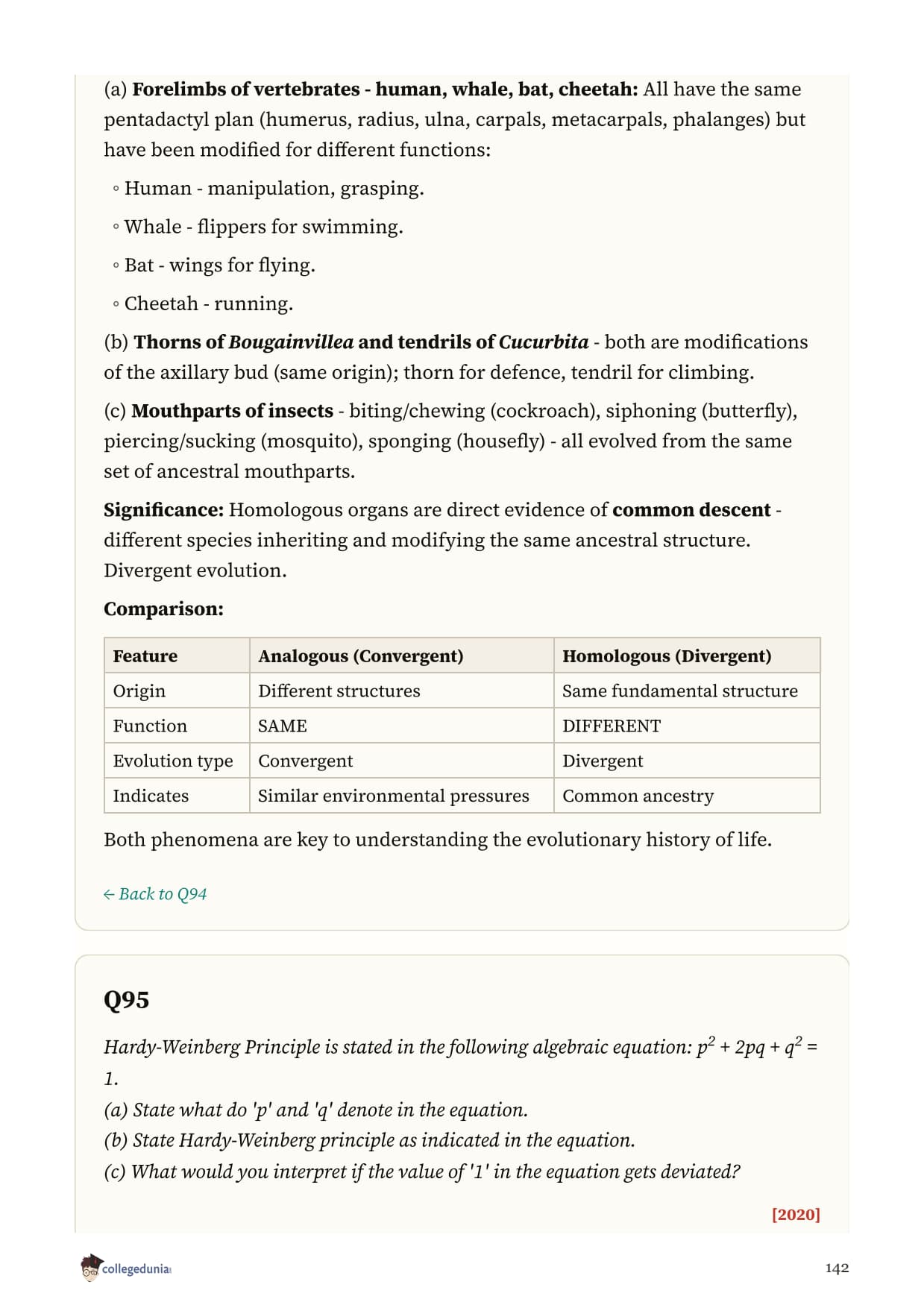
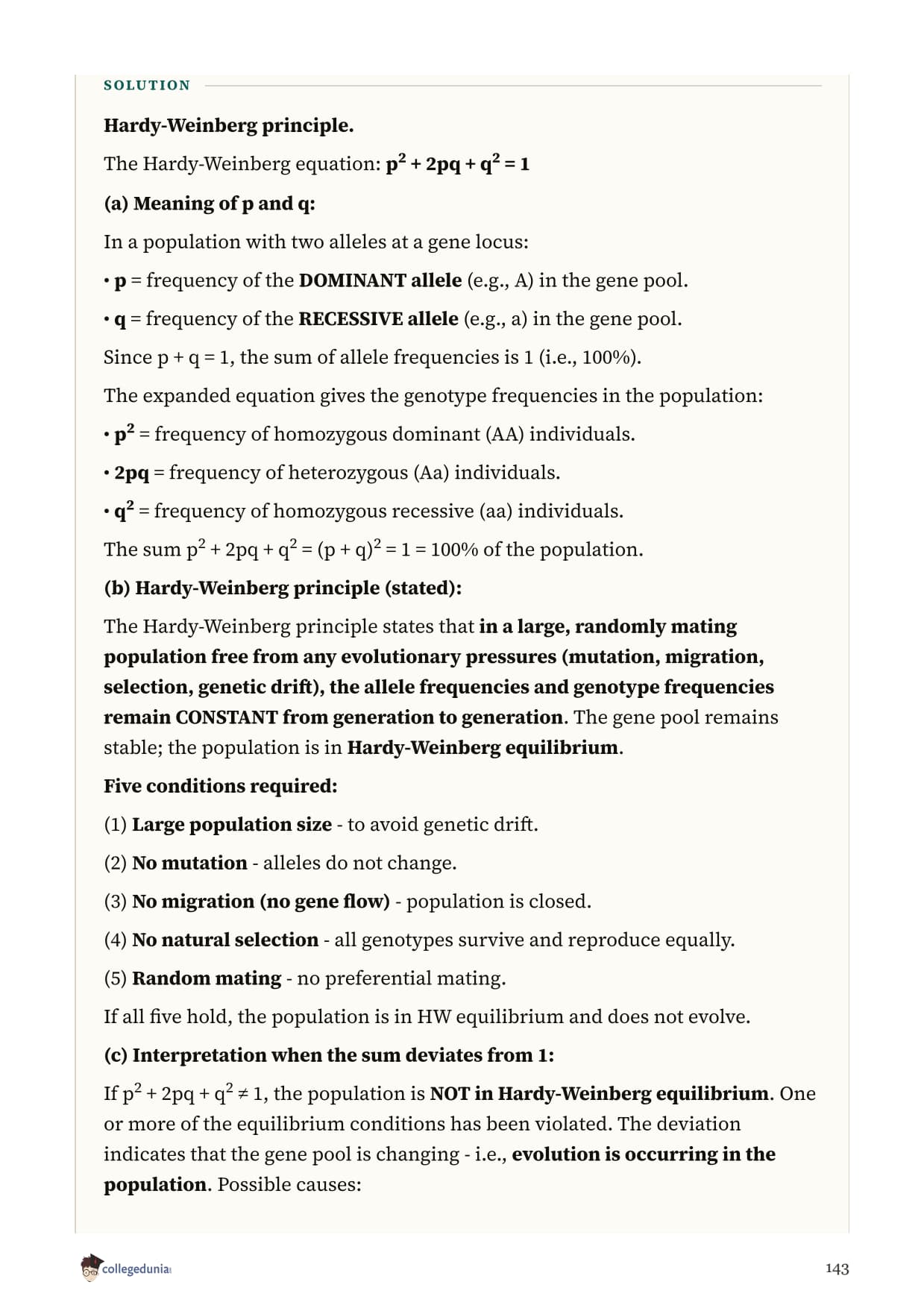
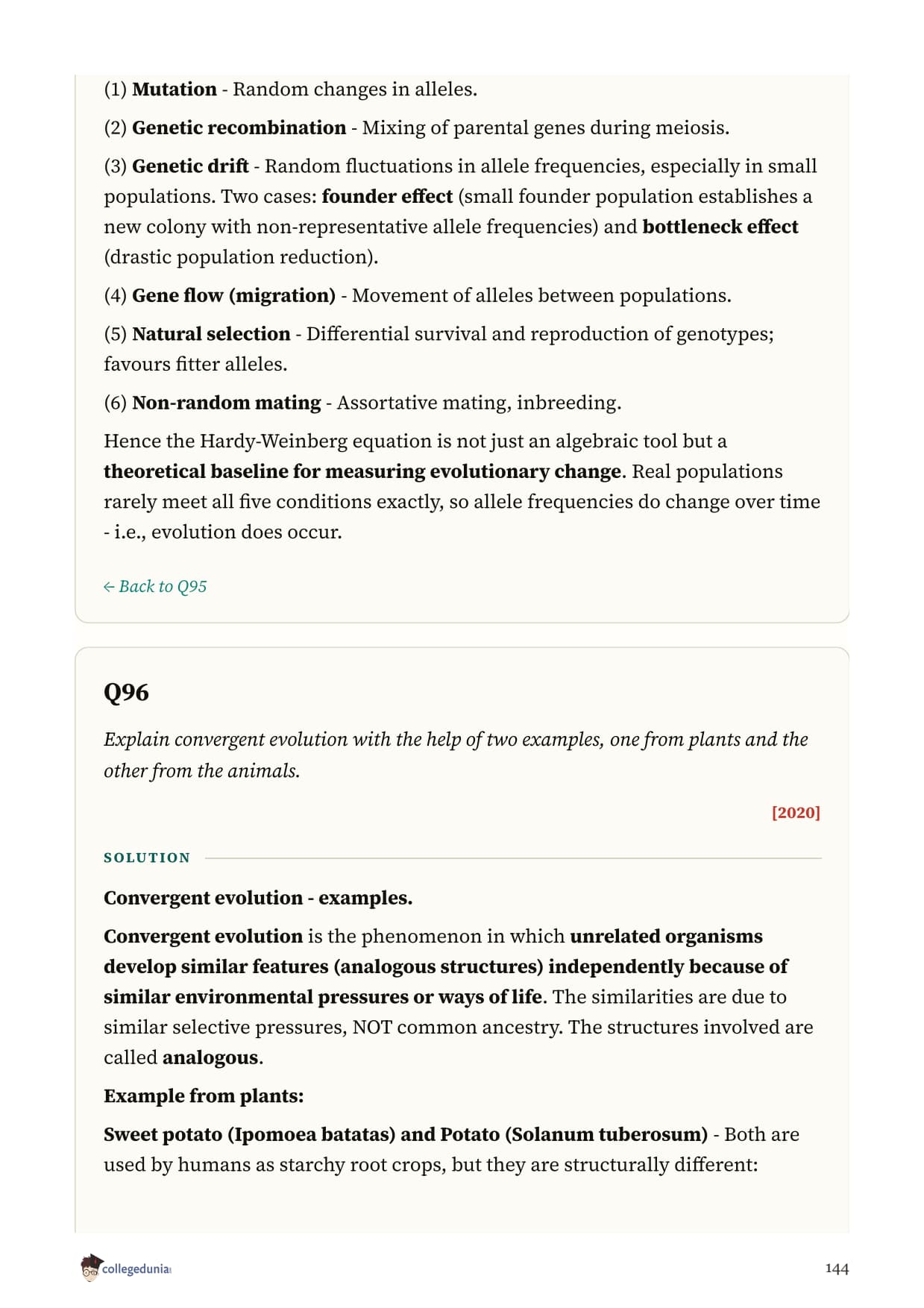
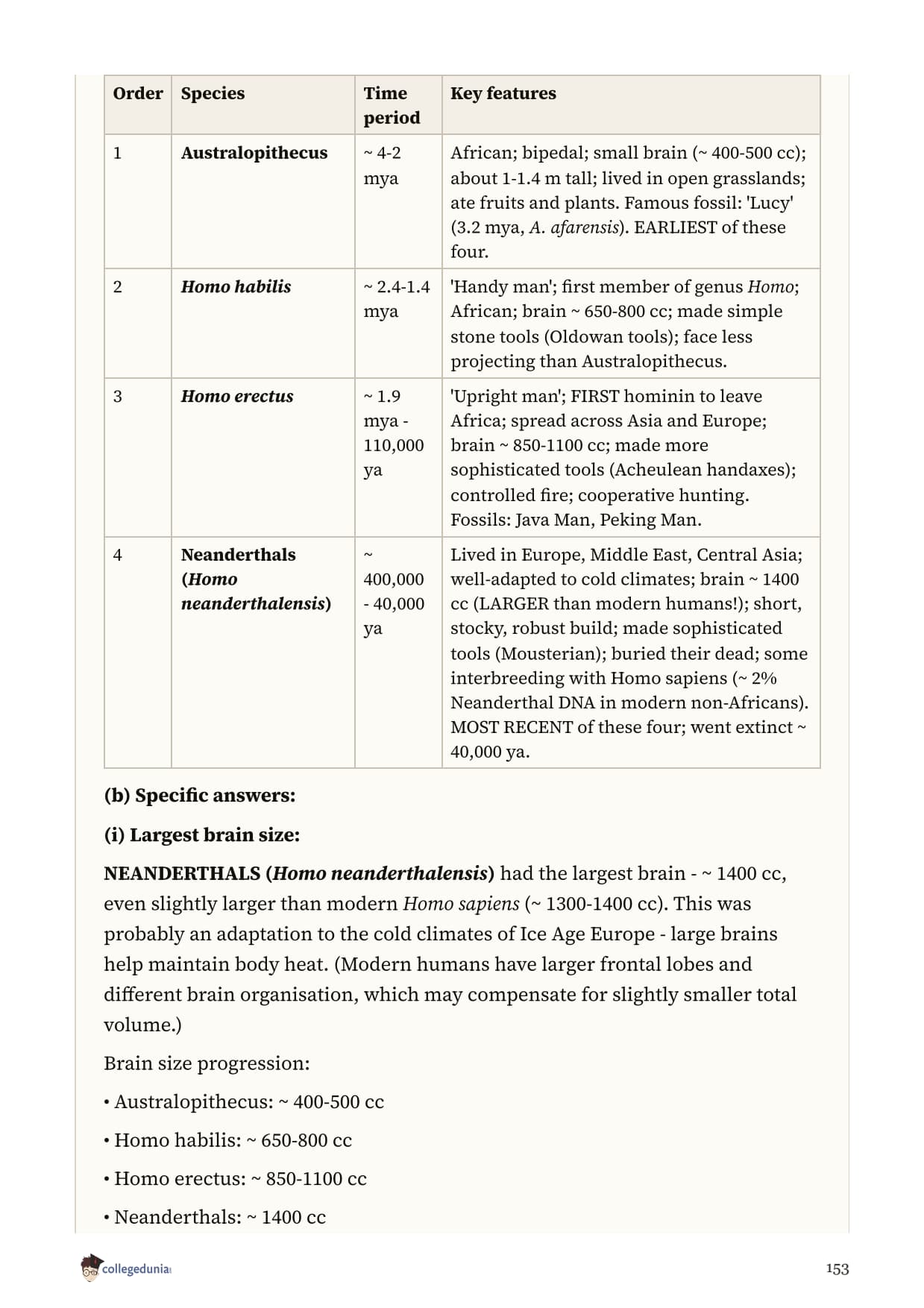
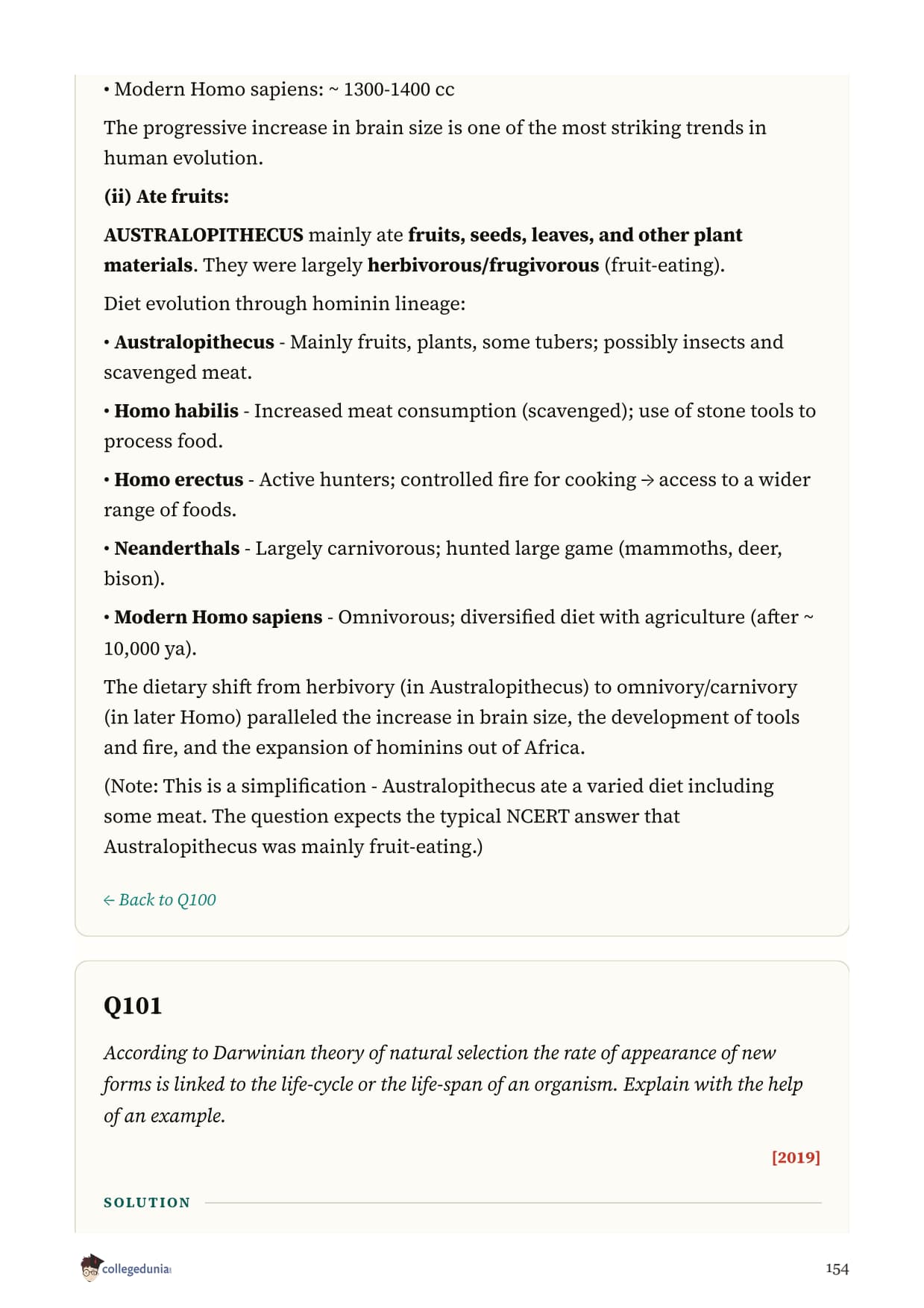
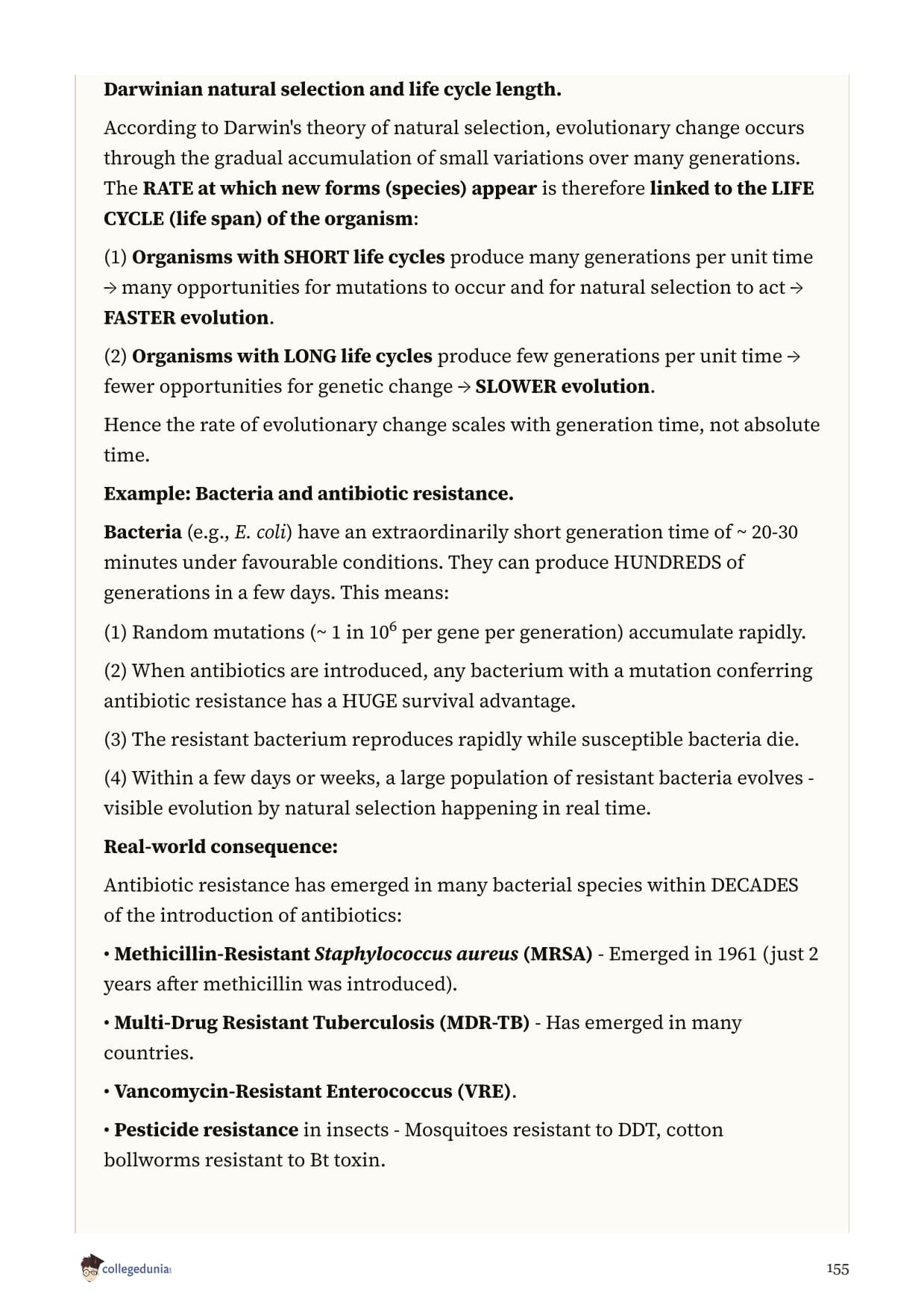
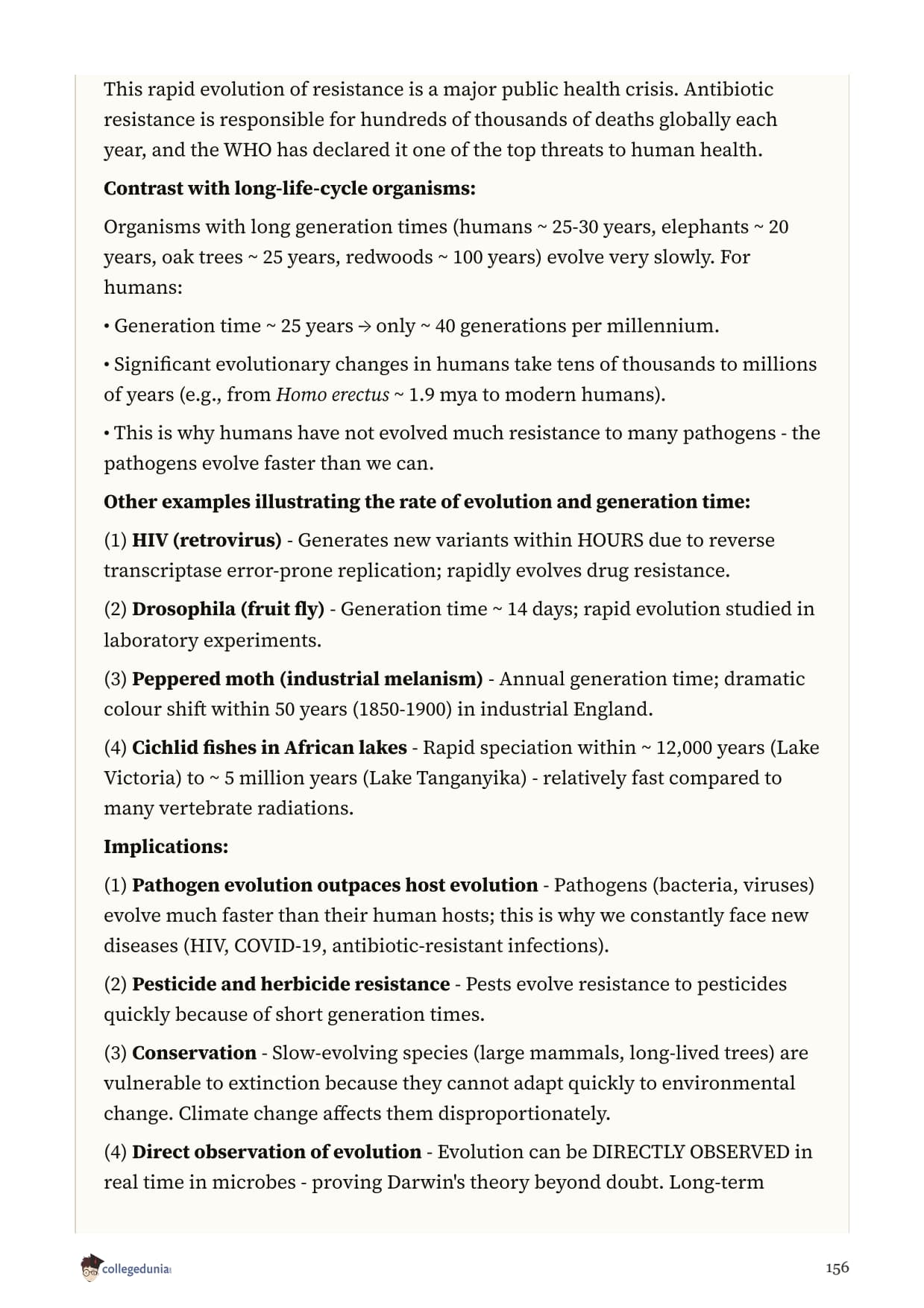
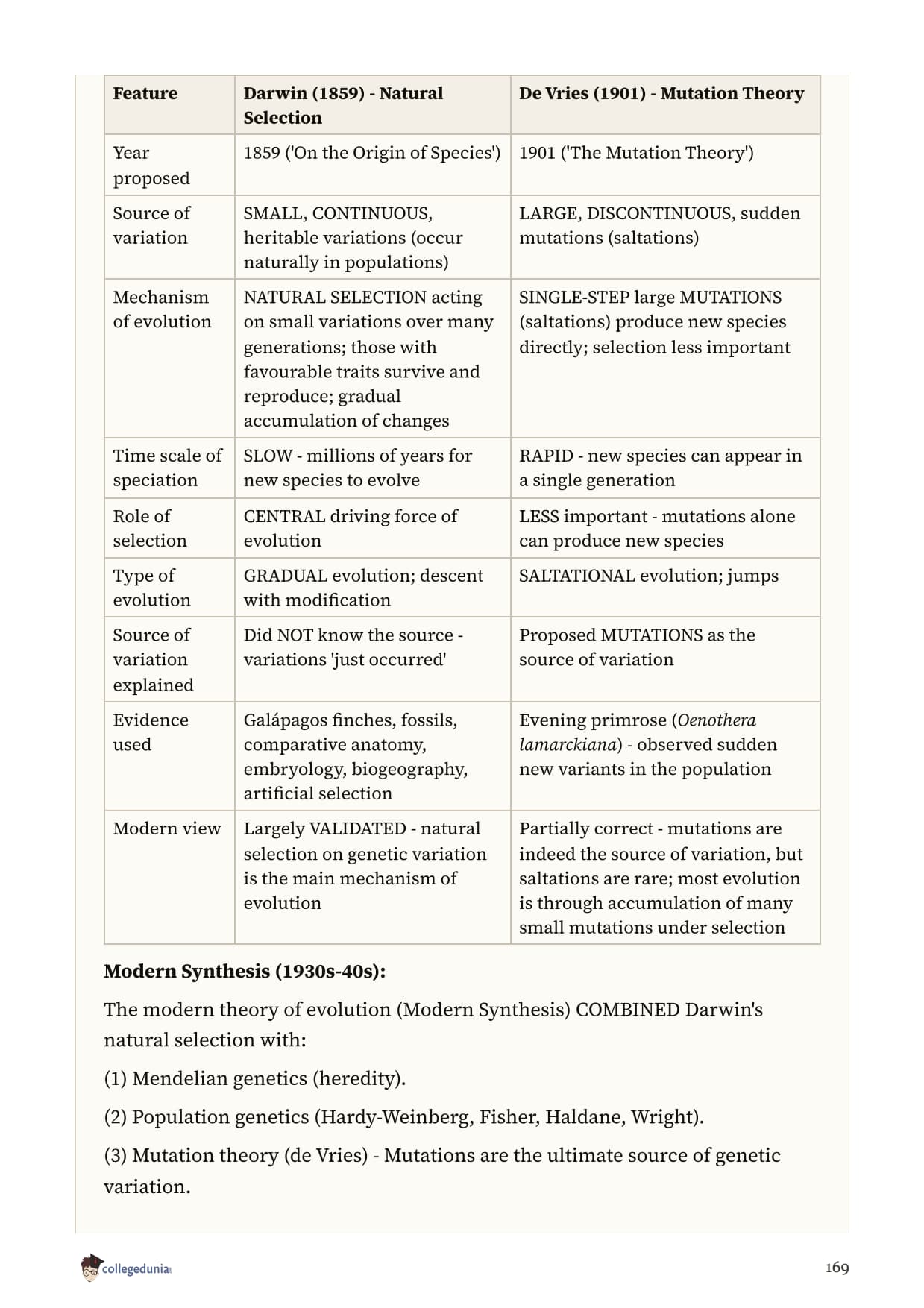
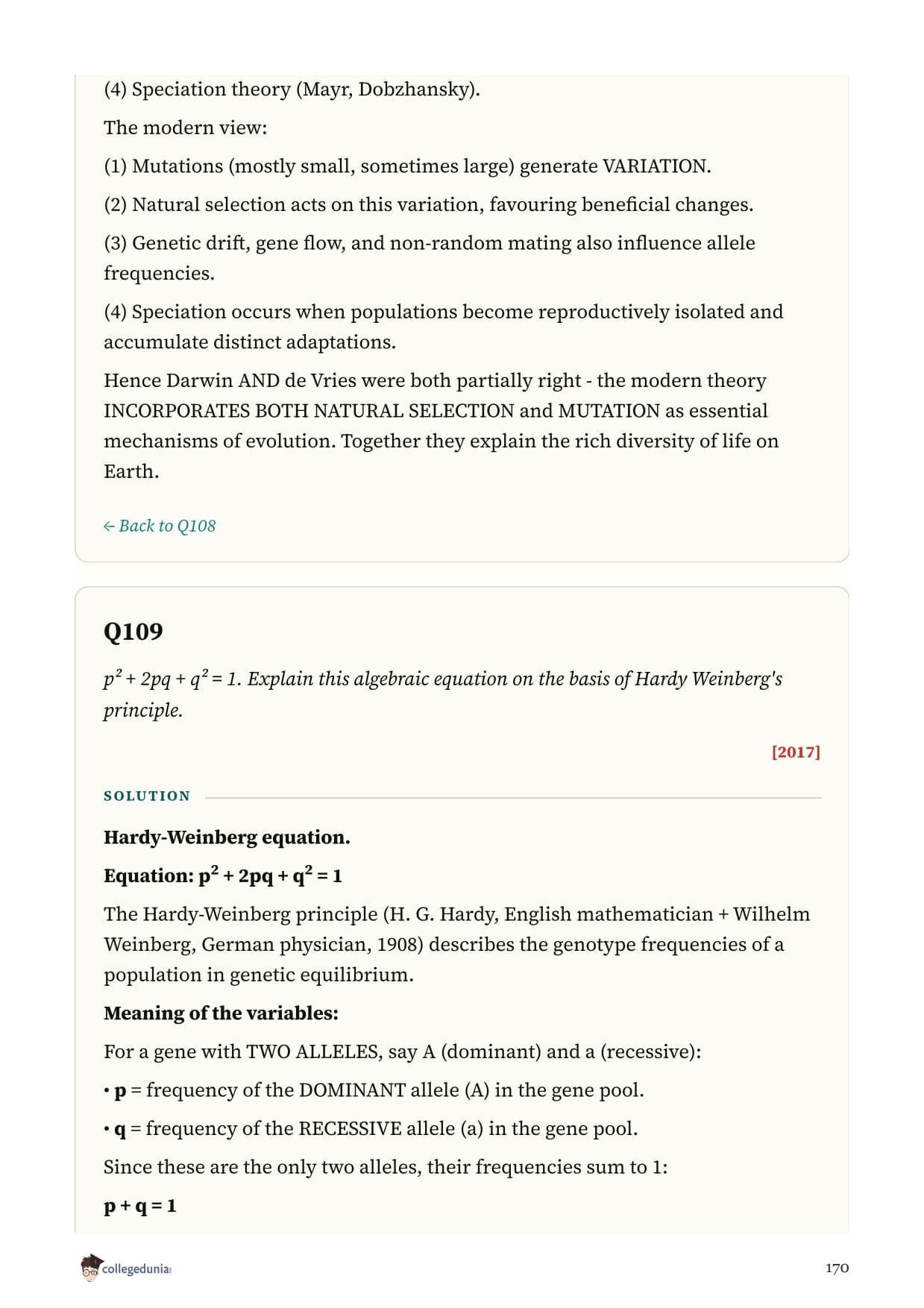
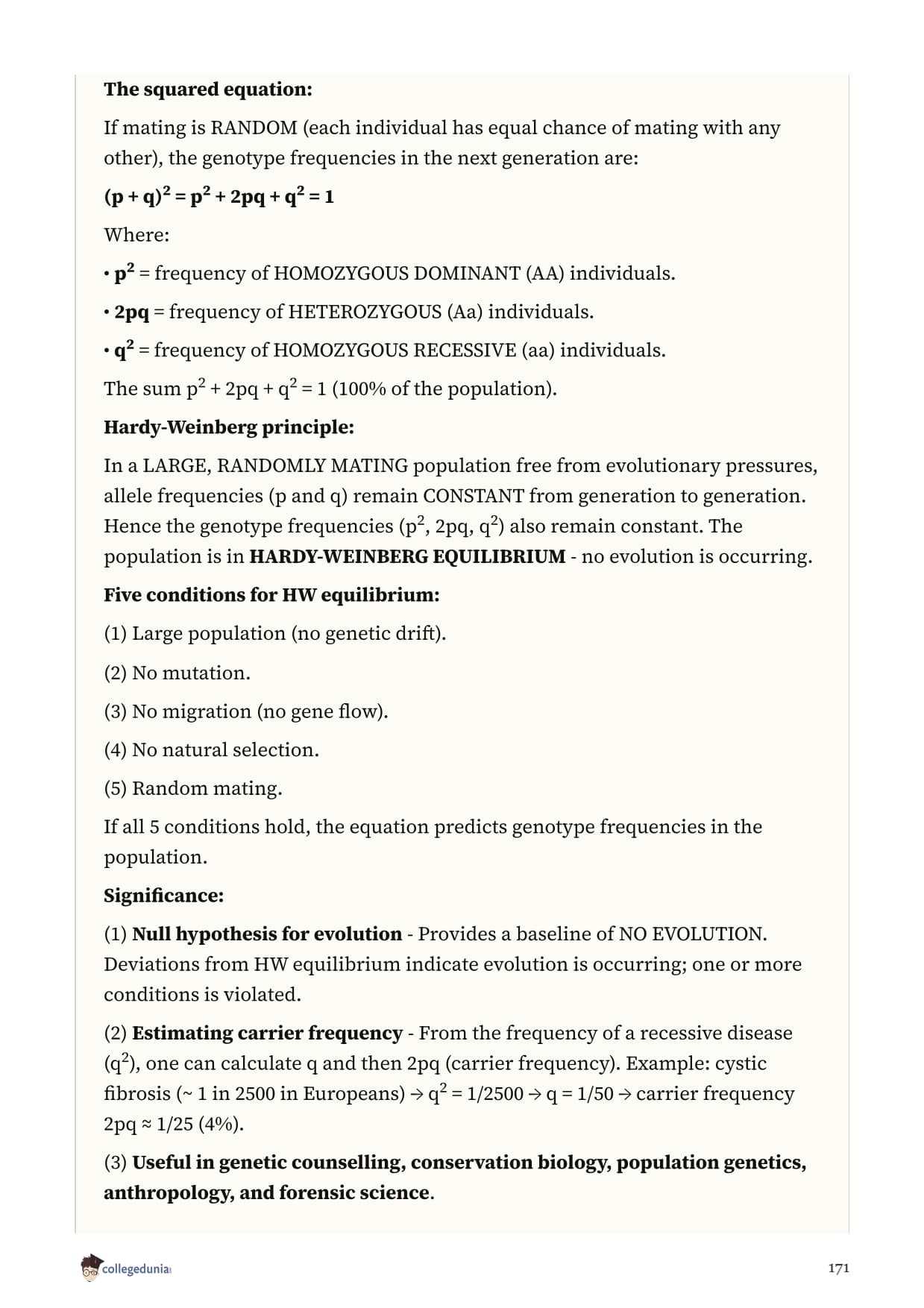
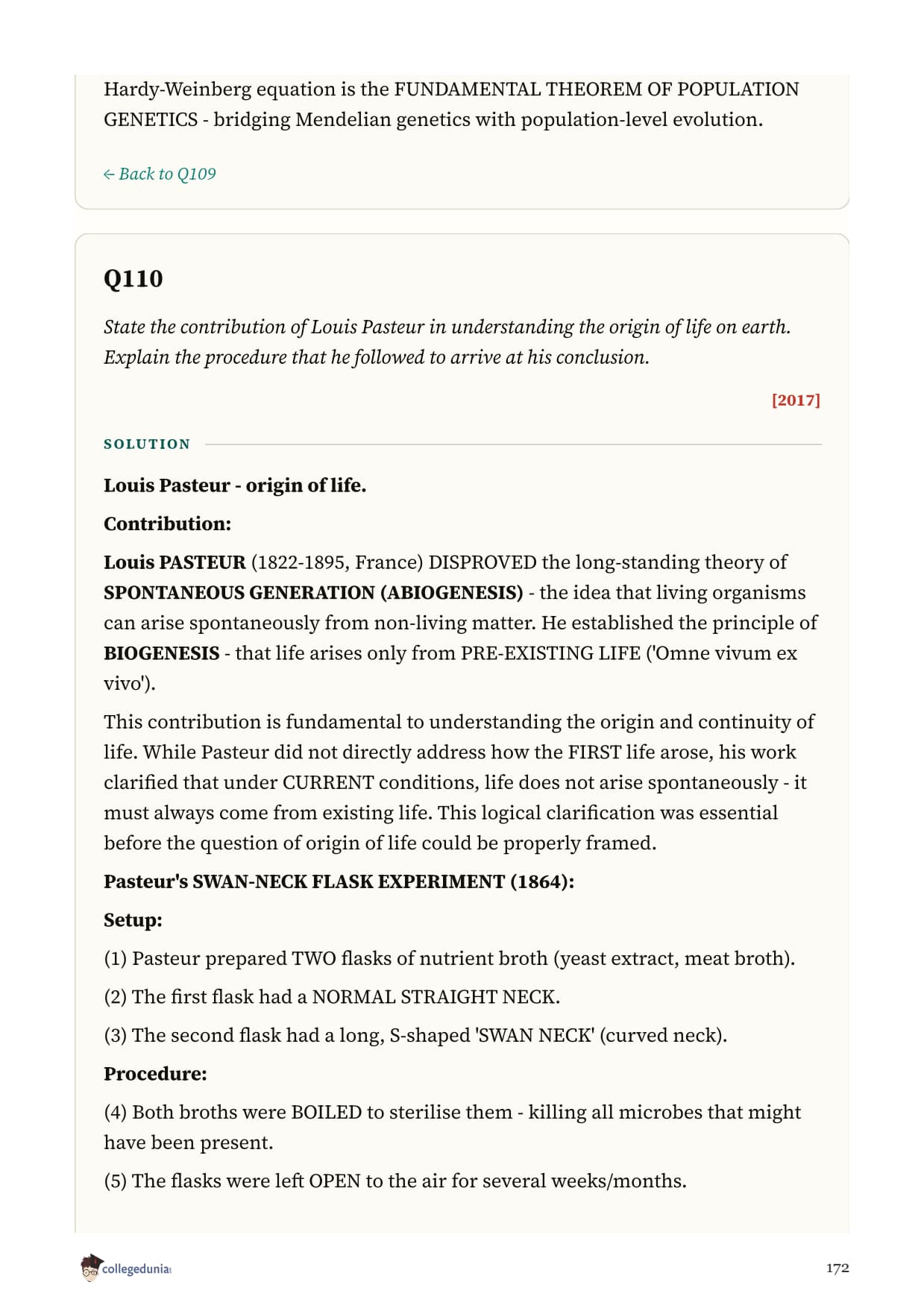
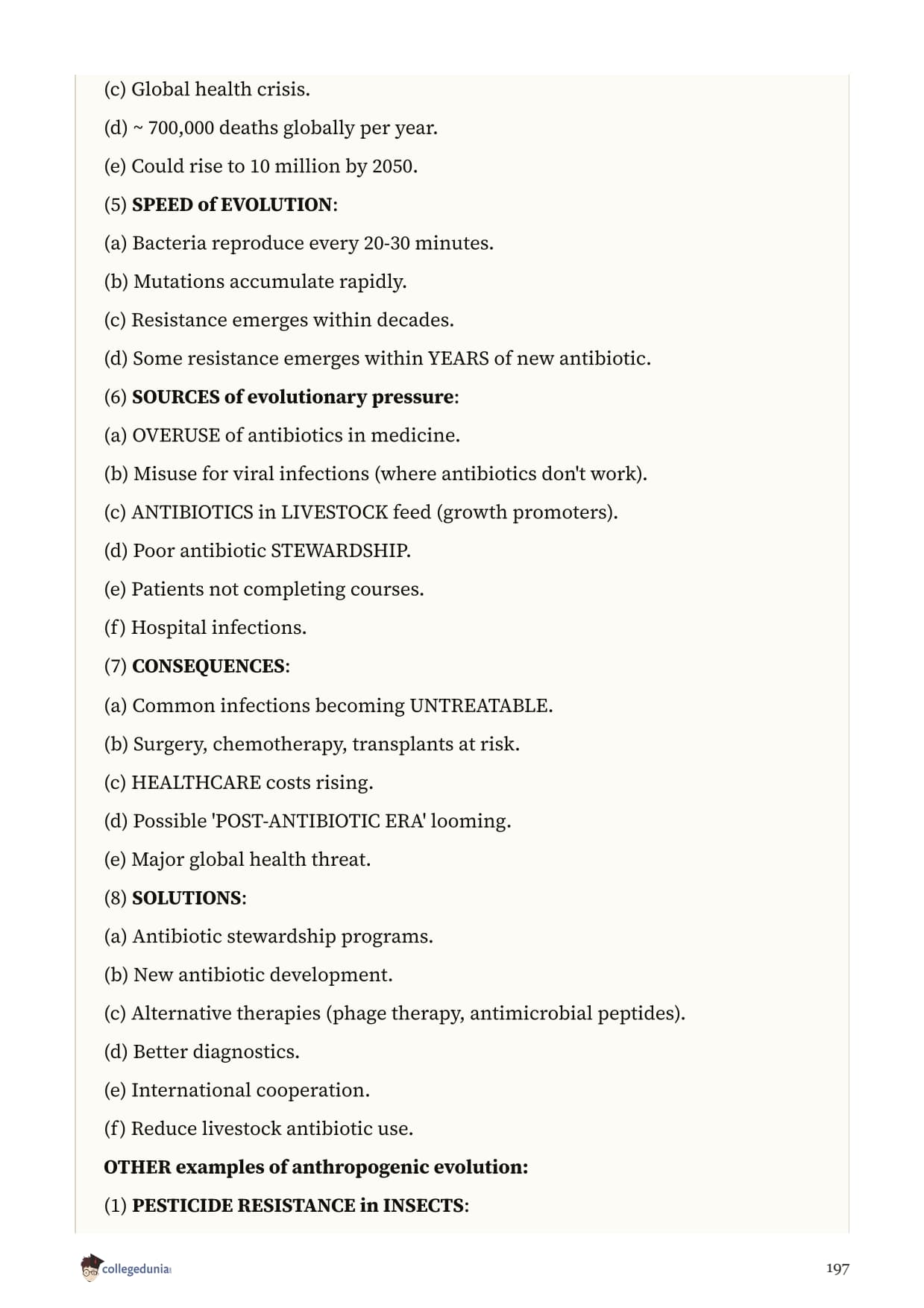
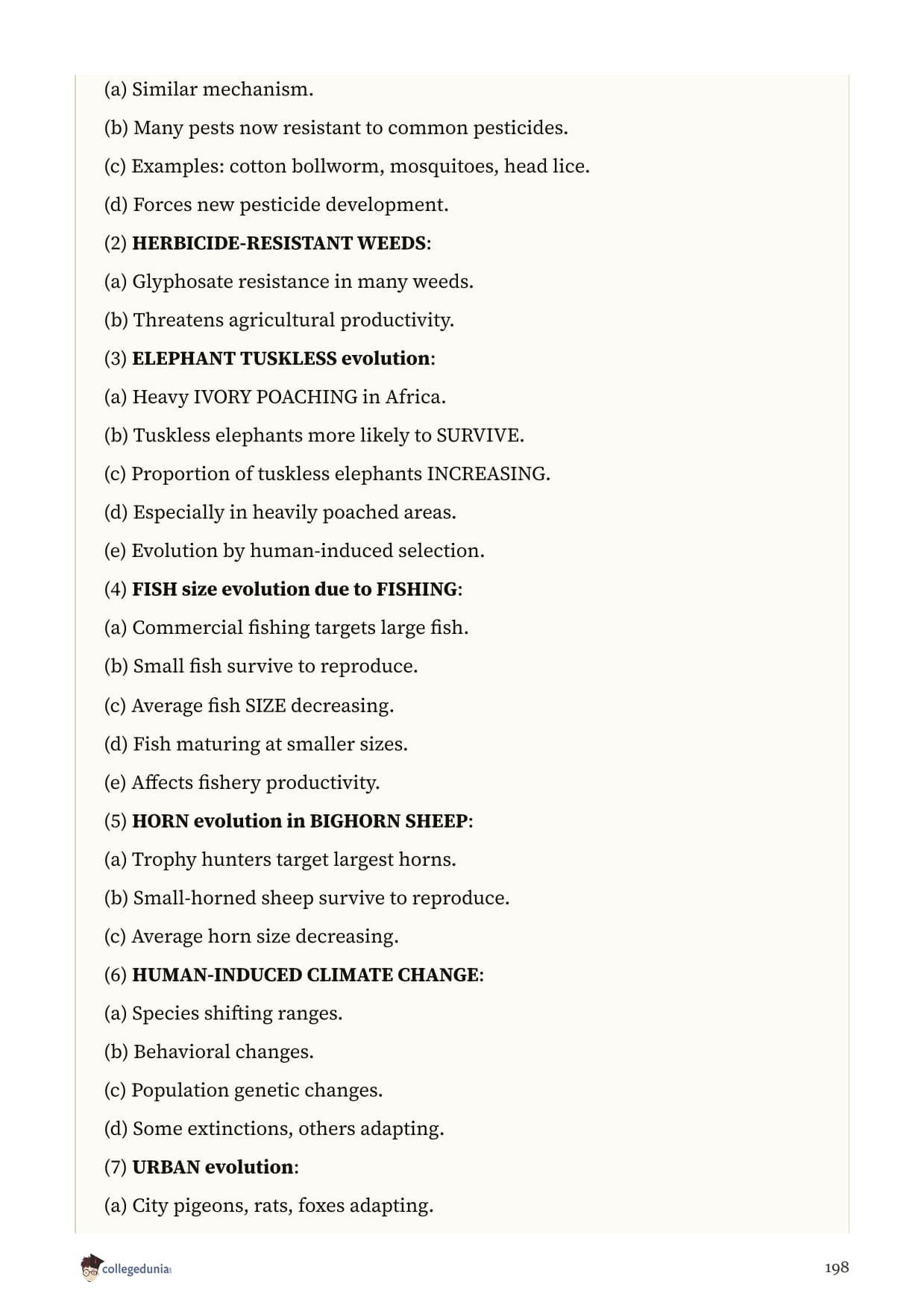
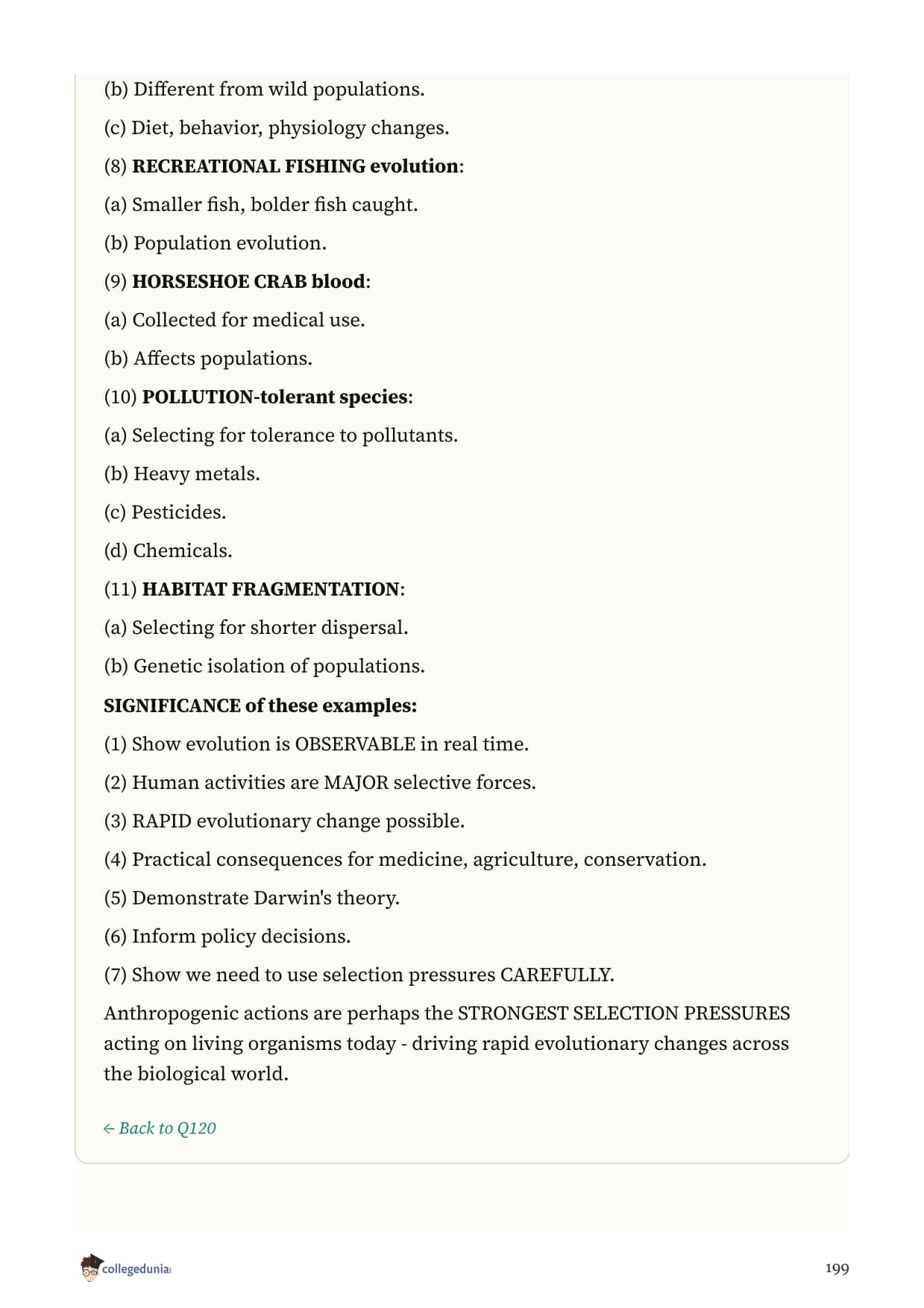
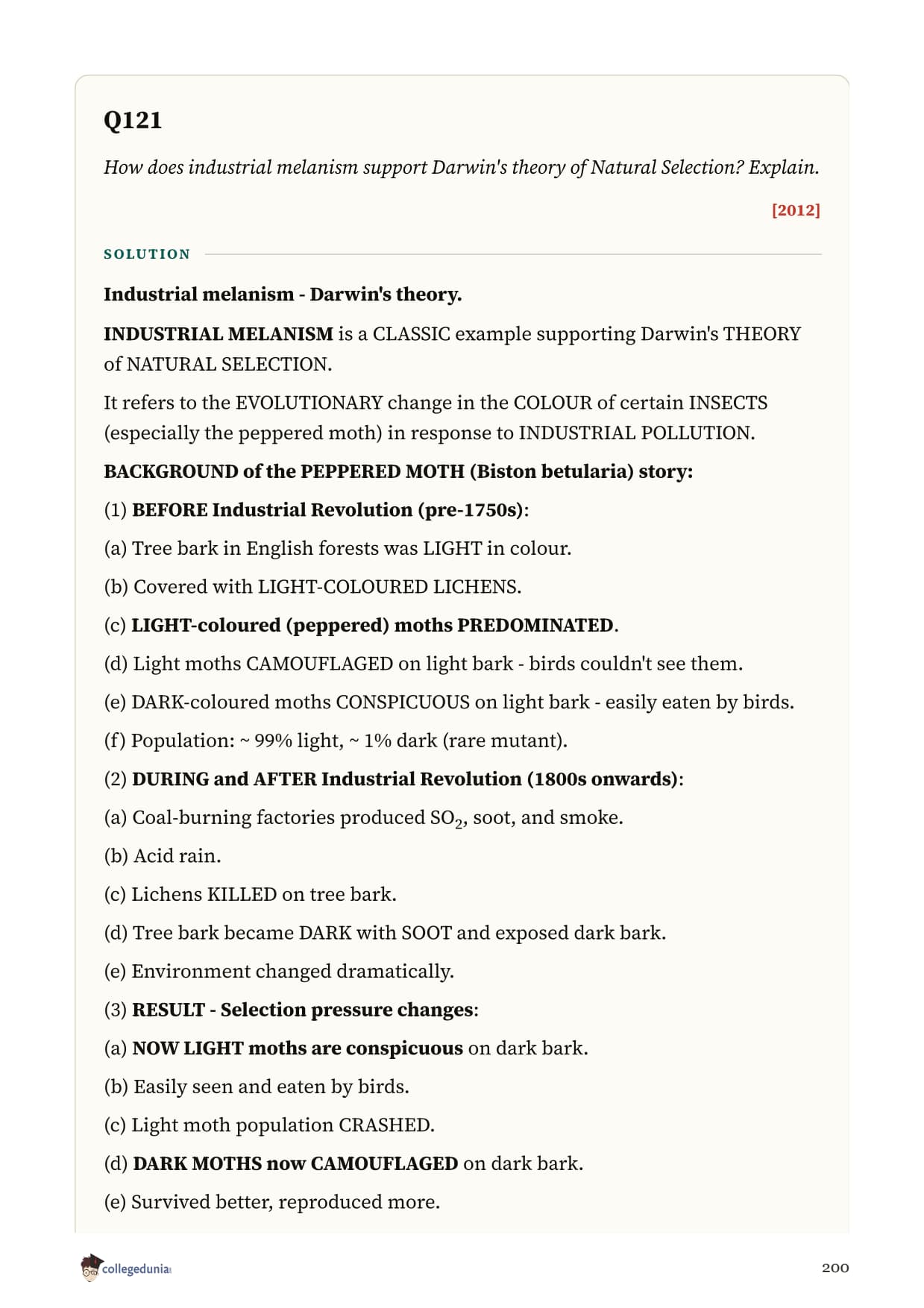
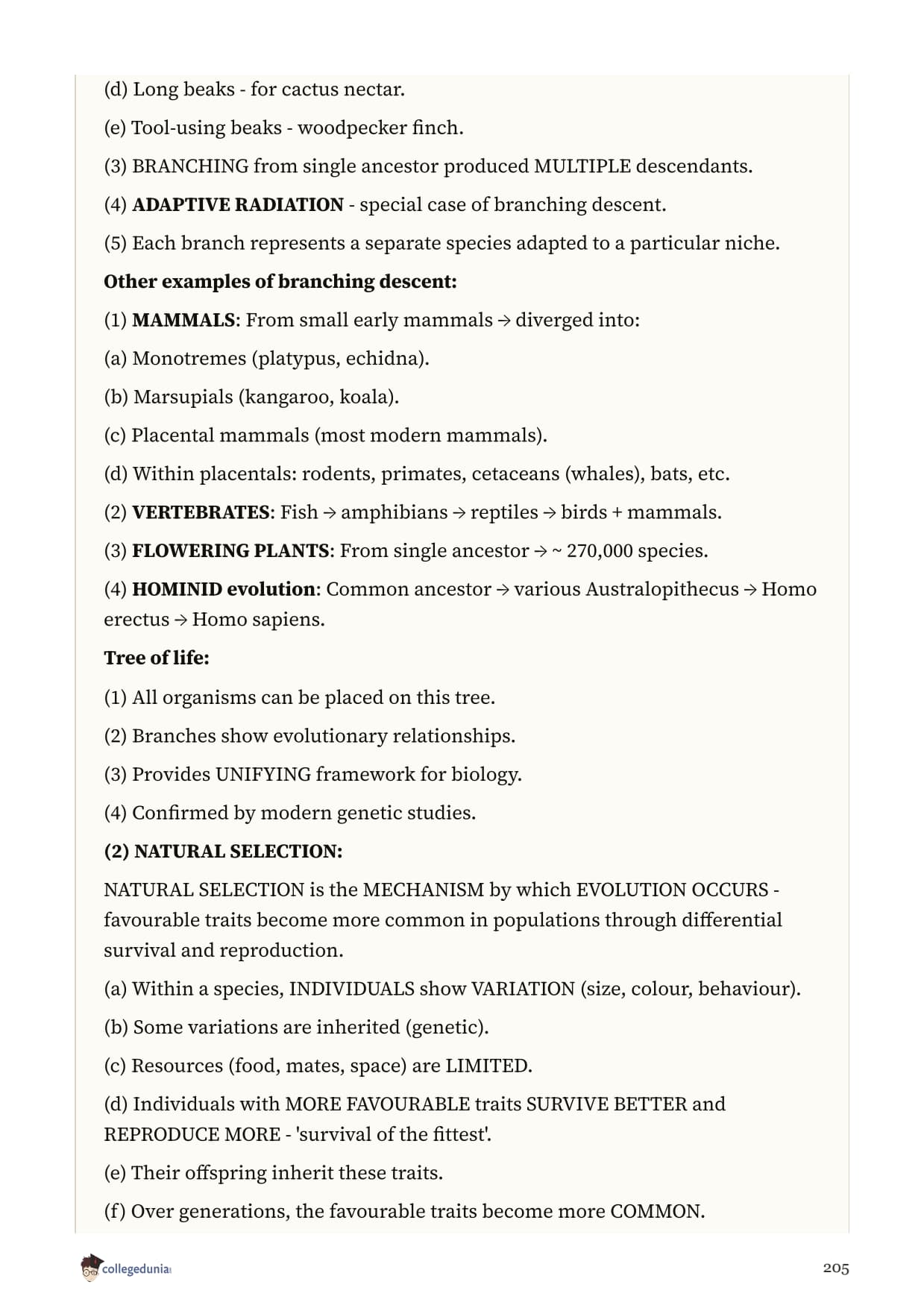
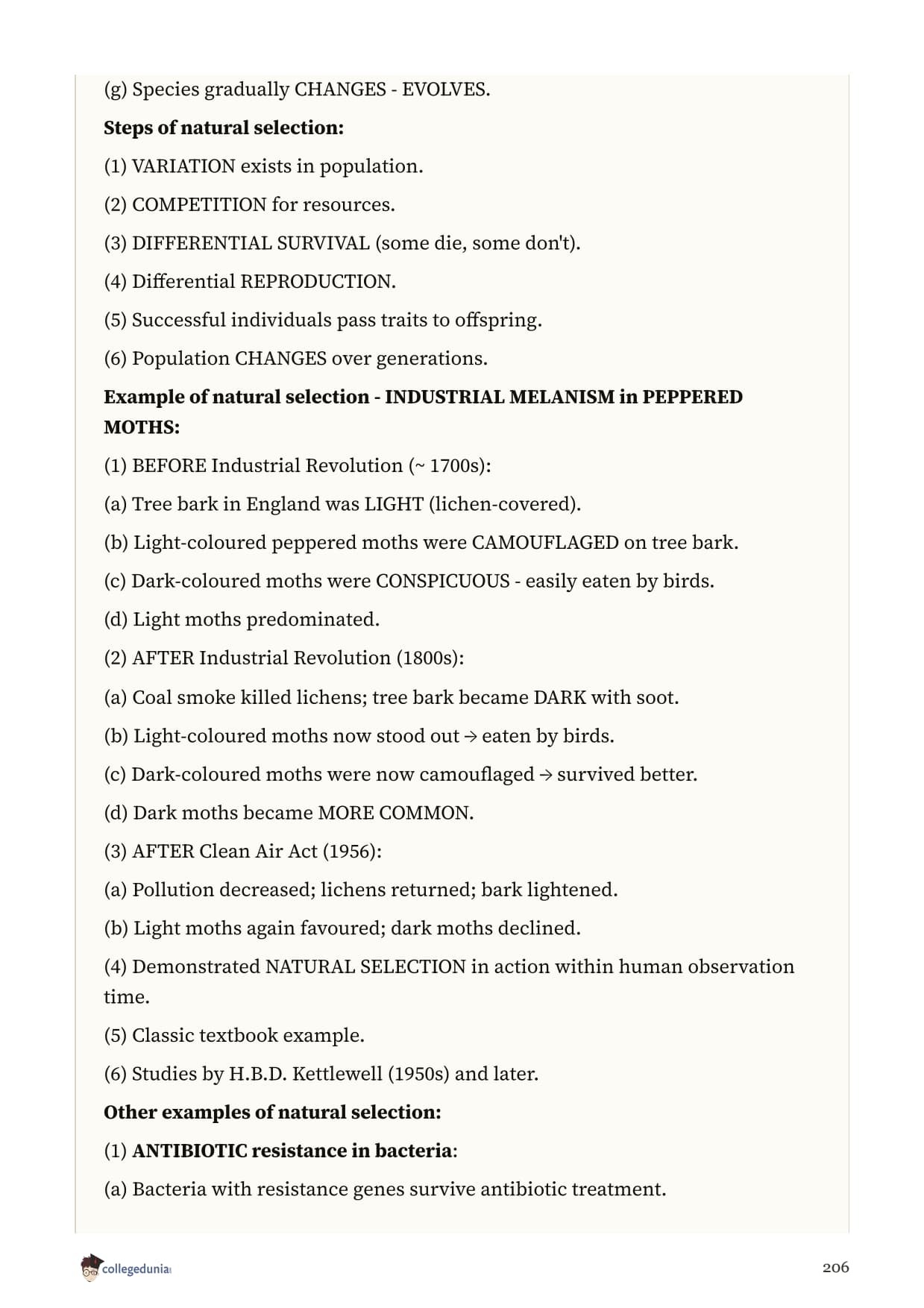
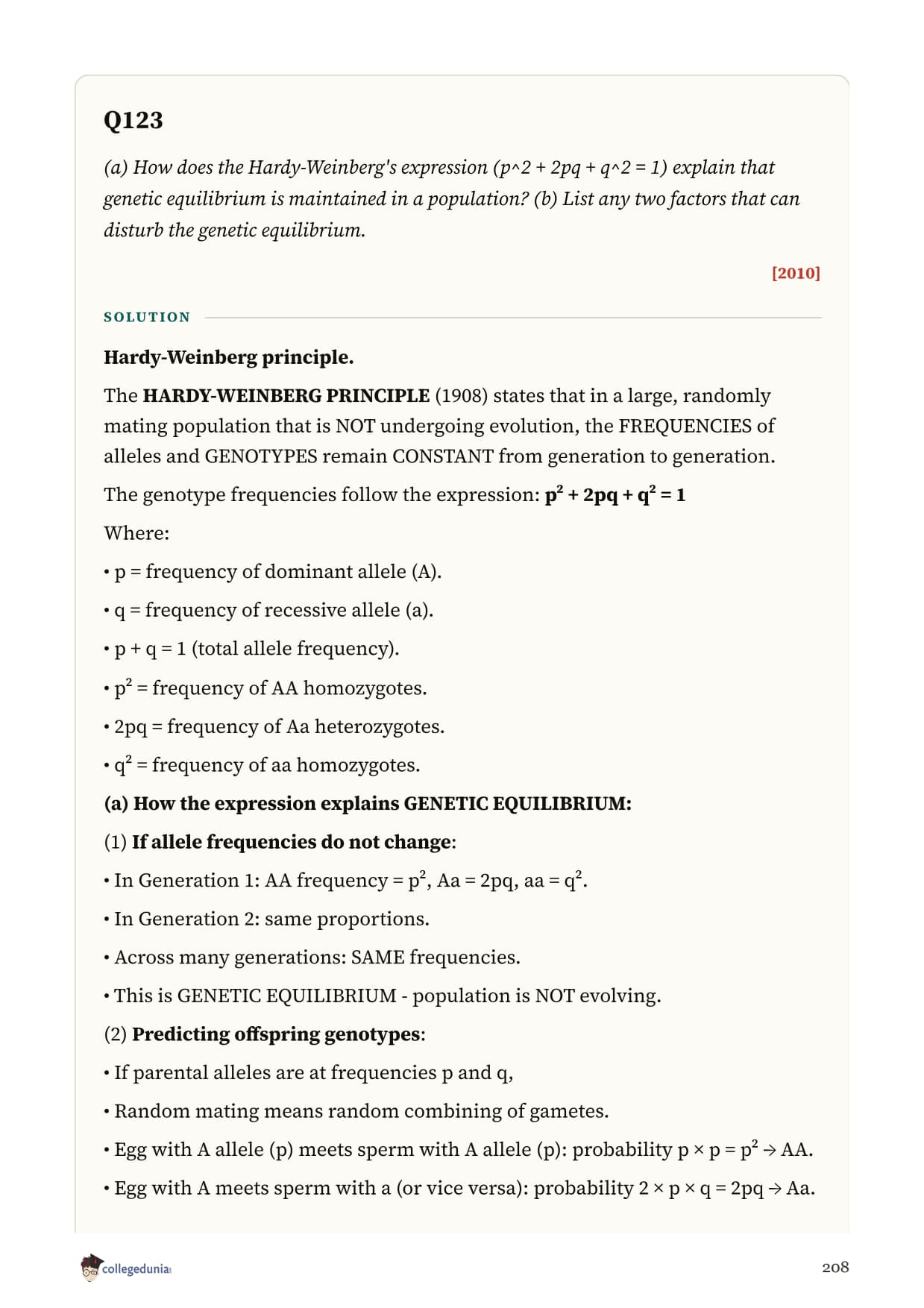
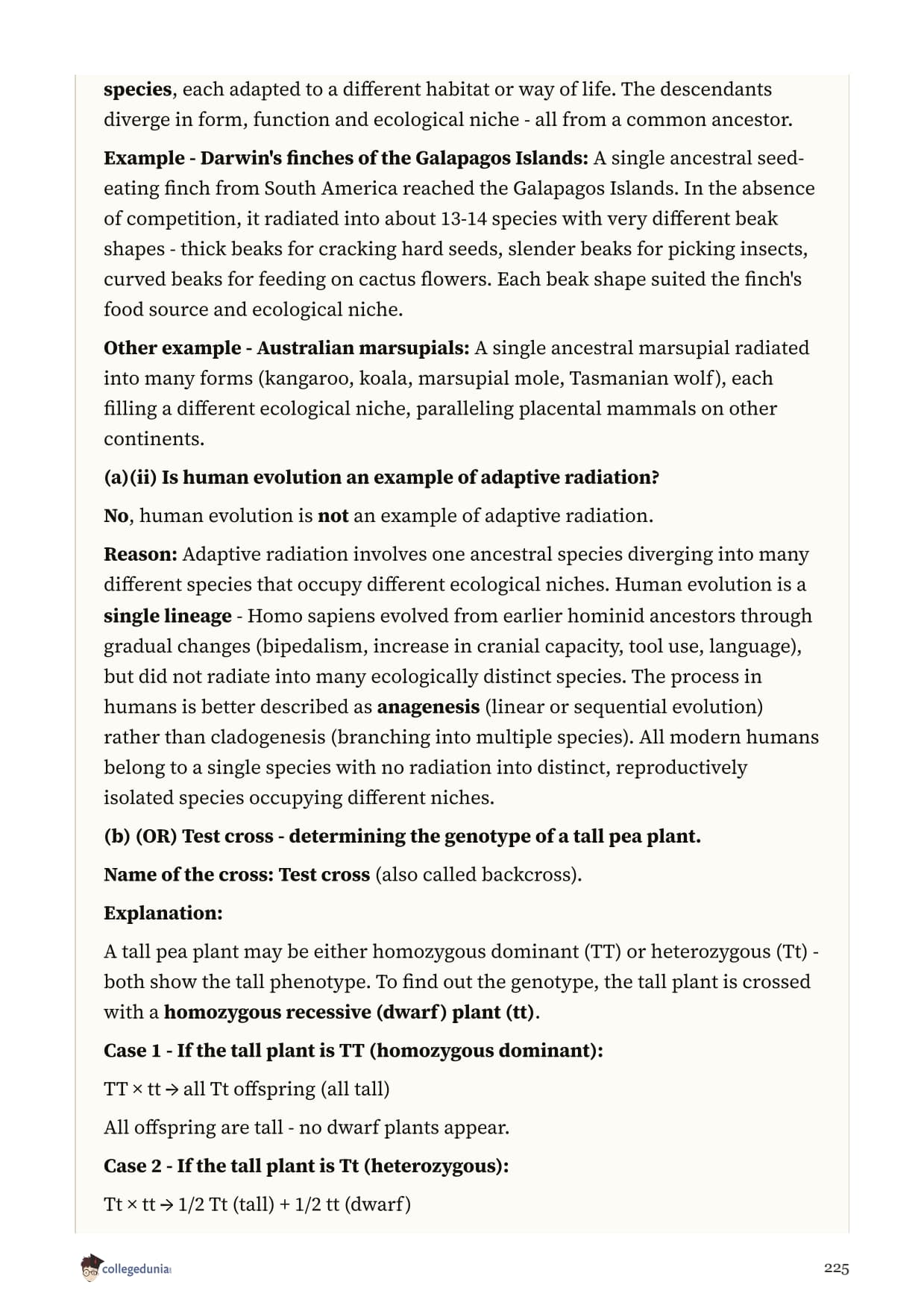
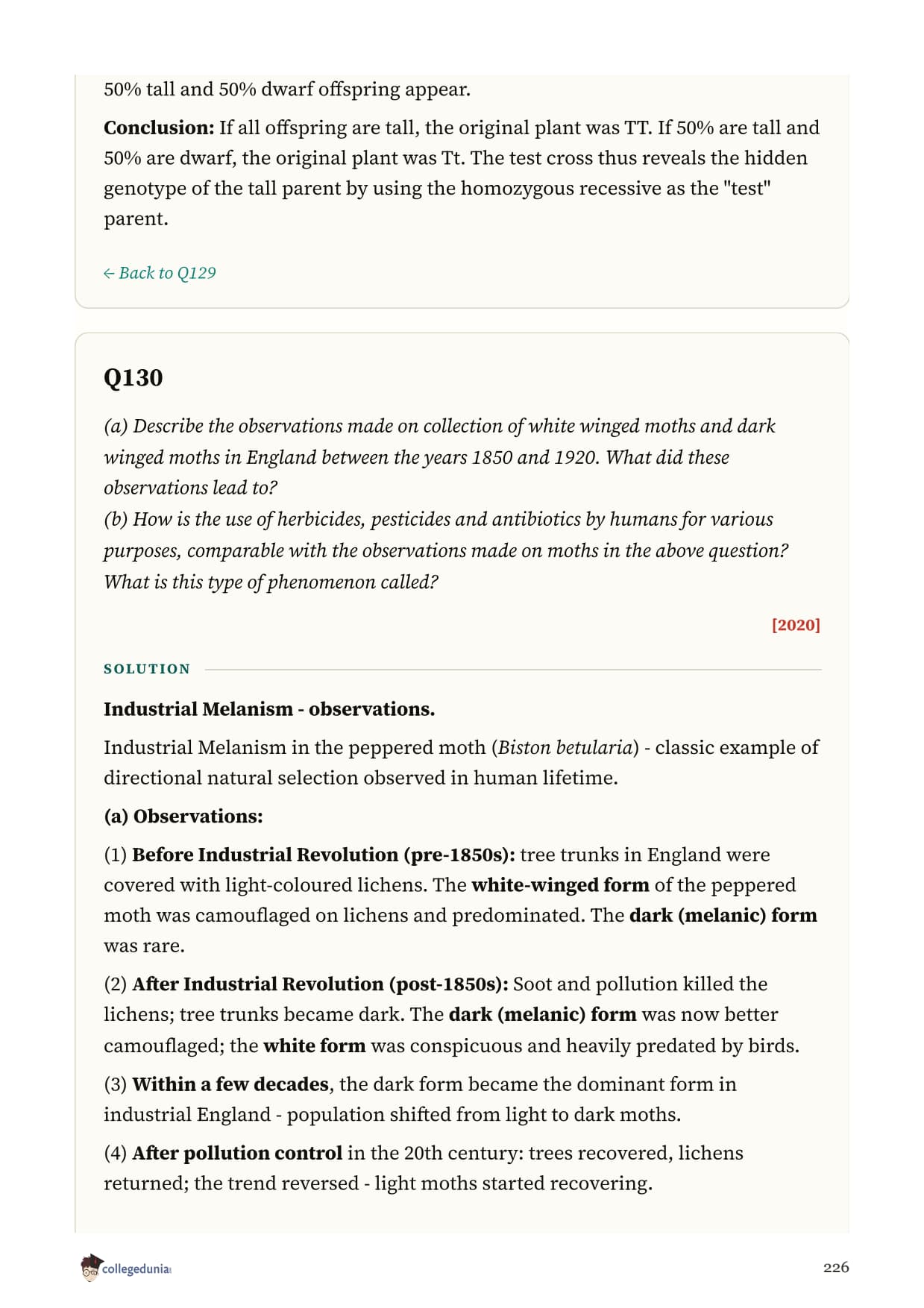
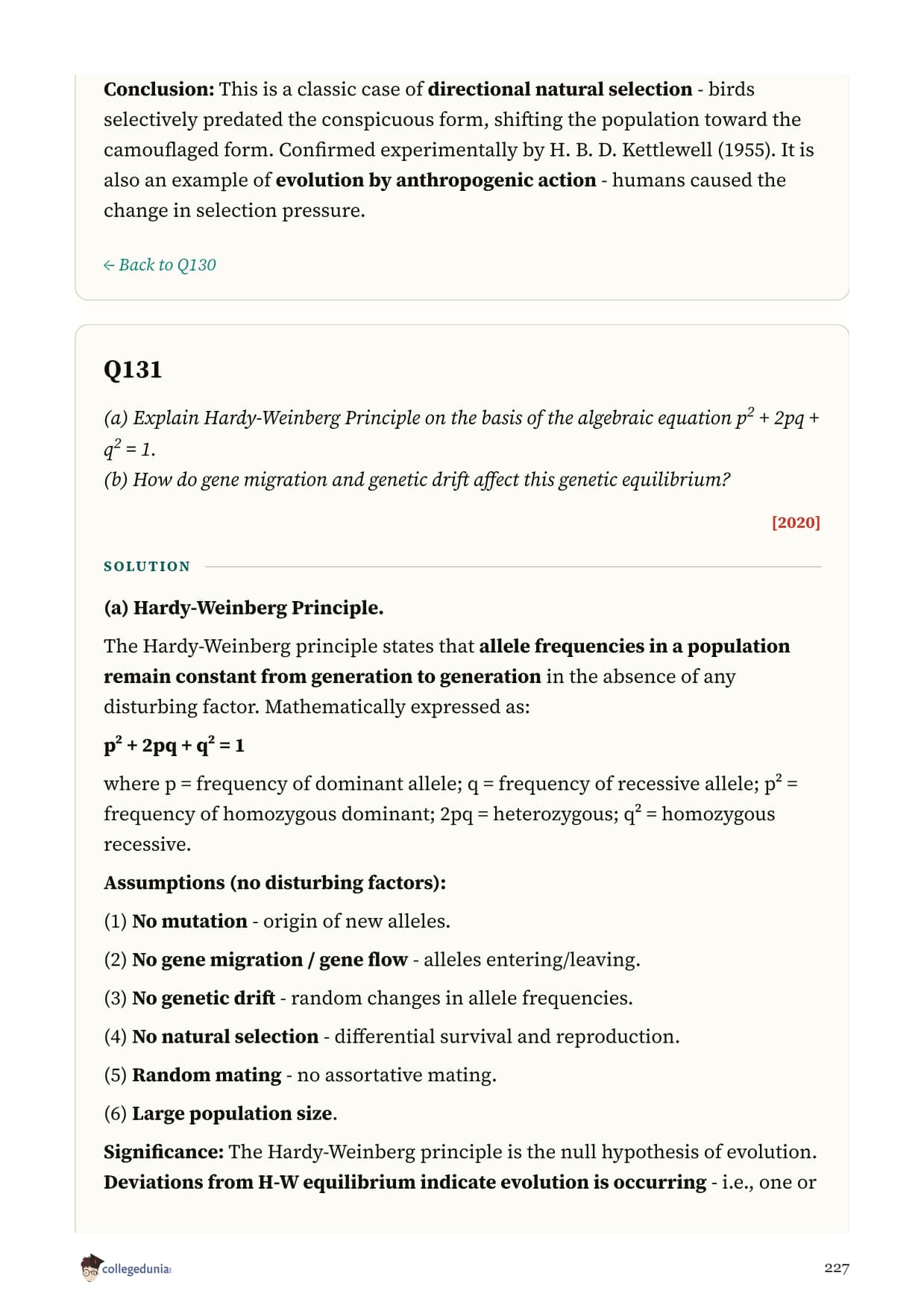
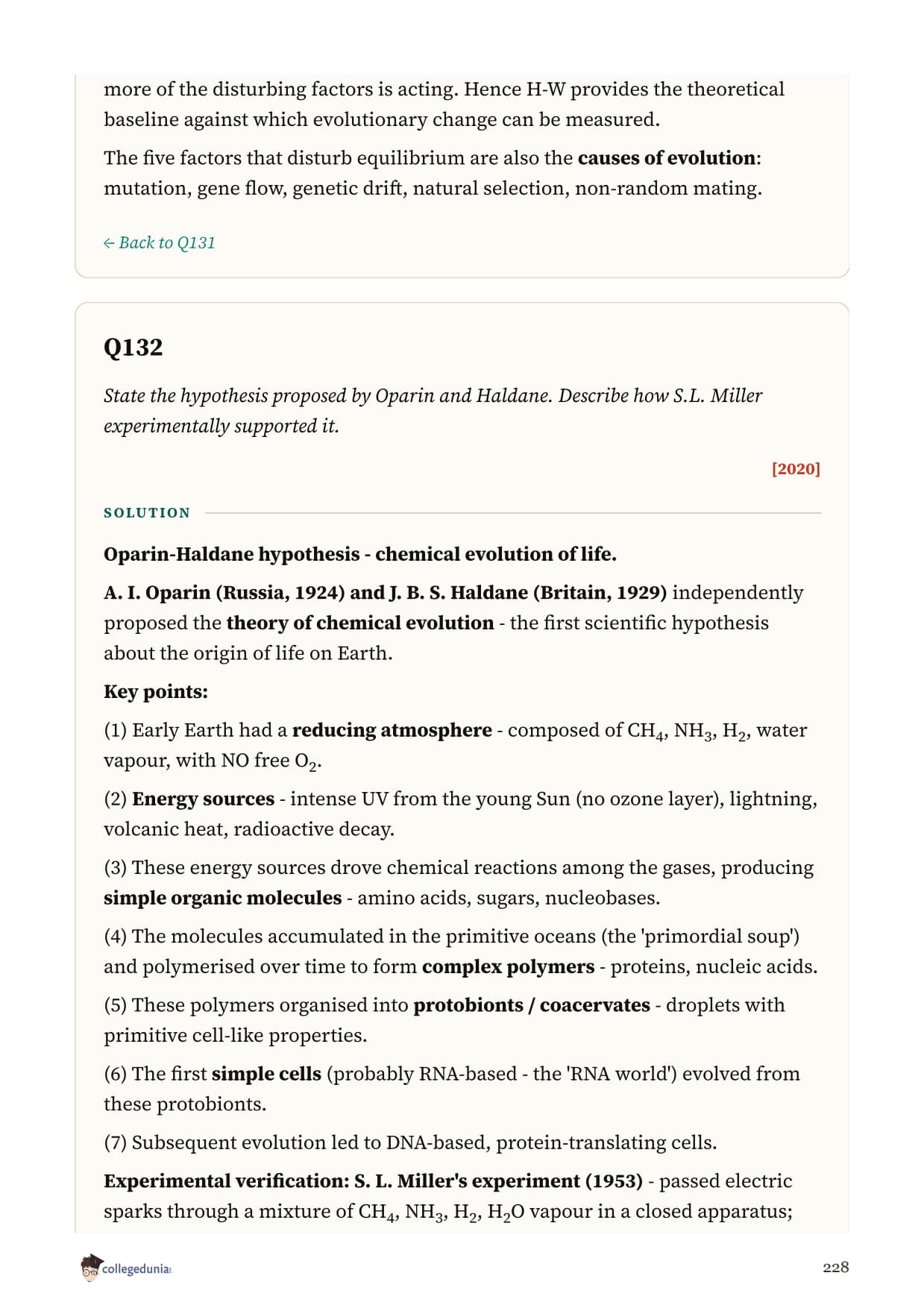
- 1-mark questions: 62 questions, mostly MCQ, name-the-scientist and assertion-reason from recent papers.
- 2 and 3-mark questions: 11 and 51 questions, with the 3-mark band carrying the bulk of this chapter.
- 5-mark long answers: 5 questions, the rarest band here, usually a Hardy-Weinberg derivation or human evolution write-up.
The Class 12 Biology Evolution PYQ compilation gathers 132 board-paper questions across 2008 to 2026, sorted by marks and by year, so you cover every CBSE and NEET pattern from this chapter in order.
Every question in this Class 12 Biology Evolution PYQ compilation is sourced from CBSE board papers (Delhi, Outside Delhi, Foreign and Compartment) and cross-checked against the official mark scheme, with near-duplicate questions removed.
What the Evolution Previous Year Questions Cover
The 132-question set maps every concept the NCERT chapter introduces. The Hardy-Weinberg principle is the single most repeated topic, mostly in the 3 and 5-mark band. Evidences of evolution (fossils, homology, analogy and embryology) and natural selection with industrial melanism fill many 1 and 3-mark questions. Human evolution and adaptive radiation, including Darwin's finches, round out the higher bands and the MCQs.
Marks-wise Distribution of the Evolution PYQs
The table below shows how the 132 questions split across the CBSE marks bands. Note how strongly this chapter leans on the 1 and 3-mark bands.
| Marks | Questions | Total Marks | CBSE Section | Type |
|---|---|---|---|---|
| 1 mark | 62 | 62 | Section A | MCQ / Assertion-Reason |
| 2 mark | 11 | 22 | Section B | VSA (Very Short Answer) |
| 3 mark | 51 | 153 | Section C | SA (Short Answer) |
| 4 mark | 3 | 12 | Section D | Case Study |
| 5 mark | 5 | 25 | Section E | Long Answer |
Year-wise Spread of Class 12 Biology Evolution PYQs
The compilation draws from 15 CBSE board years. Roughly 55% of the questions come from 2023 onwards, driven by the MCQ block and assertion-reason items on natural selection and evidences.
- 2026: Who proposed the idea of use and disuse of organs, an assertion-reason on industrial melanism, and the derivation of the Hardy-Weinberg expression with two disturbing factors.
- 2024 to 2025: The largest contribution years, with MCQ banks on homology and analogy, fossils and human evolution.
- 2020 to 2023: Reduced-syllabus papers, yet the Hardy-Weinberg principle and convergent evolution still feature.
- 2008 to 2019: Questions on Darwin's finches, adaptive radiation and natural selection types, all still in the current syllabus.
Topic Frequency in the Evolution Board Paper Questions
The 132 questions cluster into the six topic buckets below, ranked by how often CBSE has set them between 2008 and 2026.
| Rank | Topic Cluster | Frequency | Typical Marks Band |
|---|---|---|---|
| 1 | Hardy-Weinberg principle (the equation, derivation, factors disturbing equilibrium) | ~23 per cent | 3 and 5 mark |
| 2 | Evidences of evolution (fossils, homology and analogy, embryology, vestigial organs) | ~21 per cent | 1, 2, 3 mark |
| 3 | Natural selection (Darwinism, types of selection, industrial melanism) | ~18 per cent | 1 and 3 mark |
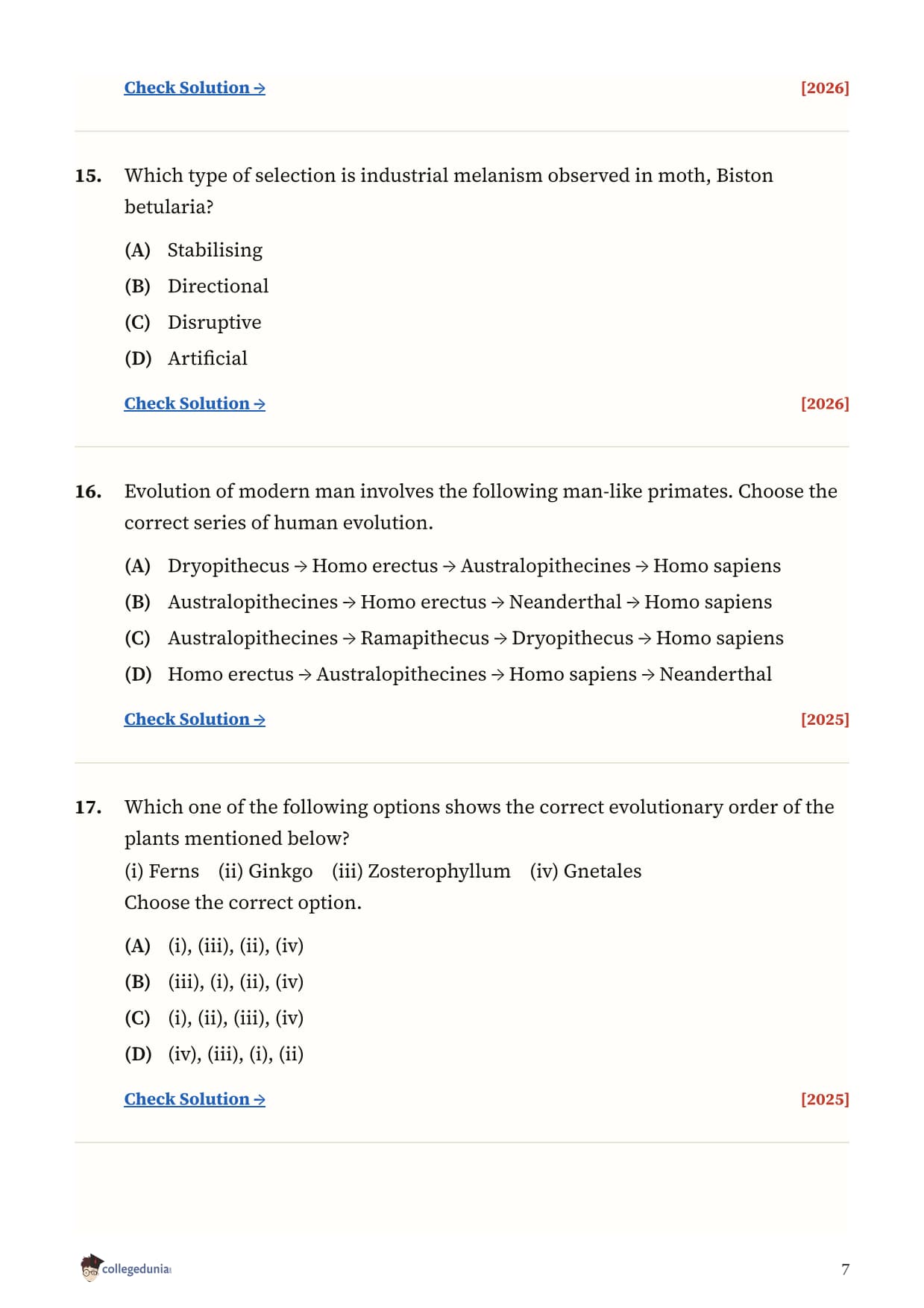
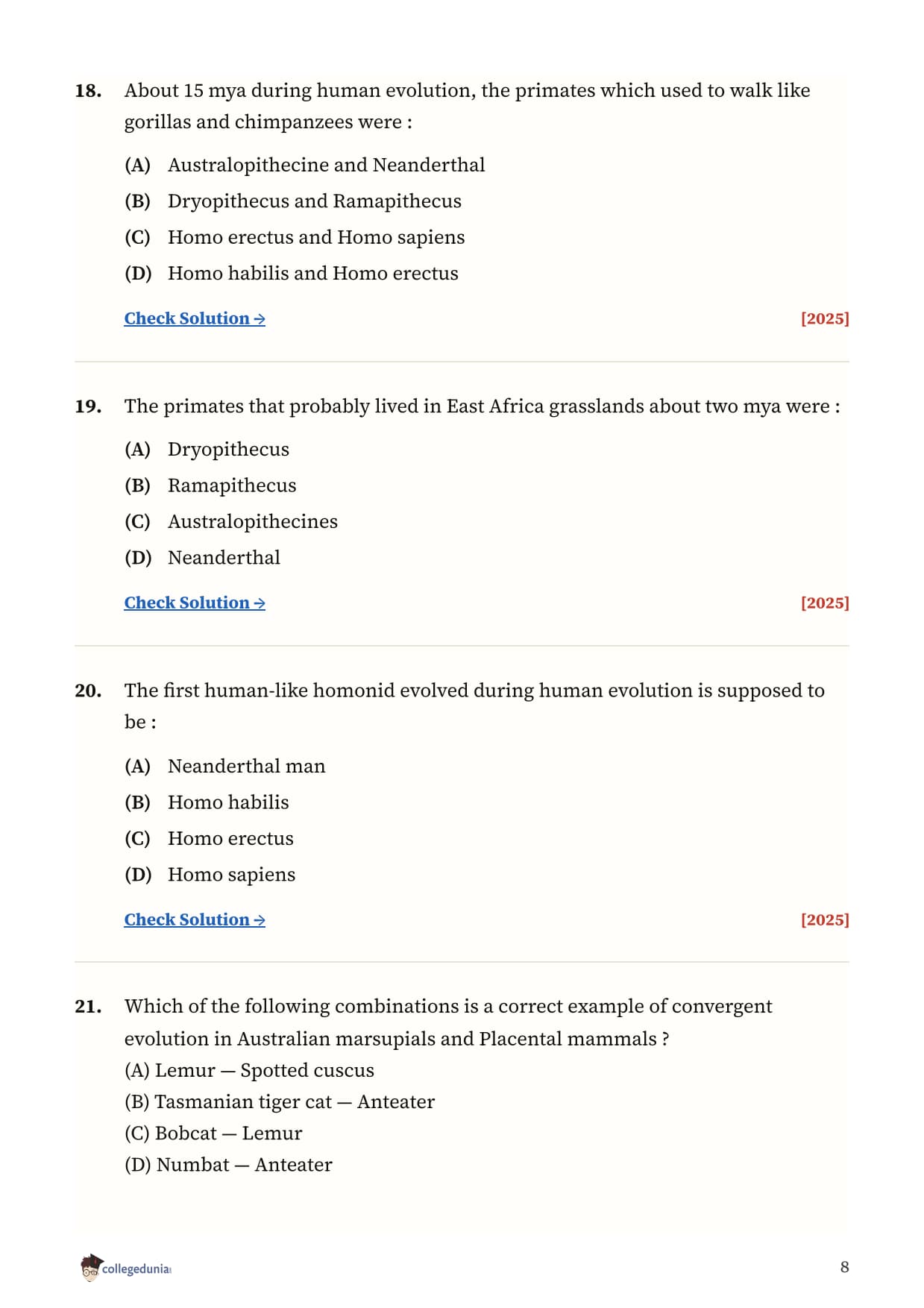
| 4 | Human evolution (ancestors, common ancestor of apes and man, sequence of hominids) | ~16 per cent | 1, 3, 5 mark |
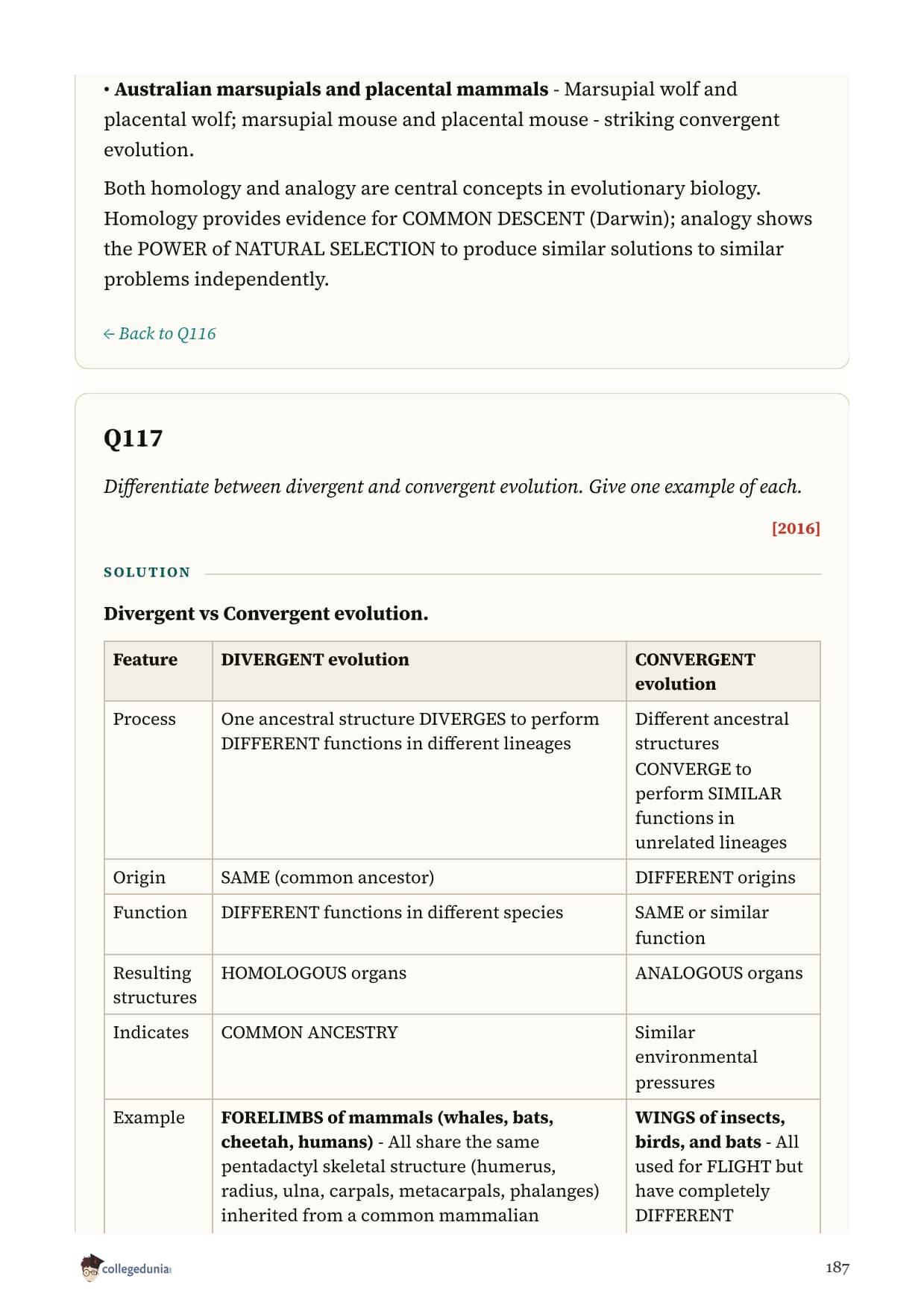
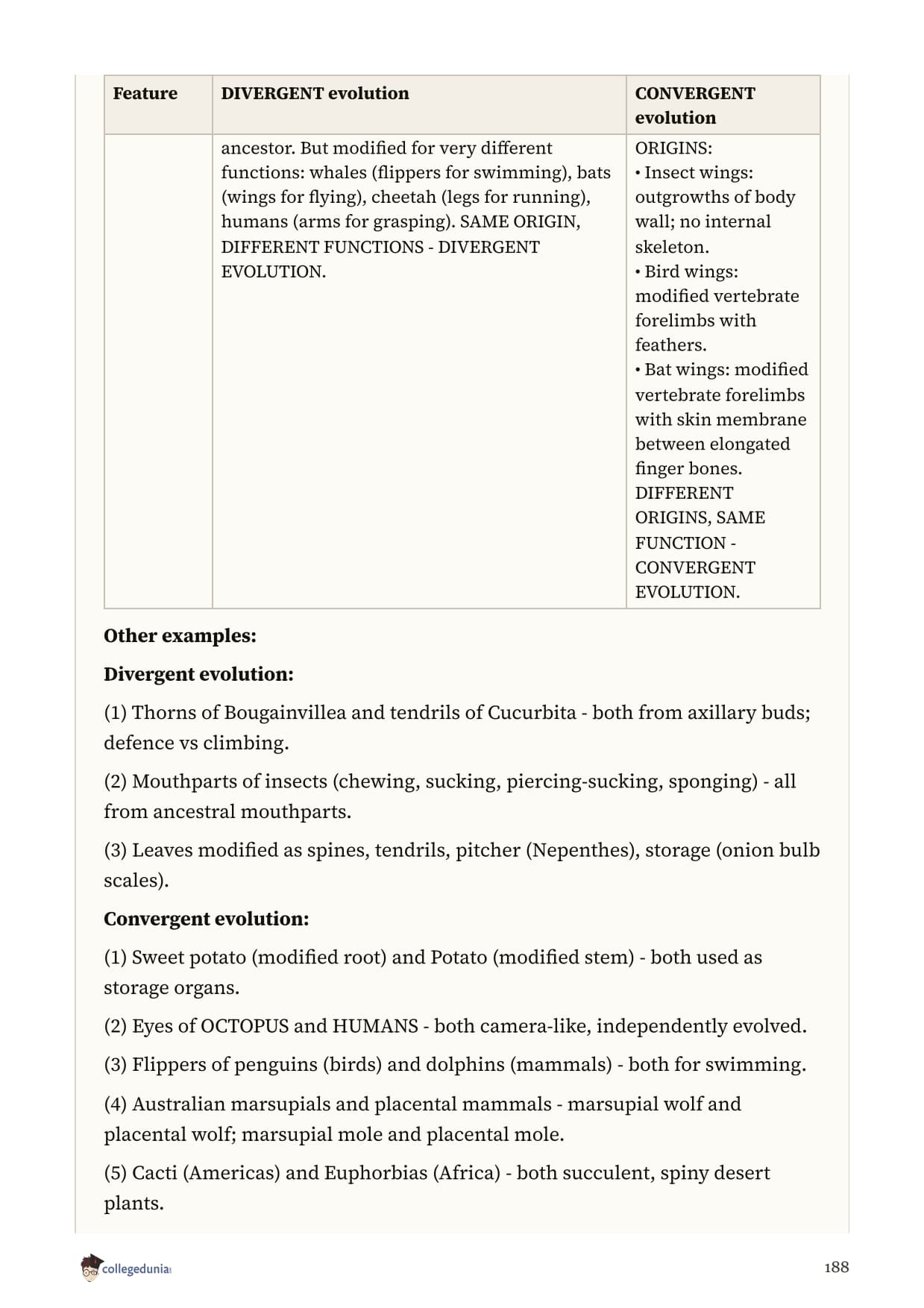
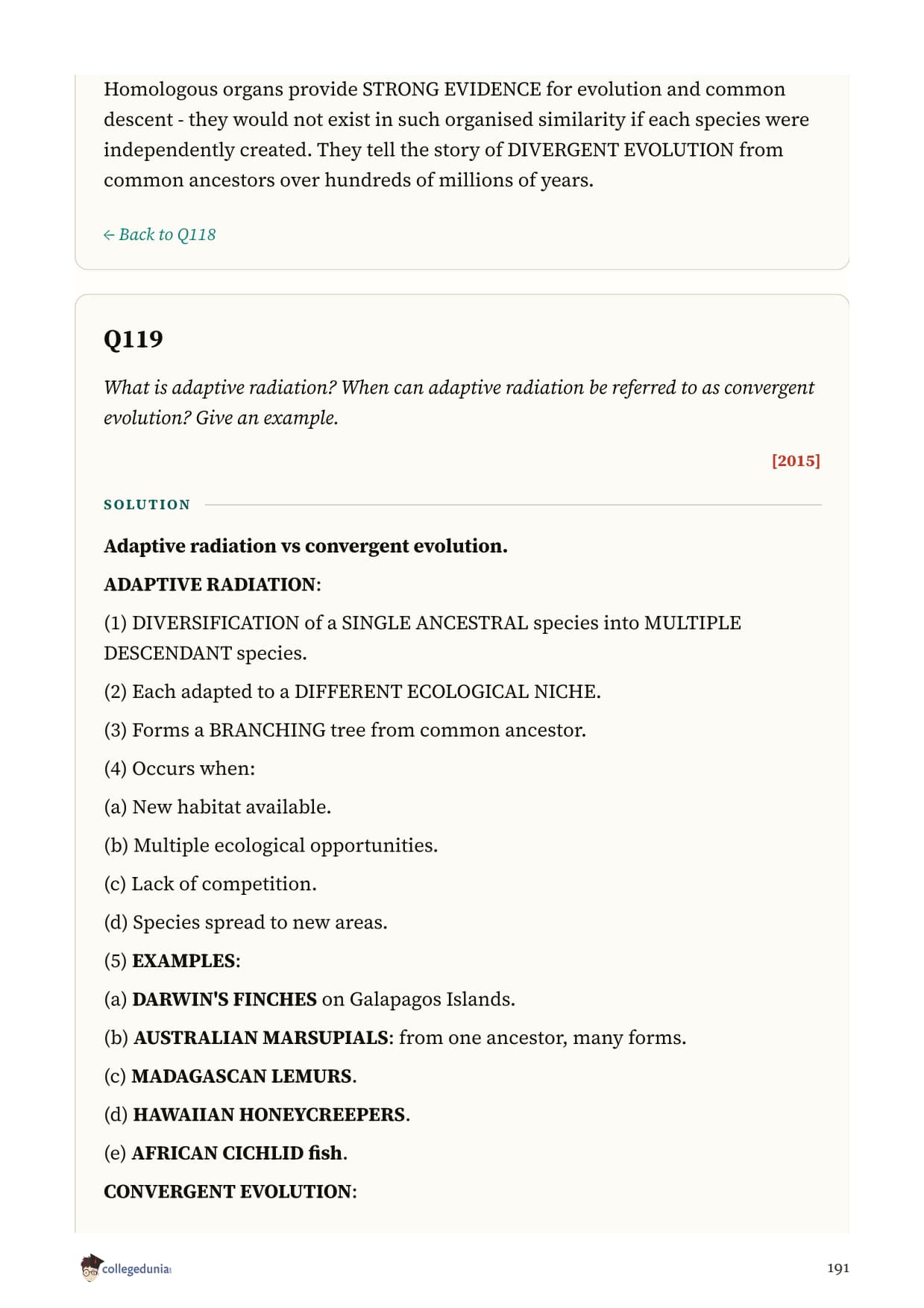
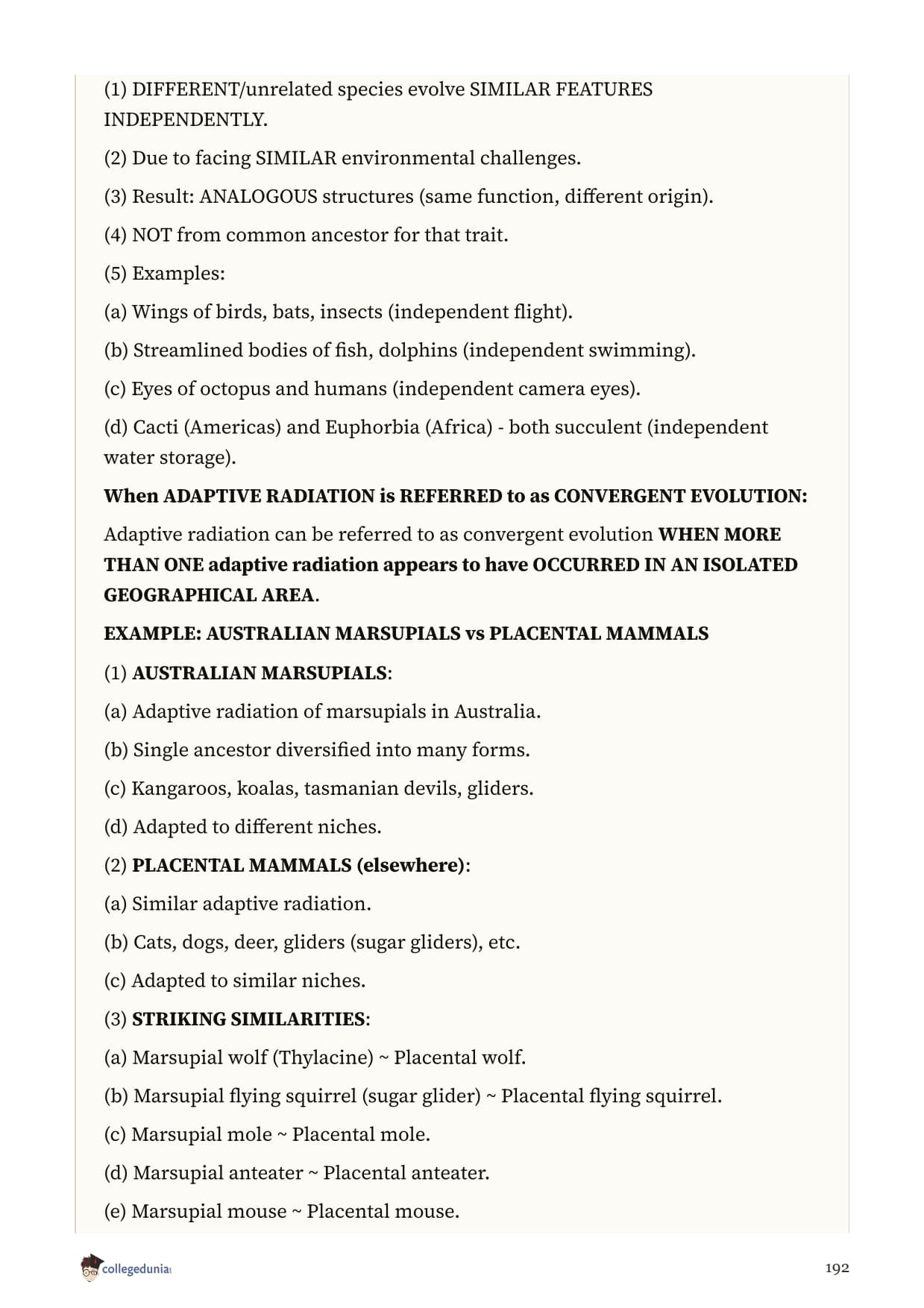
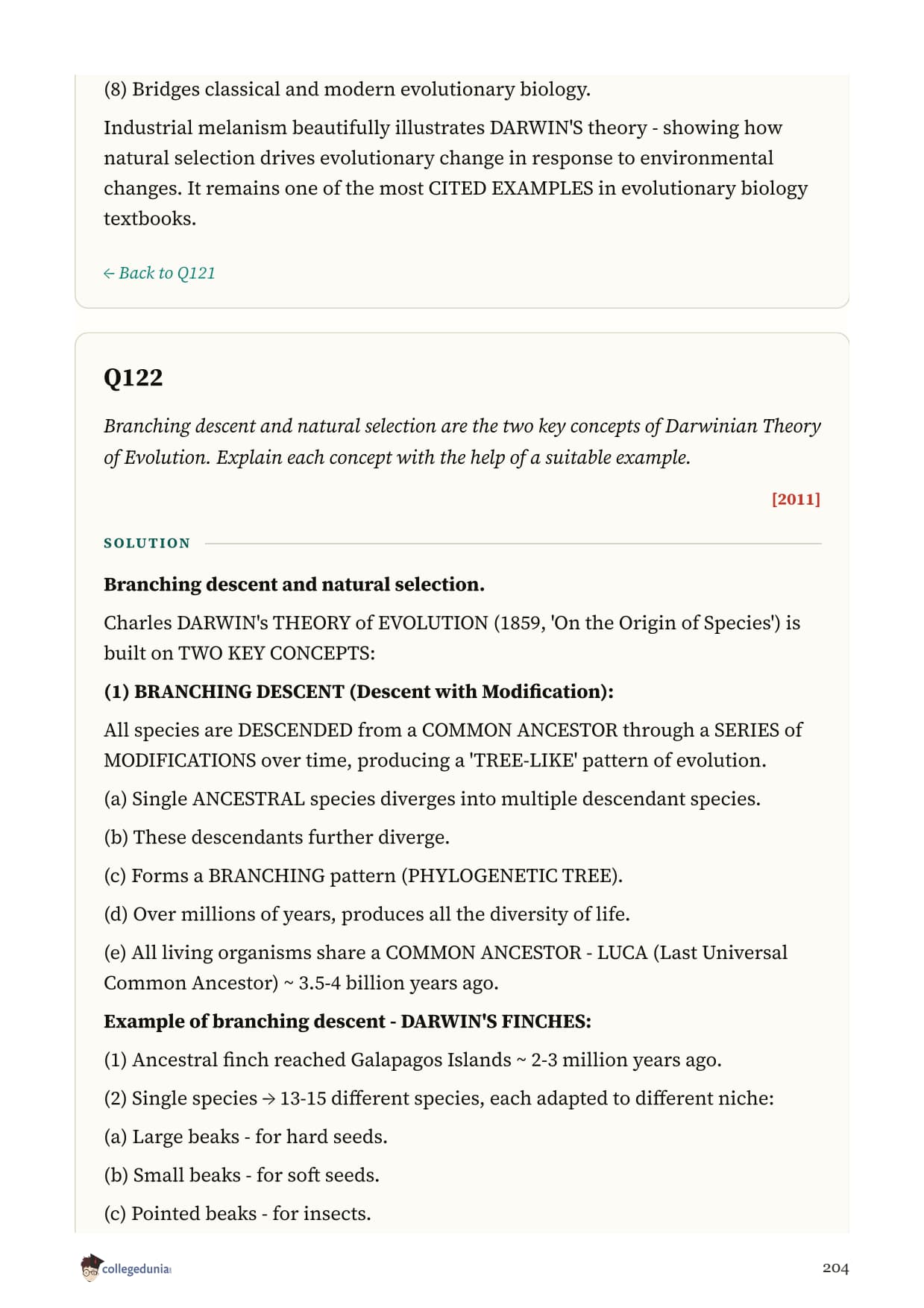
| 5 | Adaptive and convergent evolution (Darwin's finches, adaptive radiation, convergent evolution) | ~13 per cent | 1 and 3 mark |
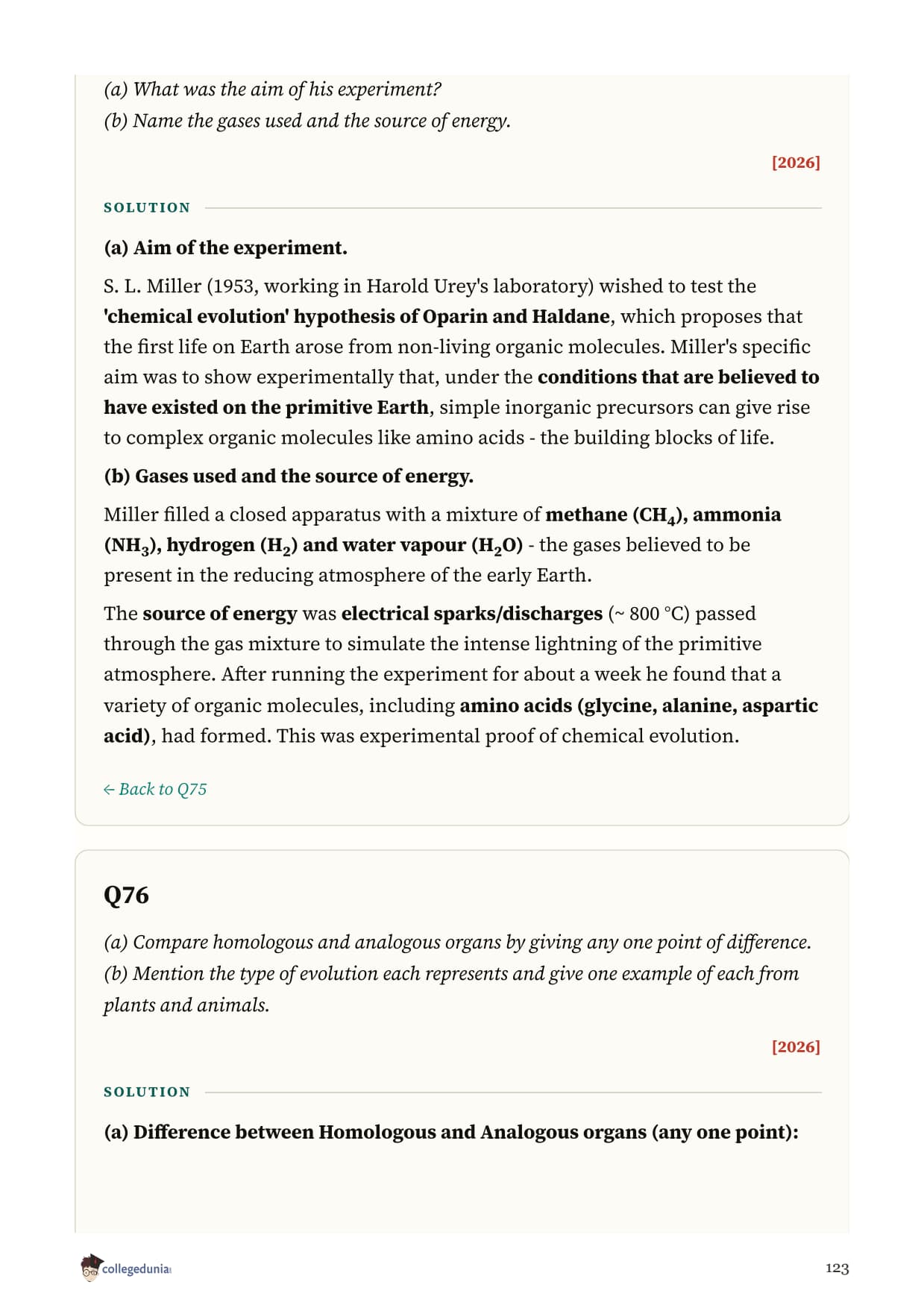
| 6 | Theories and origin of life (Lamarckism, use and disuse, Oparin-Haldane, Miller's experiment) | ~9 per cent | 1 and 2 mark |
Marks-Band Attempt Strategy for the Evolution PYQs
The 132 PYQs are arranged marks-ascending inside the PDF so you can attempt them in the same order the CBSE paper presents them.
- 1-mark questions: Spend no more than 45 seconds each. Many ask you to name a scientist or pick the right example of homology or analogy.
- 2-mark questions: A short definition with one example. Aim for 3 minutes. This is the smallest band here.
- 3-mark questions: The biggest scoring band, often the Hardy-Weinberg equation or an evidence type. Practise deriving p squared plus 2pq plus q squared equals one.
- 5-mark long answers: Rare, usually human evolution or a full Hardy-Weinberg answer. Allocate 12 minutes if one appears.
Recent CBSE Trend: 2024 to 2026 Pattern Shift in Evolution
Three things have changed in the recent CBSE cycles that the Evolution previous year questions now reflect:
- Section A now carries a fixed block of 1-mark MCQ and assertion-reason questions. The compilation includes 62 such questions, most from 2023 onwards.
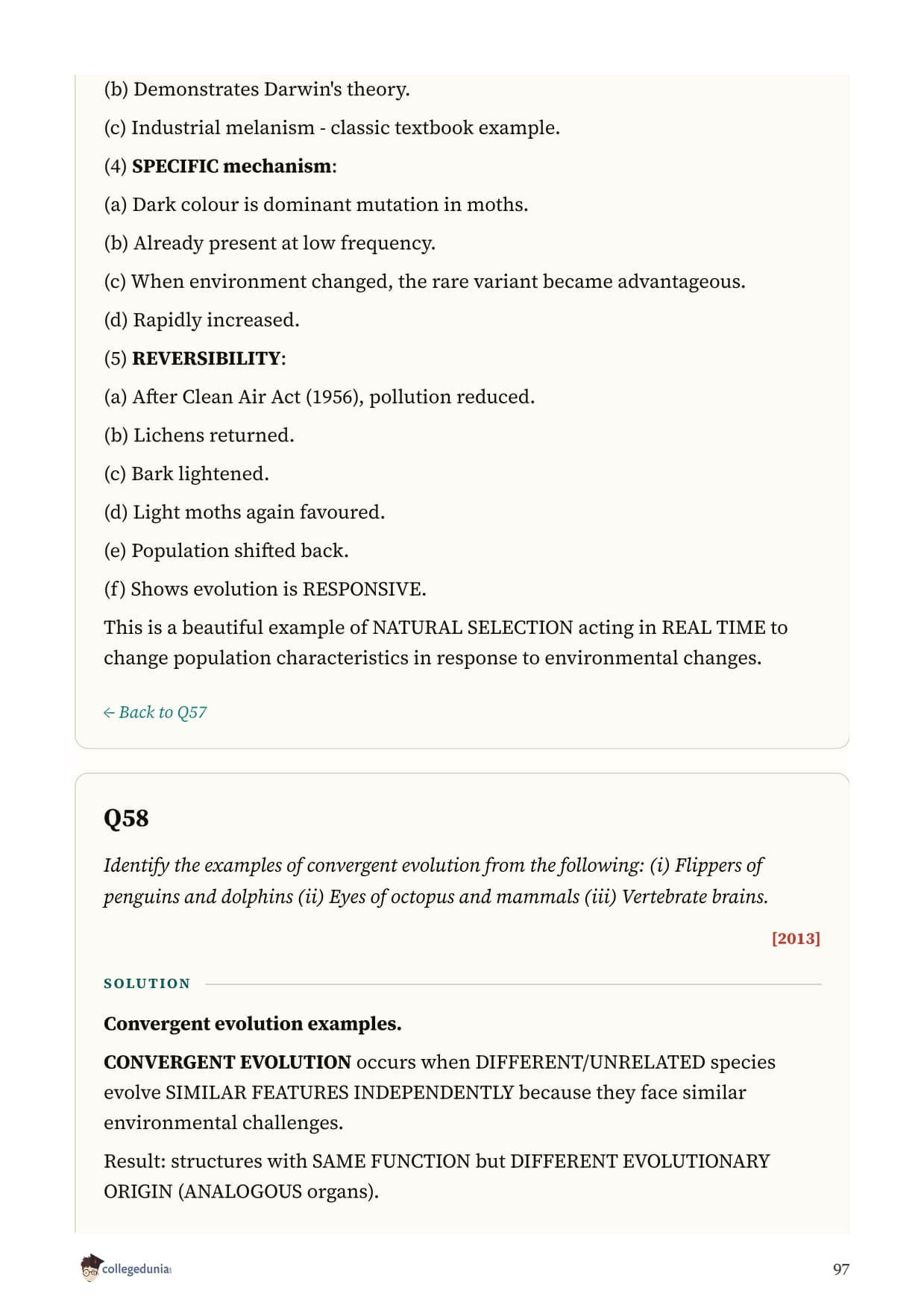
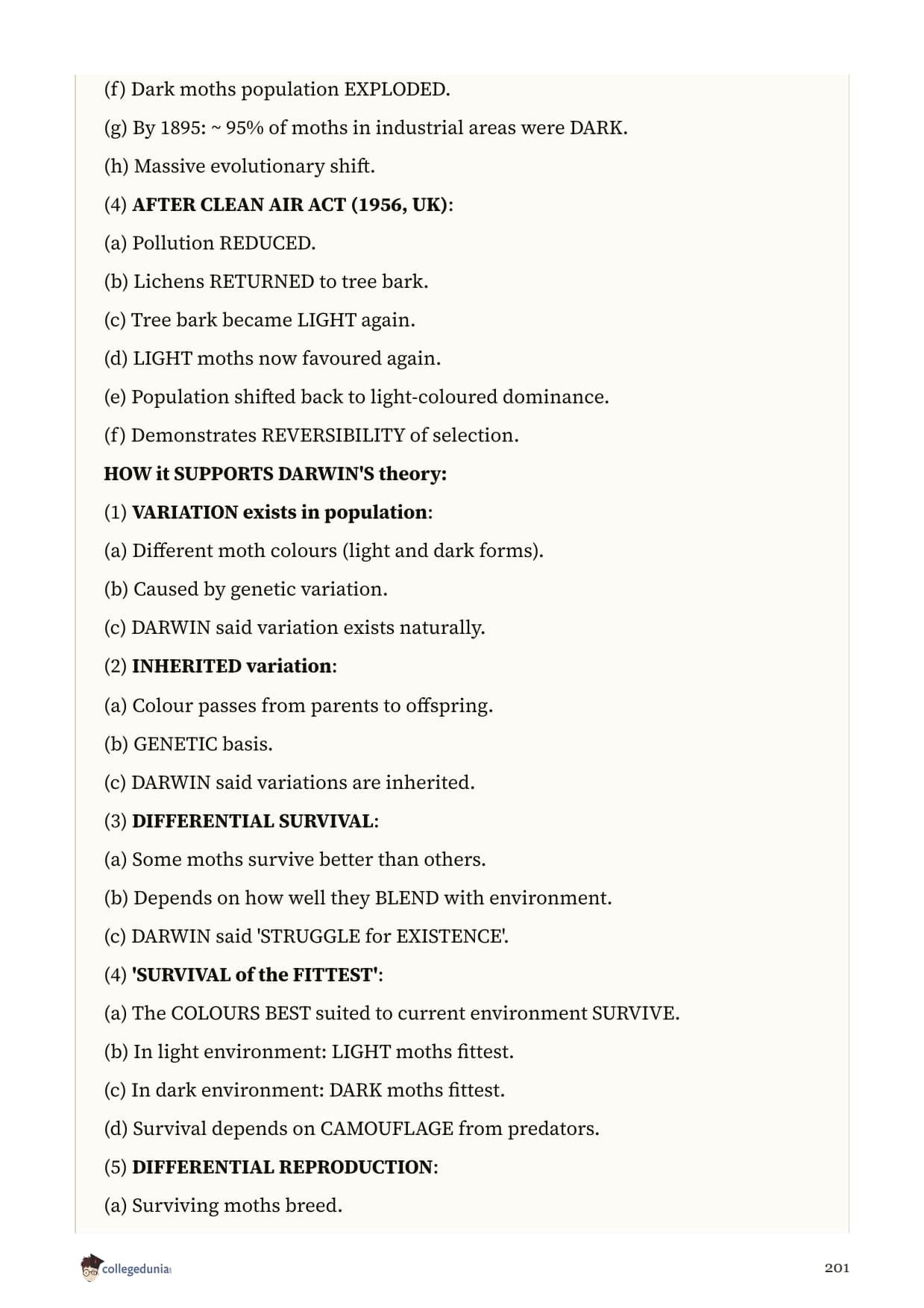
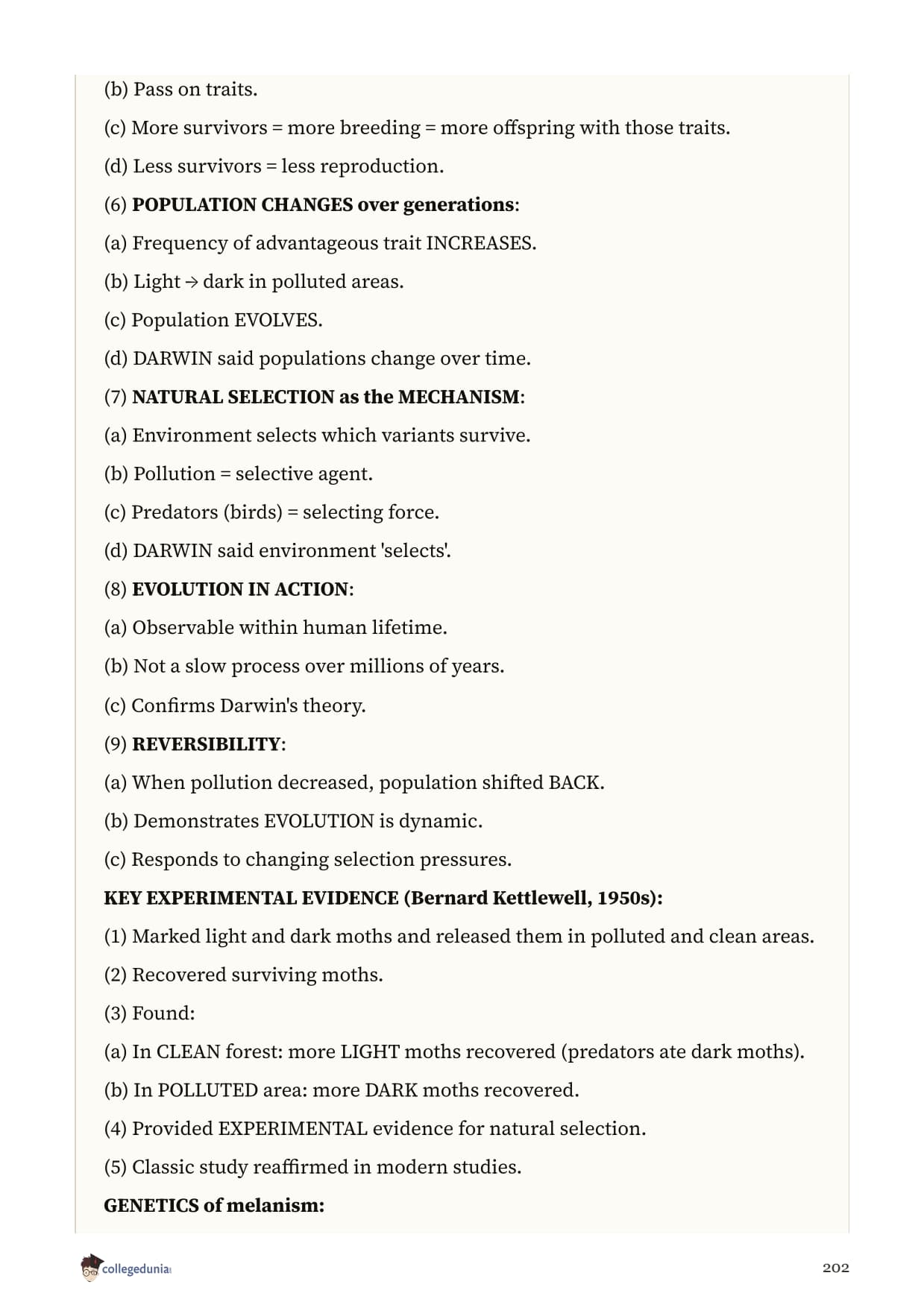
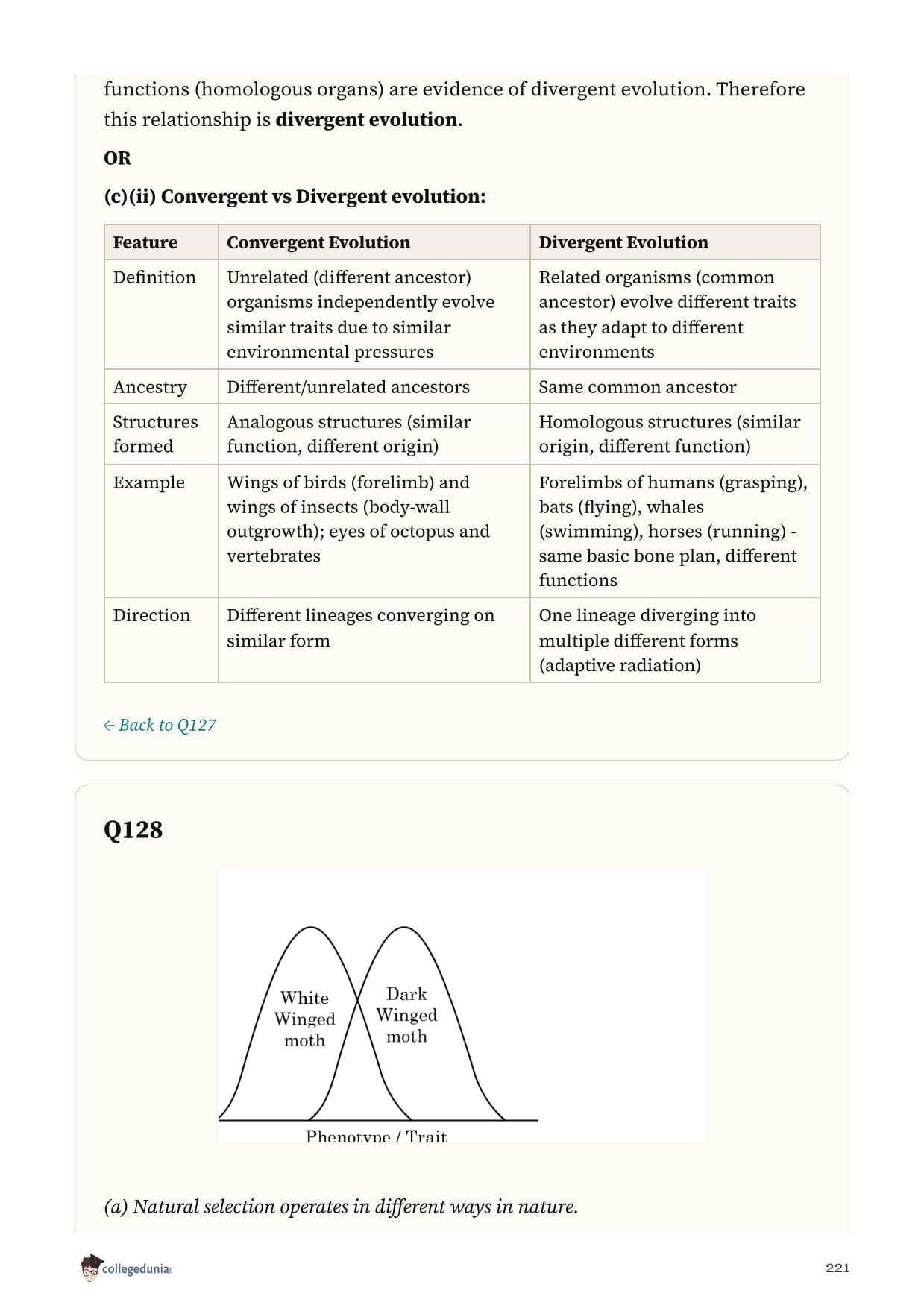
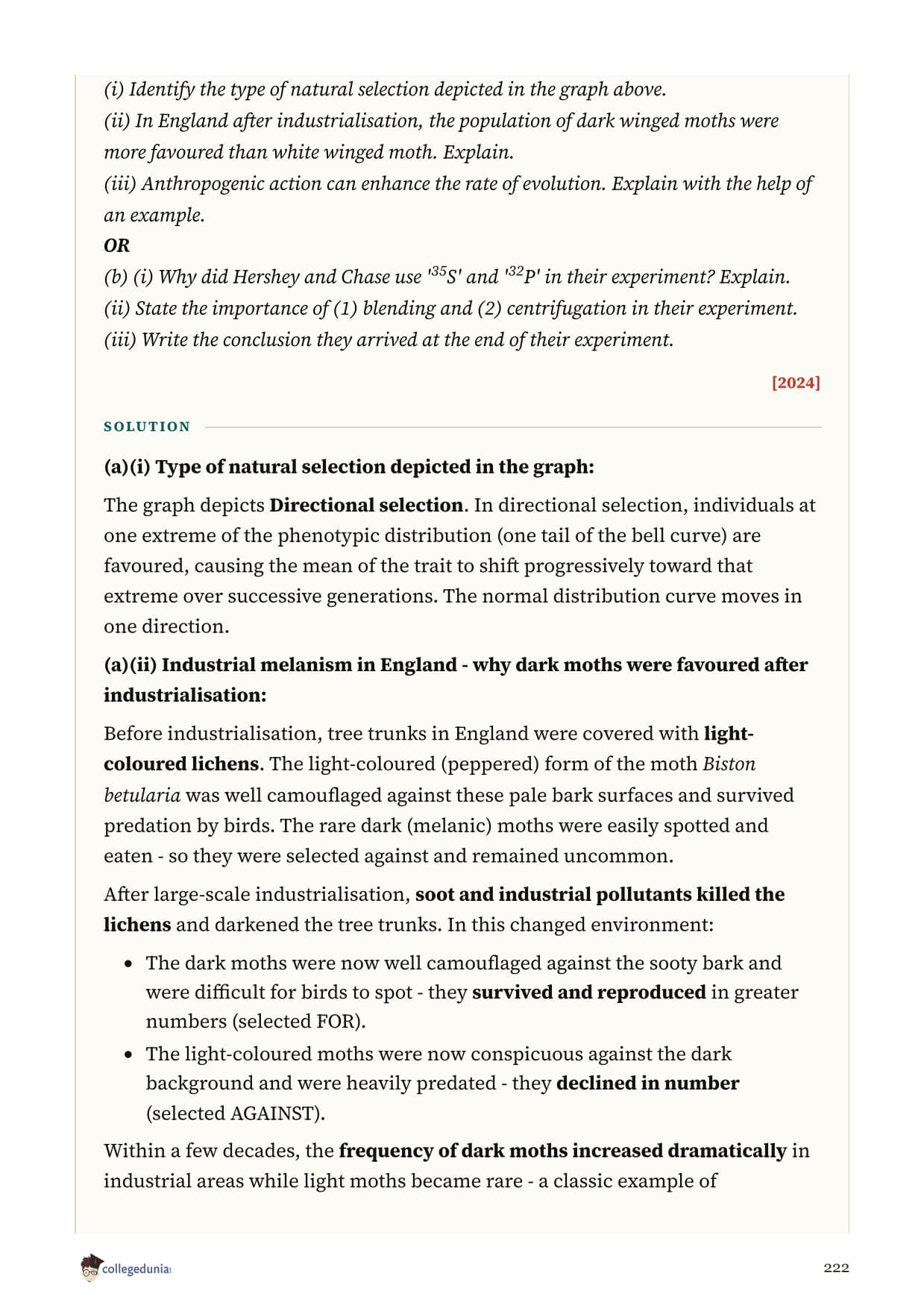
- Assertion-reason items are rising, for example the 2026 statement linking melanised moths to lichen-free industrial tree bark.
- The 3-mark band now dominates this chapter, often setting the Hardy-Weinberg derivation, so the PDF gives plenty of these for practice.
Sample Previous Year Questions from Evolution
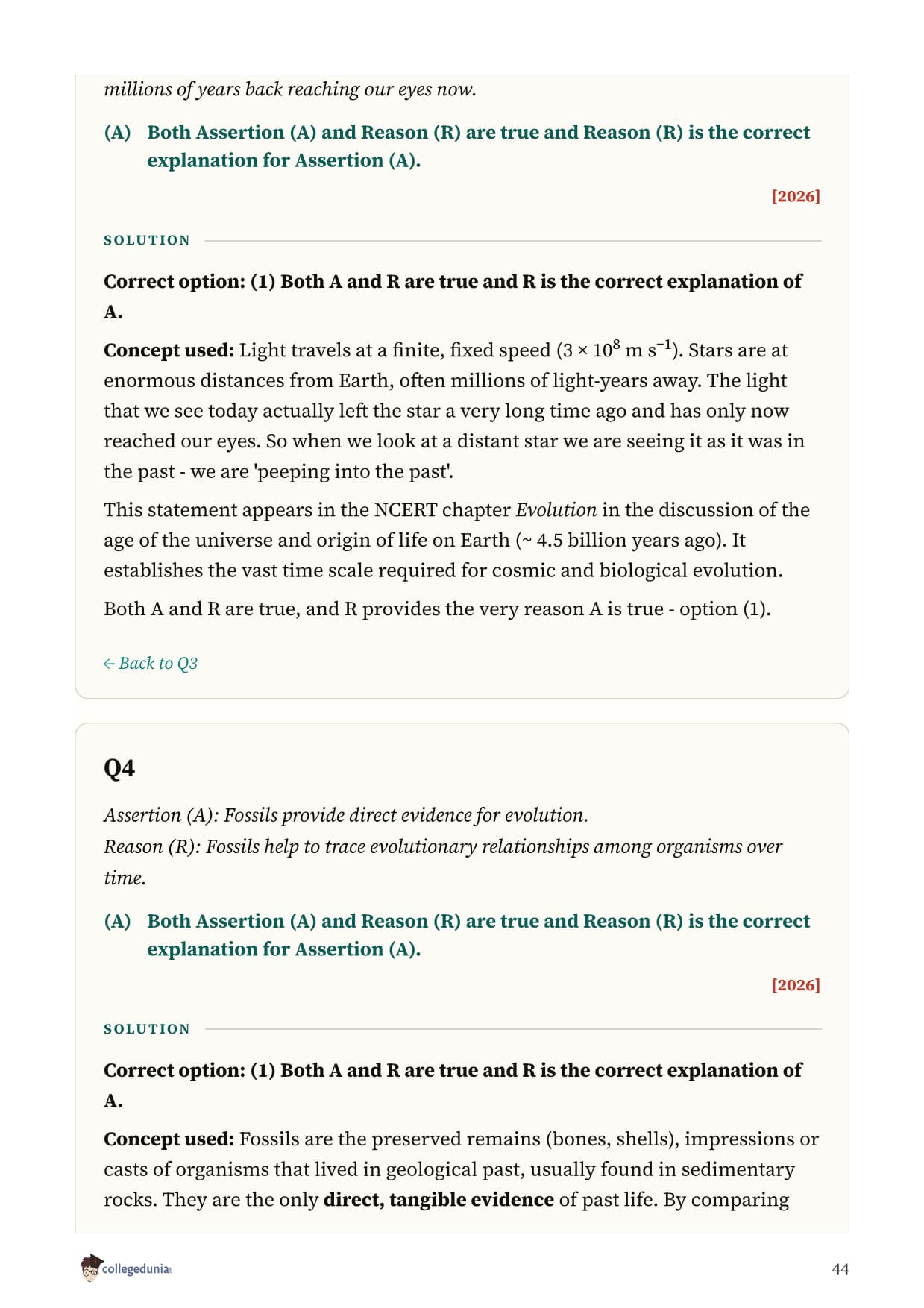
Here are a few real previous year questions from the Evolution board papers, taken straight from the compilation. The full set is in the downloadable PDF.
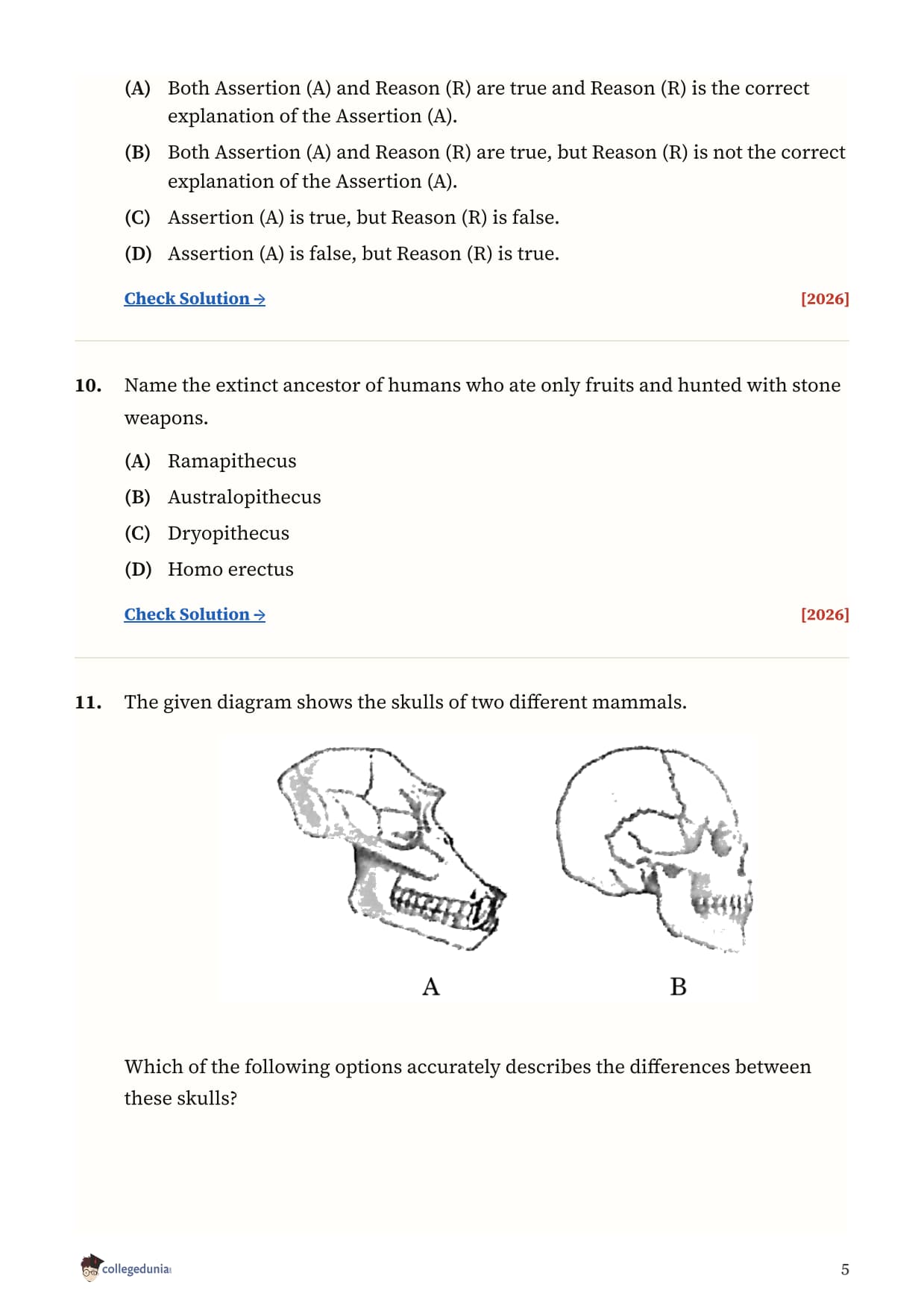
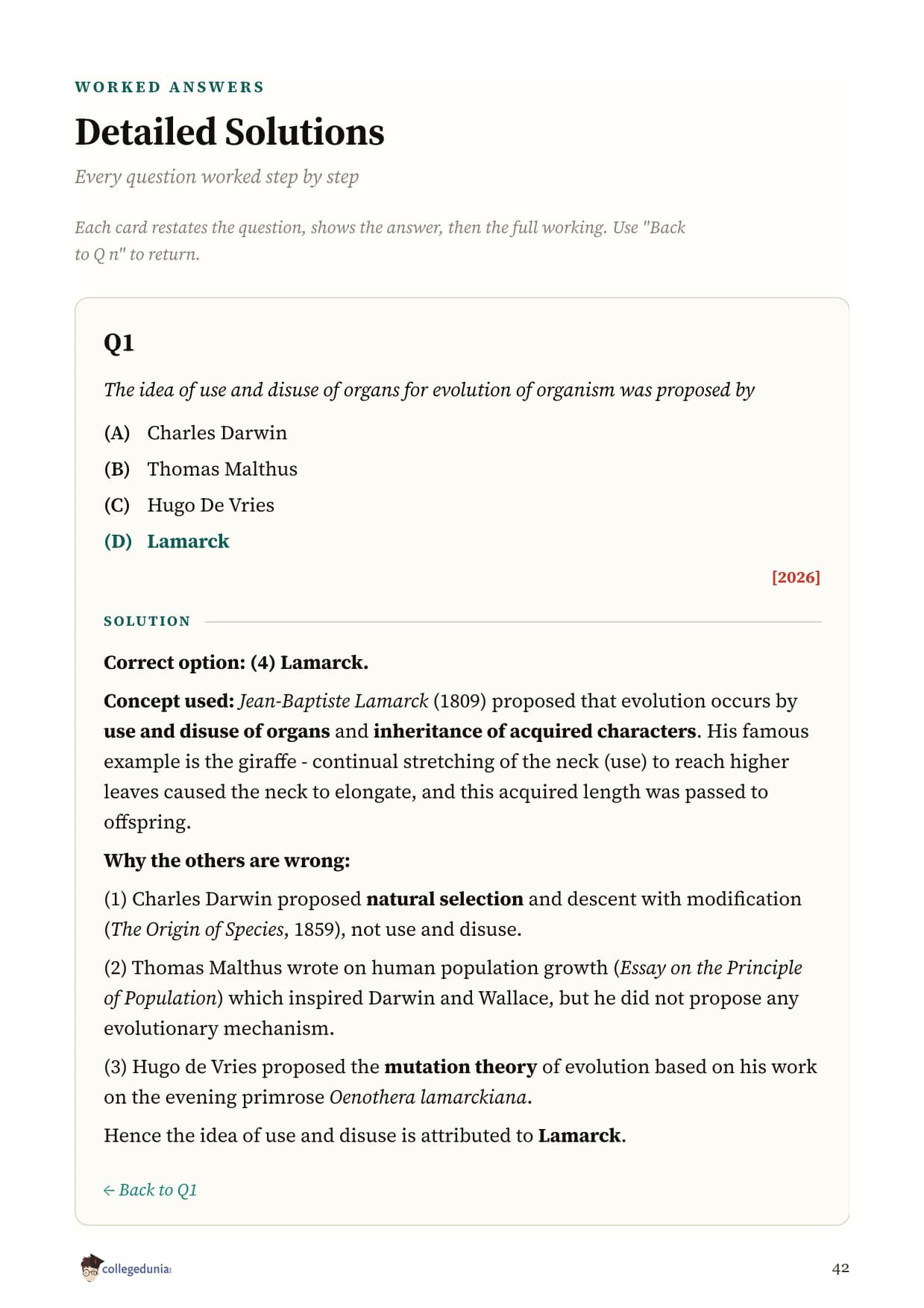
The idea of use and disuse of organs for evolution of organism was proposed by
- Charles Darwin
- Thomas Malthus
- Hugo De Vries
- Lamarck
[2026 • 1 mark]
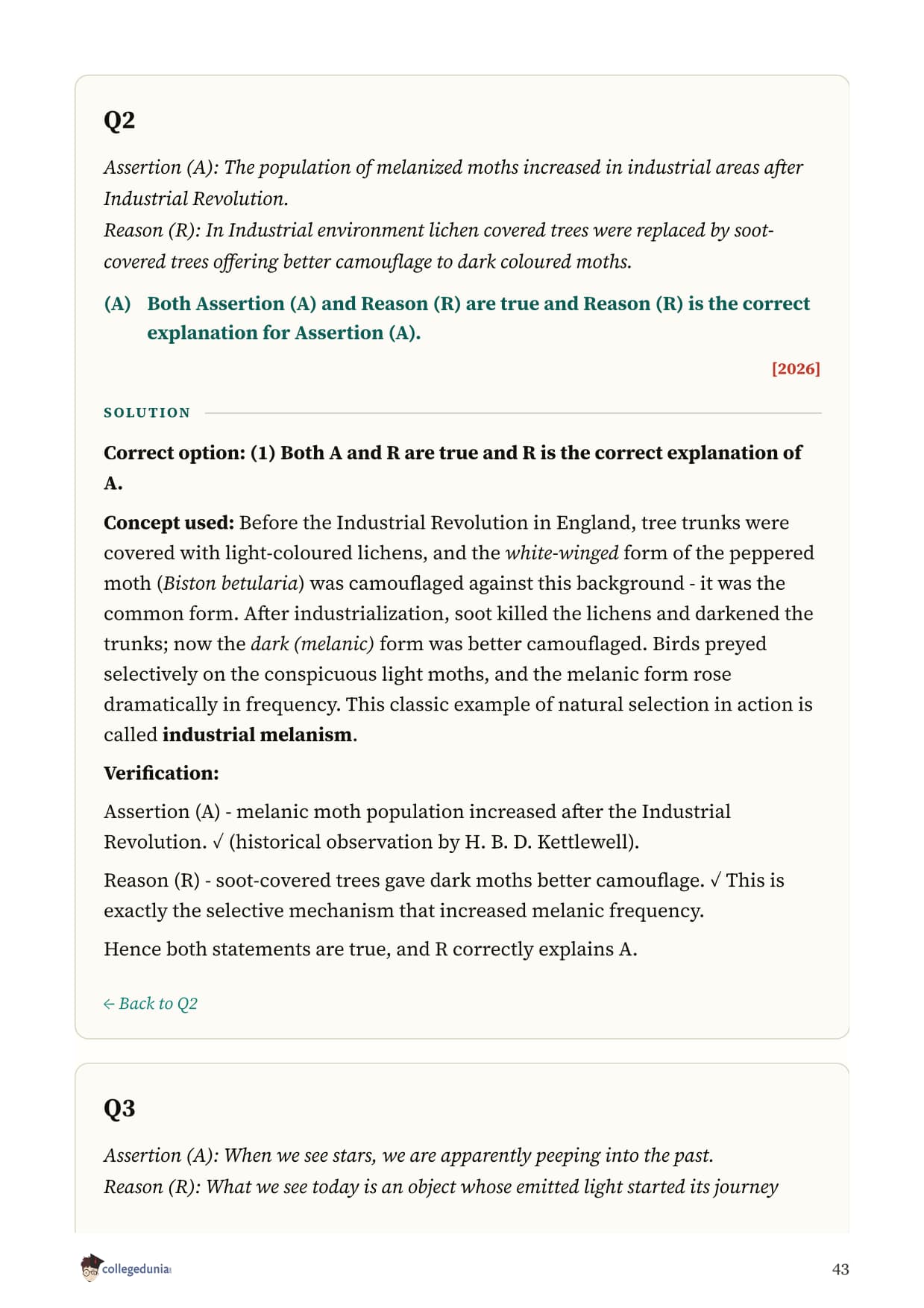
Assertion (A): The population of melanized moths increased in industrial areas after Industrial Revolution. Reason (R): In Industrial environment lichen covered trees were replaced by soot-covered trees offering better camouflage to dark coloured moths.
- Both Assertion (A) and Reason (R) are true and Reason (R) is the correct explanation for Assertion (A).
- Both Assertion (A) and Reason (R) are true, but Reason (R) is not the correct explanation for Assertion (A).
- Assertion (A) is true, but Reason (R) is false.
- Assertion (A) is false, but Reason (R) is true.
[2026 • 1 mark]
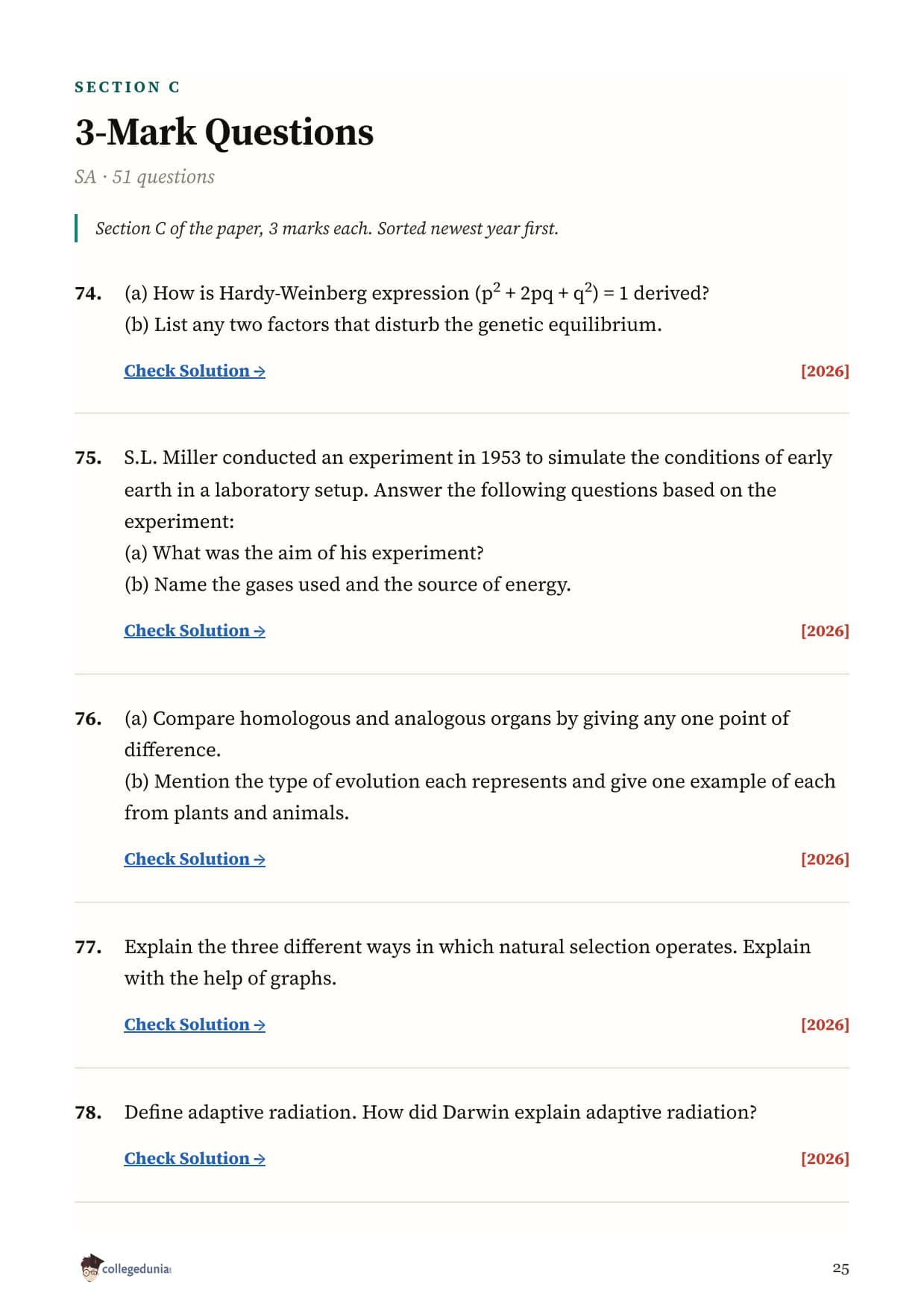
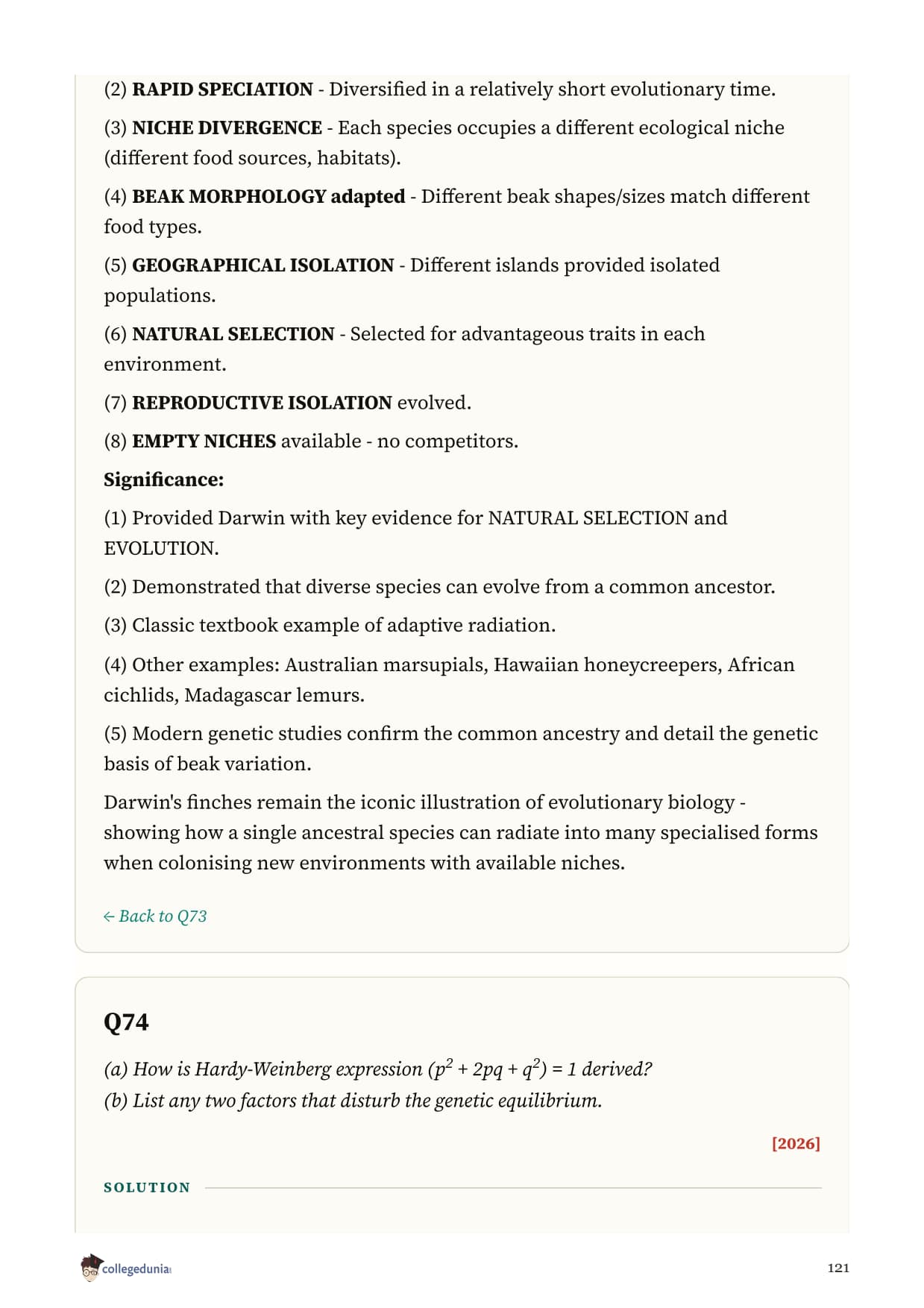
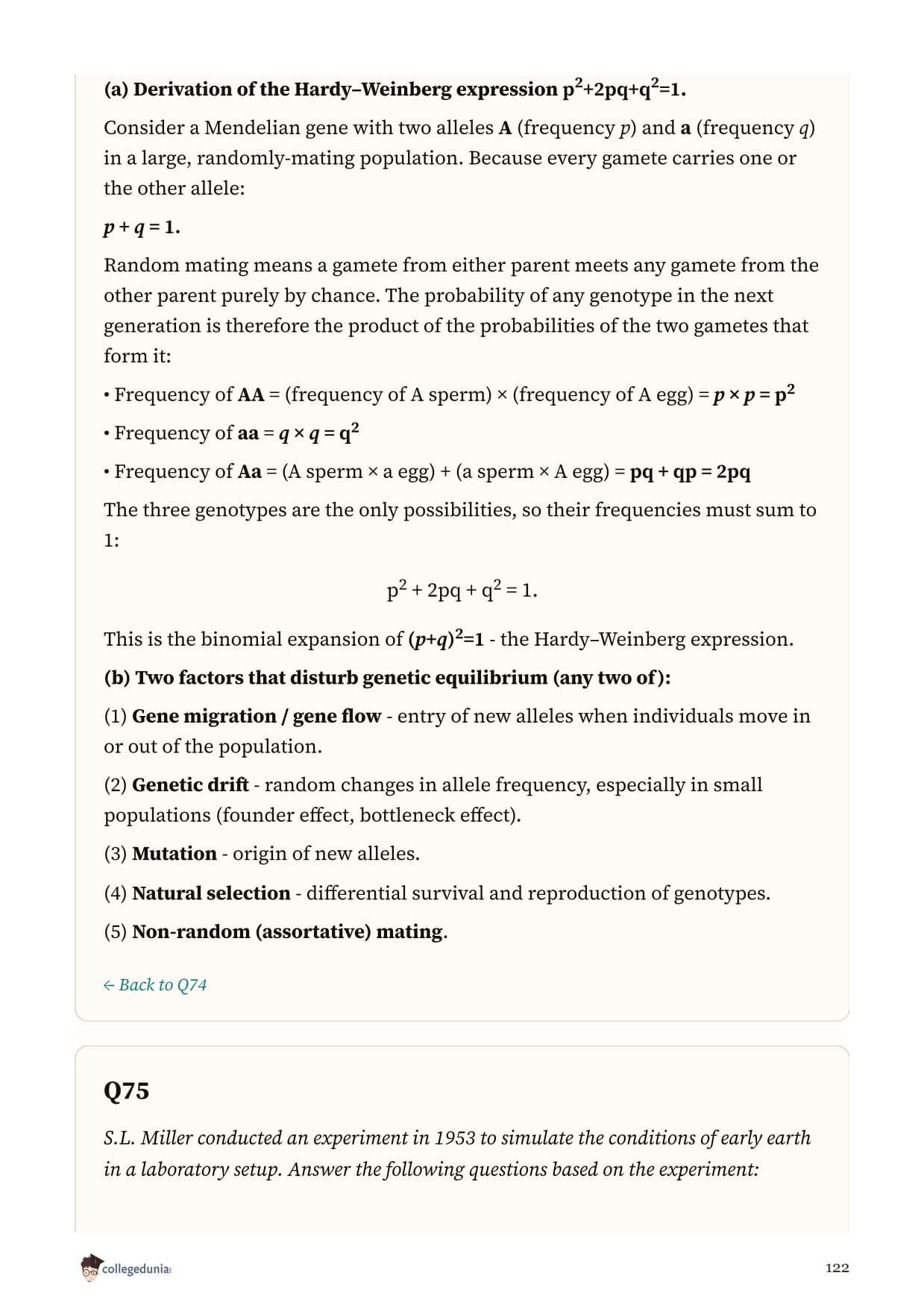
(a) How is Hardy-Weinberg expression (p 2 + 2pq + q 2 ) = 1 derived? (b) List any two factors that disturb the genetic equilibrium.
[2026 • 3 mark]
Common Mistakes in the Evolution Board Questions
- Writing the Hardy-Weinberg equation without the 2pq term, or not stating that p plus q equals one.
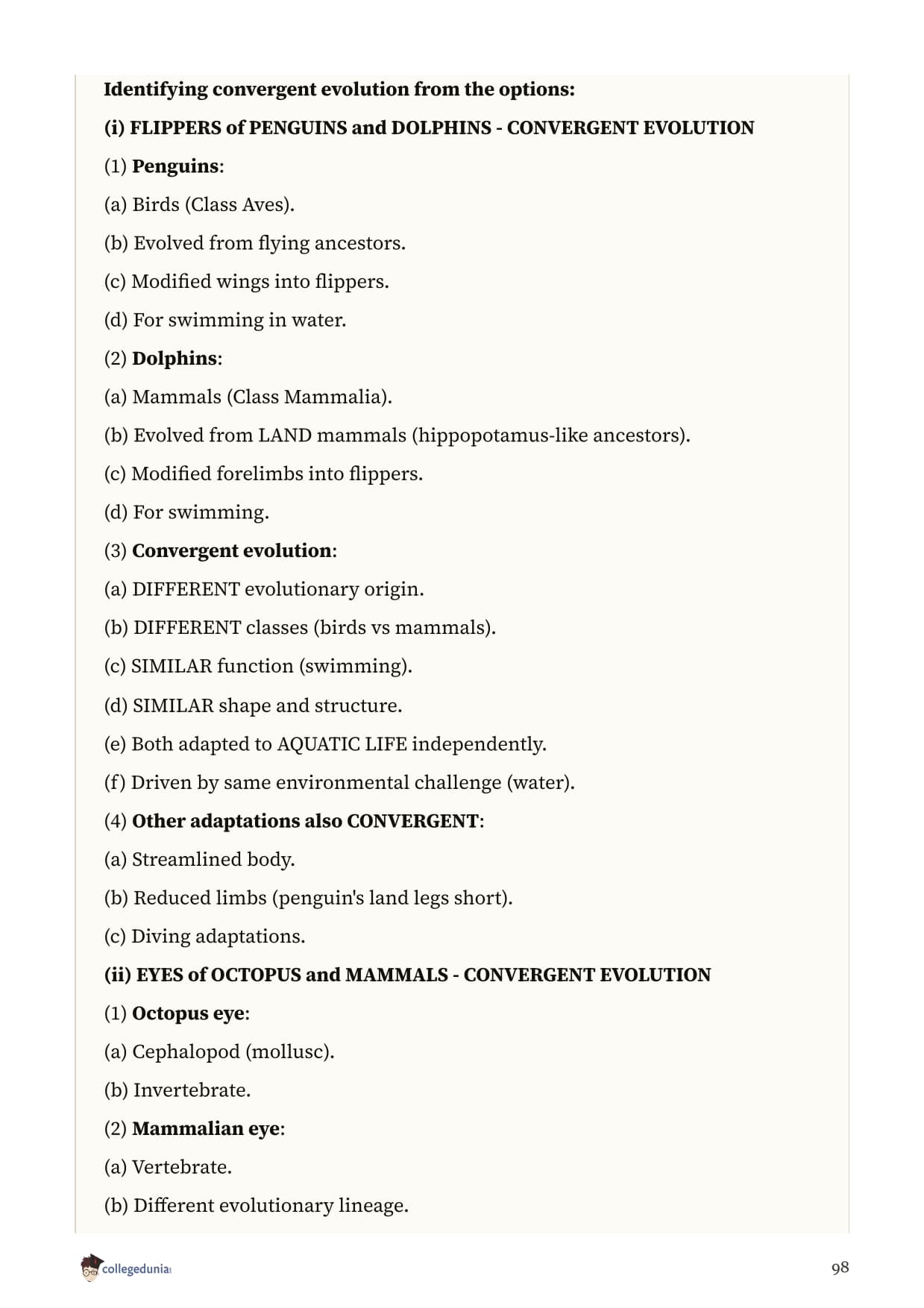
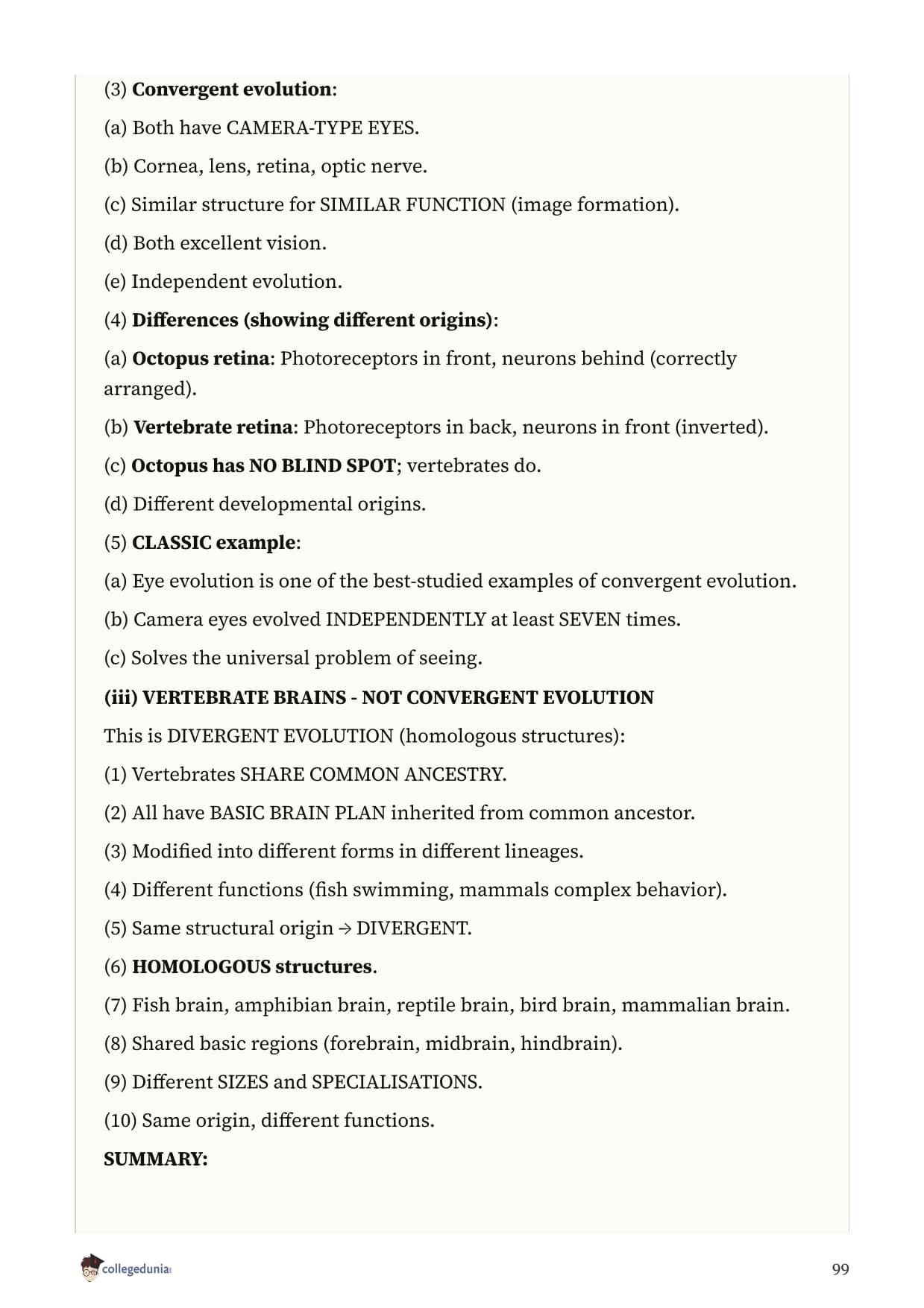
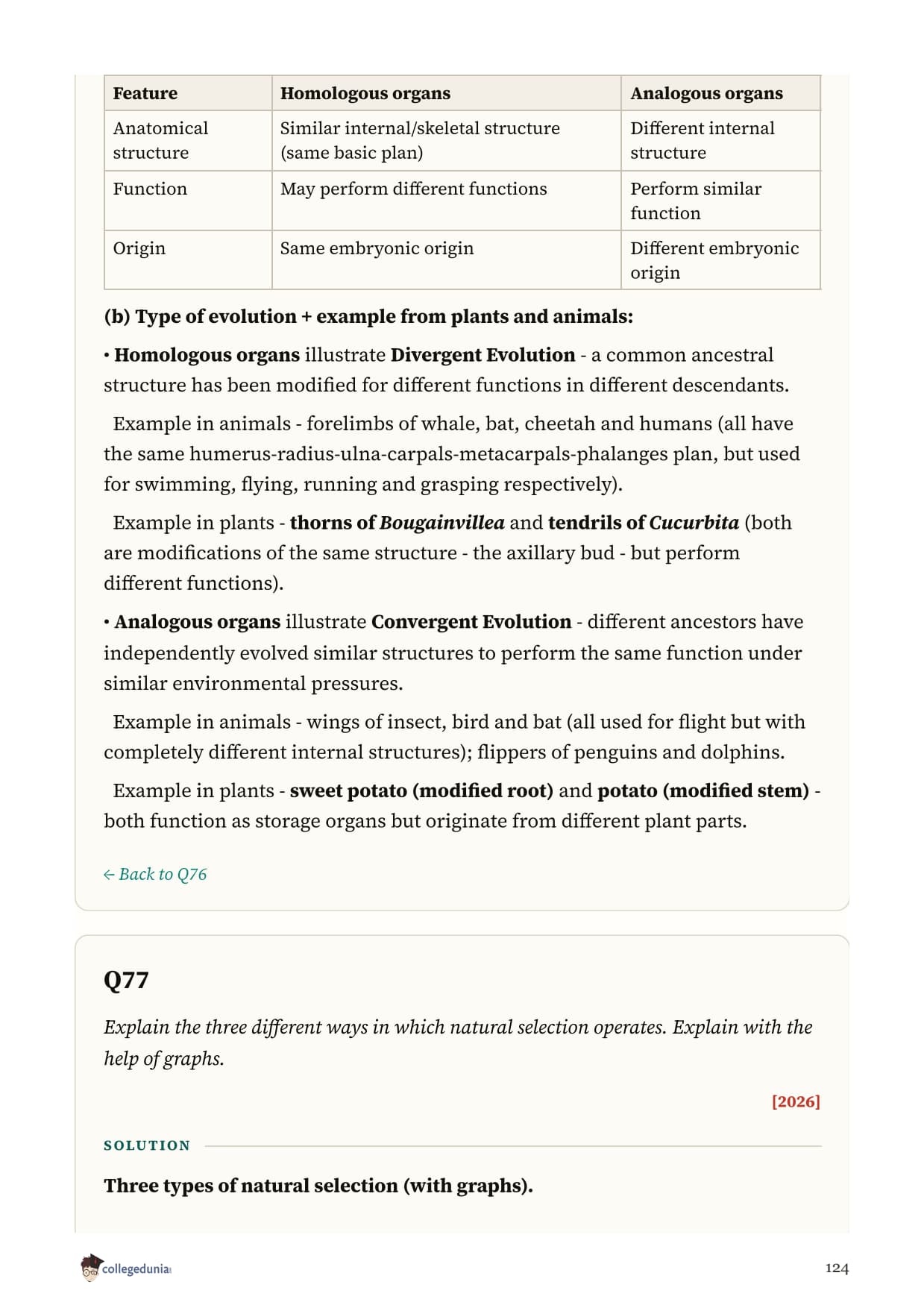
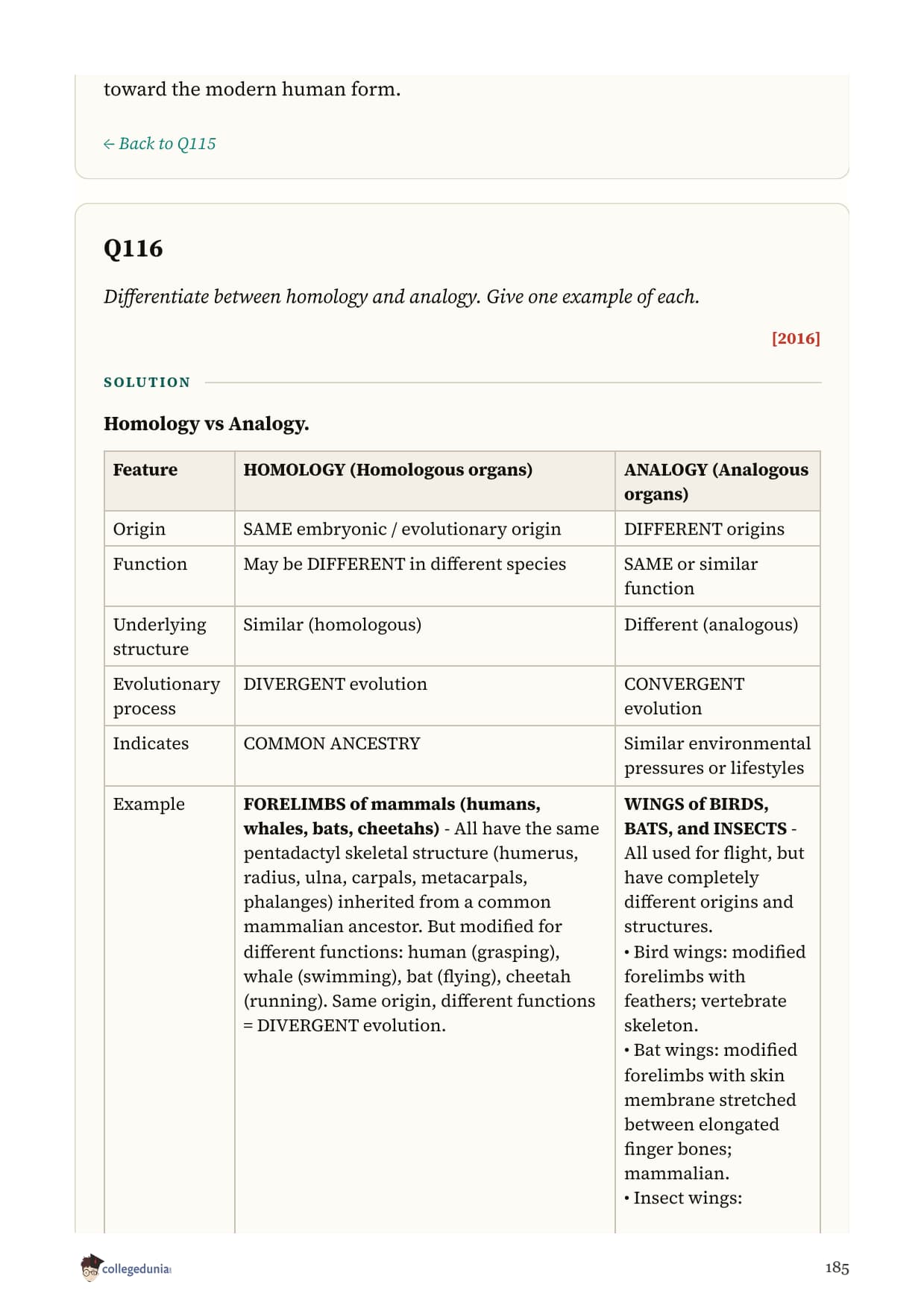
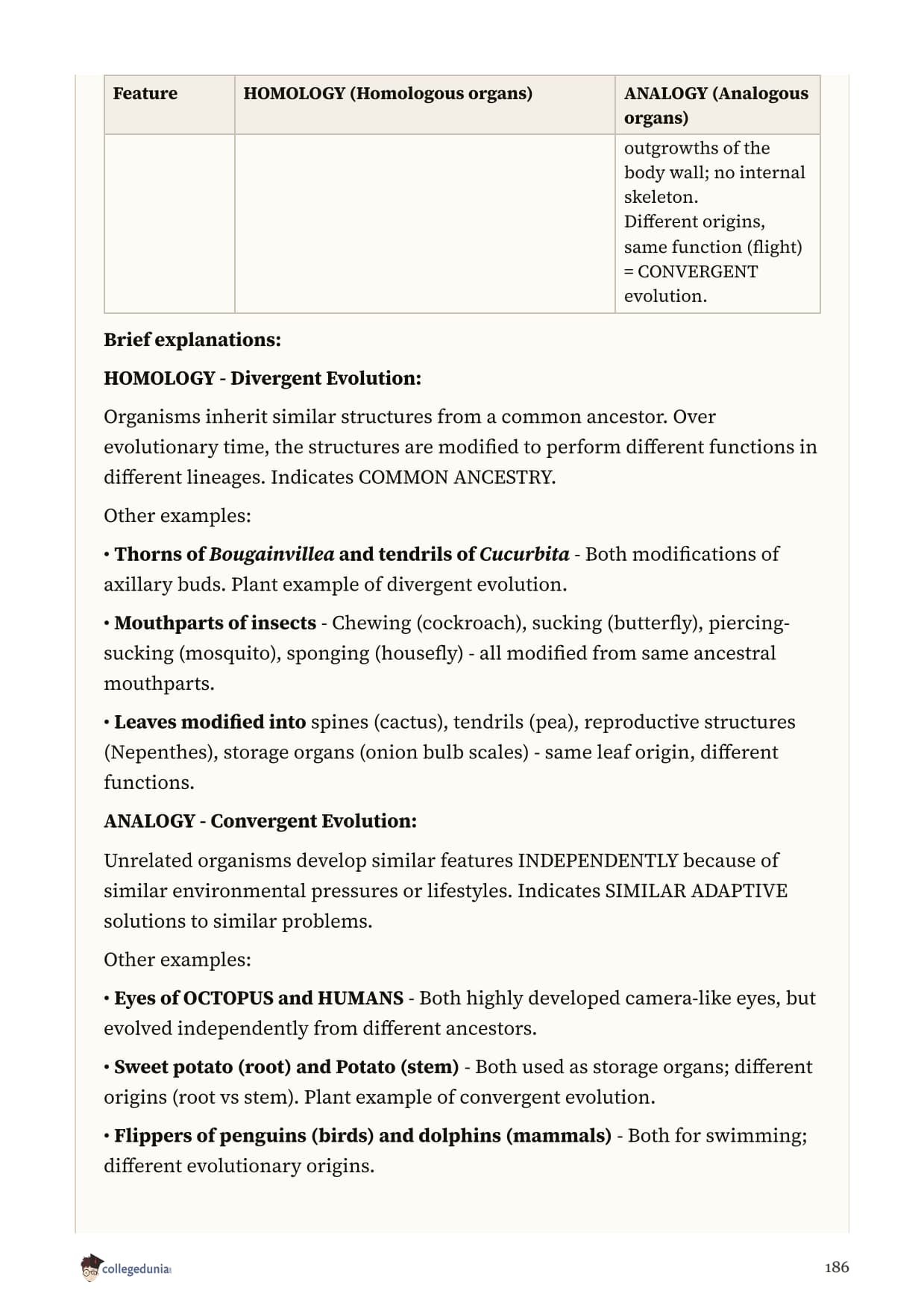
- Confusing homologous organs (common ancestry) with analogous organs (similar function only).
- Mixing up Lamarckism (use and disuse) with Darwin's theory of natural selection.
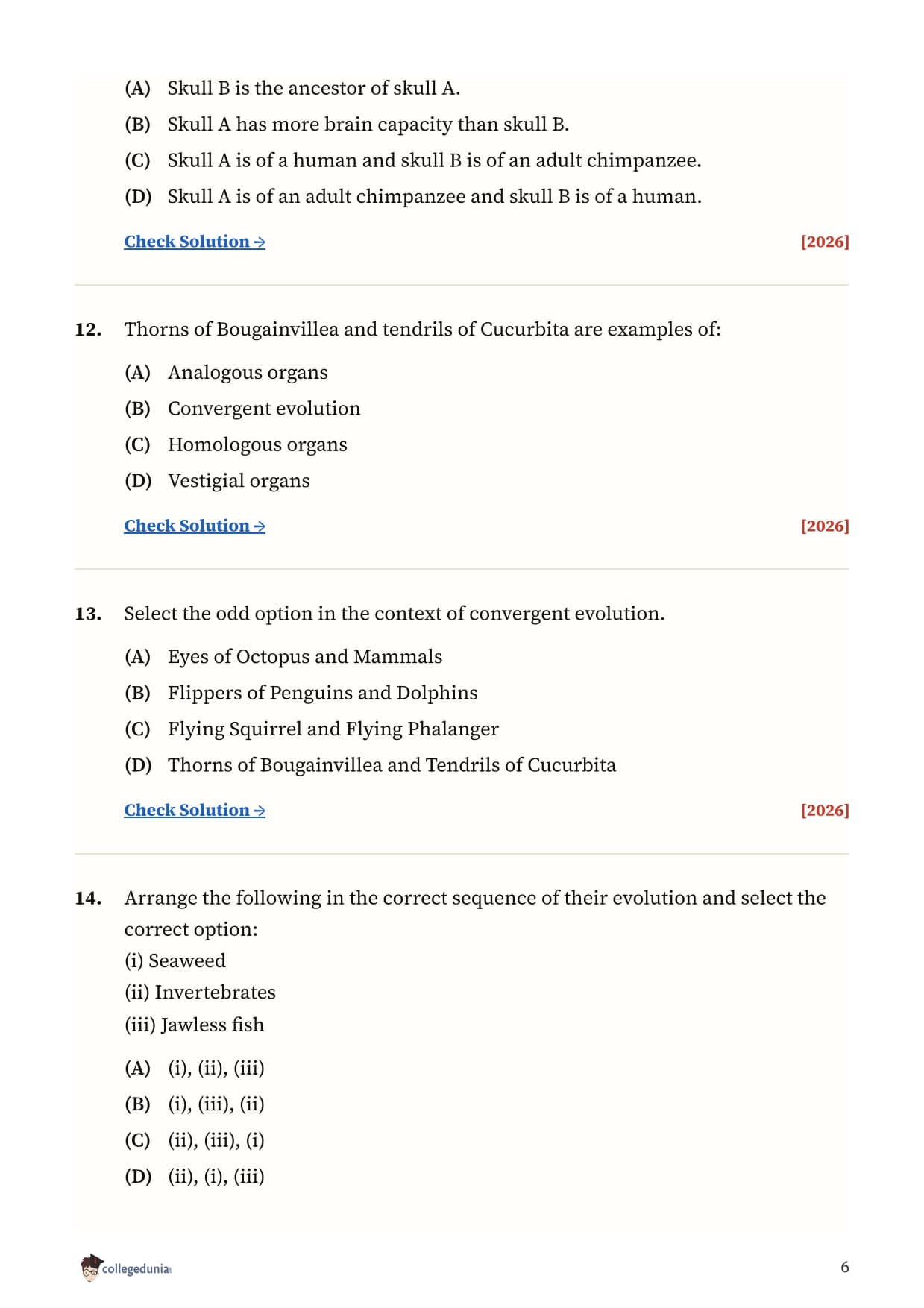
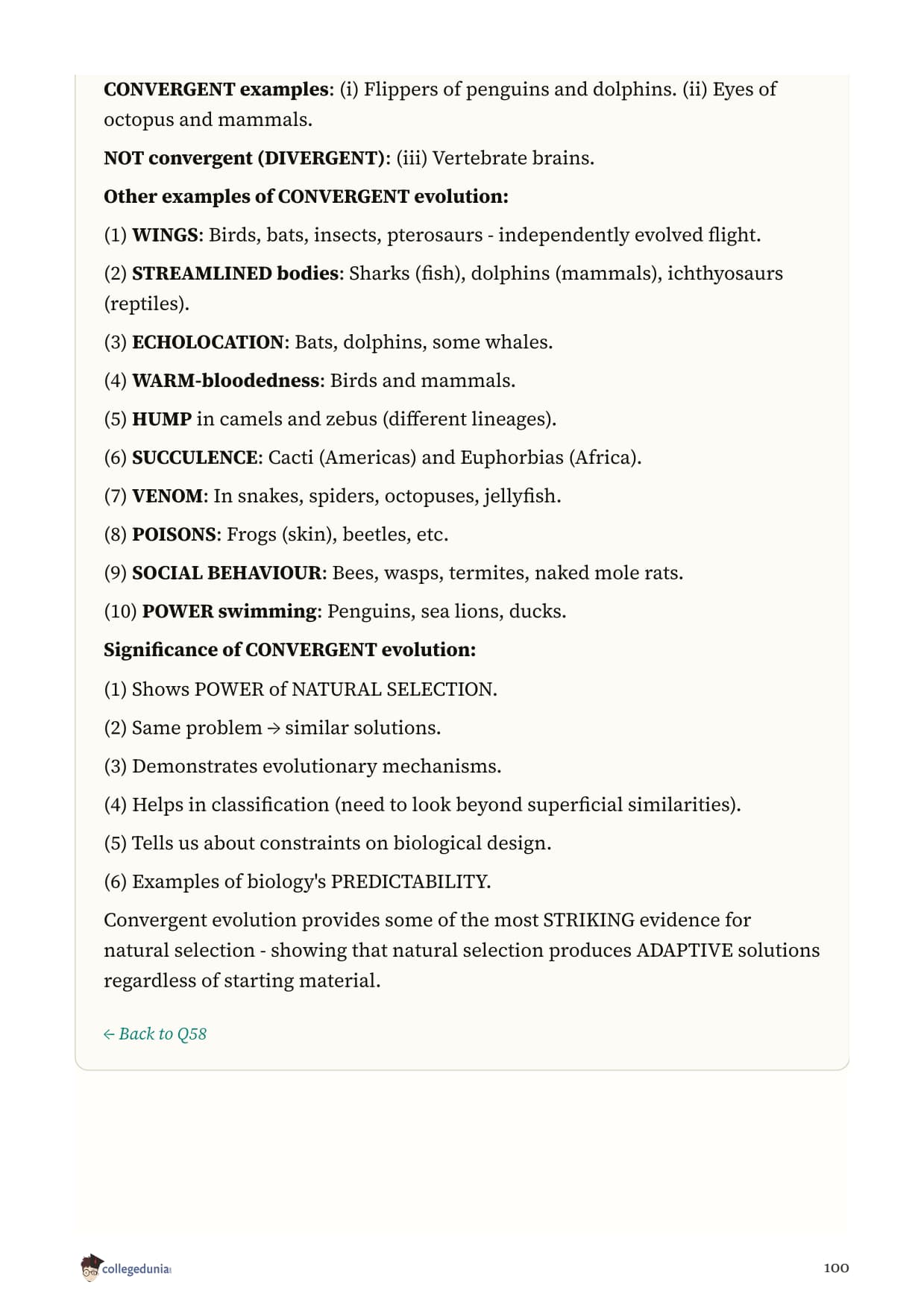
- Calling industrial melanism an example of convergent evolution instead of natural selection.
- Forgetting to name the factors that disturb genetic equilibrium, like gene flow, genetic drift and mutation.
Student Feedback on Evolution PYQ Practice
- 67 per cent said the Hardy-Weinberg derivation was the hardest part of the 3-mark band.
- 55 per cent reported gaining 3 to 6 marks after solving all the 3-mark PYQs from this PDF before the boards.
- 42 per cent said a Hardy-Weinberg or evidences-of-evolution question appeared in their actual 2026 paper.
- Average time to finish all 132 PYQs: about 9 hours across 6 study sessions.
How These PYQs Pair with the Other Evolution Resources
Solving previous year questions alone gives you only half the prep. Pair the PYQ PDF with the matching concept, formula and solution resources for Evolution.
| Resource | What It Gives You | Open |
|---|---|---|
| NCERT Solutions | Step-by-step worked answers to every NCERT back-exercise question of Evolution | NCERT Solutions for Evolution |
| Notes | Concept revision notes covering every topic in the Evolution chapter | Evolution Class 12 Notes |
| Formula Sheet | All key formulas and results of Evolution on one page for last-day revision | Evolution Formula Sheet |
| Handwritten Notes | Scanned handwritten notes of Evolution for quick one-shot revision | Evolution Handwritten Notes |
| Exemplar Solutions | NCERT Exemplar problems of Evolution solved in full for extra practice | NCERT Exemplar Solutions for Evolution |
| NCERT Book | Official NCERT Evolution chapter PDF for free download | Evolution NCERT Book PDF |
| Exemplar Book | NCERT Exemplar Evolution problem book PDF for free download | Evolution Exemplar Book PDF |
How to Use the Evolution PYQ PDF Most Effectively
The 132 questions are sequenced for a three-pass revision plan:
- Pass 1 (Day 1 to 2): Attempt all 62 one-mark questions. Mark every wrong answer and re-read the scientist or example behind it.
- Pass 2 (Day 3 to 5): Solve the 51 three-mark questions, the biggest band here, and the 11 two-mark items. Drill the Hardy-Weinberg derivation.
- Pass 3 (Day 6 to 8): Work through the 5 five-mark long answers on human evolution and the full Hardy-Weinberg principle.
All Class 12 Biology Chapter PYQ PDFs
Every Class 12 Biology chapter has its own PYQ compilation built the same way, sorted by marks and tagged by year.
| Chapter | Topic | Previous Year Questions |
|---|---|---|
| Chapter 1 | Sexual Reproduction in Flowering Plants | PYQ PDF |
| Chapter 2 | Human Reproduction | PYQ PDF |
| Chapter 3 | Reproductive Health | PYQ PDF |
| Chapter 4 | Principles of Inheritance and Variation | PYQ PDF |
| Chapter 5 | Molecular Basis of Inheritance | PYQ PDF |
| Chapter 6 | Evolution | PYQ PDF |
| Chapter 7 | Human Health and Disease | PYQ PDF |
| Chapter 8 | Microbes in Human Welfare | PYQ PDF |
| Chapter 9 | Biotechnology: Principles and Processes | PYQ PDF |
| Chapter 10 | Biotechnology and its Applications | PYQ PDF |
| Chapter 11 | Organisms and Populations | PYQ PDF |
| Chapter 12 | Ecosystem | PYQ PDF |
| Chapter 13 | Biodiversity and Conservation | PYQ PDF |
Also Check: NCERT Solutions for Class 12 Biology
Class 12 Biology Evolution PYQ FAQs
Ques. How many previous year questions are in the Class 12 Biology Evolution PYQ PDF?
Ans. The PDF has 132 previous year questions from CBSE board papers between 2008 and 2026, sorted by marks (1 to 5) and then by year, latest first. Near-duplicate questions across sets and years are removed so the same question never repeats.
Ques. Are the Evolution PYQs based on the 2026-27 CBSE syllabus?
Ans. Yes. Every question follows the 2026-27 CBSE Class 12 Biology syllabus. Older questions are kept because the core ideas, like the Hardy-Weinberg principle, natural selection and the evidences of evolution, are unchanged in the current syllabus.
Ques. Which topics of Evolution appear most often in CBSE board papers?
Ans. From the 132-question set: the Hardy-Weinberg principle (about 23 per cent), evidences of evolution (about 21 per cent), natural selection and industrial melanism (about 18 per cent), human evolution (about 16 per cent), and adaptive and convergent evolution.
Ques. How is this PYQ PDF different from a CBSE sample paper?
Ans. A sample paper gives you one paper. This PDF stitches together 15 years of questions across every set and region (Delhi, Outside Delhi, Foreign and Compartment) for Evolution alone, so you can see which ideas and examples CBSE repeats.
Ques. Does the Evolution PYQ PDF include MCQs?
Ans. Yes. 62 of the 132 questions are 1-mark questions, mostly MCQ, name-the-scientist and assertion-reason from 2023 onwards, when CBSE introduced the Section A objective block.
Ques. Where can I download the Evolution Class 12 PYQ PDF for free?
Ans. The full Evolution PYQ PDF is free to download from the PDF button at the top of this page. No sign-up is needed.
Ques. How should I use these PYQs to revise Evolution in the last 10 days?
Ans. Use the three-pass plan: Day 1 to 2 attempt all 62 one-mark questions, Day 3 to 5 solve the 51 three-mark and 11 two-mark questions, Day 6 to 8 attempt the 5 long answers. Drill the Hardy-Weinberg derivation until it is automatic.
Ques. Does the PDF give answers or only the questions?
Ans. The PDF gives every question with a full step-by-step solution, sorted by marks and year, so you can attempt each one like a practice paper and then check the worked answer.
Ques. Is the Hardy-Weinberg principle important for the CBSE Evolution questions?
Ans. Very. The Hardy-Weinberg principle is the most repeated topic, near a quarter of all questions in this PDF, mostly in the 3-mark band. Practising the derivation and the factors that disturb equilibrium is the best use of your time for this chapter.
Ques. What is the Hardy-Weinberg principle?
Ans. The Hardy-Weinberg principle states that allele and genotype frequencies in a population stay constant from generation to generation when no evolutionary forces act on it. It is written as p squared plus 2pq plus q squared equals one. Factors like mutation, gene flow, genetic drift and natural selection disturb this equilibrium.
Ques. How is natural selection defined?
Ans. Natural selection is the process by which individuals with traits better suited to the environment survive and reproduce more than others. Over generations, the favourable traits become more common in the population. Darwin proposed it as the main mechanism of evolution.
Ques. What are homologous organs?
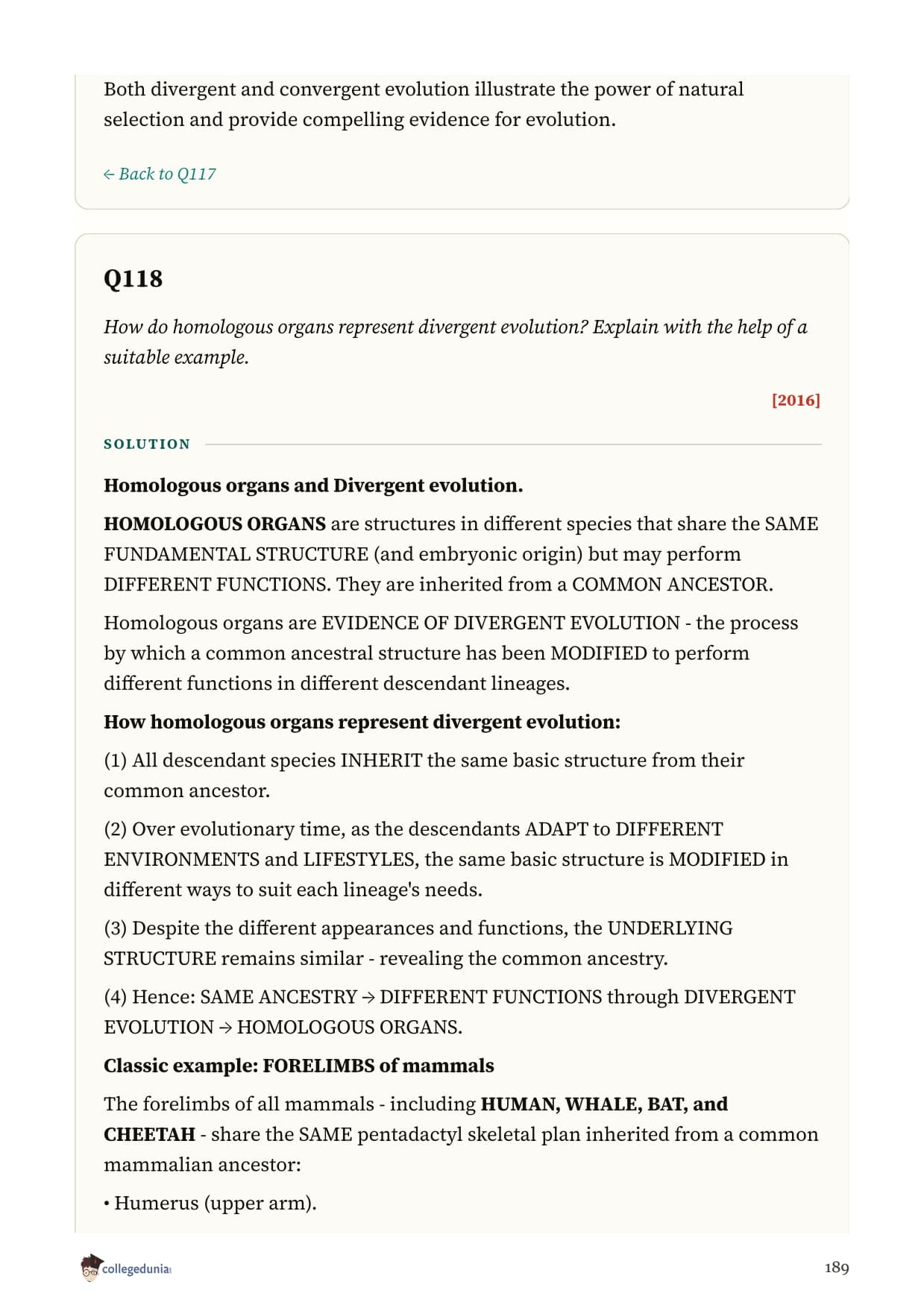
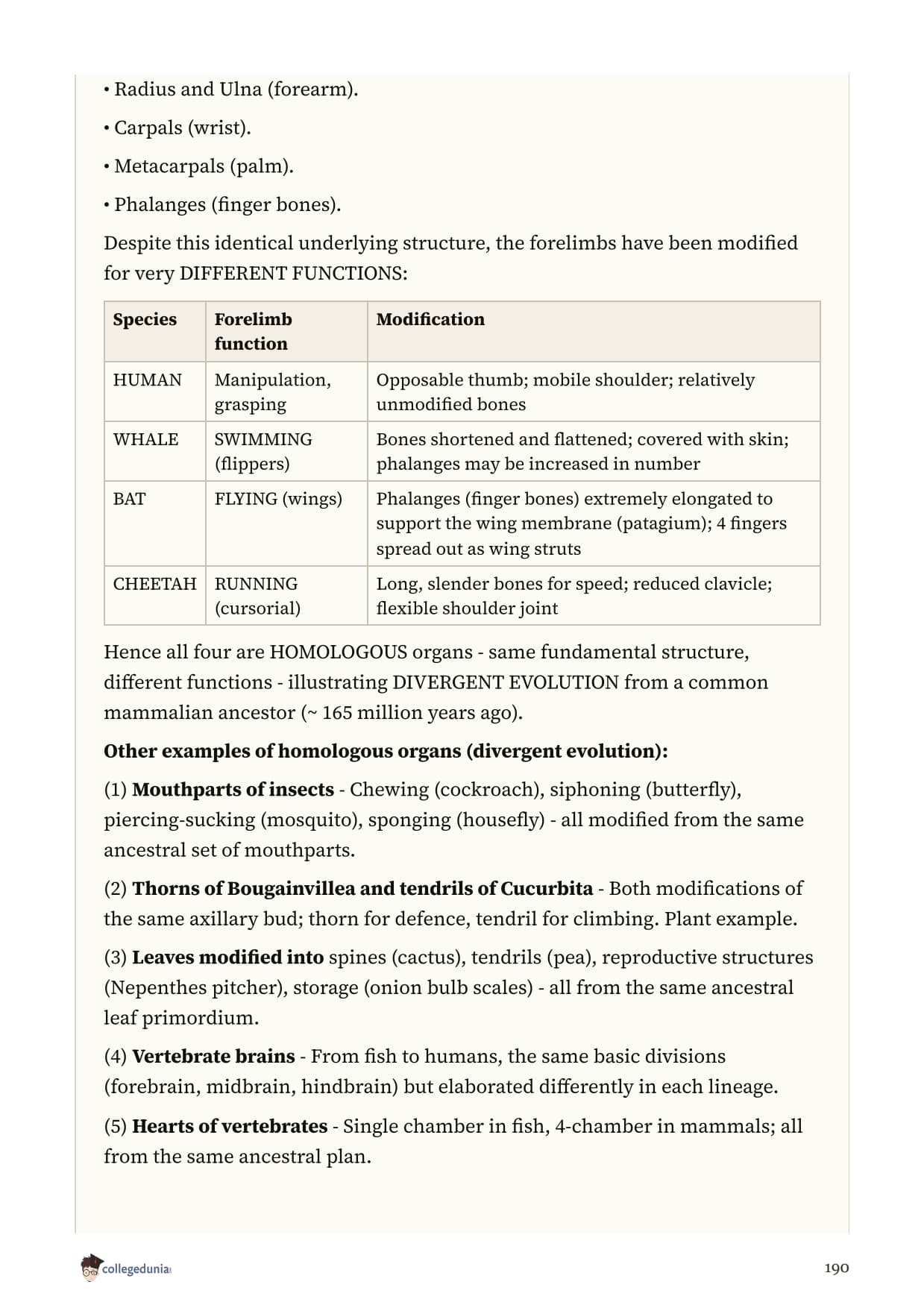
Ans. Homologous organs are organs that have the same basic structure and origin but may perform different functions. Examples are the forelimbs of humans, whales, bats and cheetahs. They are evidence of divergent evolution from a common ancestor.



Comments