




This set covers every question type CBSE and NEET set from Principles of Inheritance and Variation, from one-line MCQs to full pedigree and Punnett-square answers.
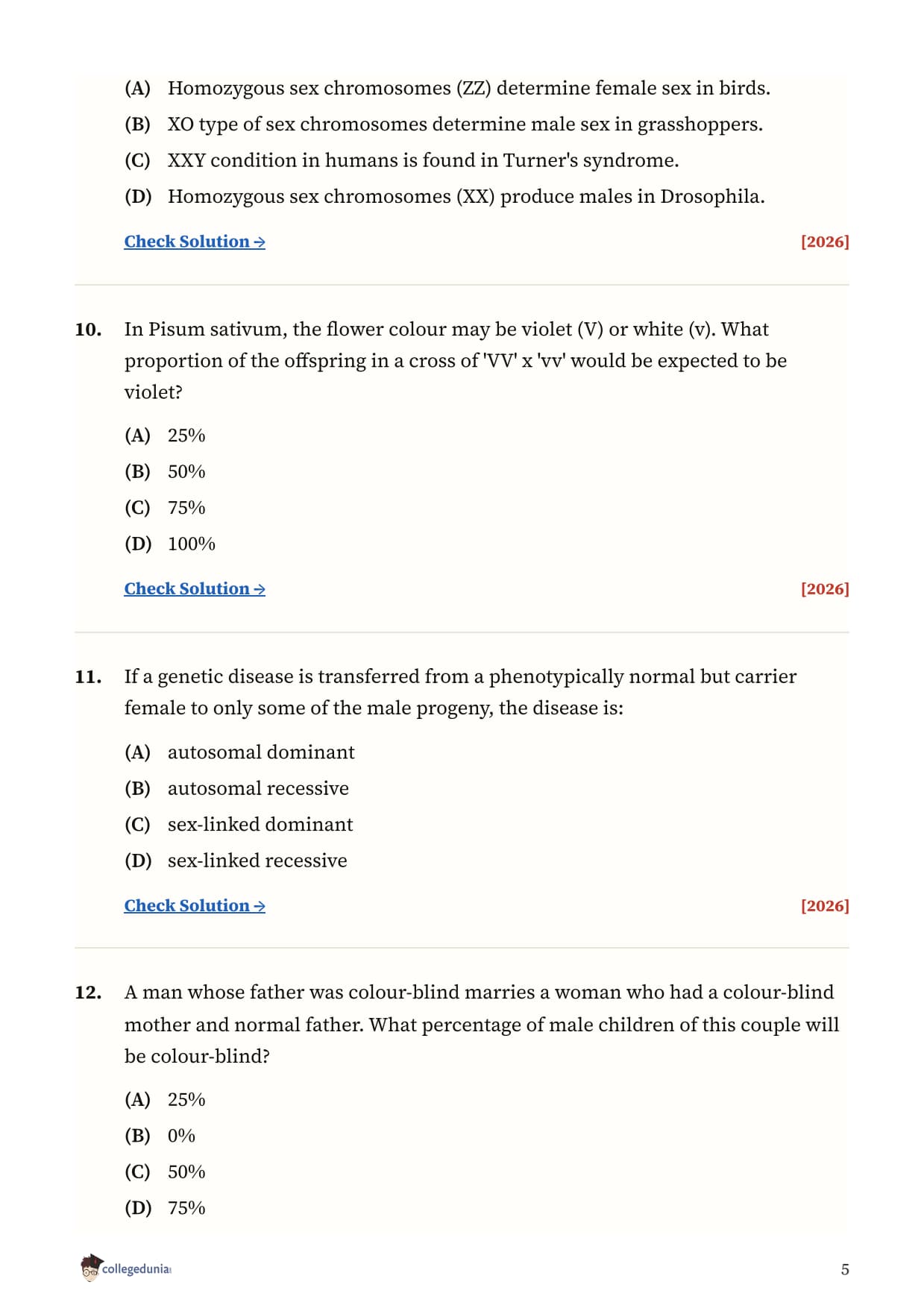
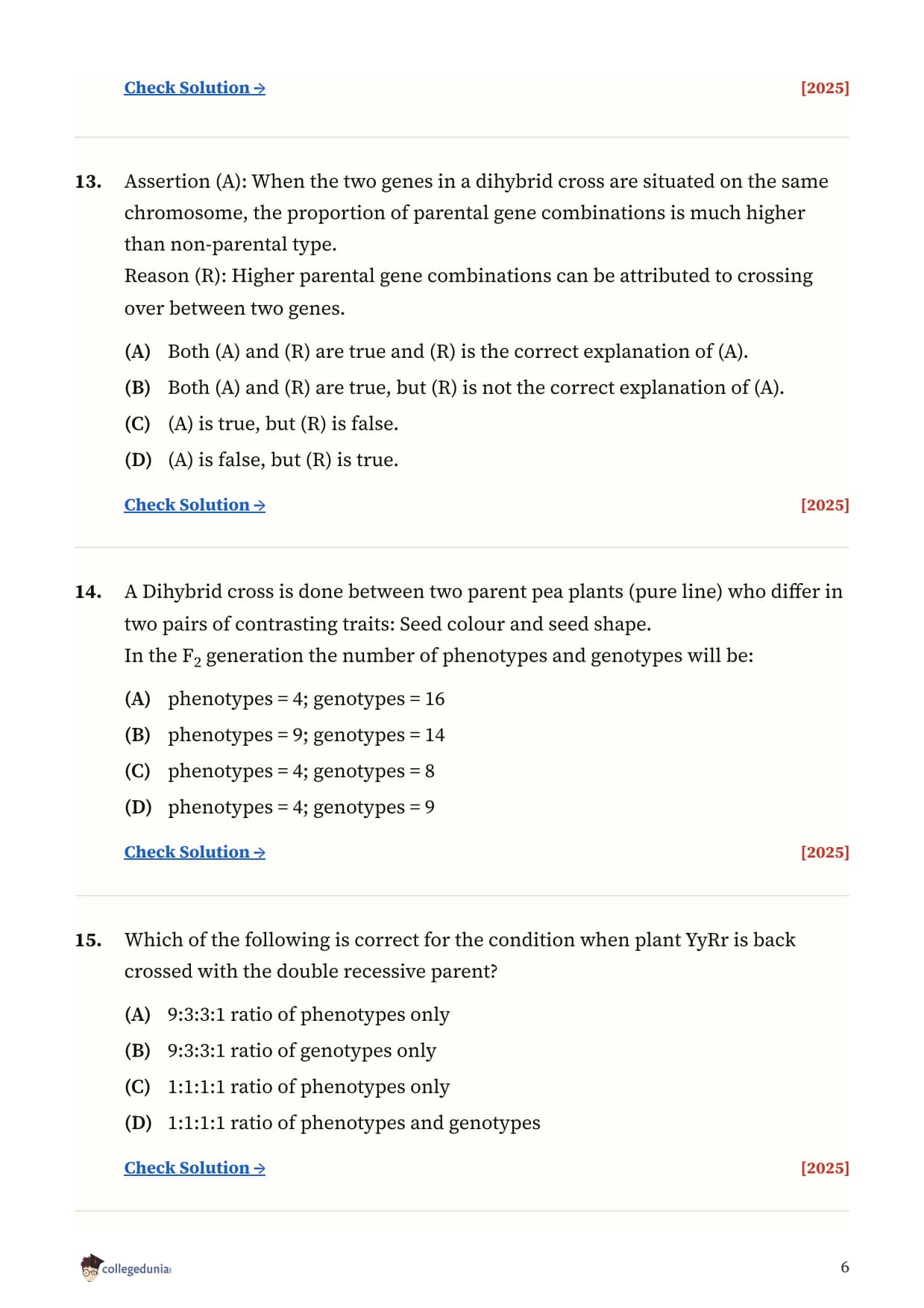
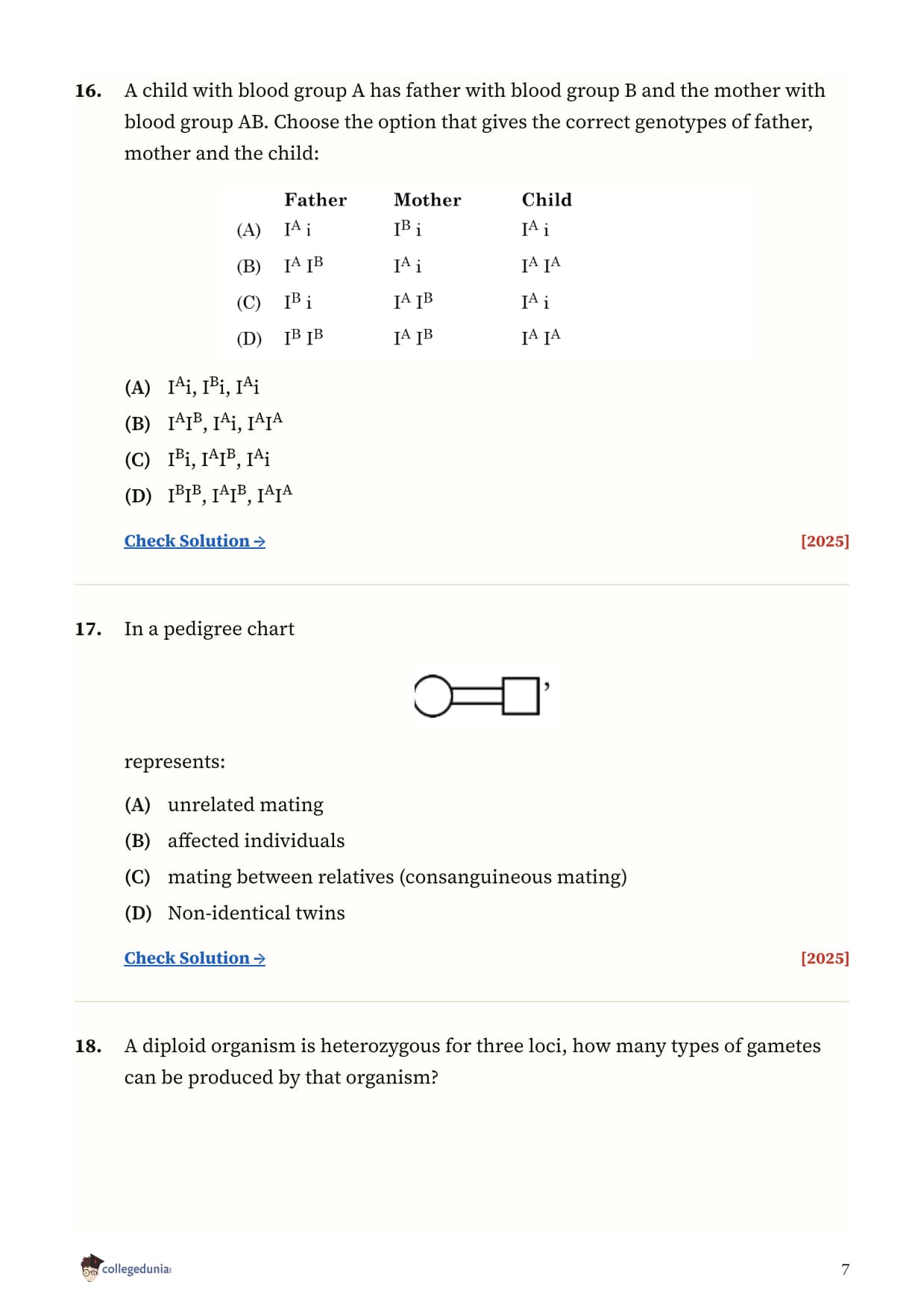
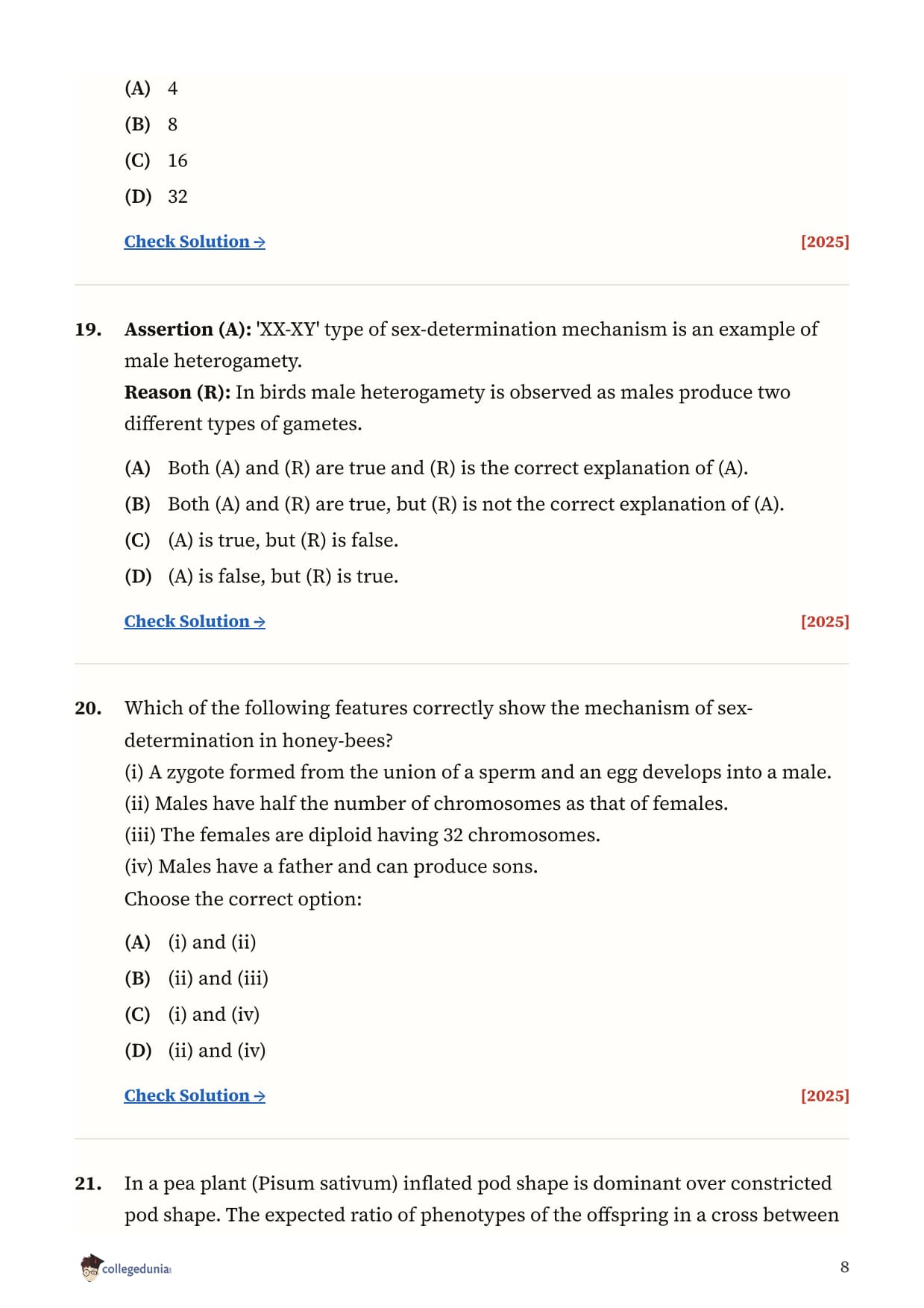
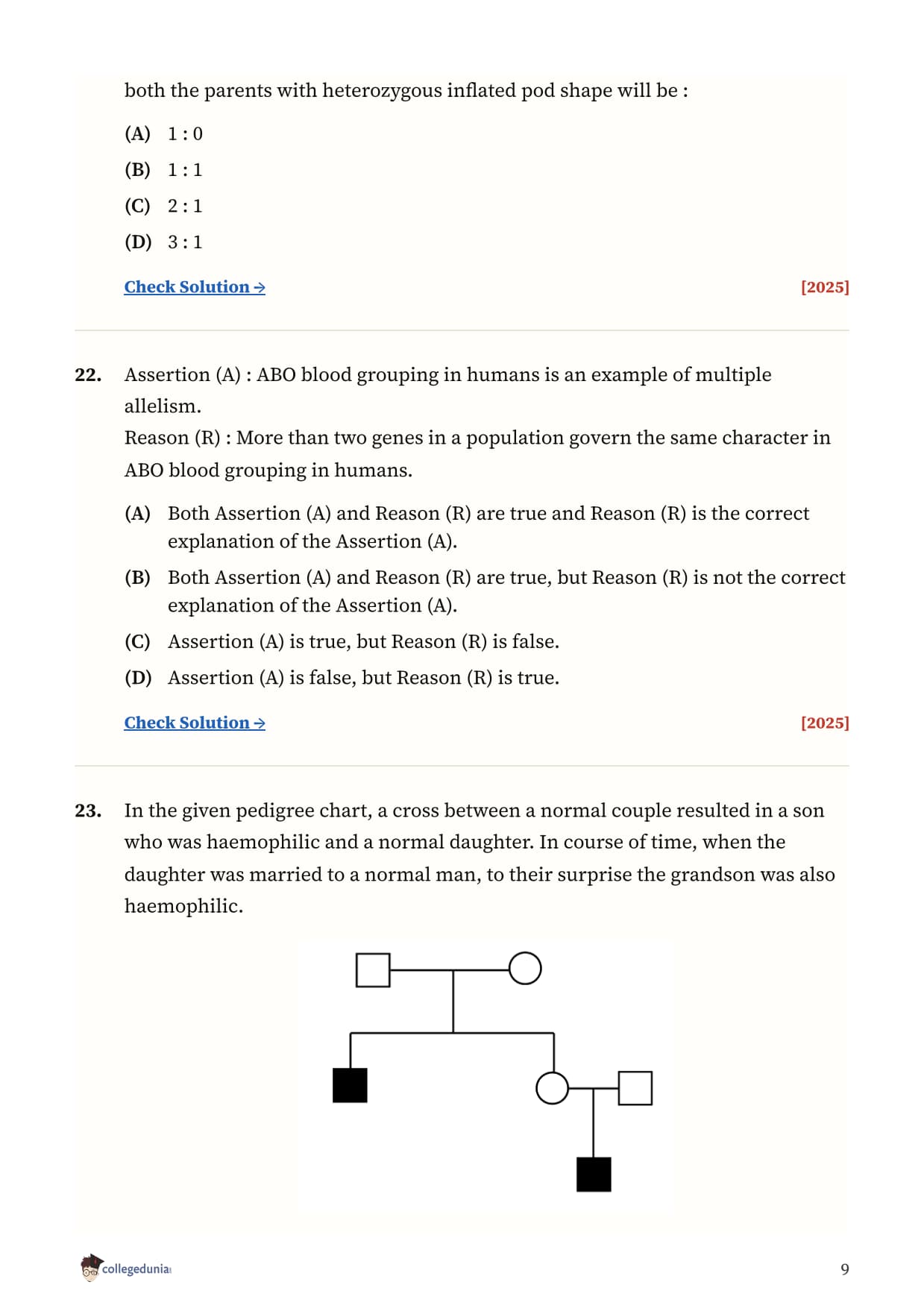
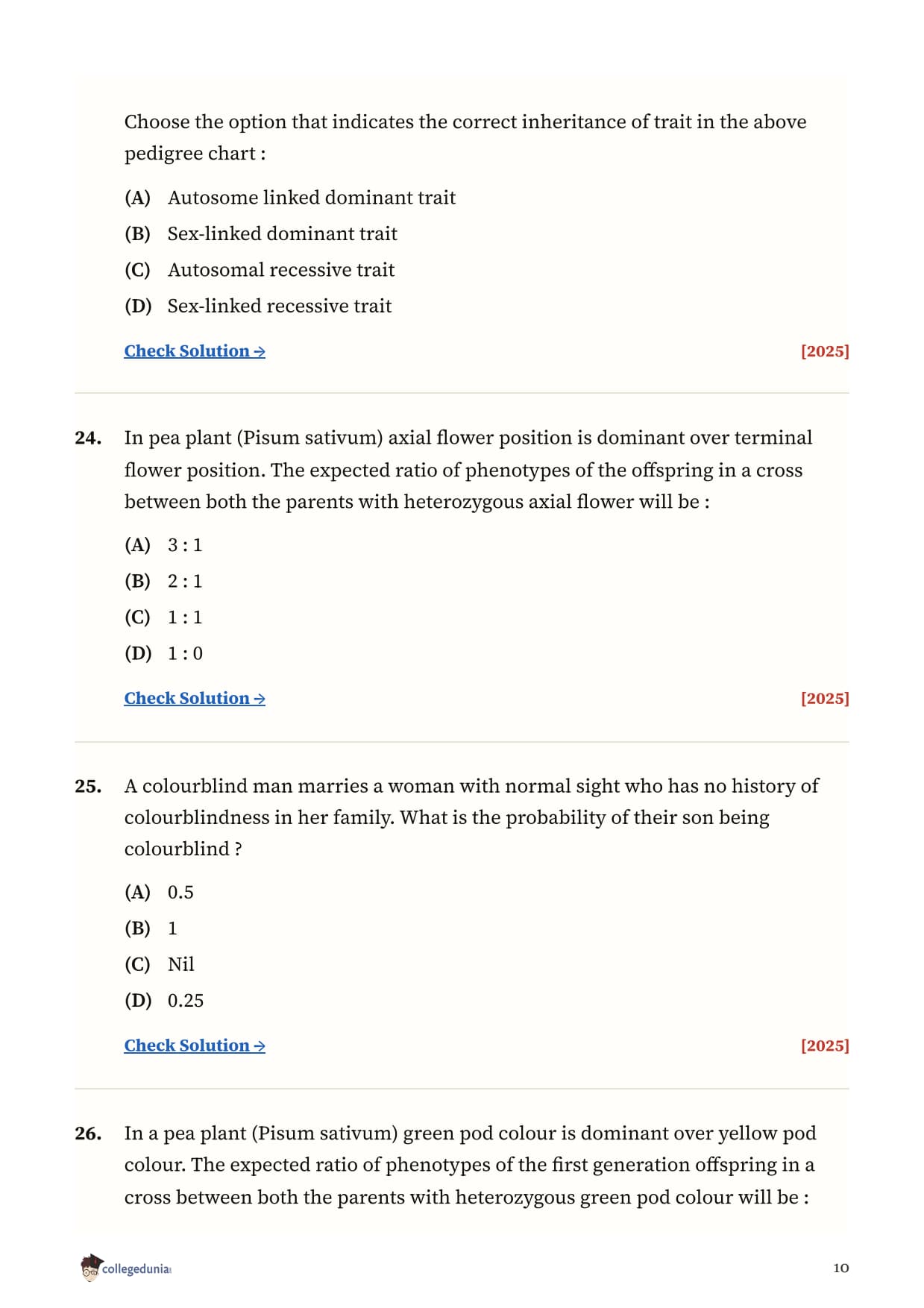
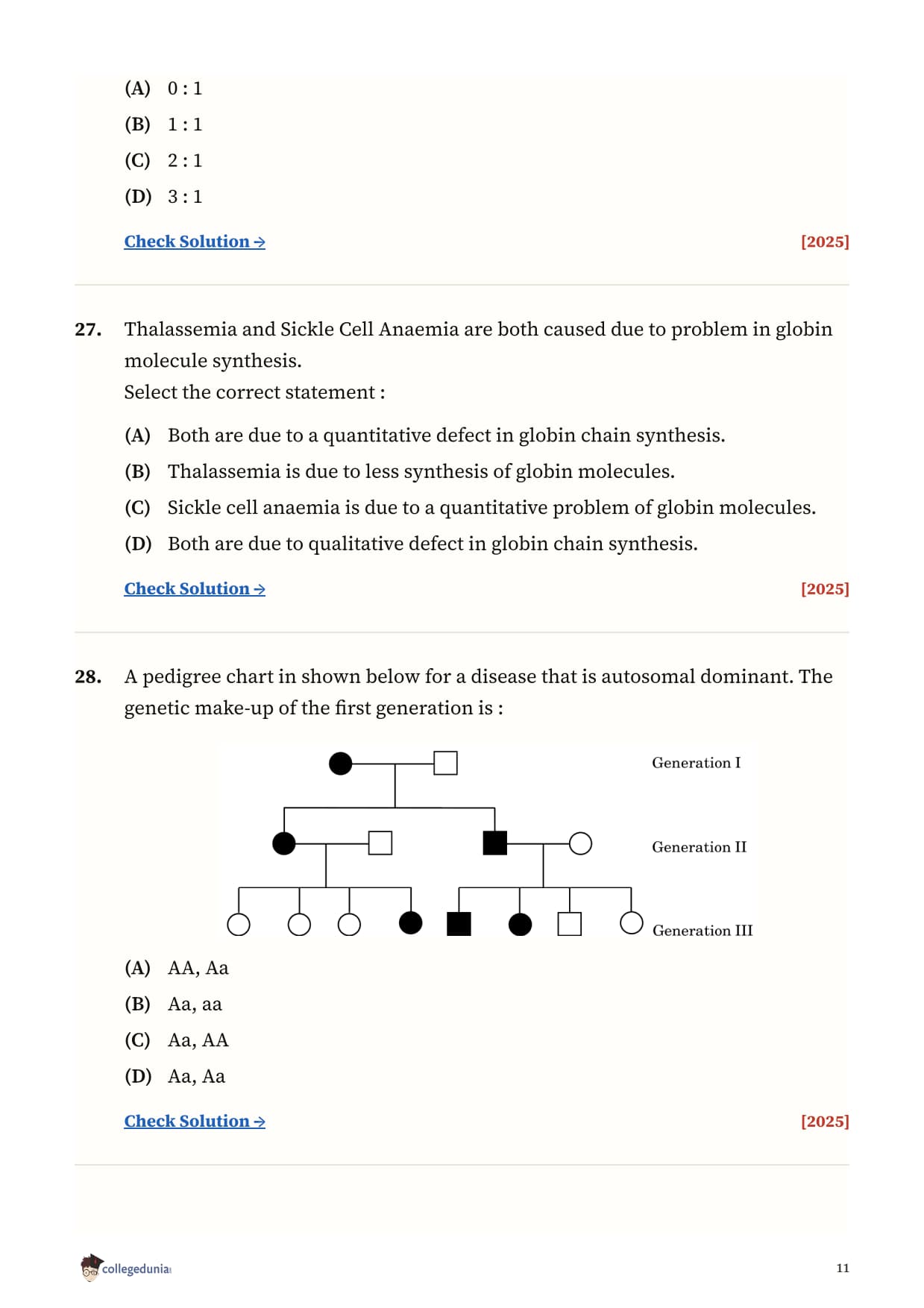
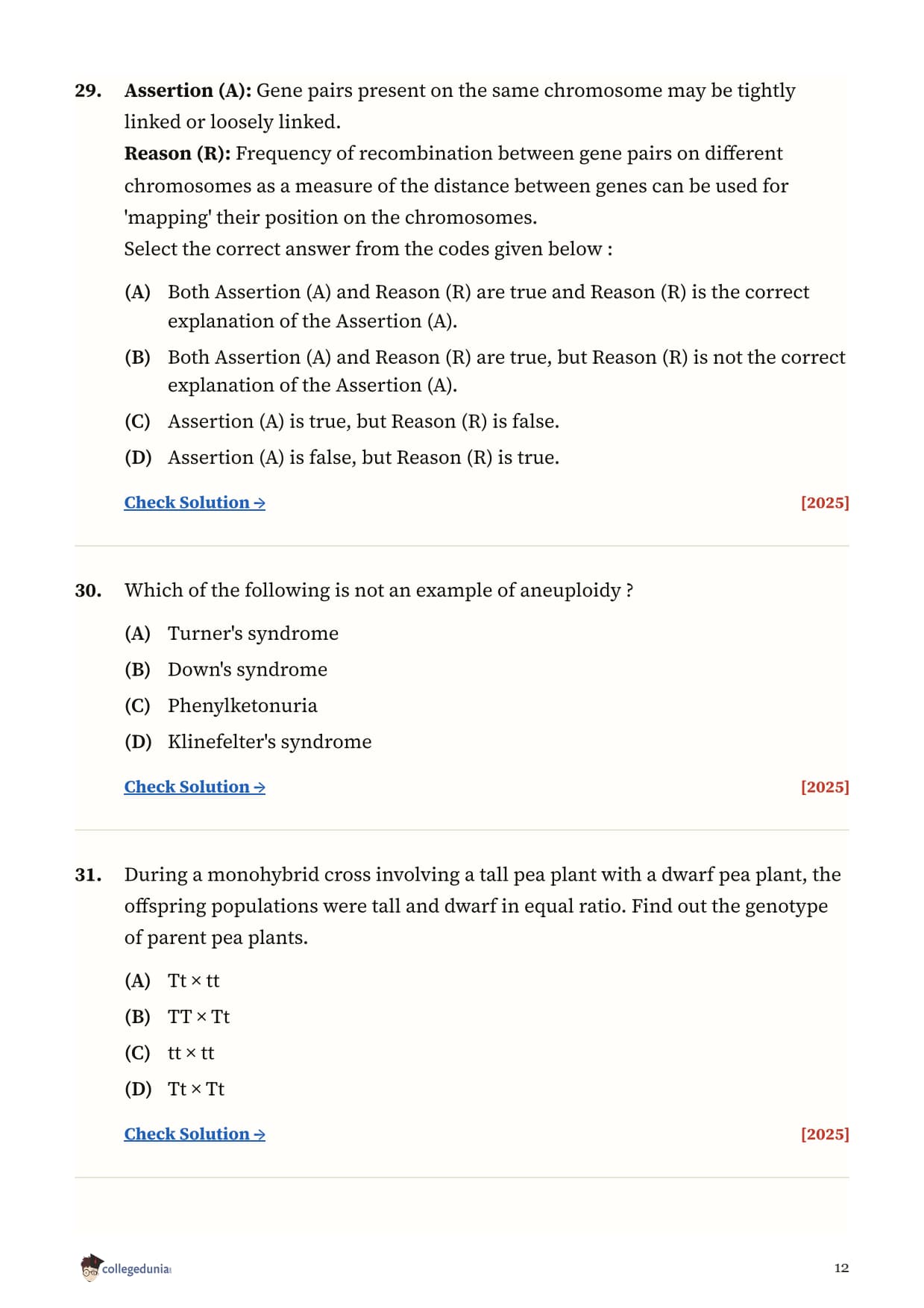
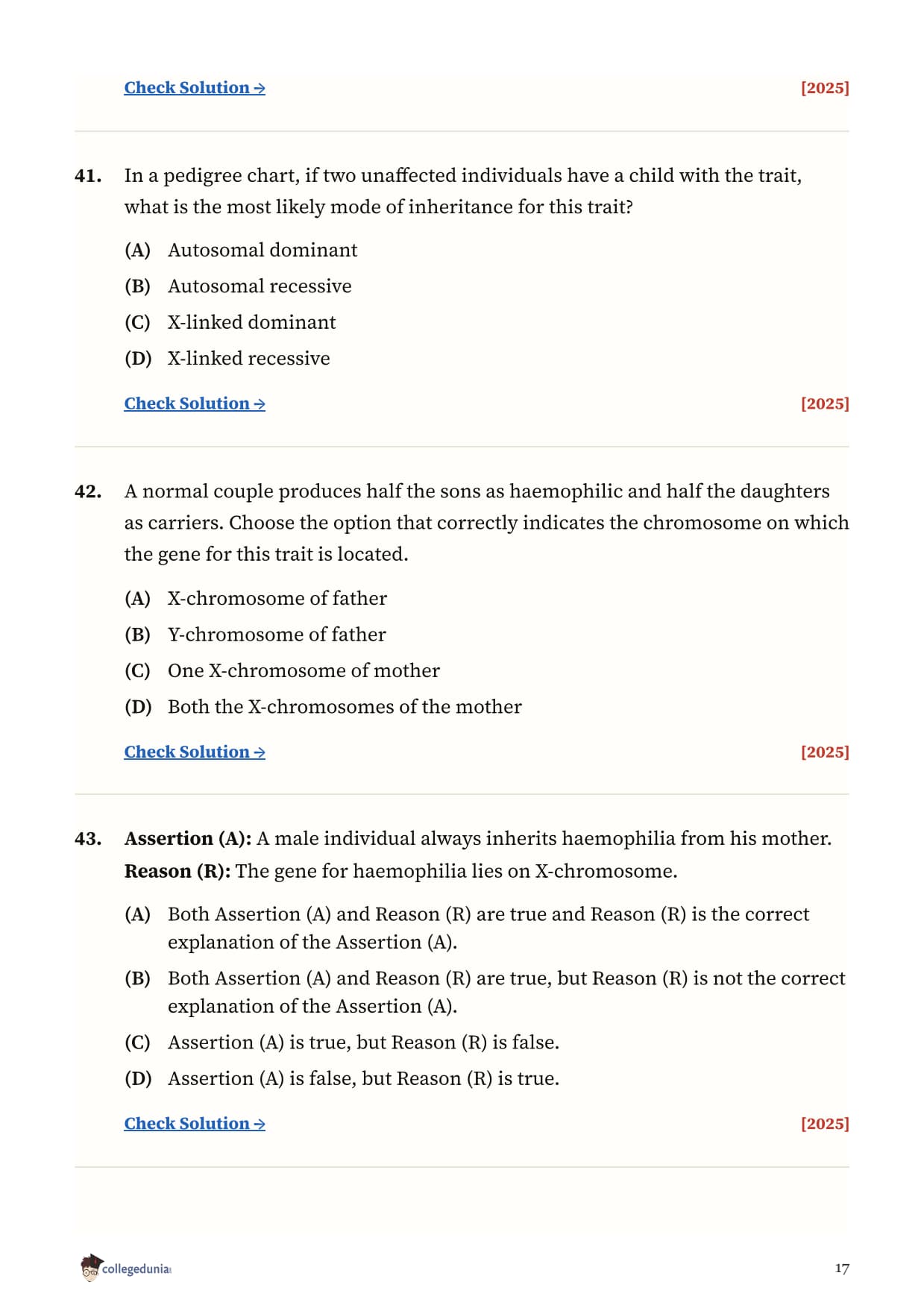
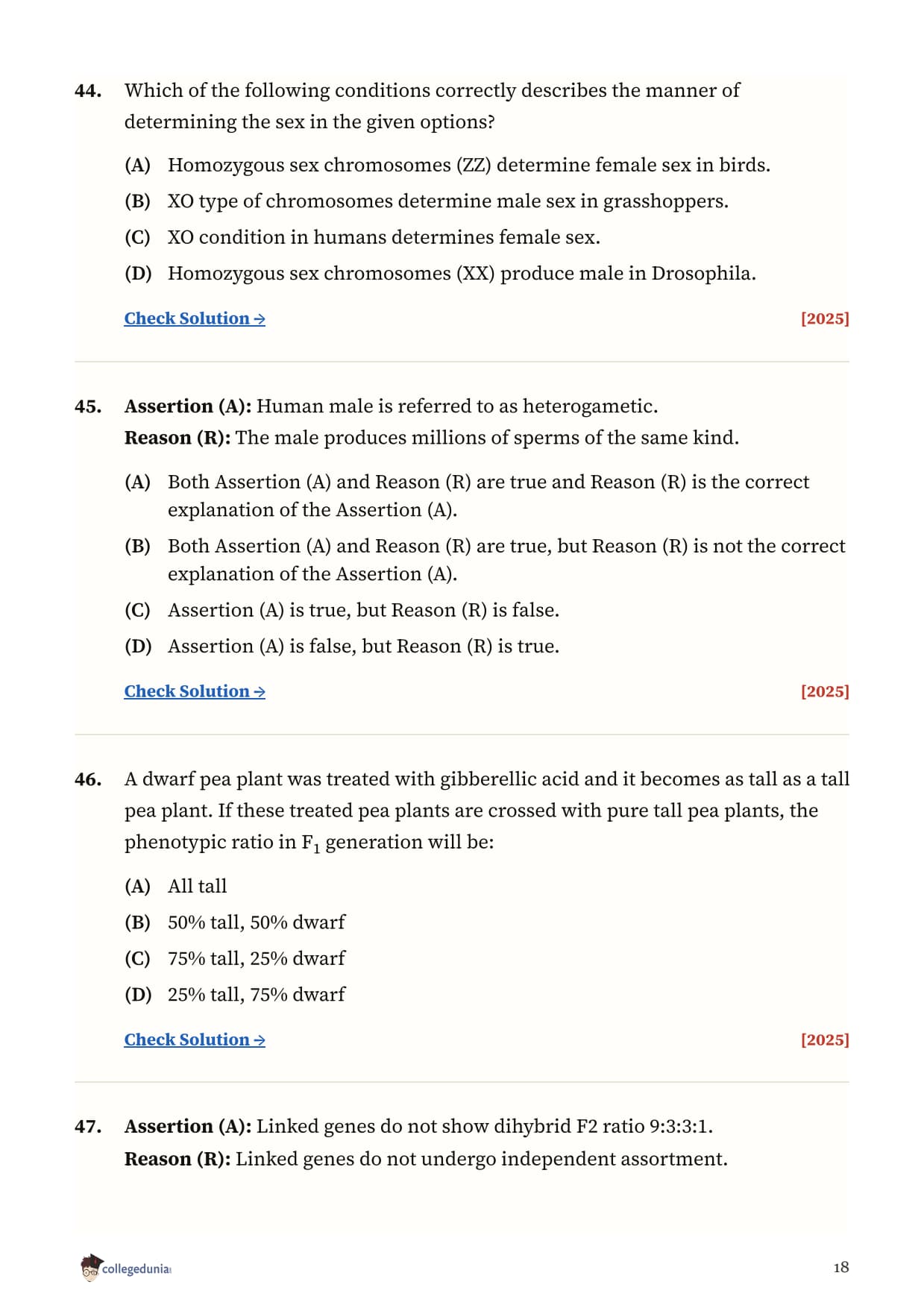
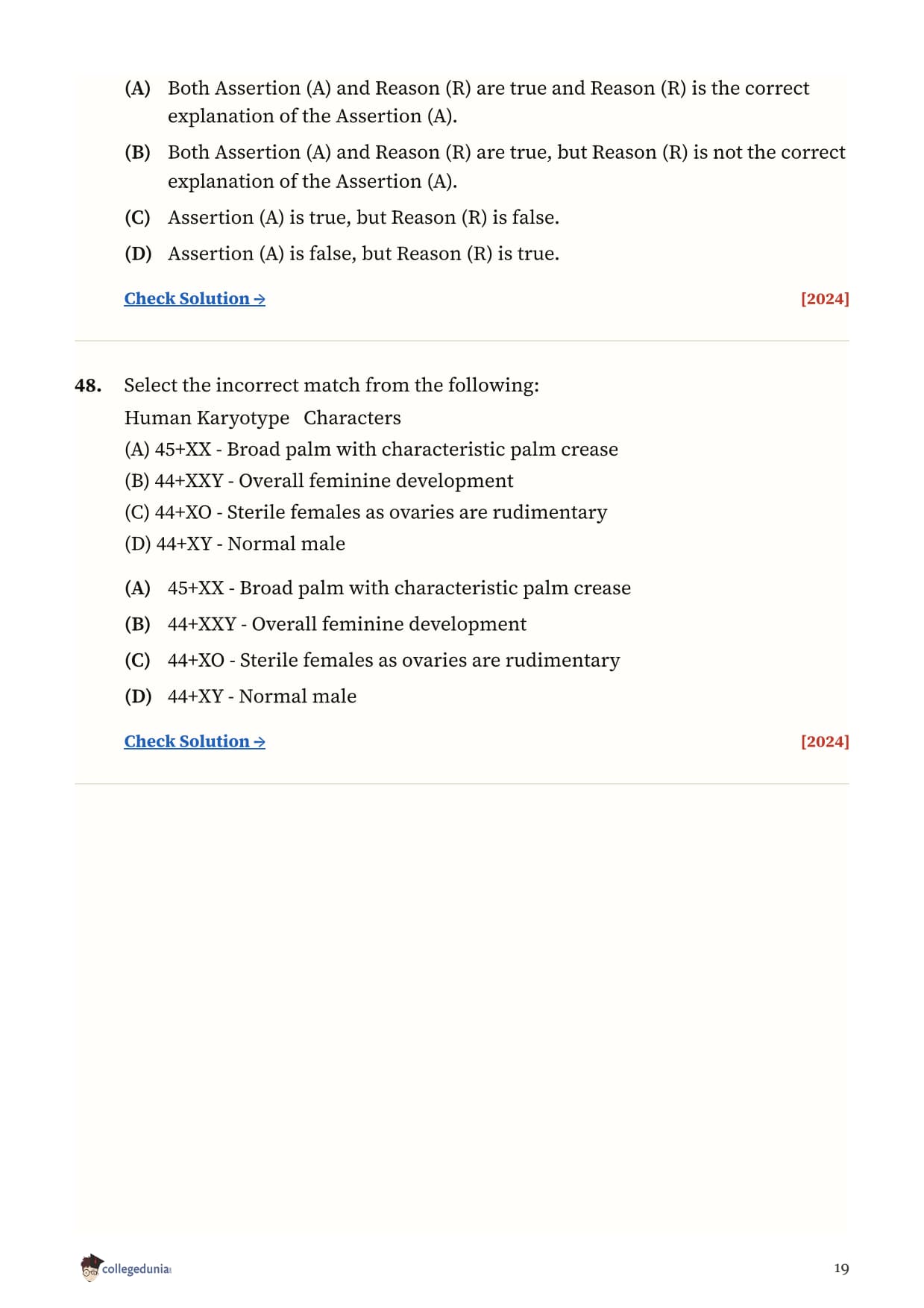
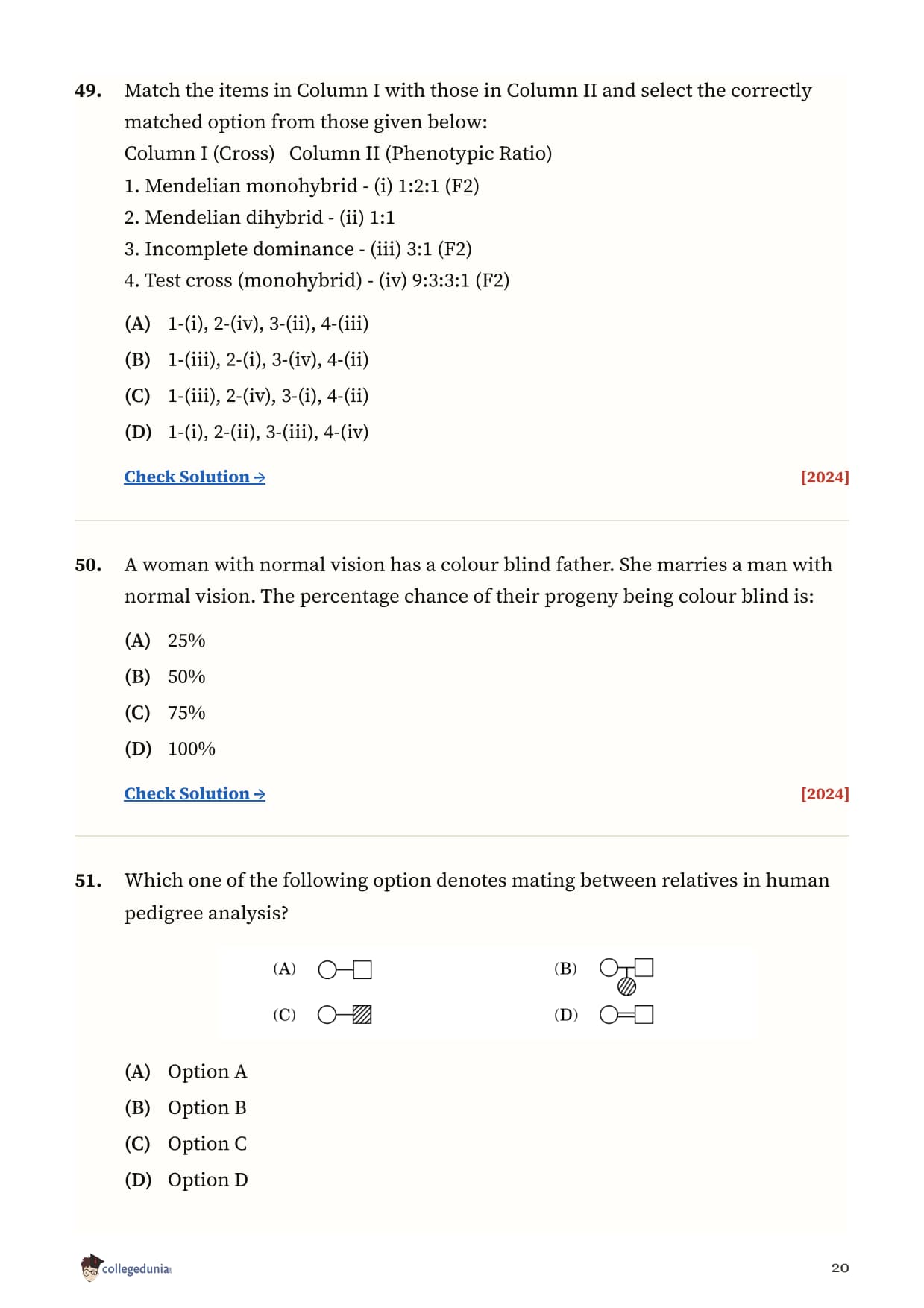
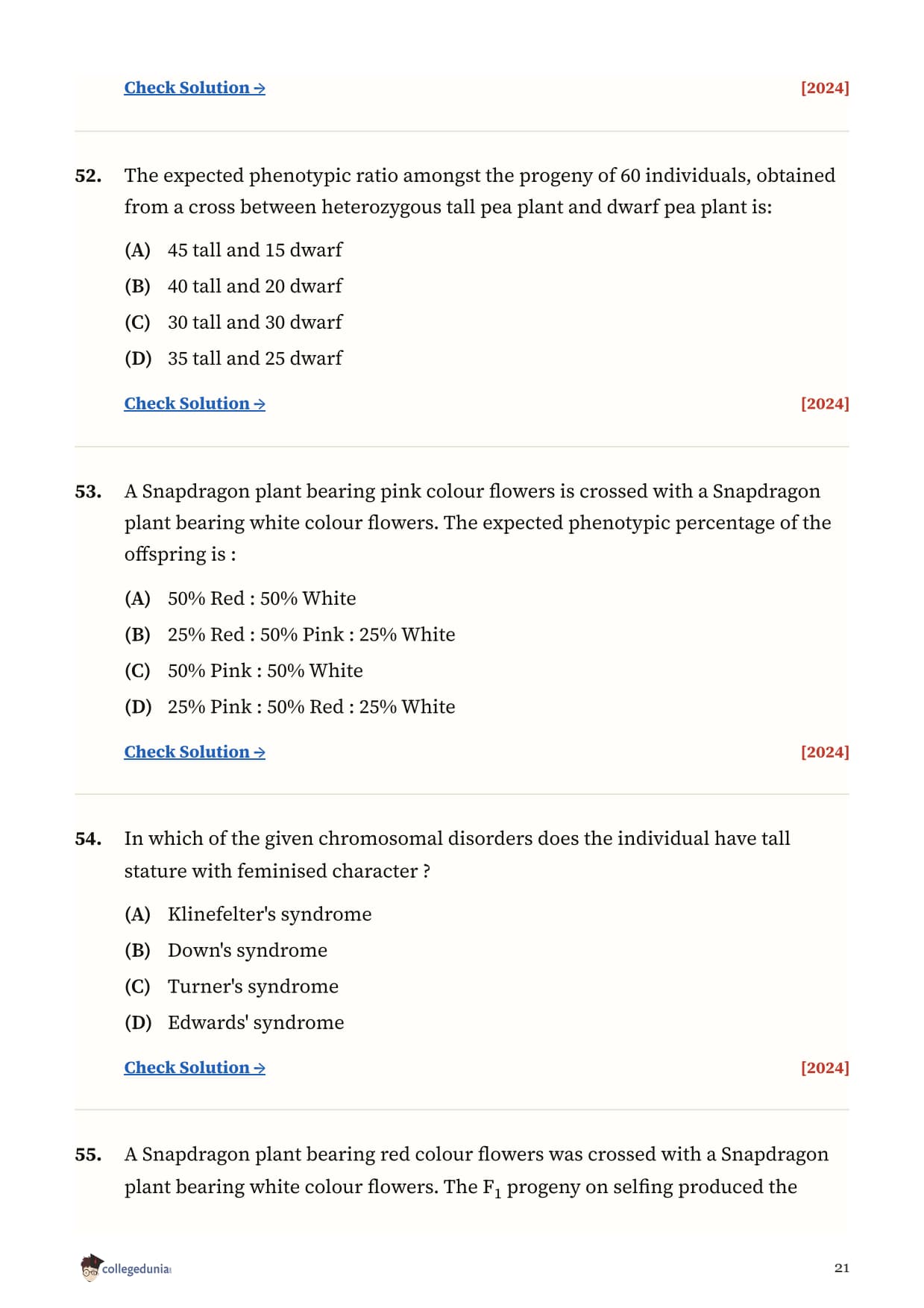
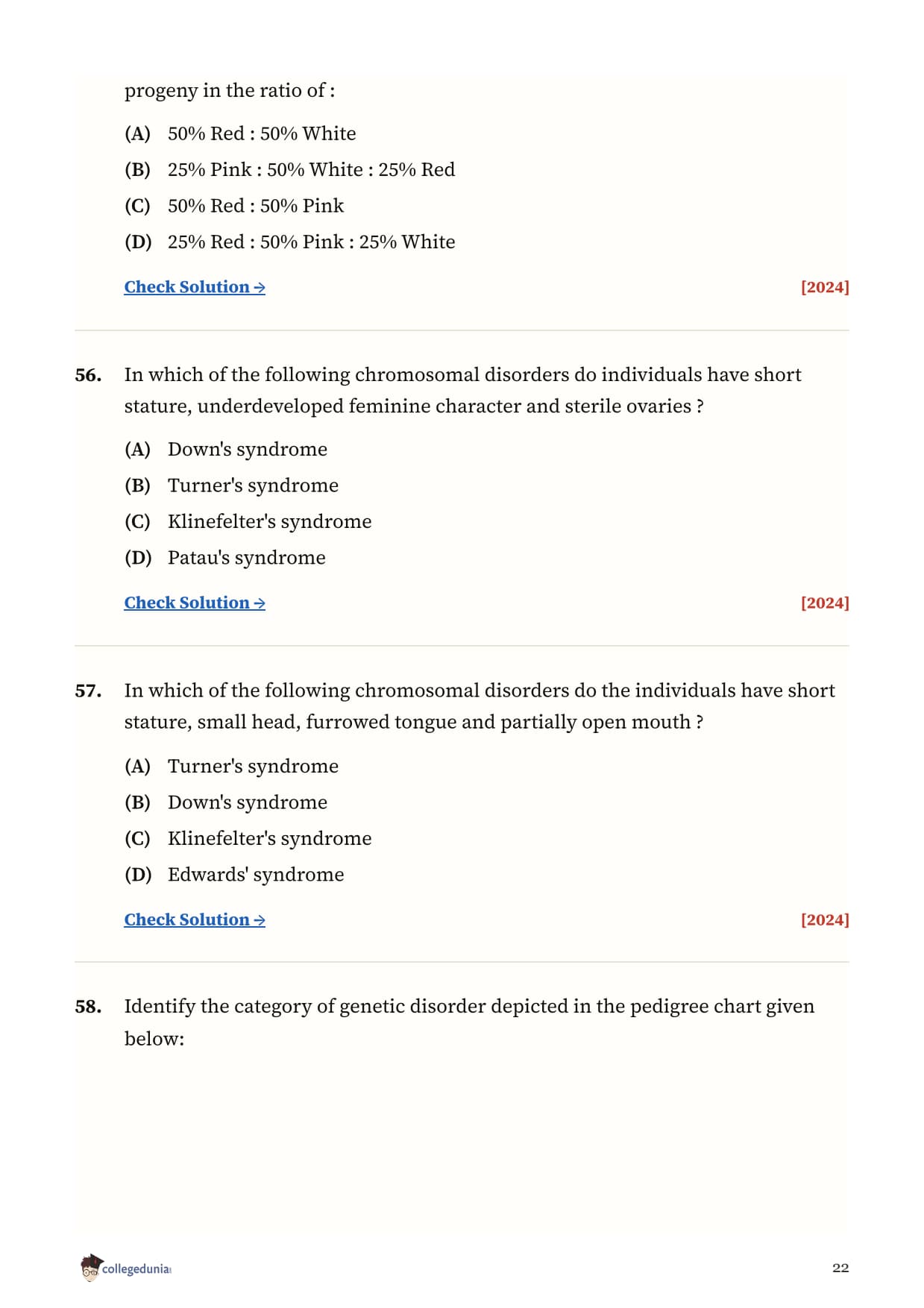
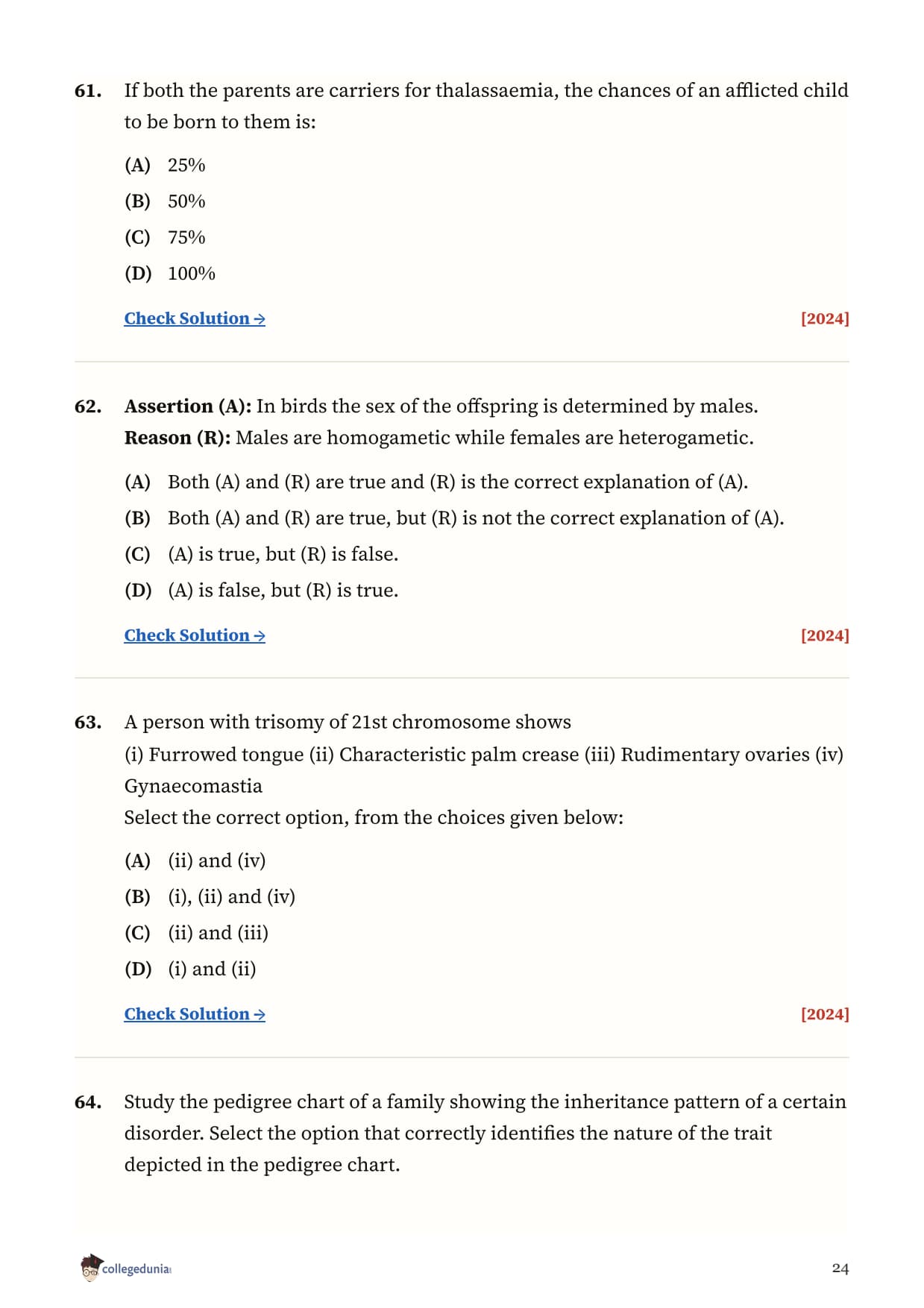
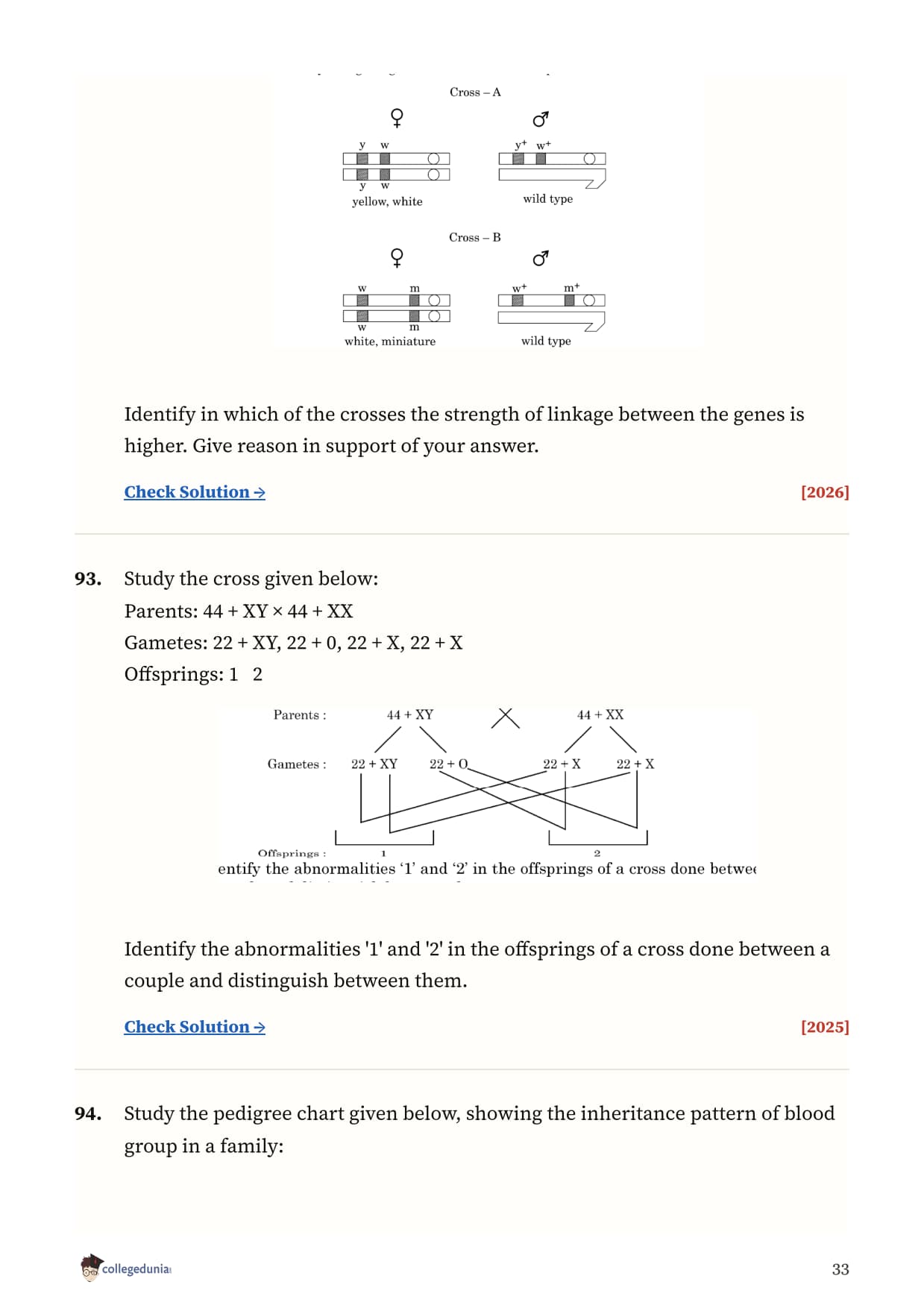
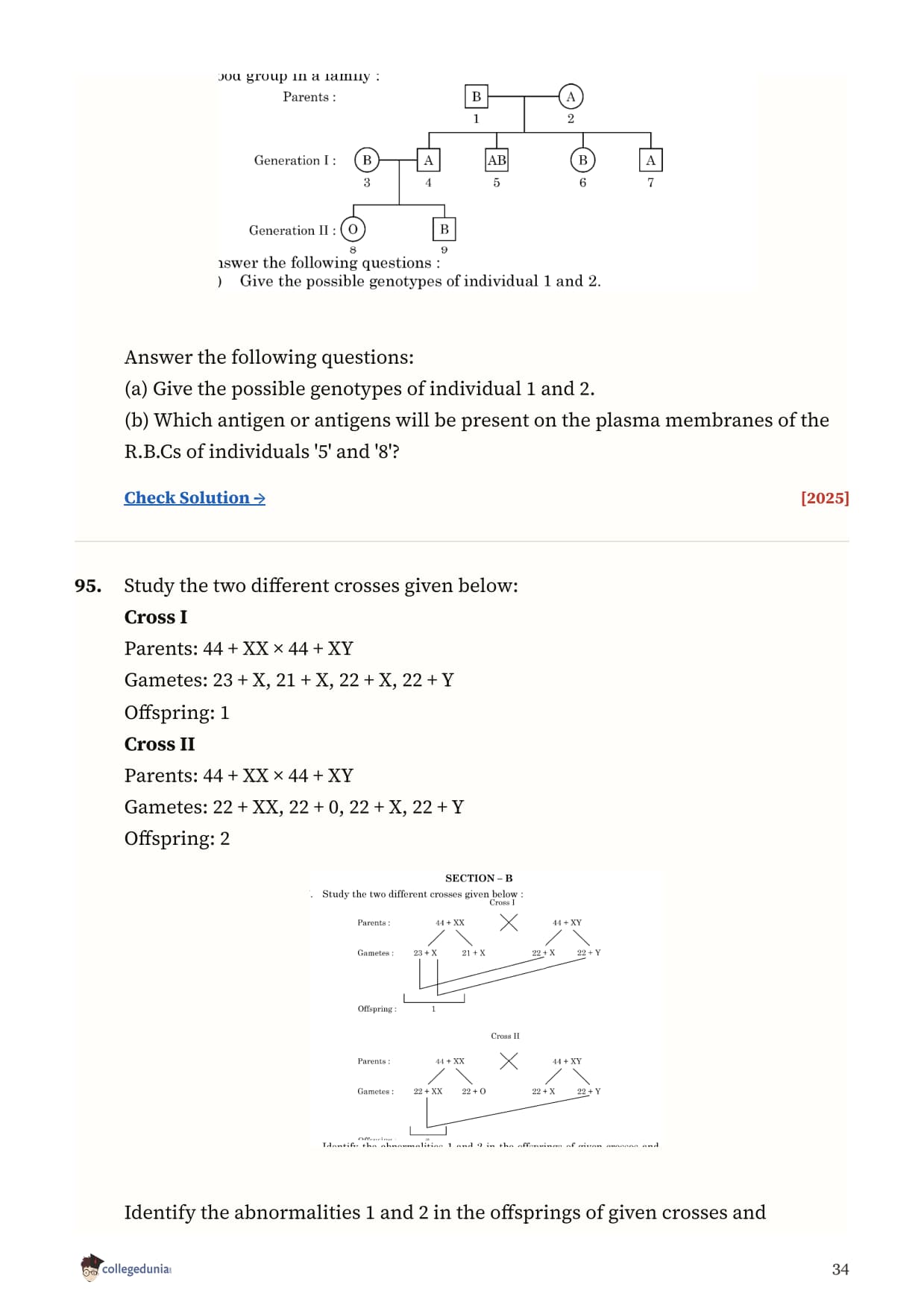
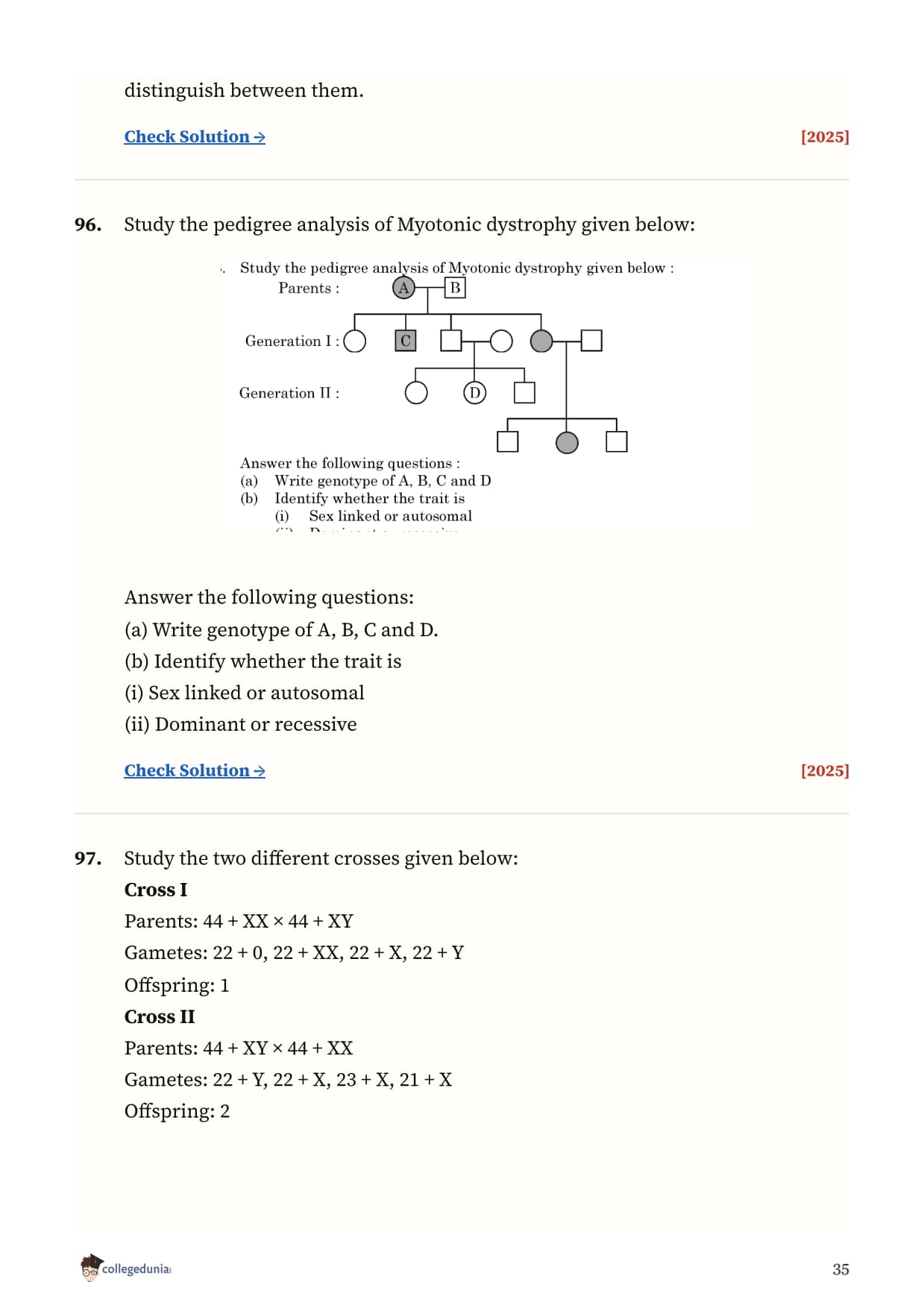
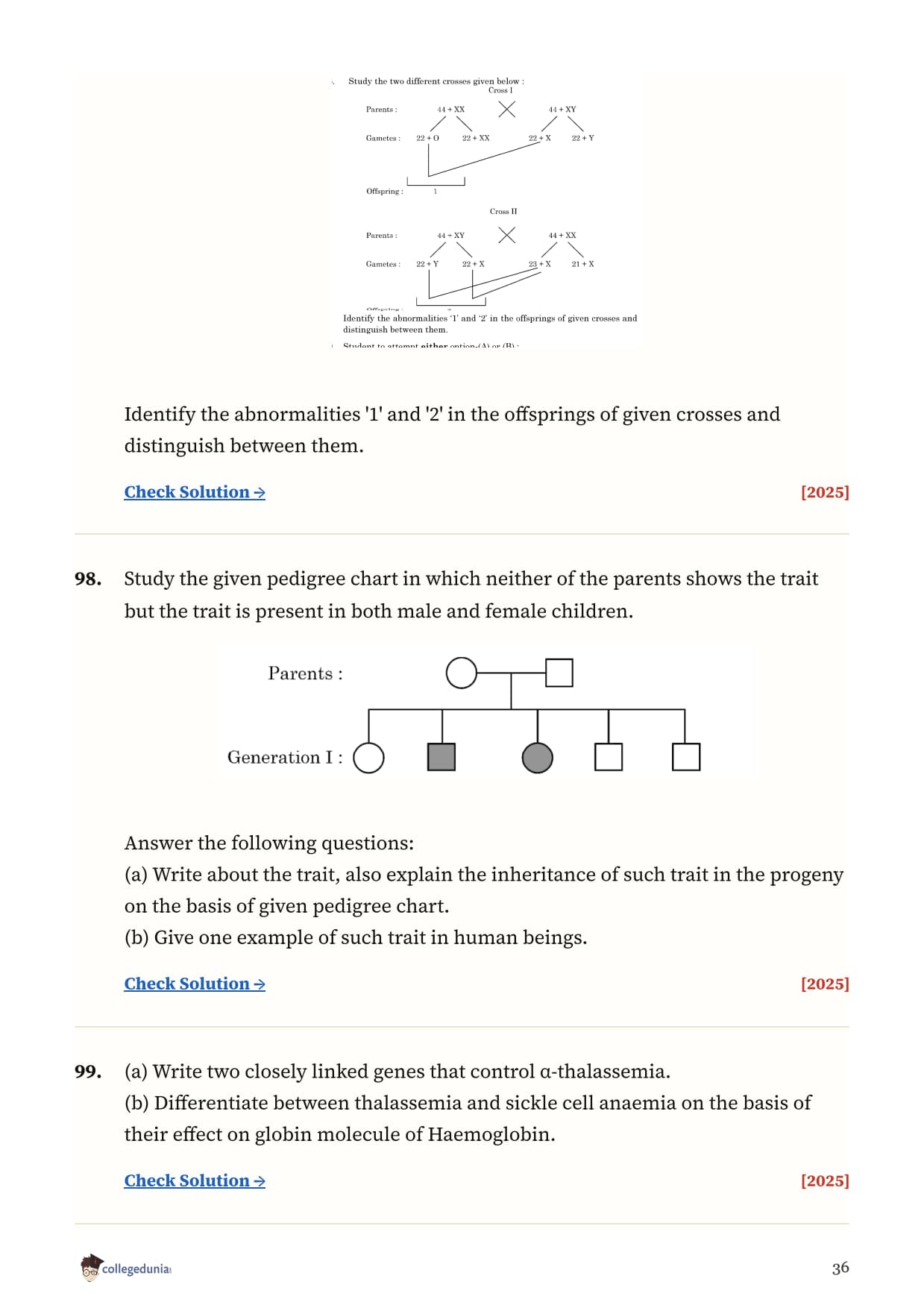
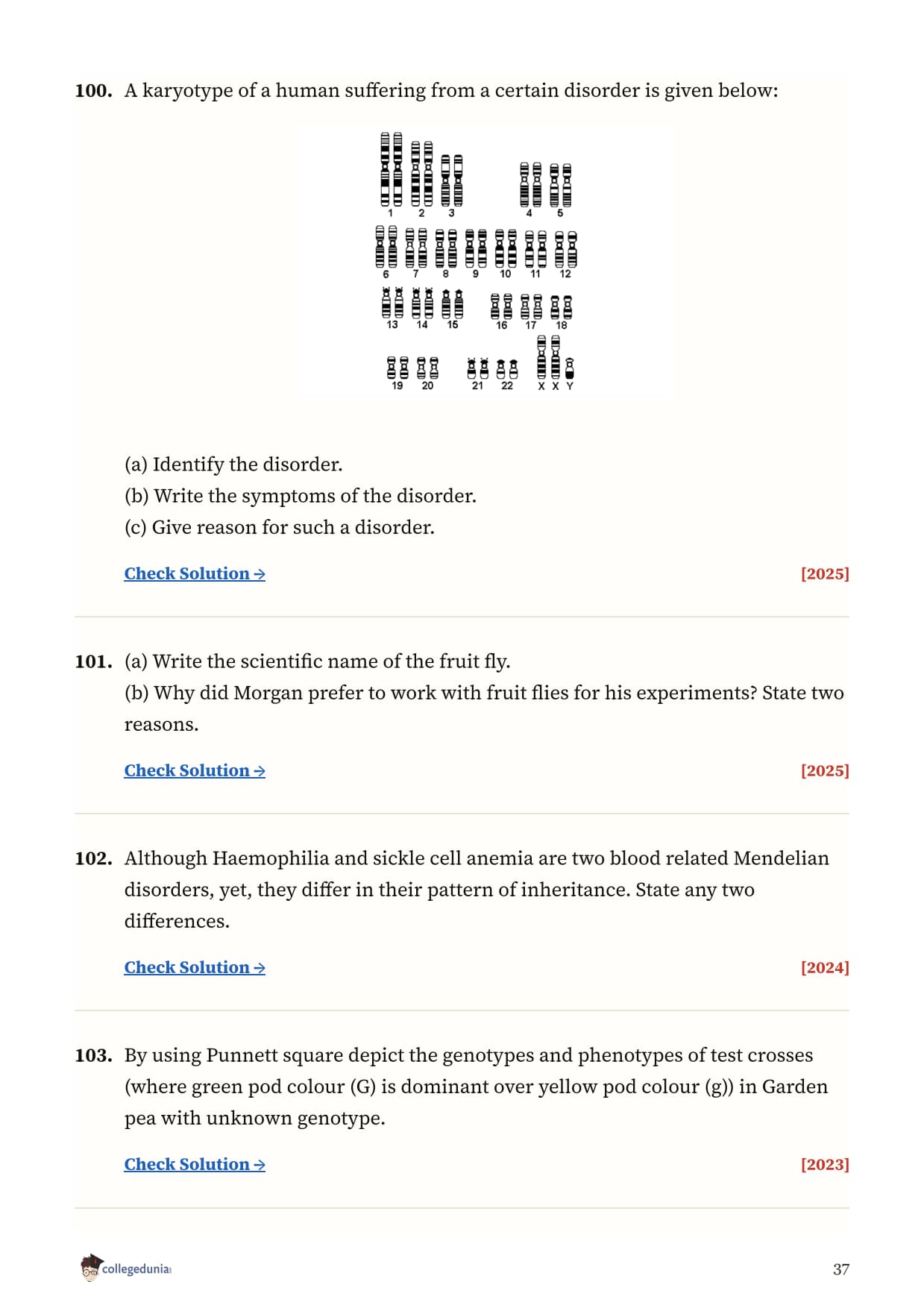
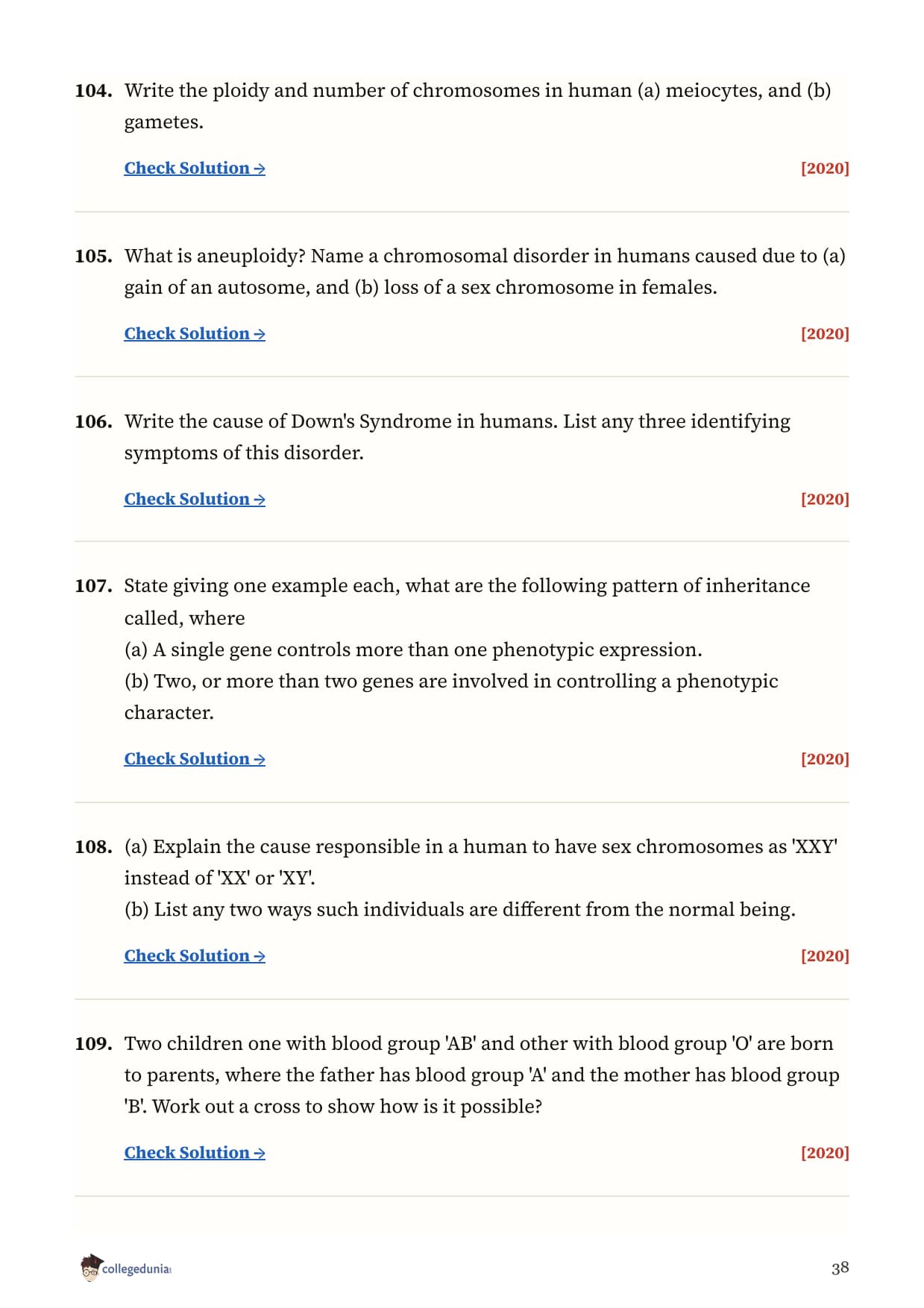
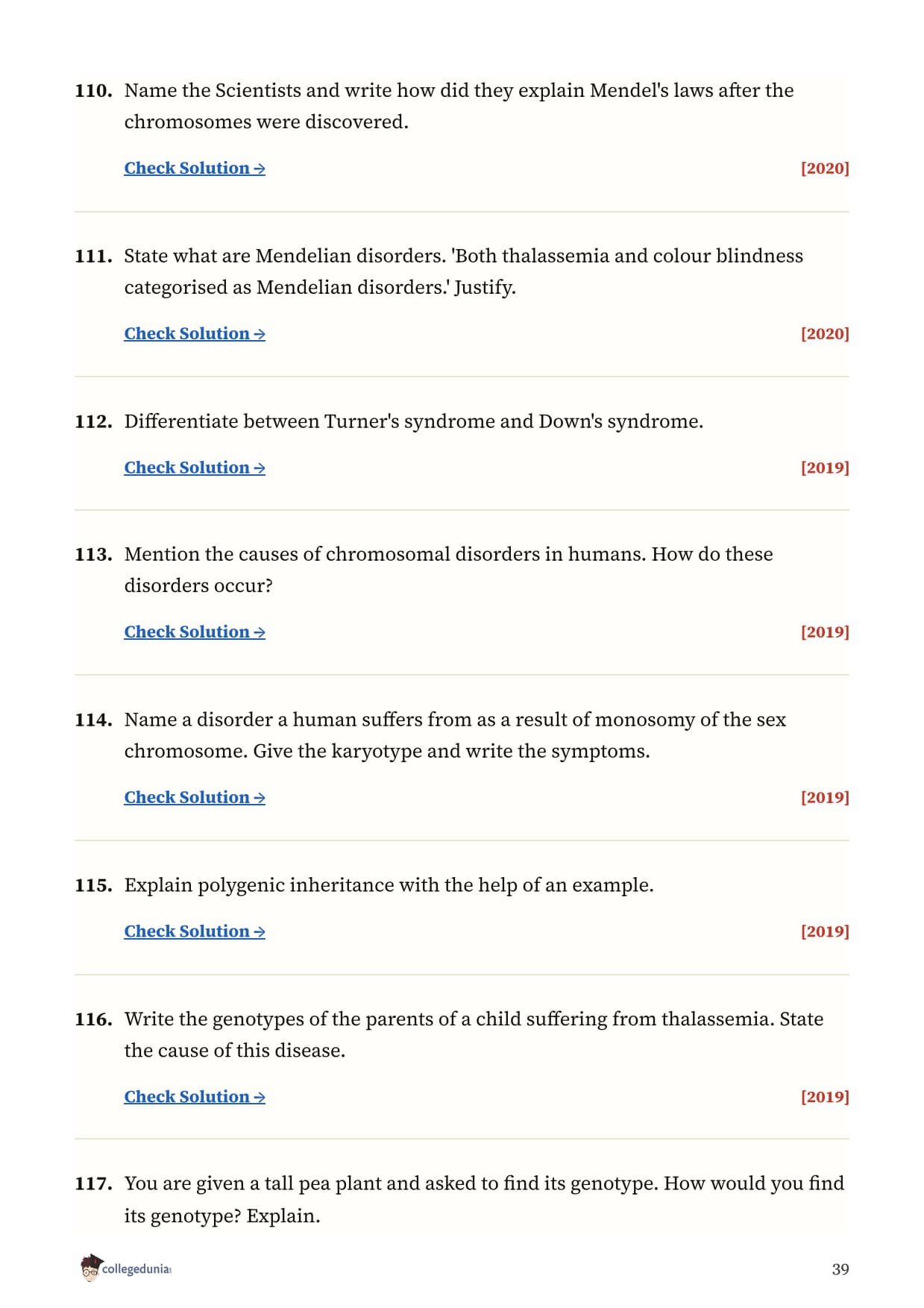
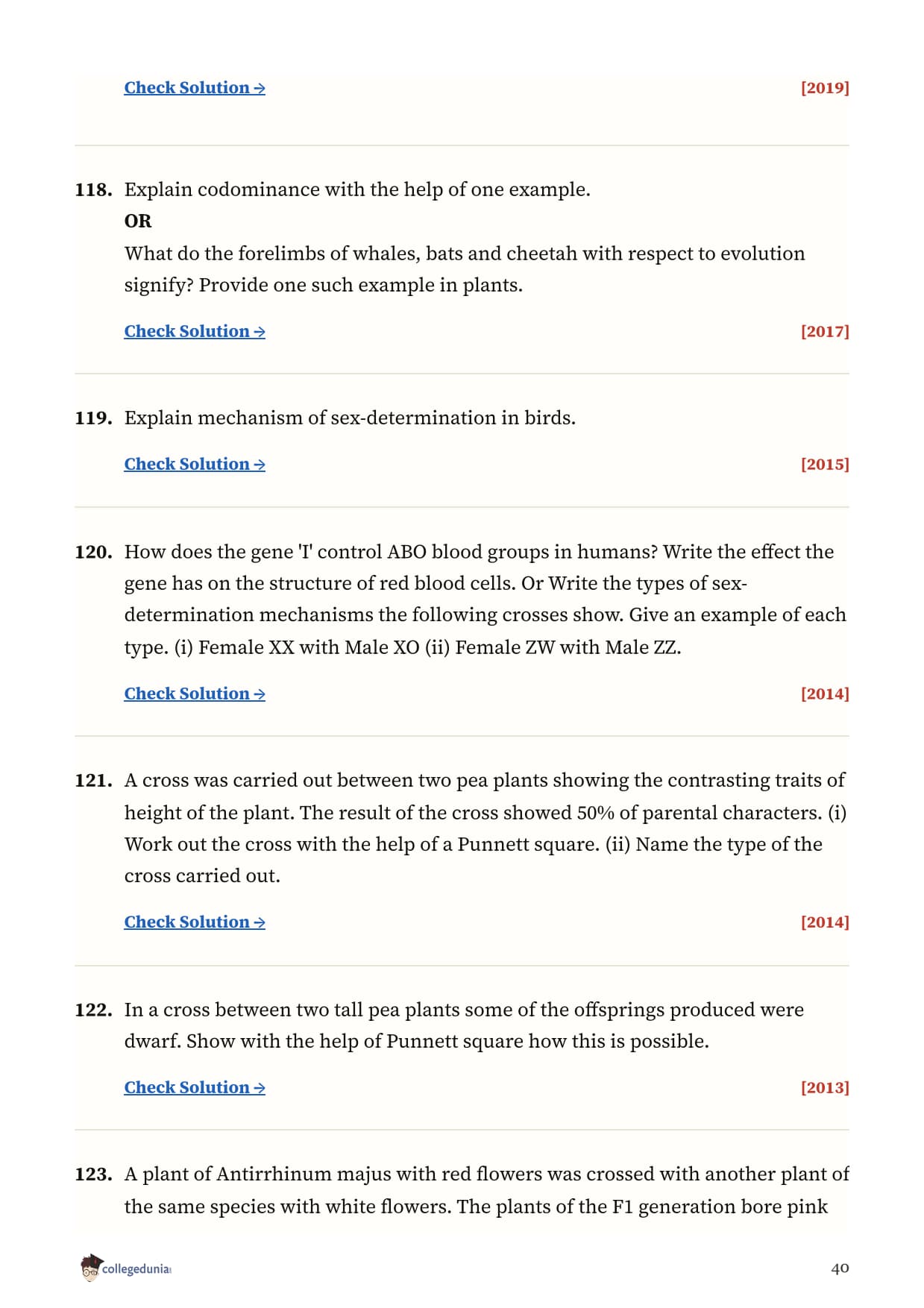
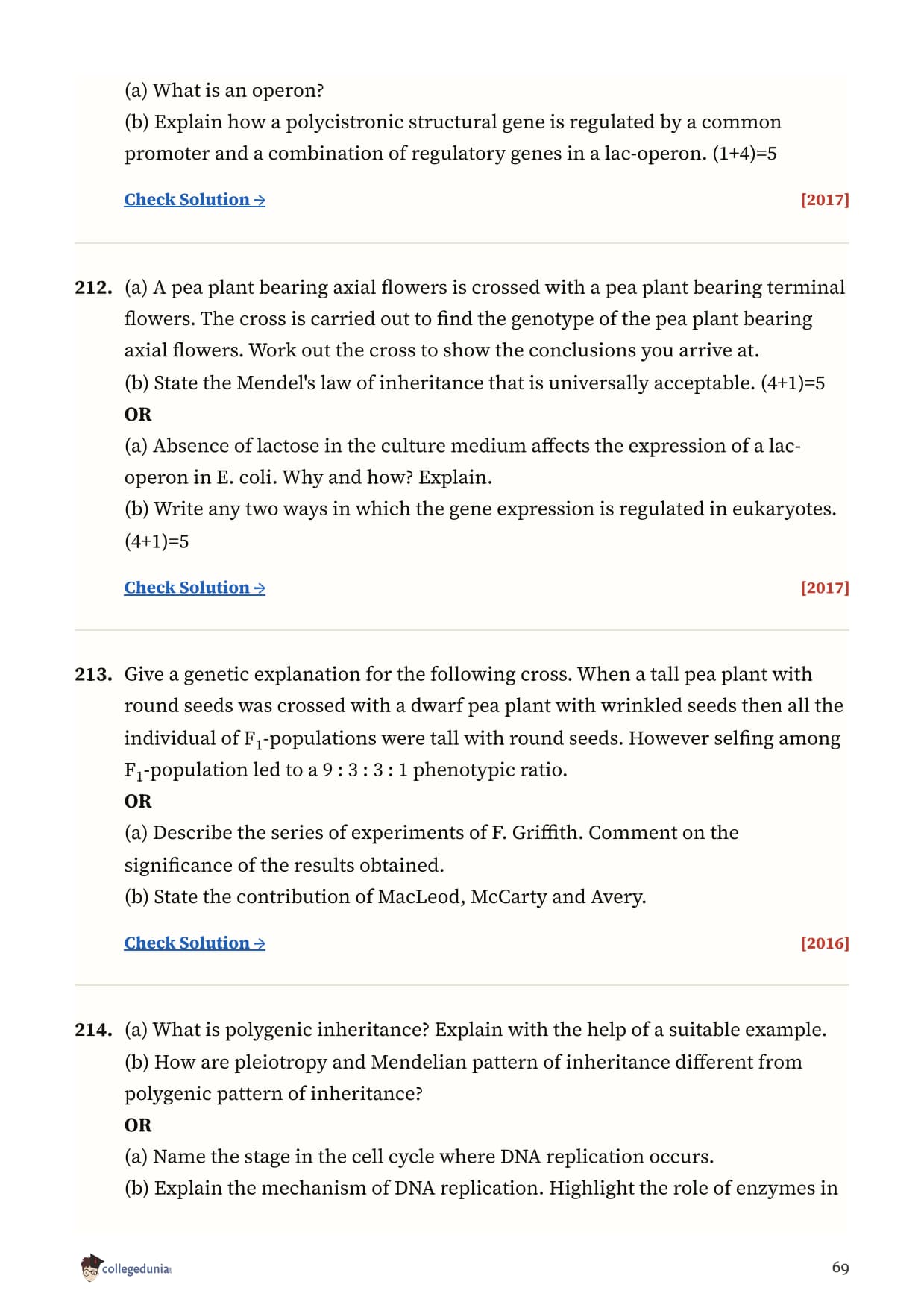
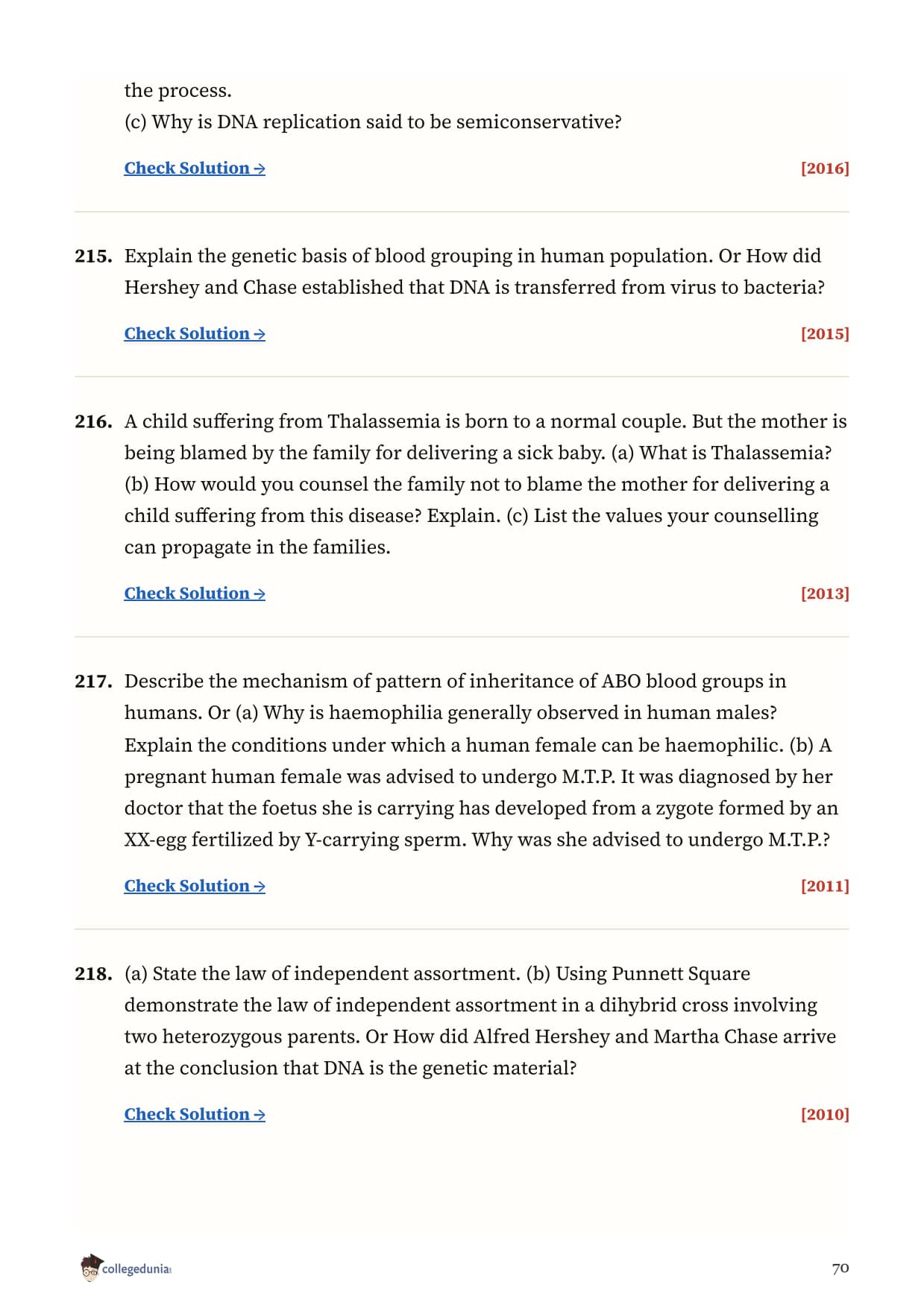
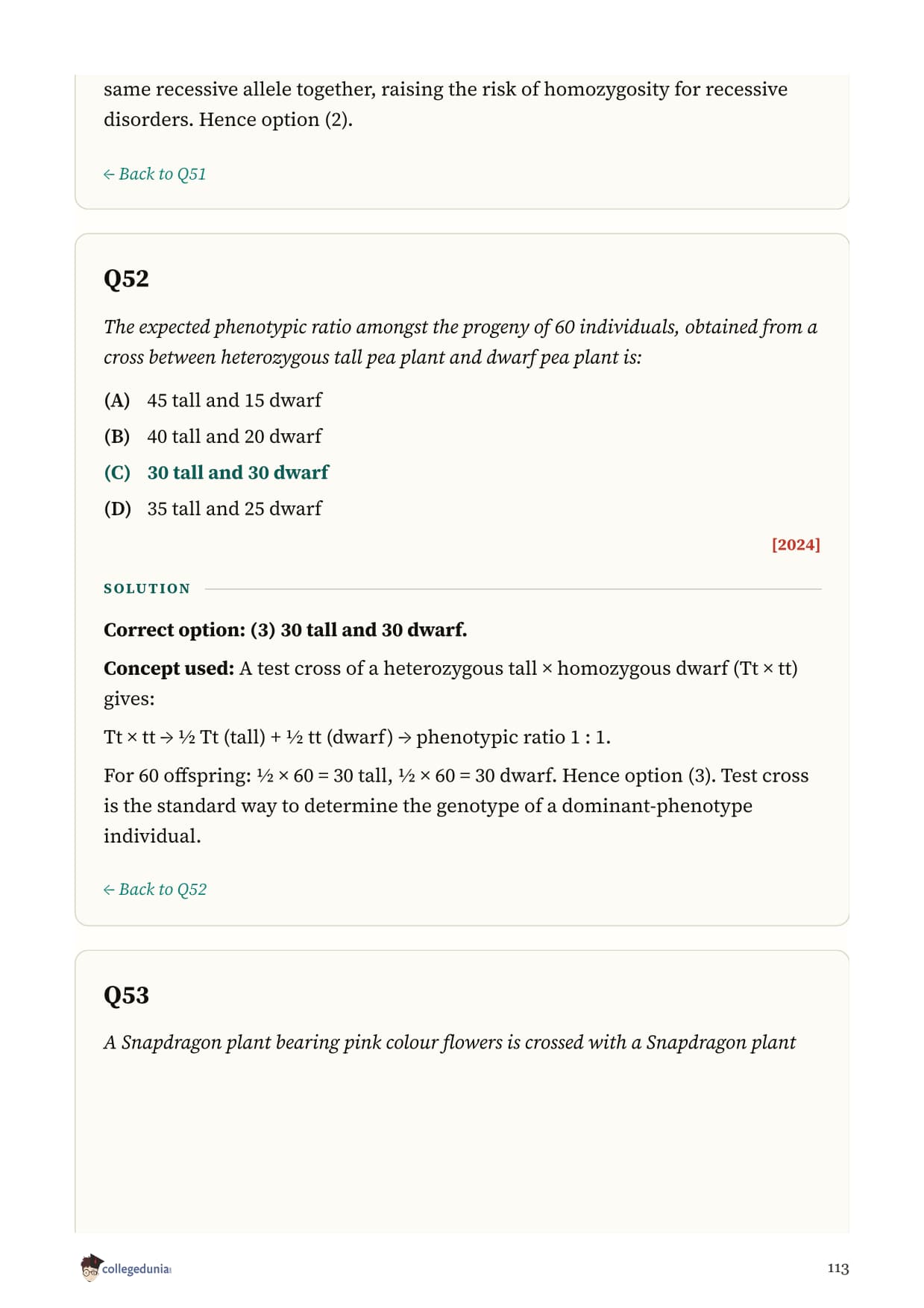
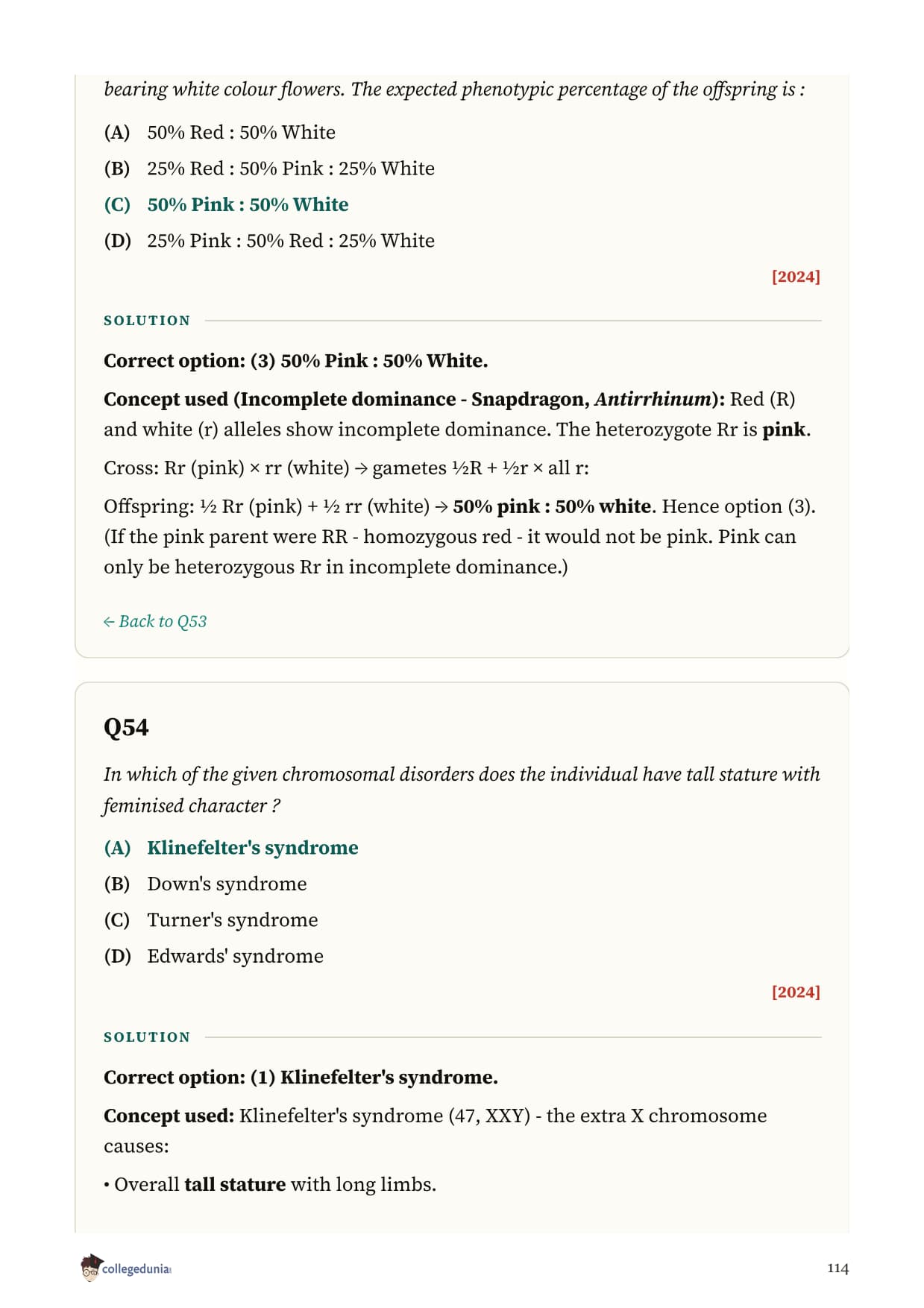
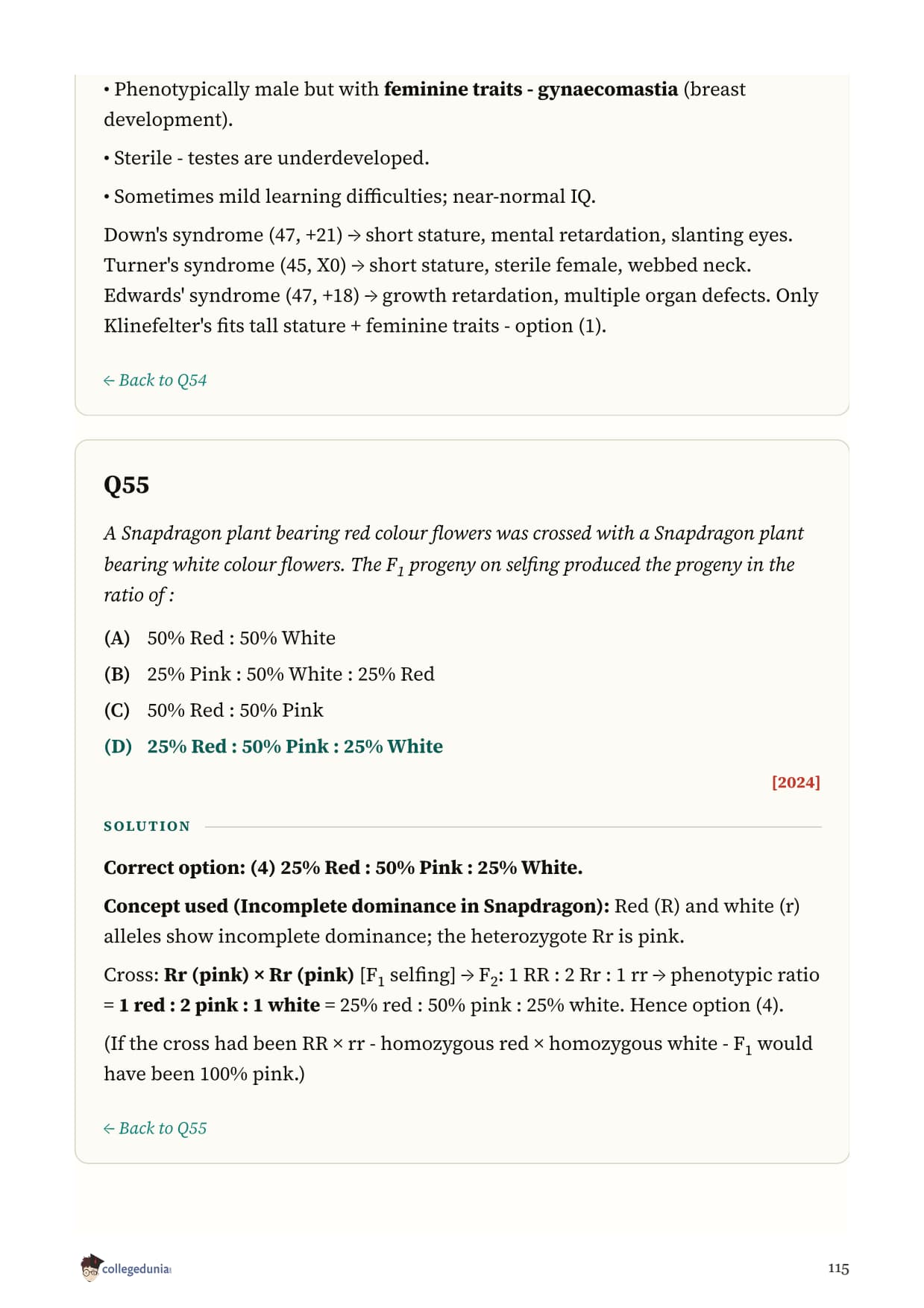
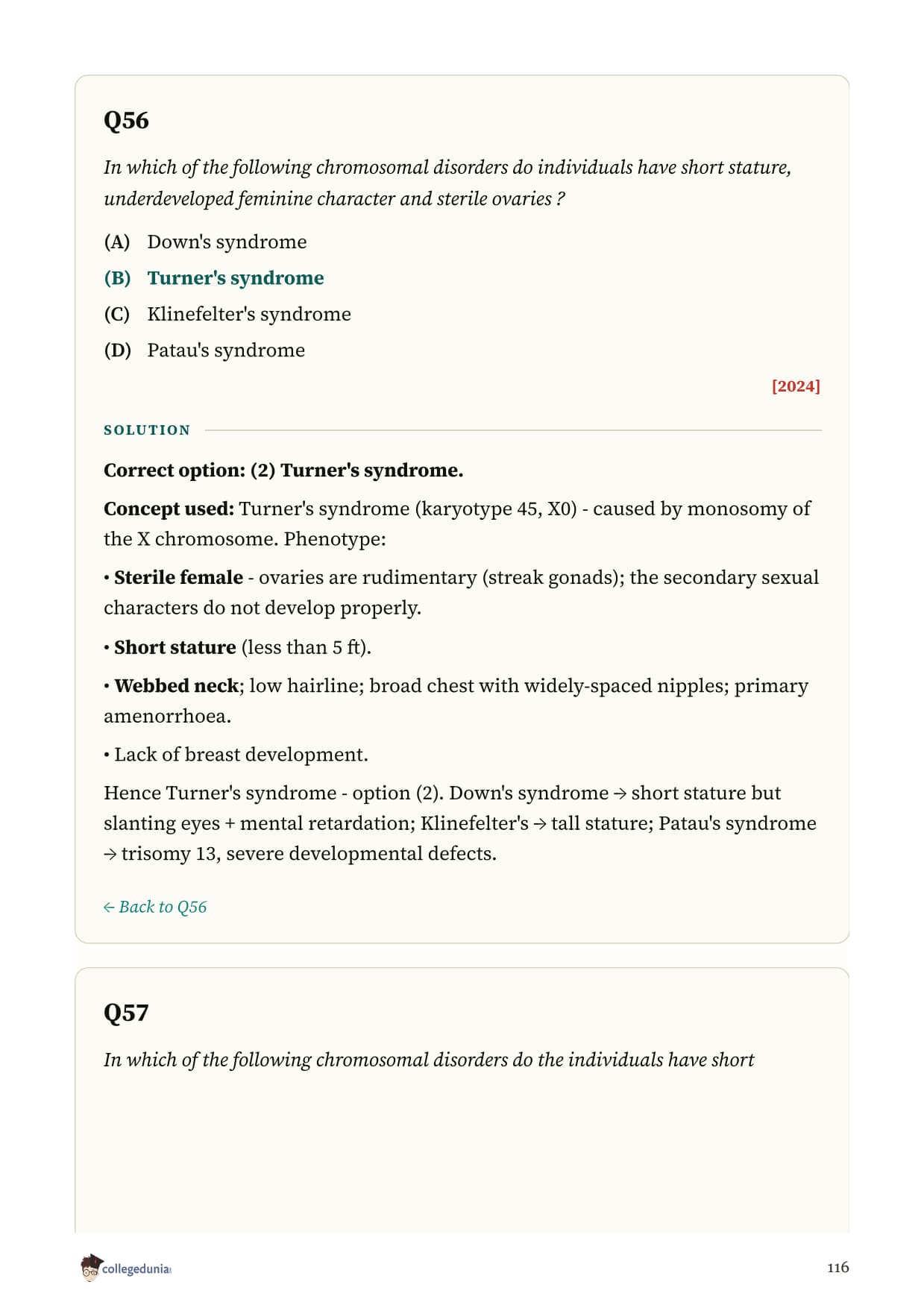
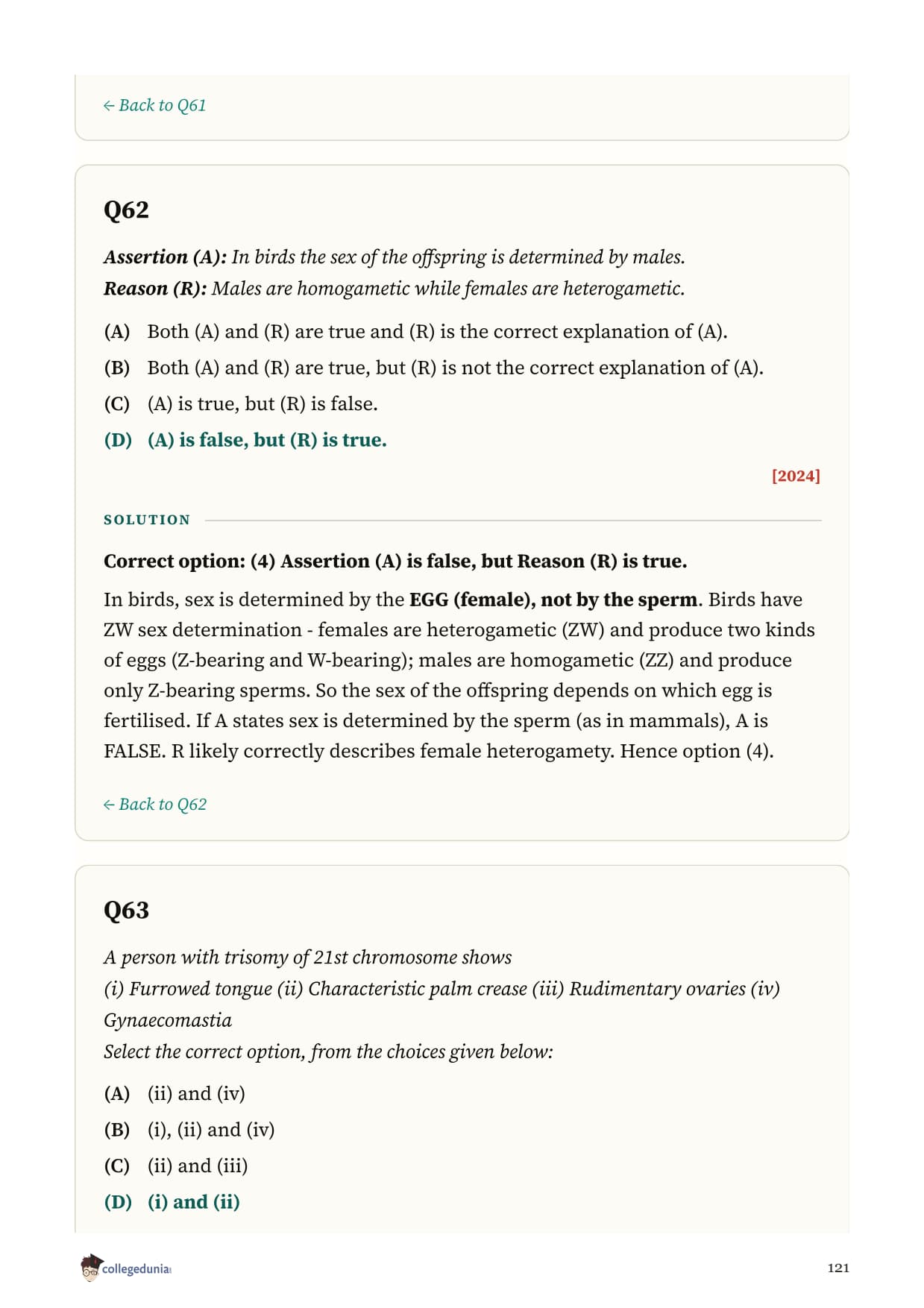
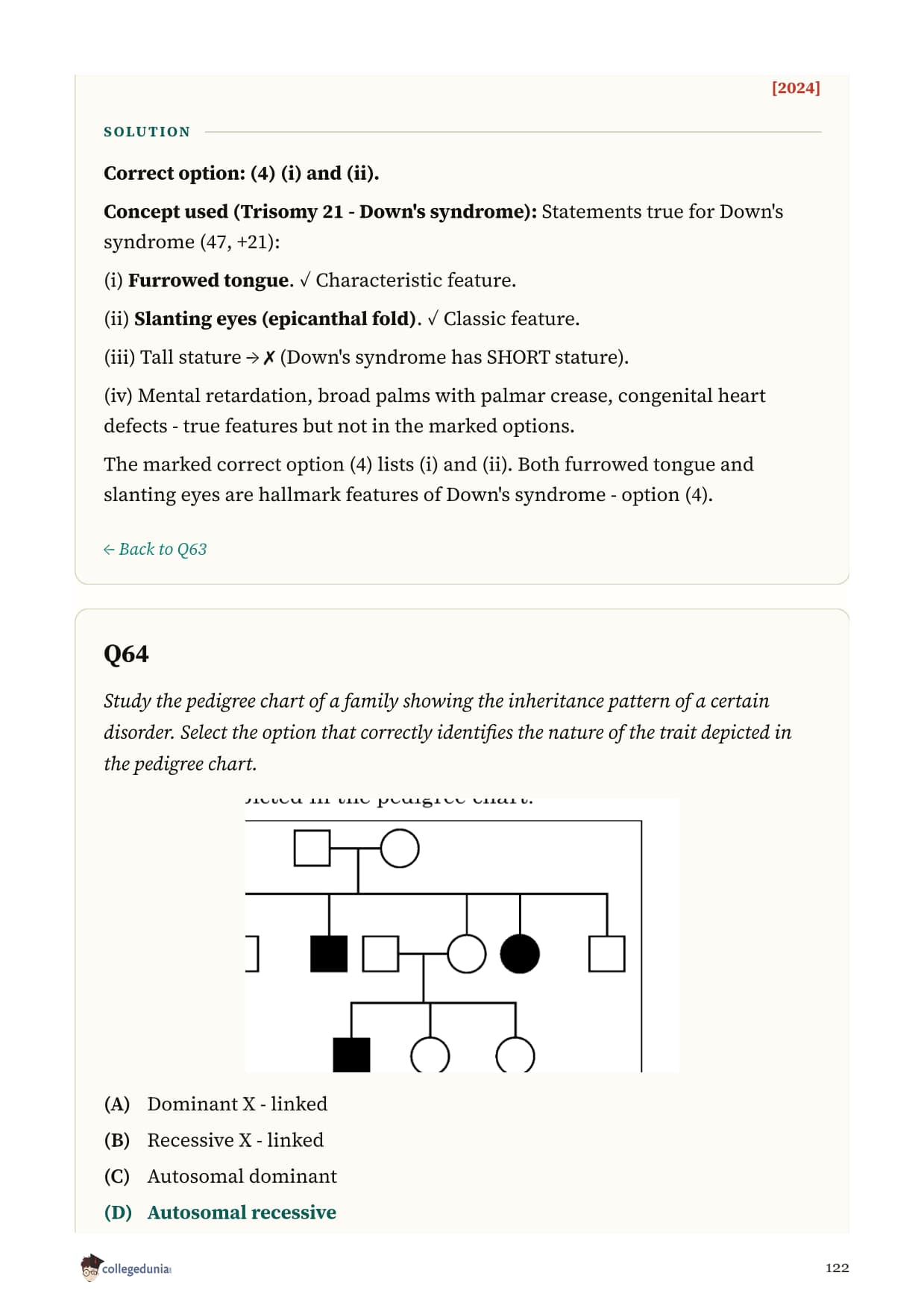
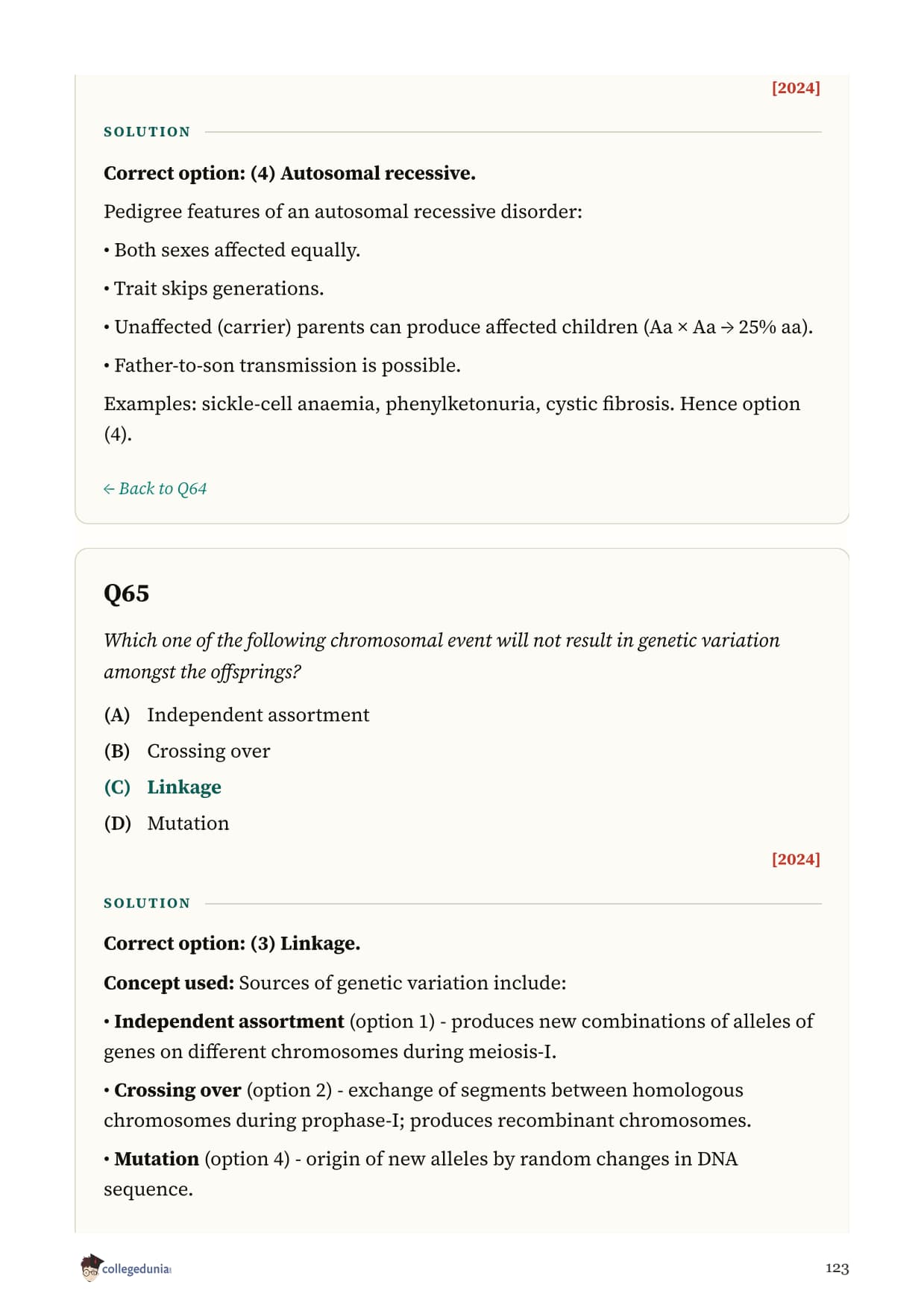
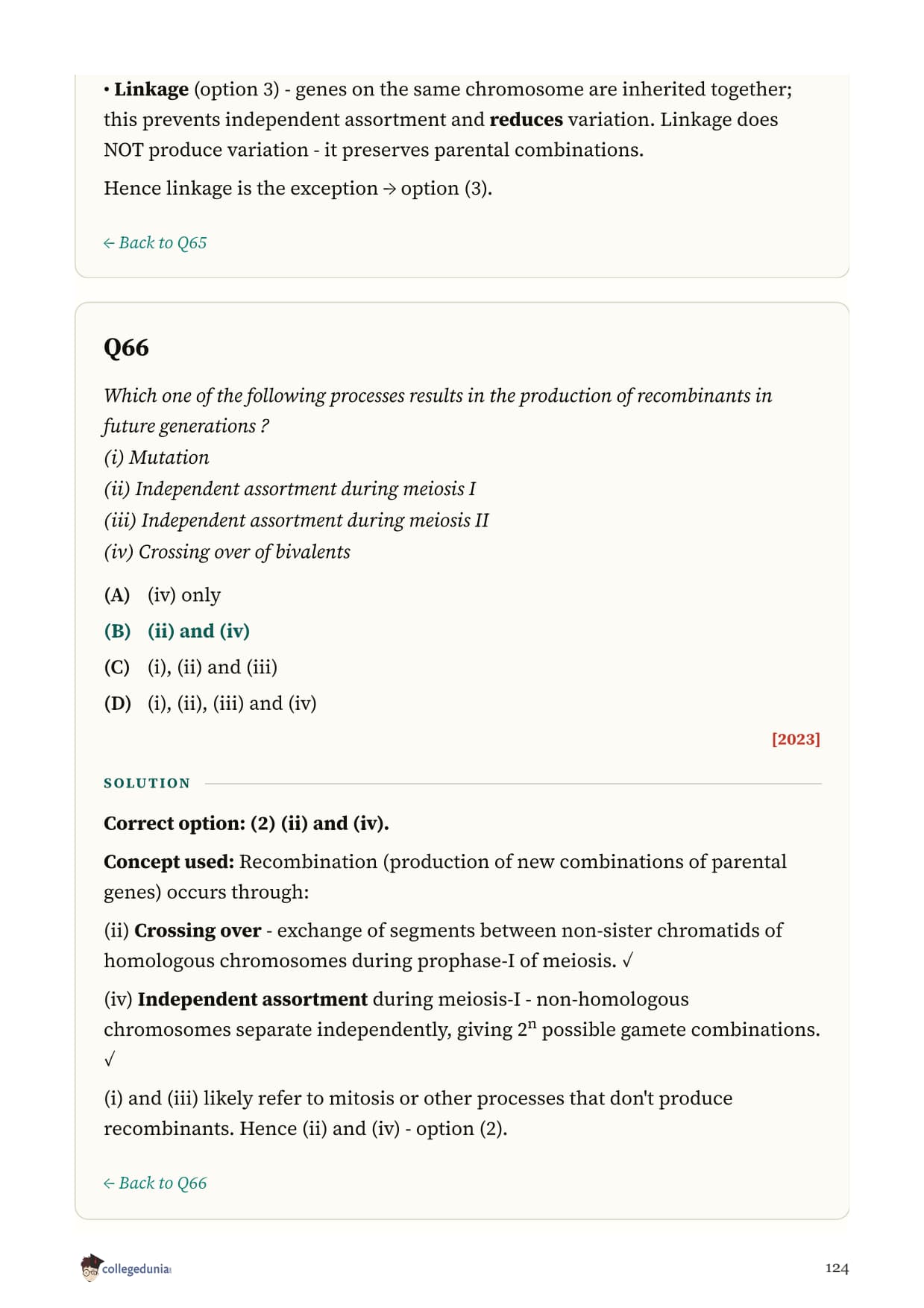
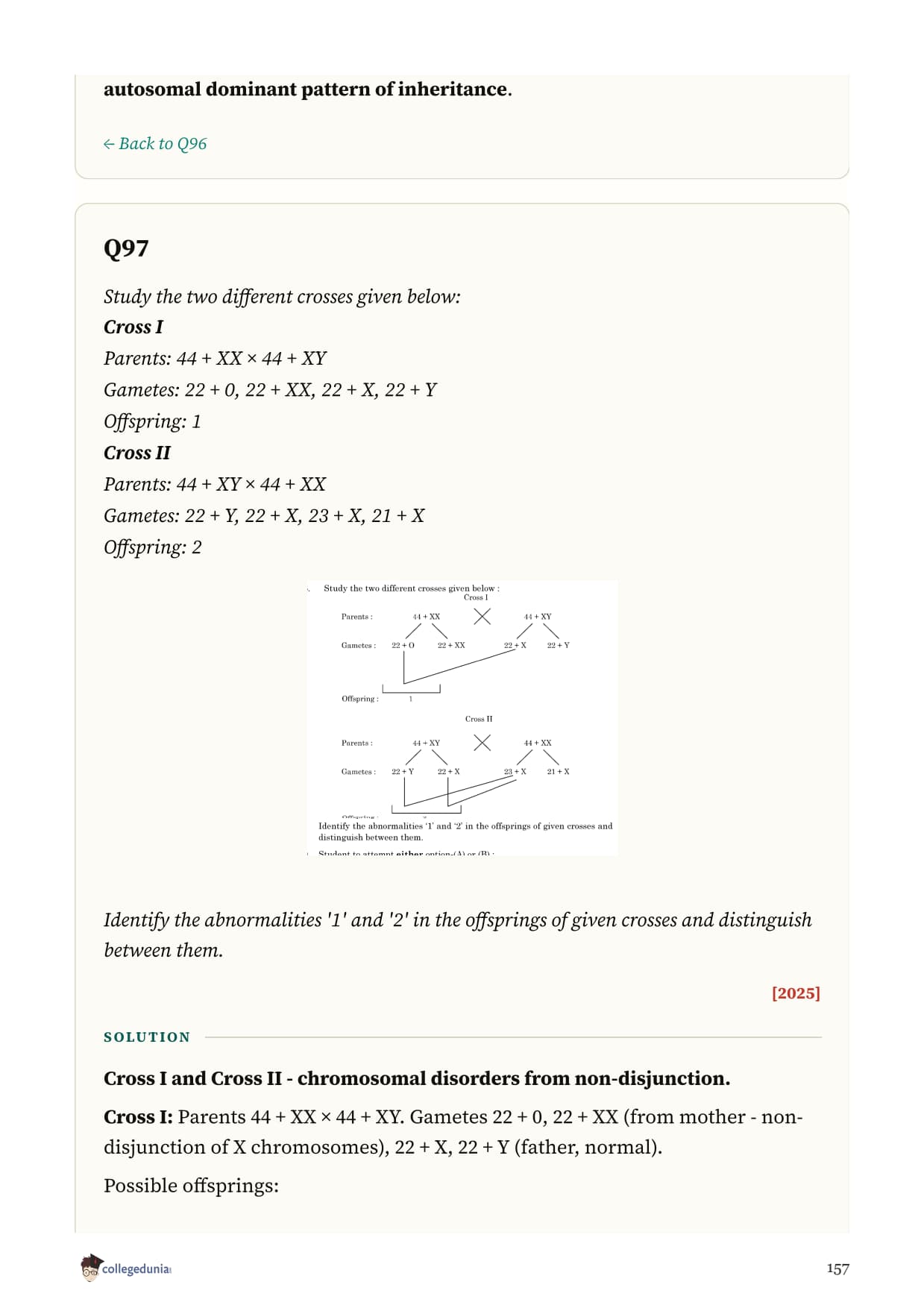
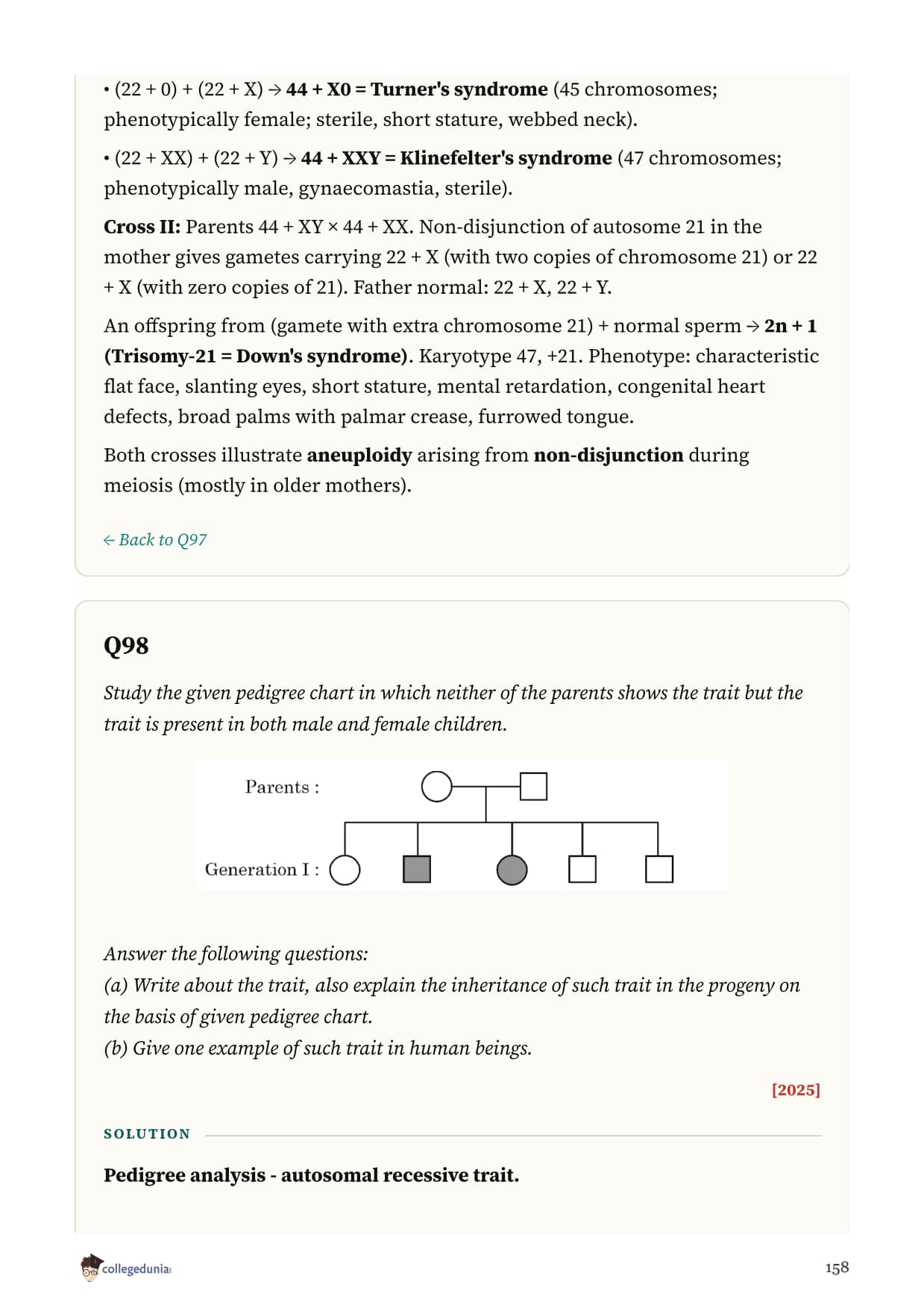
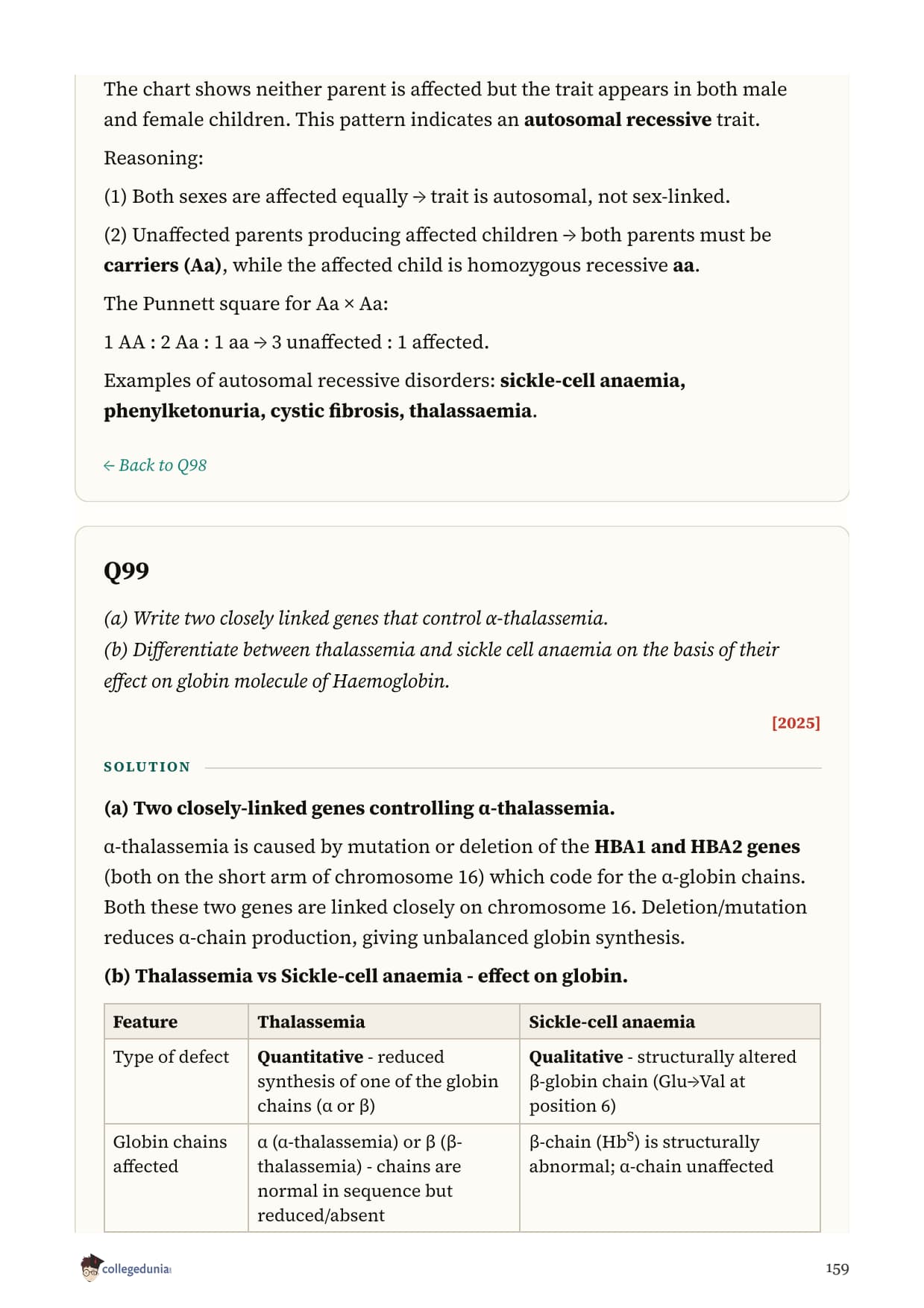
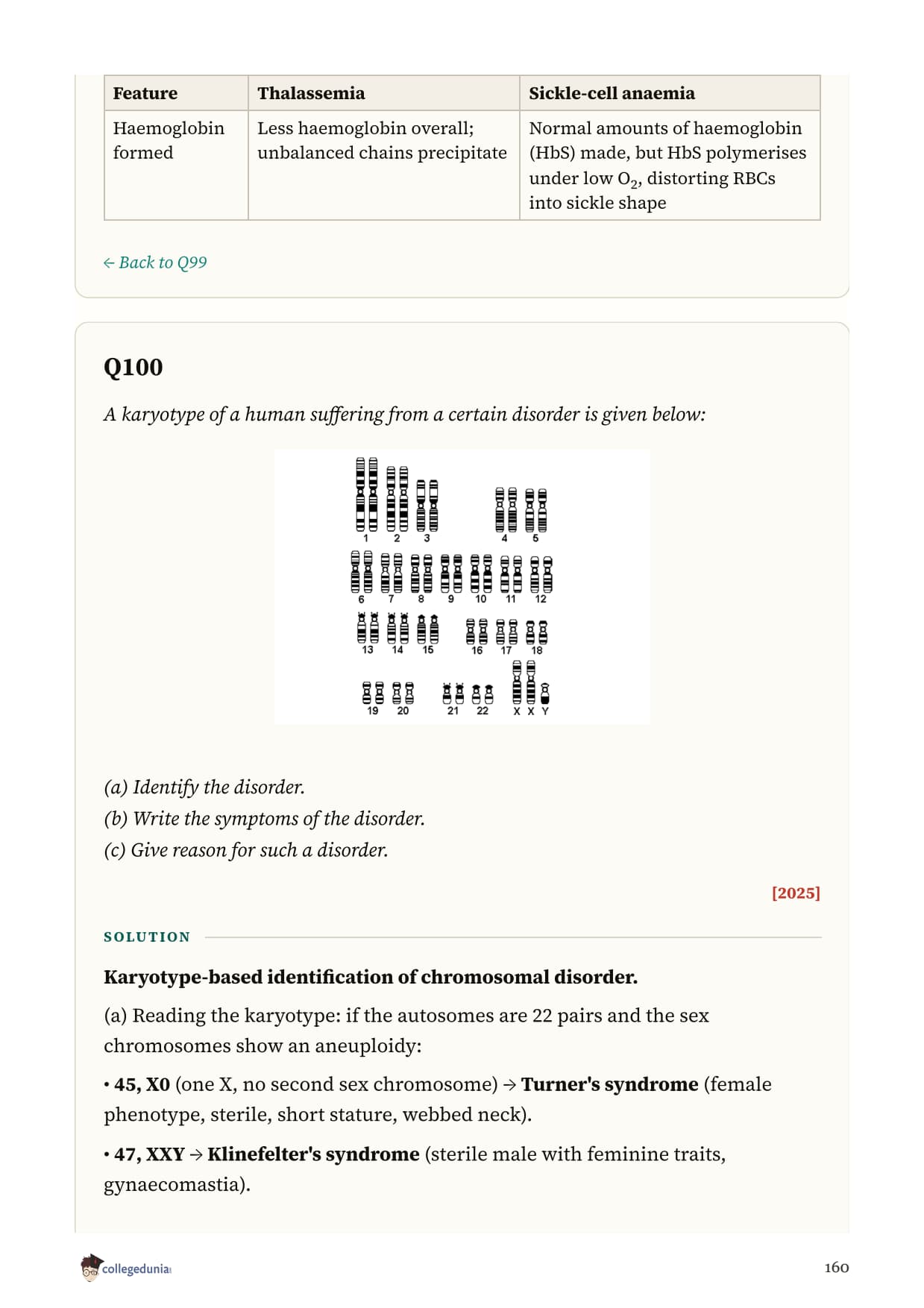
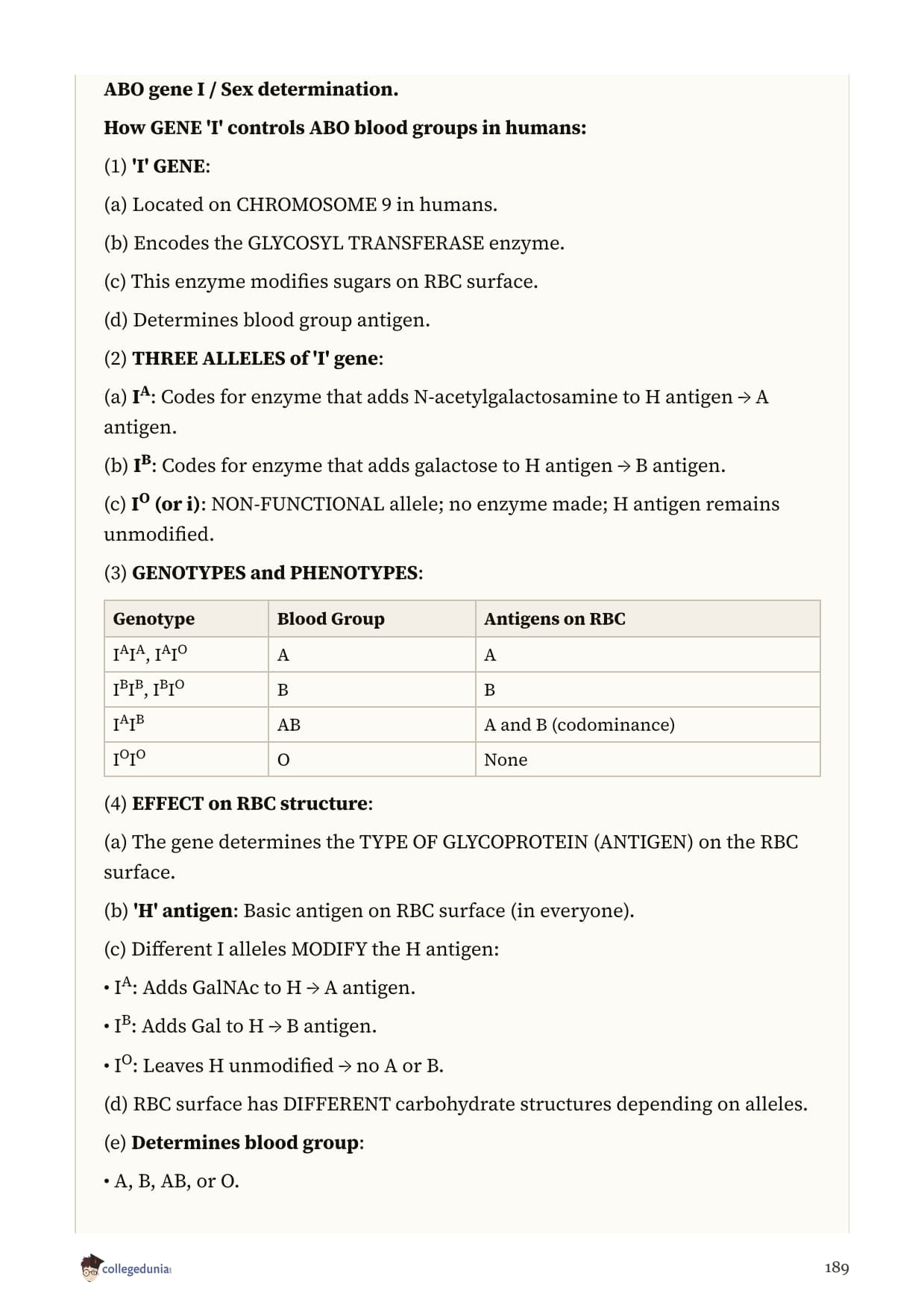
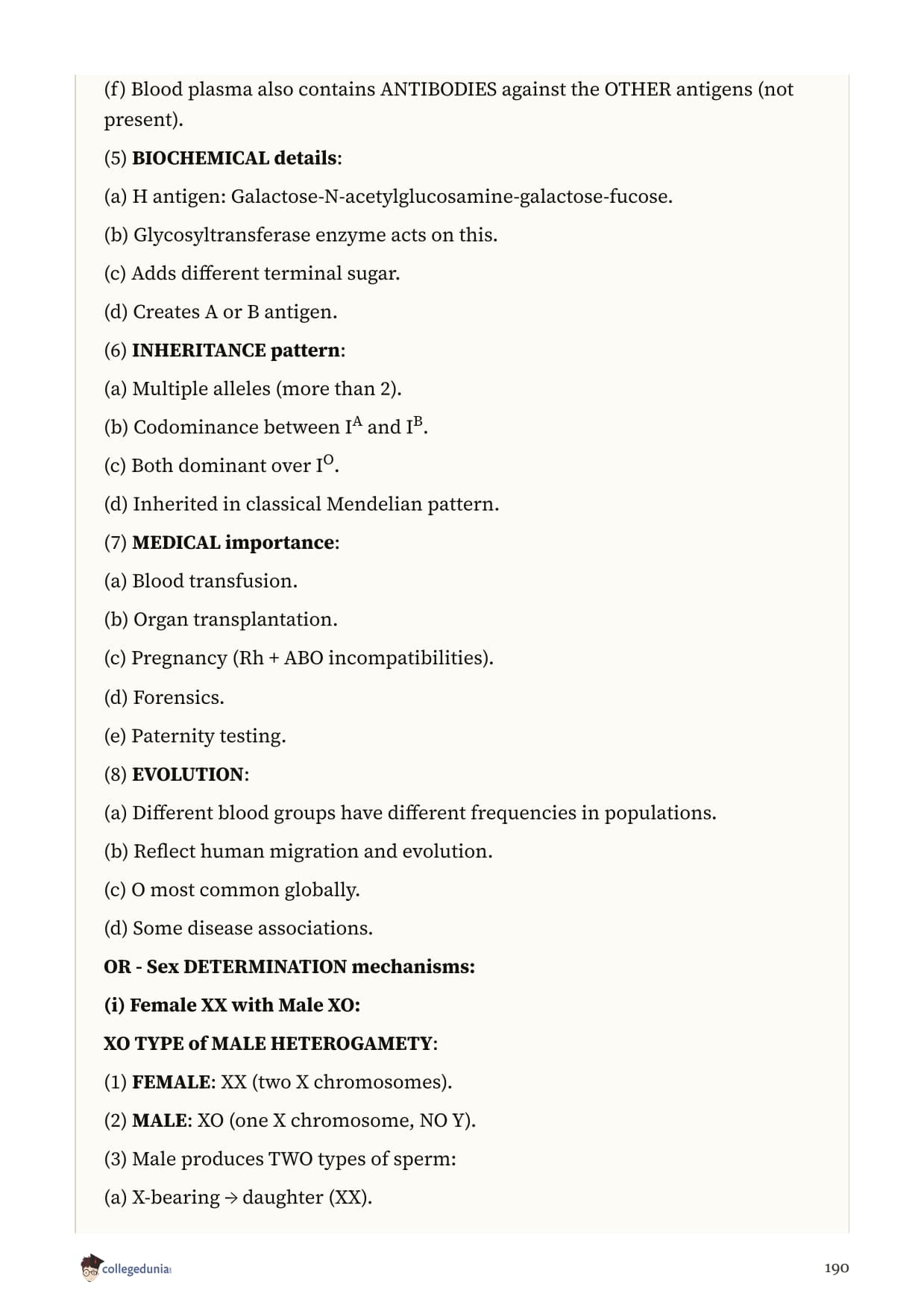
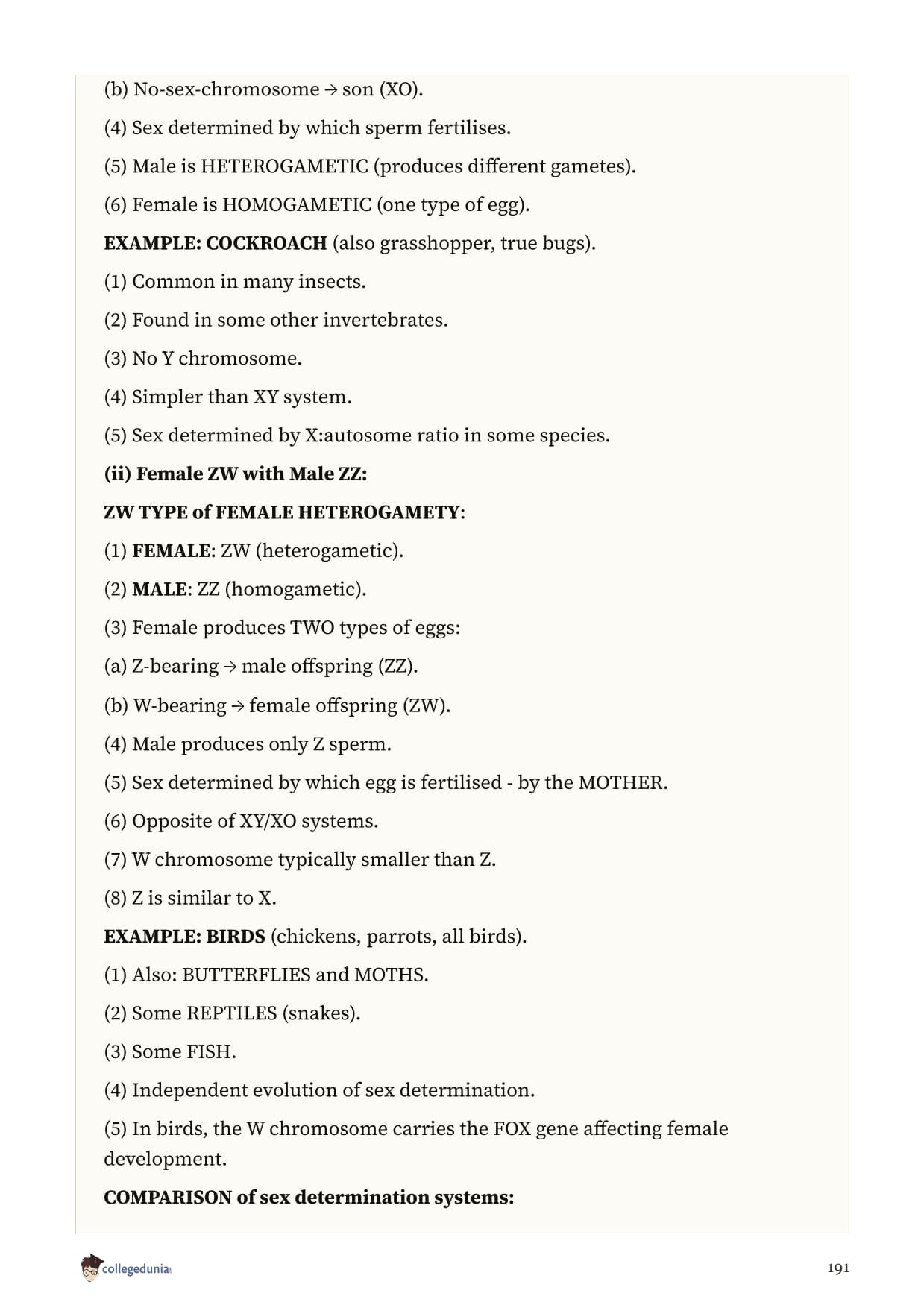
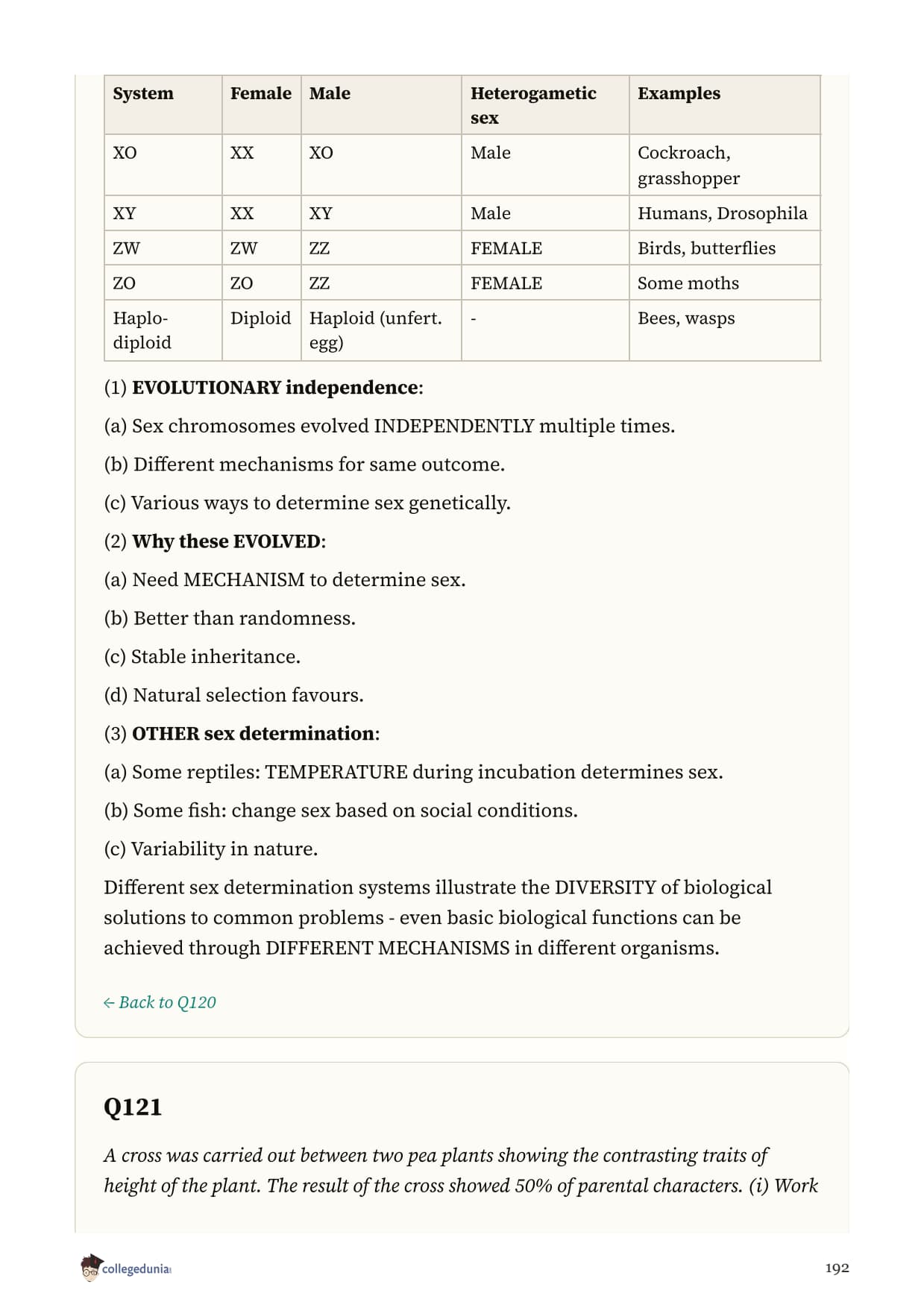
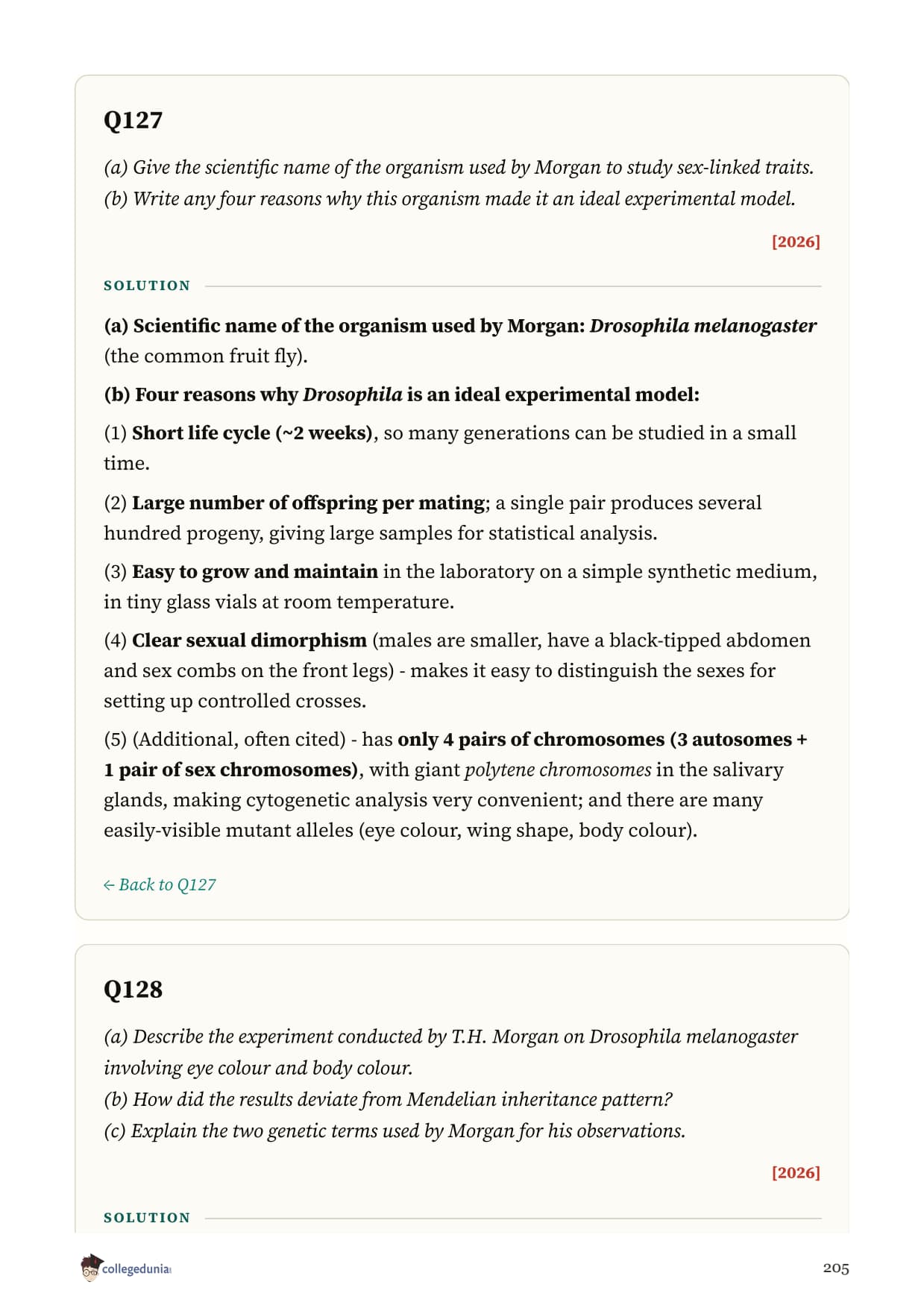
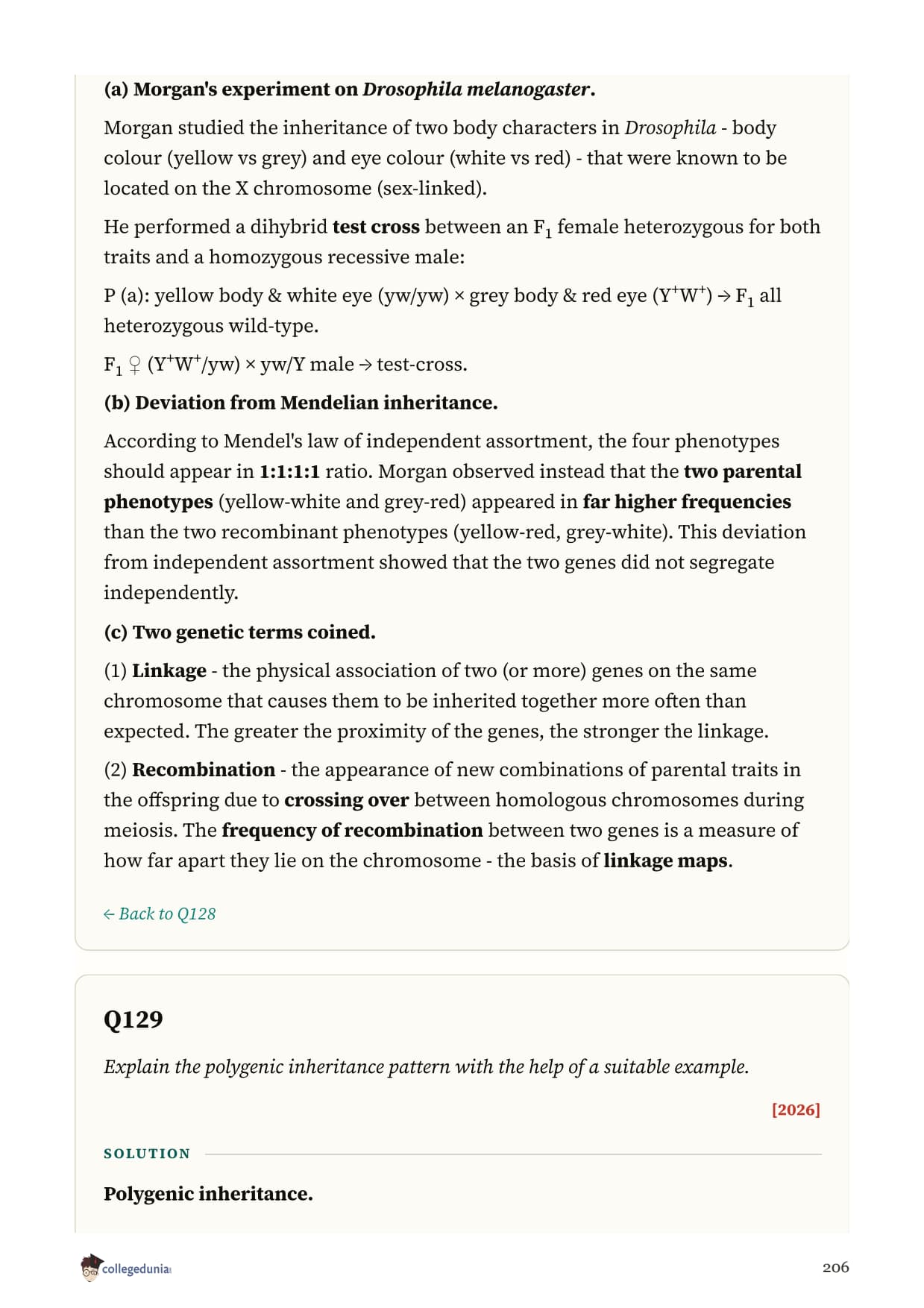
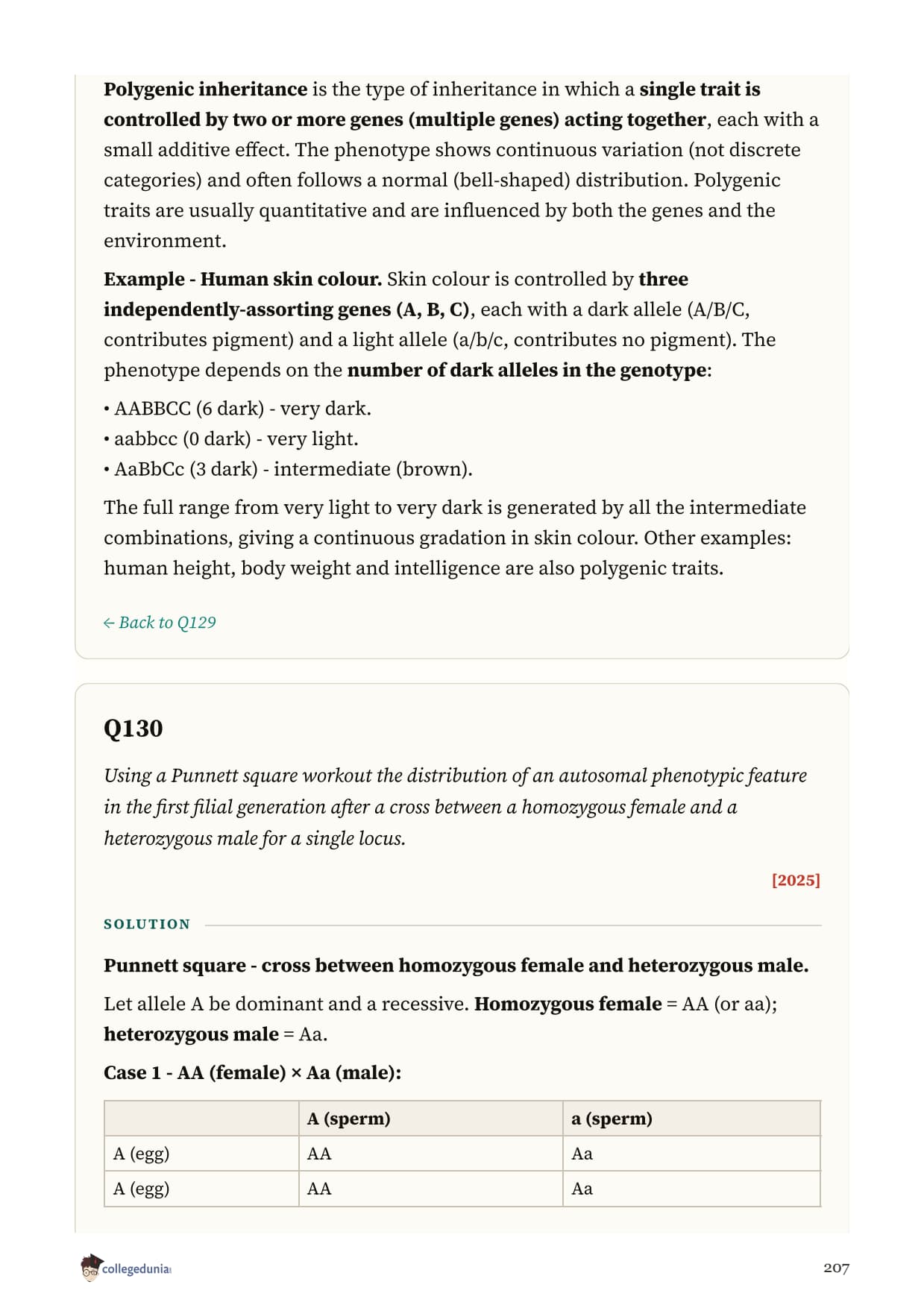
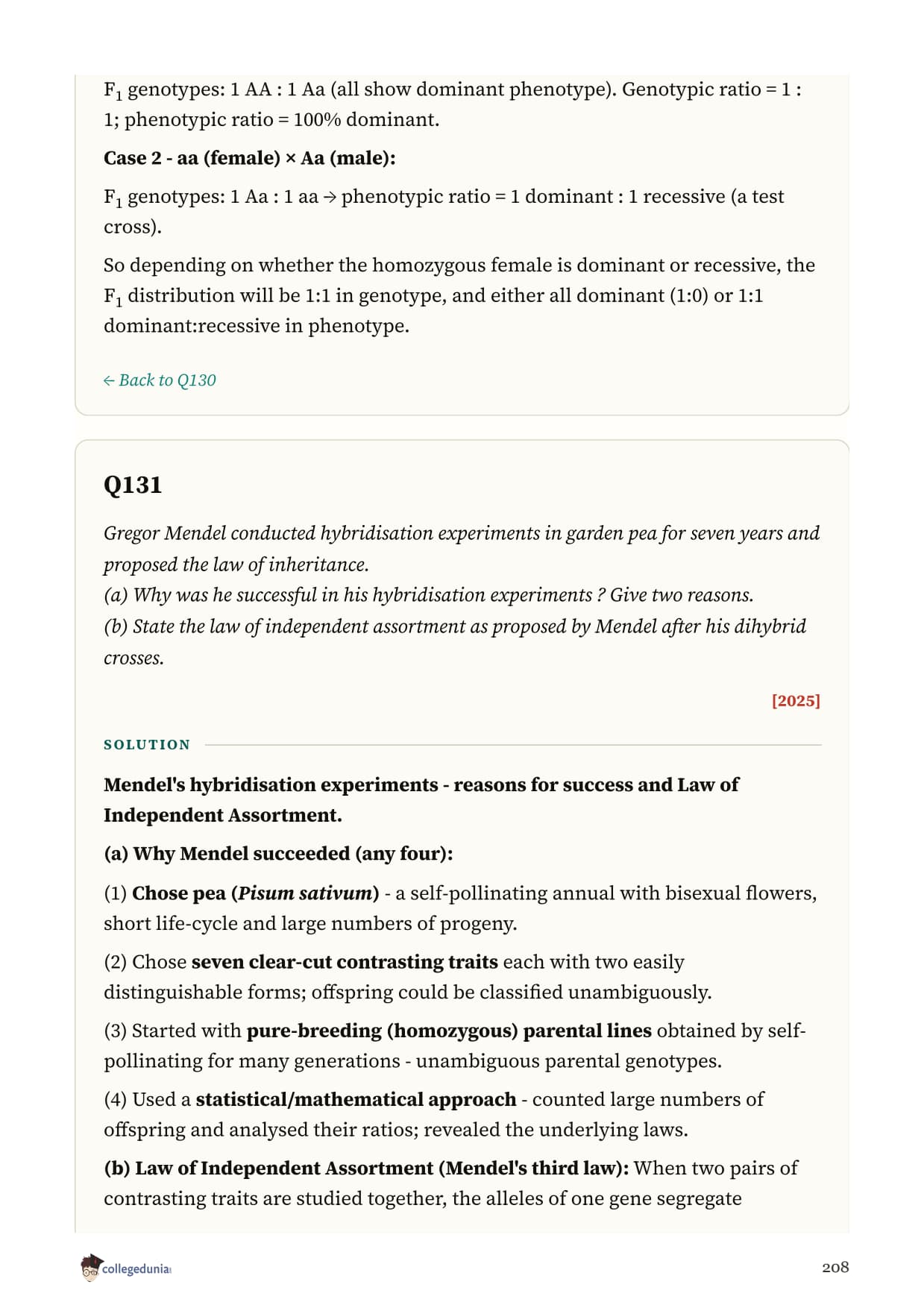
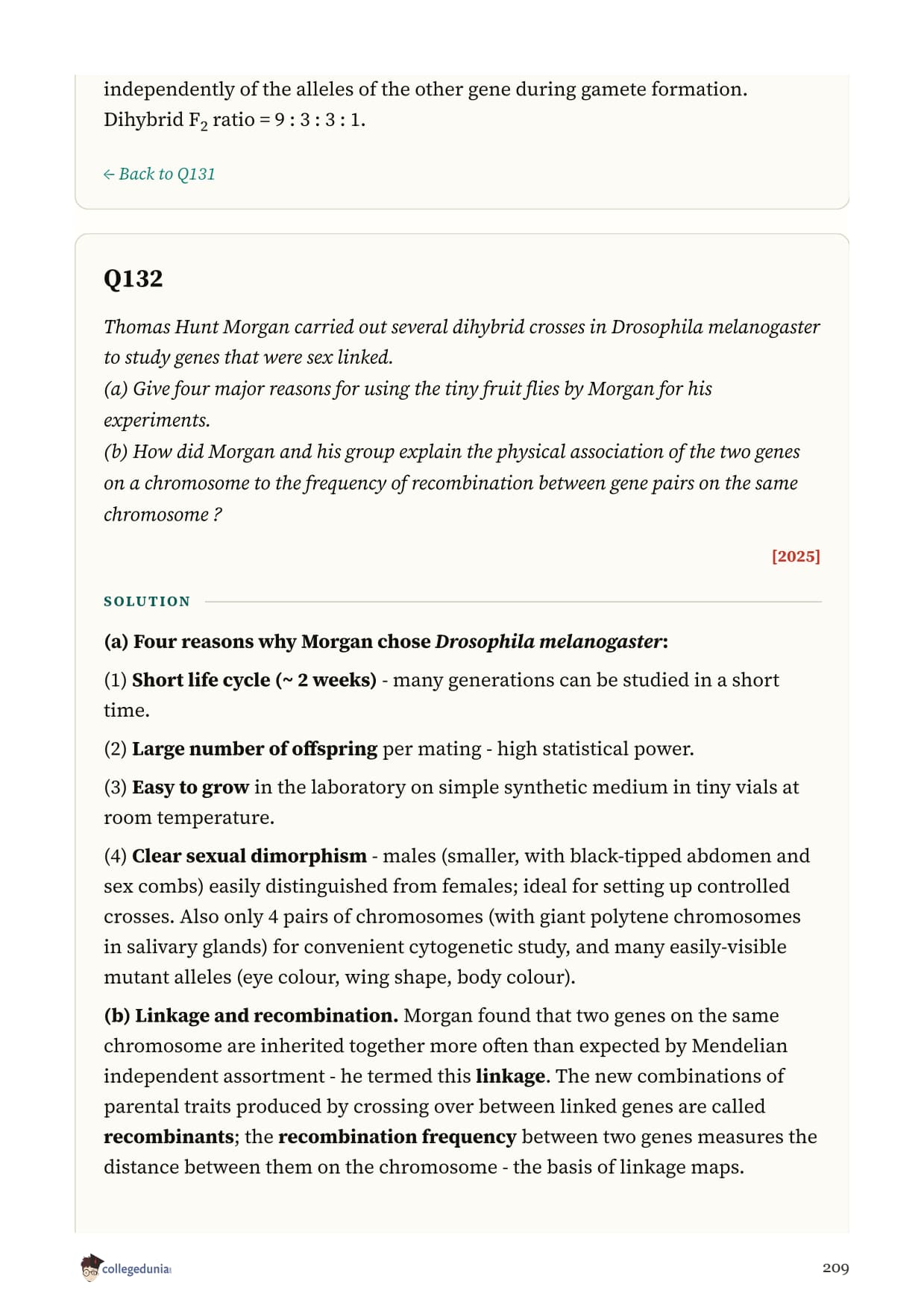
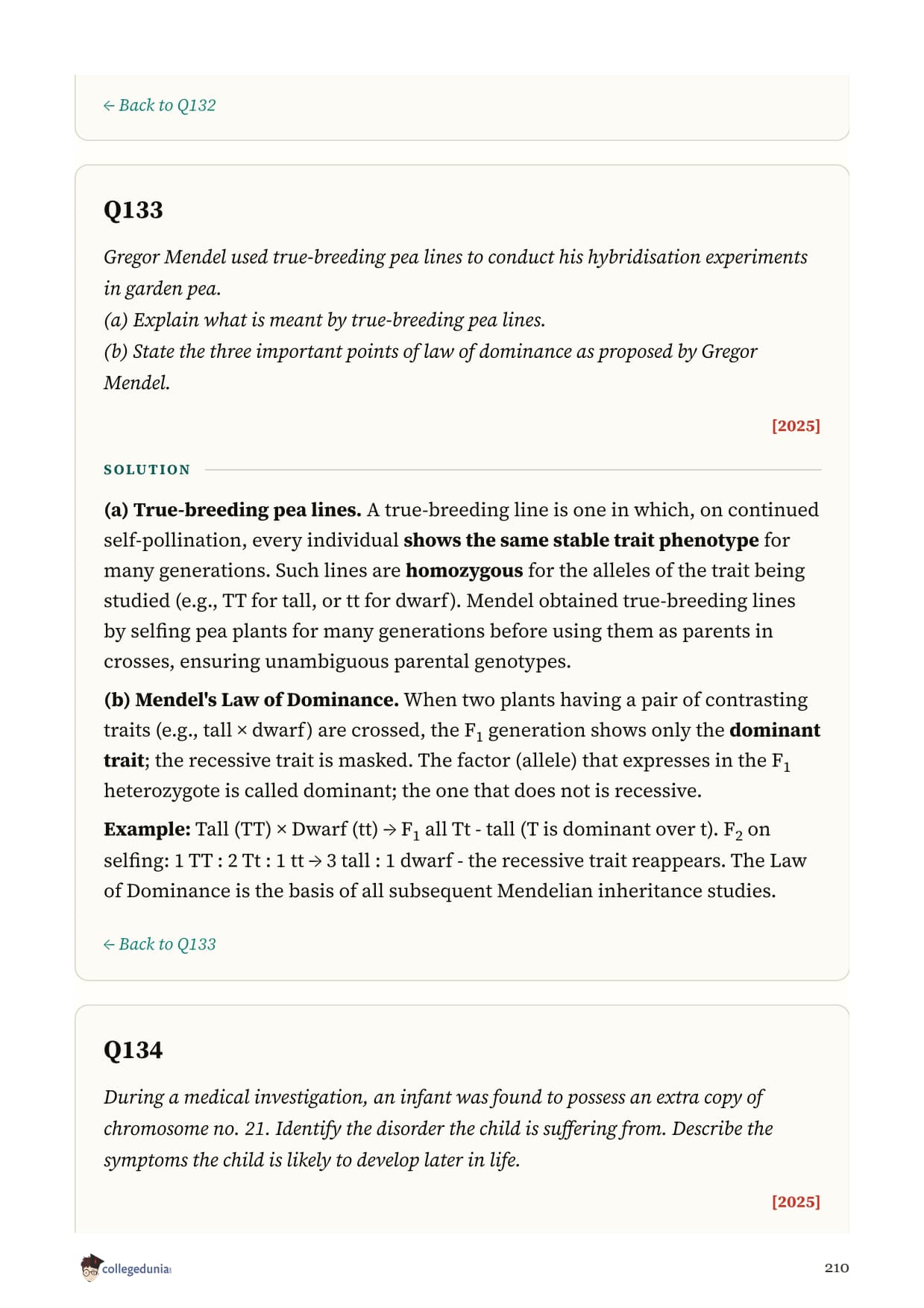
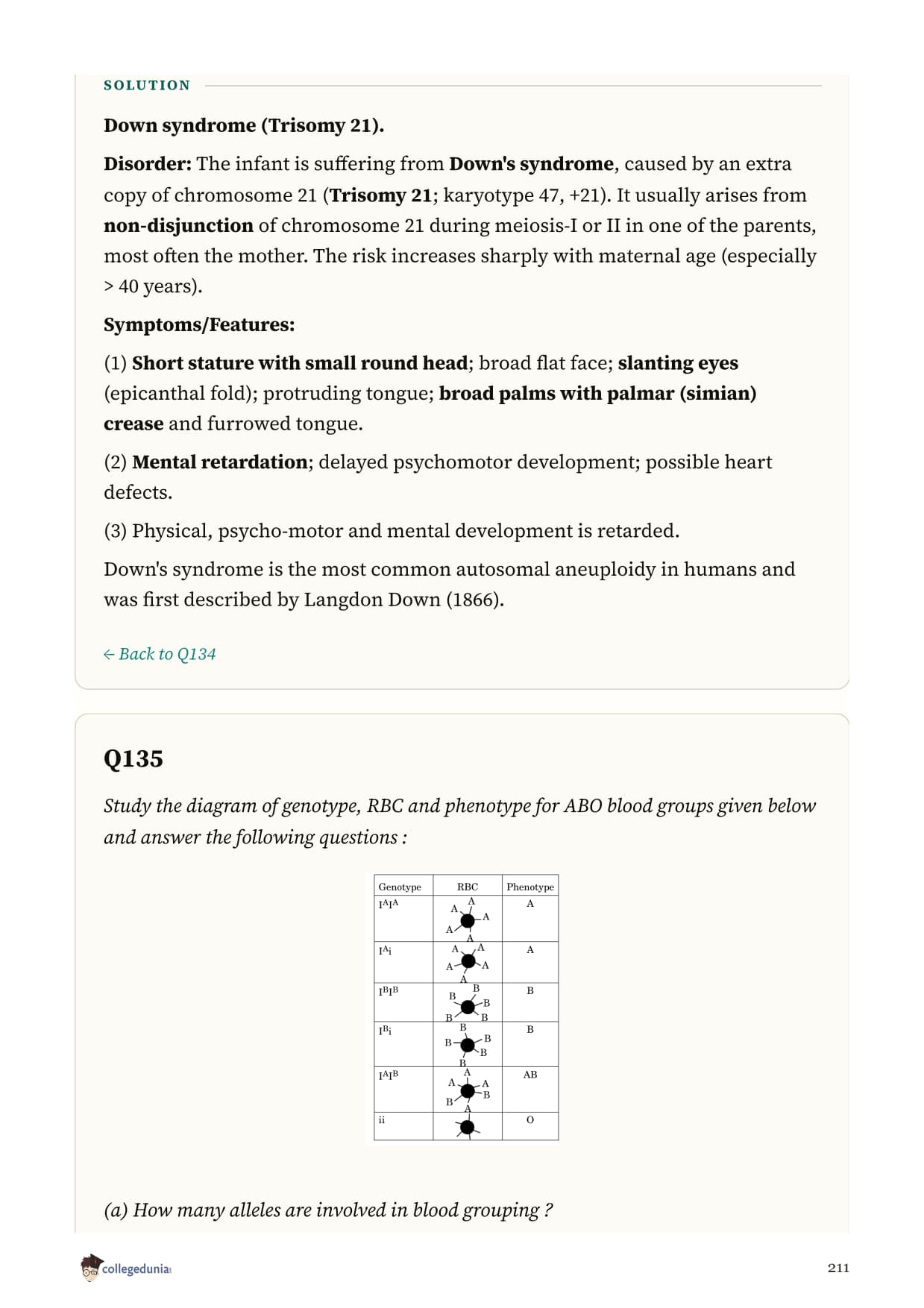
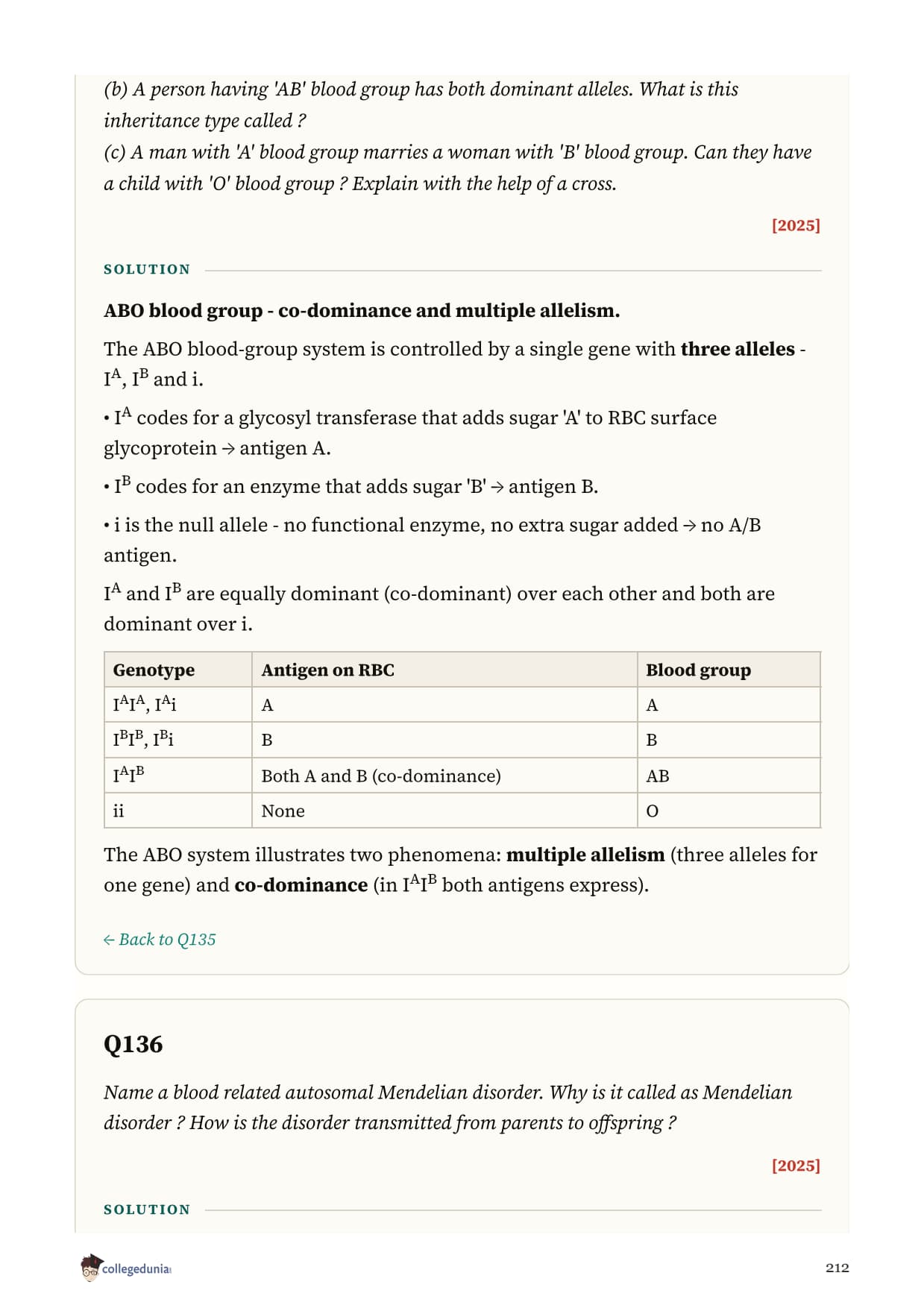
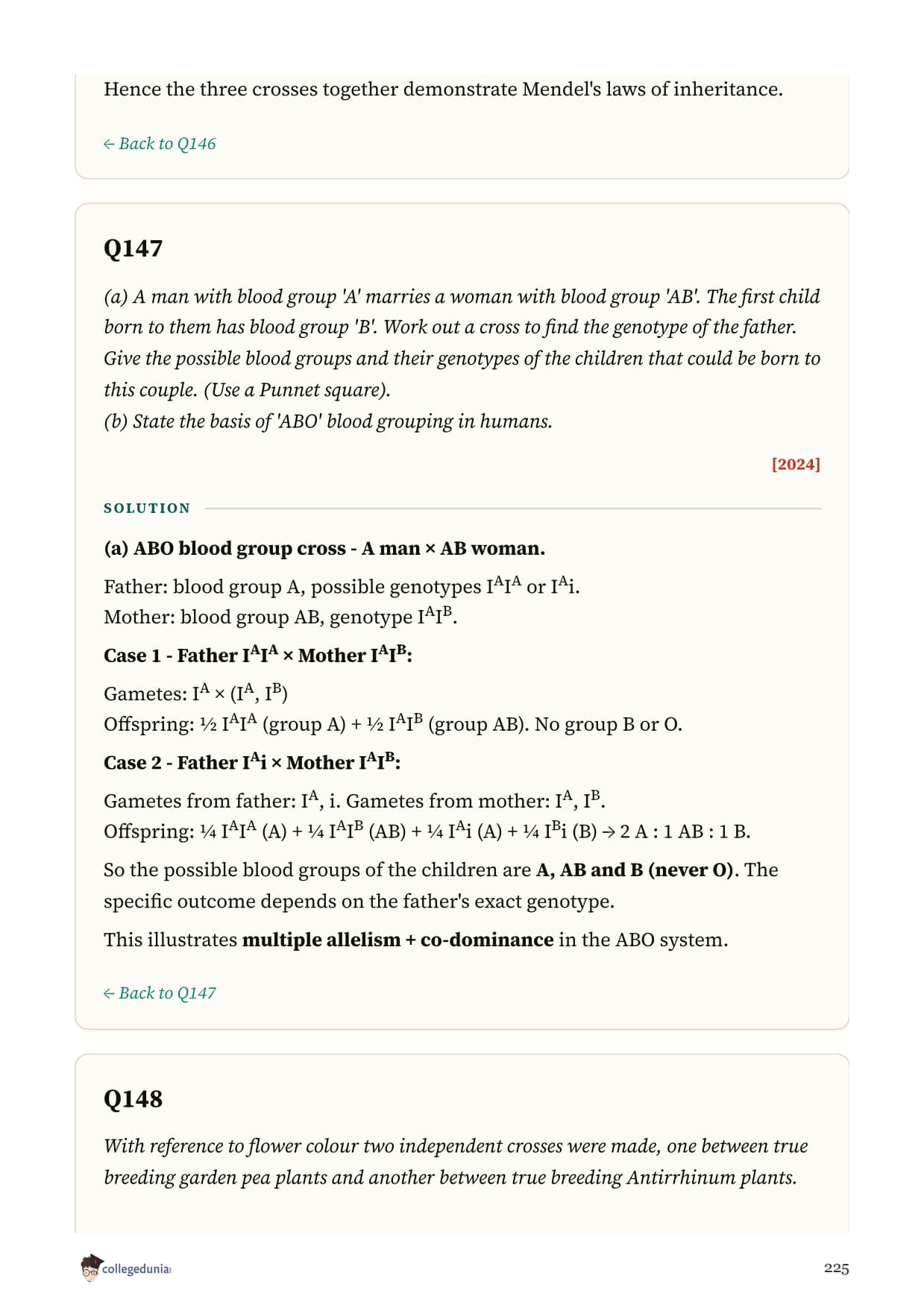
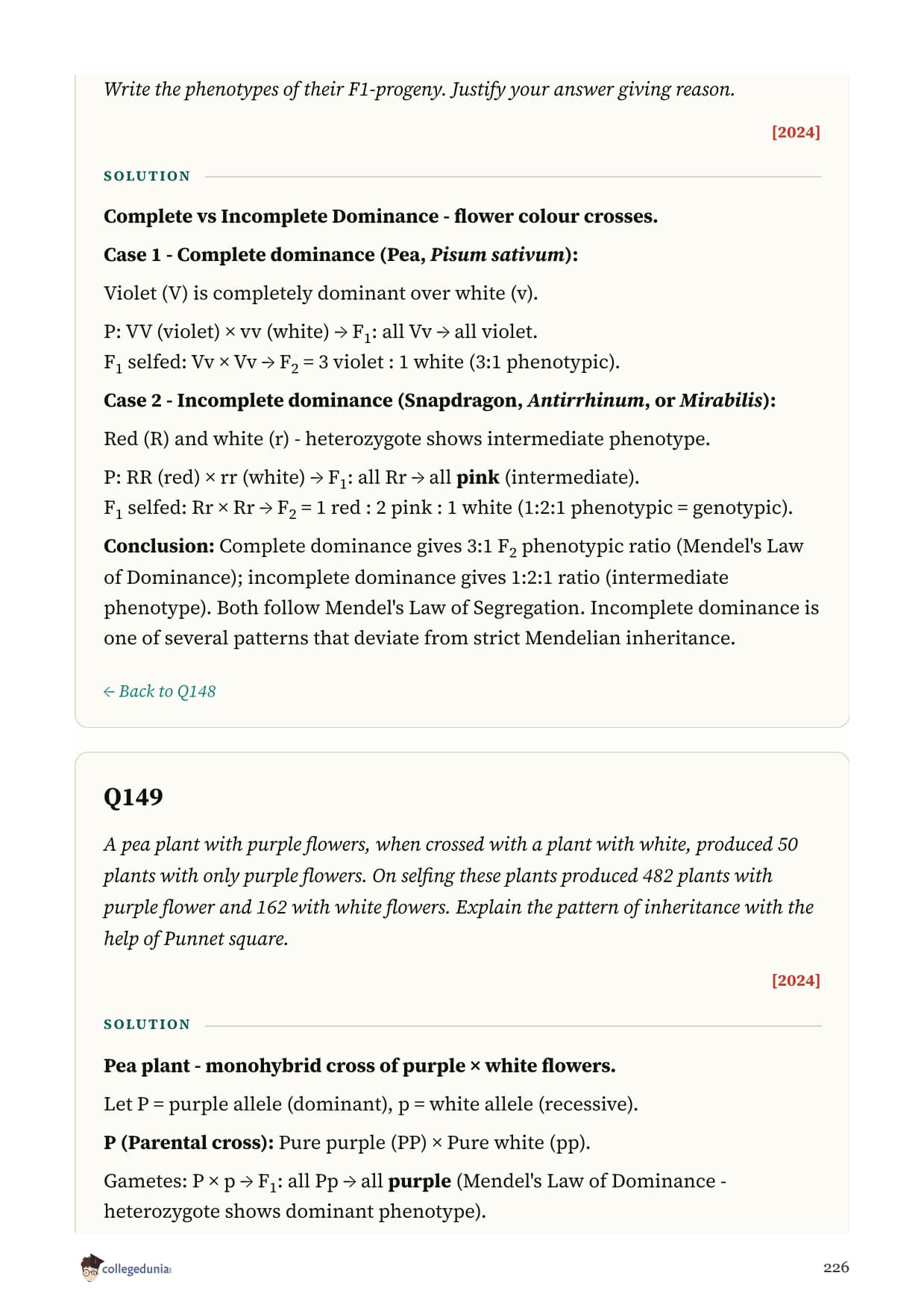
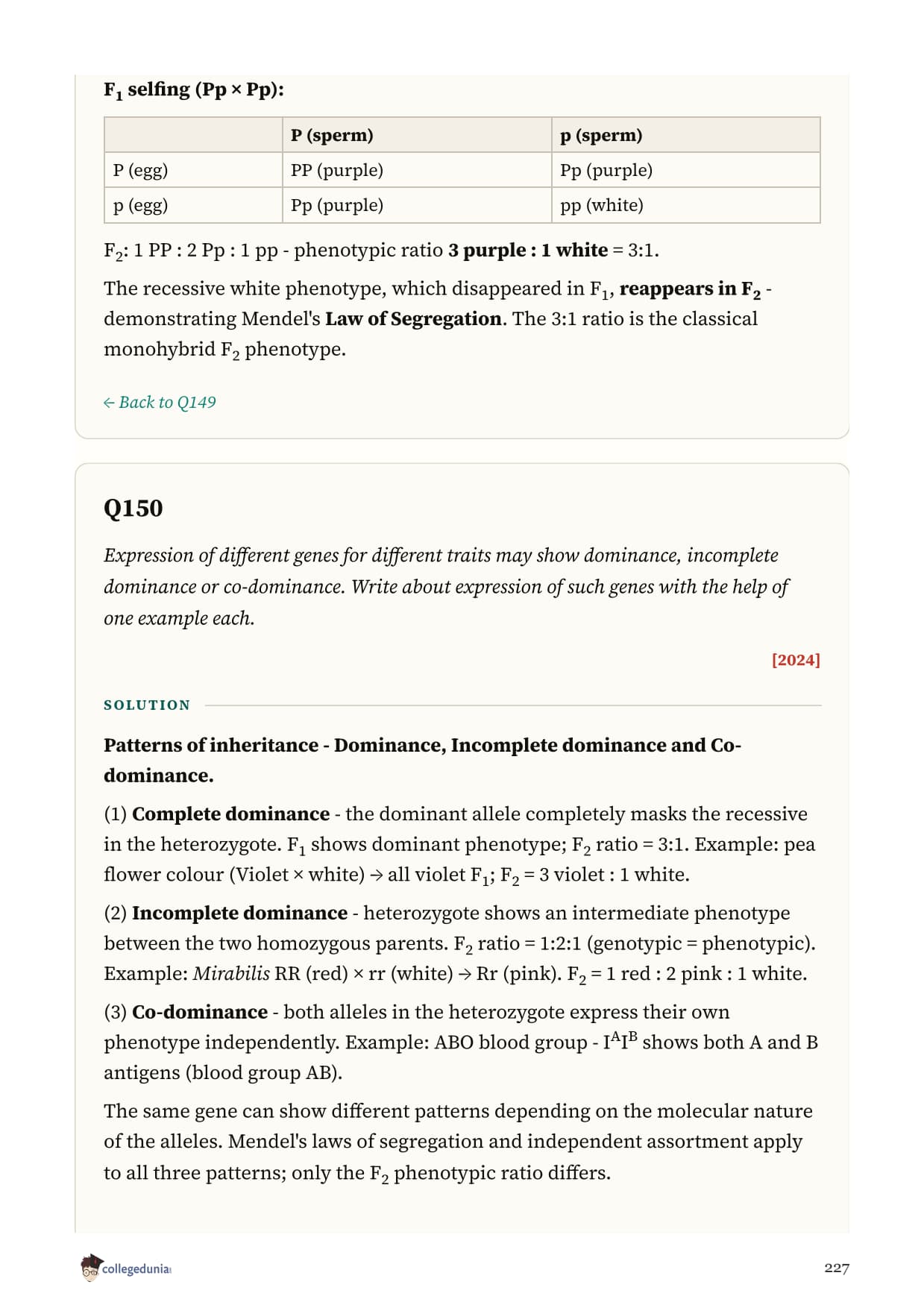
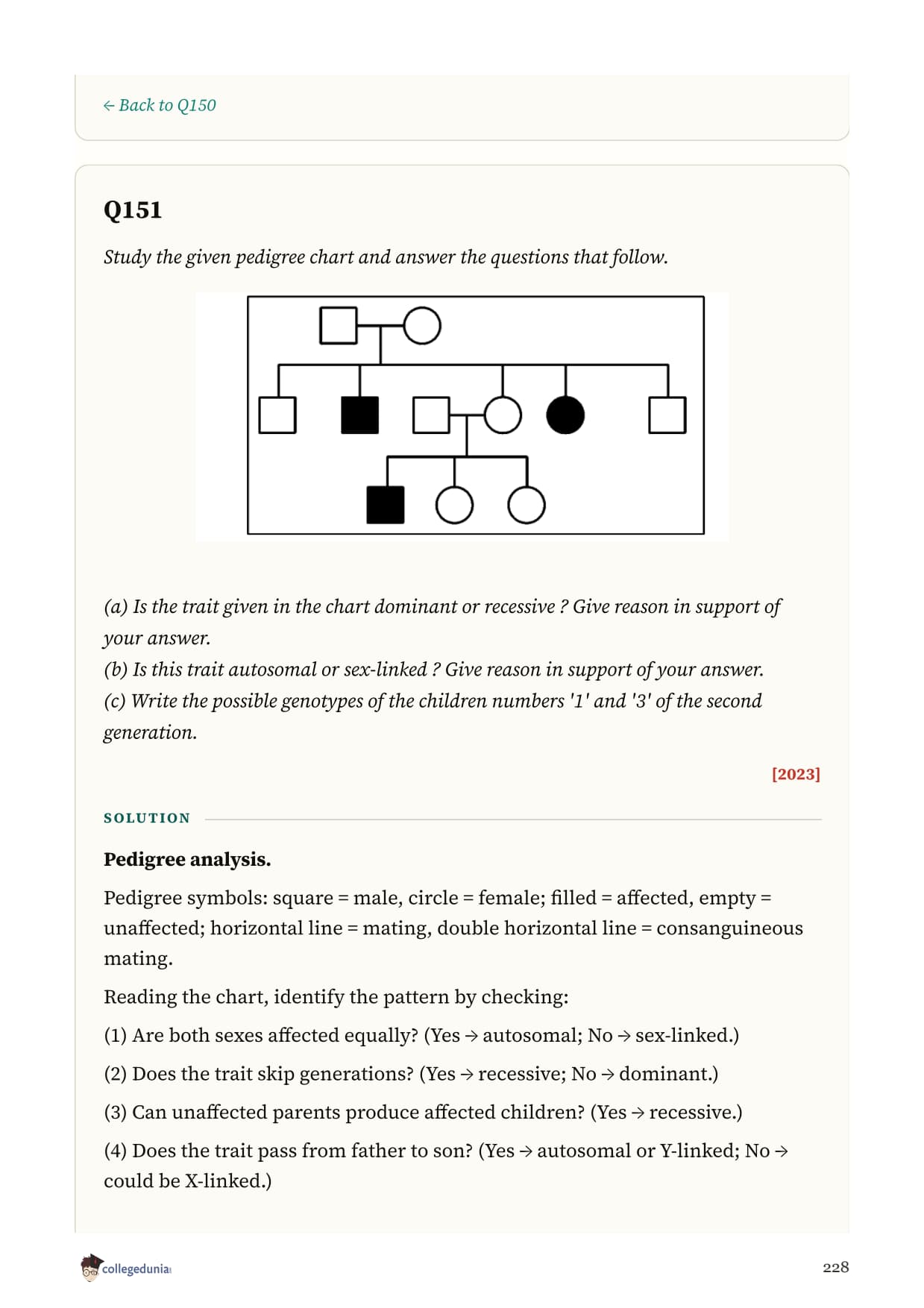
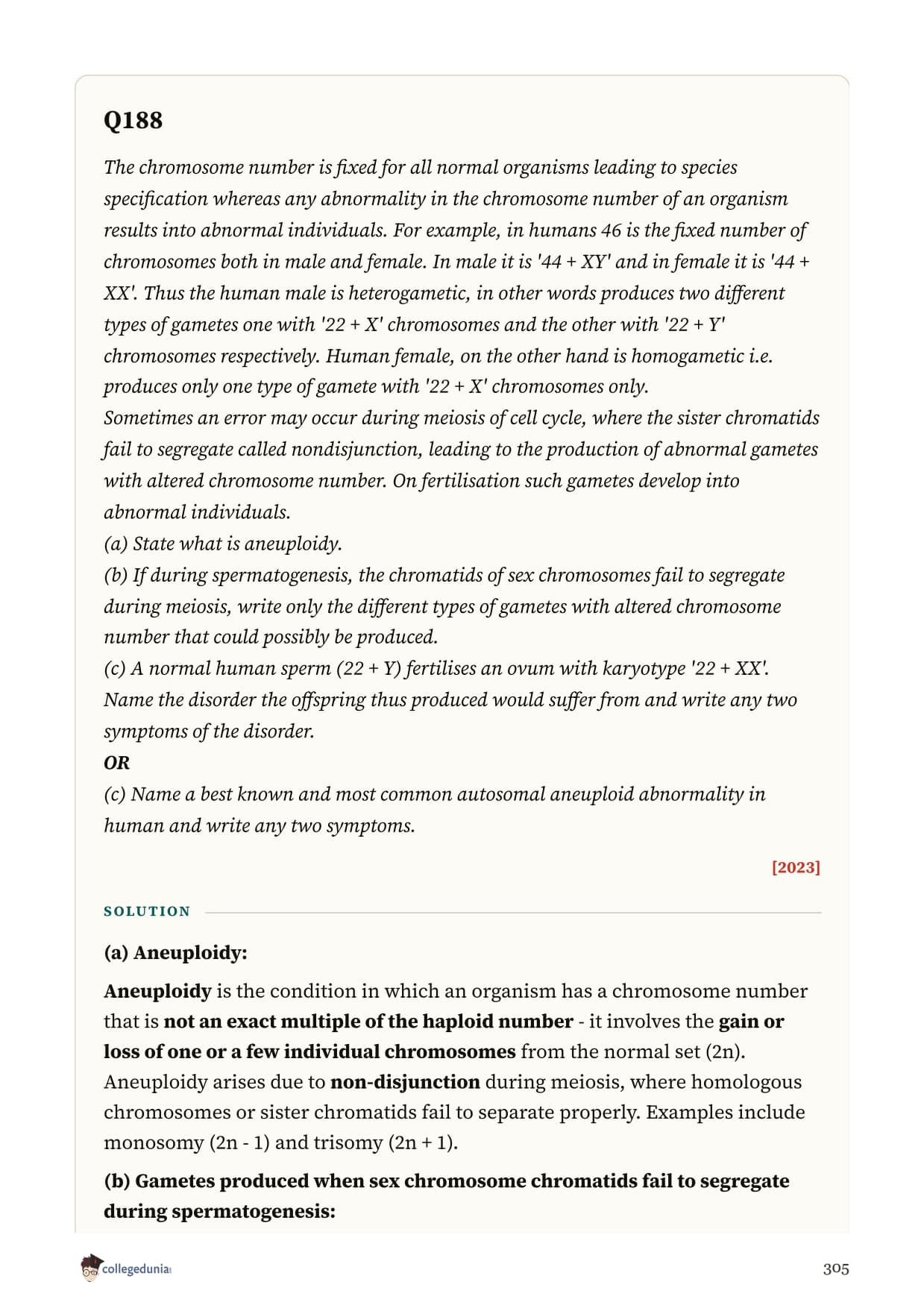
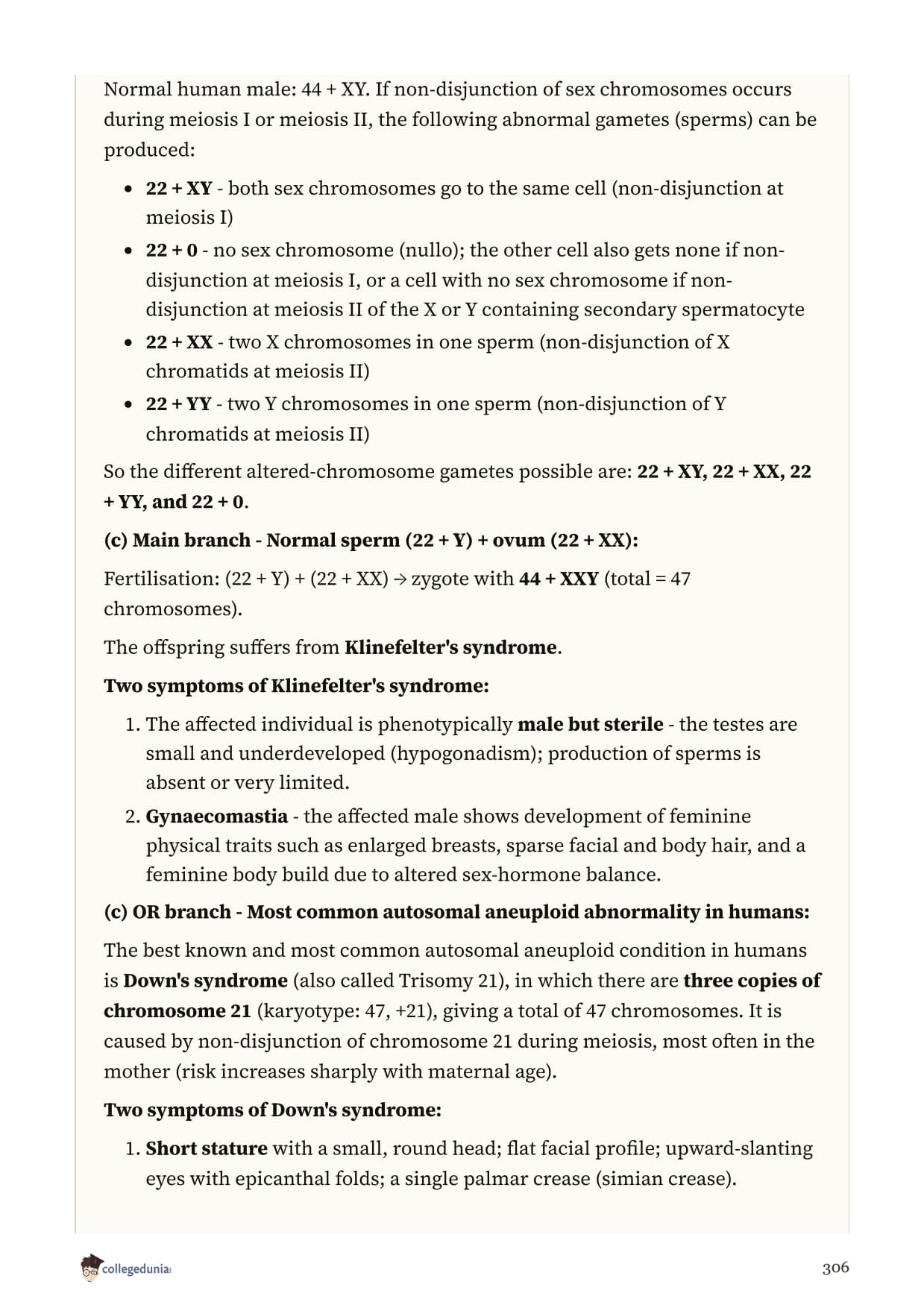
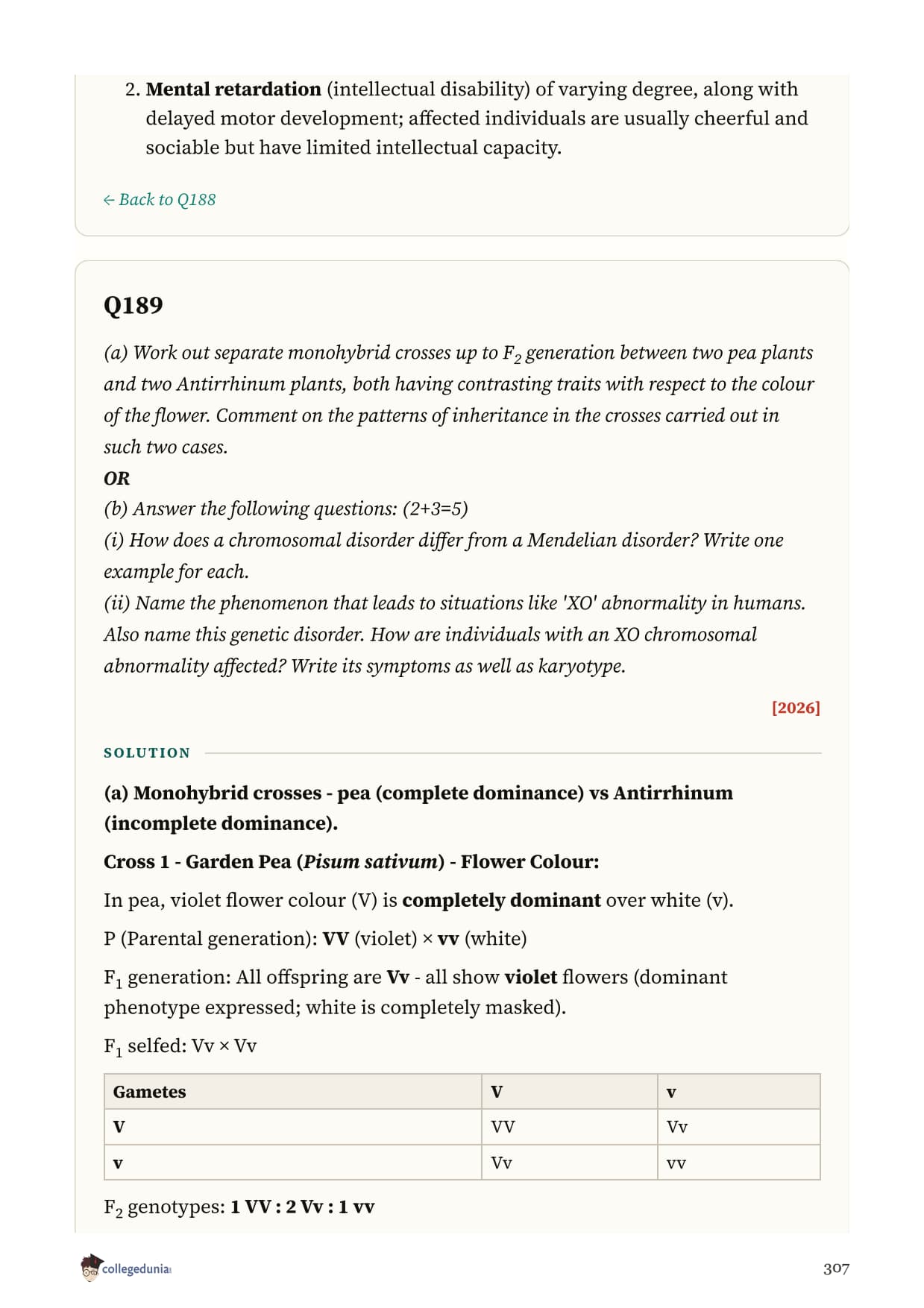
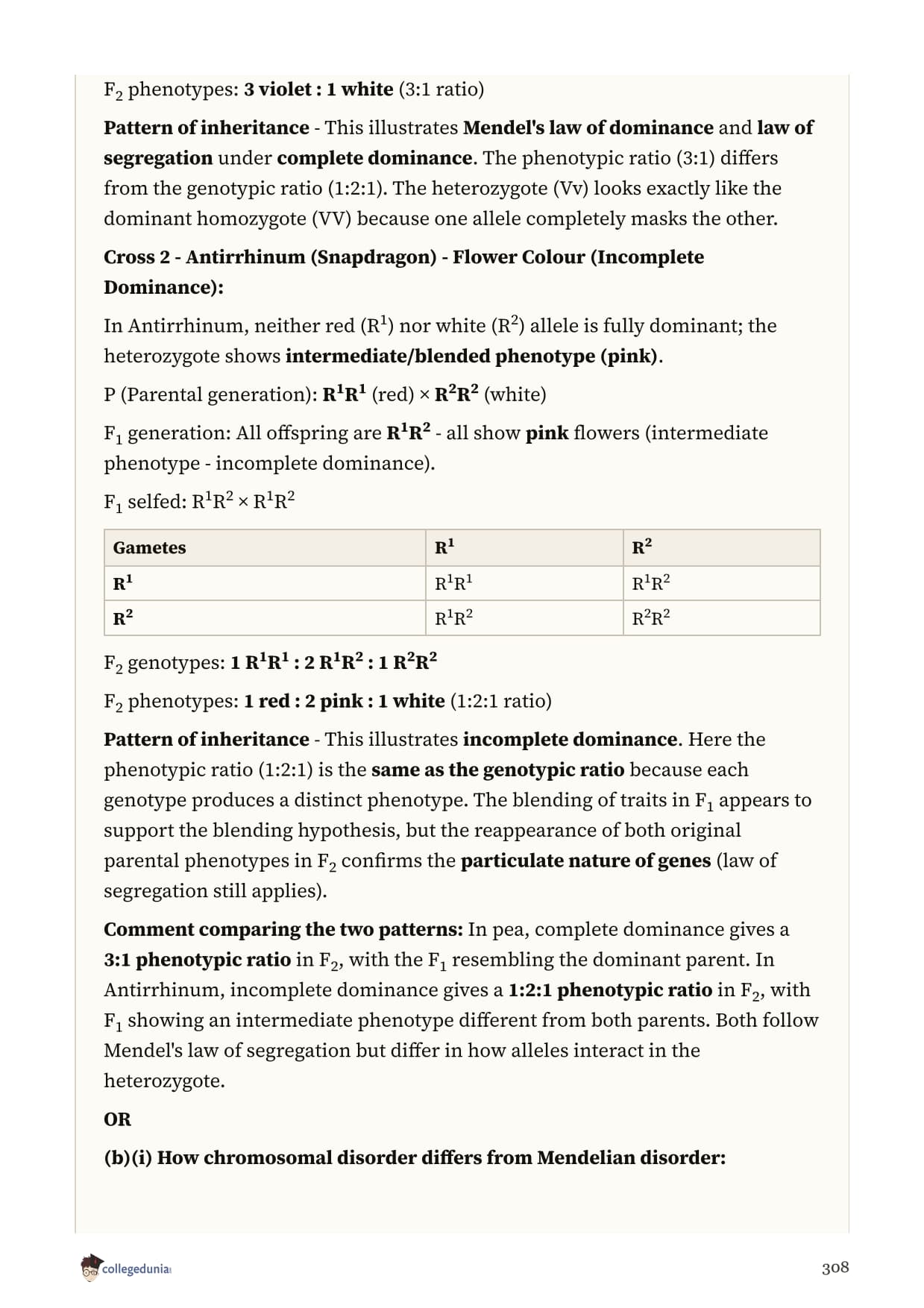
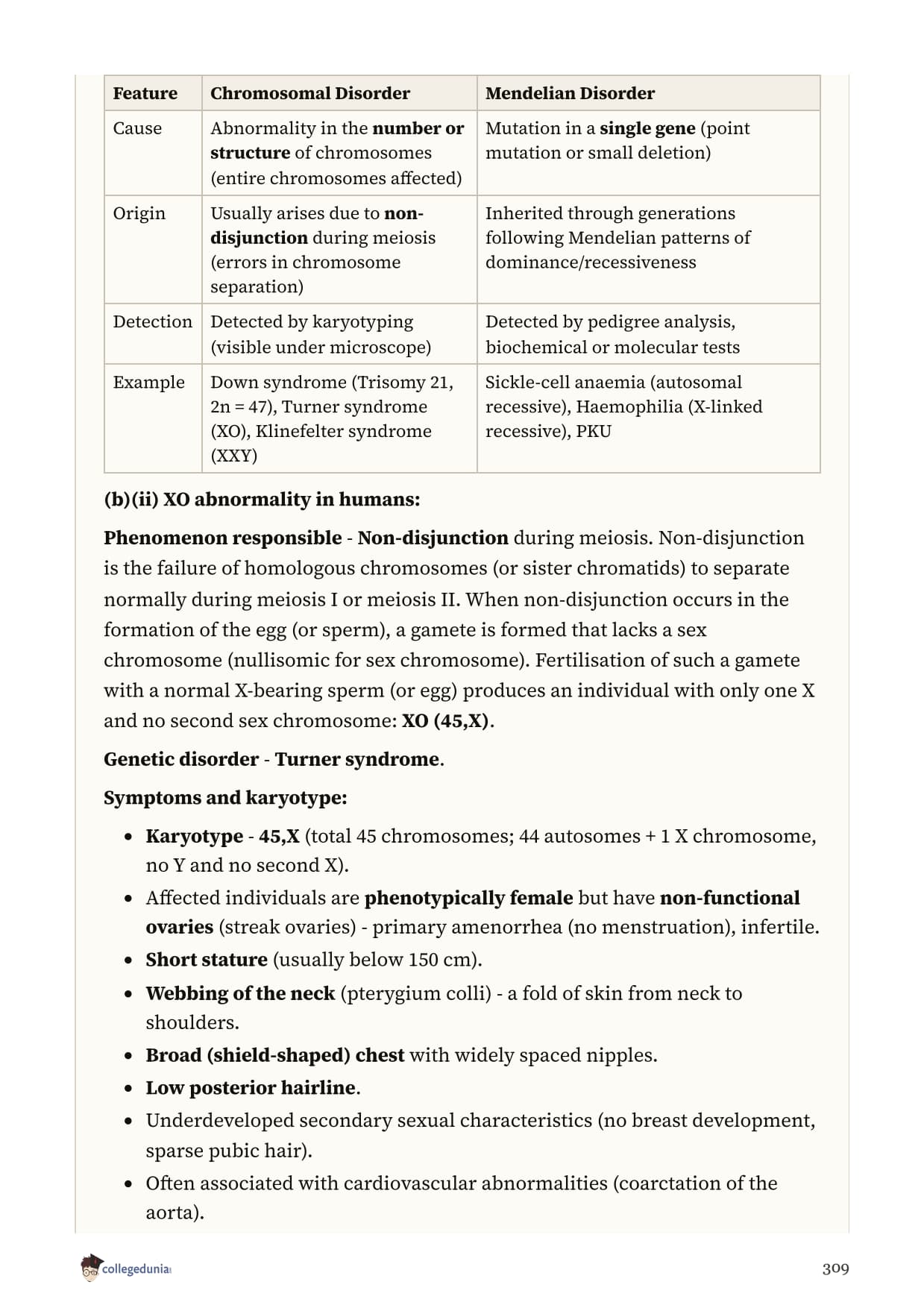
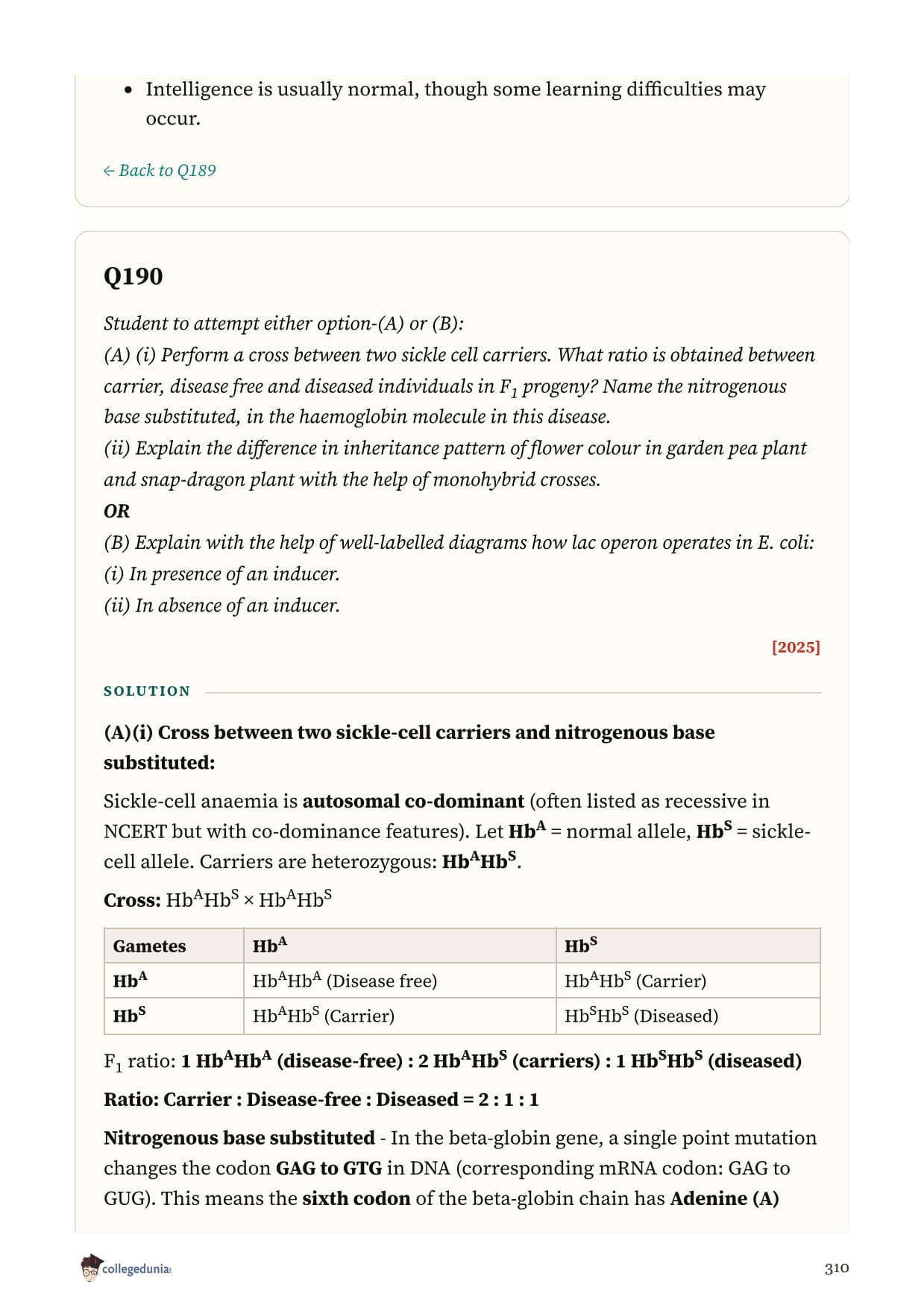
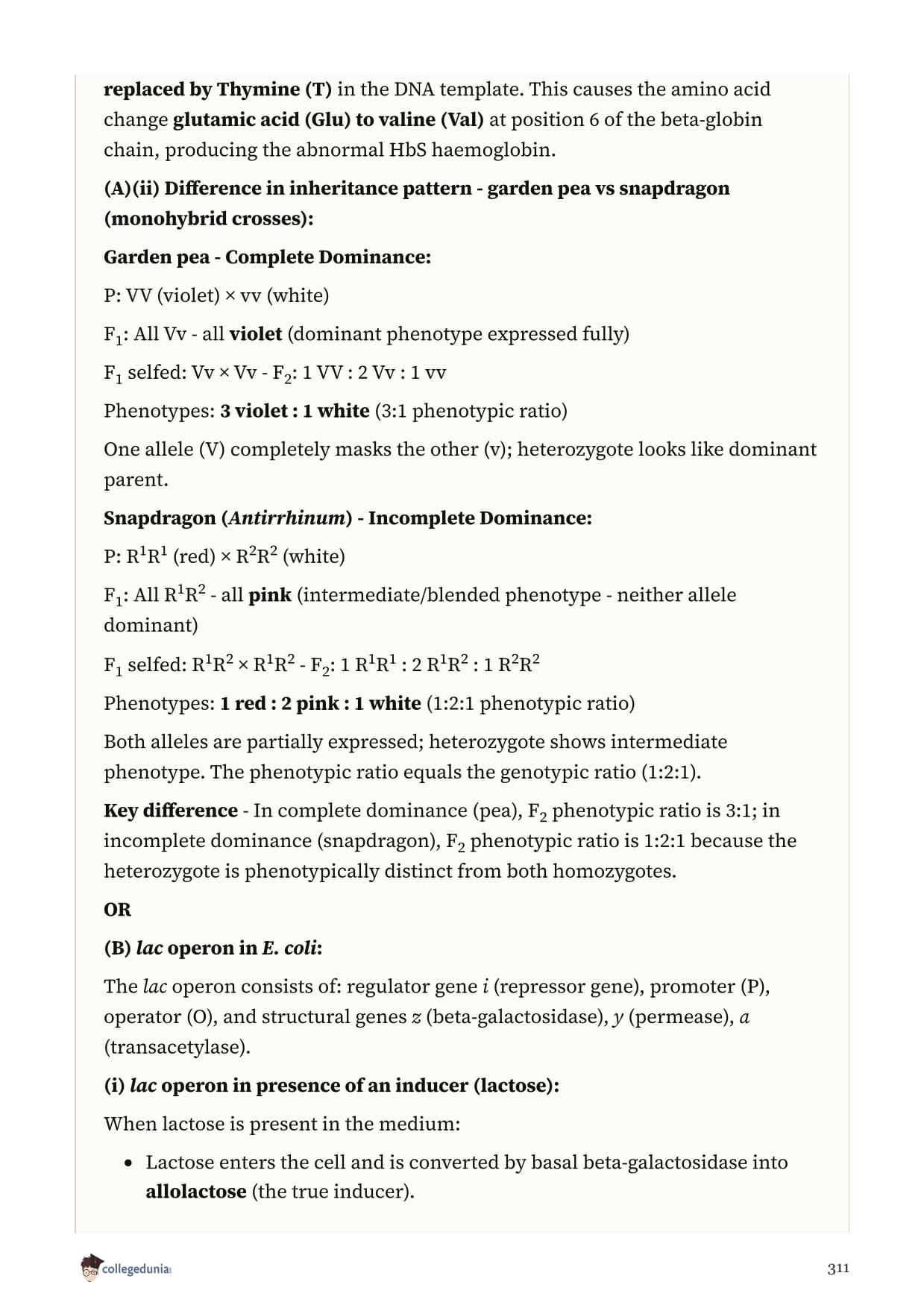
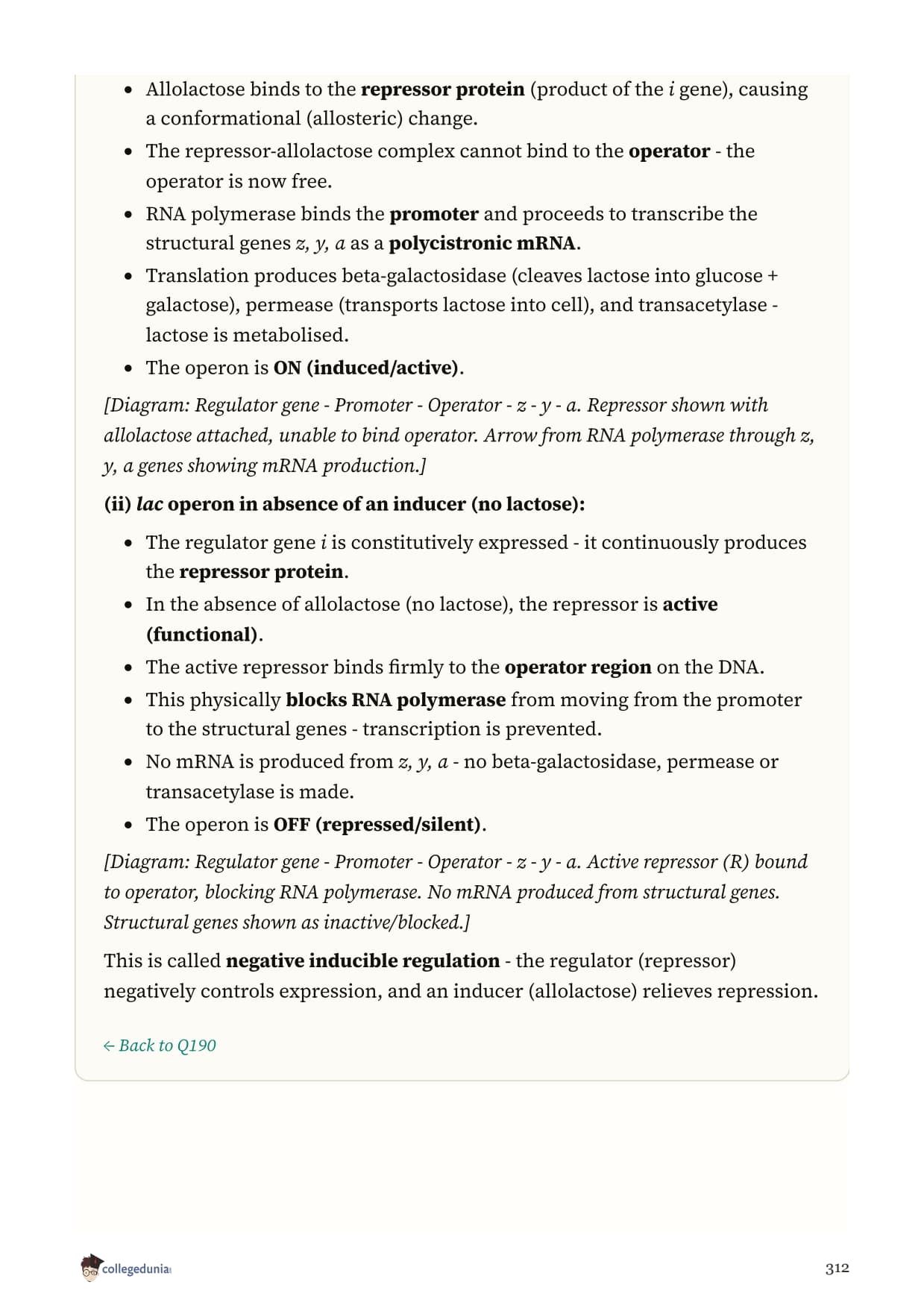
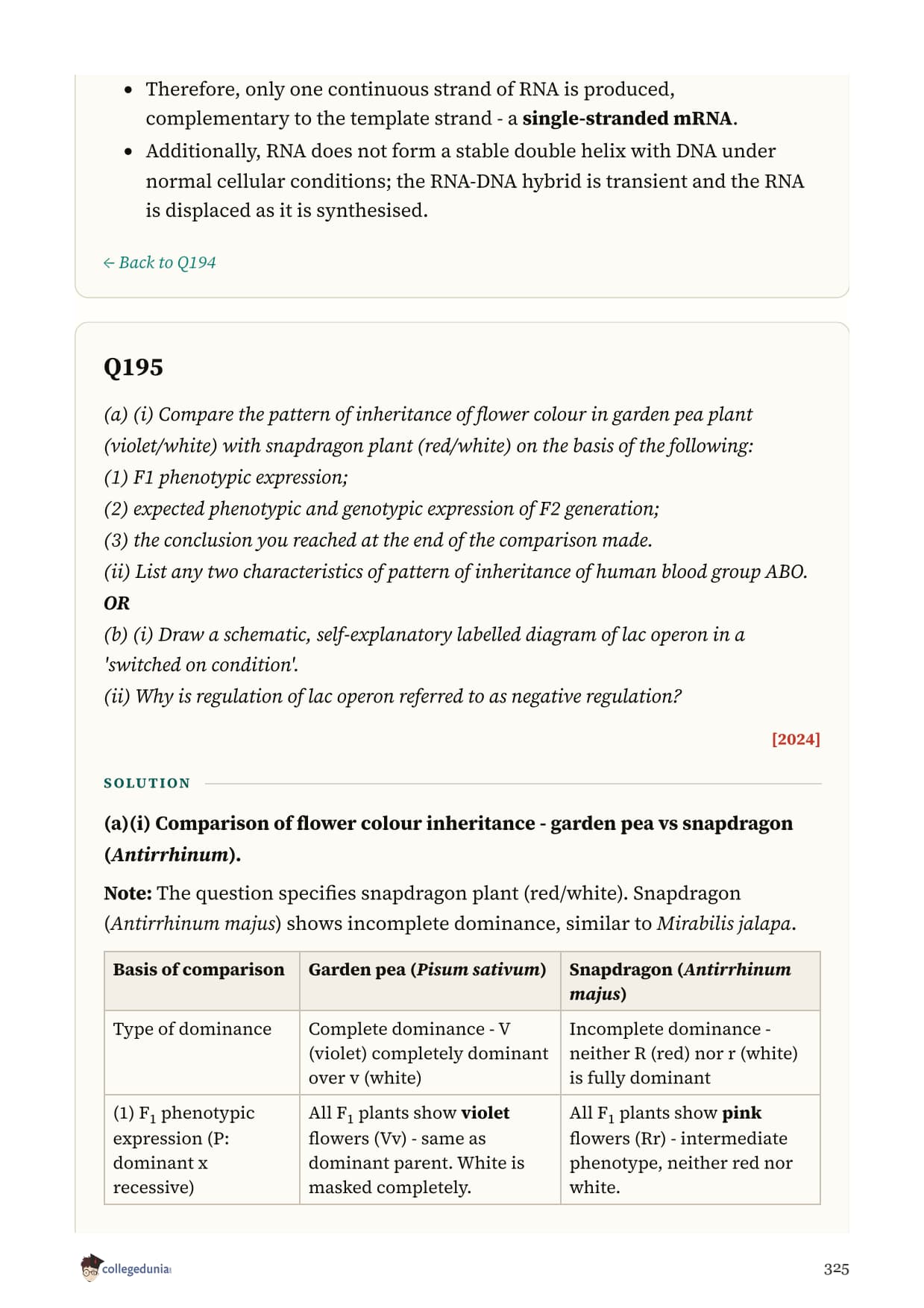
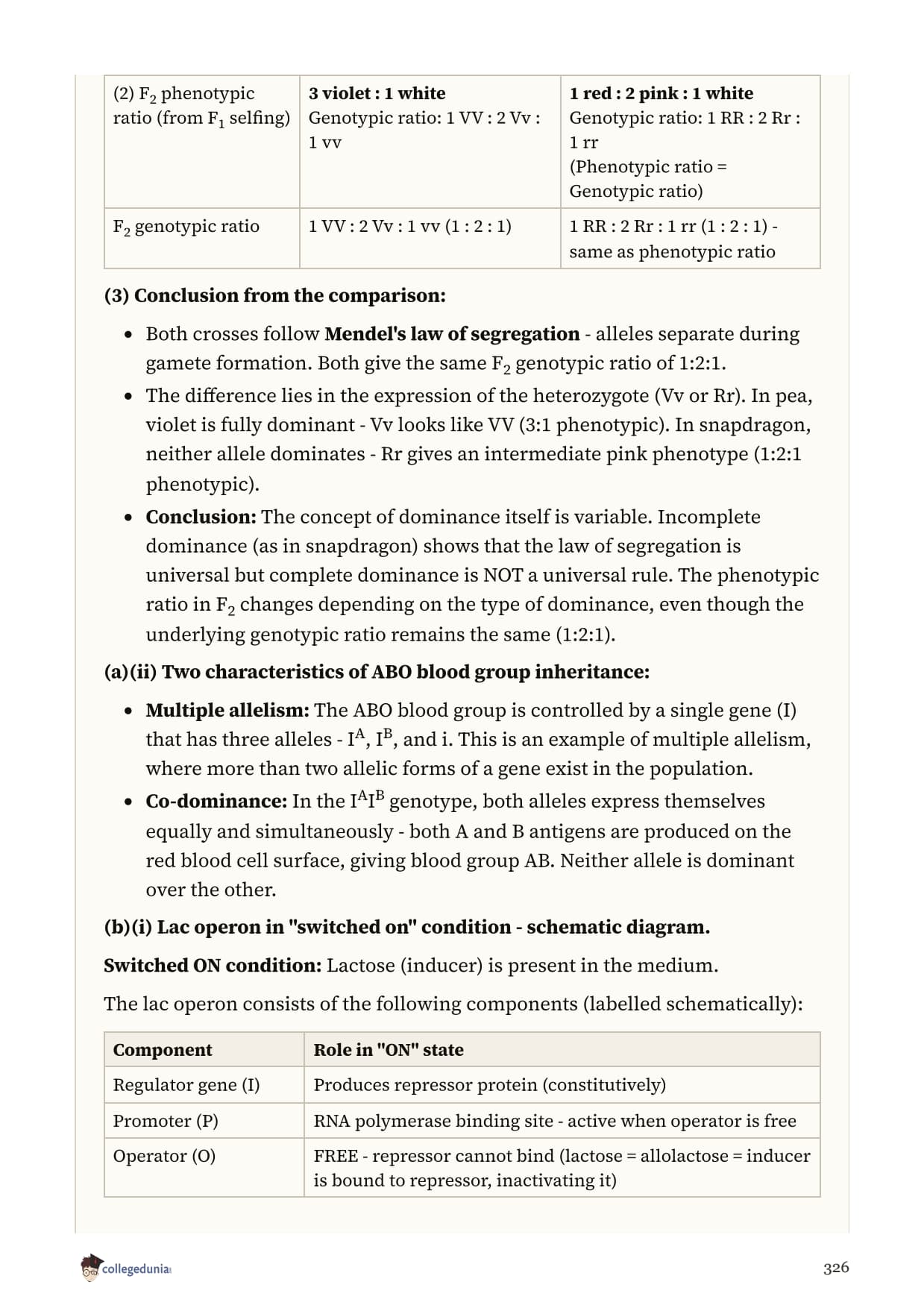
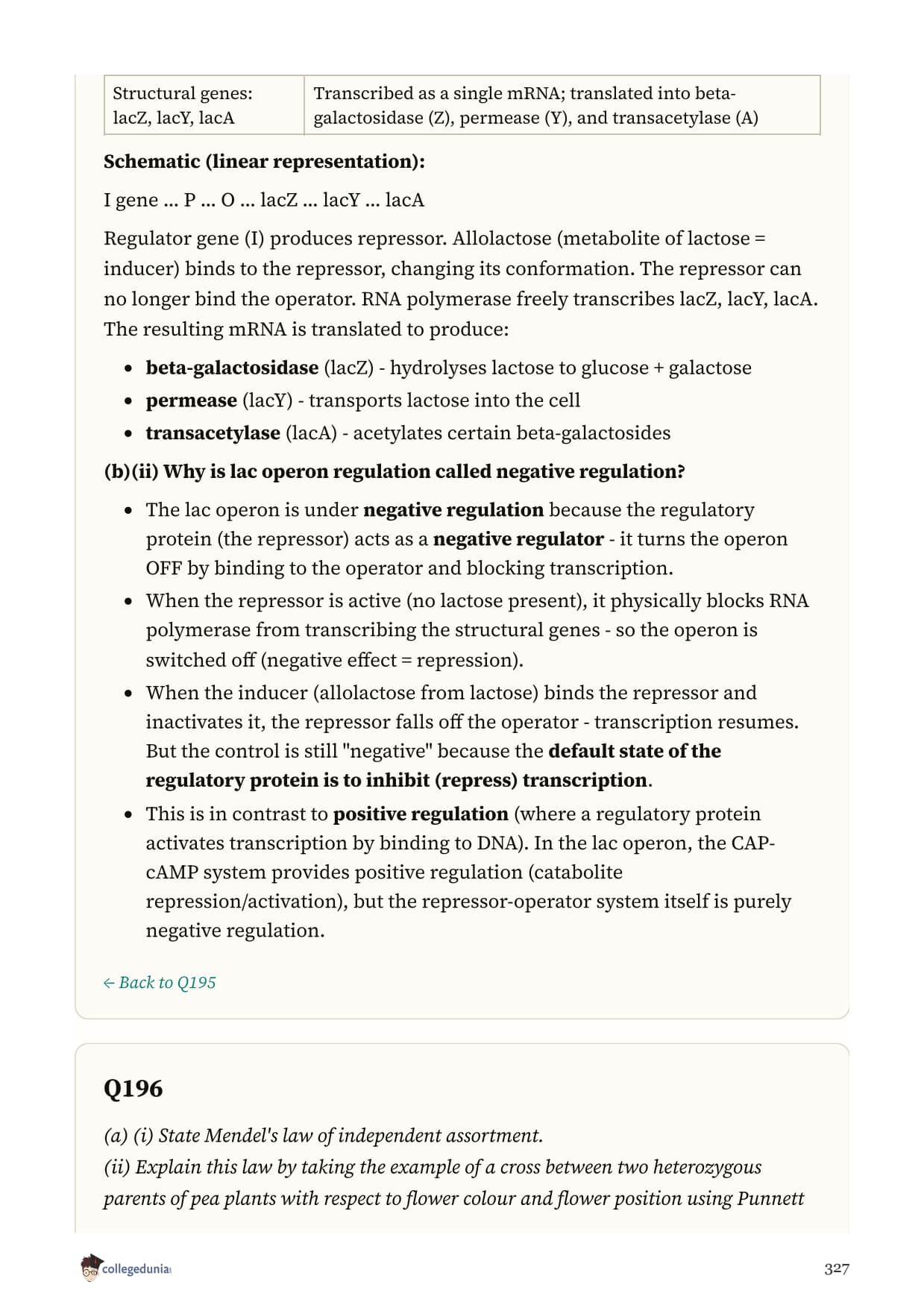
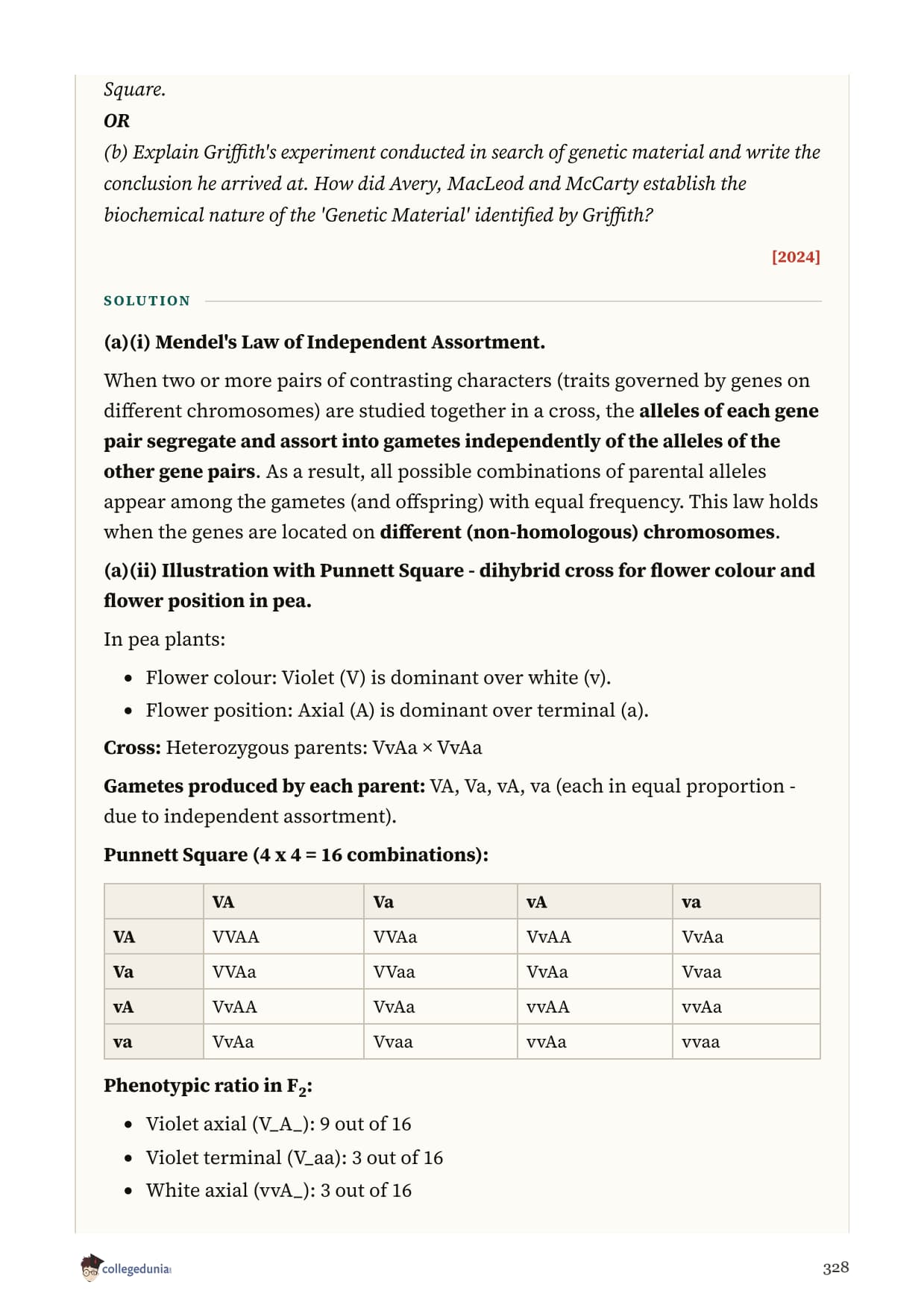
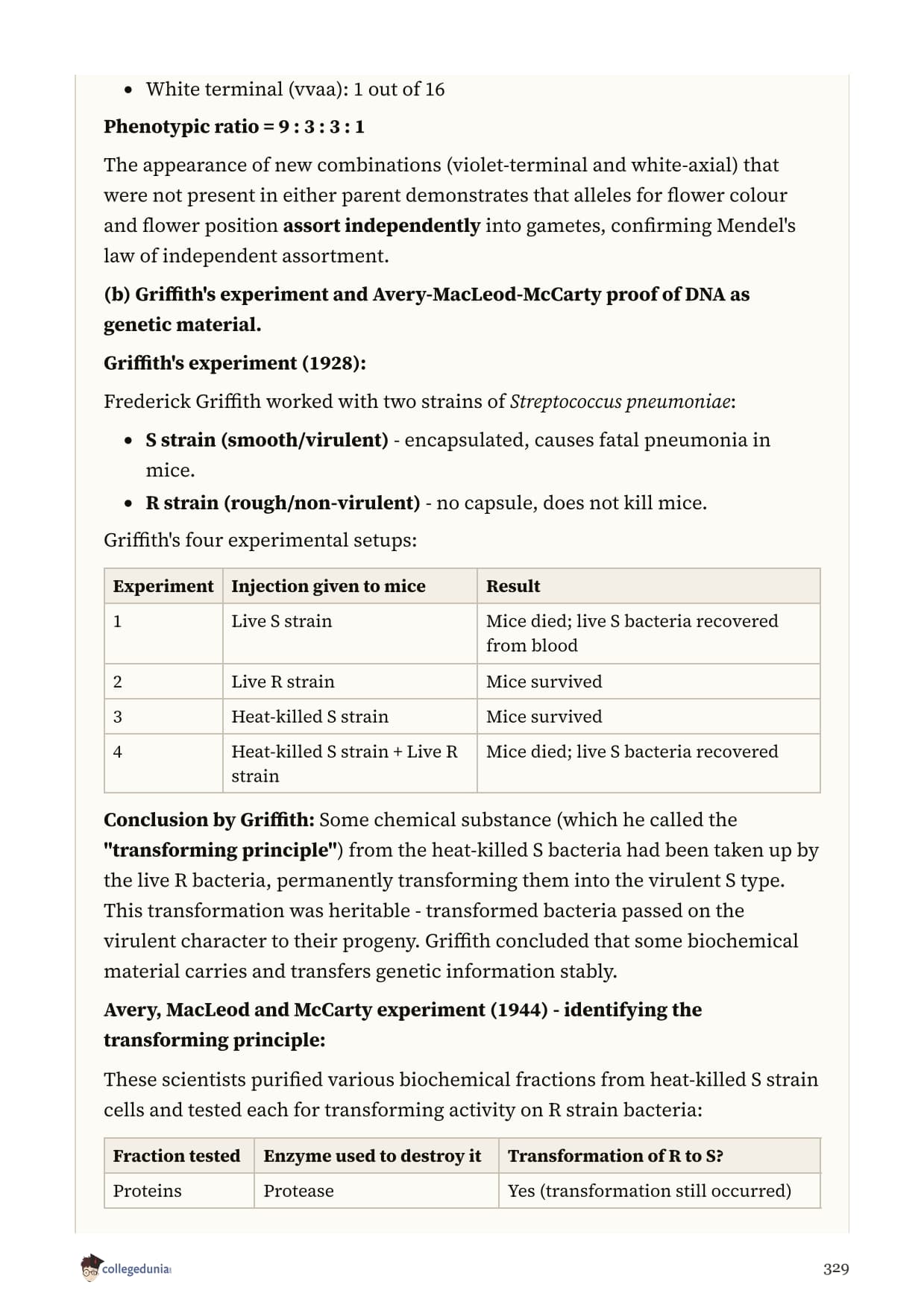
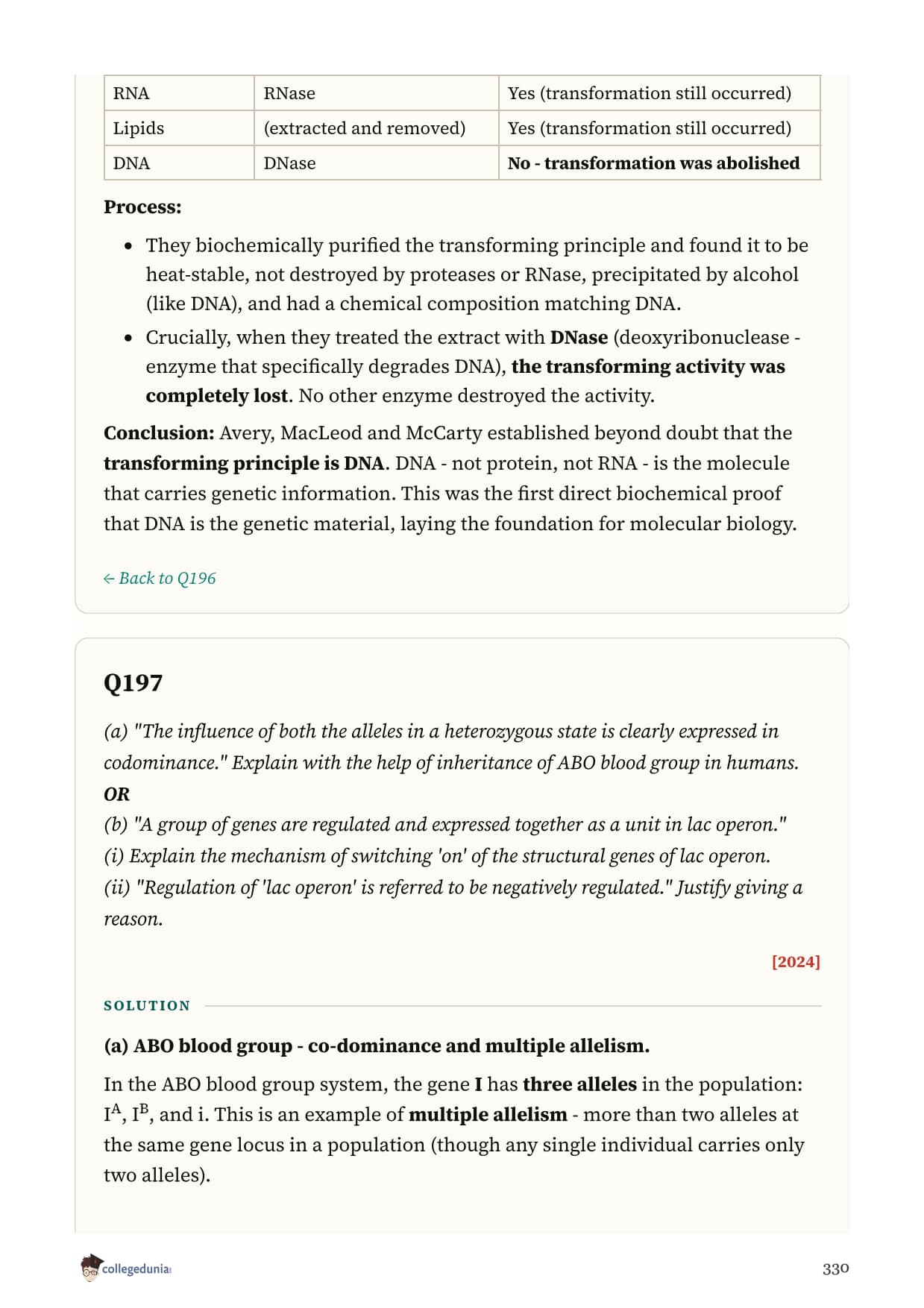
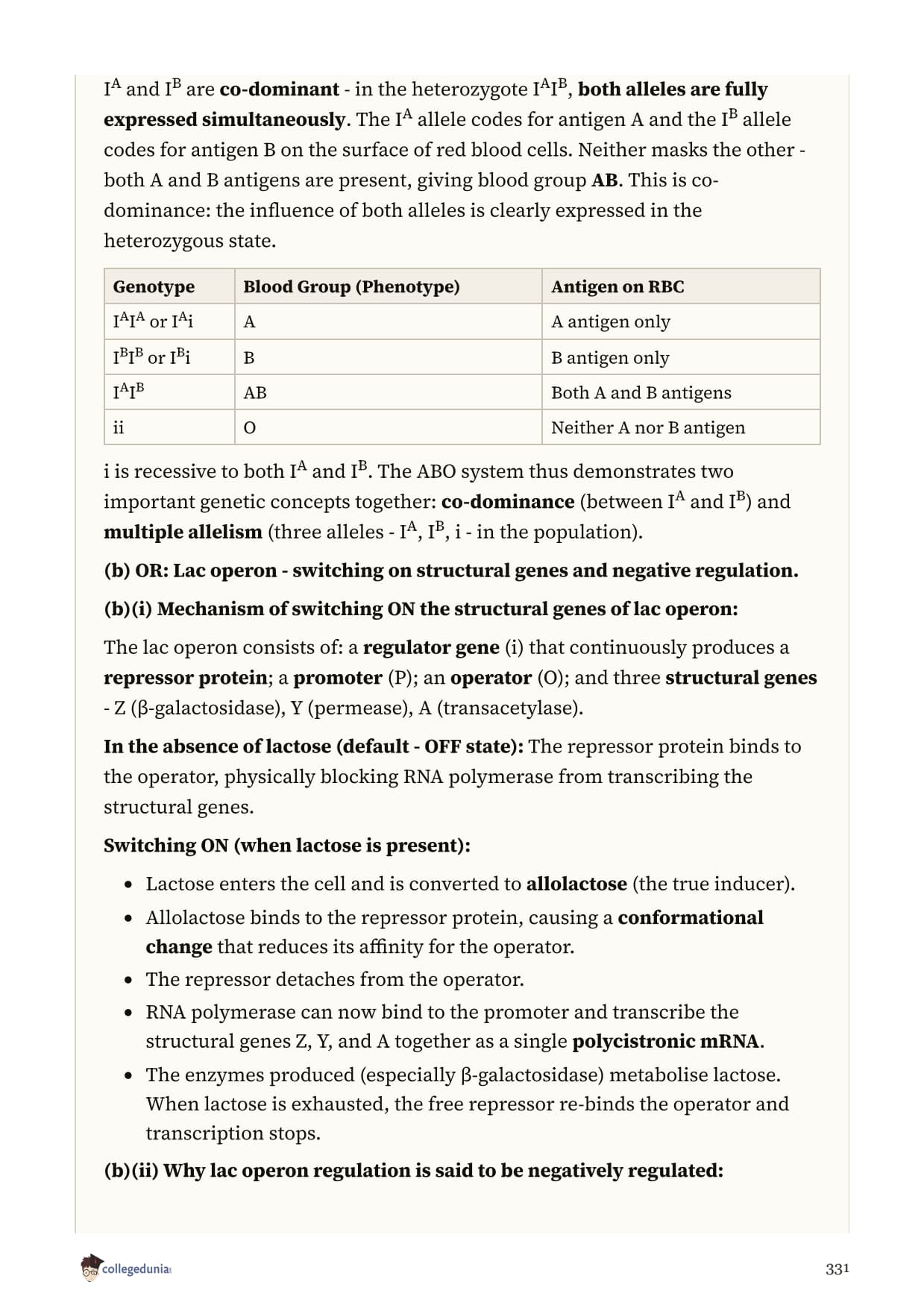
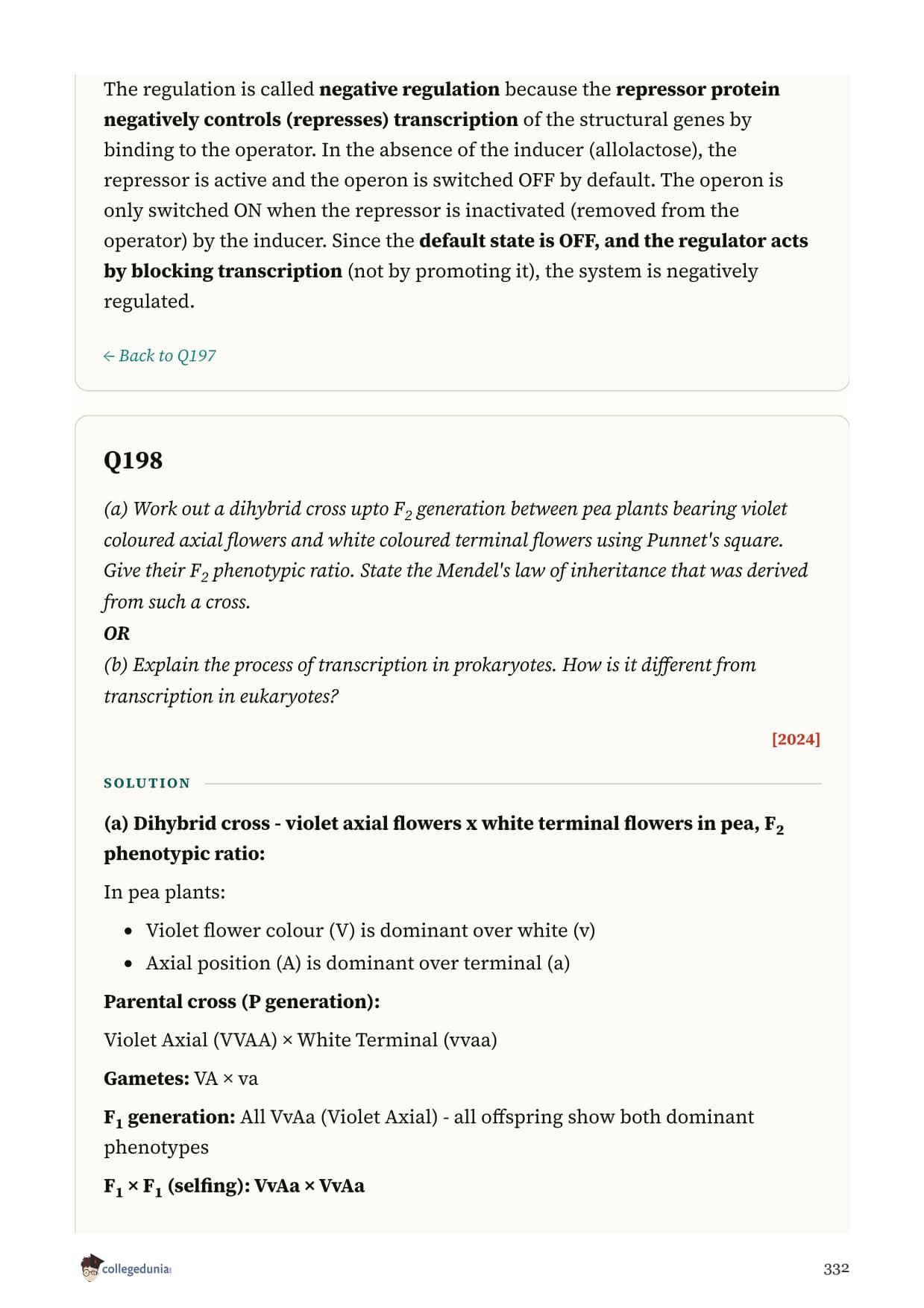
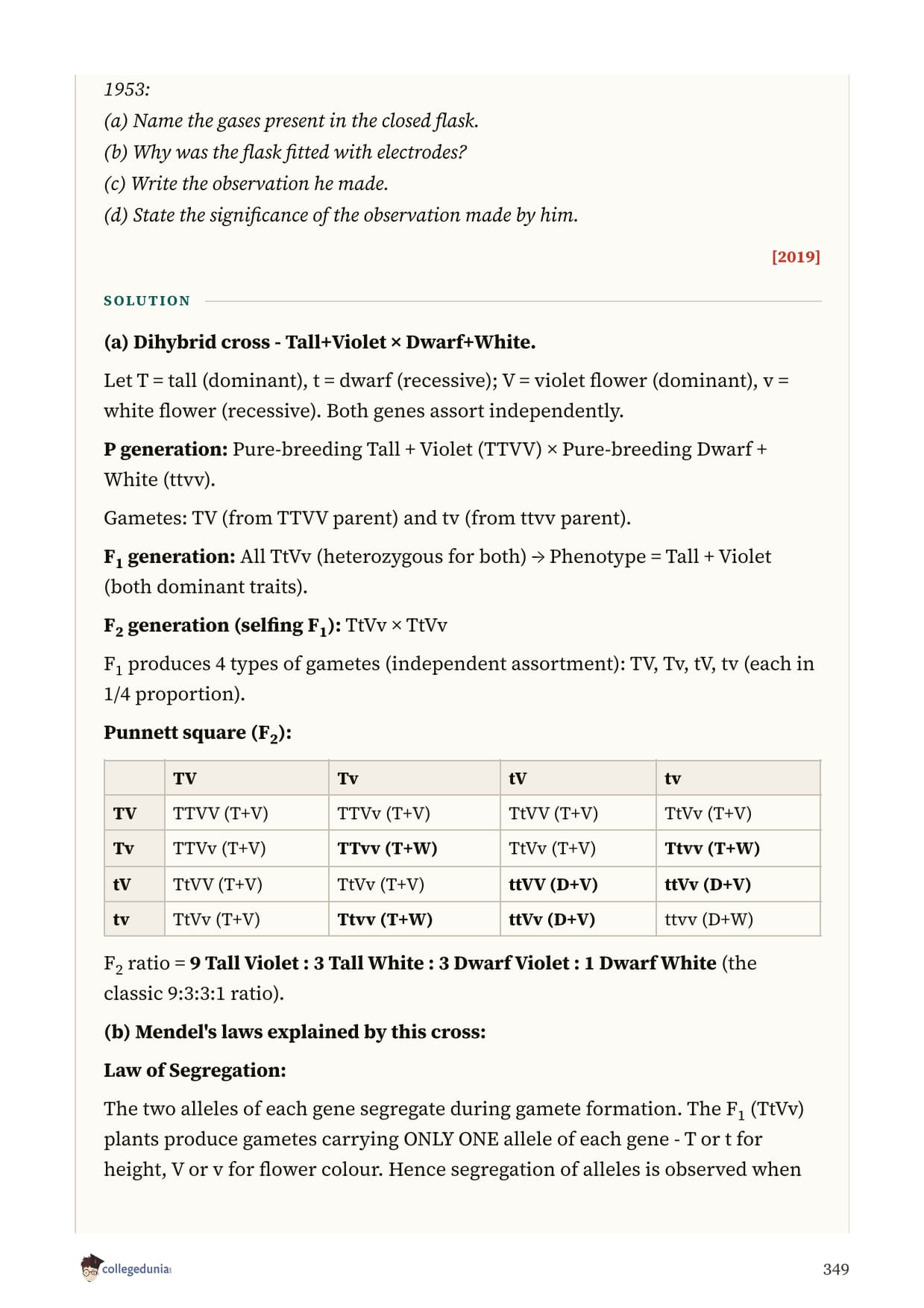
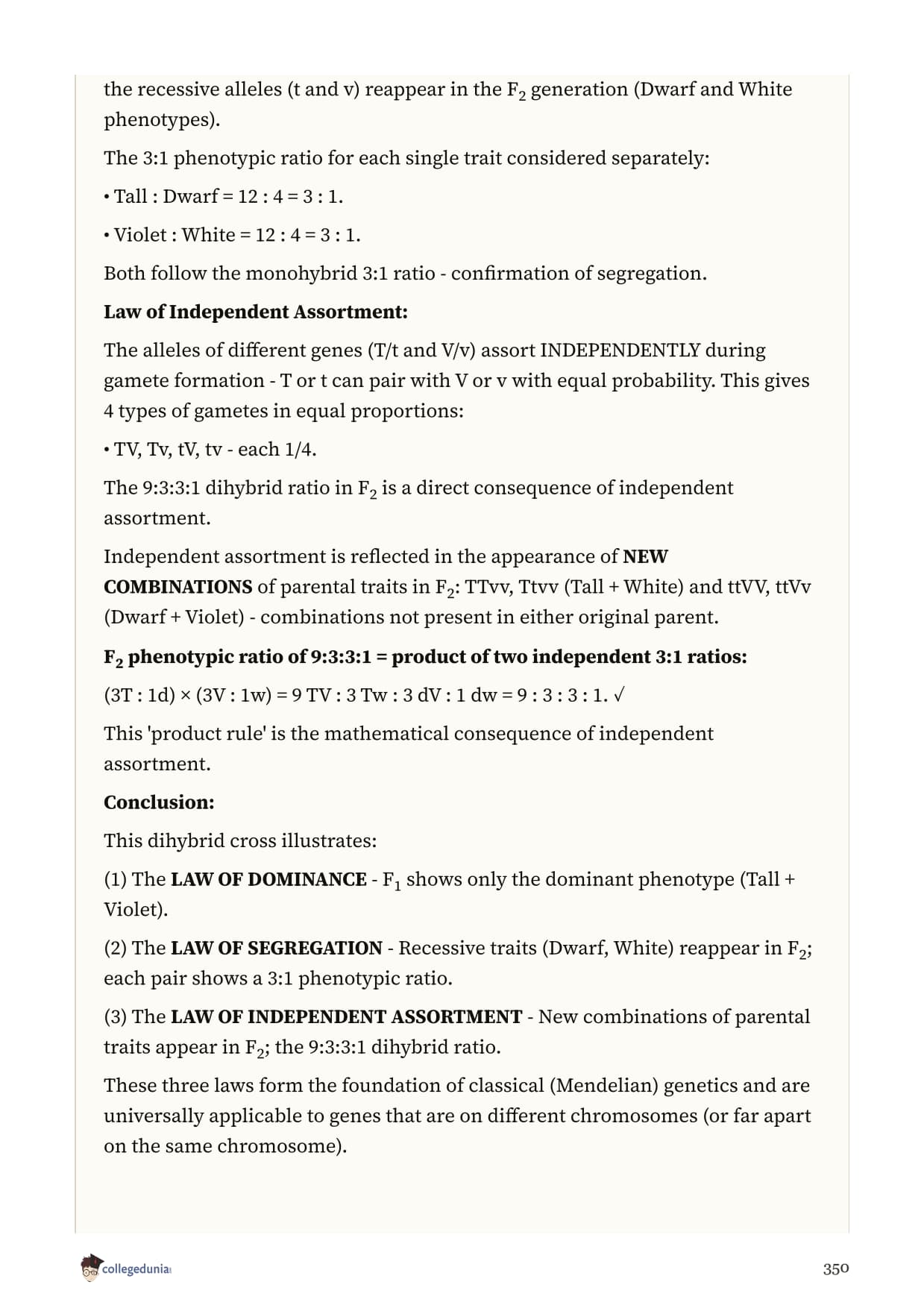
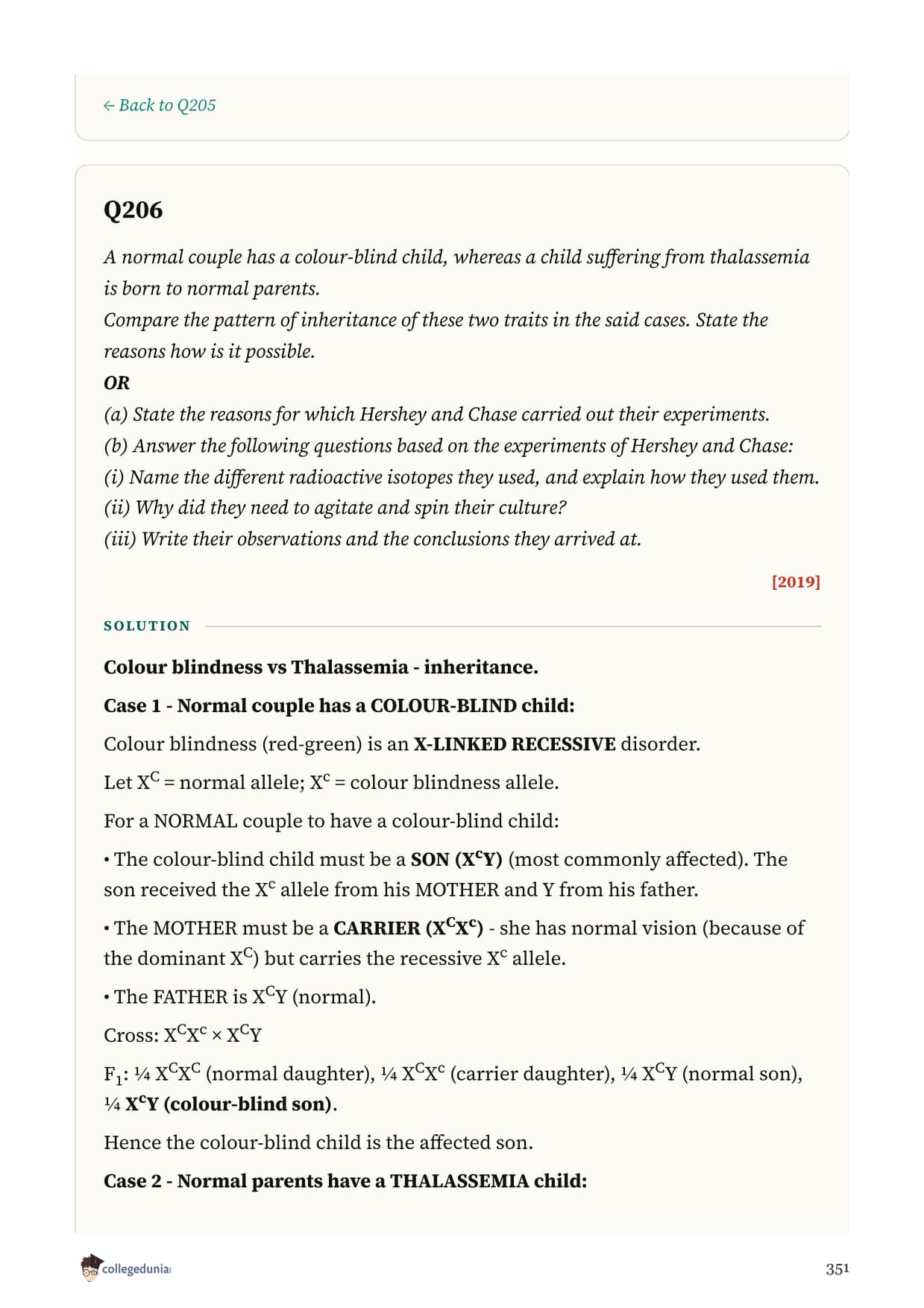
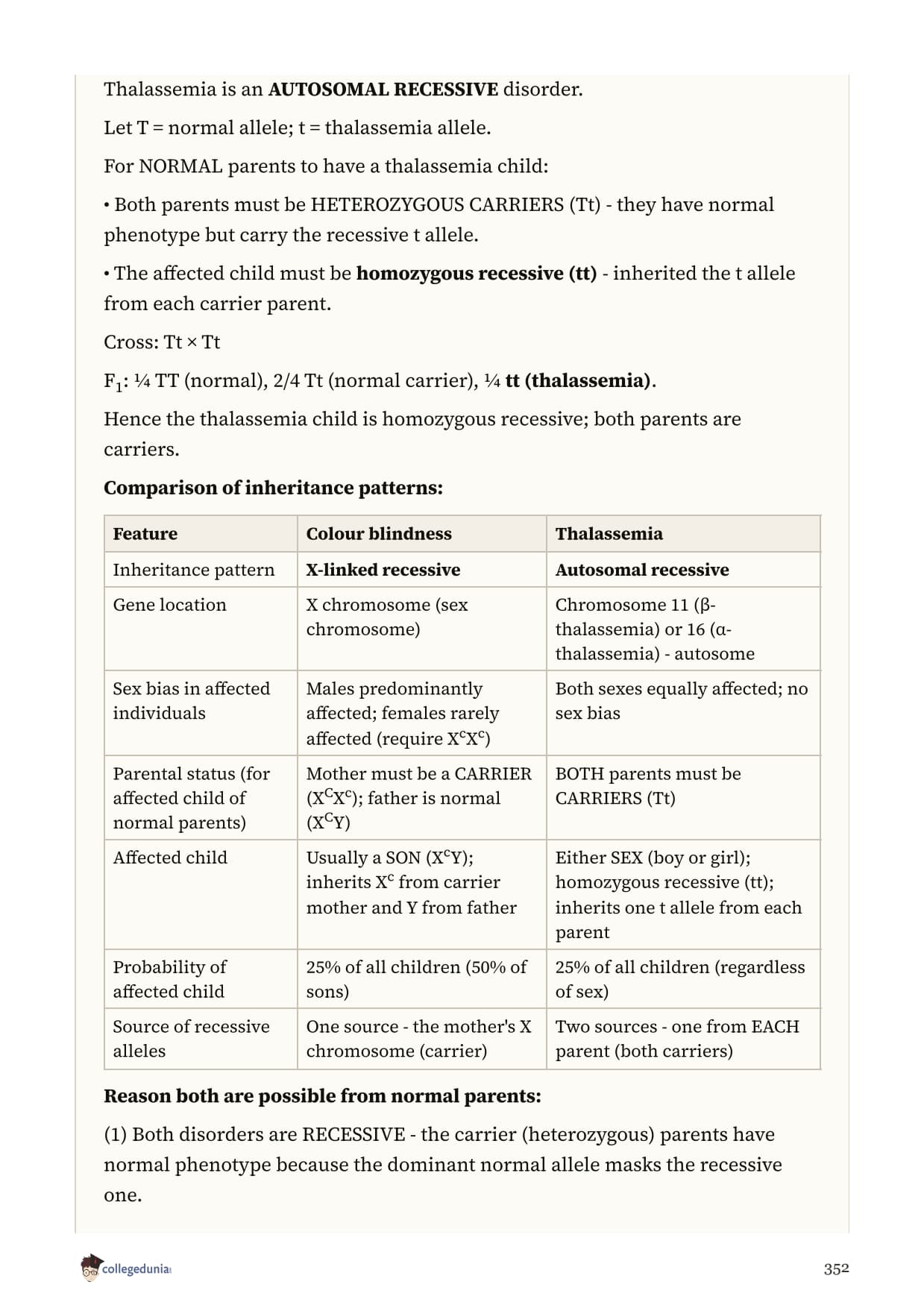
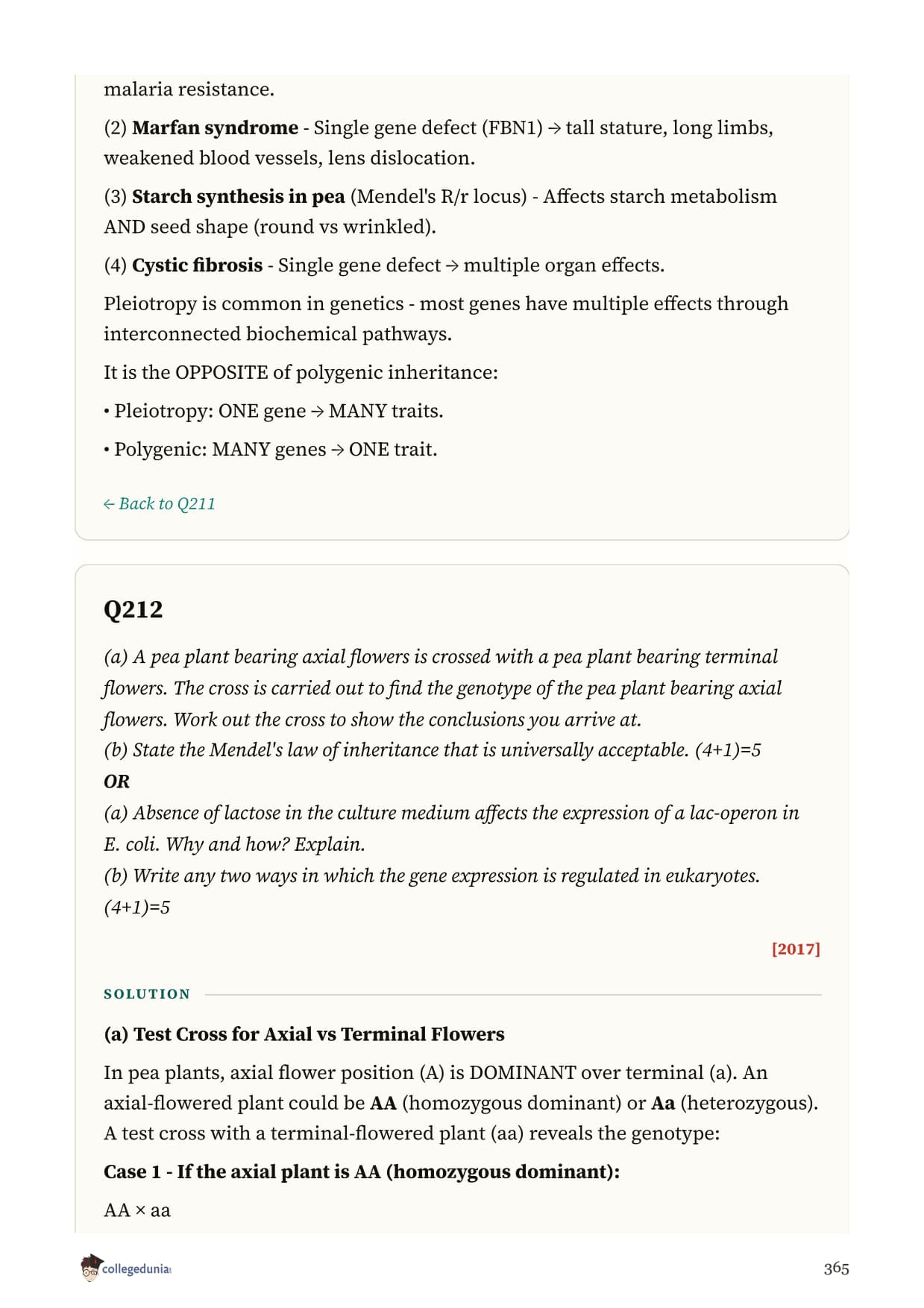
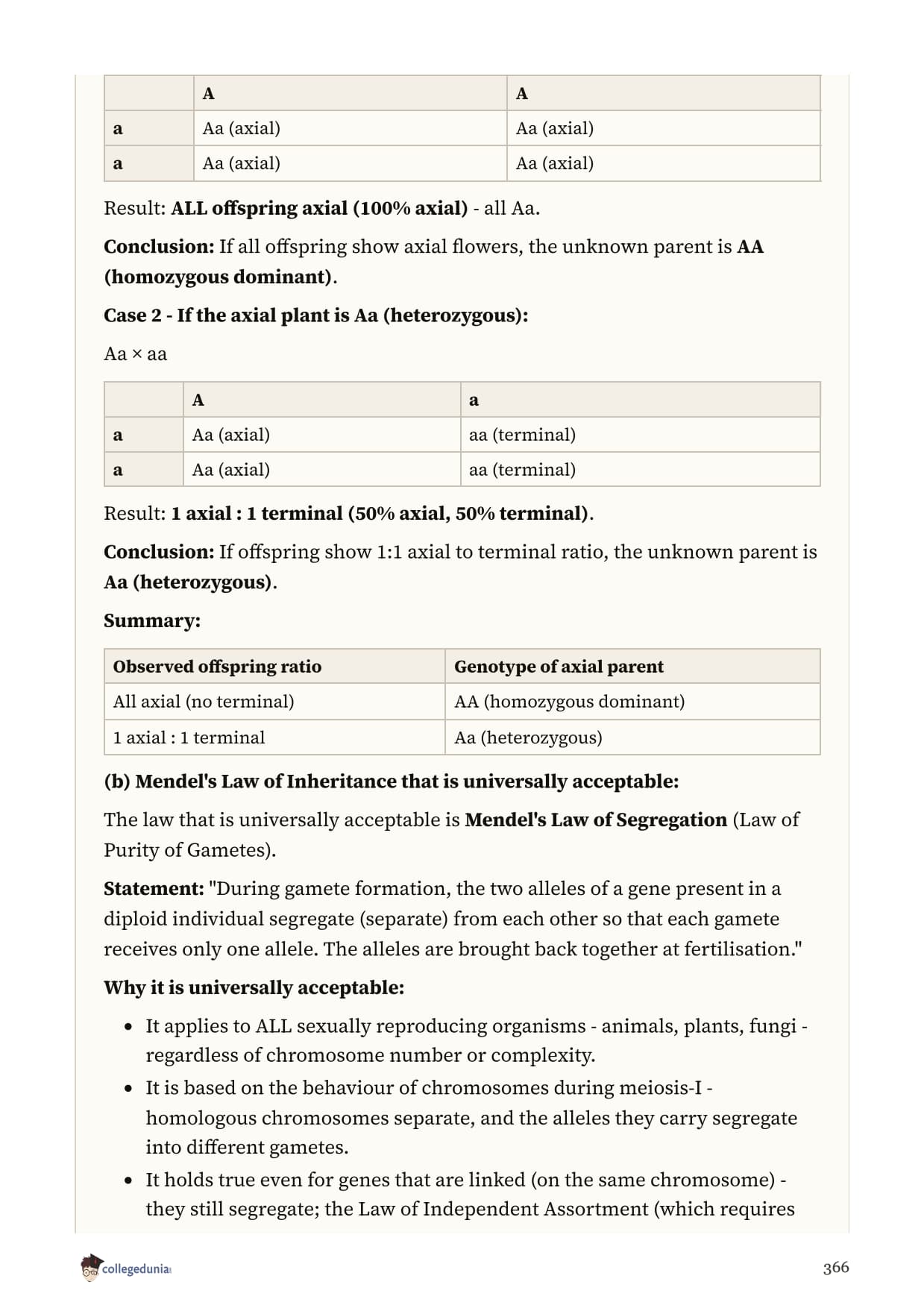
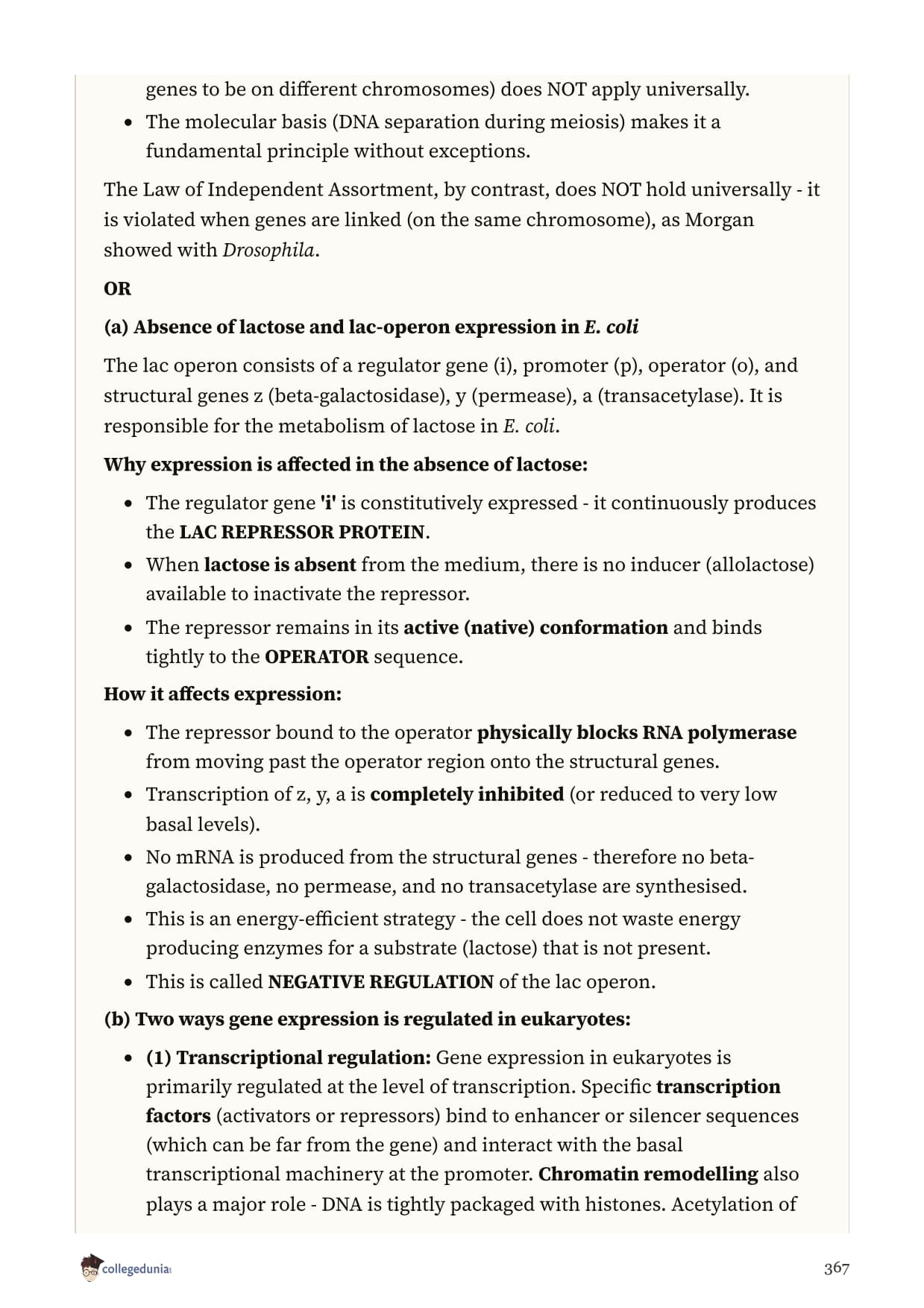
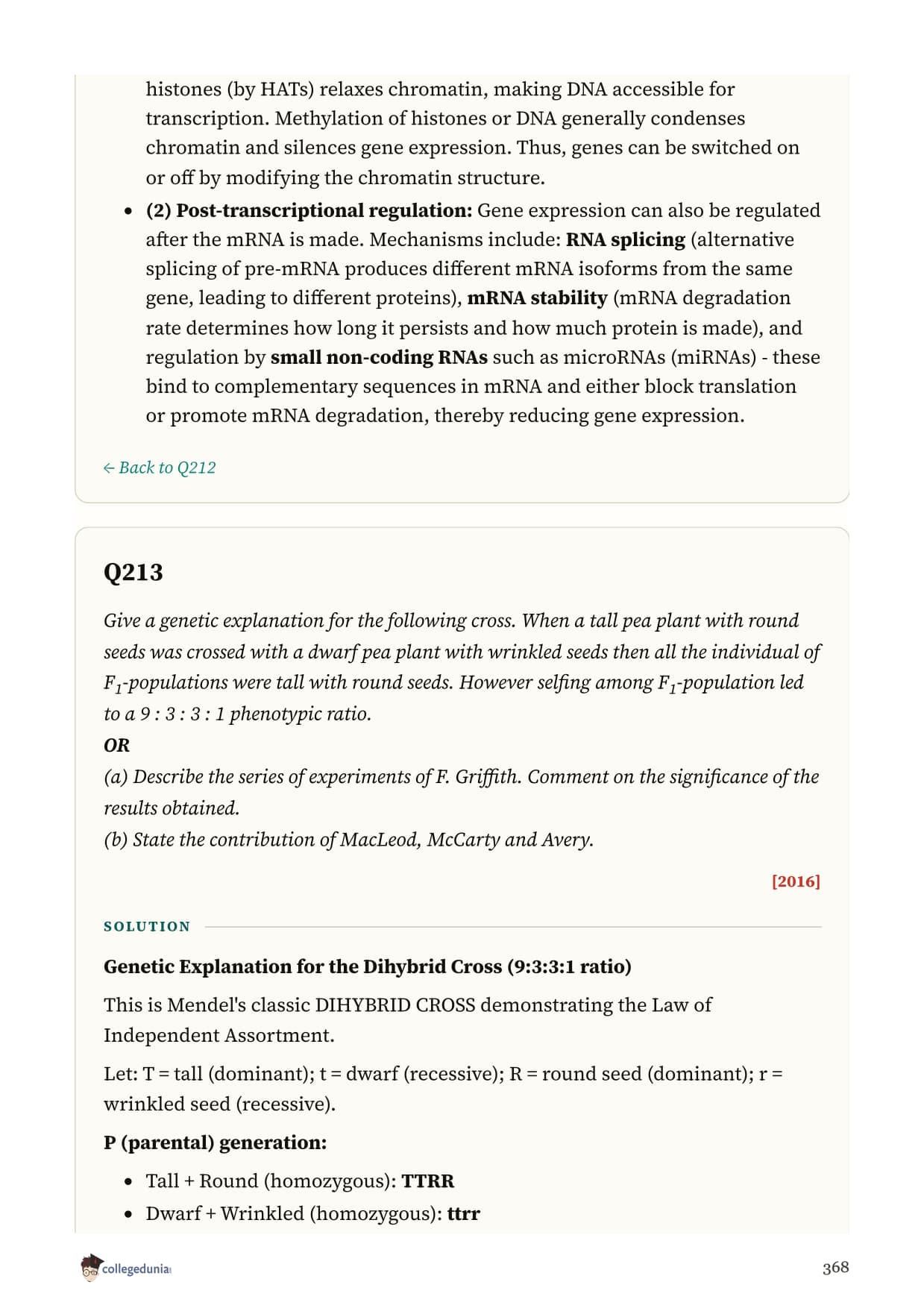
- 1-mark questions: 84 questions, the largest band, mostly MCQ, assertion-reason and figure-based items from recent papers.
- 2 and 3-mark questions: 39 and 60 questions, built around pedigree analysis, Mendelian crosses and sex determination.
- 5-mark long answers: 30 questions, where dihybrid crosses, linkage and chromosomal disorders appear repeatedly.
The Class 12 Biology Principles of Inheritance and Variation PYQ compilation pulls together 216 board-paper questions across 2003 to 2026, sorted by marks and by year for ordered practice.
Every question in this Class 12 Biology Principles of Inheritance and Variation PYQ compilation is sourced from CBSE board papers (Delhi, Outside Delhi, Foreign and Compartment) and cross-checked against the official mark scheme, with near-duplicate questions removed.
What the Principles of Inheritance and Variation Previous Year Questions Cover
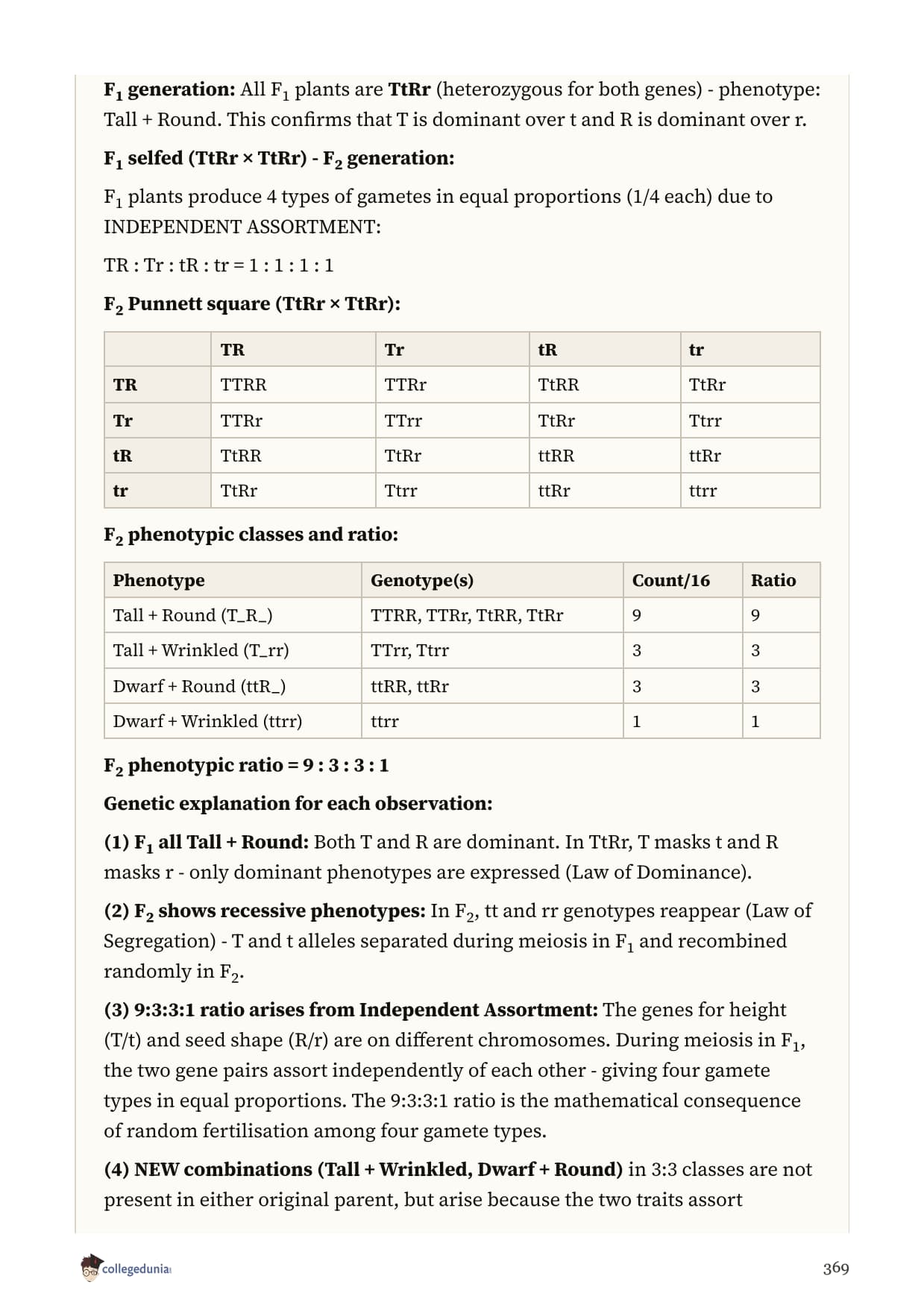
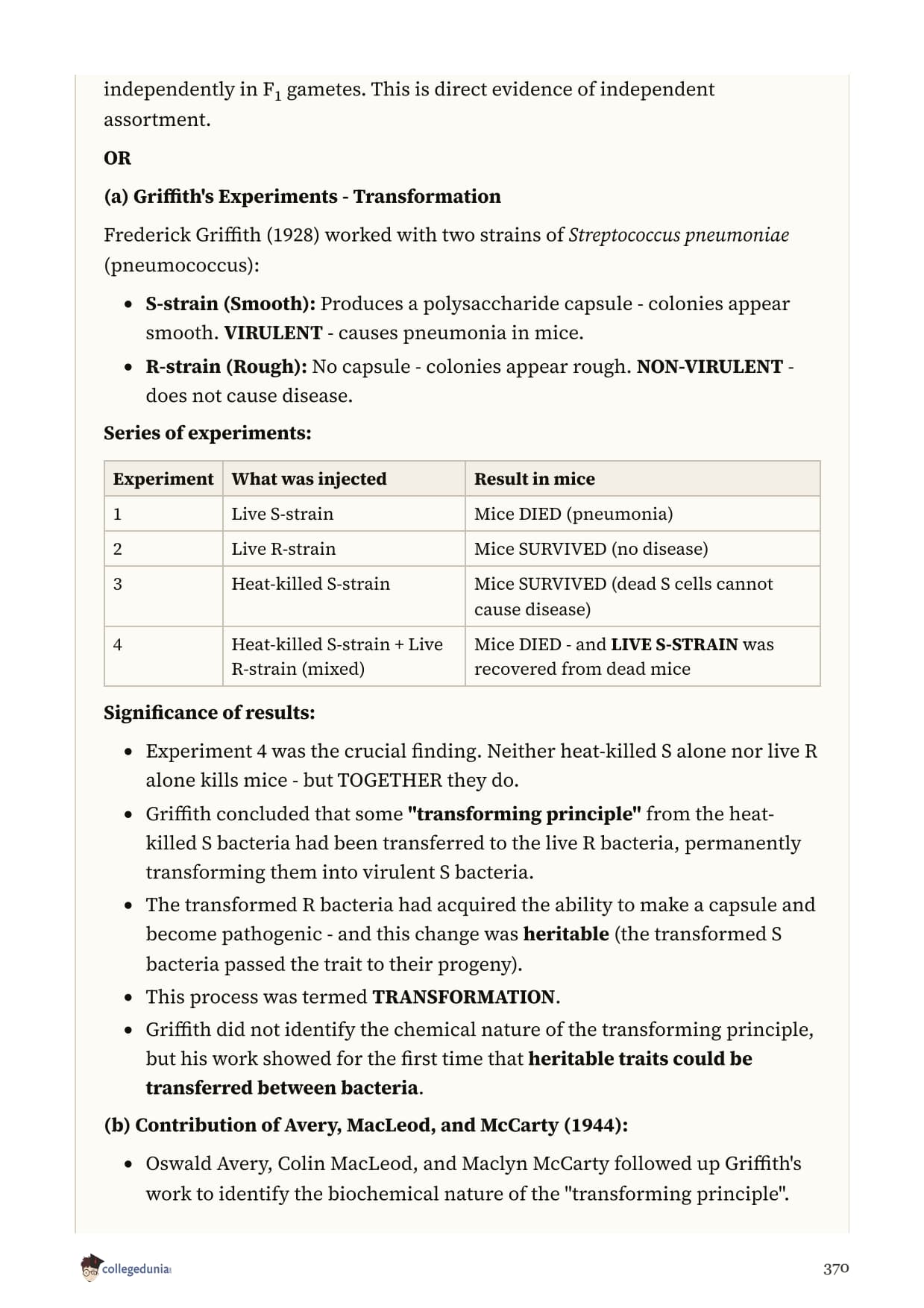
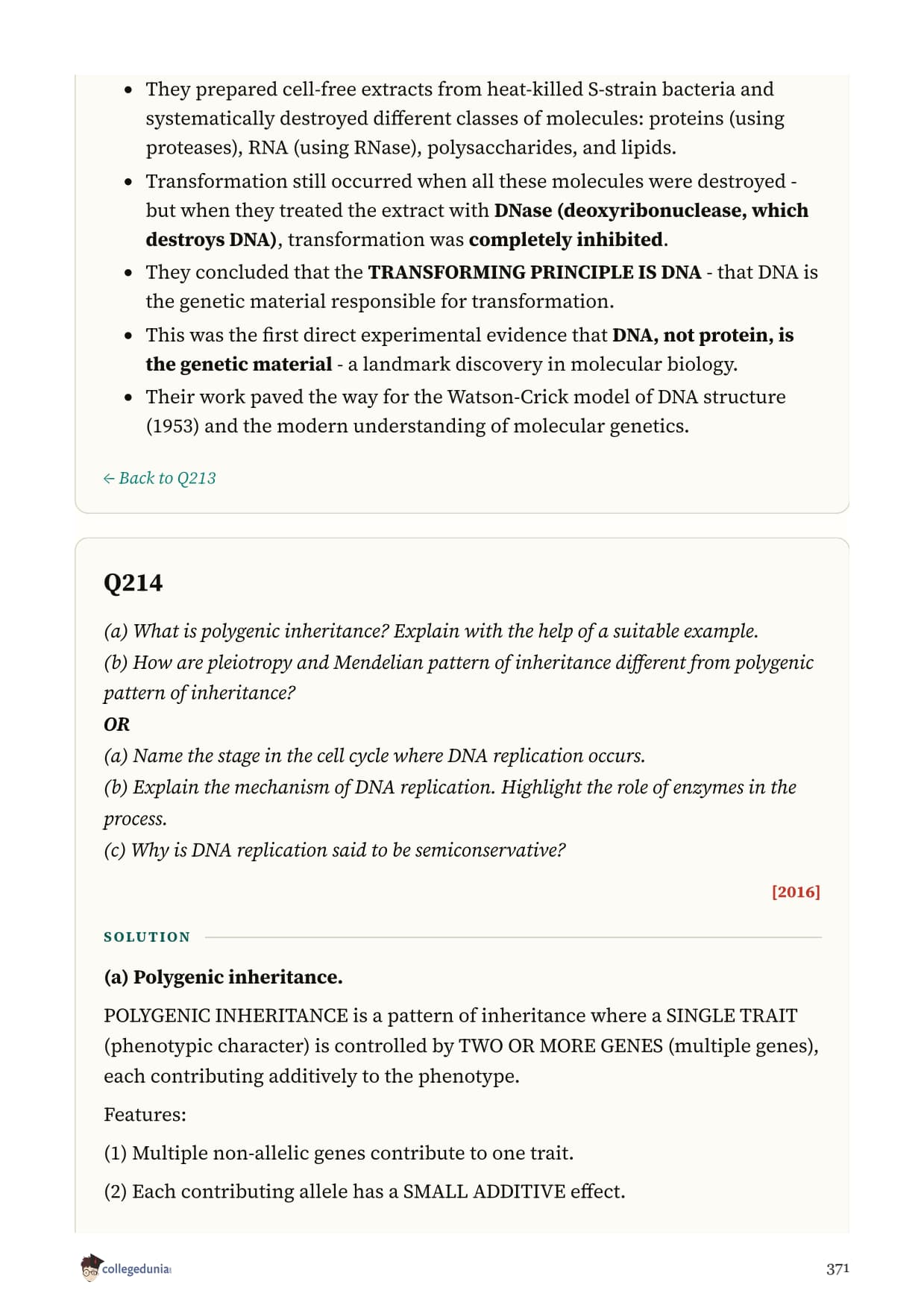
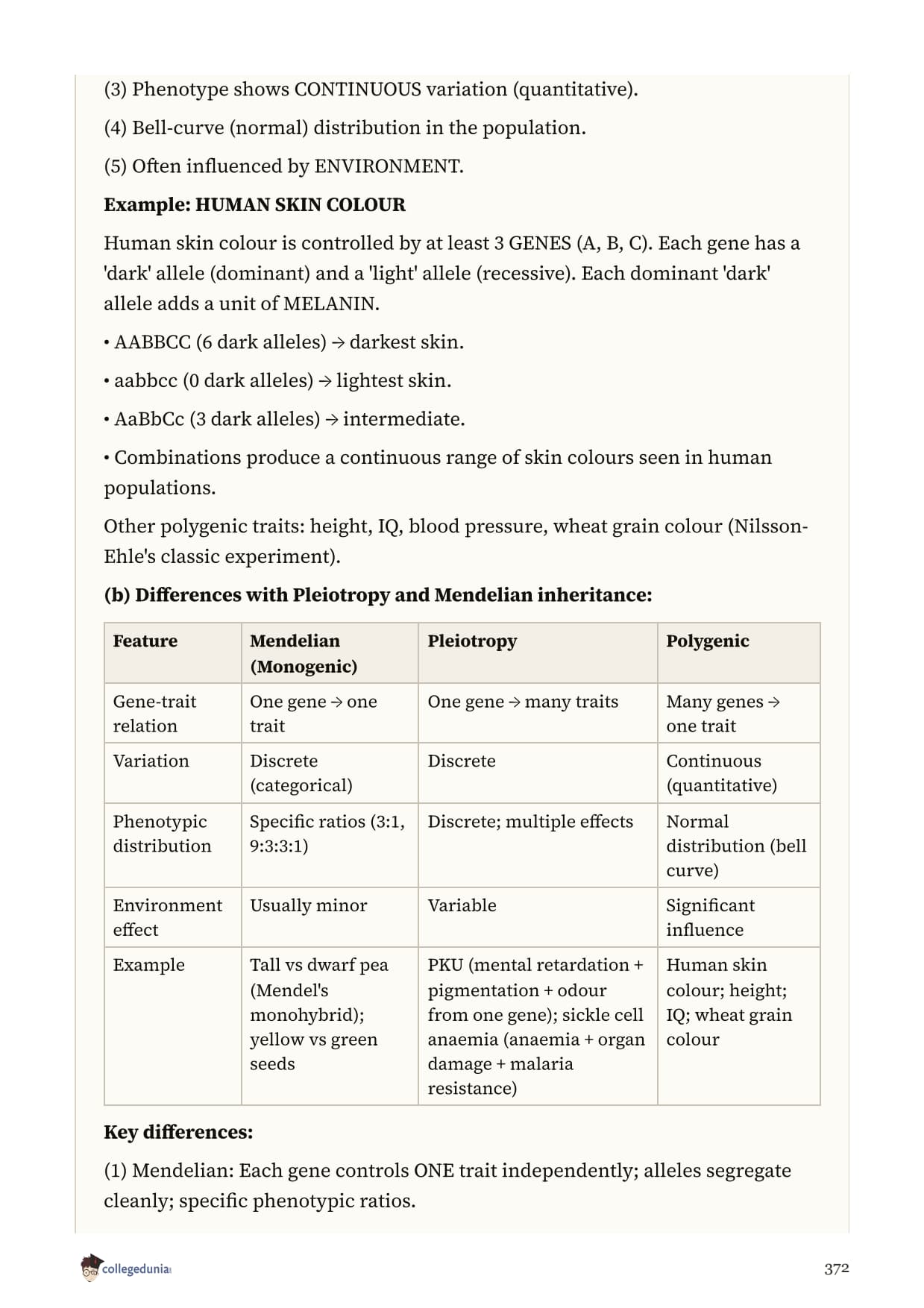
The 216-question set maps every concept the NCERT chapter introduces. Pedigree analysis is the single most repeated topic, across the 1, 2 and 3-mark bands. Mendel's monohybrid and dihybrid crosses drive the Punnett-square answers, while sex determination, linkage and recombination carry the higher bands. Short reasoning on chromosomal disorders, sex-linked diseases and ABO blood groups fills many of the 84 one-mark questions.
Marks-wise Distribution of the Principles of Inheritance and Variation PYQs
The table below shows how the 216 questions split across the CBSE marks bands. Use it to decide how much revision time each band deserves.
| Marks | Questions | Total Marks | CBSE Section | Type |
|---|---|---|---|---|
| 1 mark | 84 | 84 | Section A | MCQ / Assertion-Reason |
| 2 mark | 39 | 78 | Section B | VSA (Very Short Answer) |
| 3 mark | 60 | 180 | Section C | SA (Short Answer) |
| 4 mark | 3 | 12 | Section D | Case Study |
| 5 mark | 30 | 150 | Section E | Long Answer |
Year-wise Spread of Class 12 Biology Principles of Inheritance and Variation PYQs
The compilation draws from 17 CBSE board years. Roughly 62% of the questions come from 2023 onwards, and 2025 alone contributed 57 questions, the single largest year in this chapter.
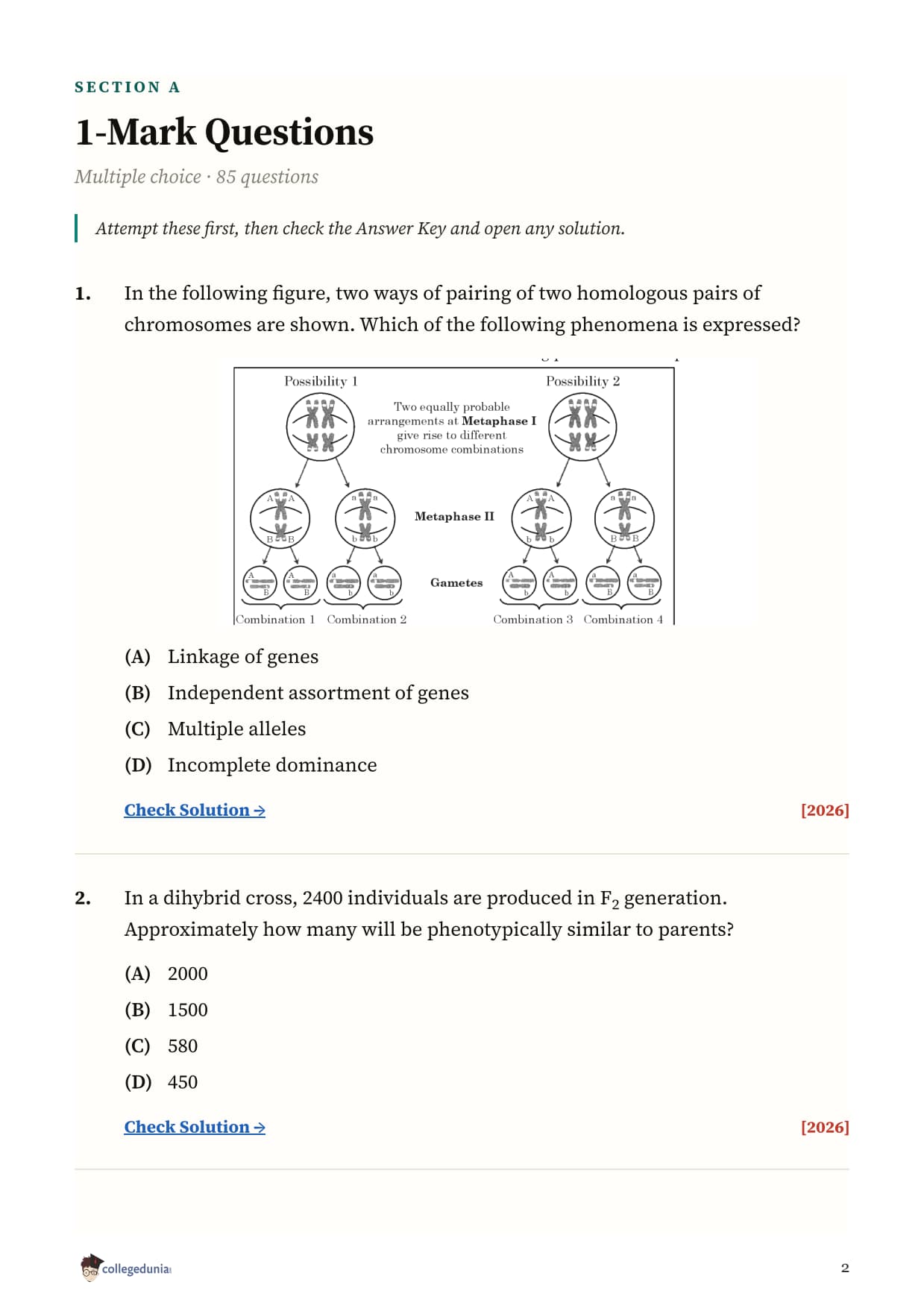
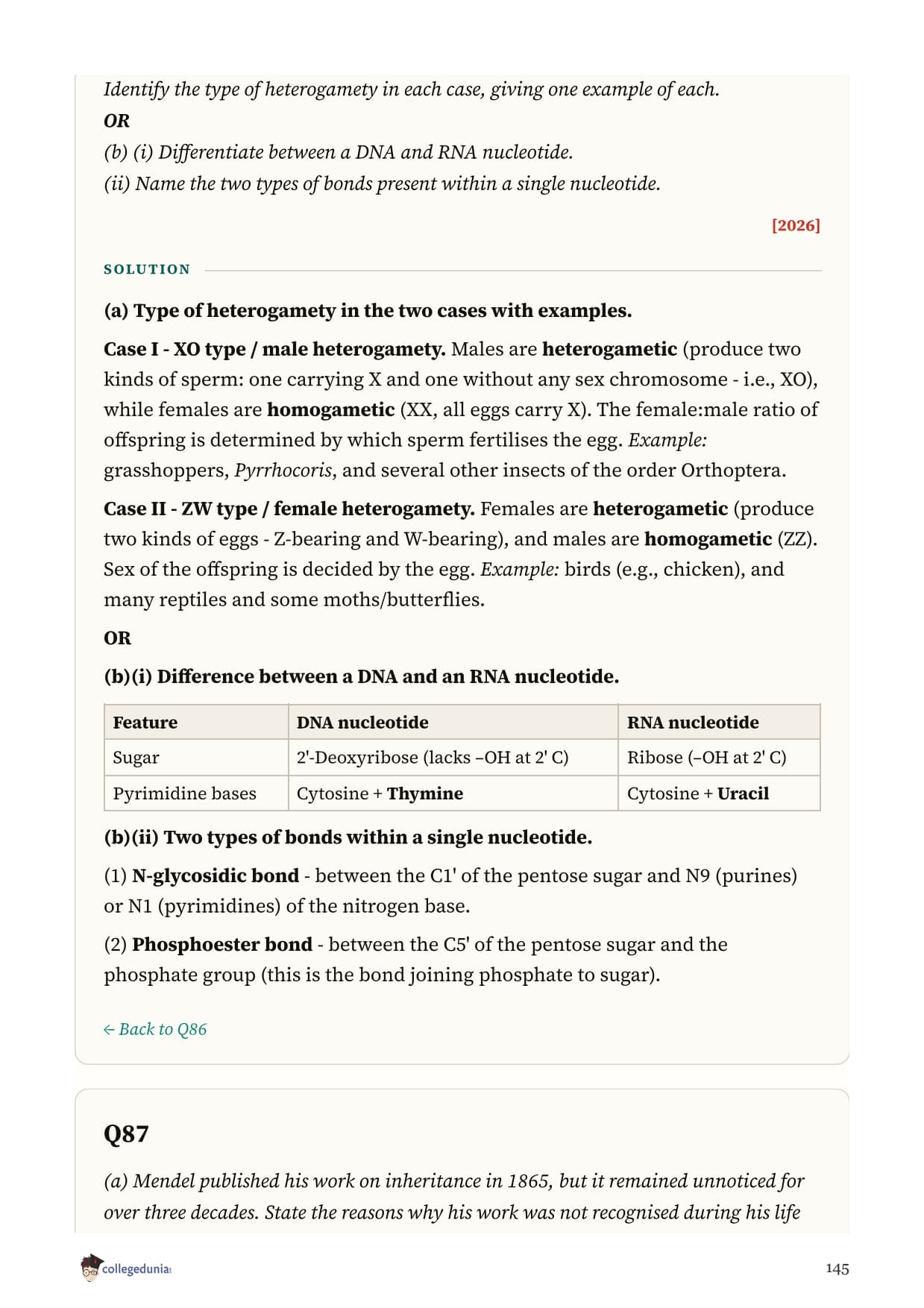
- 2026: A figure showing two ways of homologous chromosome pairing, a pedigree analysis with mode of inheritance, and why Mendel's 1865 work went unnoticed.
- 2024 to 2025: The largest contribution years by far, with banks of pedigree, monohybrid cross and sex-determination questions.
- 2020 to 2023: Reduced-syllabus papers, yet pedigree analysis, incomplete dominance and chromosomal disorders still feature.
- 2003 to 2019: Long answers on dihybrid crosses, linkage and the law of independent assortment, all still in the current syllabus.
Topic Frequency in the Principles of Inheritance and Variation Board Paper Questions
The 216 questions cluster into the six topic buckets below, ranked by how often CBSE has set them between 2003 and 2026.
| Rank | Topic Cluster | Frequency | Typical Marks Band |
|---|---|---|---|
| 1 | Pedigree analysis (mode of inheritance, autosomal vs sex-linked, working out genotypes) | ~24 per cent | 1, 2, 3 mark |
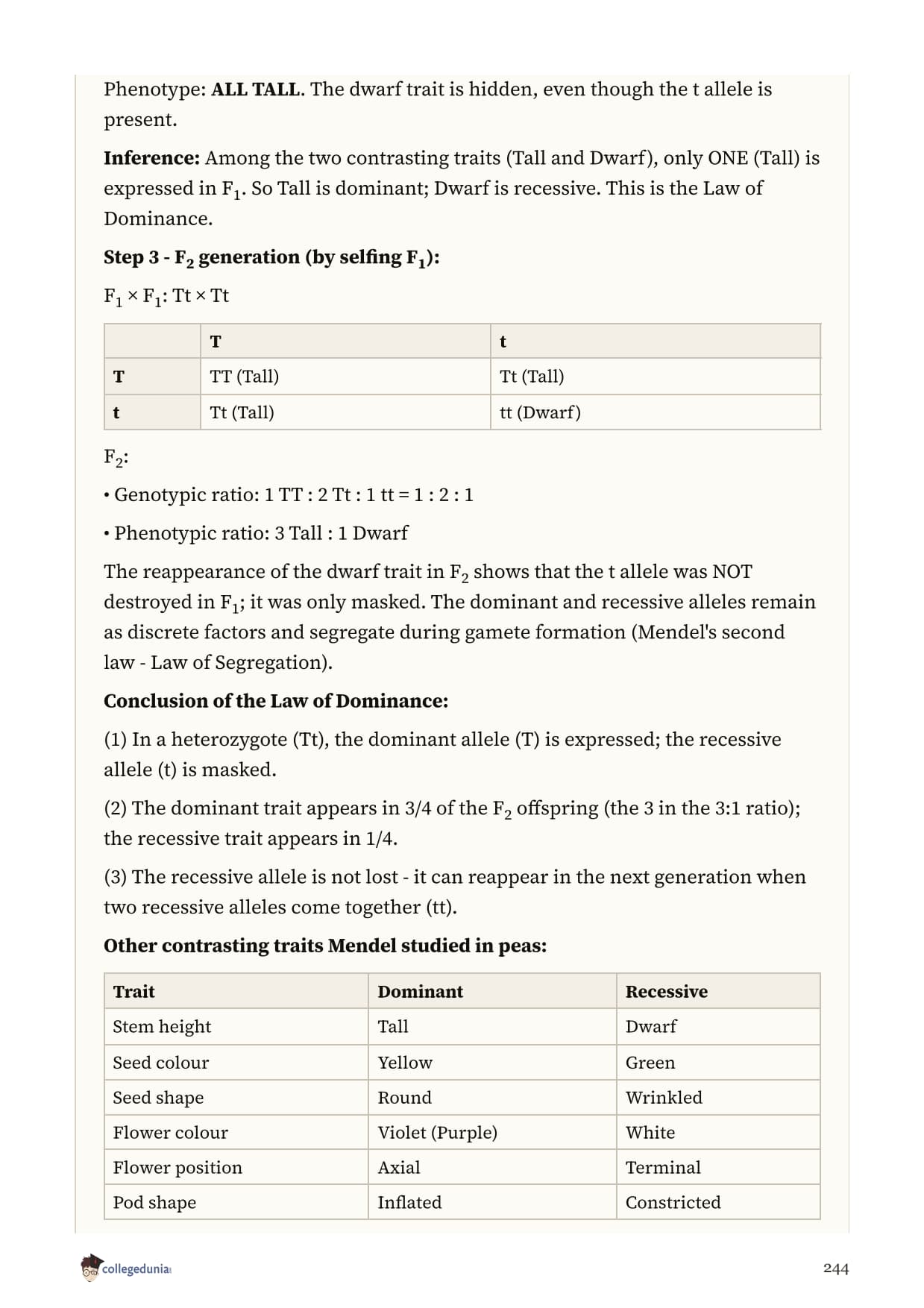
| 2 | Mendelian crosses (monohybrid, dihybrid, Punnett squares, laws of inheritance) | ~21 per cent | 2, 3, 5 mark |
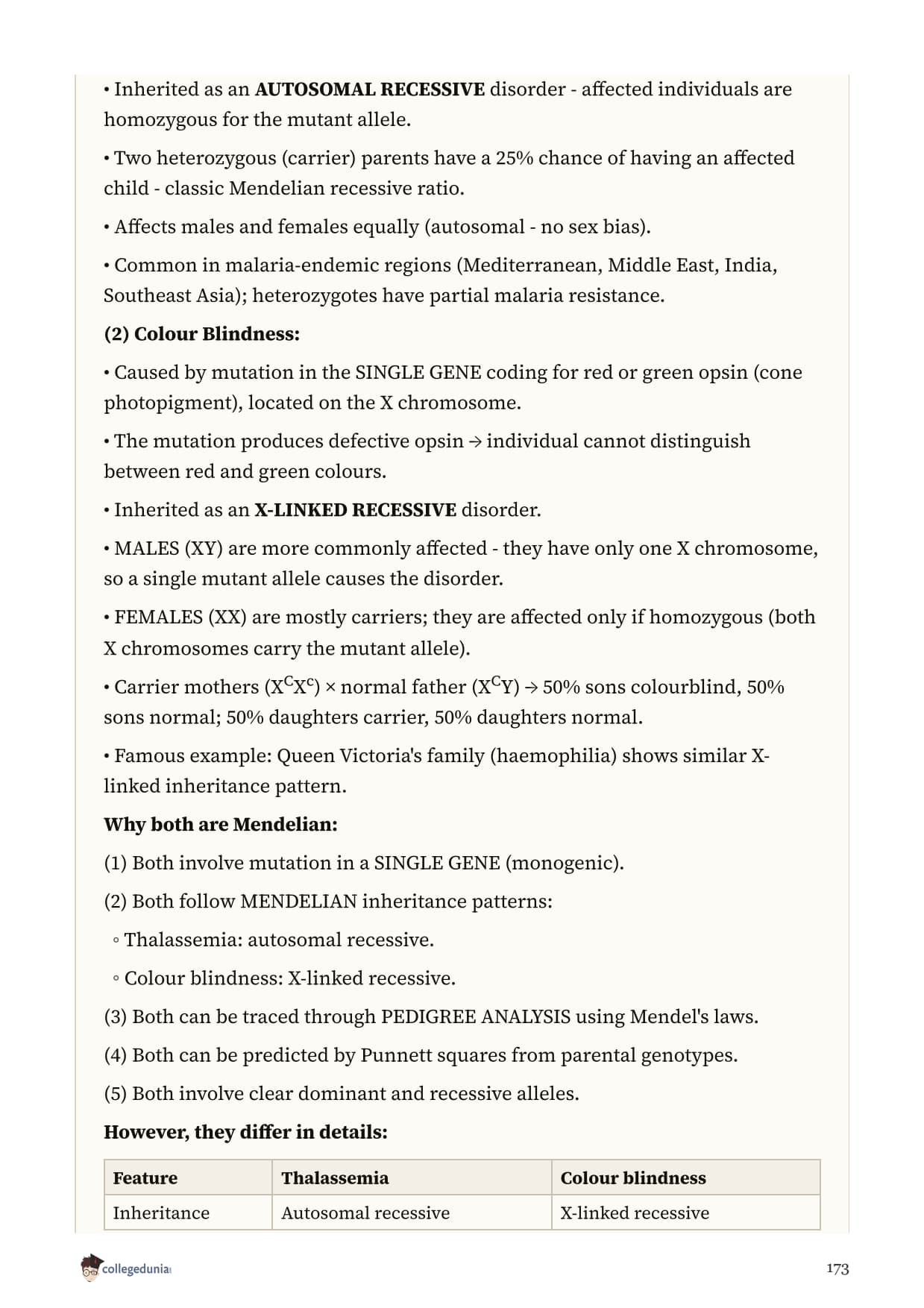
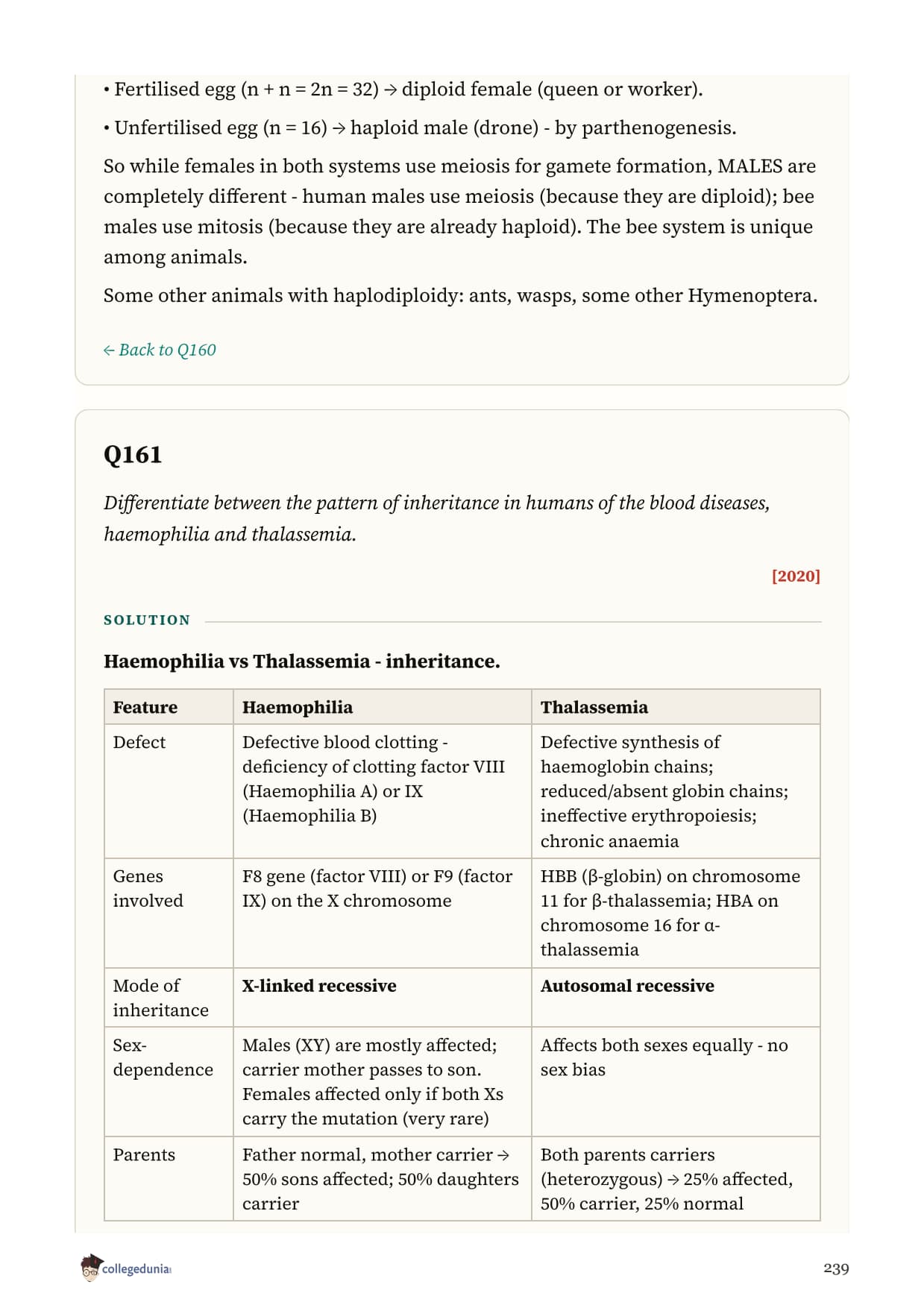
| 3 | Sex-linked and inherited disorders (haemophilia, colour blindness, sickle cell anaemia) | ~16 per cent | 1, 3, 5 mark |
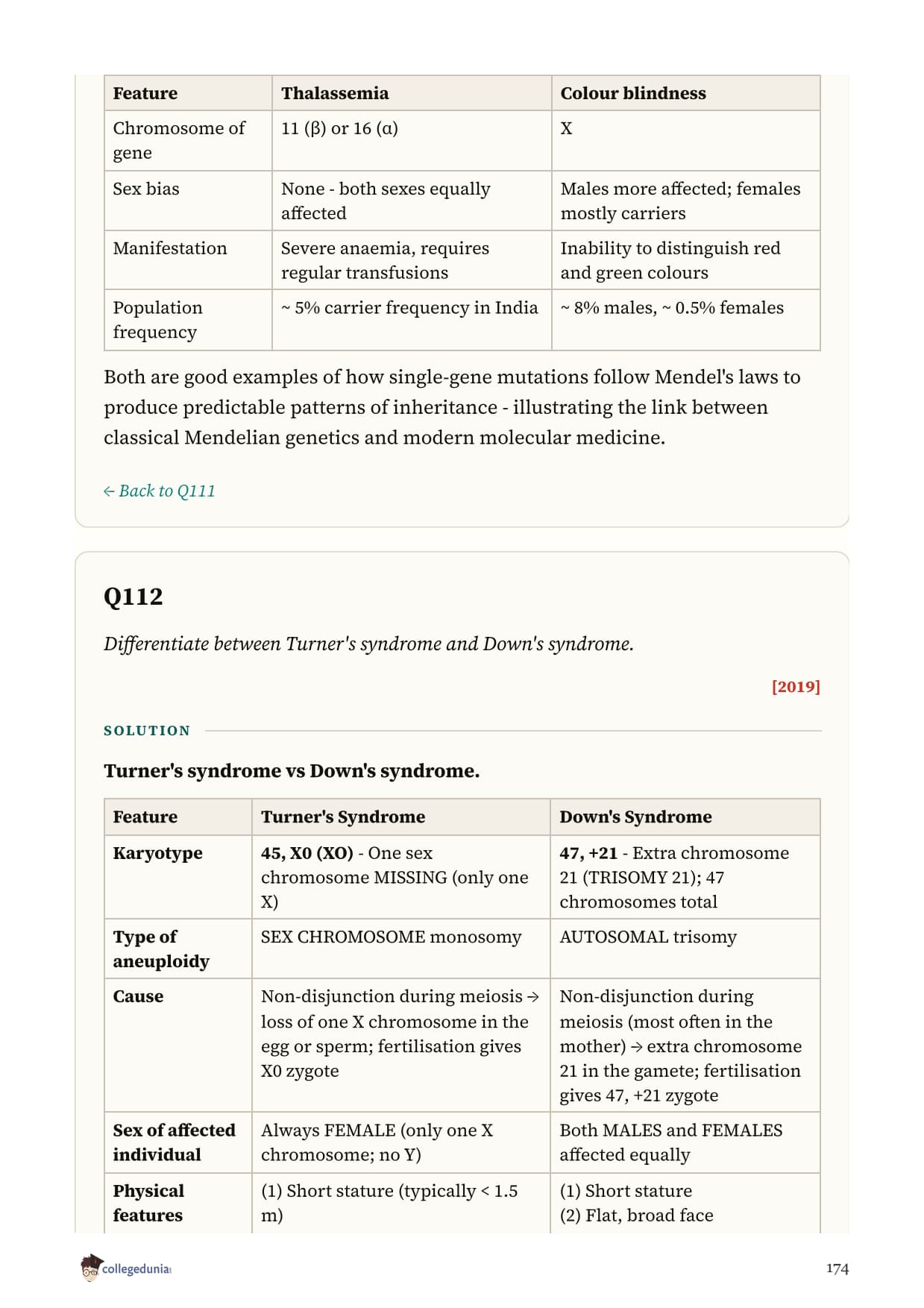
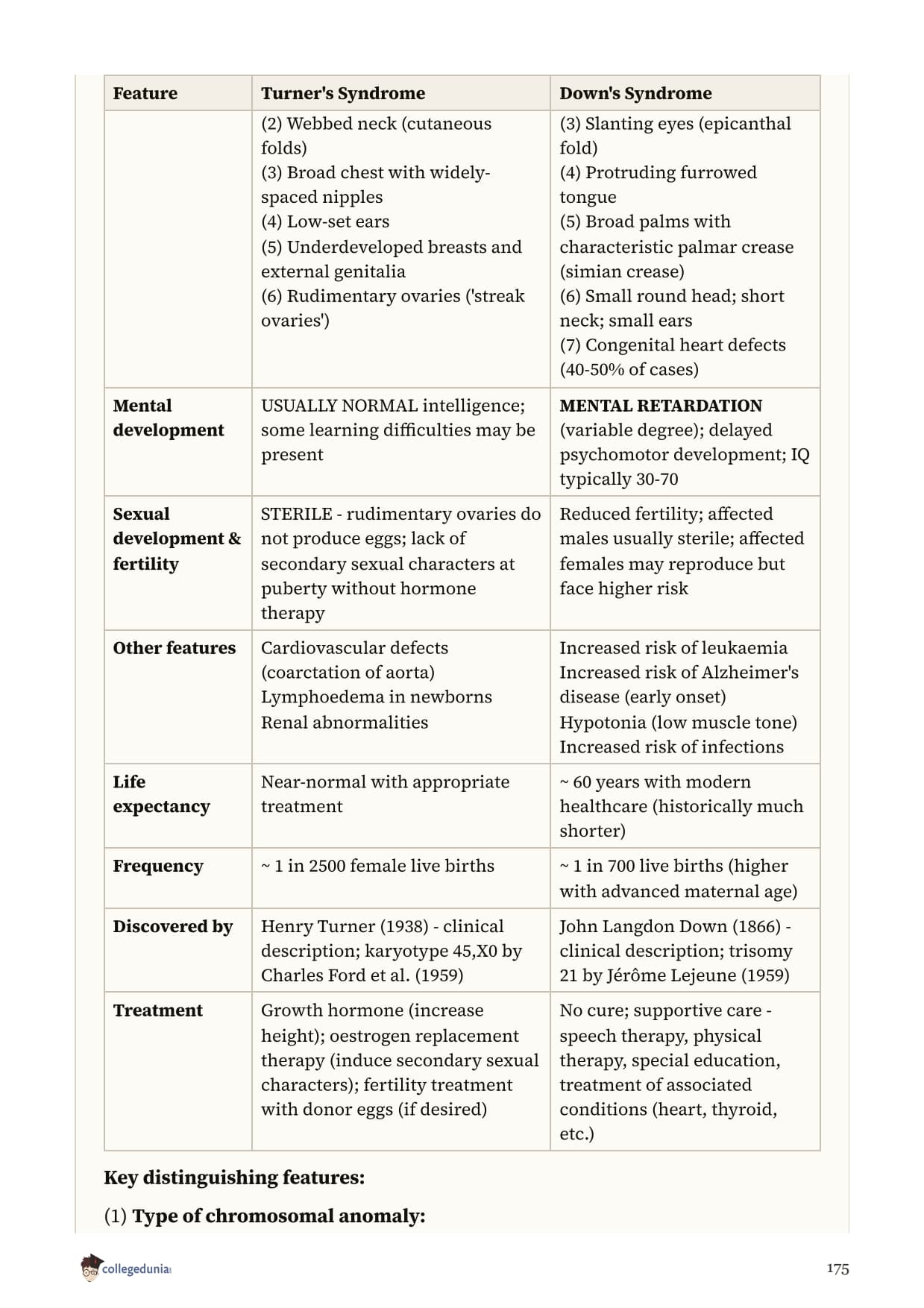
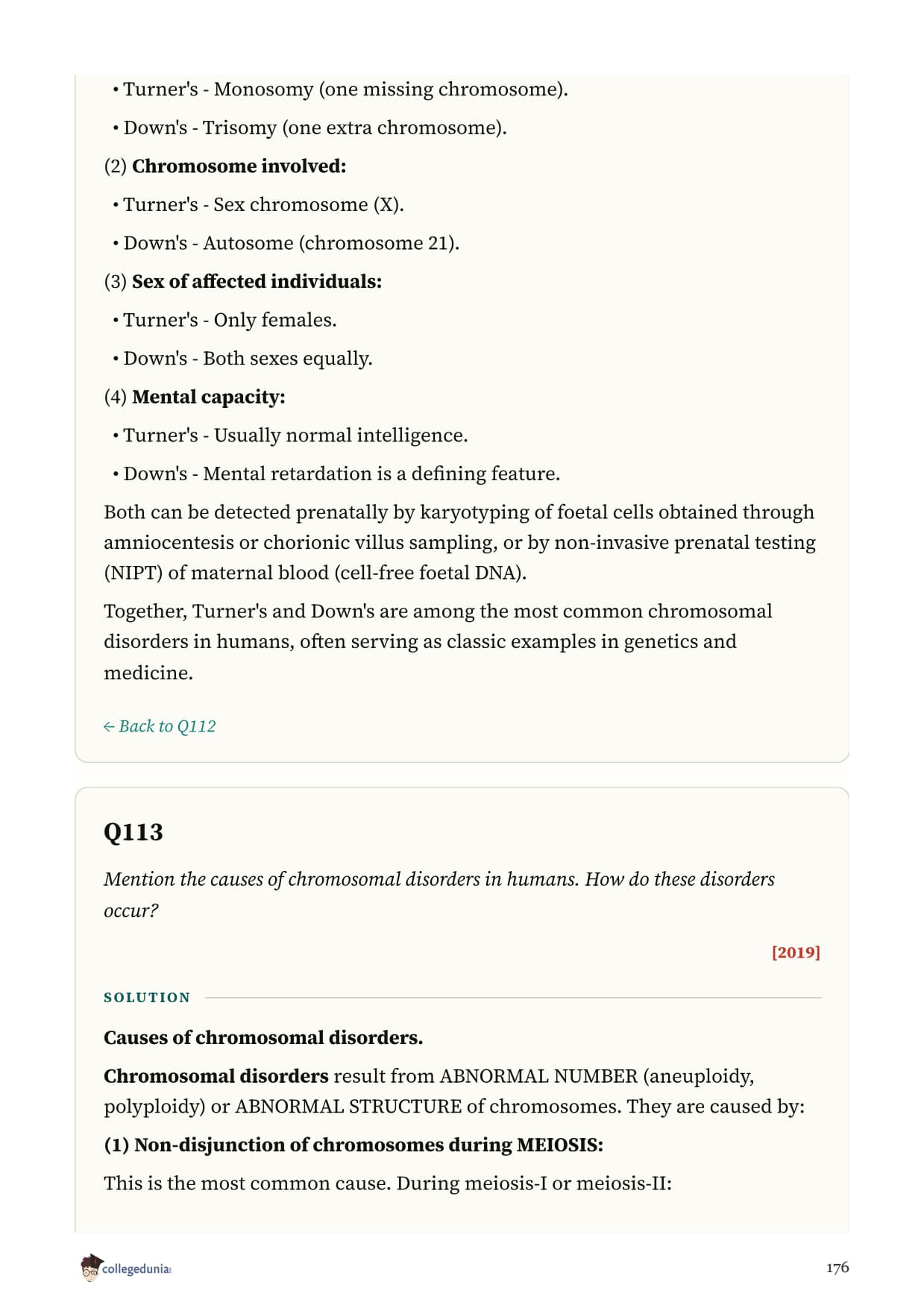
| 4 | Chromosomal disorders (Down's syndrome, Turner's, Klinefelter's, aneuploidy) | ~14 per cent | 1 and 2 mark |
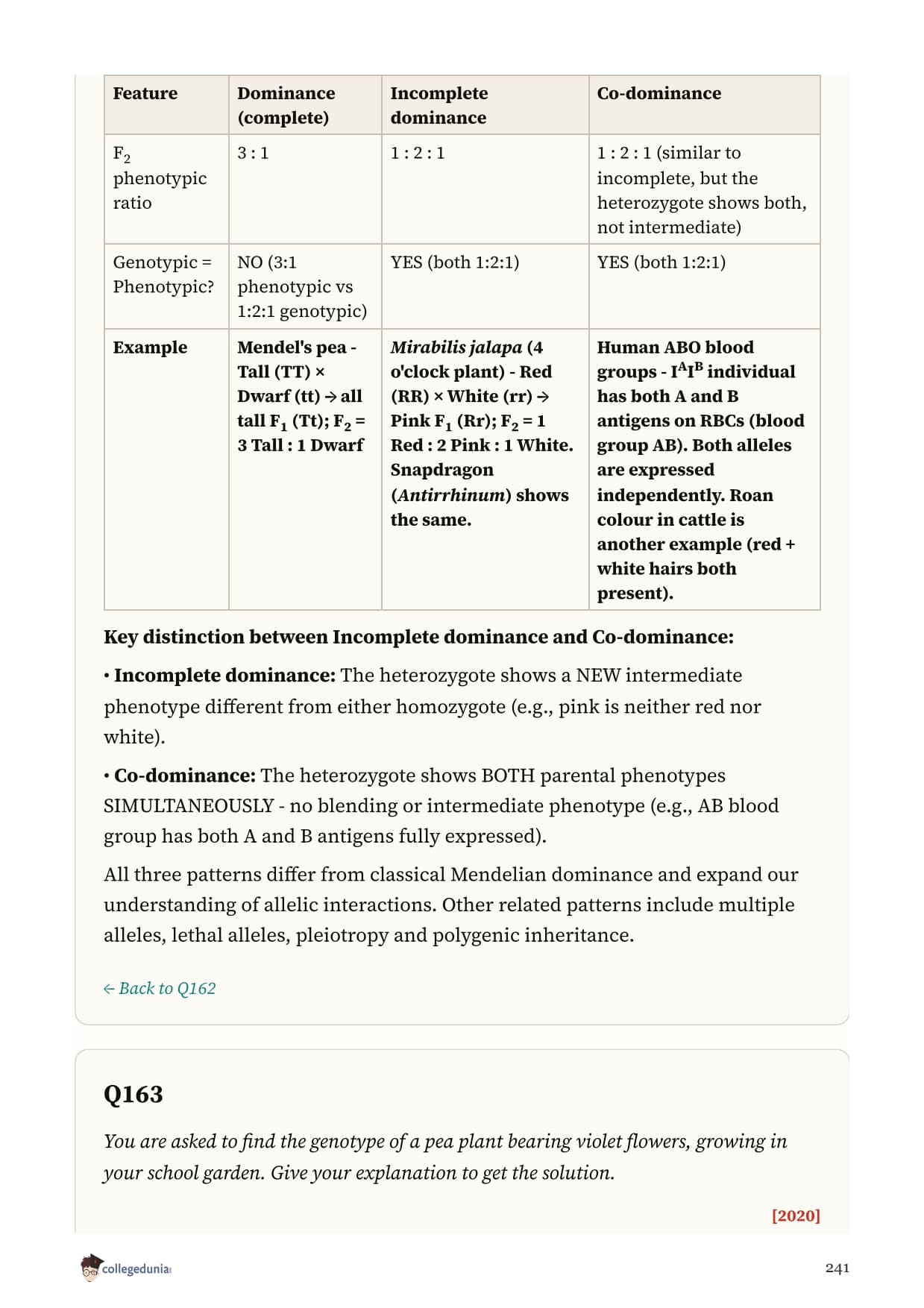
| 5 | Sex determination and dominance patterns (XX-XY, ZW, incomplete dominance, codominance, ABO) | ~14 per cent | 1, 2, 3 mark |
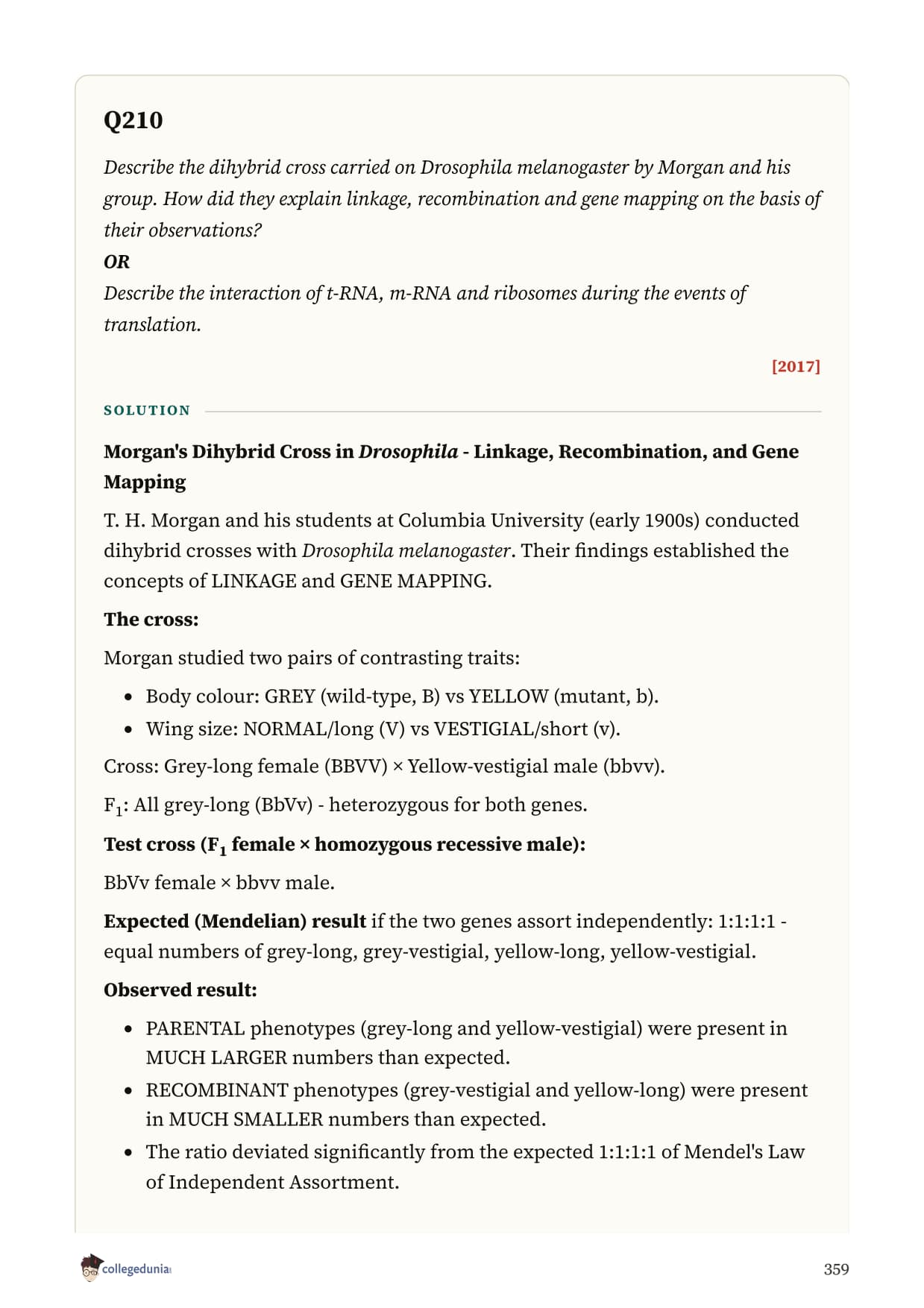
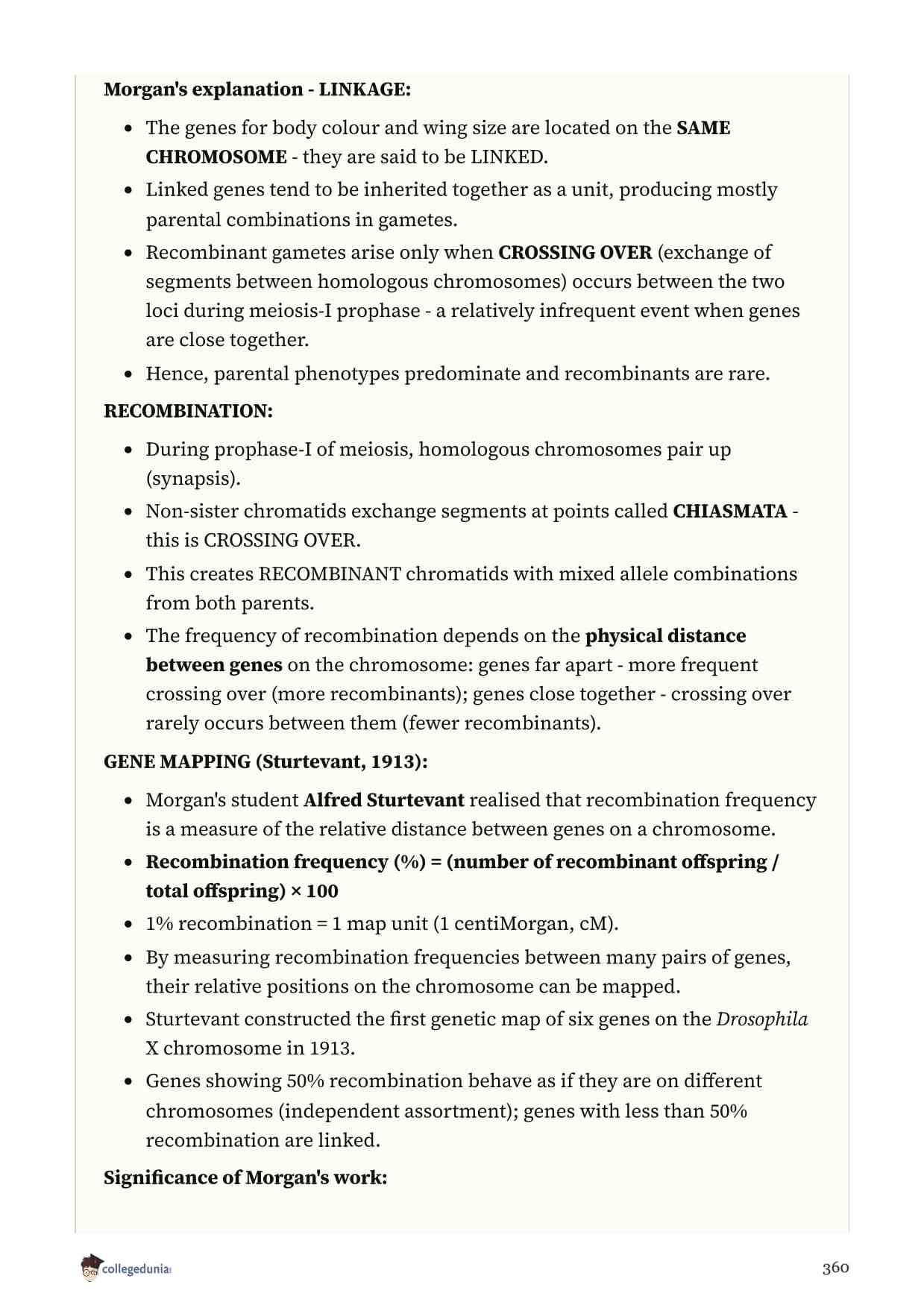
| 6 | Linkage and recombination (Morgan's experiments, linked genes, crossing over) | ~11 per cent | 3 and 5 mark |
Marks-Band Attempt Strategy for the Principles of Inheritance and Variation PYQs
The 216 PYQs are arranged marks-ascending inside the PDF so you can attempt them in the same order the CBSE paper presents them.
- 1-mark questions: Spend no more than 45 seconds each. With 84 here, speed matters most in this band.
- 2-mark questions: A short definition or a one-step cross. Aim for 3 minutes.
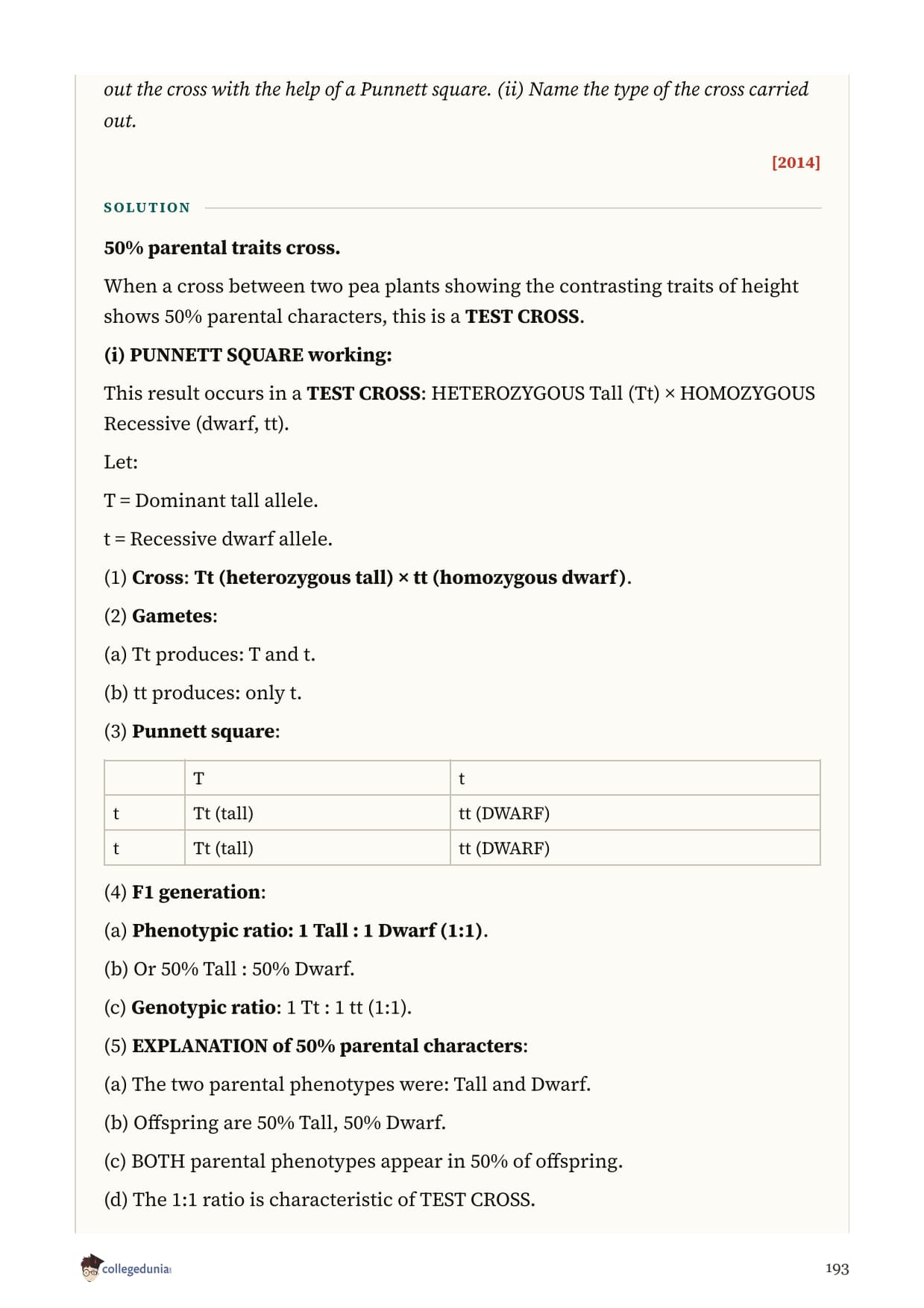
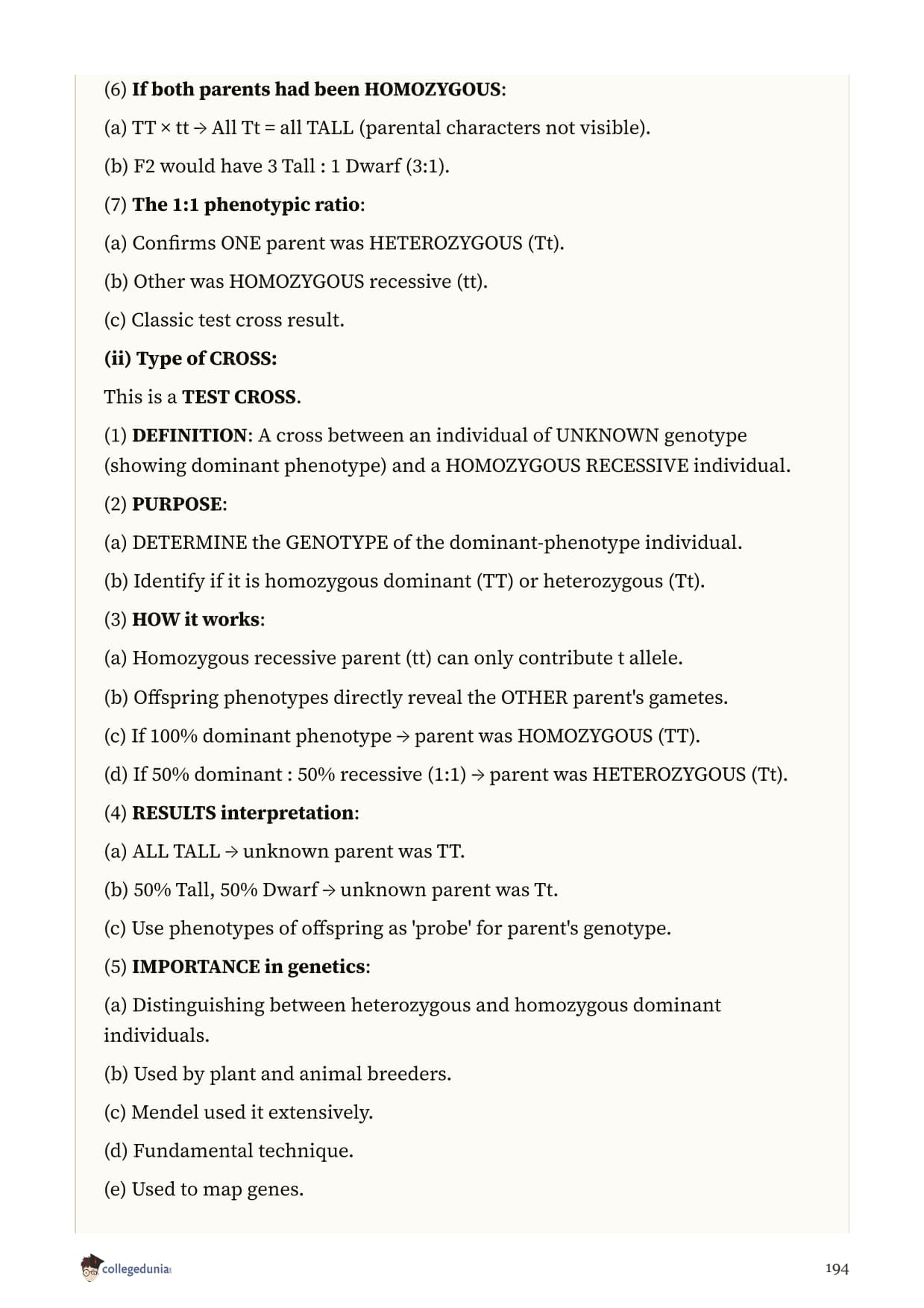
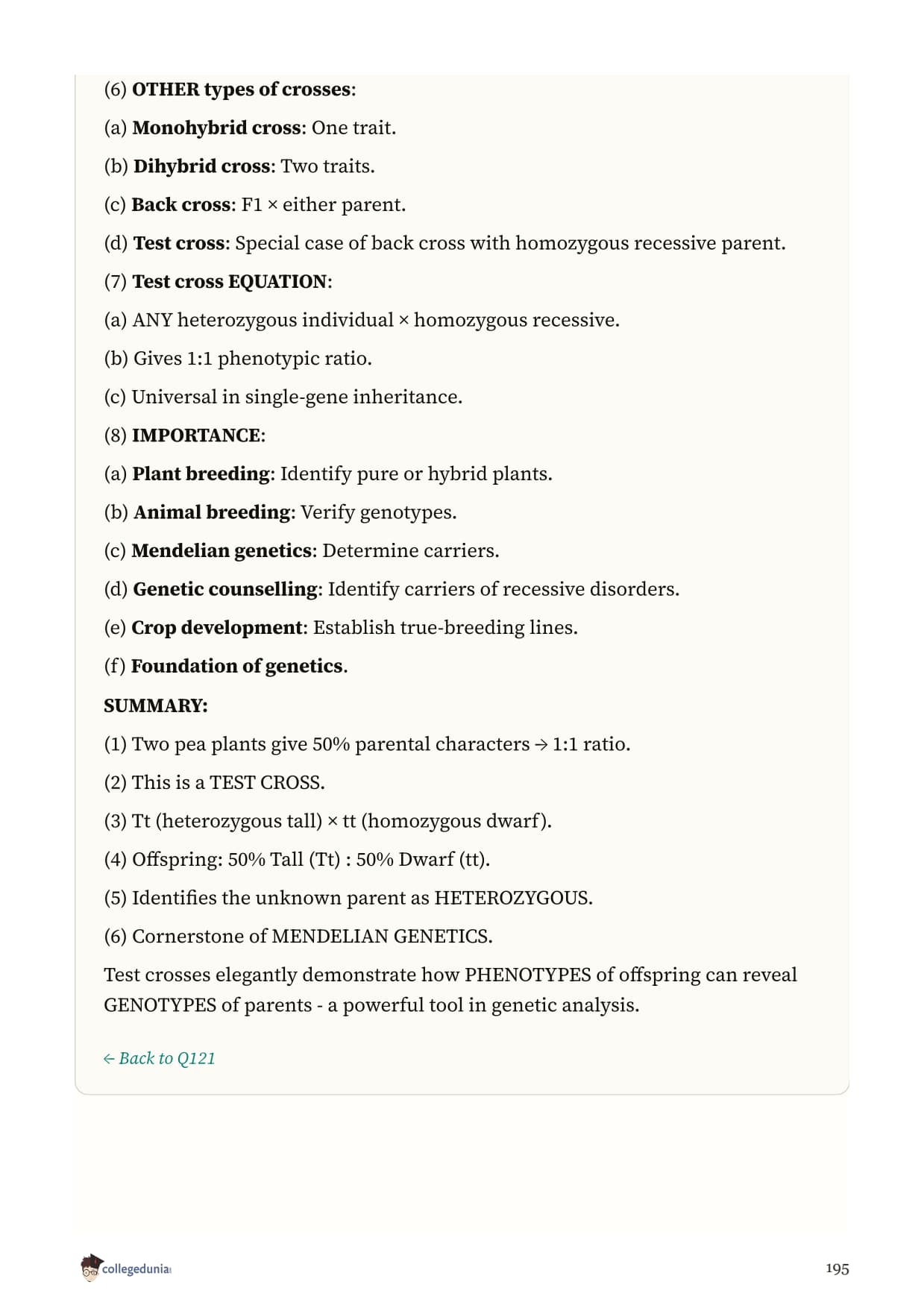
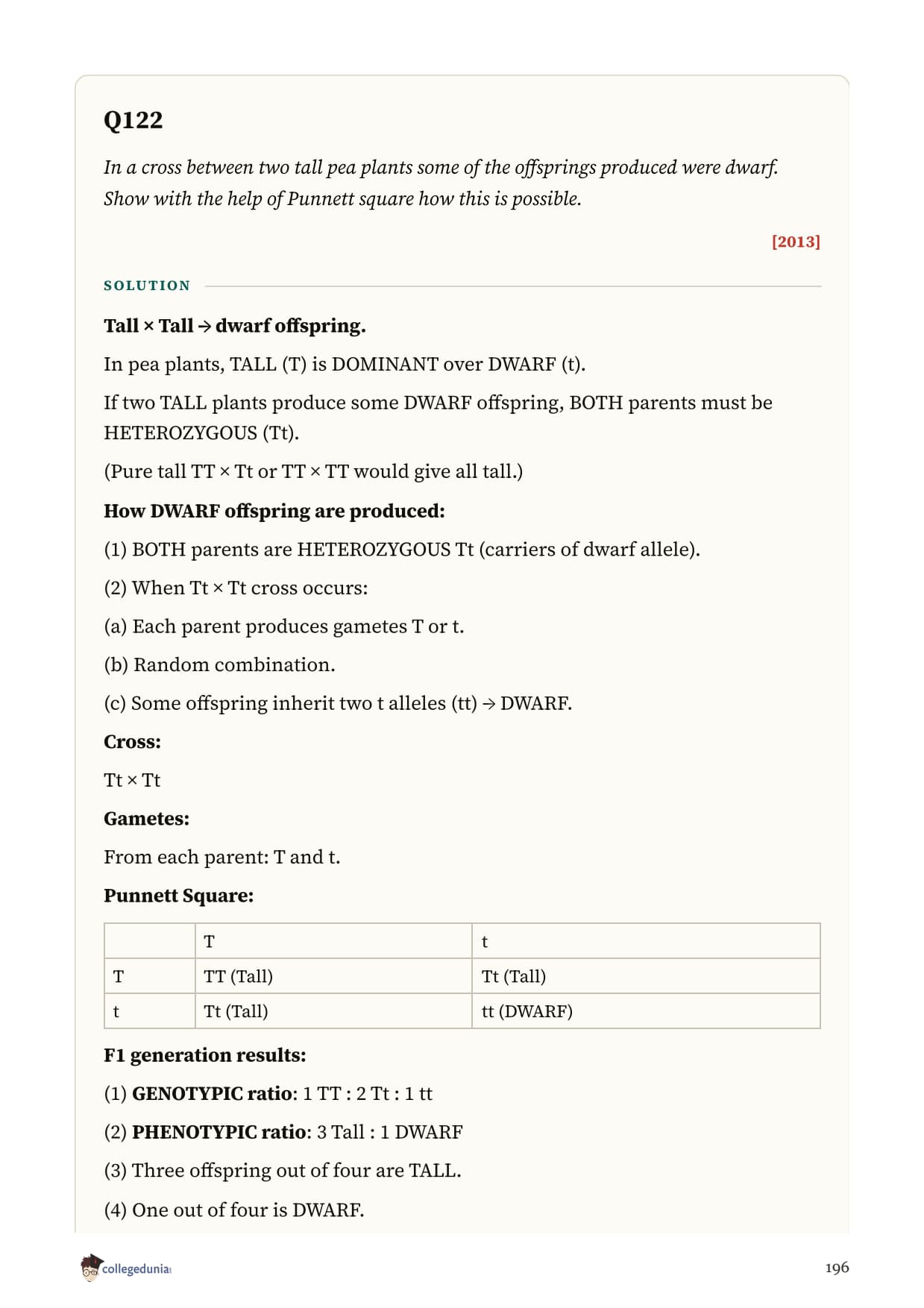
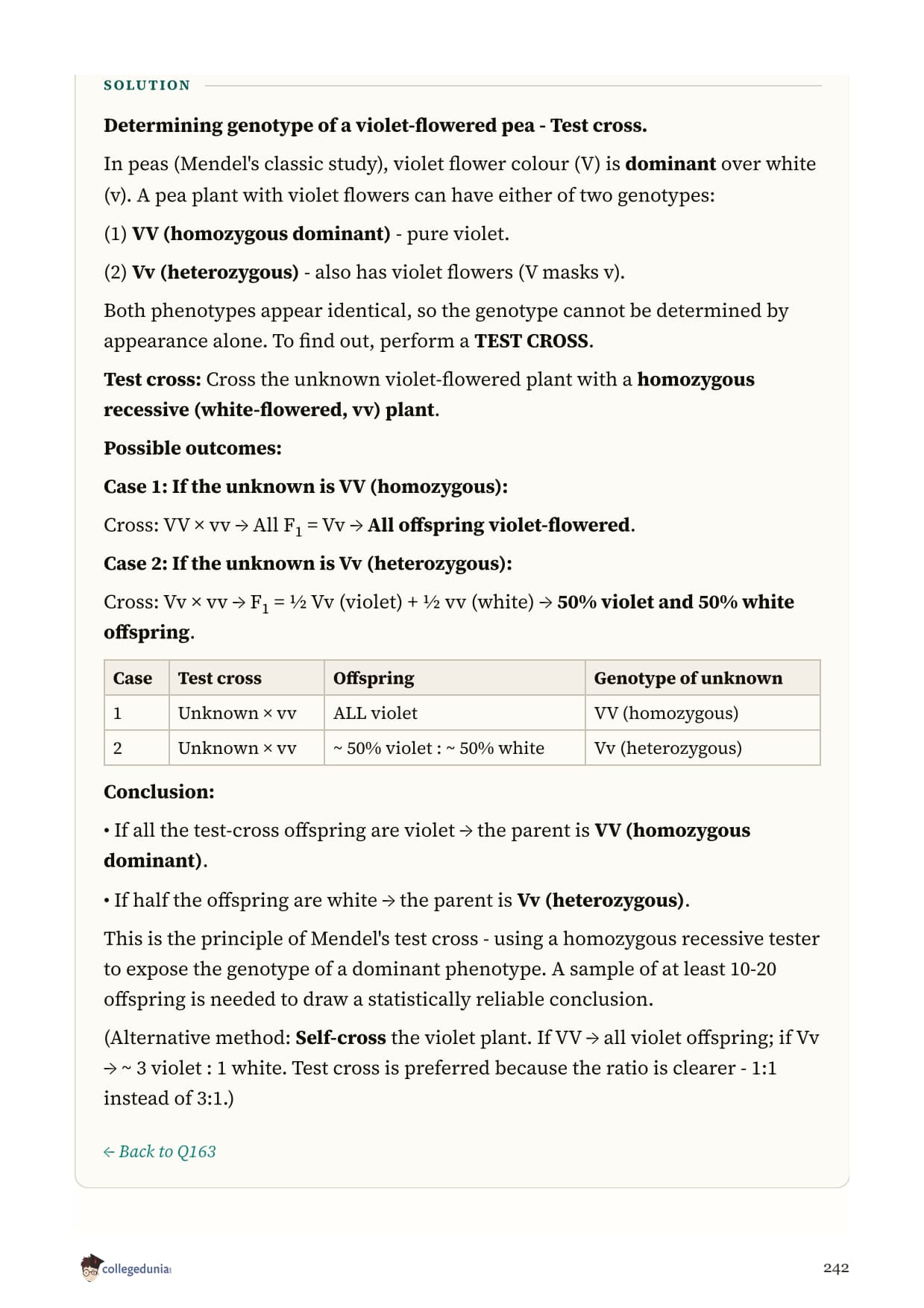
- 3-mark questions: Usually a pedigree or a monohybrid cross. Always show the Punnett square and the genotype ratio, not just the phenotype.
- 5-mark long answers: A dihybrid cross or a linkage explanation with the F2 ratio. Allocate 12 to 15 minutes.
Recent CBSE Trend: 2024 to 2026 Pattern Shift in Principles of Inheritance and Variation
Three things have changed in the recent CBSE cycles that the Principles of Inheritance and Variation previous year questions now reflect:
- Section A now carries a fixed block of 1-mark MCQ and assertion-reason questions. The compilation includes 84 such questions, the largest 1-mark count of any Biology chapter.
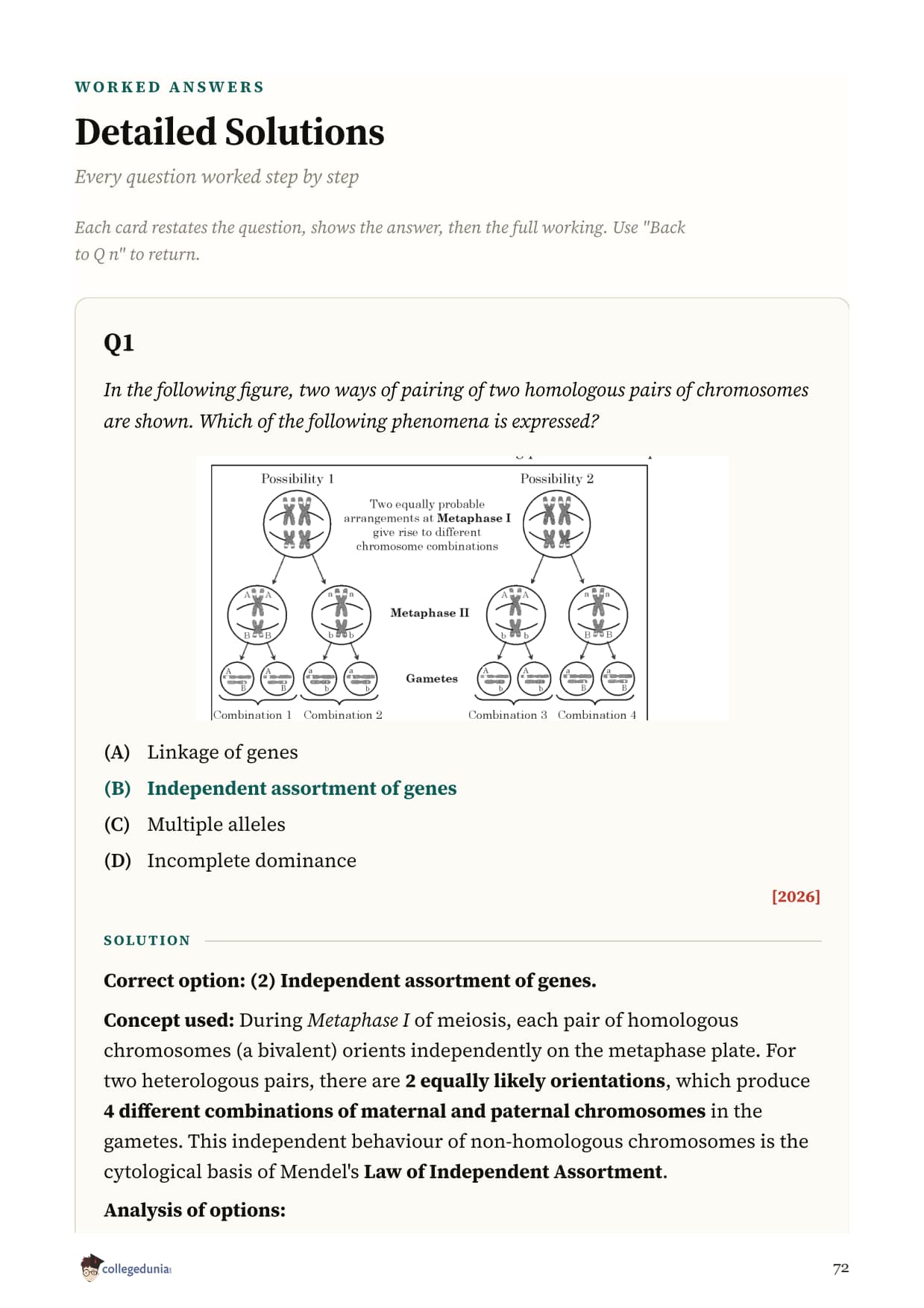
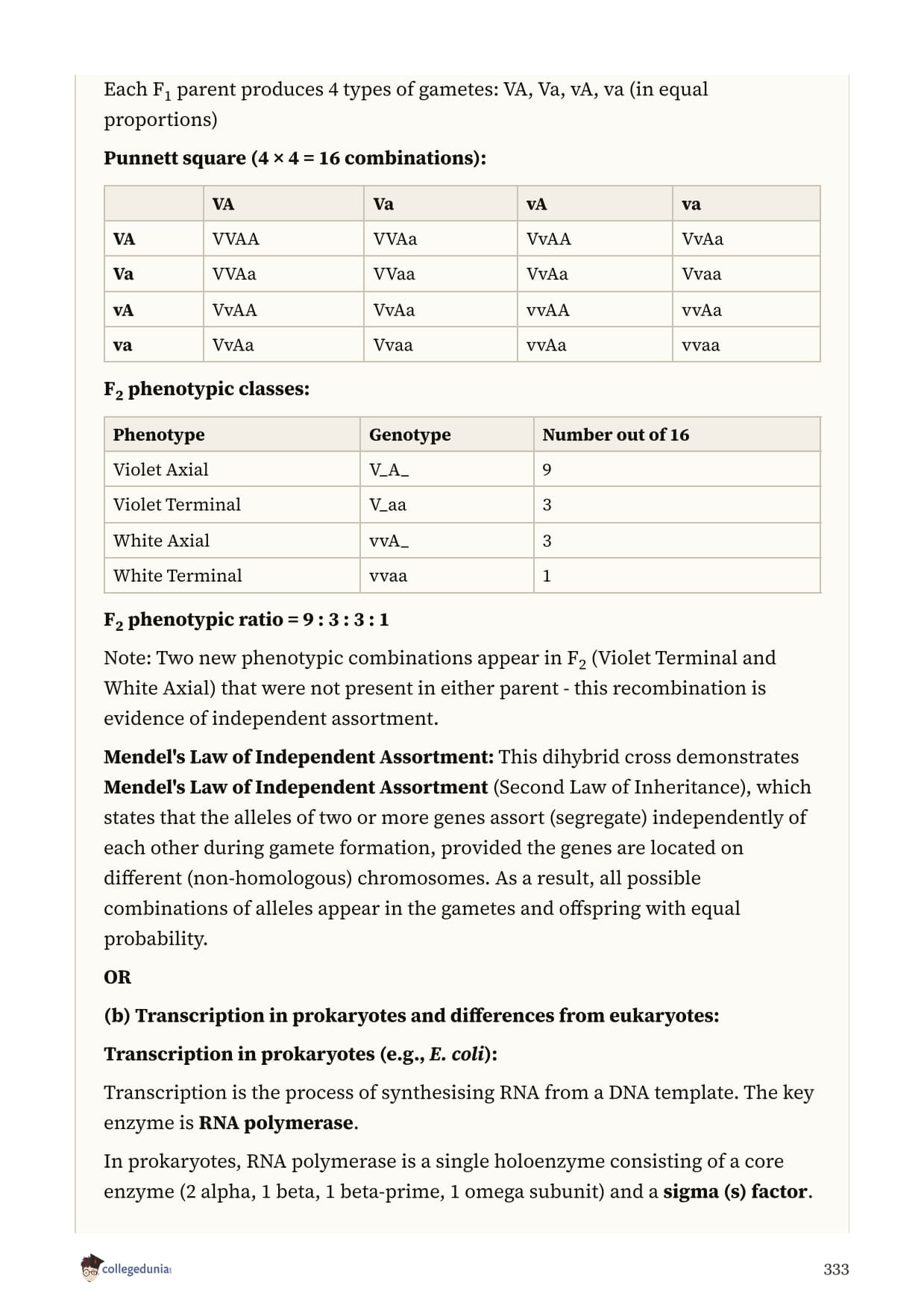
- Figure-based questions are rising, for example the 2026 item showing two ways of homologous chromosome pairing and asking which phenomenon it expresses.
- 5-mark questions almost always carry an OR alternative, so the PDF keeps both branches, often pairing a cross with a pedigree or a disorder.
Sample Previous Year Questions from Principles of Inheritance and Variation
Here are a few real previous year questions from the Principles of Inheritance and Variation board papers, taken straight from the compilation. The full set is in the downloadable PDF.
In the following figure, two ways of pairing of two homologous pairs of chromosomes are shown. Which of the following phenomena is expressed?
- Linkage of genes
- Independent assortment of genes
- Multiple alleles
- Incomplete dominance
[2026 • 1 mark]
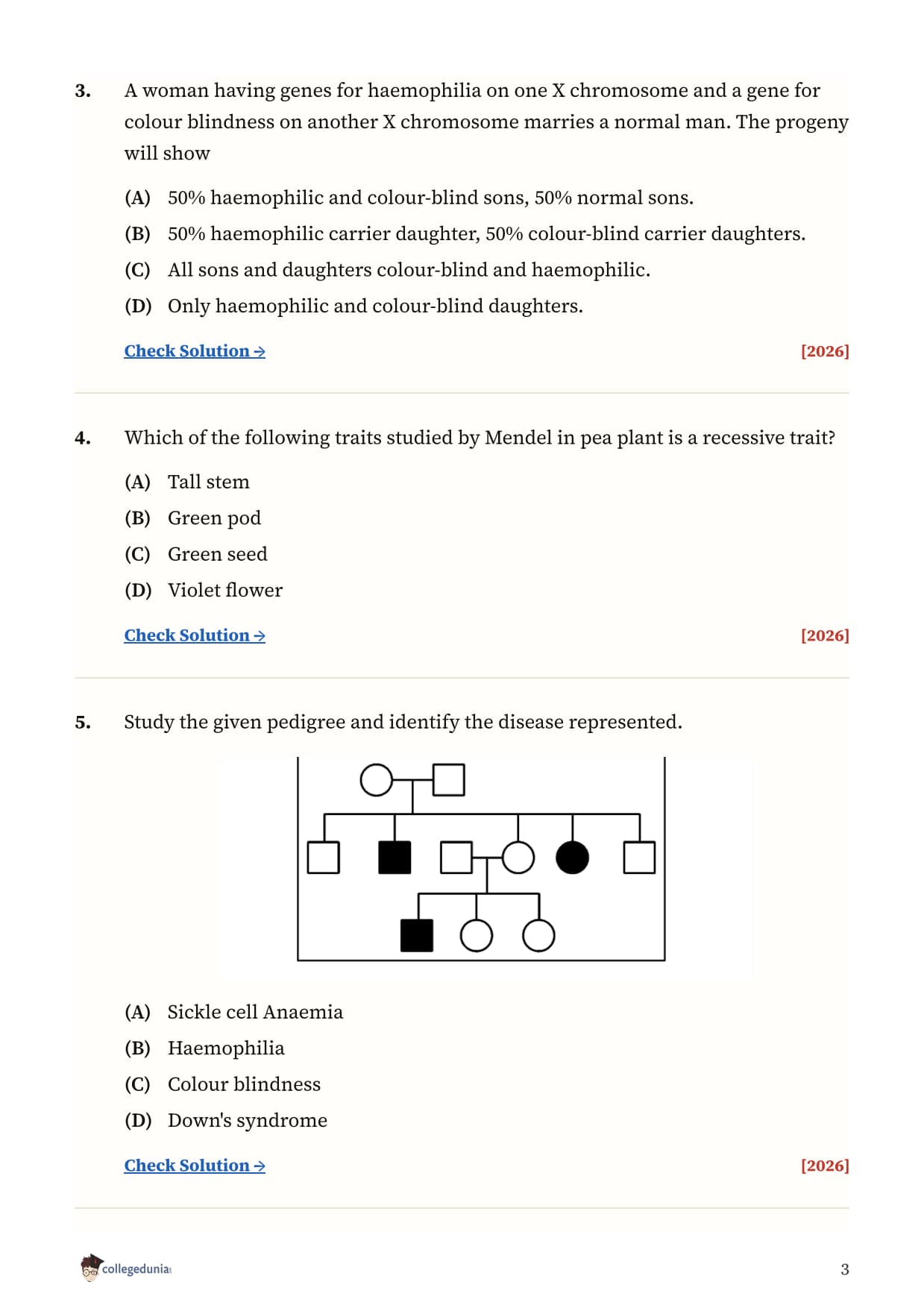
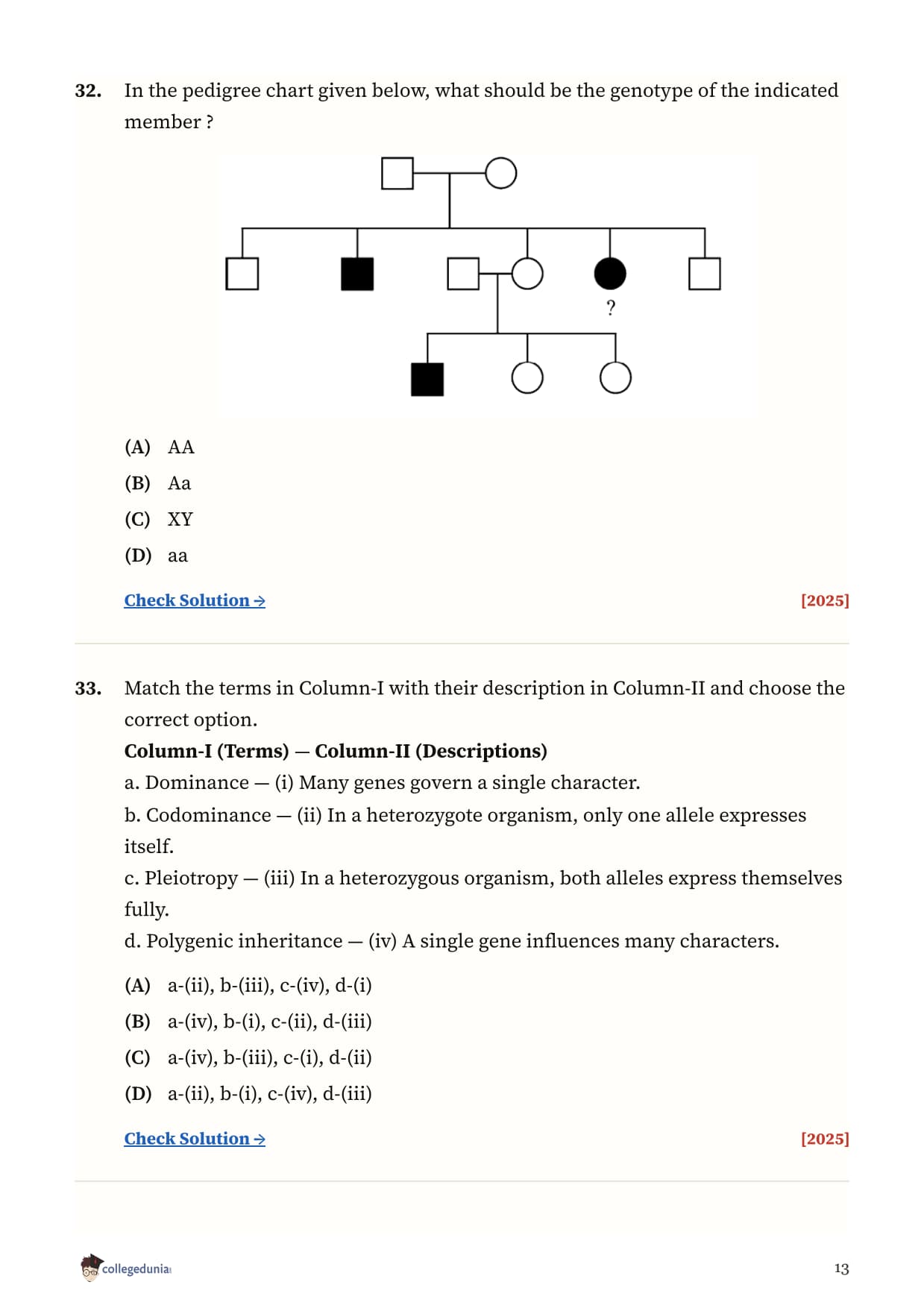
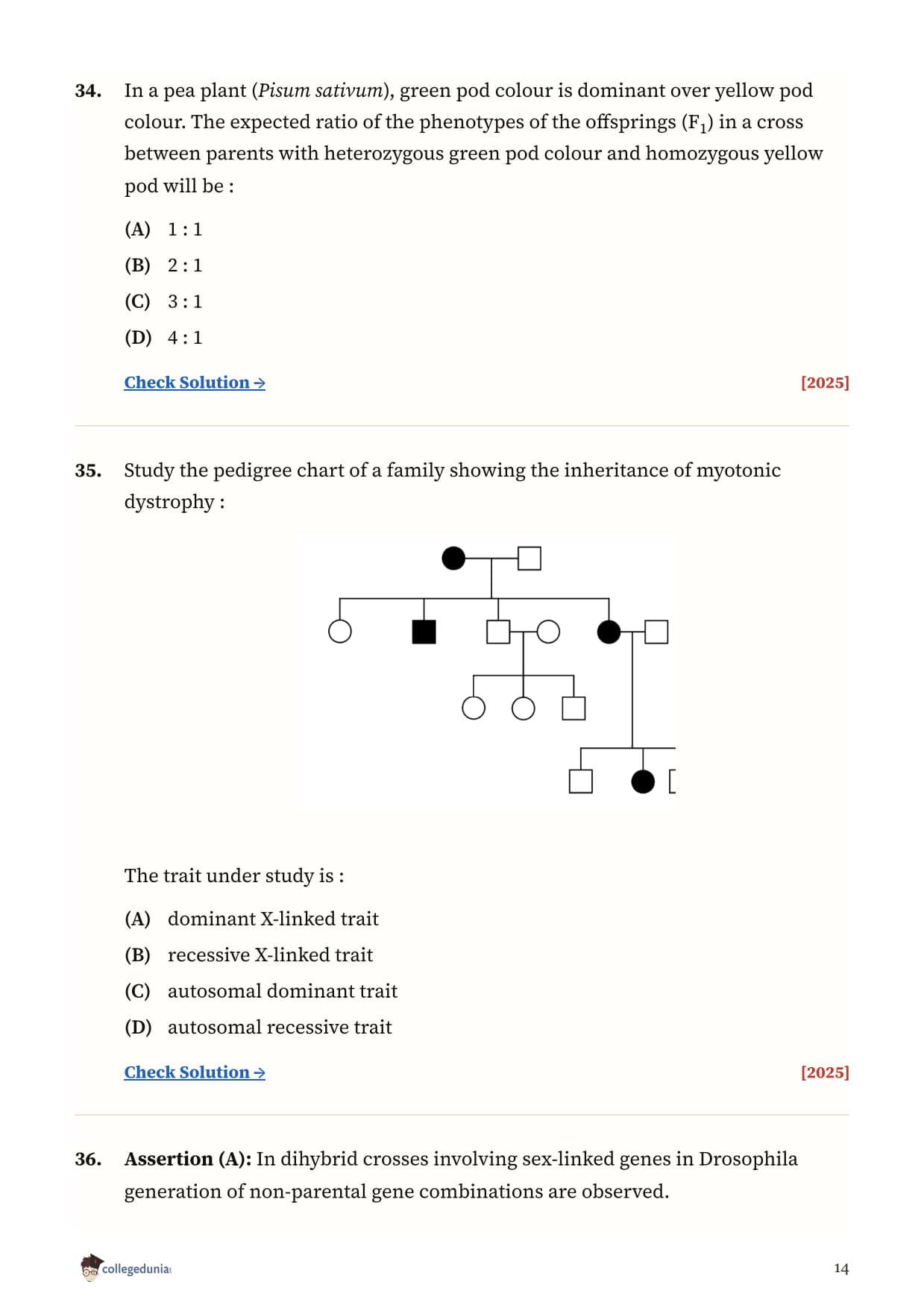
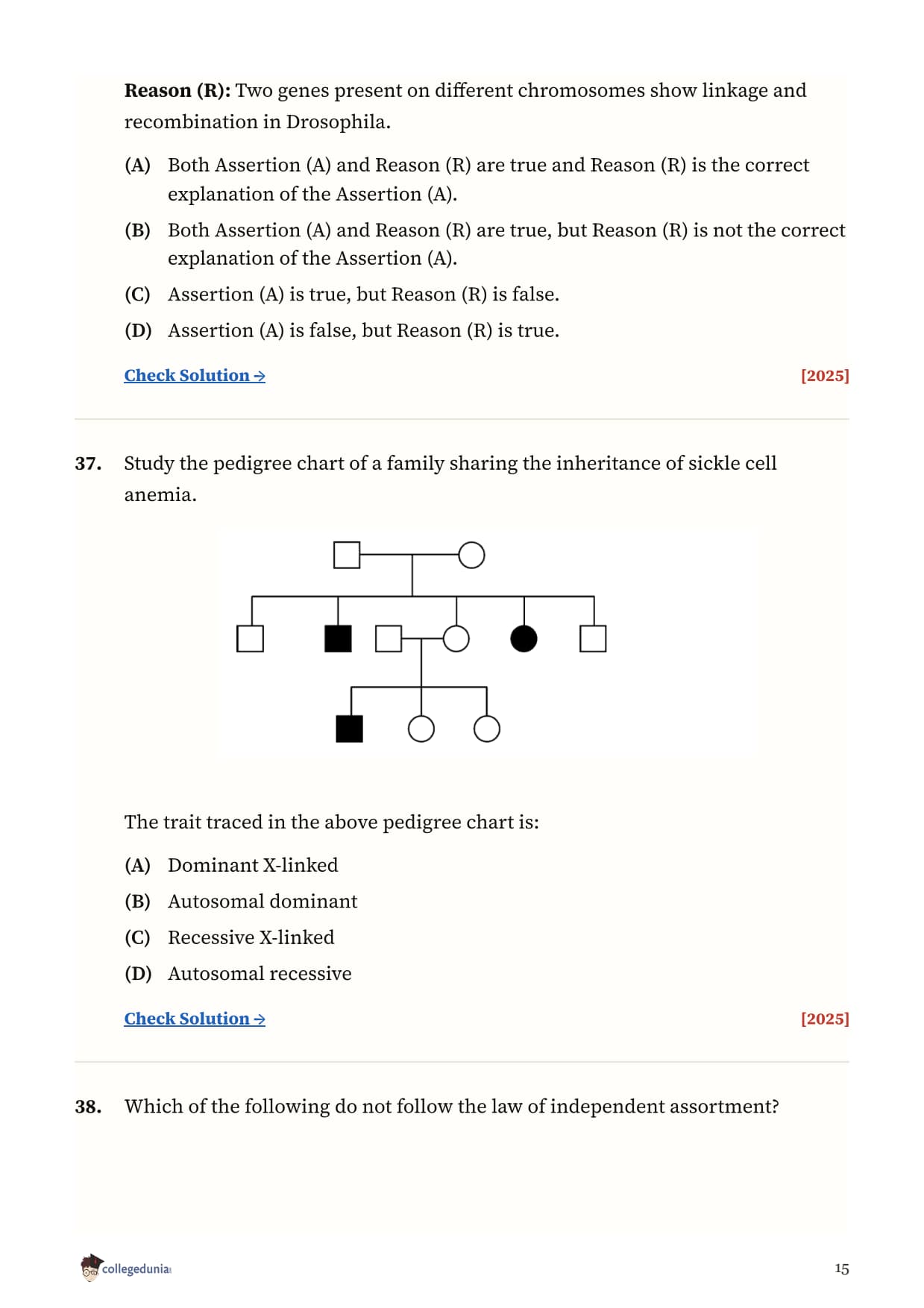
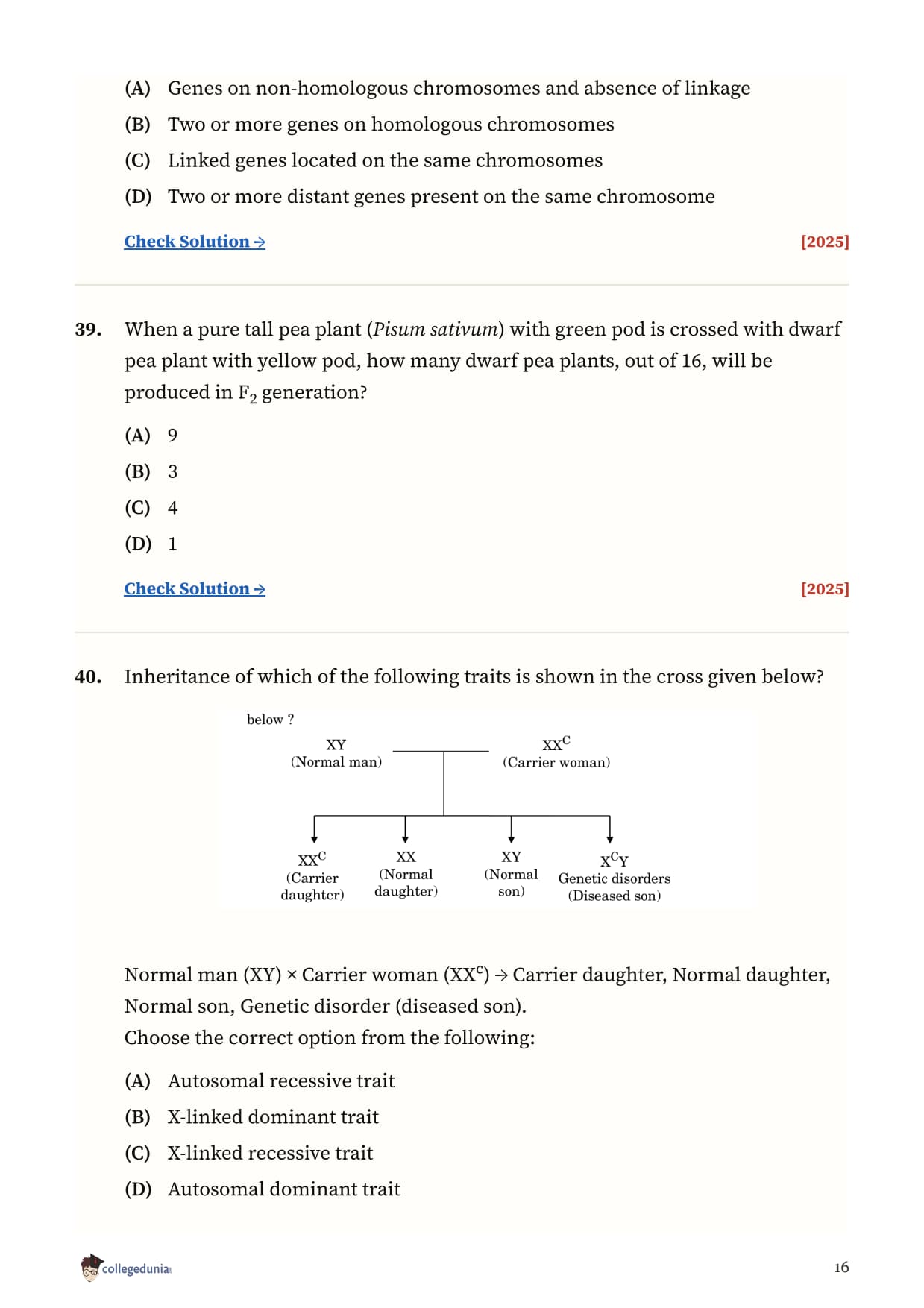
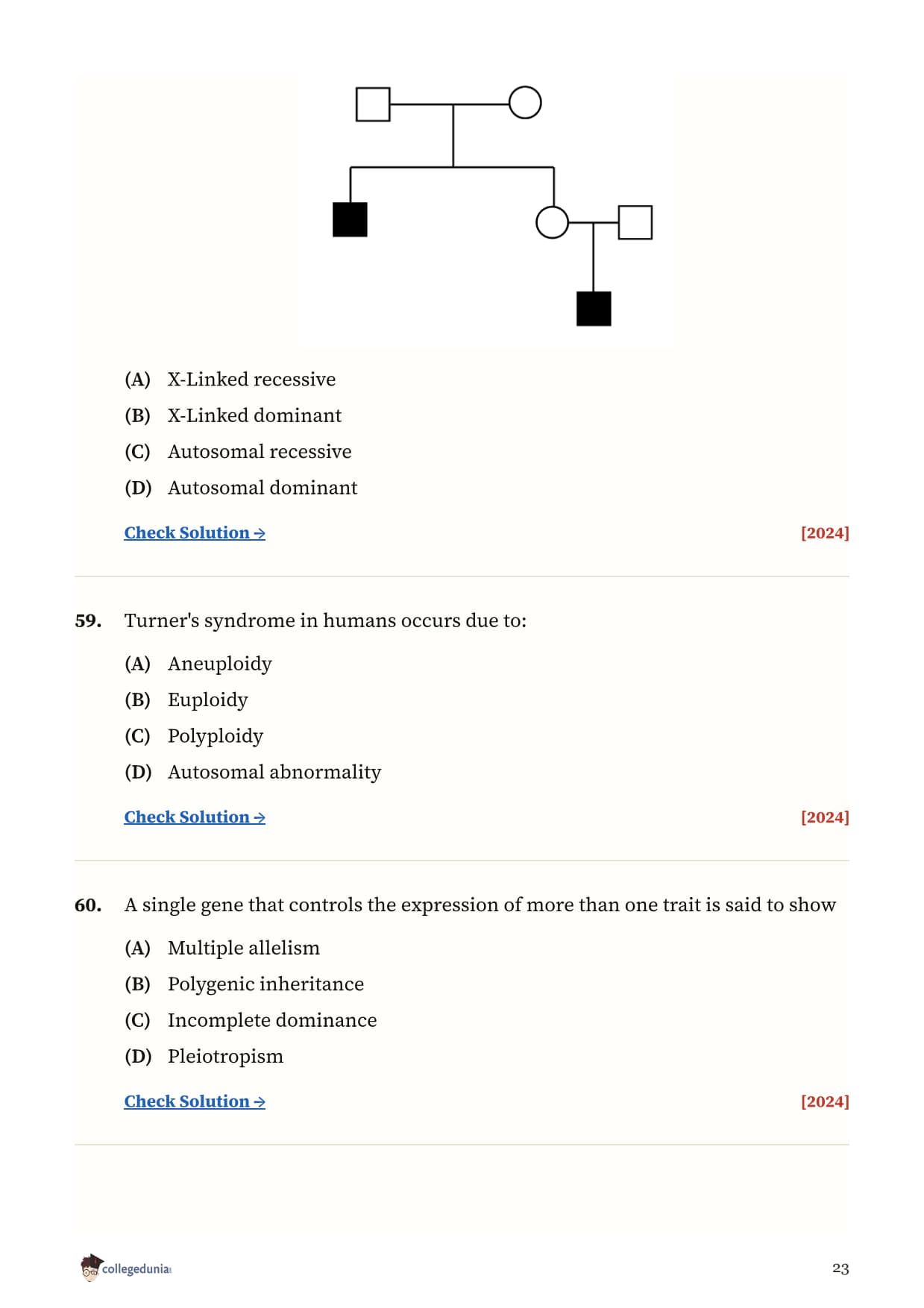
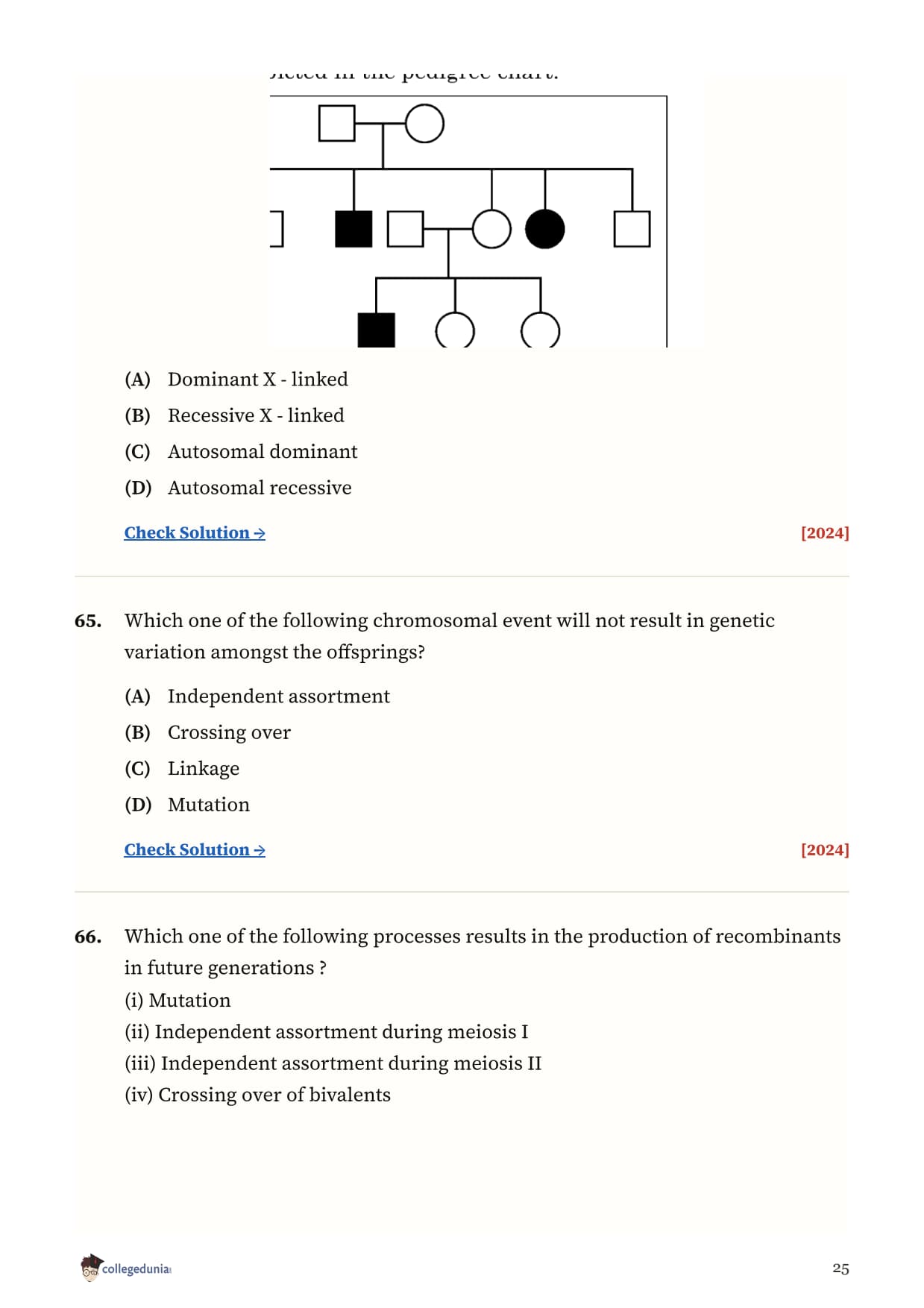
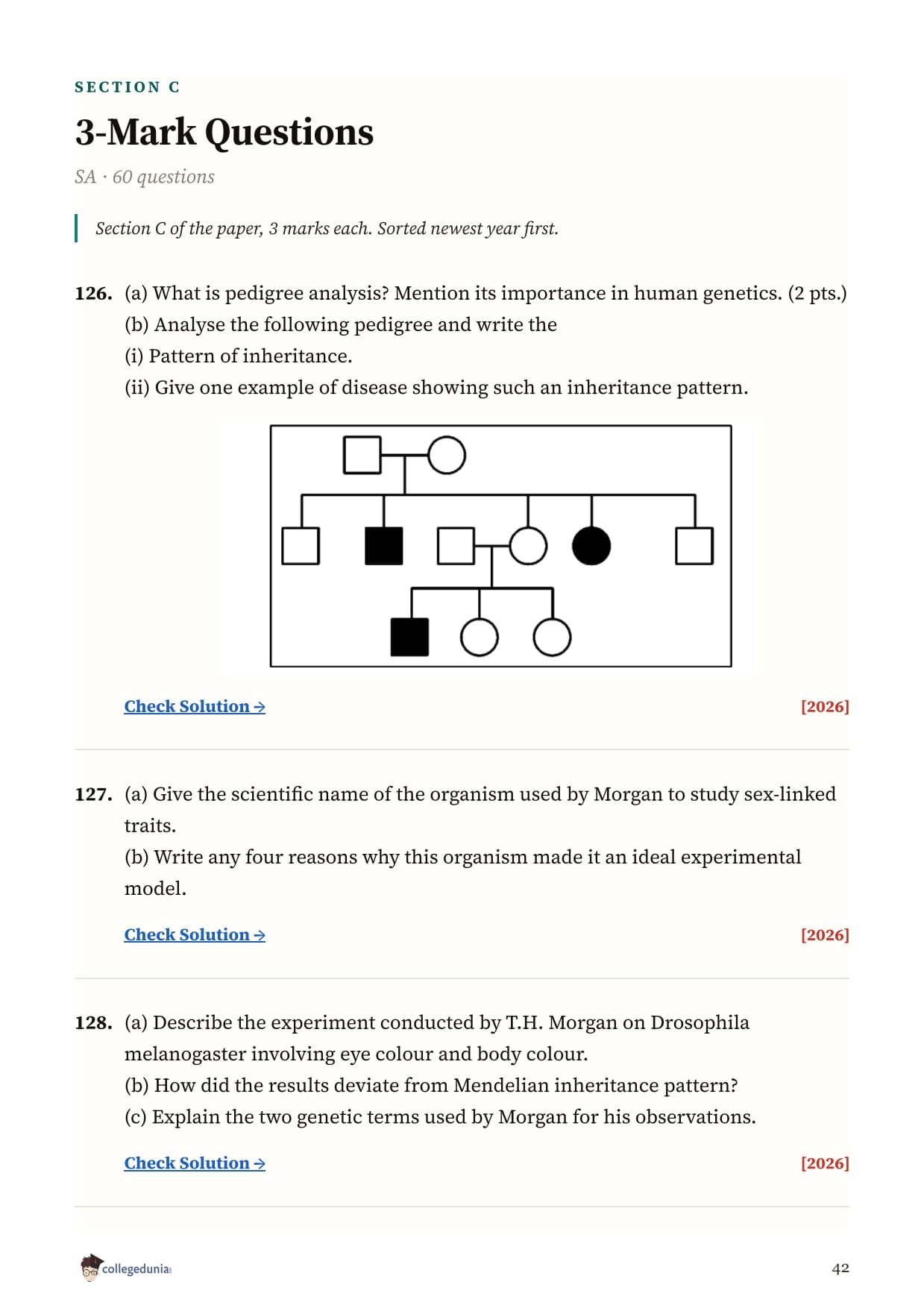
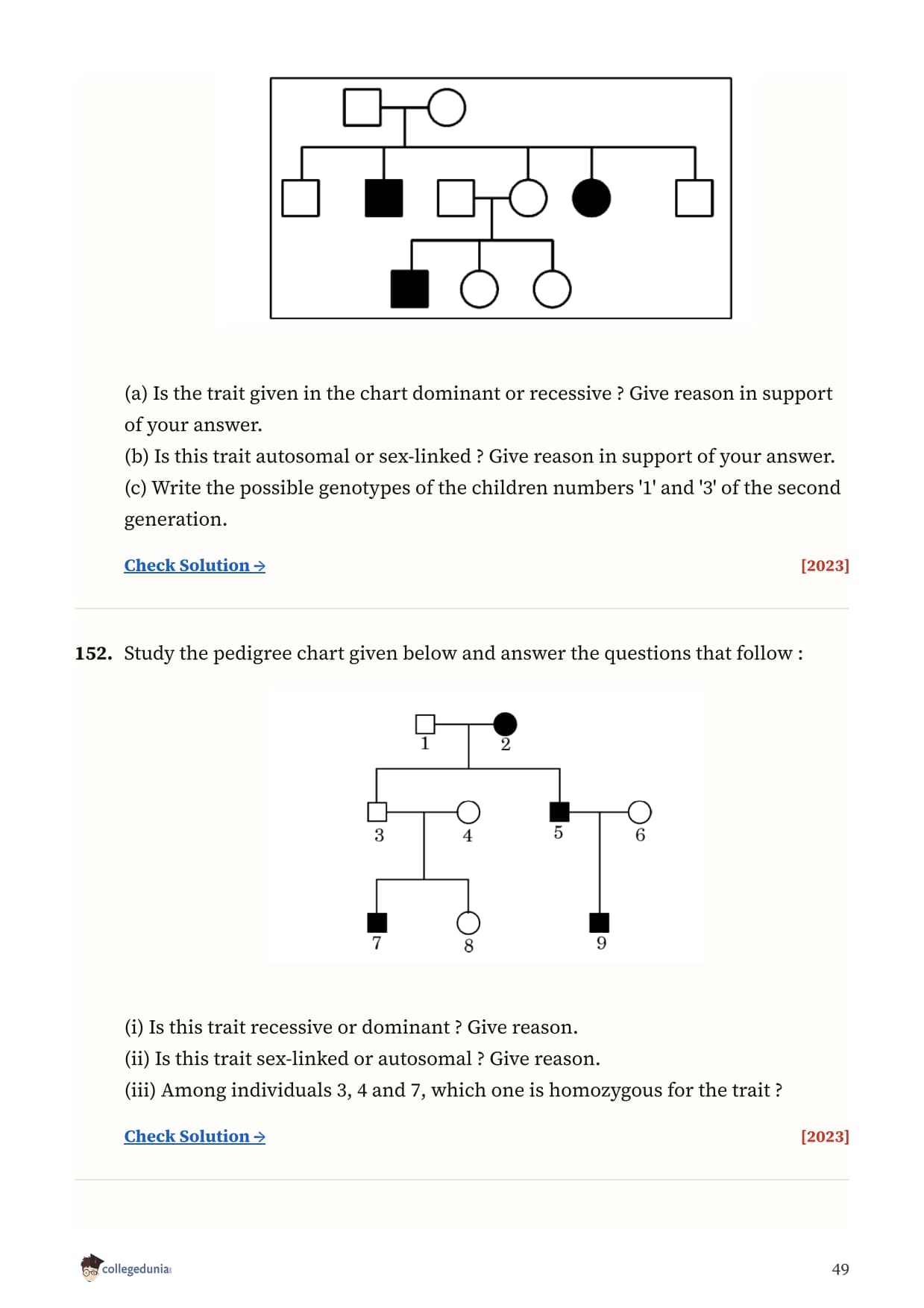
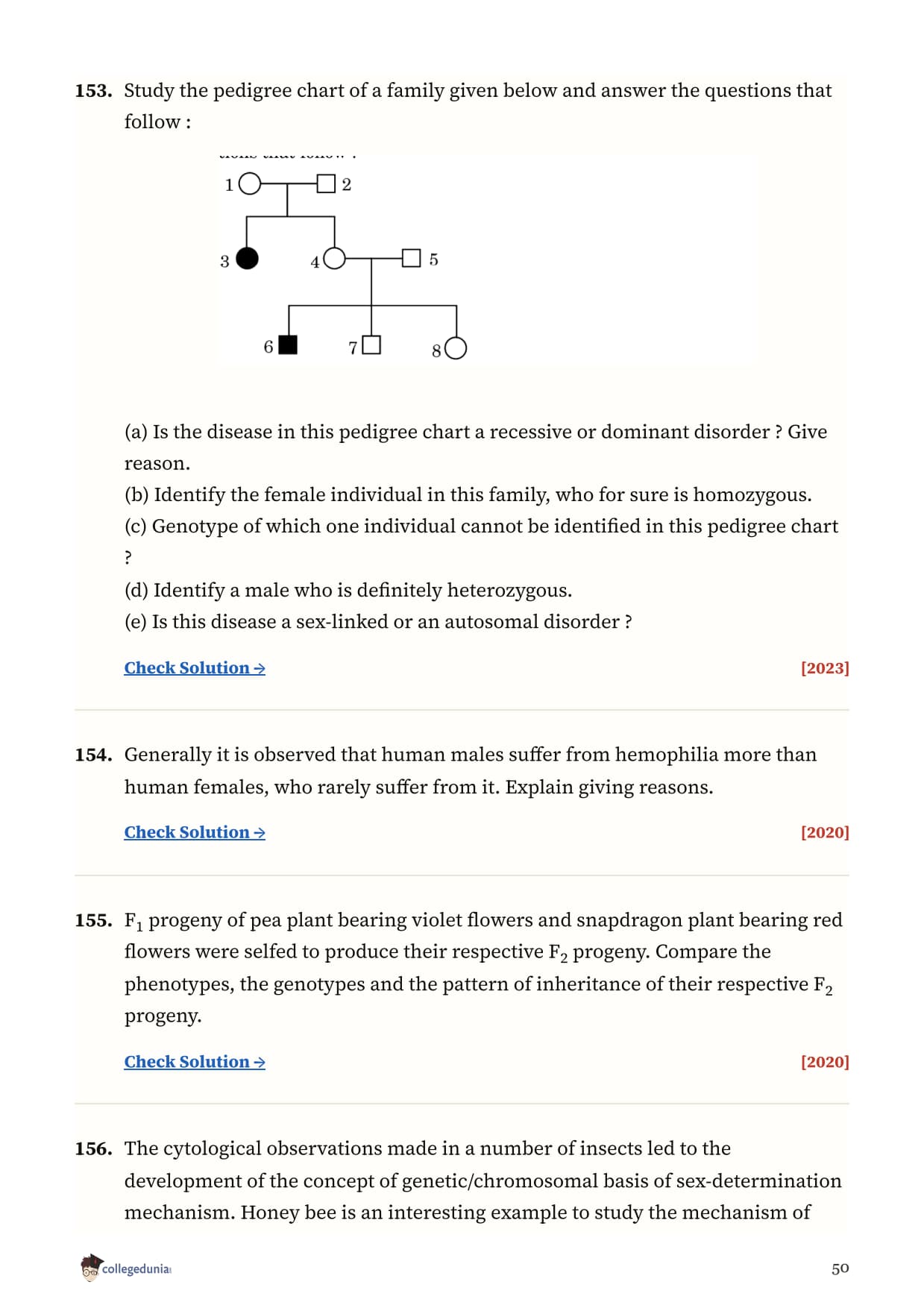
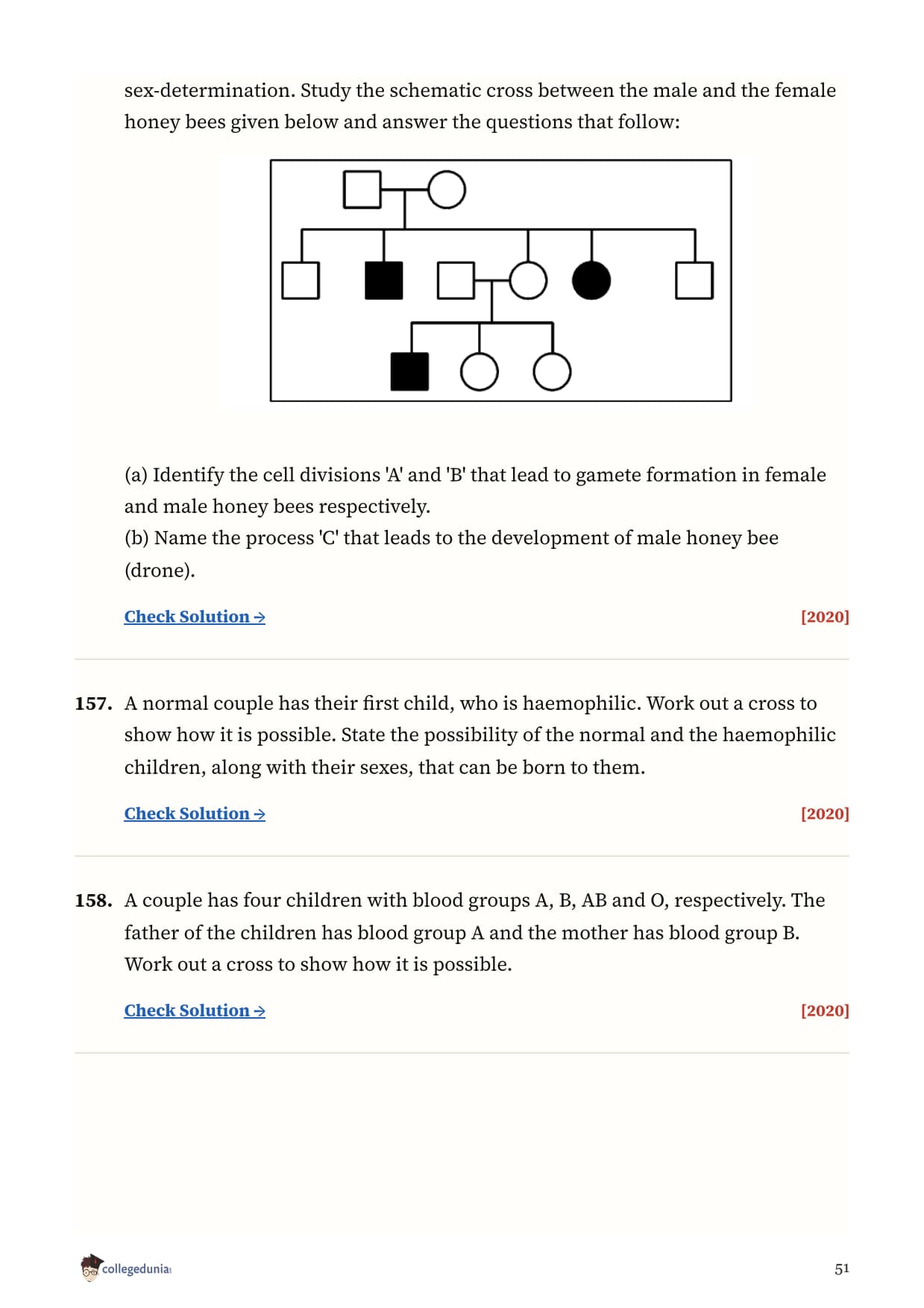
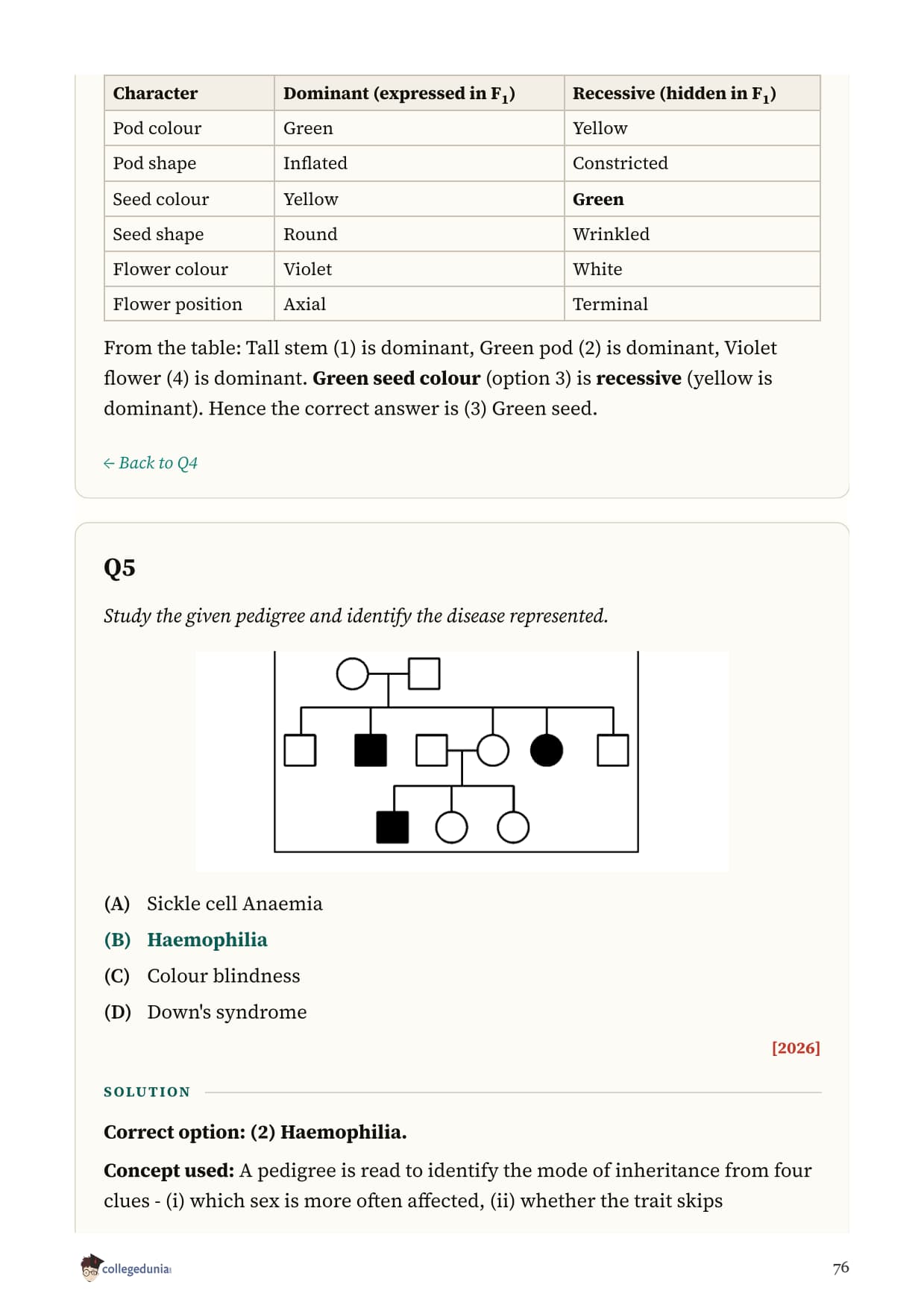
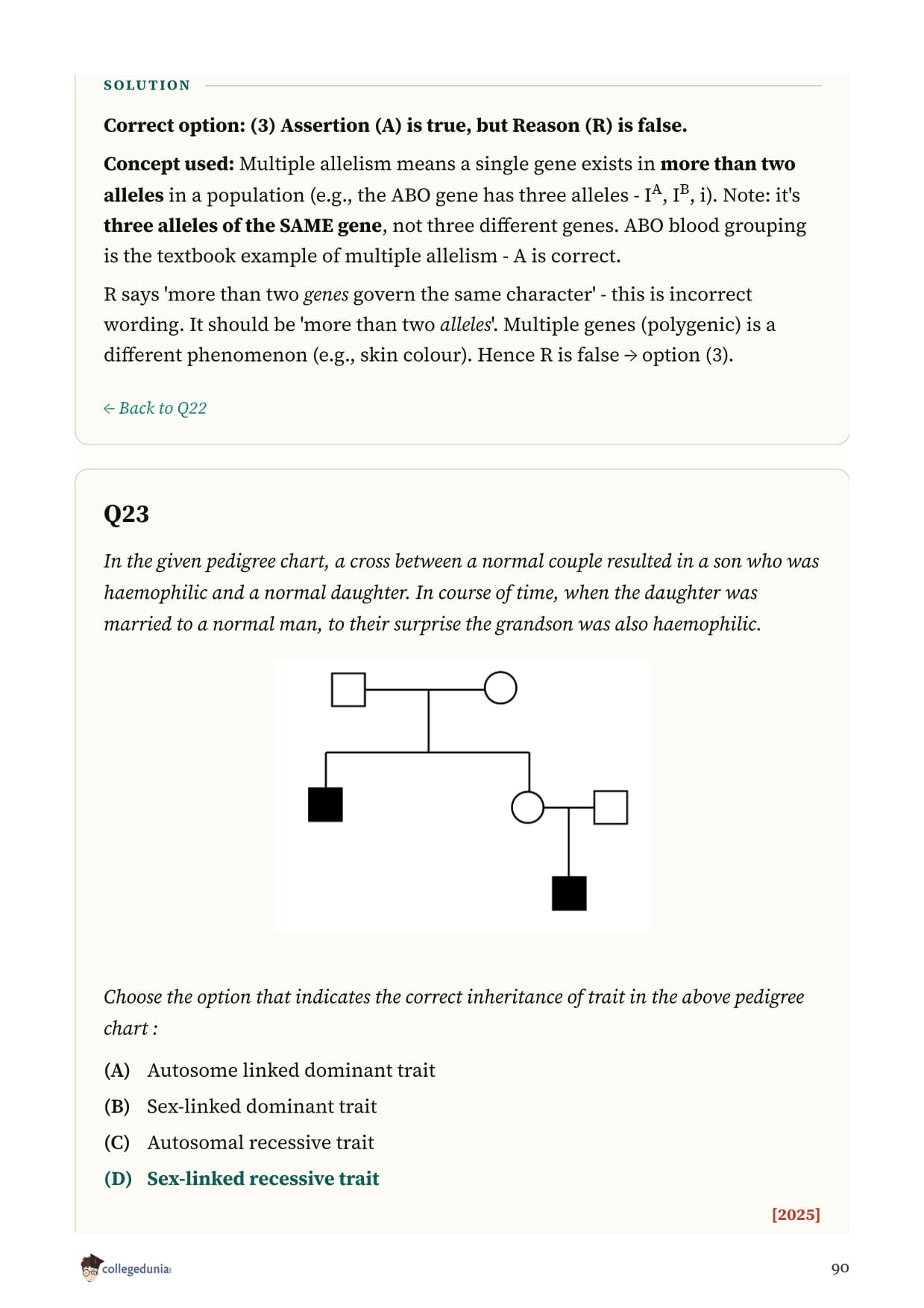
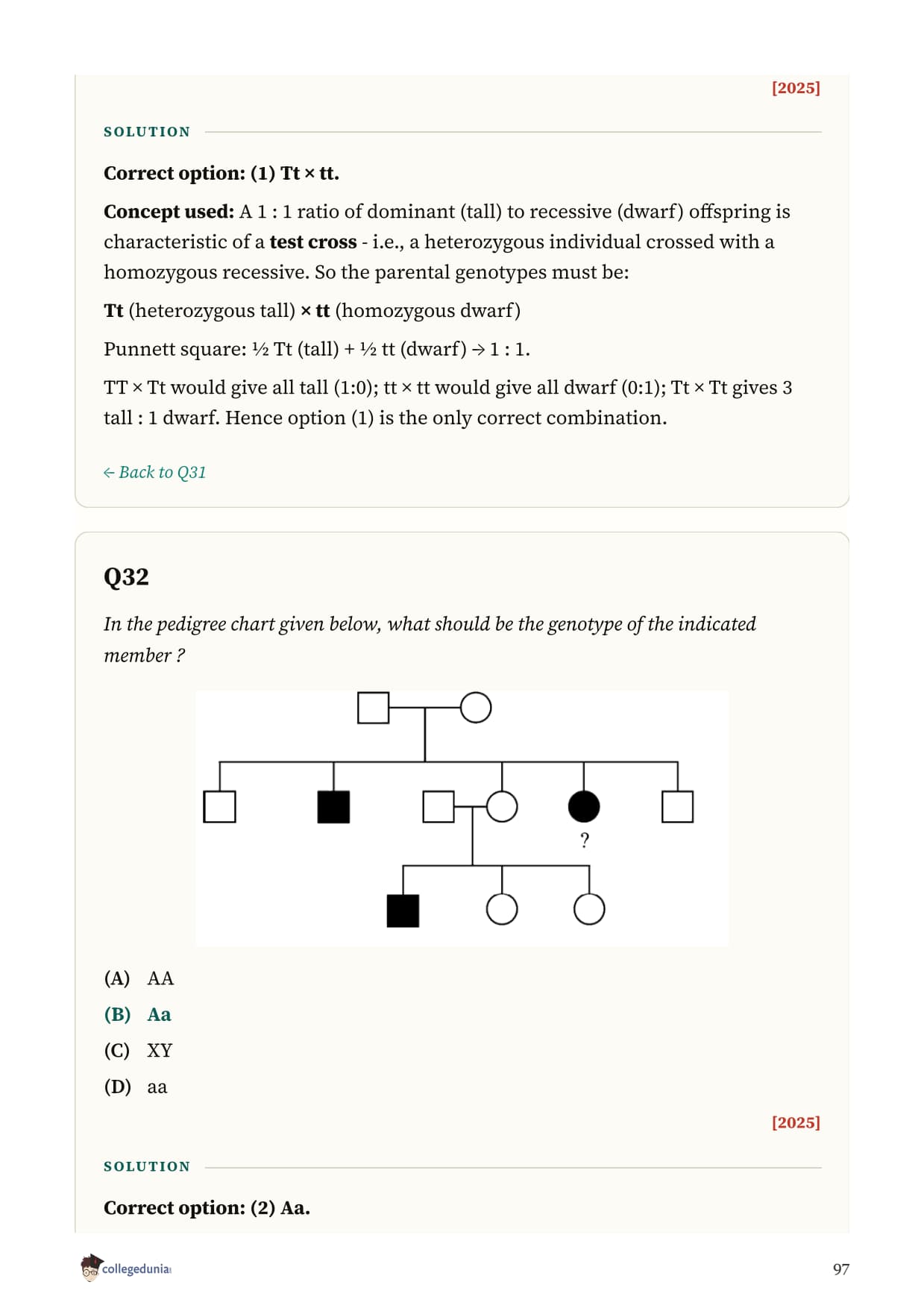
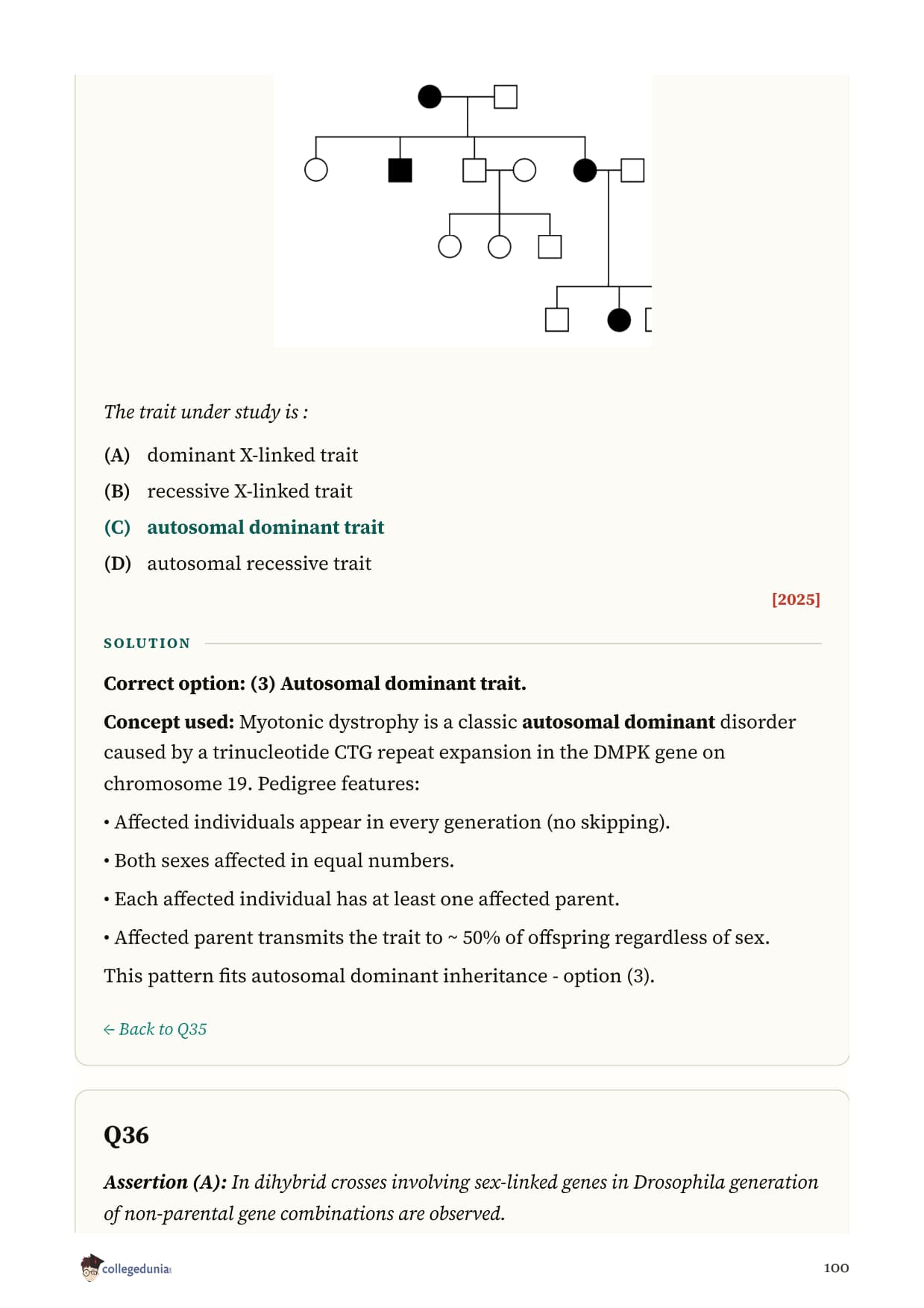
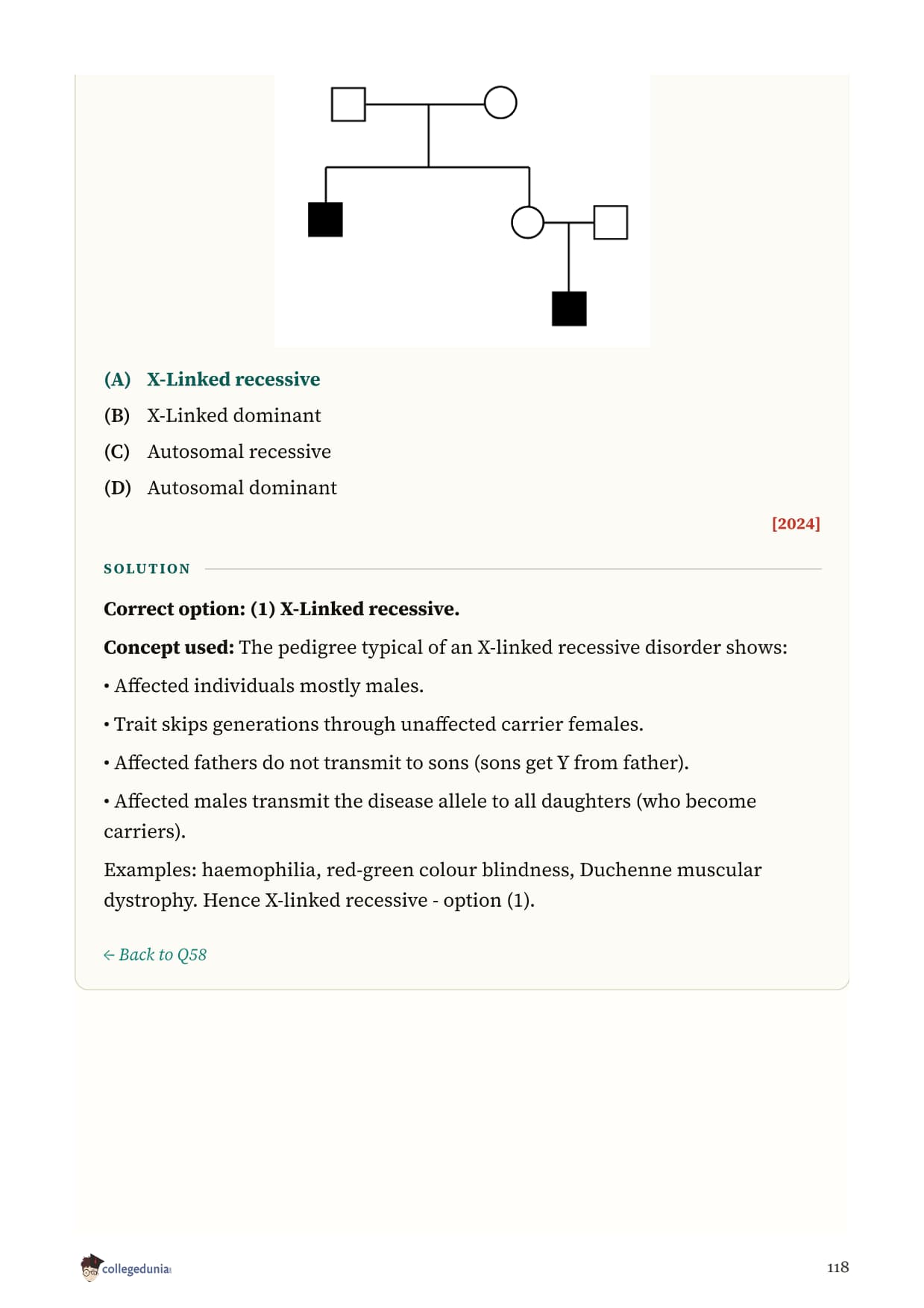
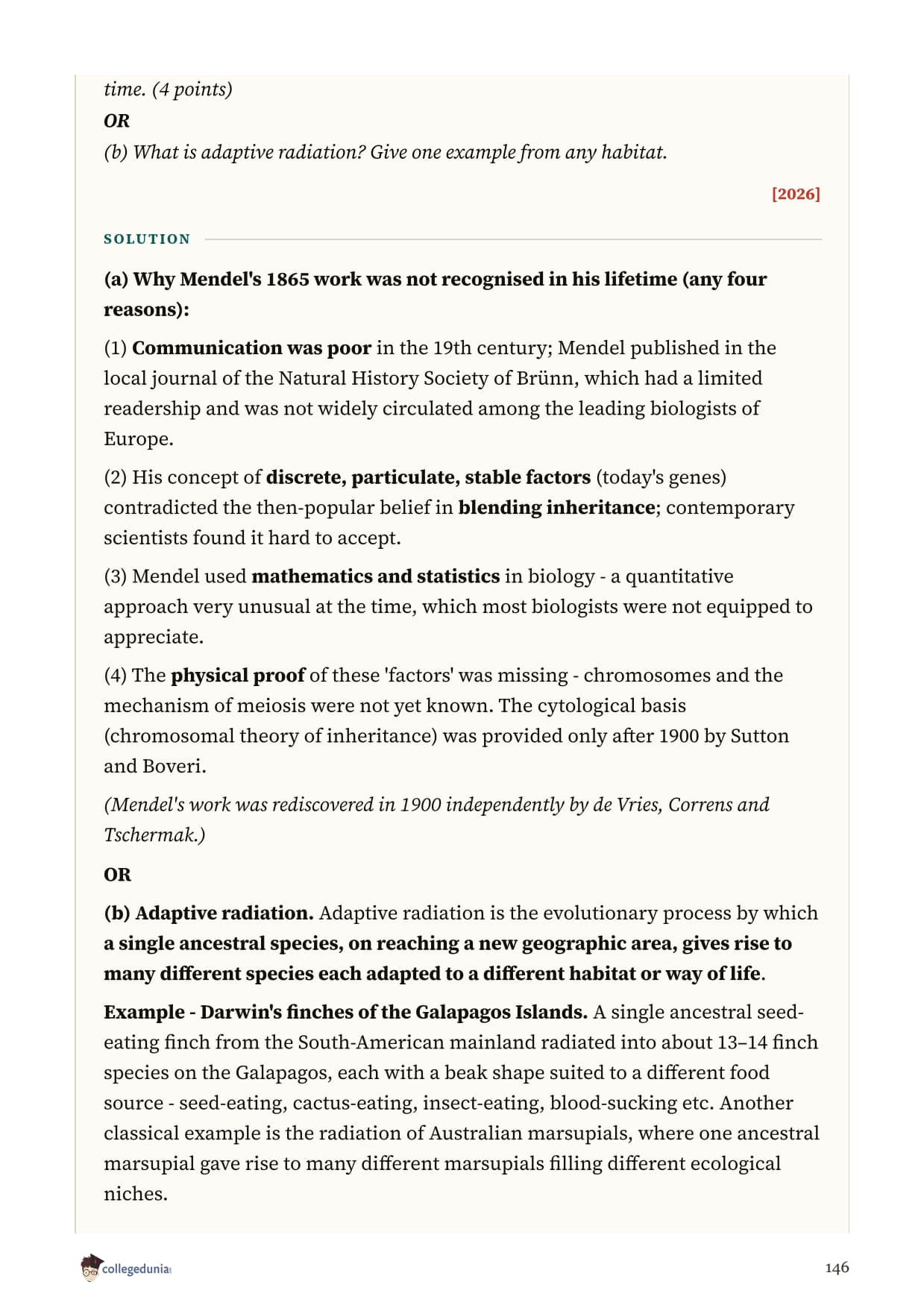
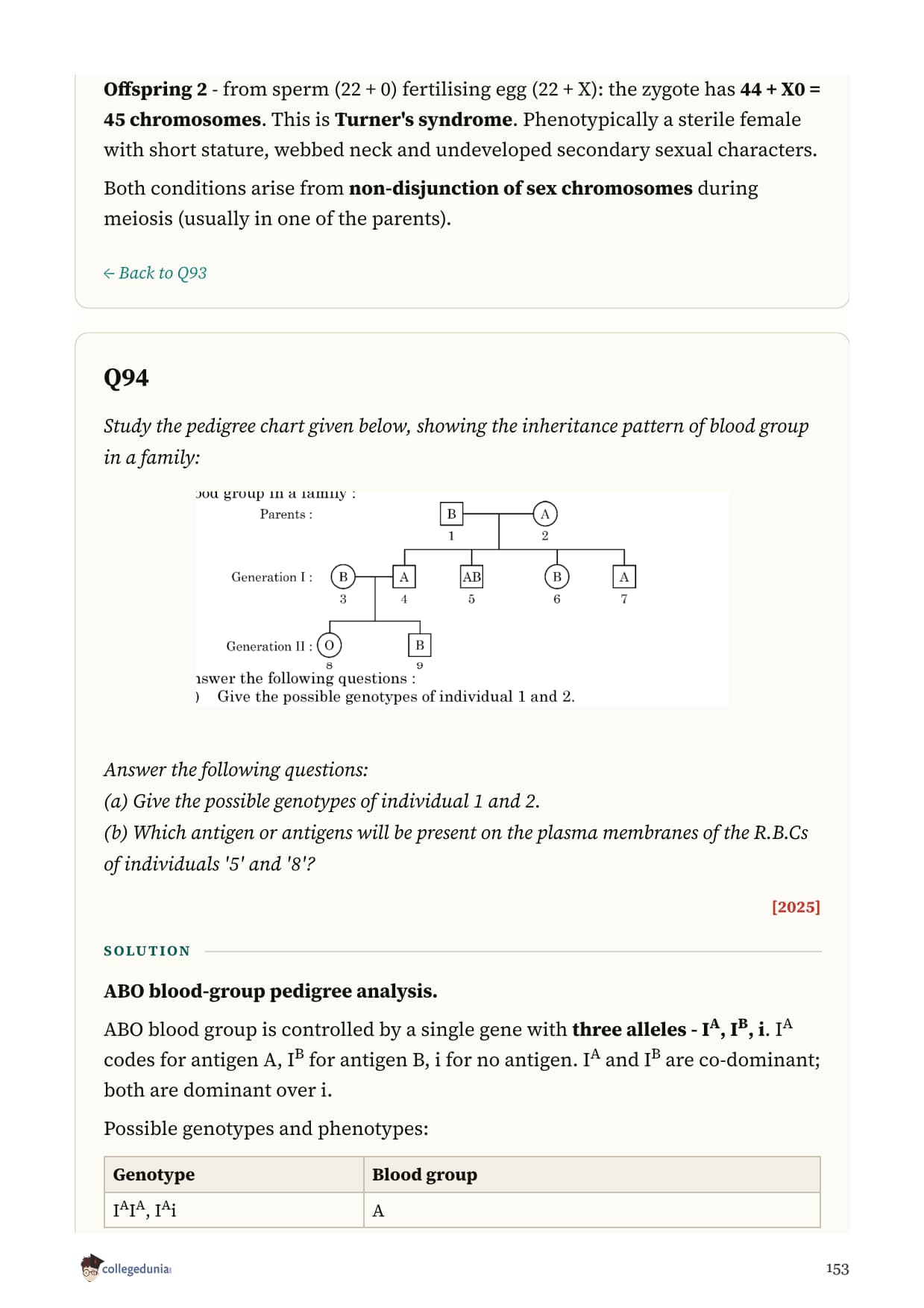
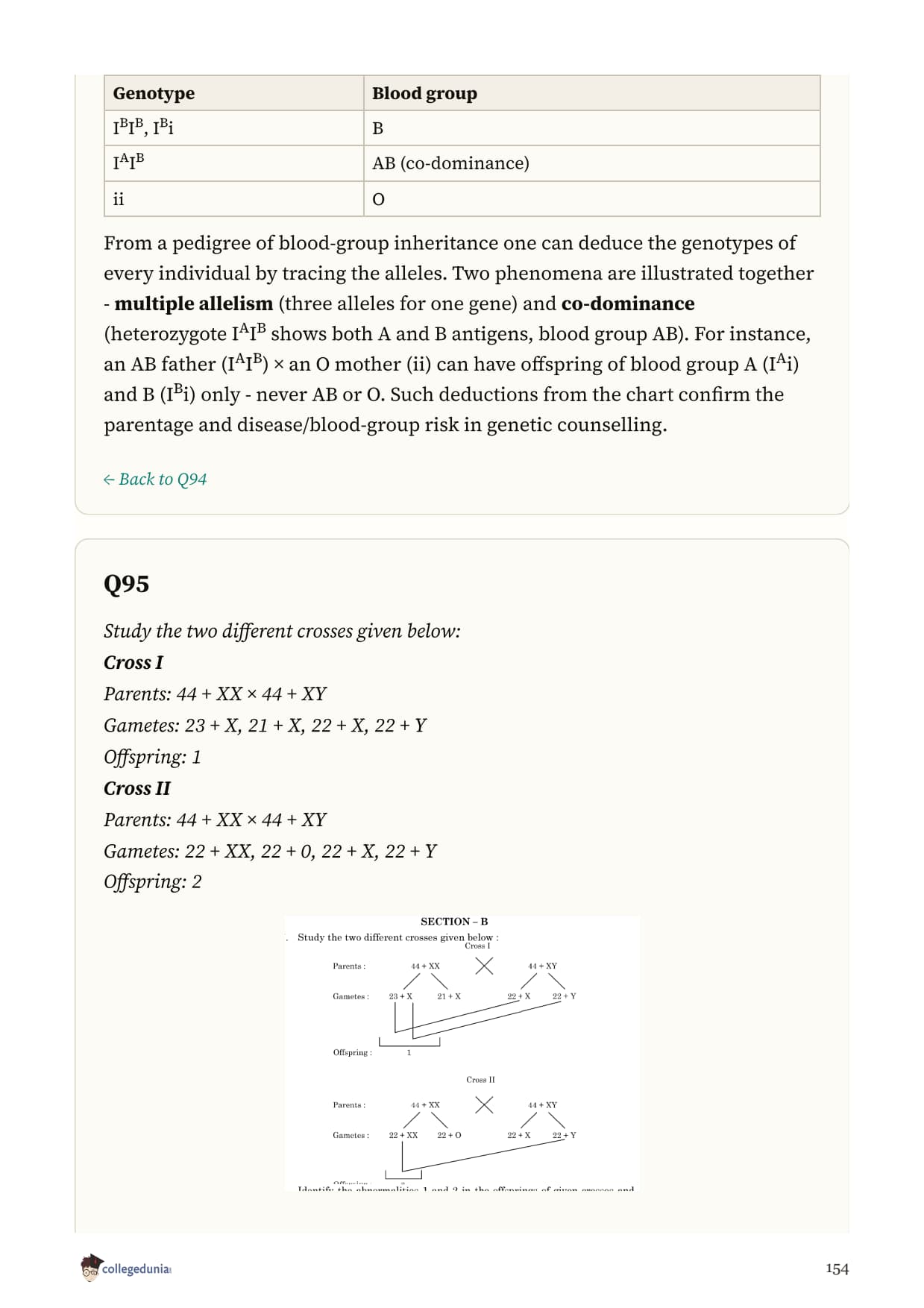
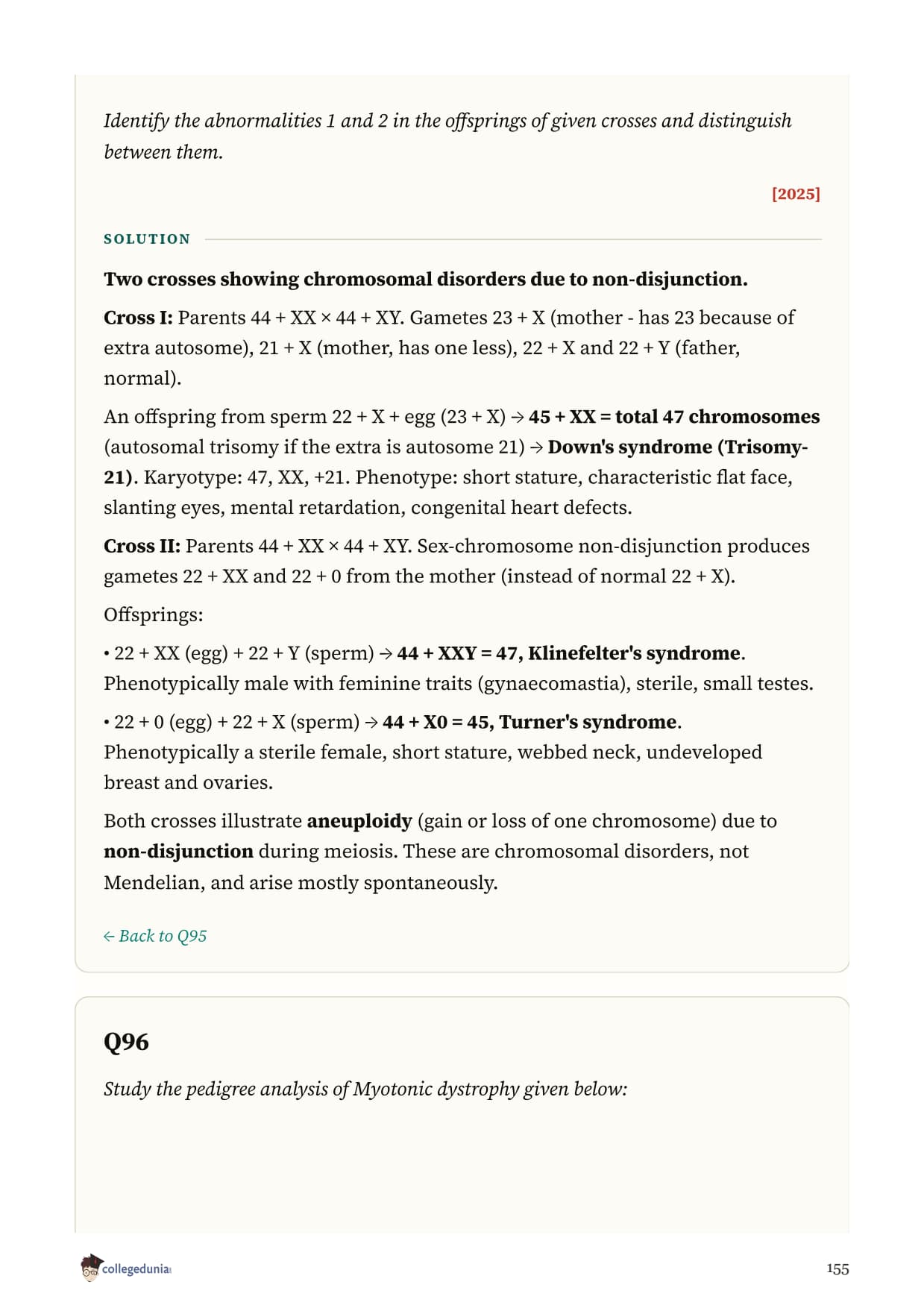
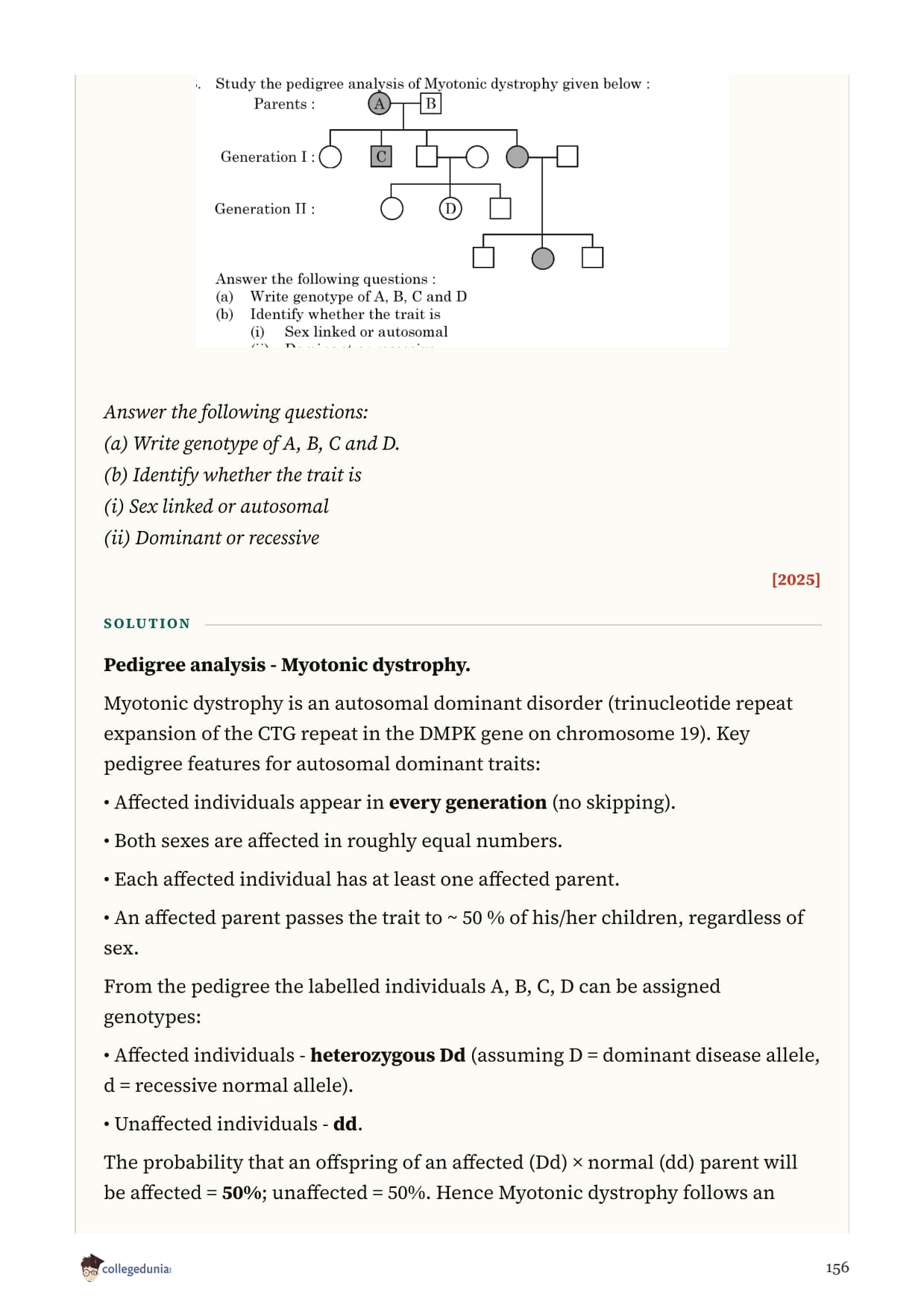
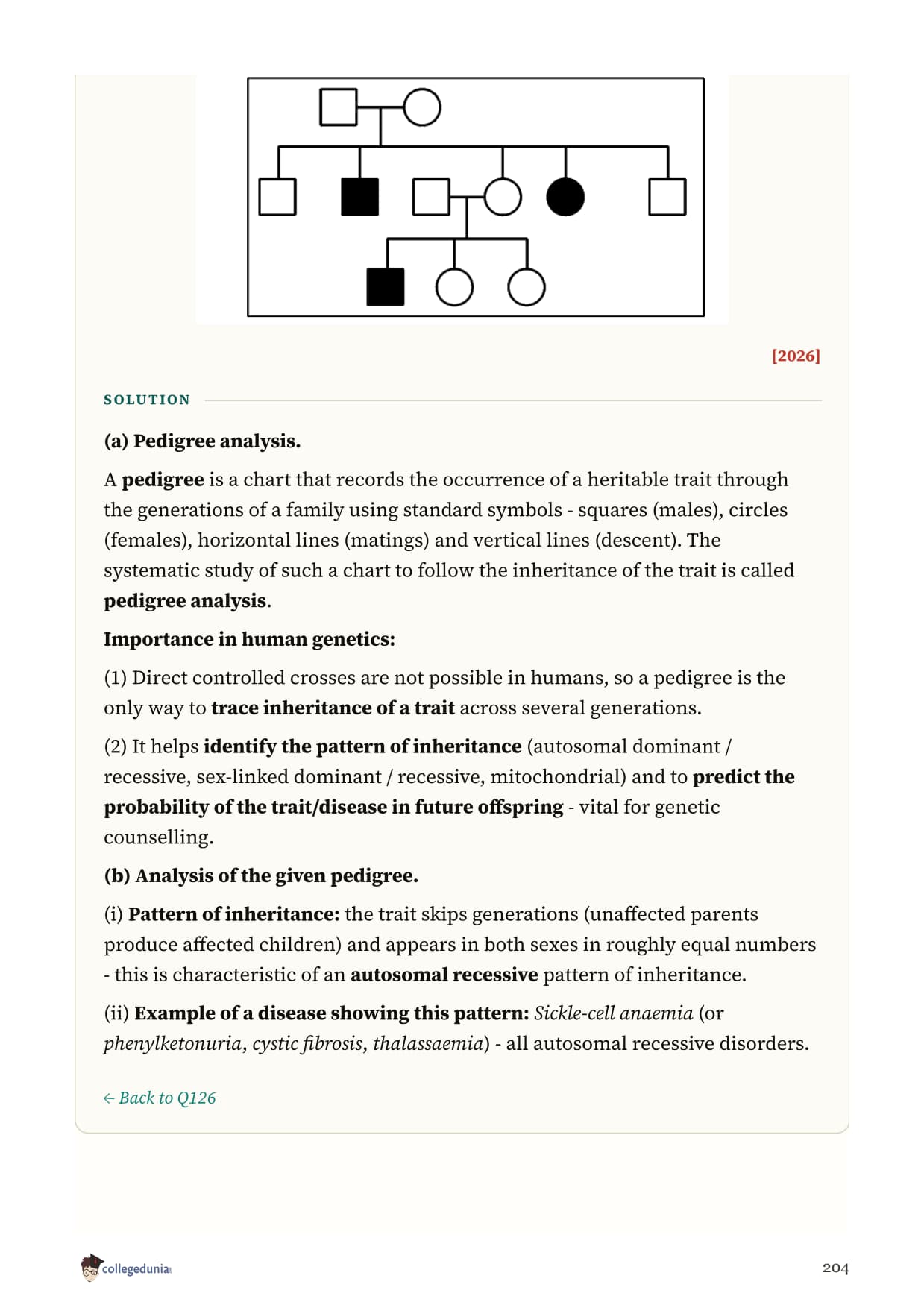
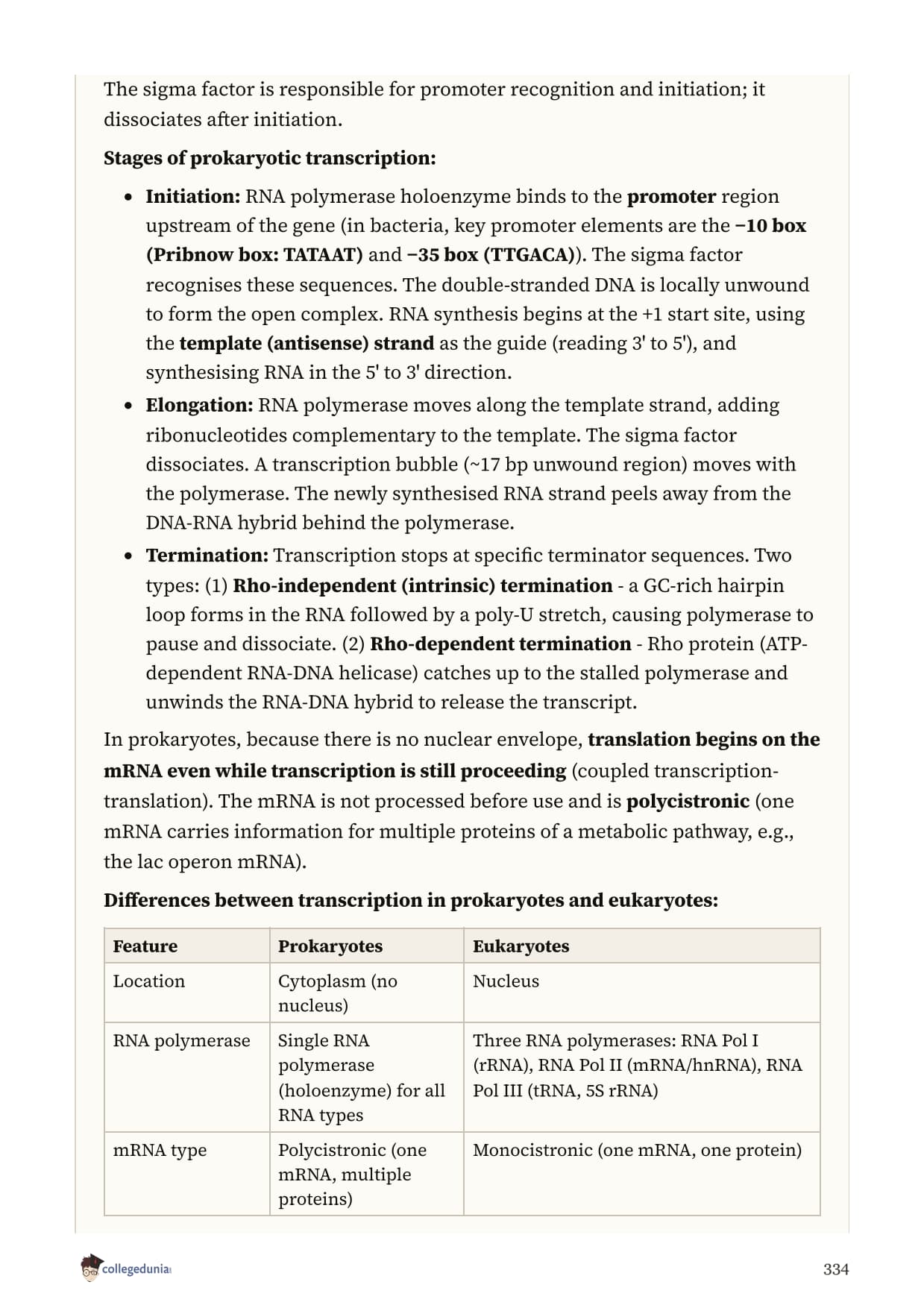
(a) What is pedigree analysis? Mention its importance in human genetics. (2 pts.) (b) Analyse the following pedigree and write the (i) Pattern of inheritance. (ii) Give one example of disease showing such an inheritance pattern.
[2026 • 3 mark]
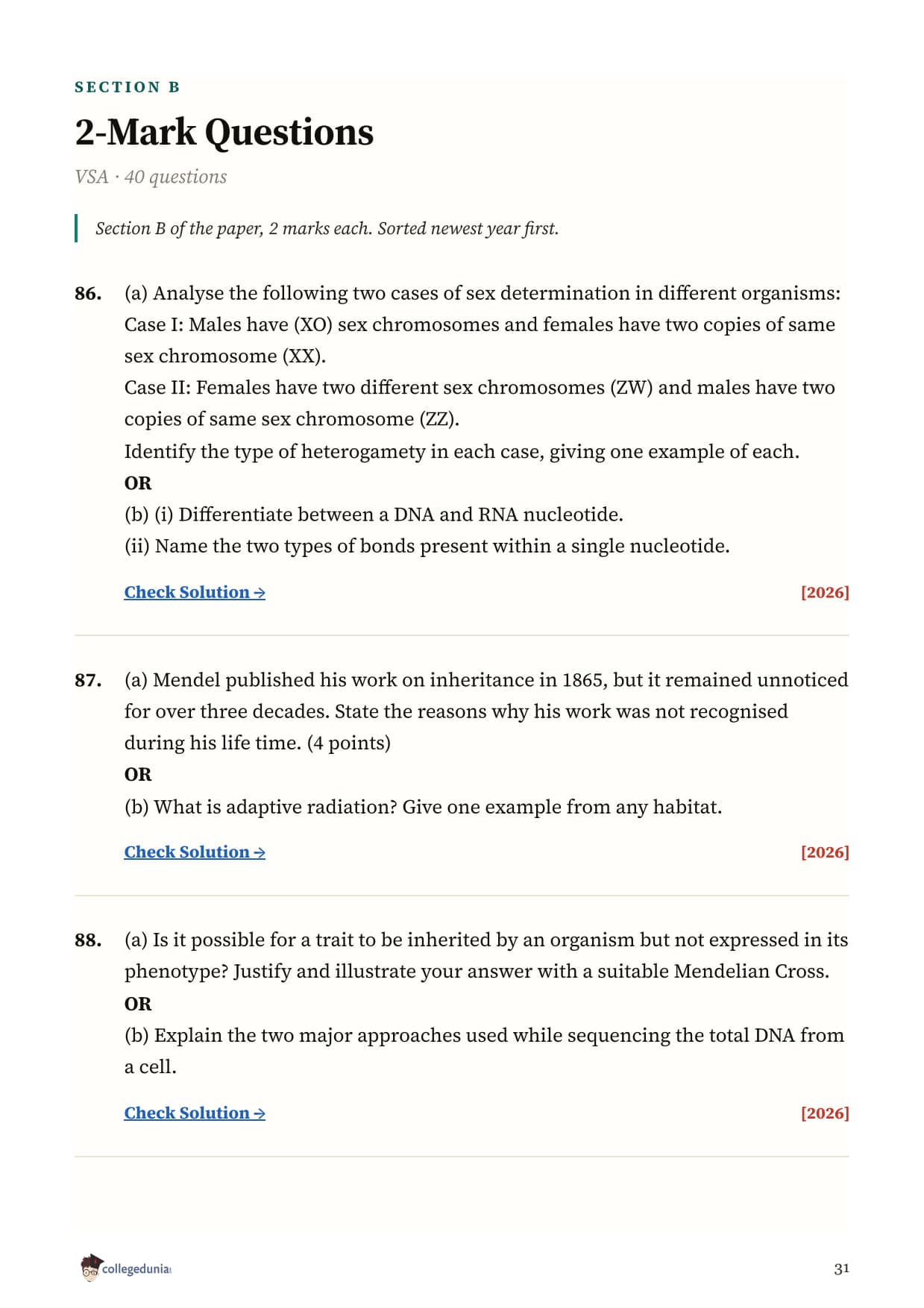
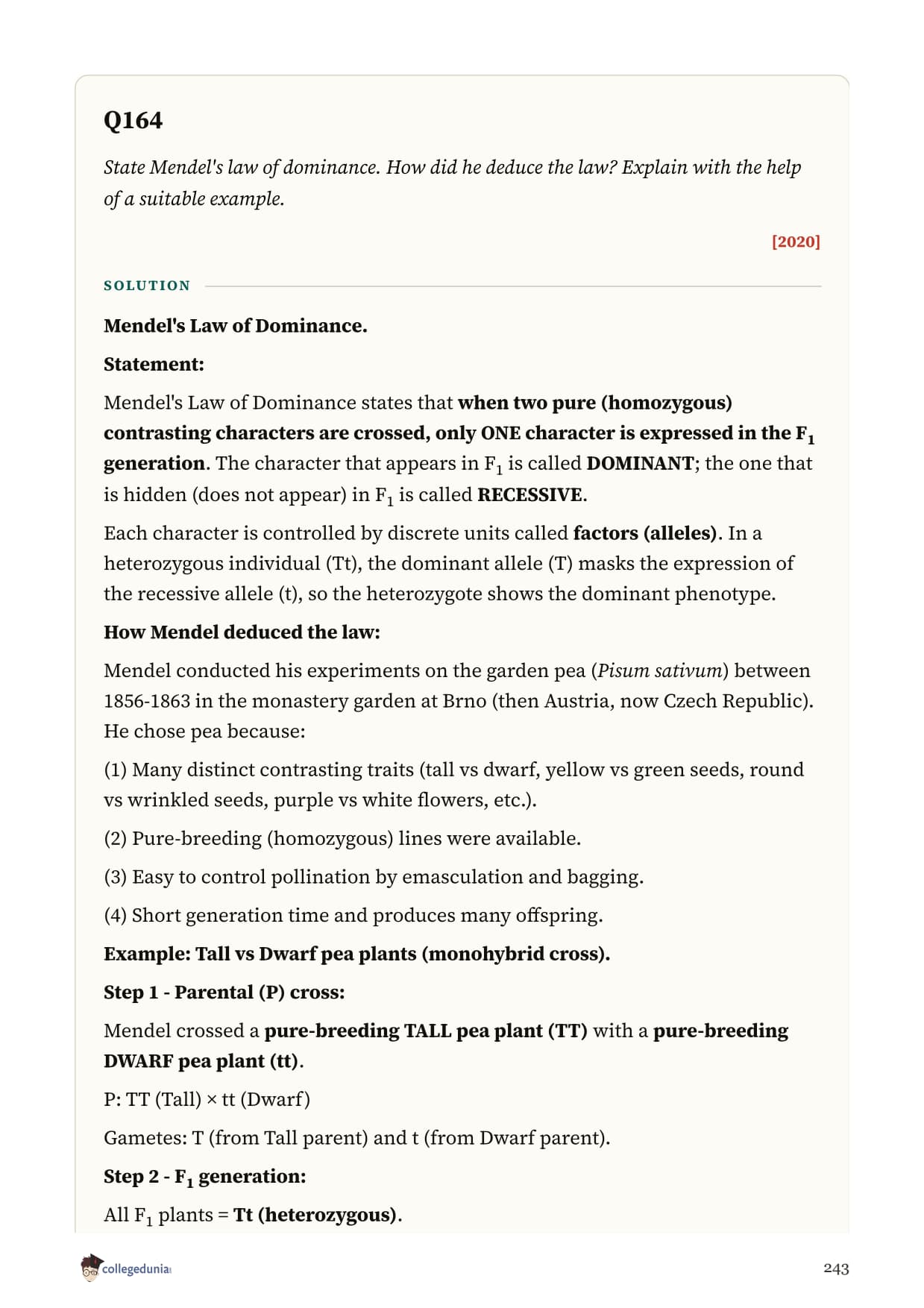
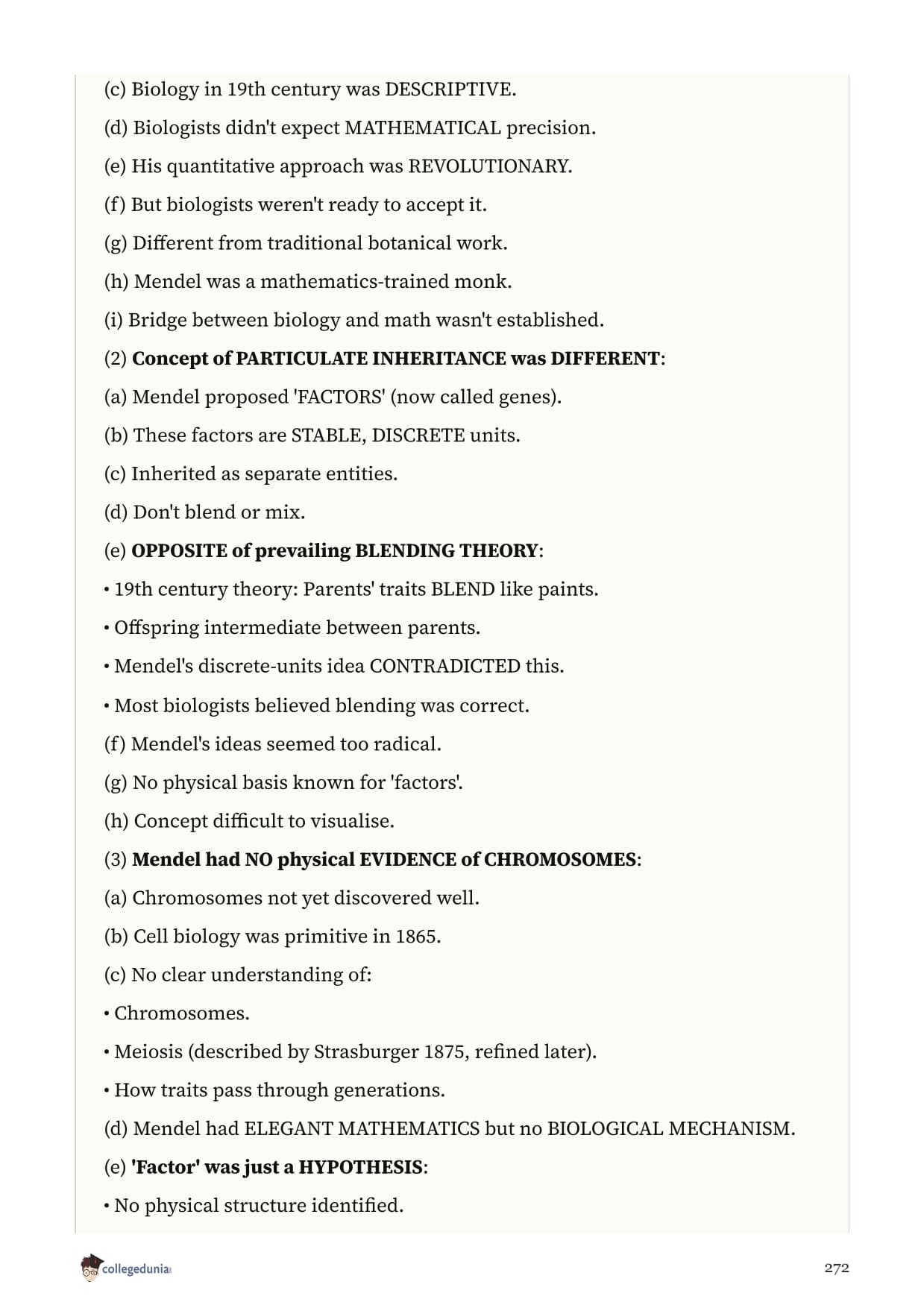
(a) Mendel published his work on inheritance in 1865, but it remained unnoticed for over three decades. State the reasons why his work was not recognised during his life time. (4 points) OR (b) What is adaptive radiation? Give one example from any habitat.
[2026 • 2 mark]
Common Mistakes in the Principles of Inheritance and Variation Board Questions
- Reading a pedigree wrongly, then naming an autosomal trait as sex-linked or vice versa.
- Writing the wrong F2 ratio, for example 3:1 for a dihybrid cross instead of 9:3:3:1.
- Confusing incomplete dominance with codominance when explaining flower colour or ABO blood groups.
- Mixing up Down's syndrome (trisomy 21) with Turner's or Klinefelter's syndrome in chromosomal-disorder answers.
- Forgetting to draw the full Punnett square when the marking scheme awards marks for the cross itself.
Student Feedback on Principles of Inheritance and Variation PYQ Practice
- 72 per cent said pedigree analysis was the hardest topic to score full marks on.
- 60 per cent reported gaining 5 to 8 marks after solving all the pedigree and dihybrid PYQs from this PDF before the boards.
- 48 per cent said a pedigree or sex-linked disorder question appeared in their actual 2026 paper.
- Average time to finish all 216 PYQs: about 16 hours across 8 study sessions.
How These PYQs Pair with the Other Principles of Inheritance and Variation Resources
Solving previous year questions alone gives you only half the prep. Pair the PYQ PDF with the matching concept, formula and solution resources for Principles of Inheritance and Variation.
| Resource | What It Gives You | Open |
|---|---|---|
| NCERT Solutions | Step-by-step worked answers to every NCERT back-exercise question of Principles of Inheritance and Variation | NCERT Solutions for Principles of Inheritance and Variation |
| Notes | Concept revision notes covering every topic in the Principles of Inheritance and Variation chapter | Principles of Inheritance and Variation Class 12 Notes |
| Formula Sheet | All key formulas and results of Principles of Inheritance and Variation on one page for last-day revision | Principles of Inheritance and Variation Formula Sheet |
| Handwritten Notes | Scanned handwritten notes of Principles of Inheritance and Variation for quick one-shot revision | Principles of Inheritance and Variation Handwritten Notes |
| Exemplar Solutions | NCERT Exemplar problems of Principles of Inheritance and Variation solved in full for extra practice | NCERT Exemplar Solutions for Principles of Inheritance and Variation |
| NCERT Book | Official NCERT Principles of Inheritance and Variation chapter PDF for free download | Principles of Inheritance and Variation NCERT Book PDF |
| Exemplar Book | NCERT Exemplar Principles of Inheritance and Variation problem book PDF for free download | Principles of Inheritance and Variation Exemplar Book PDF |
How to Use the Principles of Inheritance and Variation PYQ PDF Most Effectively
The 216 questions are sequenced for a three-pass revision plan:
- Pass 1 (Day 1 to 2): Attempt all 84 one-mark questions. With the largest band here, build speed and re-read the NCERT line behind each wrong answer.
- Pass 2 (Day 3 to 5): Solve the 39 two-mark and 60 three-mark questions. Practise reading pedigrees and drawing Punnett squares.
- Pass 3 (Day 6 to 10): Work through the 30 five-mark long answers, writing full dihybrid crosses, linkage explanations and disorder pedigrees.
All Class 12 Biology Chapter PYQ PDFs
Every Class 12 Biology chapter has its own PYQ compilation built the same way, sorted by marks and tagged by year.
| Chapter | Topic | Previous Year Questions |
|---|---|---|
| Chapter 1 | Sexual Reproduction in Flowering Plants | PYQ PDF |
| Chapter 2 | Human Reproduction | PYQ PDF |
| Chapter 3 | Reproductive Health | PYQ PDF |
| Chapter 4 | Principles of Inheritance and Variation | PYQ PDF |
| Chapter 5 | Molecular Basis of Inheritance | PYQ PDF |
| Chapter 6 | Evolution | PYQ PDF |
| Chapter 7 | Human Health and Disease | PYQ PDF |
| Chapter 8 | Microbes in Human Welfare | PYQ PDF |
| Chapter 9 | Biotechnology: Principles and Processes | PYQ PDF |
| Chapter 10 | Biotechnology and its Applications | PYQ PDF |
| Chapter 11 | Organisms and Populations | PYQ PDF |
| Chapter 12 | Ecosystem | PYQ PDF |
| Chapter 13 | Biodiversity and Conservation | PYQ PDF |
Also Check: NCERT Solutions for Class 12 Biology
Class 12 Biology Principles of Inheritance and Variation PYQ FAQs
Ques. How many previous year questions are in the Class 12 Biology Principles of Inheritance and Variation PYQ PDF?
Ans. The PDF has 216 previous year questions from CBSE board papers between 2003 and 2026, sorted by marks (1 to 5) and then by year, latest first. Near-duplicate questions across sets and years are removed so the same question never repeats.
Ques. Are the Principles of Inheritance and Variation PYQs based on the 2026-27 CBSE syllabus?
Ans. Yes. Every question follows the 2026-27 CBSE Class 12 Biology syllabus. Older long-form questions are kept because the core ideas, like Mendel's laws, pedigree analysis and sex determination, are unchanged in the current syllabus.
Ques. Which topics of Principles of Inheritance and Variation appear most often in CBSE board papers?
Ans. From the 216-question set: pedigree analysis (about 24 per cent), Mendelian crosses (about 21 per cent), sex-linked and inherited disorders (about 16 per cent), chromosomal disorders (about 14 per cent), and sex determination and dominance patterns.
Ques. How is this PYQ PDF different from a CBSE sample paper?
Ans. A sample paper gives you one paper. This PDF stitches together 17 years of questions across every set and region (Delhi, Outside Delhi, Foreign and Compartment) for Principles of Inheritance and Variation alone, so you can see which crosses and pedigrees CBSE repeats.
Ques. Does the Principles of Inheritance and Variation PYQ PDF include MCQs?
Ans. Yes. 84 of the 216 questions are 1-mark questions, the largest 1-mark band of any Biology chapter, mostly MCQ, assertion-reason and figure-based items from 2023 onwards.
Ques. Where can I download the Principles of Inheritance and Variation Class 12 PYQ PDF for free?
Ans. The full Principles of Inheritance and Variation PYQ PDF is free to download from the PDF button at the top of this page. No sign-up is needed.
Ques. How should I use these PYQs to revise Principles of Inheritance and Variation in the last 10 days?
Ans. Use the three-pass plan: Day 1 to 2 attempt all 84 one-mark questions, Day 3 to 5 solve the 2 and 3-mark questions, Day 6 to 10 attempt all 30 long answers under a 12-minute timer. Always draw the full Punnett square.
Ques. Does the PDF give answers or only the questions?
Ans. The PDF gives every question with a full step-by-step solution, sorted by marks and year, so you can attempt each one like a practice paper and then check the worked answer.
Ques. Is pedigree analysis the most important topic in the CBSE Principles of Inheritance and Variation questions?
Ans. Yes. Pedigree analysis is the single most repeated topic, near a quarter of all questions in this PDF, across the 1, 2 and 3-mark bands. Practising how to read a pedigree and state the mode of inheritance is the best use of your time for this chapter.
Ques. What is pedigree analysis?
Ans. Pedigree analysis is the study of a family tree across generations to track how a trait or disorder is inherited. It uses standard symbols for males, females, affected and unaffected individuals. From the pattern, you can tell whether a trait is autosomal or sex-linked and dominant or recessive.
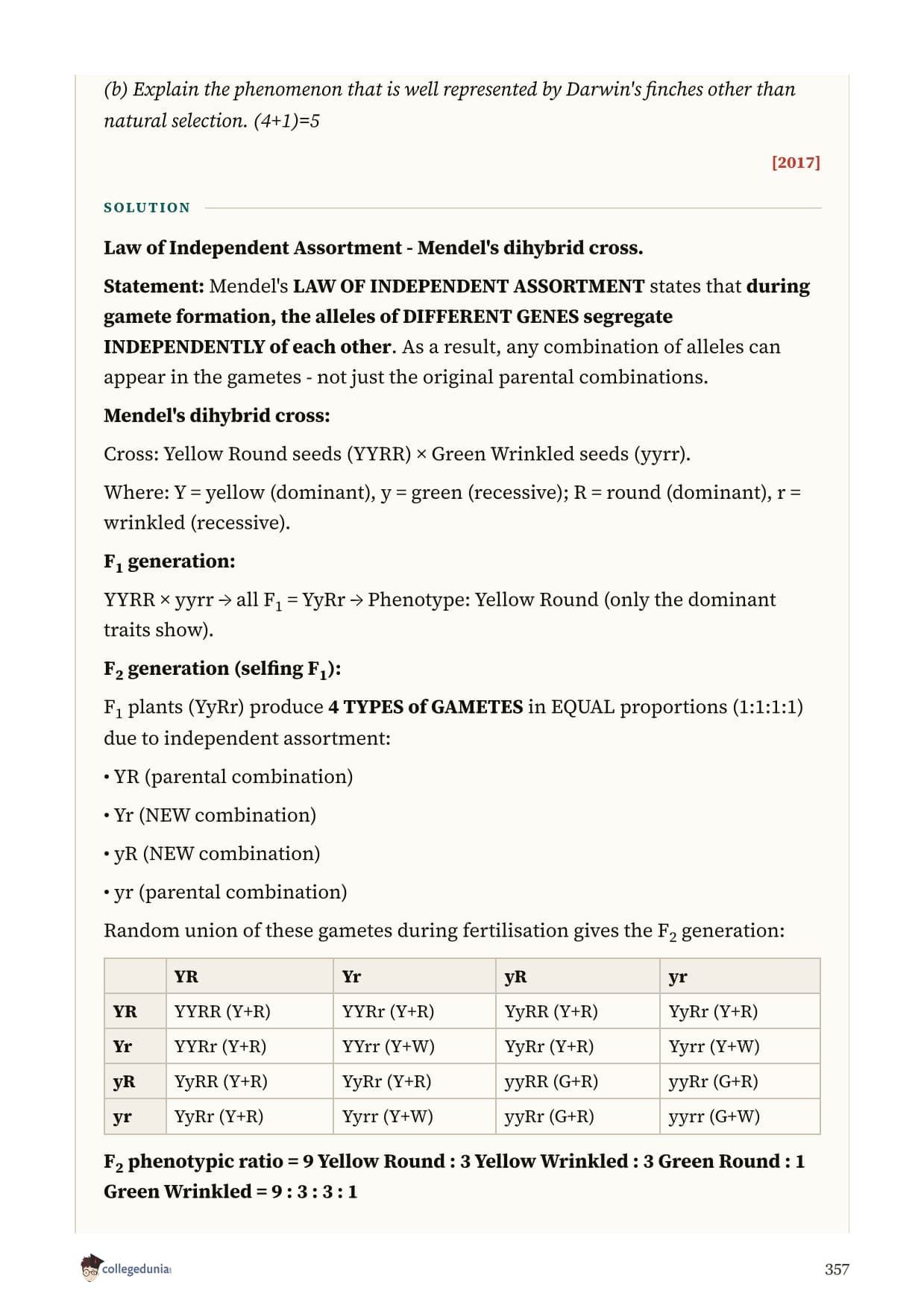
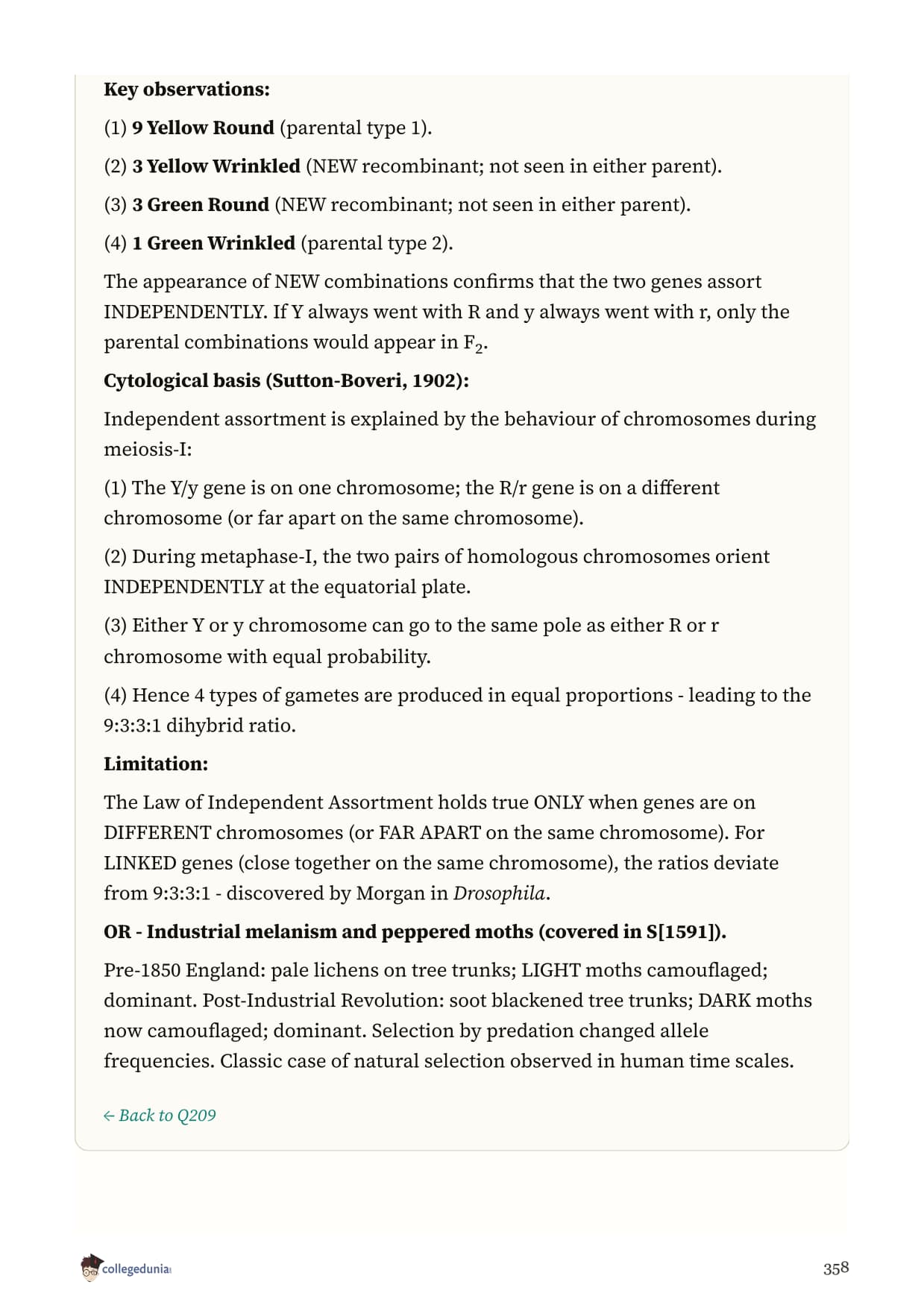
Ques. How is the law of independent assortment defined?
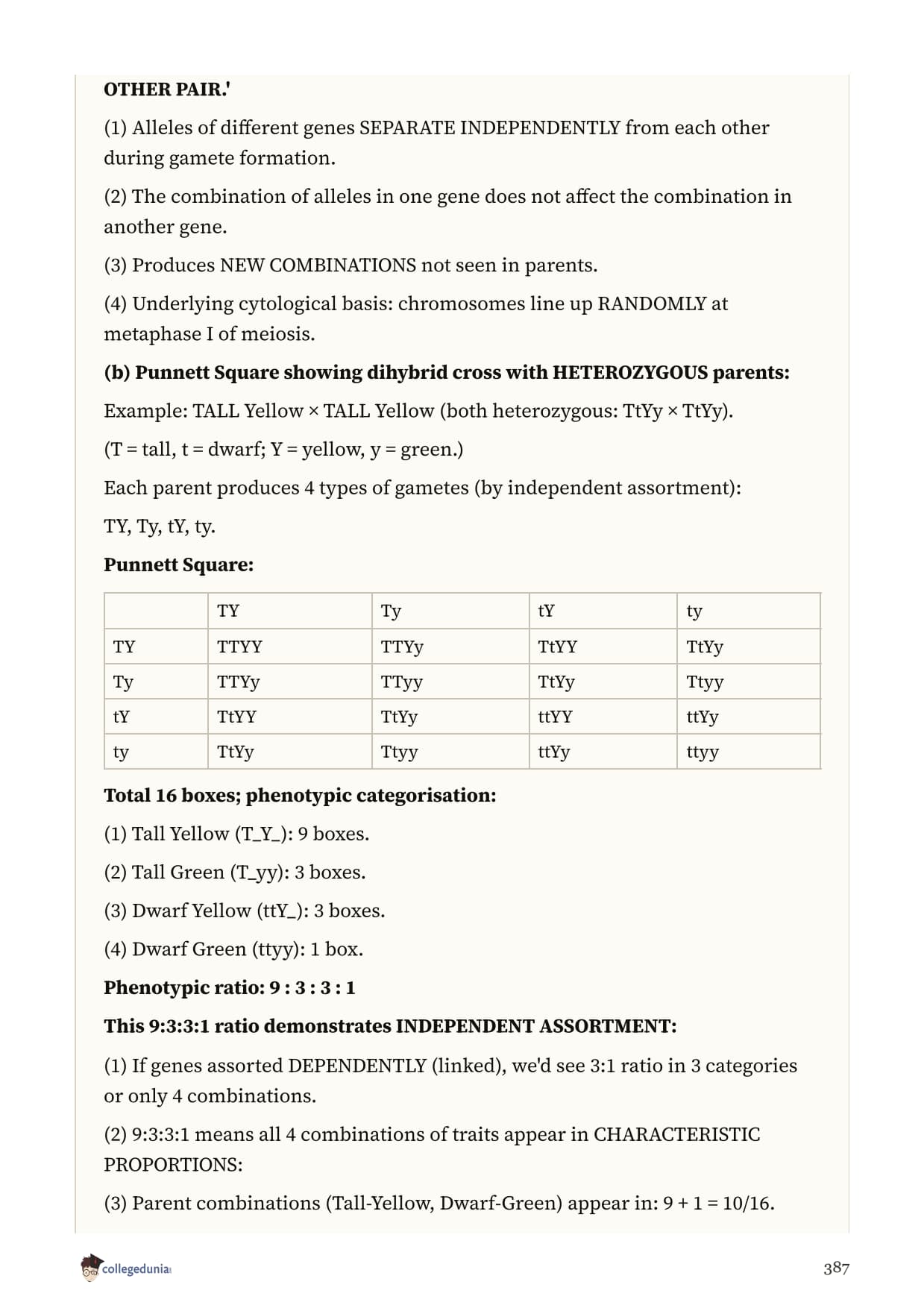
Ans. The law of independent assortment states that during gamete formation, the alleles of one gene separate independently of the alleles of another gene. Mendel showed this with a dihybrid cross, which gives a 9:3:3:1 phenotypic ratio in the F2 generation.
Ques. What is incomplete dominance?
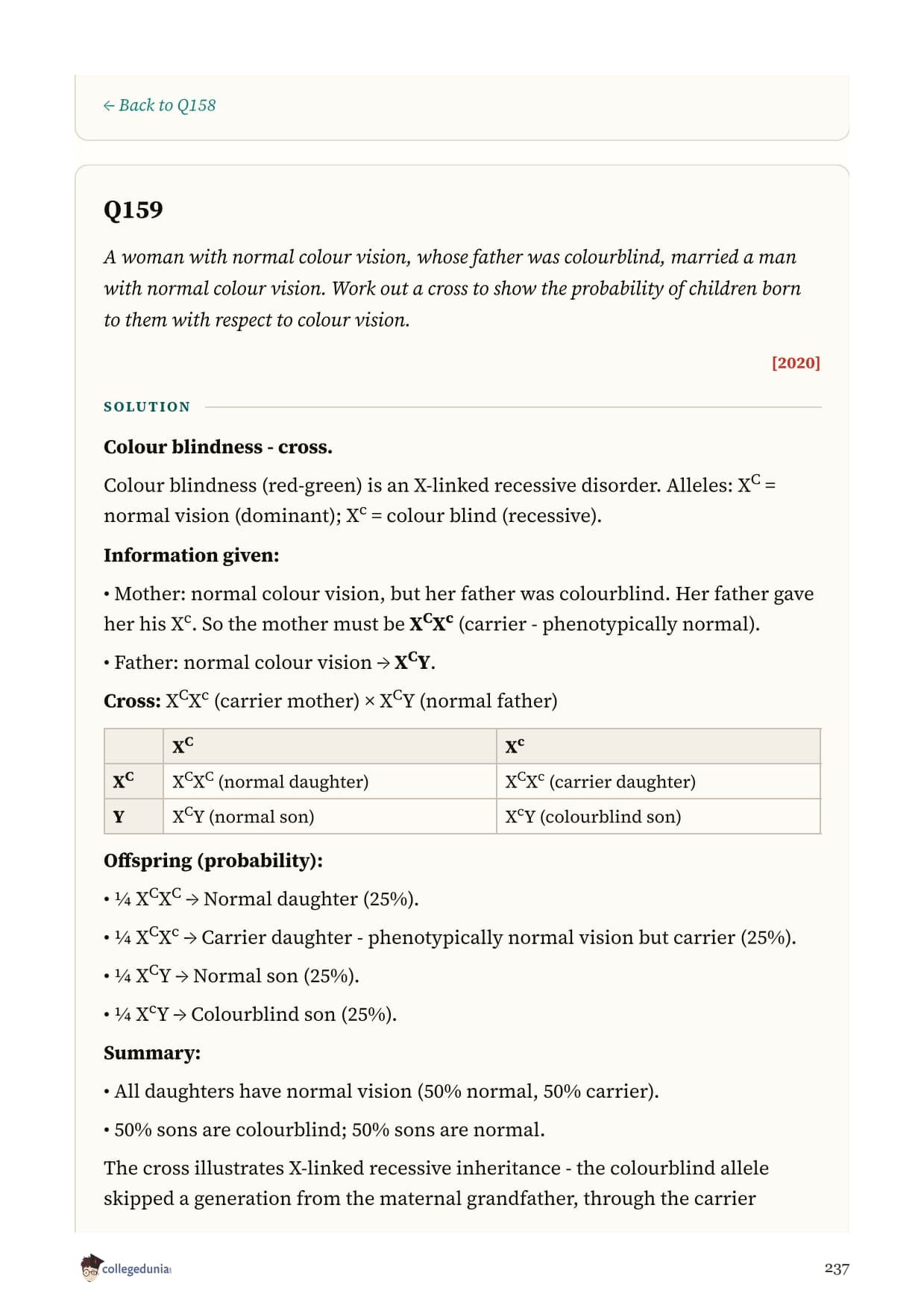
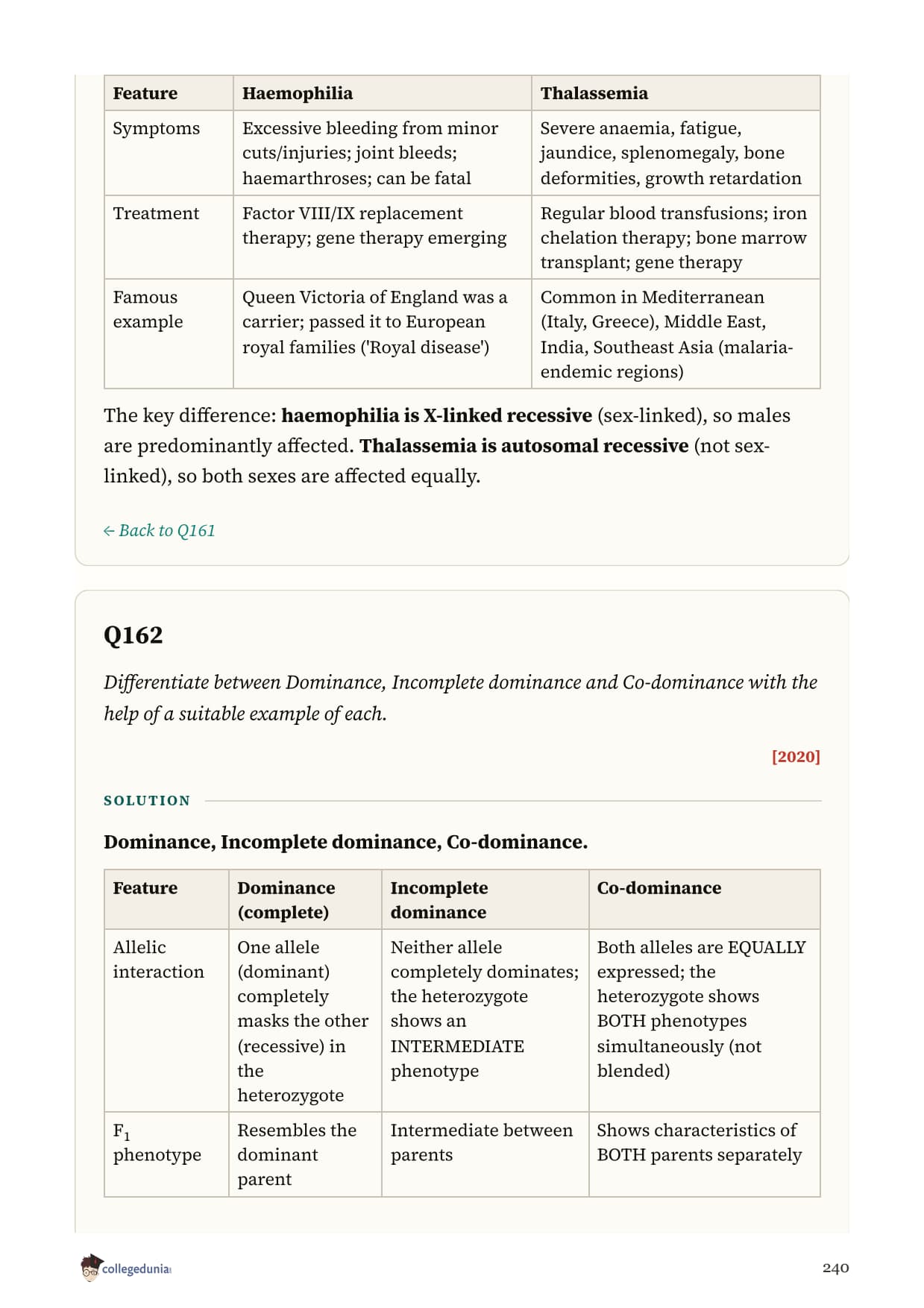
Ans. Incomplete dominance is a pattern where neither allele is fully dominant, so the heterozygote shows a blended, intermediate phenotype. A classic example is the pink flower of Antirrhinum (snapdragon) from a red and a white parent. The F2 ratio is 1:2:1 for both genotype and phenotype.



Comments