




This Class 12 Biology Biodiversity and Conservation PYQ set is built for focused last-stretch revision.
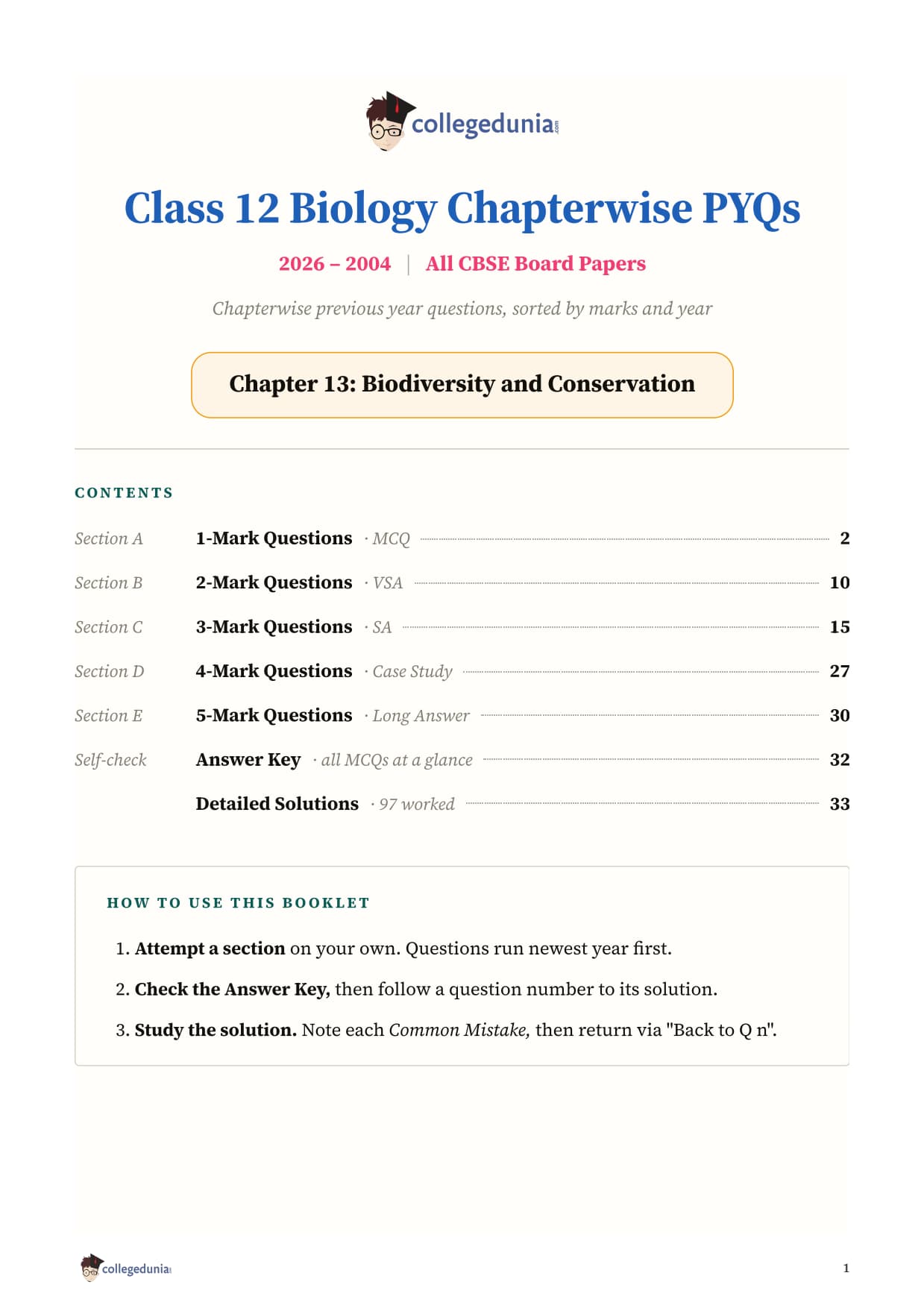
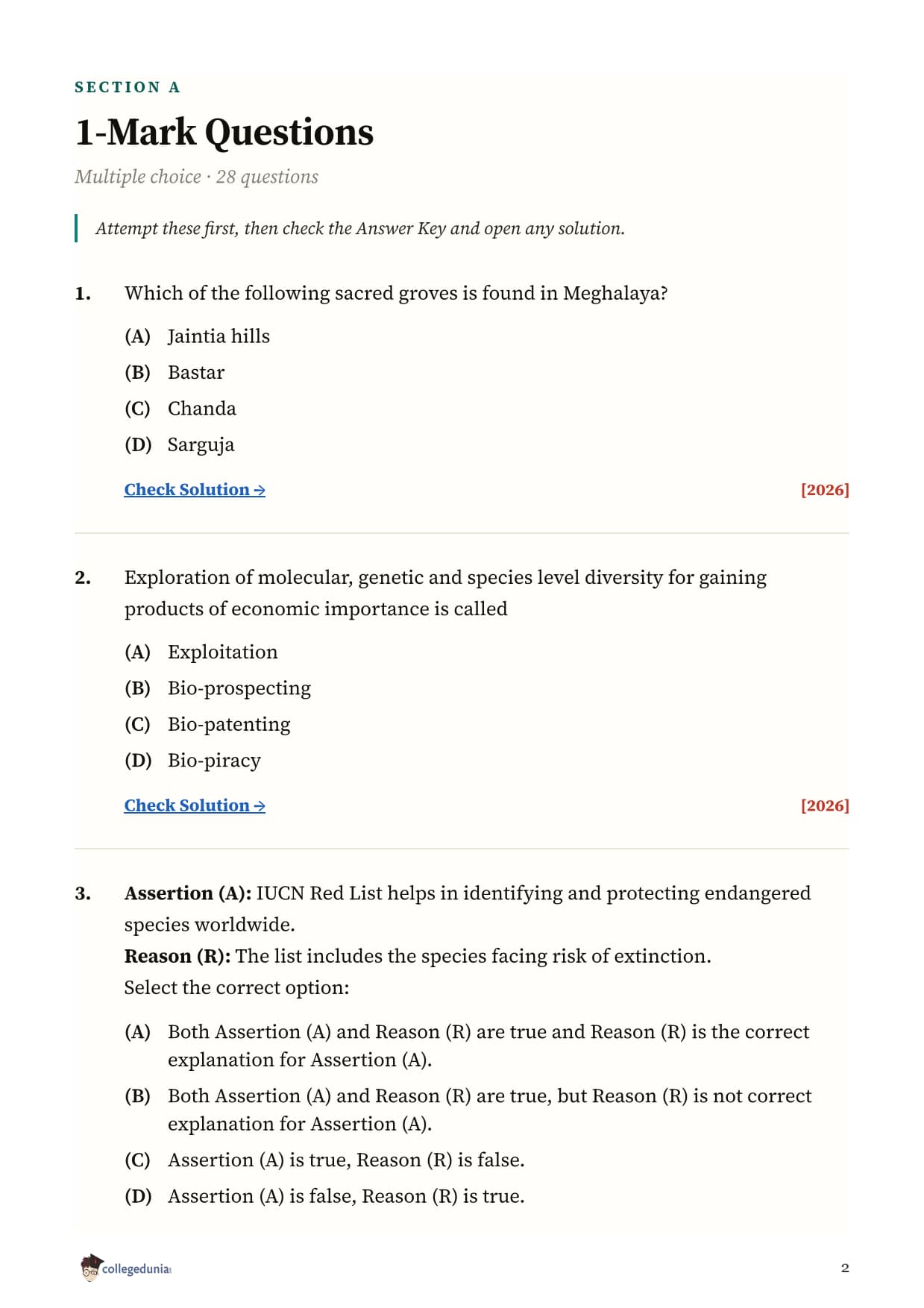
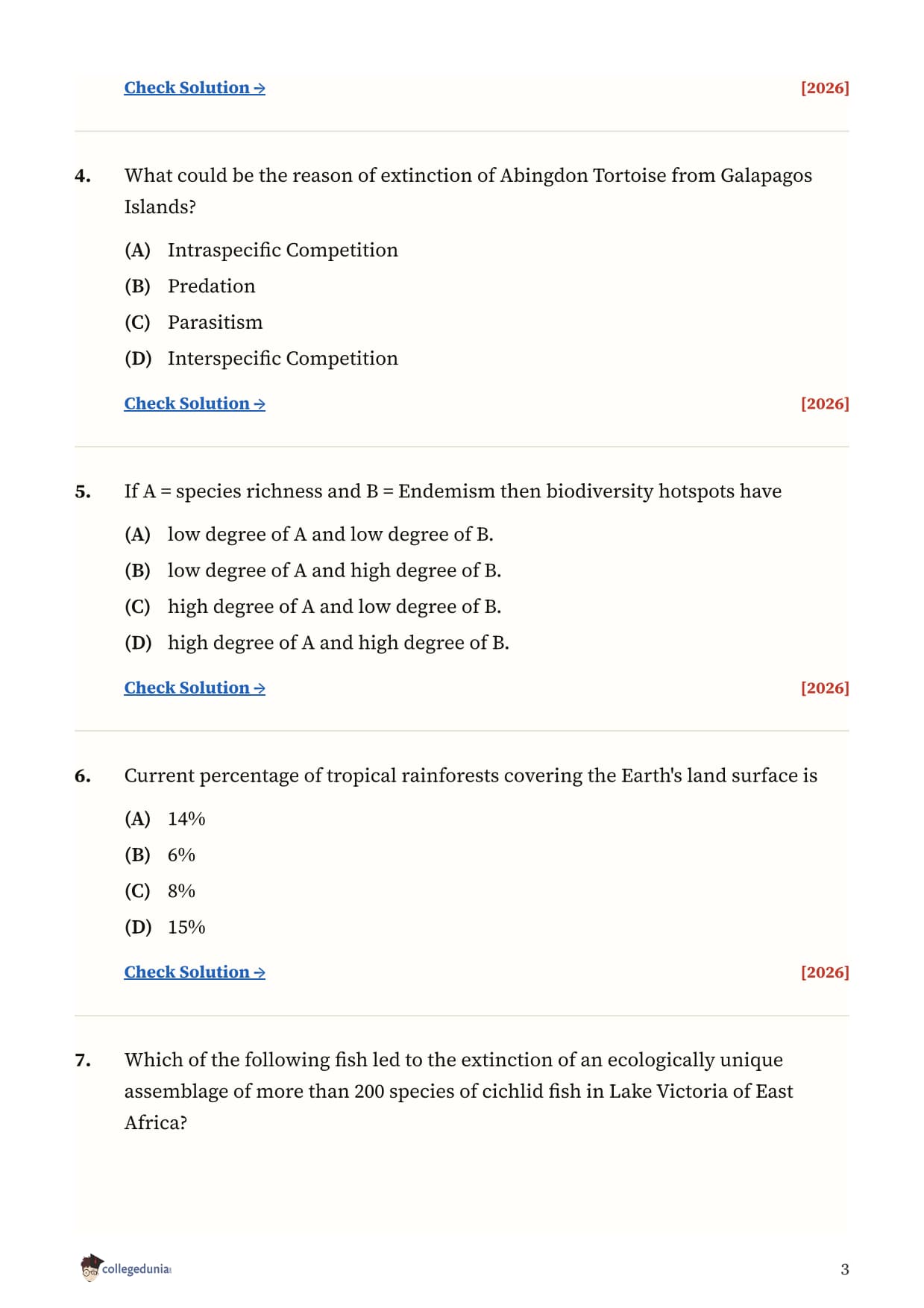
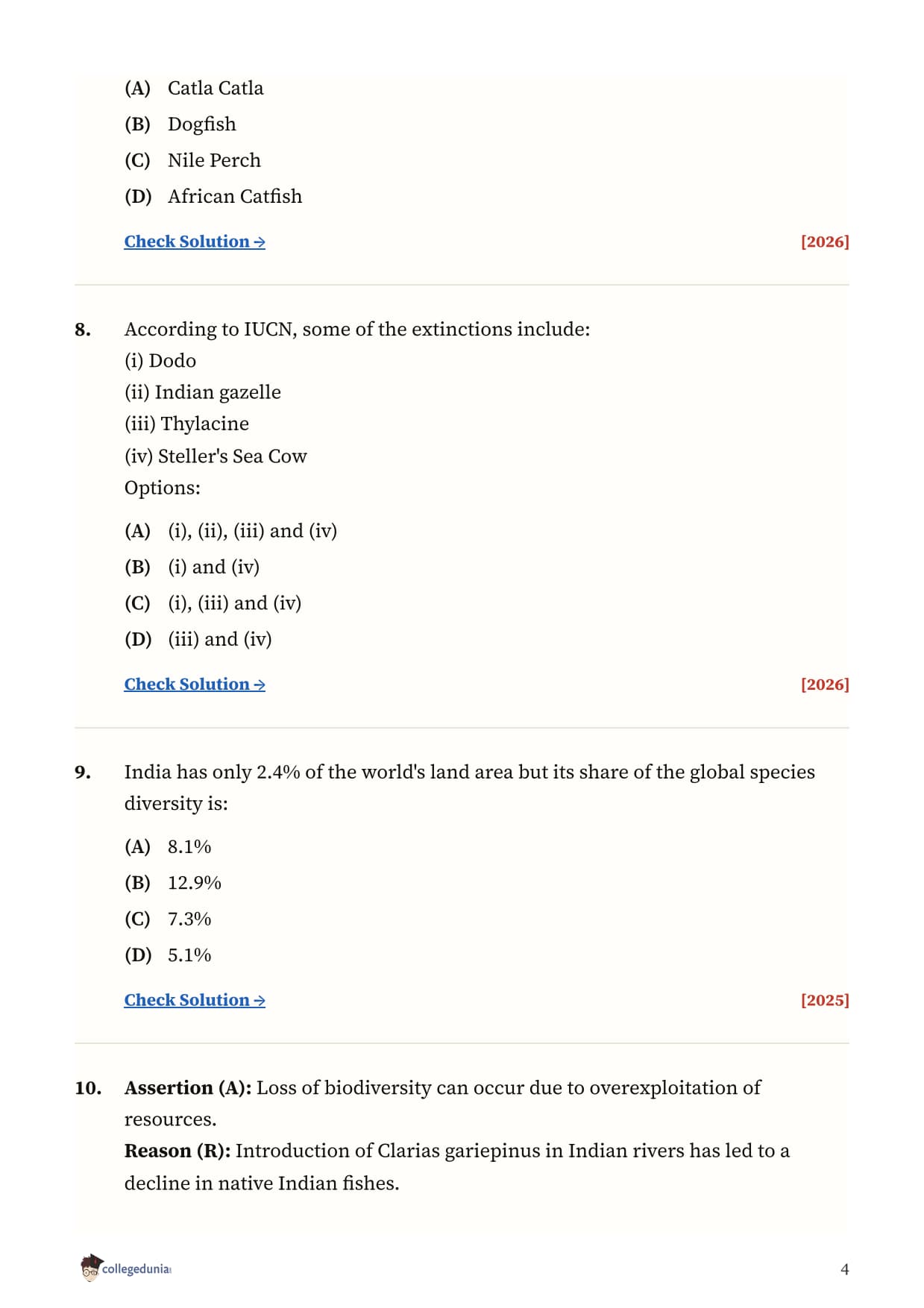
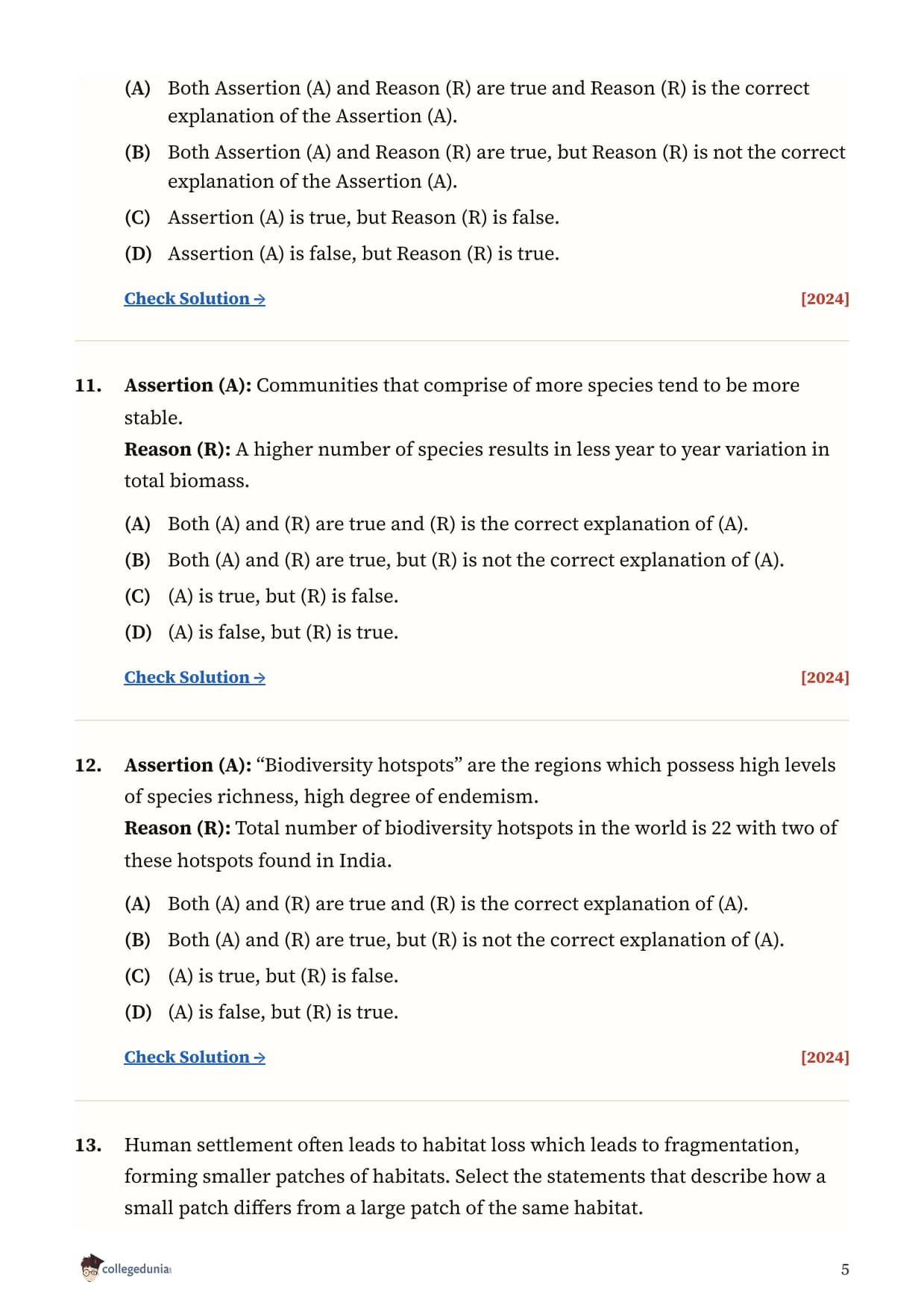
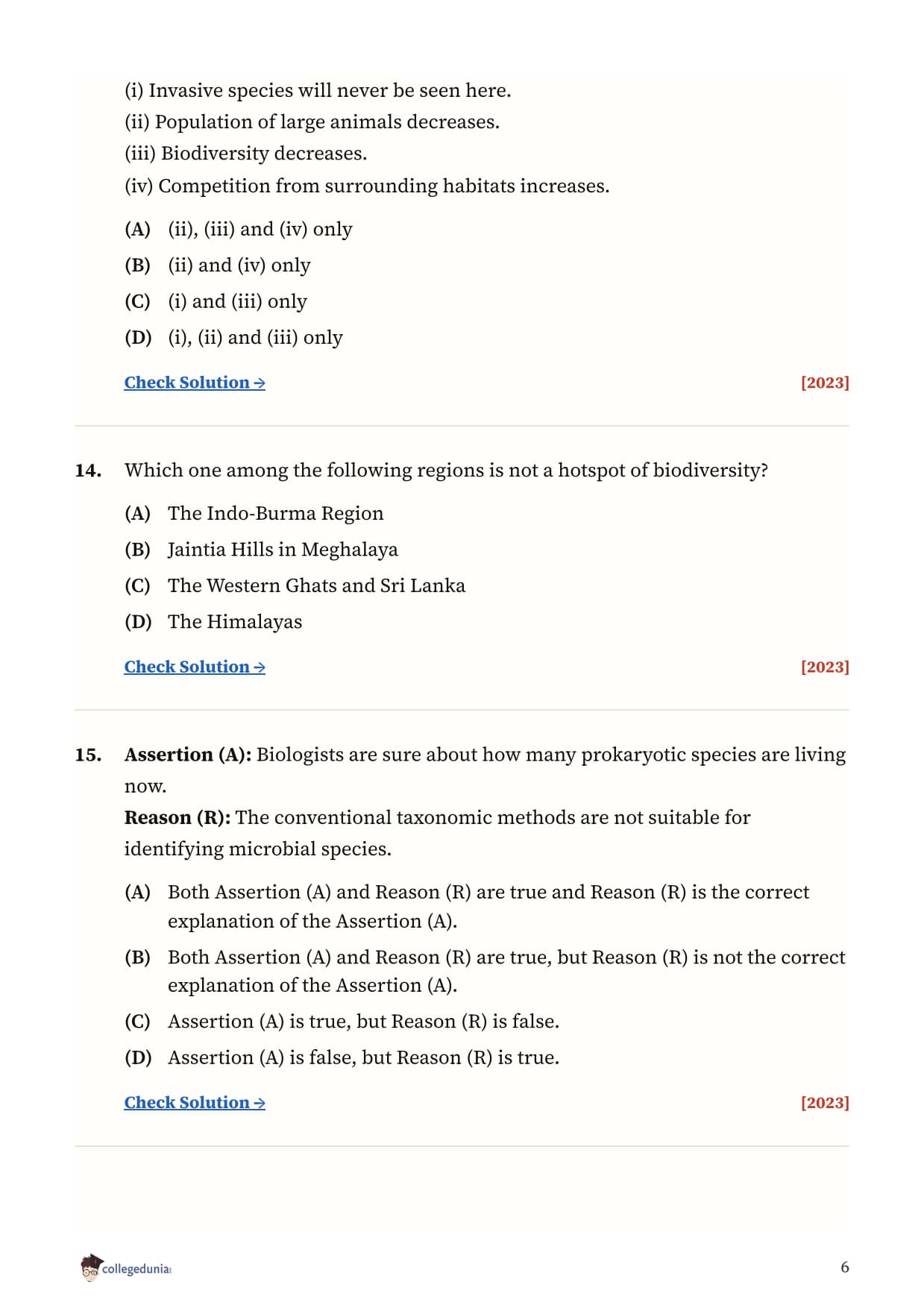
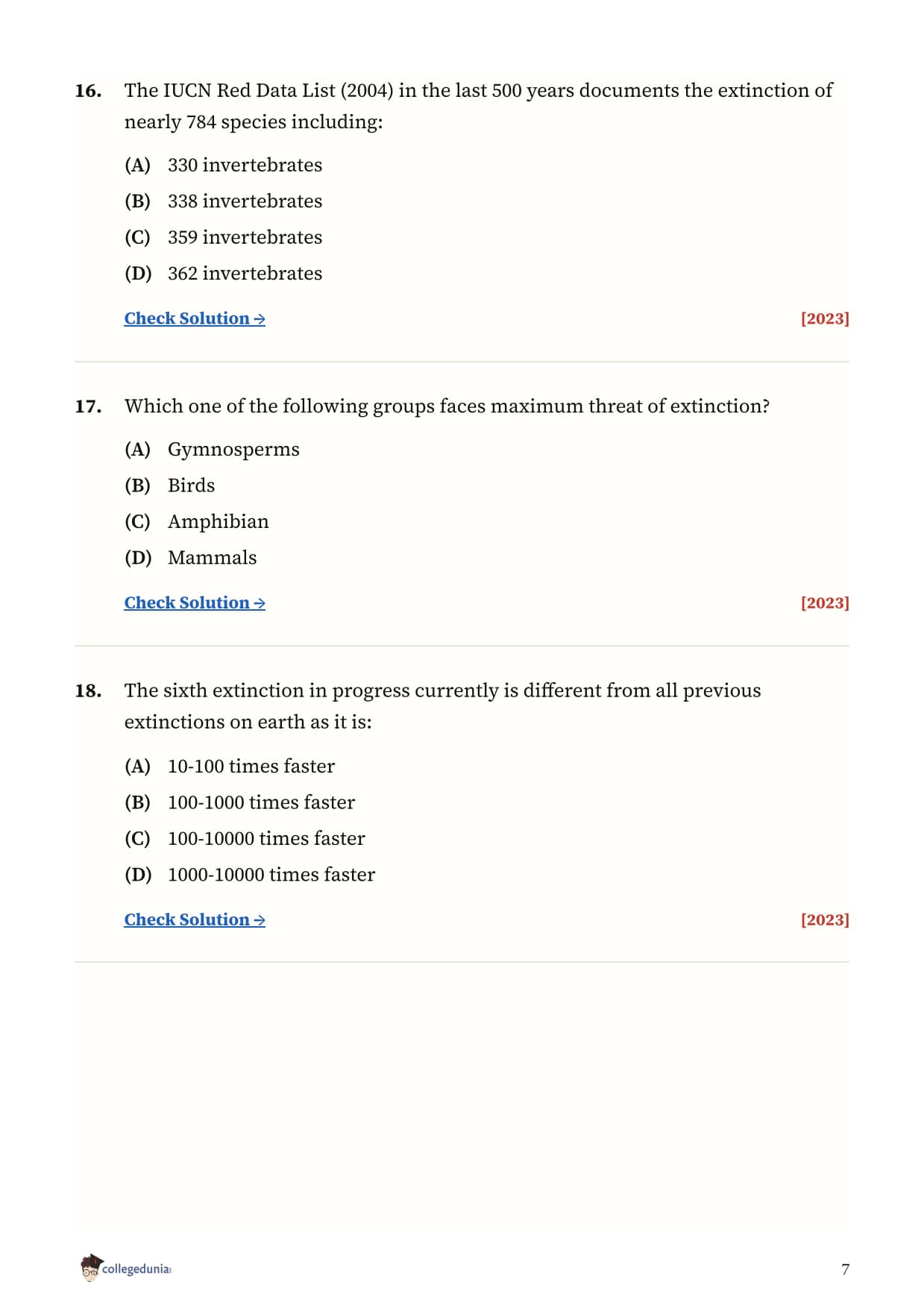
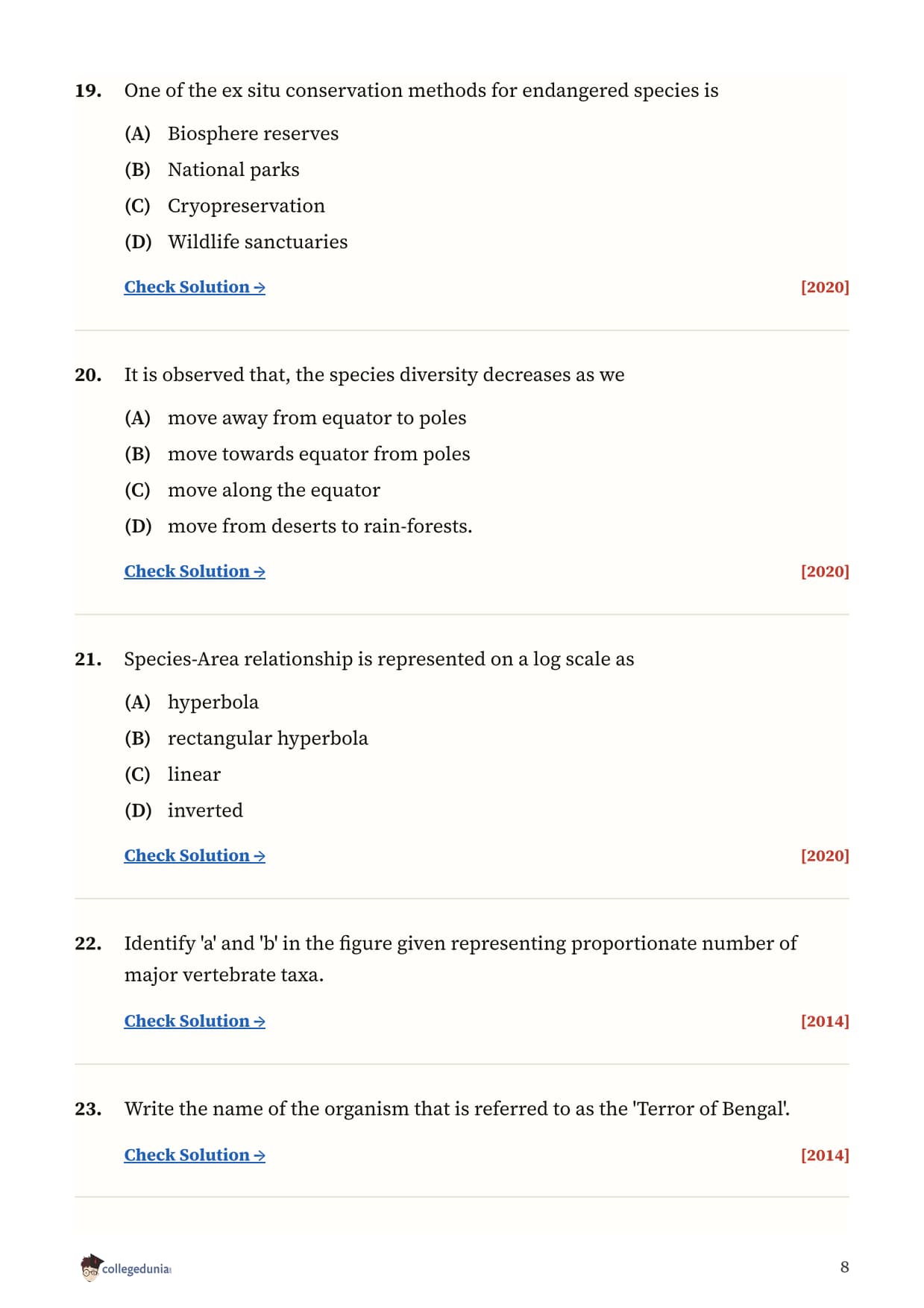
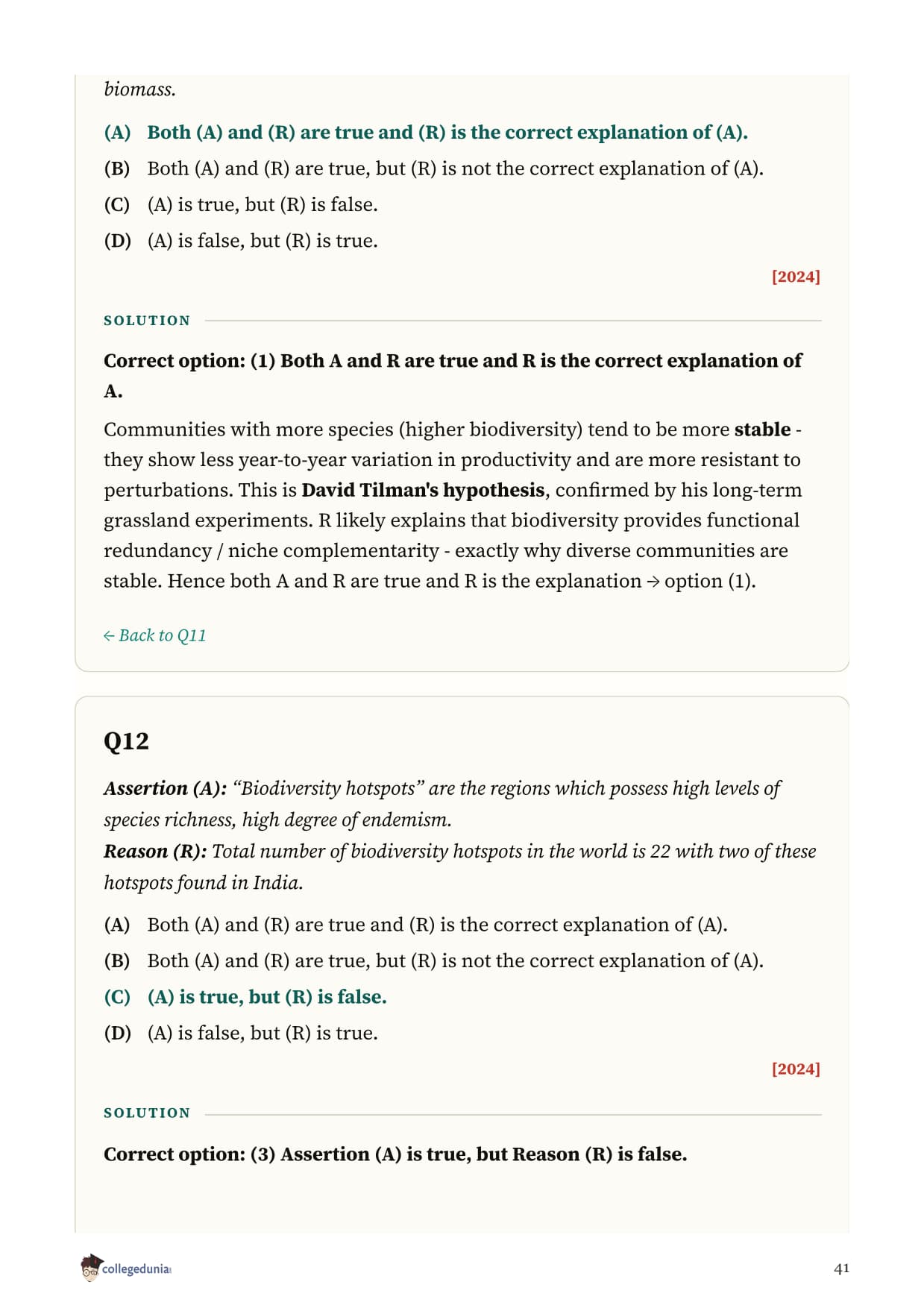
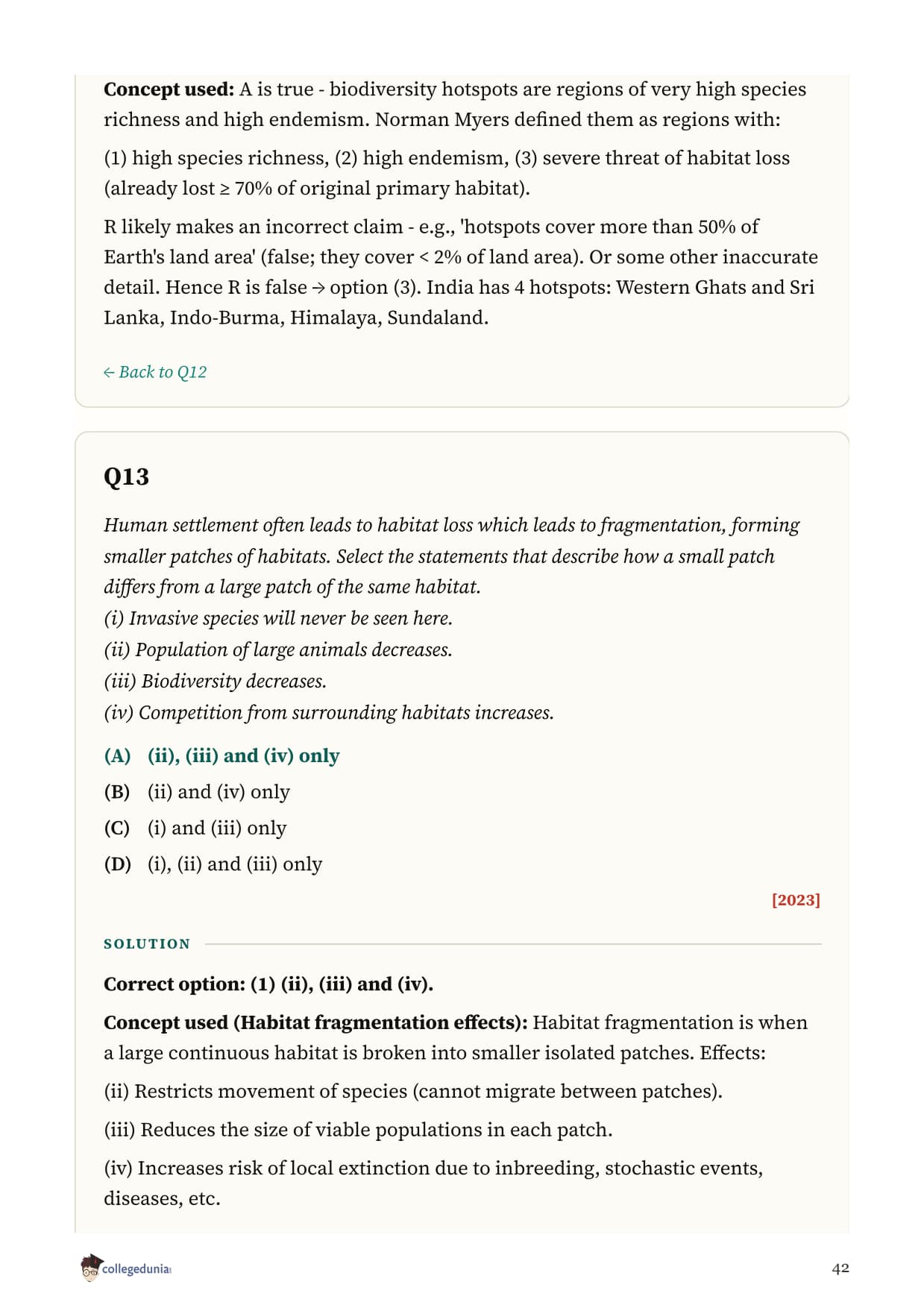
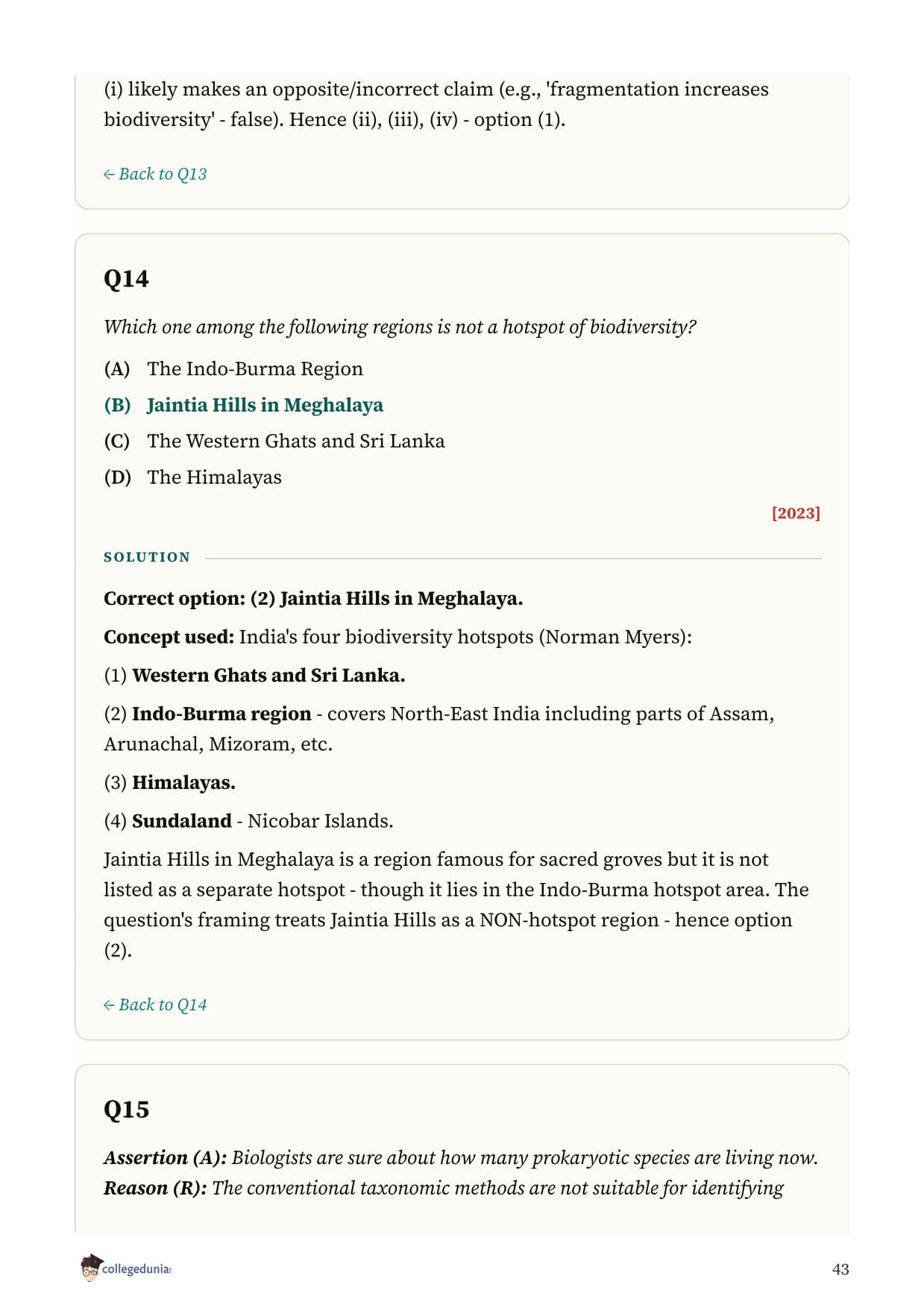
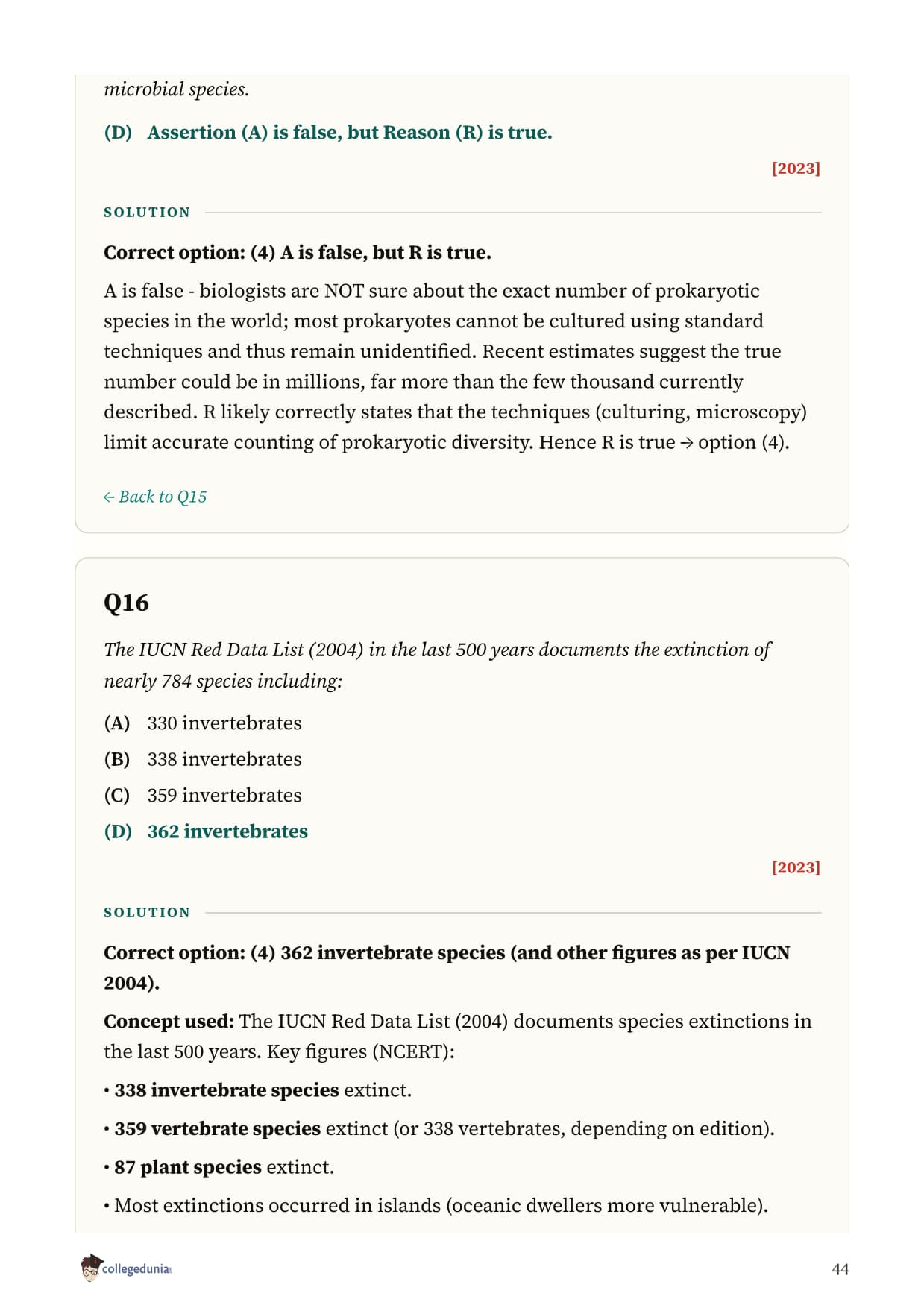
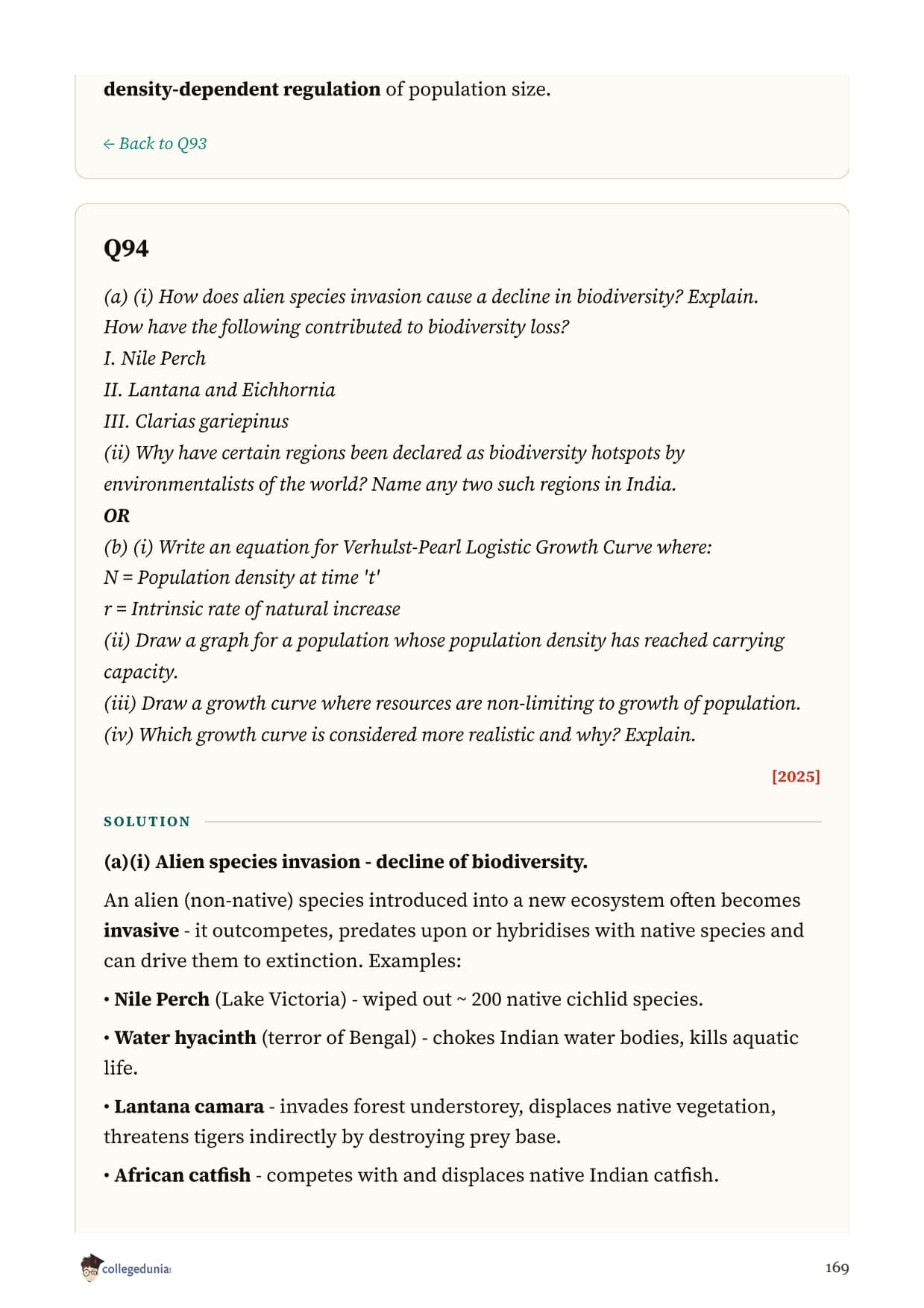
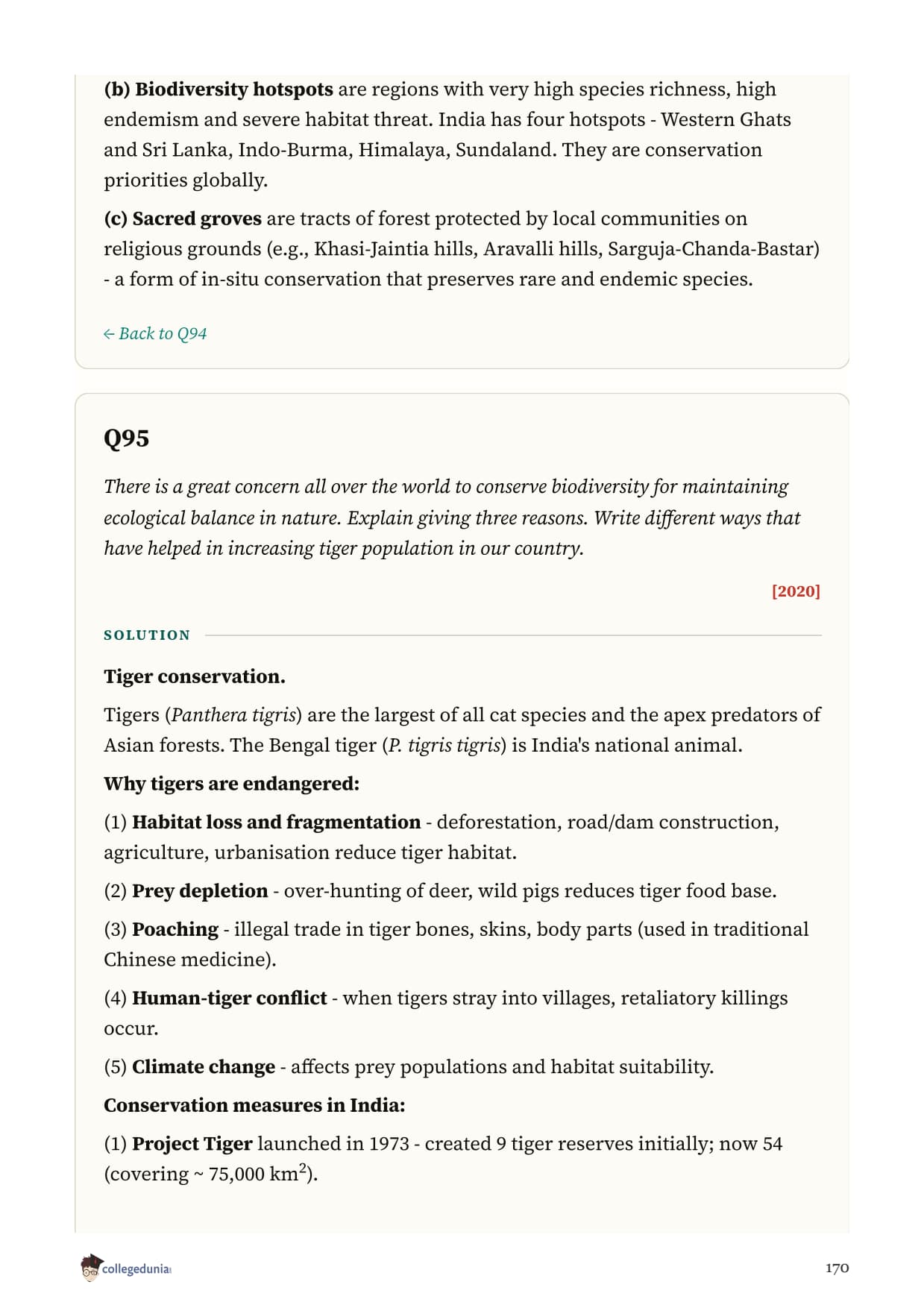
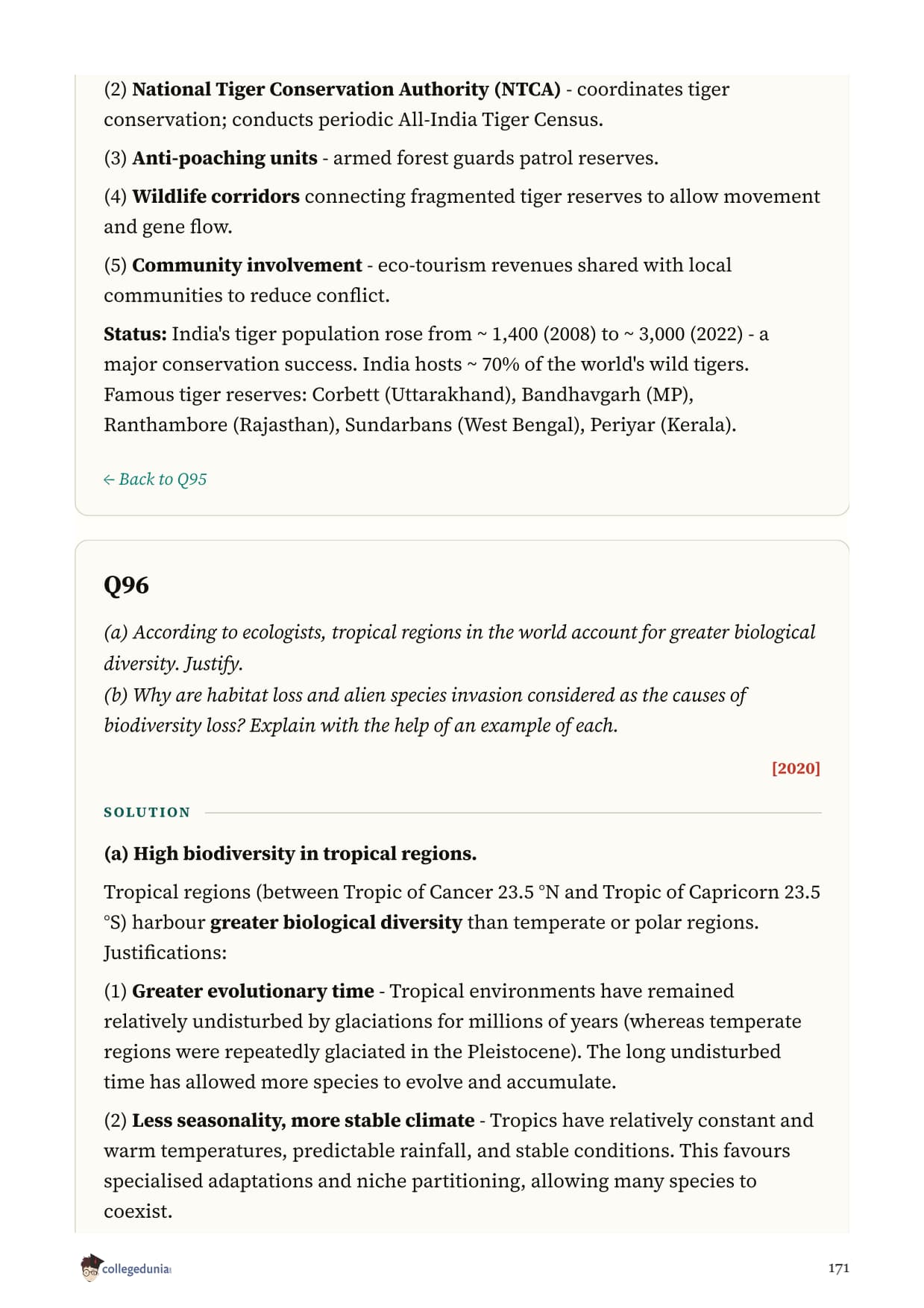
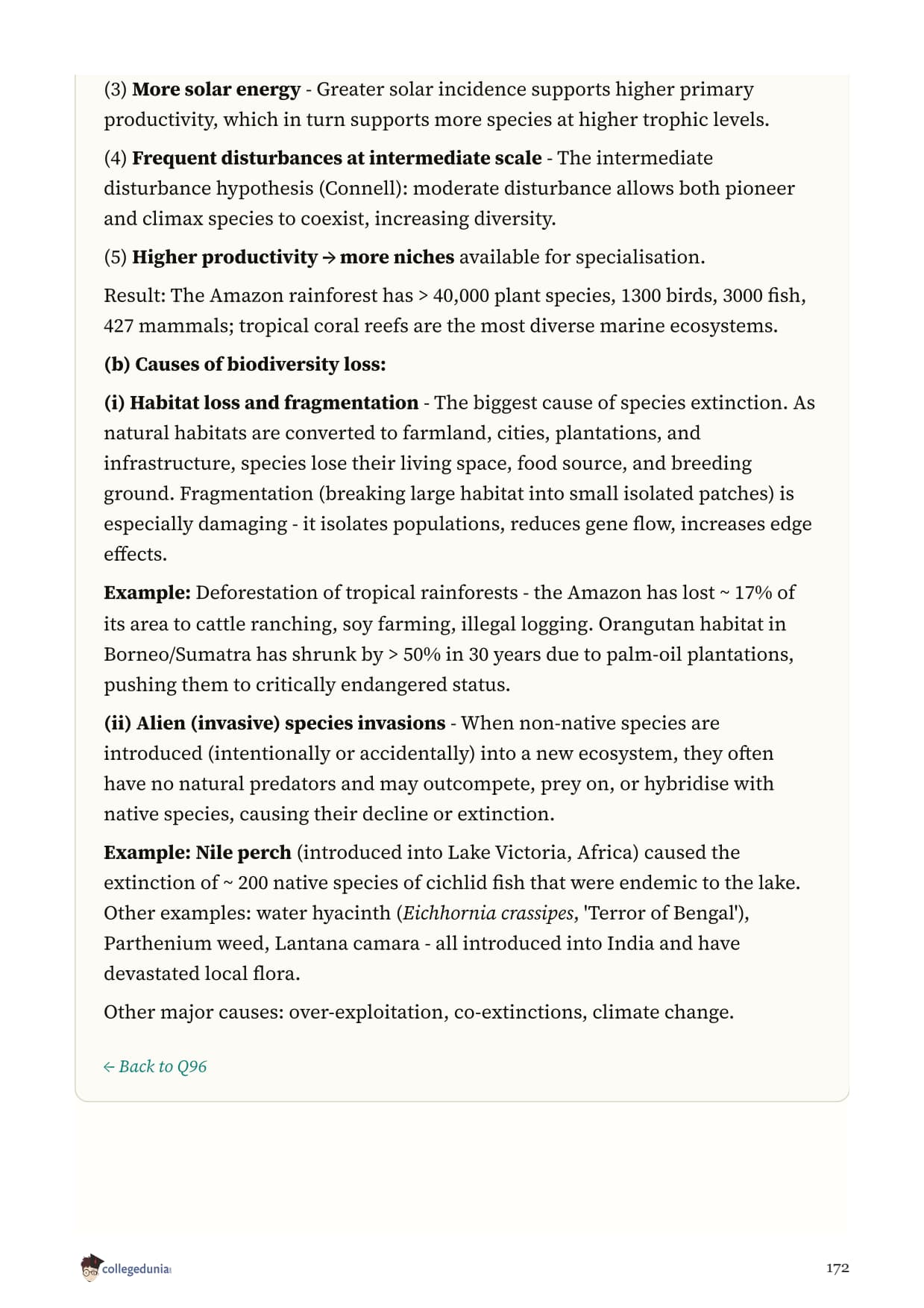
- 1-mark questions: 28 questions, mostly MCQ and assertion-reason on biodiversity levels, hotspots and conservation terms.
- 2-mark questions: 21 questions, built around causes of loss, alien species and conservation methods.
- 3-mark questions: 39 questions, the largest band, plus 3 four-mark case-based and 6 five-mark long answers.
Every one of the 97 board-paper questions across 2004 to 2026 is sorted by marks and by year, then cleaned of repeats. You move through species-area curves, in situ and ex situ methods and the causes of biodiversity loss exactly as CBSE sets them.
Every question in this Class 12 Biology Biodiversity and Conservation PYQ compilation is sourced from CBSE board papers (Delhi, Outside Delhi, Foreign and Compartment) and cross-checked against the official mark scheme, with near-duplicate questions removed.
What the Biodiversity and Conservation Previous Year Questions Cover
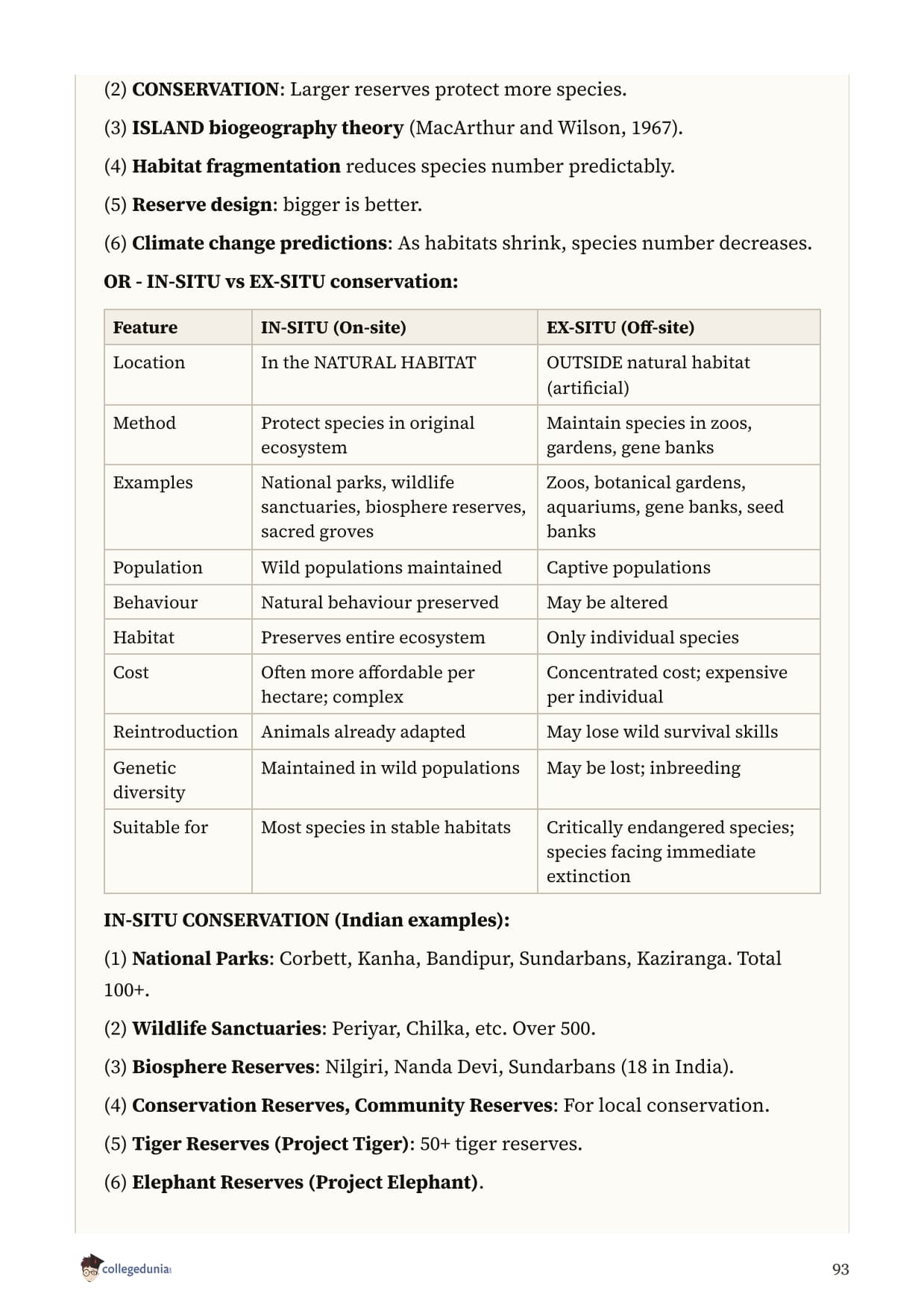
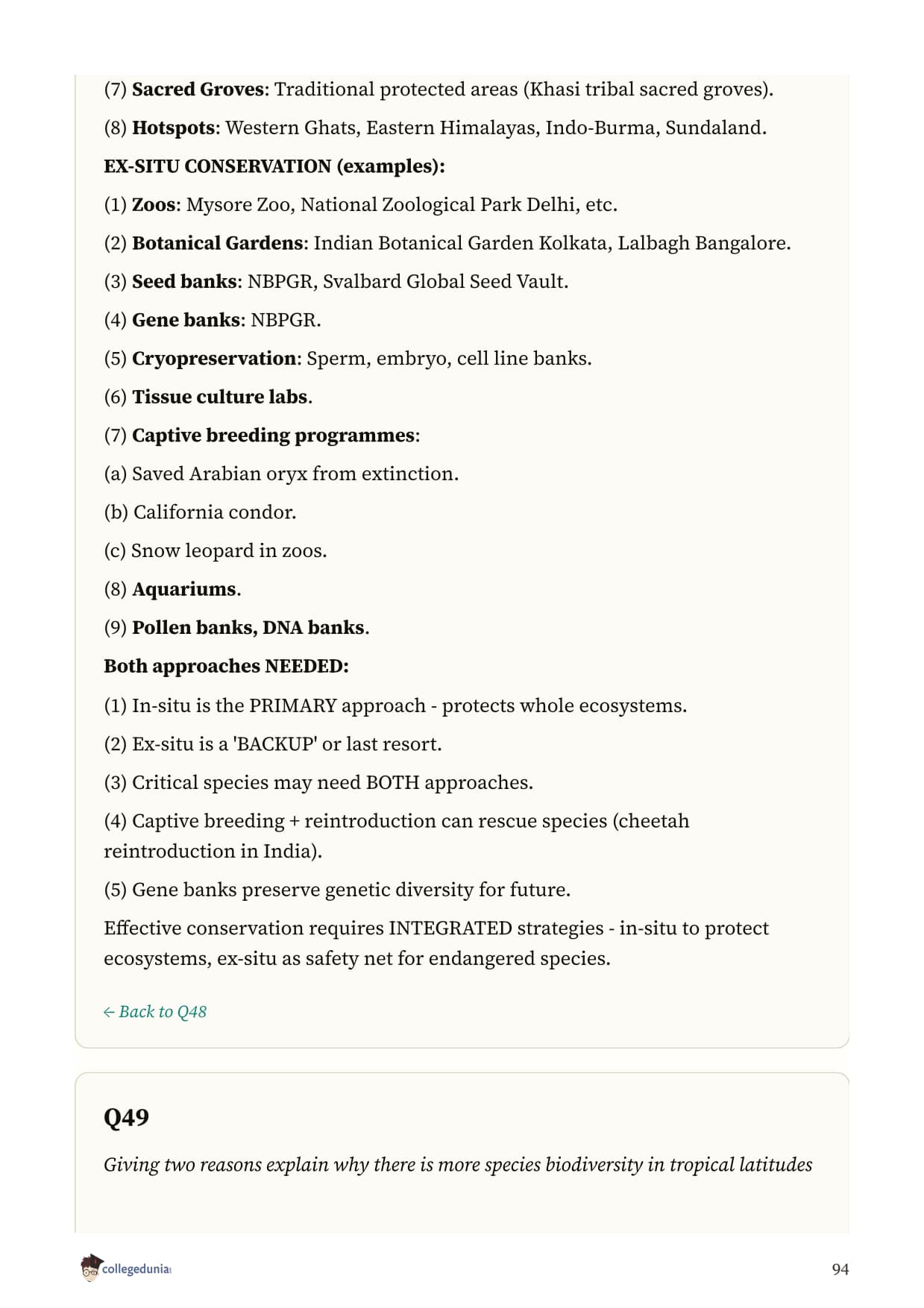
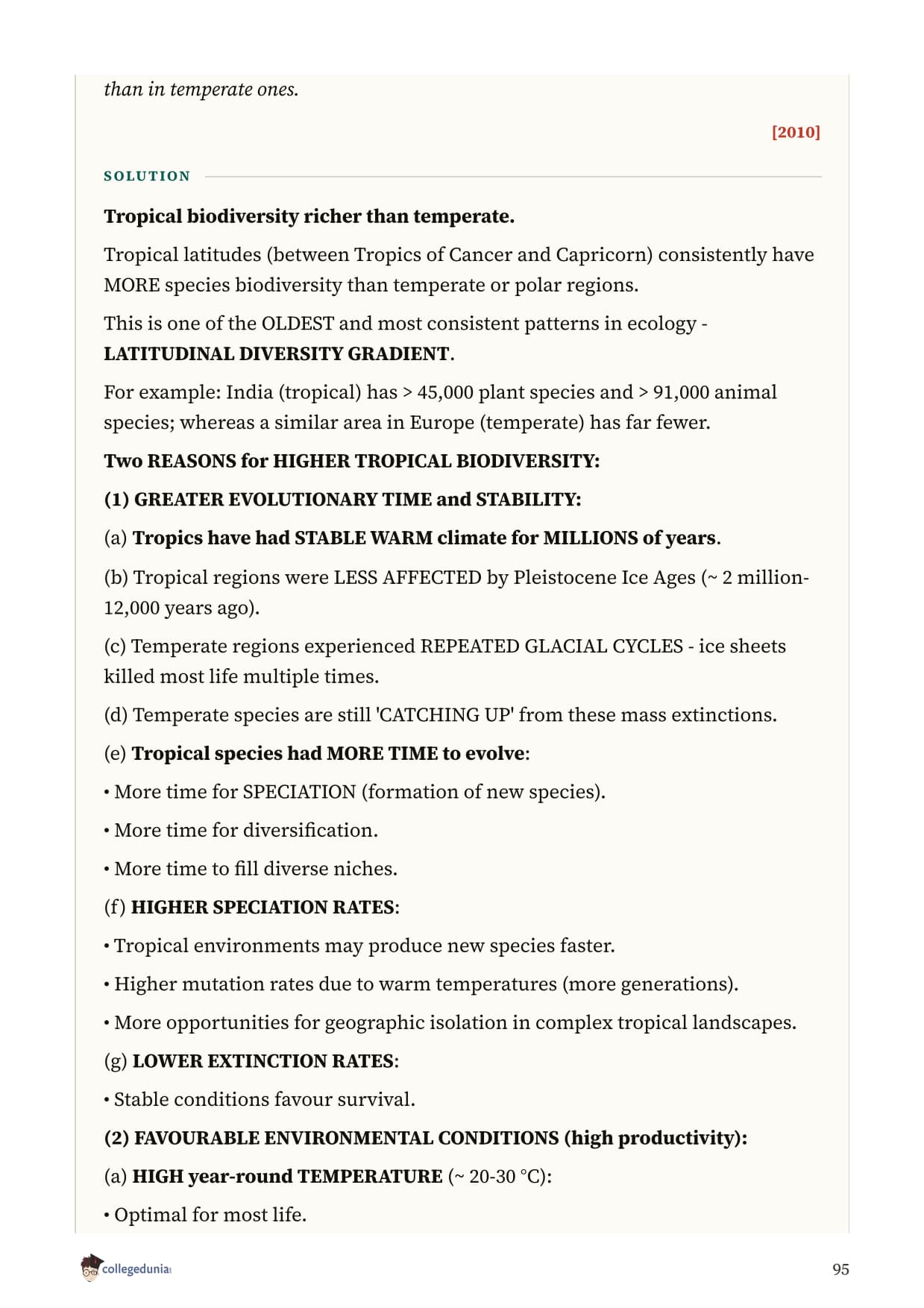
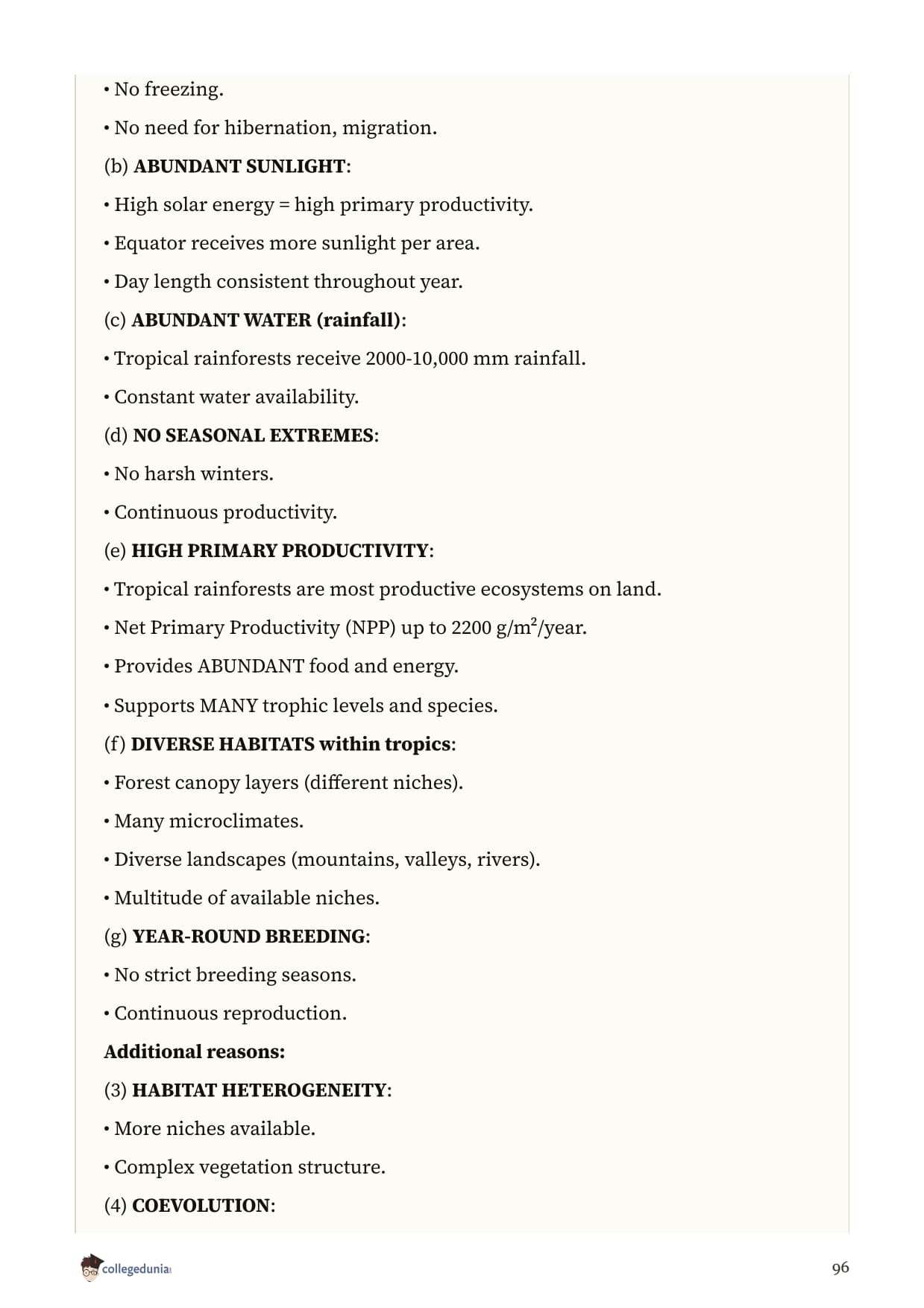
The 97-question set covers every idea the NCERT chapter introduces. Levels of biodiversity (genetic, species, ecological) and patterns of biodiversity (latitudinal gradient, species-area relationship) drive most 3-mark answers. Loss of biodiversity, namely the four causes (habitat loss, overexploitation, alien species, co-extinction), carries the 2-mark band. Conservation methods (in situ like biosphere reserves and national parks, ex situ like seed banks and zoos) and biodiversity-rich zones and sacred groves appear across all bands.
Marks-wise Distribution of the Biodiversity and Conservation PYQs
The table below shows how the 97 questions split across the CBSE marks bands. Use it to plan how much revision time each band deserves.
| Marks | Questions | Total Marks | CBSE Section | Type |
|---|---|---|---|---|
| 1 mark | 28 | 28 | Section A | MCQ / Assertion-Reason |
| 2 mark | 21 | 42 | Section B | VSA (Very Short Answer) |
| 3 mark | 39 | 117 | Section C | SA (Short Answer) |
| 4 mark | 3 | 12 | Section D | Case Study |
| 5 mark | 6 | 30 | Section E | Long Answer |
Year-wise Spread of Class 12 Biology Biodiversity and Conservation PYQs
The compilation spans more than 17 CBSE board years. About 46% of the questions come from 2023 onwards, while a strong base of older 3 and 5-mark questions makes this chapter worth deep practice.
- 2026: An MCQ on the sacred grove found in Meghalaya, an MCQ defining bioprospecting, and a 3-mark question on the three levels of biodiversity with examples.
- 2024 to 2025: Strong sets on the species-area relationship, in situ vs ex situ methods and alien invasive species.
- 2020 to 2023: A heavy contribution year-band, with questions on habitat loss, the latitudinal gradient and biodiversity hotspots.
- 2004 to 2019: Older long answers on the causes of biodiversity loss, the rivet popper hypothesis and conservation strategies, all still relevant.
Topic Frequency in the Biodiversity and Conservation Board Paper Questions
The 97 questions cluster into the six topic buckets below, ranked by how often CBSE has set them between 2004 and 2026.
| Rank | Topic Cluster | Frequency | Typical Marks Band |
|---|---|---|---|
| 1 | Levels and patterns of biodiversity (genetic, species, ecological, latitudinal gradient) | ~23 per cent | 1 and 3 mark |
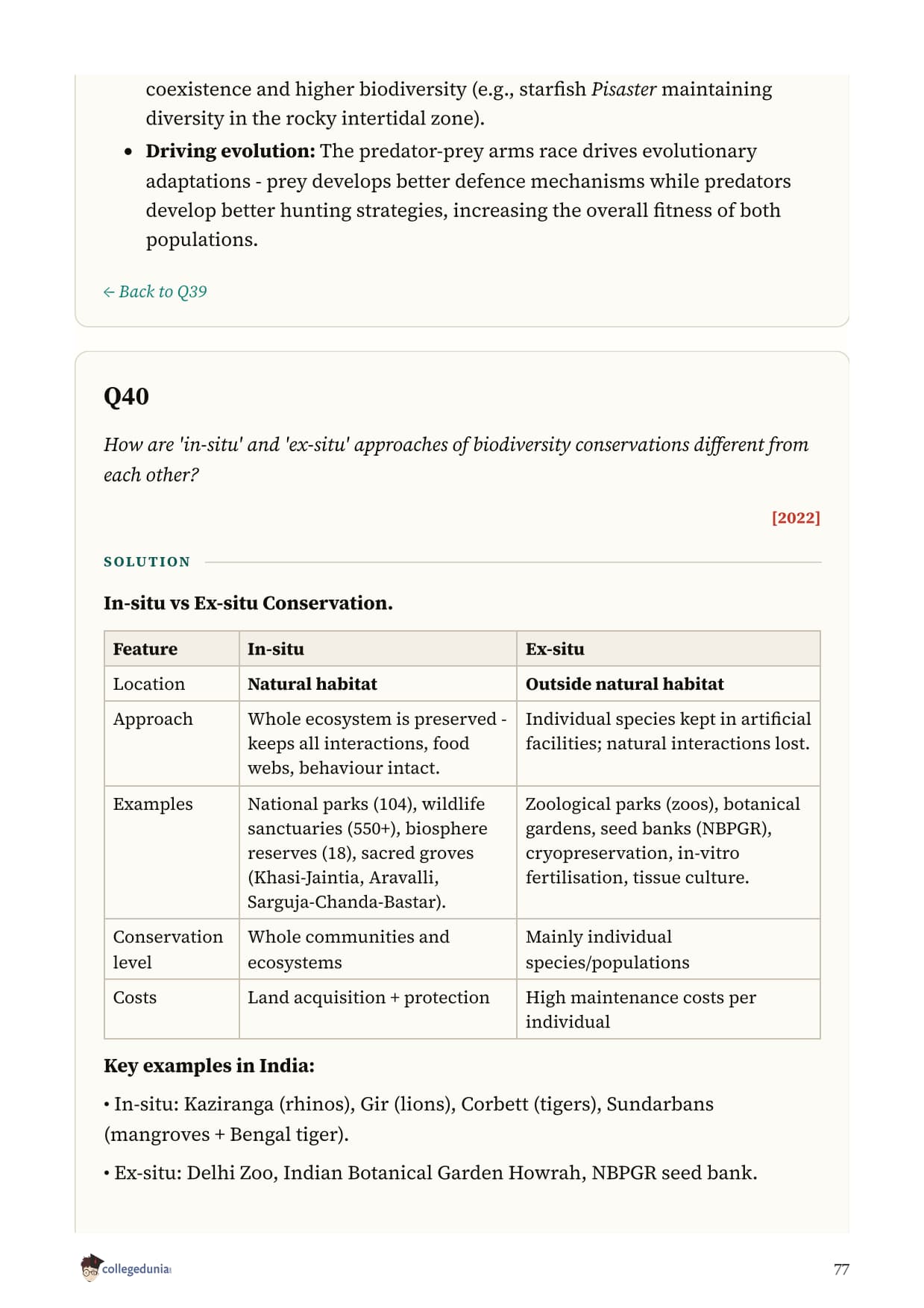
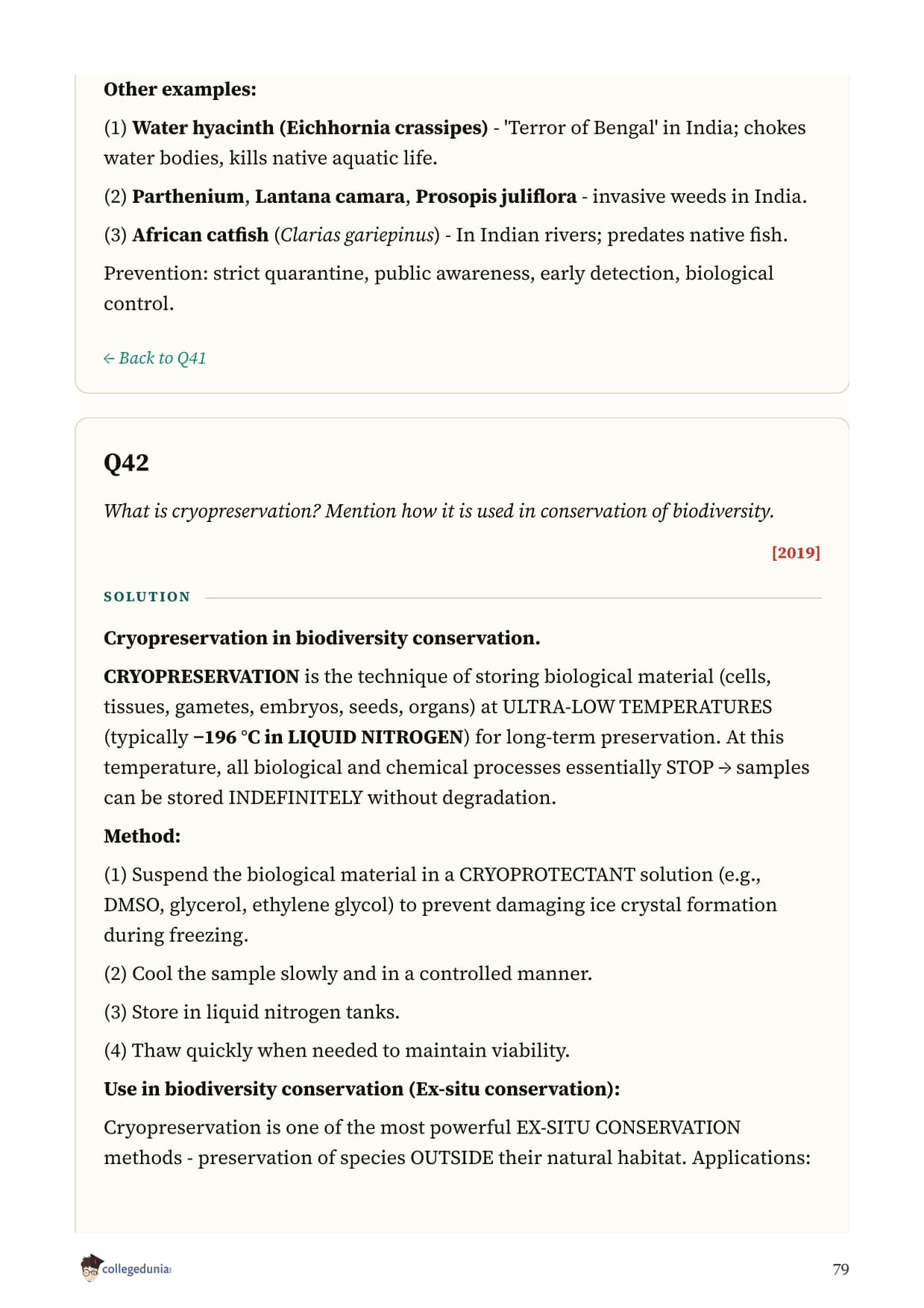
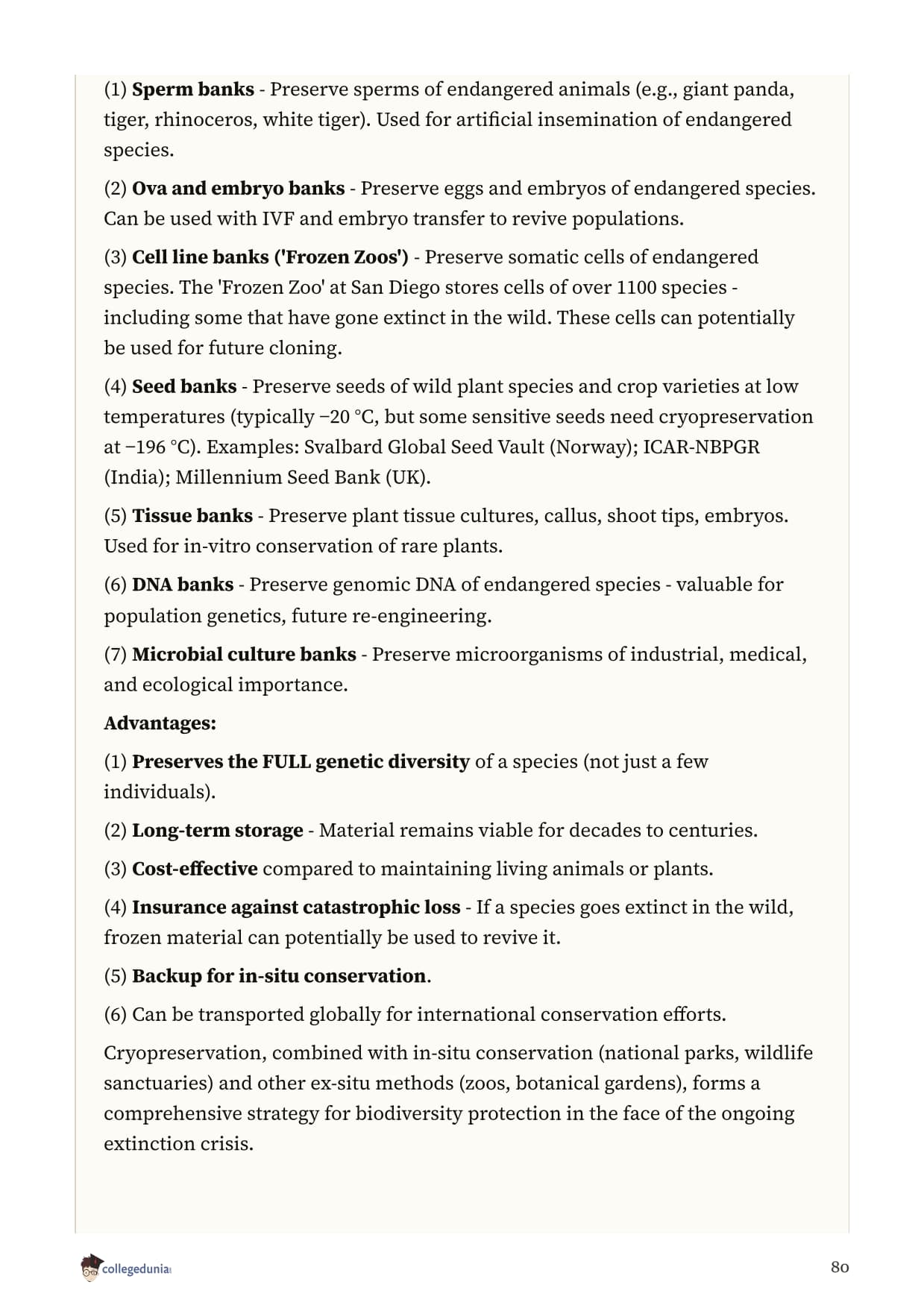
| 2 | Conservation methods (in situ, ex situ, biosphere reserves, seed banks, zoos) | ~20 per cent | 2, 3, 5 mark |
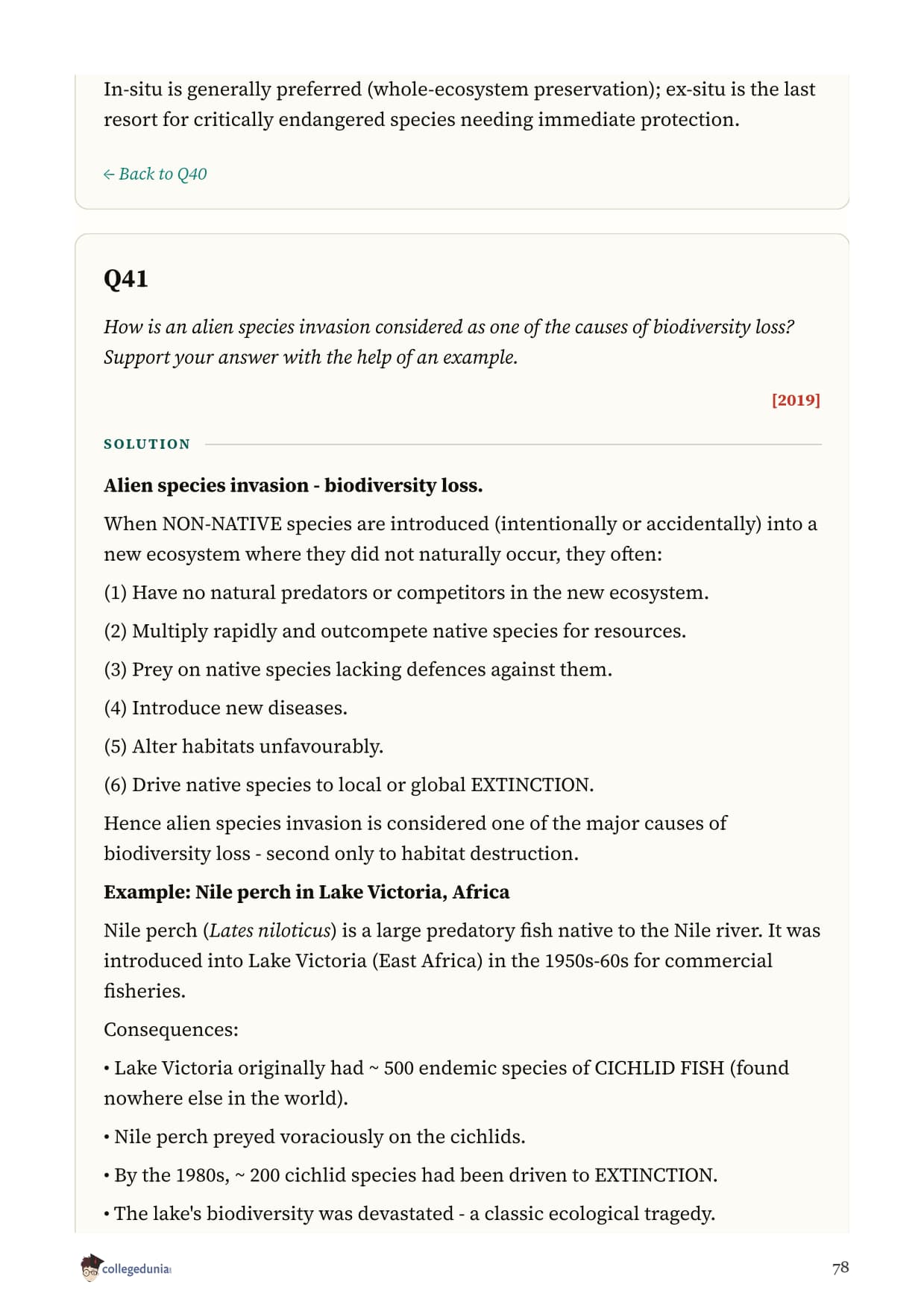
| 3 | Causes of biodiversity loss (habitat loss, overexploitation, alien species, co-extinction) | ~18 per cent | 2 and 3 mark |
| 4 | Species-area relationship (the curve, slope z, importance of biodiversity) | ~15 per cent | 3 and 5 mark |
| 5 | Biodiversity hotspots and India (megadiversity, hotspots, sacred groves) | ~13 per cent | 1 and 2 mark |
| 6 | Why conserve and ecosystem services (narrowly, broadly and ethically, bioprospecting) | ~11 per cent | 1 and 5 mark |
Marks-Band Attempt Strategy for the Biodiversity and Conservation PYQs
The 97 PYQs are arranged marks-ascending inside the PDF, so you can attempt them in the same order the CBSE paper presents them.
- 1-mark MCQs: Spend no more than 45 seconds each. Many test a single term like sacred grove, hotspot or bioprospecting, so revise the definitions first.
- 2-mark questions: Two causes of loss or two conservation examples. Aim for 3 minutes each.
- 3-mark questions: Usually the levels of biodiversity or in situ vs ex situ methods. Give one named example for each point, as the marking scheme rewards examples.
- 4 and 5-mark questions: The species-area relationship or a case-based passage on conservation. Allocate 12 to 15 minutes.
Recent CBSE Trend: 2024 to 2026 Pattern Shift in Biodiversity and Conservation
Three things have changed in the recent CBSE cycles that the Biodiversity and Conservation previous year questions now reflect:
- Section A carries a fixed objective block, including factual MCQs like the 2026 sacred-grove-in-Meghalaya question. The set has 28 such 1-mark questions.
- Term-definition MCQs, such as naming the exploration of diversity for economic products as bioprospecting, now reward exact vocabulary.
- The 3-mark band is the largest here, so case-based and example-driven questions on conservation methods are kept in full.
Sample Previous Year Questions from Biodiversity and Conservation
Here are a few real previous year questions from the Biodiversity and Conservation board papers, taken straight from the compilation. The full set is in the downloadable PDF.
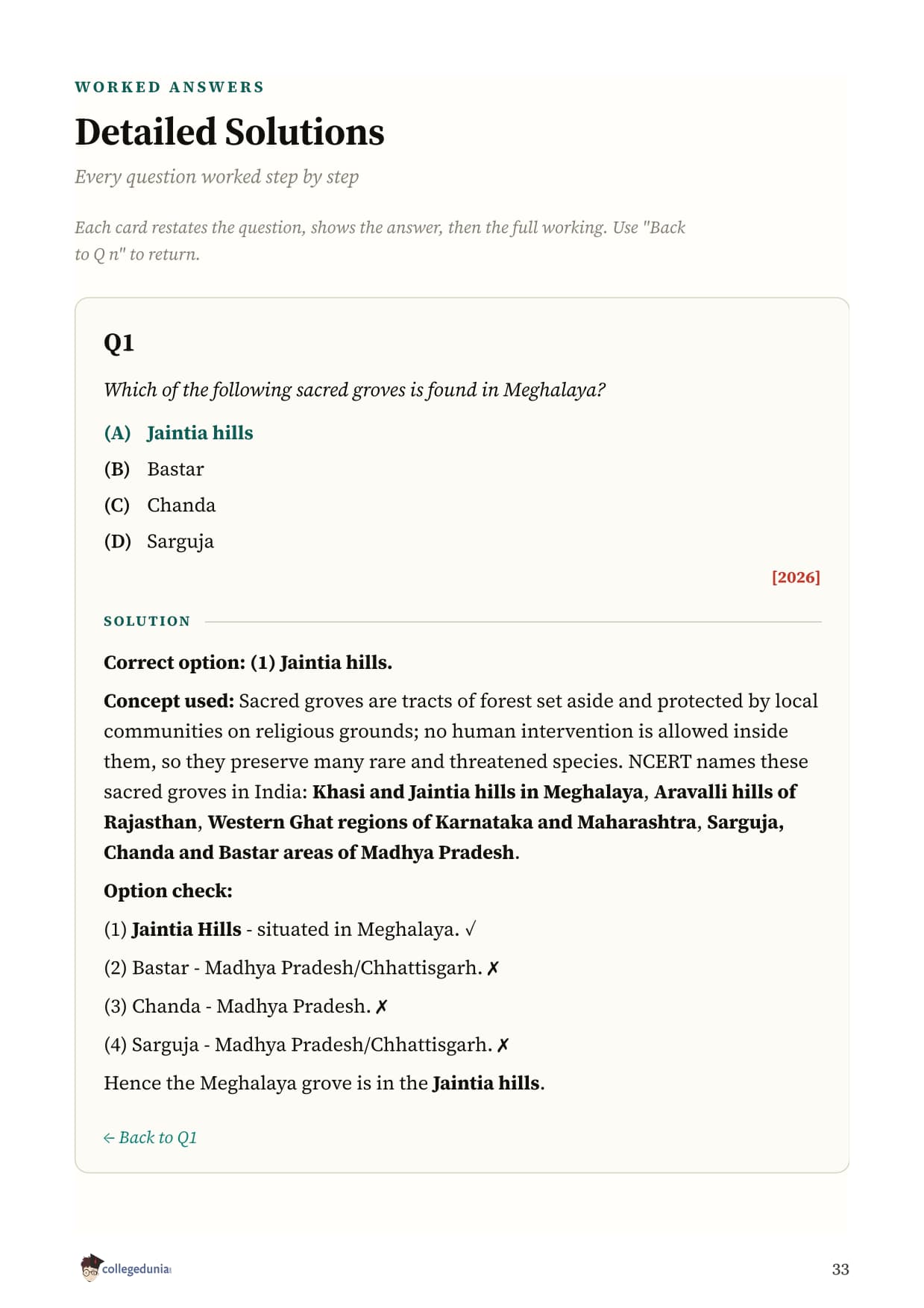
Which of the following sacred groves is found in Meghalaya?
- Jaintia hills
- Bastar
- Chanda
- Sarguja
[2026 • 1 mark]
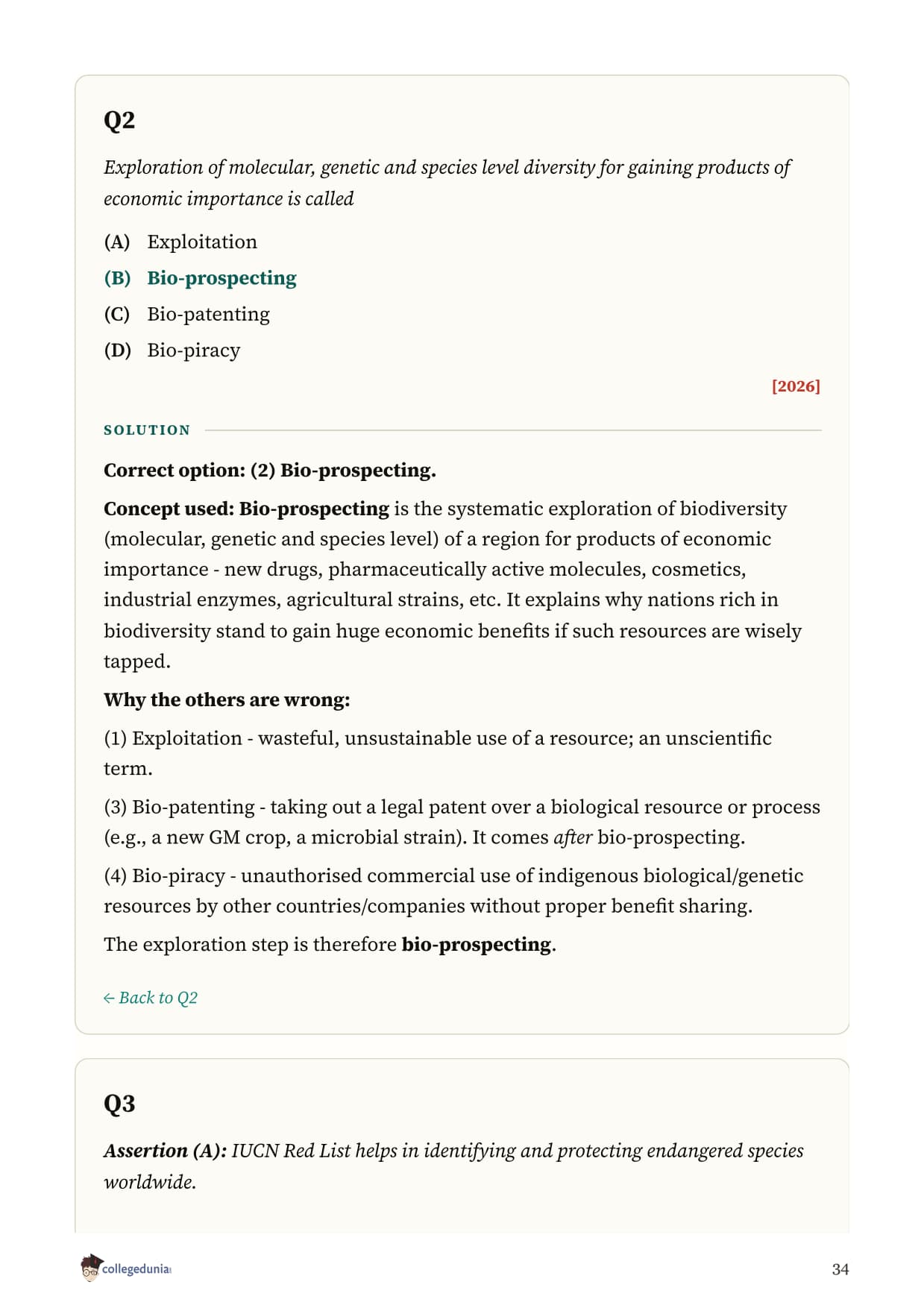
Exploration of molecular, genetic and species level diversity for gaining products of economic importance is called
- Exploitation
- Bio-prospecting
- Bio-patenting
- Bio-piracy
[2026 • 1 mark]
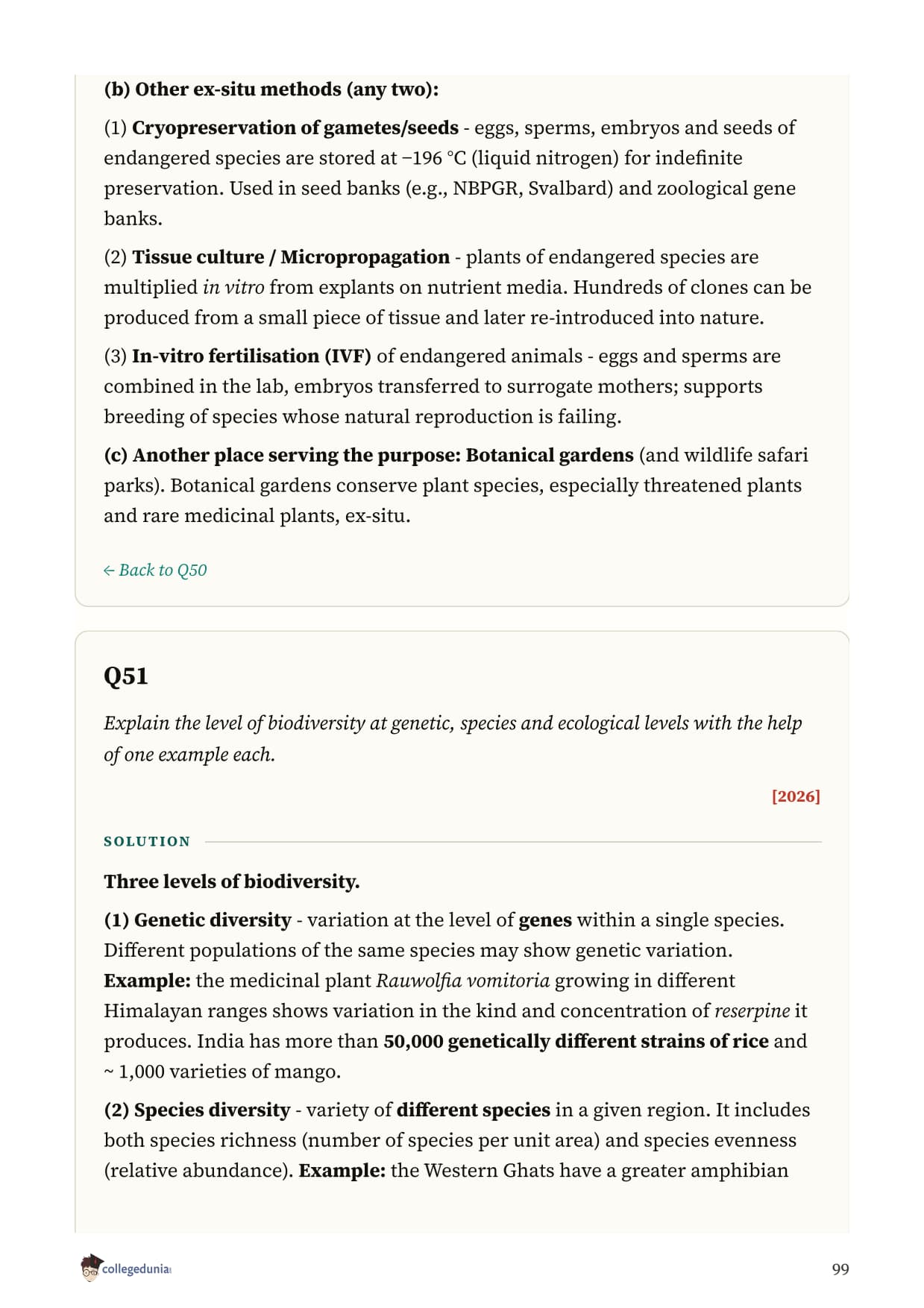
Explain the level of biodiversity at genetic, species and ecological levels with the help of one example each.
[2026 • 3 mark]
Common Mistakes in the Biodiversity and Conservation Board Questions
- Mixing up in situ and ex situ conservation, for example calling a seed bank an in situ method.
- Listing the levels of biodiversity without a named example for each, which loses marks.
- Confusing alien invasive species with native species, or naming the wrong example like water hyacinth.
- Stating the species-area relationship wrongly, or forgetting the slope z lies between 0.1 and 0.2 for small areas.
- Writing only one cause of biodiversity loss when CBSE asks for the four, missing co-extinction most often.
Student Feedback on Biodiversity and Conservation PYQ Practice
- 62 per cent said the in situ vs ex situ comparison was the part they got wrong most before practice.
- 54 per cent reported gaining 3 to 5 marks after solving every 3-mark conservation PYQ in this PDF.
- 39 per cent said a species-area or biodiversity-levels question matched their actual 2026 paper.
- Average time to finish all 97 PYQs: about 8 hours across 5 study sessions.
How These PYQs Pair with the Other Biodiversity and Conservation Resources
Solving previous year questions alone gives you only half the prep. Pair the PYQ PDF with the matching concept, formula and solution resources for Biodiversity and Conservation.
| Resource | What It Gives You | Open |
|---|---|---|
| NCERT Solutions | Step-by-step worked answers to every NCERT back-exercise question of Biodiversity and Conservation | NCERT Solutions for Biodiversity and Conservation |
| Notes | Concept revision notes covering every topic in the Biodiversity and Conservation chapter | Biodiversity and Conservation Class 12 Notes |
| Formula Sheet | All key formulas and results of Biodiversity and Conservation on one page for last-day revision | Biodiversity and Conservation Formula Sheet |
| Handwritten Notes | Scanned handwritten notes of Biodiversity and Conservation for quick one-shot revision | Biodiversity and Conservation Handwritten Notes |
| Exemplar Solutions | NCERT Exemplar problems of Biodiversity and Conservation solved in full for extra practice | NCERT Exemplar Solutions for Biodiversity and Conservation |
| NCERT Book | Official NCERT Biodiversity and Conservation chapter PDF for free download | Biodiversity and Conservation NCERT Book PDF |
| Exemplar Book | NCERT Exemplar Biodiversity and Conservation problem book PDF for free download | Biodiversity and Conservation Exemplar Book PDF |
How to Use the Biodiversity and Conservation PYQ PDF Most Effectively
The 97 questions are sequenced for a three-pass revision plan:
- Pass 1 (Day 1 to 2): Attempt all 28 one-mark MCQs and build a flashcard for every term, such as hotspot, sacred grove and bioprospecting.
- Pass 2 (Day 3 to 5): Solve the 21 two-mark and 39 three-mark questions, timing 3 minutes per 2-mark and 5 minutes per 3-mark.
- Pass 3 (Day 6 to 8): Work through the 3 four-mark case-based and 6 five-mark questions, giving a named example for every point.
All Class 12 Biology Chapter PYQ PDFs
Every Class 12 Biology chapter has its own PYQ compilation built the same way, sorted by marks and tagged by year.
| Chapter | Topic | Previous Year Questions |
|---|---|---|
| Chapter 1 | Sexual Reproduction in Flowering Plants | PYQ PDF |
| Chapter 2 | Human Reproduction | PYQ PDF |
| Chapter 3 | Reproductive Health | PYQ PDF |
| Chapter 4 | Principles of Inheritance and Variation | PYQ PDF |
| Chapter 5 | Molecular Basis of Inheritance | PYQ PDF |
| Chapter 6 | Evolution | PYQ PDF |
| Chapter 7 | Human Health and Disease | PYQ PDF |
| Chapter 8 | Microbes in Human Welfare | PYQ PDF |
| Chapter 9 | Biotechnology: Principles and Processes | PYQ PDF |
| Chapter 10 | Biotechnology and its Applications | PYQ PDF |
| Chapter 11 | Organisms and Populations | PYQ PDF |
| Chapter 12 | Ecosystem | PYQ PDF |
| Chapter 13 | Biodiversity and Conservation | PYQ PDF |
Also Check: NCERT Solutions for Class 12 Biology
Class 12 Biology Biodiversity and Conservation PYQ FAQs
Ques. How many previous year questions are in the Class 12 Biology Biodiversity and Conservation PYQ PDF?
Ans. The PDF has 97 previous year questions from CBSE board papers between 2004 and 2026, sorted by marks and then by year, latest first. Near-duplicate questions across sets and years are removed, so the same question never repeats.
Ques. Are the Biodiversity and Conservation PYQs based on the 2026-27 CBSE syllabus?
Ans. Yes. Every question follows the 2026-27 CBSE Class 12 Biology syllabus. Older questions are kept because the core ideas, such as biodiversity levels, conservation methods and causes of loss, are unchanged in the current syllabus.
Ques. Which topics of Biodiversity and Conservation appear most often in CBSE board papers?
Ans. From the 97-question set: levels and patterns of biodiversity (about 23 per cent), conservation methods (about 20 per cent), causes of biodiversity loss (about 18 per cent), the species-area relationship (about 15 per cent), and biodiversity hotspots.
Ques. How is this PYQ PDF different from a CBSE sample paper?
Ans. A sample paper gives you one paper. This PDF stitches together more than 17 years of questions across every set and region (Delhi, Outside Delhi, Foreign and Compartment) for Biodiversity and Conservation alone, so you see which ideas CBSE repeats.
Ques. Does the Biodiversity and Conservation PYQ PDF include MCQs?
Ans. Yes. 28 of the 97 questions are 1-mark questions, mostly MCQ and assertion-reason from 2023 onwards, when CBSE expanded the Section A objective block.
Ques. Where can I download the Biodiversity and Conservation Class 12 PYQ PDF for free?
Ans. The full Biodiversity and Conservation PYQ PDF is free to download from the PDF button at the top of this page. No sign-up is needed.
Ques. How should I use these PYQs to revise Biodiversity and Conservation in the last 10 days?
Ans. Use the three-pass plan: Day 1 to 2 attempt all 28 MCQs, Day 3 to 5 solve the 2 and 3-mark questions, Day 6 to 8 attempt the case-based and 5-mark questions. Always give one named example for each point.
Ques. Does the PDF give answers or only the questions?
Ans. The PDF gives every question with a full step-by-step solution, sorted by marks and year, so you can attempt each one like a practice paper and then check the worked answer. For full answers, open the NCERT Solutions page for Biodiversity and Conservation or check the official CBSE marking scheme.
Ques. Is the difference between in situ and ex situ conservation important for CBSE?
Ans. Yes. The in situ vs ex situ comparison is one of the most repeated 2 and 3-mark questions in this chapter. In situ means protecting species in their natural habitat (national parks, biosphere reserves), while ex situ means outside it (seed banks, zoos, botanical gardens).
Ques. What is biodiversity?
Ans. Biodiversity is the variety of life on Earth at all levels. CBSE recognises three levels: genetic diversity within a species, species diversity within a region, and ecological diversity at the ecosystem level.
Ques. How is the species-area relationship defined?
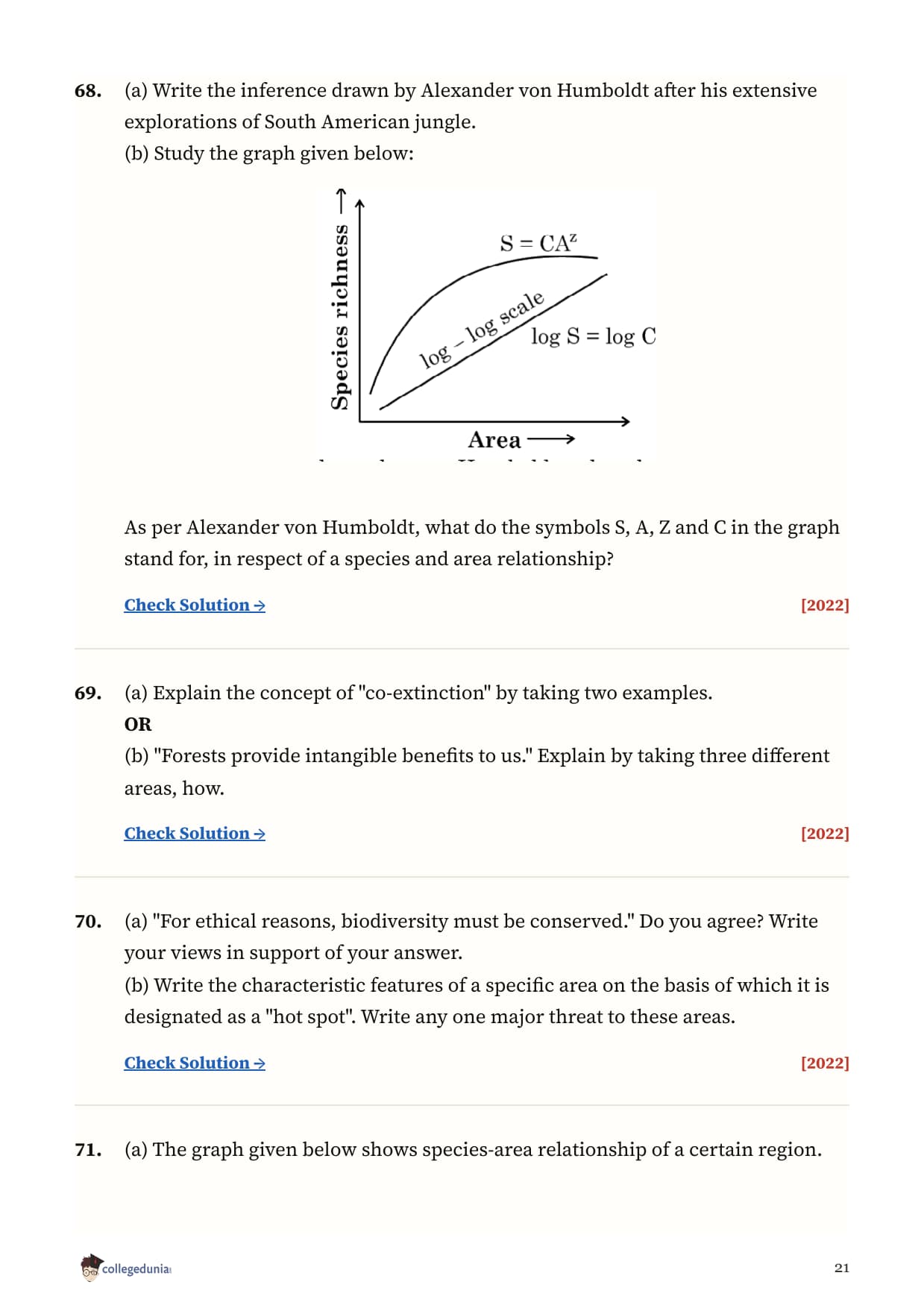
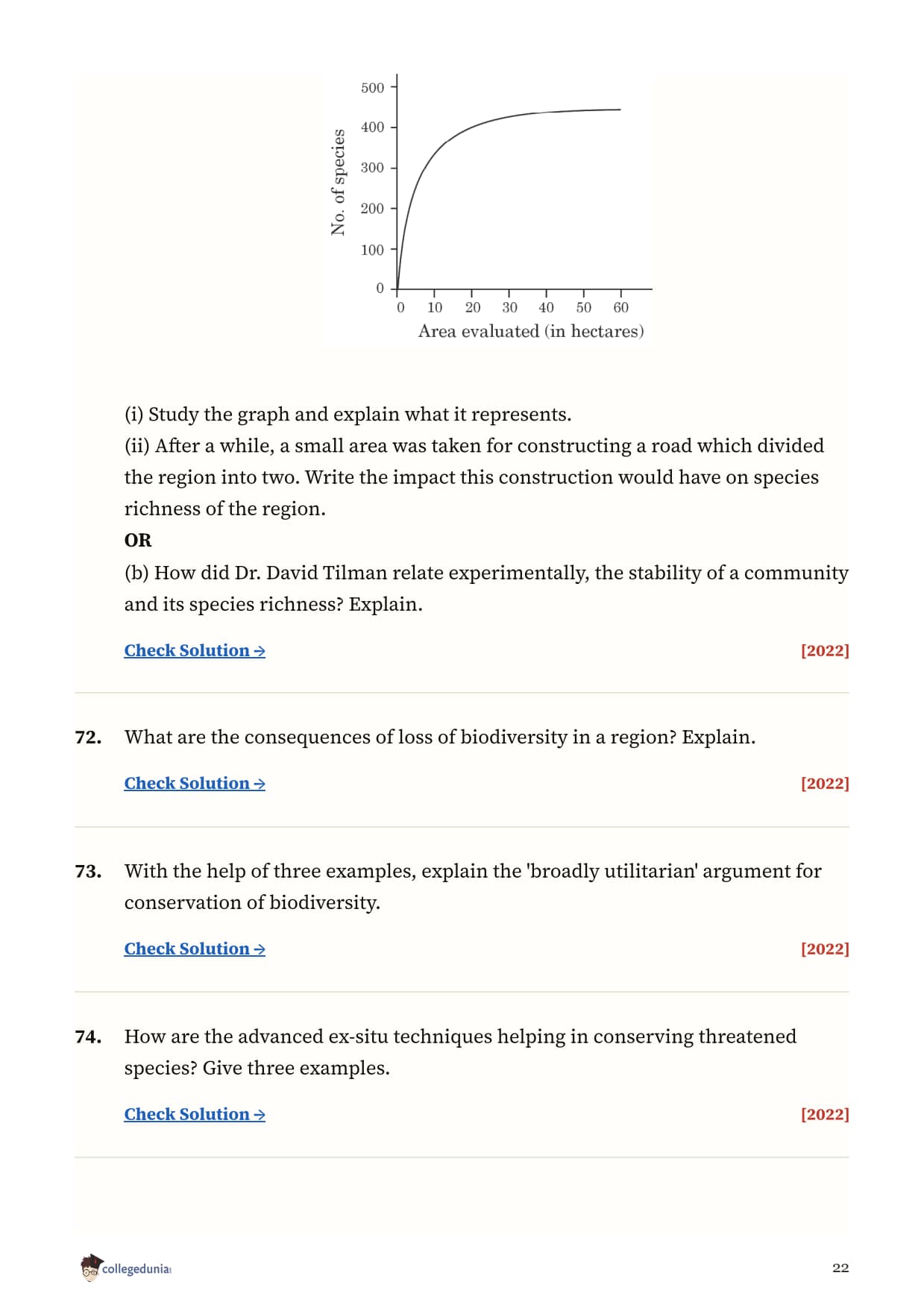
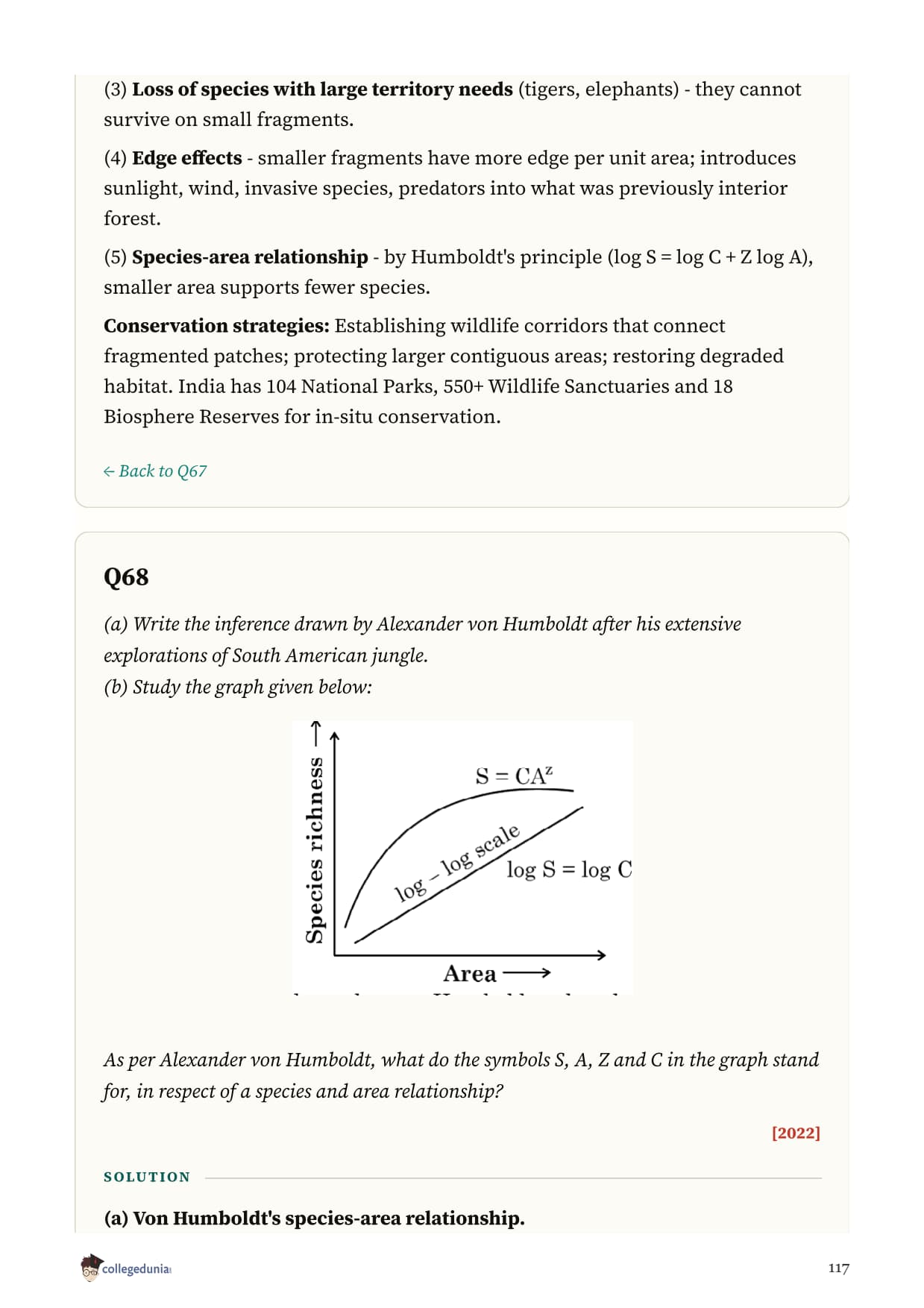
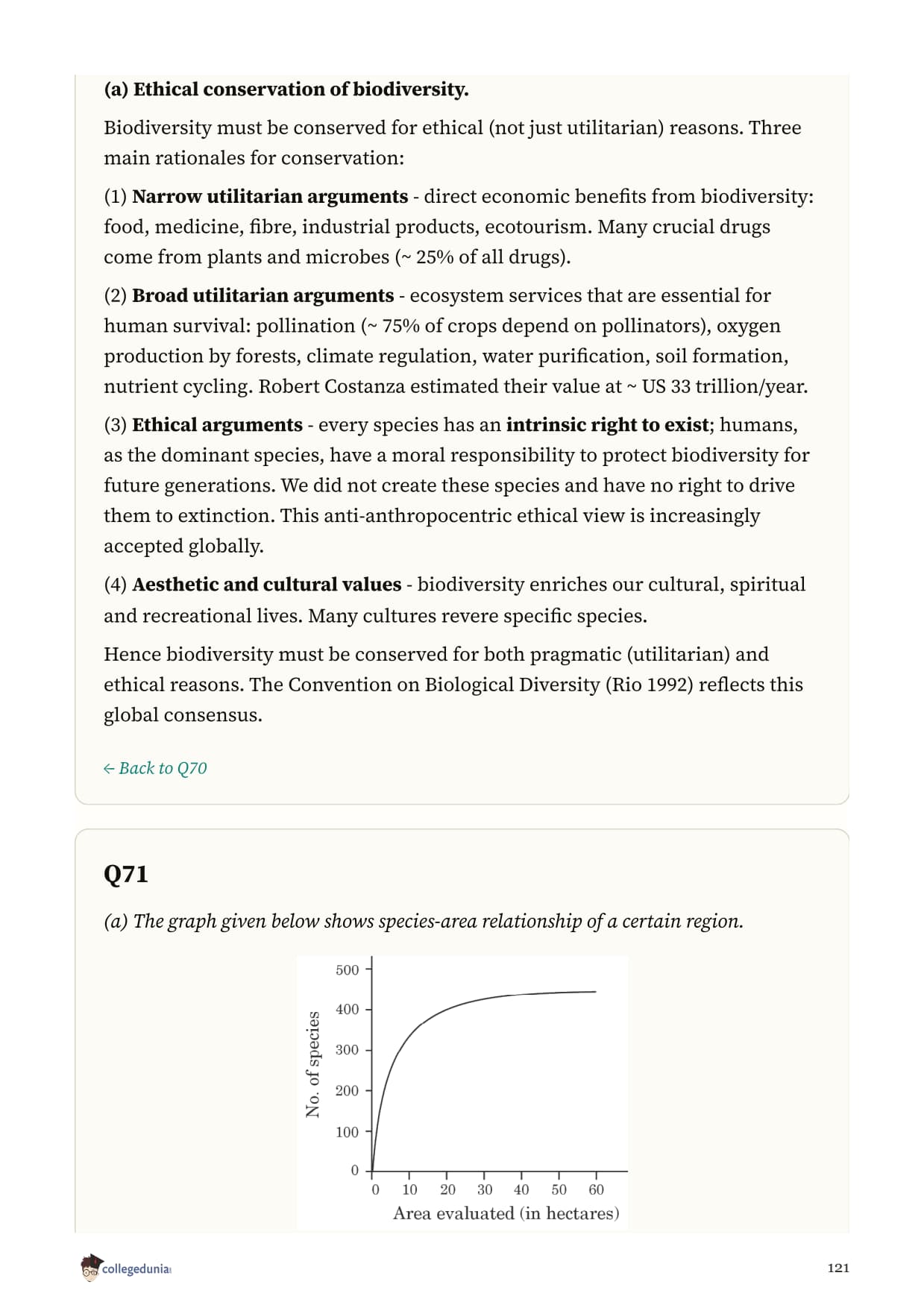
Ans. The species-area relationship, studied by Alexander von Humboldt, states that species richness rises with the size of the area explored, up to a limit. On a log scale the relationship is a straight line with slope z, usually between 0.1 and 0.2 for small areas.
Ques. What are biodiversity hotspots?
Ans. Biodiversity hotspots are regions with very high species richness and a high level of endemic species that are also under serious threat. India has hotspots in the Western Ghats and Sri Lanka, the Indo-Burma region, and the Himalaya.



Comments