




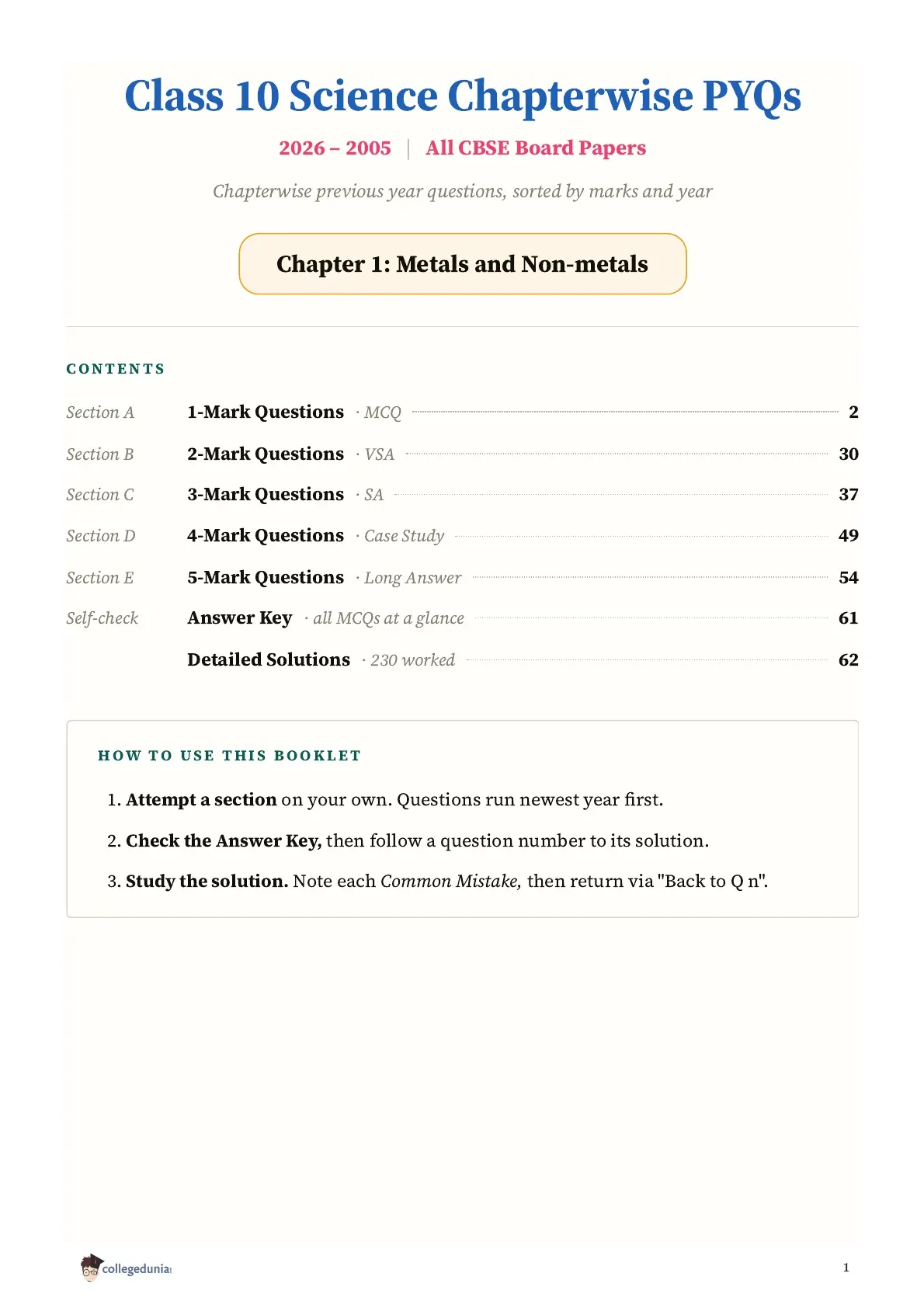
Class 10 Science Metals and Non-metals PYQ, free to download as a 192-page PDF with 230 solved board questions from the 2005 to 2026 papers. Metals and Non-metals is Chapter 3 of the NCERT Class 10 Science book and belongs to the CBSE unit Chemical Substances, which is reported to carry 25 of the 80 theory marks.
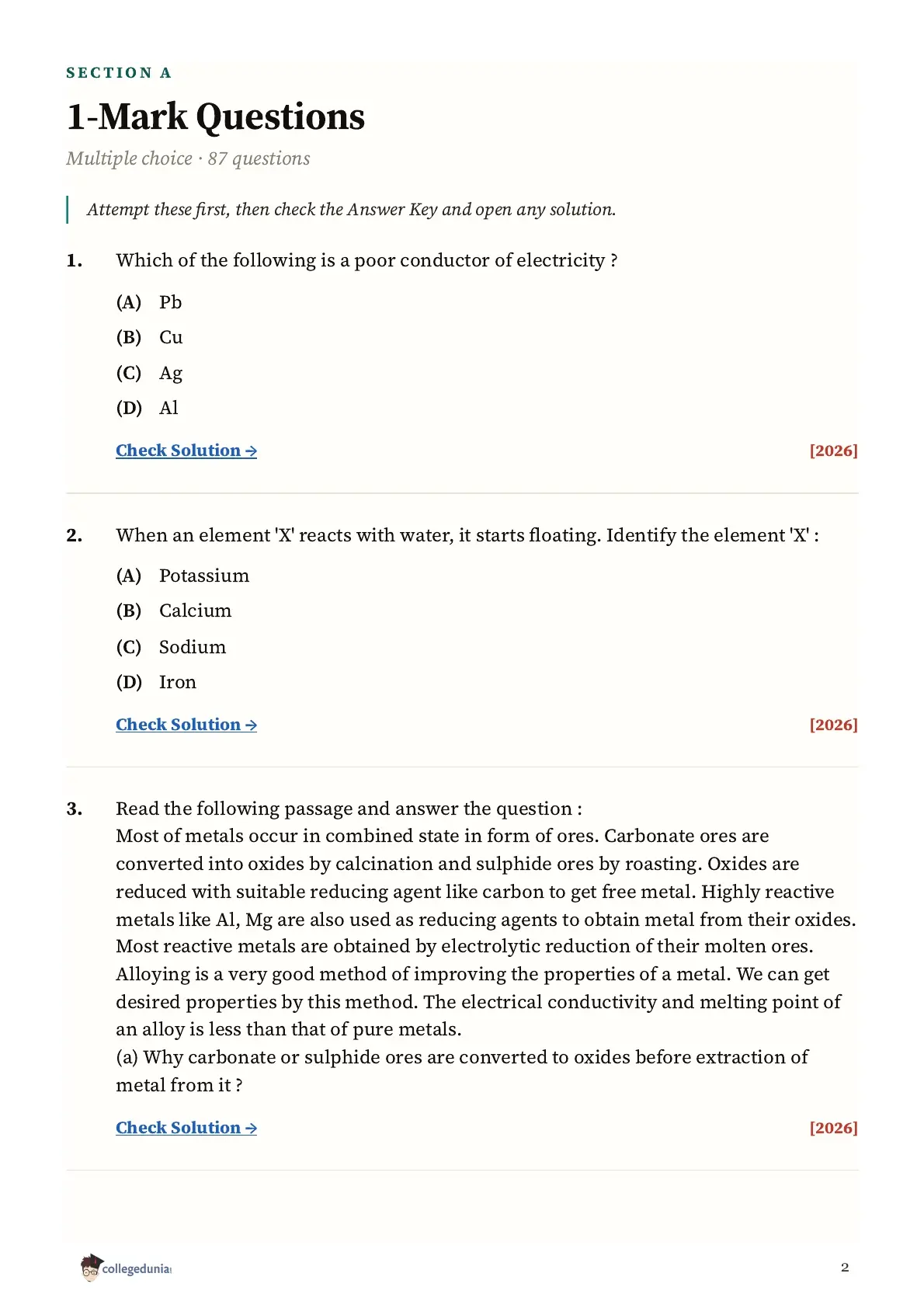
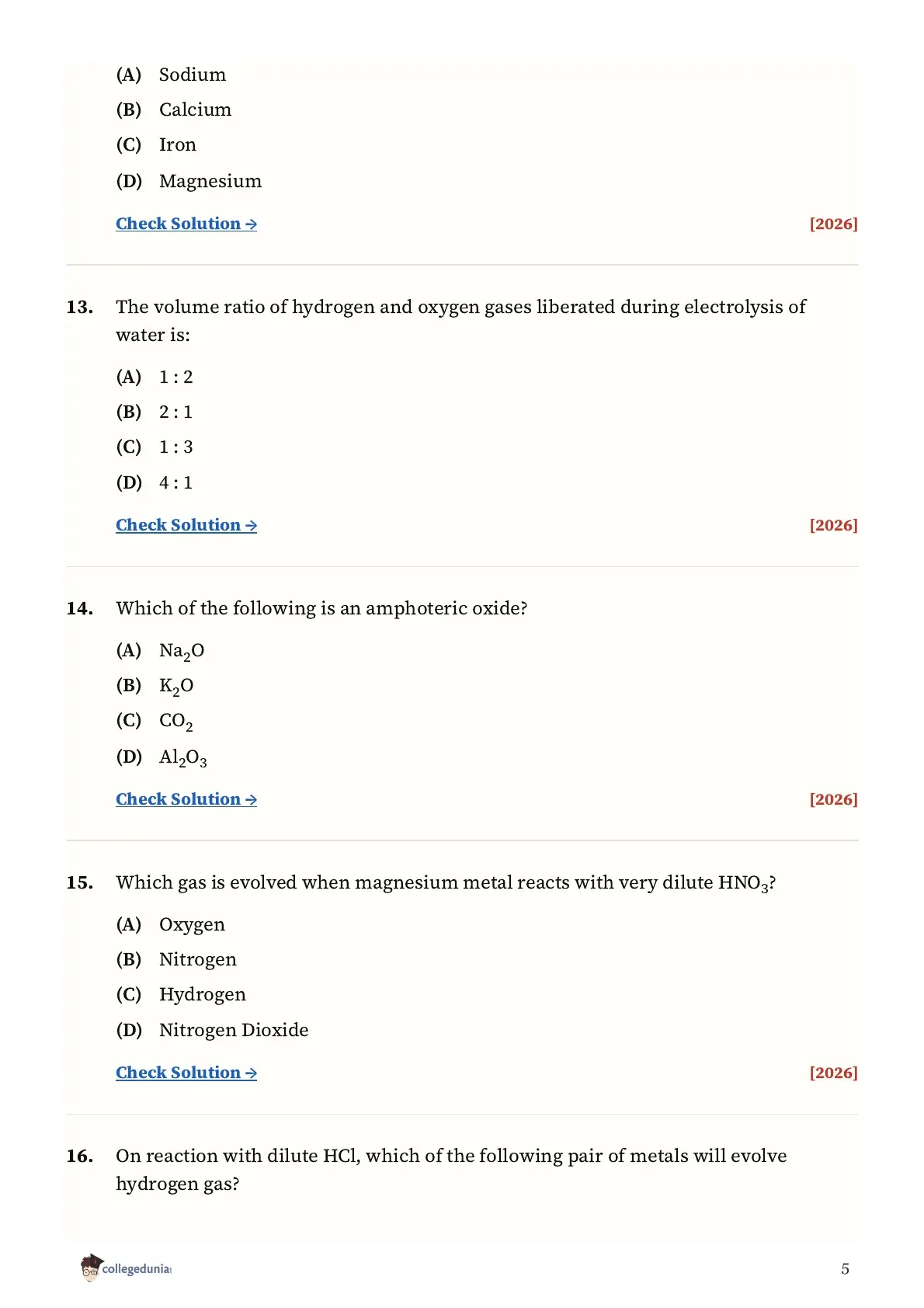
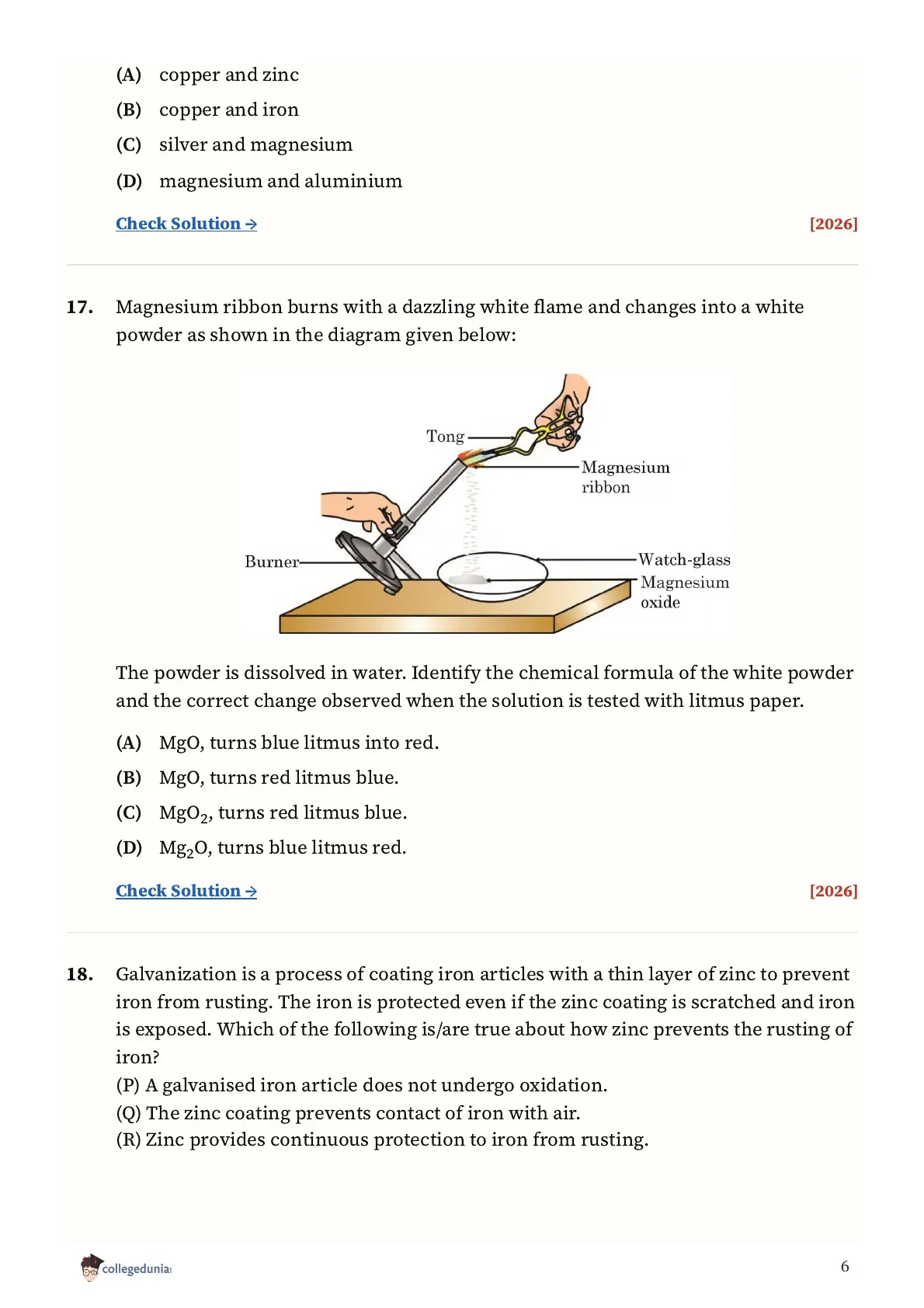
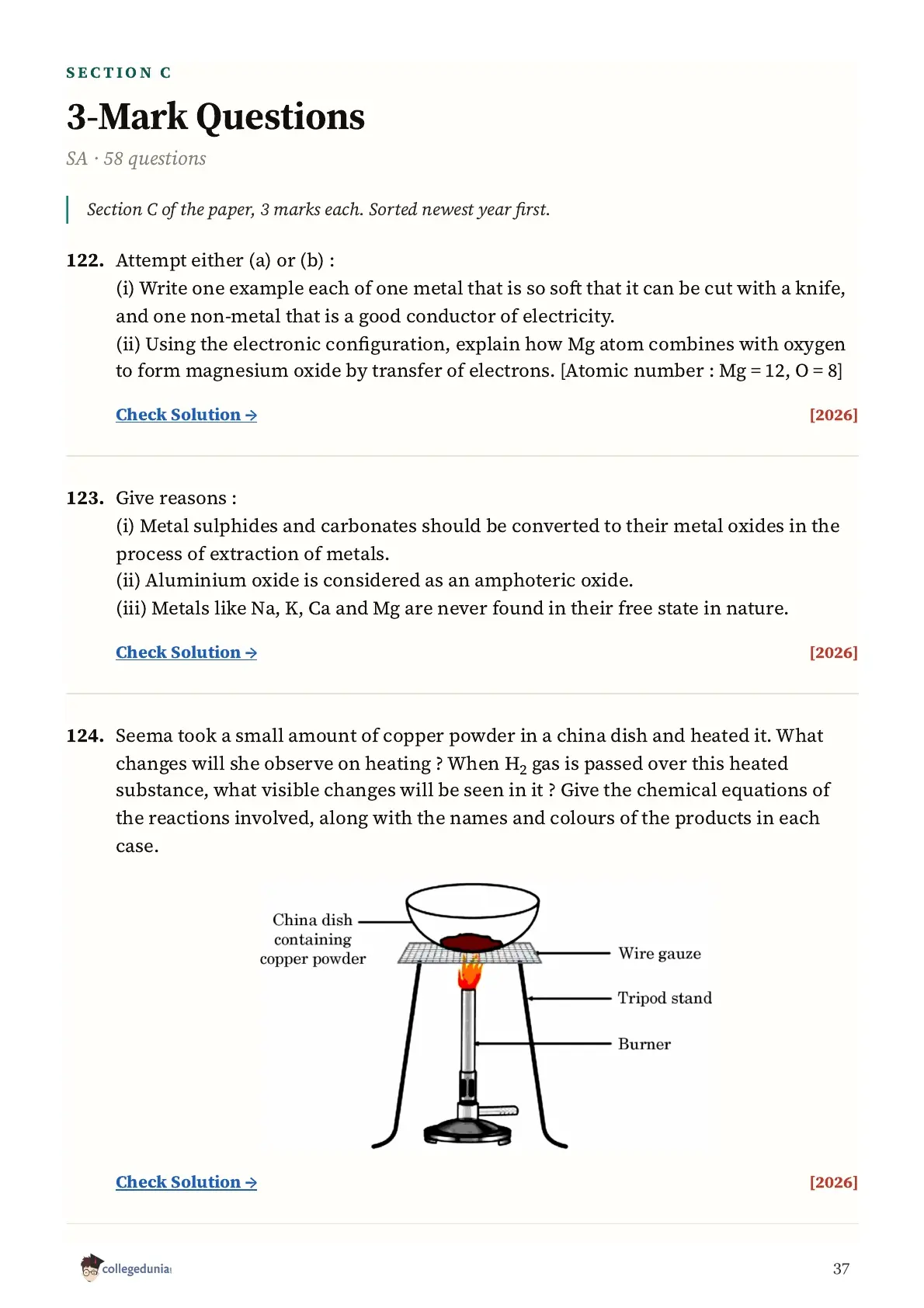
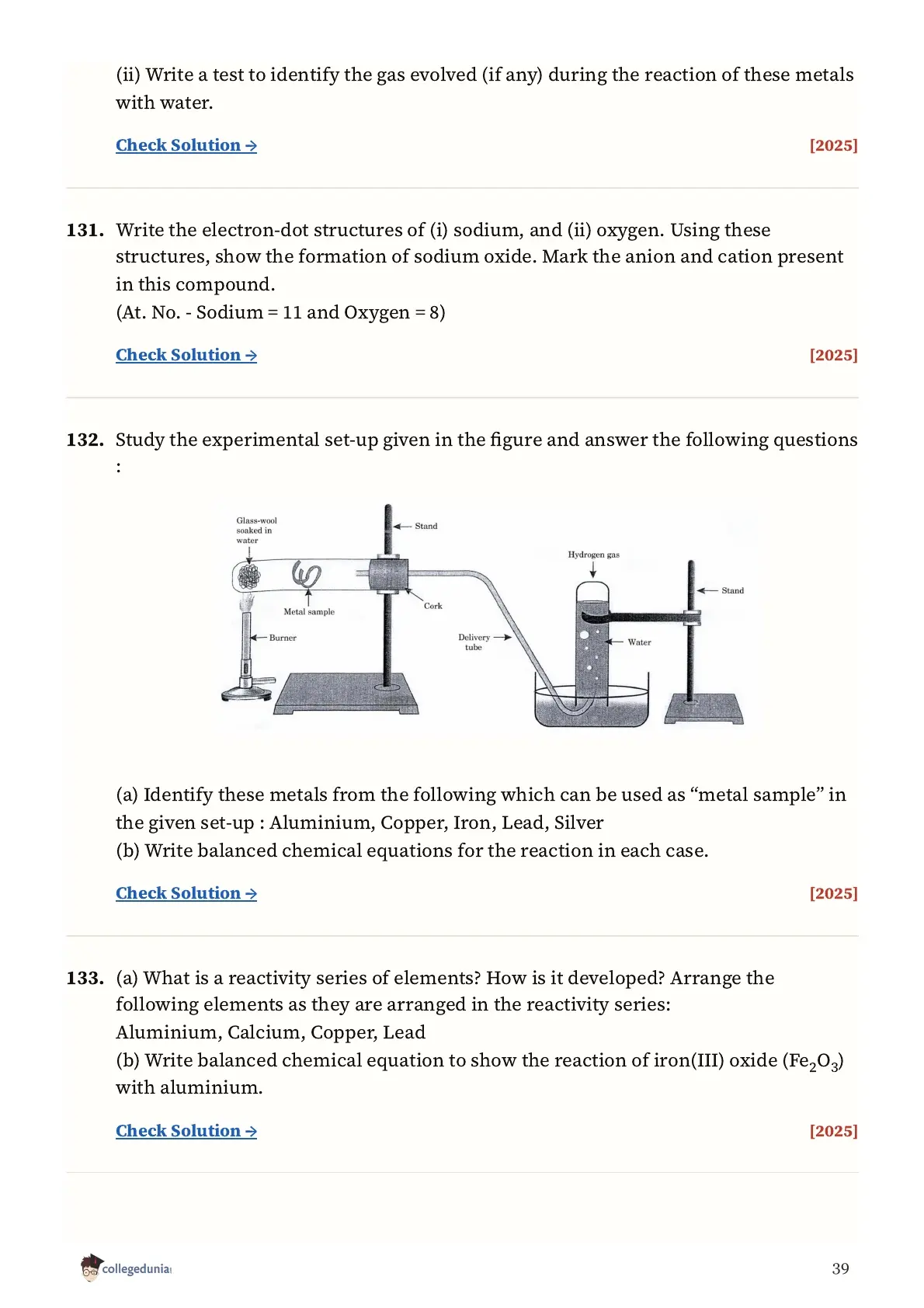
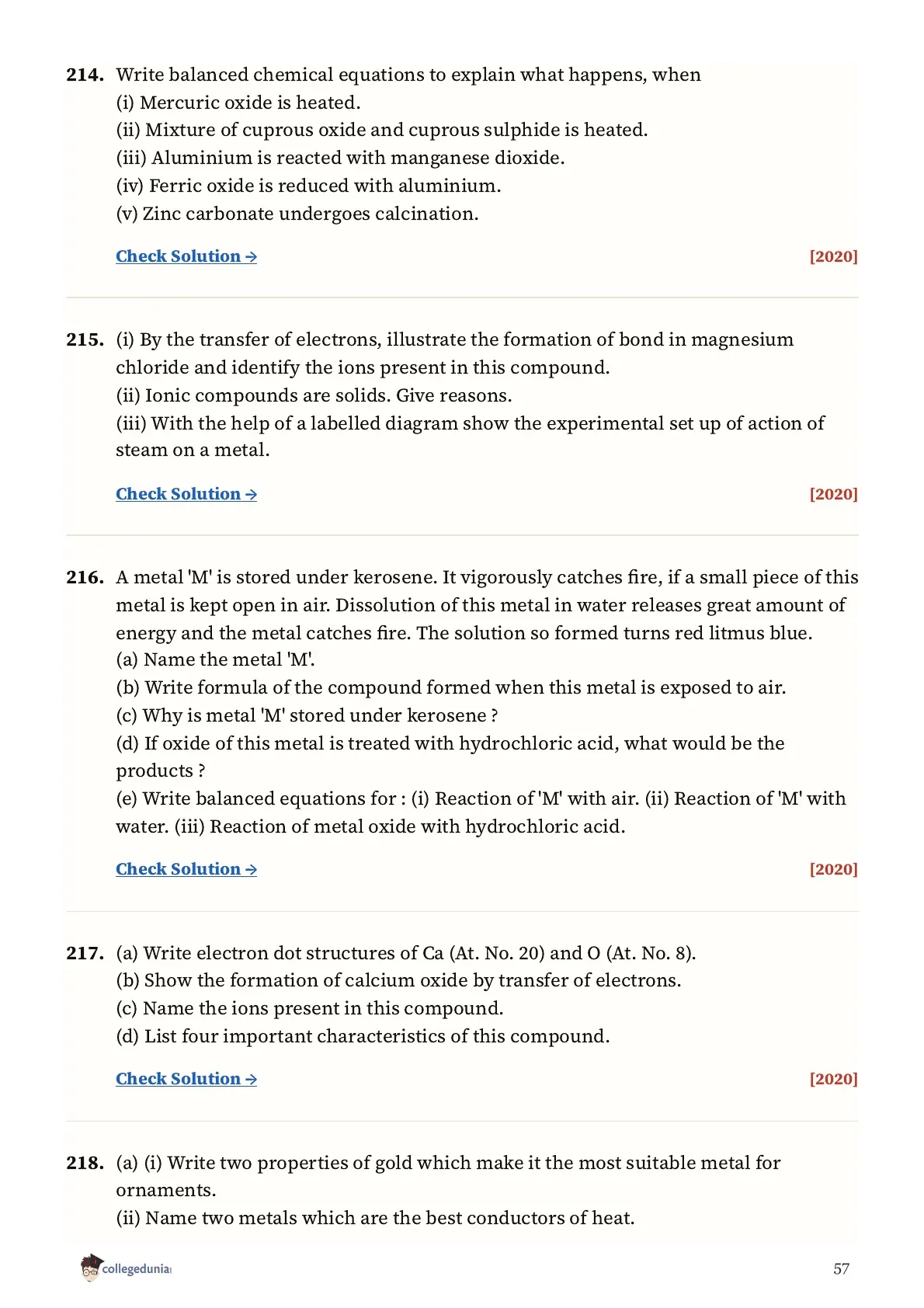
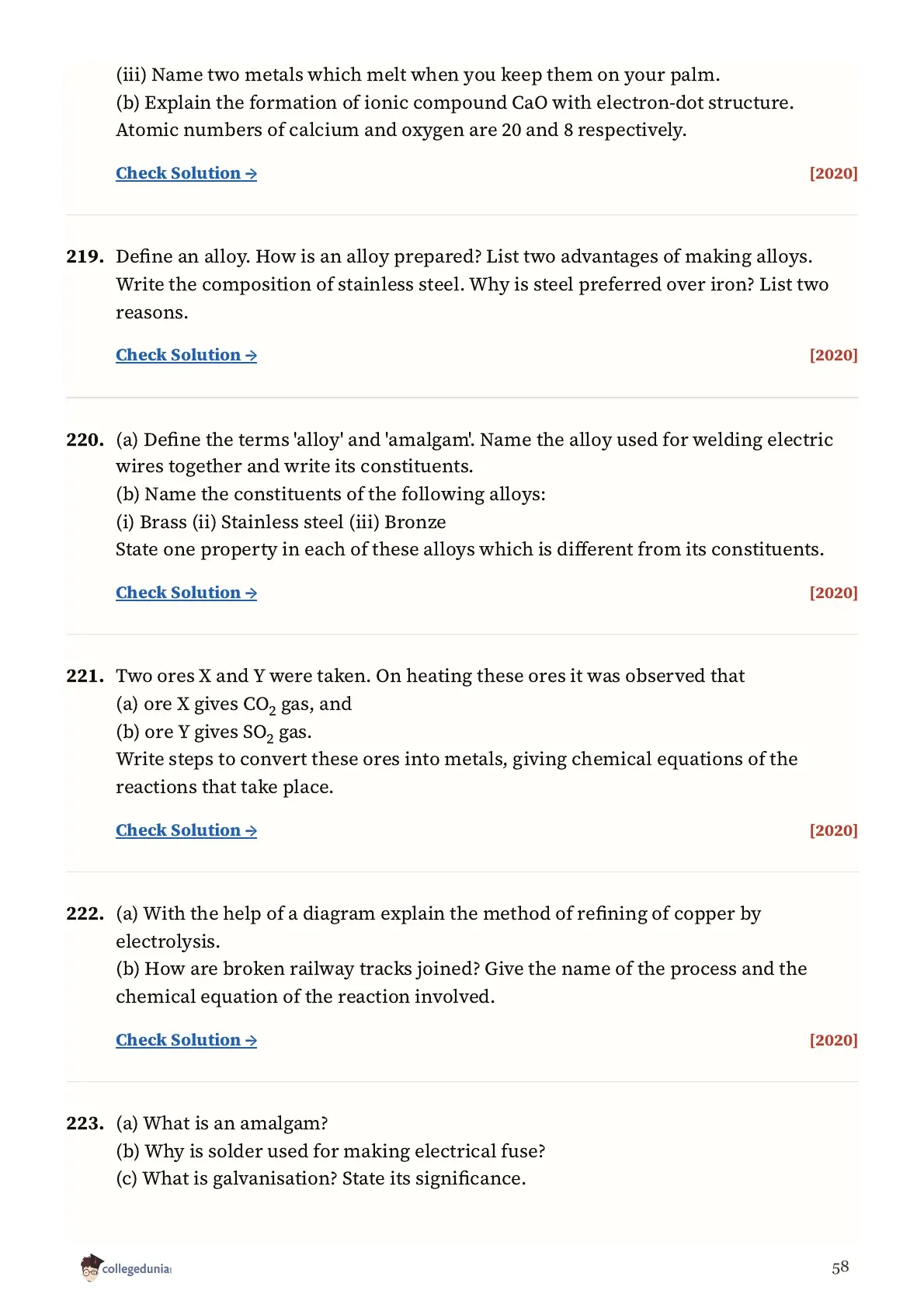
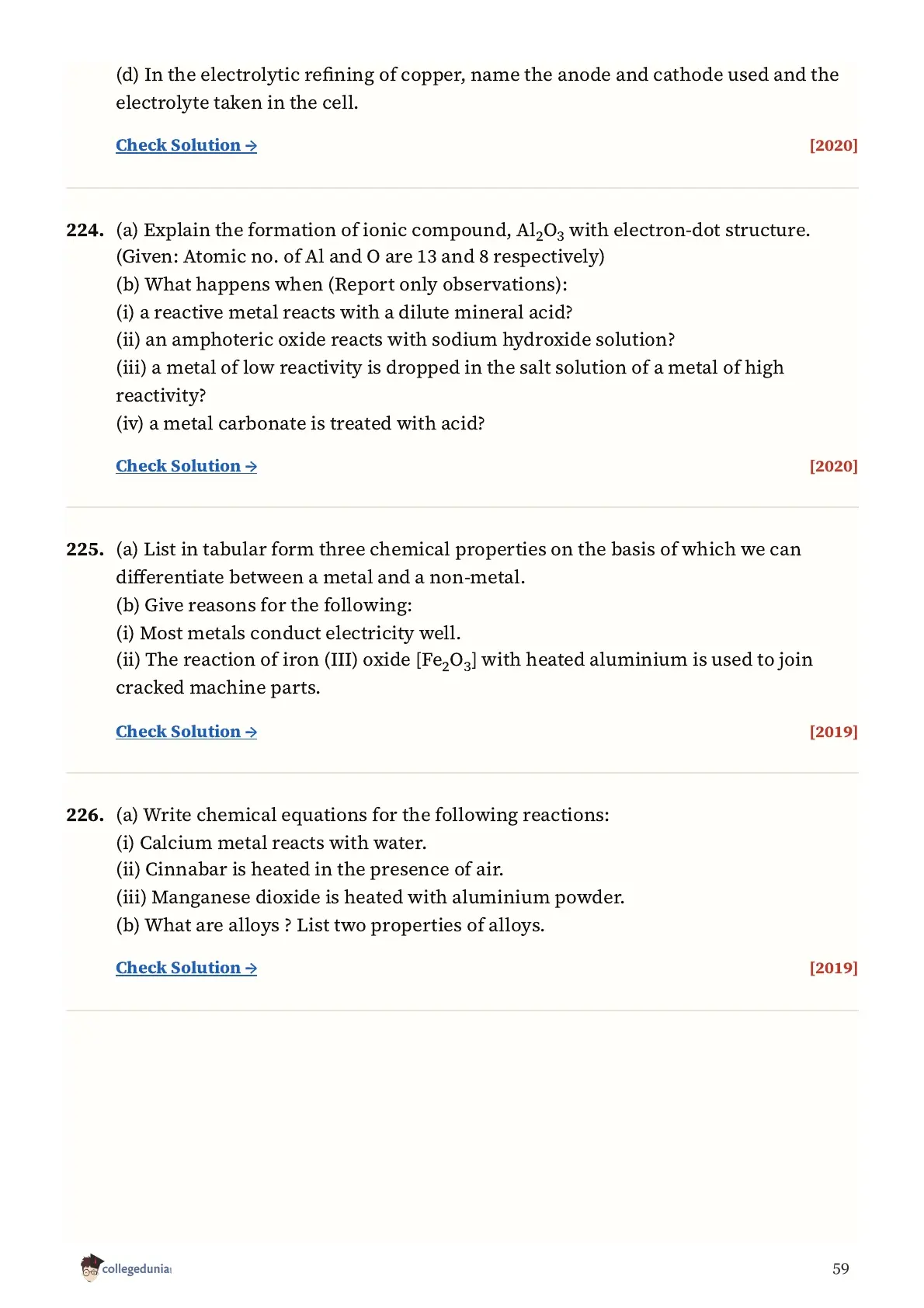
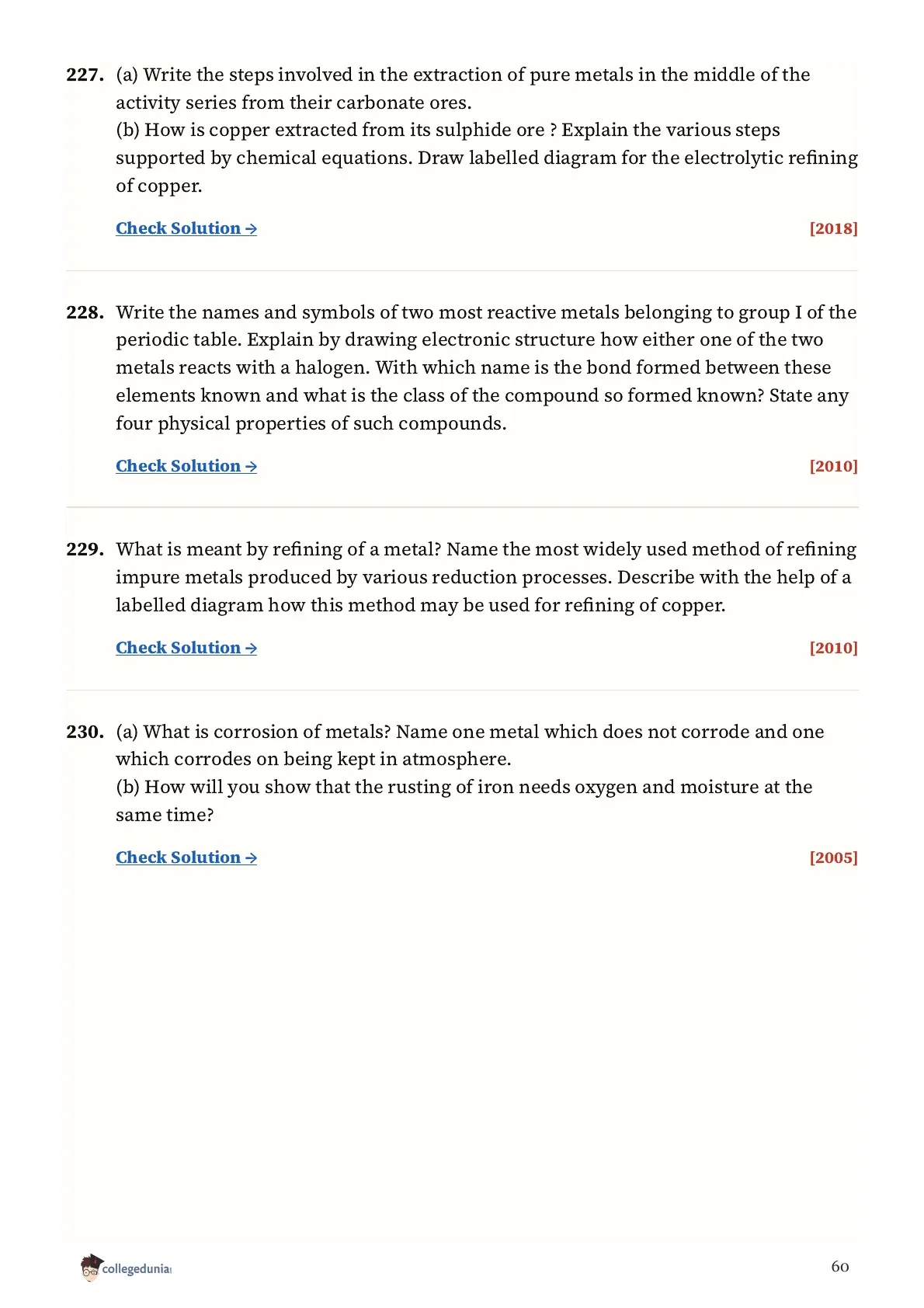
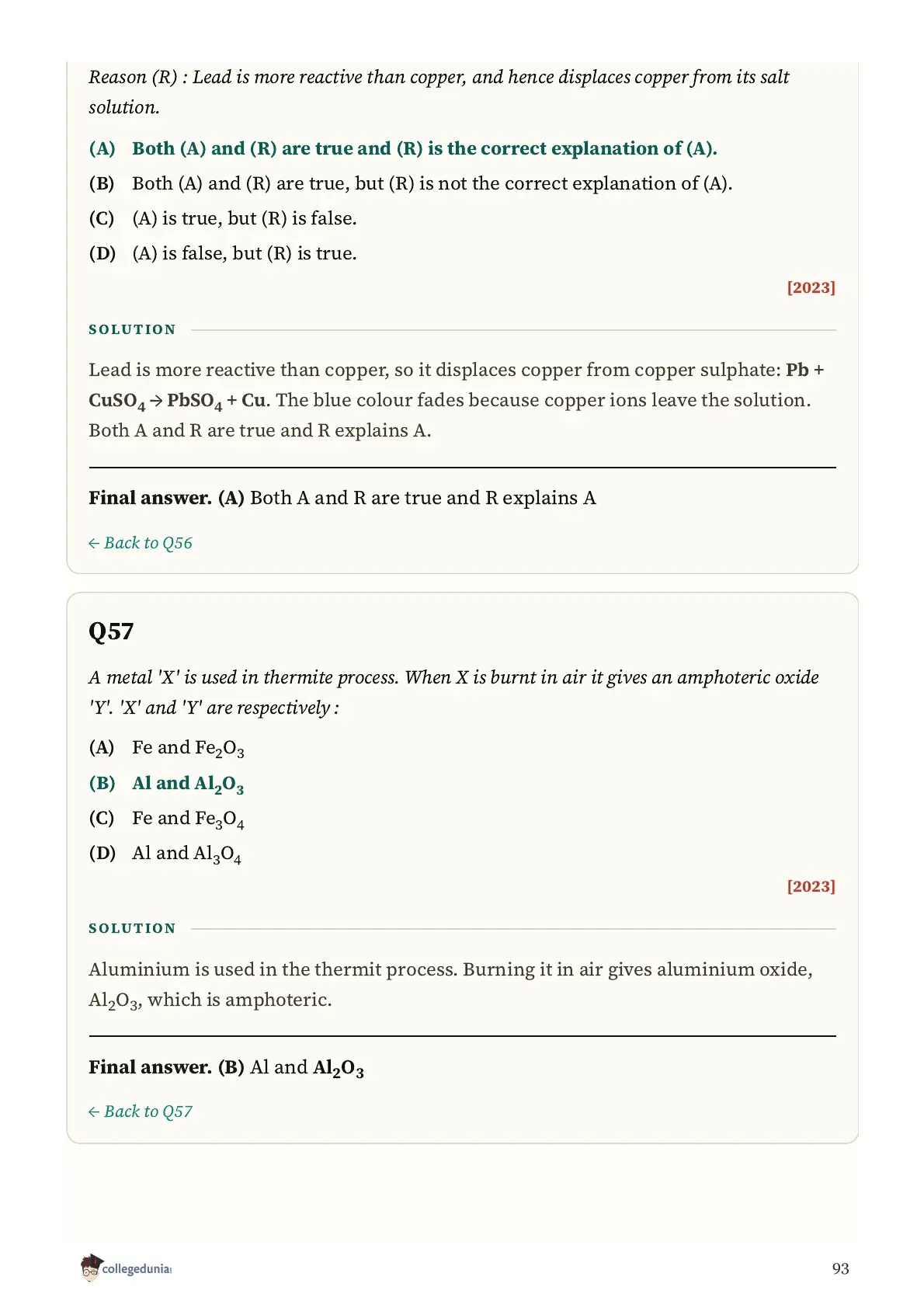
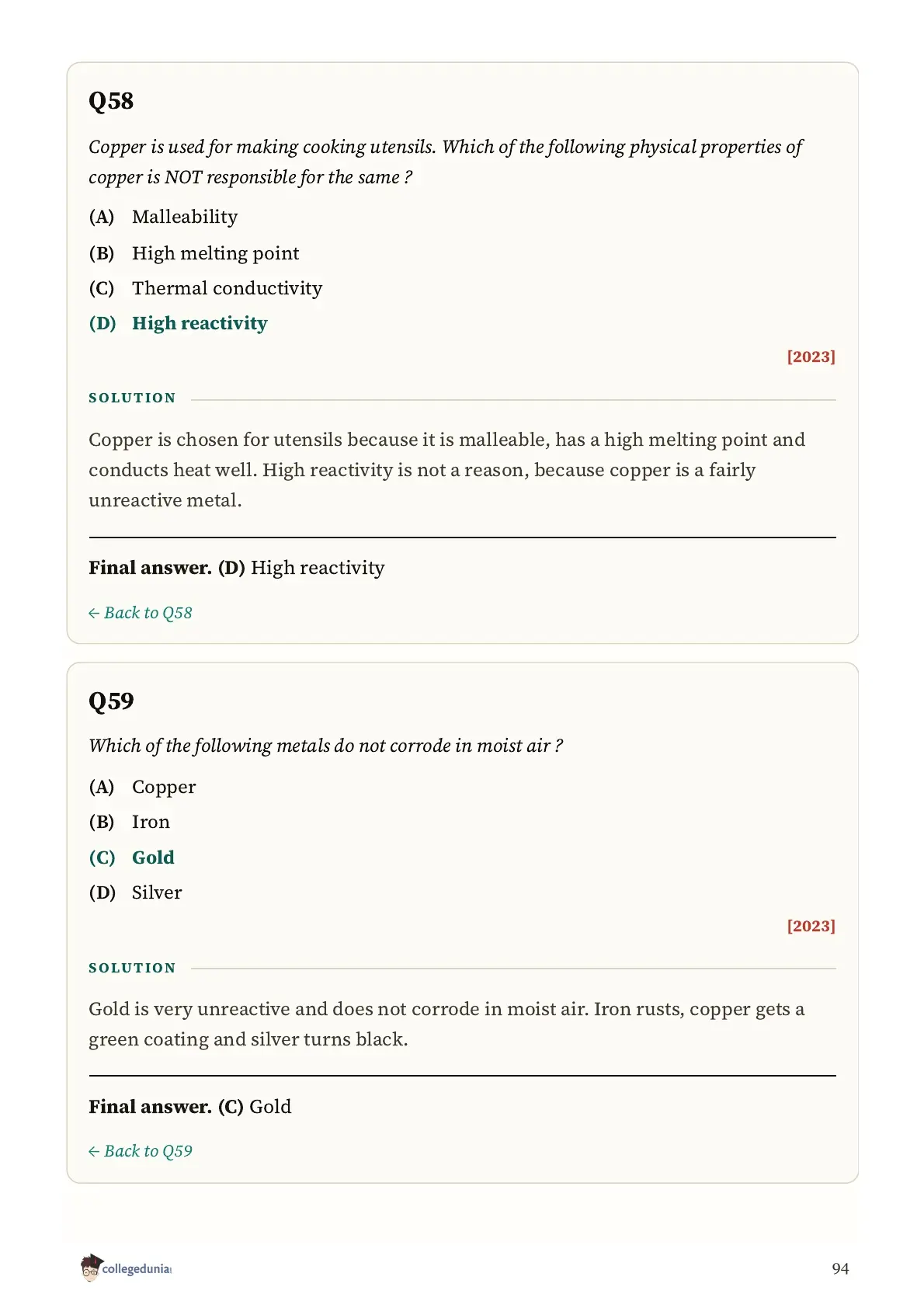
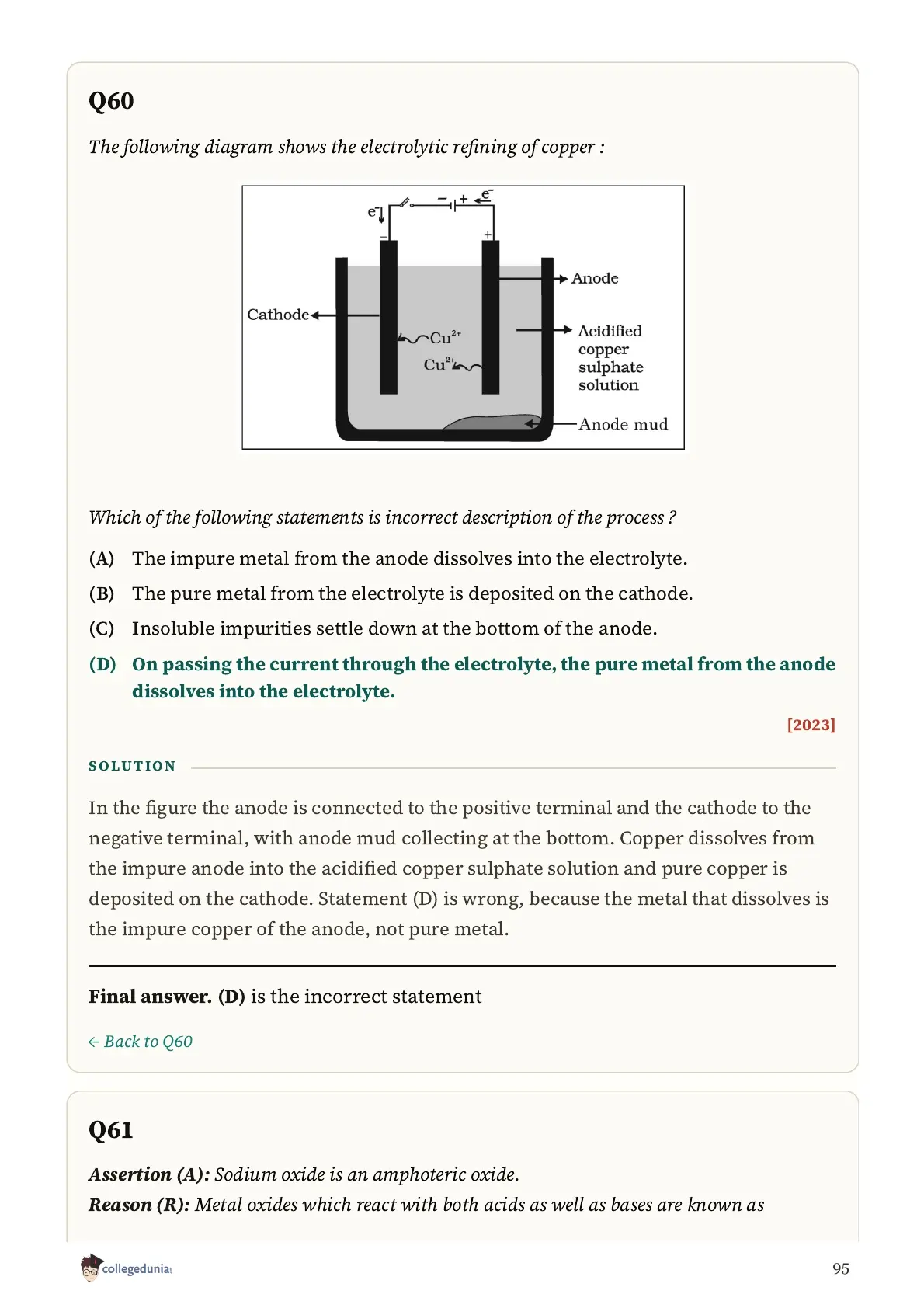
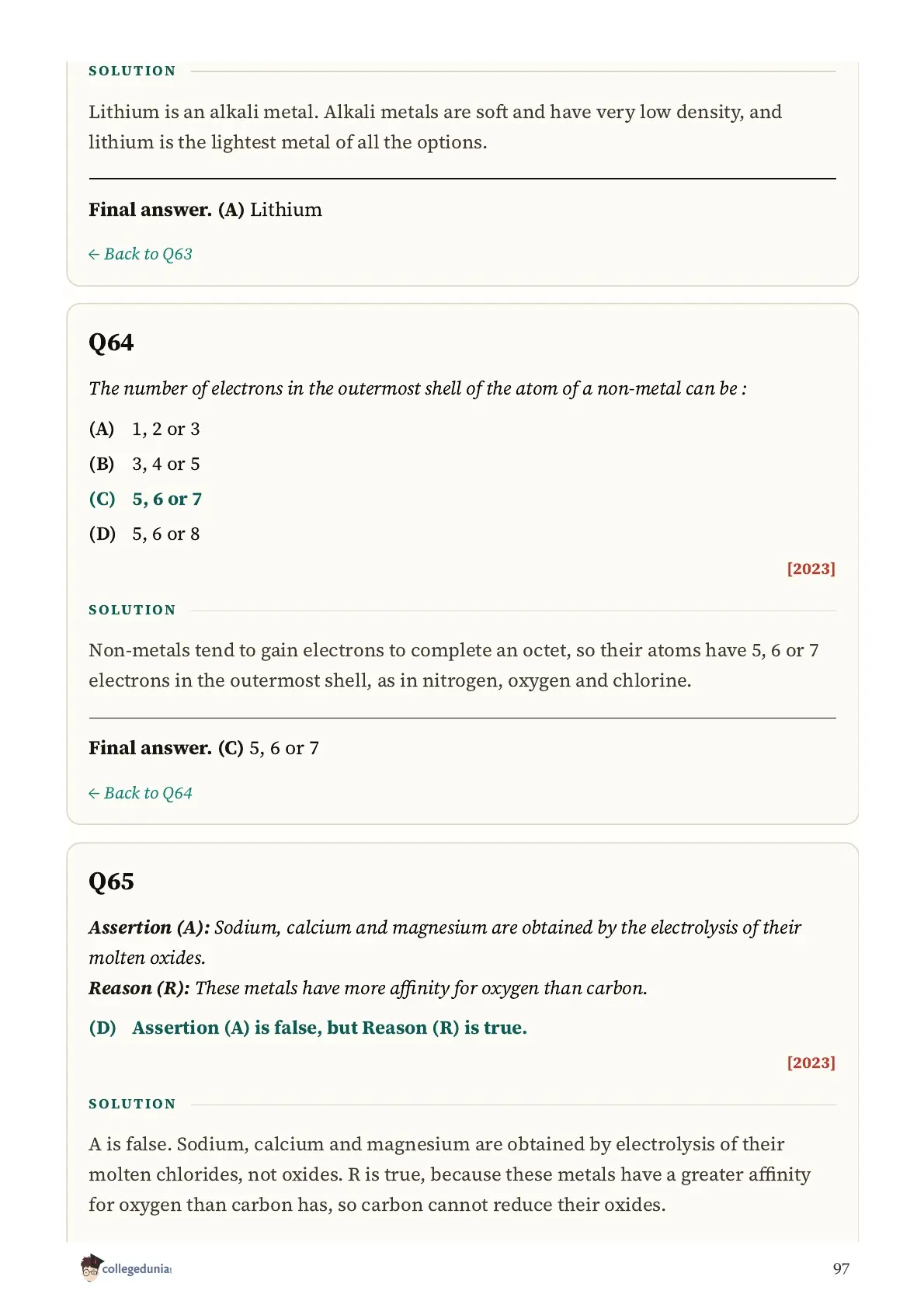
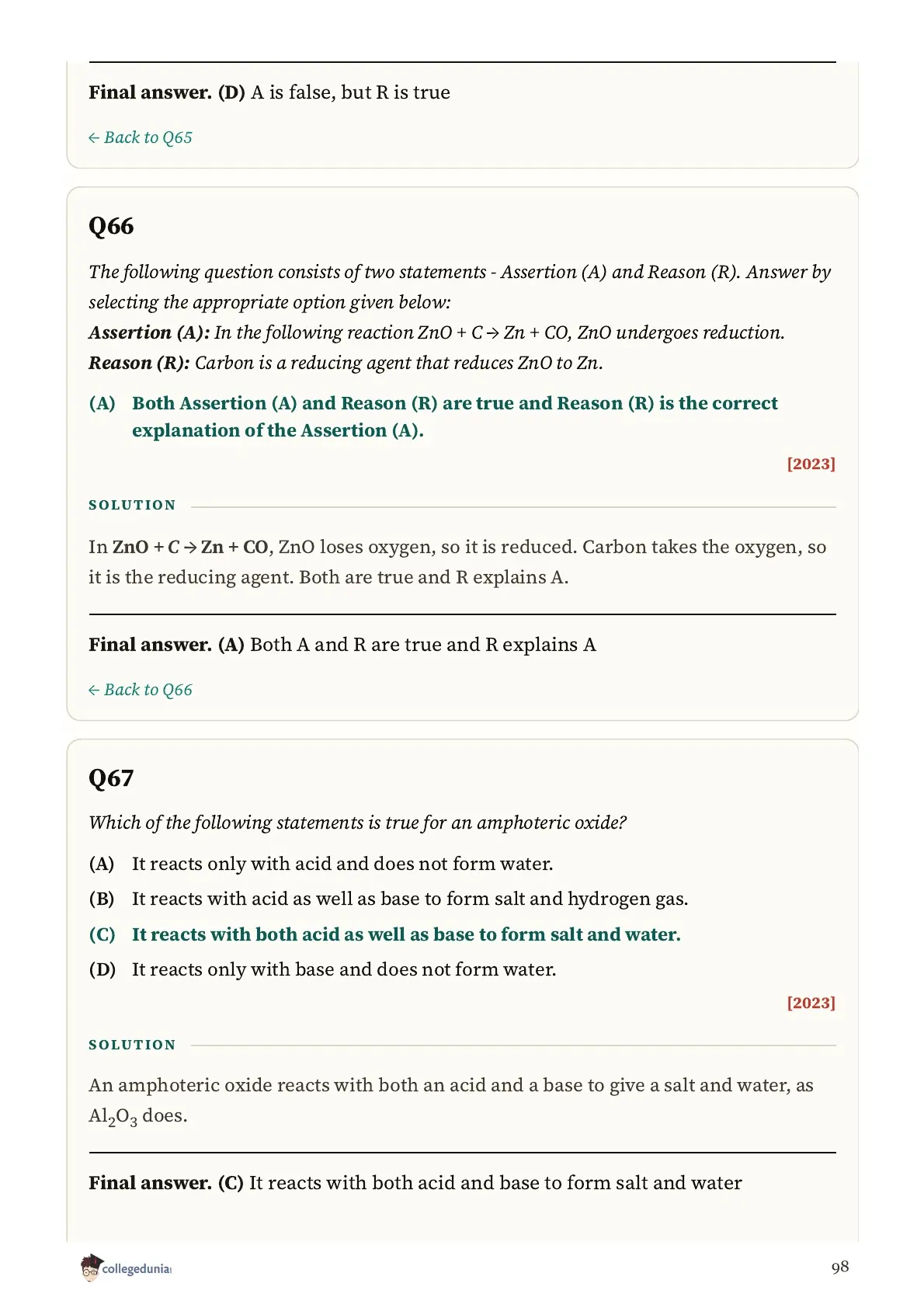
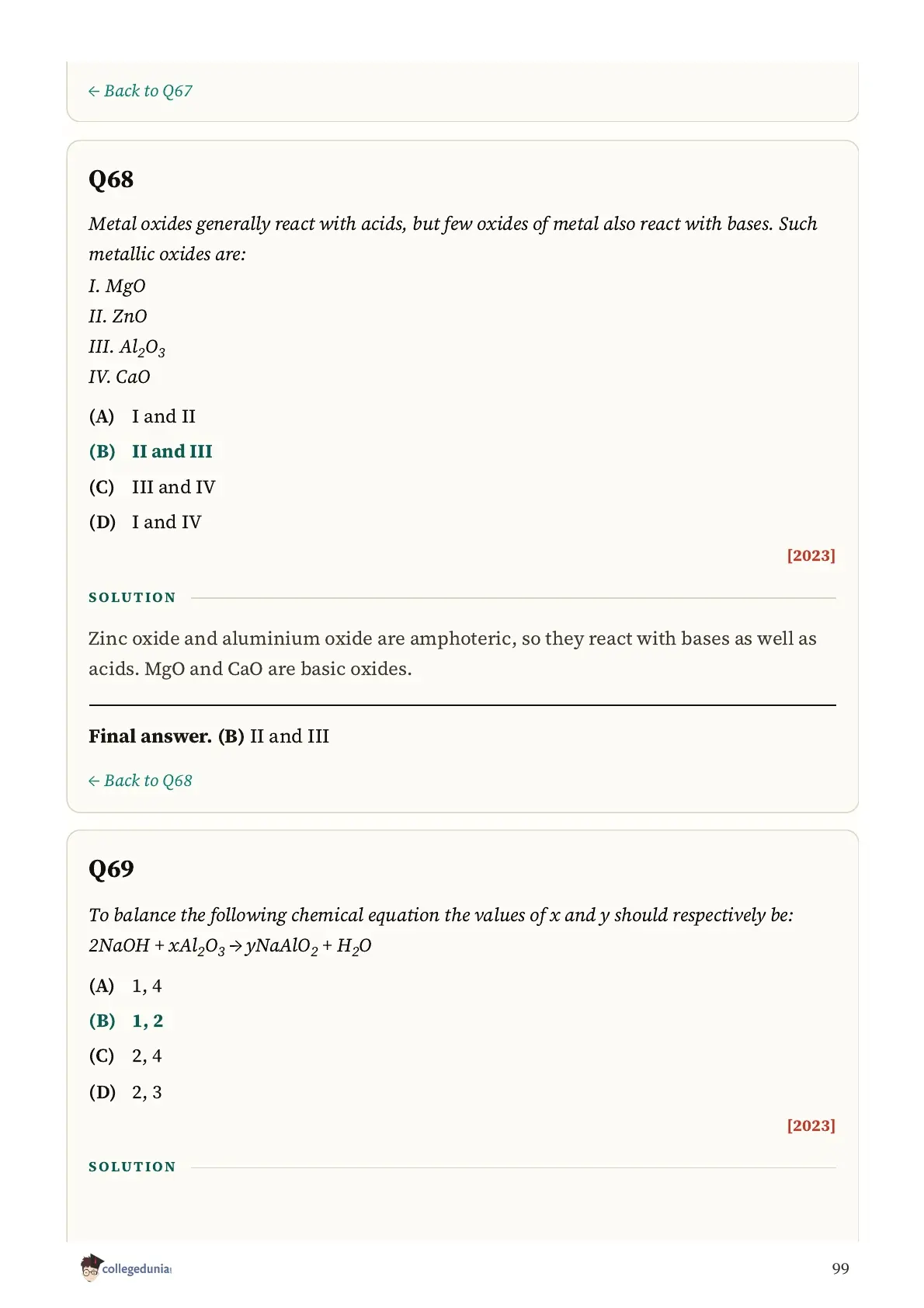
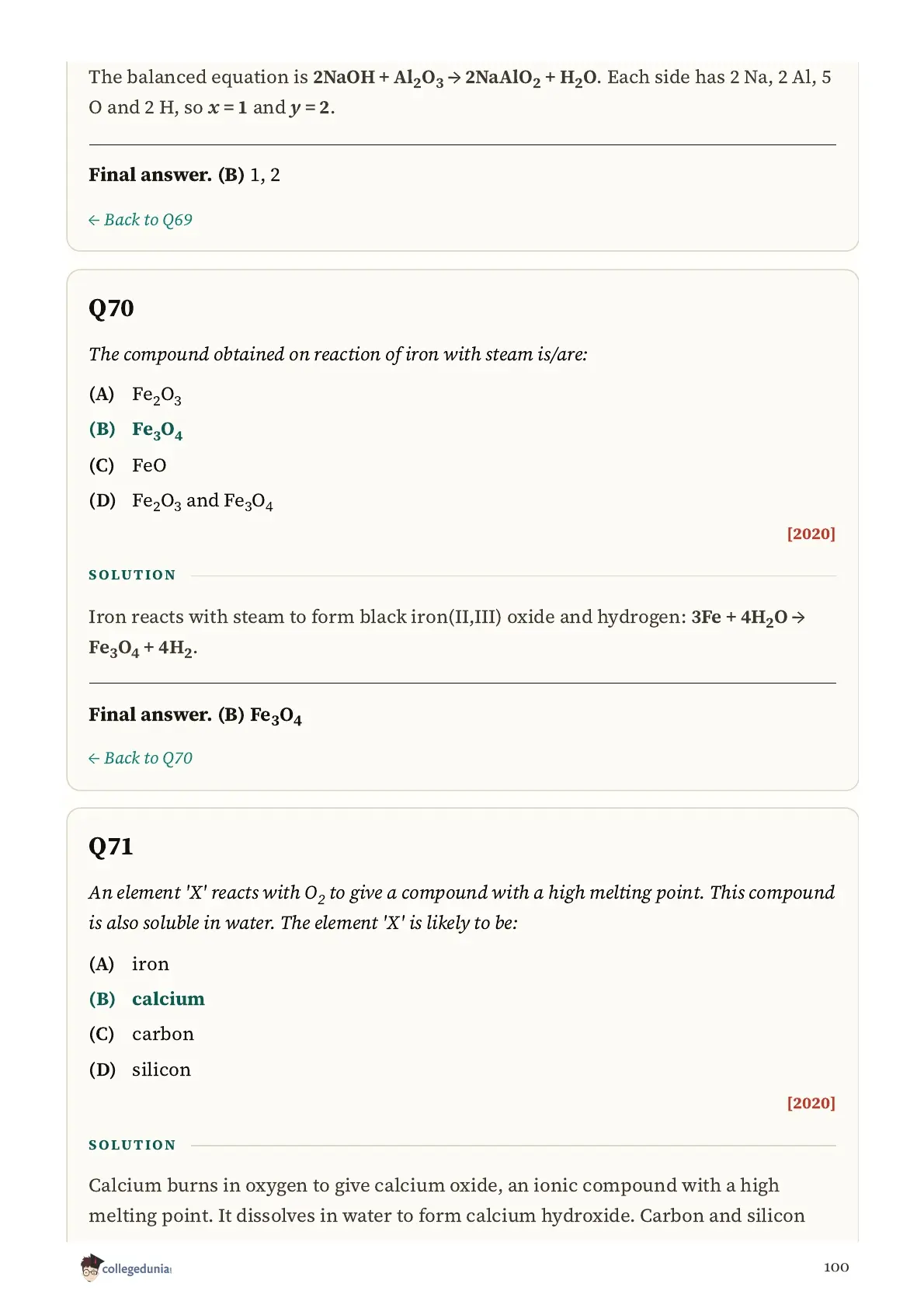
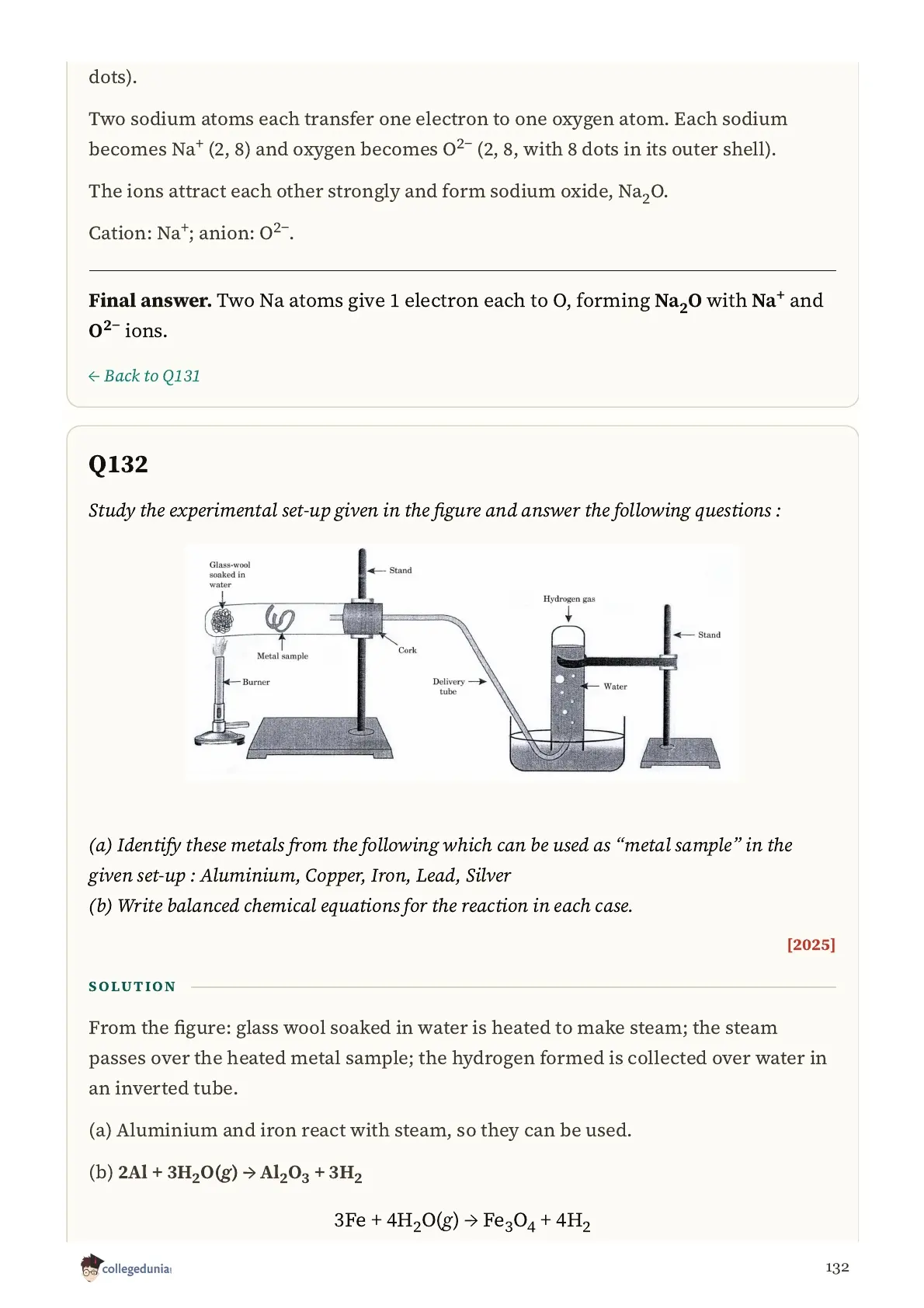
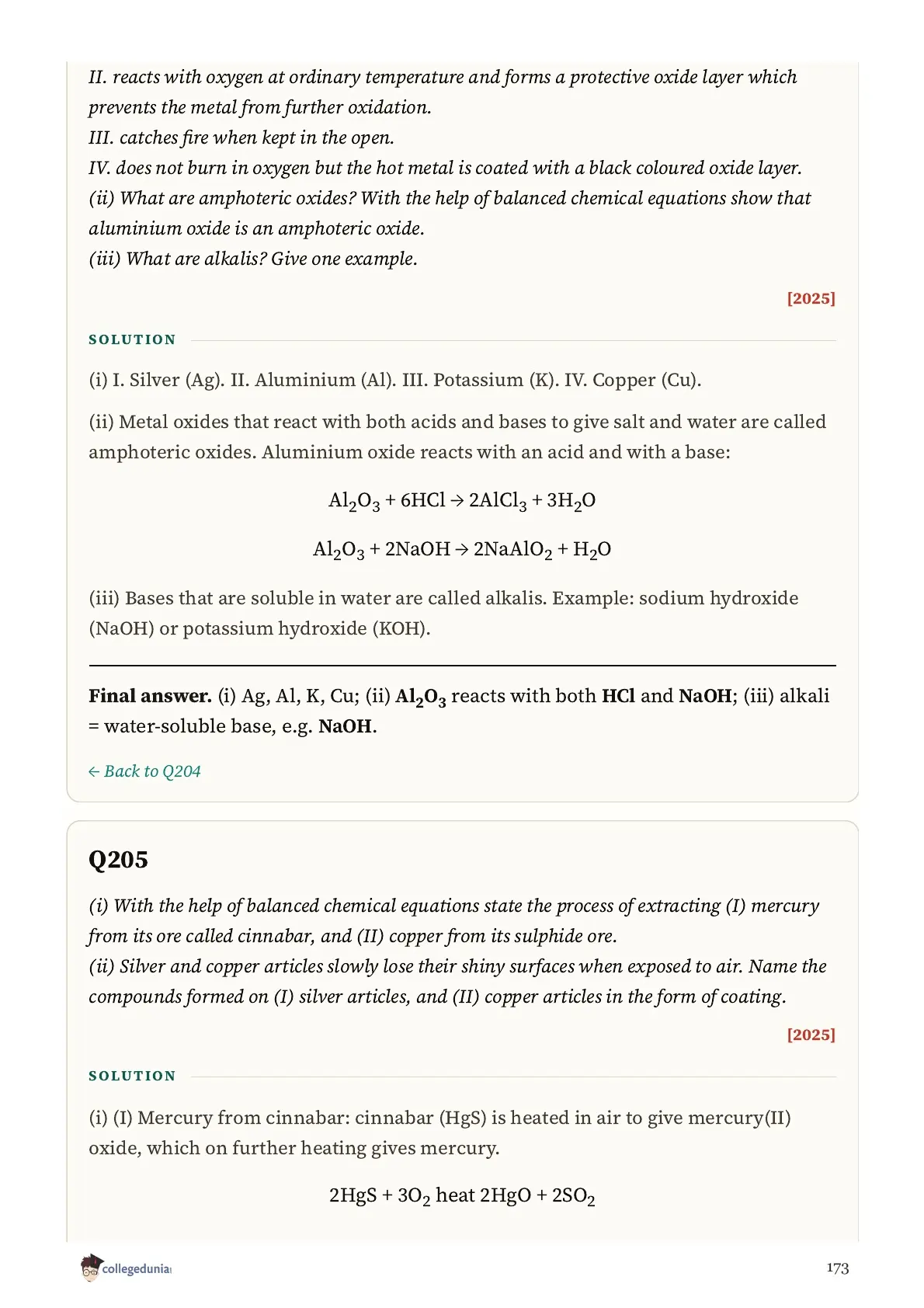
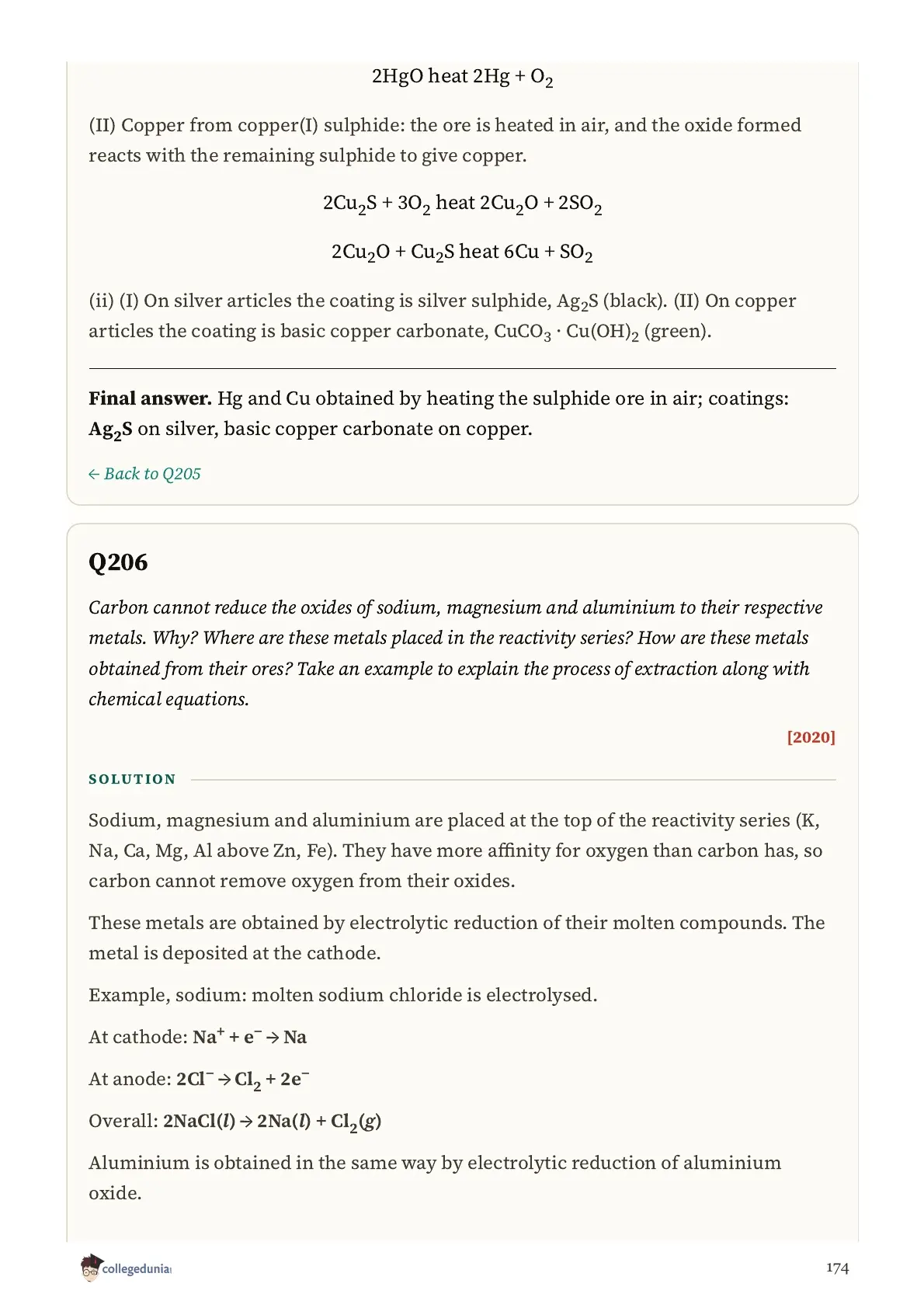
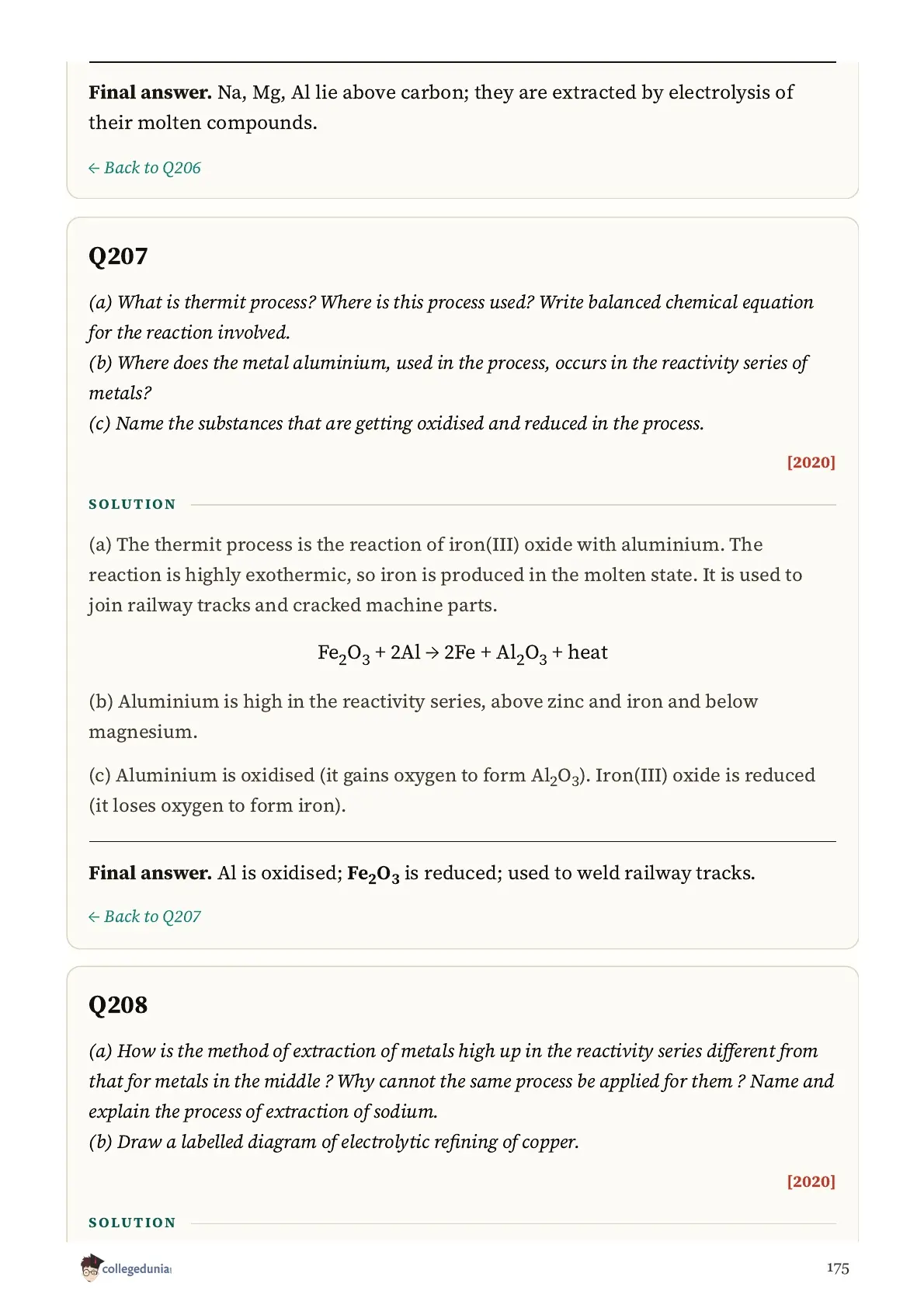
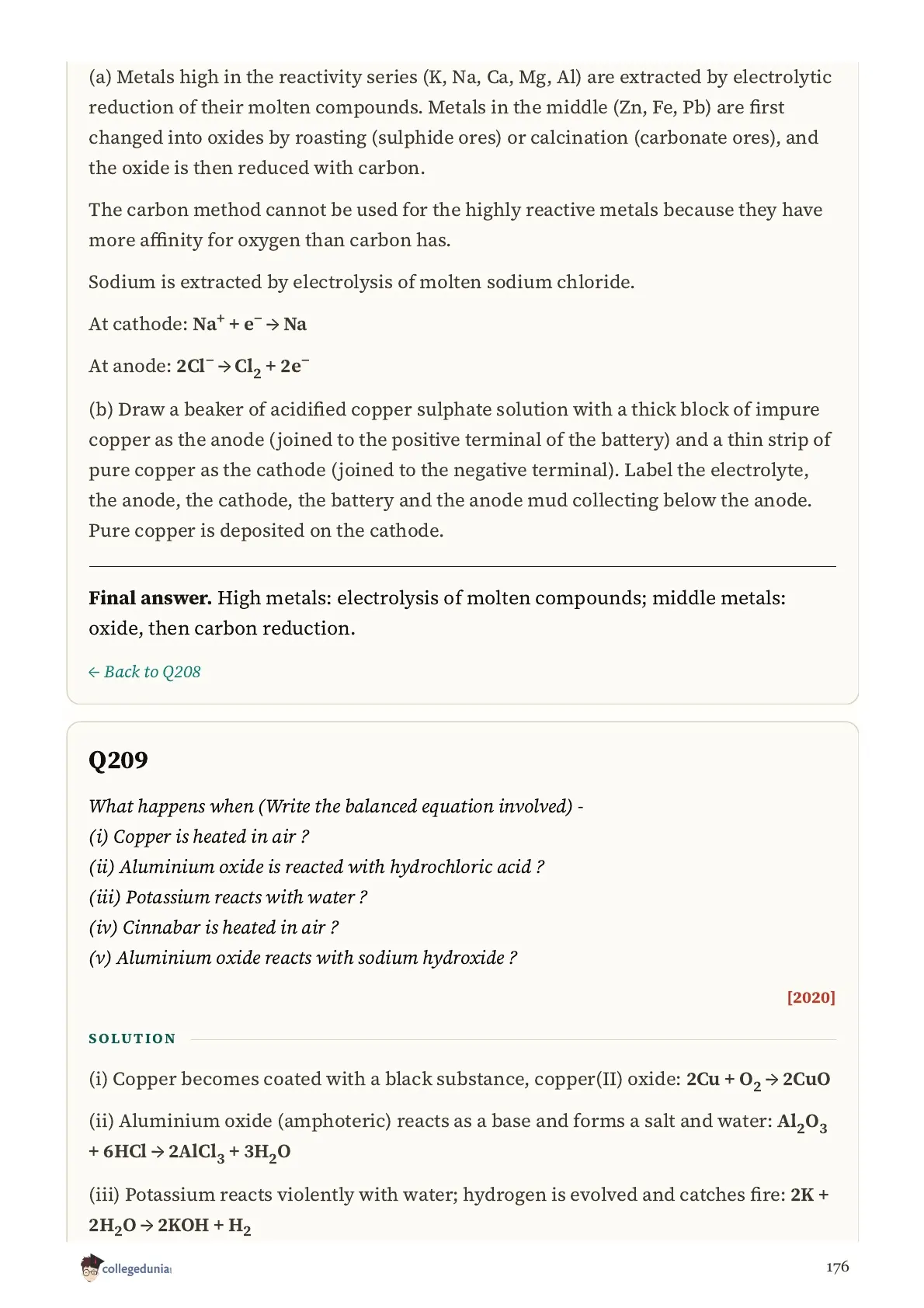
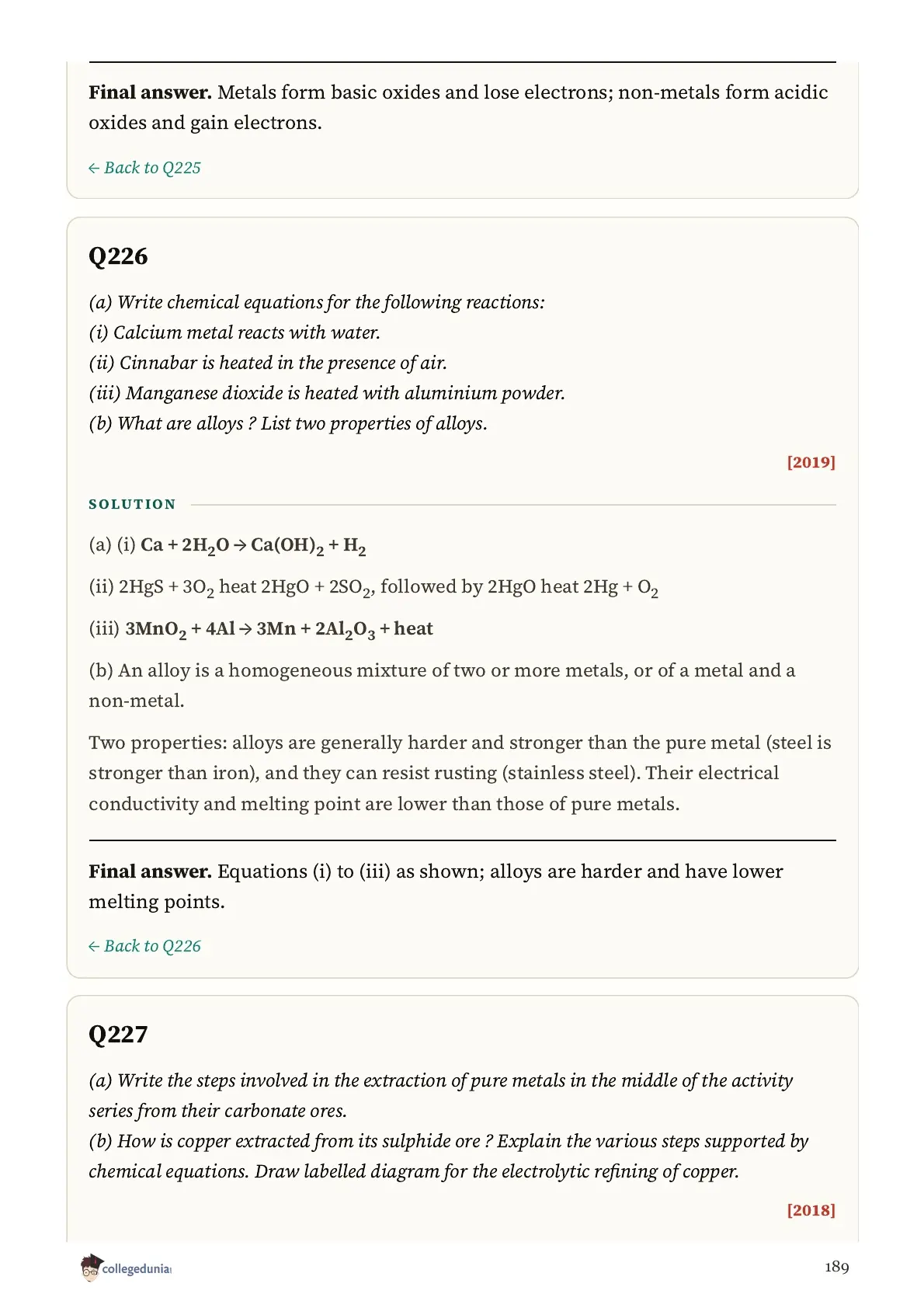
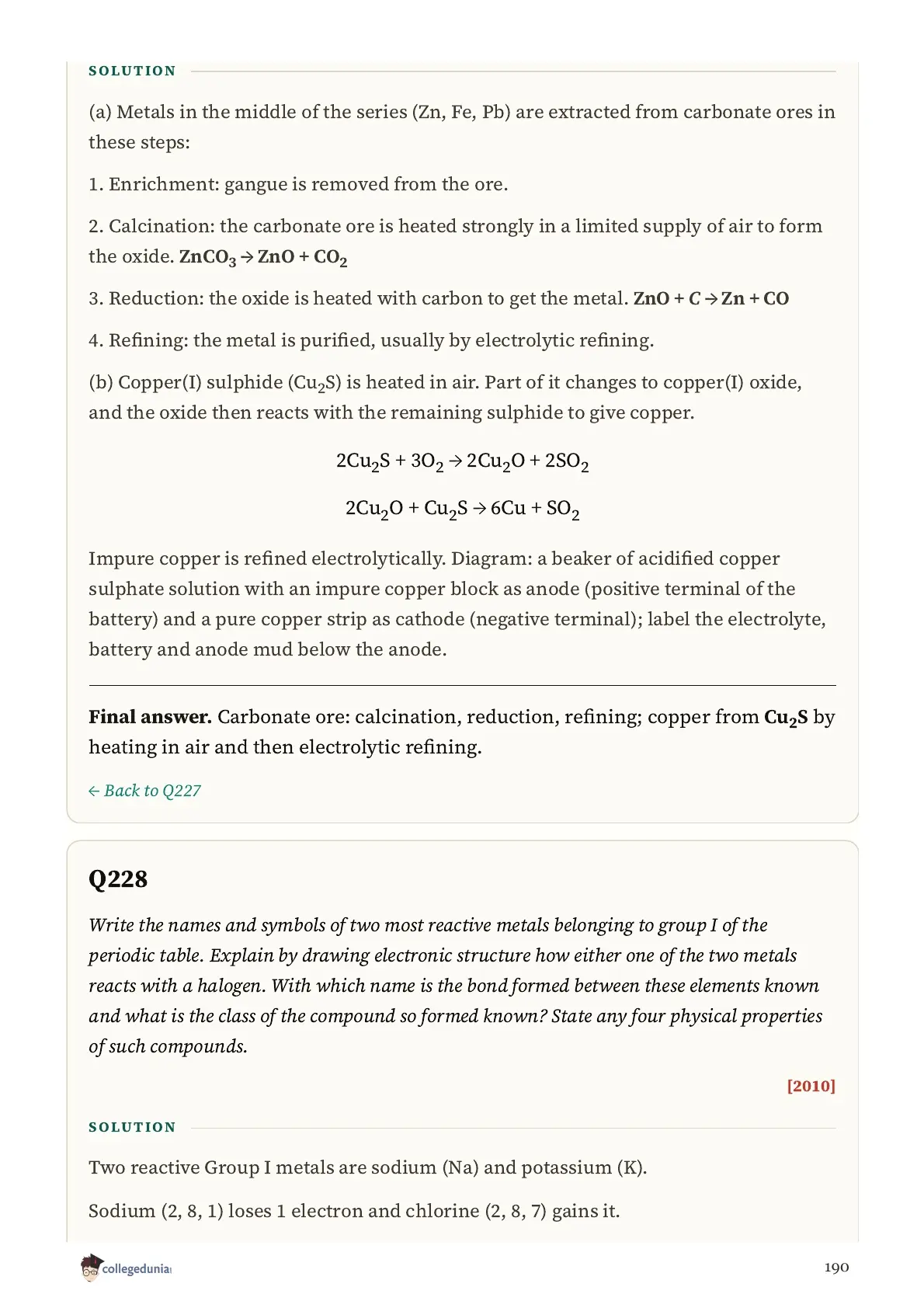
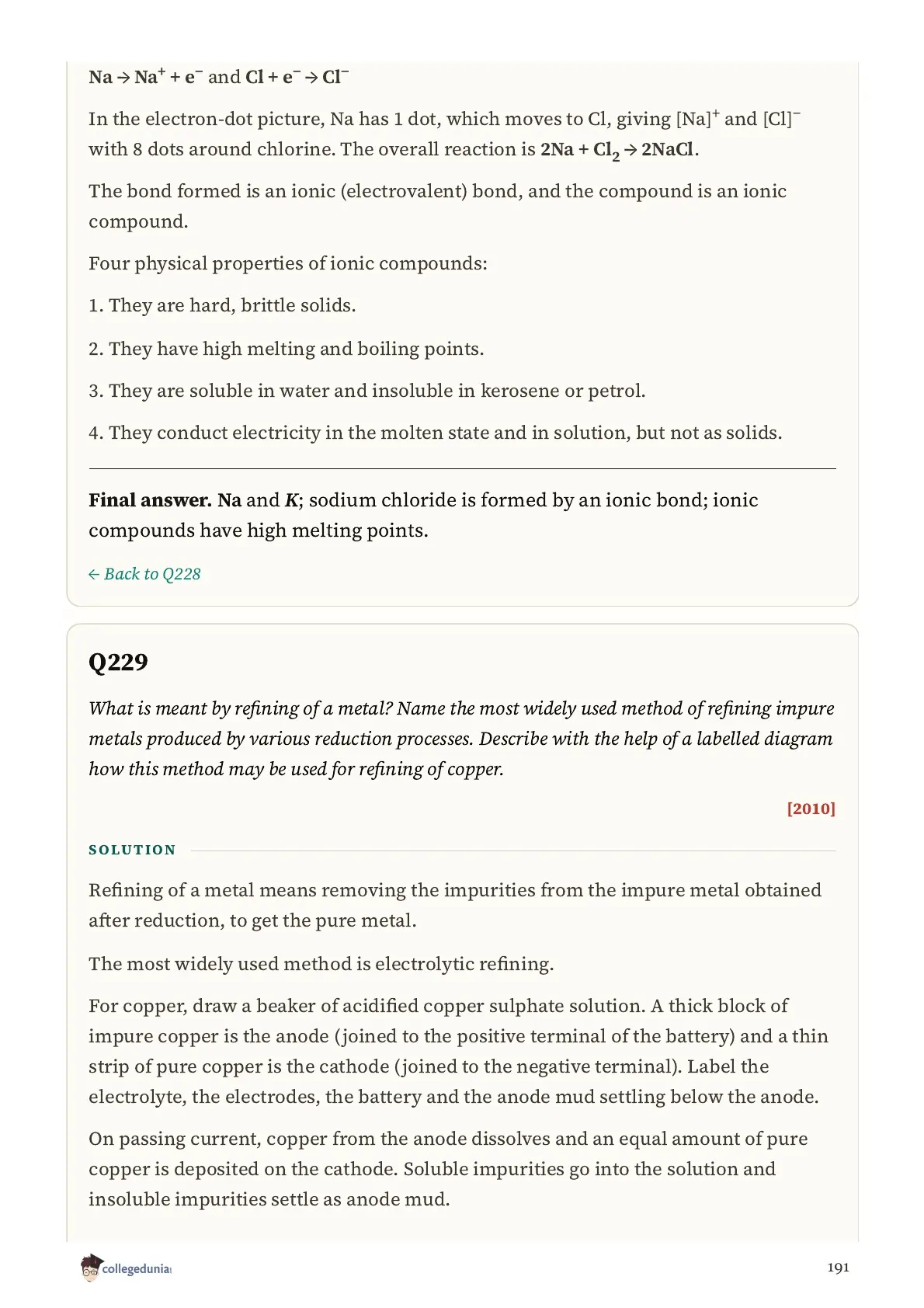
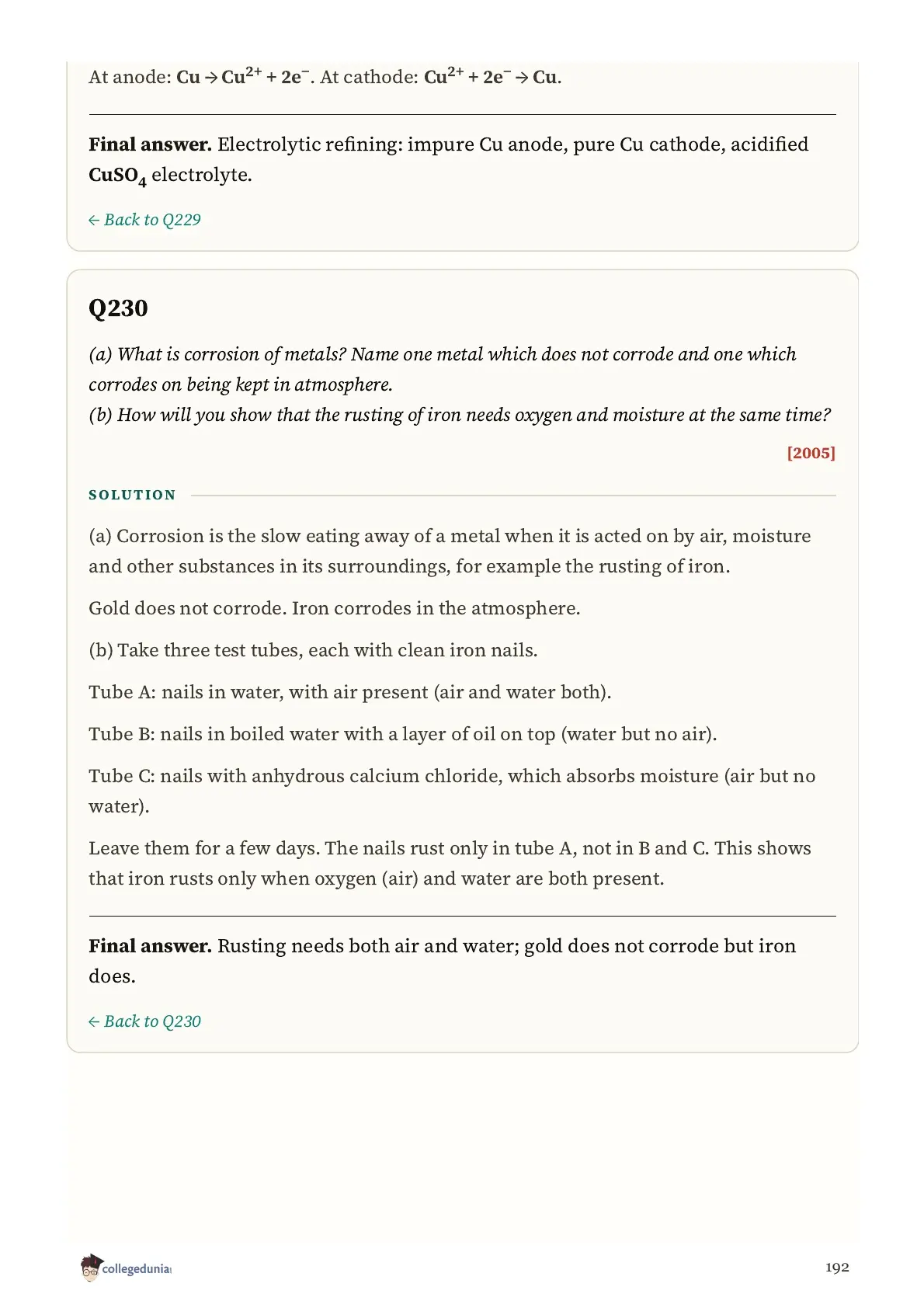
The questions keep returning to the oxides of metals (65 questions), extraction of metals from ores (42), reactions of metals with acids (33), the reactivity series (25), electrolysis and electrolytic refining (23), alloys (20), amphoteric oxides (16) and ionic compounds (17). 9 of the questions carry their original figure, such as the electrolytic refining set-up or the apparatus for steam acting on a metal.
On this page you get:
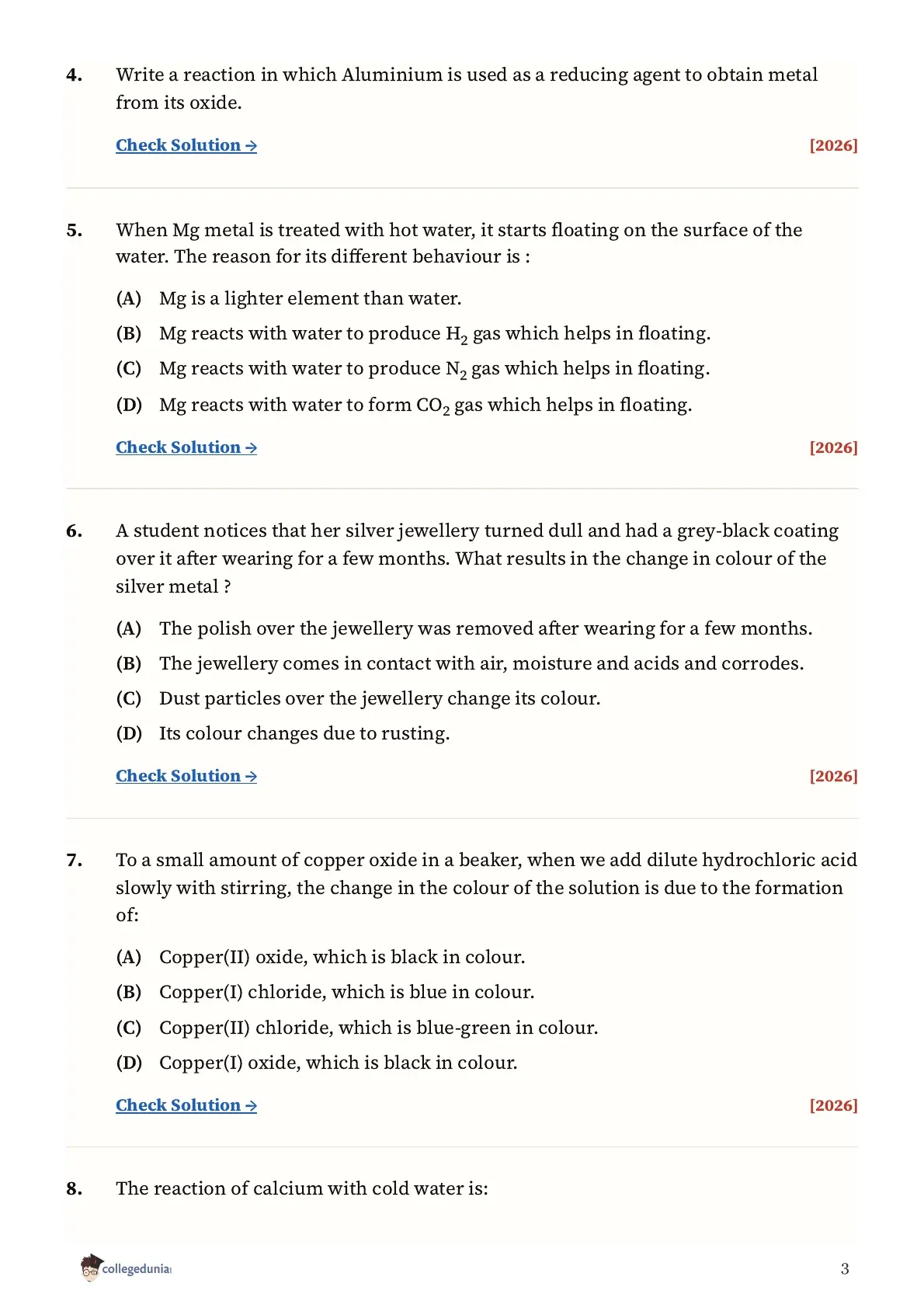
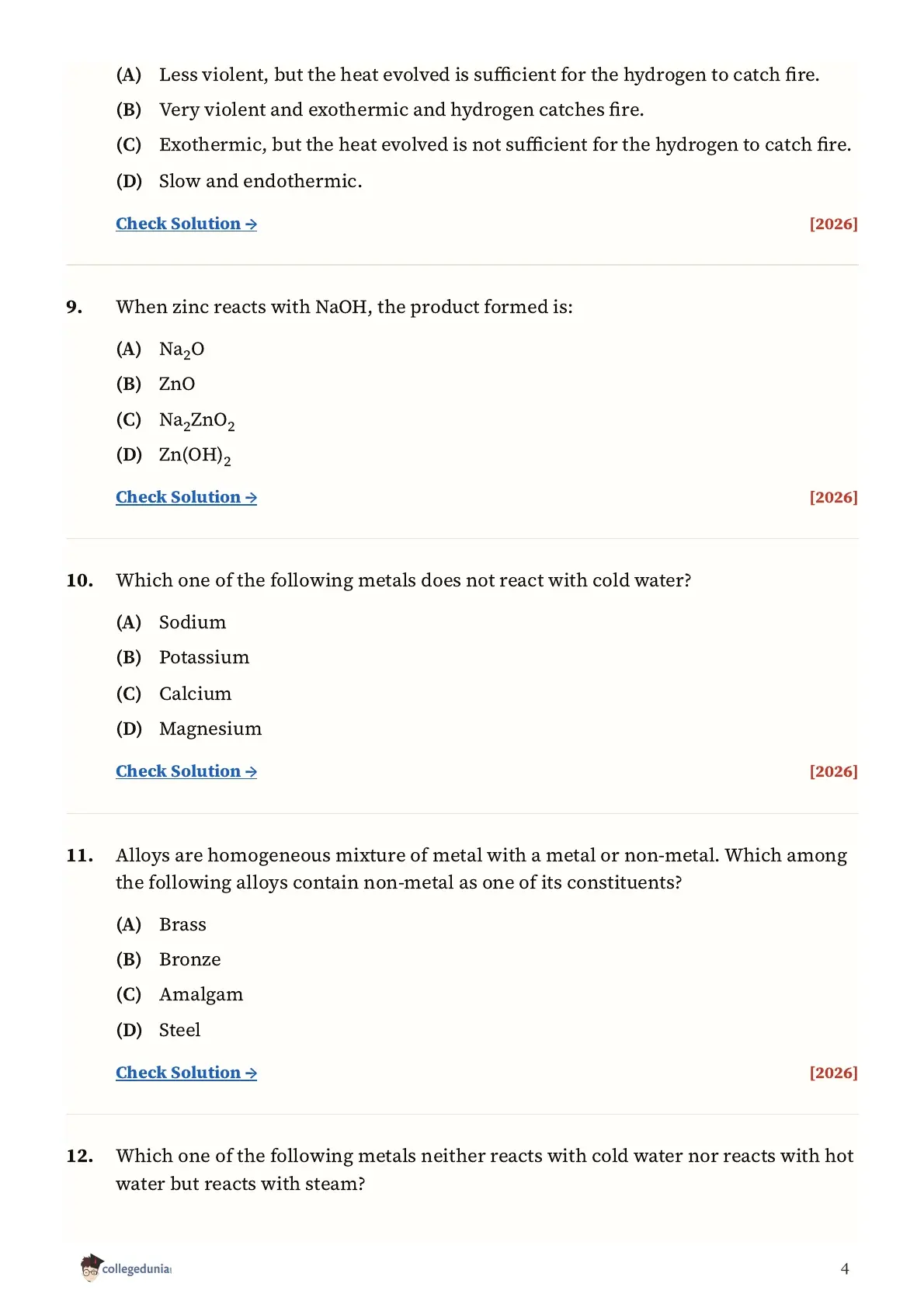
- 230 questions with a worked solution each: 79 MCQs and assertion-reason items, 100 short answers and 51 long answers or case studies
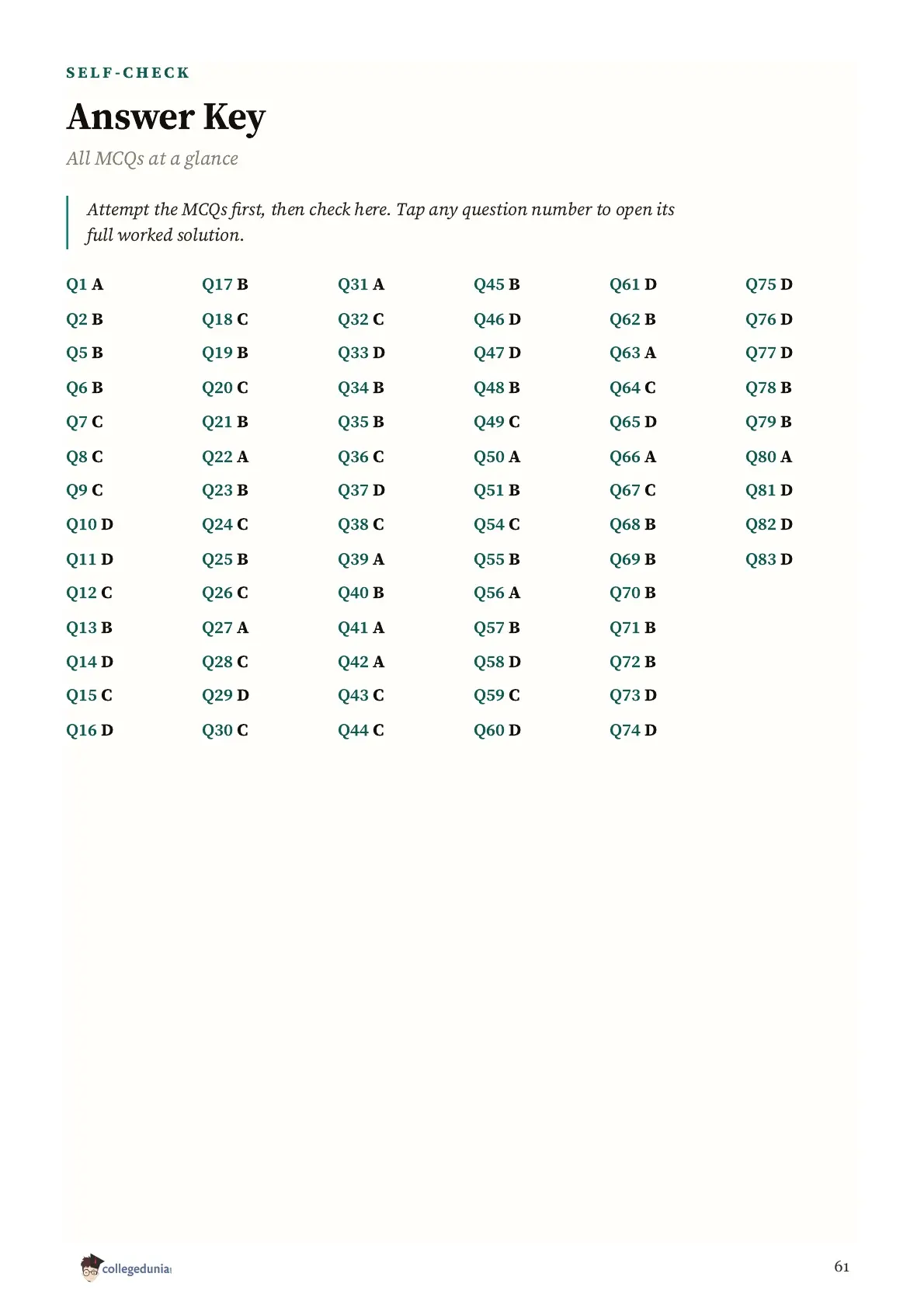
- An Answer Key that lists all 79 MCQs at a glance
- Question counts by topic, so you know whether to start with reactivity, extraction of metals or ionic compounds
- A marks-wise table of questions (1, 2, 3, 4 and 5 mark)
- The common mistakes students make, such as writing Al2O4 for the oxide formed when aluminium burns in air, and a short FAQ
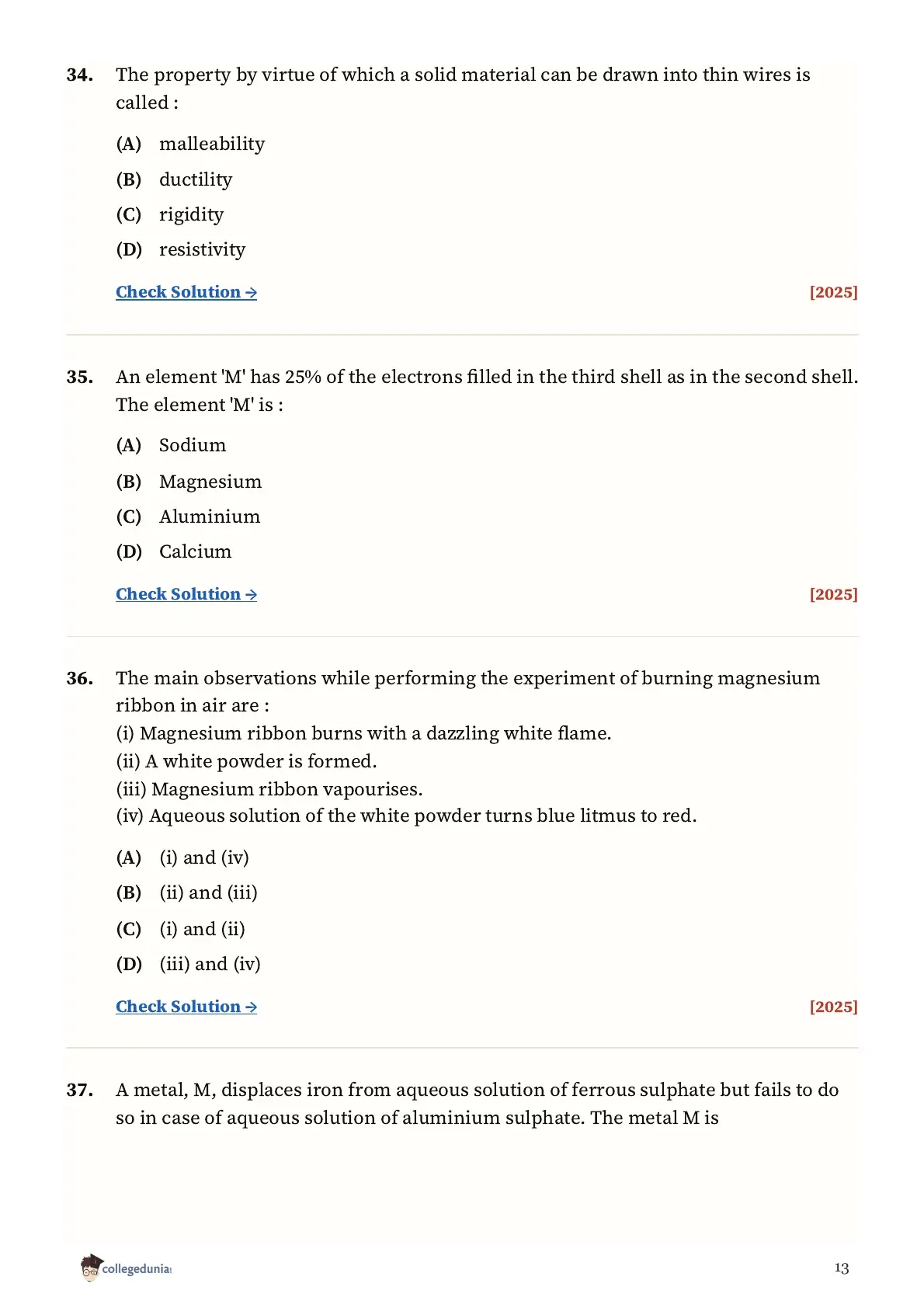
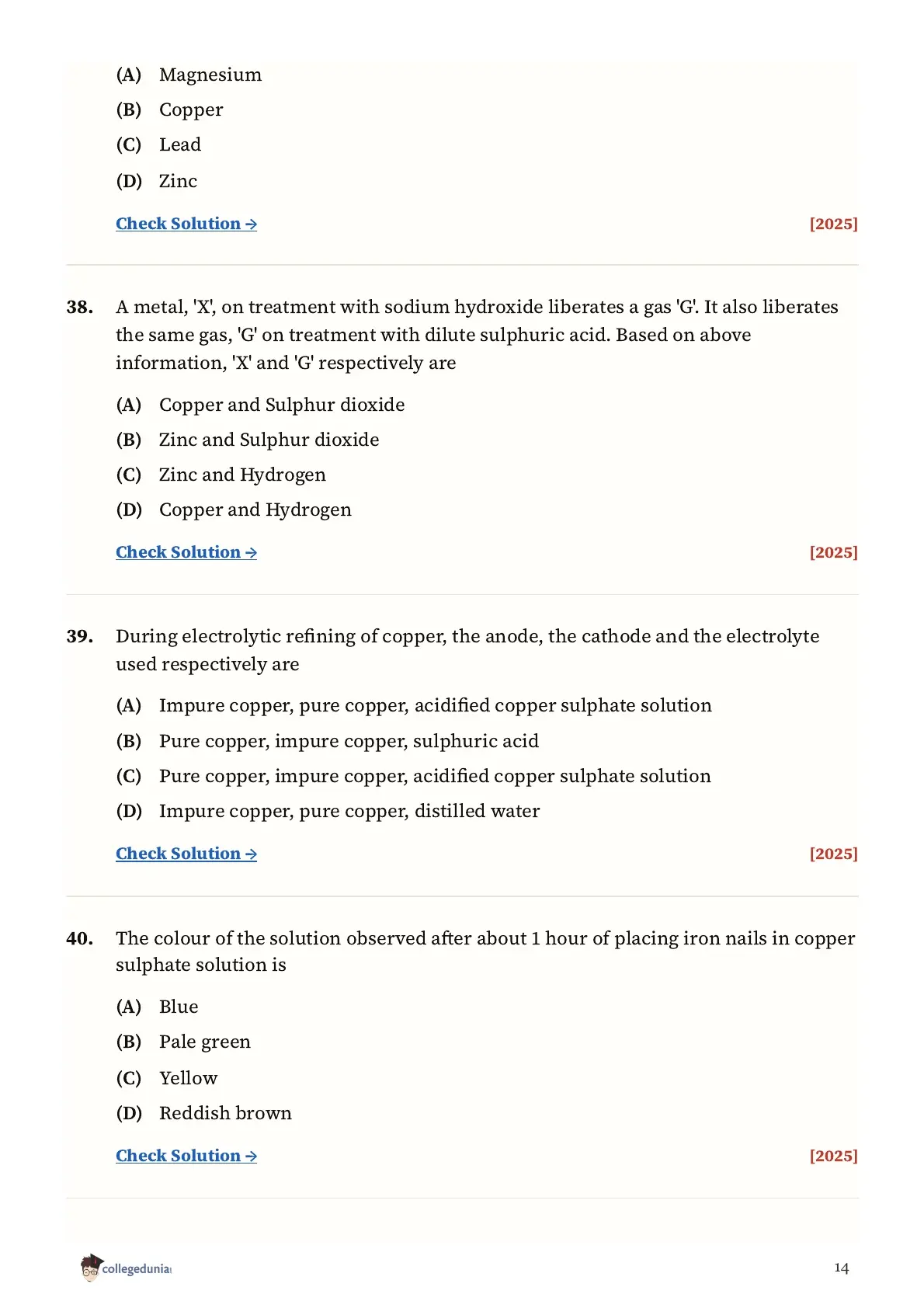
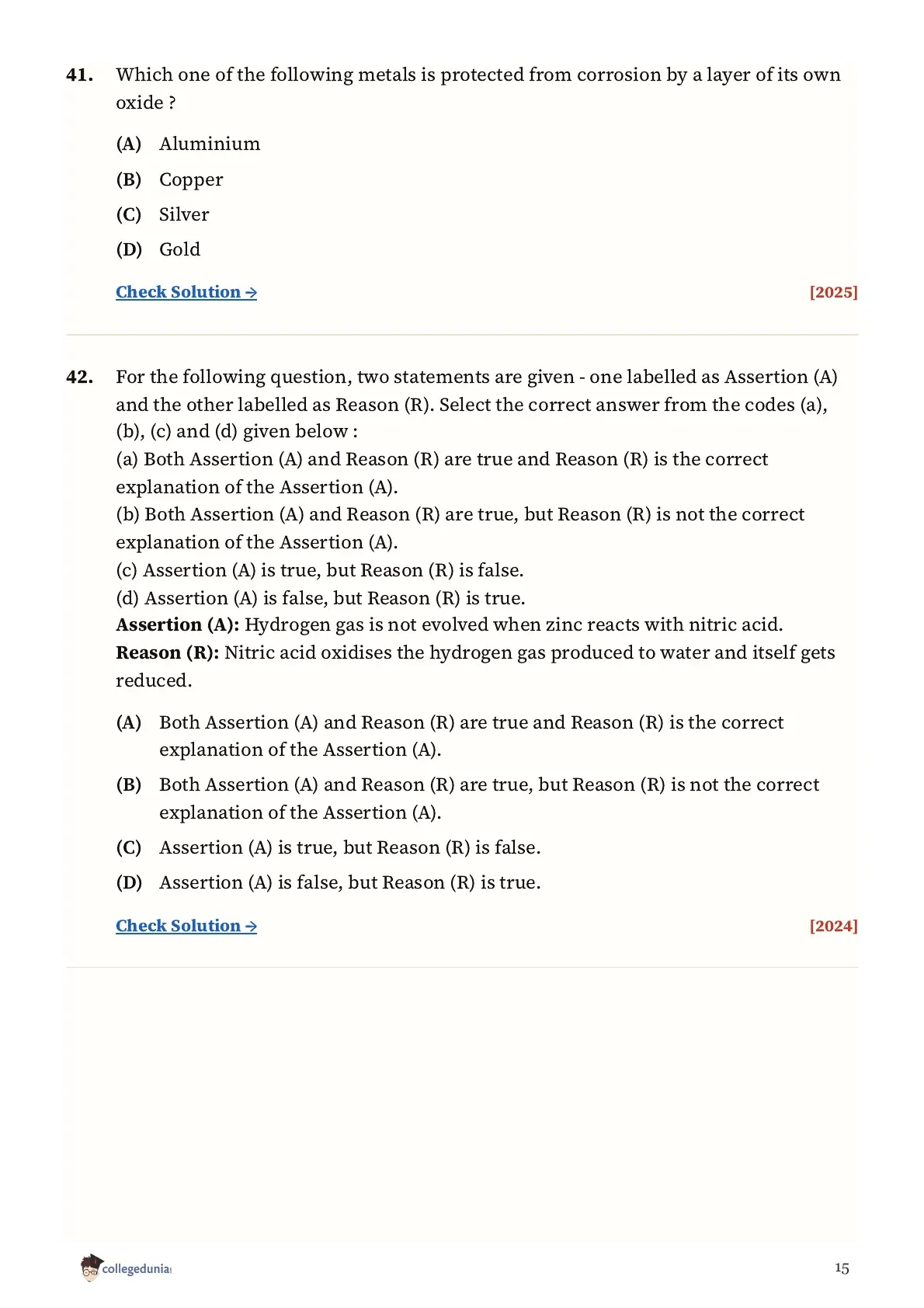
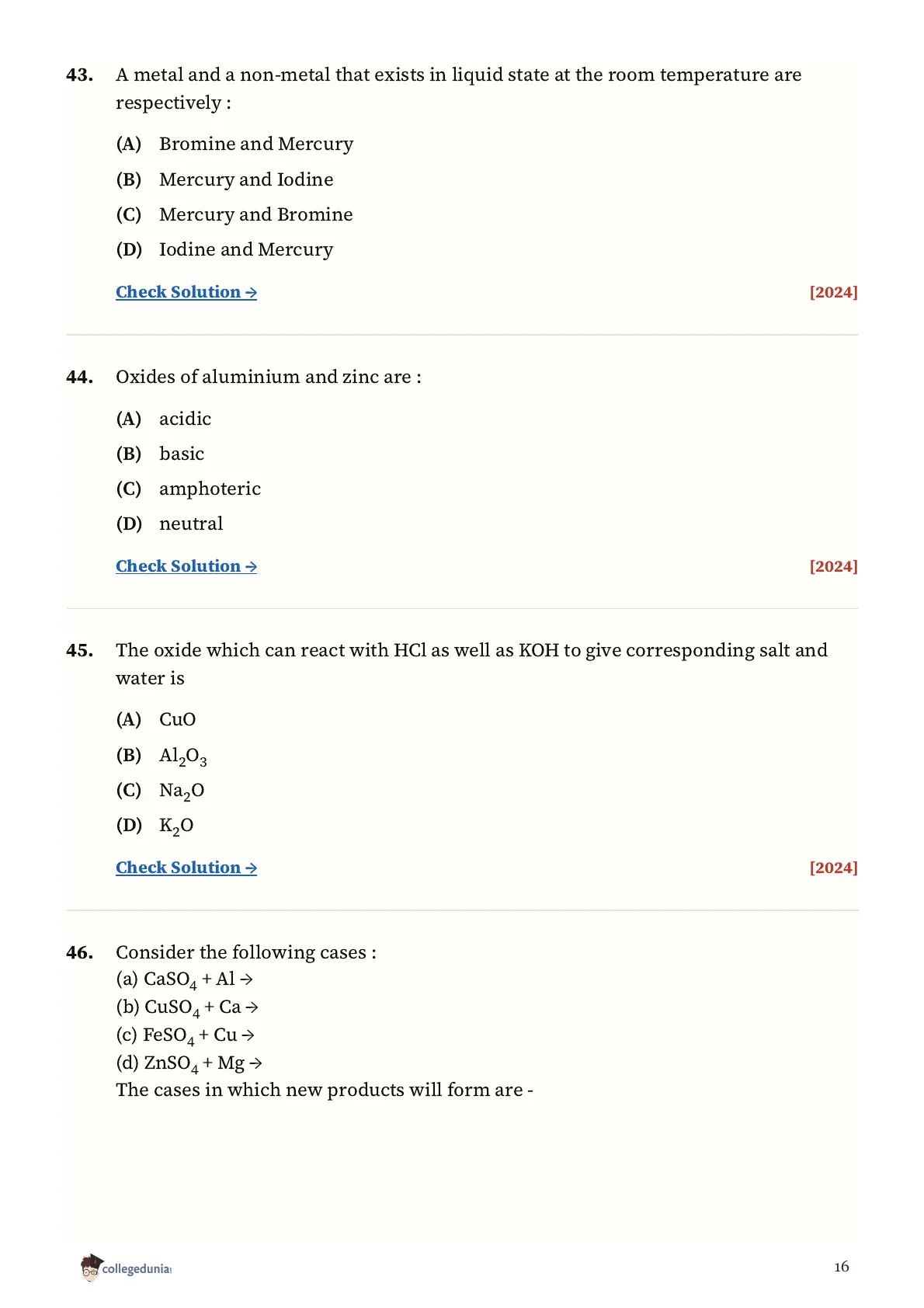
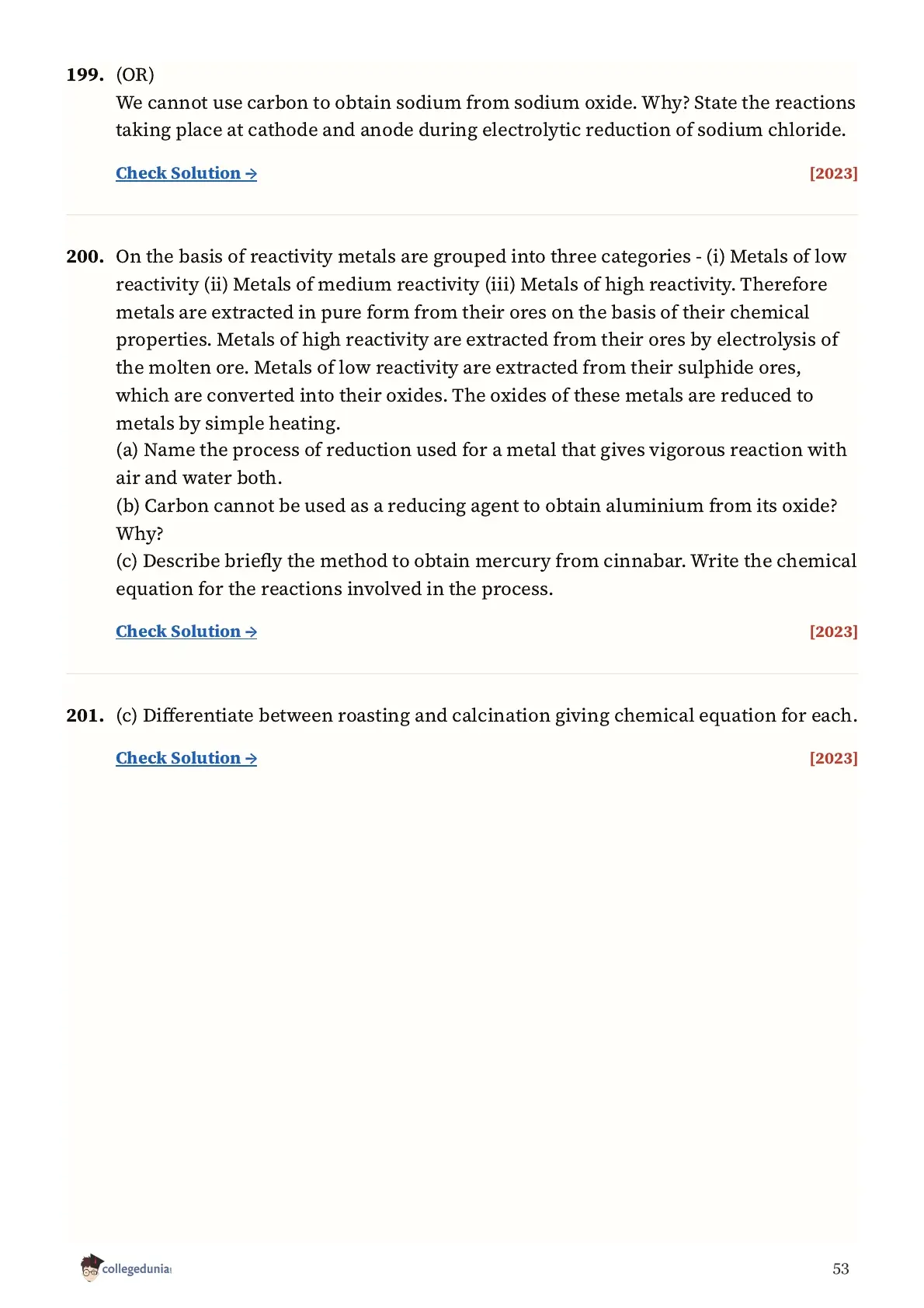
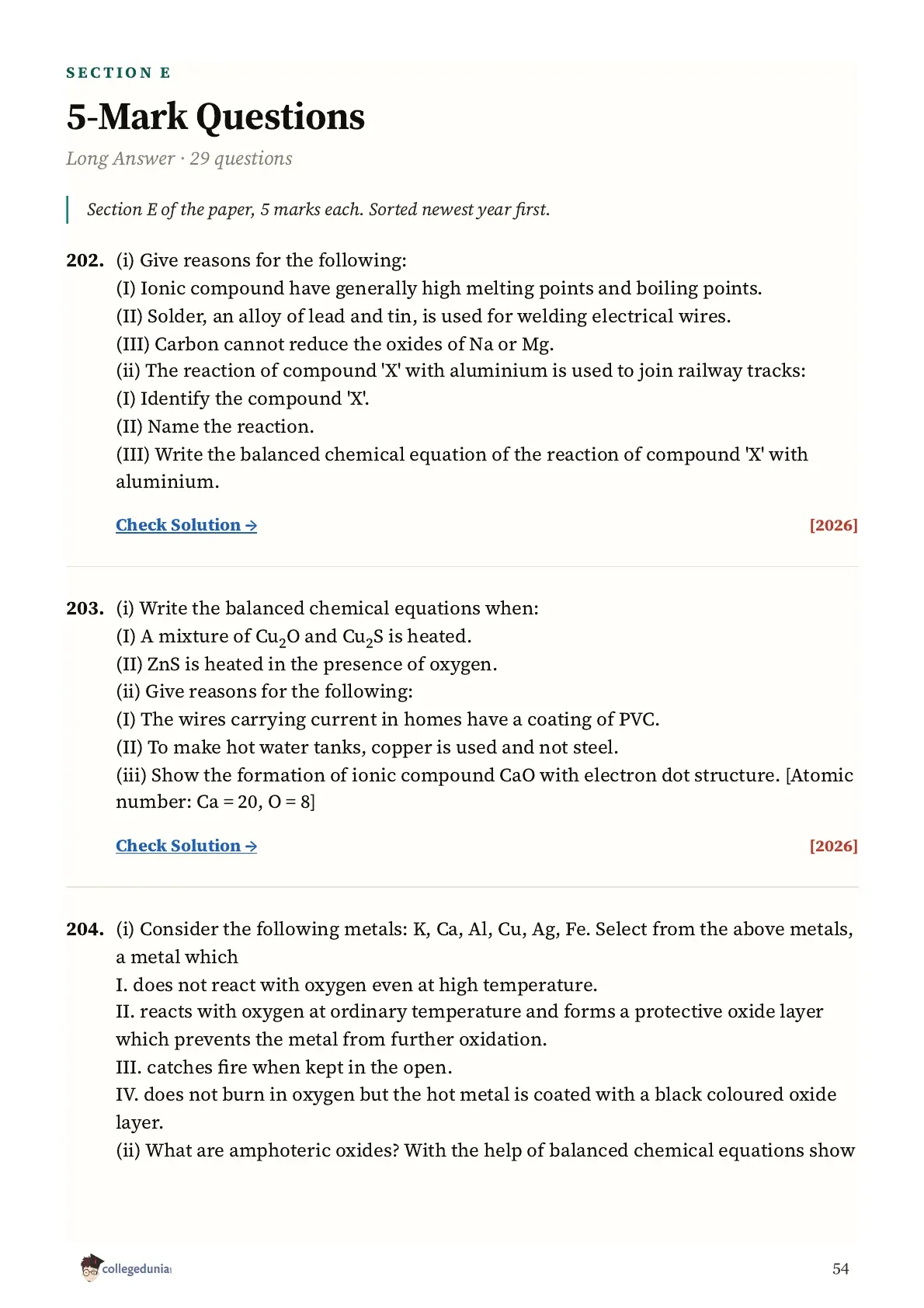
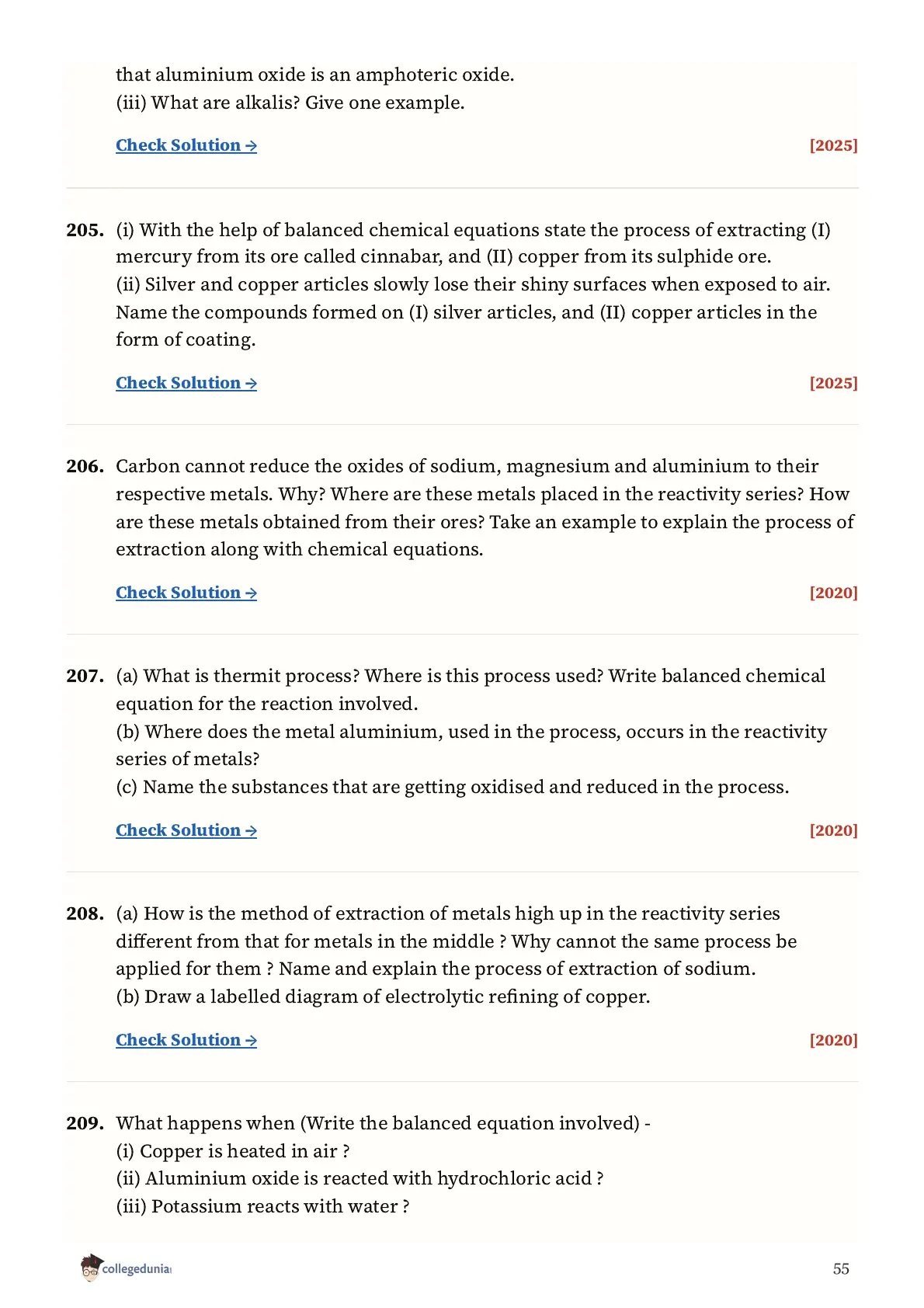
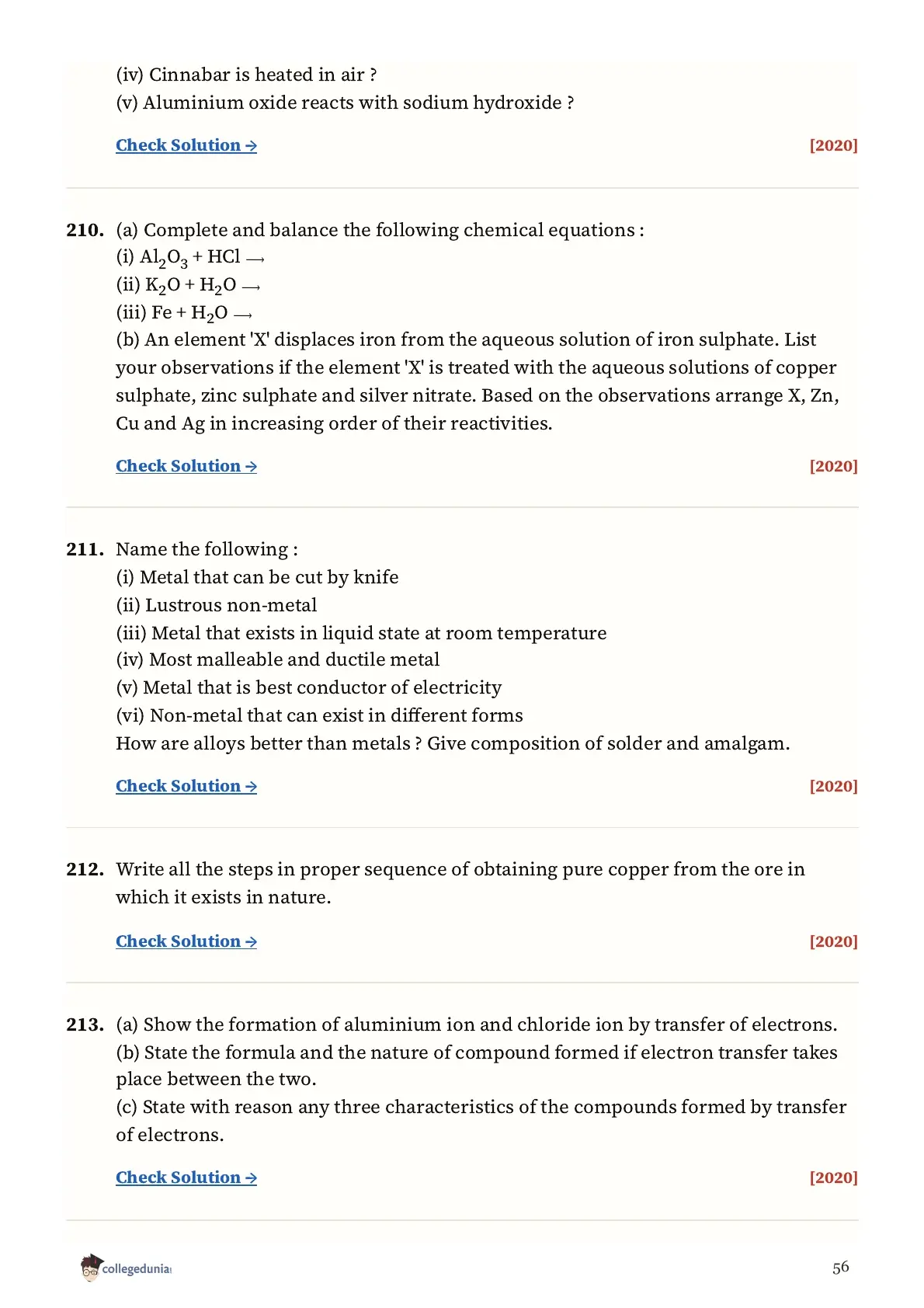
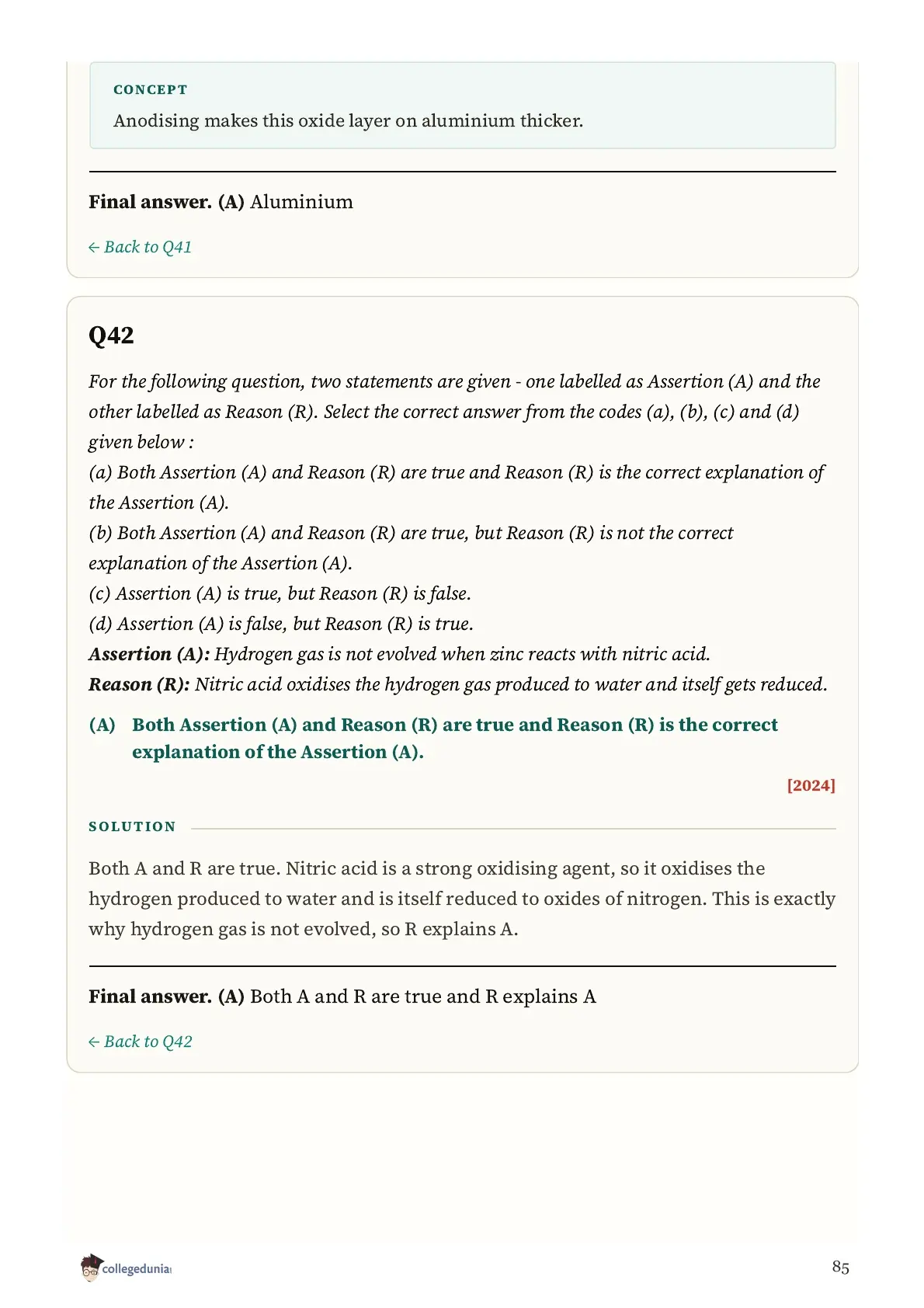
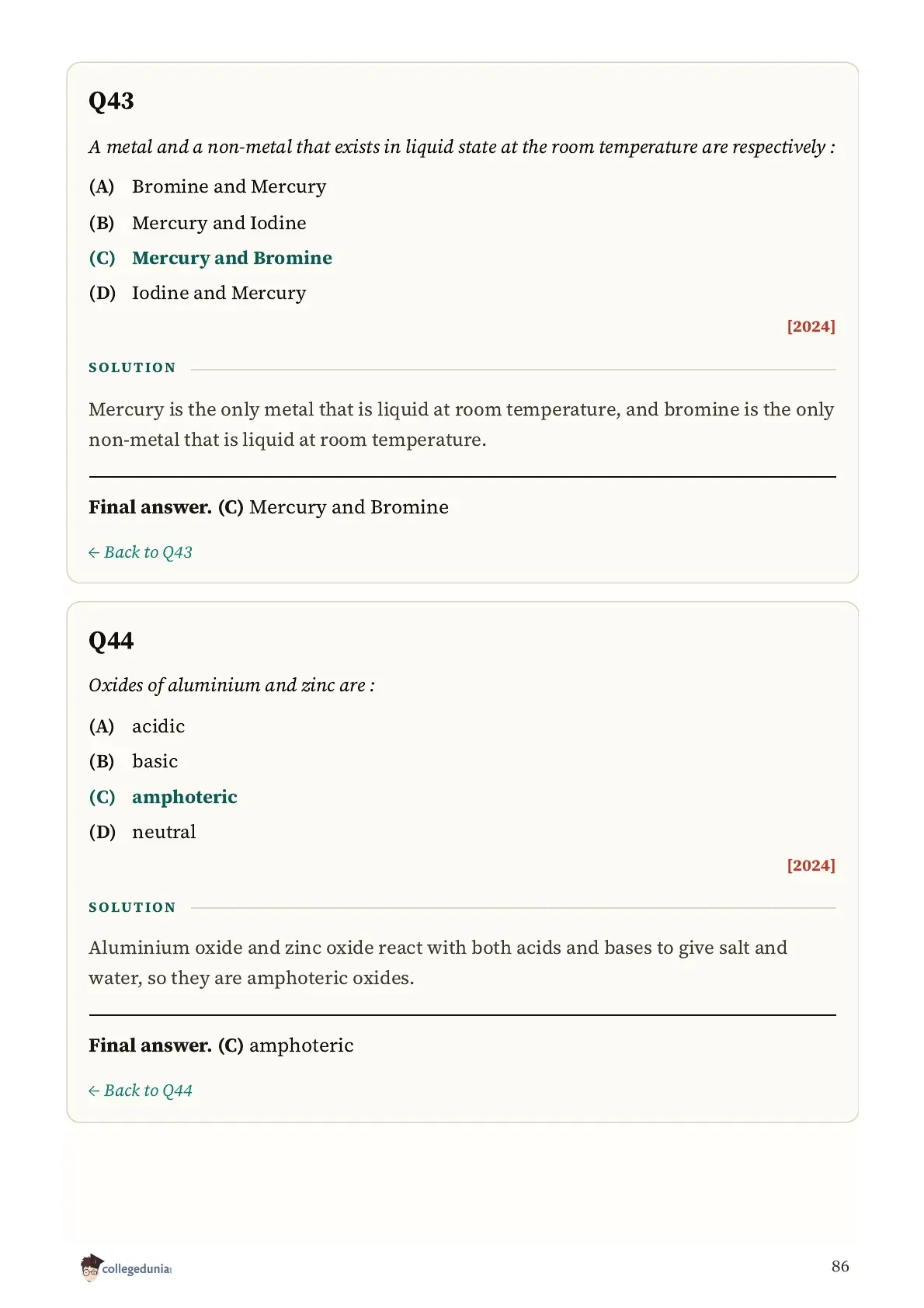
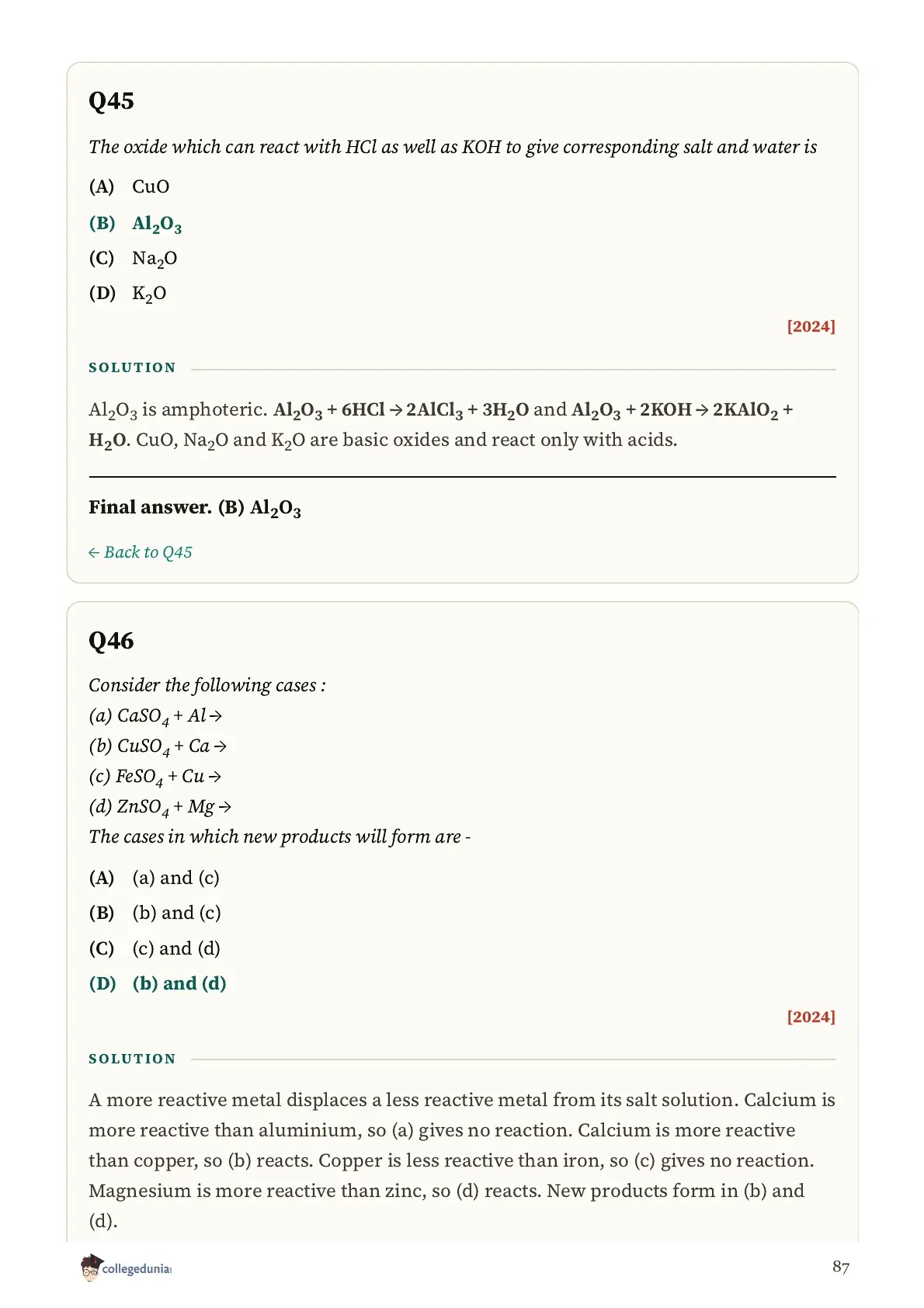
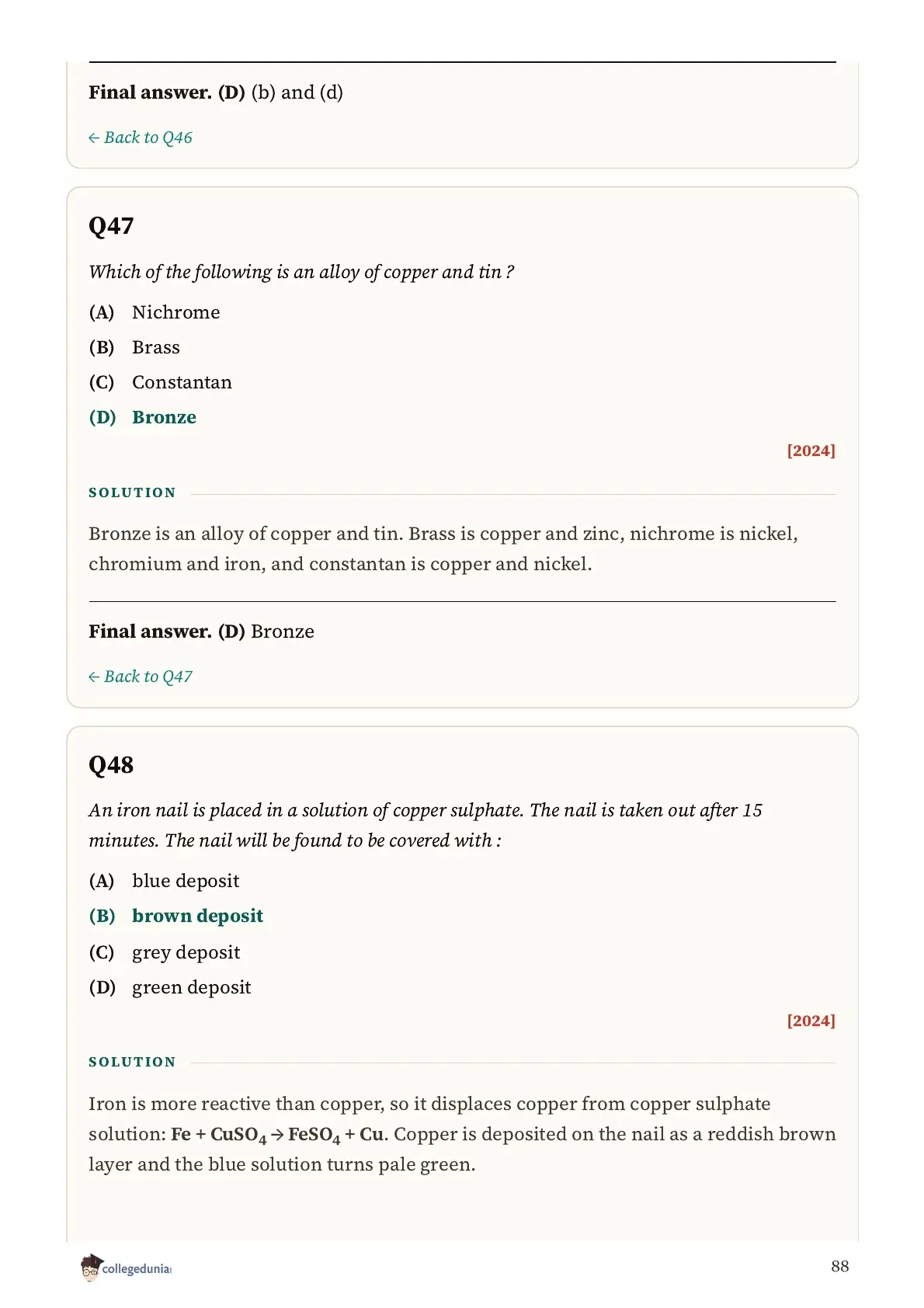
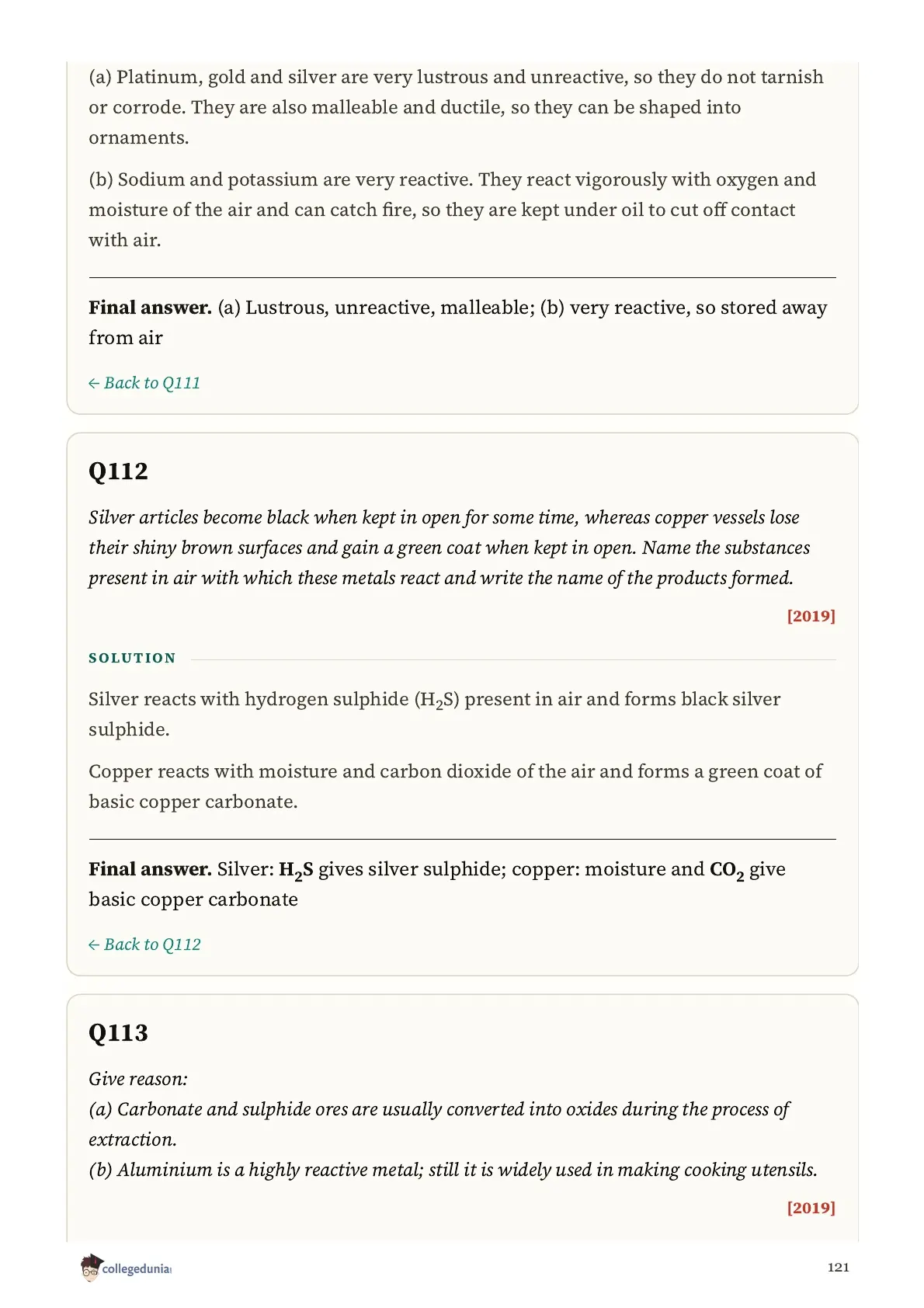
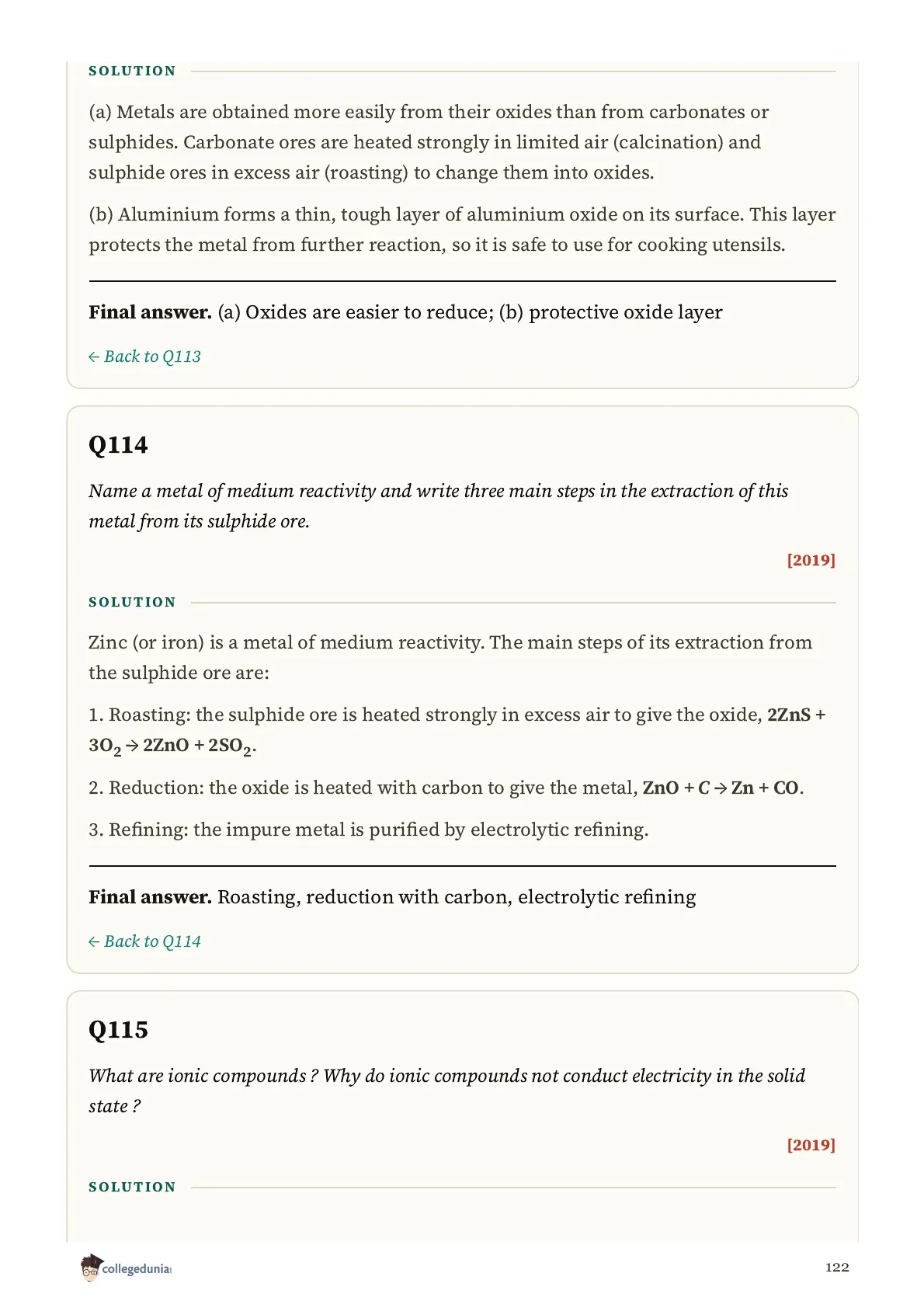
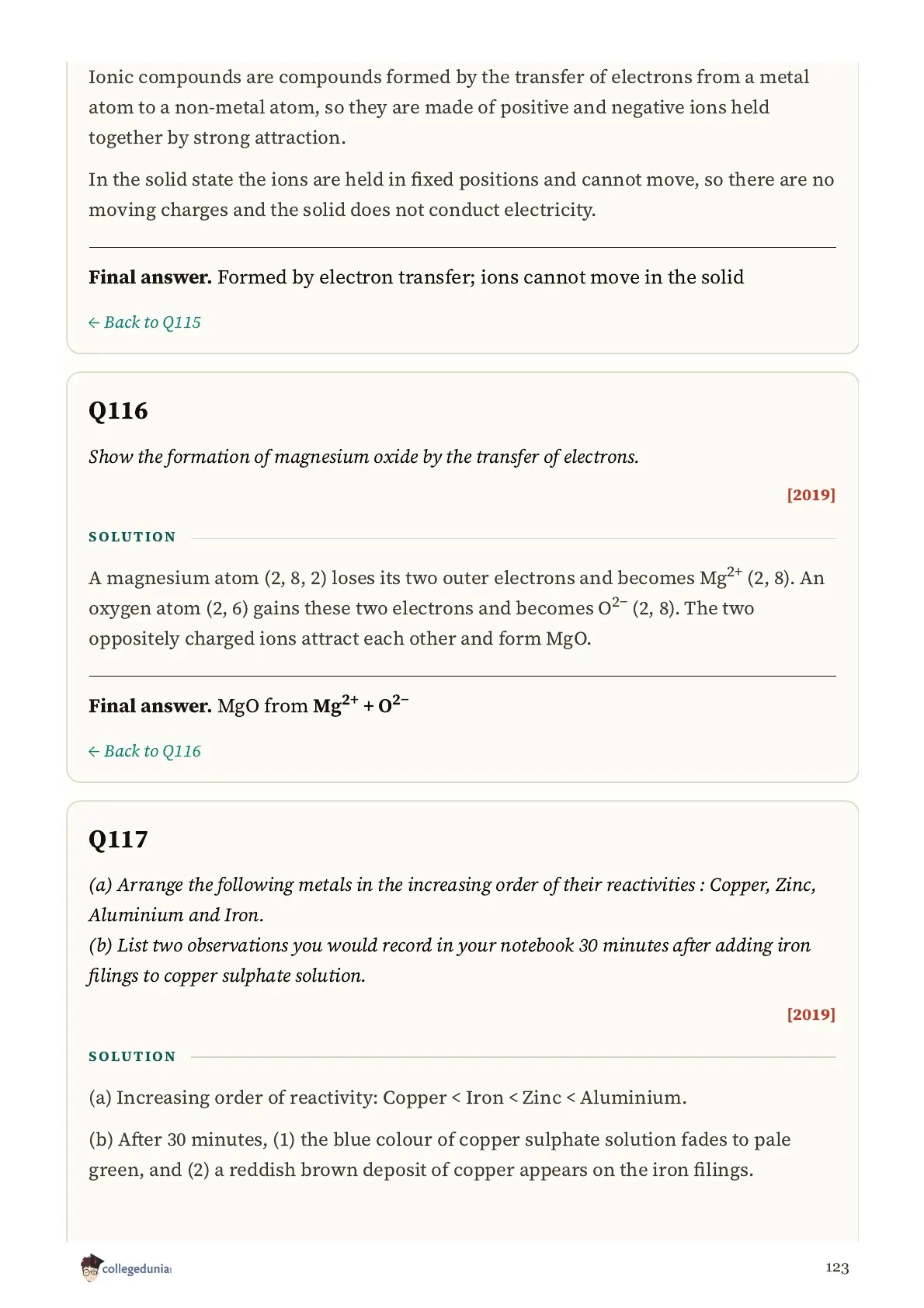
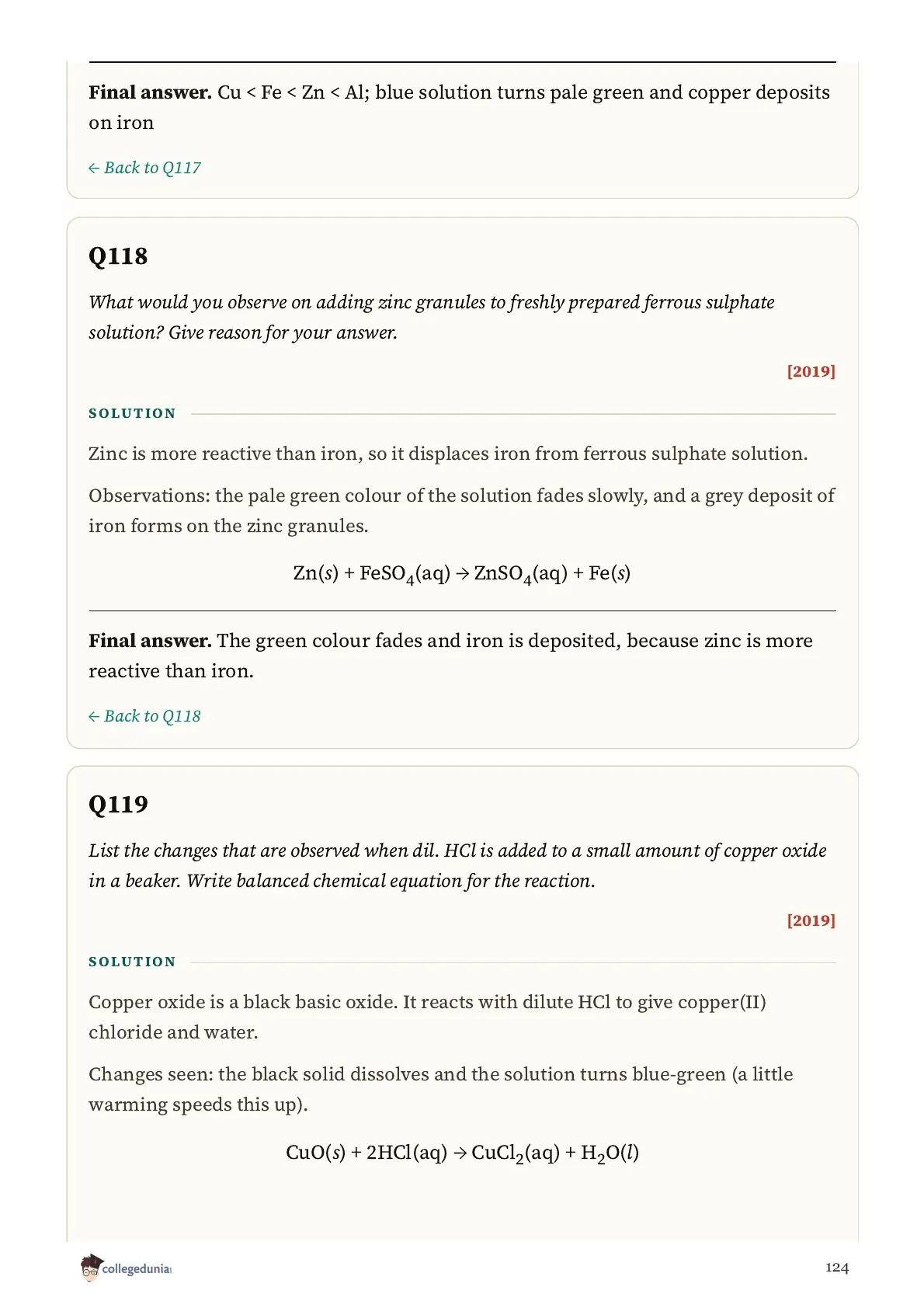
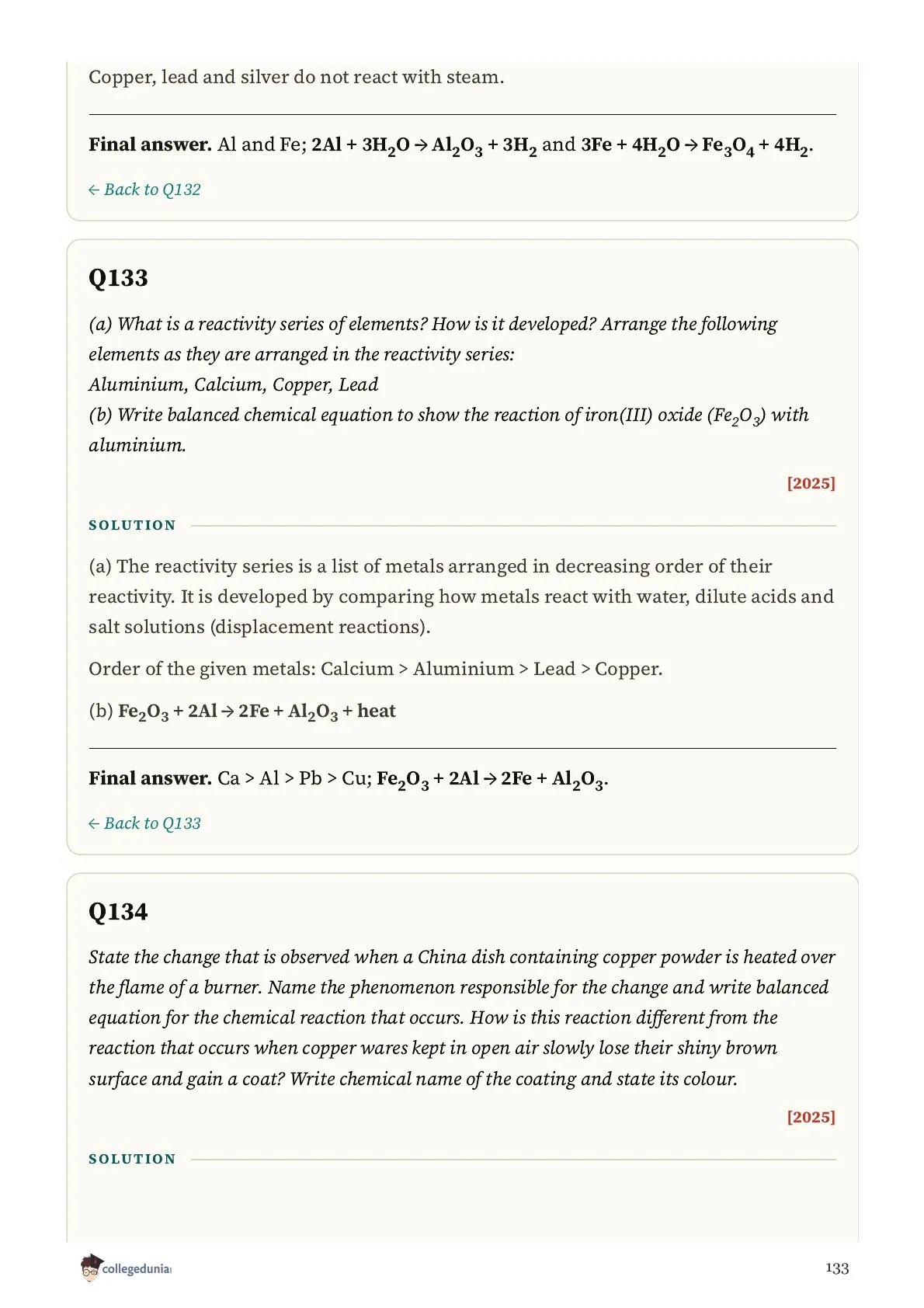
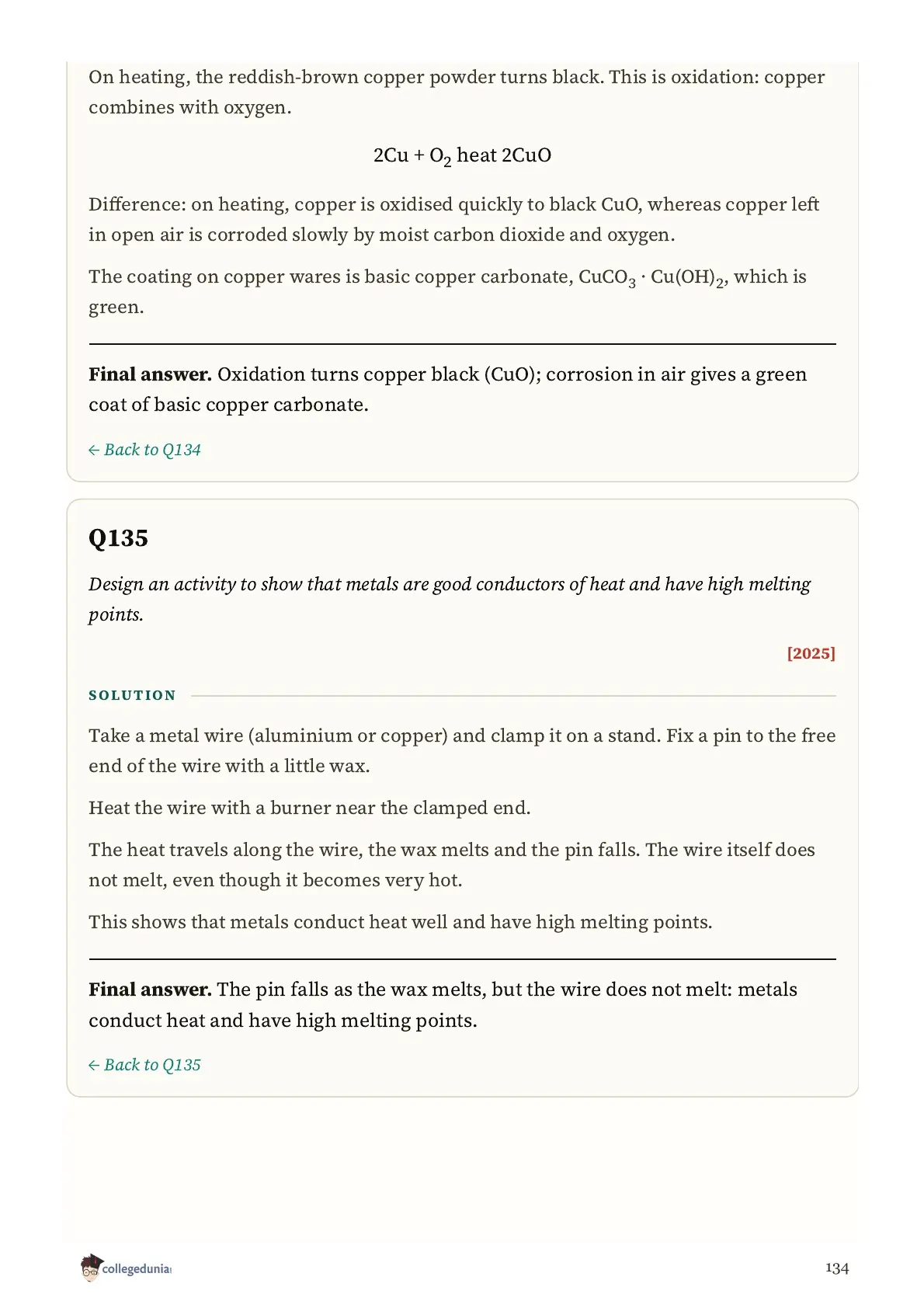
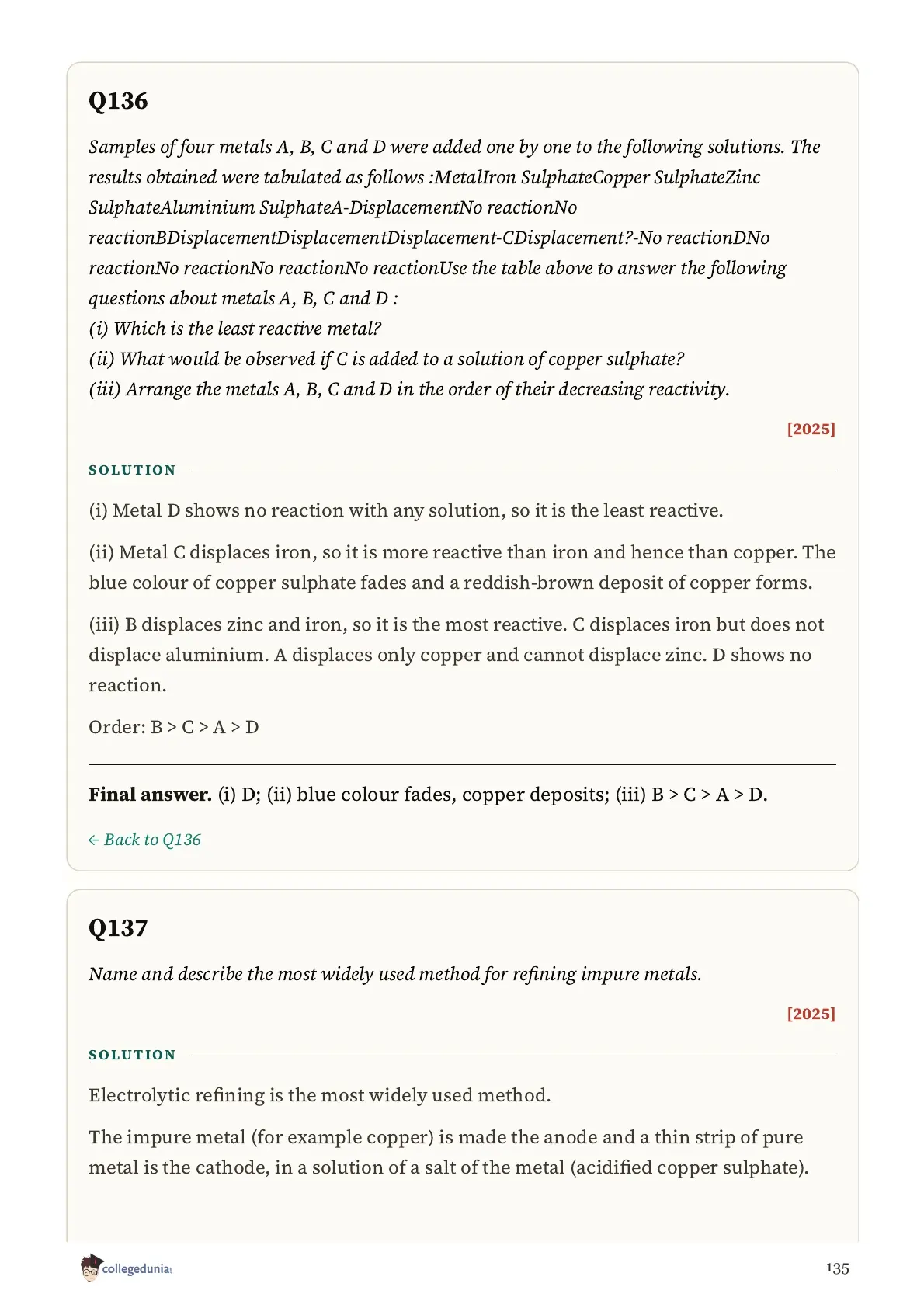
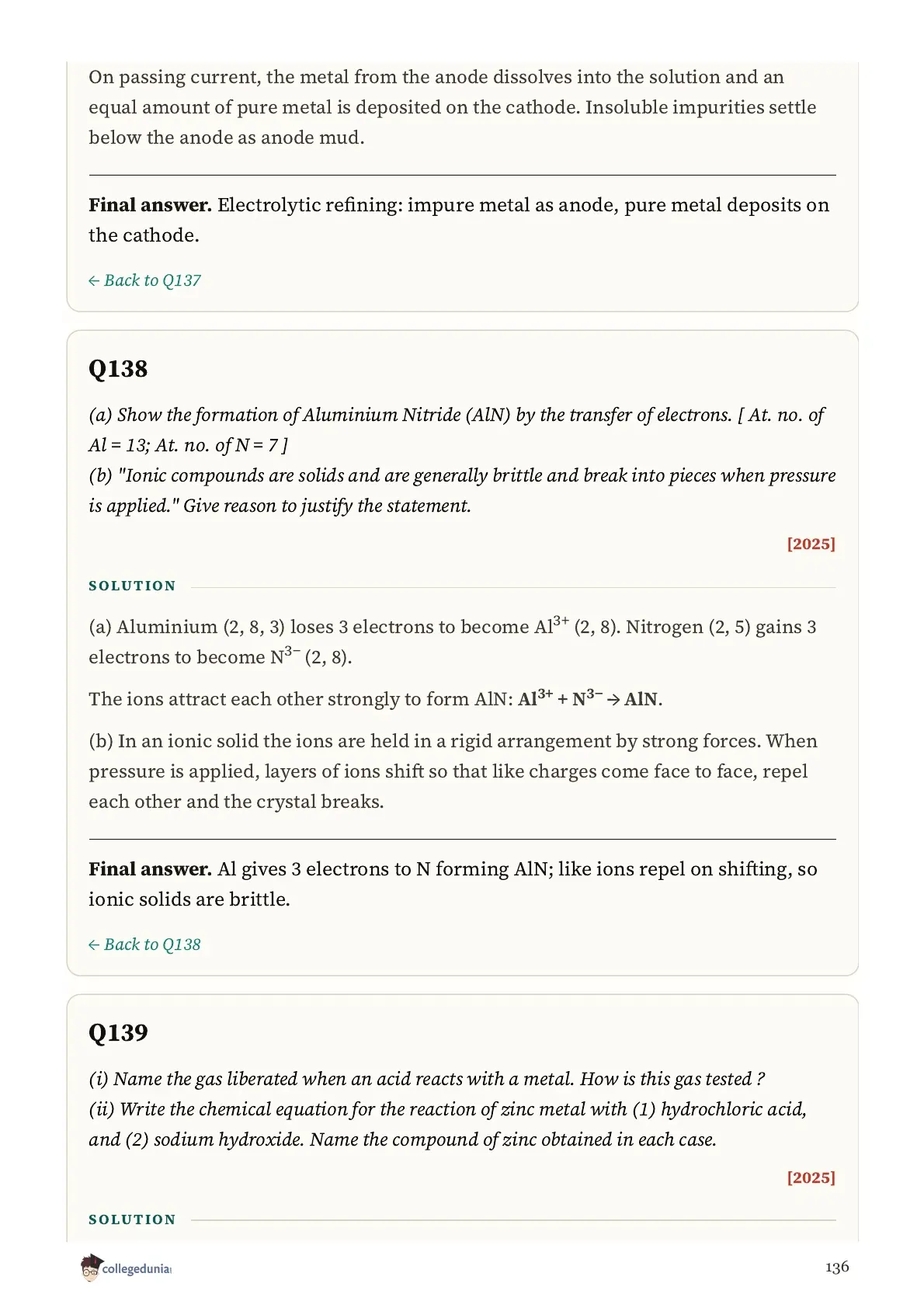
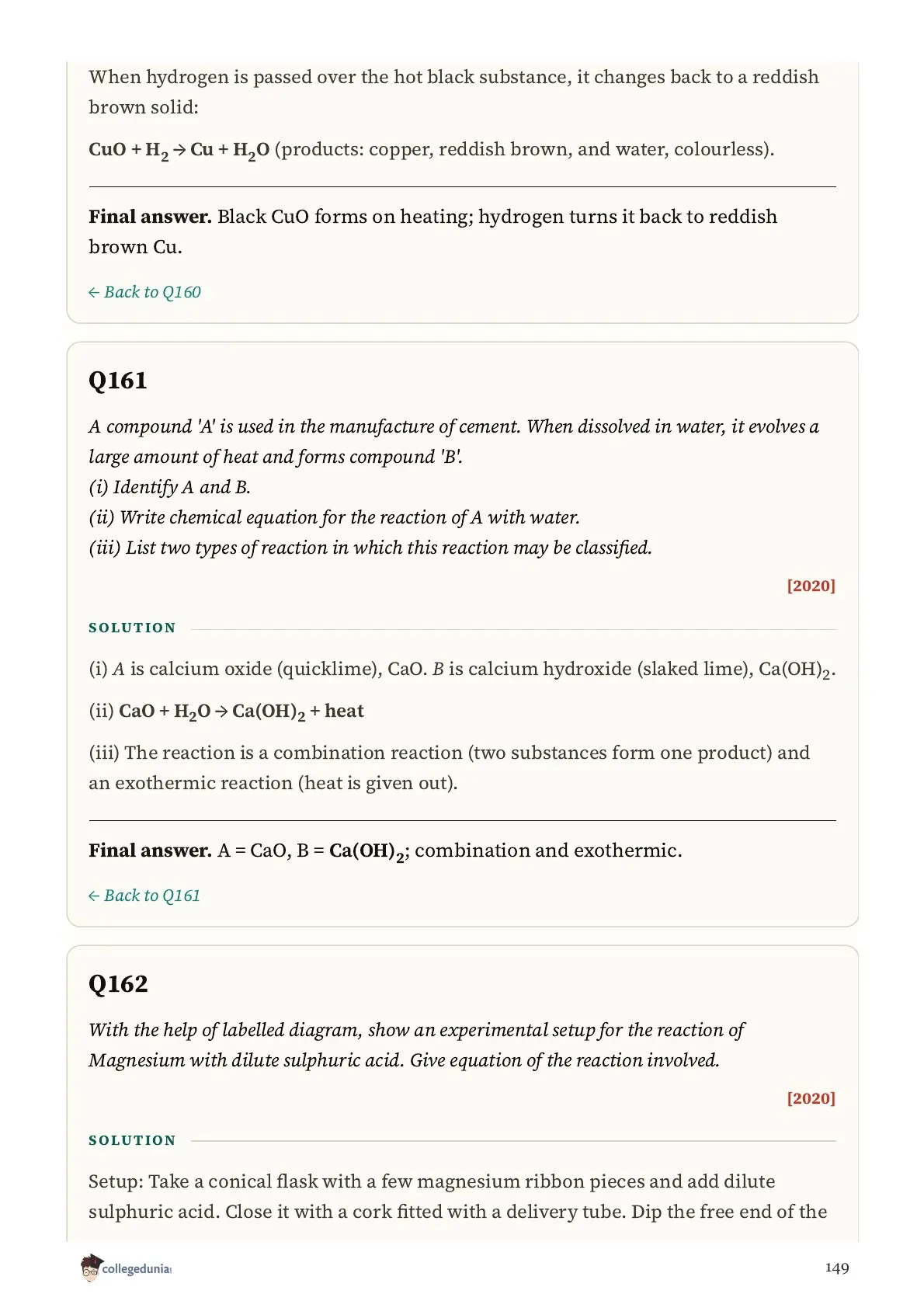
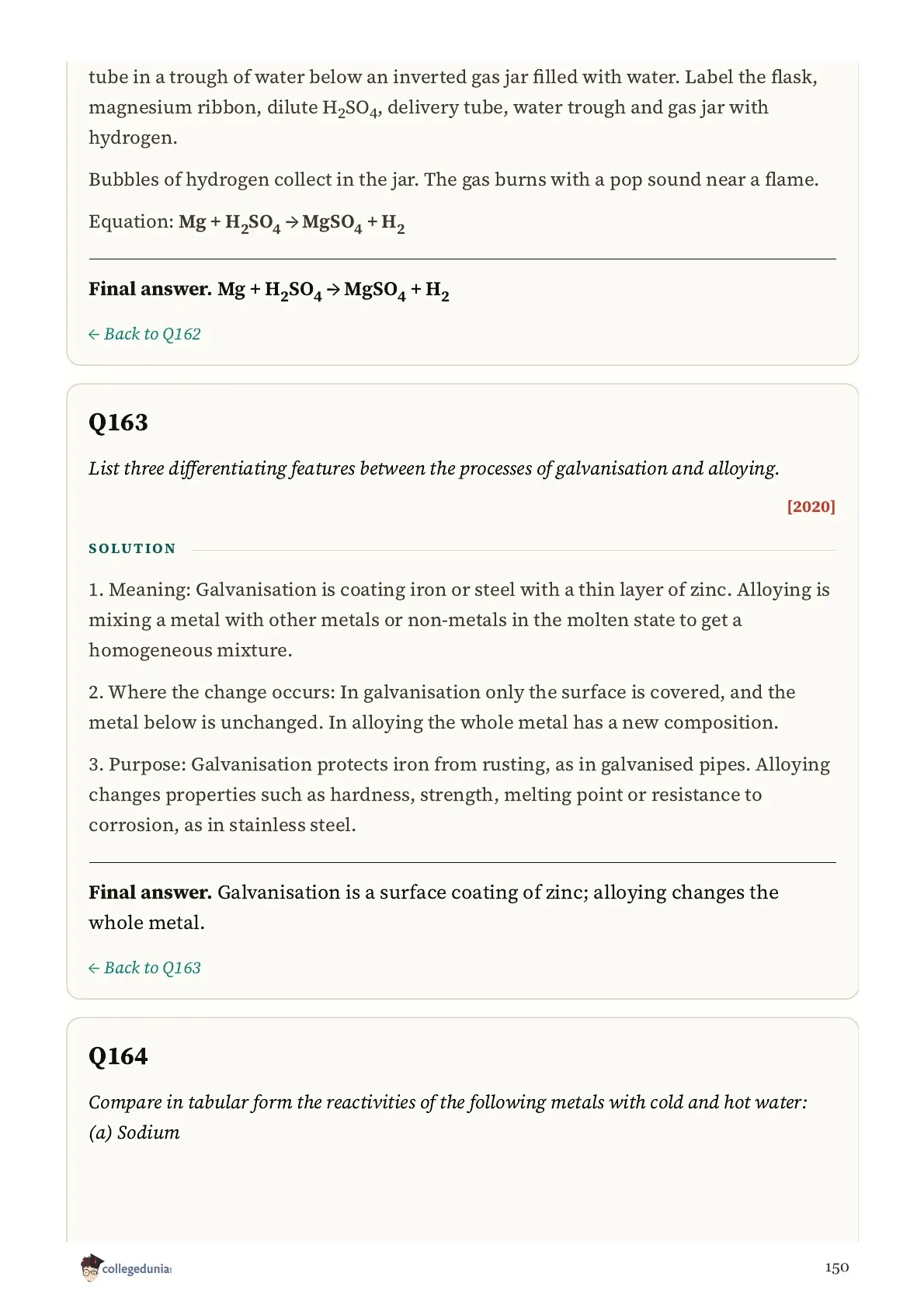
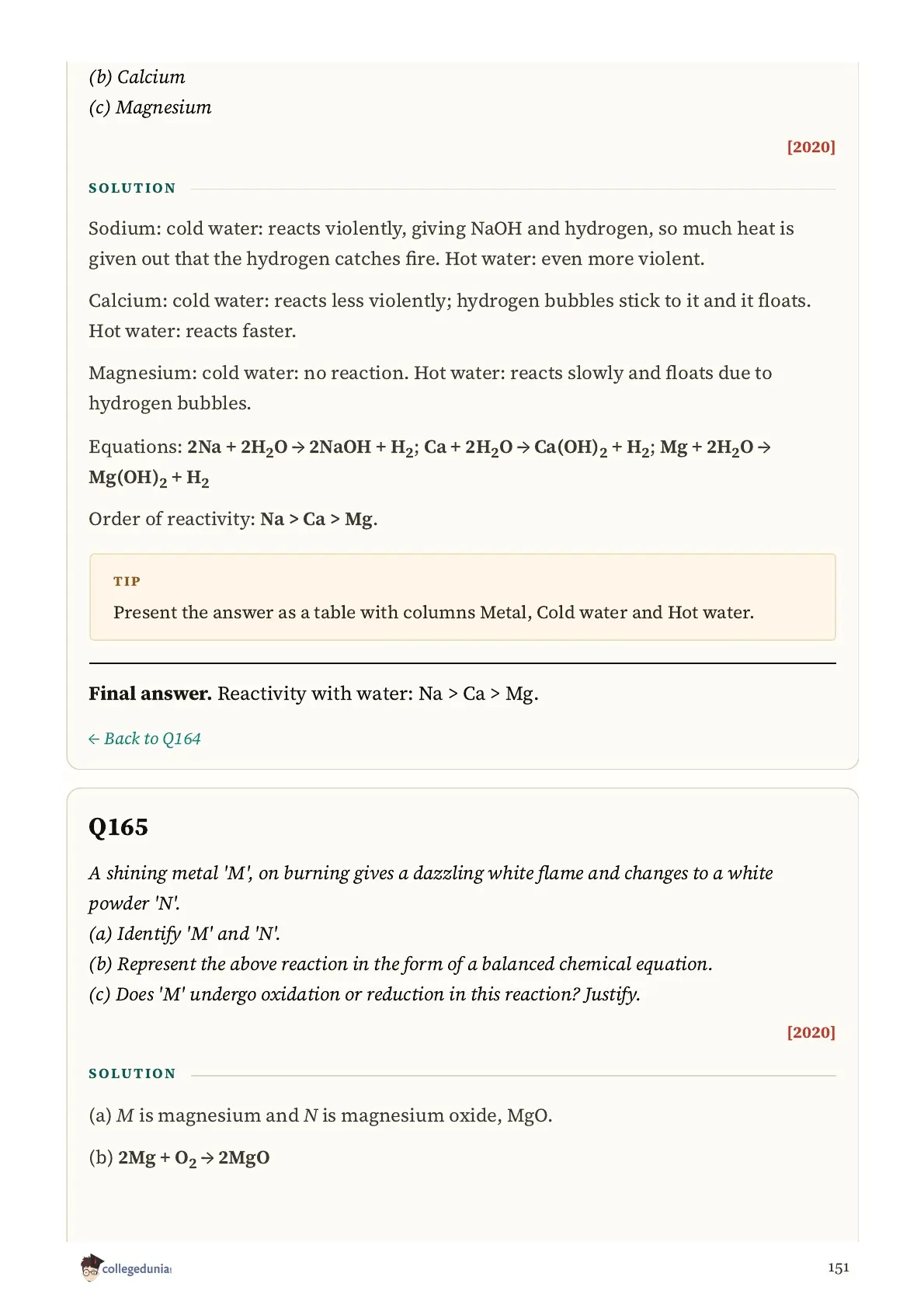
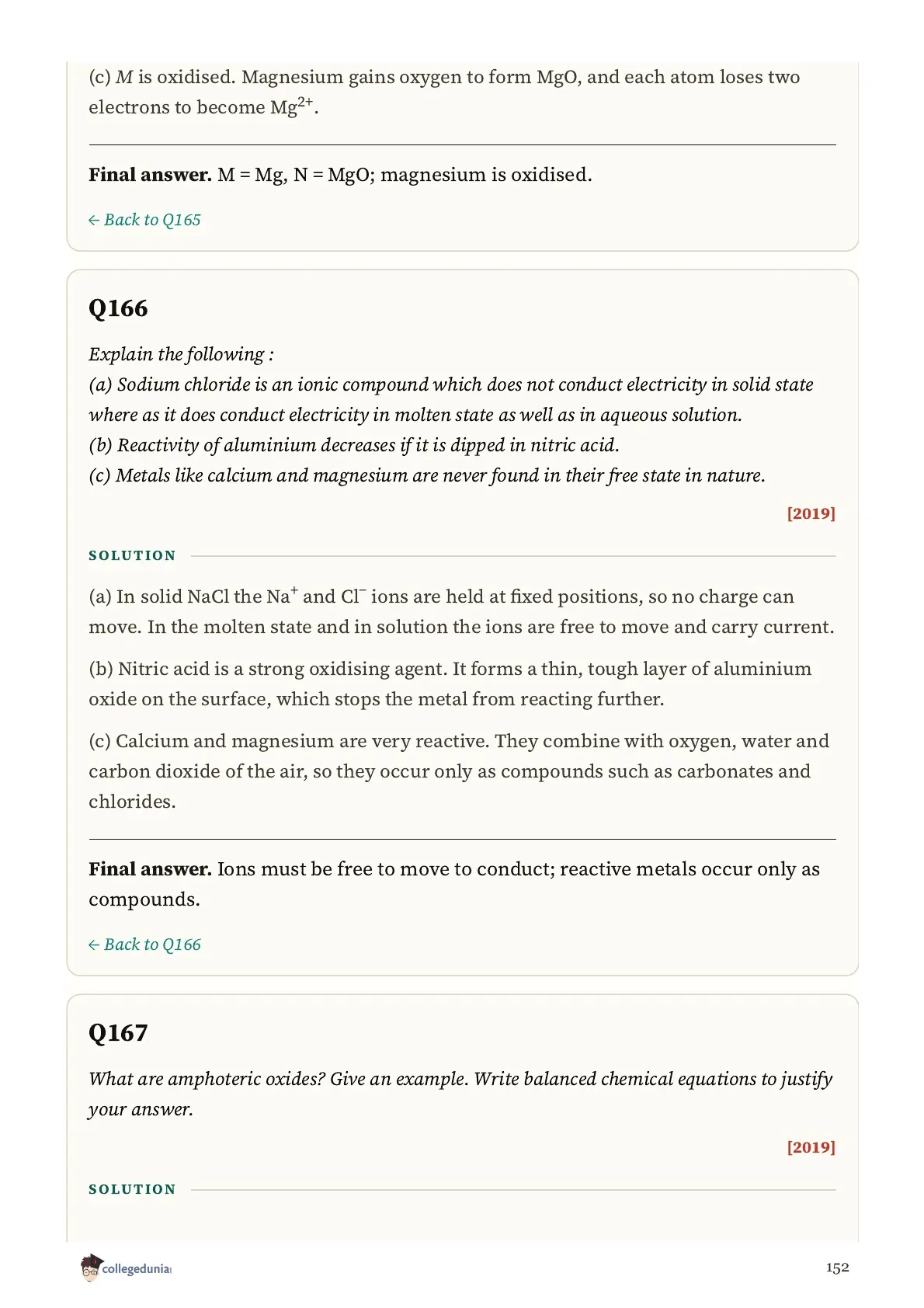
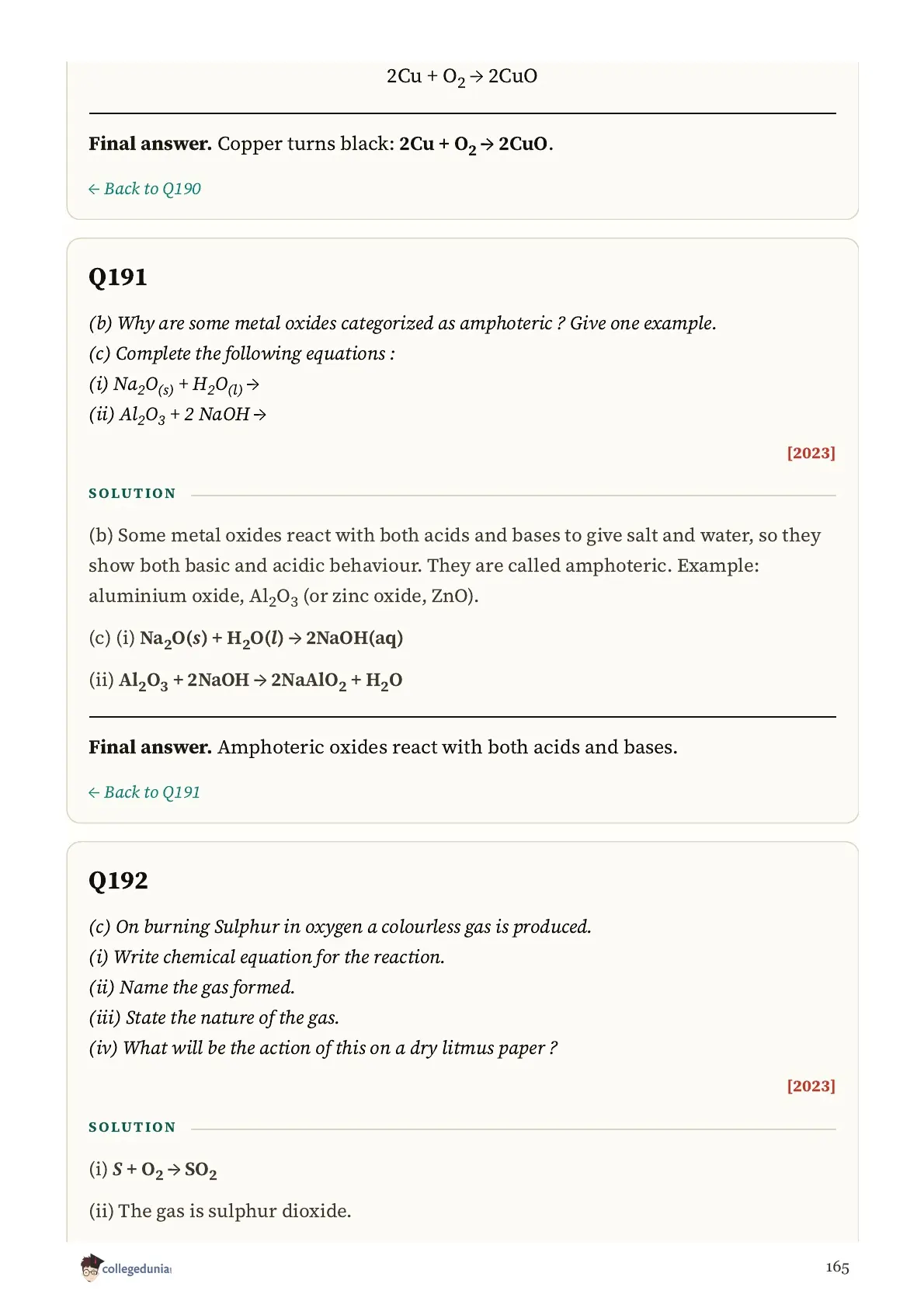
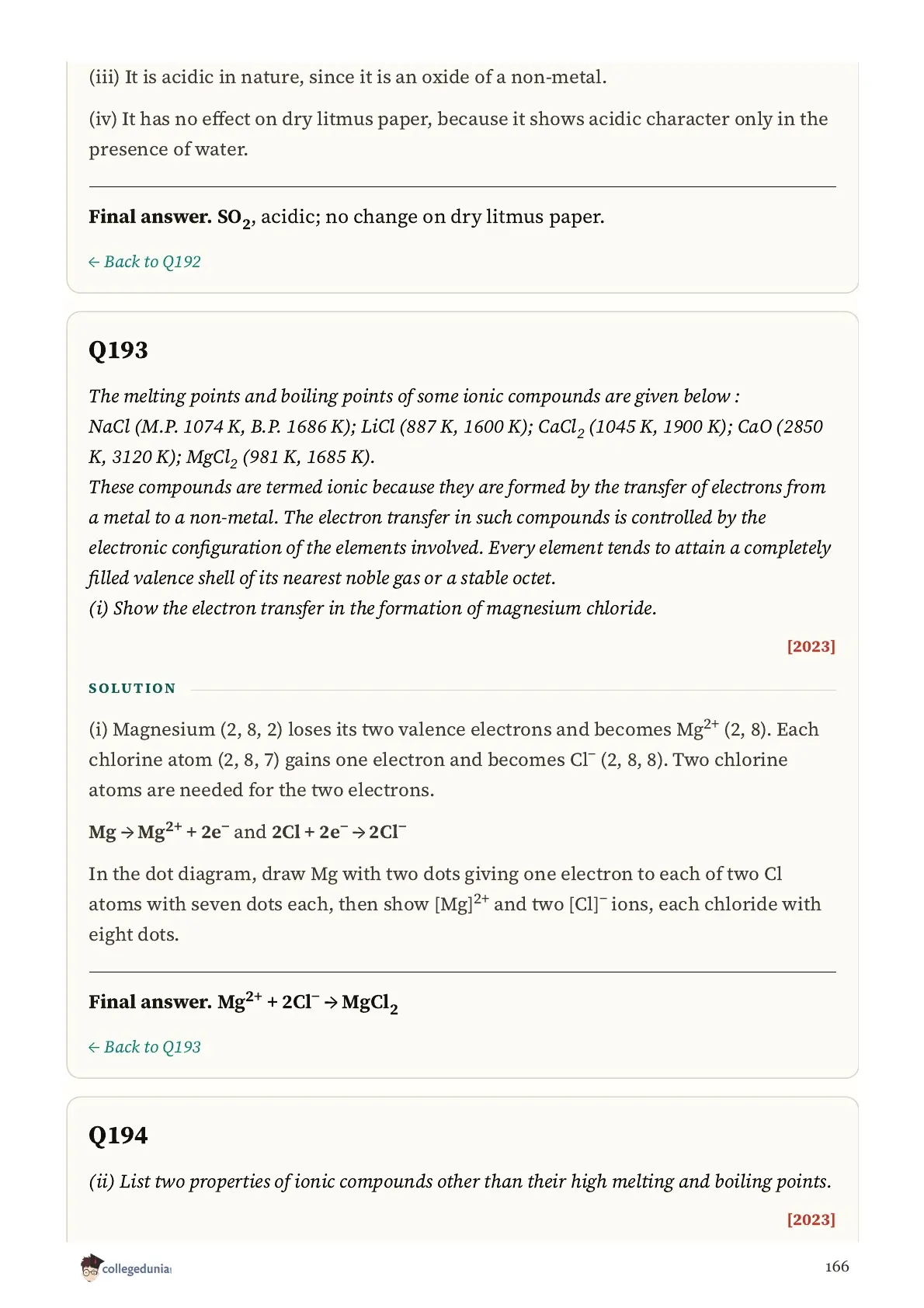
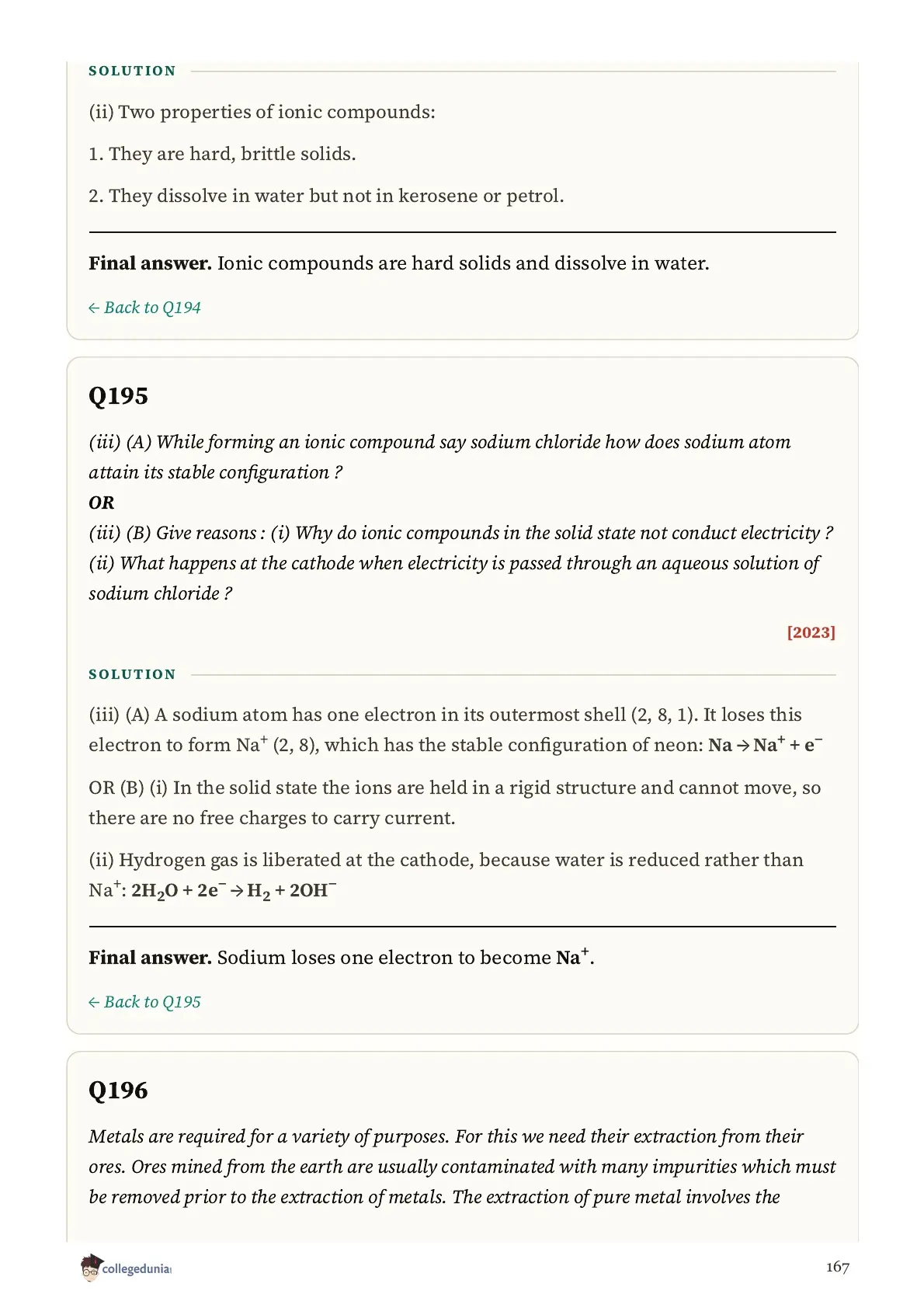
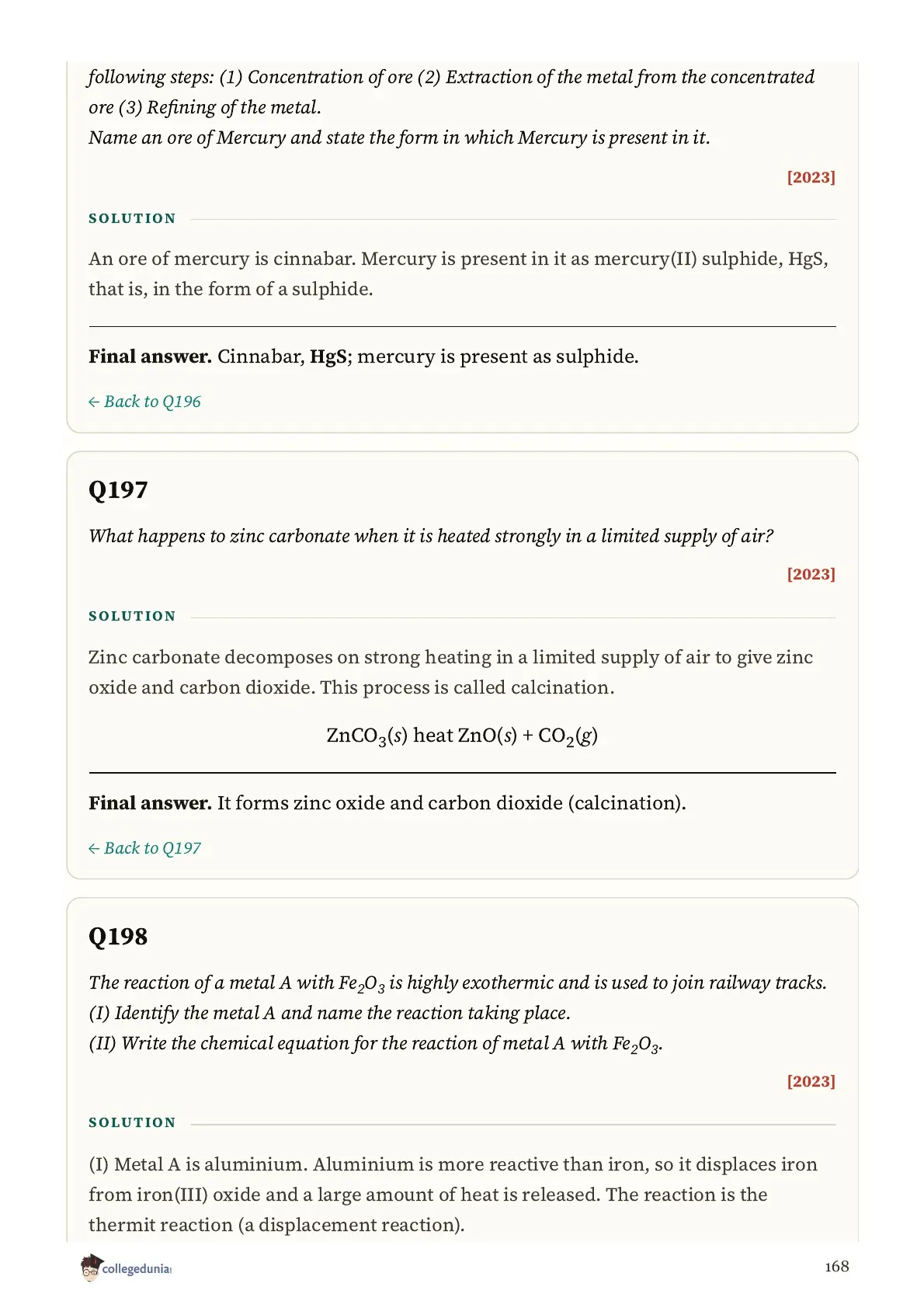
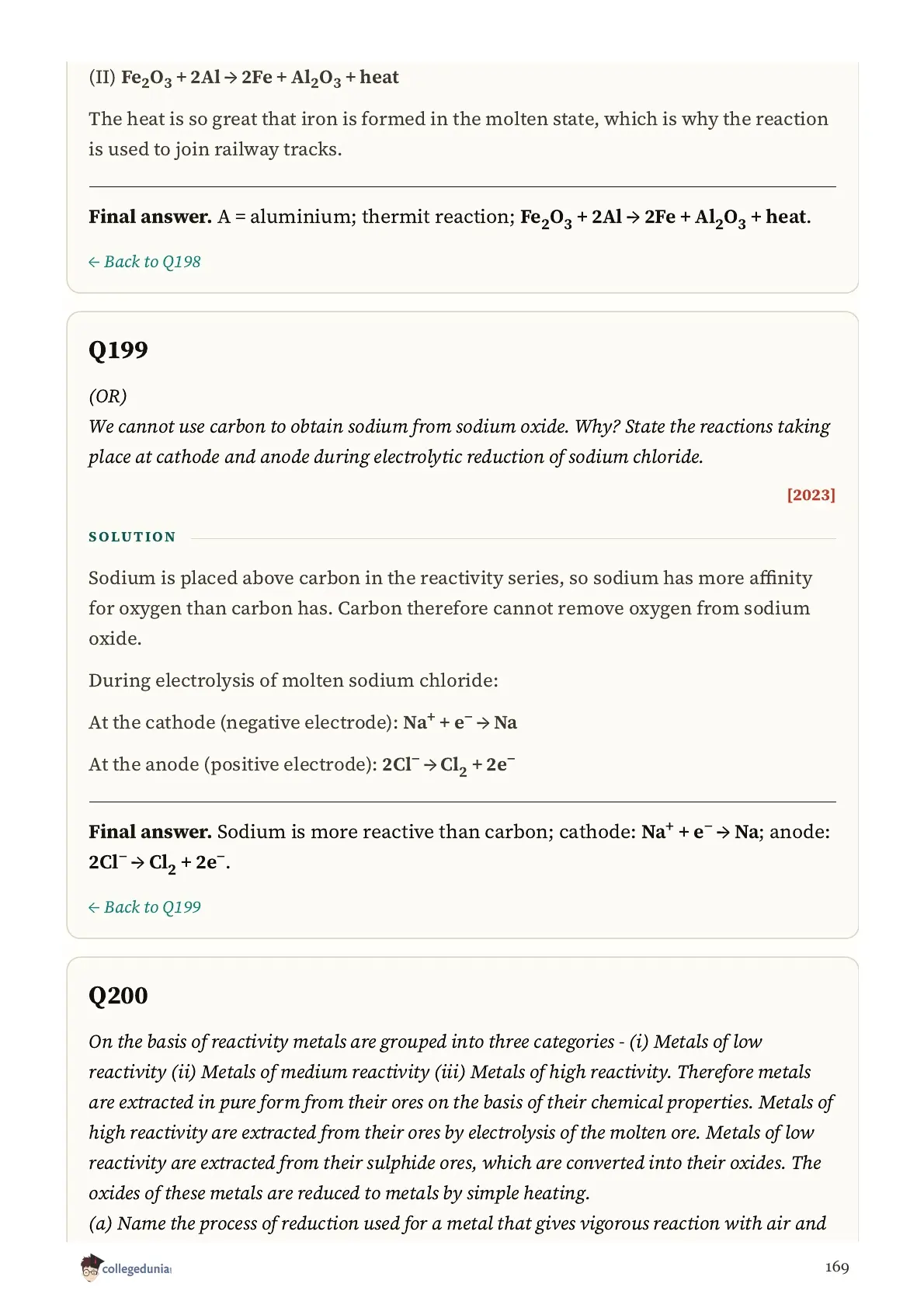
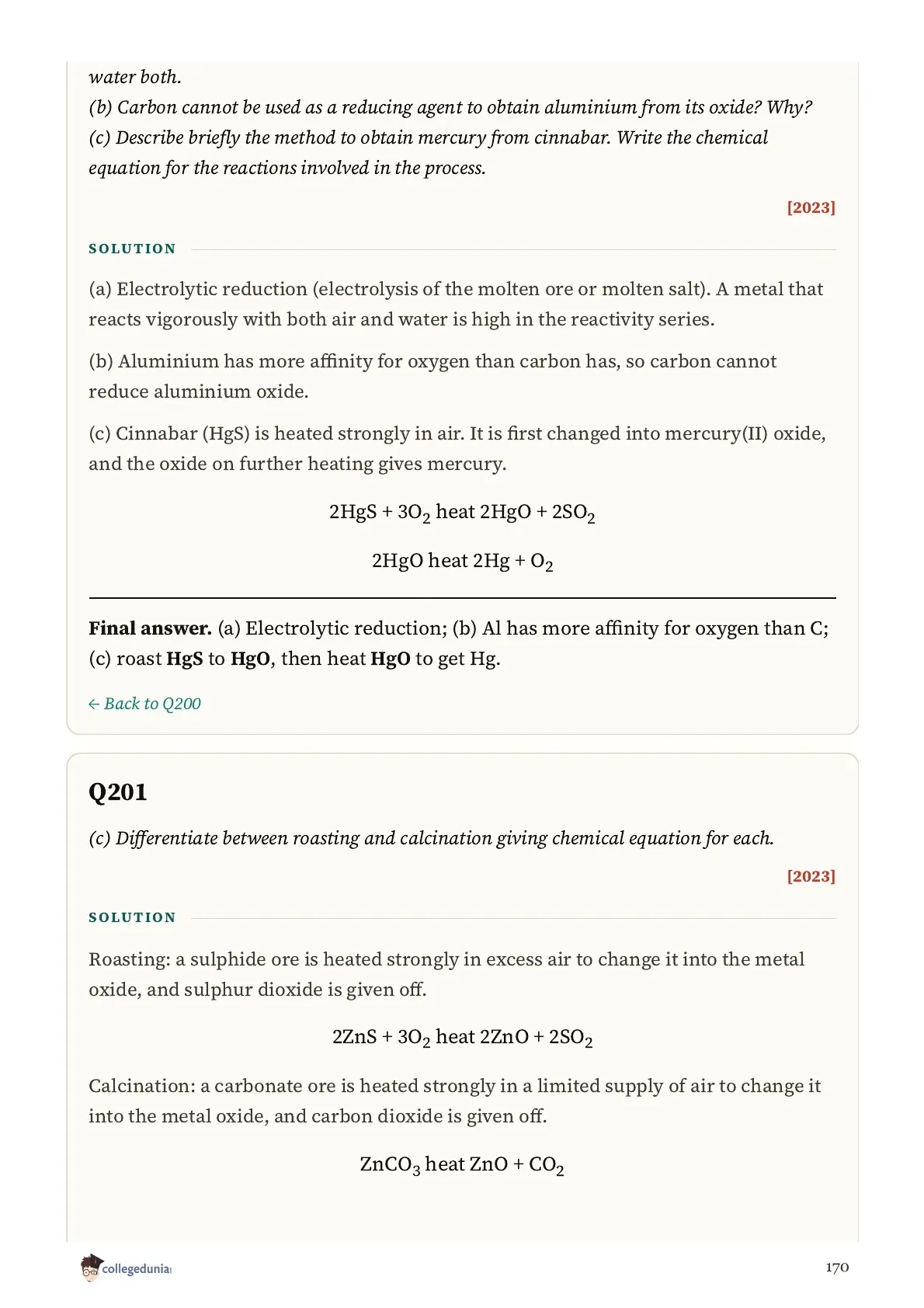
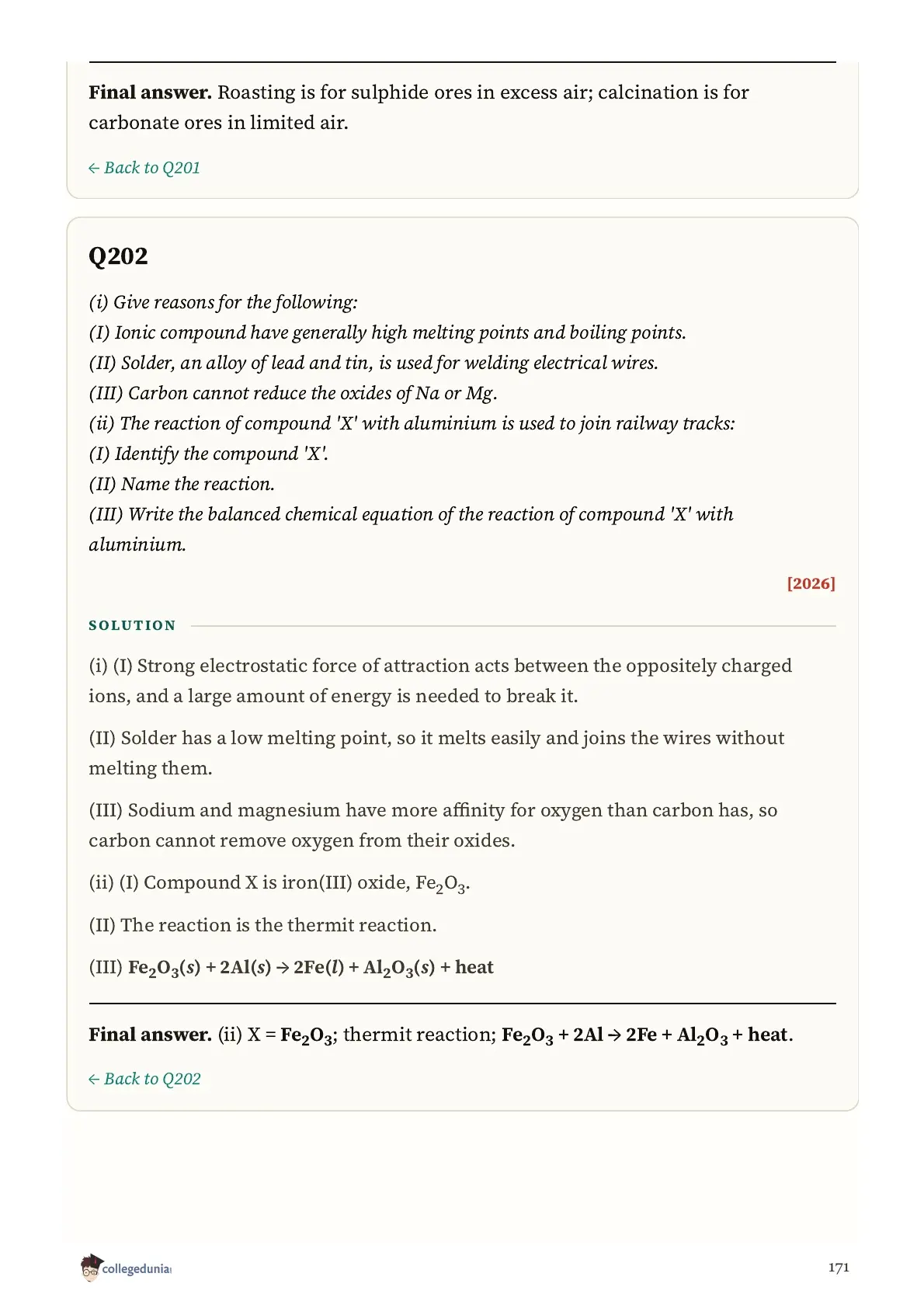
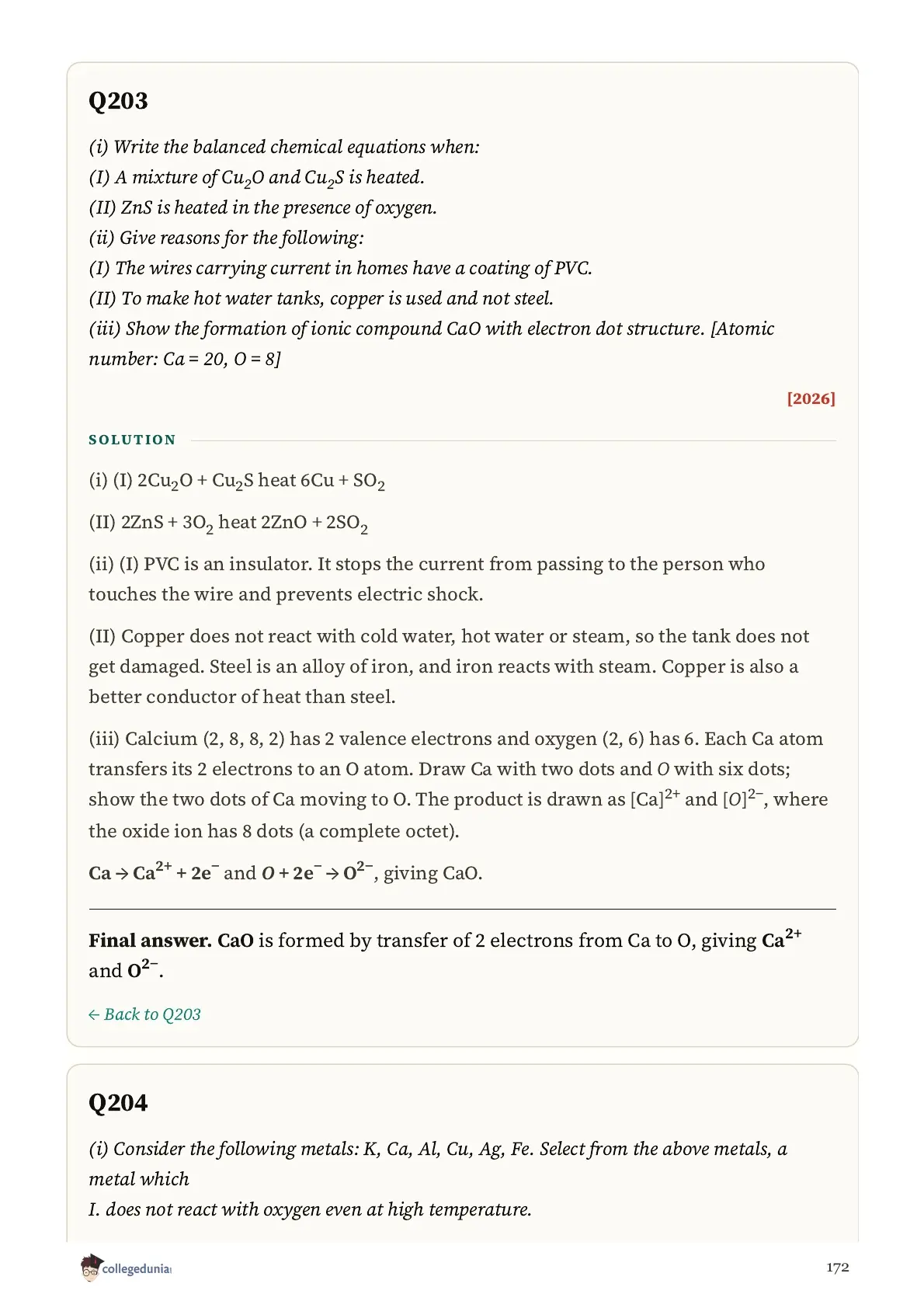
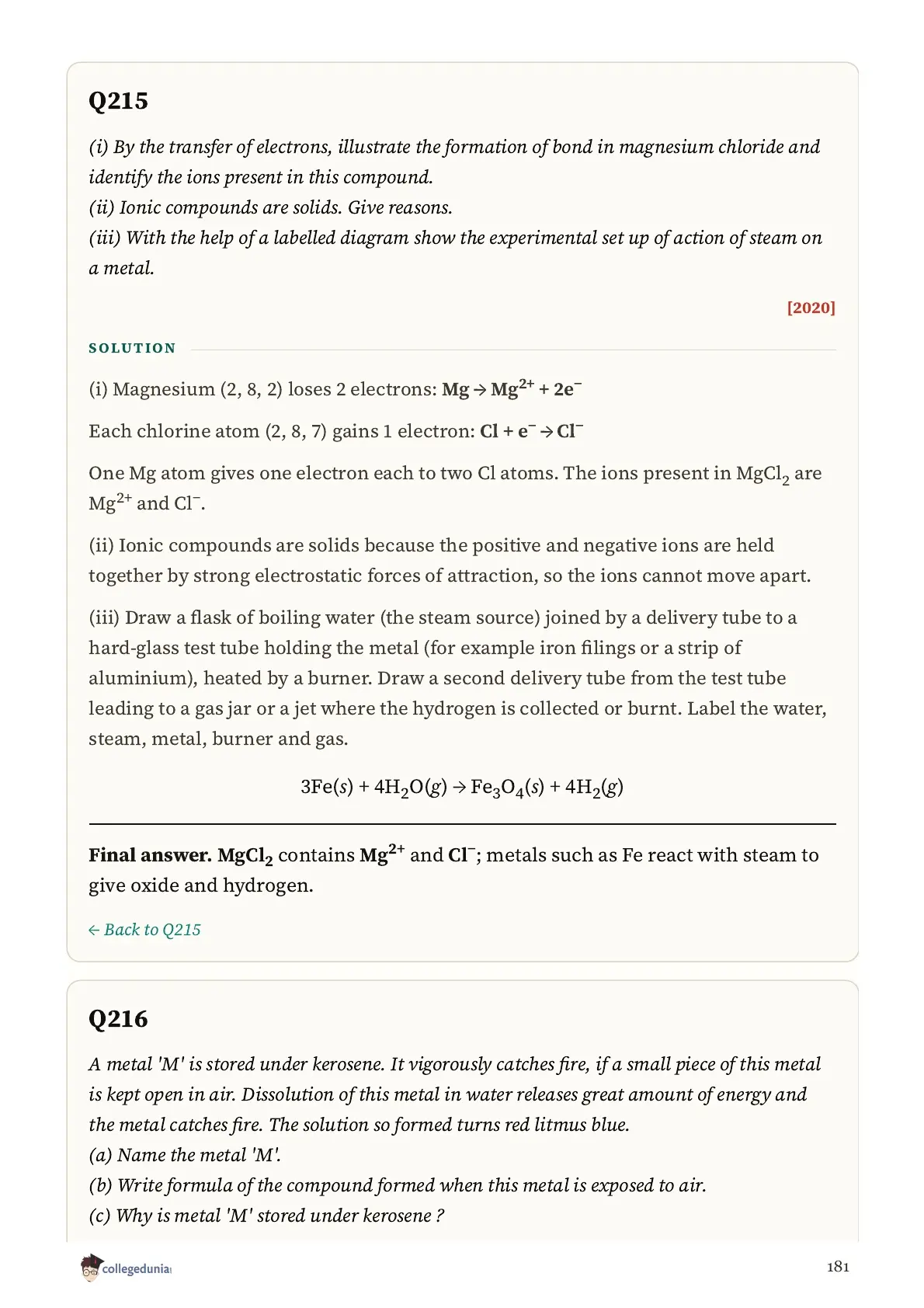
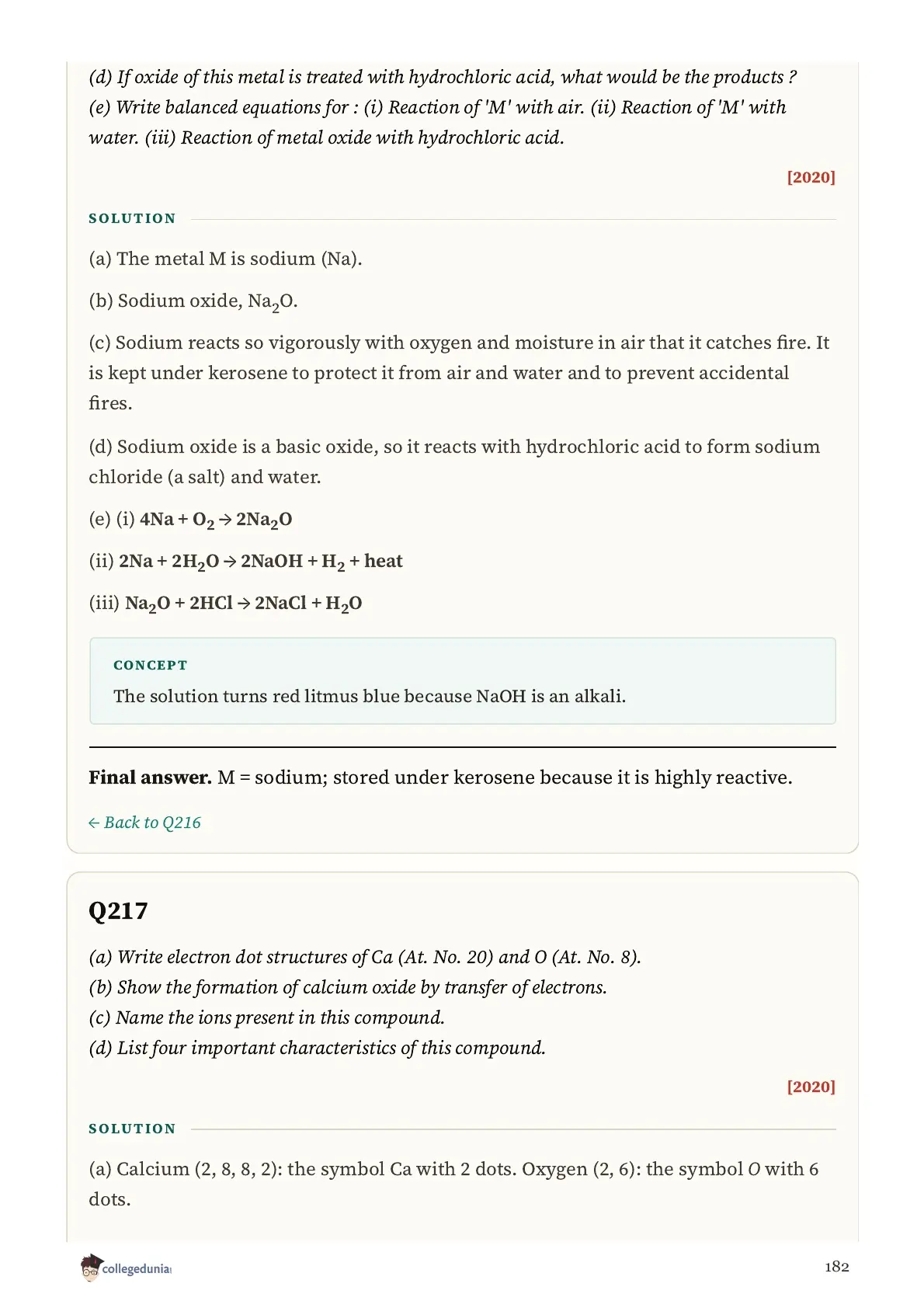
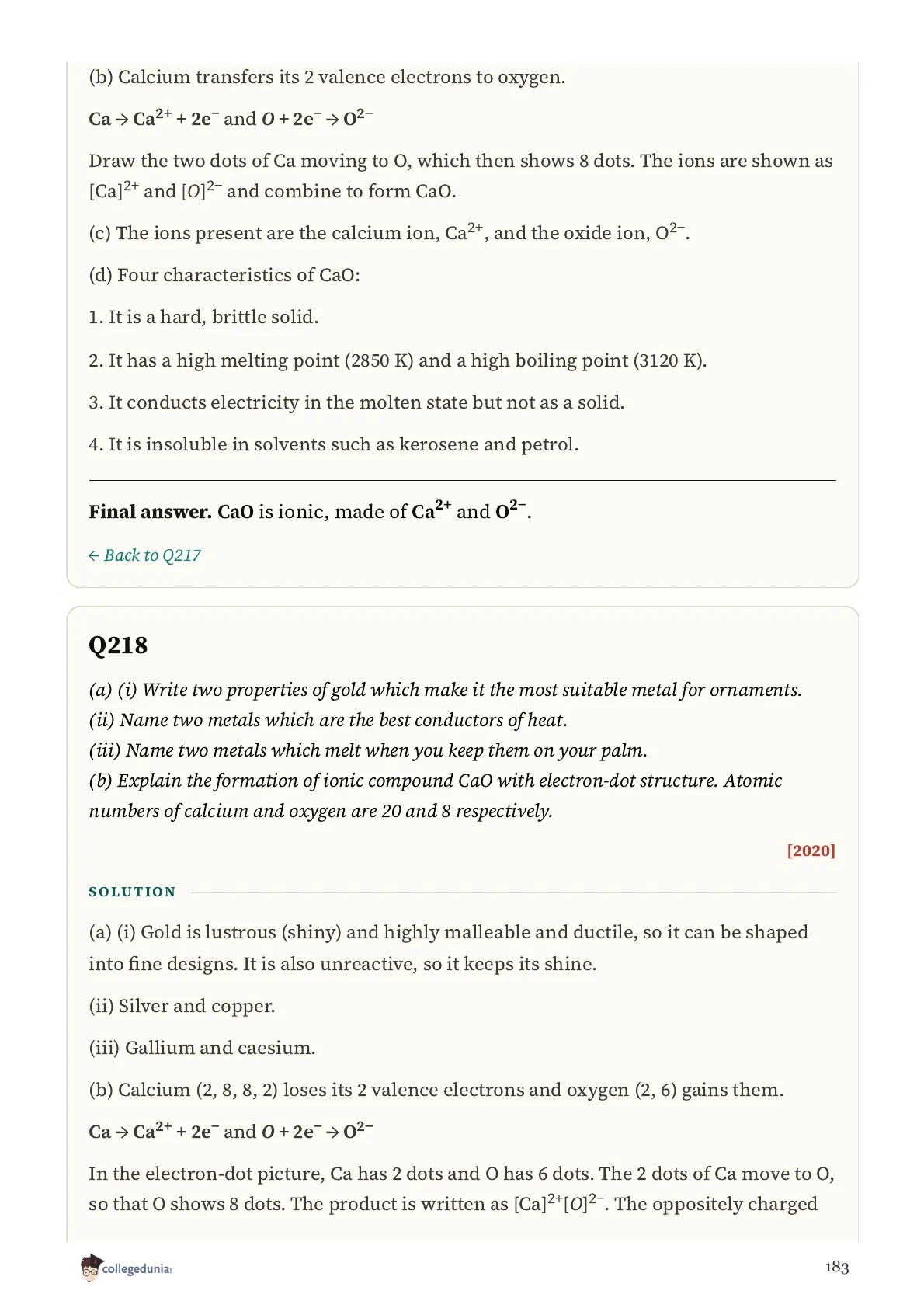
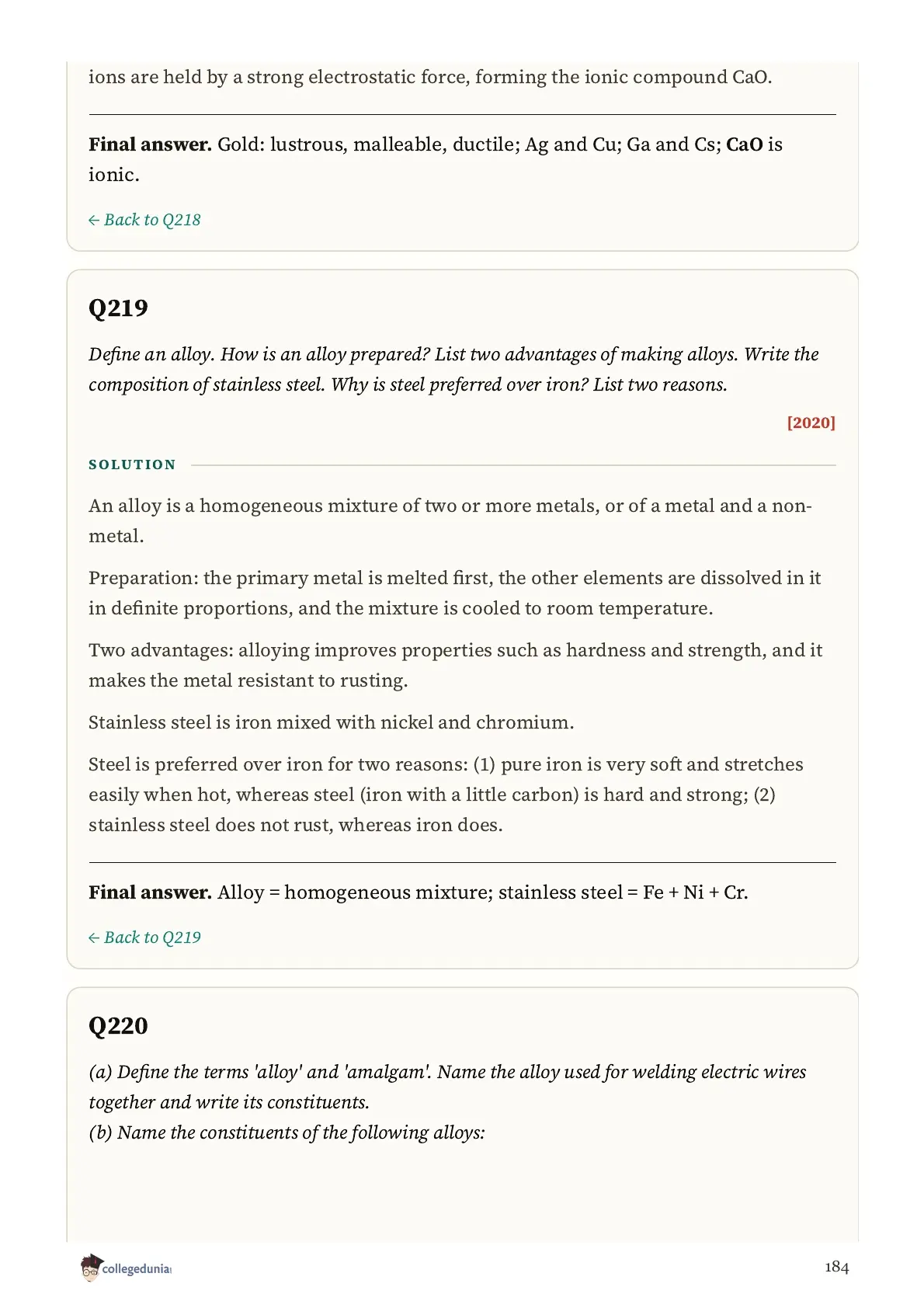
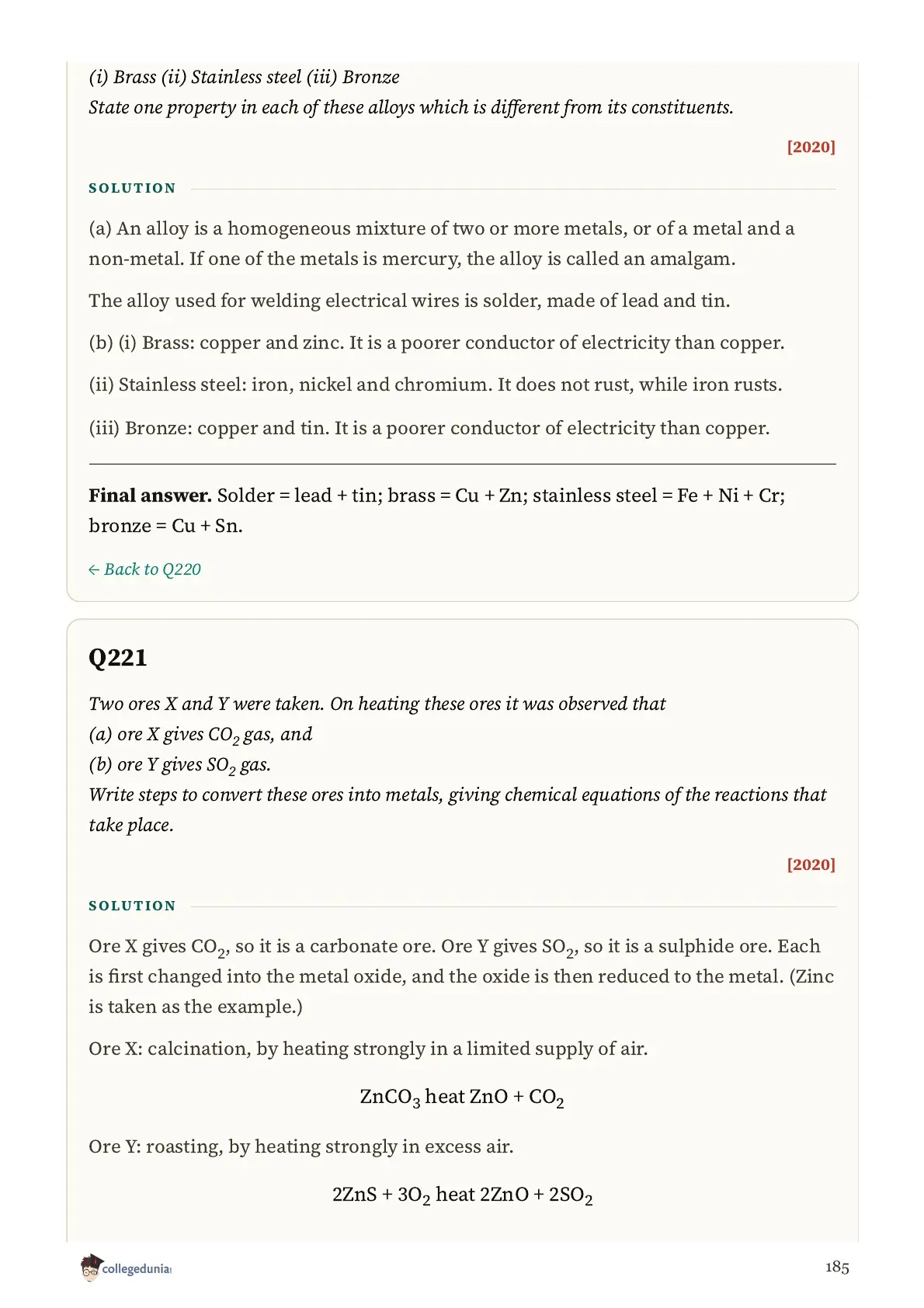
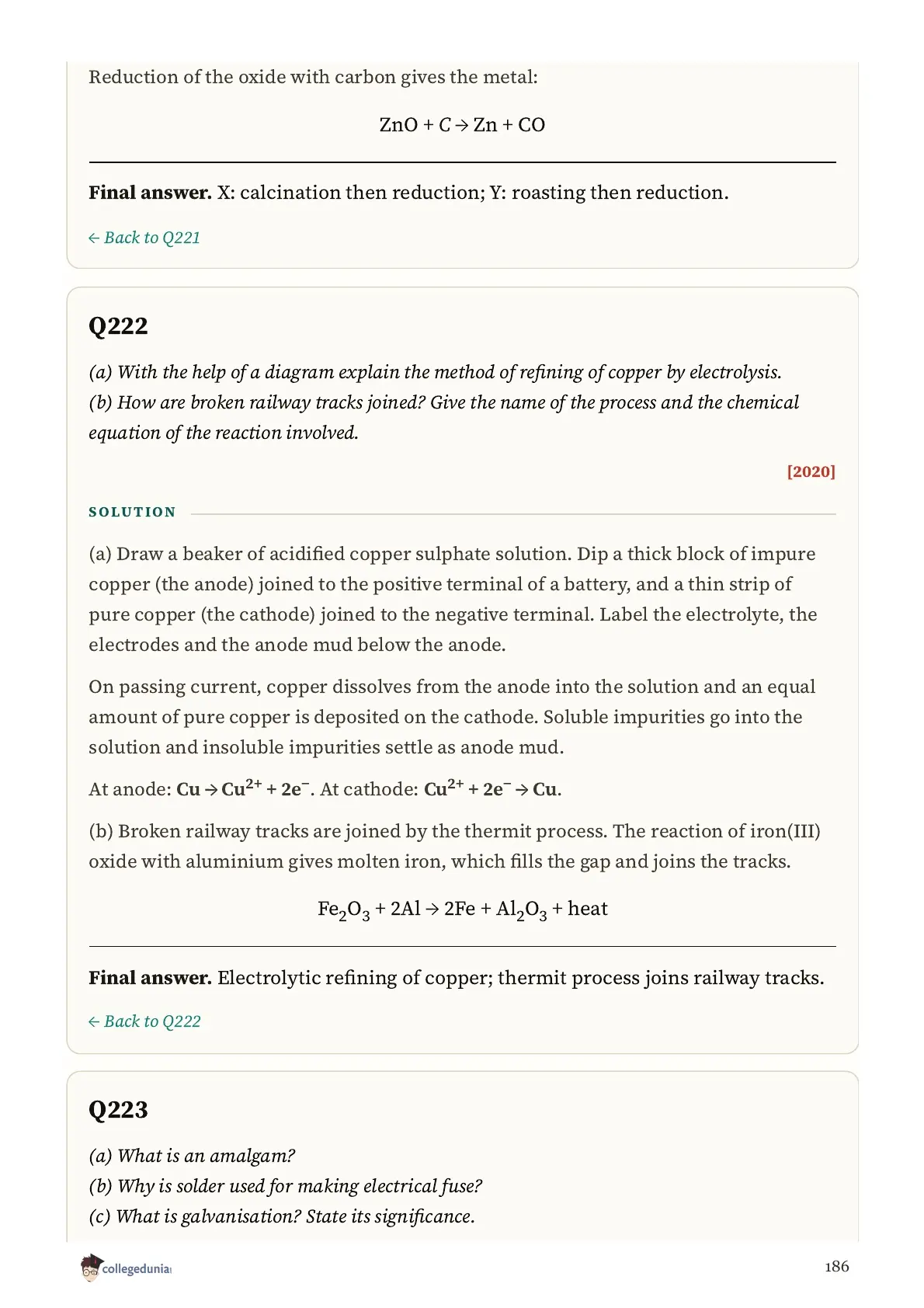
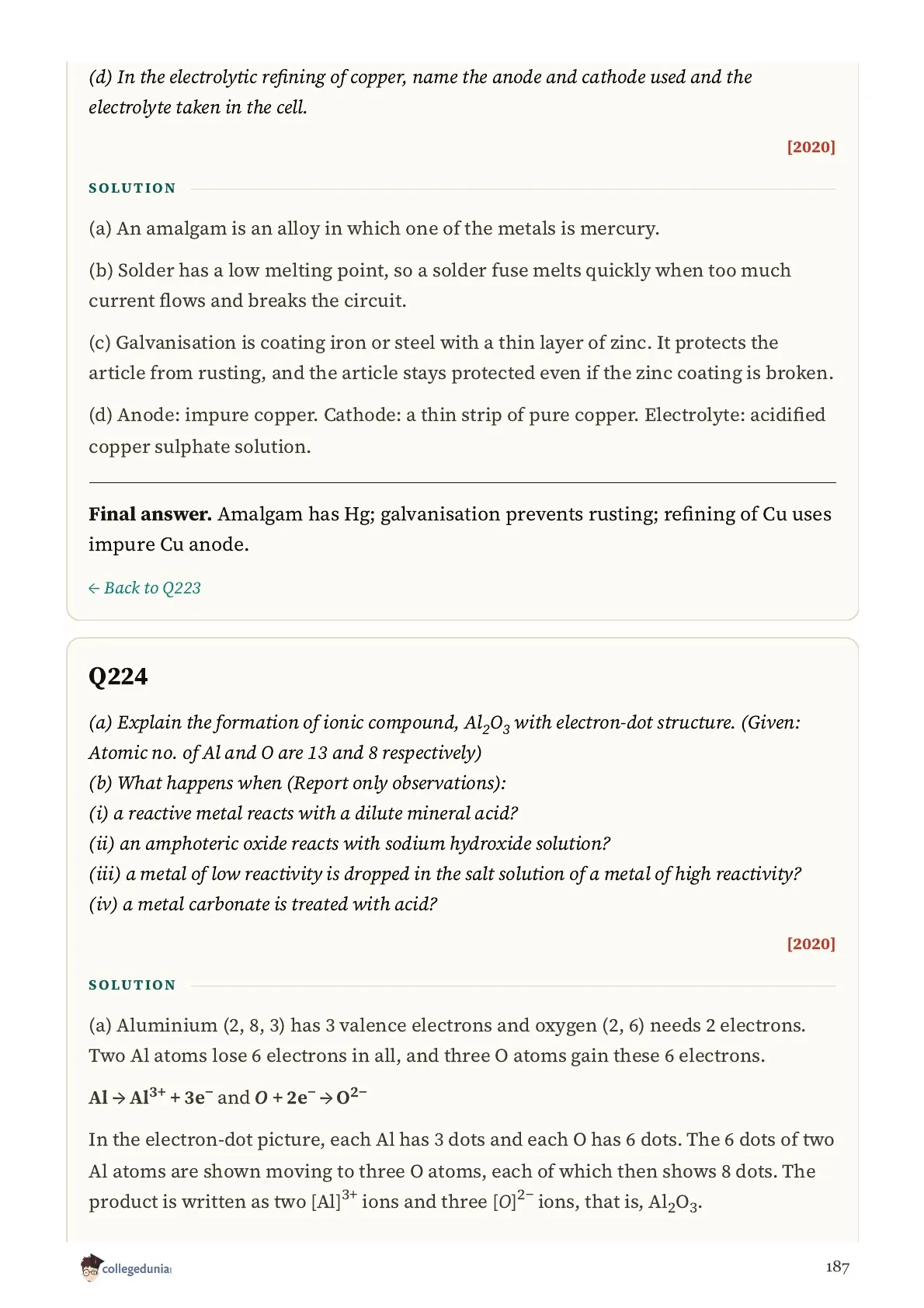
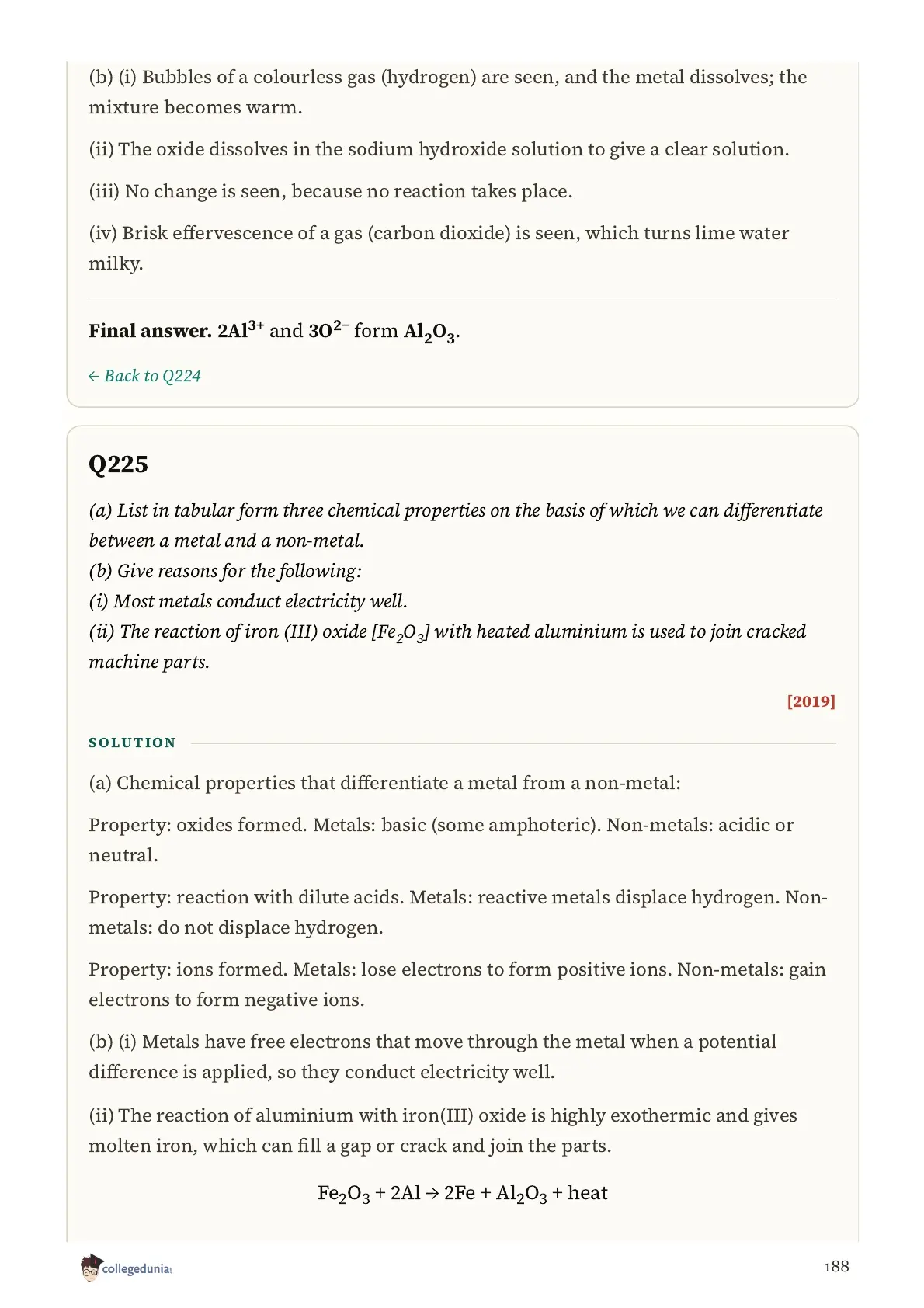
Metals and Non-metals Weightage in the Class 10 Science Paper
CBSE does not print a mark figure for Metals and Non-metals alone. The Class 10 Science (086) syllabus groups it with three other chapters in the unit Chemical Substances, which prep sites and a copy of the 2025-26 syllabus put at 25 of the 80 theory marks. I could not open the CBSE document itself, so treat the 25 as unofficial and check the current syllabus on cbseacademic.nic.in. In this set the 1-mark question is the commonest form, followed by the 3-mark short answer.
The table shows how many questions the set holds at each mark value.
| Marks per Question | Questions in the Set |
|---|---|
| 1 mark | 87 |
| 2 marks | 34 |
| 3 marks | 58 |
| 4 marks | 22 |
| 5 marks | 29 |
Metals and Non-metals Questions by Topic
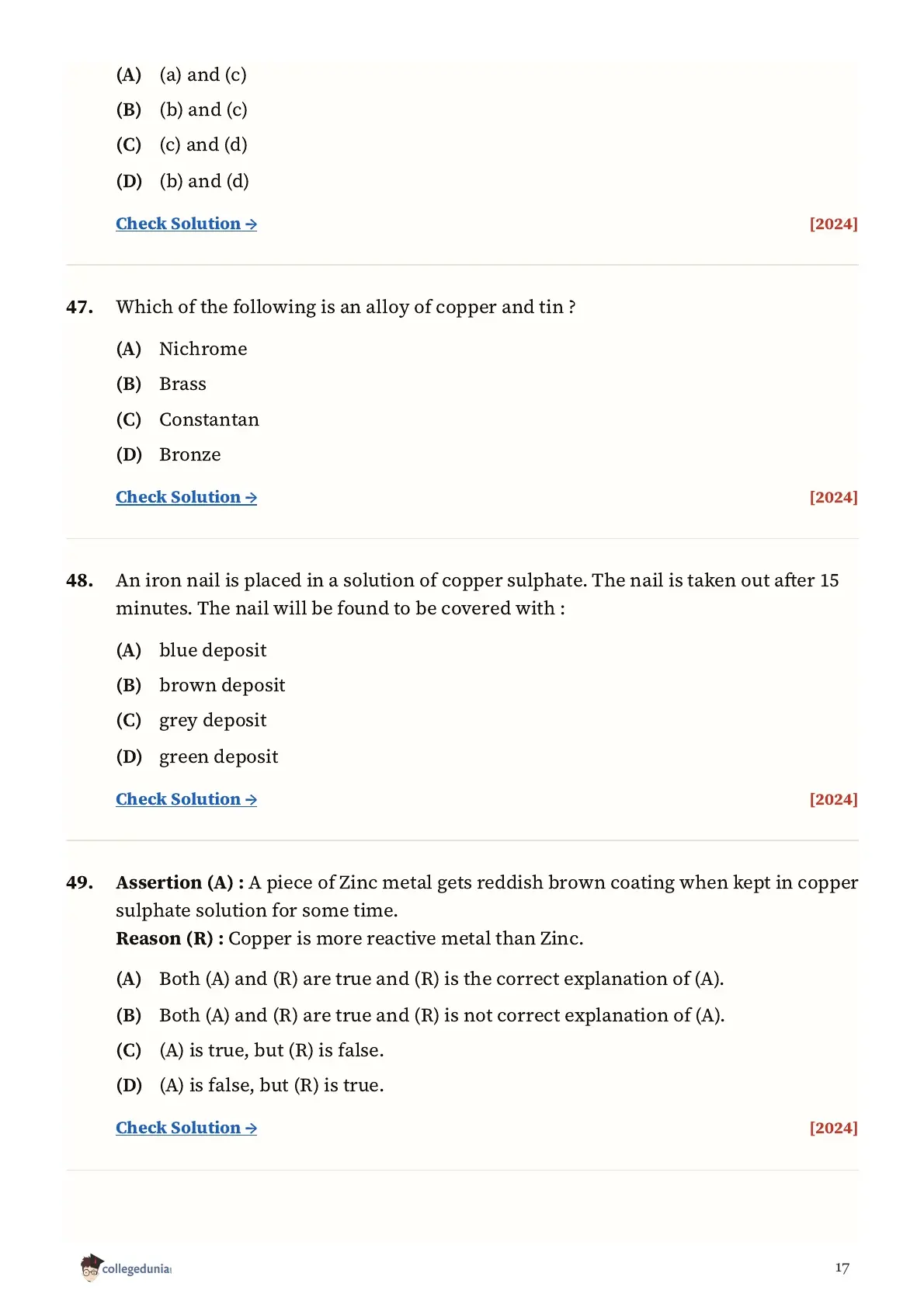
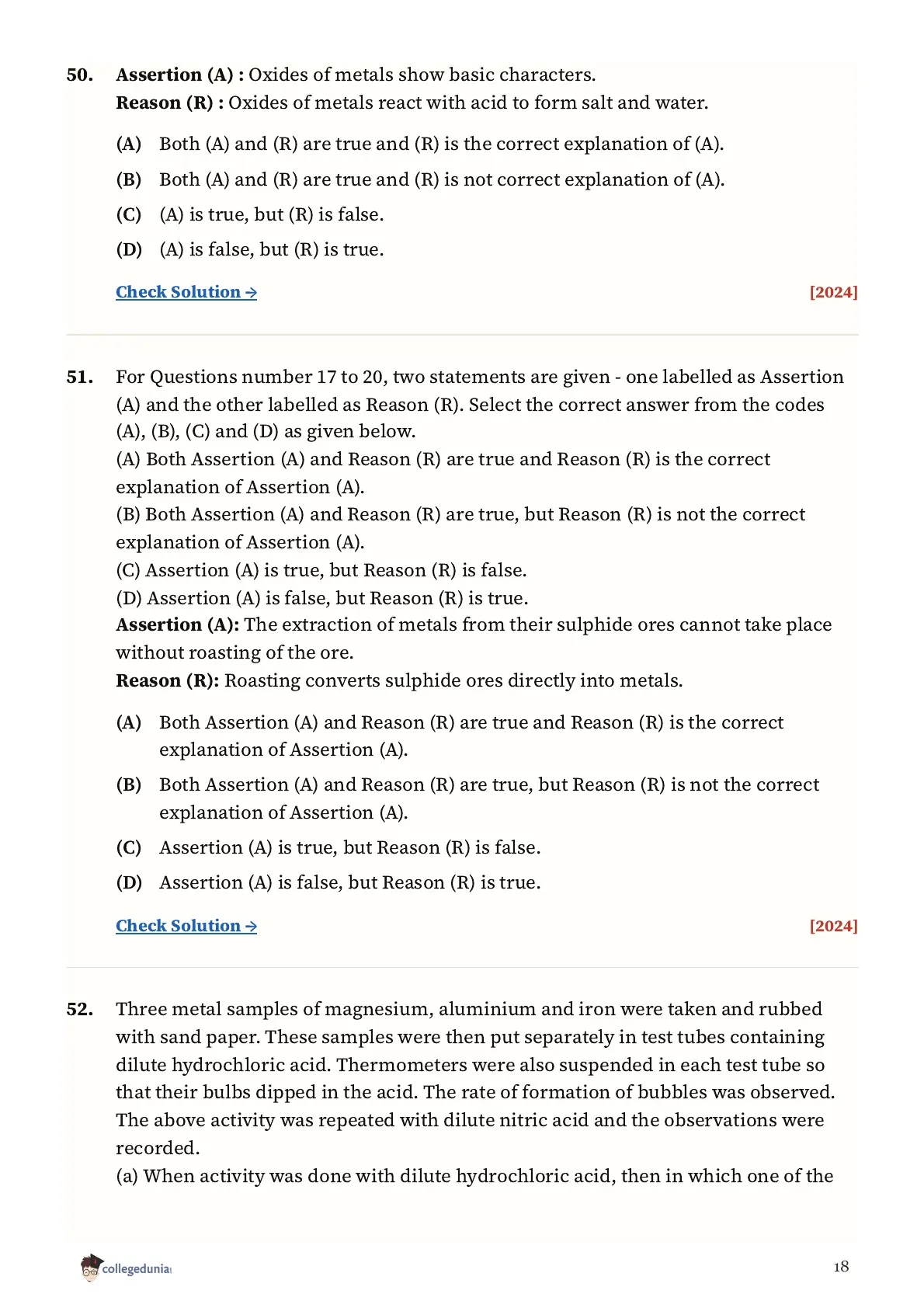
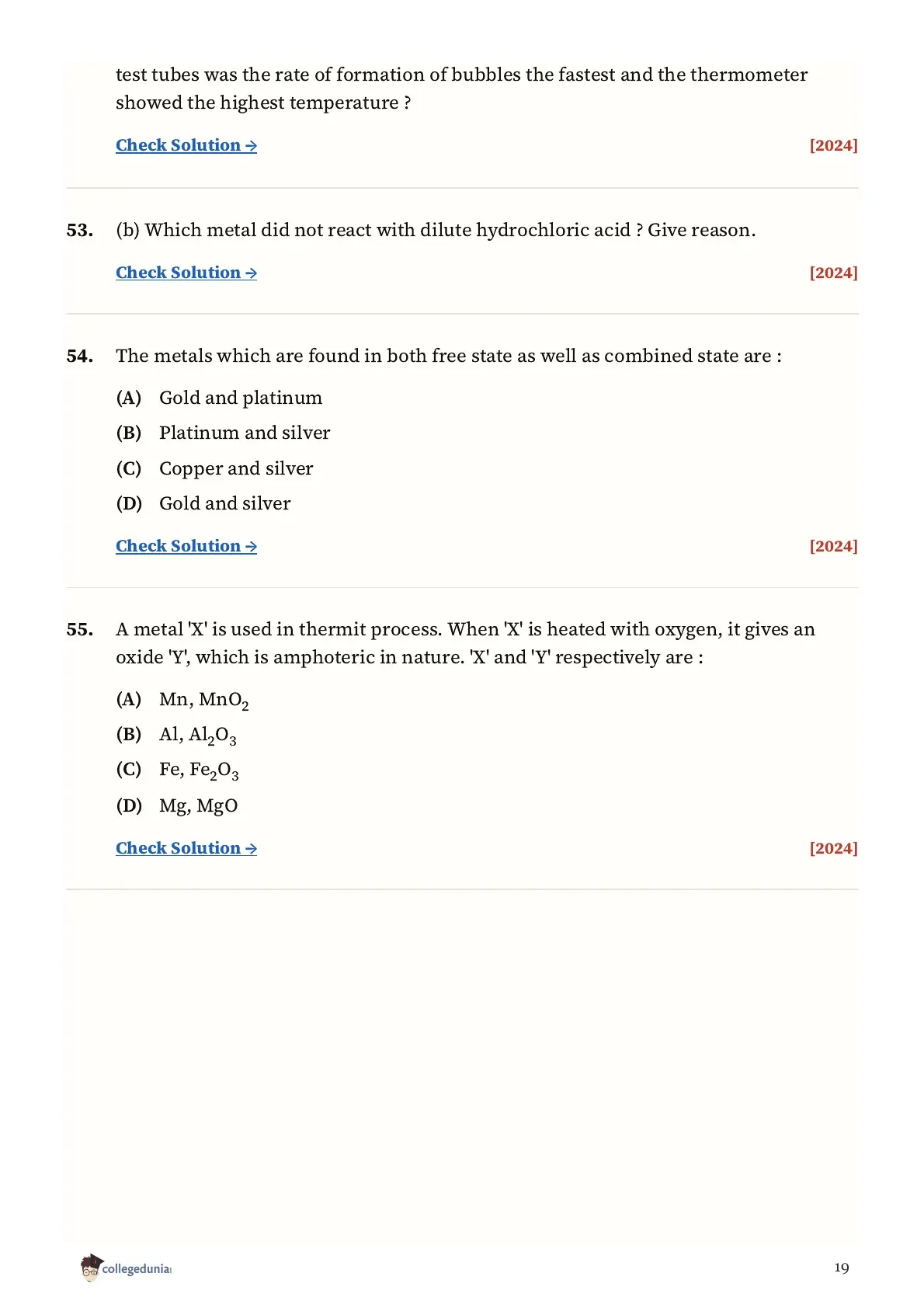
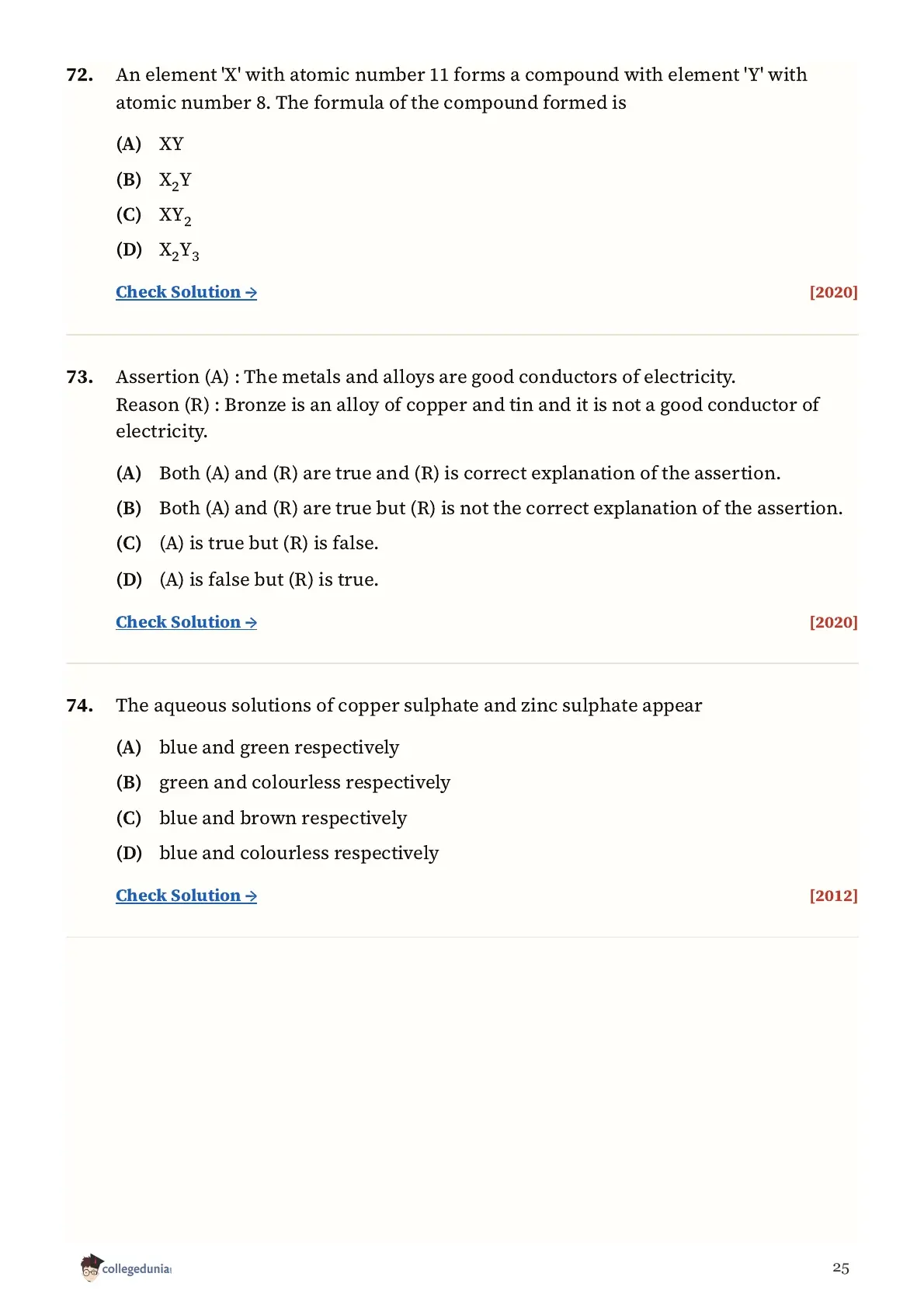
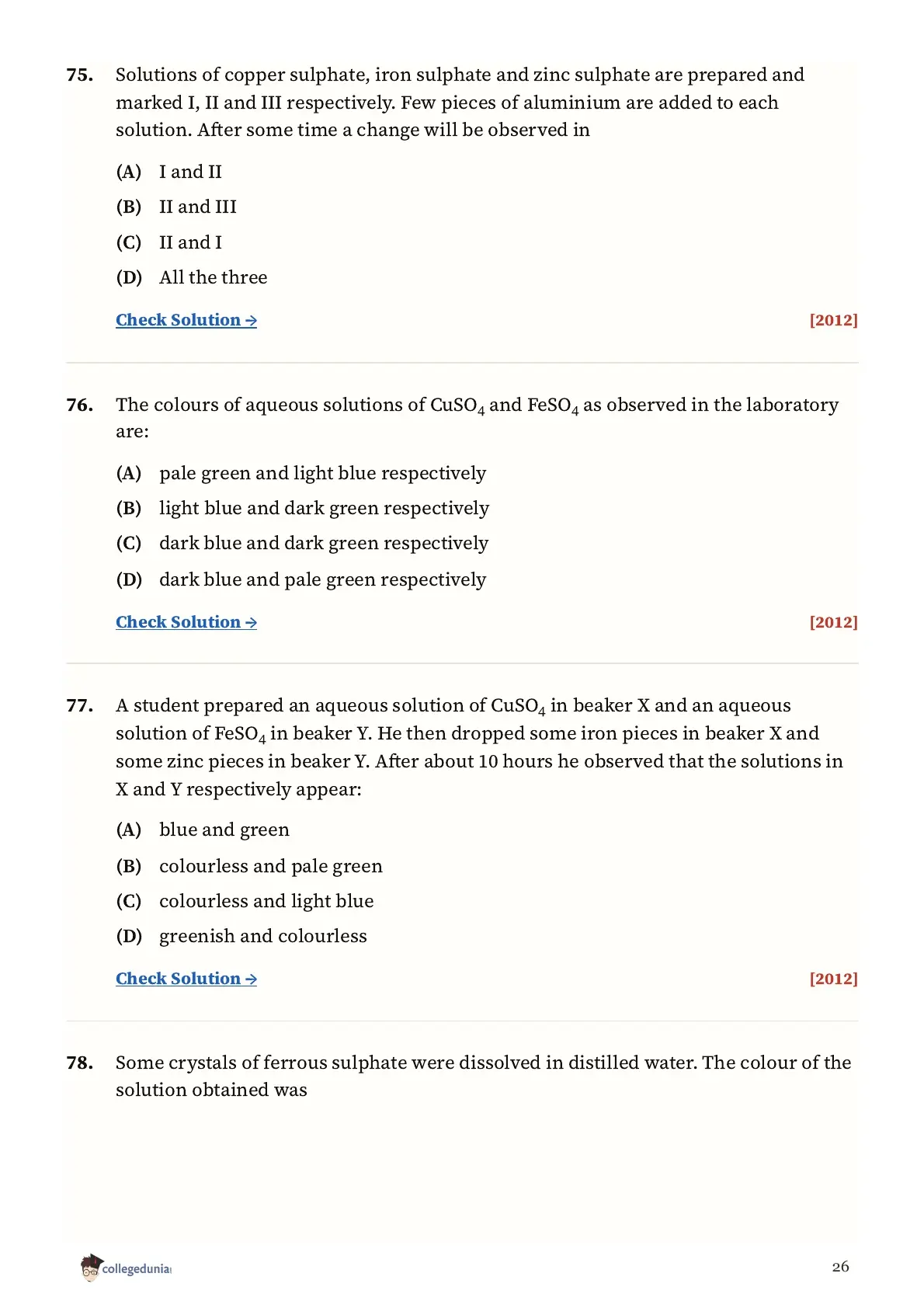
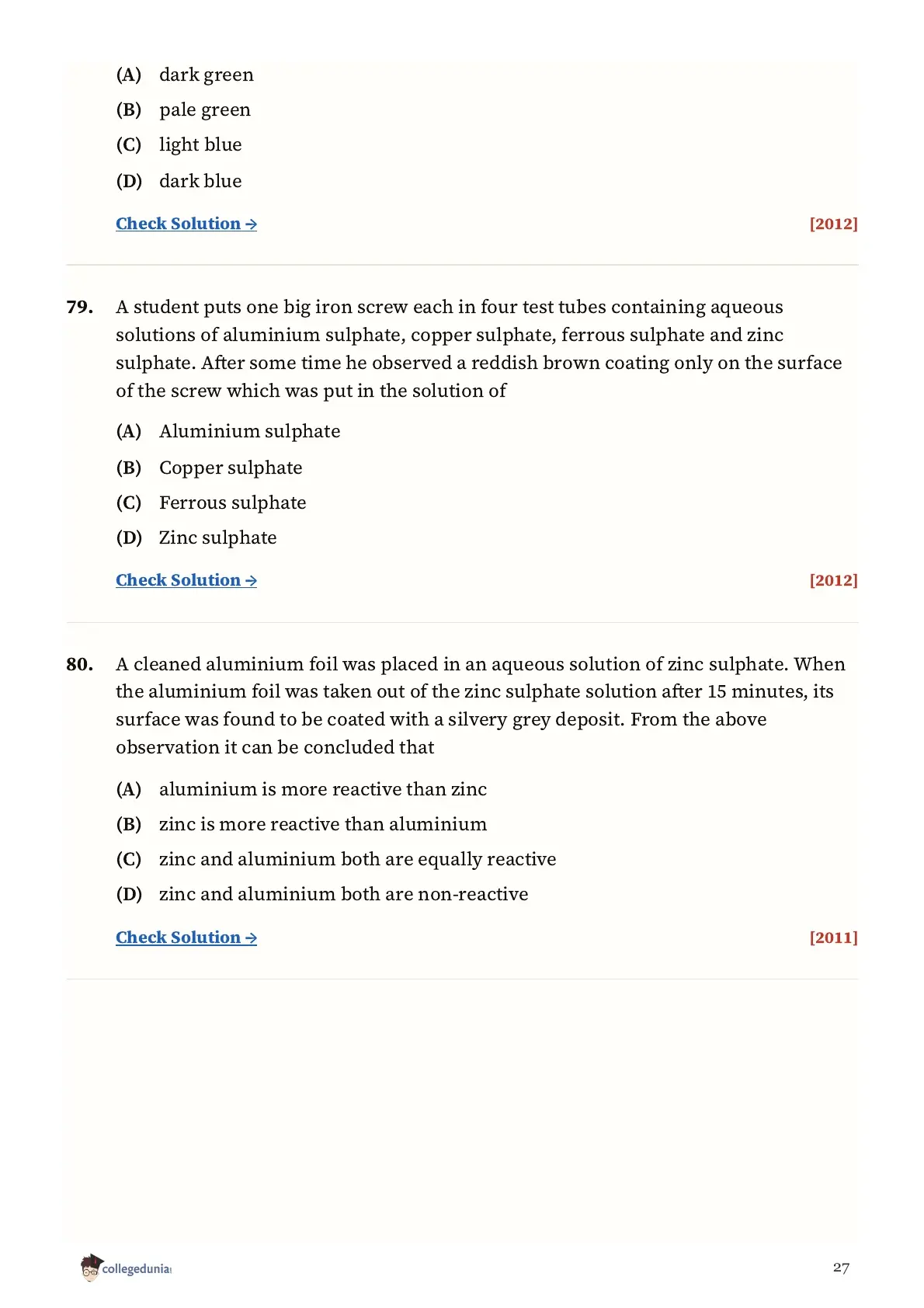
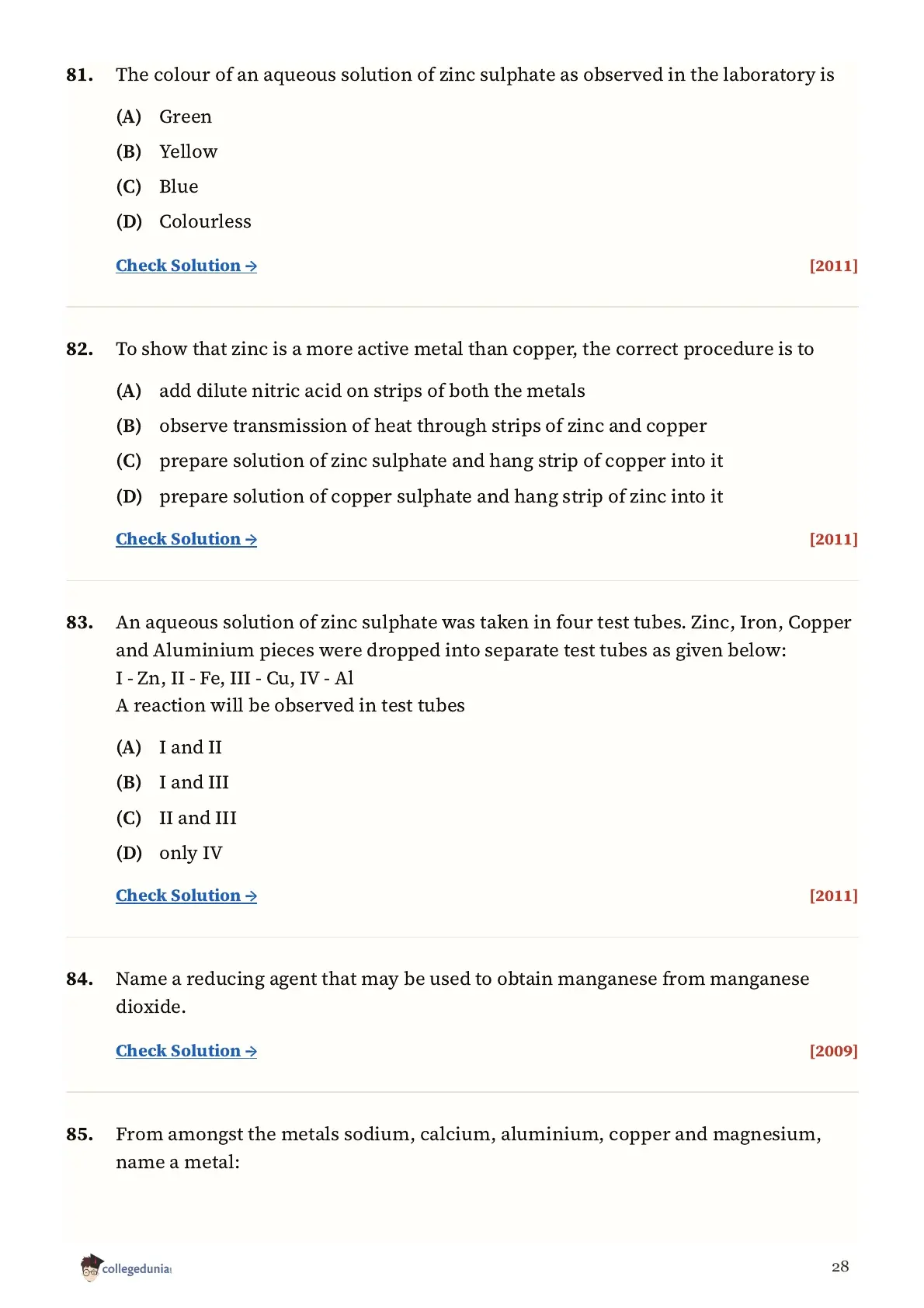
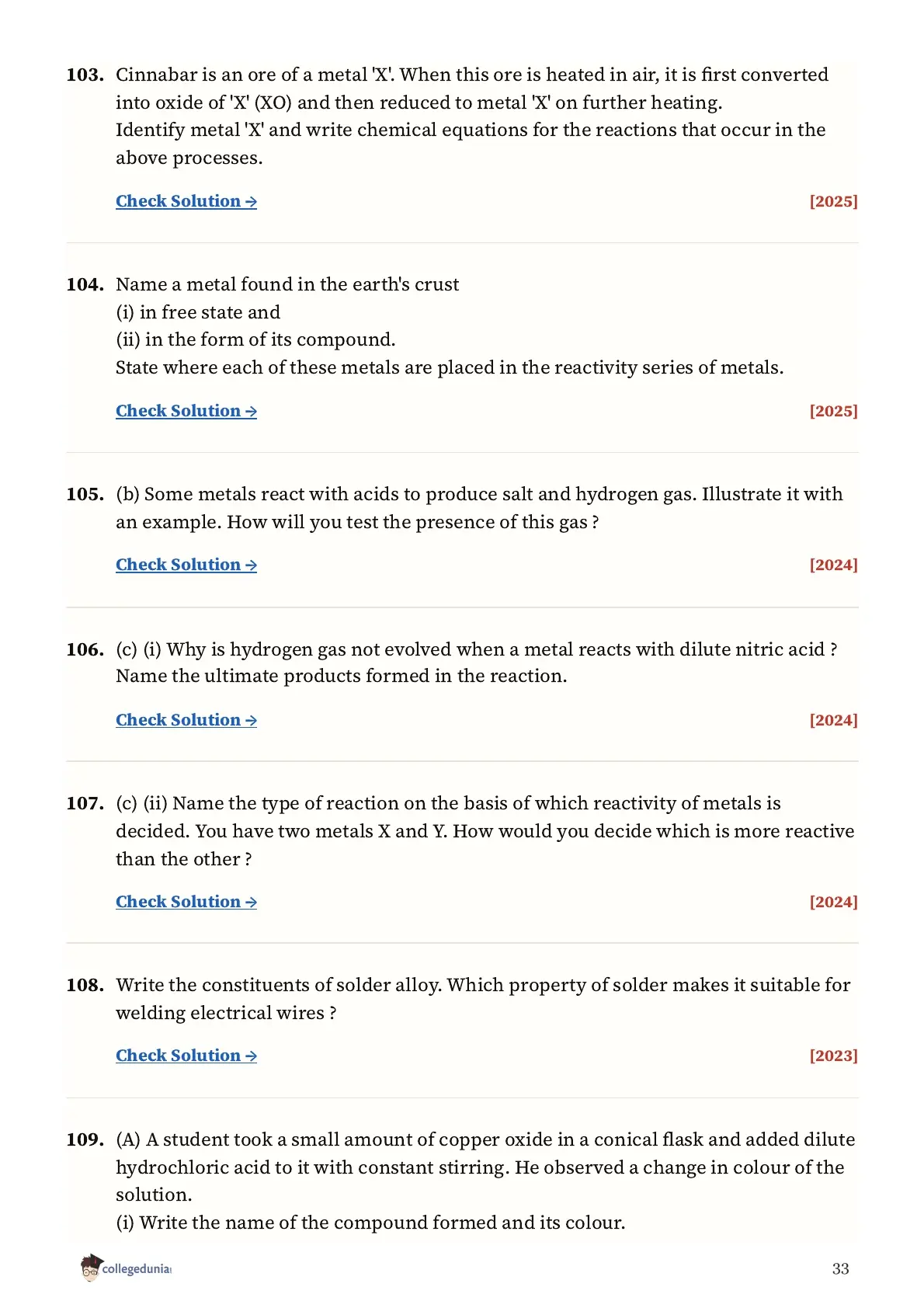
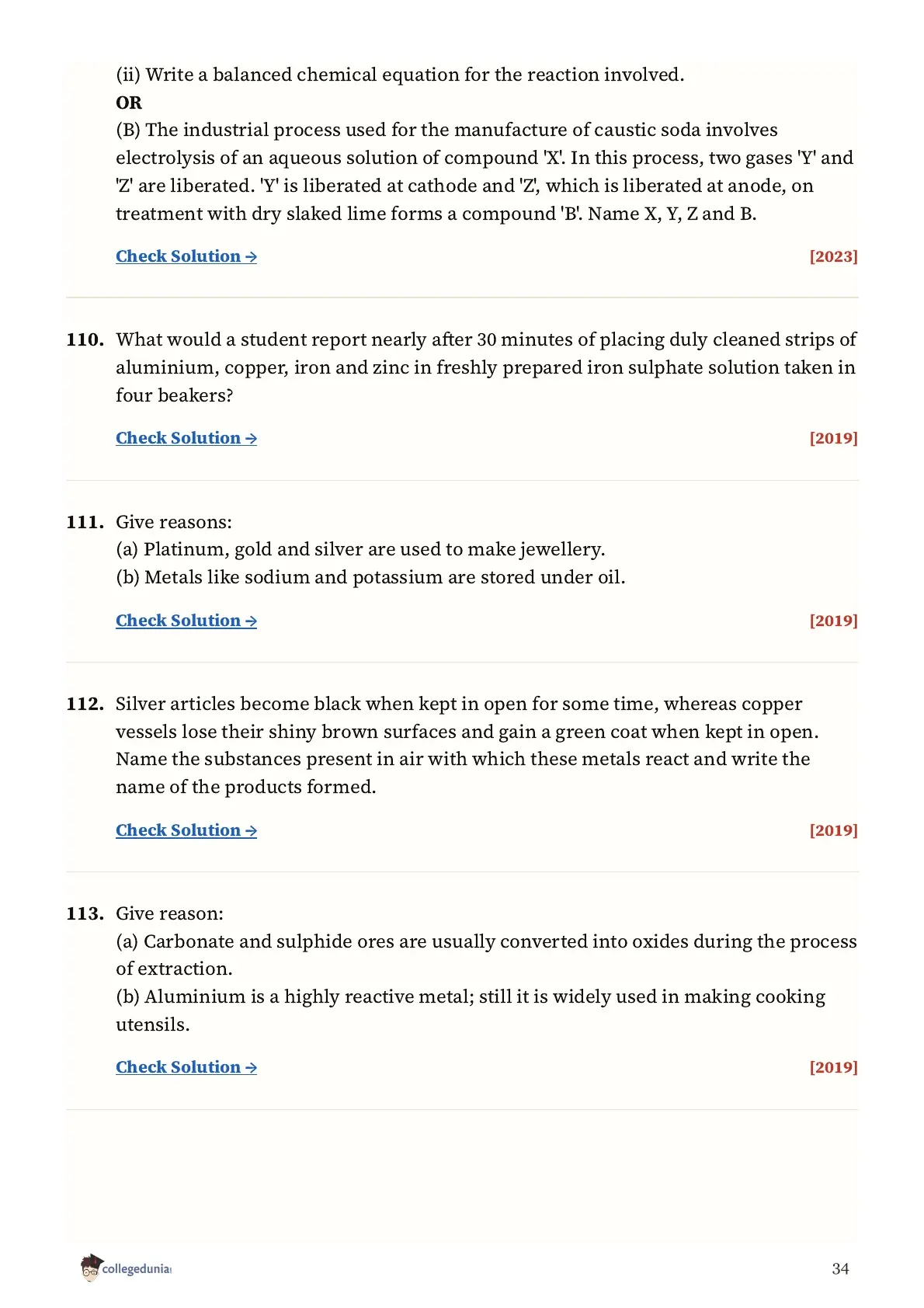
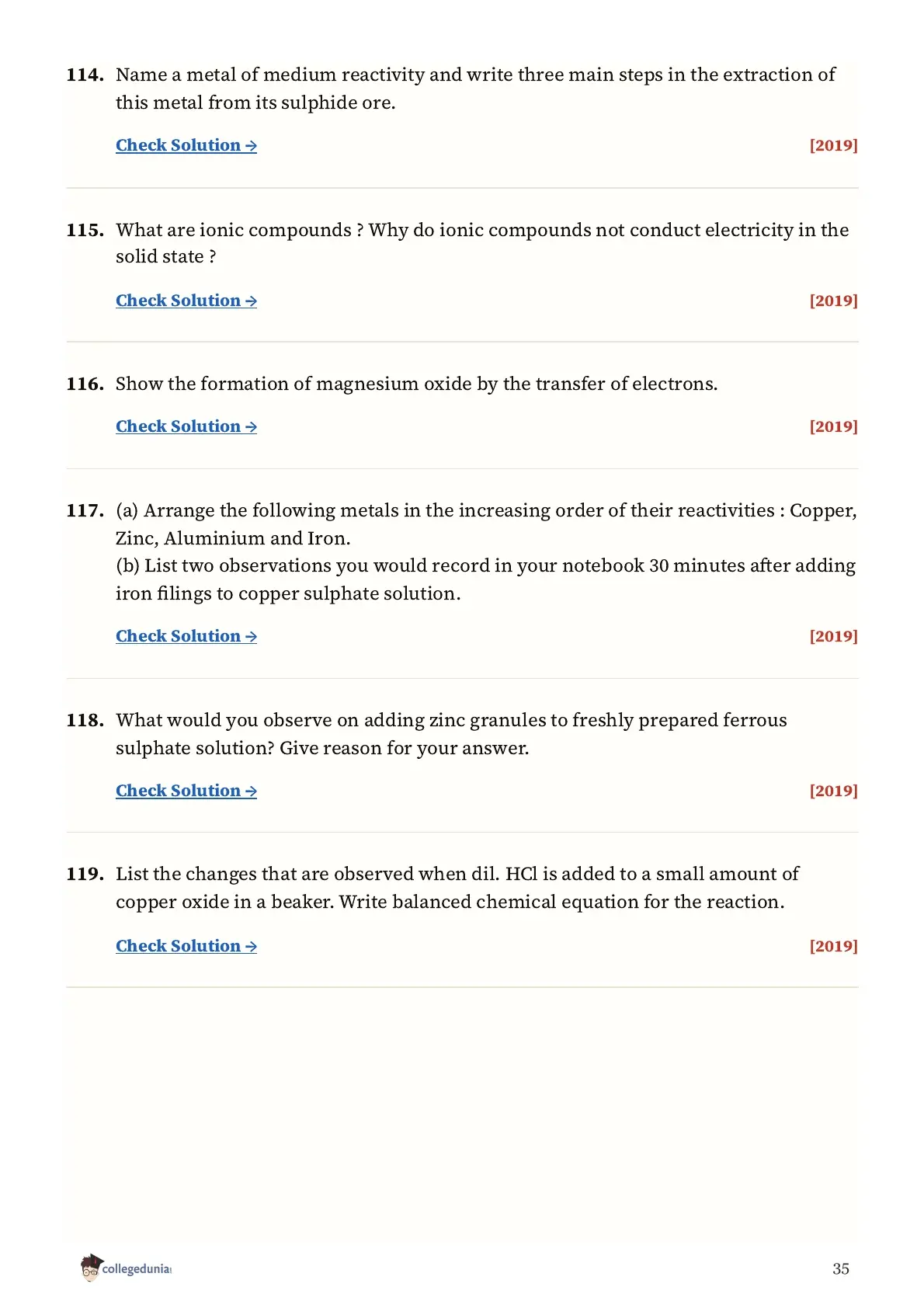
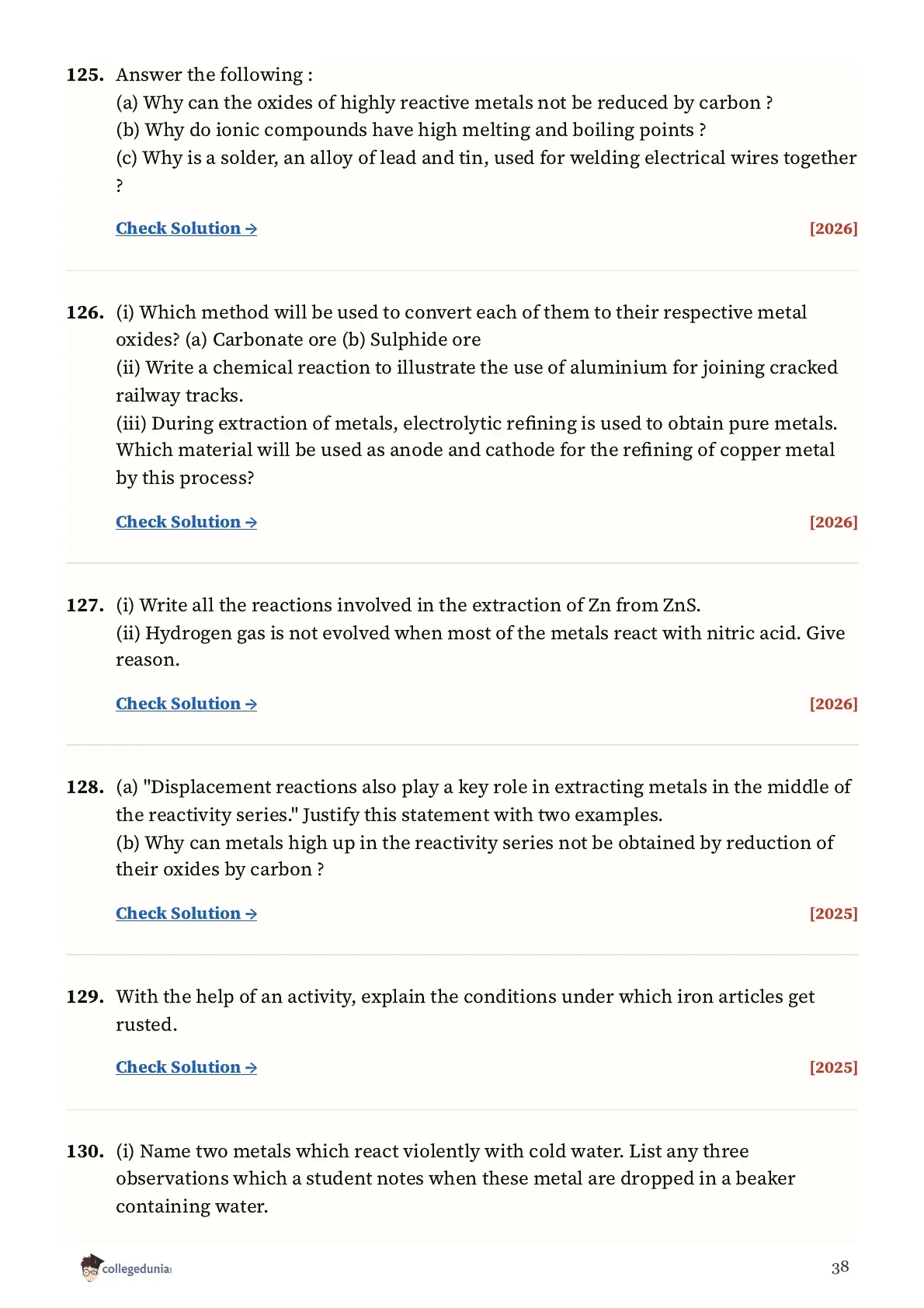
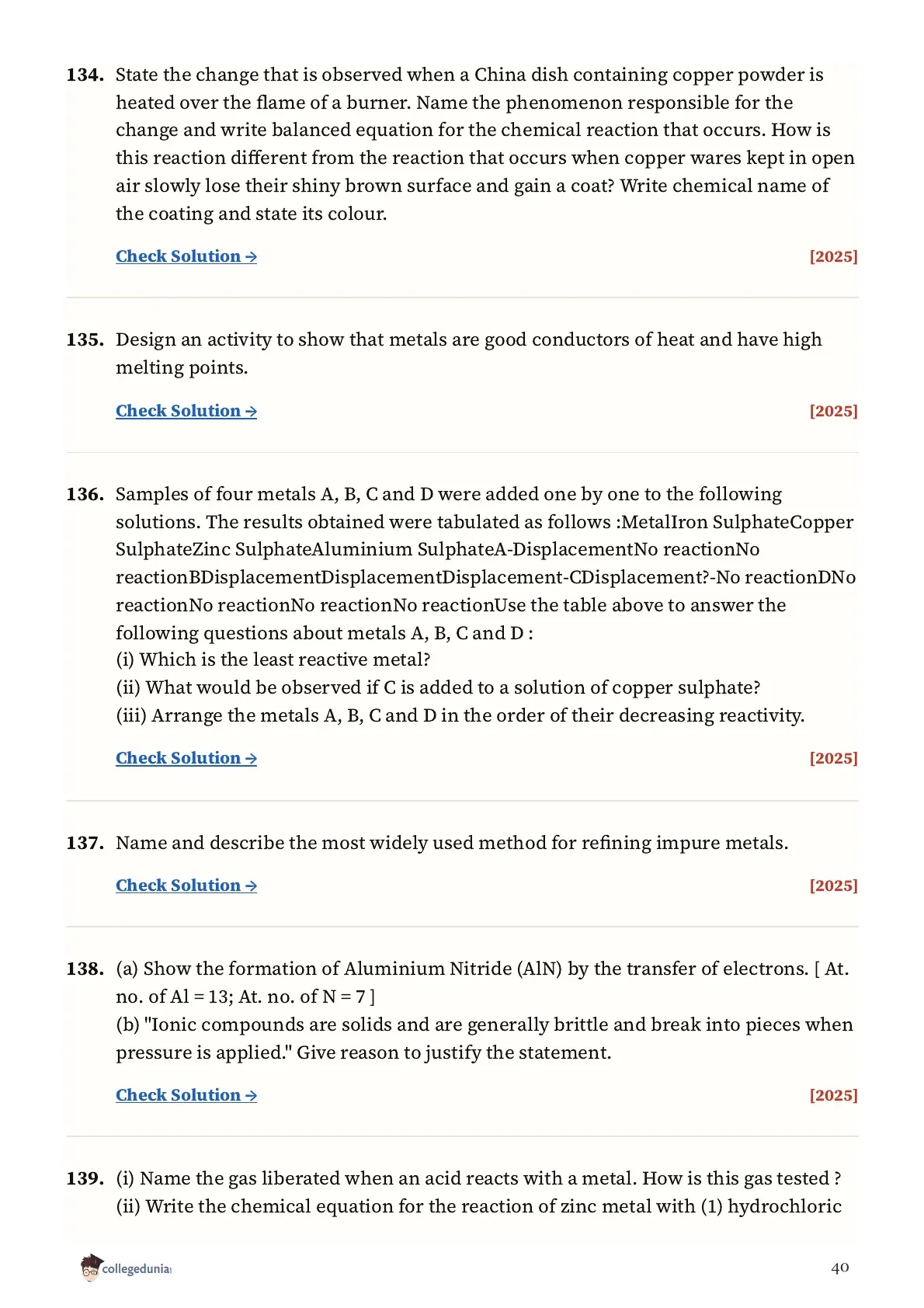
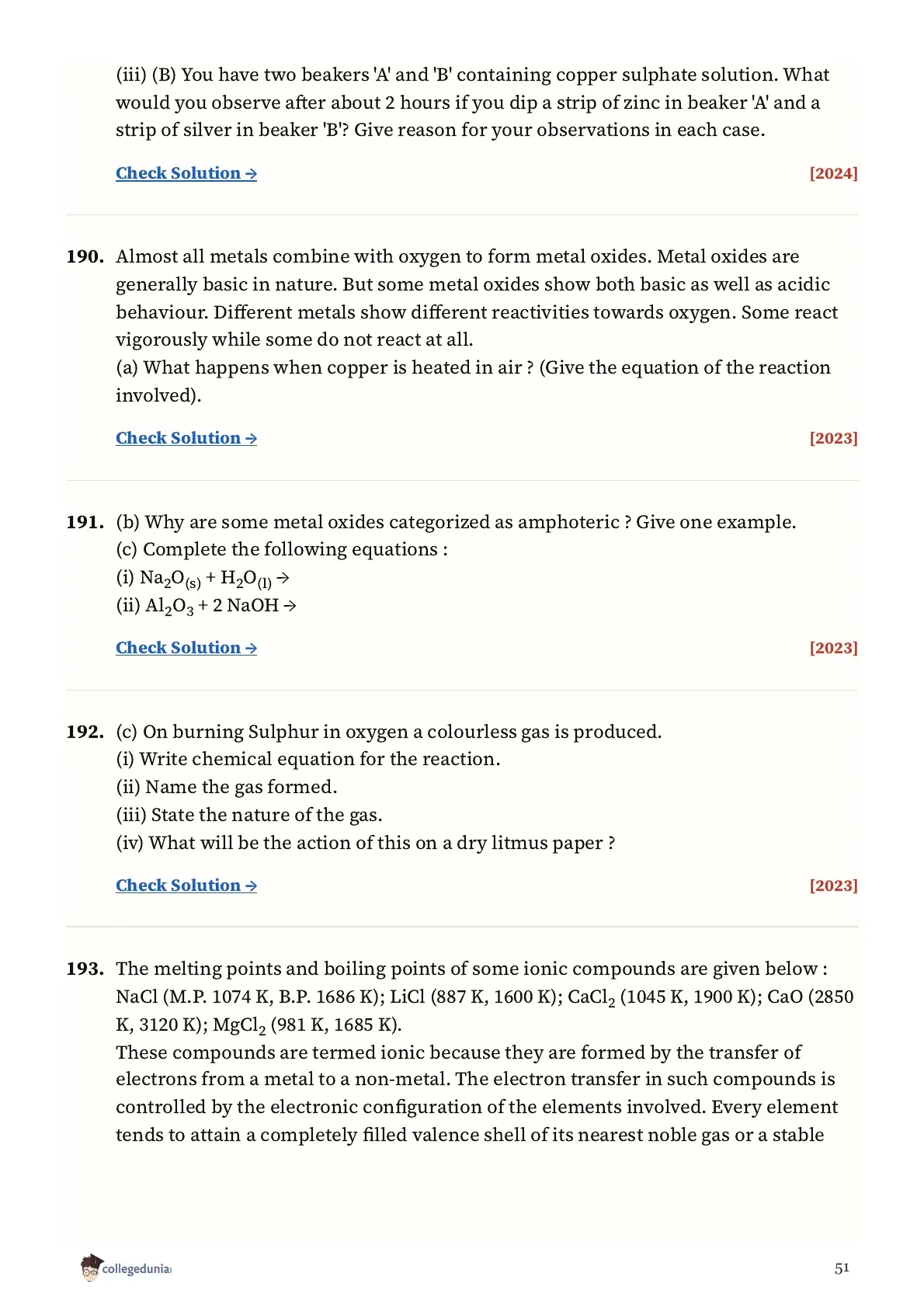
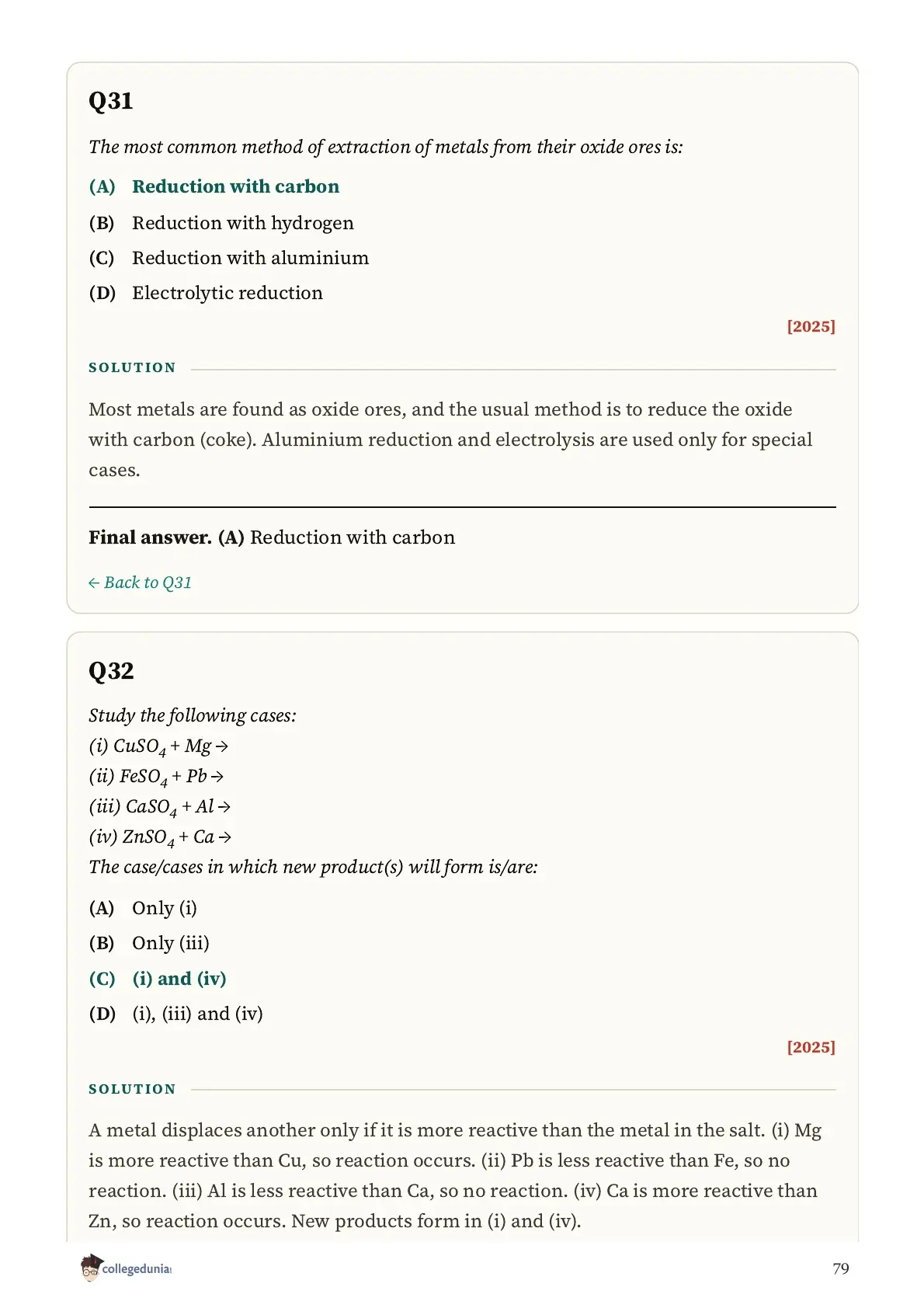
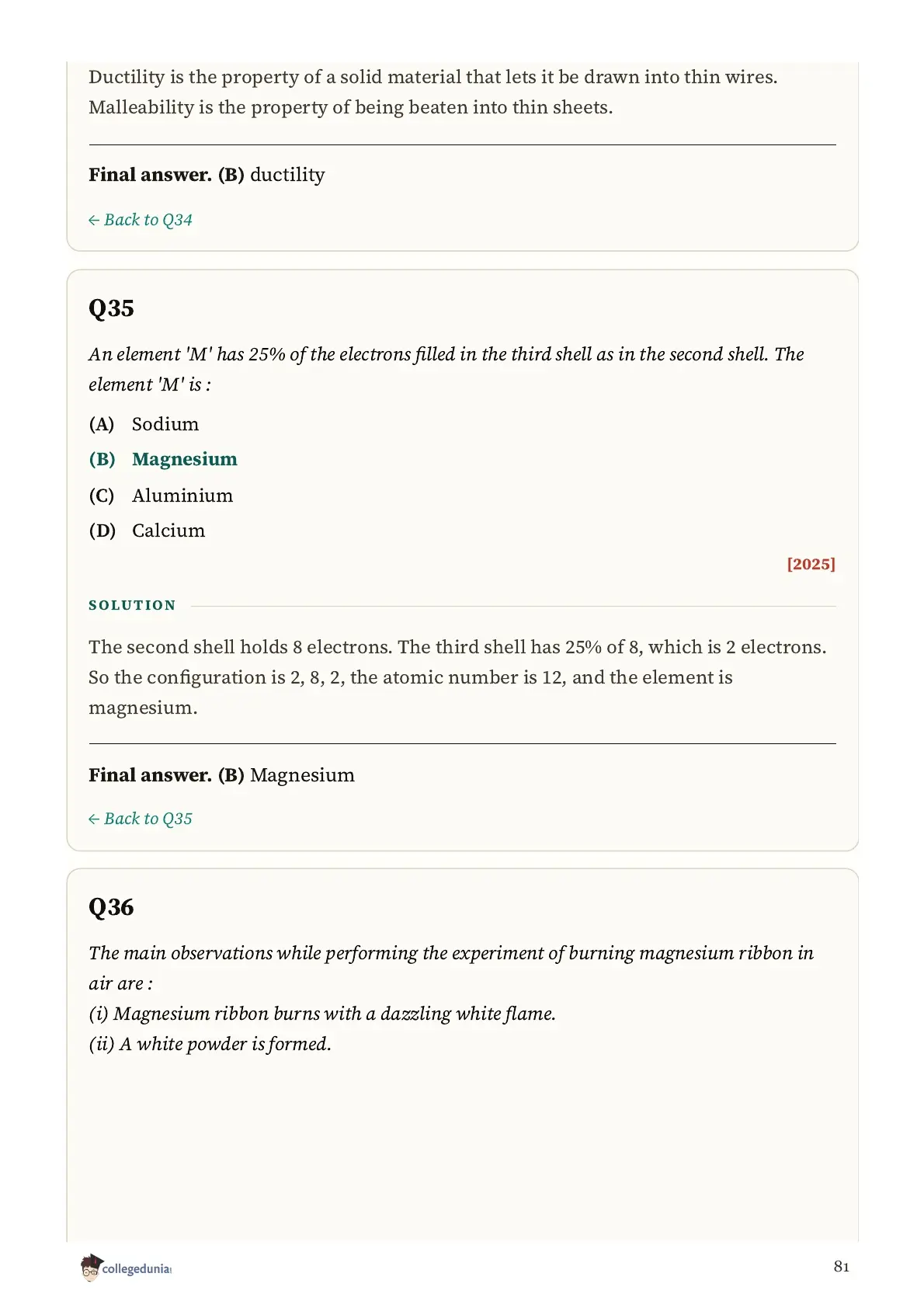
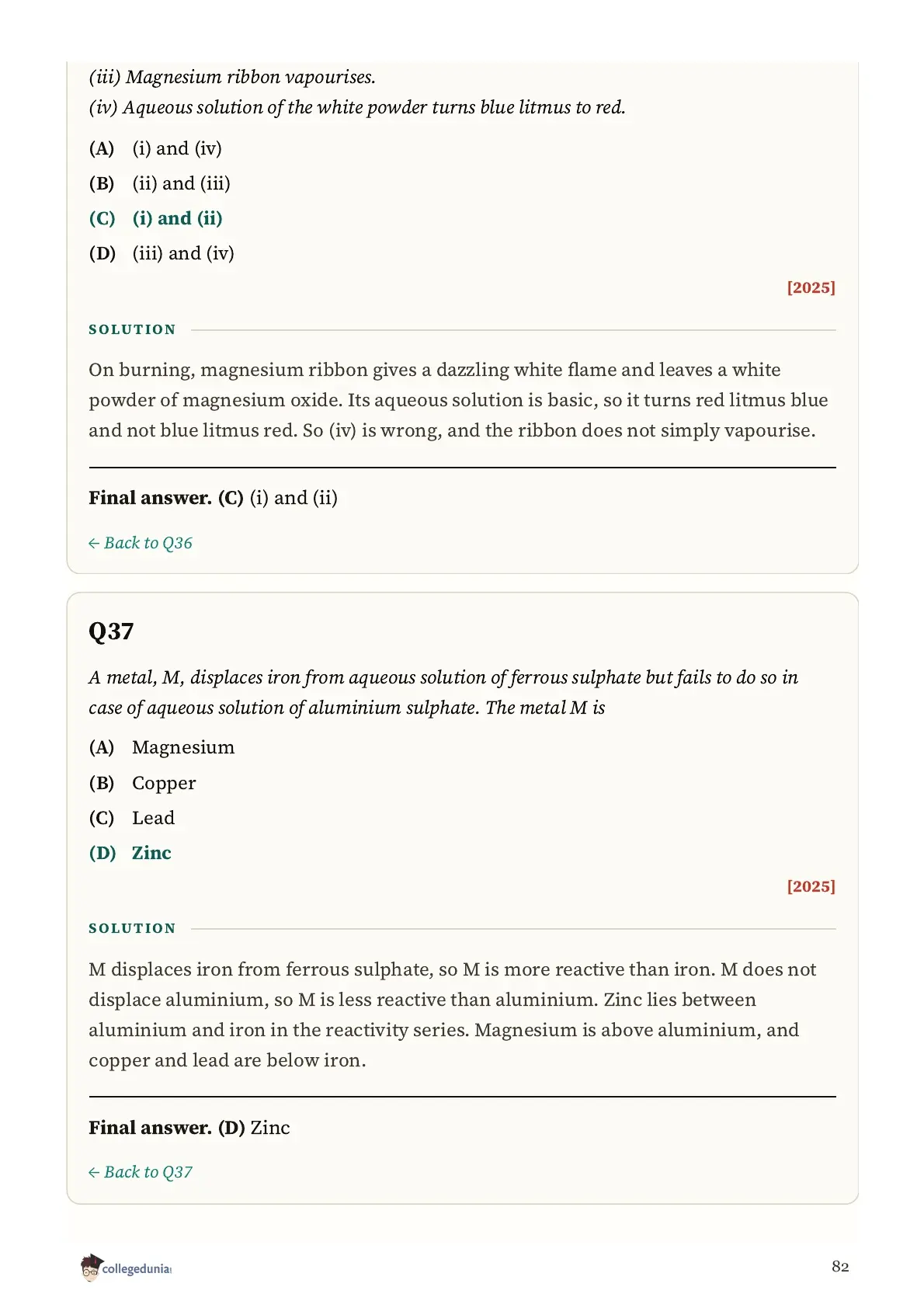
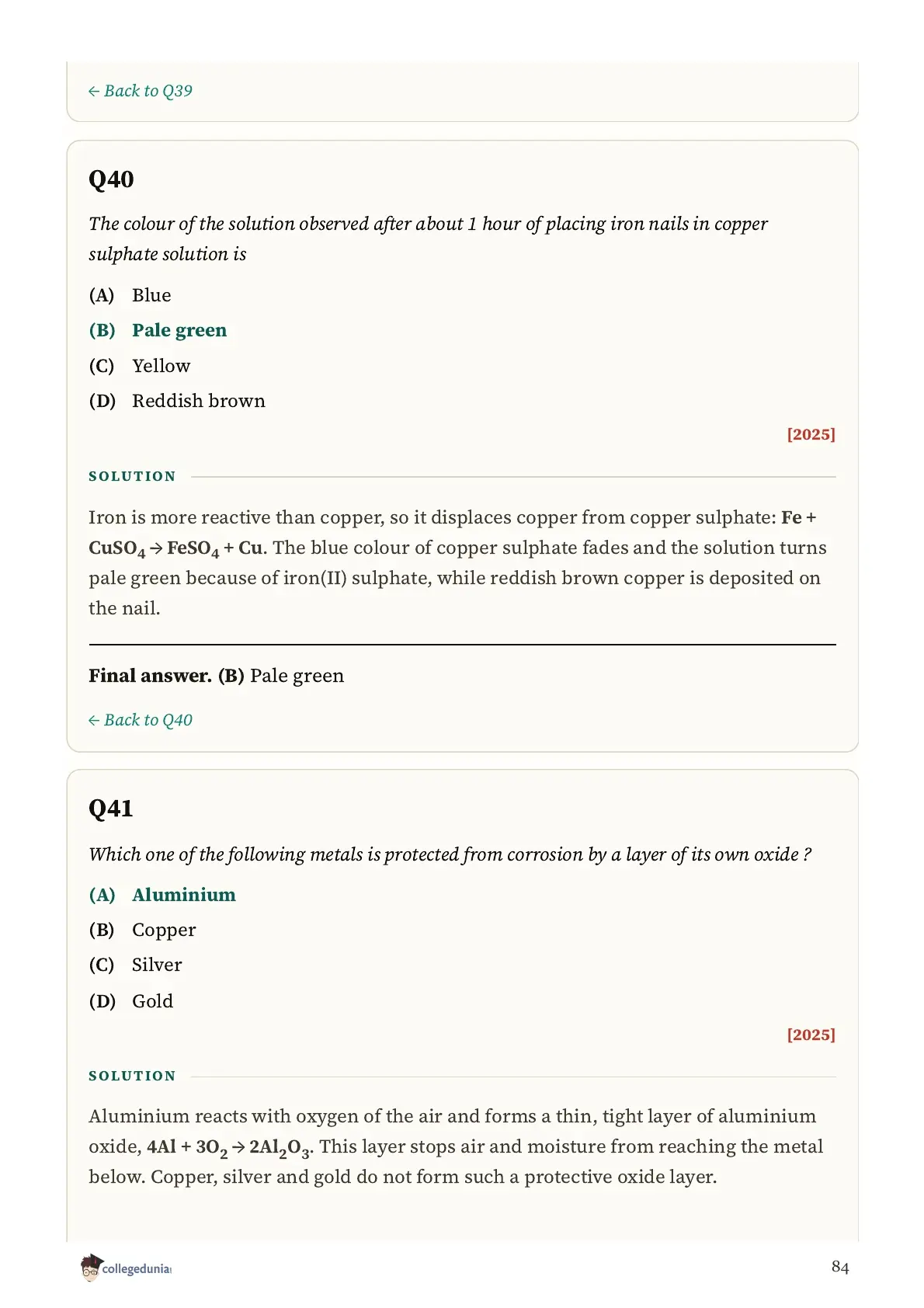
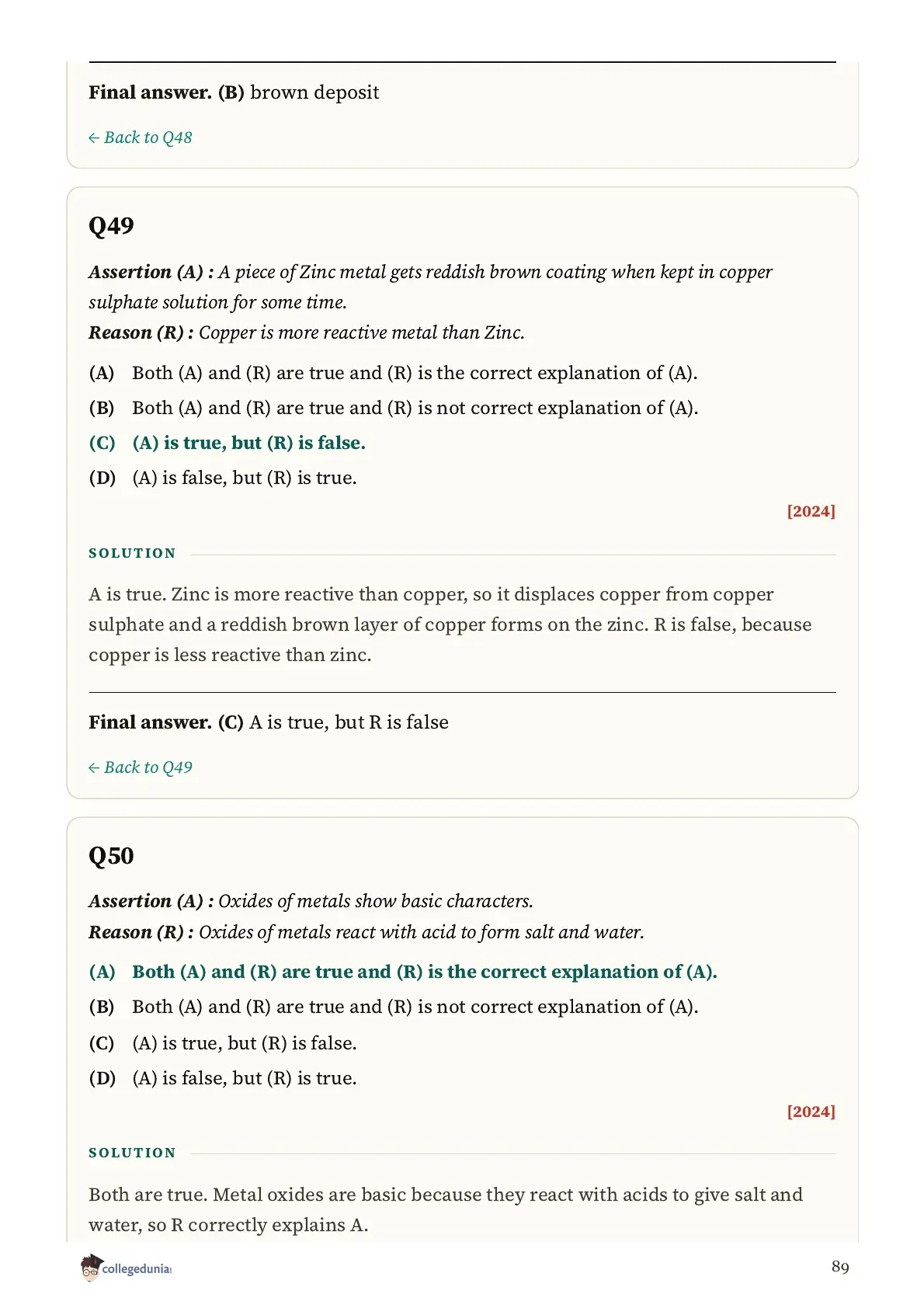
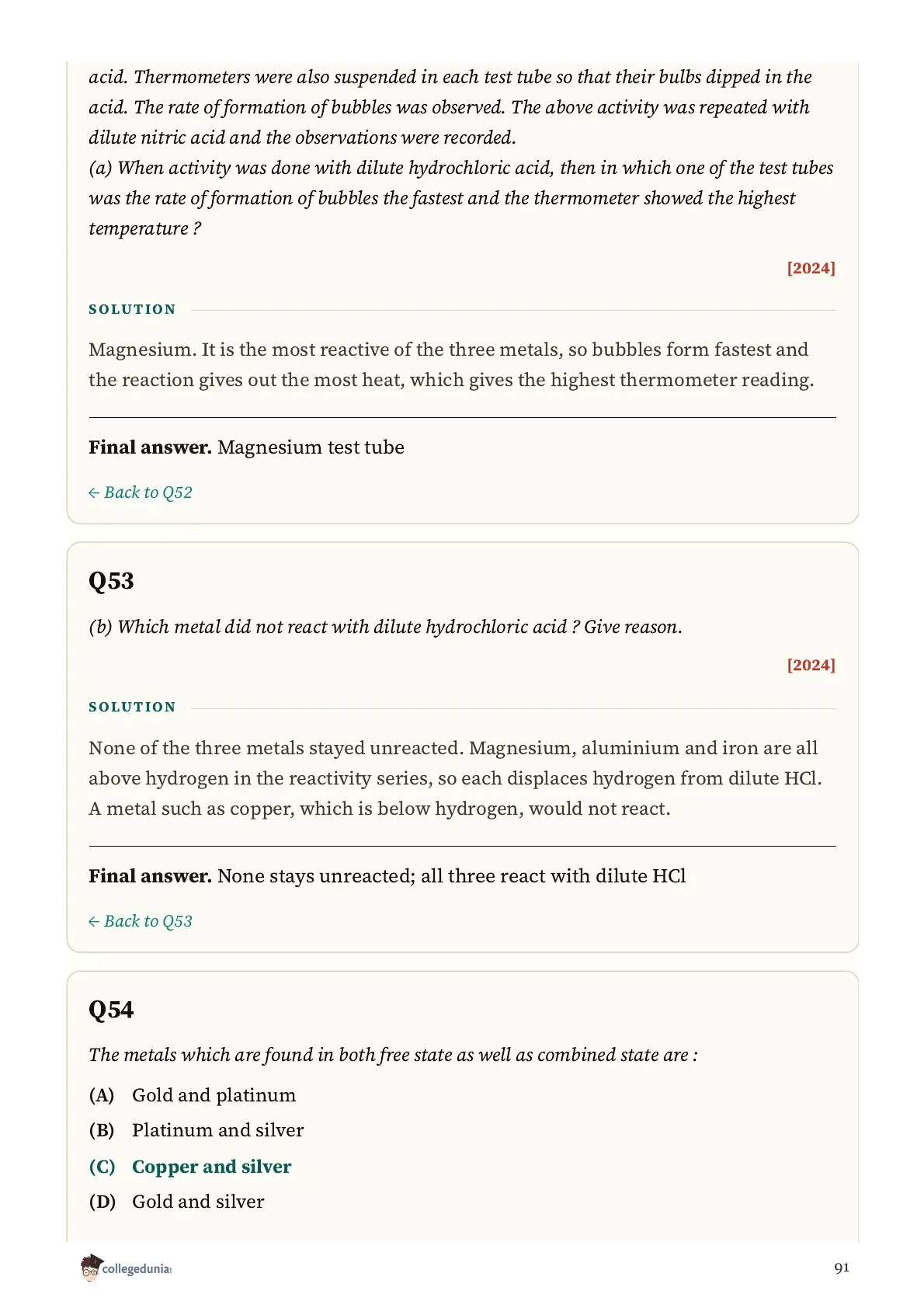
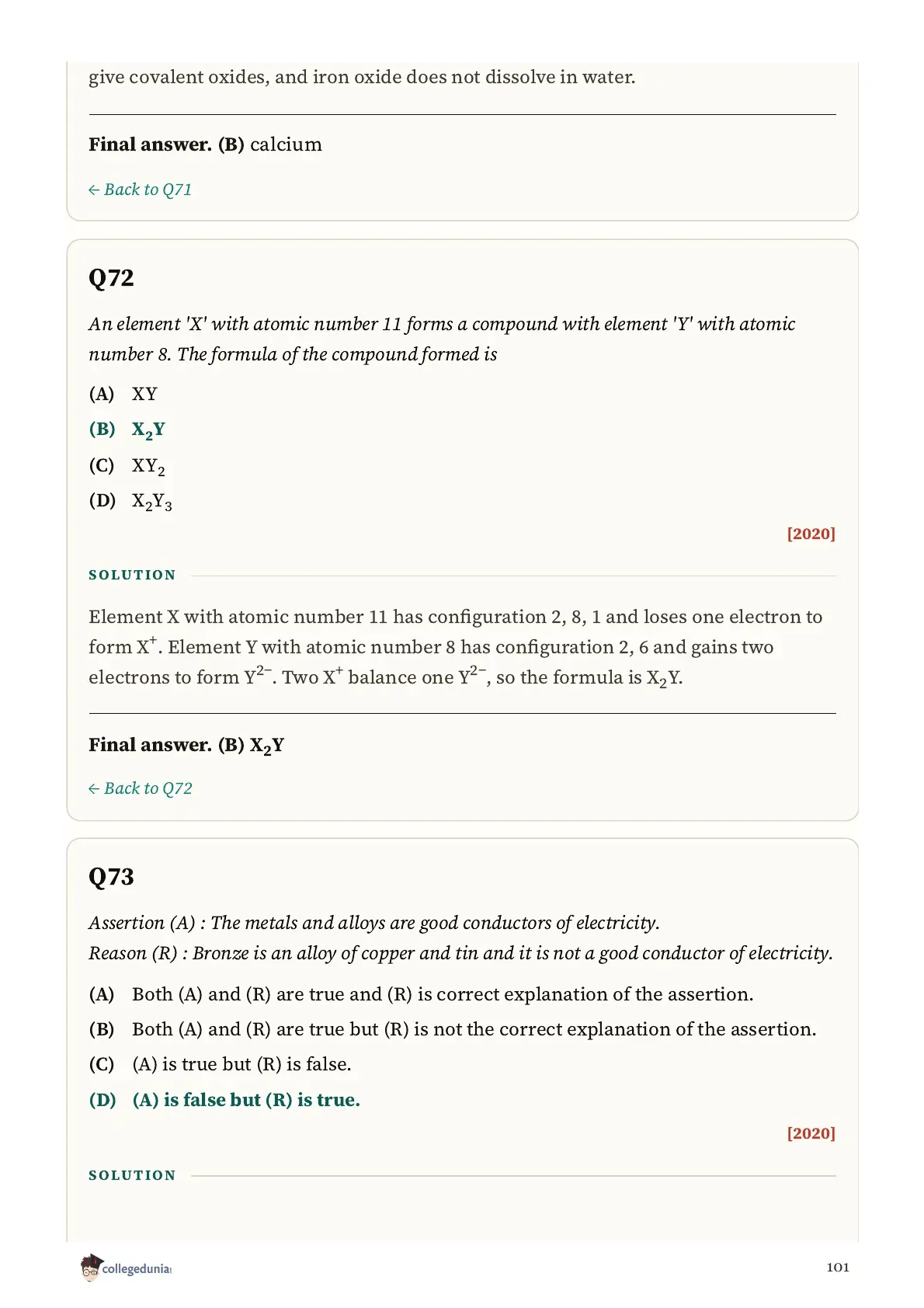
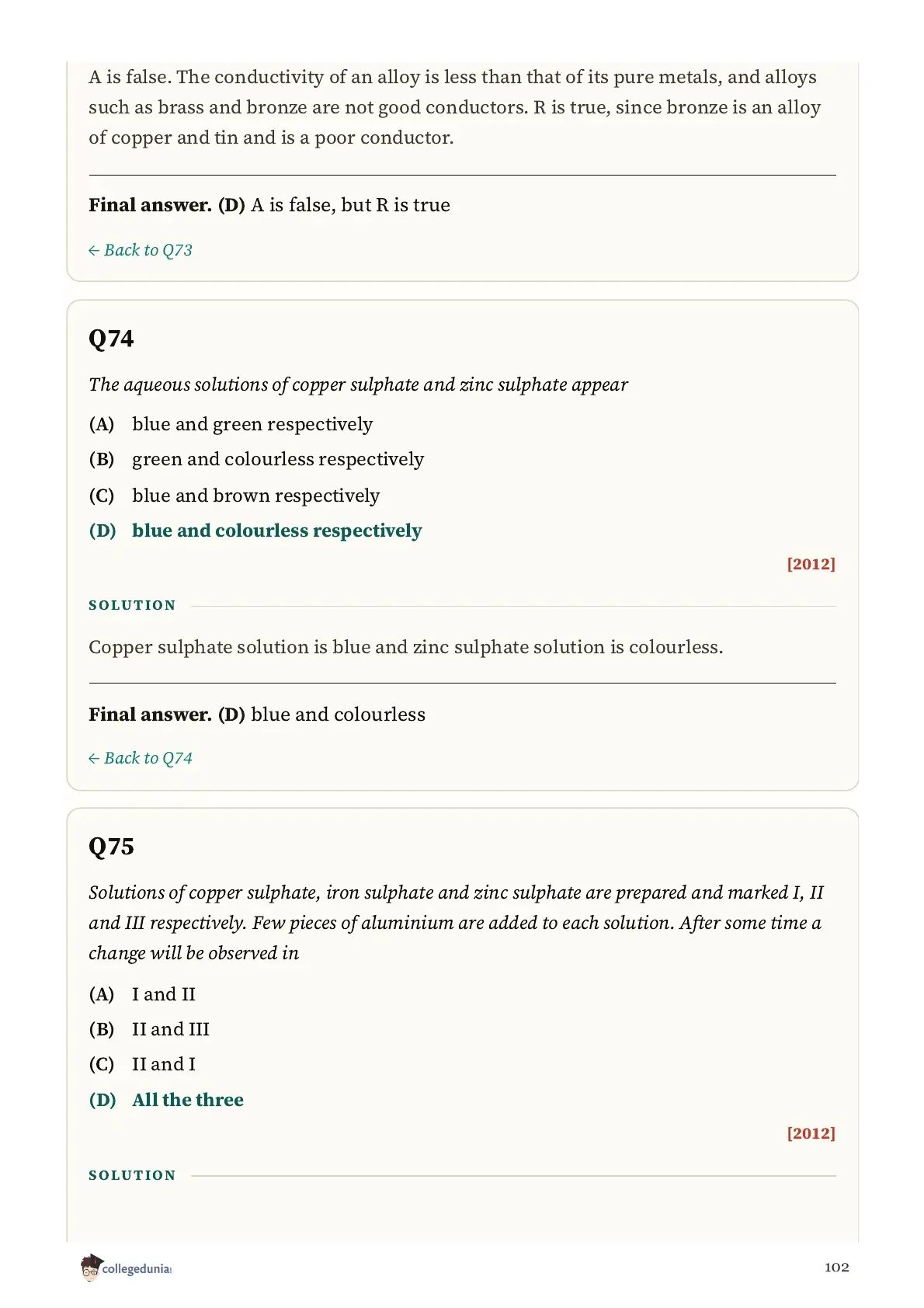
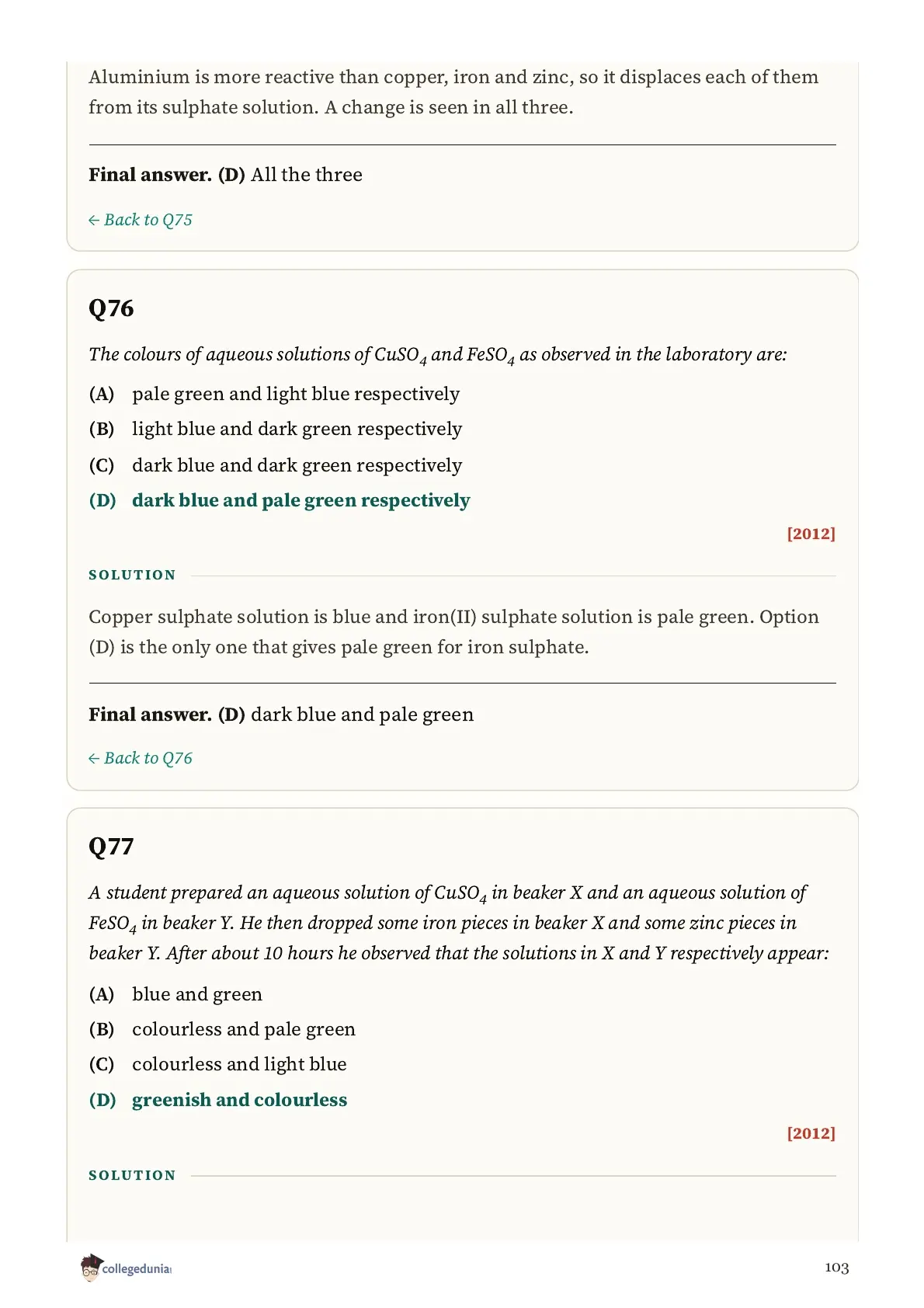
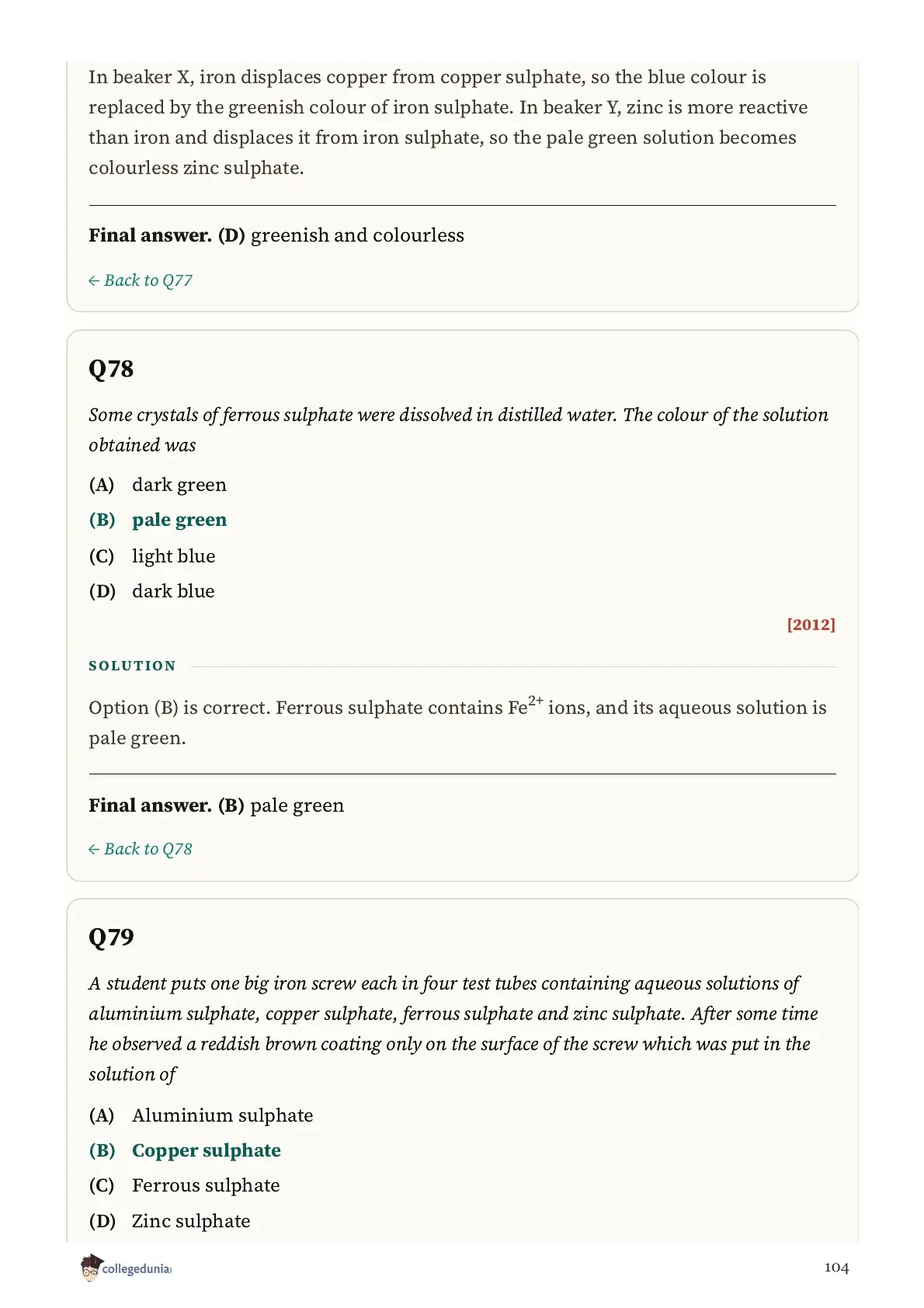
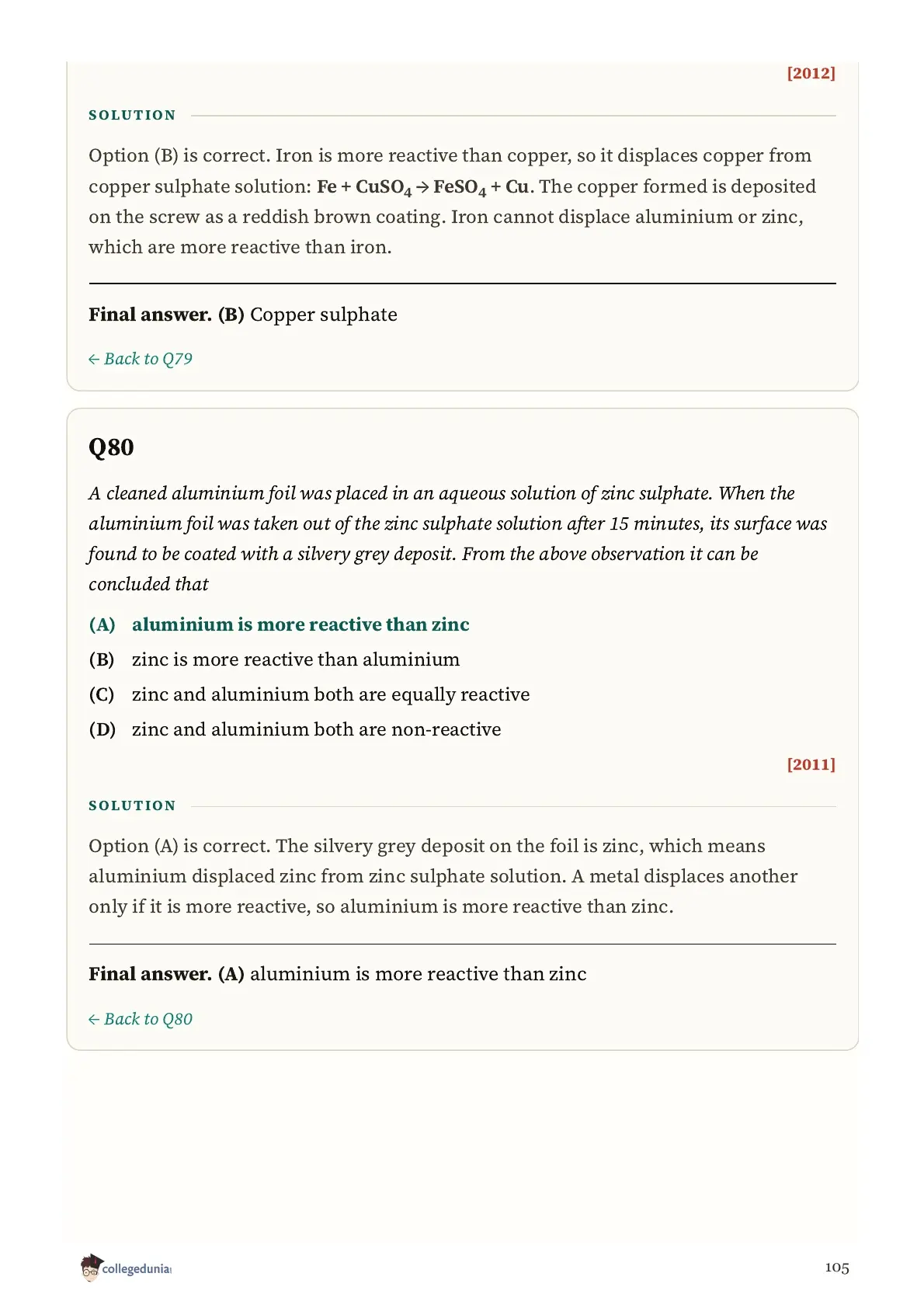
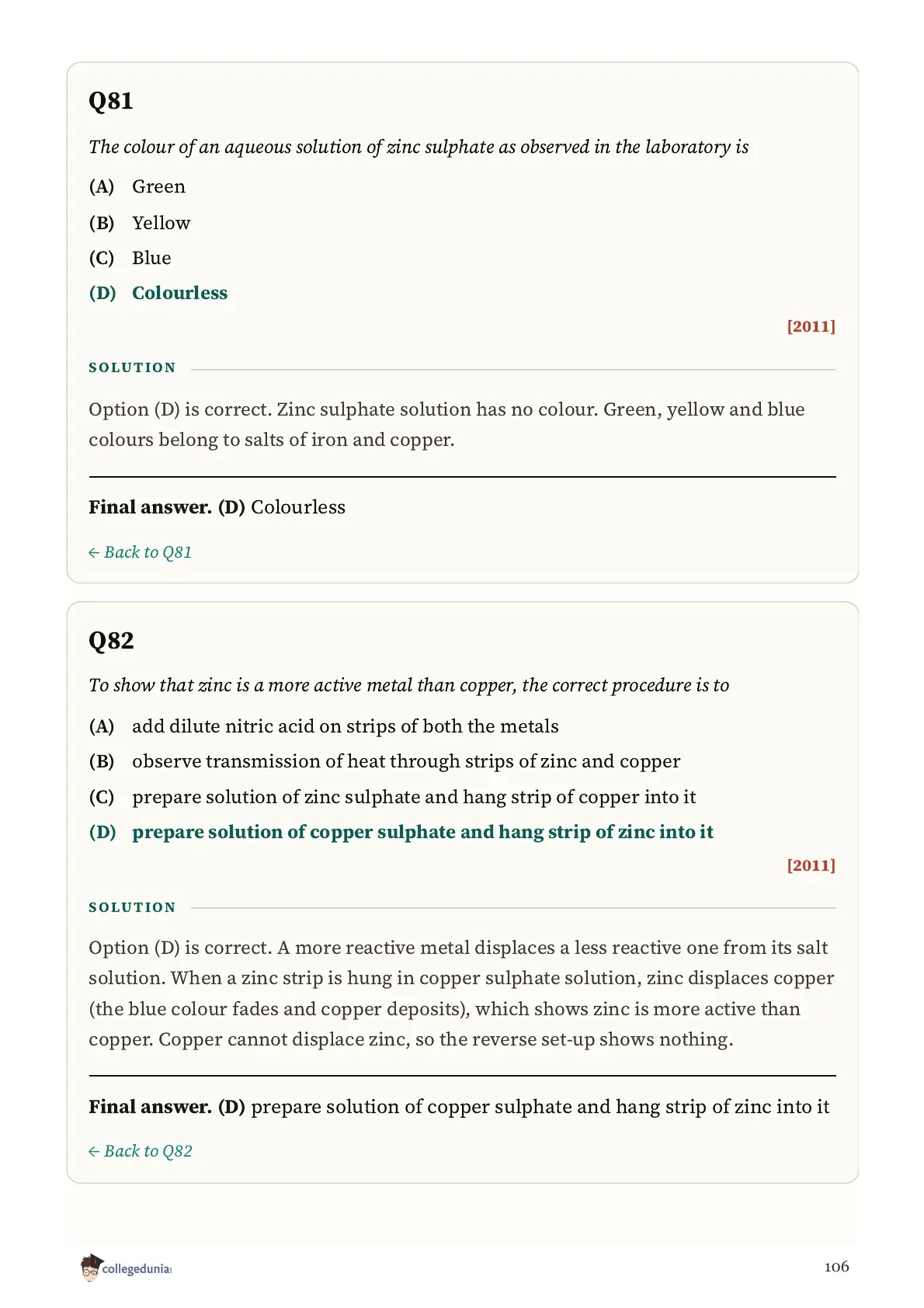
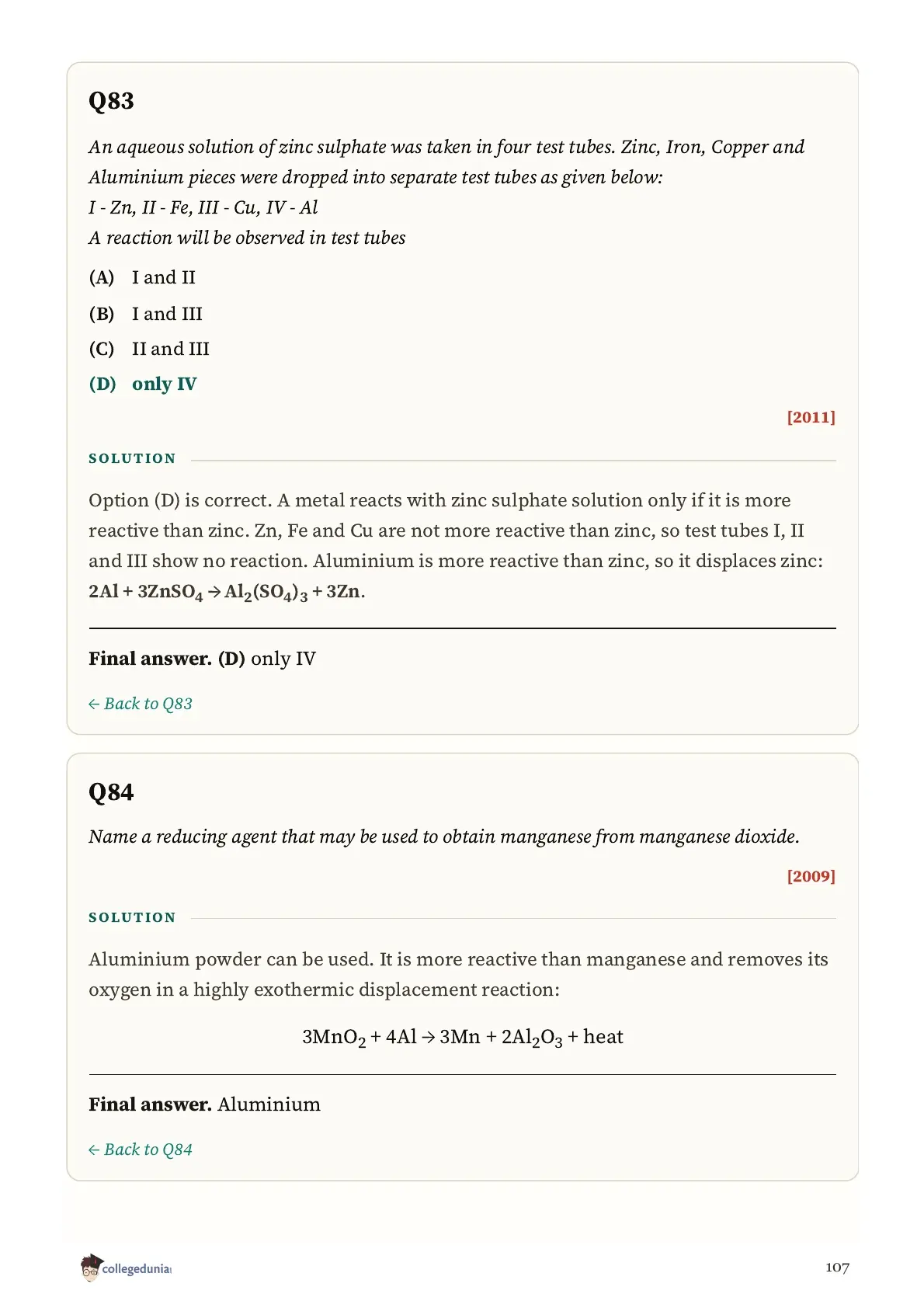
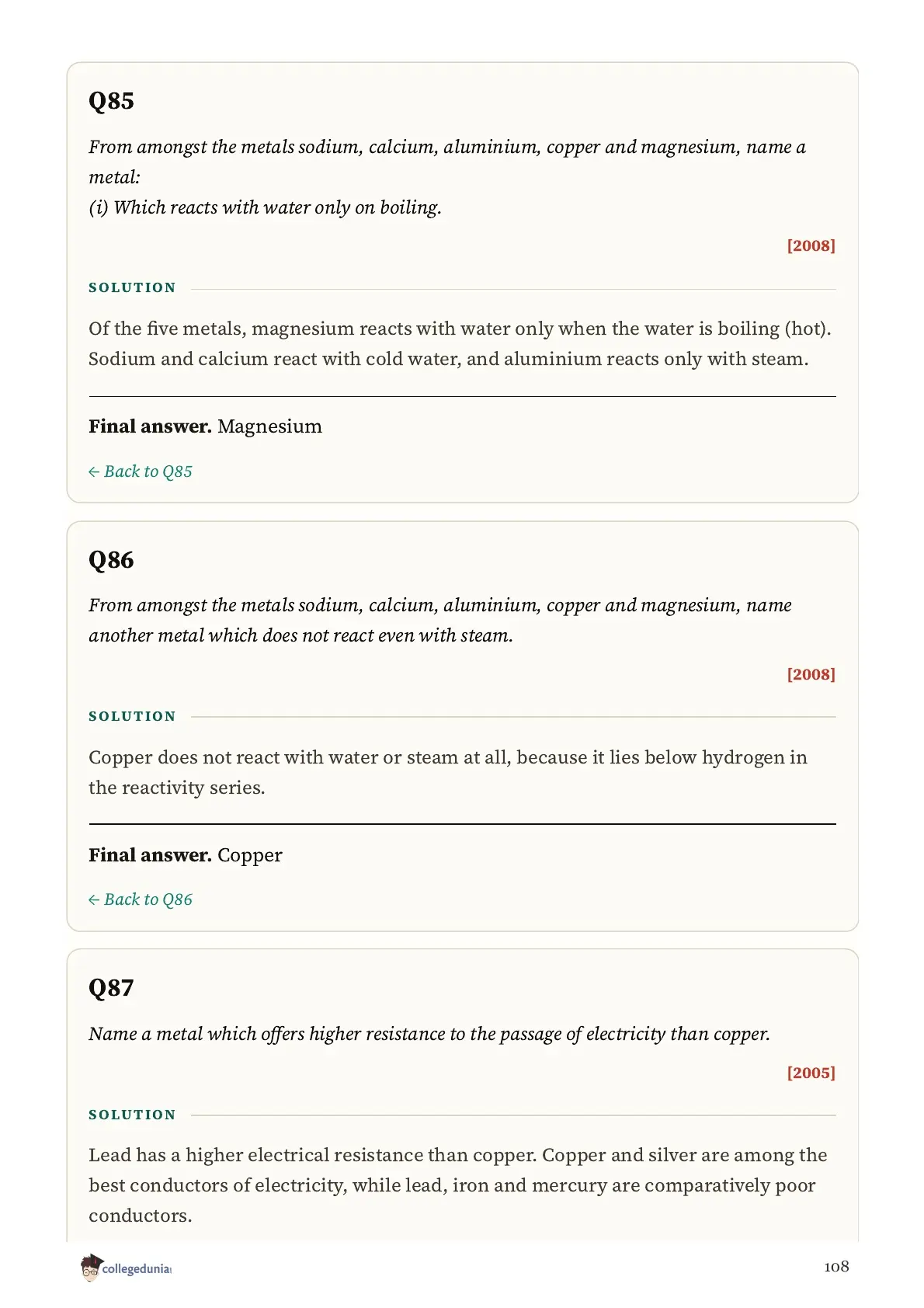
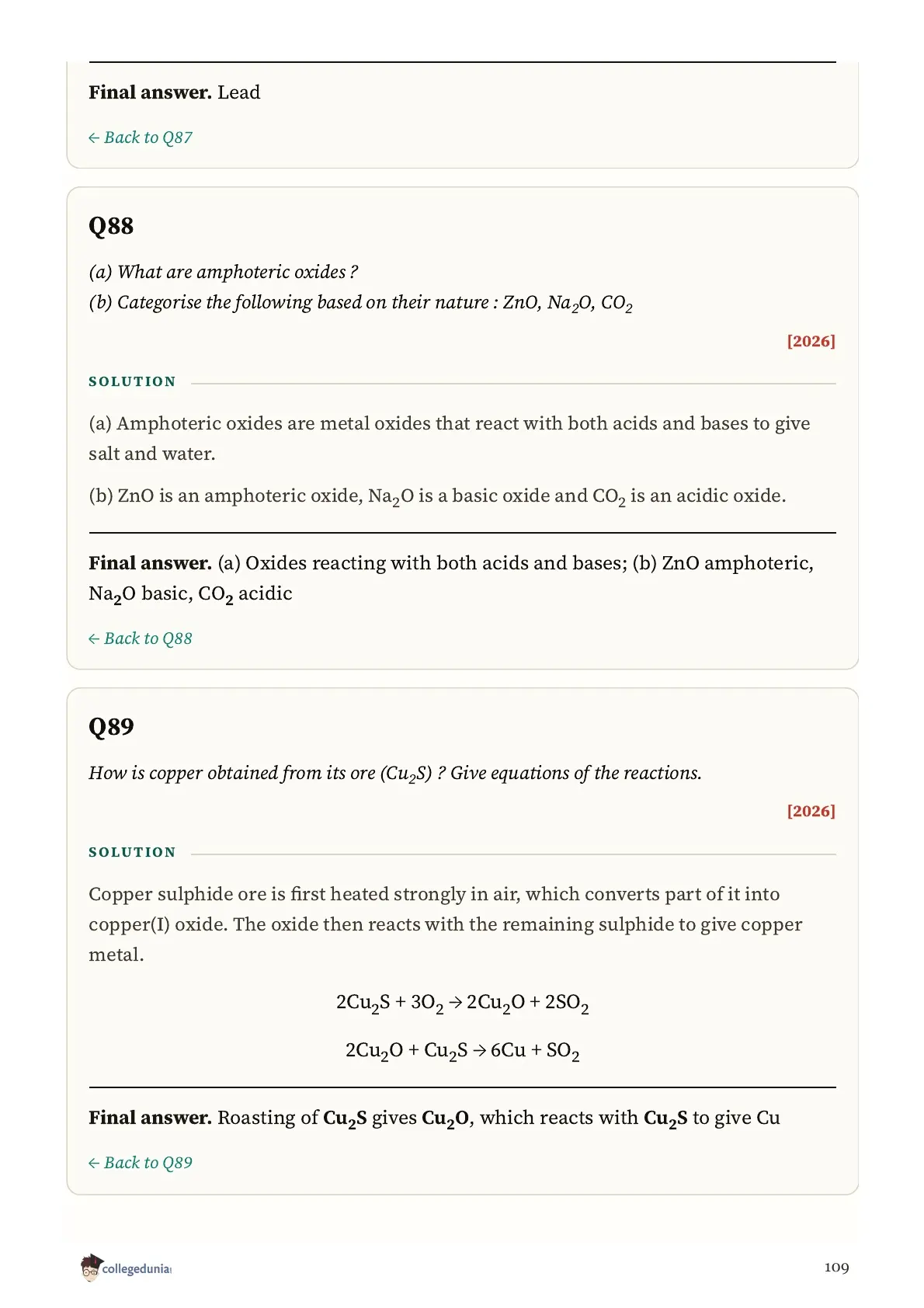
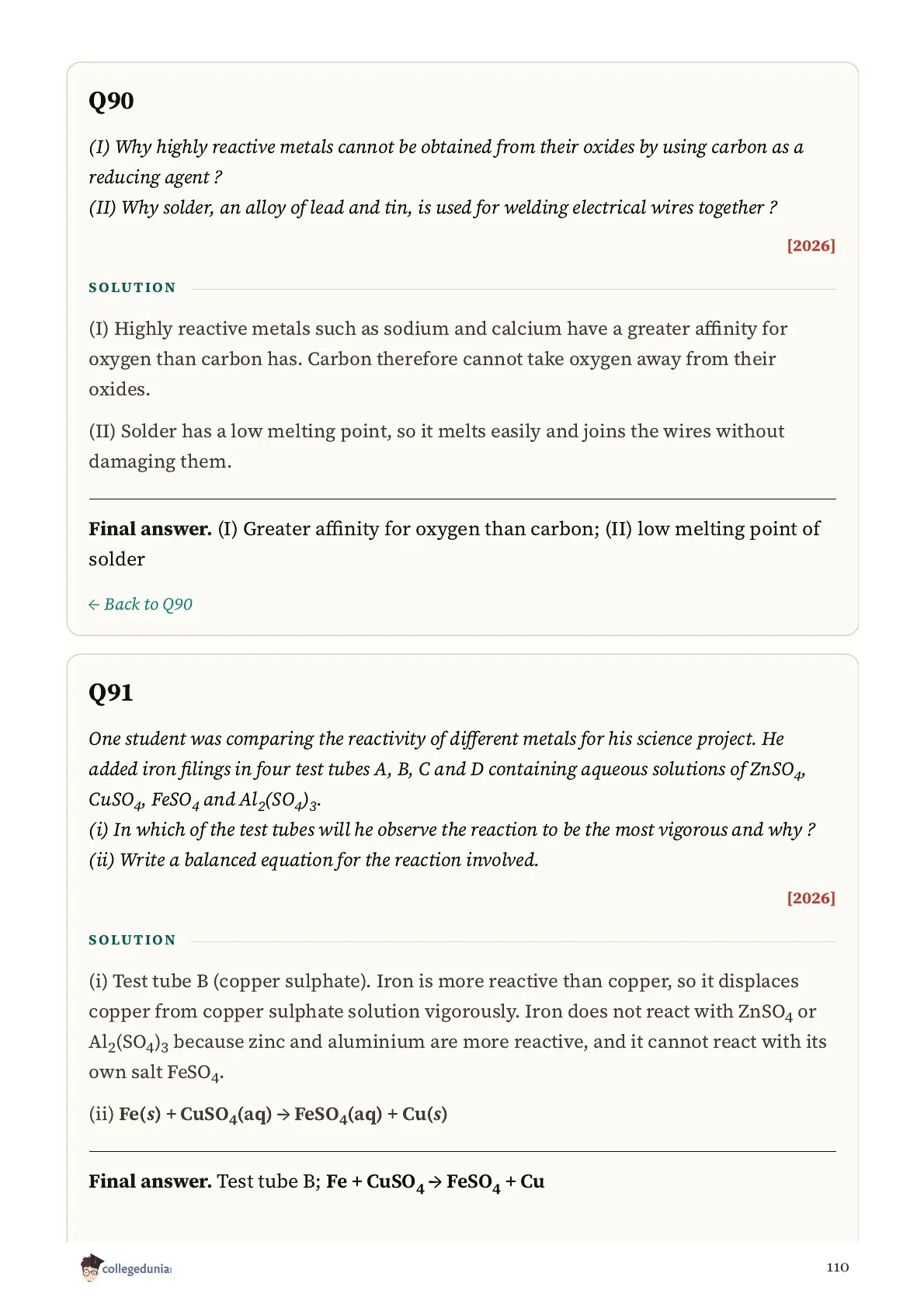
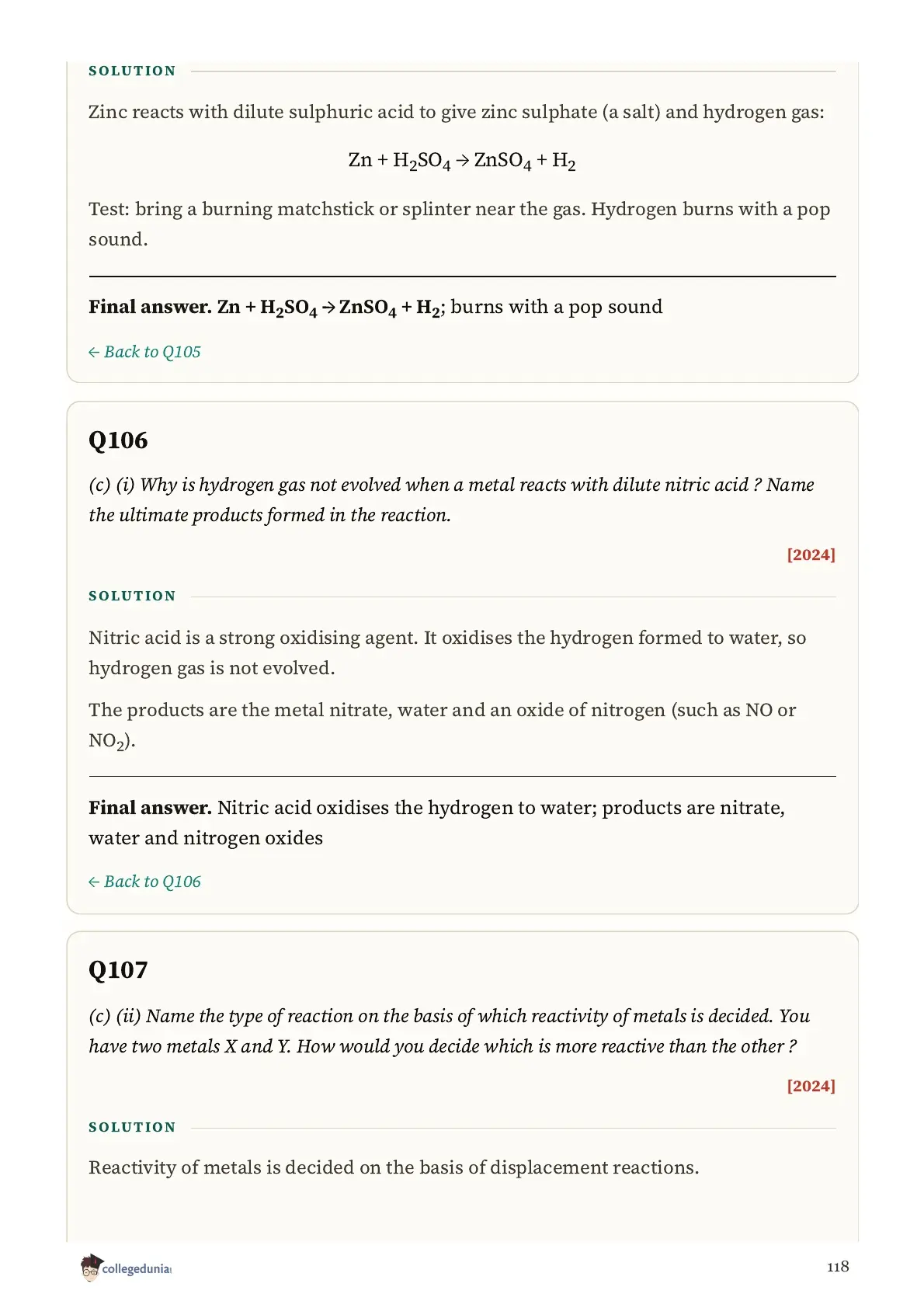
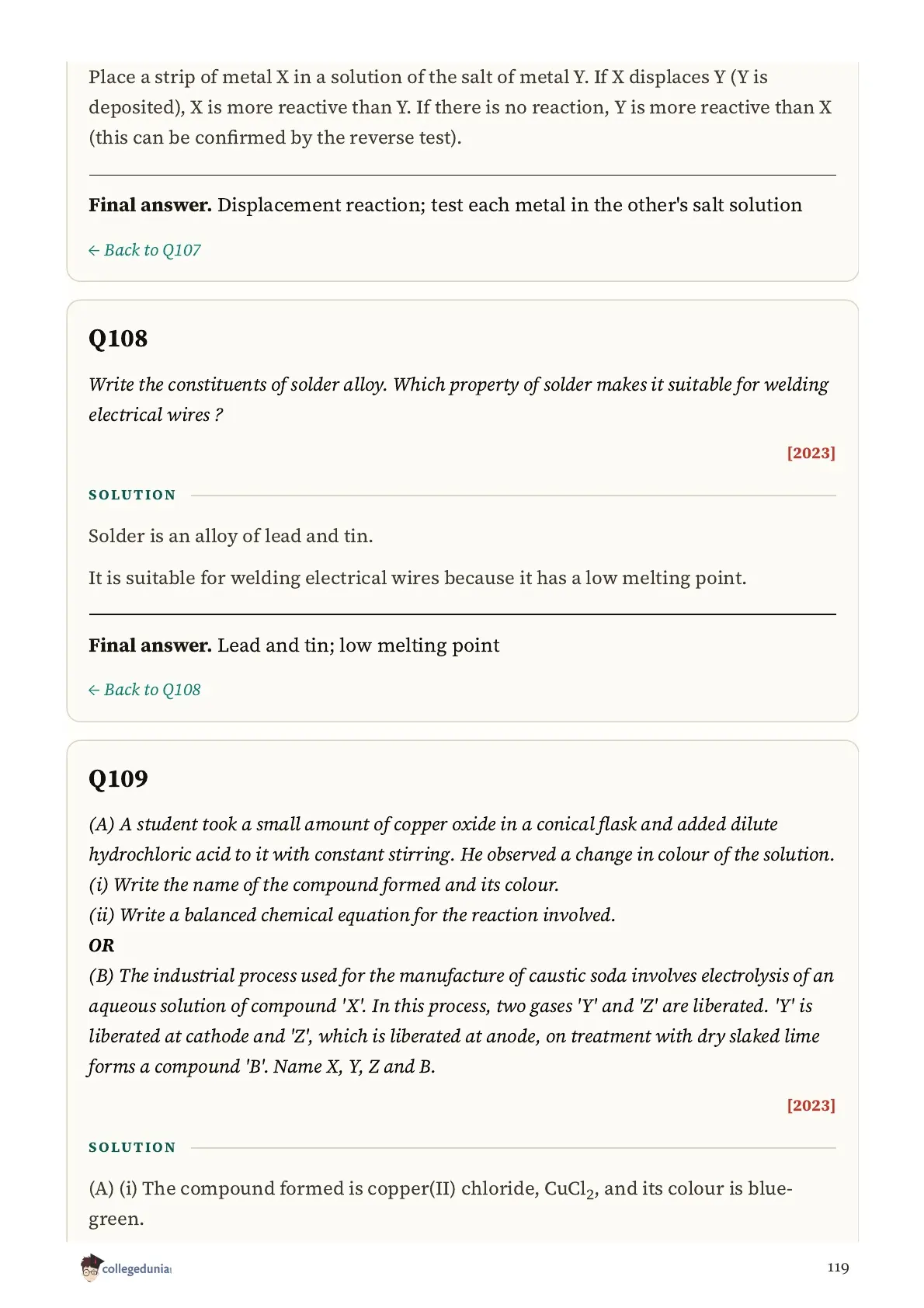
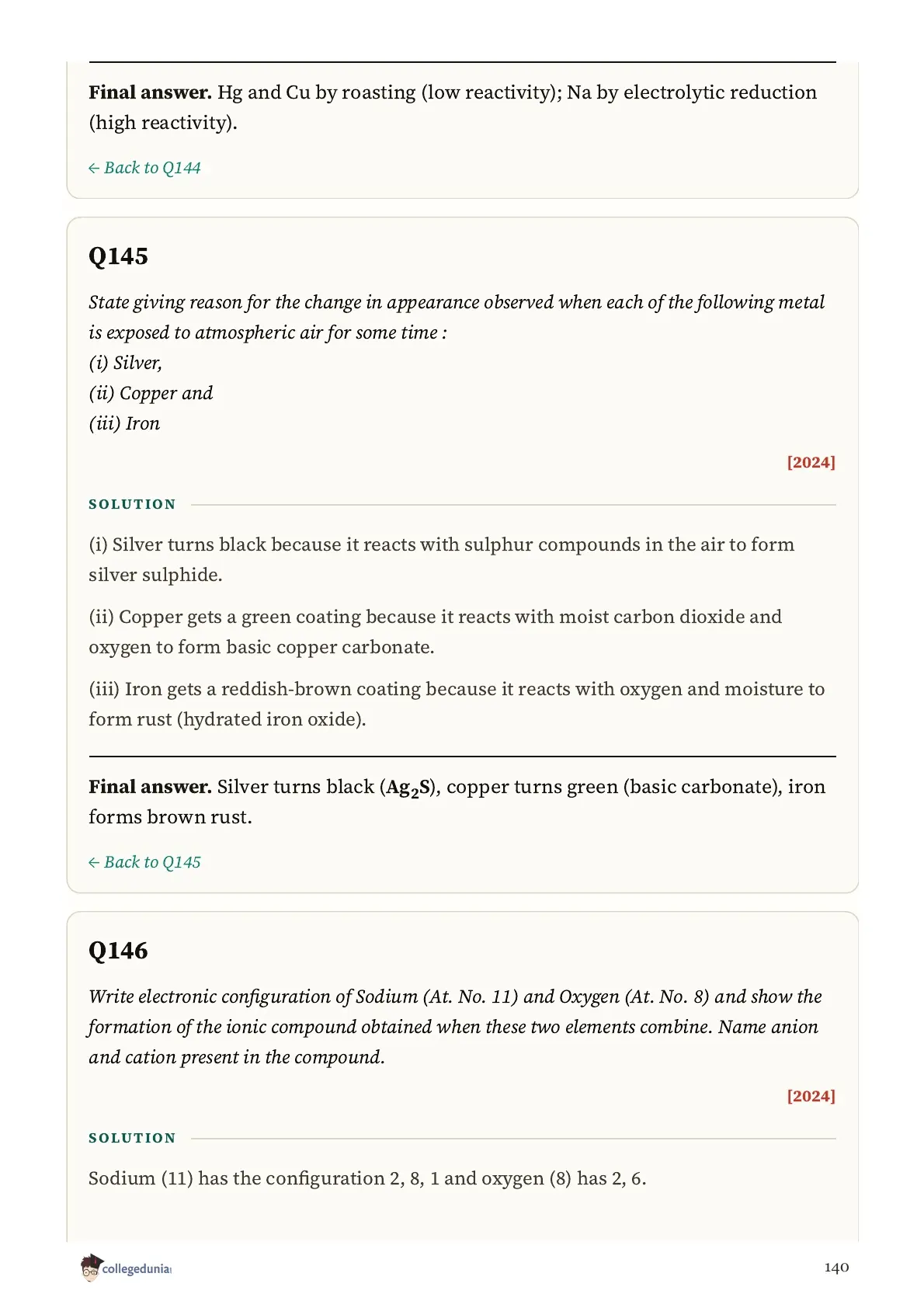
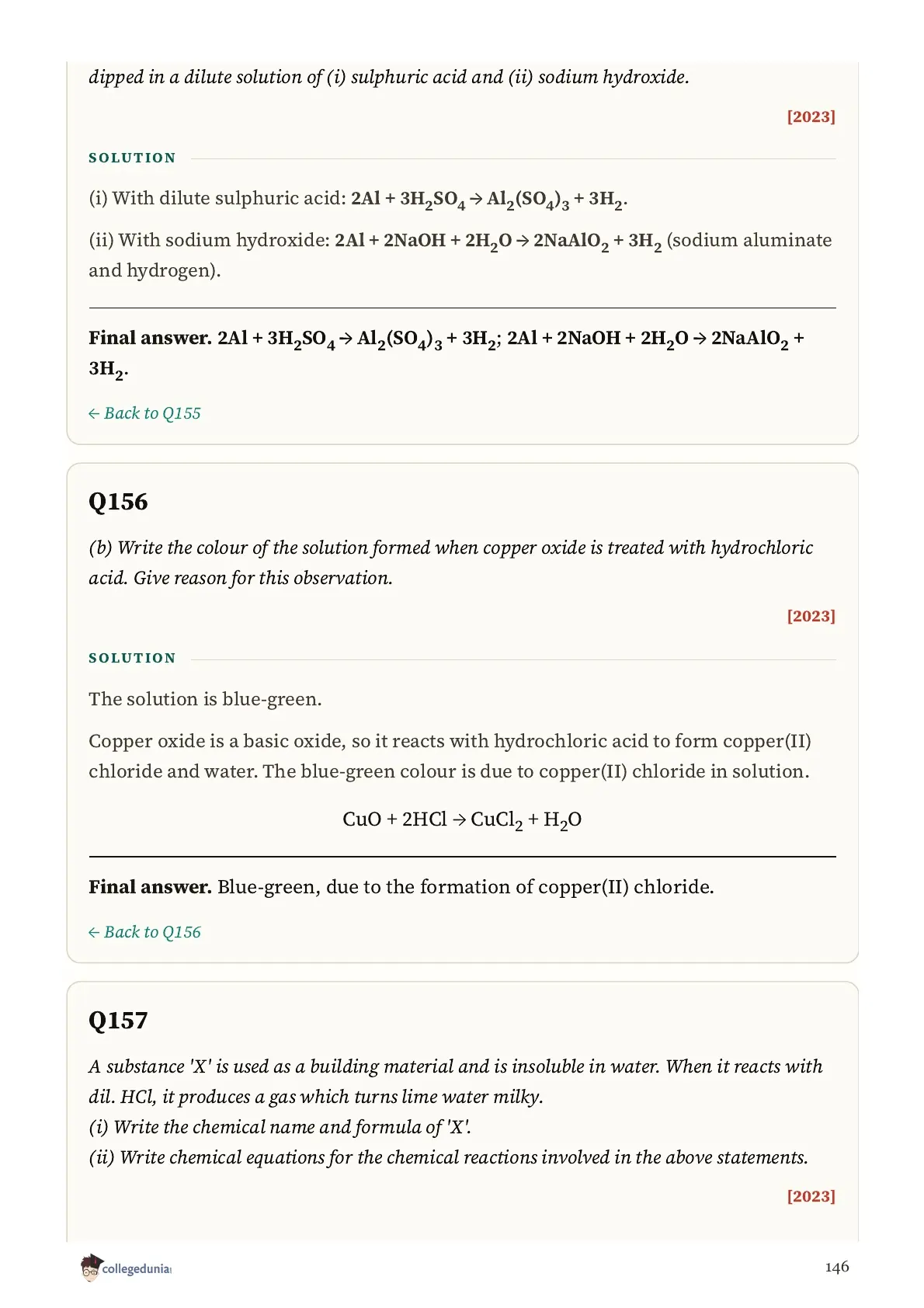
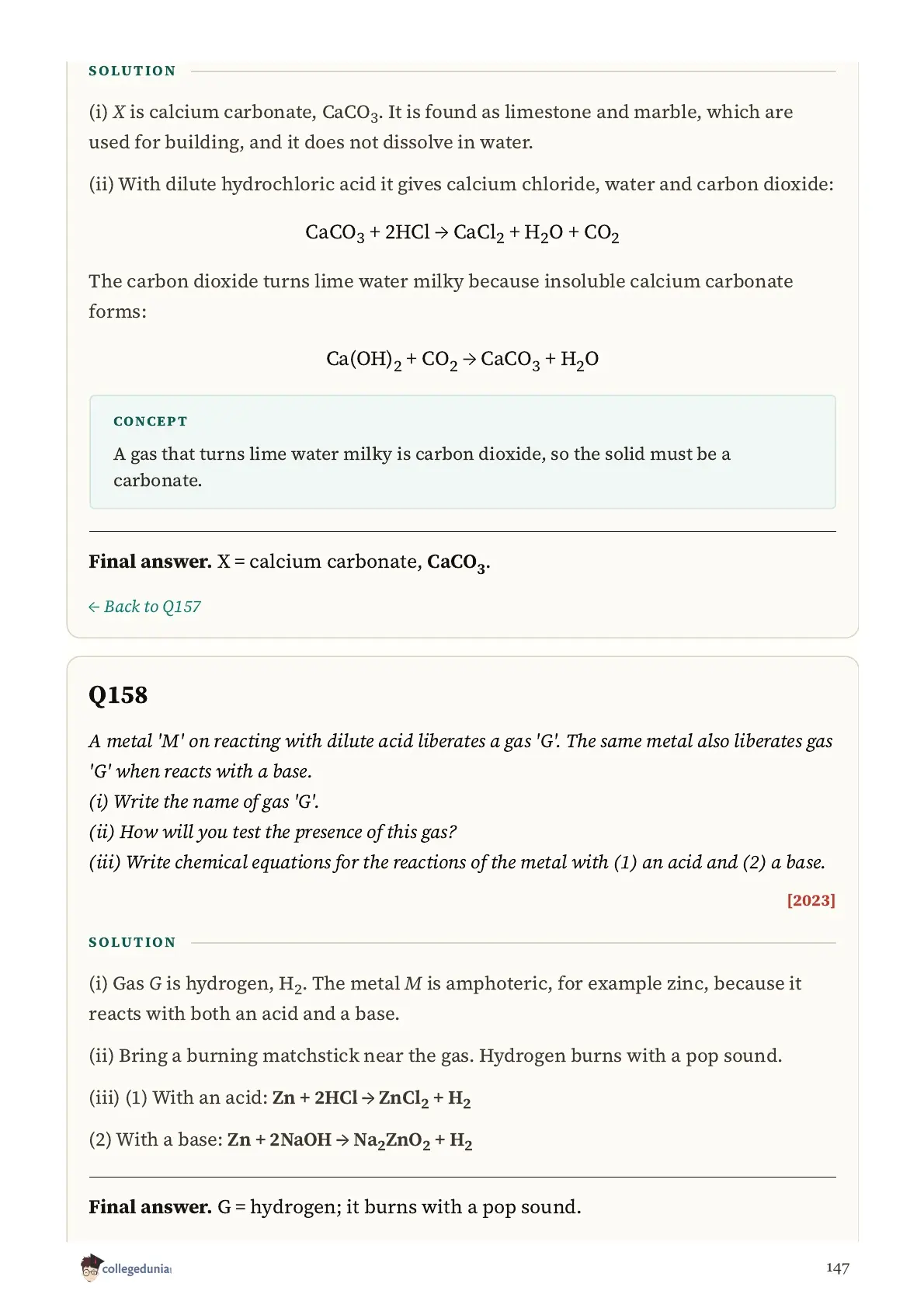
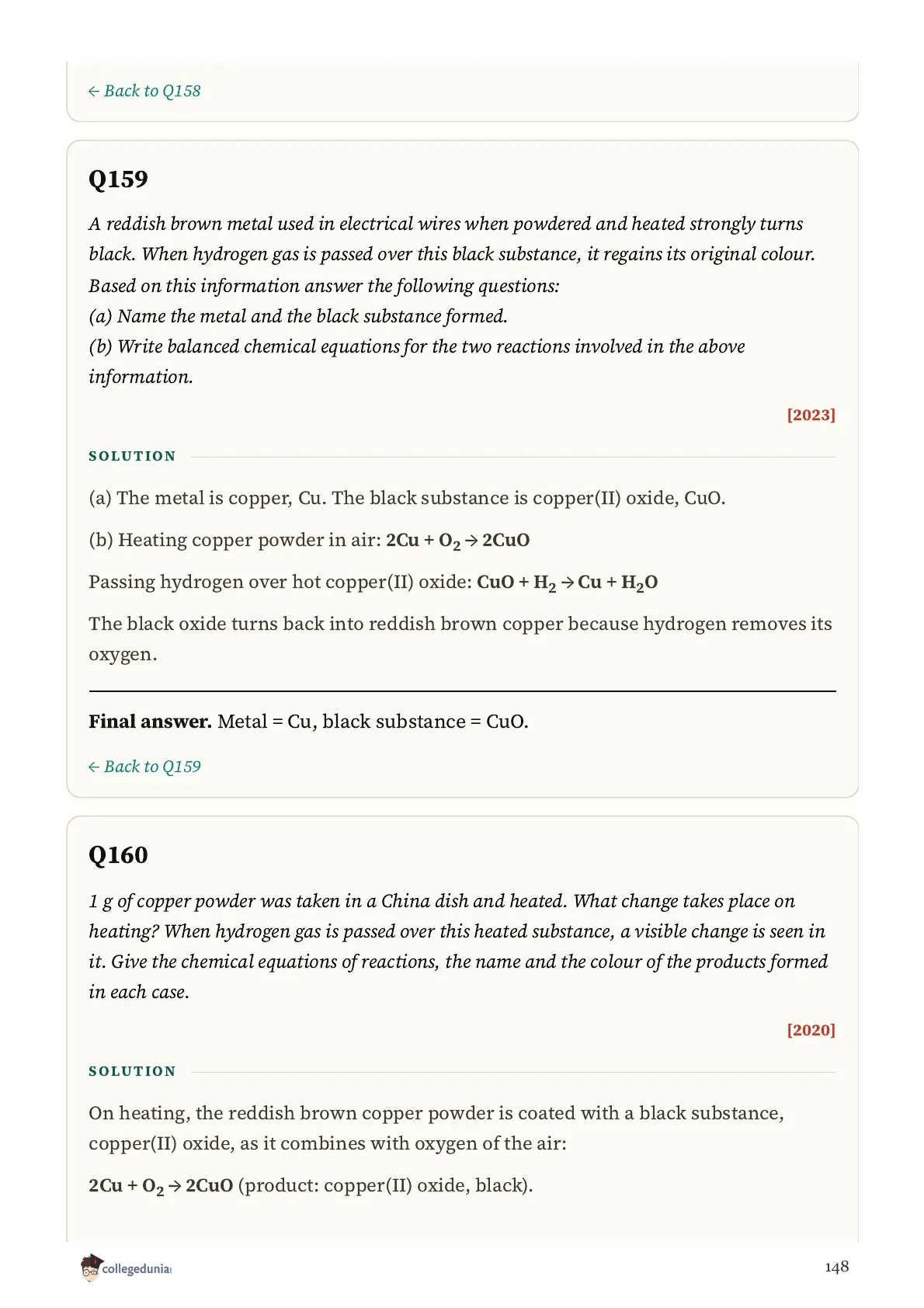
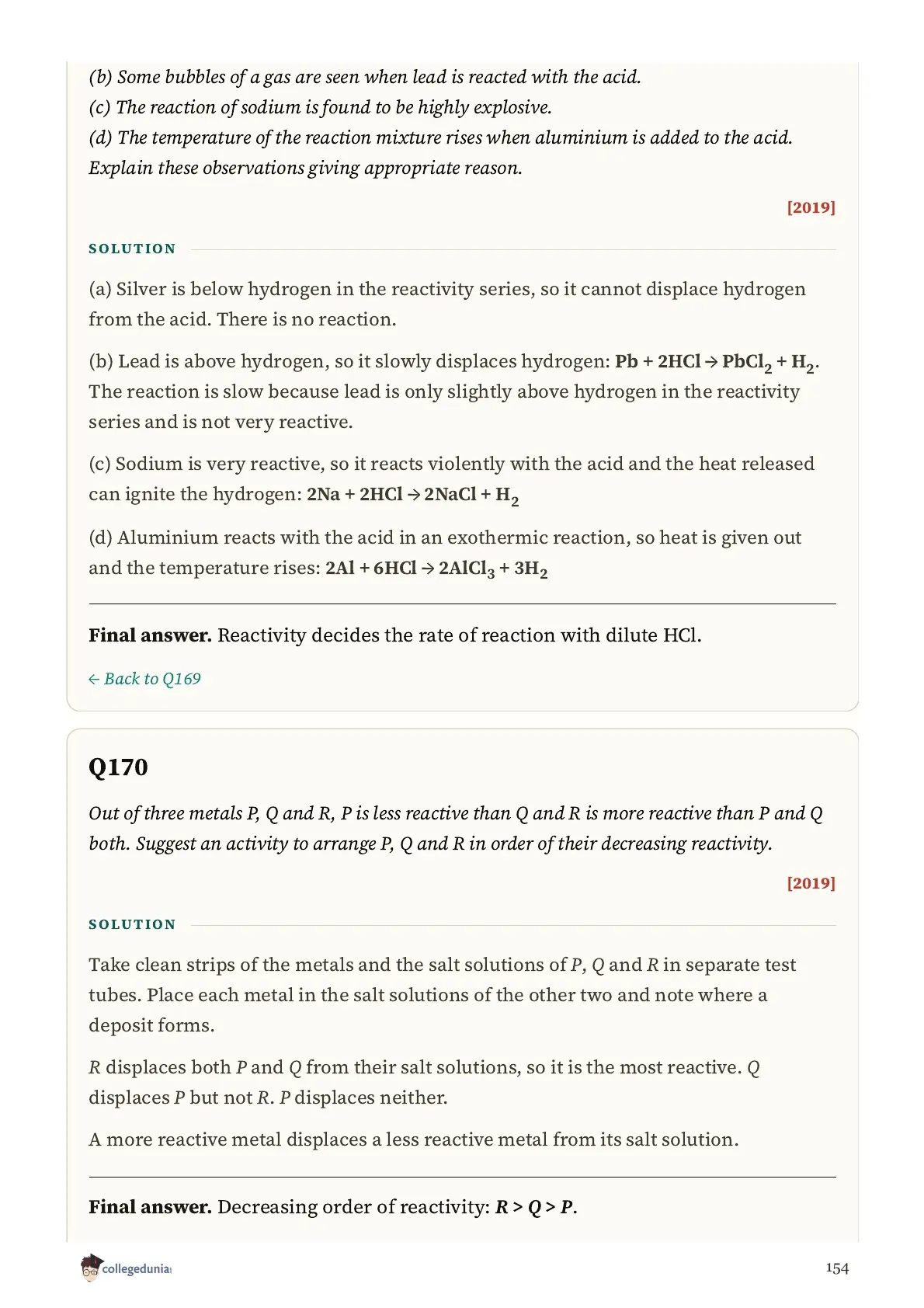
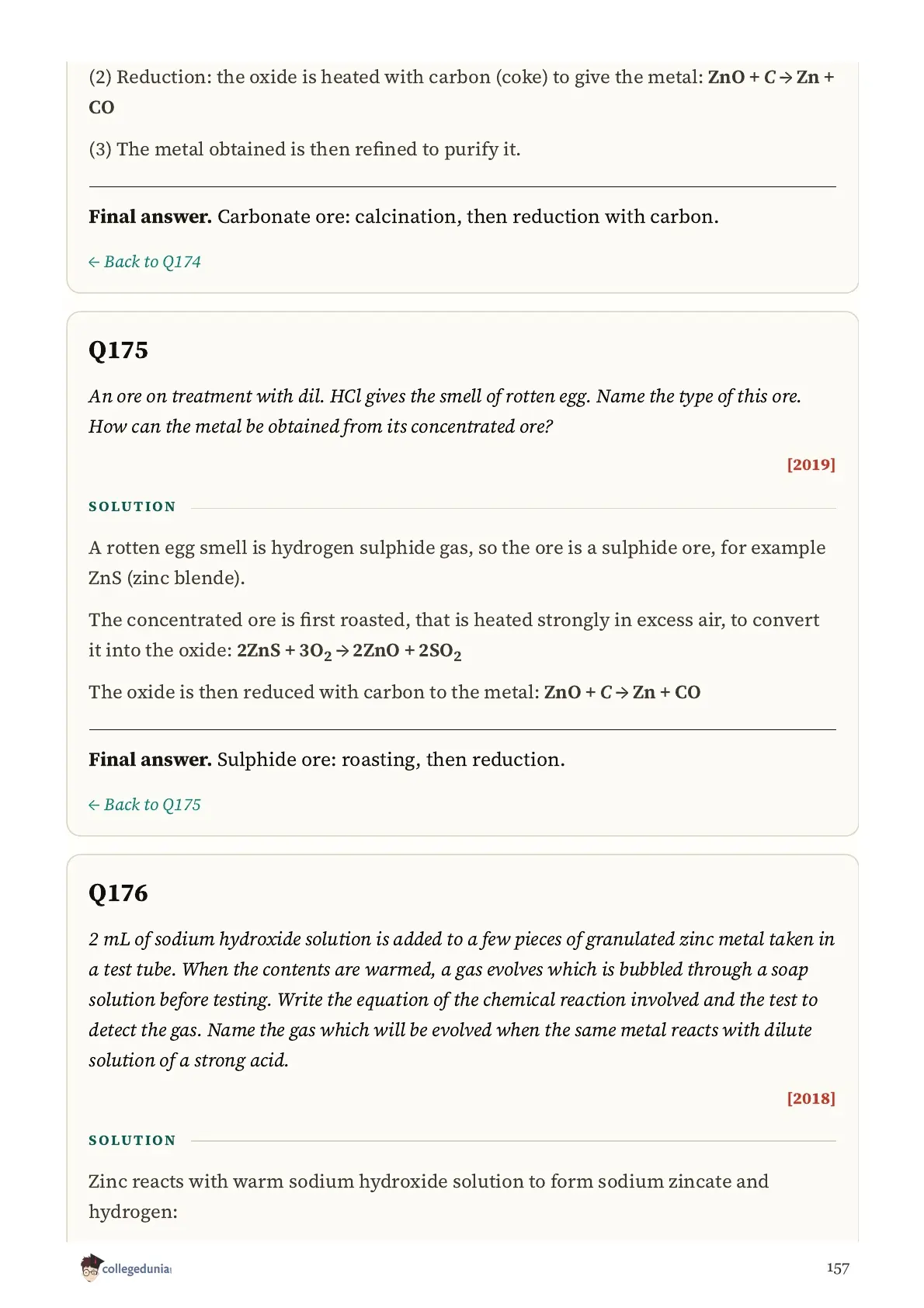
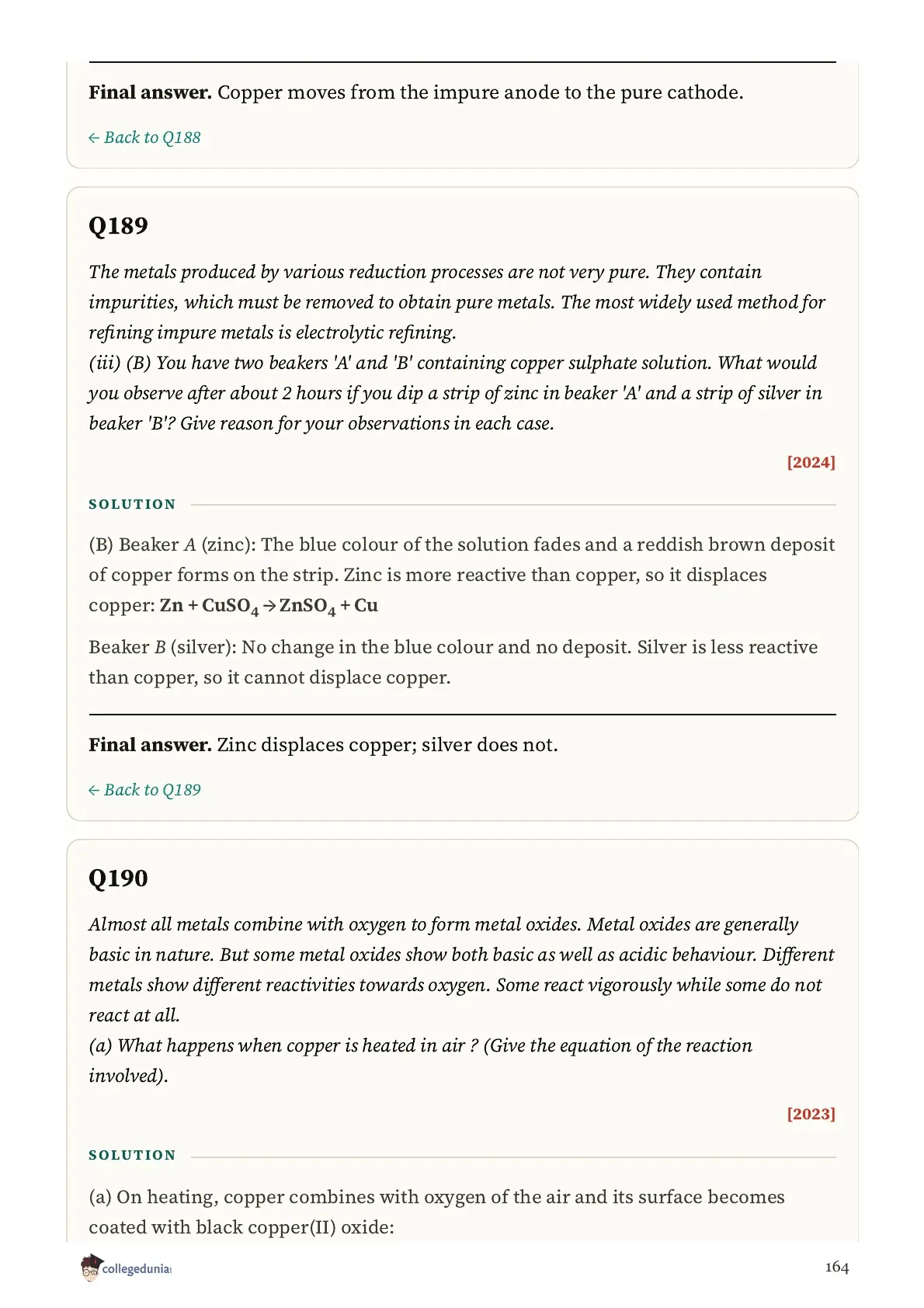
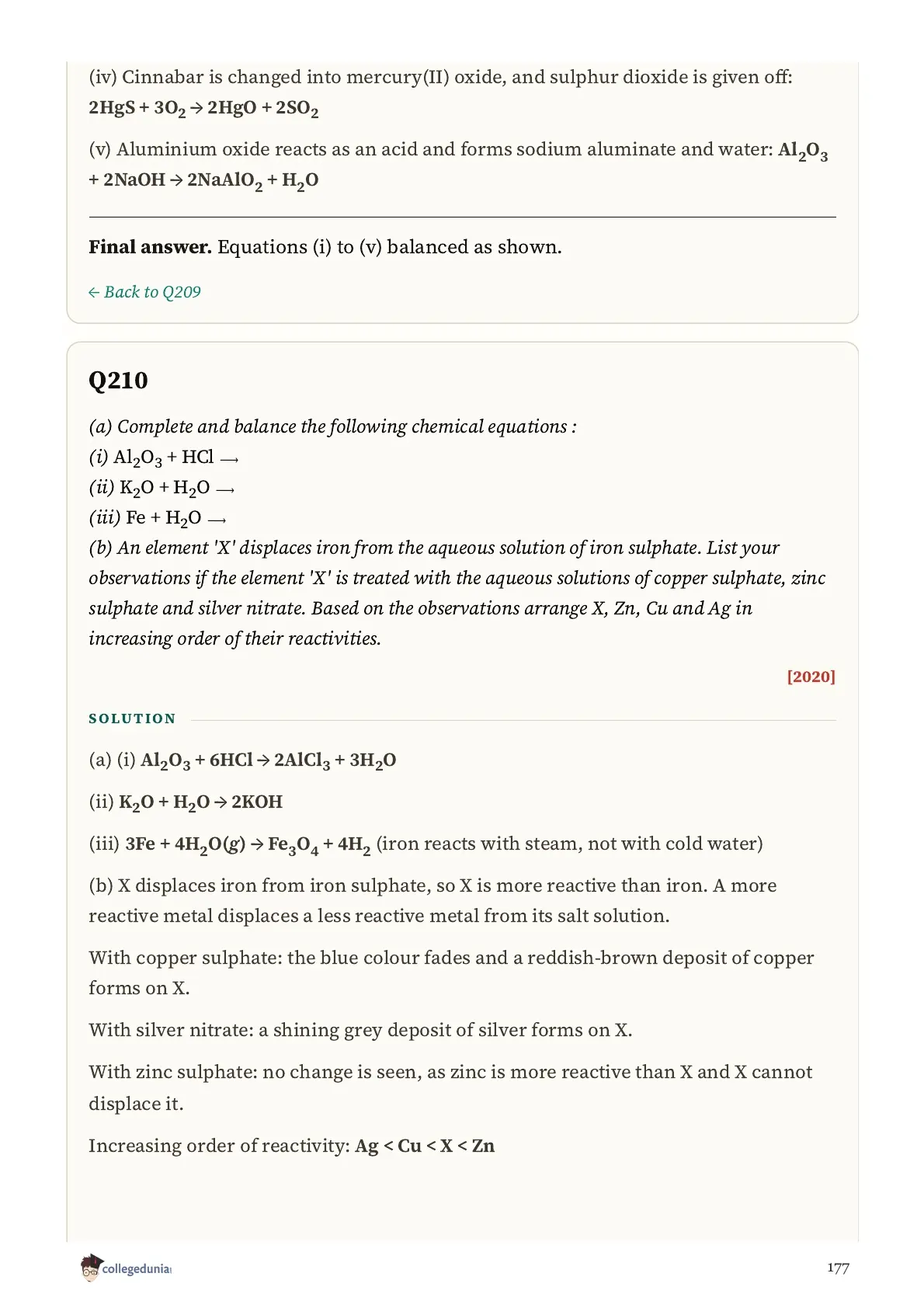
Reactions of metals carry most of the set. 65 questions mention an oxide, 33 involve a dilute acid and 17 involve water, steam or the way a metal floats or sinks in it. 25 touch on reactivity and 7 are displacement reactions, such as aluminium added to iron sulphate and copper sulphate solutions, or iron added to aluminium sulphate and copper sulphate. 24 questions use a salt solution such as CuSO4, FeSO4 or ZnSO4.
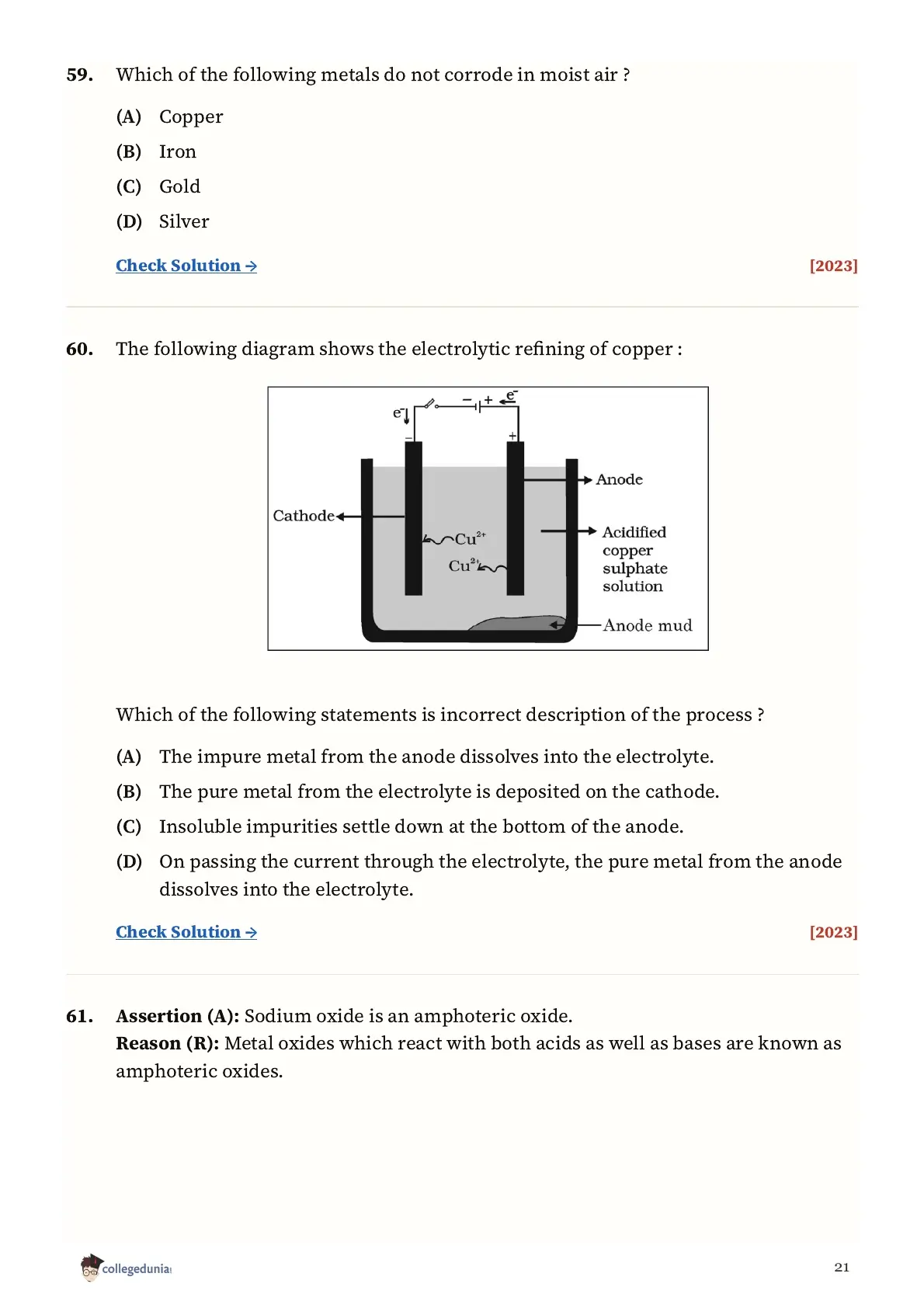
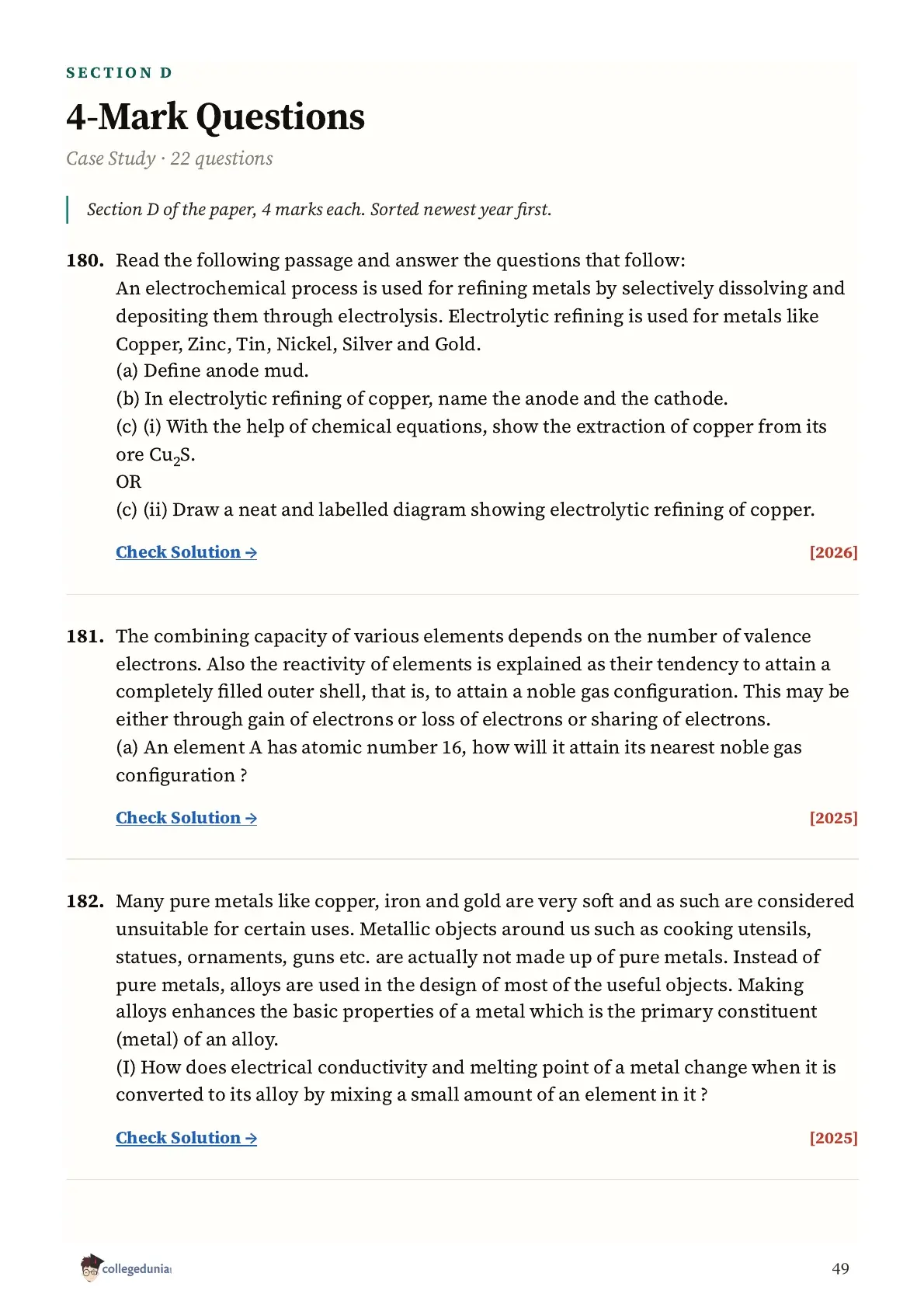
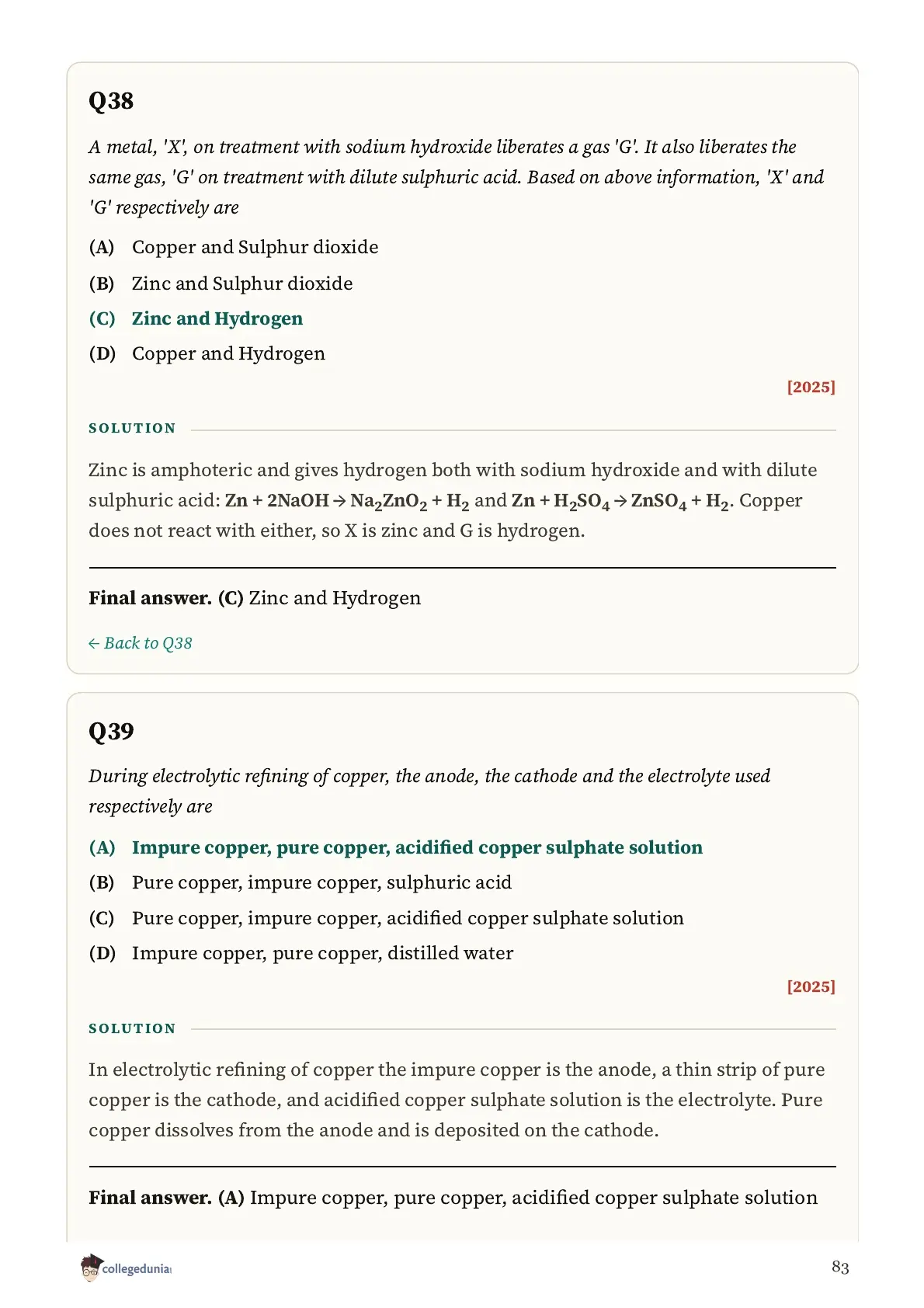
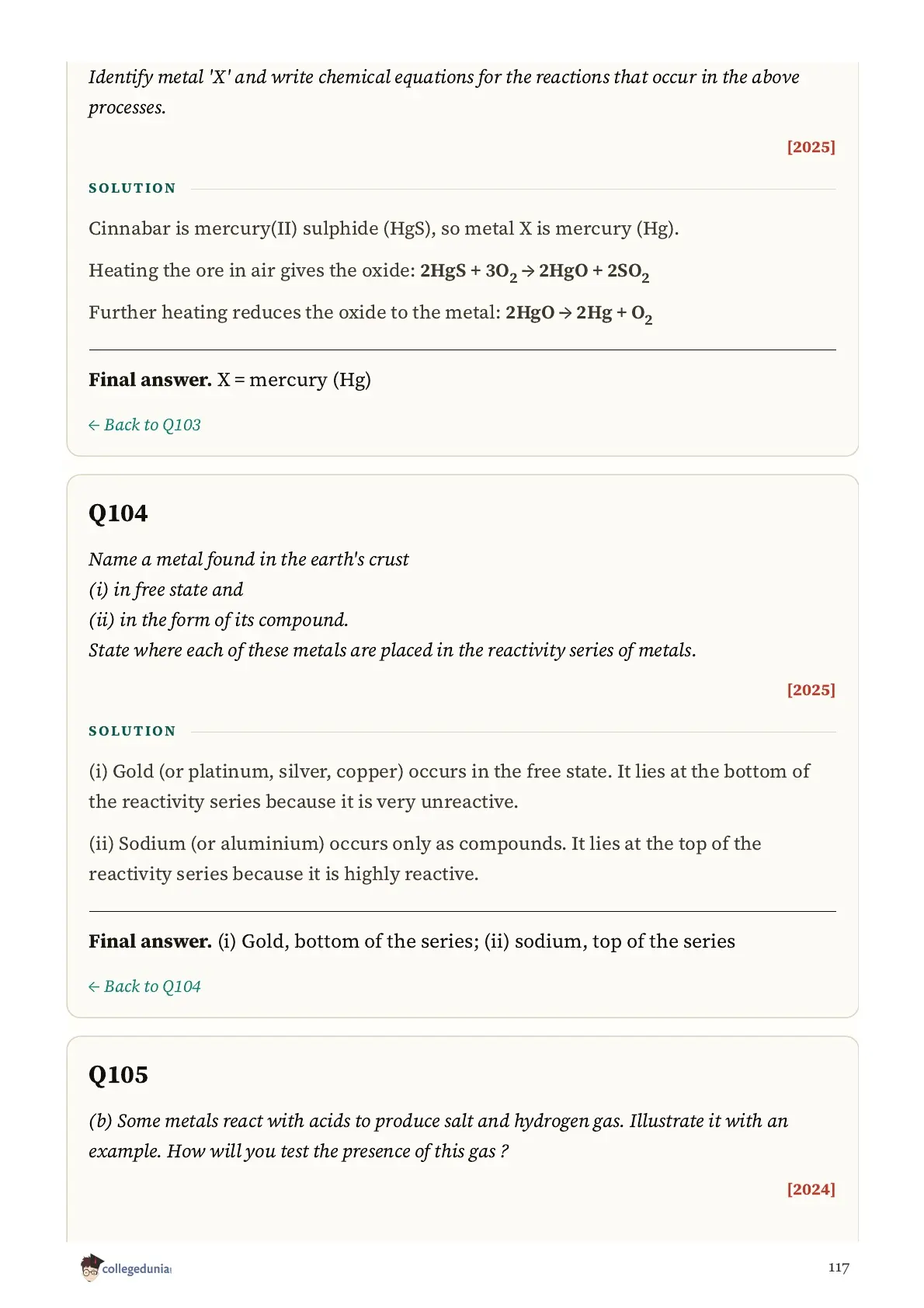
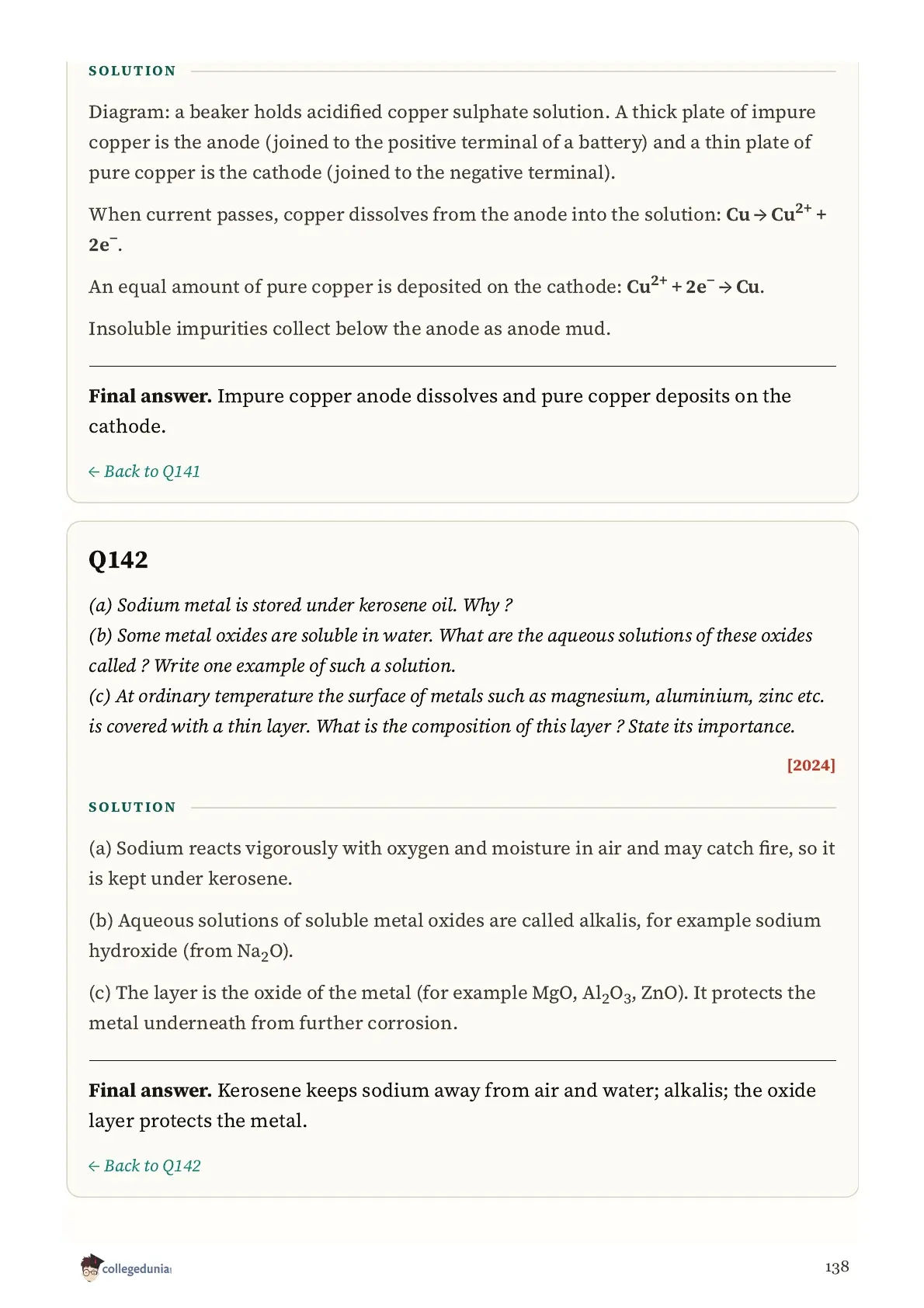
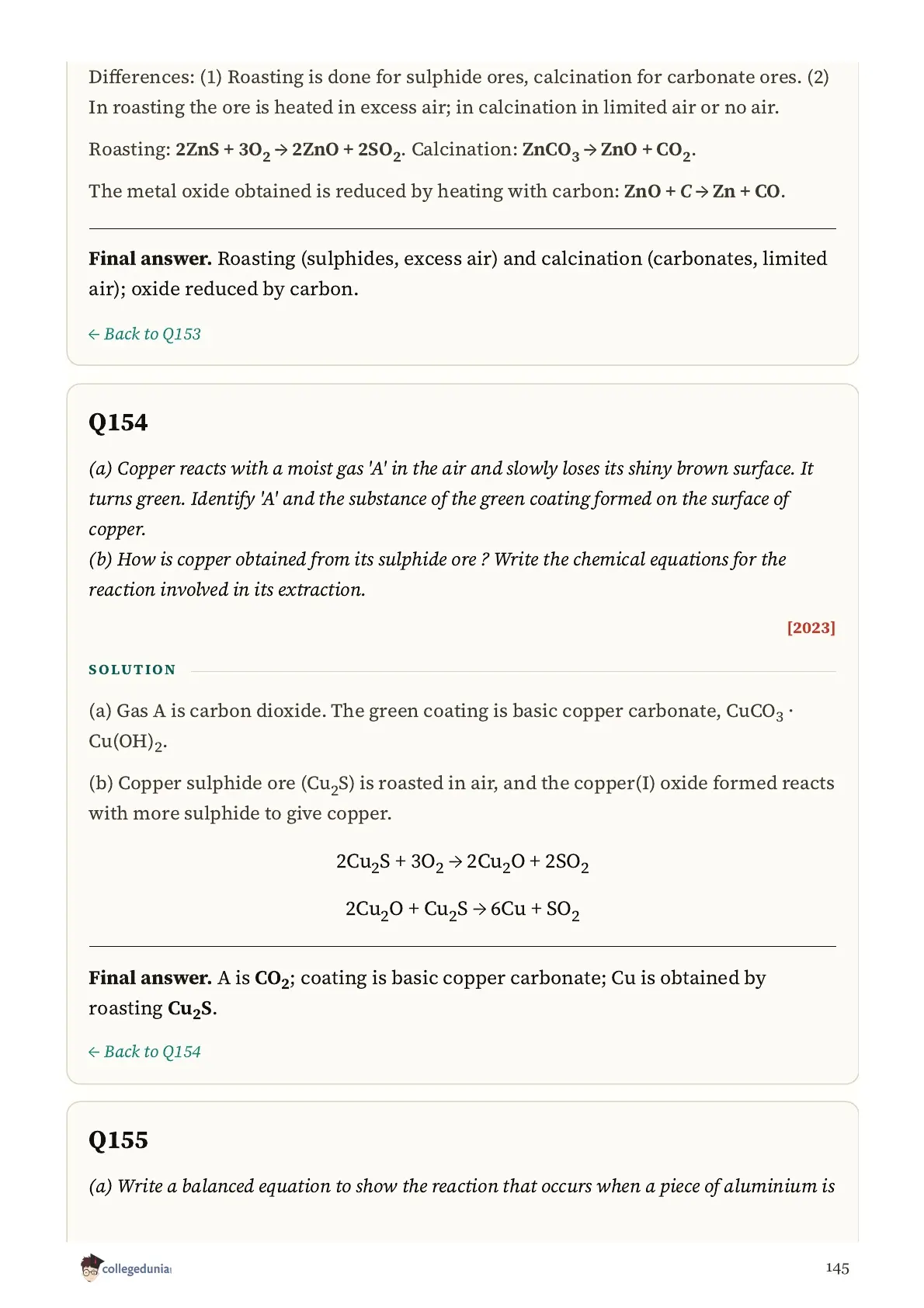
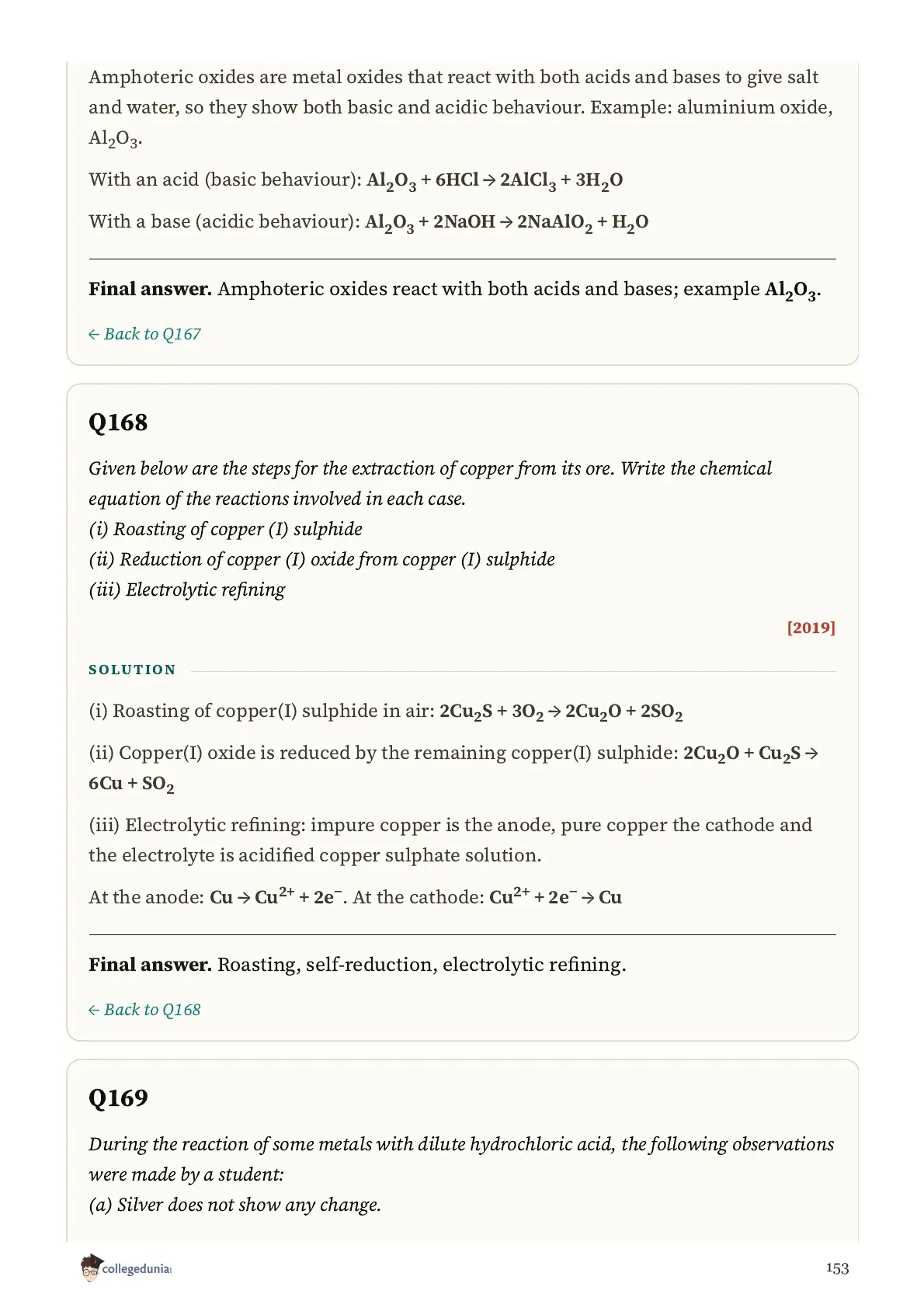
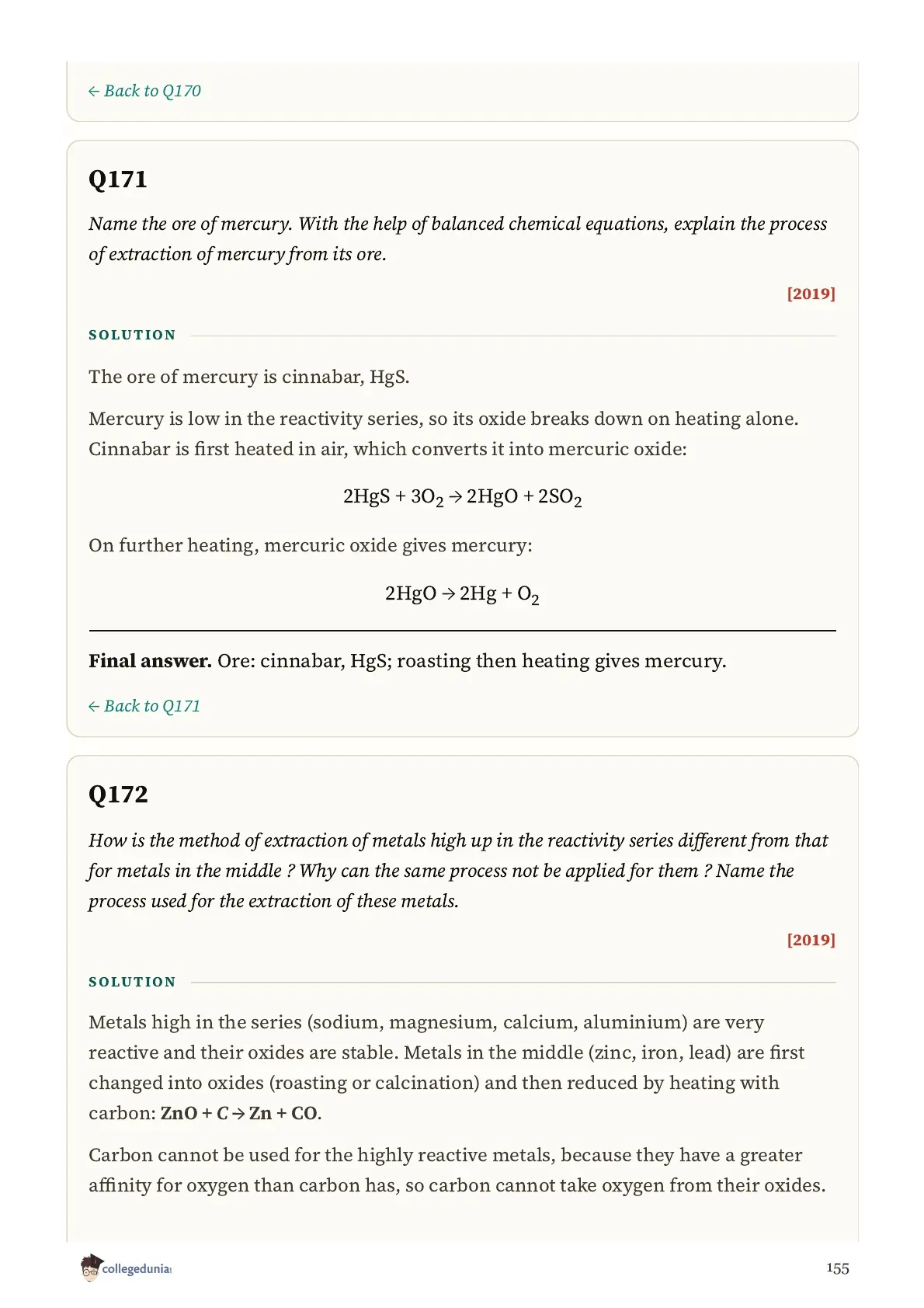
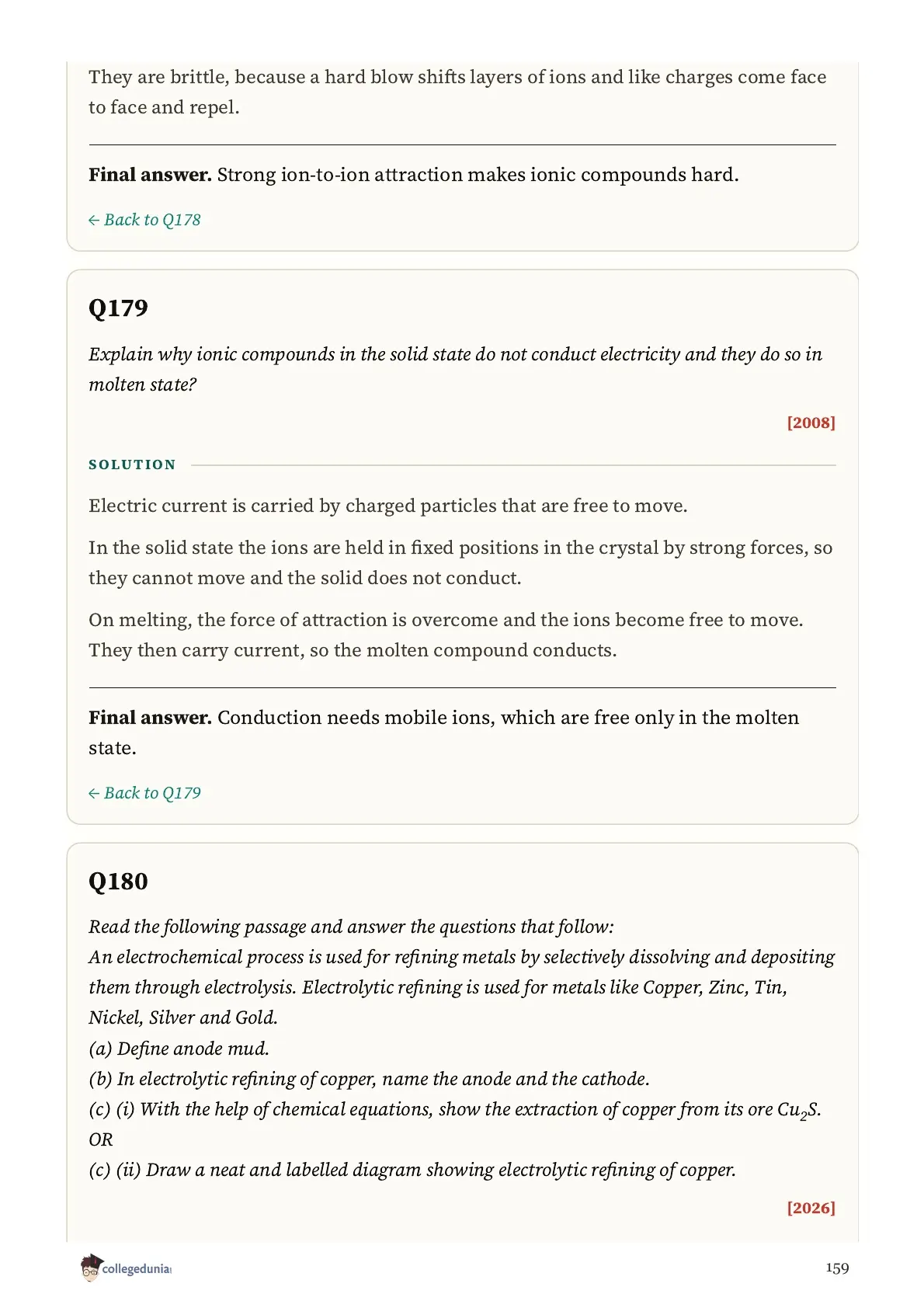
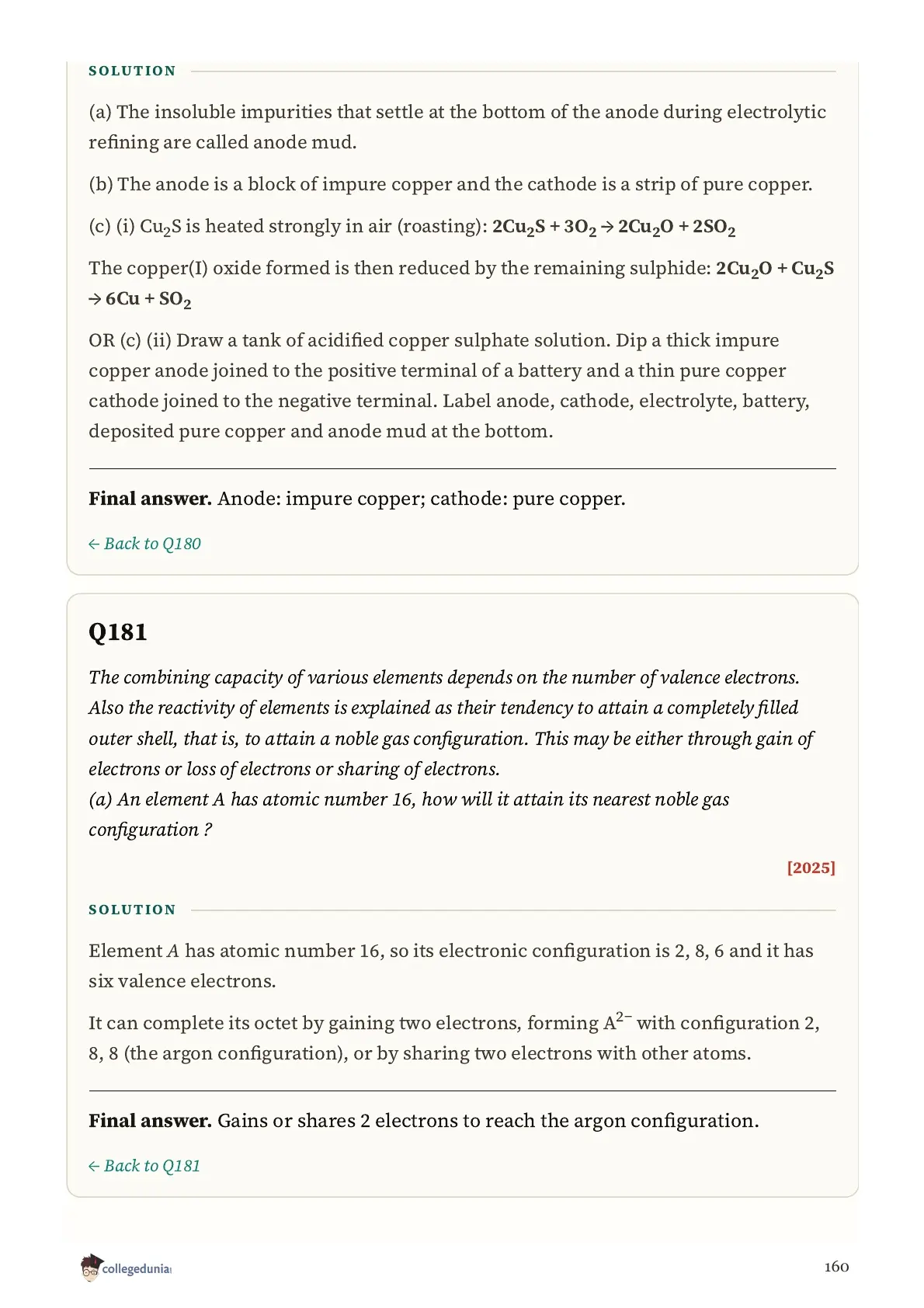
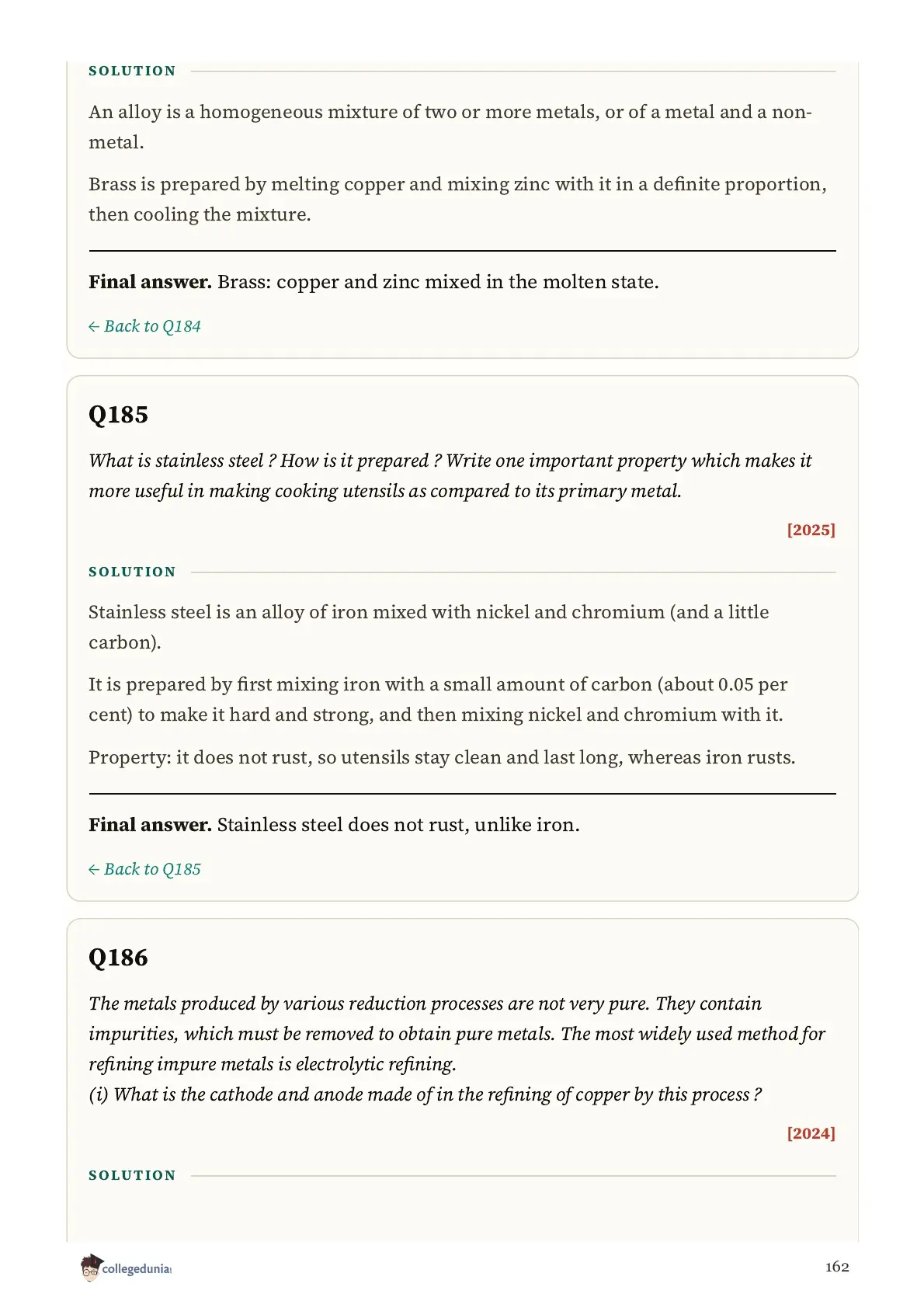
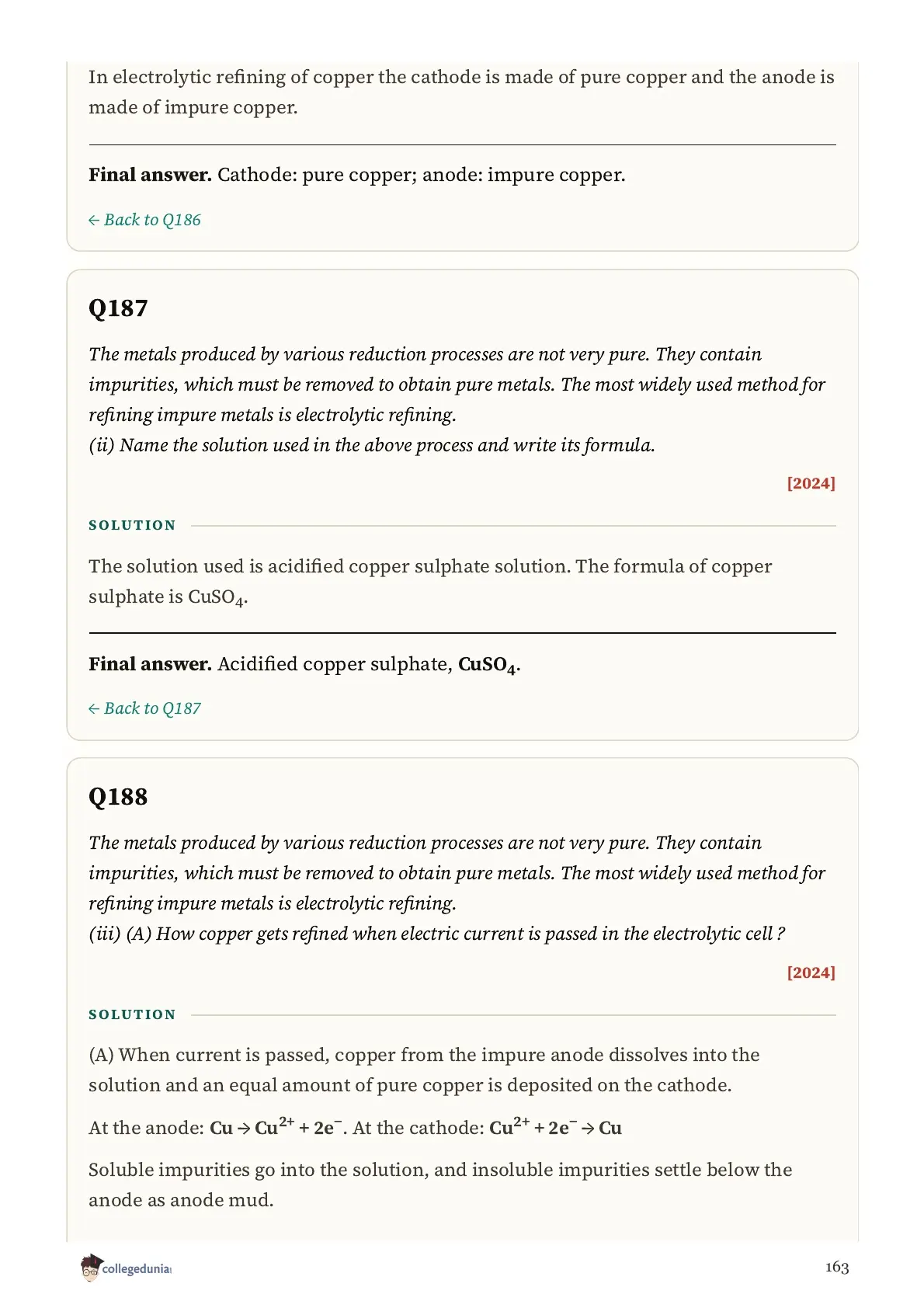
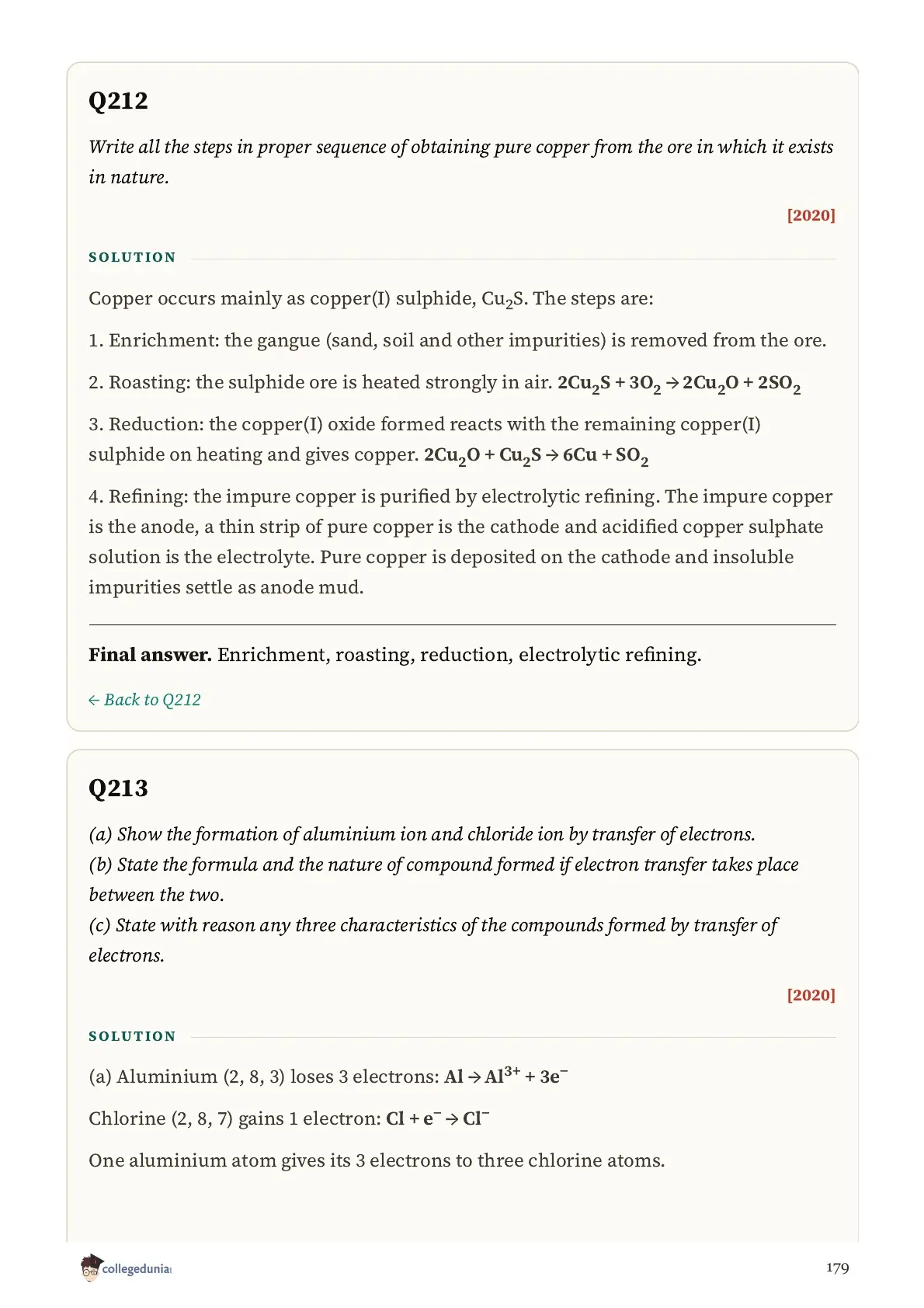
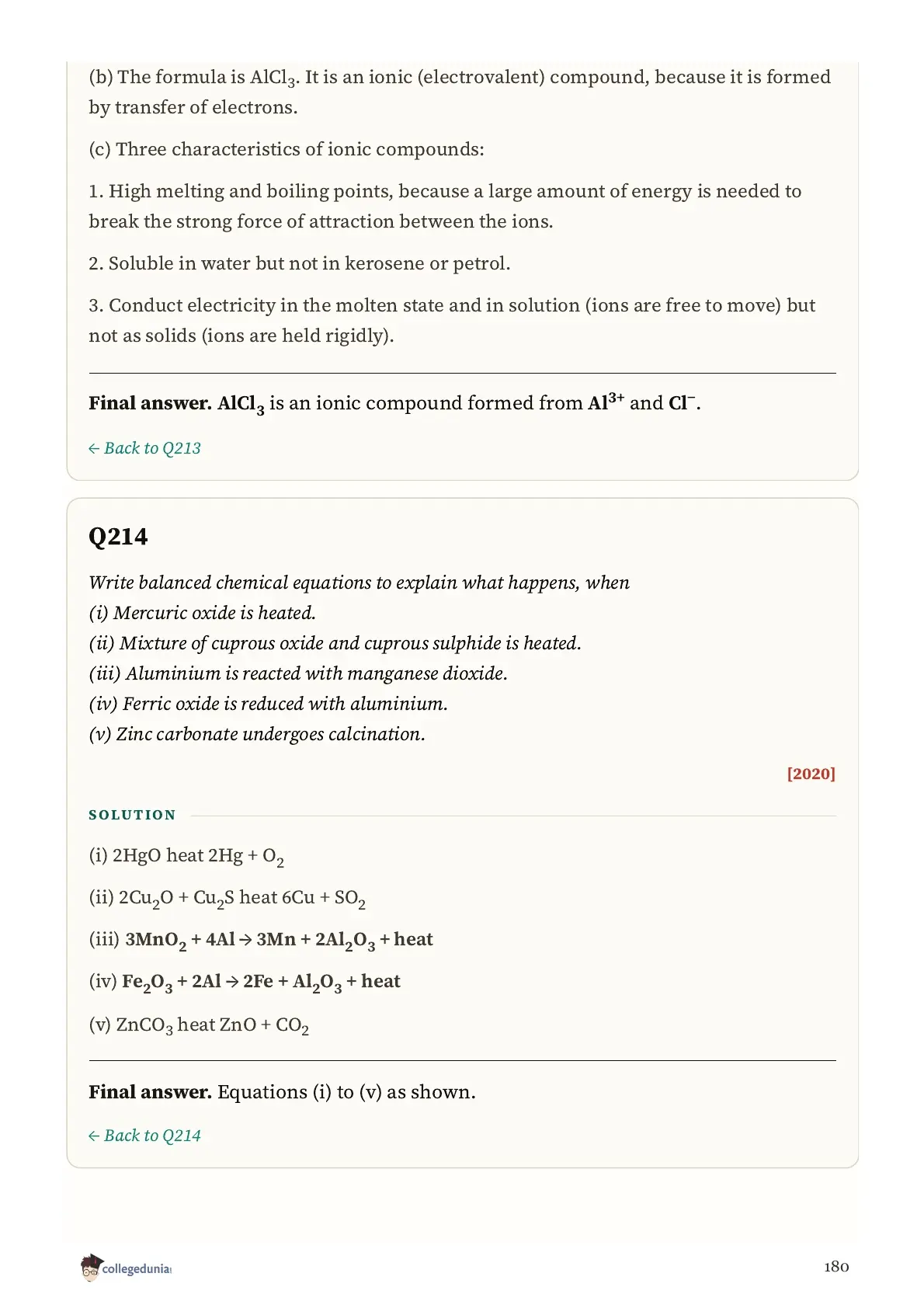
Extraction is the second block. 42 questions ask about ores, roasting, calcination, reduction or refining, 14 about converting a sulphide or carbonate to its oxide first, and 23 about electrolysis. Several ask for the electrolytic refining of copper, with the anode, cathode and electrolyte named, and for the extraction of mercury from cinnabar and copper from its sulphide ore.
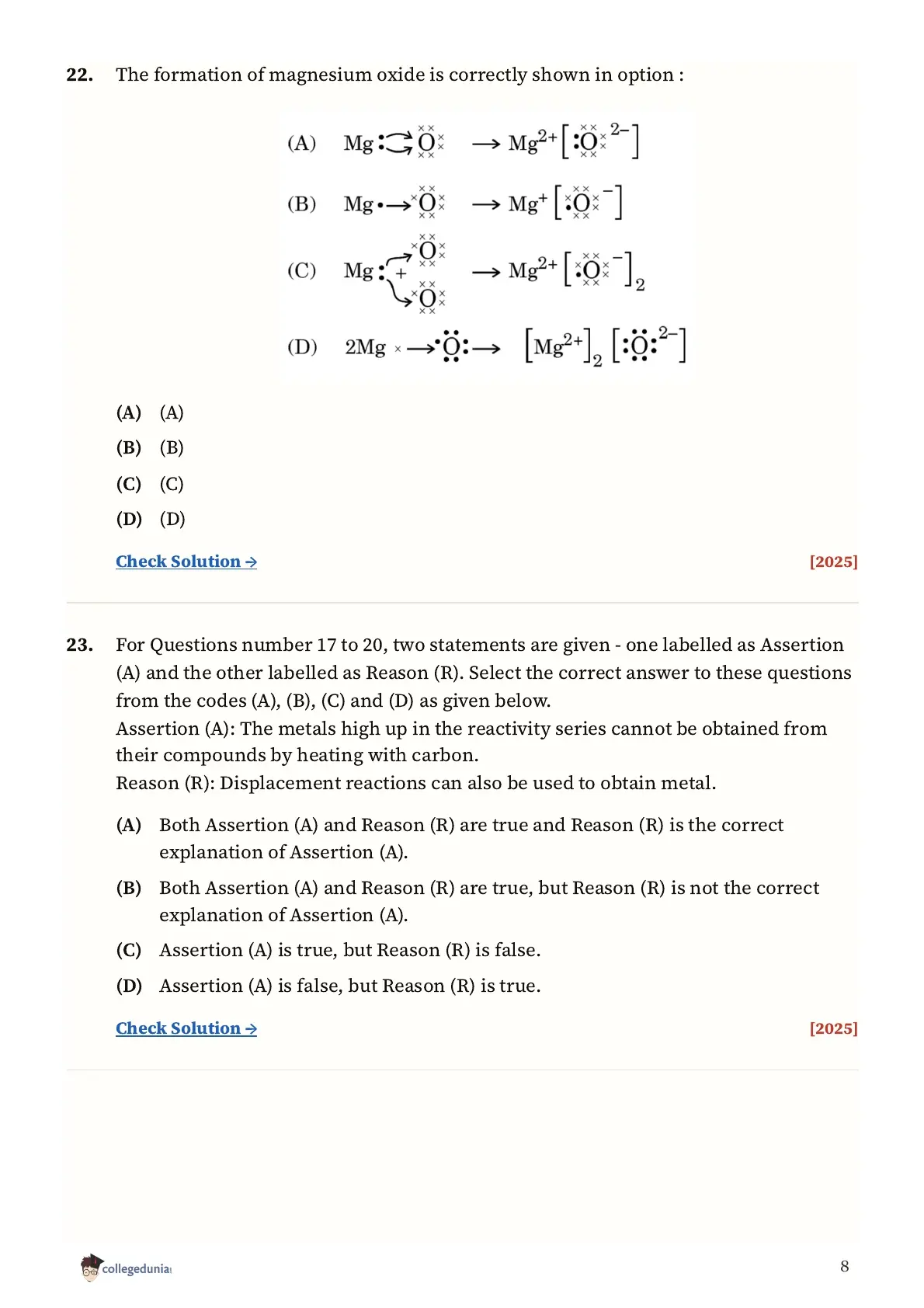
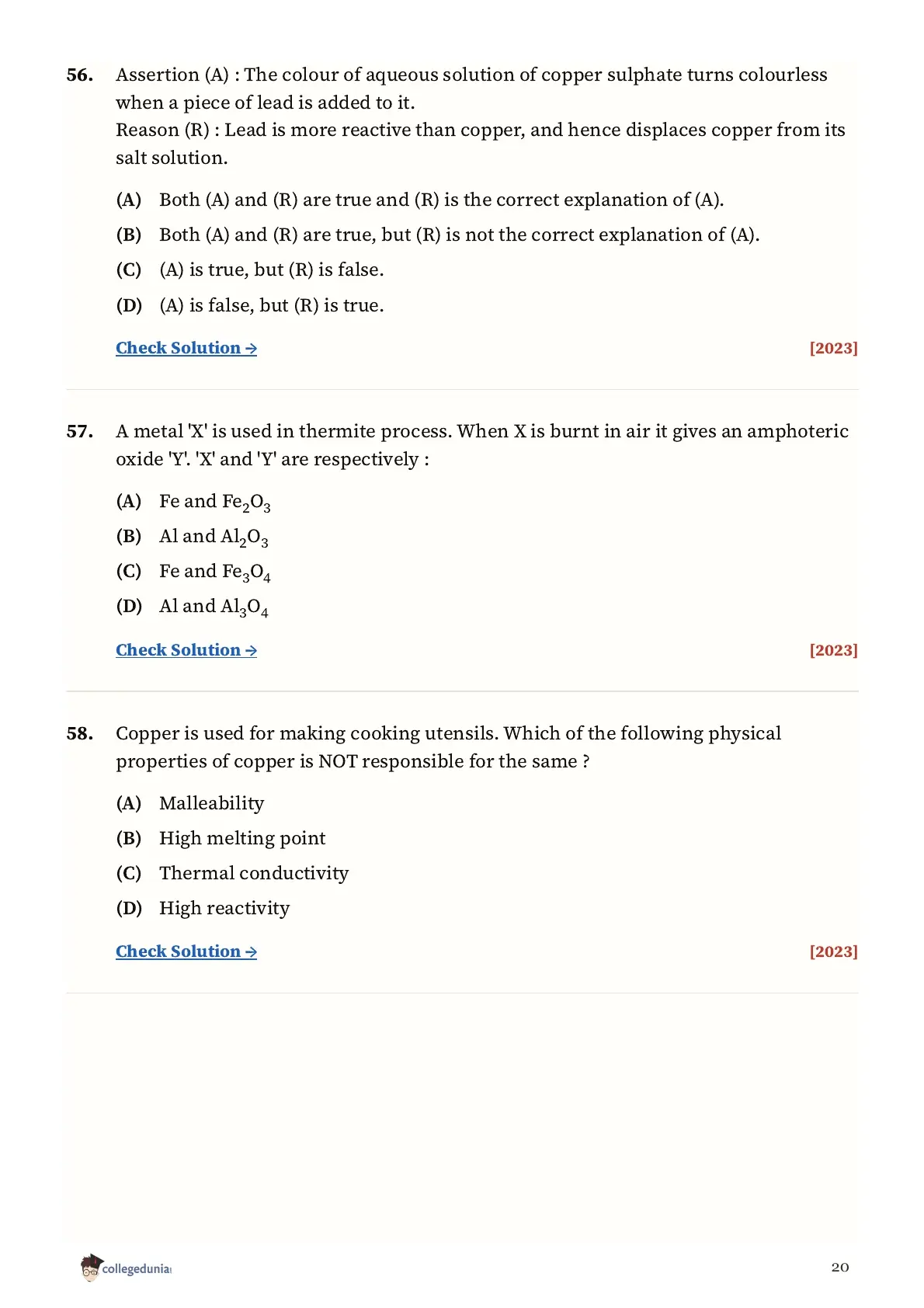
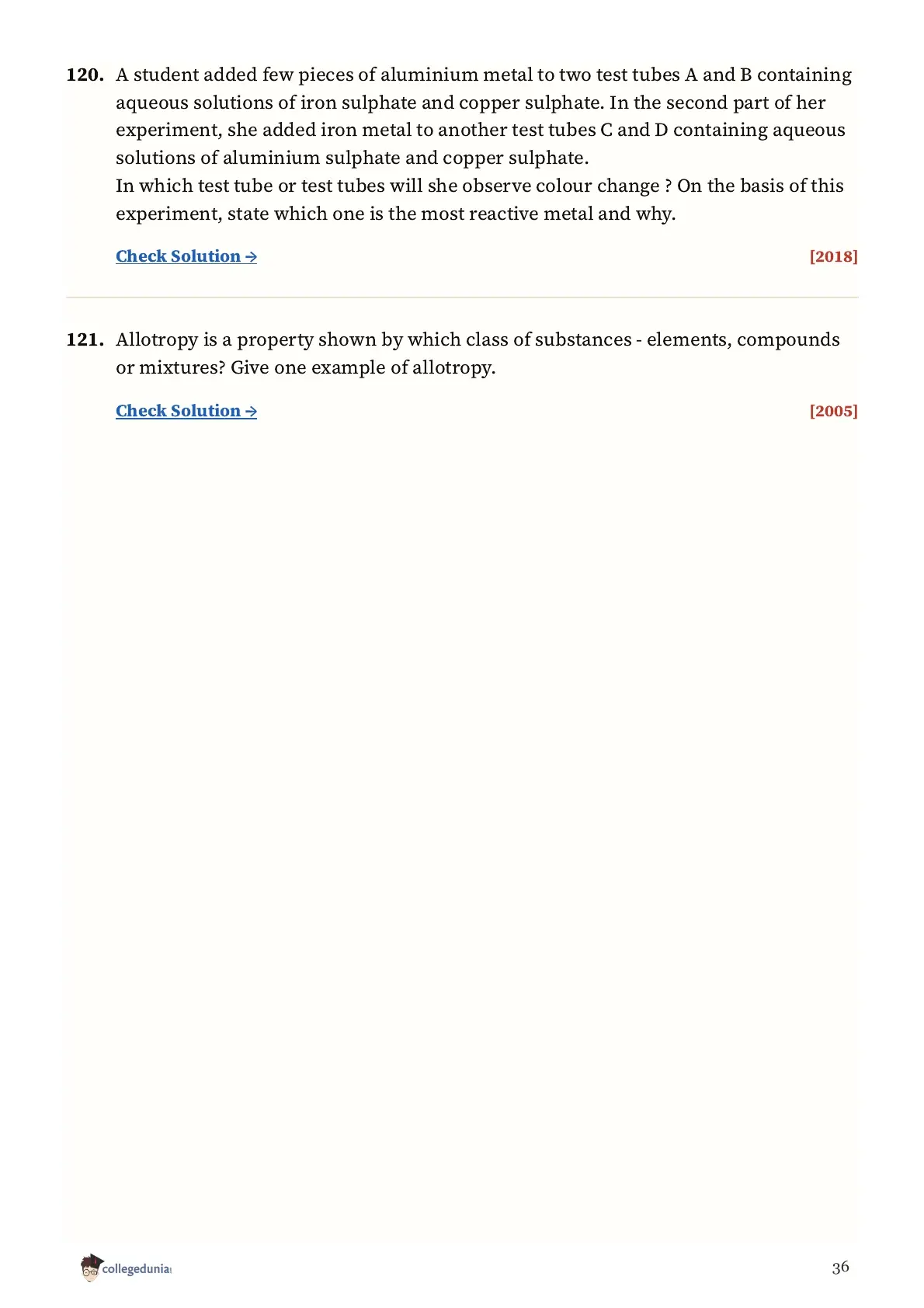
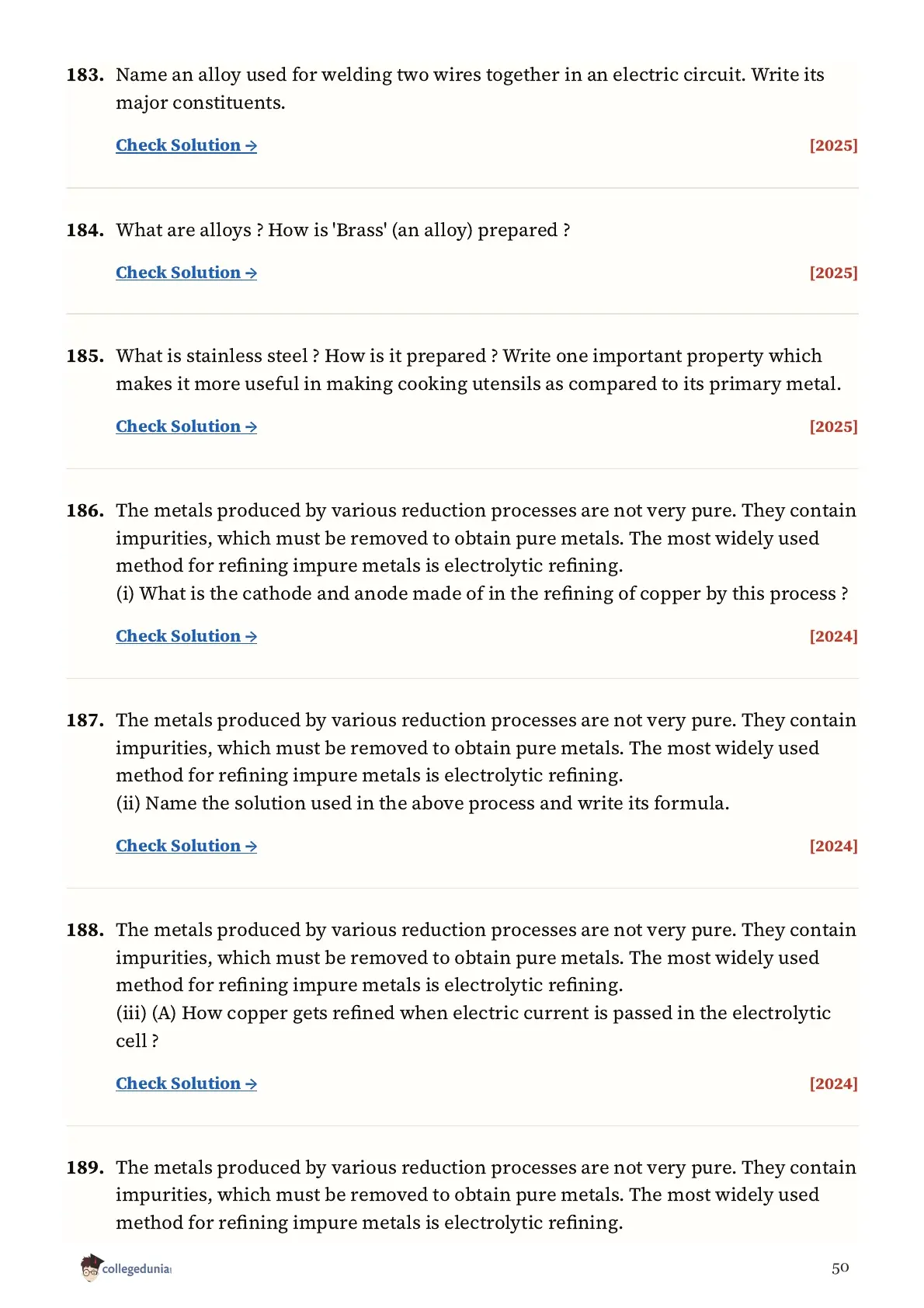
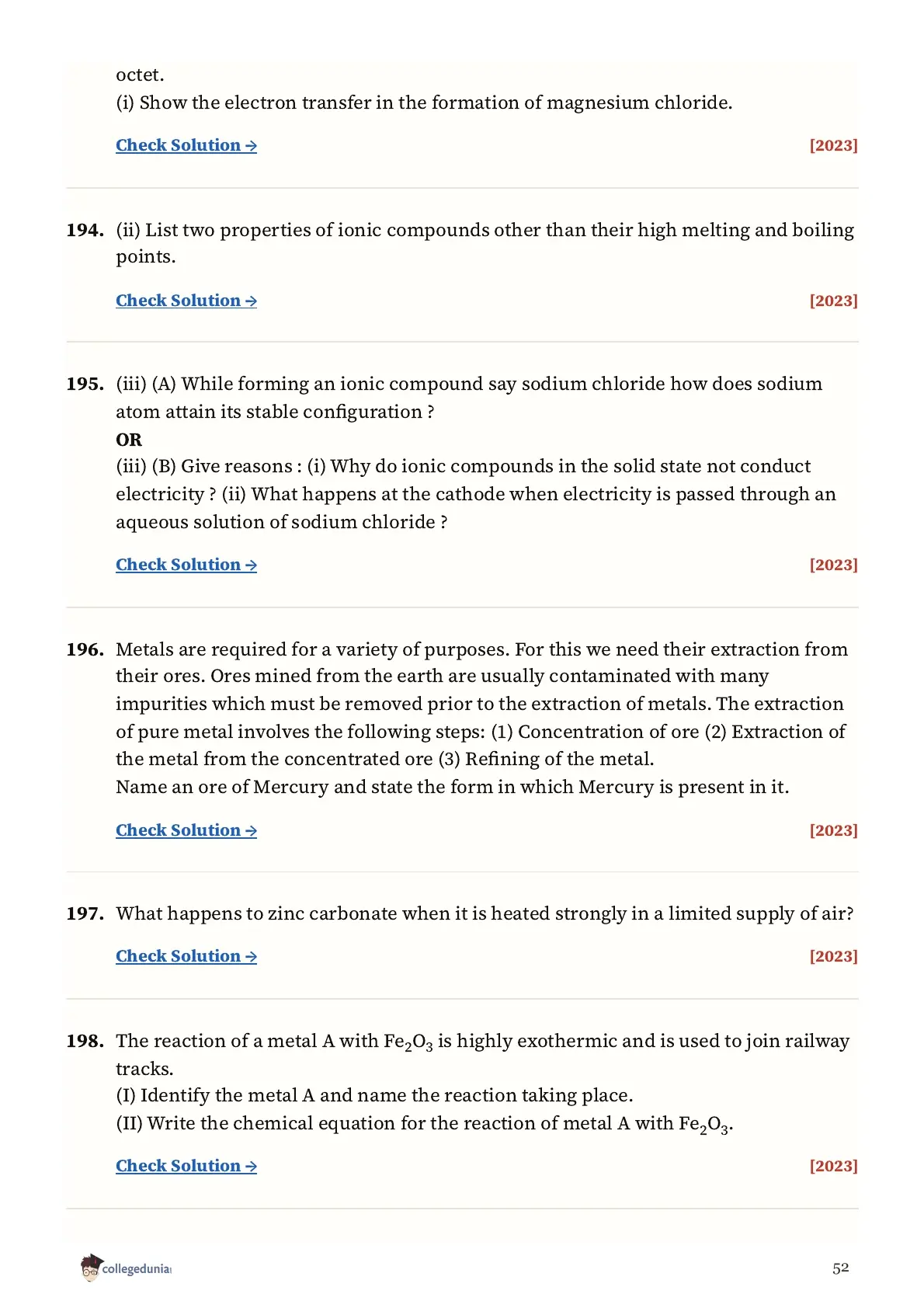
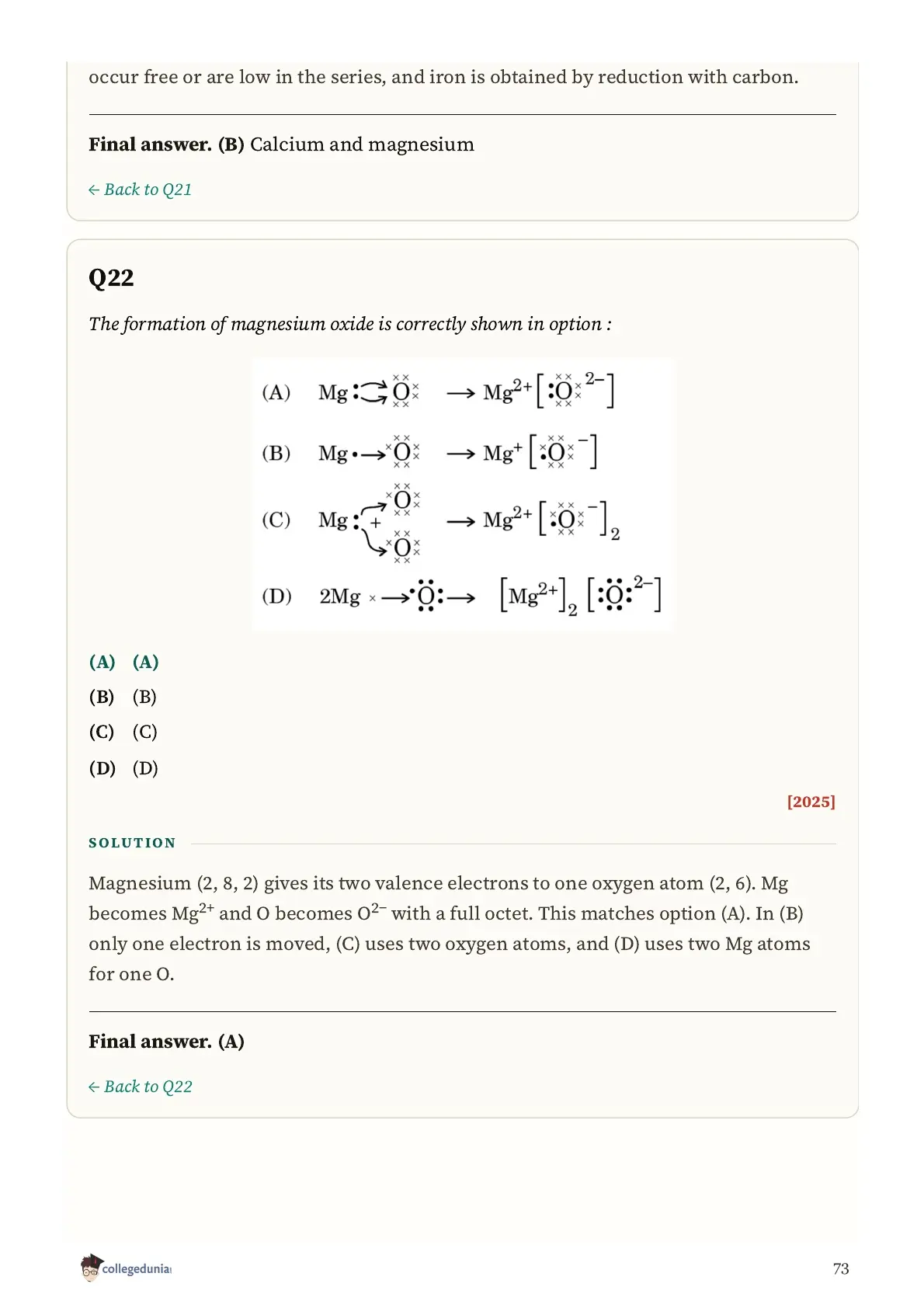
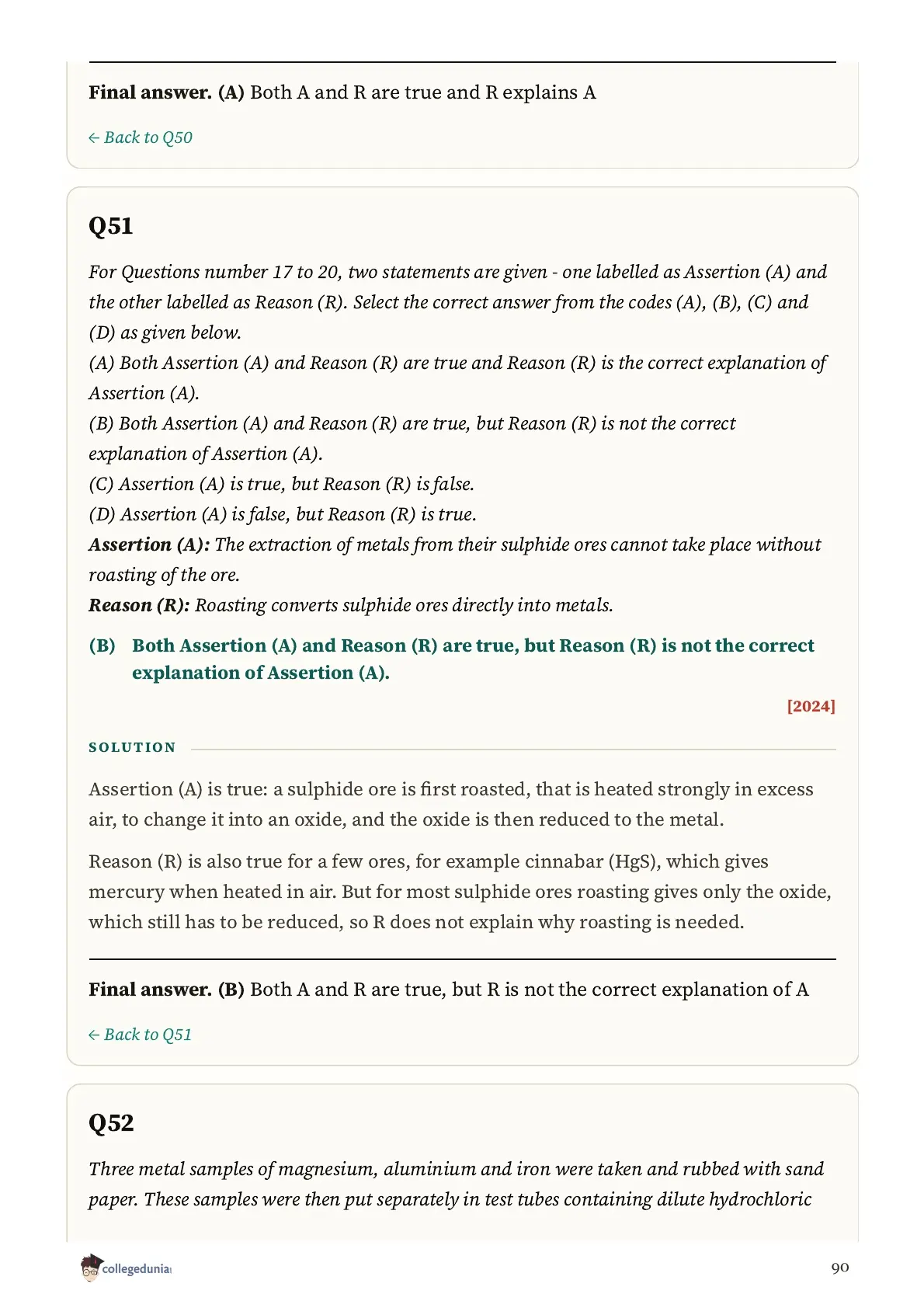
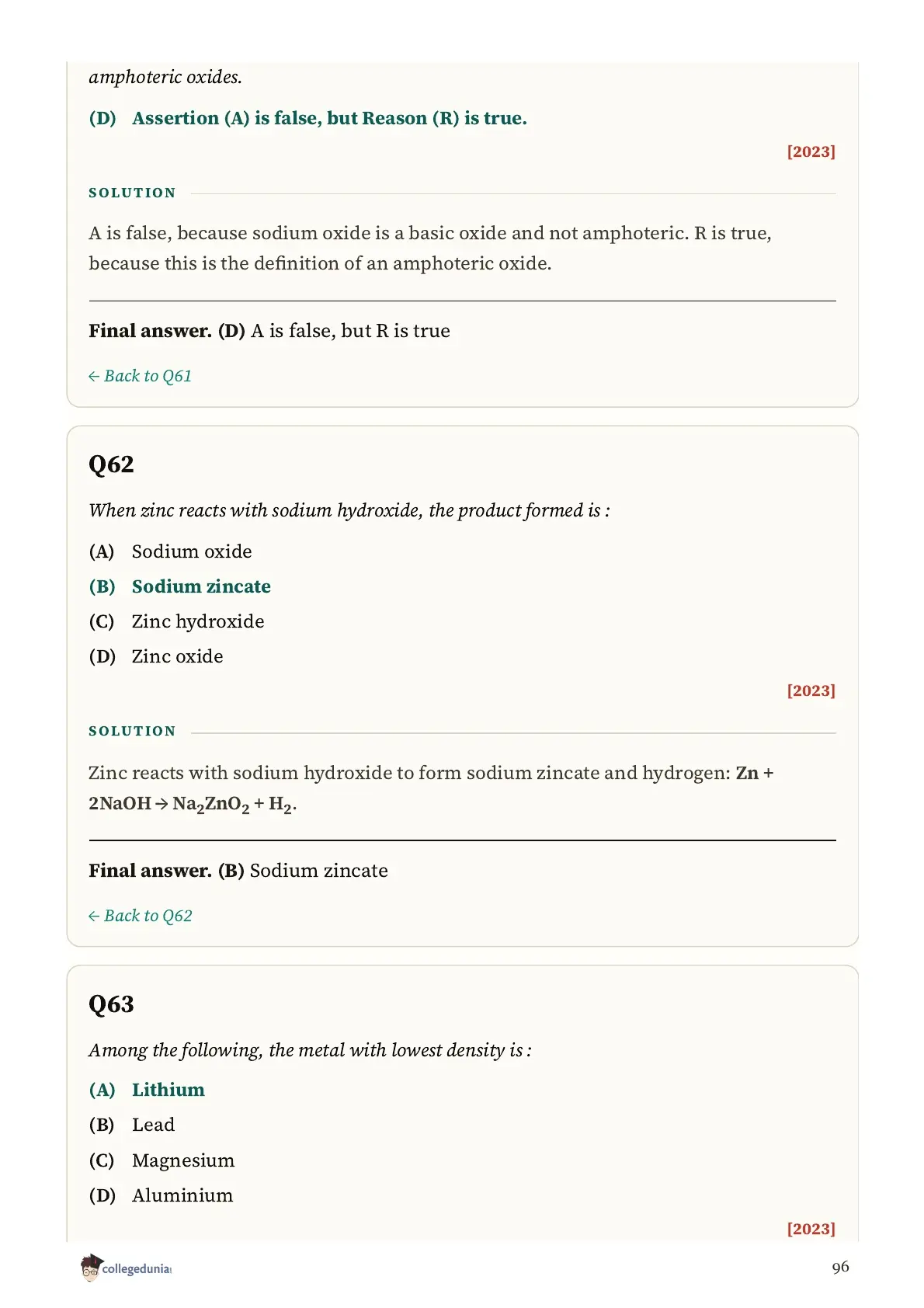
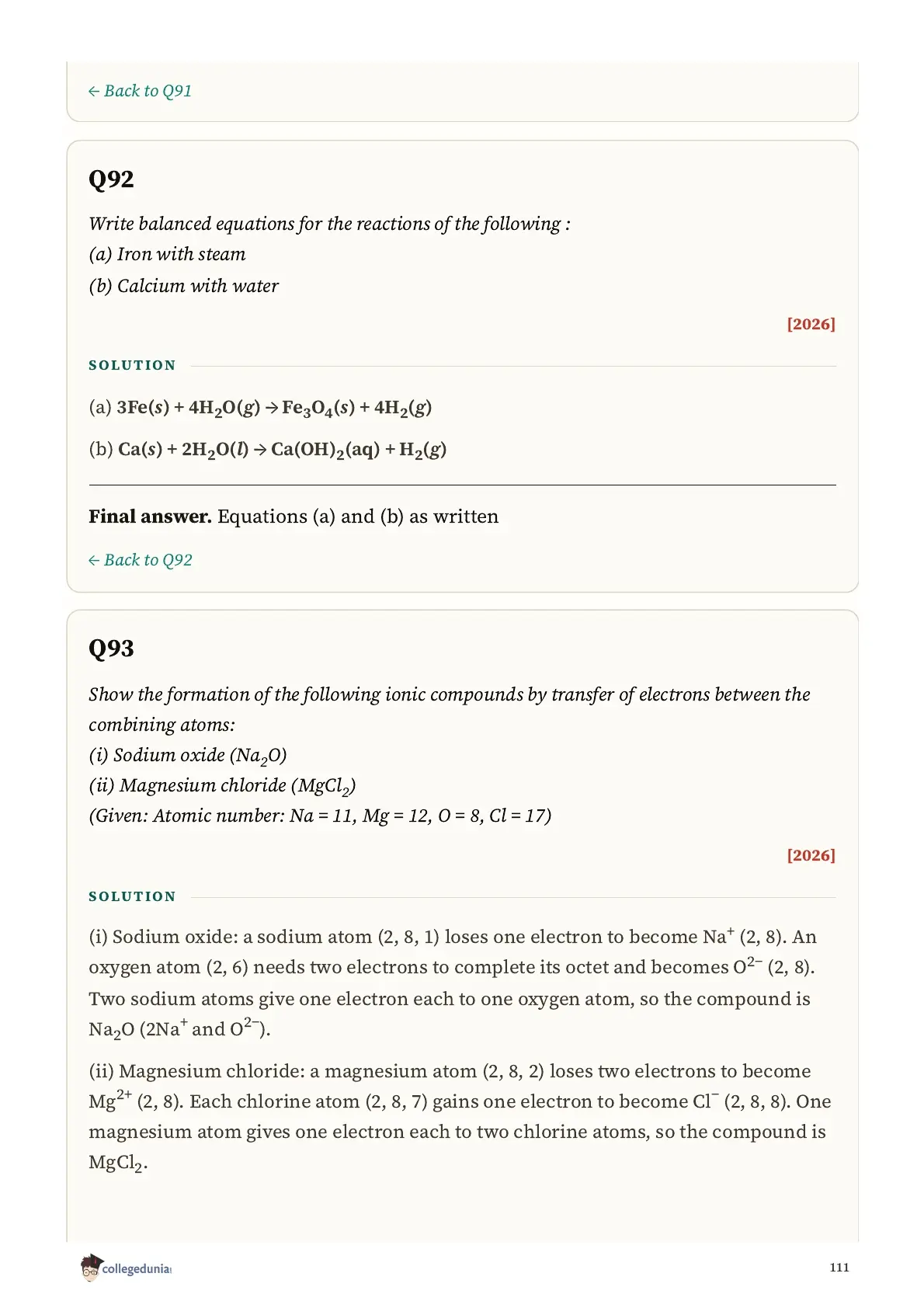
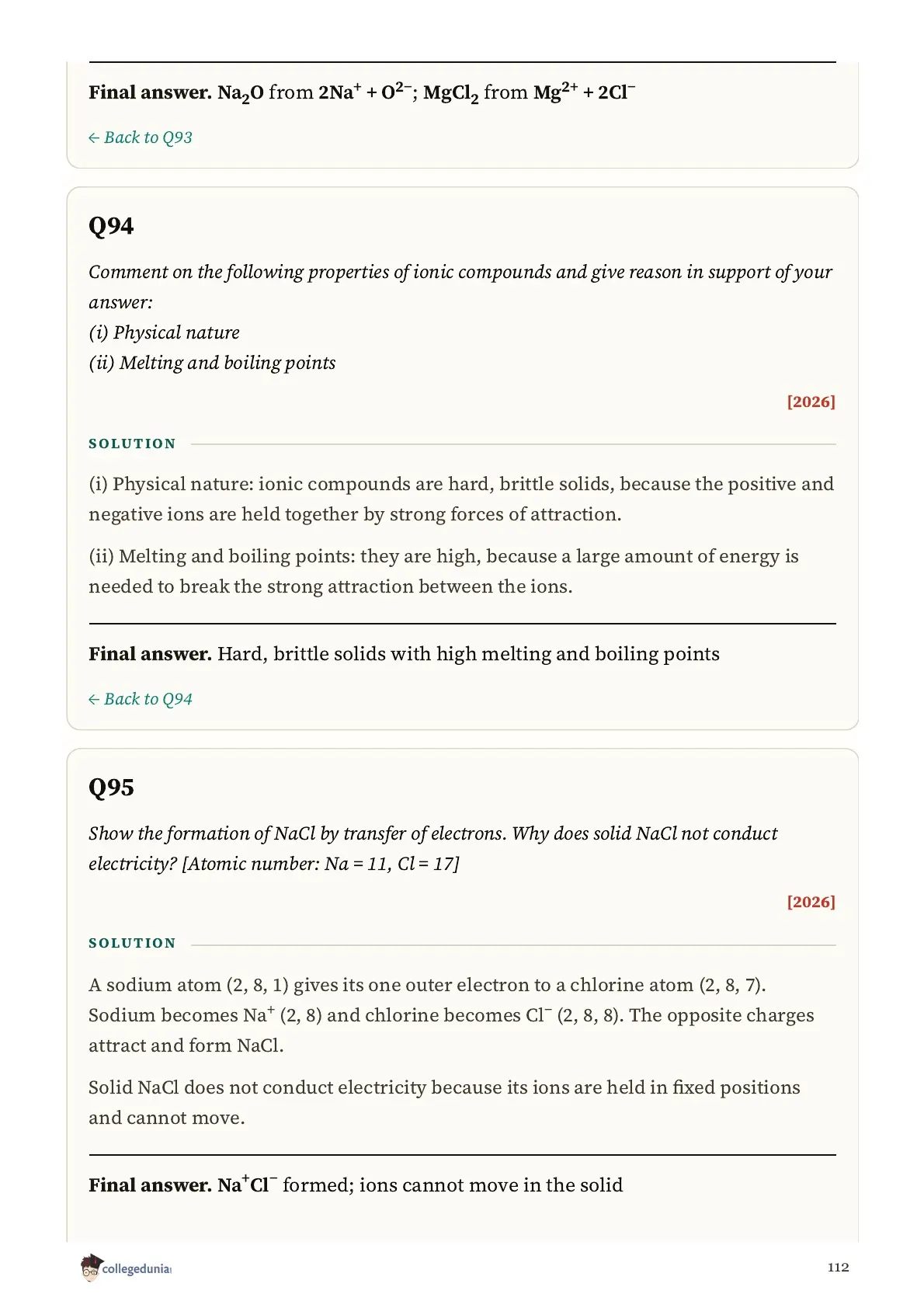
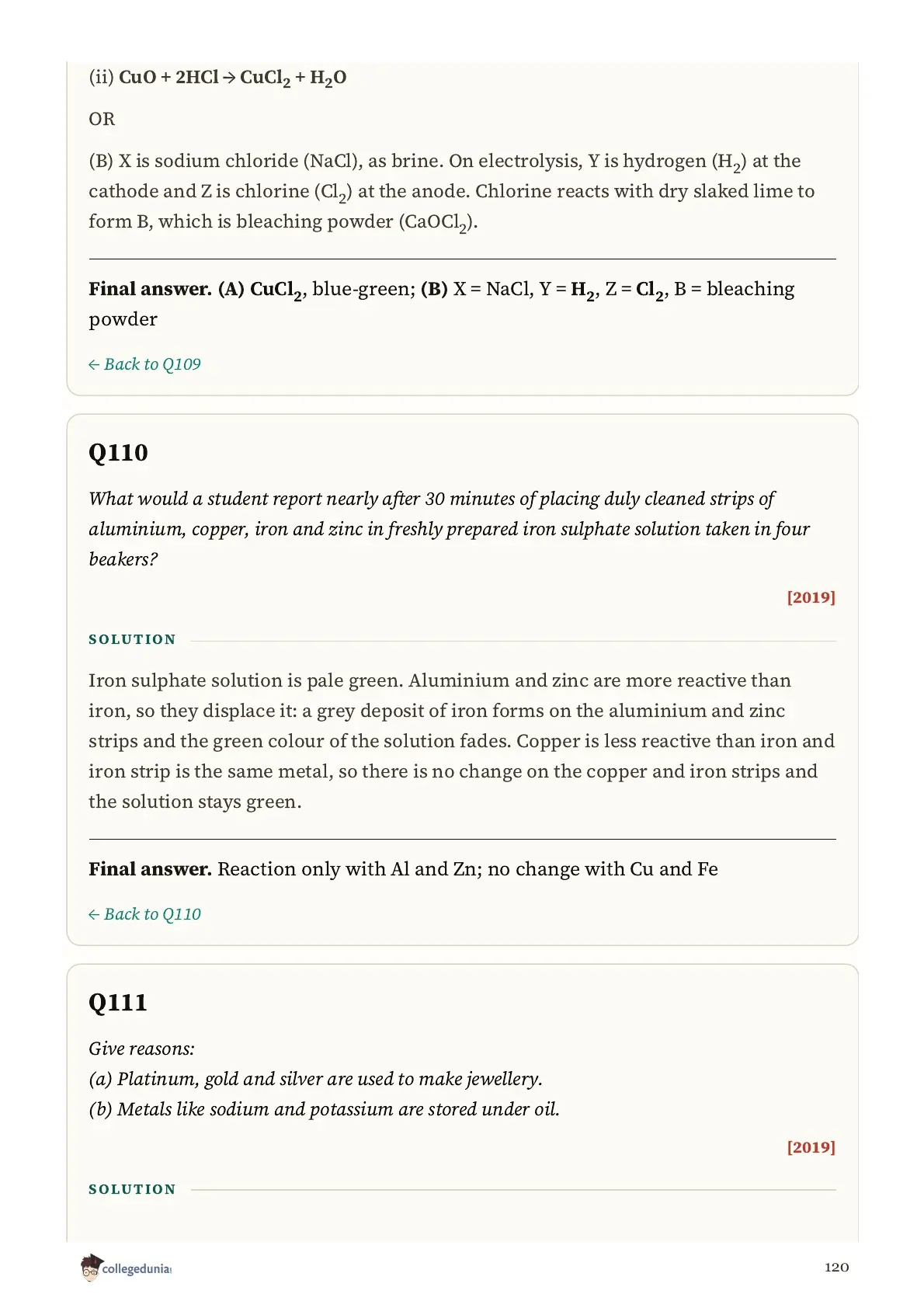
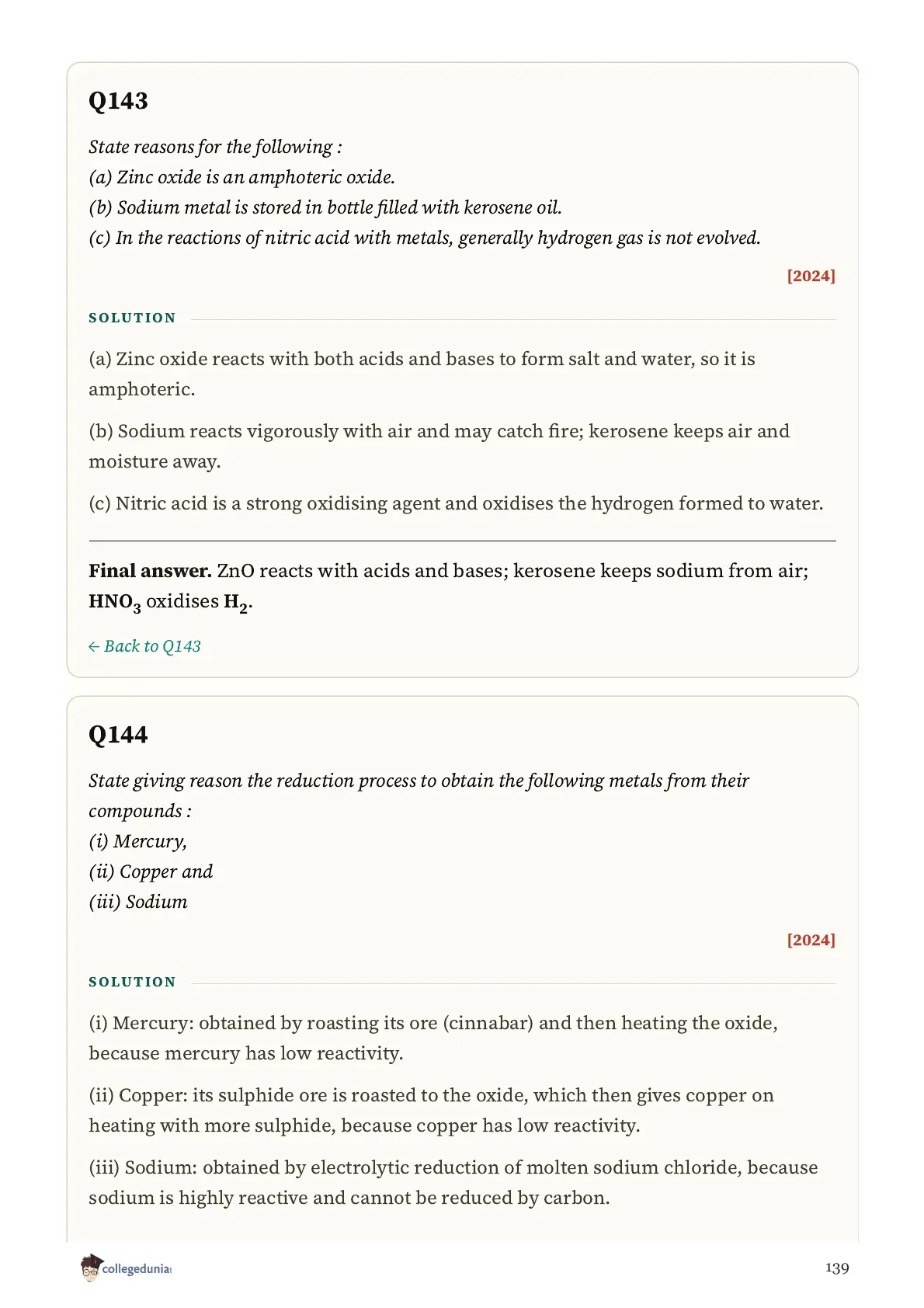
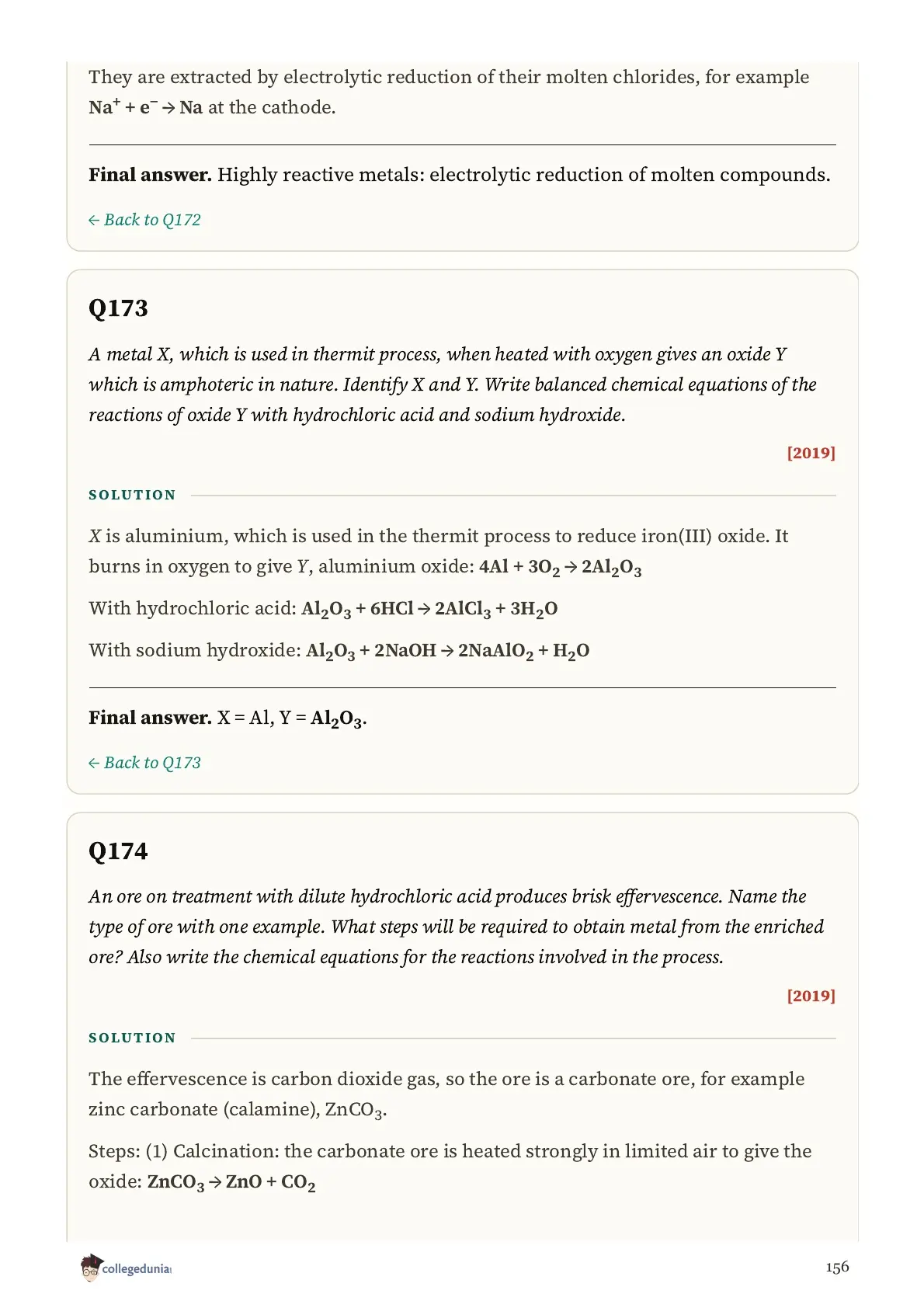
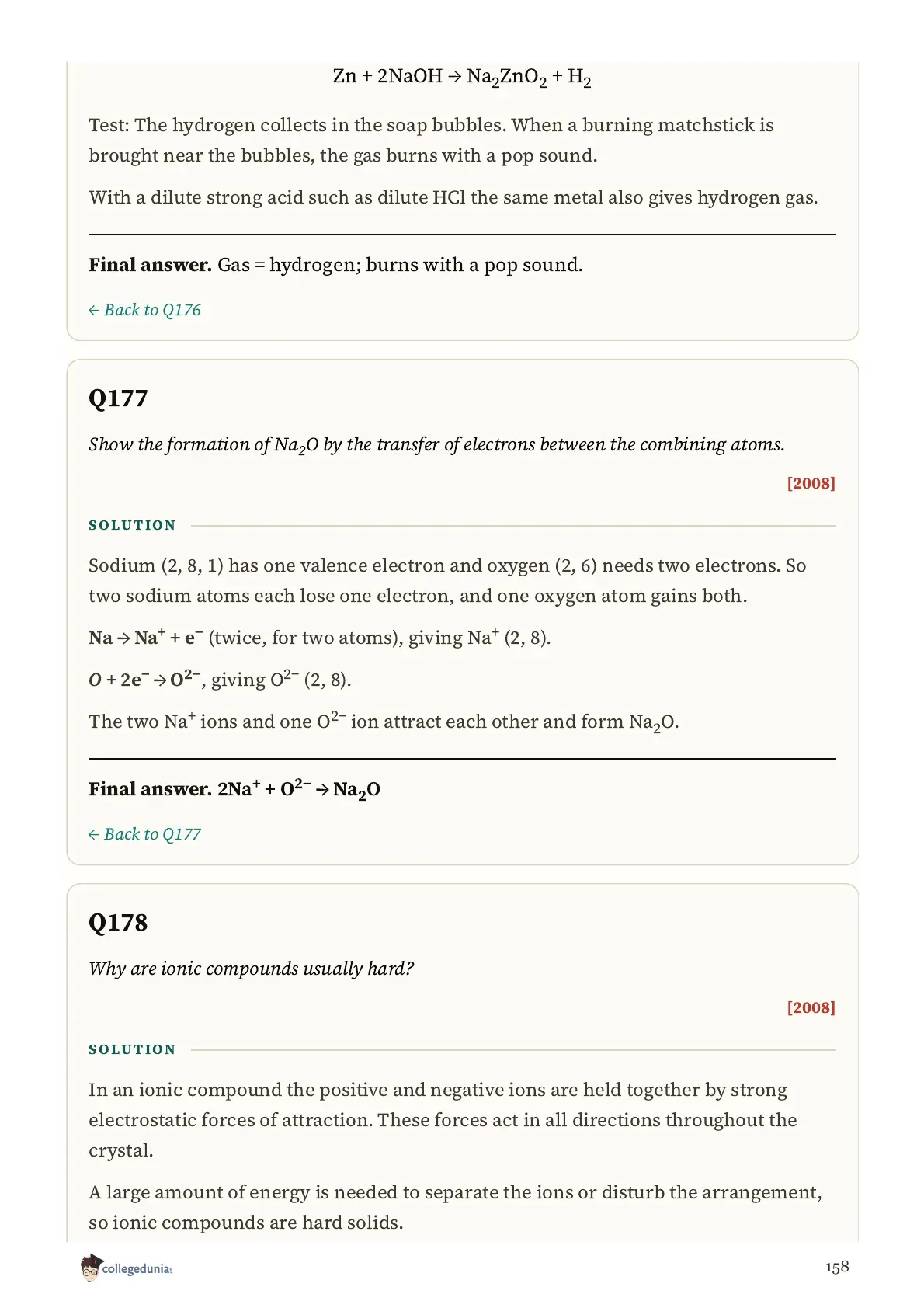
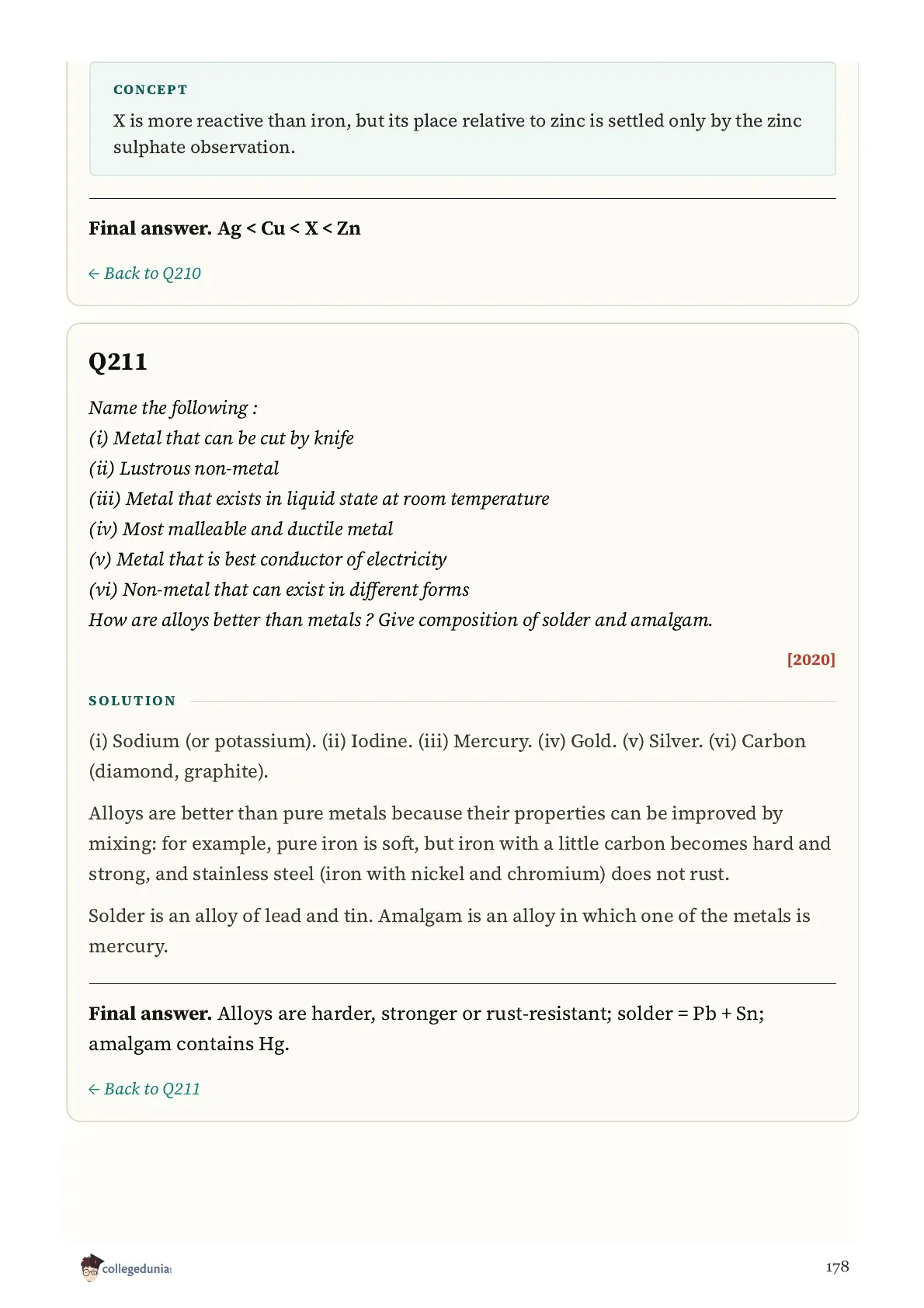
The rest is spread across single concepts. 16 questions ask about amphoteric oxides, usually aluminium oxide and zinc oxide, and 17 about ionic compounds, including 5 that want an electron-dot structure for Na2O, CaO or Al2O3. Alloys appear in 20 questions, from solder in a fuse to amalgam, and corrosion, rusting or galvanisation in 8. Kerosene as the storage liquid for sodium turns up in 4 reasoning questions.
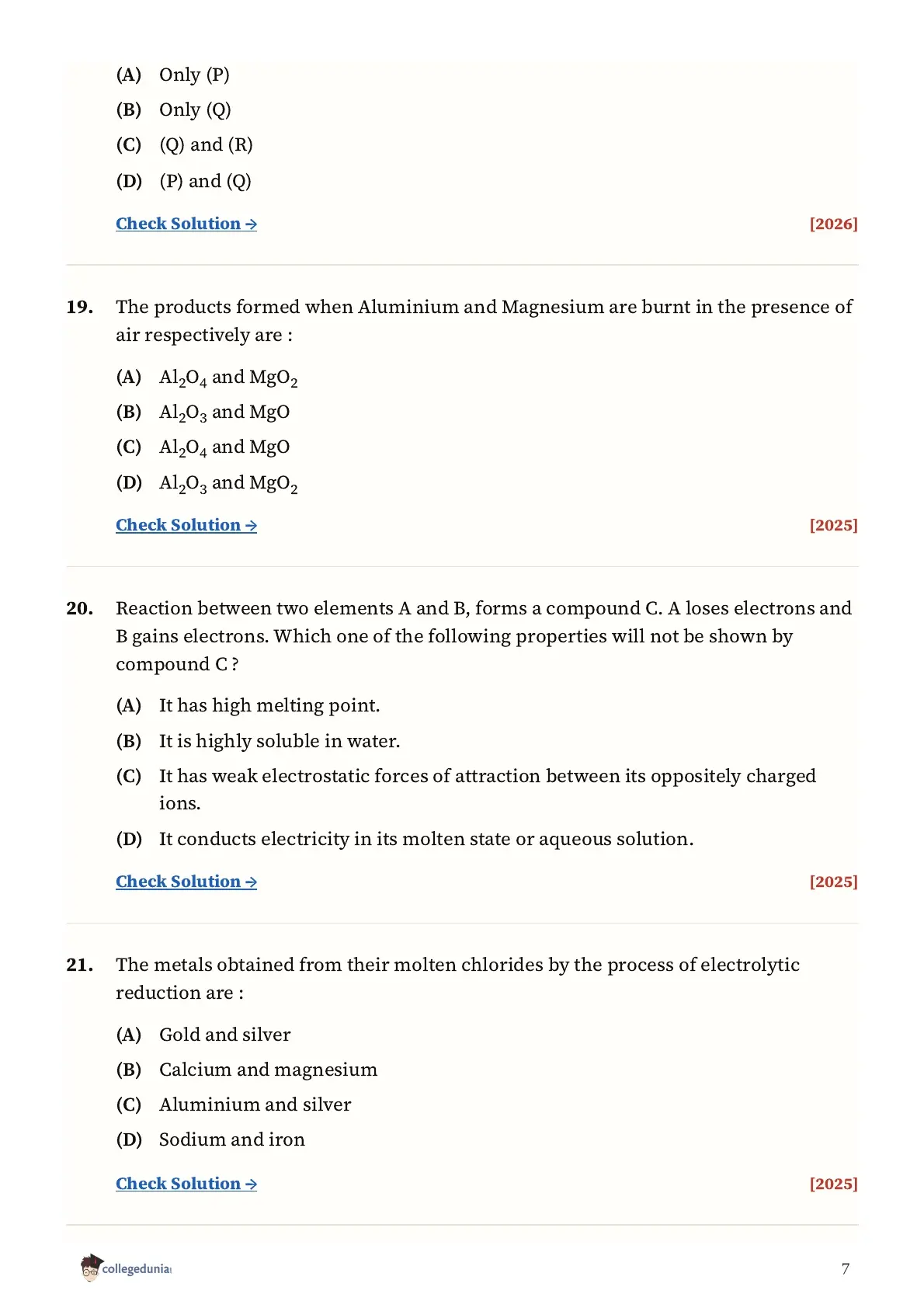
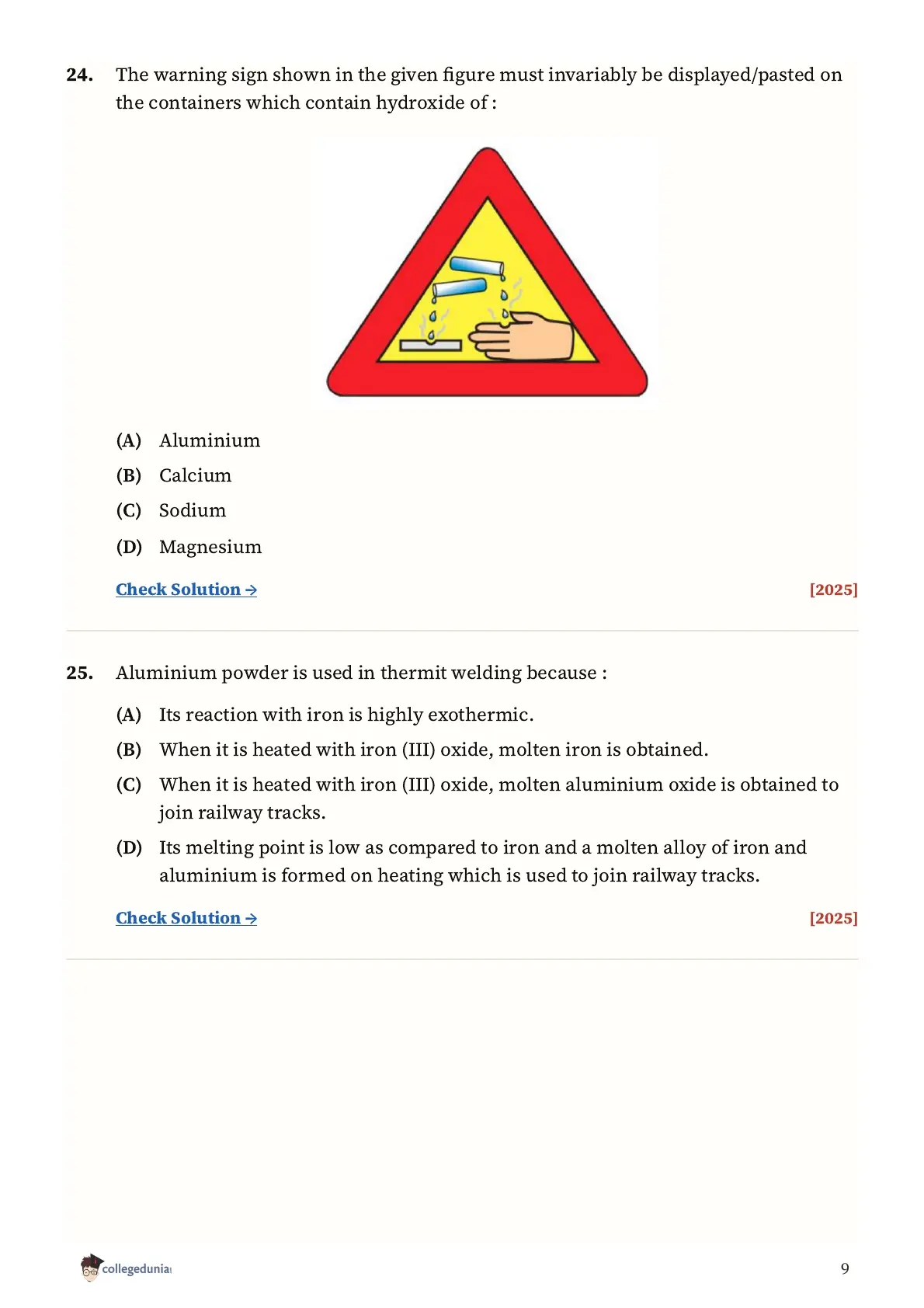
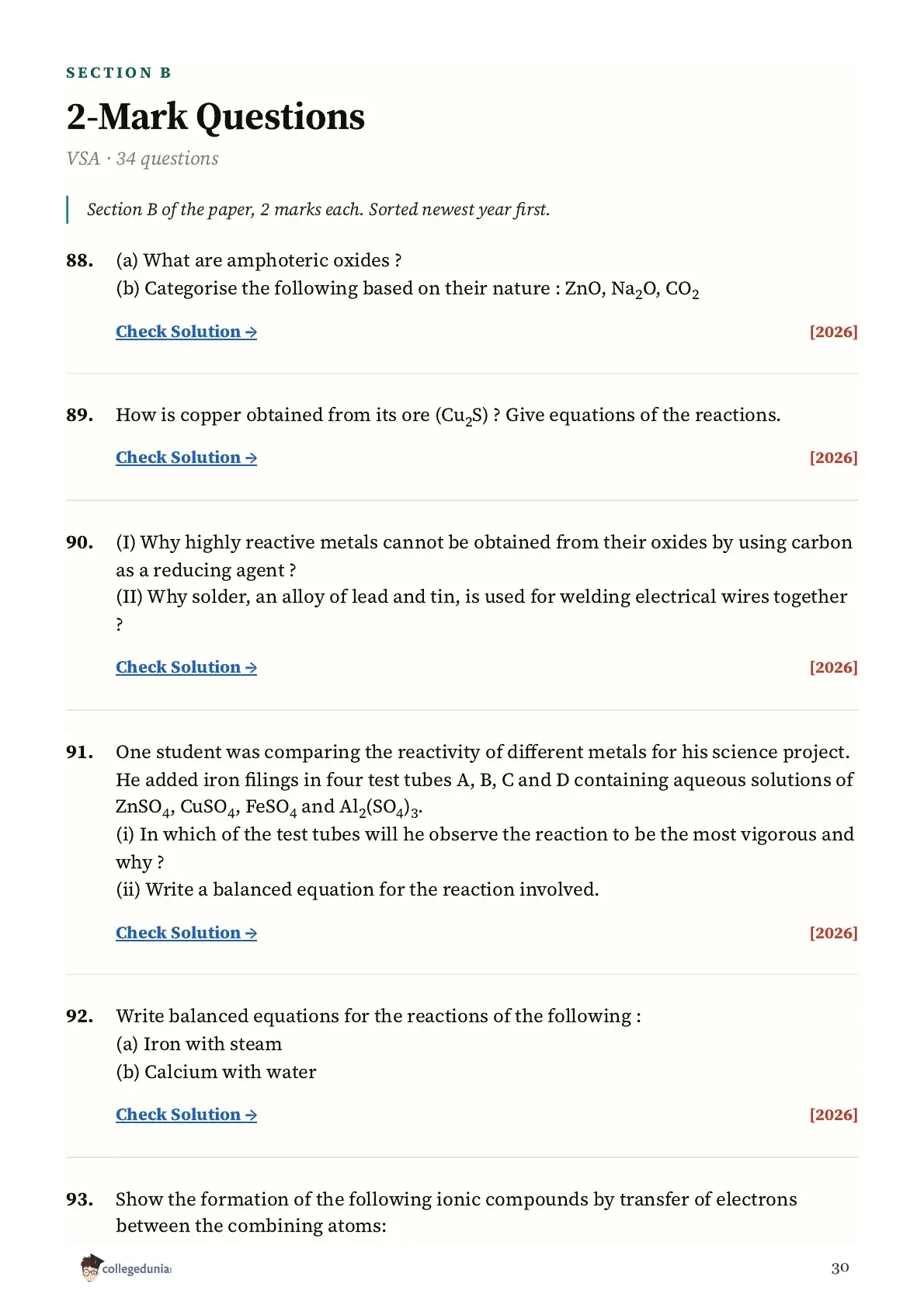
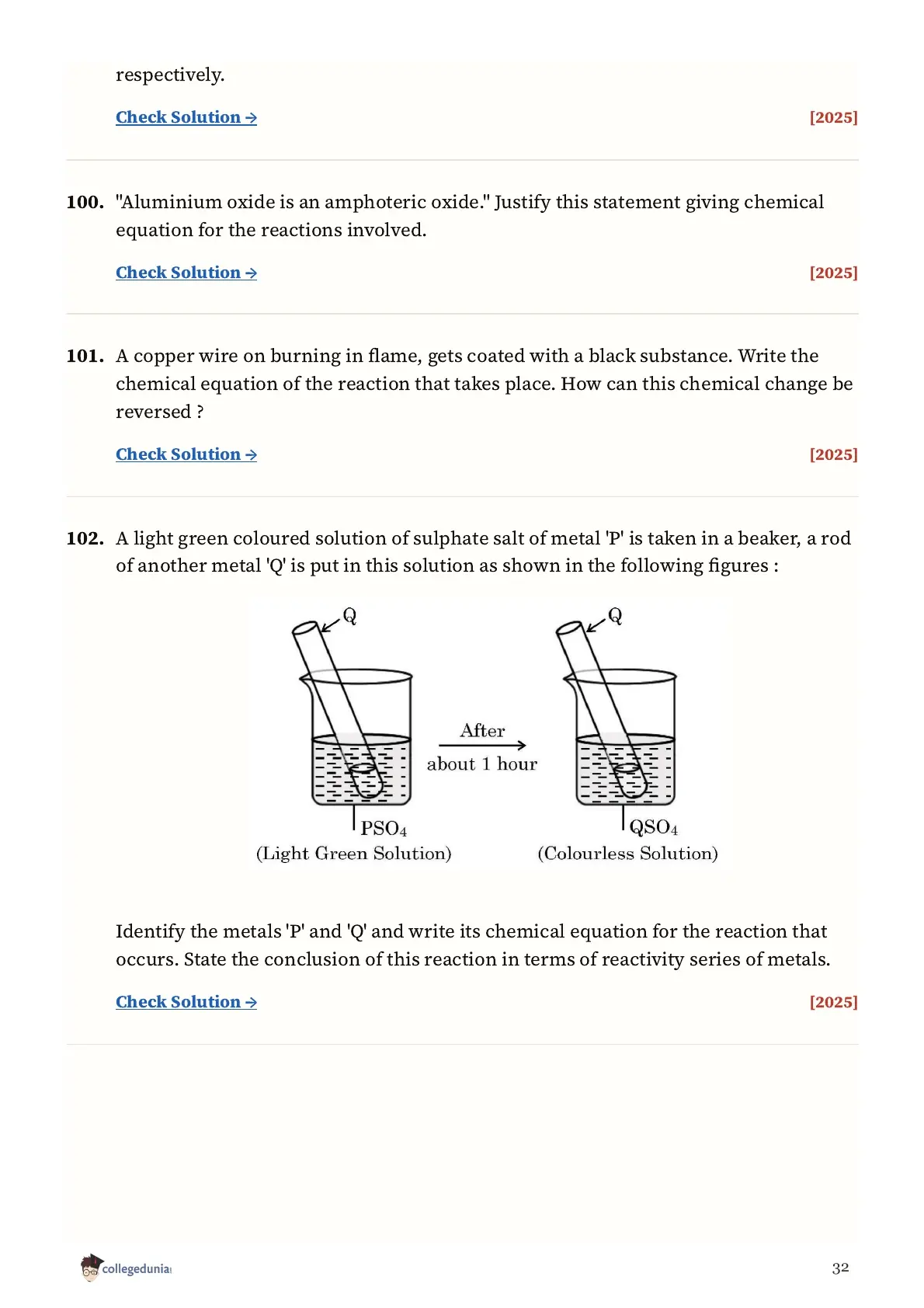
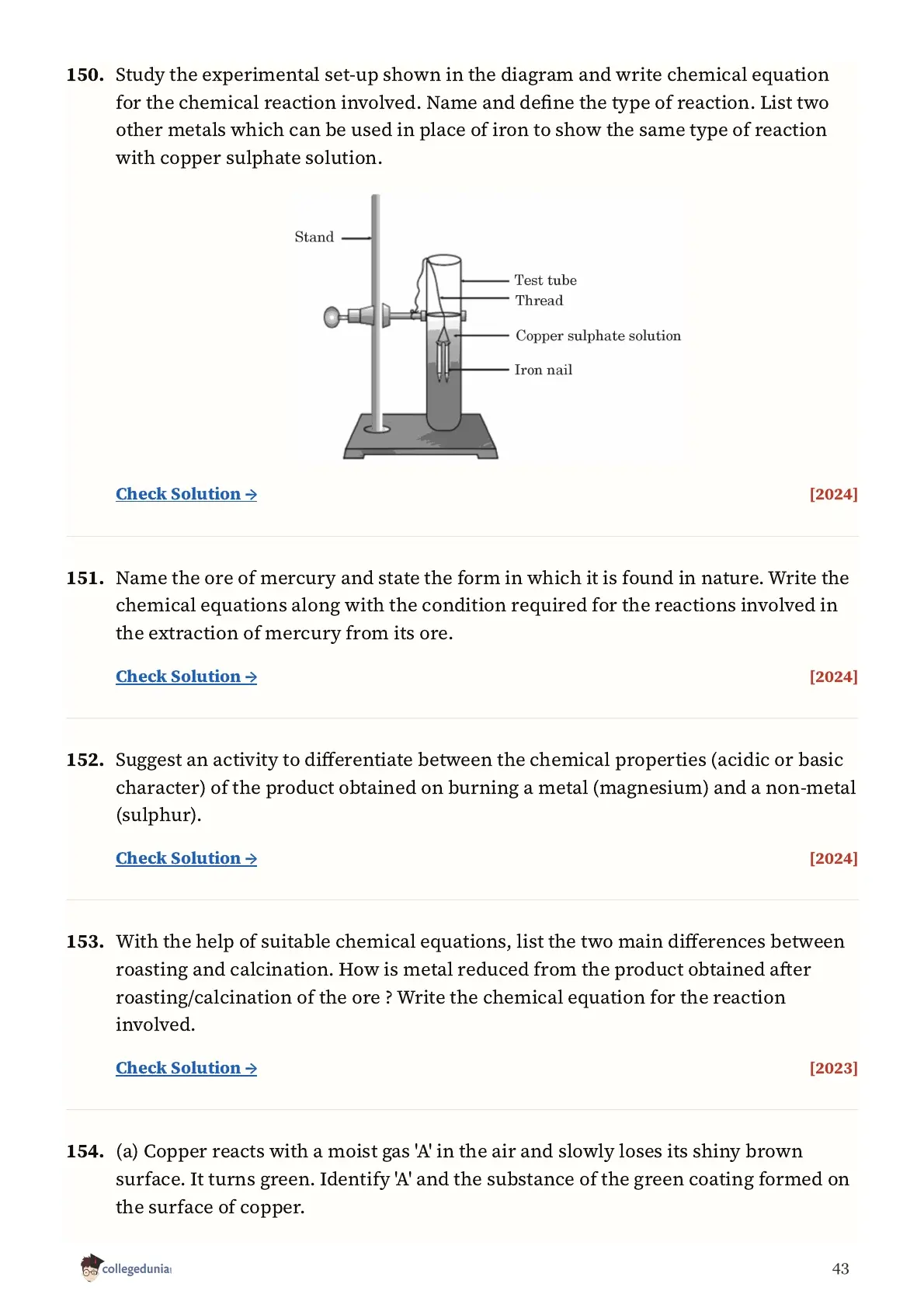
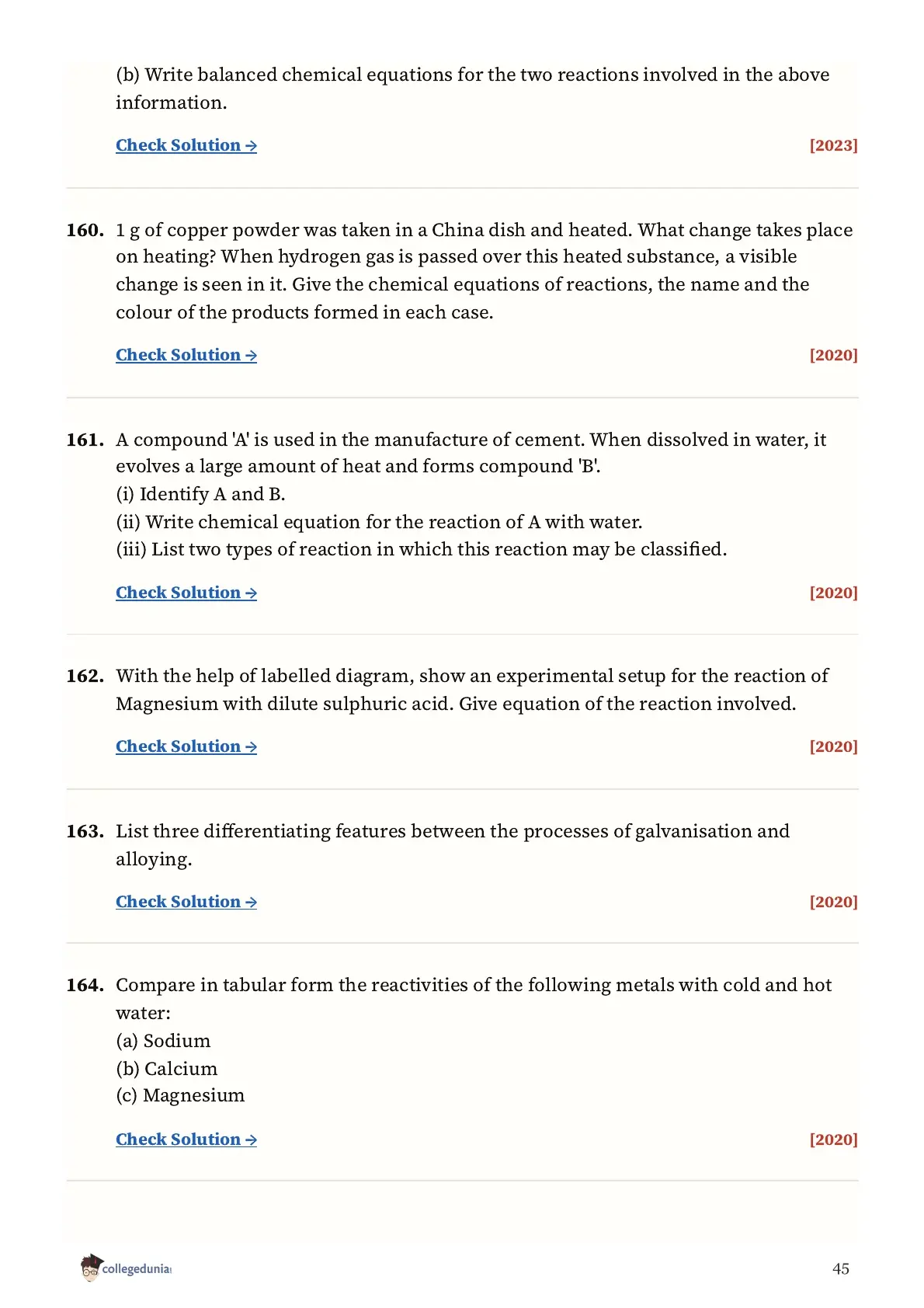
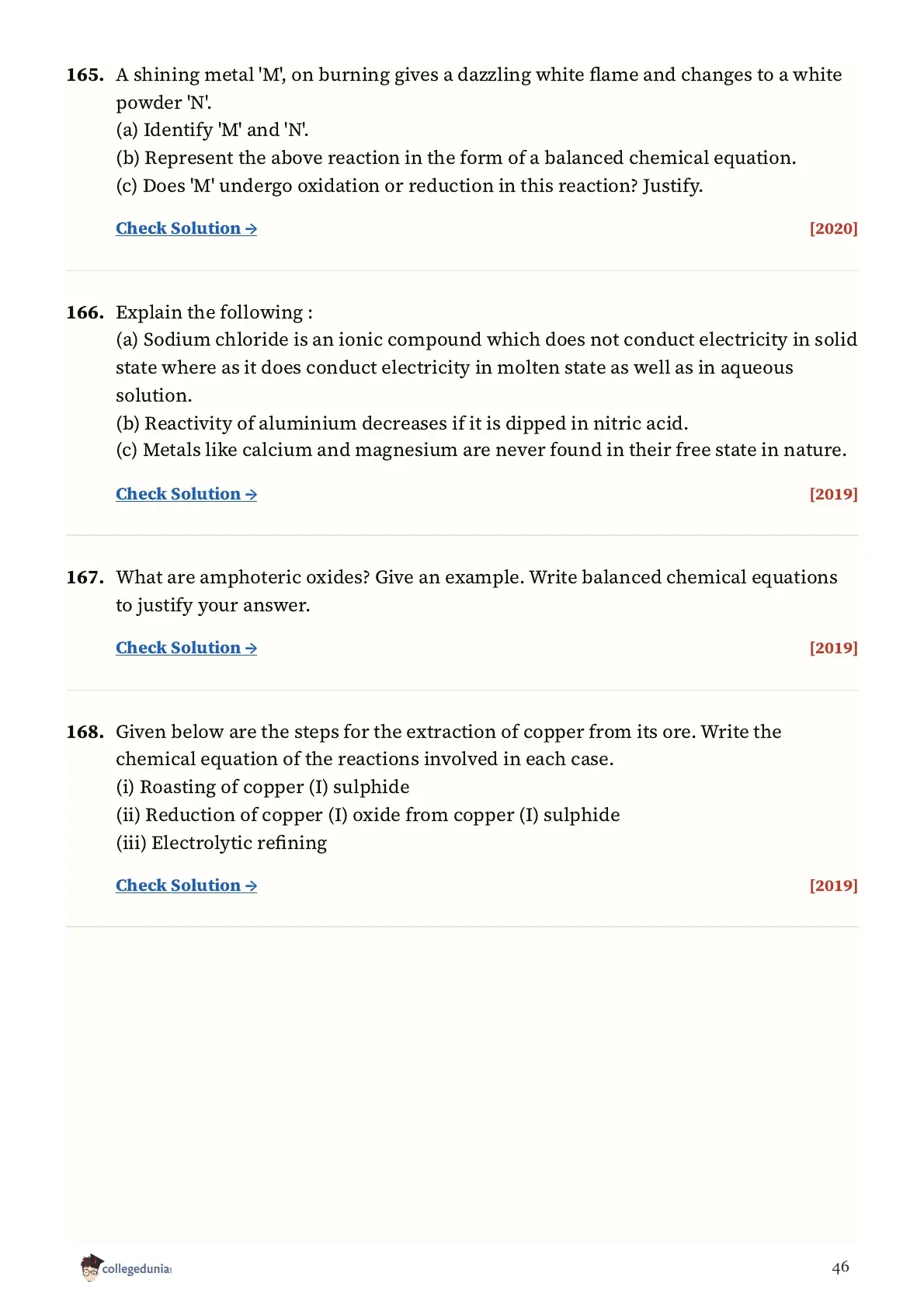
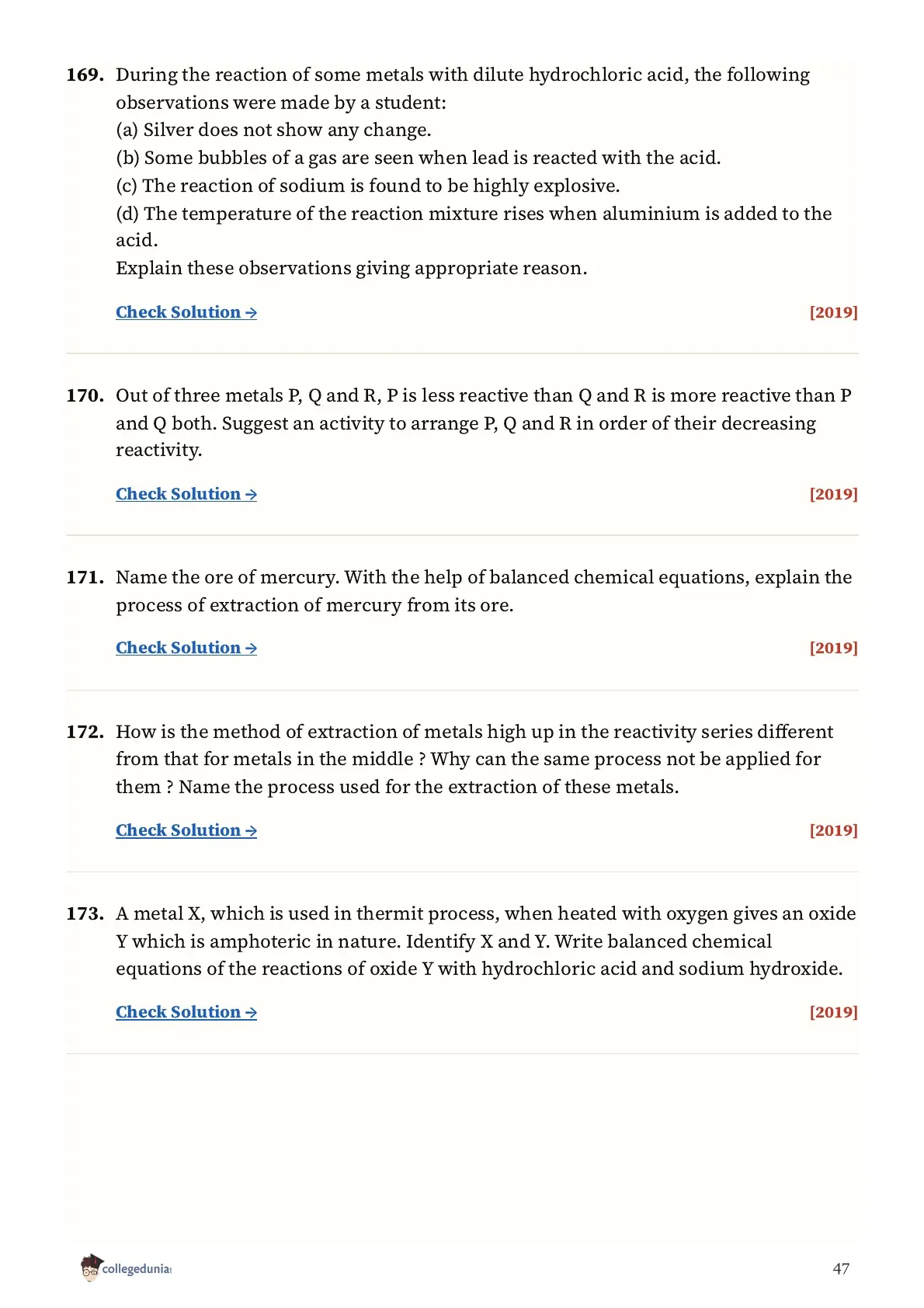
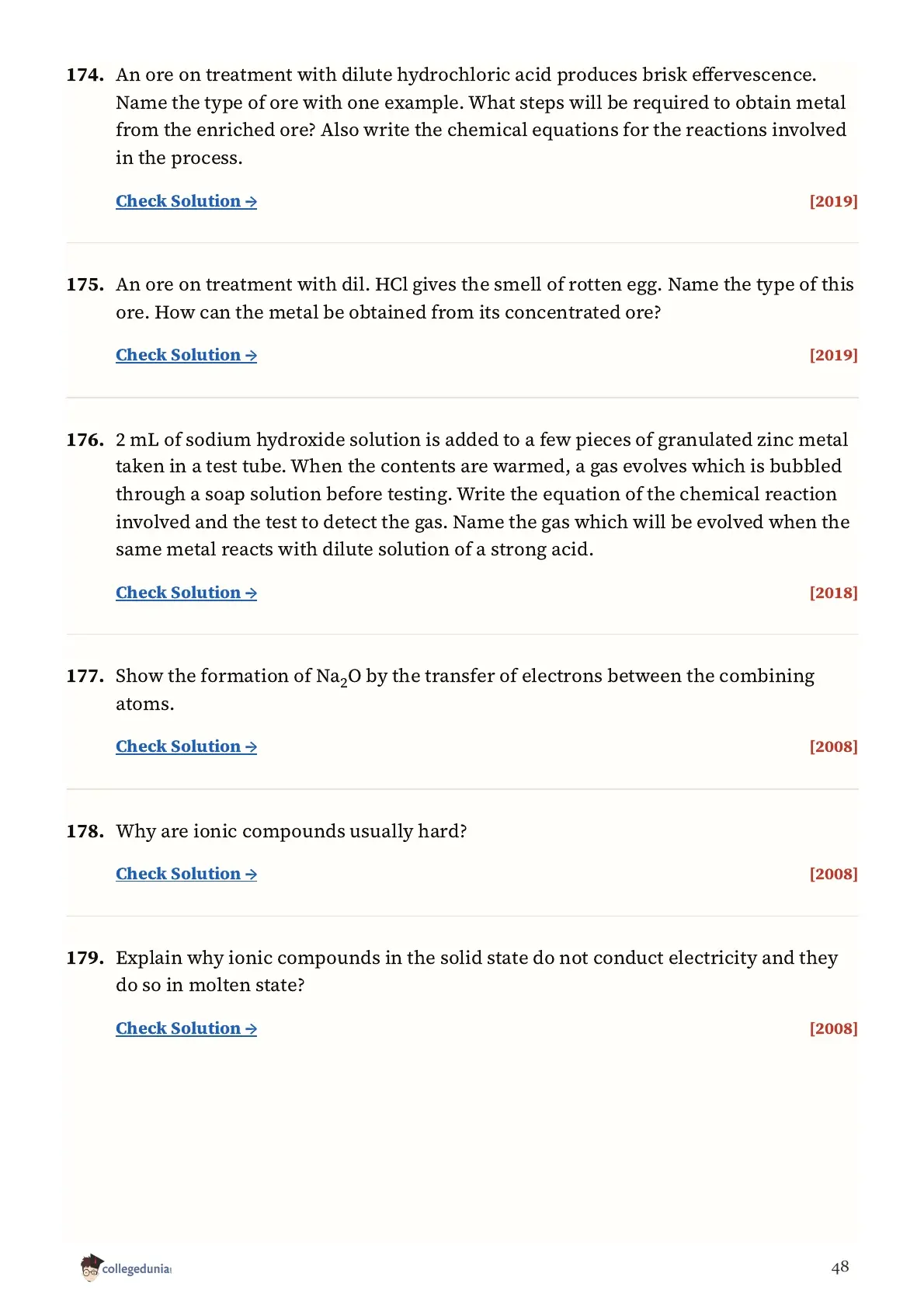
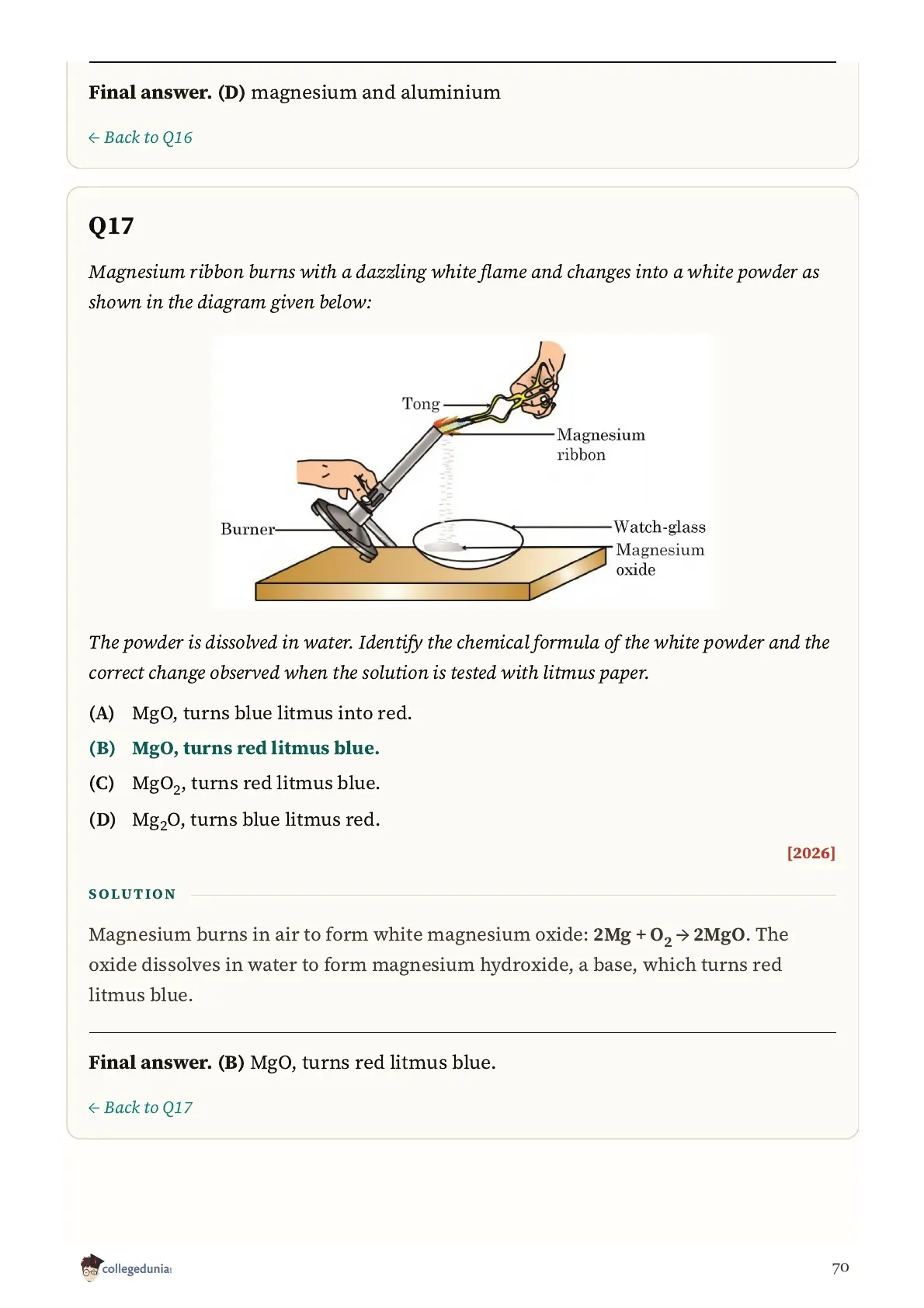
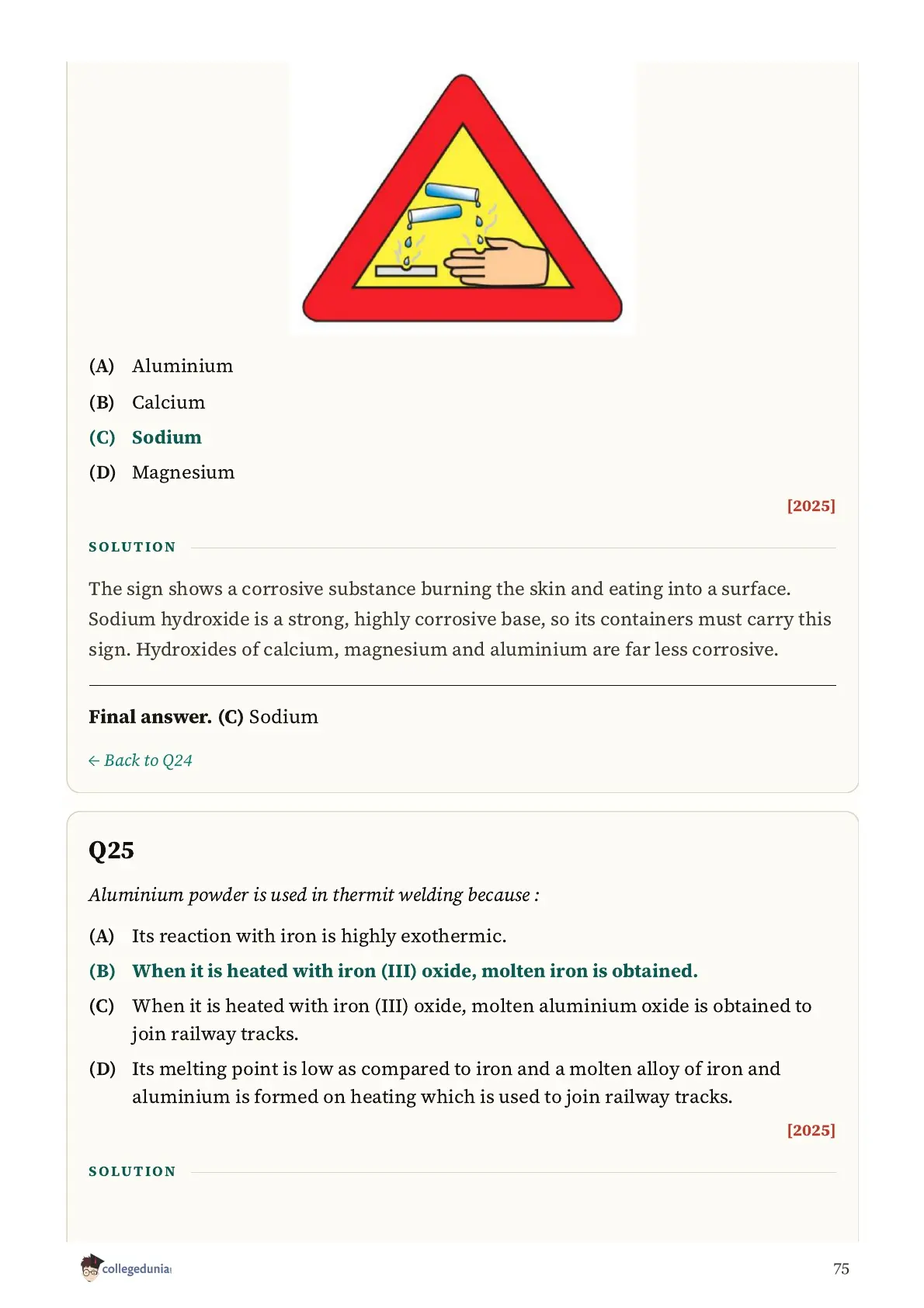
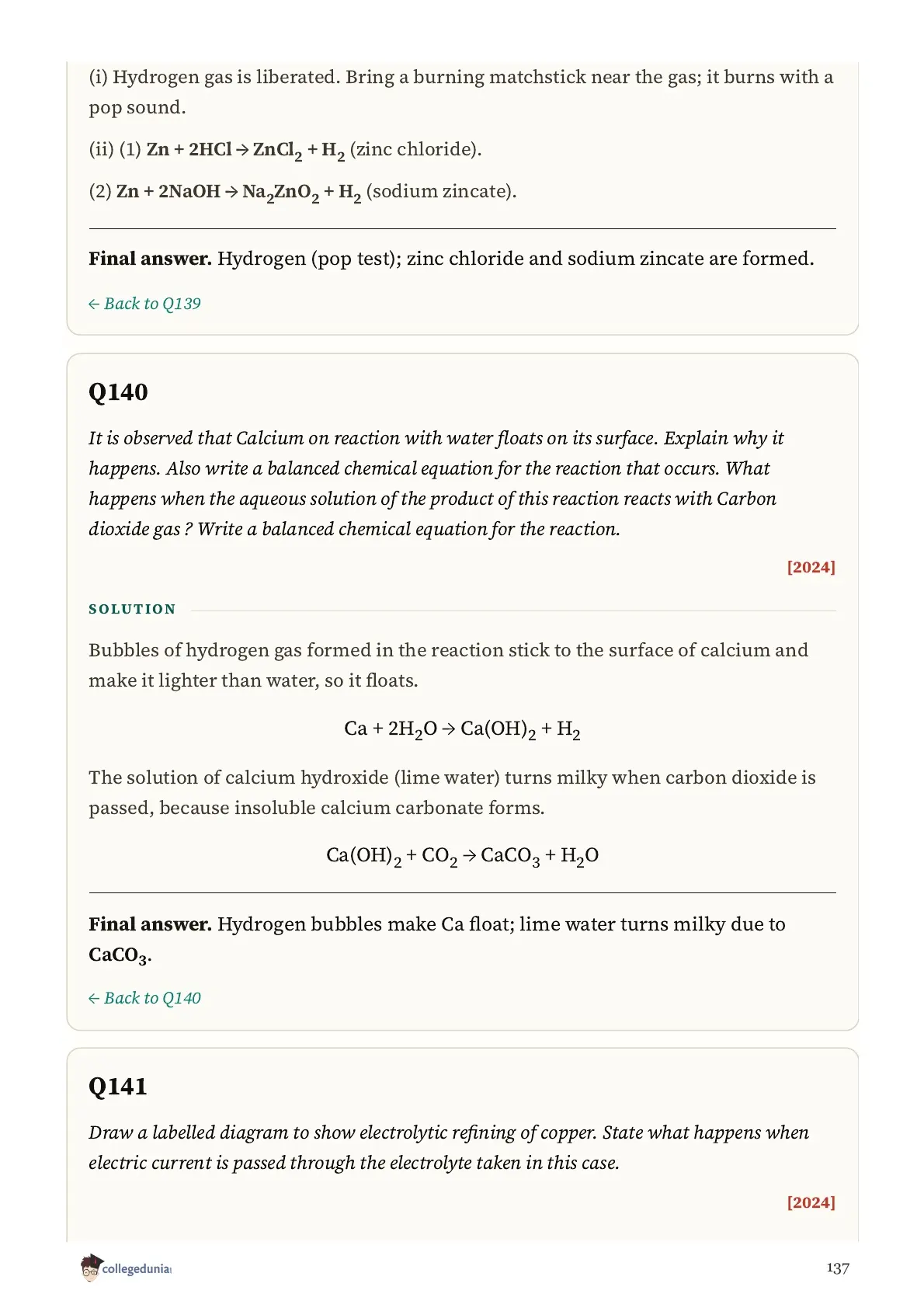
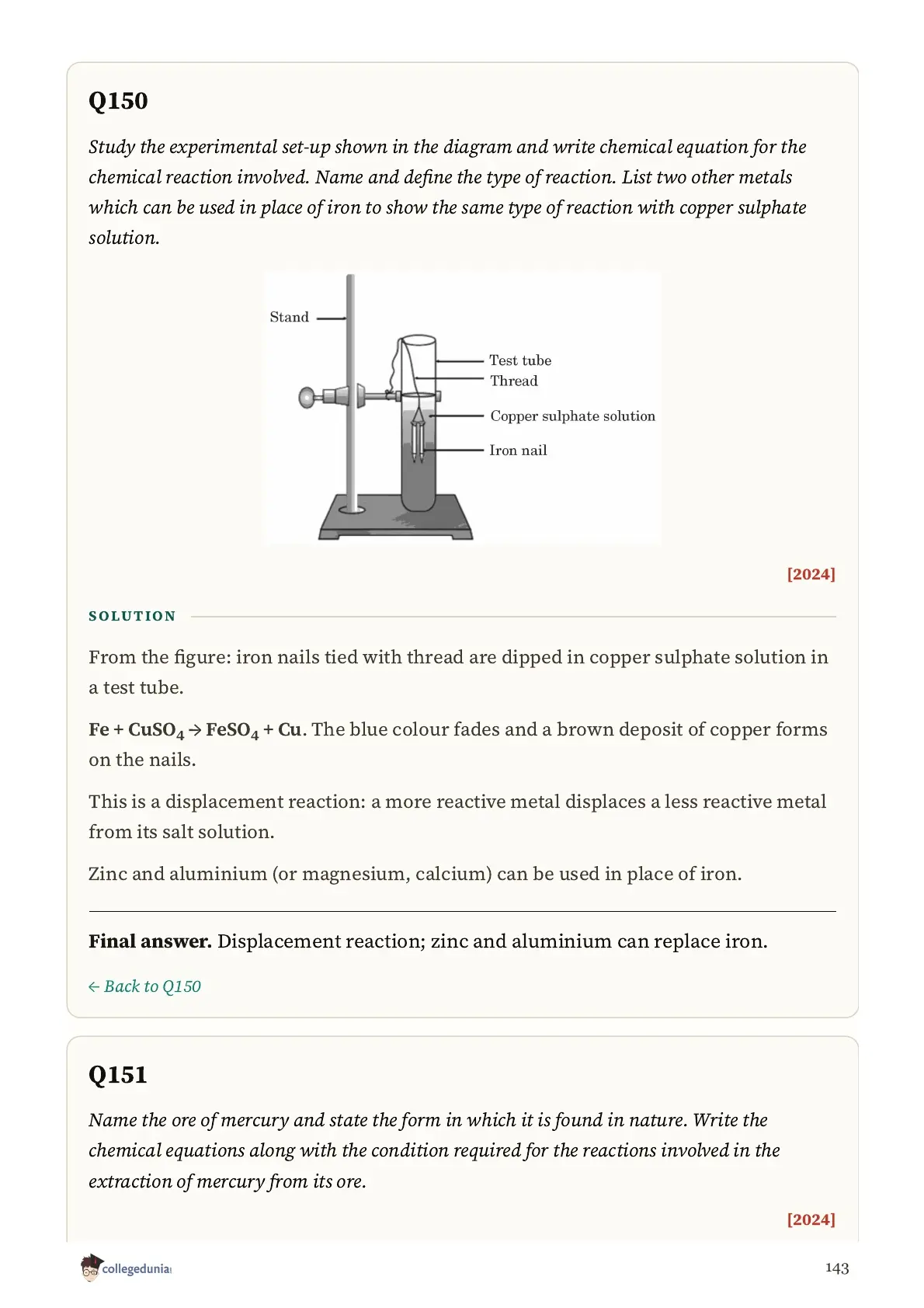
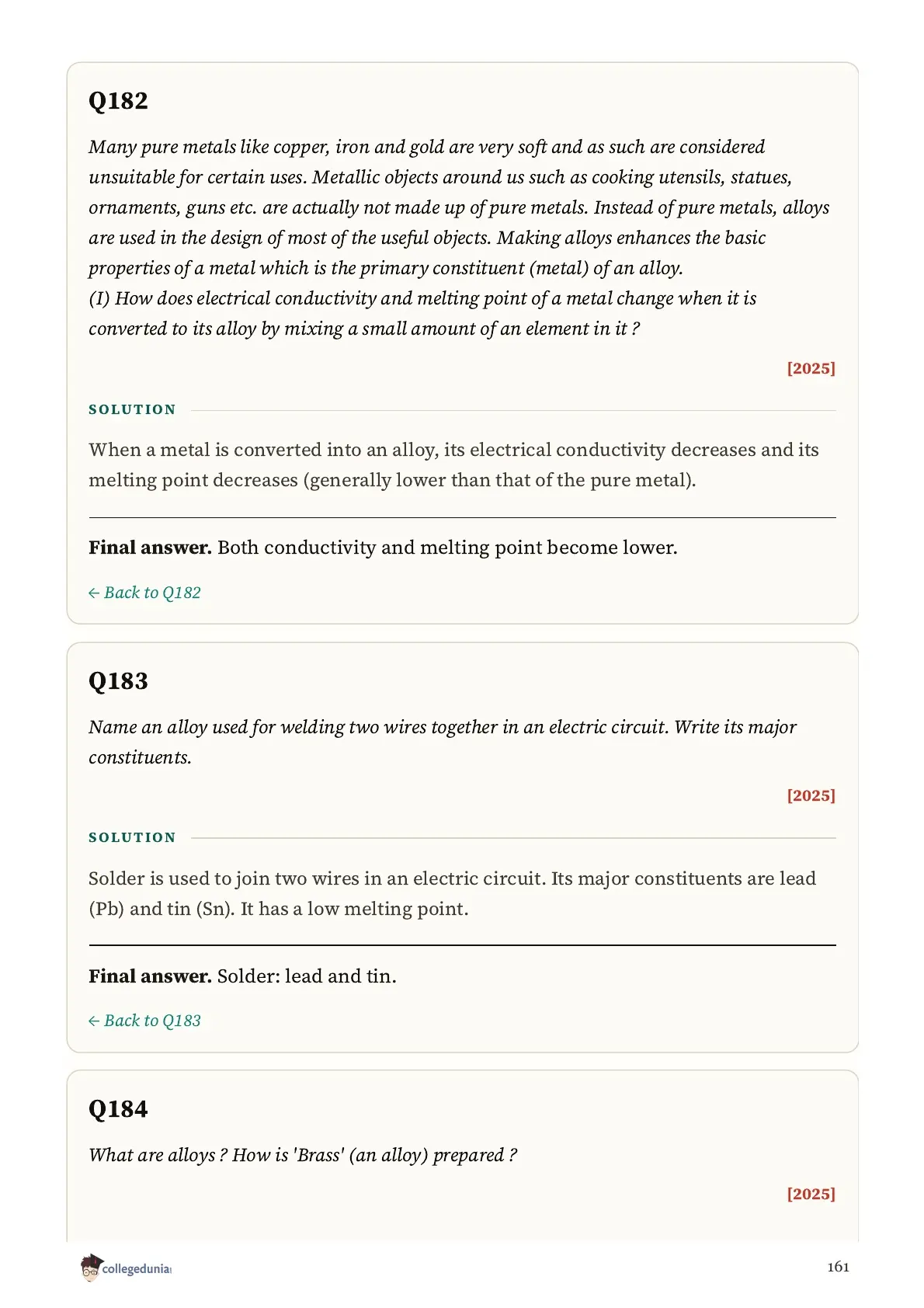
The set also holds 22 case-based items, 13 assertion-reason items and 41 questions built on a student's experiment or observation. 9 questions are printed with the original figure from the board paper. Counts come from keyword matches over the question text, so a question that names two things is counted under both.
Source: Unfiltered Classes
How to Approach the Set
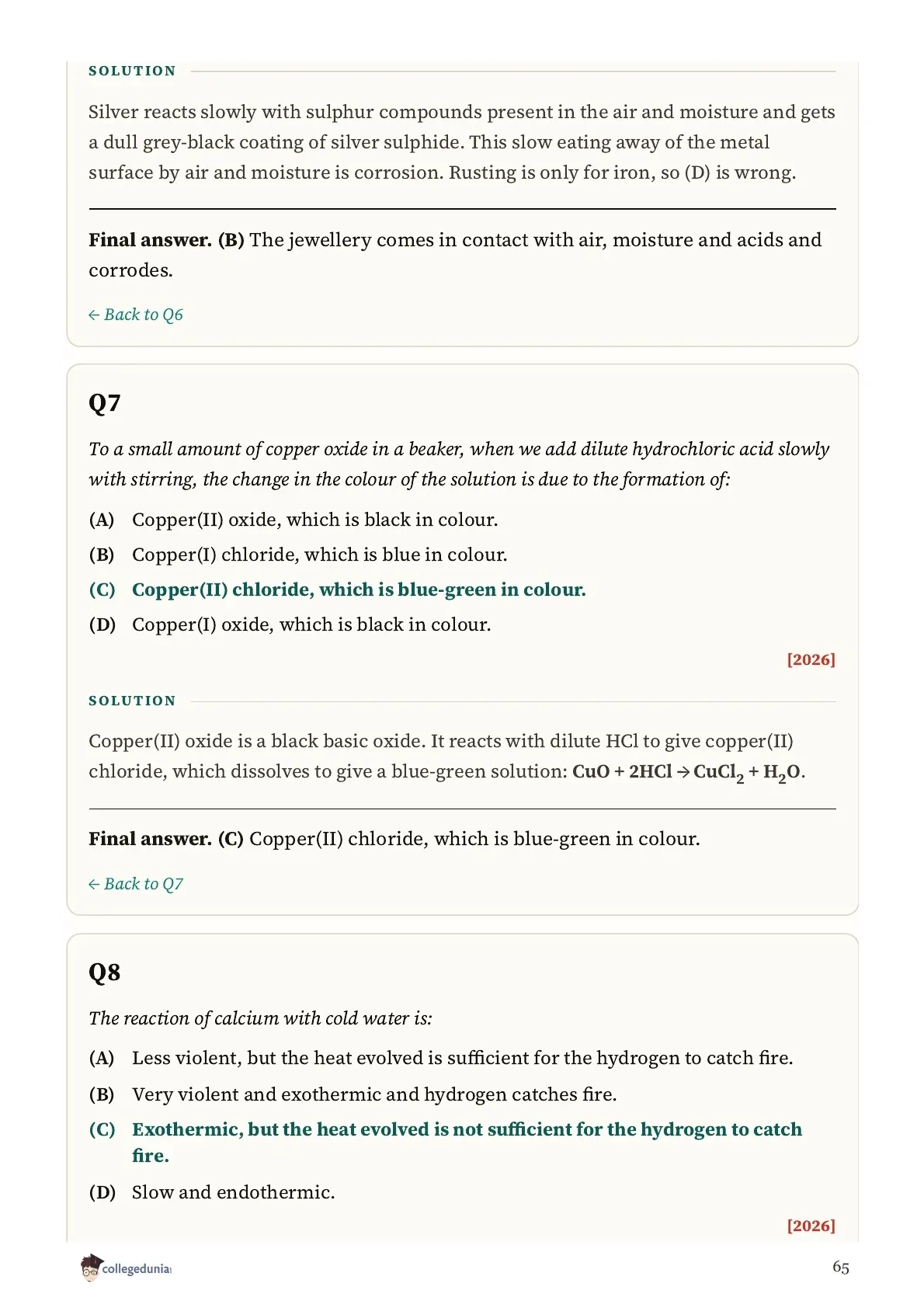
Start with the 79 MCQs and assertion-reason items, then the 1-mark and 2-mark short answers that need one equation or definition. Next take the 58 three-mark questions, where a reason or a balanced equation carries the marks, and the 22 case-based items. Keep the 29 five-mark questions for last, since most combine an electron-transfer diagram or a refining set-up with several equations. Learn the reactivity series from potassium to gold in order, because it decides the answer to the water, acid, displacement and extraction questions alike. The 2025 paper alone has 51 of the 230 questions, so work through it closely along with 2026, 2024 and 2023.
Common Mistakes in Metals and Non-metals Questions
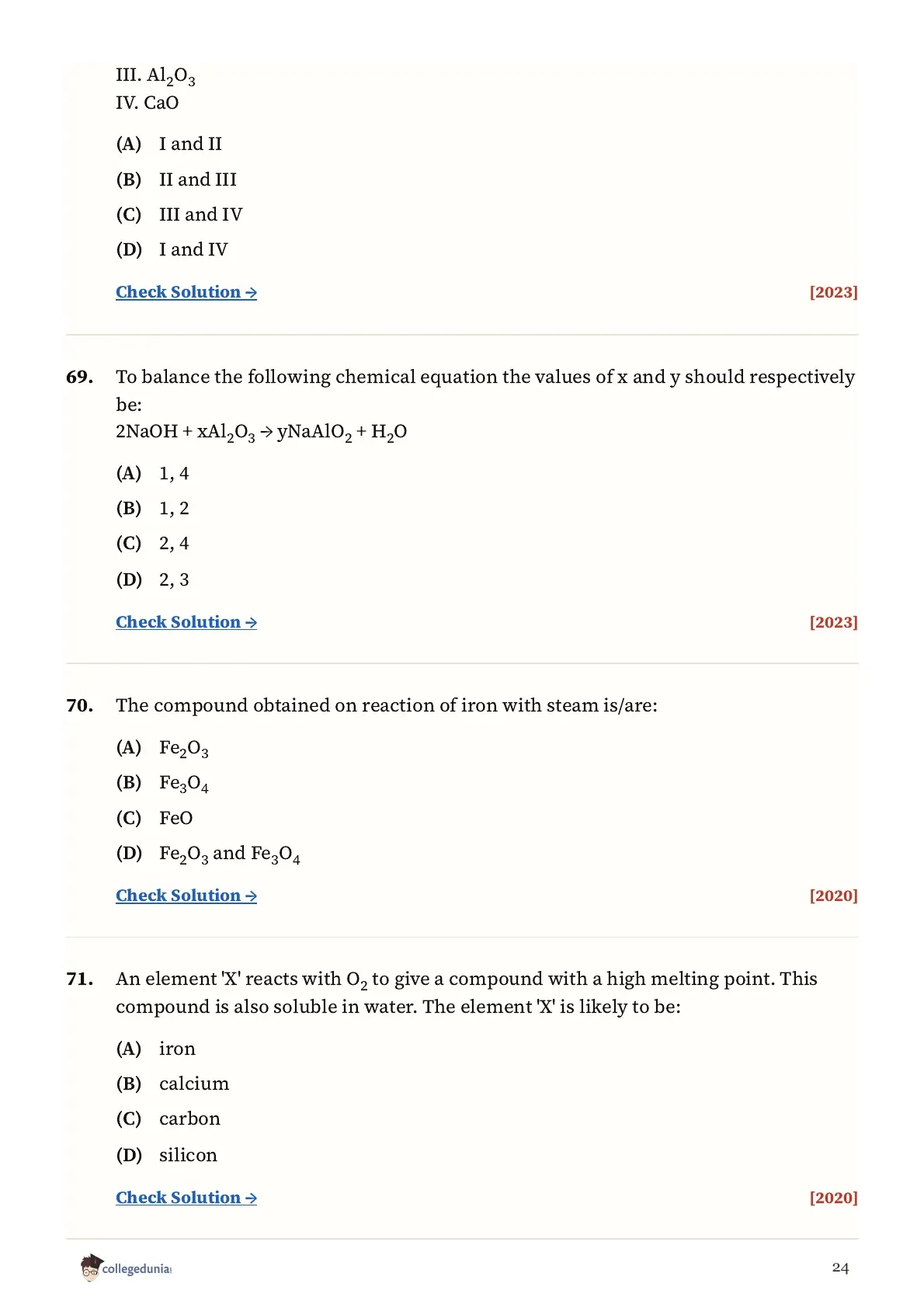
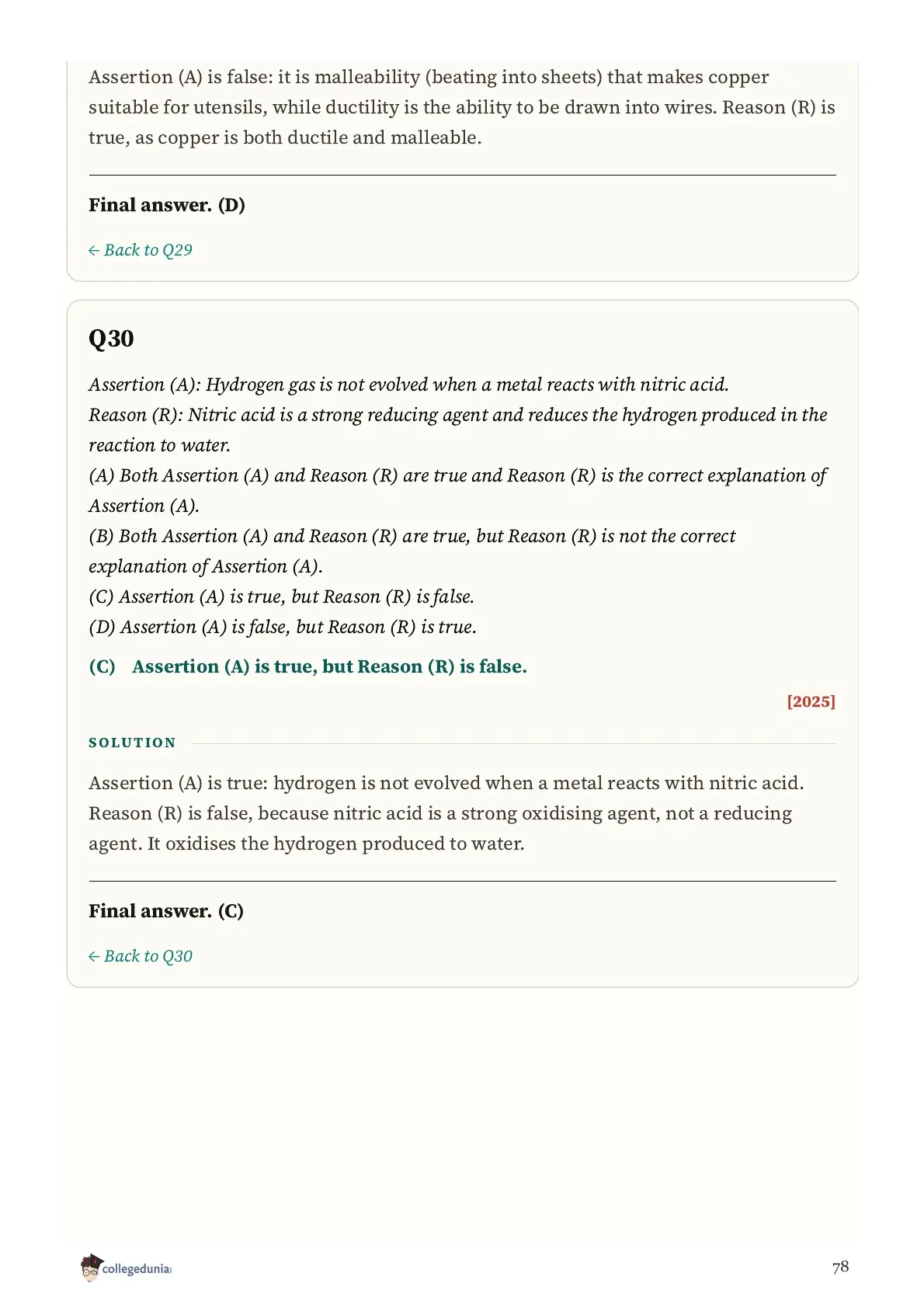
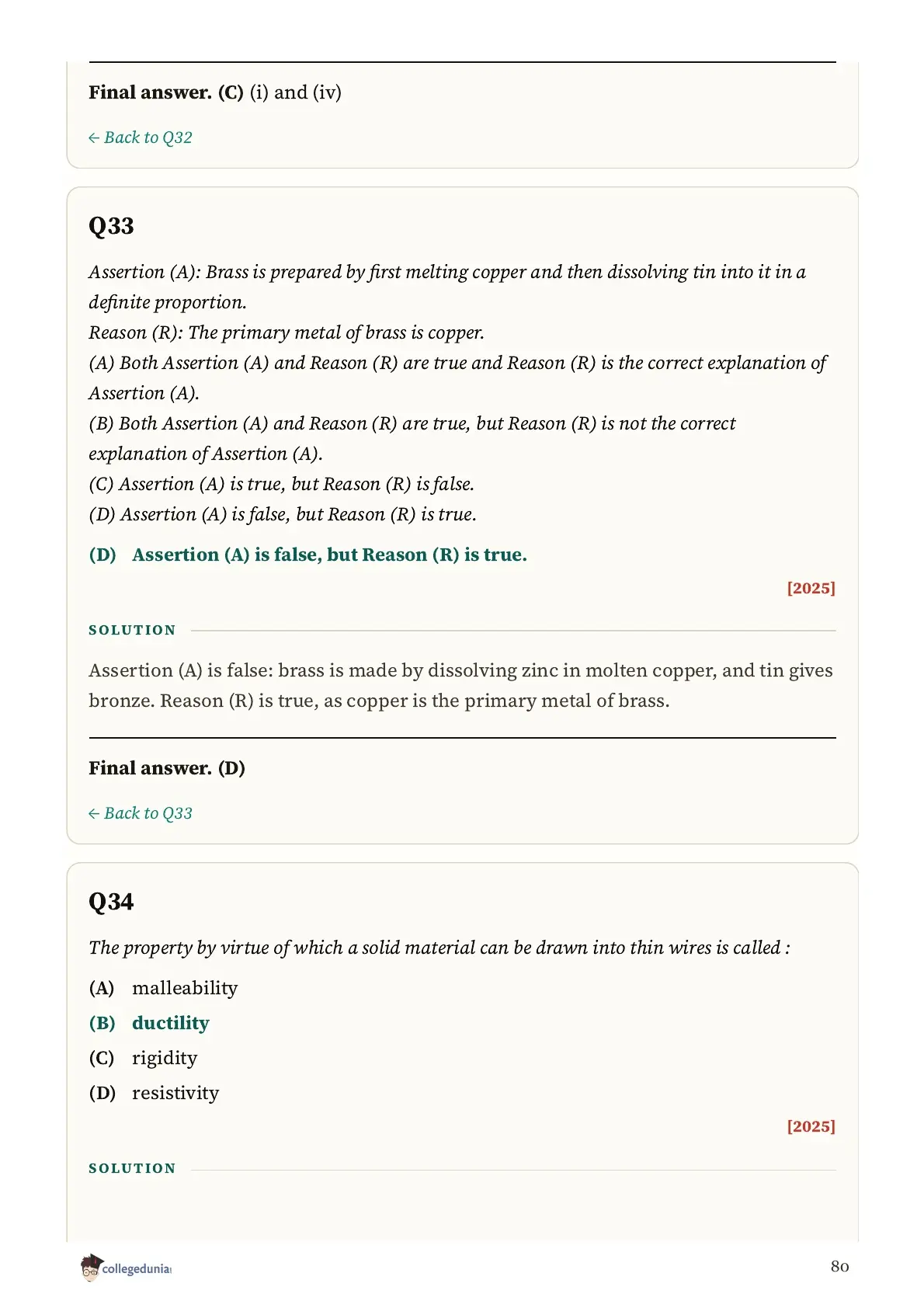
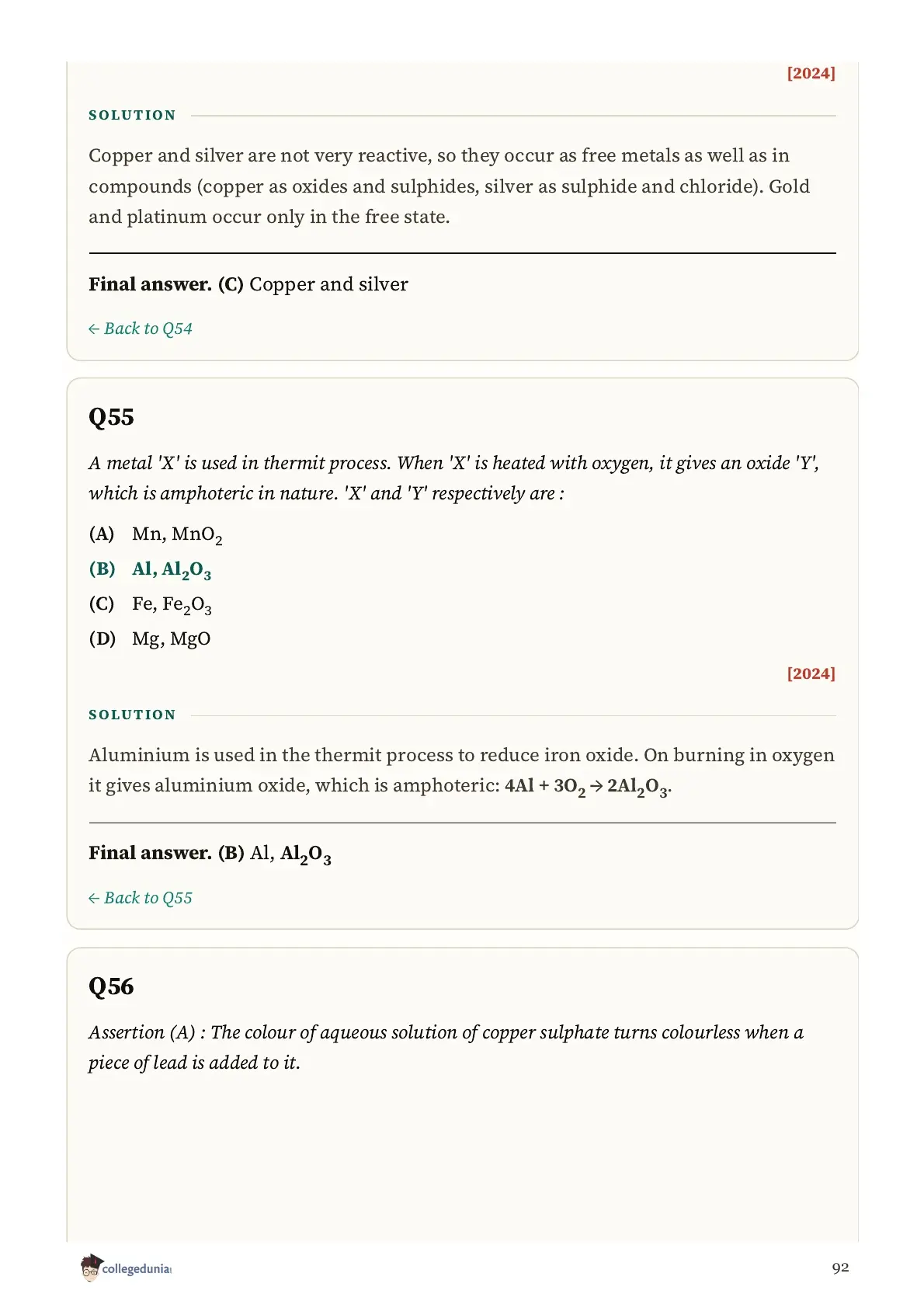
- Writing the oxide of aluminium as Al2O4 or the oxide of magnesium as MgO2. They are Al2O3 and MgO.
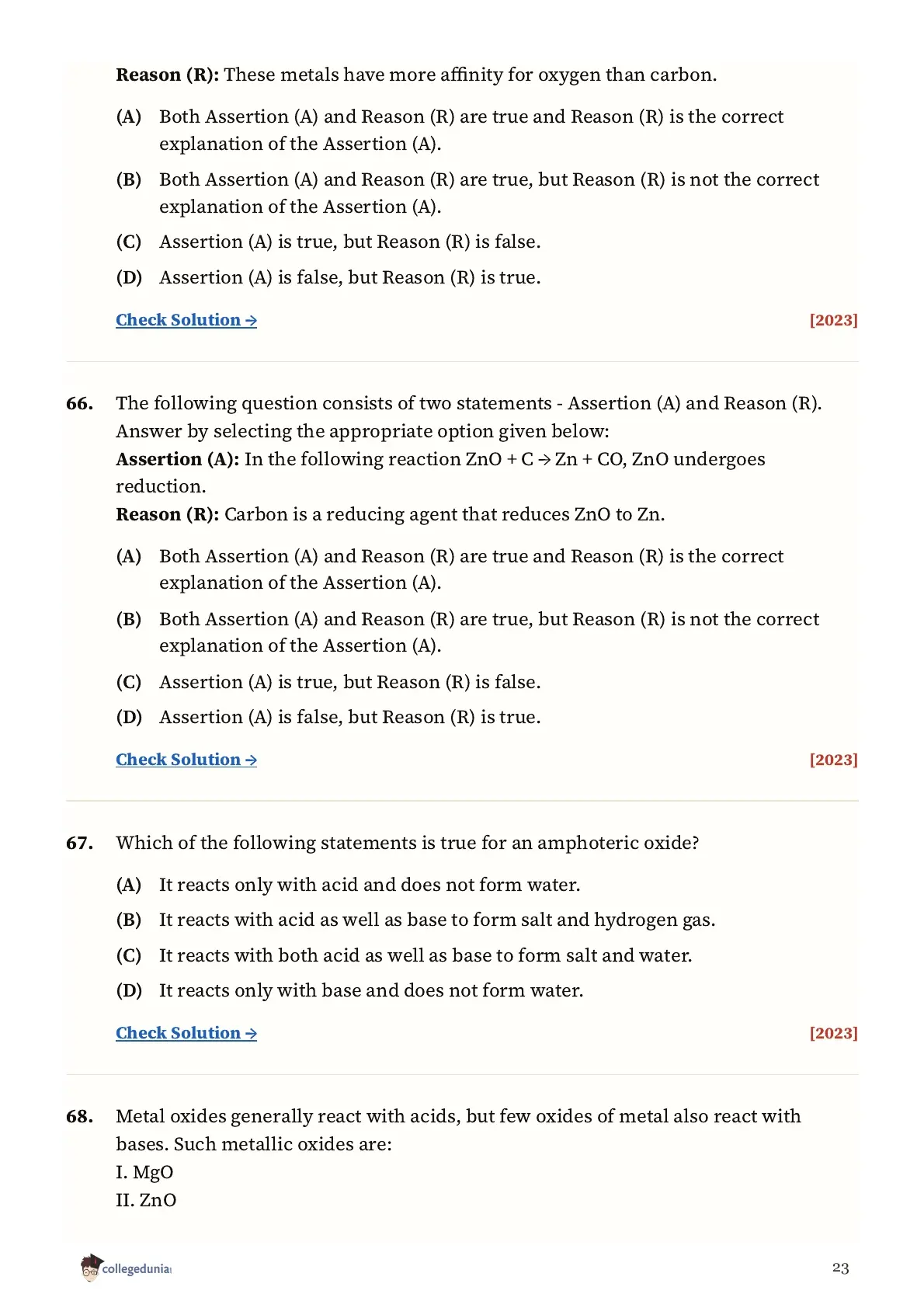
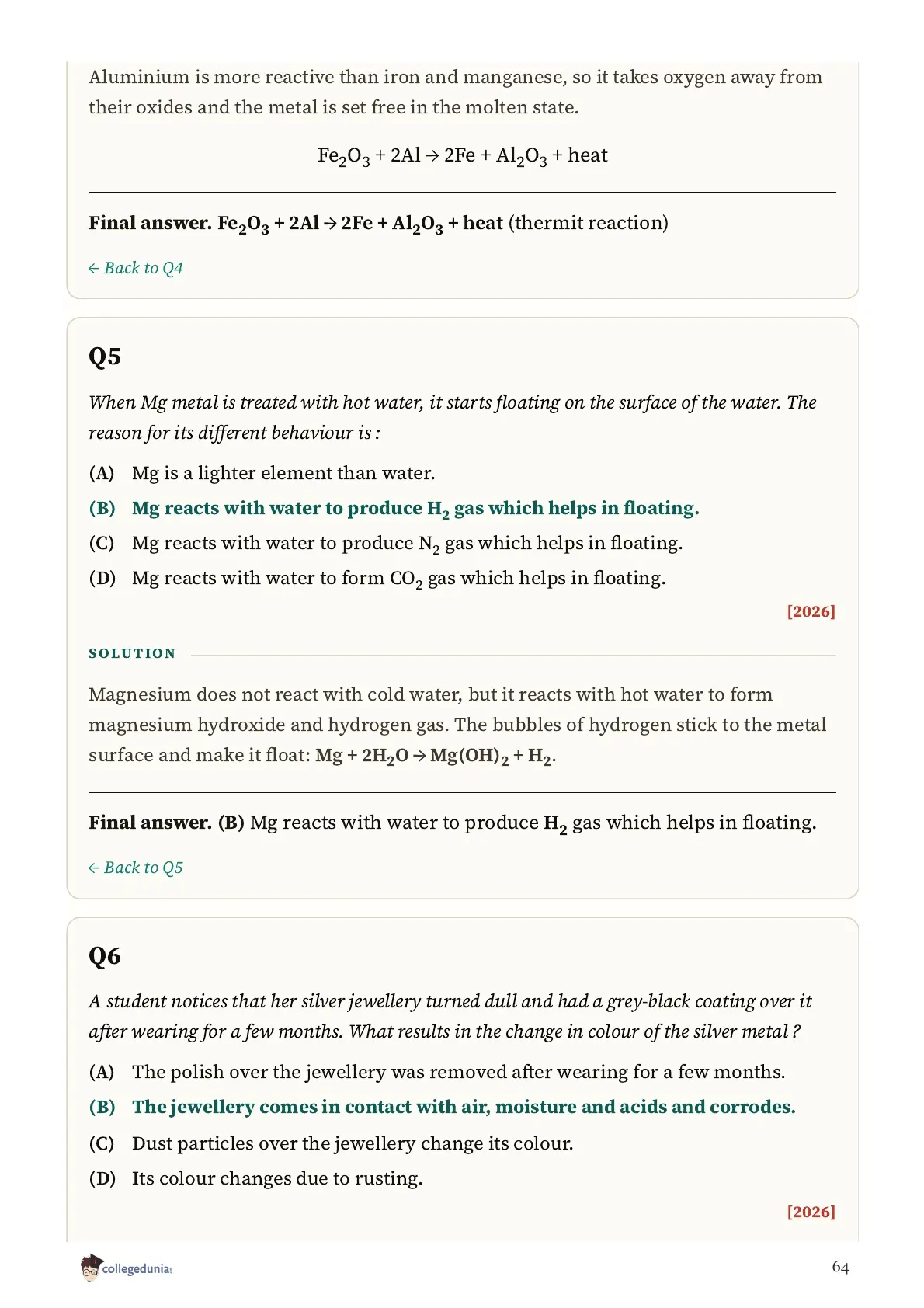
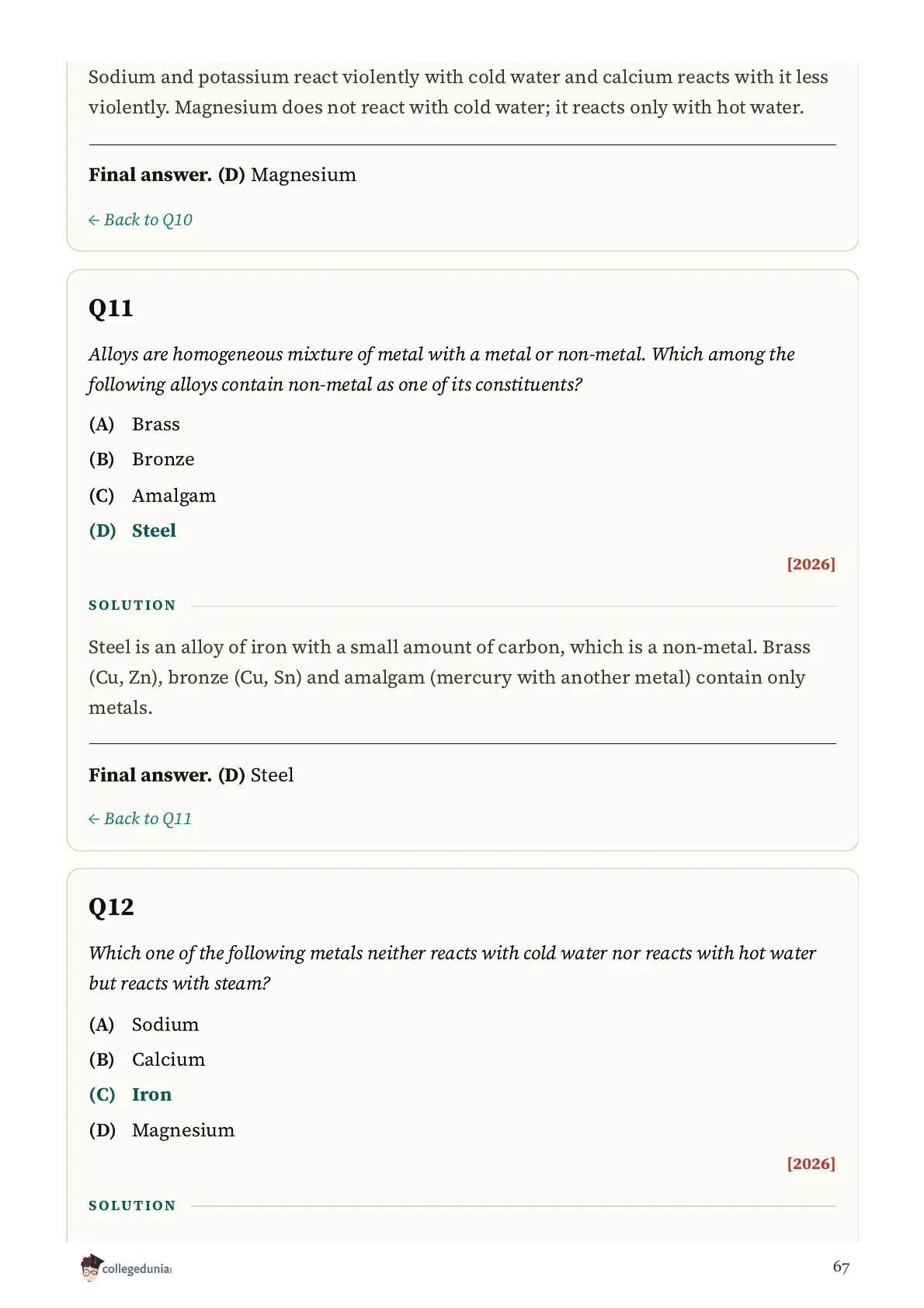
- Explaining that magnesium floats in hot water because it is lighter. It floats because hydrogen bubbles stick to its surface.
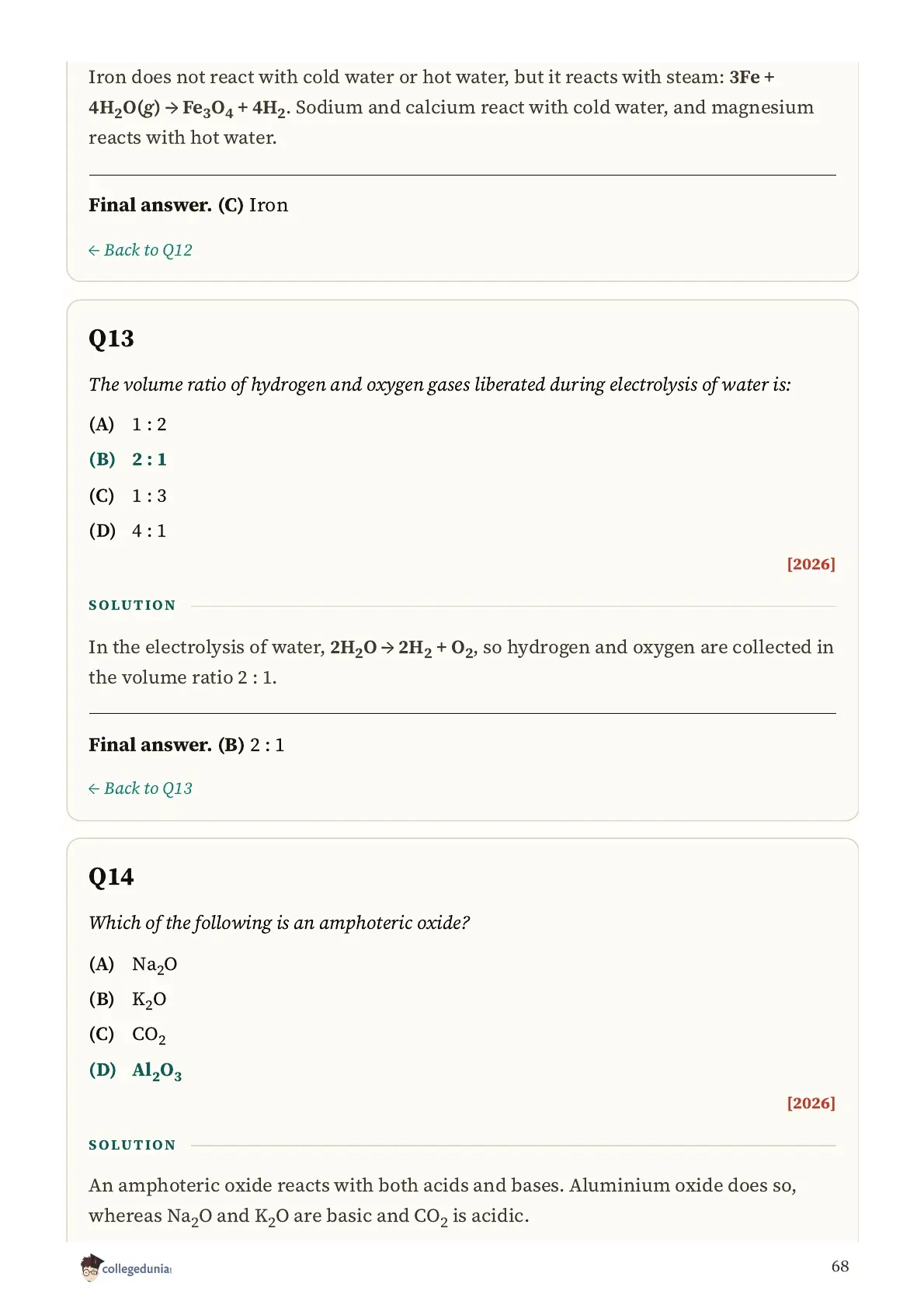
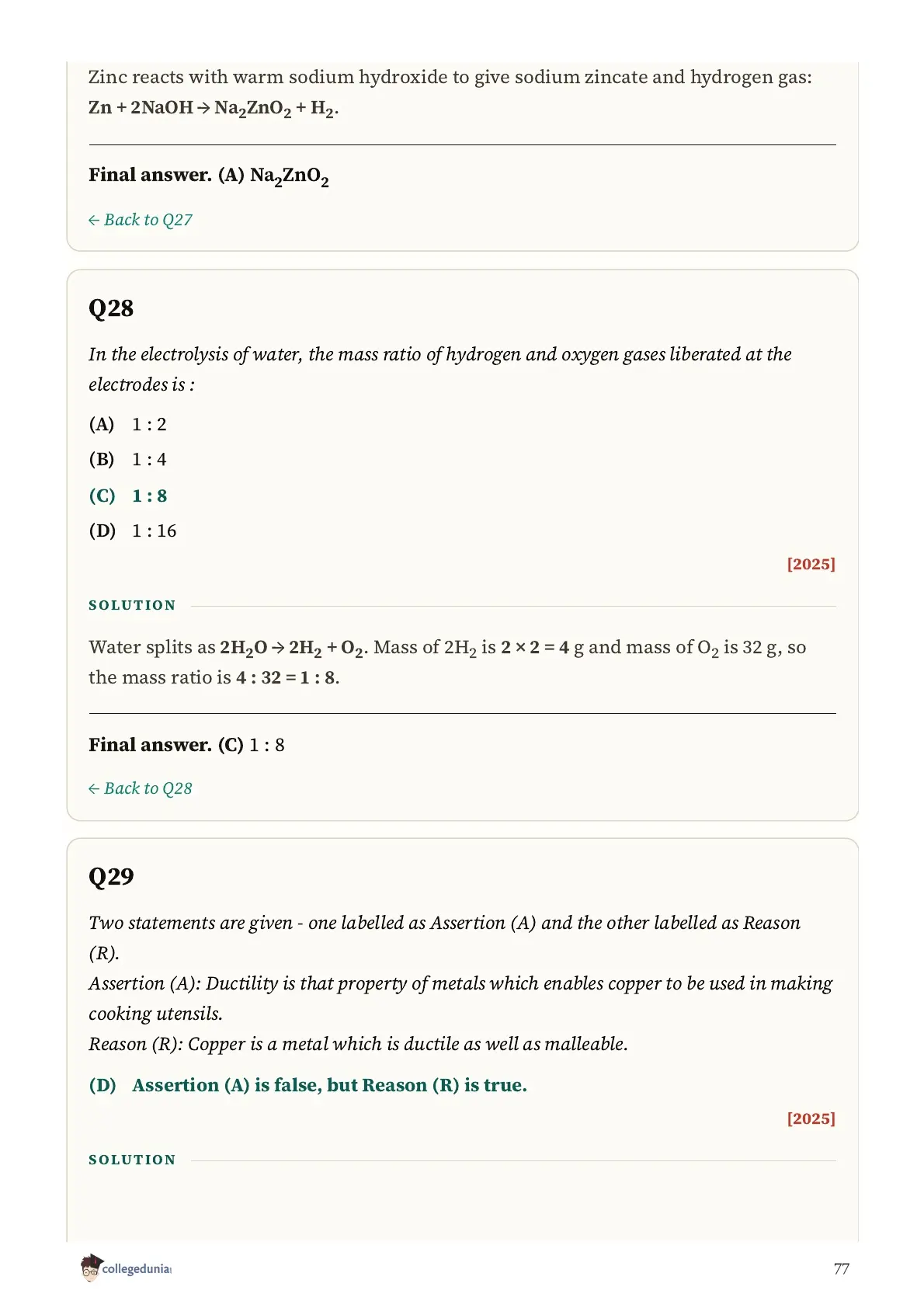
- Giving the volume ratio of hydrogen to oxygen in the electrolysis of water as 1 : 2. The ratio is 2 : 1.
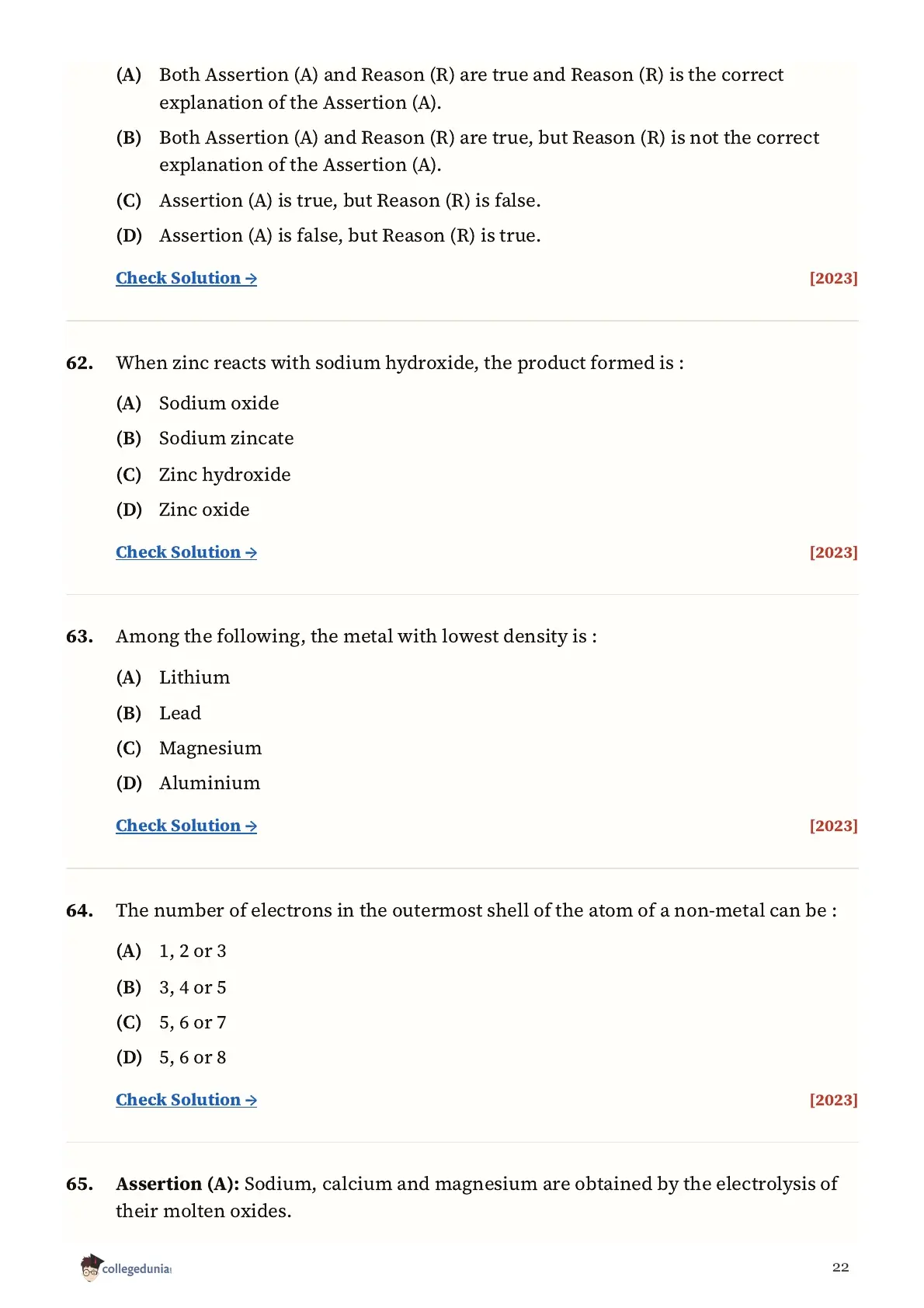
- Saying that sodium oxide is amphoteric. It is basic; only oxides such as Al2O3 and ZnO react with both acids and bases.
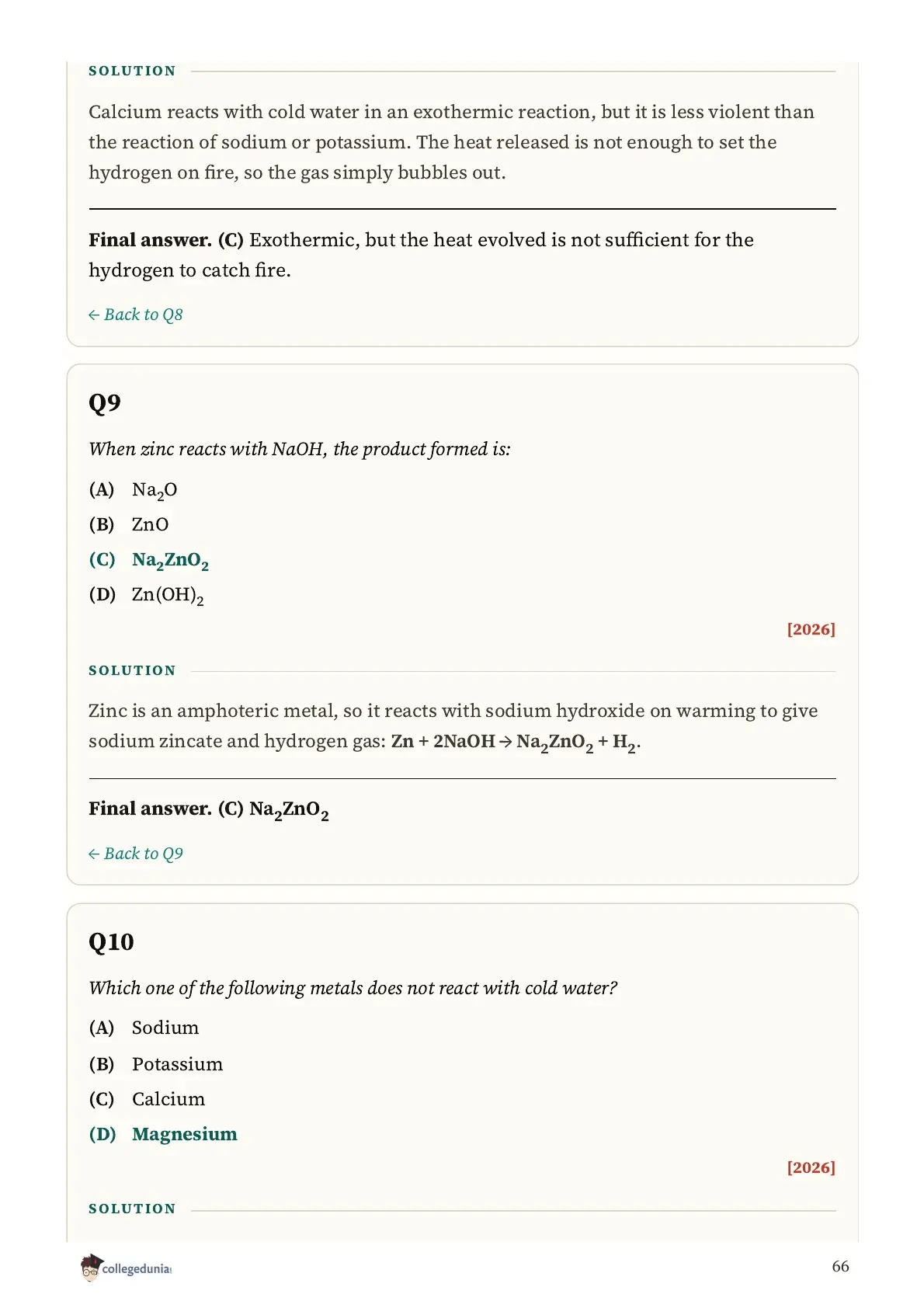
- Forgetting the second product when zinc reacts with sodium hydroxide: it gives sodium zincate, Na2ZnO2, along with hydrogen.
- Naming the wrong electrode in the refining of copper. The impure metal is the anode and the pure copper is deposited at the cathode.
Using the Answer Key and Solutions
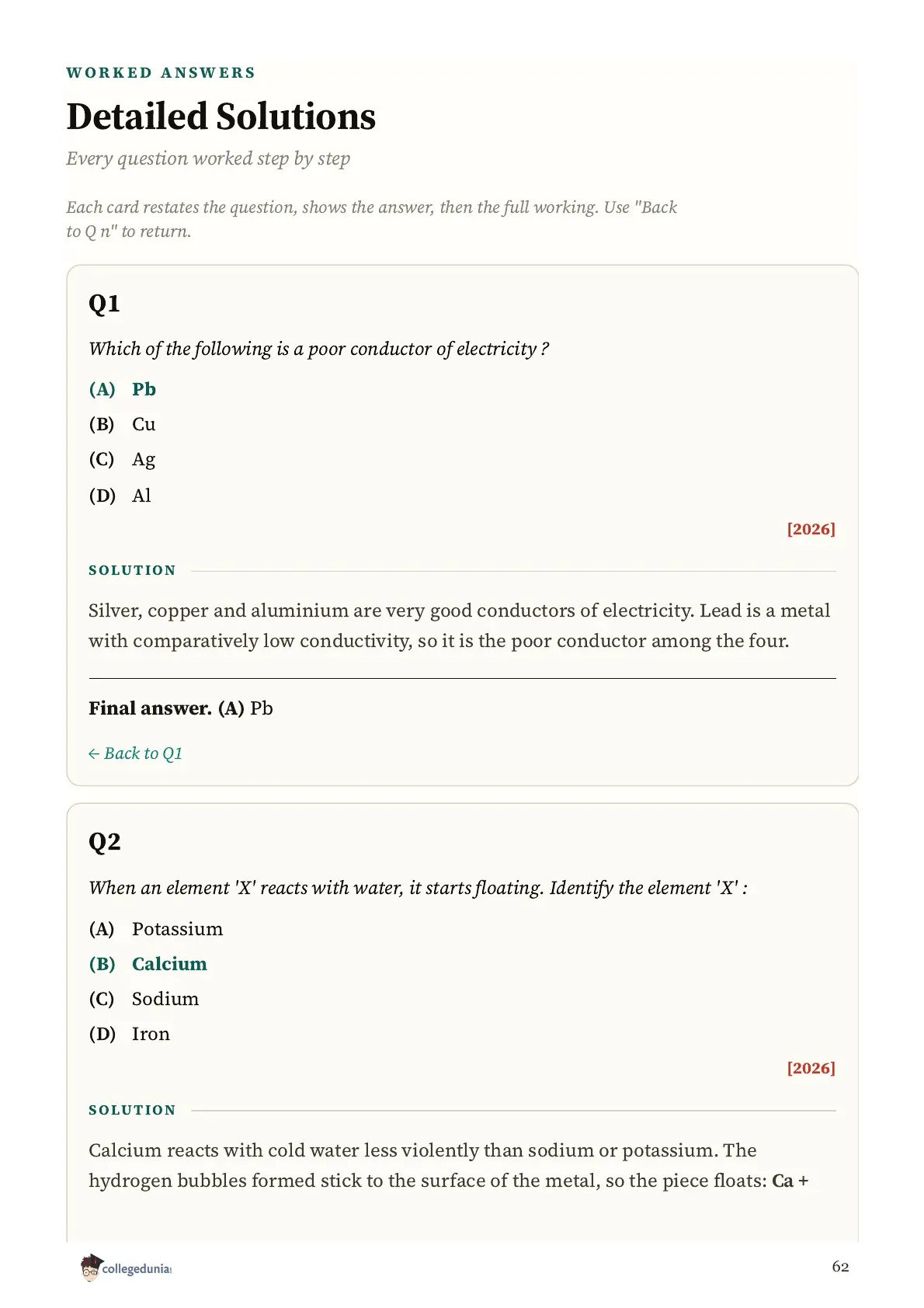
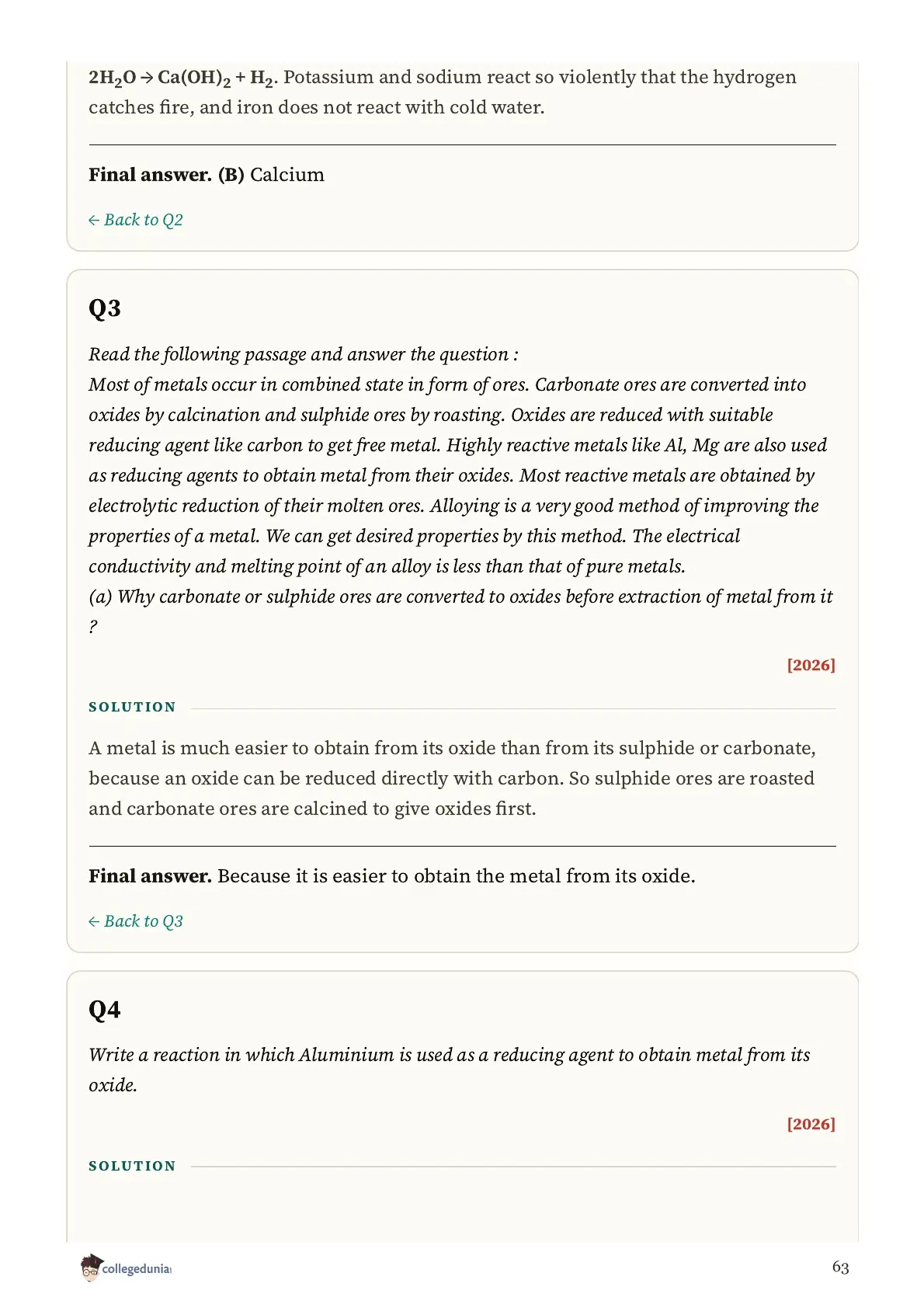
The PDF is 192 pages and free to download. Each section is sorted newest year first, the Answer Key lists the 79 MCQs at a glance, and each question links to its worked solution and back. Attempt the equation-based questions yourself first, check the key, then read the solution. The solutions are written by Collegedunia's Science experts and are not official CBSE marking schemes.
Class 10 Science PYQs by Chapter
| Unit | PYQ Page |
|---|---|
| Chemical Substances | Chemical Reactions and Equations Class 10 Science PYQ |
| Chemical Substances | Acids, Bases and Salts Class 10 Science PYQ |
| Chemical Substances | Metals and Non-metals Class 10 Science PYQ |
| Chemical Substances | Carbon and its Compounds Class 10 Science PYQ |
| World of Living | Life Processes Class 10 Science PYQ |
| World of Living | Control and Coordination Class 10 Science PYQ |
| World of Living | How do Organisms Reproduce? Class 10 Science PYQ |
| World of Living | Heredity Class 10 Science PYQ |
| Natural Phenomena | Light - Reflection and Refraction Class 10 Science PYQ |
| Natural Phenomena | The Human Eye and the Colourful World Class 10 Science PYQ |
| Effects of Current | Electricity Class 10 Science PYQ |
| Effects of Current | Magnetic Effects of Electric Current Class 10 Science PYQ |
| Natural Resources | Our Environment Class 10 Science PYQ |
Metals and Non-metals Class 10 Science PYQ FAQs
Ques. How many questions are in the Metals and Non-metals Class 10 Science PYQ PDF?
Ans. The PDF has 230 questions from 13 board years between 2005 and 2026: 87 at 1 mark, 34 at 2 marks, 58 at 3 marks, 22 case-based items at 4 marks and 29 long answers at 5 marks.
Ques. Does this PYQ PDF include solutions, or only the questions?
Ans. All 230 questions have a worked solution in the PDF. The 79 MCQs and assertion-reason items are also listed in the Answer Key before the solutions.
Ques. Are the solutions official?
Ans. No. The solutions are written by Collegedunia's Science experts and checked against the NCERT chapter and, for the 2022 to 2026 papers, against CBSE's published marking schemes; older answers are checked against the NCERT text. They are not an official CBSE marking scheme, so the board's wording may differ.
Ques. How many marks does Metals and Non-metals carry in the Class 10 Science paper?
Ans. CBSE publishes marks per unit, not per chapter. Metals and Non-metals sits in the unit Chemical Substances, which is reported as 25 of the 80 theory marks and also holds Chemical Reactions and Equations, Acids, Bases and Salts, and Carbon and its Compounds. This figure comes from prep sites and a copy of the 2025-26 syllabus and is unofficial, so check cbseacademic.nic.in.
Ques. What kind of questions are asked from Metals and Non-metals?
Ans. The set is dominated by reactions of metals: with oxygen, water and acids, in displacement reactions, and in extraction from ores. Others ask about ionic bonding, amphoteric oxides, alloys, corrosion and the electrolytic refining of copper, often with a balanced equation.
Ques. Which years does the set cover?
Ans. The questions come from 13 board years between 2005 and 2026. 2025 has the most questions (51), followed by 2023 and 2026 (35 each) and 2024 (34).



Comments