


Education Journalist | Study Abroad Strategy Lead | Updated On - Dec 24, 2025
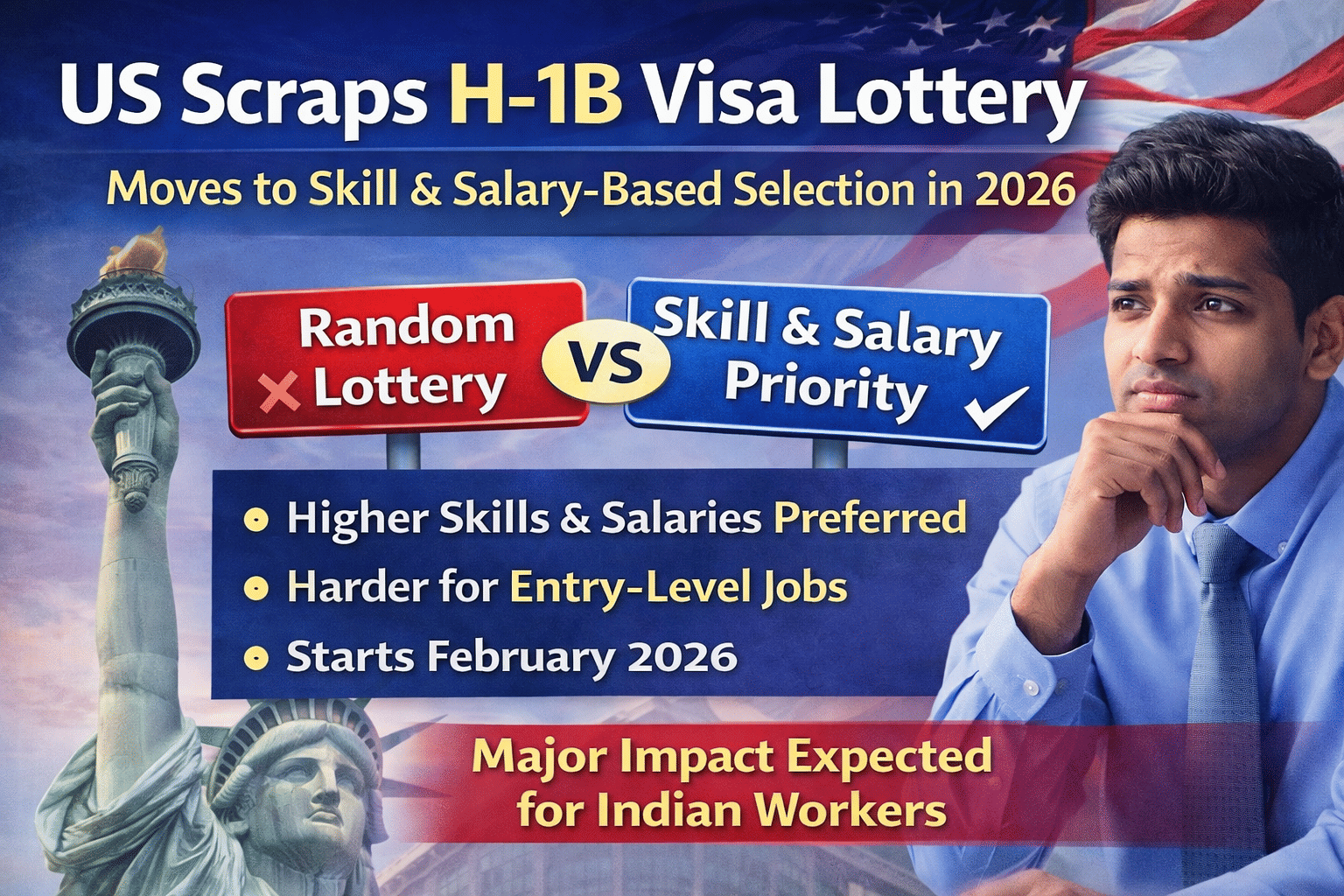
The United States has officially scrapped the decades-old random H-1B visa lottery and will replace it with a weighted, merit-based selection system that prioritises higher-skilled and higher-paid foreign workers. The change was announced by the US Department of Homeland Security (DHS) and will come into effect on February 27, 2026, applying to the FY 2027 H-1B cap registration cycle.
Under the new rule, salary level and skill profile—not luck—will determine selection priority, marking one of the most significant shifts in the H-1B programme in years.
Check Out: What is an H1B Visa for international students?
What Does the New H-1B Rule Say?
Under the revised regulations:
- The random lottery system will be eliminated
- H-1B visas will be allocated using a weighted selection model
- Higher-paid and more specialised roles will receive stronger selection preference
- All wage levels remain eligible, but the selection probability will vary sharply
According to the US Citizenship and Immigration Services (USCIS), the change aims to:
“Better protect the wages, working conditions, and job opportunities of American workers.”
When Will the Rule Apply?
Effective date: February 27, 2026
First affected cycle: FY 2027 H-1B cap season
Visa caps remain unchanged:
- 65,000 regular H-1B visas
- 20,000 visas under the US advanced degree (master’s) cap
Why the US Is Changing the H-1B System
USCIS said the existing lottery system was being exploited by some employers who filed large volumes of registrations for lower-paid, lower-skilled roles.
USCIS spokesperson Matthew Tragesser stated:
“The random selection process was abused by employers seeking to import foreign workers at lower wages than American workers.”
The new system, DHS says, better aligns with Congress’s original intent—to attract top global talent, not volume-based hiring.
What This Means for Indian Students and Professionals?
- Over 70% of all H-1B visas go to Indian nationals
- Around 300,000 Indian professionals currently work in the US on H-1B visas
- Most are employed in technology, engineering, and services
Who Gains Under the New Rule
- Indian professionals who may still benefit include:
- Candidates with high salary offers
- Applicants in specialised, high-skill roles
- Professionals sponsored by large, well-paying employers
Who Faces More Difficulty?
- Entry-level professionals
- Mid-career engineers
- Candidates sponsored by small firms or staffing consultancies
- Roles at lower wage levels, even if technically eligible
For Indian students planning the F-1 → OPT → H-1B pathway, the change raises the bar significantly.
Added Pressure: Fees and Vetting Tighten Further
The weighted selection rule is part of a broader tightening of the H-1B ecosystem under the Trump administration.
Key Additional Changes
$100,000 additional annual fee per H-1B application
Expanded social media screening for:
- H-1B applicants
- H-4 dependents
Increased employer scrutiny and compliance checks
Immigration lawyers have warned that:
Visa interview delays may stretch into mid-2026 or beyond
Professionals travelling to India for stamping risk extended work disruptions
Impact on India’s IT Industry
The shift is expected to significantly affect India’s IT services sector, which has long relied on the H-1B programme.
Large firms (TCS, Infosys, Wipro) may absorb higher costs
Smaller firms could be priced out of US hiring
Companies may:
- Expand offshore delivery from India
- Increase Global Capability Centres (GCCs) domestically
- Explore alternative markets like Canada or Europe
What Indian Students Should Do Now?
- Re-evaluate US plans if relying on entry-level H-1B sponsorship
- Prioritise high-skill, high-pay specialisations
- Choose US programmes with strong employer pipelines
- Keep Canada, Europe, and Australia as backup destinations
- Track wage levels and employer sponsorship trends early
The Bigger Picture
The end of the H-1B lottery marks a structural shift, not a temporary policy tweak.
For Indian students and professionals, the US pathway is no longer just about eligibility—it’s about market value.
Skills, salaries, and employer strength will now decide outcomes—not chance.








Comments