CU MBA (Fintech) FAQs
Ques. Is CUCET mandatory for MBA FinTech admission at Chandigarh University, or can I get admission based on CAT/MAT scores?
Ans. CUCET (Chandigarh University Common Entrance Test) is mandatory for admission to the MBA FinTech programme at CU. While CAT, MAT, and CMAT scores are accepted for merit-based scholarship consideration in standard MBA programmes, the MBA FinTech is an industry-collaborated specialised programme, and the CUCET score is the primary criterion for both admission and scholarship. CAT/MAT/CMAT-based scholarships are explicitly not applicable to this programme. You must register on cucet.cuchd.in, appear for CUCET, and then proceed with the admission process.
Ques. What is the difference between MBA Finance and MBA FinTech at Chandigarh University? Which one should I choose?
Ans. MBA Finance at CU focuses on traditional financial domains such as investment management, banking, corporate finance, and accounting. MBA FinTech, on the other hand, is a specialised programme in collaboration with NSE Academy that merges finance with technology - covering blockchain, algorithmic trading, digital payments, AI in finance, and robo-advisory. If your interest lies in technology-driven financial services, fintech startups, or roles like algorithmic trader, blockchain developer, or digital payments analyst, MBA FinTech is the better choice. If you prefer conventional banking, corporate finance, or financial analysis roles, MBA Finance would be more suitable. Both programmes have strong placement support at CU.
Ques. What certifications will I receive during the MBA FinTech programme, and are they globally recognised?
Ans. Students enrolled in MBA FinTech at CU receive 8 advanced-level NSE Academy certifications covering AI & ML, Algorithmic Trading, Robo-Advisory, Blockchain, Cybersecurity, and Digital Payments Innovation, along with 3 global certifications from NSE. Additionally, students receive a postgraduate professional certification in FinTech and AI from NSE Academy upon programme completion. NSE Academy is the educational arm of the National Stock Exchange of India, and its certifications are well-recognised in the Indian financial services industry. These certifications add significant value to your resume and are particularly relevant for roles in capital markets, fintech firms, and banking technology.
Ques. What is the NSE Smart Trading Lab, and how does it benefit MBA FinTech students?
Ans. The NSE Smart Trading Lab at Chandigarh University provides students with exclusive access to a real-time market simulation environment covering Equity, Futures & Options, and Currency Derivatives. This lab bridges the gap between classroom learning and live market operations, allowing students to practice trading strategies, understand market microstructure, and gain hands-on experience with actual market data - without real financial risk. Over 300 hours of offline delivery by NSE experts, including capstone projects and AI labs in Python, Power BI, Tableau, and Blockchain applications, are conducted through this facility. This is a significant differentiator compared to regular MBA programmes.
Ques. What are the placement prospects after MBA FinTech from Chandigarh University? Which companies recruit FinTech MBA graduates?
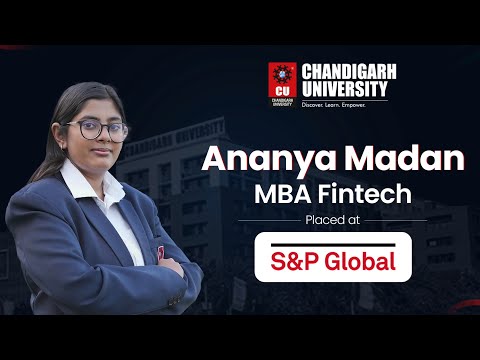
Ans. The MBA FinTech programme at CU offers 100% internship assurance through NSE Academy's nationwide network. The highest package reported for MBA students at CU's Apex Institute of Management is Rs. 28 LPA. Key recruiters in the FinTech domain include Paytm, Zerodha, Faircent, Coverfox, and BankBazaar, among others. The programme's strong industry collaboration with NSE Academy ensures that students are well-prepared for roles such as Financial Analyst, Algorithmic Trader, Blockchain Developer, Digital Payments Specialist, Risk Manager, and FinTech Product Manager. The placement cell (DCPD - Department of Career Planning and Development) at CU provides structured placement preparation including mock interviews, corporate grooming, and industry mentorship.
Ques. Can an engineering graduate or a non-commerce student apply for MBA FinTech at Chandigarh University?
Ans. Yes, absolutely. The MBA FinTech programme is specifically designed to be interdisciplinary and welcomes graduates from engineering, mathematics, computer science, commerce, and other disciplines. In fact, the programme is particularly well-suited for engineers and tech professionals who want to transition into the financial technology space, as the curriculum integrates both technical tools (Python, SQL, Power BI, Tableau, Blockchain) and business management concepts. The only eligibility requirement is a Bachelor's degree in any discipline with a minimum of 50% marks from a recognised university, along with clearing CUCET. Many students from B.Tech backgrounds find this programme a strong bridge between their technical skills and finance careers.


![Chandigarh University - [CU]](https://img.collegedunia.com/public/college_data/images/logos/1613996461logo1.jpg?h=71.7&w=71.7&mode=stretch)







Comments