

![Xavier Institute of Development Action and Studies - [XIDAS]](https://image-static.collegedunia.com/public/college_data/images/logos/1598016450Logo.png?h=71.7&w=71.7&mode=stretch)

Dr. Namrata Williams, Head of the Department of Placements and CSR at Xavier Institute of Development Action and Studies holds three Master's Degrees in Management, Commerce and economics. She also has a doctorate in Applied Economics and Business Administration. While the early part of her career has been in the corporate world, having worked with India's leading corporate houses, since 2007 she has transitioned into teaching to ensure that the students of the next generation are more corporate-ready. Having served as a Vice-Principal, HOD, and Assistant Professor over the last 15 years for graduate and postgraduate students, she specializes in the areas of Finance and Accounting, Valuation and Behavioural Economics. Having done extensive research in Behavioural studies, she has been a part of various projects. Dr. Namrata Williams has several national and international publications to her credit and is on the Editorial Board of an International Journal Publications team.

Being a HOD of the Department, what are your roles and responsibilities towards the students?
XIDAS and XIMJ have a centralized placement department with the Dean, Principal and all the HoDs as members of the Placement Committee. In addition to that, there is a student’s Placement Committee that assists the main committee in all the work related to placements. The committee works on providing skill-based training which will lead to all round holistic development of the students. The trainings focus on enhancing the employment and self-employment opportunities of the students. The Placement Department works as a team where we groom the students into visionary leaders of tomorrow.
How do you tend to establish healthy relations with the students and fellow faculty?
Having healthy relationships between all members of the institute is paramount for us. The staff and the students all work together as a team so there is no scope for any kind of conflict. If there are issues, we make it a point to come to a solution quickly and in consultation with everyone.
How do you try to bring in a practical approach towards subjects and make it industry oriented?
The need of the hour is for managers who have empathy and emotional intelligence. We groom the students in a way that they are rational and empathic managers/leaders in their own fields. The program is application-based where the students have exposure to real-life situations which includes- live projects, internships, rural exposure, rural immersion and social responsiveness. The aim of the curriculum is to bring out the critical and analytical thinking in the students so that they are good decision-makers. We have collaborations with industry experts, corporate houses, and NGOs that work together to help us make our curriculum up to date with the industry requirements. The most important need of all the organisations is that the student should have domain-related knowledge on the subject. There are regular special input sessions organised for the students where the industry experts come and share their experiences. There are conferences and seminars also held regularly.
What are the best practices offered by the department to the students which help them gain necessary skills?
We facilitate learning through practical exposure and real-life situations. The institute has in-house trainers for communication skills and personality development. We have tie-ups with corporate trainers also for training the students in corporate readiness, communication and conducting mock interviews. The student’s placement committee is managed by the student coordinators and team that are selected by the Placement Committee. We encourage the students to be actively involved in the placement process. This gives them a hands-on experience in real-life situations of handling corporate clients.
Check XIDAS Courses & Fees
How do you strategize the curriculum and how often it gets updated to make it befitting for the students?
Analytical and experimental learning is the basis of our curriculum. We nurture analytical, creative and emotional intelligence in preparing empathetic and global leaders and managers. The curriculum is finalised after consultations with the industry expert for each specialization. The specialisation heads to finalise the curriculum for their specialization and then present it to the academic council for approval.
What are your views upon the placements and higher education about the students from your department or How does your department prepare students for higher education?
So far, our placements have been consistent. Our students are placed in banks, consultancies, microfinance companies, NGOs, and livelihood missions. We are working on breaking through the consulting and strategy space and are working on international placements and internships. We have MoUs with corporates and professional organisations for the same.
How do you help your student to cope up with the competition being so high in the outside world?
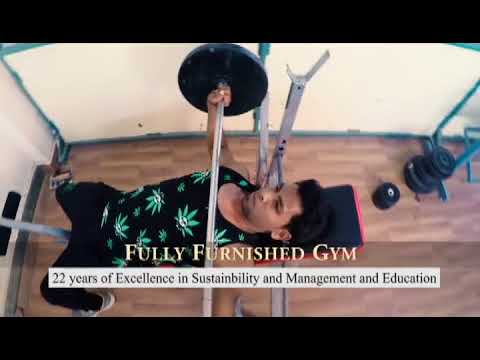
Our curriculum has subjects like UHV (Universal Human Values) for the students. There are workshops, trainings and seminars. Mental well-being is taken very seriously by the institute and that is the reason why they are encouraged to take active participation in sports and extra-curricular activities. We have basketball, football, volleyball, and badminton grounds in addition to having a gymnasium. The students hit the gymnasium after a serious day of studies in the institute. They participate and organize nukkad-natak for social responsiveness which gives them a sense of belonging to the communities.
Do you have any extracurricular activities/ programs to enhance the skills of the students or expose them to real world challenges?
We pay equal importance to extra-curricular activities as we do to the curriculum. The institute has live projects, SIP, dissertations, rural immersion and rural exposure. Students also have the option to take part and participate in sports for which regular competitions are also held. Extracurricular activities are important to boosting our student’s resumes.
Check XIDAS Placement
How does the curriculum of your department ensure the best practice of the industry?
The institute works on a continuous institute-industry interface. We have several domain-specific conclaves, seminars and workshops with industry leaders. In the electives, we have designed it specifically to give the students a cutting-edge advantage over the competitors. The curriculum is designed to take the input from industry experts. A lot of care is taken to make the students industry-ready.
How does the department enhance the skills of the faculty and prepare them according to the industry standards?
While the education system and structures vary all across the globe, still there is a convergence of global knowledge and skill in management. The approach the XIDAS uses is a combination of analytical, and experimental learning which leads to holistic development of the students and is relevant all across the globe. The faculties are actively engaged in research and consultancy projects which keeps them updated with the market scenario. The faculties are encouraged to do a lot of research and projects. All the faculties attend FDPs to enhance their skills.
What are the interventions and approaches you bring in apart from curriculum to train/teach the students?
The faculties use simulations and case study approaches to teach the students the latest topics in management. There is an emphasis on practicing the taught course material in real-life situations. Students have to complete mandatory internships and complete projects in order to graduate.
What do you see as the department’s greatest strengths and how it can be enhanced?
XIDAS engages with industry partners at various levels, be it research and knowledge sharing or curriculum development and co-creation, pedagogical innovations, joint teaching, industry immersion and internships. XIDAS regularly hosts symposiums, special input sessions, and workshops involving industry leaders. All the stakeholders of the Xavier Brand, the management, faculties, staff, students, alumni, and industry partners are our strength.
What valuable advice would you like to the students for them to have a prosperous career ahead?
Be focused on what you want to achieve in life. List your priorities and prepare a game plan to achieve them. Identify your skills and then work on how you want to accomplish the goals. Additionally, keep in mind to always keep learning to remain competitive.




.png?h=132&w=263&mode=stretch)













![MBA/PGDM | admission | 2024 | Narsee Monjee Institute of Management Studies - [NMIMS Deemed to be University]](https://image-static.collegedunia.com/public/college_data/images/logos/1506323004Logo.jpg?h=72&w=72&mode=stretch)


![MBA/PGDM | admission | 2024 | Indian Institute of Management - [IIMC]](https://image-static.collegedunia.com/public/college_data/images/logos/1488950580d2.png?h=72&w=72&mode=stretch)









.png?h=72&w=72&mode=stretch)
.png?h=72&w=72&mode=stretch)
.png?h=72&w=72&mode=stretch)
.png?h=72&w=72&mode=stretch)





Comments