





Technische Universität Dresden (TU Dresden), founded in 1828 in Dresden, Saxony, ranks #185 in the QS World University Rankings 2027. It is one of 11 German Universities of Excellence, drawing Indian students to its tuition-free engineering and science programmes.
TU Dresden runs 124 degree programmes across 18 faculties, with English-taught masters in MS in Germany disciplines like Computer Science, Nanoelectronic Systems and Molecular Bioengineering. Winter (October) and Summer (April) intakes both accept Indian applicants, though most English masters open only for Winter entry.
- QS World Ranking 2027: #185
- Acceptance Rate: 46% (estimated)
- Intakes: Winter (October) and Summer (April)
- Semester Contribution: EUR 350/semester (INR 34,650/semester)
- Average MS Starting Salary: EUR 52,000 (INR 51.5 lakh) per year
Also Check: MS in Germany for Indian Students
TU Dresden charges no tuition for most degree programmes; Indian students pay only the semester contribution covering administration and the Saxony public transport ticket. The study in Germany pathway allows an 18-month post-study job-seeker visa, and DAAD scholarships plus Deutschlandstipendium awards support fee-free applicants.
Exchange rate used: 1 EUR = INR 99 as of August 2026
Admission Status: Closed (Winter 2026/27 intake). The next cycle, for Summer 2027 entry, opens 1 December 2026 and closes 15 January 2027 for restricted international masters. Winter 2027/28 masters applications are expected to open 1 April 2027 and close 31 May 2027 for most English-taught programmes.
Table of Contents
- Popular Courses and Fees at TU Dresden 2027
- TU Dresden Admission 2027
- TU Dresden Admission Requirements for Indian Applicants 2027
- TU Dresden Acceptance Rate 2027
- TU Dresden Fees and Cost of Living for Indian Students 2027
- TU Dresden Campus, Facilities and Student Life
- TU Dresden Scholarships 2027
- TU Dresden Rankings 2027
- TU Dresden Placements and Career Outcomes 2027
- TU Dresden vs Peer Universities
- TU Dresden FAQs
Popular Courses and Fees at TU Dresden 2027
TU Dresden charges no tuition for its degree programmes. Indian students pay a semester contribution covering enrolment and the Saxony transport ticket. The contribution is revised each semester by the student council.
TU Dresden Top PG Courses and Semester Contribution 2027
Master programmes at TU Dresden typically run 4 semesters (2 years) with a fixed contribution per semester. The Winter 2026/27 contribution is EUR 350; total 2-year contribution equals EUR 1,400.
| Program | Language | Semester Contribution (EUR) | Total 2-Year Contribution (INR lakh) | Entry Requirement |
|---|---|---|---|---|
| MS Computational Modeling and Simulation | English | EUR 350/semester (Winter 2026/27) | 1.4 lakh | Bachelor’s with 65% or CGPA 6.5/10 (recommended) |
| MS Nanoelectronic Systems | English | EUR 350/semester (Winter 2026/27) | 1.4 lakh | Bachelor’s with 65% or CGPA 6.5/10 (recommended) |
| MS Molecular Bioengineering | English | EUR 350/semester (Winter 2026/27) | 1.4 lakh | Bachelor’s with 65% or CGPA 6.5/10 (recommended) |
| MS Distributed Systems Engineering | English | EUR 350/semester (Winter 2026/27) | 1.4 lakh | Bachelor’s with 65% or CGPA 6.5/10 (recommended) |
| MS Biotechnology and Applied Ecology | English | EUR 350/semester (Winter 2026/27) | 1.4 lakh | Bachelor’s with 60% or CGPA 6.0/10 (recommended) |
| MS Hydro Science and Engineering | English | EUR 350/semester (Winter 2026/27) | 1.4 lakh | Bachelor’s with 60% or CGPA 6.0/10 (recommended) |
| MS Regenerative Biology and Medicine | English | EUR 350/semester (Winter 2026/27) | 1.4 lakh | Bachelor’s with 65% or CGPA 6.5/10 (recommended) |
| MS Organic and Molecular Electronics | English | EUR 350/semester (Winter 2026/27) | 1.4 lakh | Bachelor’s with 65% or CGPA 6.5/10 (recommended) |
| MS Tropical Forestry | English | EUR 350/semester (Winter 2026/27) | 1.4 lakh | Bachelor’s with 60% or CGPA 6.0/10 (recommended) |
| MS International Studies in Intellectual Property Law | English | EUR 350/semester (Winter 2026/27) | 1.4 lakh | Bachelor’s with 60% or CGPA 6.0/10 (recommended) |
TU Dresden Top UG Courses and Semester Contribution 2027
Bachelor programmes run 6 semesters (3 years). Most are taught in German and require language proof; total 3-year contribution equals EUR 2,100.
| Program | Language | Semester Contribution (EUR) | Total 3-Year Contribution (INR lakh) | Entry Requirement |
|---|---|---|---|---|
| BS Mechanical Engineering | German | EUR 350/semester (Winter 2026/27) | 2.1 lakh | Class 12 with 75% to 90% (recommended) |
| BS Molecular Biology and Biotechnology | German | EUR 350/semester (Winter 2026/27) | 2.1 lakh | Class 12 with 75% to 90% (recommended) |
| BS Computer Science | German | EUR 350/semester (Winter 2026/27) | 2.1 lakh | Class 12 with 75% to 90% (recommended) |
| BS Civil Engineering | German | EUR 350/semester (Winter 2026/27) | 2.1 lakh | Class 12 with 70% to 85% (recommended) |
| BS Electrical Engineering | German | EUR 350/semester (Winter 2026/27) | 2.1 lakh | Class 12 with 70% to 85% (recommended) |
Insider note: Indian applicants overwhelmingly pick MS Nanoelectronic Systems, Computational Modeling and Molecular Bioengineering because they are English-taught and align with strong Dresden industry hiring in semiconductors and biotech.
Read More: TU Dresden Fees and Cost of Living Guide
TU Dresden Admission 2027
TU Dresden runs two intakes: Winter (October start) and Summer (April start). Most English-taught masters open only for Winter entry, while a few programmes accept Summer applications.
| Milestone | Date | Notes for Indian Applicants |
|---|---|---|
| Summer 2027 masters application deadline | 15 January 2027 | Applies to selected English masters accepting Summer intake |
| Winter 2027/28 restricted masters deadline | Expected 31 May 2027 (based on prior cycle) | Applies to most English-taught masters via uni-assist |
| APS certificate verification | Start 12 weeks before deadline | Mandatory for all Indian applicants via APS India portal |
| uni-assist document review | Start 8 weeks before deadline | Required for international credential recognition |
| Programme start (Winter 2027/28) | 1 October 2027 | Orientation week held late September 2027 |
Planning note: Book the APS interview slot in India by January 2027 for Winter 2027/28 entry, since the certificate takes 4 to 6 weeks and is a hard prerequisite for uni-assist submission.
TU Dresden Admission Requirements for Indian Applicants 2027
Indian applicants to TU Dresden must submit APS-verified credentials and meet the language threshold for their chosen programme.
- Bachelor’s degree: 4-year Indian bachelor’s with 65% or CGPA 6.5/10 (recommended) in a relevant discipline
- English proficiency (English-taught masters): IELTS 6.5 or TOEFL iBT 88 (verify at official programme page)
- German proficiency (German-taught programmes): DSH-2 or TestDaF 4x4 or Goethe C1
- APS certificate: Mandatory verification of Class 10, 12 and bachelor’s transcripts via APS India
Key insight: The APS certificate is valid indefinitely once issued, so Indian students planning multiple German applications should obtain it early rather than treating it as a TU Dresden specific step.
TU Dresden Acceptance Rate 2027
TU Dresden’s acceptance rate sits at 46% (estimated), placing it among the more accessible German Universities of Excellence. The figure is derived from published application-to-enrolment ratios and is not an official disclosure.
Competitive English masters like Nanoelectronic Systems and Computational Modeling are notably tighter than the university-wide average. Programme-level selectivity varies by capacity limits set each intake.
Reality check: A 46% headline hides sharp variation. Indian applicants to restricted English masters should target 70%+ bachelor scores and strong statements of purpose to clear internal ranking.
Read More: TU Dresden Acceptance Rate
TU Dresden Fees and Cost of Living for Indian Students 2027
Total annual cost for an Indian student at TU Dresden ranges from EUR 12,000 to EUR 14,500 (INR 11.9 lakh to INR 14.4 lakh), covering the semester contribution and Dresden living expenses.
TU Dresden Semester Contribution for Indian Students 2027
TU Dresden charges no tuition for its degree programmes. The semester contribution is the only compulsory payment and includes the Saxony-wide public transport ticket.
| Level | Semester Contribution (EUR) | Semester Contribution (INR lakh) |
|---|---|---|
| UG programmes | EUR 350/semester (Winter 2026/27) | 0.35 lakh |
| PG programmes | EUR 350/semester (Winter 2026/27) | 0.35 lakh |
Monthly Cost of Living in Dresden for Indian Students
Dresden is among the more affordable German university cities. Monthly costs sit well below Munich or Frankfurt levels.
| Expense | Monthly (EUR) | Monthly (INR) | Annual (INR lakh) |
|---|---|---|---|
| Accommodation (student halls) | EUR 300 (estimated) | INR 29,700 | 3.56 lakh |
| Food and groceries | EUR 250 (estimated) | INR 24,750 | 2.97 lakh |
| Transportation (covered by semester ticket) | EUR 0 | INR 0 | 0 lakh |
| Books and study materials | EUR 40 (estimated) | INR 3,960 | 0.48 lakh |
| Personal, insurance and utilities | EUR 260 (estimated) | INR 25,740 | 3.09 lakh |
| Total | EUR 850 | INR 84,150 | 10.10 lakh |
[Source: DAAD 2026 cost of living guidance]
Insider note: Studentenwerk Dresden dorms cost EUR 220 to EUR 350 monthly and include utilities; waiting lists run 2 to 3 months, so apply the day you receive an admission letter.
TU Dresden Campus, Facilities and Student Life
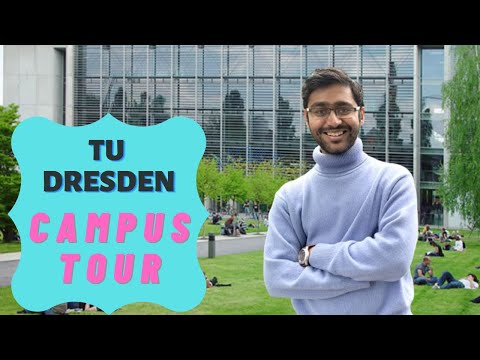
TU Dresden’s main campus sits in the southern part of Dresden, a compact Saxon city of half a million people with strong tram and S-Bahn (regional rail) coverage.
- Location and transport: Main campus is 15 minutes by tram from the city centre; semester ticket covers all Saxony regional trains
- Housing: Studentenwerk Dresden manages 35 dorms with EUR 220 to EUR 350 monthly rent; no international housing guarantee
- Facilities: SLUB library operates 24/7 with 9 million volumes; dedicated cleanrooms serve nanoelectronic research
- Indian community: Active Indian Students Association organises Diwali, Holi and orientation buddy programmes for new arrivals
What Indian students say: Dresden’s cost of living is manageable on a part-time job. Winter is cold and grey but the SLUB library becomes a second home. The city is safer and calmer than Berlin.
TU Dresden Scholarships 2027
TU Dresden lists two university-administered awards; most Indian students combine these with external DAAD funding.
| Scholarship | Type | Award Value | Eligibility | Deadline |
|---|---|---|---|---|
| Deutschlandstipendium | Merit-based | EUR 300/month (INR 29,700/month) | Enrolled students with strong academic record and social engagement | Verify at official TU Dresden scholarships page |
| STIBET Matching Funds | Need-based | Verify at official TU Dresden scholarships page | International degree students facing financial hardship | Rolling application via faculty coordinators |
Planning note: Deutschlandstipendium is awarded post-enrolment, so Indian applicants must plan financial proof of EUR 11,904 for the visa block account independently of scholarship outcomes.
Read More: TU Dresden Scholarships Guide
TU Dresden Rankings 2027
TU Dresden’s strongest global ranking is #185 in QS World 2027, up from #218 in 2026, reflecting steady improvement across research citations and employer reputation.
| Ranking Body | Latest Edition | Previous Edition | Two Editions Back |
|---|---|---|---|
| QS World | 2027: #185 | 2026: #218 | 2025: #234 |
| THE World | 2026: #174 | Not published in this table | Not published in this table |
| ARWU World | 2025: #201-300 | 2024: #201-300 | 2023: #201-300 |
| Collegedunia Study Abroad | #136 of global universities | NA | NA |
Collegedunia Study Abroad also ranks TU Dresden #14 in Germany and #64 globally for Engineering. THE Subject 2026 places Engineering at #101-125 and Computer Science at #151-175.
[Source: QS, THE, ARWU, Collegedunia Study Abroad]
Key insight: A QS rank inside the global top 200 satisfies most Indian employer recognition thresholds and qualifies TU Dresden graduates for accelerated processing under several corporate India campus recruitment lists.
Read More: TU Dresden Rankings Analysis
TU Dresden Placements and Career Outcomes 2027
TU Dresden graduates enjoy strong demand from the Silicon Saxony semiconductor cluster and broader German engineering employers.
- Median MS starting salary: EUR 52,000 (INR 51.5 lakh) per year (market median)
- Median engineering starting salary: EUR 55,000 (INR 54.5 lakh) per year (market median)
- Representative recruiters: Infineon, GlobalFoundries, Bosch, Siemens, SAP, Volkswagen, ZEISS
- Careers support: Dedicated Career Service runs company fairs, CV clinics and English-language job talks each semester
- Post-study visa: 18-month job-seeker visa for Indian graduates after degree completion
Insider note: Dresden’s Silicon Saxony employers hire Indian graduates directly from TU Dresden’s masters in Nanoelectronic Systems and Distributed Systems Engineering, often via working-student roles that convert to full-time.
TU Dresden vs Peer Universities
Compared against fellow German Universities of Excellence and one UK peer, TU Dresden offers the strongest cost-to-rank ratio.
| University | QS Rank 2027 | Collegedunia Study Abroad 2026 | Avg Annual PG Fee (EUR/INR lakh) | Differentiator |
|---|---|---|---|---|
| TU Dresden | #185 | #136 global | EUR 700/INR 0.69 lakh | Silicon Saxony hiring pipeline |
| RWTH Aachen | #99 | #77 global | EUR 600/INR 0.59 lakh | Strongest German engineering brand |
| TU Munich | #22 | #42 global | EUR 340/INR 0.34 lakh | Top German QS position |
| University of Stuttgart | #312 | NA | EUR 3,700/INR 3.66 lakh | Automotive research strength |
| University of Manchester | #35 | NA | EUR 32,000/INR 31.68 lakh | English-taught, UK visa route |
TU Dresden differentiates on affordability plus a specialised semiconductor cluster nearby. It out-ranks Stuttgart while sitting inside the QS top 200.
TU Dresden suits Indian students seeking a tuition-free STEM masters at a QS top-200 university with direct pathways into German semiconductor and biotech employers. The two-year investment of INR 11.4 lakh (contribution plus living) against a market median starting salary of INR 51.5 lakh produces one of the strongest ROI profiles in Europe, and the 18-month German job-seeker visa gives graduates real settlement runway.
It is not ideal for students who need an English-taught bachelor’s, since most UG programmes require DSH-2 German. Applicants prioritising English-first UG study should look at the University of Manchester or similar UK options instead.
TU Dresden FAQs
Ques. Can Indian students work part-time while studying at TU Dresden?
Ans. Yes, Indian students on a German student visa may work 140 full days or 280 half days per calendar year. Working-student roles at Silicon Saxony employers like Infineon and GlobalFoundries pay EUR 12 to EUR 18 per hour and often convert to full-time offers post graduation. Campus jobs at TU Dresden research chairs are also common.
Ques. Does TU Dresden waive the IELTS requirement for Indian applicants?
Ans. TU Dresden waives IELTS only if the applicant’s prior bachelor’s was taught entirely in English and the university issues a medium-of-instruction certificate confirming this. Indian applicants from IIT and NIT programmes typically qualify with an MOI letter. All other applicants must submit IELTS 6.5 or TOEFL iBT 88 for English-taught masters.
Ques. What is the visa financial proof required for TU Dresden Indian students?
Ans. Indian students must show EUR 11,904 (INR 11.8 lakh) in a German blocked account for the first year, as per current federal requirements. Providers like Fintiba and Expatrio open blocked accounts remotely for Indian applicants. The account releases EUR 992 per month once the student registers in Dresden.
Ques. Are joint or double degree programmes available at TU Dresden?
Ans. Yes, TU Dresden runs joint and double-degree masters with partners including Charles University Prague, University of Trento and Tongji University. Notable examples are the Erasmus Mundus Nanoscience and Nanotechnology programme and the double master in International Studies in Intellectual Property Law. These usually add one exchange semester abroad.
Ques. How does TU Dresden verify Indian academic transcripts?
Ans. All Indian applicants must obtain the APS certificate from the German embassy in Delhi before applying. APS verifies Class 10, Class 12 and bachelor’s transcripts and takes 4 to 6 weeks. TU Dresden then routes the application through uni-assist for European grade conversion. WES evaluation is not accepted for German university admissions.
Ques. Which Indian banks give education loans for TU Dresden?
Ans. SBI, HDFC Credila, Axis Bank, ICICI and Avanse all sanction education loans for TU Dresden admits. Since tuition is nil, most Indian students borrow only for living costs and the blocked account, keeping loan quantum between INR 15 lakh and INR 25 lakh. TU Dresden appears on all major Indian bank prime university lists.
Ques. Does TU Dresden charge an application fee for Indian applicants?
Ans. TU Dresden does not charge an application fee, but uni-assist charges EUR 75 for the first programme and EUR 30 for each additional programme in the same semester. Indian applicants pay this in EUR via bank transfer or card. The APS certificate itself costs 25 USD payable at the German embassy in Delhi.
Ques. Can Indian students bring dependents on a TU Dresden student visa?
Ans. Yes, married Indian students may bring their spouse and children on a family reunion visa. The primary student must show additional financial proof of roughly EUR 6,000 per dependent per year and provide a two-bedroom lease in Dresden. Spouses receive full work rights immediately upon arrival, unlike several other study destinations.
Technical University Dresden Program Fees & Deadlines
| Program | Important Dates | Fees | Eligibility | Financial Aid |
|---|---|---|---|---|
MS Computer Science 2 years | USD 757 /Yr EUR 676 /Yr | TOEFL- 5 | IELTS- 7 | ||
| USD 757 /Yr EUR 676 /Yr | TOEFL- 4.5 | IELTS- 6.0 | |||
| USD 757 /Yr EUR 676 /Yr | TOEFL- 4.0 | IELTS- 5.5 | |||
MS Molecular Bioengineering 2 years | USD 757 /Yr EUR 676 /Yr | TOEFL- 4.5 | IELTS- 6.0 | ||
| USD 757 /Yr EUR 676 /Yr | TOEFL- 4.0 | IELTS- 5.5 | |||
MS International Management 2 years | USD 757 /Yr EUR 676 /Yr | TOEFL- 4.0 | IELTS- 5.5 | ||
| USD 757 /Yr EUR 676 /Yr | TOEFL- 4.5 | IELTS- 6.0 | |||
MS Physics 2 years | USD 757 /Yr EUR 676 /Yr | TOEFL- 4.0 | IELTS- 5.5 | ||
MS Chemistry 2 years | USD 757 /Yr EUR 676 /Yr | TOEFL- 4.5 | IELTS- 6.0 | ||
| USD 757 /Yr EUR 676 /Yr | TOEFL- 5 | IELTS- 7 |
Do you think the Dates are wrong ? Report Here
Find A Program
Top Recommended Courses
Master of Science [MS] Computer Science
Do you think the fees are wrong ? Report Here
Do you think the fees are wrong ? Report Here
Course Finder - Search from 50K+ courses
Popular Streams:
Technical University Dresden comparison
| University Name | Technical University Dresden | Technical University Munich |
|---|---|---|
| Collegedunia Score | 5.5 Out of 10 | 6.2 Out of 10 |
| Overall Ranking |
|
|
| Subject Strength |
|
|
| Programs |
|
|
| Cost to Study |
|
|
| Placement | Graduate Employability Rankings (‘20): #181-190. | Tie-ups with around 800 start-ups set up by alumni and faculty. |
| Application Requirement | Apply through uni-assist. | Applications are invited through Uni-assist, German language proficiency is required for most UG program, GRE/GATE scores are required for some masters programs. |
| - | Read Full Comparison |
Do you think the data is wrong ? Report Here

Overall 118 out of 1899 in Global Ranking

Overall 185 out of 1504 in Global Ranking
Do you think the Rankings are wrong ? Report Here
Technical University Dresden Reviews
23 Reviews Found
Likes
- I wanted to study biophysics. This was the only university which offered the course in Germany. Germany is zero tuition fee. And spoke to some seniors. Got an excellent review from them.
- Research facilities and the faculty. The faculty is world renowned and their connections help in getting further opportunities. The invited lectures are really insightful. State-of-the art equipment.
Dislikes
- Only few English taught courses. Although you can survive comfortably with only English. Somehow German is required to integrate with the local population. Feels like you are in this small comfortable university bubble. Need German to get out of it.
Overview
The experience in TU Dresden was the best. Especially when I already knew that I wanted to do a PhD, the program prepared me well. It was very cheap compared to US or any other part of the world. I didn't have to take money from my parents. I was self sufficient.
Campus Life
The biotec campus is a bit far from the university because they wanted to keep the biotech campus closer to the medical centrer and the max planck institute for cell biology and genetics. This was done to foster more collaborations and increase efficiency. The infrastructure is state-of-the-art. Best equipment in the world. Library is rich, WIFI is strong. University sports facility is well equiped and good training programs.
Likes
- One of the best in Germany for Electronics along with ample job opportunities. No tuition fee.
- The teachers and the course as a whole. The opportunities to interact with different companies during the career fairs. The exhibitions related to the current research being done.
Dislikes
- The course can be somewhat difficult at times as there are a lot of things to manage at once, i.e., studying, working and doing other chores. You need to adjust to the weather and focus on your health.
Overview
The onboarding to the university is very smooth and the course is very informational. The teachers are well versed and up-to-date with the latest research in their area of expertise.
Campus Life
There are a lot of campus events including exhibitions and career fairs. We also have a very big Indian Students Association.
Likes
- TU Dresden is a hub for Nanotechnology which is my field of interest. Hence I chose this university.
- I am a student at TU Dresden pursuing Nanoelectronic Systems MSc. I am currently in my third semester and the experience so far has been challenging and a very happy one also. The standards of the labs and practical training here are high and they have opened my eyes to a lot of exciting technologies and tools in Material Science and Semiconductors.
- Dresden is considered to be the hub for Nanotechnology in Germany and frankly I cannot think of a better place to be in if one is interested in Semiconductor Technology, Manufacturing and Material Science. It is also an excellent center for Biology, Bioengineering and Regenerative medicine. There are lots of opportunities for students here in all the fields mentioned above.
Dislikes
- There is not enough emphasis on the fields of analog design and RF here. Also my course contains some courses that are not really necessary. There is work going on from the student council side to make the course more streamlined for Nanoelectronics so hopefully this will change soon.
Overview
Overall I feel the university as well as this place is very welcoming to me and my interests. Outside academic life this is culturally also a great place to live in.
Campus Life
Campus Life is very lively here with lot of activities taking place that allows us to meet new people and engage with them. There are lot of clubs here for students as well as employees which are good. The main library here is the university library which is preferred by students during exam preparation time. Sports facilities are good and Wifi is good throughout the campus. Research facilities are first rate and are governed by strict protocols which need to be adhered to.
Likes
- TU Dresden is one of the best universities to do a master's program in microelectronics/ nanoelectronics (VLSI) in Germany. The structure of the program is updated regularly based on industry standards. There are plenty of opportunities to excel in this domain by working part-time under the professors who does intense research in their specific fields. The university is located at Silicon Saxony, a technology hub for semiconductor, and has excellent ties with the corporate industry.
- My university is one of the established technical universities in Germany. The university is located at an ideal location, Saxony where it is the technological hub of semiconductor industry (Silicon Saxony) in Germany. The university is well-known for the number of research papers it publishes every year.
Dislikes
- There isn't anything that I dislike about my university. The professors who take lectures are well experienced in their domain and has extensive research topics under them. The university offers multiple master programs in English and heartily welcomes international students.
Overview
I love my university, TU Dresden and is grateful for the opportunities it has given me. The university has a wonderful library located next to it. Students have access to a lot of events and activities at the university. The professors and faculty members are well-versed in their fields with interesting research taking place in the background where students can contribute too. Students can stay at student dorms provided by the university at lower rents compared to outside. The university is located at Dresden in the state of Saxony where history and industry thrive. Additionally, the cost of living is comparatively lower at Dresden than other popular cities in Germany. I totally recommend the master's program of nanoelectronic systems to all those seeking a good career in the semiconductor industry.
Campus Life
There are lots of events happening at the university. There are many student initiatives in the campus for student welfare and academics. The university has one of the largest libraries in Germany. Students have access to lots of sport activities at the university which they should register at the beginning of the semester. Throughout the campus, you get access to Wi-Fi.
Likes
- TU Dresden is considered one of the best institute I the world for Polymer and materials research. There is an institute affiliated under TU Dresden called Leibniz Institute for Polymer Research, which is one of the finest Polymer Research Centres in the world. I really wanted myself to get exposed to that environment.
- The level of international collaboration and culture with world class research facilities to every special filed of my interest. Easily accessible technologies and most helpful people around. Dresden, the University City, is the most beautiful place I have lived in my life. Both academically and culturally, the Technical University of Dresden was excellent.
Dislikes
- I haven't come across anything that i dislike. And i believe in the future also it wouldn't be there. The University is trying in every single way to indulge students in diversified activities and make the environment international.
Overview
TU Dresden was the most informed decision i have taken in my career and it proved to be right. The experience, both academic and personal was the best I have come across in my life with great support from well knowledge staffs and world class research facilities. Culturally, Dresden is a rich place with a lot of opportunities to indulge yourself in various activities. Personally, I loved living in such a city. After my course, I received PhD offers from University of Auckland (New Zealand), University of Vienna (Austria), Cranfield University (UK), and KU Leuven (Belgium) with generous salary. The position at KU Leuven was a Marie Curie Fellowship which offered me 2.6 crore INR for 3 years.
Campus Life
I should mention 'best in class'. There is nothing the University left to provide the students with. The sports facilities are awesome with Olympic sized stadiums and courts. Students can easily access all these facilities at a very minimal fee. Wifi was available all across the campus, to say, all across the city since the campus was spread all over the city with different departments.
Likes
- Esteemed Faculty with similar background to my research interest , research infrastructure, location of university.
- Research environment was very good. Supervisors, colleagues and all the people are around are very supportive. You get to know individuals from various countries and also experience new cultures. Vibrant community of researchers with proper infrastructure.
Dislikes
- Nothing much was there to dislike. You may miss home sometimes, native people may sometimes seem cold and unwelcoming and cold weather can be a little testing but it's being very critical. It's a top class university with good faculty and Facilities.
Overview
It's was overall an enthralling experience. New people, culture, environment and research group. Enjoyed my stay there and travelled across whole of europe ( around 15 countries).
Campus Life
Campus life was very enriching, language classes are held to impart basic German skills. Tours were organised for museums, trekking etc. Sports Centre is also there to carry out hobbies.
Likes
- My interest in the course was the top priority along with the all other opportunities.
- I am really fascinated by the international environment at the university and the broad range of opportunities available including sports offers, language courses, career workshops, cultural dinners/potlucks and many others.
Dislikes
- The university schedules classes between 7:00AM and 8:00PM depending on the course, and during winter it gets really difficult to make it to the classes be it early morning or late evening as it is very cold and dark in the morning and the sun sets at about 4:00PM in the evening.
Overview
Well structured with great international exposure (~ 34000 students), excellent research facilities and friendly environment.
Campus Life
The university has all possible facilities, infrastructure and extracurricular activities one can think of as a student.
Likes
- The main reason would be that my Bachelor's was a great match for this program. Moreover, the research going on in the institute was very good with a lot of competent researchers. The program was in English and there were students from all over the world.
- It has a great international community, with a lot of support towards research. There is a lot of associated institutes with specialised/interdisciplinary research going on that is accessible to the students. The living expenses are less compared to other German cities, but the amenities are great and accommodation is relatively easier to find if applied promptly.
Dislikes
- Masters courses that are in the Centre for Cellular & Molecular Biology (Molecular bioengineering, physics of life and regeneration biology) are in another part of the city and doesn't really possess the student atmosphere seen in the main campus. Moreover, recently there has been a great increase in number of students, causing some issues in organisation of lectures and all.
Overview
Overall, TU Dresden is a wonderful university with a truly international student population, providing affordable education to aspiring researchers and engineers, while not compromising on the quality.
Campus Life
There are a lot of parties and events organised by the student union every semester, and there is great support of sports and other extracurricular activities. Wifi is free everywhere in the campus and the central library is the largest in the state with a vast collection of books.
Likes
- It's a reputed university with under 200 ranking. More than reputation, the program is very contemporary with excellent professors mentoring the students.
- Program I studied is in English thus there's no requirement of German proficiency. There's no tuition fees, just a minimal semester registration fee equivalent to around INR 24,000.
- There are abundant research assistant positions in all areas of study (scientific). It is located in a city which is student friendly meaning the cost of living is very affordable.
Dislikes
- The program is in English and one can complete their studies without any knowledge of German. However, if one wants to attend lectures from advanced courses, they need German proficiency. I wish there were more advanced courses taught in English.
Overview
It is located in a city which is student friendly meaning the cost of living is very affordable. There are various student clubs and activities, sport facilities, and quite a few canteens. The weather is not so extreme compared to nordic countries especially during winters. The summer is the best time here.
Campus Life
There's WiFi everywhere around the campus through EduRoam. There are various student clubs and activities, sport facilities, and quite a few canteens. The classrooms are big, clean and well equipped.
Likes
- I had the opportunities in Dresden related with semiconductor industry.
- Its under top 9 university of Germany and helps to contribute to the science feild by writing papers or research work. There is lots of companies related to the semiconductor industry for example fab like XFAB , Global foundries, Infenion. So very good opportunity who are willing to work for the different cutting edge technologies.
Dislikes
- Nothing as such. But few minor things are some course which are very area specific are not having much job opportunities. So I think choosing the location as per the interests of the subjects matters a lot.
Overview
My experience for first year was amazing the best life which I had in my career. But second half It was worst because I had to write two research paper to get my degree. Research paper are not so easy task . They had lots of pressure , mind storming sessions and les guidance. So it was challenging and worth to get the degree at TUD Germany.
Campus Life
Campus life is very enjoyable. They are the best . We have lots of Indian association and some student association which has many events in week almost keep going to make sure people are engaged and doing the best in their course.
Technical University Dresden Scholarships
| Name | Scholarship Per Student | Level of Study | Type | |
|---|---|---|---|---|
| VueVille Future Technology Scholarship | Scholarship per student$1,000 | Level Of StudyBachelor | TypeMerit-Based | |
| MAWISTA Scholarship | Scholarship per student$6,691 | Level Of StudyBachelor | TypeEasy-to-Apply | |
| Kurt Hansen Science Scholarship | Scholarship per student$10,000 | Level Of StudyDoctorate | TypeNeed-Based | |
| Bharat Petroleum Scholarship | Scholarship per studentVariable Amount | Level Of StudyMaster | TypeMerit-Based | |
| Google's Women Techmakers Program | Scholarship per studentVariable Amount | Level Of StudyBachelor | TypeMerit-Based | |
| Axol Science Scholarship | Scholarship per student$2,000 | Level Of StudyBachelor | TypeCompany-Sponsored |
Do you think the Scholarship is wrong ? Report Here
Technical University Dresden Admissions
Winter Admission Deadlines
Important Date: May31 (Application deadline)Summer Admission Deadlines
Important Date: November30 (Application deadline)
Attendance Cost
The table shows average yearly cost of attendance for international students. Amount may vary with the course opted, nature of accommodation, and personal spending habits of a candidate.Check Program wise Fees
Faculty
| Total Faculty | Full Time | Part Time | Graduate Assistants |
|---|---|---|---|
| 934 | - | - | - |

interested in this College ?
Follow & Share this college to get information about admission.



Comments
Found 10 Comments
Applying for a master's program in Germany involves gathering required documents (transcripts, CV, etc.), meeting language proficiency requirements (usually German or English), and submitting an application through the university's online portal. Research your chosen program and specific univeristy for requirements and deadlines, and reach out to the university's admissions office for any additional guidance.
Yes, you can take admission in Technical University Dresden (TUD) or TU Dresden as it offers admissions to international students for its two semesters- winter and summers. The admission process follows a uniform procedure for all applicants, regardless of their nationality or academic background. However, international students must fulfill additional requirements to complete their admission: