


Reviewed on Dec 11, 2025(Enrolled 2021)
What Students Say
Likes
- Exposure to different cultures, since you met international students all over the town
- Research based and hands on experience, rather than mindless reading of ppts
- Creation of case studies for every module and helpful professors
Dislikes
- Less gap between 2 modules
- Finding houses to stay in
- Finding student dorms to stay in
Course Curriculum
10
- The difficulty level of the curriculum was pretty high since everything was research-based and something that you wouldn't get on Google. You would have to read 100s of research papers to finish one module and create presentations or write a research paper of your own to finish the module and get grades accordingly.
- The positive aspects would be research-oriented classes and getting to know about the module on a more practical basis, rather than just studying theories. Each course had a timeline of 14 days, so every day there would be classes from 10-5. The only negative aspect would be dealing with assignments every other day and dealing with PPTs and practical classes every day.
- The average number for a class would vary from course to course. My course had around 30 students.
- In my course, there were 2 Indian students.
Admission Experience
-
I applied to the following universities:
- University of Reading - Admitted
- University of Glasgow - Admitted
- University of Liverpool - Admitted
- University of Newcastle - Admitted
- University of Manchester - Admitted
- TUM - Rejected
- LMU - Rejected
- University of Koln - Shortlisted
- University of Freiburg - Admitted
- University of Barcelona - Admitted
- University of Milan - Rejected
- Norway University - Rejected
- I chose the University of Freiburg for its esteemed reputation, the content of the course, and because getting a 2-year master's degree is better than a 1-year degree in the UK, if the idea is to come back to India.
- You have to take IELTS, and the minimum score should be 7. You have good knowledge of the course and should have good grades in your graduation to be selected. Also, your resume and cover letter should not be monotonous.
- My overall admission experience was smooth enough, barring the visits to the bank and vfs office for the visa. The handling of all documents to get the Schengen visa is the difficult part, and getting the funds transferred from your bank account to a foreign account.
I applied via the university website as well. The University of Freiburg is one of the best universities in Germany and in the world. - The entire admission process took around 3 months. I received the admission letter at June end and the course started in October. It took 3 months to get the Schengen Visa, get all the formalities done regarding the passport, and create a bank account.
Faculty
10
- The faculty-to-student ratio would be 1:15. Every module had 2 professors - 1 senior professor and a PhD student to grade our assignments. The teaching was basically a research-oriented one, where the professors would teach the concept of the course and suggest research articles to learn more about the module. They would also entertain thoughts and answers that might not be relevant, but just to encourage the students.
Campus Life
10
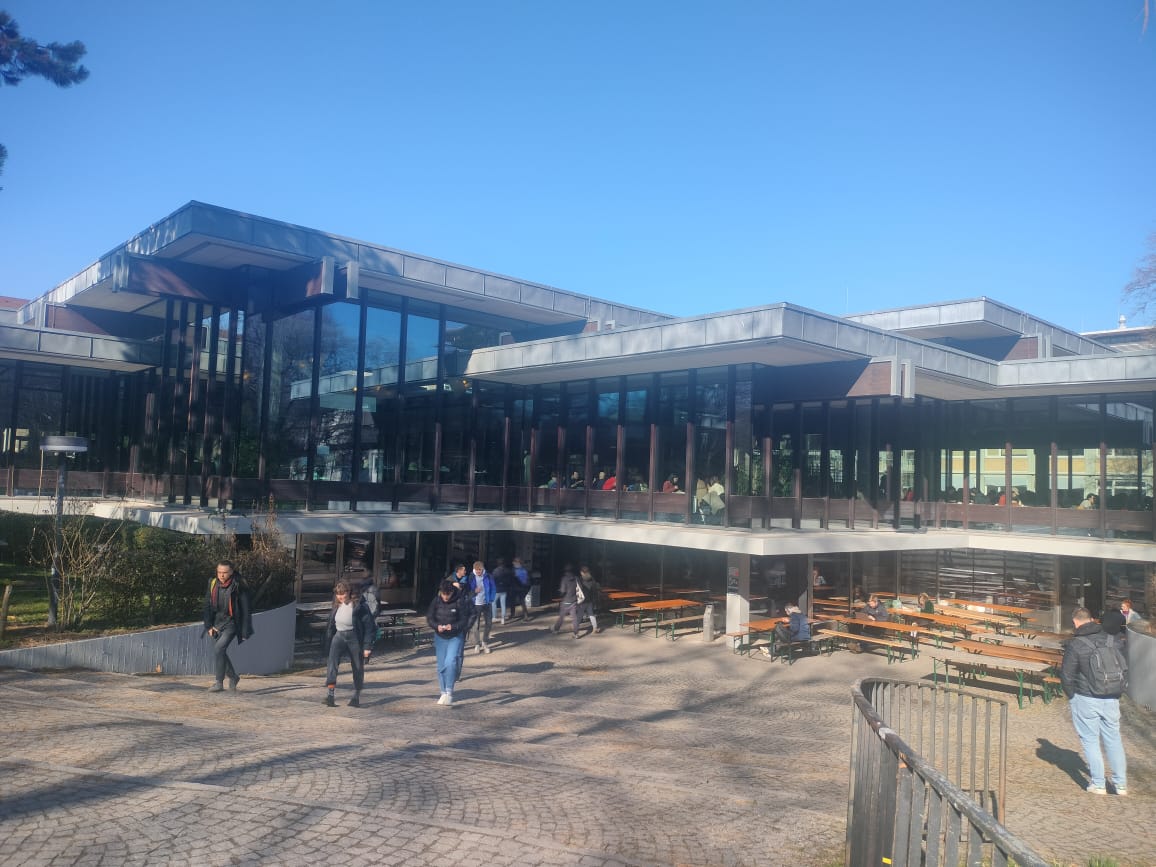
- The entire town of Freiburg is surrounded by the university, which has campuses spread across the town. There are libraries with built-in cafeterias, game rooms, silent rooms, computer labs and televisions for group studies.
- There are soccer fields, hockey fields, volleyball courts, table tennis tables, and party rooms for you to rent and play as part of the university team. The university arranges for enough cultural events with DJ sets or dance parties to welcome all the international students as well.
Part Time Jobs
- The possibility of securing part-time jobs is pretty decent for students. You can get work as a research associate and get part-time jobs and decent experience as well for different research papers. You can also attain jobs in restaurants, university cafeterias, or other companies that are looking for students. The possibility is high because the town's population is 90% students. The minimum job wage is 12.5 euros per hour.
- A student usually earns around 13 euros per hour on average. It is pretty easy to get part-time jobs, since 90% of the town's population is students. Everyone can get a job in cafes or restaurants, or start-ups that are specifically looking for students. You can also work in stores like Zara or H&M as a helper. The best part about these part-time jobs is that nobody is looked down upon. You can usually walk into places and ask for jobs, or there are specific apps like Zenjob to get these kinds of jobs.
Placement
8
- Getting a Master's degree doesn't guarantee a job at all abroad. There are no placements, and the inflation has made it very difficult to secure a job. Your best shot is to land an internship and convert it into a full-time opportunity, once the internship comes to an end.
- The ratio is 1:50 who land a job, or even worse than that. There are major companies like PWC, JP MORGAN
Accommodation
Off Campus
6
- Initially, when I went to Germany for the first time, I was staying in a private house where I had to do everything on my own. The rent was pretty high, but getting a single accommodation for your entire stay during the entire course is practically impossible. I, myself, have changed houses around 4-5 times, rented houses, and stayed in student dorms.
- The application process to student dorms is based on a lottery system. Every house has 4 -6 students staying together with a common kitchen and 2 bathrooms. All the duties are distributed among each other.
Exams
- An IELTS exam is required, and a minimum score of 7 is required for admission.
- A statement of purpose, your college-leaving certificate from your bachelor's university, grade sheet, certificate of behavior, and a detailed resume are required as well.
- There was no interview for the application process. Once you have applied, if you are selected, you will get an offer letter in the portal you have created for submitting your application, within a month and a half.
Fees
- The total fees semester-wise were 1650 euros (has increased now). Barring this, there were hostel fees, which were an average of 400 euros per month. There were 150 euros for food and 100 more for miscellaneous expenses.
- The fees at the college are charged semester-wise
- An estimate for monthly expenses is 850-900 euros. You have to create a blocked amount of 10,000 euros before getting the visa.
Scholarship
- I didn't receive any scholarships. There weren't any scholarships available as far as my knowledge goes. None of my batchmates received it as well. Since it is a private university, the semester fees are something you have to pay, depending on how many years it takes to finish the course. I took 2.5 years to finish it, but some take more than 3 years to finish as well.


