



Content Curator
Stress hormones are released during stress conditions to maintain the internal environment of an organism. These are produced both by plants and animals. Abscisic acid is a stress hormone in plants, whereas adrenaline, noradrenaline and cortisol are stress hormones in mammals and human beings. These hormones help in instilling a fight or flight response in the body in times of emergency and stress.
| Table of Content |
Key Takeaways: Stress hormones, Abscisic acid, ABA, Adrenaline, Noradrenaline, Cortisol
Stress Hormone
[Click Here for Sample Questions]
Hormones which are released during stress to maintain the internal environment of an organism in response to stress is called the stress hormone. Stress hormones released in both plants and animals.

Effects of Stress Hormone
Read More:
Stress Hormones in Plants
[Click Here for Sample Questions]
Plant hormones are called phytohormones. They are chemical compounds that regulate physiological processes in plants. They are released in very small quantities. Some hormones are released during stress conditions like drought, extreme pH levels, heat, cold, diseases, etc. Some phytohormones like ABA (Abscisic acid), Jasmonates, and Salicylates interact with each other and form a defence mechanism against stress conditions.
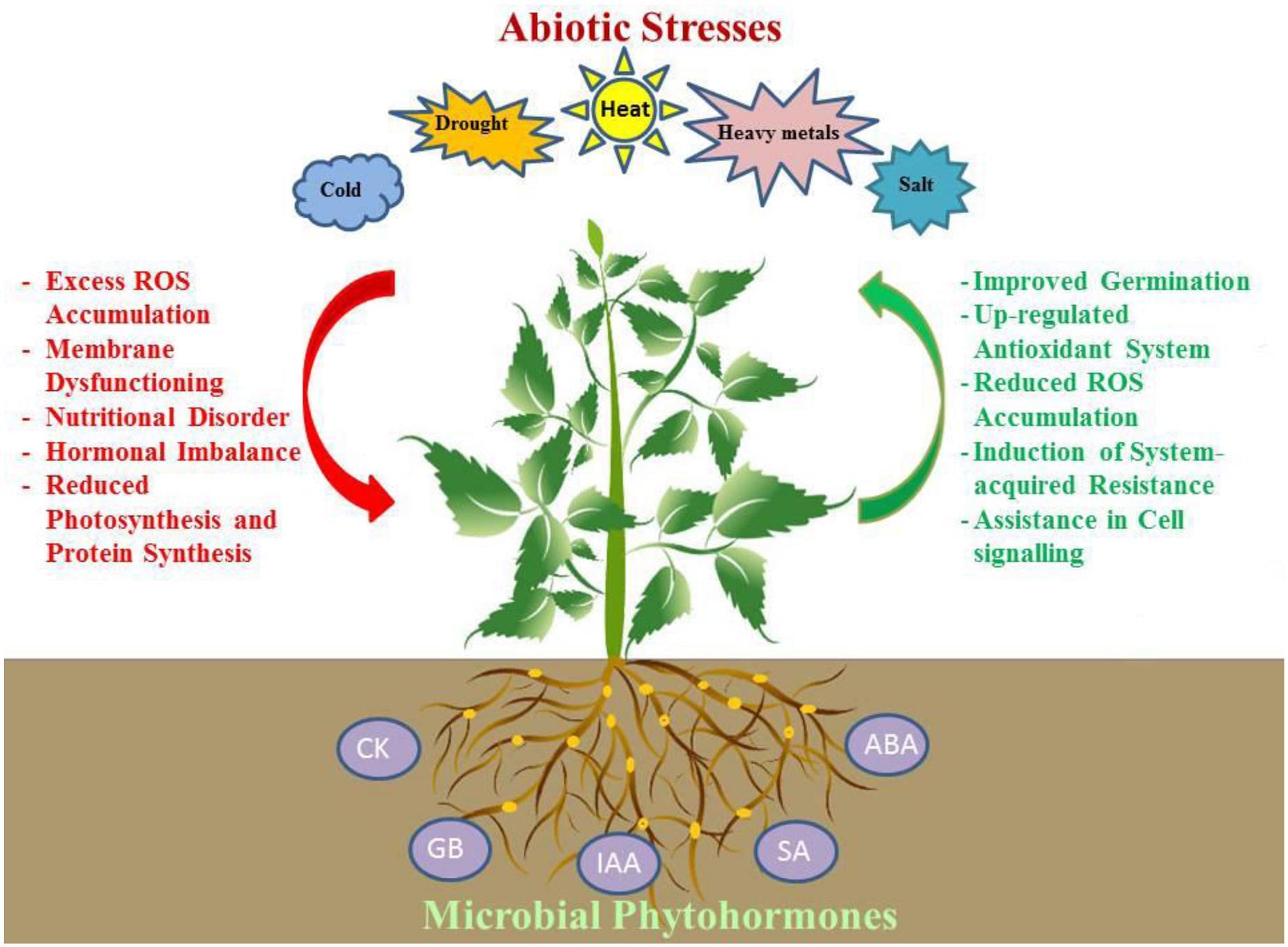
Stress Hormone in Plants
Read More:
Abscisic acid (ABA)
It is the chief stress hormone in plants. It is called a plant growth inhibitor. It forms an abscission layer between leaf petioles and the stem to create leaf fall. It also induces seed dormancy. ABA is transported through xylem, phloem and parenchymatous cells.

Abscisic acid molecular structure(ABA)
Role of Abscisic Acid
- Abscisic acid stimulates closure of stomata to reduce transpiration and to prevent water loss.
- It promotes seed dormancy and helps seeds withstand desiccation. It improves the viability of seeds in storage.

Abscisic Acid
- Abscisic acid influences root growth and development during nitrogen deficiency and drought.
- It regulates genes and the biosynthesis of proteins and lipids.
- Abscisic acid is involved in the synthesis of dehydrins, osmoprotectants and protective proteins during stress conditions.
Read More:
Human Stress Hormones
[Click Here for Sample Questions]
The three important stress hormones in human beings are Adrenaline, Cortisol, Norepinephrine.

Adrenal gland
Adrenaline: Adrenal medulla of adrenal gland over kidneys secretes adrenaline. It is a fight and flight hormone. It creates sudden responses. It increases alertness, papillary dilation, sweating, heartbeat, and rate of respiration.
Noradrenalin: Adrenal medulla of the adrenal gland secretes noradrenaline. It causes peripheral vasoconstriction and increased blood pressure. It increases the contraction of skeletal and heart muscles.

Noradrenaline structure
Read More:
Cortisol: Adrenal cortex of adrenal gland secretes adrenaline. It is slower than adrenalin in action. The brain recognises the danger and induces the hypothalamus to release corticotropin-releasing hormone (CRH).

Cortisol structure
CRH makes the pituitary gland release adrenocorticotropic hormone (ACTH). ACTH activates the adrenal glands to release cortisol. It regulates fluid flow and blood pressure. It reduces immune responses and other physiological functions. Higher levels lead to diabetes, obesity, high blood pressure, diabetes, etc.
Read More:
Things to Remember
- Phytohormones like ABA (Abscisic acid), Jasmonates, and Salicylates form a defence mechanism against stress conditions.
- Abscisic acid (ABA) is the chief stress hormone in plants.
- ABA induces seed dormancy.
- ABA stimulates the closure of stomata to reduce transpiration and to prevent water loss.
- The three important stress hormones in human beings are Adrenaline, Cortisol, Norepinephrine.
- Adrenal medulla of the adrenal gland over kidneys secretes adrenalin and noradrenalin.
- Adrenalin is a fight and flight hormone.
- Noradrenalin causes peripheral vasoconstriction and increased blood pressure. It increases the contraction of skeletal and heart muscles.
- Adrenal cortex of the adrenal gland secretes adrenaline.
- Cortisol reduces the immune responses and other physiological functions.
- Higher levels of cortisol lead to diabetes, obesity, high blood pressure, diabetes, etc.
Read More:
Sample Questions
Ques: What is a stress hormone? Give one example for plants. (3 marks)
Ans: The hormones which are released during stress to maintain the internal environment of an organism in response to stress is called the stress hormone.
ABscisic acid (ABA) is a stress hormone in plants.
Ques: How do phytohormones act as stress hormones? (2 marks)
Ans: Some phytohormones in plants are released during stress conditions like drought, extreme pH levels, heat, col, diseases, etc. They maintain internal environment,
Ques: What is “crosstalk” between phytohormones? (2 marks)
Ans: Some phytohormones like ABA (Abscisic acid), Jasmonates, and Salicylates interact with each other and form a defence mechanism against stress conditions. This interaction is “crosstalk”
Ques: Write the role of abscisic acid in plants? (3 marks)
Ans: The role of abscisic acid is
- It stimulates the closure of stomata during noon hours to reduce transpiration and to prevent water loss.
- It promotes seed and dormancy and helps seeds withstand desiccation. It improves the viability of seeds in storage.
- It influences root growth and development during nitrogen deficiency and drought.
Ques: Which is a fight and flight hormone? How does it maintain human stress? (2 marks)
Ans: Adrenaline is a fight and flight hormone. It creates sudden responses. It increases alertness, papillary dilation, sweating, heartbeat, and rate of respiration.
Ques: What is adrenal gland? What are the three stress hormones released by it? (2 marks)
Ans: The gland which lies above the kidneys is called the adrenal gland. It secretes three stress hormones, namely adrenalin, noradrenaline and cortisol.
Ques: Name the hormone which is responsible for degenerative diseases like diabetes, hypertension and obesity? (2 marks)
Ans: The hormone which is responsible for degenerative diseases like diabetes, hypertension and obesity is cortisol. If a person is under continuous stress, its levels increase abnormally to cause degenerative diseases.
Ques: What is a stress hormone? What are the human stress hormones? What are their roles in controlling human stress? (5 marks)
Ans: Stress hormone: The hormones which are released during stress to maintain the internal environment of an organism in response to stress is called the stress hormone.
The three stress hormones in human beings are adrenaline, norepinephrine, and cortisol
Adrenaline: It is a fight and flight hormone. It creates sudden responses. It increases alertness, papillary dilation, sweating, heartbeat, and rate of respiration.
Noradrenalin: It causes peripheral vasoconstriction and increased blood pressure. It increases the contraction of skeletal and heart muscles.
Cortisol: It regulates fluid flow and blood pressure. It reduces immune responses and other physiological functions. Higher levels lead to diabetes, obesity, high blood pressure, diabetes, etc.
For Latest Updates on Upcoming Board Exams, Click Here: https://t.me/class_10_12_board_updates
Check-Out:



Comments