




Master of Science [MS] (Biological Sciences)
$7,573 /Yr

Master of Science in Biological Sciences at University of Alberta, Canada
The Master of Science in Biological Sciences at University of Alberta is a two-year, research-focused graduate program designed for students seeking advanced training in modern life sciences. Located in Edmonton, Alberta, this program combines rigorous coursework with independent research across disciplines including molecular biology, genetics, ecology, and microbiology.
University of Alberta ranks 94th globally and 4th in Canada (QS 2026), with its Biology & Biochemistry program ranked 111th worldwide. The university attracts students from 150+ countries, including a significant Indian student population pursuing advanced science degrees. International students benefit from guaranteed tuition rates and competitive scholarships worth up to CAD 17,500 for newly admitted graduate students.
The program is ideal for Indian students aiming to establish research credentials, access cutting-edge laboratory facilities, and secure post-graduation work permits valid for up to 2 years. Biotech and life sciences graduates earn an average of CAD 62,697 (?43.9 lakh) annually in Canada, with strong placement rates in pharmaceutical, research, and biotechnology sectors.
Admission Requirements and English Language Proficiency
The Master of Science in Biological Sciences requires a strong undergraduate foundation in biological sciences, chemistry, or a related field. Applicants must hold a four-year bachelor’s degree with a minimum GPA of 3.3 (or equivalent) from a recognized university. Indian students should ensure their marks convert to at least 75% (B-grade equivalent) in science-stream courses.
English language proficiency is mandatory for all international applicants. Required minimums are IELTS 6.5 overall (no band below 6.0), TOEFL iBT 90, or Duolingo 120. These thresholds are standard across Canadian graduate programs and are recognized by Indian testing centers in major cities.
Additional admission requirements include submission of official transcripts, a statement of research interest (250-500 words), and two letters of reference from faculty members familiar with your academic work. Graduate Record Examination (GRE) scores are recommended but not mandatory; many Indian applicants strengthen their profiles by including GRE results.
| Requirement | Minimum Standard | Indian Applicant Notes |
|---|---|---|
| Bachelor’s Degree (Science) | 4 years, 3.3 GPA minimum | 75%+ in Science subjects (CBSE, ICSE, state board equivalent) |
| IELTS | 6.5 overall, 6.0 minimum per band | Test available in all major Indian cities; valid for 2 years |
| TOEFL iBT | 90 score | Alternative to IELTS; accepted from Indian test centers |
| GRE (Recommended) | No minimum specified | Strengthens profile; especially valued for research-focused roles |
| Statement of Intent | 250-500 words | Highlight research interests and career goals in life sciences |
Curriculum, Specializations, and Research Focus
The Master of Science curriculum balances foundational coursework with specialized laboratory work and independent thesis research. Students complete 24 credit hours of coursework in the first year and conduct full-time research in the second year, culminating in a thesis.
Core courses cover advanced topics in molecular biology, genetics, microbiology, ecology, and physiology. Specialization options include microbial sciences, plant sciences, evolutionary biology, molecular genetics, and biotechnology. The program’s flexibility allows Indian students to tailor their research to emerging fields like antimicrobial resistance, agricultural biotechnology, or immunology.
University of Alberta operates state-of-the-art research facilities, including on-campus research laboratories, a comprehensive herbarium, and bioanalytical centers equipped with modern instrumentation (mass spectrometry, sequencing platforms, confocal microscopy). Graduate students gain hands-on experience publishing research in peer-reviewed journals, which strengthens career prospects in pharmaceutical and research institutions valued by Indian employers.
The program emphasizes critical thinking and independent investigation, preparing students for roles in research institutions, academic positions, or industry-based research and development across pharmaceutical, biotech, agricultural, and environmental sectors.
Step-by-Step Application Process and Timeline
The application process for the Master of Science in Biological Sciences follows a standard graduate admissions pathway. Prospective Indian students should begin preparing documents 3-4 months before the intended intake.
Step 1: Gather official transcripts from your bachelor’s degree institution (must be sealed and verified). Step 2: Register for and complete IELTS or TOEFL (allow 4-6 weeks for test booking in Indian centers). Step 3: Request two reference letters from university faculty who can speak to your academic ability and research potential. Step 4: Write a concise statement outlining your research interests and career goals (250-500 words). Step 5: Submit your complete application through the University of Alberta’s online graduate portal. Step 6: Pay the non-refundable application fee of approximately CAD 135 (?9,466).
The typical review timeline is 4-8 weeks. Admission decisions include conditional and unconditional offers. Conditional offers may require final transcripts or higher IELTS scores; unconditional offers allow immediate enrollment and study permit application. Indian students should apply 6-8 months in advance of their intended start date to allow time for study permit processing (typically 4-8 weeks).
| Application Deadline | Intake Term | Recommended Application Window (India) |
|---|---|---|
| January 15, 2027 | Winter 2027 (January start) | September-October 2026 |
| May 1, 2027 | Fall 2027 (September start) | January-February 2027 |
| September 1, 2027 | Winter 2028 (January start) | May-June 2027 |
Cost Breakdown: Tuition, Living Expenses, and Fee Structure
The total first-year cost for an international student in the Master of Science program is approximately CAD 10,017 (?7.02 lakh) in instructional fees alone. However, the full annual cost including living expenses is approximately CAD 27,977 (?19.61 lakh), distributed across tuition, non-instructional fees, health insurance, and living costs.
University of Alberta guarantees tuition rates for international graduate students enrolled from 2020 onward. Your instructional fee is locked for the entire program duration, protecting you from mid-program increases. This guaranteed model is advantageous for Indian families planning multi-year education budgets.
Non-instructional fees (athletics, student union, U-Pass transit, health and wellness) are approximately CAD 3,089 (?2.17 lakh) annually. Mandatory health insurance through the University of Alberta Health Insurance Plan (UAHIP) costs CAD 600 annually (?42,072) for international students, though many students are eligible for free provincial coverage after arrival.
Living costs in Edmonton average CAD 15,000-20,000 (?10.52-14.02 lakh) per year, significantly lower than Toronto or Vancouver. Accommodation in university residences costs CAD 1,000-1,200 per month, while shared off-campus housing averages CAD 800-1,100 per month. Food, transportation, and personal expenses add an additional CAD 600-900 monthly.
| Expense Category | Annual Cost (CAD) | Equivalent (INR) |
|---|---|---|
| Instructional Fee (First Year) | C$ 10,017 | ?7,01,991 |
| Non-Instructional Fees | C$ 3,089 | ?2,16,544 |
| Health Insurance (UAHIP) | C$ 600 | ?42,072 |
| Accommodation (Shared/Off-Campus) | C$ 10,800 | ?7,57,296 |
| Food & Groceries | C$ 4,800 | ?3,36,576 |
| Transportation & Utilities | C$ 2,400 | ?1,68,288 |
| Total (Annual) | C$ 31,706 | ?22,23,767 |
| Two-Year Program Cost | C$ 63,412 | ?44,47,534 |
Graduate Career Outcomes and Employment Prospects
Graduates of the Master of Science in Biological Sciences from University of Alberta enjoy strong employment outcomes. A recent graduate survey indicates that 85-90 percent of biology and biotech graduates secure employment within 3-6 months of graduation, primarily in pharmaceutical, biotechnology research, government laboratories, and environmental consulting sectors across Canada.
Entry-level positions for master’s graduates typically offer salaries between CAD 58,000-65,000 (?40.7-45.6 lakh) annually, including roles as research scientists, quality assurance analysts, and biotech associates. Mid-career positions (5-10 years experience) advance to CAD 75,000-95,000 (?52.6-66.6 lakh), with senior research roles and management positions reaching CAD 95,000-125,000 (?66.6-87.6 lakh).
The strong presence of biopharmaceutical companies in Canada, including Pfizer Canada, Novo Nordisk, and Abbott Diagnostics in major cities, creates direct pathways for Indian graduates. Many employers sponsor work visas and assist with permanent residence applications through Express Entry or Provincial Nominee Programs. Biotech professionals earning above CAD 62,000 (the national threshold) qualify for skilled worker immigration streams, enabling long-term career prospects in Canada.
Indian students benefit from university career services, including resume workshops, interview coaching, and employer networking events. Alumni networks span leading research institutions, government agencies (Health Canada, Statistics Canada), and multinational corporations, providing mentorship and career advancement opportunities.
Campus Life, Student Experience, and Living in Edmonton
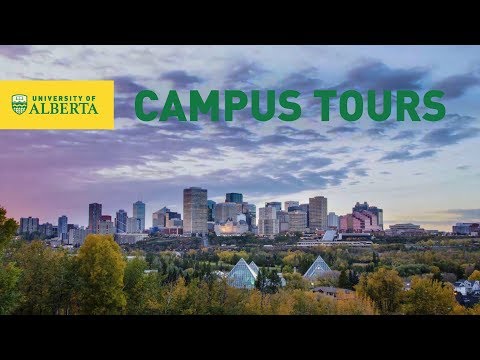
University of Alberta’s North Campus spans 50 city blocks overlooking the North Saskatchewan River valley, with 150+ buildings and extensive recreational facilities. Graduate students gain access to modern laboratories, libraries with 14+ million volumes, fitness centers, and student lounges. The campus is compact and walkable, with shuttle services connecting multiple facilities.
Edmonton, Alberta’s capital, is a vibrant city of 1.5 million residents with a growing international student community exceeding 30,000 students. The city offers lower living costs than Toronto or Vancouver while maintaining urban amenities, including professional sports teams (Edmonton Oilers, Elks), cultural festivals, and a thriving food scene. Winter temperatures average minus 15 degrees Celsius; Indian students should prepare with appropriate winter clothing and seasonal adjustment support provided by the International Student Services office.
On-campus accommodation for graduate students includes modern residences with furnished single-occupancy rooms, shared kitchens, and community spaces fostering peer connections. Many Indian graduate students form study groups and cultural associations, including the Indian Students Association, which organizes social events, Diwali celebrations, and career networking sessions. Off-campus neighborhoods like Whyte Avenue offer affordable housing and easy access to public transit (U-Pass included with student fees).
The university provides comprehensive support services including international student orientation, immigration advising, health and counseling services, and academic writing centers. International students report high satisfaction with campus integration and peer mentorship programs, which ease the transition to Canadian academic culture.
Study Permits, Visa Sponsorship, and Post-Graduation Work Permits
Indian students require a study permit to enroll in the Master of Science program. The process begins after receiving an unconditional admission offer from University of Alberta. You must provide the offer letter, proof of financial support (approximately CAD 27,977 for the first year, or ?19.61 lakh), and a valid passport to apply through Immigration, Refugees and Citizenship Canada (IRCC) online portal.
IRCC processing times for study permits from India typically range from 4-8 weeks. Most Indian students use the express processing service available in New Delhi, Bangalore, and Mumbai. Once approved, the study permit is valid for the program duration plus a grace period, allowing post-graduation application time.
Upon graduation, all international students qualify for a Post-Graduation Work Permit (PGWP) valid for up to 24 months, matching the program duration. The PGWP allows unrestricted work in Canada without employer sponsorship, enabling graduates to gain Canadian work experience valued by permanent residence applications. This is significantly more generous than many countries’ post-study work visa policies.
After gaining 12+ months of Canadian work experience, Indian graduates become eligible for Express Entry (Federal Skilled Worker Program) or Ontario Provincial Nominee Program pathways to permanent residence. Bioscience professionals (NOC 2211, 4165, 2131) are in-demand occupations, accelerating approval timelines.
Scholarships, Grants, and Financial Aid for Indian Students
University of Alberta offers several scholarships accessible to Indian graduate students. The University of Alberta Graduate Entrance Scholarship provides CAD 17,500 (?12.28 lakh) to newly admitted graduate students highly ranked by their academic department. This merit-based scholarship does not require separate applications and is awarded automatically to competitive applicants during admission.
The Alberta Graduate Excellence Scholarship (AGES) offers CAD 12,000 (?8.41 lakh) as a one-time payment; limited allocations are reserved for international students demonstrating exceptional academic records. The Izaak Walton Killam Memorial Scholarship covers the international differential fee plus a living stipend (valued at CAD 25,000+, or ?17.53 lakh+) for outstanding doctoral aspirants who wish to continue to PhD studies.
Graduate Research Assistantships and Teaching Assistantships provide CAD 18,000-22,000 (?12.63-15.43 lakh) per academic year plus tuition coverage. Most research-focused master’s students secure TA or RA positions by the end of their first term, significantly reducing out-of-pocket costs. Faculty research grants sometimes support graduate student stipends, particularly in well-funded laboratories.
External scholarships available to Indian citizens include the Vanier Canada Graduate Scholarship (federal), valued at CAD 50,000 per year for up to three years; however, competition is intense and typically reserved for PhD students. Indian applicants are encouraged to explore funding through the Indian Council for Cultural Relations (ICCR), which sponsors select master’s students in science and technology.
Peer Program Comparison: University of Alberta vs. Other Canadian Universities
The Master of Science in Biological Sciences at University of Alberta compares favorably to similar programs across Canada. While the University of Toronto and University of British Columbia rank slightly higher globally (25th and 34th, respectively), their tuition for international students averages CAD 15,000-18,000 annually, creating a total two-year cost burden 40-60 percent higher than University of Alberta.
University of Alberta’s guaranteed tuition model is a distinct advantage. Unlike competitors that raise fees annually, U of A locks rates for the entire program duration, protecting Indian families from mid-program budget surprises. The city of Edmonton offers living costs 30 percent lower than Toronto or Vancouver while maintaining research infrastructure comparable to larger metros.
Graduate placement rates across Canadian biology programs are similar (85-90 percent), but University of Alberta’s proximity to Western Canada’s energy and biotech sectors creates strong employer connections in pharmaceutical and environmental fields. The university’s PGWP (24 months) is identical to most Canadian programs; however, its smaller graduate cohorts enable closer faculty mentorship and research publication opportunities, strengthening individual graduate CVs.
| University | Global Rank (QS 2026) | Int’l Tuition/Year (CAD) | Living Costs/Year (CAD) | Total 2-Year Cost (CAD) | PGWP Duration |
|---|---|---|---|---|---|
| University of Alberta | 94th | C$ 10,017 | C$ 15,000-20,000 | C$ 50,034-60,034 | 24 months |
| University of Toronto | 21st | C$ 15,500 | C$ 24,000-28,000 | C$ 79,000-87,000 | 24 months |
| University of British Columbia | 34th | C$ 16,800 | C$ 22,000-26,000 | C$ 77,600-85,600 | 24 months |
| McMaster University | 84th | C$ 11,200 | C$ 14,000-18,000 | C$ 50,400-58,400 | 24 months |
University of Alberta Ranking and Global Recognition
University of Alberta holds a strong international reputation and is consistently ranked among Canada’s top four research universities. In the QS World University Rankings 2026, the university ranks 94th globally and 4th in Canada, behind University of Toronto (21st), University of British Columbia (34th), and McMaster University (84th).
In subject-specific rankings, University of Alberta’s biological sciences perform as follows: Biology & Biochemistry is ranked 111th globally (QS 2026), Biotechnology ranks 147th (QS 2026), and Life Sciences places within the top 150 worldwide (THE 2026). These rankings reflect the university’s investment in research infrastructure, faculty expertise, and graduate research output.
Over the past five years, University of Alberta has shown steady improvement in global rankings, climbing 11 positions since 2021 (ranked 105th then). This upward trajectory reflects increased research funding, international collaborations, and graduate program enhancements. Indian employers and further-study institutions recognize the degree’s credibility, supporting graduate pathways to doctoral programs at top-tier universities or senior positions in industry research roles.
| Ranking System | 2022 Ranking | 2024 Ranking | 2026 Ranking | 5-Year Trend |
|---|---|---|---|---|
| QS World Rankings | 105th | 111th | 94th | Improved (11 positions) |
| QS Biology & Biochemistry | 124th | 118th | 111th | Improved (13 positions) |
| THE World Rankings | 136th | 139th | 138th | Stable (top 150) |
| THE Life Sciences | 151-175 band | Top 150 | Top 150 | Stable or improved |
Frequently Asked Questions (FAQs)
1. Can I work part-time while studying the Master of Science in Biological Sciences at University of Alberta?
Yes, international students on valid study permits may work up to 20 hours per week during regular academic terms and full-time (40 hours per week) during official breaks (winter and summer). Many master’s students work as graduate research or teaching assistants, with positions offering CAD 18,000-22,000 annually plus tuition support. Part-time work in university labs or libraries is common and valued by employers, as it demonstrates Canadian work experience and field familiarity.
2. What are the typical acceptance rates and admission competitiveness for Indian students?
University of Alberta admits approximately 40-50 percent of graduate applicants across science disciplines, making the program moderately competitive. Indian applicants with GPA 3.5+ (equivalent to 85%+), IELTS 7.0+, and demonstrated research interest have strong approval odds. The university prioritizes academic excellence and research fit over nationality; Indian students comprise approximately 12-15 percent of the international graduate population, indicating a welcoming environment for South Asian applicants.
3. Is a GRE score required for admission to the Master of Science program?
The GRE is recommended but not mandatory for most biological sciences applicants. However, submitting GRE scores (ideally 310+) strengthens your profile, particularly if your undergraduate GPA or IELTS score is borderline. Some highly selective specializations (molecular biology, genetics research) may require or strongly prefer GRE submissions. It is advisable to check with your intended research supervisor before applying, as specific lab preferences vary.
4. Can I pursue a PhD immediately after completing the Master of Science, and does the degree count toward PhD studies?
Yes, many master’s graduates transition to PhD programs at University of Alberta or other research institutions. A thesis-based master’s degree (the standard format) typically counts as 12-18 months of doctoral credit, allowing students to complete a PhD in 3-4 additional years rather than the standard 5-6 years. The research skills, publications, and supervisor relationships developed during the master’s phase significantly strengthen doctoral applications and secure stronger funding packages.
5. What is the difference between the thesis-based and course-based Master of Science options, and which should I choose?
University of Alberta’s Master of Science in Biological Sciences is primarily thesis-based (24 credit hours coursework plus full-time research), spanning two years. This format is ideal for students pursuing academic careers, doctoral studies, or research-intensive industry roles, as it culminates in a publishable thesis demonstrating original research contributions. A course-based option is not typically available for this program. The thesis-based format aligns with industry expectations in biotech, pharmaceutical research, and academic pathways, making it the standard Canadian master’s structure and the most credible option for international graduates seeking permanent residence through skilled worker immigration routes.
Important Alert
- Application Deadline for Fall 2027 Intake - Feb 1, 2027
Tuition Fees
| Year | 1st Year Fees |
|---|---|
| Tuition Fees | $7573 (CAD 10518) |
Other Expenses
| Head | Avg Cost Per Year |
|---|---|
| Housing | $6048 (CAD 8400) |
| Food | $2592 (CAD 3600) |
Previous Year Tuition Fees
| Year | 1st Year Fees |
|---|---|
| 2025 | $7212 (CAD 10017) |
| 2024 | $7212 (CAD 10017) |
| 2023 | $6389 (CAD 8874) |
| 2021 | $8958 (CAD 12441) |
Important Dates
- The Upcoming Deadline for Fall & Winter 2026 Intake is Tentative Based on Previous Year.
| Event | Application Date |
|---|---|
| Application Deadline for Winter 2027 Intake | |
| Application Deadline for Fall 2027 Intake | Feb 1, 2027 |
Scores Required
Required Document List
Complete Application
Application Fee
Official Transcripts
English Language Requirements
A copy of the Passport
Resume
Statement of Intent
Three Letters of Recommendation
Writing Sample

Do you think the Rankings are wrong ? Report Here
TOP Scholarships
| Scholarship name | Award amount | Eligibility |
|---|---|---|
| Graduate Entrance Scholarship | $17,500 | Automatic consideration upon admission |
| Alberta Graduate Excellence Scholarship | $12,000 | Students with GPA of 3.3 or above |
Key Resources for Your Study Abroad Journey


Course Guides
Best Post-Graduate Courses in Canada in 2025
Masters in Biology in Canada: Fees 2024, Top Colleges, Placements & Salaries
Masters in Canada: Fees 2024, Top Colleges, Placements & Salaries
One year Courses in Canada for International Students: Fees 2024, Top Colleges, & Salaries
Programs Comparison
| ranking | # 118 for Biology by QS World University 2025 # 118 for Biology by Times Higher Education 2023 | # 251 for Biology by QS World University 2025 # 201 for Biology by Times Higher Education 2023 |
| application | - | - |
| exam scores | IELTS - 7/9PTE - 62/90TOEFL - 5/6 | IELTS - 7.0/9PTE - 63/90TOEFL - 90/120 |
| cost to study | Total Cost (Tuition + Living) -USD 8652.24 | Total Cost (Tuition + Living) -USD 8488.8 |
| application dates | Aug 1, 2026 (Application Deadline for Winter 2027 Intake) Feb 1, 2027 (Application Deadline for Fall 2027 Intake) | Oct 1, 2024 (Application Deadline For Spring 2025 Intake) Feb 1, 2025 (Application Deadline For Fall 2025 Intake) Jul 1, 2025 (Application Deadline For Winter 2026 Intake) |
| documents required | #Letter of Recommendation + Statement of Purpose | #Letter of Recommendation + Statement of Purpose |
| - | Read Full Comparison |
College Student Profiles

Scholarship Grants & Financial Aids
| Name | Scholarship Per Student | Level of Study | Type | |
|---|---|---|---|---|
| Go Clean Scholarship | Scholarship per student$ 2,520/Yr$3,500 | Level Of StudyBachelor | TypeMerit-Based | |
| Bharat Petroleum Scholarship | Scholarship per studentVariable Amount | Level Of StudyMaster | TypeMerit-Based | |
| Forktip Women’s- Innovation Scholarship | Scholarship per studentVariable Amount | Level Of StudyBachelor | TypeCollege-Specific | |
| FINCAD Women in Finance Scholarship | Scholarship per student$ 14,400/Yr$20,000 | Level Of StudyMaster | TypeMerit-Based | |
| Ontario Graduate Fellowship | Scholarship per student$ 6,390/Yr$8,875 | Level Of StudyDoctorate | TypeMerit-Based | |
| Jared J. Davis Grant | Scholarship per student$ 720/Yr$1,000 | Level Of StudyBachelor | TypeMerit-Based |
Similar Programs
| Program | Important Date | Total Fees | Median Exams Score | Action |
|---|---|---|---|---|
Application Deadline for Winter Intake (1st Sep 2026) Application Deadline for Fall Intake (1st Feb 2027) Application Deadline for Summer Intake (1st Feb 2028) | USD 6,998 /Yr CAD 9,720 /Yr |
| ||
Application Deadline for Winter 2027 Intake (1st Sep 2026) Application Deadline for Spring 2027 Intake (1st Jan 2027) Application Deadline for Summer 2027 Intake (1st Mar 2027) Application Deadline for Fall 2027 Intake (1st May 2027) | USD 7,573 /Yr CAD 10,518 /Yr |
| ||
-- | USD 21,352 /Yr CAD 29,656 /Yr |
|


Do you think the Dates are wrong ? Report Here

interested in this College ?
Follow & Share this college to get information about admission.



Comments