

.jpg?h=56&w=56&mode=stretch)


KEAM 2026 Engineering Question Paper for April 22 is available for download here. CEE Kerala conducted KEAM 2026 Engineering exam on April 22 in session 2 from 2 PM to 5 PM. KEAM 2026 Engineering exam is an online CBT with a total of 150 questions carrying a maximum of 600 marks.
- The KEAM Engineering exam is divided into 3 subjects- Physics (45 questions), Chemistry (30 questions) and Mathematics (75 questions).
- 4 marks are given for every correct answer and 1 mark is deducted for every incorrect answer
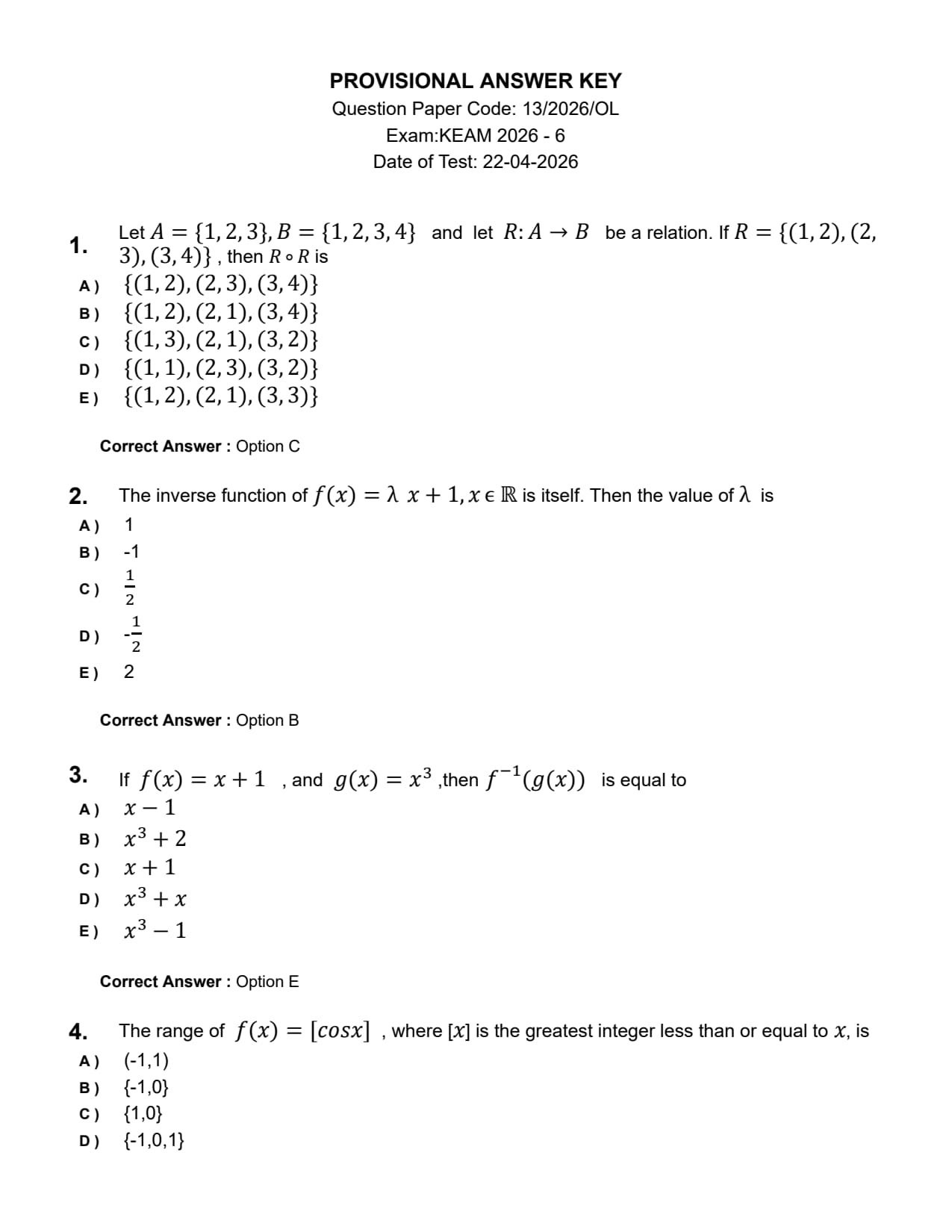
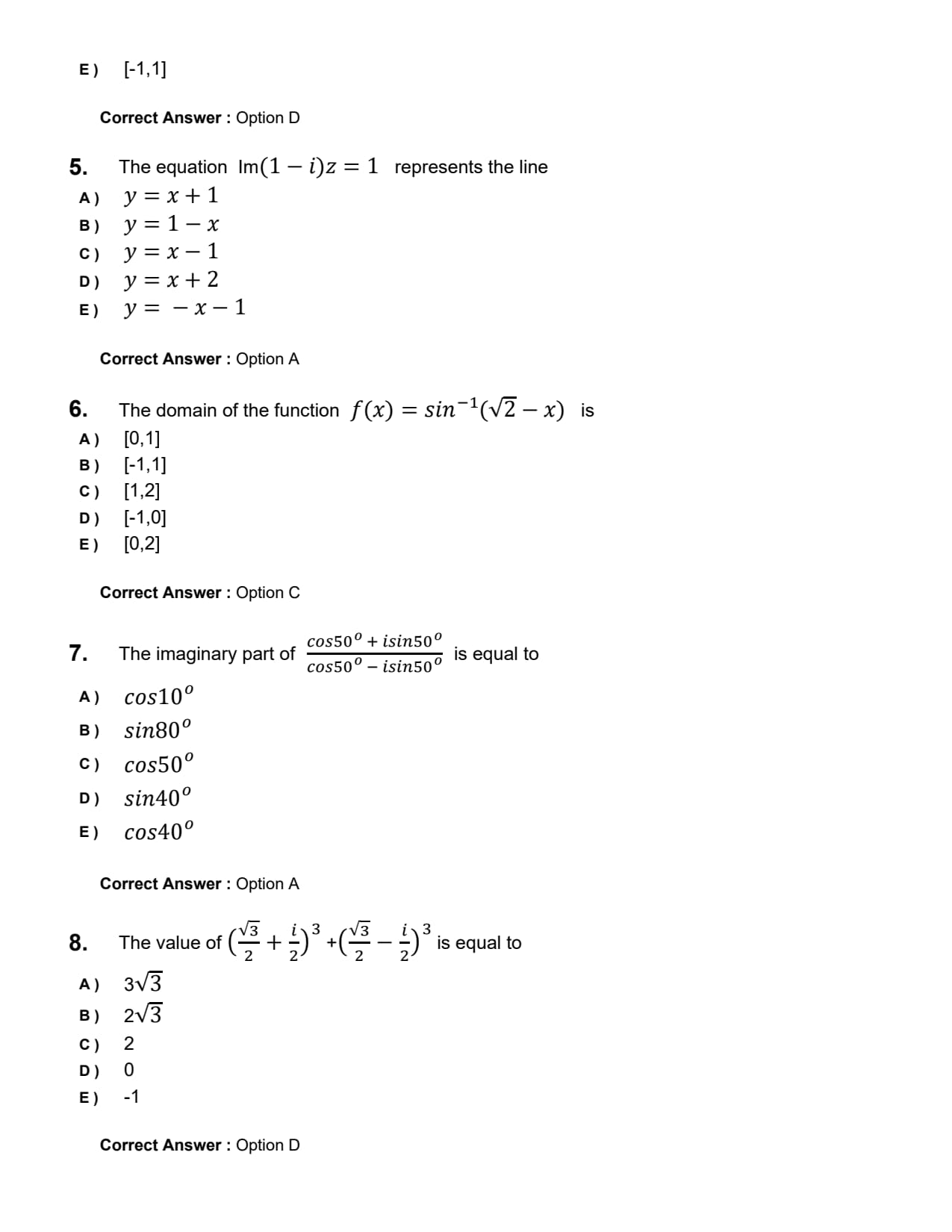
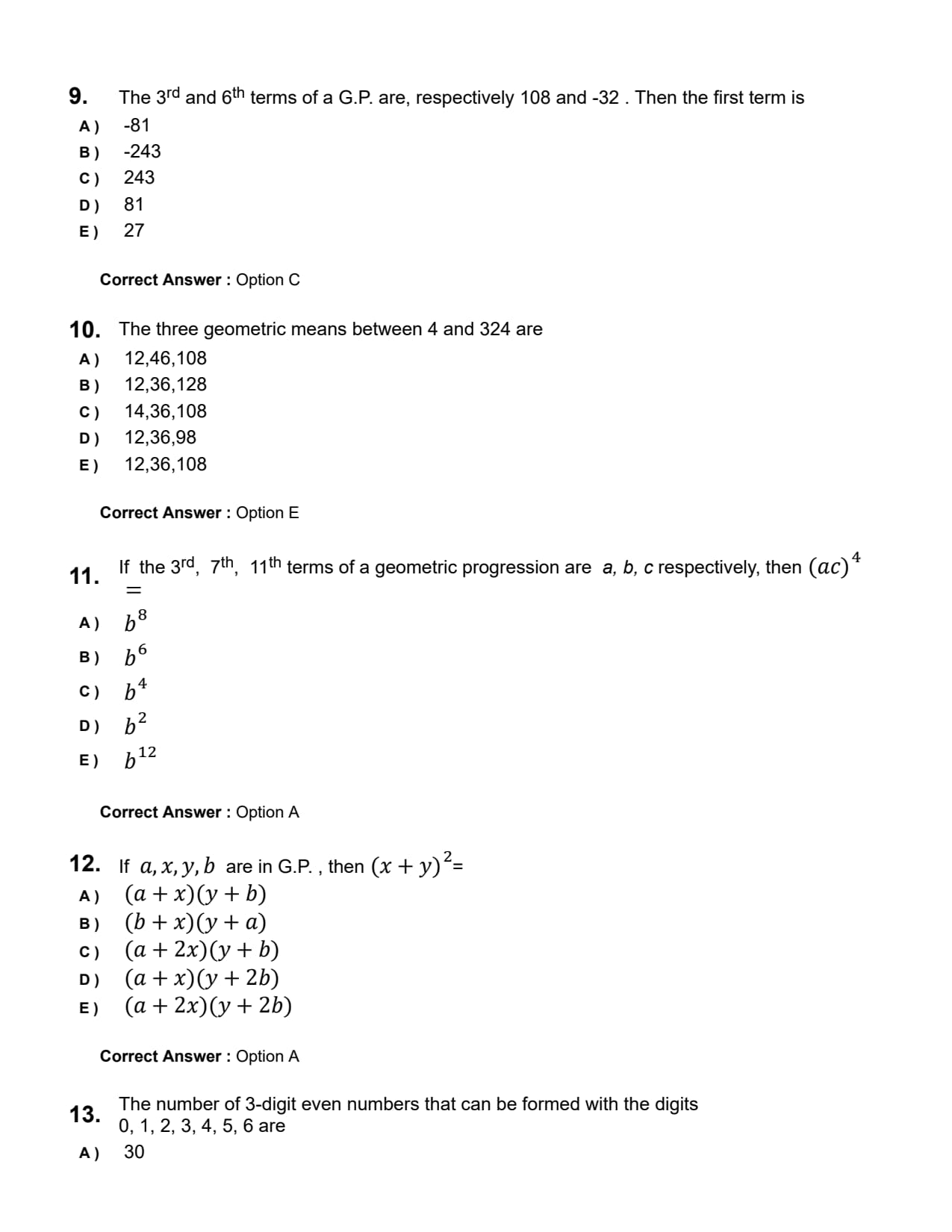
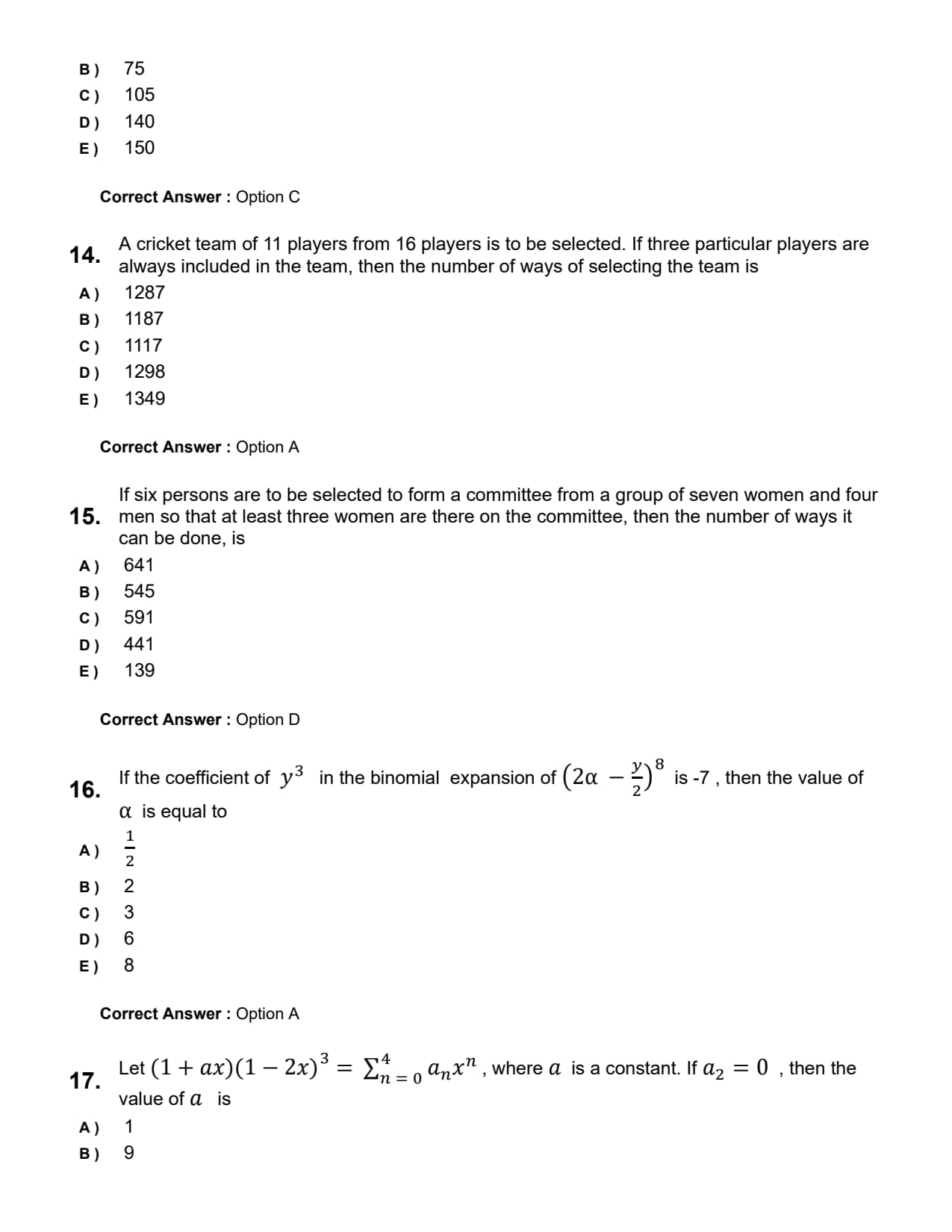
Candidates can download KEAM 2026 April 22 Engineering Question Paper with Solution PDF from the links provided below.
KEAM 2026 Engineering April 22 Question Paper with Solution PDF
| KEAM 2026 Engineering Question Paper April 22 | Download PDF | Check Solution |
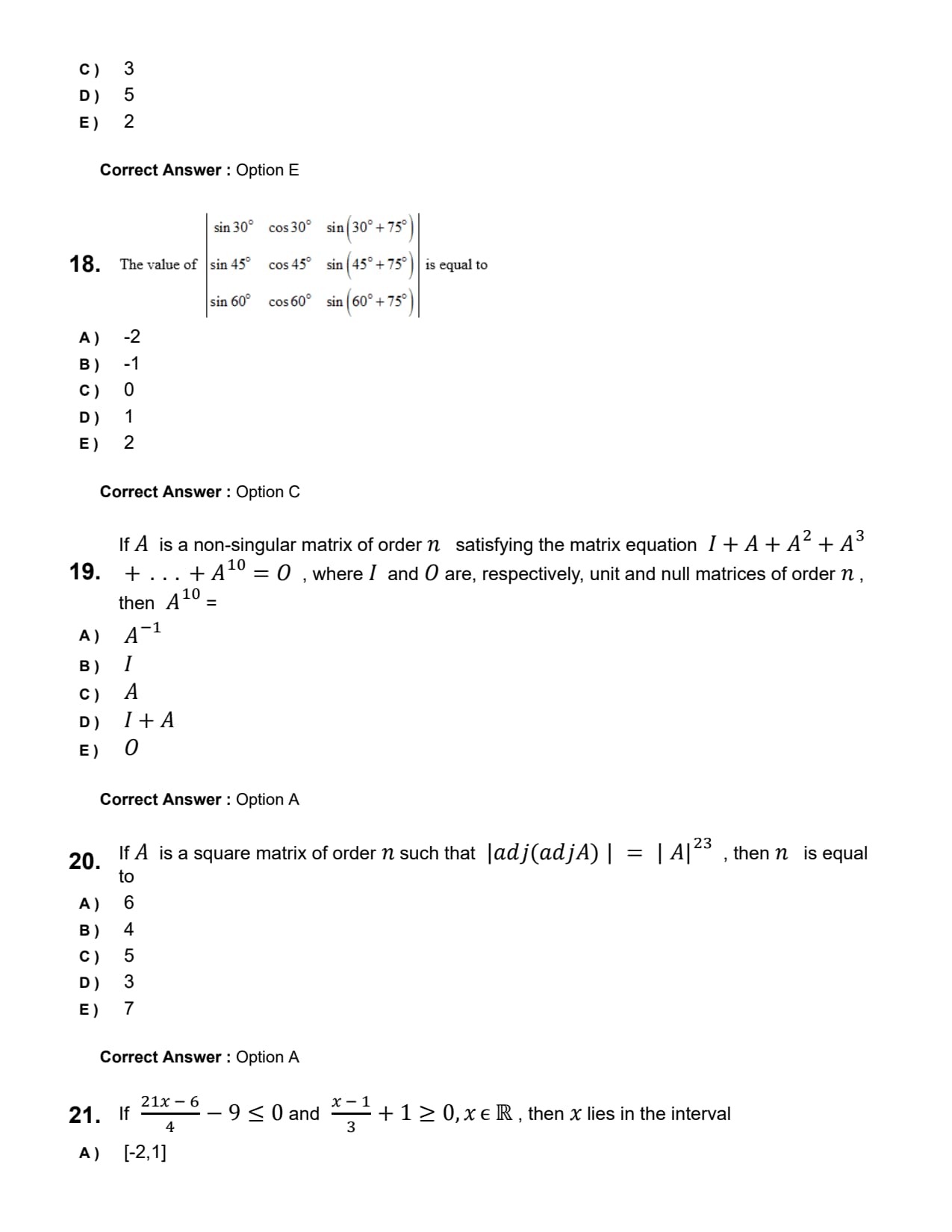
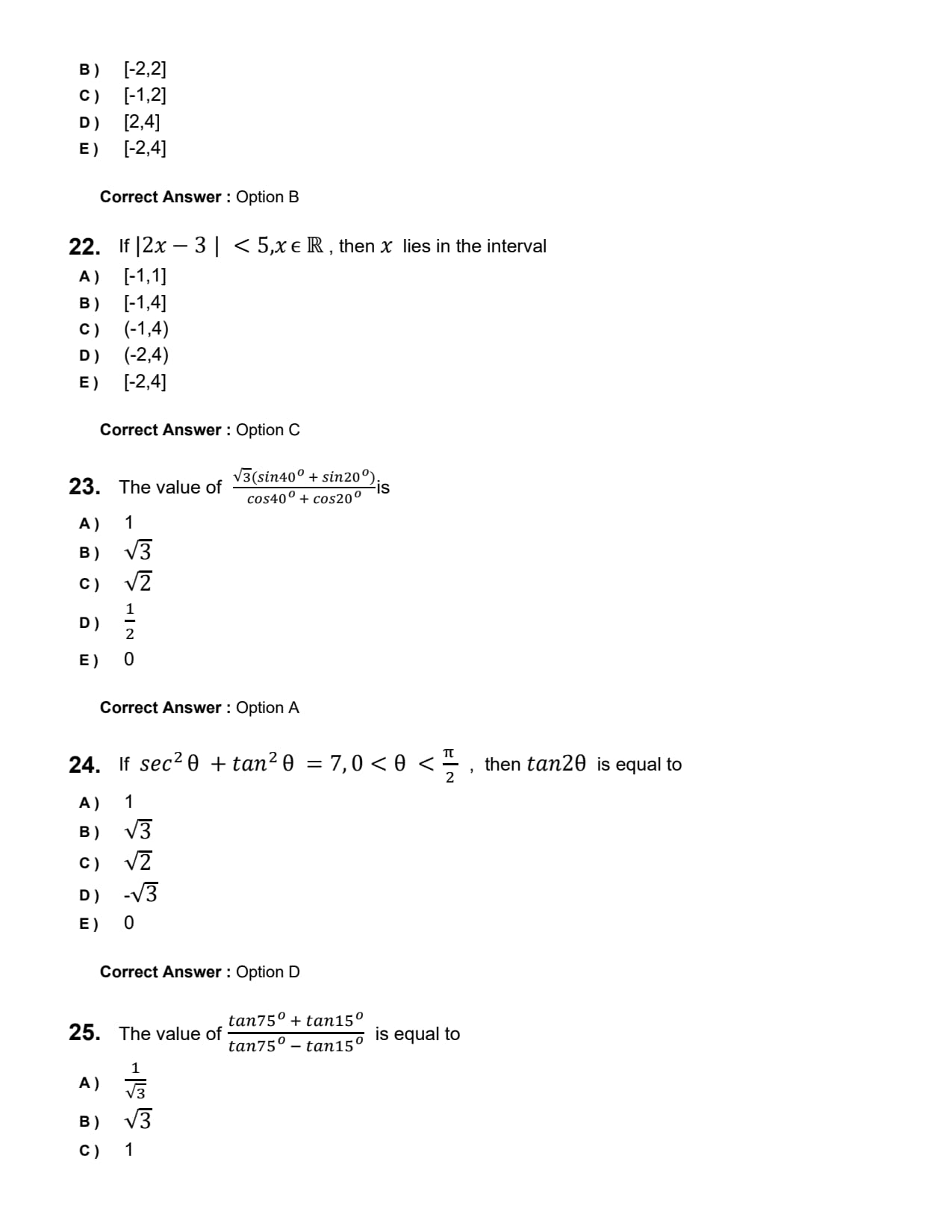
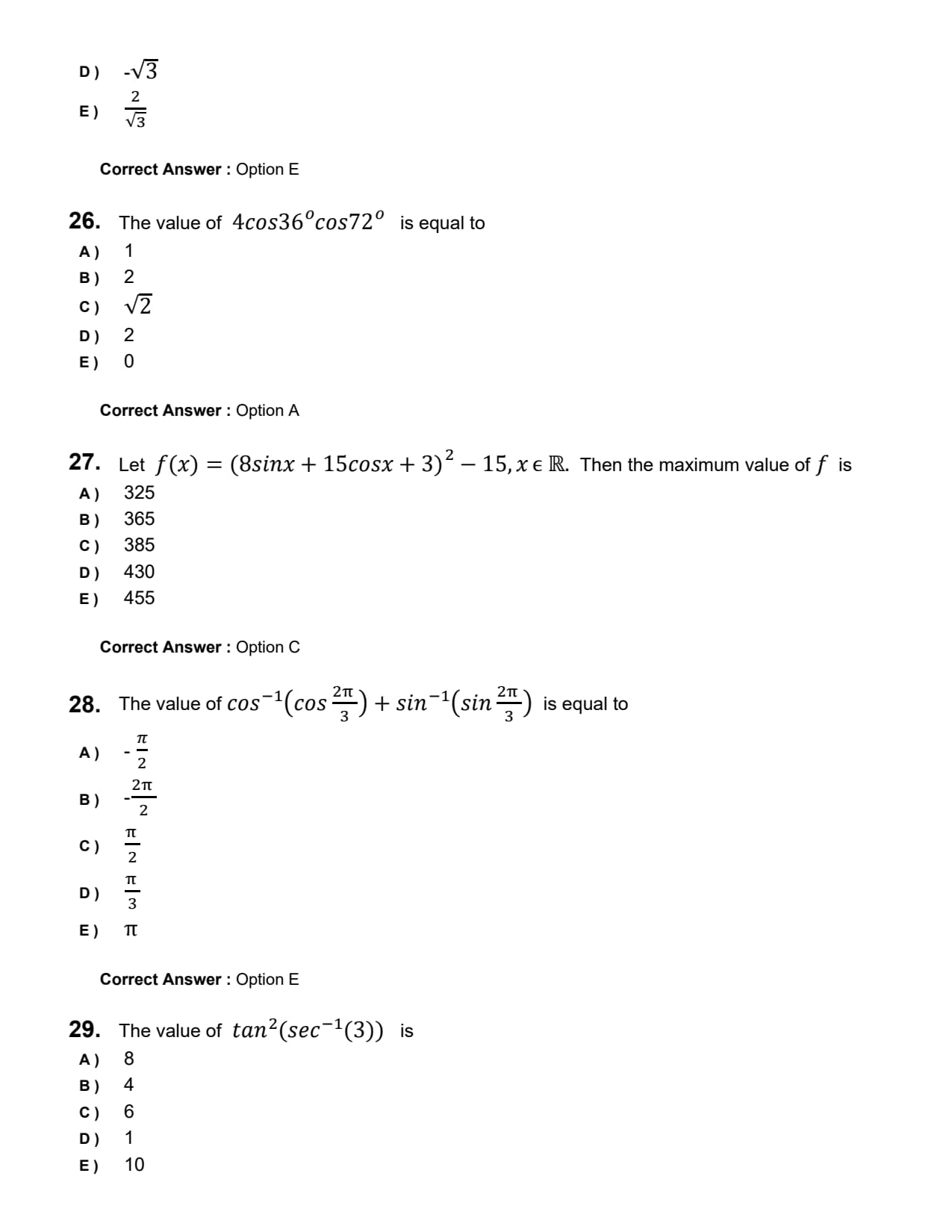
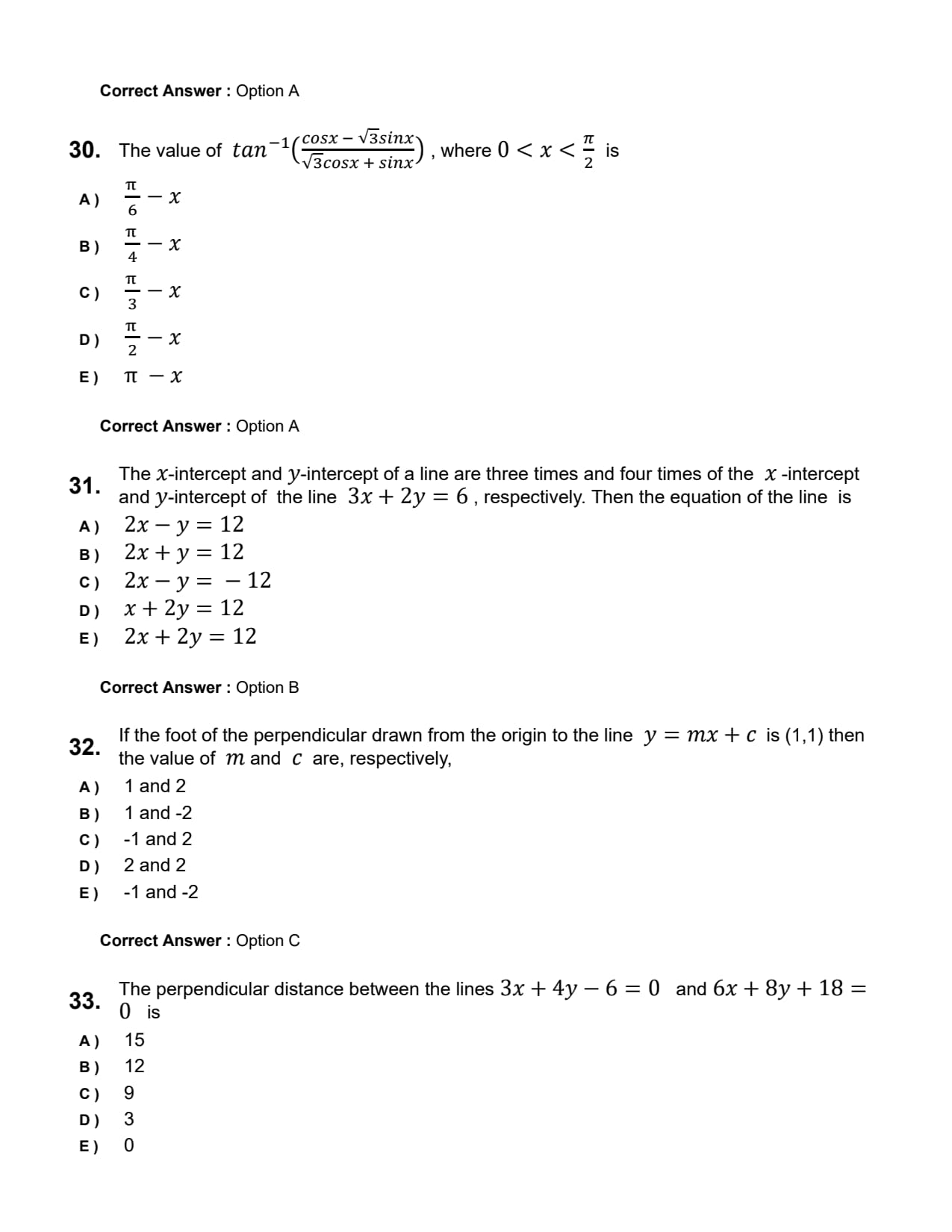
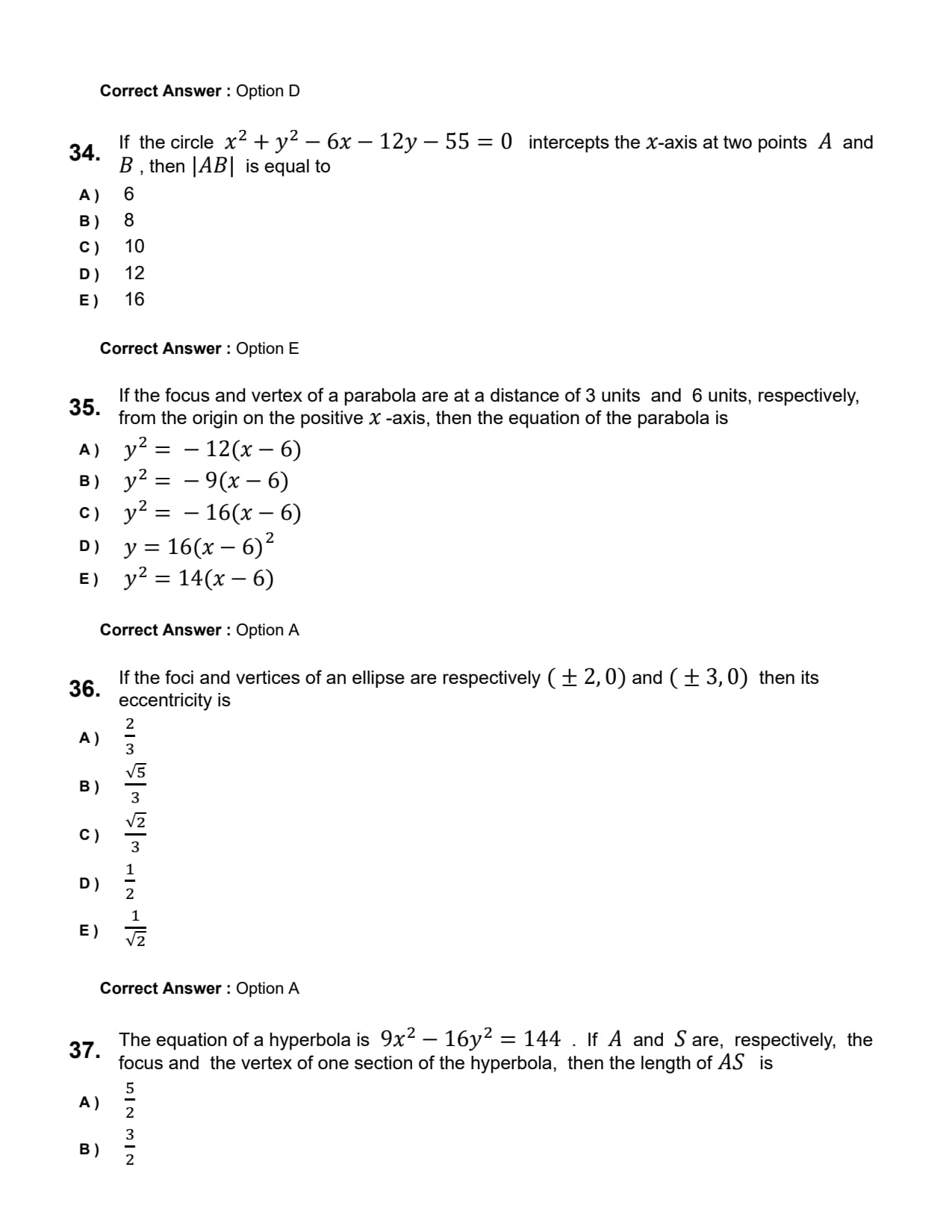
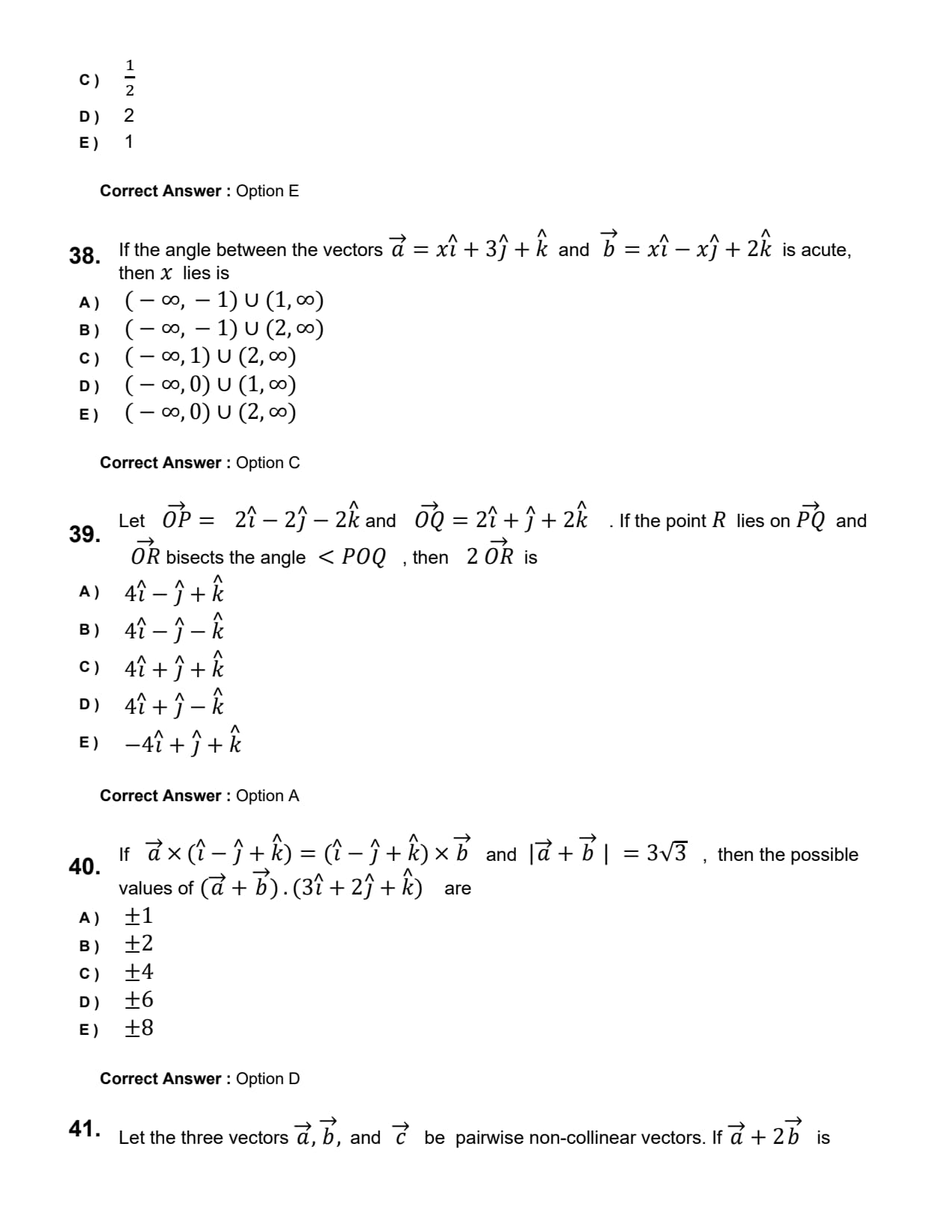
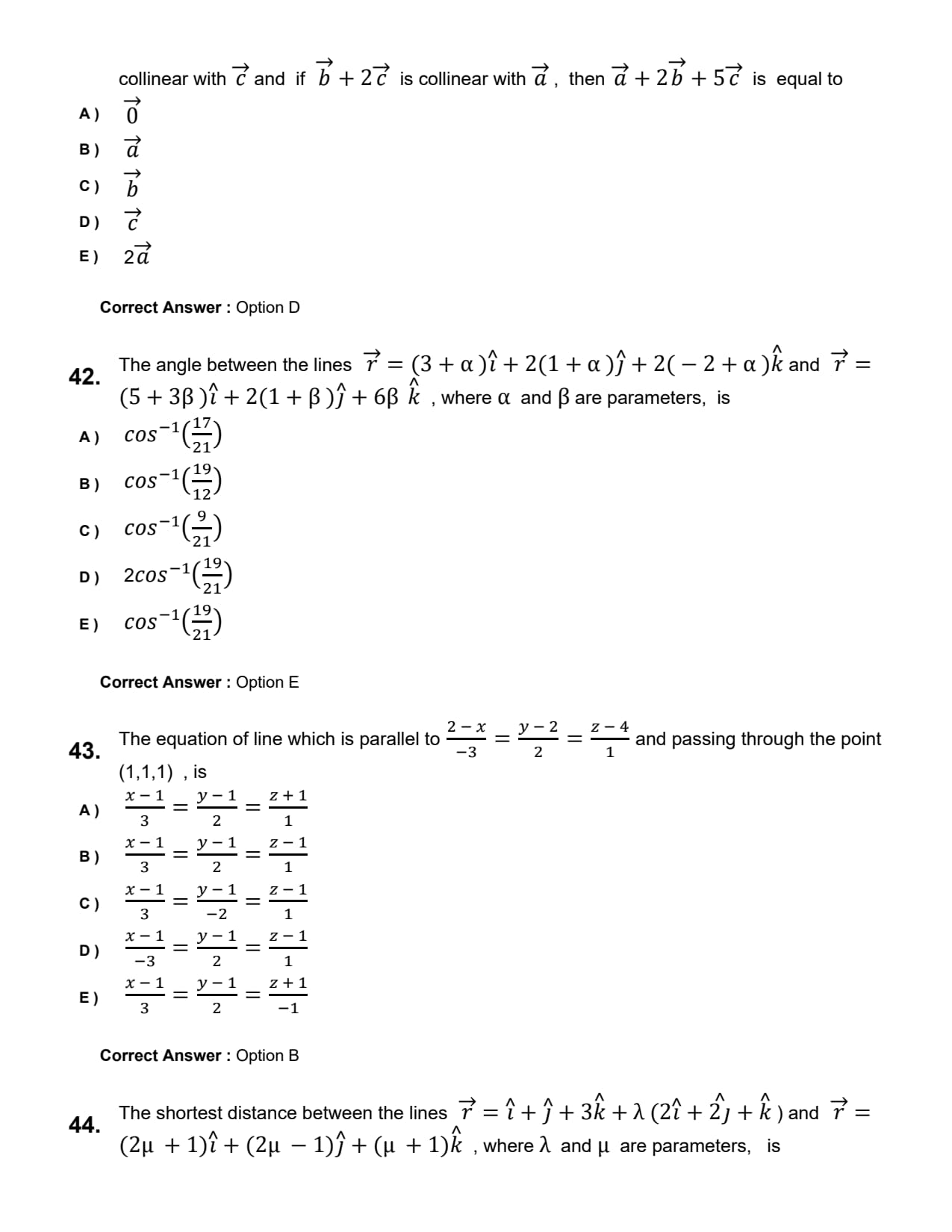
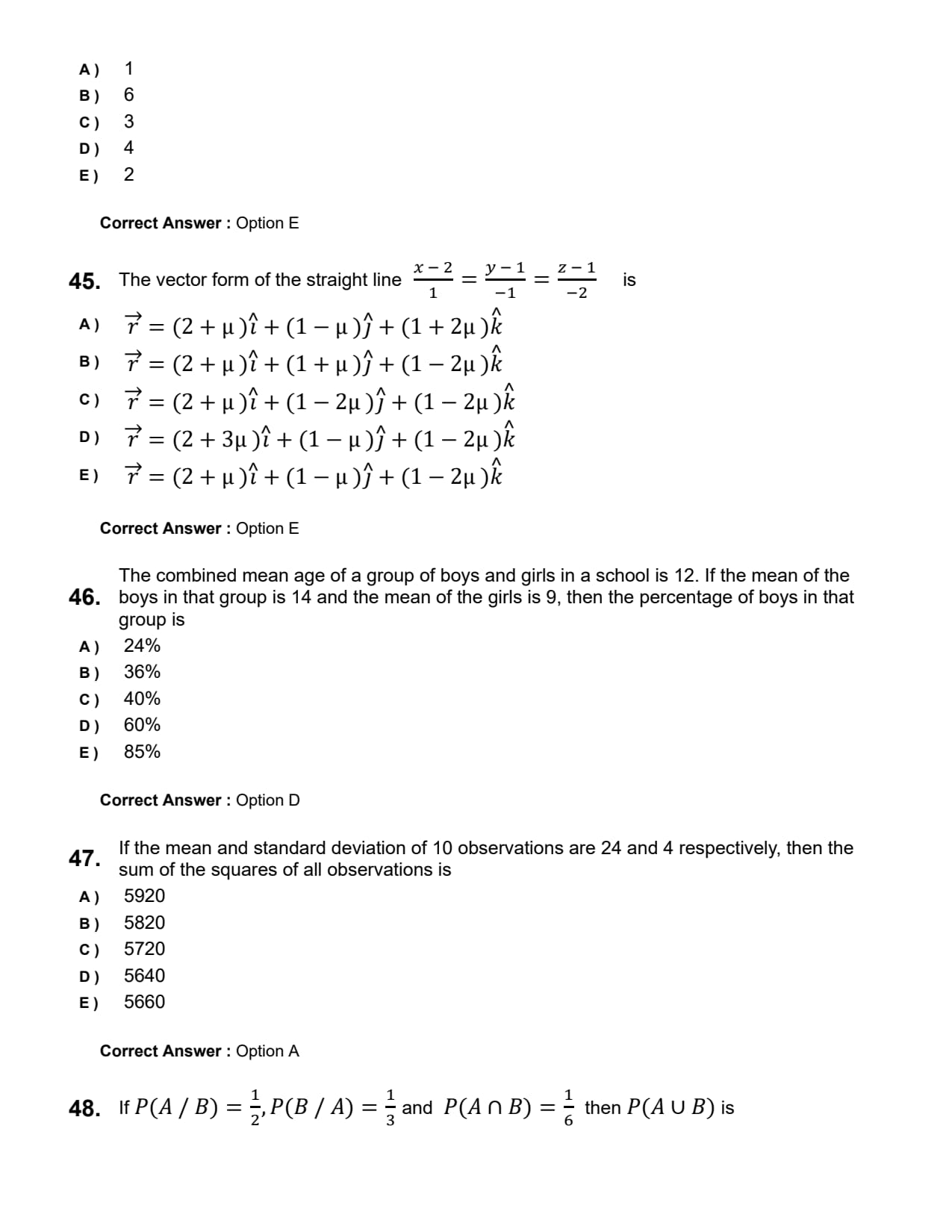
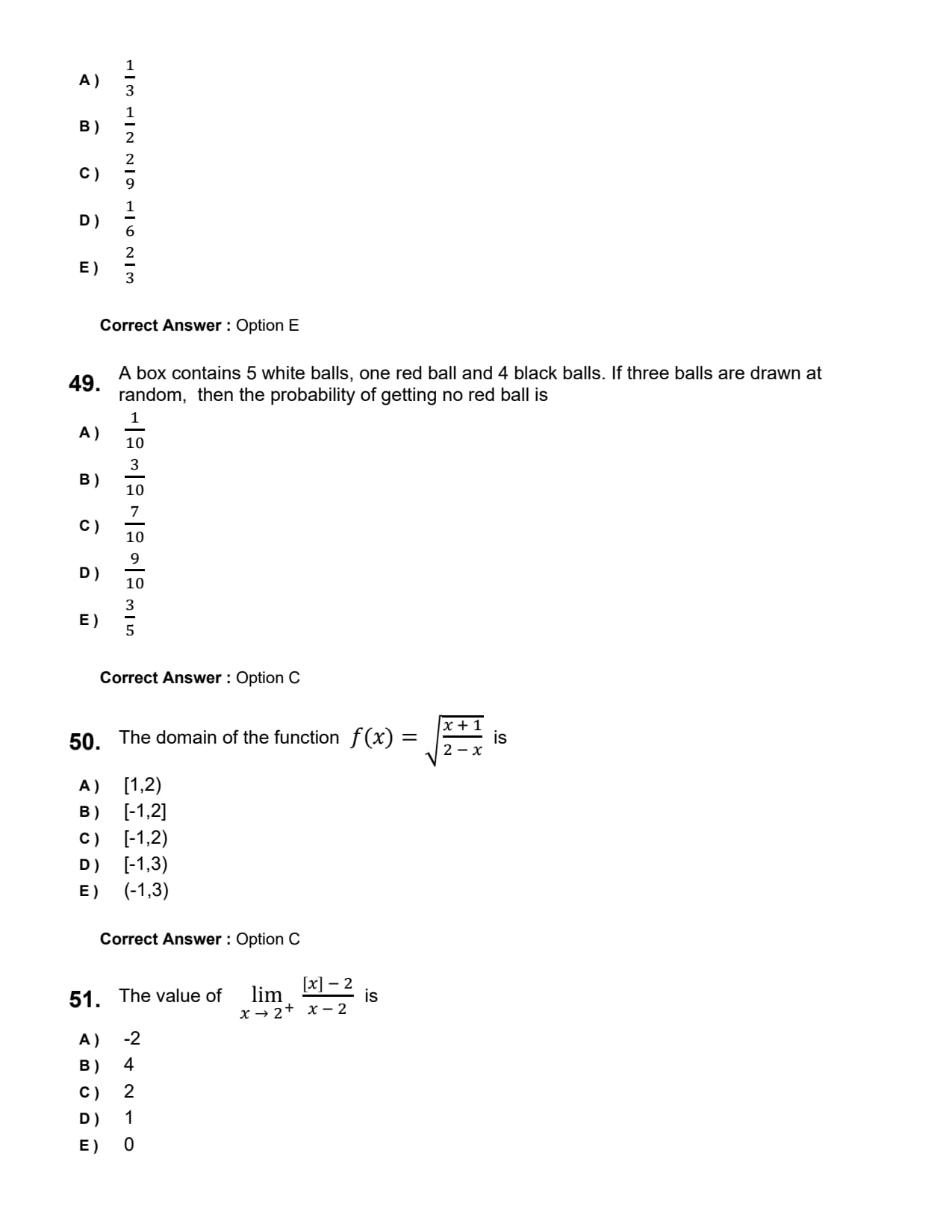
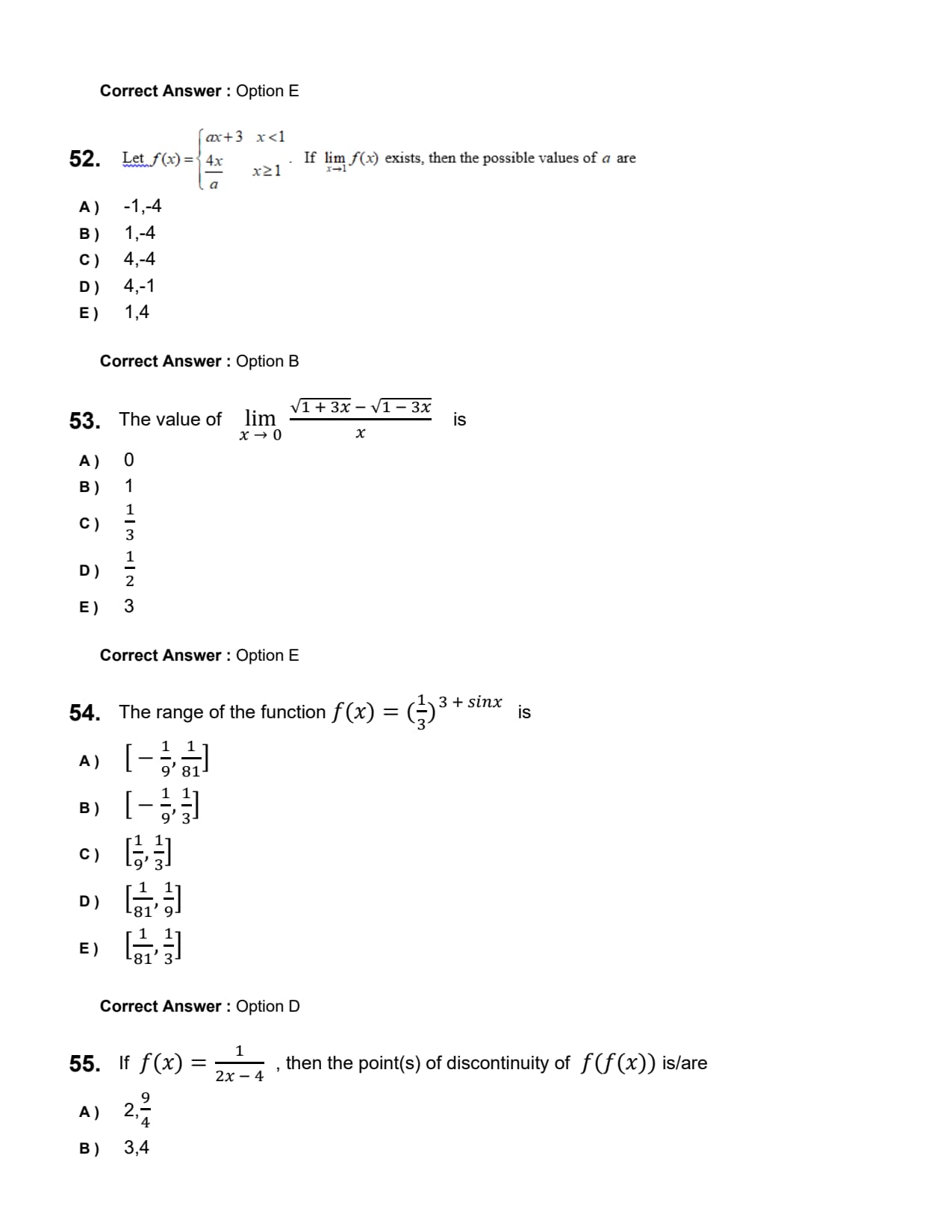
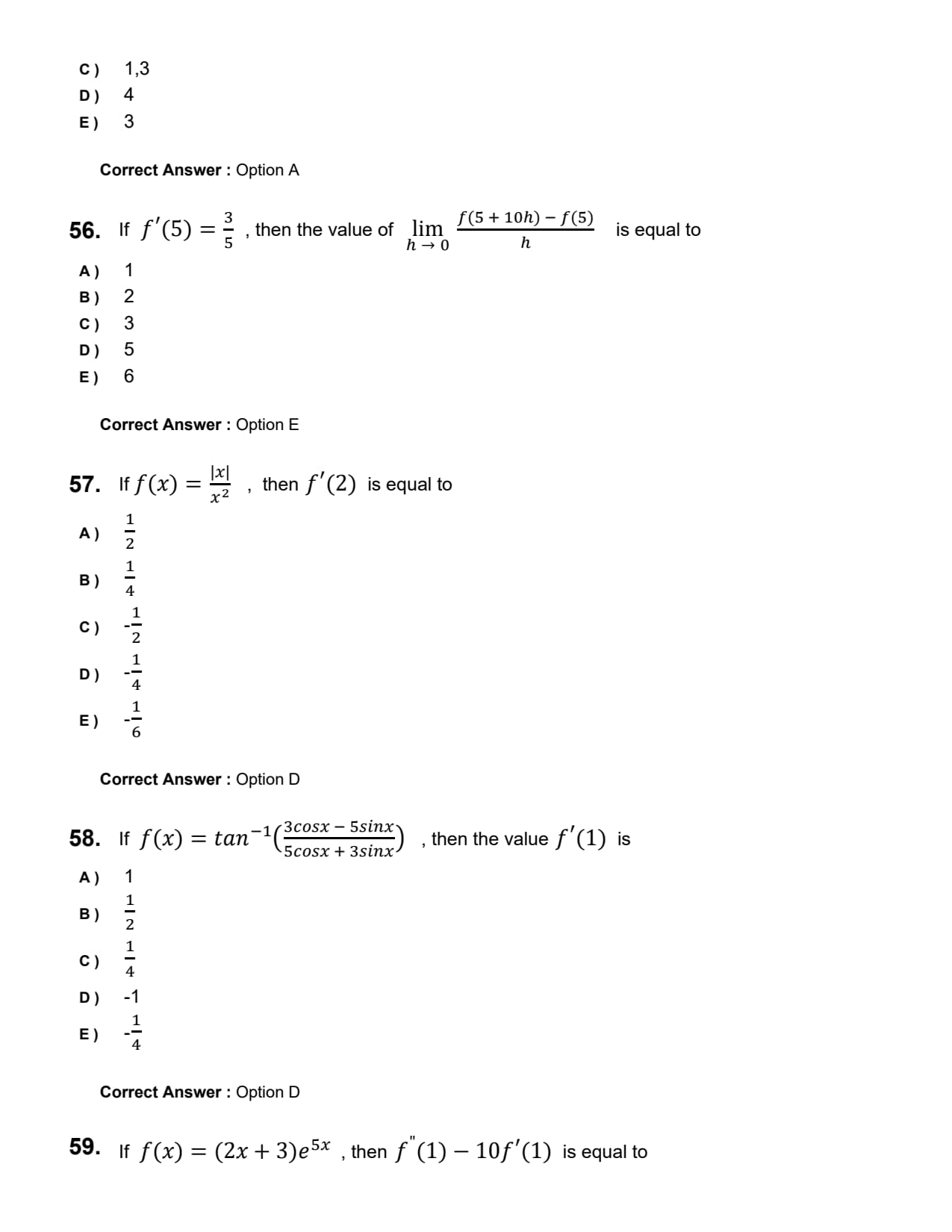
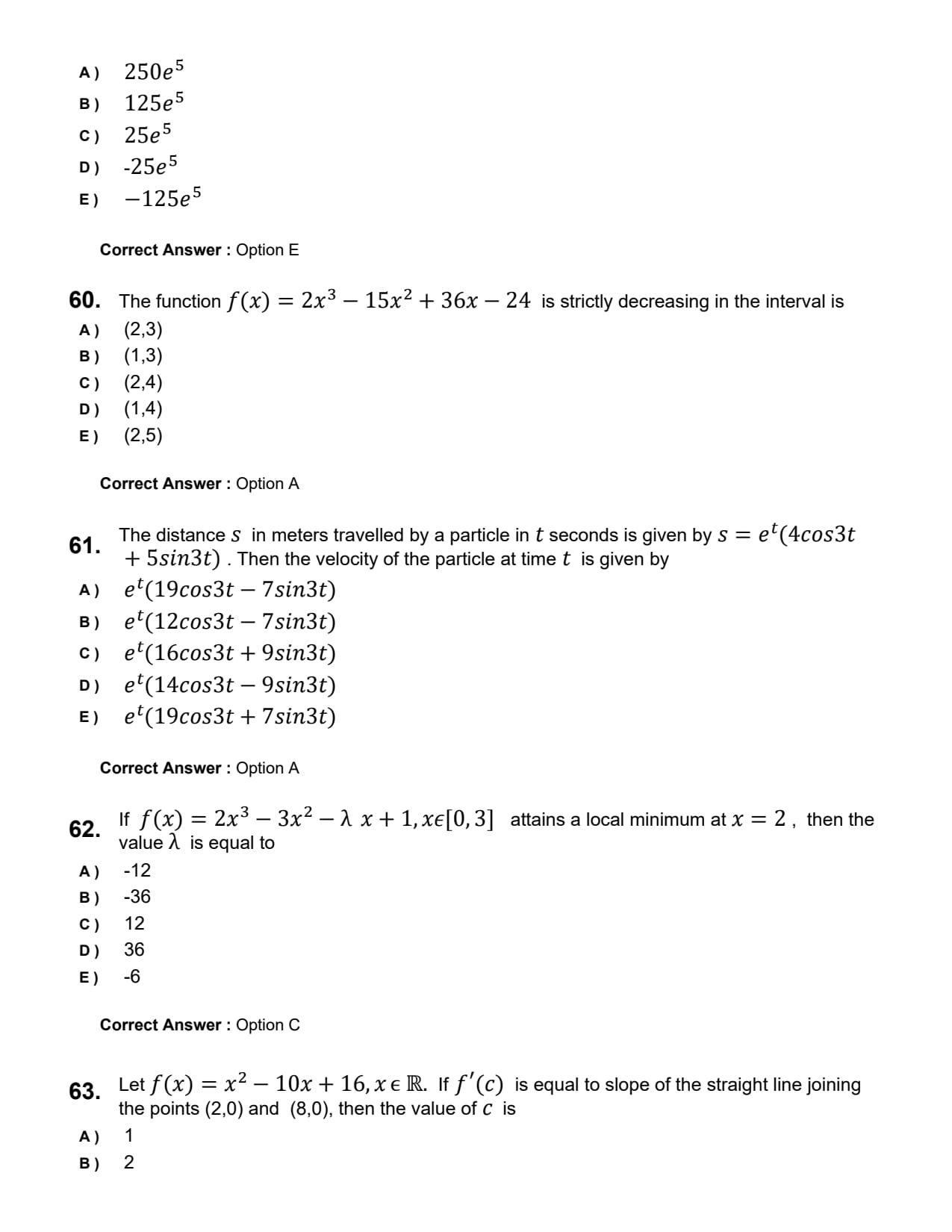
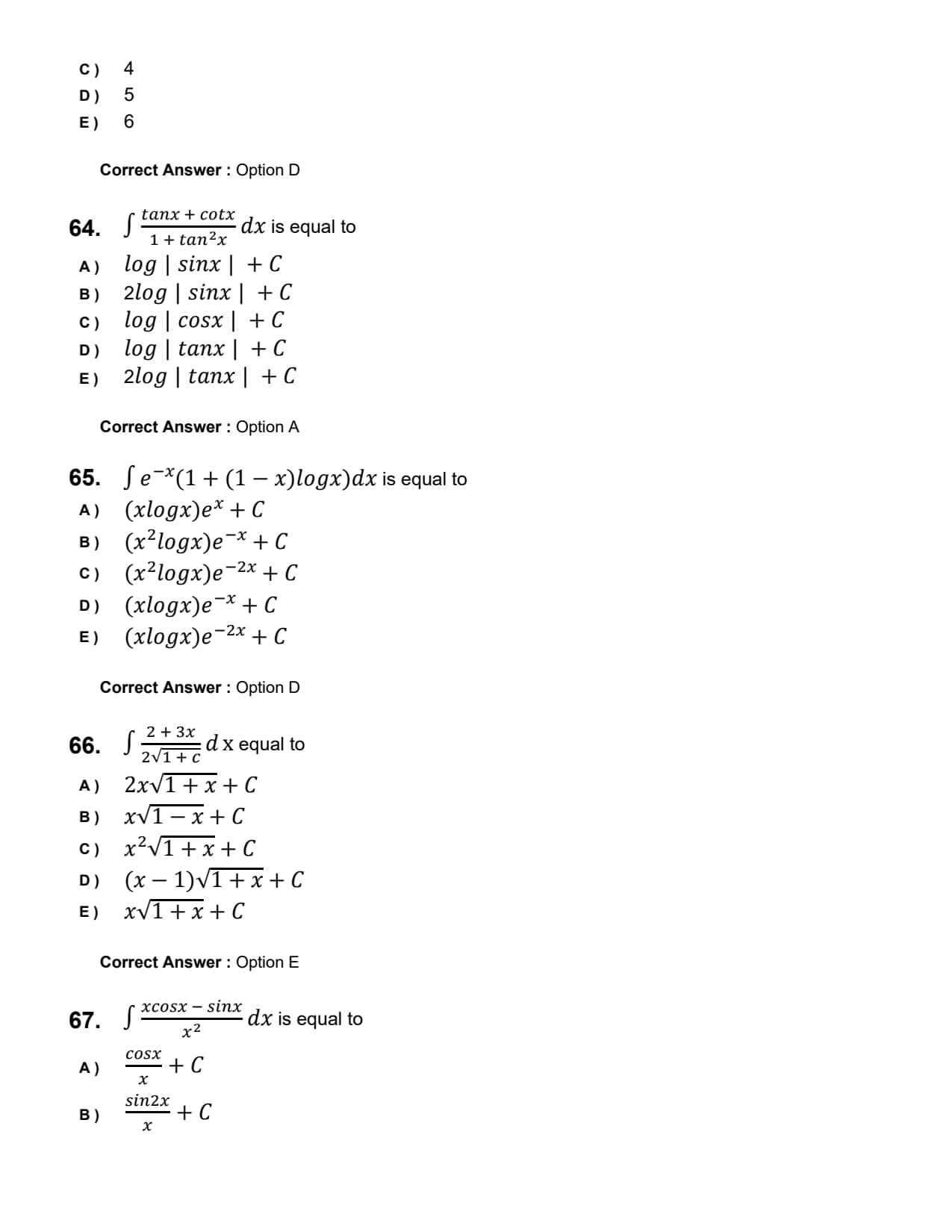
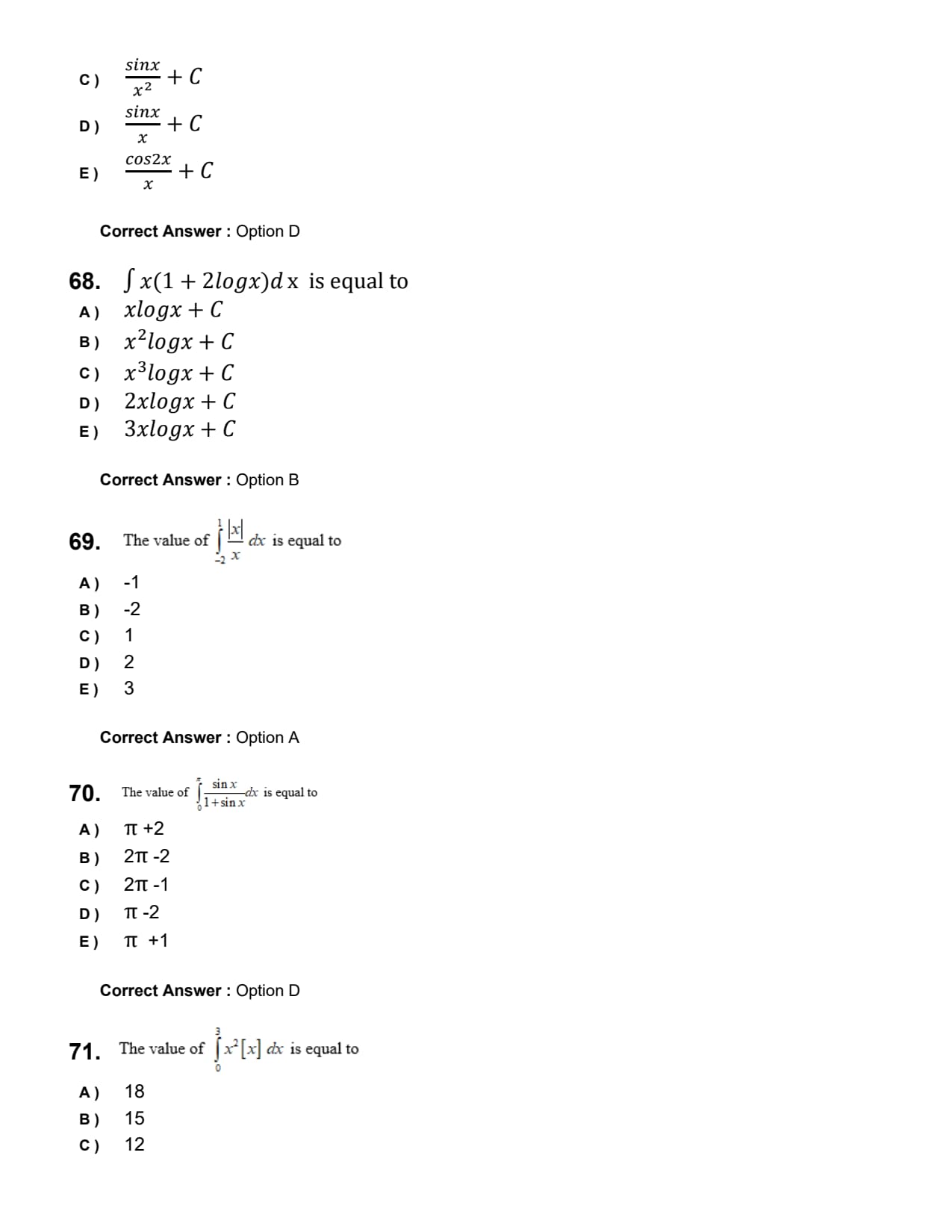
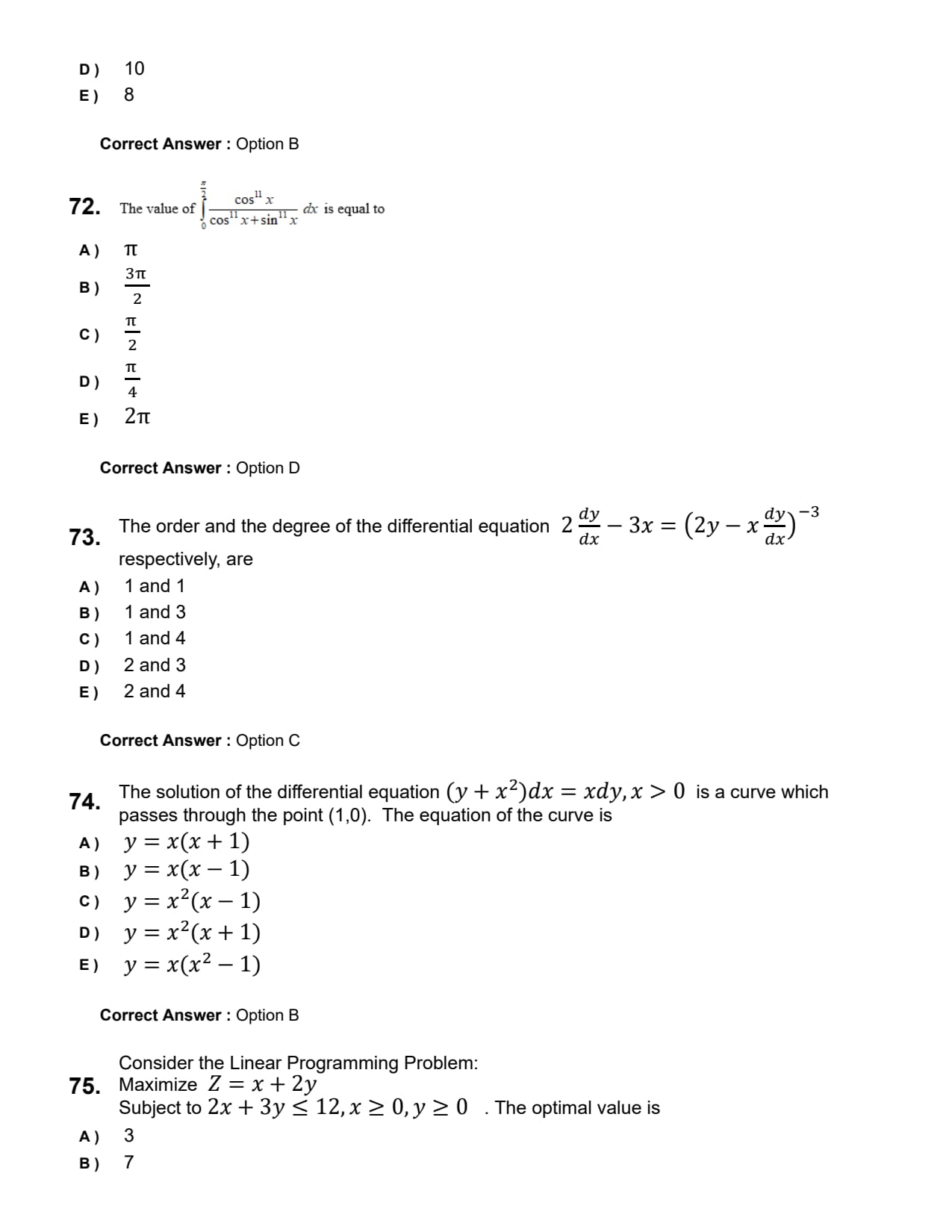
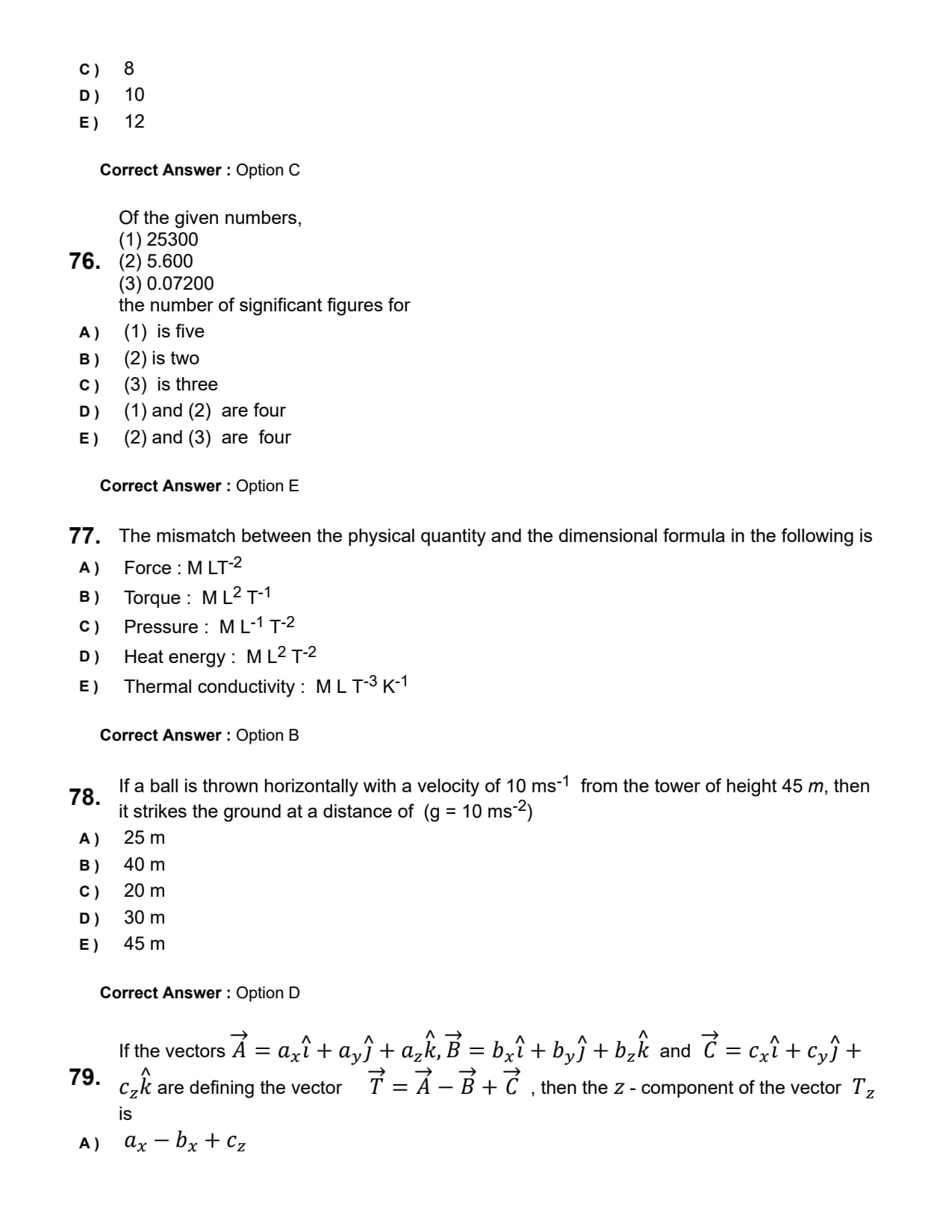
\(\int (\tan^{2}(2x) - \cot^{2}(2x))dx =\)
If \(x + 13y = 40\) is normal to the curve \(y = 5x^{2} + \alpha x + \beta\) at the point (1,3), then the value of \(\alpha\beta\) is equal to:
Let \(f(x) = \begin{cases} 3x + 6, & if x \ge c
x^{2} - 3x - 1, & if x < c \end{cases}\), where \(x \in \mathbb{R}\) and \(c\) is a constant. The values of \(c\) for which \(f\) is continuous on \(\mathbb{R}\) are:
In a box there are four marbles and each of them is marked with distinct number from the set \(\{1, 2, 5, 10\}\). If one marble is randomly selected four times with replacement and the number on it noted, then the probability that the sum of numbers equals 18 is:
Three fair dice are rolled simultaneously. Let a, b, c be the numbers on the top of the dice. Then the probability that \(\min(a, b, c) = 6\) is:
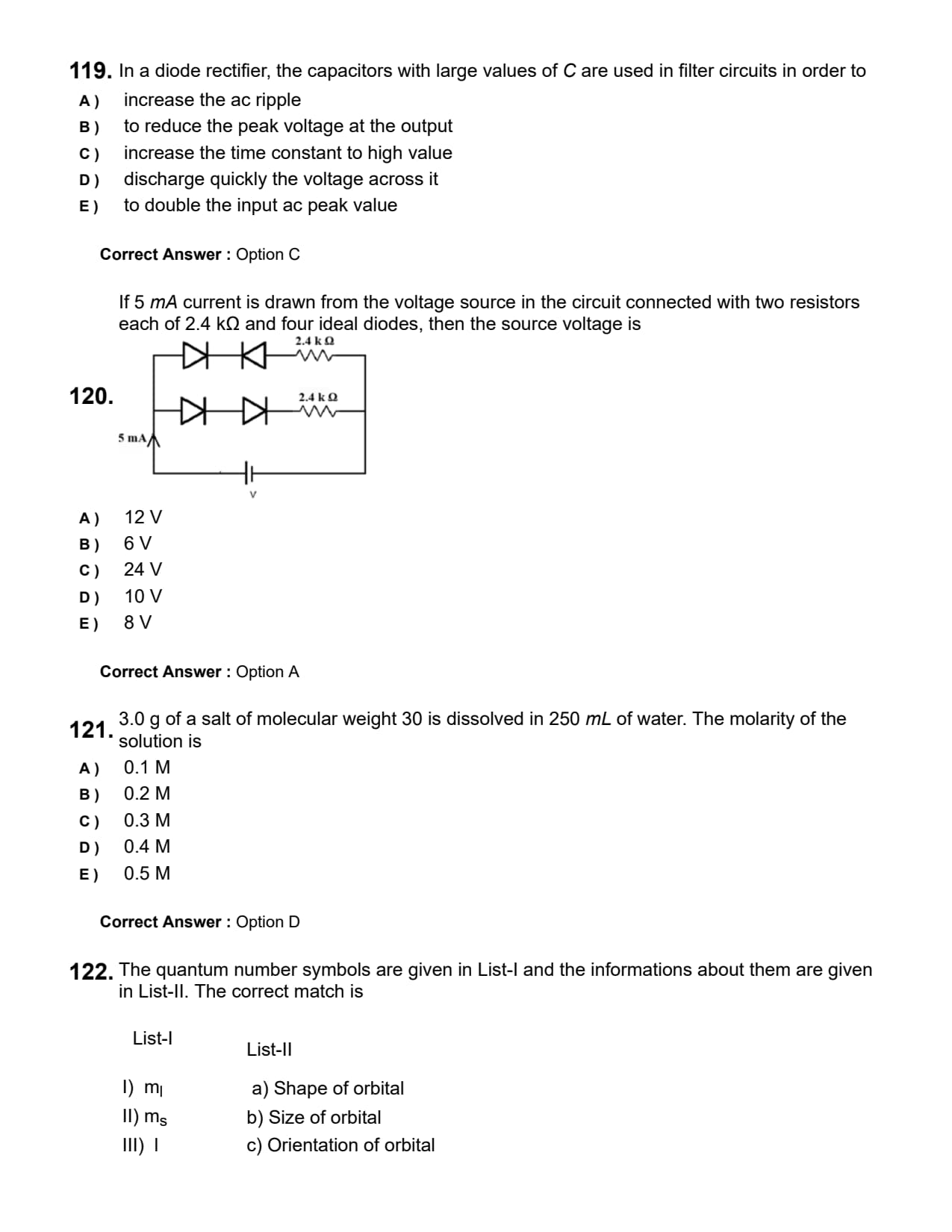
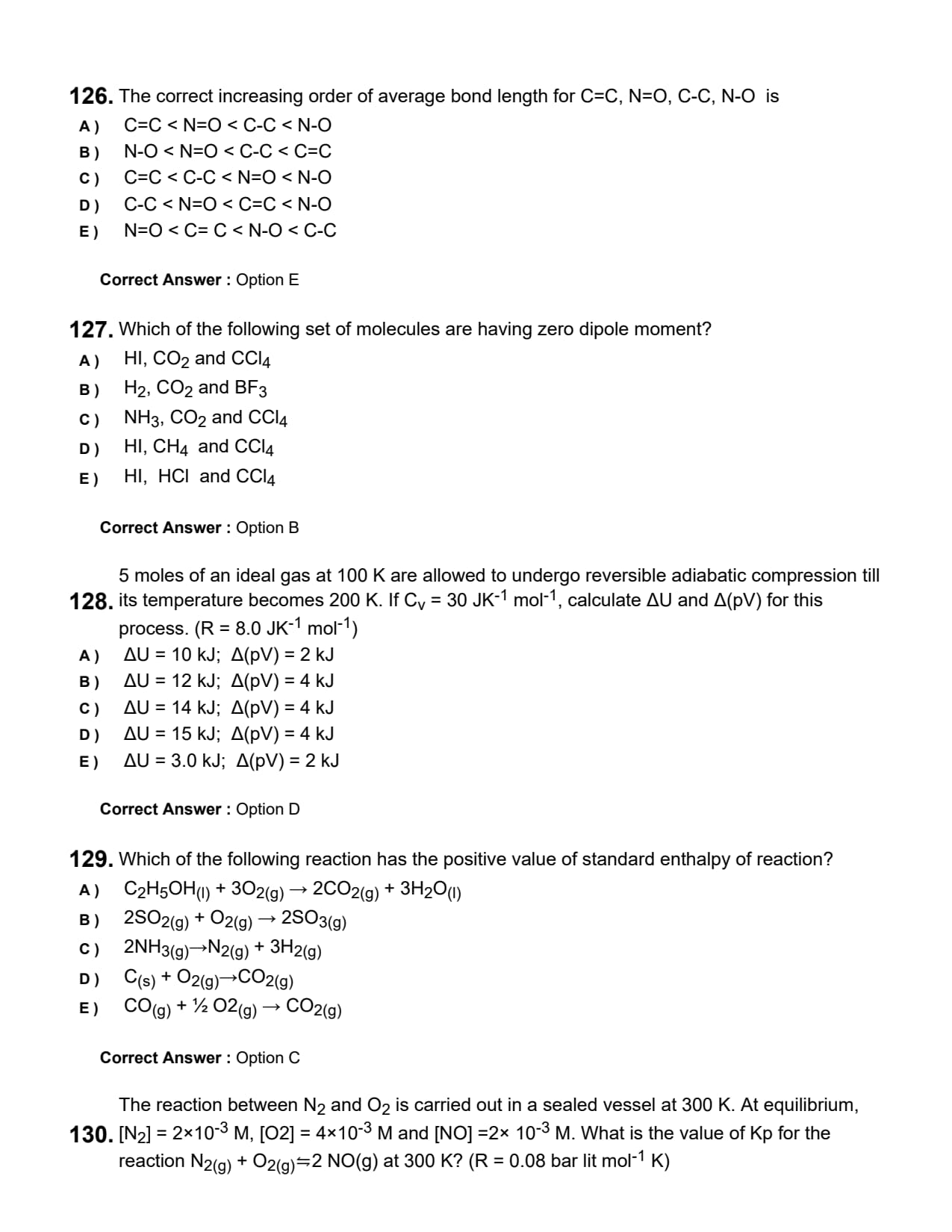
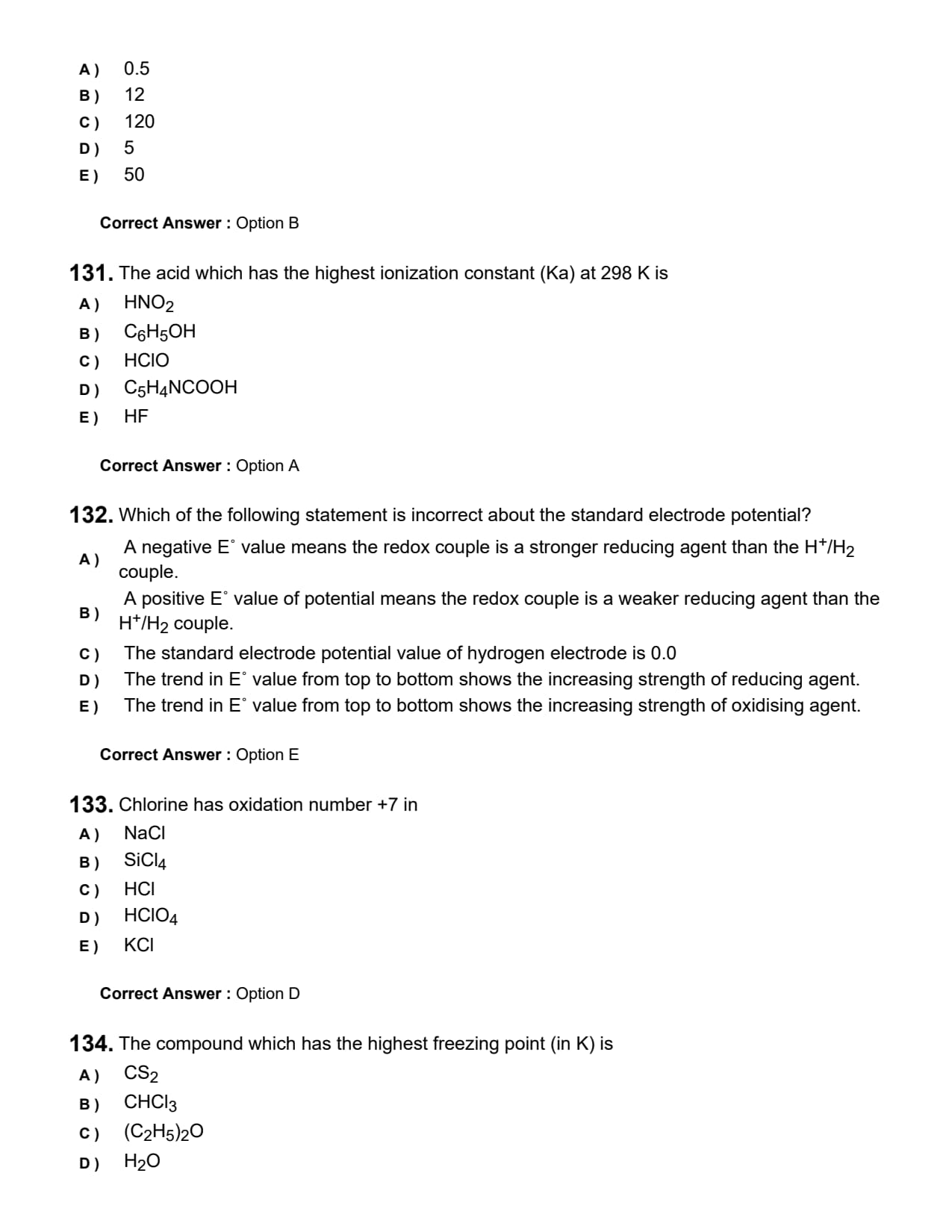
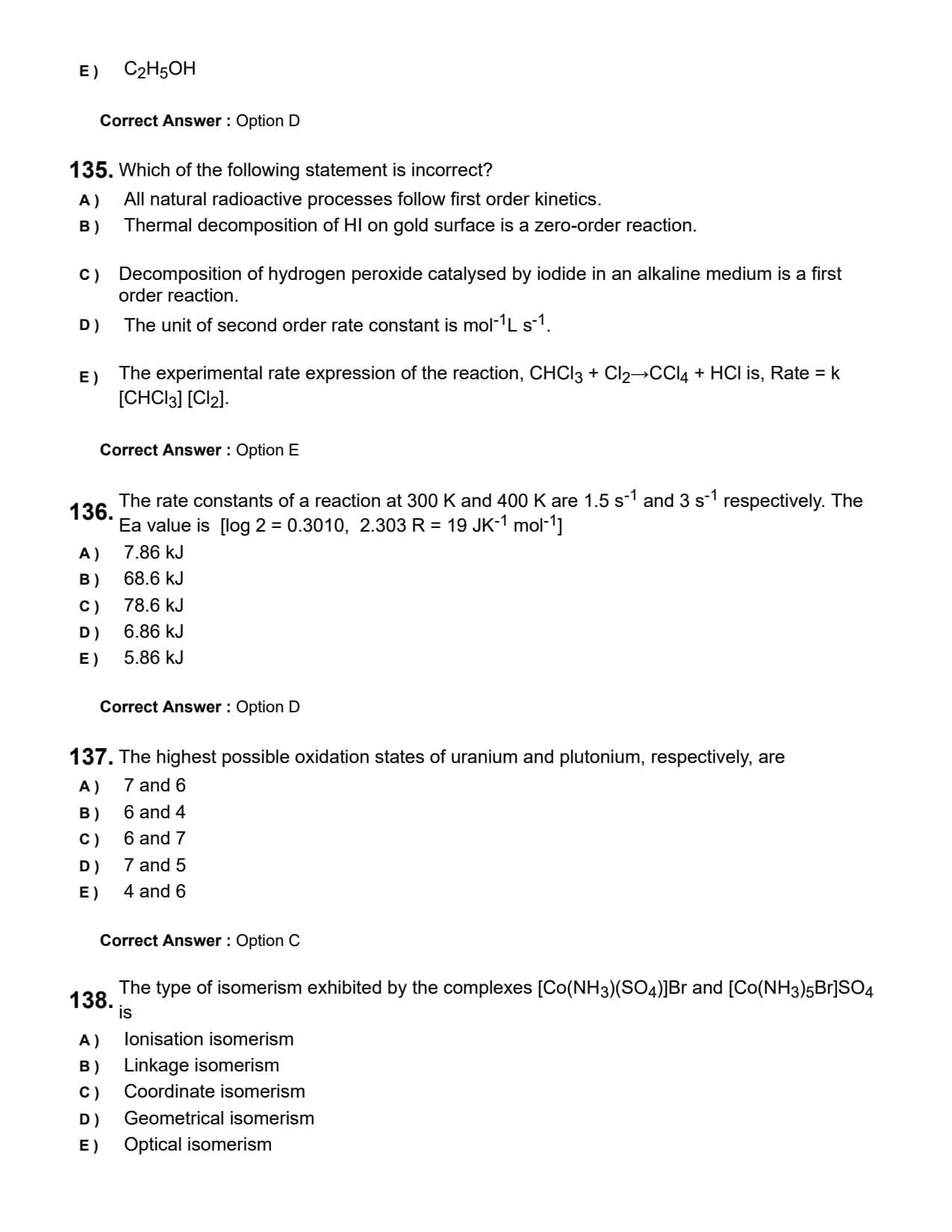
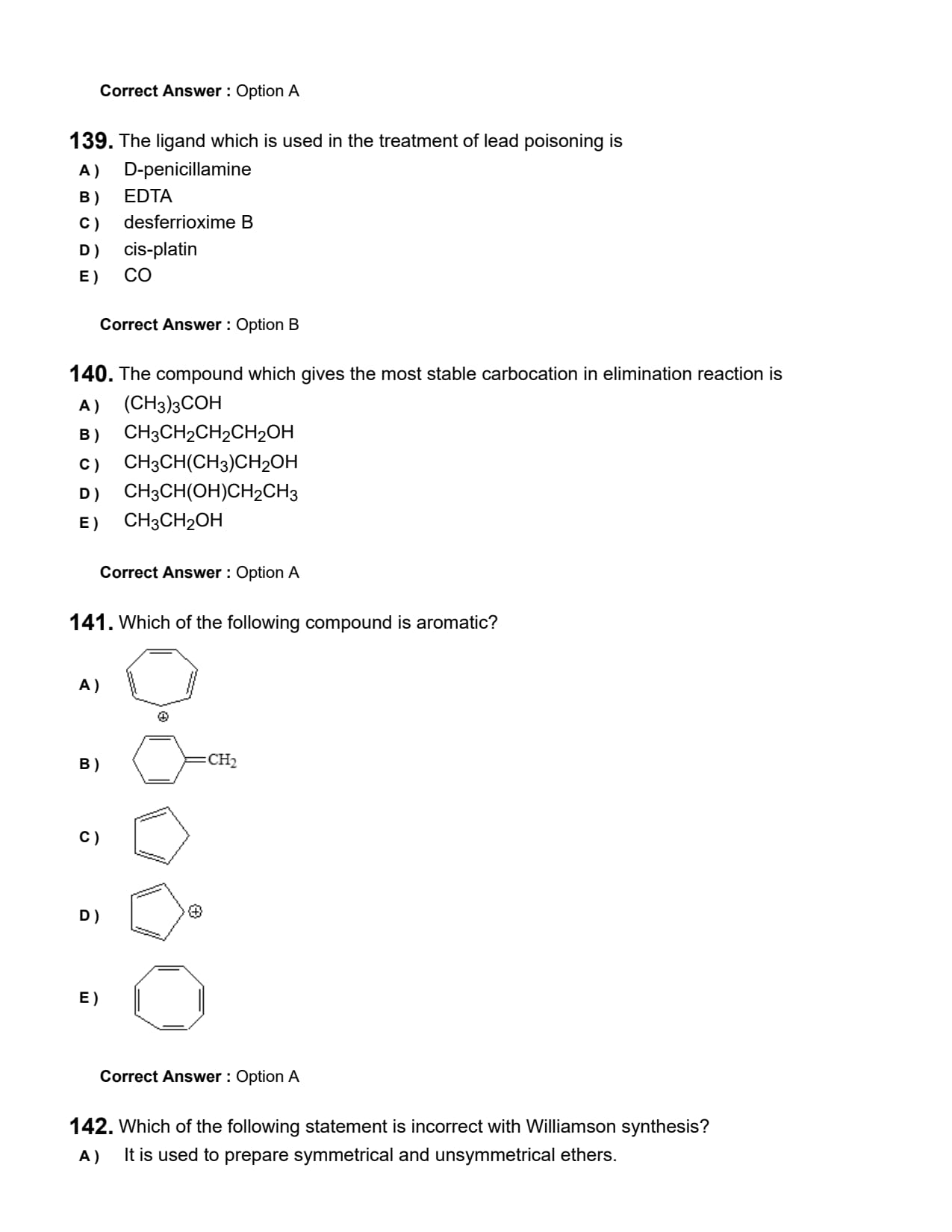
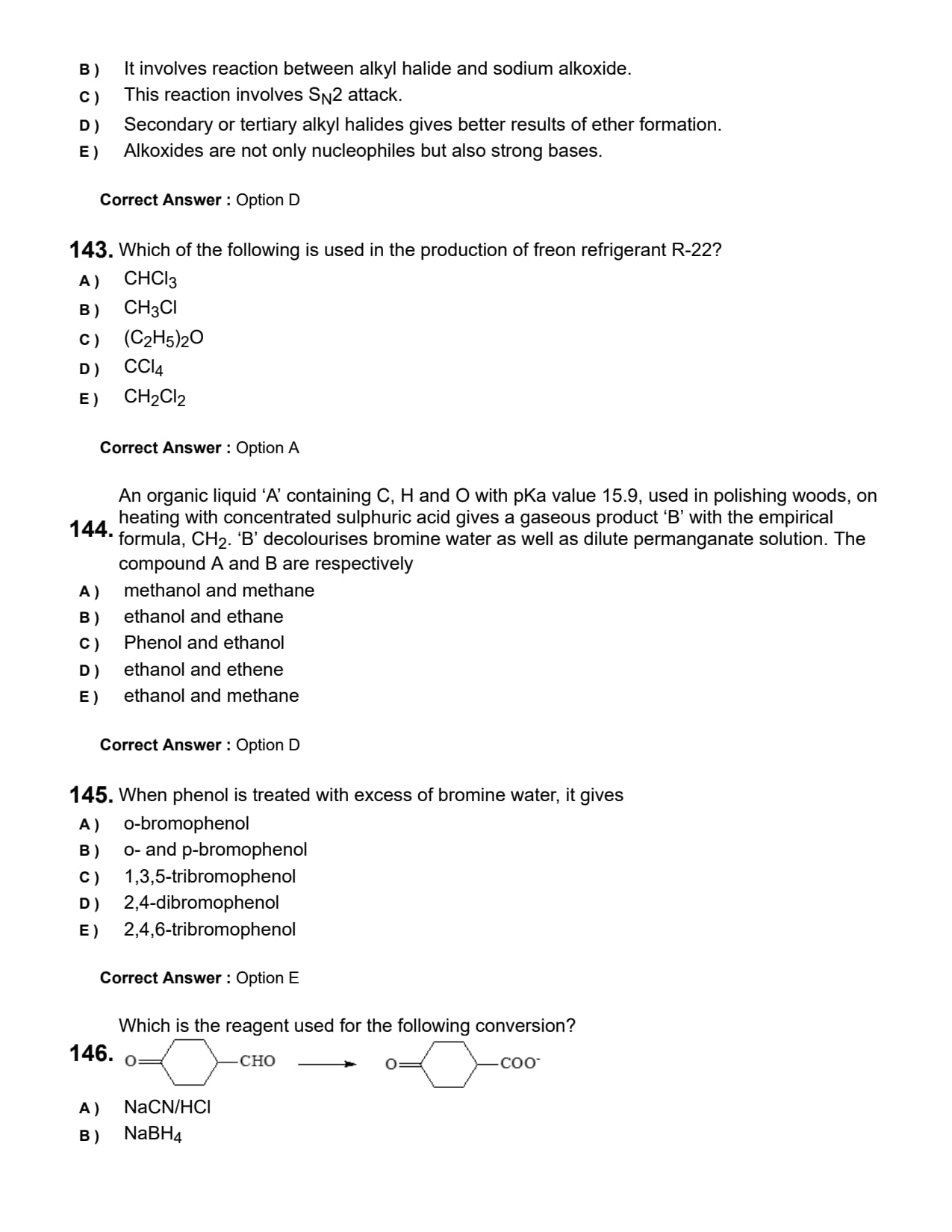
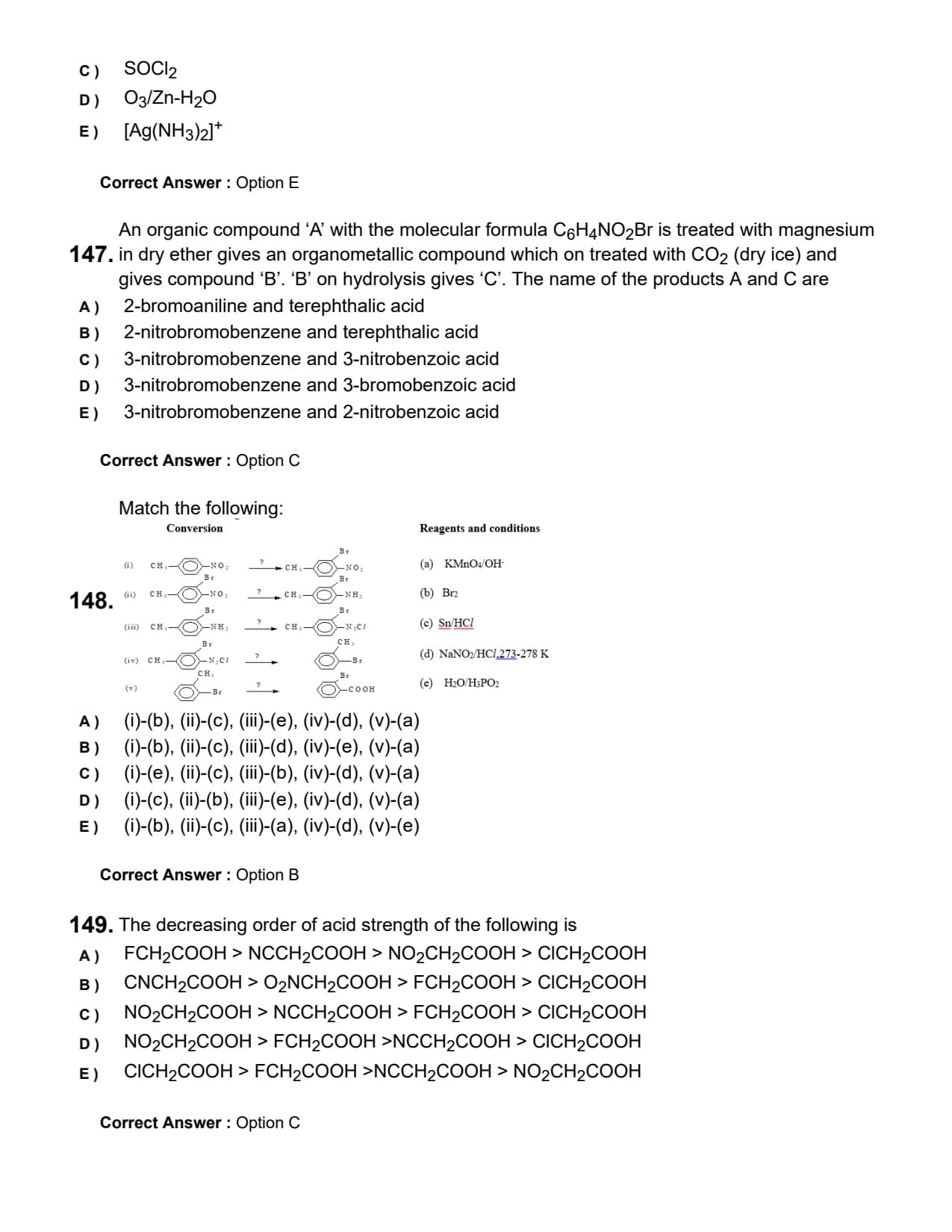
Oxidation number of potassium in \(K_{2}O\), \(K_{2}O_{2}\) and \(KO_{2}\), respectively, is:
Which one of the following is not an allylic halide?
A neutral molecule \(XF_{3}\) has a zero dipole moment. The element X is most likely:
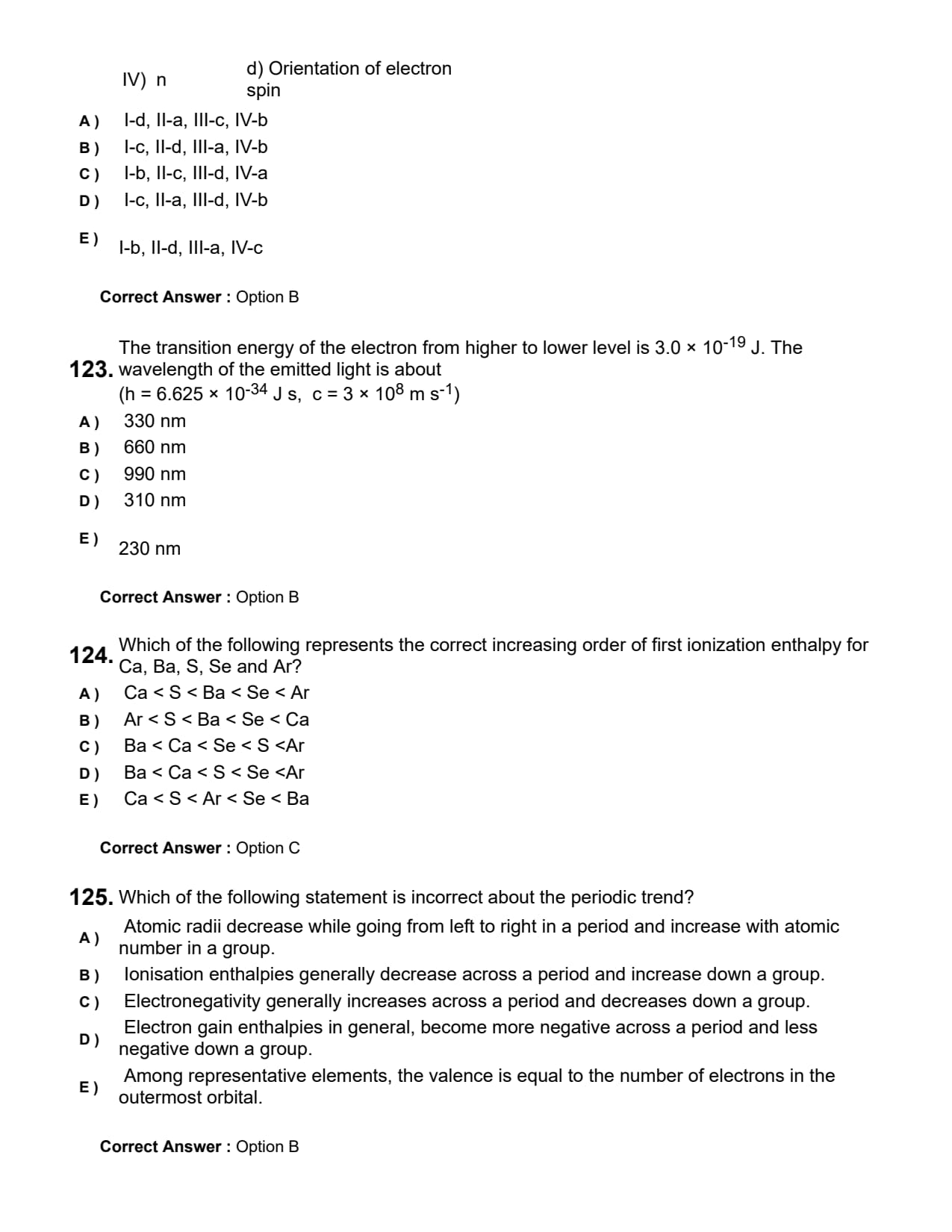
Among the following species, identify the pair having same bond order \( CN^{-} \), \( O_{2}^{-} \), \( NO^{+} \), \( CN^{+} \):
Which one of the following conditions will favour maximum formation of the product in the reaction, \( A_{2}(g) + B_{2}(g) \rightleftharpoons X_{2}(g) \) \( \Delta_{r}H = -x \) kJ:
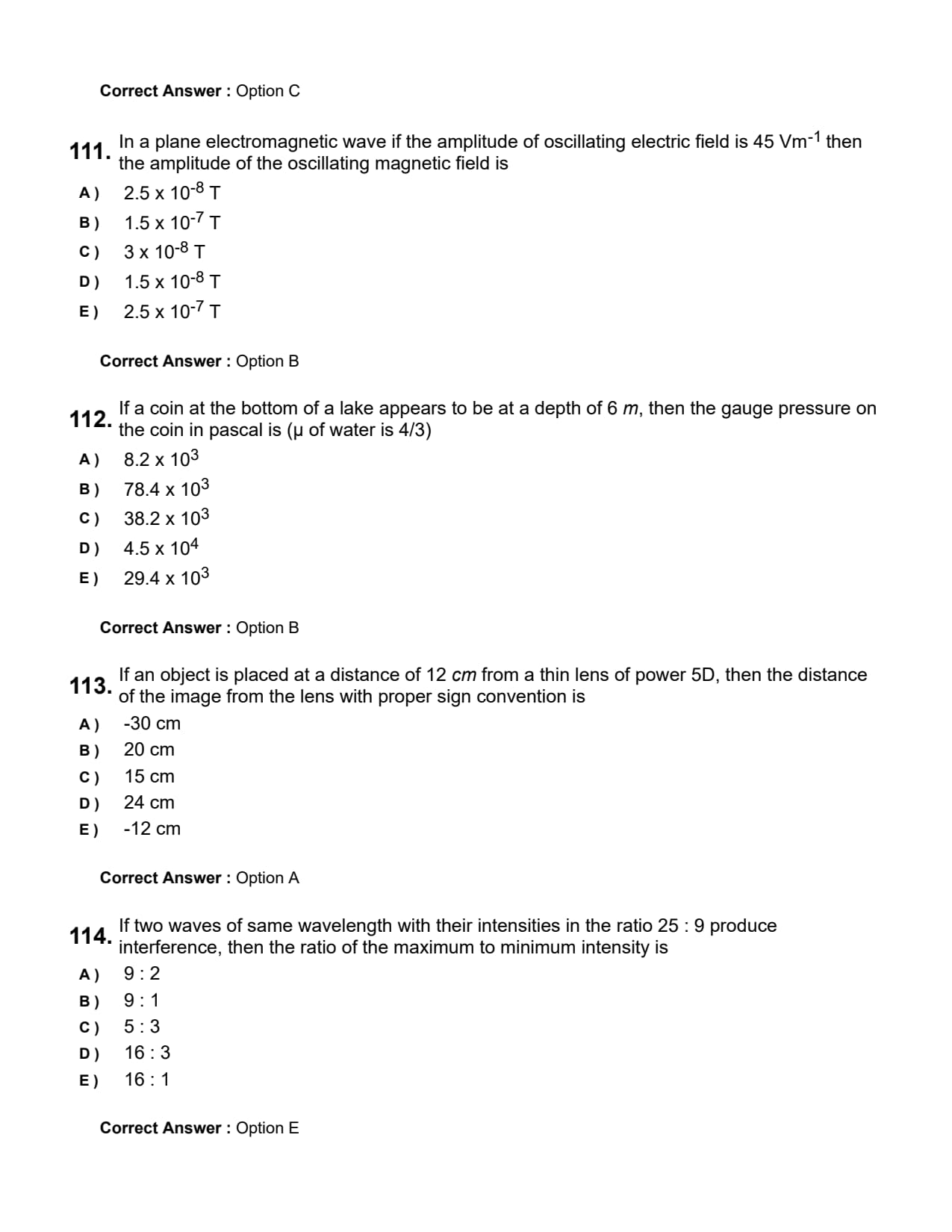
A light ray enters from medium 1 to medium 2. Its velocity in medium 1 is \( 2 \times 10^{8} \) m/s and in medium 2 is \( 1.5 \times 10^{8} \) m/s. The critical angle for the pair of media is:
A container with a pin hole at the bottom is filled with water and kerosene (specific gravity 0.8). The height of the water layer is 10 cm and the kerosene layer is 20 cm. The velocity of efflux of water is:
In a Young's double slit experiment, the intensity at a point where the path difference is \( \frac{\lambda}{6} \) (\( \lambda \) being the wavelength of light used) is \( I \). If \( I_{0} \) denotes the maximum intensity, \( I/I_{0} \) is equal to:
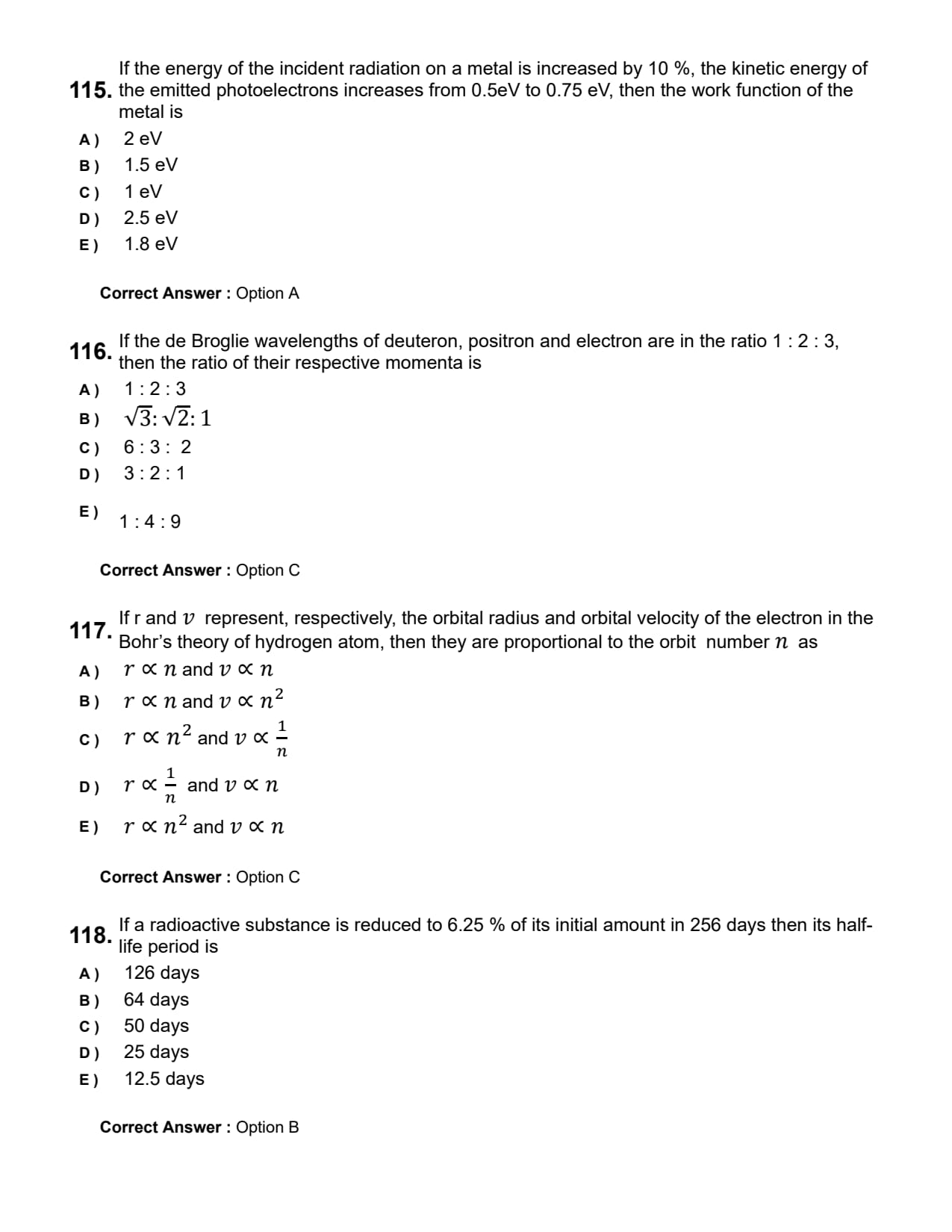
A particle of mass \(m\) is moving in a circular path of constant radius \(r\) such that its centripetal acceleration \(a_{c}\) is varying with time \(t\) as \(a_{c} = k^{2}rt^{2}\), where \(k\) is a constant. The power delivered to the particle by the forces acting on it is:
A source of frequency \(f\) gives 5 beats/sec when sounded with a source of frequency 200 Hz. The second harmonic of \(f\) gives 10 beats/sec when sounded with a source of frequency 420 Hz. The value of \(f\) is:
KEAM 2026 Exam Pattern
| Particulars | Details |
|---|---|
| Paper | Engineering |
| Mode of Exam | Online CBT |
| Subjects | Physics- 45 questions Chemistry- 30 questions Mathematics- 75 questions |
| Type of Question | Objective Type |
| Total Number of questions | 150 |
| Marks are awarded for each correct answer | 4 marks |
| Marks are awarded for each incorrect answer | 1 marks |
| KEAM total marks for Engineering | 600 marks |
| Duration of KEAM Engineering exam | 3 hours |



Comments