The Himachal Pradesh Board of School Education (HPBOSE) successfully conducted the Class 12 Physical Education (NSQF) Exam on March 30, 2026. HP Board Class 12 2026 Physical Education (NSQF) Question Paper with Solution PDF is now available for download.
The HP Board Class 12 Physical Education (NSQF) paper covers important topics from fitness training, sports skills, health education, yoga, and career-oriented physical education concepts. Students should focus on developing practical skills, understanding fitness techniques, and improving knowledge of sports and health management. The exam is typically marked out of 100 marks, with 70 marks for the theory paper and 30 marks for practical/internal assessment.
HP Board Class 12 2026 Physical Education (NSQF) Question Paper with Solution PDF
| HP Board Class 12 Physical Education (NSQF) Question Paper 2026 | Download PDF | Check Solution |

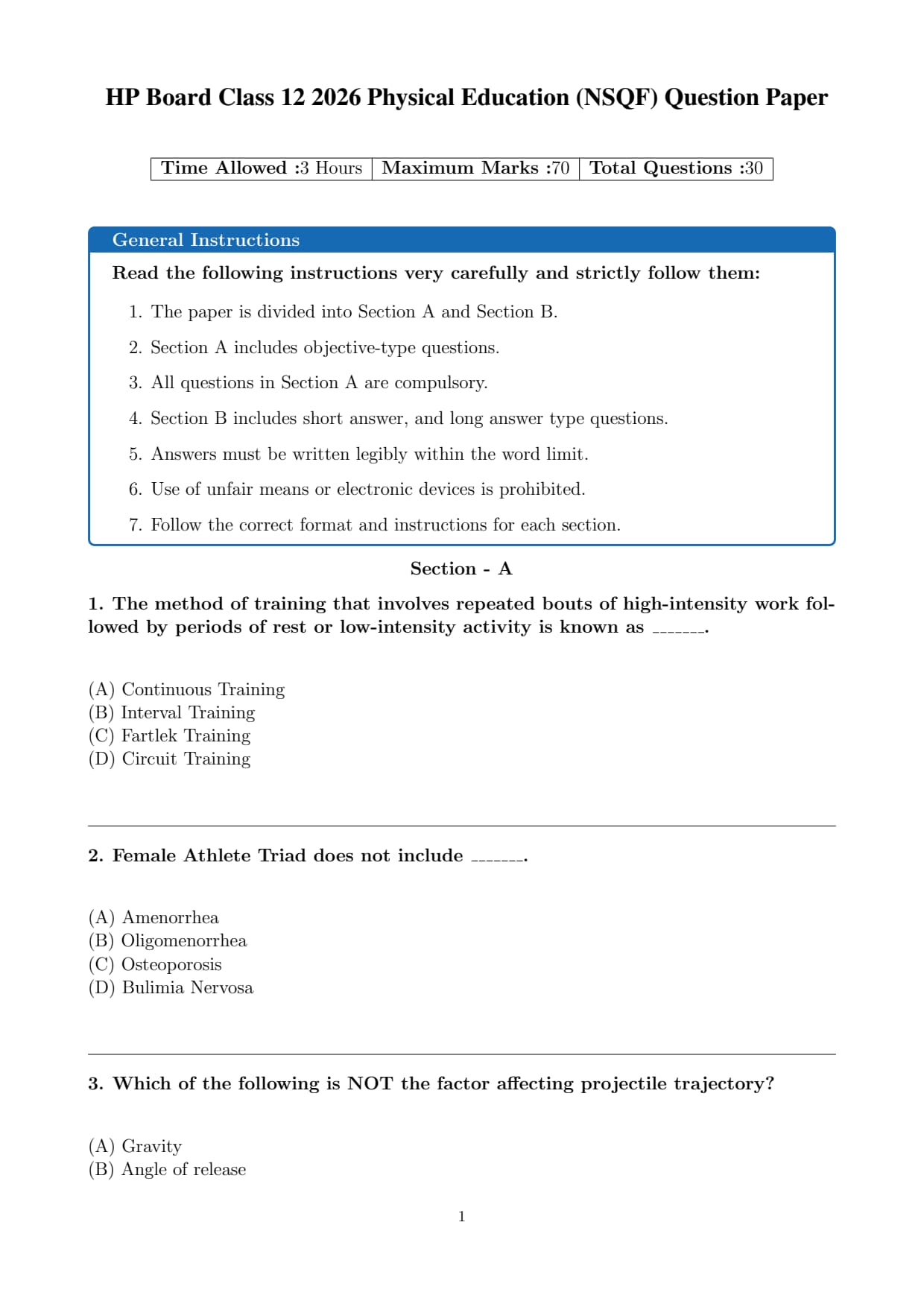
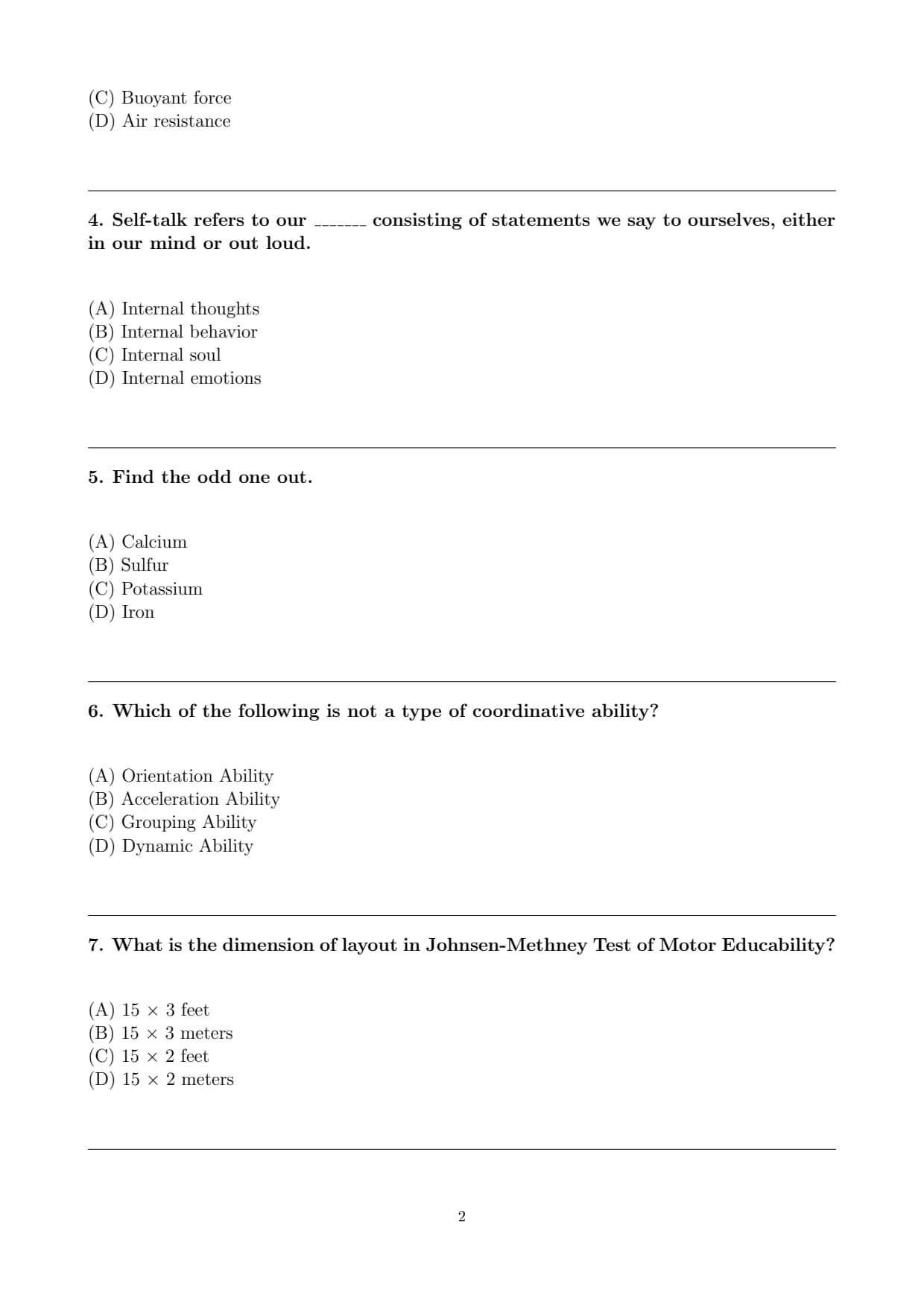
The method of training that involves repeated bouts of high-intensity work followed by periods of rest or low-intensity activity is known as ______ .
View Solution
Interval training is a method of training where high-intensity work is alternated with periods of rest or low-intensity activity. This helps improve both aerobic and anaerobic fitness by challenging the body with intense bursts of effort followed by recovery periods.
Step 1: Analyzing each option.
(A) Continuous Training: Incorrect. Continuous training involves steady, long-duration exercise without rest intervals.
(B) Interval Training: Correct. This is the method described in the question, involving high-intensity bouts followed by rest or low-intensity activity.
(C) Fartlek Training: Incorrect. Fartlek training is similar to interval training but less structured, with changes in intensity and pace.
(D) Circuit Training: Incorrect. Circuit training involves a series of exercises performed in a sequence, with minimal rest between them, but it does not specifically focus on high-intensity work followed by rest.
Step 2: Conclusion.
The correct answer is (B), interval training, as it is defined by alternating high-intensity work with rest or low-intensity periods.
Final Answer: Interval Training. Quick Tip: Interval training helps improve endurance and strength by incorporating both intense effort and recovery periods.
Female Athlete Triad does not include _____ .
View Solution
Step 1: Understanding Female Athlete Triad.
The Female Athlete Triad is a medical condition often seen in female athletes, characterized by three interrelated conditions: Amenorrhea (lack of menstrual periods), Oligomenorrhea (infrequent menstrual periods), and Osteoporosis (bone density loss). These conditions can result from low energy availability due to inadequate nutrition and excessive exercise.
Step 2: Comparison with other options.
(A) Amenorrhea: Correct. Amenorrhea is part of the Female Athlete Triad, as it refers to the absence of menstrual periods.
(B) Oligomenorrhea: Correct. Oligomenorrhea refers to infrequent menstrual periods, which is also part of the triad.
(C) Osteoporosis: Correct. Osteoporosis, or reduced bone density, is the third condition in the Female Athlete Triad.
(D) Bulimia Nervosa: Incorrect. Bulimia Nervosa is an eating disorder characterized by binge eating followed by purging. It is not part of the Female Athlete Triad.
Step 3: Conclusion.
Therefore, (D) Bulimia Nervosa is the correct answer as it is not part of the Female Athlete Triad.
Final Answer: Bulimia Nervosa. Quick Tip: The Female Athlete Triad includes Amenorrhea, Oligomenorrhea, and Osteoporosis. It is crucial to address this condition early to prevent long-term health issues in athletes.
Which of the following is NOT the factor affecting projectile trajectory?
View Solution
Step 1: Understanding projectile trajectory.
Projectile trajectory is influenced by several factors that determine the path of an object in flight, such as gravity, the angle of release, and air resistance.
Step 2: Identifying the factors affecting trajectory.
- Gravity pulls the object down, causing a parabolic trajectory.
- The angle of release determines the initial direction of the projectile, affecting the range and height.
- Air resistance opposes the motion of the projectile and alters its speed and trajectory.
Step 3: Comparison with the other options.
(A) Gravity: Correct. Gravity is a key factor in determining the path of a projectile.
(B) Angle of release: Correct. The angle at which a projectile is launched significantly affects its trajectory.
(C) Buoyant force: Incorrect. Buoyant force, which relates to the force exerted by a fluid on an object submerged in it, does not affect the trajectory of a projectile in air.
(D) Air resistance: Correct. Air resistance plays a significant role in slowing down a projectile and influencing its path.
Step 4: Conclusion.
Therefore, the correct answer is (C) Buoyant force, as it does not affect the projectile's trajectory.
Final Answer: Buoyant force. Quick Tip: In projectile motion, the main factors affecting the trajectory are gravity, angle of release, and air resistance. Buoyant force is not relevant in this context unless the projectile is moving through a fluid.
Self-talk refers to our _____ consisting of statements we say to ourselves, either in our mind or out loud.
View Solution
Step 1: Understanding self-talk.
Self-talk is the process of talking to oneself, either mentally or aloud. It involves internal dialogues or statements that can influence thoughts, behaviors, and emotional responses.
Step 2: Analyzing the options.
(A) Internal thoughts: Correct. Self-talk refers to internal thoughts that can shape our actions, moods, and perceptions.
(B) Internal behavior: Incorrect. Behavior refers to actions or reactions, not the internal dialogue we have with ourselves.
(C) Internal soul: Incorrect. The term "internal soul" is not commonly used in this context and does not refer to self-talk.
(D) Internal emotions: Incorrect. While emotions may be influenced by self-talk, the term specifically refers to thoughts, not emotions.
Step 3: Conclusion.
Therefore, the correct answer is (A) Internal thoughts, as self-talk involves the internal thoughts we express to ourselves.
Final Answer: Internal thoughts. Quick Tip: Self-talk is a powerful tool that influences our mindset and behaviors. Positive self-talk can improve confidence and reduce stress, while negative self-talk may have the opposite effect.
Find the odd one out.
View Solution
Step 1: Identifying the common characteristics.
Calcium, Potassium, and Iron are essential minerals that play key roles in the body’s physiological processes, such as bone health (Calcium), nerve function (Potassium), and oxygen transport (Iron).
Step 2: Analyzing Sulfur.
Sulfur is also an essential element but it is primarily part of amino acids and proteins. Unlike the others, it does not function in the same way in terms of ion transport or bone health.
Step 3: Conclusion.
Therefore, (B) Sulfur is the odd one out as it does not share the same role as Calcium, Potassium, and Iron in the body.
Final Answer: Sulfur. Quick Tip: When identifying the odd one out, consider the primary functions of each element in the body. Calcium, Potassium, and Iron have more direct roles in physical processes than Sulfur.
Which of the following is not a type of coordinative ability?
View Solution
Coordinative abilities are skills that allow the individual to control and adjust movements. These abilities include orientation ability, acceleration ability, and dynamic ability. Grouping ability, however, is not considered a type of coordinative ability.
Step 1: Analyzing each option.
(A) Orientation Ability: Correct. Orientation ability is a type of coordinative ability that helps in adjusting body position in space.
(B) Acceleration Ability: Correct. Acceleration ability is the capacity to increase speed quickly, which is a coordinative ability.
(C) Grouping Ability: Incorrect. Grouping ability is not a type of coordinative ability.
(D) Dynamic Ability: Correct. Dynamic ability is the ability to maintain body control during dynamic movements, making it a coordinative ability.
Step 2: Conclusion.
The correct answer is (C), as grouping ability is not considered a coordinative ability.
Final Answer: Grouping Ability. Quick Tip: Coordinative abilities include skills such as orientation, acceleration, and dynamic ability, but grouping ability is not a recognized type of coordinative ability.
What is the dimension of layout in Johnsen-Methney Test of Motor Educability?
View Solution
The Johnsen-Methney Test of Motor Educability is a test used to assess the motor skills of children. The layout for the test is typically 15 × 3 meters in size.
Step 1: Analyzing each option.
(A) 15 × 3 feet: Incorrect. The layout size is given in meters, not feet.
(B) 15 × 3 meters: Correct. This is the correct dimension of the layout for the Johnsen-Methney Test of Motor Educability.
(C) 15 × 2 feet: Incorrect. The layout is 3 meters in width, not 2 feet.
(D) 15 × 2 meters: Incorrect. The correct width is 3 meters, not 2 meters.
Step 2: Conclusion.
Thus, the correct answer is (B), 15 × 3 meters.
Final Answer: 15 × 3 meters. Quick Tip: The Johnsen-Methney Test of Motor Educability uses a layout dimension of 15 × 3 meters for assessing motor skills.
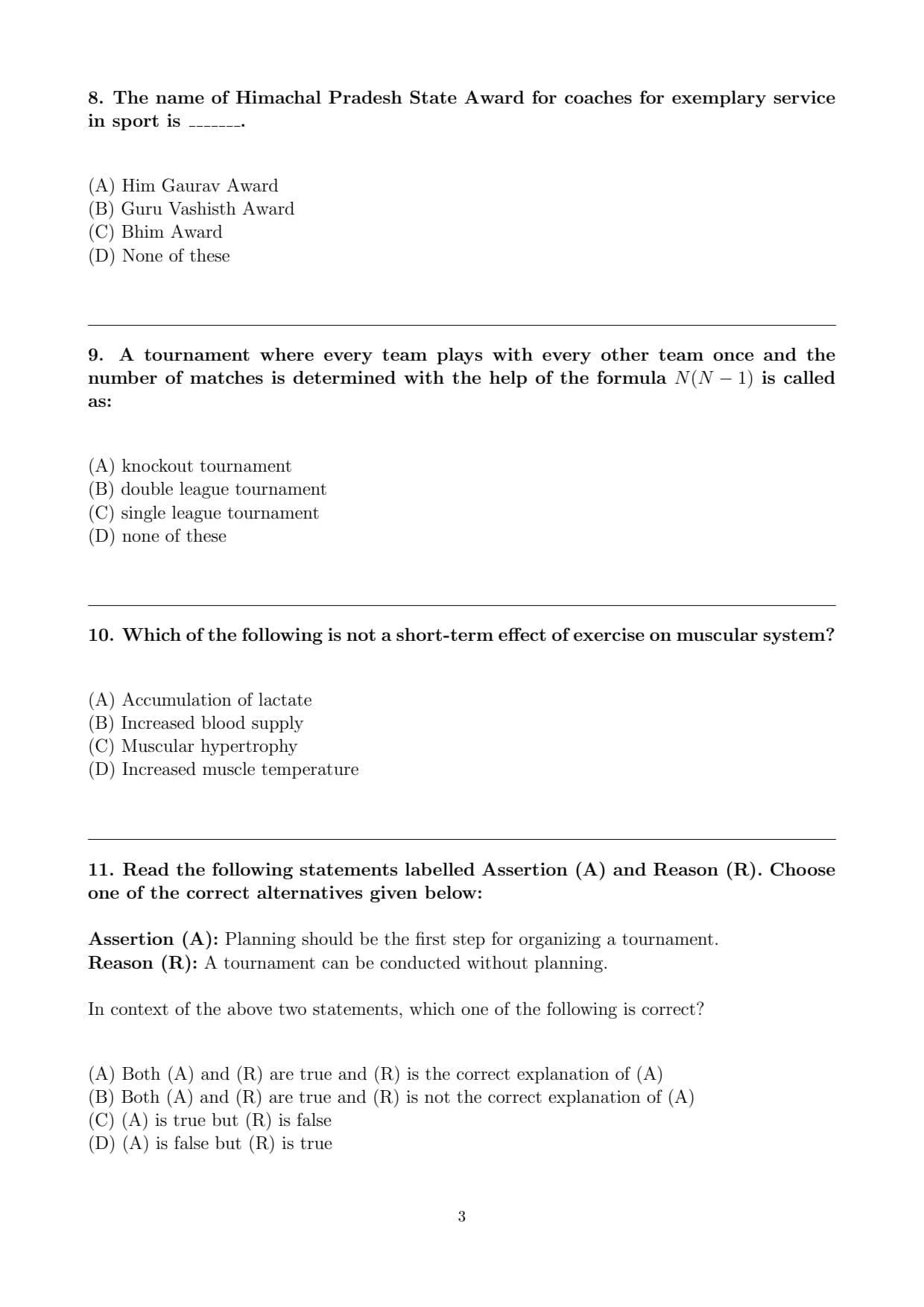
The name of Himachal Pradesh State Award for coaches for exemplary service in sport is _______.
View Solution
Step 1: Understanding the award.
The Himachal Pradesh State Award is presented to coaches in recognition of their exemplary service in the field of sports. The name of the award is the Guru Vashisth Award.
Step 2: Comparison with other options.
(A) Him Gaurav Award: Incorrect. The Him Gaurav Award is given for recognition in various fields but not specifically for sports coaches.
(B) Guru Vashisth Award: Correct. The Guru Vashisth Award is the official state award for coaches in Himachal Pradesh for exemplary service in sports.
(C) Bhim Award: Incorrect. The Bhim Award does not exist as a recognized award for coaches in Himachal Pradesh.
(D) None of these: Incorrect. Option (B) is the correct answer.
Step 3: Conclusion.
Therefore, the correct answer is (B) Guru Vashisth Award, which is the award given to coaches for exemplary service in sport in Himachal Pradesh.
Final Answer: Guru Vashisth Award. Quick Tip: The Guru Vashisth Award is the highest recognition for sports coaches in Himachal Pradesh. It highlights the state's commitment to honoring coaches for their contributions to sports development.
A tournament where every team plays with every other team once and the number of matches is determined with the help of the formula \(N(N-1)\) is called as:
View Solution
In a single league tournament, each team plays against every other team exactly once. The formula \(N(N-1)\) calculates the total number of matches, where \(N\) is the number of teams in the tournament.
Step 1: Analyzing each option.
(A) Knockout tournament: Incorrect. In a knockout tournament, each team plays only once and gets eliminated after losing a match.
(B) Double league tournament: Incorrect. A double league tournament involves teams playing against each other twice, but the formula provided is specific to a single league tournament.
(C) Single league tournament: Correct. In a single league tournament, every team plays each other once, and the formula \(N(N-1)\) calculates the total number of matches.
(D) None of these: Incorrect. The correct answer is (C).
Step 2: Conclusion.
Thus, the correct answer is (C), single league tournament.
Final Answer: Single league tournament. Quick Tip: In a single league tournament, every team plays each other once, and the formula \(N(N-1)\) calculates the total number of matches.
Which of the following is not a short-term effect of exercise on muscular system?
View Solution
Muscular hypertrophy, or the growth of muscle fibers, is a long-term effect of exercise, not a short-term one. Short-term effects include increased muscle temperature, lactate accumulation, and increased blood supply.
Step 1: Analyzing each option.
(A) Accumulation of lactate: Correct. Lactate builds up in muscles during intense exercise, which is a short-term effect.
(B) Increased blood supply: Correct. Exercise increases blood flow to muscles as a short-term effect to support activity.
(C) Muscular hypertrophy: Incorrect. Hypertrophy is a long-term effect that results from consistent training, not a short-term effect.
(D) Increased muscle temperature: Correct. Exercise causes an increase in muscle temperature, which is a short-term effect.
Step 2: Conclusion.
The correct answer is (C), muscular hypertrophy, as it is a long-term effect of exercise.
Final Answer: Muscular hypertrophy. Quick Tip: Short-term effects of exercise include increased blood supply, lactate accumulation, and muscle temperature, while hypertrophy is a long-term effect.
Read the following statements labelled Assertion (A) and Reason (R). Choose one of the correct alternatives given below:
Assertion (A): Planning should be the first step for organizing a tournament.
Reason (R): A tournament can be conducted without planning.
In context of the above two statements, which one of the following is correct?
View Solution
Assertion (A) is true because proper planning is essential for organizing a successful tournament. However, Reason (R) is false because conducting a tournament without proper planning would likely lead to poor execution.
Step 1: Analyzing the statements.
(A) Both (A) and (R) are true and (R) is the correct explanation of (A): Incorrect. While (A) is true, (R) is false, so it cannot explain (A).
(B) Both (A) and (R) are true and (R) is not the correct explanation of (A): Incorrect. While (A) is true, (R) is false.
(C) (A) is true but (R) is false: Correct. Planning is essential for organizing a tournament, and (R) is incorrect because it suggests a tournament can be organized without planning.
(D) (A) is false but (R) is true: Incorrect. (A) is true, and (R) is false.
Step 2: Conclusion.
Therefore, the correct answer is (C), as (A) is true and (R) is false.
Final Answer: (A) is true but (R) is false. Quick Tip: Proper planning is key to organizing a successful tournament, and attempting to do so without it is not advisable.
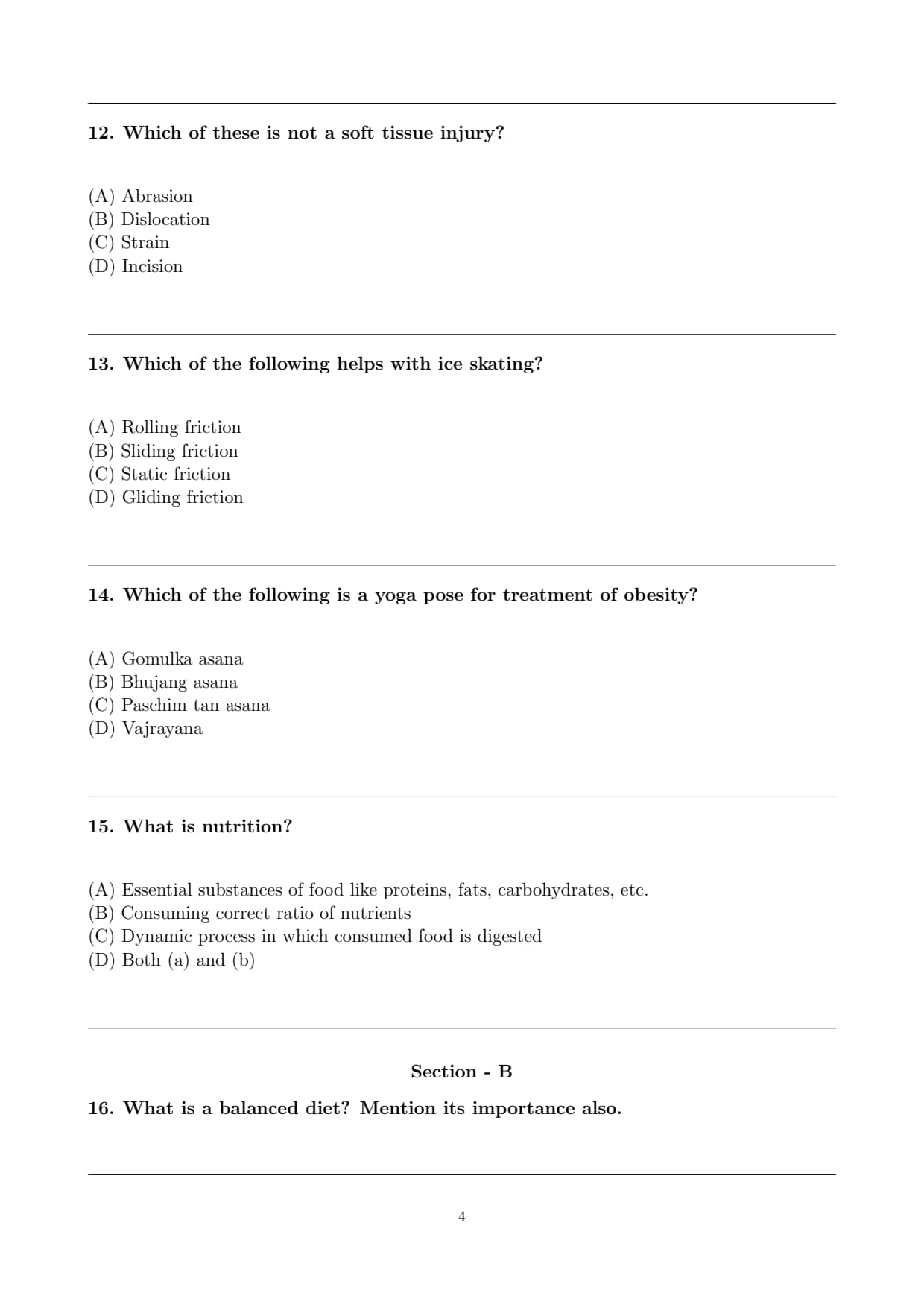
Which of these is not a soft tissue injury?
View Solution
Step 1: Understanding soft tissue injuries.
Soft tissue injuries affect muscles, ligaments, tendons, and other connective tissues. These injuries often result from overuse, trauma, or accidents.
Step 2: Analyzing the options.
(A) Abrasion: Incorrect. Abrasions are injuries to the skin's surface, making it a type of soft tissue injury.
(B) Dislocation: Correct. A dislocation refers to the displacement of a bone from its joint, which is a bone-related injury, not a soft tissue injury.
(C) Strain: Incorrect. A strain is a soft tissue injury where muscles or tendons are overstretched or torn.
(D) Incision: Incorrect. An incision is a type of cut or wound in the skin and is categorized as a soft tissue injury.
Step 3: Conclusion.
Therefore, (B) Dislocation is the correct answer as it is a joint injury, not a soft tissue injury.
Final Answer: Dislocation. Quick Tip: A dislocation is not a soft tissue injury but a joint injury involving bones. Always consider the affected tissue when identifying types of injuries.
Which of the following helps with ice skating?
View Solution
Step 1: Understanding friction.
Friction is the resistance to motion between two surfaces in contact. Different types of friction play various roles depending on the situation.
Step 2: Friction in ice skating.
In ice skating, sliding friction is the key frictional force at play. The smooth ice reduces friction, allowing the skater to glide easily across the surface. This minimal friction helps maintain speed and smooth motion.
Step 3: Comparison with other options.
(A) Rolling friction: Incorrect. Rolling friction occurs when an object rolls over a surface, such as with wheels. It is not the main force in ice skating.
(B) Sliding friction: Correct. Sliding friction is the friction between the ice and the skates, and it is the main force at work in ice skating.
(C) Static friction: Incorrect. Static friction is the force that prevents an object from starting to move, which does not directly relate to ice skating.
(D) Gliding friction: Incorrect. While "gliding" refers to smooth movement, the correct term for the friction involved in ice skating is sliding friction.
Step 4: Conclusion.
Therefore, the correct answer is (B) Sliding friction, as it is the force responsible for movement in ice skating.
Final Answer: Sliding friction. Quick Tip: In ice skating, the skater benefits from low sliding friction between the skates and the ice, which helps them glide effortlessly.
Which of the following is a yoga pose for treatment of obesity?
View Solution
Paschim tan asana is a yoga pose that is particularly beneficial for individuals dealing with obesity. It helps in stretching the abdominal area, improving digestion, and reducing fat.
Step 1: Analyzing each option.
(A) Gomulka asana: Incorrect. Gomulka asana is not specifically for treating obesity.
(B) Bhujang asana: Incorrect. Bhujang asana is beneficial for spinal flexibility but not primarily for obesity.
(C) Paschim tan asana: Correct. This asana helps in weight reduction and is effective in treating obesity.
(D) Vajrayana: Incorrect. Vajrayana is a meditation practice and not a specific yoga pose for obesity treatment.
Step 2: Conclusion.
Therefore, the correct answer is (C), Paschim tan asana.
Final Answer: Paschim tan asana. Quick Tip: Paschim tan asana is an effective yoga pose for reducing belly fat and improving overall digestion, which helps in obesity treatment.
What is nutrition?
View Solution
Step 1: Understanding nutrition.
Nutrition refers to the process by which organisms take in and utilize food. It involves consuming essential substances from food and utilizing them to maintain body functions.
Step 2: Analysis of options.
(A) Essential substances of food like proteins, fats, carbohydrates, etc.: Correct. Nutrition includes the intake of essential substances like proteins, fats, carbohydrates, vitamins, and minerals that the body needs.
(B) Consuming correct ratio of nutrients: Correct. A key aspect of nutrition is the proper balance of these essential nutrients to maintain health.
(C) Dynamic process in which consumed food is digested: Incorrect. While digestion is part of nutrition, the full process includes absorption and utilization of nutrients, not just digestion.
(D) Both (a) and (b): Correct. Nutrition involves both the intake of essential nutrients and the correct balance of those nutrients.
Step 3: Conclusion.
Therefore, the correct answer is (D), as nutrition involves both consuming essential substances from food and ensuring the correct ratio of nutrients.
Final Answer: Both (a) and (b). Quick Tip: For proper nutrition, focus on balancing macronutrients (proteins, fats, and carbohydrates) and micronutrients (vitamins and minerals) in the right proportions for optimal health.
What is a balanced diet? Mention its importance also.
View Solution
Step 1: Define Balanced Diet.
A balanced diet is one that provides all the essential nutrients (carbohydrates, proteins, fats, vitamins, minerals, and water) in the correct proportions to maintain health and well-being.
Step 2: Importance of Balanced Diet.
A balanced diet helps in maintaining a healthy weight, boosting the immune system, promoting energy levels, and preventing diseases such as obesity, heart disease, and diabetes. Quick Tip: A balanced diet is essential for overall health, ensuring the body receives all nutrients necessary for proper functioning.
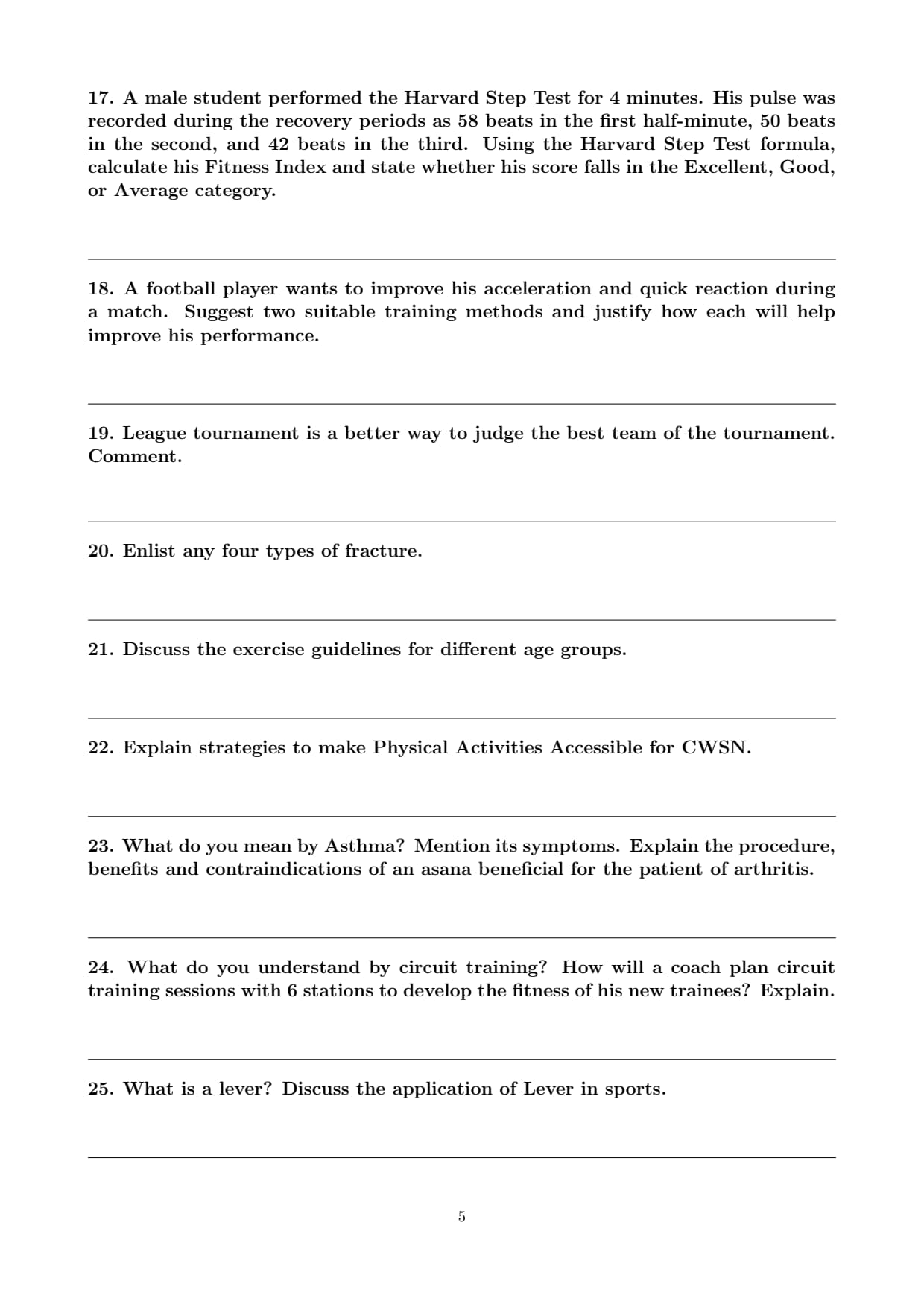
A male student performed the Harvard Step Test for 4 minutes. His pulse was recorded during the recovery periods as 58 beats in the first half-minute, 50 beats in the second, and 42 beats in the third. Using the Harvard Step Test formula, calculate his Fitness Index and state whether his score falls in the Excellent, Good, or Average category.
View Solution
Step 1: Harvard Step Test Formula.
The formula to calculate the Fitness Index (FI) is: \[ FI = \frac{100 \times duration of the test in seconds}{2.5 \times (sum of recovery pulse rates)} \]
Step 2: Data.
- Duration of the test = 4 minutes = 240 seconds
- Recovery pulse rates: 58, 50, and 42
Step 3: Calculate the Fitness Index.
Sum of recovery pulse rates = 58 + 50 + 42 = 150
\[ FI = \frac{100 \times 240}{2.5 \times 150} = \frac{24000}{375} = 64 \]
Step 4: Categorize the Fitness Index.
Based on the Harvard Step Test, a score of 64 falls in the Average category. Quick Tip: The Harvard Step Test is a simple method for assessing cardiovascular fitness based on pulse recovery after exercise.
A football player wants to improve his acceleration and quick reaction during a match. Suggest two suitable training methods and justify how each will help improve his performance.
View Solution
Step 1: Training Method 1 - Sprint Interval Training.
Sprint interval training involves performing short bursts of high-intensity sprints followed by rest periods. This method enhances acceleration by improving the player's ability to quickly reach maximum speed. Additionally, it strengthens fast-twitch muscle fibers, improving overall speed and reaction time during the match.
Step 2: Training Method 2 - Agility Drills.
Agility drills focus on enhancing quick movements, such as cone drills, ladder drills, and shuttle runs. These exercises improve the player's reaction time and ability to change direction quickly, which is essential for reacting rapidly to changes in the game during matches. Quick Tip: Sprinting and agility drills help improve both acceleration and quick reactions, which are essential for high-performance athletes.
League tournament is a better way to judge the best team of the tournament. Comment.
View Solution
Step 1: Advantages of League Tournaments.
A league tournament typically involves multiple matches where every team plays against others. This format ensures that the best team is judged based on consistent performance throughout the tournament rather than a single match outcome. A league setup reduces the chance of upsets, providing a more reliable way of identifying the top team.
Step 2: Fairer Judgement.
In knockout tournaments, a team can lose despite having a strong overall performance if they have a single bad match. League tournaments provide a fairer measure of a team’s quality, as each team’s overall strength is tested through repeated matches, giving them more chances to perform.
Step 3: Drawbacks of League Tournaments.
The main disadvantage of league tournaments is the length of the competition. They require more time and effort to complete, which might not be ideal for certain events or time-sensitive sports. Quick Tip: League tournaments offer a more accurate representation of the best team by testing consistency and performance over time.
Enlist any four types of fracture.
View Solution
There are several types of fractures that occur in bones due to various reasons, such as trauma, stress, or medical conditions. Four common types of fractures are:
Simple Fracture (Closed Fracture): In a simple fracture, the bone breaks but does not pierce through the skin, thus it remains closed.
Compound Fracture (Open Fracture): A compound fracture occurs when the bone breaks and punctures through the skin, increasing the risk of infection.
Greenstick Fracture: This type of fracture is common in children, where the bone bends and cracks on one side without completely breaking.
Comminuted Fracture: In this type, the bone is shattered into multiple pieces due to high-impact trauma.
Each type of fracture requires specific treatment depending on its severity and location in the body. Quick Tip: Fractures are categorized based on the type of break and whether the skin is pierced. Compound fractures require immediate medical attention to avoid infection.
Discuss the exercise guidelines for different age groups.
View Solution
Step 1: Introduction to Exercise Guidelines.
Exercise is essential for maintaining physical health, and different age groups have different physical needs and abilities. Therefore, exercise guidelines should be tailored to meet the specific needs of individuals at various stages of life.
Step 2: Exercise Guidelines for Children (5-12 Years).
For children, exercise should focus on fun activities that promote overall physical development. It is important for children to engage in physical activity for at least one hour a day, involving a mix of aerobic activities (such as running, swimming, or biking), strength-building exercises (like climbing or playing with resistance bands), and flexibility activities (such as stretching). These activities should be enjoyable and not overly structured.
Step 3: Exercise Guidelines for Teenagers (13-18 Years).
For teenagers, physical activity should support overall health, fitness, and growth. They should aim for at least 60 minutes of moderate to vigorous physical activity each day, including aerobic exercises (running, sports), muscle-strengthening activities (weight training, push-ups), and bone-strengthening exercises (jumping, running). It is also important for teenagers to focus on skill development and sports participation, as this can boost confidence and social interaction.
Step 4: Exercise Guidelines for Adults (19-64 Years).
Adults should engage in at least 150 minutes of moderate-intensity aerobic activity, or 75 minutes of vigorous-intensity activity, spread throughout the week. This should be combined with muscle-strengthening activities on two or more days per week. Adults should also include flexibility and balance exercises, particularly for older adults, to help with coordination and injury prevention.
Step 5: Exercise Guidelines for Older Adults (65+ Years).
For older adults, the focus is on maintaining functional independence and preventing falls. The exercise regimen should include aerobic activity, such as walking, at least 150 minutes per week, along with balance exercises (e.g., tai chi or yoga). Strength training exercises should be done twice a week to maintain muscle mass and joint function. Flexibility exercises are also recommended to maintain mobility. Quick Tip: Exercise needs change with age. It is important to tailor the intensity and type of activity to ensure safety and maximize benefits for each age group.
Explain strategies to make Physical Activities Accessible for CWSN.
View Solution
Step 1: Introduction to CWSN.
Children with Special Needs (CWSN) require tailored approaches to physical activity that consider their unique physical, mental, and emotional challenges. Ensuring accessibility to physical activities for CWSN is vital for their physical, social, and cognitive development. It also promotes inclusivity, confidence, and overall well-being.
Step 2: Providing Specialized Equipment.
One of the key strategies to make physical activities accessible is by providing specialized equipment that accommodates the needs of children with disabilities. This could include adaptive sports wheelchairs, hand cycles, or sensory-friendly equipment. These tools allow CWSN to participate in physical activities safely and comfortably.
Step 3: Designing Inclusive Physical Activity Spaces.
Physical spaces should be designed to be inclusive, with ramps, wider doorways, and accessible bathrooms. Sports fields, gyms, and playgrounds should be equipped to accommodate mobility aids and other assistive devices. Clear signage and easy access are important for children with vision or hearing impairments.
Step 4: Individualized Exercise Plans.
Creating individualized exercise plans is crucial for CWSN. These plans should be customized according to the child’s abilities, preferences, and needs. For example, children with physical disabilities may require exercises to improve their strength or mobility, while children with sensory impairments might benefit from activities that focus on improving coordination and balance.
Step 5: Educating and Training Instructors.
It is essential to train physical education teachers, coaches, and other instructors in understanding the challenges faced by CWSN. By equipping them with the necessary knowledge and skills, they can better support the participation of CWSN in physical activities. This includes using positive reinforcement, ensuring safety, and adapting activities to the abilities of each child.
Step 6: Promoting Social Integration.
Encouraging social interaction and collaboration between CWSN and their peers in physical activities can significantly enhance their experience. Activities that include both disabled and non-disabled children help promote inclusion and understanding. Social integration fosters empathy and reduces stigma, enabling all children to thrive together. Quick Tip: Accessibility in physical activities for CWSN requires thoughtful planning, specialized equipment, and a commitment to inclusion. Providing individualized support helps ensure that every child has the opportunity to benefit from physical activity.
What do you mean by Asthma? Mention its symptoms. Explain the procedure, benefits and contraindications of an asana beneficial for the patient of arthritis.
View Solution
Step 1: Define Asthma.
Asthma is a chronic respiratory condition characterized by inflammation and narrowing of the airways, making breathing difficult. It is often triggered by allergens, physical activity, or respiratory infections.
Step 2: Symptoms of Asthma.
Common symptoms of asthma include:
1. Shortness of breath
2. Wheezing
3. Persistent coughing
4. Chest tightness, especially during or after physical activity
Step 3: Beneficial Asana for Arthritis Patients.
One beneficial asana for arthritis patients is the Tadasana (Mountain Pose).
Step 4: Procedure of Tadasana.
1. Stand straight with feet together, heels slightly apart.
2. Stretch your arms overhead with palms facing inward.
3. Keep your body straight and stand tall while breathing deeply and evenly.
Step 5: Benefits of Tadasana for Arthritis Patients.
- Improves posture and alignment
- Increases flexibility and strength
- Enhances blood circulation and reduces joint stiffness
- Helps in calming the nervous system
Step 6: Contraindications of Tadasana.
- Should be avoided by those with severe back pain or injuries
- Caution is needed for people with high blood pressure or heart problems Quick Tip: Practicing yoga asanas like Tadasana can help improve flexibility and reduce pain for arthritis patients, but care should be taken regarding contraindications.
What do you understand by circuit training? How will a coach plan circuit training sessions with 6 stations to develop the fitness of his new trainees? Explain.
View Solution
Step 1: Definition of Circuit Training.
Circuit training is a form of exercise that involves a series of exercise stations where an individual performs a specific exercise for a set period of time or a number of repetitions. Each station targets a different muscle group or fitness component (e.g., strength, endurance, flexibility). It is a time-efficient and effective way to improve overall fitness and can be tailored to an individual's fitness level.
Step 2: Planning Circuit Training Sessions with 6 Stations.
A coach planning circuit training sessions with 6 stations will design exercises that target various aspects of fitness, such as strength, aerobic endurance, balance, and flexibility. The stations will involve different exercises to engage multiple muscle groups, ensuring a balanced workout. Here's an example plan for a 6-station circuit:
Station 1: Push-ups (Strength) - This exercise targets the chest, shoulders, and triceps. Trainees will perform as many push-ups as possible in 45 seconds.
Station 2: Jumping Jacks (Cardio) - A full-body movement that increases heart rate, improving cardiovascular fitness.
Station 3: Squats (Leg Strength) - This exercise strengthens the lower body, particularly the quadriceps, hamstrings, and glutes.
Station 4: Plank (Core Strength) - Targets the abdominal and lower back muscles, helping to improve core stability.
Station 5: Mountain Climbers (Cardio + Strength) - Engages the core, legs, and arms while boosting cardiovascular fitness.
Station 6: Stretching (Flexibility) - A set of stretches to improve flexibility and reduce the risk of injury.
Step 3: Structure of the Session.
Each station will last for about 45-60 seconds, with a 15-30 second rest period between stations. The trainees will rotate through the 6 stations, completing the circuit 2-3 times. The coach will monitor the trainees' form, provide feedback, and encourage them to work at their own pace.
Step 4: Progression.
As the trainees' fitness levels improve, the coach can adjust the intensity by increasing the duration of each station, decreasing rest time, or adding more challenging exercises. This will help to keep the training sessions challenging and effective. Quick Tip: Circuit training is highly effective for improving overall fitness. It combines strength, endurance, and flexibility in one session, making it suitable for trainees of all levels.
What is a lever? Discuss the application of Lever in sports.
View Solution
Step 1: Definition of a Lever.
A lever is a simple machine that consists of a rigid bar (or beam) that pivots around a fixed point known as the fulcrum. It is used to amplify force, allowing a small input force to lift or move a larger load. The lever operates based on the principle of mechanical advantage, which involves the relationship between the input force, the load, and the distance from the fulcrum.
There are three types of levers:
First-Class Lever: The fulcrum is between the effort and the load (e.g., a seesaw).
Second-Class Lever: The load is between the effort and the fulcrum (e.g., a wheelbarrow).
Third-Class Lever: The effort is between the load and the fulcrum (e.g., a baseball bat).
Step 2: Application of Levers in Sports.
Levers play a crucial role in many sports, as they help athletes generate force, increase speed, or leverage their body mechanics to perform specific movements. Here are some examples of how levers are applied in sports:
Baseball Bat: In baseball, the bat acts as a third-class lever. The hands are the fulcrum, the batter’s swing is the effort, and the ball is the load. By using the lever system, the batter can generate a large amount of force to hit the ball.
Gymnastics Rings: In gymnastics, the athlete uses their arms as levers to lift their body and perform various movements. The shoulder acts as the fulcrum, the effort is applied through the arms, and the load is the body weight.
Rowing: In rowing, the oar functions as a lever. The fulcrum is the point where the oar fits in the boat, the effort is applied by the rower’s hands, and the load is the water resistance, which moves the boat forward.
Football Kick: In kicking a football, the leg acts as a lever with the knee joint acting as the fulcrum. The effort is applied by the foot, and the load is the football, which is propelled through the air.
Step 3: Conclusion.
Levers in sports help athletes maximize force, speed, and efficiency, making them an essential tool in many athletic movements and techniques. Understanding the mechanics of levers allows athletes to improve performance and reduce the risk of injury. Quick Tip: Levers are essential in sports as they help amplify force, allowing athletes to perform powerful movements with less effort.
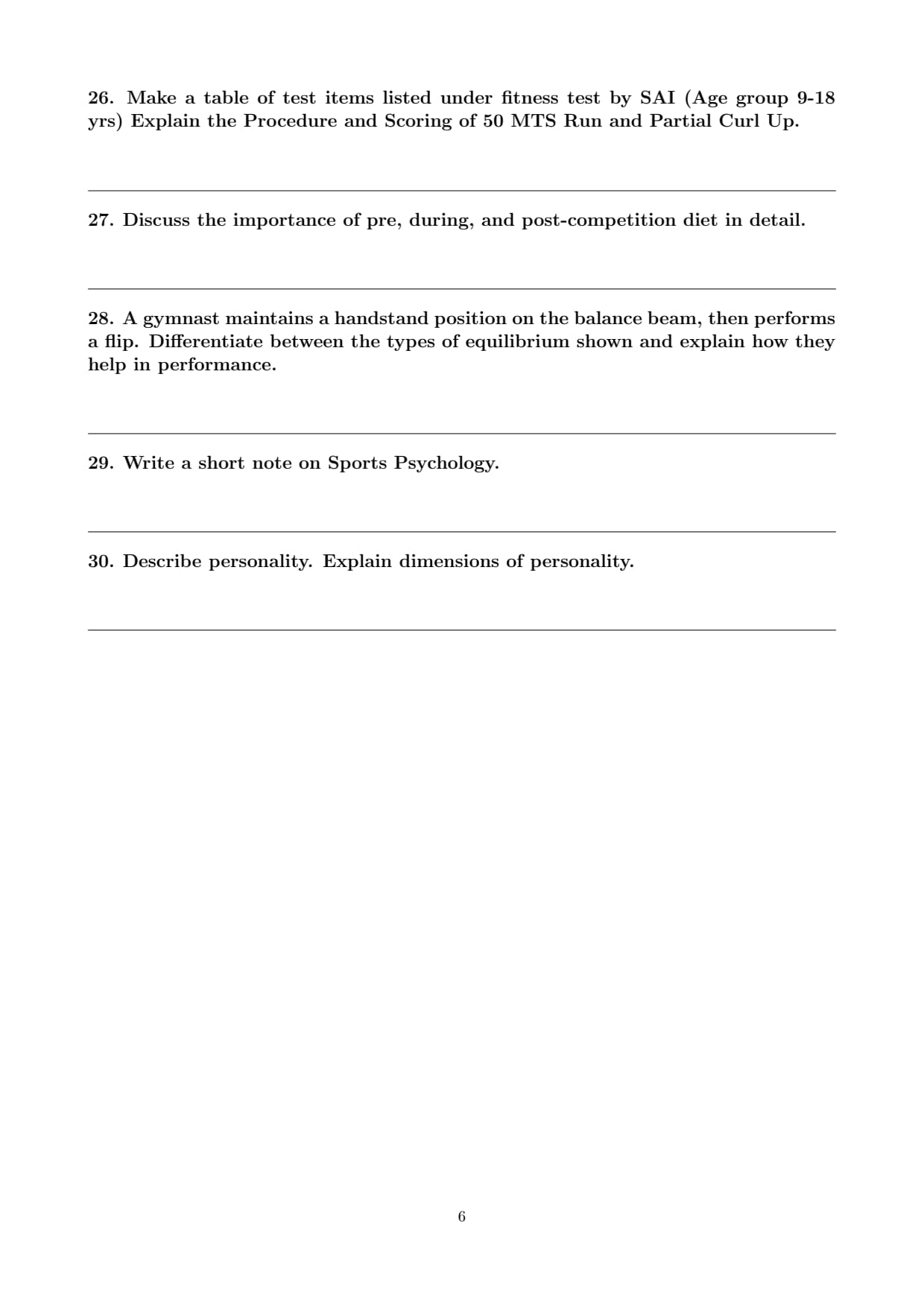
Make a table of test items listed under fitness test by SAI (Age group 9-18 yrs) Explain the Procedure and Scoring of 50 MTS Run and Partial Curl Up.
View Solution
Step 1: Table of Fitness Test Items by SAI (Age Group 9-18 Years).
\begin{table[ht]
\centering
\begin{tabular{|c|c|
\hline
Test Item & Description
\hline
50 MTS Run & Measures speed and endurance
\hline
Partial Curl Up & Tests abdominal strength and endurance
\hline
Shuttle Run & Measures agility and speed
\hline
Standing Broad Jump & Measures explosive leg strength
\hline
Push Up Test & Tests upper body strength
\hline
Sit and Reach & Measures flexibility
\hline
\end{tabular
\end{table
Step 2: Procedure and Scoring for 50 MTS Run.
Procedure:
1. The athlete should start from a standing position.
2. On the signal, they will sprint for 50 meters as fast as possible.
3. The time taken to complete the 50 meters will be recorded.
Scoring:
The score is the time taken in seconds. The lower the time, the better the performance.
Step 3: Procedure and Scoring for Partial Curl Up.
Procedure:
1. The athlete lies on their back with knees bent at 90 degrees and feet flat on the ground.
2. Arms should be positioned across the chest or extended forward.
3. The athlete performs a partial curl-up by lifting the upper body to about 30 degrees.
Scoring:
The score is the total number of partial curl-ups completed in 60 seconds. Quick Tip: These fitness tests assess different aspects of fitness like speed, strength, and flexibility. Training and practice can improve performance in each test.
Discuss the importance of pre, during, and post-competition diet in detail.
View Solution
Step 1: Pre-Competition Diet.
The pre-competition diet is essential for preparing the body for the physical demands of the competition. A balanced meal 3-4 hours before the event should include carbohydrates for energy, moderate protein for muscle repair, and minimal fats to avoid sluggishness. Hydration is also crucial during this time to maintain optimal fluid balance.
Step 2: During Competition Diet.
During the competition, maintaining hydration and energy levels is vital. Light snacks like energy bars or fruits can help replenish glycogen stores. It is important to avoid heavy meals, which can lead to discomfort or sluggishness. Electrolyte drinks can help replace lost salts due to sweating.
Step 3: Post-Competition Diet.
The post-competition meal is crucial for recovery. A good post-competition diet should contain a combination of carbohydrates to replenish glycogen stores and protein to aid in muscle recovery. Additionally, rehydrating with water or sports drinks helps to restore lost fluids and prevent dehydration. Quick Tip: A balanced diet before, during, and after the competition ensures optimal performance and recovery, helping athletes maintain energy and prevent fatigue.
A gymnast maintains a handstand position on the balance beam, then performs a flip. Differentiate between the types of equilibrium shown and explain how they help in performance.
View Solution
Step 1: Types of Equilibrium.
There are three types of equilibrium:
1. Stable Equilibrium: When an object is displaced and then returns to its original position, it is in stable equilibrium. This helps the gymnast maintain control during balancing tasks like the handstand.
2. Unstable Equilibrium: When an object is displaced and moves away from its original position, it is in unstable equilibrium. A gymnast might briefly experience this type of equilibrium during dynamic movements like flips, where control needs to be regained.
3. Neutral Equilibrium: When an object is displaced and does not return or move further away but remains in the new position, it is in neutral equilibrium. A gymnast may momentarily achieve neutral equilibrium while in mid-air during the flip.
Step 2: Role of Equilibrium in Performance.
- Stable Equilibrium: Ensures balance and stability while performing static moves like handstands, helping the gymnast maintain their position on the beam.
- Unstable Equilibrium: During flips or dynamic movements, the gymnast uses strength and skill to control the movement and transition back into stable equilibrium.
- Neutral Equilibrium: Helps during aerial flips, as the gymnast is able to adjust mid-air and land with control. Quick Tip: Understanding and controlling different types of equilibrium help gymnasts perform complex moves with stability and precision, enhancing their overall performance.
Write a short note on Sports Psychology.
View Solution
Step 1: Definition of Sports Psychology.
Sports psychology is the study of mental factors that affect performance in sports, exercise, and physical activity. It focuses on how psychological elements like motivation, stress, concentration, and emotions impact an athlete's ability to perform and cope with challenges.
Step 2: Key Areas of Sports Psychology.
Some key areas of sports psychology include:
Motivation: Understanding what drives athletes to perform at their best and maintaining a high level of motivation during training and competition.
Focus and Concentration: Teaching athletes how to stay focused and block out distractions during critical moments of competition.
Stress and Anxiety Management: Helping athletes manage the pressure of competition and prevent anxiety from hindering their performance.
Team Dynamics: Understanding how communication and collaboration between team members influence collective performance.
Step 3: Application of Sports Psychology.
Sports psychologists work with athletes, coaches, and teams to develop strategies for improving mental skills. Techniques such as visualization, goal-setting, relaxation exercises, and cognitive restructuring are often used to help athletes perform better under pressure and recover from setbacks.
Step 4: Conclusion.
Sports psychology is a vital part of an athlete's training regimen as it enhances mental resilience, optimizes performance, and improves overall well-being, helping athletes reach their full potential. Quick Tip: Sports psychology helps athletes develop the mental skills necessary to succeed, stay focused, and handle the pressures of competition.
Describe personality. Explain dimensions of personality.

View Solution
Step 1: Definition of Personality.
Personality refers to the unique set of characteristics, traits, and patterns of thought, emotion, and behavior that make up an individual's distinctive character. It is the combination of an individual's internal and external qualities that influence their responses to different situations. Personality encompasses a range of attributes, including emotional, social, and psychological aspects, and determines how a person interacts with others and the world around them.
Step 2: Importance of Personality.
Personality plays a crucial role in how individuals perceive themselves and interact with others. It affects the way people make decisions, approach challenges, and express their emotions. Understanding one's personality can help in personal growth, improving relationships, and enhancing professional development.
Step 3: Dimensions of Personality.
There are various ways to understand and categorize the dimensions of personality. One common approach is the Big Five Personality Traits model, which includes five broad dimensions:
Openness to Experience: This dimension reflects an individual's willingness to engage in novel experiences, creativity, and intellectual curiosity. People high in openness tend to be imaginative, curious, and open-minded.
Conscientiousness: Conscientious individuals are typically organized, responsible, and detail-oriented. They tend to be self-disciplined, goal-oriented, and strive for achievement and success.
Extraversion: Extraverts are sociable, energetic, and enjoy being around people. They are outgoing, assertive, and often seek stimulation in the external environment. In contrast, introverts tend to be more reserved and enjoy solitary activities.
Agreeableness: This dimension involves the degree to which an individual is cooperative, empathetic, and compassionate. People high in agreeableness are often friendly, considerate, and trustworthy, whereas those low in agreeableness may be more competitive or antagonistic.
Neuroticism: Neuroticism refers to an individual's emotional stability and tendency to experience negative emotions such as anxiety, anger, and sadness. People with high neuroticism may be more prone to stress and emotional instability.
Step 4: Additional Personality Dimensions.
In addition to the Big Five, other models of personality emphasize different traits. For example, Carl Jung's theory of personality includes dimensions such as introversion vs. extraversion, and thinking vs. feeling. Other models, like those based on the Myers-Briggs Type Indicator (MBTI), categorize people based on 16 personality types based on combinations of preferences.
Step 5: Conclusion.
In conclusion, personality is a complex, multi-dimensional concept that is shaped by both genetic and environmental factors. Understanding the various dimensions of personality helps in improving self-awareness and interpersonal relationships, as well as aiding in personal and professional development. Quick Tip: Personality dimensions such as openness, conscientiousness, extraversion, agreeableness, and neuroticism play a significant role in shaping how individuals behave and interact with others.


Comments