The Himachal Pradesh Board of School Education (HPBOSE) successfully conducted the Class 12 Agriculture (NSQF) Exam on March 30, 2026. HP Board Class 12 2026 Agriculture (NSQF) Question Paper with Solution PDF is now available for download.
The HP Board Class 12 Agriculture (NSQF) paper covers important topics from crop production, soil science, agricultural practices, plant protection, and agricultural economics. Students should focus on understanding concepts, practical applications, and learning modern farming techniques. The exam is typically marked out of 100 marks, with 70 marks for the theory paper and 30 marks for practical/internal assessment.
HP Board Class 12 2026 Agriculture (NSQF) Question Paper with Solution PDF
| HP Board Class 12 Agriculture (NSQF) Question Paper 2026 | Download PDF | Check Solution |


_____ belongs to the family Rosaceae.
View Solution
\textcolor{red{Step 1: Identifying the flower family.
The family Rosaceae is known for containing a wide range of ornamental, fragrant, and sometimes edible flowers. It includes flowers like roses, which are commonly cultivated.
\textcolor{red{Step 2: Analyzing each option.
(A) Rose: Correct. Rose belongs to the Rosaceae family, and it is one of the most famous flowers from this family.
(B) Jasmine: Incorrect. Jasmine belongs to the Oleaceae family, not the Rosaceae family.
(C) Sunflower: Incorrect. Sunflower belongs to the Asteraceae family, not the Rosaceae family.
(D) Daisy: Incorrect. Daisy belongs to the Asteraceae family, which is different from Rosaceae.
\textcolor{red{Step 3: Conclusion.
Based on the botanical classification, Rose is the correct answer as it belongs to the Rosaceae family.
\textcolor{red{ Final Answer: Rose. Quick Tip: Remember that the Rosaceae family includes roses and other similar plants such as apple, strawberry, and cherry.
What is the scientific name of Jasmine?
View Solution
\textcolor{red{Step 1: Understanding Jasmine.
Jasmine is a genus of shrubs and vines in the family Oleaceae, native to tropical and warm temperate regions of the world. The most common species known as Jasmine is Jasminum officinale, a fragrant flowering plant. It is widely known for its white, fragrant flowers, and is cultivated in many parts of the world.
\textcolor{red{Step 2: Scientific name.
The scientific name for Jasmine is \textit{Jasminum officinale. This name is used in the scientific community to precisely identify the plant species, and it is universally accepted across the globe.
\textcolor{red{Step 3: Comparison with other options.
(A) Rose Indica: Incorrect. \textit{Rose Indica refers to a type of rose, specifically the Indian rose, and not the Jasmine plant.
(B) Tagetes erecta: Incorrect. \textit{Tagetes erecta is the scientific name for the Marigold plant, commonly grown as an ornamental flower. It is unrelated to Jasmine.
(C) Jasminum officinale: Correct. This is the correct scientific name for Jasmine, a species well-known for its fragrant white flowers and medicinal properties.
(D) None: Incorrect. \textit{Jasminum officinale is the correct scientific name of Jasmine, so this option is not valid.
\textcolor{red{Step 4: Conclusion.
Therefore, the correct scientific name of Jasmine is \textit{Jasminum officinale, which is widely recognized in the botanical community.
\textcolor{red{ Final Answer: Jasminum officinale. Quick Tip: The scientific name for Jasmine is \textit{Jasminum officinale. When identifying plants by their scientific names, it's important to know the correct genus and species, as many plants share similar common names.
______ are the plants who complete their life cycles within the year.
View Solution
\textcolor{red{Step 1: Identifying the plant types.
Annual plants are those that complete their life cycle within one year. They typically germinate, flower, and die in a single growing season.
\textcolor{red{Step 2: Analyzing each option.
(A) Annvals: Correct. Annuals are plants that complete their life cycle in one year.
(B) Biennials: Incorrect. Biennials complete their life cycle in two years, not one.
(C) Perennial: Incorrect. Perennials live for more than two years and often flower repeatedly.
(D) Weeds: Incorrect. Weeds can be annual, biennial, or perennial, and are not defined by their life cycle alone.
\textcolor{red{Step 3: Conclusion.
Based on the plant's life cycle duration, the correct answer is Annuals, as they complete their life cycle within one year.
\textcolor{red{ Final Answer: Annvals. Quick Tip: Annuals complete their entire life cycle in a single growing season. Biennials take two years, and perennials live for several years, flowering each season.
To increase vase life of flowers, we follow ______ methods.
View Solution
\textcolor{red{Step 1: Methods to increase vase life of flowers.
To increase the vase life of flowers, different methods are used to reduce water loss, prevent wilting, and enhance overall freshness.
\textcolor{red{Step 2: Analyzing each option.
(A) Hardening: Correct. Hardening is a method where plants are acclimatized to the surrounding environment to extend their vase life.
(B) Pulsing: Correct. Pulsing involves treating flowers with specific solutions to prolong their shelf life.
(C) Conditioning: Correct. Conditioning is the process of preparing flowers by cutting stems and placing them in water to improve longevity.
(D) All above: Correct. All of the mentioned methods (hardening, pulsing, conditioning) help in increasing the vase life of flowers.
\textcolor{red{Step 3: Conclusion.
All the methods mentioned are effective in increasing the vase life of flowers.
\textcolor{red{ Final Answer: All above. Quick Tip: For extending the vase life of flowers, use methods such as hardening, pulsing, and conditioning.
To improve personality, one should have ______ qualities.
View Solution
\textcolor{red{Step 1: Importance of personality traits.
To improve personality, qualities like confidence and patience are important. Anger is generally not a desirable trait in improving one's personality.
\textcolor{red{Step 2: Analyzing each option.
(A) Anger: Incorrect. Anger is not a quality that improves personality.
(B) Confidence: Correct. Confidence is essential in improving personality as it helps in handling different situations with poise.
(C) Patience: Correct. Patience is another key quality that helps in maintaining composure and improving overall personality.
(D) b & c both: Correct. Both confidence and patience are essential qualities to improve personality.
\textcolor{red{Step 3: Conclusion.
Thus, the correct answer is both confidence and patience, as these are key qualities in personality development.
\textcolor{red{ Final Answer: b & c both. Quick Tip: Confidence and patience are fundamental for personality development, whereas anger generally has a negative impact on one's character.
_____ are the jobs that contribute to preserve or restore the environment.
View Solution
\textcolor{red{Step 1: Identifying environmental jobs.
Green jobs are those that contribute to protecting or restoring the environment, such as renewable energy jobs, waste management, and environmental protection.
\textcolor{red{Step 2: Analyzing each option.
(A) Green skills: Incorrect. Green skills refer to the competencies required for green jobs, not the jobs themselves.
(B) Green Jobs: Correct. Green jobs directly contribute to environmental sustainability by working in areas such as renewable energy, conservation, and pollution control.
(C) Communication Skills: Incorrect. Communication skills are essential for various careers, but they do not specifically relate to environmental sustainability.
(D) None: Incorrect. Green jobs are the correct answer.
\textcolor{red{Step 3: Conclusion.
Green jobs are essential for preserving and restoring the environment, making option (B) the correct answer.
\textcolor{red{ Final Answer: Green Jobs. Quick Tip: Green jobs play a critical role in combating climate change and promoting sustainability. These jobs are found in industries like renewable energy, waste management, and environmental conservation.
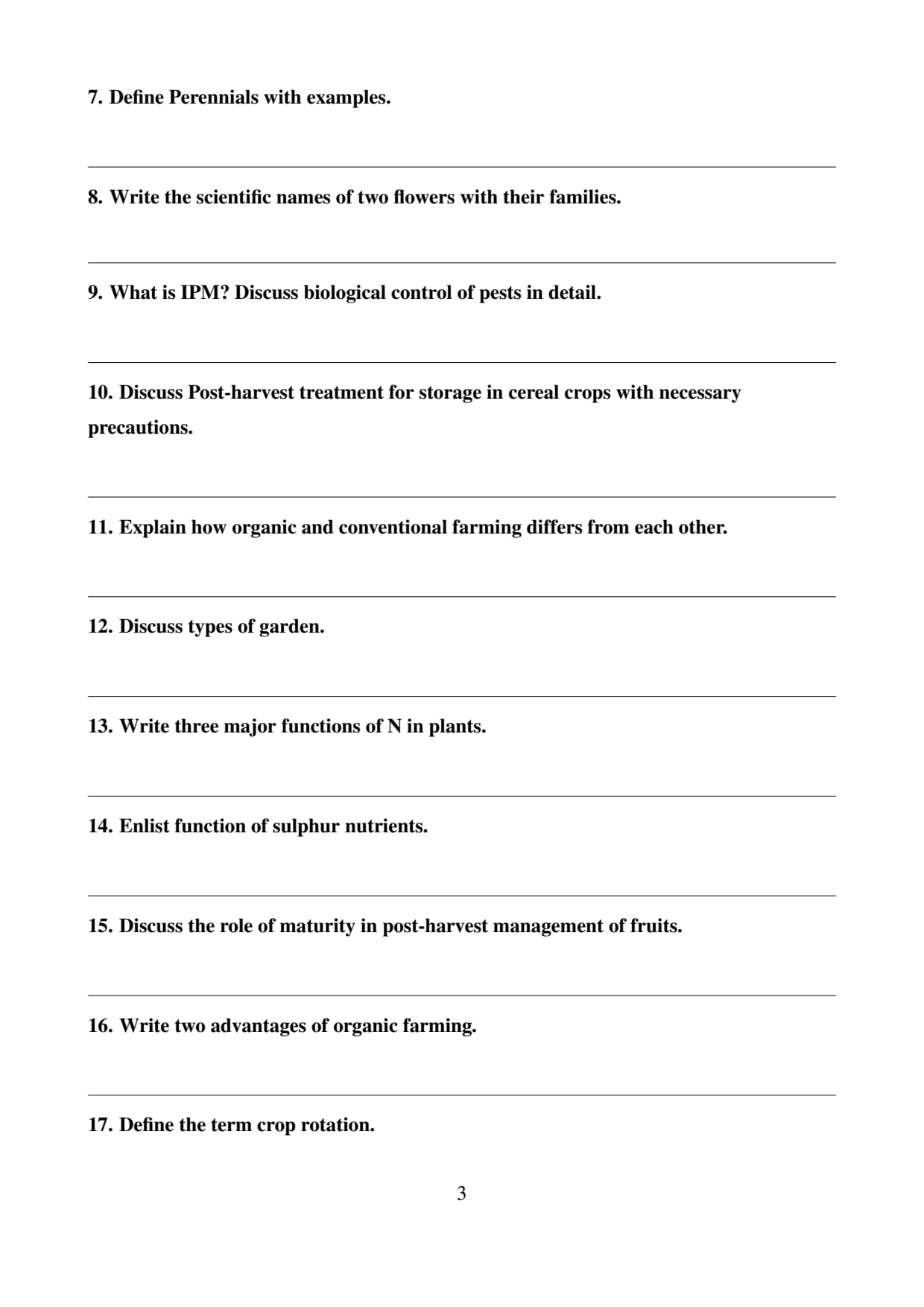
Define Perennials with examples.
View Solution
\textcolor{red{Step 1: Define Perennials.
Perennials are plants that live for more than two years. These plants bloom and produce seeds multiple times in their lifetime. They have the ability to survive through different seasons, often by going dormant in winter and regrowing in the spring.
\textcolor{red{Step 2: Identify the key characteristics of Perennials.
The key feature of perennials is that they do not need to be replanted every year. They can survive through harsh conditions by regrowing from their root systems.
\textcolor{red{Step 3: Provide examples of Perennials.
Examples of perennials include:
- Roses (Rosa spp.)
- Tulips (Tulipa spp.)
- Lavender (Lavandula spp.)
- Bamboo (Bambusoideae)
Quick Tip: Remember: Perennials live for more than two years, often blooming year after year, making them a long-lasting option for gardens.
Write the scientific names of two flowers with their families.
View Solution
\textcolor{red{Step 1: Understanding the question.
The question asks for the scientific names of two flowers, along with their respective families. In botanical nomenclature, every plant has a binomial name consisting of a genus and species. Additionally, each plant belongs to a family, which is a higher taxonomic rank that groups together plants with shared characteristics.
\textcolor{red{Step 2: Provide the scientific names and families of two flowers.
Here are the scientific names and families of two common flowers:
- Marigold (\textit{Tagetes erecta) - Family: \textit{Asteraceae
- The marigold is a popular flowering plant known for its vibrant yellow and orange blooms. It belongs to the family \textit{Asteraceae, also known as the daisy family, which includes many other ornamental and medicinal plants.
- Rose (\textit{Rosa indica) - Family: \textit{Rosaceae
- Roses are well-known flowers with a wide range of colors and forms. \textit{Rosa indica, the Indian rose, is a member of the family \textit{Rosaceae, which includes other fruits like apples, strawberries, and cherries.
\textcolor{red{Step 3: Explanation of the families.
- \textit{Asteraceae: The Asteraceae family is one of the largest plant families and includes a wide variety of flowering plants, including daisies, sunflowers, and chrysanthemums. Members of this family typically have a characteristic composite flower structure with many smaller florets grouped together into a single head.
- \textit{Rosaceae: The Rosaceae family is also large and includes not only ornamental flowers like roses but also fruit-bearing plants like apples, cherries, and raspberries. These plants often have fragrant flowers and are known for their economic importance in both ornamental gardening and agriculture.
\textcolor{red{Step 4: Conclusion.
By providing the scientific names and families, we have identified two important flowers and their respective families. Understanding plant families helps in categorizing plants based on shared characteristics and evolutionary relationships. Quick Tip: Remember: The scientific names of flowers are always written in Latin and italicized, with the genus name capitalized and the species name lowercase. The family name is written in italics but with the first letter capitalized.
What is IPM? Discuss biological control of pests in detail.
View Solution
\textcolor{red{Step 1: Define IPM.
IPM stands for Integrated Pest Management. It is an environmentally responsible approach to controlling pests by combining biological, physical, cultural, and chemical tools in a way that minimizes risks to people, beneficial organisms, and the environment.
\textcolor{red{Step 2: Discuss Biological Control.
Biological control is a component of IPM that involves the use of natural enemies to control pest populations. These natural enemies can be predators, parasites, or pathogens that target specific pests.
\textcolor{red{Step 3: Identify the agents used in biological control.
Some common biological control agents include:
1. \textit{Predators: Organisms that hunt and kill pest species (e.g., ladybugs controlling aphids).
2. \textit{Parasitoids: Organisms that lay their eggs inside or on the body of the host pest, killing it as the larvae develop.
3. \textit{Pathogens: Microorganisms like bacteria, fungi, or viruses that cause diseases in pest species.
\textcolor{red{Step 4: Explain the benefits of biological control.
Biological control is beneficial because it is specific to the target pest, does not harm the environment, and reduces the reliance on chemical pesticides, which can have negative side effects on human health and non-target organisms.
\textcolor{red{Step 5: Provide examples of biological control methods.
Examples include the release of natural predators like ladybugs to control aphids or the use of Bacillus thuringiensis (Bt), a bacterium, to control caterpillar pests. Quick Tip: Biological control is an effective, eco-friendly method of pest management that works by harnessing natural enemies of pests.
Discuss Post-harvest treatment for storage in cereal crops with necessary precautions.
View Solution
\textcolor{red{Step 1: Define Post-harvest Treatment.
Post-harvest treatment refers to the series of actions taken after crops are harvested, aimed at preserving their quality and ensuring long-term storage without spoilage.
\textcolor{red{Step 2: Cleaning and Drying.
After harvest, cereal crops are cleaned to remove dirt, debris, and damaged grains. Drying is then done to reduce moisture content, as moisture promotes microbial growth and spoilage.
\textcolor{red{Step 3: Proper Storage Conditions.
Cereal crops must be stored in well-ventilated, cool, and dry conditions to prevent mold growth. Temperature control is essential to avoid pest infestations and maintain the quality of the grain.
\textcolor{red{Step 4: Use of Storage Containers.
Storage containers should be clean and airtight to keep out pests and moisture. Metal or plastic containers are commonly used for their durability and protection.
\textcolor{red{Step 5: Pest Control and Regular Inspection.
Pests such as rodents and insects can damage stored cereals. Regular inspections and the use of non-toxic pesticides help prevent pest damage. Quick Tip: Proper post-harvest treatment is crucial for extending the shelf life of cereal crops. Clean, dry, and store in optimal conditions to maintain quality.
Explain how organic and conventional farming differs from each other.
View Solution
\textcolor{red{Step 1: Define Organic Farming.
Organic farming is a method of farming that relies on natural processes and materials. It avoids the use of synthetic chemicals like pesticides and fertilizers, focusing on soil health, crop rotation, and composting.
\textcolor{red{Step 2: Define Conventional Farming.
Conventional farming uses modern agricultural techniques, including the use of synthetic fertilizers, pesticides, herbicides, and genetically modified organisms (GMOs) to maximize crop yield.
\textcolor{red{Step 3: Key Differences.
- Chemicals: Organic farming avoids synthetic chemicals, while conventional farming uses them to enhance crop production.
- Soil Health: Organic farming focuses on soil enrichment using natural methods like composting, whereas conventional farming often depletes the soil due to the extensive use of chemical fertilizers.
- Pest Control: Organic farming relies on natural pest control methods, while conventional farming uses chemical pesticides.
\textcolor{red{Step 4: Benefits of Organic Farming.
Organic farming promotes biodiversity, improves soil health, and reduces the environmental impact of farming. It also eliminates the risks associated with chemical residues in food.
\textcolor{red{Step 5: Benefits of Conventional Farming.
Conventional farming is more efficient in terms of yields and is better suited for feeding large populations due to its high output per acre. Quick Tip: Organic farming is sustainable and eco-friendly, but conventional farming is more efficient and cost-effective for large-scale production.
Discuss types of garden.
View Solution
\textcolor{red{Step 1: Define a Garden.
A garden is a planned space, usually outdoors, where plants are grown for aesthetic, food production, or medicinal purposes.
\textcolor{red{Step 2: Types of Gardens.
There are several types of gardens based on their design and purpose:
\textcolor{red{Step 3: Common Types of Gardens.
1. Flower Garden: A garden primarily designed for growing flowers for their beauty and fragrance.
2. Vegetable Garden: A garden used for growing edible plants like vegetables and herbs.
3. Herb Garden: A small garden used for growing herbs used in cooking or medicine.
4. Rock Garden: A garden that uses rocks and stones to create an aesthetically pleasing design, often featuring drought-resistant plants.
5. Water Garden: A garden that includes a pond or water feature with aquatic plants.
6. Botanical Garden: A large garden that contains a variety of plants, often used for research and conservation purposes.
\textcolor{red{Step 4: Conclusion.
Gardens can serve various purposes, from food production to decorative aesthetics, and each type of garden offers unique benefits for its creators and the environment. Quick Tip: Each type of garden serves a specific purpose, whether for beauty, food, or research. Consider your goals when planning a garden.
Write three major functions of N in plants.
View Solution
\textcolor{red{Step 1: Define Nitrogen's Role in Plants.
Nitrogen (N) is an essential macronutrient for plants, contributing significantly to their growth and development.
\textcolor{red{Step 2: Major Functions of Nitrogen.
1. Component of Amino Acids: Nitrogen is a vital component of amino acids, the building blocks of proteins, which are crucial for plant growth and enzyme activity.
2. Component of Chlorophyll: Nitrogen is a key component of chlorophyll, the molecule responsible for photosynthesis.
3. Energy Transfer: Nitrogen is involved in energy transfer in plants as a component of ATP and other nucleotides. Quick Tip: Nitrogen is essential for plant growth as it is involved in protein synthesis, photosynthesis, and energy transfer.
Enlist function of sulphur nutrients.
View Solution
\textcolor{red{Step 1: Importance of Sulphur.
Sulphur is an essential nutrient for plants, playing a crucial role in various metabolic processes.
\textcolor{red{Step 2: Functions of Sulphur.
1. Component of Amino Acids: Sulphur is an essential component of two amino acids, cysteine and methionine, which are required for protein synthesis.
2. Formation of Enzymes: Sulphur is involved in the formation of enzymes that are crucial for various biochemical reactions in plants.
3. Chlorophyll Production: Sulphur helps in the production of chlorophyll, which is necessary for photosynthesis. Quick Tip: Sulphur is vital for protein synthesis, enzyme activity, and chlorophyll production, all of which contribute to healthy plant growth.
Discuss the role of maturity in post-harvest management of fruits.
View Solution
\textcolor{red{Step 1: Define Maturity in Fruits.
Maturity refers to the stage at which fruits have reached their full potential for flavor, texture, and nutritional content, and are ready for harvest.
\textcolor{red{Step 2: Importance of Maturity in Post-Harvest Management.
The stage of maturity affects the shelf life, flavor, and quality of fruits after harvest. Proper management during this phase ensures minimal spoilage and maintains quality.
\textcolor{red{Step 3: Maturity and Harvesting.
Fruits harvested at the correct maturity stage will have a longer shelf life and retain better flavor. Overripe fruits are more susceptible to diseases and rapid deterioration.
\textcolor{red{Step 4: Post-Harvest Techniques.
- \textit{Storage Conditions: Proper storage temperatures and humidity levels are crucial to prolonging the shelf life.
- \textit{Packaging: Packaging methods that minimize physical damage and exposure to air can help preserve fruit quality.
\textcolor{red{Step 5: Conclusion.
Harvesting fruits at the correct maturity stage and managing them carefully during post-harvest ensures higher quality and less wastage. Quick Tip: Maturity plays a key role in determining fruit quality and longevity after harvest. Proper handling and storage are essential for maintaining freshness.
Write two advantages of organic farming.
View Solution
\textcolor{red{Step 1: Environmental Benefits.
One of the major advantages of organic farming is its positive impact on the environment. Organic farming avoids the use of synthetic fertilizers, pesticides, and herbicides, which are known to contaminate soil, water, and air. By using natural farming practices such as crop rotation, composting, and biological pest control, organic farming helps in maintaining the natural balance of the ecosystem. This practice promotes healthier soil by increasing its organic matter content, which improves soil structure, water retention, and biodiversity. In contrast to conventional farming, which often leads to the depletion of soil quality, organic farming helps maintain soil fertility in the long term.
\textcolor{red{Step 2: Health Benefits.
Another advantage of organic farming is the health benefits associated with the produce. Organic foods are grown without the use of chemical pesticides, herbicides, or synthetic fertilizers, which reduces the presence of harmful chemical residues in the food. Studies have shown that organic foods contain higher levels of nutrients, such as antioxidants, vitamins, and minerals, compared to conventionally grown produce. Additionally, organic farming practices tend to focus on animal welfare, which results in healthier livestock and higher-quality meat and dairy products. Consuming organic produce can therefore reduce the risk of exposure to harmful chemicals and may contribute to better overall health. Quick Tip: Organic farming provides both environmental and health benefits, promoting a sustainable way of producing food that nourishes both the planet and the people.
Define the term crop rotation.
View Solution
\textcolor{red{Step 1: Definition of Crop Rotation.
Crop rotation is the agricultural practice of growing different types of crops on the same piece of land in a planned sequence, rather than planting the same crop year after year. The rotation typically alternates crops from different families, such as legumes, cereals, root crops, and others, in order to balance soil nutrients, control pests, and improve soil structure. This practice helps in the sustainable use of the land and contributes to better crop yields over time.
\textcolor{red{Step 2: Importance of Crop Rotation.
Crop rotation plays a vital role in maintaining soil fertility. Different crops have different nutrient requirements, and rotating crops helps avoid the depletion of any specific nutrient. For example, legumes (such as peas or beans) are able to fix nitrogen in the soil, which can then benefit subsequent crops that need nitrogen. By alternating between crops with different nutrient needs, farmers can reduce the need for synthetic fertilizers.
\textcolor{red{Step 3: Pest and Disease Control.
Another significant benefit of crop rotation is pest and disease management. Many pests and diseases are specific to certain crops. By changing the crop in a particular field each season, the life cycles of pests and diseases are disrupted, which reduces their buildup and helps in managing pest populations without the need for chemical pesticides. This natural form of pest control is crucial for maintaining ecological balance and reducing the harmful impact of synthetic chemicals on the environment.
\textcolor{red{Step 4: Other Benefits.
Crop rotation also improves soil structure and reduces the risk of soil erosion. Different crops have different root structures, and rotating them helps maintain soil integrity by preventing the soil from becoming compacted or eroded. Furthermore, crop rotation can increase biodiversity by creating a more diverse environment for beneficial organisms, including insects, birds, and soil microbes, thus promoting a healthier farm ecosystem. Quick Tip: Crop rotation is a highly effective agricultural practice that not only improves soil health and fertility but also helps in controlling pests and diseases, promoting sustainability in farming.
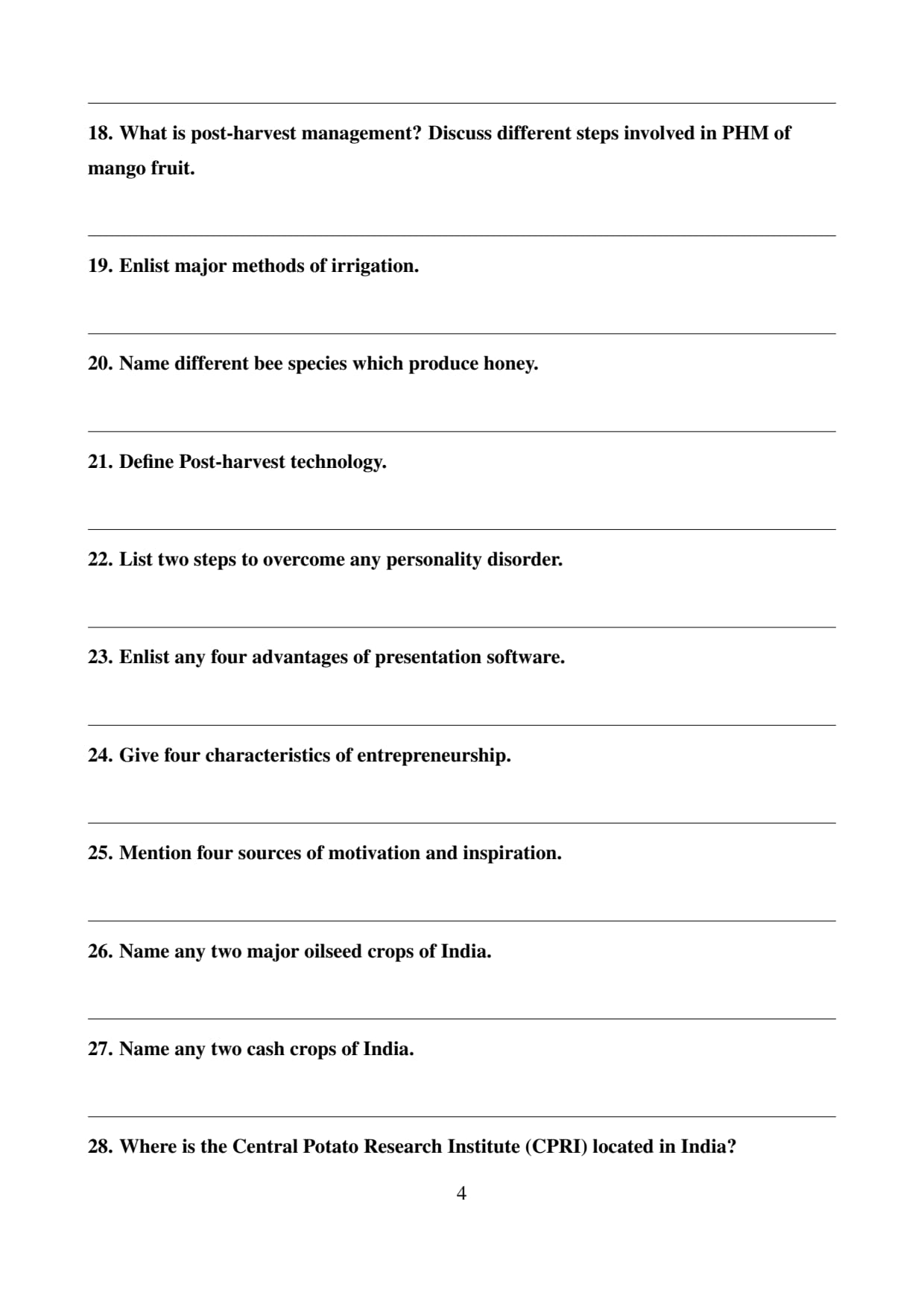
What is post-harvest management? Discuss different steps involved in PHM of mango fruit.
View Solution
\textcolor{red{Step 1: Define Post-Harvest Management (PHM).
Post-harvest management (PHM) refers to the practices and procedures carried out after the harvest of agricultural produce to maintain its quality, prevent spoilage, and ensure its safe storage, transport, and marketing.
\textcolor{red{Step 2: Harvesting Mango Fruit.
Mangoes should be harvested at the right stage of maturity, typically when the fruit has reached full size but is still firm. Overripe fruits should be avoided as they can cause early spoilage.
\textcolor{red{Step 3: Handling and Sorting.
Once harvested, mangoes should be gently handled to avoid bruising. The fruits should be sorted based on size, color, and ripeness. Damaged or overripe mangoes should be removed to prevent them from affecting the quality of other fruits.
\textcolor{red{Step 4: Cleaning and Packaging.
Mangoes should be washed gently to remove dirt and residue. After cleaning, they are packed in appropriate containers or cartons, ensuring good ventilation to avoid excessive moisture buildup.
\textcolor{red{Step 5: Cooling and Storage.
Mangoes should be stored in a cool environment with temperatures of around 12°C to 14°C. This helps to slow down the ripening process and reduce the risk of spoilage. Proper ventilation is also crucial for preventing mold growth.
\textcolor{red{Step 6: Transport and Distribution.
During transportation, mangoes should be kept in a cool, well-ventilated environment. This helps to maintain the desired quality of the fruit and ensures they reach the market in good condition. Quick Tip: Proper post-harvest management is crucial for mangoes to maintain their quality and extend shelf life. Handling with care, cleaning, and cooling are key steps.
Enlist major methods of irrigation.
View Solution
\textcolor{red{Step 1: Define Irrigation.
Irrigation refers to the artificial application of water to soil to assist in growing crops and maintaining landscapes.
\textcolor{red{Step 2: Major Methods of Irrigation.
1. Surface Irrigation: Water is applied directly to the soil surface and flows over the ground to reach plants (e.g., furrow irrigation).
2. Drip Irrigation: Water is delivered directly to the root zone of plants through a system of tubes, pipes, and emitters.
3. Sprinkler Irrigation: Water is sprayed over the crops in the form of rain using pipes, pumps, and sprinklers.
4. Subsurface Irrigation: Water is applied below the surface of the soil, typically through a system of underground pipes. Quick Tip: Drip and sprinkler irrigation are efficient methods, conserving water while ensuring plants receive the required moisture.
Name different bee species which produce honey.
View Solution
\textcolor{red{Step 1: Introduction to Honey-Producing Bees.
Honey is produced by various species of bees, all of which play a crucial role in pollination. The bees gather nectar from flowers and transform it into honey through the process of regurgitation and evaporation.
\textcolor{red{Step 2: Key Honey-Producing Bee Species.
The most common bee species known for producing honey include:
Apis mellifera (Western Honeybee): This is the most widely known and commercially important honey-producing species.
Apis cerana (Asian Honeybee): This species is native to Asia and is also used for honey production.
Apis dorsata (Giant Honeybee): Known for its large size, it produces honey in the wild.
Apis florea (Little Honeybee): A smaller species of bee found in tropical regions.
Melipona spp. (Stingless Bees): These bees do not have stingers but are known for producing high-quality honey, primarily in tropical regions.
\textcolor{red{Step 3: Conclusion.
These bee species contribute to honey production, with Apis mellifera being the most prominent in commercial honey farming. Other species, particularly stingless bees, are also valued for their honey, especially in regions with tropical climates. Quick Tip: Different bee species, especially \textbf{Apis mellifera}, are important for honey production. Beekeeping practices depend largely on these species to supply honey worldwide.
Define Post-harvest technology.
View Solution
\textcolor{red{Step 1: Define Post-Harvest Technology.
Post-harvest technology refers to the processes involved in handling, storing, and preserving harvested crops to maintain their quality and minimize losses.
\textcolor{red{Step 2: Importance of Post-Harvest Technology.
This technology helps in extending the shelf life of perishable produce, ensuring better market access, and reducing food waste. It involves various techniques such as drying, packaging, refrigeration, and controlled atmosphere storage.
\textcolor{red{Step 3: Applications.
Post-harvest technology plays a crucial role in the food supply chain, improving food safety, reducing post-harvest losses, and ensuring that fresh produce reaches consumers in optimal condition. Quick Tip: Post-harvest technology is key to ensuring food security, improving food quality, and reducing wastage after crops are harvested.
List two steps to overcome any personality disorder.
View Solution
\textcolor{red{Step 1: Acknowledge and Understand the Disorder.
The first step in overcoming a personality disorder is to acknowledge the condition and understand its symptoms. This awareness helps in accepting the need for help and treatment.
\textcolor{red{Step 2: Seek Professional Help.
The second step is seeking professional guidance from a psychologist or psychiatrist. Therapy, such as cognitive-behavioral therapy (CBT), and in some cases medication, are effective in managing and overcoming personality disorders. Quick Tip: Overcoming a personality disorder often requires professional intervention and a willingness to engage in therapeutic activities.
Enlist any four advantages of presentation software.
View Solution
\textcolor{red{Step 1: Enhanced Visual Communication.
Presentation software allows the integration of text, images, graphics, and animations, which makes the presentation more visually engaging. This aids in conveying complex information in an easily understandable and visually appealing manner.
\textcolor{red{Step 2: Easy Editing and Updates.
Unlike traditional methods such as slides or posters, presentation software allows easy editing and updating of content. This is helpful when making last-minute changes or updates to a presentation before or during the delivery.
\textcolor{red{Step 3: Professional Appearance.
Presentation software provides a variety of templates and design tools that help create professional and polished presentations. This increases the credibility of the presenter and makes the content more engaging for the audience.
\textcolor{red{Step 4: Interactive Features.
Many presentation software programs allow interactive features such as hyperlinks, embedded videos, and quizzes. These features can enhance audience engagement and make the presentation more dynamic and interactive. Quick Tip: Presentation software can help create a more interactive and professional presentation, making it easier to communicate your ideas effectively to the audience.
Give four characteristics of entrepreneurship.
View Solution
\textcolor{red{Step 1: Innovation and Creativity.
Entrepreneurs are known for their ability to innovate and come up with new ideas or solutions to existing problems. Creativity plays a key role in entrepreneurship, as it helps identify new opportunities for business ventures.
\textcolor{red{Step 2: Risk-Taking.
Entrepreneurs are willing to take calculated risks in order to achieve their goals. This characteristic allows them to venture into unknown markets or invest in uncertain projects, understanding the potential rewards and losses.
\textcolor{red{Step 3: Self-Motivation and Determination.
Entrepreneurs are self-driven individuals who possess a strong determination to achieve their goals. They are willing to put in the hard work and persistence required to turn their ideas into successful businesses.
\textcolor{red{Step 4: Leadership Skills.
Entrepreneurs must possess strong leadership qualities to guide their teams and inspire confidence in investors, customers, and employees. Effective leadership is essential for navigating challenges and driving business growth. Quick Tip: Entrepreneurs are innovative, risk-taking, and highly motivated individuals with the leadership skills needed to turn ideas into successful ventures.
Mention four sources of motivation and inspiration.
View Solution
\textcolor{red{Step 1: Identify External Sources of Motivation.
1. Success Stories: Hearing about the achievements of others can inspire individuals to push forward and reach their goals.
2. Books and Literature: Reading motivational books and self-help literature can provide valuable insights and strategies for success.
\textcolor{red{Step 2: Identify Internal Sources of Motivation.
3. Self-Reflection: Taking time for introspection helps individuals understand their own desires, goals, and values, which can inspire them to work towards personal growth.
4. Passion and Purpose: Finding something you are passionate about, whether it be a career or personal project, can be a constant source of motivation and inspiration. Quick Tip: Motivation can come from both external sources like books and success stories, and from within through self-reflection and personal passions.
Name any two major oilseed crops of India.
View Solution
India is one of the largest producers of oilseeds in the world. The two major oilseed crops grown in India are:
Groundnut (Peanut): Groundnut is one of the major oilseeds cultivated in India, primarily in states like Gujarat, Andhra Pradesh, and Tamil Nadu. It is used for producing edible oil and is an important source of protein in the Indian diet.
Soybean: Soybean is another key oilseed crop, grown mainly in states like Madhya Pradesh, Maharashtra, and Rajasthan. It is rich in protein and oil and is used in various food products, animal feed, and industrial applications.
These oilseeds are essential for oil production and have significant economic value for the country. Quick Tip: Oilseeds like groundnut and soybean are crucial for oil production in India, providing both edible oil and other industrial products.
Name any two cash crops of India.
View Solution
Cash crops are those crops that are grown primarily for sale and profit rather than for personal consumption. Two major cash crops of India are:
Cotton: Cotton is one of the most important cash crops in India, grown in states like Gujarat, Maharashtra, and Andhra Pradesh. It is a key raw material for the textile industry, which is one of the largest sectors in the Indian economy.
Sugarcane: Sugarcane is another major cash crop, primarily cultivated in states like Uttar Pradesh, Maharashtra, and Karnataka. It is used to produce sugar, ethanol, and molasses, contributing significantly to the Indian economy.
These crops are essential for both domestic consumption and export, providing livelihoods to millions of farmers. Quick Tip: Cash crops like cotton and sugarcane are important to India's economy, contributing to both domestic industries and international trade.
Where is the Central Potato Research Institute (CPRI) located in India?
View Solution
\textcolor{red{Step 1: Introduction to CPRI.
The Central Potato Research Institute (CPRI) is one of the most prominent institutions in India dedicated to the research and development of potato cultivation, breeding, and post-harvest management. It is crucial for enhancing potato productivity and quality, which is essential for both domestic consumption and export.
\textcolor{red{Step 2: Location of CPRI.
The main headquarters of the Central Potato Research Institute (CPRI) is located in Shimla, Himachal Pradesh. Shimla, situated in the north-western Himalayas, provides an ideal environment for potato research due to its temperate climate, which is suitable for growing potatoes in different seasons.
\textcolor{red{Step 3: Role of CPRI.
CPRI's primary role is to develop improved potato varieties, techniques for pest and disease control, and efficient production practices. The institute also focuses on the development of post-harvest technologies to enhance storage and shelf life. Additionally, it supports farmers by offering training programs and advisory services on improving potato cultivation.
\textcolor{red{Step 4: Branches of CPRI.
In addition to the main headquarters in Shimla, CPRI has regional research centers in various parts of India, including Uttarakhand, Bihar, and Odisha, which focus on region-specific potato research. These centers help disseminate research findings and technologies to potato farmers across the country. Quick Tip: CPRI plays a significant role in India's potato sector by enhancing productivity and promoting sustainable agricultural practices. Its research helps in improving both the quality and yield of potatoes.
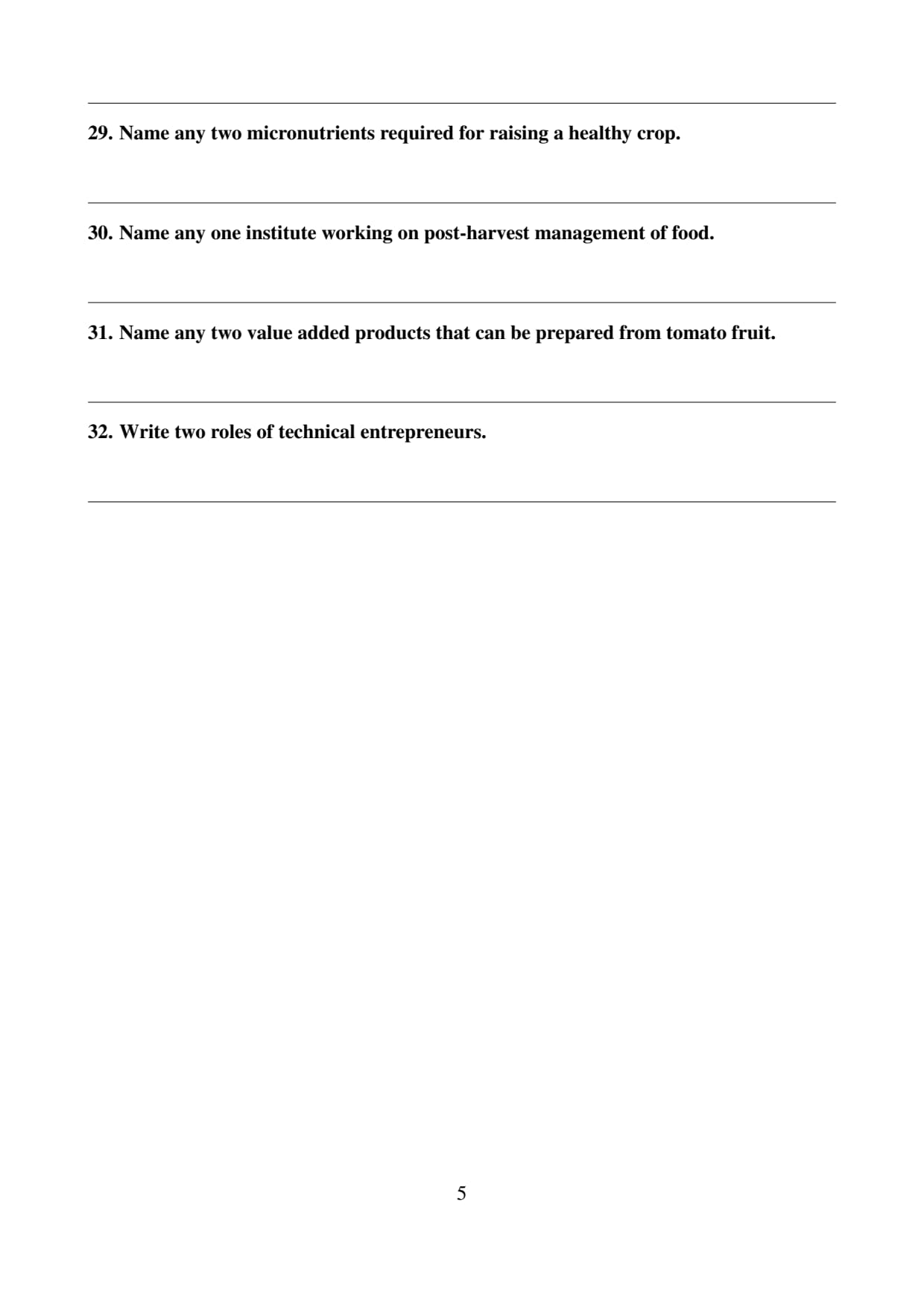
Name any two micronutrients required for raising a healthy crop.
View Solution
\textcolor{red{Step 1: Importance of Micronutrients in Crops.
Micronutrients are essential nutrients that plants require in small quantities but are crucial for proper growth, development, and overall health. Unlike macronutrients (such as nitrogen, phosphorus, and potassium), micronutrients play a vital role in enzyme activation, photosynthesis, protein synthesis, and resistance to diseases and stress.
\textcolor{red{Step 2: Iron (Fe).
Iron (Fe) is one of the most important micronutrients required for plants. It is essential for the synthesis of chlorophyll, which is critical for photosynthesis. Iron also participates in various enzyme functions that help in plant metabolism. A deficiency in iron often leads to chlorosis, where the leaves turn yellow while the veins remain green, as the plant struggles to produce enough chlorophyll. Iron is vital for healthy root development and overall plant vitality.
\textcolor{red{Step 3: Zinc (Zn).
Zinc (Zn) is another essential micronutrient for plants. It is required for several enzyme systems and plays a significant role in protein synthesis, cell division, and plant growth regulation. Zinc is also involved in the production of chlorophyll, helping the plant to make food through photosynthesis. A deficiency of zinc leads to stunted growth, leaf chlorosis, and poor flowering. It is particularly important for crops like rice, maize, and wheat.
\textcolor{red{Step 4: Other Micronutrients.
Besides iron and zinc, other micronutrients like manganese (Mn), copper (Cu), boron (B), molybdenum (Mo), and chlorine (Cl) are also essential for various biochemical functions within the plant. A balance of these micronutrients ensures that plants can thrive and produce high-quality yields.
\textcolor{red{Step 5: Role in Crop Health.
Micronutrients are critical in raising healthy crops as they help plants resist disease, tolerate stress, and increase crop yield. Farmers must ensure adequate availability of micronutrients through soil amendments or foliar applications to avoid deficiencies, which can lead to poor crop performance. Quick Tip: Micronutrients like iron and zinc are essential for plant health, helping in vital processes like photosynthesis, enzyme activation, and resistance to stress.
Name any one institute working on post-harvest management of food.
View Solution
\textcolor{red{Step 1: Importance of Post-Harvest Management.
Post-harvest management refers to the practices and procedures that occur after the harvest of crops, aimed at minimizing losses, maintaining the quality of food, and increasing its shelf life. Effective post-harvest management techniques can significantly reduce food wastage and enhance food security.
\textcolor{red{Step 2: Institute Focused on Post-Harvest Management.
One prominent institute working on post-harvest management of food is the Indian Institute of Horticultural Research (IIHR). This institute conducts extensive research on various aspects of horticultural crops, including post-harvest technologies aimed at reducing spoilage and improving the storage, packaging, and transportation of fruits and vegetables.
\textcolor{red{Step 3: Areas of Research and Development.
The IIHR focuses on several key areas of post-harvest management, including:
Development of techniques for enhancing the shelf life of fresh fruits and vegetables.
Research on packaging methods that minimize damage during transport.
Post-harvest treatments to prevent disease and pest infestation.
Implementation of modern storage facilities that maintain the optimal temperature and humidity for different crops.
This institute also collaborates with the agricultural community and government bodies to provide training and technological support to farmers, ensuring that they can implement the best practices for post-harvest management. Quick Tip: Post-harvest management institutes like IIHR play a vital role in ensuring the long-term sustainability of agricultural practices by reducing food wastage and improving product quality.
Name any two value added products that can be prepared from tomato fruit.
View Solution
\textcolor{red{Step 1: Introduction to Value-Added Products.
Value-added products are those that have been transformed from their original form into a product that has more commercial value. This transformation increases the shelf life of the product, enhances its flavor, and makes it more convenient for consumers. In the case of tomatoes, several value-added products can be prepared, which help to utilize the fruit throughout the year and cater to diverse consumer preferences.
\textcolor{red{Step 2: Tomato Ketchup.
Tomato Ketchup is one of the most popular value-added products made from tomatoes. It is produced by cooking tomatoes along with sugar, vinegar, and a variety of spices to make a thick and flavorful condiment. Tomato ketchup is widely used as a topping for snacks, fast foods, and burgers. The process of making ketchup involves cooking the tomatoes to concentrate the flavor and preserve the product for long periods.
\textcolor{red{Step 3: Tomato Puree.
Another important value-added product from tomatoes is Tomato Puree. This product is made by cooking fresh tomatoes, then straining and reducing them to a thick paste. Tomato puree serves as an essential base for sauces, soups, gravies, and curries. It enhances the flavor of dishes and is used widely in cooking. The process of making puree ensures the tomatoes are preserved and easily accessible for use in various culinary applications.
\textcolor{red{Step 4: Other Potential Value-Added Products.
In addition to ketchup and puree, tomatoes can also be used to make other value-added products such as:
Tomato Sauce: A thinner version of ketchup, often used in pasta dishes, pizzas, and as a dipping sauce.
Dried Tomatoes: Dried tomatoes are a concentrated version of fresh tomatoes, used as an ingredient in salads, soups, and Mediterranean dishes.
These value-added products not only help increase the economic value of tomatoes but also allow for longer shelf life, reducing waste and increasing their versatility in cooking. Quick Tip: Value-added products like tomato ketchup and puree not only increase the economic value of tomatoes but also help to preserve their nutrients and enhance their flavor.
Write two roles of technical entrepreneurs.
View Solution
\textcolor{red{Step 1: Innovators and Problem Solvers.
Technical entrepreneurs are innovators who identify technical challenges and develop solutions through the creation of new products or services. They apply their technical knowledge to solve real-world problems.
\textcolor{red{Step 2: Business Leaders and Decision Makers.
Technical entrepreneurs play a vital role as business leaders. They make critical decisions regarding the direction of their company, financing, and product development. They combine technical expertise with entrepreneurial acumen to drive business success. Quick Tip: Technical entrepreneurs combine innovation with business strategy to bring new technologies to market and lead successful ventures.


Comments