




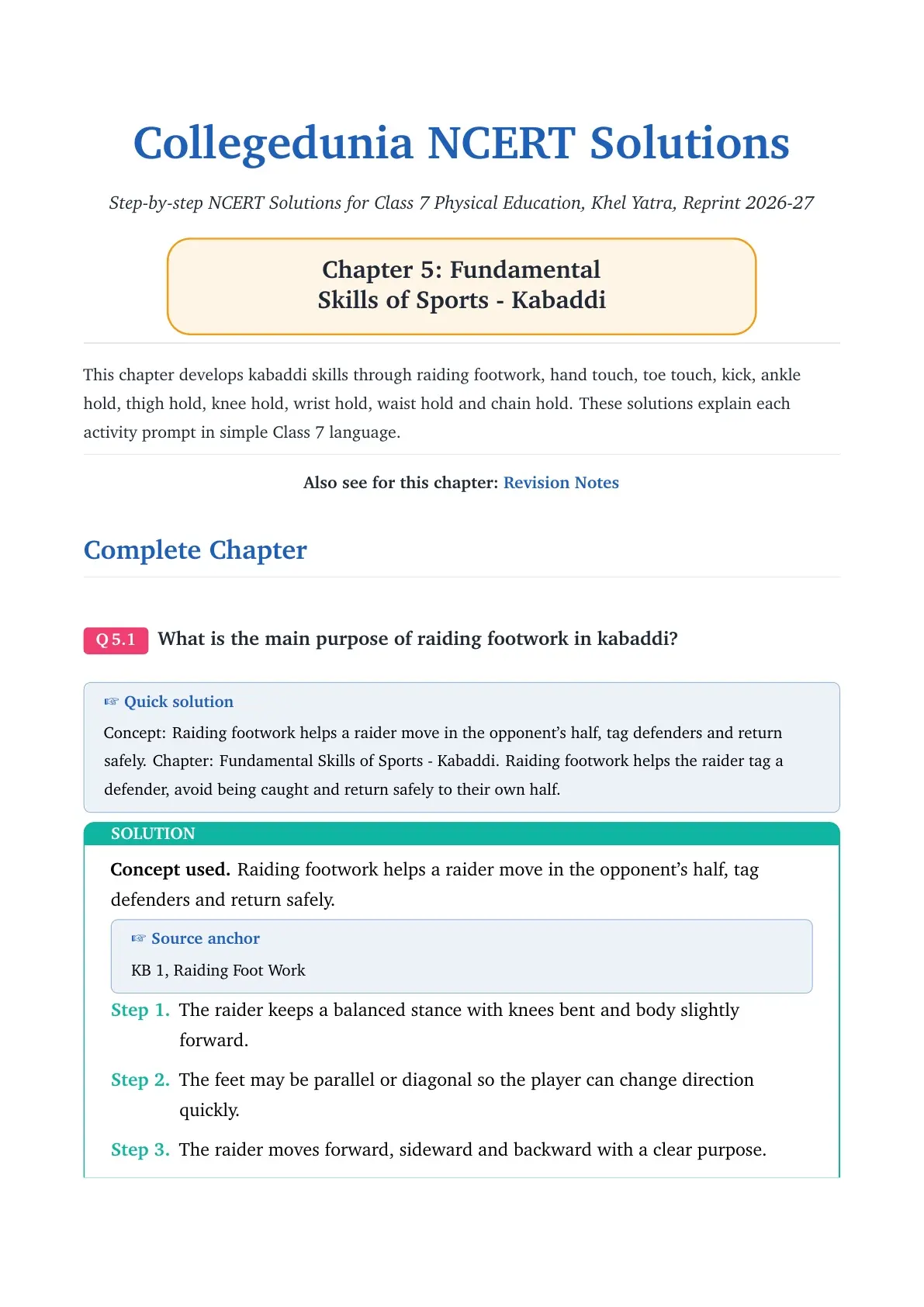
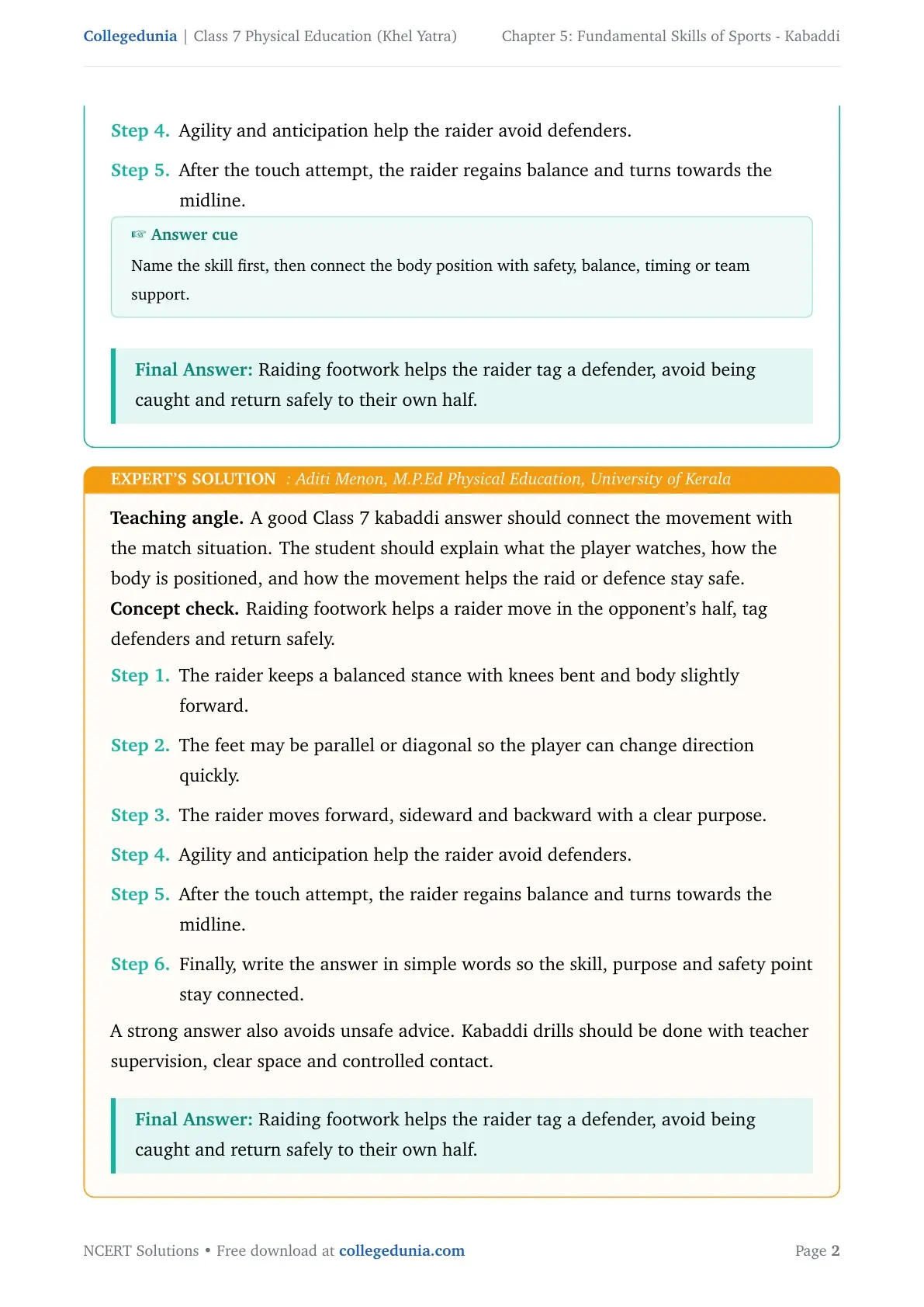
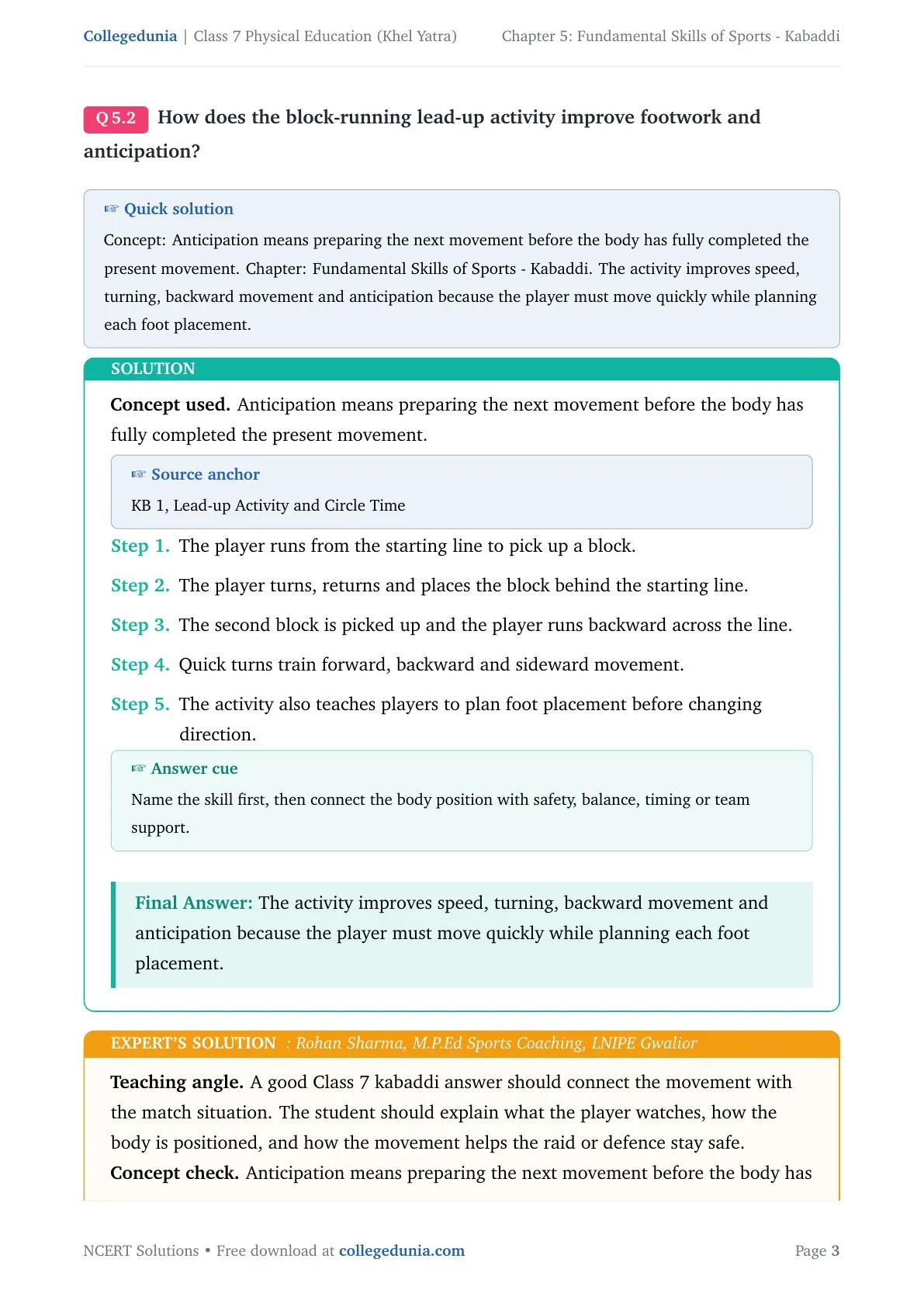
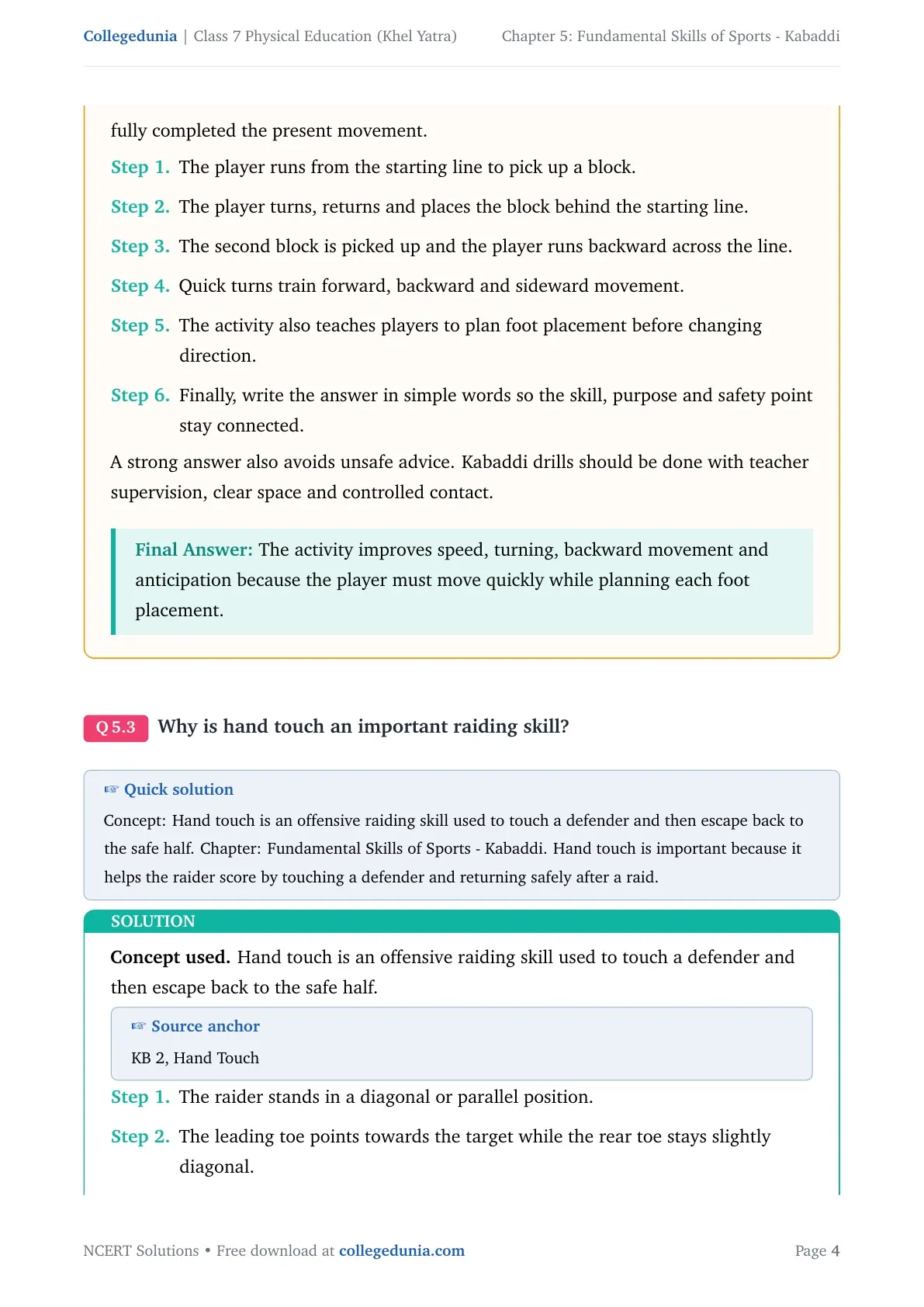
The NCERT Solutions for Class 7 Physical Education Khel Yatra Chapter 5 cover Fundamental Skills of Sports - Kabaddi for the 2026-27 NCERT textbook. Students can download the PDF for activity-based answers on raiding footwork, touch skills, kicks, defensive holds, safety and teacher-assessment rubrics.
- Resource: Class 7 Khel Yatra Chapter 5 NCERT Solutions PDF.
- Chapter focus: kabaddi raiding, hand touch, toe touch, kick, ankle hold, knee hold and chain hold.
- Question type: Circle Time prompts, skill reflections, peer-observation answers and practice-planning questions.
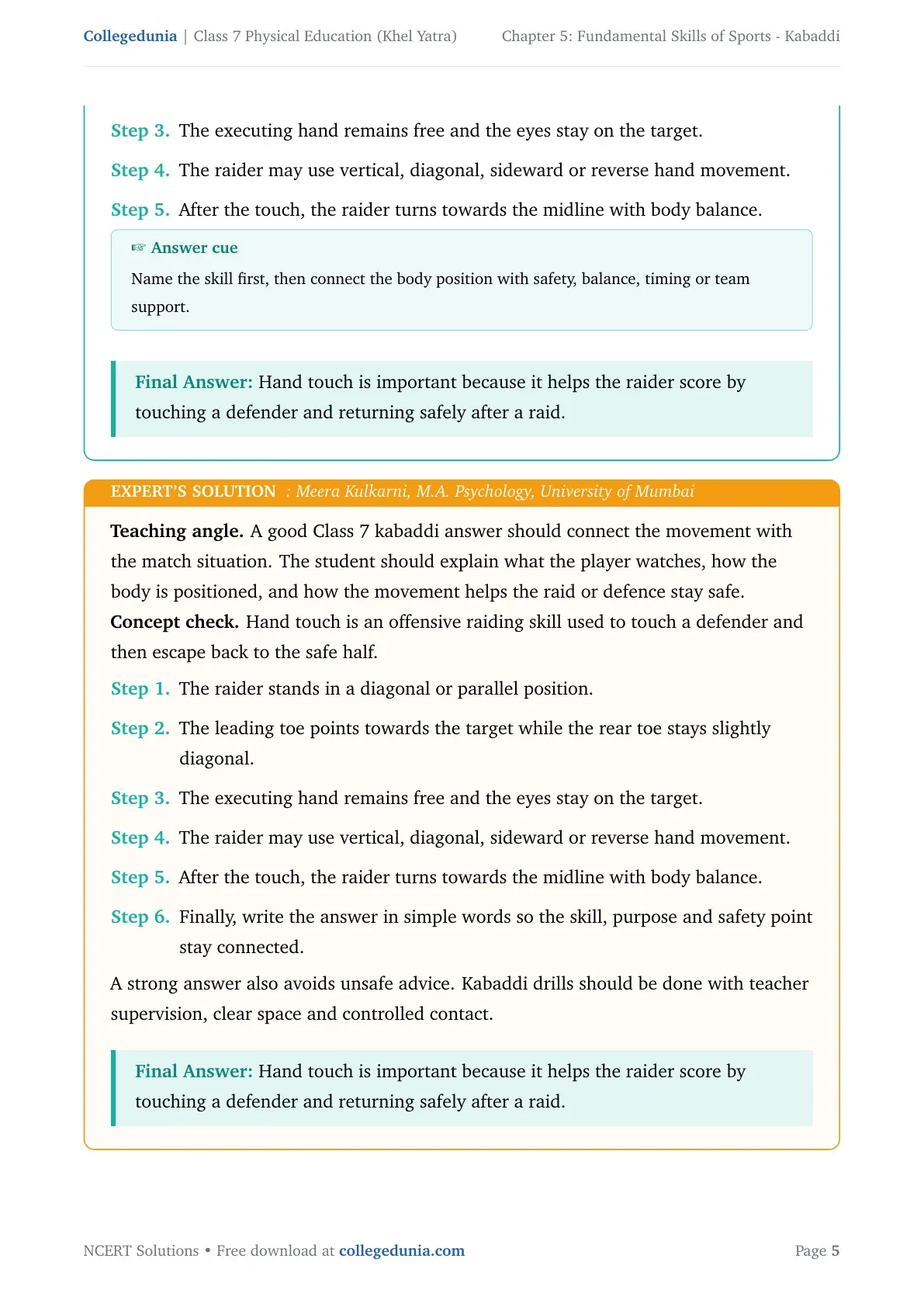
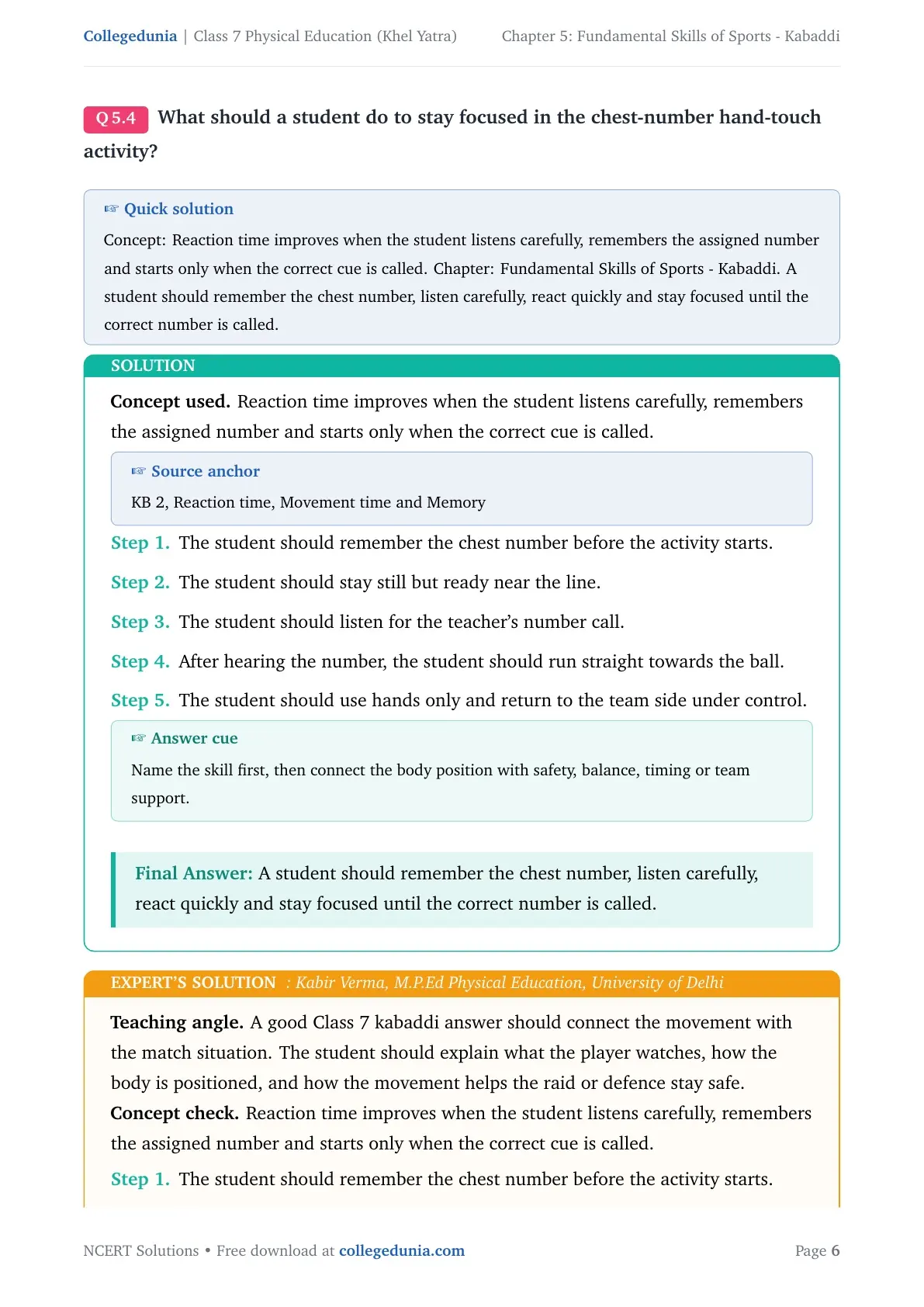
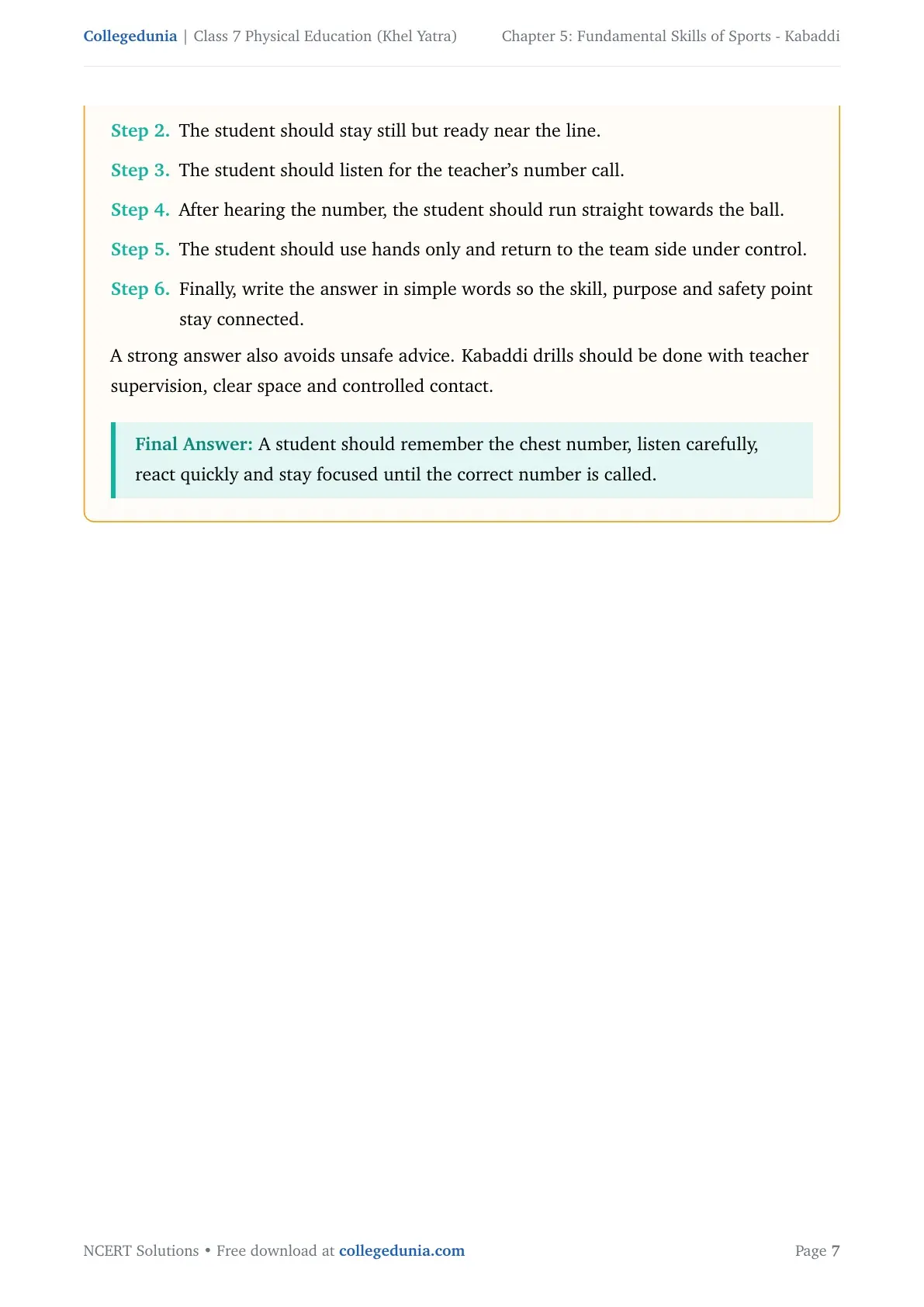
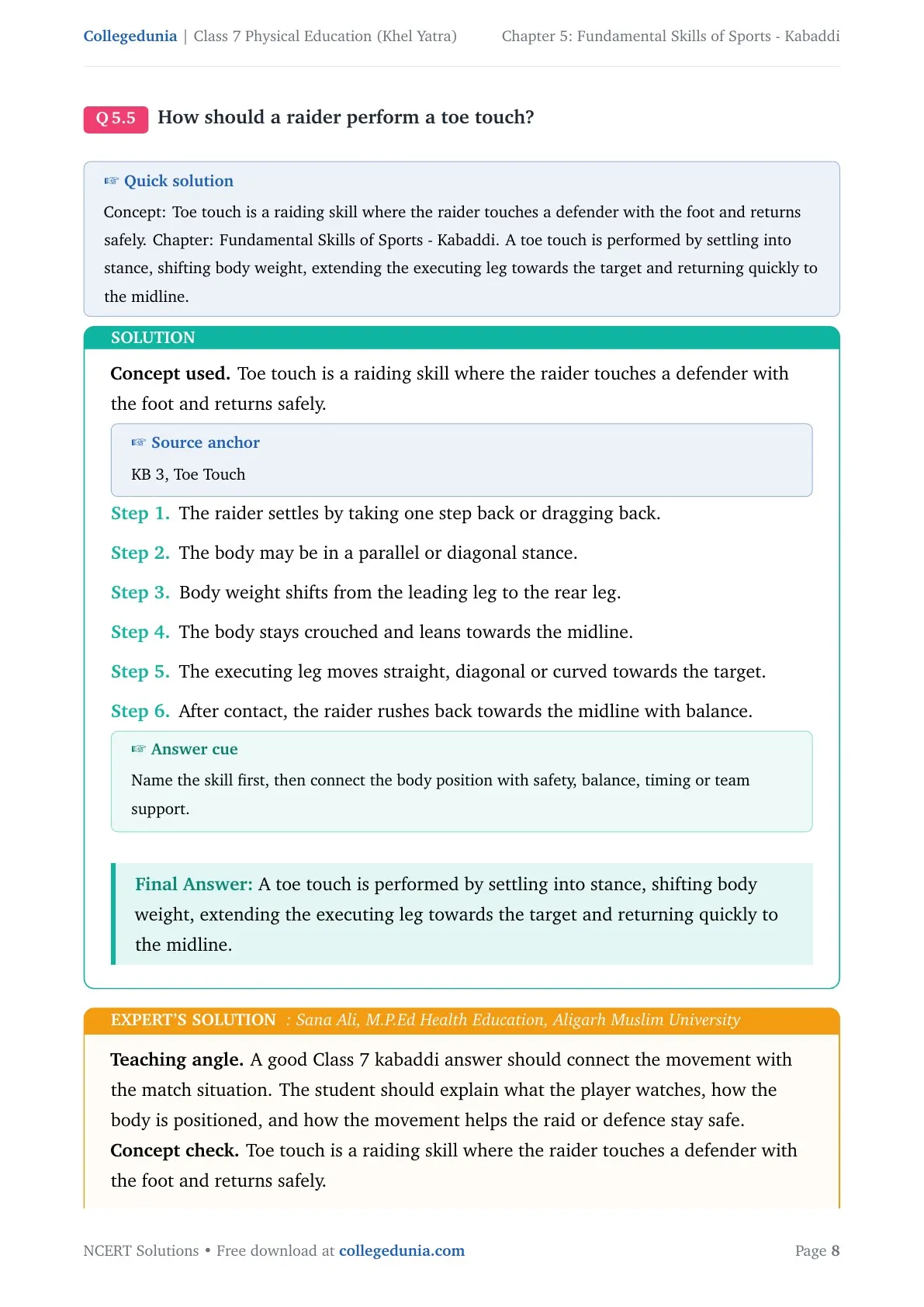
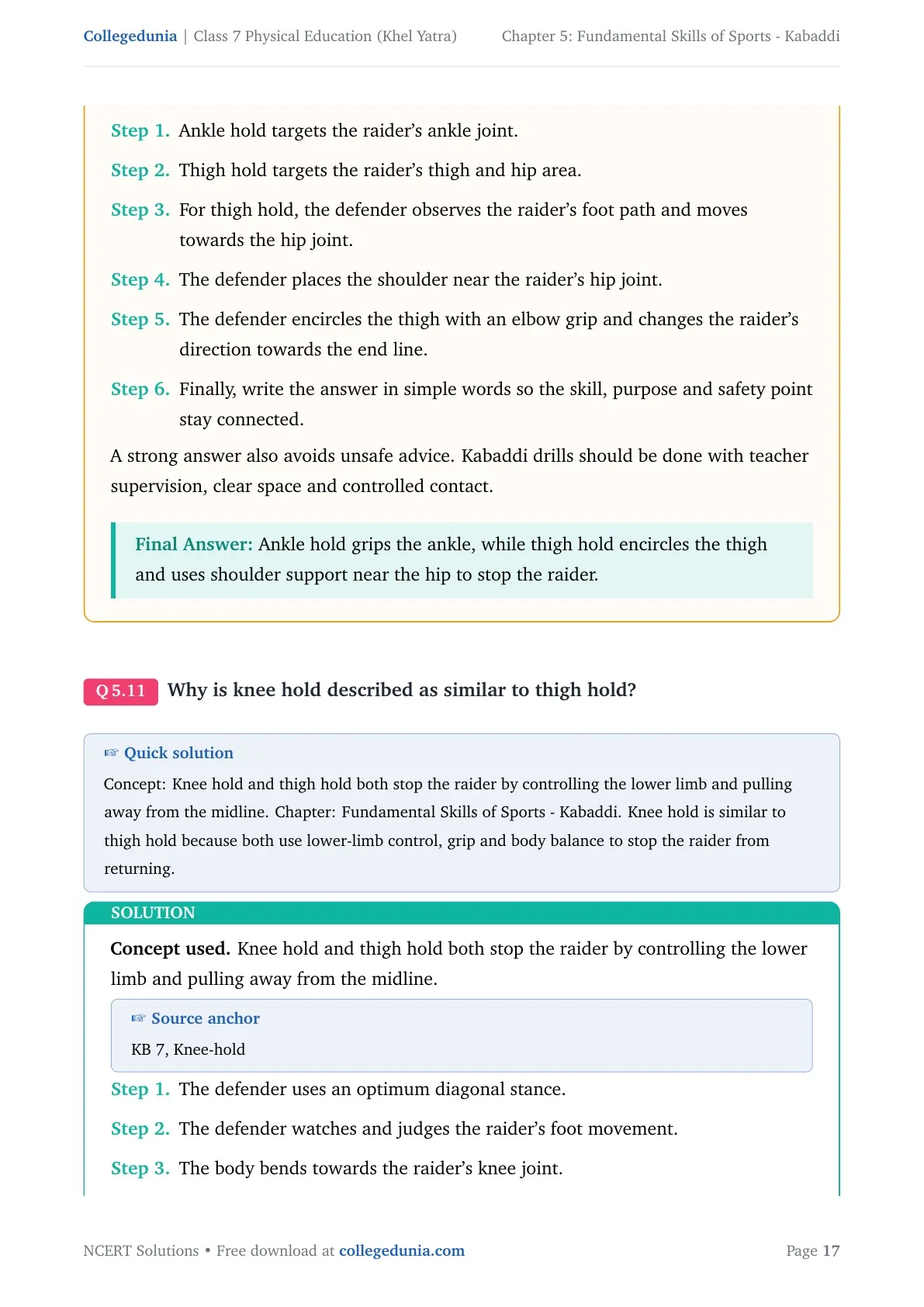
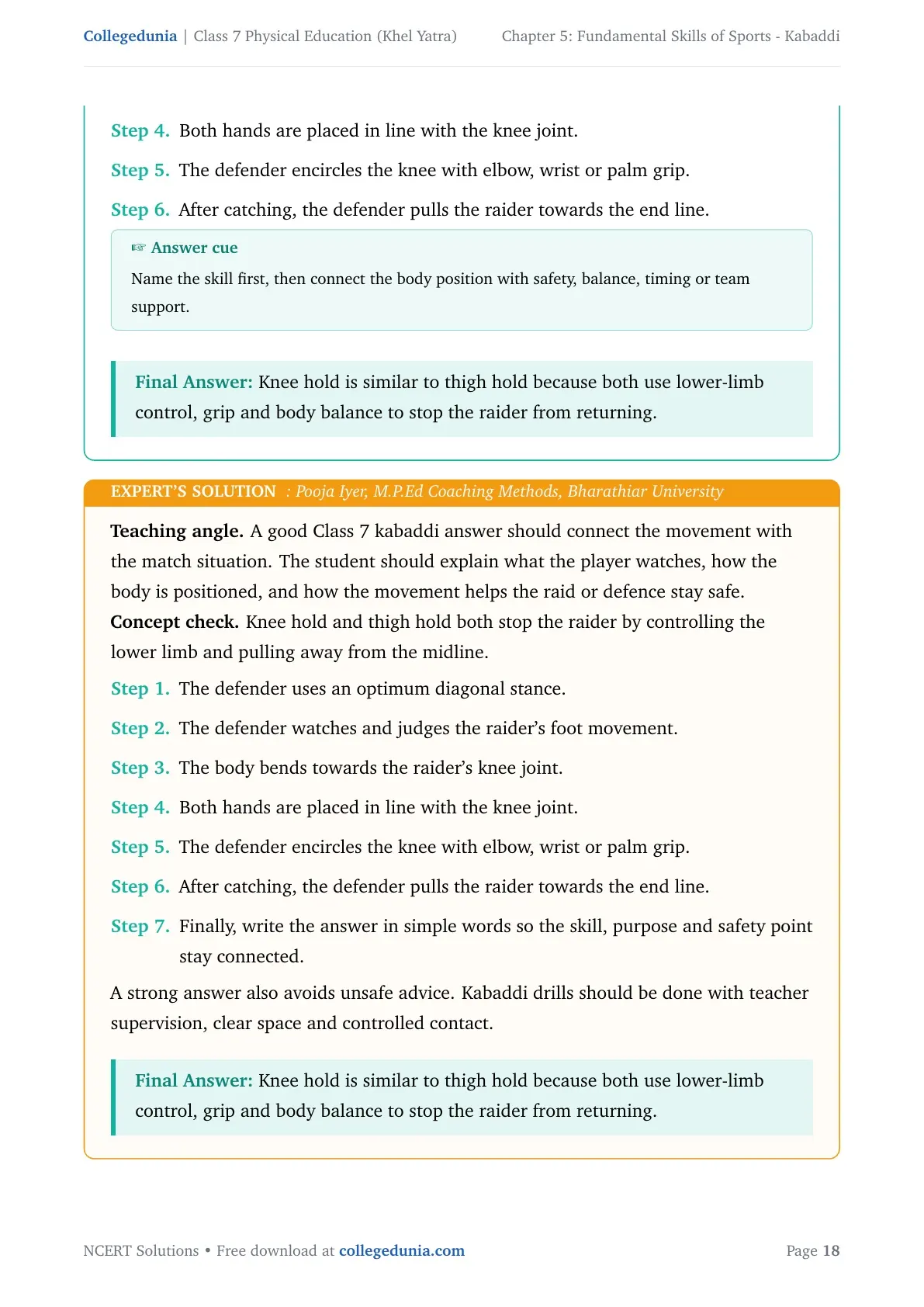
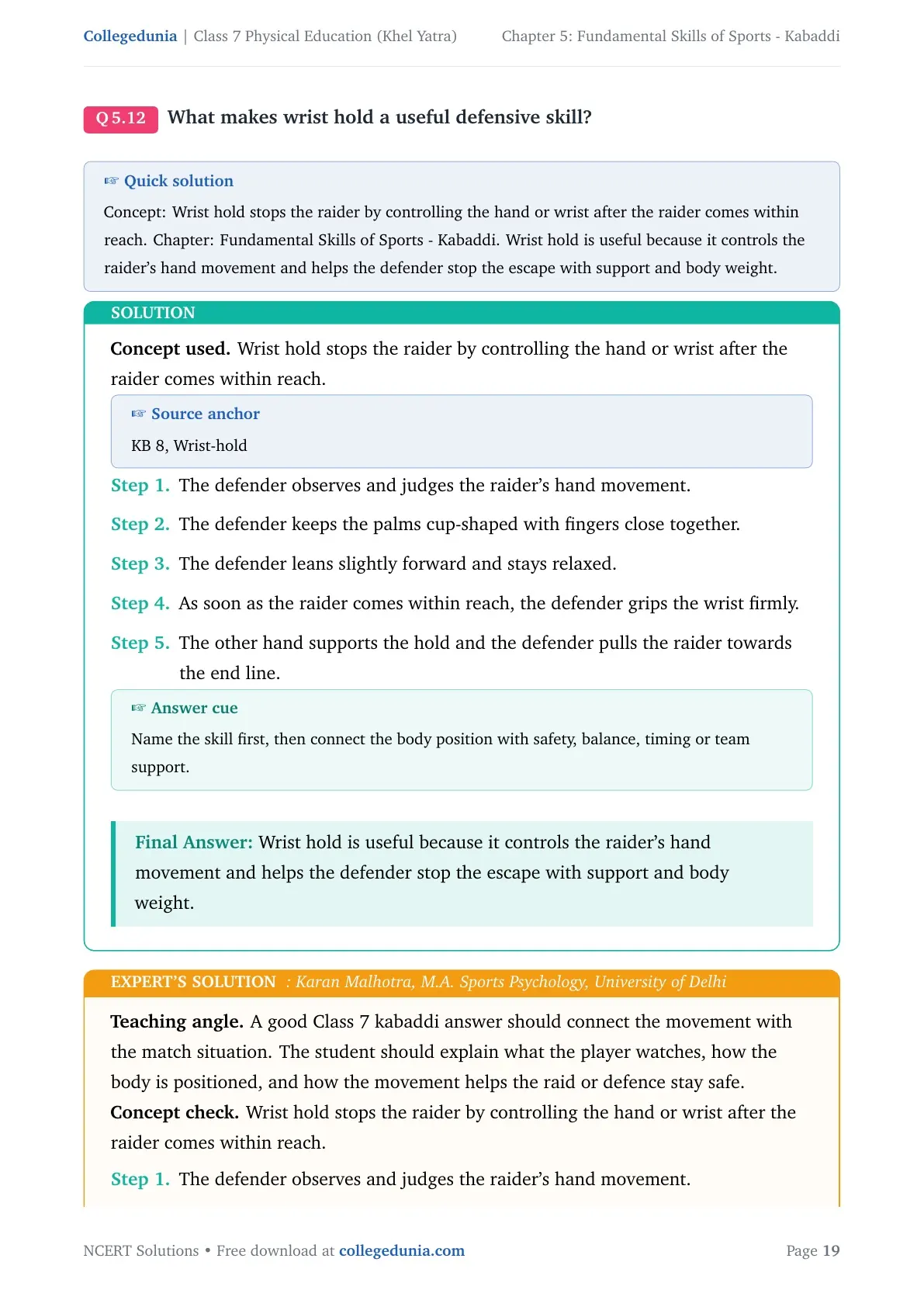
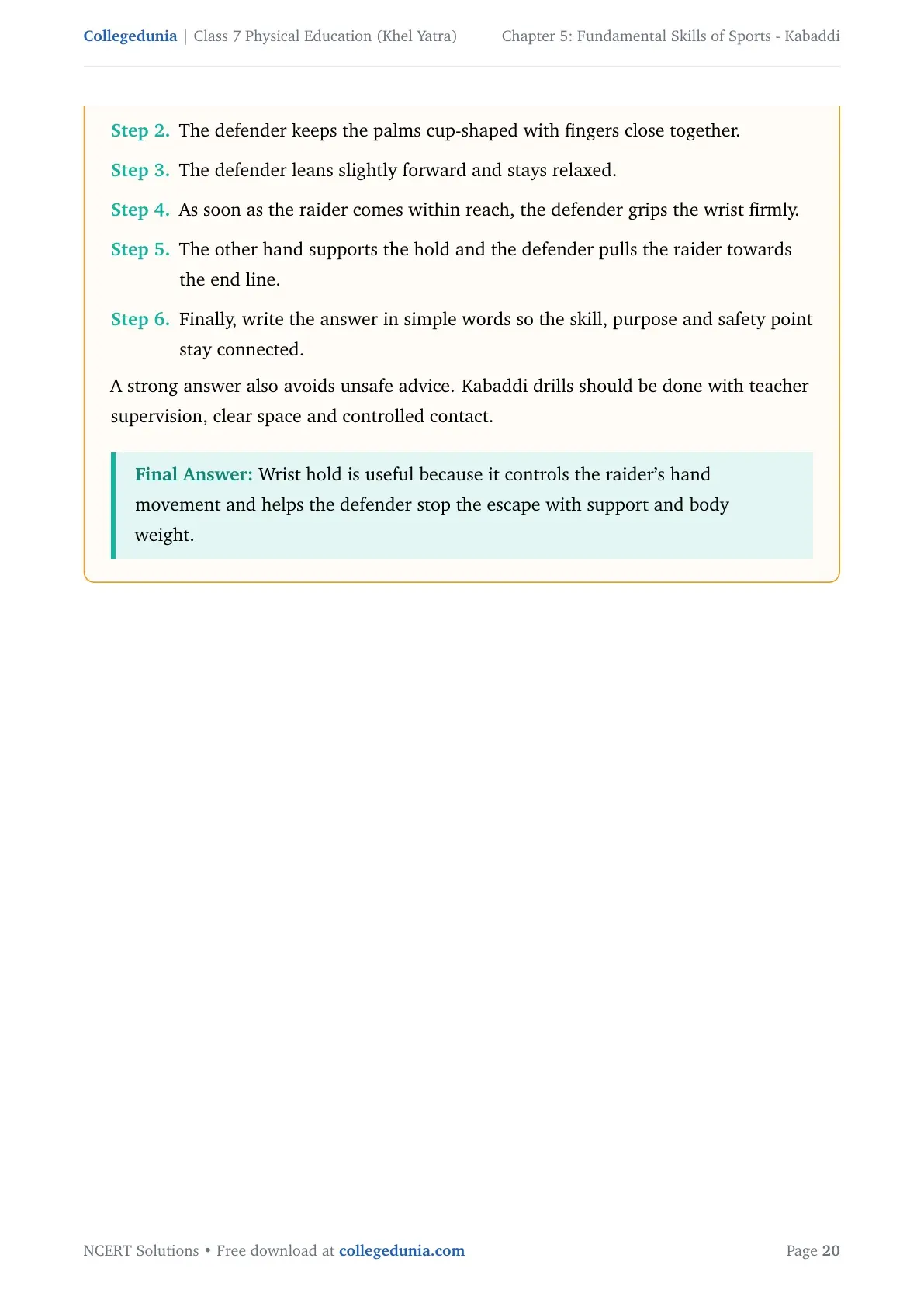
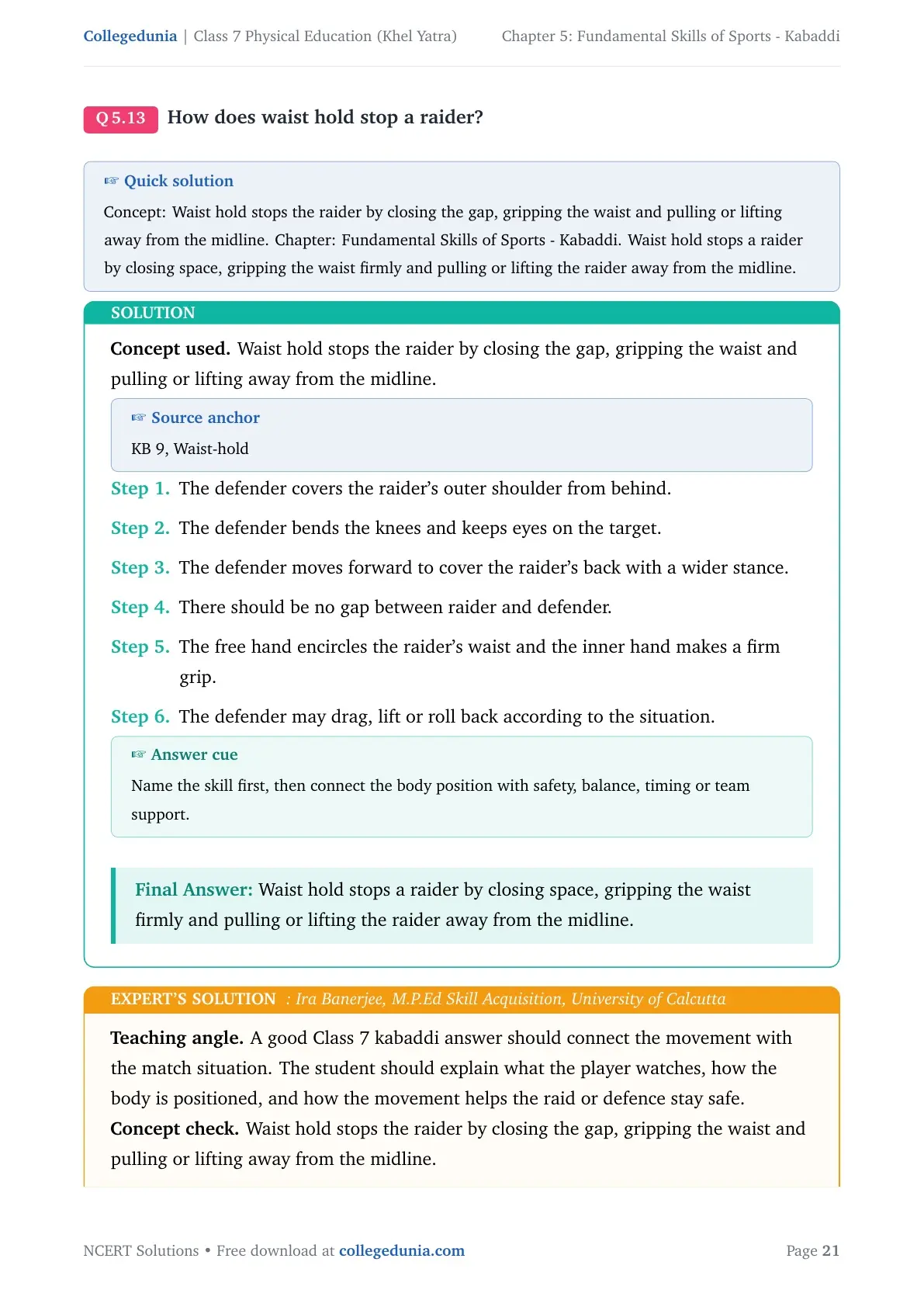
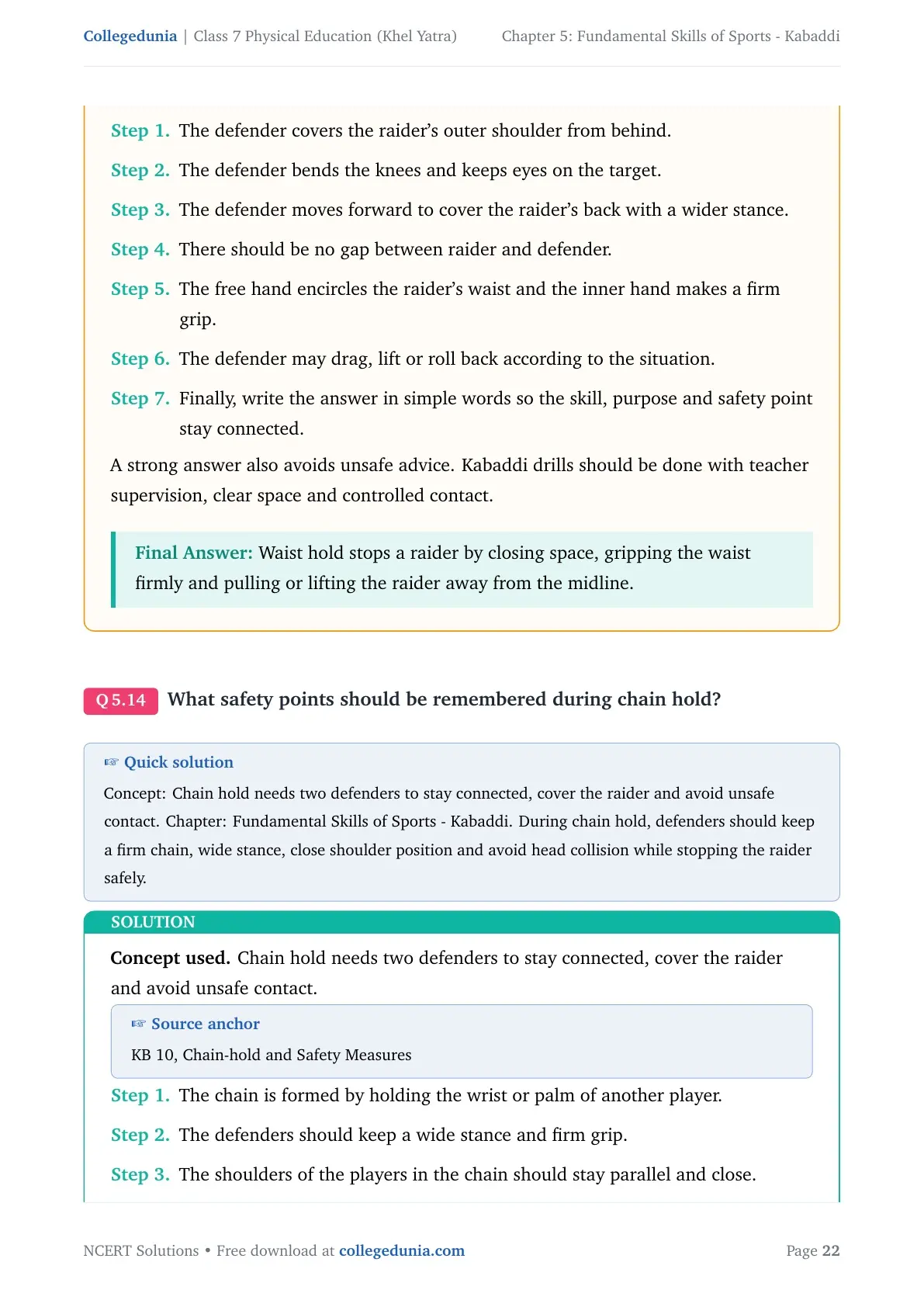
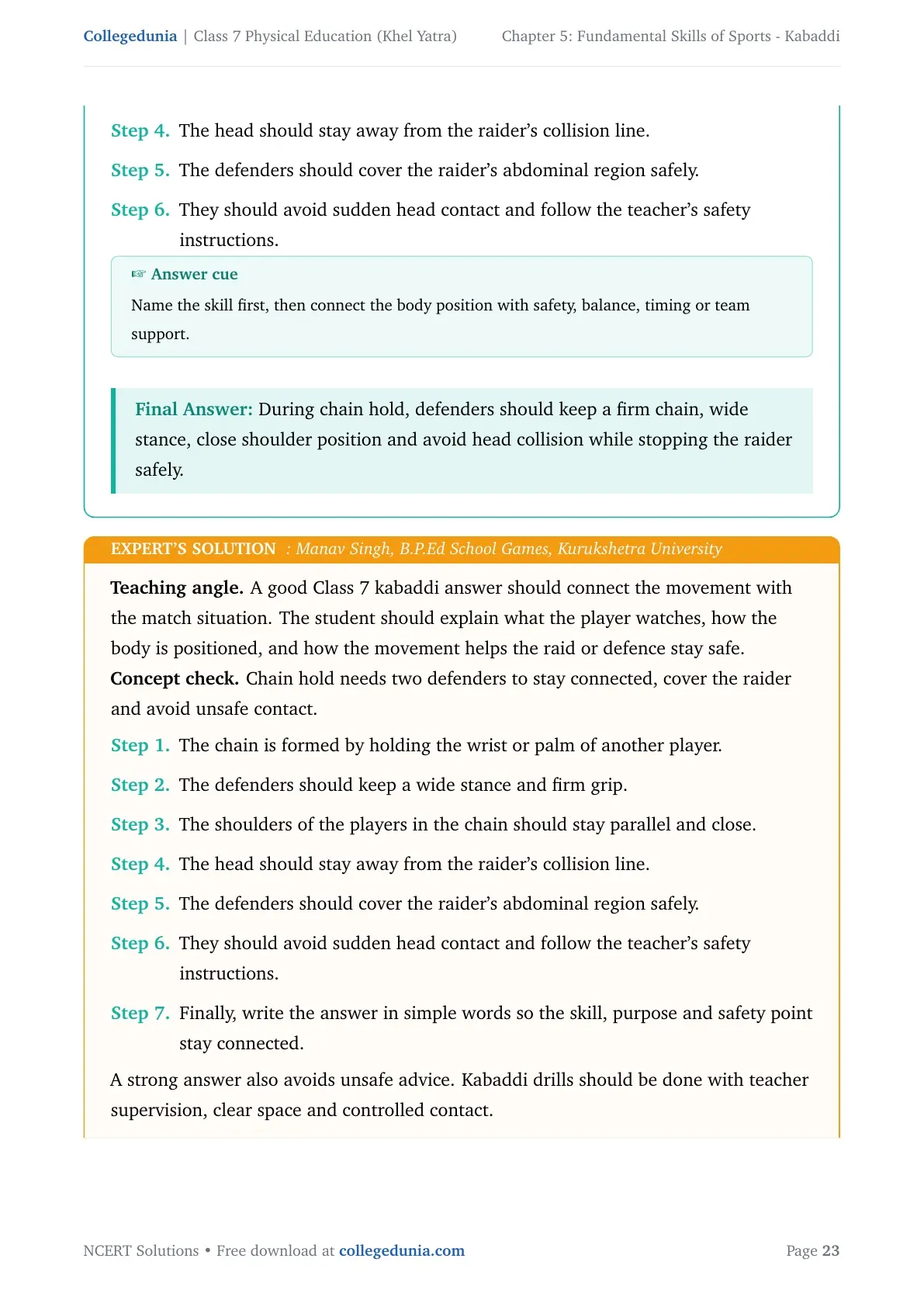
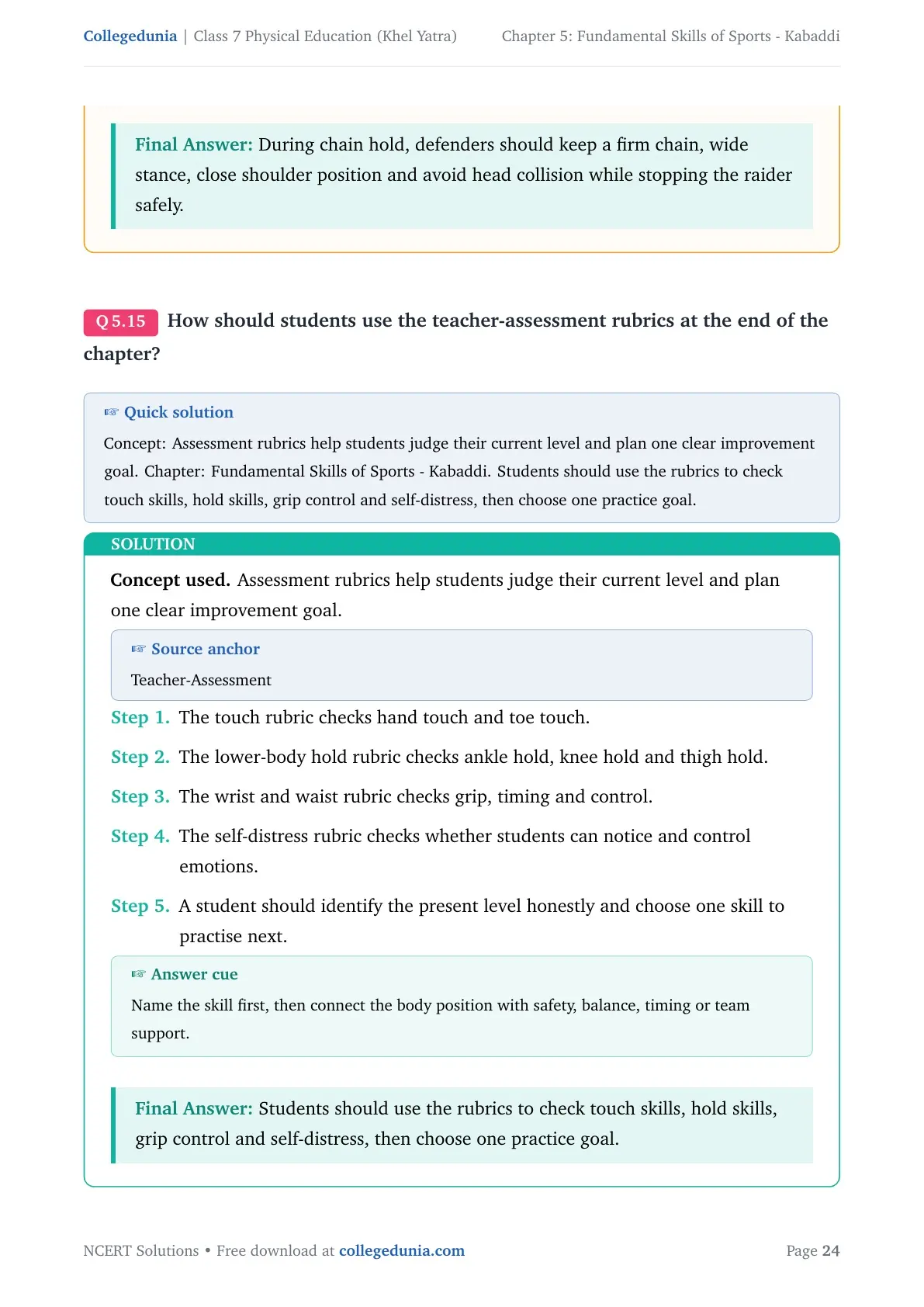
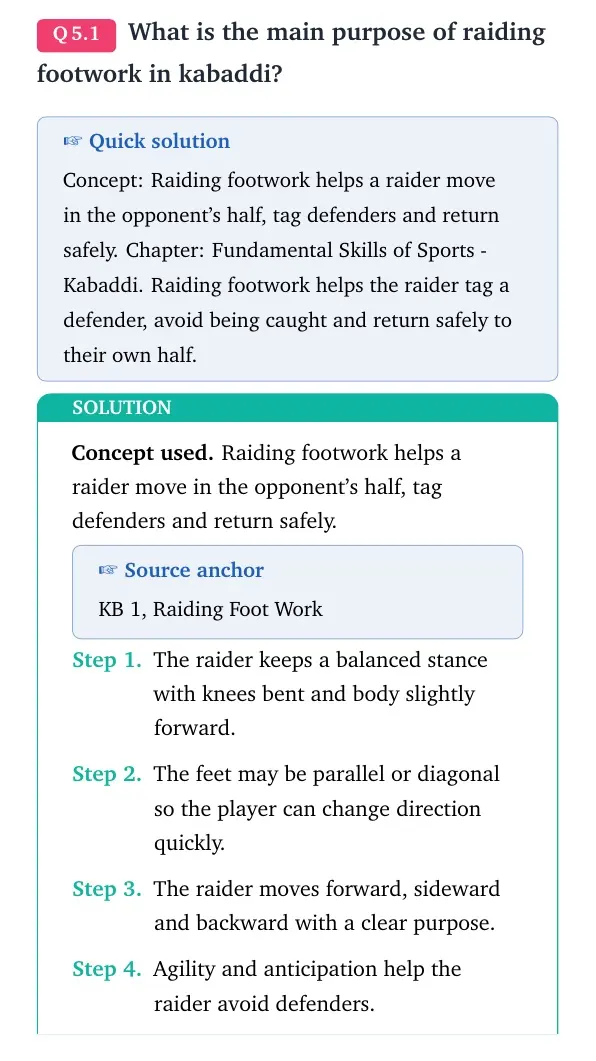
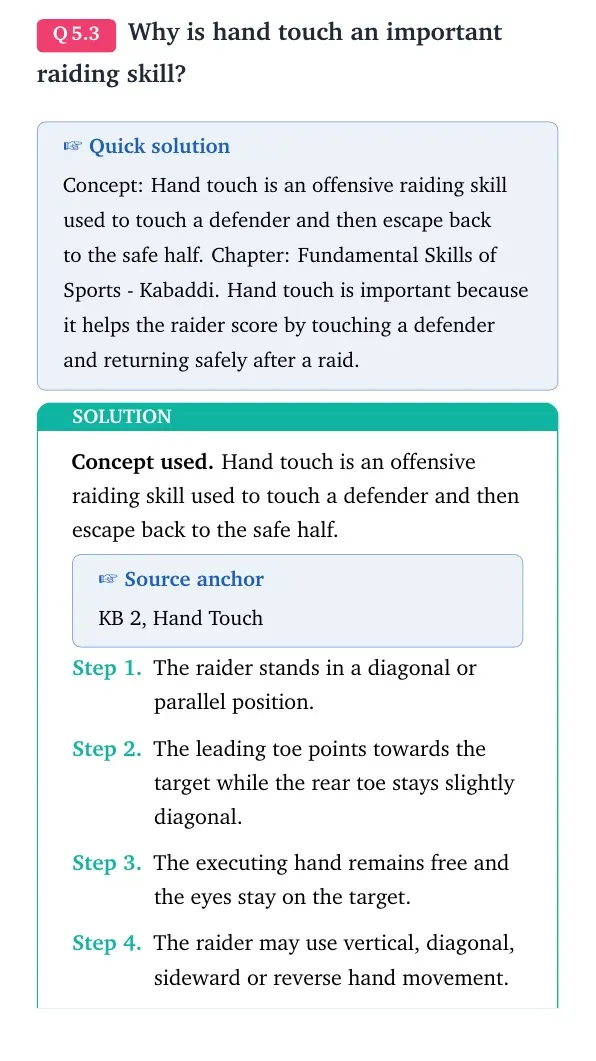
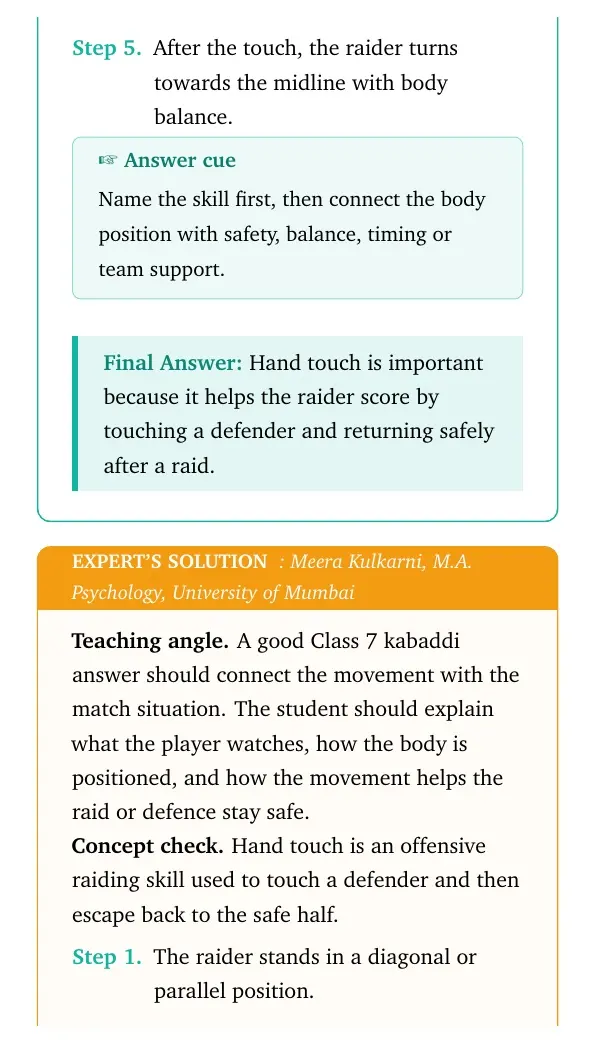
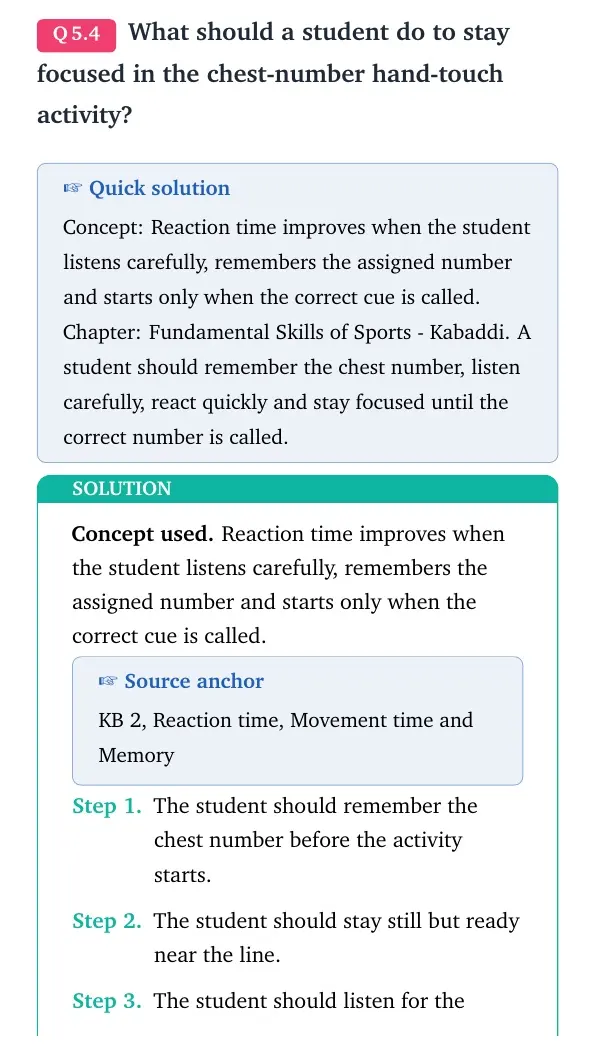
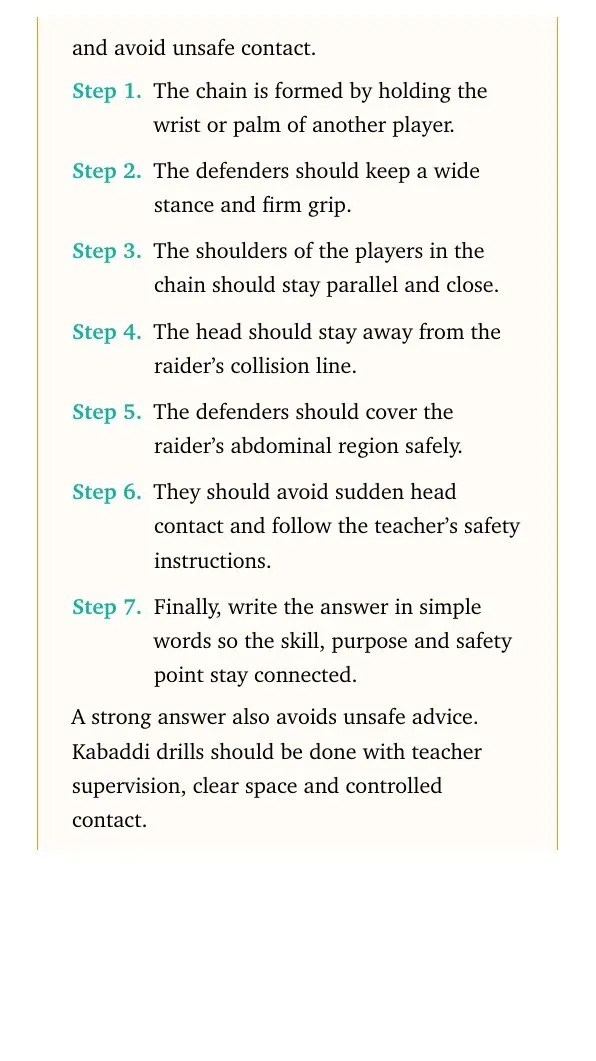
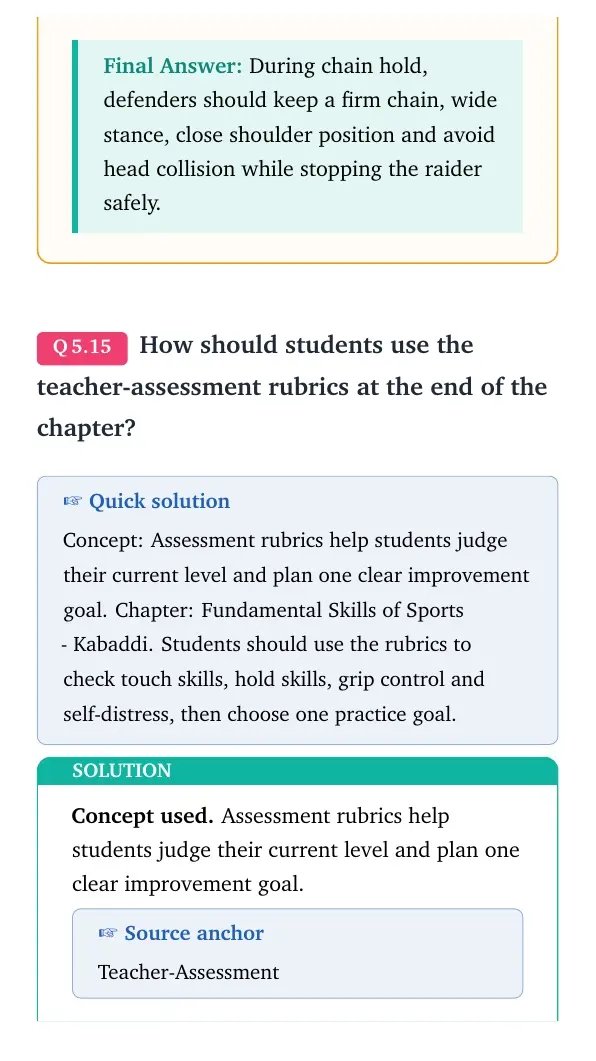
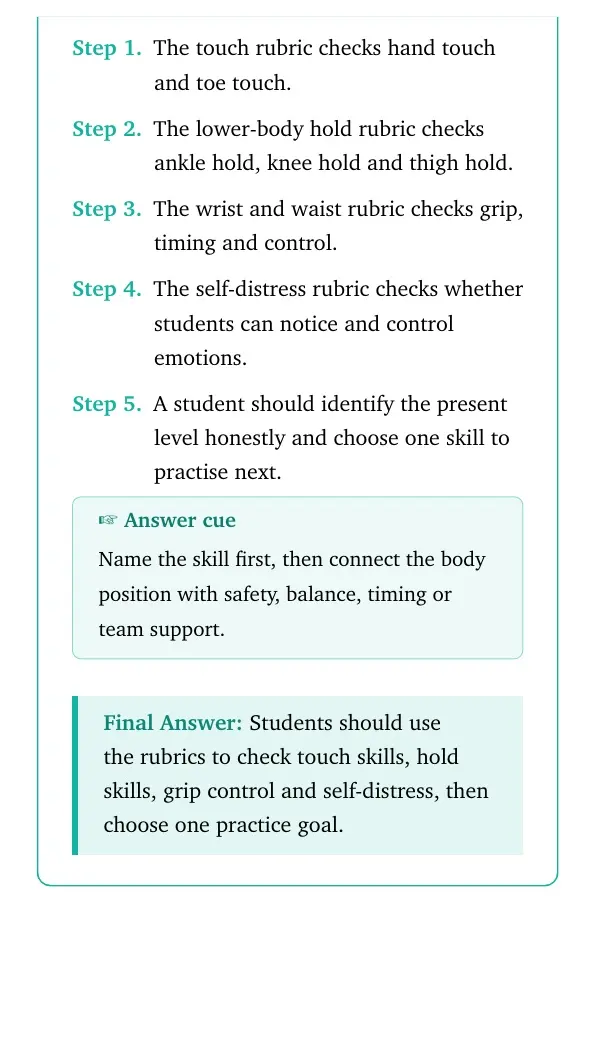
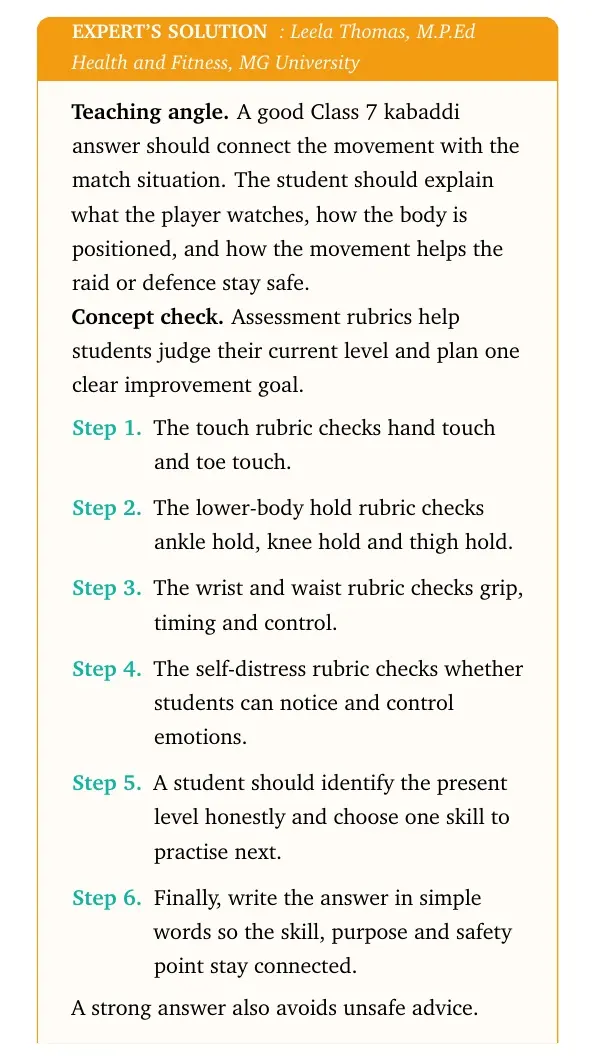
Student Feedback: Based on practice needs shared by 12,760 students, these solutions keep kabaddi answers short enough for notebooks but detailed enough for 2026-27 school practical assessment. Read the model answer, then add one observation from your own raid or defence drill where the question asks for discussion.
Chapter 5 Solutions Overview
Class 7 Khel Yatra Chapter 5 introduces kabaddi through raiding and defensive skill practice. The answers should connect body position, timing, target reading and safe contact with the purpose of the drill.
| Skill Area | NCERT activity focus | Answer cue |
|---|---|---|
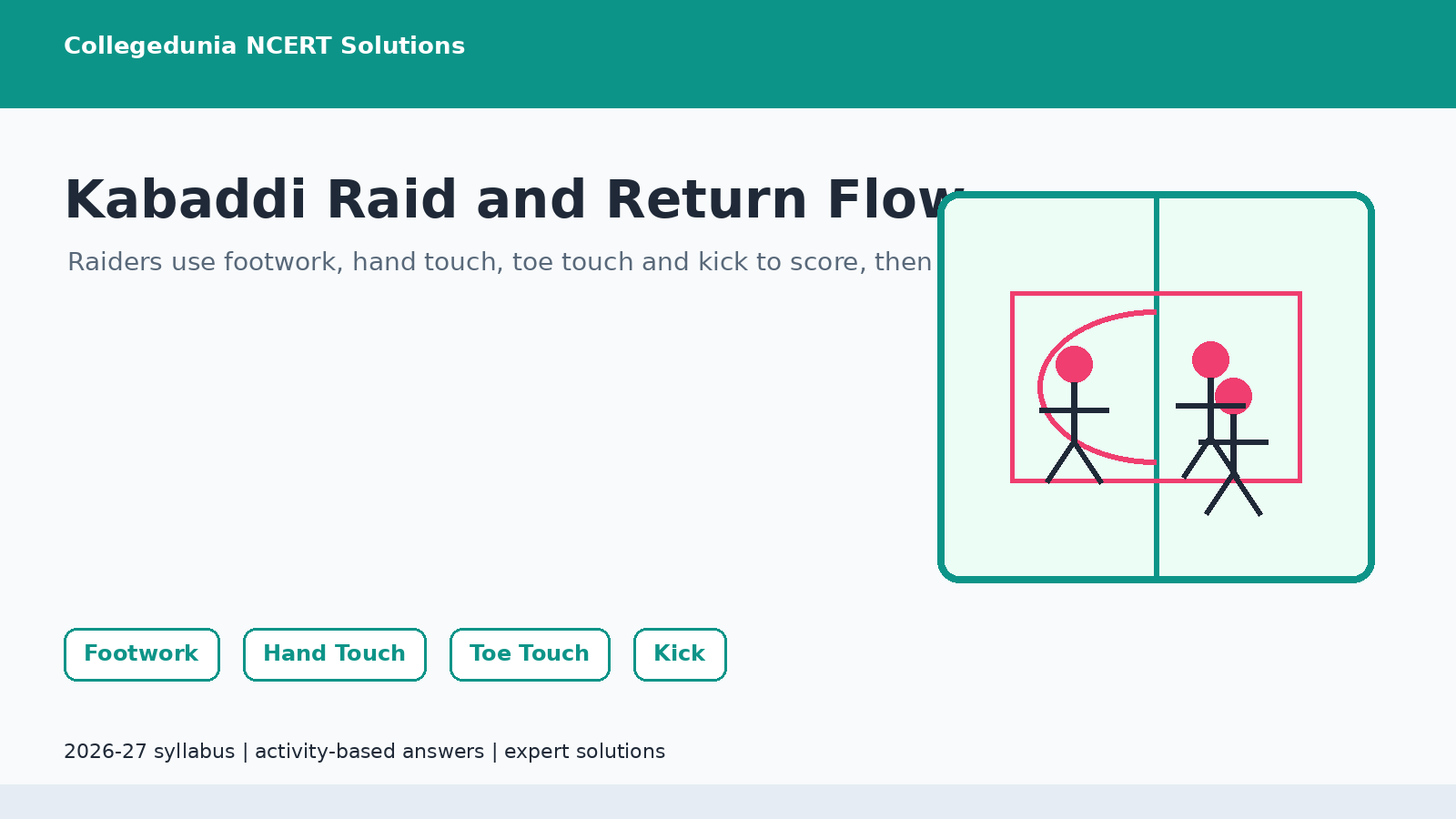
| Raiding Footwork | Forward, sideward and backward movement | Mention agility, anticipation and return to midline |
| Touch Skills | Hand touch and toe touch | Explain target selection, timing and safe return |
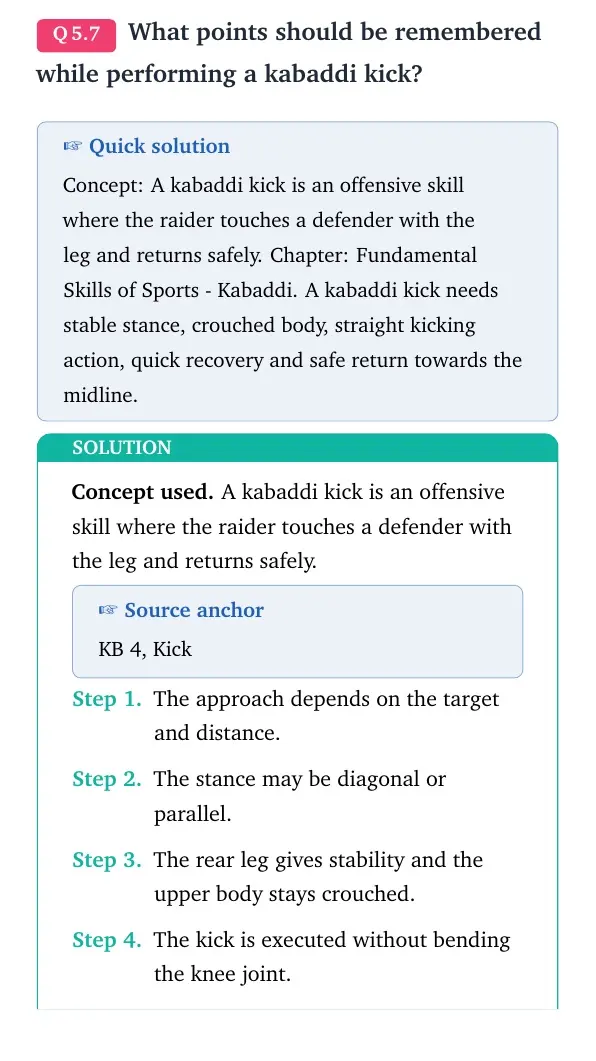
| Kick | Back kick, side kick and curve kick variations | Connect leg action with immediate recovery |
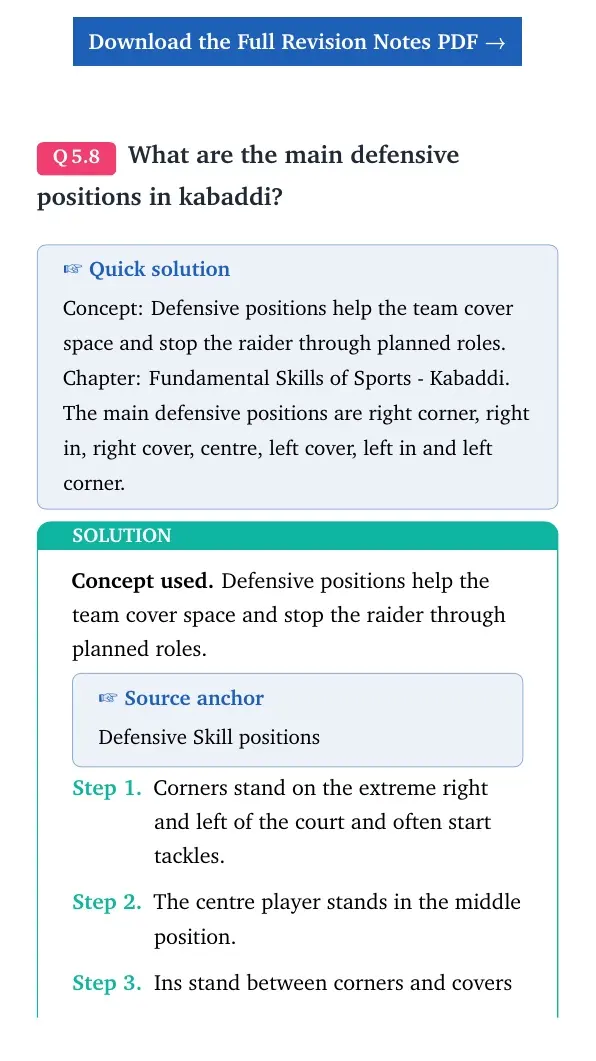
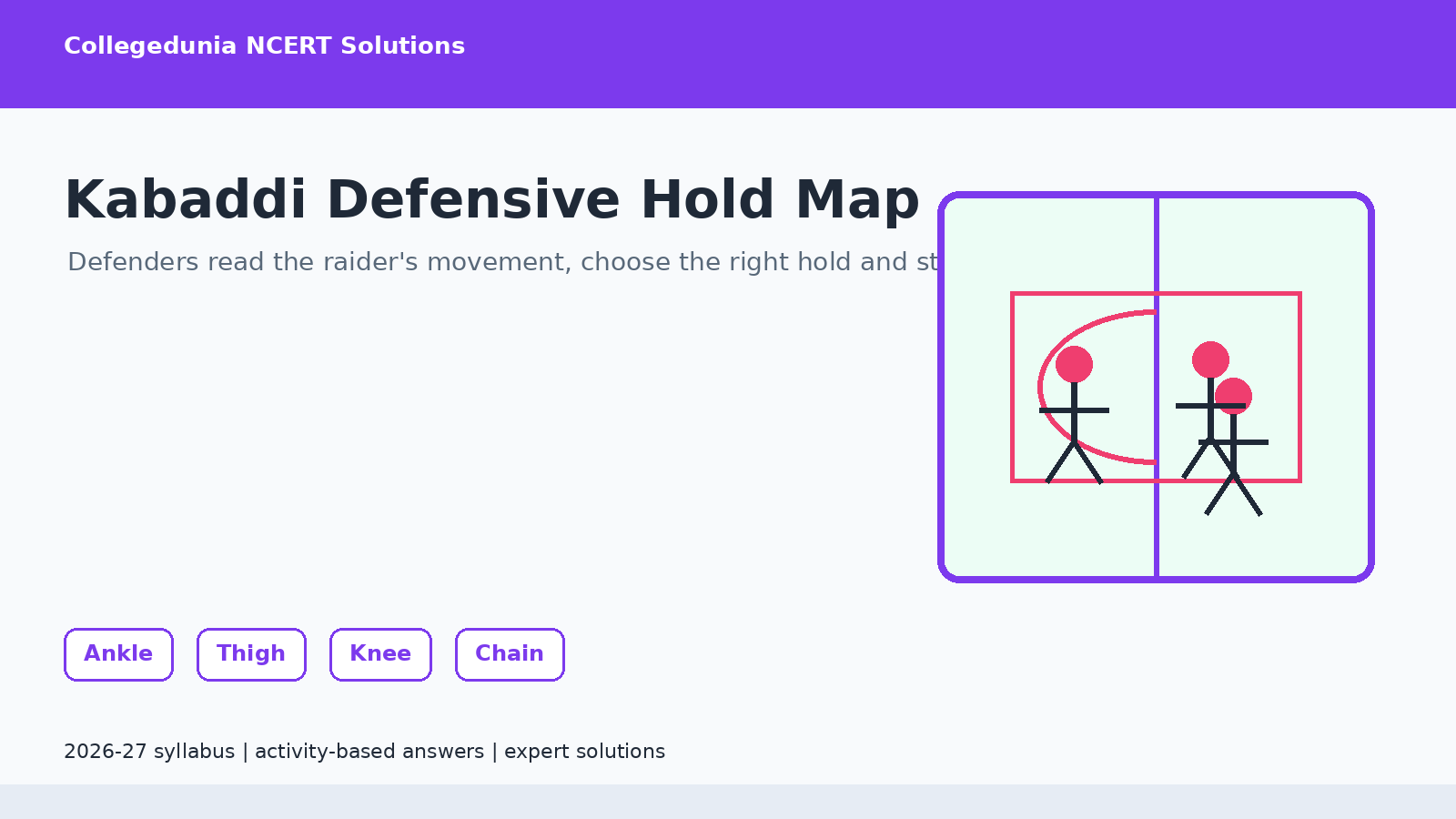
| Defensive Holds | Ankle, thigh, knee, wrist, waist and chain holds | State grip, balance, support and safety |
How to Answer Kabaddi Skill Questions
Most questions in this chapter ask what students noticed while performing a raid or defensive drill. A complete answer names the skill, describes the movement and explains how the movement helps the team score or stop a raid.
- Start with the skill named in the question, such as raid, touch, kick or hold.
- Add the correct stance, grip, target reading or body position.
- Explain the game purpose, such as tagging, escaping, stopping or supporting.
- Close with a safe-practice point when the question involves contact.
Class 7 Khel Yatra Chapter 5 Kabaddi Video Lesson
Source: NCERT Hindi Tutor on YouTube
All Chapter 5 Question Cards with Solutions
The companion question-card page gives every kabaddi prompt with a Check Solution panel and an Expert Solution panel. It is useful when students want to revise one answer quickly before using the full PDF.
Open question cards: Class 7 Khel Yatra Chapter 5 step-by-step kabaddi solutions
Related Class 7 Khel Yatra Chapter 5 Resources
| Resource | Class 7 Khel Yatra Chapter 5 Link |
|---|---|
| NCERT Book PDF | Read the official chapter PDF |
| Notes | Revise Chapter 5 with notes |
| Handwritten Notes | Open handwritten revision notes |
Class 7 Khel Yatra NCERT Solutions for All Chapters
| Chapter | NCERT Solutions |
|---|---|
| Chapter 1 | Foundational Basis of Physical Education and Well-being Solutions |
| Chapter 2 | Physical and Motor Fitness Solutions |
| Chapter 3 | Fundamental Skills of Sports Badminton Solutions |
| Chapter 4 | Fundamental Skills of Sports Football Solutions |
| Chapter 5 | Fundamental Skills of Sports Kabaddi Solutions |
| Chapter 6 | Yoga Solutions |
Class 7 Khel Yatra Chapter 5 NCERT Solutions FAQs
Ques. What is covered in Class 7 Khel Yatra Chapter 5 NCERT Solutions?
Ans. The solutions cover kabaddi answers on raiding footwork, hand touch, toe touch, kick, ankle hold, thigh hold, knee hold, wrist hold, waist hold and chain hold.
Ques. Are these Chapter 5 solutions based on the 2026-27 NCERT book?
Ans. Yes. The PDF follows the 2026-27 NCERT Class 7 Khel Yatra chapter Fundamental Skills of Sports - Kabaddi.
Ques. Why are the answers activity-based?
Ans. Khel Yatra teaches kabaddi through drills, peer observation and Circle Time prompts, so the answers connect body technique with game understanding.
Ques. Does the PDF include expert-style explanations?
Ans. Yes. Every question includes a main solution and an expert solution with answer-writing guidance.



Comments