



The NCERT Book PDF for Class 12 Psychology Chapter 2 Self and Personality gives students the original chapter text on the self, the theories of personality and the methods of assessment. It follows the 2026-27 CBSE syllabus and is free to download. Reading the source chapter first makes the Notes and Solutions far easier to follow.
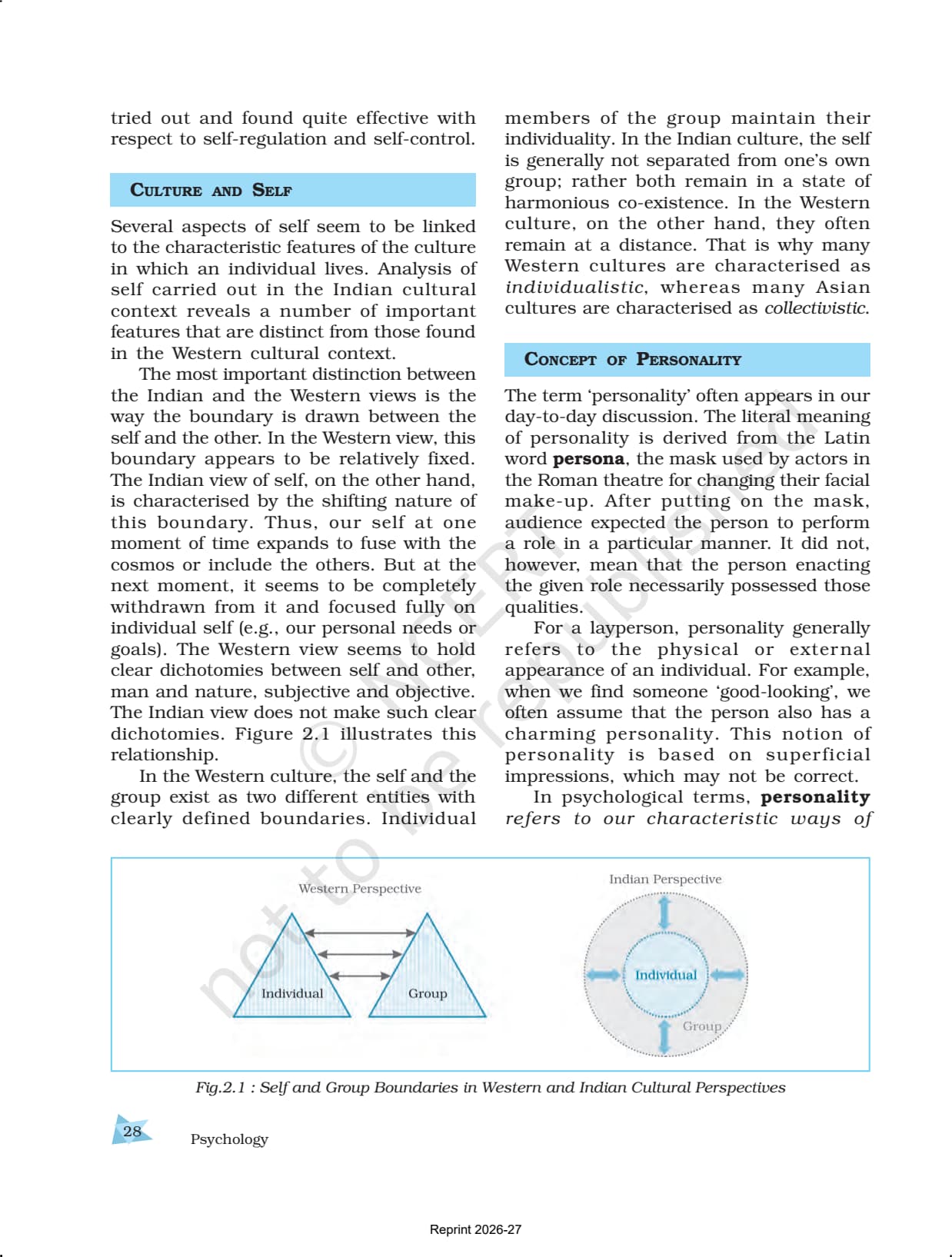
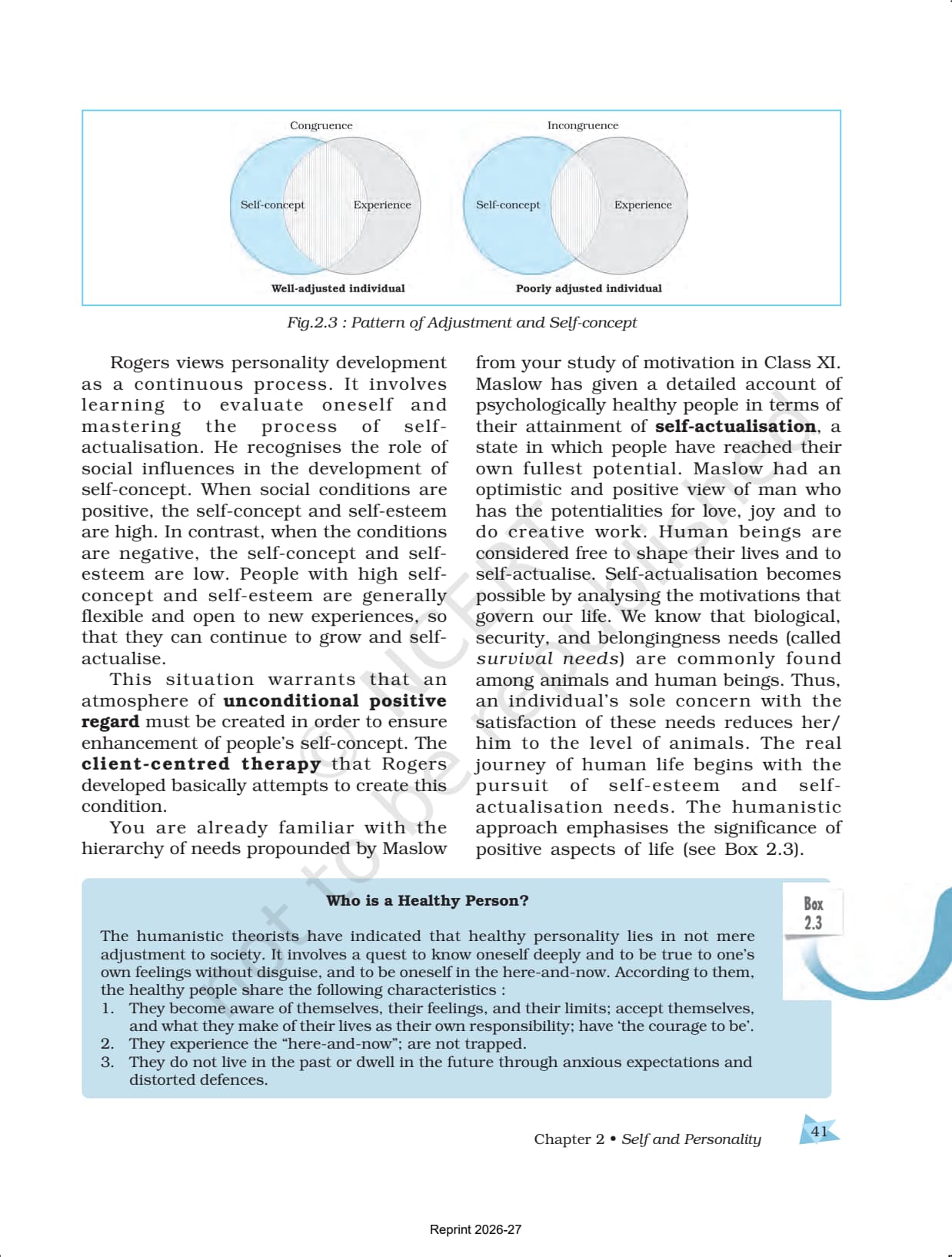
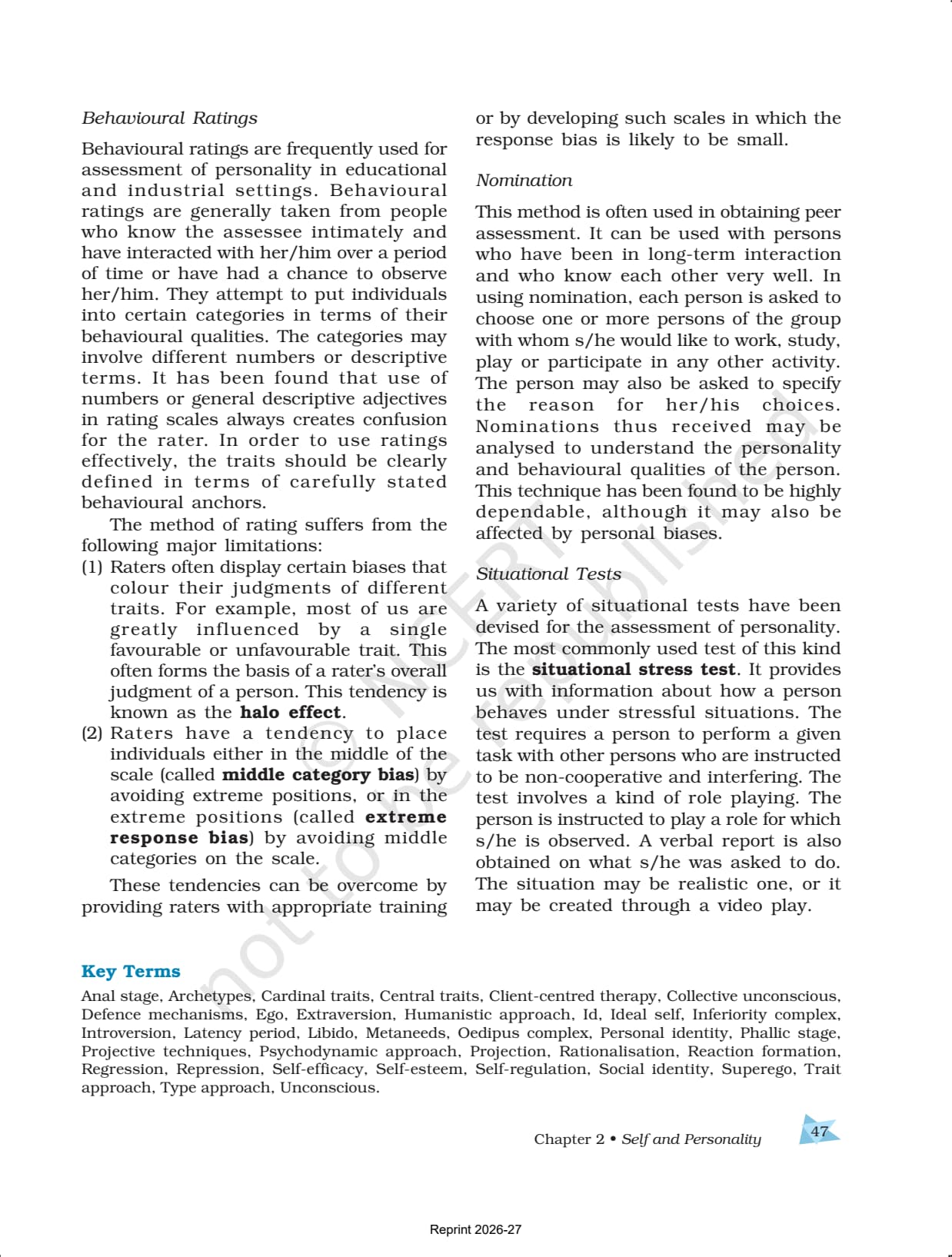
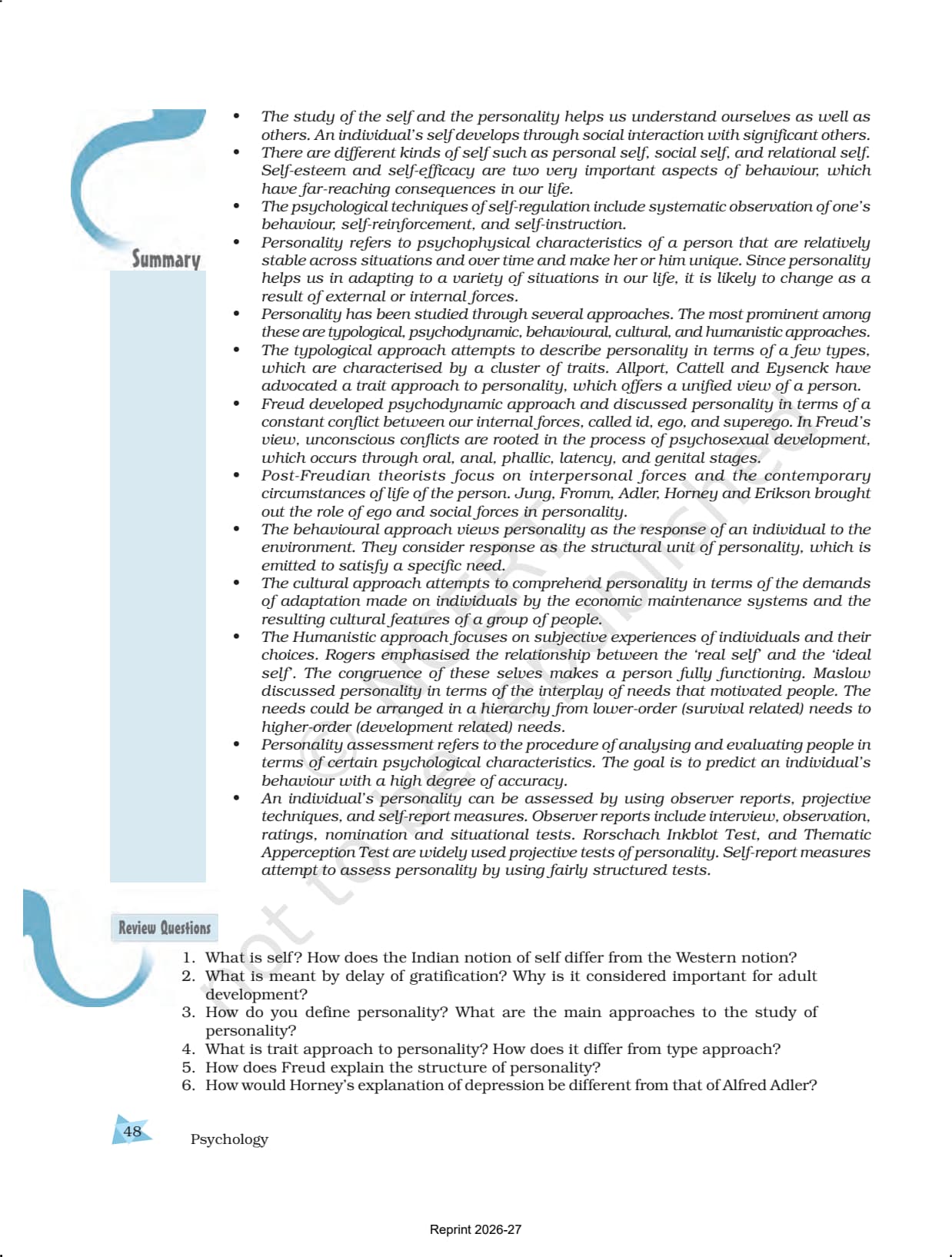
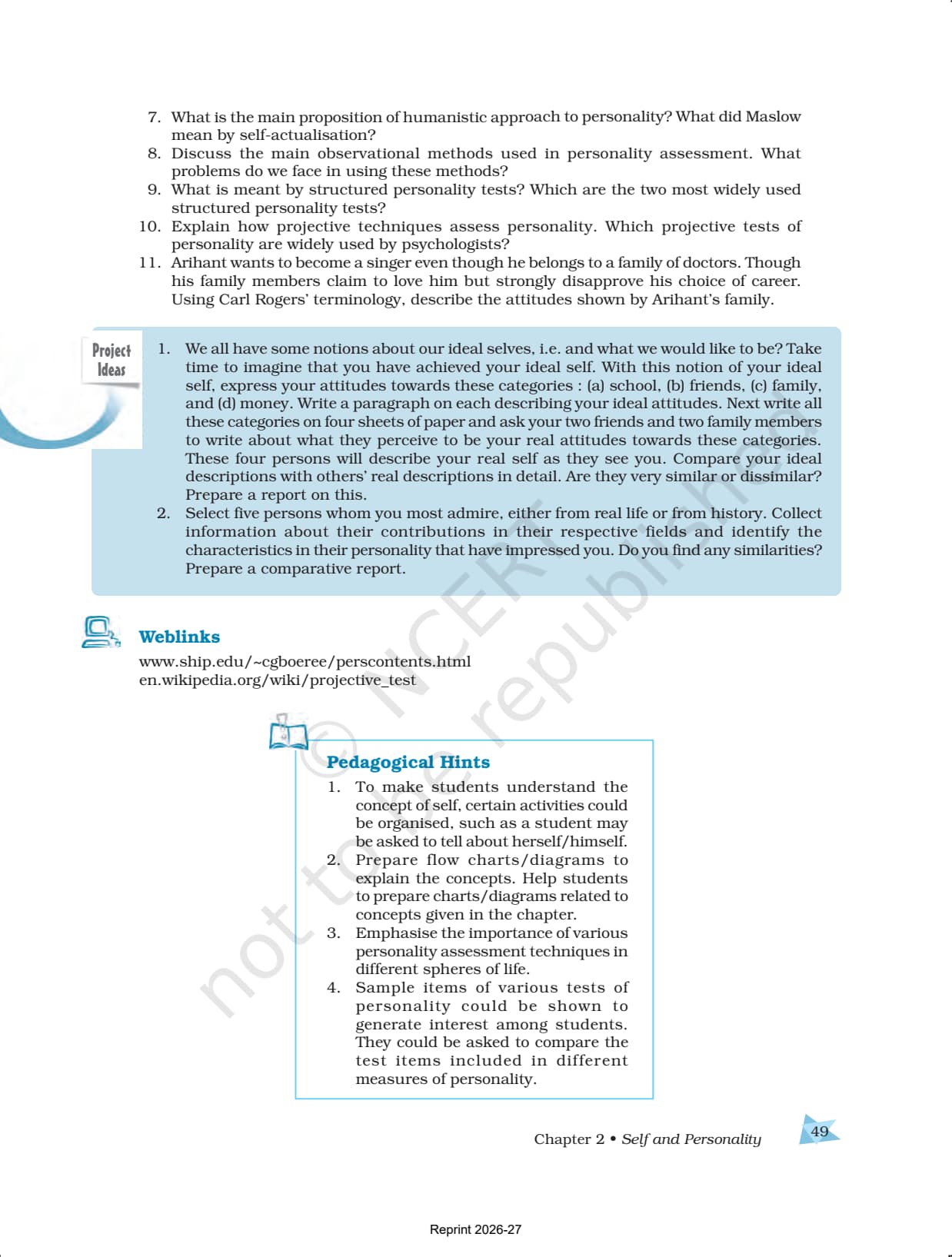
- Free download of the official Self and Personality chapter from the Class 12 Psychology textbook.
- This Class 12 Psychology chapter usually carries 8 to 10 marks in the board paper.
- Pairs with the NCERT Solutions, Notes and Handwritten Notes linked lower on this page.
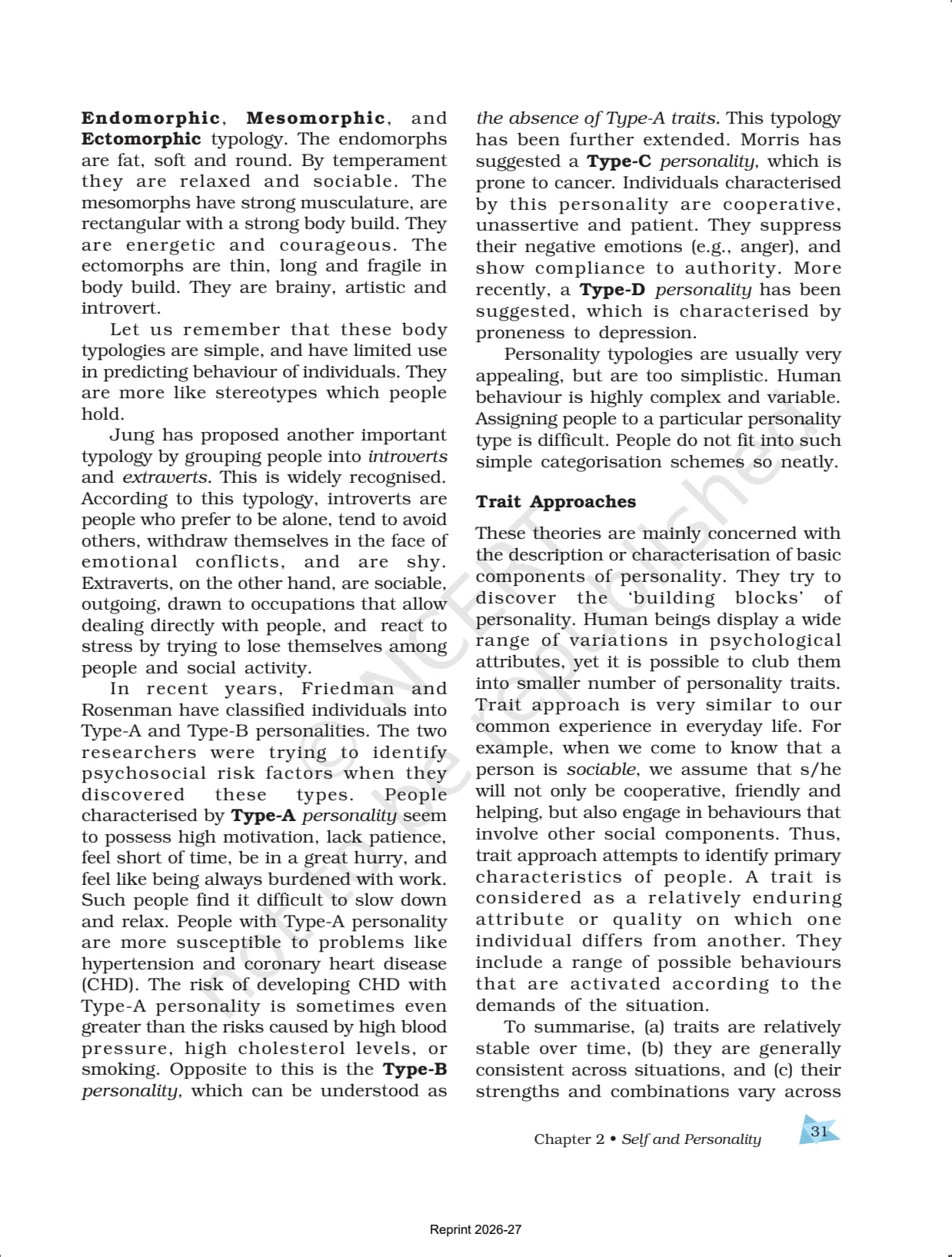
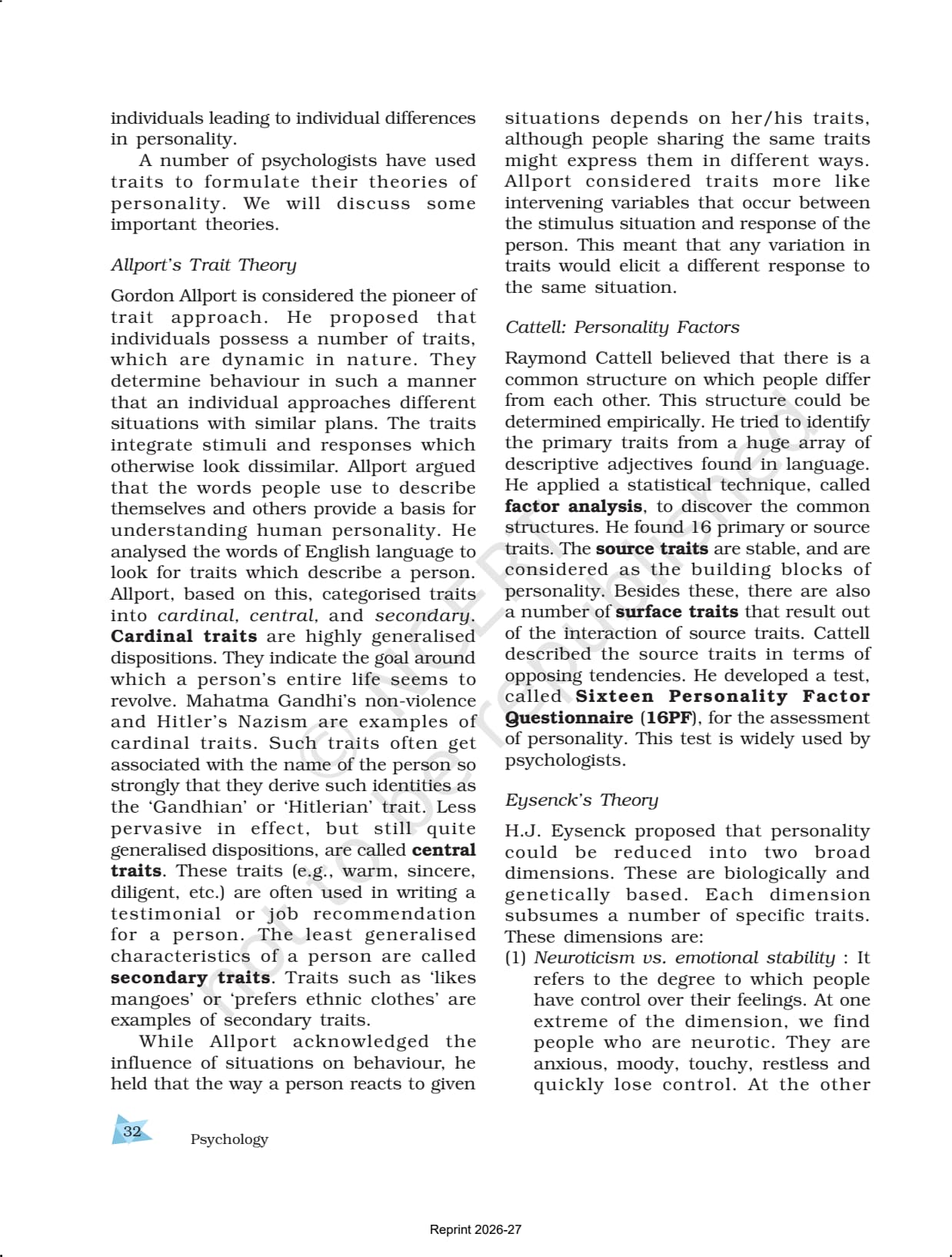
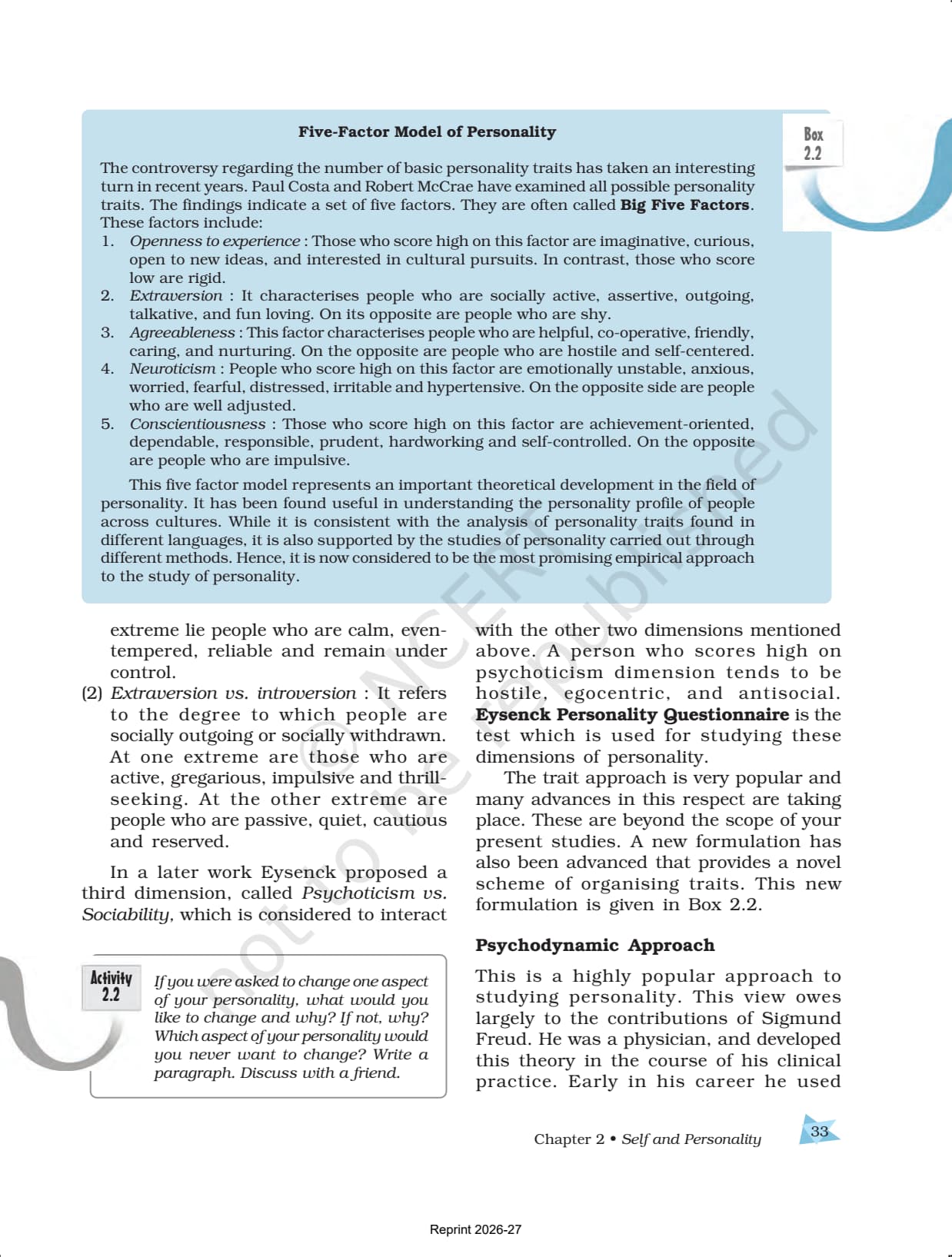
This is the official NCERT Psychology chapter, the same text prescribed by CBSE for the 2026-27 Class 12 board exam.
Student Feedback: In a Collegedunia poll of 6,980 Class 12 Psychology students before the 2026 boards, 67% of students said reading the original NCERT chapter once made the theory answers easier to write. Most students kept the Book PDF open beside the Notes while revising the theories of personality.
Source: 2026-27 Class 12 Psychology student poll. Sample of 6,980 students from CBSE schools across 10 states.
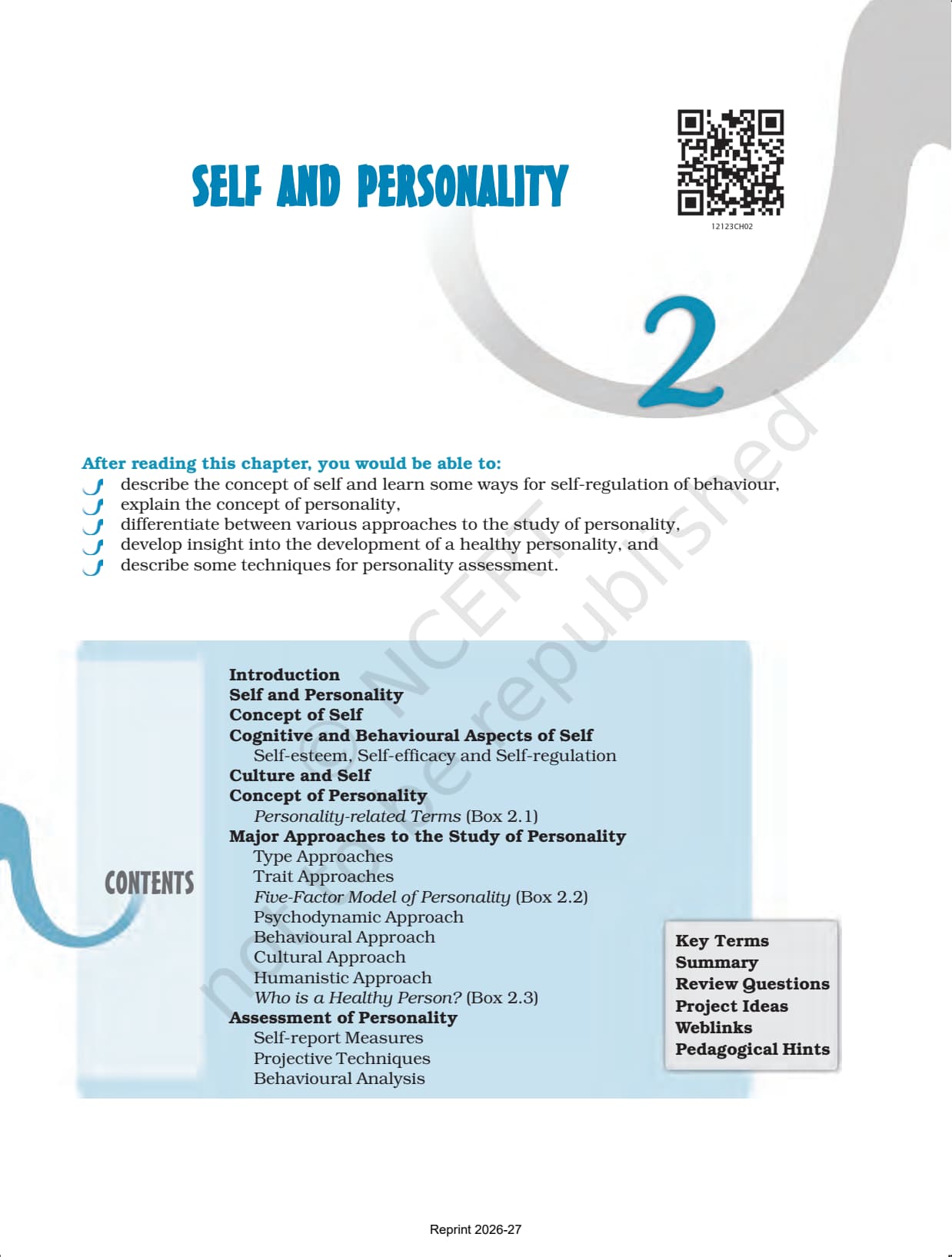
What the Self and Personality NCERT Chapter Covers
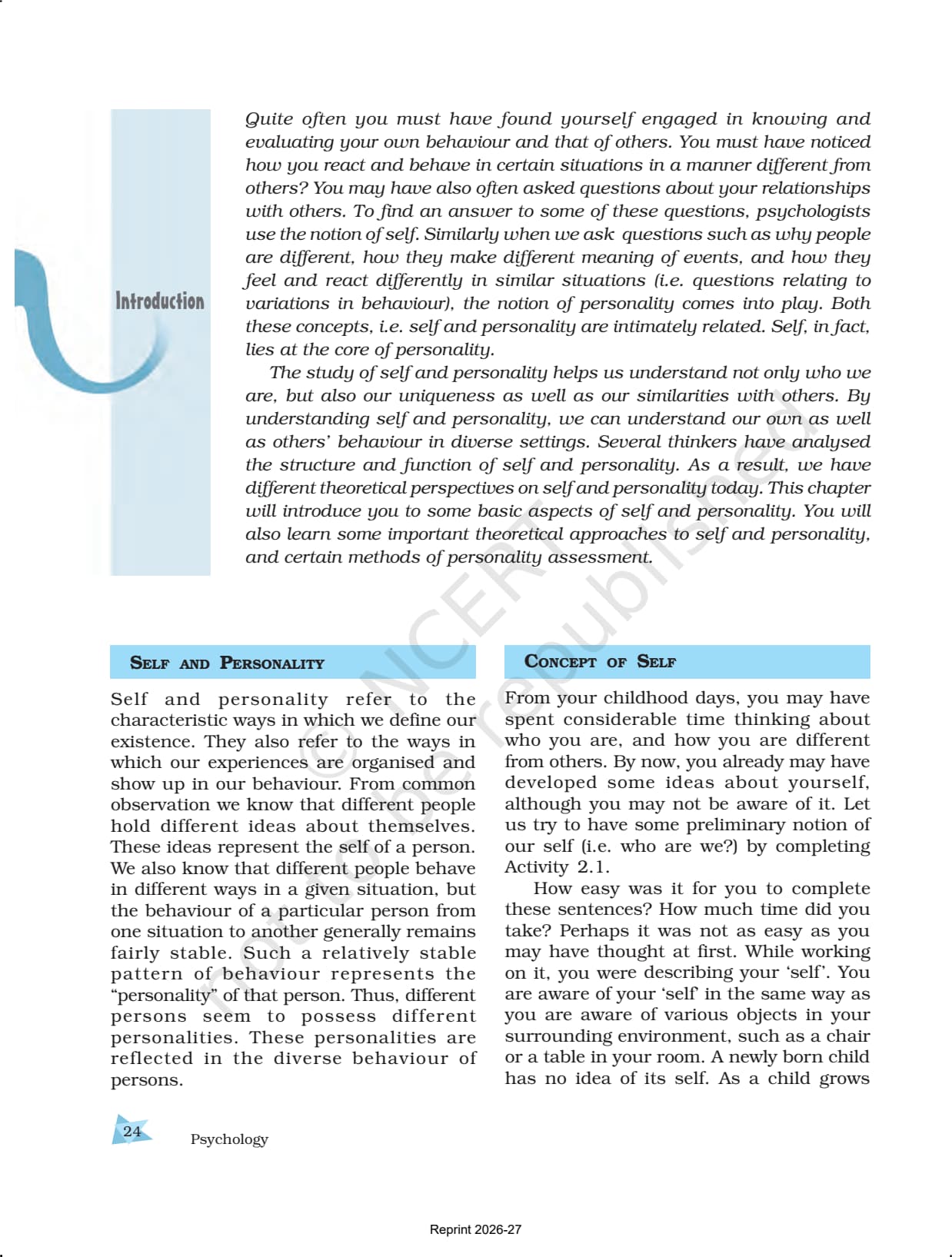
The chapter is the second in the Class 12 Psychology textbook. It moves from the idea of the self to the formal theories of personality and ends with how personality is measured. Reading it once gives the full picture before students turn to summaries.
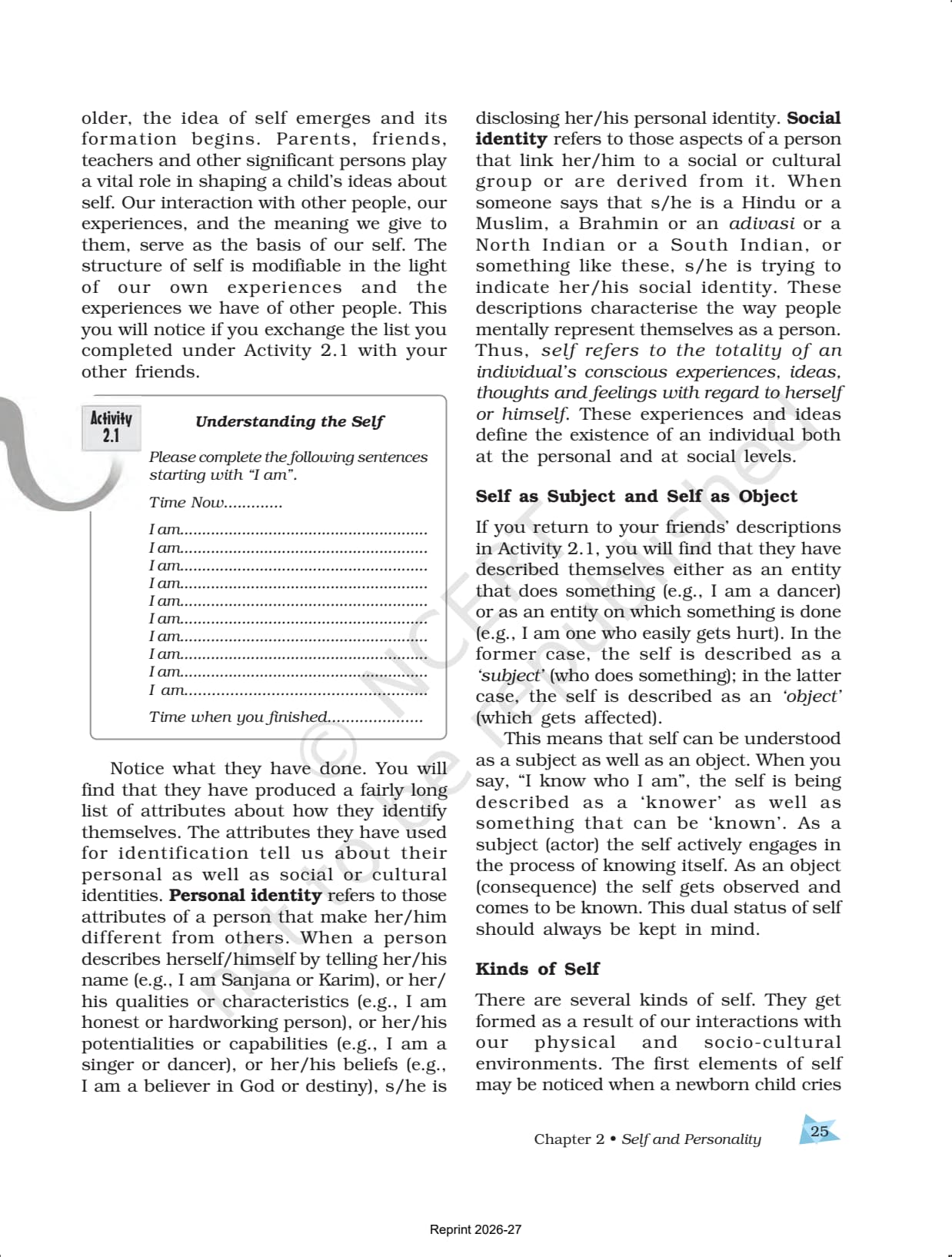
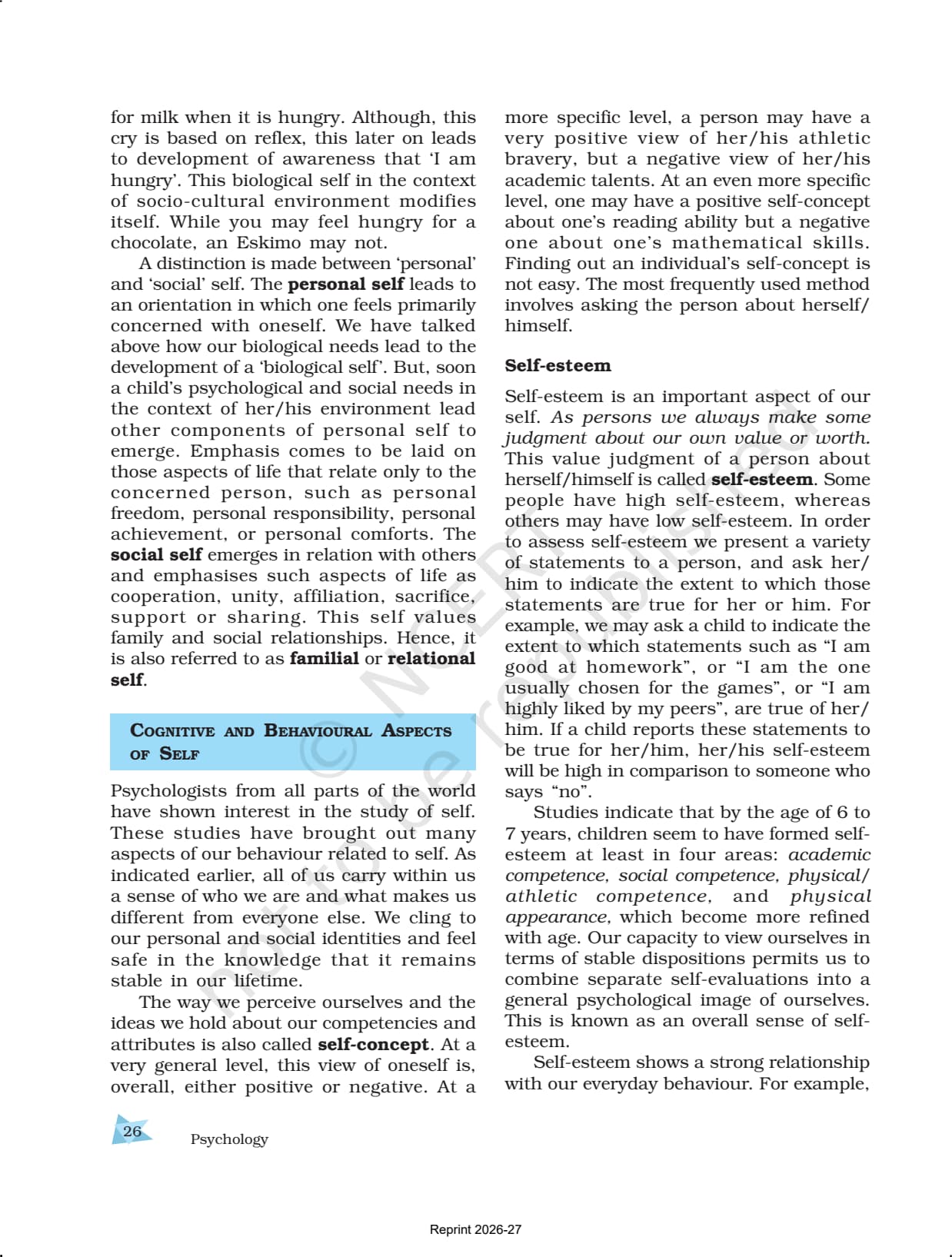
- The self: self-concept, self-esteem, self-efficacy, self-regulation and the Indian versus Western view.
- Personality theories: the type, trait, psychodynamic, behavioural, cultural and humanistic approaches.
- Assessment: self-report tests, observation and projective techniques.
So the chapter is a complete tour of the inner person, from the everyday self to the tools used to study personality. Reading the source text first means the Notes and Solutions then act as revision rather than first learning, which is the order most students find works best.
Chapter Highlights and Important Topics
A quick map of the chapter helps students see what matters most before they read. The highlights below mark the parts that the board paper tests again and again.
| Topic in the chapter | Why it matters |
|---|---|
| The self | Self-esteem, self-efficacy and the Indian versus Western view, a steady short answer. |
| Approaches to personality | Six approaches; a regular "define and list" long answer. |
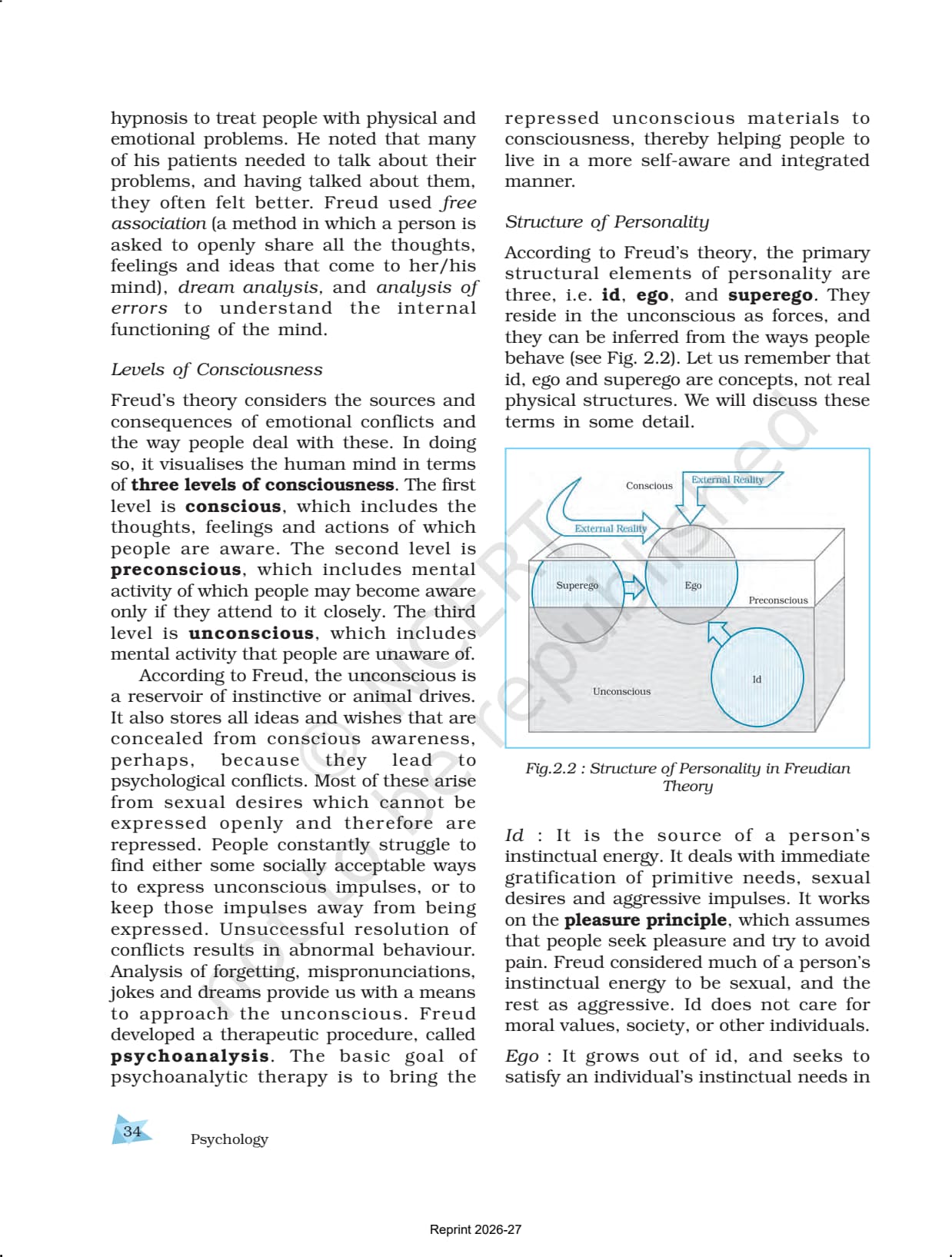
| Freud's structure | The id, ego and superego, the most repeated 6-mark question. |
| Assessment methods | Self-report, observation and projective tests with named examples. |
The single highest-value page in the chapter is the one on Freud's structure of personality, since it returns almost every year. Students should read it slowly and then check the labelled diagram in the Notes.
The Self and the Theories of Personality in the Chapter
The chapter defines personality and then walks through the approaches. Knowing the definition word for word helps in the very-short-answer questions, so the source text is worth reading closely here.
- Definition: personality is the unique and relatively stable pattern of thinking, feeling and acting in a person.
- Type and trait: describe personality, by broad types or by stable traits.
- Psychodynamic: Freud's unconscious id, ego and superego.
- Behavioural, cultural and humanistic: learned habits, cultural adaptation, and growth toward self-actualisation.
The line examiners reward is that personality is both stable and dynamic. Its main features change slowly, yet it can still adapt to internal and external demands, a nuance the chapter text states clearly and that students should quote.
The Assessment Methods in the Chapter
The chapter closes with how personality is measured. The source text names each test, which is why reading it once saves students from mixing them up. The table sums up the assessment block.
| Method | Named tests in the chapter |
|---|---|
| Self-report | MMPI and the 16 PF (structured tests). |
| Observation and interview | Behaviour ratings and the interview method. |
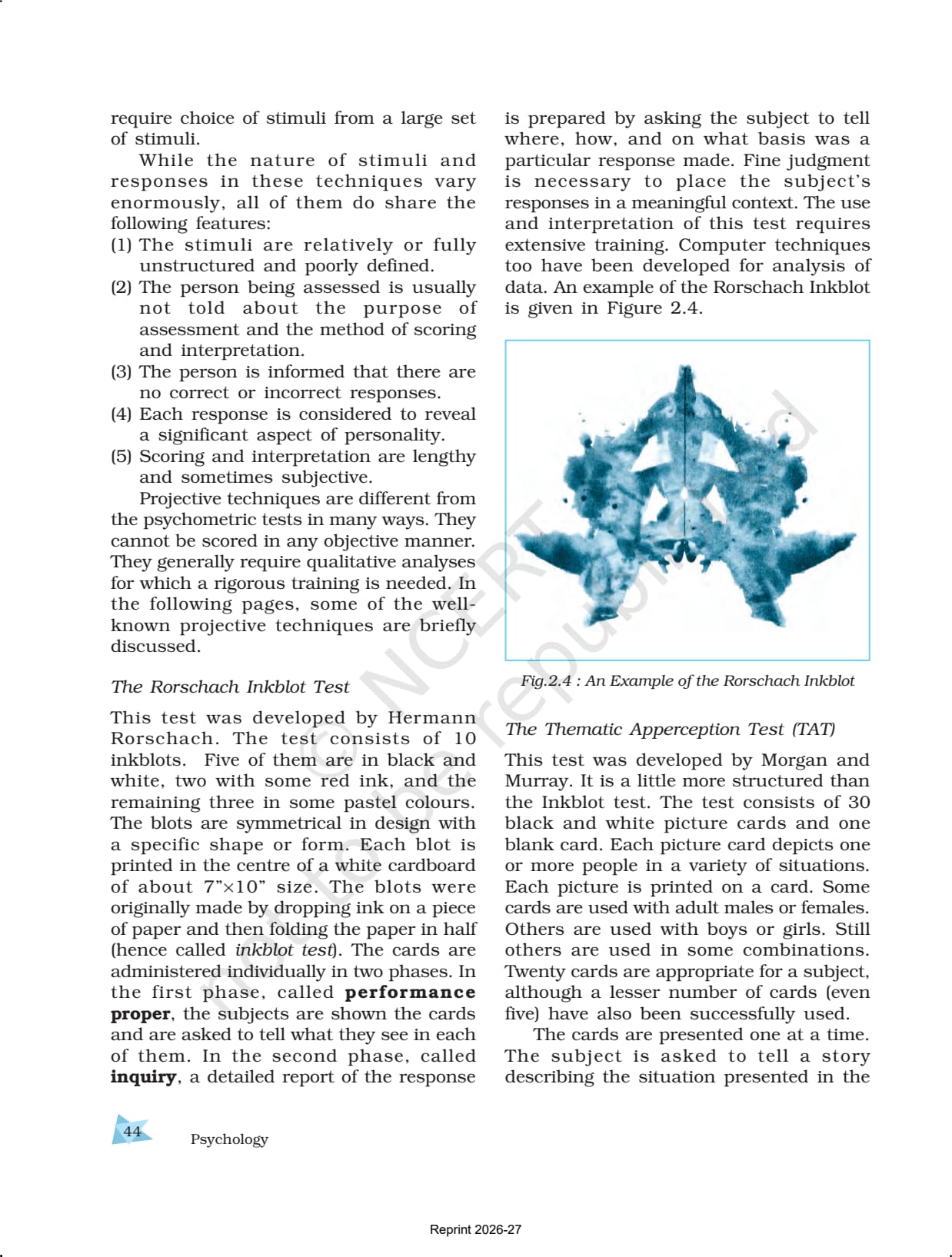
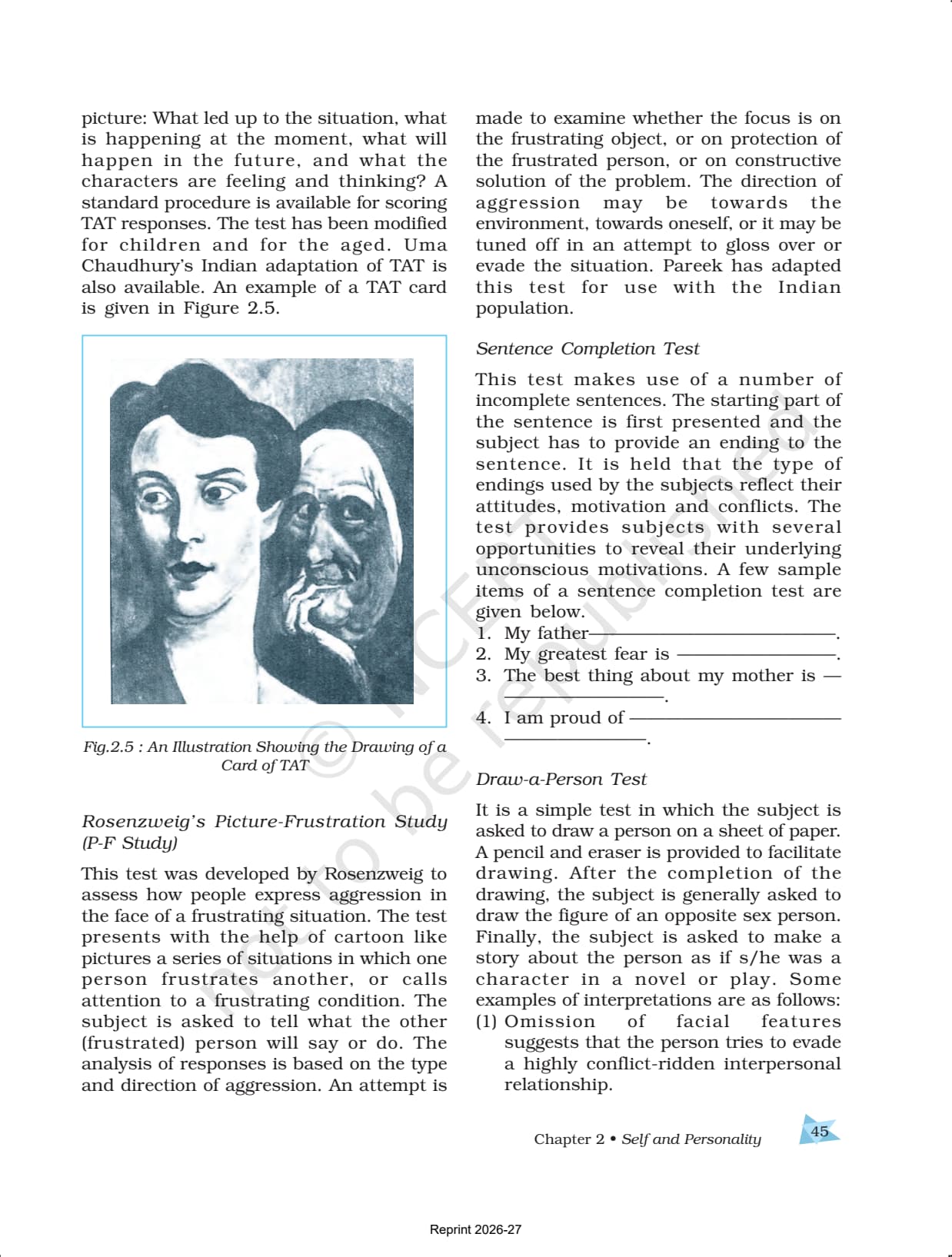
| Projective | Rorschach inkblot and the TAT. |
A key fact the chapter makes plain is that projective tests use vague stimuli so hidden feelings get projected onto them. The two widely used structured tests, MMPI and 16 PF, are a common fill-in-the-blank, so note them while reading.
How to Download and Use the NCERT Chapter PDF
The PDF is free and works on any device. A simple reading plan turns the source text into real exam preparation rather than passive reading.
- First read: go through the whole chapter once without stopping to memorise.
- Second read: underline every theorist, term and test in the chapter.
- Then summarise: move to the Notes to compress what you read.
- Finally test: attempt the NCERT Solutions for the 11 back-exercise questions.
Reading the source text first means the Notes and Solutions become revision, not first learning. Students who follow this order report fewer mix-ups between theorists and tests in the exam.
How the Book PDF Pairs with the Solutions and Notes
The Book PDF gives the original text. To revise and self-test, students should use it alongside the other resources for the same chapter, all linked in the table below.
| Resource | Best used for |
|---|---|
| Self and Personality Class 12 NCERT Solutions | Step-by-step answers to all 11 back-exercise questions |
| Self and Personality Class 12 Notes | Full chapter summary with every theorist, term and test |
| Self and Personality Class 12 Handwritten Notes | Last-minute, one-shot revision in a scanned notebook style |
Tip: read the chapter PDF first, summarise with the Notes, then test yourself with the Solutions. That order builds memory faster than jumping straight to answers.
Self and Personality PDF Download Formats and Languages
The chapter PDF is offered in more than one form, so students can pick what suits their device and revision style. The download card at the top of the page carries each option.
- Normal and HD PDF: the class 12 psychology chapter 2 pdf comes in a normal size for quick downloads and an HD version for clear printing.
- English medium: the official NCERT chapter in simple English for the CBSE board paper.
- Full-book pack: the chapter sits in the complete Class 12 Psychology textbook PDF, so students can read Chapter 1 onwards in one file.
- Offline use: a saved PDF lets students read on a phone without internet the night before a test.
Many students search for the class 12 psychology chapter 2 text on their phone before a test, so a saved PDF means revision is possible anywhere. Keep the chapter PDF beside the Notes for the fastest study sessions.
All Class 12 Psychology NCERT Book PDFs by Chapter
The table links the NCERT Book PDF for every chapter in Class 12 Psychology, so students can move across the course in one click. Self and Personality is highlighted.
| Chapter | NCERT Book PDF |
|---|---|
| Chapter 1 | Variations in Psychological Attributes |
| Chapter 2 | Self and Personality |
| Chapter 3 | Meeting Life Challenges |
| Chapter 4 | Psychological Disorders |
| Chapter 5 | Therapeutic Approaches |
| Chapter 6 | Attitude and Social Cognition |
| Chapter 7 | Social Influence and Group Processes |
FAQs on Self and Personality NCERT Book PDF
Self and Personality Class 12 NCERT Book PDF Common Questions
Ques. Where can I download the Self and Personality Class 12 NCERT Book PDF?
Ans. You can download the Self and Personality Class 12 Psychology NCERT chapter PDF free from this page. It is the official 2026-27 CBSE-prescribed text and covers the self, the theories of personality and the assessment methods.
Ques. What topics are in the Self and Personality NCERT chapter?
Ans. The chapter covers the self (self-concept, self-esteem, self-efficacy, self-regulation), the six approaches to personality, Freud's id, ego and superego, and the methods of personality assessment.
Ques. How is personality defined in the NCERT chapter?
Ans. The chapter defines personality as the unique and relatively stable pattern of thinking, feeling and acting in a person. It is both stable, since main features change slowly, and dynamic, since it can adapt over time.
Ques. Should I read the Book PDF before the Notes and Solutions?
Ans. Yes. Reading the original chapter once gives the full picture, so the Notes act as a summary and the Solutions as a self-test. This order helps students avoid mixing up theorists and tests in the exam.
Ques. Is the NCERT Book PDF enough for the board exam?
Ans. The chapter text is the core, but for full marks students should pair it with the NCERT Solutions for the 11 back-exercise questions and the Notes for quick revision before the board exam.



Comments