



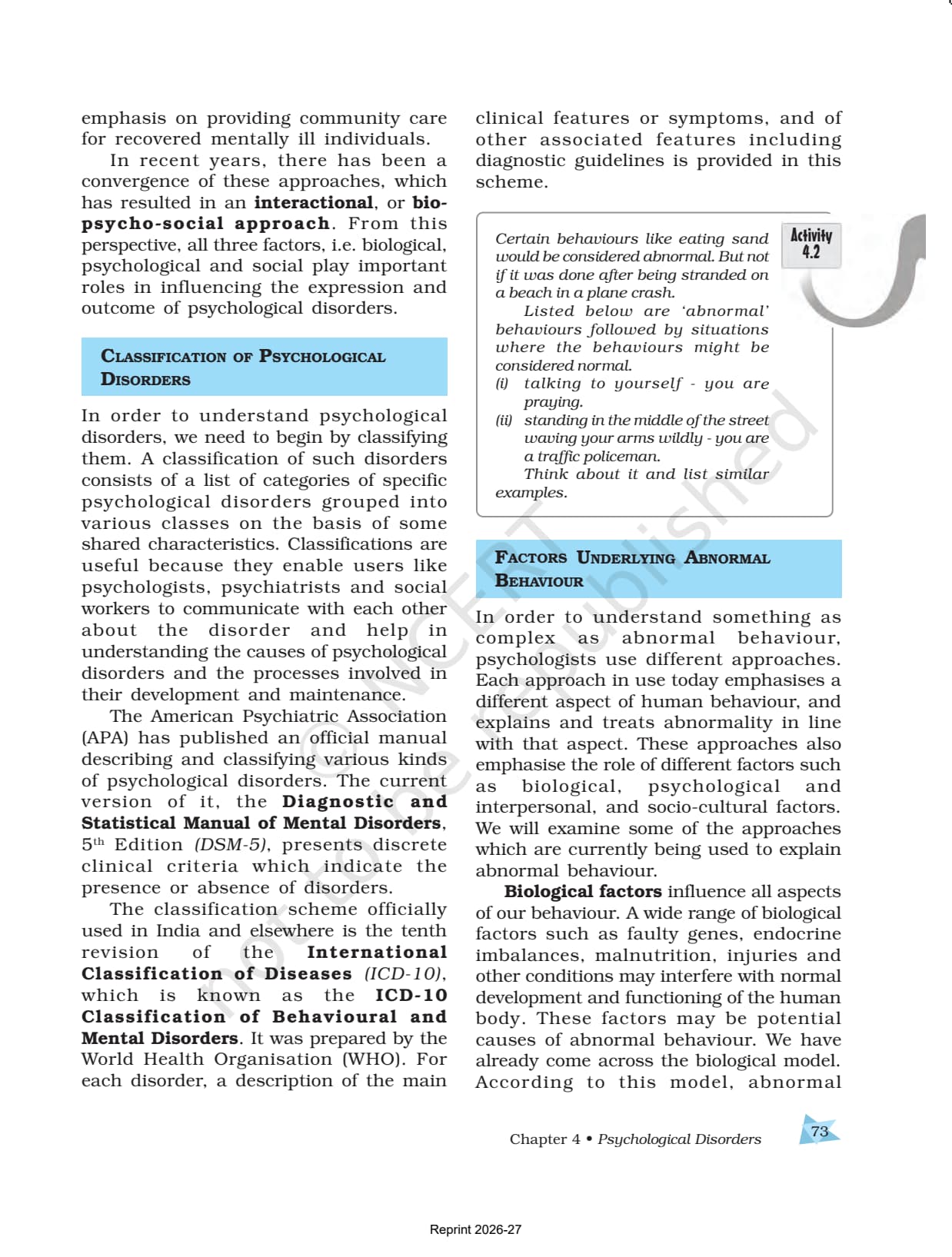
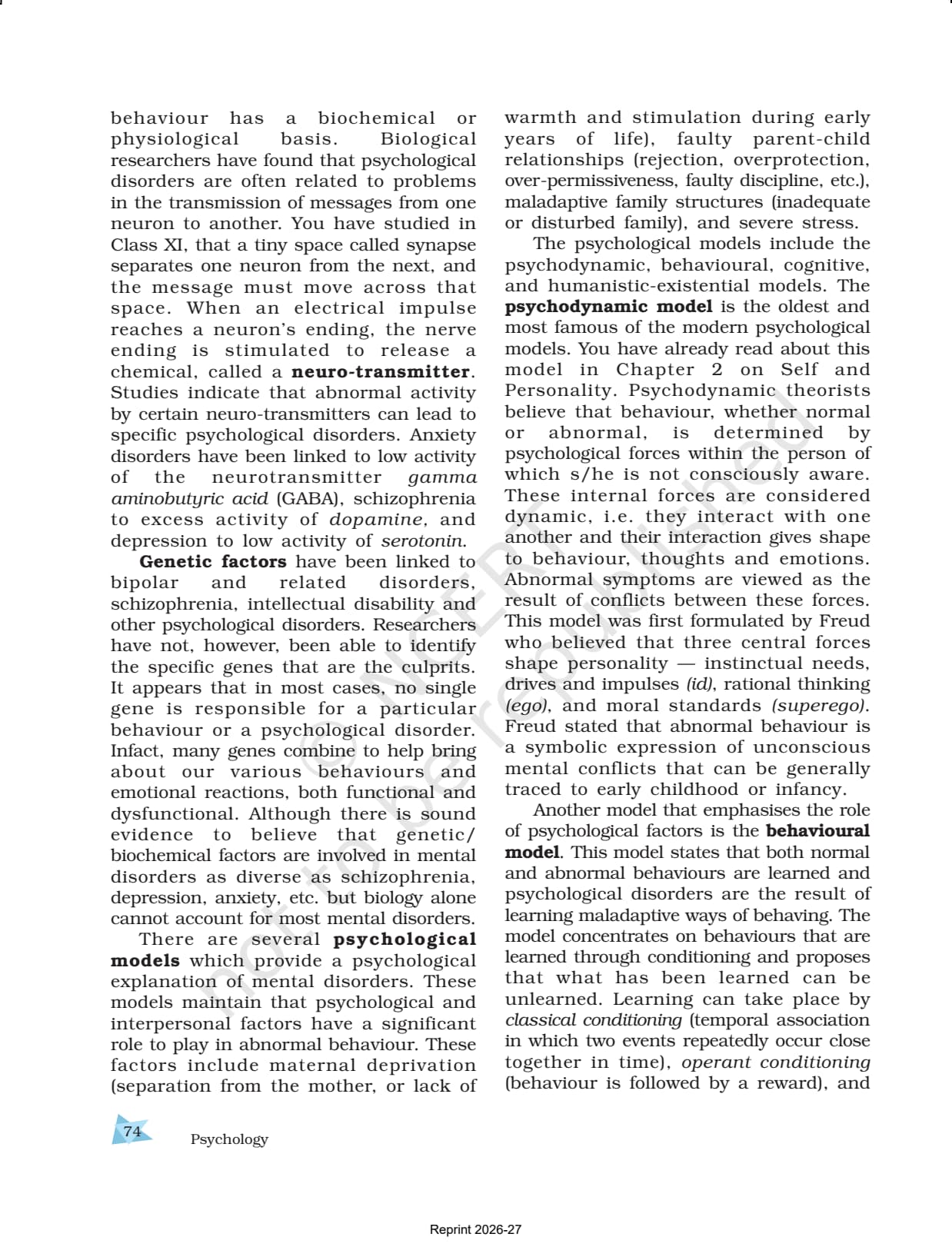
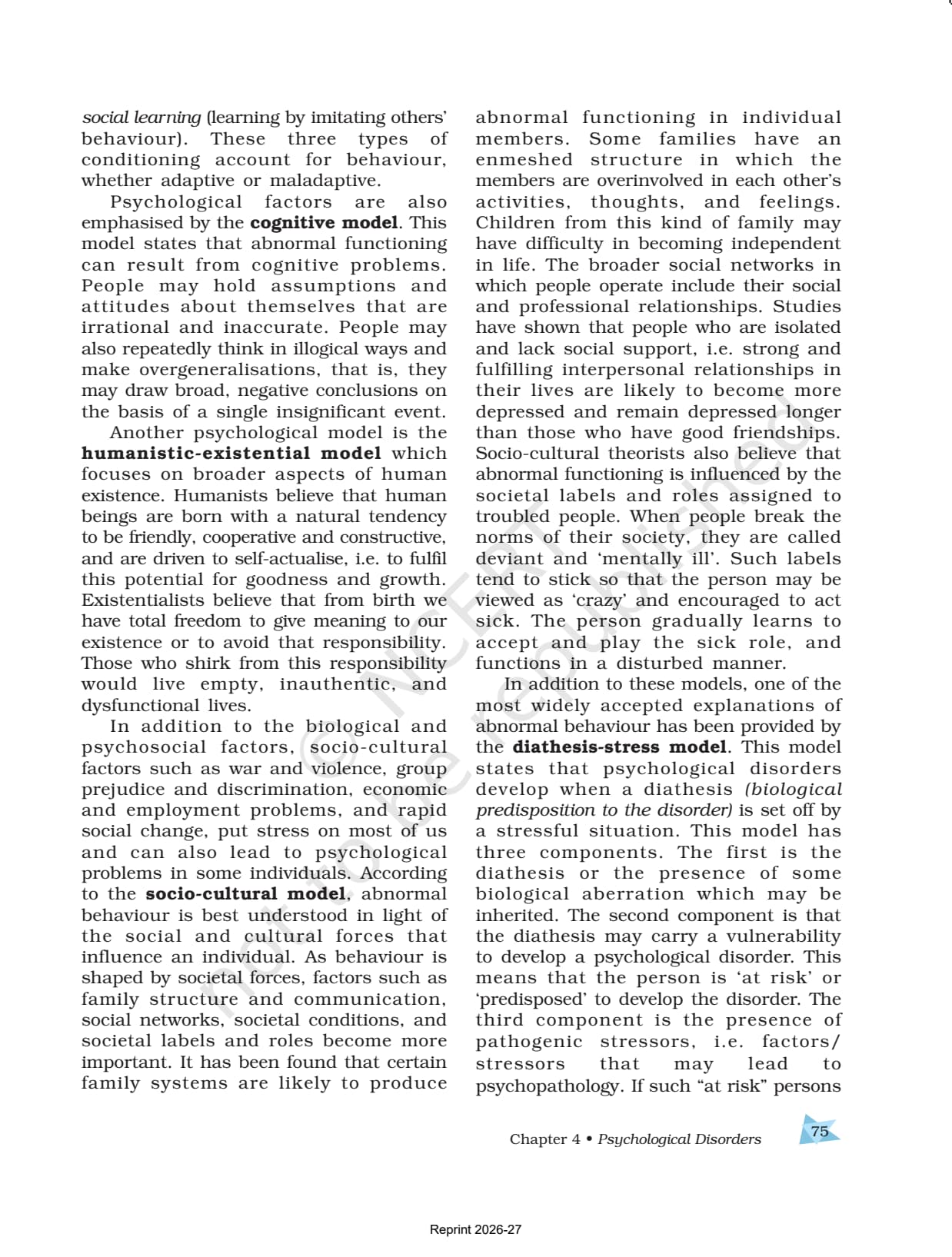
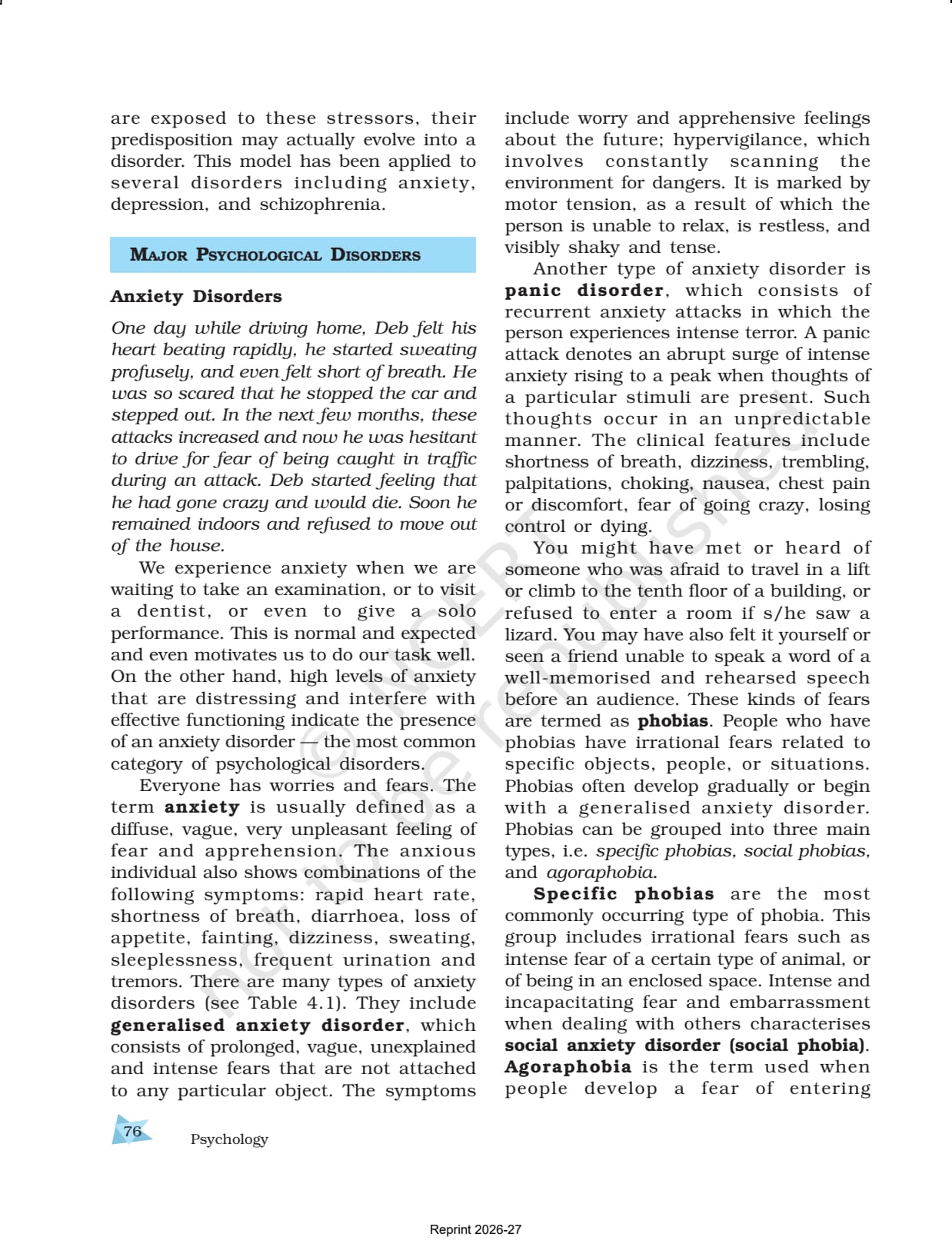
The Psychological Disorders Class 12 PDF is the official NCERT chapter on abnormality and the main mental disorders from the Class 12 Psychology textbook. This page lets students download the original Chapter 4 text and case examples for the 2026-27 CBSE syllabus. Reading the source chapter is the best way to understand what makes behaviour abnormal and how disorders are classified.
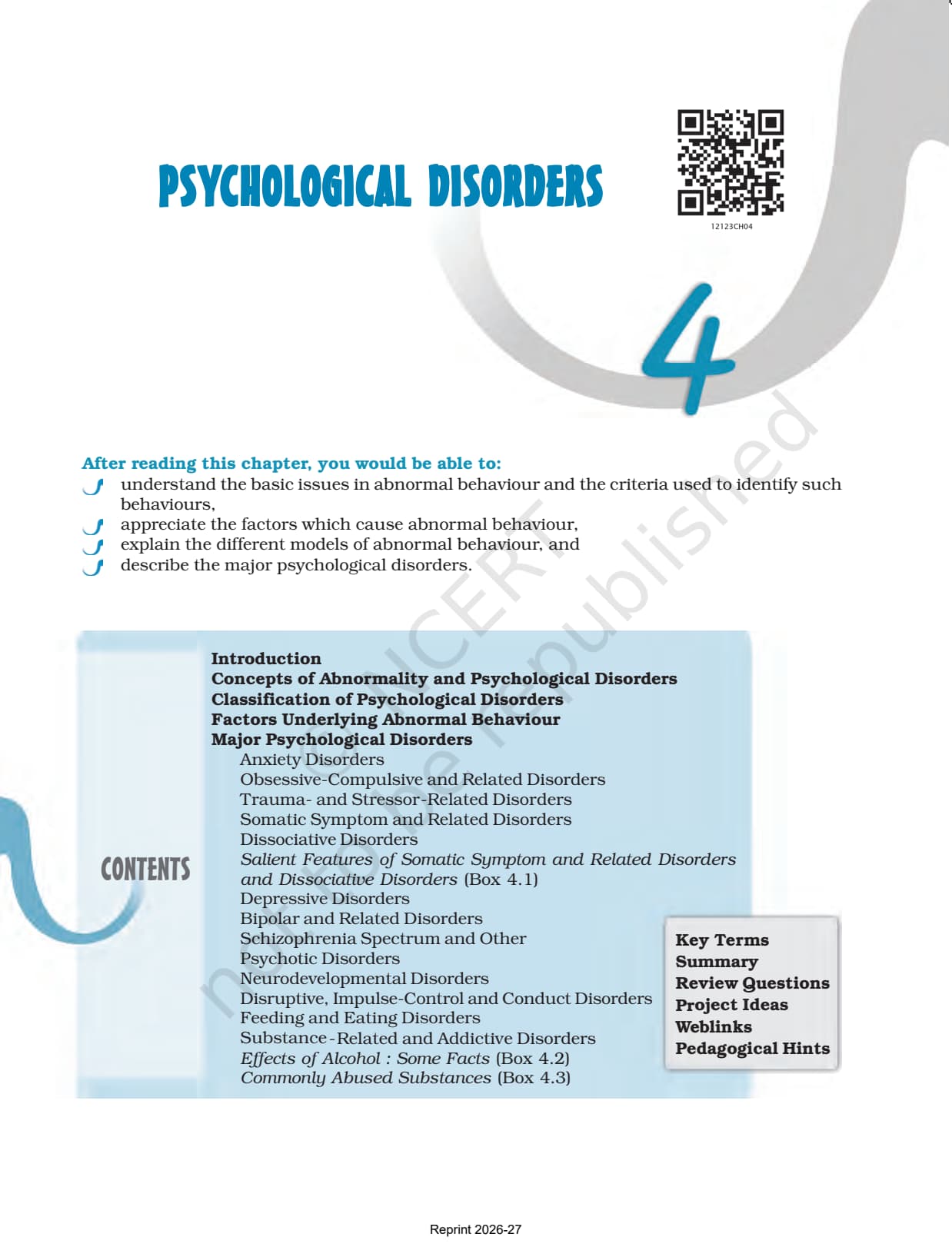
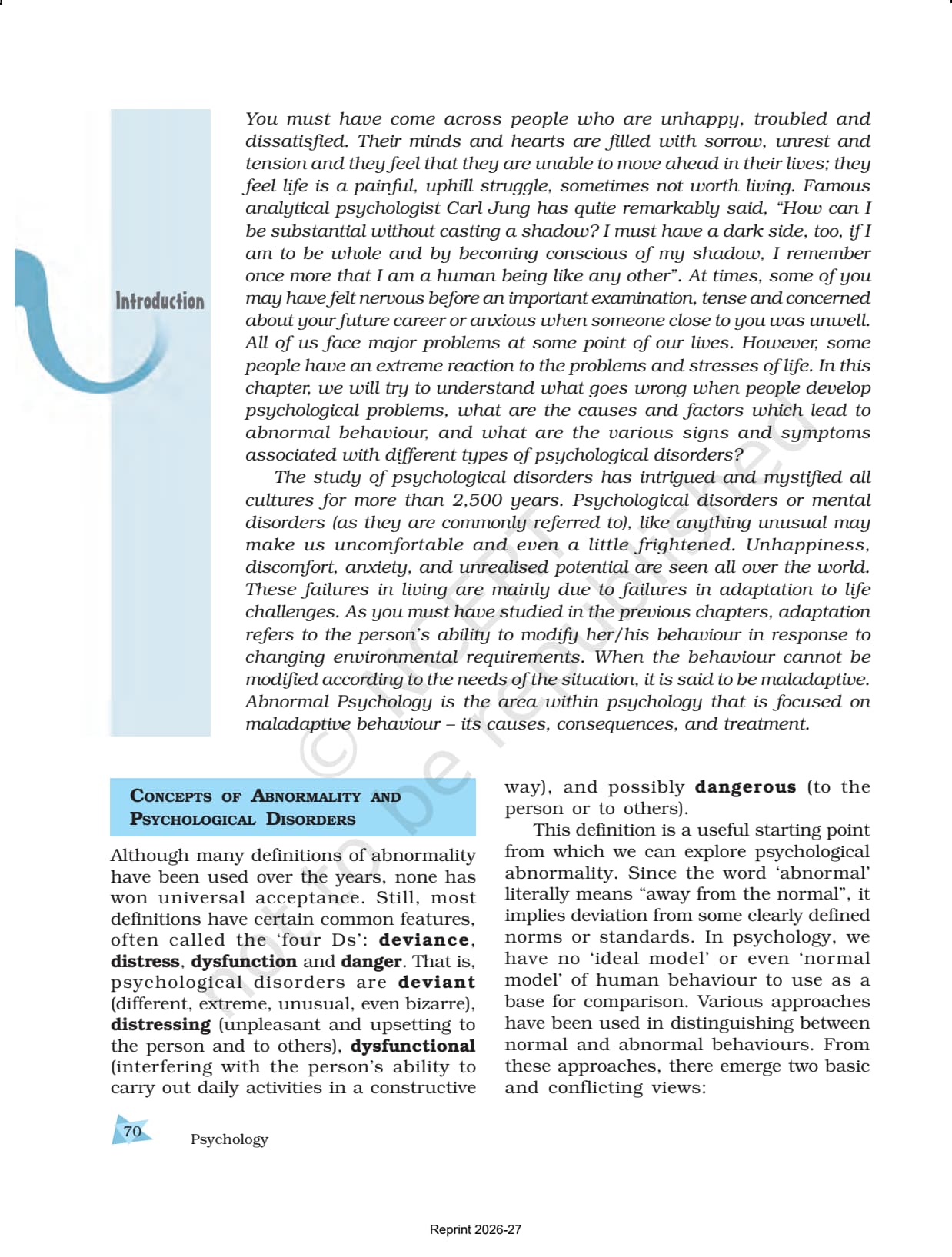
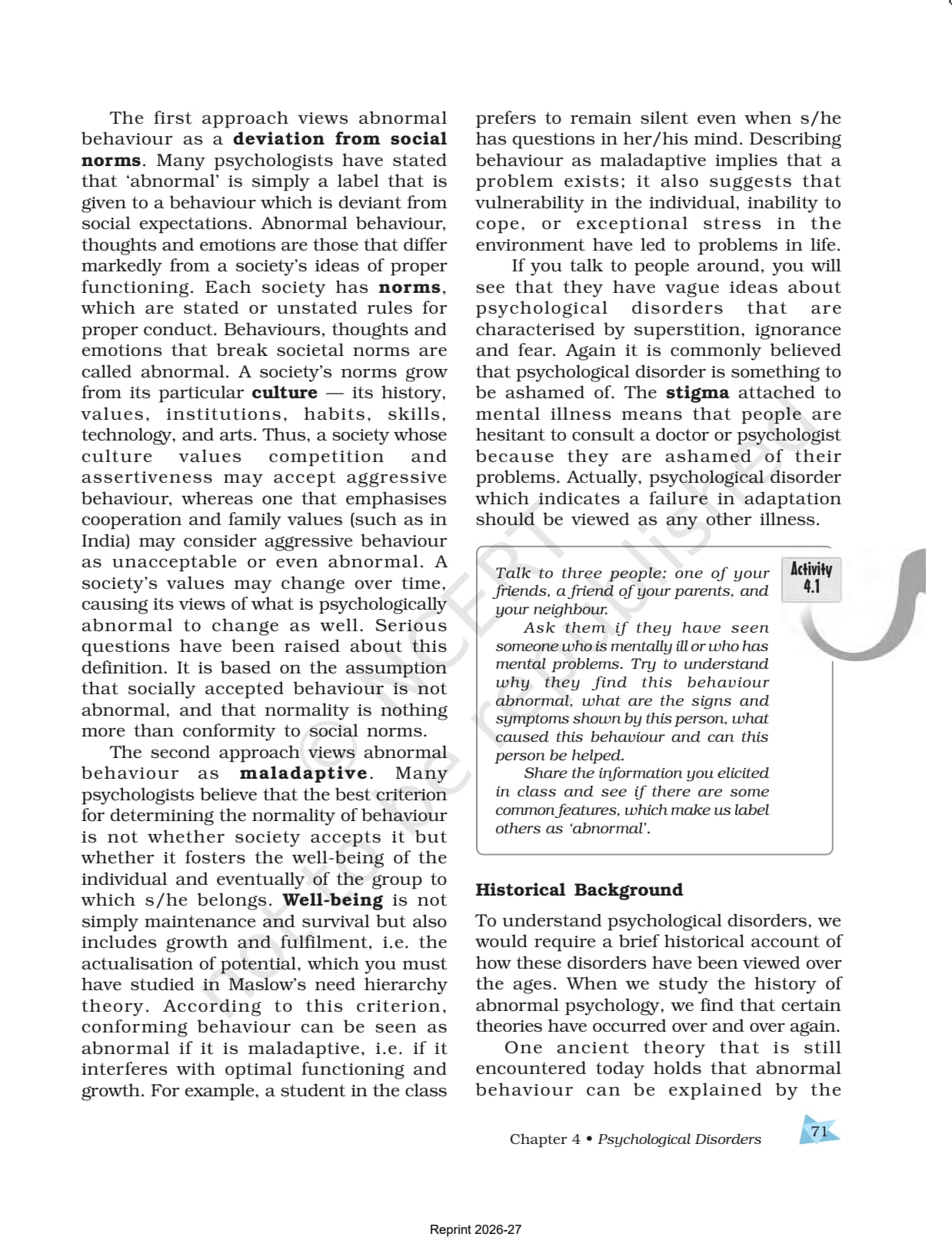
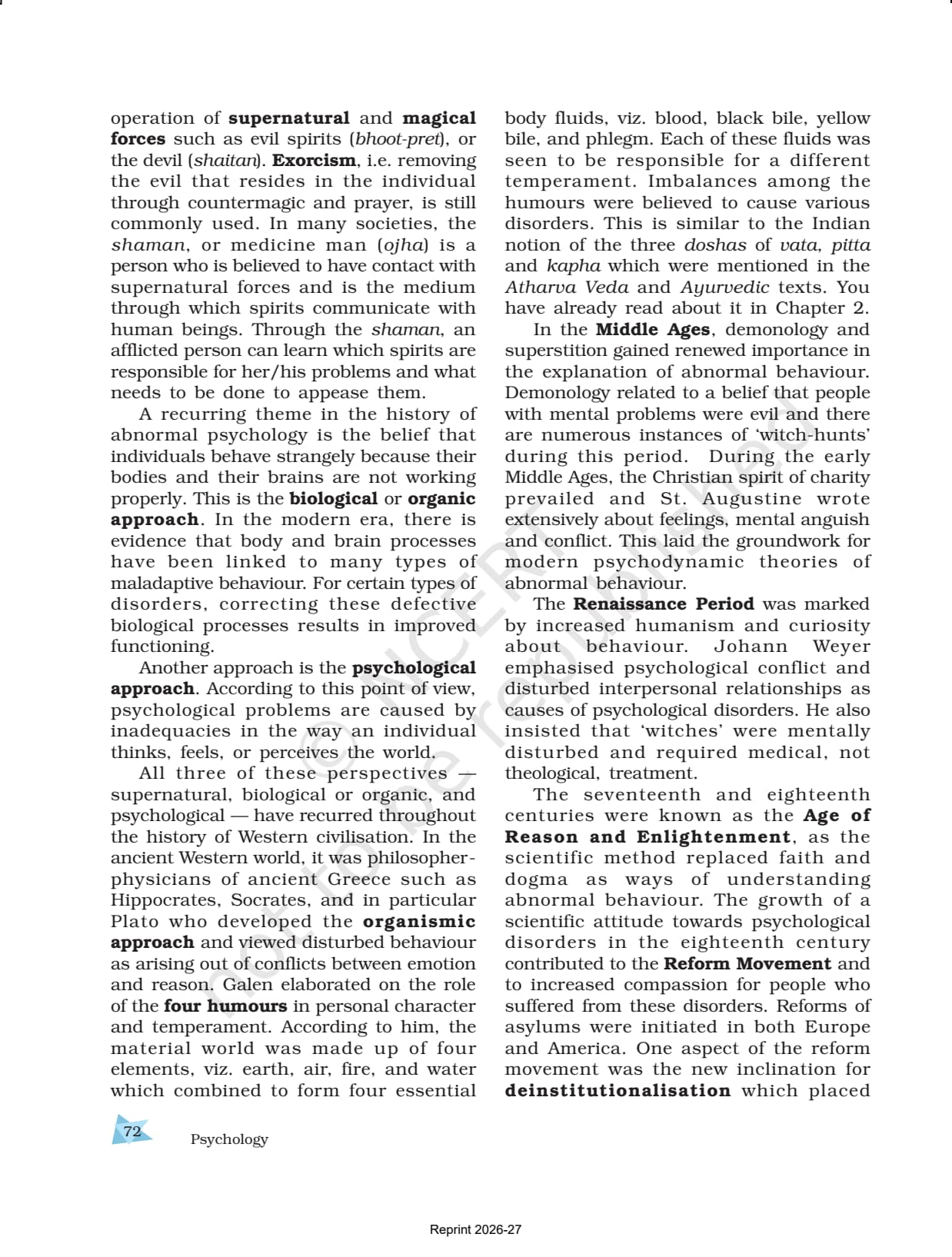
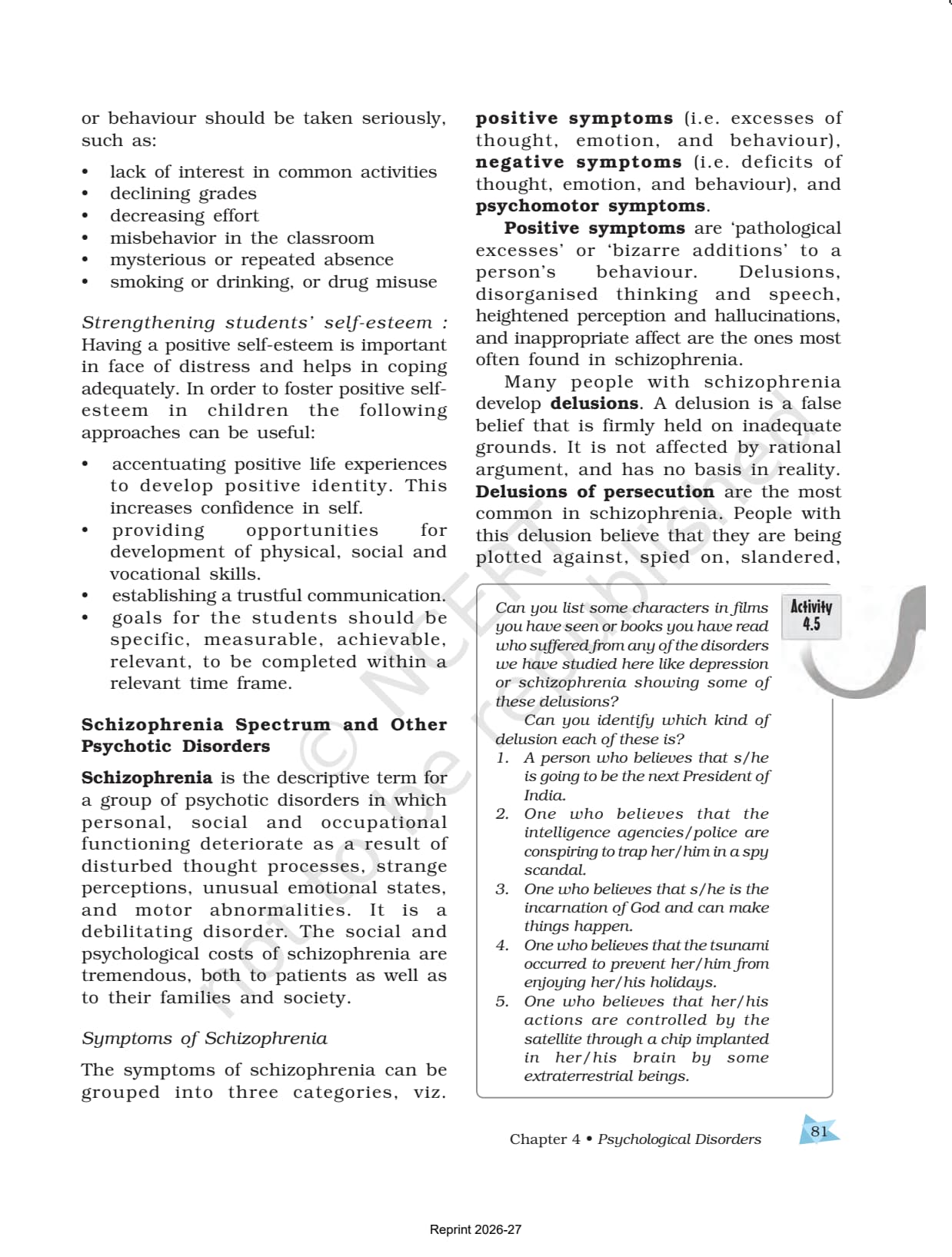
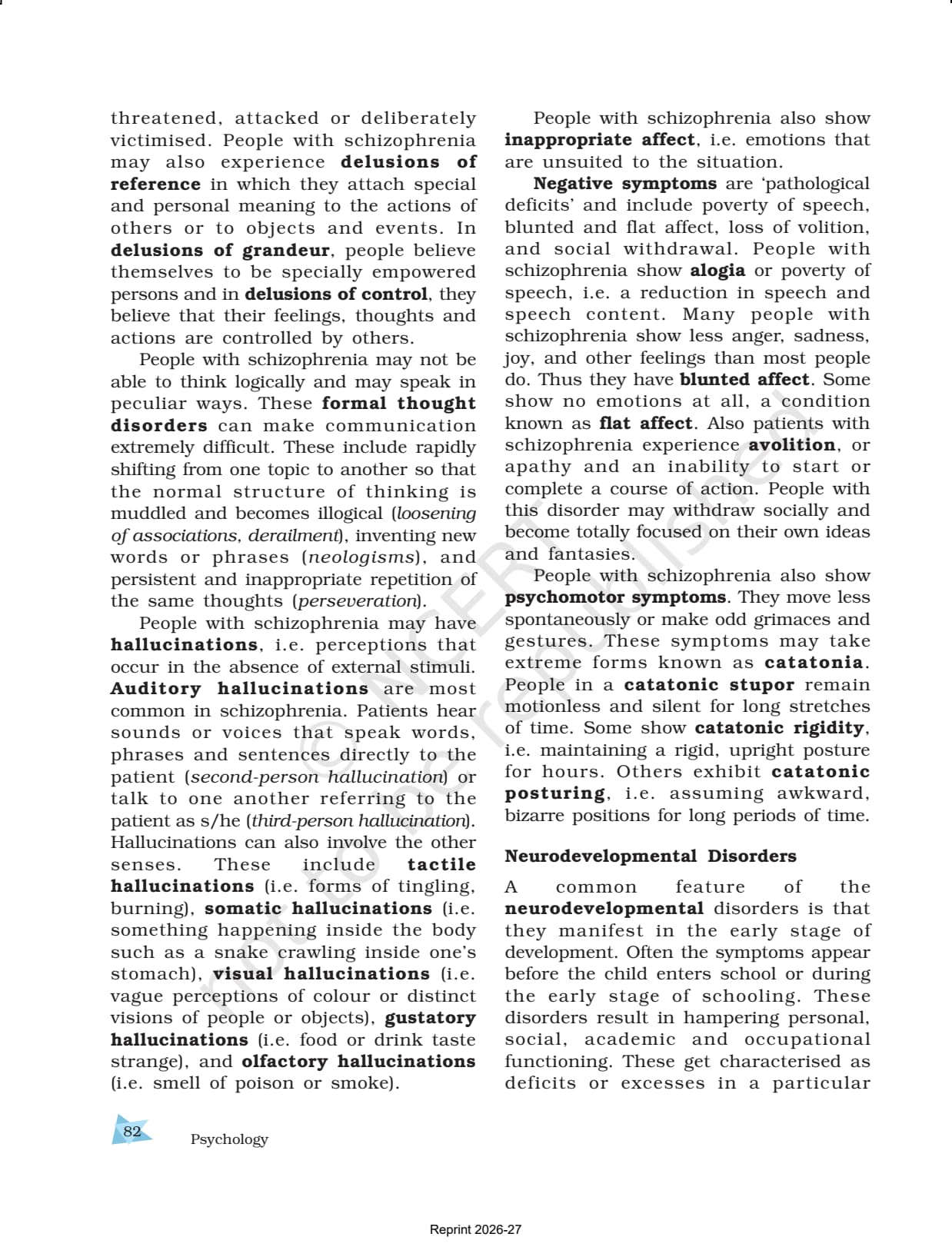
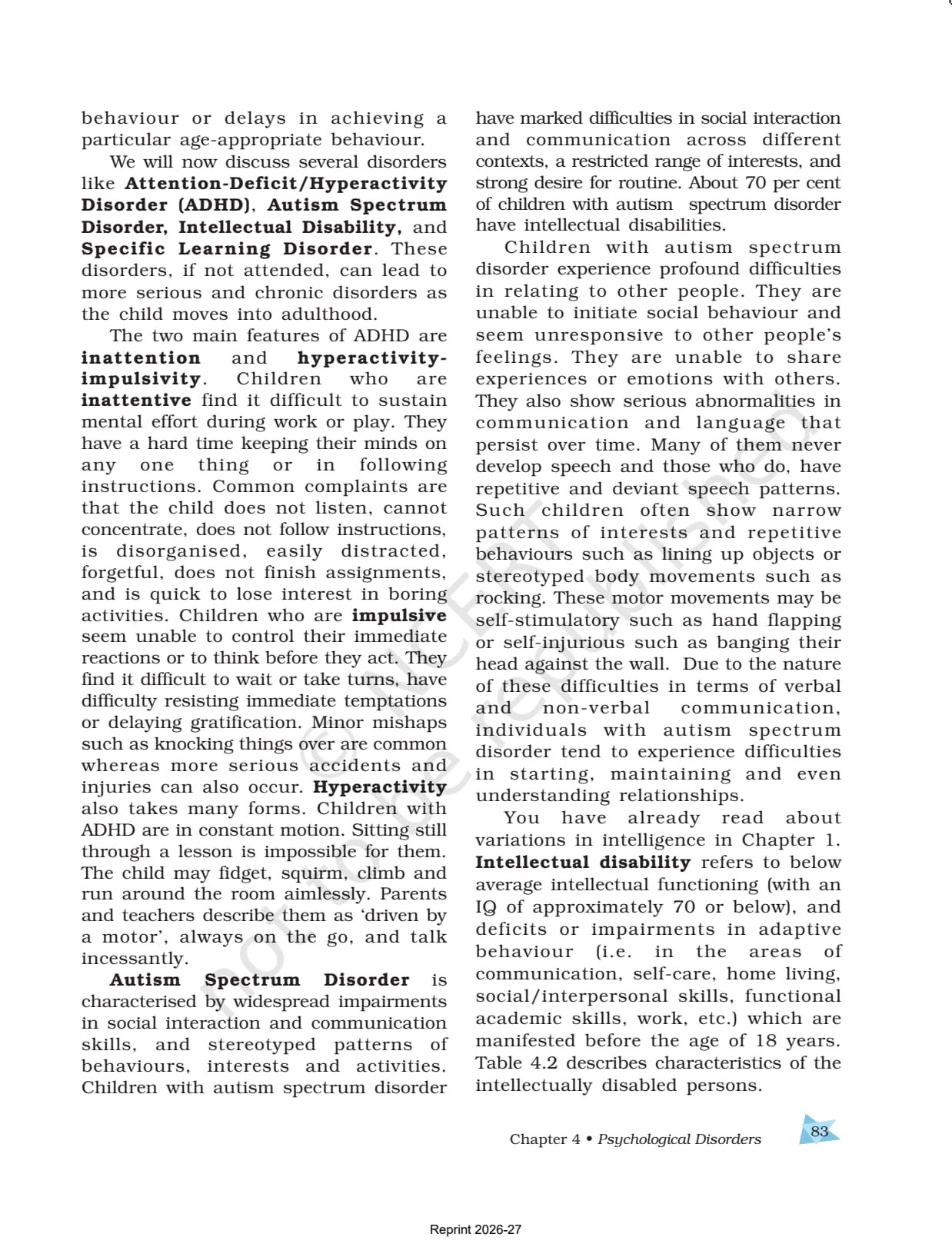
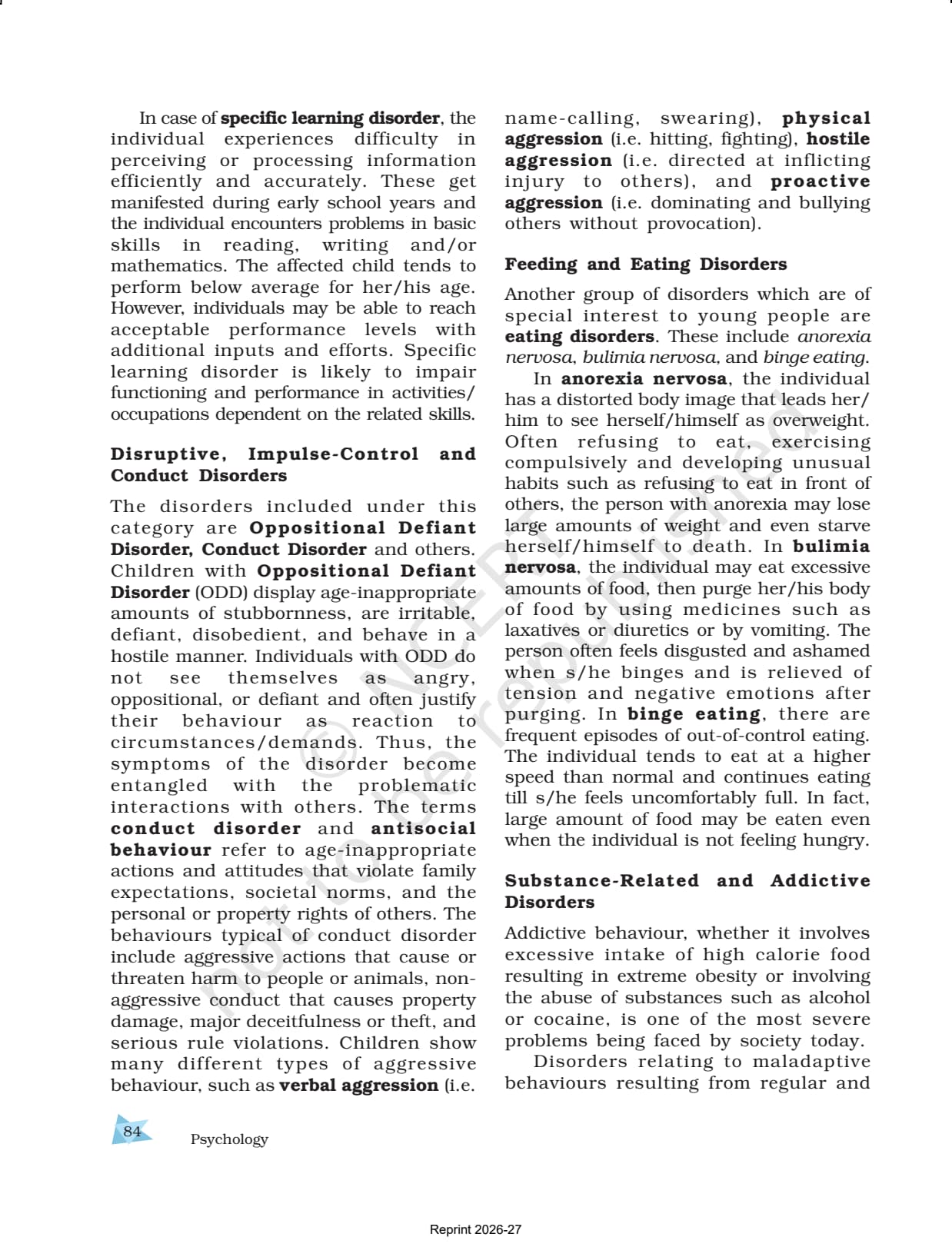
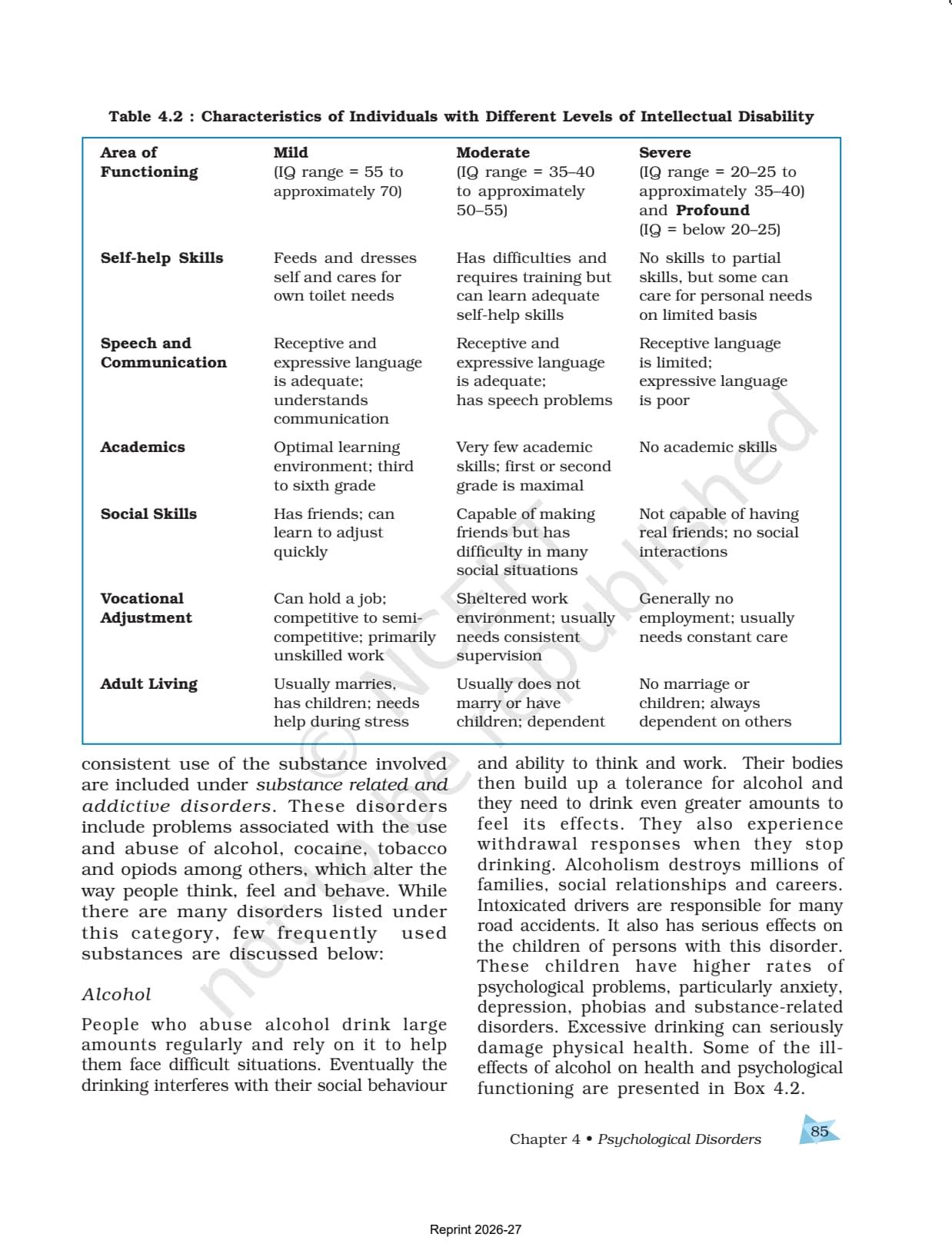
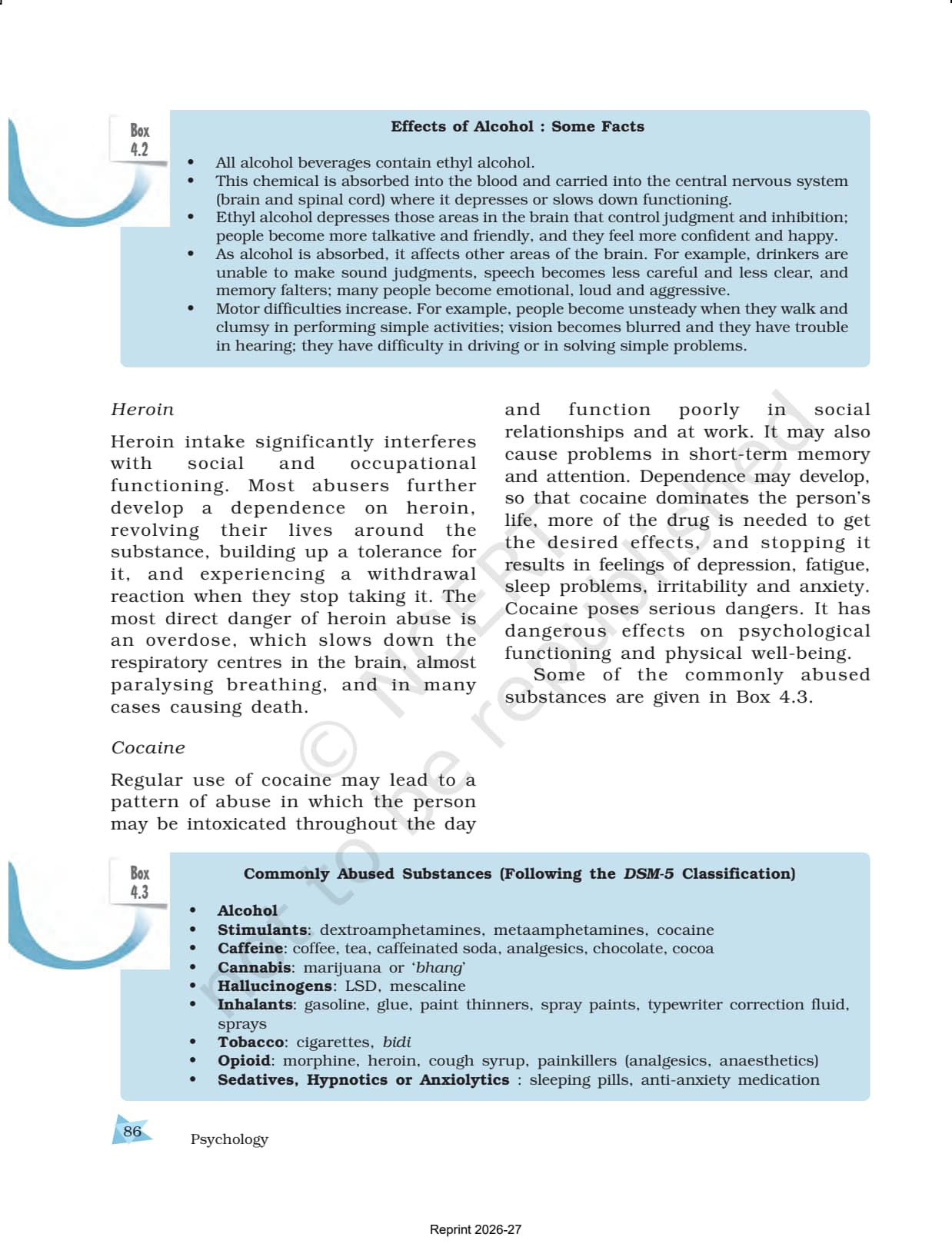
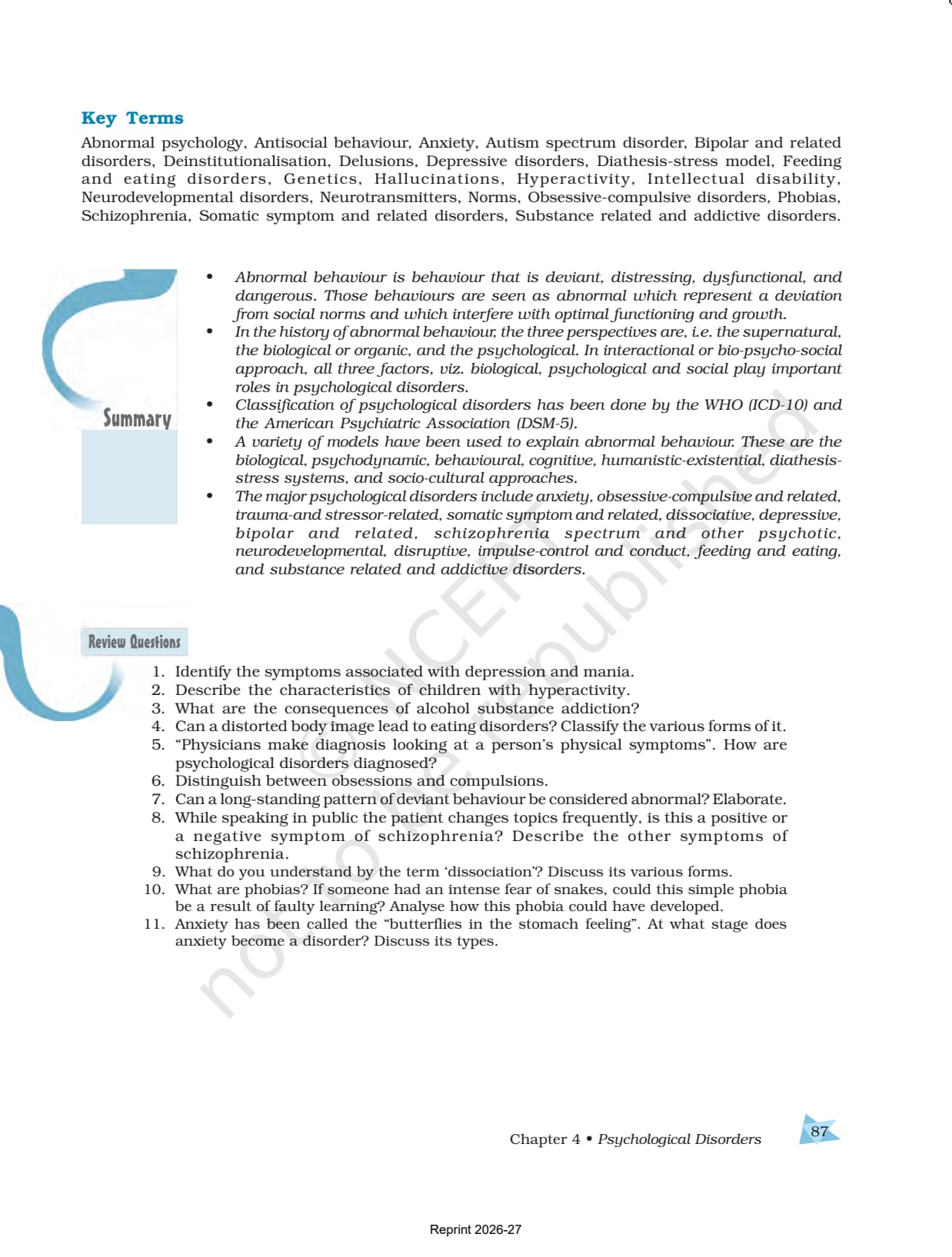
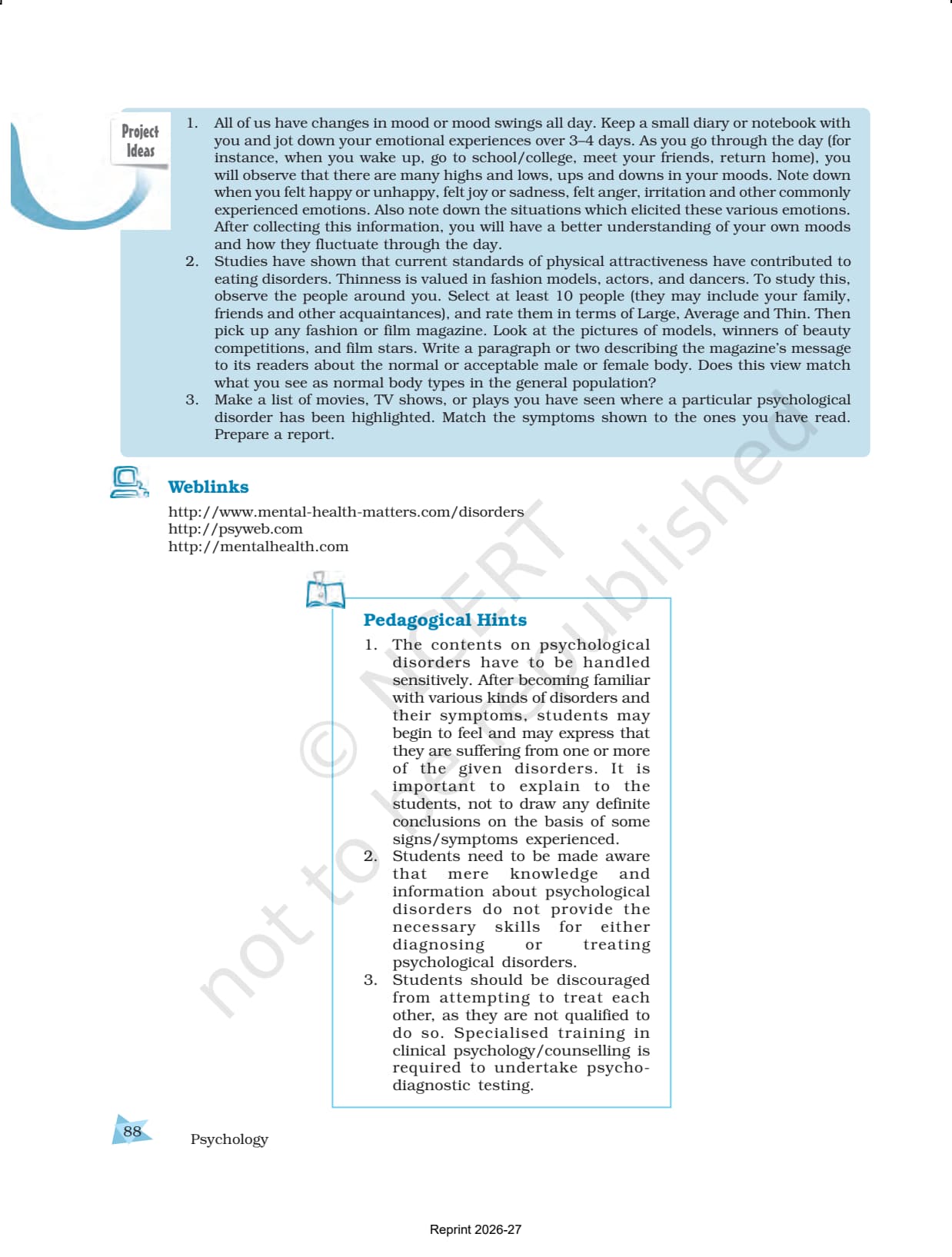
- Official NCERT chapter with the original case examples, key terms and review questions.
- This Class 12 Psychology chapter usually carries 6 to 7 marks in the board paper.
- Pairs with the NCERT Solutions, Notes and Handwritten Notes linked lower on this page.
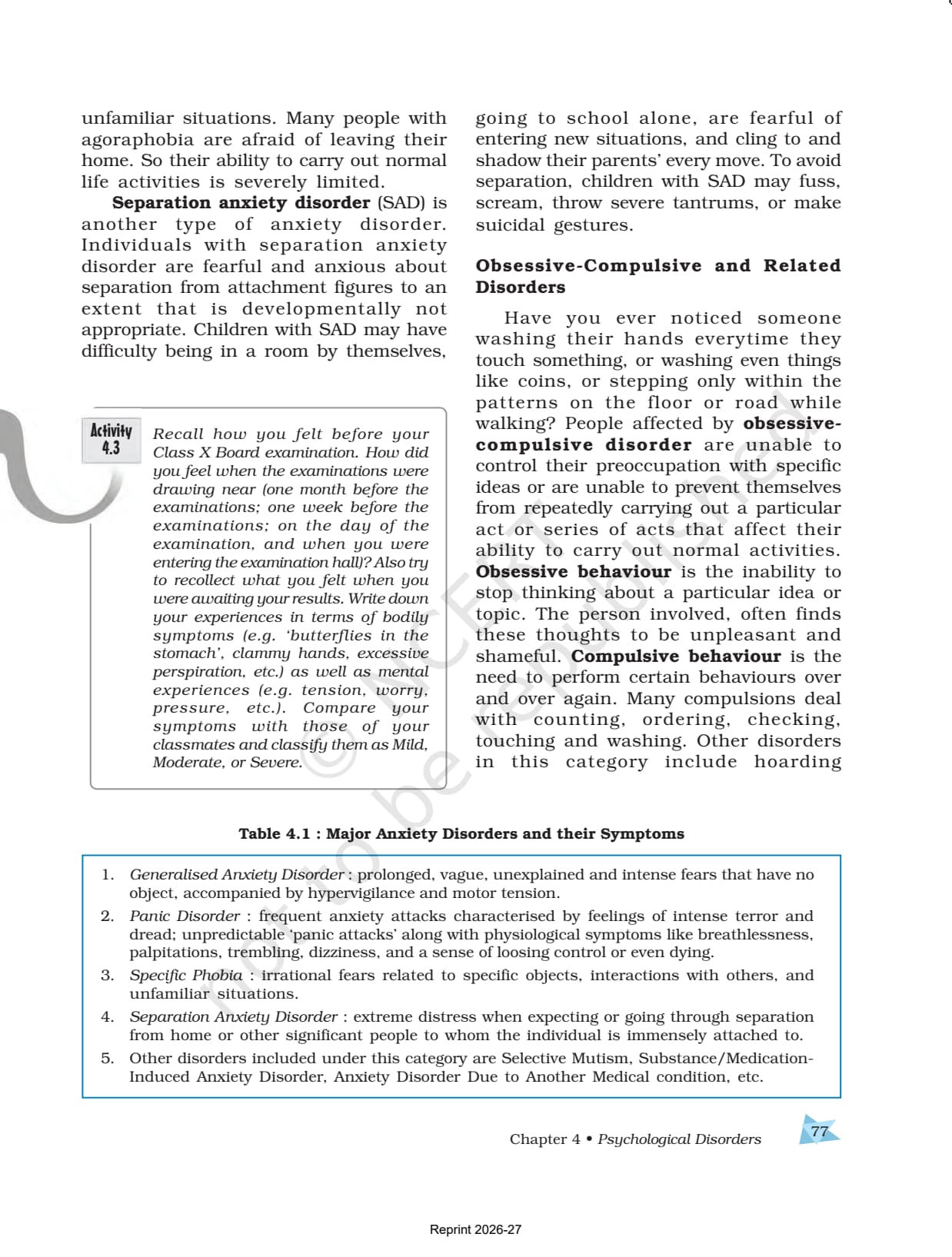
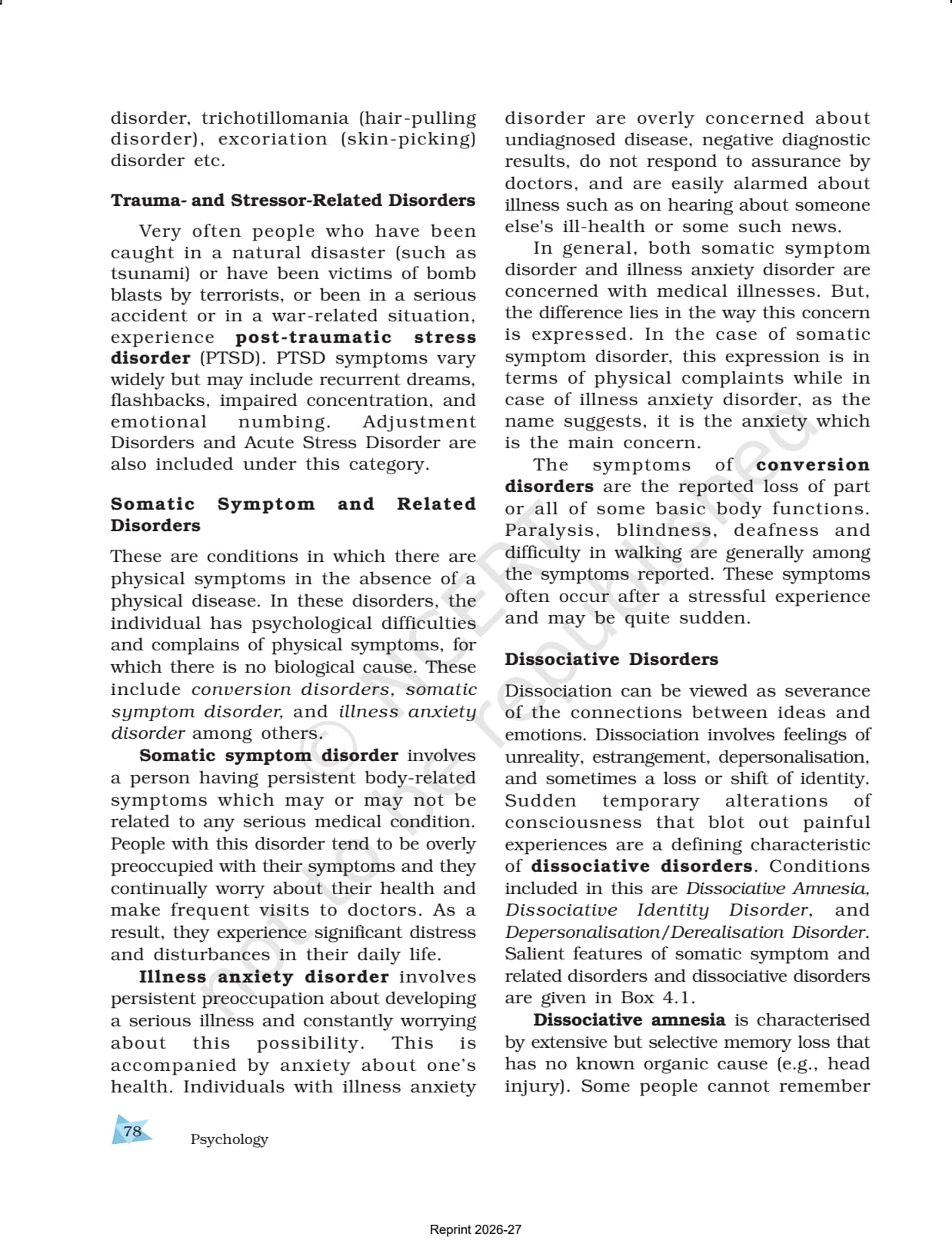
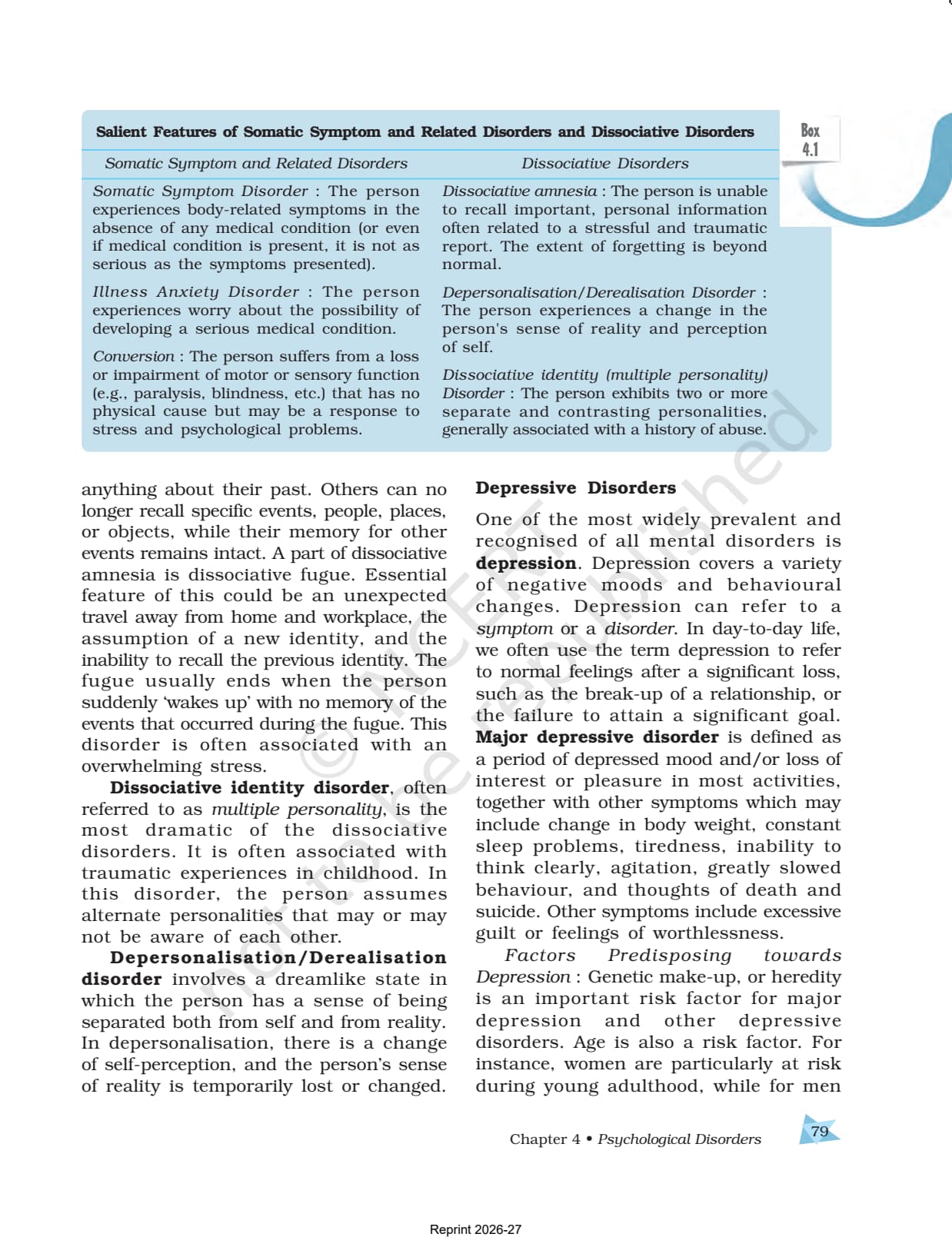
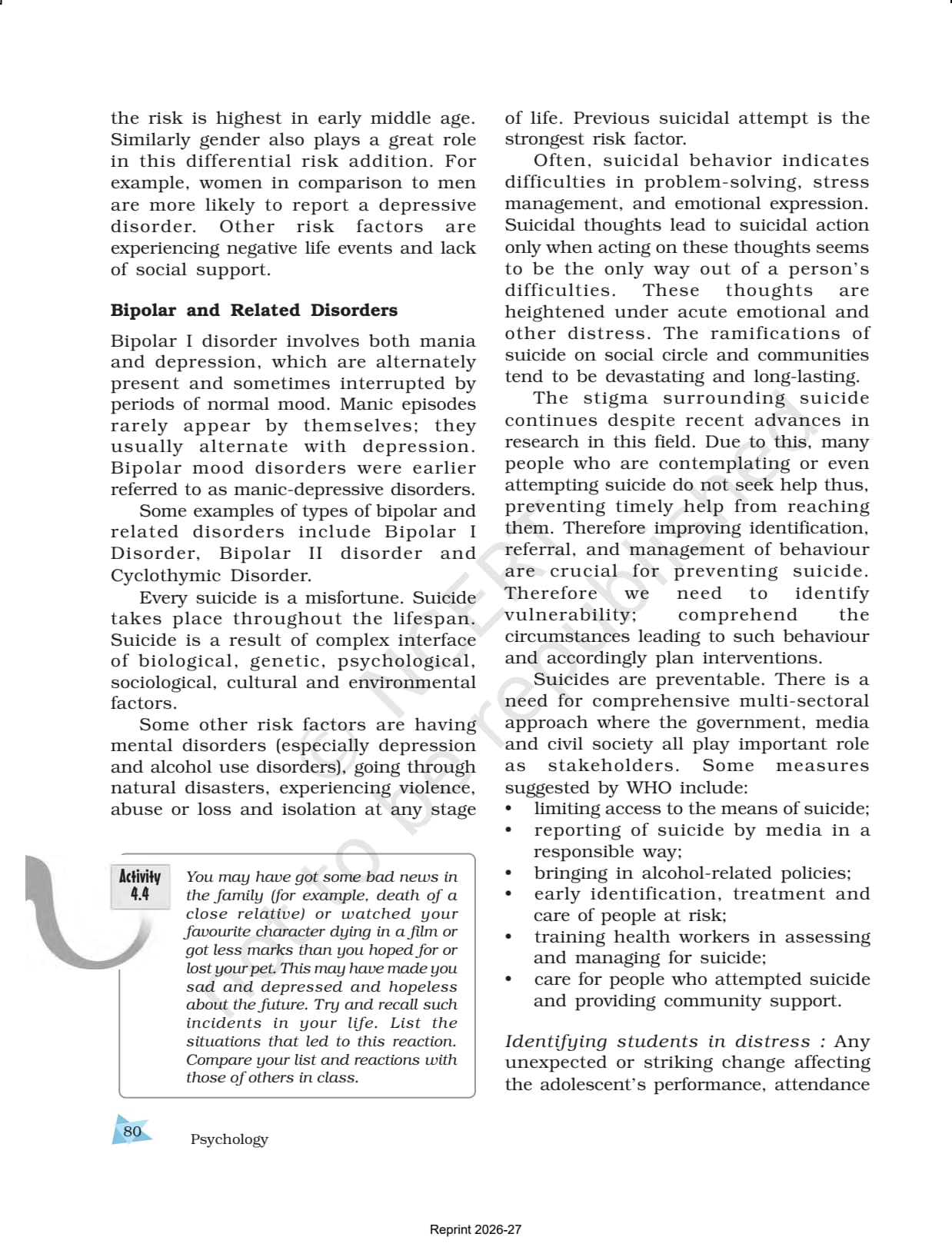
This is the official NCERT Psychological Disorders chapter from the Class 12 Psychology textbook, offered for free download in the 2026-27 edition.
Student Feedback: In a Collegedunia poll of 7,260 Class 12 Psychology students before the 2026 boards, 68% of students said they kept the official NCERT chapter PDF open while answering case-based questions, because the case examples and key terms come straight from the chapter itself.
Source: 2026-27 Class 12 Psychology student poll. Sample of 7,260 students from CBSE schools across 12 states.
What the Psychological Disorders NCERT Chapter Covers
Psychological Disorders is the fourth chapter of Class 12 Psychology. It studies what counts as abnormal behaviour, how mental disorders are classified, and the symptoms of the main disorder groups. Before the disorders, the chapter explains how psychologists decide that behaviour is abnormal at all.
The chapter is built around three threads, which the NCERT covers in order:
- Abnormality: the four D criteria of deviance, distress, dysfunction and danger.
- Classification: the ICD and DSM systems used to name and diagnose disorders.
- The disorders: anxiety, mood, schizophrenic, dissociative, somatic, eating and substance-use.
Reading the original NCERT text matters because the case examples and key terms in the class 12 psychology chapter 4 pdf are exactly what CBSE quotes in case-based questions. A student who knows the chapter's own examples can answer those passages with confidence.
Chapter Highlights and Important Topics
The NCERT chapter is rich with case examples and key terms that the exam often refers to. Knowing what each highlight covers helps students answer questions quickly. The table below lists the highlights students should study in the original chapter PDF.
| Highlight | Why it matters |
|---|---|
| Concept of abnormality | Sets out the four D criteria and how disorders are classified. |
| ICD and DSM systems | The two manuals used to name, code and diagnose mental disorders. |
| Anxiety and mood disorders | Phobias, panic, OCD, depression and mania with their symptoms. |
| Schizophrenia | Positive and negative symptoms and the break with reality. |
| Eating and substance-use | Source examples on body image, anorexia, bulimia and addiction. |
The chapter also explains dissociative and somatic disorders, along with the childhood disorders of hyperactivity and conduct. One point students should mark while reading is that disorders are diagnosed from a pattern of behaviour, not physical signs. That single idea from the chapter is the heart of the diagnosis answer, and it appears almost every year.
Abnormality, Classification and Major Disorders in the Chapter
The chapter devotes whole sections to abnormality, the classification systems and the main disorder groups. These sections feed the short and long answers, so reading them in the original NCERT helps students quote the right examples. The lists below show what the chapter covers under each theme.
- Abnormality: deviance, distress, dysfunction and danger, judged together in context.
- Classification: the ICD and DSM systems, and diagnosis from a pattern of behaviour.
- Anxiety and mood: generalised anxiety, phobia, panic, OCD, depression and mania.
- Schizophrenia and others: positive and negative symptoms, plus dissociative, somatic, eating and substance-use disorders.
The chapter explains that a distorted body image can lead to eating disorders such as anorexia and bulimia. It also gives the case examples students need for the case-based questions, from hyperactivity in children to alcohol addiction. Because these examples are drawn straight from the source chapter, the chapter 4 psychology class 12 ncert book is the most reliable place to learn them.
Childhood Disorders and Case Examples in the Chapter
The chapter also covers the neurodevelopmental and disruptive disorders of childhood, which appear in short and case-based answers. Reading these pages in the original chapter helps students write precise answers with the right examples.
- Hyperactivity (ADHD): inattention, impulsiveness and restlessness in children.
- Conduct disorder: aggressive and rule-breaking behaviour over time.
- Autism spectrum: difficulty with social interaction and communication.
- Substance-use cases: the health, work and family costs of alcohol and drug addiction.
The chapter is clear that the characteristics of children with hyperactivity include short attention, restlessness and acting without thinking. It ends with how these disorders are treated and managed. Reading these pages in the official PDF gives students the wording NCERT itself uses, which scores best in the board paper.
How to Download and Use the NCERT Chapter PDF
The chapter PDF is free and easy to use on any device. Students can save it for offline reading and pair it with the solutions and notes. The steps below show how to get the most out of the Psychological Disorders Class 12 PDF during revision.
- Download: tap the download card above to save the official Chapter 4 PDF to your device.
- First read: read the chapter once end to end, marking the case examples and key terms.
- Case practice: keep the PDF open while attempting case-based questions, since the examples come from it.
- Revision: use the chapter alongside the notes to fix the four D criteria, the disorder groups and the symptoms.
Many students search for the class 12 psychology chapter 4 pdf the night before a test so they can revise offline. A saved copy means the case examples and key terms are always at hand. After reading the chapter, move to the solutions to check that your answers match the model points, then use the notes for a final quick recall.
How the Book PDF Pairs with the Solutions and Notes
The NCERT Book PDF is the source text. To prepare fully, students should use it with the other resources for the same chapter, all linked in the table below. Read the chapter, fix the ideas with the notes, then test yourself with the solutions.
| Resource | Best used for |
|---|---|
| Psychological Disorders NCERT Solutions | Point-wise answers to all 11 Review Questions |
| Psychological Disorders Class 12 Notes | Quick chapter summary with all disorder groups and key terms in one place |
| Psychological Disorders Handwritten Notes | Last-minute, one-shot revision in a scanned notebook style |
Tip: read the chapter PDF first, then attempt the solutions on your own, and only then check the model answers. Reading the source text before the answers builds far stronger case-based skills.
All Class 12 Psychology NCERT Book PDFs by Chapter
The table links the NCERT chapter PDFs for every chapter in Class 12 Psychology, so students can move across the course in one click. Psychological Disorders is highlighted.
| Chapter | NCERT Book PDF |
|---|---|
| Chapter 1 | Variations in Psychological Attributes |
| Chapter 2 | Self and Personality |
| Chapter 3 | Meeting Life Challenges |
| Chapter 4 | Psychological Disorders |
| Chapter 5 | Therapeutic Approaches |
| Chapter 6 | Attitude and Social Cognition |
| Chapter 7 | Social Influence and Group Processes |
FAQs on Psychological Disorders NCERT Book PDF
Psychological Disorders Class 12 NCERT Book Common Questions
Ques. Where can I download the Psychological Disorders NCERT Book PDF?
Ans. You can download the official Psychological Disorders Class 12 Psychology chapter PDF directly from this page. It is free, follows the 2026-27 NCERT edition, and carries the original text, case examples and key terms of Chapter 4.
Ques. Which book is Psychological Disorders from?
Ans. It is the fourth chapter of the Class 12 Psychology textbook. The chapter studies what makes behaviour abnormal, how mental disorders are classified, and the symptoms of the main disorder groups.
Ques. What does Psychological Disorders chapter cover?
Ans. It covers the four D criteria of abnormality, the ICD and DSM systems, and anxiety, mood, schizophrenic, dissociative, somatic, eating and substance-use disorders, along with the childhood disorders of hyperactivity and conduct.
Ques. Why should I read the original NCERT chapter PDF?
Ans. Because CBSE draws case-based questions straight from the chapter's own examples and key terms. Reading the official chapter 4 psychology class 12 PDF gives you the exact wording and examples that score best in the board paper.
Ques. How should I use the chapter PDF with the other resources?
Ans. Read the chapter PDF first, fix the ideas with the notes, then test yourself with the solutions. Keeping the PDF open while practising case-based questions helps, since the examples come directly from it.



Comments