




The Class 12 Geography Chapter 1 Population Distribution Density Growth and Composition textbook PDF is the official NCERT source for board questions on how India's population is spread, how dense it is, how fast it has grown, and its composition by language, religion and occupation. It carries about 5 to 6 marks in the CBSE board exam and grounds every topic in the India: People and Economy book.
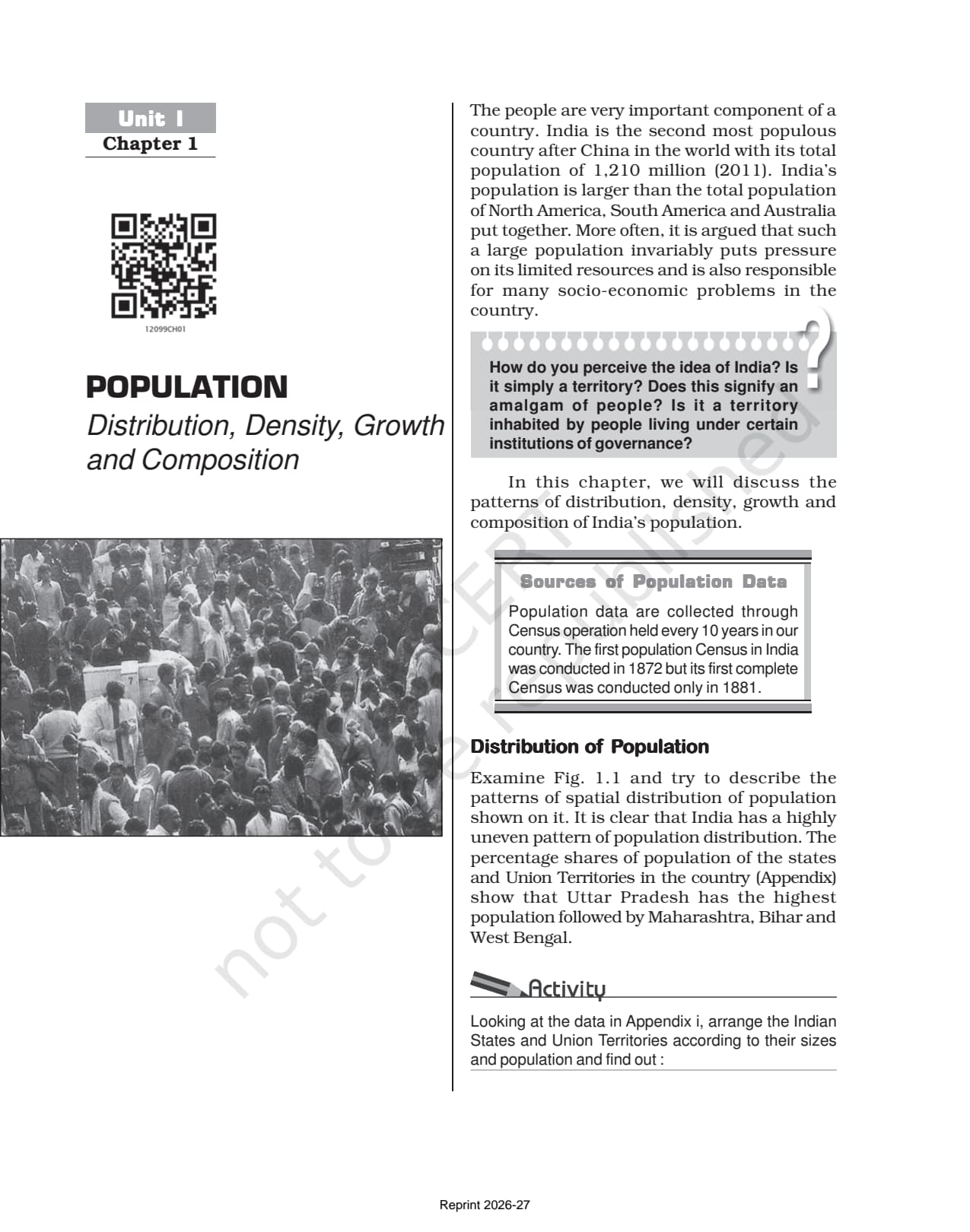
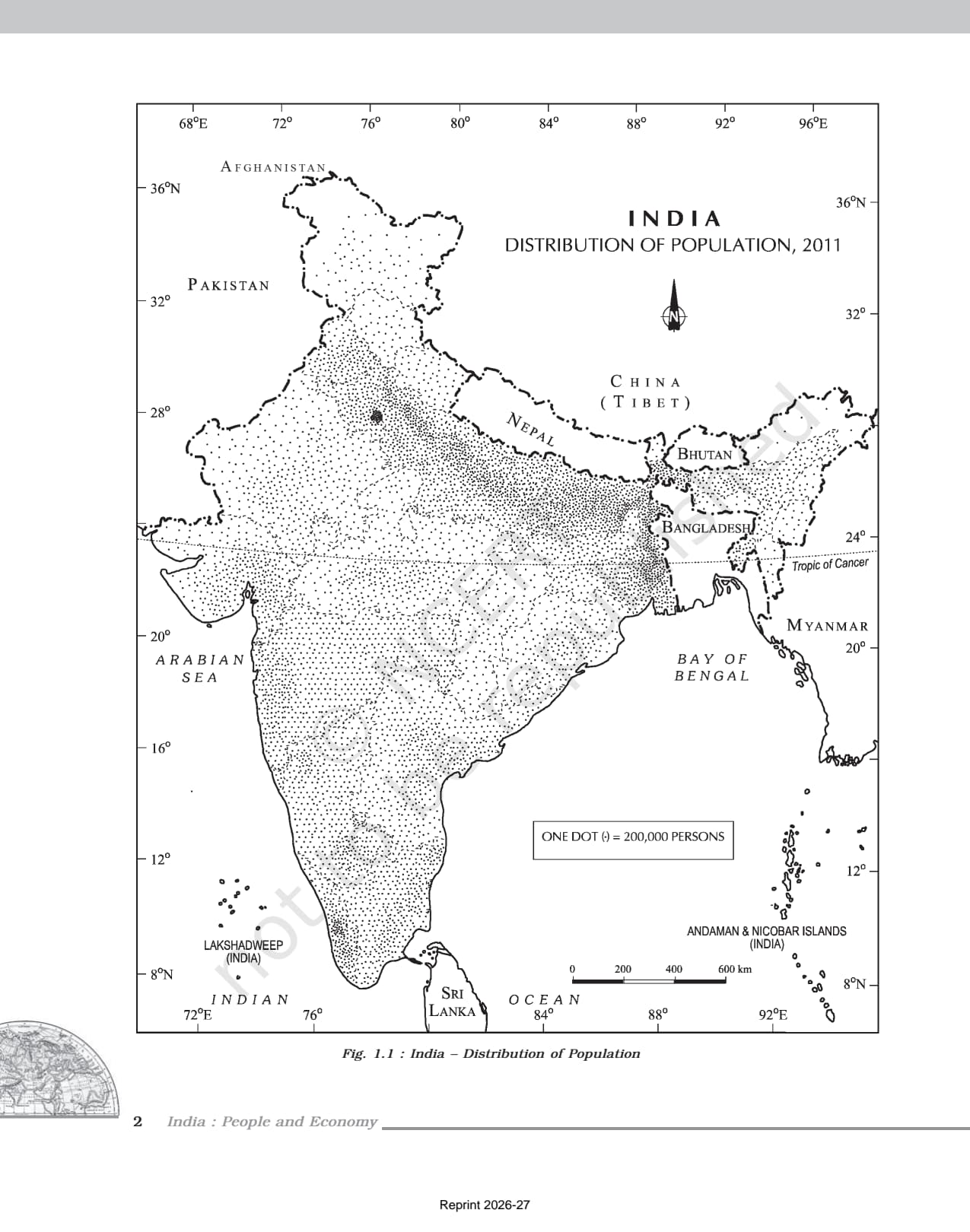
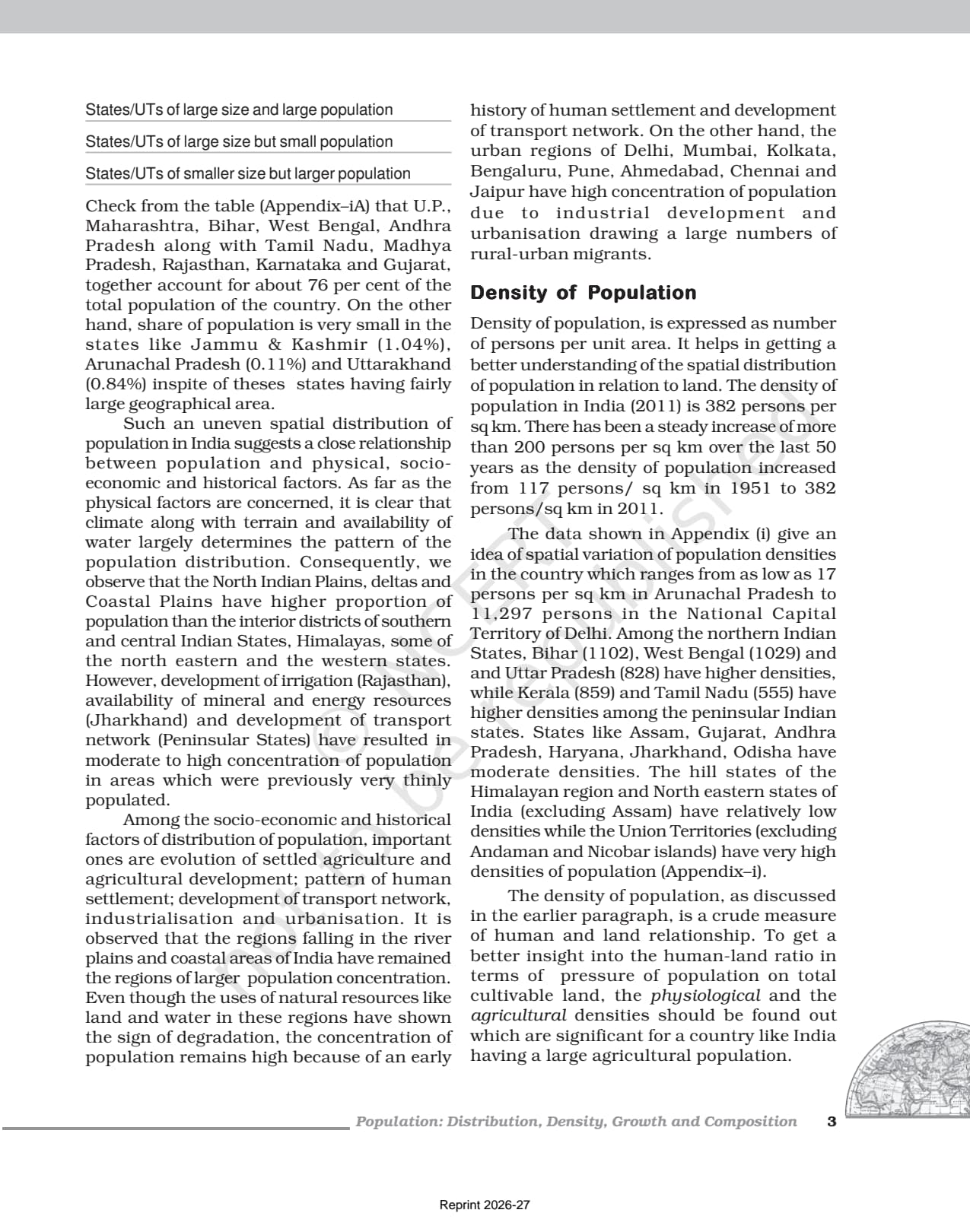
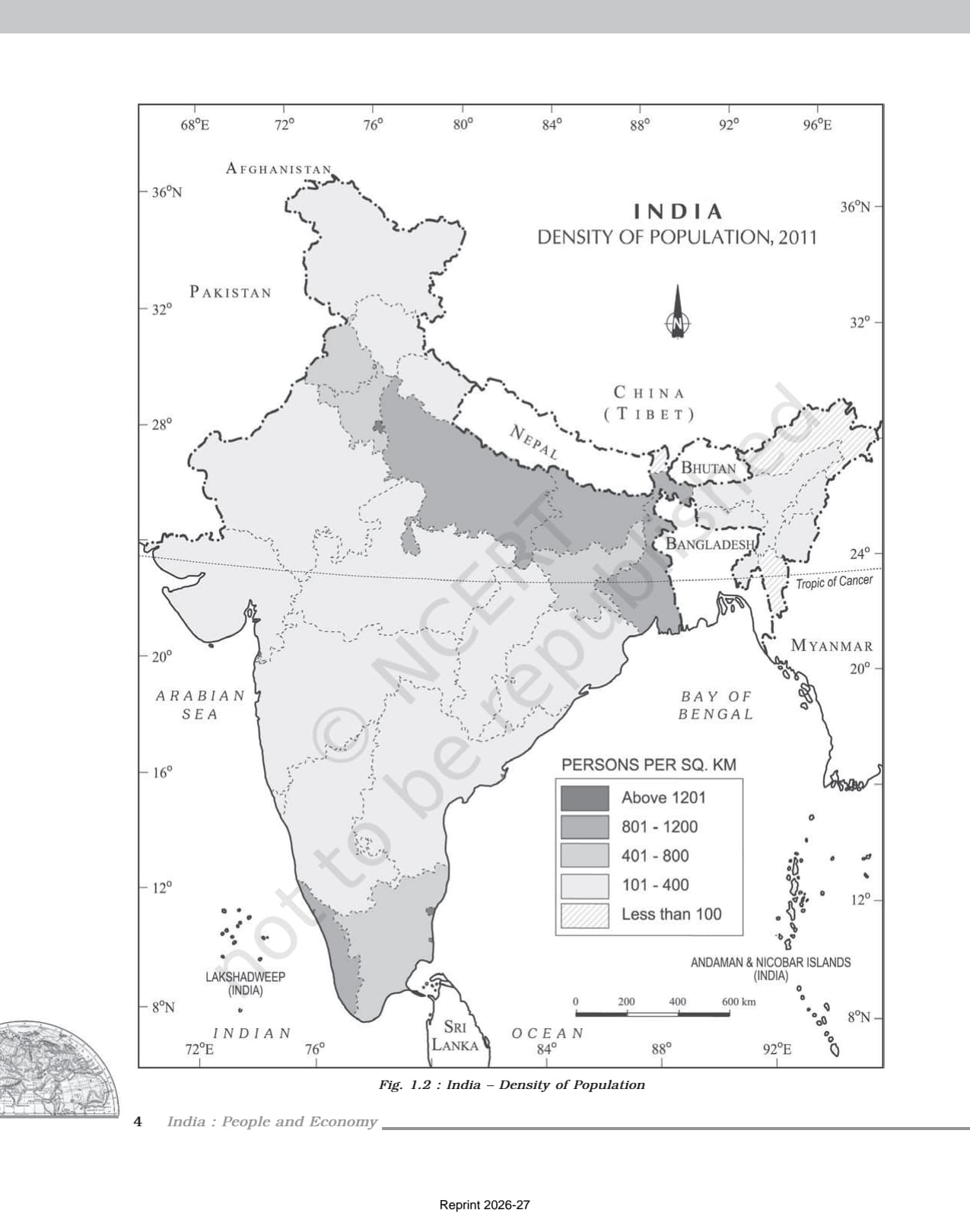
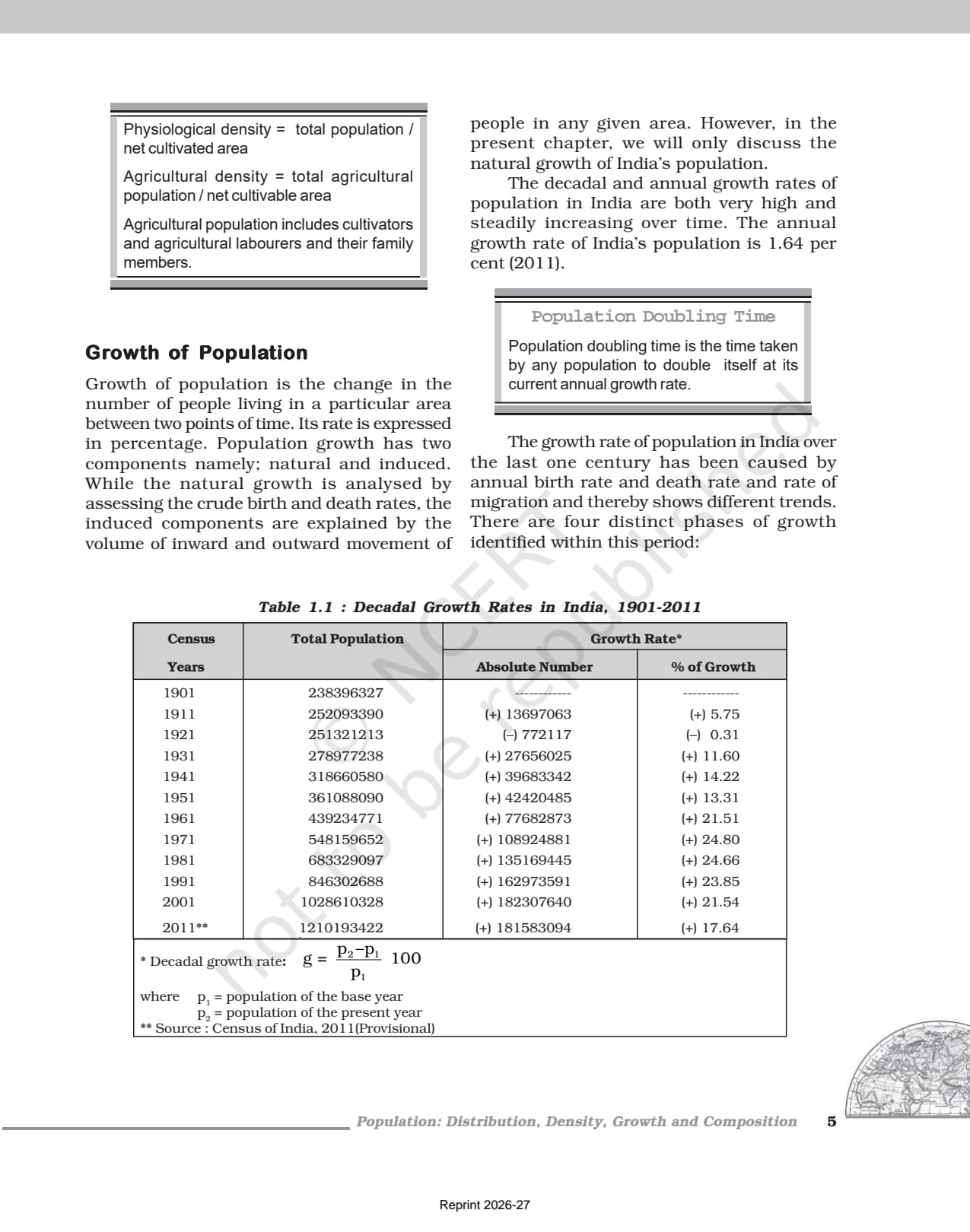
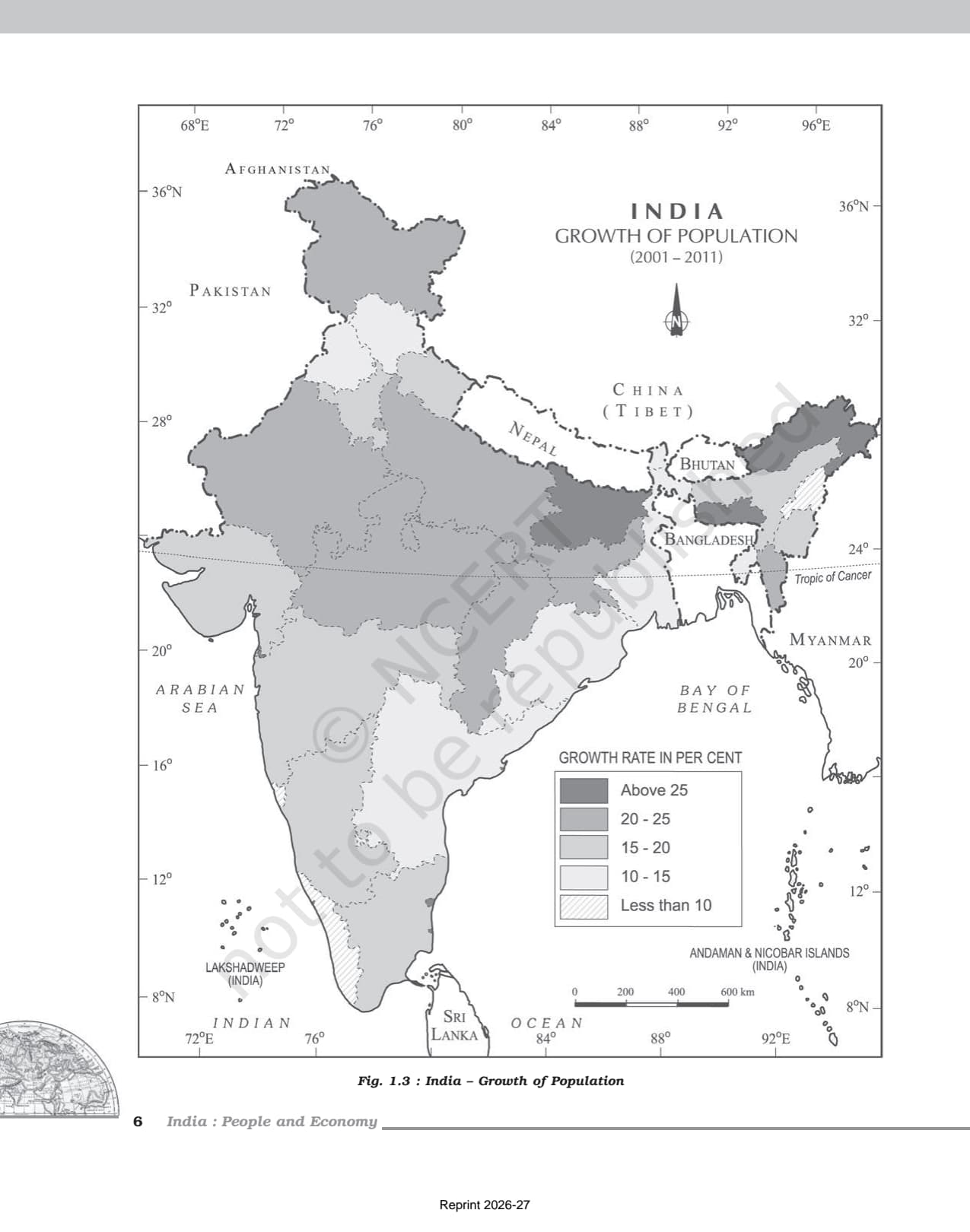
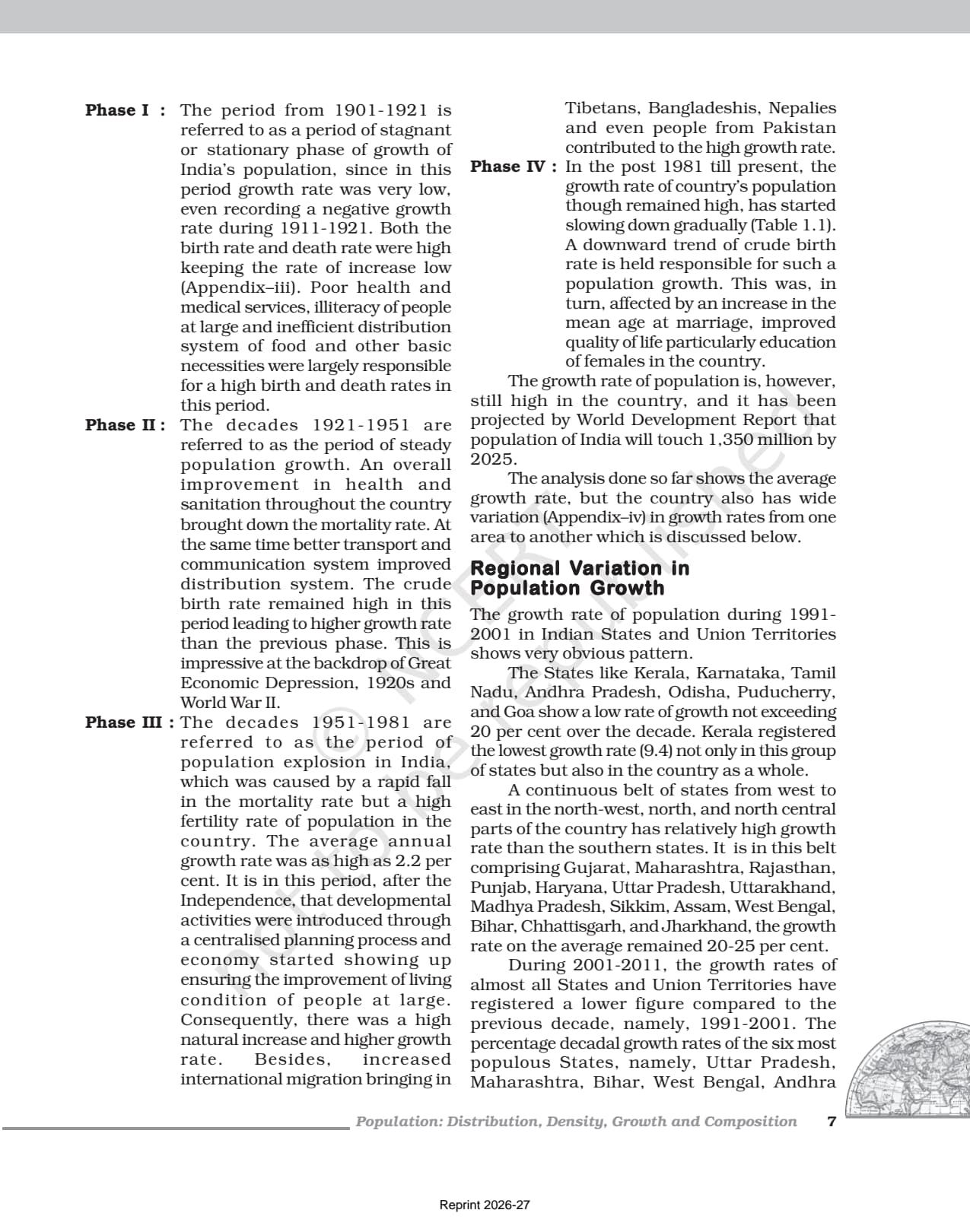
- Official NCERT India: People and Economy Class 12 Chapter 1 PDF covering population distribution, density, four phases of growth, rural-urban composition, linguistic groups, and occupational structure.
- 5-6 marks CBSE board-paper weightage for Chapter 1; the official textbook is the only source CBSE references when it sets definition, map-based, and data-interpretation questions on India's population.
- Pair with the matching NCERT Solutions, Notes and Handwritten Notes for full chapter coverage.
Student Feedback
In a 2026 Collegedunia poll of 10,400 Class 12 Geography students, 83% said reading the NCERT chapter PDF directly improved their board-paper answers on India's population data and composition more than any guide book. Students who read the full PDF averaged 4.7 out of 5 marks on questions from this chapter.
What This Chapter Covers in the NCERT Class 12 Book
The population distribution density growth and composition class 12 chapter opens the India: People and Economy textbook and builds everything that follows. It is the only document CBSE references for data-based, map-based and definition questions from this chapter, so students preparing for the 2026-27 board paper should read this PDF before any guide book. It moves from distribution patterns to density, then the four phases of population growth, and finally composition by rural-urban split, language, religion and occupation.
The PDF uses Census 2011 data throughout: India had 1,210 million people, the second most populous country after China. Every later topic in the book assumes this population base data.
Source: Magnet Brains on YouTube
Topics in the Chapter (Section-Wise Map of the NCERT PDF)
The PDF is organised into five main sections. The table below maps each to its dominant exam concept.
| Section | NCERT Sub-topic | Dominant Exam Concept |
|---|---|---|
| 1.1 | Sources of Population Data | Census operations, first Census 1872, first complete Census 1881 |
| 1.2 | Distribution of Population | Uneven pattern; UP highest; physical, socio-economic, and historical factors |
| 1.3 | Density of Population | 382 persons/sq km (2011); physiological and agricultural density; state-wise variation |
| 1.4 | Growth of Population | Four phases (1901-1921, 1921-1951, 1951-1981, post-1981); decadal growth rates; population doubling time |
| 1.5 | Population Composition | Rural-urban split (68.8% rural, 31.16% urban); four language families; religious composition; occupational structure (primary/secondary/tertiary) |
Section 1.4 (four phases of growth) and Section 1.5 (composition) account for the largest share of board-paper questions, since the phases table and the rural-urban and occupational data are the most frequently tested facts.
Key Concepts From the NCERT Class 12 Geography Textbook
The PDF carries the canonical NCERT phrasing of these ideas. Reproducing it is the fastest route to full marks on theory questions. The four concept blocks below come straight from the chapter.
The Four Phases of Population Growth
The textbook divides India's growth from 1901 to 2011 into four phases. Phase I (1901-1921): stagnant, with low or negative growth (1911-1921 saw a decline) due to high birth and death rates, poor health services and famines. Phase II (1921-1951): steady growth as health and sanitation cut death rates while birth rates stayed high. 1921 is the Year of the Great Divide, the shift from stagnant to steady growth. Phase III (1951-1981): population explosion at 2.2% annual growth, from a sharp fall in death rates with high birth rates. Phase IV (post-1981): growth slowing as birth rates fall with higher mean age at marriage and female education.
Distribution and Density Patterns
India's distribution is highly uneven: the ten most populous states hold about 76% of the total. Density was 382 persons per sq km in 2011, up from 117 in 1951. Bihar (1,102), West Bengal (1,029) and Uttar Pradesh (828) have the highest densities among major states; Arunachal Pradesh the lowest at 17. Physical factors (climate, terrain, water) explain the broad pattern, while transport and industrialisation explain the high density of clusters like Delhi, Mumbai and Kolkata.
The Four Language Families
India's languages fall into four families. Indo-Aryan (about 73%) dominates the north: Hindi, Bengali, Marathi, Gujarati, Punjabi. Dravidian (about 25%) dominates the south: Tamil, Telugu, Kannada, Malayalam. Austric (about 1.38%) is spoken in parts of West Bengal, Bihar, Assam and the Andaman and Nicobar Islands. Sino-Tibetan covers the northeastern and Himalayan regions. India has 22 scheduled languages, with Hindi having the most speakers.
Occupational Structure
Workers are classified into primary, secondary and tertiary sectors. In 2011 the primary sector (agriculture) still employed 54.6% of workers, down from 58.2% in 2001. This shift toward secondary and tertiary sectors shows structural change in India's economy. Himachal Pradesh and Nagaland have large shares of cultivators, while urbanised Delhi and Chandigarh lead in tertiary workers. Work participation rate (total workers as a percentage of total population) varies widely and appears in data-interpretation questions.
Key ideas the chapter introduces:
- Density: 382 persons/sq km (2011); physiological and agricultural density as refined measures.
- Four growth phases: stagnant, steady, explosive and decelerating (post-1981).
- Rural-urban split: 68.8% rural, 31.16% urban (Census 2011).
- Language families: Indo-Aryan, Dravidian, Austric, Sino-Tibetan.
Previous Year Question Trends From This Chapter
The population distribution class 12 geography important questions follow a steady pattern, and no structural change is announced for 2026-27. This chapter has contributed 5 to 6 marks across recent papers, through MCQs, short answers, data-based questions and one long answer.
| Year | Marks | Question Types | Most Common Topic |
|---|---|---|---|
| 2025 | 5 | 1 MCQ + 1 short answer + 1 data-based | Decadal growth rates and four phases |
| 2024 | 6 | 1 MCQ + 2 short answers + 1 data question | Density of population; state-wise pattern |
| 2023 | 5 | 2 MCQs + 1 short answer + 1 data-based | Rural-urban composition; occupational structure |
| 2022 | 4 | 1 MCQ + 1 short answer + 1 long answer | Population distribution factors |
| 2020 | 6 | 1 MCQ + 1 short + 1 long + 1 data | Four phases of growth; composition |
The most repeated question asks students to explain one phase of population growth, or describe the factors affecting distribution. Both need the NCERT reasoning, not just data memorised from a table.
What Students Should Avoid While Reading This NCERT PDF
The chapter is data-rich, and students make four predictable mistakes when reading it cold. The most expensive is treating it as numbers to memorise without reading the explanations. Board papers ask "why": why Bihar's density is high, why growth slowed after 1981, why the primary sector share is declining. Those answers live only in the NCERT prose.
- Do not skip the explanations for density patterns. Physical, socio-economic and historical factors are tested every year.
- Do not confuse physiological density with agricultural density. Both terms appear in board and CUET MCQs.
- Do not memorise the phases without the reasons. The paper asks why each phase had its growth rate, not just the dates.
- Do not skip occupational structure. Primary, secondary and tertiary employment data appears in data-based questions.
Connecting This Chapter to the Rest of India: People and Economy
This chapter is the data foundation for every later chapter. Without India's distribution, density and growth, students cannot follow human settlements (Chapter 2), the pressure on land and water (Chapters 3 and 4), or sustainable development planning (Chapter 6). Roughly 40% of the paper links back to this opening chapter, which is why CBSE places it first.
| Later Chapter | Concept Inherited From Chapter 1 |
|---|---|
| Chapter 2: Human Settlements | Rural-urban composition; village size and distribution explained by population patterns |
| Chapter 3: Land Resources and Agriculture | Agricultural density; population pressure on cultivable land |
| Chapter 4: Water Resources | High-density states face greater pressure on water; rural population depends on groundwater |
| Chapter 5: Mineral and Energy Resources | Distribution of industrial workers; tertiary sector growth links to mineral-rich states |
| Chapter 6: Planning and Sustainable Development | Adolescent population data; National Youth Policy; need for skill development |
Quick Glossary From the NCERT Chapter
Students should be able to define each term in a single line for one-mark MCQs and two-mark short answers, using textbook phrasing.
- Physiological density: Total population divided by net cultivated area; pressure on cultivable land.
- Agricultural density: Total agricultural population divided by net cultivable area.
- Population doubling time: Time a population takes to double at its current annual growth rate.
- Natural growth: Growth from the difference between birth rate and death rate, excluding migration.
- Work participation rate: Total workers as a percentage of the total population.
Also Explore Other Resources for Class 12 Geography Chapter 1
| Resource | Link |
|---|---|
| NCERT Solutions | Class 12 Geography Chapter 1 NCERT Solutions |
| Revision Notes | Class 12 Geography Chapter 1 Notes |
| Handwritten Notes | Class 12 Geography Chapter 1 Handwritten Notes |
| Subject Hub | Class 12 Geography All Chapters |
All Chapters: Class 12 Geography NCERT Book PDF (India: People and Economy)
| Chapter | NCERT Book PDF |
|---|---|
| Chapter 1 | Population: Distribution, Density, Growth and Composition NCERT Book PDF (You are here) |
| Chapter 2 | Human Settlements NCERT Book PDF |
| Chapter 3 | Land Resources and Agriculture NCERT Book PDF |
| Chapter 4 | Water Resources NCERT Book PDF |
| Chapter 5 | Mineral and Energy Resources NCERT Book PDF |
| Chapter 6 | Planning and Sustainable Development NCERT Book PDF |
| Chapter 7 | Transport and Communication NCERT Book PDF |
| Chapter 8 | International Trade NCERT Book PDF |
| Chapter 9 | Geographical Perspective on Selected Issues NCERT Book PDF |
Frequently Asked Questions on Class 12 Geography Chapter 1 NCERT Book PDF
Ques. Where can students download the official NCERT Class 12 Geography Chapter 1 PDF?
Ans. Students can download the official population distribution density growth and composition class 12 NCERT book PDF directly from the download card at the top of this page. The PDF is the single-chapter file from the India: People and Economy textbook, aligned to the 2026-27 CBSE syllabus.
Ques. What is the total population of India as per the 2011 Census according to the NCERT textbook?
Ans. According to the NCERT chapter, India's total population as per Census 2011 was 1,210 million (1,210,193,422), making it the second most populous country in the world after China. The chapter notes that India's population is larger than the combined population of North America, South America, and Australia.
Ques. What are the four phases of population growth in India according to the NCERT Class 12 textbook?
Ans. The four phases are: Phase I (1901-1921) - stagnant/stationary phase with very low or negative growth; Phase II (1921-1951) - steady growth as mortality fell due to improved health and sanitation; Phase III (1951-1981) - population explosion with average annual growth of 2.2% due to sharp fall in death rate but high birth rate; Phase IV (post-1981) - growth rate slowing gradually due to falling birth rate linked to higher mean age at marriage and improved female education.
Ques. What is the density of population in India as per Census 2011?
Ans. The density of population in India as per Census 2011 was 382 persons per sq km. This is a steady increase from 117 persons per sq km in 1951. Among states, Bihar (1,102) and West Bengal (1,029) have the highest densities, while Arunachal Pradesh has the lowest at 17 persons per sq km. The National Capital Territory of Delhi has the highest density at 11,297 persons per sq km.
Ques. What is the difference between physiological density and agricultural density?
Ans. Physiological density is total population divided by net cultivated area - it measures the pressure of the entire population on farmland. Agricultural density is total agricultural population divided by net cultivable area - it measures only the farming population's relationship with cultivable land. The NCERT chapter presents both formulas to give a better insight into the human-land ratio than simple density alone provides.
Ques. What are the four language families of India described in the NCERT Class 12 Geography chapter?
Ans. The four language families are: Indo-Aryan (spoken by about 73% of the population, includes Hindi, Bengali, Marathi, Gujarati); Dravidian (about 25%, includes Tamil, Telugu, Kannada, Malayalam); Austric (about 1.38%, spoken in parts of West Bengal, Bihar, Assam, and Andaman and Nicobar Islands); and Sino-Tibetan (spoken in northeastern states and Himalayan regions). India has 22 scheduled languages in total.
Ques. What was India's rural-urban population split according to Census 2011?
Ans. As per Census 2011, 68.8% of India's population lived in rural areas (villages) and 31.16% lived in urban areas. The NCERT chapter notes that India had 640,867 villages, of which 597,608 (93.2%) were inhabited. The urban population has been growing faster than the rural population due to economic development, improved health conditions, and rural-urban migration.
Ques. Why is 1921 called the Year of the Great Divide in India's population history?
Ans. The year 1921 is called the Year of the Great Divide because it marks the turning point in India's population growth history. Before 1921 (Phase I), India's population had very low or even negative growth. From 1921 onwards (Phase II), population began growing steadily and continuously. The decade 1911-1921 actually recorded a negative growth rate of -0.31%, the only decade in modern history when India's population fell. After 1921, improved health, sanitation, and transport ensured continuous growth.
Ques. What factors explain the uneven distribution of population in India?
Ans. The NCERT chapter identifies three sets of factors. Physical factors: climate, terrain, and water availability mean that plains and coastal areas have higher populations while deserts, mountains, and dense forests have lower populations. Socio-economic factors: development of settled agriculture, transport networks, industrialisation, and urbanisation attract population to certain areas. Historical factors: regions with long histories of settled human civilisation, like the Indo-Gangetic plains, have retained high populations even under resource stress.
Ques. Is the Class 12 Geography syllabus changing for 2026-27?
Ans. No major changes have been announced. The India: People and Economy textbook chapter structure remains the same for 2026-27, and the official NCERT PDF available on this page is aligned to the 2026-27 CBSE syllabus. CBSE marking schemes continue to reward textbook phrasing in theory questions and Census 2011 data in data-based questions.
Ques. What is the best order to use the NCERT PDF, Notes, and Solutions for Class 12 Geography Chapter 1?
Ans. Read the NCERT PDF cold first, underlining unfamiliar data and terms. Then open the Class 12 Geography Chapter 1 Notes alongside the PDF and copy the four phases and key density figures into your own notebook. Attempt all exercise questions and verify them against the NCERT Solutions. Use the handwritten notes for last-mile revision the night before the exam.



Comments