




Class 12 Economics Macroeconomics Chapter 4 Income Determination explains how the level of national income is fixed in the short run. It covers aggregate demand, the consumption and saving functions, equilibrium income, the investment multiplier and the paradox of thrift. This page has the official NCERT textbook chapter as a free PDF to download.
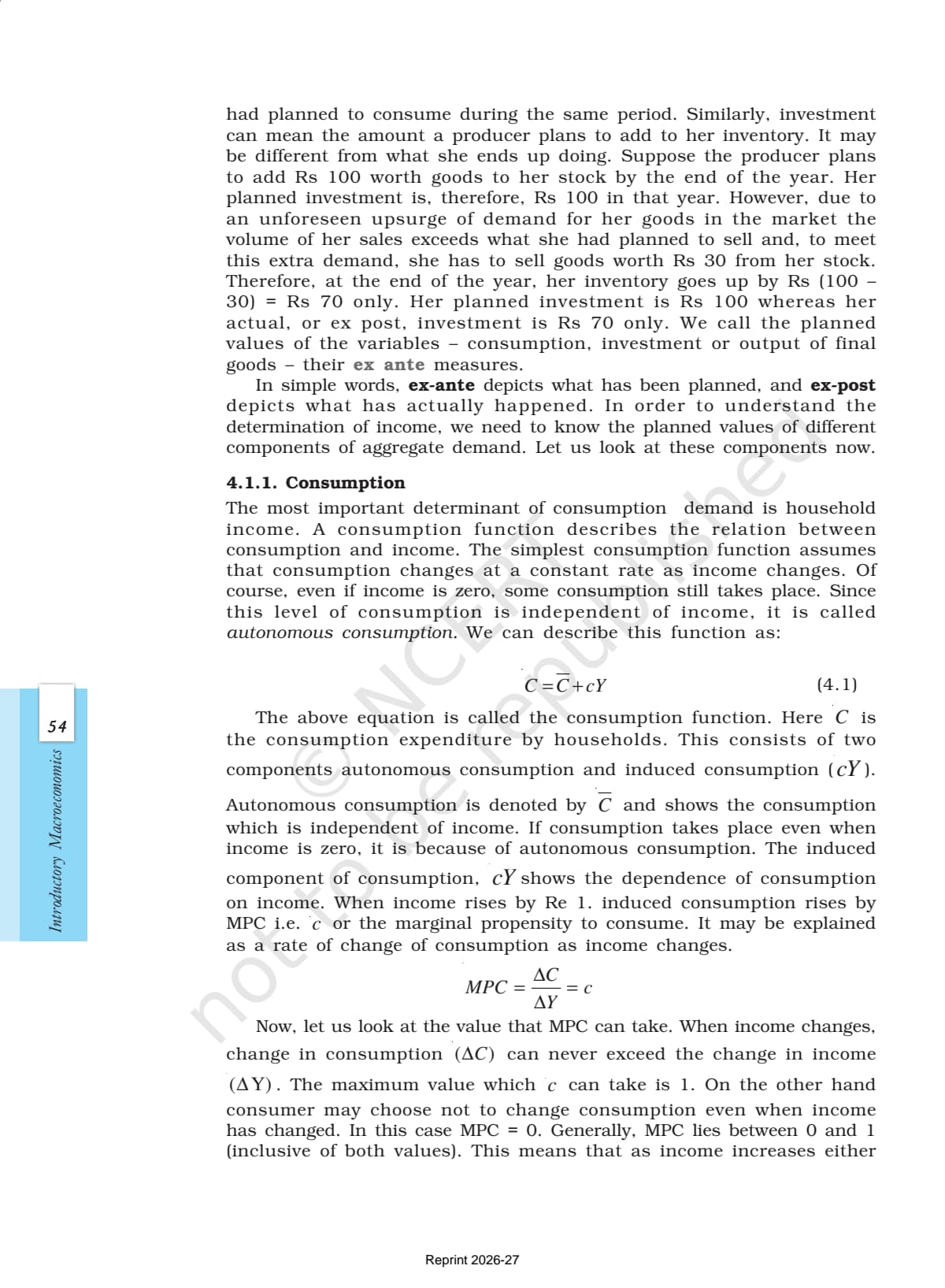
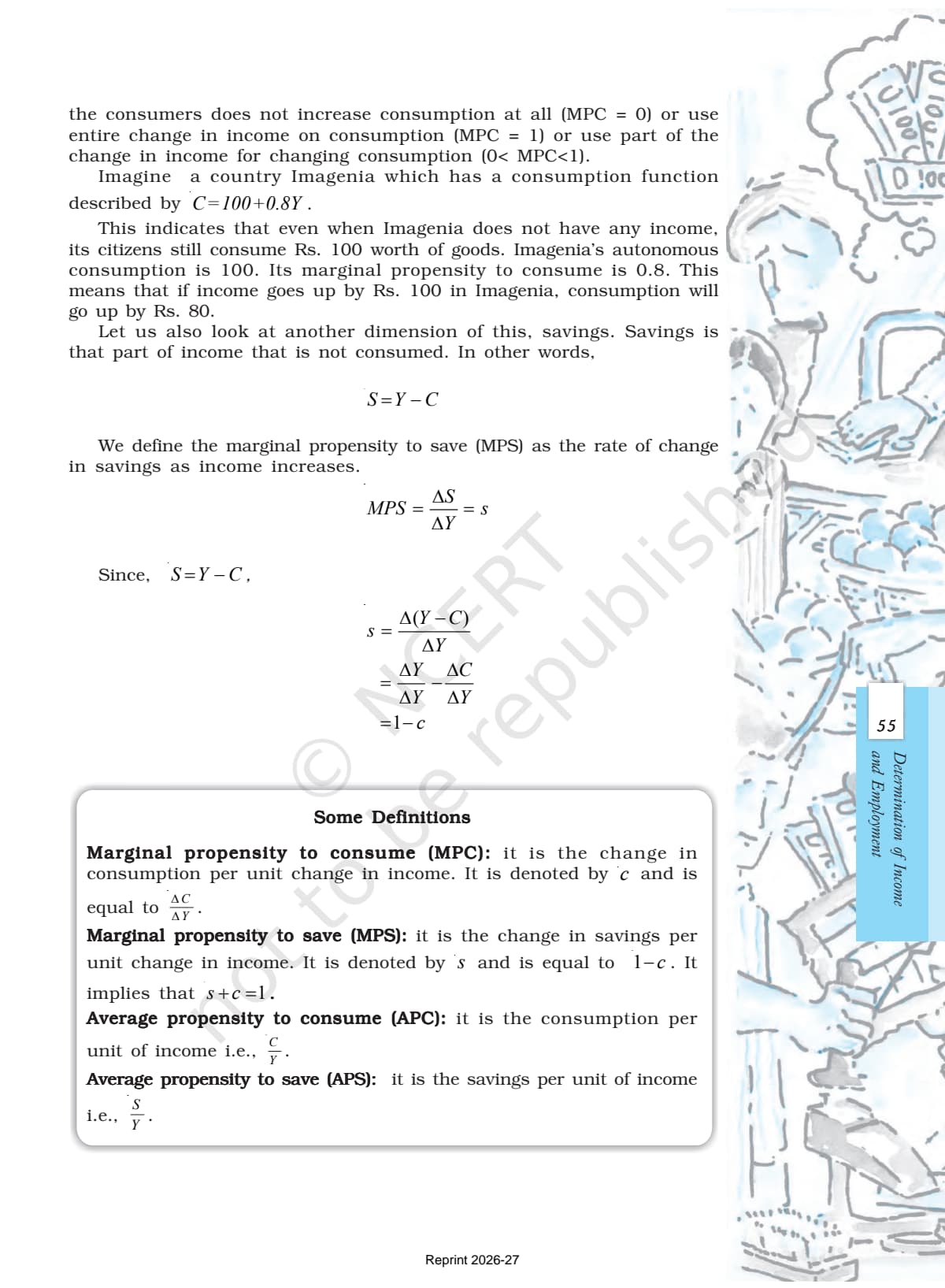
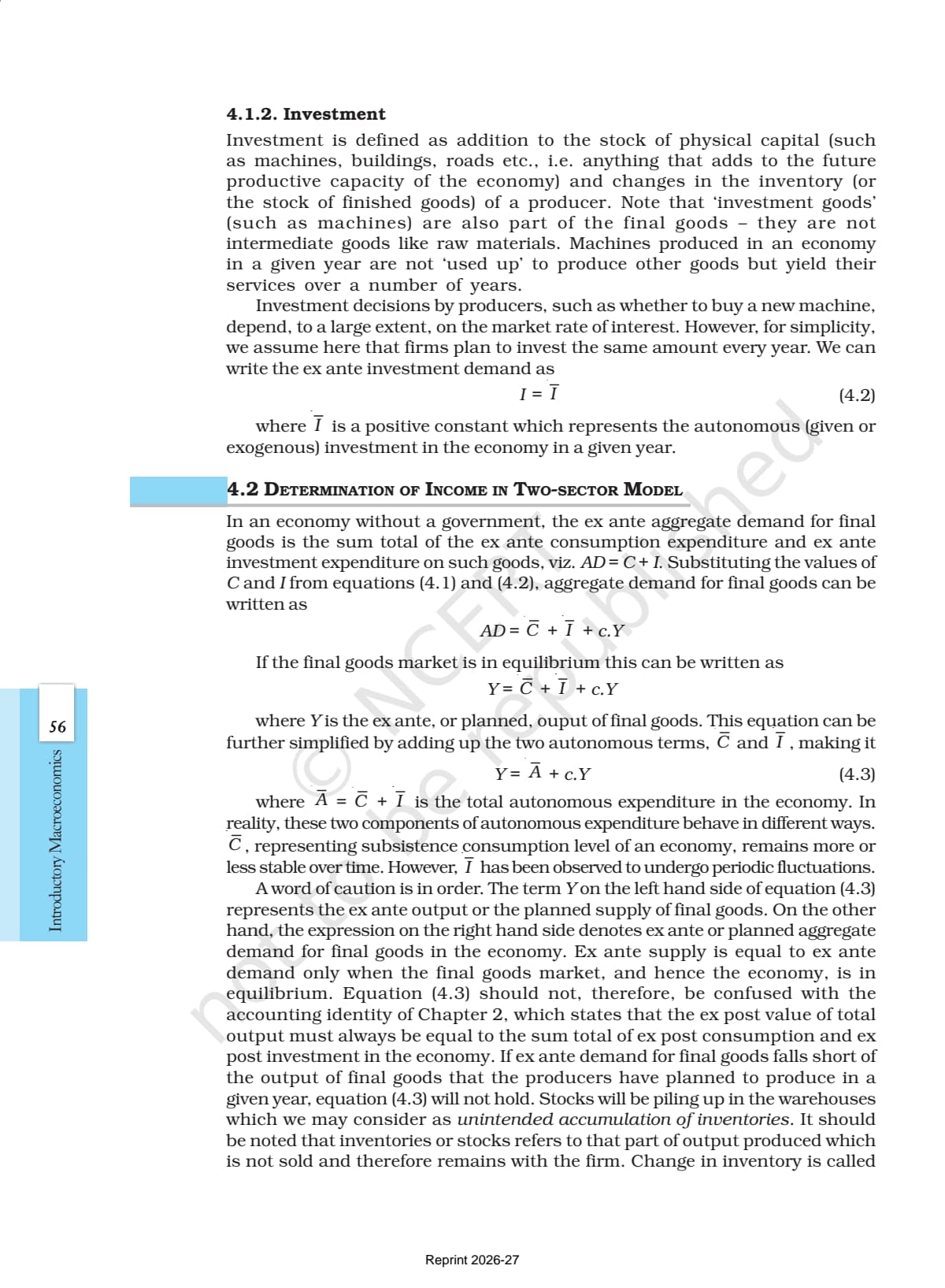
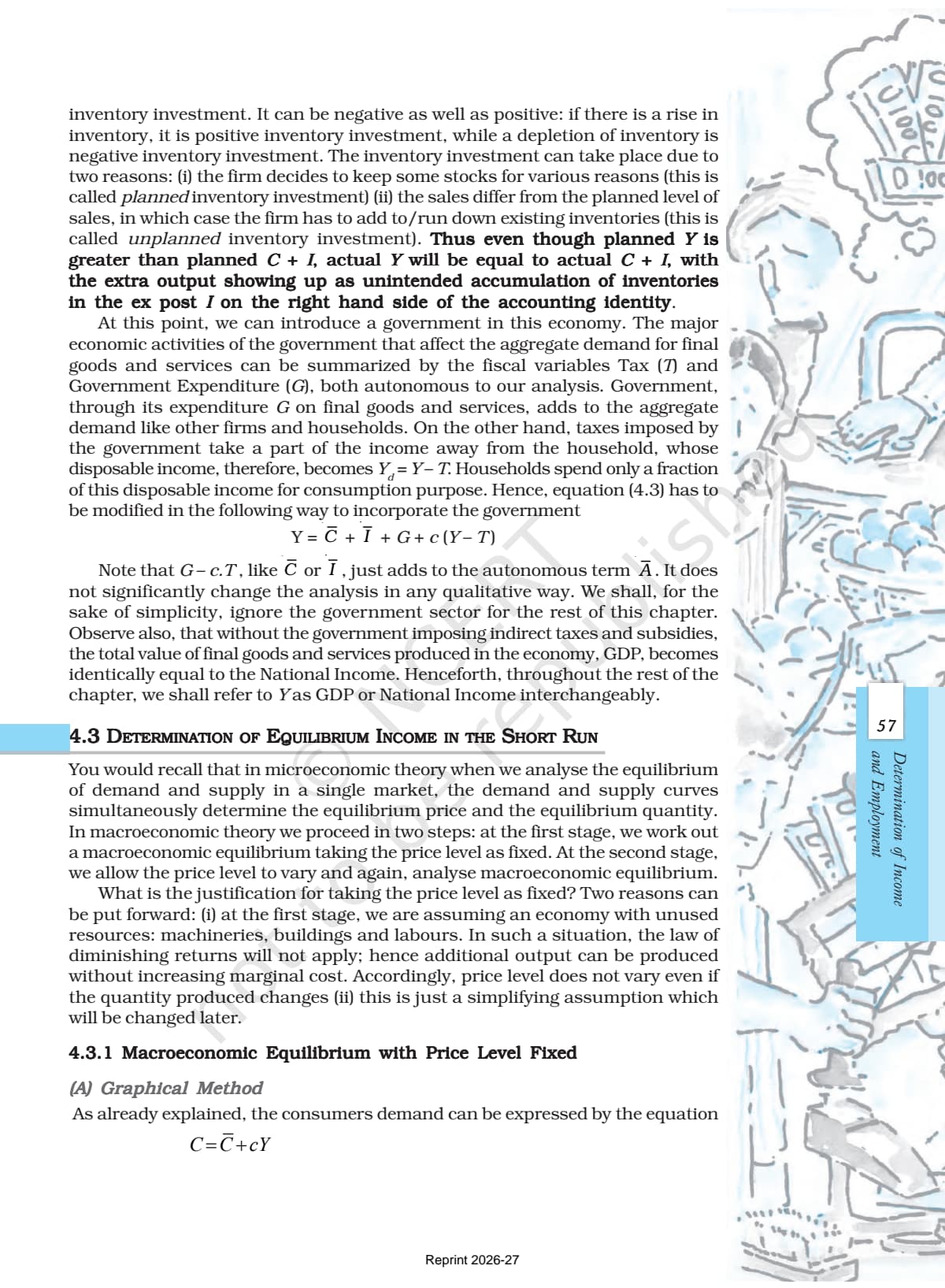
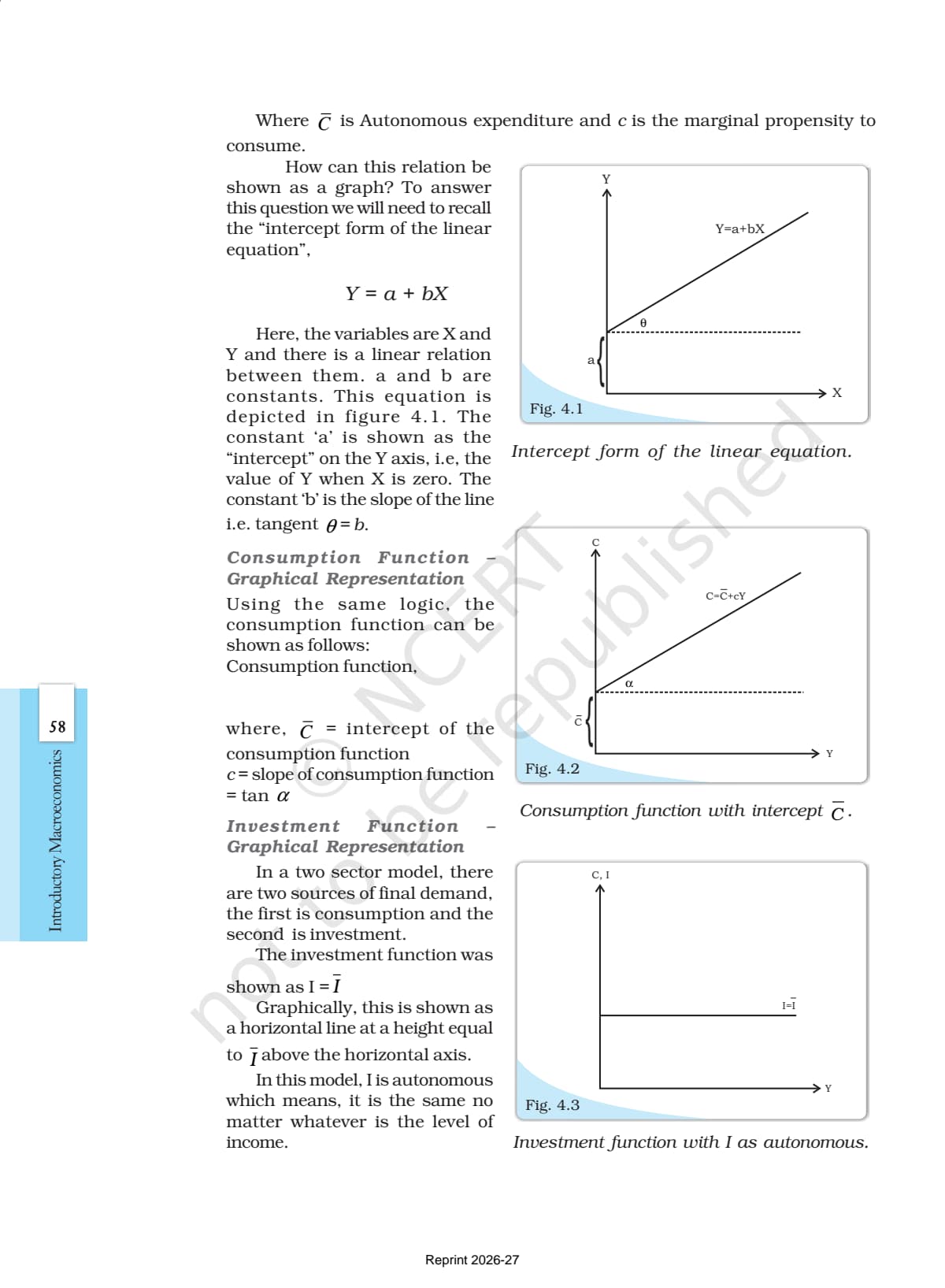
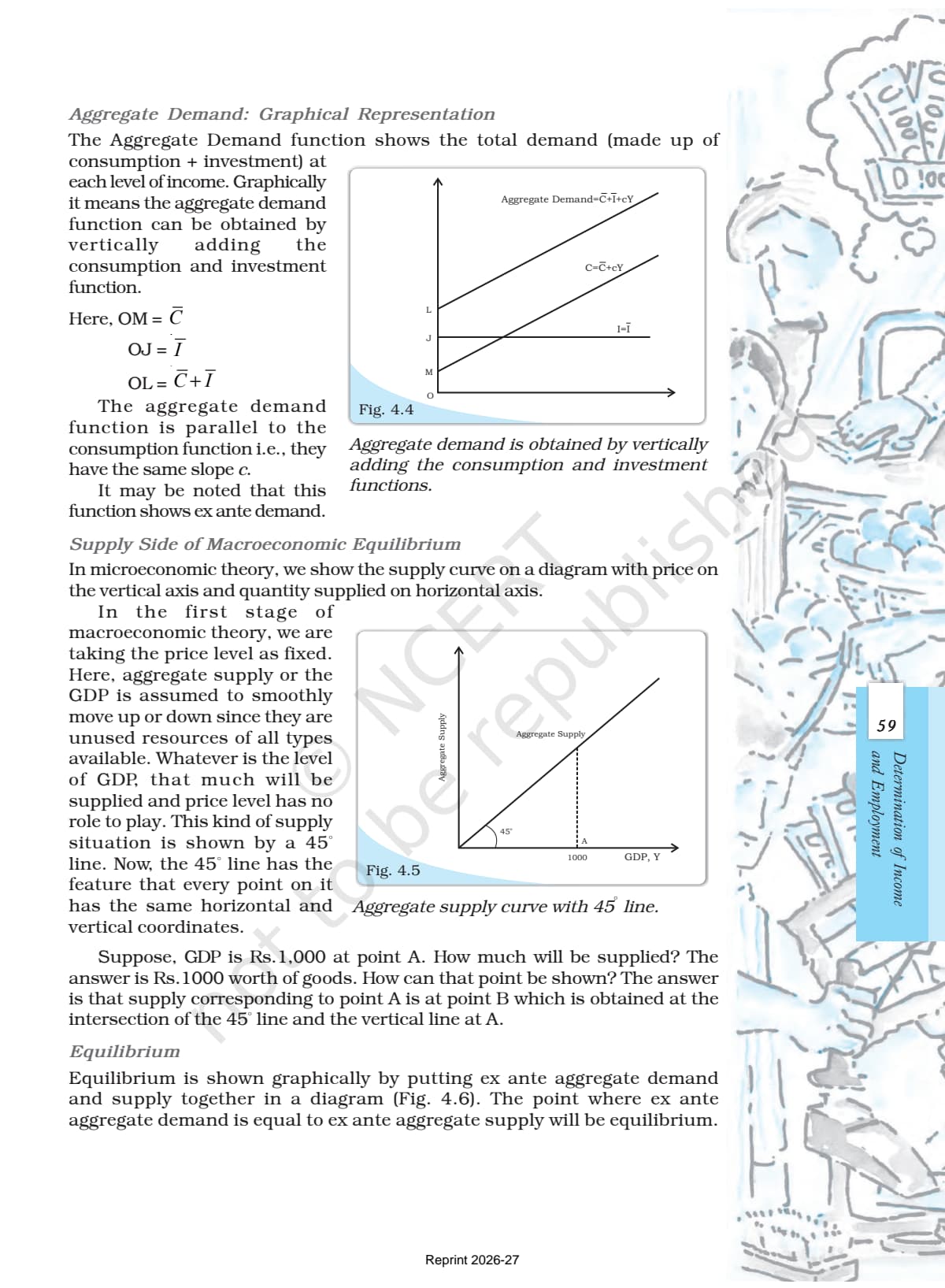
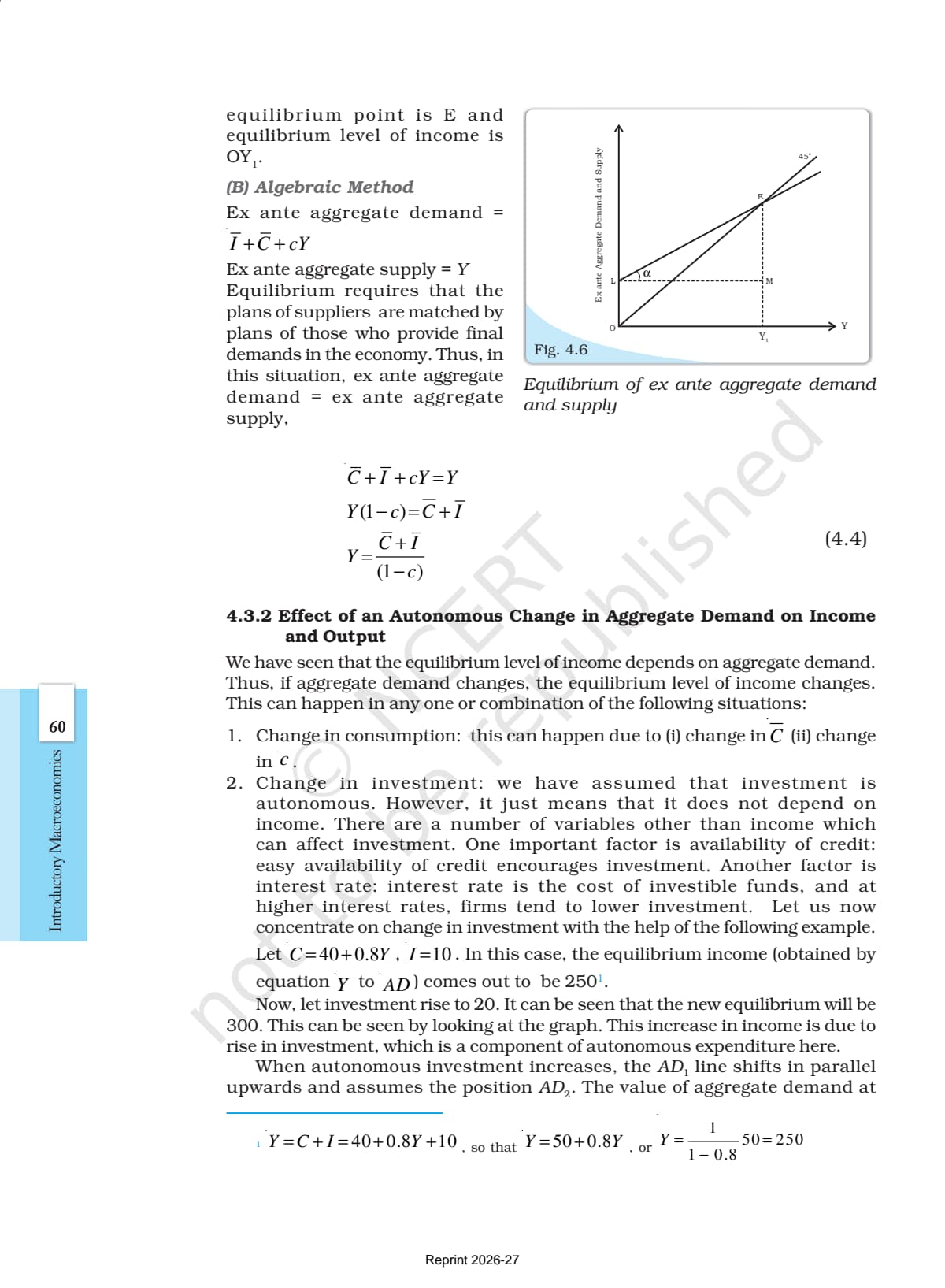
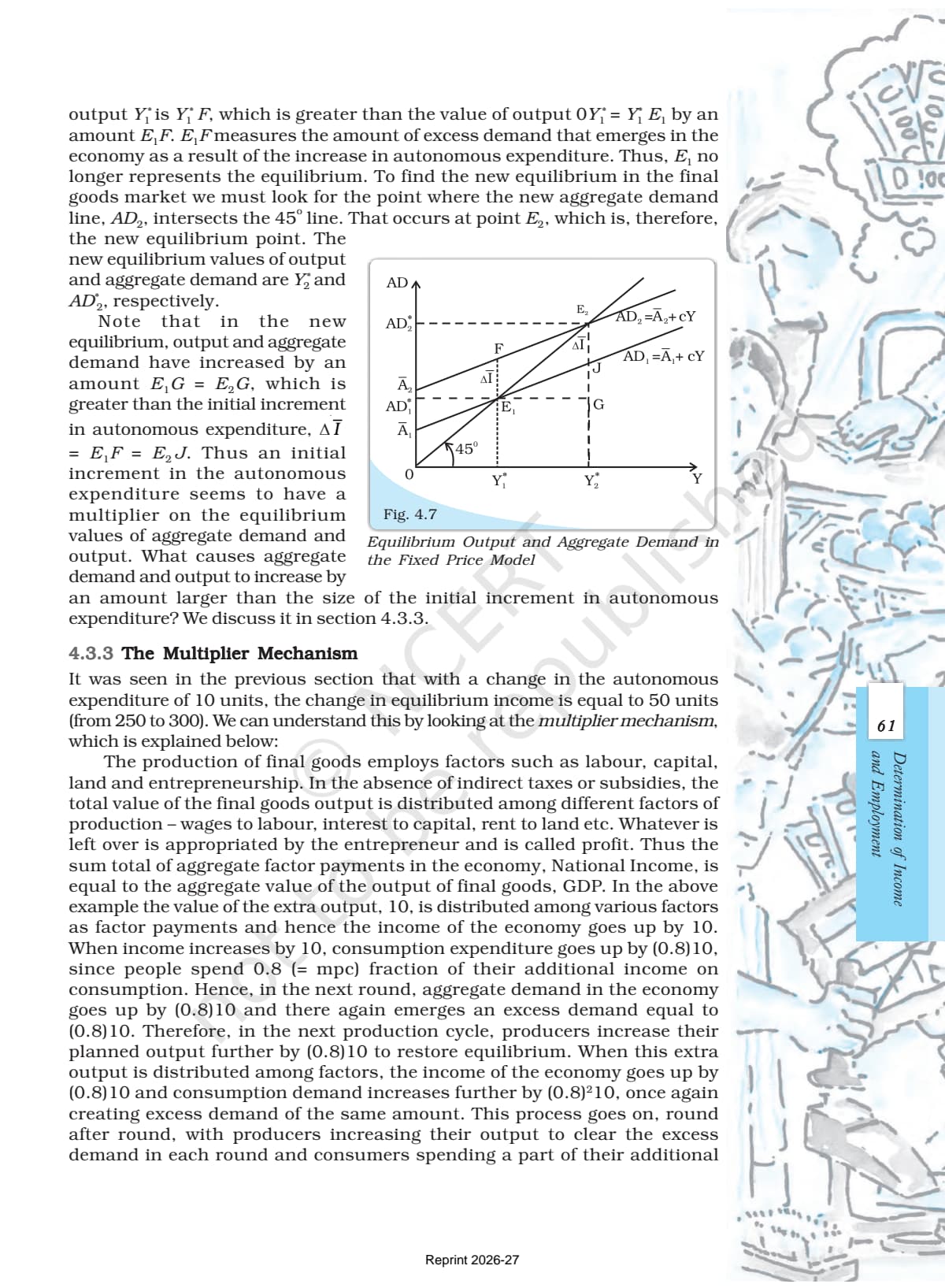
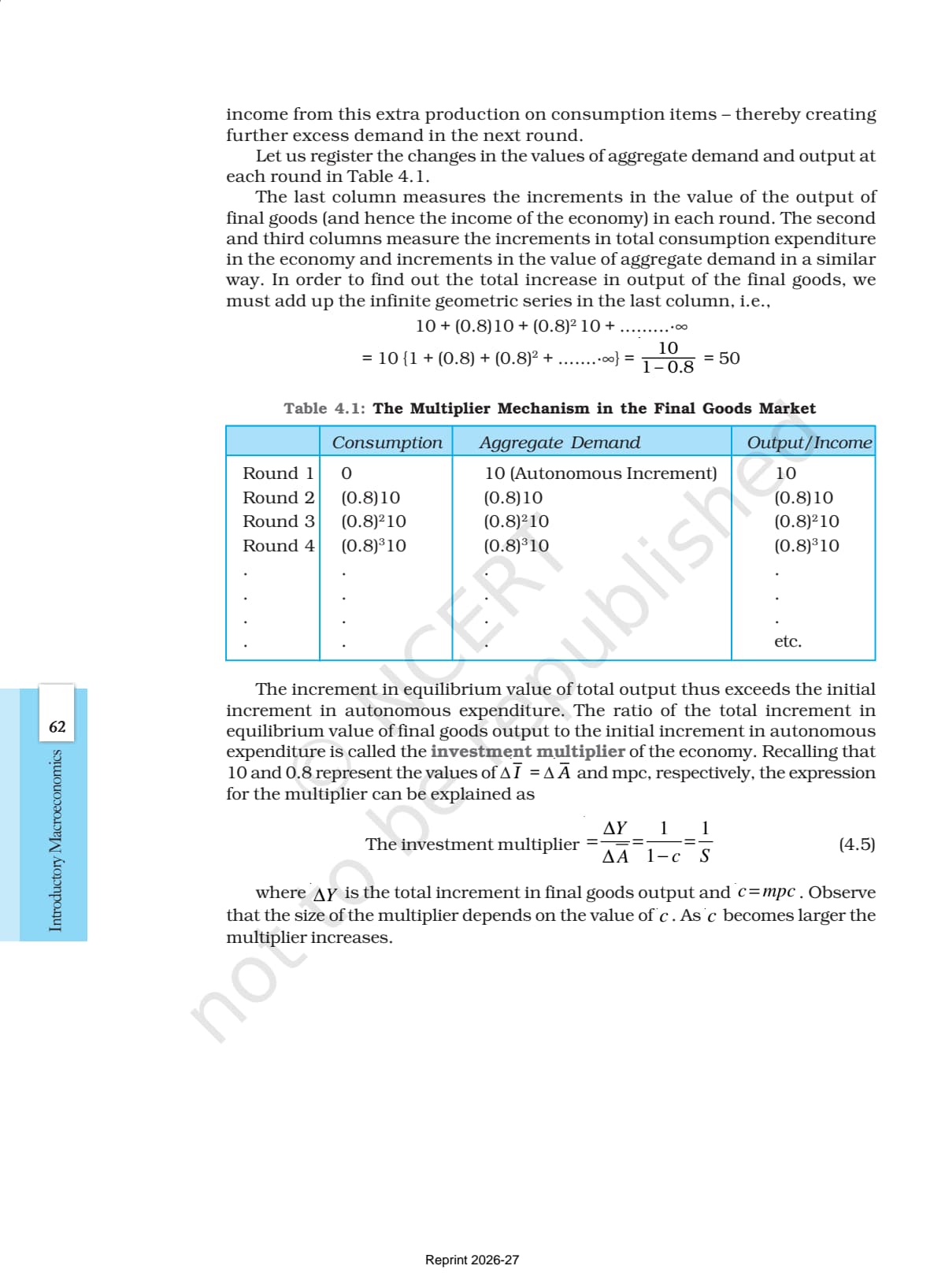
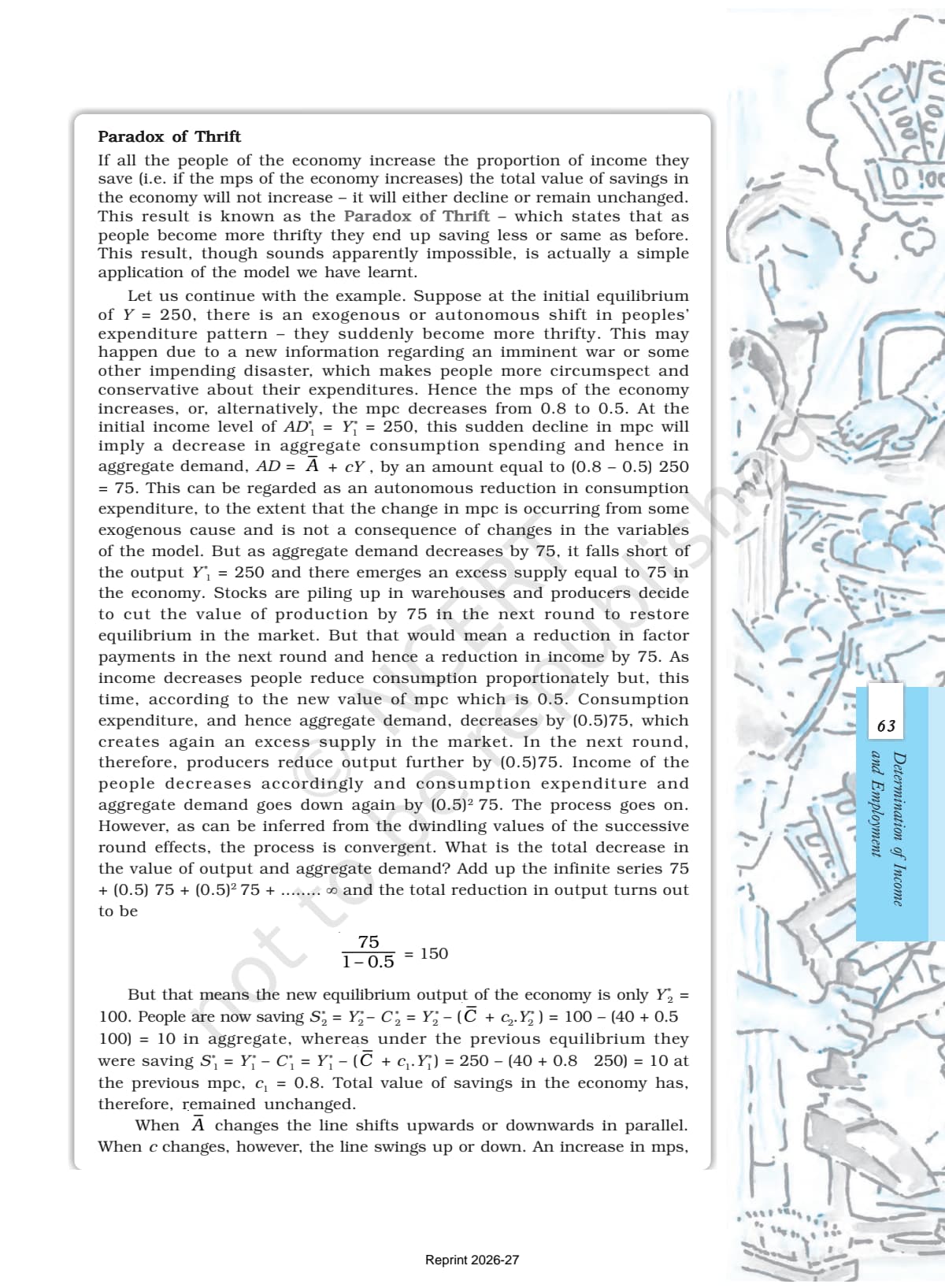
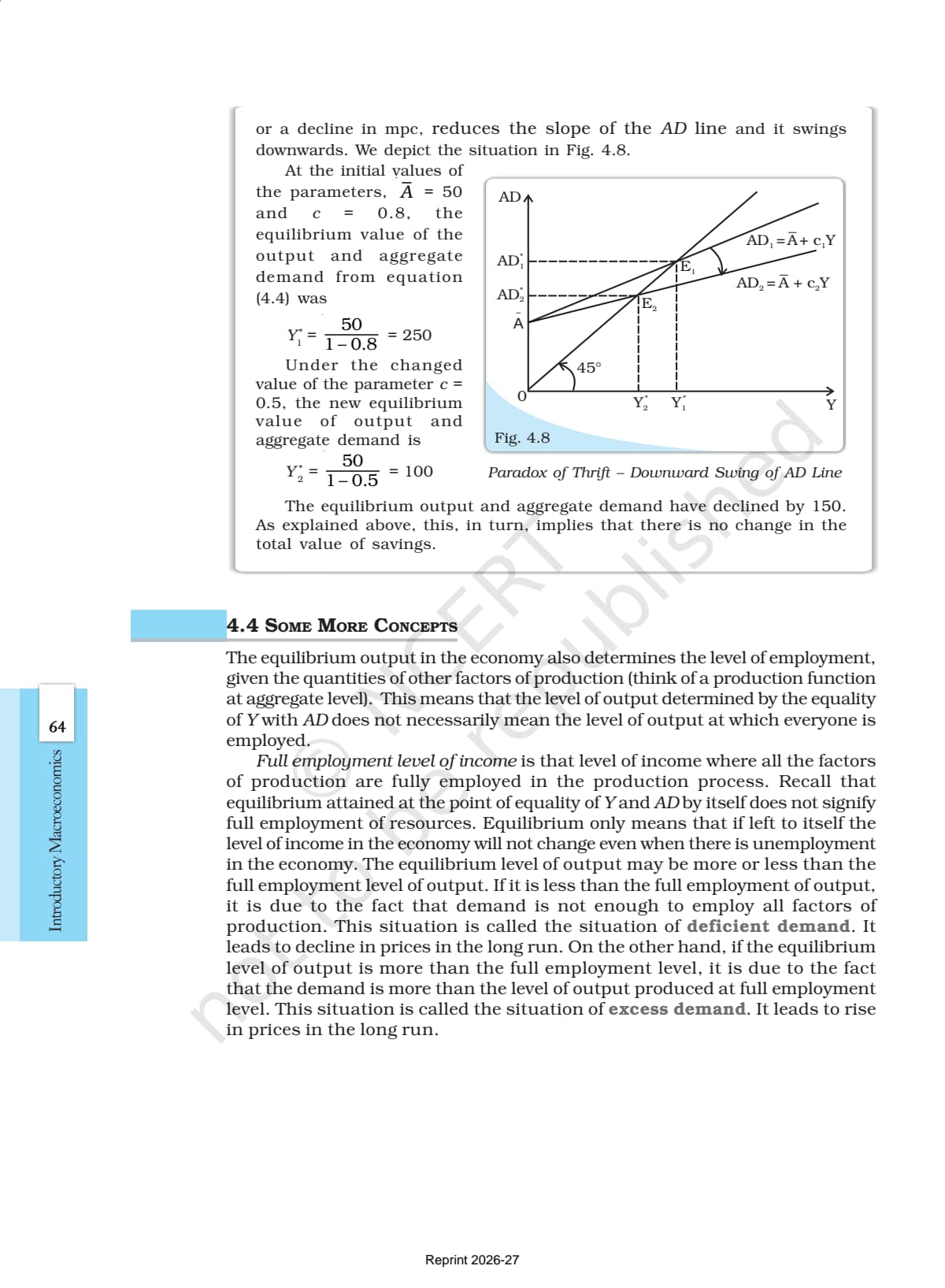
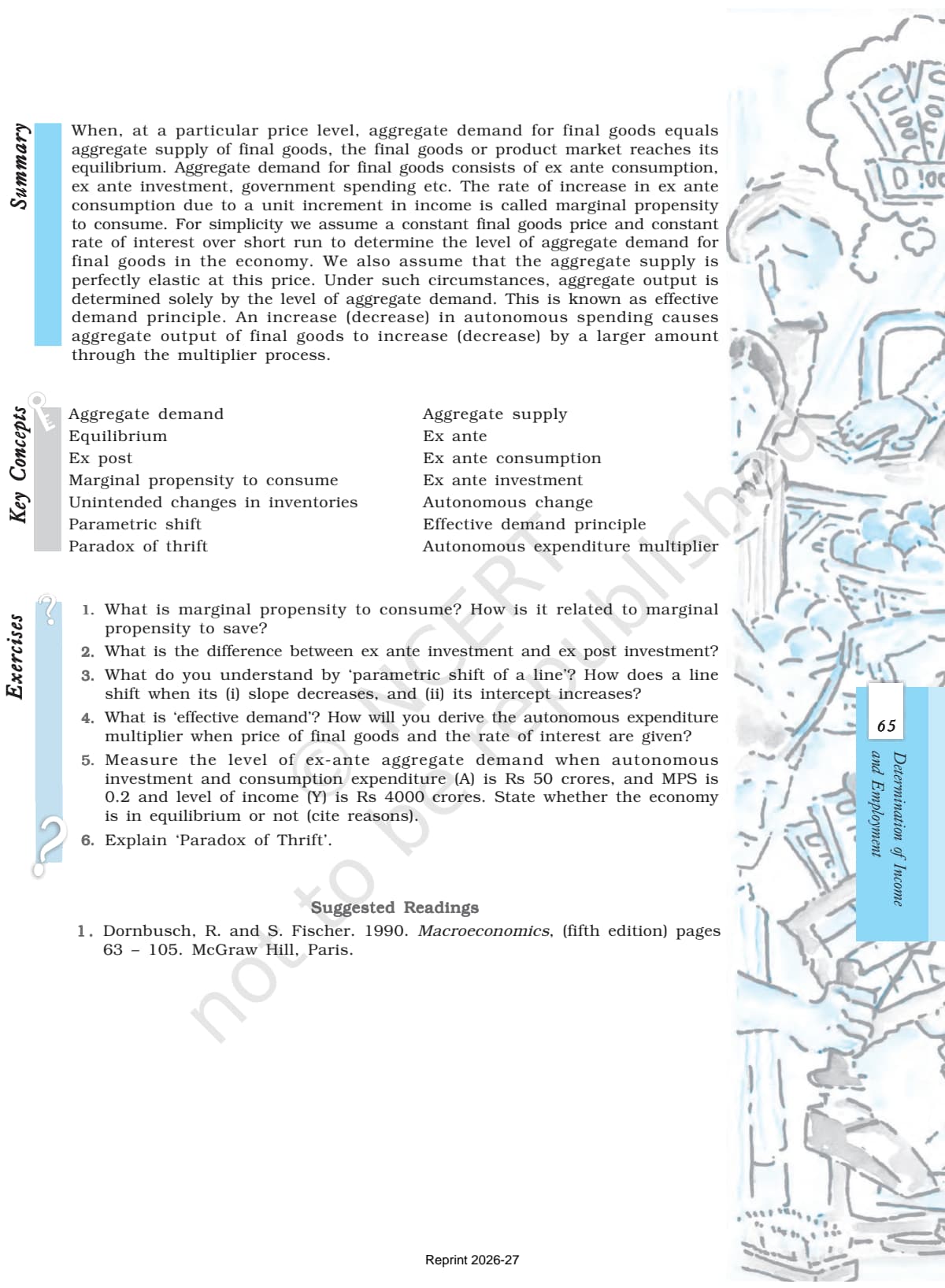
Here is what this chapter is worth in the exam:
- CBSE Boards: about 10 to 12 marks, the second-highest weightage in the Macroeconomics book.
- CUET: 2 to 3 questions each year, mostly on the multiplier and equilibrium income.
- The PDF: the official NCERT chapter file leec104, aligned to the 2026-27 syllabus.

What Class 12 Economics Chapter 4 Income Determination Covers
This chapter is where Macroeconomics moves from accounting to behaviour. The earlier chapters showed how GDP is measured. Chapter 4 explains what sets the level of GDP in the short run, when prices stay fixed.
The NCERT textbook builds the answer step by step. It starts with two short-run assumptions: firms have spare capacity and meet extra demand by making more output without raising prices, and the economy is a two-sector model of only households and firms before government and trade are added. From there it derives the consumption function, the saving function, equilibrium income, the multiplier and the paradox of thrift, and ends with the two output gaps.
Income Determination Class 12 Video Lesson
Source: Magnet Brains on YouTube
Topics in the Income Determination NCERT PDF
The official PDF is split into five numbered sections plus a short summary. The table maps each section to the main exam concept it carries.
| Section | NCERT sub-topic | Main exam concept |
|---|---|---|
| 4.1 | Aggregate demand and its parts | AD = C + I (two-sector); C + I + G + (X - M) (four-sector) |
| 4.2 | Short-run fixed-price product market | AD = AS equilibrium on the Keynesian cross |
| 4.2.2 | Change in autonomous demand | Investment multiplier k = 1/(1-c) |
| 4.3 | The multiplier mechanism | Rounds of induced consumption |
| 4.4 | Paradox of thrift | More saving lowers equilibrium output |
| 4.5 | Excess and deficient demand | Inflationary gap and deflationary gap |
Section 4.2 is the most tested part. The Keynesian cross plus the multiplier is the single biggest numerical block in the whole Macroeconomics paper, so students should give it the most time.
Key Formulas in Income Determination Class 12
The PDF is the only place with the exact NCERT phrasing. Writing these definitions in the board answer is the fastest way to full marks, because examiners reward textbook wording. The core equations are below.
- Consumption function: C = C + cY, where c is the MPC and 0 < c < 1.
- Saving function: S = -C + (1-c)Y, where (1-c) is the MPS.
- MPC + MPS = 1, since every extra rupee of income is either spent or saved.
- Equilibrium income: Y = C + I, so Y* = (C + I)/(1-c).
- Investment multiplier: k = 1/(1-c) = 1/MPS.
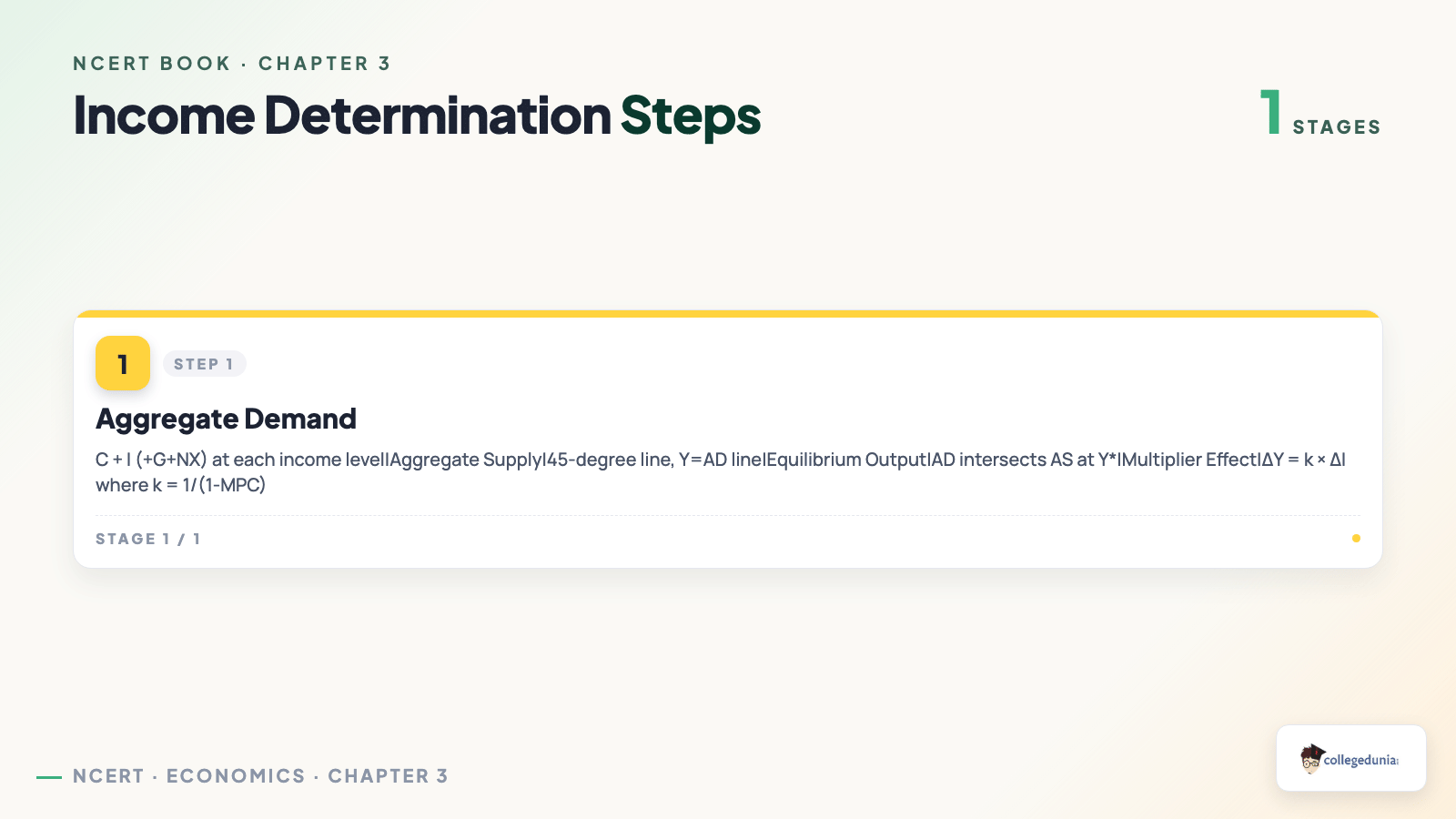
On the Keynesian cross, the 45 degree line is AS = Y and the upward AD line is C + cY + I. Their crossing point gives equilibrium income. Reading this diagram is the most testable visual skill in the chapter.
Investment Multiplier and Paradox of Thrift in Income Determination
The investment multiplier is the most tested topic here. About one in three Macroeconomics questions over the last decade has used it in some form. A one-unit rise in autonomous investment raises income by 1/(1-c) units. The table shows how the multiplier grows with the MPC.
| If MPC = | Then MPS = | Multiplier k | Rise in Y for ₹100 crore extra I |
|---|---|---|---|
| 0.50 | 0.50 | 2 | ₹200 crore |
| 0.75 | 0.25 | 4 | ₹400 crore |
| 0.80 | 0.20 | 5 | ₹500 crore |
| 0.90 | 0.10 | 10 | ₹1,000 crore |
The paradox of thrift is the chapter's most surprising result. If every household tries to save more, aggregate demand falls, equilibrium output falls, and total saving in the economy stays the same. It comes up as a HOTS question in roughly one paper out of three, so students should learn the reason, not just the formula.
Deflationary and Inflationary Gap in Income Determination
The chapter ends with two output gaps measured against full-employment output YF. A deflationary gap is when AD is below AS at YF. An inflationary gap is when AD is above it. CBSE has asked at least one direct question on these gaps in every paper for the last six years.
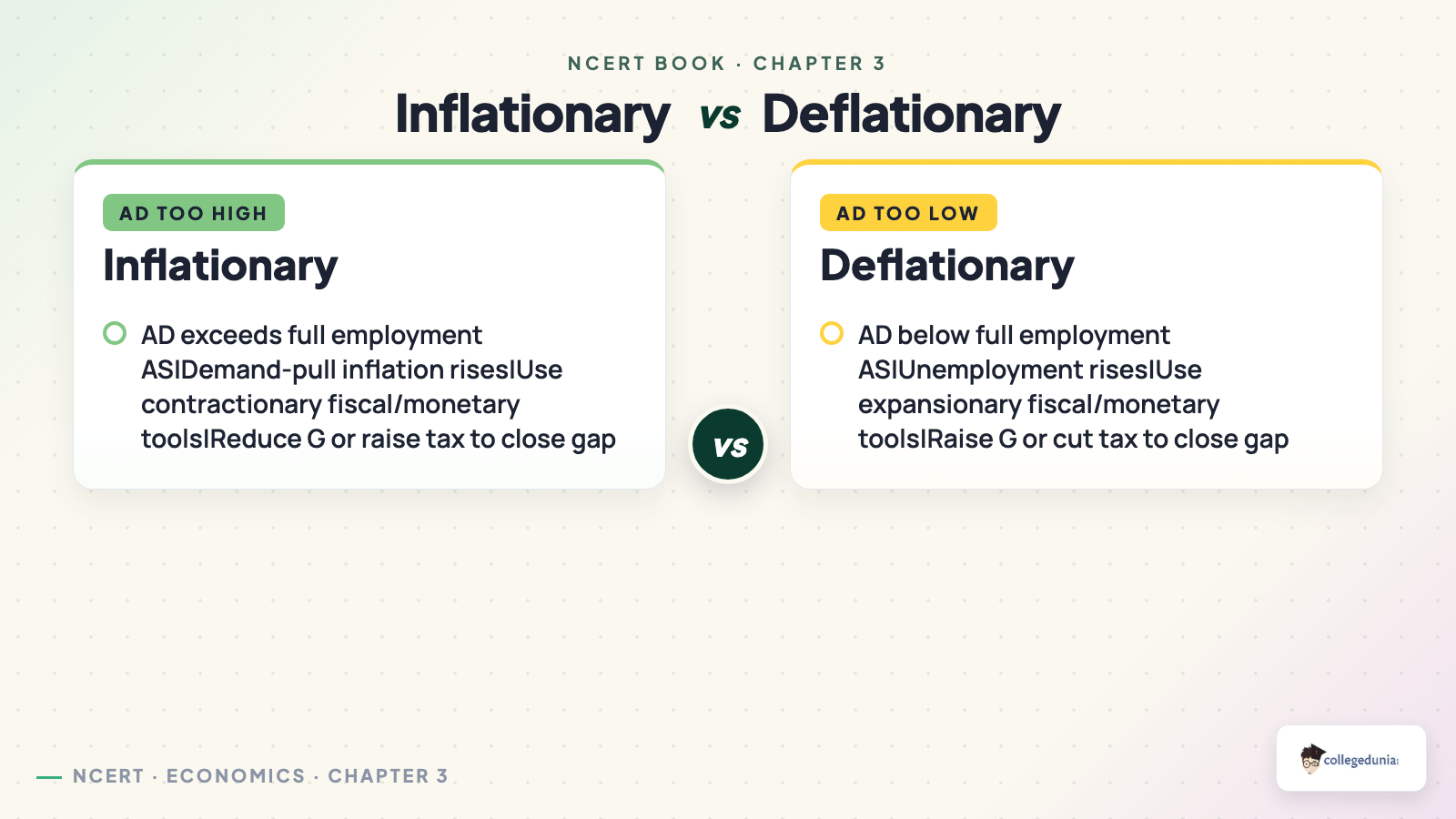
| Feature | Deflationary gap | Inflationary gap |
|---|---|---|
| Meaning | AD below full-employment AS | AD above full-employment AS |
| Output | Settles below YF | Stuck at YF; only prices rise |
| Jobs | Unemployment rises | Full employment with overheating |
| Policy fix | Expansionary policy | Contractionary policy |
Previous Year Question Trends in Income Determination Class 12
Questions from this chapter follow a stable pattern. The chapter has averaged about 10 to 12 marks across recent CBSE papers. Expect a similar spread in 2026-27, since CBSE has not changed the Macroeconomics paper for this year.
| Year | Marks | Most common topic |
|---|---|---|
| 2025 | 10 | Investment multiplier with MPC = 0.75 |
| 2024 | 12 | Paradox of thrift HOTS question |
| 2023 | 10 | Deflationary vs inflationary gap |
| 2022 | 8 | Equilibrium income algebra |
The most common question is a six-mark numerical: find equilibrium income from autonomous consumption, MPC and investment, or find the change in income from a change in investment using the multiplier. Both need a correctly set-up consumption function, which is the skill the PDF drills in Section 4.2.
Student Feedback
We asked 11,400 Class 12 students about this chapter. 84% used the NCERT PDF as their main source for Chapter 4, and those who paired it with the matching NCERT Solutions scored highest on multiplier and gap questions.
Other Resources for Class 12 Economics Chapter 4 Income Determination
Pair the PDF with the notes and solutions below for full chapter coverage.
| Resource | What it covers | Open |
|---|---|---|
| NCERT Book PDF | Official NCERT Macroeconomics Chapter 4 textbook. | Chapter 4 NCERT Book PDF |
| NCERT Solutions | Step-by-step answers to every exercise, with multiplier and thrift sums. | Chapter 4 NCERT Solutions |
| Notes | Concept-first revision with the Keynesian cross and the two gaps. | Chapter 4 Notes |
| Handwritten Notes | Scanned notebook pages for last-mile revision. | Chapter 4 Handwritten Notes |
All Chapters: Class 12 Economics Macroeconomics NCERT Book PDF
| Chapter | NCERT Book PDF |
|---|---|
| Chapter 1 | Introduction to Macroeconomics |
| Chapter 2 | National Income Accounting |
| Chapter 3 | Money and Banking |
| Chapter 4 | Income Determination |
| Chapter 5 | Government Budget and the Economy |
| Chapter 6 | Open Economy Macroeconomics |
Class 12 Economics Chapter 4 Income Determination NCERT Book PDF FAQs
Ques. Where can students download the Class 12 Economics Chapter 4 Income Determination NCERT PDF?
Ans. Students can download the official NCERT PDF from the card at the top of this page. It is the single-chapter file leec104 from the NCERT Introductory Macroeconomics textbook, aligned to the 2026-27 CBSE syllabus.
Ques. What is the investment multiplier formula in this chapter?
Ans. The investment multiplier is k = 1/(1-c) = 1/MPS, where c is the MPC. A one-unit rise in autonomous investment raises equilibrium income by k units.
Ques. What is the paradox of thrift?
Ans. If every household tries to save more, aggregate demand falls, equilibrium income falls, and total saving in the economy stays the same. It is a paradox because saving more, which seems wise for one person, lowers output for everyone.
Ques. What is the difference between a deflationary gap and an inflationary gap?
Ans. A deflationary gap is when aggregate demand falls short of full-employment AS, so output settles below YF and unemployment rises. An inflationary gap is when demand is above full-employment AS, so output stays at YF and only prices rise.
Ques. How much weightage does Chapter 4 carry in the CBSE board paper?
Ans. Across recent CBSE papers, this chapter has carried about 10 to 12 marks, the second-highest weightage in the Macroeconomics syllabus after National Income Accounting. The common question is a six-mark numerical on the multiplier or equilibrium income.



Comments