




The Class 12 Business Studies Chapter 5 Organising textbook PDF is the official NCERT chapter for 2026-27, covering the organising process, functional and divisional structures, formal vs informal organisation, and delegation and decentralisation.
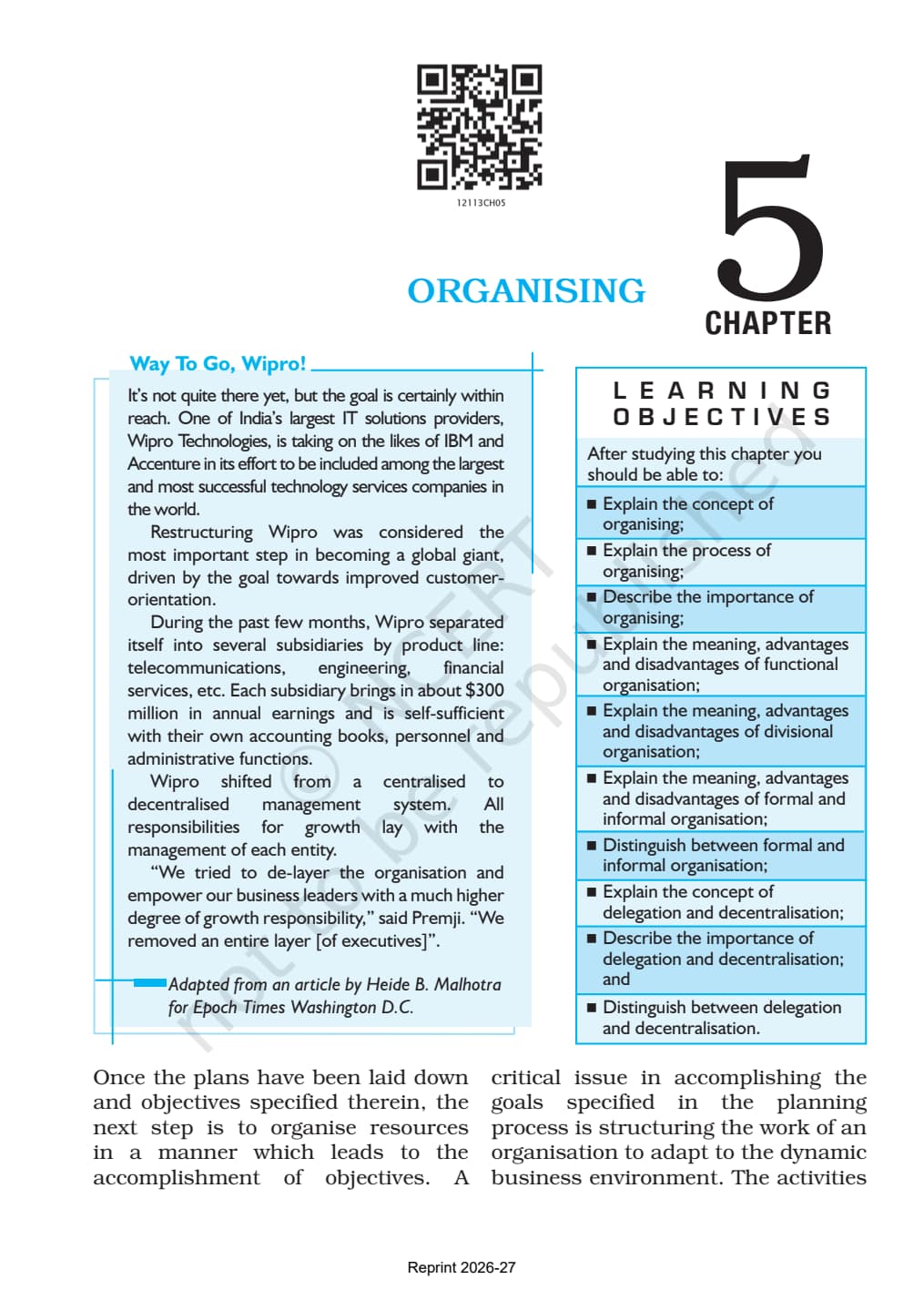
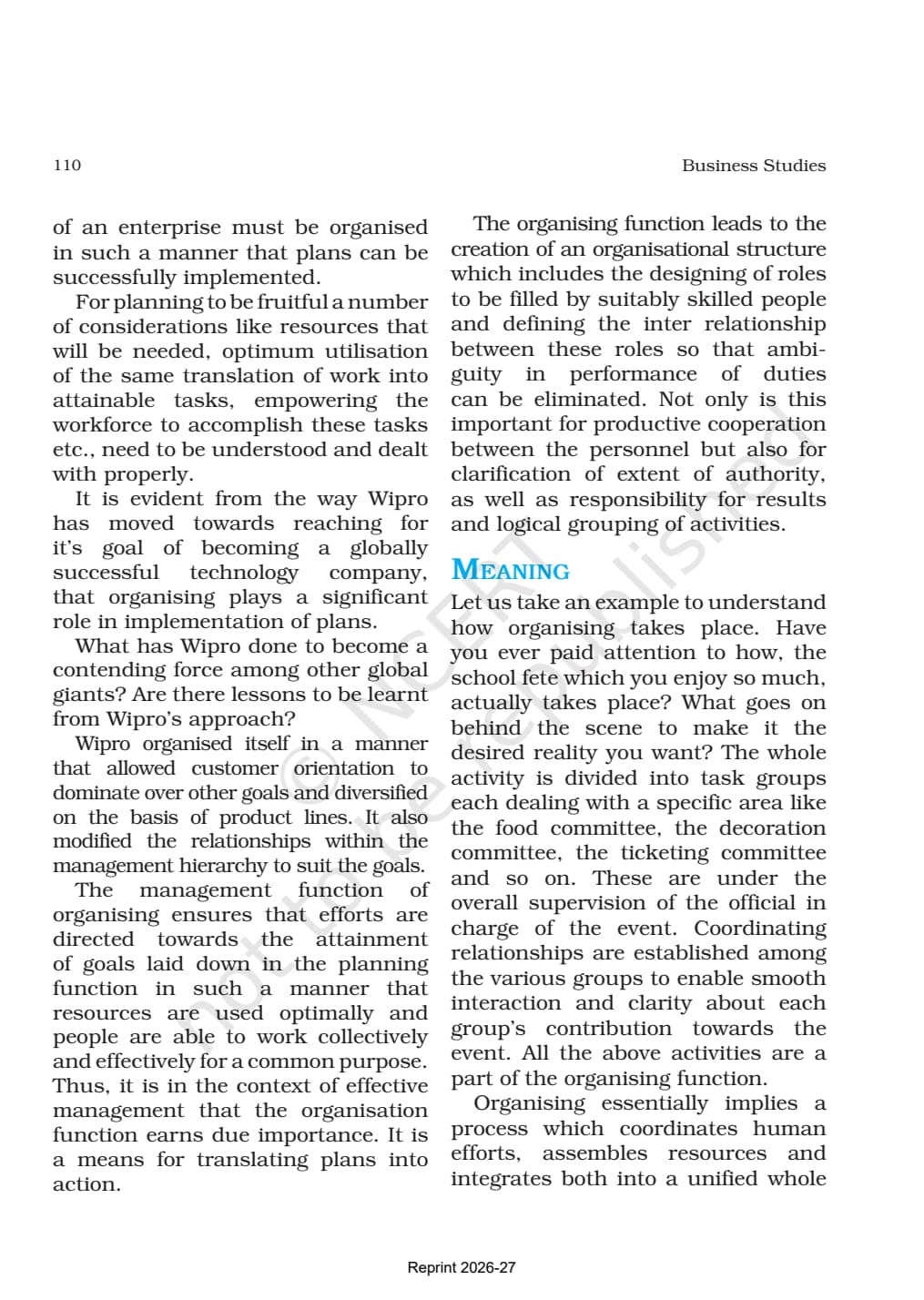
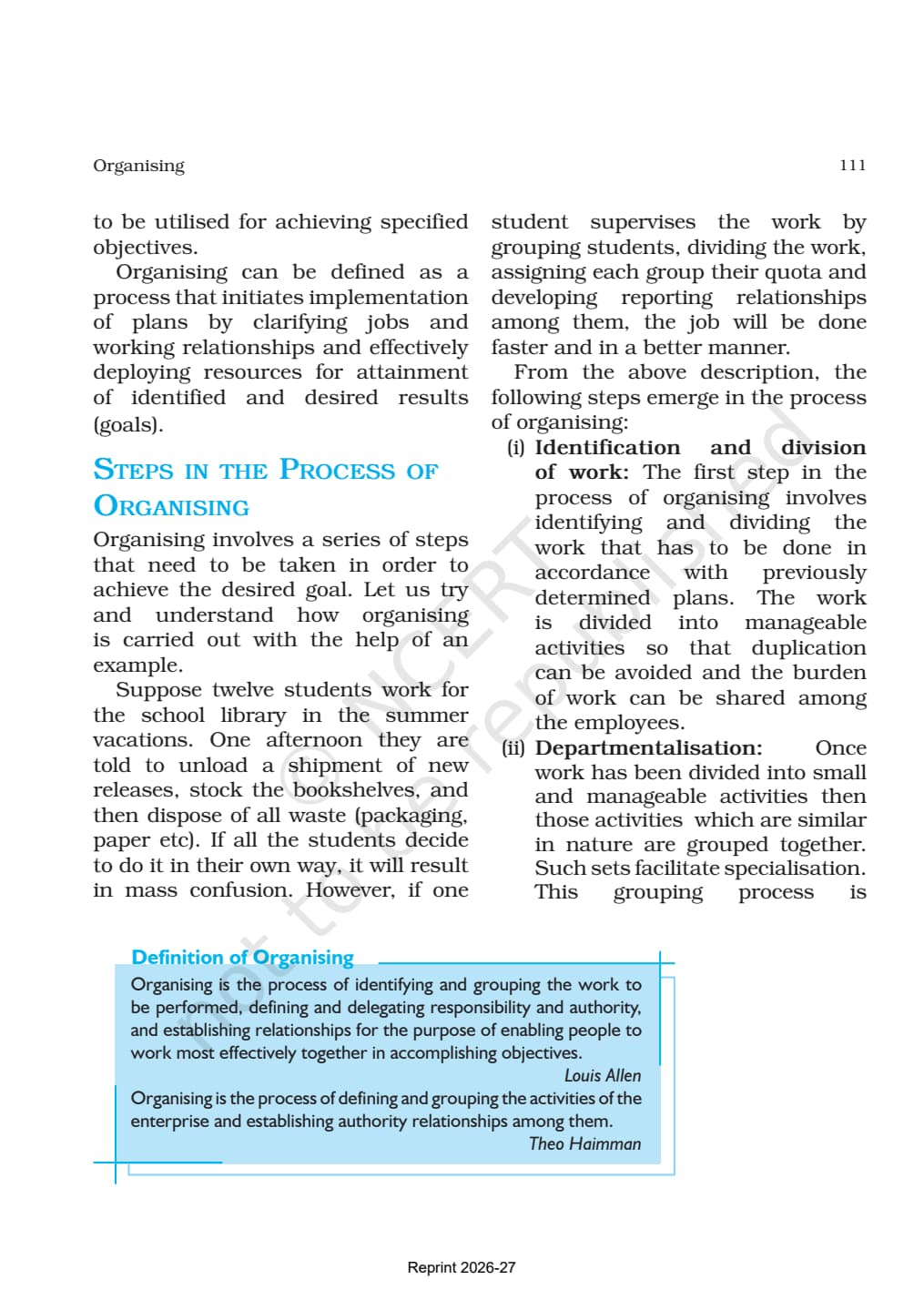
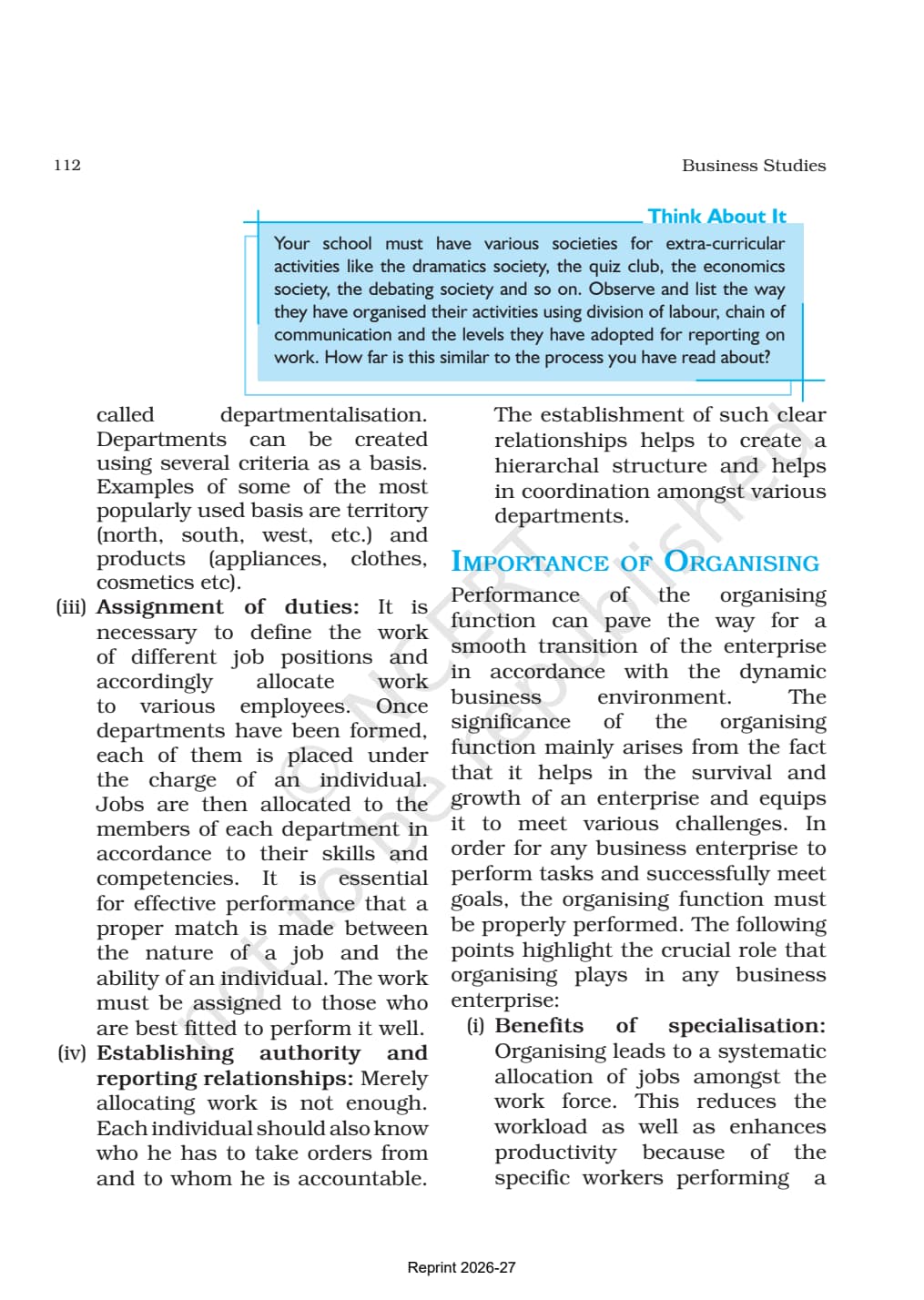

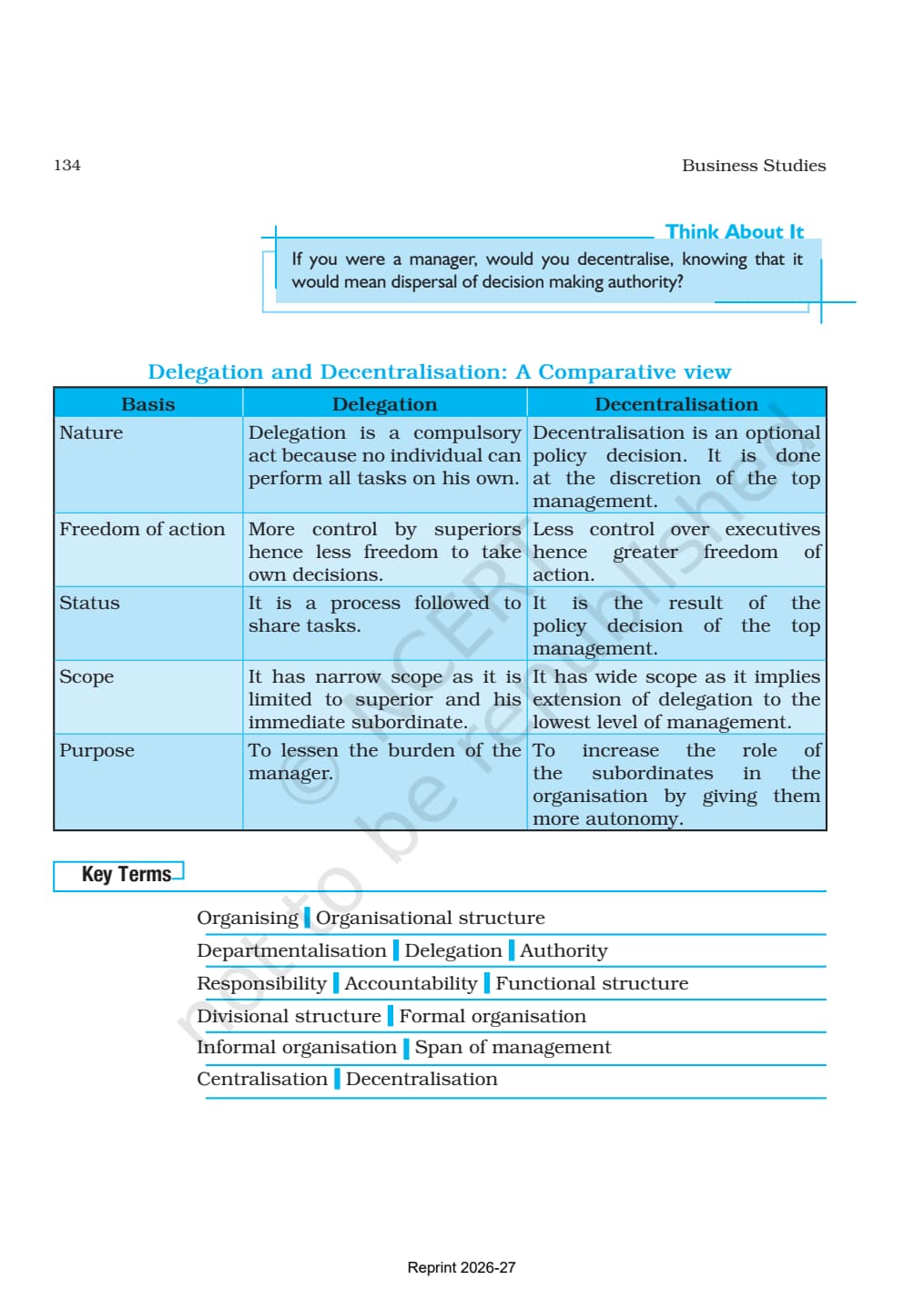
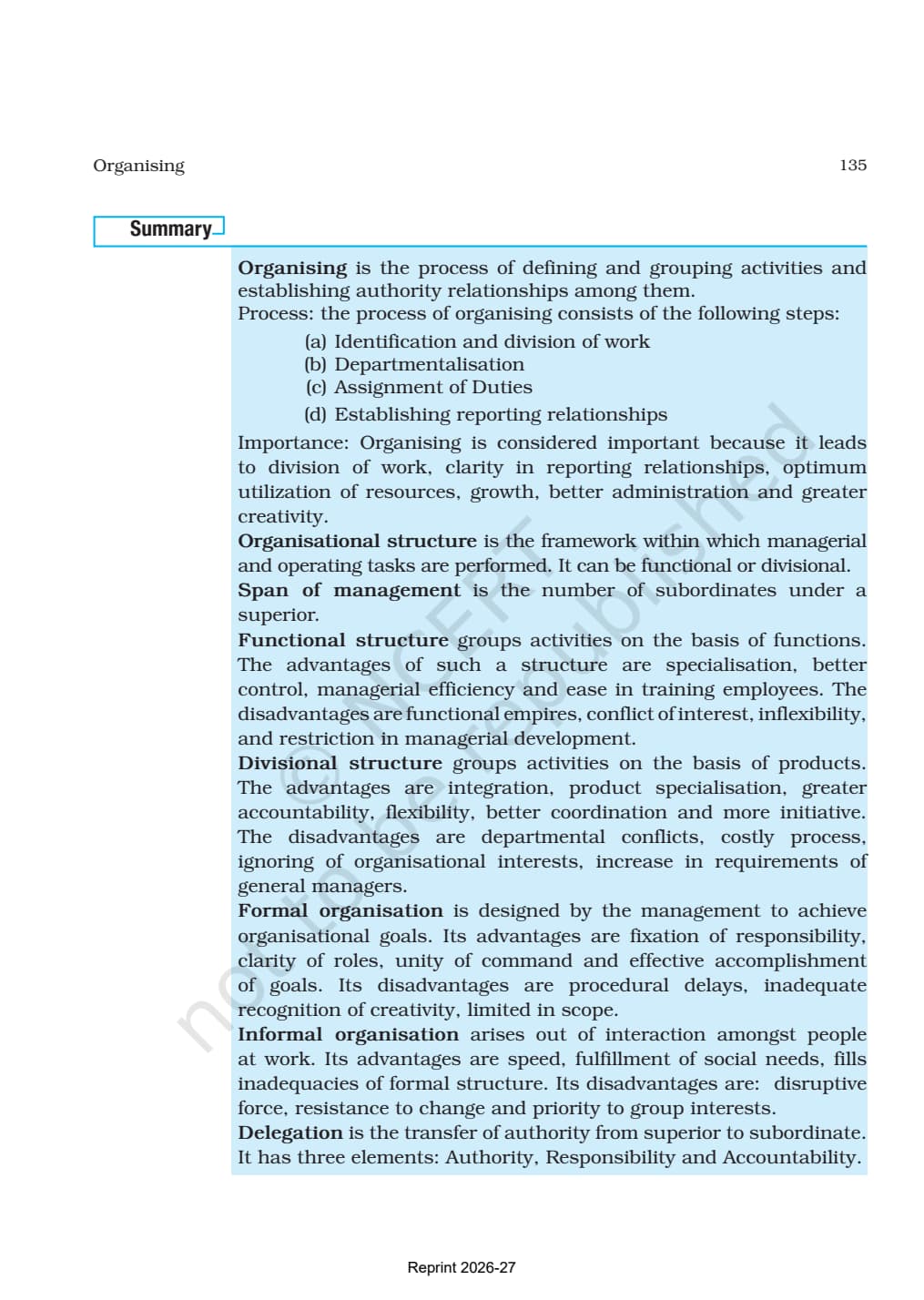
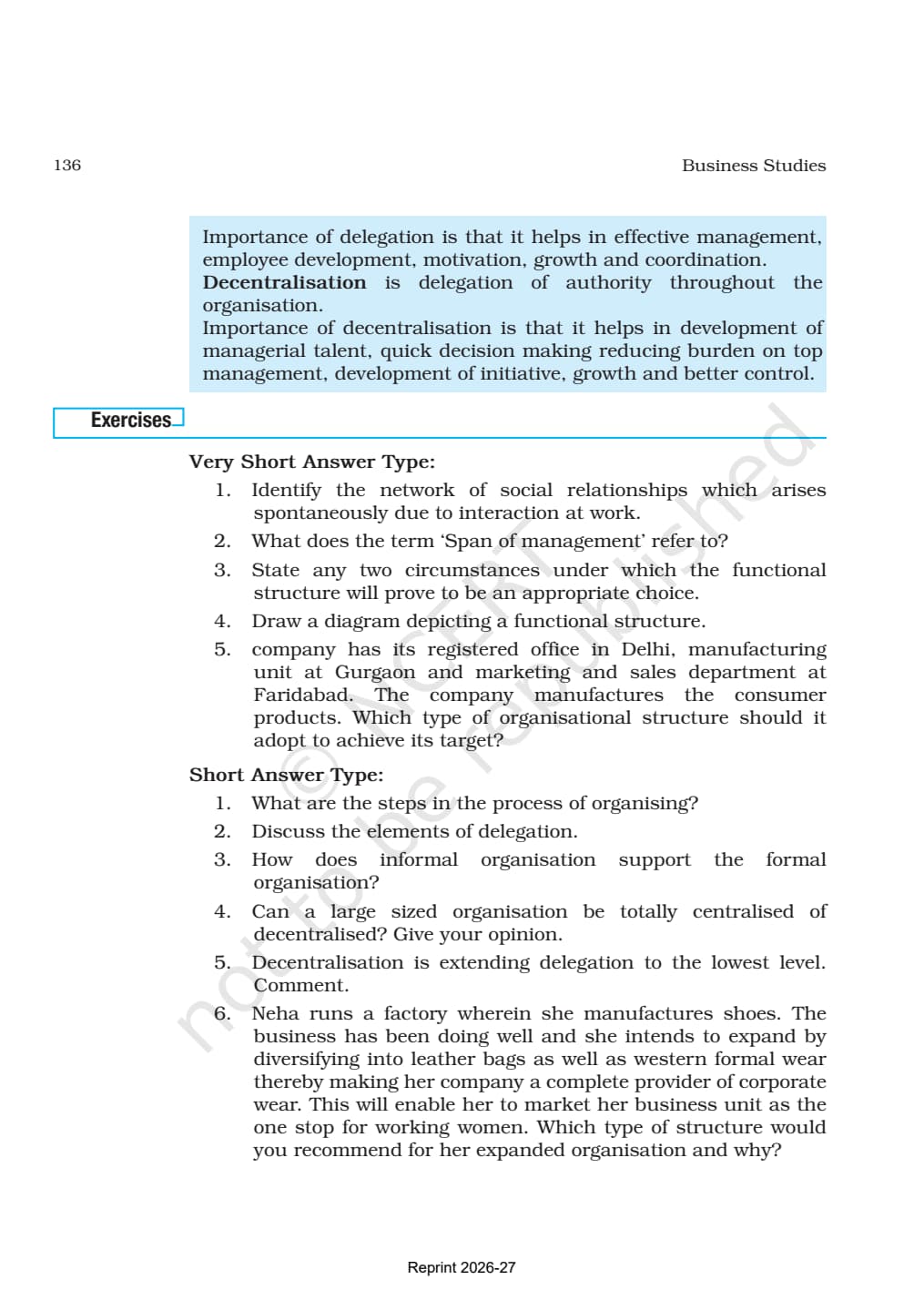
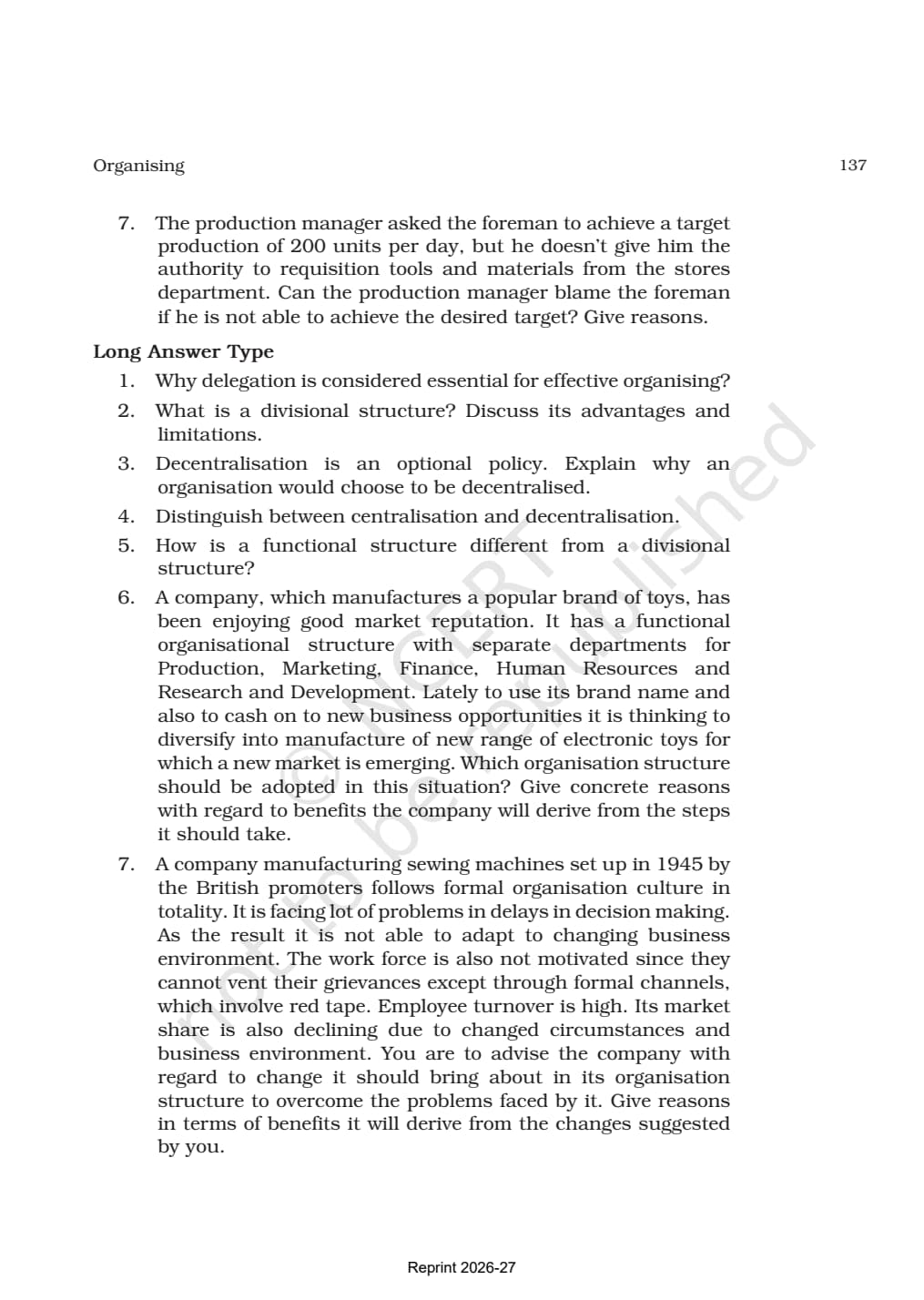
- Book: Business Studies Part I (Principles and Functions of Management) - the Class 12 NCERT textbook
- Chapter: 5 - Organising
- Pages in textbook: 109 to 138 (30 textbook pages)
- Reprint year: 2026-27
- Board weightage: 6 to 10 marks in CBSE Class 12 Board paper
This is the same PDF NCERT publishes on the official NCERT portal. We host it here so students do not have to chase the NCERT website during exam season; the file is identical, including the 2026-27 reprint pagination.
The PDF is hosted by Collegedunia exactly as published by NCERT for the 2026-27 academic session.
About the Chapter
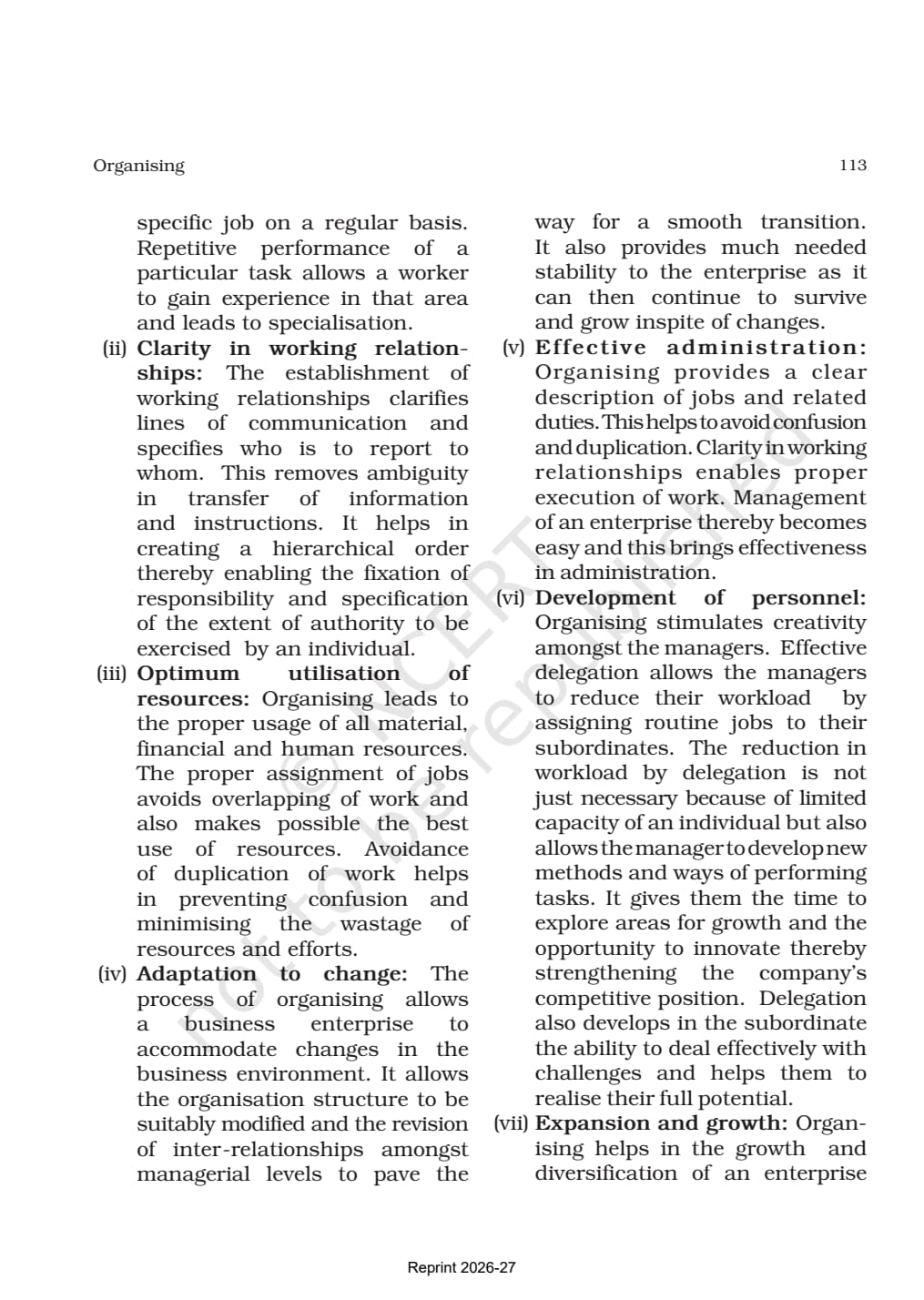
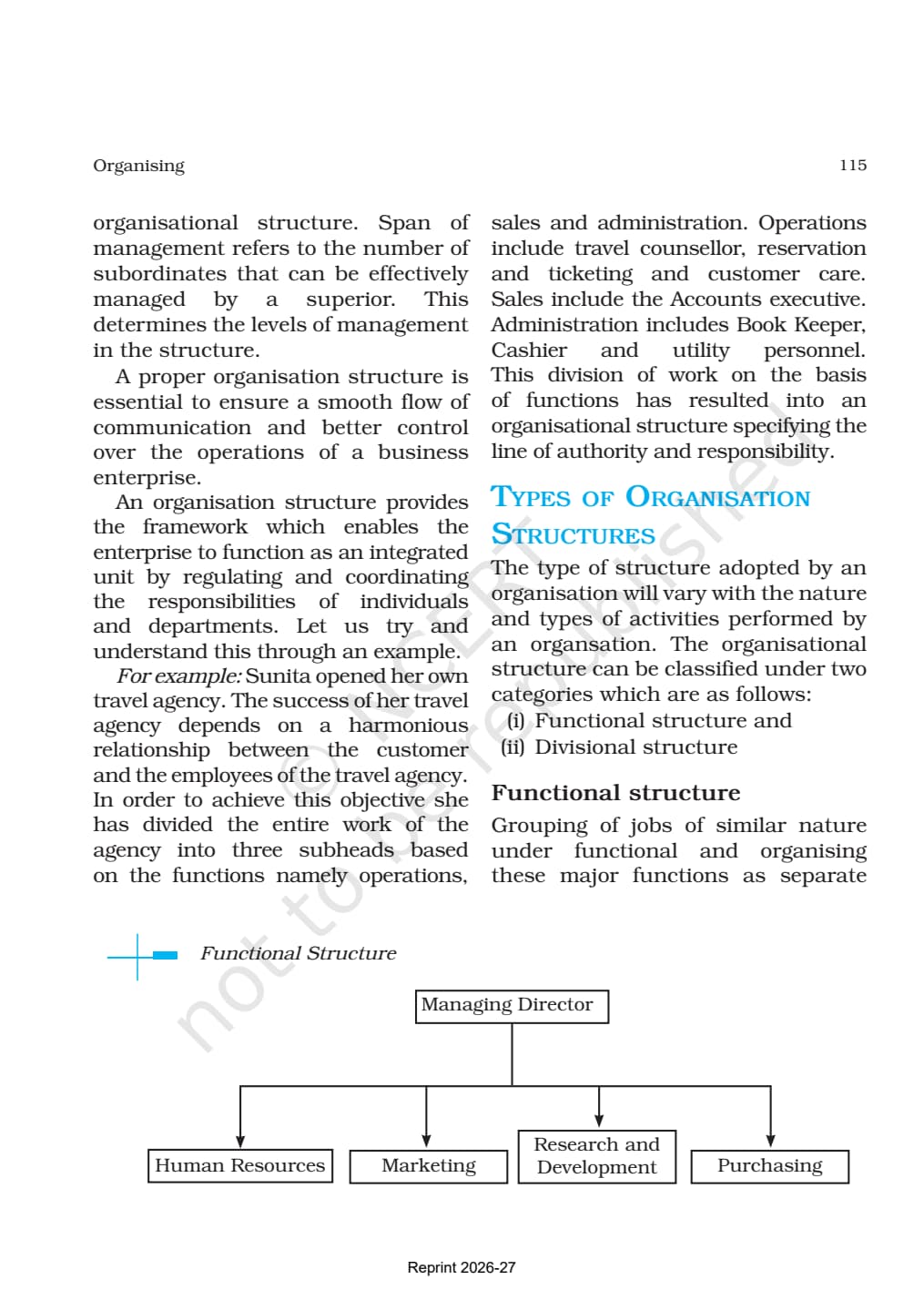
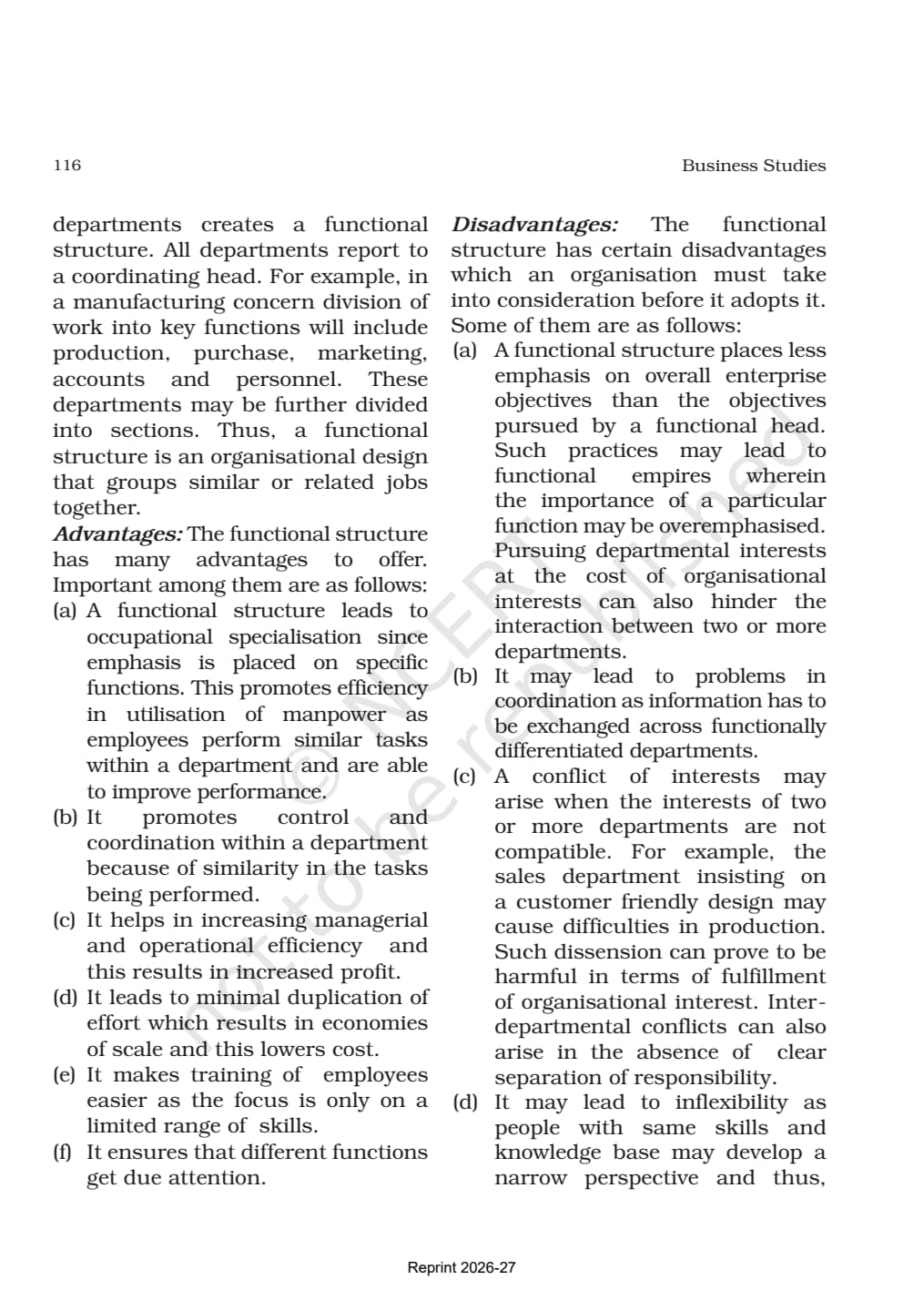
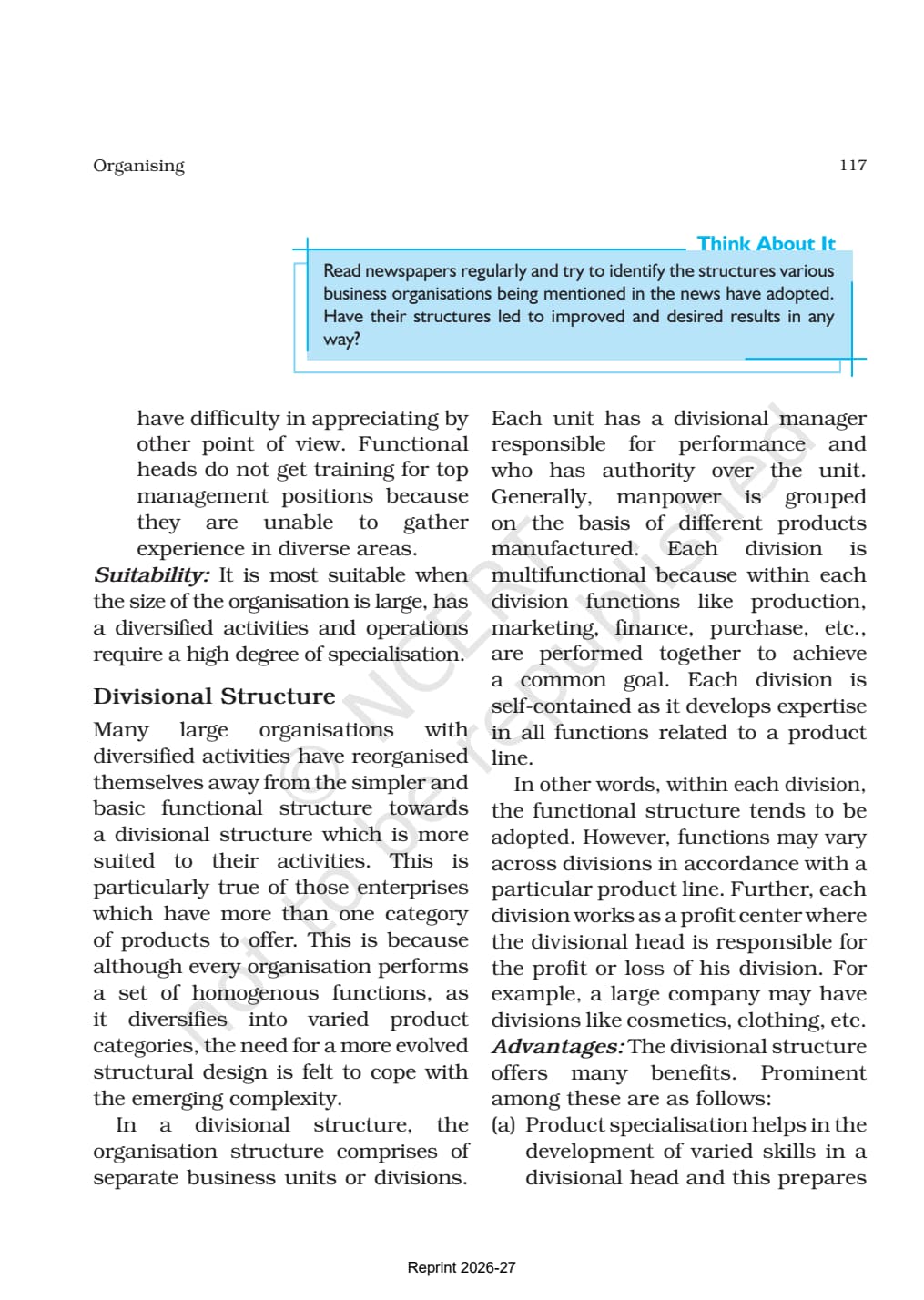
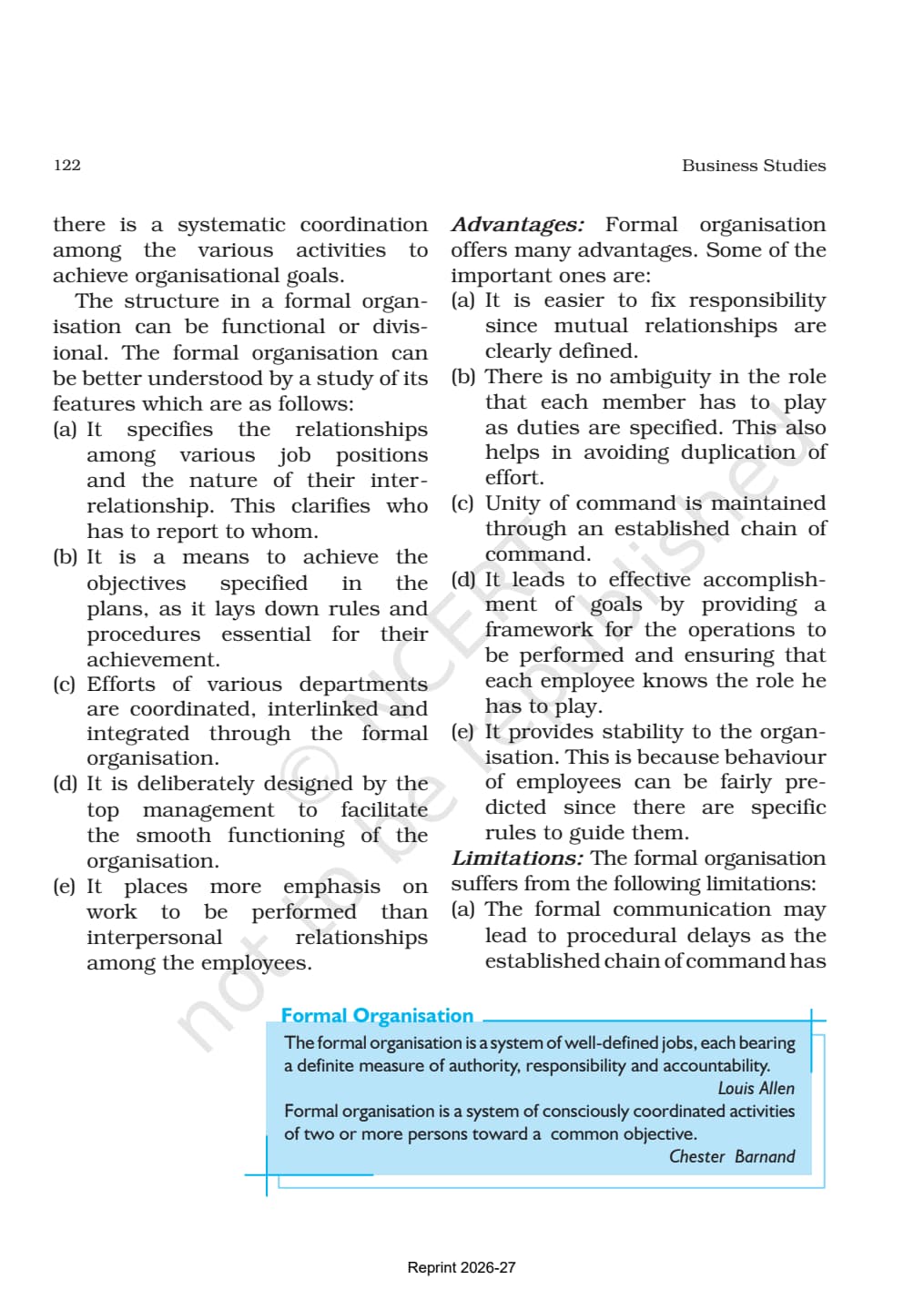
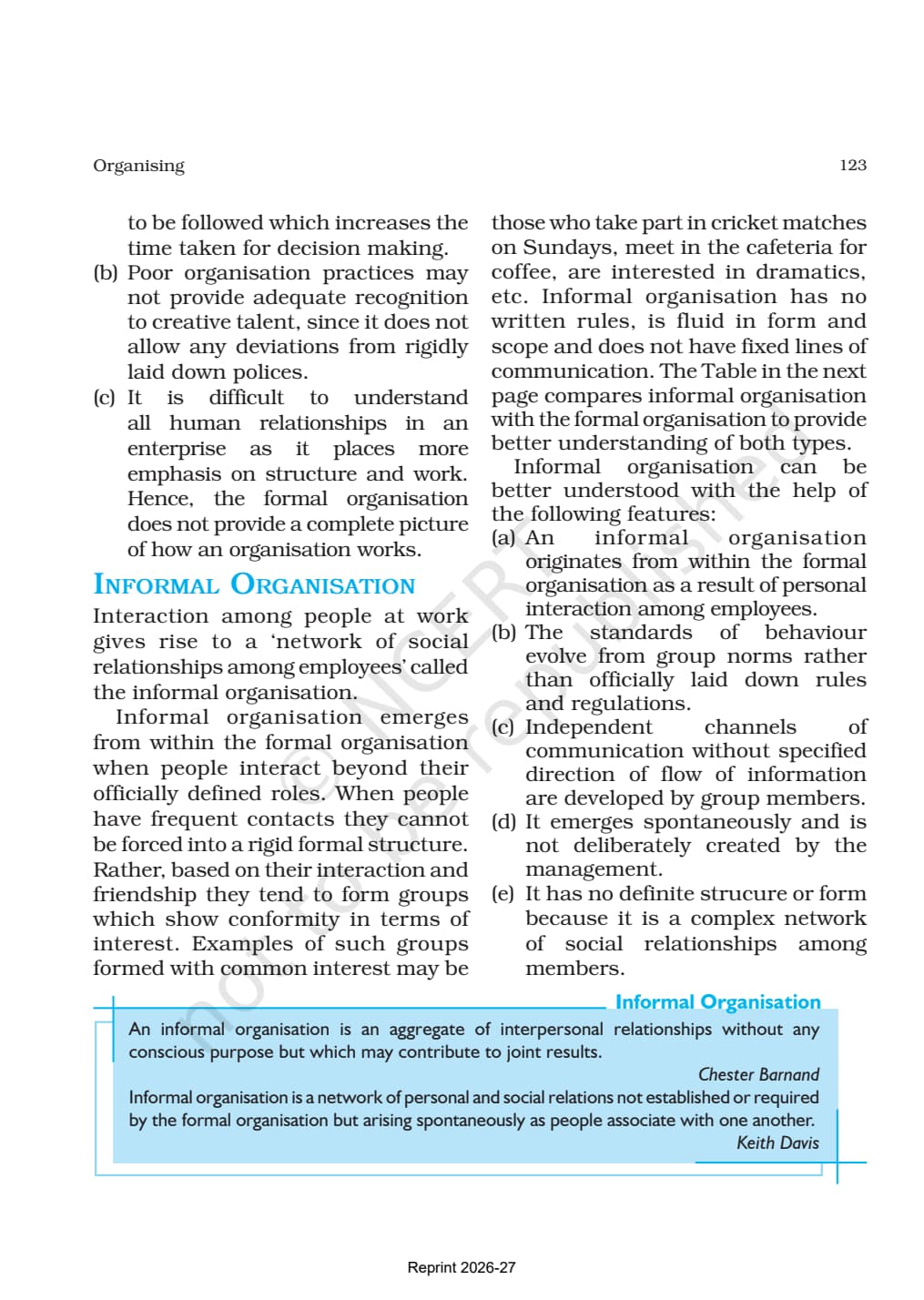
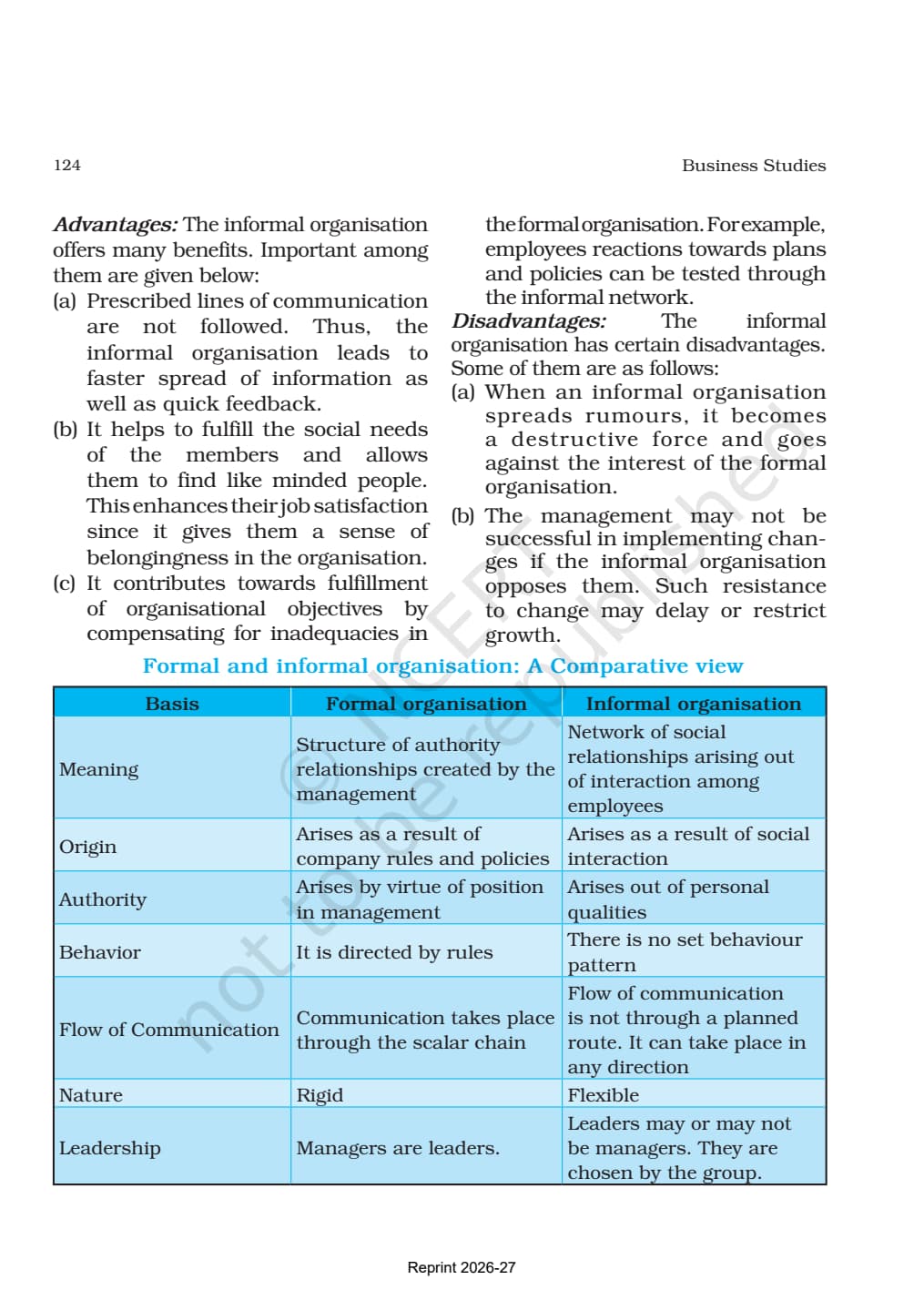
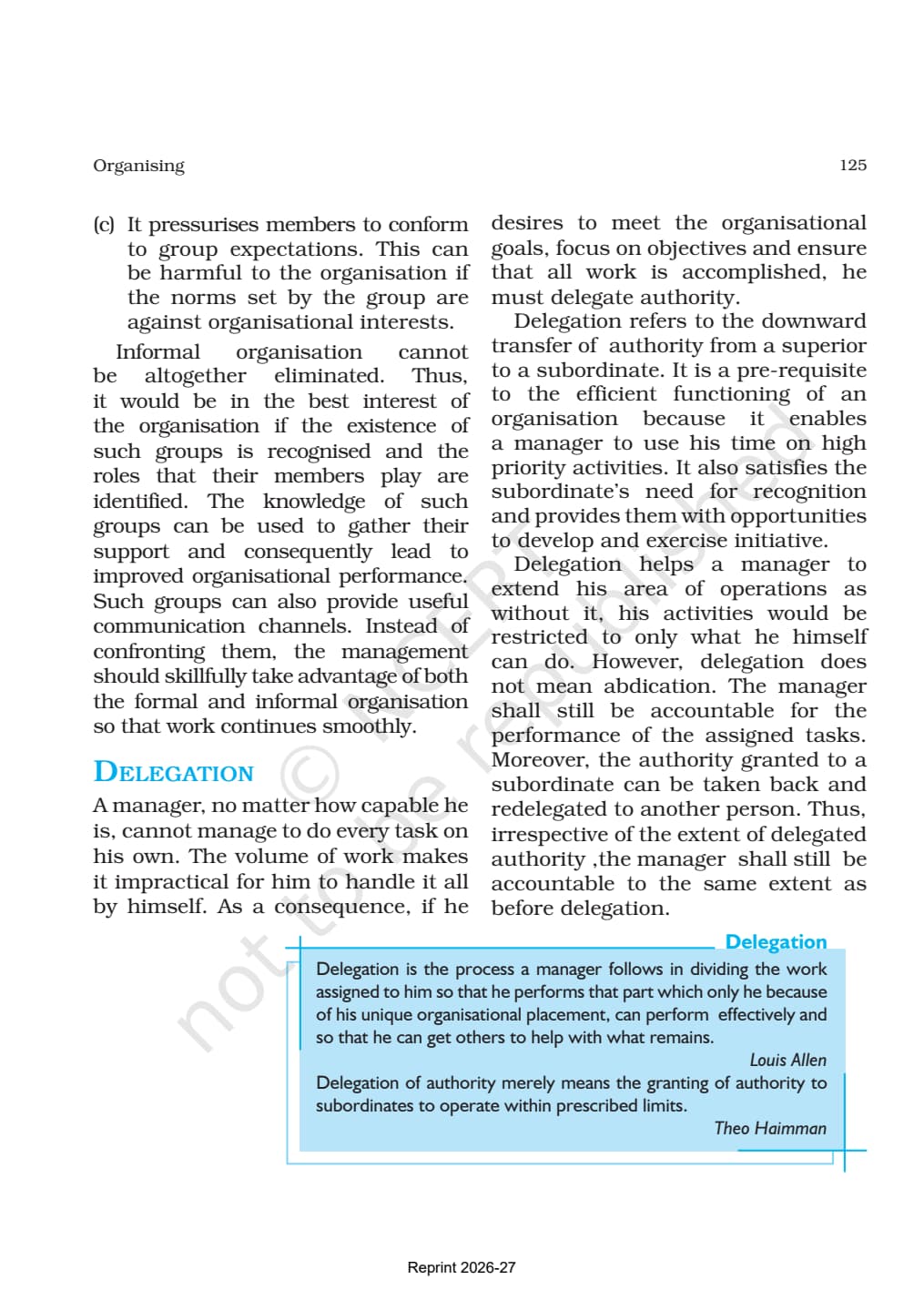
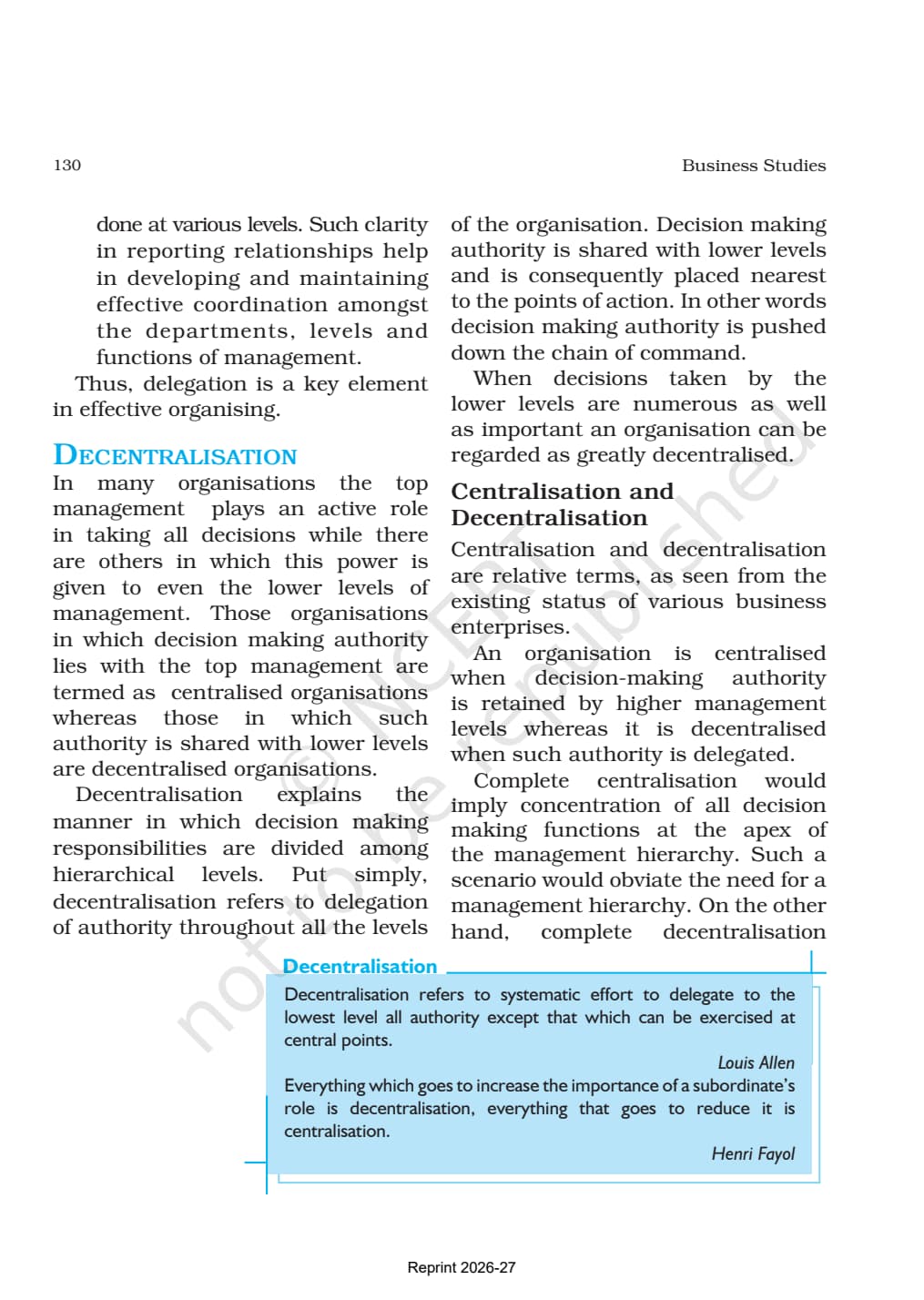
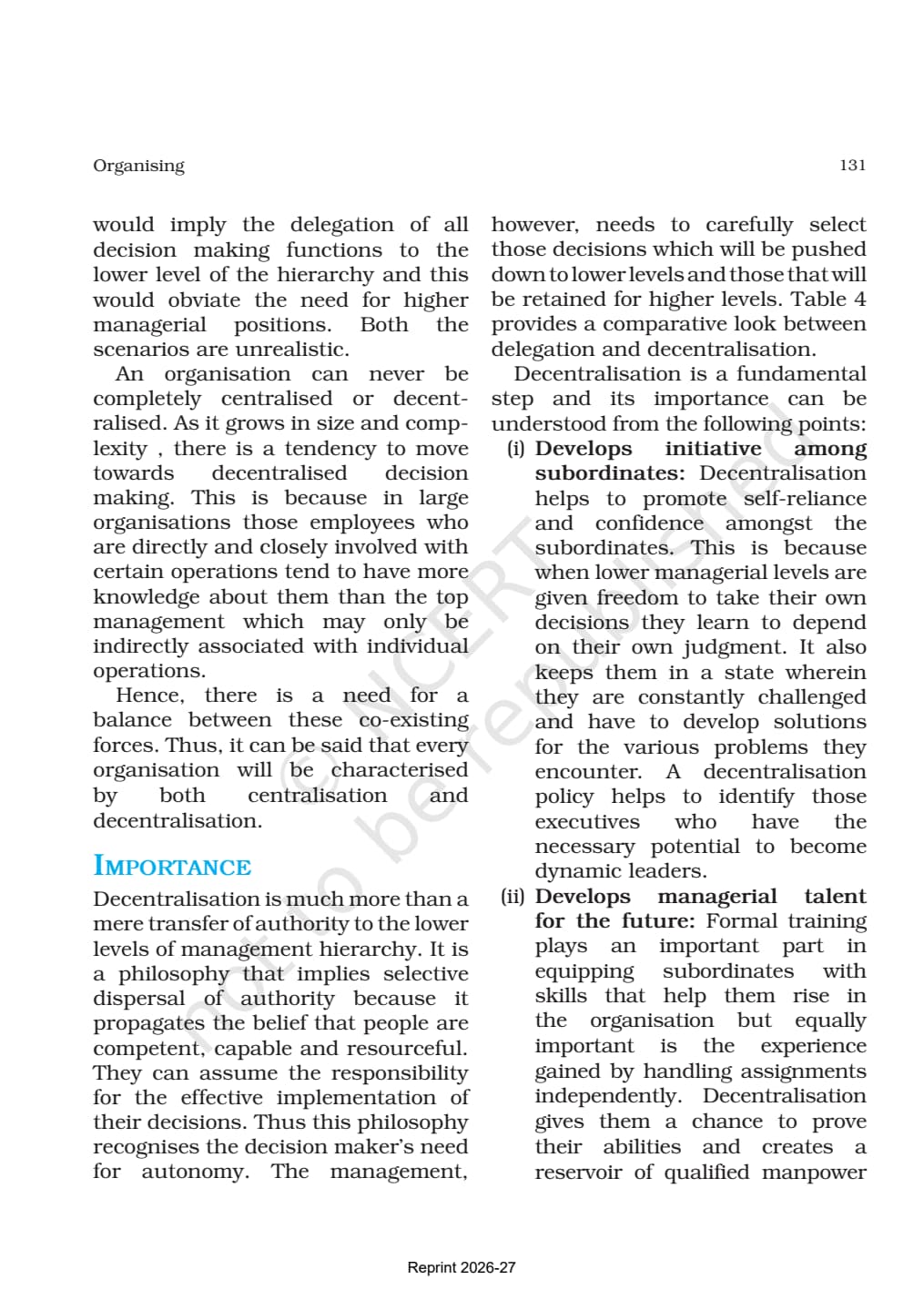
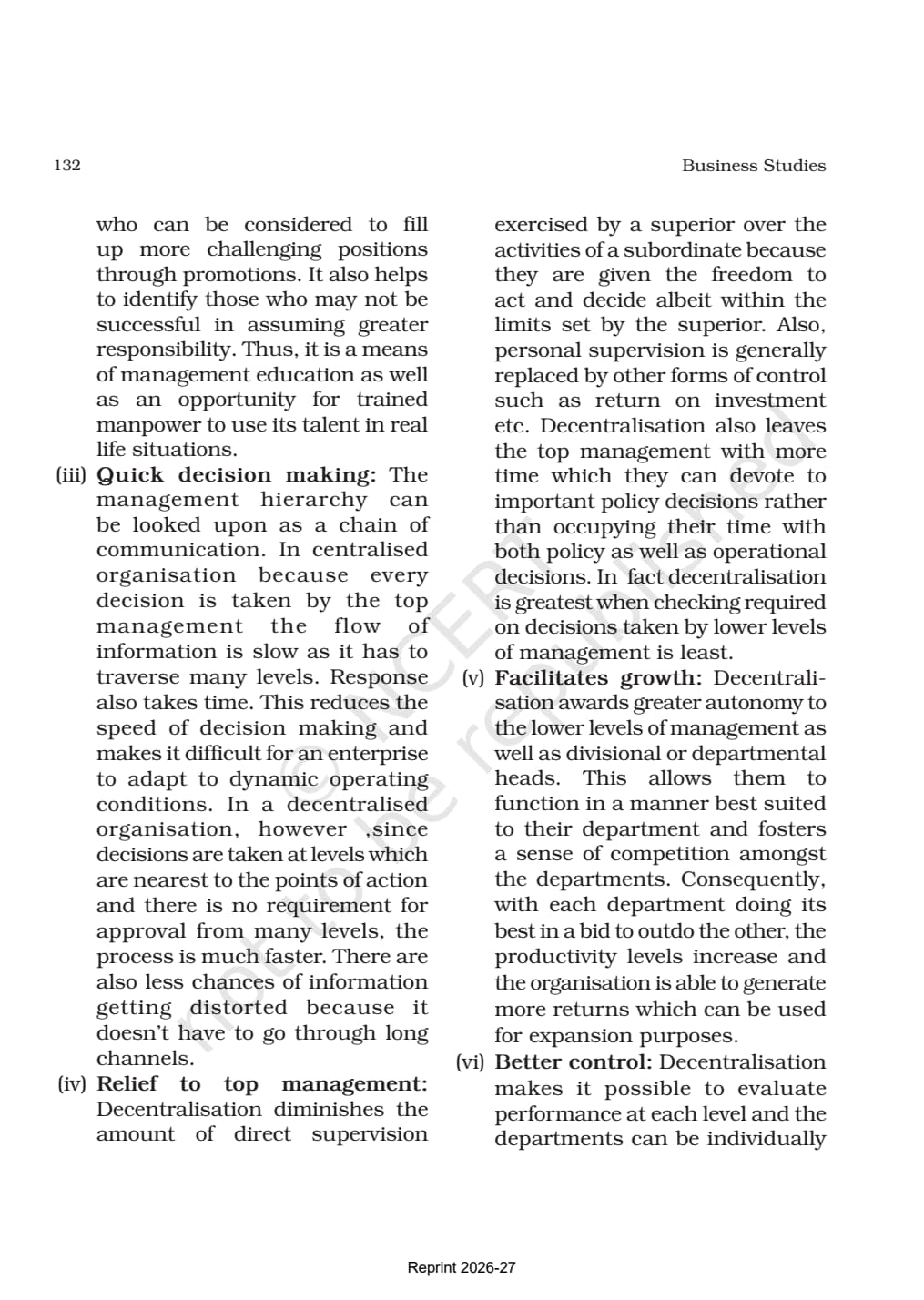
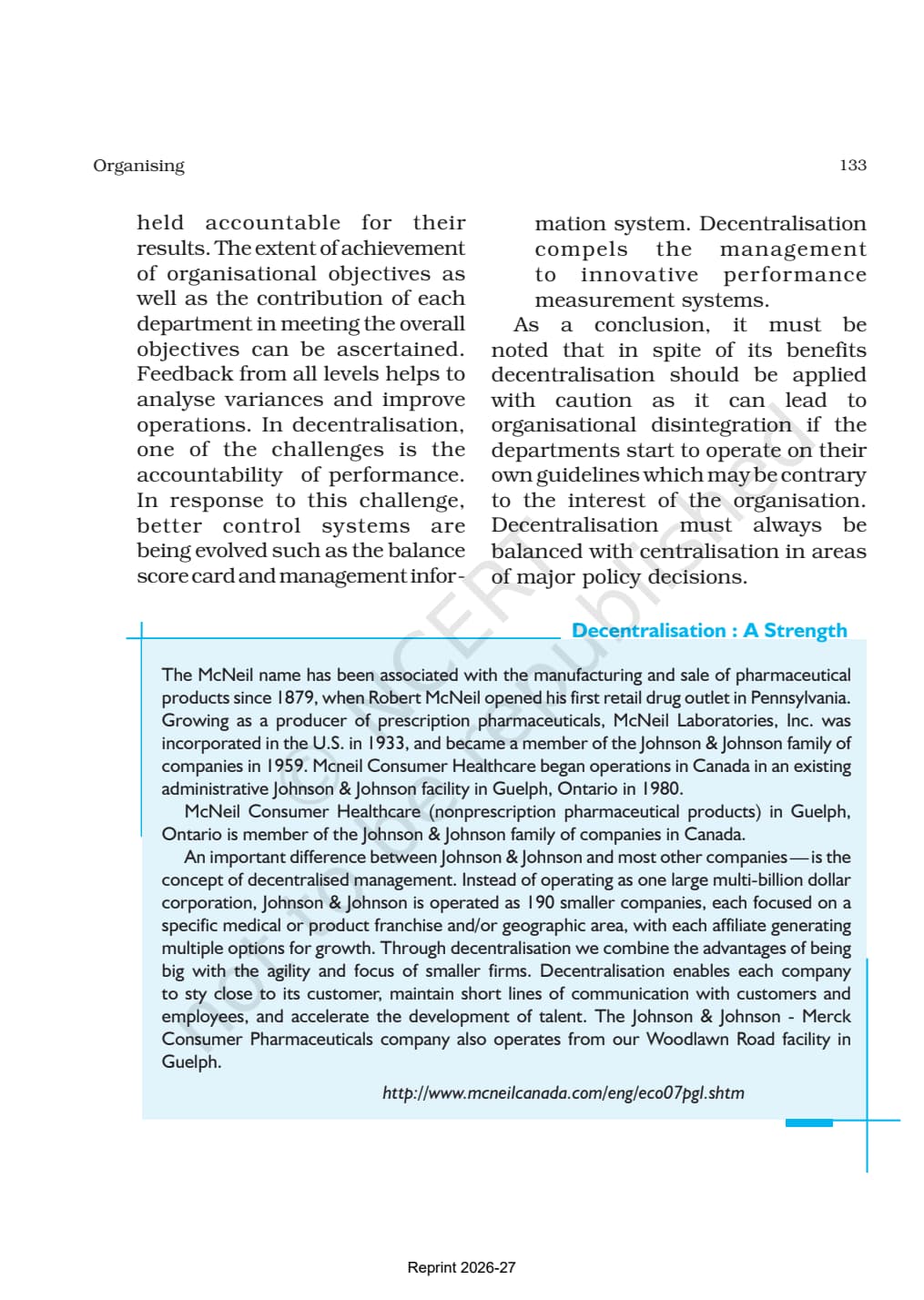
Chapter 5 of NCERT Class 12 Business Studies introduces organising as the second managerial function. Organising is defined as identifying and grouping activities, establishing authority relationships and assigning resources so that the planned objectives can be achieved. The chapter walks through the importance of organising, the five-step organising process, the two main organisation structures (functional and divisional with their respective advantages and limitations), formal vs informal organisation, the three elements of delegation (authority, responsibility, accountability), and decentralisation as a firm-wide policy of pushing decision authority down to the lowest possible level.
Organising Video Chapter Walkthrough
Source: Magnet Brains on YouTube
Chapter Map - What the Textbook Contains
| Textbook Page | Section / Sub-heading | Key Content |
|---|---|---|
| 109-111 | Meaning and Importance | Definition of organising; seven points of importance from specialisation to expansion |
| 111-114 | Organising Process | Five sequential steps - identify activities, departmentalise, assign duties, establish reporting, coordinate |
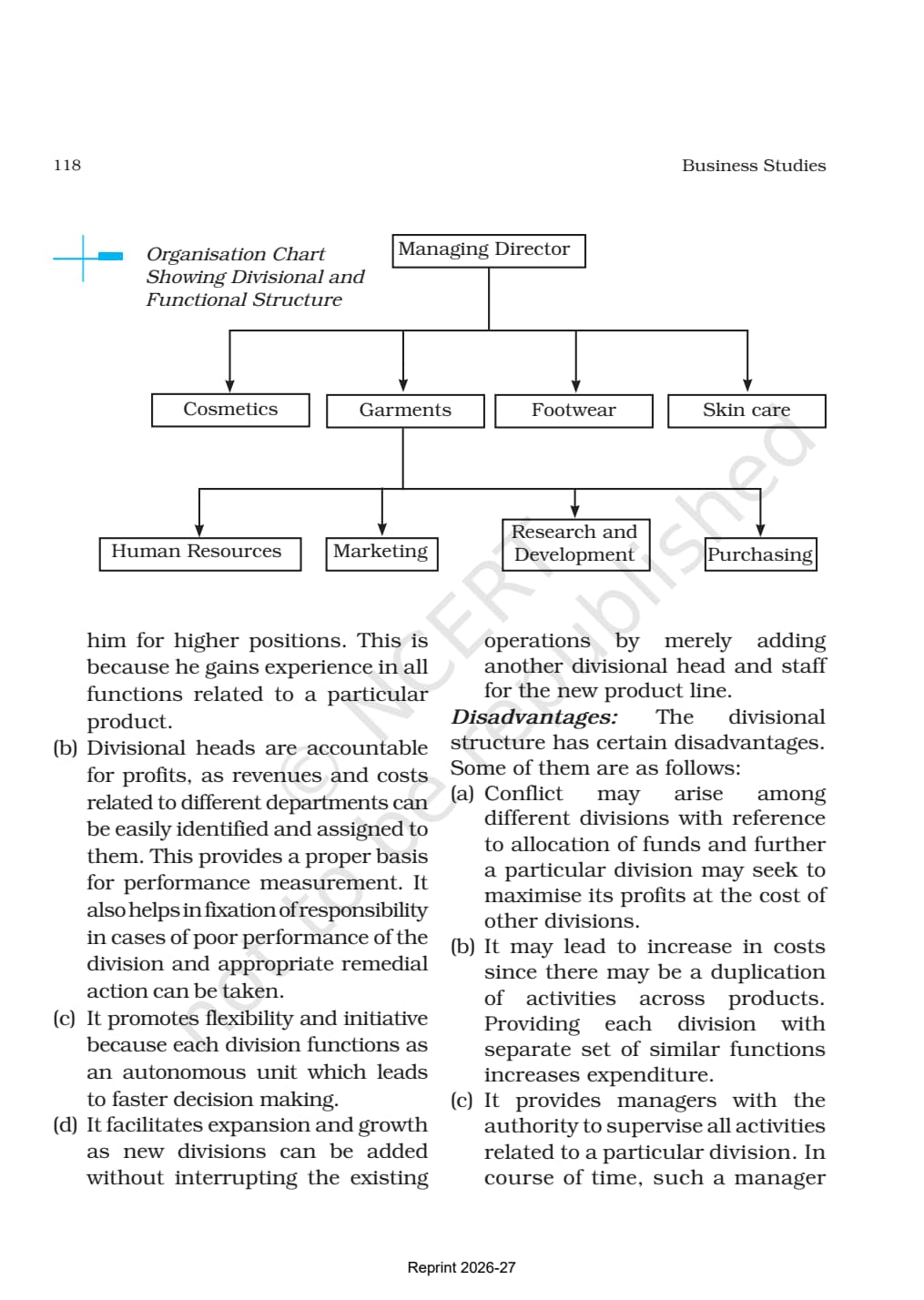
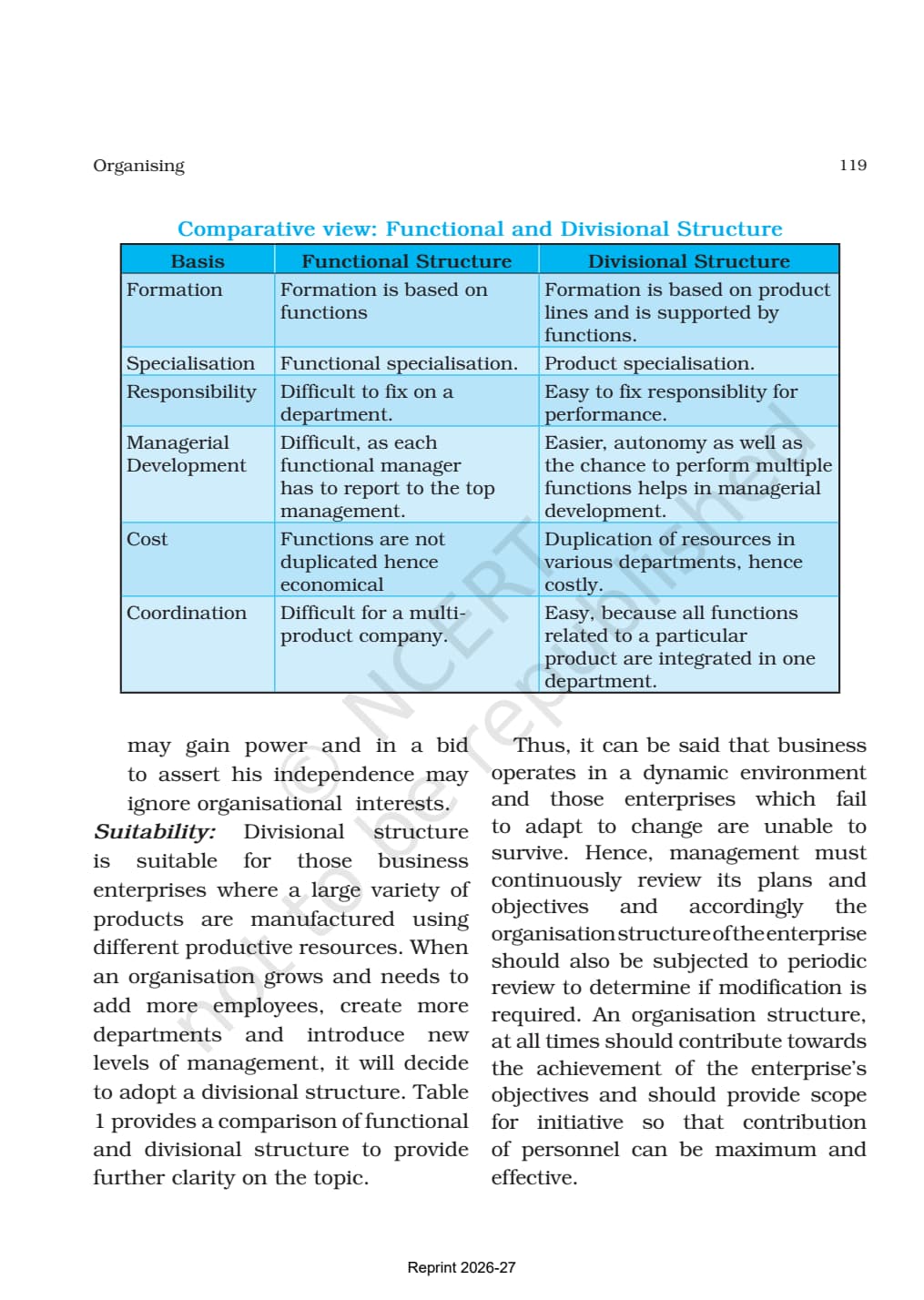
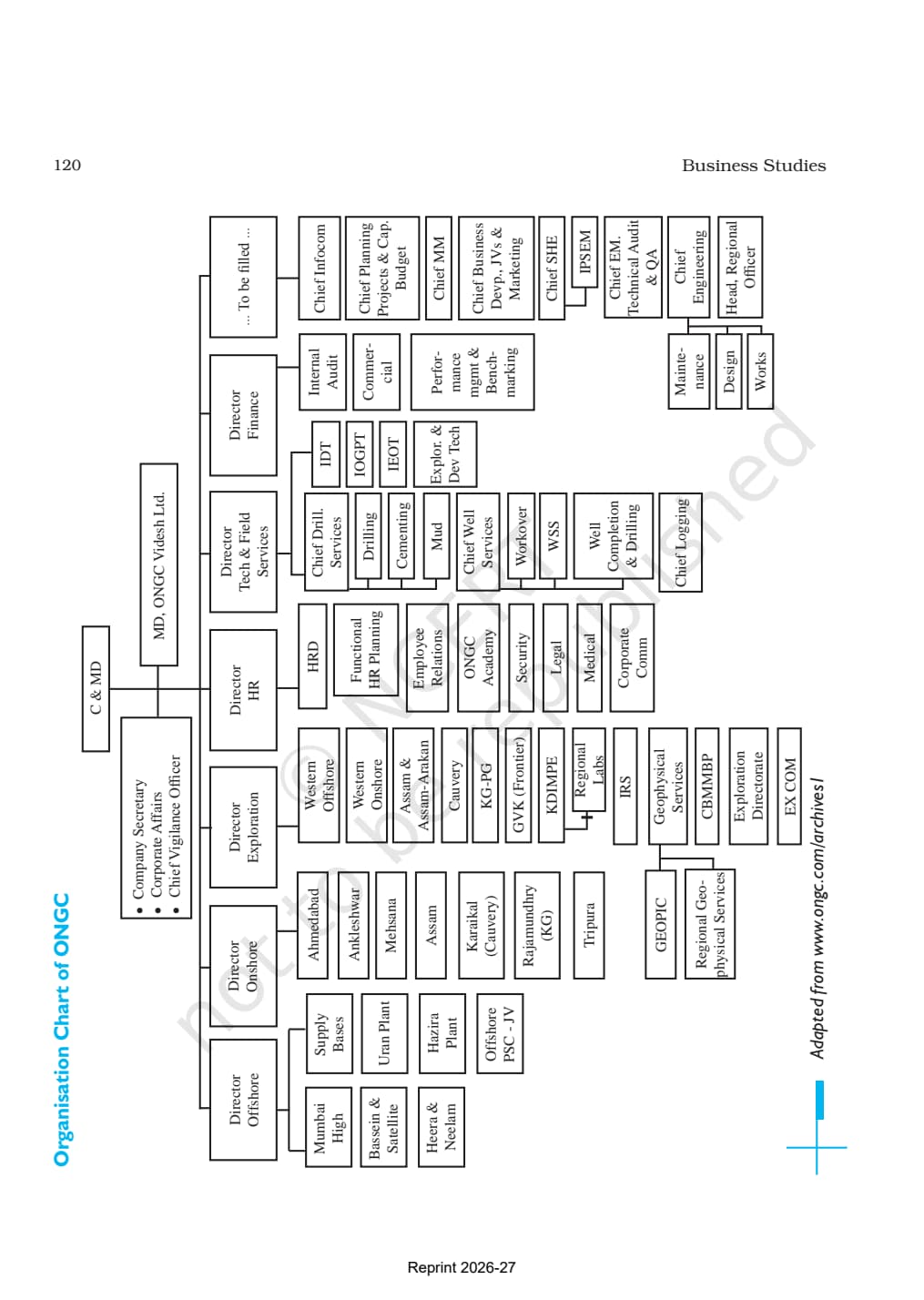
| 114-122 | Organisation Structure | Functional structure (group by function) and divisional structure (group by product/region/customer) with advantages, limitations, and suitability |
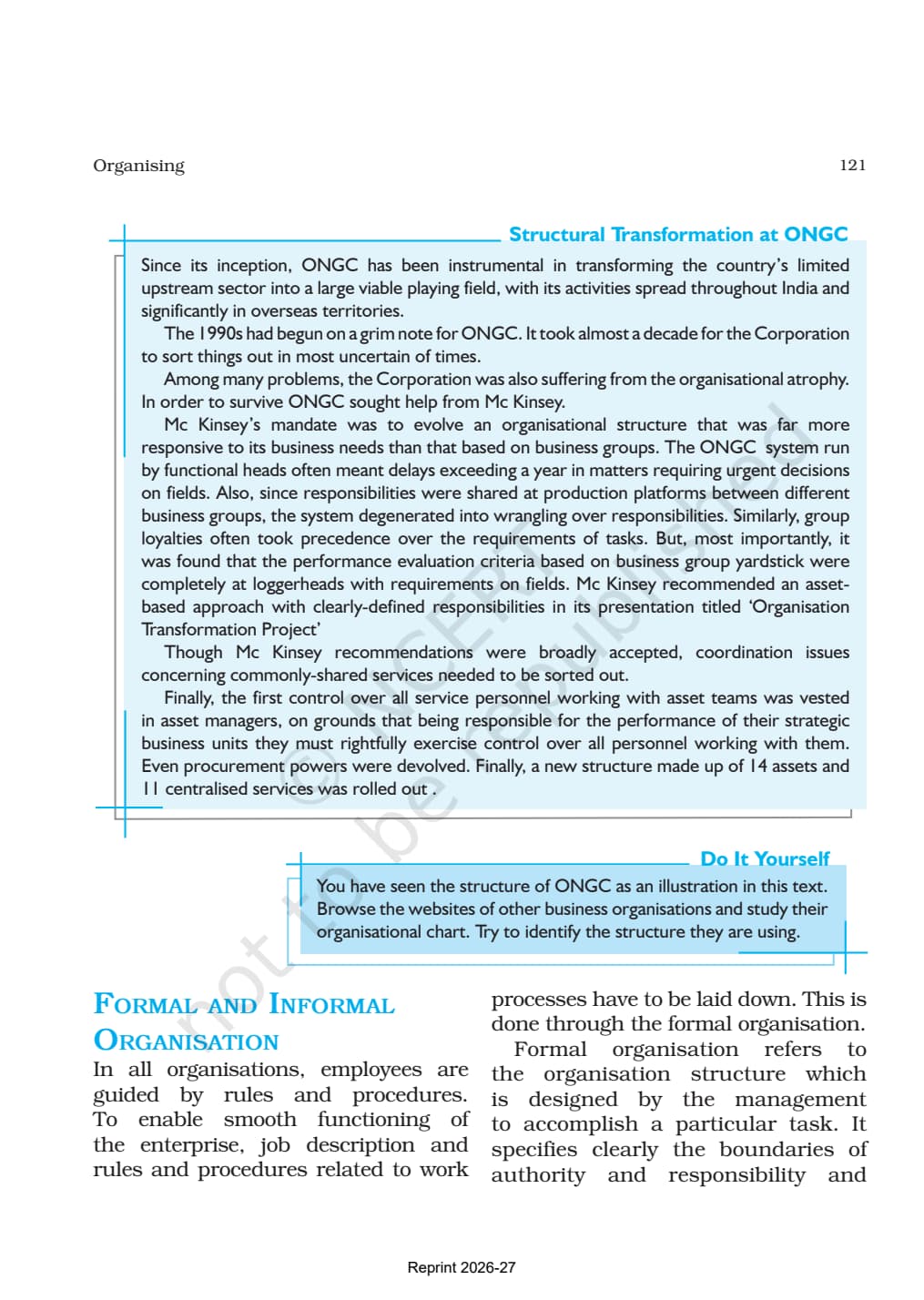
| 122-127 | Formal and Informal Organisation | Distinction between designed (formal) and spontaneous (informal) organisation; how informal supports formal |
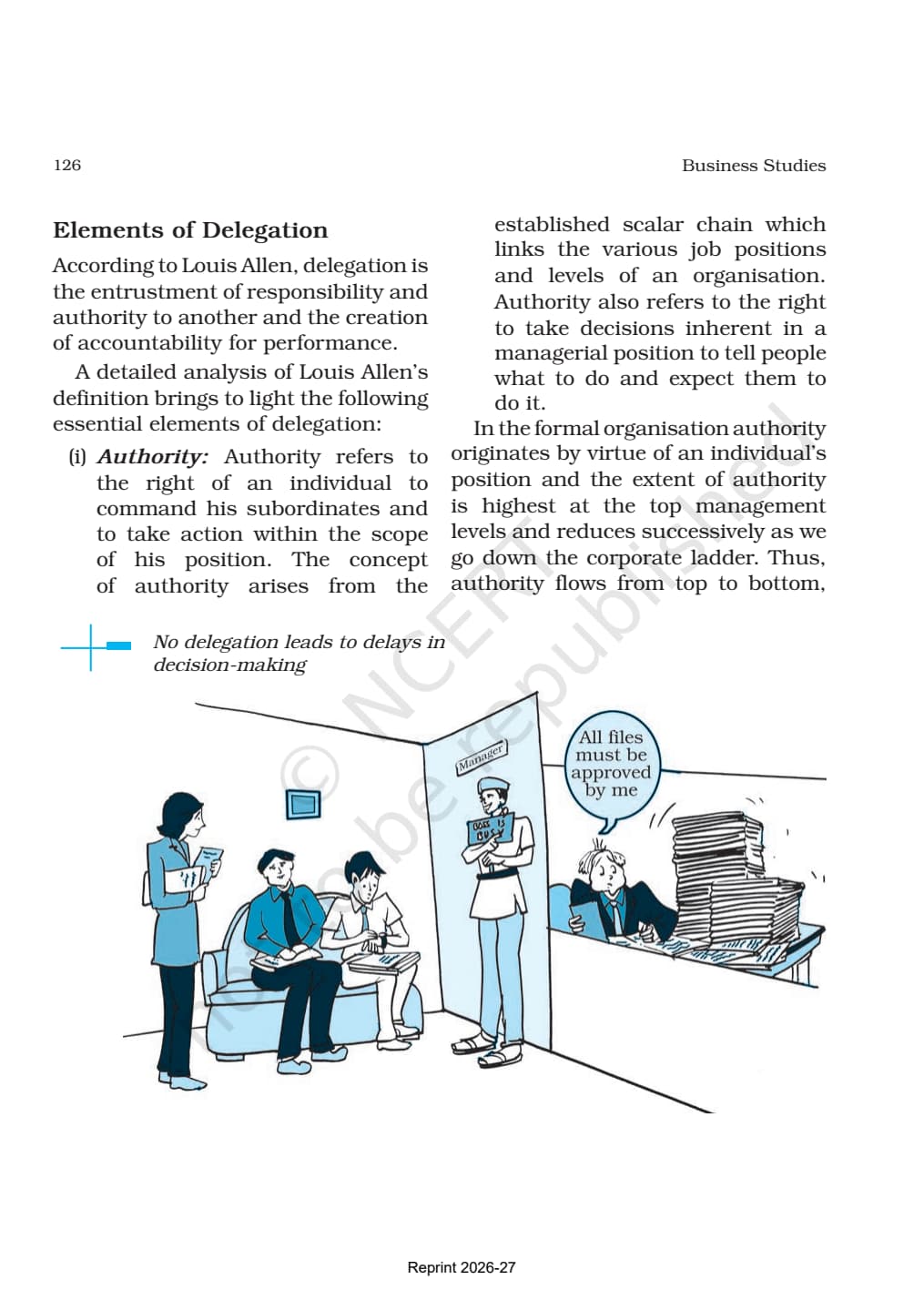
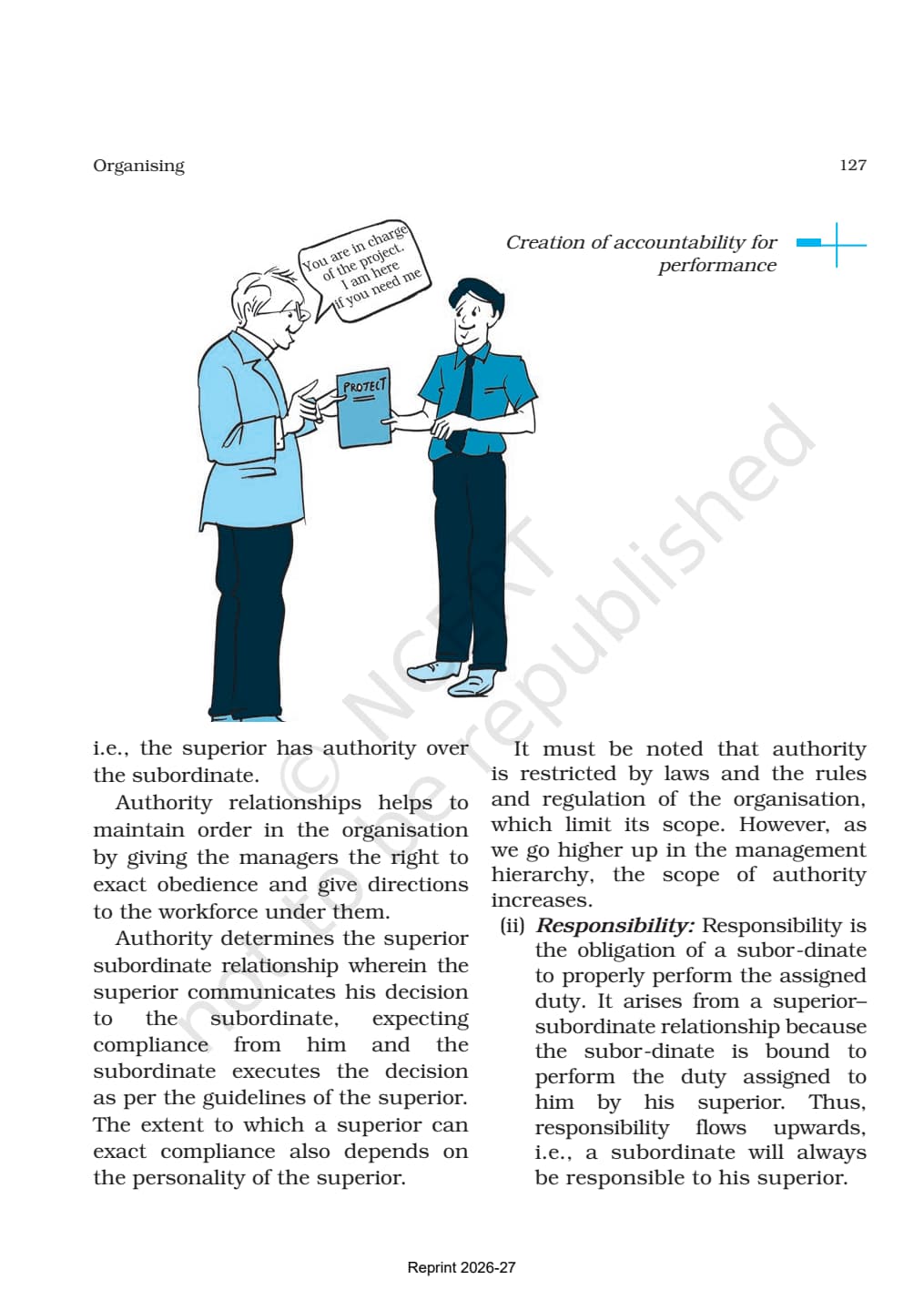
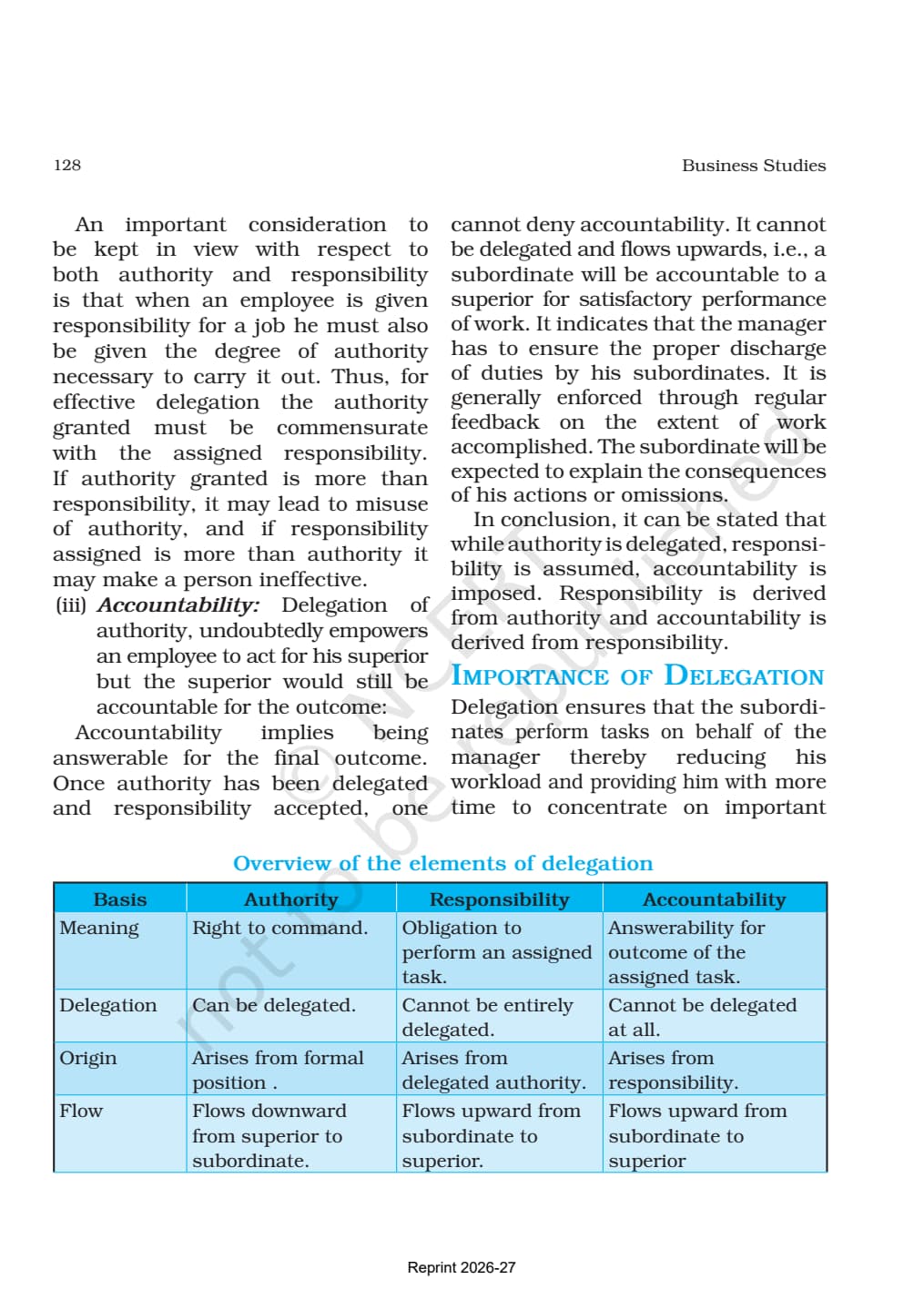
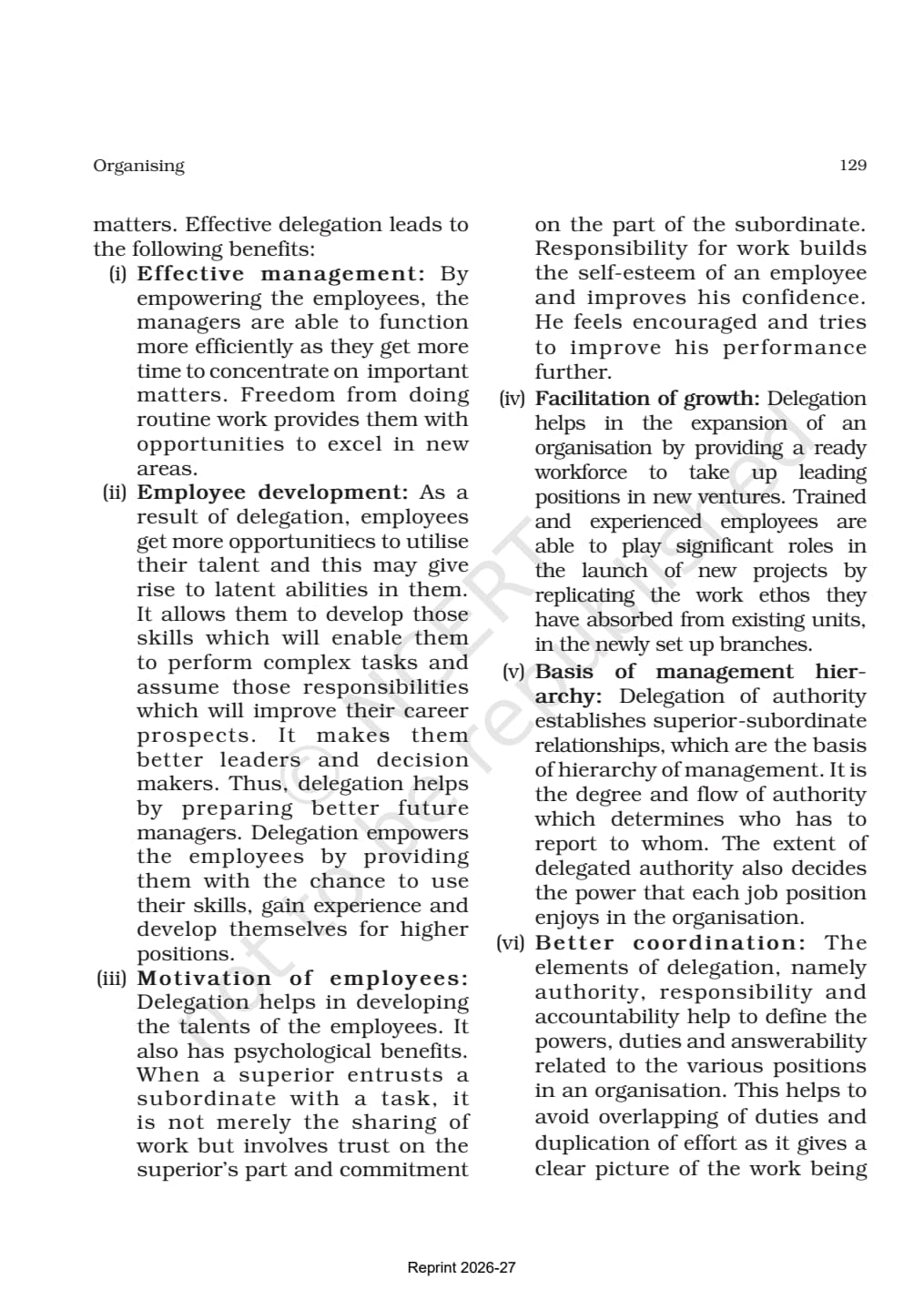
| 127-131 | Delegation | Three elements (authority, responsibility, accountability) and six points on the importance of delegation |
| 131-135 | Decentralisation | Definition, six points of importance, distinction from delegation |
| 135-138 | Exercises | 5 Very Short Answer, 7 Short Answer, 8 Long Answer questions |
Why You Should Read the Original NCERT Chapter
- Direct phrasing for CBSE answers: CBSE markers reward textbook phrasing. Every definition (organising, structure, delegation, decentralisation) is quoted from these pages.
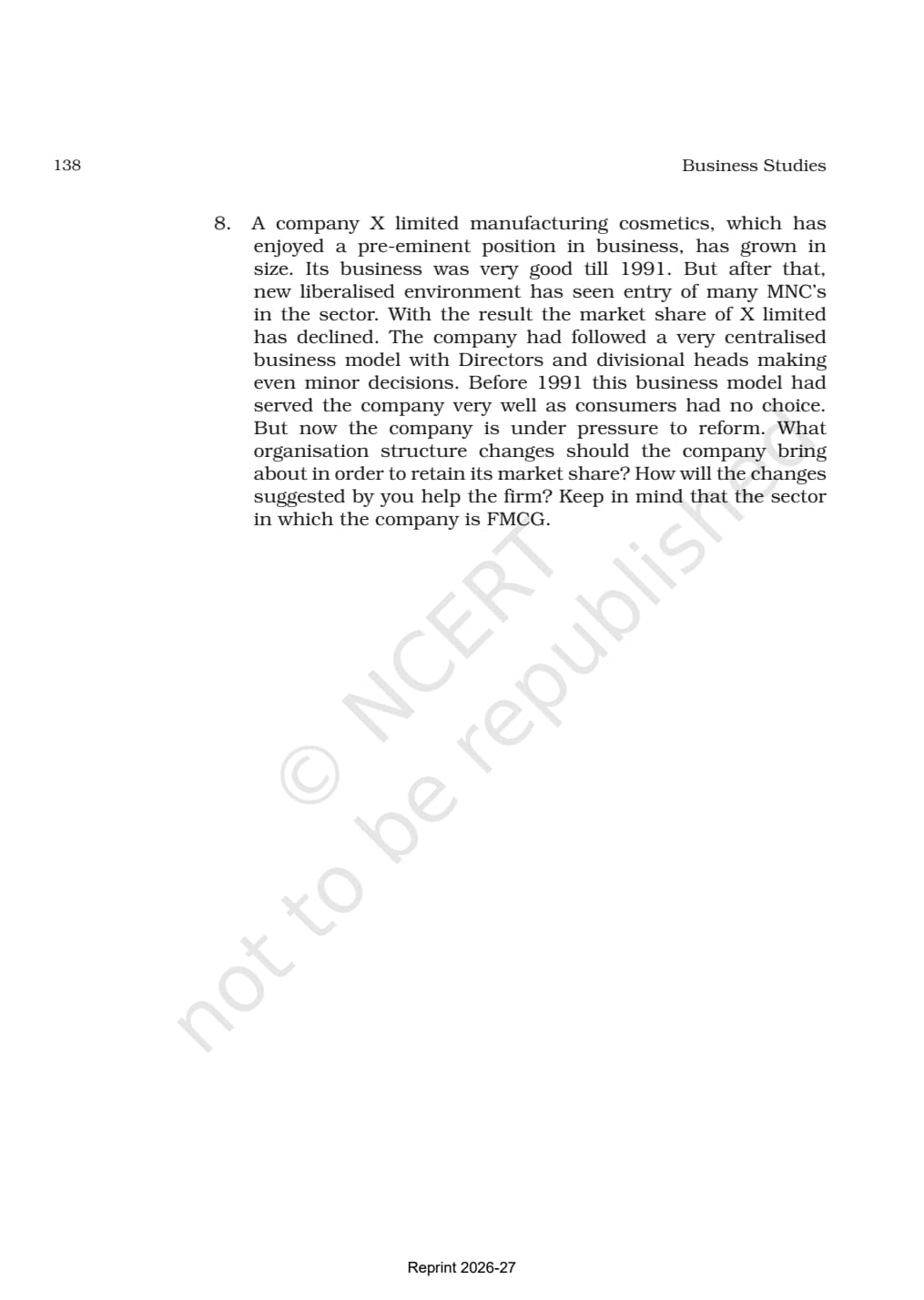
- Embedded case examples: The chapter contains real-world examples (Neha shoes business, toy company diversification, sewing machine firm, X Ltd cosmetics) that the CBSE board reuses verbatim in case-study questions.
- End-of-chapter exercises: The 20 exercise questions on pages 135-138 are the highest-yield practice set for the chapter.
- Section ordering: The textbook order is the exact answer sequence CBSE rewards in long answers.
Top Five Concepts the Chapter Explains in Depth
- Five-Step Organising Process. Identify, departmentalise, assign duties, establish reporting, coordinate (mnemonic I-D-A-R-C).
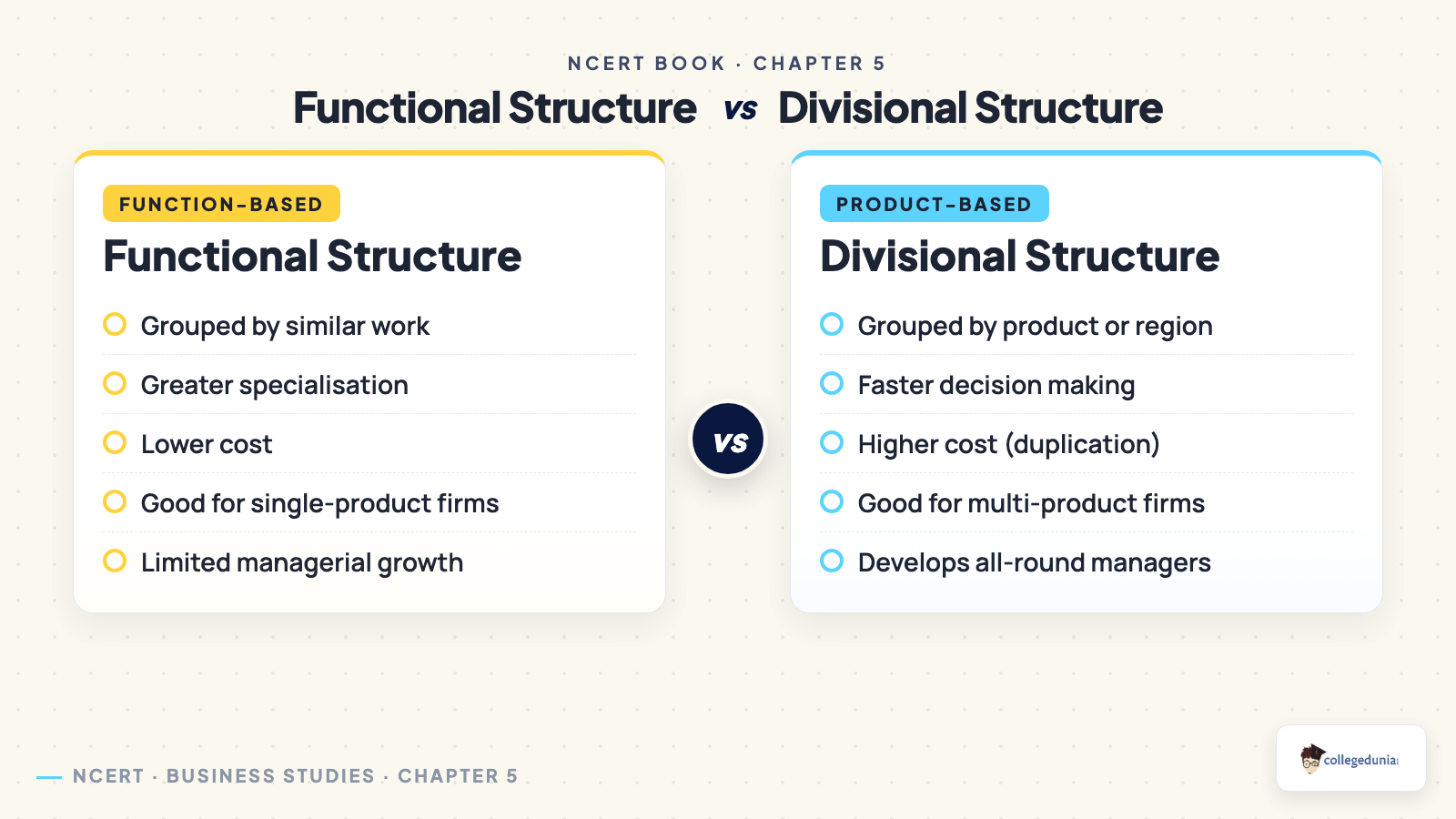
- Functional vs Divisional Structure. Differences on six bases, with case-based "recommend a structure" application.
- Formal vs Informal Organisation. Designed vs spontaneous; how informal supports formal through grapevine, gap-filling, morale, feedback, teamwork.
- Three Elements of Delegation. Authority, Responsibility, Accountability (mnemonic A-R-A) with directional rules.
- Decentralisation as a Policy. Delegation extended firm-wide to the lowest possible level; six benefits.
CBSE Board Pattern for Chapter 5
Over the last six CBSE Class 12 Business Studies Board papers, Chapter 5 has carried 6 to 10 marks per session. The recurring patterns are: one 5-6 mark long answer from the structure or decentralisation cluster, one 3-4 mark short answer on delegation, and a 1-2 mark VSA on span of management or informal organisation.
How the Organising PDF Helps Class 12 Exam Preparation
- Read with the exercises in view: Every example in the body section maps to a question on pages 135-138.
- Highlight definitions: Organising, delegation, decentralisation, formal/informal organisation - all are 1-mark VSA fodder.
- Memorise the two mnemonics: I-D-A-R-C for the organising process and A-R-A for delegation.
- Use the textbook's case examples: Neha shoes business, toy company, sewing machines, X Ltd - the board frequently reuses these names with minor variations.
Student Feedback
In a Collegedunia poll of 410 Class 12 Commerce students, 79% said reading the original NCERT chapter on Organising helped them frame board answers in the exact textbook wording their teachers expect. 3 in 4 said the case examples like the Neha shoes business and X Ltd were the easiest part of the chapter to remember during revision.
Other Resources for Class 12 Business Studies Chapter 5 Organising
| Resource | Link |
|---|---|
| NCERT Solutions | Organising NCERT Solutions |
| Revision Notes | Organising Class 12 Notes |
| Handwritten Notes | Organising Handwritten Notes |
| NCERT Book PDF | Organising NCERT Book PDF |
Frequently Asked Questions on Class 12 Business Studies Chapter 5 NCERT Book
Frequently Asked Questions on Class 12 Business Studies Chapter 5 NCERT Book
Q1. Is the Class 12 Business Studies Chapter 5 NCERT Book PDF free to download?
Yes. The official NCERT Business Studies Class 12 Chapter 5 Organising PDF (2026-27 reprint) is free to download from this page.
Q2. How many pages does Chapter 5 Organising have?
The chapter runs across pages 109 to 138 of the official NCERT Business Studies Part I textbook, taking 30 pages including the end-of-chapter exercises.
Q3. What are the major topics covered in Chapter 5?
Meaning of organising, seven importance points, the five-step organising process, functional vs divisional structures with advantages and limitations, formal vs informal organisation, the three elements of delegation, and decentralisation as a firm-wide policy.
Q4. Is this PDF aligned to the 2026-27 CBSE syllabus?
Yes. This is the official NCERT 2026-27 reprint with the latest CBSE syllabus alignment.
Q5. How many marks does Chapter 5 carry in the CBSE Class 12 Board paper?
6 to 10 marks per session over the last six board papers, typically one 5-6 mark long answer plus a 3-4 mark short answer and a 1-2 mark VSA.



Comments