




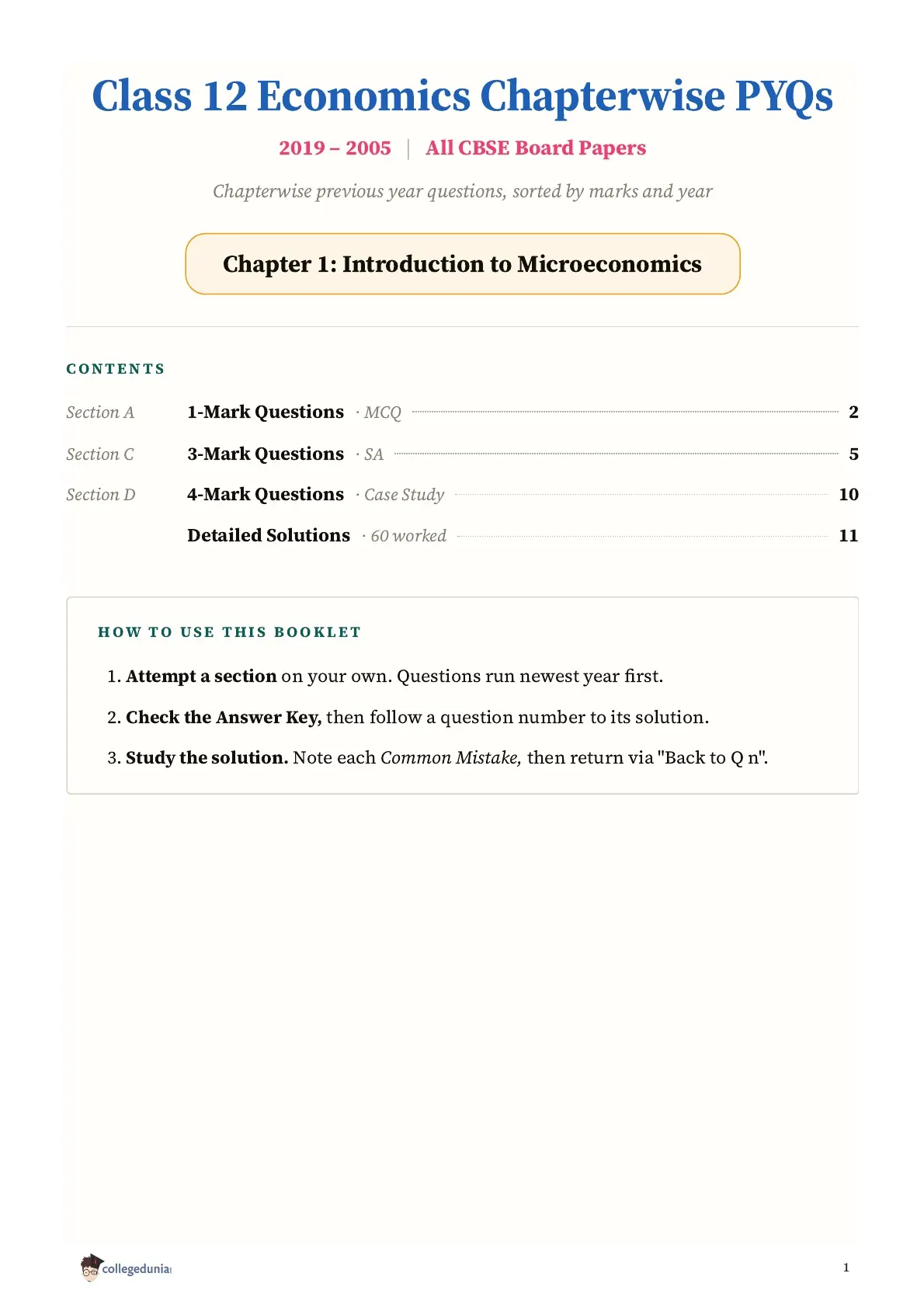
Class 12 Economics Introduction to Microeconomics PYQ, free to download as a 40-page PDF. The chapter comes from the Microeconomics part of the older board pattern, and the set holds 60 solved questions from the 2005 to 2019 papers on the central problems of an economy, opportunity cost, the production possibilities curve, positive and normative economics and microeconomics versus macroeconomics, and takes roughly four hours to work through, so do the 17 one-mark questions in one sitting and the written answers over the next two.
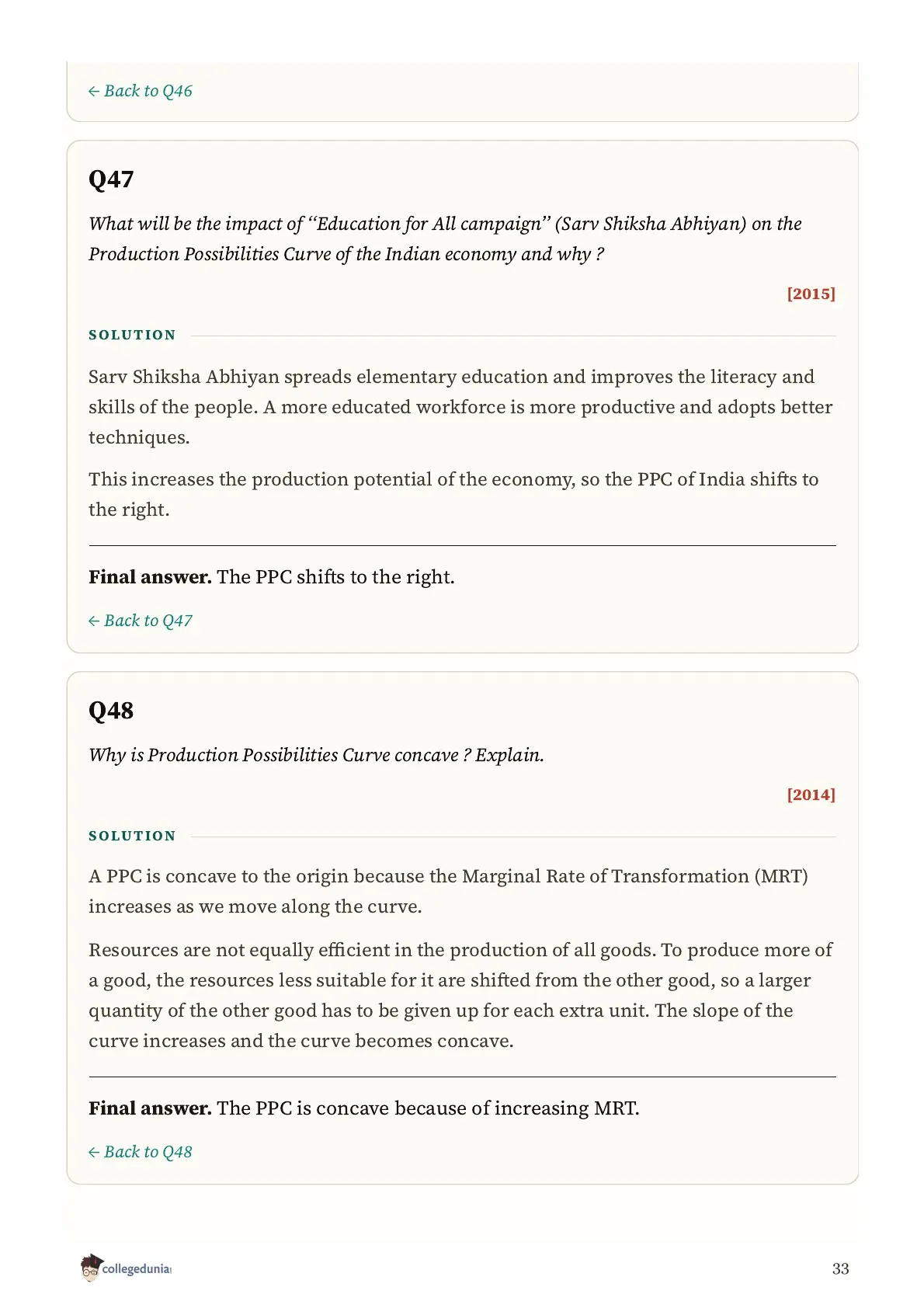
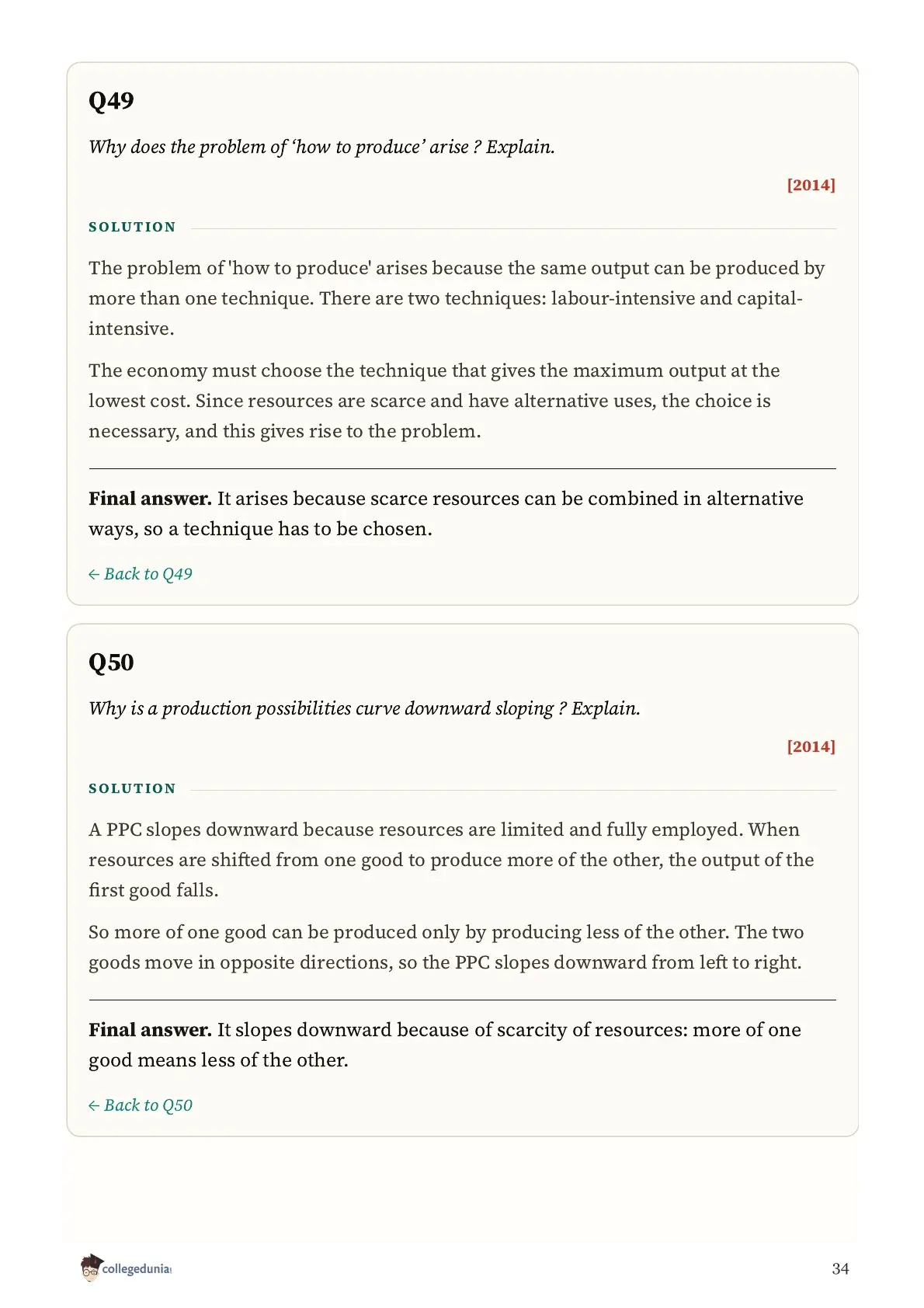
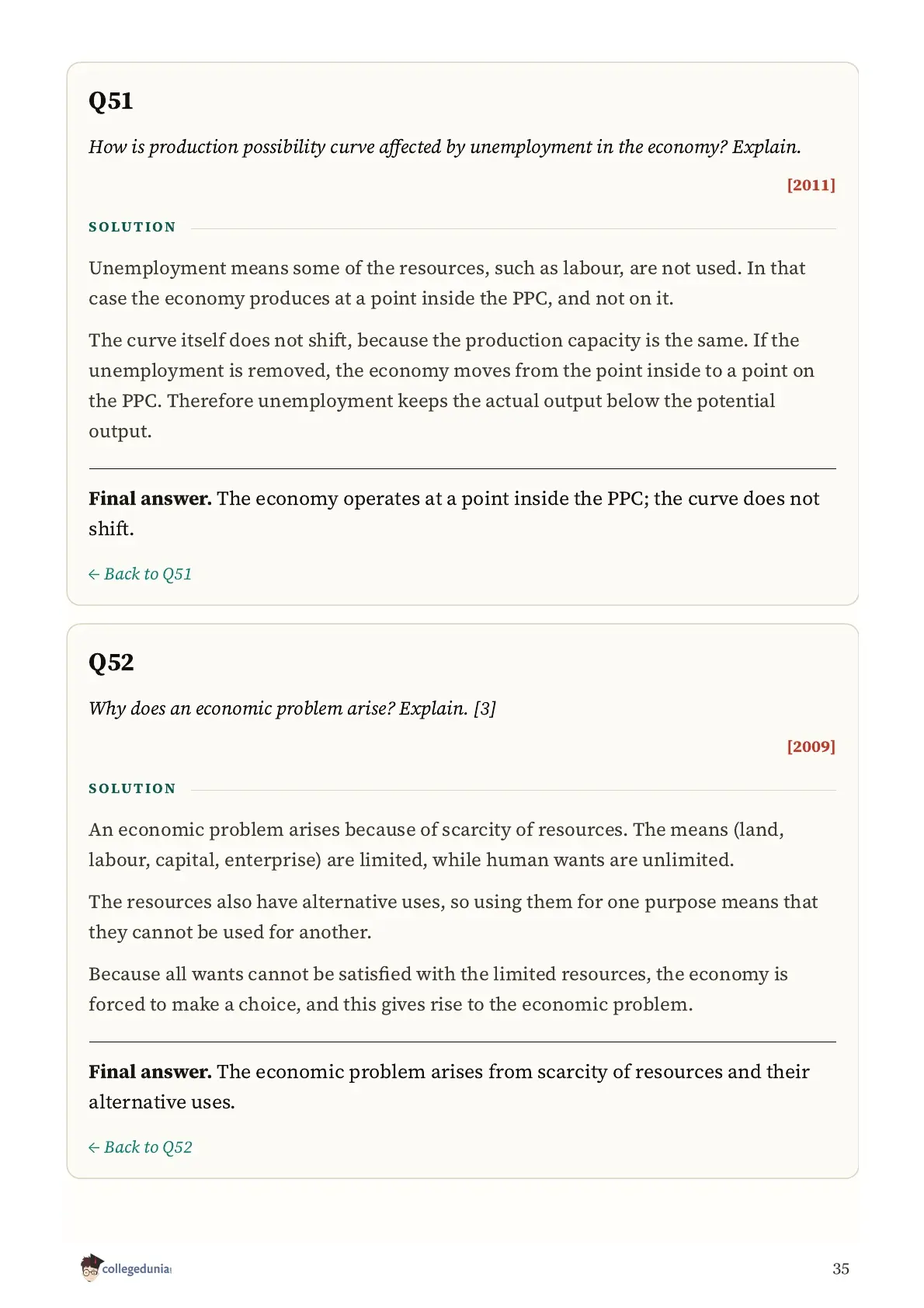
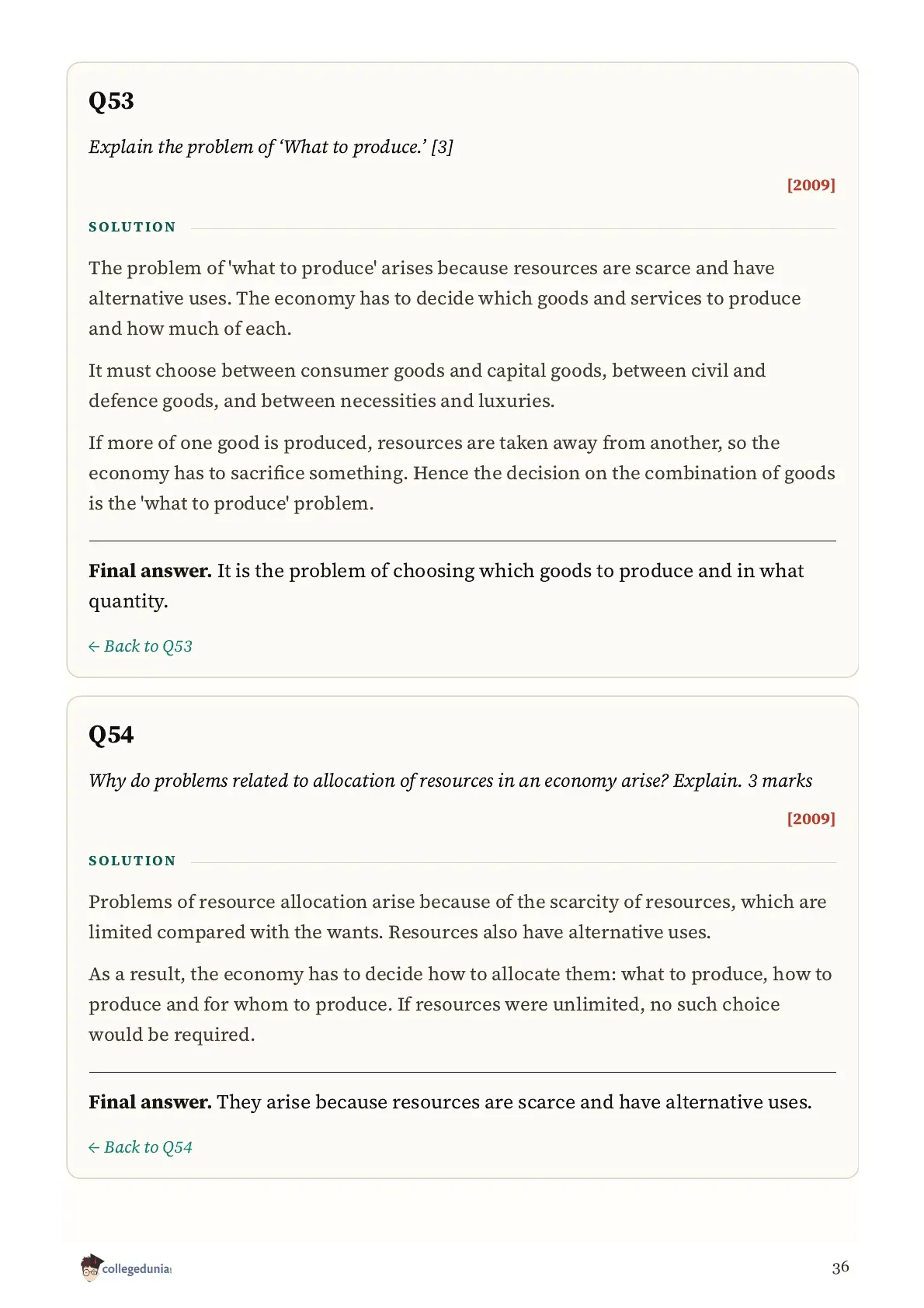
Introduction to Microeconomics Weightage in the Class 12 Board Paper
This chapter sat in the Microeconomics part of the older Class 12 Economics paper, where Microeconomics and Macroeconomics shared the theory marks equally. The Class 12 Economics paper now listed for 2026-27 pairs Introductory Macroeconomics with Indian Economic Development, so it has no Microeconomics part, and we have not found an official chapter-wise mark figure for the old pattern. Treat this set as practice for the concepts, and for school tests and exams that still follow the Micro book, not as a forecast of this year's board paper.
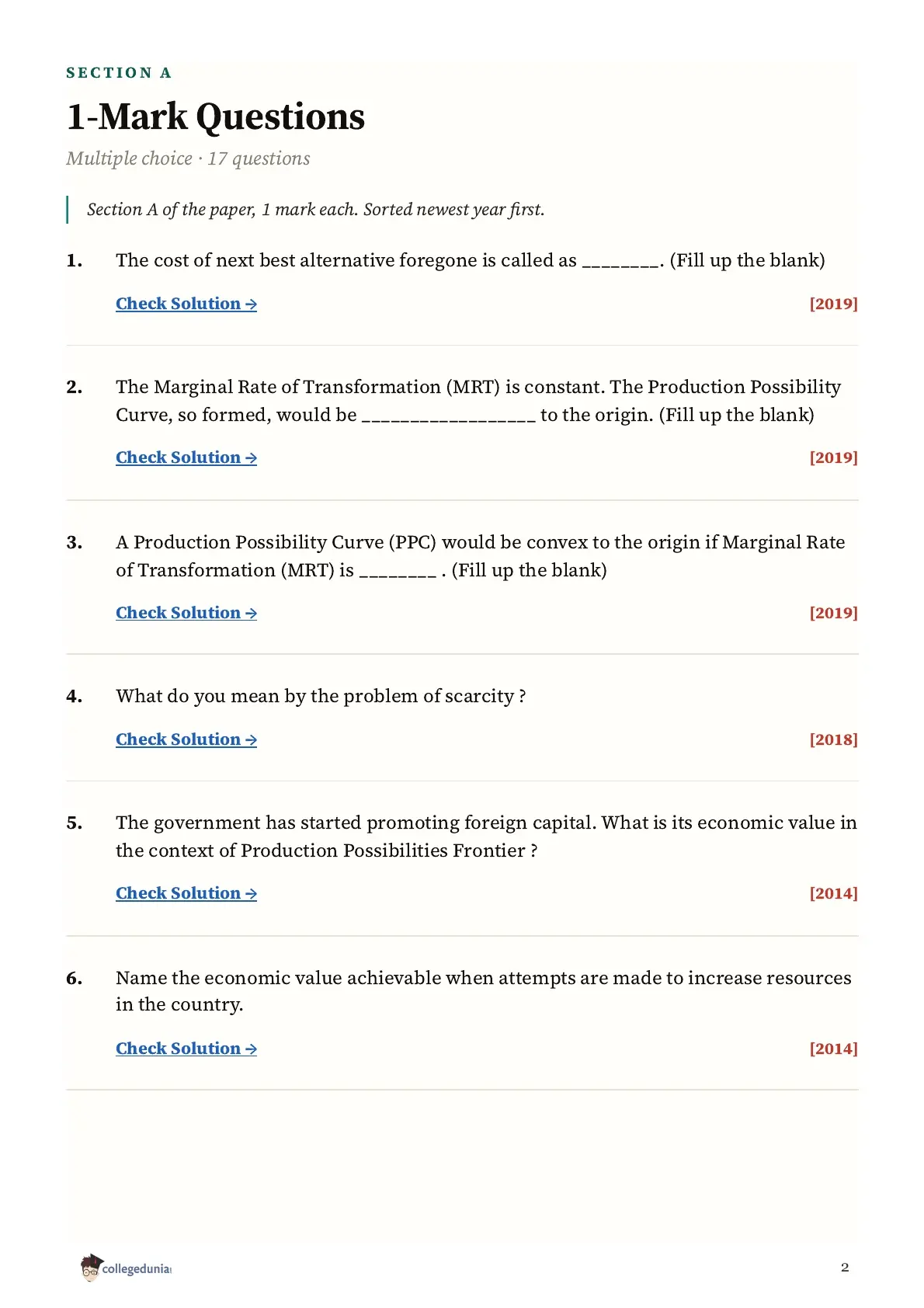
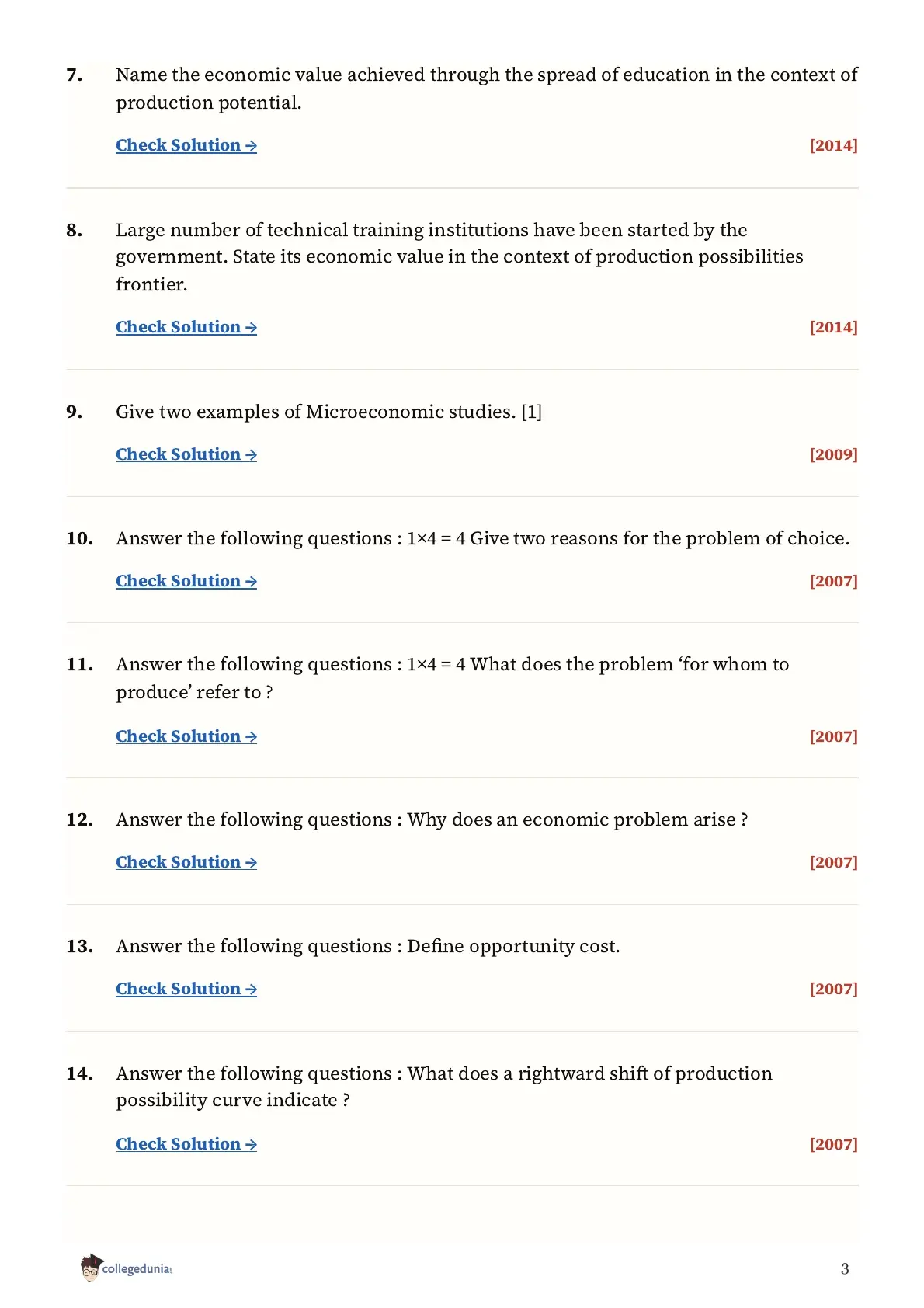
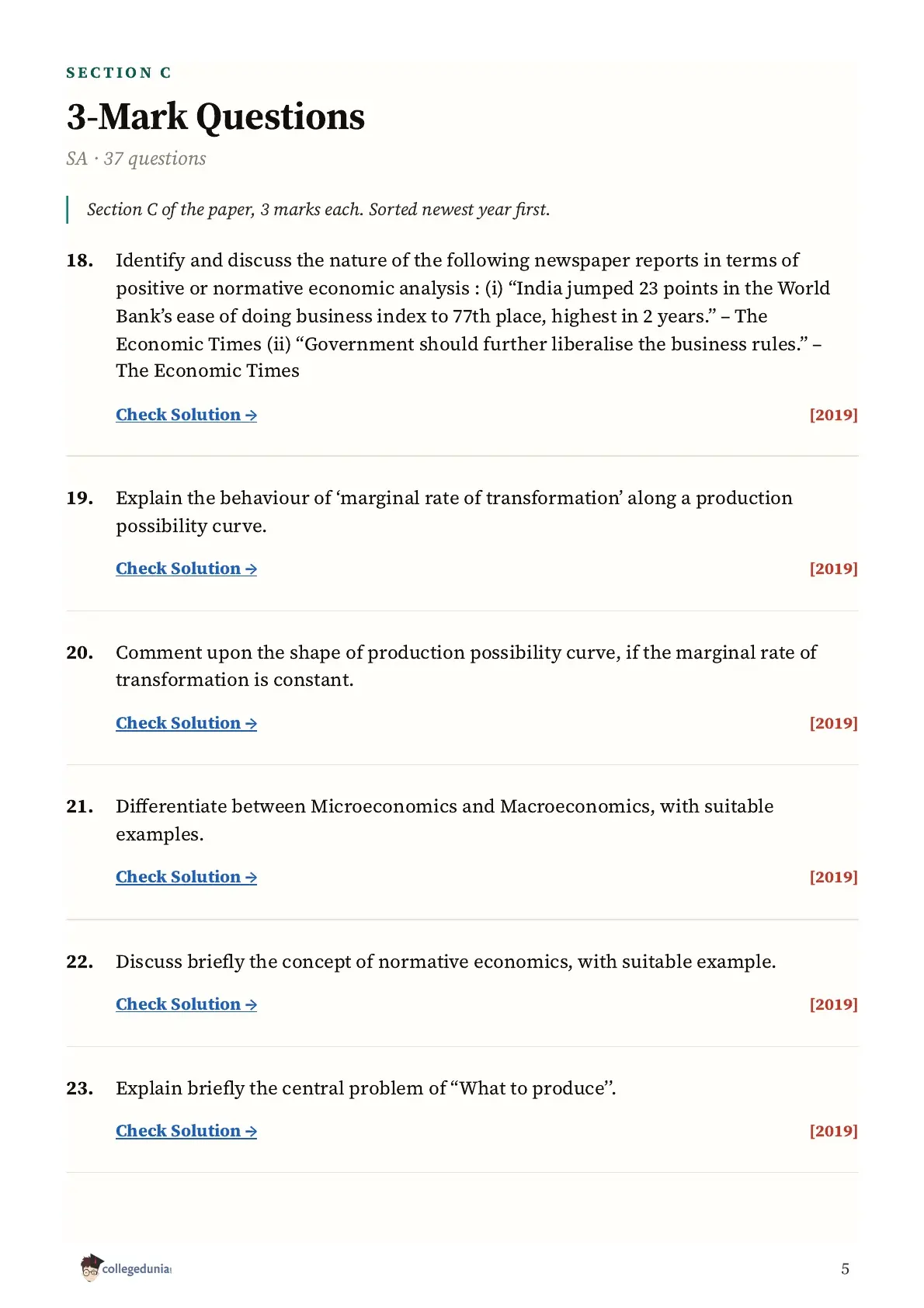
The 60 questions in this set fall in three groups. 37 are 3-mark short-answer questions, 17 are one-mark questions, and 6 are longer case-style or 4-mark questions. Every one of the 43 questions above one mark needs a written answer.
| Marks Each | Question Type | Questions in the Set |
|---|---|---|
| 1 mark | MCQ and fill in the blank | 17 |
| 3 marks | Short Answer (SA) | 37 |
| 4 marks and above | Case Study and Long Answer | 6 |
Introduction to Microeconomics Questions by Topic
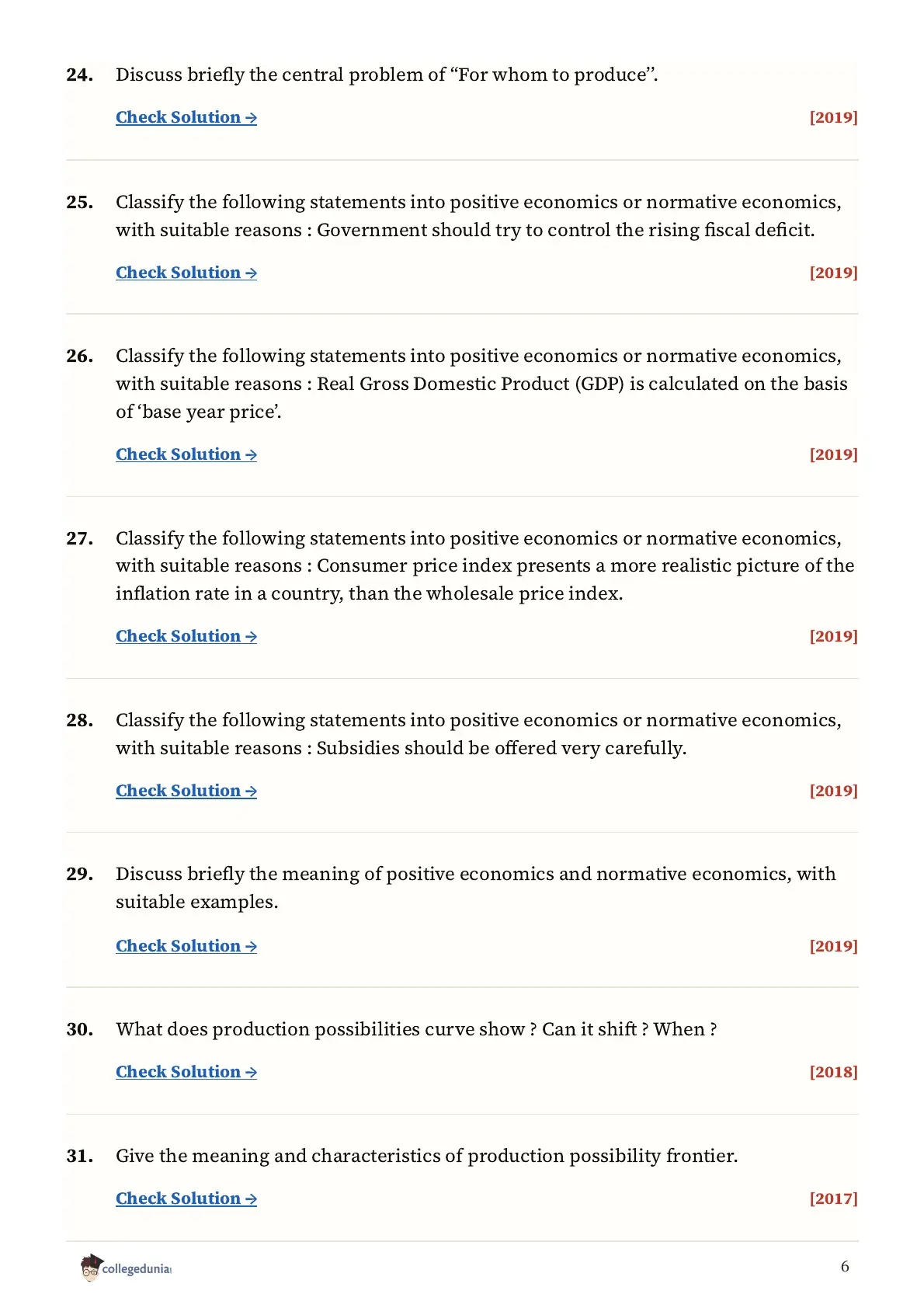
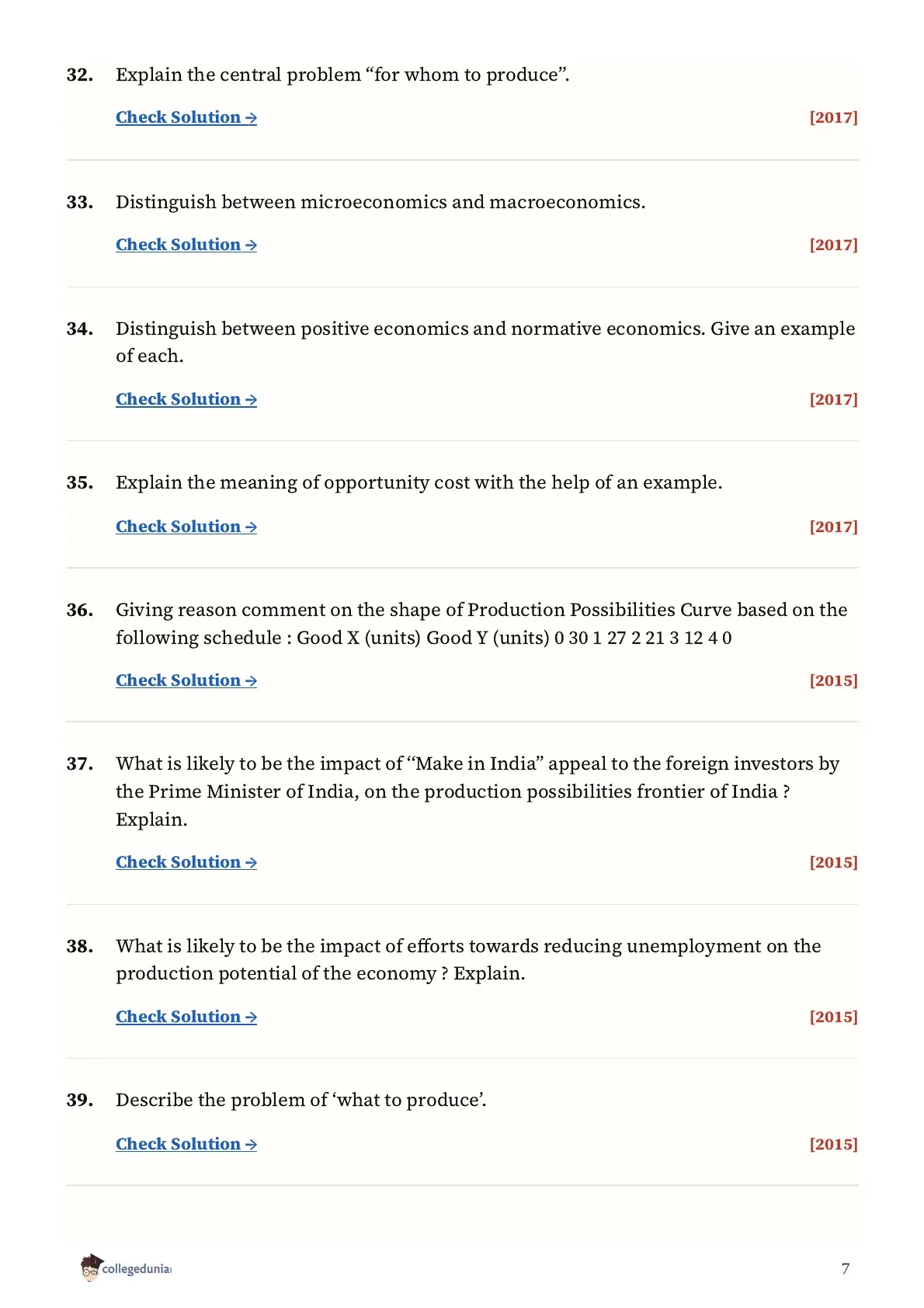
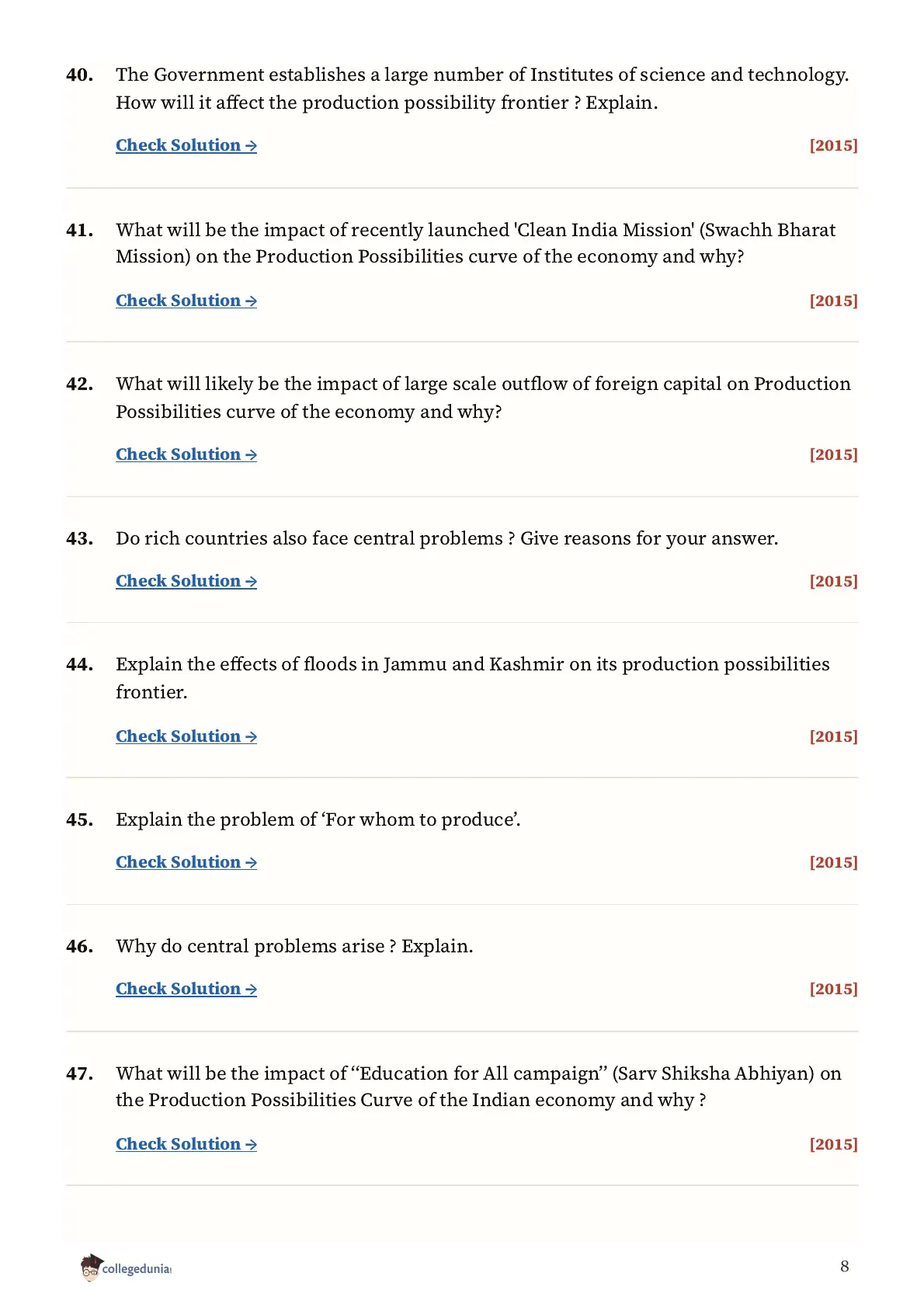
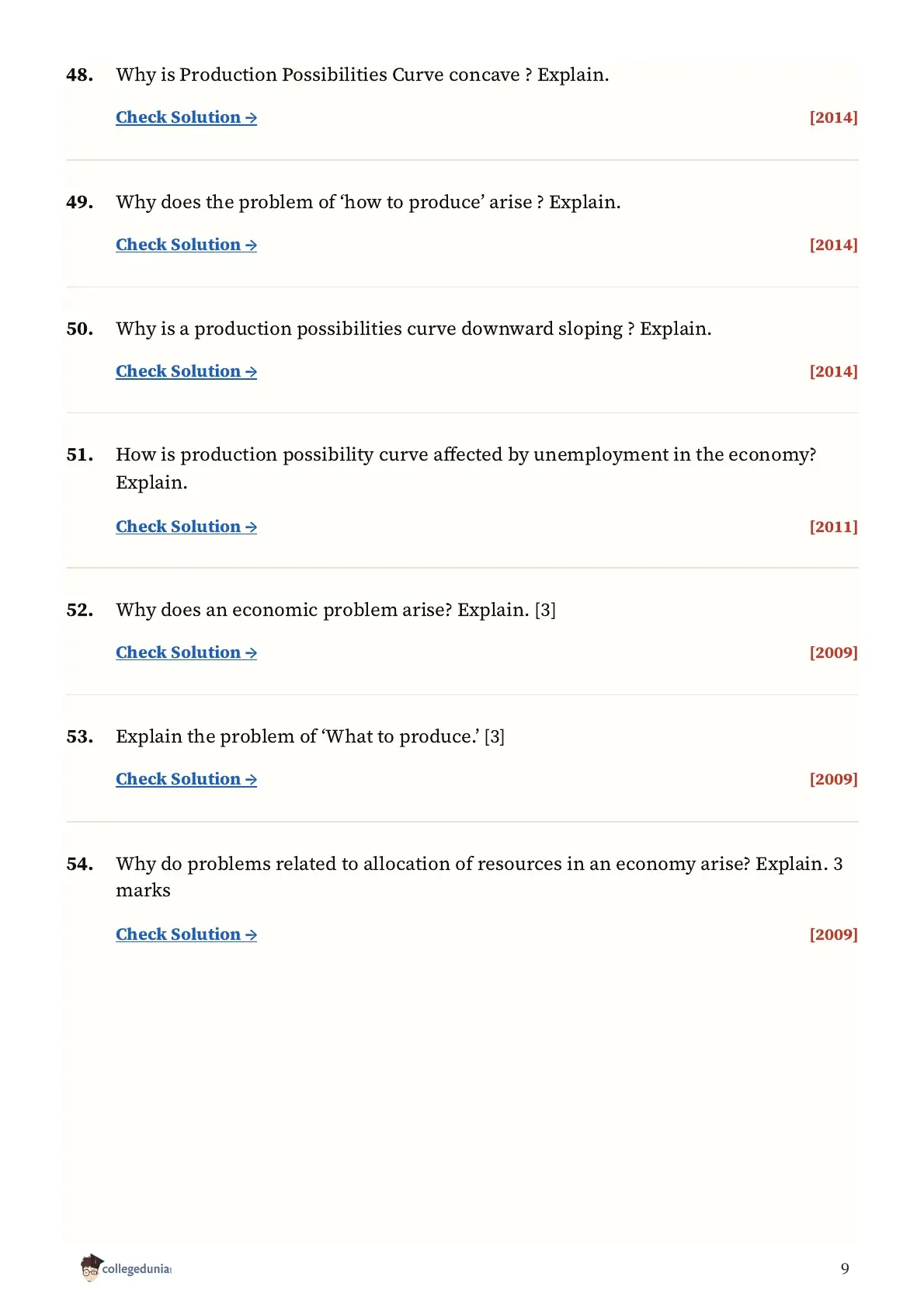
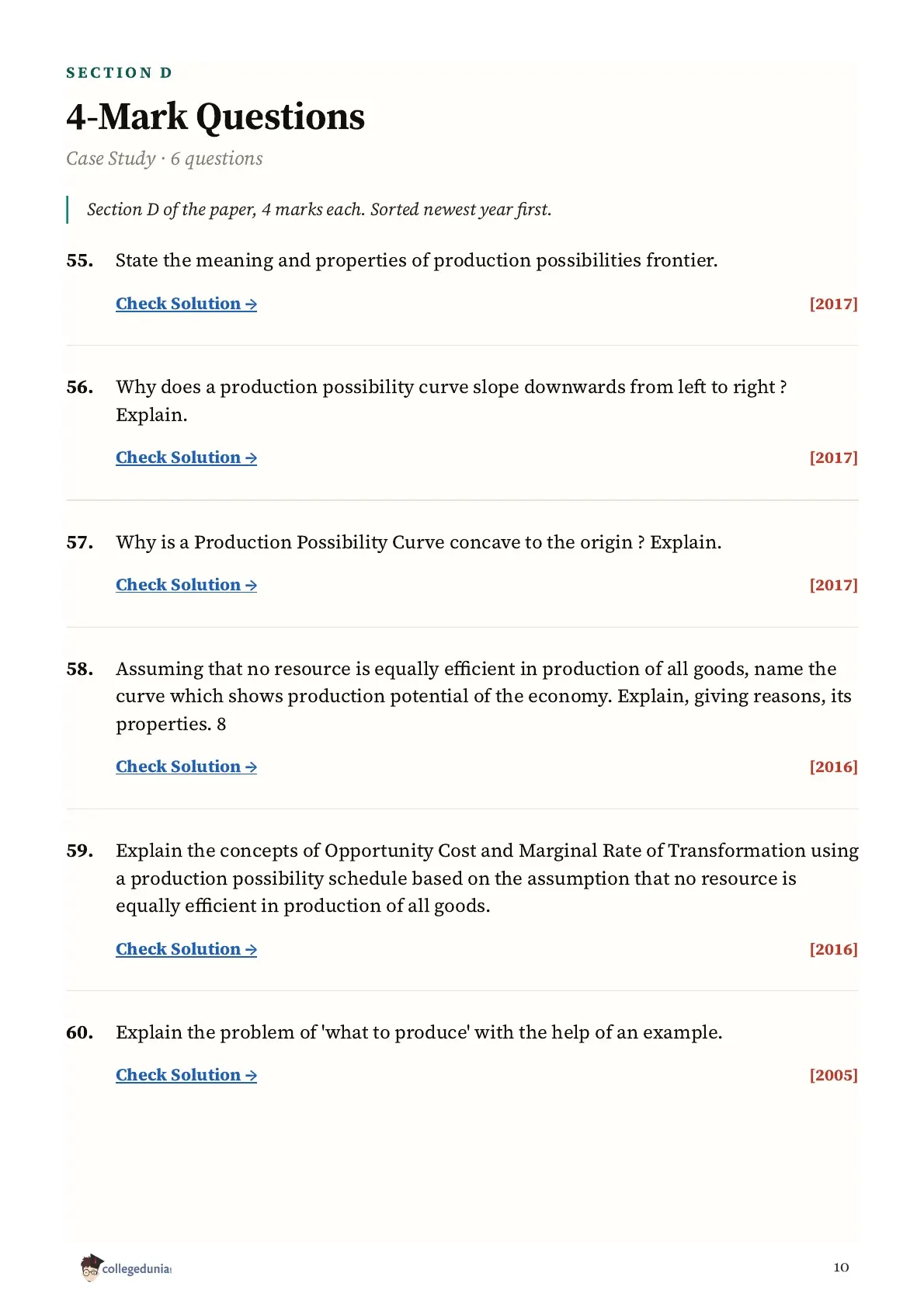
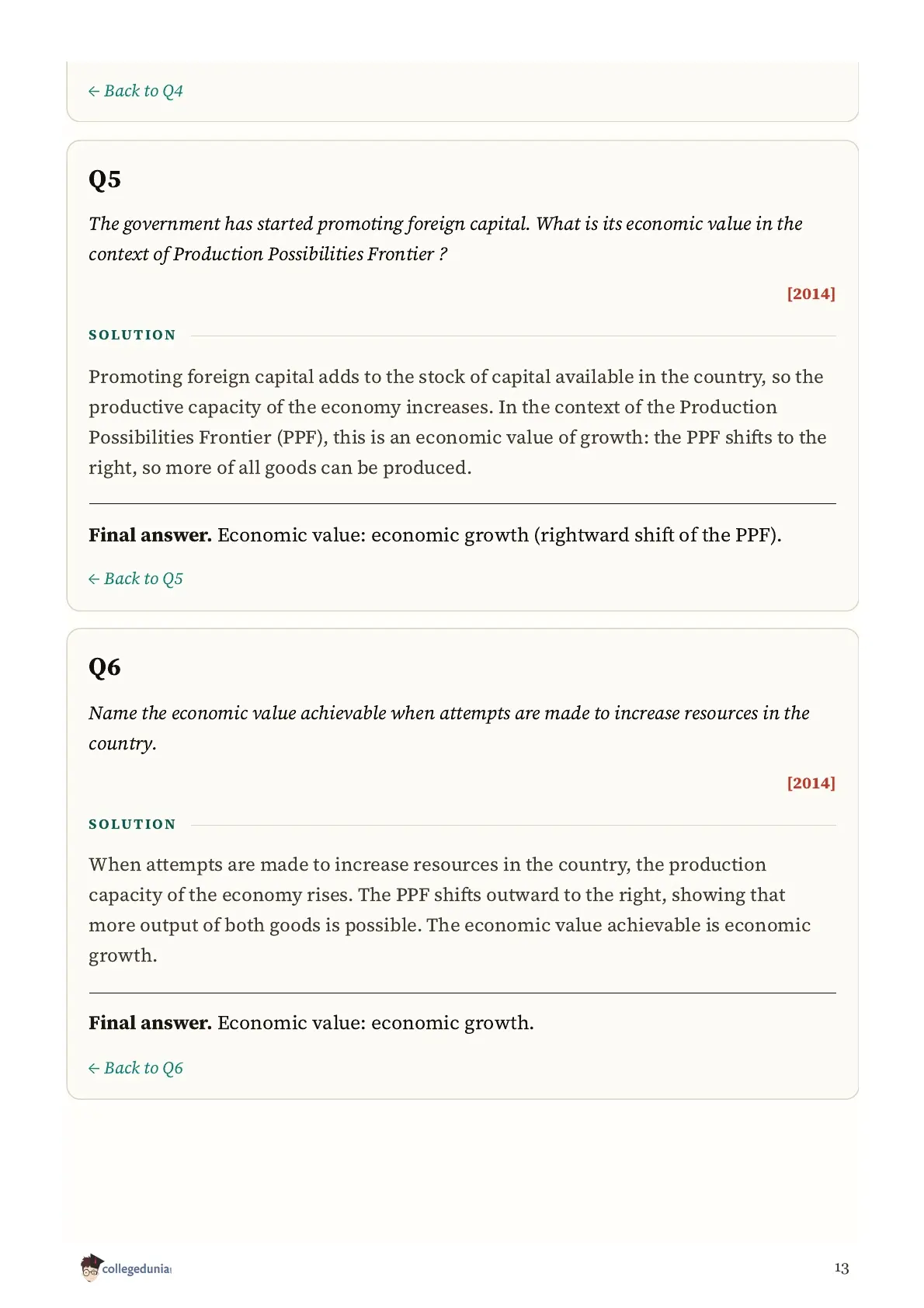
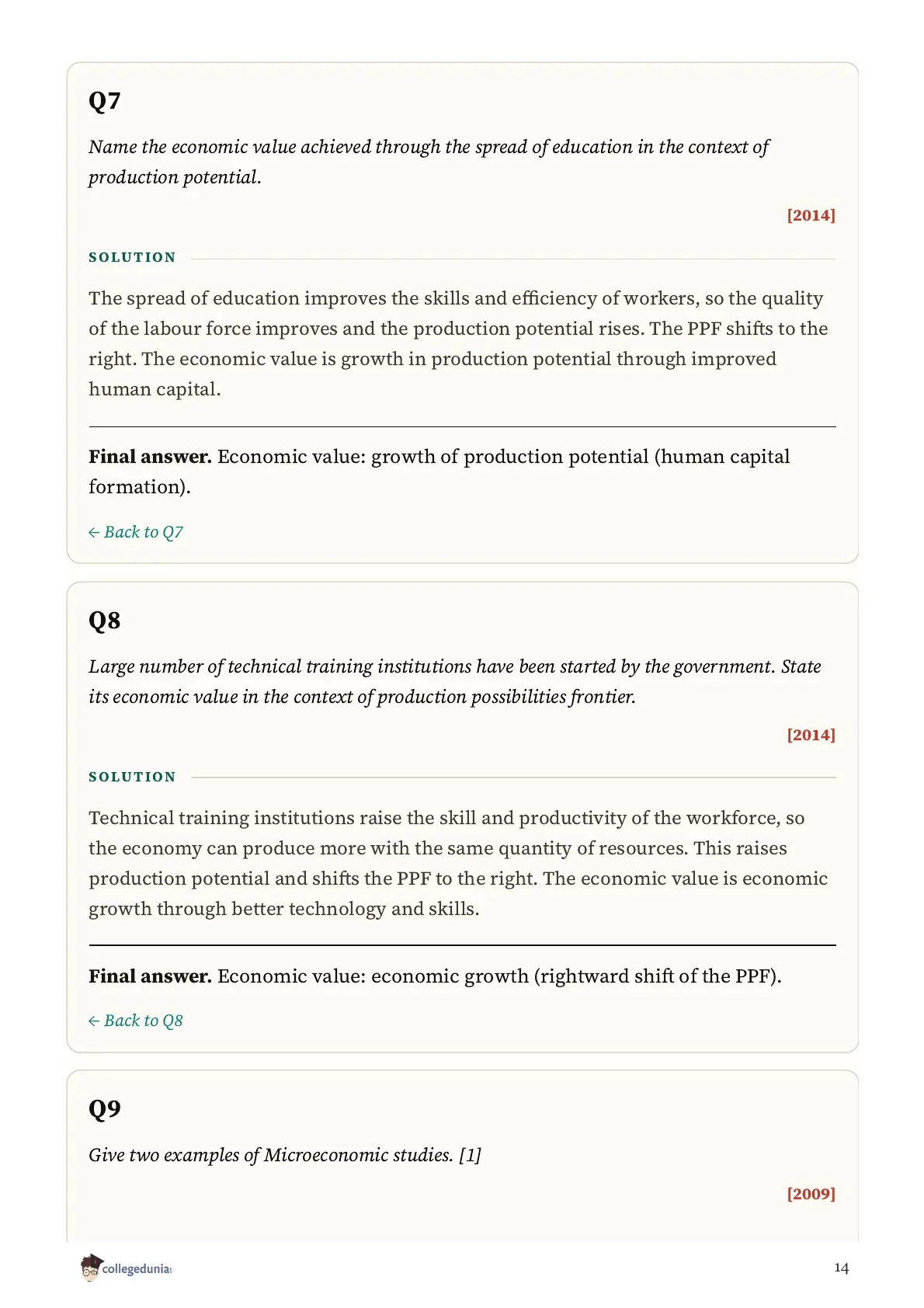
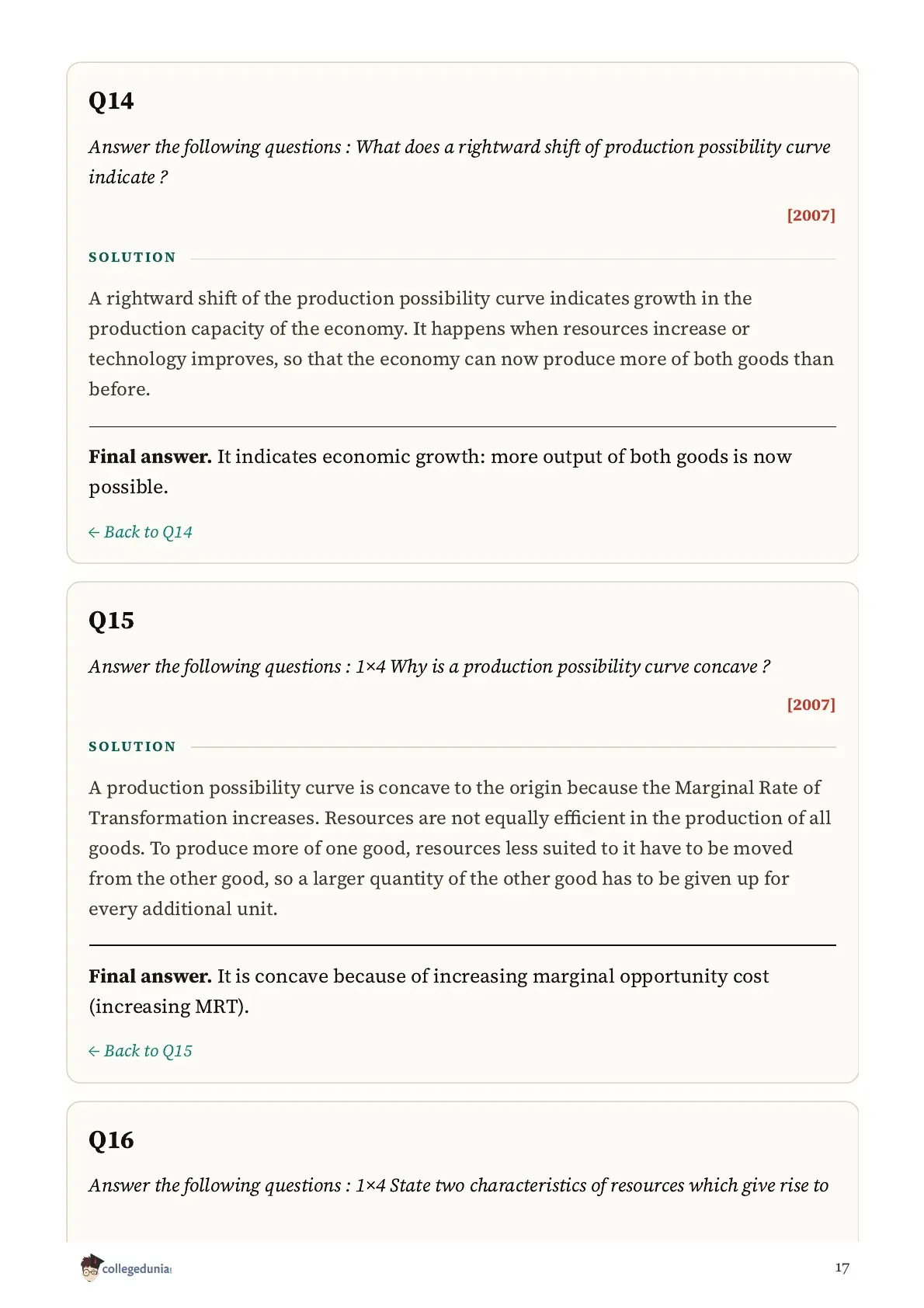
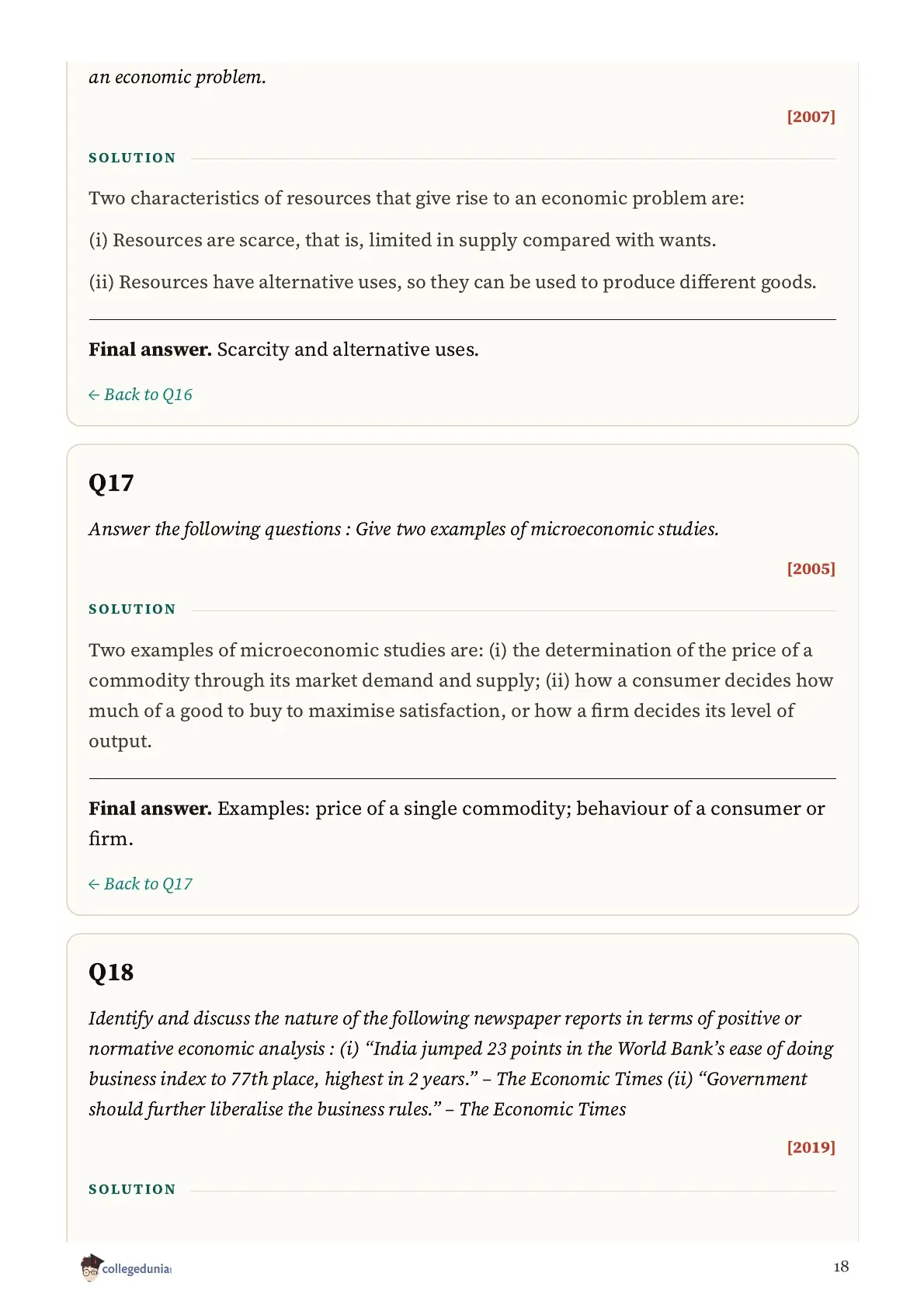
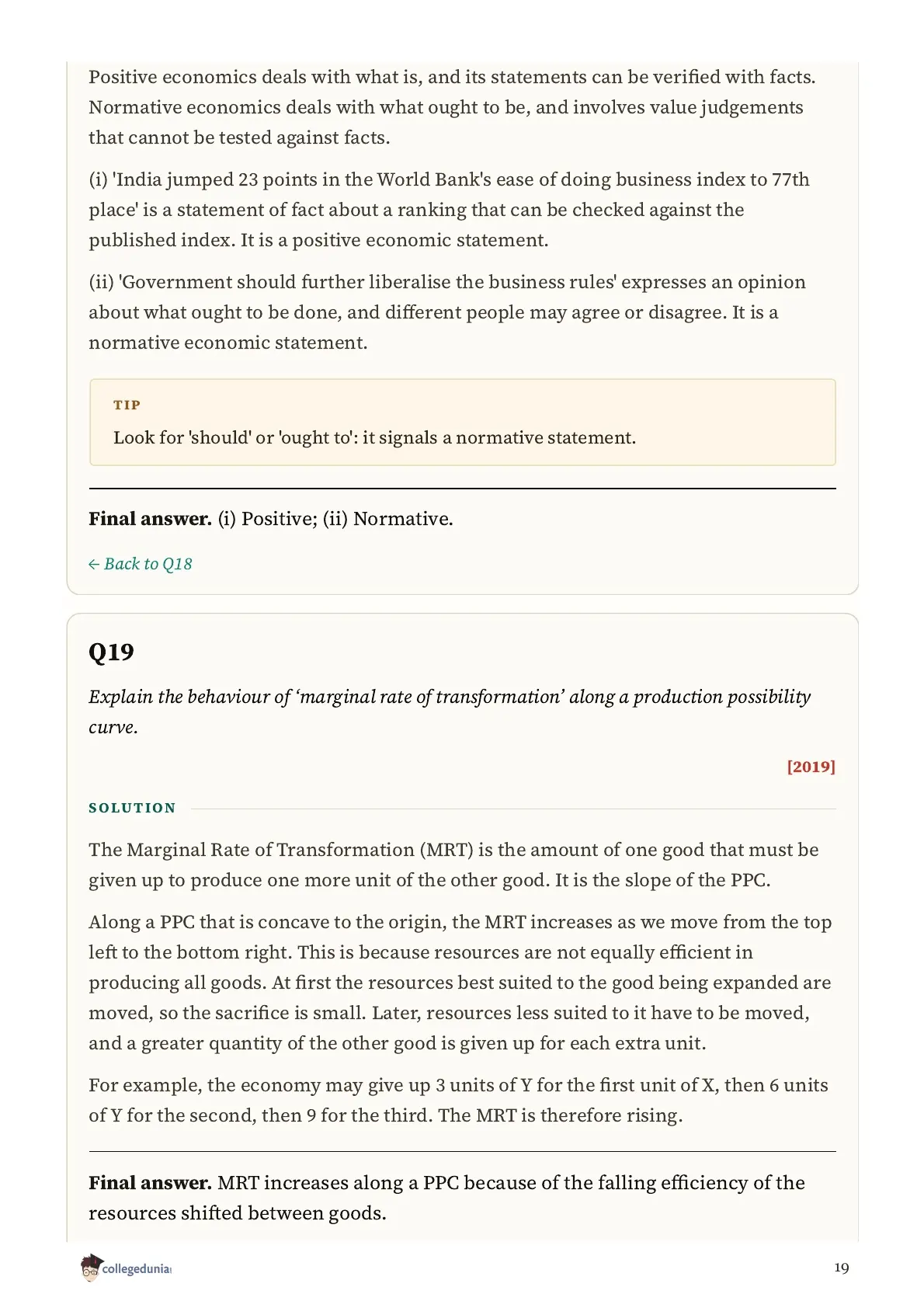
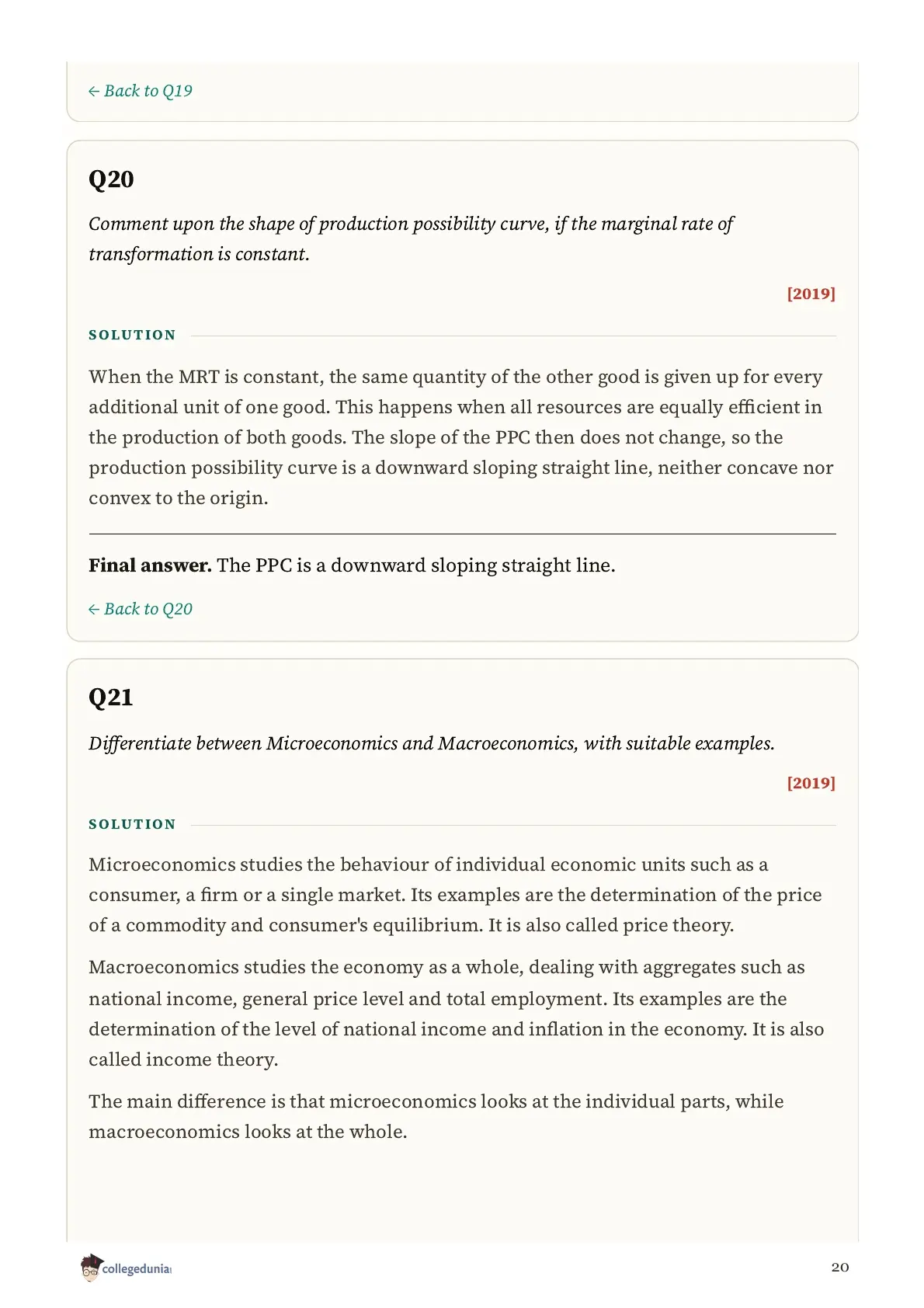
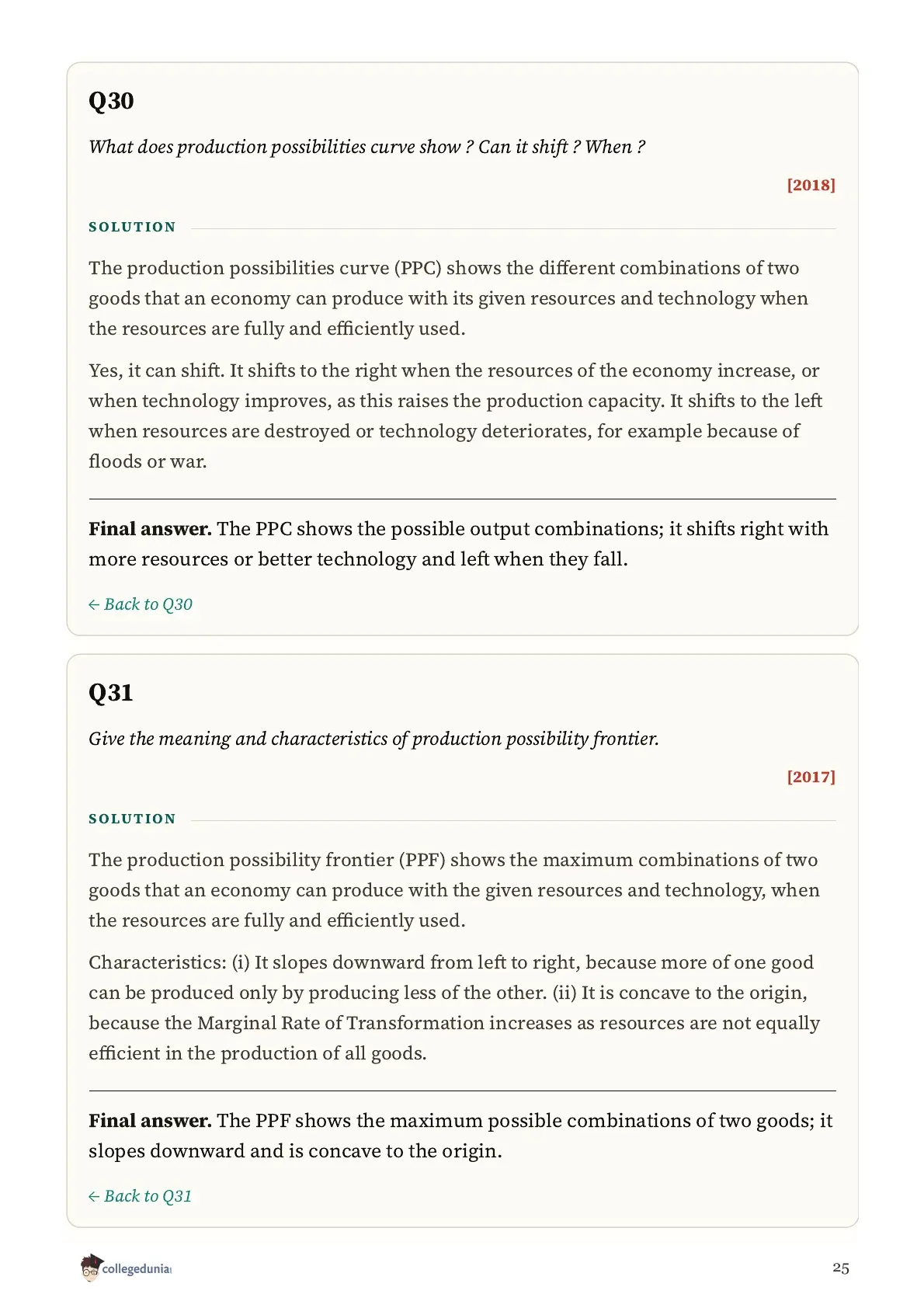
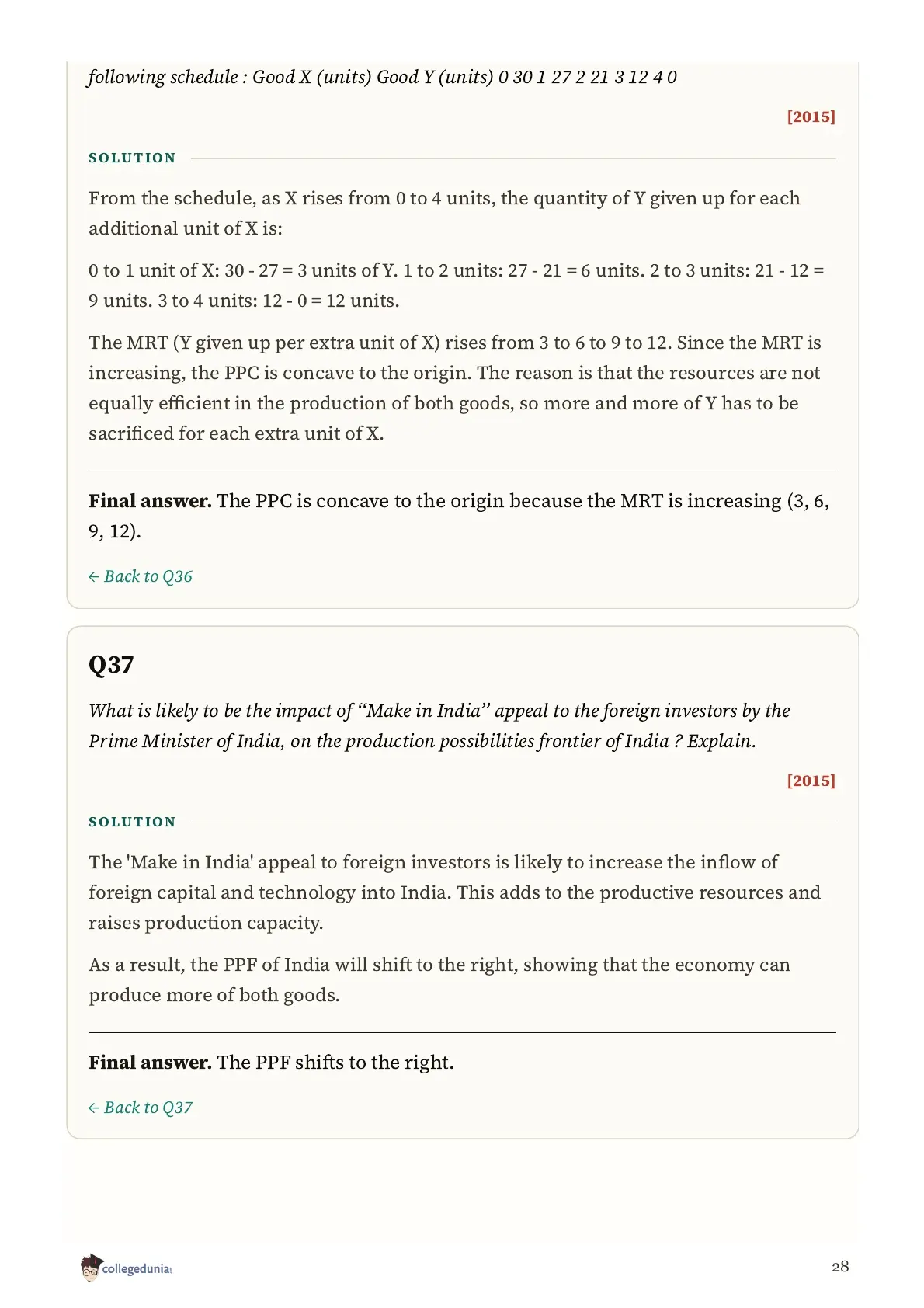
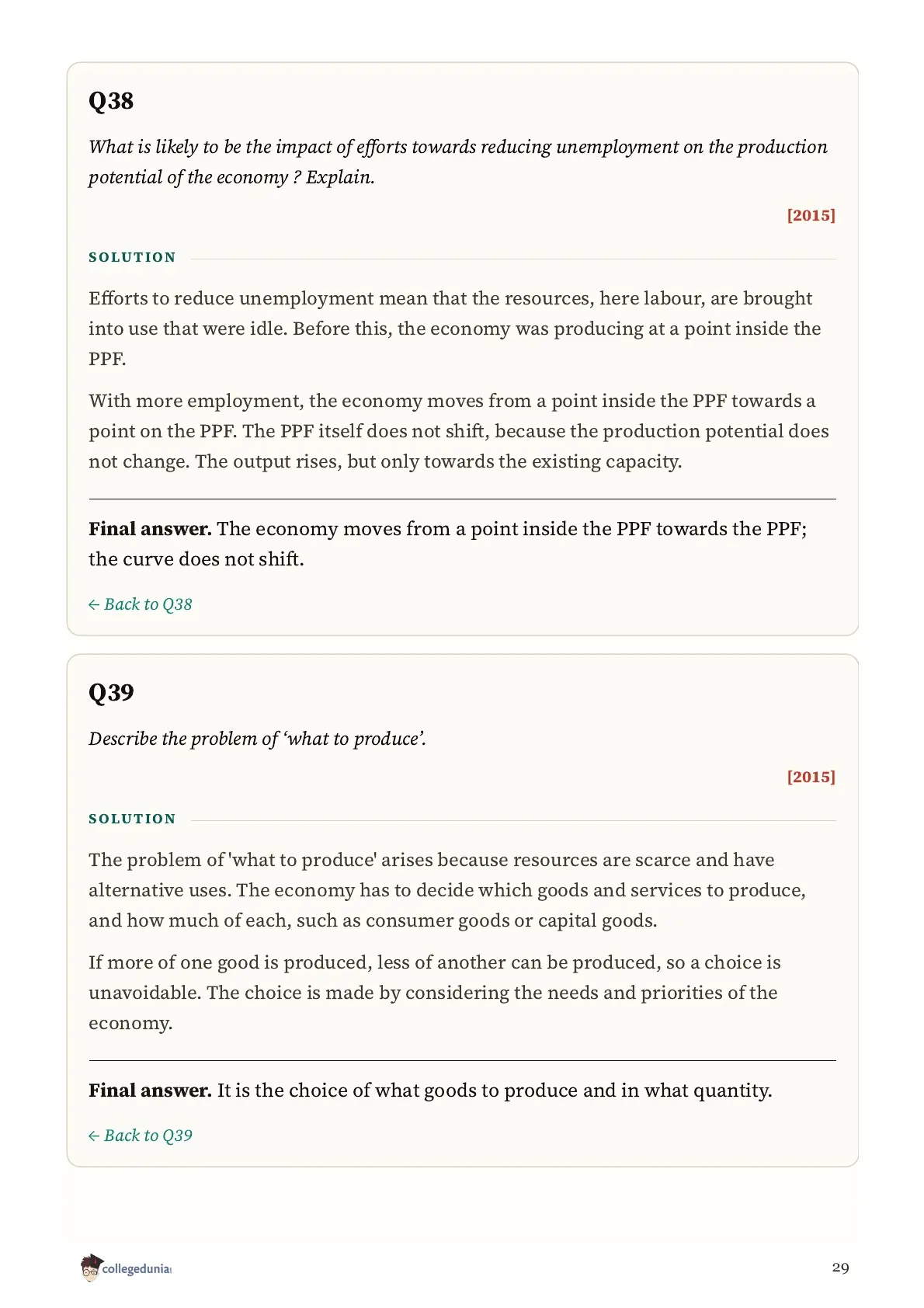
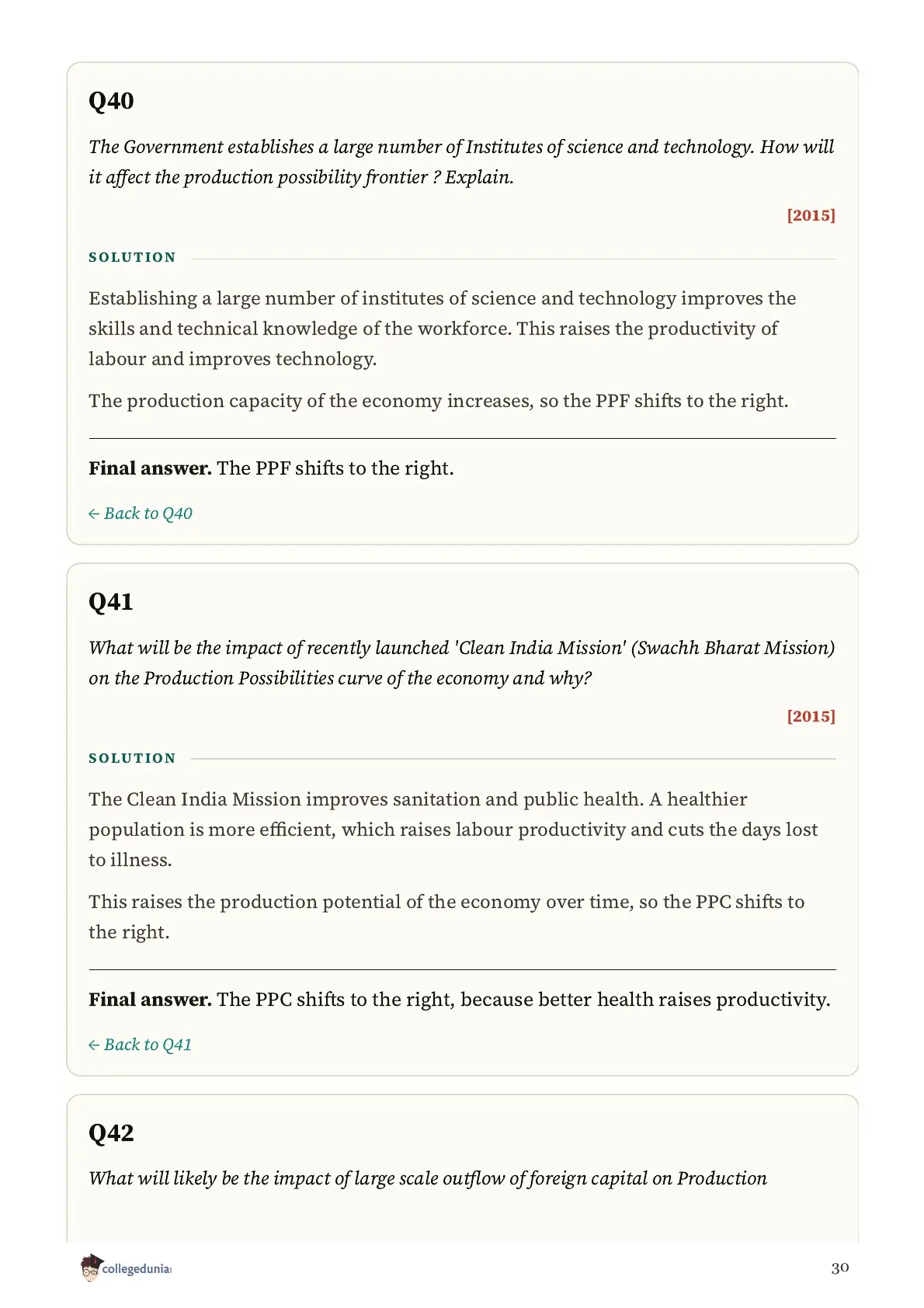
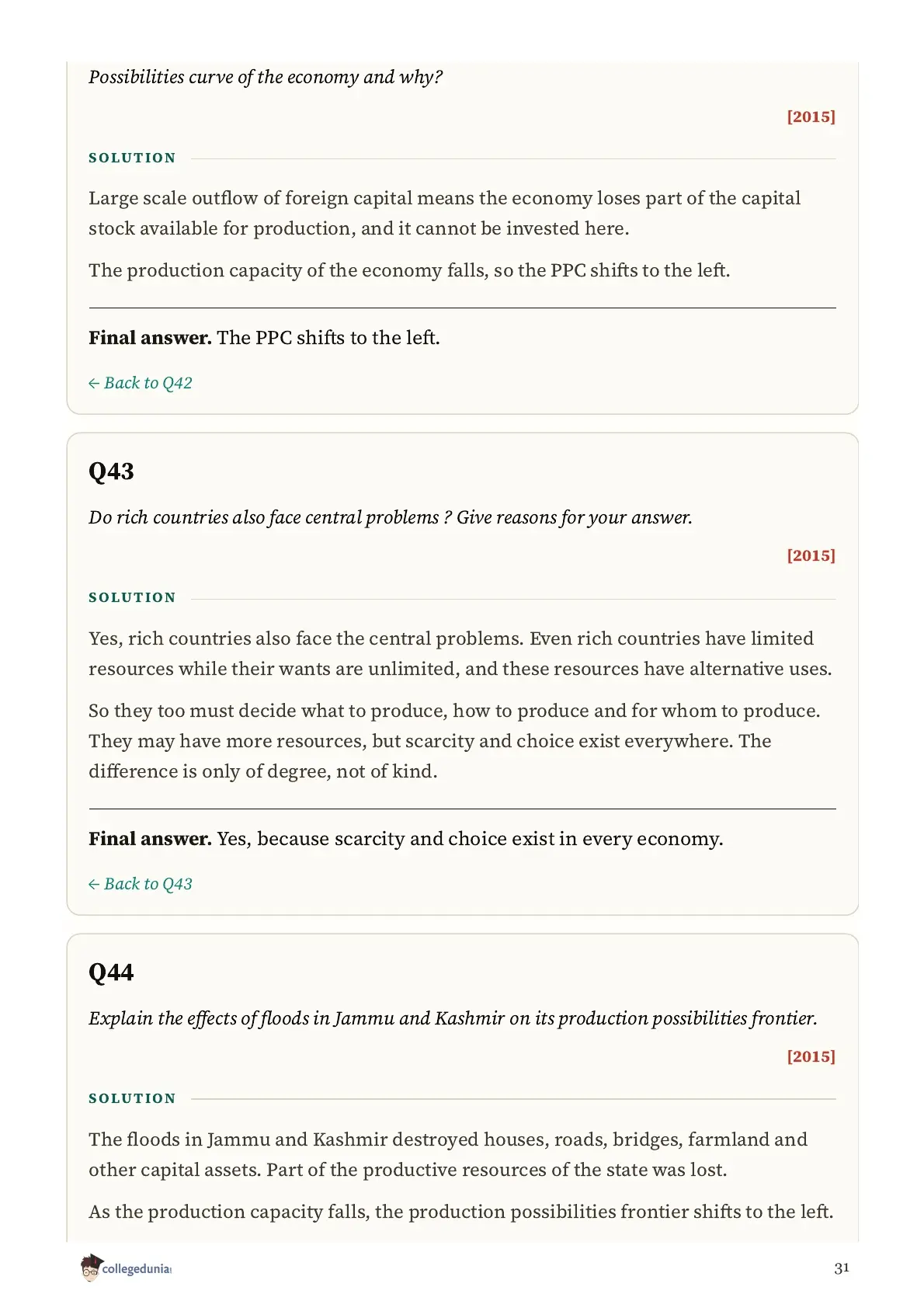
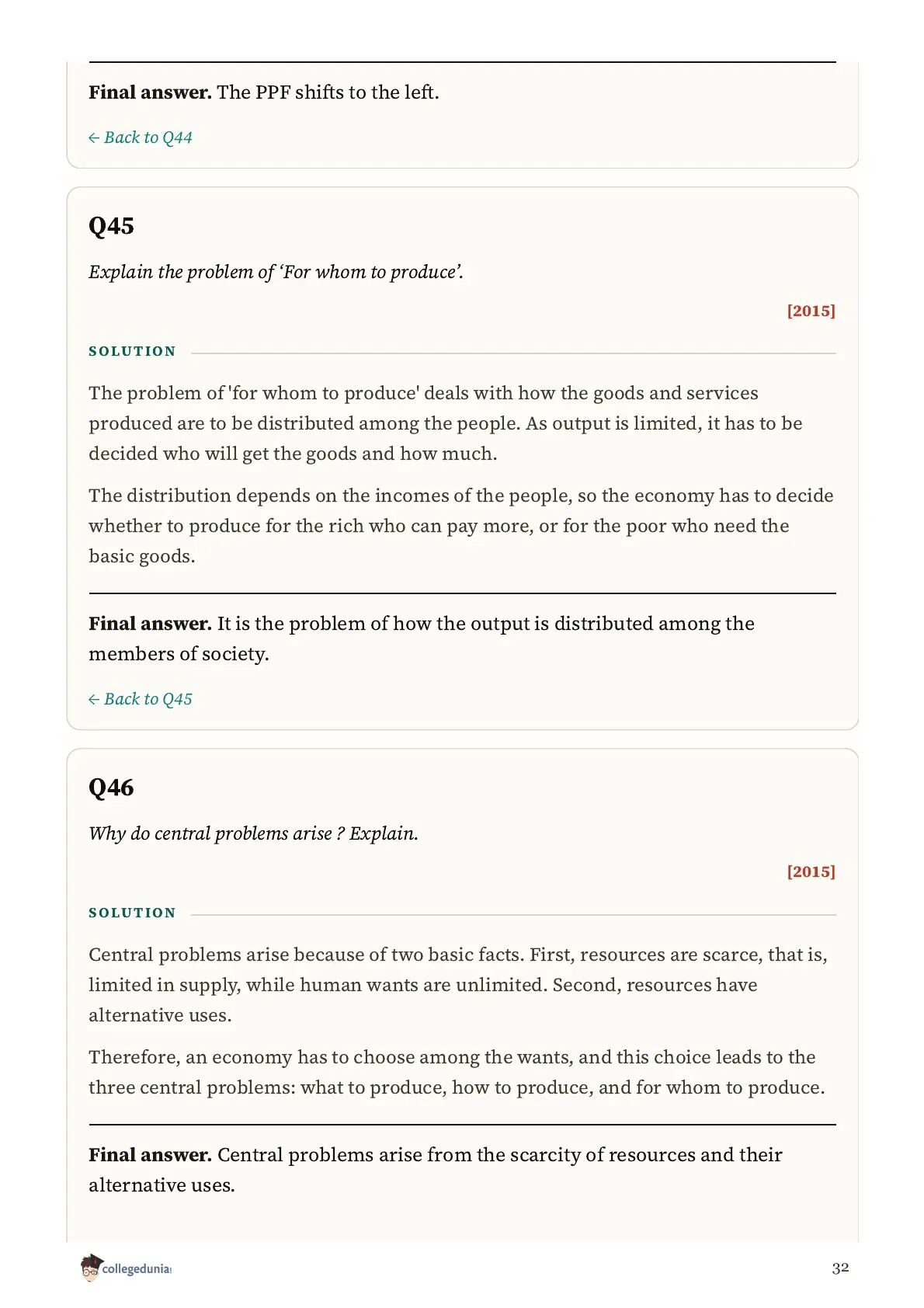
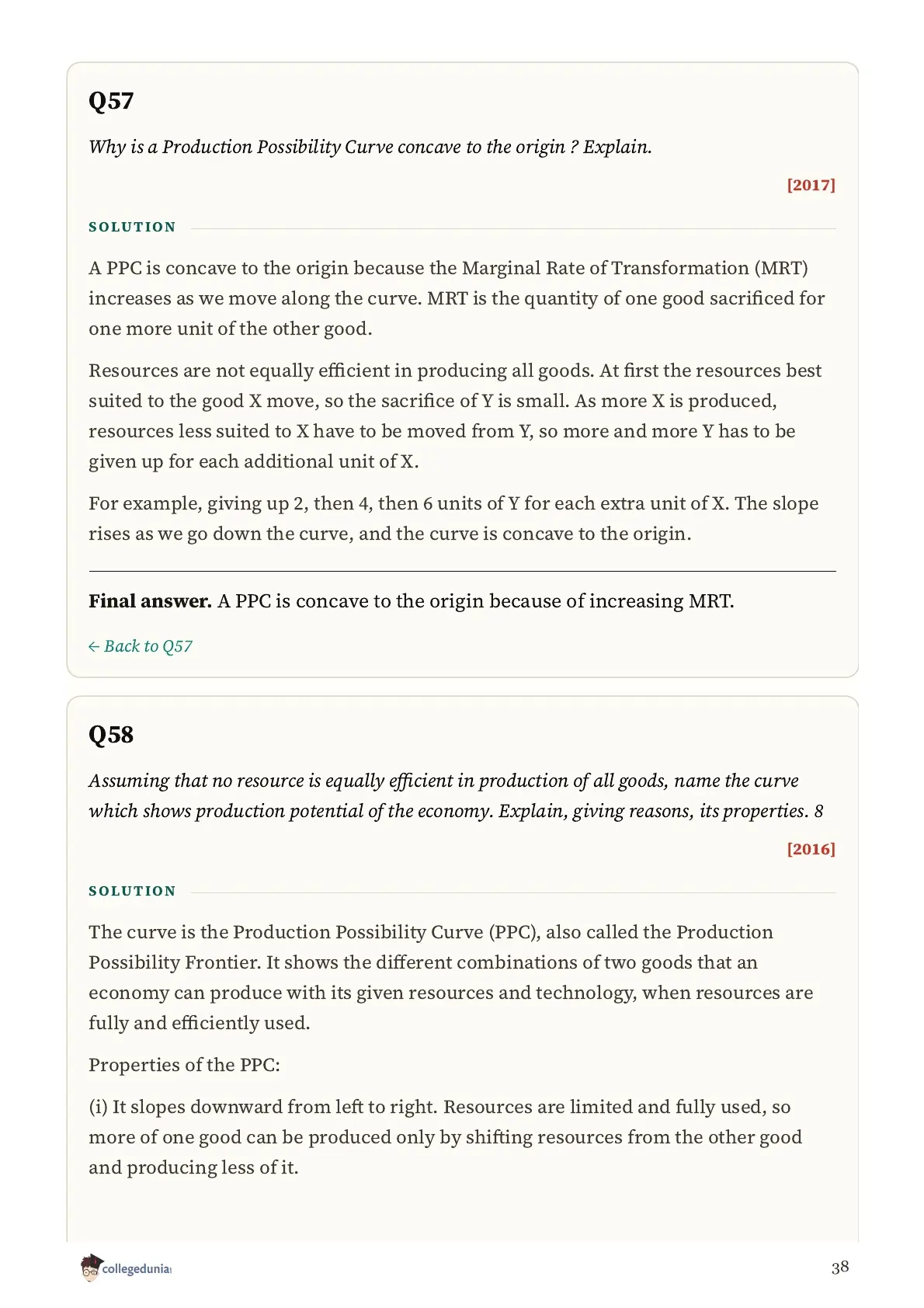
The production possibilities curve dominates the set, with 24 questions that name it directly and several more on the marginal rate of transformation. Most of the 3-mark ones follow one pattern: a government step is described and you say whether the curve shifts, as with Make in India, Sarv Shiksha Abhiyan, Swachh Bharat, a new chain of technical institutes, floods in Jammu and Kashmir or an outflow of foreign capital. 12 questions are of this kind.
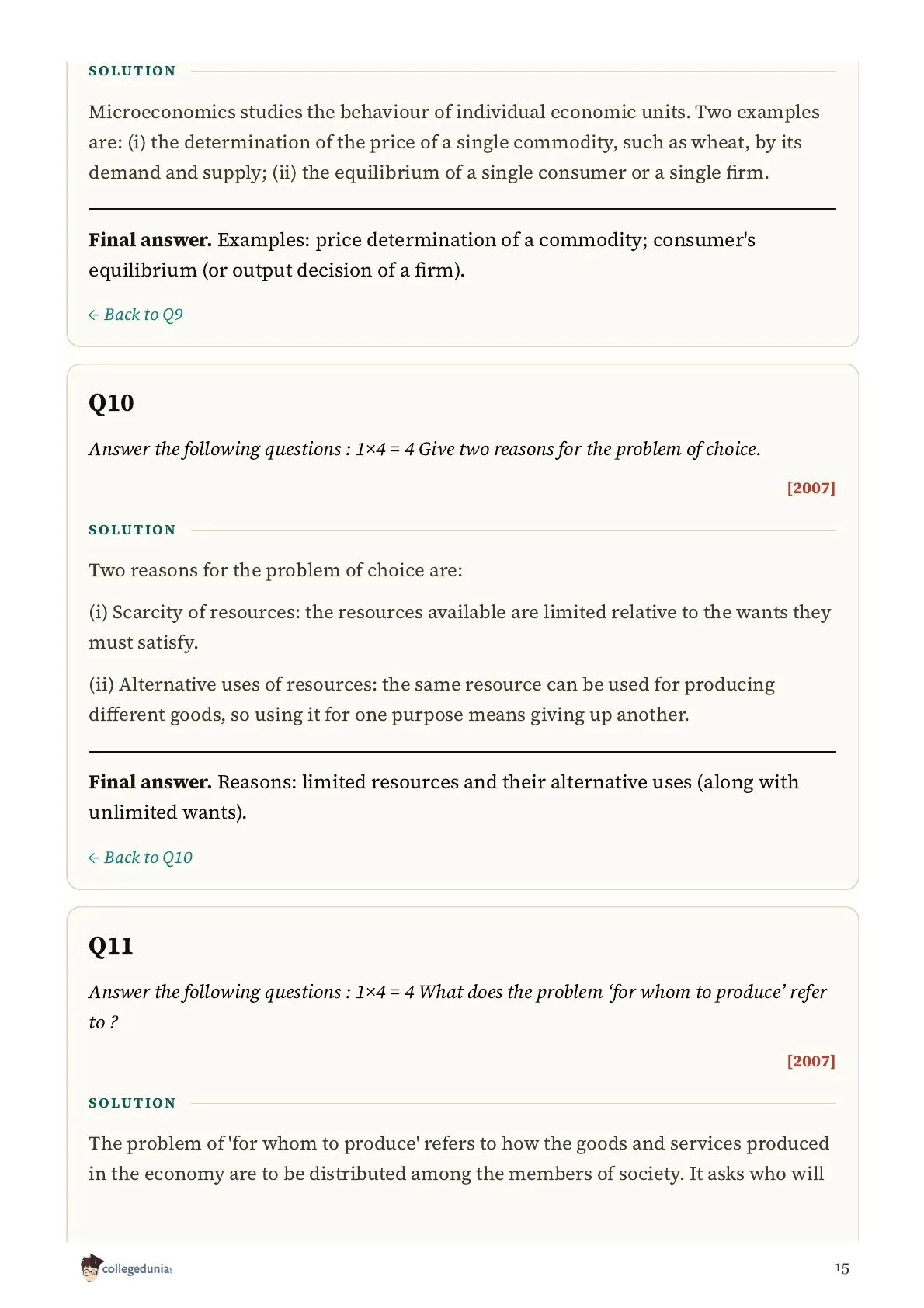
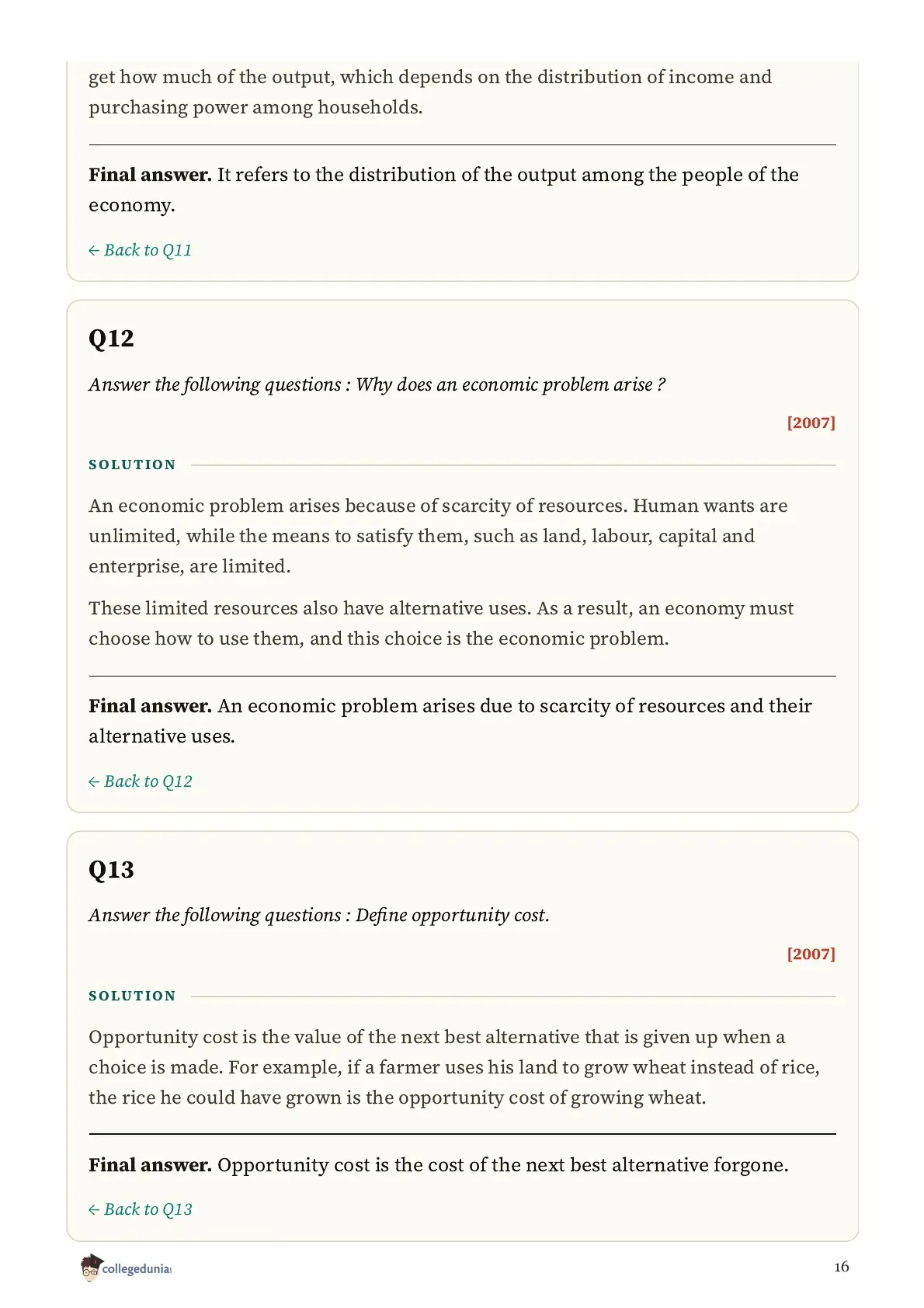
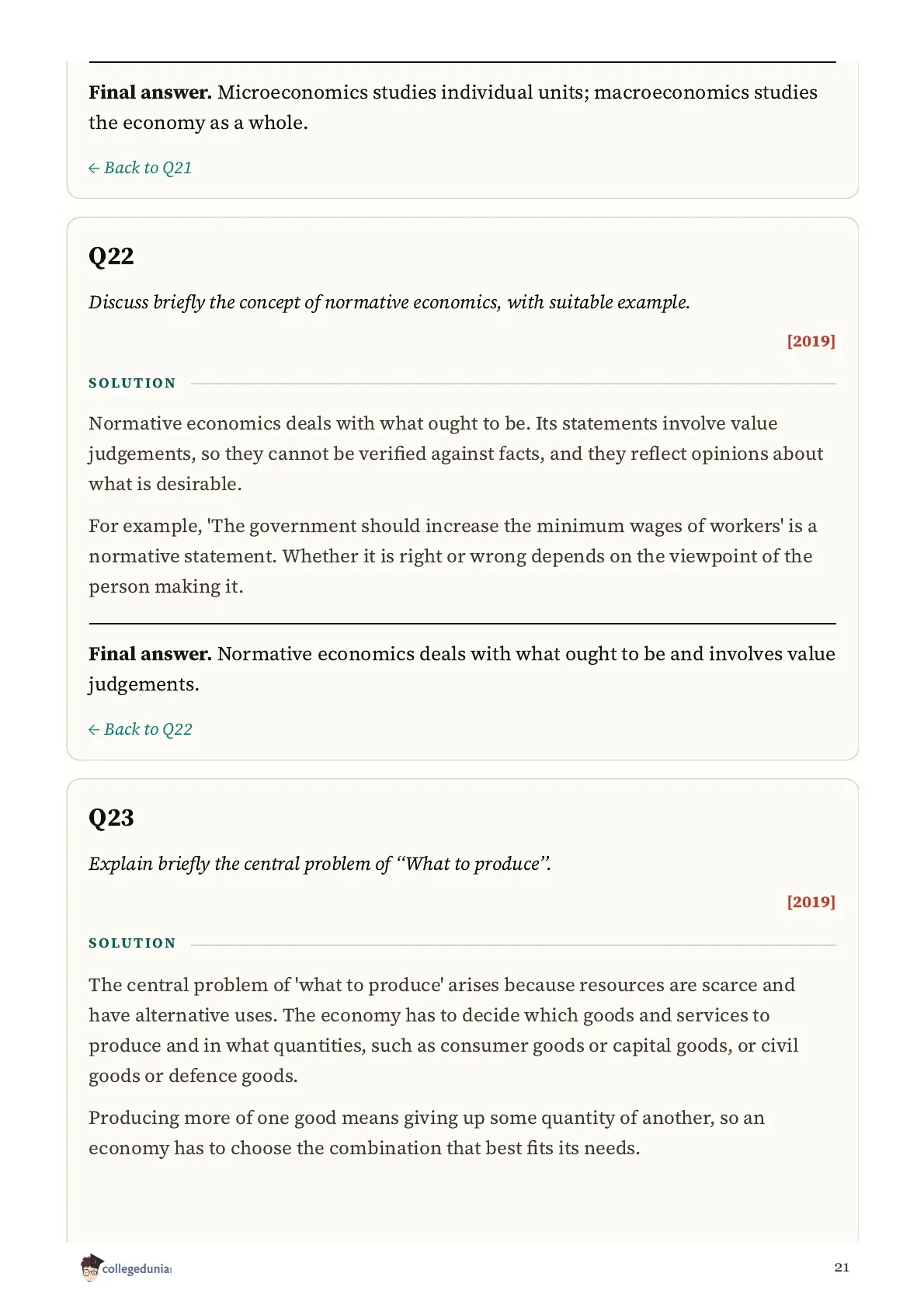
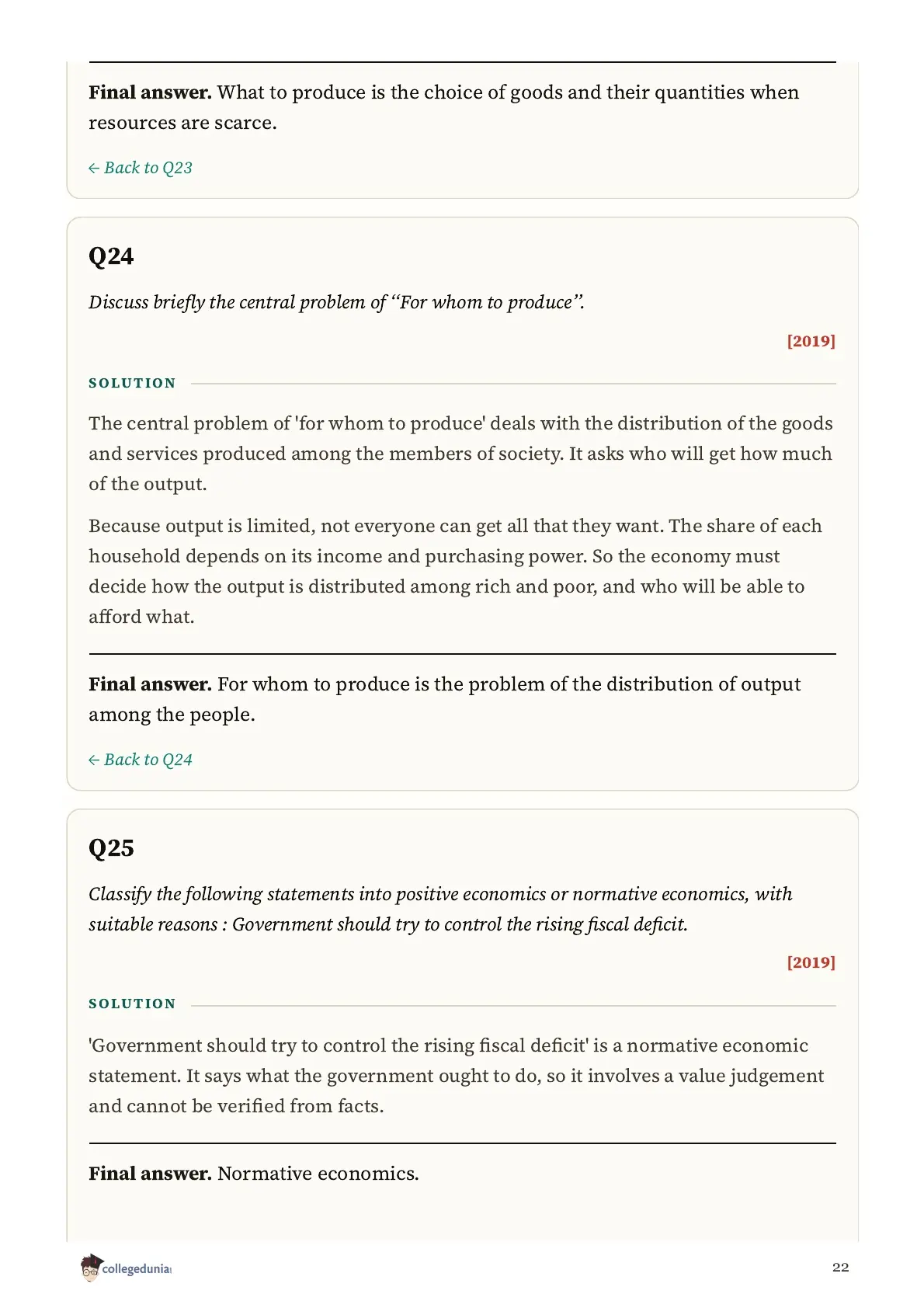
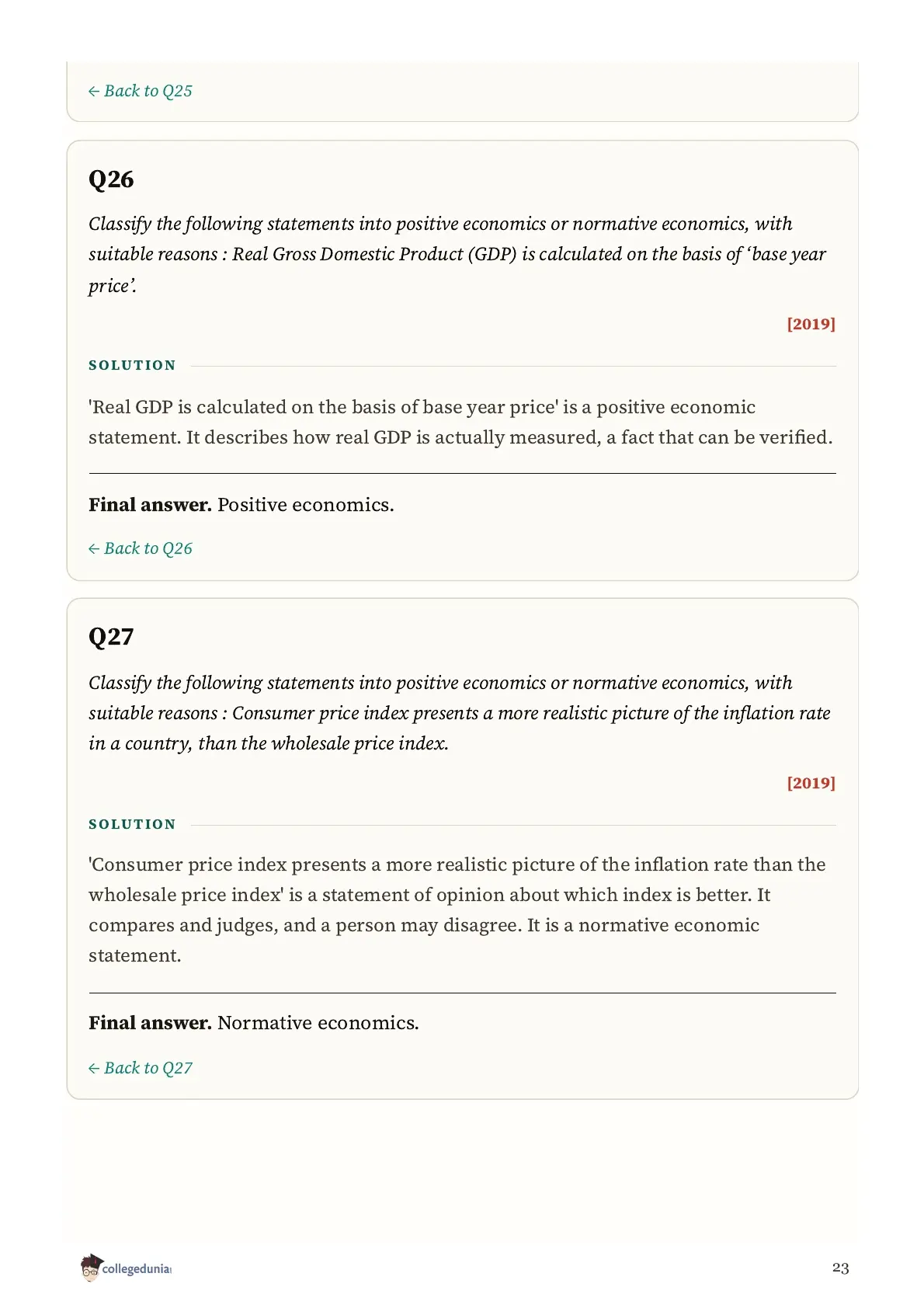
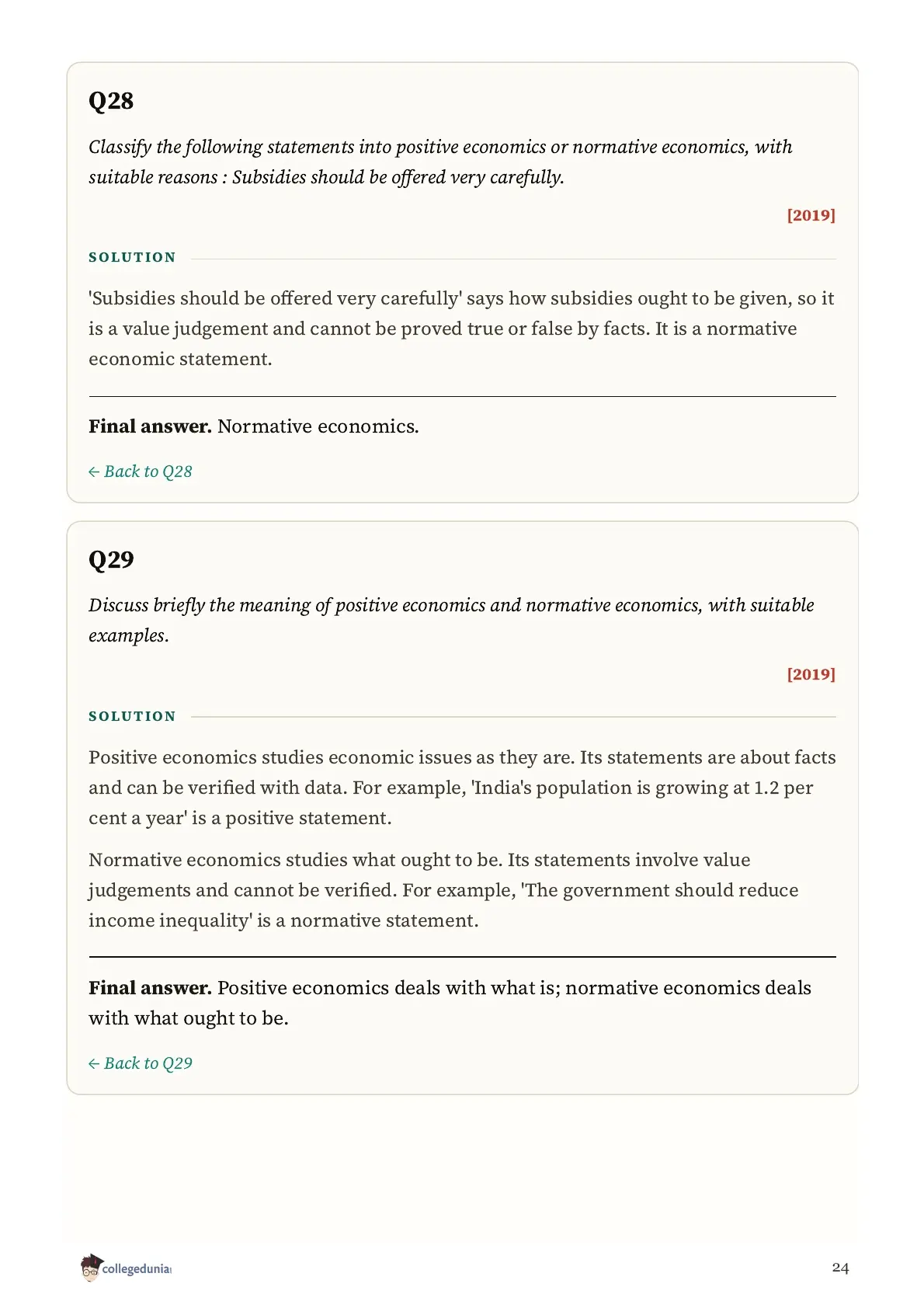
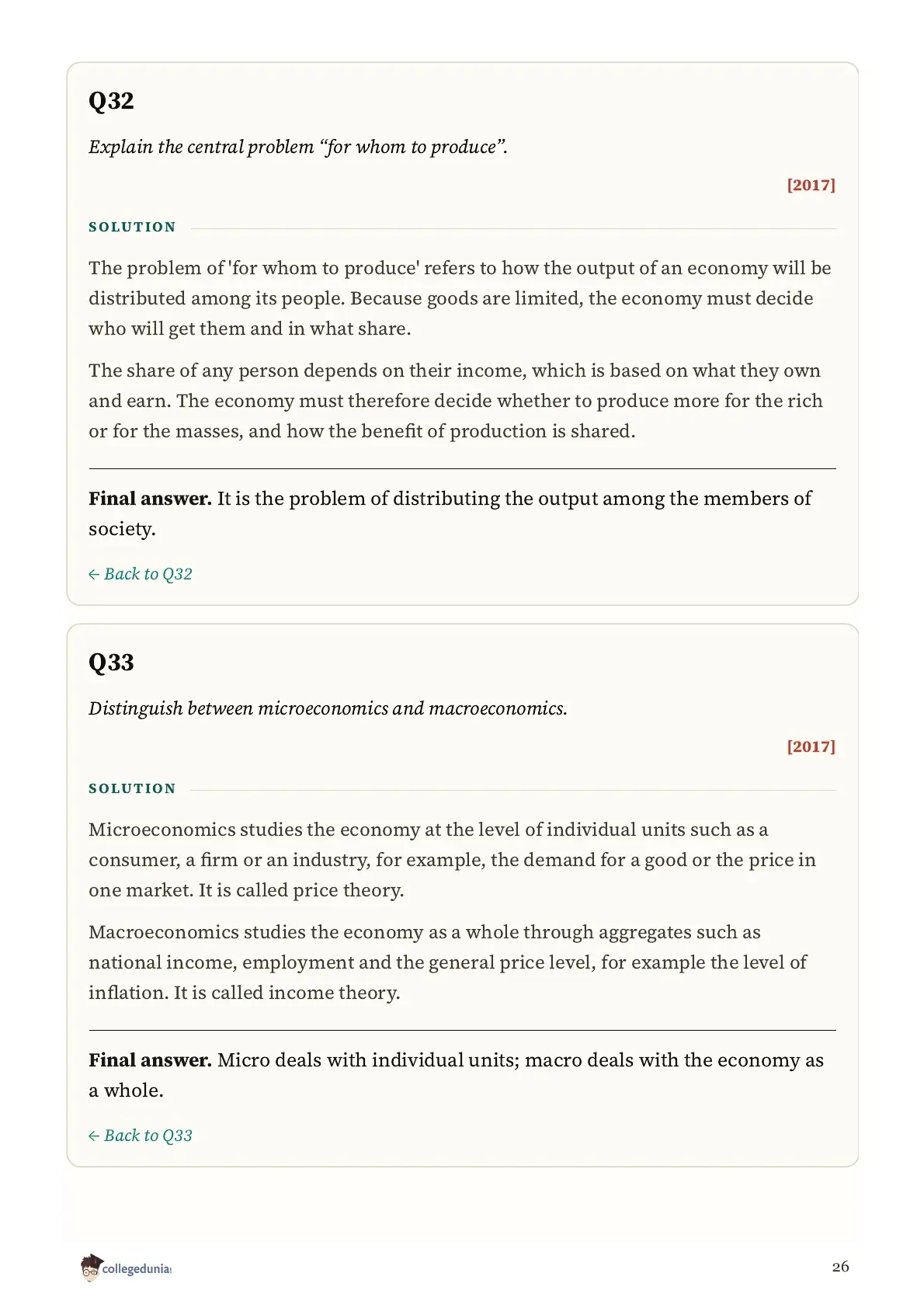
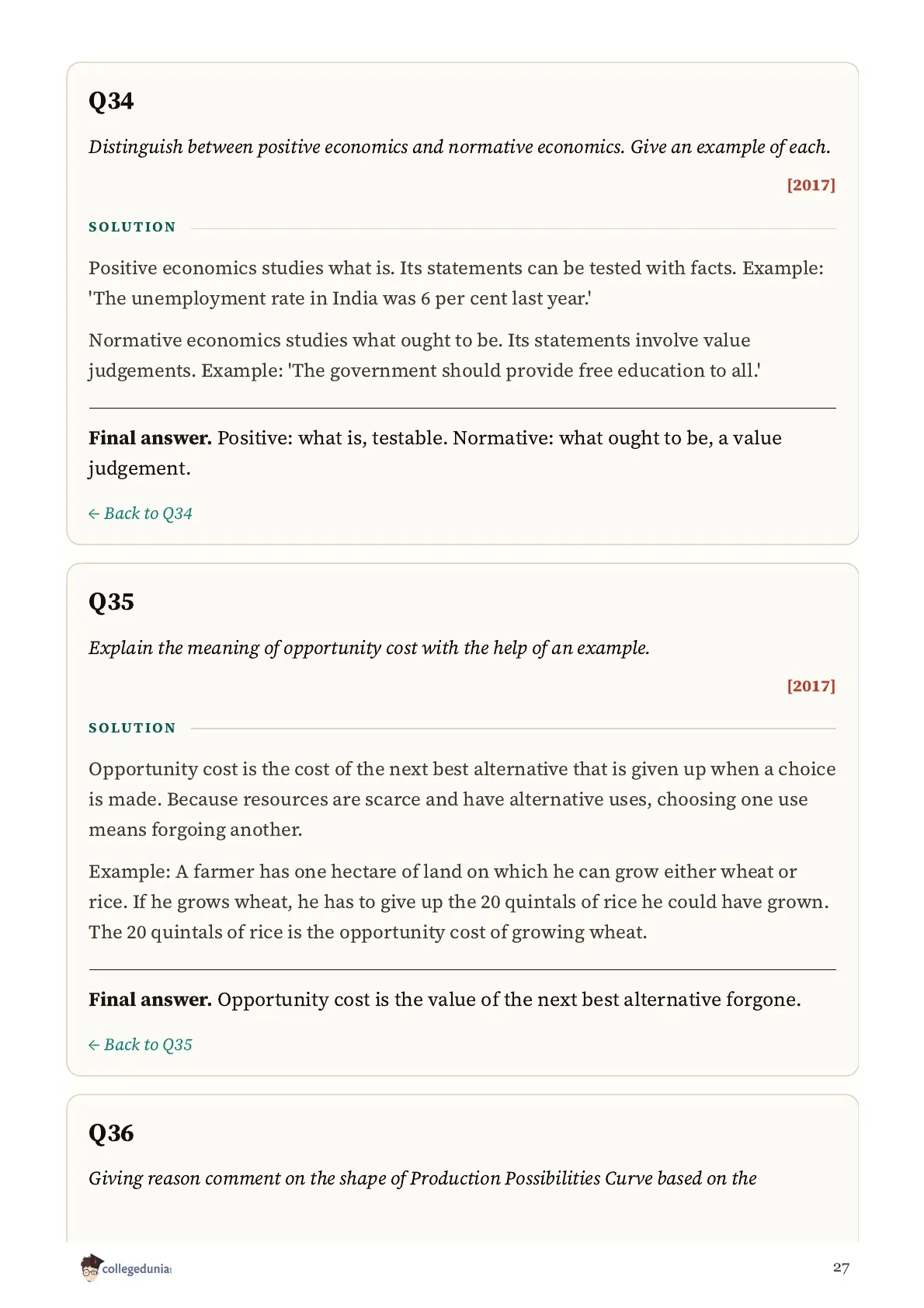
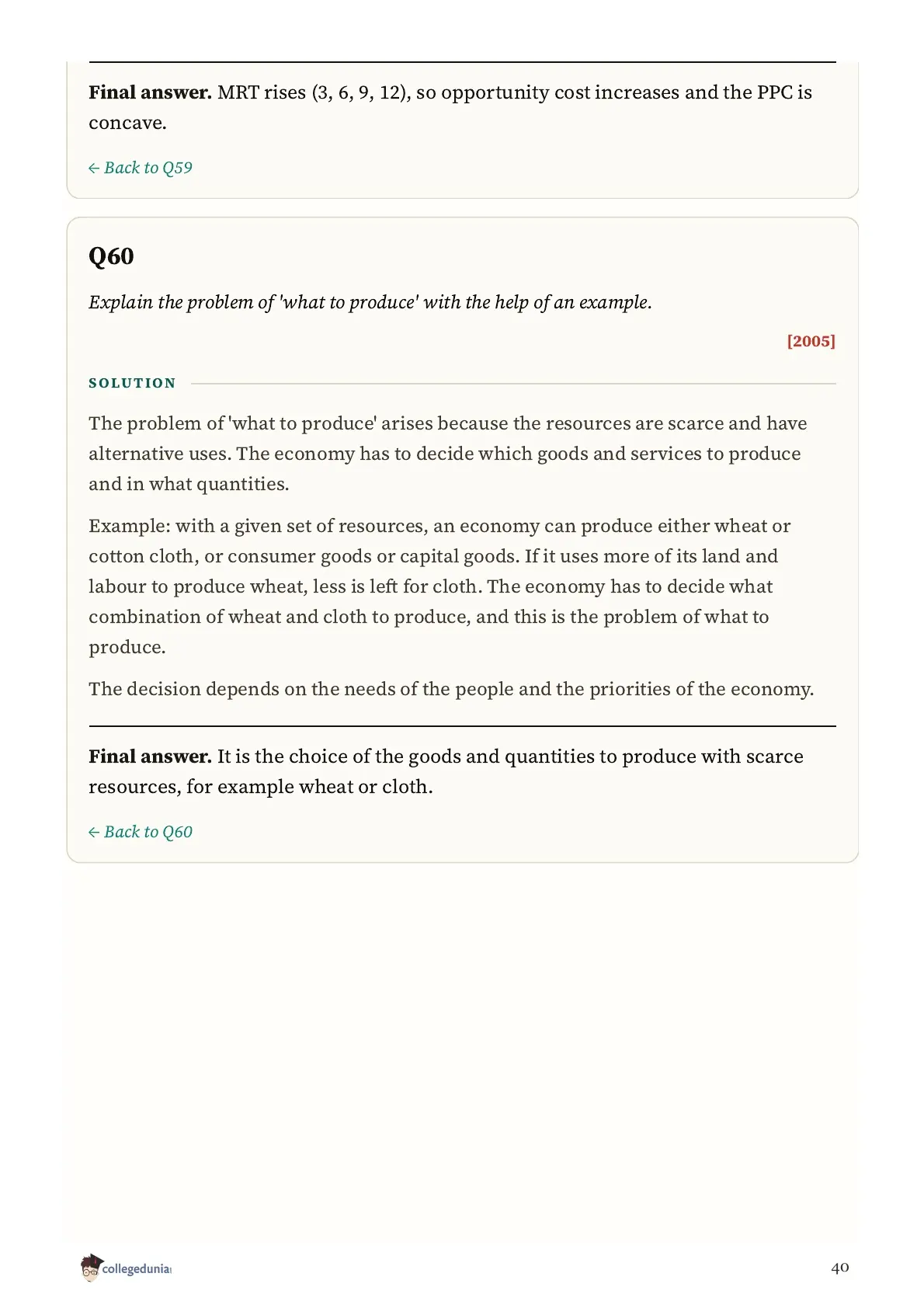
The central problems of what, how and for whom to produce come up in 9 questions, and 11 more ask why an economic problem or a problem of allocation arises at all. Positive and normative economics appear in 8 questions, including a set of statements to classify such as "Subsidies should be offered very carefully". Microeconomics versus macroeconomics is asked in 4, opportunity cost in 4, and the reason the curve is concave in 4. The counts come from keyword matches, so a question on two topics is counted under both.
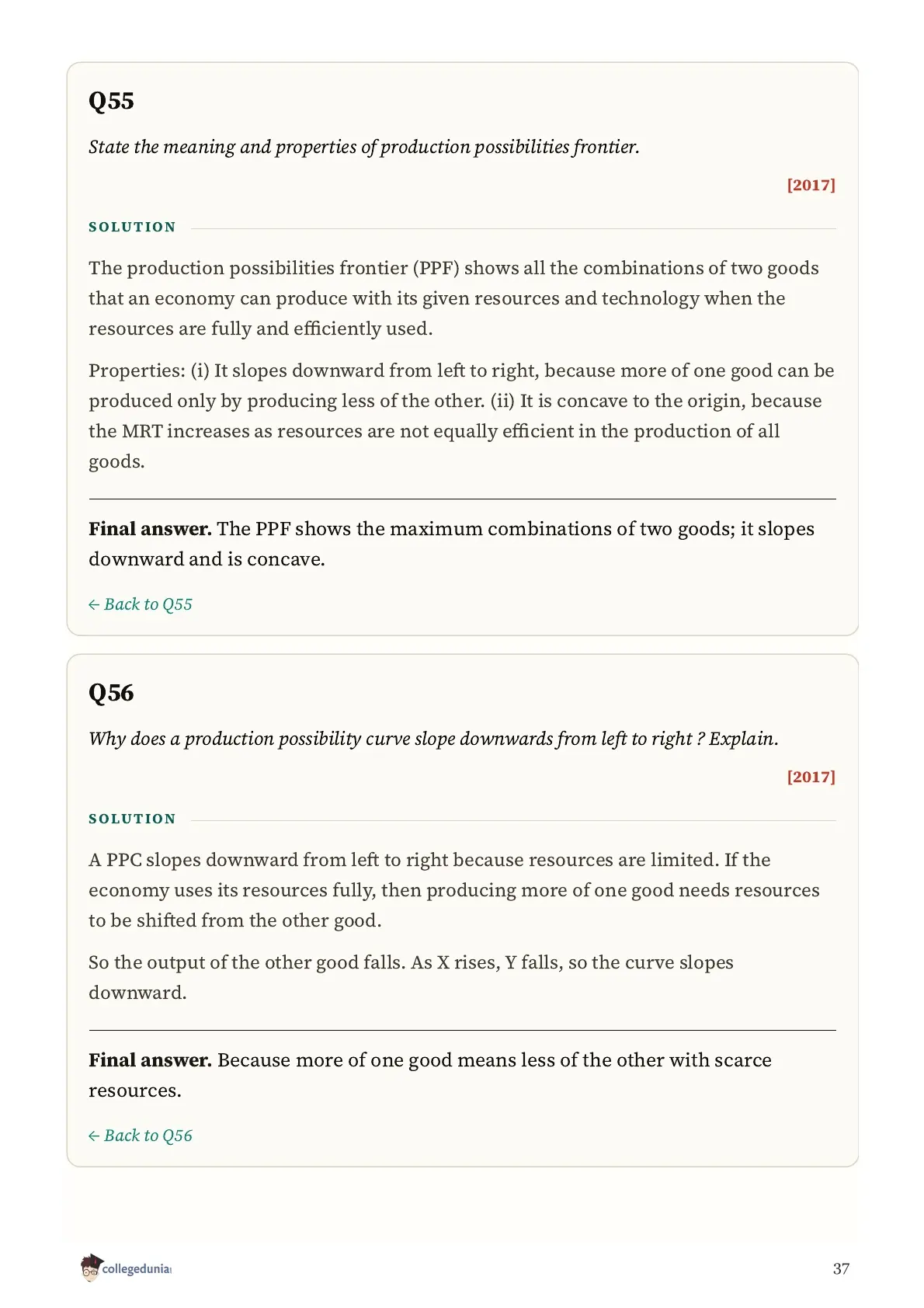
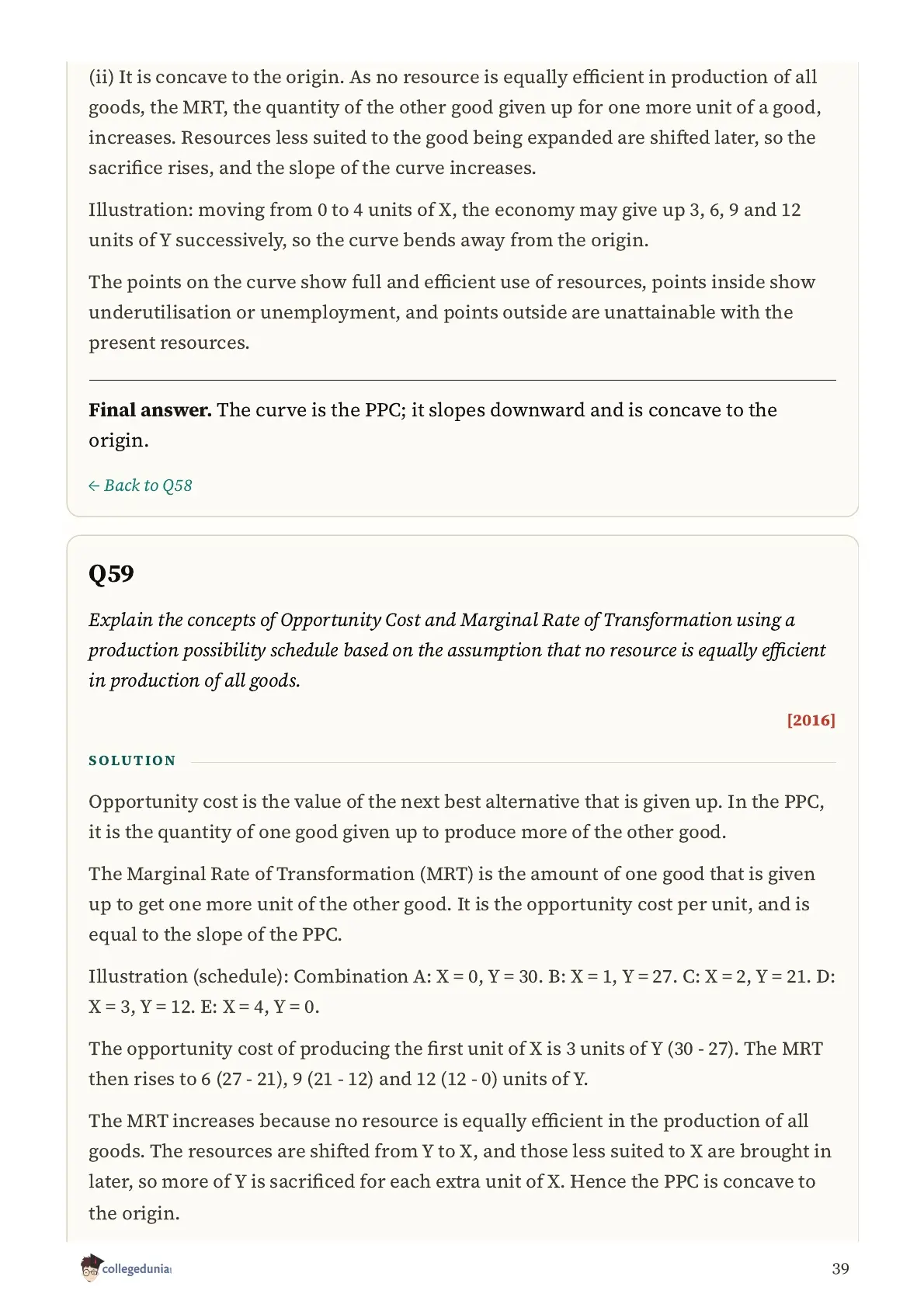
Two questions give a schedule and ask you to explain the shape of the curve from the marginal rate of transformation. There are no diagram questions and no defend or refute questions in this set.
Introduction to Microeconomics Video Lesson
Source: Rajat Arora on YouTube
How to Approach the Introduction to Microeconomics Set
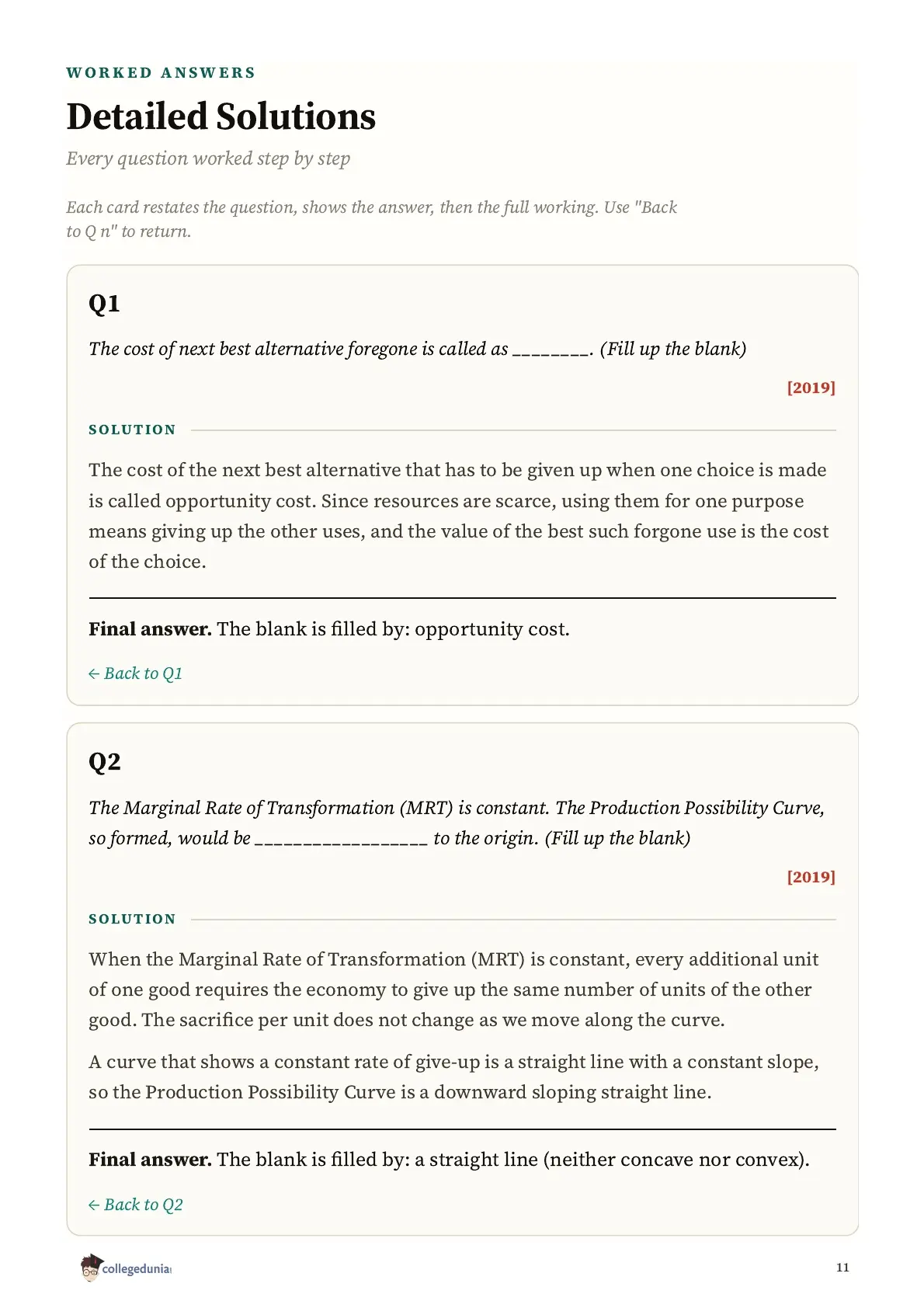
The 17 one-mark questions take about a quarter of an hour. They are definitions: the cost of the next best alternative foregone, what a rightward shift of the curve shows, the shape when the marginal rate of transformation is constant. Answer them from memory, then check the key.
Spend the rest on the 3-mark questions, starting with the shift questions since they are the largest group. For each, name the resource or technology that changes, say whether the curve moves right or left, and add one line on why. Then do the central problems and the positive versus normative classification. For the schedule questions, compute the extra units of Y given up for each extra unit of X before you comment on the shape.
Common Mistakes in Introduction to Microeconomics Questions
- Shifting the curve for a change in the mix of goods. Only a change in resources or technology moves it; a different choice is a move along it.
- Writing that the curve is concave because costs fall. It is concave because the marginal rate of transformation rises.
- Calling a statement normative because it mentions a government. "Real GDP is calculated on base year prices" is positive.
- Defining opportunity cost as the total of all alternatives given up, not the next best one.
- Answering a central problem with only a definition and no example.
- Describing a constant marginal rate of transformation with a curve bowed to the origin; it gives a straight line.
Using the Answer Key and Solutions
The PDF is 40 pages and free to download. Questions are grouped by marks, each links to its worked solution and back, and the Answer Key lists the one-mark answers at a glance. Attempt a group first, check the key, then read the solution. The solutions are written by Collegedunia's Economics experts and are not official CBSE marking schemes.
Class 12 Economics PYQs by Chapter
| Chapter | PYQ Page |
|---|---|
| Macro Chapter 1 | Macro Chapter 1: Introduction to Macroeconomics Class 12 PYQ |
| Macro Chapter 2 | Macro Chapter 2: National Income Accounting Class 12 PYQ |
| Macro Chapter 3 | Macro Chapter 3: Money and Banking Class 12 PYQ |
| Macro Chapter 4 | Macro Chapter 4: Determination of Income and Employment Class 12 PYQ |
| Macro Chapter 5 | Macro Chapter 5: Government Budget and the Economy Class 12 PYQ |
| Macro Chapter 6 | Macro Chapter 6: Open Economy Macroeconomics Class 12 PYQ |
| Micro Chapter 1 | Micro Chapter 1: Introduction to Microeconomics Class 12 PYQ |
| Micro Chapter 2 | Micro Chapter 2: Theory of Consumer Behaviour Class 12 PYQ |
| Micro Chapter 3 | Micro Chapter 3: Production and Costs Class 12 PYQ |
| Micro Chapter 4 | Micro Chapter 4: The Theory of the Firm under Perfect Competition Class 12 PYQ |
| Micro Chapter 5 | Micro Chapter 5: Market Equilibrium Class 12 PYQ |
Introduction to Microeconomics Class 12 Economics PYQ FAQs
Ques. How many questions are in the Introduction to Microeconomics Class 12 PYQ PDF?
Ans. The PDF has 60 questions from papers between 2005 and 2019: 17 one-mark questions, 37 three-mark questions and 6 case-style or 4-mark questions.
Ques. Does this PYQ PDF include solutions, or only the questions?
Ans. Yes. All 60 questions have a worked solution in the PDF, and the one-mark questions also have an Answer Key.
Ques. Are the solutions official?
Ans. No. They are written by Collegedunia's Economics experts and are not an official CBSE marking scheme.
Ques. How many marks did Introduction to Microeconomics carry in the Class 12 board paper?
Ans. It belonged to the Microeconomics part of the older board pattern. The paper listed for 2026-27 does not have a Microeconomics part, and no official chapter-wise marks figure is available for the old pattern.
Ques. Why is the production possibilities curve concave?
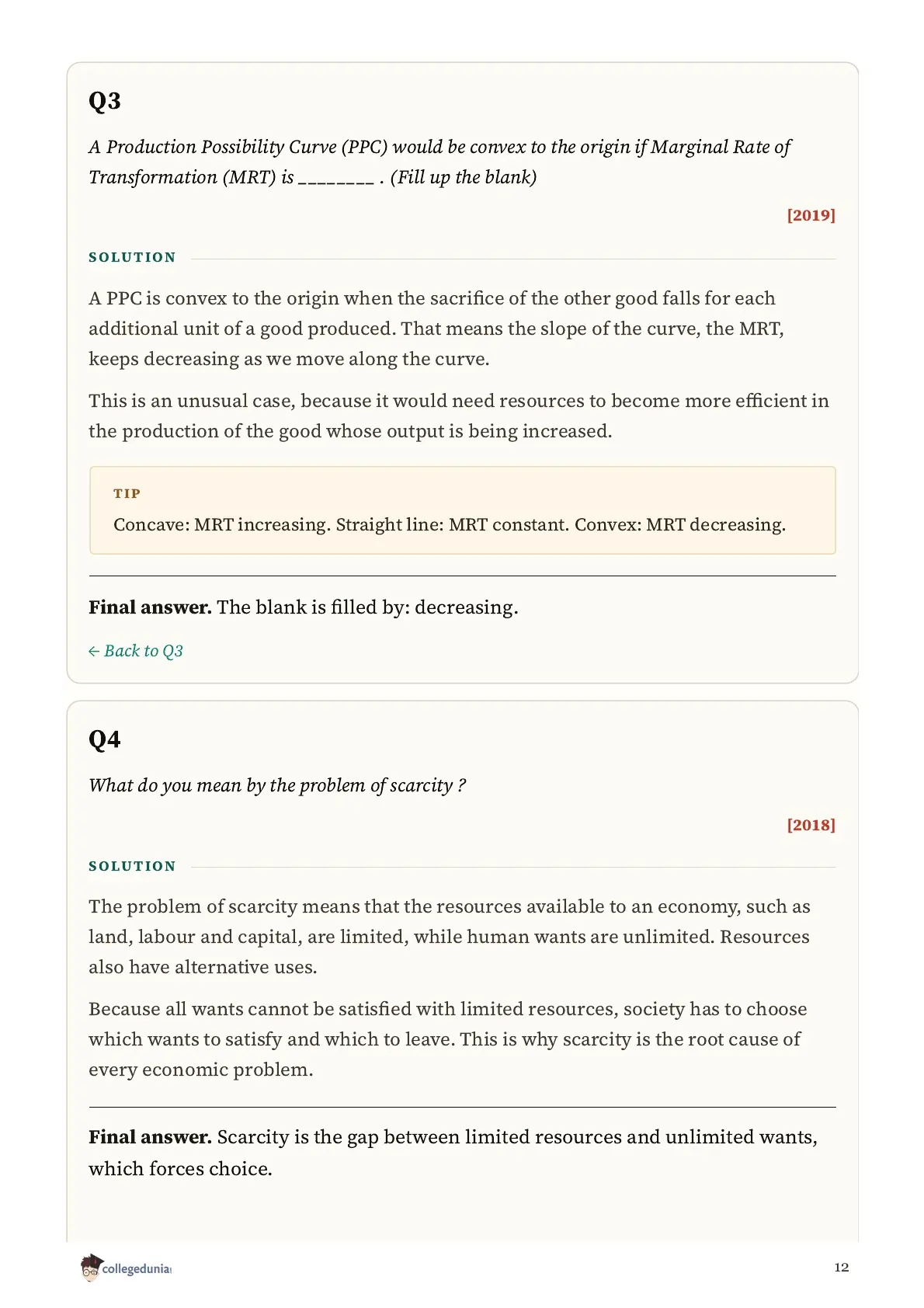
Ans. Because the marginal rate of transformation rises as more of one good is made, so each extra unit costs more of the other good. 4 questions in this set ask this directly.
Ques. What is opportunity cost?
Ans. It is the value of the next best alternative given up when a choice is made. 4 questions in this set are on it, including the one-mark definition.
Ques. What is the difference between positive and normative economics?
Ans. Positive economics describes what is and can be checked against facts, while normative economics says what ought to be and rests on value judgements. 8 questions in this set are on the two.
Ques. What are the central problems of an economy?
Ans. What to produce, how to produce and for whom to produce, all of which arise because resources are scarce and have alternative uses. 9 questions in this set ask about them.



Comments