




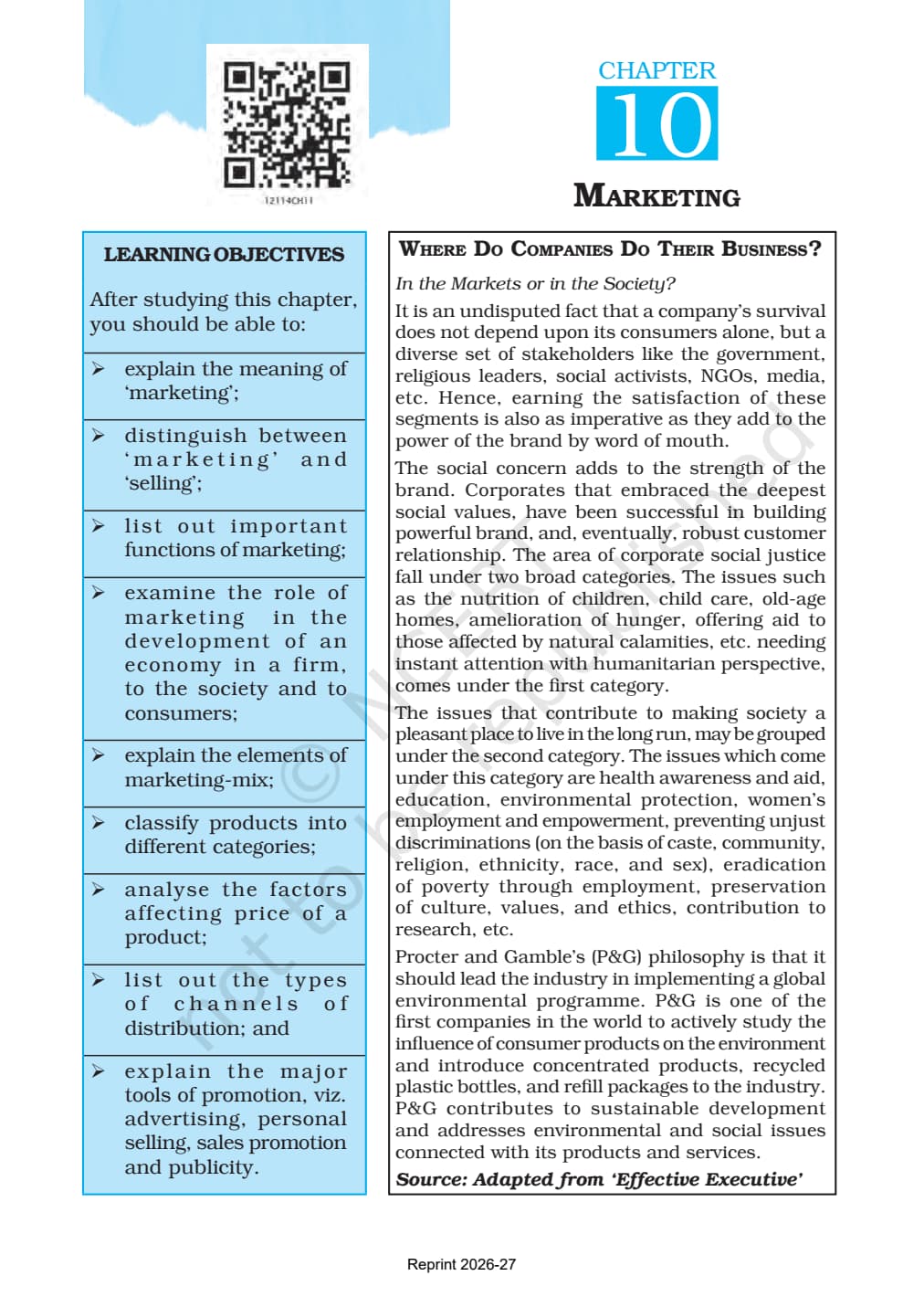
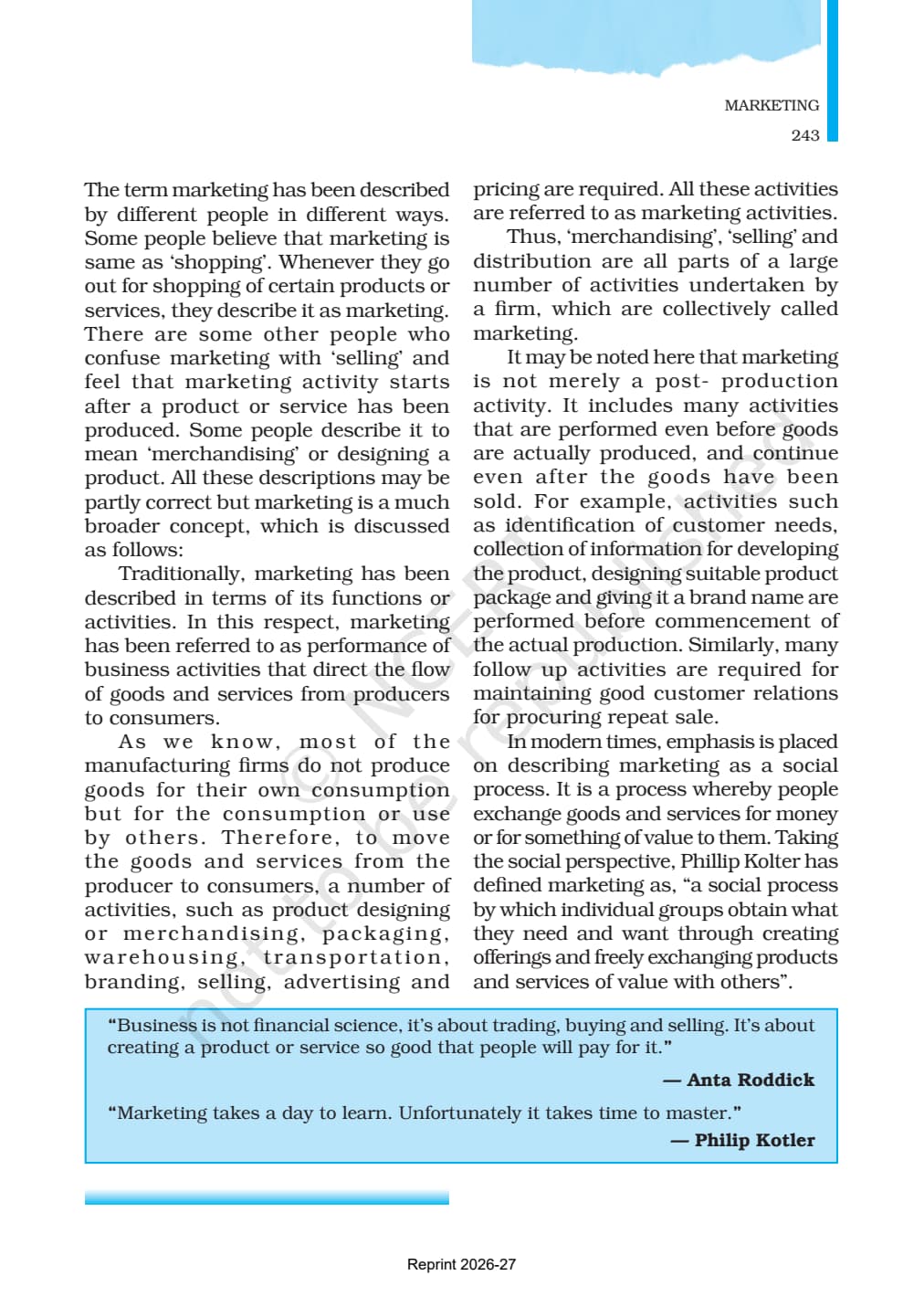
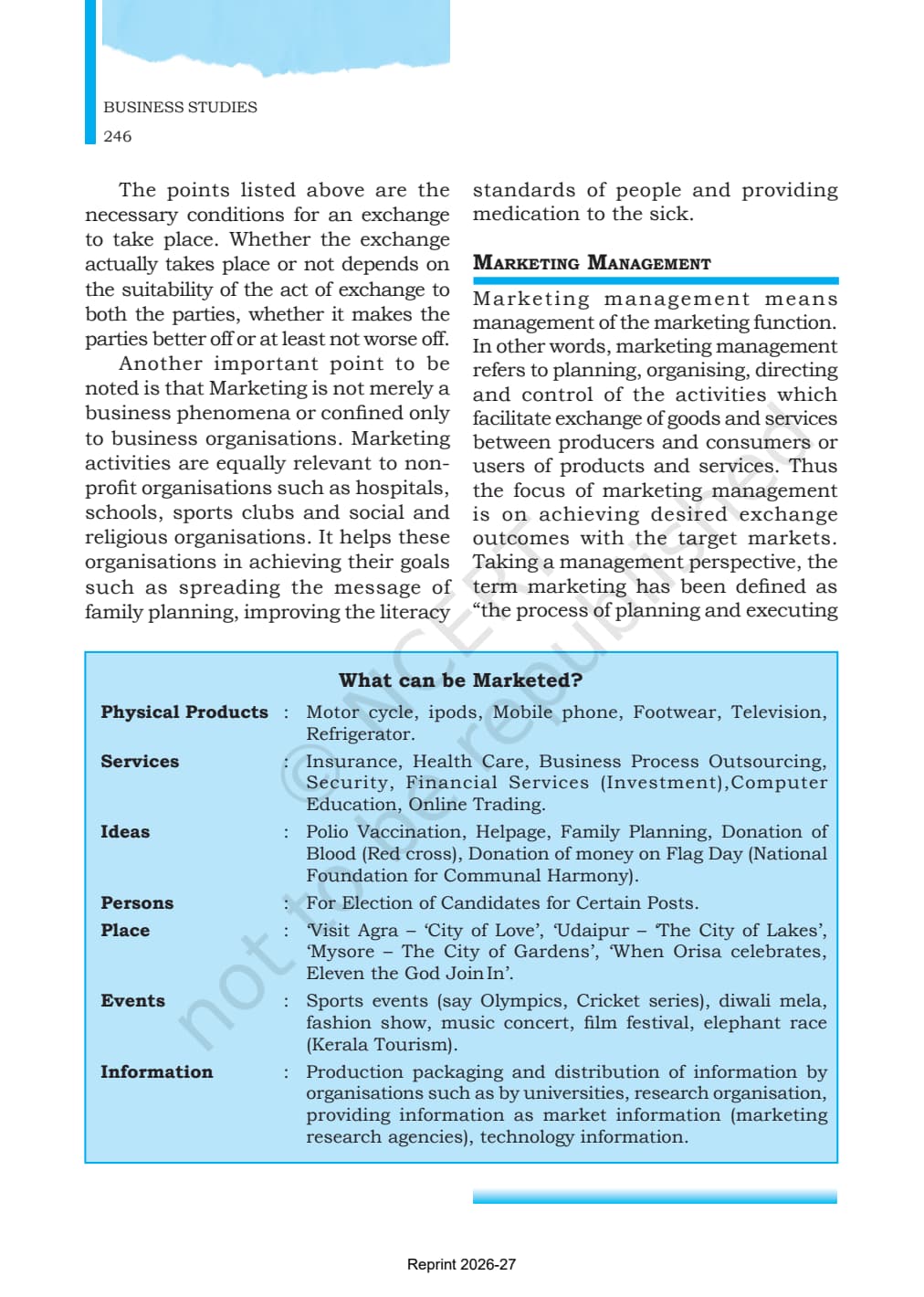
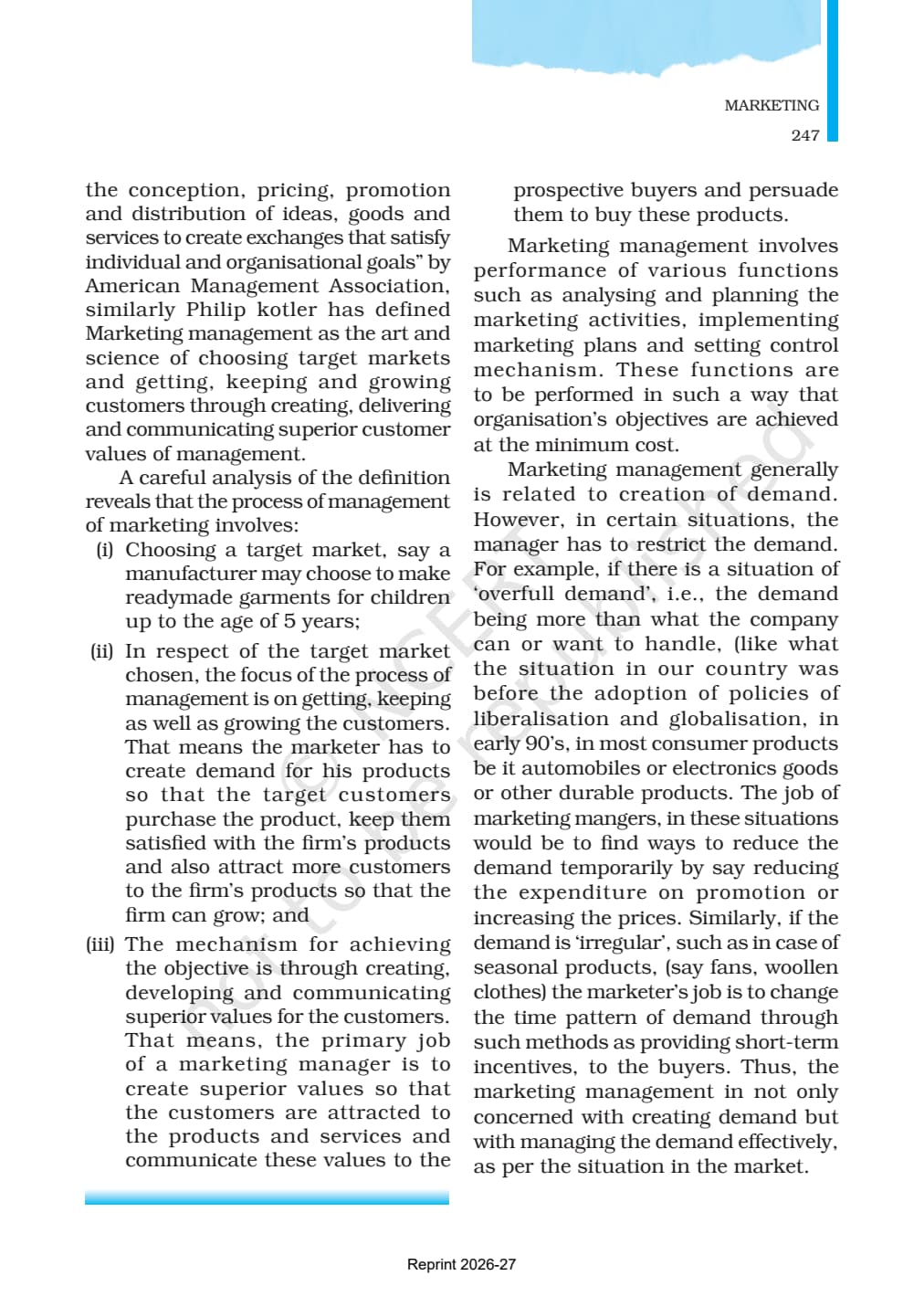
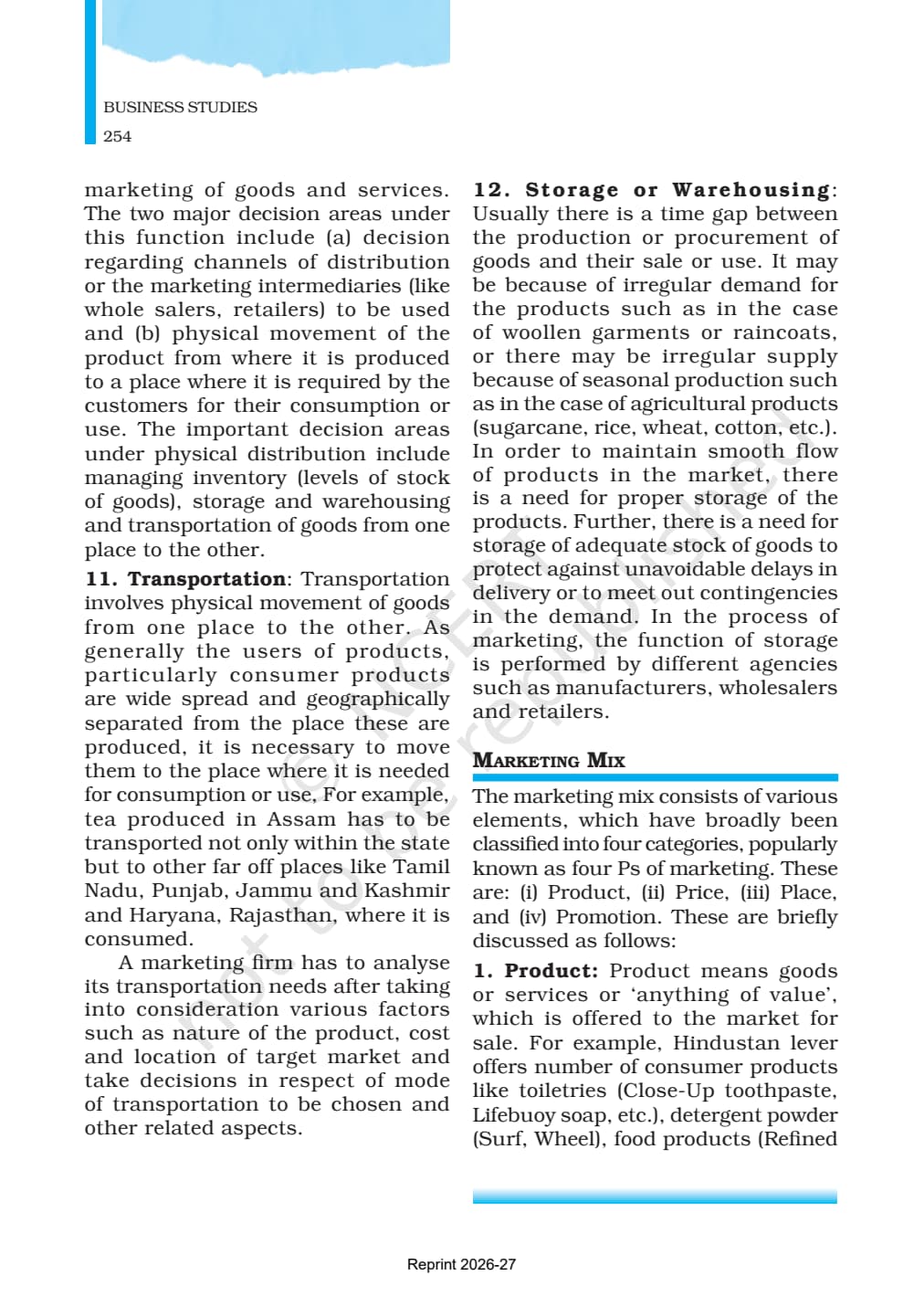
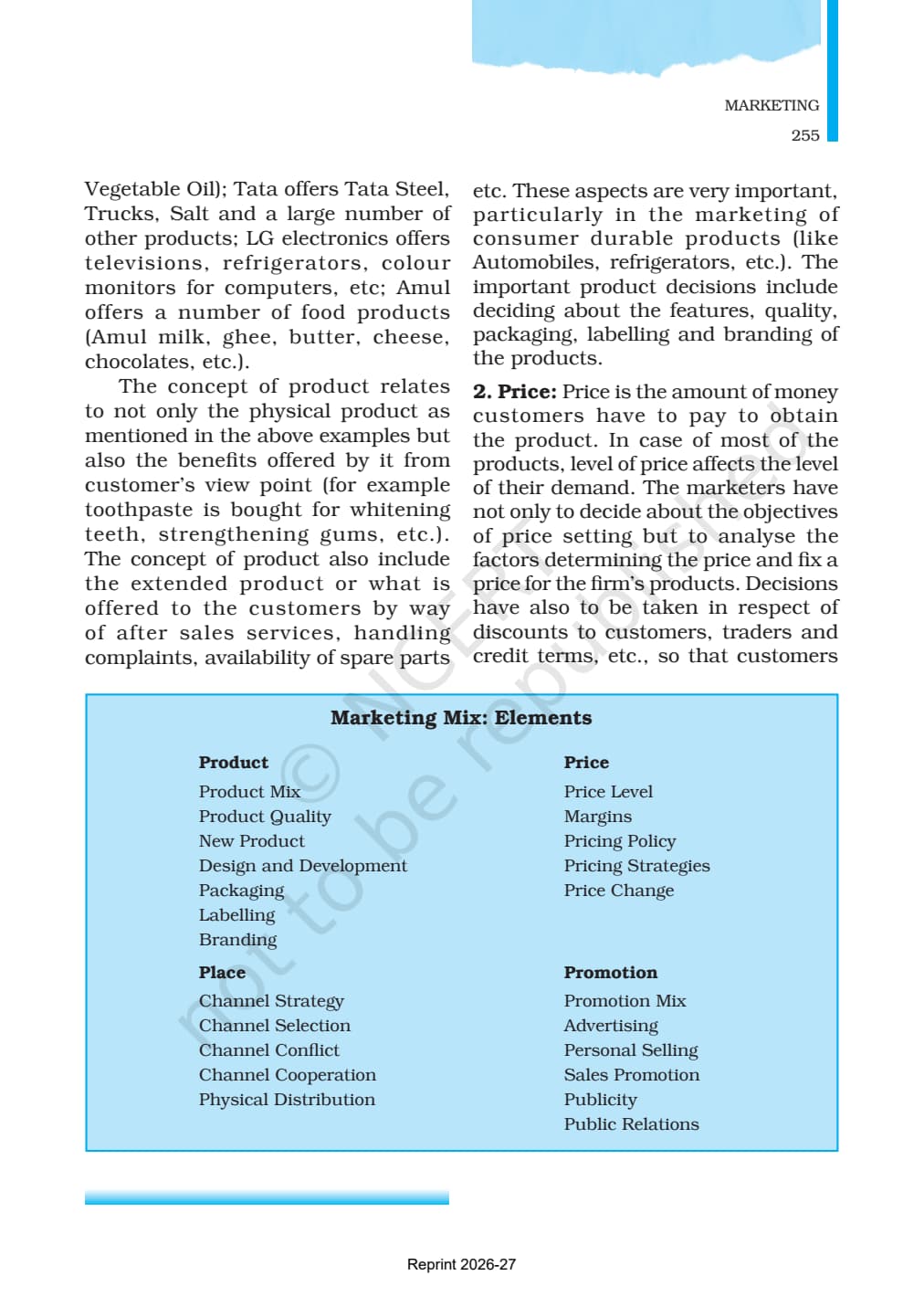
Inside the Class 12 Business Studies Chapter 10 Marketing NCERT Book PDF you get Philip Kotler's definition, the marketing management philosophies and the full four Ps, product, price, place and promotion, in the official 2026-27 textbook chapter.
- CBSE Weightage: 8 to 12 marks (Unit 4 Marketing, the final scoring unit of the syllabus)
- JEE Main Weightage: Not in JEE Main scope (Commerce stream chapter)
- NEET Weightage: Not in NEET scope (Commerce stream chapter)
How the Marketing NCERT Book PDF Helps Class 12 Commerce Students
The Marketing chapter is the highest-scoring theory chapter in Unit 4, and the PDF on this page pairs the verified NCERT print with Collegedunia's revision support so a student can revise the four Ps without flipping between sources.
- 2026-27 NCERT Alignment: The Marketing Mix split, branding, labelling, packaging, and the four pricing methods all match the latest CBSE syllabus.
- Plain-English Definitions: The PDF retains the official NCERT definitions while Collegedunia's notes paraphrase each idea in the student's own register.
- Worked Examples: Every framed scenario box in the chapter is mapped to a sub-topic so a student knows which question pattern it answers.
- Paired Resources: The class 12 business studies ncert book pdf chapter 11 Marketing on this page is linked to the matching Solutions and Notes for the same chapter on Collegedunia.
Marketing Video Chapter Walkthrough
Source: Magnet Brains on YouTube
NCERT Section-by-Section Breakdown of Class 12 Business Studies Chapter 10
The official Part 2 PDF splits the Marketing chapter into eight numbered sections, building from a definition of marketing into the four Ps and then a real-world close. The page ranges below match the printed NCERT so a student can flip to the exact sub-topic.
| Section | Title | Pages | One-line scope |
|---|---|---|---|
| 11.1 | Concept of Marketing | 2 pages | Definition of marketing, what marketing does, customer-orientation idea |
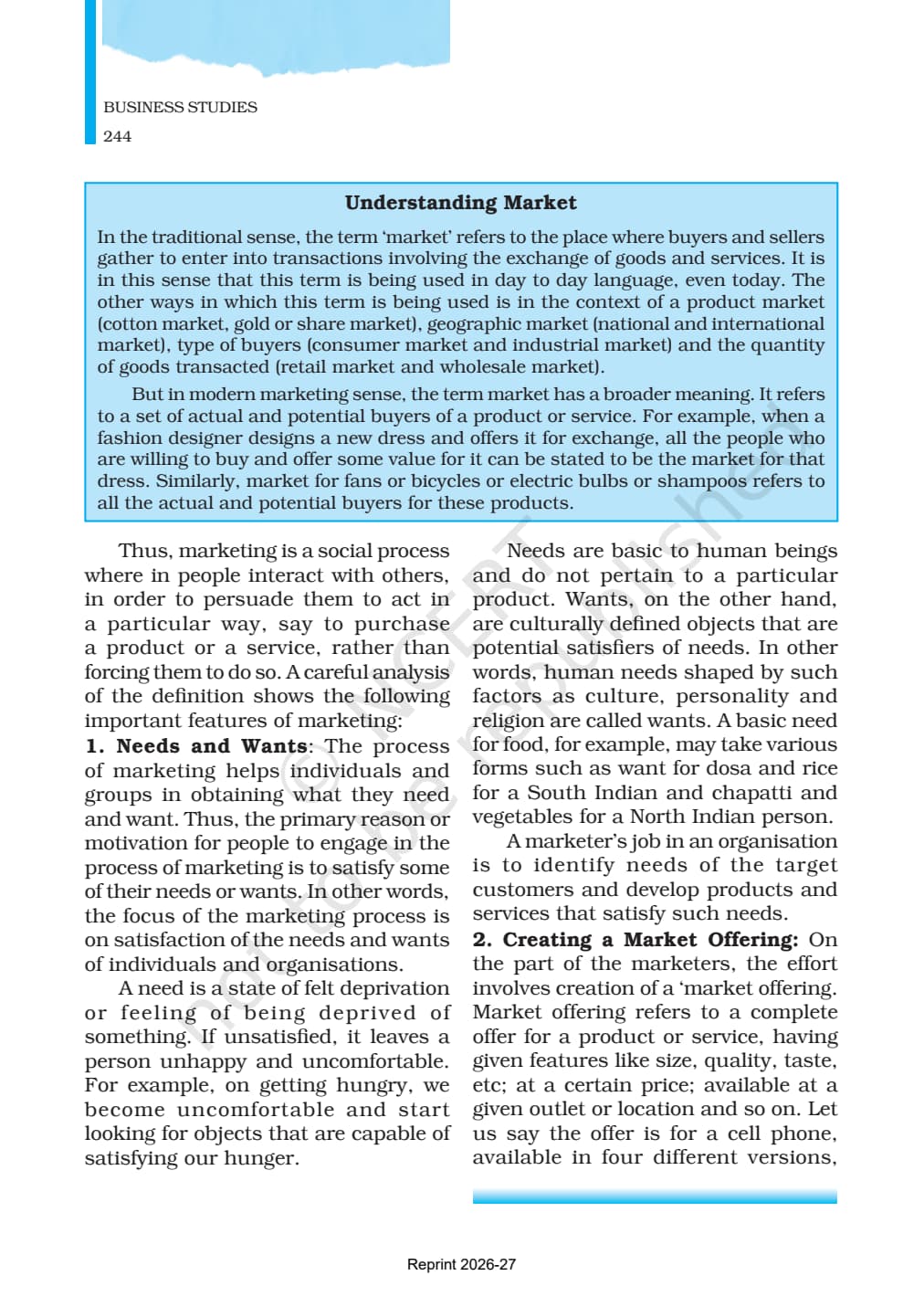
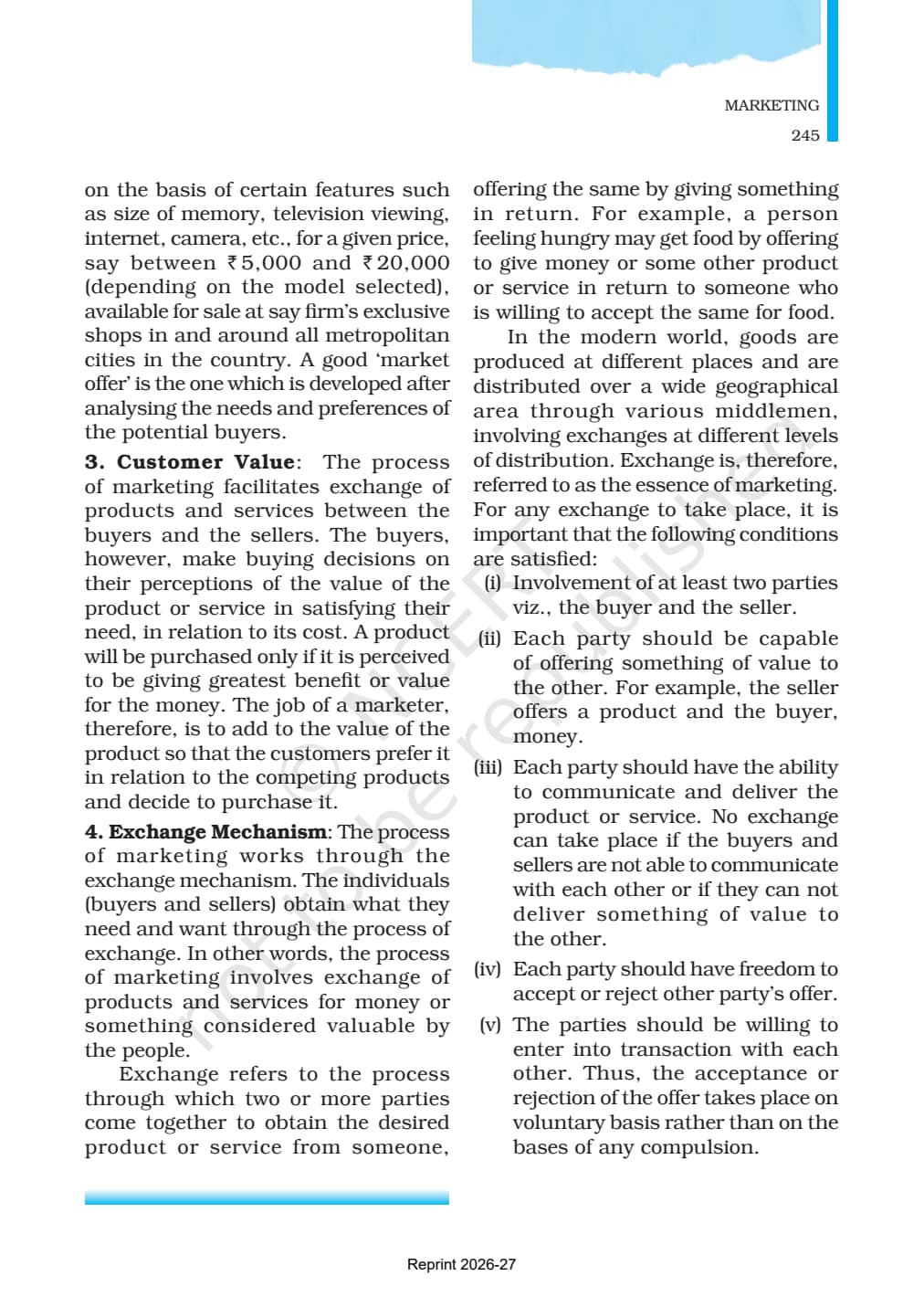
| 11.2 | Features of Marketing | 2 pages | Five core features: needs and wants, creating a market offering, customer value, exchange mechanism |
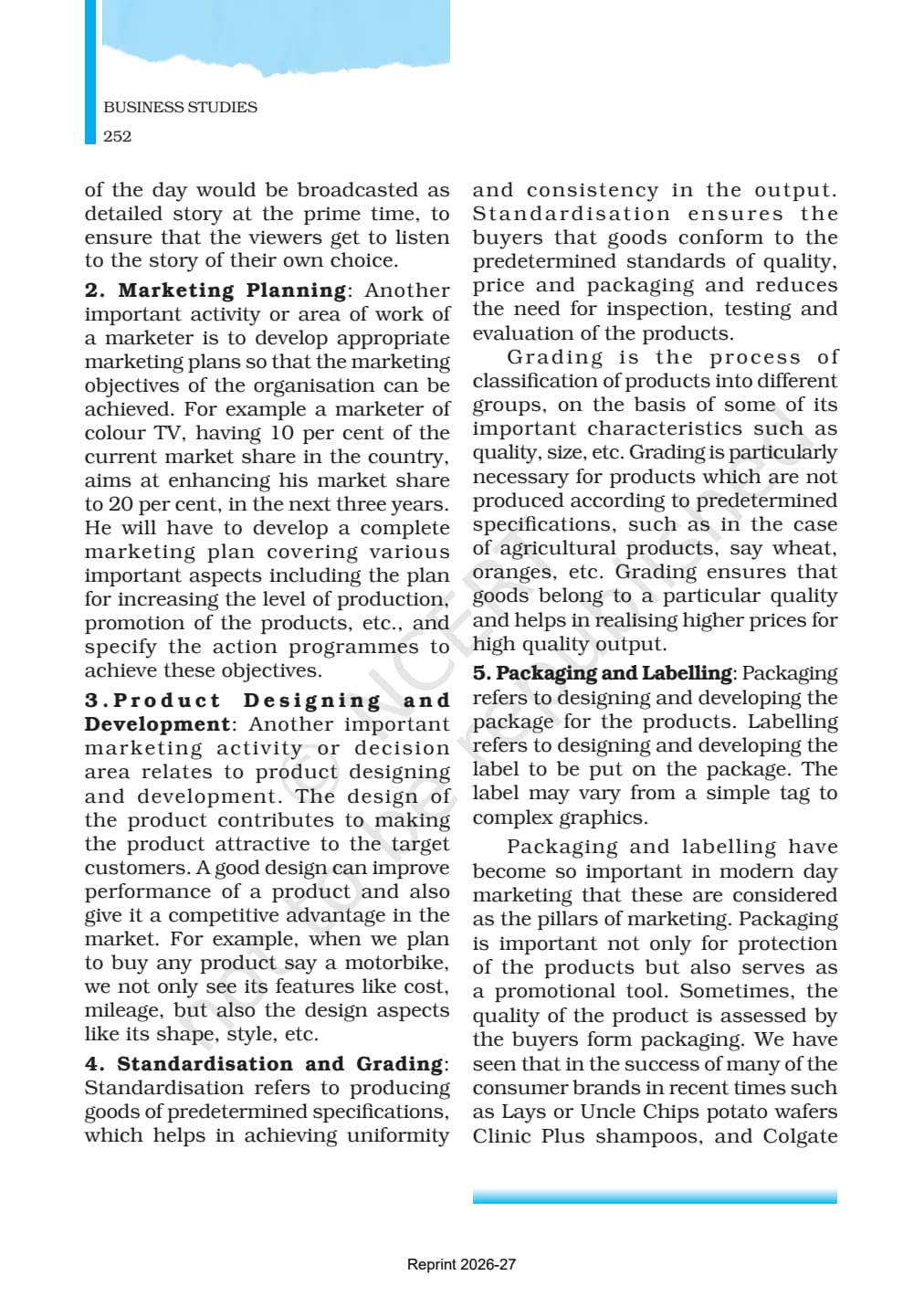
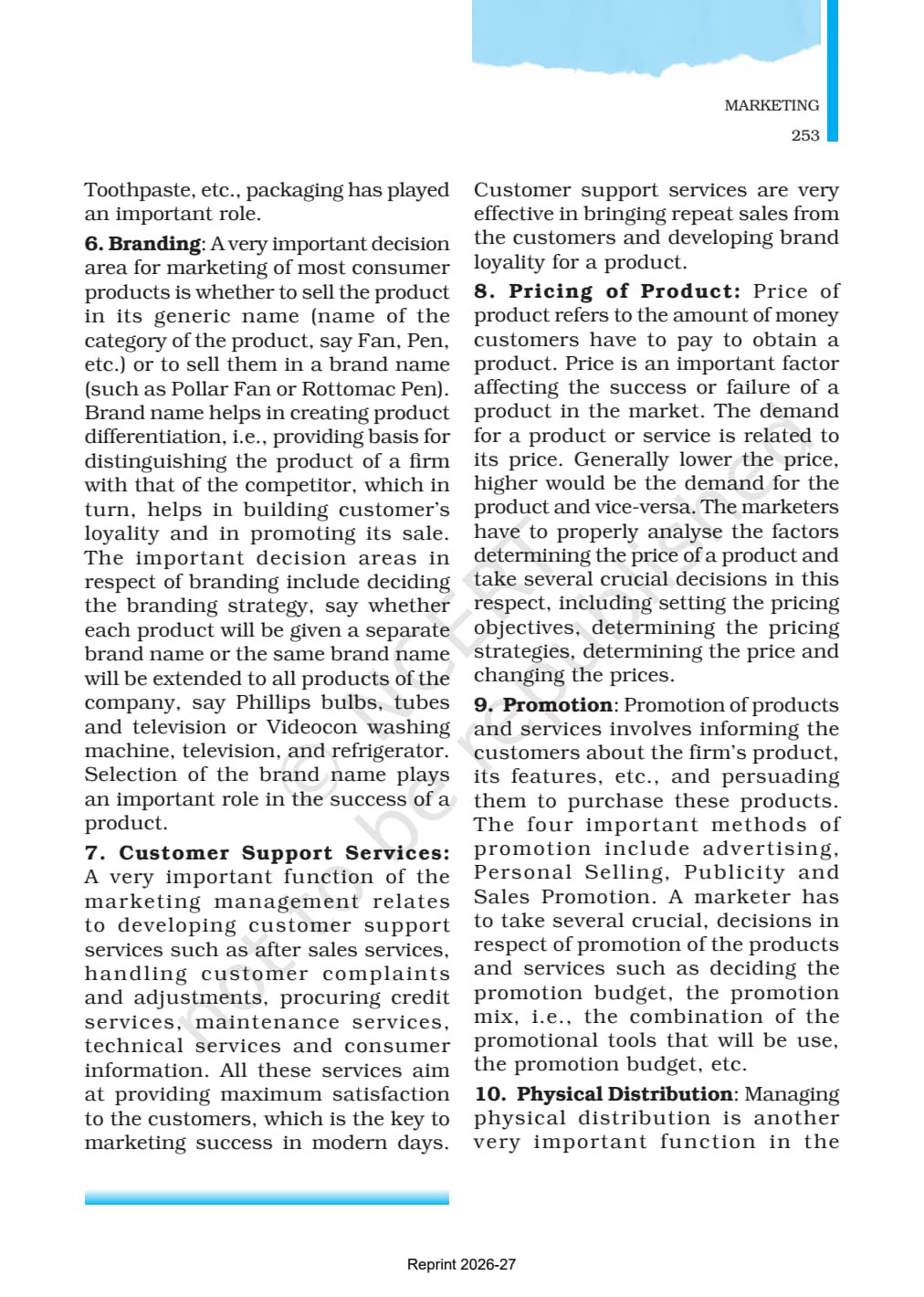
| 11.3 | Functions of Marketing | 3 pages | Nine functions from gathering information to customer support |
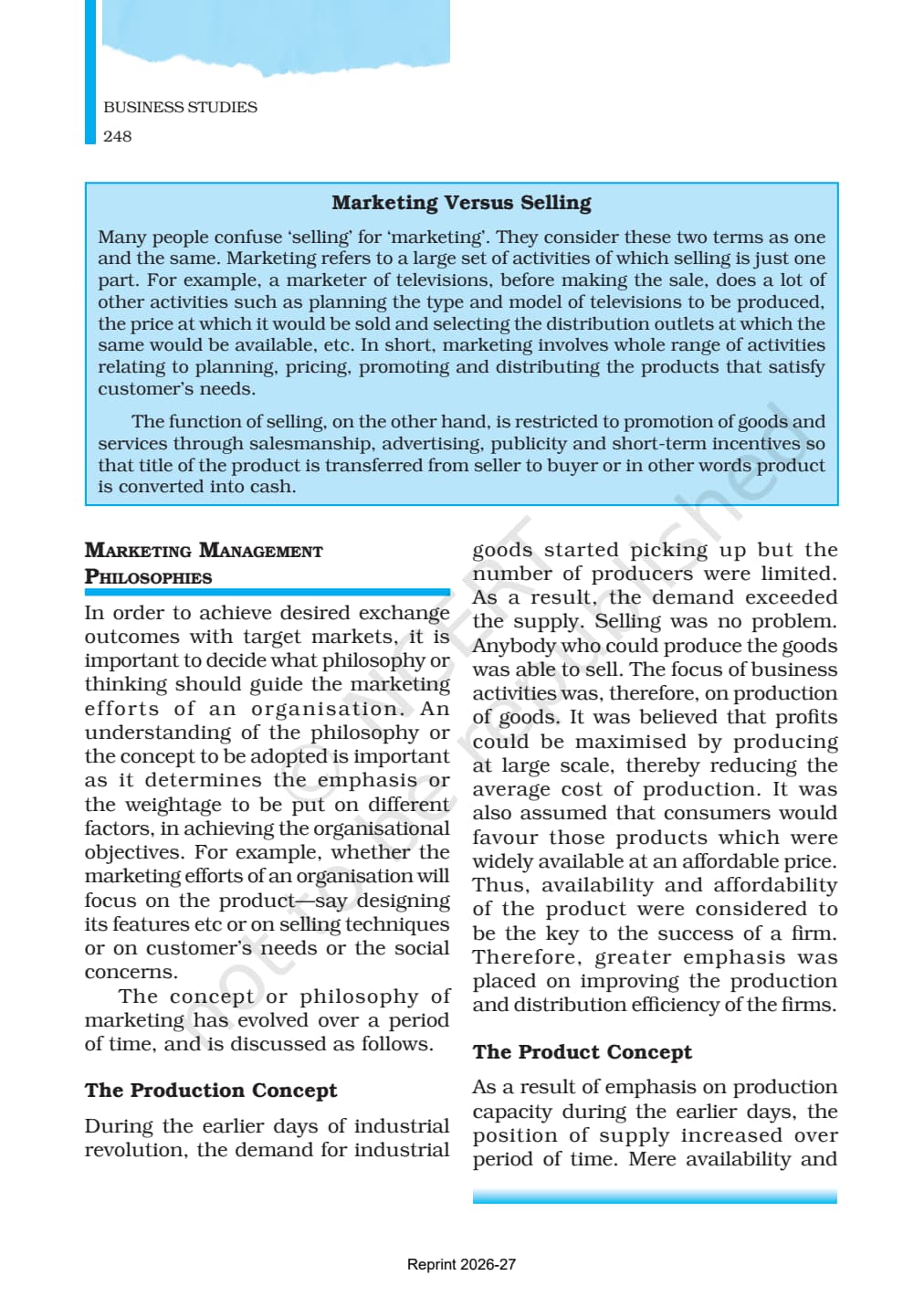
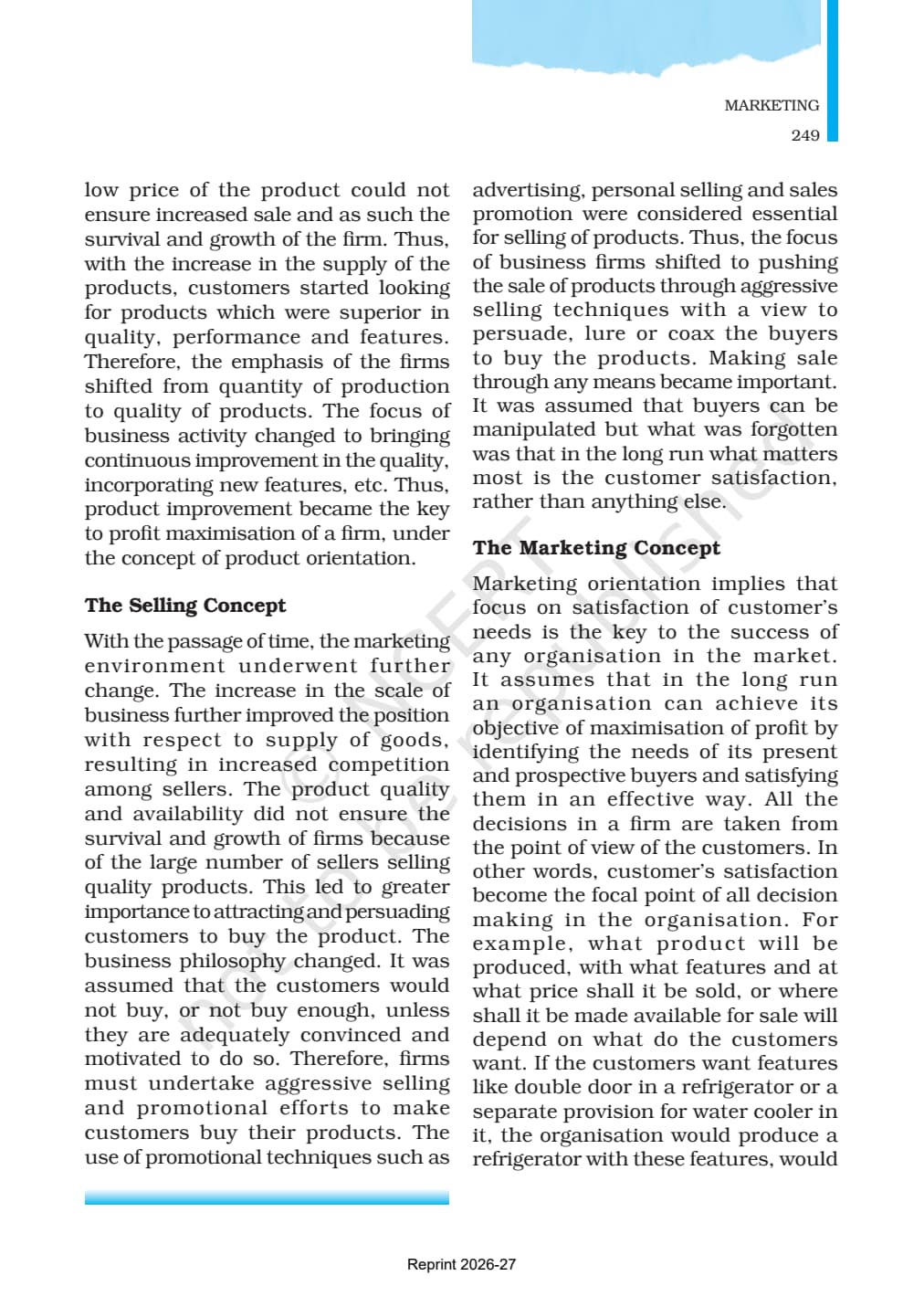
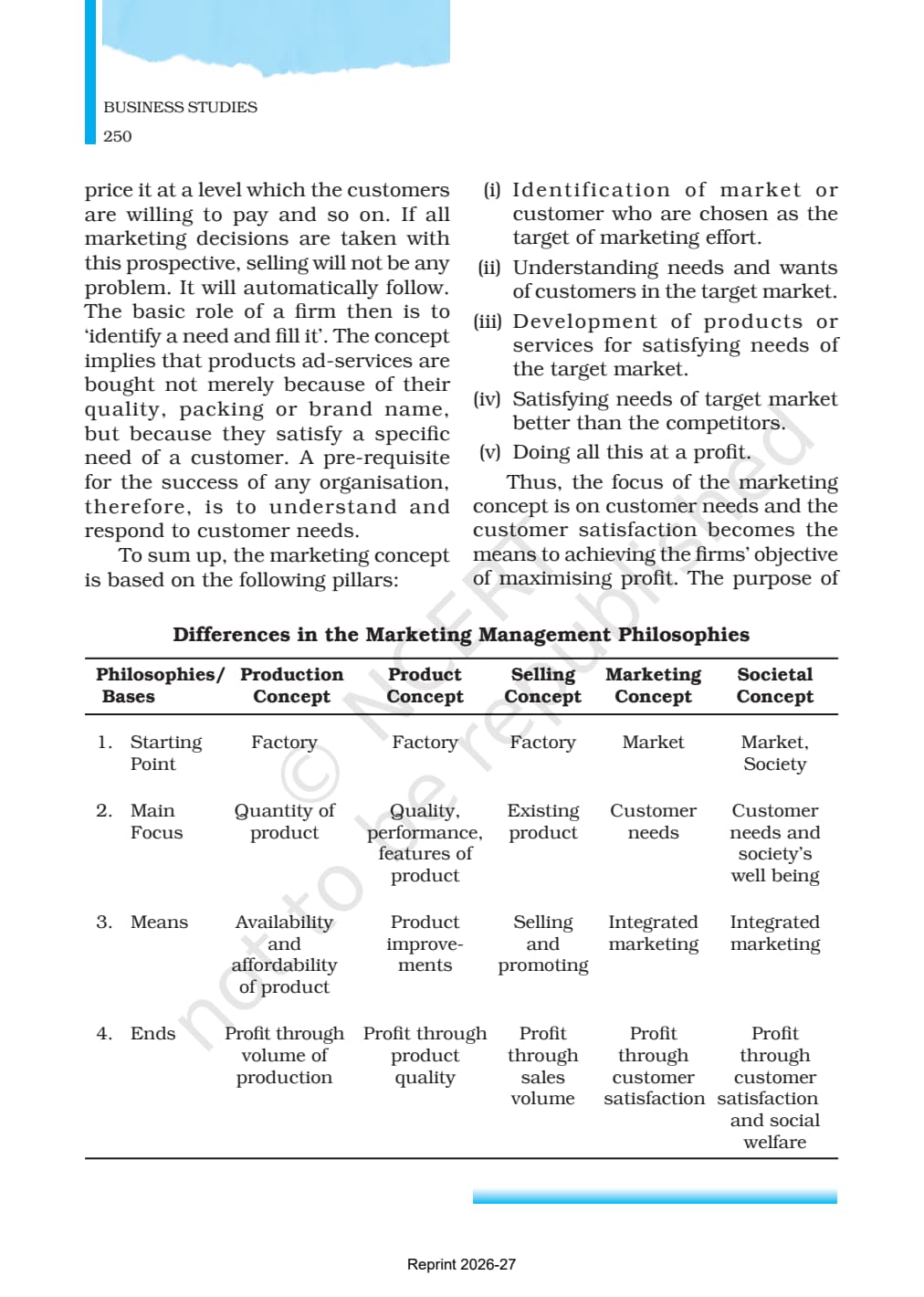
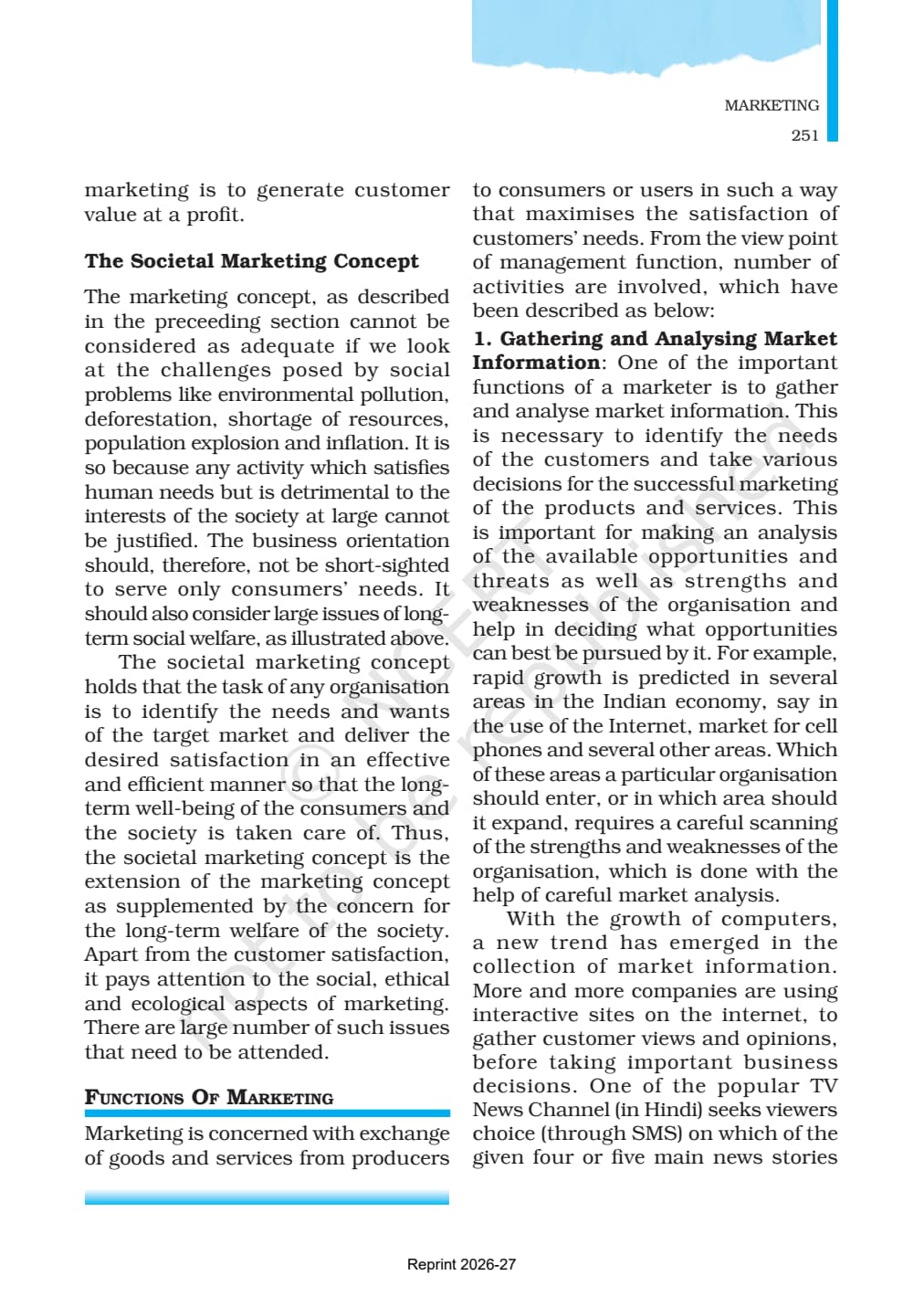
| 11.4 | Marketing Management Philosophies | 3 pages | Five philosophies: production, product, selling, marketing, societal marketing |
| 11.5 | Marketing Mix | 2 pages | Introduction to the four Ps as decision variables |
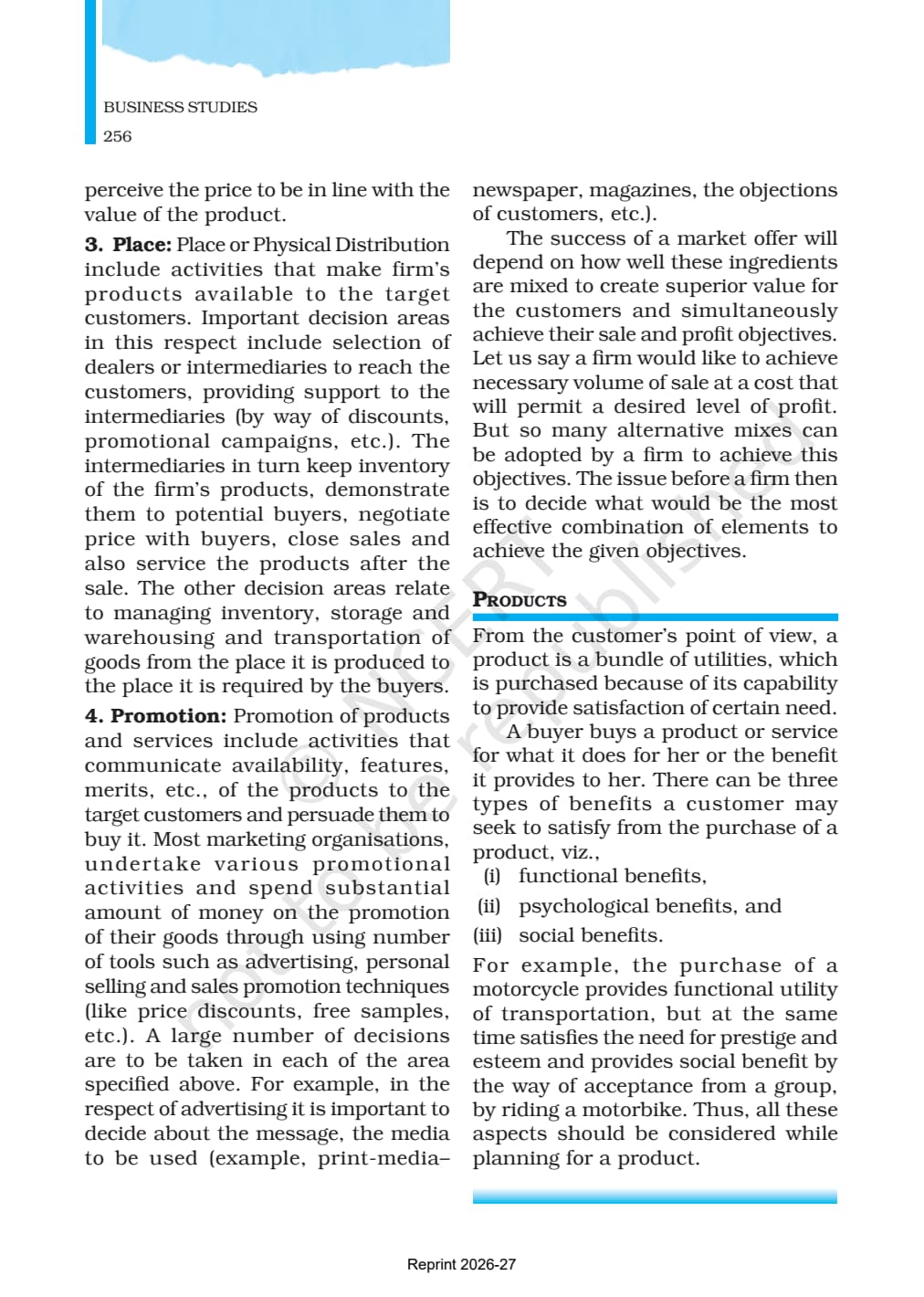
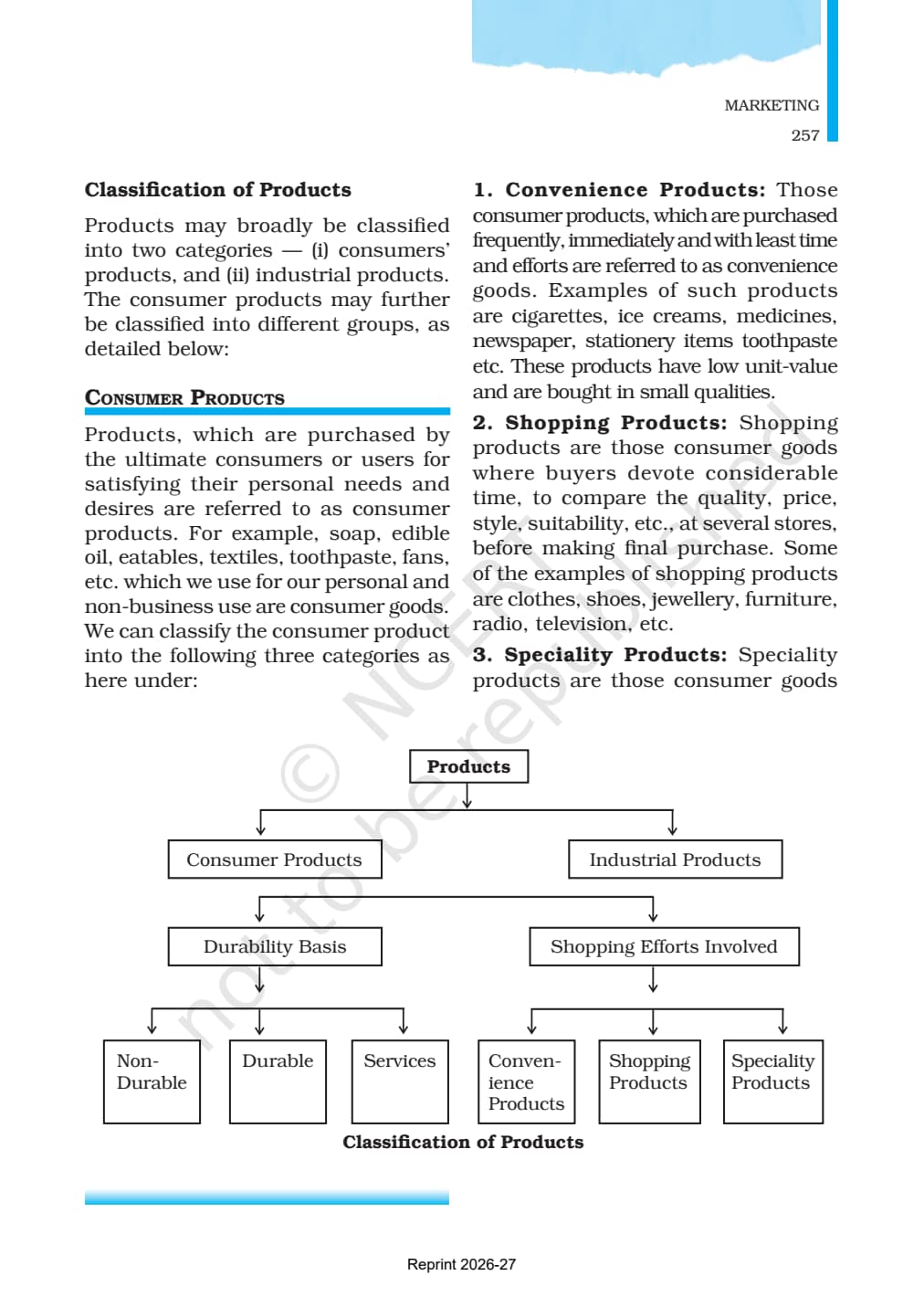
| 11.5.1 to 11.5.4 | Product, Price, Place, Promotion | 14 pages | Detailed breakdown of each of the four Ps with sub-elements |
| 11.5.4.1 to 11.5.4.5 | Promotion Mix Elements | 3 pages | Advertising, personal selling, sales promotion, publicity, public relations |
| Key Terms + Exercises | Recap + 17 questions | 3 pages | Glossary, summary, true/false, short and long answer questions |
Intext Example Inventory for Marketing Class 12 Business Studies Chapter 10
The chapter is illustrated through framed boxes and short scenarios rather than numericals. The inventory below tags each box to the section it supports so a student can revisit it quickly.
| Box / Scenario | Section | Skill tested |
|---|---|---|
| Marketing vs Selling comparison table | 11.1 | Distinguish the two ideas across six points |
| Branding scenario: why brand names matter | 11.5.1 | Identify the role of branding in product decisions |
| Three levels of product (core, actual, augmented) | 11.5.1 | Classify a real product across the three levels |
| Cost-plus pricing worked illustration | 11.5.2 | Apply one of the four pricing methods |
| Channels of distribution: zero, one, two-level | 11.5.3 | Sketch the right channel for a given product |
| Advertising vs Personal Selling comparison | 11.5.4 | Compare the two elements of promotion mix point by point |
Full chapter summary: Marketing Class 12 Notes walks through each box with a side-by-side definition and a CBSE-style answer.
How to Read the Marketing Class 12 PDF in Three Passes
Read this Marketing PDF in three passes instead of once start to end. The pacing below matches what most Commerce teachers suggest in the January revision window.
- Skim pass (30 minutes): Read only the section headers, all key-term boxes, and the chapter summary. Build a mental map of the eight sections.
- Detailed pass (120 minutes): Work through Section 11.5 line by line. Highlight the four Ps in four different colours and tag each sub-element to one P.
- Example pass (45 minutes): Re-read every framed scenario and the three-level product illustration. Match each box to a sub-section.
- Exercise pass (60 minutes): Attempt the chapter-end questions without opening any solution key. Time long-answer questions at 6 minutes each.
Marketing Chapter 10 2026-27 NCERT Edition Notes
The Marketing chapter was kept almost entirely as is in the 2026-27 NCERT update. A few legacy advertising references were refreshed, but the Marketing Mix scaffolding and the promotion-mix split are untouched.
| Change type | What it means for Chapter 10 |
|---|---|
| Kept | All eight sections, the four Ps split, the nine marketing functions, and the five management philosophies |
| Refreshed | Advertising examples now reference current digital and social-media channels in line with the latest NCERT print |
| Trimmed | Some dated print-media references were reduced so the promotion mix section reads cleaner |
| Exam impact | The CBSE syllabus content is unchanged, so every question pattern from older sample papers still applies |
Why Marketing Class 12 Chapter 10 Matters for Board Scoring
Marketing is the easiest chapter in Unit 4 to score full marks on, provided a student writes the four Ps in the correct order with each sub-element. The 5-mark question on this chapter follows a predictable pattern.
- Marketing Mix question: Appeared in 4 of the last 5 CBSE board papers, usually phrased as "Explain the four elements of marketing mix."
- Functions of Marketing: A repeat 5-mark question, typically asking for any five functions with one-line explanation.
- Channels of Distribution: A 3-mark short answer in 3 of the last 5 papers.
- Promotion Mix Elements: Tied with branding as the most common case-study answer in board papers.
Three-Day Study Plan for the Class 12 Marketing PDF
If a student is one week from the board exam, the schedule below moves from a cold start to revision-ready in three working sessions. Each day pairs PDF reading with a written practice block.
- Day 1 (~2 hours): Sections 11.1 to 11.4. Memorise the five features and nine functions of marketing. Practice: one 3-mark short answer on Marketing vs Selling.
- Day 2 (~2.5 hours): Section 11.5 Marketing Mix in full. Build a one-page sheet listing every element under each of the four Ps. Practice: one 5-mark question on the four Ps.
- Day 3 (~1.5 hours): Promotion mix sub-sections plus the chapter exercises. Memorise five elements of the promotion mix. Practice: one 5-mark case study on advertising vs personal selling.
- Buffer slot: A 30-minute revision the morning of the exam, focused on the marketing functions where most students lose easy marks.
Related Links:
- Financial Markets Class 12 Chapter 10 NCERT Book PDF
- Consumer Protection Class 12 Chapter 12 NCERT Book PDF
NCERT Class 12 Business Studies Author and Edition Information
Reading the PDF with the publication context in mind helps a student weight which sections are likely to carry updated examples versus stable theory.
- Title: Business Studies, Textbook for Class XII, Part 2 (Business Finance and Marketing)
- Publisher: NCERT, Sri Aurobindo Marg, New Delhi 110016
- Current print year: Aligned to the 2026-27 academic session
- Format: Paperback, A4 trim, single-column text with framed key-term boxes
- Pages in chapter 11: Approximately 30 pages including the chapter-end exercises
NCERT Book PDF for Class 12 Business Studies: All Chapters
The table below links every chapter of the Class 12 Business Studies NCERT Book to its hosted PDF page so a student can collect the full set in one sitting.
| Chapter | Resource |
|---|---|
| Chapter 1 | Nature and Significance of Management NCERT Book PDF |
| Chapter 2 | Principles of Management NCERT Book PDF |
| Chapter 3 | Business Environment NCERT Book PDF |
| Chapter 4 | Planning NCERT Book PDF |
| Chapter 5 | Organising NCERT Book PDF |
| Chapter 6 | Staffing NCERT Book PDF |
| Chapter 7 | Directing NCERT Book PDF |
| Chapter 8 | Controlling NCERT Book PDF |
| Chapter 9 | Financial Management NCERT Book PDF |
| Chapter 10 | Financial Markets NCERT Book PDF |
| Chapter 12 | Consumer Protection NCERT Book PDF |
Student Feedback
In a Collegedunia poll of 410 Class 12 Commerce students, 79% said the Marketing chapter felt easier once they mapped every sub-topic to one of the four Ps. 3 in 4 said the branding and channels-of-distribution examples were the parts they revised again just before the exam.
Other Resources for Class 12 Business Studies Chapter 10 Marketing
| Resource | Link |
|---|---|
| NCERT Solutions | Marketing NCERT Solutions |
| Revision Notes | Marketing Class 12 Notes |
| Handwritten Notes | Marketing Handwritten Notes |
| NCERT Book PDF | Marketing NCERT Book PDF |
Marketing Class 12 Business Studies NCERT Book PDF FAQs
Ques. Where can I download Marketing Class 12 Business Studies NCERT Book PDF?
Ans. You can download the Marketing Class 12 Business Studies NCERT Book PDF directly from this page. Both the Normal and HD versions are available, and both are free.
Ques. Is this Class 12 Business Studies Chapter 10 PDF aligned with the 2026-27 NCERT?
Ans. Yes. This PDF reflects the current 2026-27 syllabus for Class 12 Business Studies. The four Ps, the nine marketing functions, and the five management philosophies all match the latest NCERT print.
Ques. How many pages is the Class 12th Business Studies Marketing PDF?
Ans. The chapter runs approximately 30 pages, covering the concept and features of marketing, nine marketing functions, five management philosophies, the four Ps marketing mix, and the chapter-end exercise questions.
Ques. What are the four Ps of marketing covered in Chapter 10?
Ans. The four Ps are Product, Price, Place (channels of distribution), and Promotion. Section 11.5 of the NCERT splits each one into its sub-elements, including branding, labelling, packaging, pricing methods, channels of distribution, and the five elements of the promotion mix.
Ques. Is Marketing an important chapter for Class 12 Business Studies boards?
Ans. Yes. Chapter 10 sits inside Unit 4 Marketing and typically carries 8 to 12 marks across MCQ, short answer, and long answer formats in the CBSE board paper. The Marketing Mix question appears in almost every recent paper.
Ques. Is the Marketing Mix a high-weightage topic in the chapter?
Ans. Yes. The 5-mark question on the four Ps is the single most repeated long answer from this chapter in the last five CBSE board papers, followed by Functions of Marketing as a close second.
Ques. Where do I get the matching Solutions for Class 12 Business Studies Chapter 10?
Ans. The chapter-end exercise answers are available on the Collegedunia NCERT Solutions page for Marketing Class 12, linked at the top and bottom of this article.



Comments