




The NCERT Book PDF for Class 11 Physical Education Chapter 9 Measurement and Evaluation gives students the official textbook pages on tests, measurement, evaluation, body measurements and fitness assessment for the 2026-27 CBSE course.
- Page count: 12 pages from the Health and Physical Education textbook.
- Core focus: meaning of test, measurement and evaluation, plus practical fitness and body composition checks.
- Best use: revise the difference between measurement and evaluation first, then make a test-wise table for quick recall.
Student Feedback: In a Collegedunia revision check of 8,960 students, 74% found this chapter easier after separating test, measurement and evaluation into three different revision boxes.
Measurement and Evaluation Overview
Chapter 9 explains why teachers, coaches and students need objective information before planning physical activity. A test gives a task, measurement records the result, and evaluation interprets the result against a purpose.
The chapter is important because it connects classroom Physical Education with real assessment. Students should remember that measurement is numerical, while evaluation is a judgement based on standards, goals and context.
- Test: a tool or procedure used to collect performance information.
- Measurement: the score, time, distance, count or rating obtained from the test.
- Evaluation: the interpretation that decides progress, weakness, grade or training need.
Test, Measurement and Evaluation
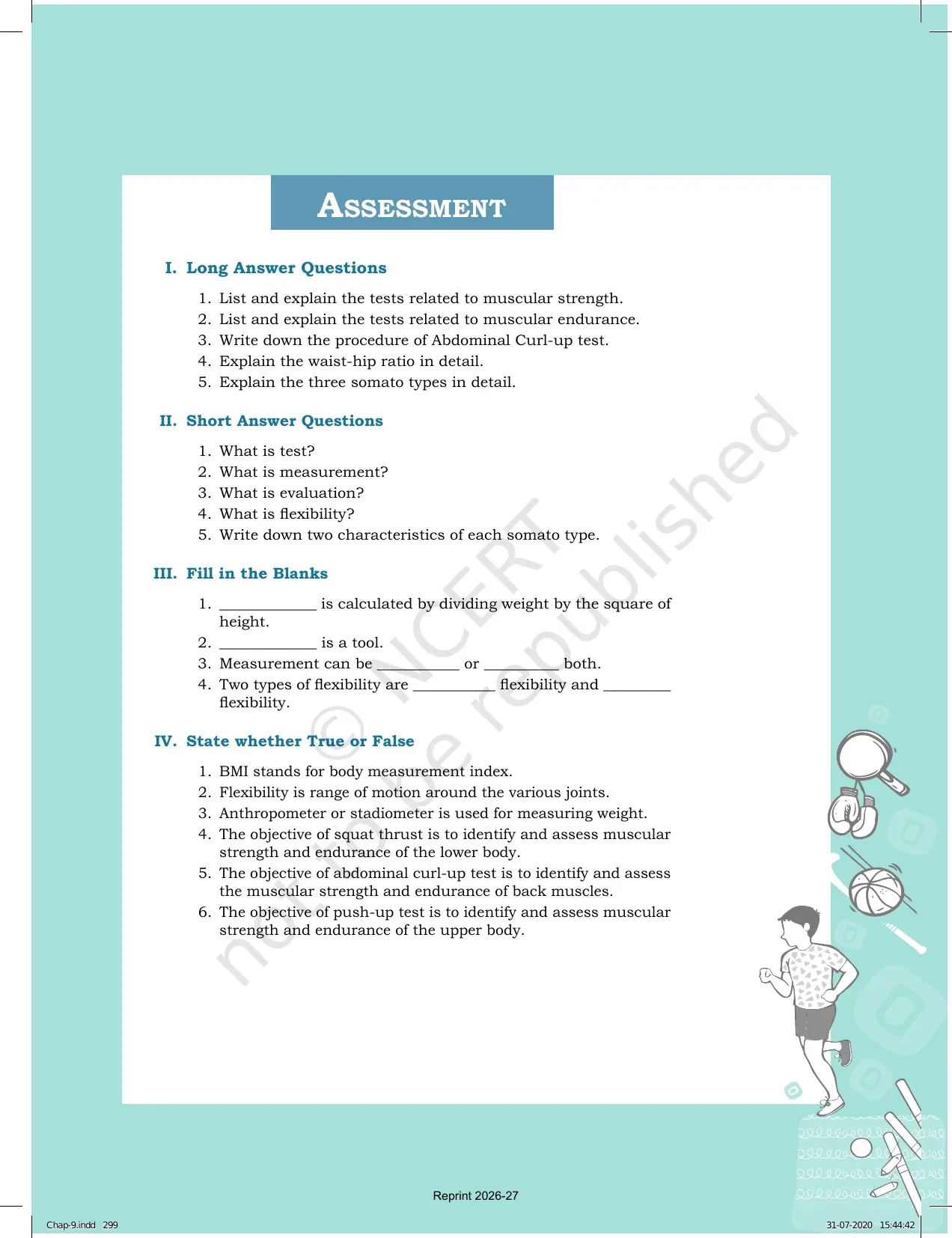
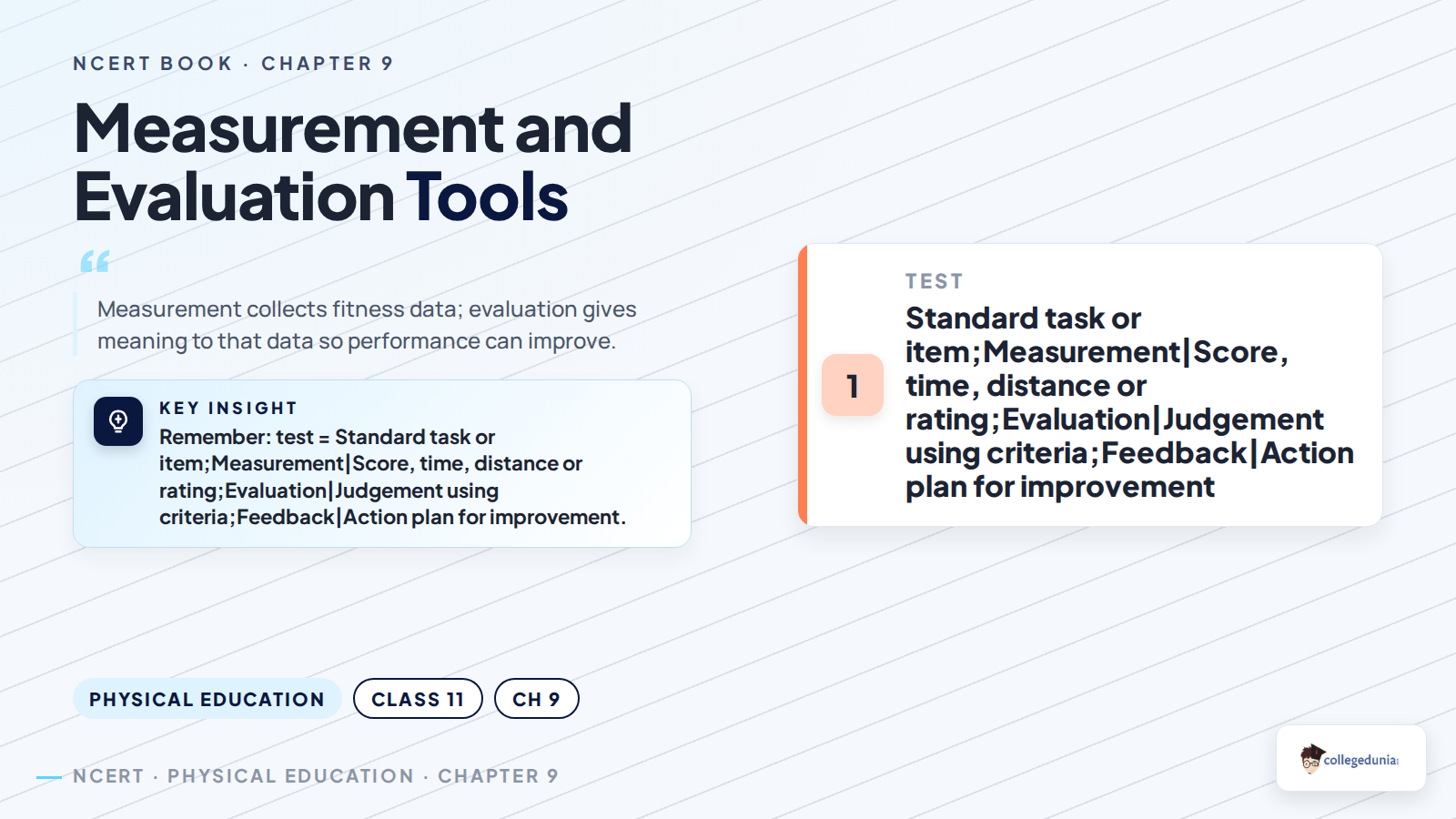
NCERT presents test, measurement and evaluation as linked but different terms. A running test, for example, may measure time in seconds. Evaluation begins only when that time is compared with age level, fitness target, previous score or class criteria.
| Term | What it means in the chapter | Quick revision cue |
|---|---|---|
| Test | A standard task, item or procedure for collecting data | Tool or method |
| Measurement | Assigning a number or category to the performance | Score or value |
| Evaluation | Making a judgement after comparing the result with criteria | Meaning and decision |
| Assessment | A broader process that may use tests, observation and records | Evidence over time |
Body Measurements and Fitness Checks
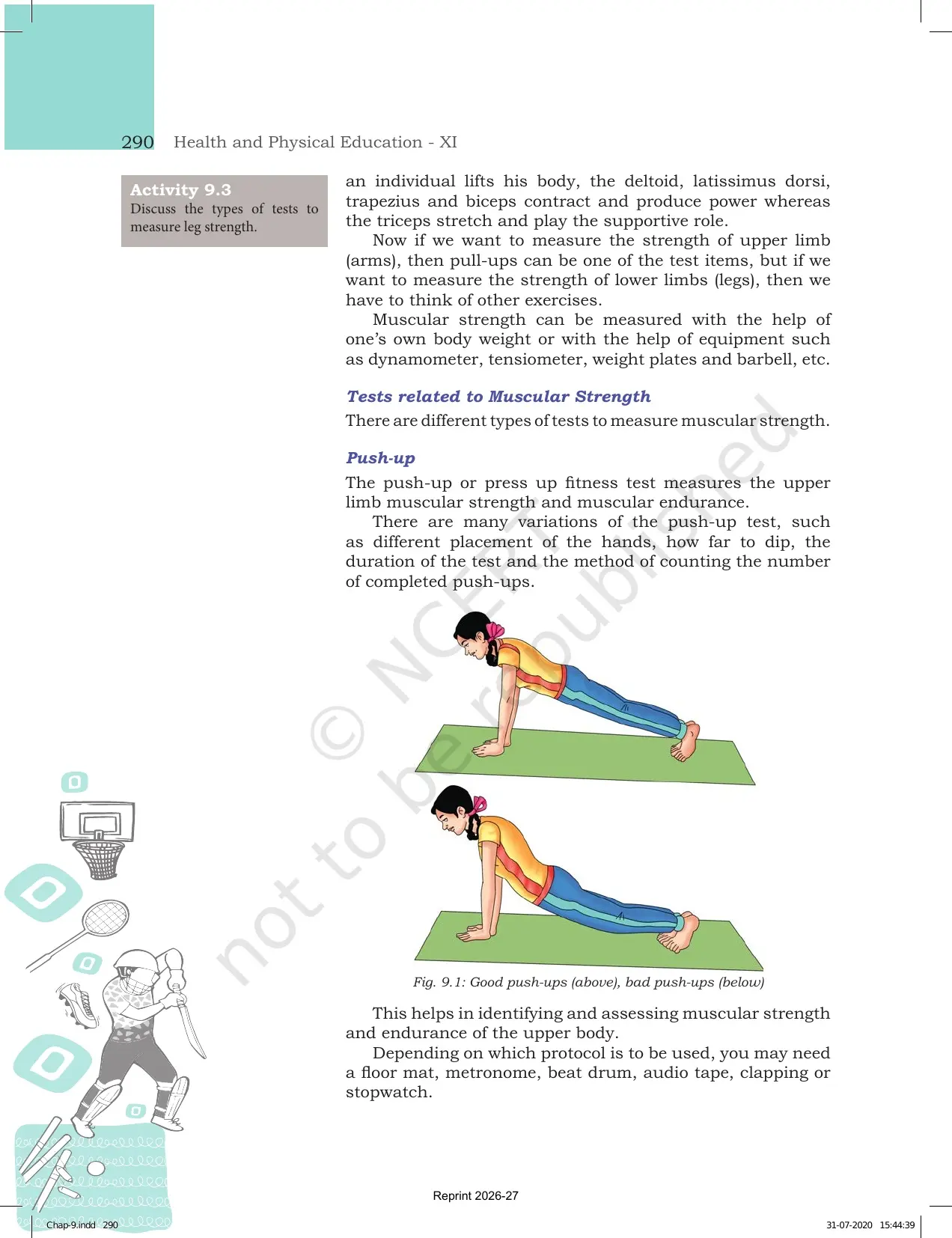
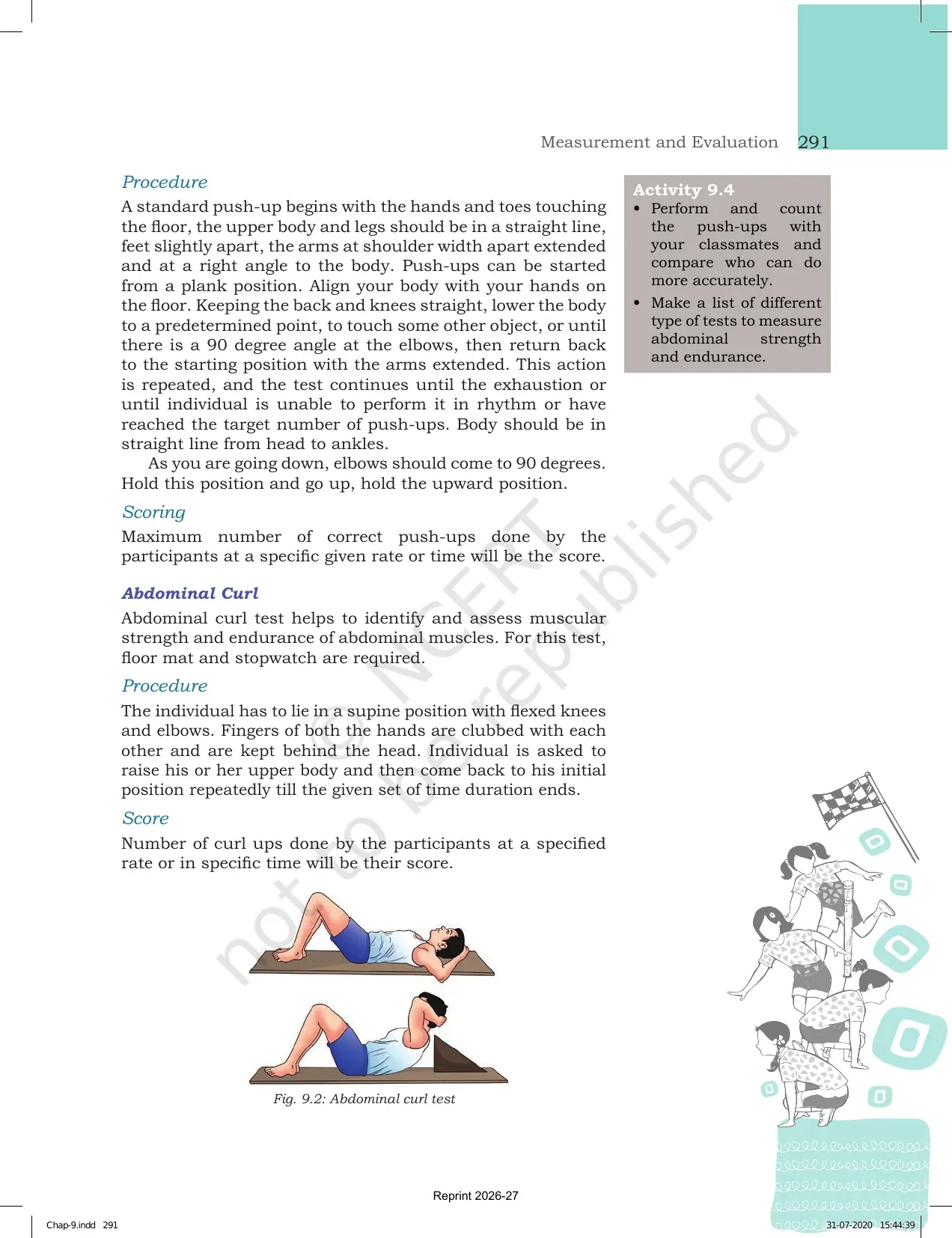
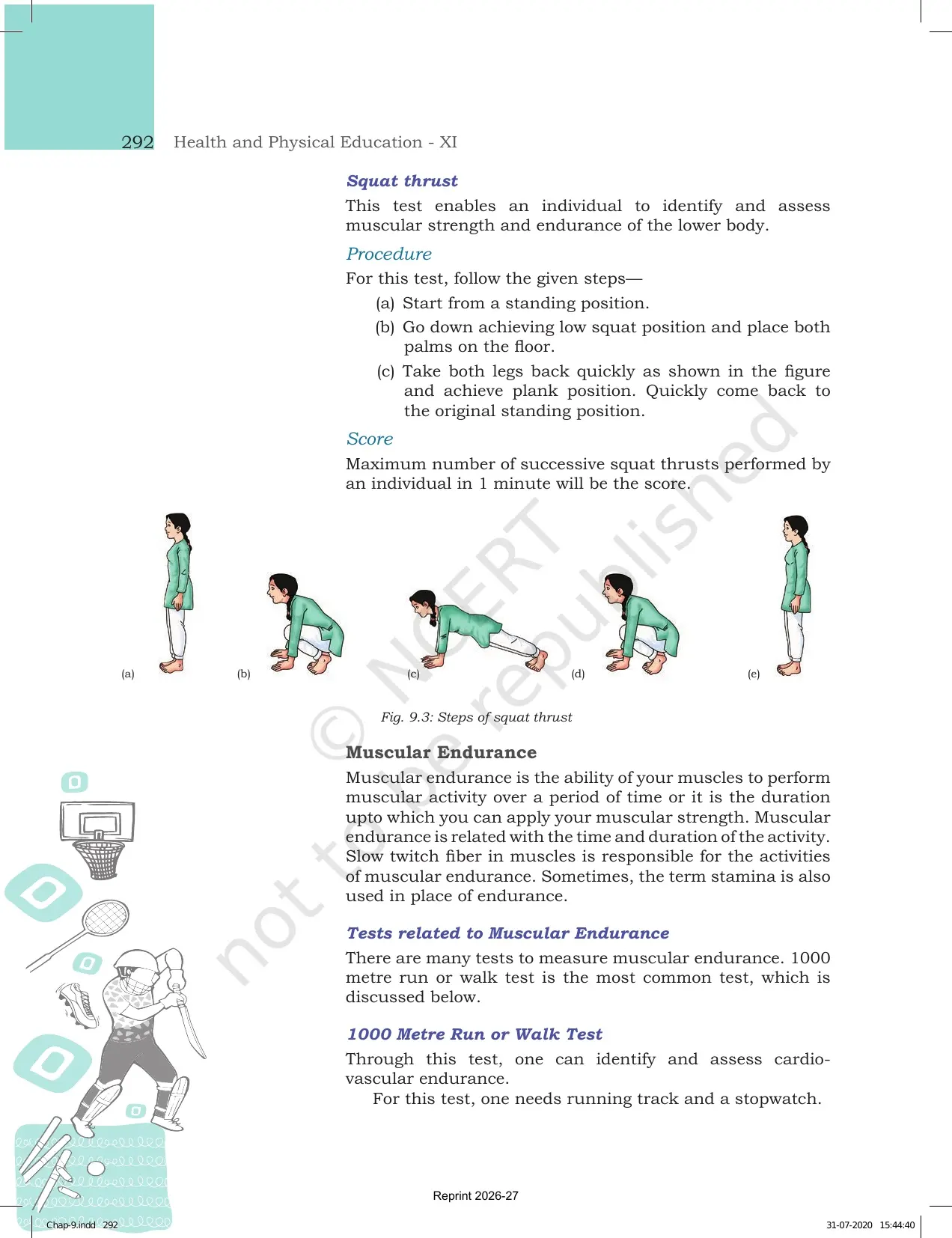
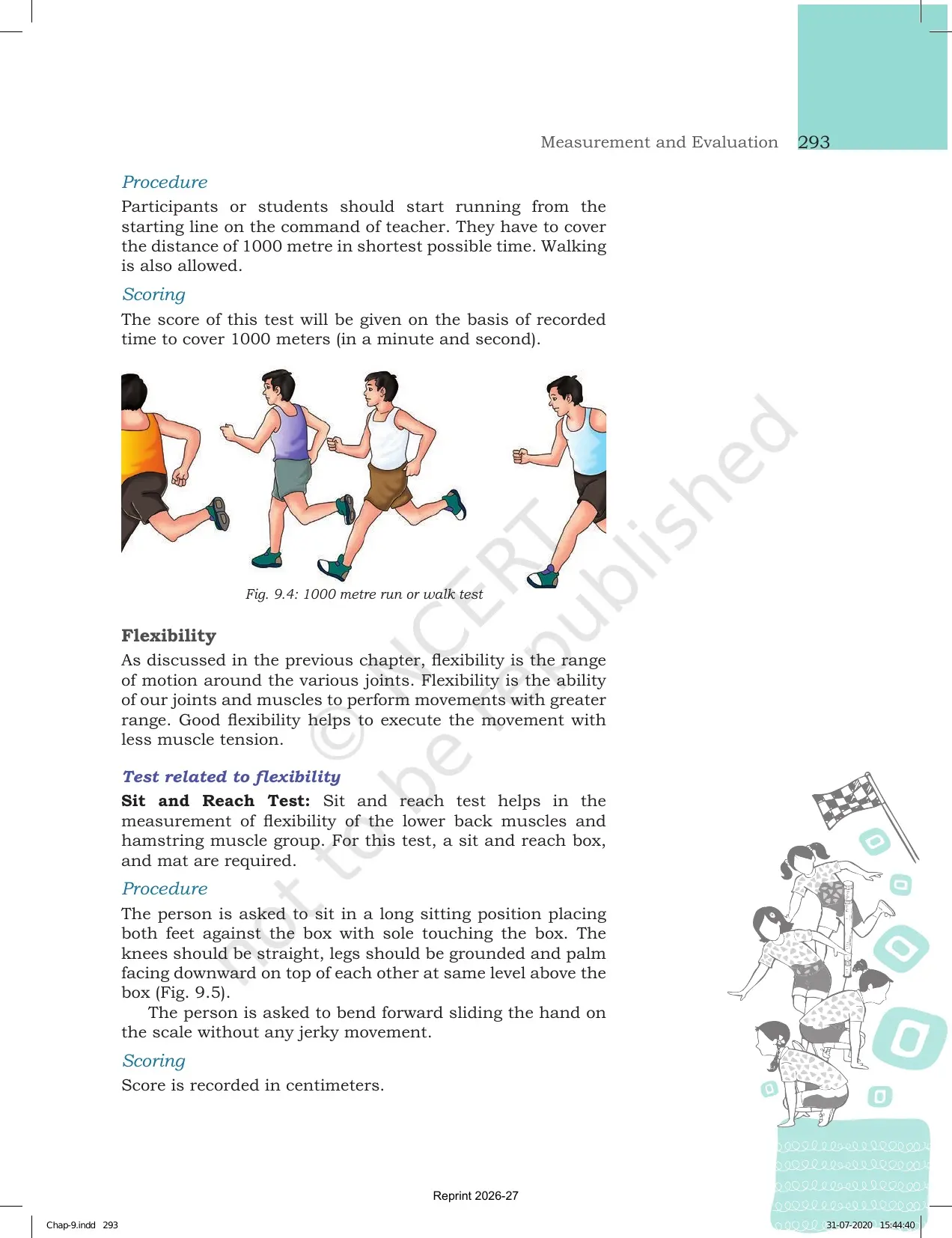
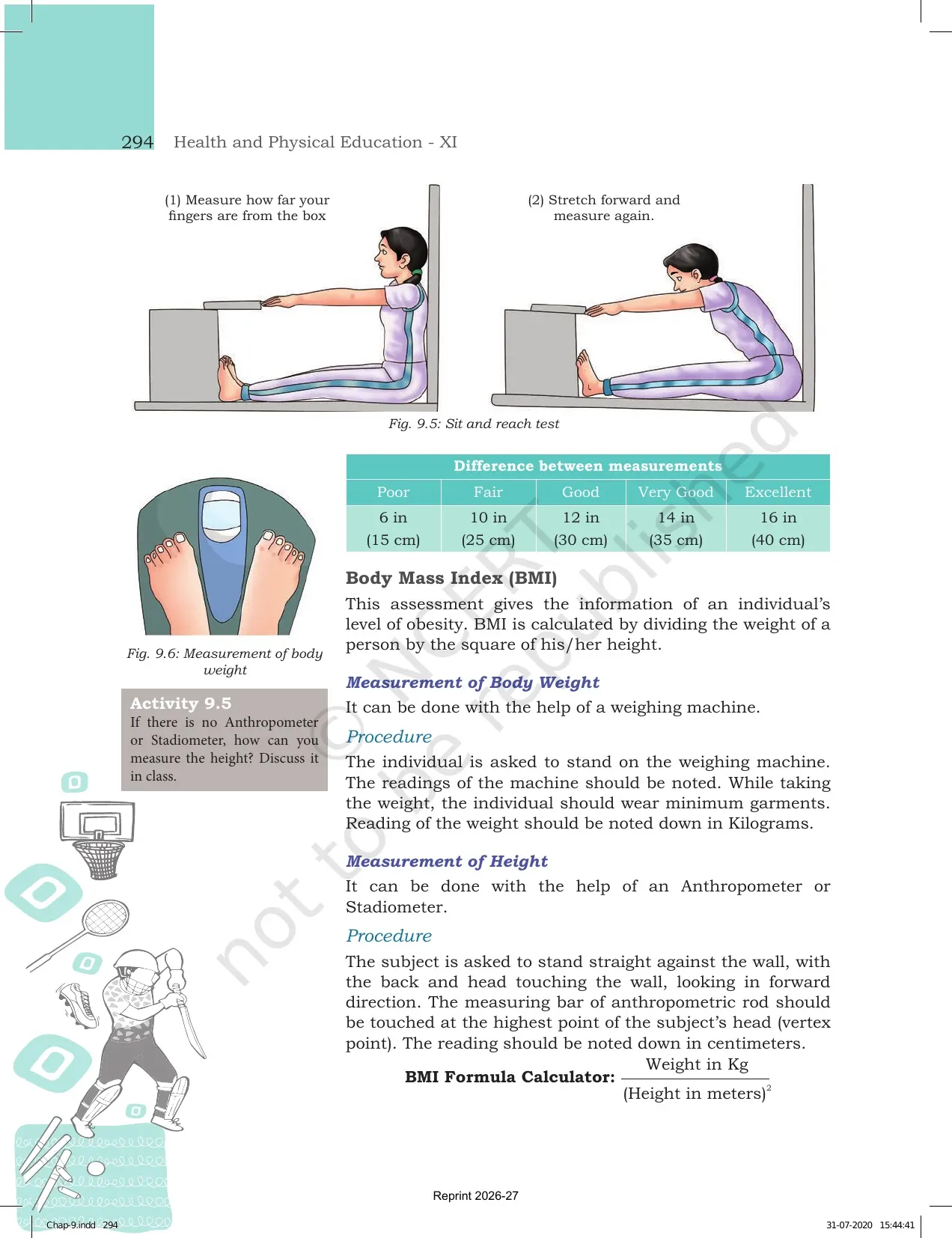
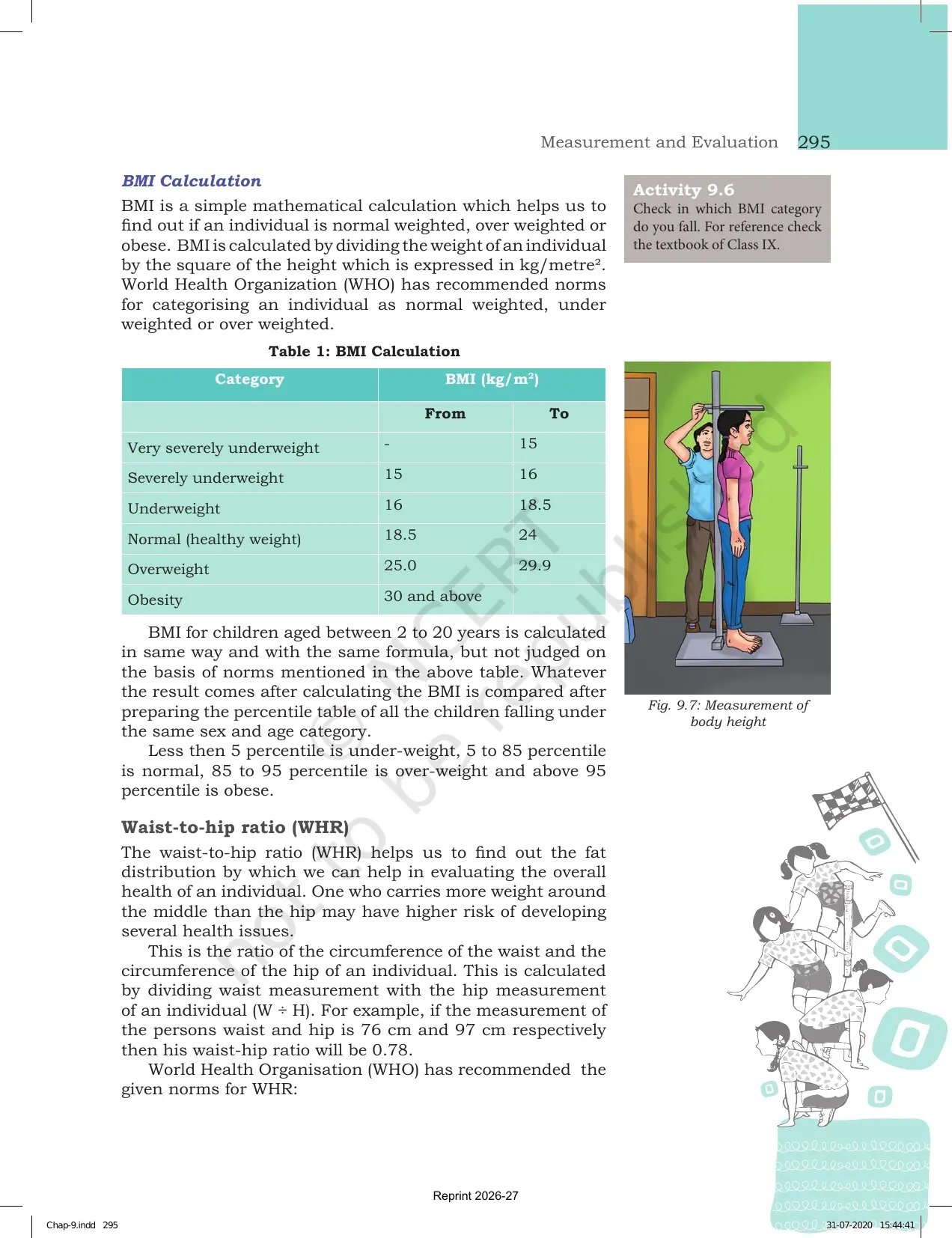
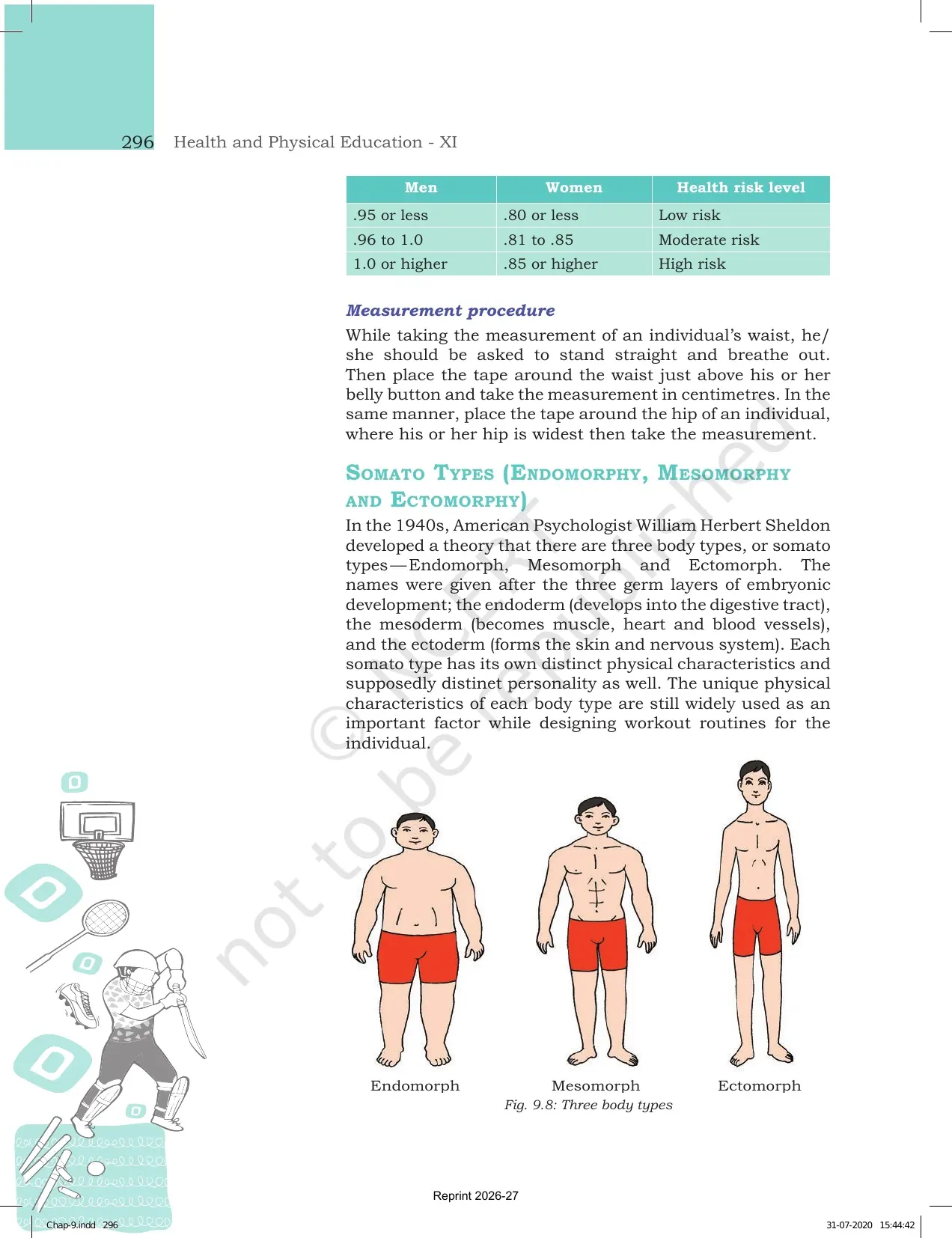
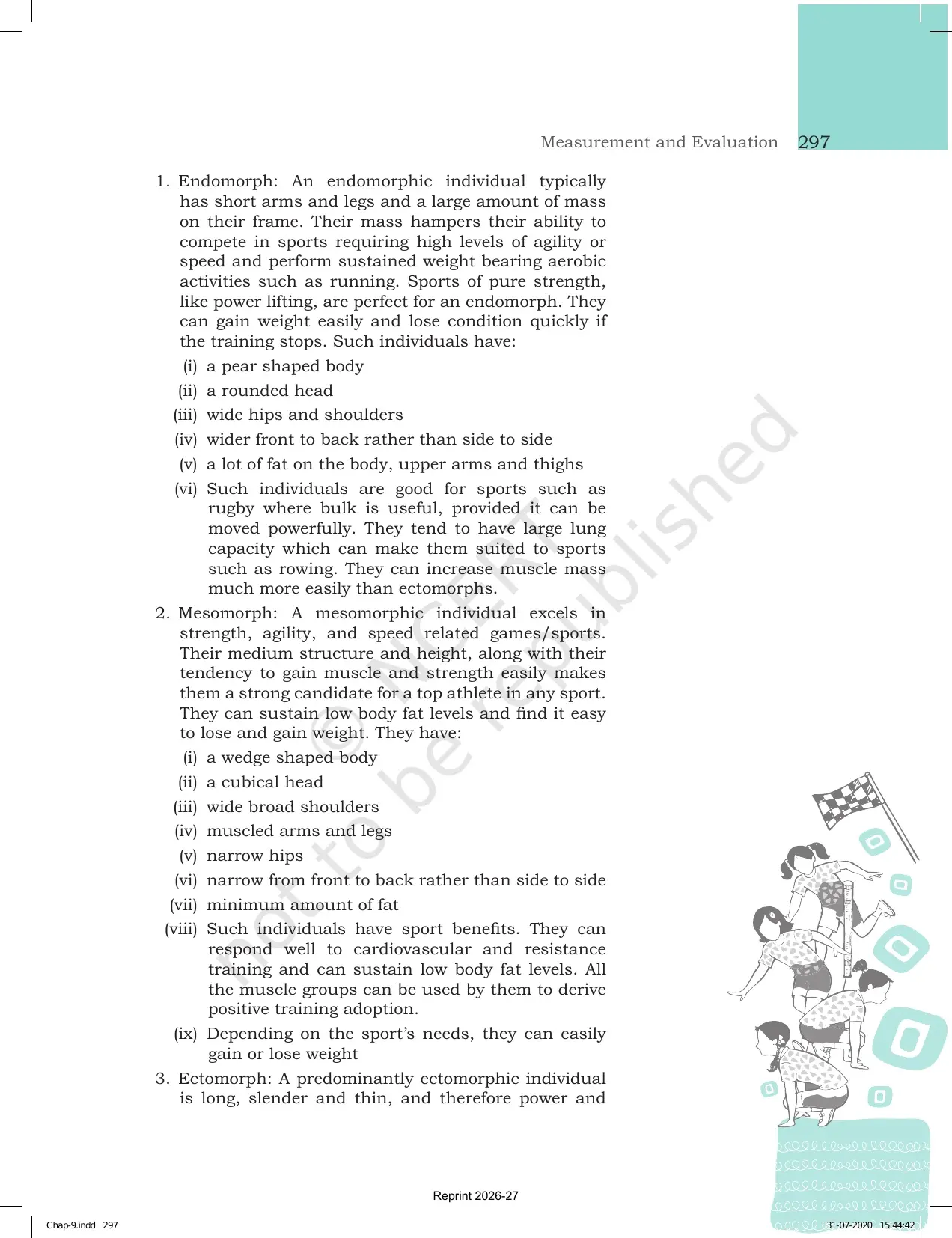
The chapter also introduces physical and fitness-related measurements. These may include height, weight, body mass index, waist-hip ratio, posture checks and selected motor-fitness tests. These measurements help identify health status and training needs.
Important: a single score should not be treated as the full evaluation of a student. Physical Education evaluation should consider age, gender, health condition, previous performance, effort and the purpose of the activity.
For short-answer revision, connect each measurement with its use. Height and weight help track growth. BMI gives a quick weight-status indicator. Waist-hip ratio points to fat distribution. Fitness tests help coaches decide which component needs practice.
Using Test Scores for Improvement
Measurement becomes useful only when the result leads to feedback. A score can show whether a student needs endurance work, flexibility practice, strength training or posture correction. Evaluation therefore links data with action.
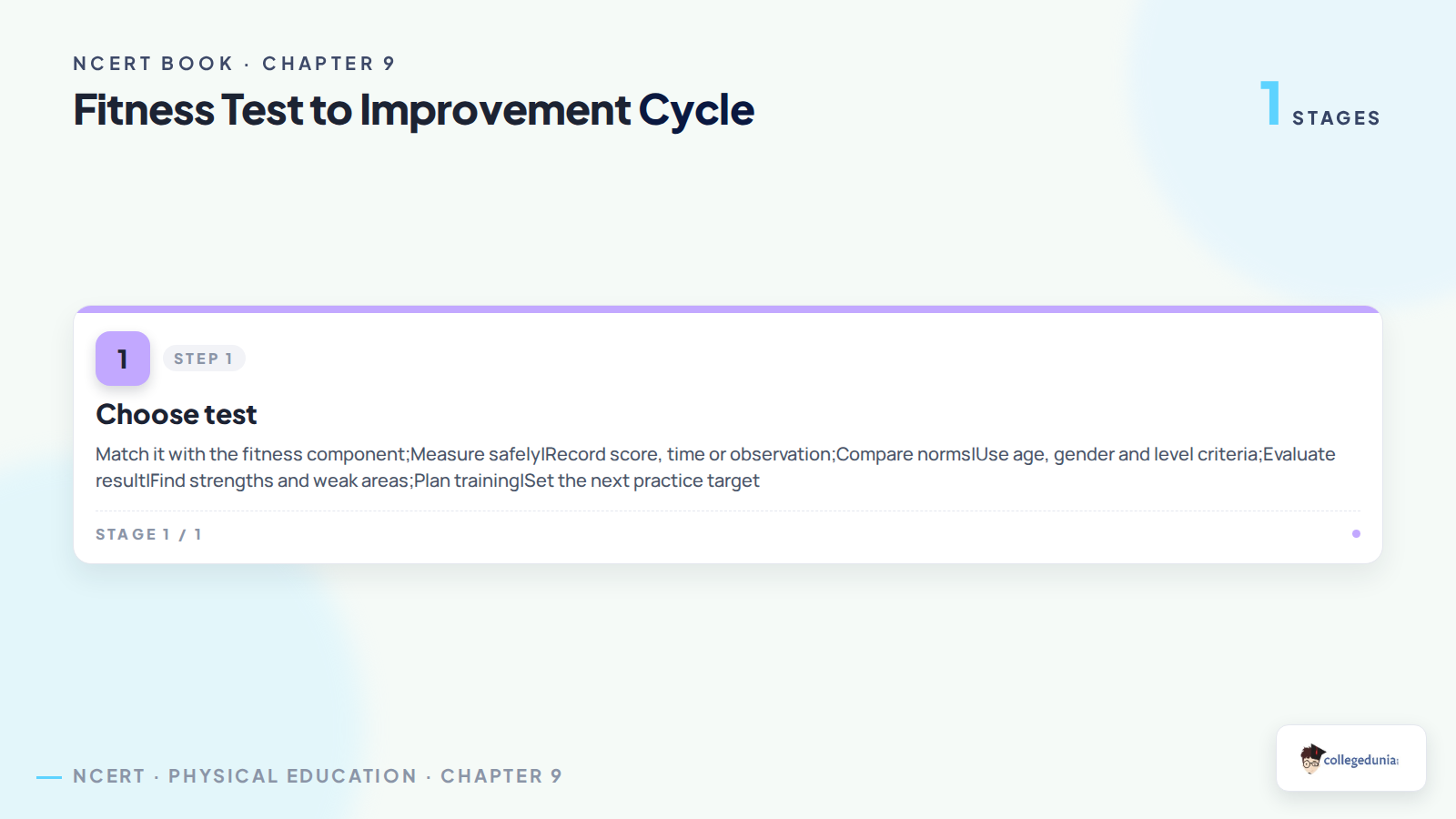
For board-style answers, write the sequence as test, measurement, comparison, evaluation and improvement plan. This keeps the answer logical and avoids treating a raw score as the final conclusion.
- Select the test: choose a test that matches the fitness component.
- Record the score: write the result accurately with correct units.
- Compare with criteria: use norms, previous score or training goal.
- Give feedback: decide what should continue and what should change.
Measurement and Evaluation Revision Video
Source: Magnet Brains on YouTube
How to Use This Measurement and Evaluation NCERT Book PDF
Start with the definitions of test, measurement and evaluation. Then mark every place where the chapter explains the purpose of measurement in Physical Education. These purpose statements are useful for two-mark and three-mark answers.
While revising the PDF, prepare one table for terms and one table for body measurements. Add columns for meaning, unit, use and one example. This format makes the chapter much easier to revise before the exam.
Measurement and Evaluation Related Resources
| Resource | Best use | Link |
|---|---|---|
| NCERT Book PDF | Official textbook chapter | Current Book PDF |
| NCERT Notes | Quick topic-wise revision | Open Notes |
| Handwritten Notes | Fast one-sitting recap | Coming soon |
Physical Education Book PDFs for All Chapters
| Chapter | NCERT chapter title | Book PDF link |
|---|---|---|
| Chapter 1 | Physical Education | Open Book PDF |
| Chapter 2 | Understanding Health | Open Book PDF |
| Chapter 3 | Physical and Physiological Aspects of Physical Education and Sports | Open Book PDF |
| Chapter 4 | Individual Games | Open Book PDF |
| Chapter 5 | Team Games | Open Book PDF |
| Chapter 6 | Yoga and its Relevance in the Modern Times | Open Book PDF |
| Chapter 7 | Safety and Security | Open Book PDF |
| Chapter 8 | Health Related Physical Fitness | Open Book PDF |
| Chapter 9 | Measurement and Evaluation | Current Book PDF |
| Chapter 10 | Tournaments and Competitions | Coming soon |
| Chapter 11 | Adventure Sports | Coming soon |
Class 11 Physical Education Chapter 9 NCERT Book PDF FAQs
Ques. What does Class 11 Physical Education Chapter 9 cover?
Ans. It covers test, measurement, evaluation, body measurements and the use of fitness scores for feedback and improvement in Physical Education.
Ques. How many pages are in this Chapter 9 PDF?
Ans. This official NCERT Book PDF has 12 pages from the Class 11 Health and Physical Education textbook.
Ques. What is the main difference between measurement and evaluation?
Ans. Measurement gives a score or value, while evaluation interprets that score using criteria, purpose and context to make a judgement.
Ques. Is this PDF useful for the 2026-27 CBSE course?
Ans. Yes. The page provides the official NCERT chapter PDF for Class 11 Physical Education Chapter 9 according to the 2026-27 session.



Comments