




The NCERT Class 11 Business Studies Chapter 5 Emerging Modes of Business PDF covers e-business, online transactions and outsourcing. It follows the 2026-27 textbook and explains how firms use networks and outside specialists.
- Core focus: e-business scope, transaction steps, security risks and outsourcing.
- Exam focus: B2B, B2C, C2C, intra-B commerce and BPO.
- Best use: read the PDF and make one comparison chart.
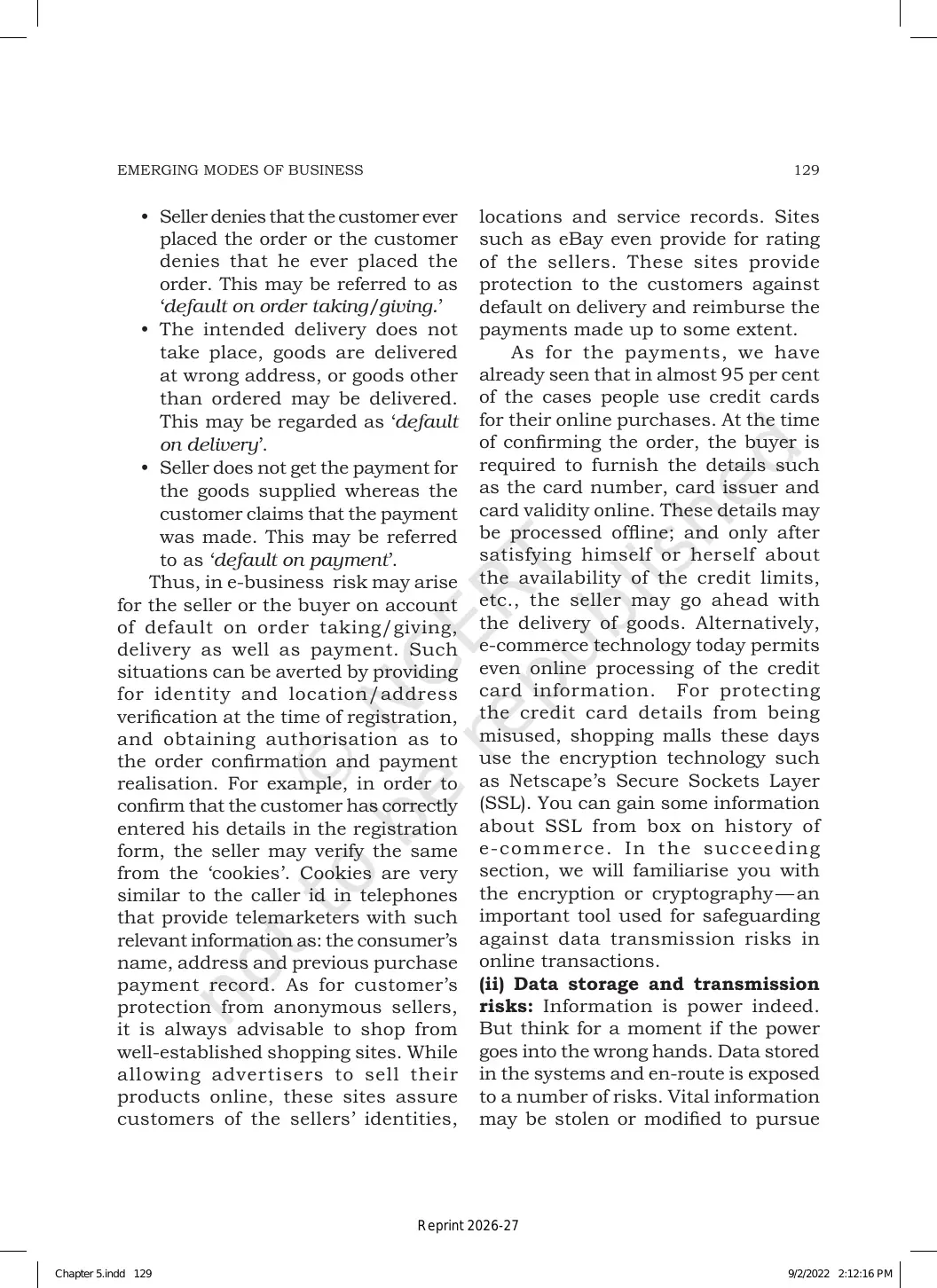
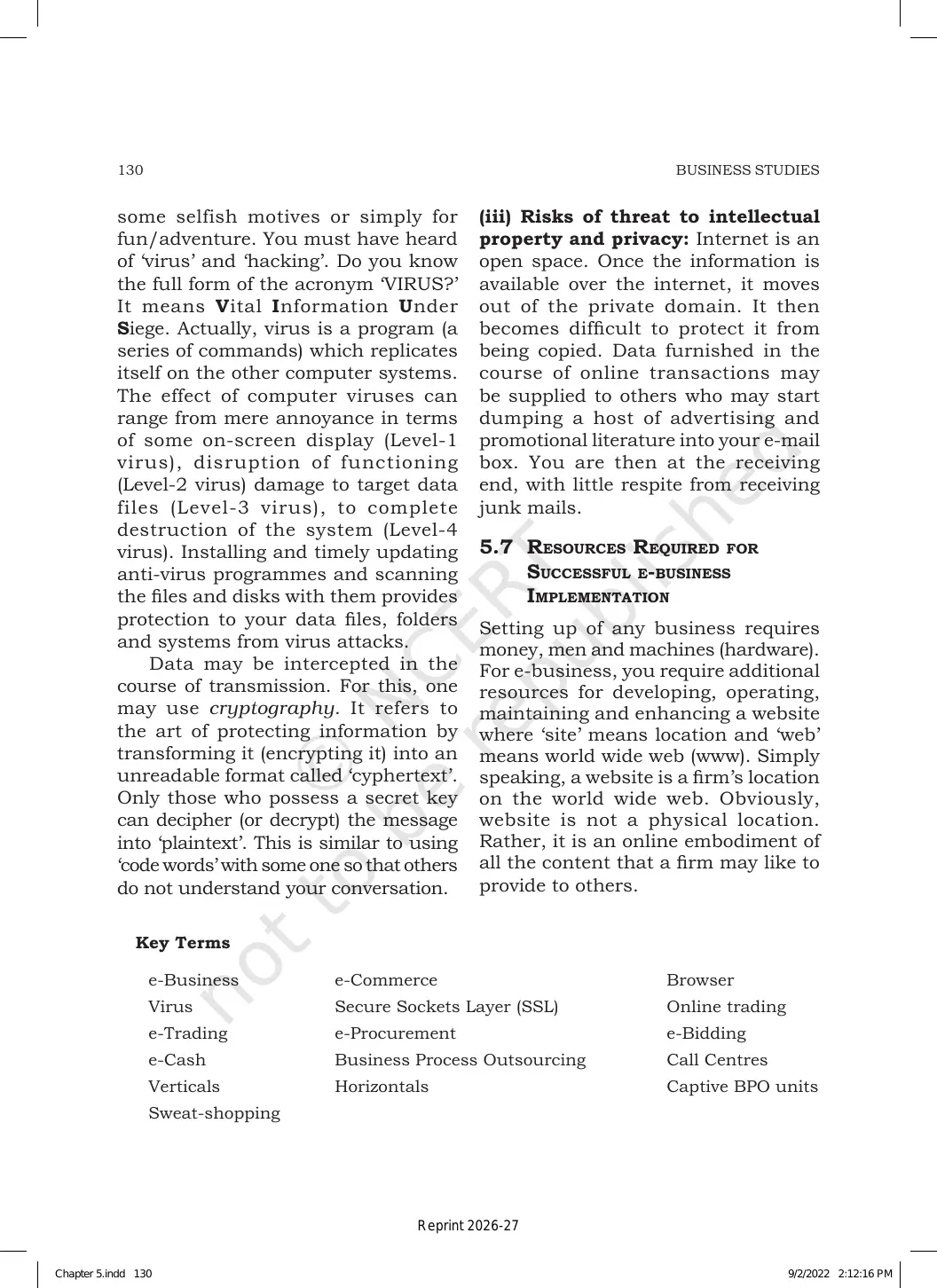
This Collegedunia guide follows the 2026-27 NCERT Business Studies textbook and keeps every explanation tied to the official chapter.
Student Feedback: In a Collegedunia poll of 10,000 students, most students said a four-part transaction chart made this topic easier to revise.
Emerging Modes of Business Covered in the Class 11 NCERT PDF
Emerging Modes of Business explains two major changes in the way firms work. e-business moves business activities onto computer networks. Outsourcing moves selected tasks to outside specialists.
| Topic | What the NCERT PDF explains | Example |
|---|---|---|
| e-Business | Business activities carried through electronic networks | Online orders and digital records |
| Online transactions | Registration, ordering, payment and delivery | Buying a book from a website |
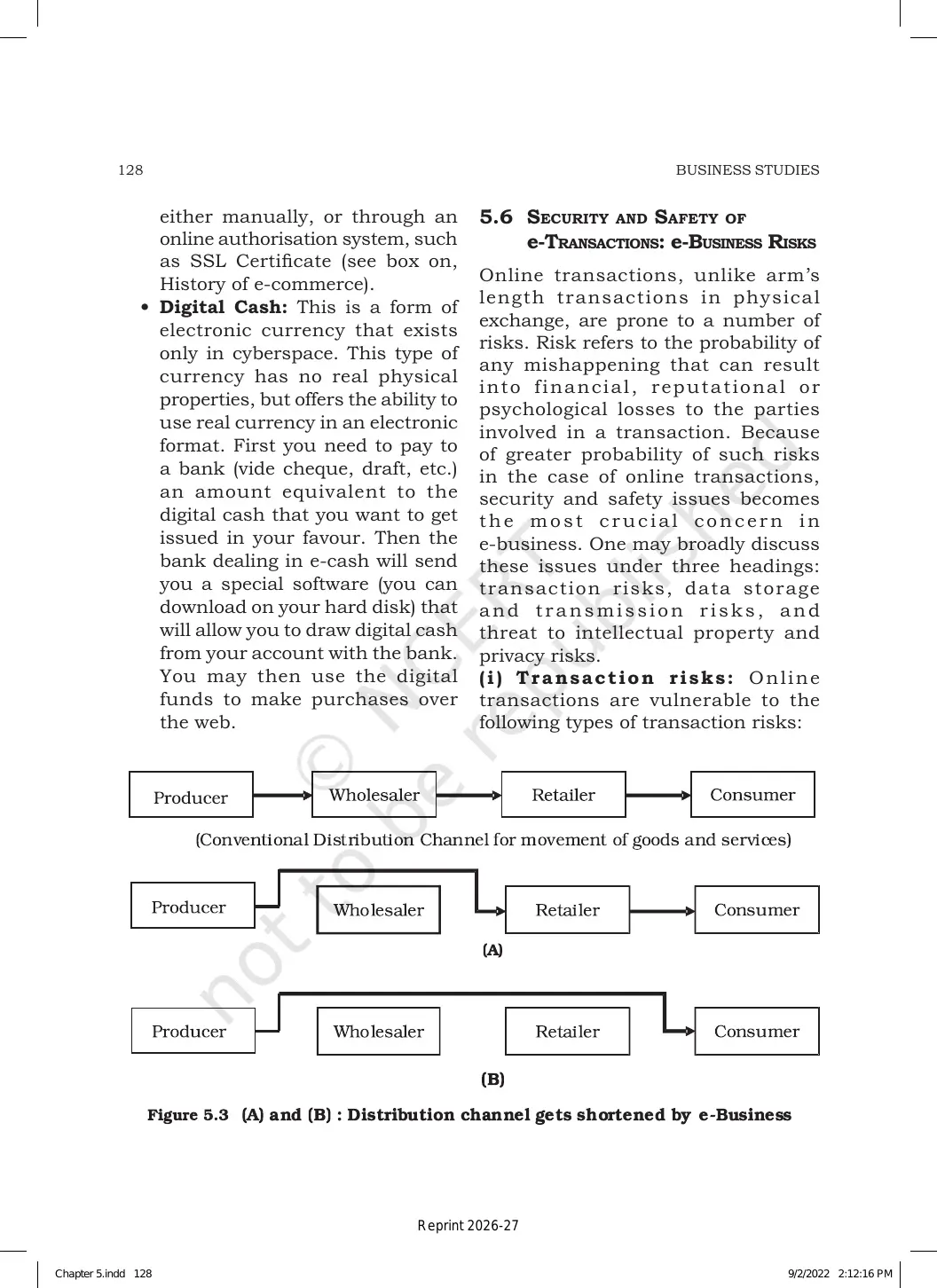
| Security | Risks linked with data, payment and privacy | Protecting passwords and card details |
| Outsourcing | Contracting a business process to an outside provider | Customer support handled by a BPO firm |
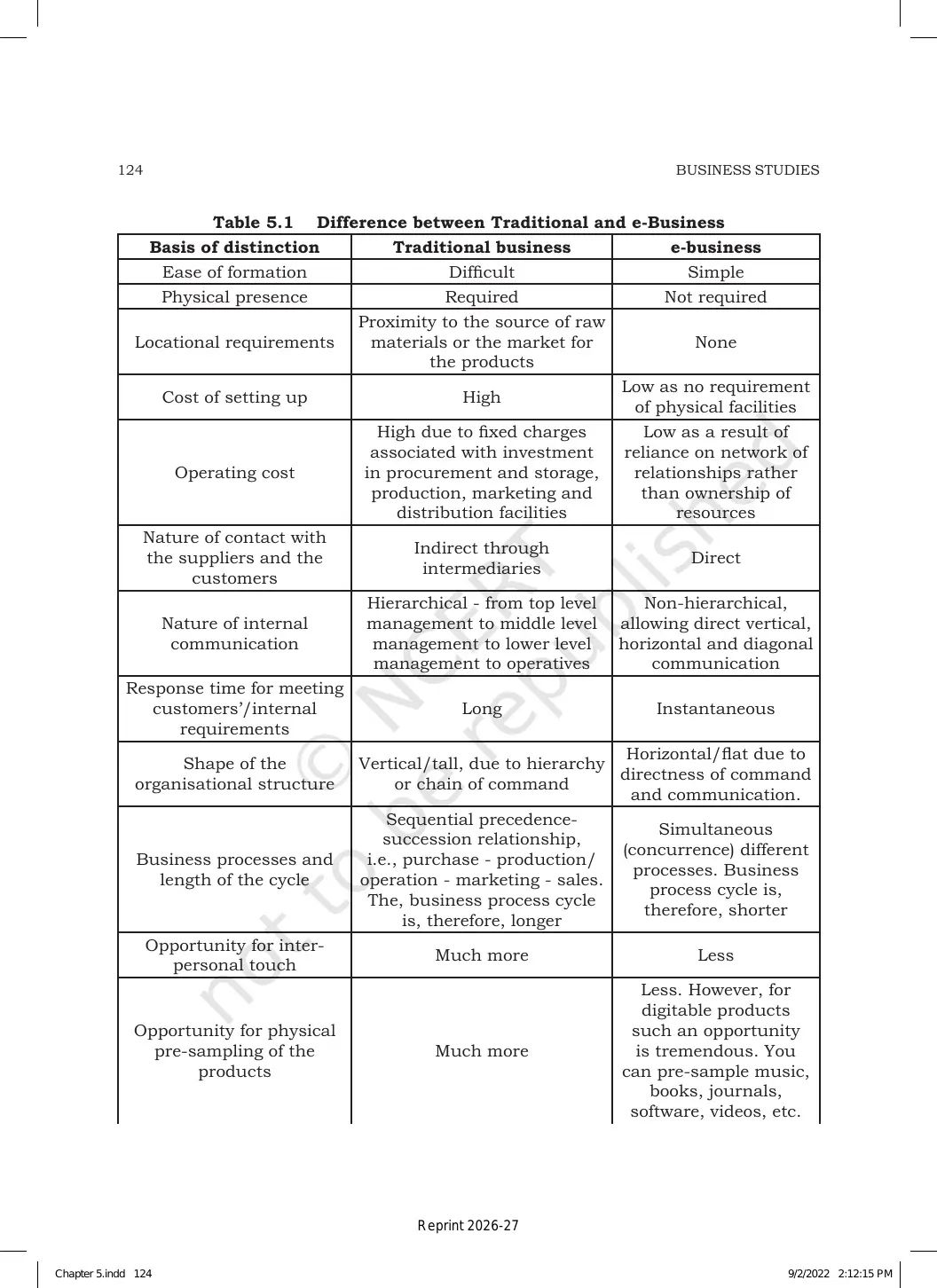
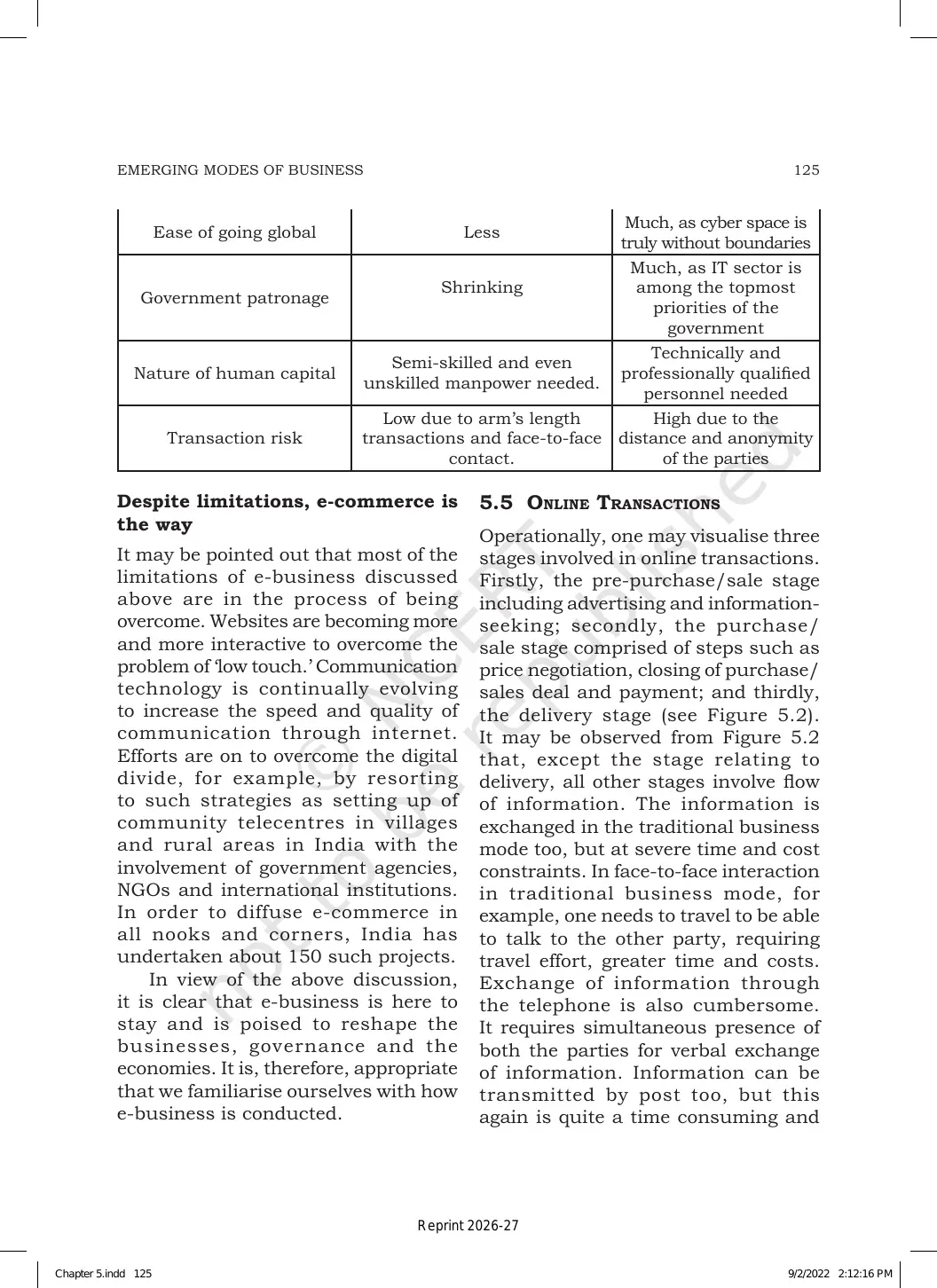
e-commerce is part of e-business, but e-business has a wider scope. It includes internal functions such as production, finance and inventory.
Emerging Modes of Business Chapter Overview
Source: Magnet Brains on YouTube
e-Business Scope and Four Transaction Relationships
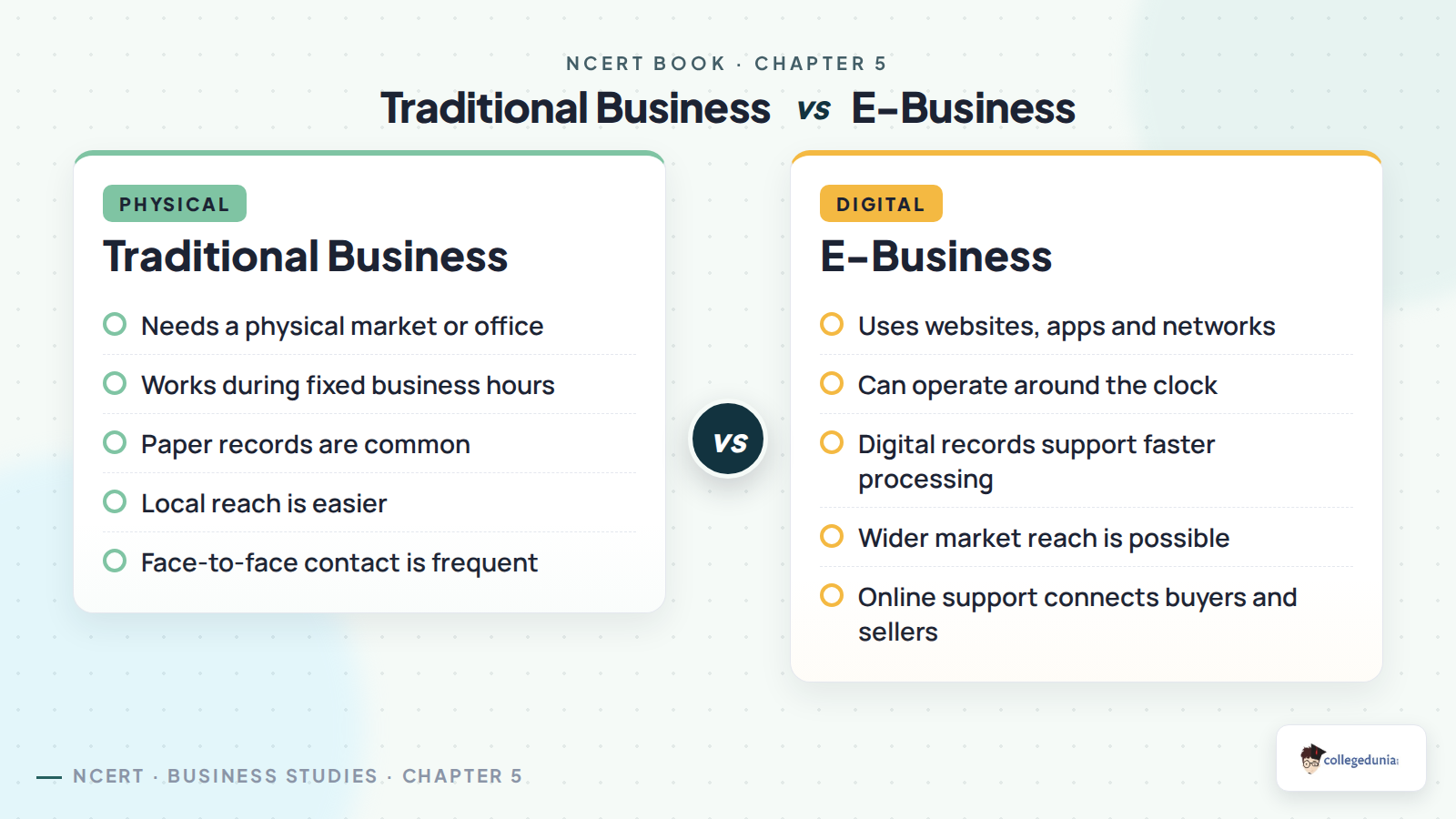
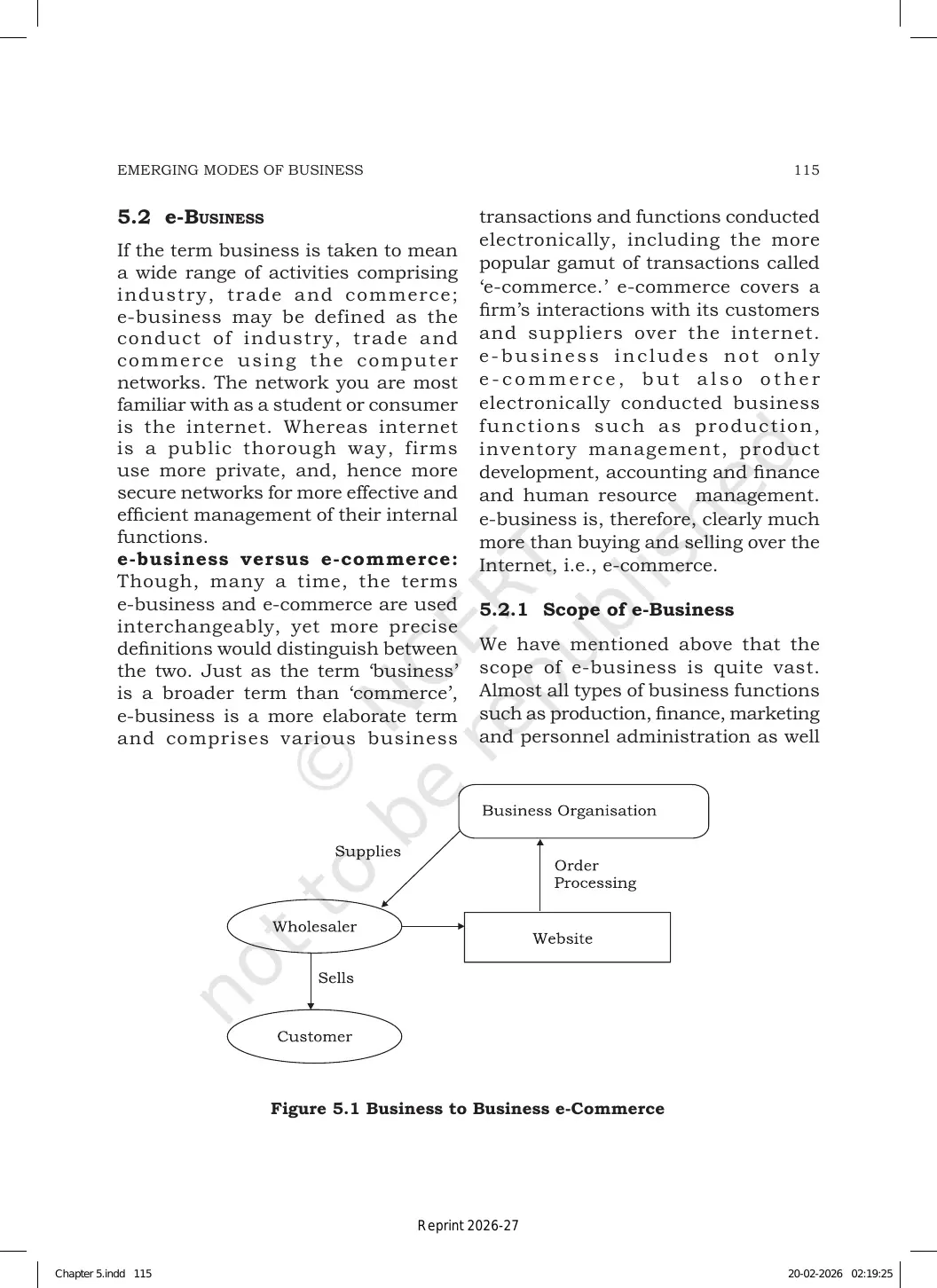
NCERT groups e-business by the people or units taking part. Learn the four labels with one example each. This makes case-based questions easier to classify.
- B2B: one business deals with another business, such as a retailer ordering from a supplier.
- B2C: a business sells or provides support directly to a consumer.
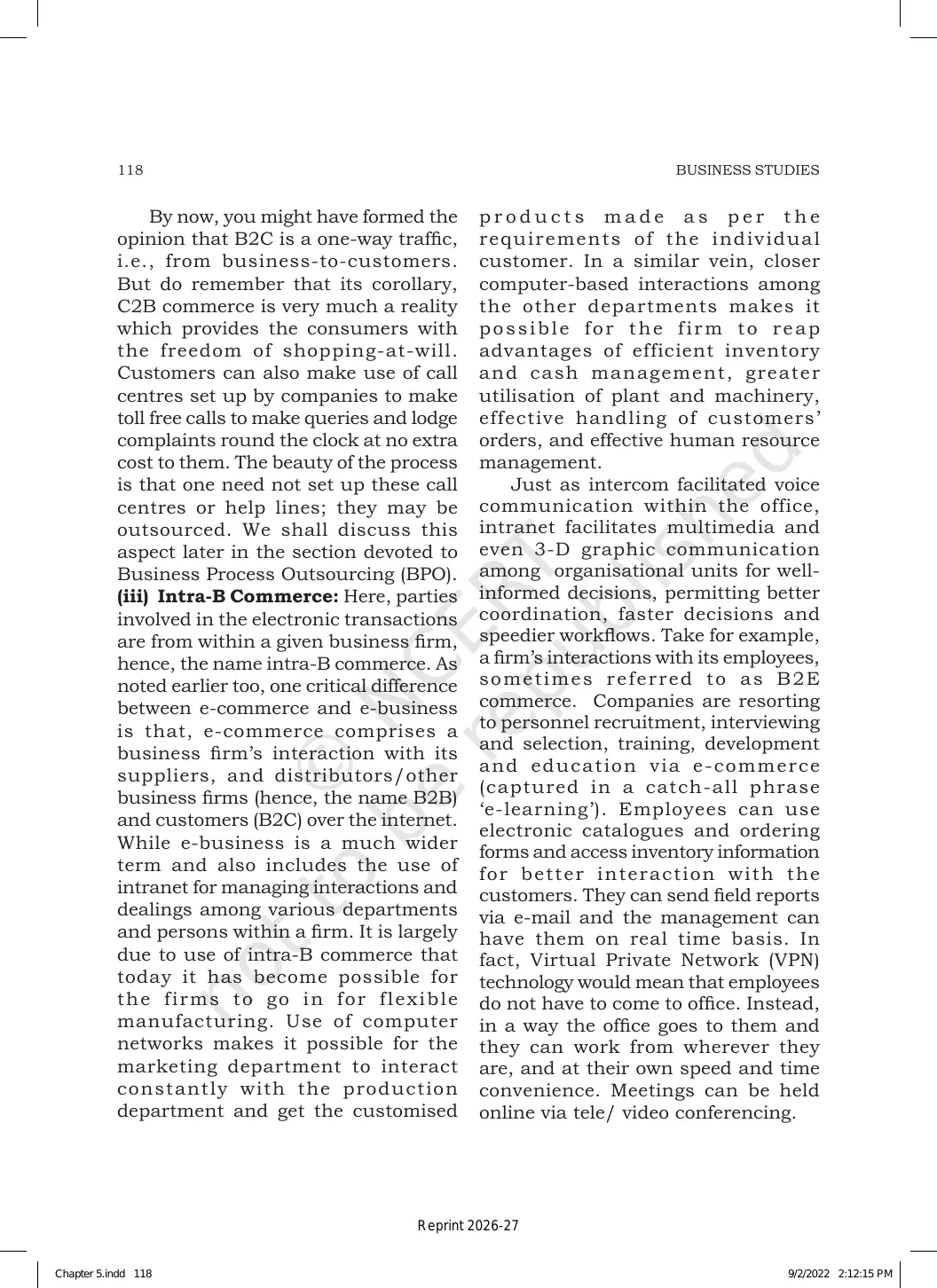
- Intra-B: departments and branches of one firm exchange information through an internal network.
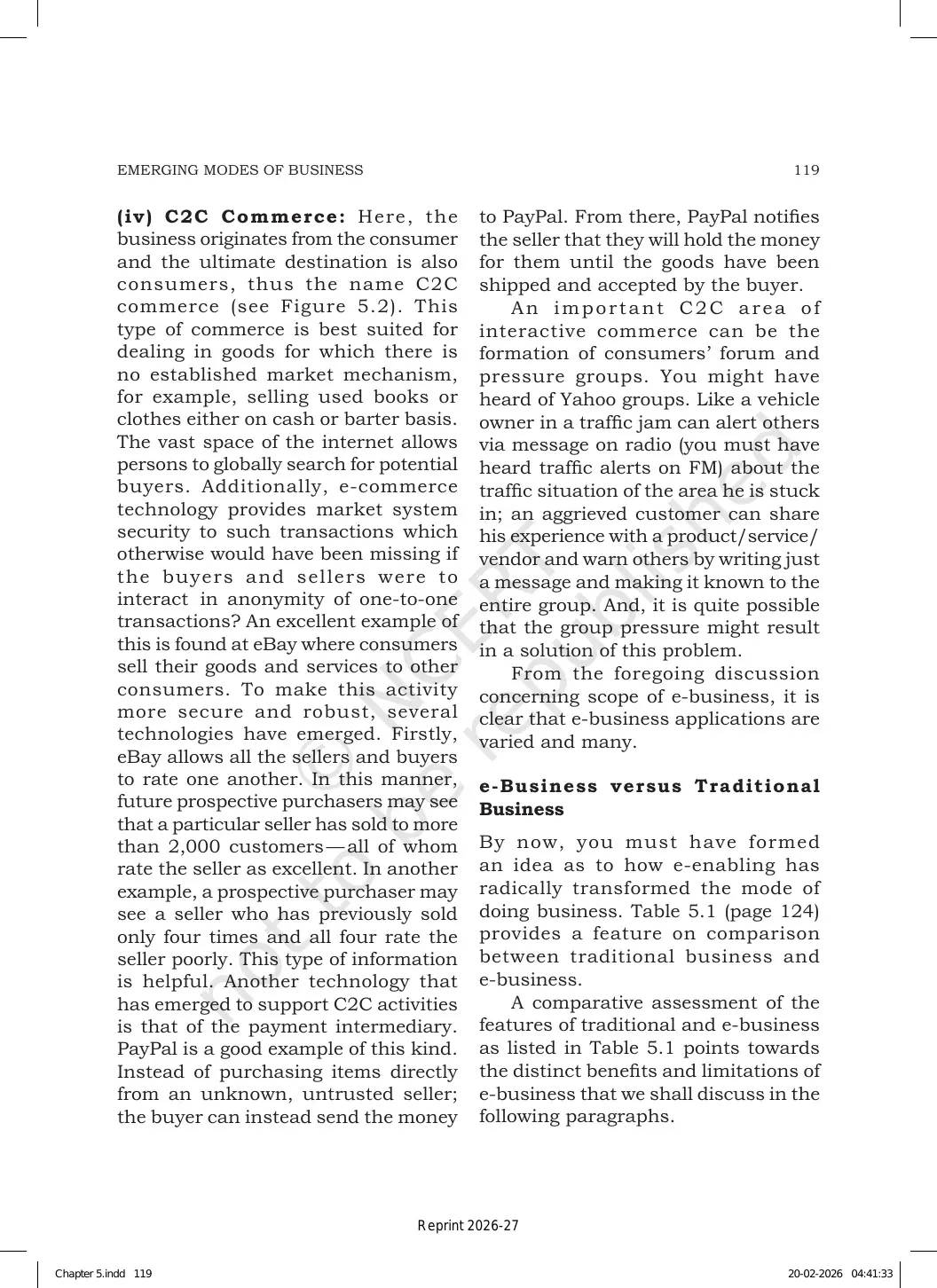
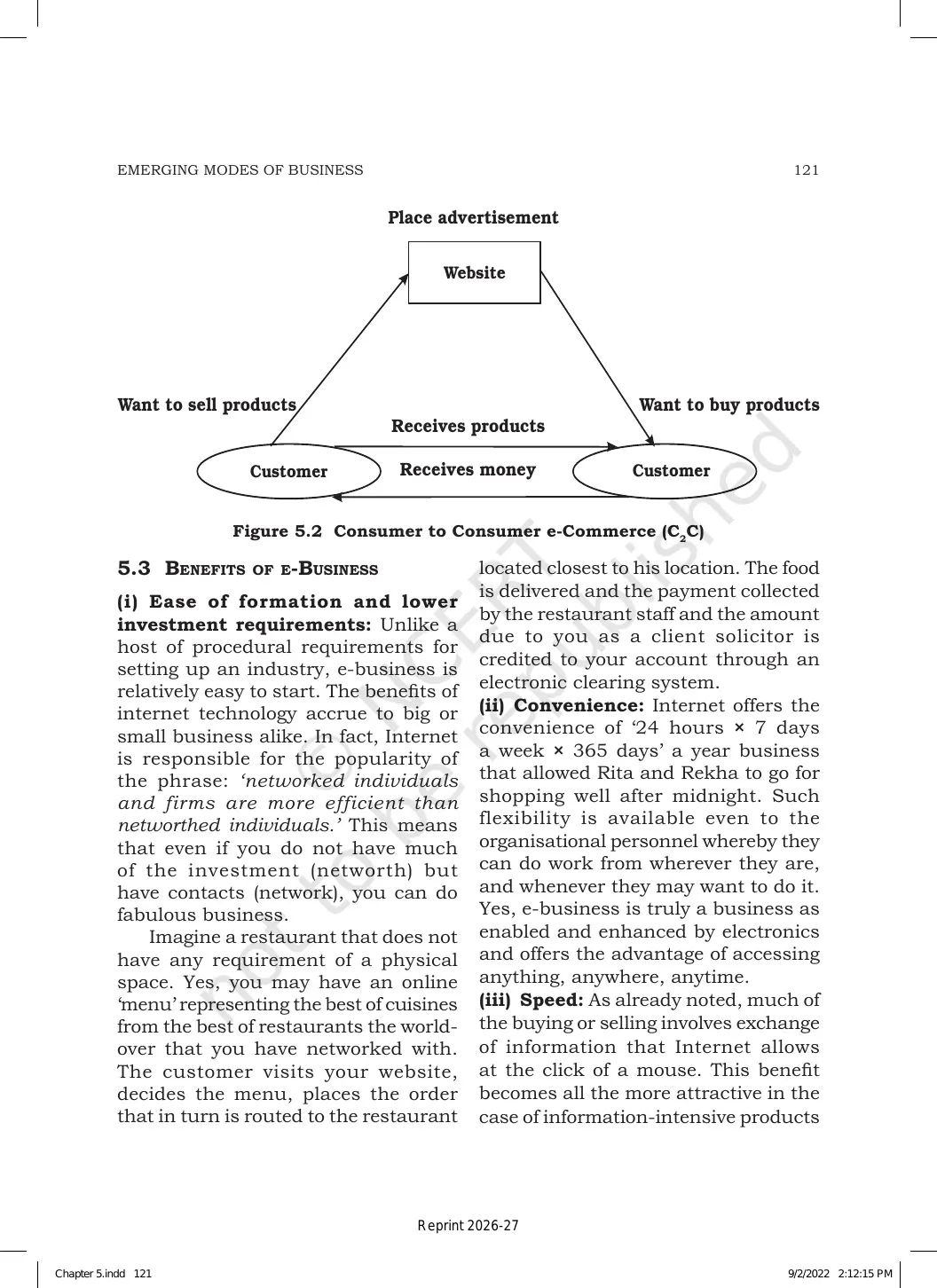
- C2C: one consumer sells goods or services to another consumer through a platform.
Intra-B commerce takes place within one business. Do not confuse it with B2B commerce between separate firms.
Online Transaction Steps in Emerging Modes of Business
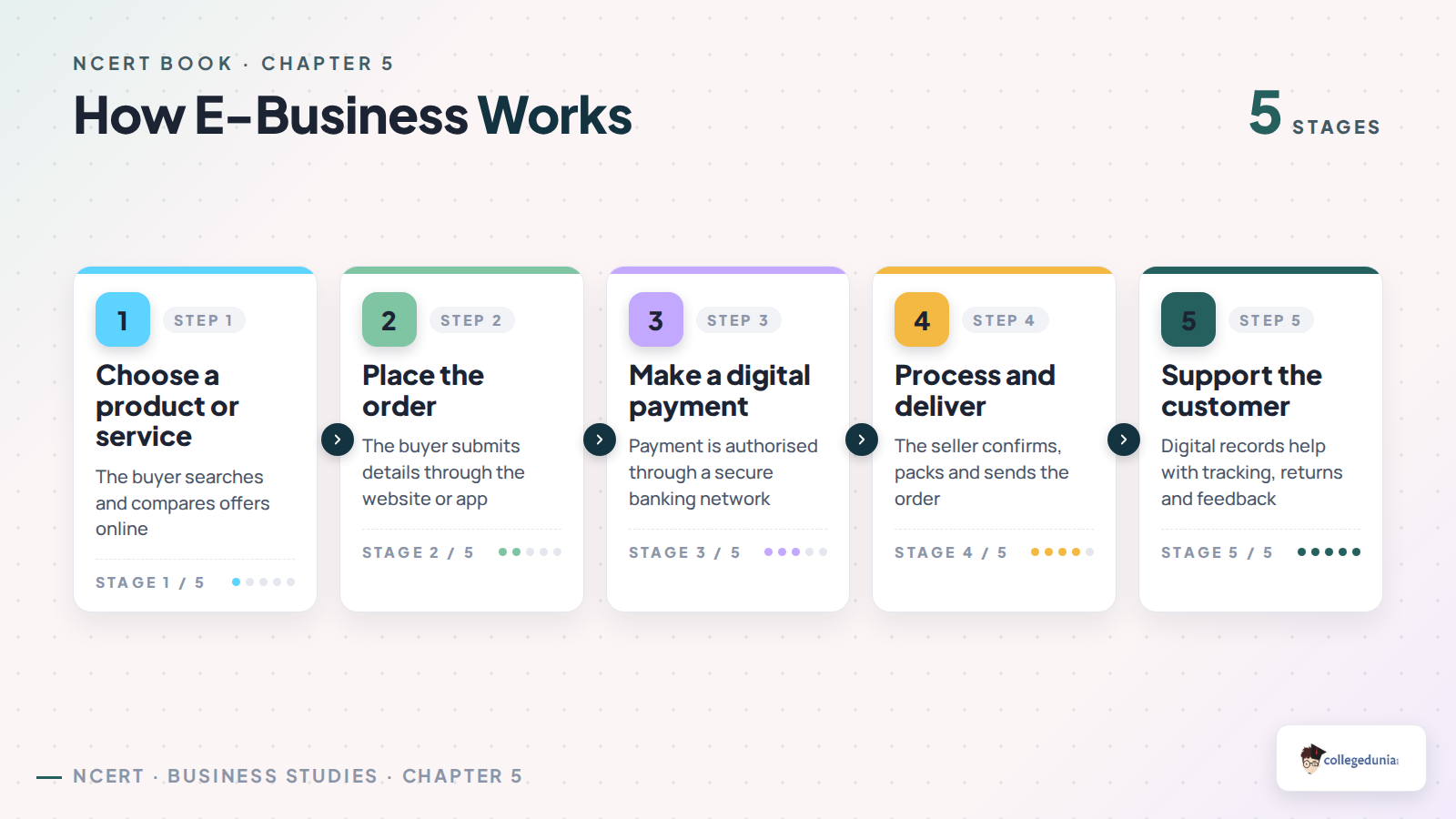
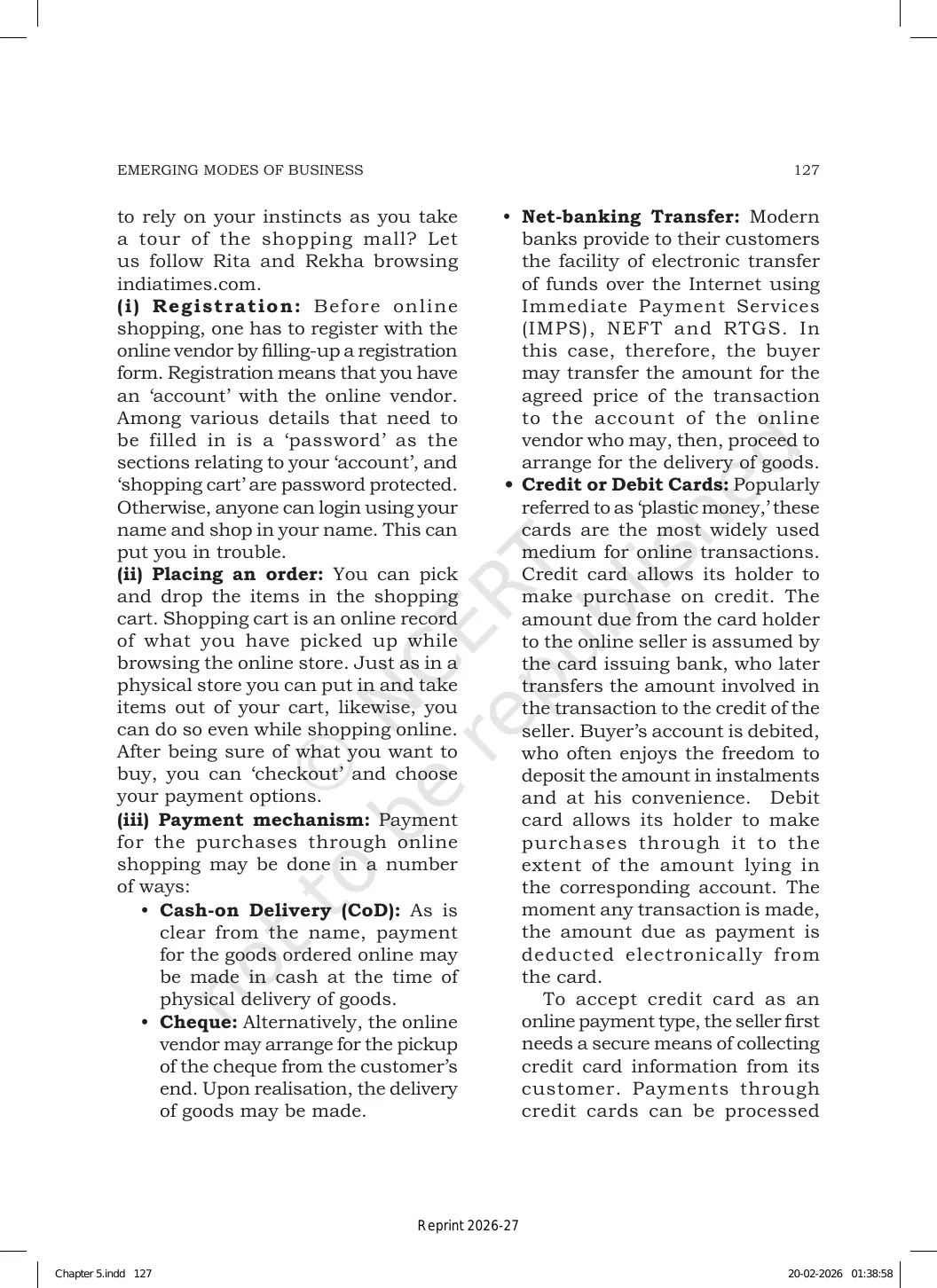
An online purchase follows a clear sequence. The customer first finds information and registers. The order then moves through checkout, payment and delivery.
- Registration: the customer creates an account and sets a password.
- Placing an order: selected items enter the shopping cart before checkout.
- Payment: the buyer may use cash on delivery, card, cheque or digital transfer.
- Delivery: the seller supplies the physical product or digital service.
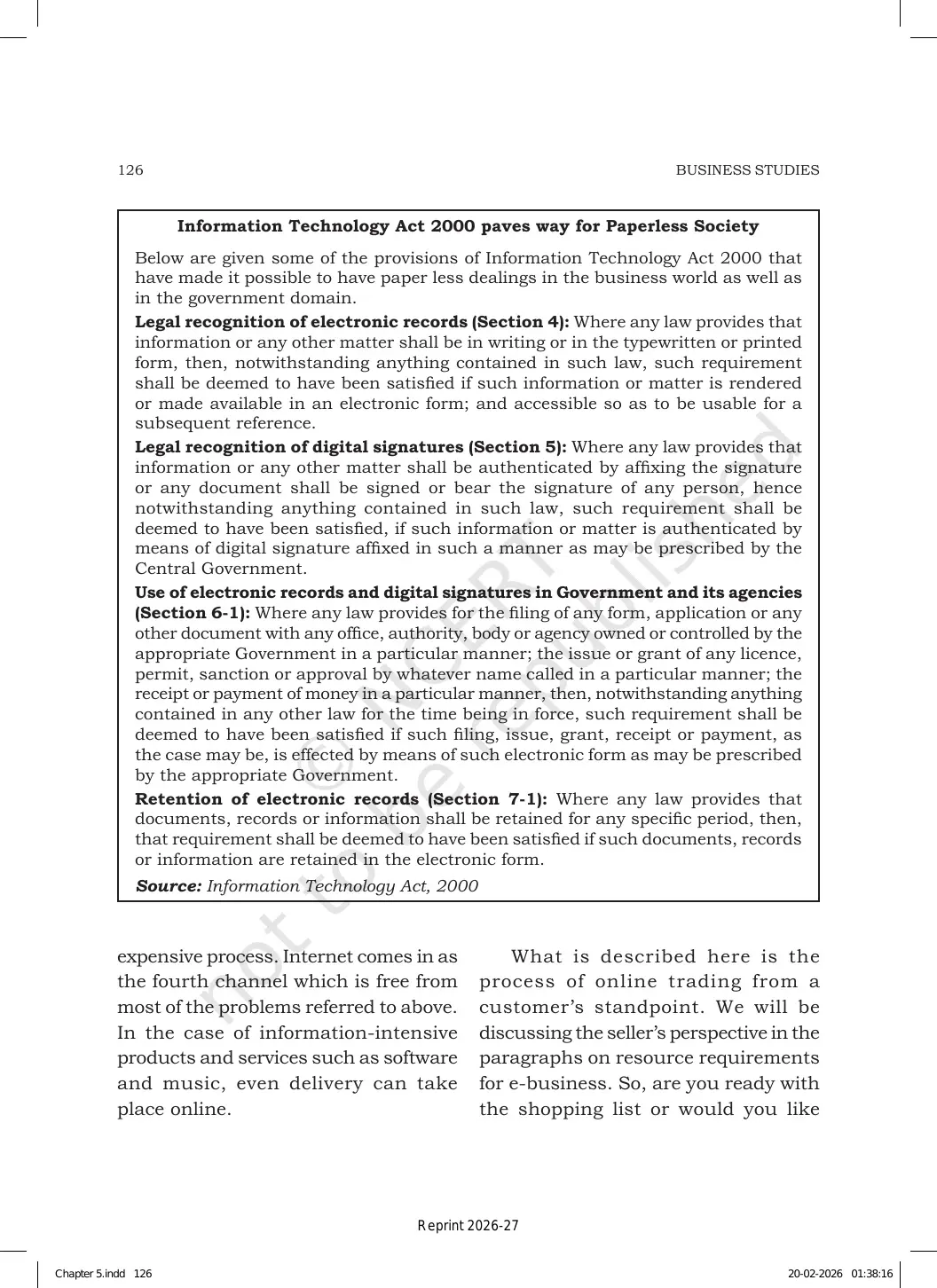
Read payment details and seller terms before confirming an order. Encryption and secure payment systems lower risk, but careful use still matters.
Benefits and Limits of e-Business for Class 11
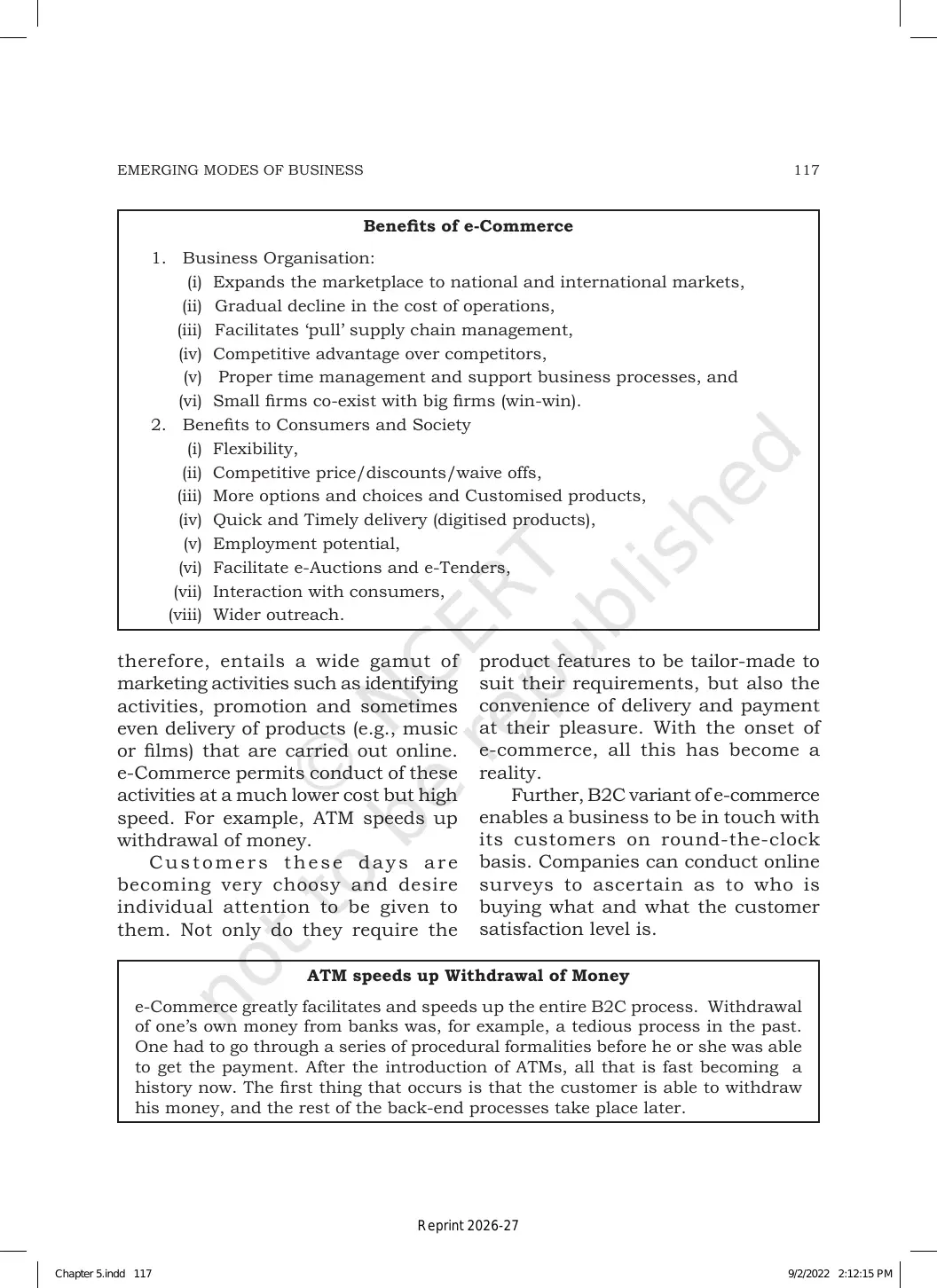
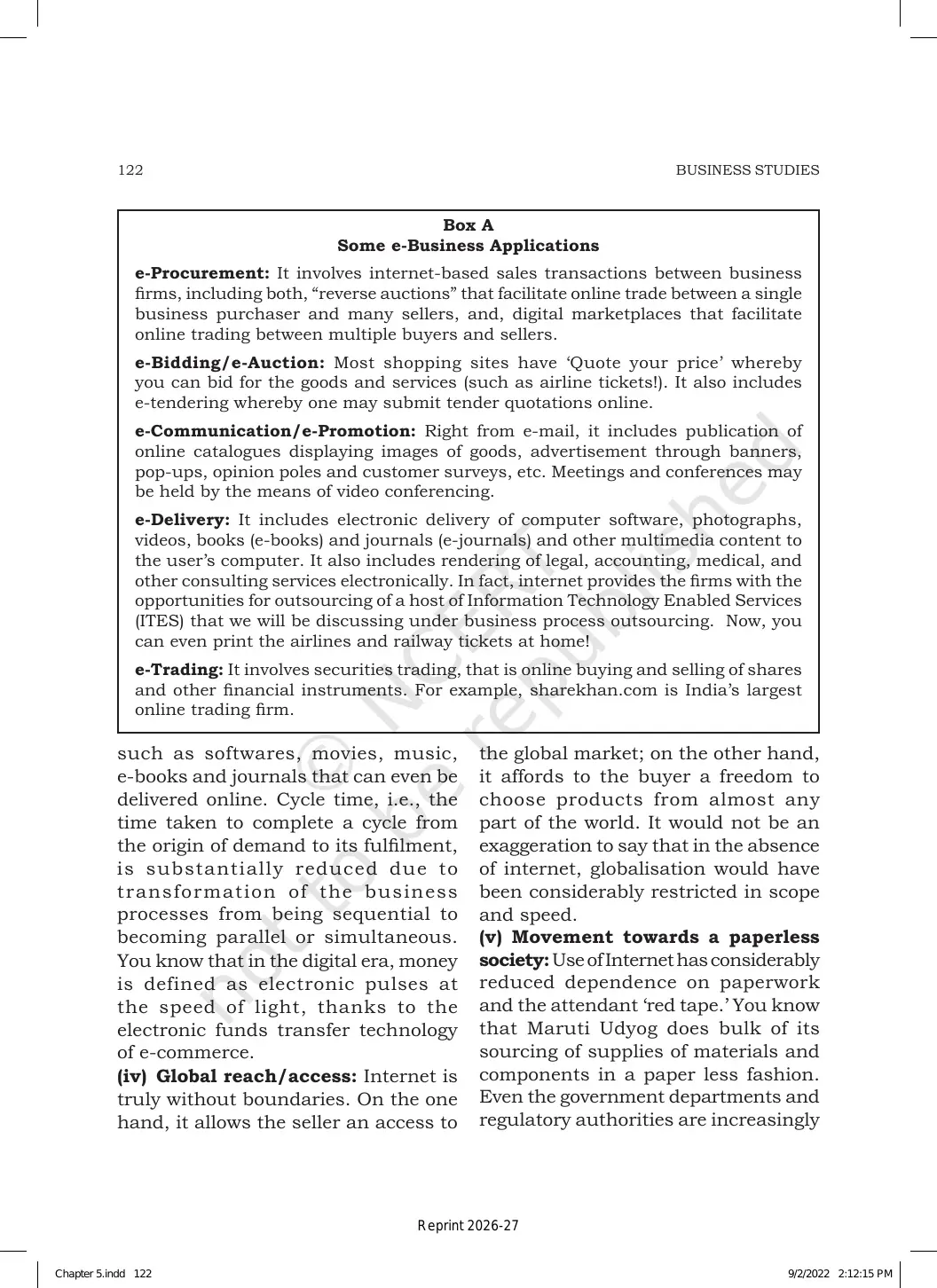
e-business can connect firms and customers quickly across locations. It can also lower paperwork and operating costs. Yet every activity cannot move fully online.
| Benefits | Limitations |
|---|---|
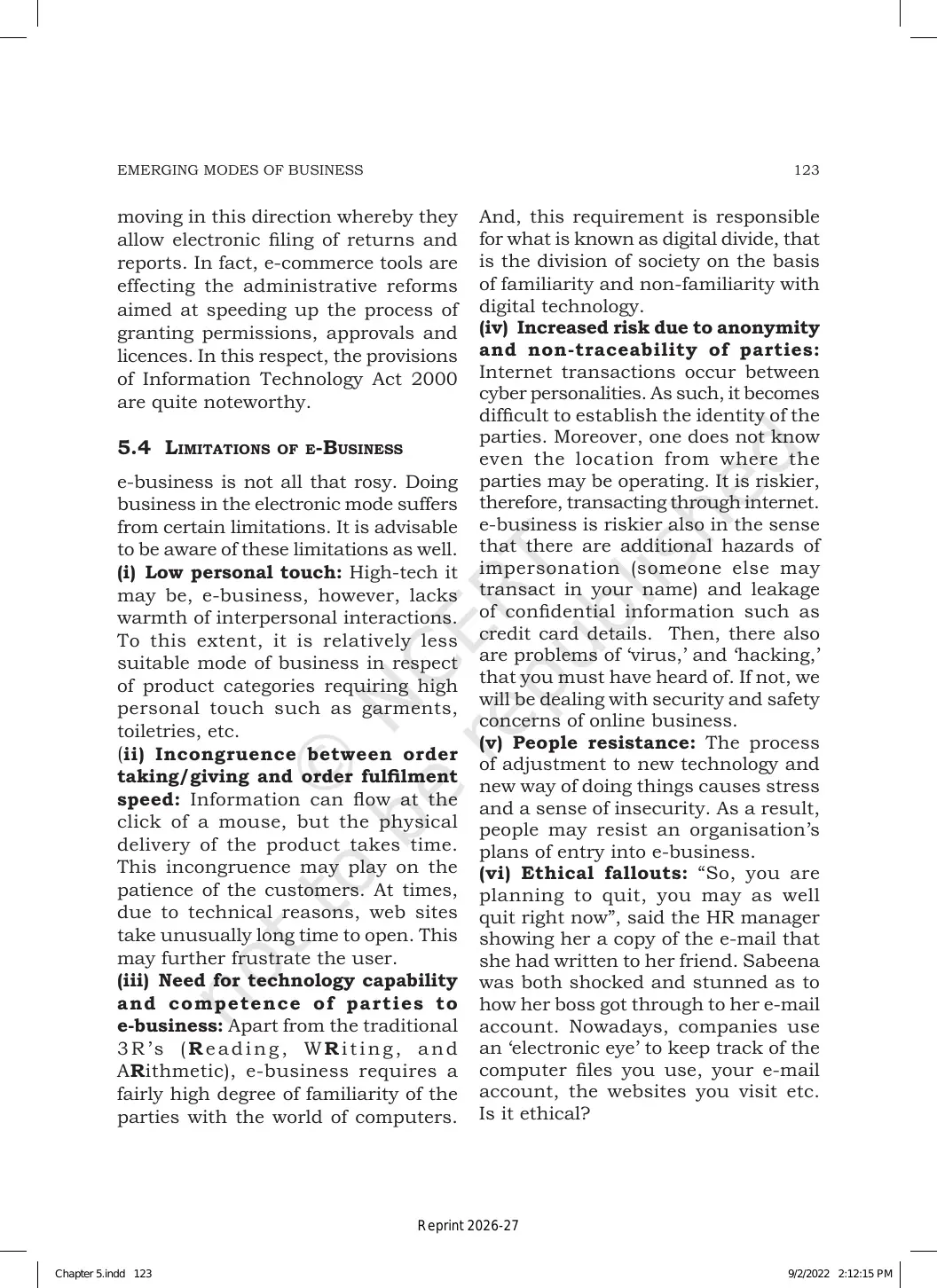
| Easy formation and lower investment | Low personal contact between buyer and seller |
| Faster communication and transactions | Technology skills and equipment are needed |
| Access beyond local markets | Data, privacy and payment risks remain |
| Less paperwork in routine processes | Some customers resist unfamiliar systems |
Electronic records can reduce paper use, but they need secure storage. Students should write both benefits and limits in a balanced answer.
Outsourcing and BPO Explained with Business Examples
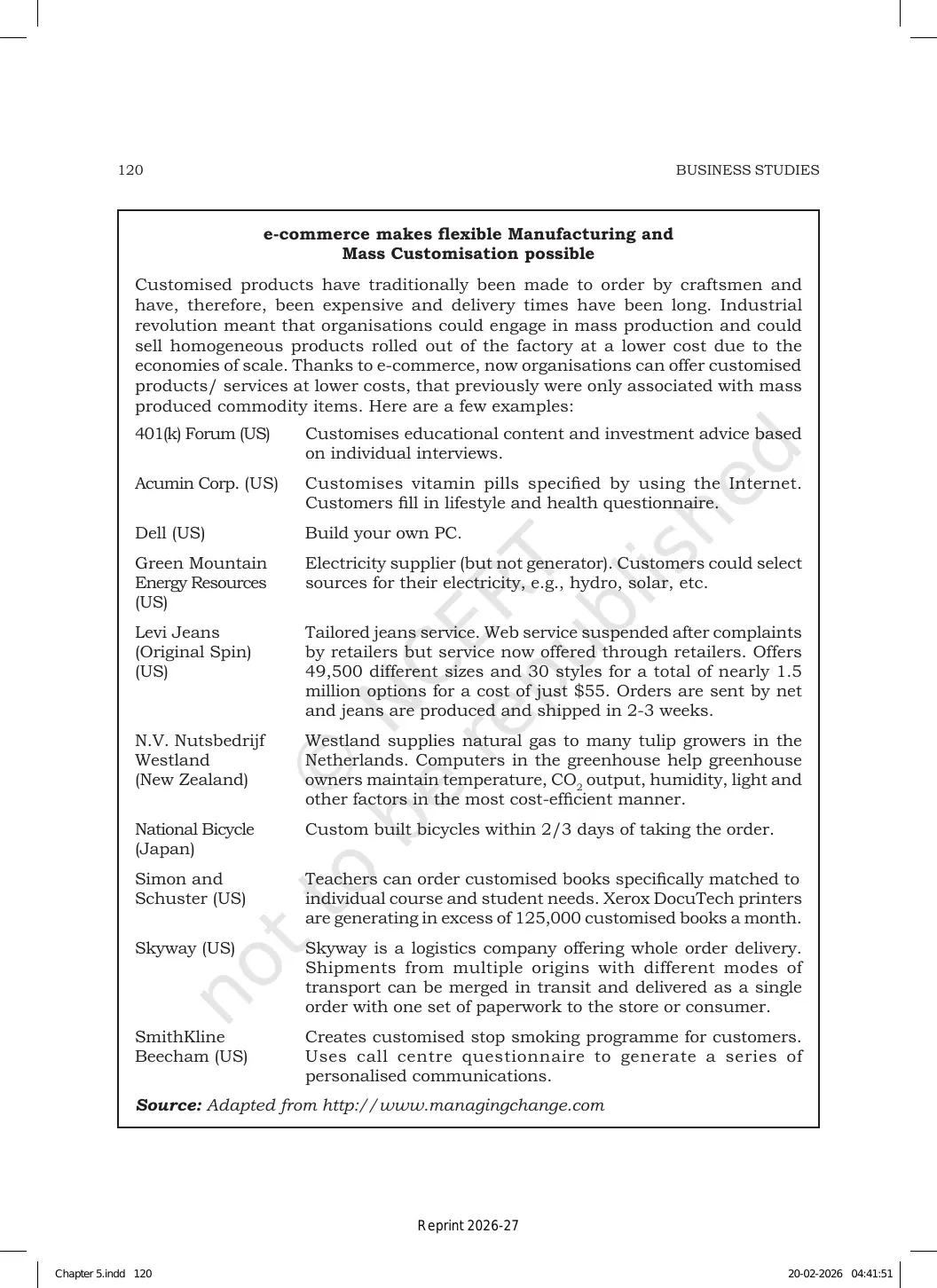
Outsourcing means giving a selected business activity to an outside specialist. The provider performs the task under a contract. This lets the firm focus on its main work.
- Business Process Outsourcing: outside teams manage routine processes such as customer care and payroll.
- Specialist service: trained providers may deliver better quality or faster service.
- Cost focus: firms avoid building every support function inside the organisation.
- Business risk: dependence on providers may affect privacy, quality and control.
BPO is one form of outsourcing, not a separate idea. NCERT also discusses ethical concerns linked with confidentiality and employment conditions.
How to Study Emerging Modes of Business from the NCERT Book
Study the chapter through comparisons and short examples. First separate e-commerce from e-business. Then connect each transaction type with the parties involved.
- Make a four-row table for B2B, B2C, intra-B and C2C.
- Write the online transaction steps in their correct order.
- Revise e-business benefits beside matching limitations.
- Use one real business example to explain outsourcing and BPO.
The strongest answers define the term, name its feature and add a suitable example.
Emerging Modes of Business Class 11 Related Resources
Use the textbook for the full explanation. Then use the shorter resources to check answers and revise key terms.
| Resource | Best use |
|---|---|
| Emerging Modes of Business Class 11 NCERT Solutions | Check textbook answers and case-based points |
| Emerging Modes of Business Class 11 Notes | Revise definitions, transaction types and differences |
| Emerging Modes of Business Class 11 Handwritten Notes | Use for a quick final recap |
All Class 11 Business Studies NCERT Book Chapters
These links follow the order of the Class 11 Business Studies textbook.
Emerging Modes of Business Business Studies NCERT Book FAQs
Ques. What does Class 11 Business Studies Chapter 5 cover?
Ans. It covers e-business, online transaction steps, e-business security, outsourcing and business process outsourcing.
Ques. What is e-business?
Ans. e-business means carrying out business activities through computer networks, including buying, selling and internal coordination.
Ques. How is e-business different from e-commerce?
Ans. e-commerce mainly covers online buying and selling. e-business also includes production, finance, inventory and internal communication.
Ques. What are the four scopes of e-business?
Ans. NCERT explains B2B, B2C, intra-B and C2C commerce as the four main relationship areas.
Ques. What is outsourcing?
Ans. Outsourcing means contracting a selected business activity to an outside specialist under agreed terms.
Ques. How should students revise Emerging Modes of Business?
Ans. Compare key terms in tables, learn transaction steps in order and add a business example to every definition.



Comments