




The NCERT Book for Class 10 Science Chapter 5 Life Processes is the official CBSE textbook chapter, free to read and download for the 2026-27 session. This chapter explains the four life processes that keep an organism alive, nutrition (autotrophic and heterotrophic), respiration, transportation through the heart and blood vessels and through xylem and phloem in plants, and excretion by the human kidney and by plants.
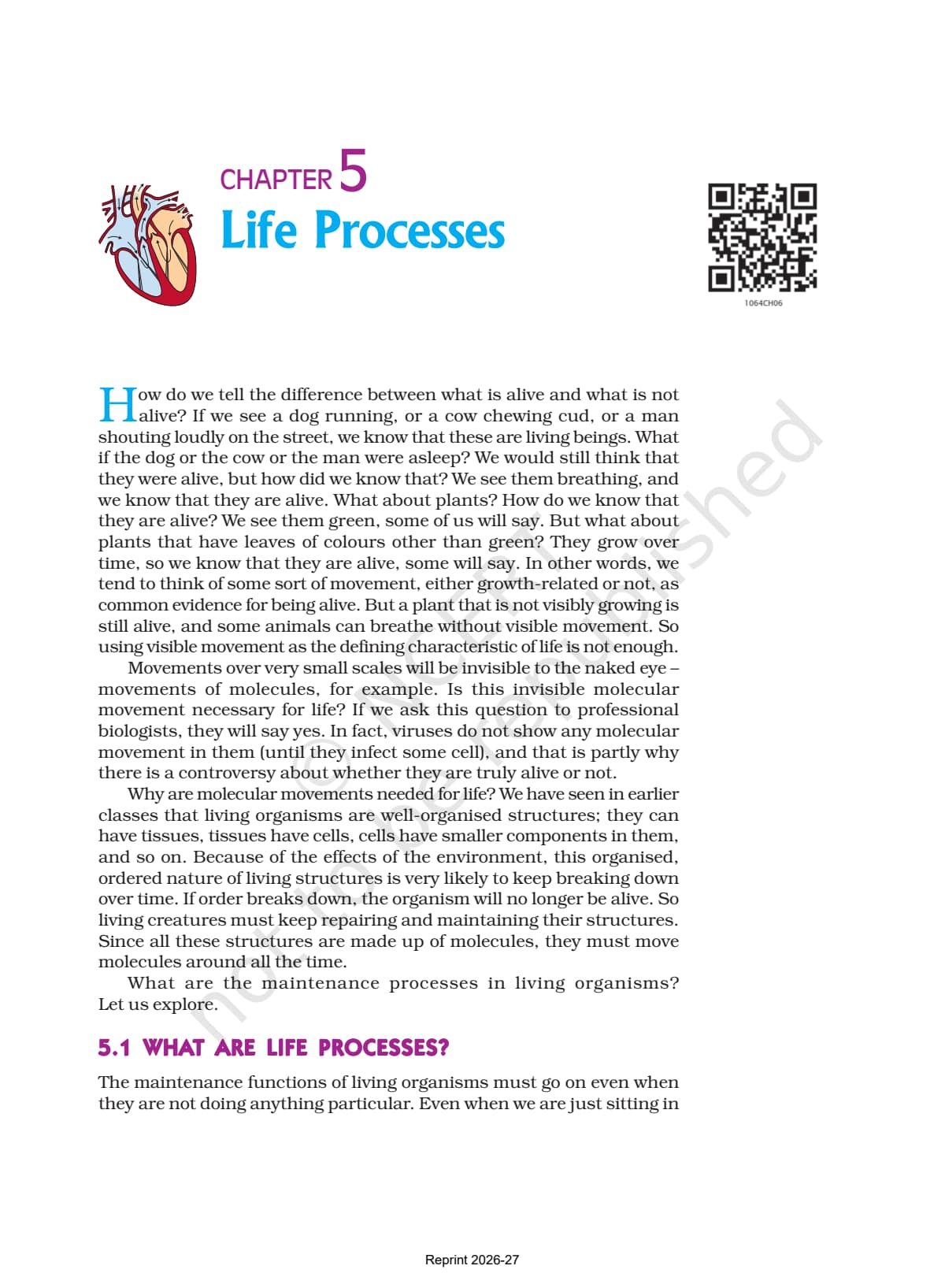
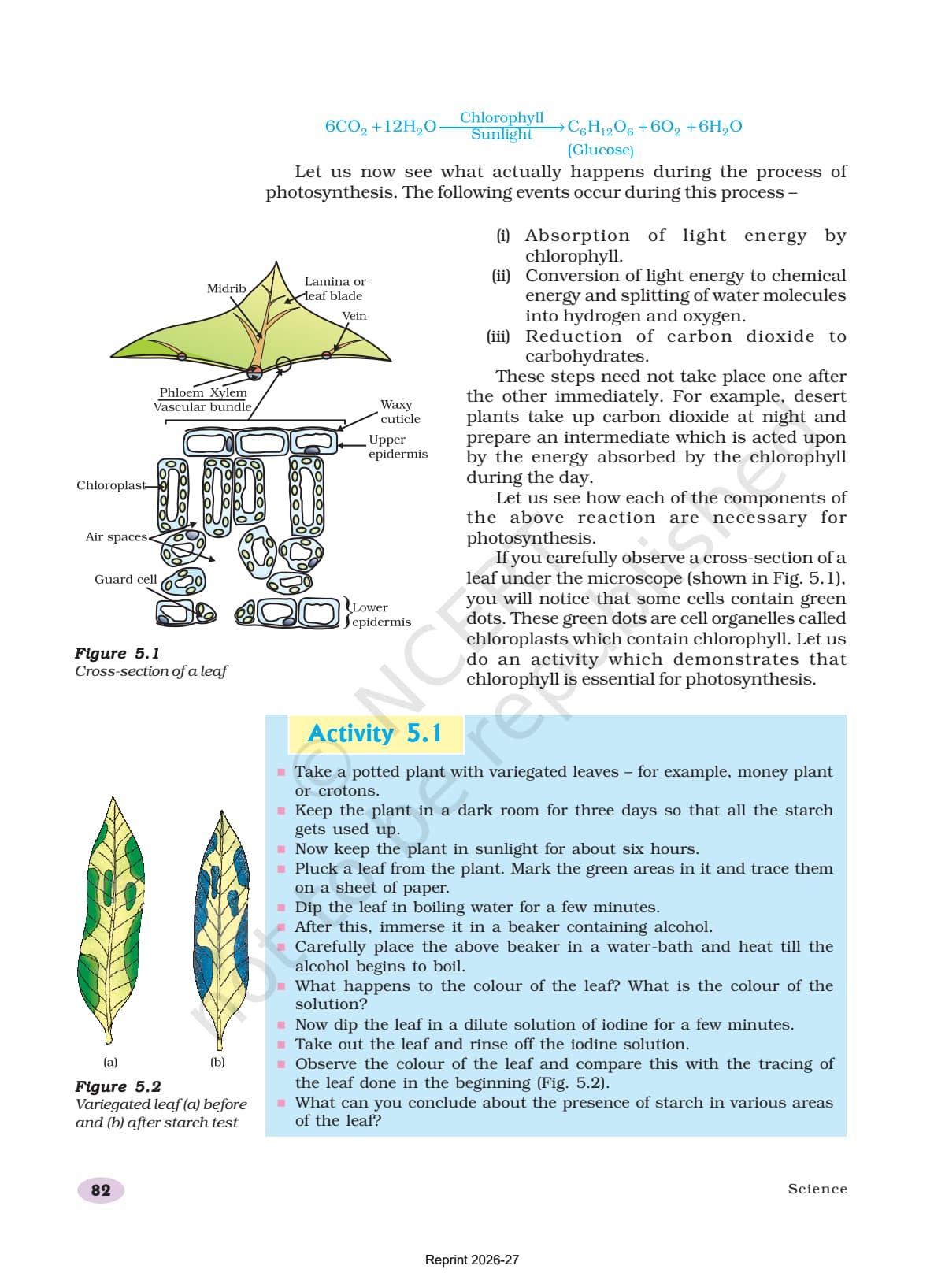
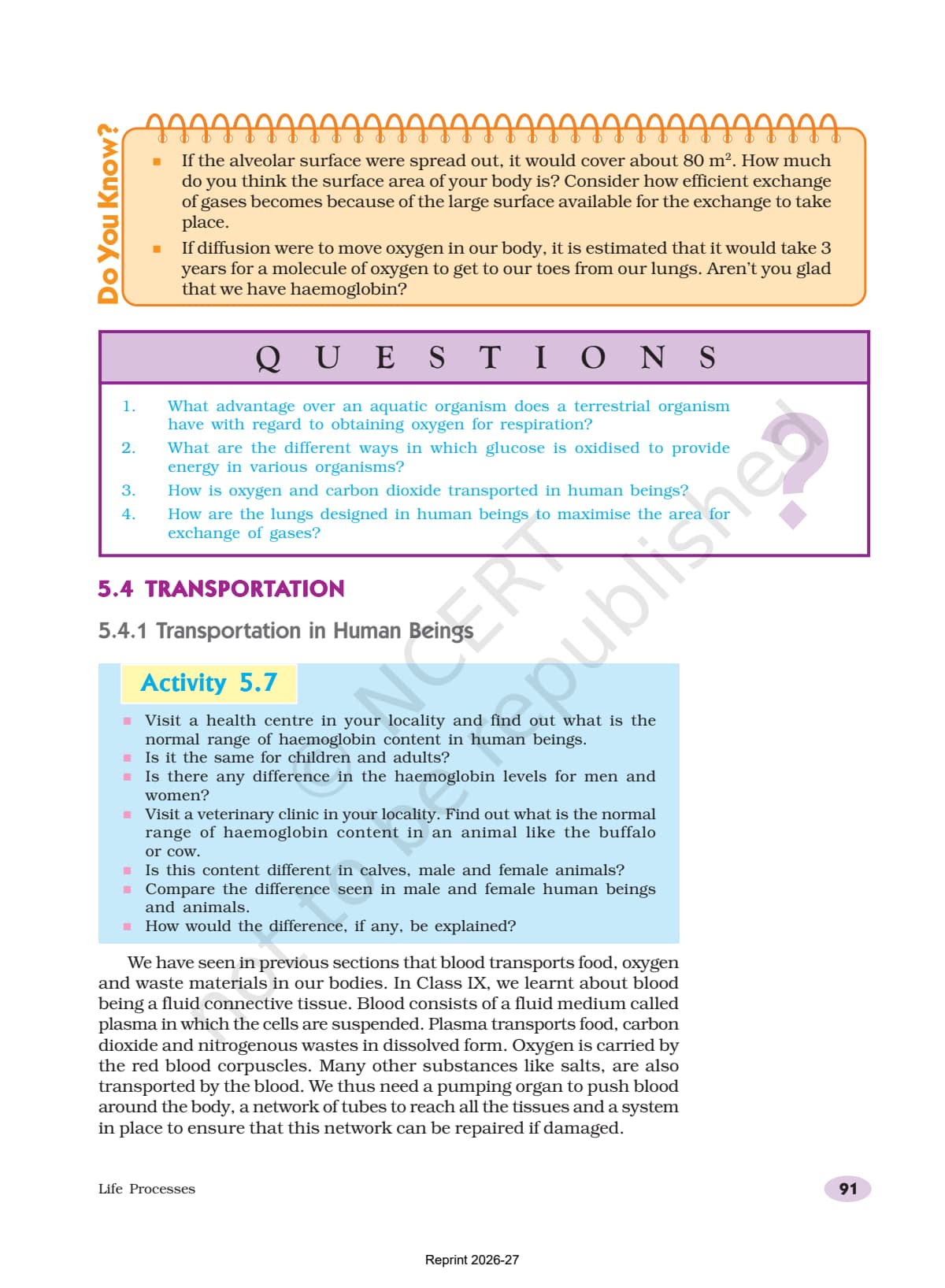
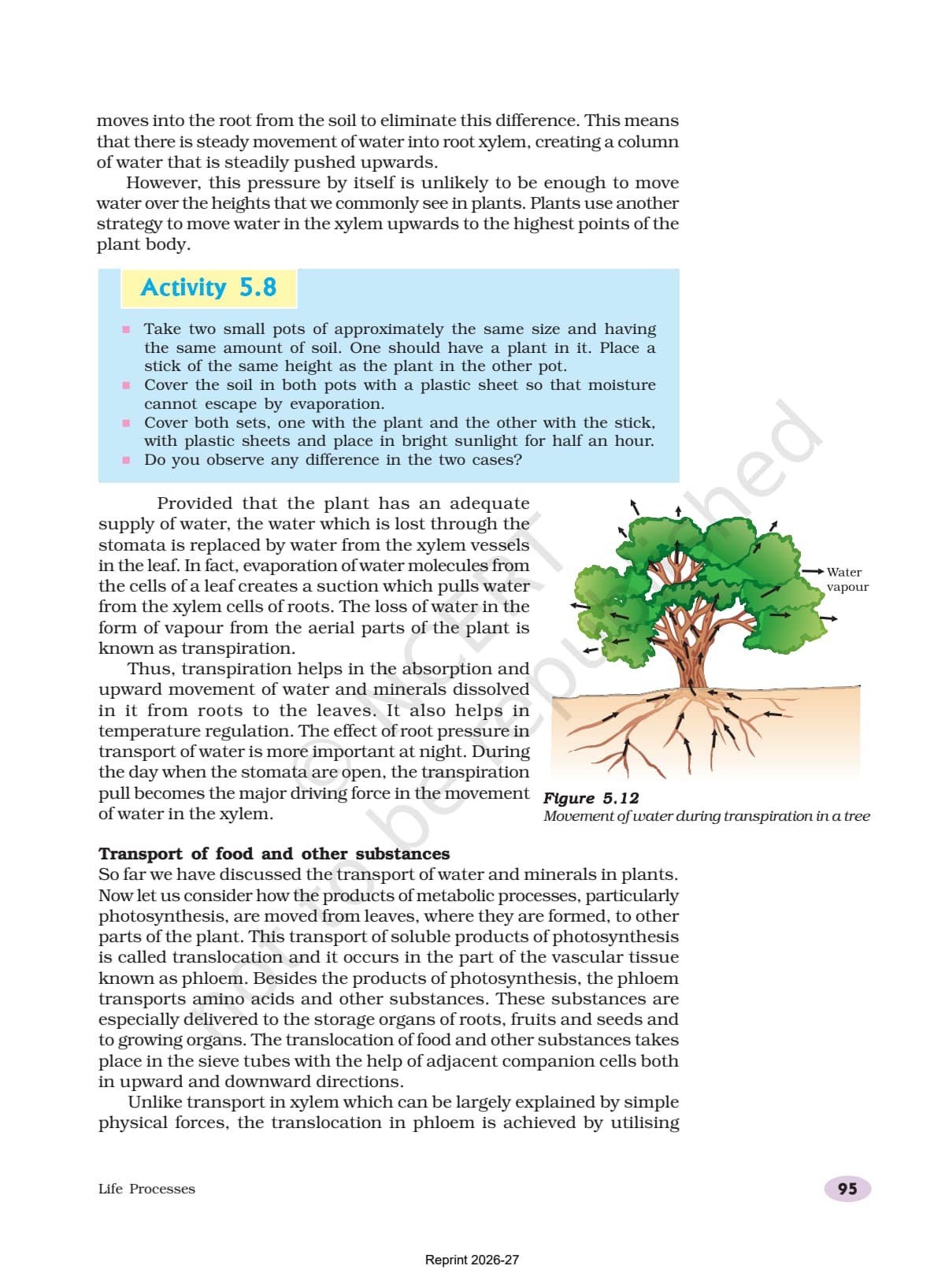
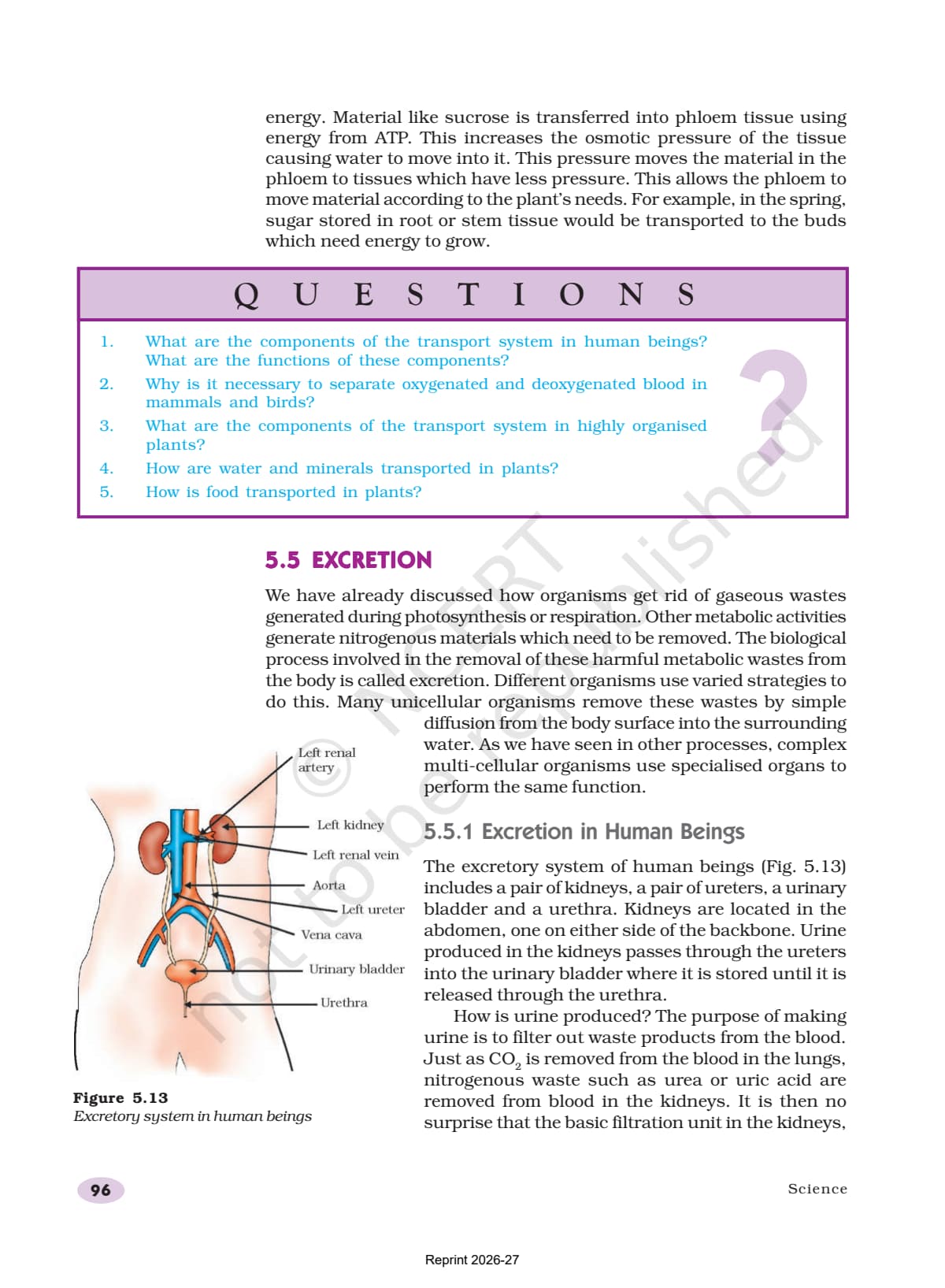
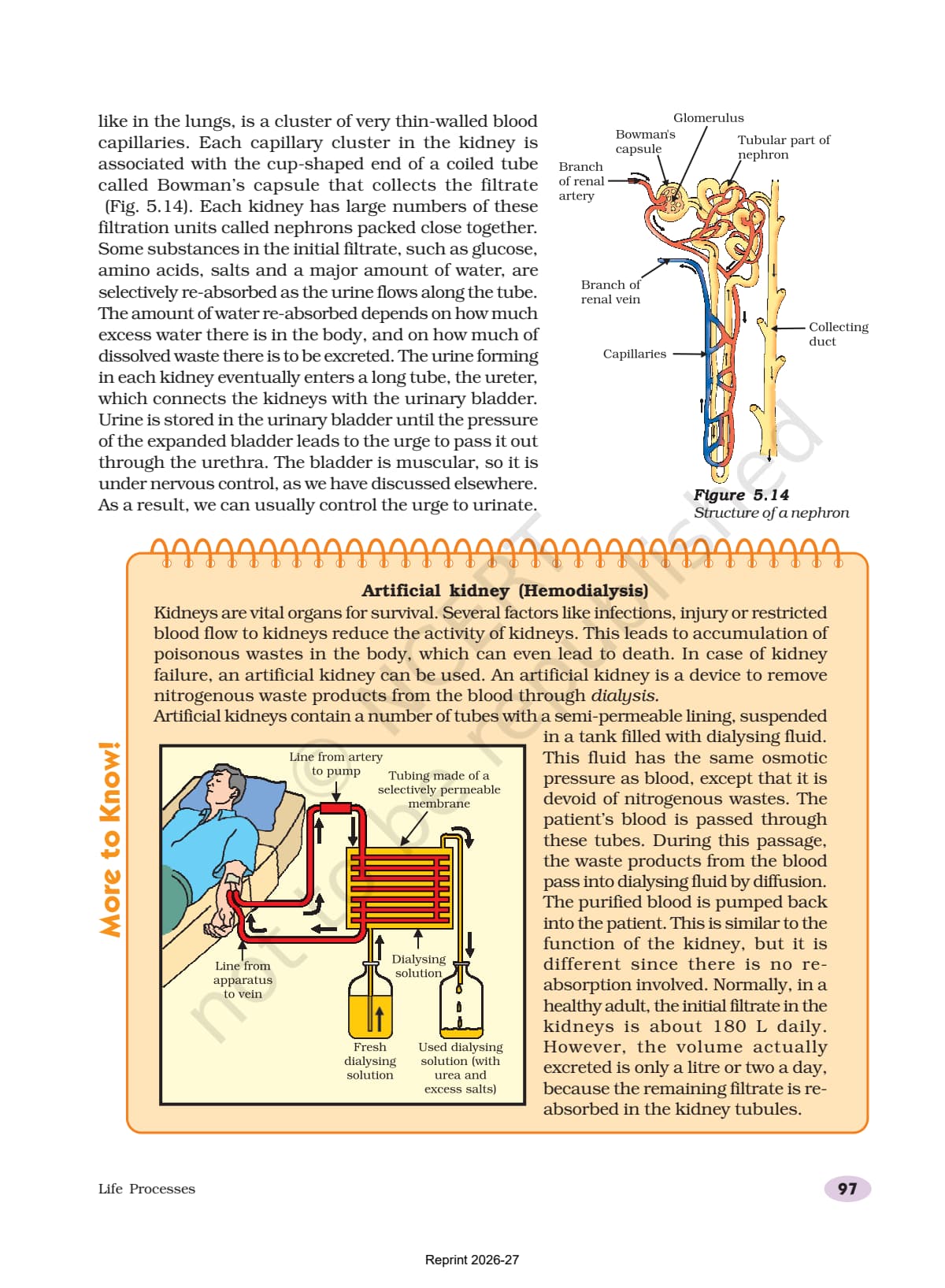
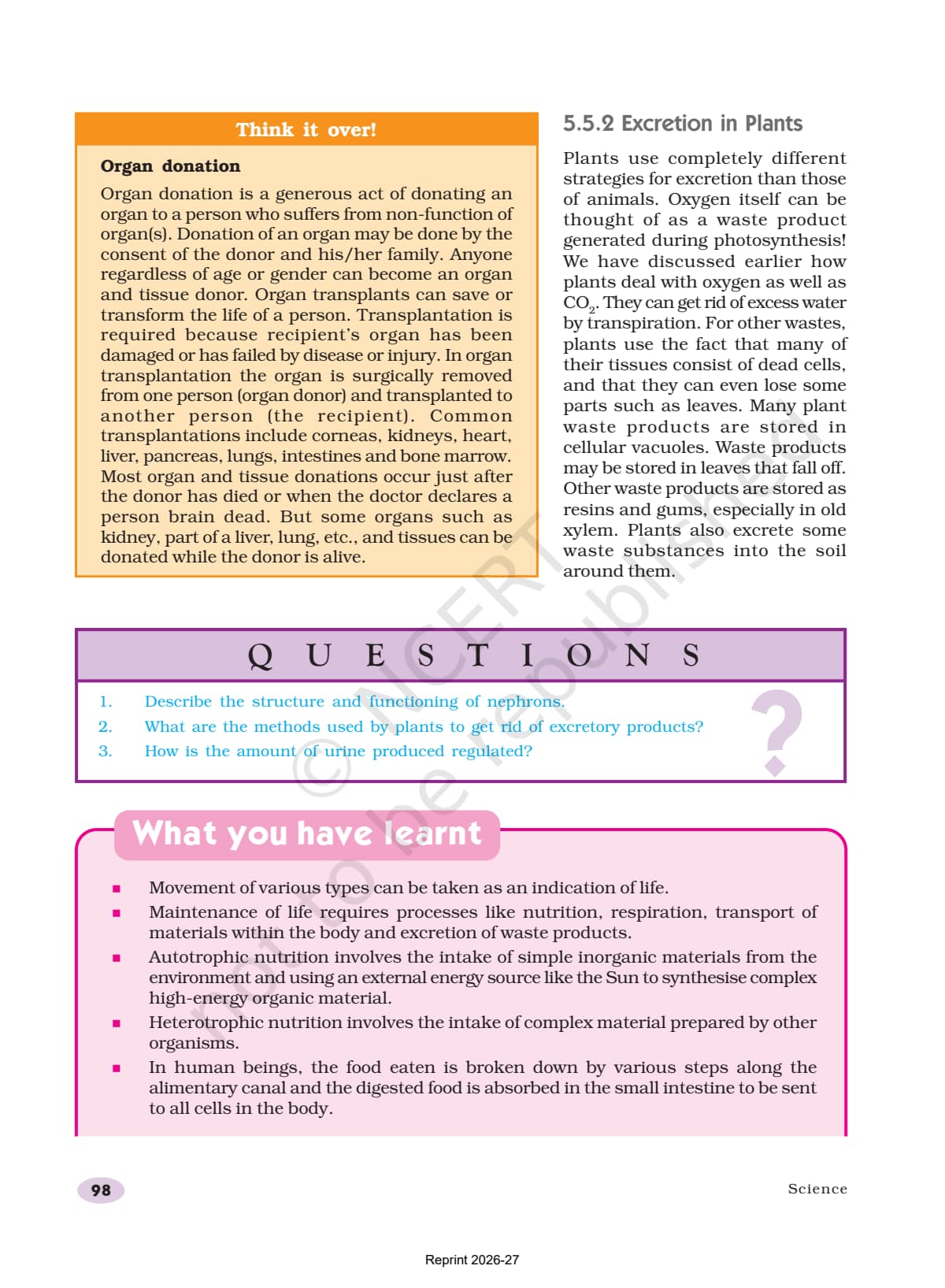
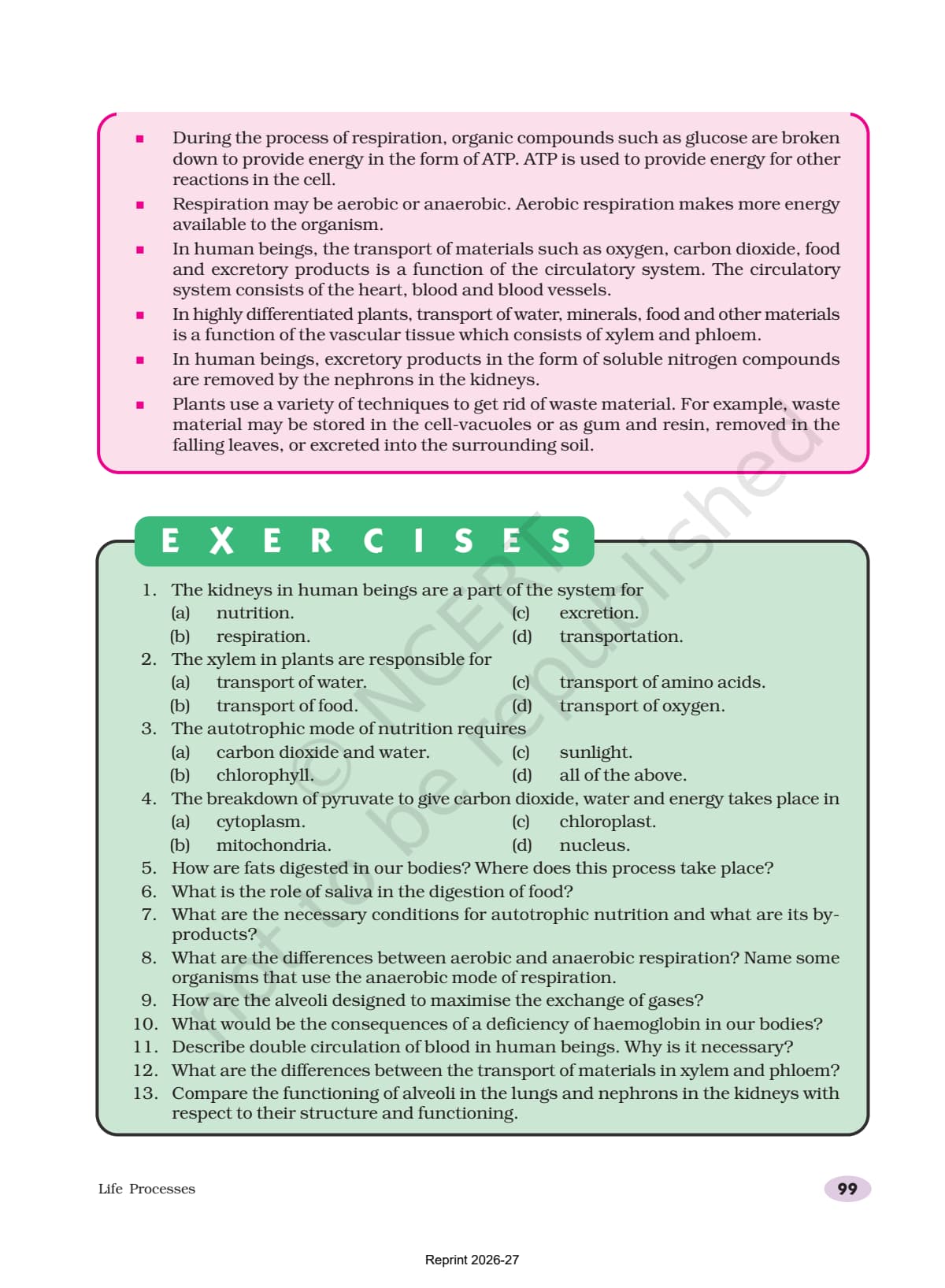
- Official NCERT textbook PDF of Chapter 5, with every activity, figure, in-text question and exercise exactly as printed.
- Covers photosynthesis, human digestion, aerobic and anaerobic respiration, the structure of the human heart, double circulation, transport in plants, and excretion through the nephron.
- Aligned with the 2026-27 CBSE Class 10 Science syllabus, useful for board exam revision and as the base text for the solutions and notes.
This page hosts the official NCERT Class 10 Science textbook chapter, mapped to the 2026-27 CBSE syllabus and checked page by page against the printed Life Processes chapter.
Student Feedback: What 12,400 students told us about this chapter
76% of Class 10 students said the human heart, double circulation and the nephron diagram were the parts of this chapter they found hardest to recall in class tests. 3 out of 5 students told us that labelling the official NCERT figures (Fig. 5.10 heart, Fig. 5.14 nephron) themselves, instead of just reading them, was what finally made the chapter stick.
Students reported spending on average 4 to 5 hours on the full chapter across the first read and revision, and toppers said reading the official book diagrams for the heart and the respiratory system stopped them from mislabelling chambers and vessels in the board exam.
Source: 2026-27 Class 10 Science student poll. Sample of 12,400 students from CBSE schools across 13 states, taken before the 2026 board exams.
What the NCERT Book for Class 10 Science Chapter 5 Life Processes Covers
The downloadable PDF above is the complete official NCERT chapter, exactly as printed in the 2026-27 textbook. It begins by asking how we decide whether something is alive, then builds to the four maintenance processes every living body runs: nutrition, respiration, transportation and excretion.
- Nutrition: how autotrophs make food by photosynthesis and how heterotrophs digest food.
- Respiration: glucose breakdown for energy, the aerobic and anaerobic paths, and breathing in humans.
- Transportation: the heart, double circulation, blood vessels, and xylem and phloem in plants.
- Excretion: how the kidney filters blood through the nephron, and how plants get rid of wastes.
Life Processes Class 10 Science Full Chapter Video
Source: Magnet Brains on YouTube
What are Life Processes in Class 10 Science Chapter 5
The chapter opens with a question: how do we tell what is alive? Movement is one clue, but a resting plant is still alive. Living bodies are highly organised structures that the environment is always trying to break down, so they must keep repairing and maintaining themselves. The processes that do this maintenance are called life processes.
Size matters too. In a single-celled organism, the whole surface touches the environment, so simple diffusion is enough. But in a large multicellular organism, most cells are deep inside. Diffusion is far too slow to supply oxygen to a body the size of a human, which is why complex organisms need specialised organs and a transport system. This is a favourite one-mark board question.
Nutrition: Autotrophic Nutrition and Photosynthesis in Class 10 Science
Section 5.2 splits organisms by how they get food. Autotrophs (green plants) make food from carbon dioxide and water; heterotrophs (animals, fungi) take in food made by others. Autotrophs make food by photosynthesis, storing sunlight as chemical energy in carbohydrates.
The NCERT book lists three events during photosynthesis, worth full marks when named in order:
- Absorption of light energy by chlorophyll, the green pigment found in chloroplasts.
- Conversion of light energy to chemical energy and the splitting of water molecules into hydrogen and oxygen.
- Reduction of carbon dioxide to carbohydrates (glucose) using that chemical energy.
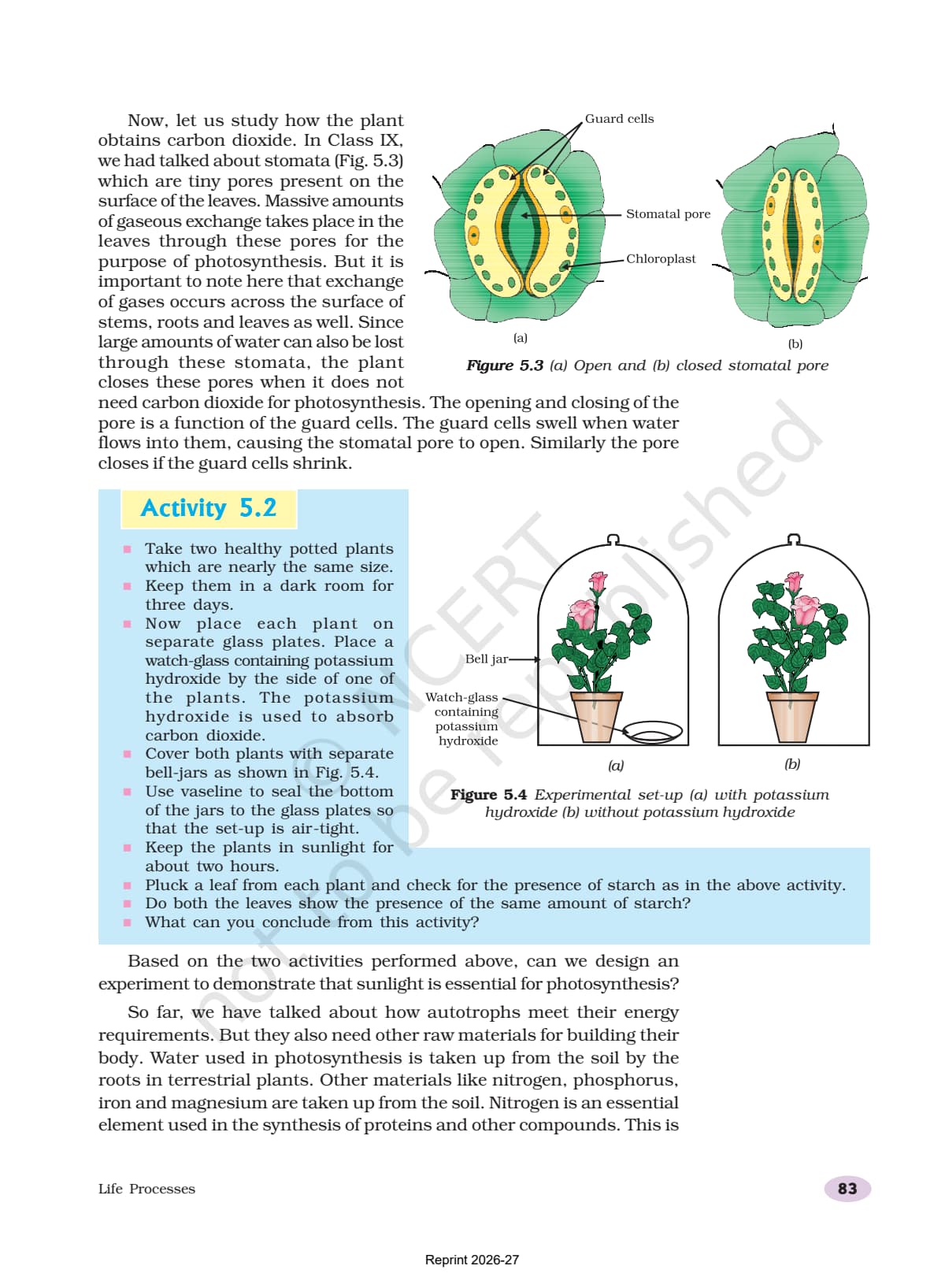
Stomata are tiny pores on the leaf surface through which carbon dioxide enters and oxygen leaves; the guard cells swell to open a stoma when water flows in and shrink to close it, which also controls water loss. Besides carbon dioxide (from air) and water (from soil through the roots), plants take up minerals such as nitrogen, phosphorus, iron and magnesium, with nitrogen used to build proteins.
Heterotrophic Nutrition and Human Digestion in Class 10 Science
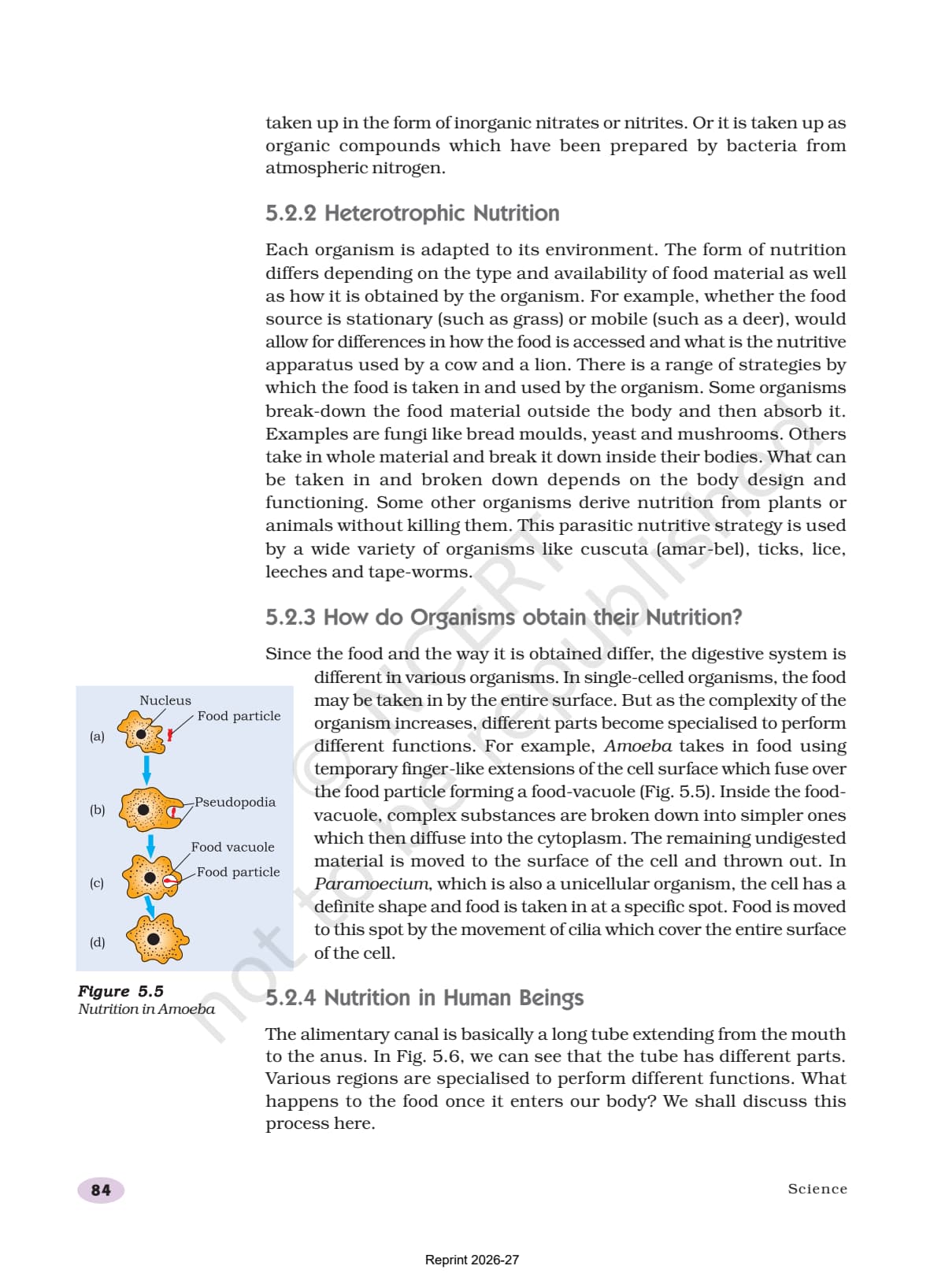
Heterotrophic nutrition is the intake of food made by others. Some organisms digest food outside the body and absorb it (fungi), most animals take in whole food and digest it inside, and parasites draw nutrition from a living host (cuscuta, ticks, tape-worms). In Amoeba, pseudopodia engulf food into a food-vacuole.
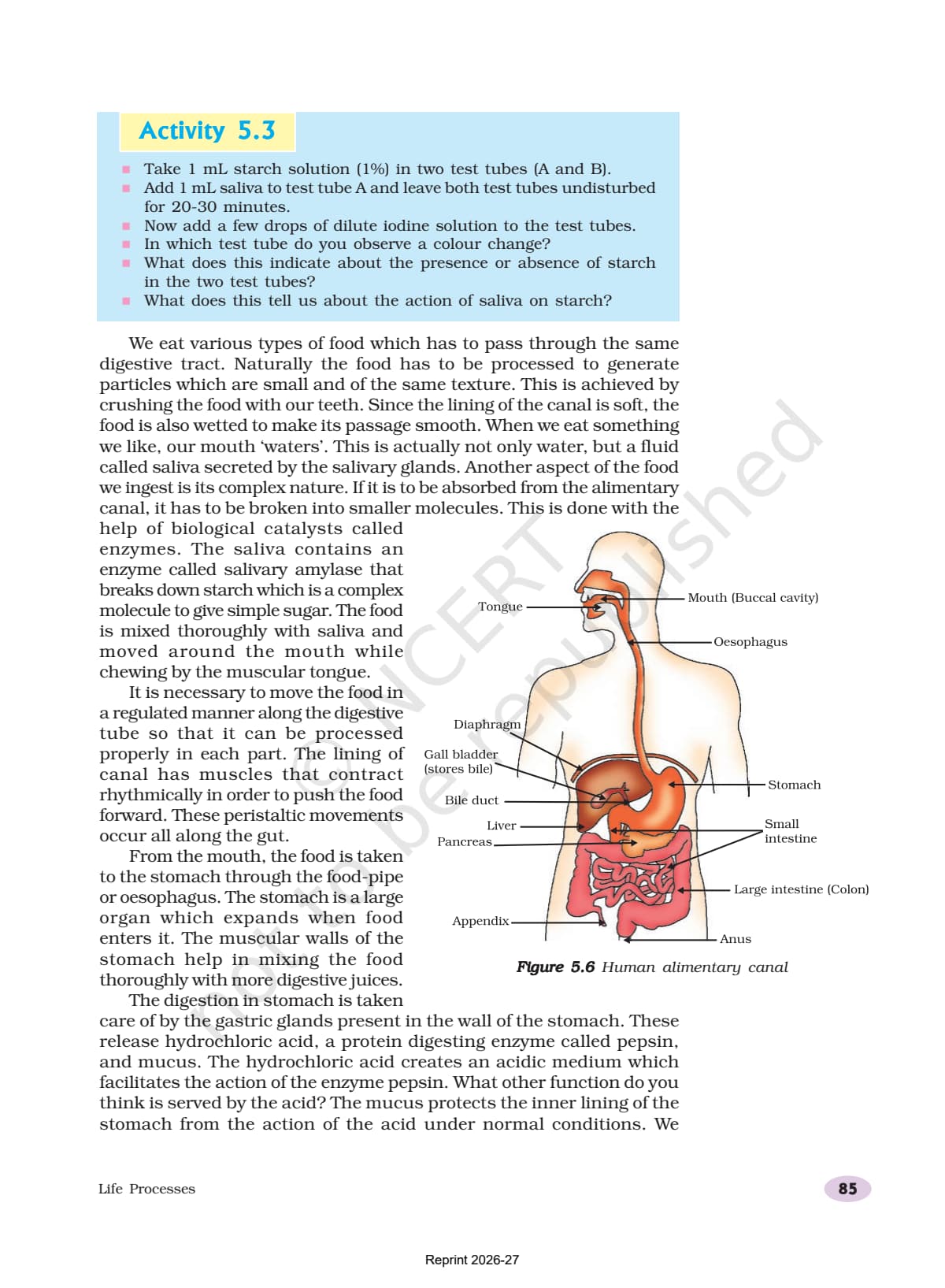
In human beings, the alimentary canal runs from mouth to anus, each part specialised.
| Part of the canal | Key juice or enzyme |
|---|---|
| Mouth | Salivary amylase (breaks starch to sugar) |
| Stomach | HCl, pepsin (digests protein), mucus |
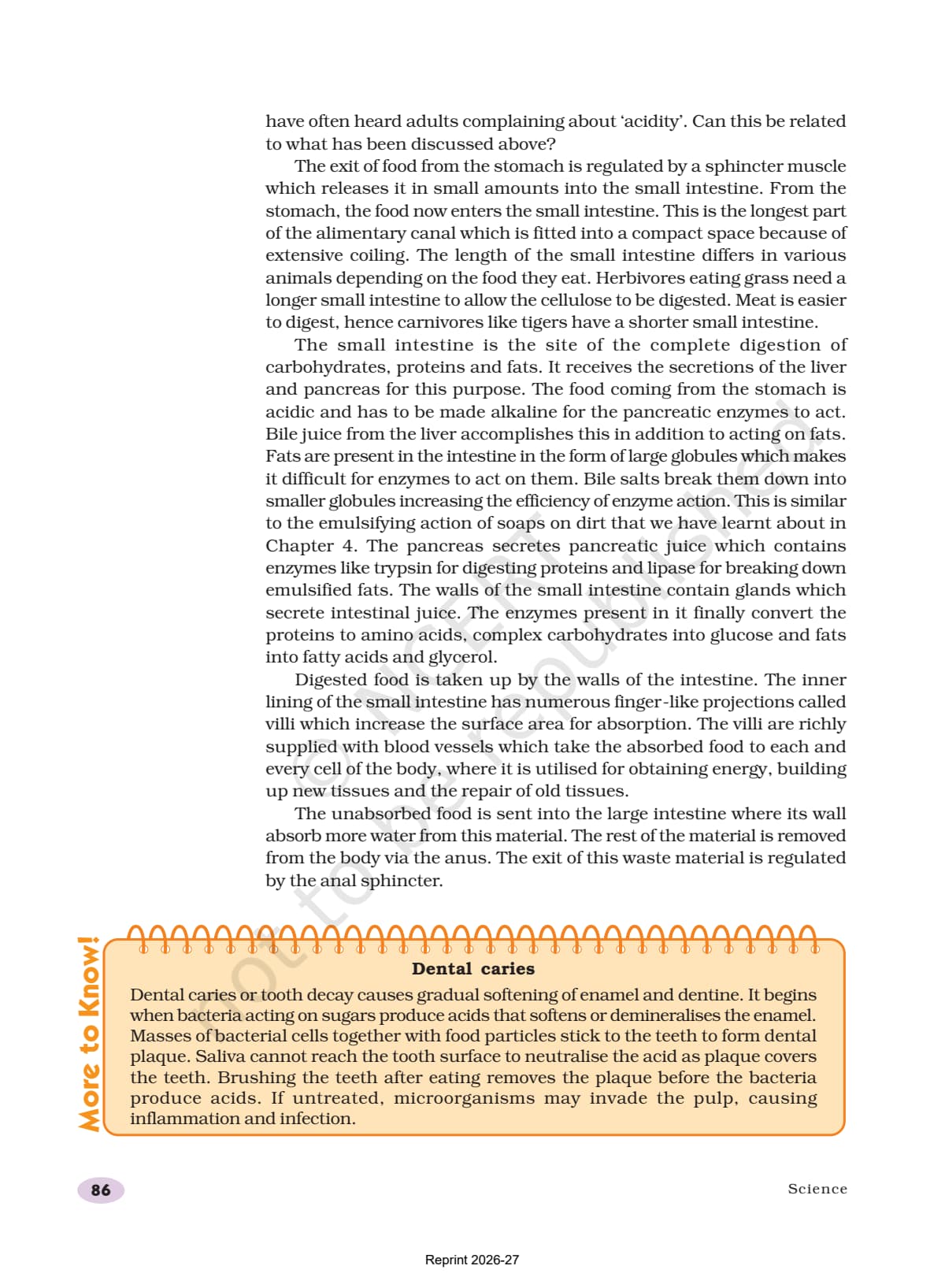
| Small intestine | Bile, pancreatic juice and intestinal juice; villi absorb food into the blood |
| Large intestine | No enzymes; mainly water absorption |
Bile from the liver makes food alkaline so pancreatic enzymes can act, and it emulsifies fats into tiny droplets. The small intestine wall has thousands of finger-like villi that increase the surface area for absorption.
Respiration in Class 10 Science Chapter 5 Life Processes
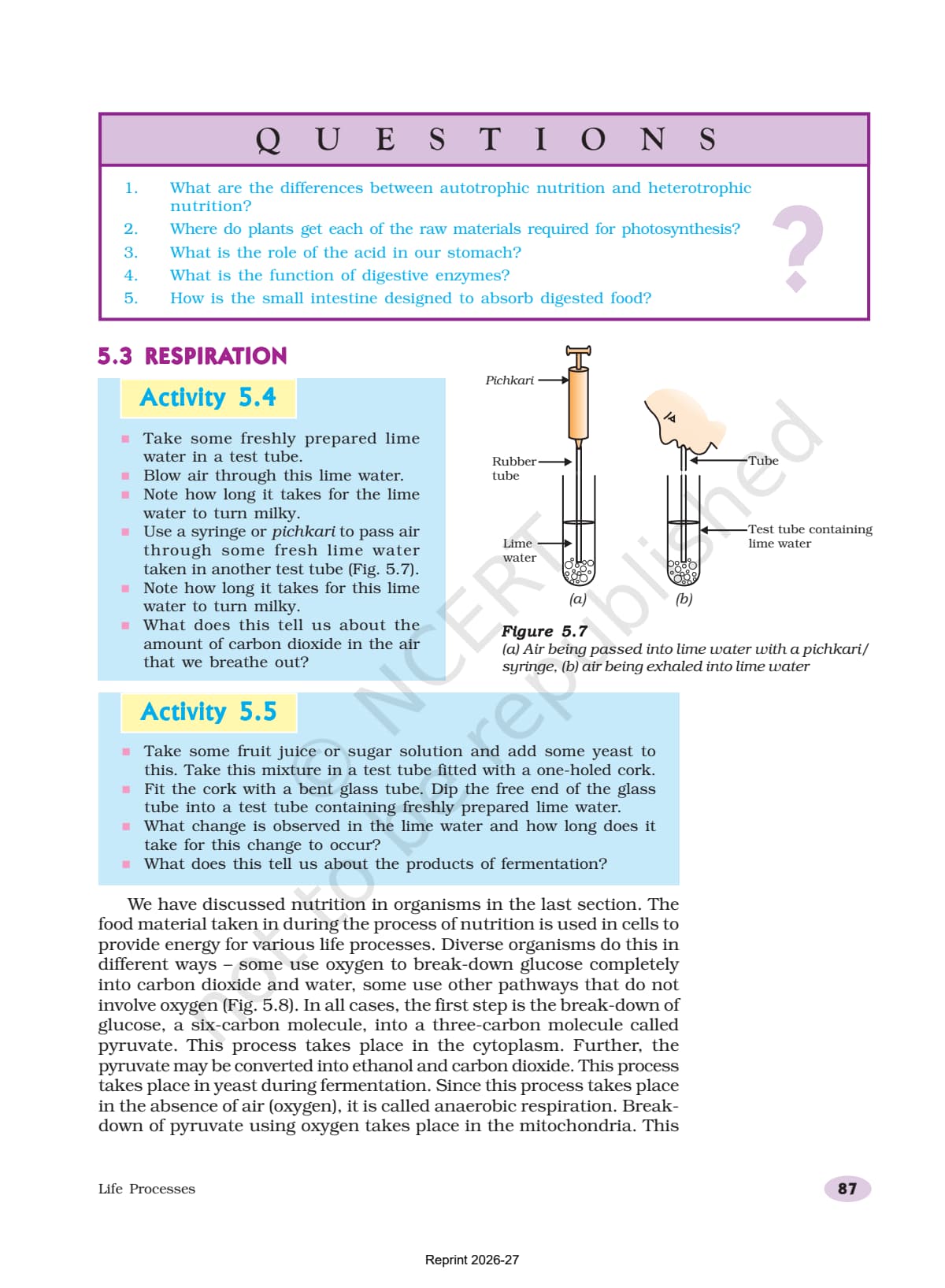
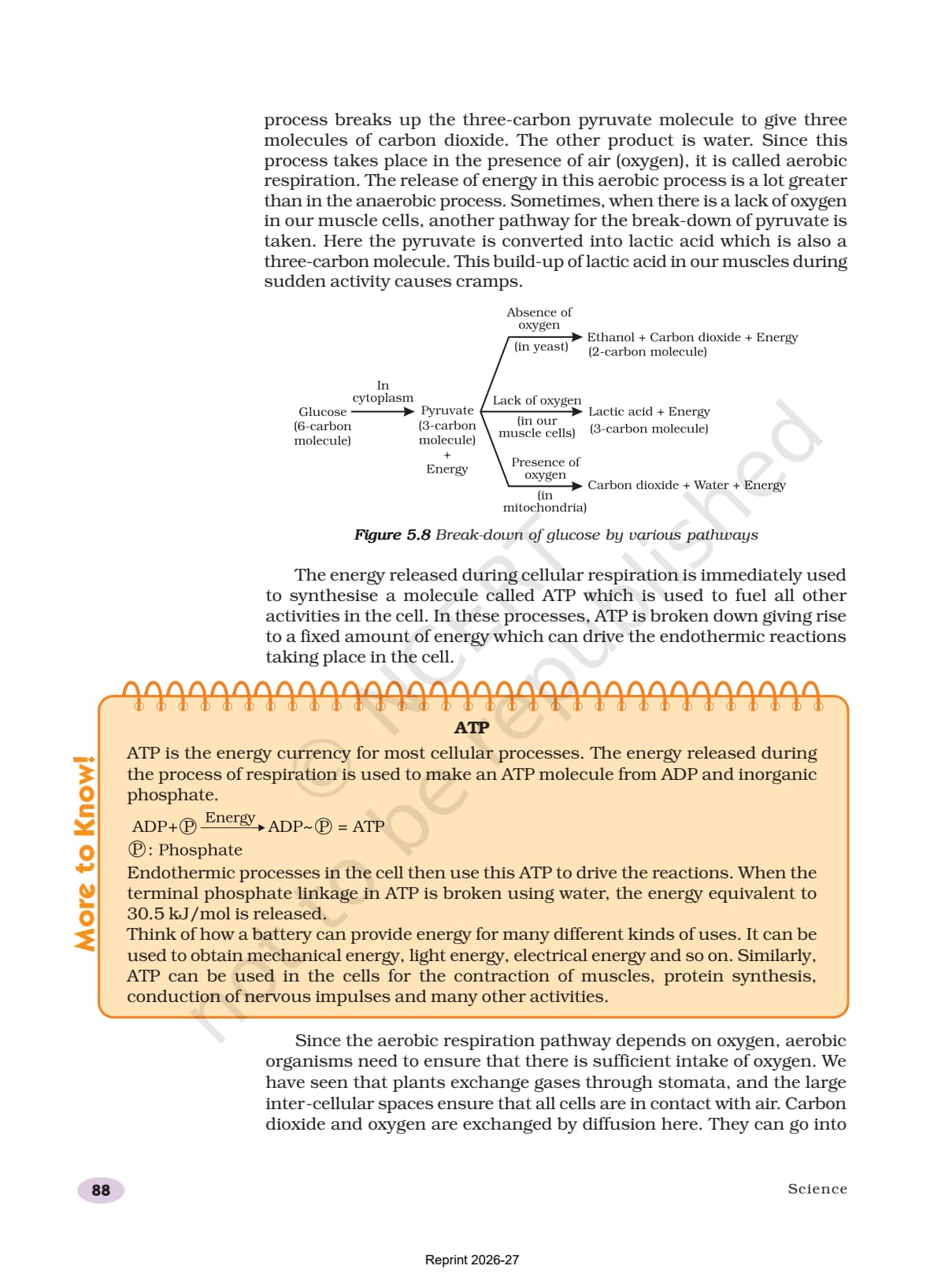
Section 5.3 explains respiration, the breakdown of glucose to release its stored energy. The first step, glycolysis, splits glucose into two molecules of pyruvate in the cytoplasm. What happens next depends on whether oxygen is present.
| Type | Oxygen? | End products | Energy released |
|---|---|---|---|
| Aerobic respiration | Yes (in mitochondria) | Carbon dioxide + water | A lot of energy |
| Anaerobic (yeast) | No | Ethanol + carbon dioxide | Less energy |
| Anaerobic (muscle) | No (during heavy exercise) | Lactic acid | Less energy |
The energy released is stored in ATP, the energy currency of the cell. The build-up of lactic acid in muscles during heavy exercise causes cramps.
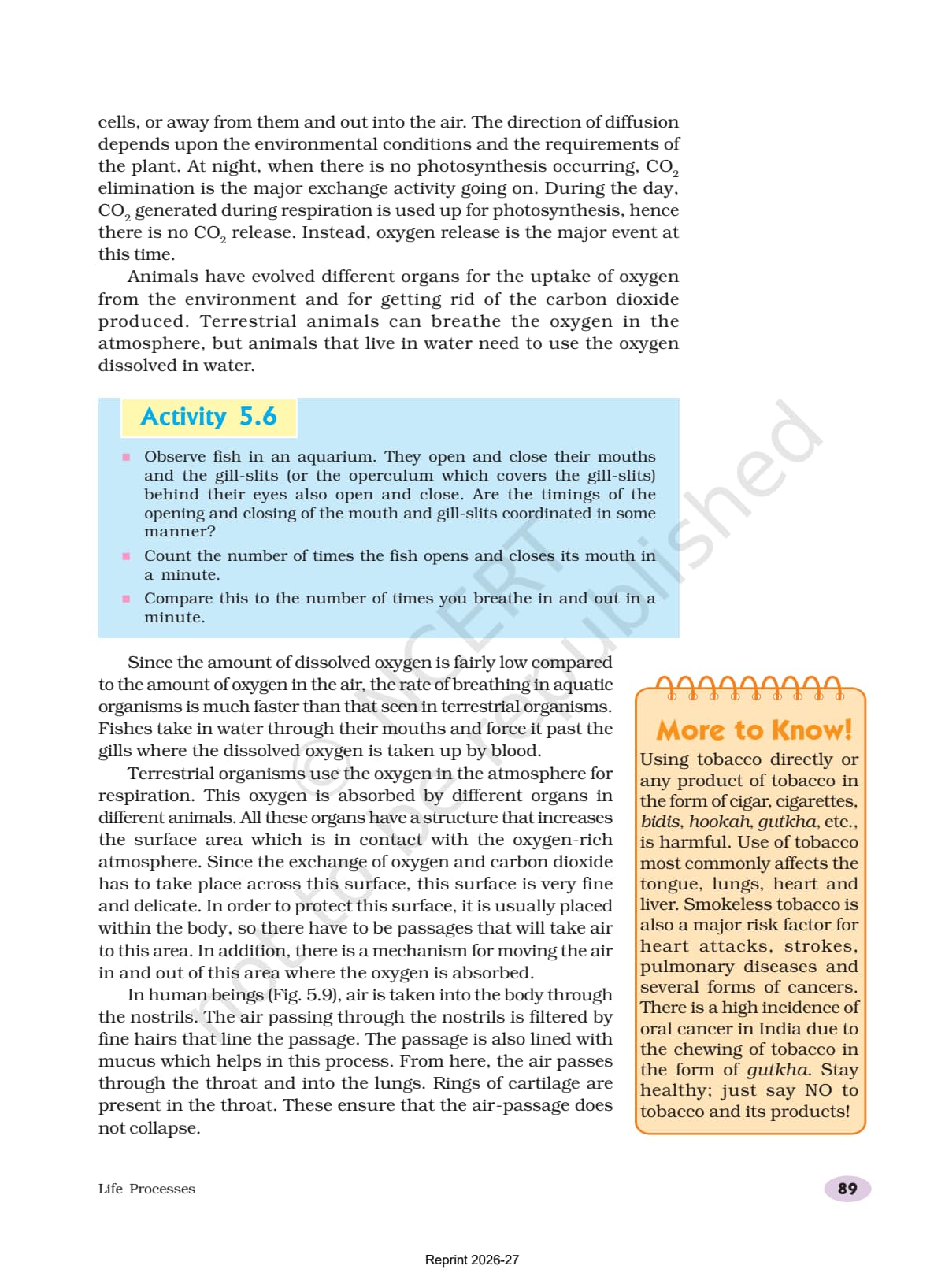
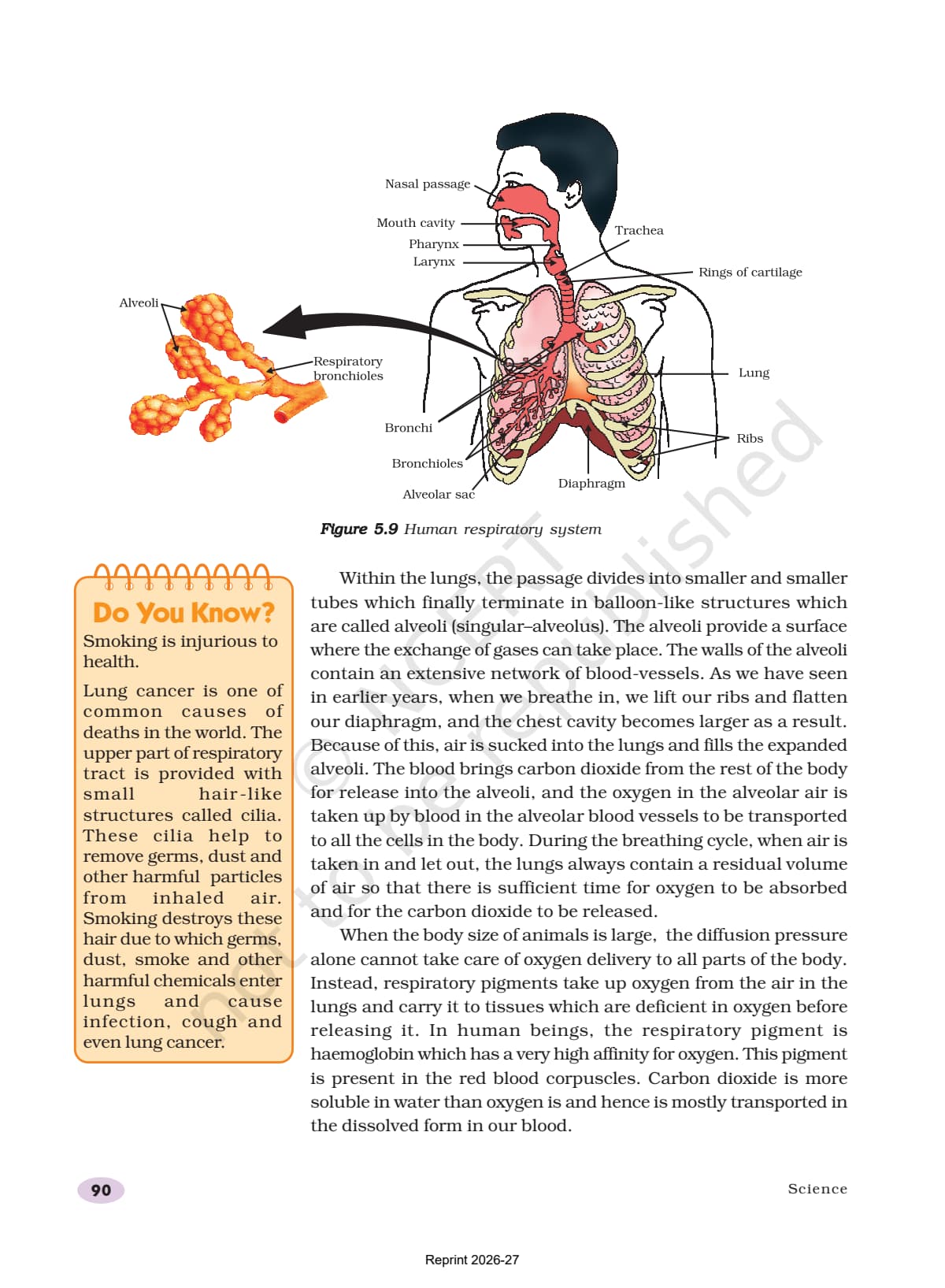
For breathing, terrestrial animals take oxygen from air while aquatic animals use the small amount dissolved in water, so fish breathe faster. In humans, air reaches the lungs, where the passage divides into tiny balloon-like alveoli.
- Alveoli give a huge surface for gas exchange; spread flat they cover about 80 m2.
- Haemoglobin in the red blood cells carries oxygen; carbon dioxide is more soluble, so it is mostly carried dissolved in the plasma.
Transportation: The Human Heart and Blood in Class 10 Science
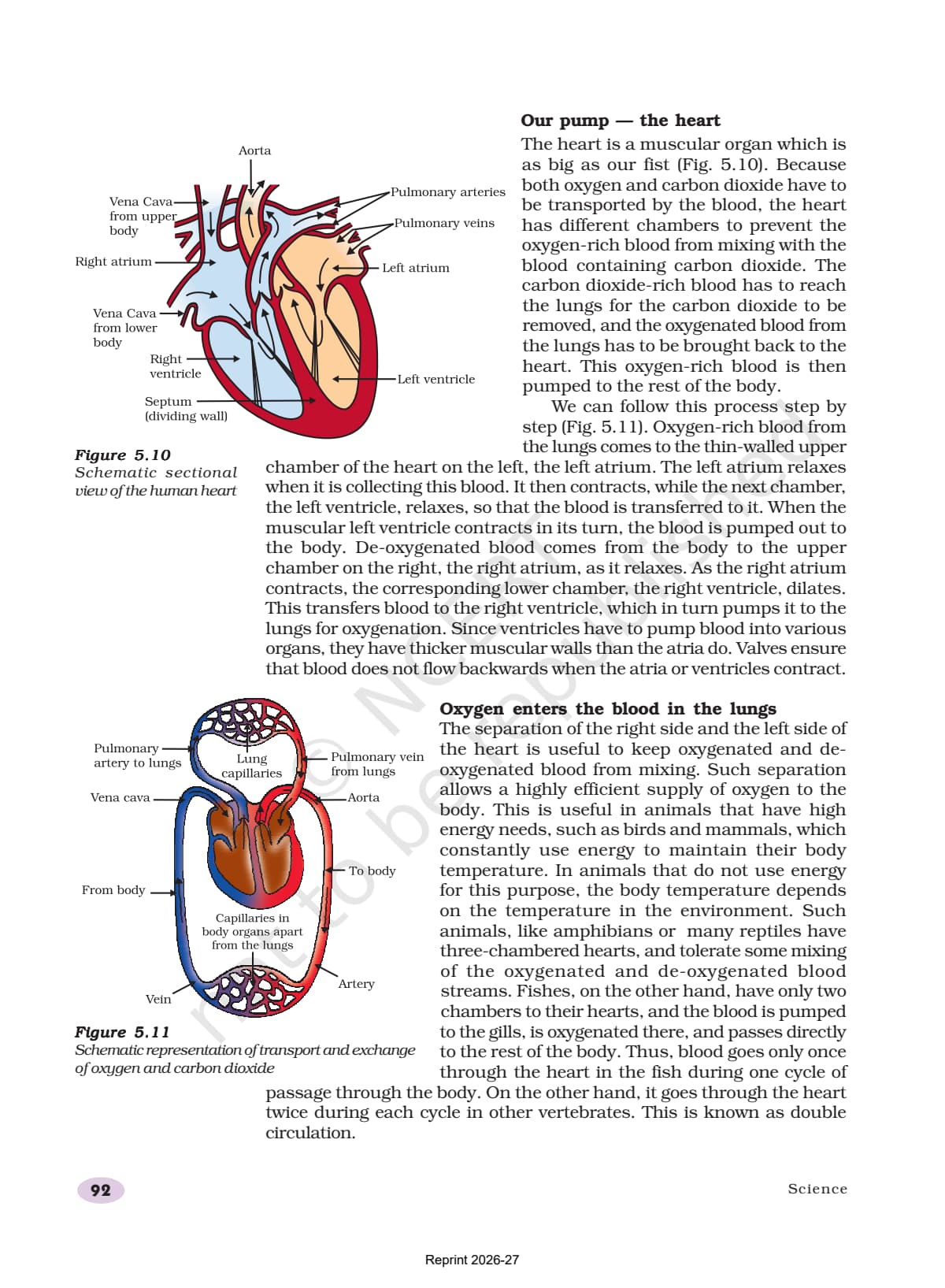
Section 5.4 covers transportation. Blood is a fluid connective tissue of plasma (carrying dissolved food, carbon dioxide and nitrogenous waste) and cells (red cells carry oxygen). Pushing it around the body needs the heart, a fist-sized muscular organ with four chambers that keep oxygen-rich and oxygen-poor blood from mixing.
The right atrium sends deoxygenated body blood to the right ventricle, which pumps it to the lungs; the left atrium sends oxygenated lung blood to the left ventricle, which pumps it to the whole body. Because blood passes through the heart twice in one full round, this is called double circulation. Keeping oxygenated and deoxygenated blood separate gives a steady oxygen supply, which warm-blooded birds and mammals need to keep their body temperature high. The ventricles have thicker walls than the atria, and valves stop backflow.
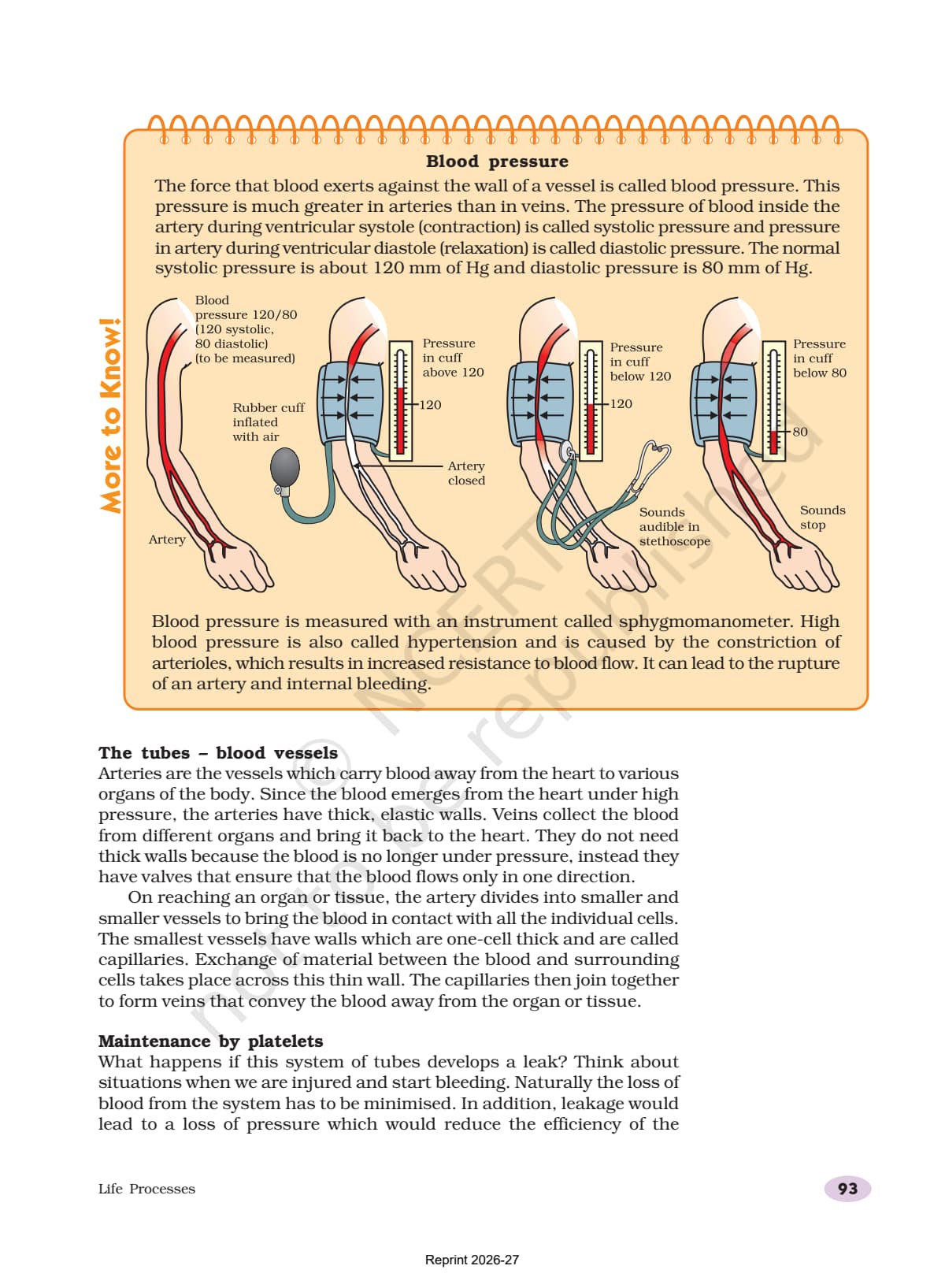
- Arteries carry blood away from the heart and have thick, elastic walls for the high pressure.
- Veins bring blood back to the heart and have valves to keep it moving one way.
- Capillaries are one-cell thick, so food, oxygen and waste can be exchanged with cells.
Transportation in Plants: Xylem and Phloem in Class 10 Science
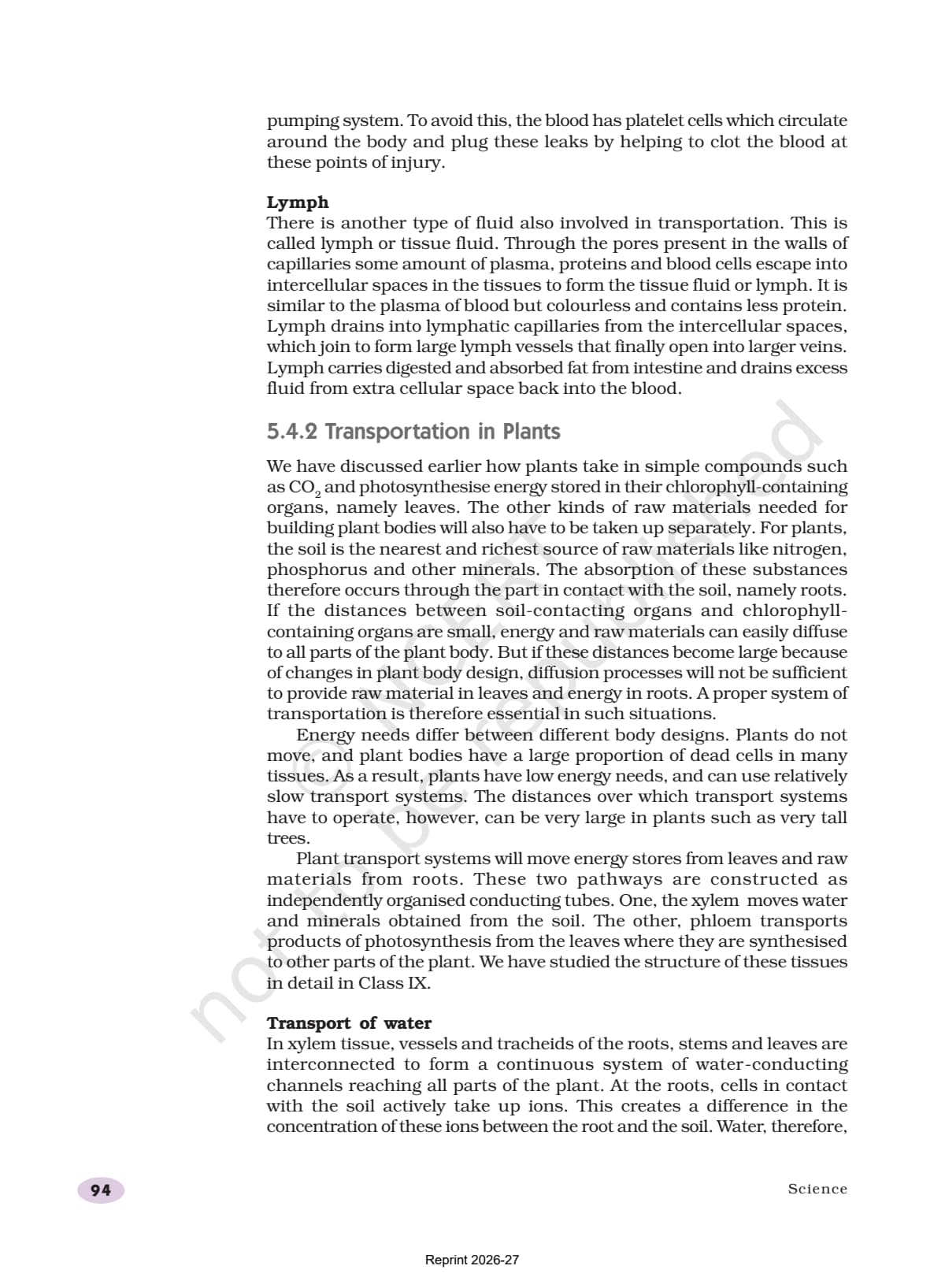
Plants have two separate transport tissues, and mixing them up costs marks. Xylem moves water and dissolved minerals upward from the roots to the leaves, while phloem moves the food made in the leaves to the rest of the plant.
| Tissue | What it carries | Direction | Driving force |
|---|---|---|---|
| Xylem | Water and minerals from the soil | Roots to leaves (upward) | Root pressure and transpiration pull |
| Phloem | Food (sugar) made in the leaves | Both up and down, as the plant needs | Energy from ATP (translocation) |
In xylem, the bigger force by day is transpiration, the loss of water vapour through the stomata, which creates a suction pulling water up. The movement of food in phloem is translocation, which uses ATP, so it moves sugar both upward to buds and downward to storage roots.
Excretion in Human Beings and Plants in Class 10 Science
Section 5.5 covers excretion, the removal of harmful nitrogenous wastes such as urea. The human excretory system has two kidneys, two ureters, a bladder and a urethra. Each kidney holds millions of filtering units called nephrons, the structure the board paper asks about most.
- Filtration: blood enters the glomerulus inside Bowman's capsule, where waste, glucose, salts and water are filtered out.
- Reabsorption: along the tubule, useful substances like glucose, salts and most water are taken back into the blood.
- Urine: what remains drains through the ureter into the bladder and leaves through the urethra.
When the kidneys fail, an artificial kidney (dialysis) removes nitrogenous waste from the blood. Plants use different strategies: oxygen from photosynthesis is a waste gas, extra water leaves by transpiration, and other wastes are stored in vacuoles, in falling leaves, or as resins and gums in old xylem.
Other Resources for Class 10 Science Chapter 5 Life Processes
Read the official NCERT Book chapter above, then revise with the matching NCERT Solutions, revision notes, formula sheet and handwritten notes, all linked in the table below.
| Resource | What it covers | Open |
|---|---|---|
| NCERT Book PDF | Official Class 10 Science Chapter 5 textbook, with every activity, figure and exercise. | You are here |
| NCERT Solutions | Step-by-step answers to all in-text and exercise questions of the chapter. | Class 10 Science Chapter 5 NCERT Solutions |
| Notes | Concept-first revision notes on nutrition, respiration, transportation and excretion. | Class 10 Science Chapter 5 Notes |
| Formula Sheet | Quick reference of key equations, definitions and diagrams for fast revision. | Class 10 Science Chapter 5 Formula Sheet |
| Handwritten Notes | Scanned-style handwritten pages for last-minute board revision. | Class 10 Science Chapter 5 Handwritten Notes |
NCERT Book for Class 10 Science: All Chapters
Related Links: Use the table below to open the official NCERT Book PDF for the other chapters of Class 10 Science.
| Chapter | NCERT Book PDF link |
|---|---|
| Chapter 1 | Chemical Reactions and Equations NCERT Book PDF |
| Chapter 2 | Acids, Bases and Salts NCERT Book PDF |
| Chapter 3 | Metals and Non-metals NCERT Book PDF |
| Chapter 4 | Carbon and its Compounds NCERT Book PDF |
| Chapter 5 | Life Processes NCERT Book PDF (You are here) |
| Chapter 6 | Control and Coordination NCERT Book PDF |
| Chapter 7 | How do Organisms Reproduce NCERT Book PDF |
| Chapter 8 | Heredity NCERT Book PDF |
| Chapter 9 | Light Reflection and Refraction NCERT Book PDF |
| Chapter 10 | The Human Eye and the Colourful World NCERT Book PDF |
| Chapter 11 | Electricity NCERT Book PDF |
| Chapter 12 | Magnetic Effects of Electric Current NCERT Book PDF |
| Chapter 13 | Our Environment NCERT Book PDF |
NCERT Book Class 10 Science Chapter 5 Life Processes FAQs
Ques. What does Chapter 5 Life Processes cover in the Class 10 Science NCERT Book?
Ans. Chapter 5 of the Class 10 Science NCERT Book covers the four life processes that keep an organism alive. It begins by explaining what life processes are and why multicellular organisms need transport systems while unicellular ones can rely on diffusion. It then covers nutrition, both autotrophic nutrition through photosynthesis and heterotrophic nutrition including the full human digestive system, followed by respiration with its aerobic and anaerobic paths and breathing in humans. The chapter ends with transportation, the human heart, double circulation, blood vessels and transport in plants through xylem and phloem, and excretion through the human nephron and in plants. The chapter is aligned with the 2026-27 CBSE syllabus.
Ques. What are the three events that occur during photosynthesis in Class 10 Science Chapter 5?
Ans. Photosynthesis involves three main events. First, light energy is absorbed by chlorophyll, the green pigment in the chloroplasts. Second, this light energy is converted into chemical energy and the water molecules are split into hydrogen and oxygen. Third, the carbon dioxide is reduced to carbohydrates such as glucose using that chemical energy. These steps need not happen one straight after the other, since some desert plants take in carbon dioxide at night and use it during the day. The overall reaction takes carbon dioxide and water and, in the presence of sunlight and chlorophyll, produces glucose and oxygen.
Ques. What is the difference between aerobic and anaerobic respiration in Class 10 Science?
Ans. Both kinds of respiration start by breaking glucose into pyruvate in the cytoplasm, a step called glycolysis. Aerobic respiration takes place in the presence of oxygen, inside the mitochondria, and breaks pyruvate completely into carbon dioxide and water, releasing a large amount of energy. Anaerobic respiration happens without oxygen and releases much less energy. In yeast, the pyruvate is converted into ethanol and carbon dioxide, which is used in baking and brewing. In our muscles during heavy exercise, the lack of oxygen turns pyruvate into lactic acid, whose build-up causes muscle cramps.
Ques. Why is double circulation necessary in human beings in Class 10 Science Chapter 5?
Ans. Double circulation means the blood passes through the heart twice in one complete round of the body, once on the way to the lungs and once on the way to the rest of the body. The four-chambered heart keeps the oxygen-rich blood from the lungs separate from the oxygen-poor blood from the body, so the two never mix. This separation gives a steady and efficient supply of oxygen, which warm-blooded animals like birds and mammals need to keep their body temperature constant. It is why birds and mammals have a four-chambered heart while fishes have a two-chambered heart with single circulation.
Ques. What is the difference between transport by xylem and transport by phloem?
Ans. Xylem and phloem are the two transport tissues of plants. Xylem carries water and dissolved minerals upward from the roots to the leaves, driven mainly by root pressure at night and by transpiration pull during the day, and this is largely a physical process. Phloem carries the food, mainly sugar, made in the leaves to all other parts of the plant, a process called translocation. Translocation uses energy from ATP, so it is an active process, and unlike xylem it can move food both upward to growing buds and downward to storage roots, depending on what the plant needs.
Ques. How does the human kidney filter blood in Class 10 Science Chapter 5?
Ans. Each kidney contains millions of tiny filtering units called nephrons. Blood enters a cluster of thin-walled capillaries, the glomerulus, inside a cup-shaped Bowman's capsule, where water, glucose, salts and nitrogenous waste such as urea are filtered out of the blood. As this filtrate flows along the tubule of the nephron, useful substances like glucose, amino acids, salts and most of the water are selectively reabsorbed back into the blood. What is left is urine, which drains through the ureter into the urinary bladder and is released through the urethra. This is why about 180 litres of filtrate a day becomes only one to two litres of urine.
Ques. Is the Class 10 Science Chapter 5 NCERT Book PDF free to download for 2026-27?
Ans. Yes. The official NCERT Book PDF for Class 10 Science Chapter 5 Life Processes is free to read and download on this page for the 2026-27 session. It is the complete chapter as printed in the CBSE textbook, including every activity, figure, in-text question and end-of-chapter exercise. You can pair the book with the linked NCERT Solutions and revision notes for the same chapter so that you read the textbook and revise from one place.
Ques. Are these NCERT Book contents aligned with the 2026-27 CBSE syllabus?
Ans. Yes. This page hosts the official NCERT Class 10 Science textbook chapter for the current 2026-27 CBSE syllabus. The Life Processes chapter is unchanged for this cycle, so the nutrition, respiration, transportation and excretion content you read here is exam-correct. Because it is the official book, it is the safest base text for board preparation, and the linked solutions, notes and formula sheet for the same chapter all follow this textbook order.



Comments