



This is the 2026-27 print of the NCERT Class 10 Geography book PDF Chapter 4 Agriculture, the farming chapter of Contemporary India II. The full 12-page chapter is free to download below, with a page-by-page map so you can jump straight to types of farming, cropping seasons, or major crops. Read it cover to cover or use the section map for quick board revision.
The agriculture class 10 PDF on this page is free and updated for the 2026-27 CBSE syllabus.
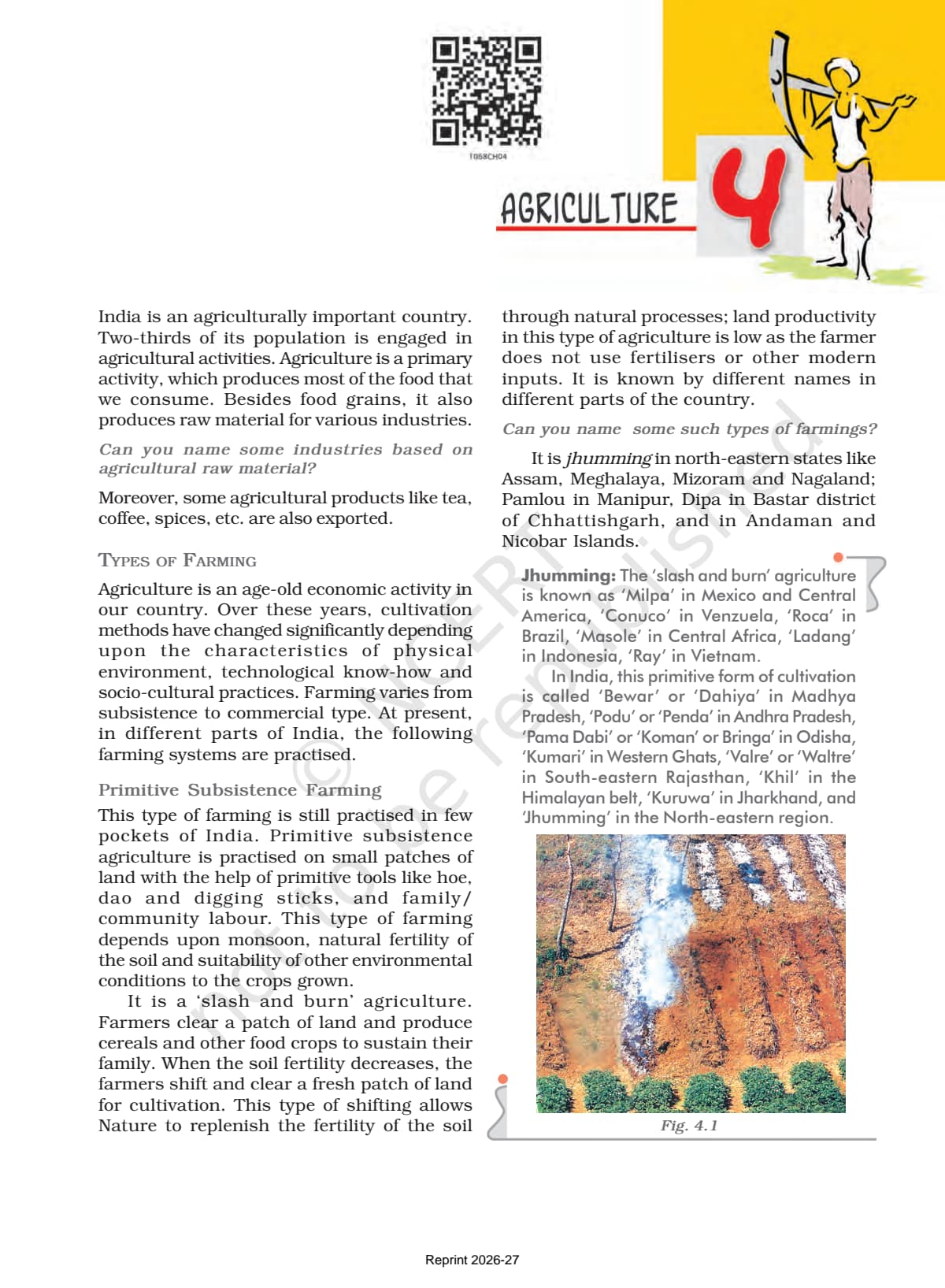
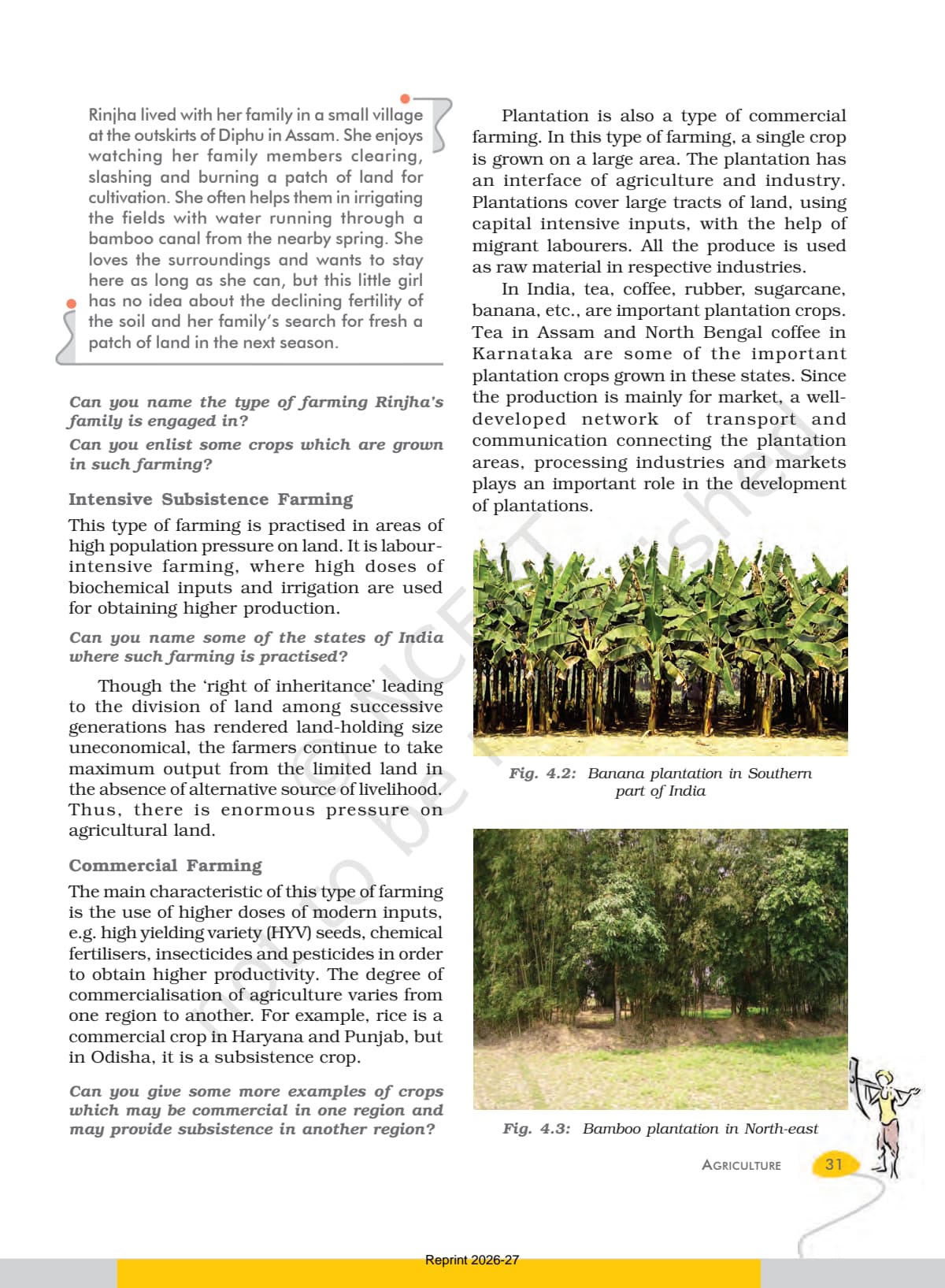
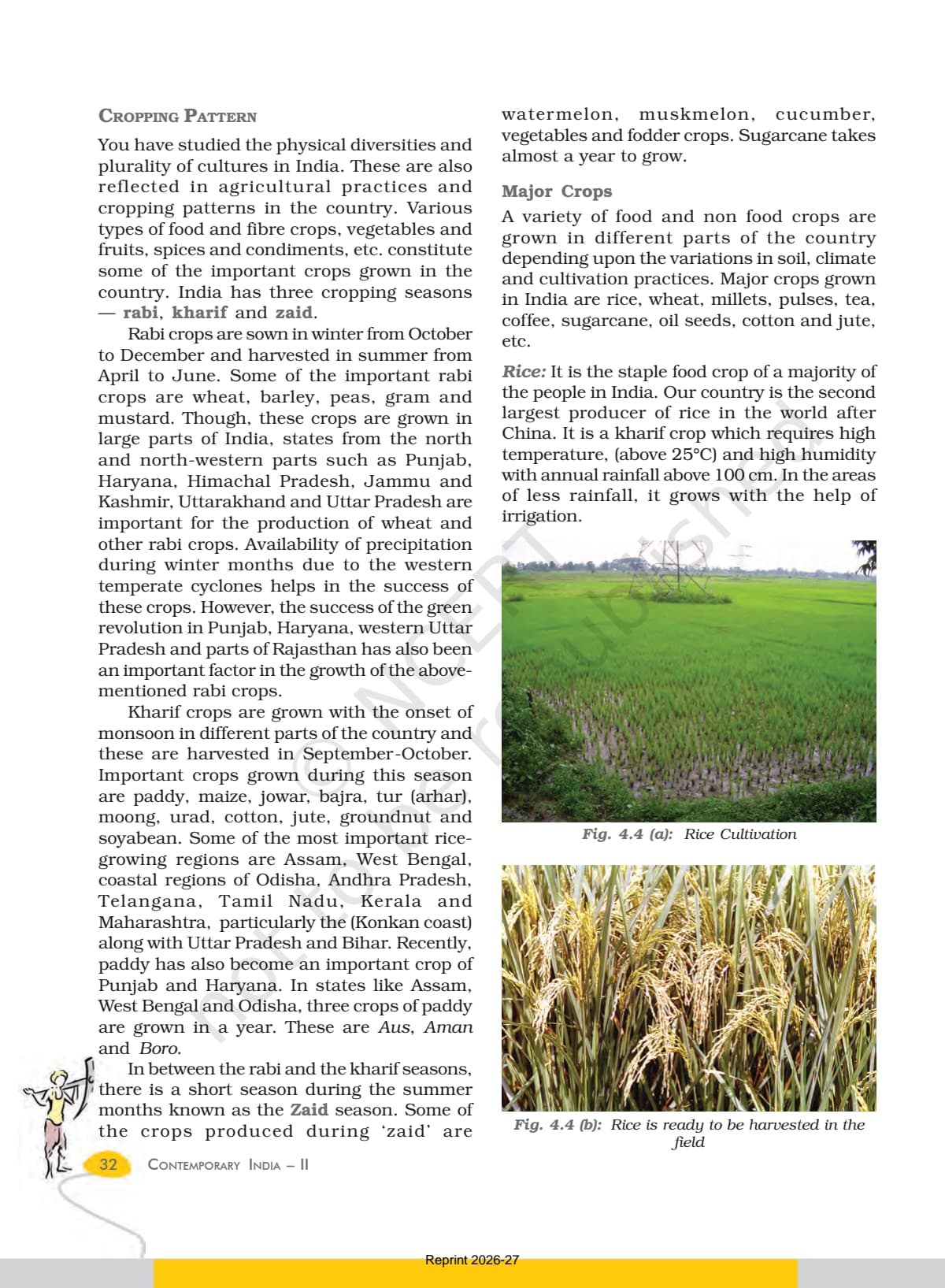
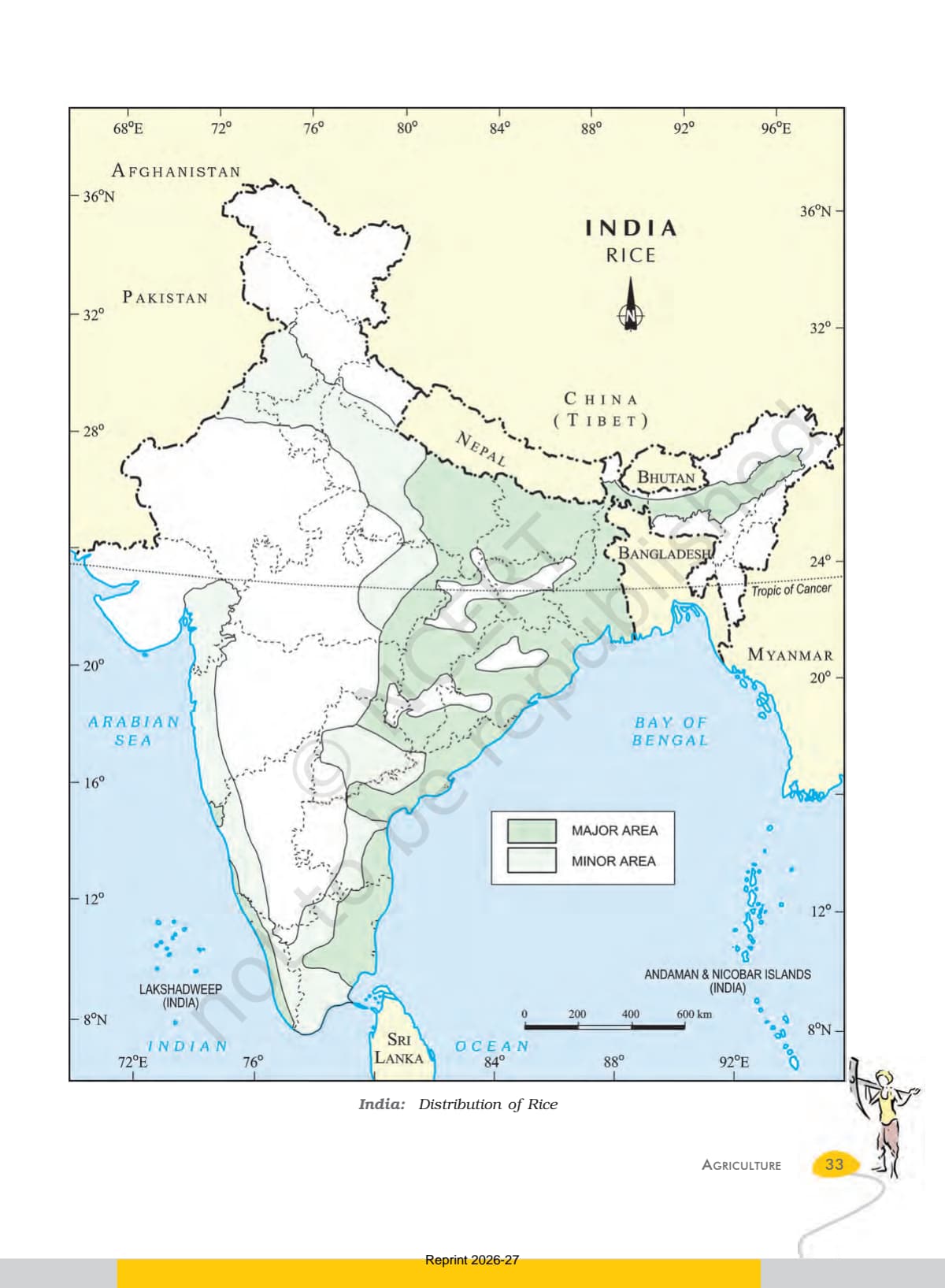
- CBSE Weightage: 6 to 7 marks per board paper, from Unit 1 Agriculture.
- Question Mix: 1 MCQ, one 3-mark crop question, and one 5-mark farming-type or map answer in most papers.
- Most Tested: types of farming, rabi vs kharif crops, and the geographical conditions for rice.
This NCERT book PDF page is curated by subject experts, taken from the 2026-27 NCERT print, and checked against the last five years of CBSE Class 10 Social Science papers.
|
Table of Contents |
How the NCERT Class 10 Geography Book PDF Chapter 4 Helps You Prepare
Agriculture is the fourth chapter in Contemporary India II and one of the heaviest scorers in the Social Science paper. It carries a steady 6 to 7 marks and ties together farming types, crop seasons, and the role of the government. The points below show how this page gets the most out of a 12-page chapter.
- 2026-27 NCERT Match: Section, figure, and exercise counts match the current NCERT print.
- Page-Band Map: Every topic is tagged with the page range inside the official PDF.
- Crop Focus: The major crops and their conditions are pulled into single comparison tables for fast recall.
- Exam-Tagged Reading: Each section is flagged with the question type CBSE asks from it.
Agriculture Class 10 Explained for Boards
Source: Magnet Brains on YouTube
What the Agriculture Class 10 PDF Contains
The chapter moves from the four types of farming to cropping seasons, then to major crops, and ends with technological and institutional reforms. The table below lists each part with the page band you will find it on inside the official NCERT PDF.
| Topic | Page Range | What it Covers |
|---|---|---|
| Types of Farming | 30-31 | Primitive subsistence (jhumming), intensive subsistence, commercial, and plantation farming (Fig 4.1 to 4.3). |
| Cropping Pattern | 32 | The three cropping seasons - rabi, kharif, and zaid - with their months and crops. |
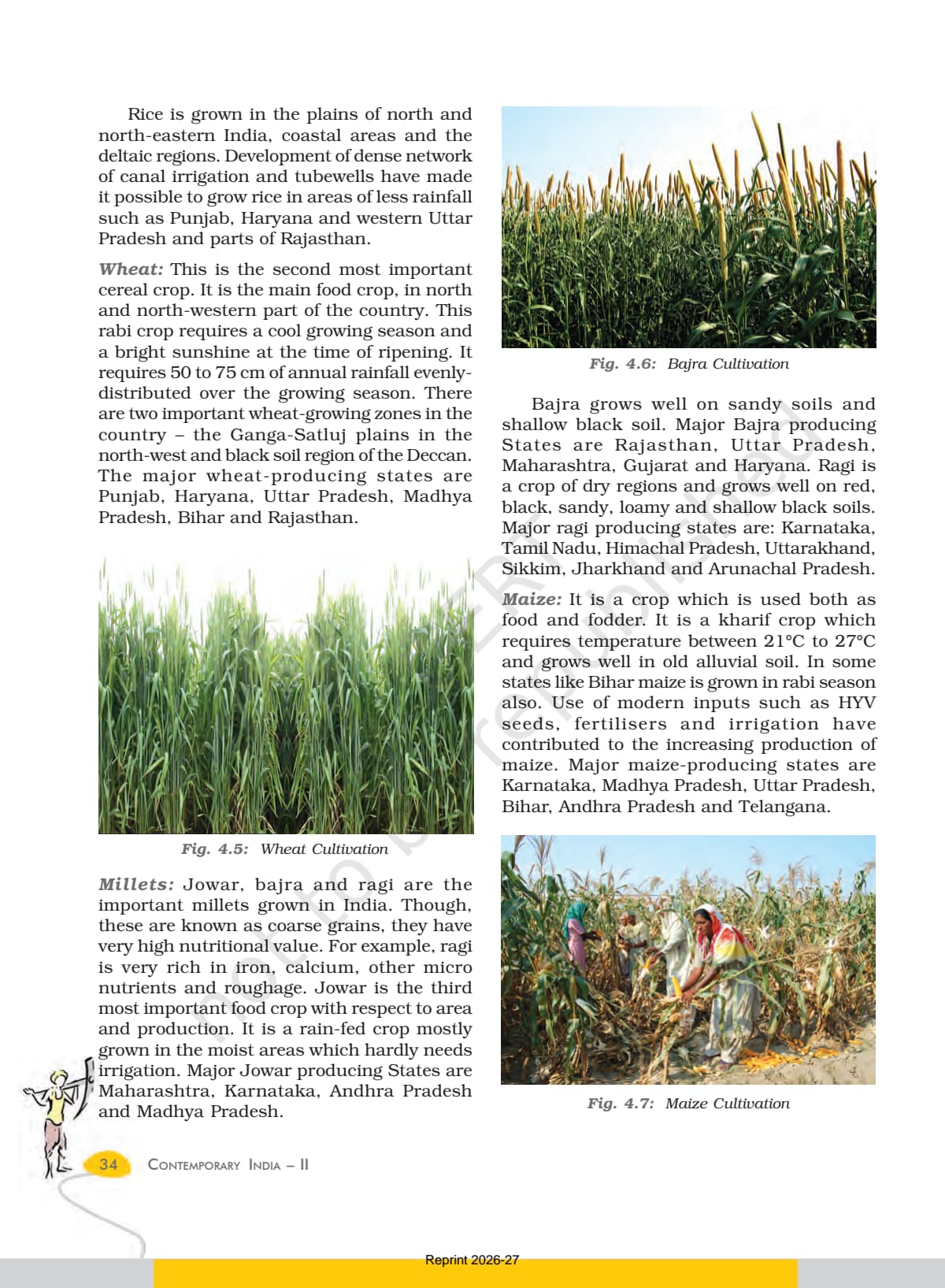
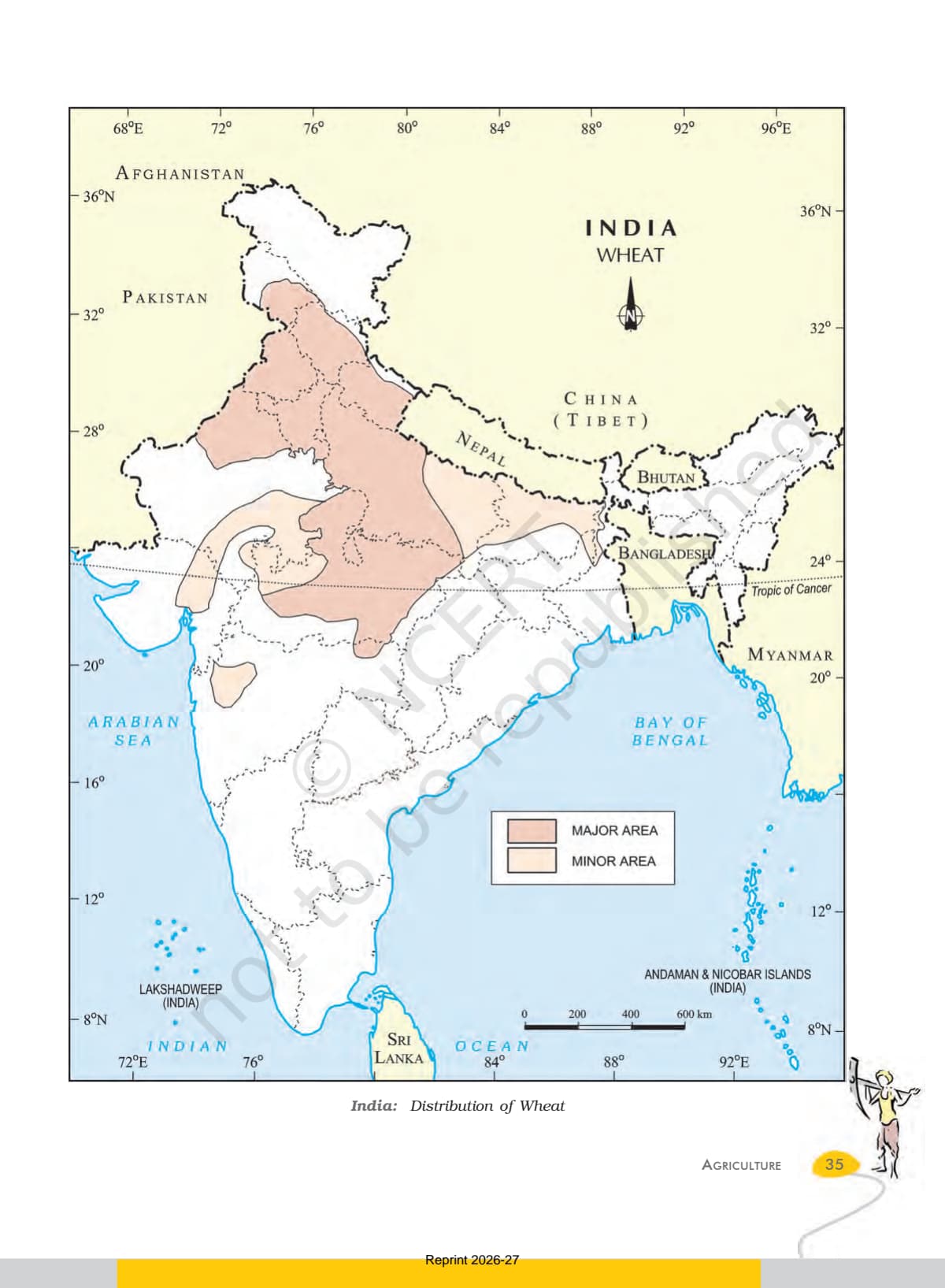
| Major Crops | 32-35 | Rice, wheat, millets (jowar, bajra, ragi), maize, and pulses with their growing conditions (Fig 4.4 to 4.7). |
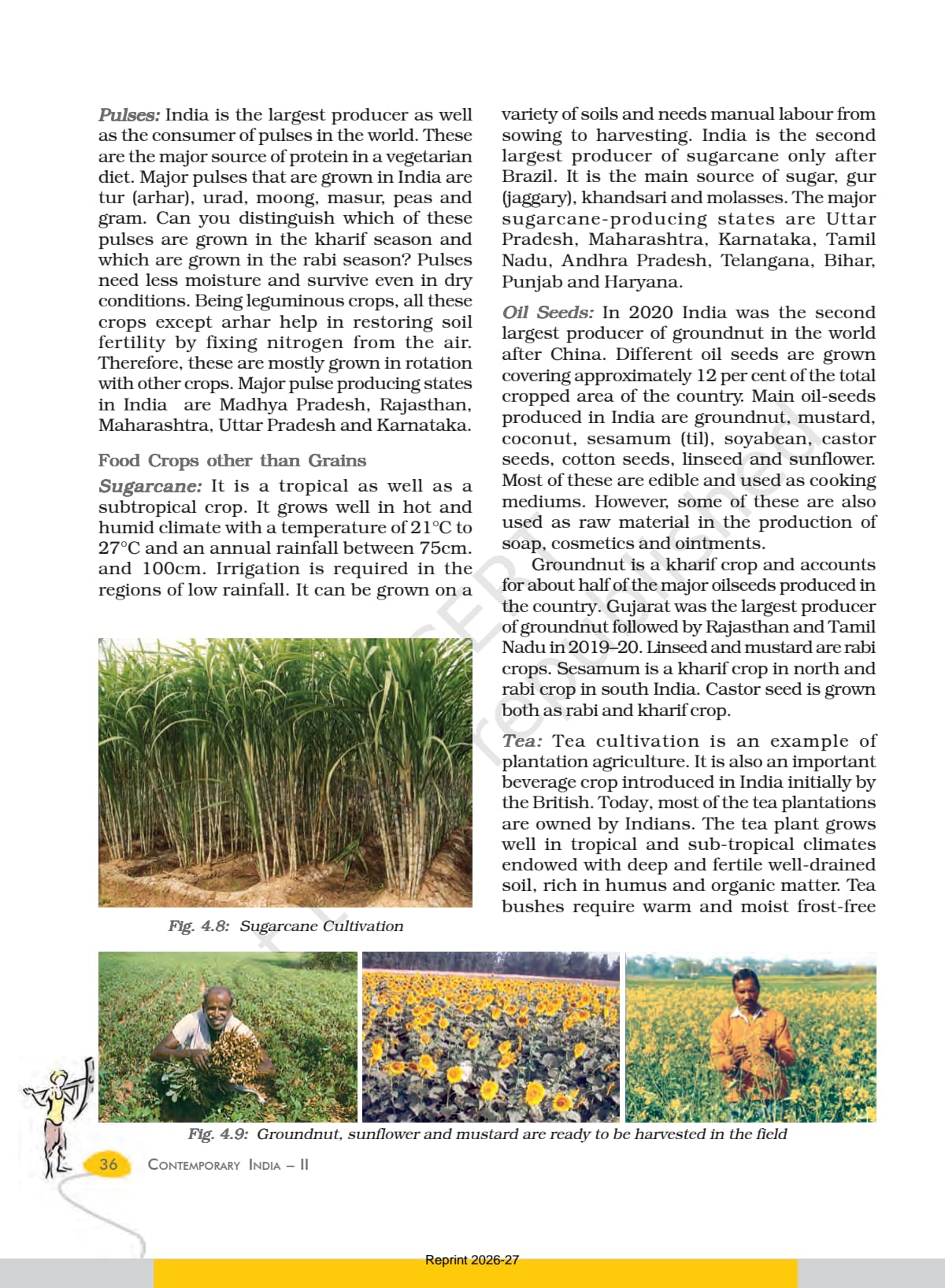
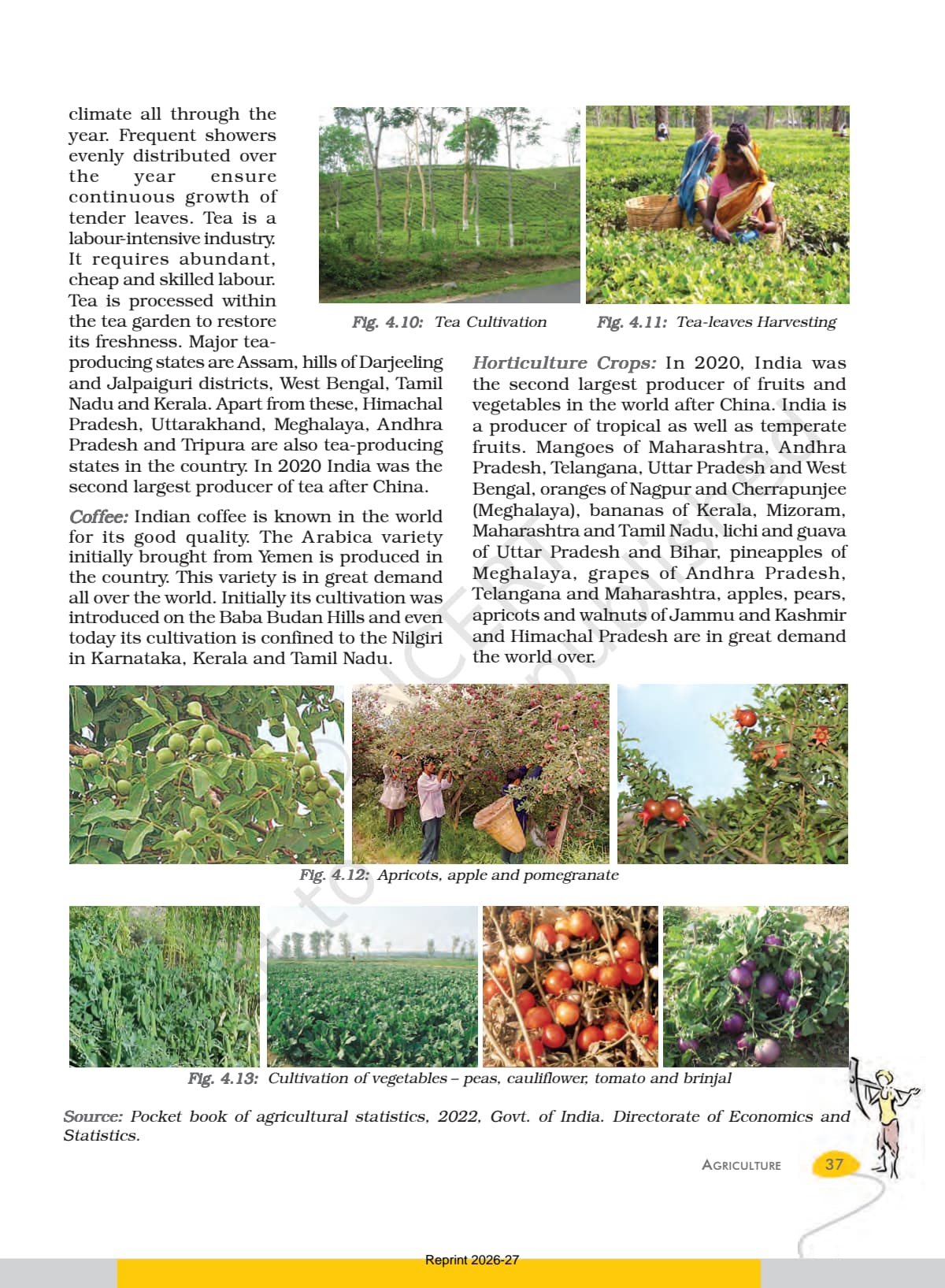
| Food Crops other than Grains | 36-37 | Sugarcane, oil seeds, tea, coffee, and horticulture crops (Fig 4.8 to 4.13). |
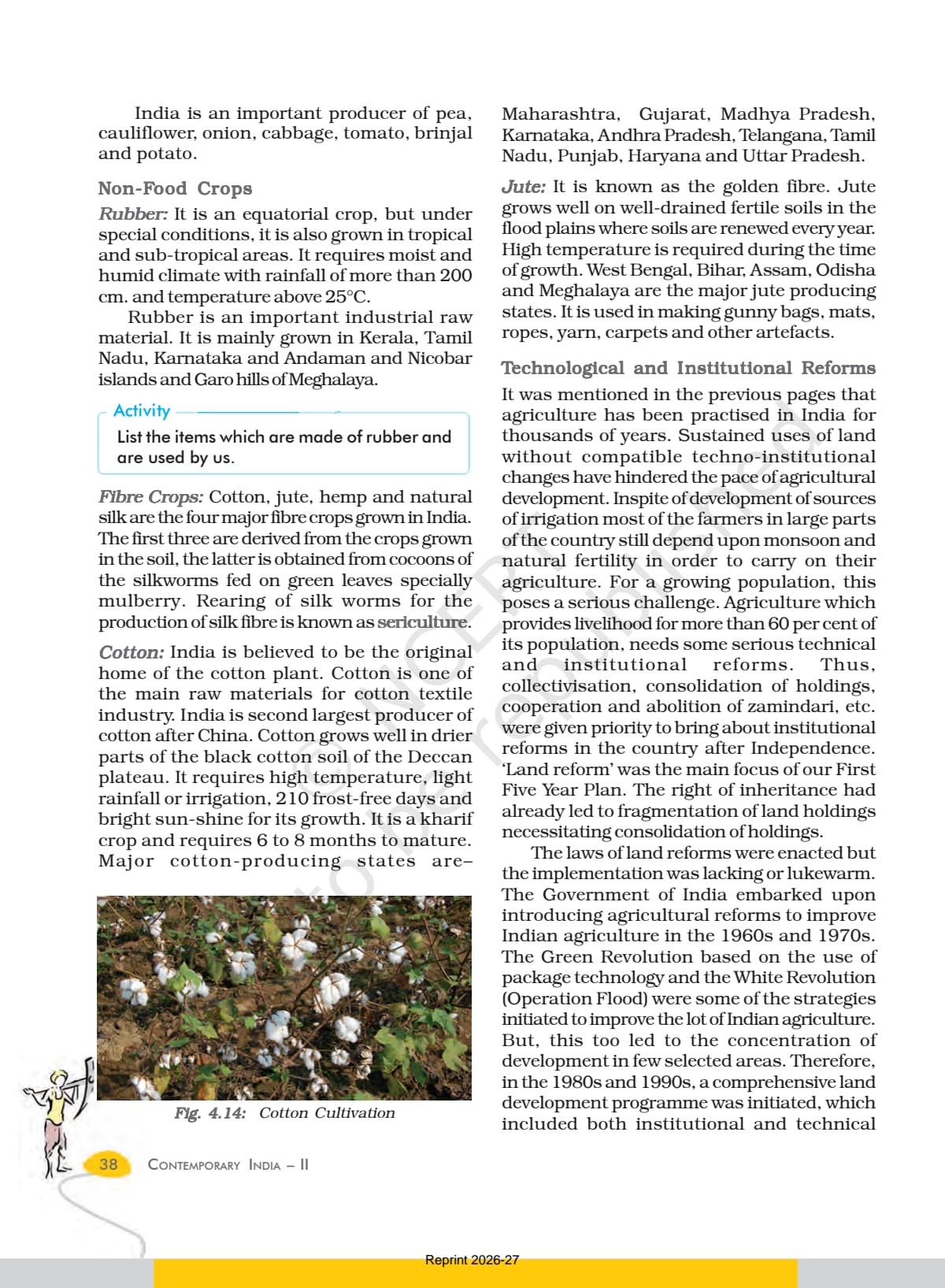
| Non-Food Crops | 38 | Rubber, fibre crops, cotton, and jute the golden fibre (Fig 4.14). |
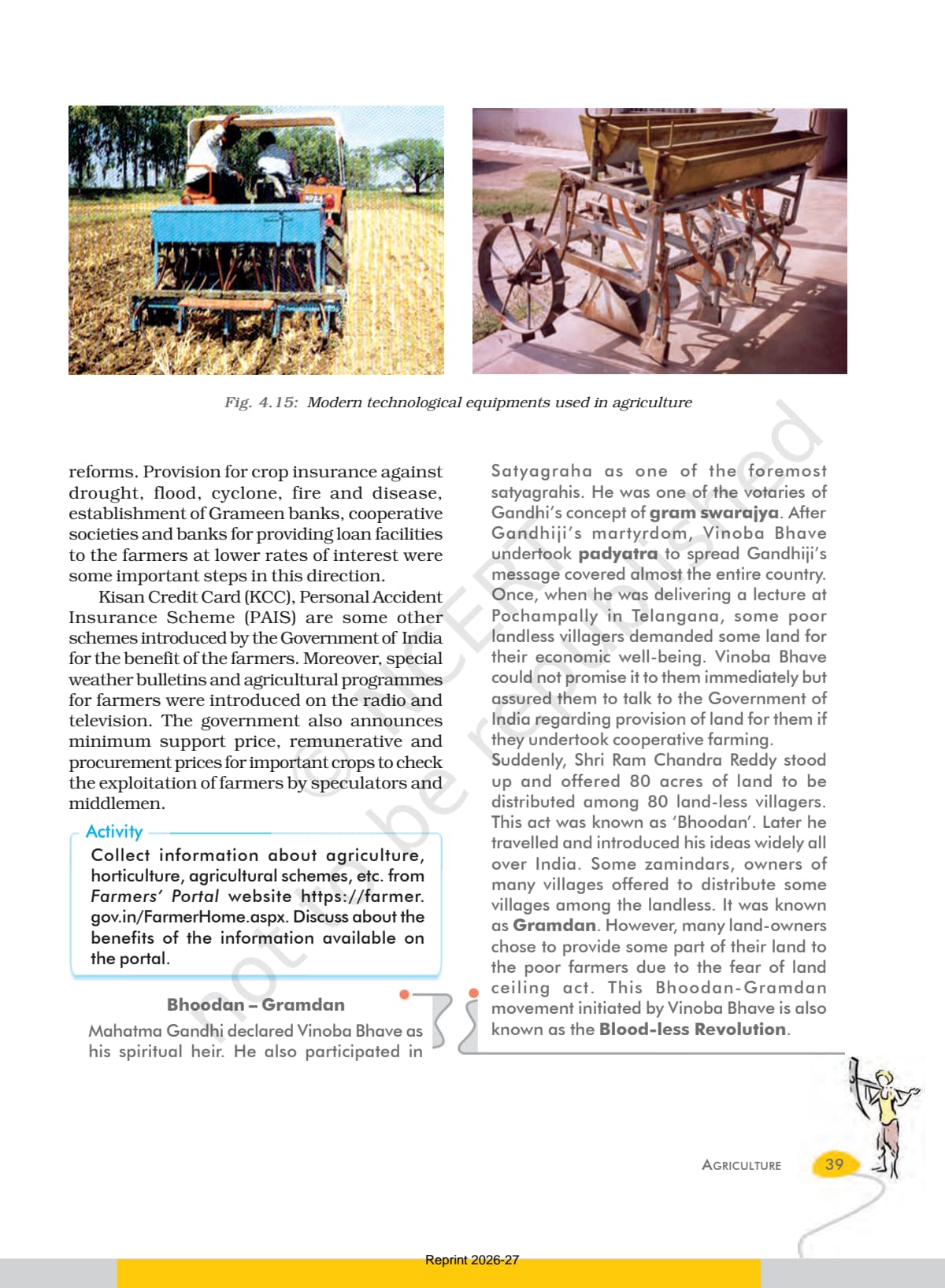
| Technological and Institutional Reforms | 38-39 | Green Revolution, White Revolution, KCC, PAIS, and the Bhoodan-Gramdan movement (Fig 4.15). |
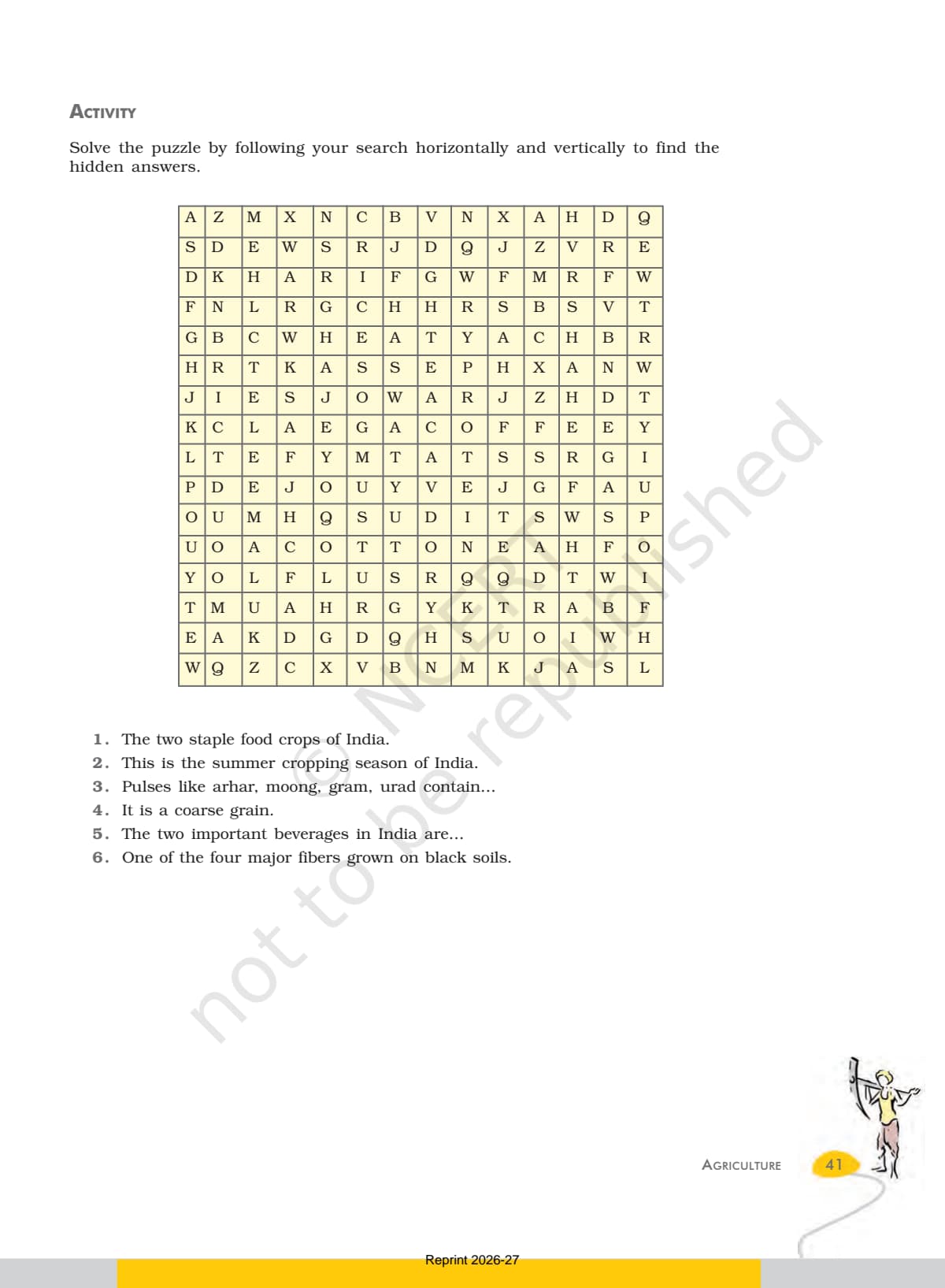
| Exercises and Activity | 40-41 | 3 MCQs, 30-word and 120-word questions, project work, and a word-search puzzle. |
Major crops and types of farming carry the heaviest exam weight in this chapter. Treat the crops section (pages 32 to 38) as primary and the reforms section as a supporting read.
Four Types of Farming in NCERT Class 10 Geography Chapter 4
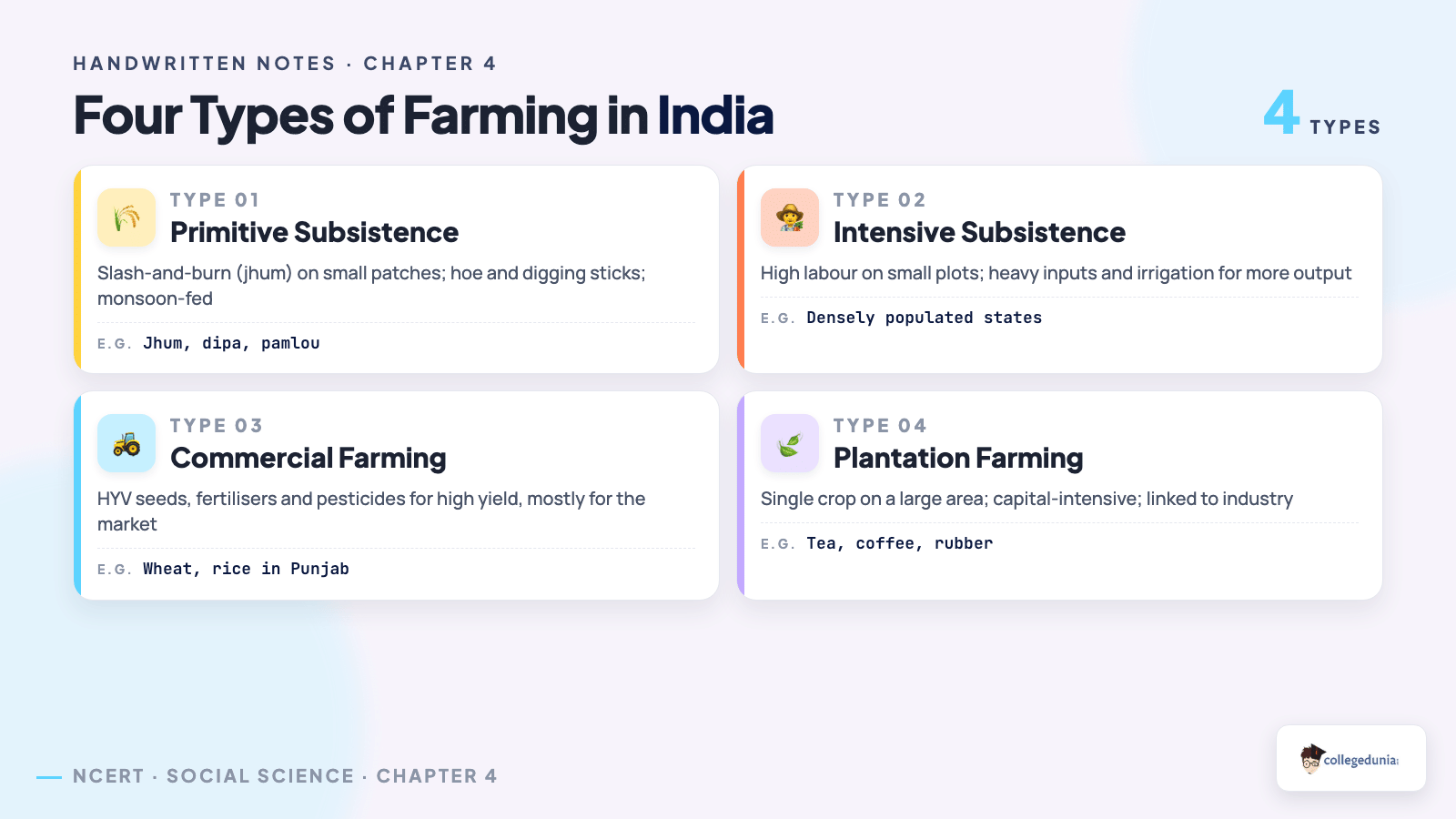
NCERT opens the chapter by sorting Indian farming into four types based on the inputs used and the purpose of growing. This classification is the source of most 1-mark and 5-mark questions in the board paper, so learn each type with one defining feature.
- Primitive subsistence farming: uses primitive tools like hoe and digging sticks; depends on monsoon and soil fertility. The slash and burn form is called jhumming in the north-east.
- Intensive subsistence farming: practised where population pressure on land is high; uses high doses of biochemical inputs and irrigation.
- Commercial farming: uses HYV seeds, chemical fertilisers, insecticides, and pesticides for higher productivity. Rice is commercial in Punjab but subsistence in Odisha.
- Plantation farming: a single crop grown on a large area with capital-intensive inputs; tea, coffee, and rubber are examples.
The chapter stresses that the same crop can be commercial in one region and subsistence in another, which is a favourite reasoning question worth 3 marks.
Cropping Seasons in Agriculture Class 10 PDF
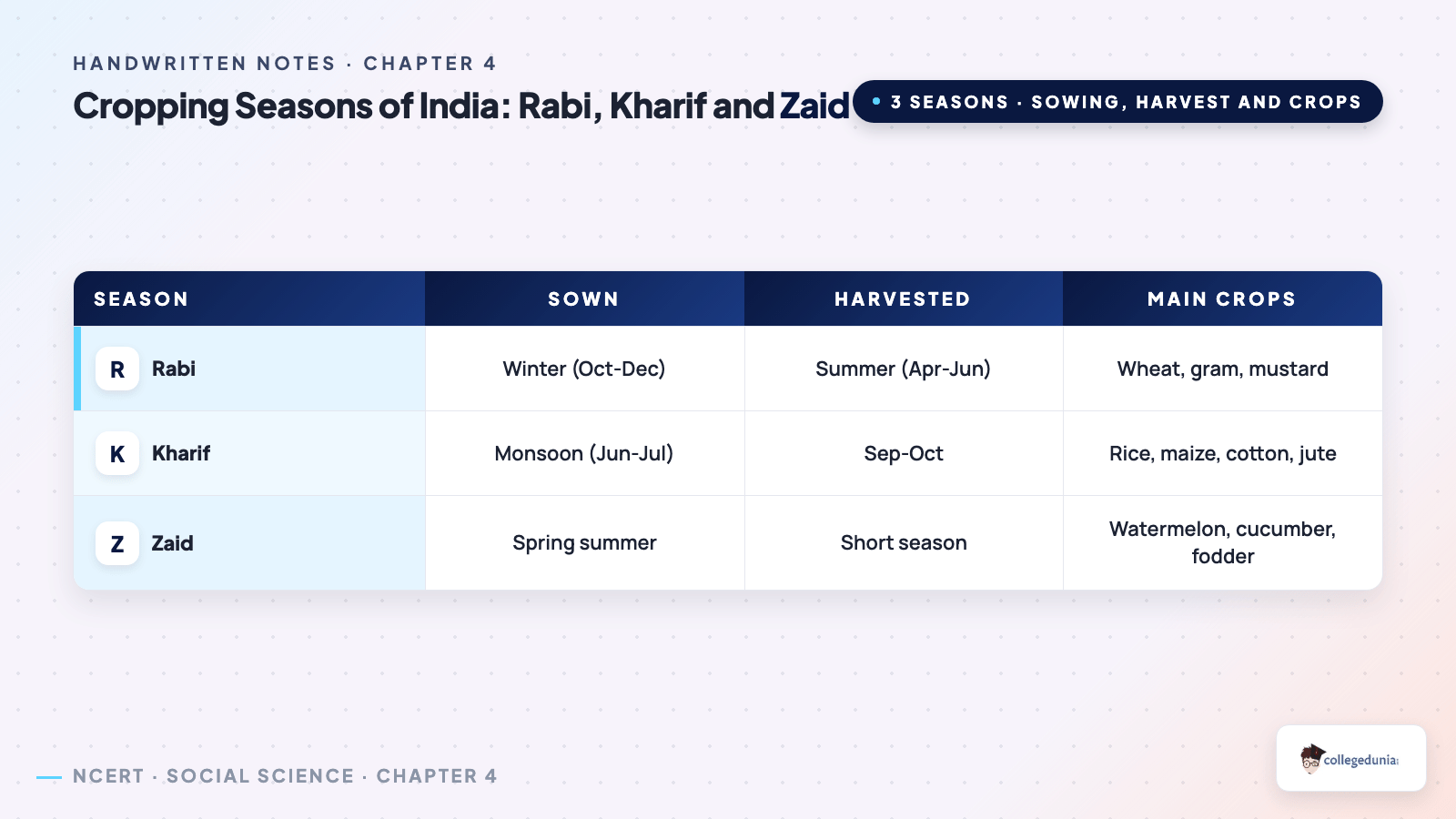
India has three cropping seasons, and a direct MCQ usually asks you to match a crop to its season. Learn the months and two example crops for each season because that combination answers both the MCQ and the 30-word question.
| Season | Sown / Harvested | Major Crops |
|---|---|---|
| Rabi | Sown Oct-Dec, harvested Apr-Jun | Wheat, barley, peas, gram, mustard. |
| Kharif | Sown with the monsoon, harvested Sep-Oct | Paddy, maize, jowar, bajra, tur, cotton, jute, groundnut. |
| Zaid | Short summer season between rabi and kharif | Watermelon, muskmelon, cucumber, vegetables, fodder. |
Western temperate cyclones bring the winter rain that helps rabi crops succeed in the north and north-west. A common 1-mark question asks which season gram and mustard belong to - the answer is rabi.
Major Crops in Class 10 Geography Chapter 4 Agriculture
The chapter covers the food grains that feed the country - rice, wheat, millets, maize, and pulses. Rice and wheat are the two staple crops, and their geographical conditions are a guaranteed long-answer question. This table is the single most exam-relevant block in the chapter.
| Crop | Conditions | Major States |
|---|---|---|
| Rice (kharif) | Temperature above 25 degrees C, rainfall above 100 cm; canals and tubewells help in low-rainfall areas. | Assam, West Bengal, Odisha, Andhra Pradesh, Tamil Nadu; also Punjab and Haryana. |
| Wheat (rabi) | Cool growing season, bright sunshine at ripening; 50 to 75 cm of evenly spread rainfall. | Punjab, Haryana, Uttar Pradesh, Madhya Pradesh, Bihar, Rajasthan. |
| Millets (jowar, bajra, ragi) | Rain-fed coarse grains, high in iron, calcium, and roughage. | Maharashtra, Karnataka, Rajasthan, Tamil Nadu (ragi). |
| Maize (kharif) | Temperature 21 to 27 degrees C, old alluvial soil; food and fodder. | Karnataka, Madhya Pradesh, Uttar Pradesh, Bihar, Telangana. |
| Pulses (leguminous) | Need less moisture, fix nitrogen from the air and restore soil fertility. | Madhya Pradesh, Rajasthan, Maharashtra, Uttar Pradesh, Karnataka. |
India is the largest producer and consumer of pulses in the world, and pulses are the main protein source in a vegetarian diet. A frequent 3-mark question asks why pulses are grown in rotation with other crops - because they fix nitrogen and restore soil fertility.
Food and Non-Food Crops in NCERT Chapter 4
Beyond food grains, NCERT lists cash crops that feed industry and exports. Sugarcane, tea, coffee, cotton, and jute appear often as 3-mark questions on conditions and producing states, so learn one stand-out fact for each.
- Sugarcane: tropical crop, temperature 21 to 27 degrees C; India is the second largest producer after Brazil. It is the source of sugar, gur (jaggery), and molasses.
- Tea: a plantation and beverage crop needing warm, moist, frost-free climate; major in Assam and Darjeeling. India was the second largest tea producer after China in 2020.
- Coffee: the Arabica variety, first grown on the Baba Budan Hills, is now confined to the Nilgiri hills of Karnataka, Kerala, and Tamil Nadu.
- Cotton: a kharif crop of the black cotton soil of the Deccan; India is the second largest producer after China.
- Jute: the golden fibre, grown on the flood plains; West Bengal, Bihar, and Assam are major producers.
Rubber is an equatorial crop that needs more than 200 cm of rainfall and temperature above 25 degrees C, grown mainly in Kerala, Tamil Nadu, and Karnataka.
Technological and Institutional Reforms in Indian Agriculture
The last section explains how India tried to fix farming after Independence. Collectivisation, consolidation of holdings, and abolition of zamindari came first, and land reform was the focus of the First Five Year Plan. The reforms below are the source of the institutional-reform question.
- Green Revolution: based on package technology and HYV seeds, it raised food-grain output but only in a few selected areas.
- White Revolution (Operation Flood): boosted milk production across the country.
- Kisan Credit Card (KCC) and PAIS: the Kisan Credit Card and Personal Accident Insurance Scheme protect and fund farmers.
- Crop insurance and MSP: insurance against drought and flood, plus minimum support prices to check exploitation by middlemen.
The chapter ends with the Bhoodan-Gramdan movement led by Vinoba Bhave, also called the Bloodless Revolution, in which landlords donated land to the landless.
NCERT Class 10 Geography Chapter 4 Important Questions and Exercises
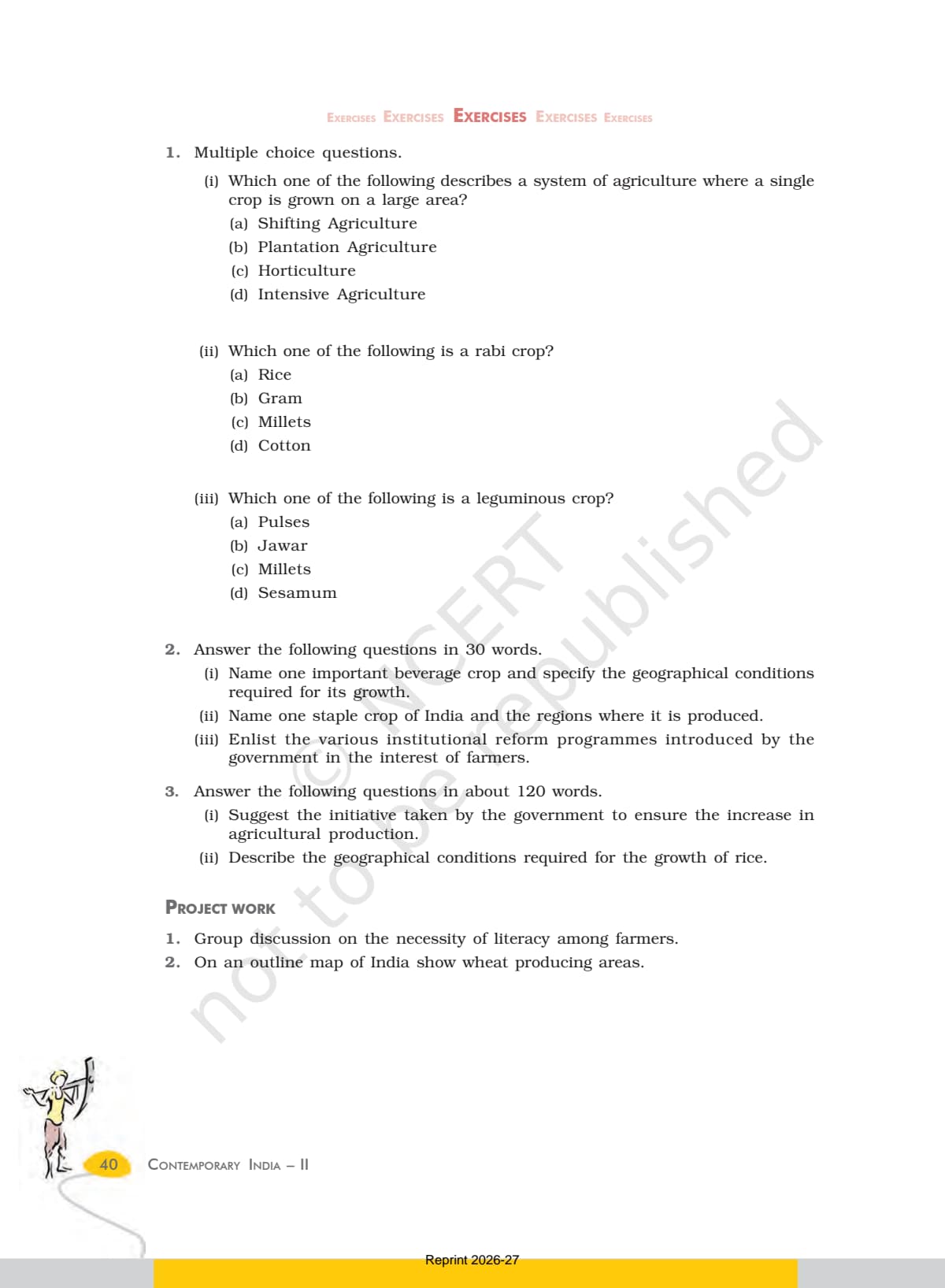
The official exercises on page 40 mirror the CBSE question pattern:
- MCQs: which system grows a single crop on a large area; which is a rabi crop; which is a leguminous crop.
- 30-word answers: one beverage crop and its conditions; one staple crop and its regions; the institutional reform programmes.
- 120-word answers: initiatives to raise agricultural production; the geographical conditions for rice.
Also Check: These Collegedunia resources cover the same chapter in other formats.
| Resource | Best Used For |
|---|---|
| Agriculture Class 10 NCERT Solutions | Step-by-step answers to every exercise question. |
| Agriculture Class 10 Notes | Quick revision of every section with diagrams. |
| Agriculture Class 10 Handwritten Notes | One-shot scanned revision before the exam. |
NCERT Class 10 Geography Book PDF: All Chapters
Other Class 10 Geography (Contemporary India II) NCERT book PDFs you can download free:
| Chapter | Resource |
|---|---|
| Chapter 1 | Resources and Development NCERT PDF |
| Chapter 2 | Forest and Wildlife Resources NCERT PDF |
| Chapter 3 | Water Resources NCERT PDF |
| Chapter 5 | Minerals and Energy Resources NCERT PDF |
| Chapter 6 | Manufacturing Industries NCERT PDF |
| Chapter 7 | Lifelines of National Economy NCERT PDF |
Agriculture NCERT PDF: available above as a free download, taken from the 2026-27 NCERT print.
NCERT Class 10 Geography Book PDF Chapter 4 Agriculture - Frequently Asked Questions
Ques. Where can I download the agriculture class 10 PDF for Chapter 4 for free?
Ans. You can download the Agriculture NCERT PDF directly from this page. The full 12-page chapter from the 2026-27 NCERT print is free to download.
Ques. Is this Agriculture Class 10 PDF aligned with the 2026-27 CBSE syllabus?
Ans. Yes. The page reflects the current 2026-27 Class 10 Geography (Contemporary India II) syllabus. It keeps all sections, the four farming types, the three cropping seasons, and the major crops.
Ques. How many types of farming are there in Class 10 Geography Chapter 4?
Ans. NCERT lists four types: primitive subsistence farming (including jhumming), intensive subsistence farming, commercial farming, and plantation farming. Each is sorted by the inputs used and the purpose of growing.
Ques. What are the three cropping seasons in this chapter?
Ans. The three cropping seasons are rabi (sown Oct-Dec, harvested Apr-Jun), kharif (sown with the monsoon, harvested Sep-Oct), and zaid (the short summer season). Wheat is a rabi crop and paddy is a kharif crop.
Ques. What are the geographical conditions required for the growth of rice?
Ans. Rice is a kharif crop that needs high temperature above 25 degrees C and high humidity with annual rainfall above 100 cm. In areas of less rainfall it grows with the help of canal irrigation and tubewells.
Ques. How many marks does the Agriculture chapter carry in the Class 10 board exam?
Ans. The chapter usually carries 6 to 7 marks in the CBSE Class 10 Social Science paper. Most papers ask one MCQ, one 3-mark crop answer, and one 5-mark farming-type or map-based answer from it.
Ques. What are the technological and institutional reforms in Indian agriculture?
Ans. The reforms include the Green Revolution, the White Revolution (Operation Flood), the Kisan Credit Card (KCC), the Personal Accident Insurance Scheme (PAIS), crop insurance, and minimum support prices. The chapter also describes the Bhoodan-Gramdan movement led by Vinoba Bhave.



Comments