


The NCERT Class 10 Economics Book PDF Chapter 4 Globalisation and the Indian Economy brings together every definition, case study and policy term that the CBSE Class 10 Social Science board paper actually tests.
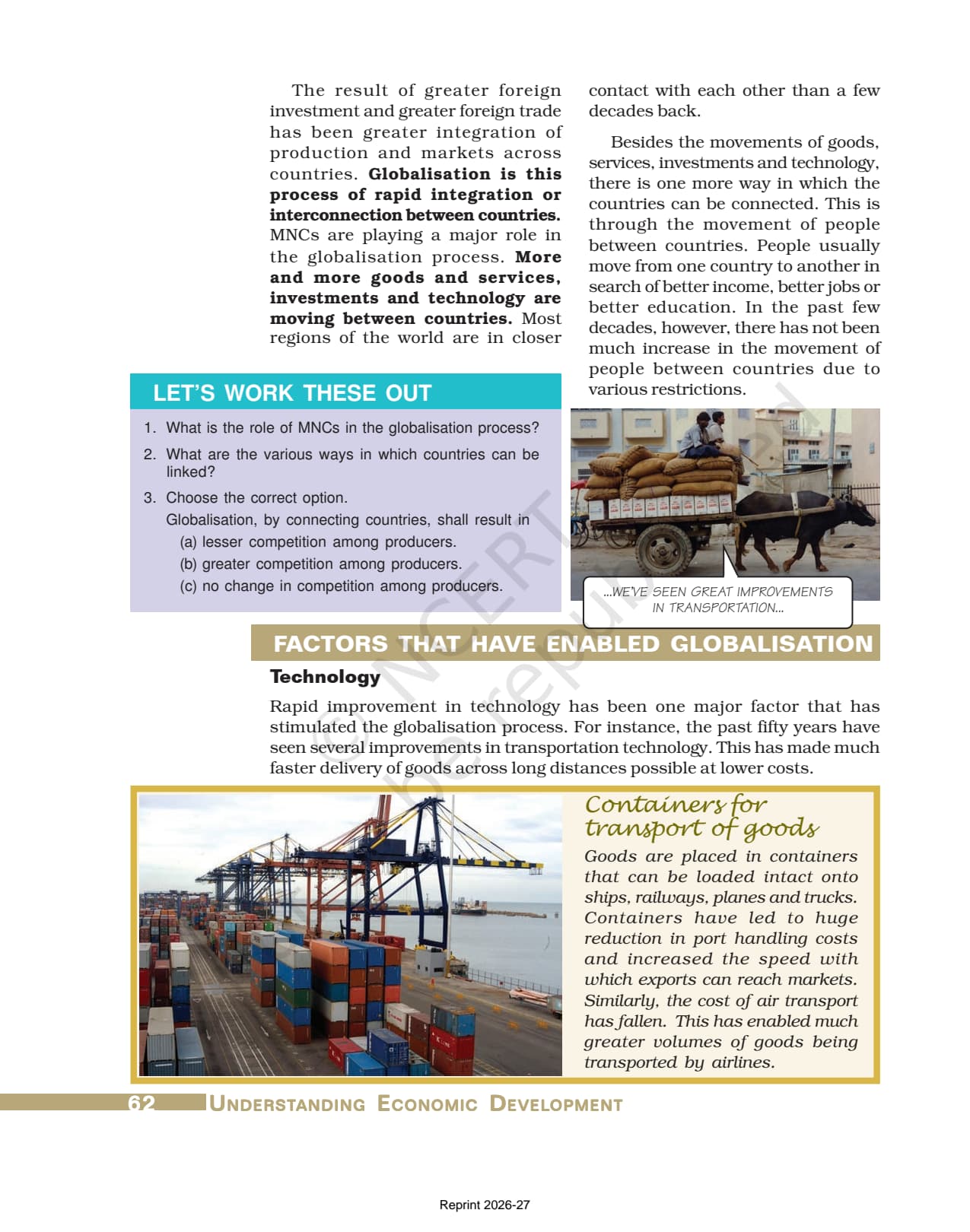
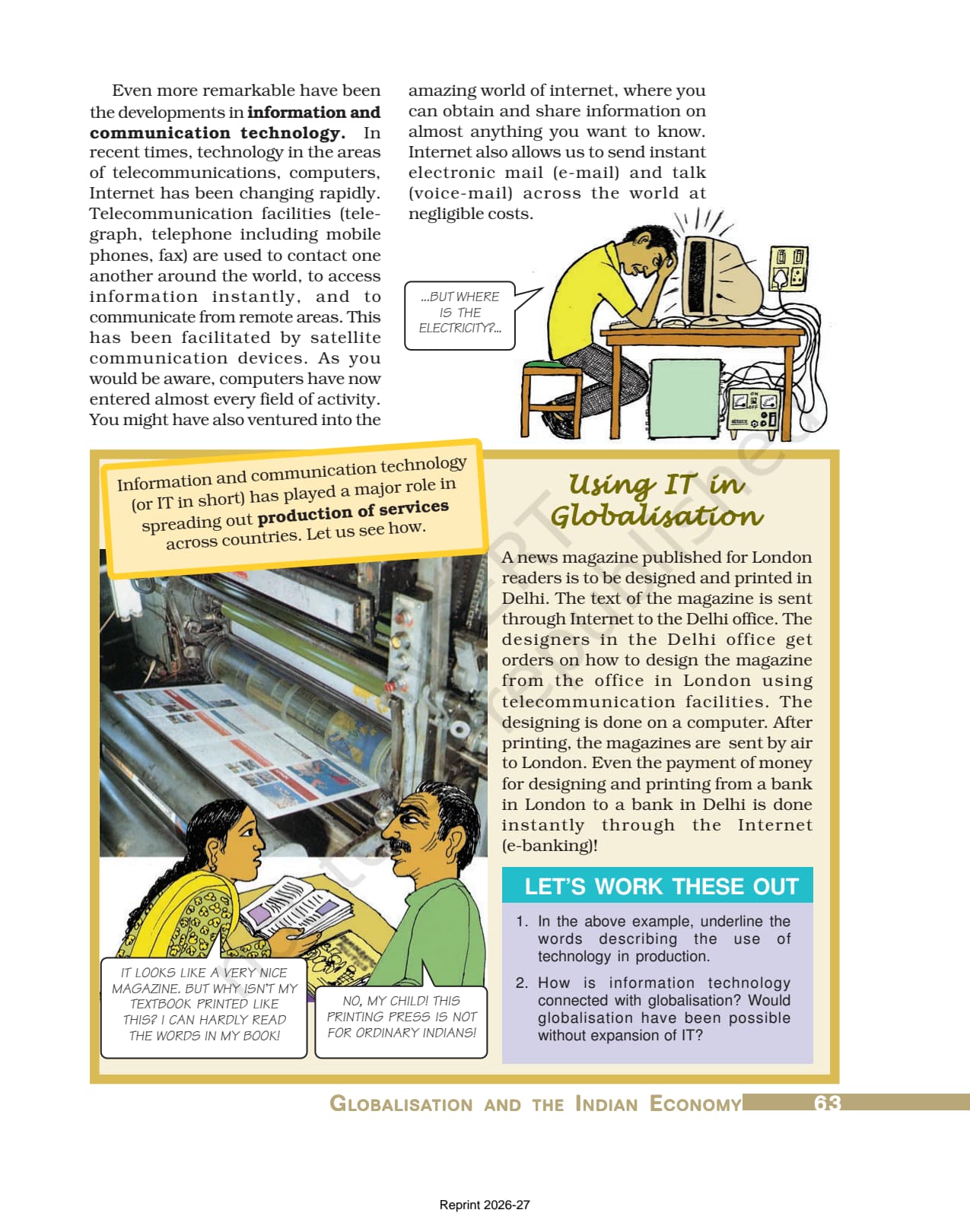
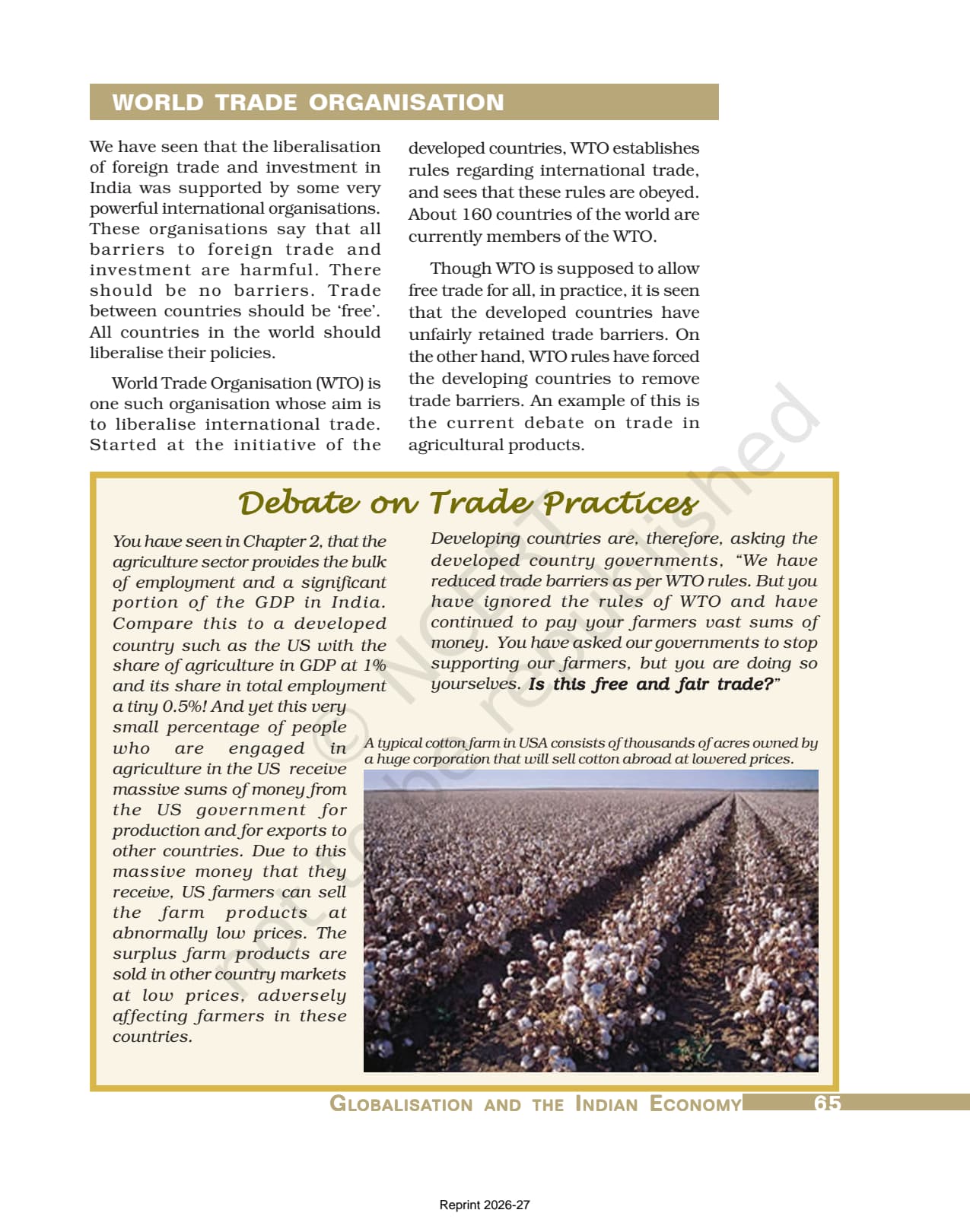
The chapter sits in Understanding Economic Development and runs to about 18 printed pages in the 2026-27 reprint, built around MNCs, foreign trade, liberalisation, the WTO and the fight for fair globalisation.
- Board Weightage: 4 to 6 marks in the Class 10 Social Science (Economics unit) paper, usually one short answer plus one case-based question
- What's Inside: MNCs, foreign trade, globalisation, factors that enabled it, liberalisation, trade barriers, the WTO and fair globalisation
This NCERT class 10 economics book pdf chapter 4 Globalisation and the Indian Economy is the original NCERT print, hosted unmodified by Collegedunia, mapped to the 2026-27 syllabus and checked against the last five years of CBSE board papers.
NCERT Class 10 Economics Book PDF Chapter 4 Globalisation and the Indian Economy Download
The file above is the original Chapter 4 from Understanding Economic Development, the Class 10 Economics textbook published by NCERT. Collegedunia hosts it free, with no edits and no watermark.
Also Check:
- Globalisation and the Indian Economy Class 10 NCERT Solutions
- Globalisation and the Indian Economy Class 10 Notes
What Chapter 4 Globalisation and the Indian Economy Covers
The chapter explains how India's markets changed, moving from the firms that spread production to the policy that opened the borders.
| Topic in Chapter 4 | Core Idea |
|---|---|
| Production across countries | MNCs split production across nations to cut costs |
| Foreign trade and markets | Trade connects markets and links producers across borders |
| What is globalisation | Rapid integration of countries through trade and investment |
| Factors and policy | Technology, liberalisation and the WTO drive globalisation |
Most board questions ask you to link MNCs, foreign trade and liberalisation to globalisation.
Globalisation and the Indian Economy Class 10 Explained in Simple Language
Source: Magnet Brains on YouTube
Multinational Corporations and Production Across Countries
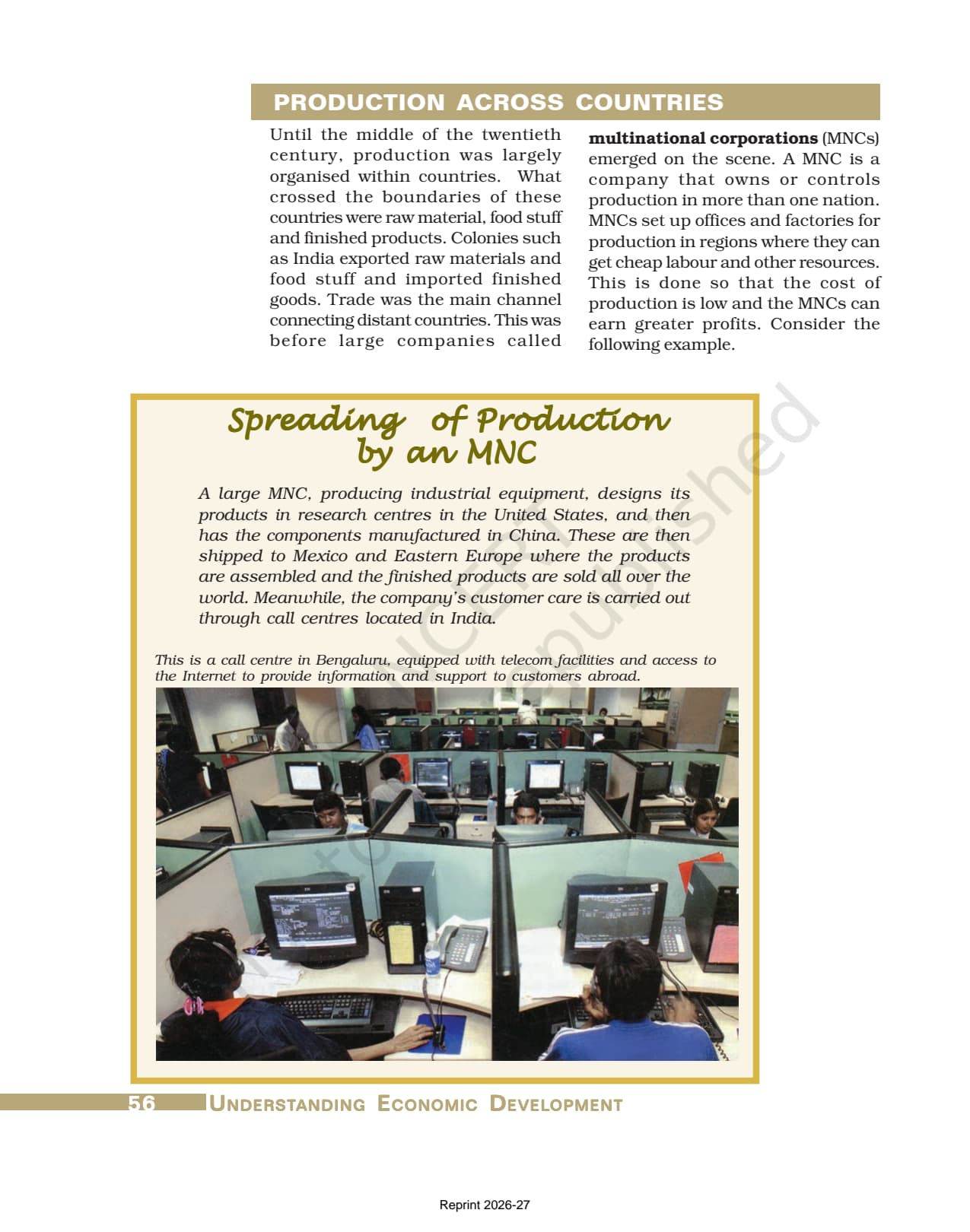
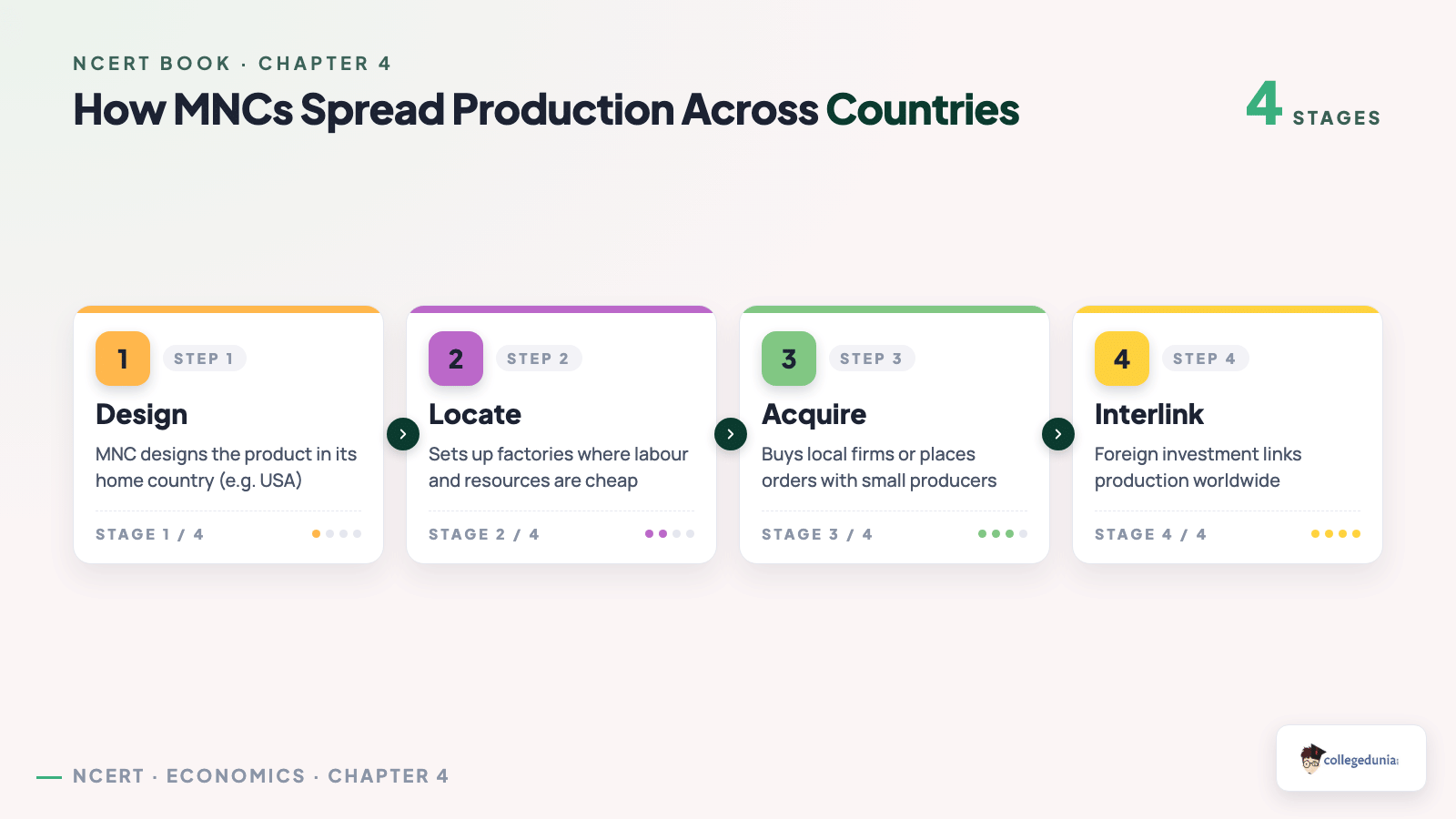
A multinational corporation (MNC) is a company that owns or controls production in more than one country, the most asked idea in the chapter.
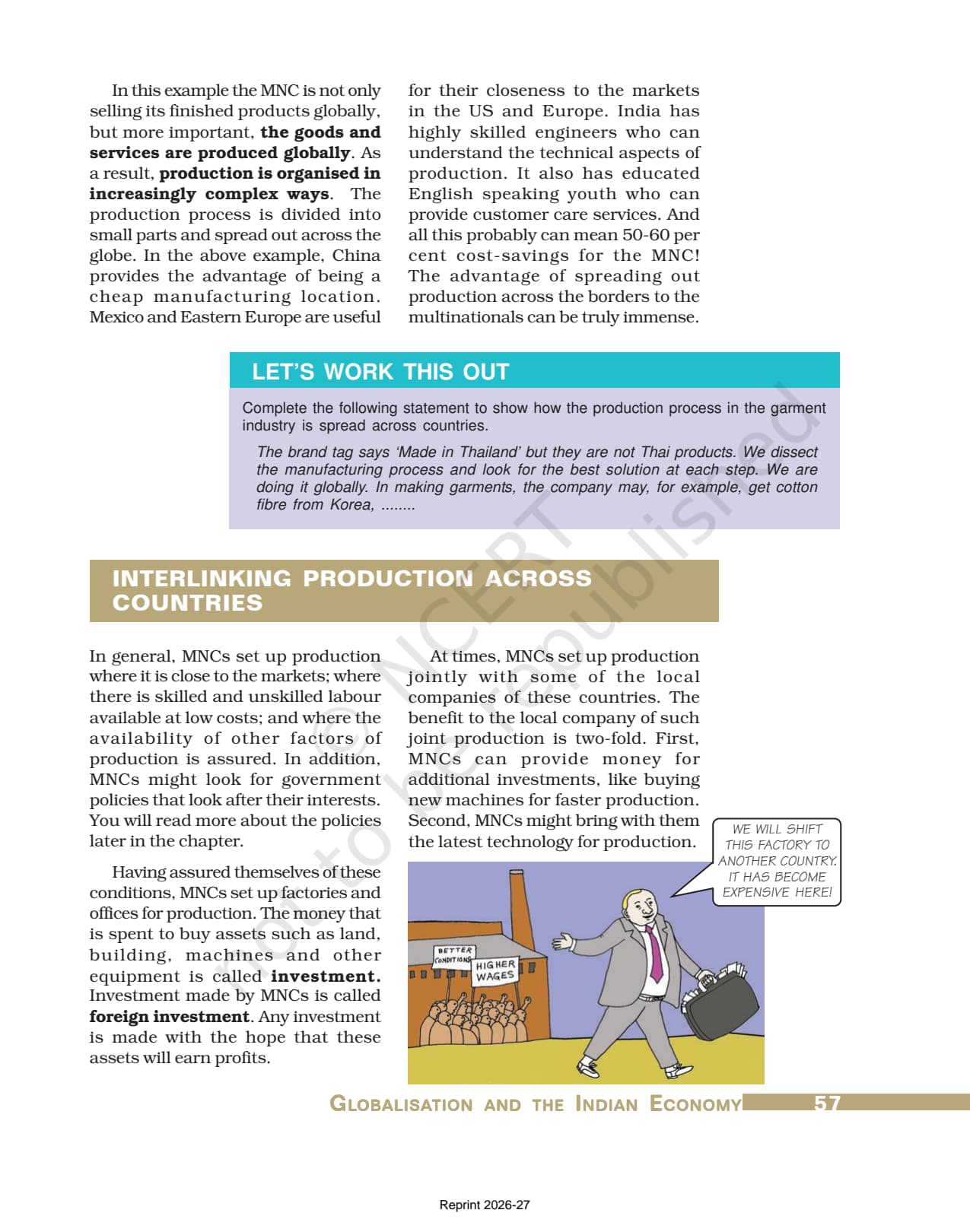
- Why MNCs spread out: they set up where labour and resources are cheap, so production costs are low and profits higher.
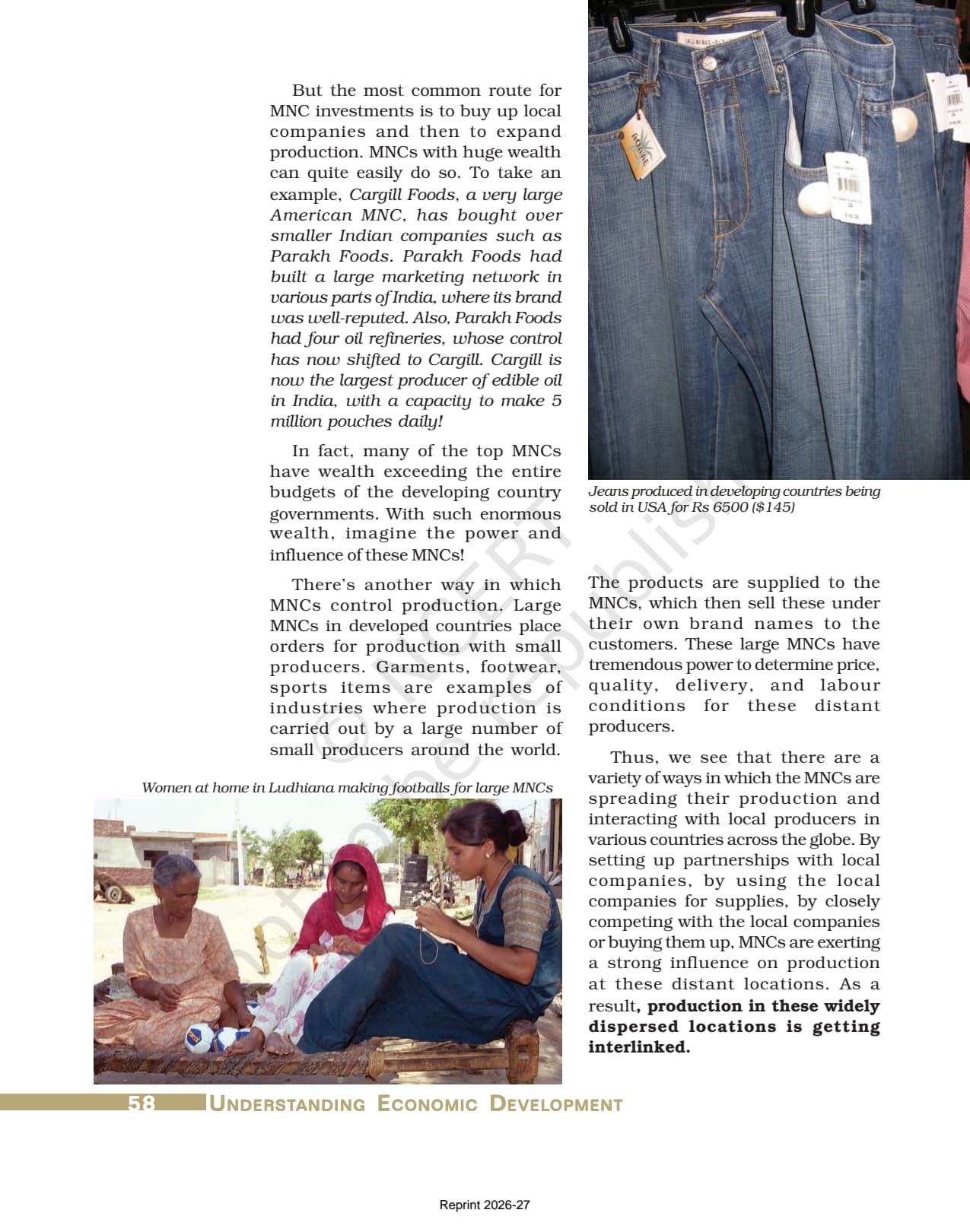
- How they control production: by setting up jointly with local firms, buying up local companies, or placing orders with small producers for garments, footwear and sports goods.
- Foreign investment: money spent by MNCs to buy assets like land, buildings and machines; investment made by MNCs is foreign investment.
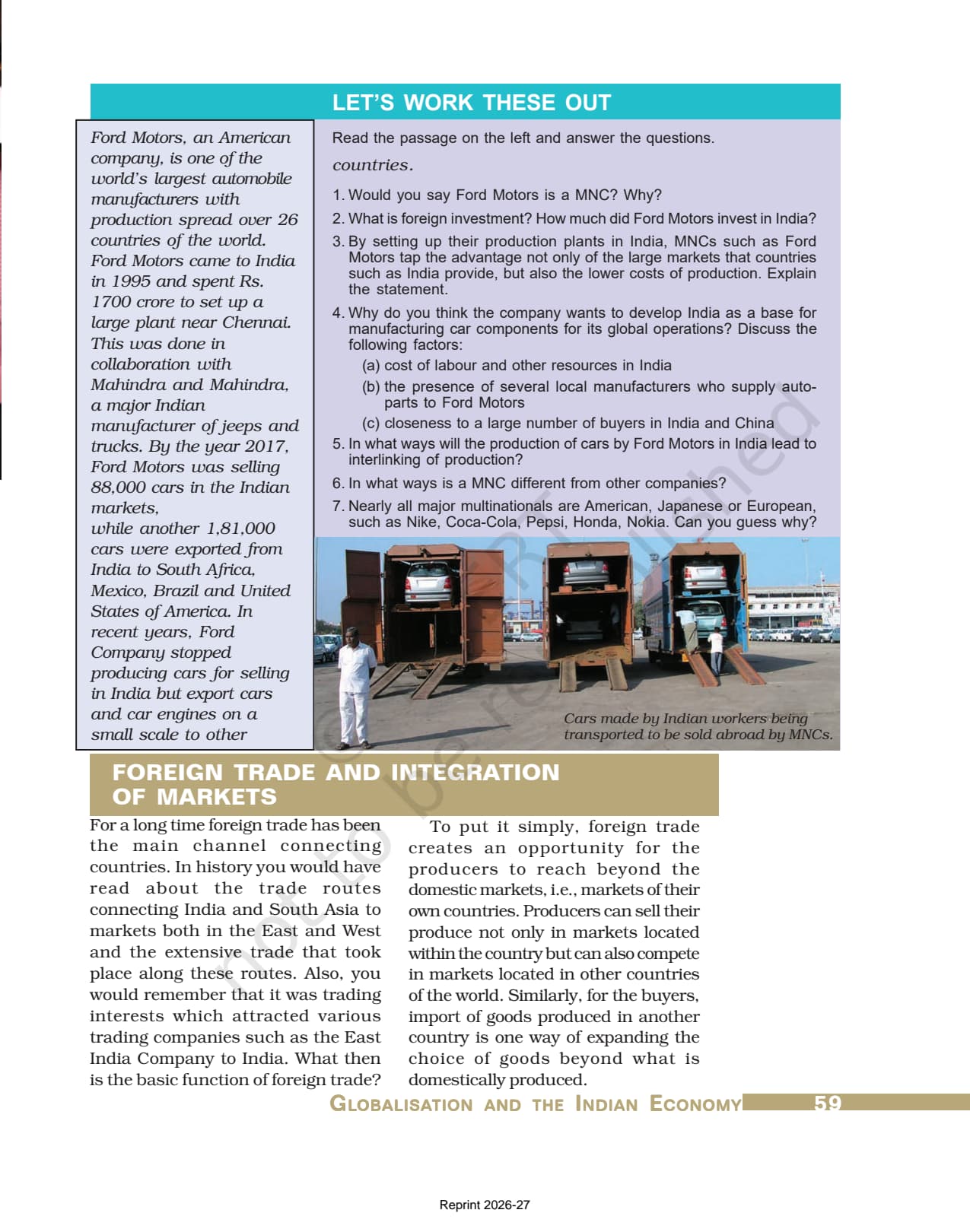
Ford Motors invested Rs 1700 crore near Chennai in 1995, later producing cars for India and exporting them, so production in widely spread locations is getting interlinked.
Foreign Trade and the Integration of Markets
Foreign trade is the main channel connecting countries, letting producers reach beyond home markets and buyers choose goods made elsewhere.
- Choice of goods rises: goods travel between markets, so buyers get a wider choice.
- Prices move together: prices of similar goods in the two markets tend to become equal.
- Producers compete: firms in two countries compete across thousands of miles.
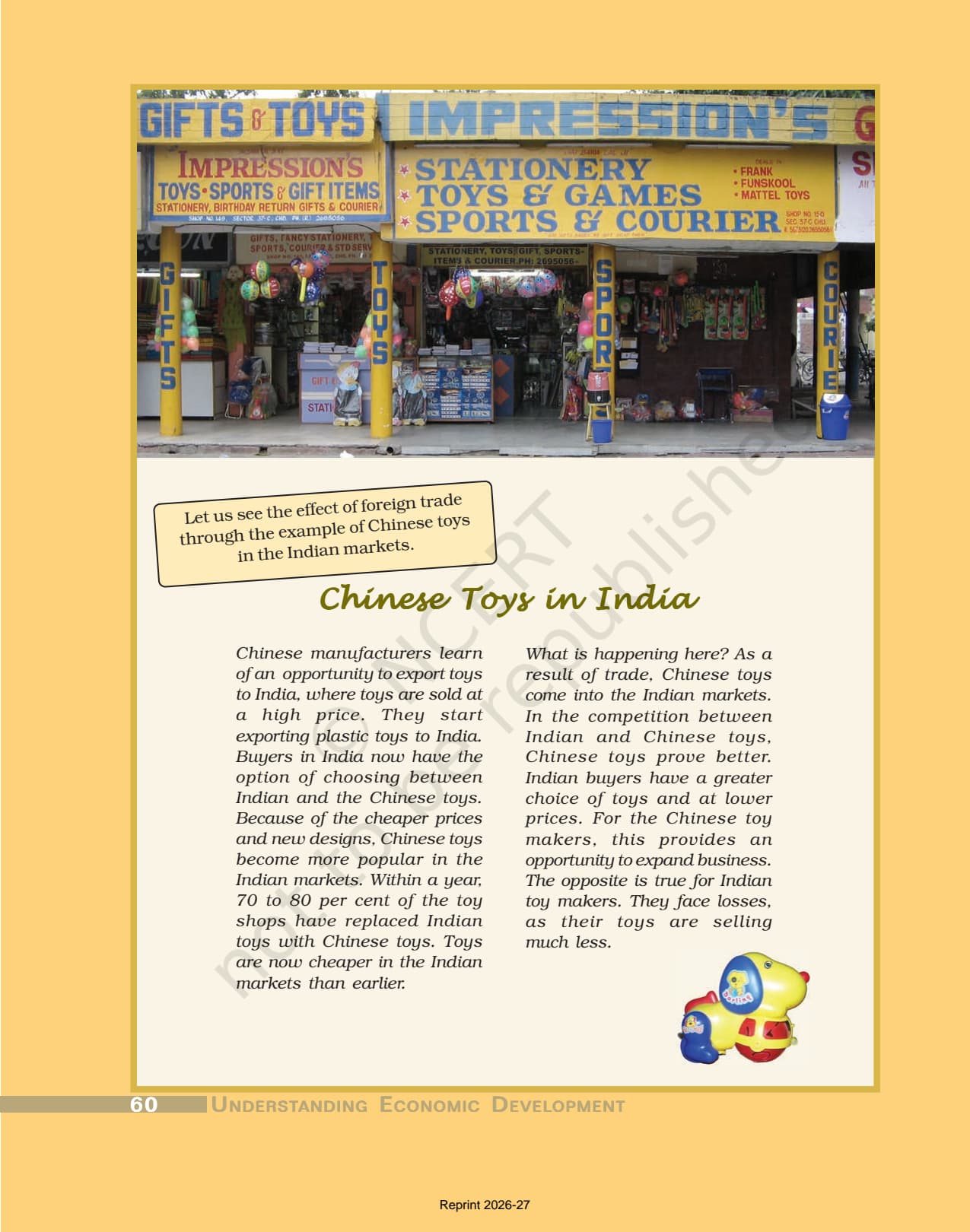
When cheaper Chinese toys entered India, 70 to 80 per cent of toy shops replaced Indian toys, so foreign trade integrates the markets of different countries.
What Is Globalisation in Chapter 4 Globalisation and the Indian Economy
Greater foreign investment and foreign trade together lead to more integration of production and markets across countries.
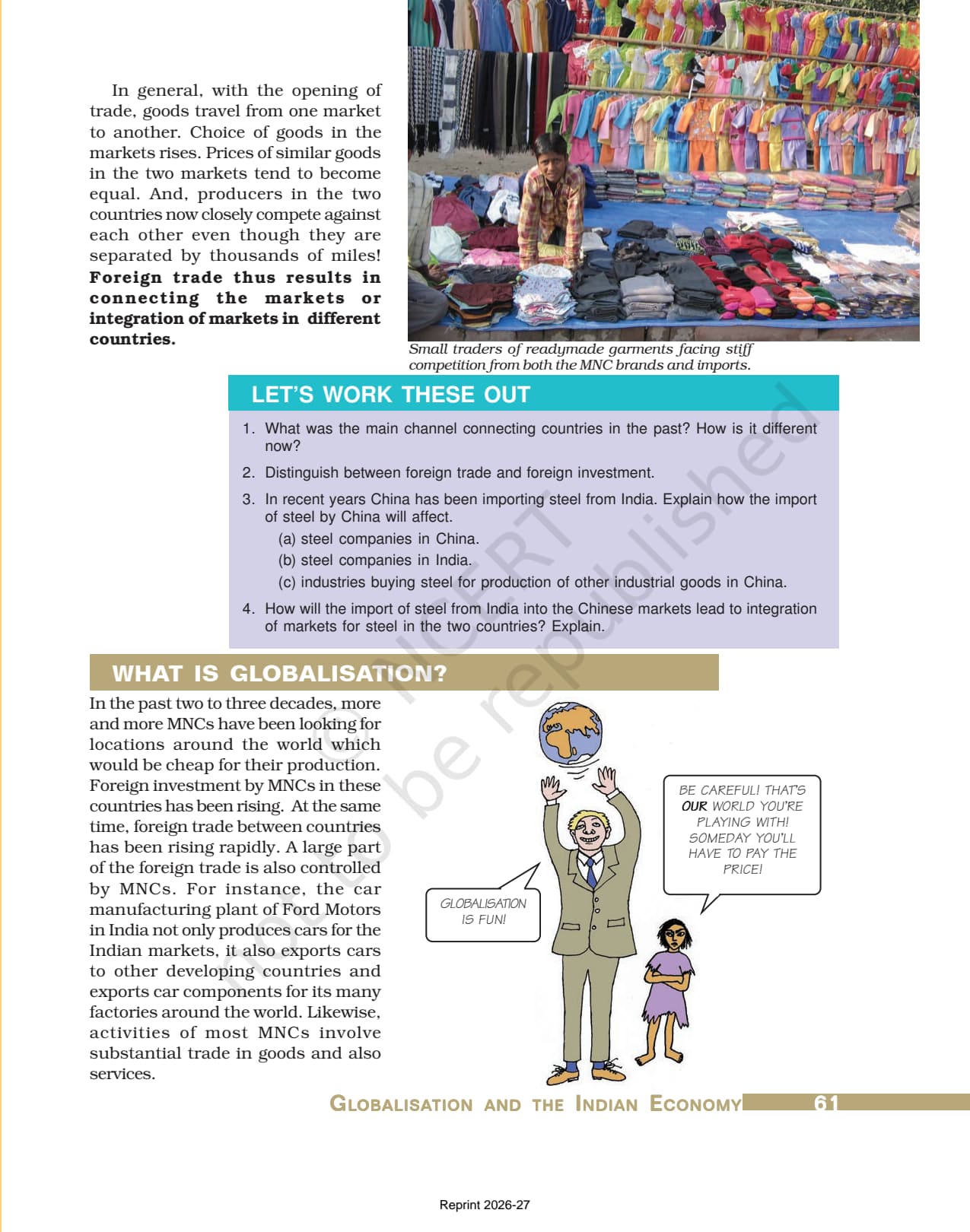
Globalisation is the process of rapid integration or interconnection between countries. MNCs play a major role, and more goods, services, investments and technology now move between countries. The movement of people has not increased as much, due to restrictions. This definition is a guaranteed 1-mark or 3-mark question.
Factors That Have Enabled Globalisation
The chapter lists clear factors that pushed globalisation forward, with technology at the top.
| Factor | How It Helped Globalisation |
|---|---|
| Transport technology | Containers and faster ships, trains and planes cut delivery time and cost |
| Information technology | Telecom, computers and the Internet spread services across borders |
| Liberalisation of trade | Removing government barriers let goods and firms move freely |
Containers cut port handling costs and sped up exports, while the Internet let an Indian office design a London magazine. IT is the keyword for the technology factor.
Liberalisation, Trade Barriers and the 1991 Reforms
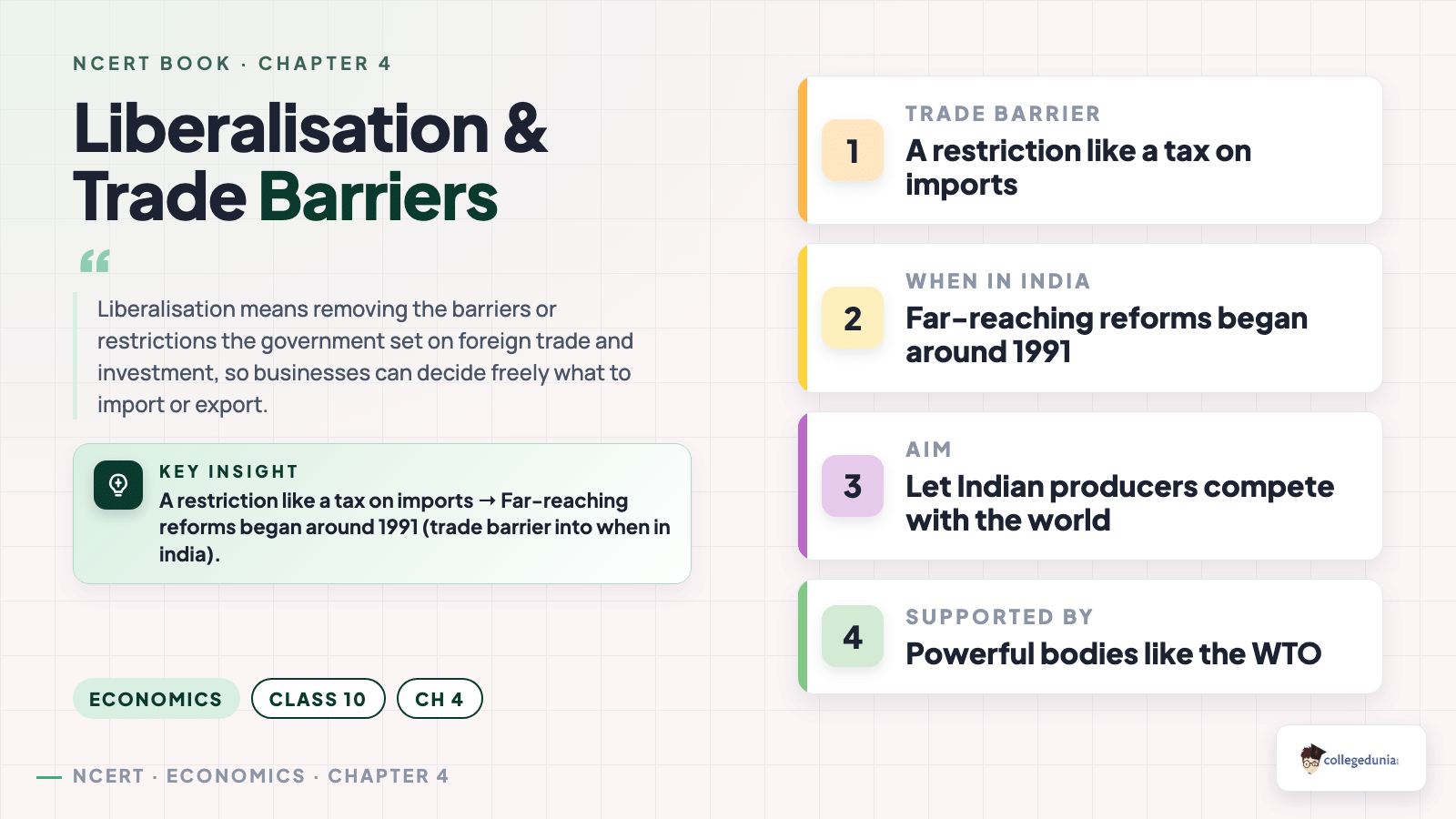
This policy section is a favourite for case-based questions. A trade barrier is a government restriction, like a tax on imports, to regulate foreign trade and decide how much of each good enters the country.
- Before 1991: after Independence, India put barriers on foreign trade and investment to protect young industries.
- Around 1991: the government decided Indian producers should compete with the world, so barriers were largely removed.
- Liberalisation: removing government barriers is liberalisation; businesses can then decide freely what to import or export.
A tax on imported toys would make them costlier and protect Indian toy makers, showing how a trade barrier works in practice.
World Trade Organisation in Chapter 4 Globalisation and the Indian Economy
India's liberalisation was supported by international organisations, mainly the World Trade Organisation (WTO).
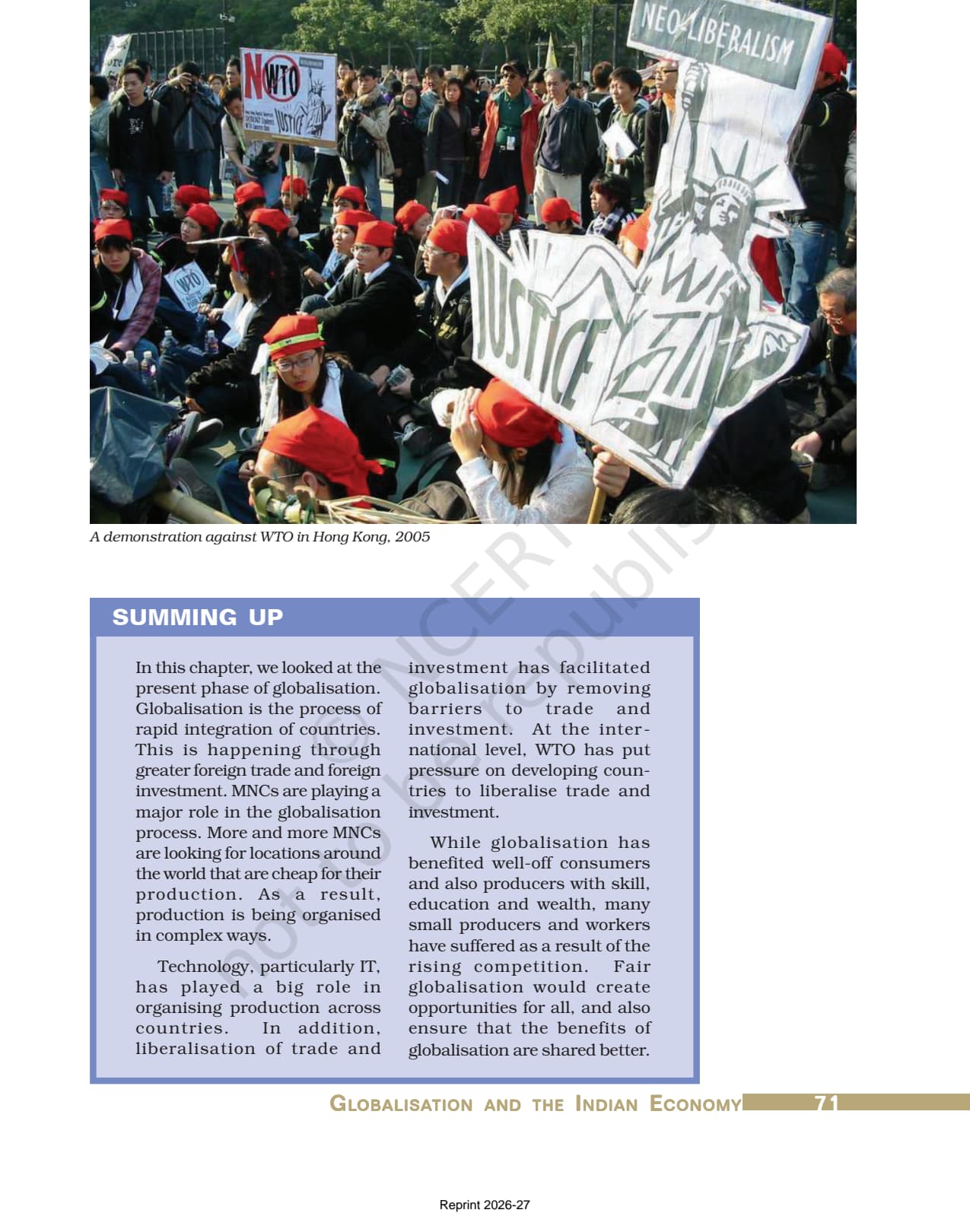
- Aim: the WTO wants to liberalise international trade and says all barriers to foreign trade and investment are harmful.
- Membership: about 160 countries are currently members.
- The fair-trade debate: in practice, developed countries kept their own barriers, while WTO rules forced developing countries to remove theirs.
US farmers get huge government support and sell surplus farm products cheaply abroad, which hurts farmers in other countries. The chapter asks whether this is free and fair trade.
Impact of Globalisation in India
Globalisation has changed India a great deal, but the impact has not been uniform. The textbook lists clear winners and losers, and examiners love the contrast.
| Who Benefited | Who Suffered |
|---|---|
| Well-off urban consumers got more choice, better quality and lower prices | Small producers like the capacitor maker Ravi lost orders and jobs |
| MNCs raised investment in phones, cars, banking and fast food | Garment workers like Sushila moved to temporary, low-paid work |
| Top Indian firms like Tata Motors and Infosys grew into MNCs | Batteries, toys, tyres and dairy units shut down under competition |
Globalisation helped people with skill, education and wealth the most, while many small producers and workers did not share the benefits.
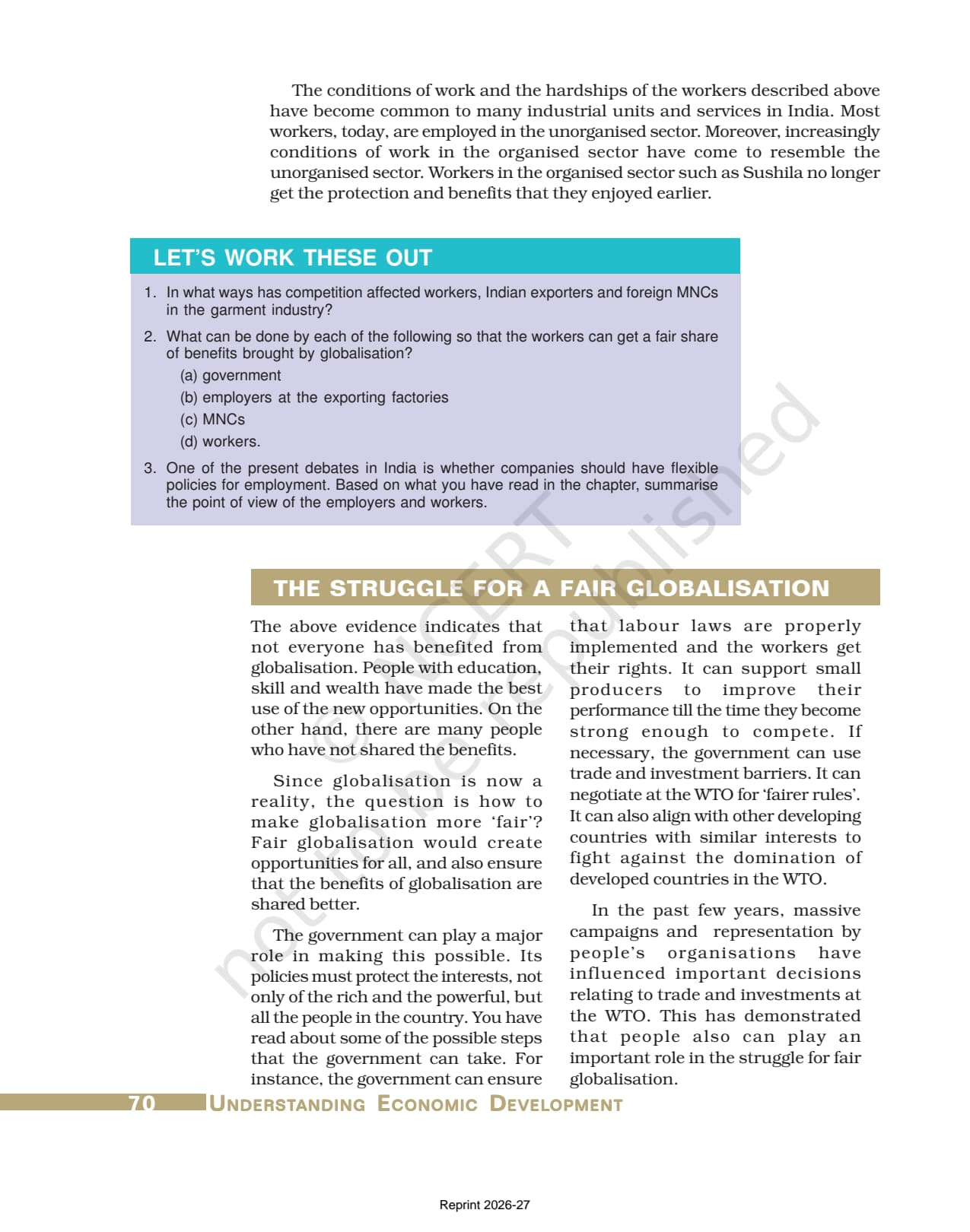
The Struggle for a Fair Globalisation
The chapter ends with how to make globalisation more fair: creating opportunities for all and sharing the benefits better.
- Government role: protect all people, not just the rich, by enforcing labour laws and supporting small producers until they grow strong.
- Trade negotiation: use trade and investment barriers when needed and negotiate at the WTO for fairer rules.
- People's role: mass campaigns have already influenced trade and investment decisions at the WTO.
Fair globalisation means the benefits of globalisation are shared better, the line to write in the 5-mark answer.
Class 10 Economics Chapter 4 Exam Weightage and Question Trends
Globalisation and the Indian Economy is one of the most scoring chapters in the Economics unit, appearing in every paper over the last five cycles, mostly as a short answer plus a case-based question.
| Year | Question Type Asked | Approx. Marks |
|---|---|---|
| 2025 | What is liberalisation? Explain with the 1991 reforms | 3 |
| 2024 | Role of MNCs in the globalisation process | 3 |
| 2023 | Case-based question on the WTO and fair trade | 4 |
| 2022 | Factors that have enabled globalisation | 5 |
| 2021 | Impact of globalisation on Indian producers and workers | 3 |
MNCs, liberalisation and the WTO cover most of the marks. Revise the definition of globalisation and the fair-trade debate first, since examiners ask them almost every year.
Student Feedback on the Globalisation and the Indian Economy Chapter
In a Collegedunia poll of 14,820 Class 10 students conducted before the 2026 boards, 71% of students rated the WTO and fair-trade debate as the hardest part to write in their own words. Most students said the MNC and liberalisation definitions were the part they revised most often.
Source: 2026-27 Class 10 Economics student poll. Sample of 14,820 students from CBSE schools across 14 states.
Common Mistakes Students Make in the Globalisation and the Indian Economy Chapter
- Mixing up foreign trade (goods across borders) with foreign investment (MNCs spending money to set up production).
- Calling globalisation the same as liberalisation. Liberalisation is one factor that enabled globalisation, not the whole process.
- Writing that everyone gained. The textbook is clear that small producers and many workers lost out.
- Forgetting that a trade barrier can be a tax on imports or a quota.
Key Features of the Official NCERT Class 10 Economics Book PDF
- Reprint Edition: 2026-27, aligned to the current CBSE syllabus with no content trimmed
- Publisher: National Council of Educational Research and Training, New Delhi
- Book: Understanding Economic Development, Class 10 Economics
- Language: English (the Hindi edition is published separately by NCERT)
- File Type: searchable text PDF, mobile-readable and print-ready at A4 size
Related Resources for Globalisation and the Indian Economy Class 10
| Resource | Link |
|---|---|
| NCERT Solutions | Globalisation and the Indian Economy Class 10 NCERT Solutions |
| Notes | Globalisation and the Indian Economy Class 10 Notes |
| Handwritten Notes | Globalisation and the Indian Economy Class 10 Handwritten Notes |
NCERT Book PDF for Class 10 Economics: All Chapters
All five chapters of Understanding Economic Development are available on Collegedunia. Use the table below to download any chapter PDF directly.
| Chapter | NCERT Book PDF |
|---|---|
| Chapter 1 | Development NCERT Book PDF |
| Chapter 2 | Sectors of the Indian Economy NCERT Book PDF |
| Chapter 3 | Money and Credit NCERT Book PDF |
| Chapter 5 | Consumer Rights NCERT Book PDF |
Globalisation and the Indian Economy Class 10 NCERT Book PDF FAQs
Ques. Is this the official NCERT Class 10 Economics Chapter 4 textbook PDF?
Ans. Yes. The file is the original NCERT Class 10 Economics Chapter 4 Globalisation and the Indian Economy from Understanding Economic Development, 2026-27 reprint, hosted unmodified for free student download.
Ques. How many pages is the Globalisation and the Indian Economy Class 10 chapter?
Ans. The chapter runs to about 18 pages in the 2026-27 NCERT reprint, covering MNCs, foreign trade, liberalisation, the WTO, the impact of globalisation and the end-of-chapter exercises.
Ques. What is the board weightage of Class 10 Economics Chapter 4?
Ans. Globalisation and the Indian Economy carries roughly 4 to 6 marks in the CBSE Class 10 Social Science board paper, usually as one short answer plus one case-based question on MNCs, liberalisation or the WTO.
Ques. Where can I get the ncert solutions for Class 10 Economics Chapter 4?
Ans. The Globalisation and the Indian Economy Class 10 NCERT Solutions page linked above works through every textbook exercise question with step-by-step answers, mapped to the 2026-27 syllabus.
Ques. Is the NCERT Class 10 Economics book PDF free to download?
Ans. Yes. NCERT textbooks are open educational resources published by the Government of India and are free to download and use for study.
Ques. What is globalisation in Chapter 4?
Ans. Globalisation is the process of rapid integration or interconnection between countries. It happens through greater foreign trade and foreign investment, with MNCs, technology and liberalisation as the main driving forces.
Ques. What is a multinational corporation (MNC)?
Ans. A multinational corporation is a company that owns or controls production in more than one country. MNCs set up factories where labour and resources are cheap, so they can lower costs and earn higher profits.
Ques. What is liberalisation in the Indian economy?
Ans. Liberalisation means removing barriers or restrictions set by the government on foreign trade and investment. India began far-reaching liberalisation around 1991, letting businesses decide freely what to import and export.



Comments